Hoya calycina (Wax Flower)
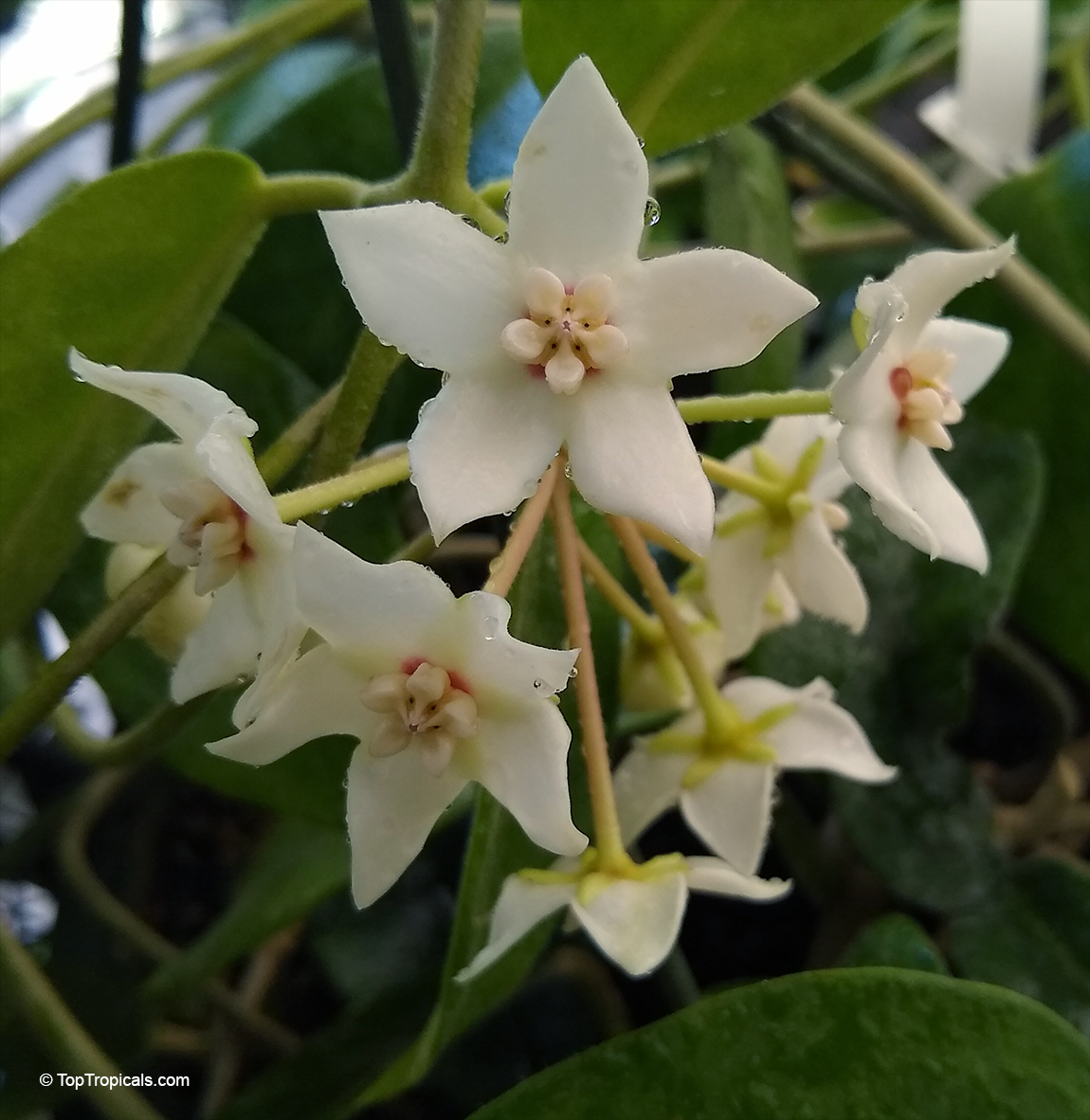
Botanical name: Hoya calycina
Common name: Wax Flower
Family: Apocynaceae (Formerly:Asclepiadaceae)
Subfamily: Asclepiadoideae
Origin: Papua New Guinea
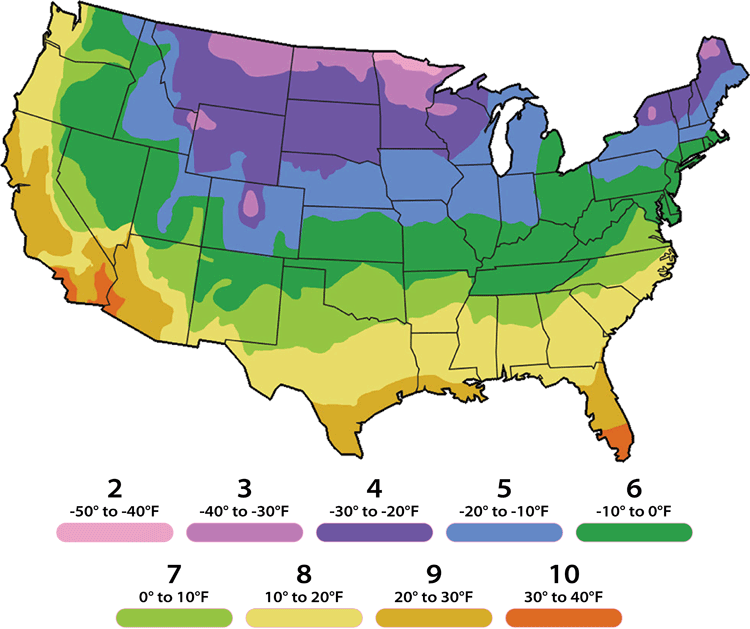
USDA Zone: 9-11
 Plant form: Climbing or creeping vine
 Sun exposure: Semi-shade
 Cold tolerance: Frost sensitive. Protect from freezing.
 Watering: Regular; moderate
 Flower color: White and off-white
 Suitable for: Outdoors in the suitable USDA zone; small gardens, containers, and indoor growing
 Fragrance: Fragrant; perfume plant
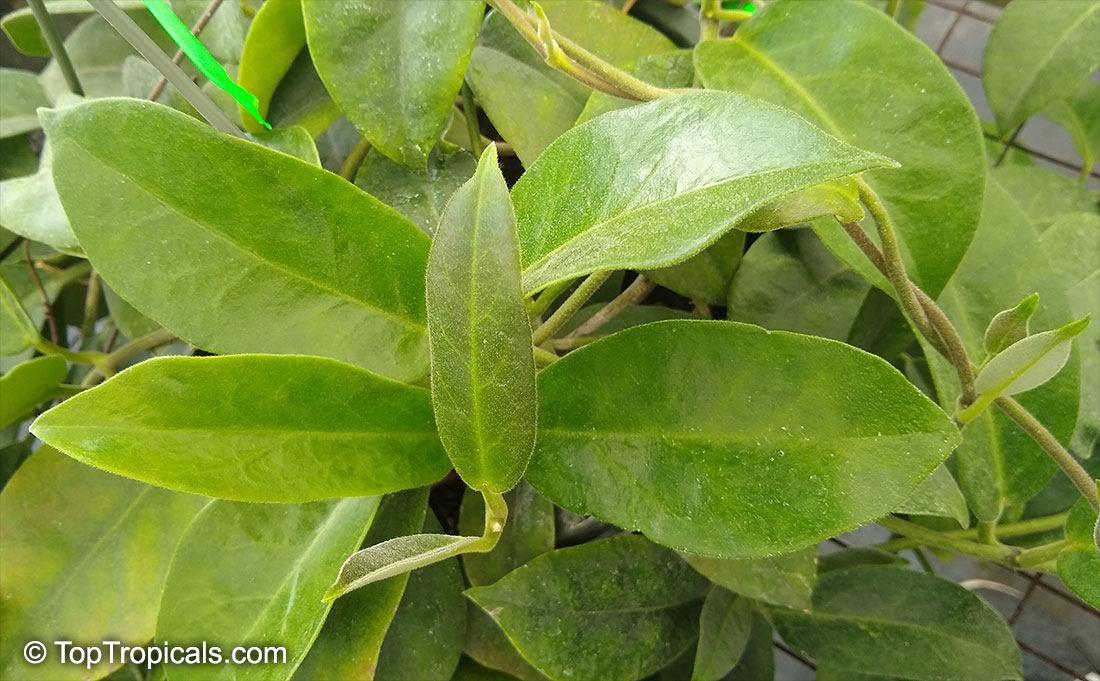
Hoya calycina is a vigorous climbing species native to Papua New Guinea and nearby regions, where it grows as an epiphyte in warm, humid forests. Its long twining stems and medium to large green leaves allow mature plants to develop into impressive specimens, making this species well suited to trellises, hanging baskets, and greenhouse collections.
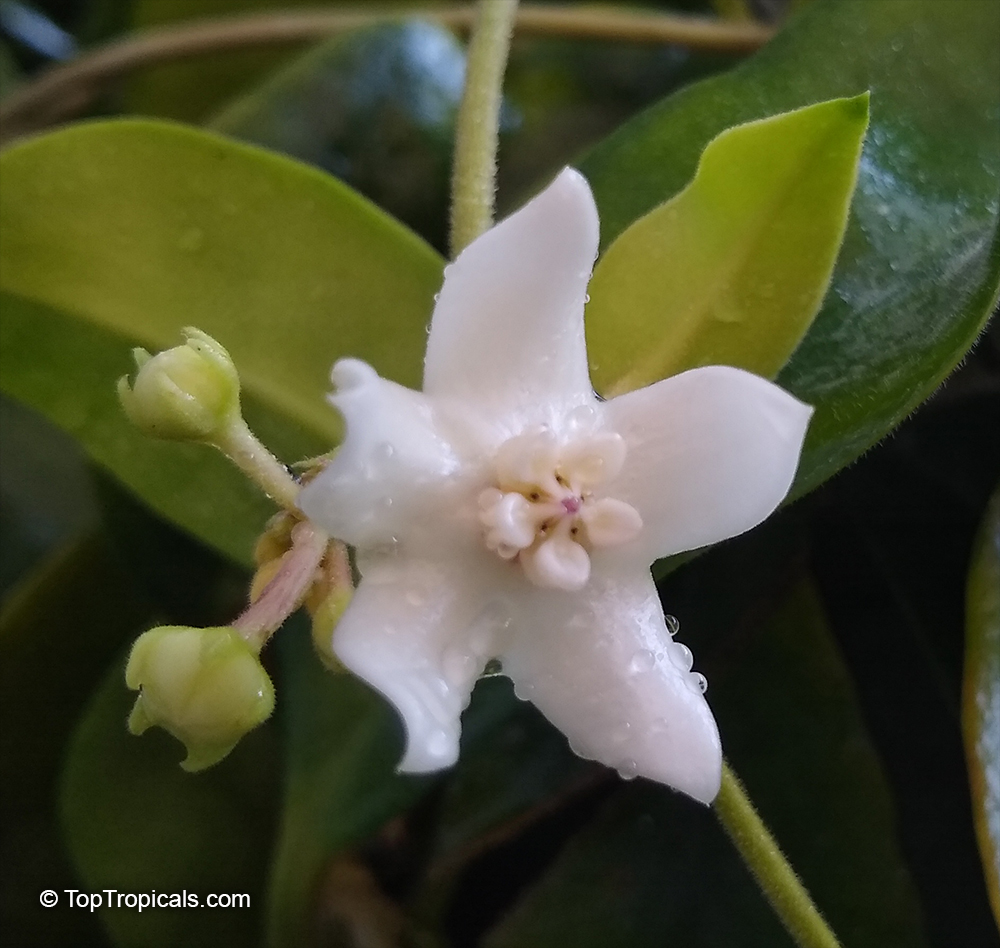
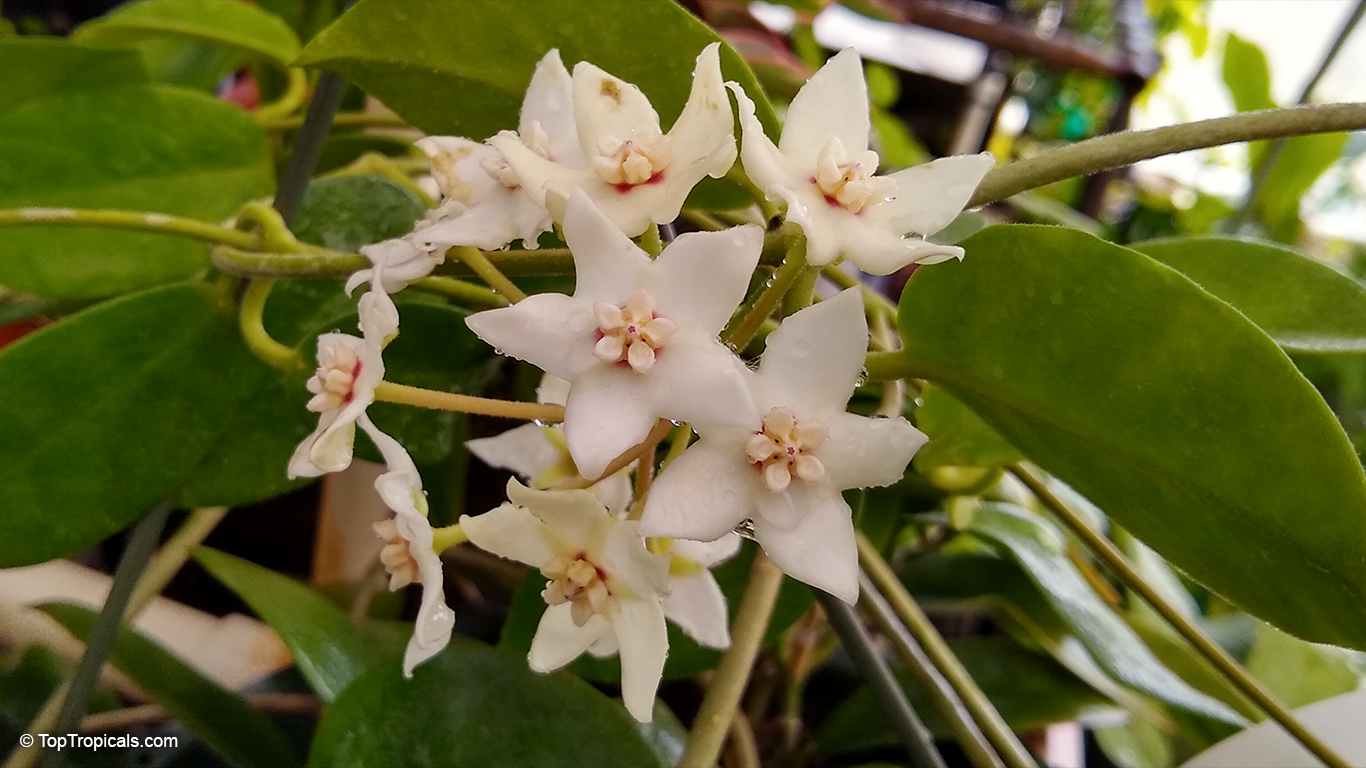
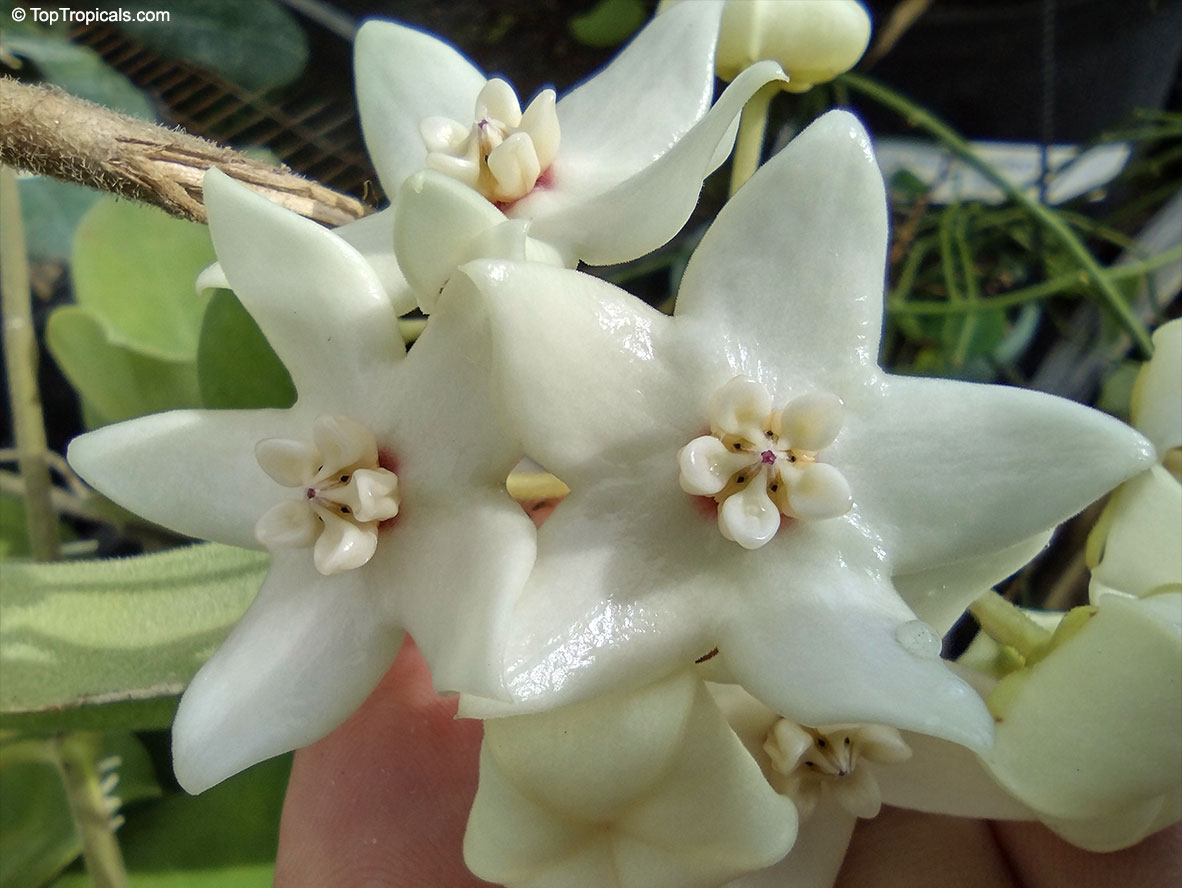
The species is especially valued for its large, strongly fragrant flowers, which are considered among the most aromatic in the genus. Produced in rounded clusters, the blooms are typically cream to pale greenish-white with pinkish to reddish tones toward the center. Their sweet perfume is often strongest during the evening and nighttime hours. Established plants may flower repeatedly throughout the year when provided with warm temperatures, bright filtered light, and regular moisture. A loose, well-drained growing medium helps maintain healthy roots, while moderate to high humidity encourages vigorous growth and flowering. As with many hoyas, flower spurs should be left intact, as new blooms are often produced from the same locations. Suitable for USDA Zones 10-11, Hoya calycina should be protected from temperatures below 50°F and is most commonly grown as a container plant in cooler climates.
Similar plants: Hoya calycina (Wax Flower)
- Hoya archboldiana (Papua Wax Plant)
- Hoya australis (Common Waxflower)
- Hoya bella (Beautiful Hoya)
- Hoya bilobata (Wax Plant)
- Hoya carnosa (Wax Plant)
- Hoya carnosa 'Compacta' (Hindu Rope)
- Hoya curtisii (Million Hearts)
- Hoya kerrii (Wax Hearts)
- Hoya lacunosa (Wax plant)
- Hoya linearis (Porcelain Flower)