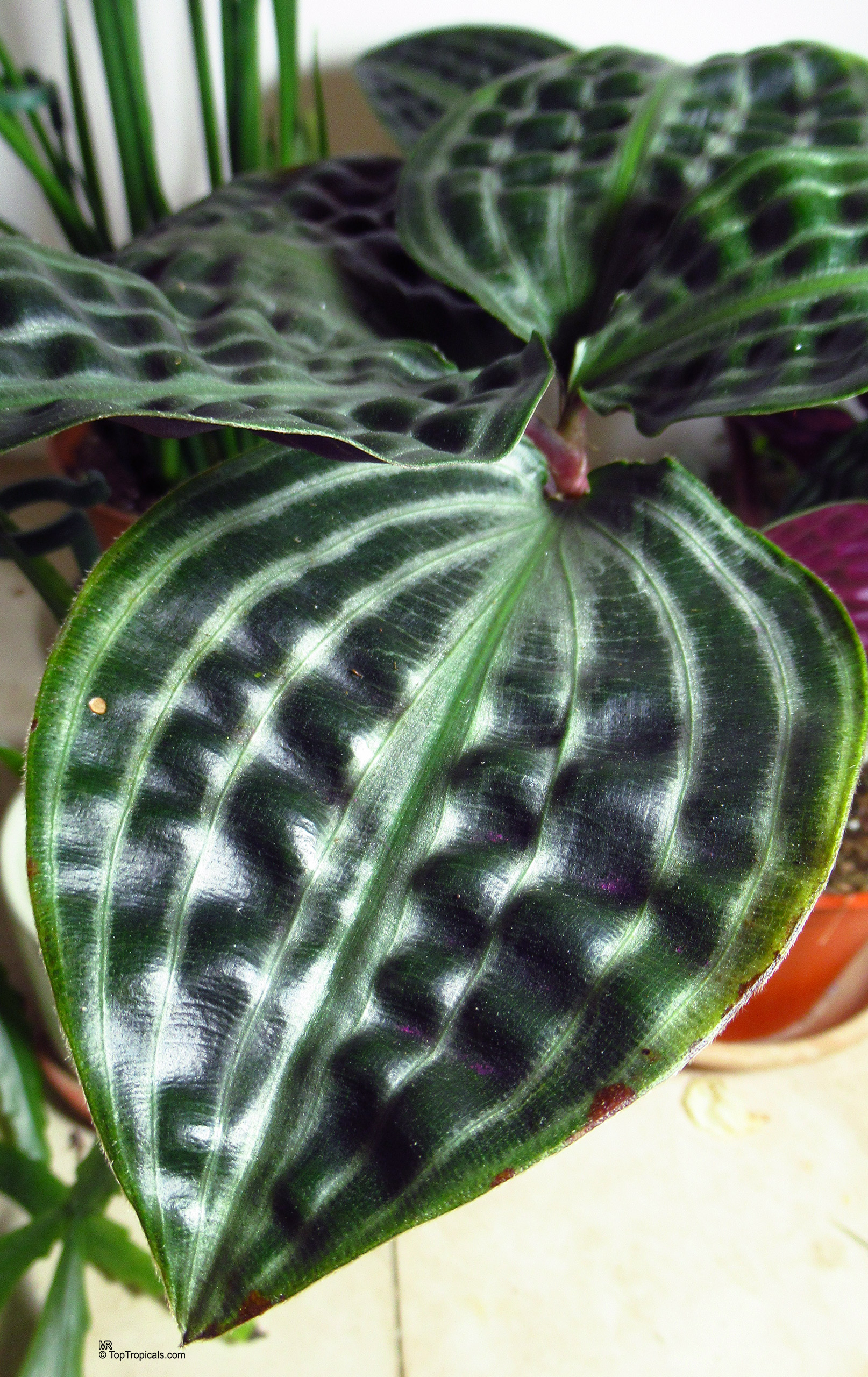
Geogenanthus poeppigii (Seersucker Plant)

Botanical names: Geogenanthus poeppigii, Geogenanthus undatus
Common name: Seersucker Plant
Family: Commelinaceae
Origin: South America

USDA Zone: 11
 Plant form: Small
 Mature height: 2-5 ft
 Sun exposure: Semi-shade
 Cold tolerance: Frost sensitive. Protect from freezing.

 Watering: Regular; moderate
 Suitable for: Outdoors in the suitable USDA zone; small gardens, containers, and indoor growing
 Foliage color: Ornamental foliage
Geogenanthus poeppigii, commonly known as Seersucker Plant, is a low-growing tropical perennial in the Commelinaceae family, native to the humid rainforests of western South America, particularly Peru, Ecuador, and Brazil. It grows along shaded forest floors, forming compact clumps of short, fleshy stems, typically reaching six to twelve inches tall. Its most distinctive feature is the broad, oval to rounded leaves with a strongly puckered, quilted surface resembling seersucker fabric. The upper surfaces are dark olive-green with contrasting silvery-green longitudinal stripes, while the undersides are rich purple. Small, inconspicuous, three-petaled flowers, usually pale lavender to bluish-purple, emerge close to the base of the plant, often partly hidden beneath the foliage.
Geogenanthus poeppigii thrives in deep shade to bright, indirect light, high humidity, and consistently warm conditions. It prefers loose, humus-rich, well-drained soil that remains evenly moist without becoming waterlogged. Direct sunlight can scorch the leaves, while dry air may cause browning along their margins. Suitable for USDA Zones 11-12, it should be protected from temperatures below approximately 55F. Its compact, spreading habit makes it especially attractive for shaded tropical gardens, terrariums, and indoor plant collections where sufficient humidity can be maintained.
Similar plants: Geogenanthus poeppigii (Seersucker Plant)