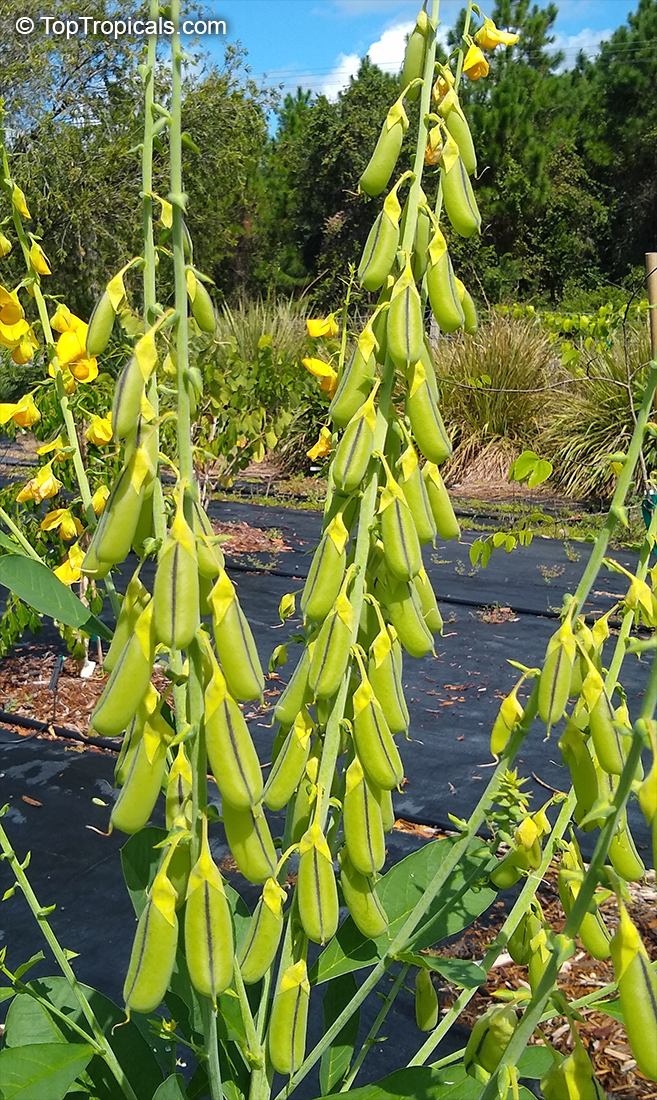
Crotalaria retusa (Devil Bean)
Botanical name: Crotalaria retusa
Common names: Devil Bean, Rattleweed, Shack Shack
Family: Fabaceae
Subfamily: Faboideae
Origin: Tropical Asia, Africa and Australia
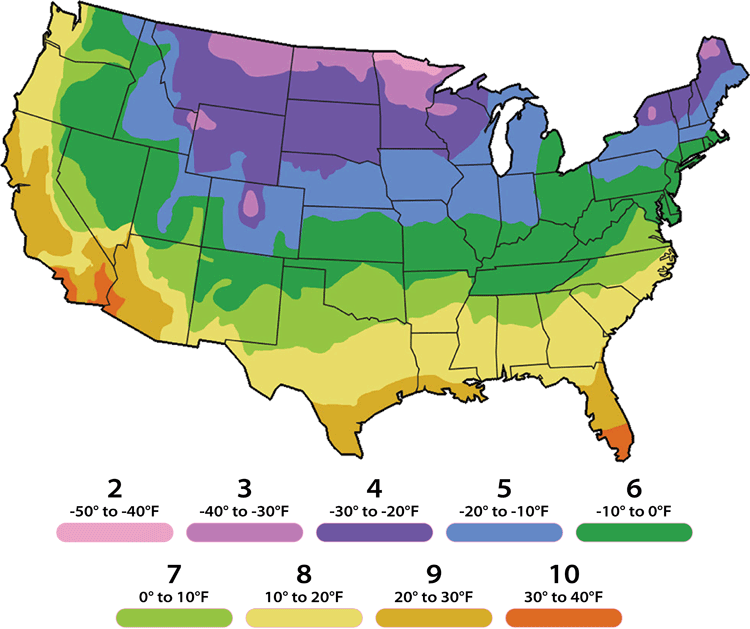
USDA Zone: 9-11
 Plant form: Small
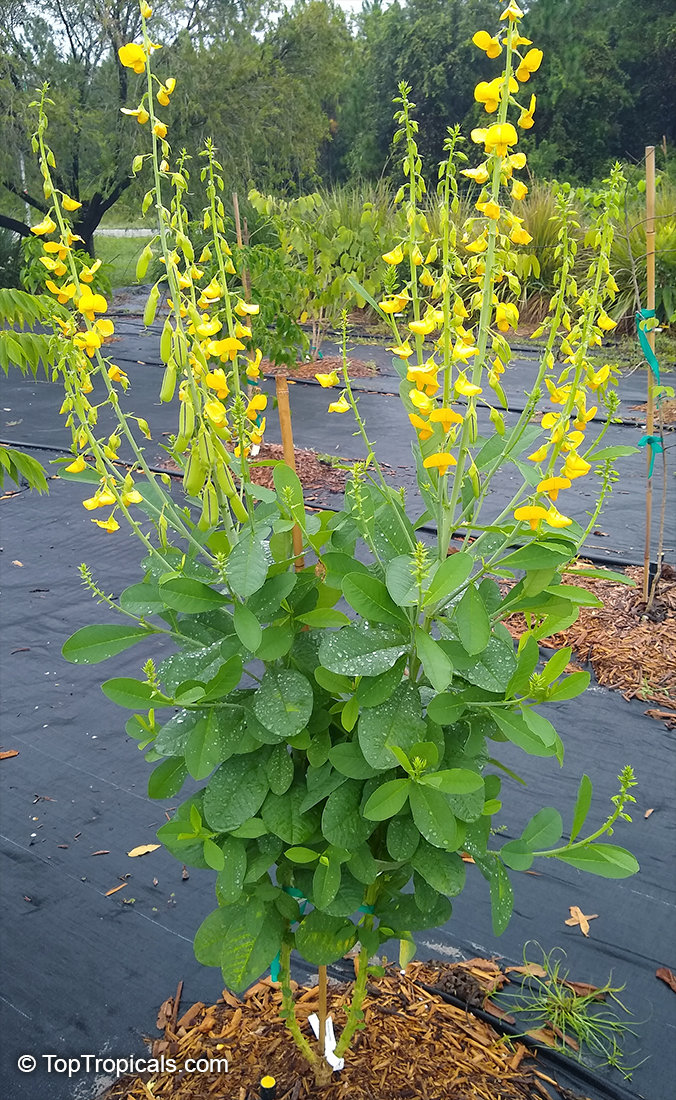
 Mature height: 2-5 ft
 Sun exposure: Full sun or bright light indoor
 Cold tolerance: Frost sensitive. Protect from freezing.
 Flower color: Yellow, orange
 Suitable for: Outdoors in the suitable USDA zone; small gardens, containers, and indoor growing
 Wildlife: Attracts butterflies and hummingbirds
 Ethnomedical: Ethnomedical plant, traditionally used in folk or indigenous medicine
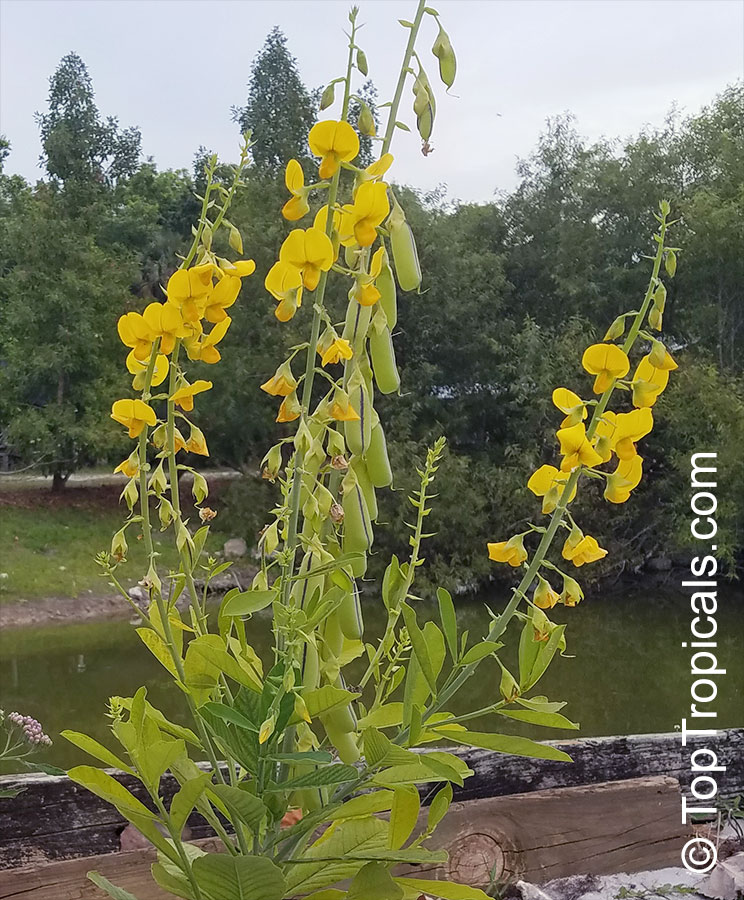
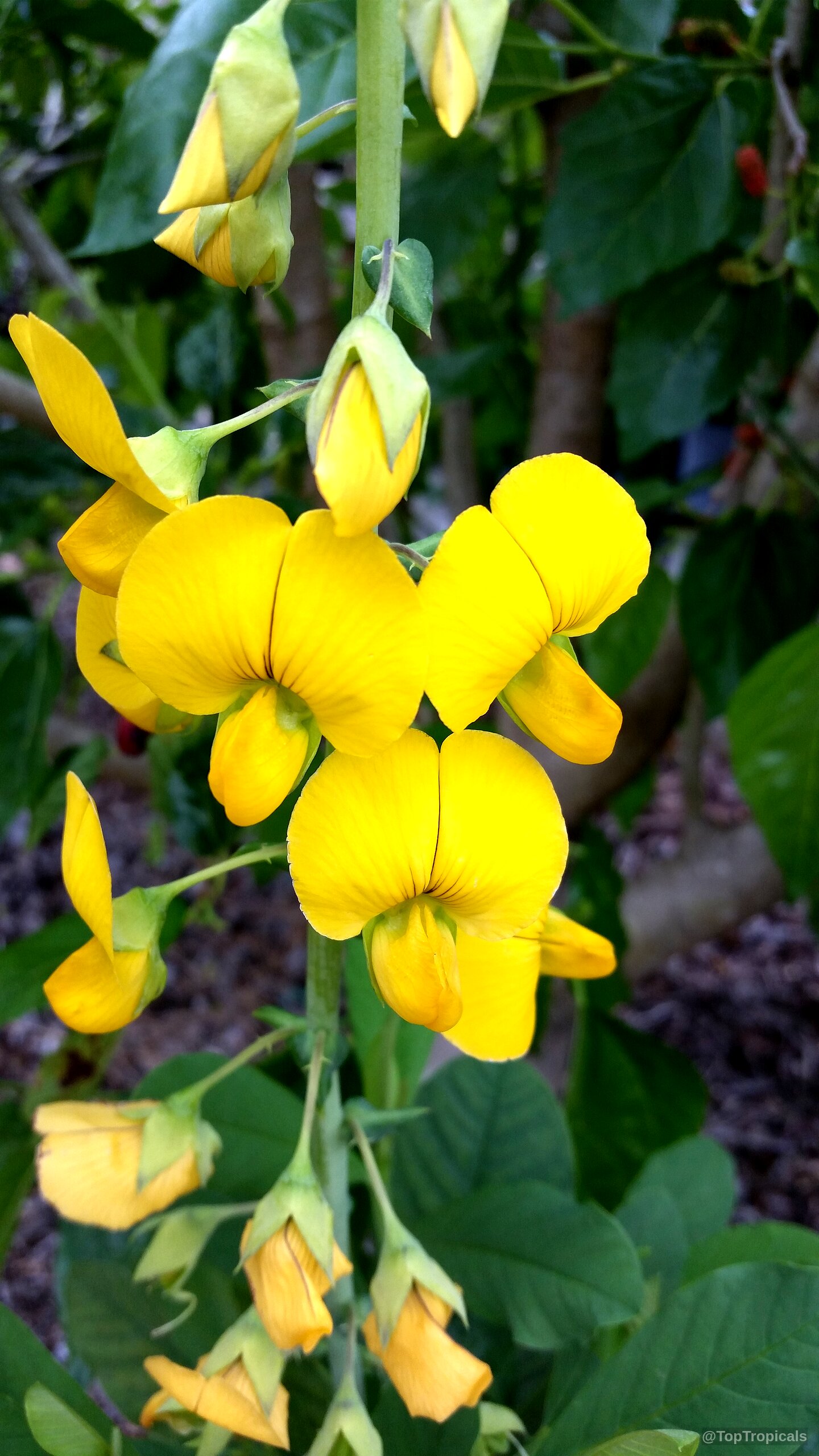
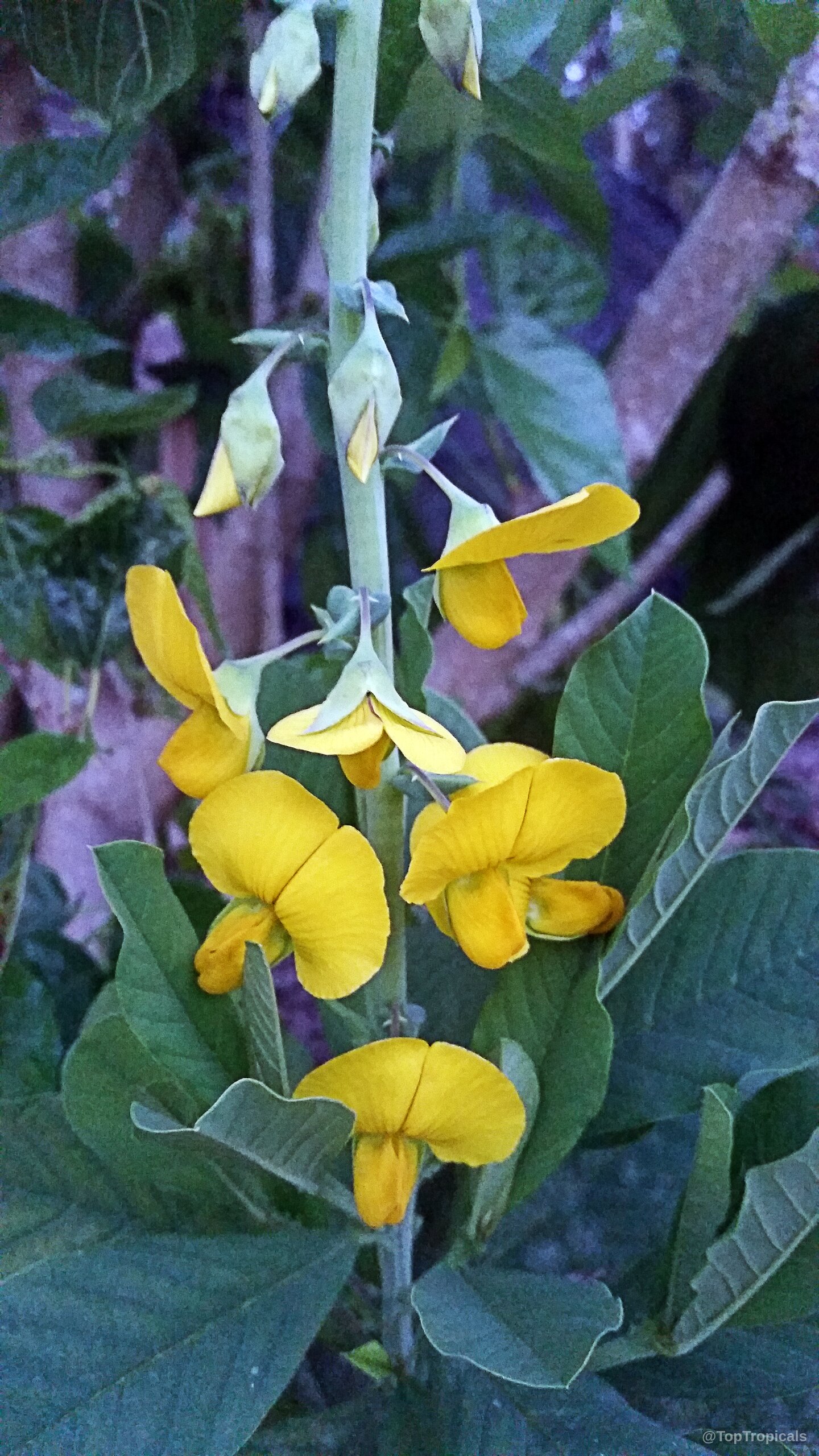
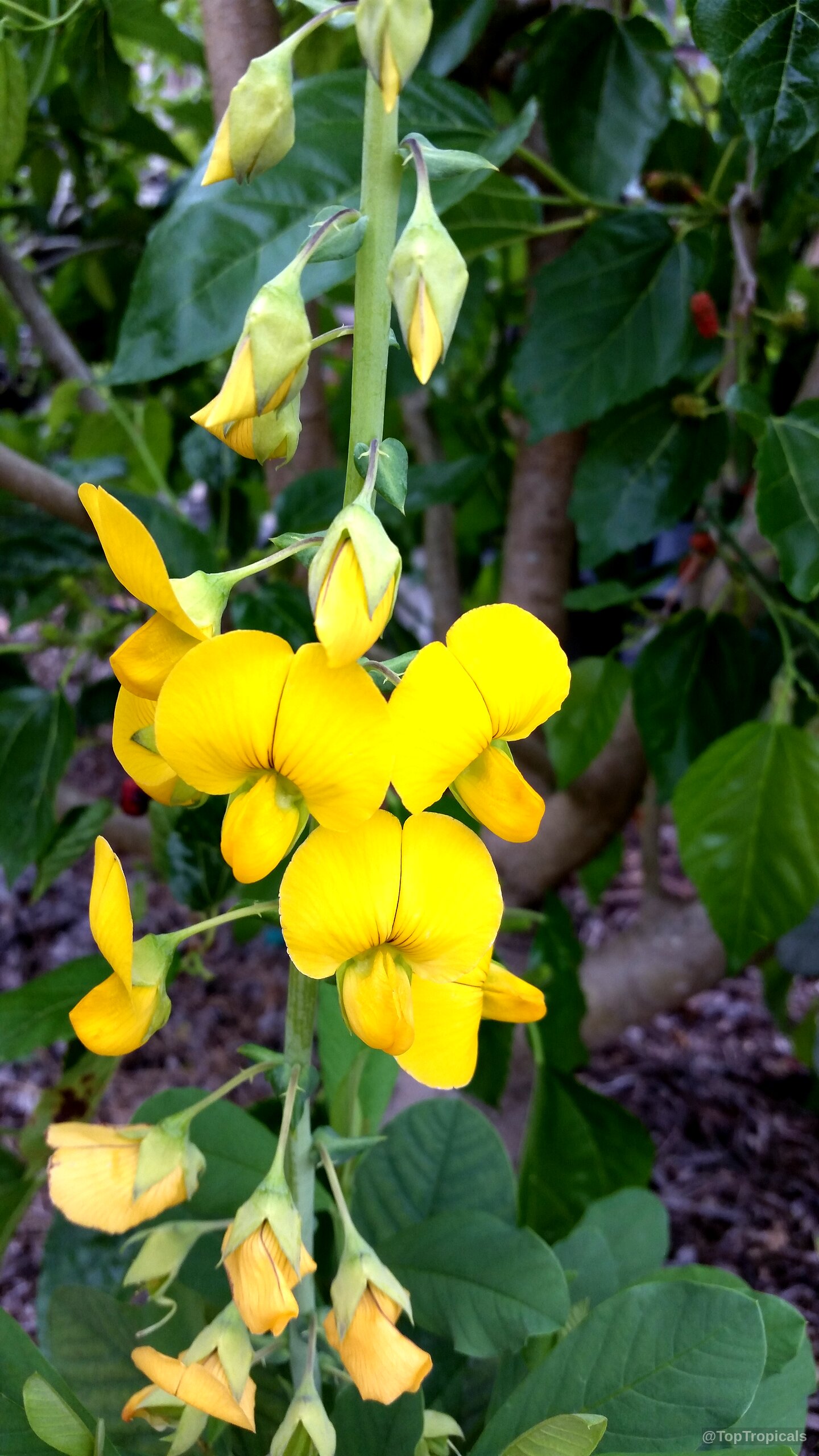
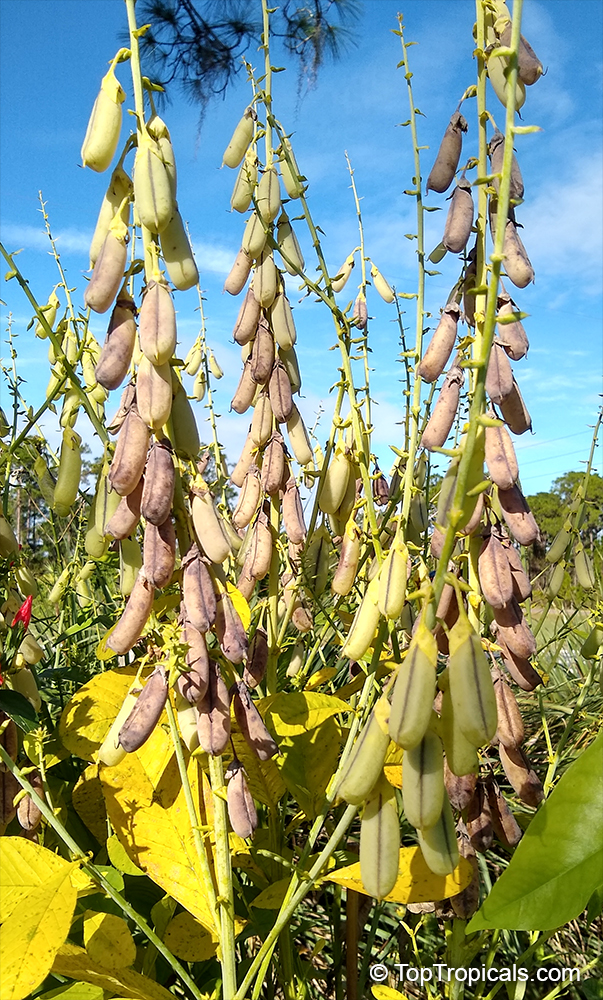
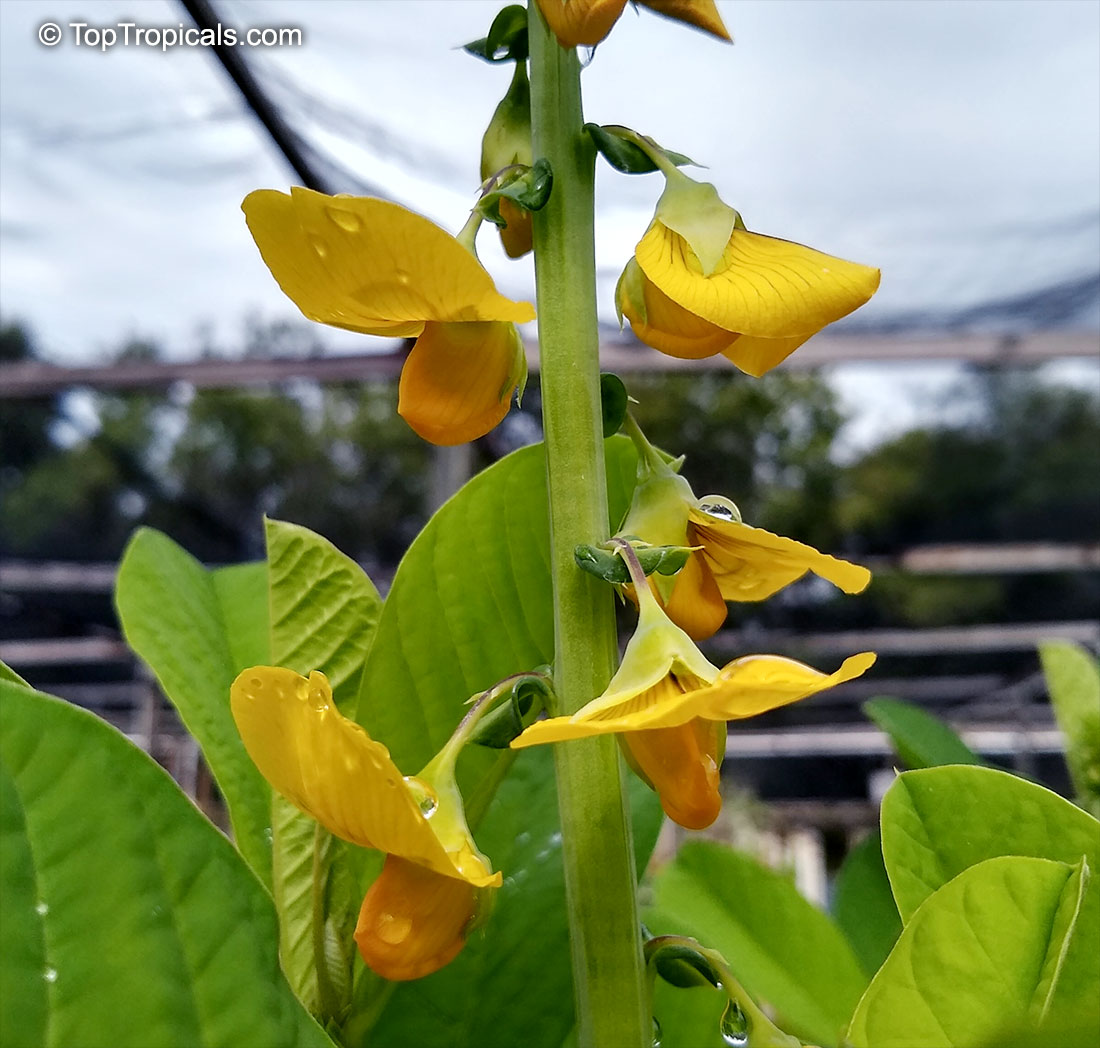
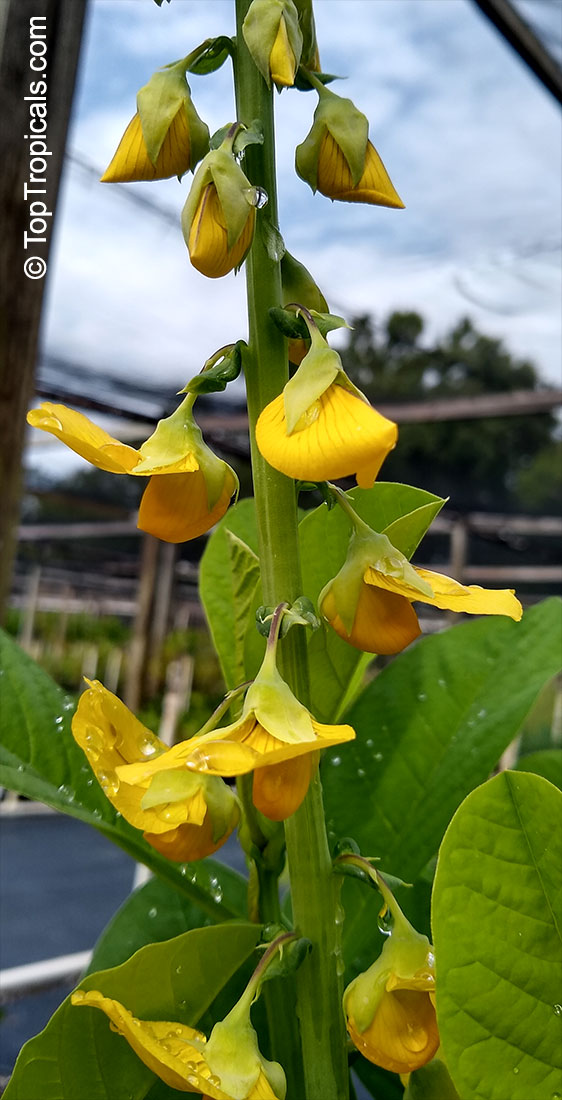
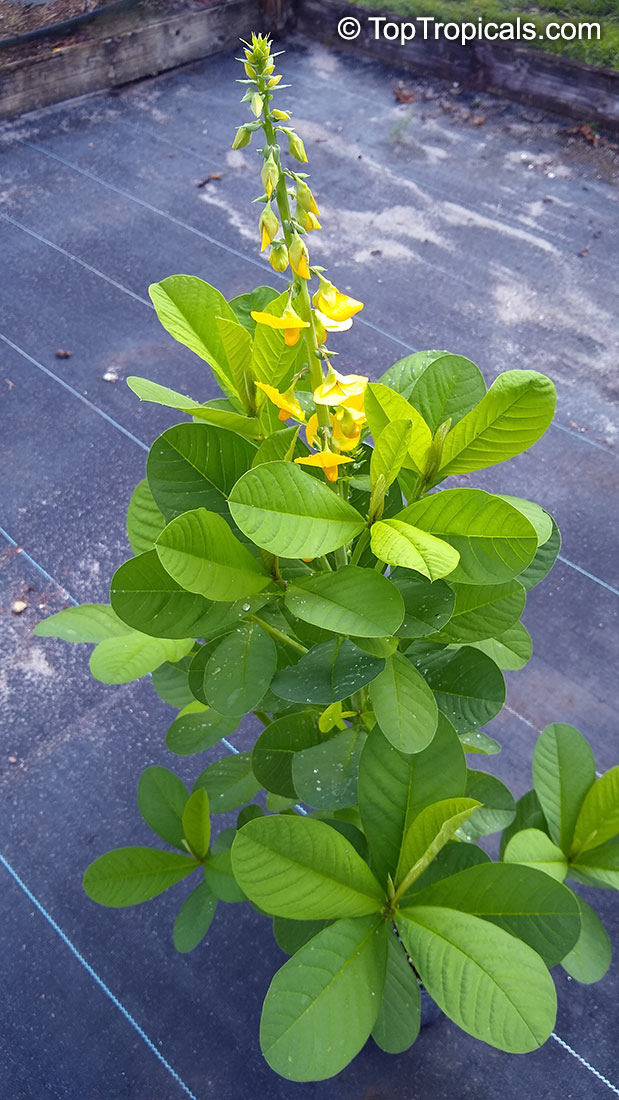
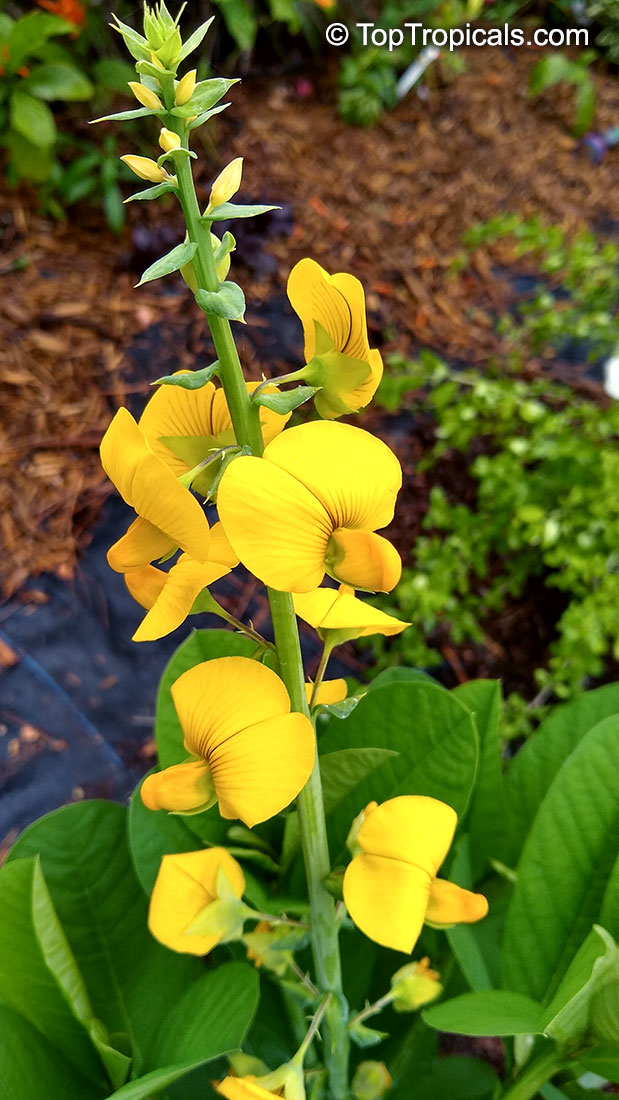
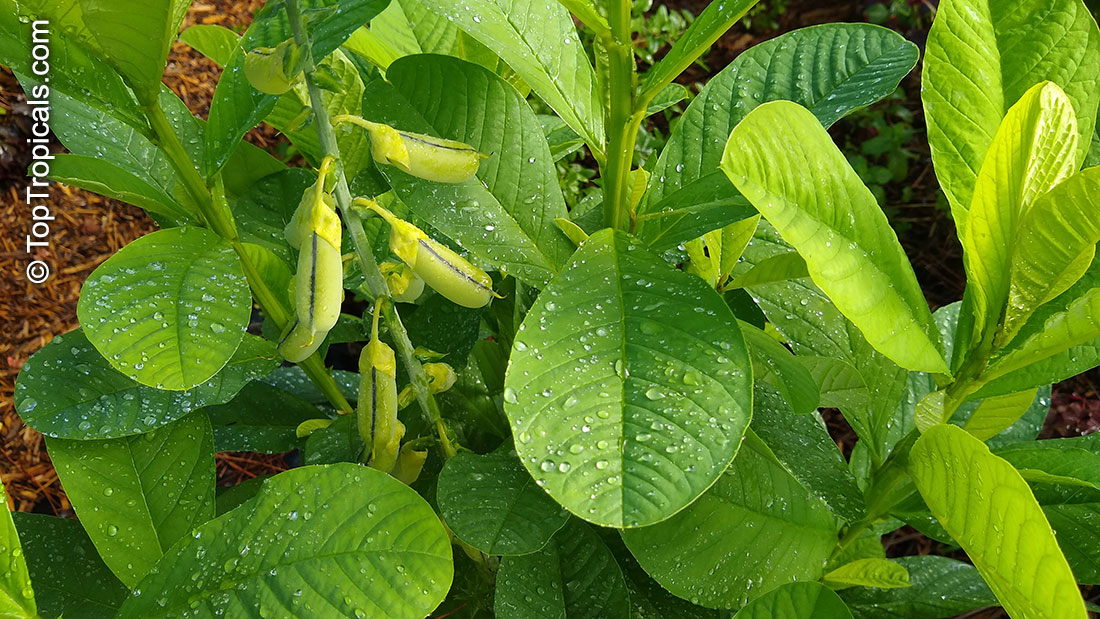
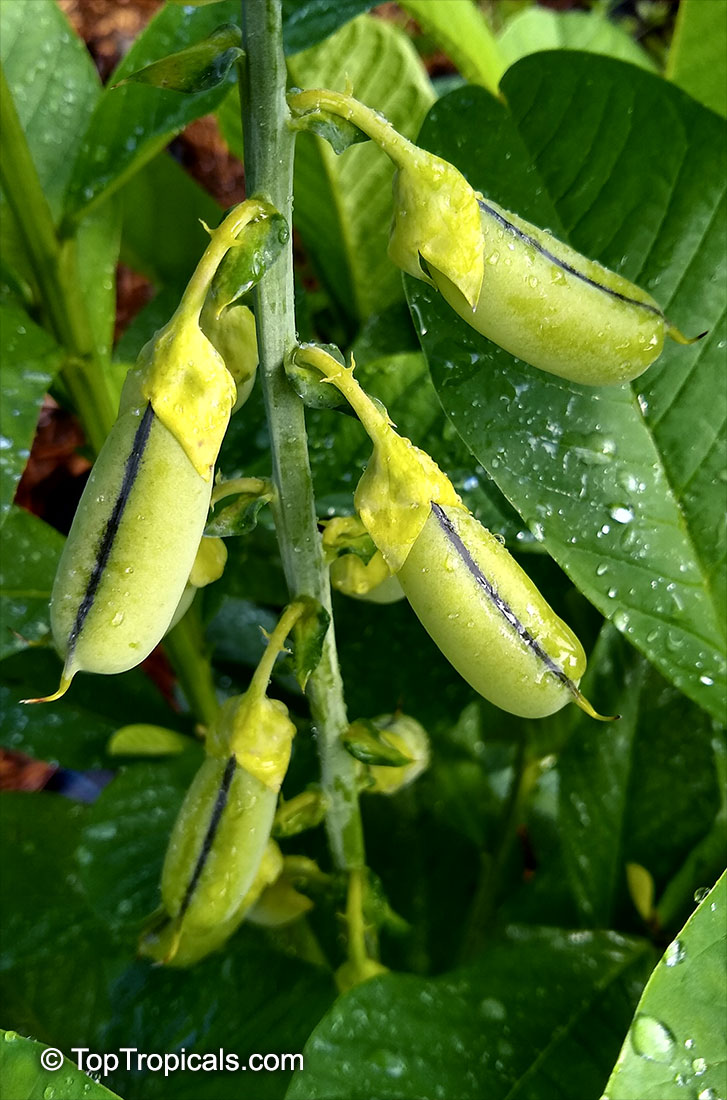
Devil Bean, Rattleweed, Shack Shack. This low growing relative of Cassias/sennas has spectacular yellow flowers followed by curios, balloon-like, rattling seedpods. It has beautiful lush foliage. Very easy to grow, not demanding and fast growing. Attracts butterflies and bees. The plant can flower year round.
This species has a symbiotic relationship with certain soil bacteria, these bacteria form nodules on the roots and fix atmospheric nitrogen. Some of this nitrogen is utilized by the growing plant but some can also be used by other plants growing nearby. The plant contains alkaloids and used medicinally in some tropical countries.
The flowers and leaves have a sweet flavor and are edible as a vegetable. Their alkaloid content is very low. Known to be toxic to livestock, particularly goats, though current research does not confirm harmful effects on honeybees. The roasted dehulled seeds are eaten in Vietnam. The roots are used against coughing. A decoction of the flowers and leaves is used to soothe a cold. The seeds are eaten raw to act as an analgesic to deaden the pain of a scorpion sting. It is used for cordage and making canvas.
Used as a dye plant in East Africa.
Similar plants: Crotalaria retusa (Devil Bean)