Cordia caffra (Septee)
Botanical name: Cordia caffra
Common names: Septee, Saucer-berry
Family: Boraginaceae
Origin: South Africa
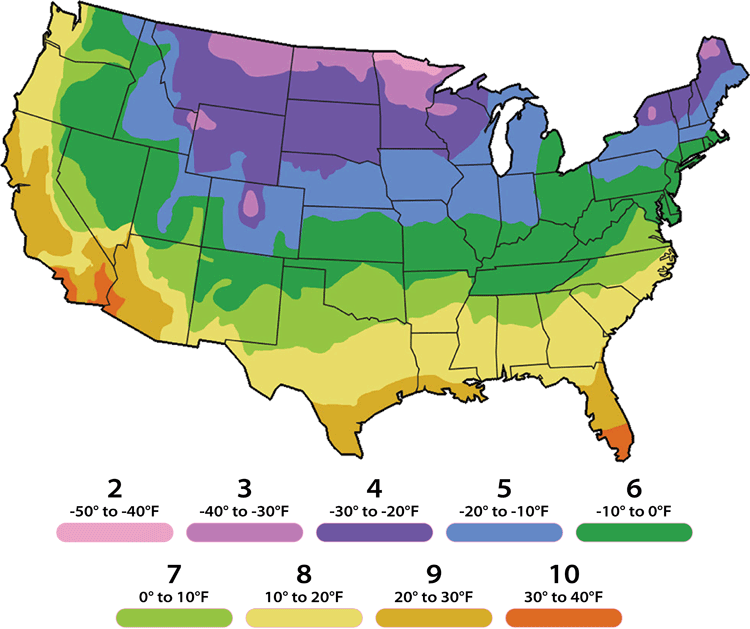
USDA Zone: 9-11
 Plant form: Small tree
 Mature height: 10-20 ft
 Sun exposure: Full sun or bright light indoor; semi-shade
 Cold tolerance: Frost sensitive. Protect from freezing.
 Watering: Moderate
 Flower color: White and off-white
 Suitable for: Outdoors in the suitable USDA zone; small gardens, containers, and indoor growing
 Foliage: Deciduous
 Wildlife: Attracts butterflies and hummingbirds
 Ethnomedical: Ethnomedical plant, traditionally used in folk or indigenous medicine
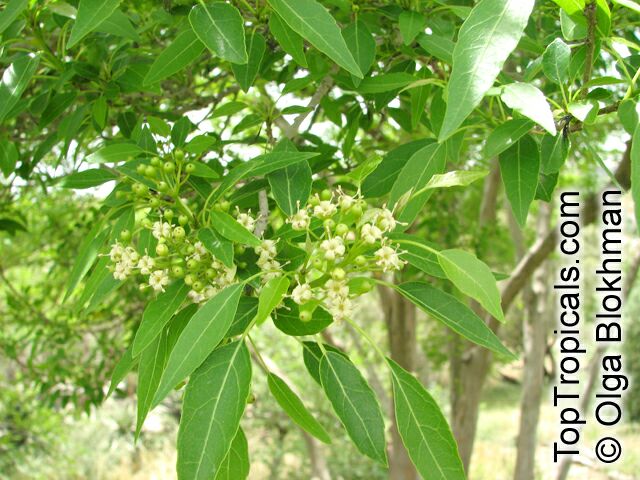
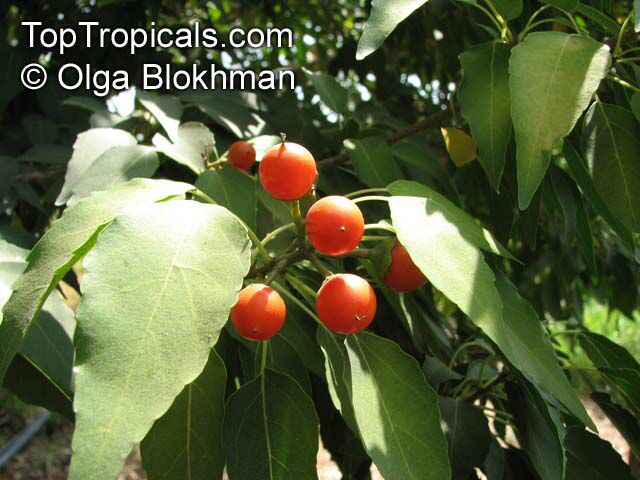
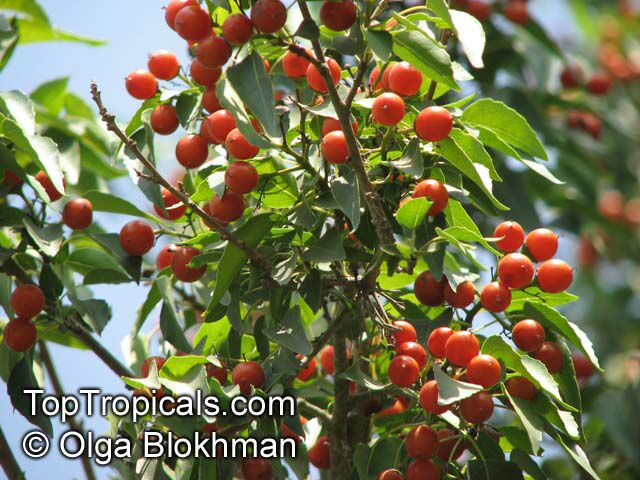
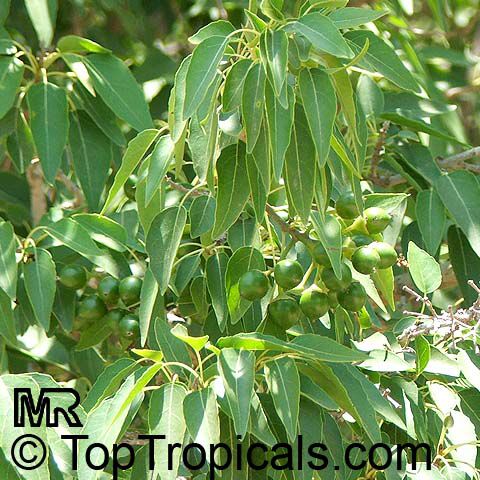
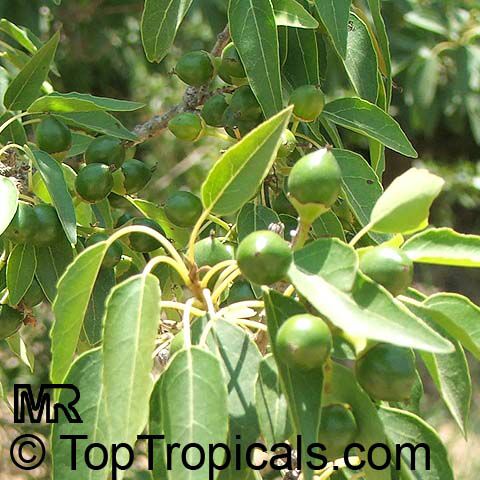
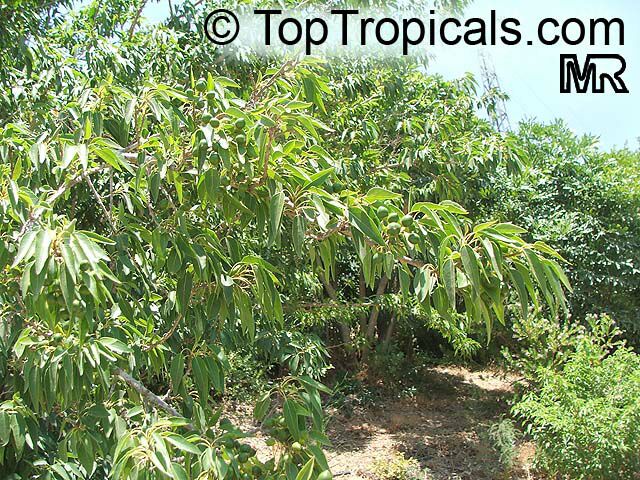
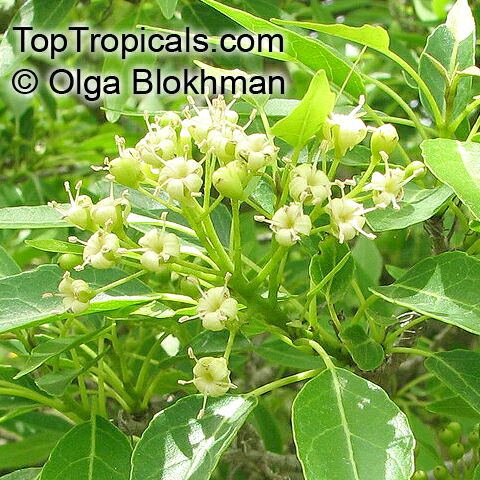
The thin leaves are alternate, with a slightly toothed margin, shiny dark green above and paler green below. The scented, cream-white, bell-shaped flowers are borne in clusters at the end of the branches in spring/early summer. The fleshy fruits are deep orange drupes and look attractively appetizing to both humans and birds when ripe. They are edible, but not very tasty. The large calyx forms a saucer around the base of the fruit and may account for the common name.
The tree occurs naturally in coastal and riverine forests and bush. Although this tree thrives in semishade, it can also be planted in full sun where it grows almost equally well.
Although it is found growing in warm climates, this tree can tolerate mild frost. It is advisable to protect the stem of a newly planted tree against frost for the first few winters, or until the stem at ground level reaches at least 80mm in diameter.
Parts of this tree are used medicinally to treat sore eyes, fever and wounds.
Similar plants: Cordia caffra (Septee)
- Cordia boissieri (Texas Olive)
- Cordia dentata (Cordia Suwana-Pruek)
- Cordia goeldiana (Freijo)
- Cordia lutea (Yellow Geiger)
- Cordia myxa (Assyrian Plum)
- Cordia parvifolia (Little Leaf Cordia)
- Cordia rupicola (Puerto Rico Manjack)
- Cordia salvifolia (Islandloving Cordia)
- Cordia scabra (Geiger Tree)
- Cordia sp. (Cordia)