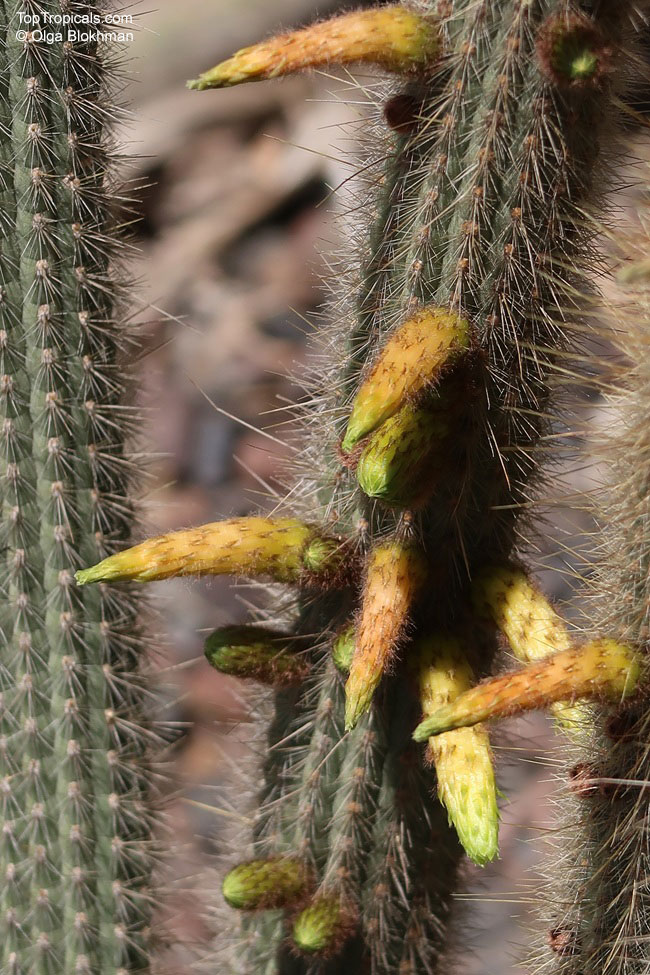
Cleistocactus sp. (Cleistocactus)
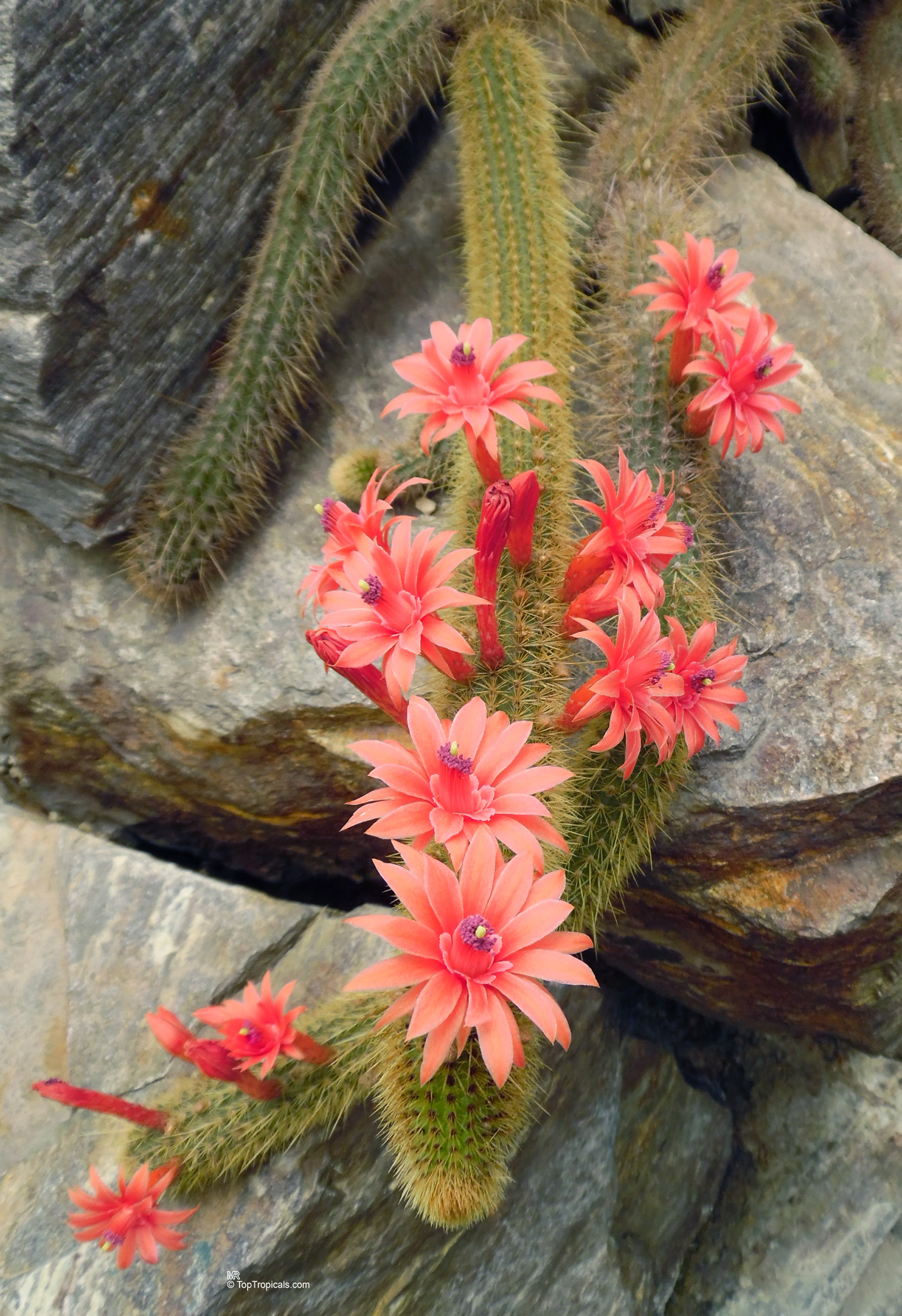
Botanical name: Cleistocactus sp.
Common name: Cleistocactus
Family: Cactaceae
Origin: South America
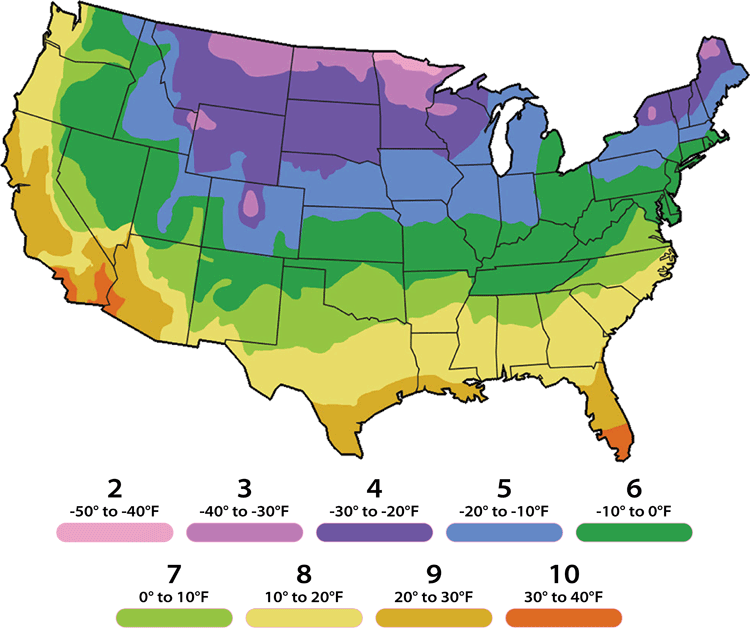
USDA Zone: 8-11
Cold tolerance: 20°F
 Plant form: Large bush
 Mature height: 5-10 ft
 Sun exposure: Full sun or bright light indoor
 Cold tolerance: Frost sensitive. Protect from freezing.
 Watering: Moderate


 Flower color: Pink; red, crimson, vinous; yellow, orange
 Suitable for: Outdoors in the suitable USDA zone; small gardens, containers, and indoor growing
 Thorns: Thorny or spiny
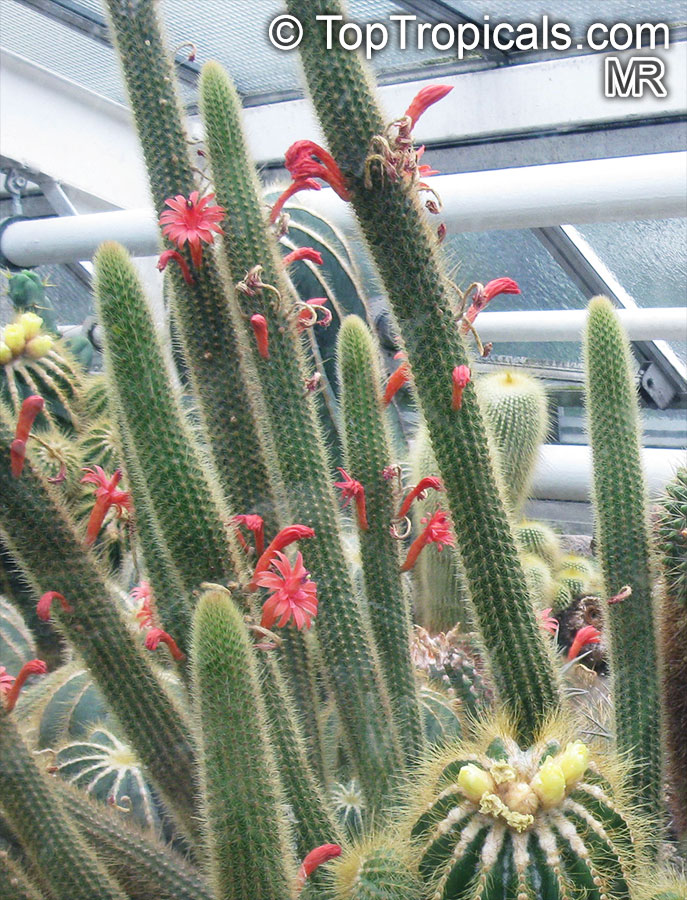
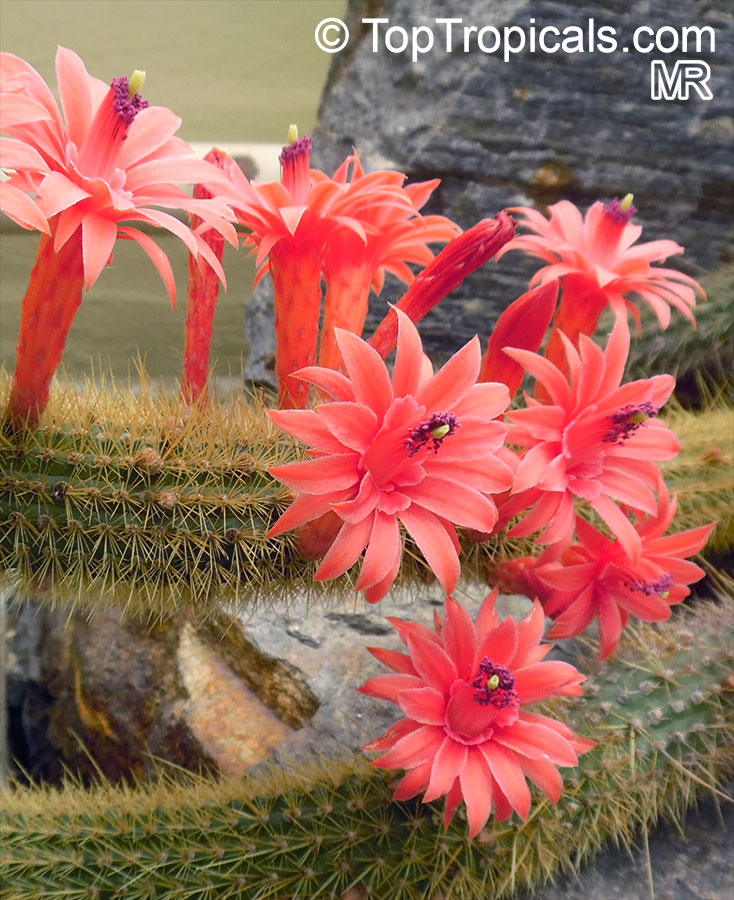
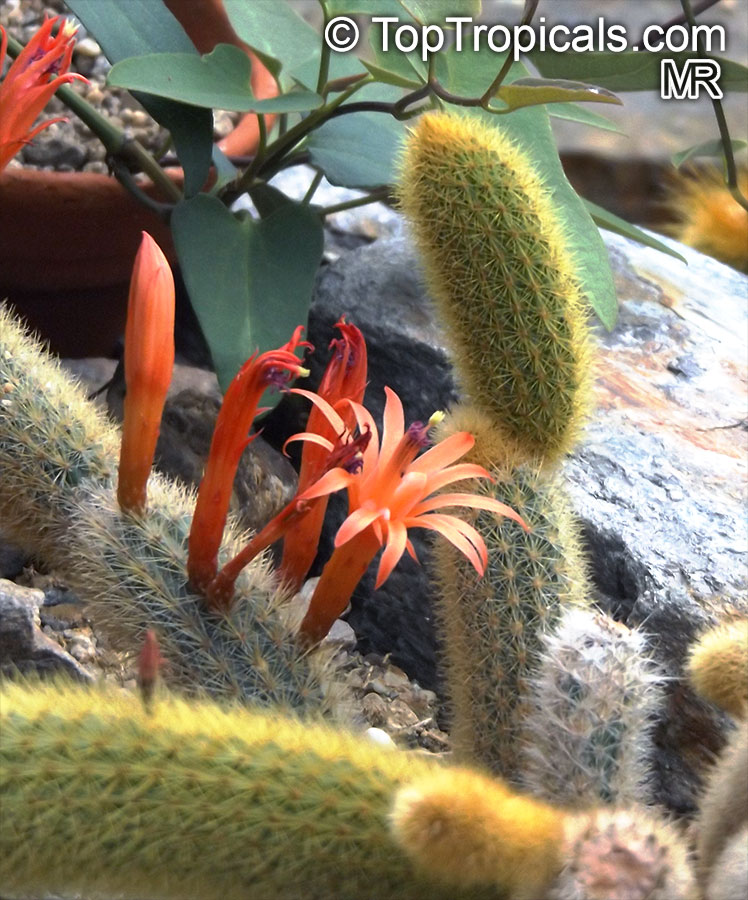
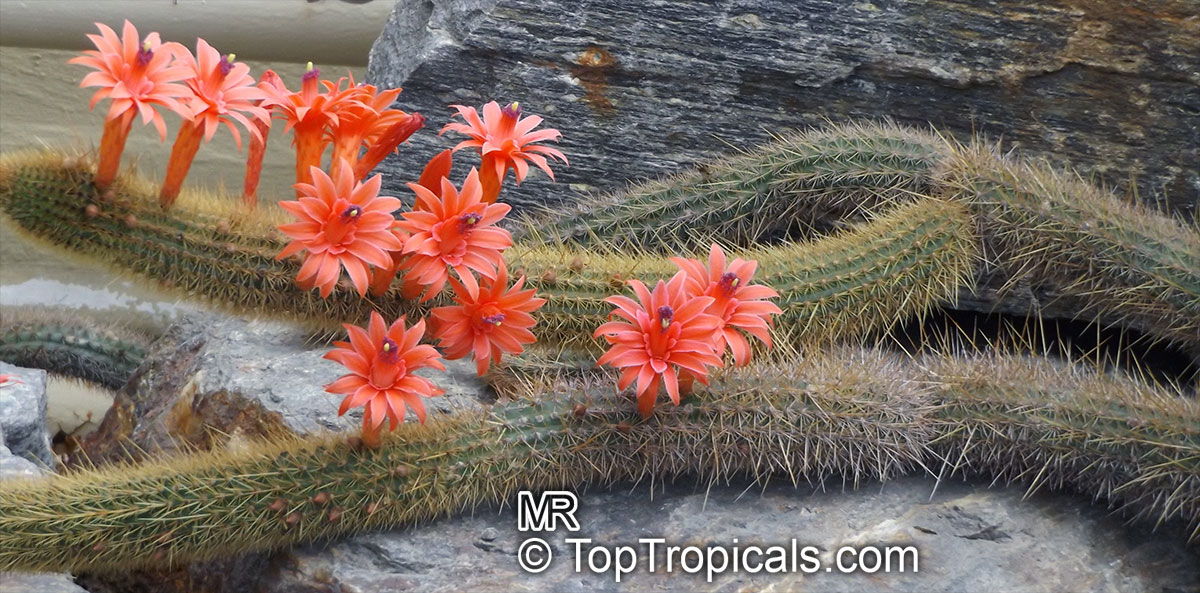
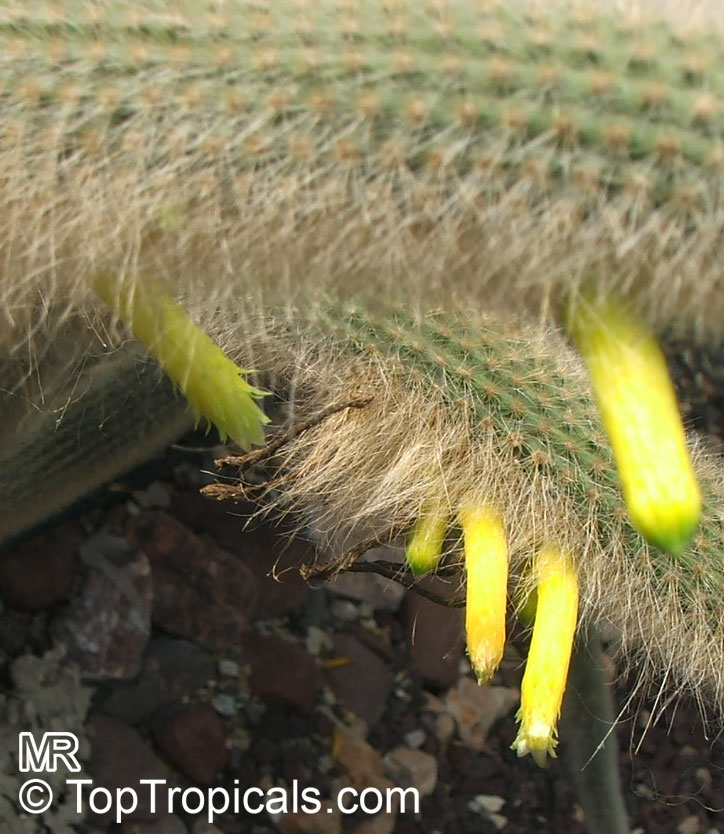
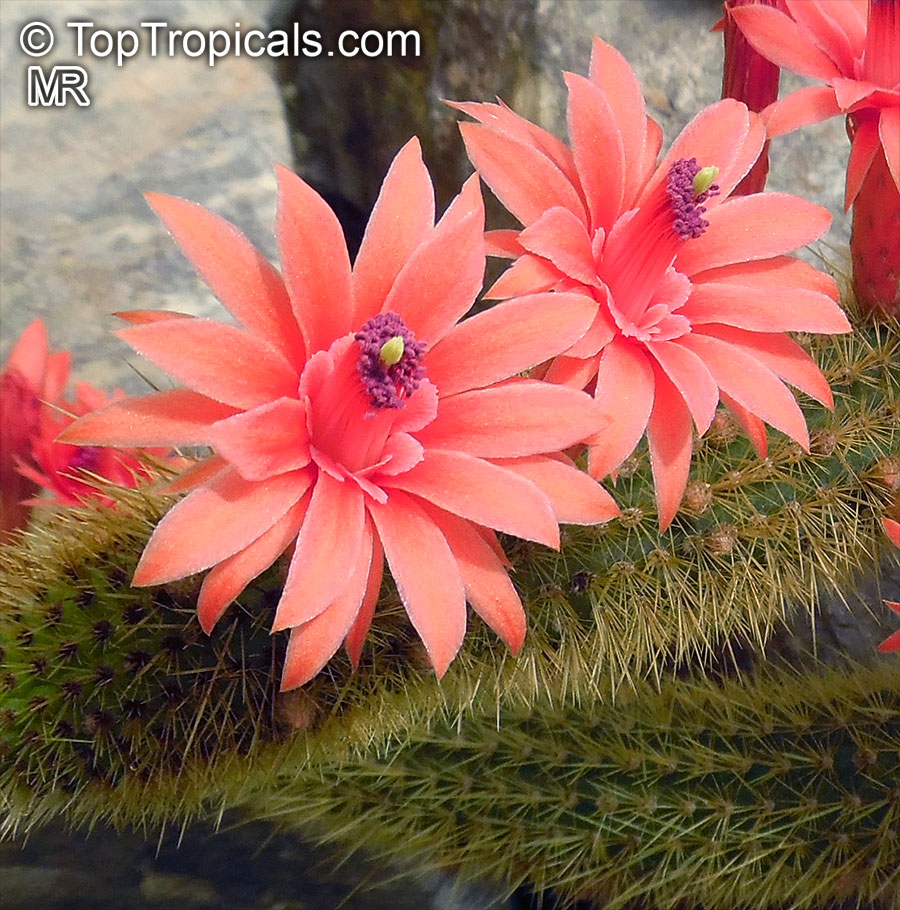
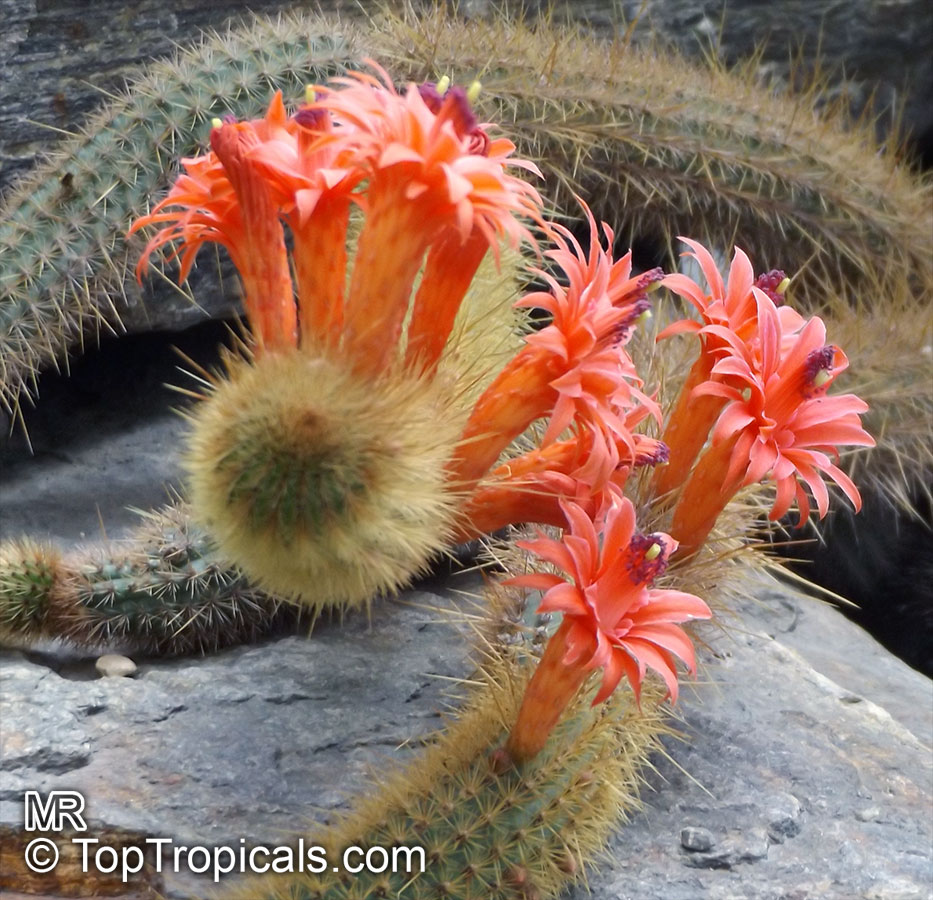
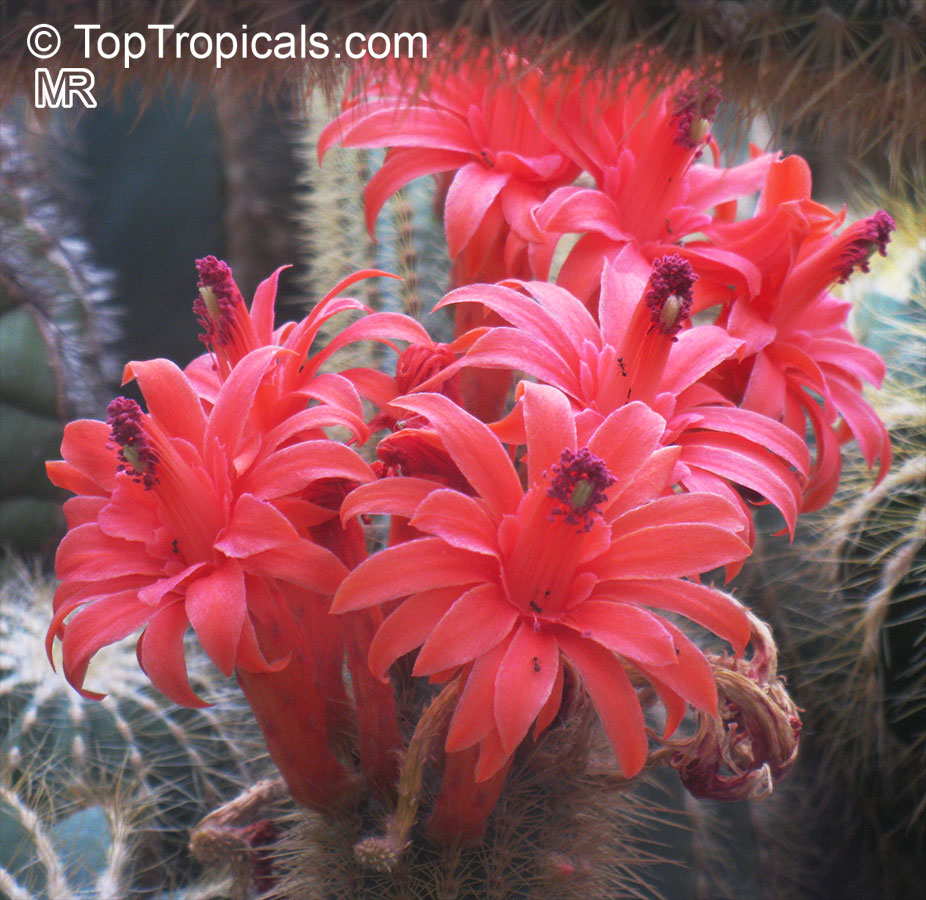
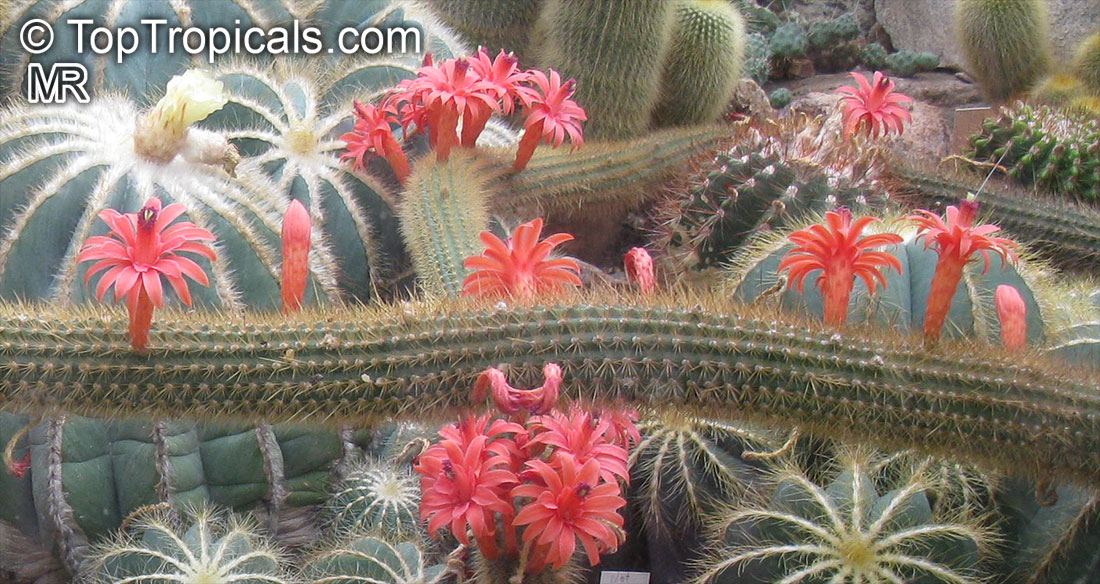
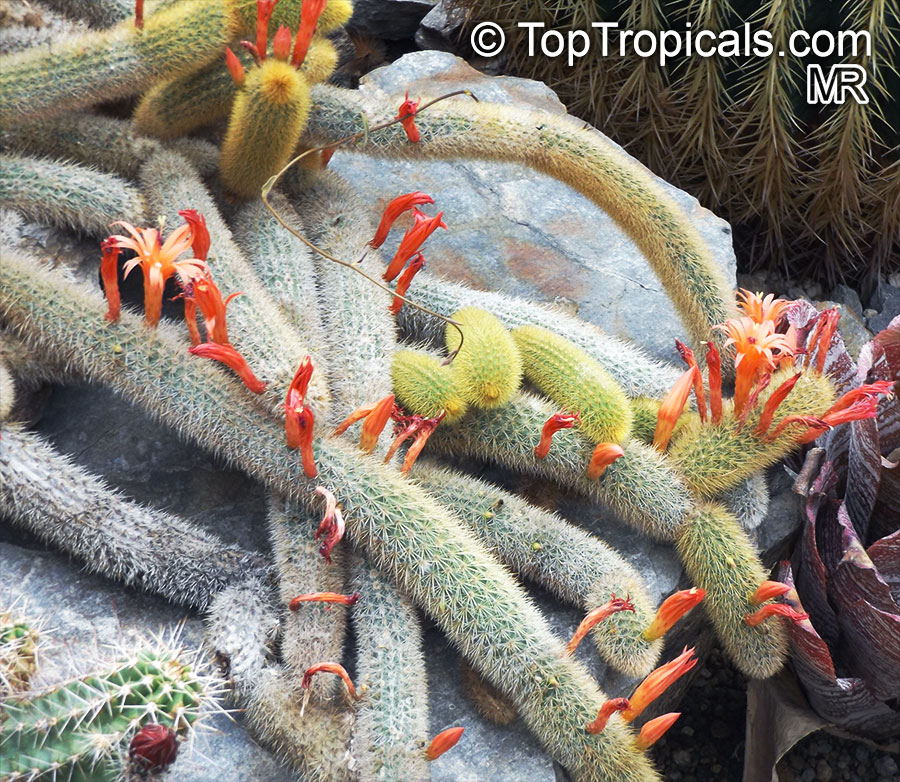
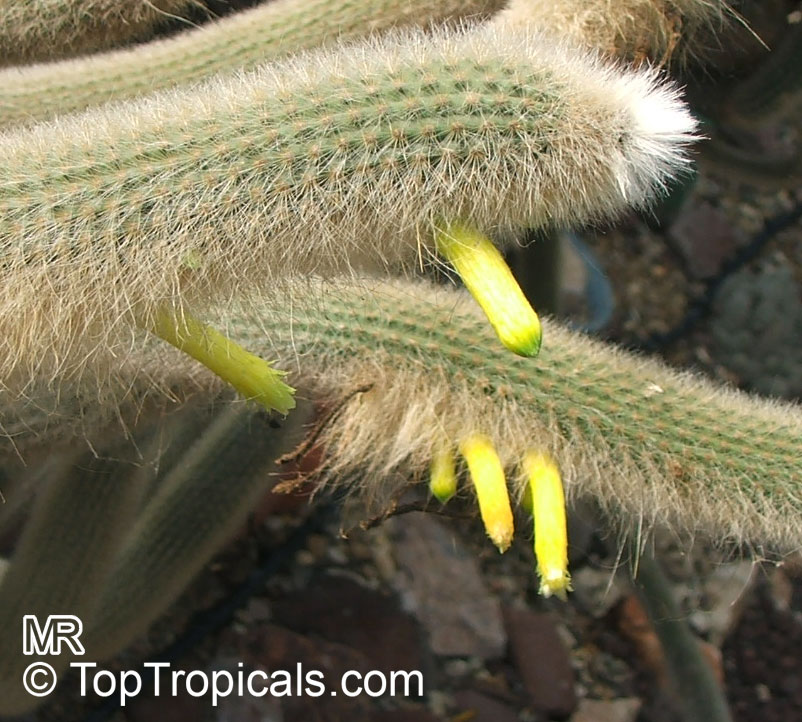
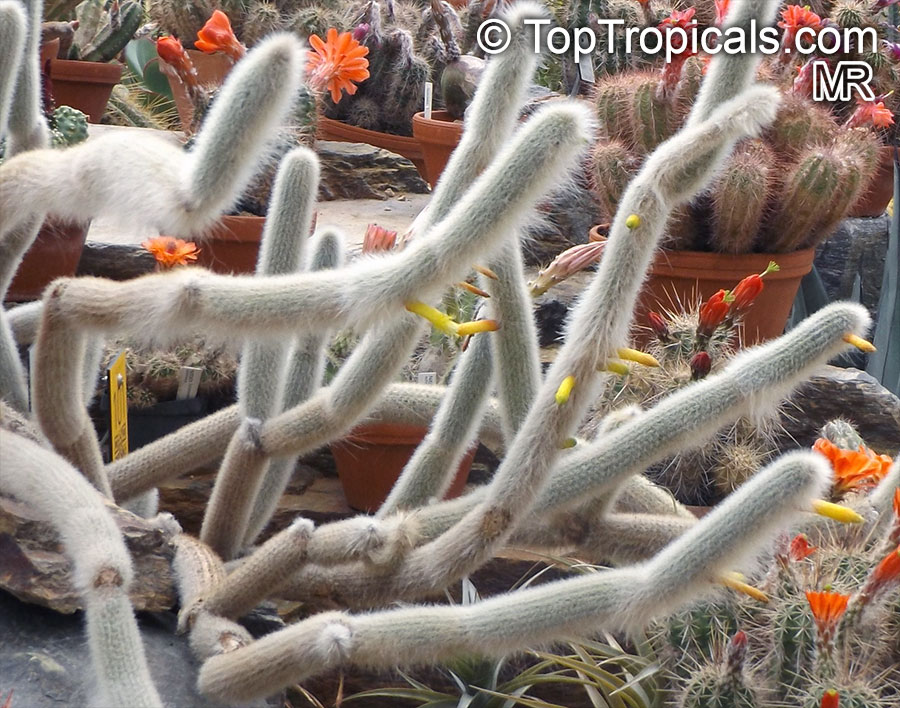
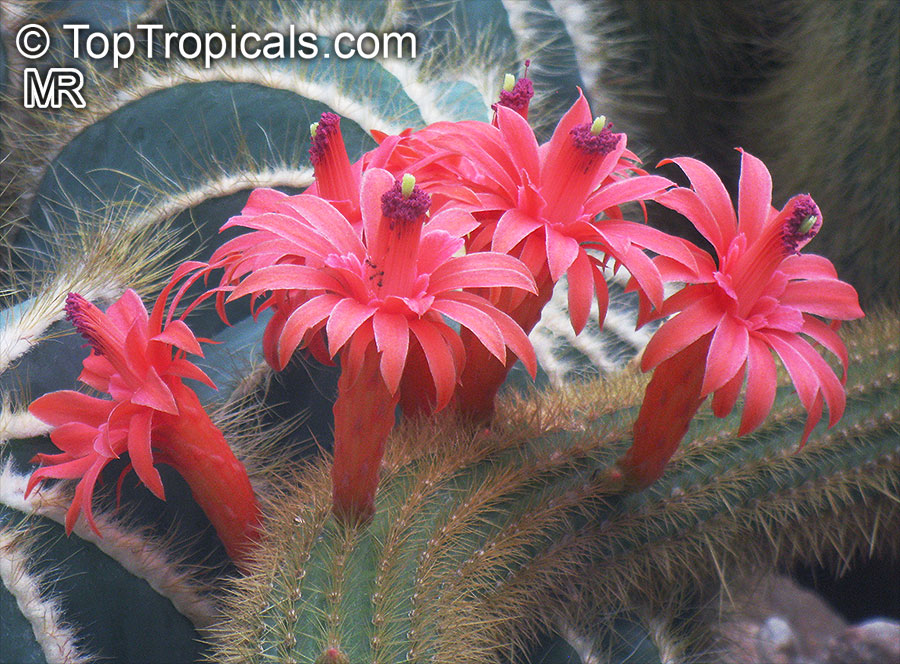
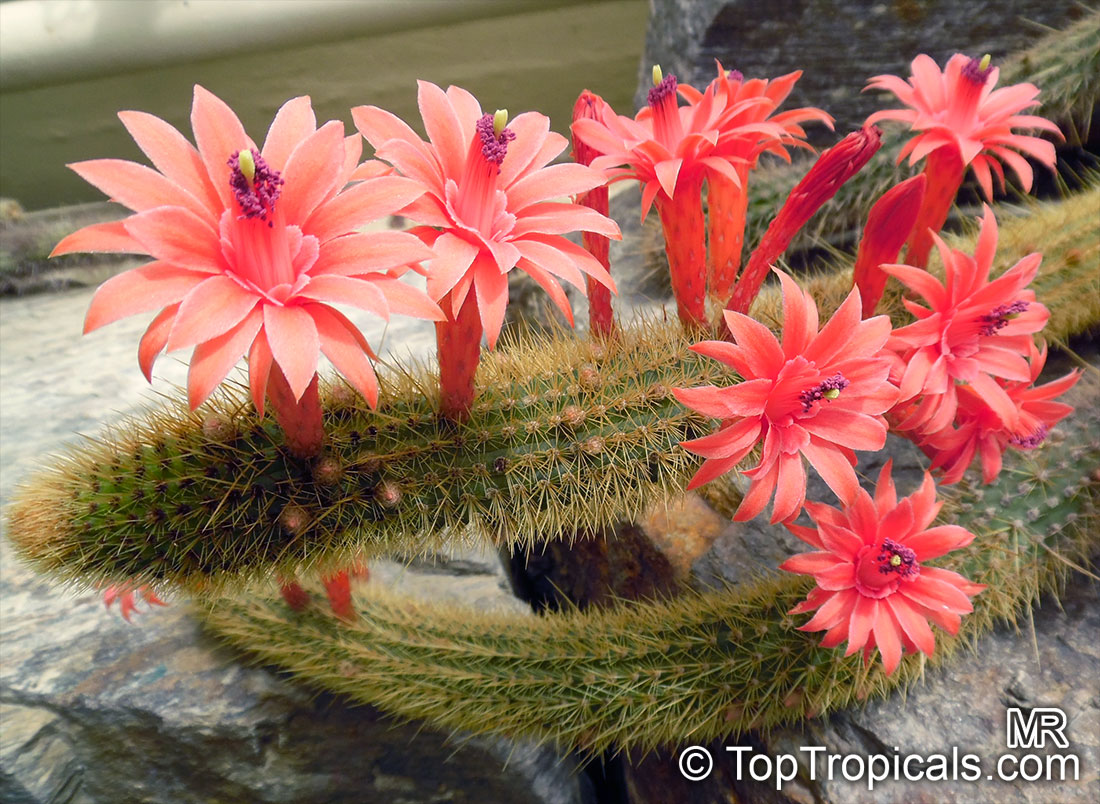
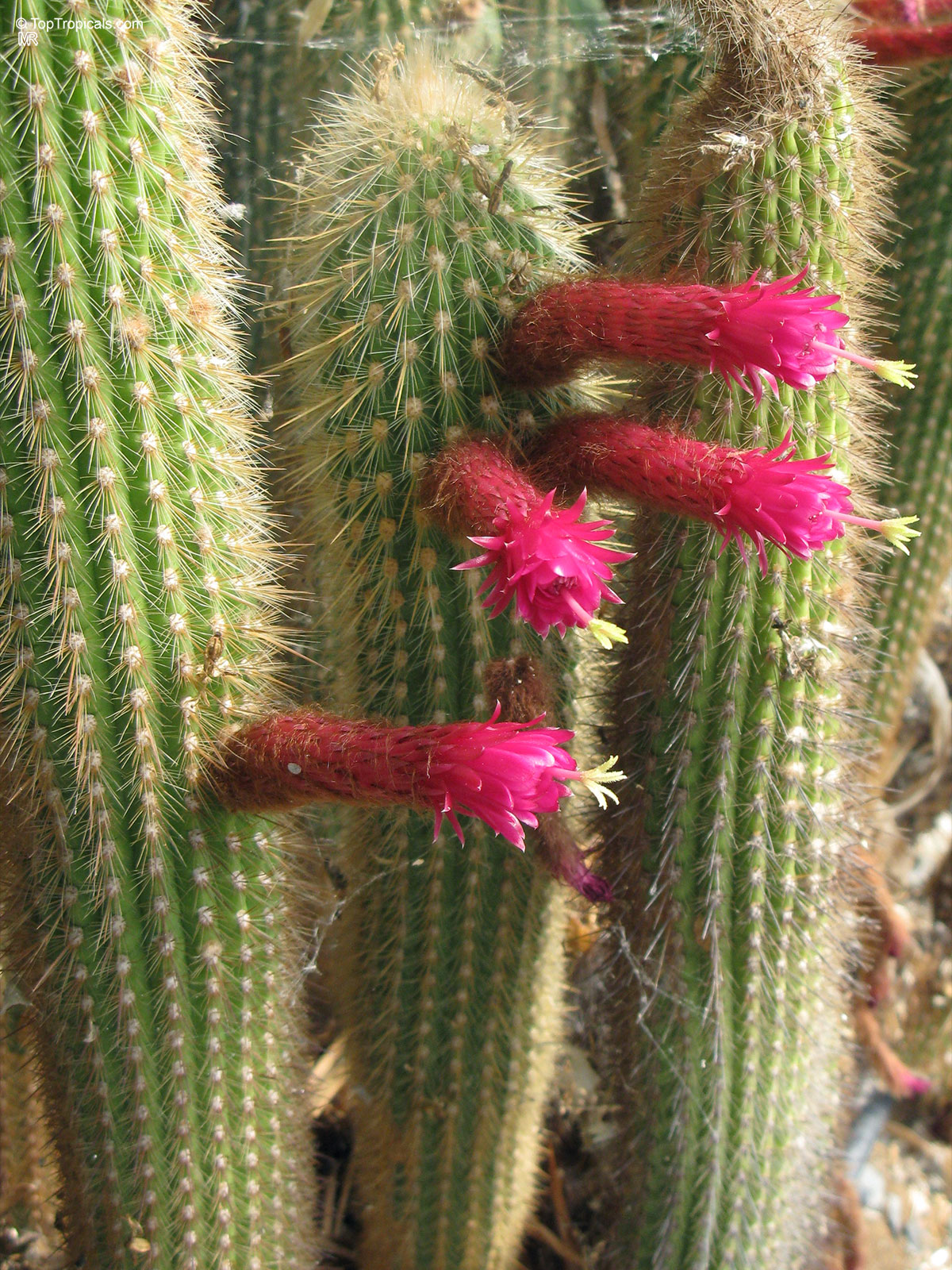
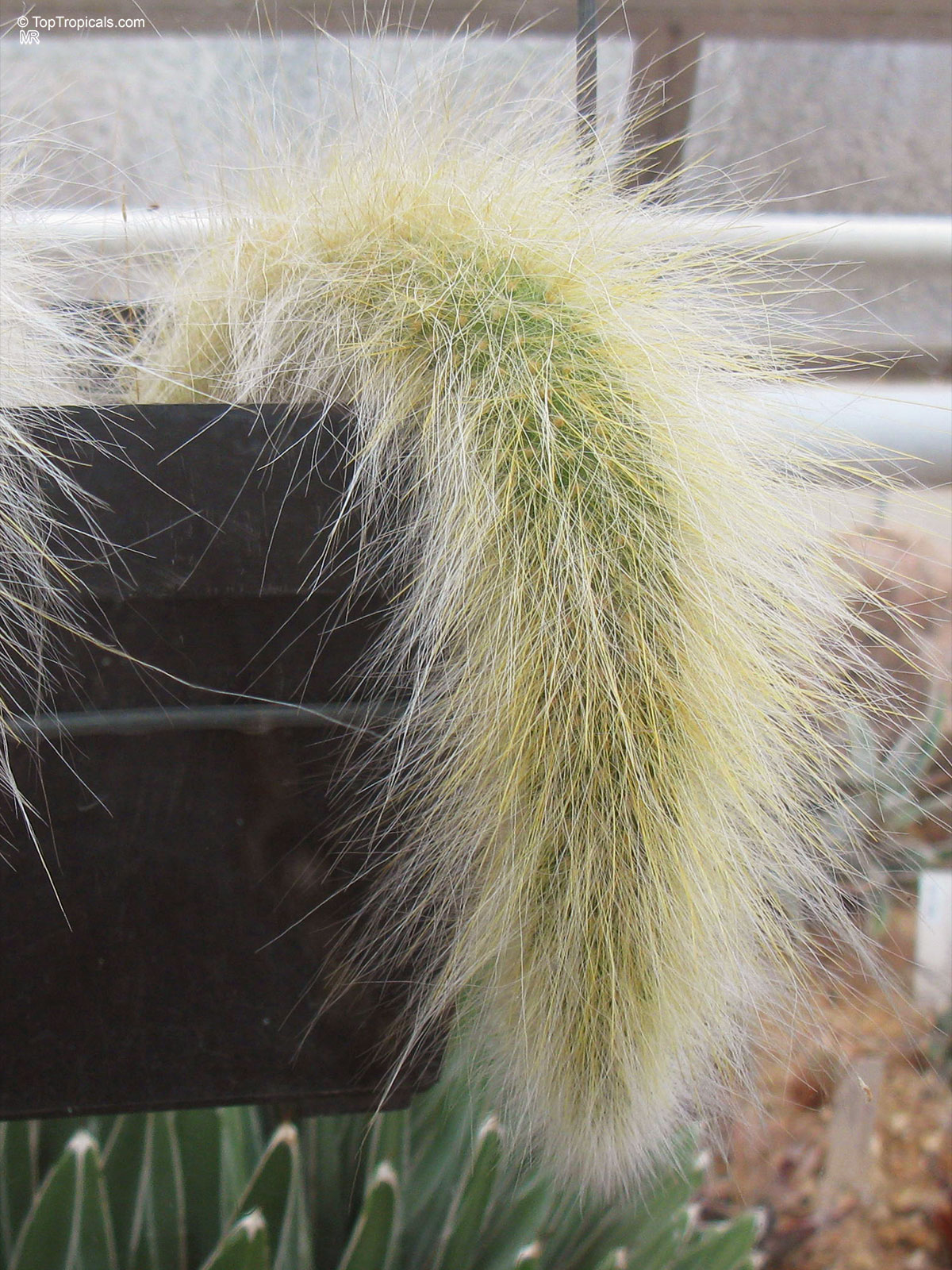
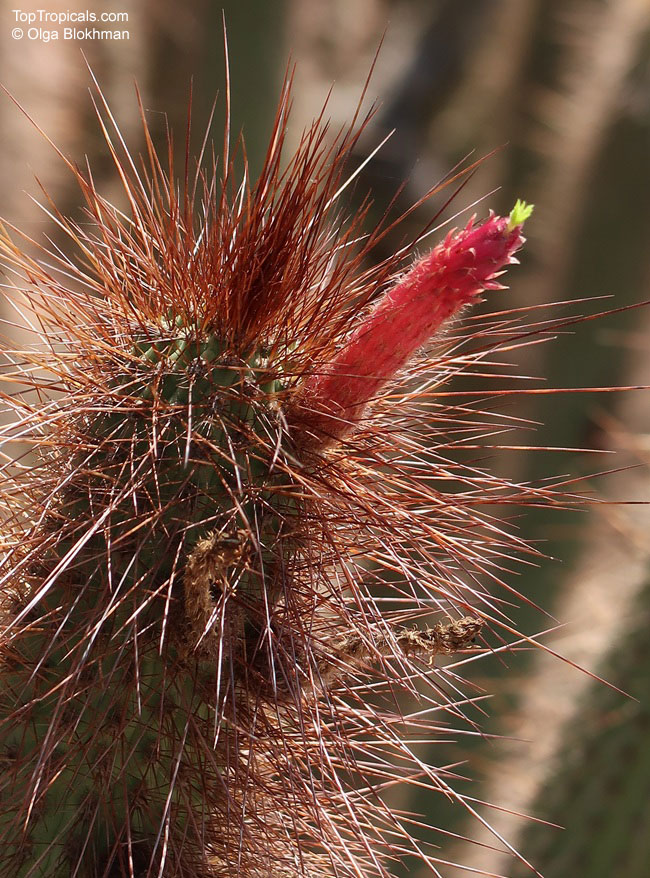
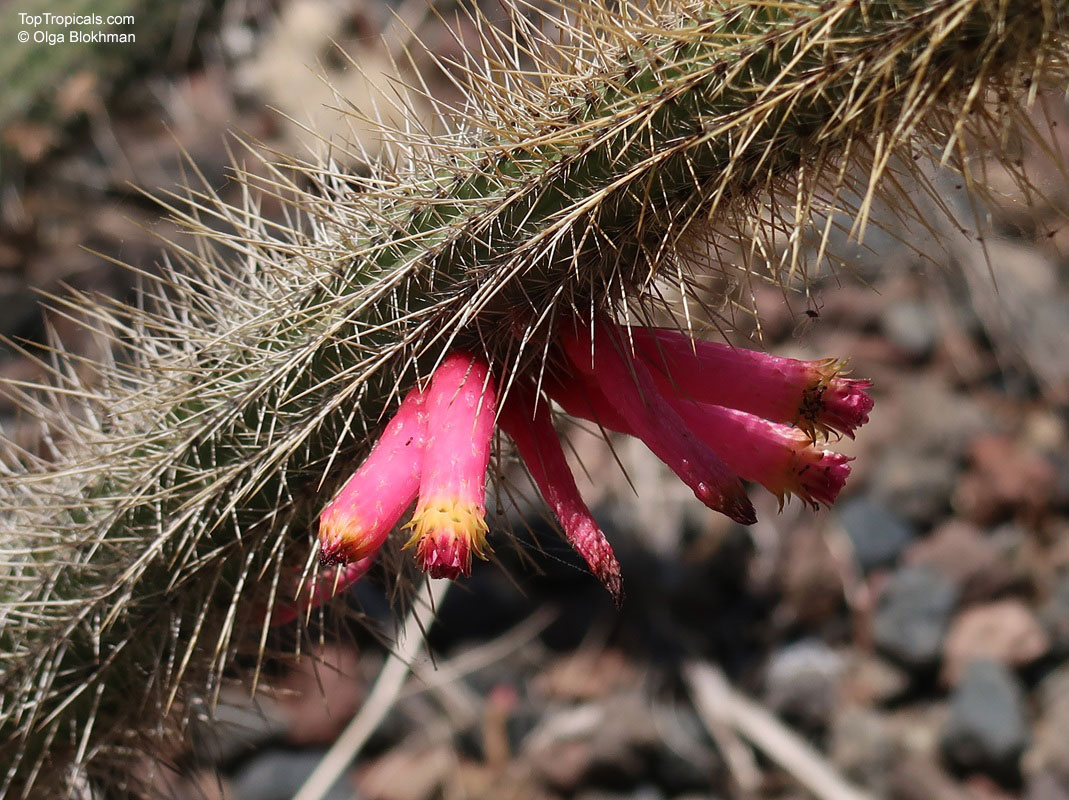
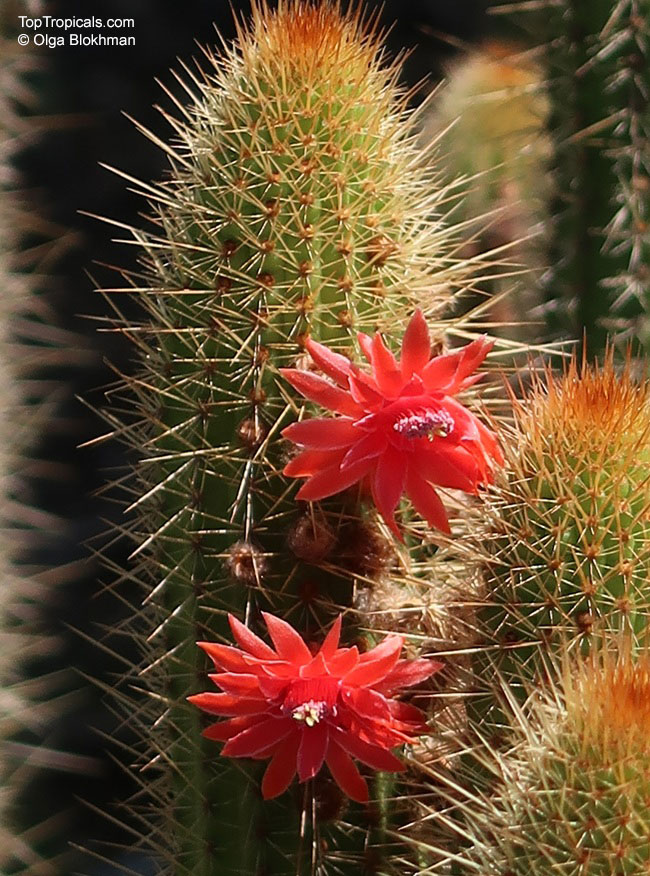
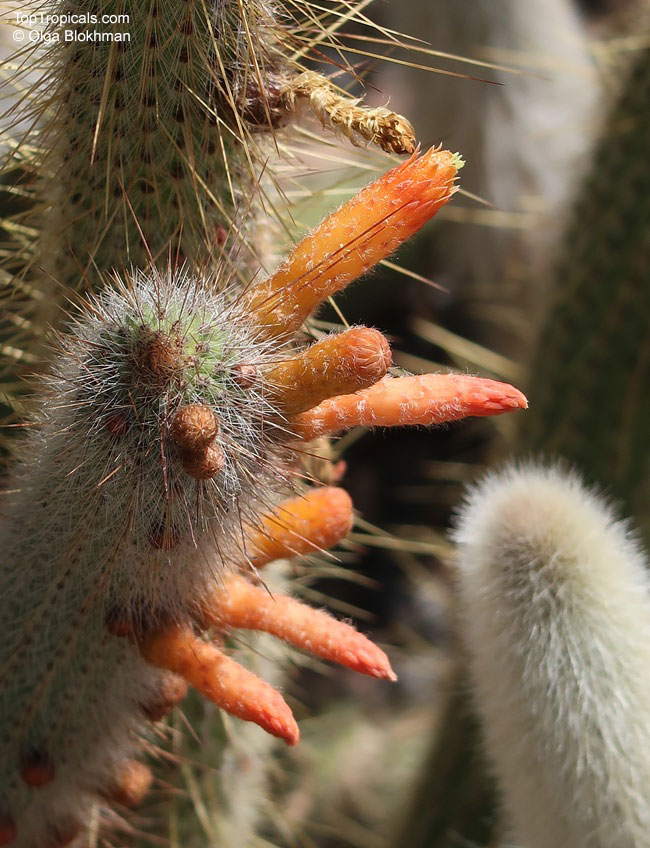
Cleistocactus is a genus of columnar and occasionally sprawling cacti in the Cactaceae family, native to South America, particularly the Andean regions of Bolivia, Peru, Argentina, and neighboring countries. Species inhabit rocky slopes, dry valleys, and mountainous habitats, often at considerable elevations. Most develop slender, cylindrical stems with numerous ribs and densely arranged spines, sometimes forming clumps or tall, branching columns. Depending on the species, stems may be upright, arching, or trailing, ranging from a few feet to over ten feet long. The distinctive tubular flowers are often red, orange, pink, or greenish, with narrow openings and protruding stamens, frequently adapted for hummingbird pollination. Familiar species include Cleistocactus strausii, the silvery-white Silver Torch Cactus, and C. winteri, known for its trailing stems and golden spines.
Cleistocactus species generally prefer full sun to bright partial sun and sharply drained, mineral-rich soil. They tolerate drought but benefit from occasional watering during active growth and relatively dry conditions in winter. Many are cultivated as ornamental cacti for their unusual stem forms, dense spination, and colorful flowers. Cold tolerance varies considerably among species, with cultivation generally spanning USDA Zones 8-11. Some high-altitude species tolerate brief light frosts when kept dry, while tropical species require warmer conditions.