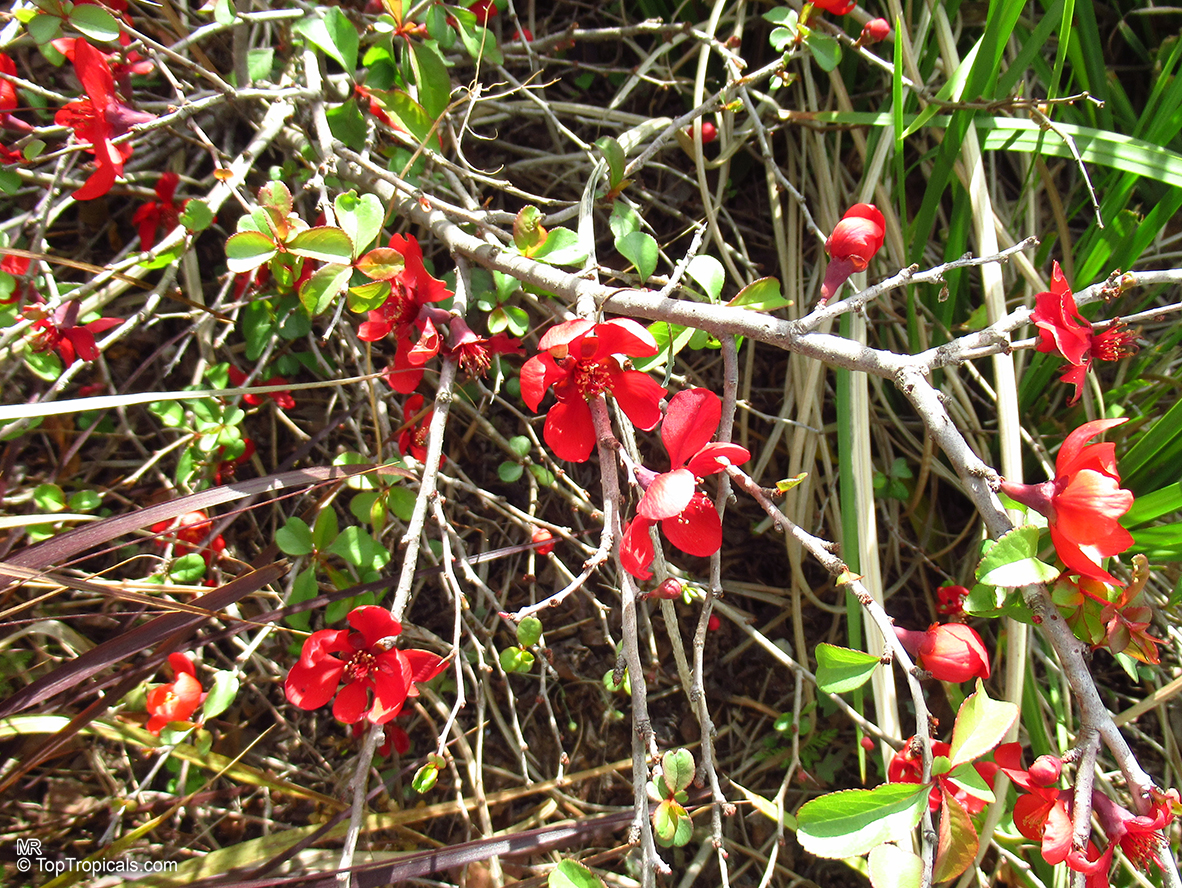
Chaenomeles sp. (Flowering quince)
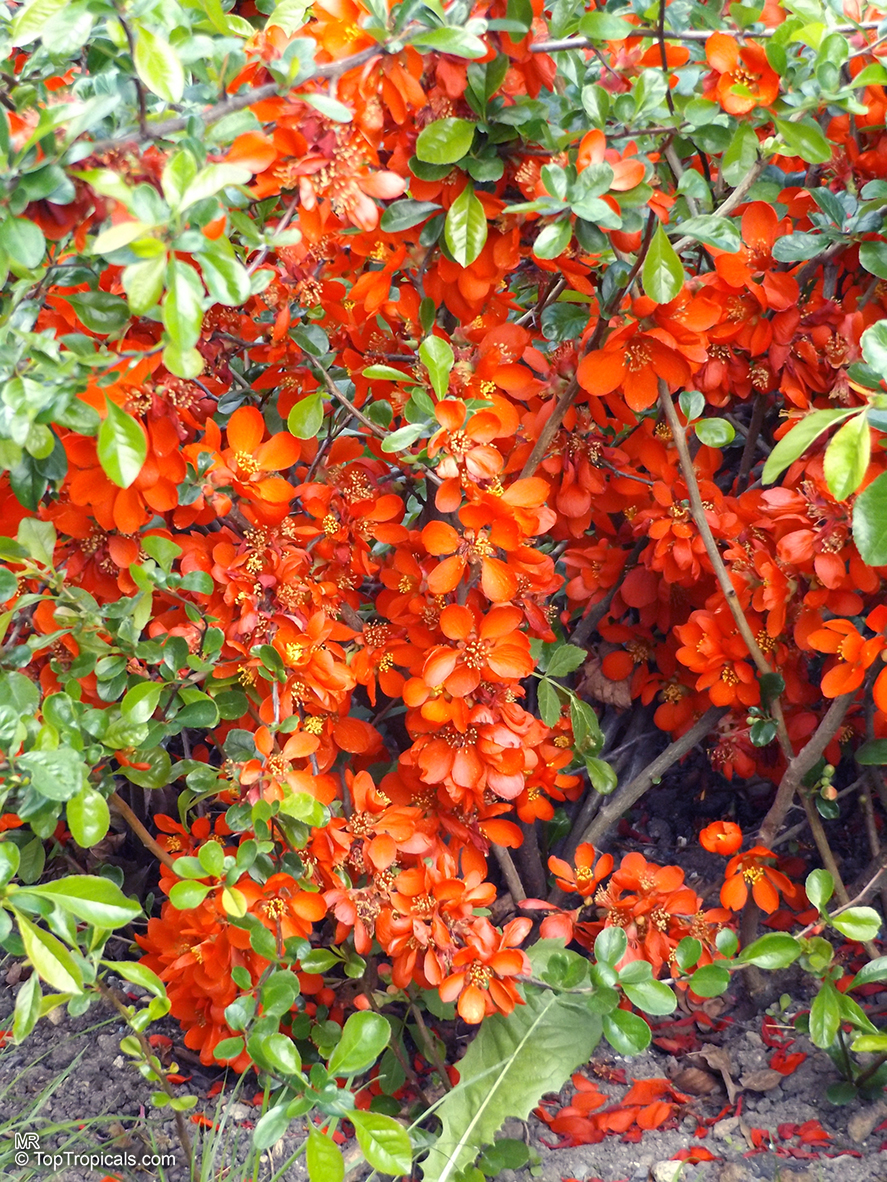
Botanical name: Chaenomeles sp.
Common names: Flowering quince, Dwarf quince
Family: Rosaceae
Origin: eastern Asia
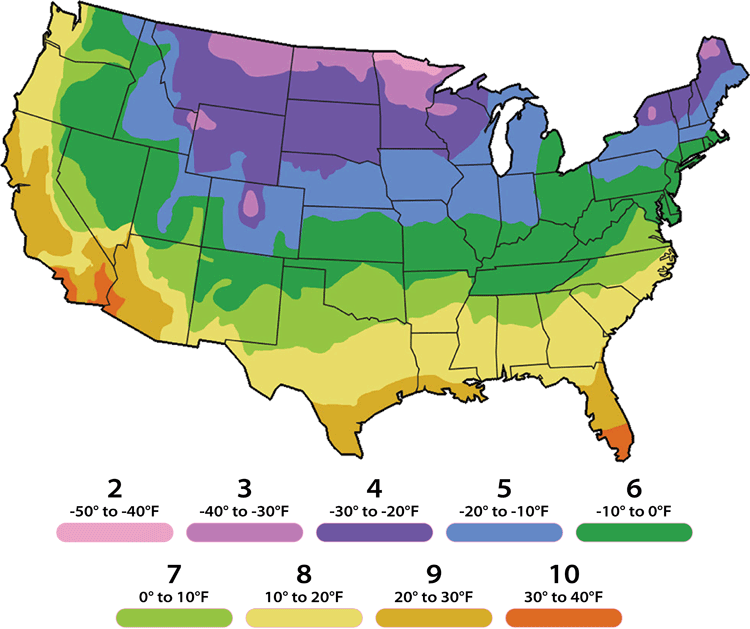
USDA Zone: 5-9

 Plant form: Large bush; suitable for bonsai
 Mature height: 5-10 ft
 Sun exposure: Full sun or bright light indoor; semi-shade
 Cold tolerance: Frost sensitive. Protect from freezing.
 Watering: Moderate


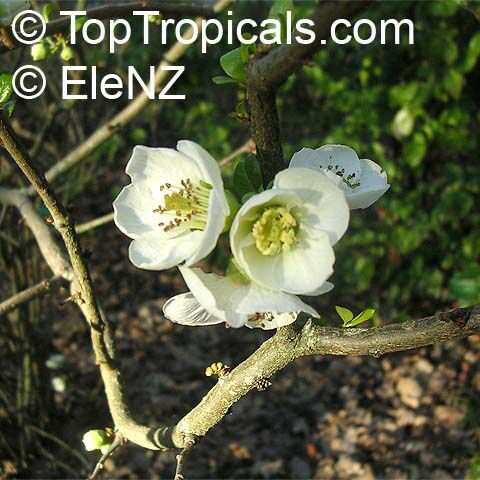
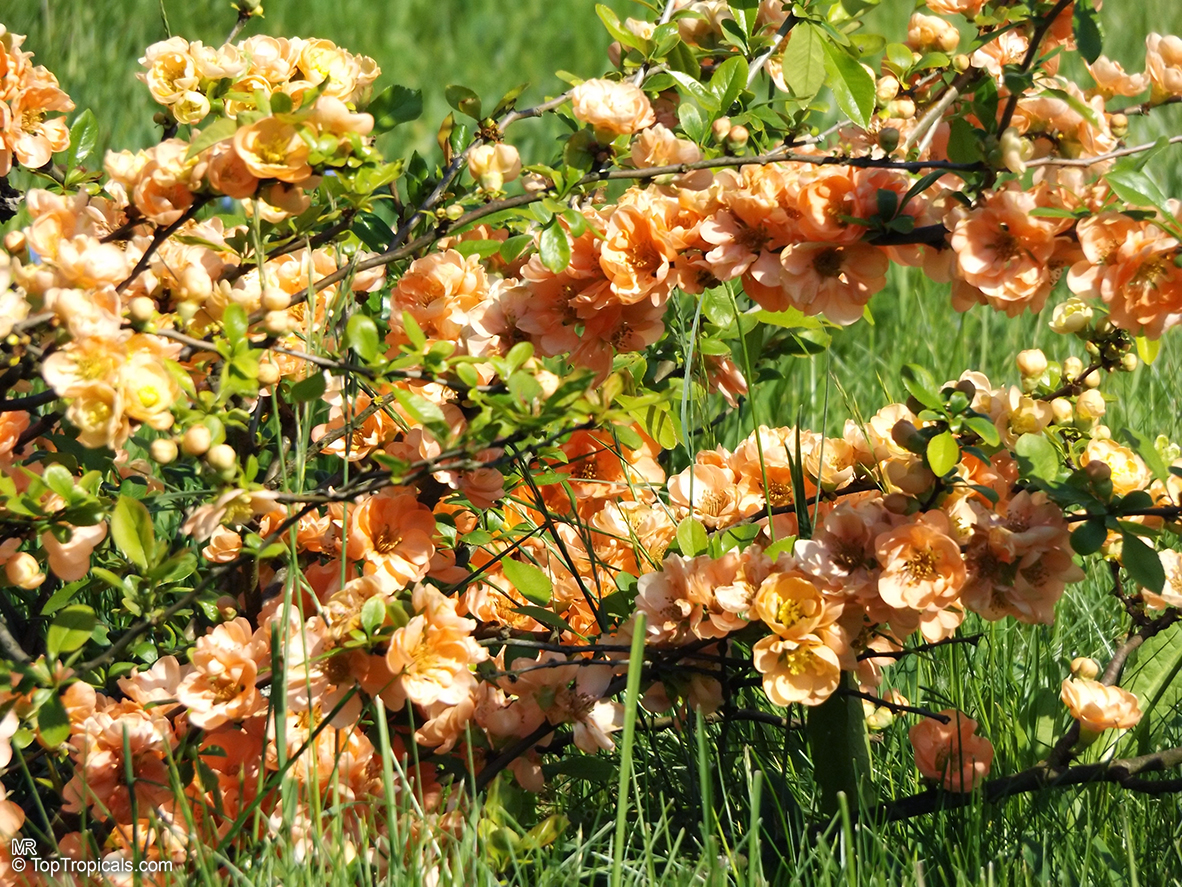
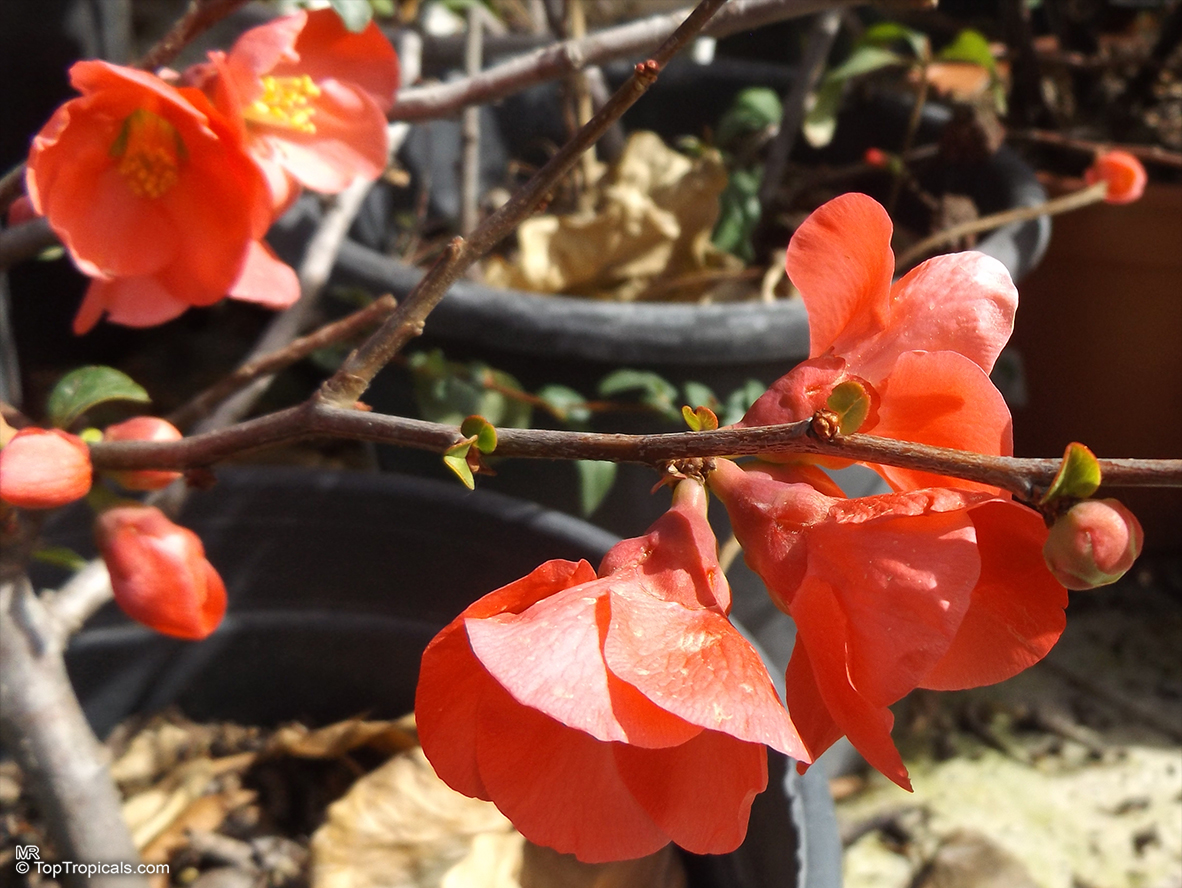
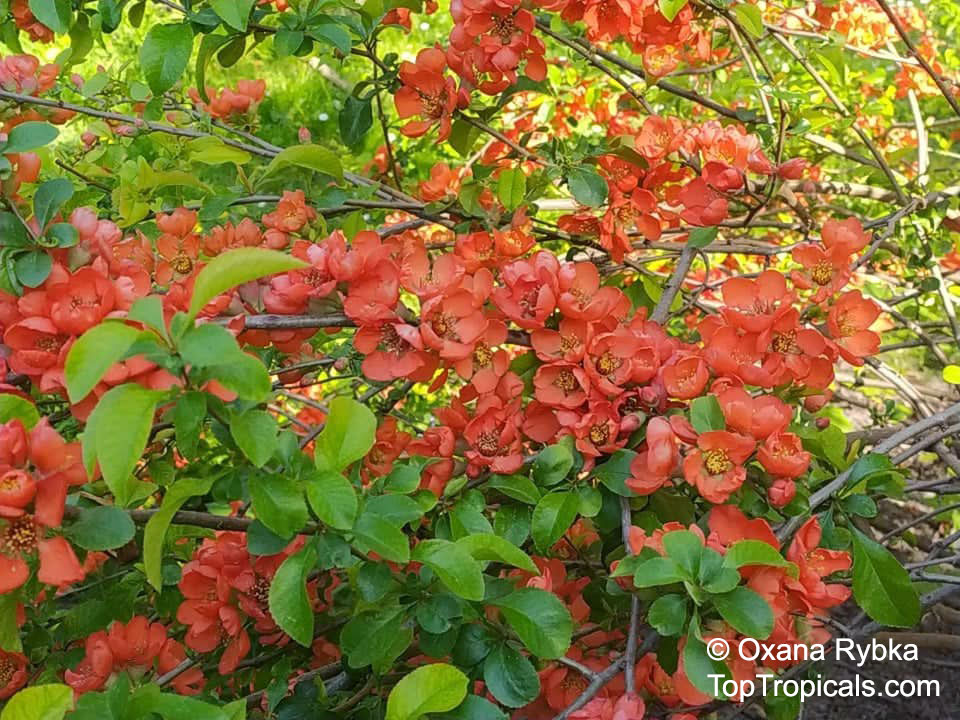
 Flower color: Pink; white and off-white; red, crimson, vinous; yellow, orange
 Suitable for: Outdoors in the suitable USDA zone; small gardens, containers, and indoor growing
 Wildlife: Attracts butterflies and hummingbirds
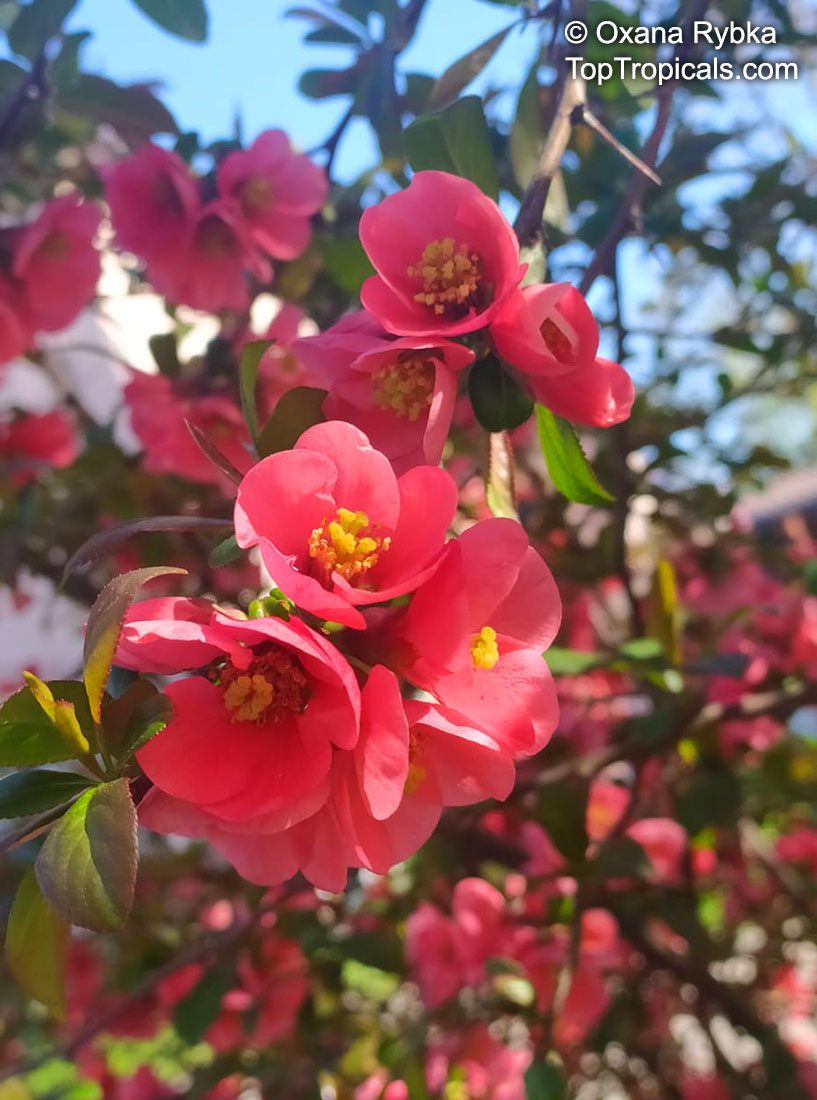
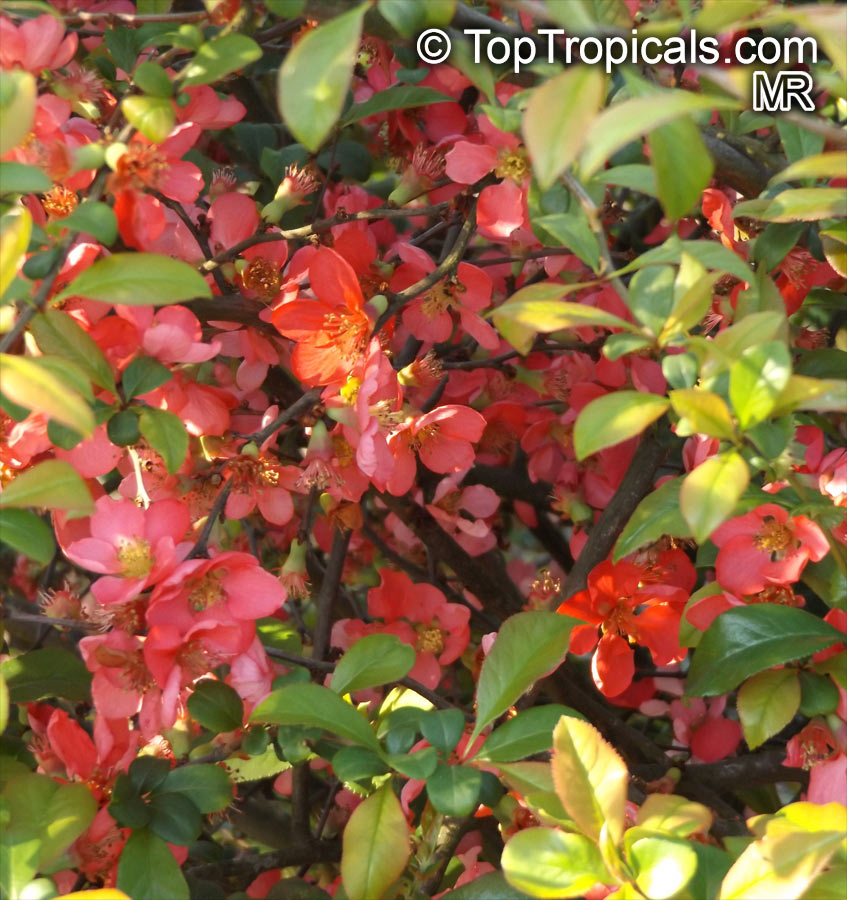
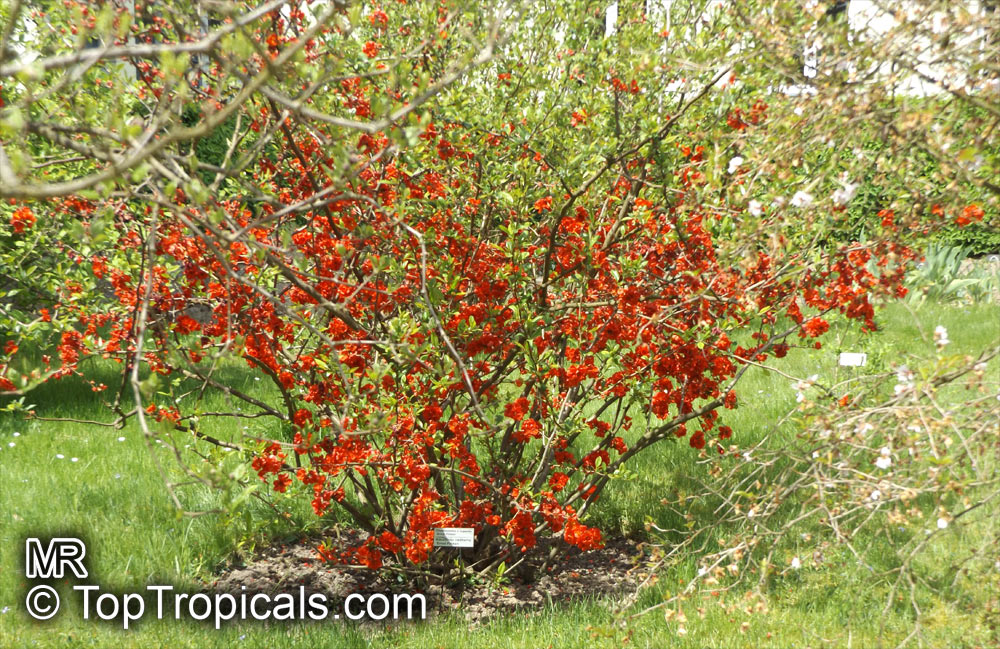
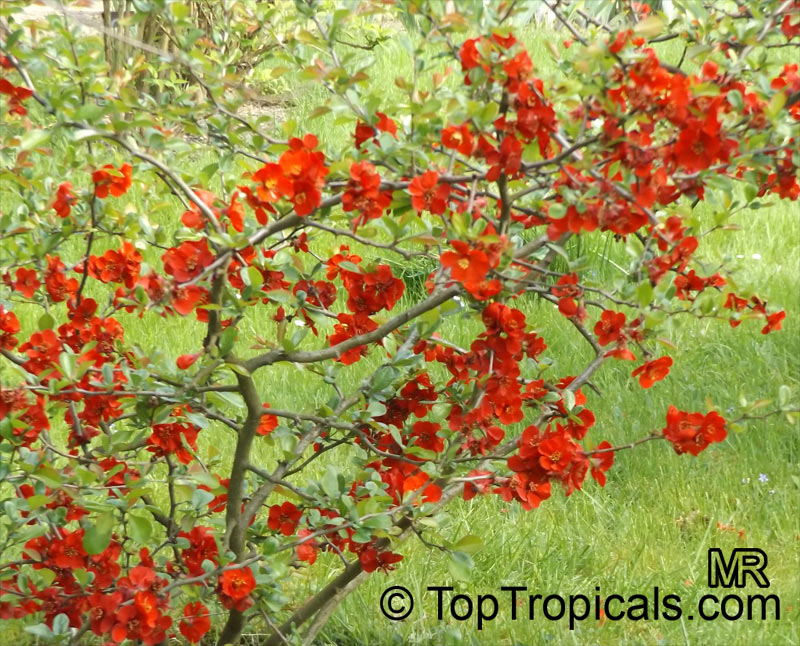
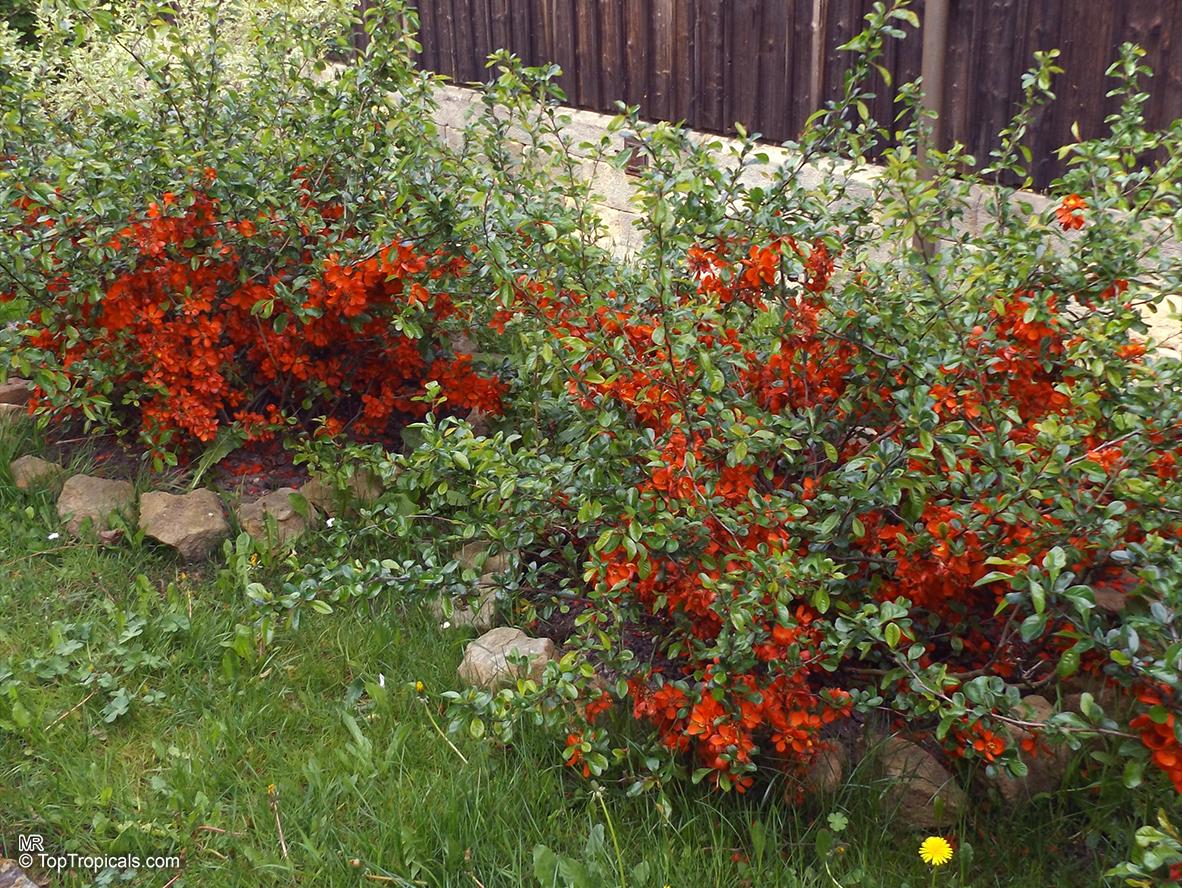
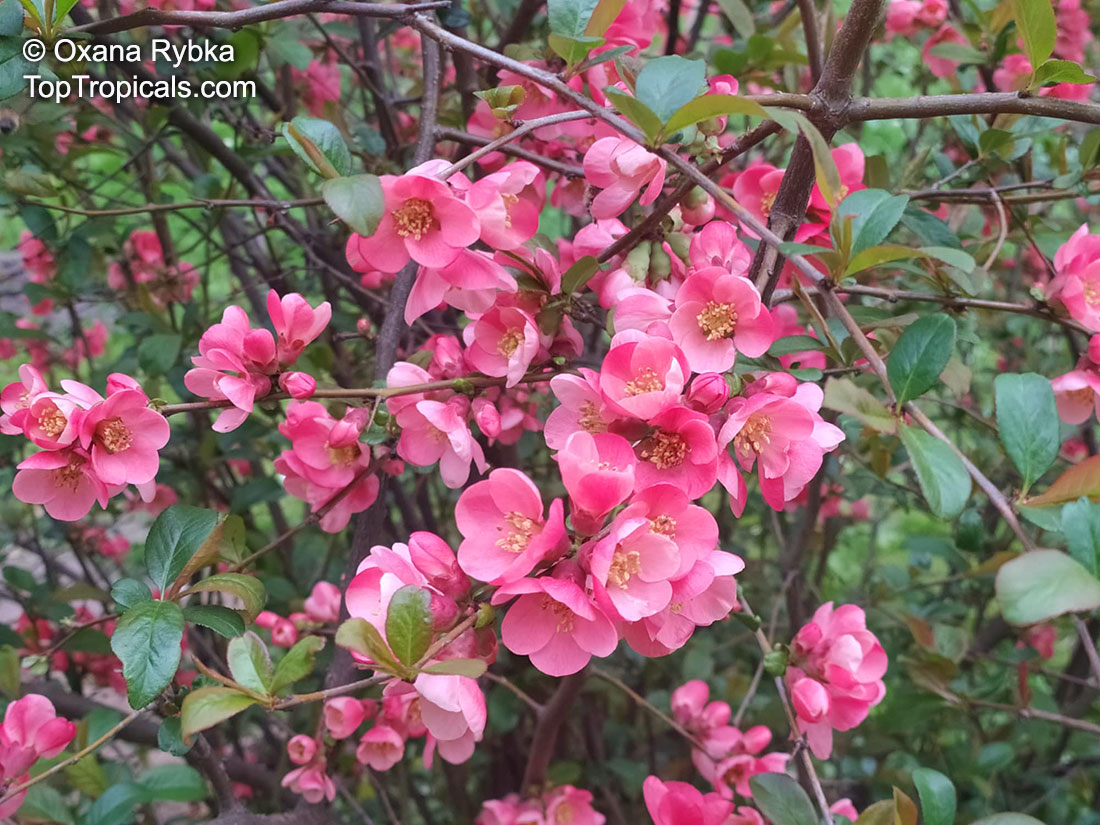
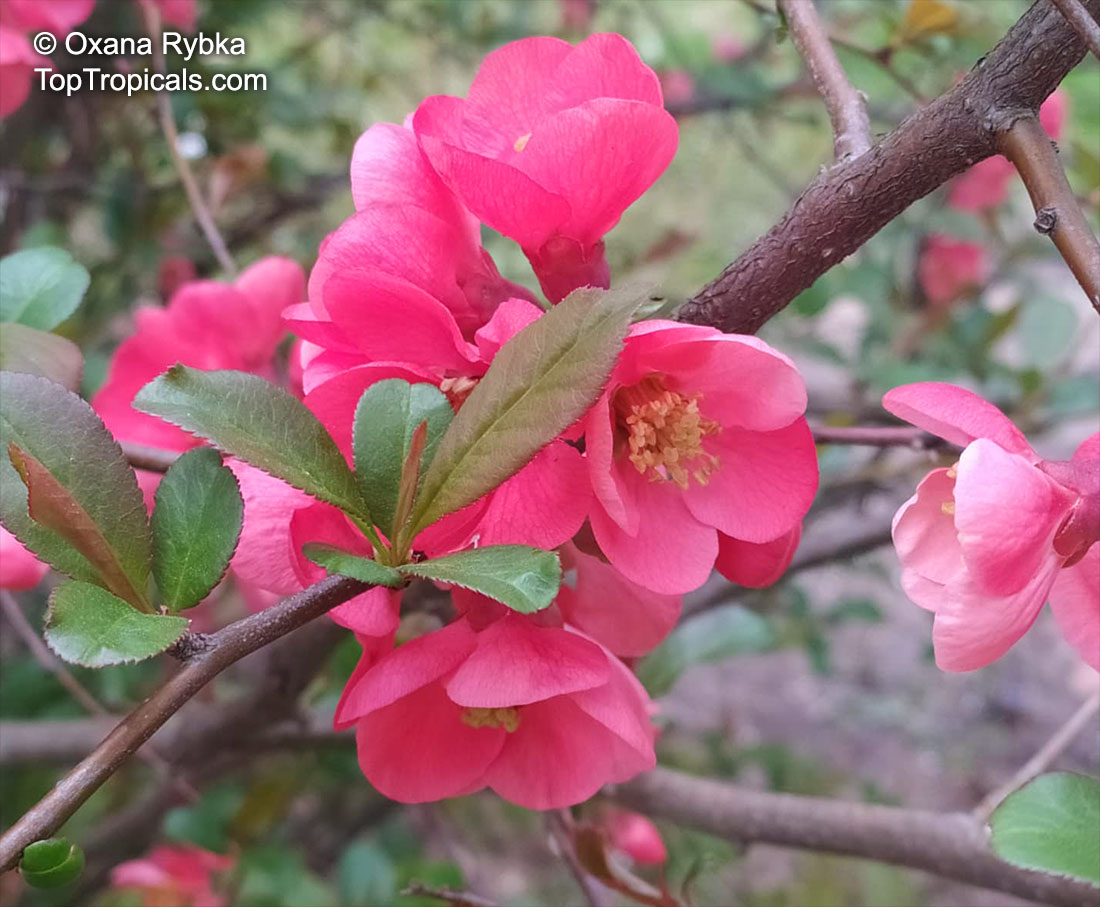
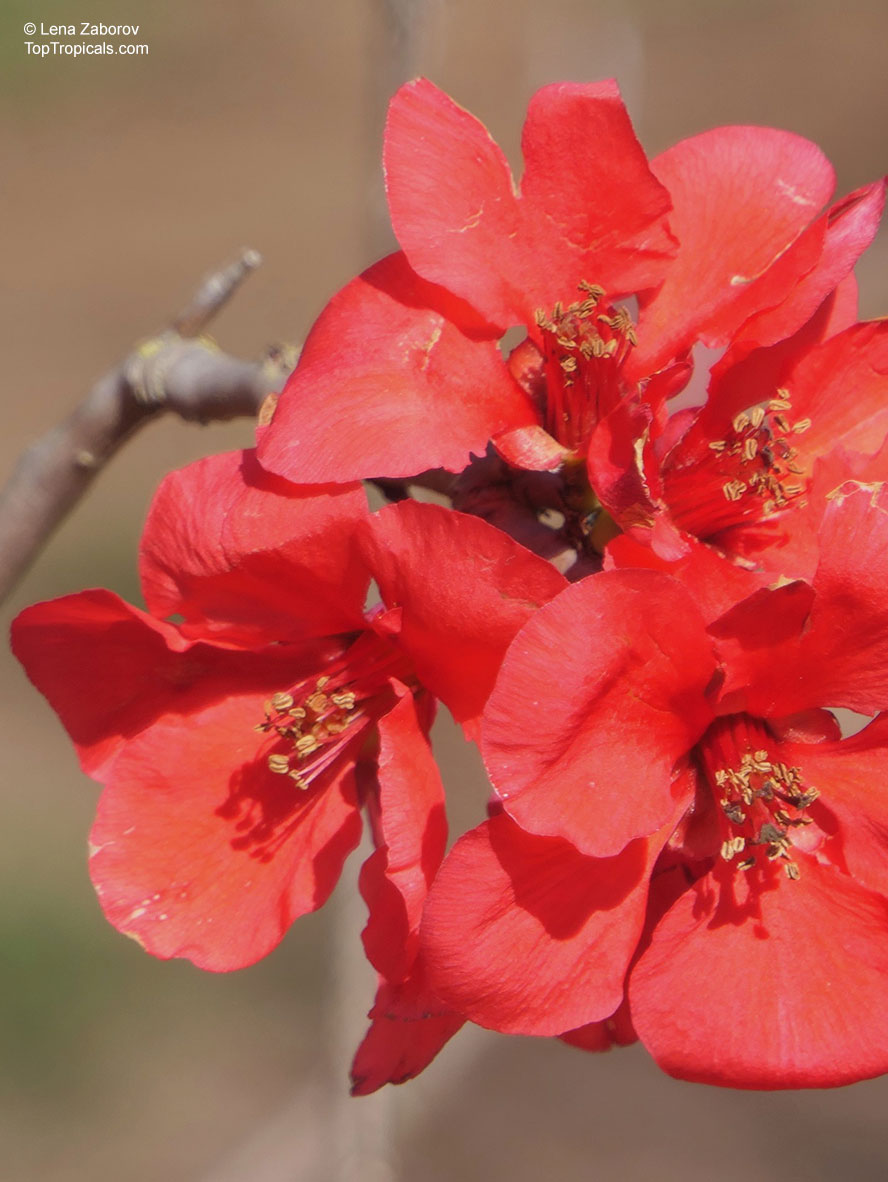
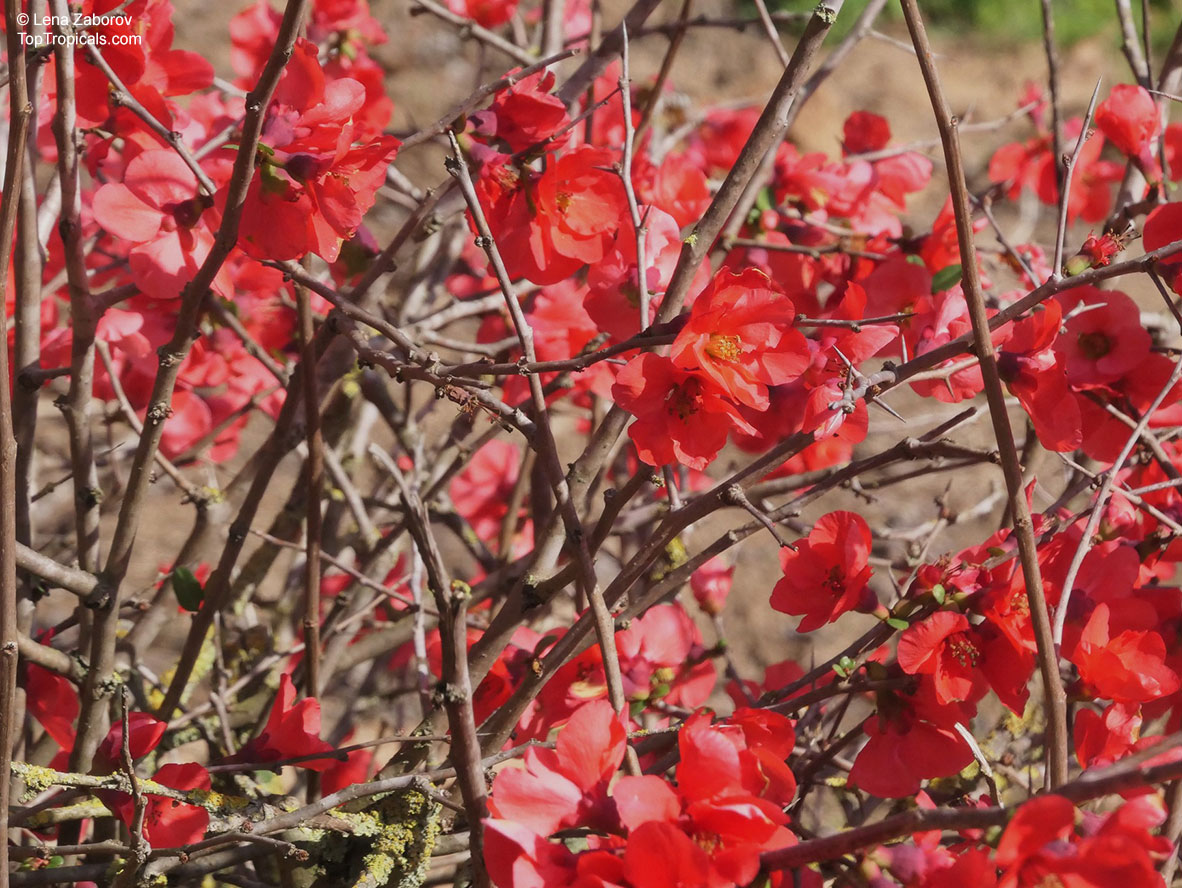
This group consists of three hardy, deciduous shrubs from eastern Asia, commonly known as Flowering Quinces. These thorny shrubs are suitable for growing against walls, in borders and standing alone. Flowering Quinces are easily grown and are valued for their saucer-shaped blossoms, which may be red, pink, orange, or white and are followed by large, fragrant fruits. Flowering Quinces can be grown in shady areas, though they flower best in sunny positions. They can be grown in well-drained, friable soil.
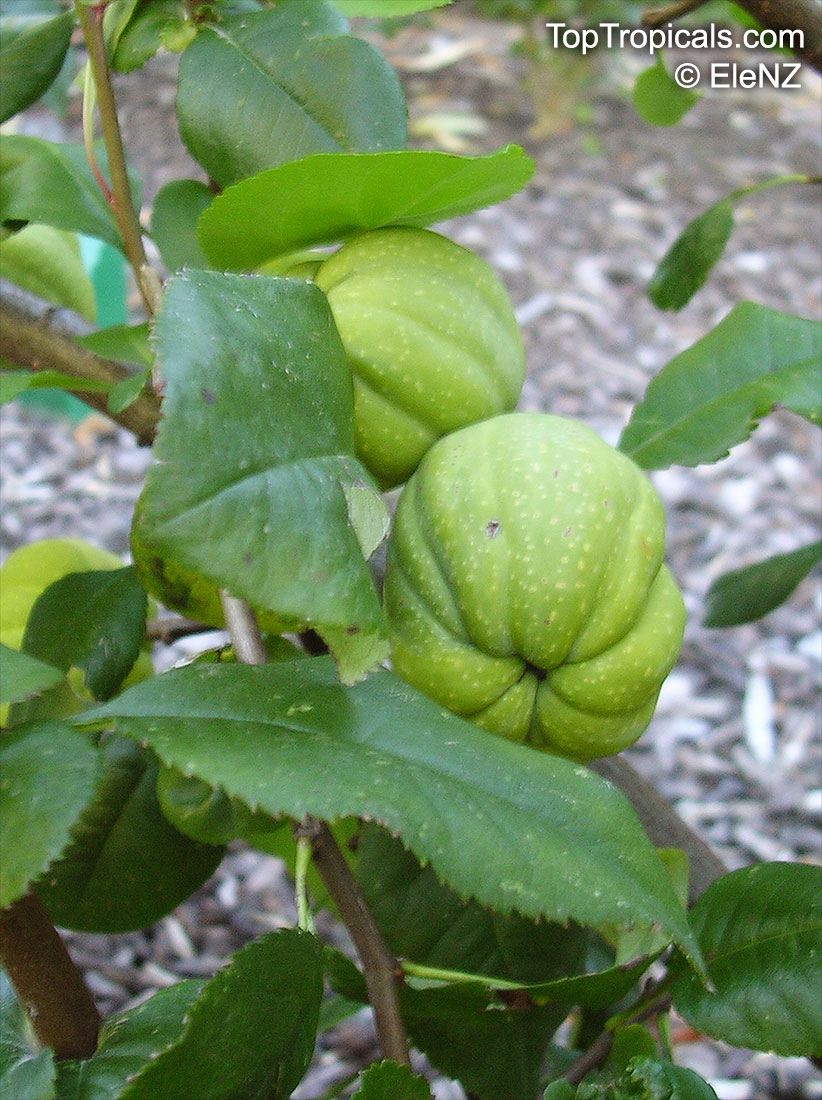
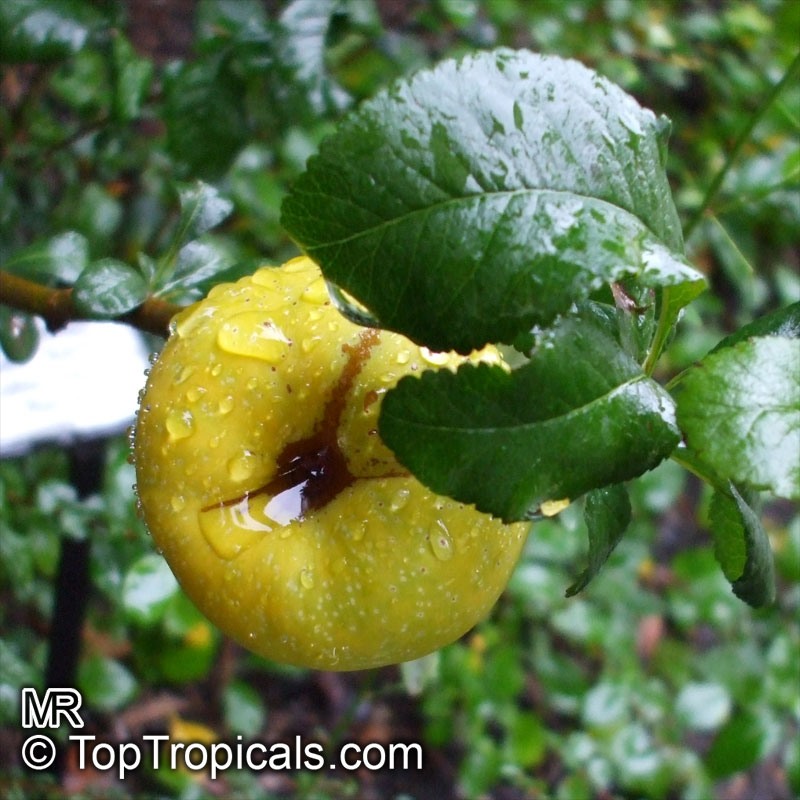
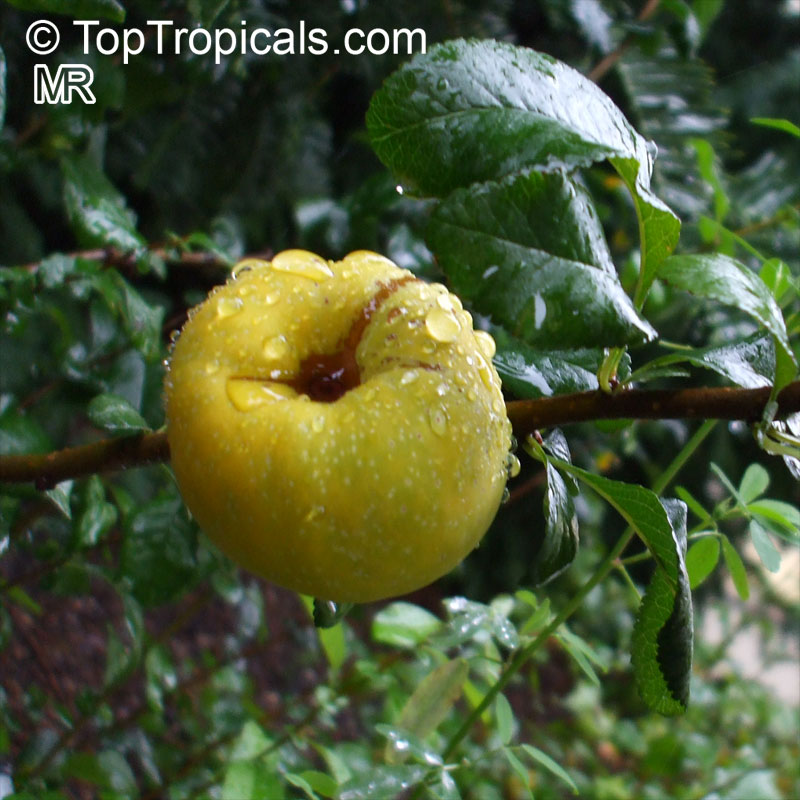
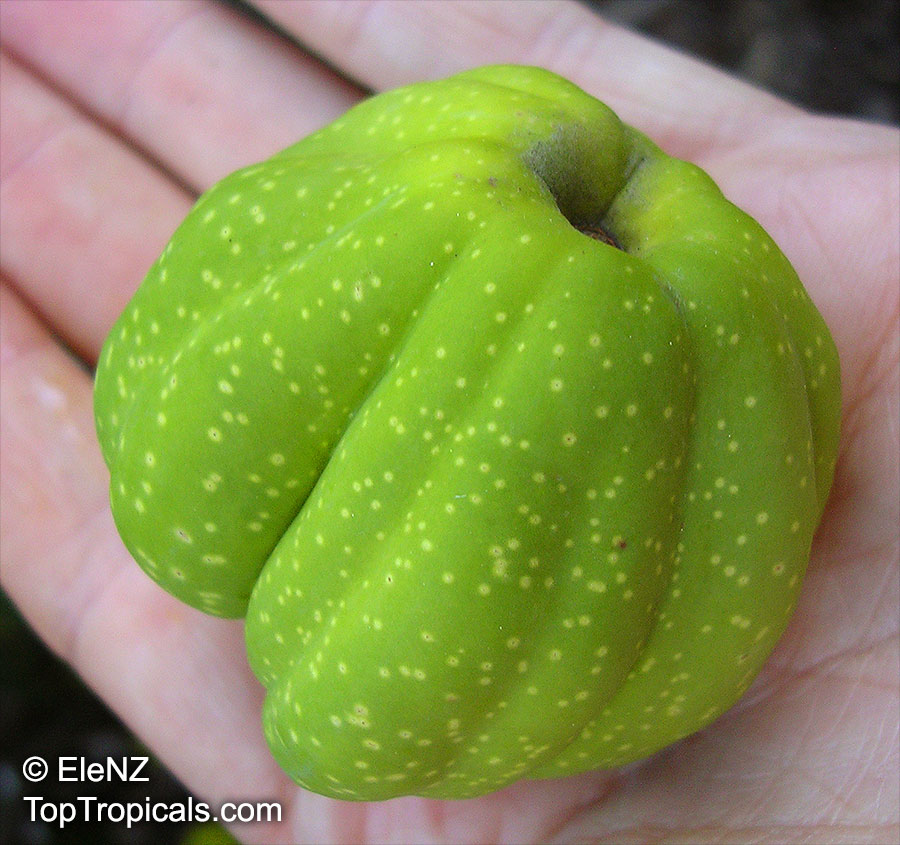
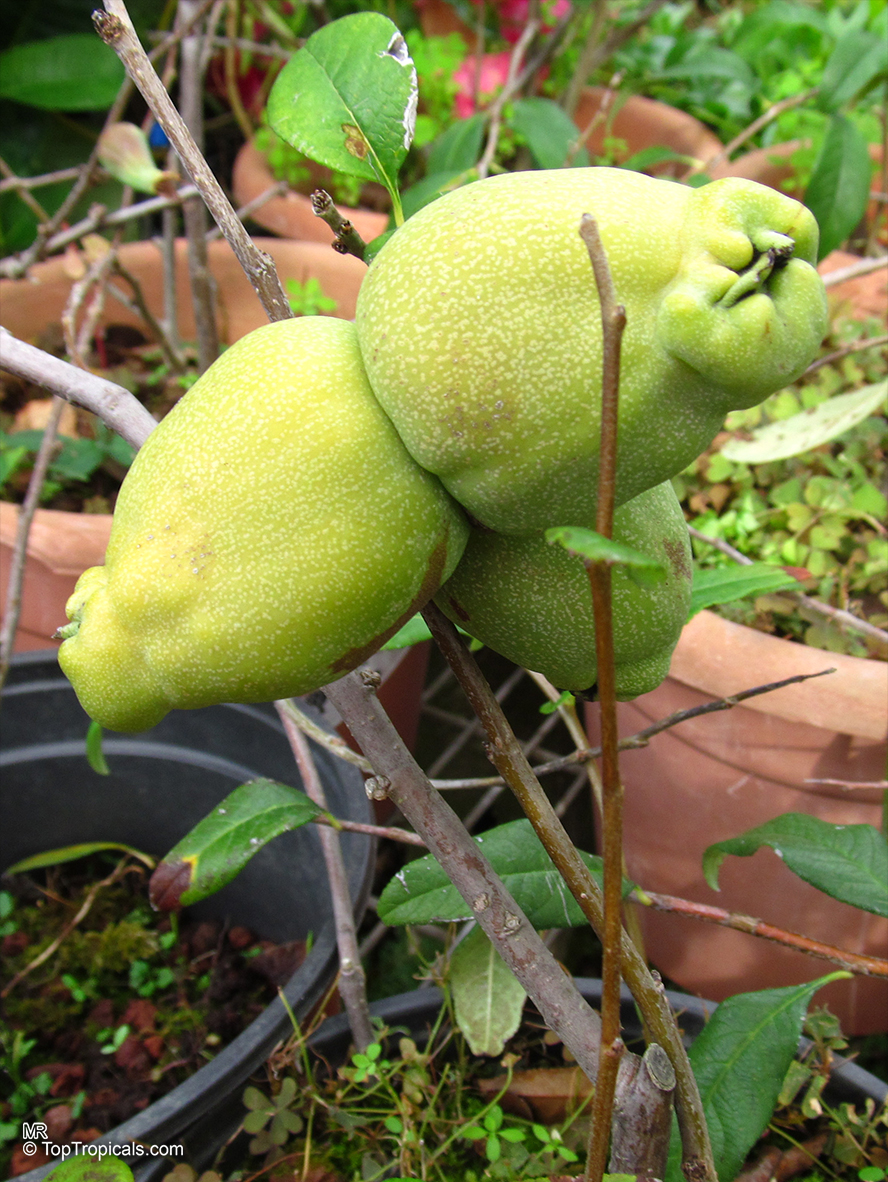
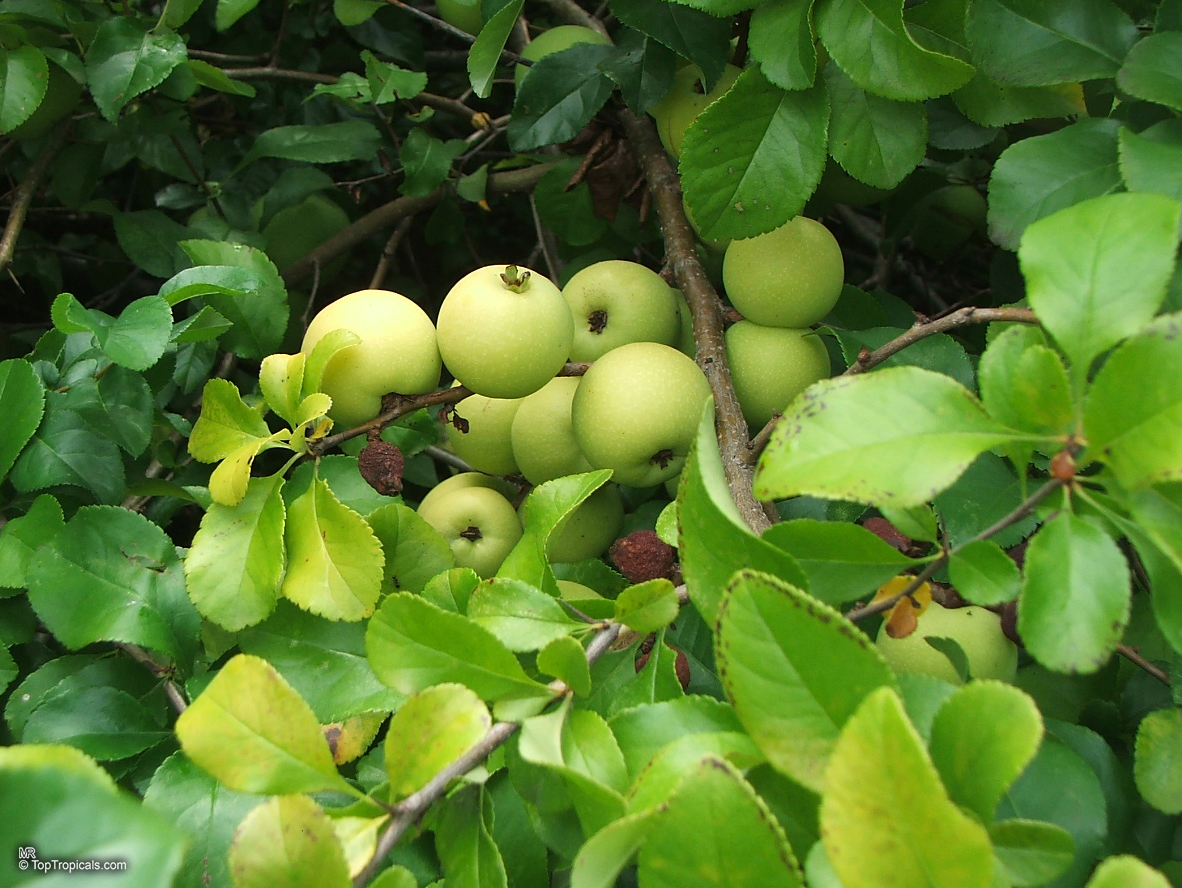
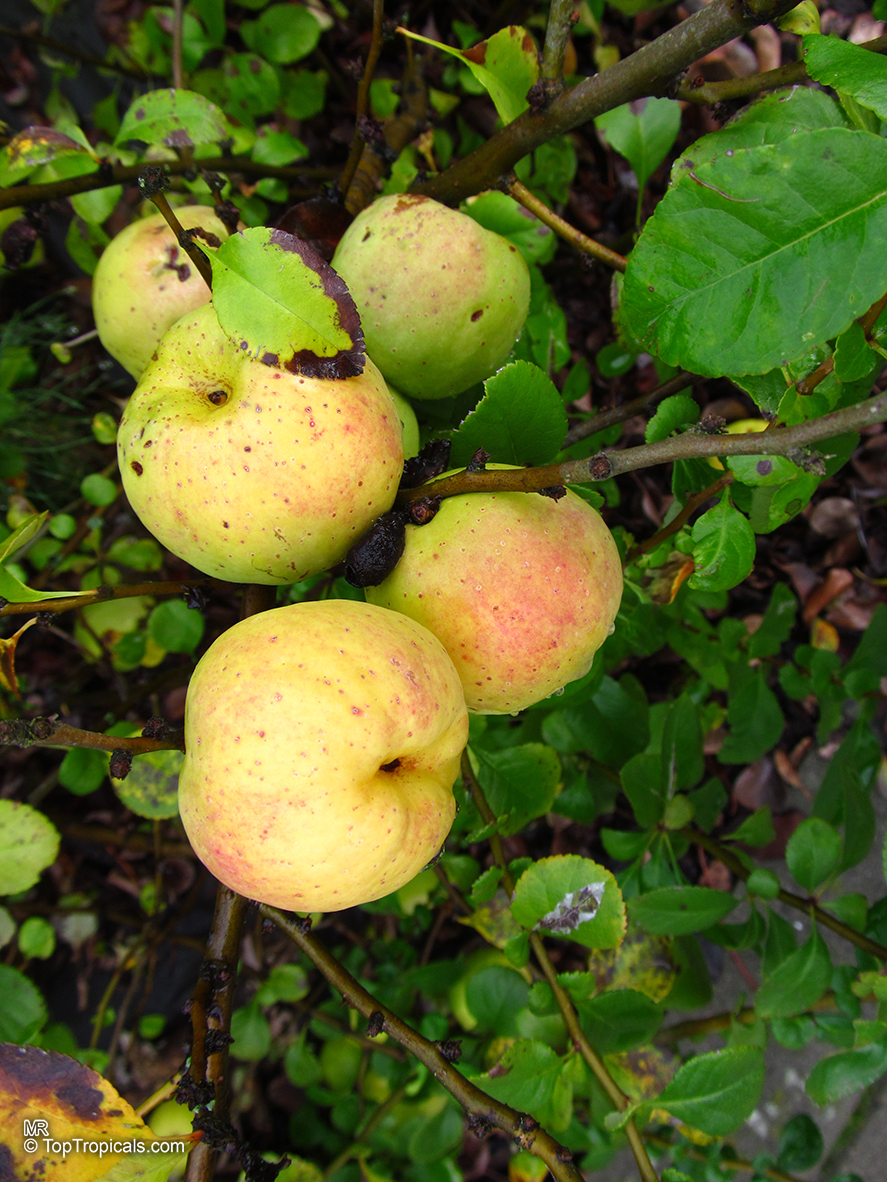
The fruit is apple-shaped and about 4cm in diameter.
Very harsh and acid raw but fragrant when cooked, imparting a strong pleasant flavor to jams and jellies.
The rich aromatic juice, as tart as a lemon, is squeezed and used for culinary purposes.