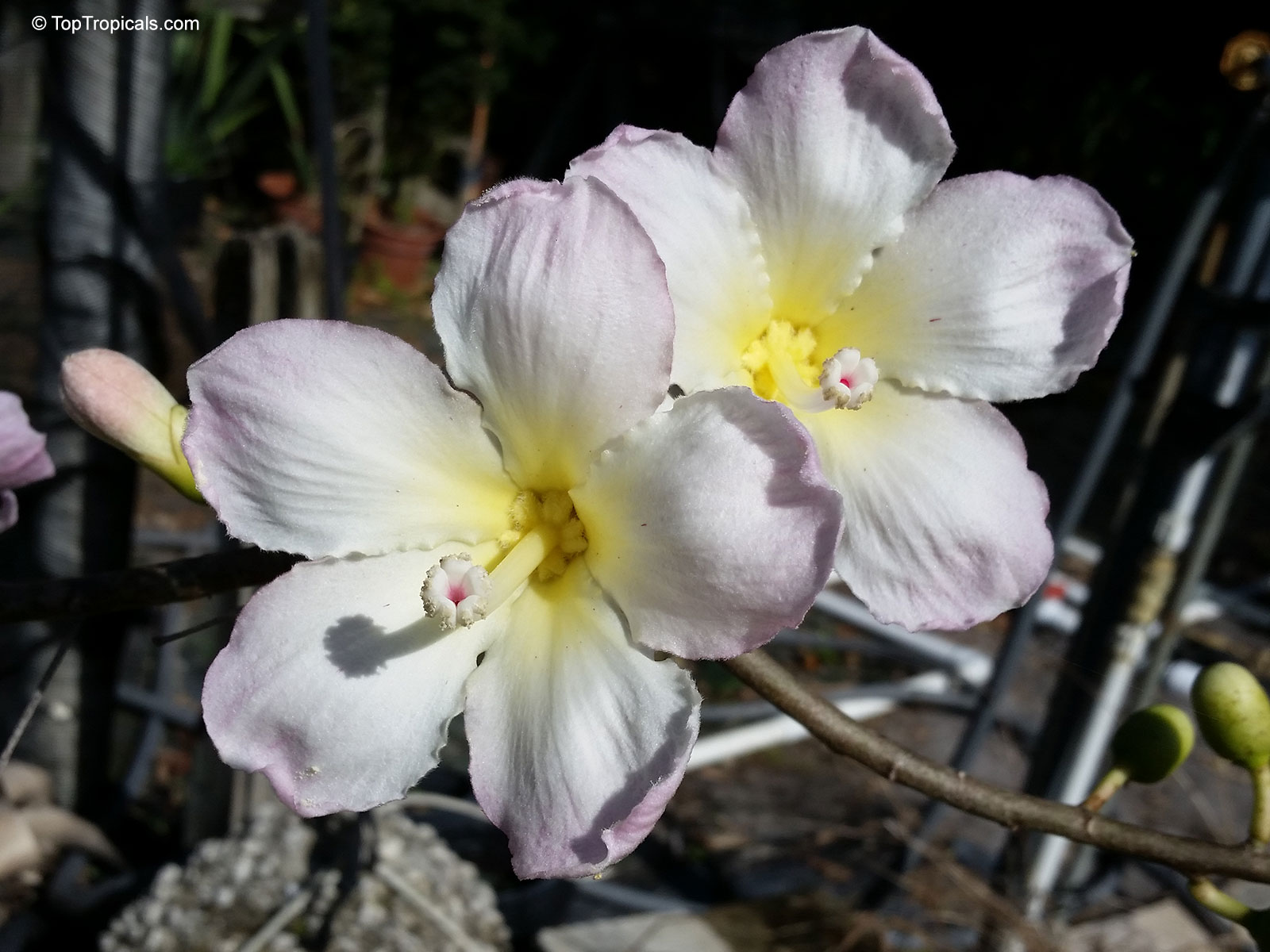
Ceiba sp. (Ceiba)
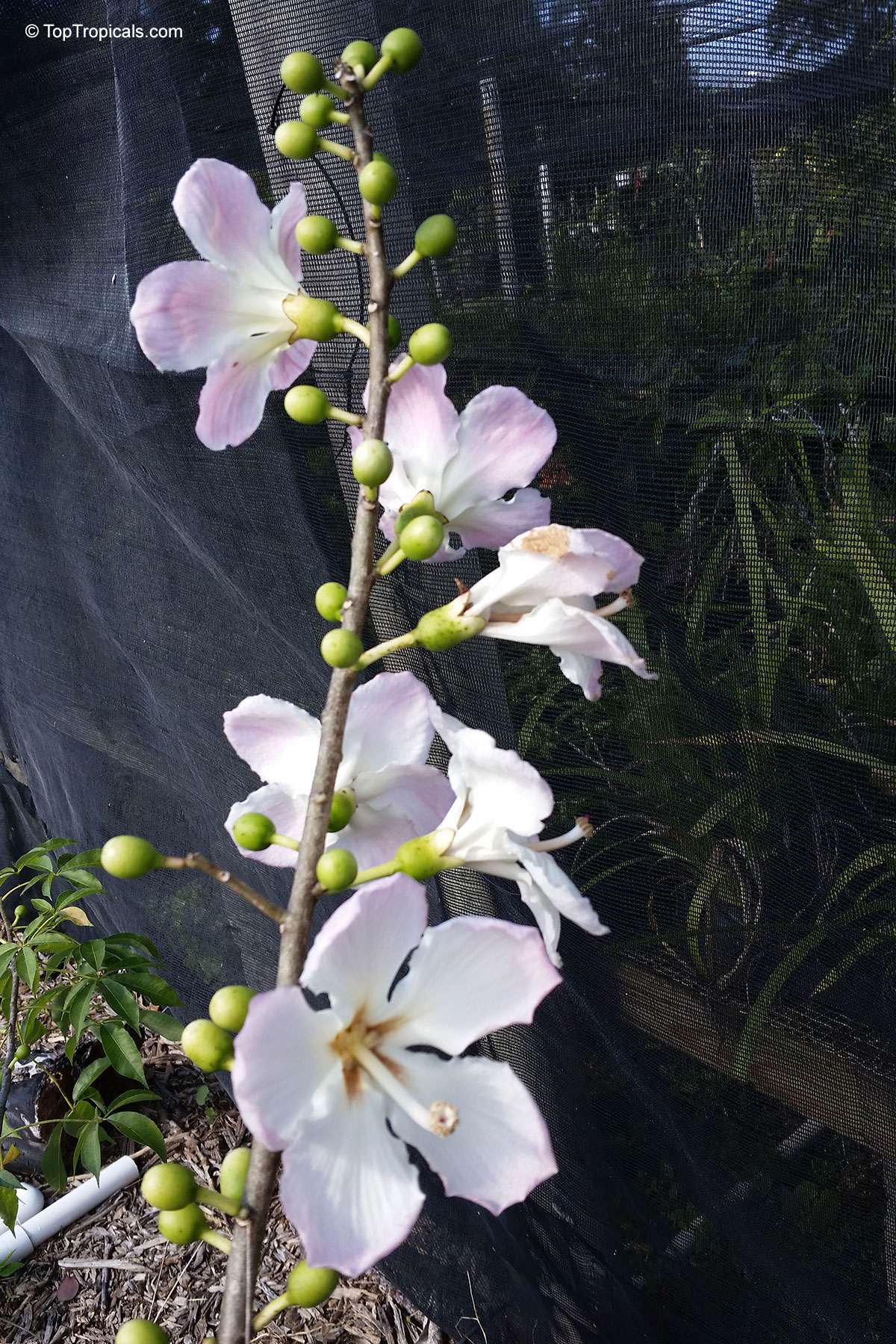
Botanical name: Ceiba sp.
Common names: Ceiba, Floss Silk Tree, Kapok Tree
Family: Malvaceae (Formerly:Bombacaceae)
Subfamily: Bombacoideae
Origin: Central America, Southern America
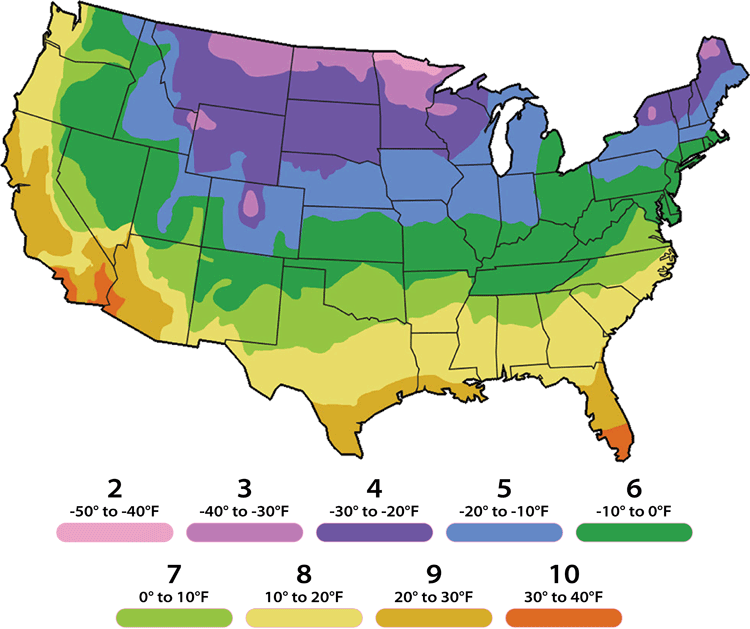
USDA Zone: 9-11
 Plant form: Large tree
 Mature height: 20 ft or more
 Sun exposure: Full sun or bright light indoor
 Cold tolerance: Frost sensitive. Protect from freezing.
 Watering: Moderate


 Flower color: Pink; white and off-white; red, crimson, vinous; yellow, orange
 Suitable for: Outdoors in the suitable USDA zone; large gardens
 Foliage: Deciduous
 Thorns: Thorny or spiny
Ceiba sp., commonly known as Silk Floss Tree or Kapok Tree, refers to a group of large tropical trees in the Malvaceae family native to Central and South America, Africa, and parts of Asia. These trees typically develop a tall, straight trunk that may be swollen or bottle-shaped and often armed with conical spines when young. The crown is broad and open, with palmately compound leaves composed of several narrow leaflets. Flowers vary widely by species and may be white, cream, pink, red, or yellow, followed by woody pods filled with silky fibers surrounding the seeds.
This group prefers full sun and well-drained soil, with moderate watering during establishment and good drought tolerance once mature. Growth rate is fast in warm climates. Cold tolerance is limited, with damage likely below about 30F; best suited to USDA Zones 10 to 11. Ceiba species are best suited to large landscapes due to their eventual size but can be grown in containers when young.
Similar plants: Ceiba sp. (Ceiba)