Carapa guianensis (Crabwood)
Botanical name: Carapa guianensis
Common names: Crabwood, Andiroba, Bastard-mahogany
Family: Meliaceae
Origin: Tropical America
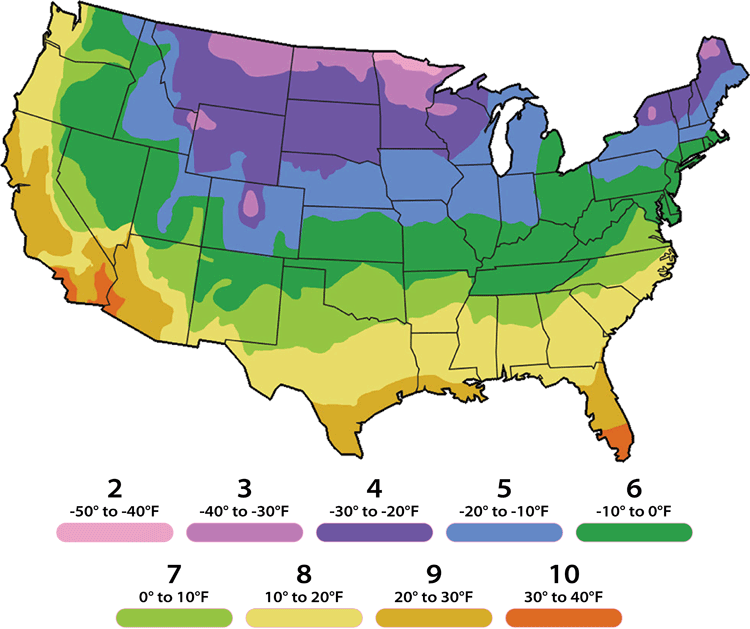
USDA Zone: 9-10

 Plant form: Large or medium tree
 Mature height: 20 ft or more
 Sun exposure: Full sun or bright light indoor; semi-shade
 Cold tolerance: Frost sensitive. Protect from freezing.
 Watering: Regular
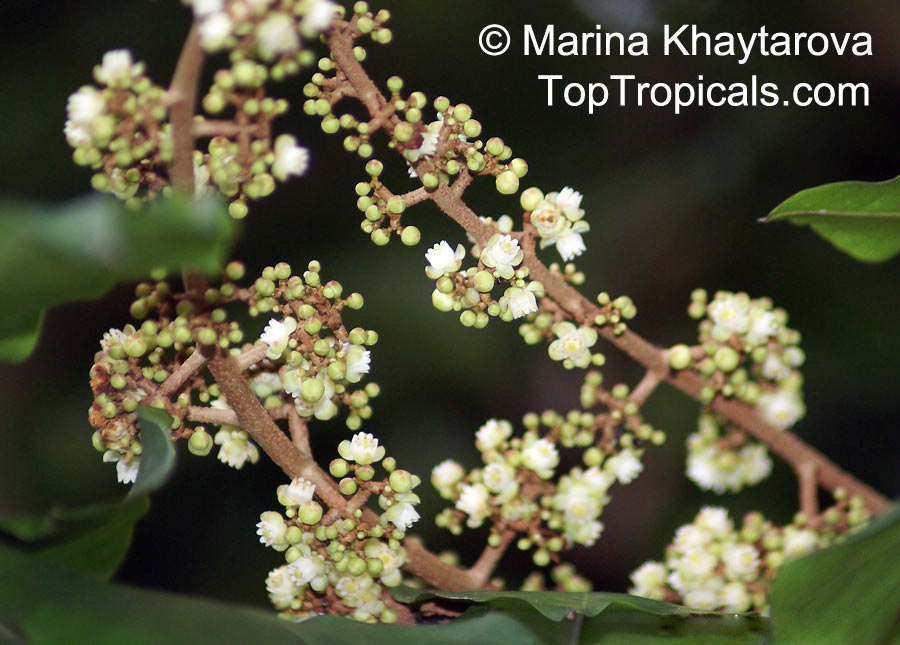
 Flower color: White and off-white
 Suitable for: Outdoors in the suitable USDA zone; large gardens
 Flood tolerance: High
 Ethnomedical: Ethnomedical plant, traditionally used in folk or indigenous medicine
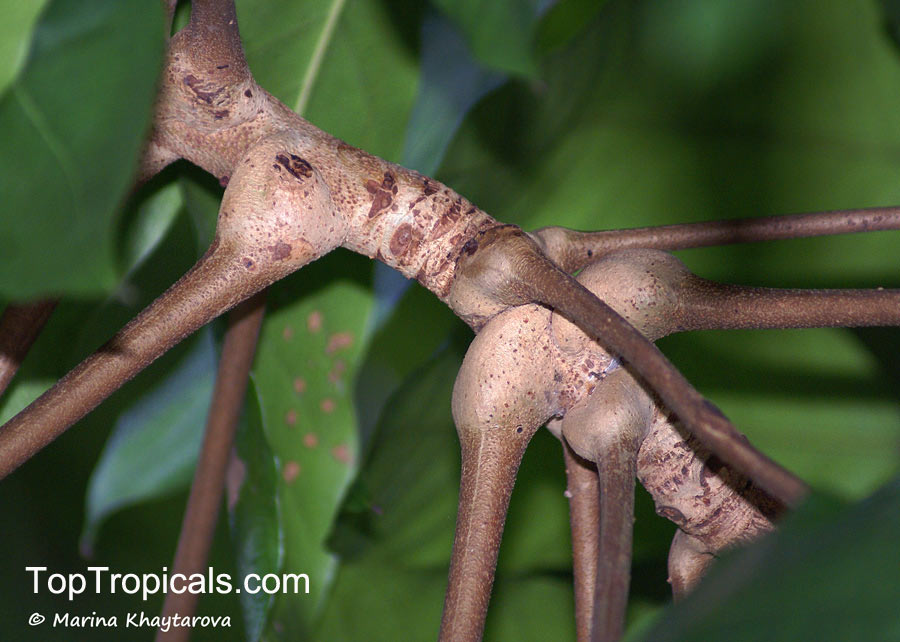
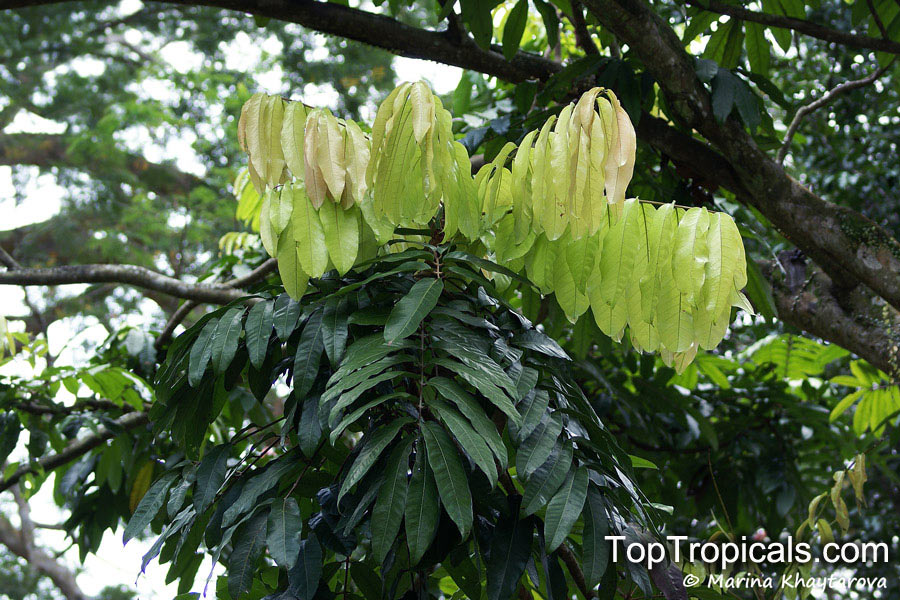
Native to the tropical forests of South America, Carapa guianensis, commonly known as Crabwood or Andiroba, is an impressive tree that can reach heights of more than 20 feet. At maturity, the tree trunk can become quite large and its bright green leaves, which remain evergreen through most of the year, can reach 3-5 inches long. This tree boasts showy clusters of white and off-white flowers that appear in spring and summer, giving rise to edible fruits with hairy brown and orange nuts.
Andiroba's ethnomedical uses are quite impressive, since the oil from its seeds is an effective agent for treating skin conditions, insect repellent, and even furniture polish. Its wood is highly sought after by sawmills due to its soft yet durable properties. In addition, Andiroba is a flood-tolerant tree, being able to survive in flooded conditions for extended periods of time.
Growing and caring for Andiroba is possible in USDA Zones 9-11, although it is best suited for warmer climates. When it comes to placement, Andiroba will prefer full sun and semi-shade, and regular watering is a must. In cold regions, it is recommended to plant Andiroba in a pot and keep it indoors during cold months, in order to ensure proper care and avoid freezing during freezing temperatures.