Bouea sp. (Marian plum)
Botanical name: Bouea sp.
Common names: Marian plum, Maprang, Ma-praang, Gandaria
Family: Anacardiaceae
Origin: Southeast Asia
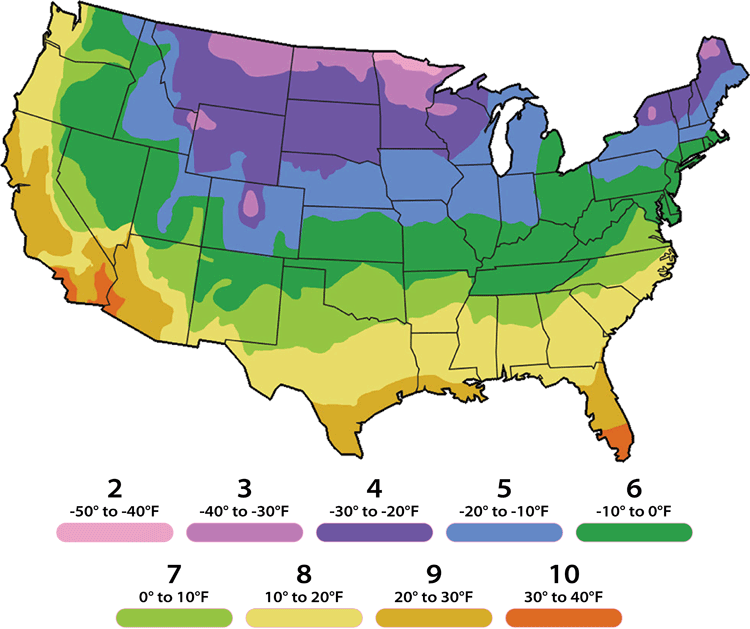
USDA Zone: 10-12
 Plant form: Small tree
 Mature height: 10-20 ft
 Sun exposure: Full sun or bright light indoor; semi-shade
 Cold tolerance: Ultra tropical plant. Minimal temperature 55°F.
 Watering: Regular
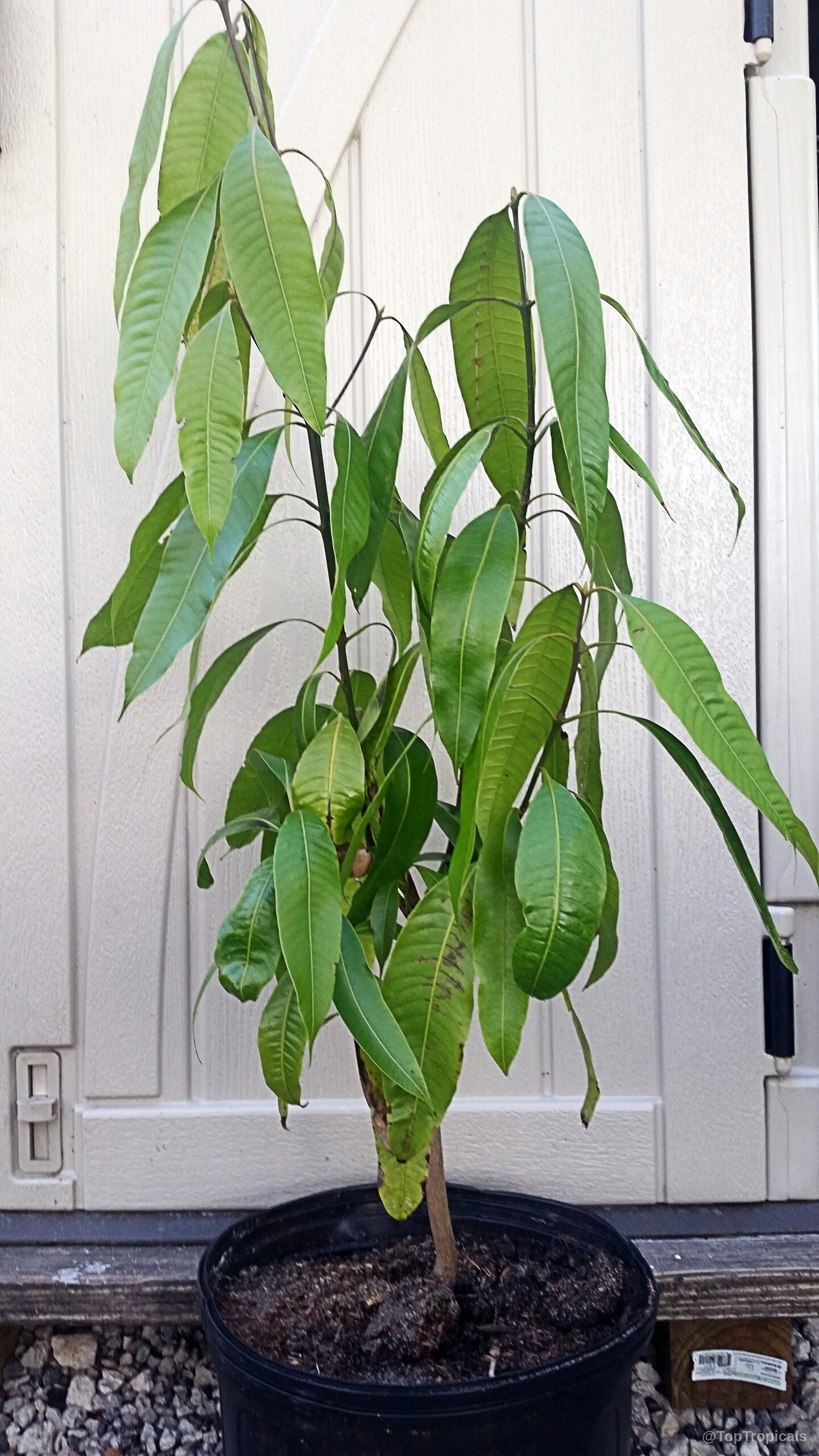
 Suitable for: Outdoors in the suitable USDA zone; small gardens, containers, and indoor growing
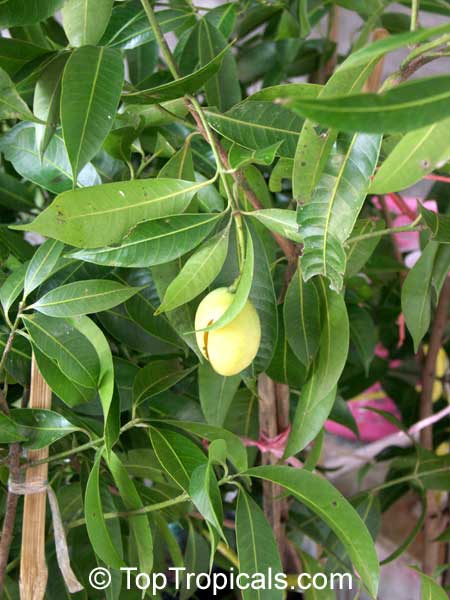
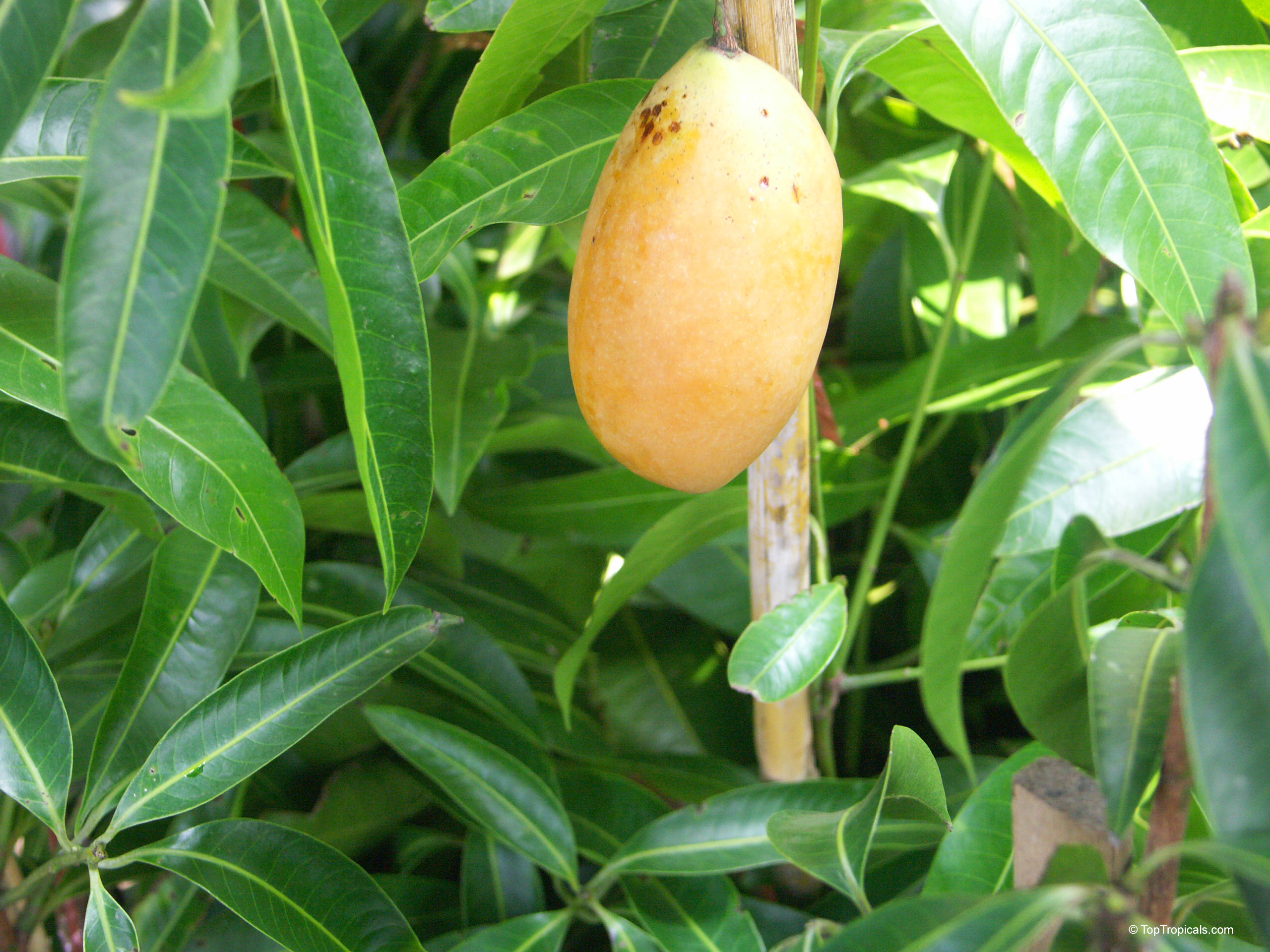
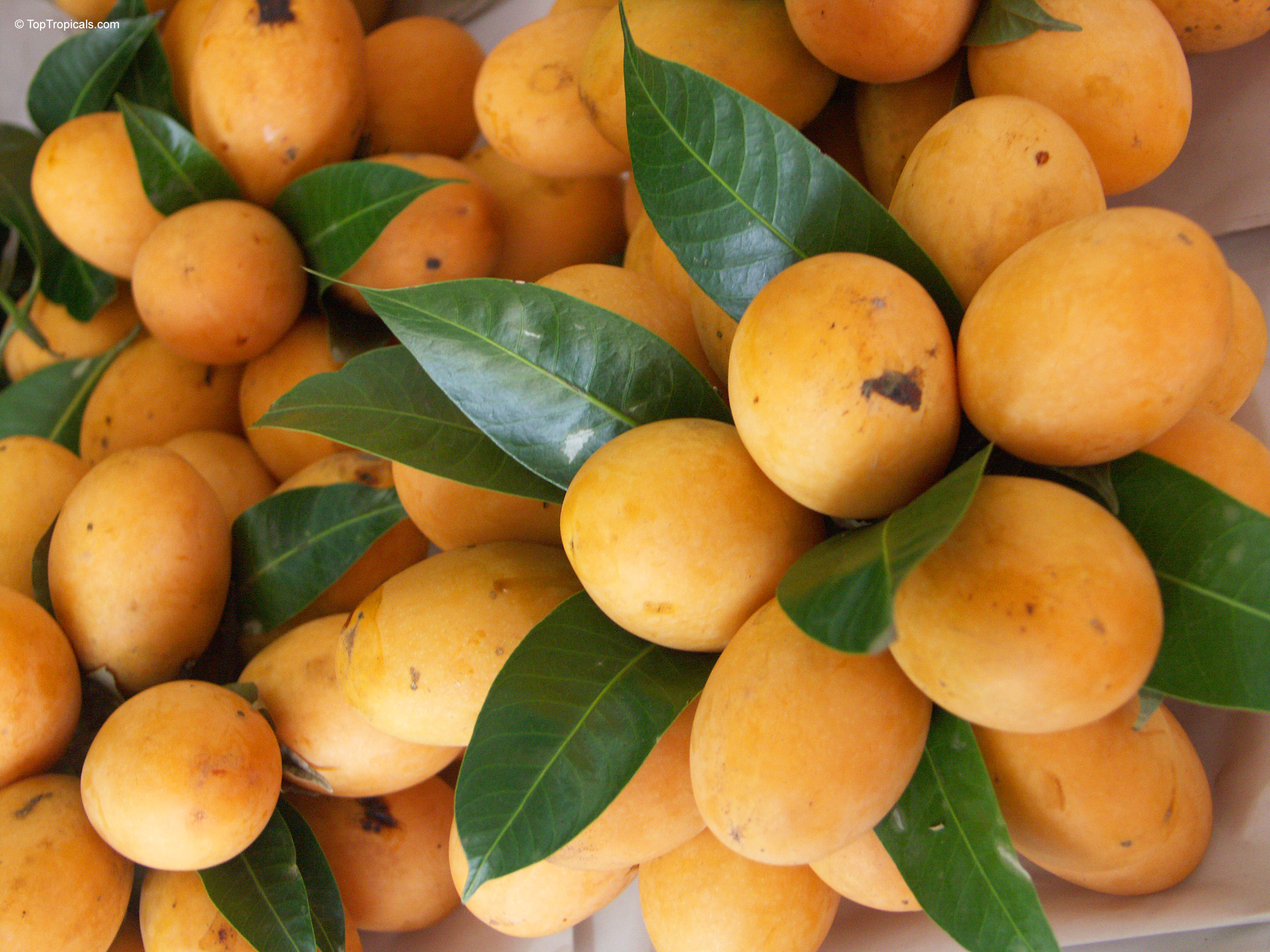
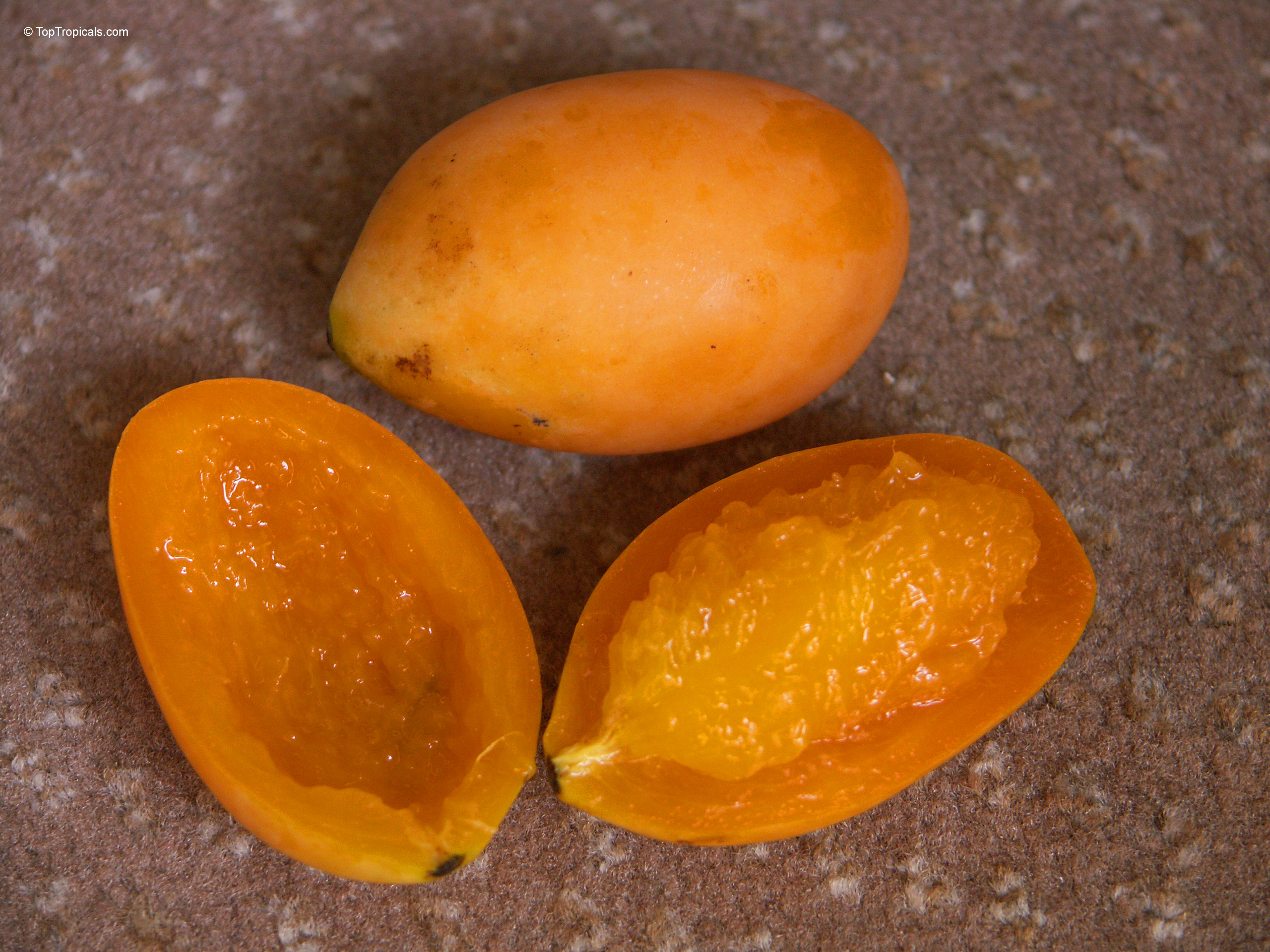
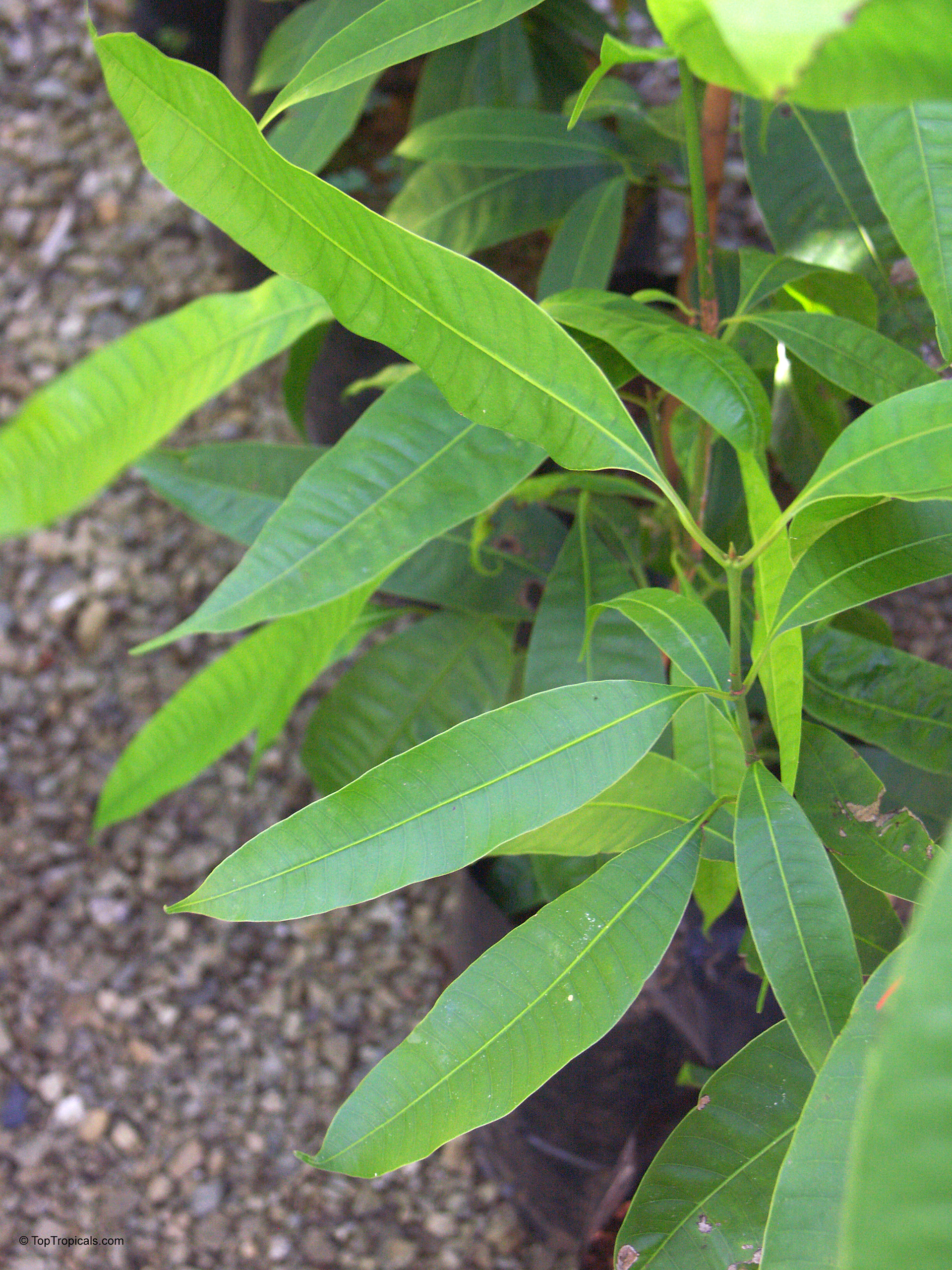
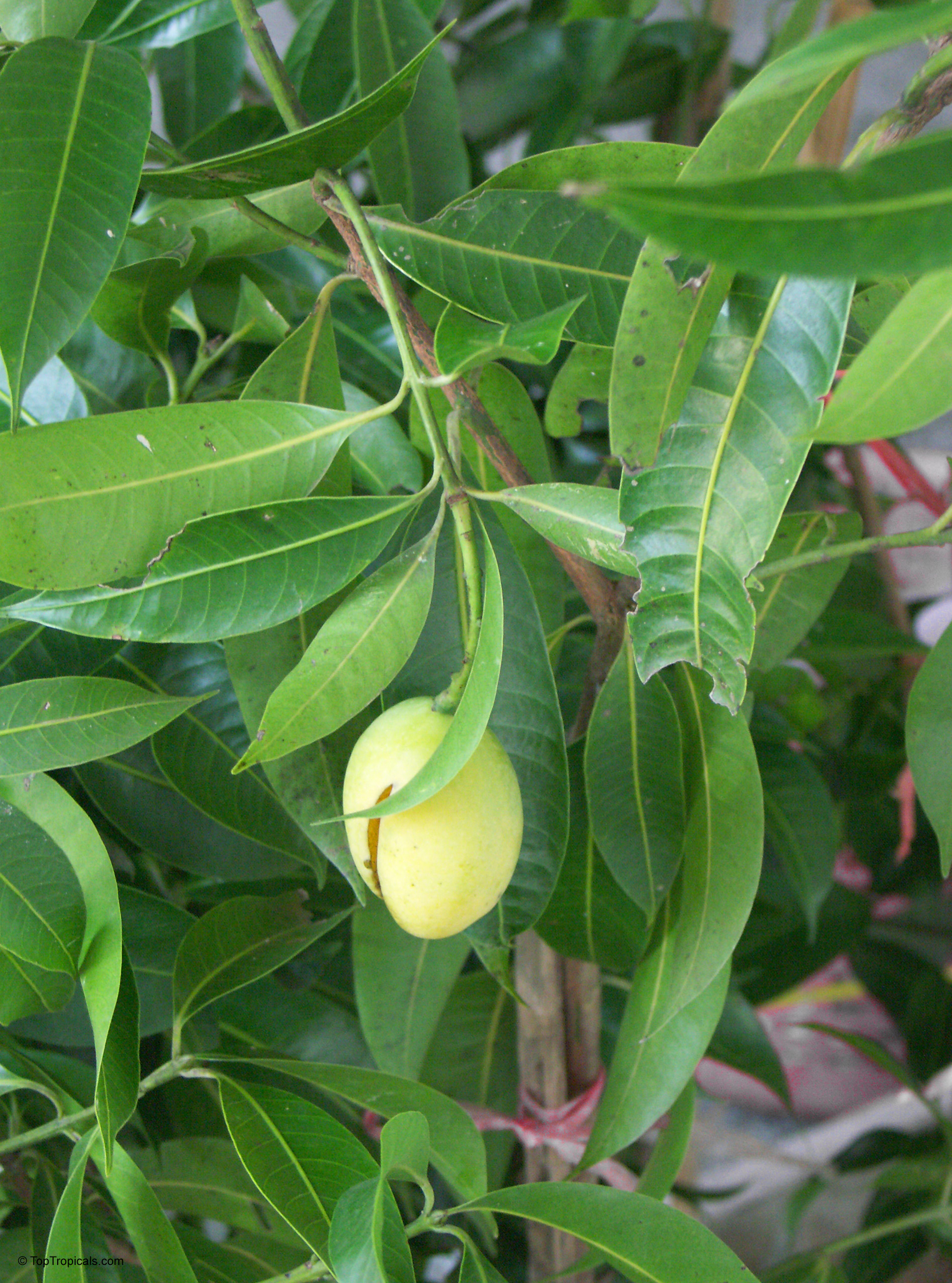
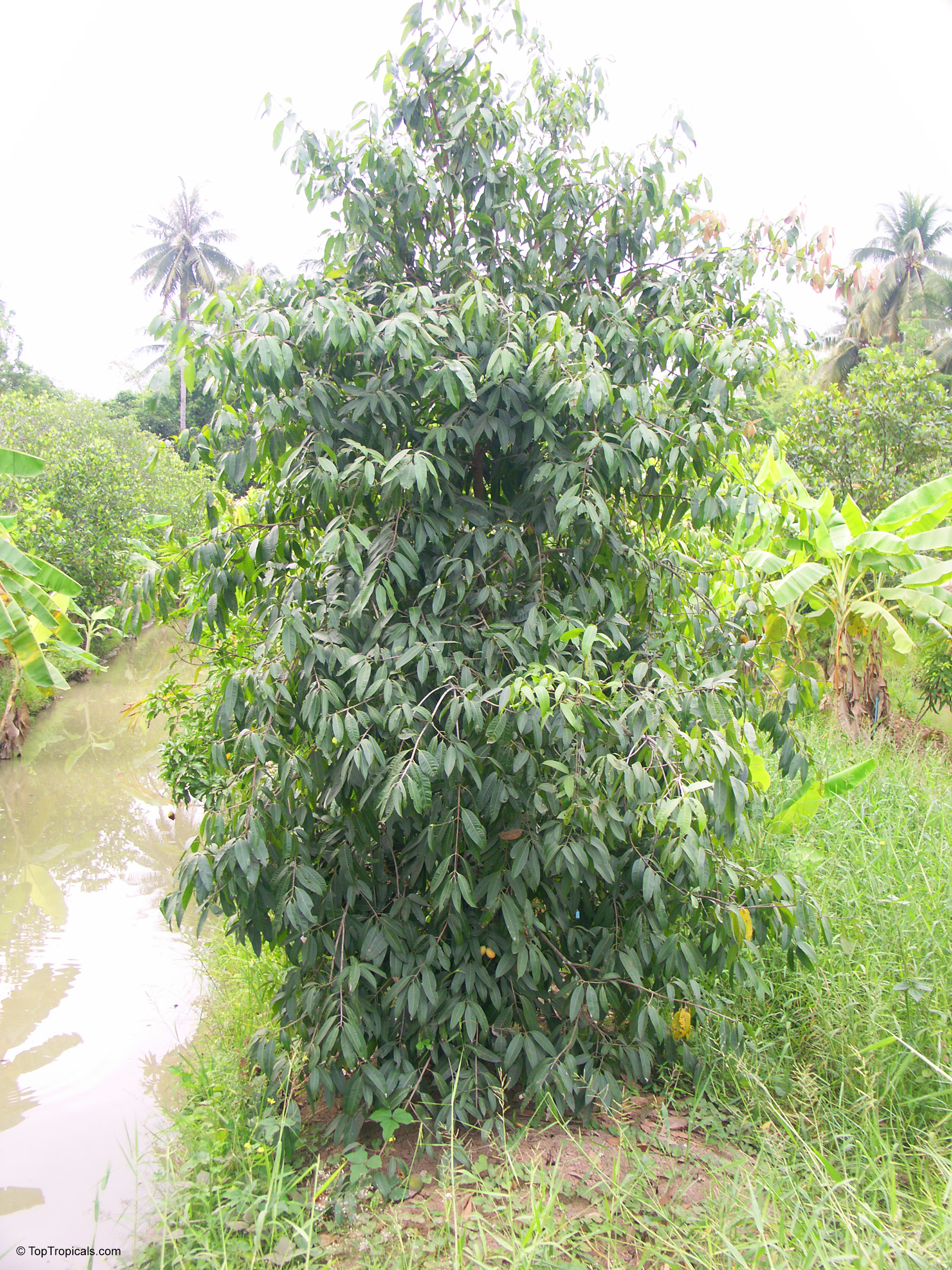
Bouea is a small genus of tropical fruit trees in the Anacardiaceae family, native to Southeast Asia. The trees are evergreen, with a dense crown and simple, leathery, glossy leaves, often reddish or bronze when young. Small yellowish to greenish flowers are followed by smooth-skinned drupes with a single large seed; the fruits may be green, yellow, or orange-yellow and range from sour to sweet. Bouea oppositifolia is widely cultivated for its edible fruits and includes cultivated Thai forms known as maprang and mayong chid; the name Bouea burmanica, found in older botanical literature, is a synonym of this species. Bouea macrophylla, also commonly known as Maprang or Marian Plum, is another well-known cultivated species and generally produces larger fruits.
Bouea grows best in warm, humid tropical conditions, in full sun to light shade and fertile, well-drained soil with regular moisture. Established trees tolerate short dry periods but grow and fruit better with consistent water during active growth. They are generally suited to USDA Zones 10b-11 and are sensitive to frost, especially when young. Ripe fruits are eaten fresh, while sour immature fruits may be used in salads, pickles, and preserves. Selected fruiting forms are preferably propagated vegetatively, since seedlings may vary in fruit quality.