Bauhinia rufescens (Kharoub)
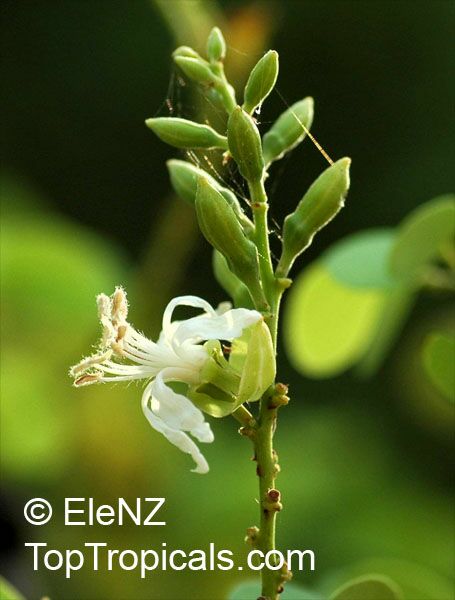
Botanical names: Bauhinia rufescens, Adenolobus rufescens, Bauhinia adansoniana
Common names: Kharoub, Kulkul, Nammare, Jiga, Randa
Family: Fabaceae
Subfamily: Caesalpinioideae
Origin: Africa


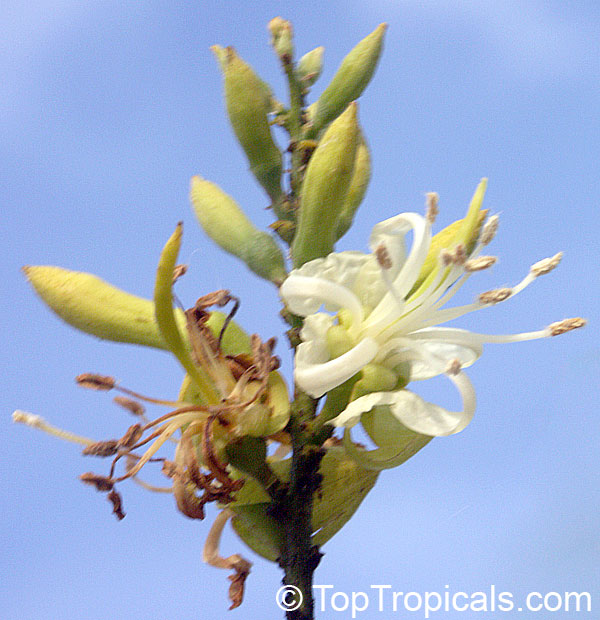
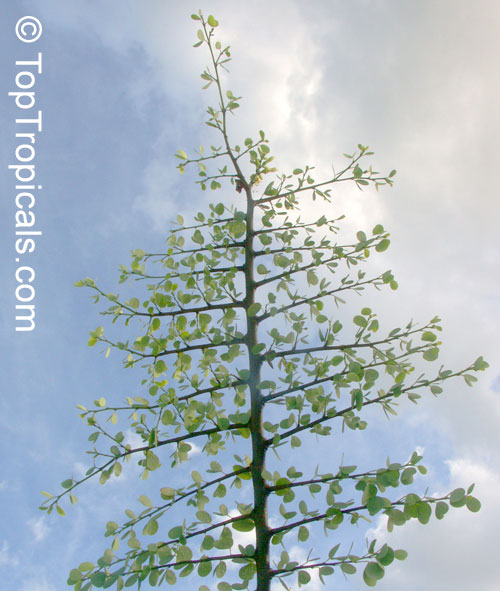
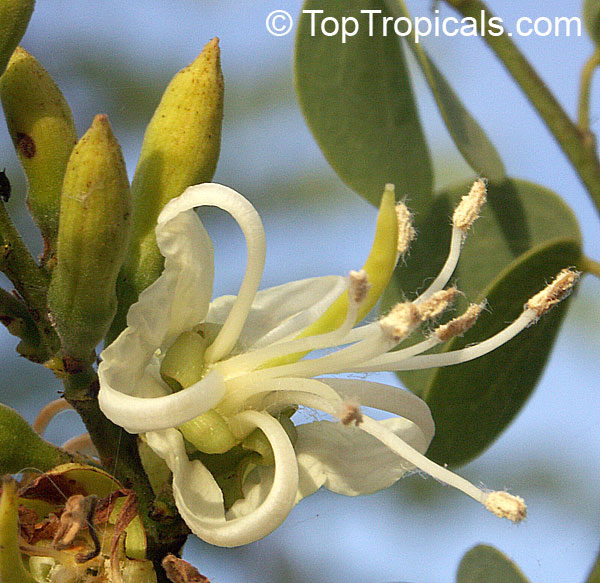
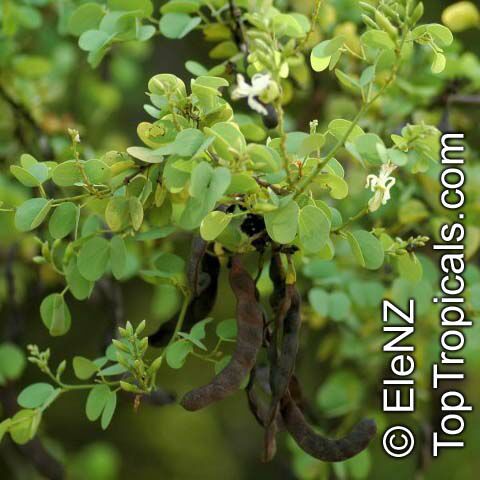
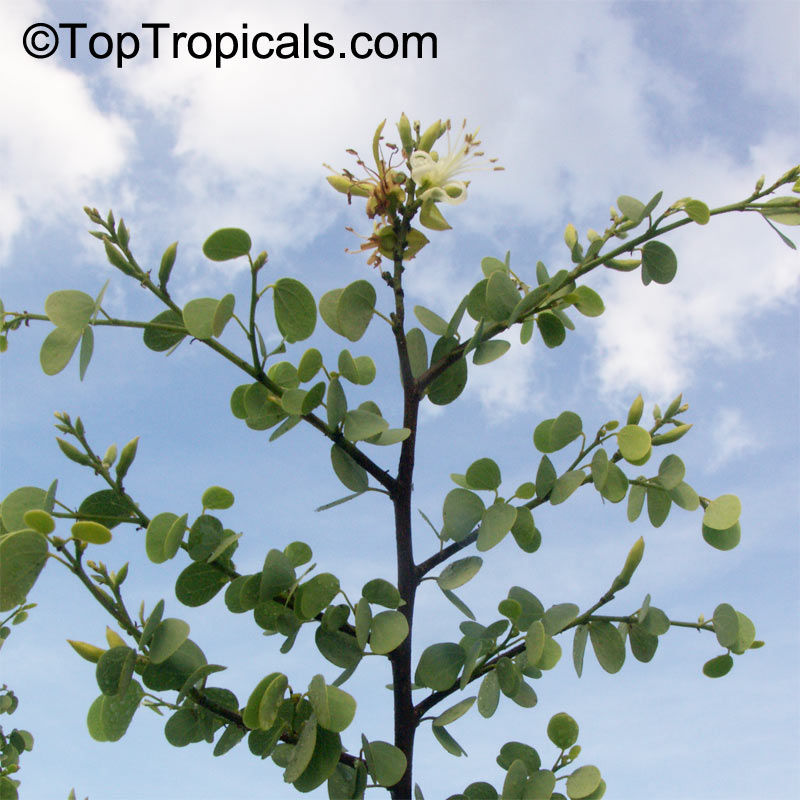
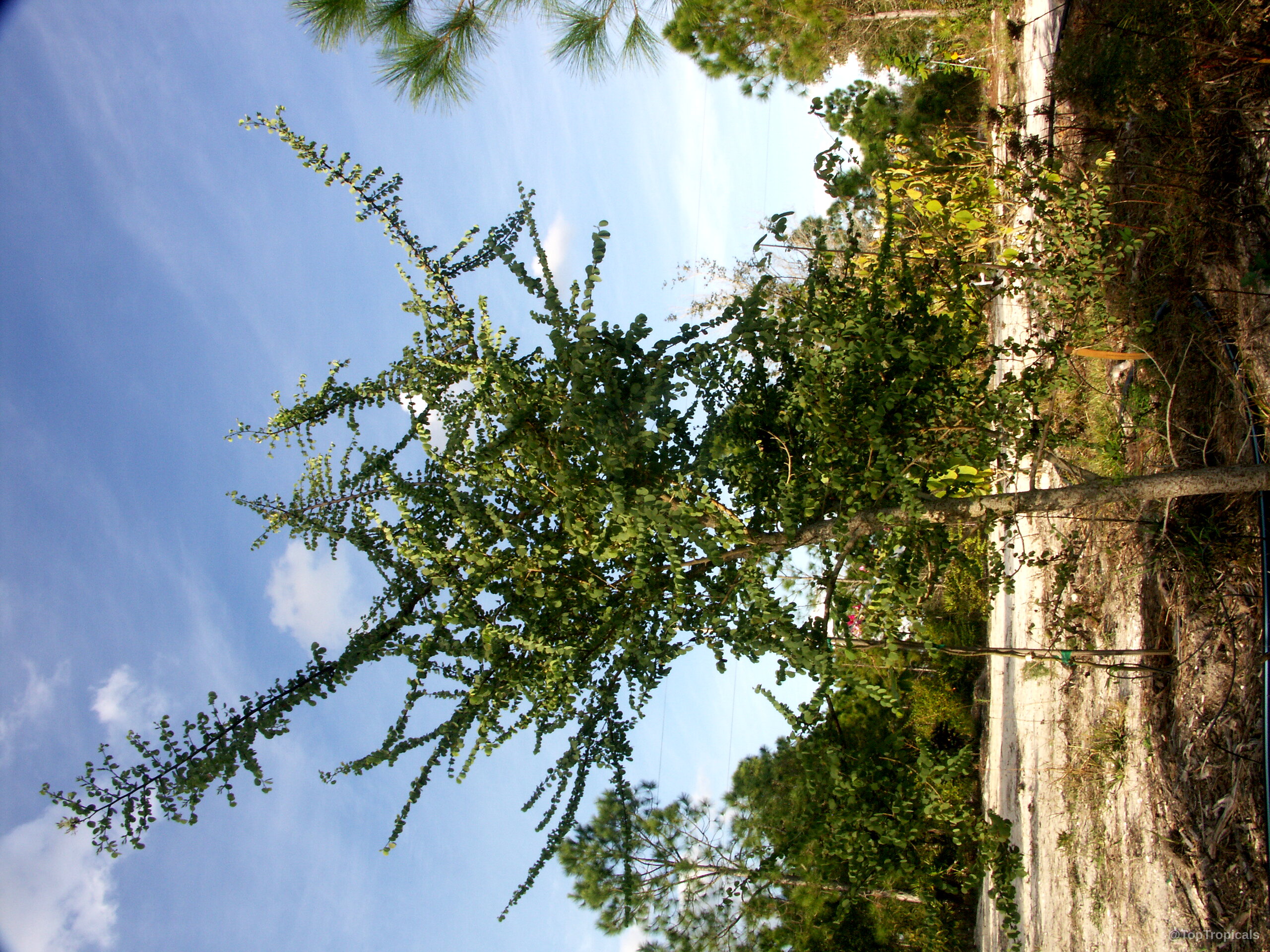
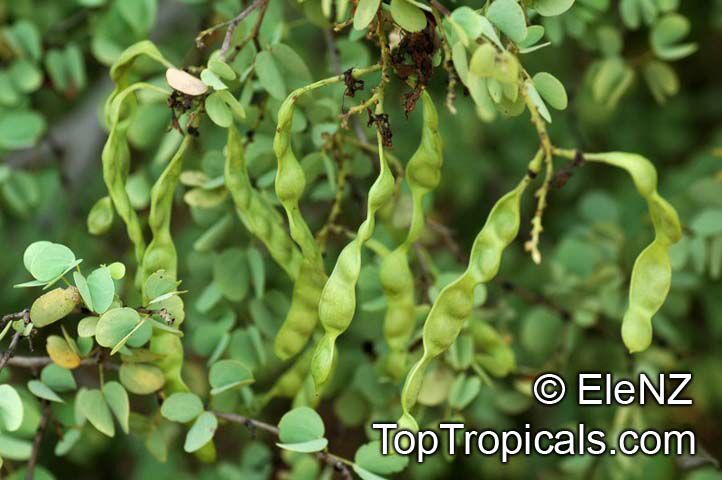
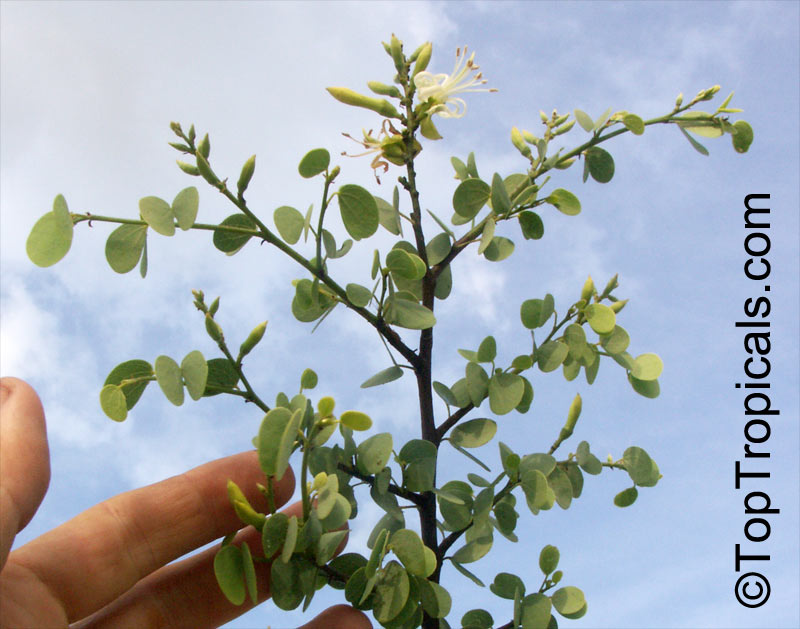
Bauhinia rufescens is a shrub or small tree that can make a great bonsai due to its compact nature, tiny leaves, and slow growth. Leaves are very small, bilobate almost to the base, with semi-circular lobes, glabrous, with long petioles, greyish-green, less than 1". Flowers greenish-yellow to white and pale pink, in few-flowered racemes. Pods remain on the shrub for a long time. The plant is deciduous in drier areas and is an evergreen in wetter areas. It is often found in dry savannah, especially near stream banks. It is found in the entire Sahel and adjacent Sudan zone, from Senegal and Mauritania across North Ghana and Niger to central Sudan and Ethiopia. Native to: Chad, Ethiopia, Ghana, Kenya, Mali, Mauritania, Nigeria, Senegal, Sudan, Tanzania, Uganda.
The young plants are fairly hardy but need to be protected for at least 1 season. Growth is fairly slow, with a height of 3 ft expected after 2 years. Tolerates poor soils and drought.
In Ghana, farmers, hunters and field workers eat the wild fruits. The green and dried fruit and the leaves and shoots are valuable forage, favored by many species of wild and domestic animals, which may cause the extinction of B. rufescens in regions overstocked with livestock. In Sudan, the pods are said to be the most valuable forage for camels. An extract of the root is used as an astringent or antipyretic in local medicine. Leaves and fruit are applied for the treatment of diarrhea, dysentery and ophthalmic diseases. The bark of the roots and trunk is used to cure chest complaints, leprosy, diarrhea and dysentery and to reduce fever.
Similar plants: Bauhinia rufescens (Kharoub)
- Bauhinia acuminata (Dwarf White Orchid Tree)
- Bauhinia aureifolia (Gold Leaf Bauhinia)
- Bauhinia bassacensis (Bauhinia)
- Bauhinia bidentata (Orange Bauhinia)
- Bauhinia blakeana (Hong Kong Orchid Tree)
- Bauhinia bowkeri (Kei White Bauhinia)
- Bauhinia corymbosa (Vining bauhinia)
- Bauhinia cunninghamii (Jigal Tree)
- Bauhinia divaricata (Butterfly Orchid Tree)
- Bauhinia forficata (Pata de Vaca)