Argemone sp. (Prickly Poppy)
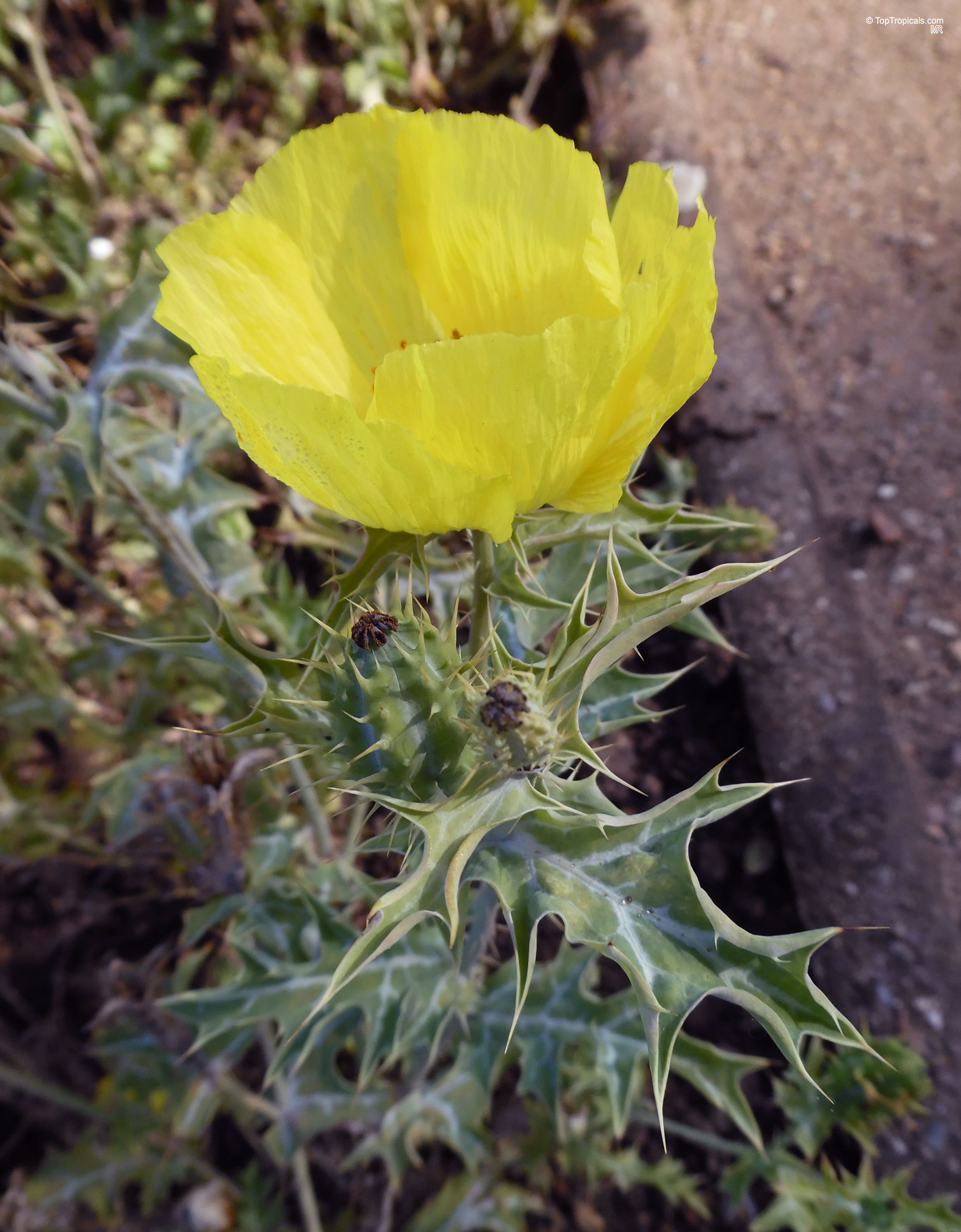
Botanical name: Argemone sp.
Common name: Prickly Poppy
Family: Papaveraceae
Origin: Mexico
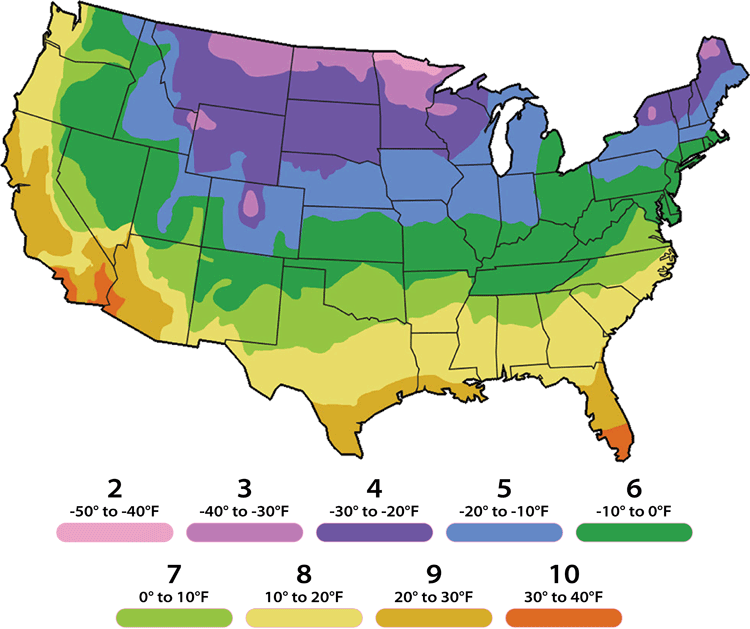
USDA Zone: 9-10
 Plant form: Small
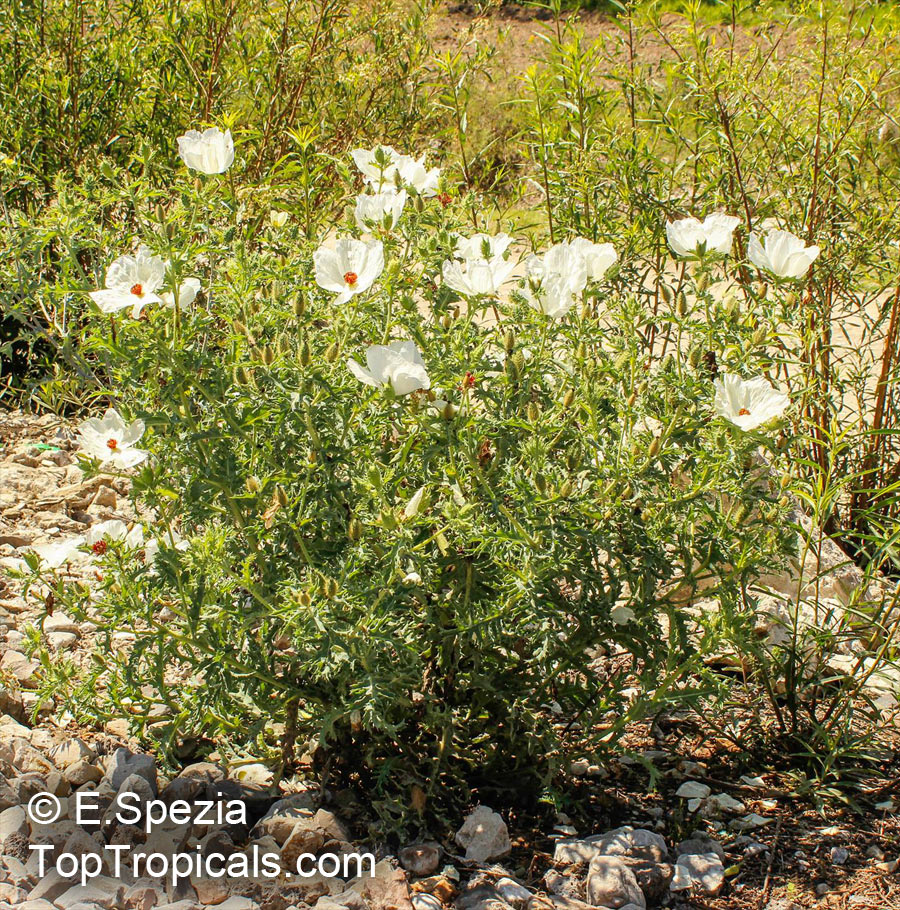
 Mature height: 2-5 ft
 Sun exposure: Full sun or bright light indoor; semi-shade
 Cold tolerance: Frost sensitive. Protect from freezing.
 Watering: Moderate
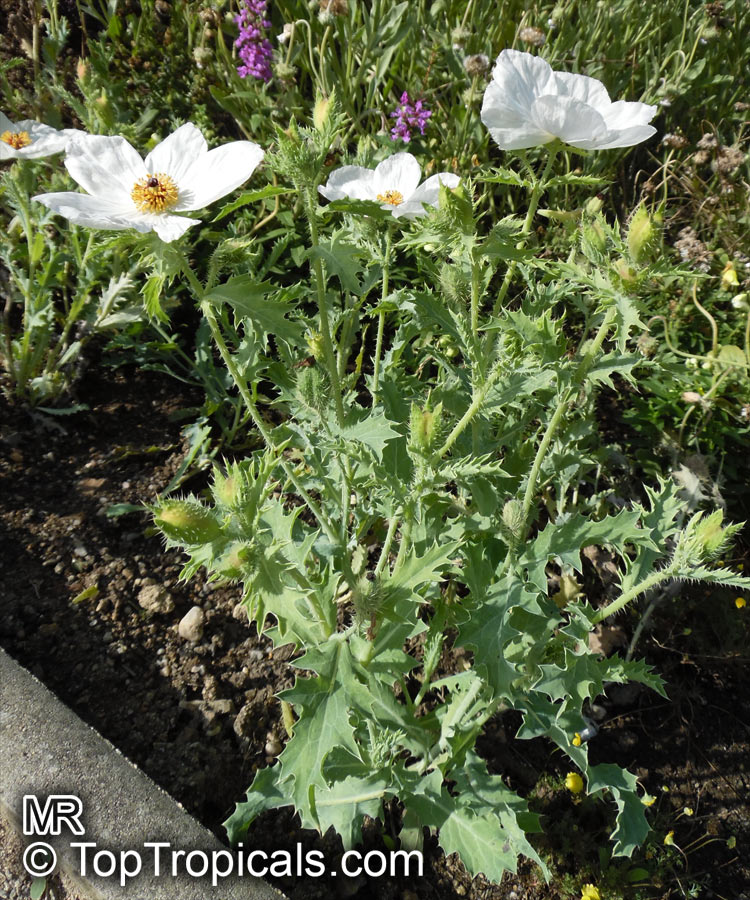
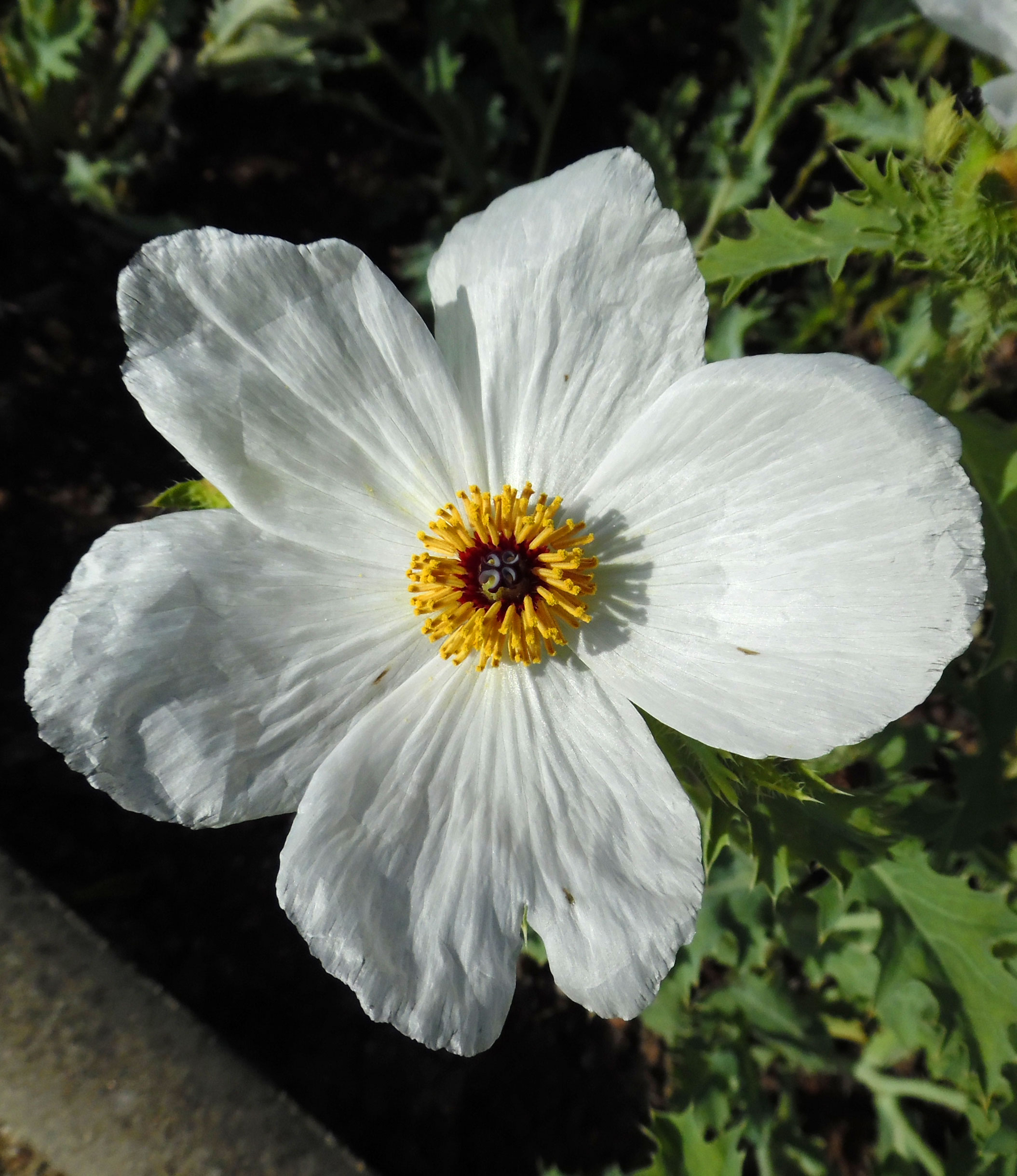
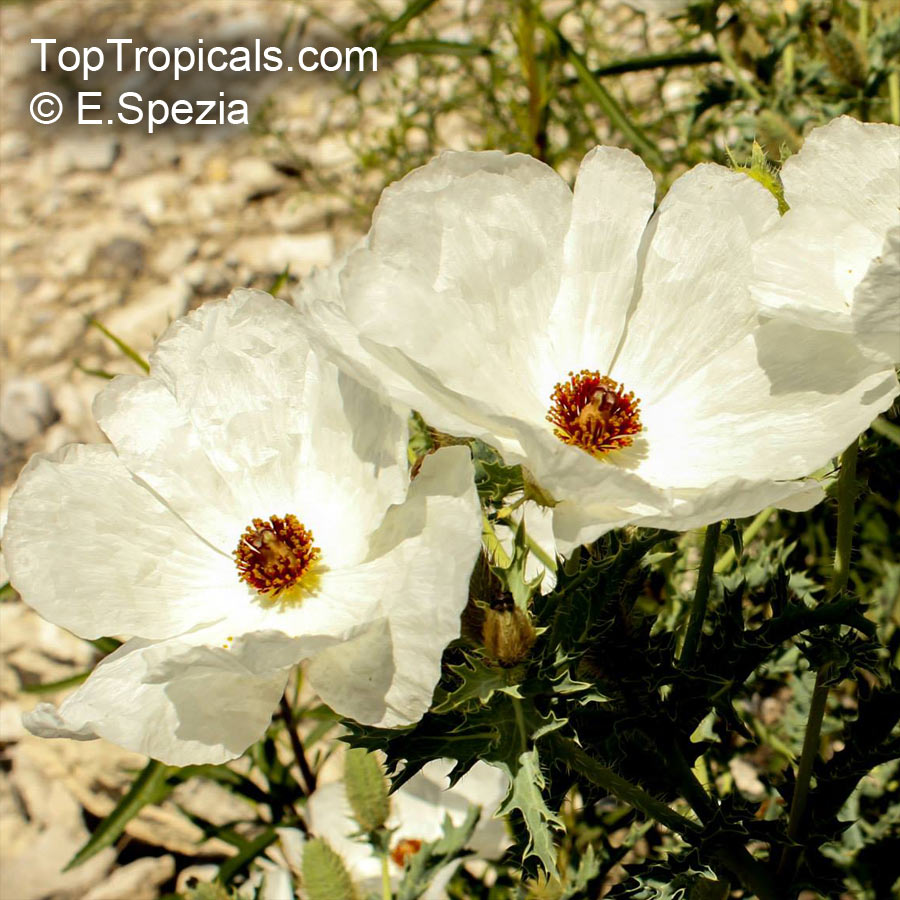
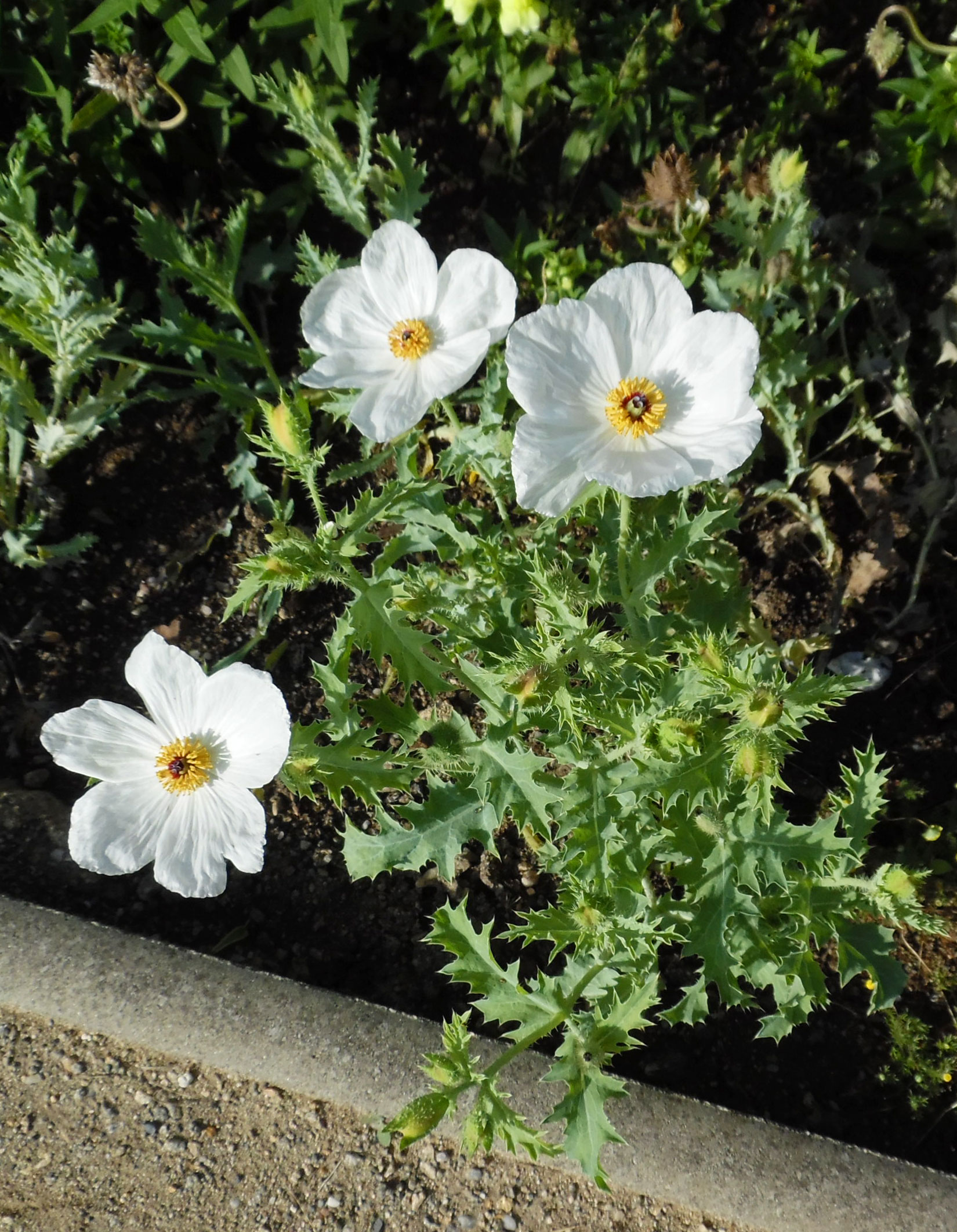
 Flower color: White and off-white; yellow, orange
 Suitable for: Outdoors in the suitable USDA zone; small gardens, containers, and indoor growing
 Foliage color: Ornamental foliage
 Irritating or toxic: Toxic plant/plant part
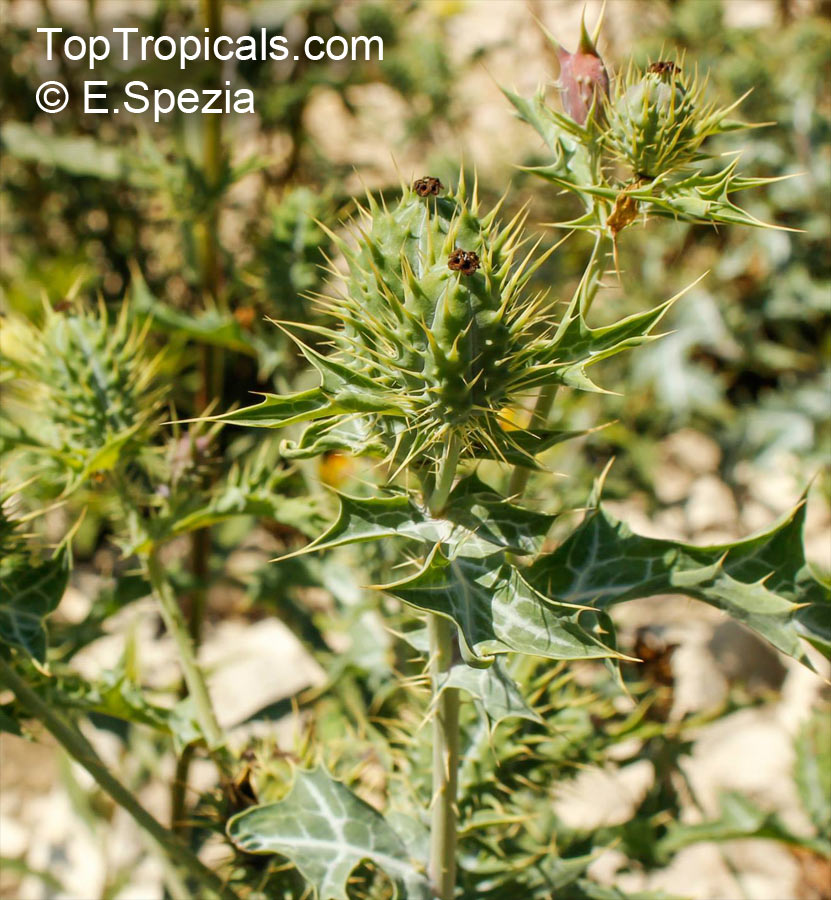
 Thorns: Thorny or spiny
 Ethnomedical: Ethnomedical plant, traditionally used in folk or indigenous medicine
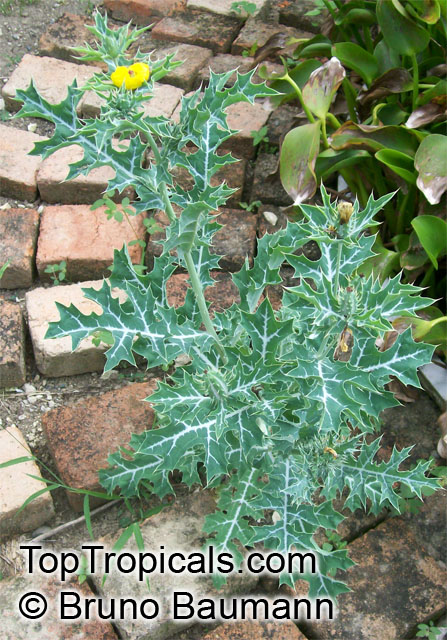
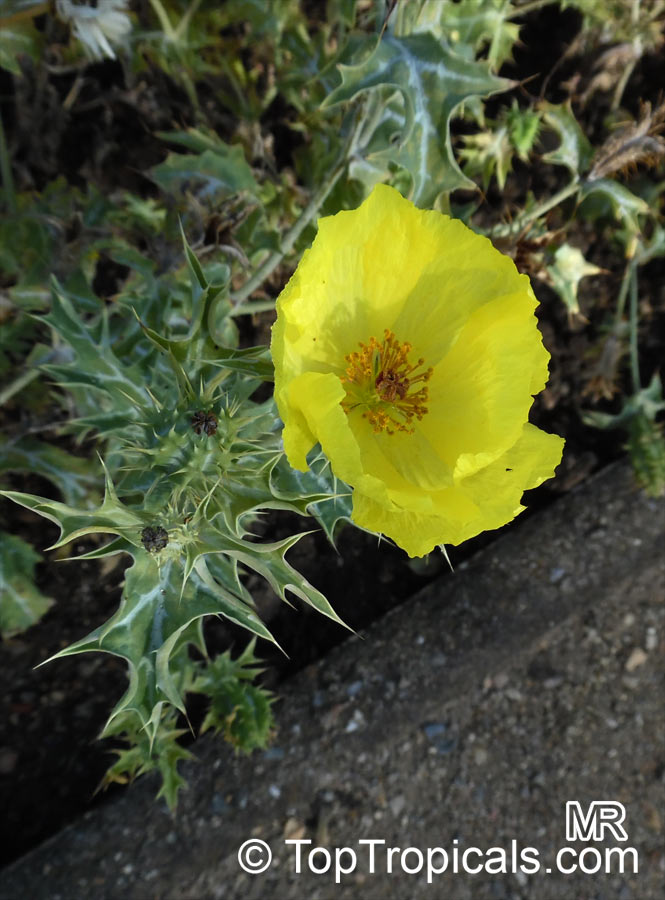
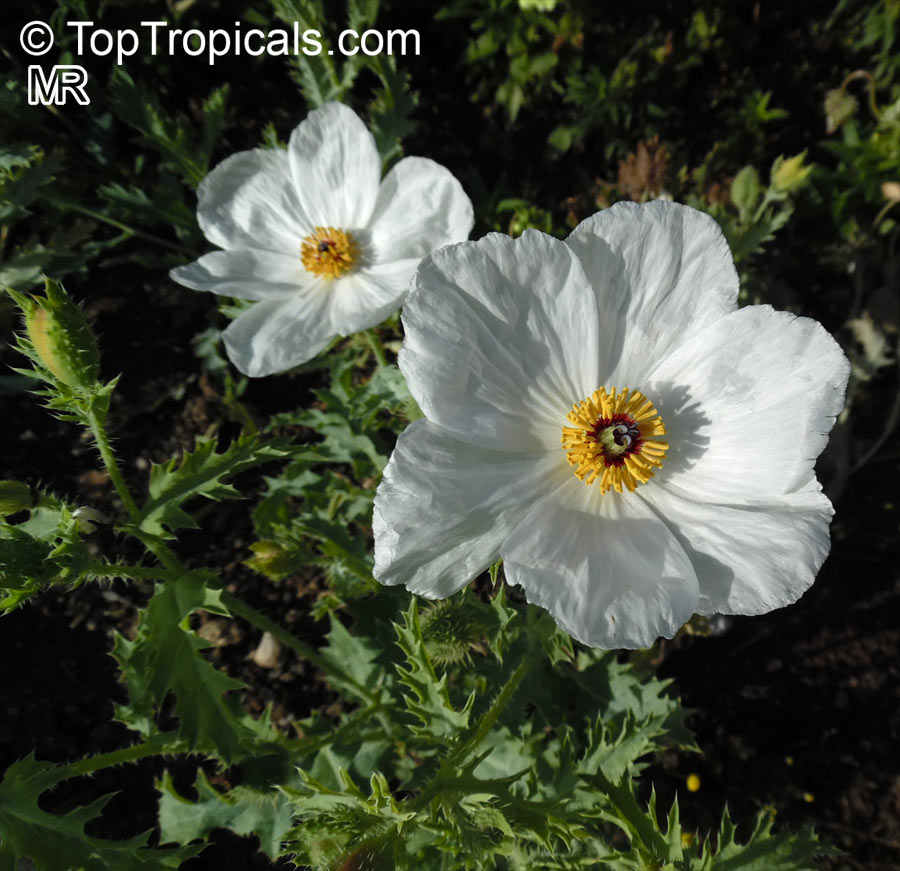
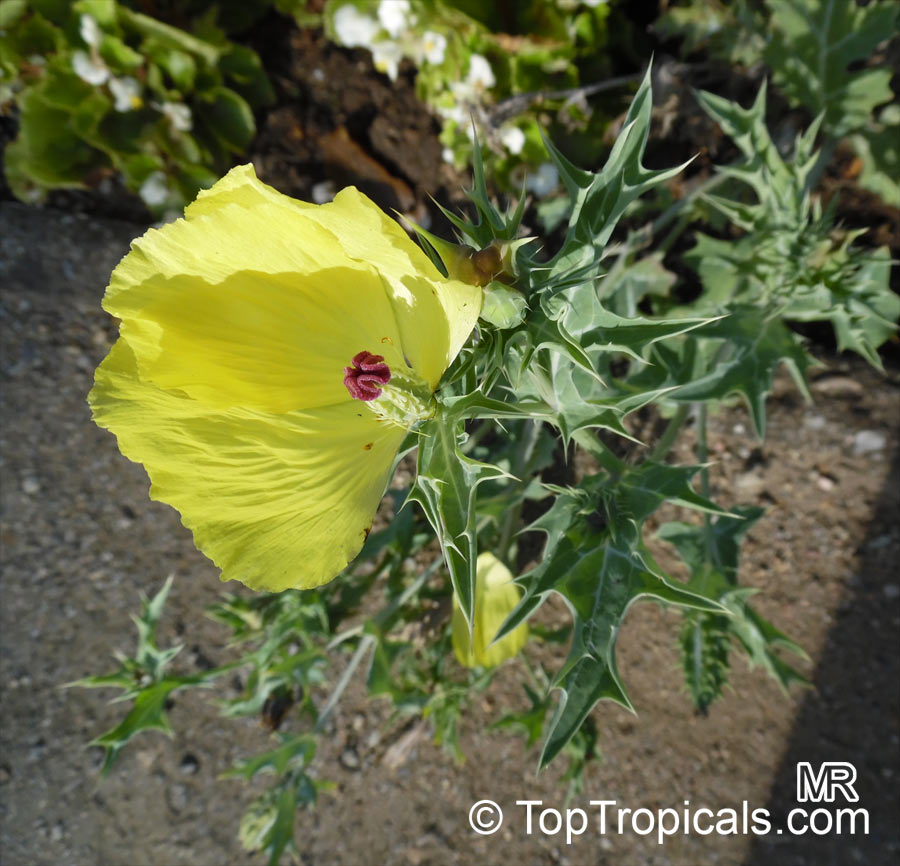
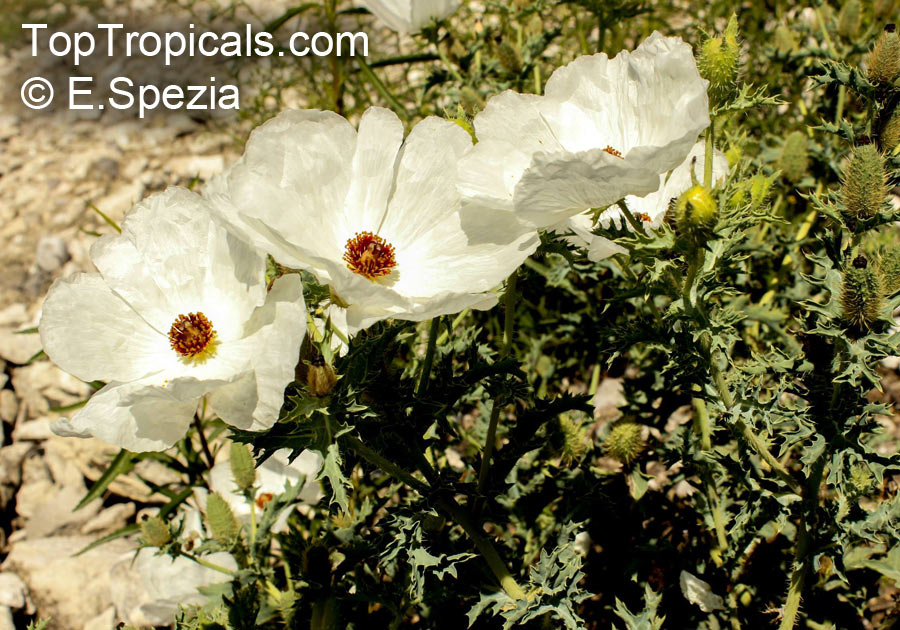
Native to Mexico, Argemone sp. (Prickly Poppy) is a small shrub that grows to a height of 2 to 5 feet. It is an ethnomedical plant with a long history of use before modern medicine. It has white to off-white flowers with ornamental foliage and yellow or orange flowers, and adds a special touch to any garden.
The Prickly Poppy thrives in full sun and semi-shade with moderate water requirements. It is a hardy plant, grown in USDA Zone 9-11. To care for this plant in cold regions, it's best to grow it in a pot and bring it indoors when temperatures drop below freezing. Prickly Poppy should be pruned regularly to keep the plant looking its best.
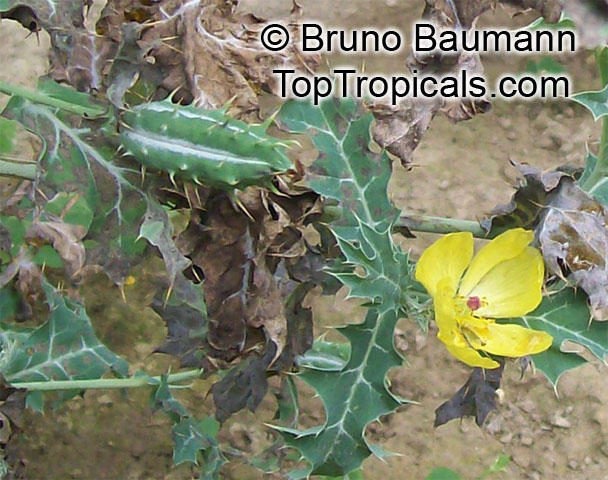
Despite its beauty, Prickly Poppy can be poisonous or toxic for humans and animals. The plant has spines and thorns, which makes it difficult to handle. Even though it can be a bit challenging to take care of, this shrub is worth the effort for its delightful yellow and orange blooms. The Prickly Poppy is a great addition to any garden, adding a unique touch with its beauty and exoticism.