Thunbergia, vine - Plant Encyclopedia Results
| Number of plants found: 10 |
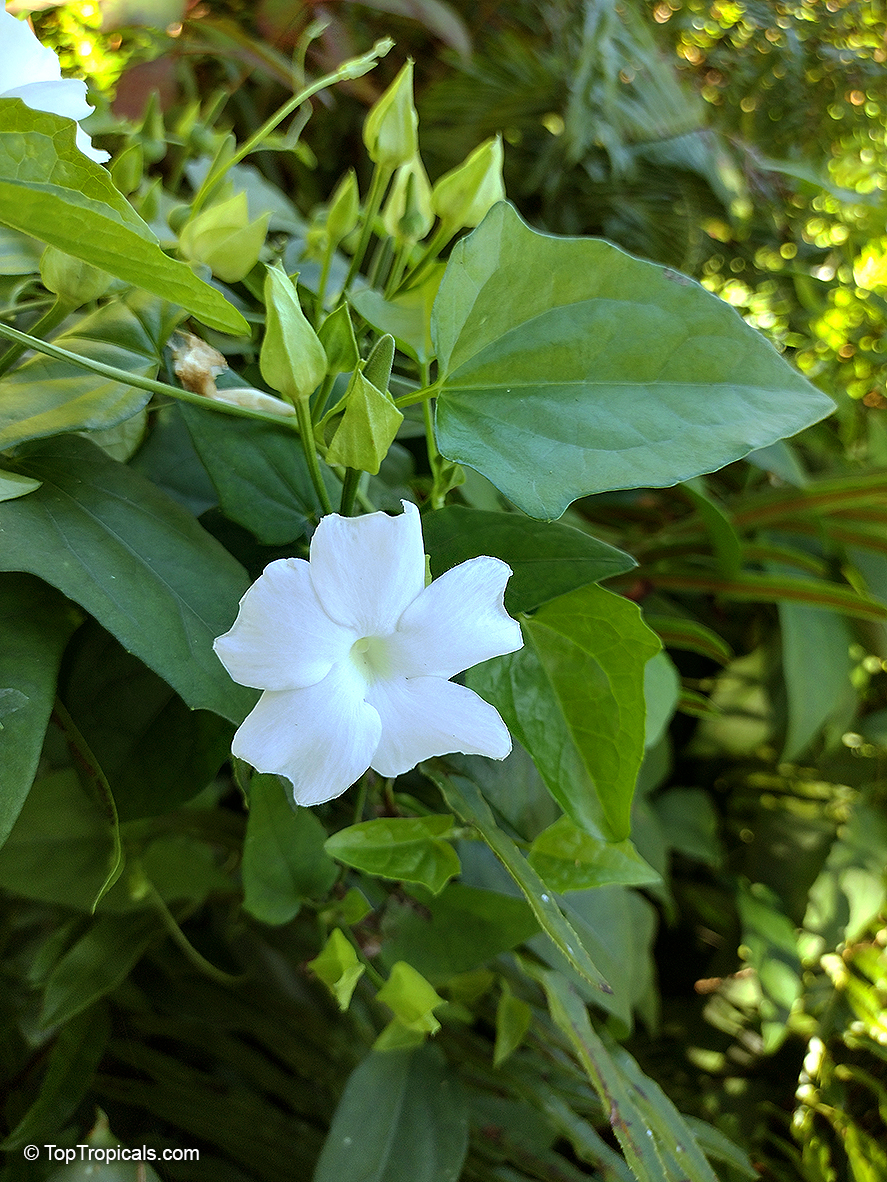
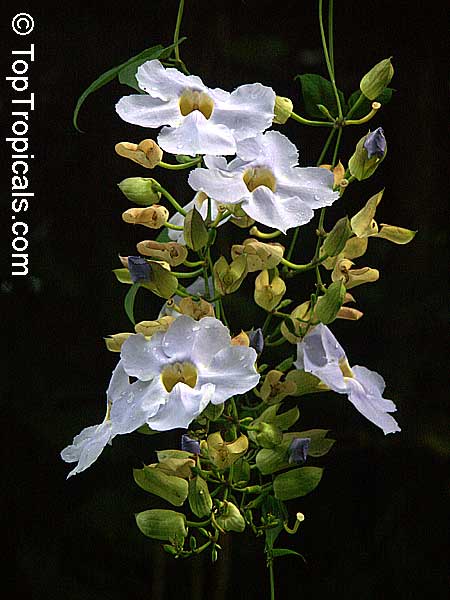
Botanical names: Thunbergia fragrans, Thunbergia laevis
Common names: White Clock Vine, White Gem Thunbergia
Family: Acanthaceae
Origin: India, Ceylon
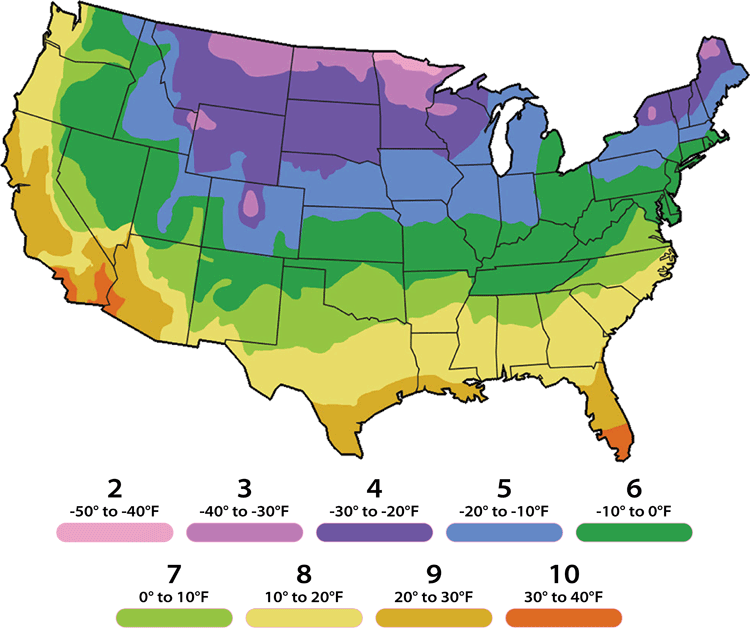
USDA Zone: 9-11
Cold tolerance: 35°F


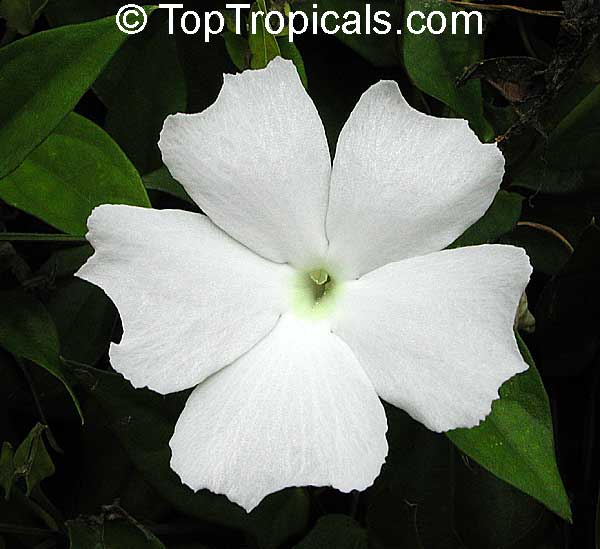
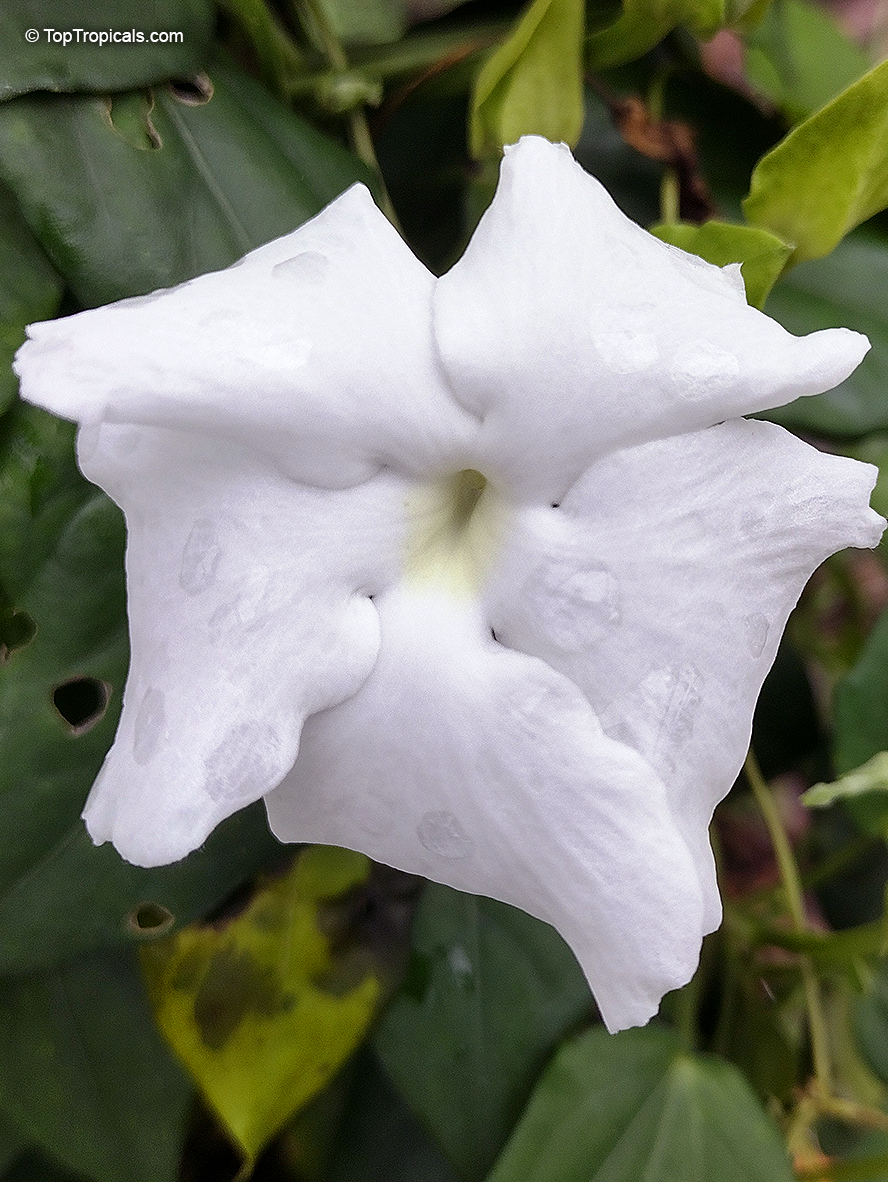
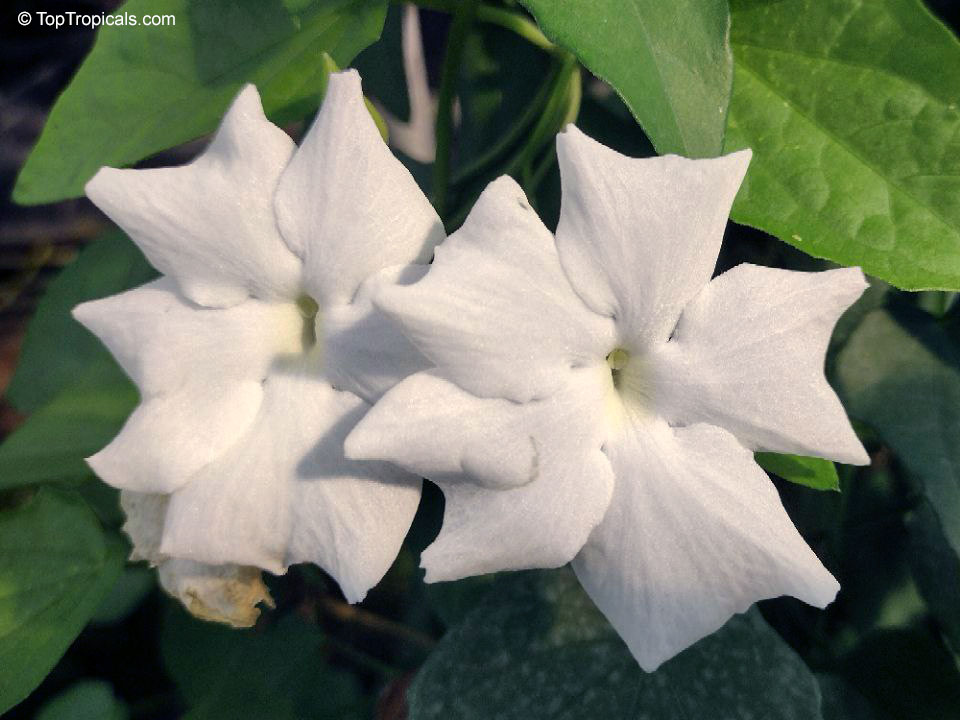
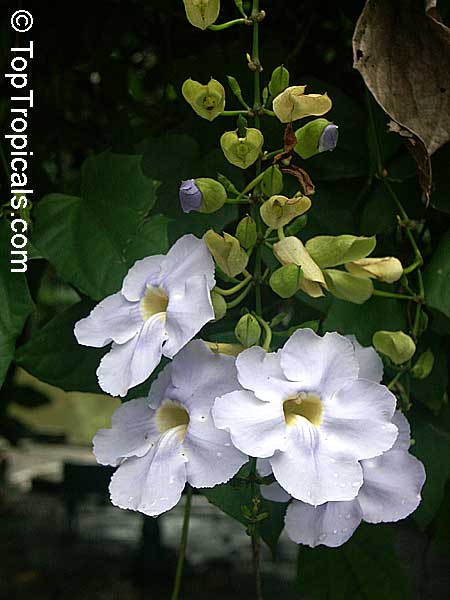
Thunbergia fragrans, commonly known as the White Clock Vine or Sweet Clock Vine, is a fast-growing perennial climber native to India and Southeast Asia. It produces twining stems with triangular to heart-shaped leaves and delicate white funnel-shaped flowers with a yellow throat, usually blooming throughout the warm season. This species is often used as a quick cover for fences, trellises, and arbors, where it adds a light and airy appearance to the garden.
Thunbergia fragrans thrives in full sun to partial shade and prefers well-drained soil with regular moisture. It is suited for USDA Zones 9-11 and is not frost tolerant. The vine is best grown in warm climates or containers that can be moved indoors during colder months. Protect from frost at all times, as prolonged exposure to temperatures below 40F may damage the plant.

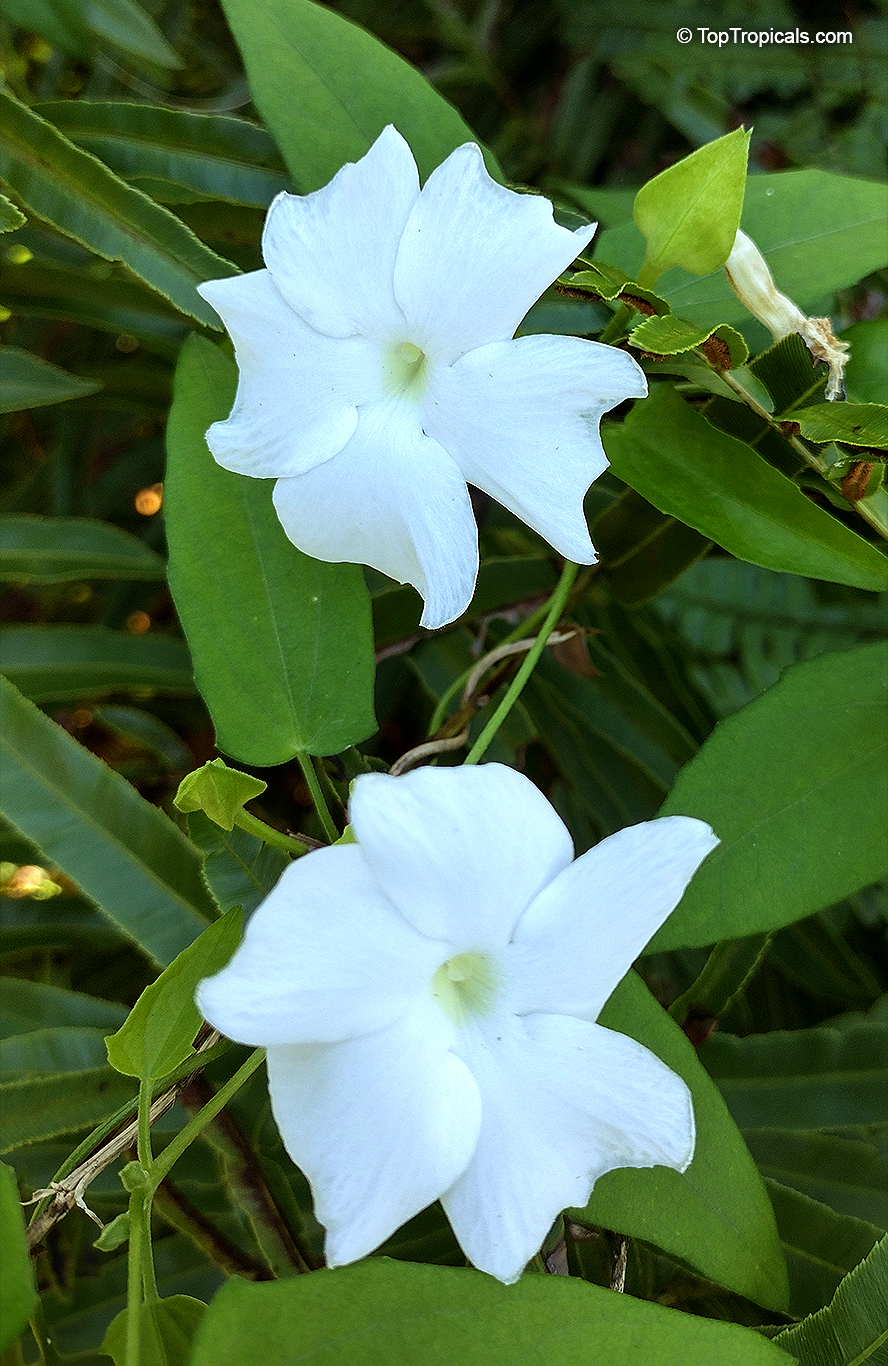
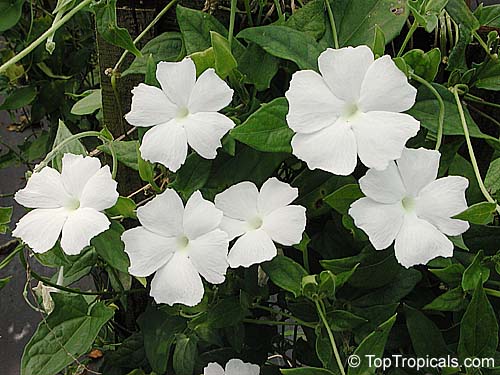
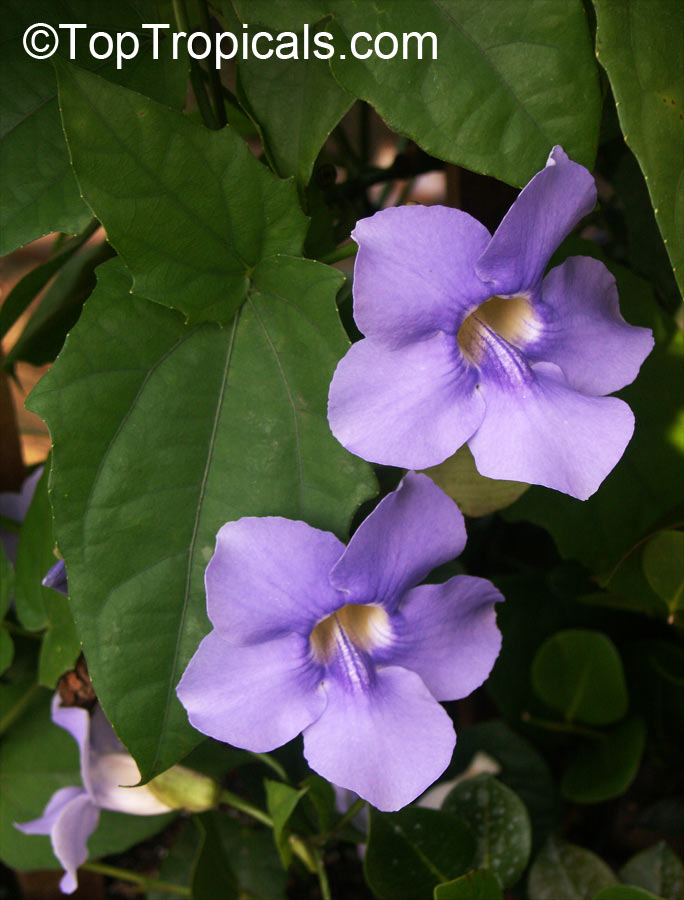
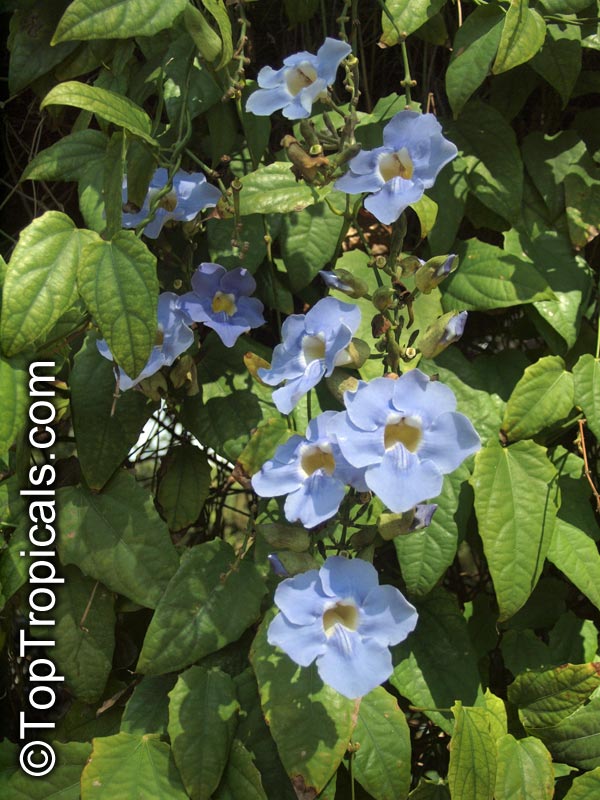
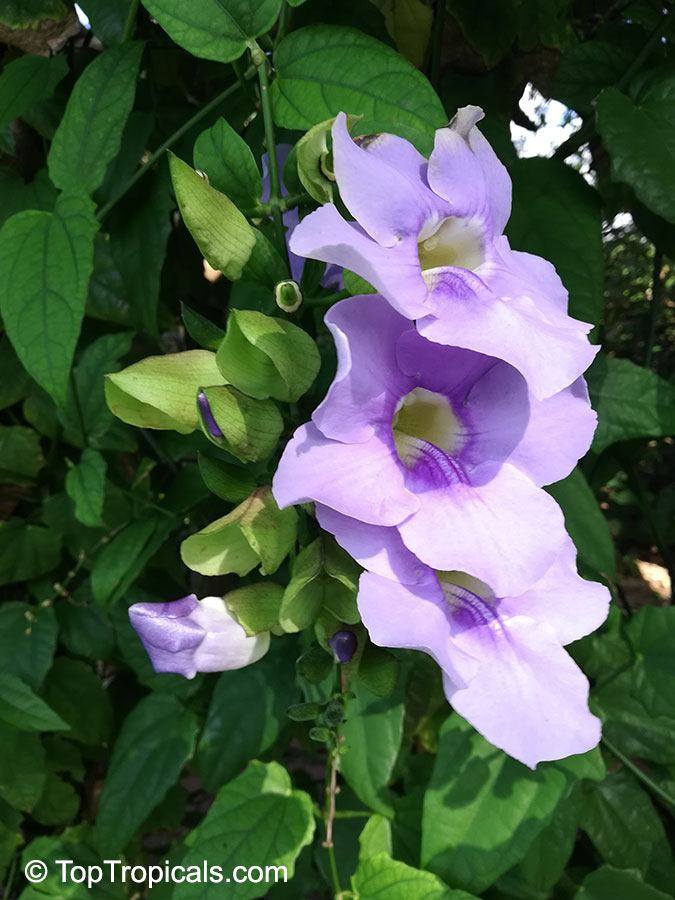
Botanical name: Thunbergia laurifolia
Common names: Blue Trumpet Vine, Blue Sky vine, Laurel-leaved thunbergia
Family: Acanthaceae
Origin: India, Malaysia
USDA Zone: 10-11


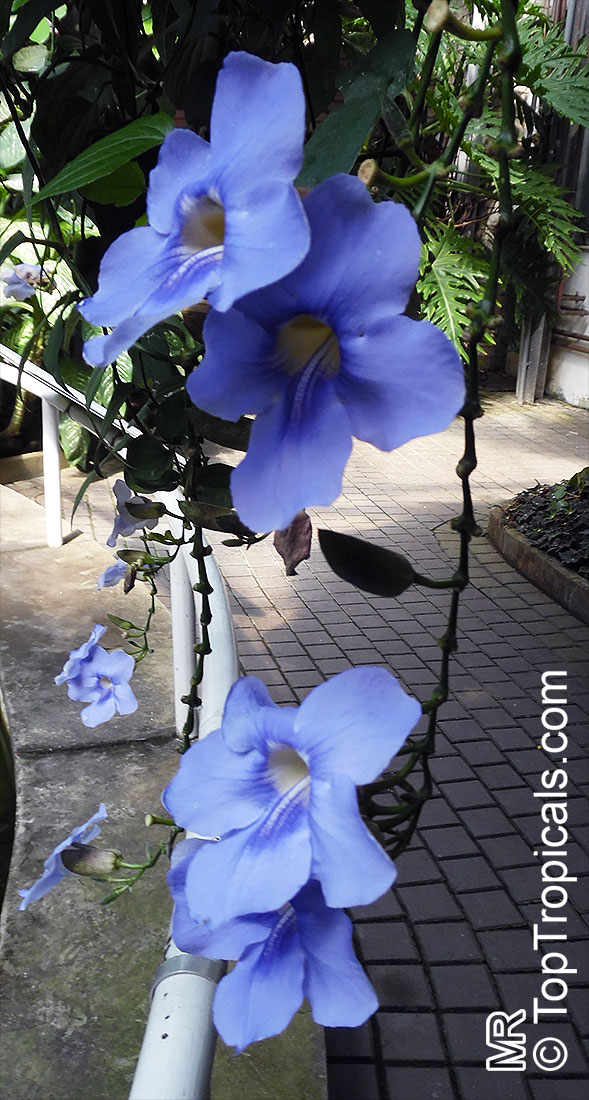
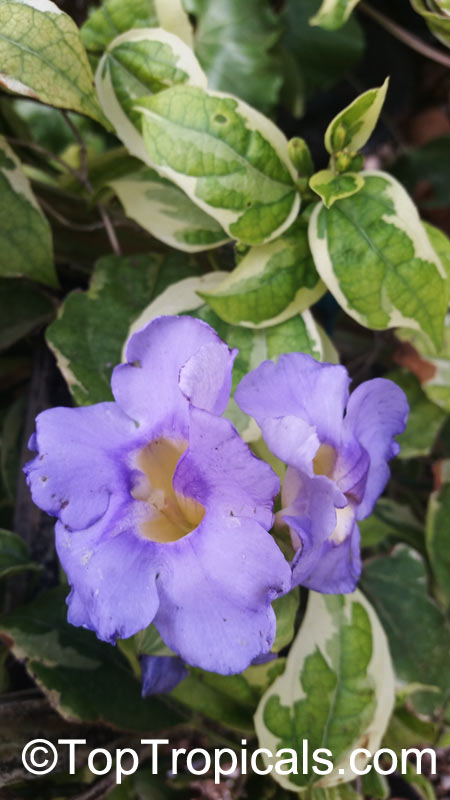
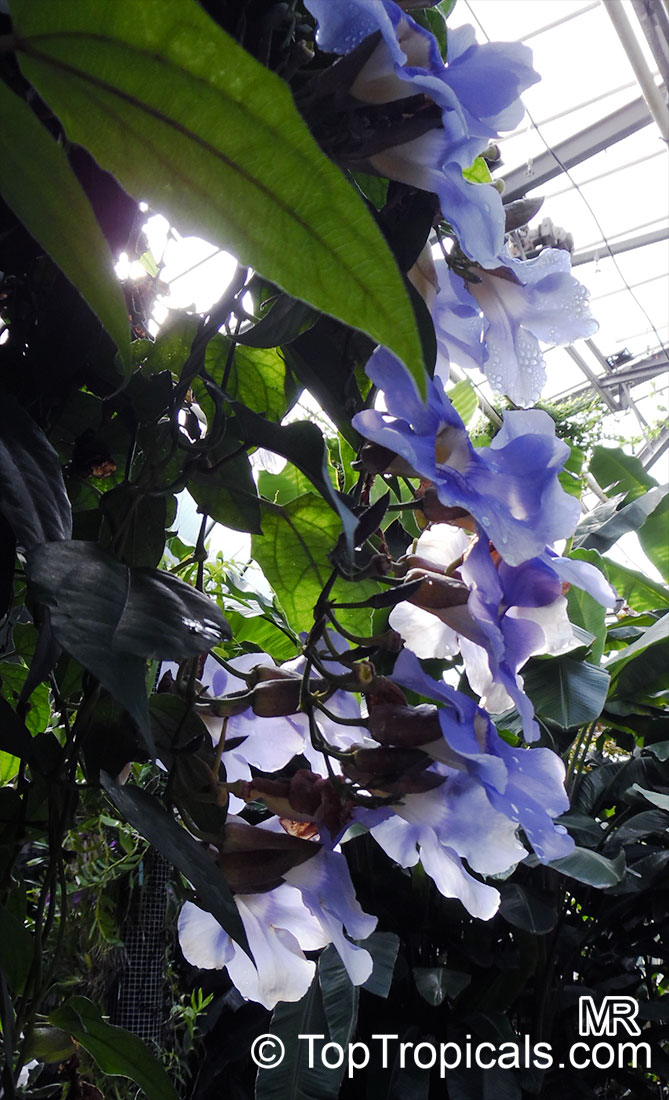
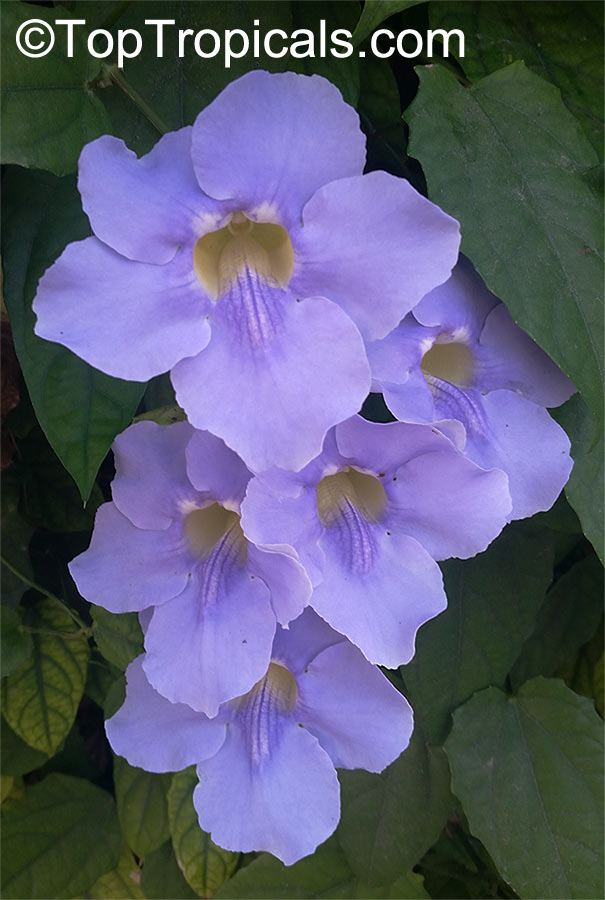
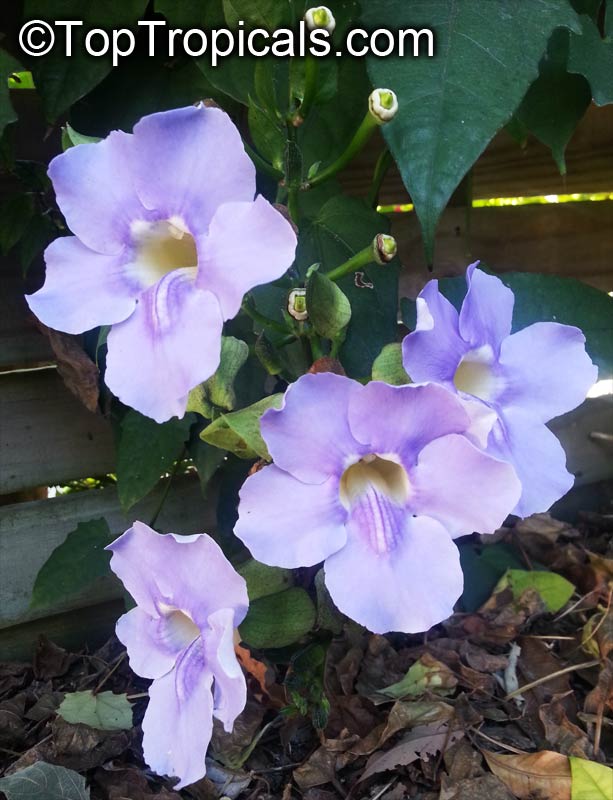
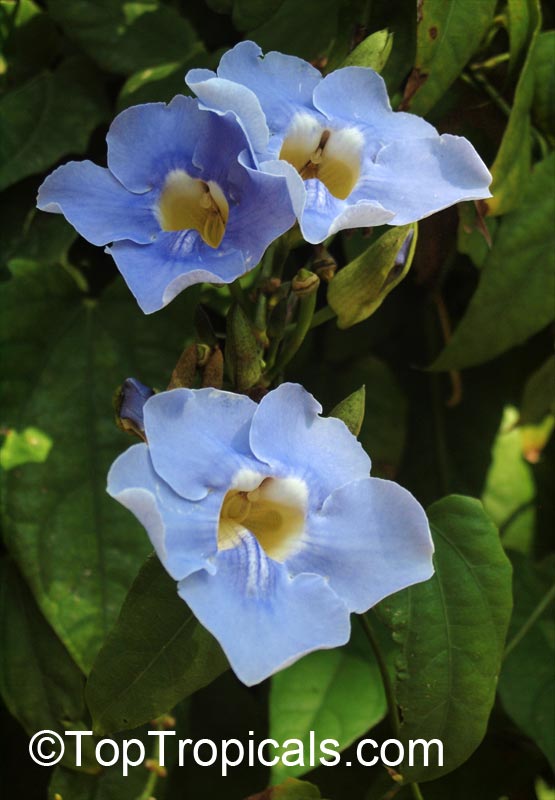
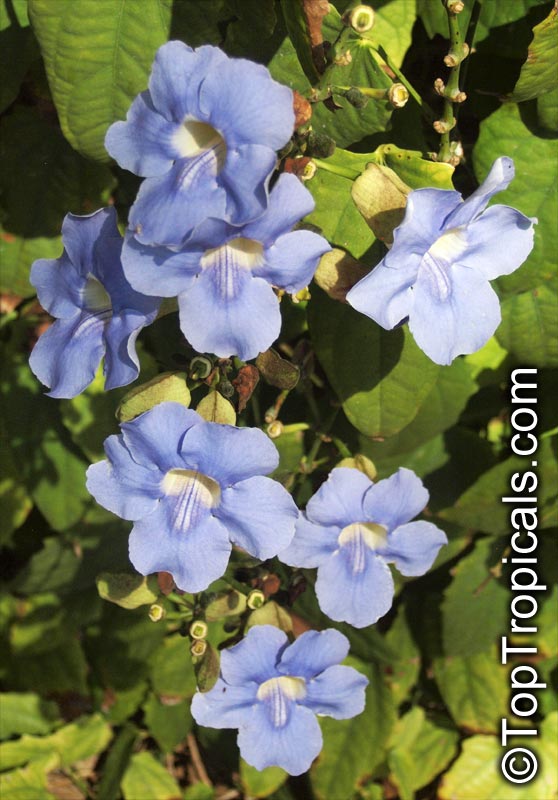
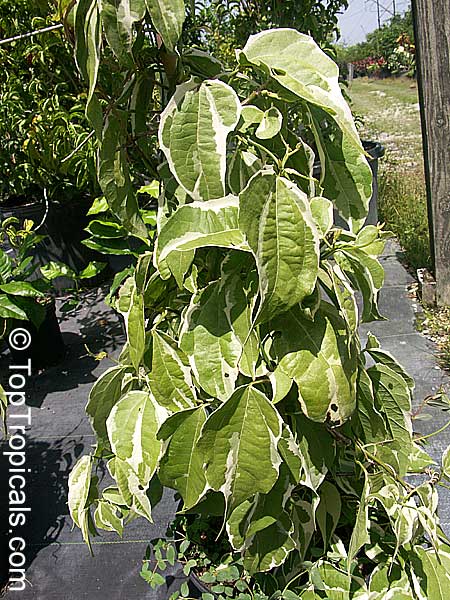
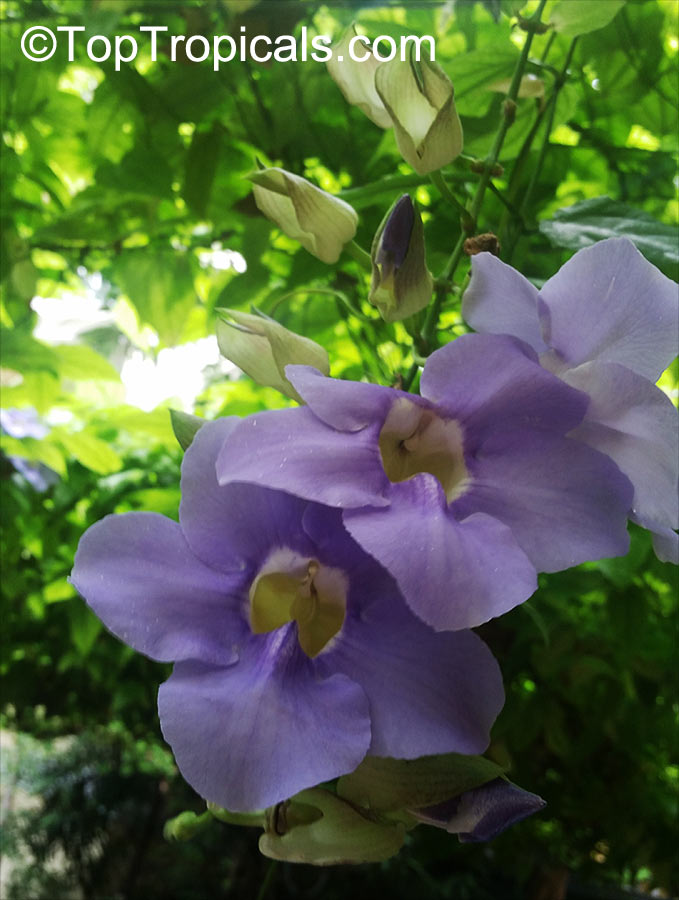
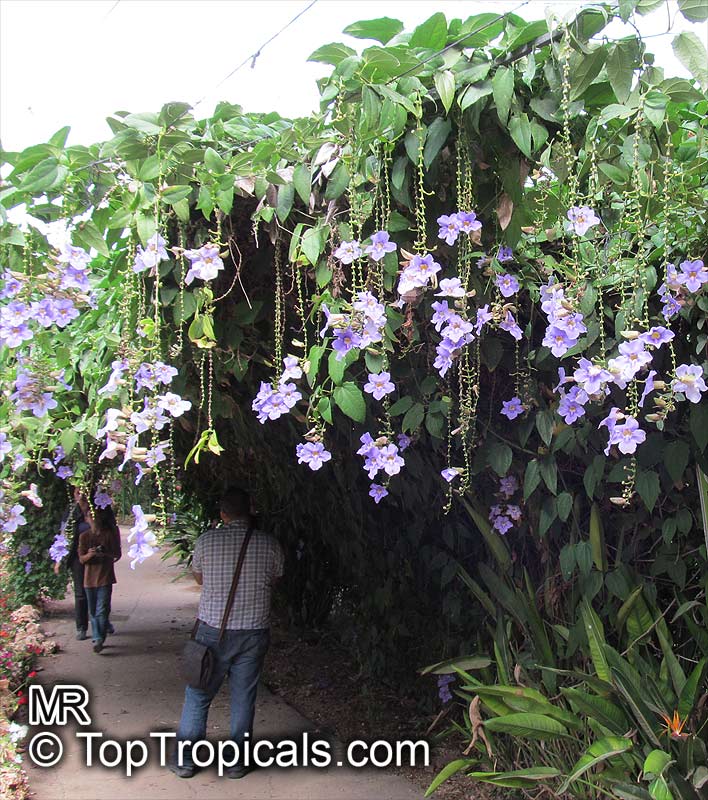
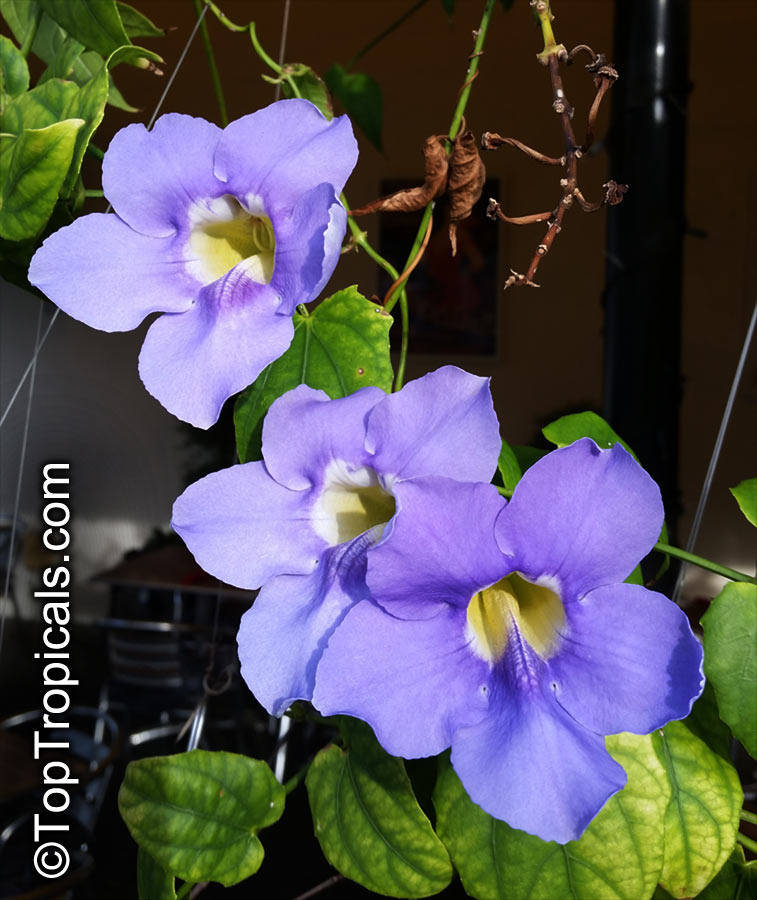
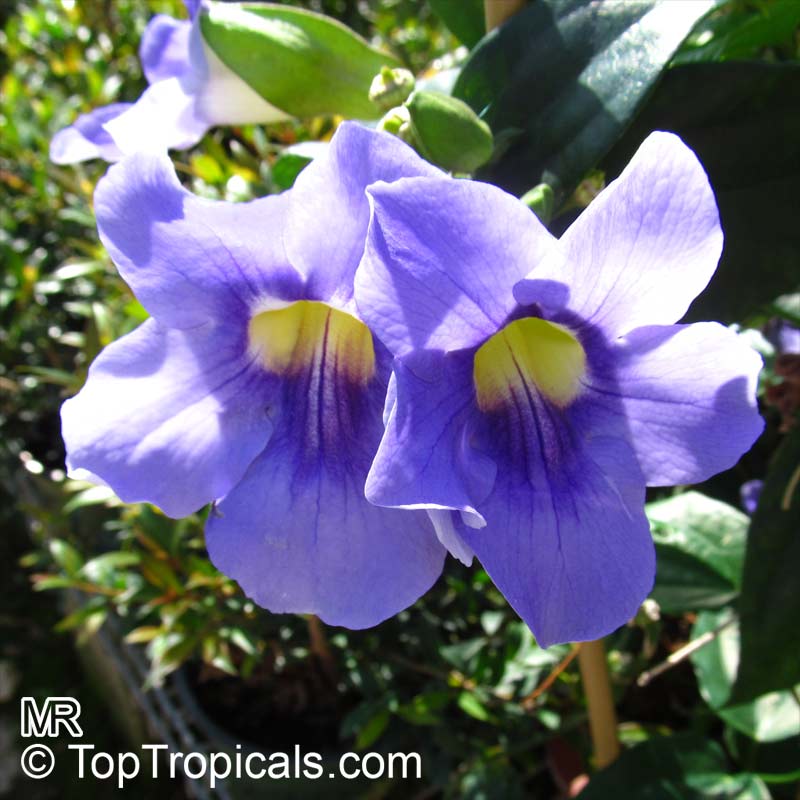
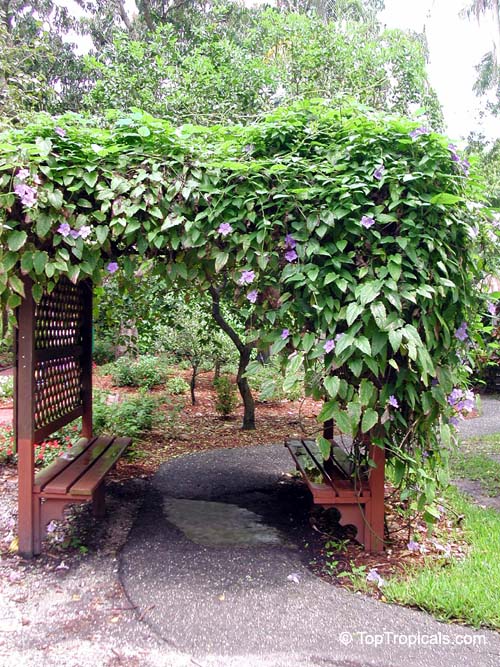
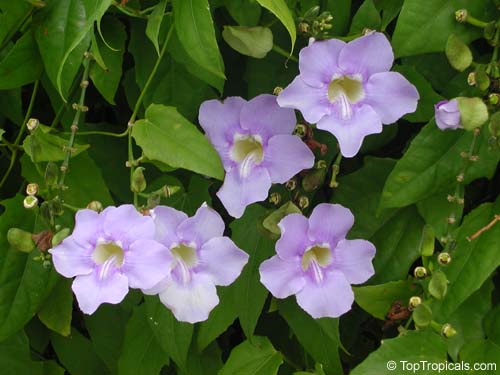
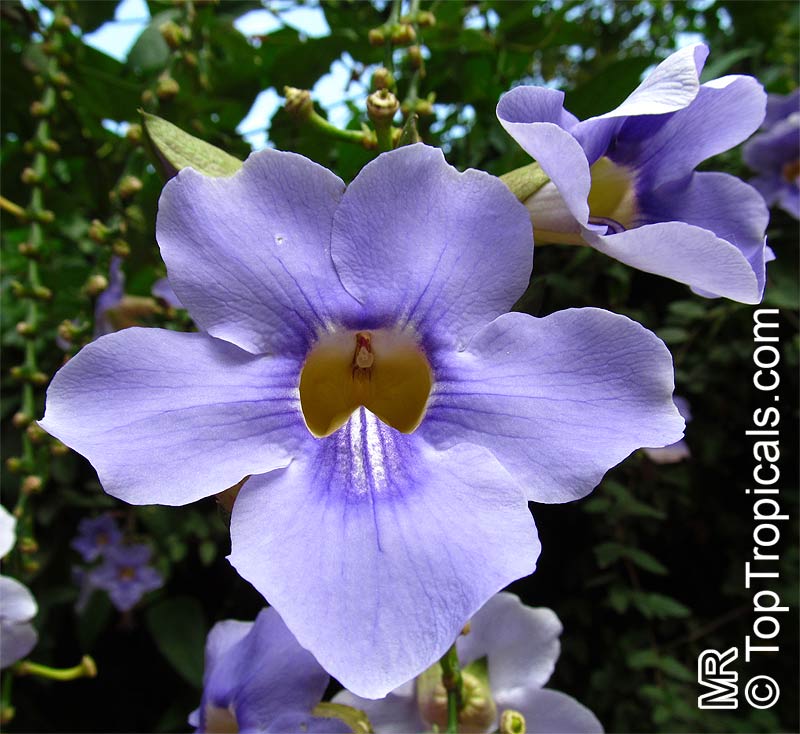
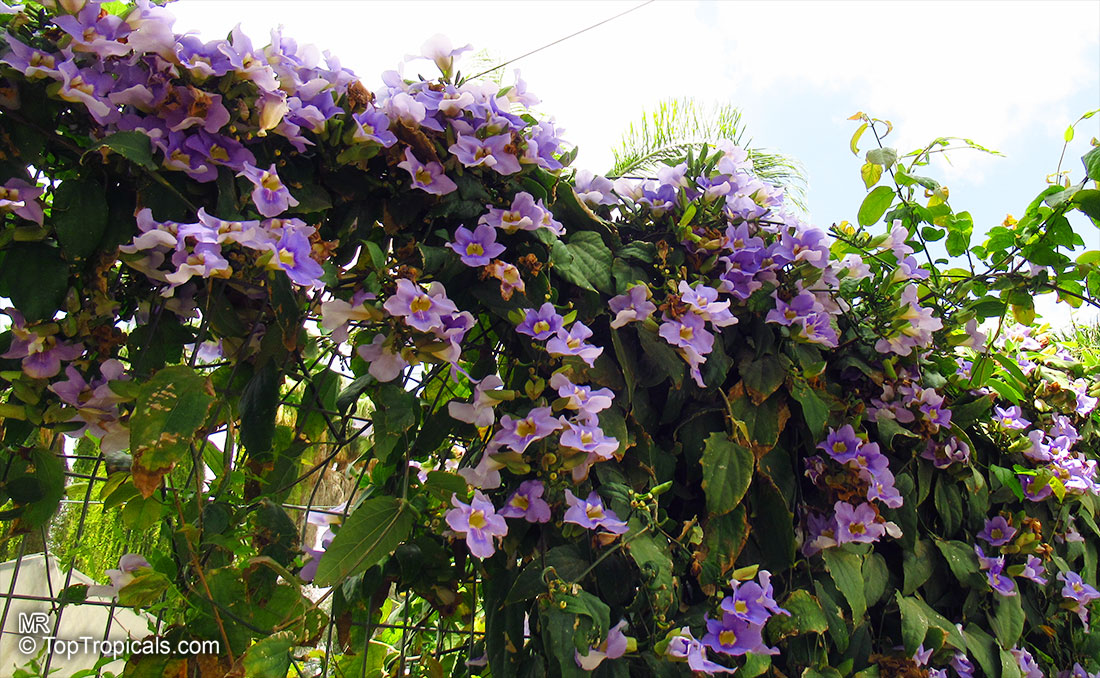
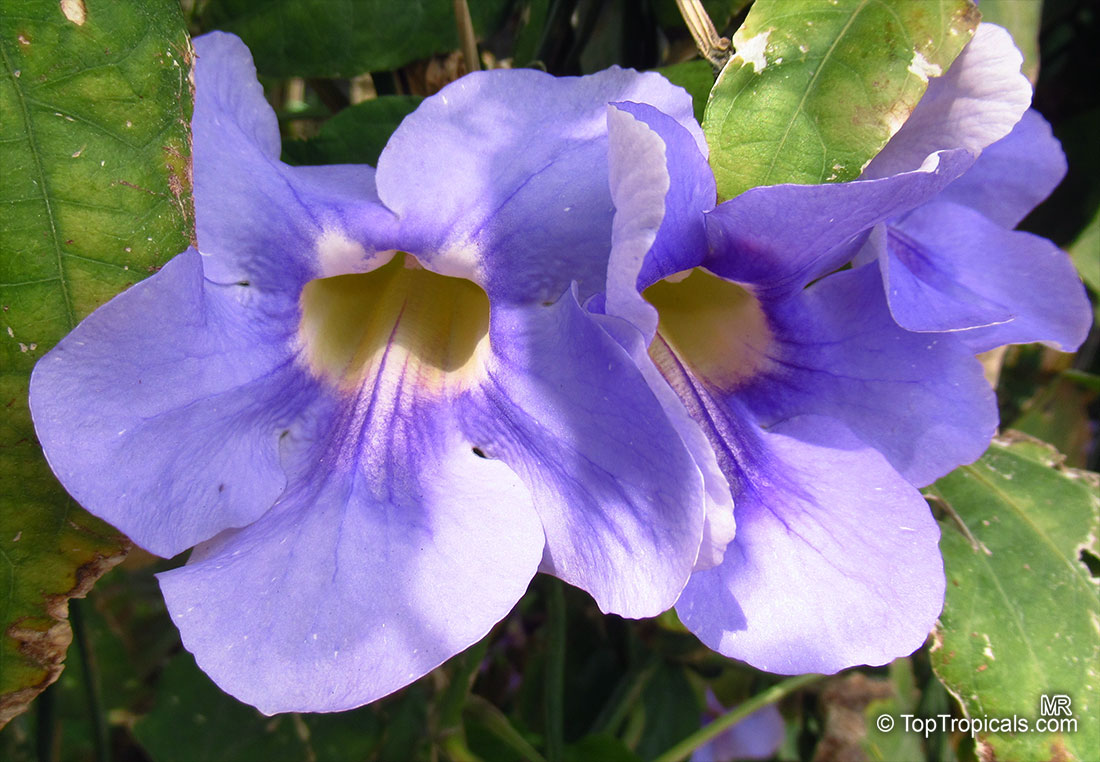
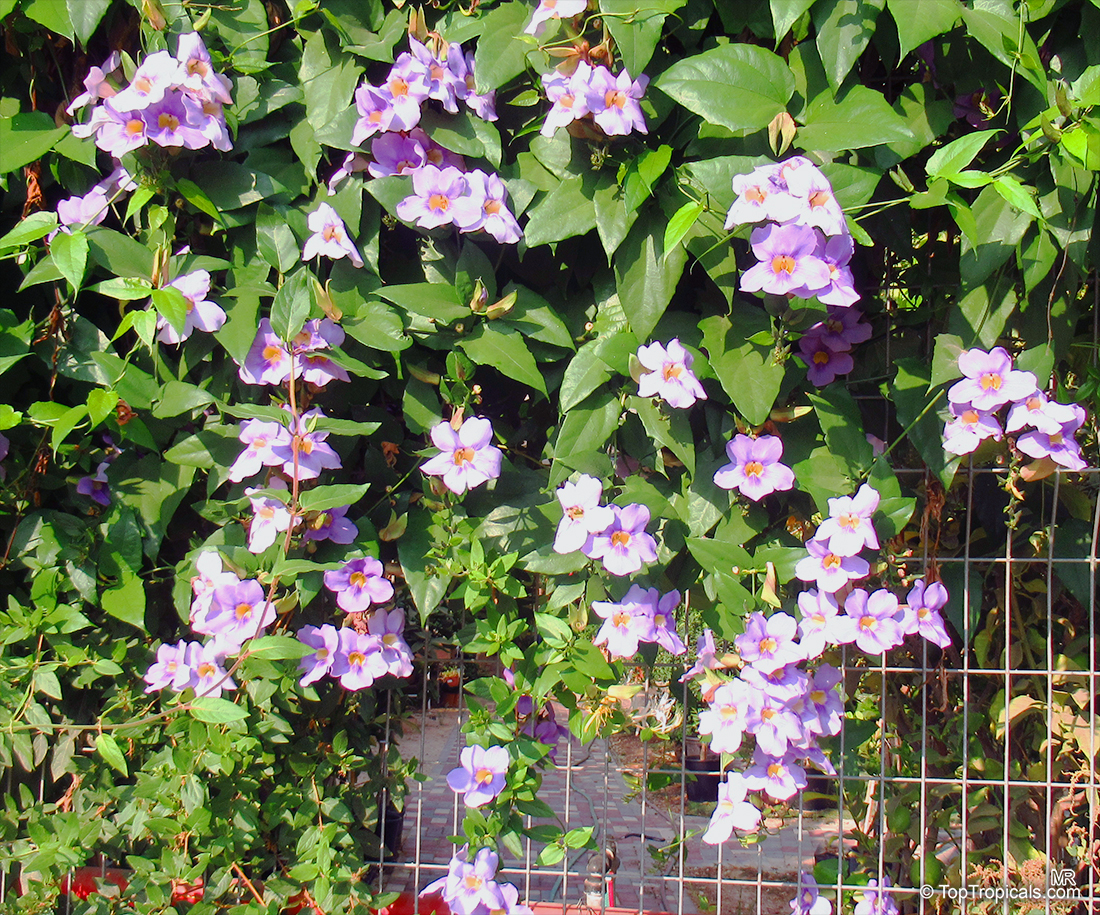
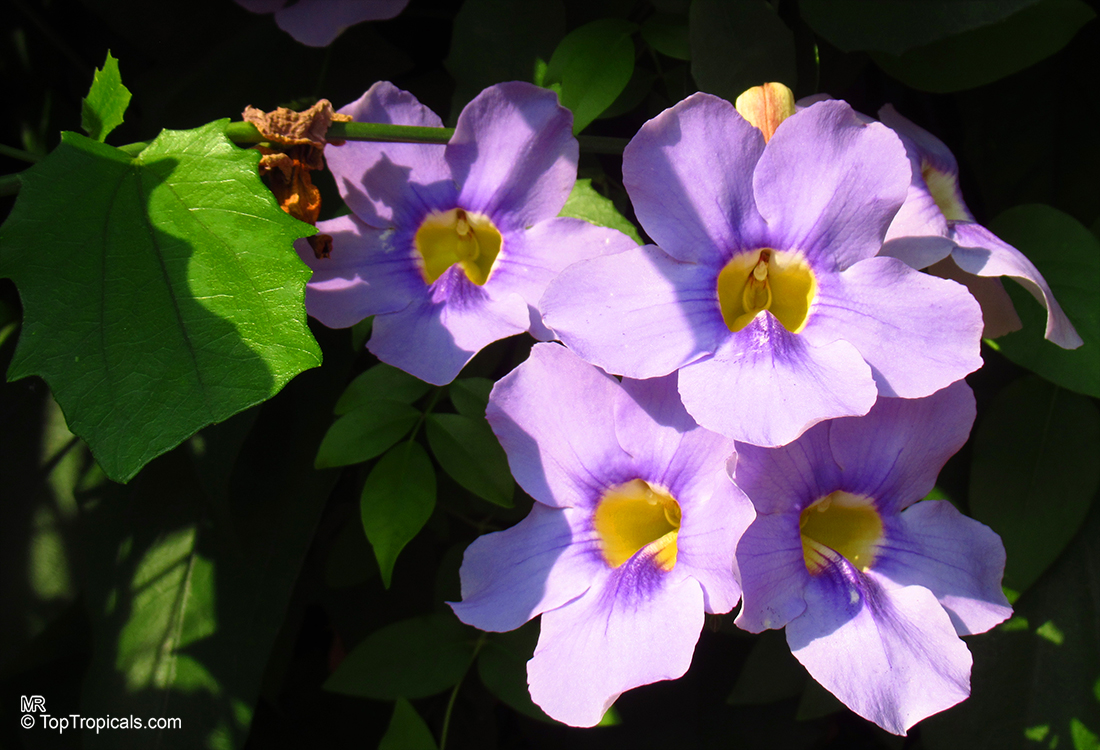
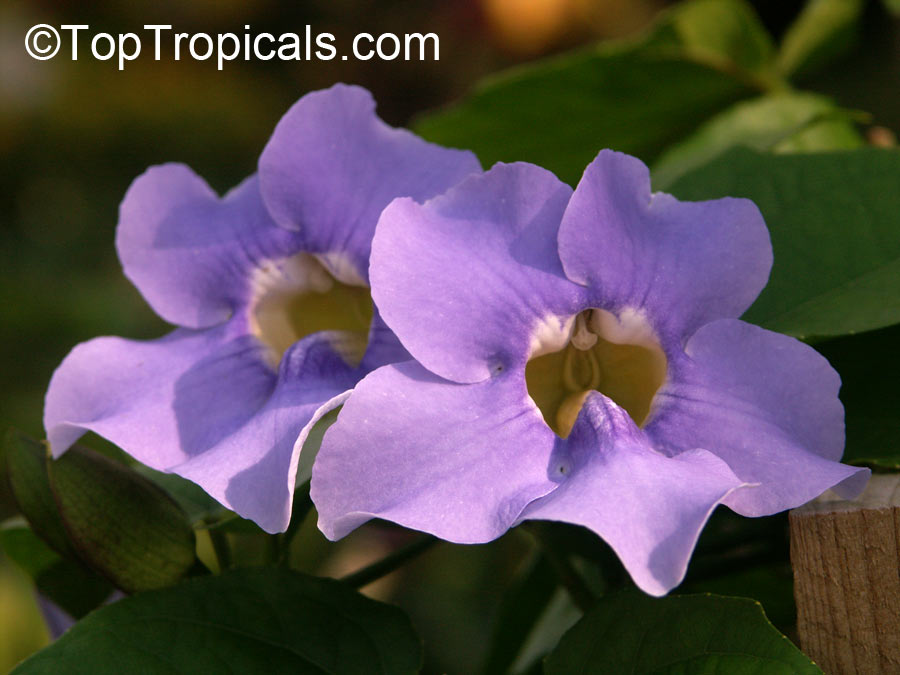
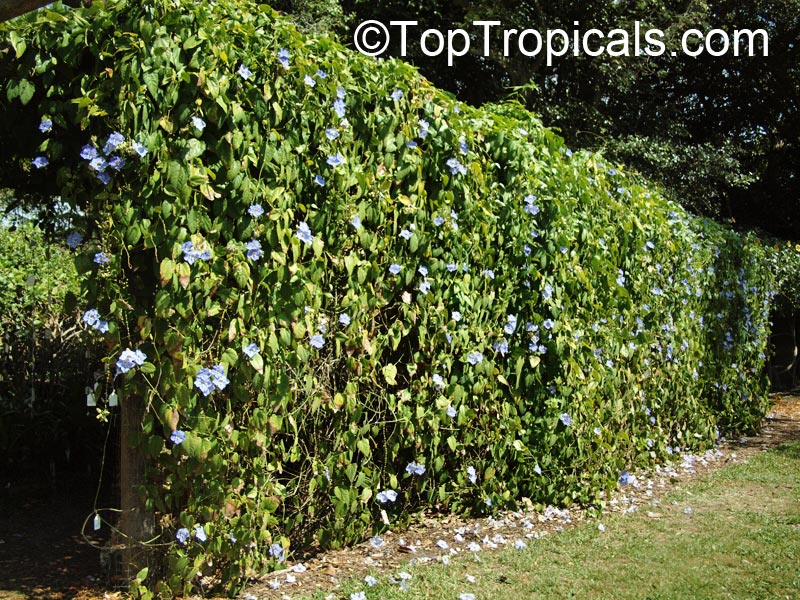
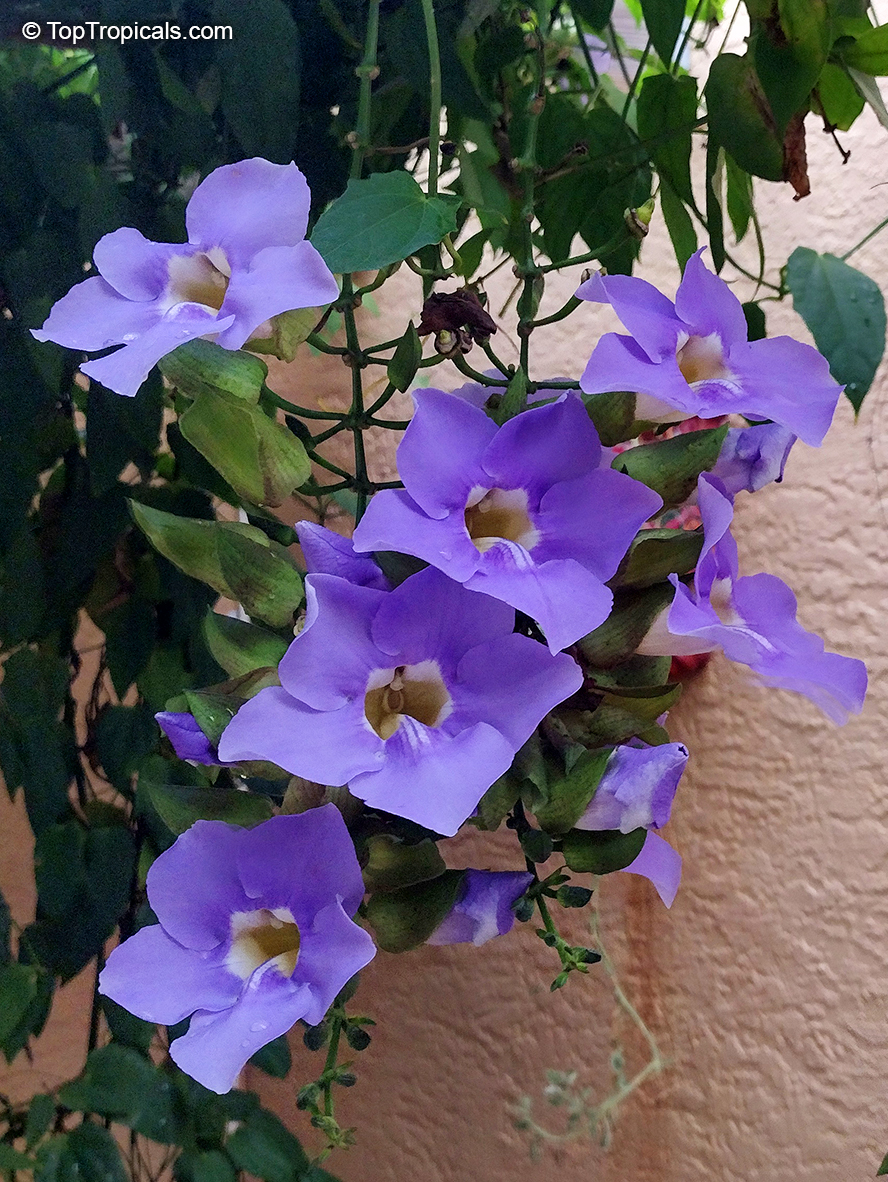
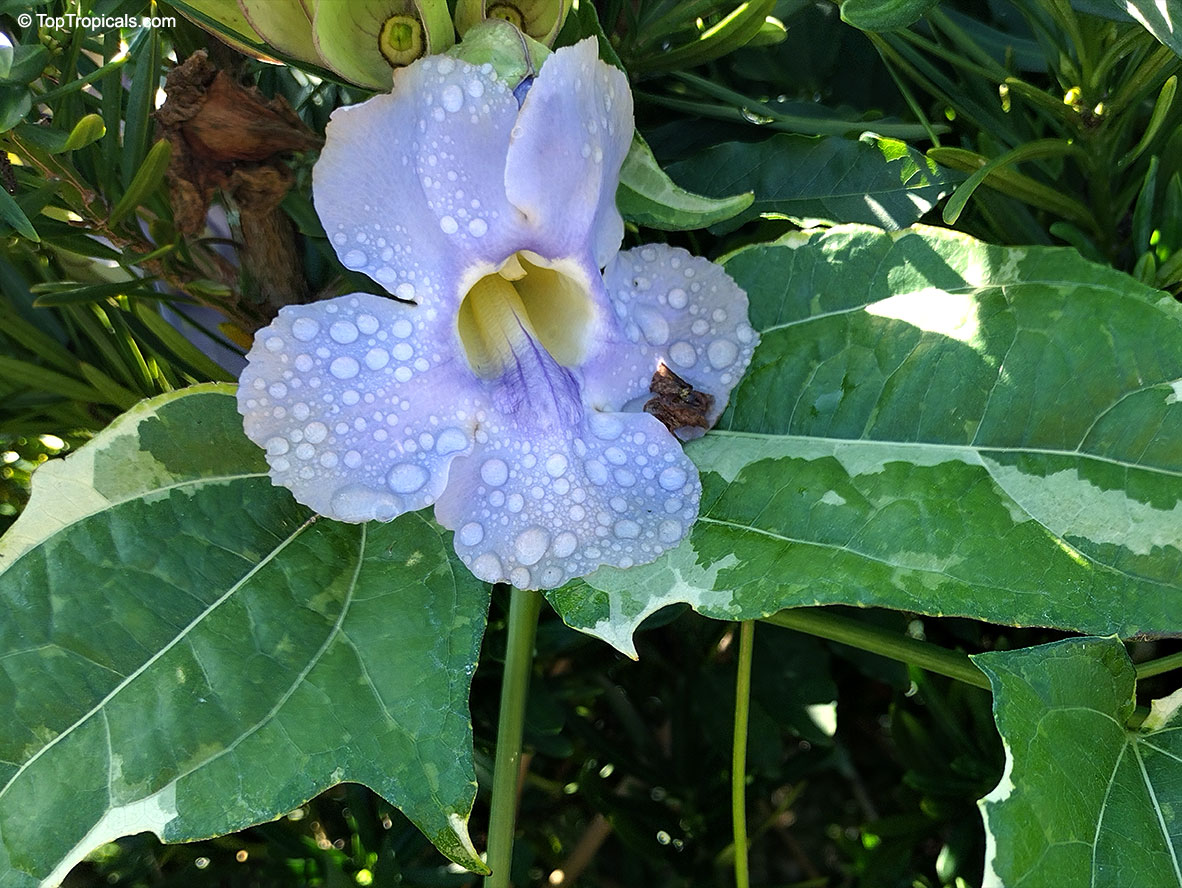
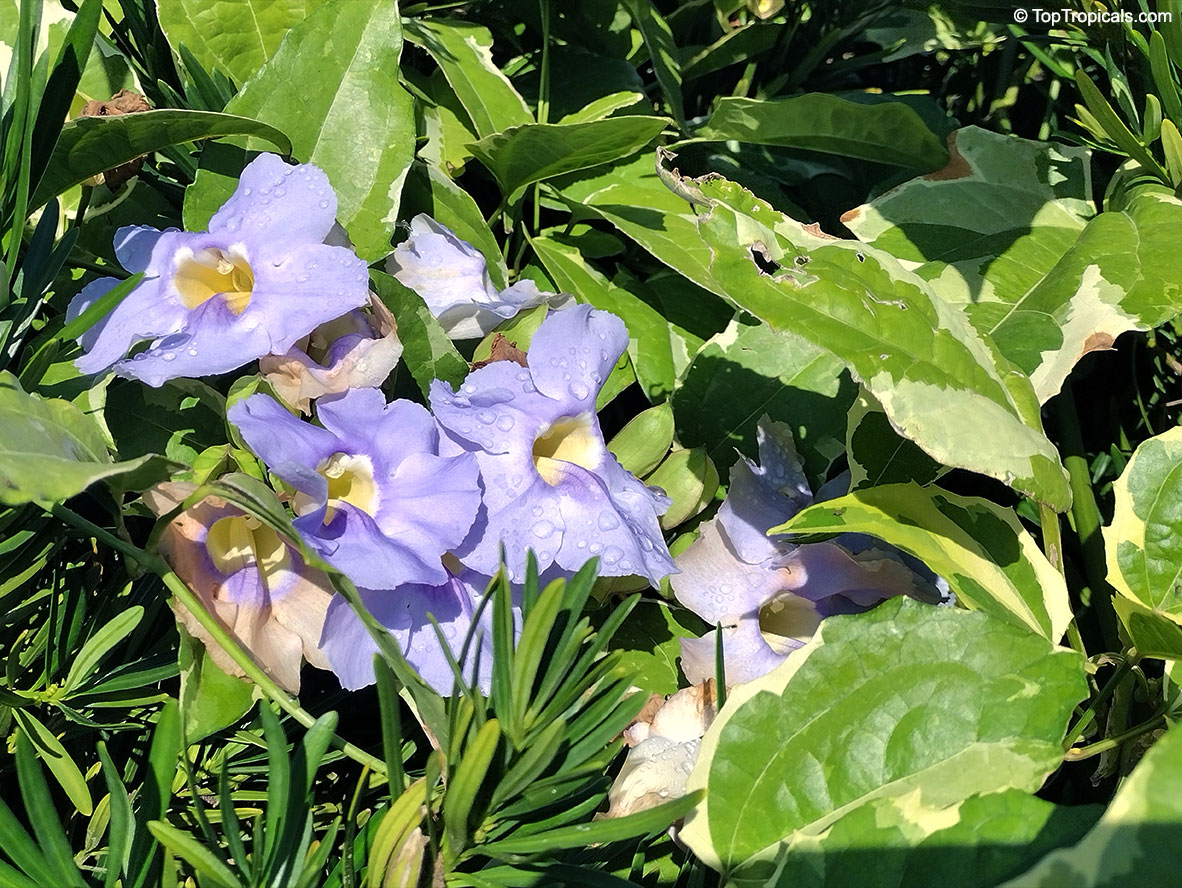
Thunbergia laurifolia, commonly known as Laurel Clock Vine or Blue Trumpet Vine, is a vigorous evergreen climbing vine in the Acanthaceae family, native to tropical Southeast Asia. It grows along forest margins and in disturbed habitats, climbing over trees and surrounding vegetation. Its long, twining stems may reach 20-30 feet or more. The opposite leaves are typically elongated, elliptic to lanceolate, with pointed tips, entire or slightly wavy margins, and prominent veins. Unlike the frequently heart-shaped or lobed leaves of Thunbergia grandiflora, those of T. laurifolia are generally narrower and unlobed, although leaf shape alone may not reliably distinguish the two species. Large, trumpet-shaped flowers appear in hanging clusters, usually lavender-blue to violet-blue with a pale yellow throat. The flowers are followed by rounded seed capsules.
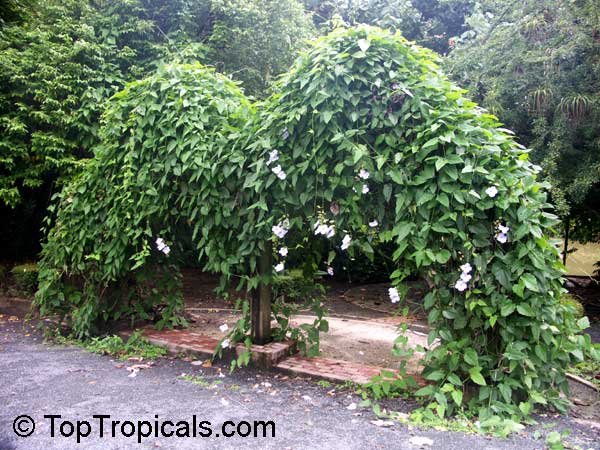
Thunbergia laurifolia thrives in full sun to partial shade and fertile, moist but well-drained soil. It grows rapidly in warm, humid climates and flowers over an extended season, making it attractive for pergolas, fences, and large trellises. Suitable for USDA Zones 10-11, it is sensitive to prolonged freezing temperatures, although established plants may recover after brief light frost. Regular pruning is necessary to control its vigorous growth. The species has become invasive in several tropical regions, where it can form dense growth that smothers native vegetation.
Thunbergia laurifolia is similar to Thunbergia grandiflora.
Recommended Fertilizer: SUNSHINE Megaflor - Bloom Nutrition Booster
Recommended Fertilizer: SUNSHINE Megaflor - Bloom Nutrition Booster
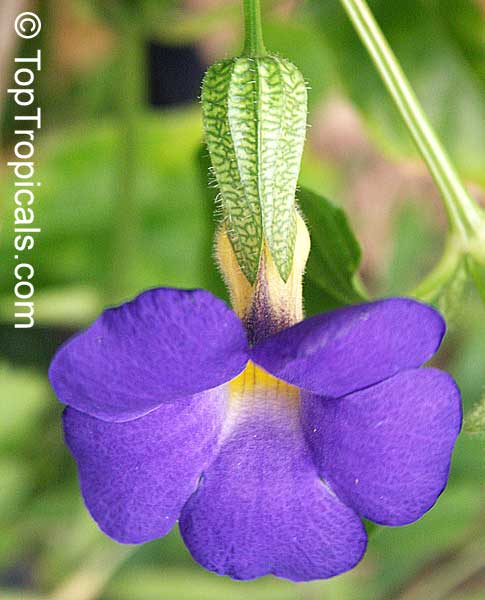
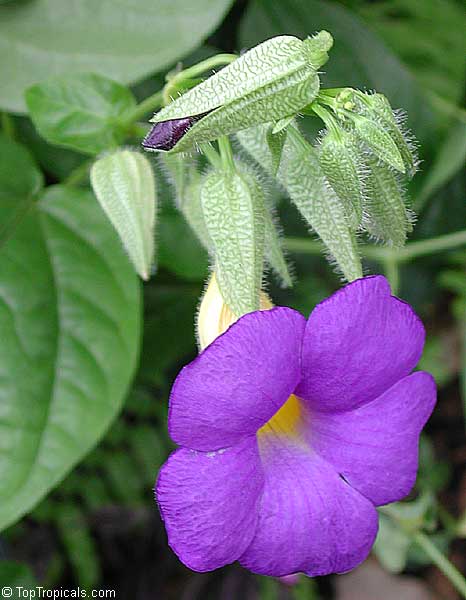
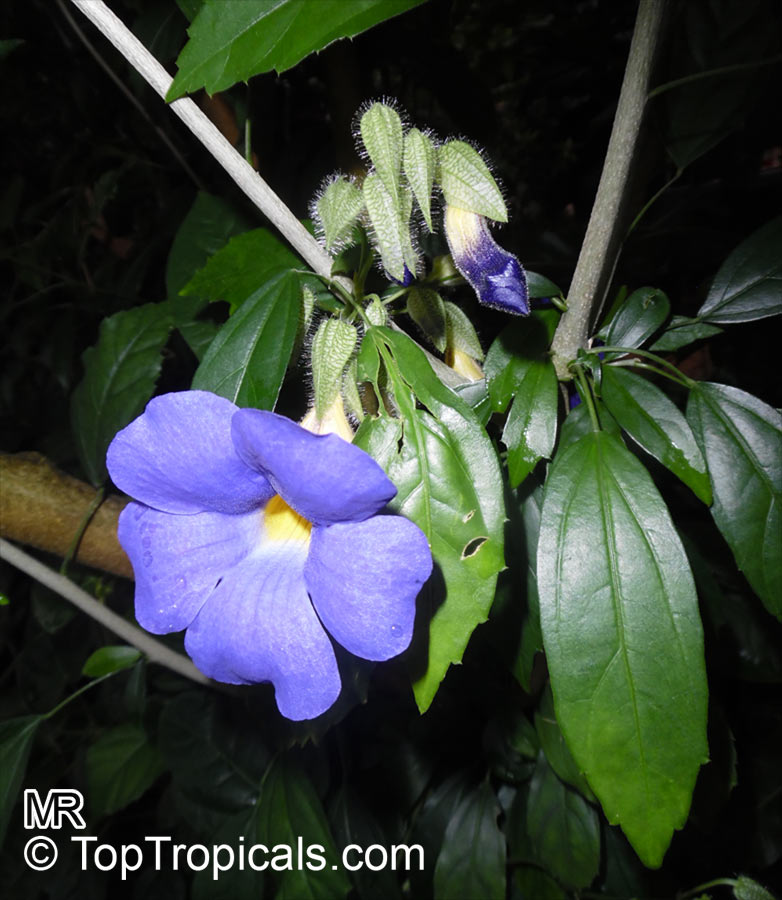
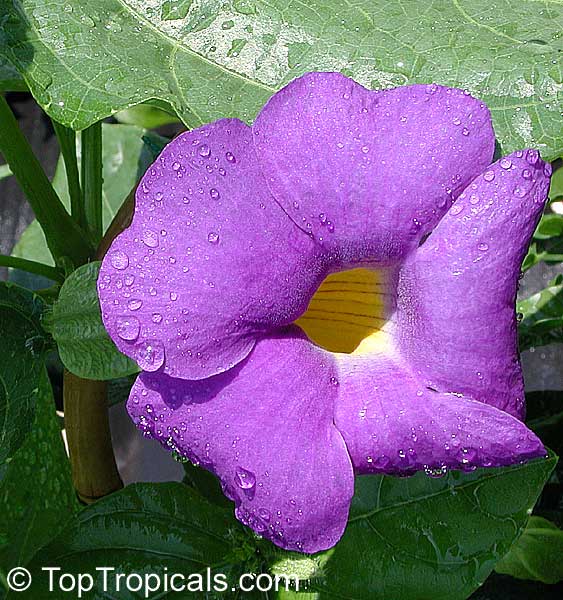
Botanical name: Thunbergia battiscombei
Common names: Bengal Clock Vine, Blue Trumpet Vine, Blue Sky vine, Scrambling sky flower, Blue Glory
Family: Acanthaceae
Origin: Tropical Africa
USDA Zone: 9-11
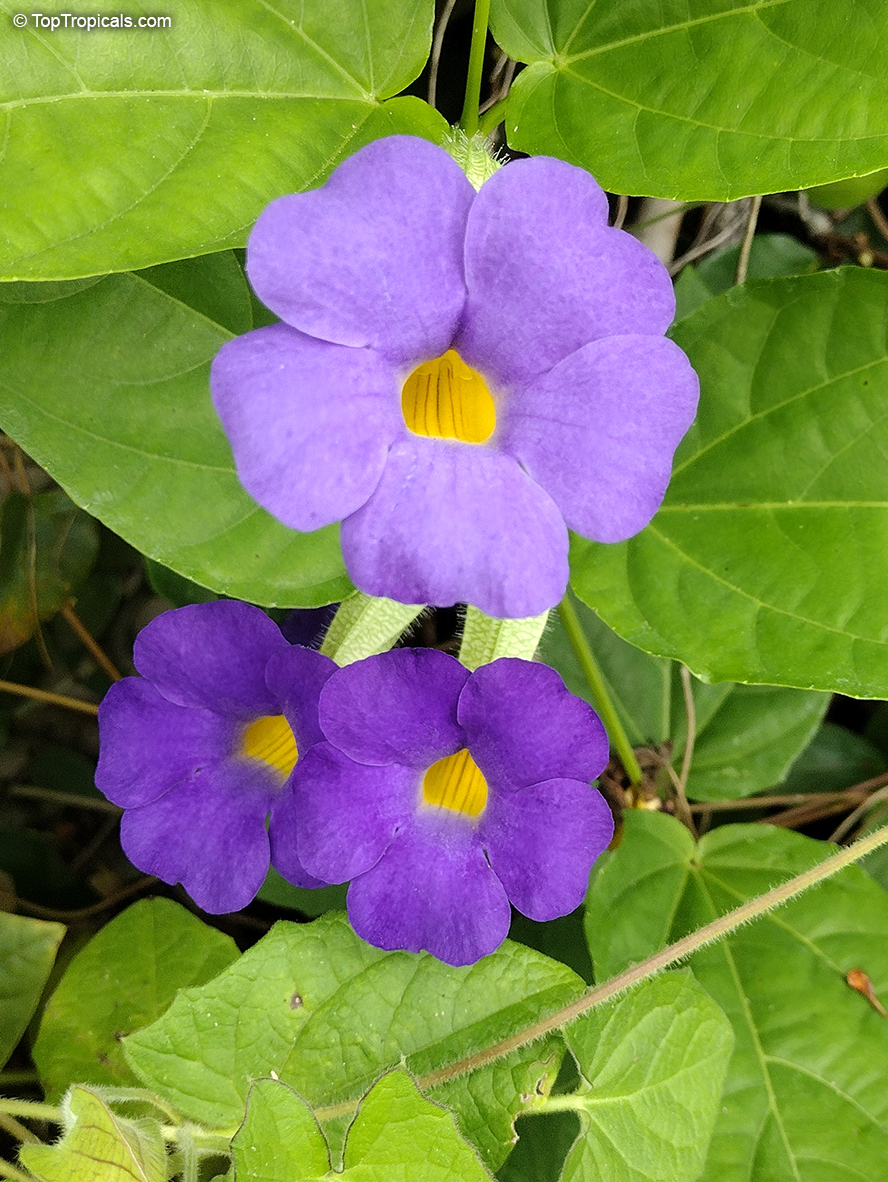
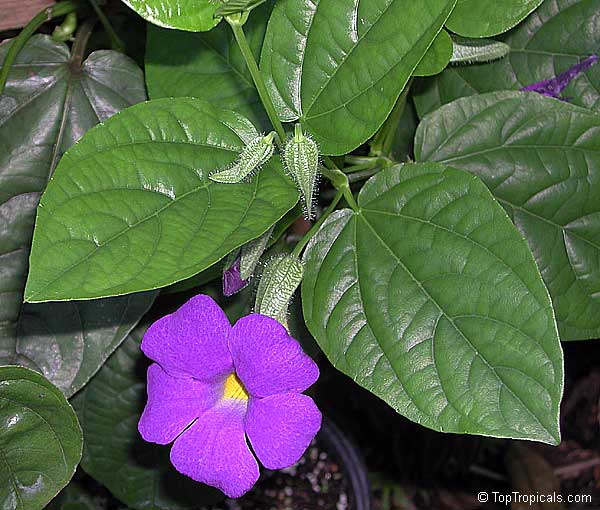
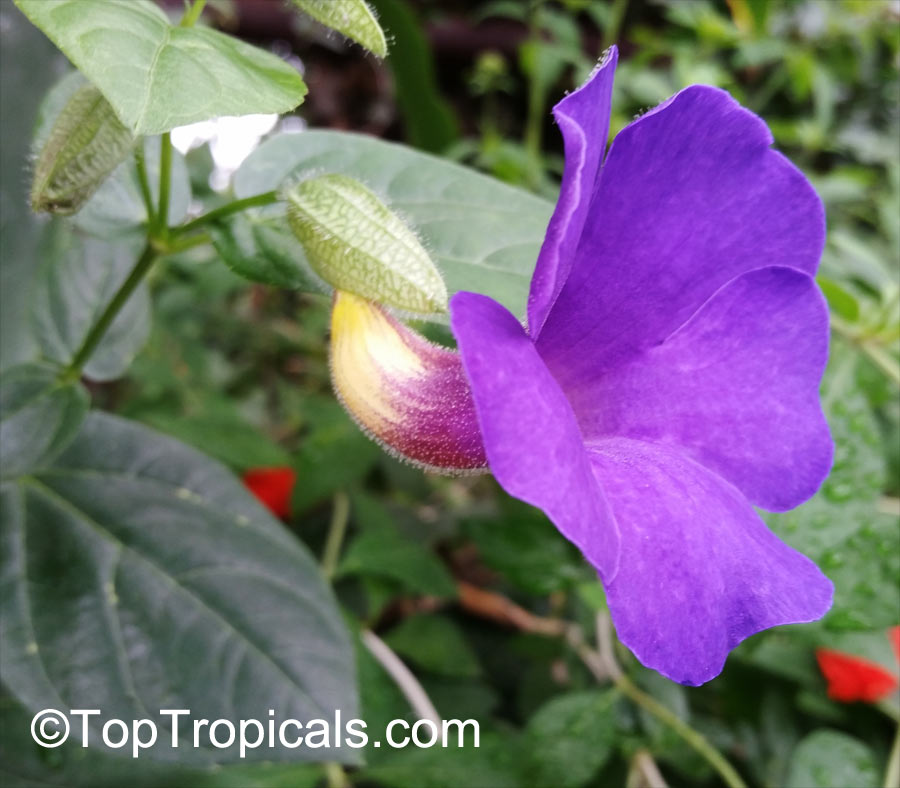
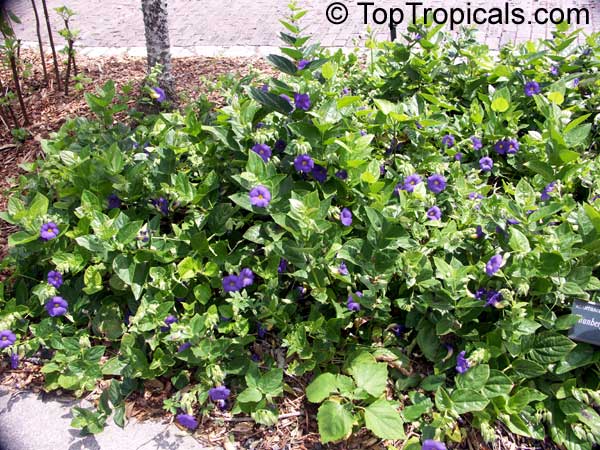
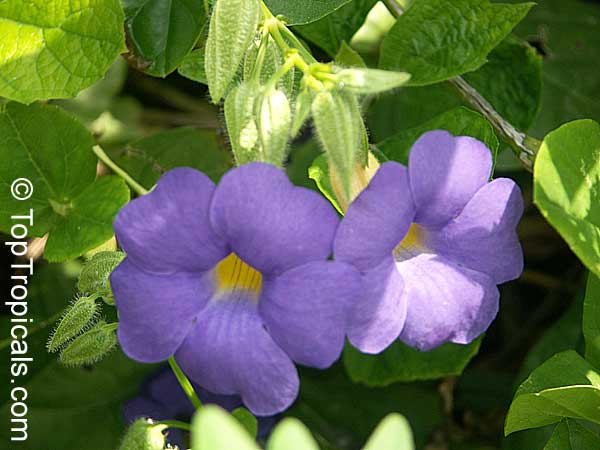
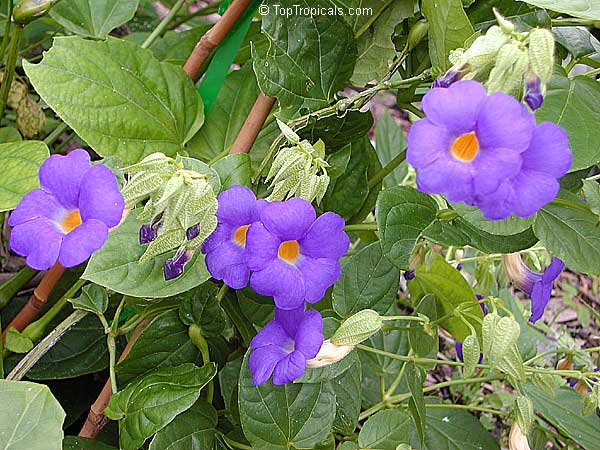
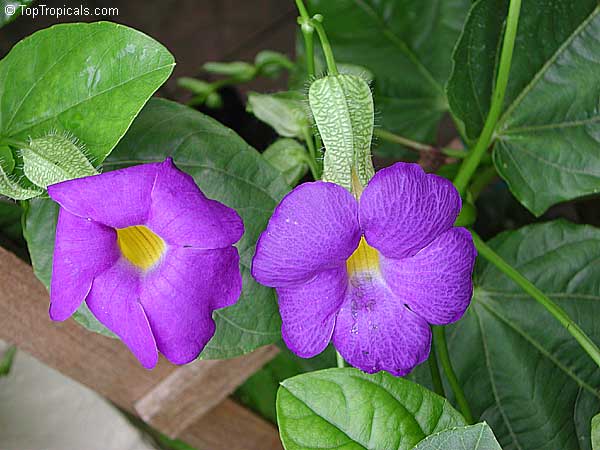
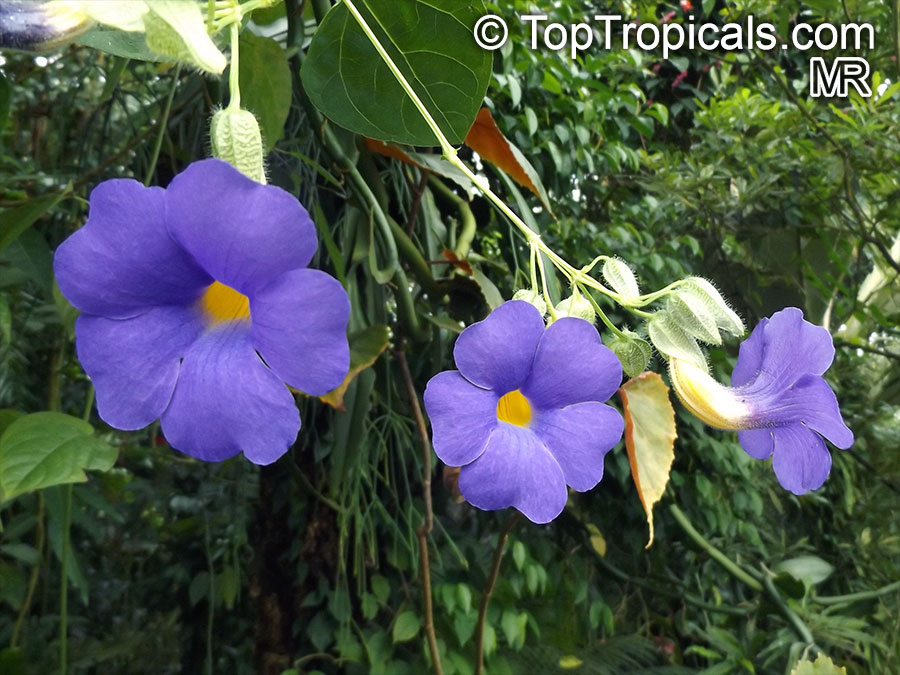
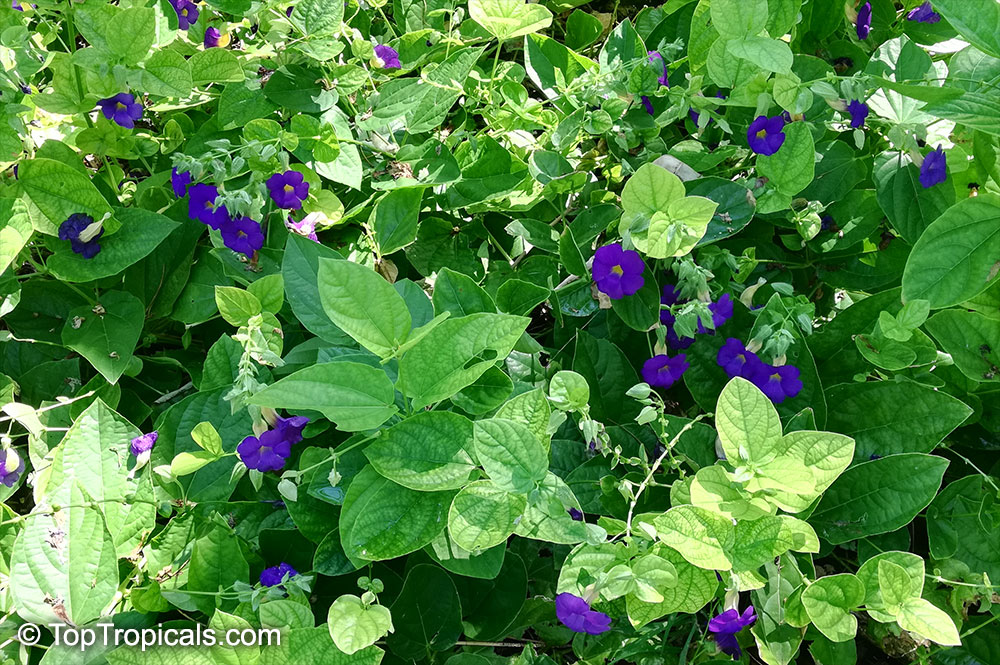
This compact vine has a twining habit producing 2-3" dark blue funnel shaped flowers with golden throat, displayed throughout it's dense deep green foliage. It is the least invasive of all thunbergia vines, grows rather slowly and keeps very compact shape. This species is probably the best for container culture or a small trellis. It tolerates shade, too. It is hardy to light freeze which also makes this species very unique, especially for subtropical gardeners.


Botanical name: Thunbergia coccinea
Common name: Scarlet Thunbergia
Family: Acanthaceae
Origin: India, Burma, Malaya
USDA Zone: 10-11
Cold tolerance: 35°F

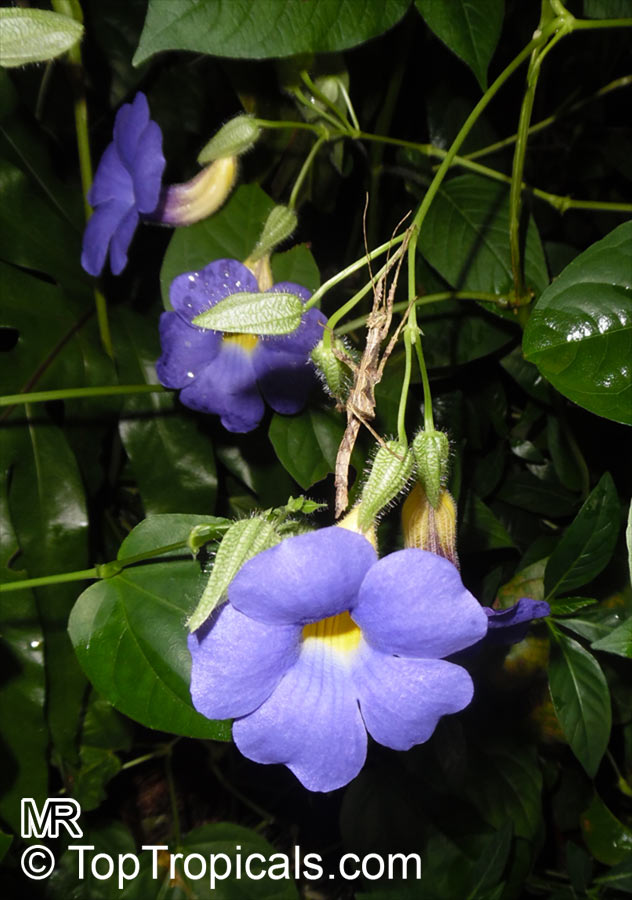
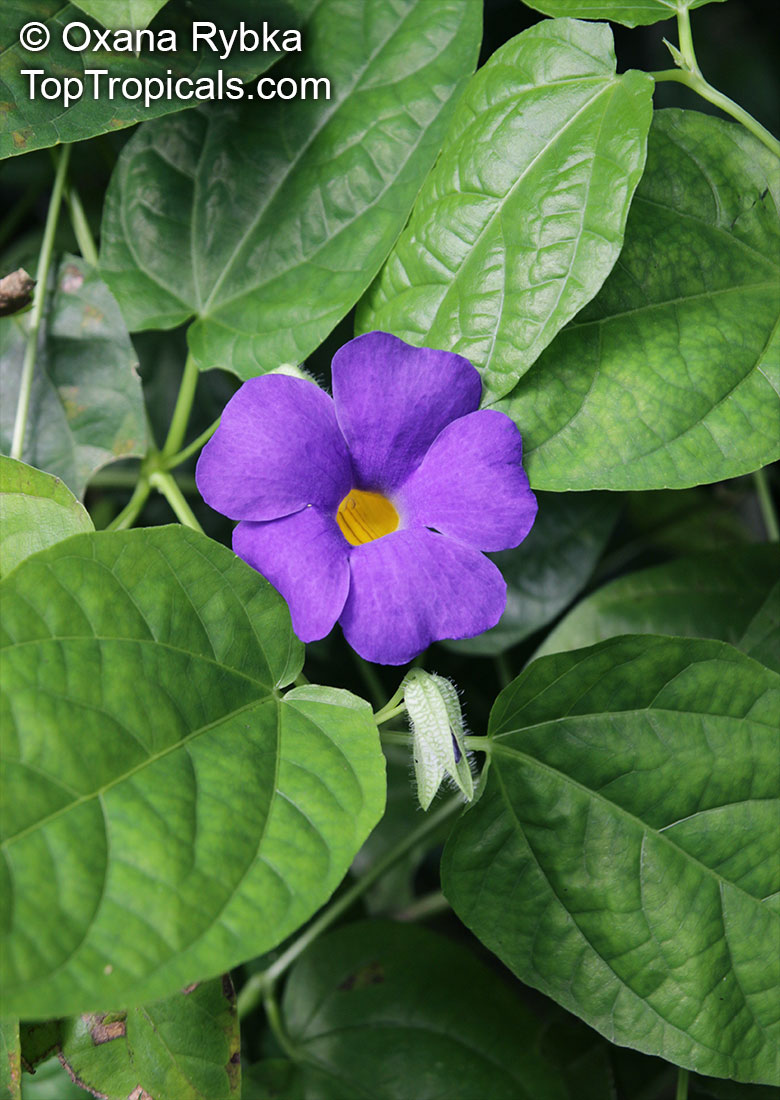
Thunbergia coccinea is a vigorous tropical climbing vine native to Southeast Asia, admired for its dramatic pendulous clusters of tubular, deep red to crimson flowers. The long, cascading inflorescences can reach impressive lengths and create a striking contrast against the plant's large, soft green, heart shaped to ovate leaves. This species is a true showpiece climber, often trained on pergolas, trellises, or large supports where its flowering chains can hang freely and be viewed from below.
Thunbergia coccinea grows best in full sun to bright light, with some protection from intense midday heat in very hot climates. It prefers fertile, well drained soil with regular watering during active growth, though it does not tolerate waterlogged conditions. Warm temperatures are essential for consistent flowering, and growth slows markedly in cool weather. USDA Plant Hardiness Zones 10-11, with minimum temperatures around 35 F; it is frost sensitive and is grown as a container or conservatory plant in cooler regions, where winter protection is required.


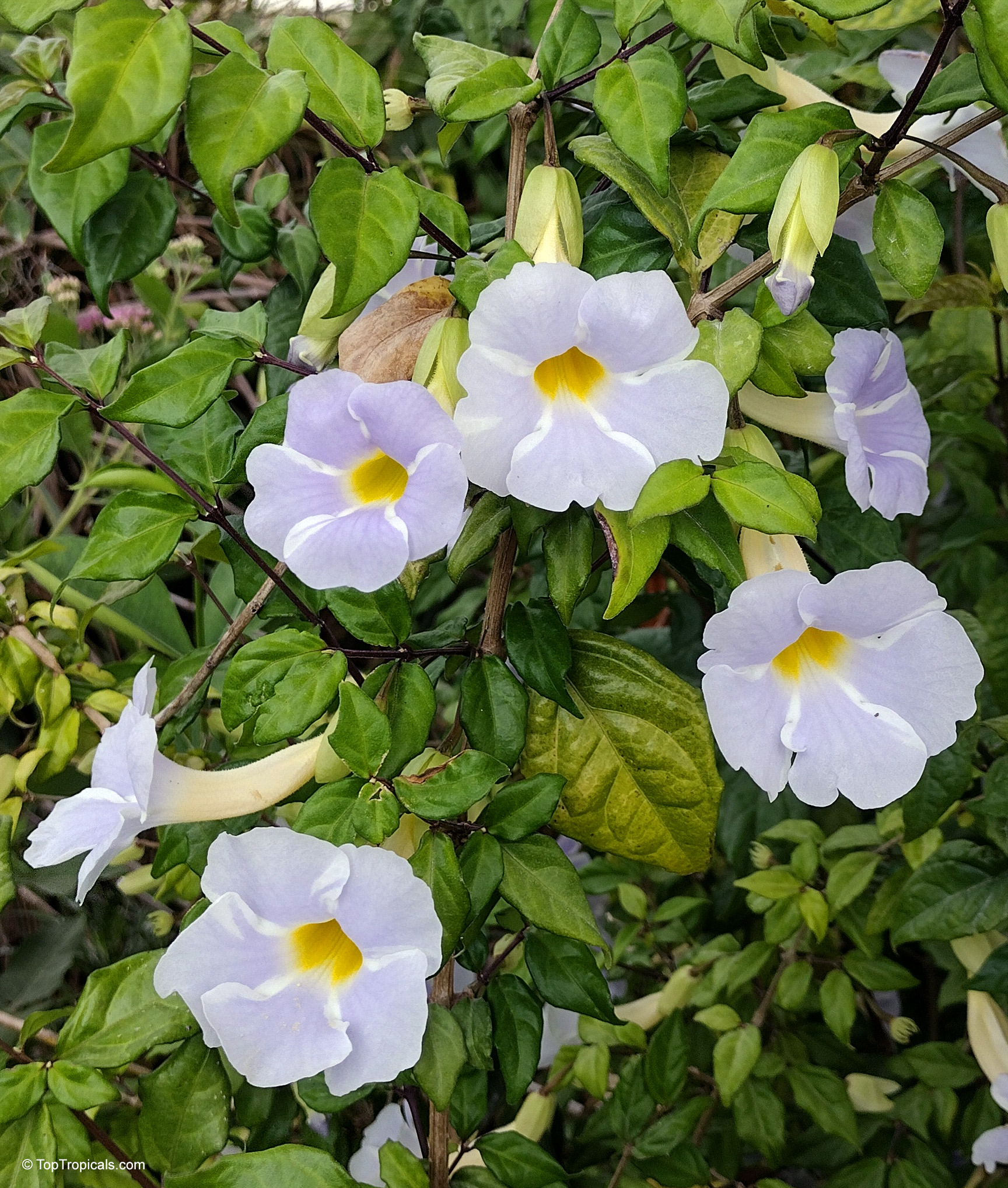
Botanical name: Thunbergia erecta
Common names: King's Mantle, Bush Clock Vine
Family: Acanthaceae
Origin: Tropical Africa
USDA Zone: 10-11
Cold tolerance: 30°F

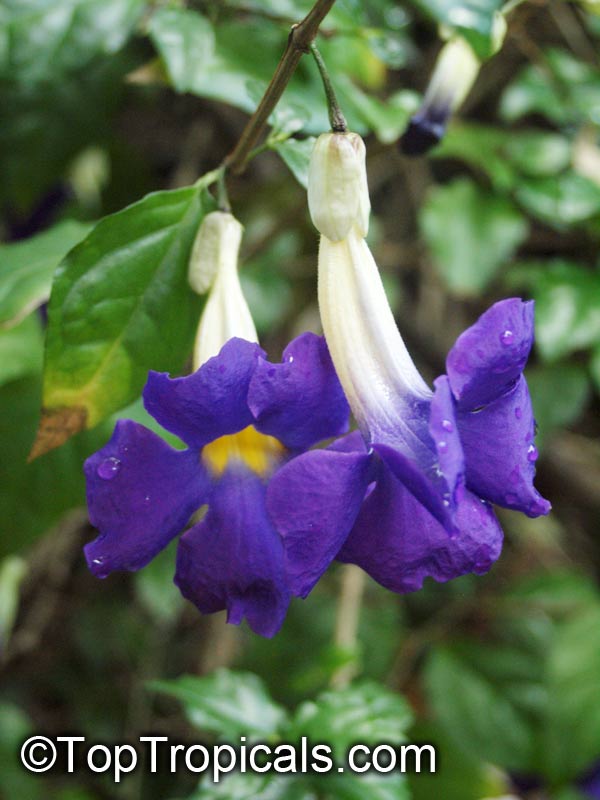
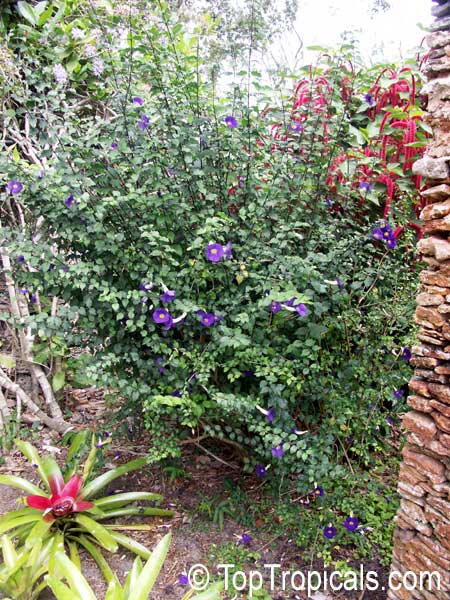
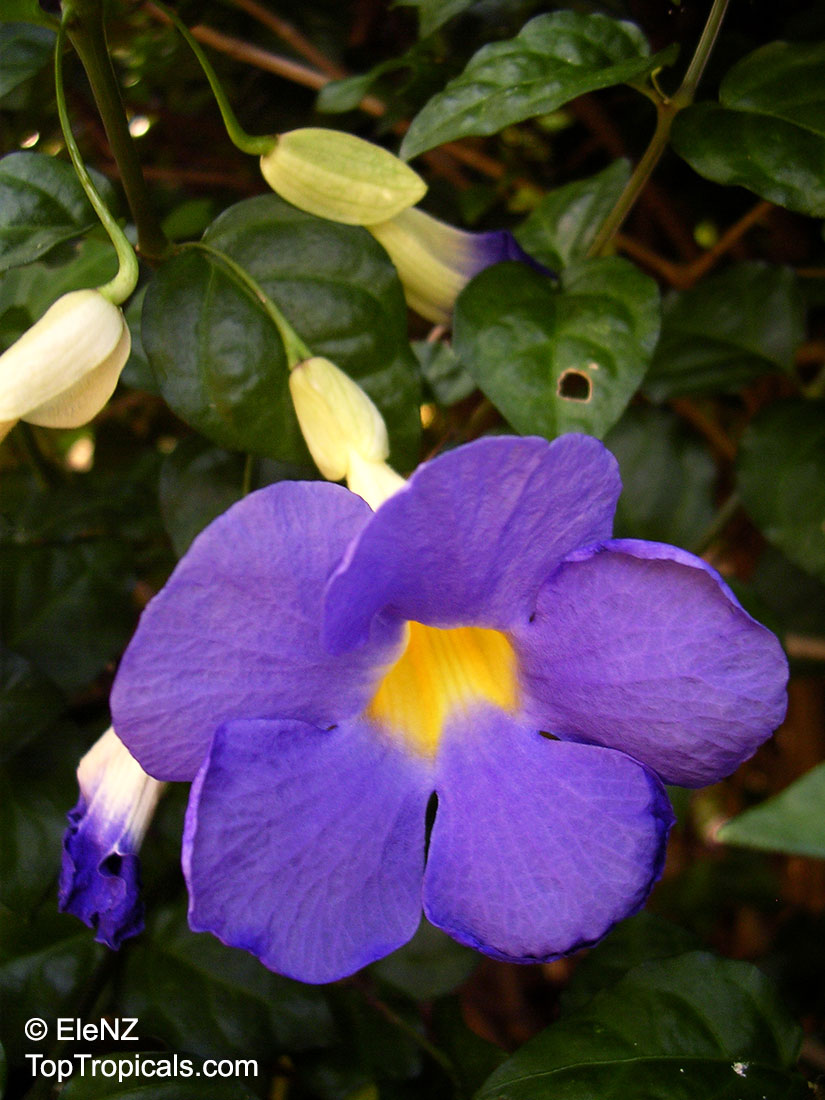
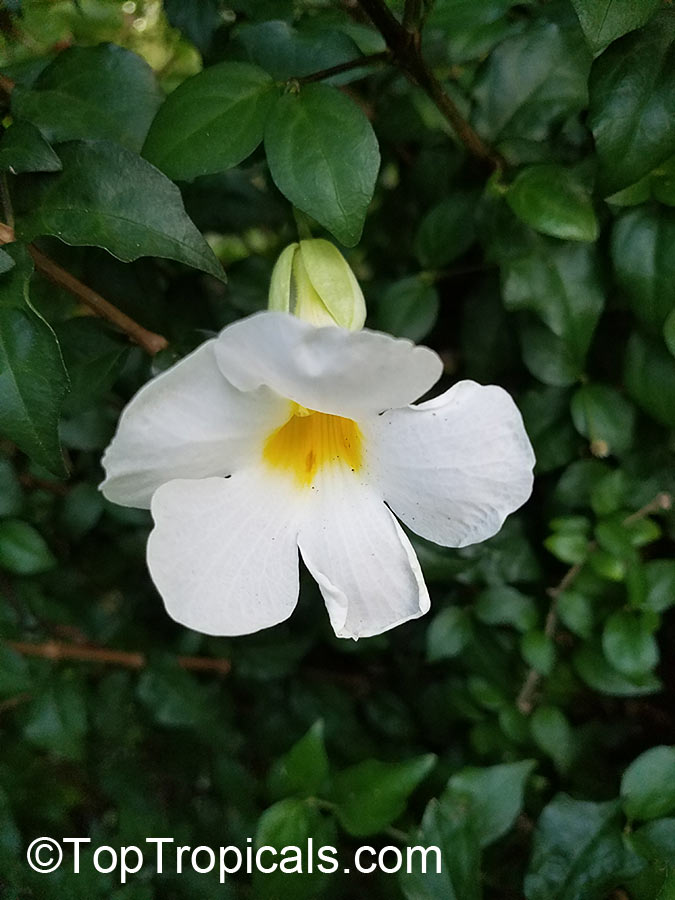
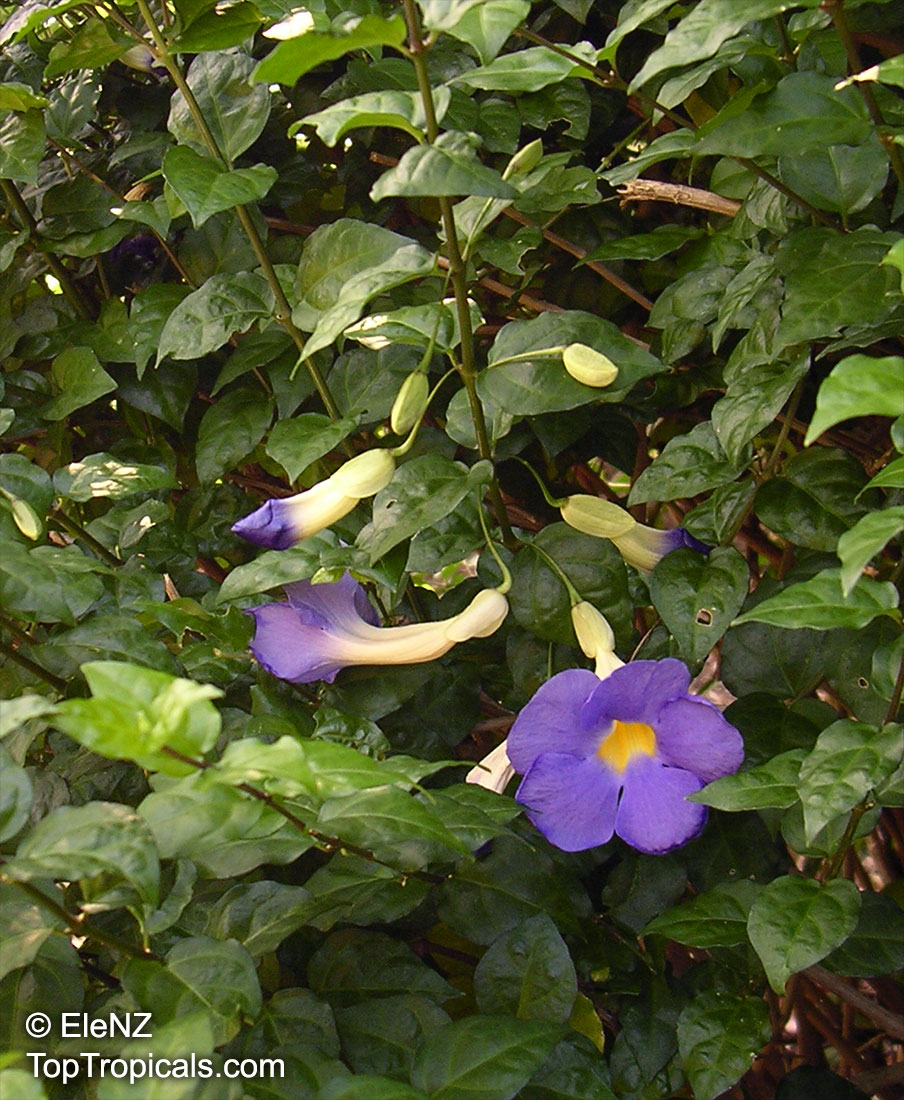
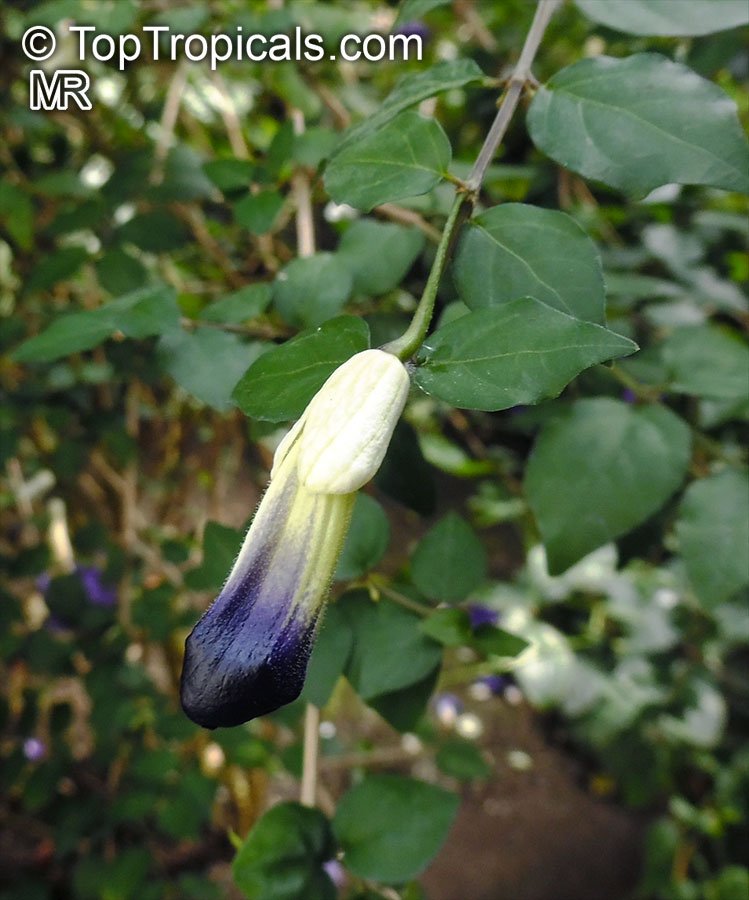
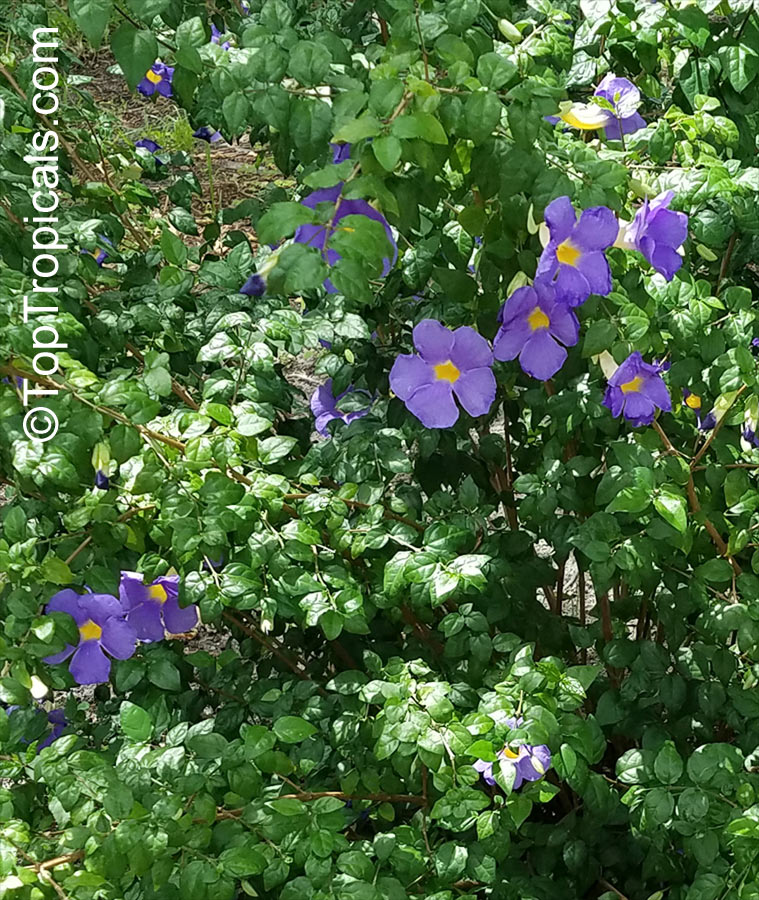
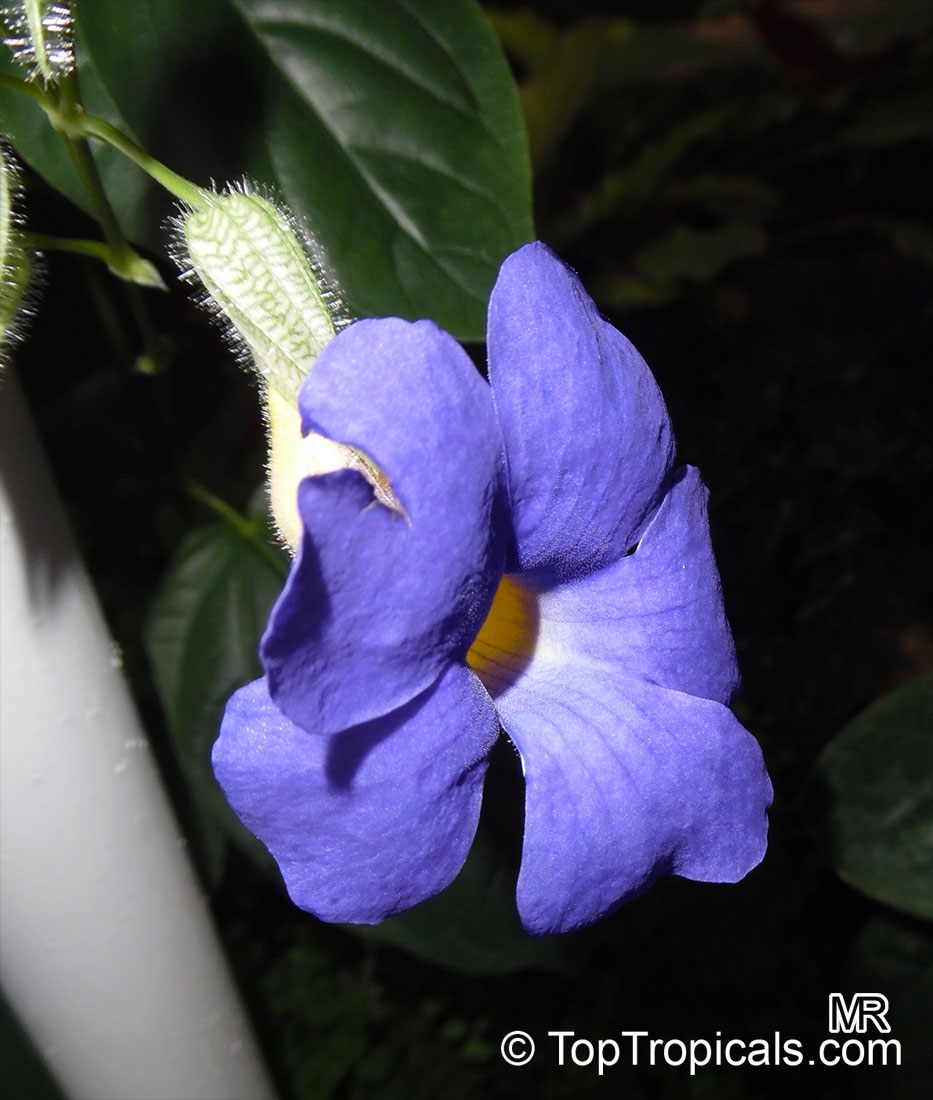
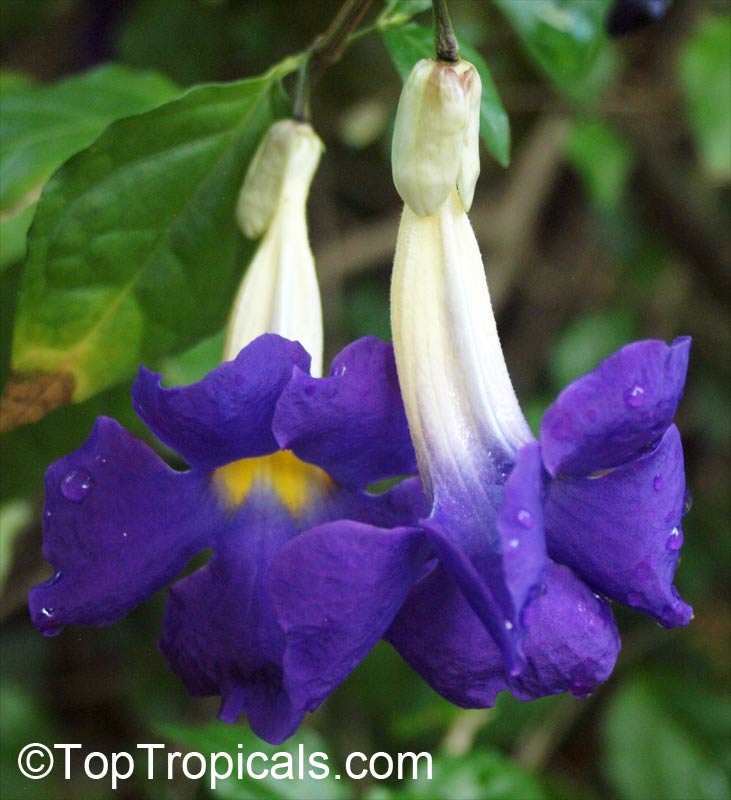
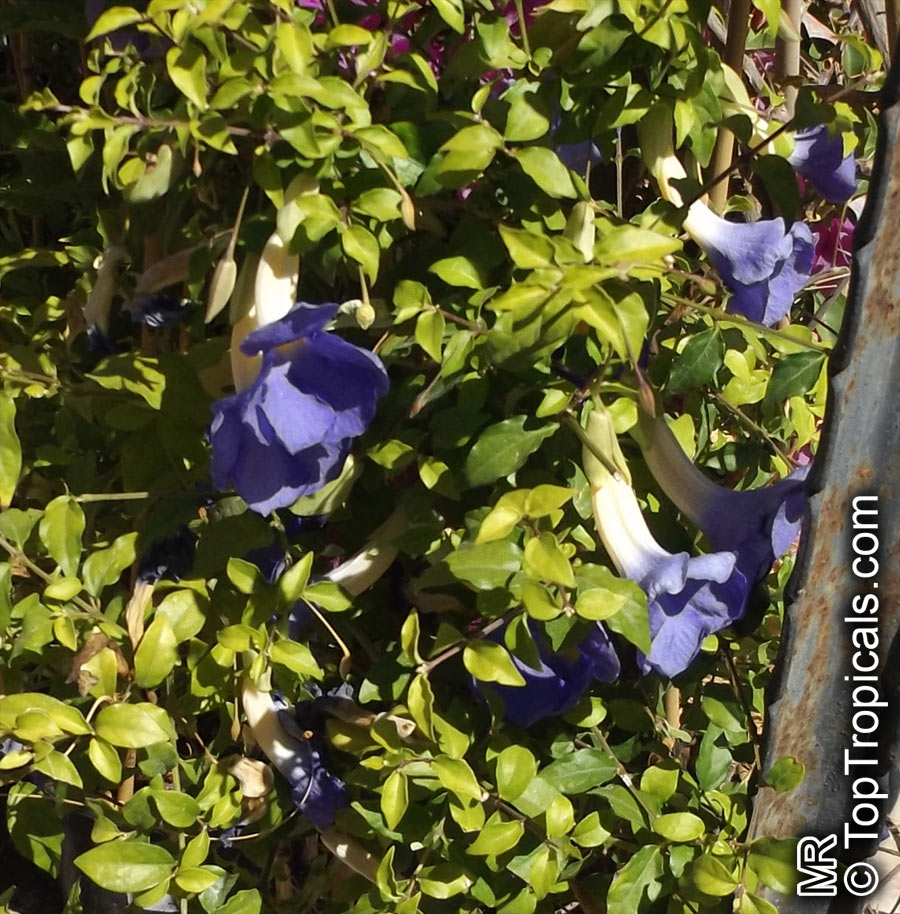
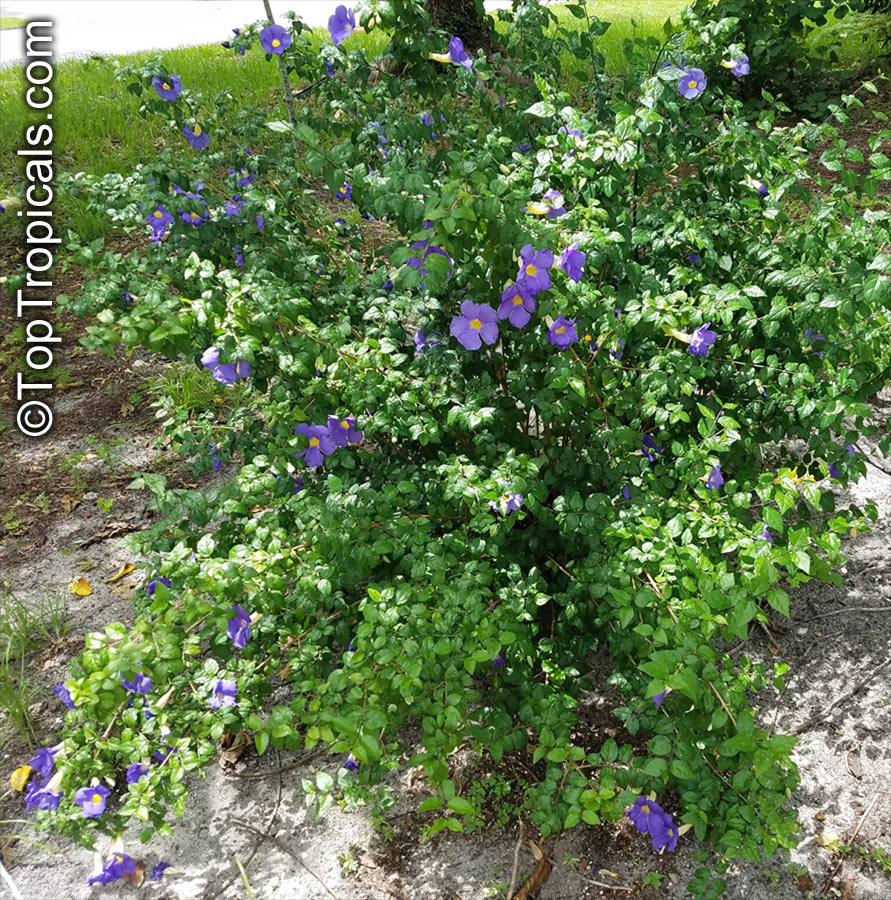
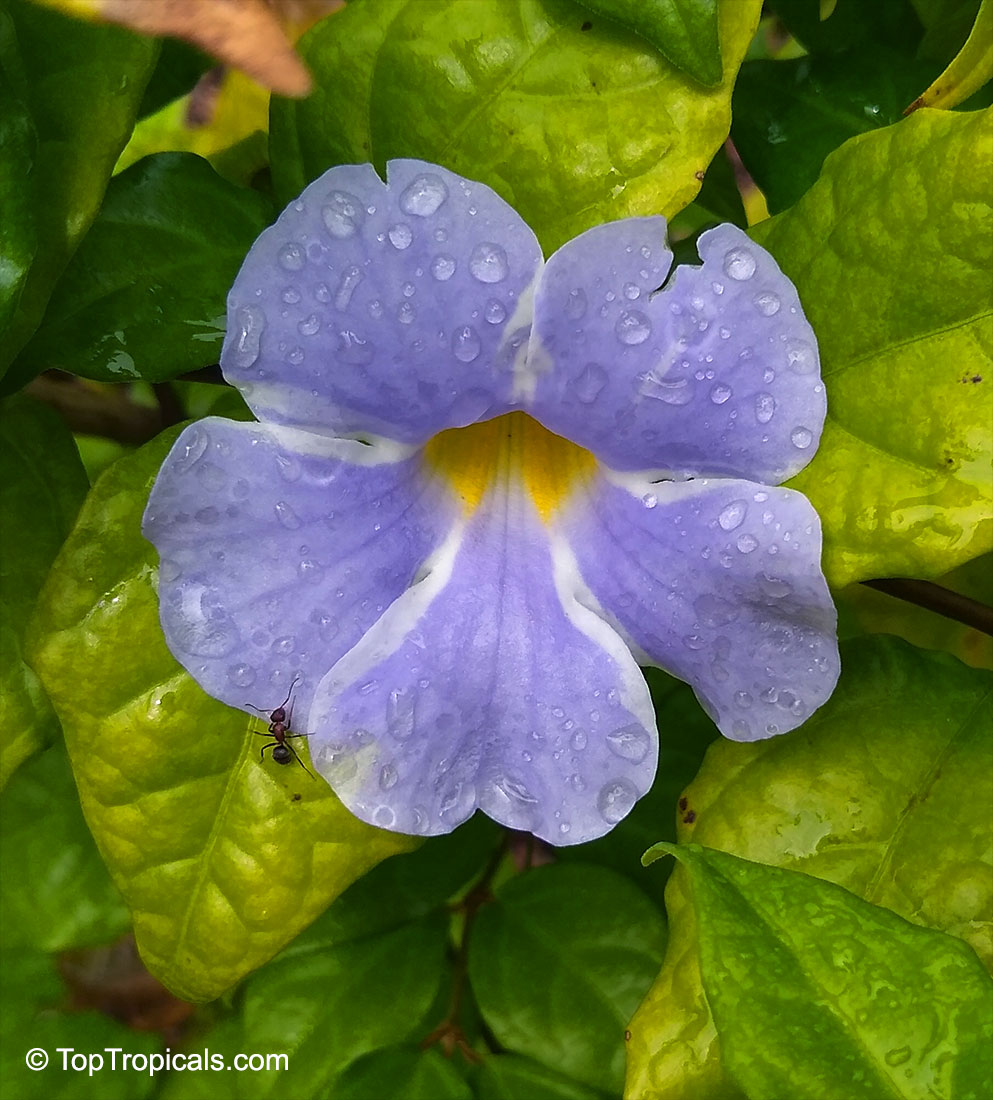
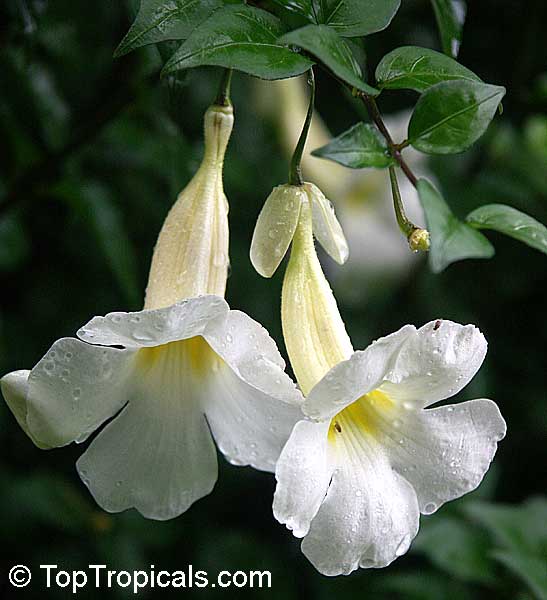
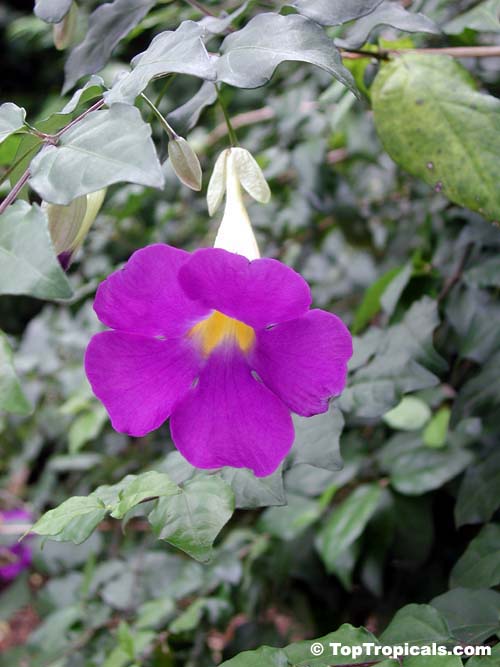
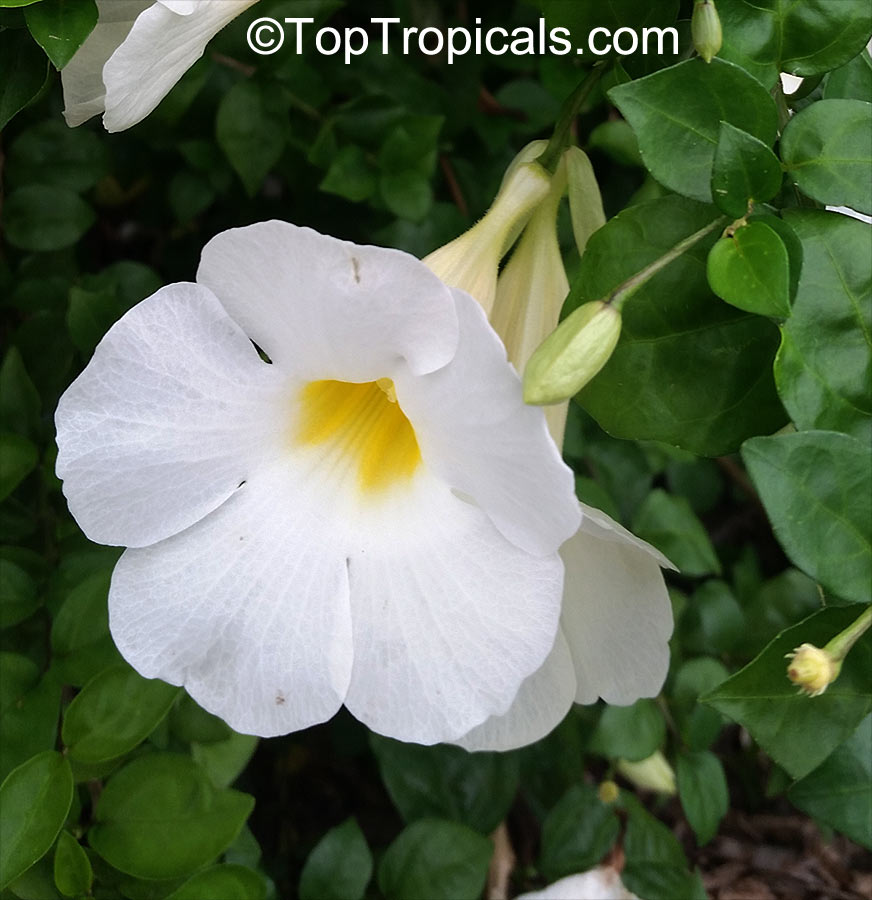
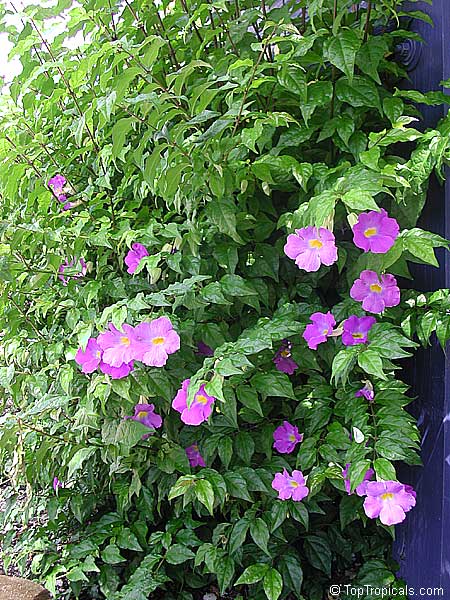
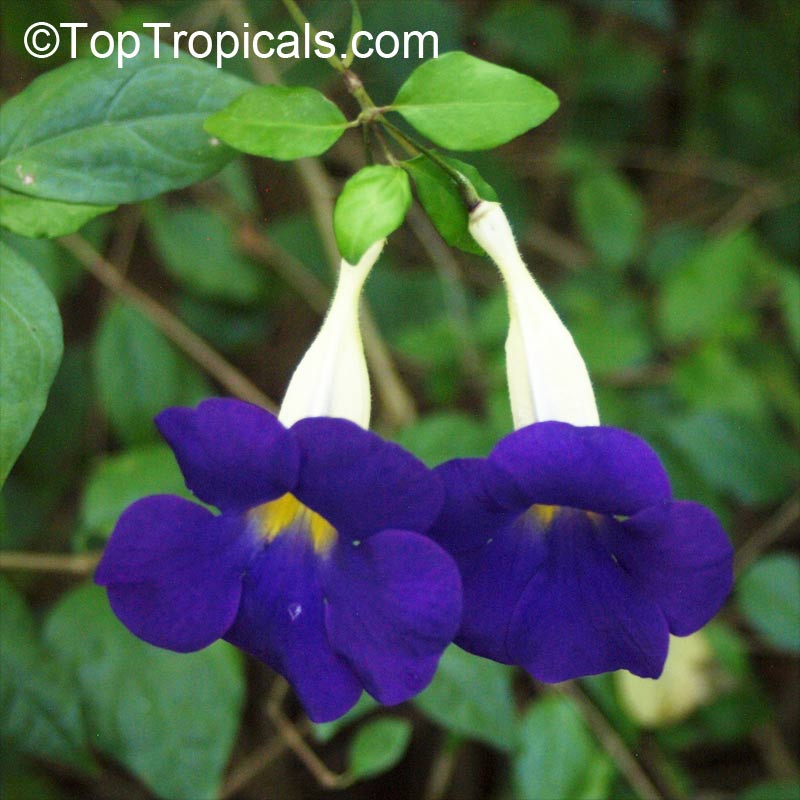
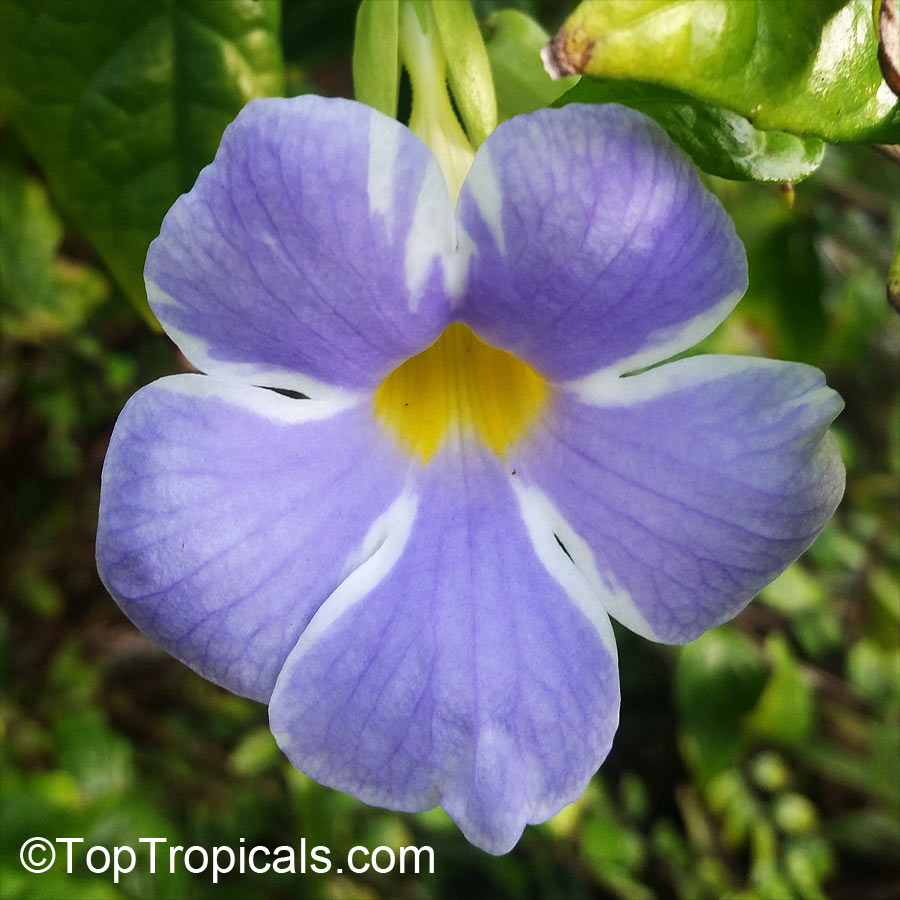
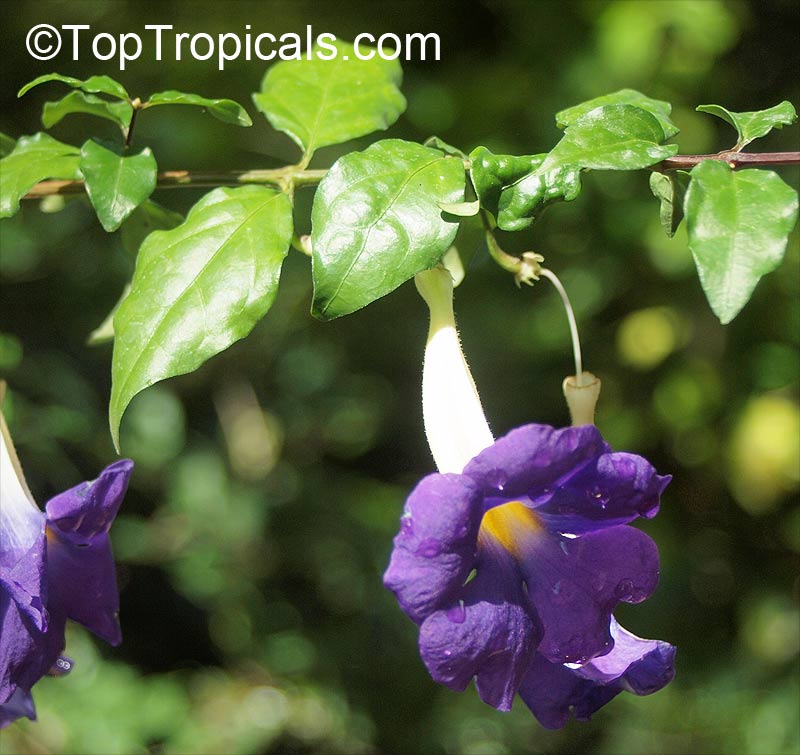
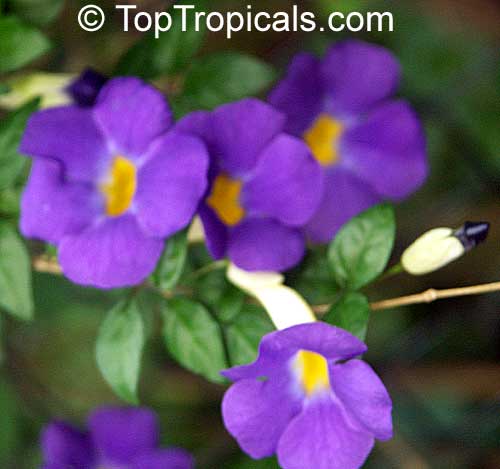
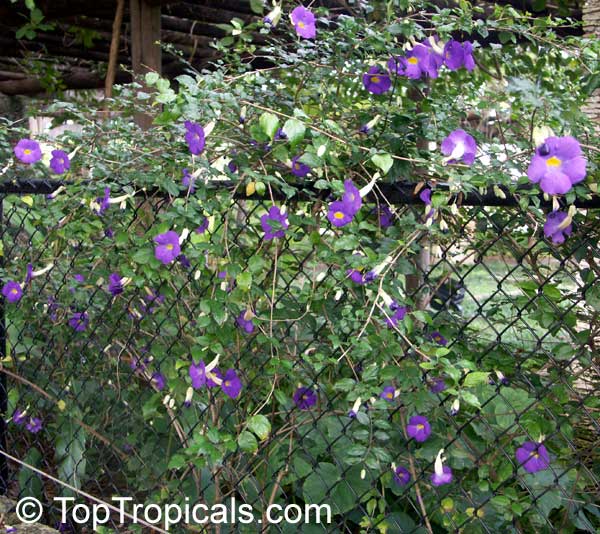
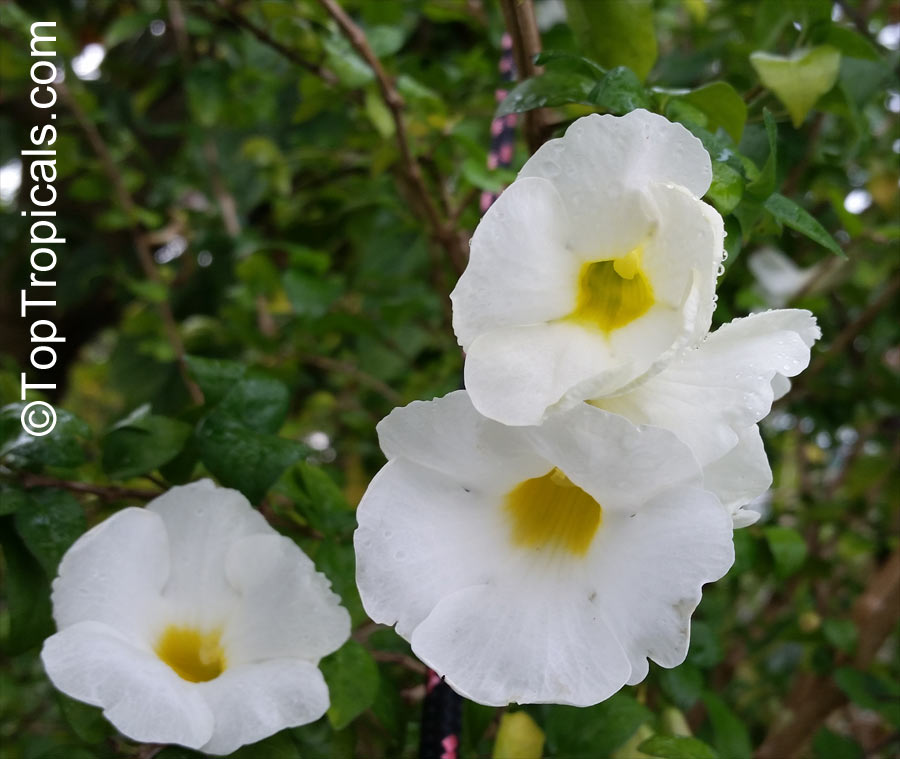
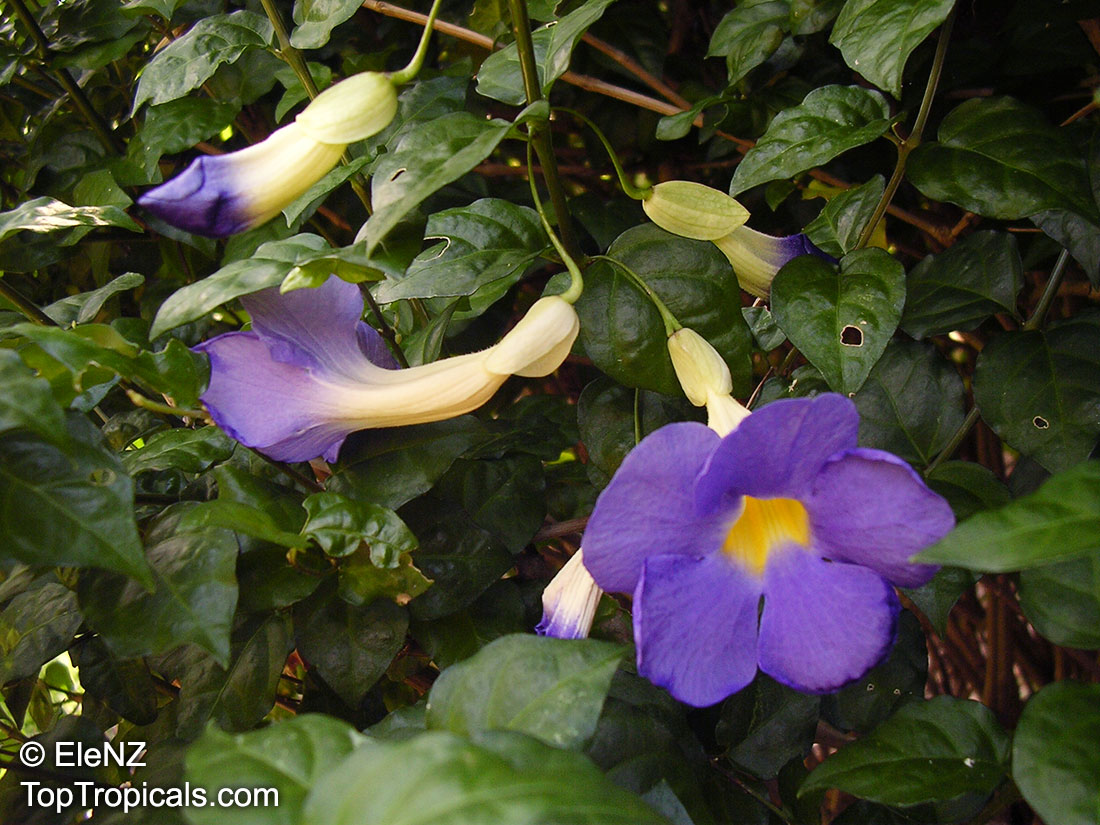
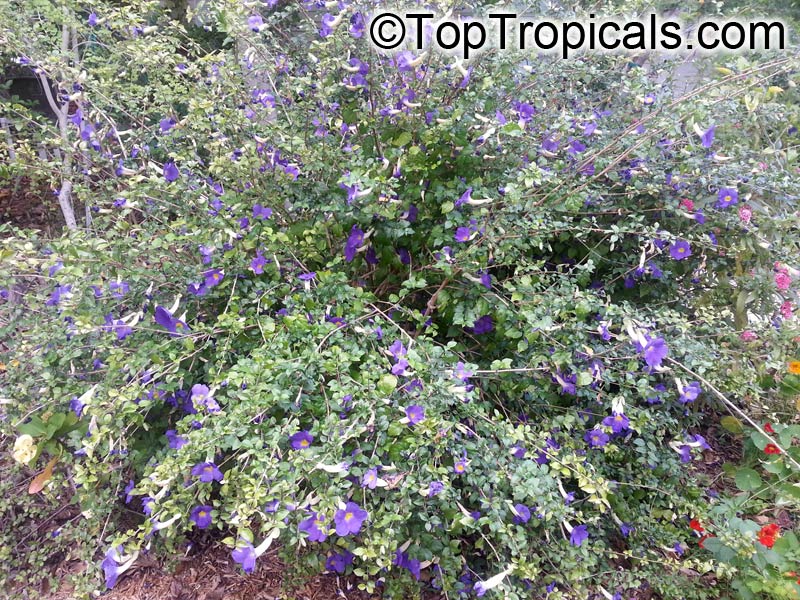
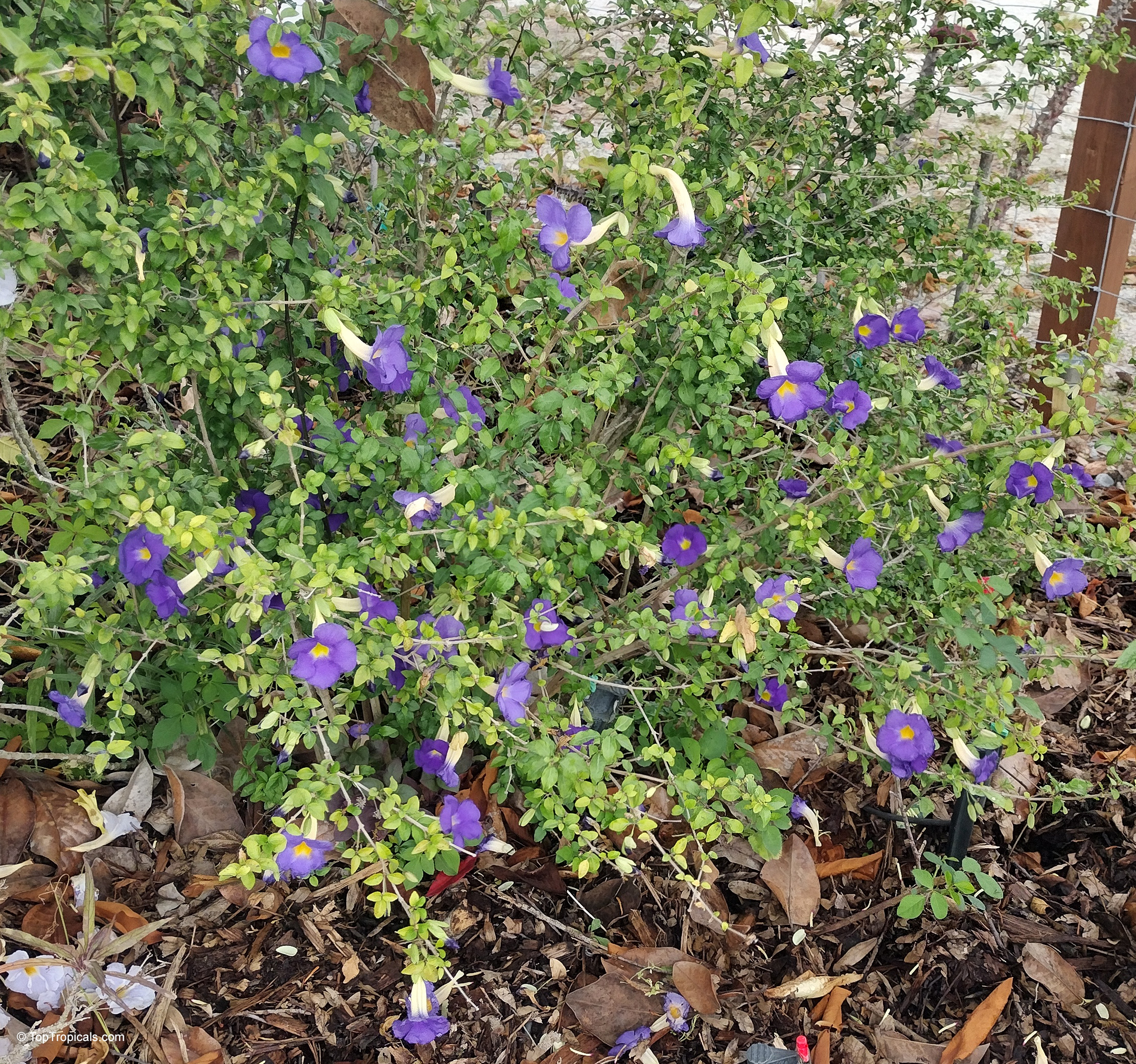
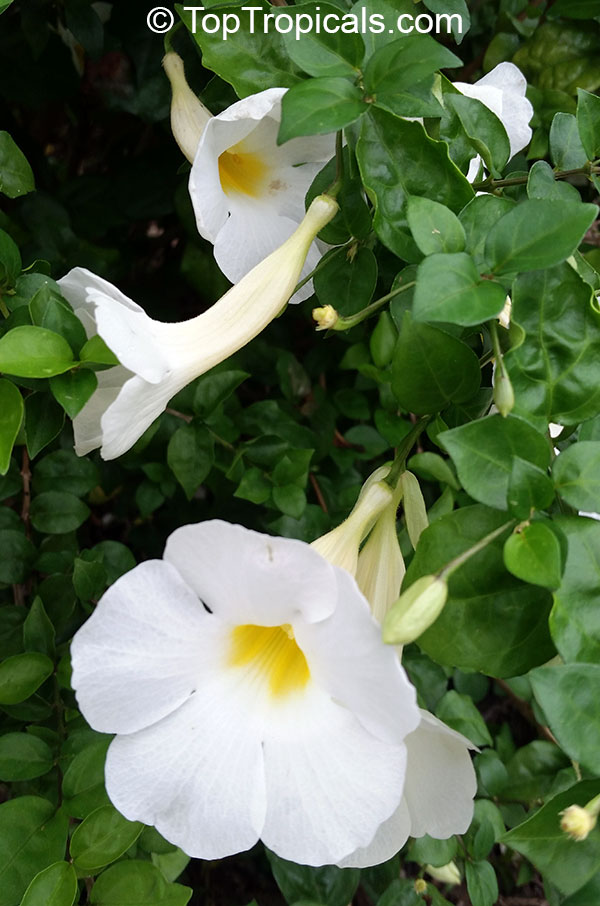
Thunbergia erecta, commonly known as Bush Clock Vine, King's Mantle, or Bush Thunbergia, is an evergreen to semi-evergreen shrub in the Acanthaceae family, native to tropical western and central Africa. Unlike the climbing members of the genus, it forms a dense, upright, freely branching shrub, typically reaching four to six feet tall. The opposite leaves are glossy green, ovate to elliptic, with pointed tips and slightly wavy margins. Solitary, trumpet-shaped flowers arise from the leaf axils, with five broad, spreading lobes surrounding a conspicuous yellow throat. The flowers range from deep violet-blue and purple to pale lavender or almost white, often with a conspicuous bright yellow throat; pure white-flowered selections are also cultivated. Each flower is subtended by two prominent green bracteoles, a characteristic feature of the genus. The species has also been known as Meyenia erecta.
Thunbergia erecta grows best in full sun to partial shade and fertile, well-drained soil with regular moisture. Flowering is most abundant in bright light and warm weather, often continuing throughout the year in tropical climates. Pruning encourages dense branching and makes the plant suitable for hedges, borders, and containers. It is frost-sensitive and best suited to USDA Zones 10b-11, with winter protection required in colder regions.



Recommended Fertilizer: SUNSHINE Megaflor - Bloom Nutrition Booster
Recommended Fertilizer: SUNSHINE Megaflor - Bloom Nutrition Booster
Botanical name: Thunbergia grandiflora
Common names: Blue Trumpet Vine, Blue Sky vine, Scrambling sky flower
Family: Acanthaceae
Origin: India
USDA Zone: 9-11
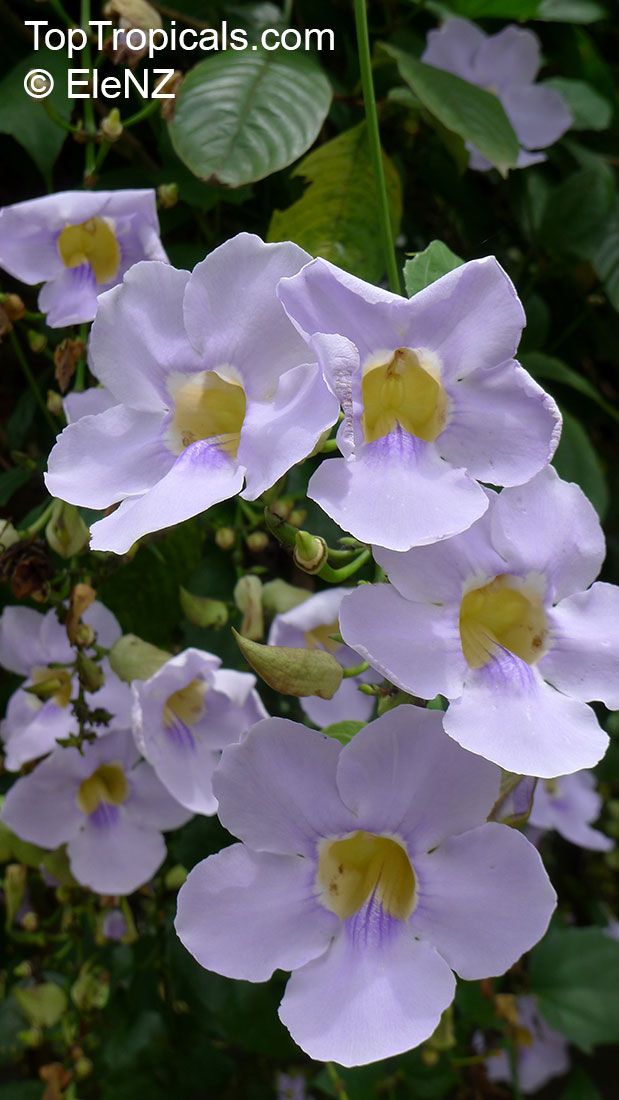
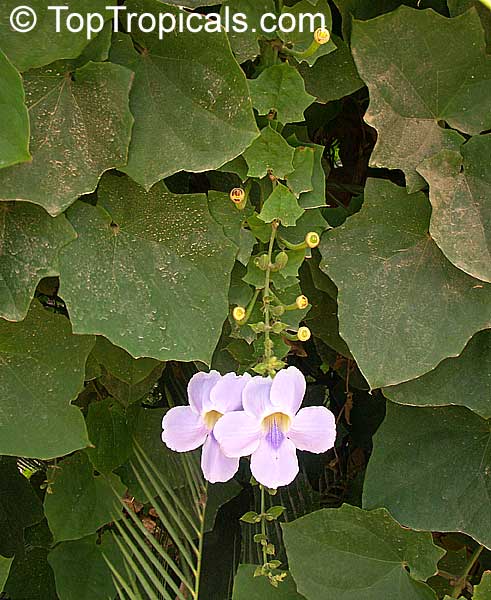
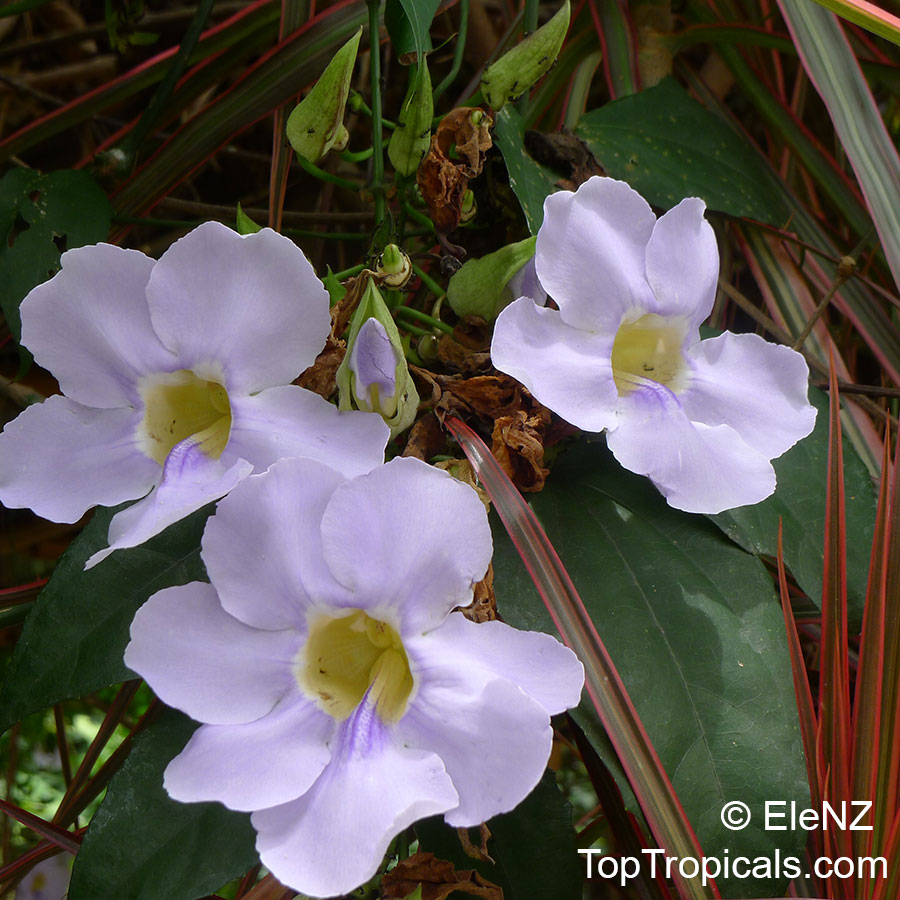
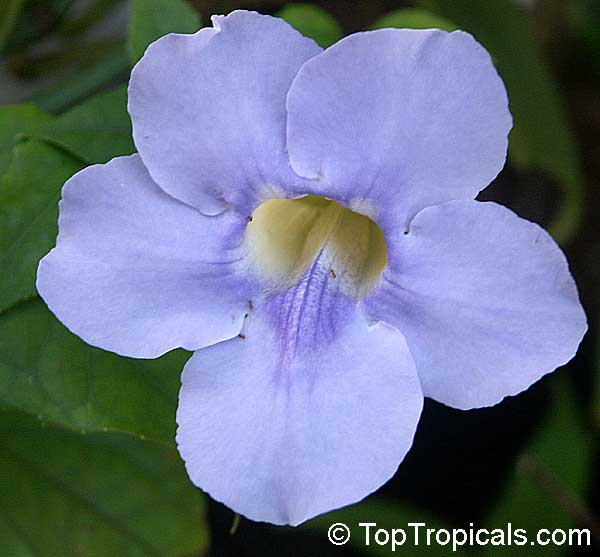
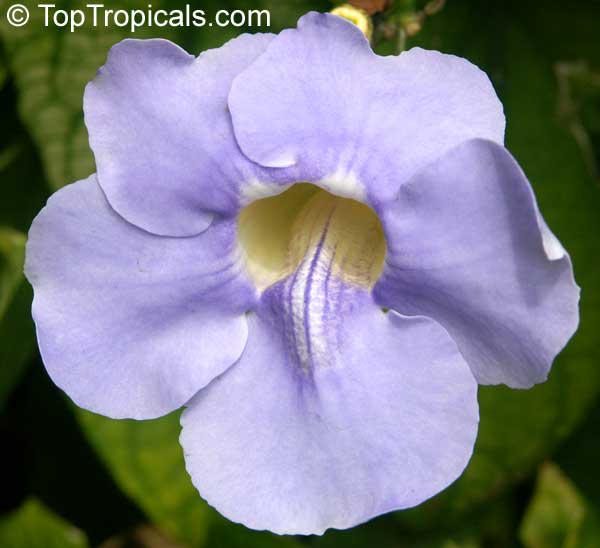
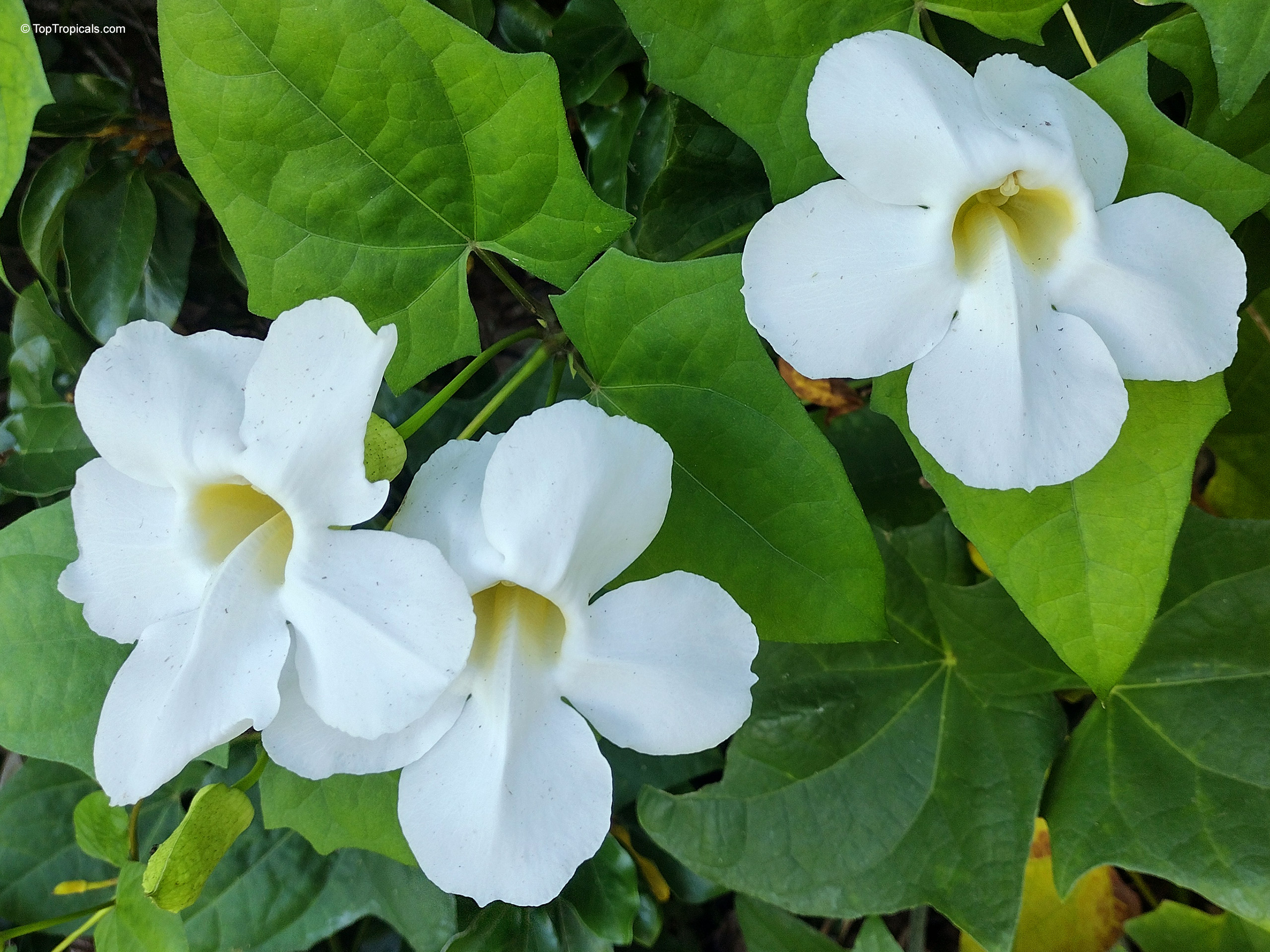
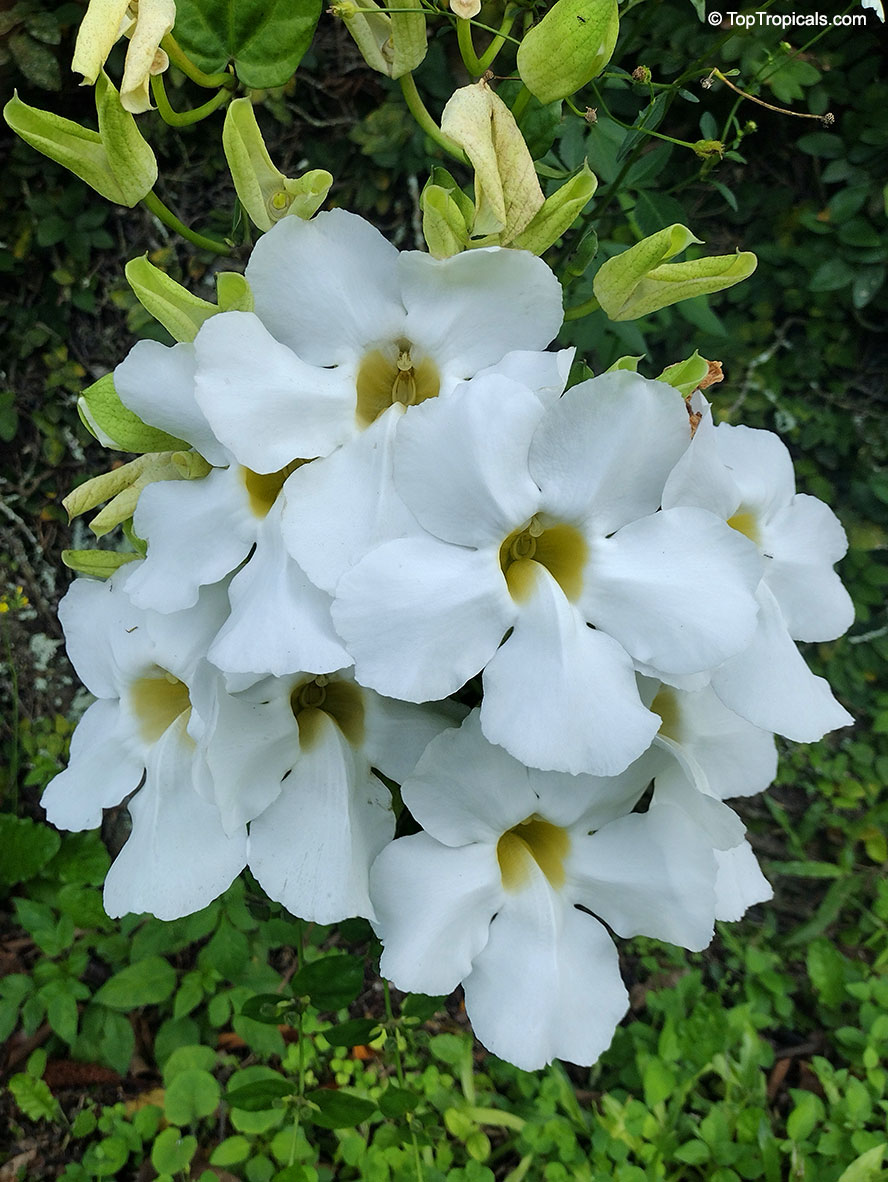
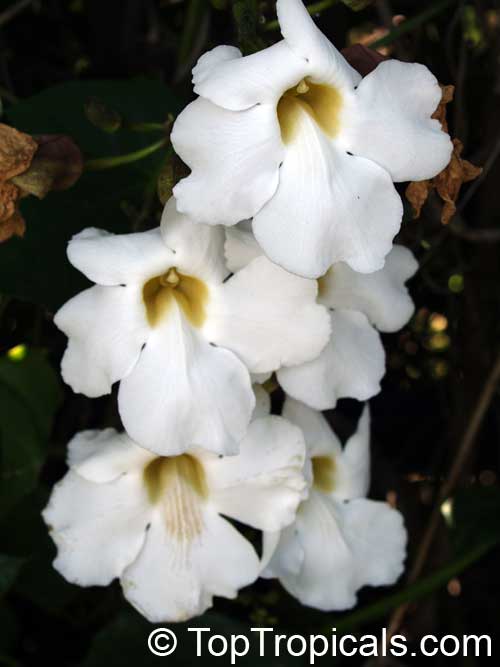
Thunbergia grandiflora, commonly known as Blue Sky Vine, Bengal Clock Vine, or Blue Trumpet Vine, is a vigorous evergreen to semi-evergreen climber in the Acanthaceae family, native to the Indian subcontinent and parts of mainland Southeast Asia. In its natural habitat, it climbs over trees and forest margins, with stems capable of reaching 30 feet or more. The large, opposite leaves are broadly ovate to heart-shaped, often with angular or shallowly lobed margins and prominent veins. Showy, trumpet-shaped flowers appear in pendulous clusters, usually lavender-blue to violet-blue, with a pale yellow to creamy-white throat. White-flowered plants are cultivated under the name Thunbergia grandiflora 'Alba'. The flowers are followed by rounded seed capsules.
Thunbergia grandiflora grows rapidly in full sun to partial shade, preferring fertile, well-drained soil and regular moisture. It flowers over a long season in warm climates and is commonly trained over pergolas, fences, and large trellises. Suitable for USDA Zones 9b-11, it may suffer frost damage in cooler areas but can recover from its roots after brief light freezes. Its vigorous growth requires regular pruning, and it can become invasive in tropical and subtropical regions, where it may smother surrounding vegetation.
Thunbergia grandiflora is similar to Thunbergia laurifolia
except that leaves are heart-shaped.


Recommended Fertilizer: SUNSHINE Megaflor - Bloom Nutrition Booster
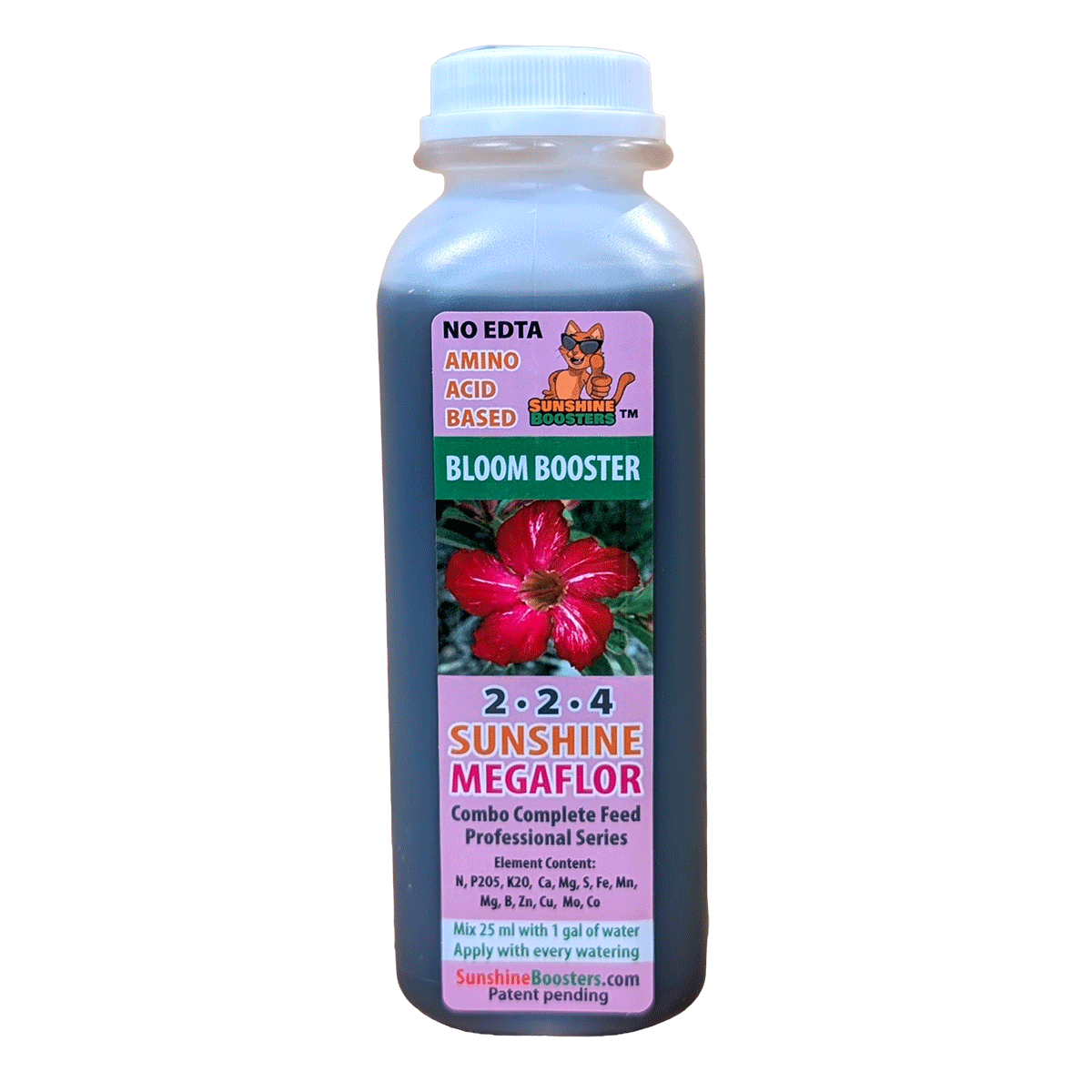 SUNSHINE Megaflor (NPK 2-2-4) - Bloom Booster for every watering. Formulated especially for blooms, to boost flowering, improve flower size and quality, and stimulate pollen development. This is an eco-friendly nutrition booster that can be used for organic gardens. Can be used for daily feeding with every watering. Scientifically-balanced stable formula is organic Amino-acid based and has NO EDTA chelators to eliminate nutrients lockup; it does not affect crop taste. Organic Amino acids greatly enhance stability of all Sunshine boosters and provide excellent absorption of trace elements. Pollinating insects friendly.
Last one
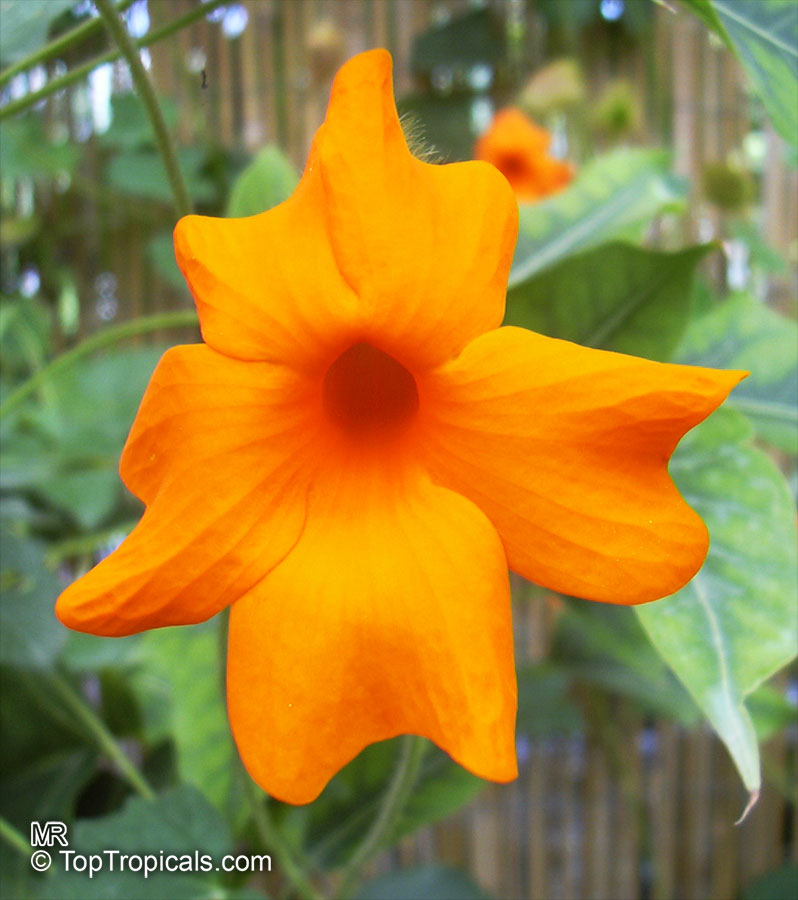
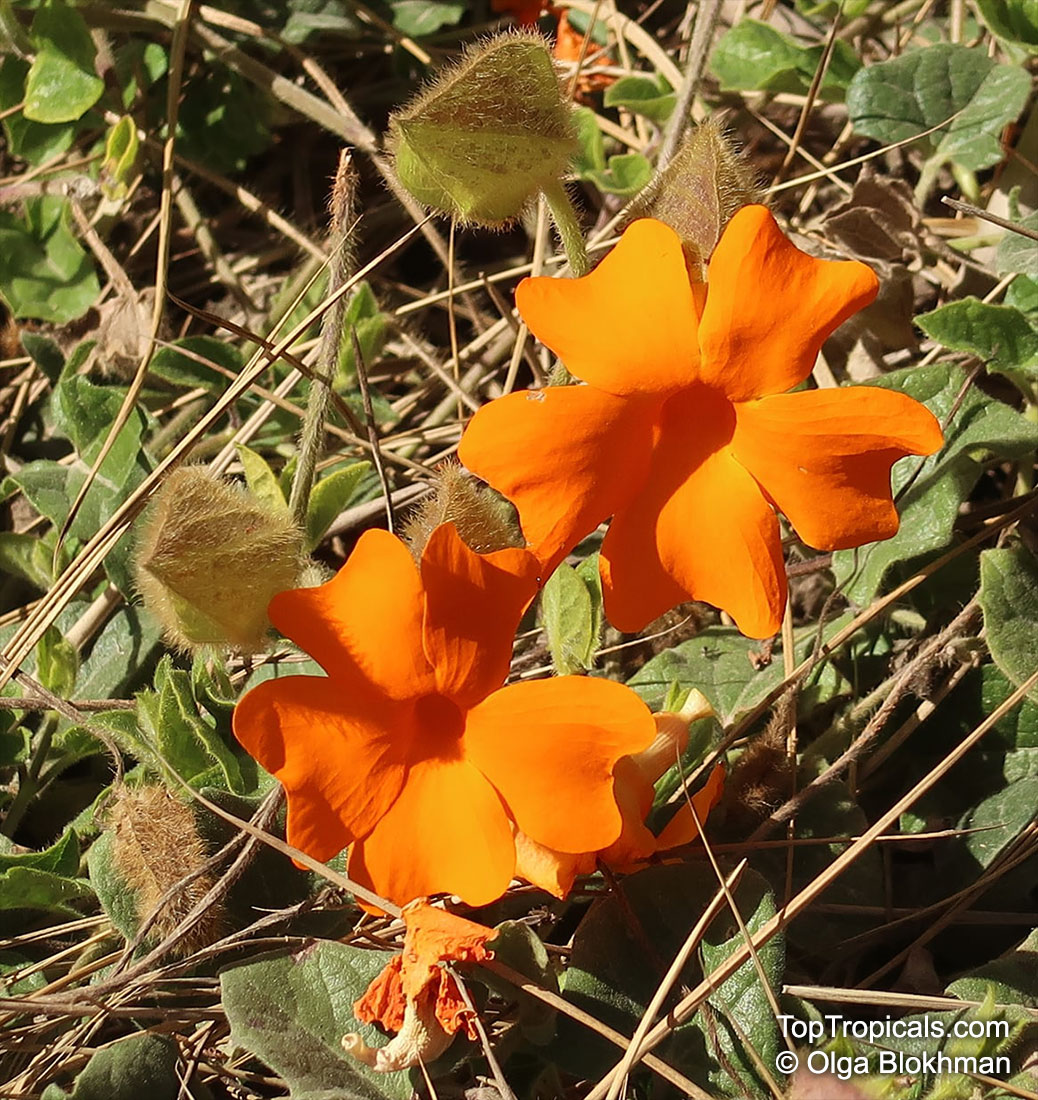
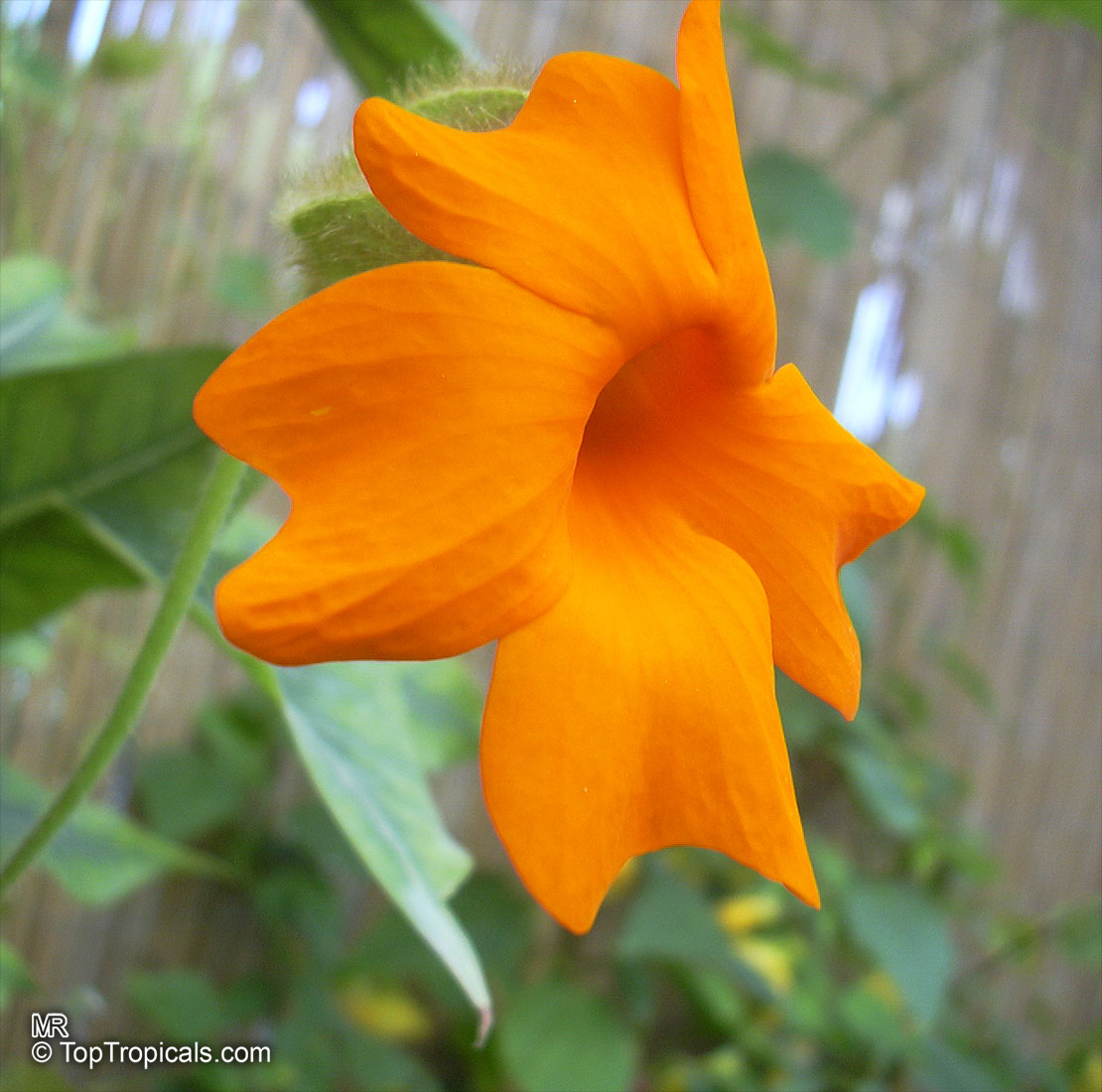
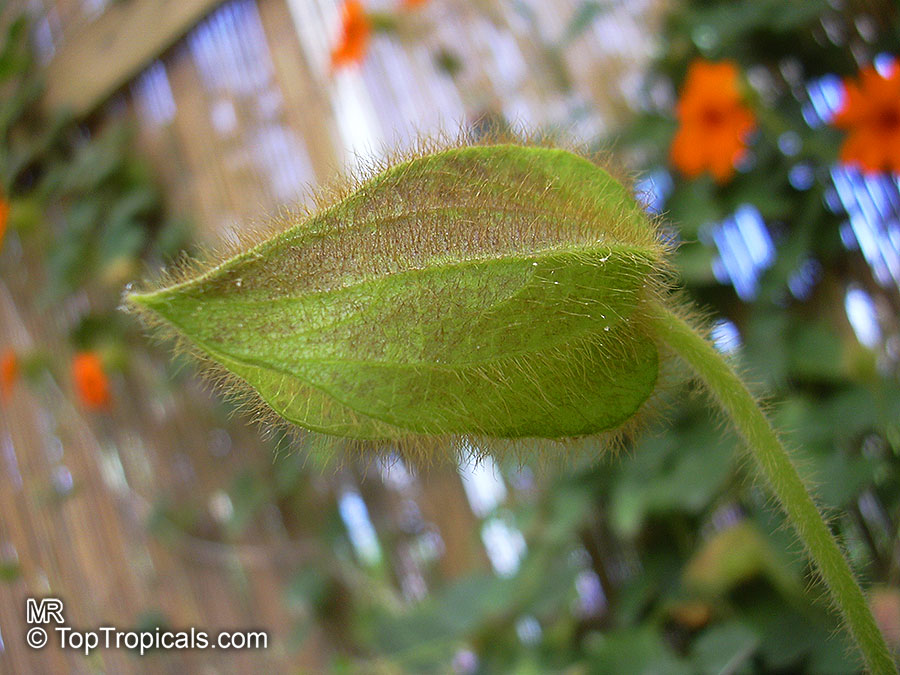
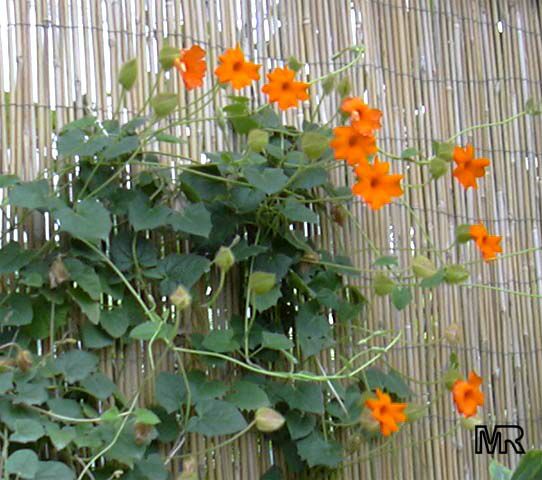
Botanical name: Thunbergia gregorii
Common name: Orange Clock Vine
Family: Acanthaceae
USDA Zone: 9-10

The amount of color that can be put out by this vine is unsurpassed. It is a continuous grower and will creep and crawl over everything in reach. The stems root and creep, though this is not an impossible task to keep after it does need to be watched. It will die to the ground in the mid 20's but can come back from much deeper chill than that. The stems have hairs that cause itching when they are dry. It is best to wear long sleeves when trimming or removing sections of this plant. Water occasionally.
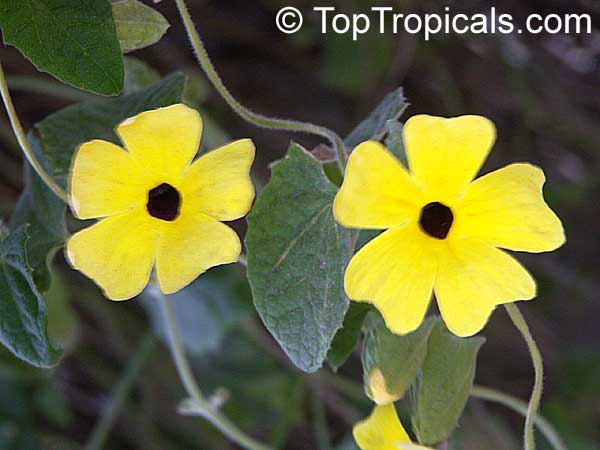

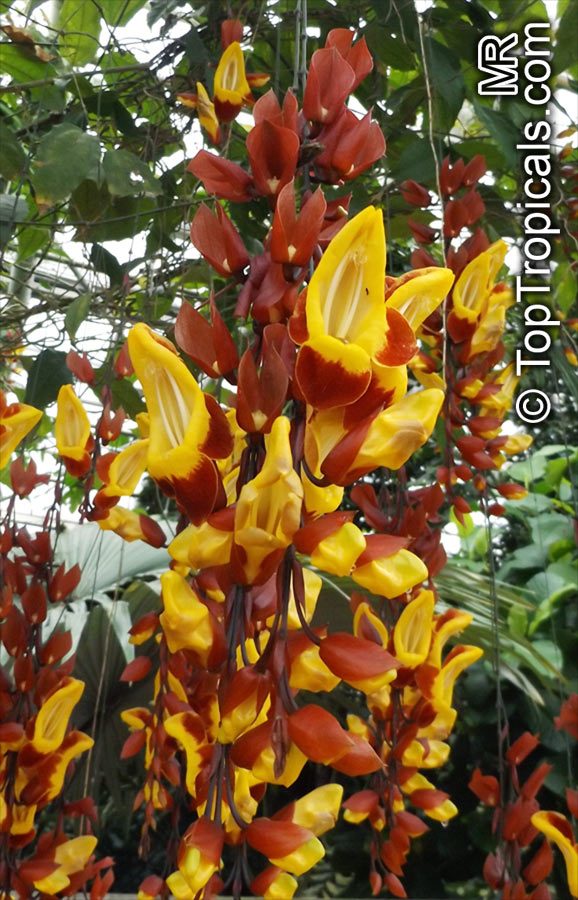
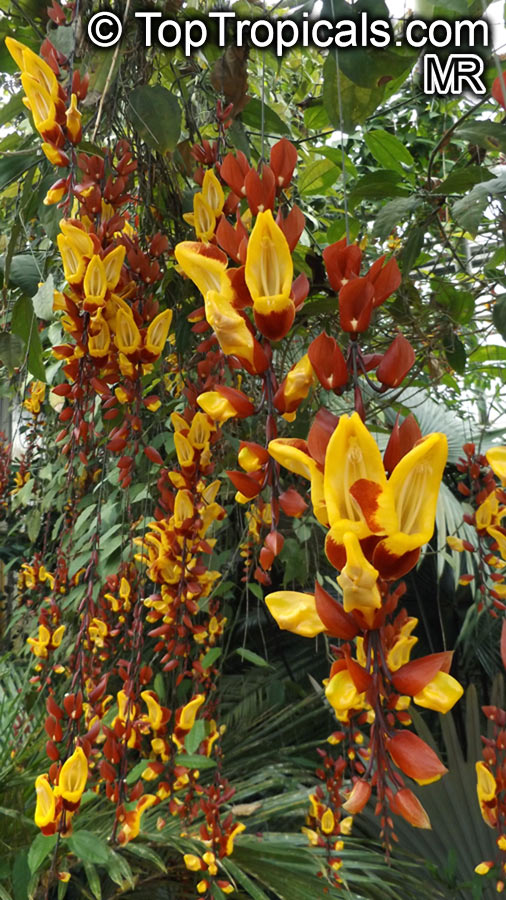
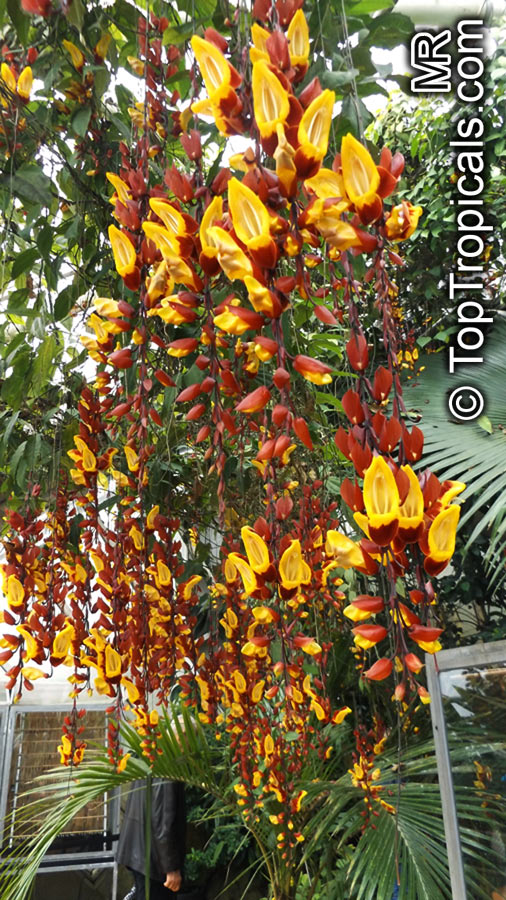
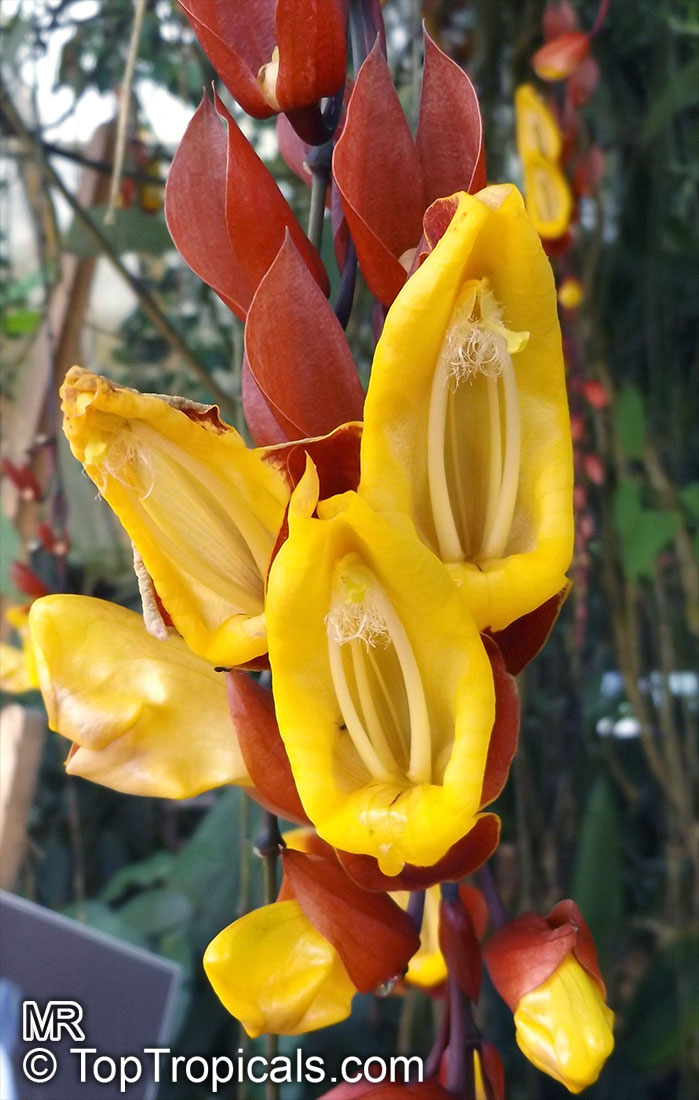
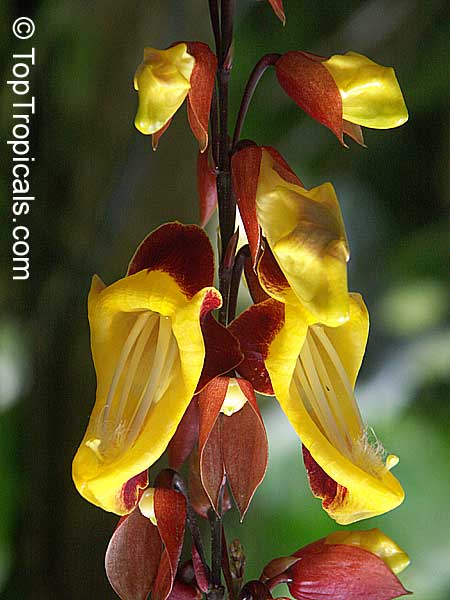
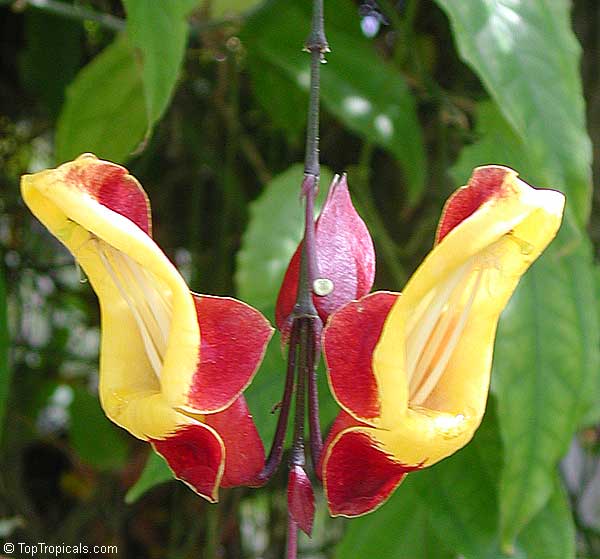
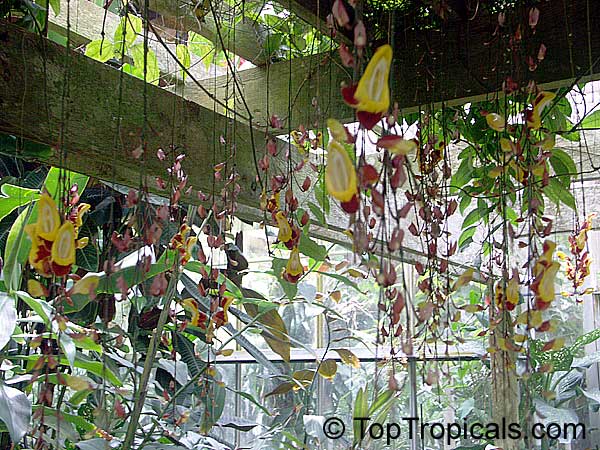
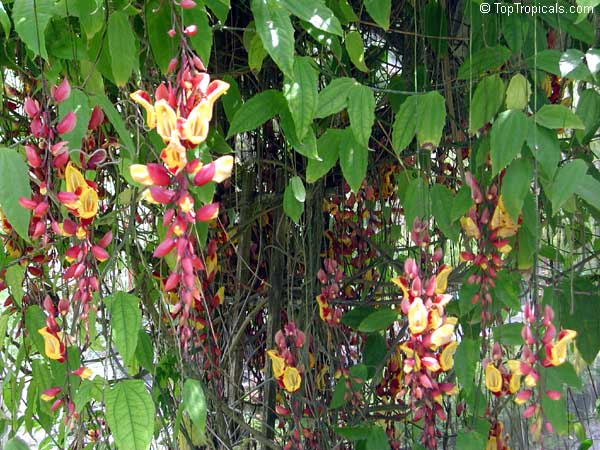
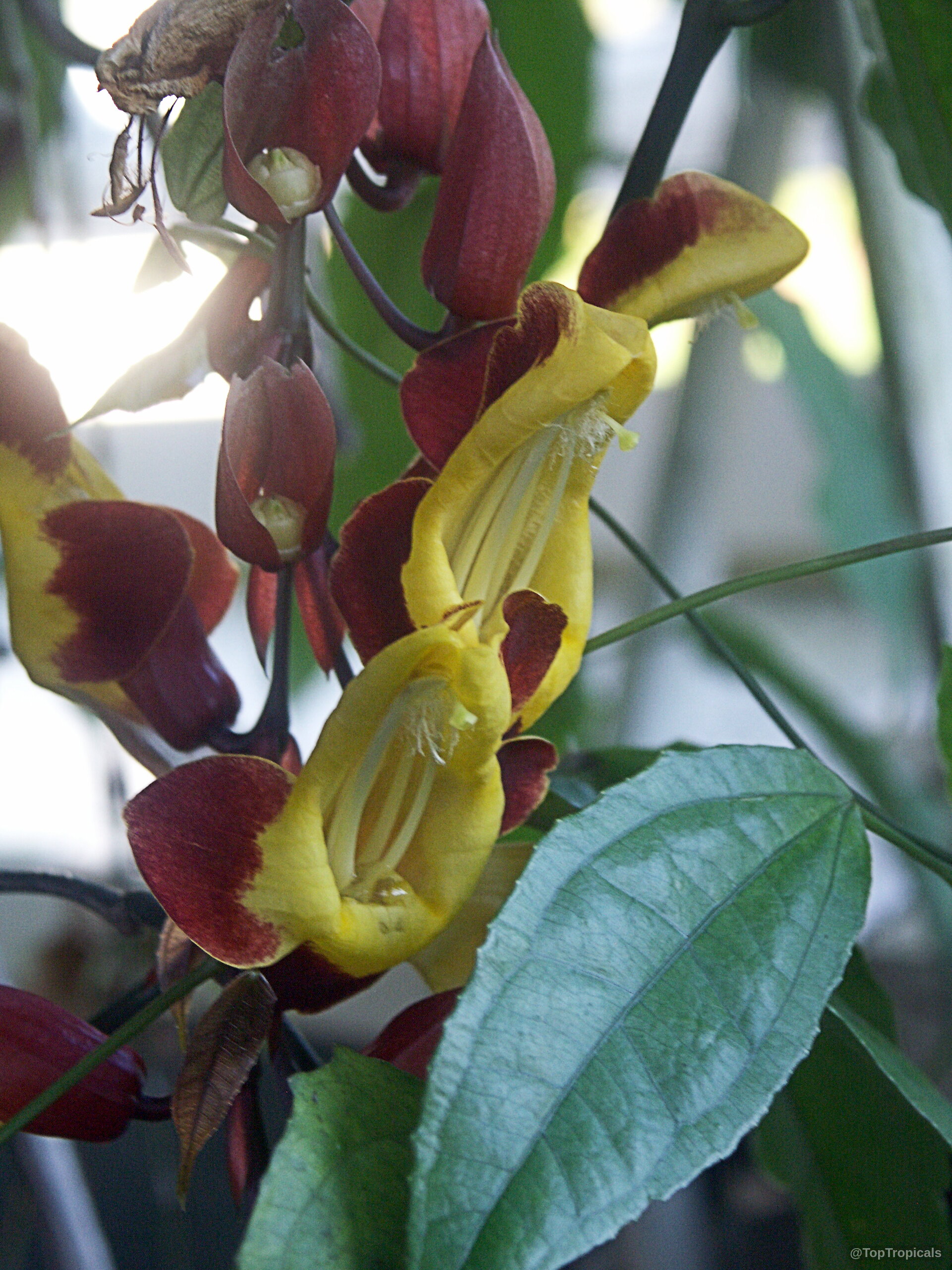
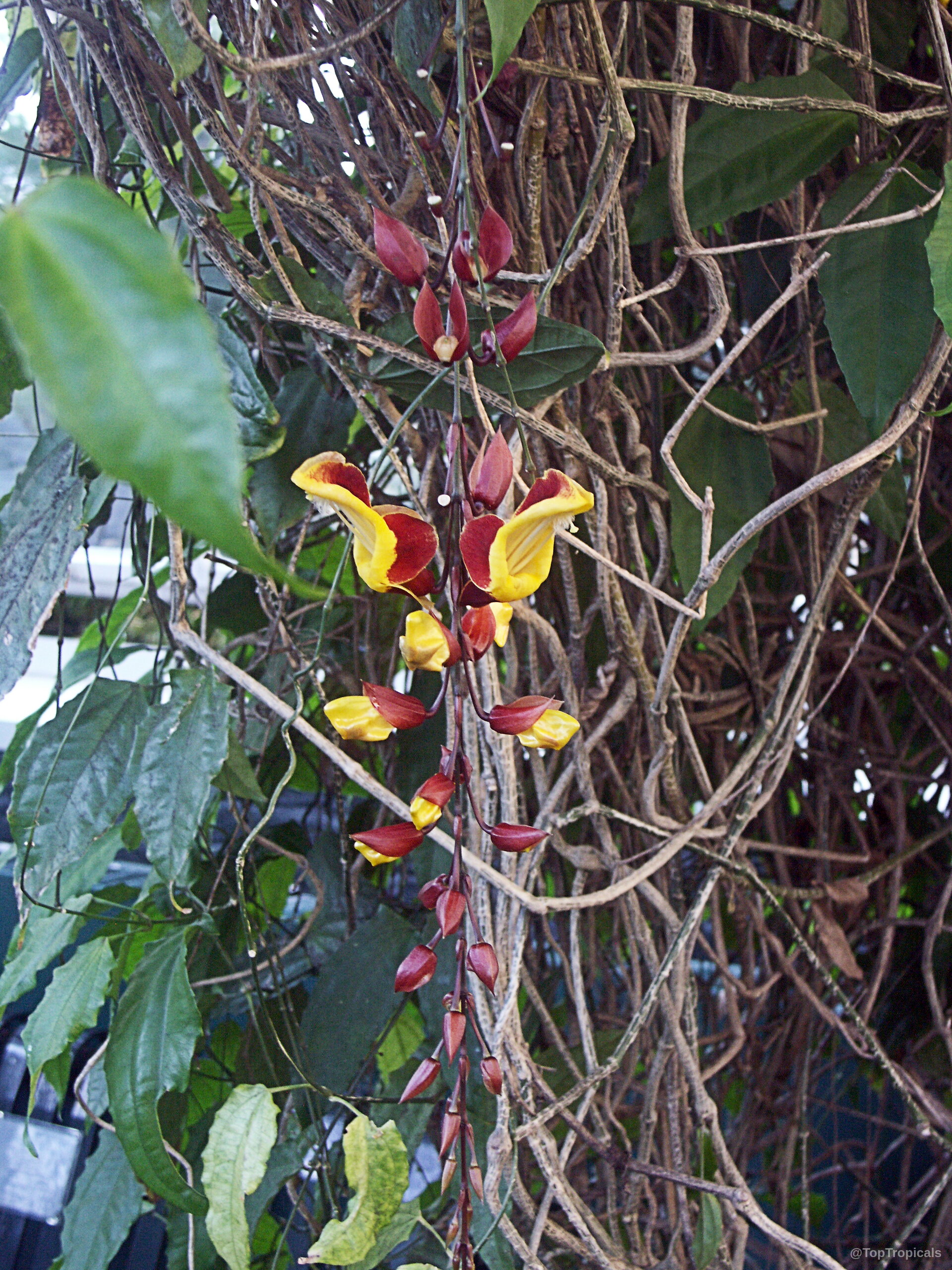
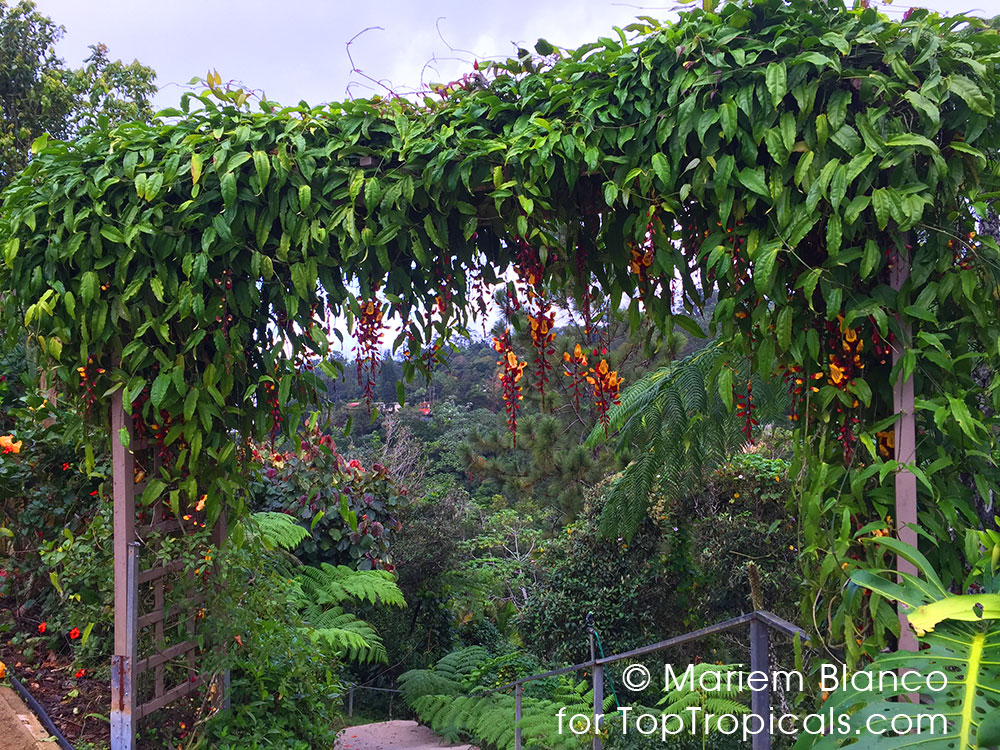
Botanical names: Thunbergia mysorensis, Thunbergia Anderson x Bedd, Hexacentris mysorensis
Common names: Clock Vine, Mysore Trumpetvine
Family: Acanthaceae
Origin: India
USDA Zone: 9-11
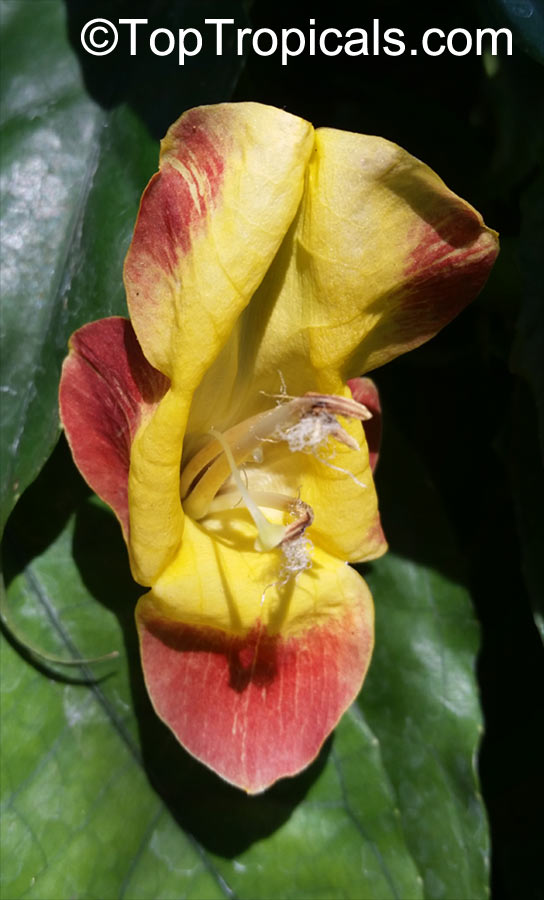
A stunning vine originating from India, one of the most popular species, but hard to find. The bright yellow flowers of unusual shape are hanging from the vine in clusters that can cover a large trellis or pagoda.
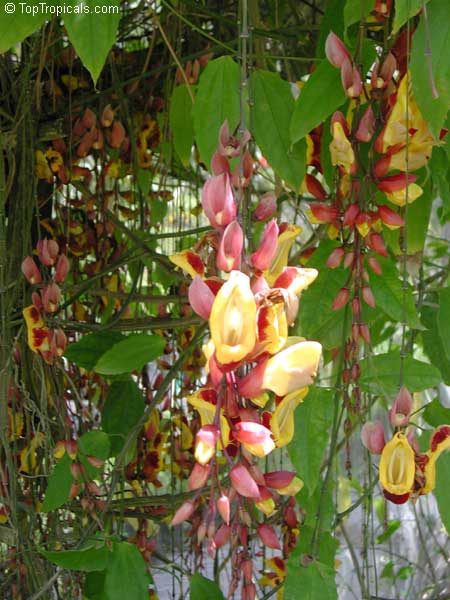
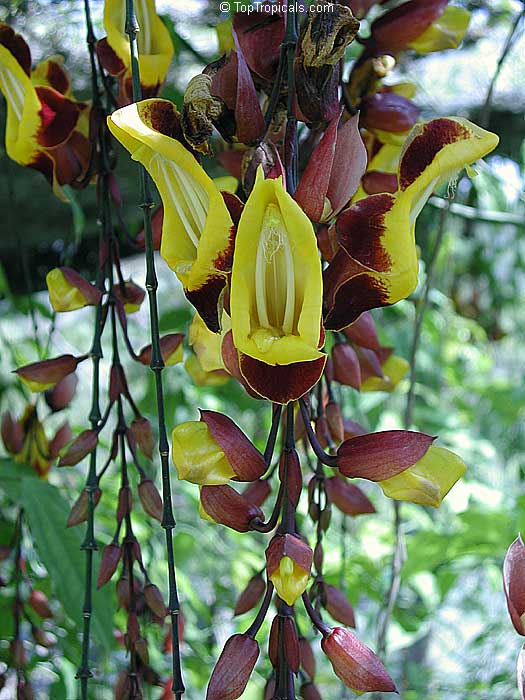
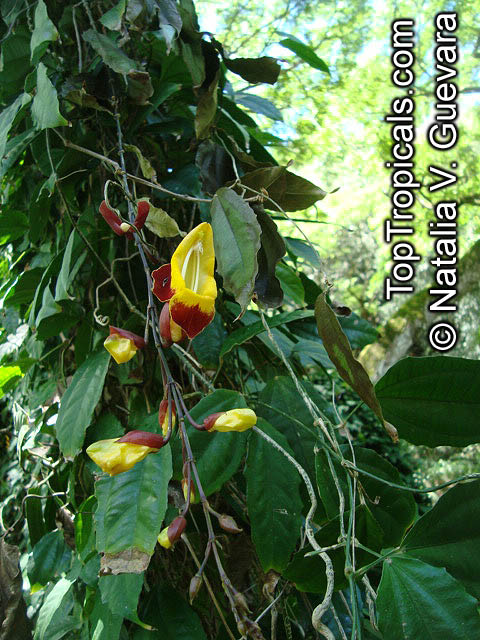
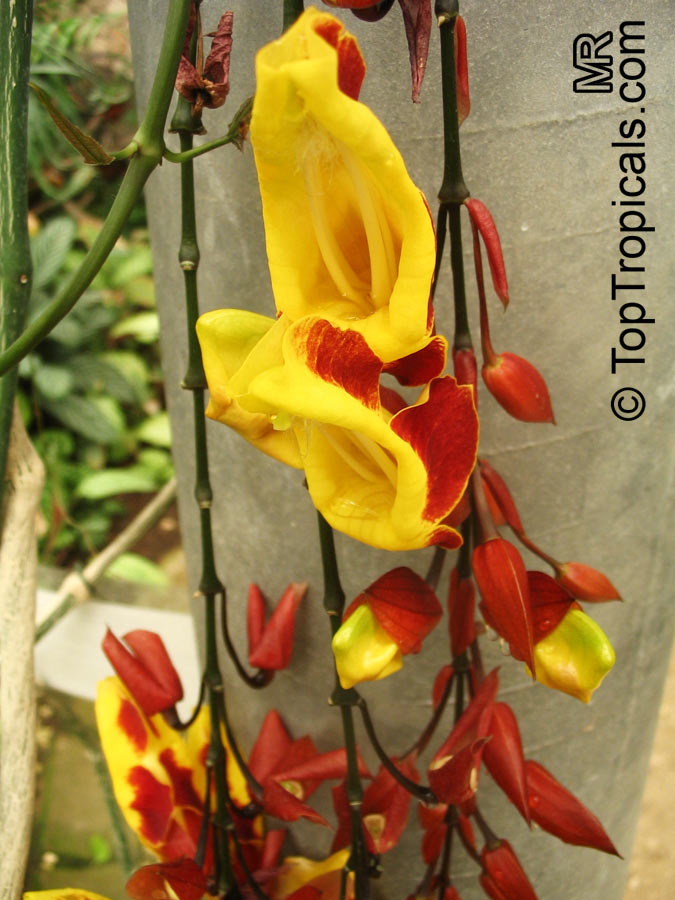
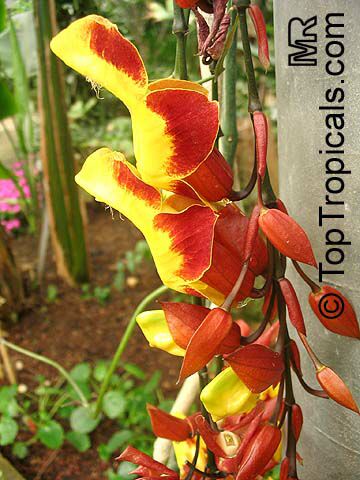
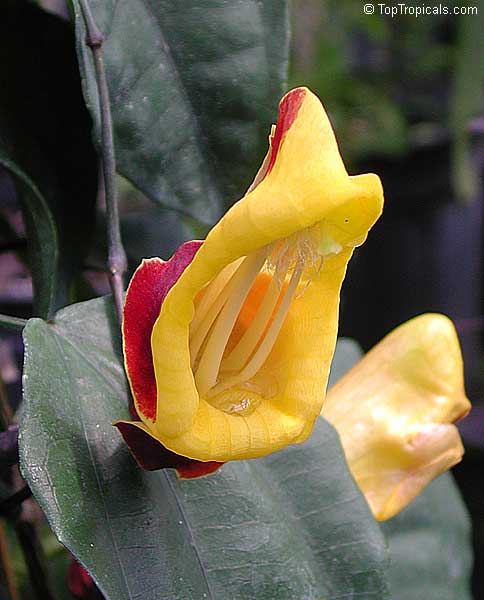
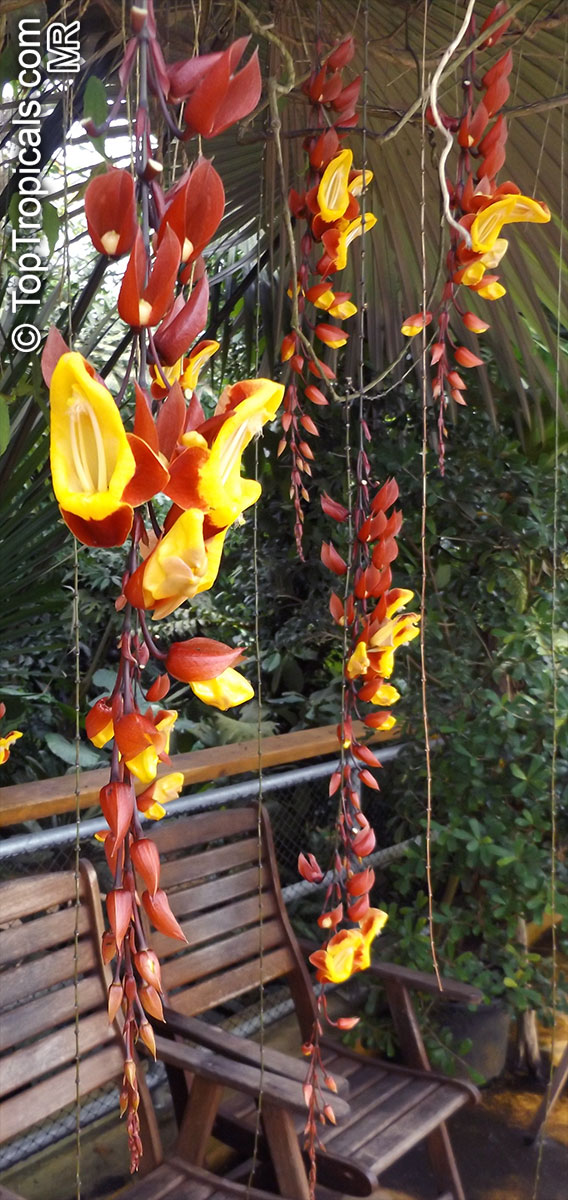
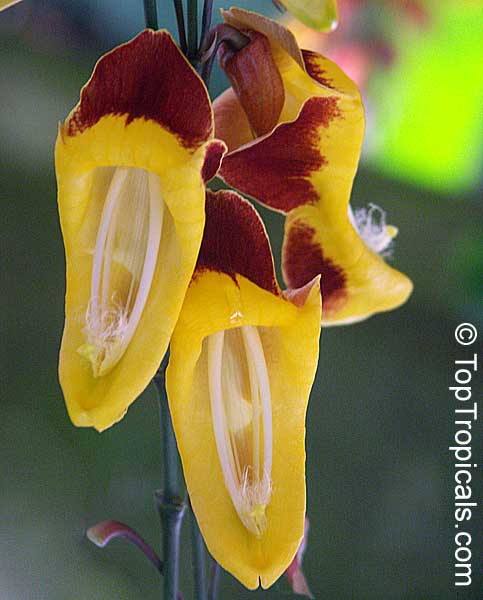


THIS PLANT DOES NOT SHIP WELL. PICK UP ONLY. You may contact us for shipping, it can be shipped at your own risk.
Recommended Fertilizer: SUNSHINE Megaflor - Bloom Nutrition Booster
Local pickup only. This item is not available for shipping. Local delivery may be available in Ft. Myers or Sebring, Florida. Contact us for an estimate. Non-pickup orders are subject to restocking fees.

Botanical name: Thunbergia sp.
Common name: Thunbergia
Family: Acanthaceae
Origin: Africa, Asia
USDA Zone: 9-10


Thunbergias are vigorous annual or perennial vines and shrubs growing to 2-8 m tall.


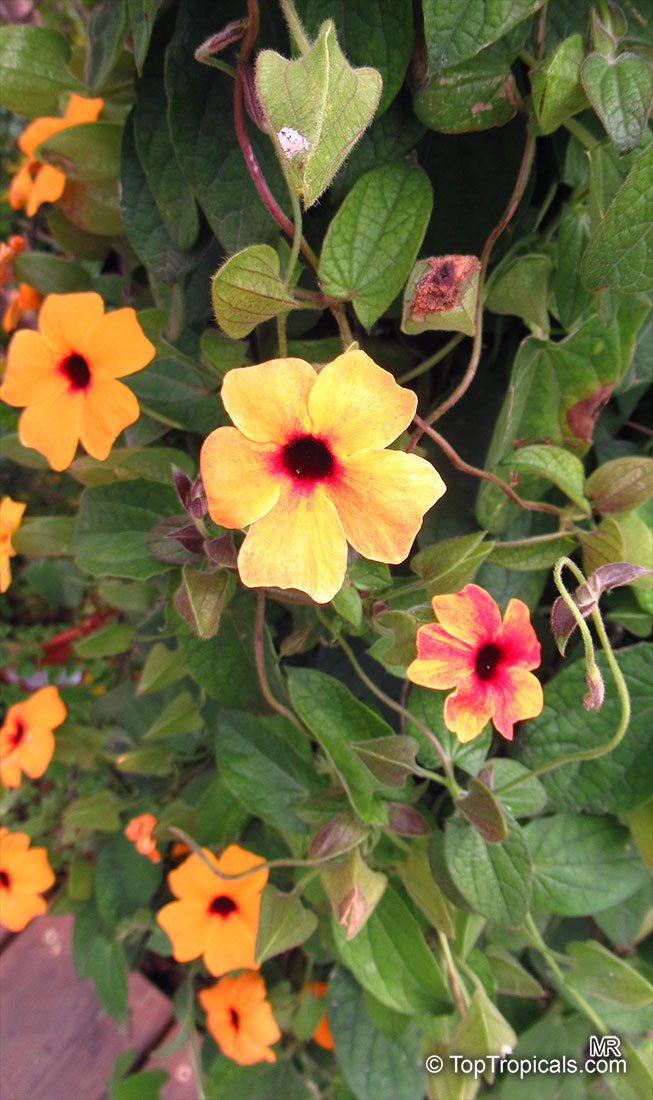
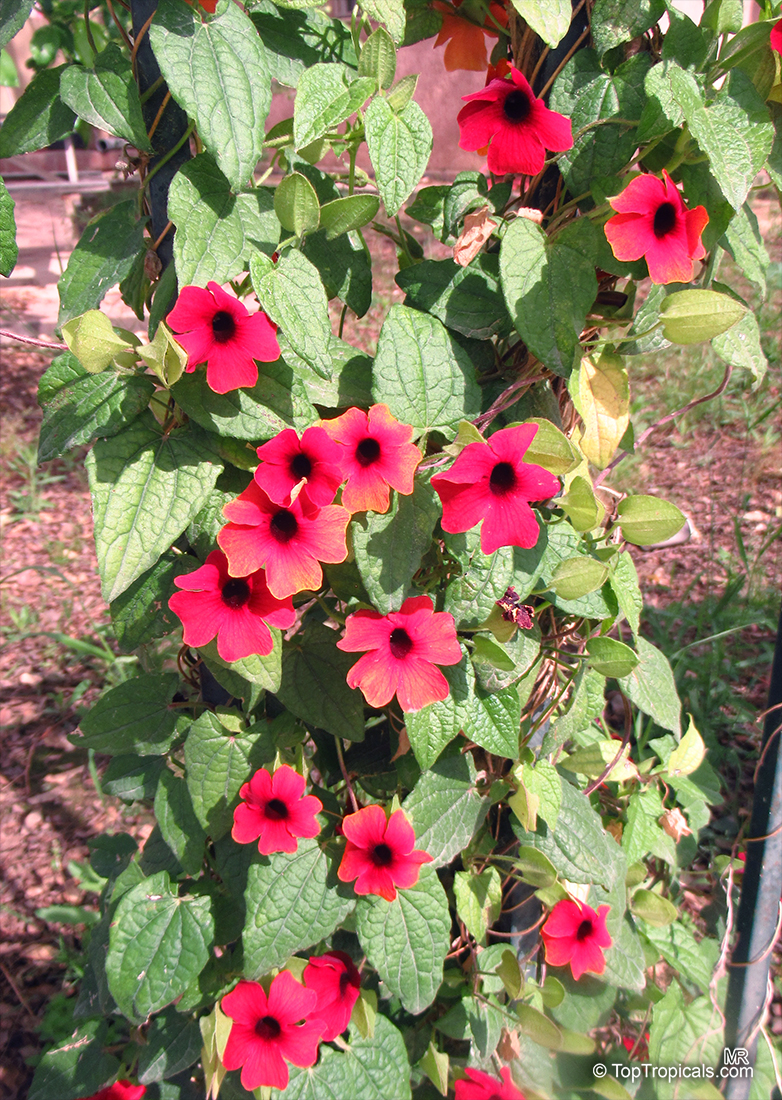
Botanical name: Thunbergia alata
Common name: Black - eyed Susan
Family: Acanthaceae
Origin: tropical eastern Africa
USDA Zone: 8-11

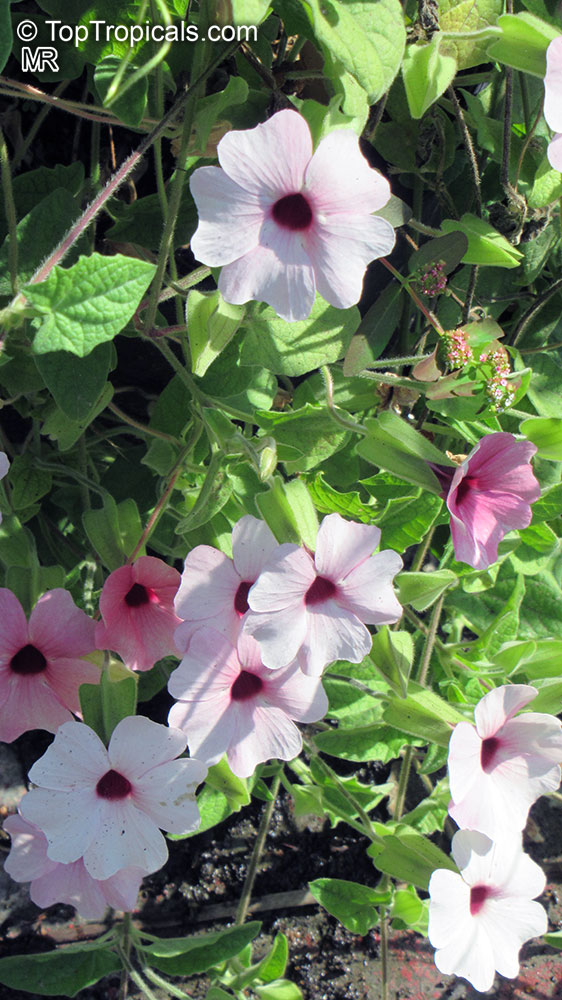
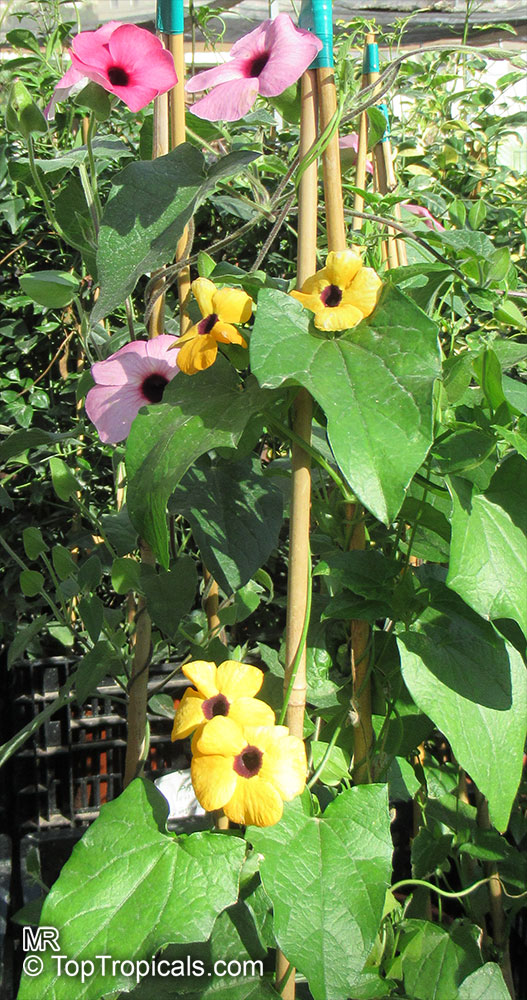
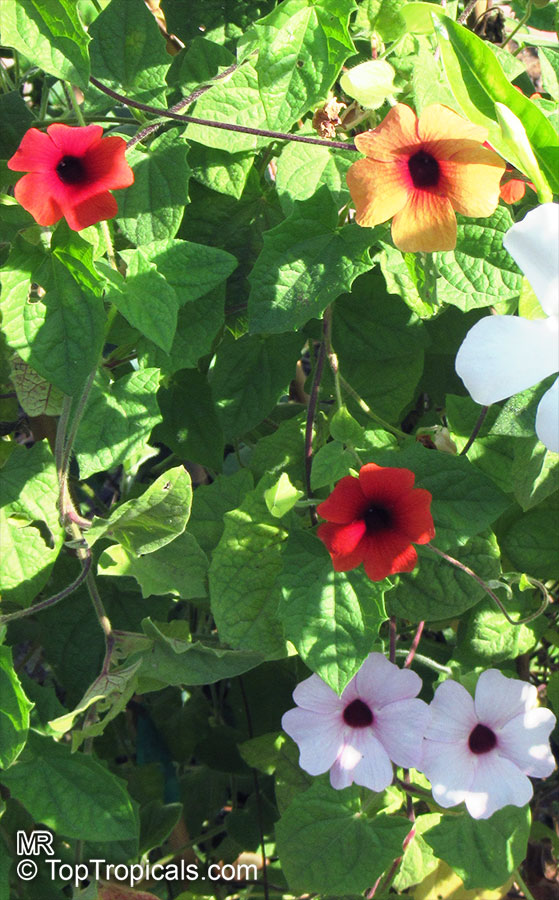
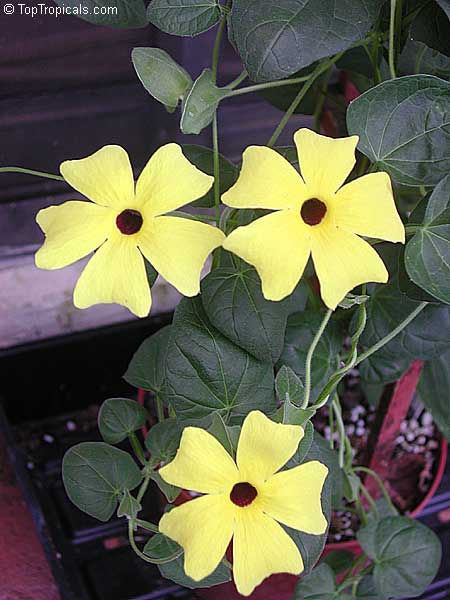
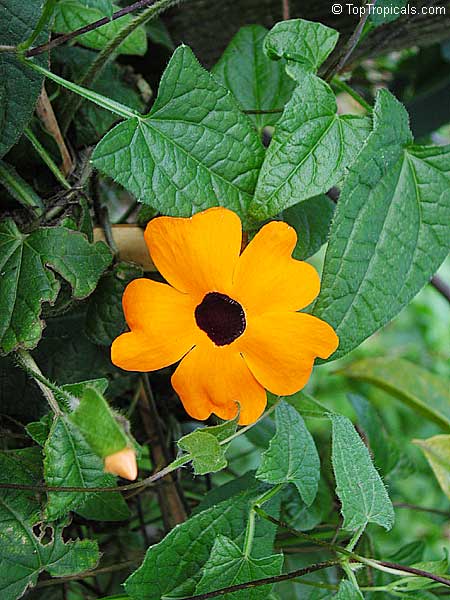
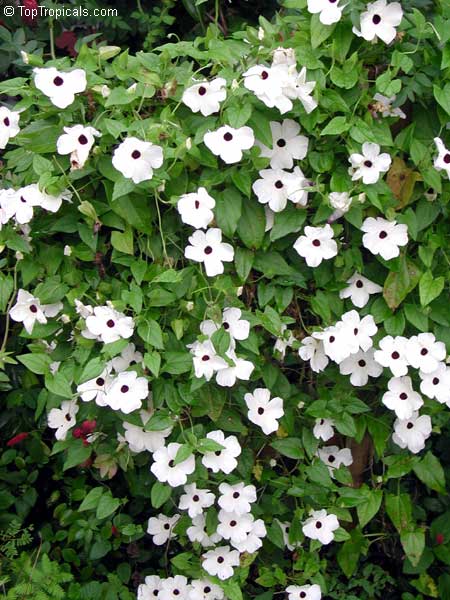
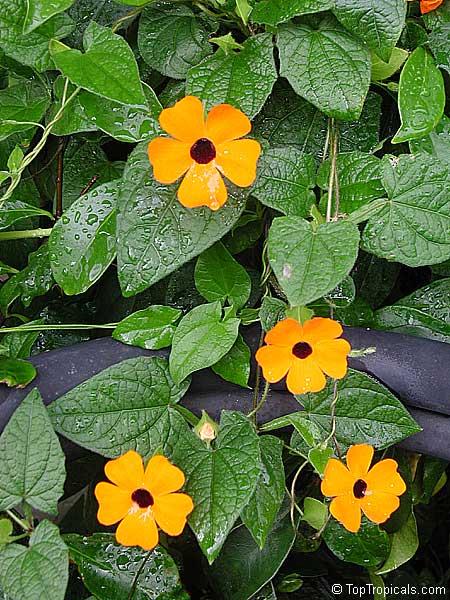
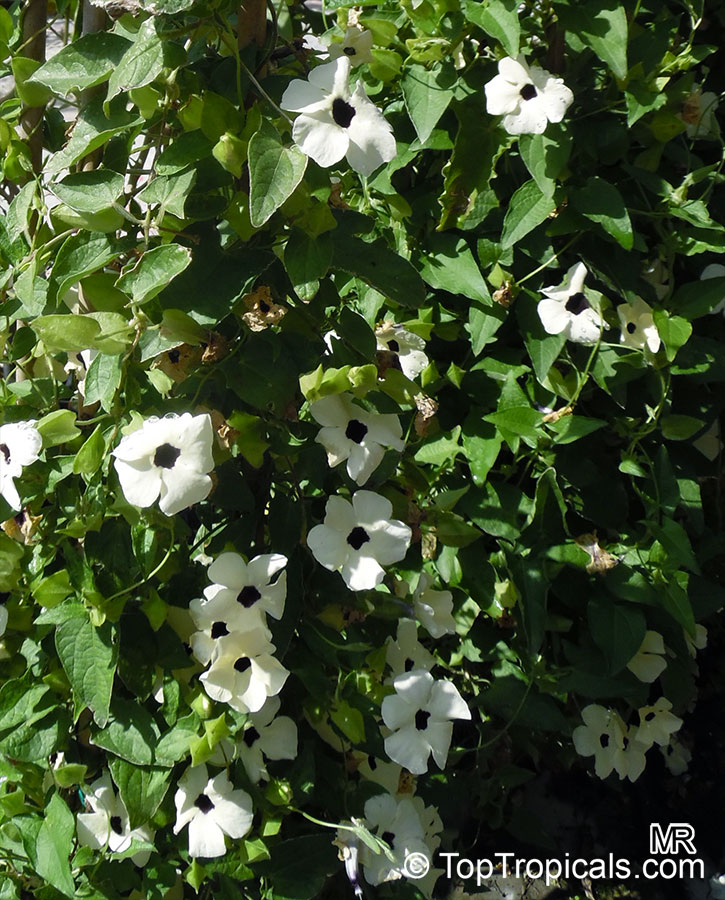
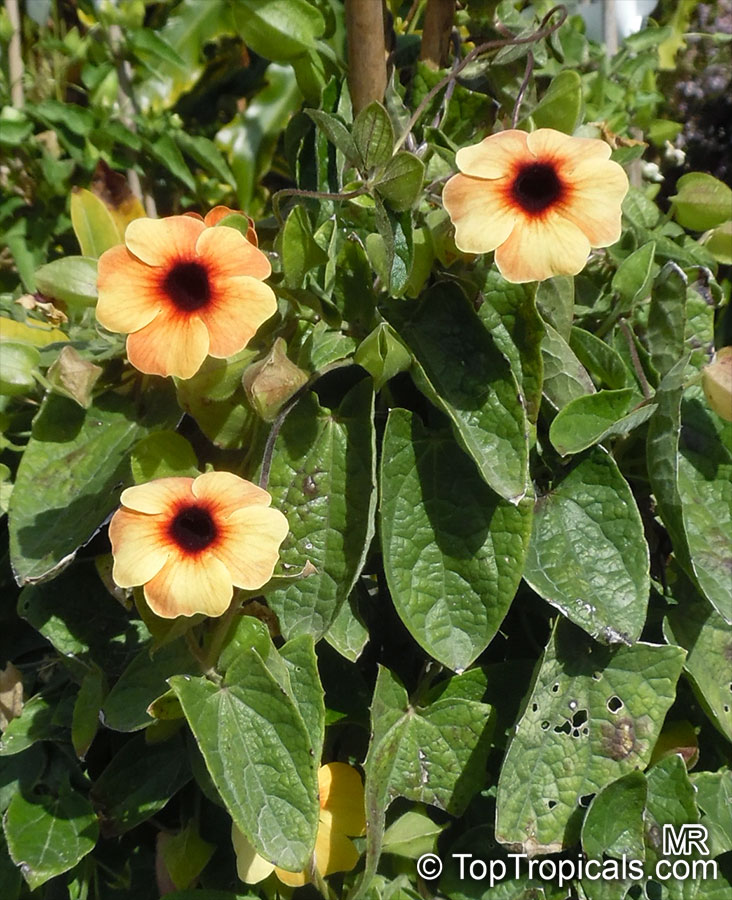
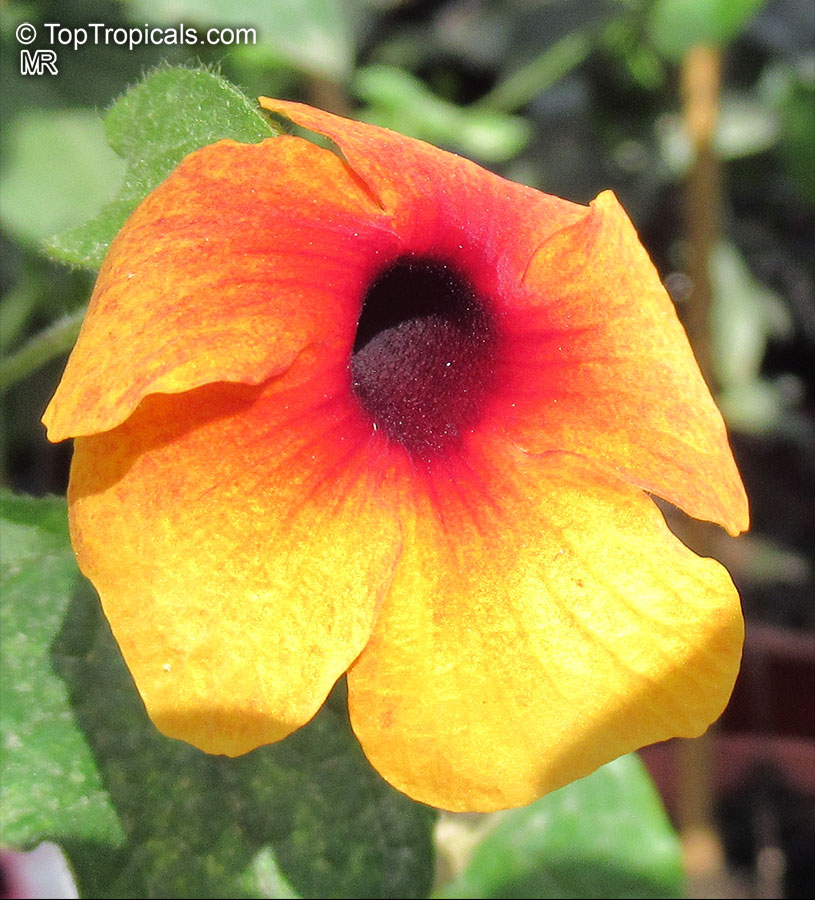
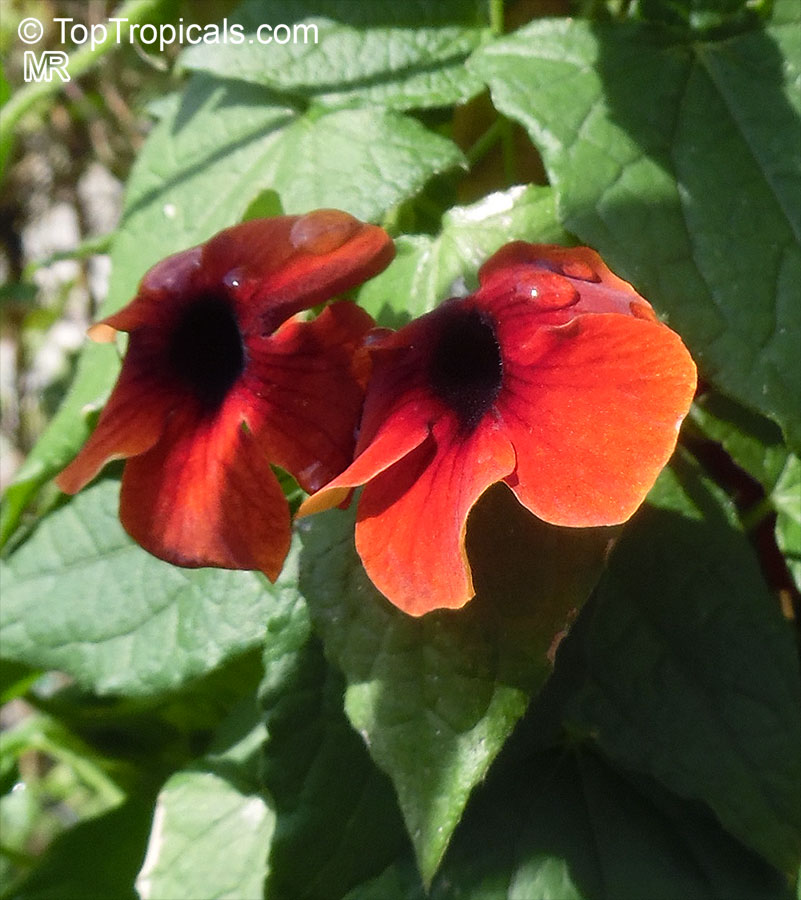
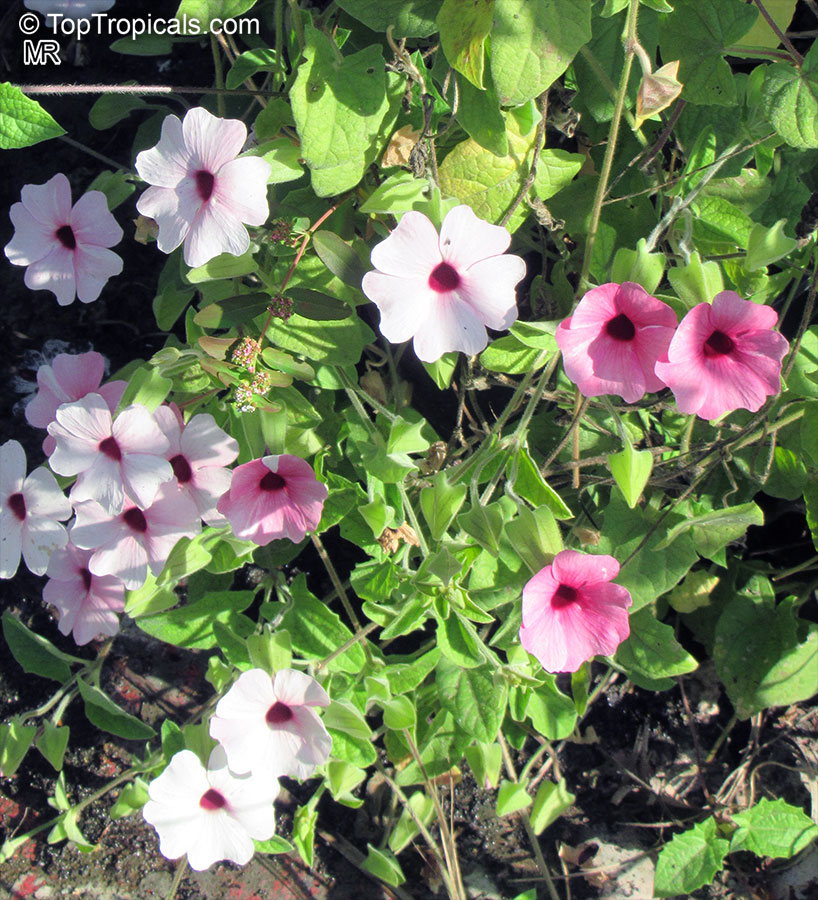
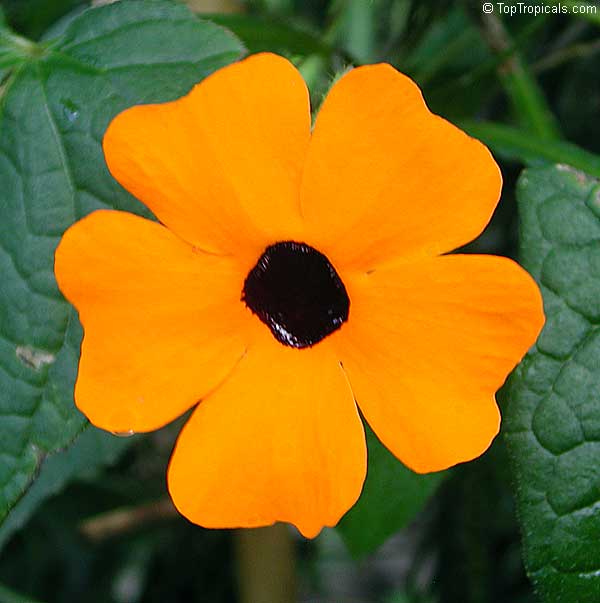
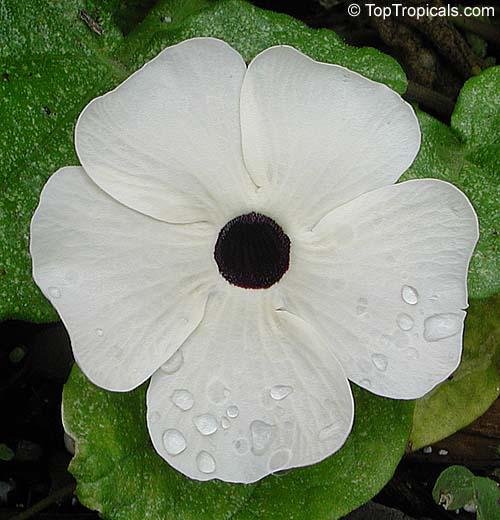
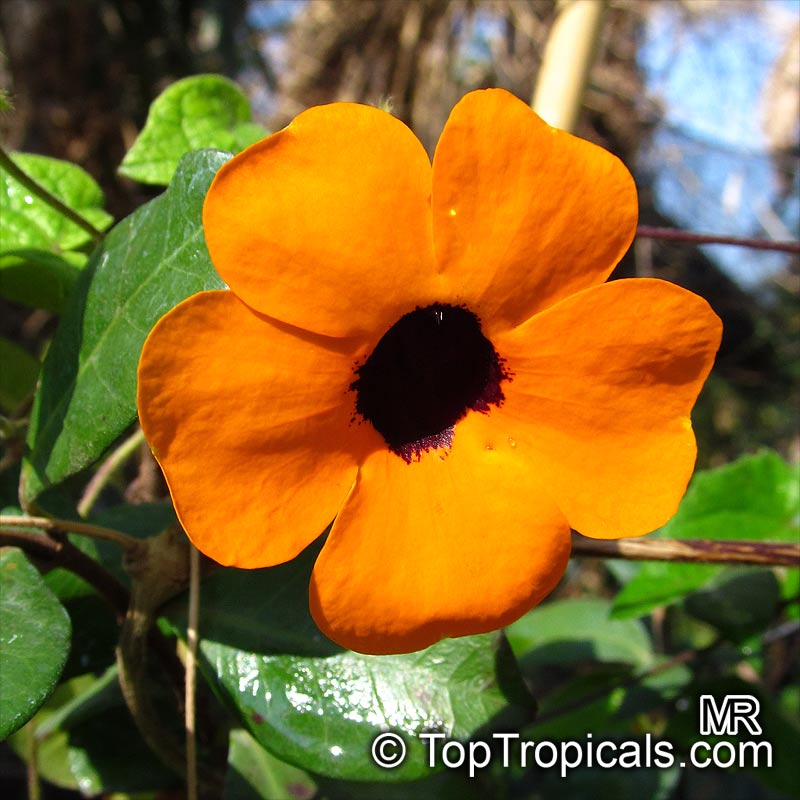
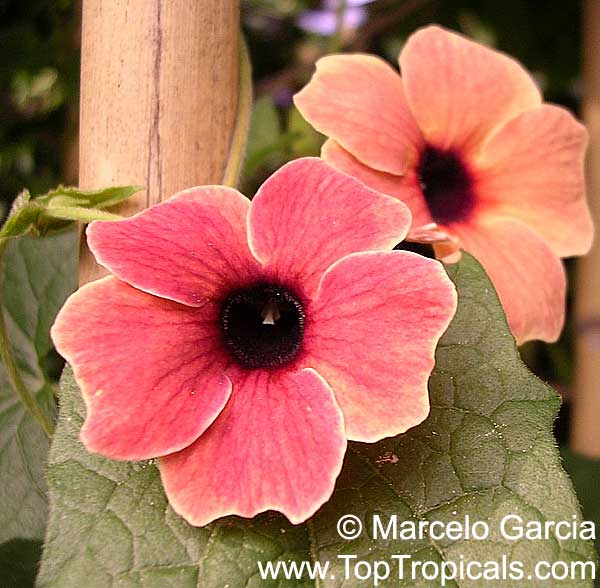
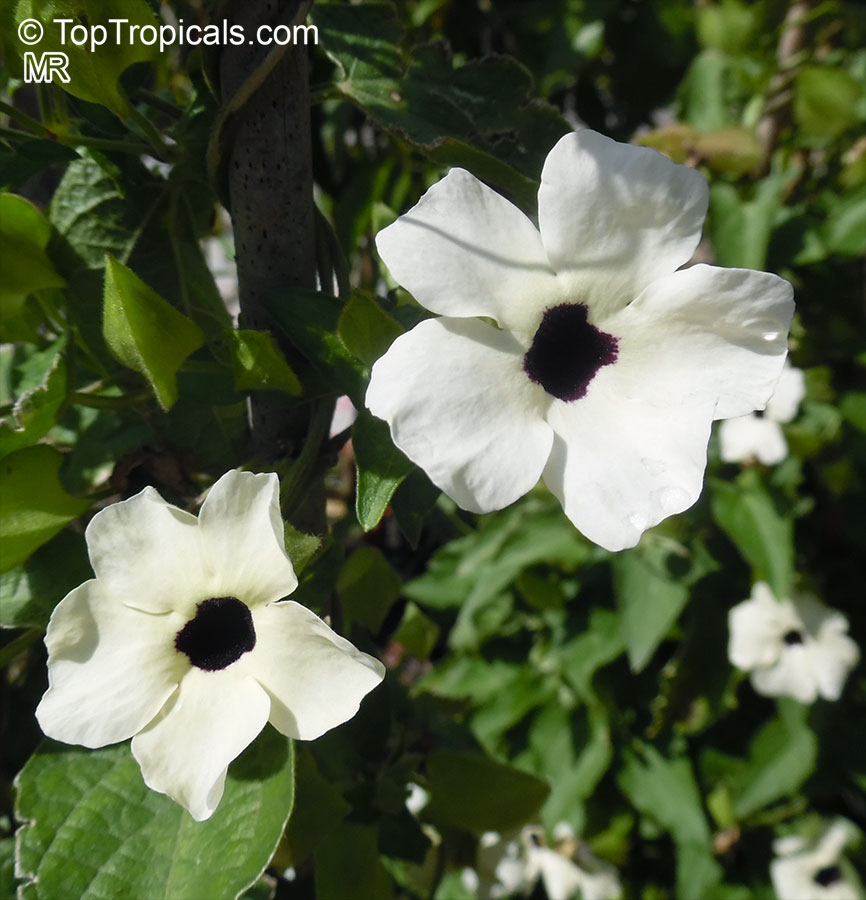
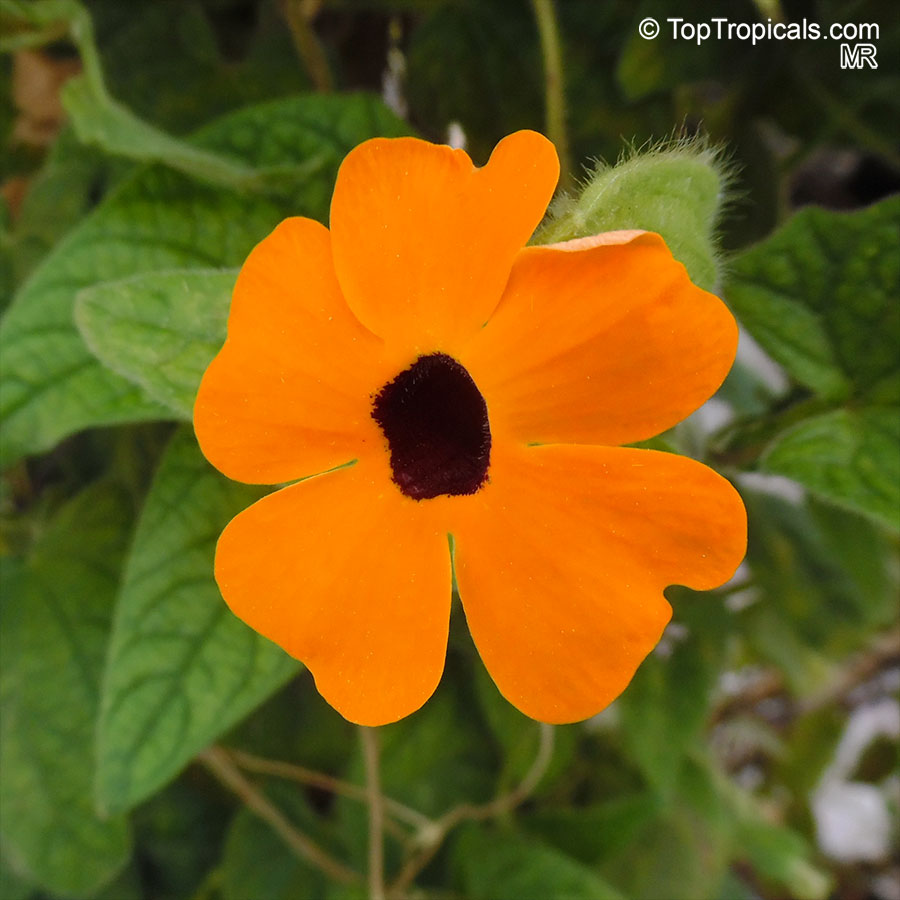
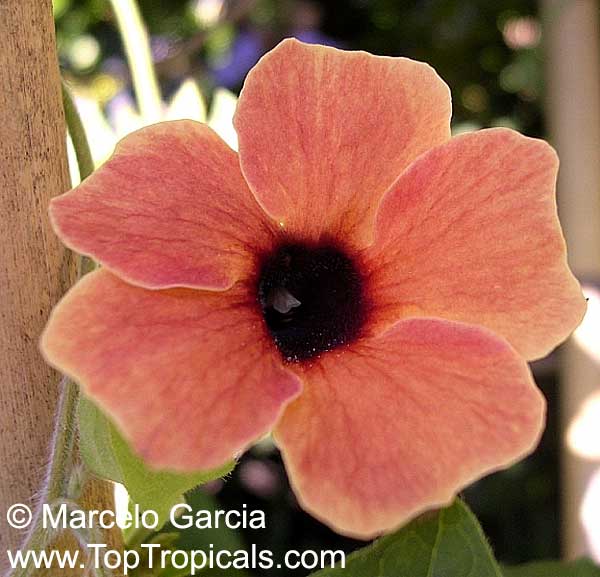
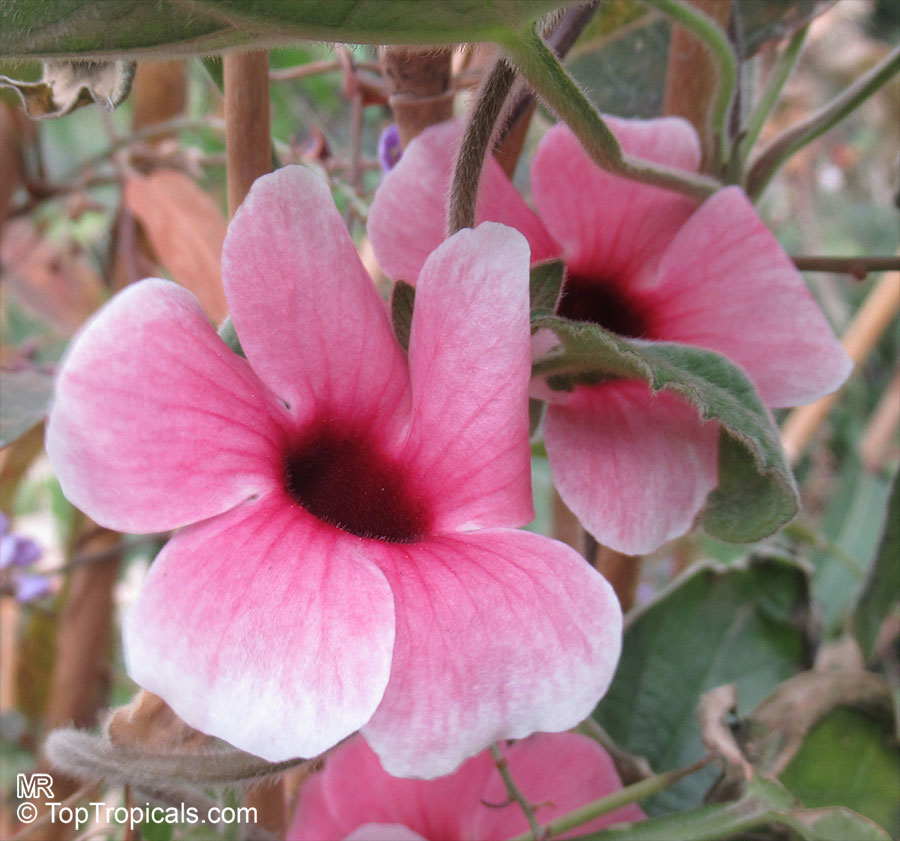
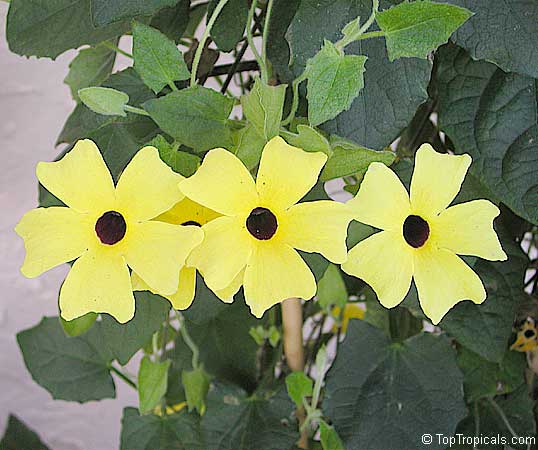
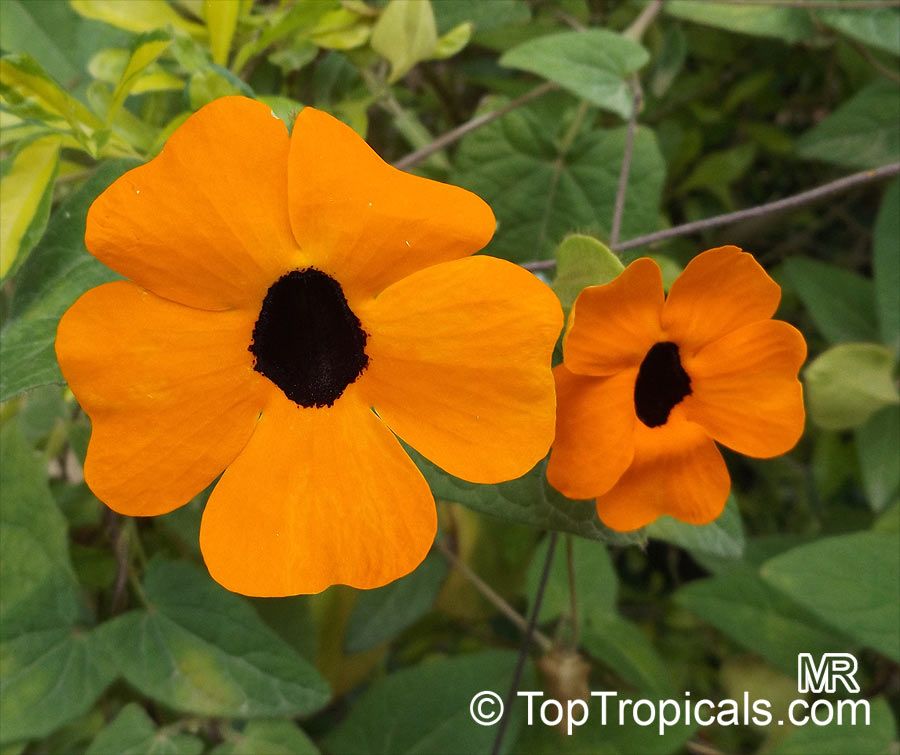
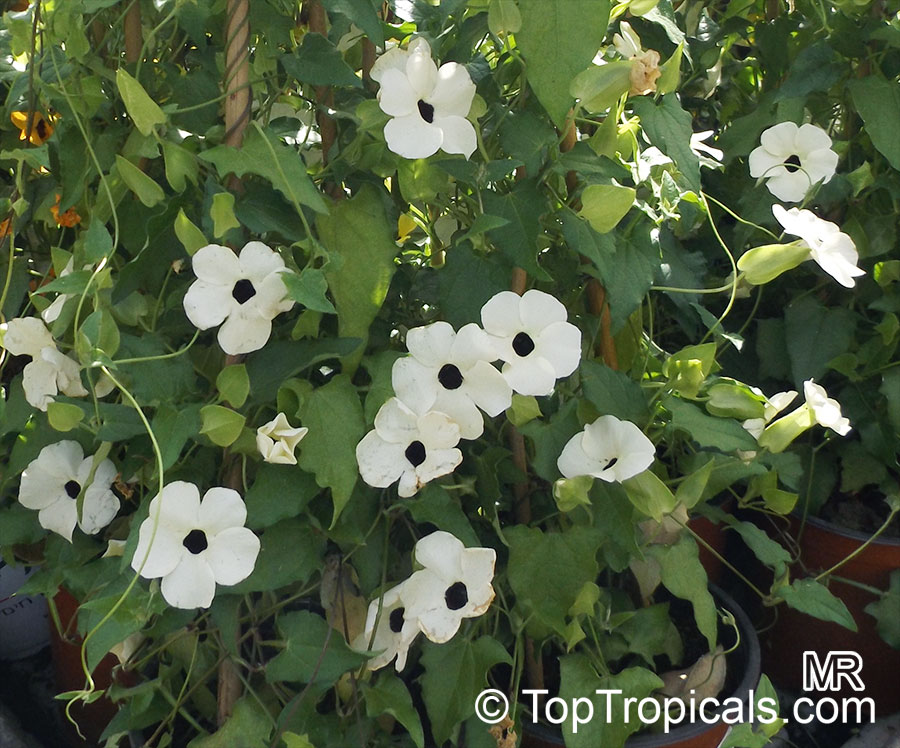
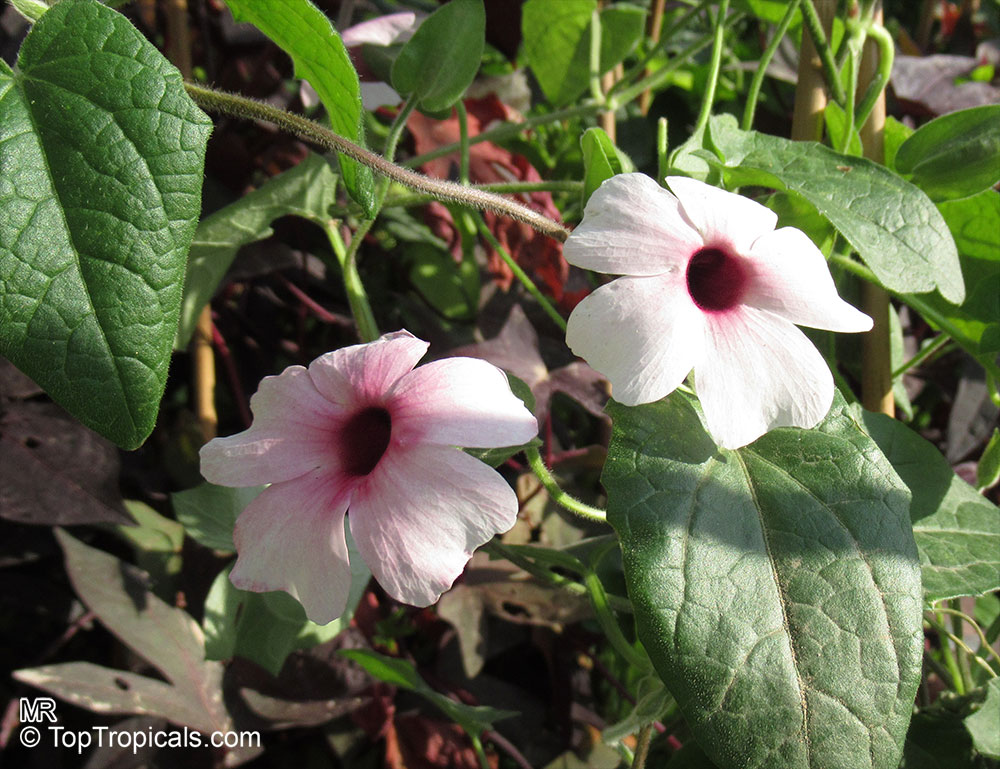
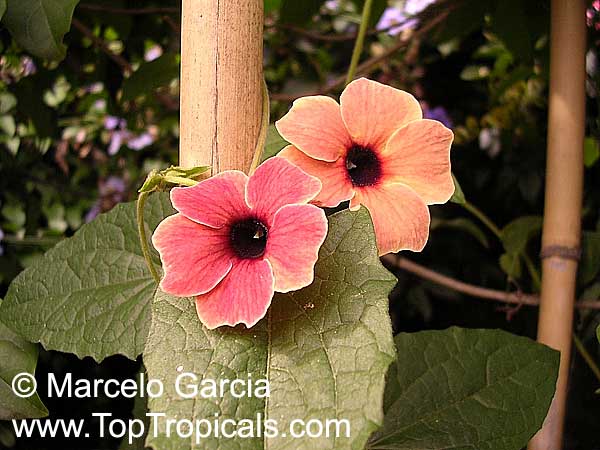
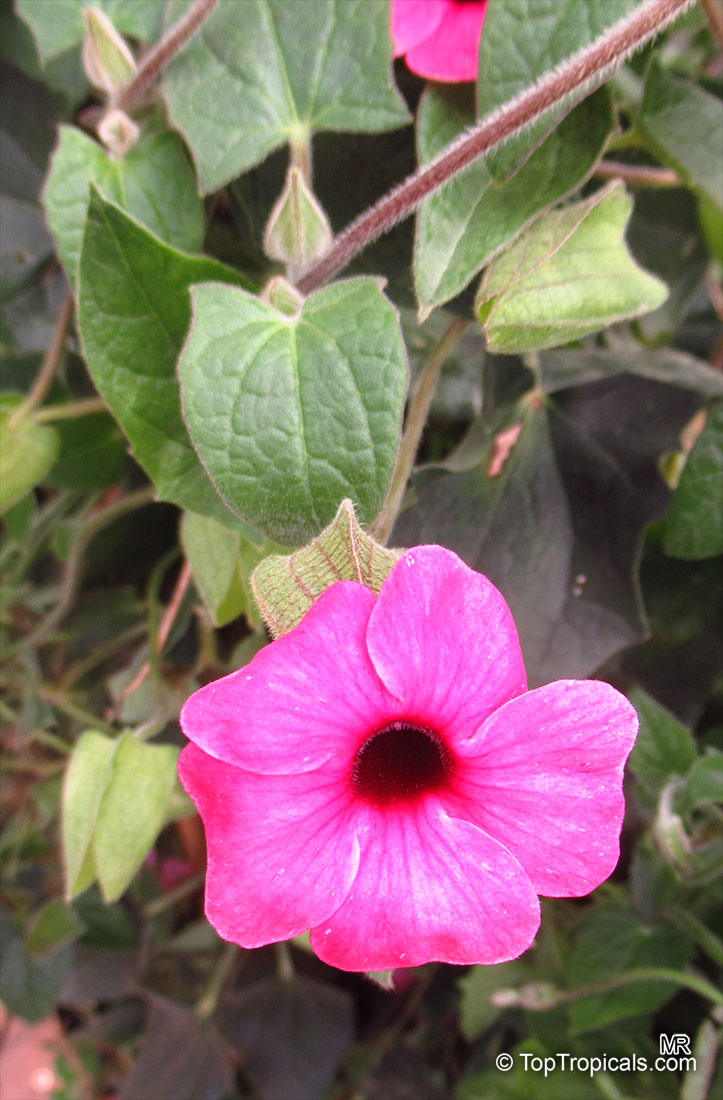
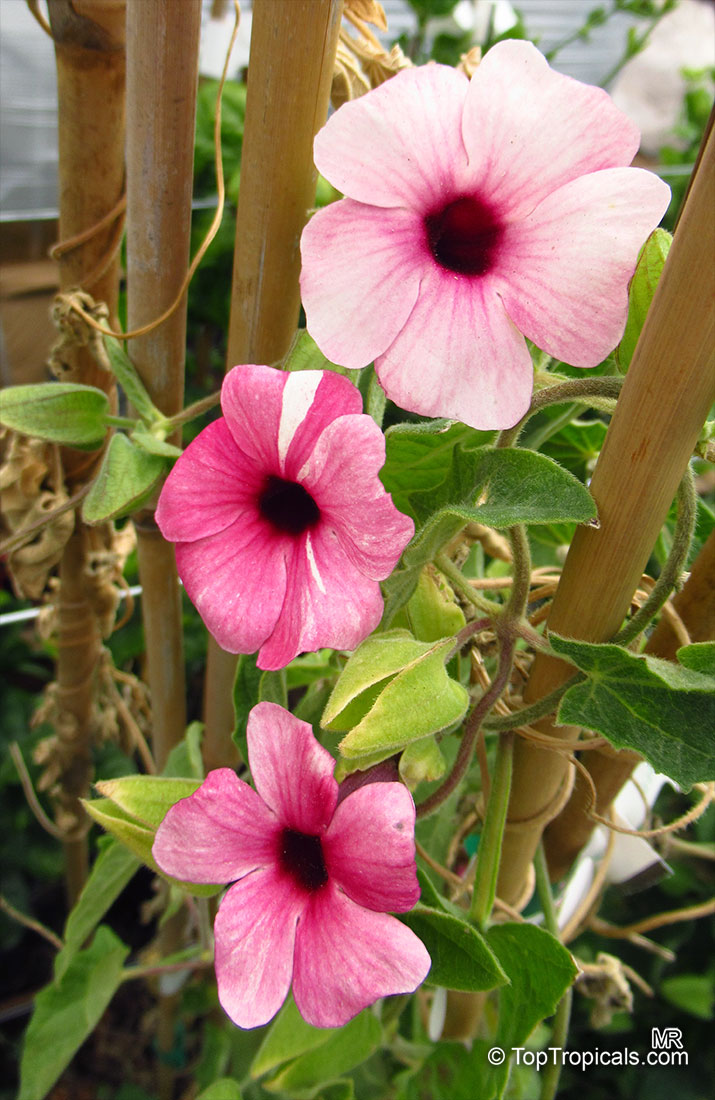
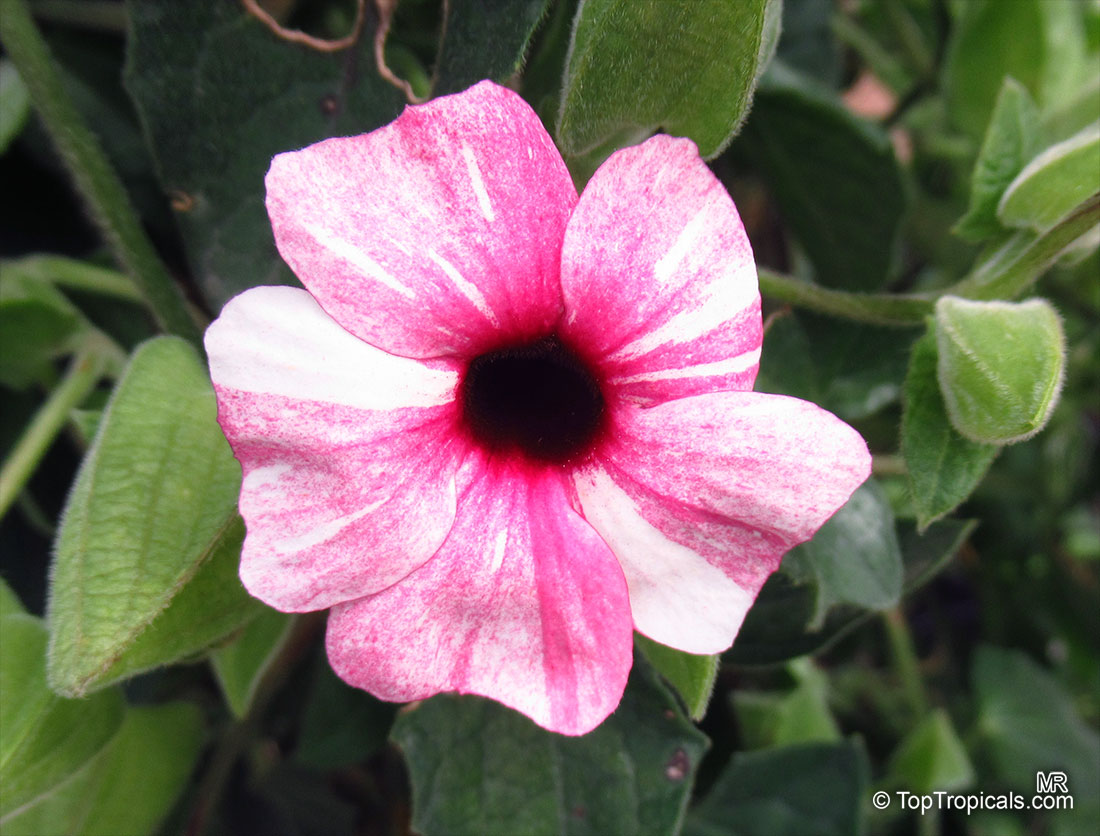
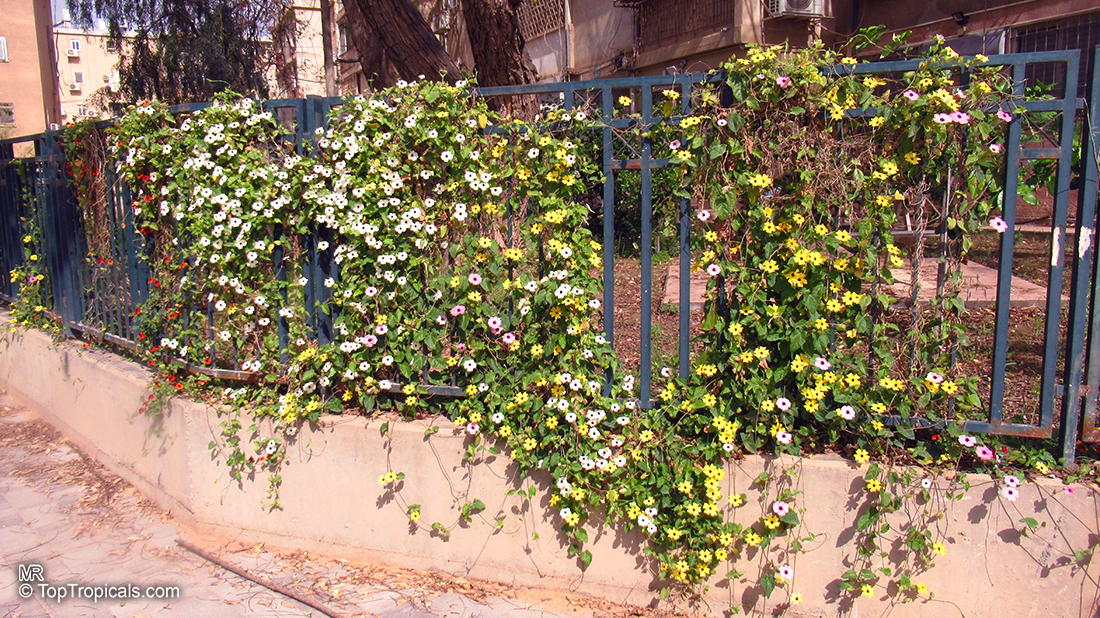
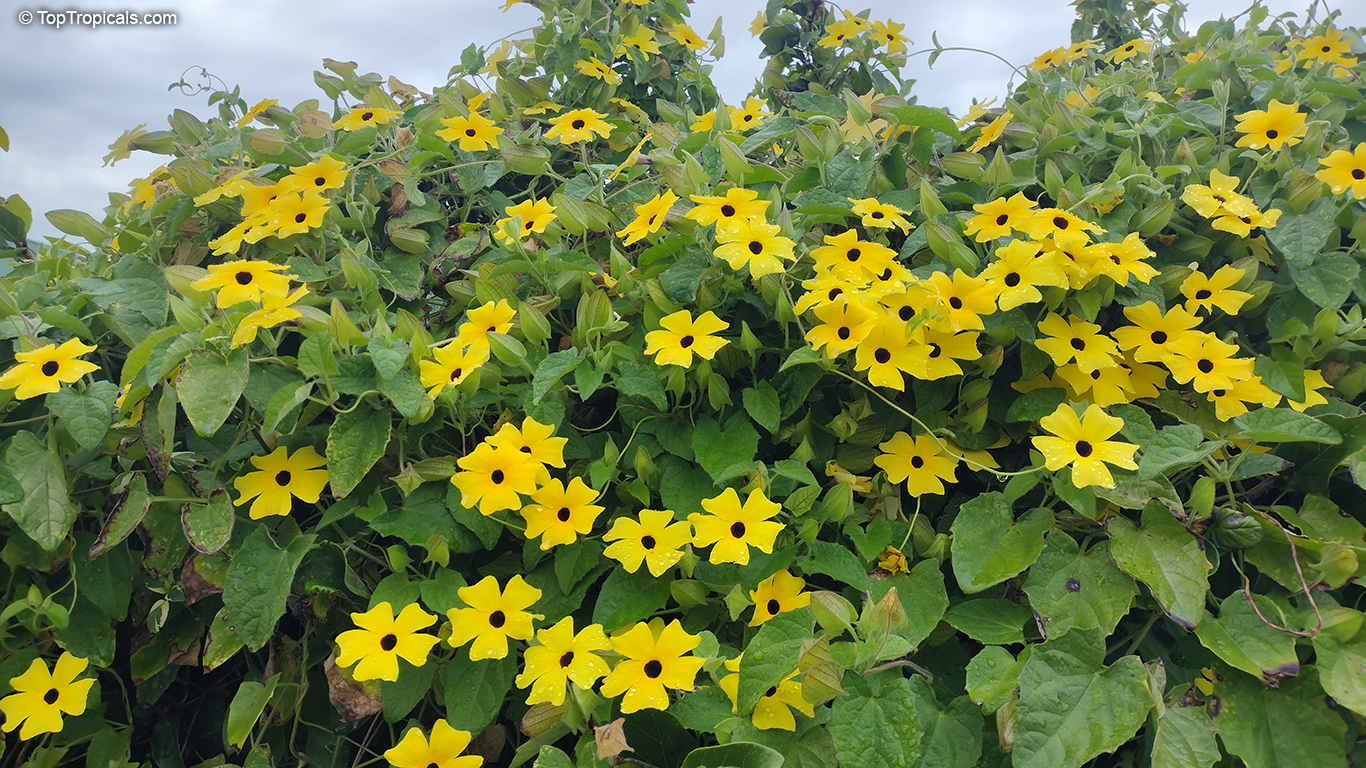
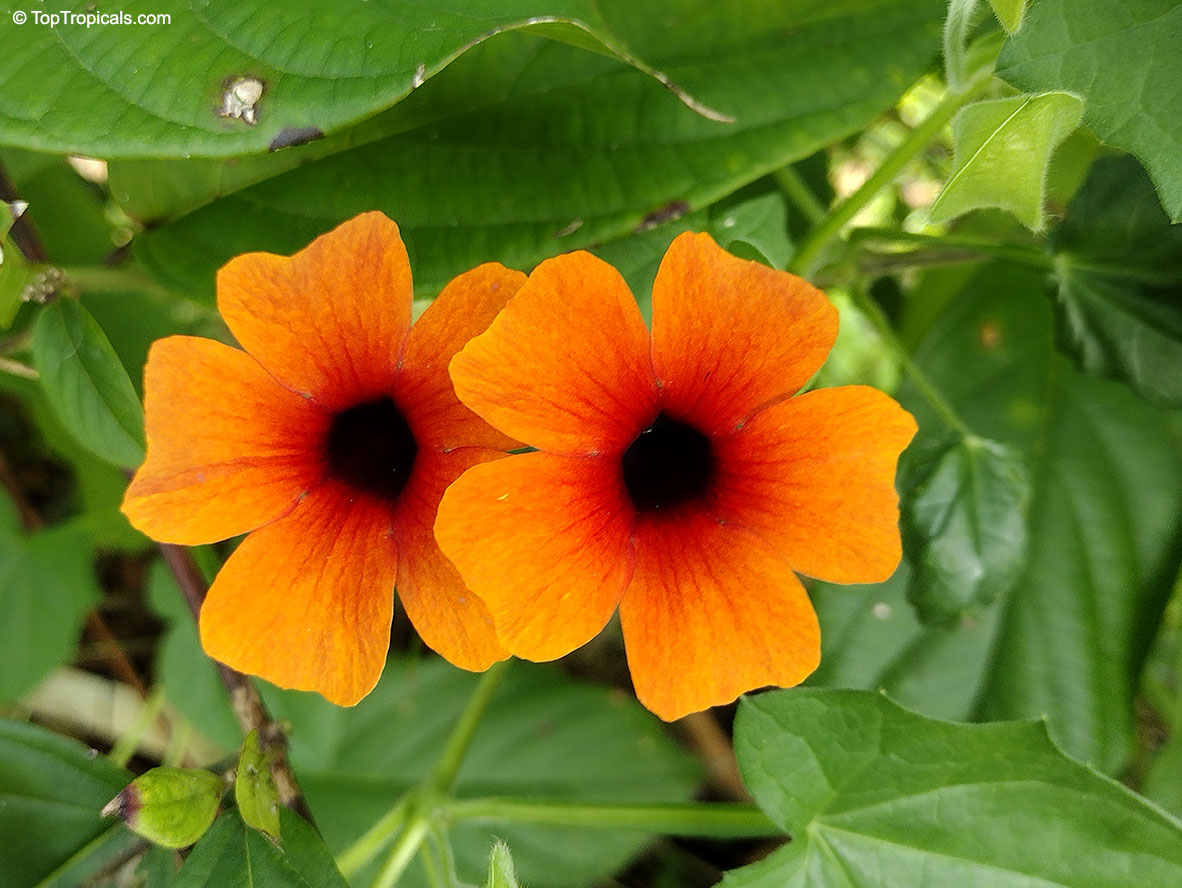
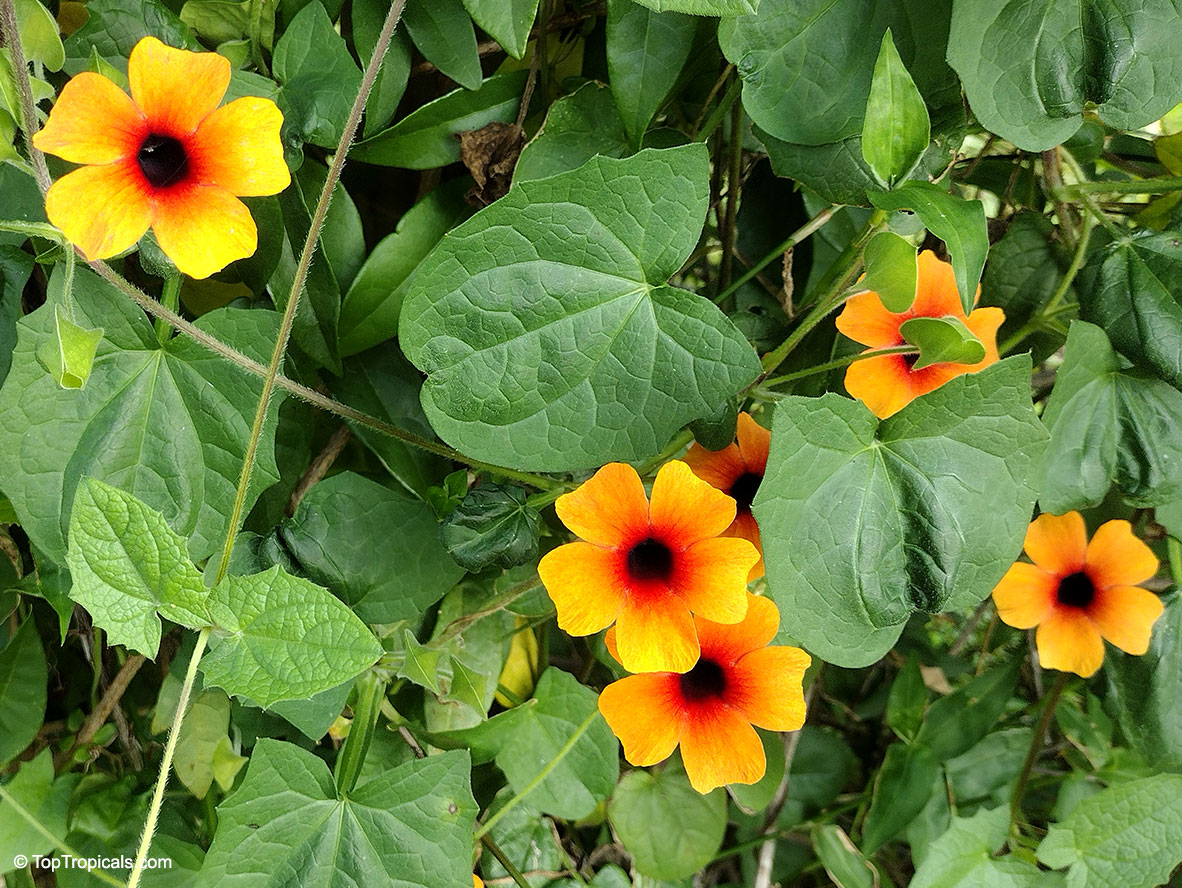
Thunbergia alata (Black-eyed Susans) is a vine or creeper, native to tropical eastern Africa. It is grown in USDA Zone 9-11 and can survive temperatures in the 30s F for a short time with proper protection. This vine is fast-growing and can reach up to 8-10 ft in a single season. It produces an abundance of colorful blooms throughout the summer. Attractive to butterflies and hummingbirds, the flowers are unique in their range of colors, consisting of pink, white, off-white, yellow, orange, red, and crimson. There is always a black center that gives the plant its name - Black Eye Susan.
To ensure proper growth of Thunbergia alata, it is best to plant in full sun or semi-shade. Regular watering and ensuring the soil is kept moist is important for success. In cold regions, it is wise to grow this vine in a pot, as it is susceptible to frost. When kept in a container, it should be brought indoors during winter to provide protection from freezing temperatures.
In general, Thunbergia alata is an ideal choice for landscapes or container gardens. Not only does it provide striking colors and interesting shapes, but it also attracts butterflies, hummingbirds, and other beneficial wildlife. Despite its tropical origins, with proper care and protection, this plant can be grown successfully in colder climates.




Use link to repeat this search:
https://toptropicals.com/cgi-bin/garden_catalog/cat.cgi?find=thunbergia vine&search_op=and&keyword_op=and&language=e
&number=10&no_change_lang=1&user=tt&sale=1&first=0