Allamanda - Plant Encyclopedia Results
| Number of plants found: 13 | Next | 
|
Go to page: | 1 | 2 |
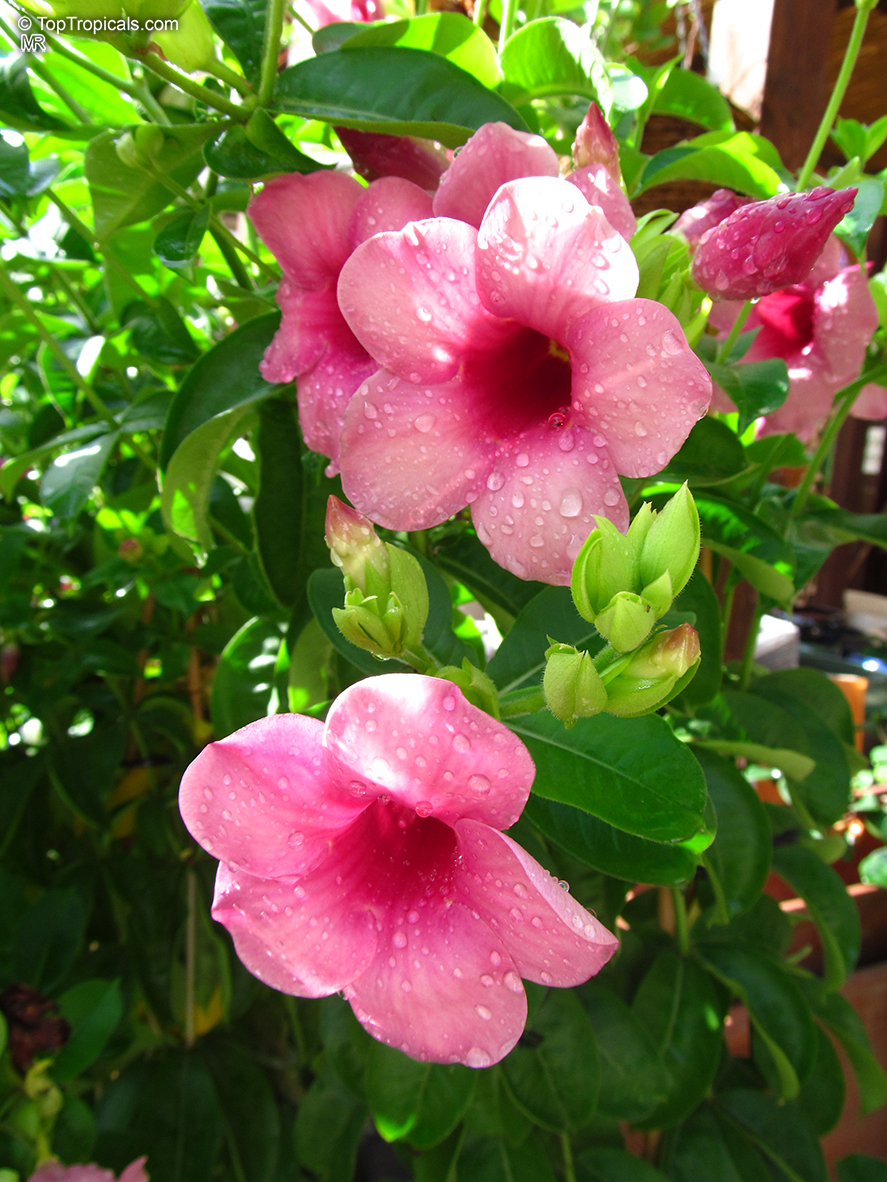
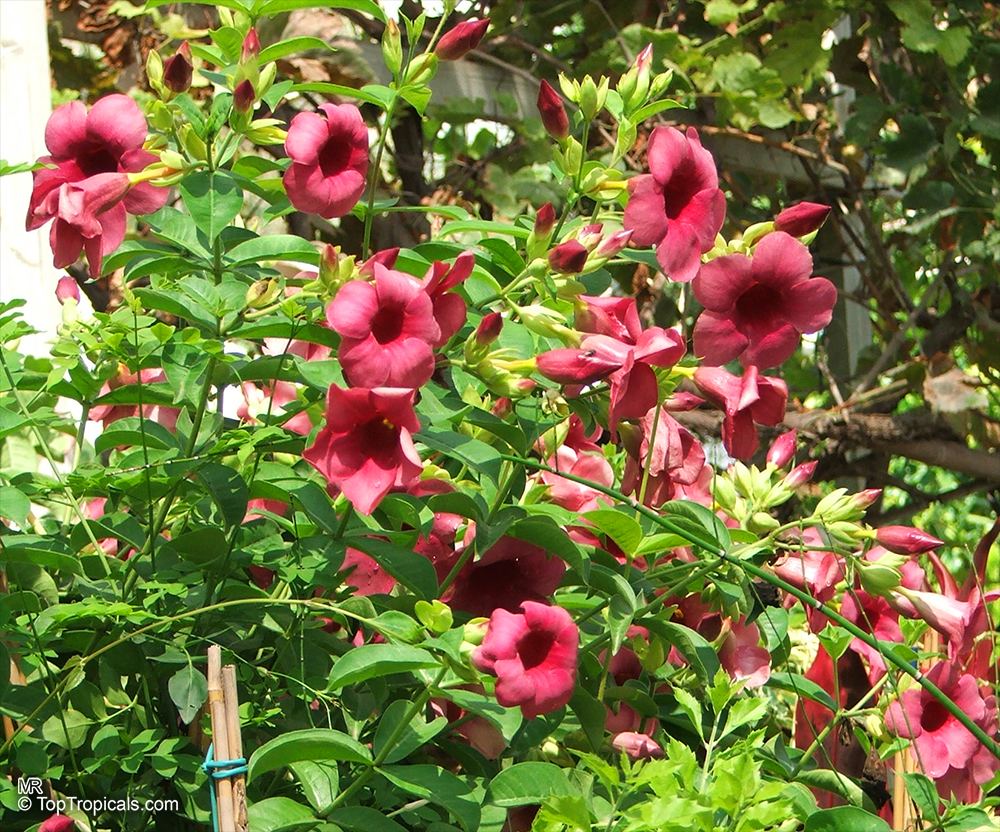
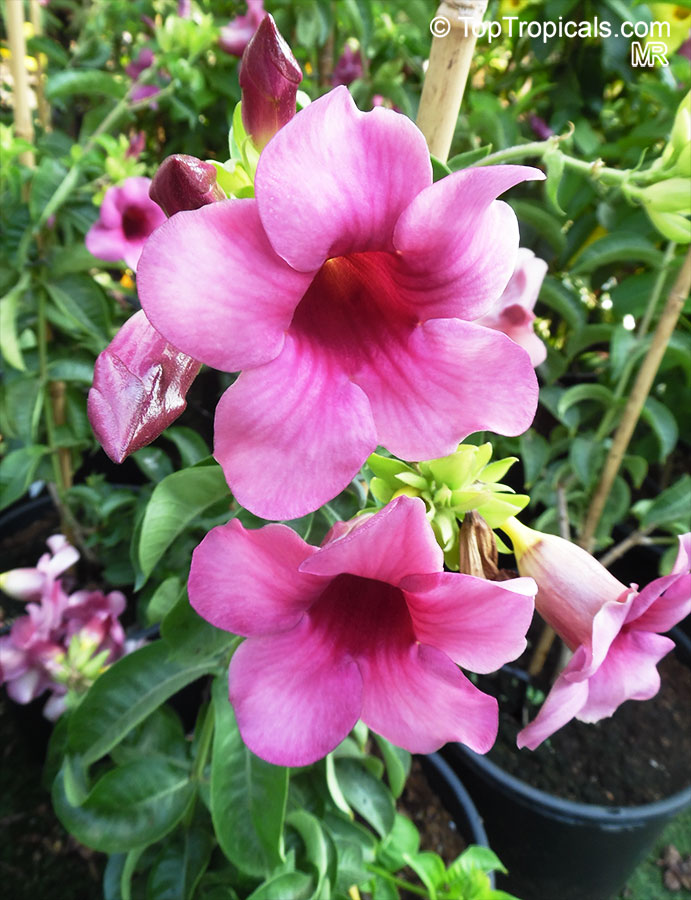
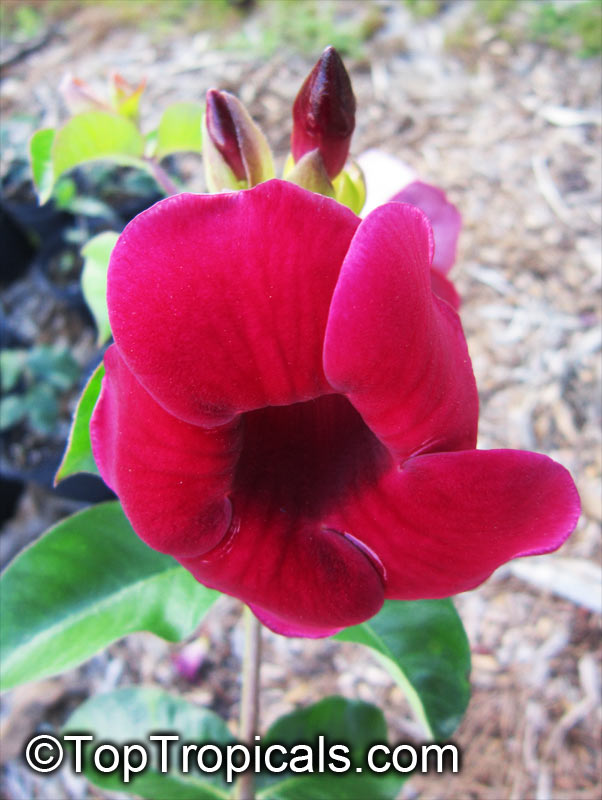
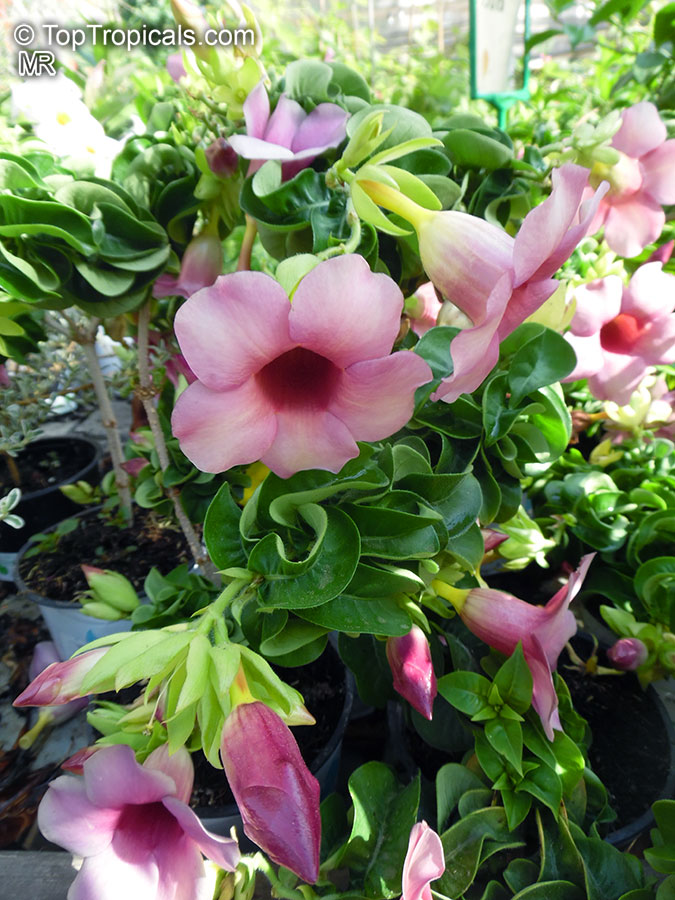
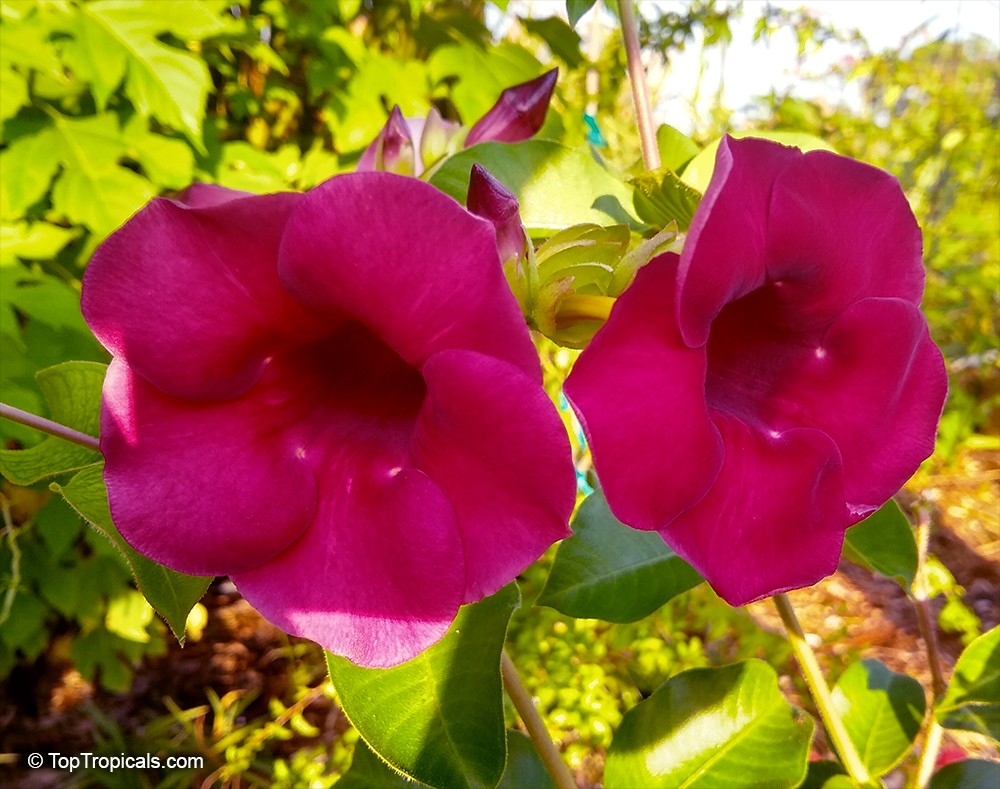
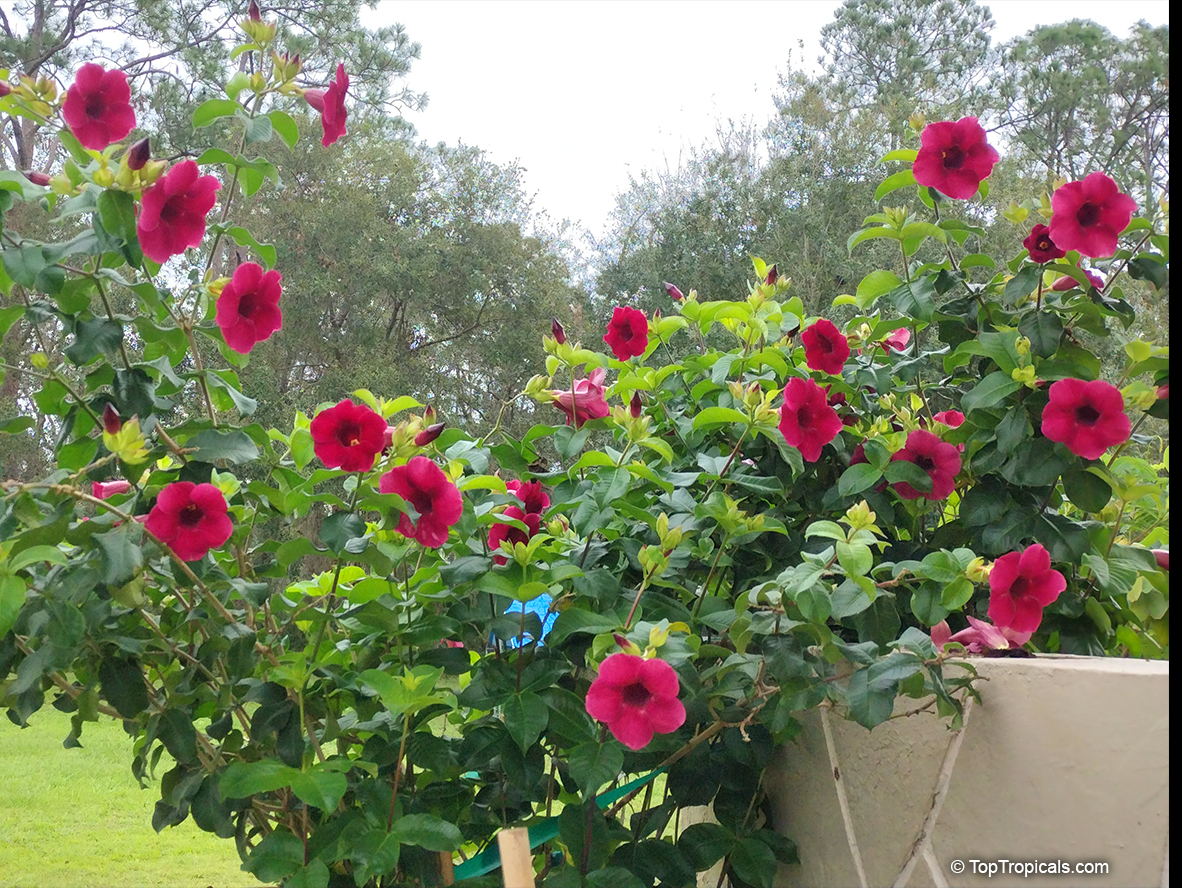
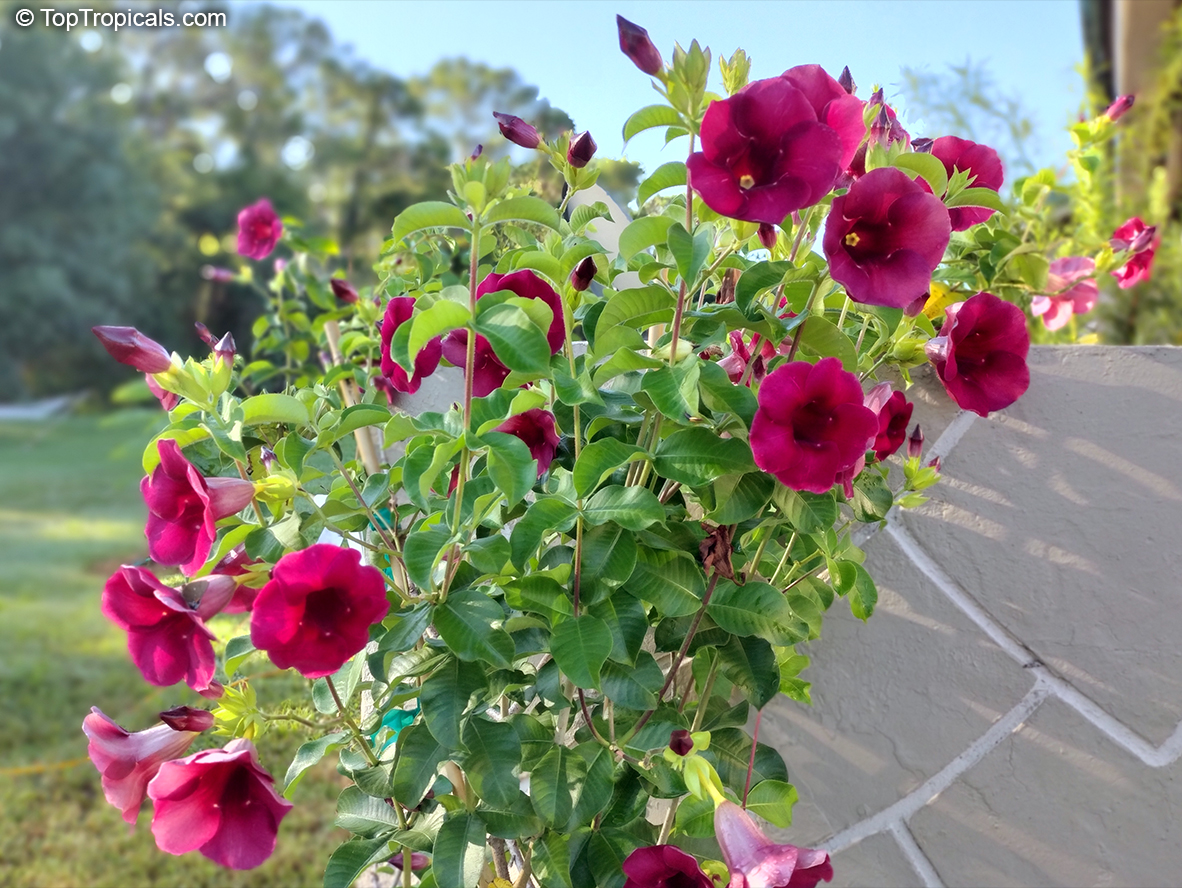
Botanical names: Allamanda blanchetii, Allamanda violacea
Common names: Cherry Allamanda, Purple Allamanda
Family: Apocynaceae
Origin: Brazil
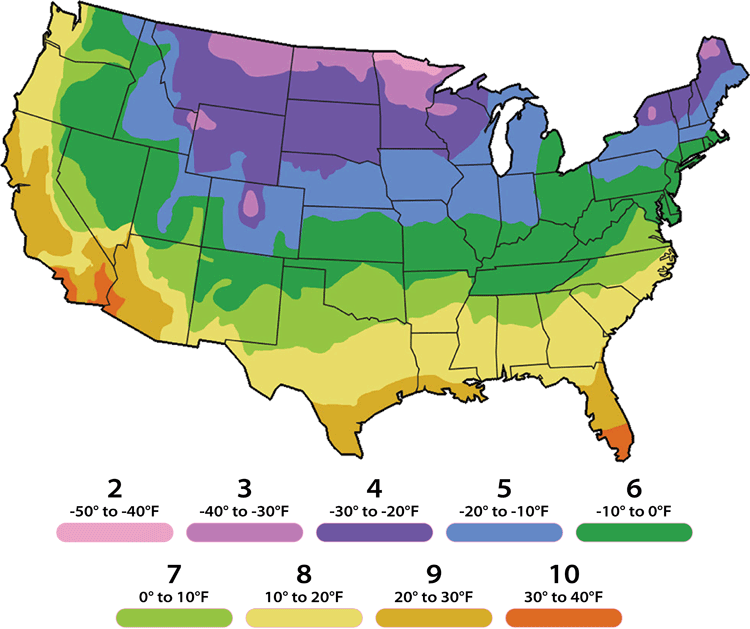
USDA Zone: 9a-11


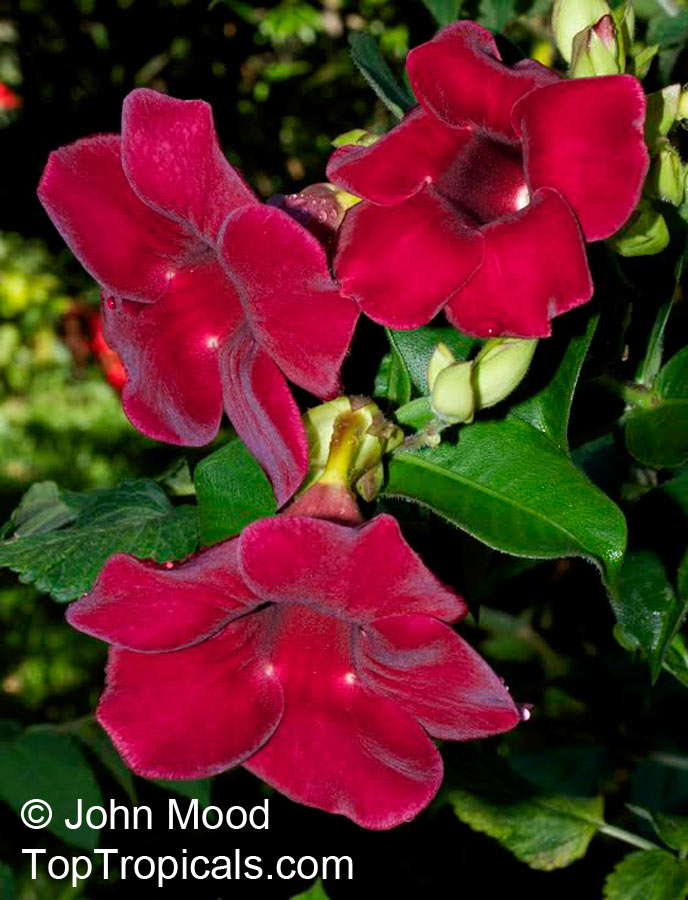
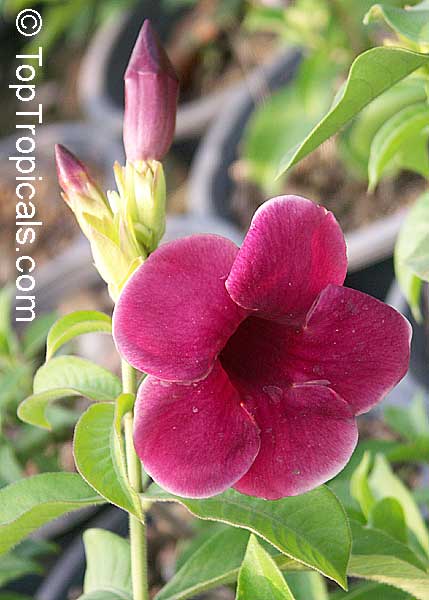
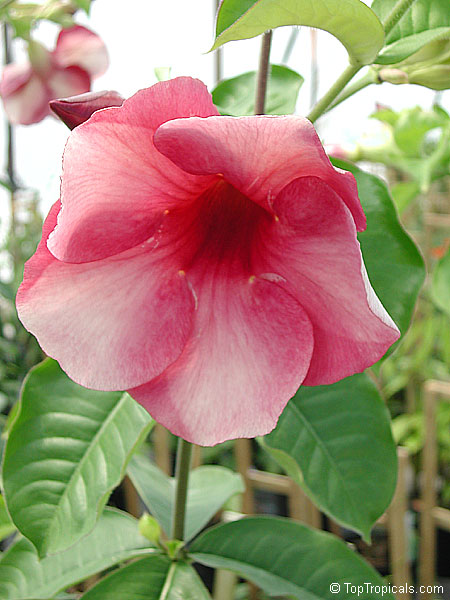
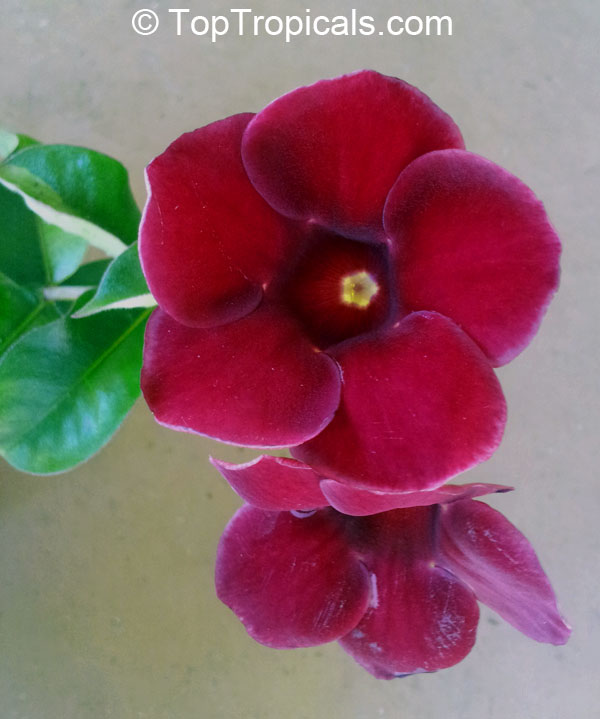
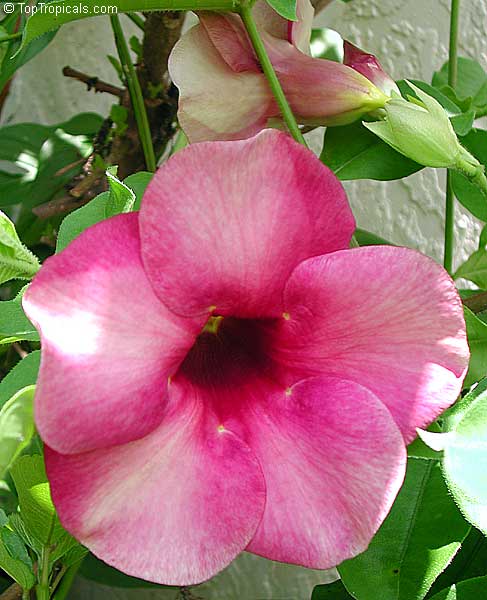
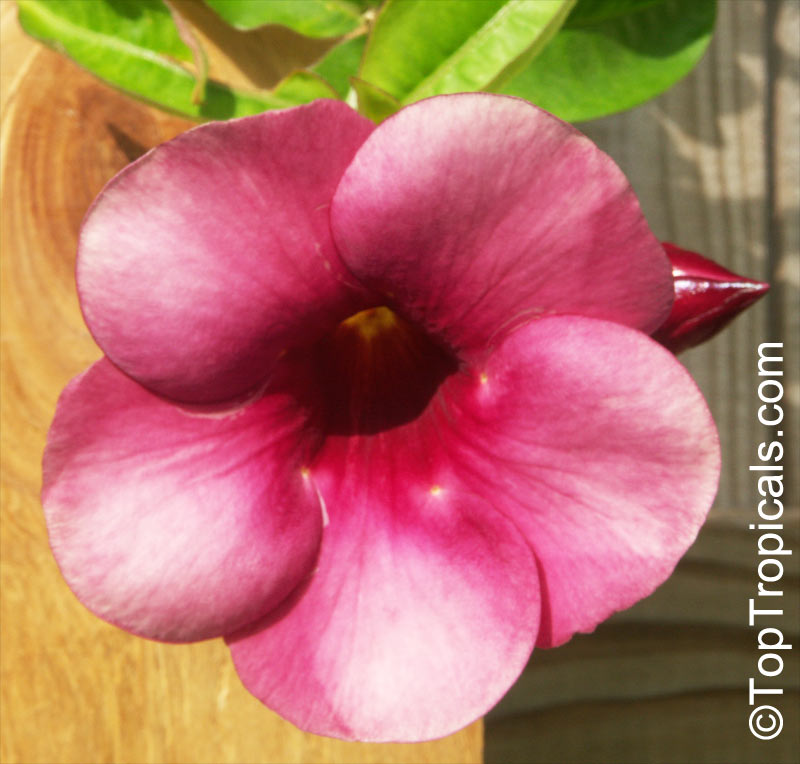
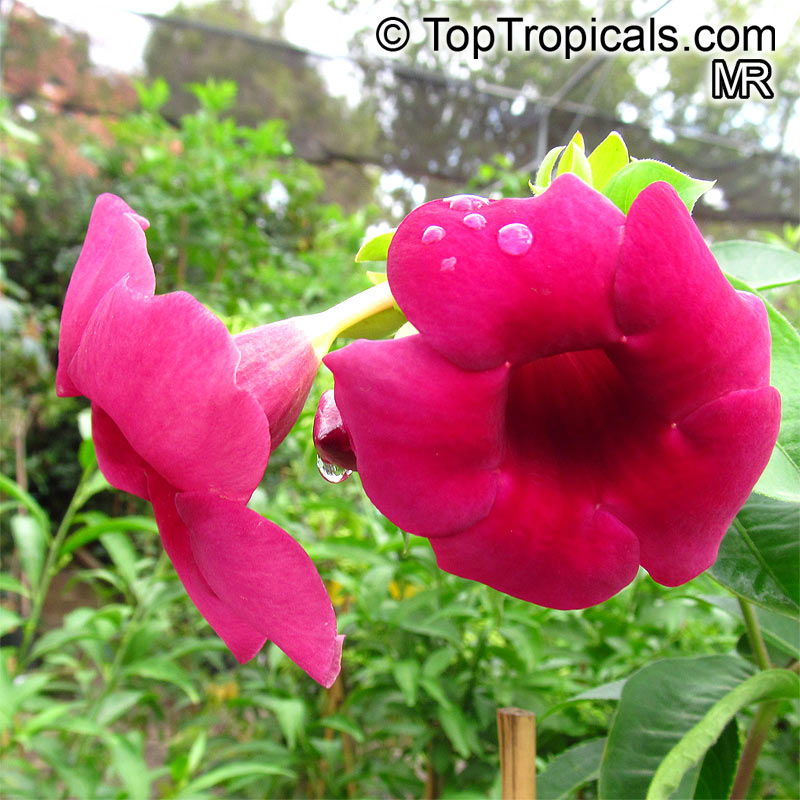
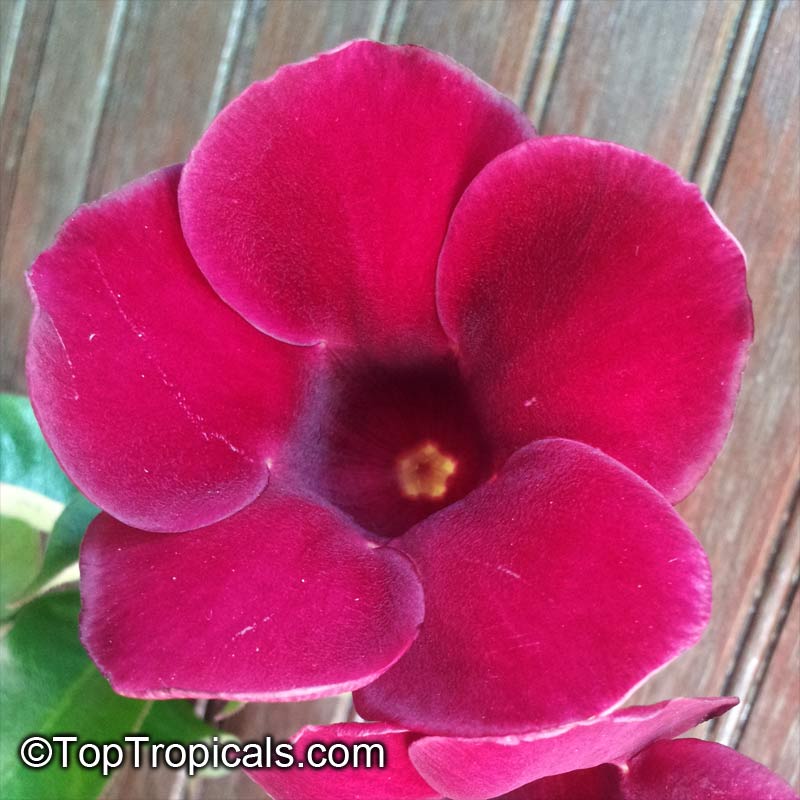
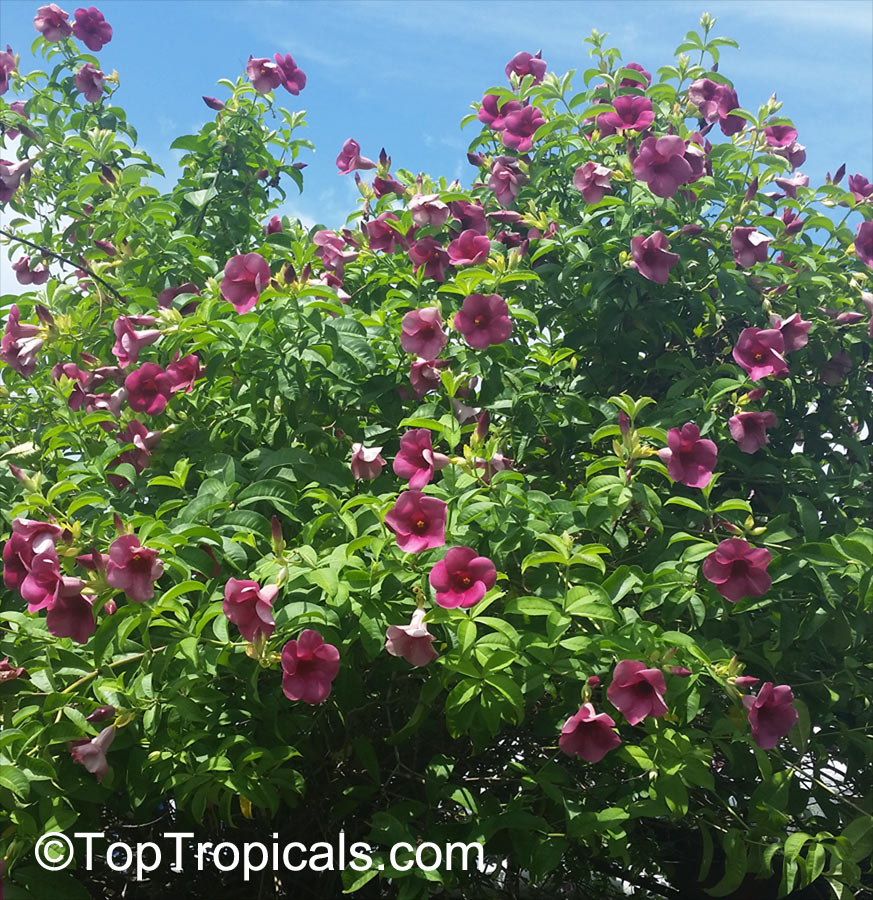
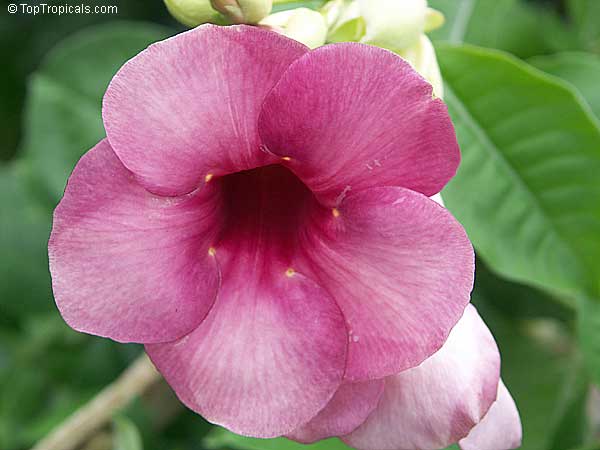
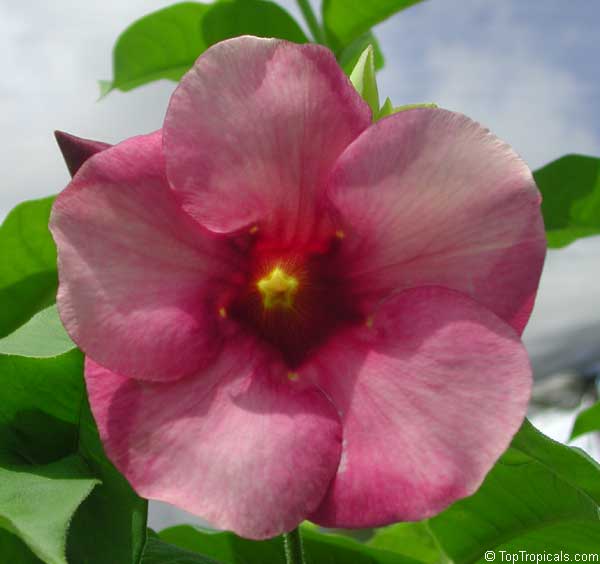
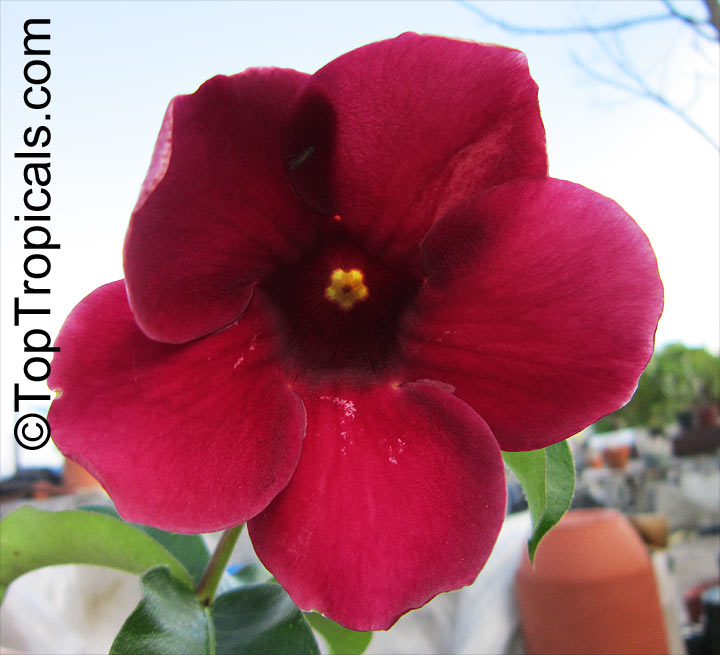
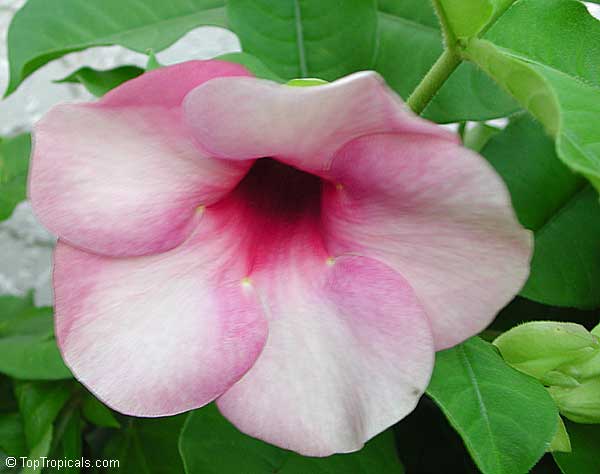
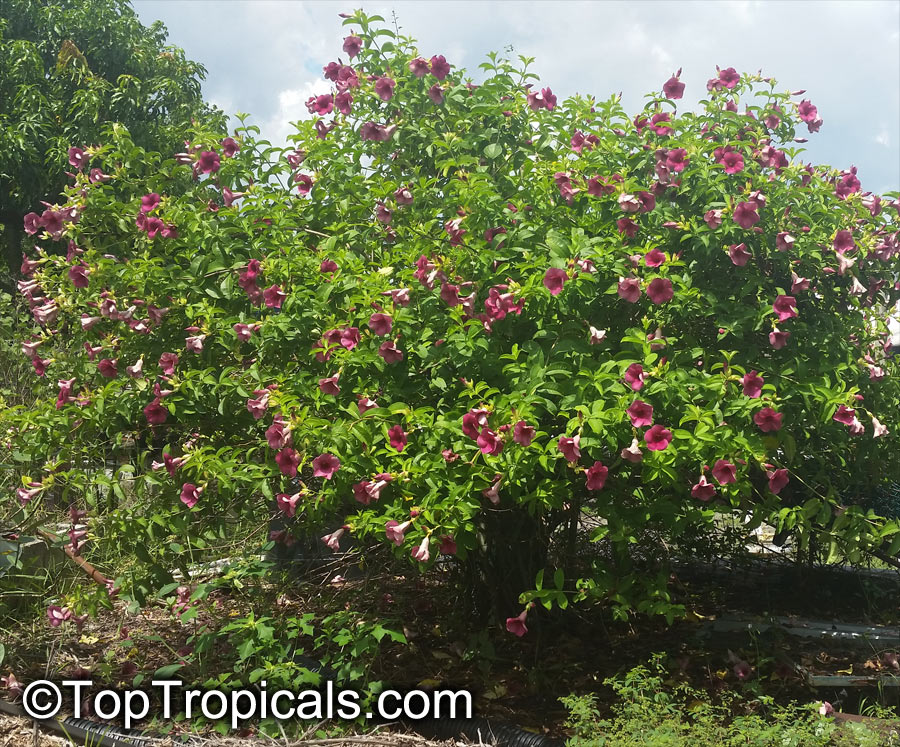
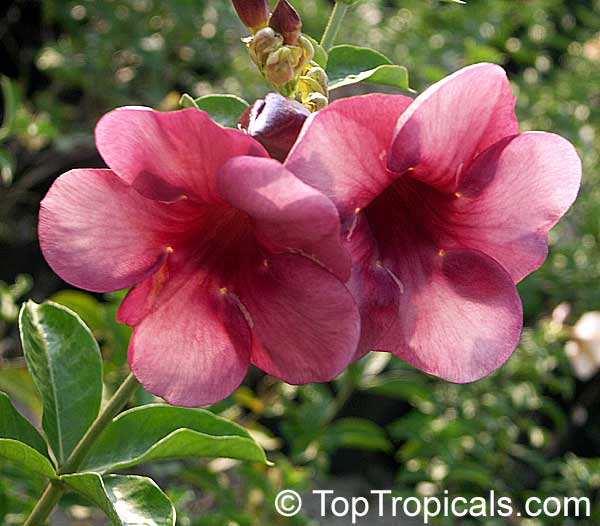
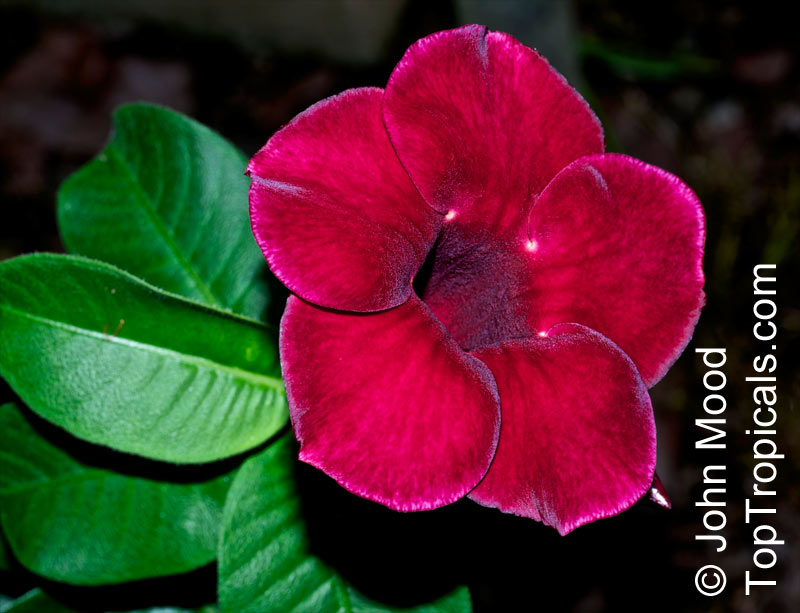
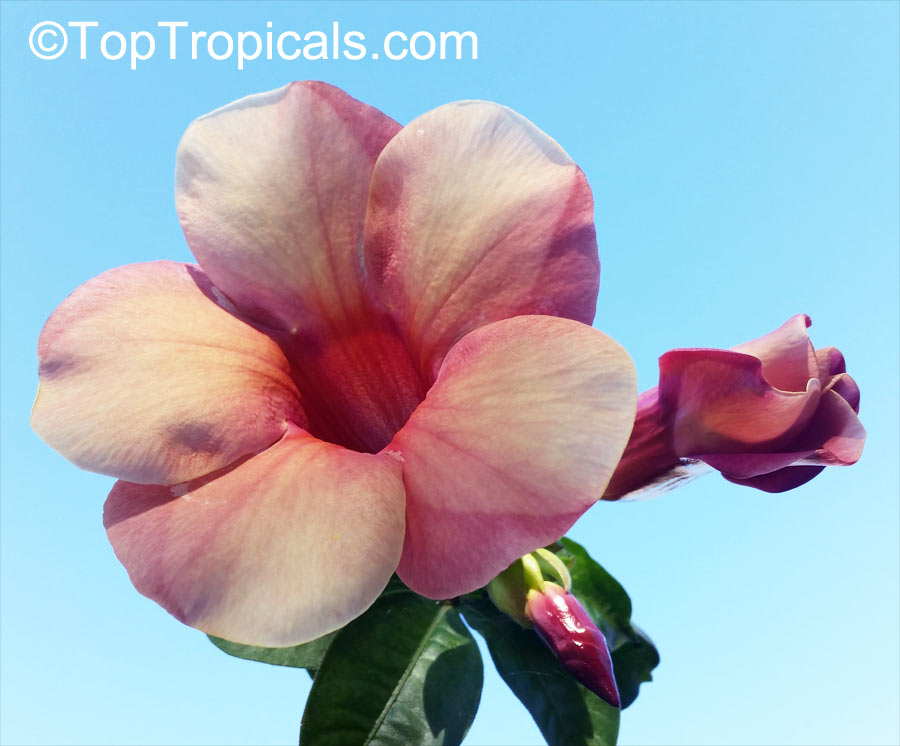
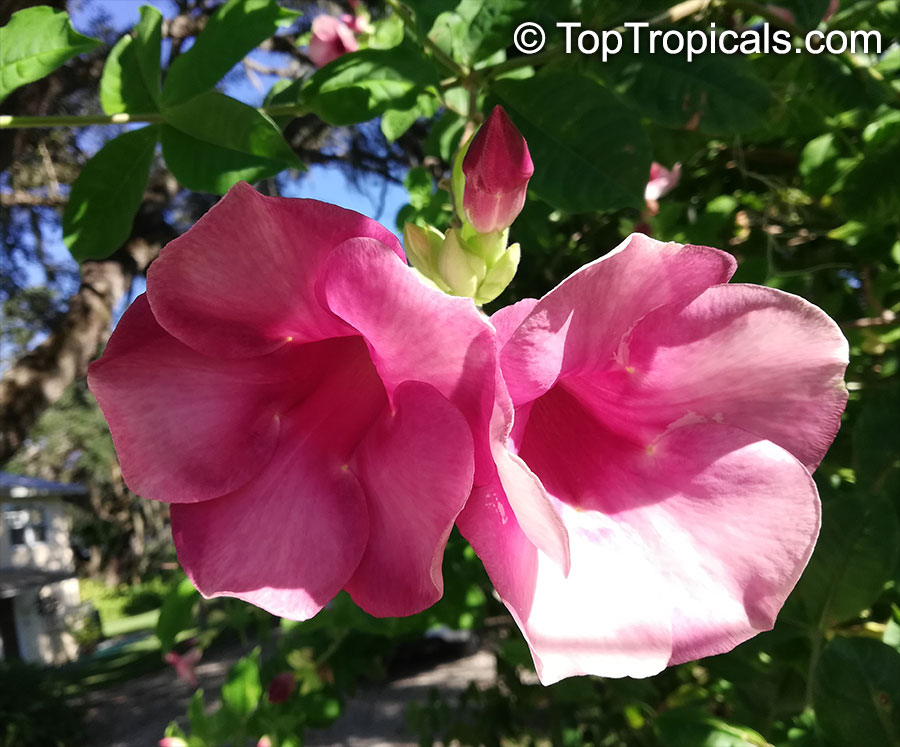
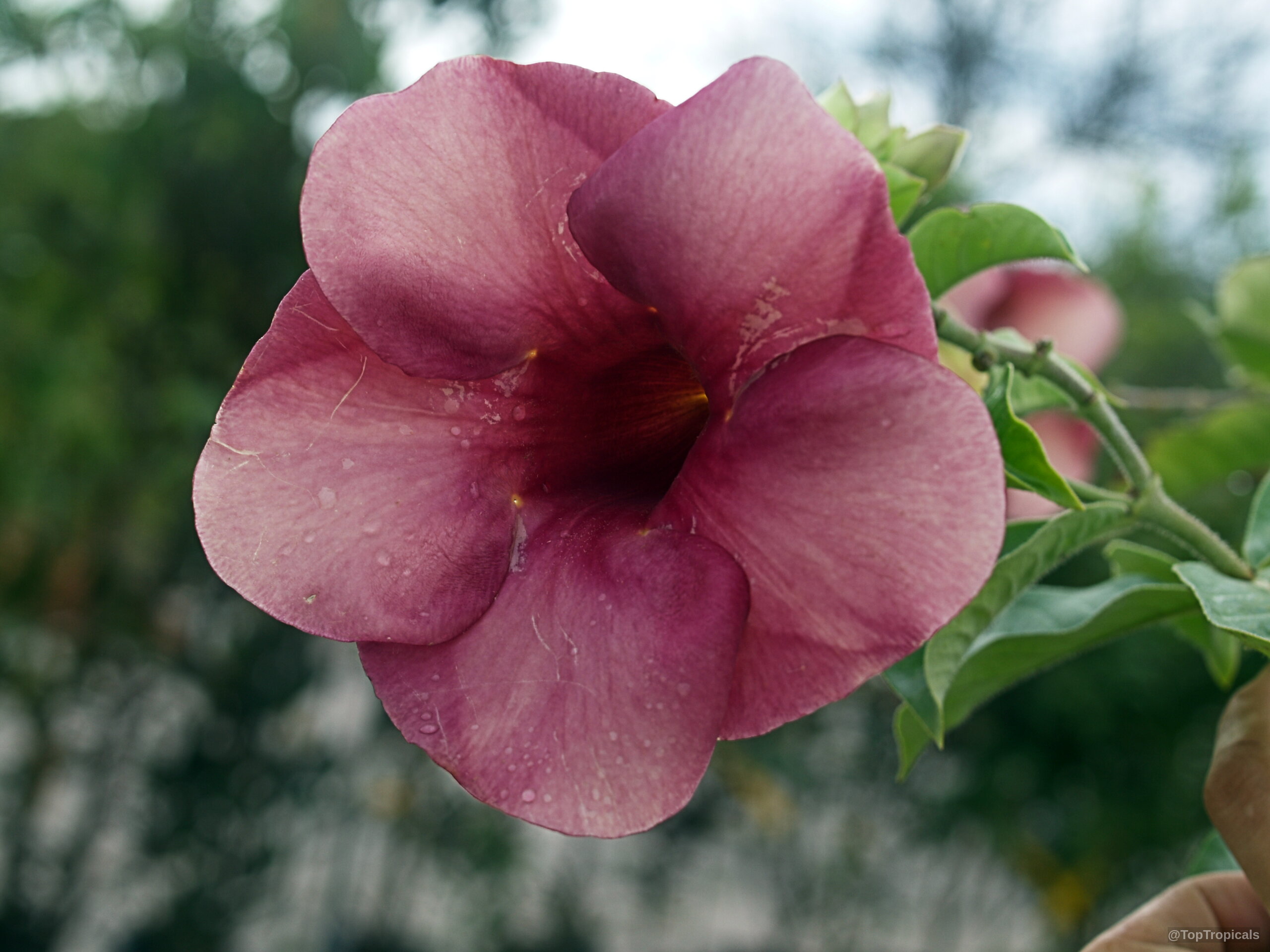
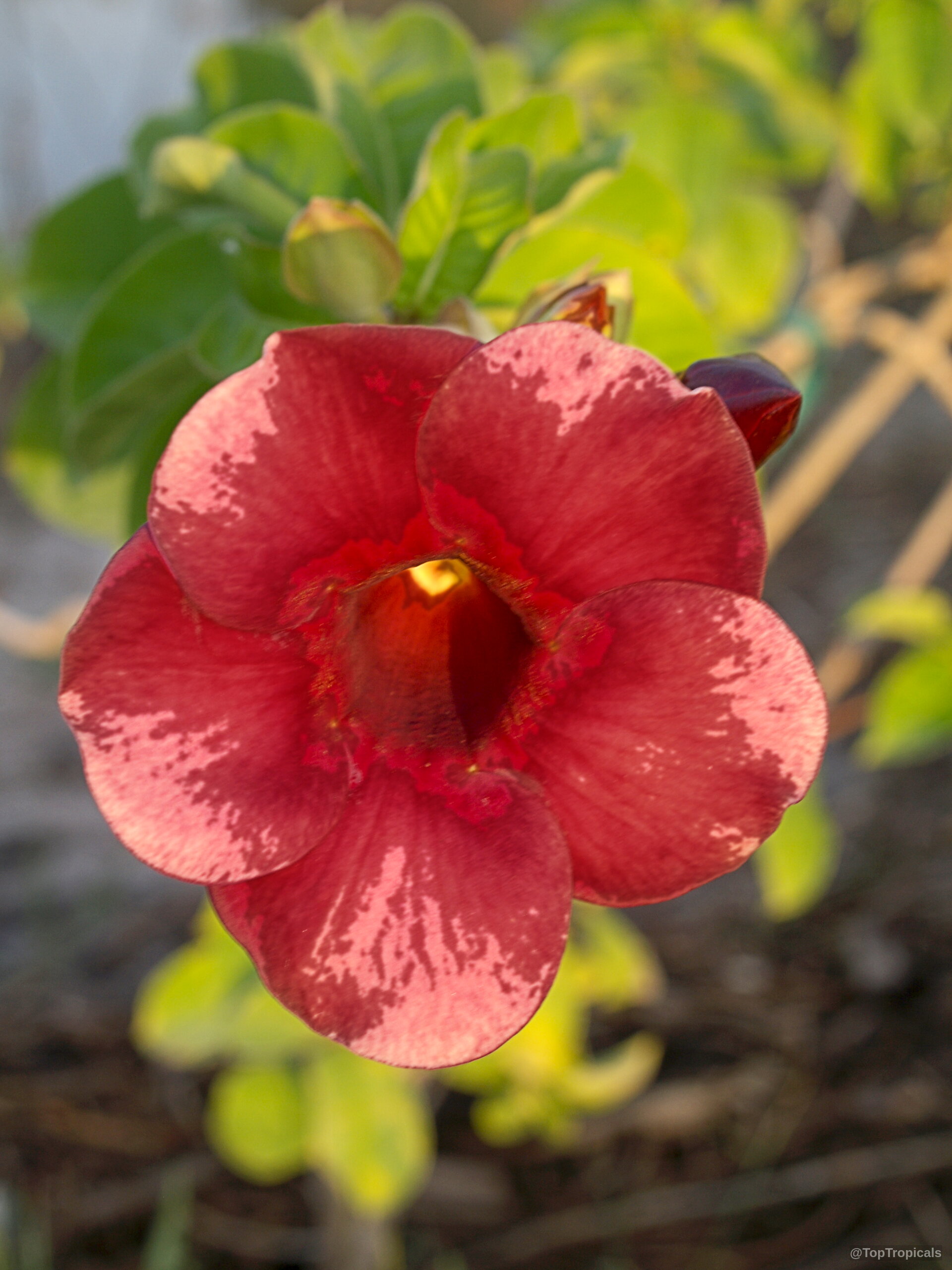
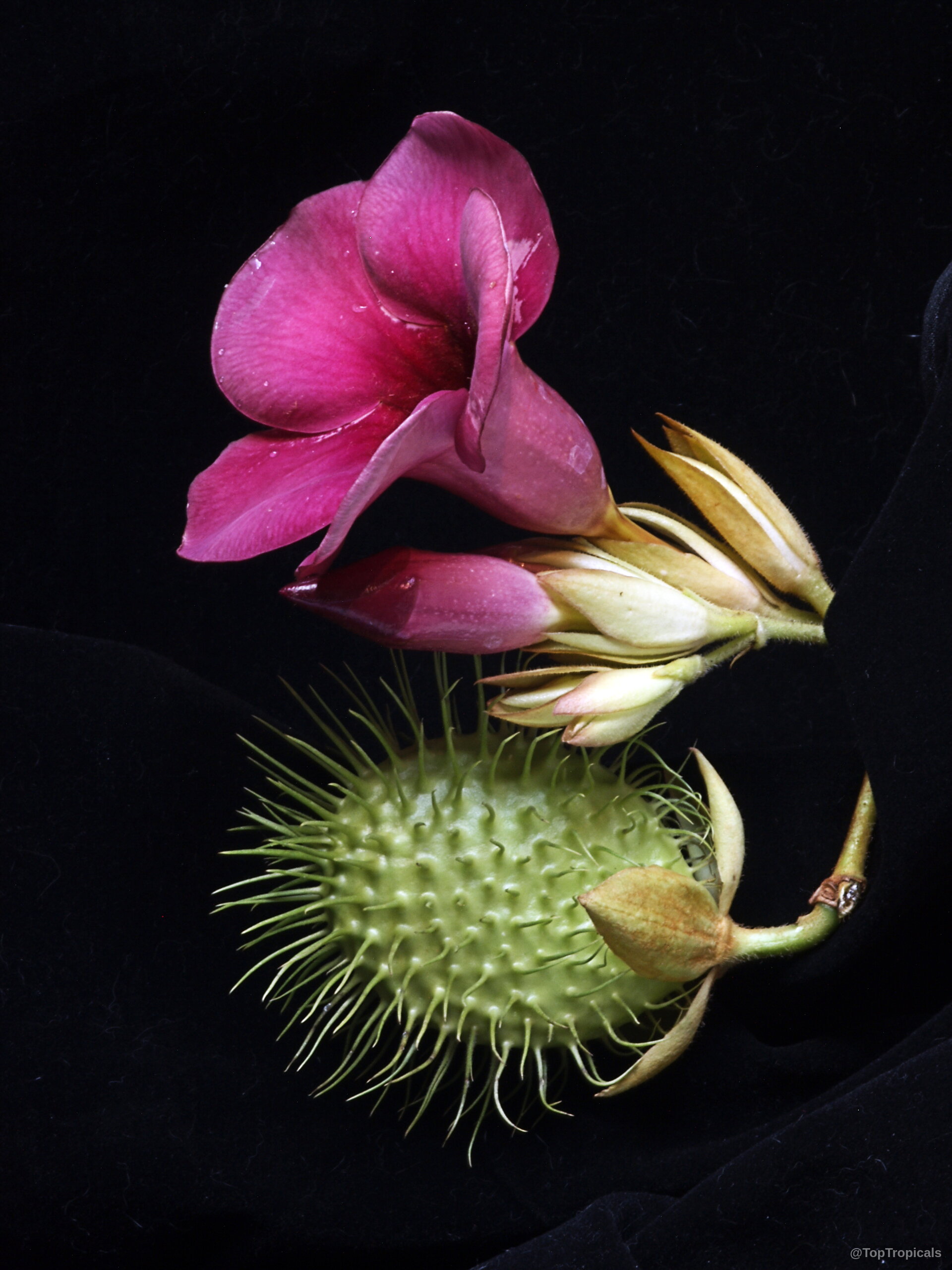
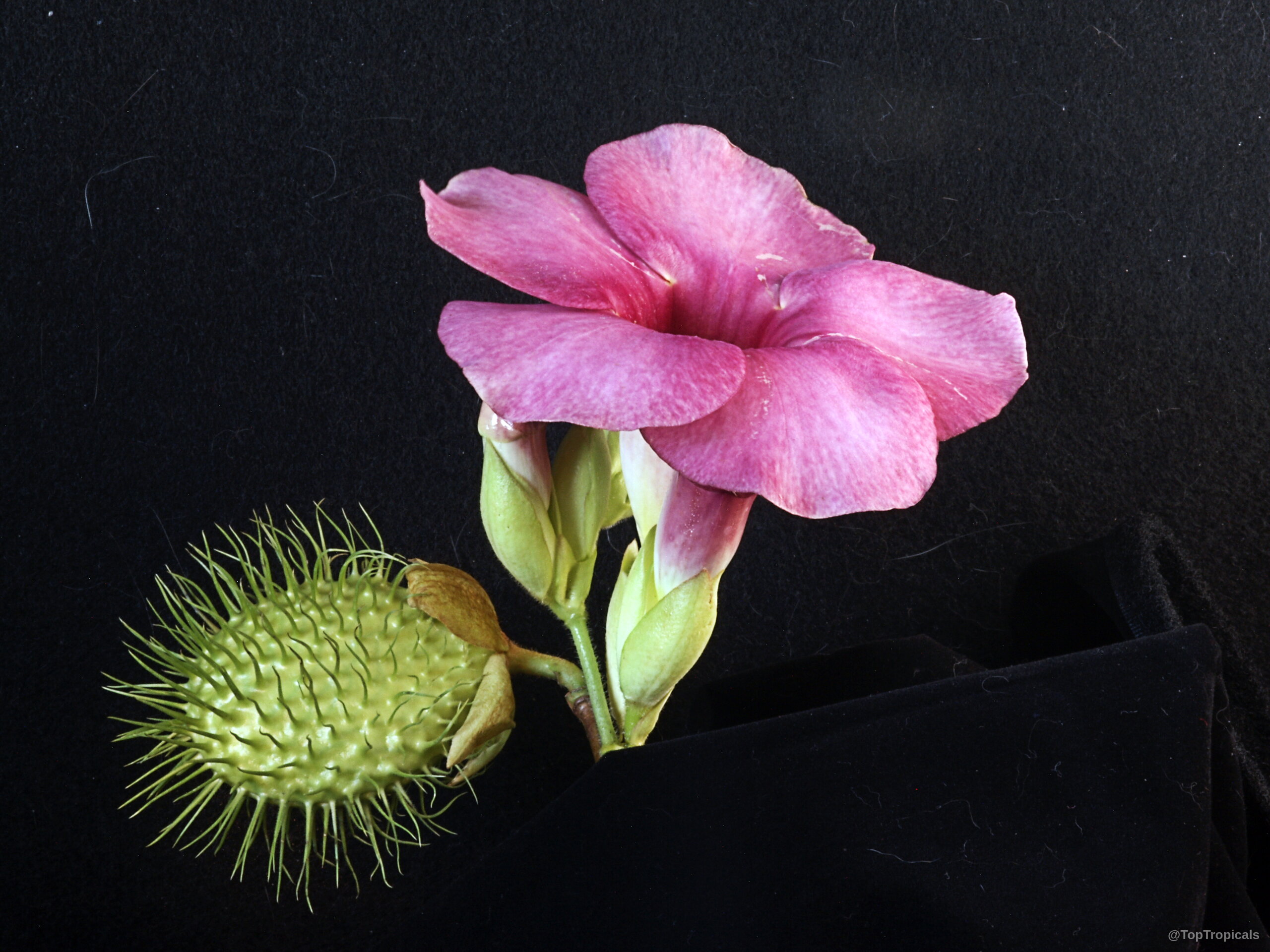
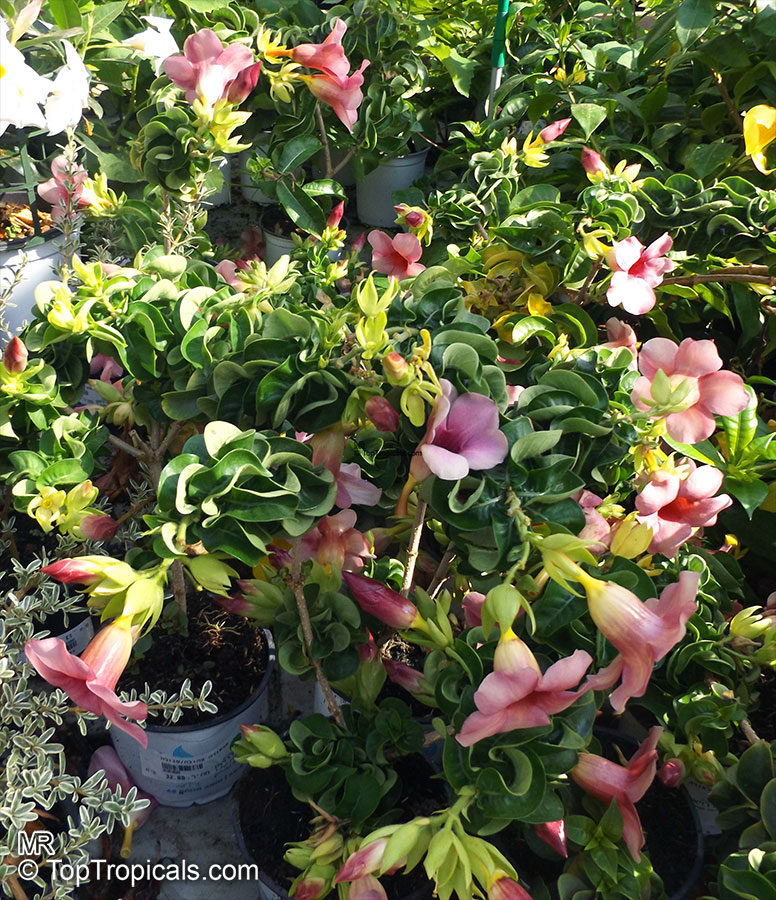
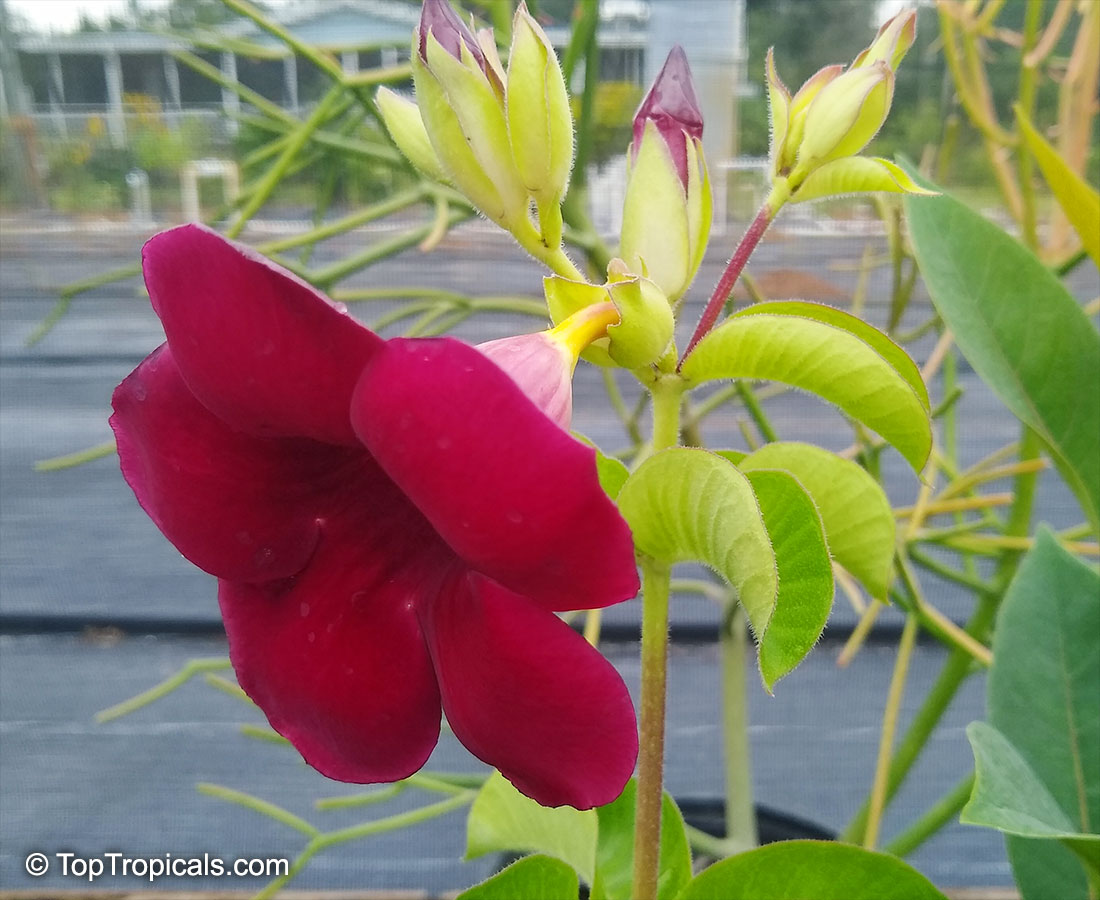
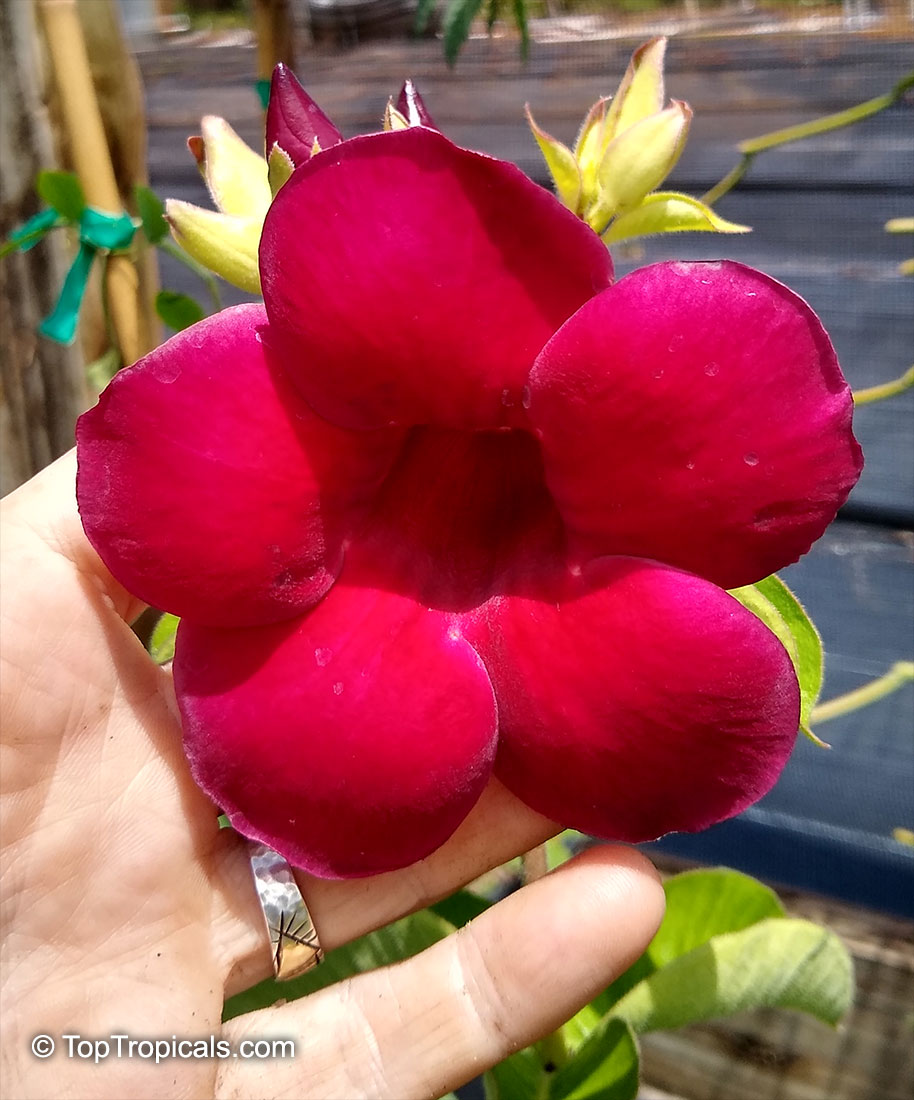
This evergreen tropical vine blooms during summer and fall: glossy point burgundy-brown buds open into flowers with 5 partially overlapped petals of an unusual tint of pink - cherry ice cream. Their narrow, funnel-shaped basements are a bit darker. In cool weather the petals change it's color for more saturate. The flowers are followed by thorny ovoid seed-capsules. Long, bright green, fuzzy leaves with slightly wavy edges are gathered in whisks on weak creeping stalks. During a season allamanda grows up for 2" to 9", highest possible height is 9-18ft. Using regular prune you can have a shrub or a twister. The plant has neither thorns nor tendrils it demands support to keep it's shape. It twists around in a certain specific direction. Do not try to change the direction - it may cause damage to the vine! As flowers are usually generated on young sprouts, late or too short prune may result in poor blossoming. The best time for pruning is November. Allamanda grows well in full sun or in light shade and prefers soil with good drainage. It does not tolerate either drought or flooding. From November till February the plant should have a time for repose - the optimal temperature is about 65F and watering must be less then usual (but the soil still should be always gently moist). In case of temperature drop below 59f for a long time the vine weakens and may die. Allamanda suffers from droughts to a more or lesser extent. Allamanda can be propagated by cuttings, air-layers, and seeds. Seeds come up in 3 - 6 weeks. They should be kept in a light, warm place, in moist but not wet soil. It grows well when was grafted on yellow allamanda. If grown indoors should be watered regularly with warm water. All the parts of the plant are toxic if it is swallowed. Latex can be irritating for skin. Can be cultivated as annual.

Recommended Fertilizer: SUNSHINE Megaflor - Bloom Nutrition Booster
Recommended Fertilizer: SUNSHINE Megaflor - Bloom Nutrition Booster
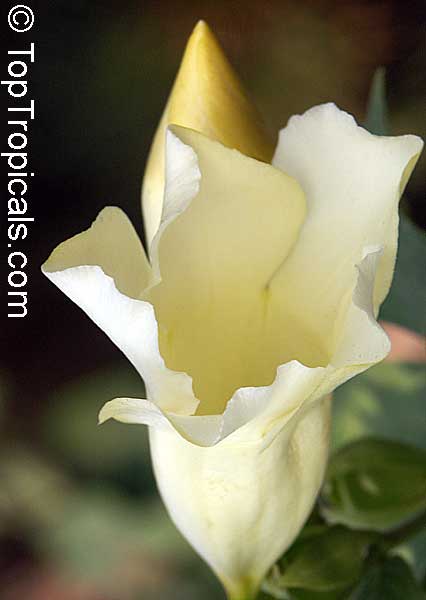
Botanical name: Allamanda sp.
Common name: Allamanda Blanca
Cultivar: Alba
Family: Apocynaceae
Origin: Thailand
USDA Zone: 9-10


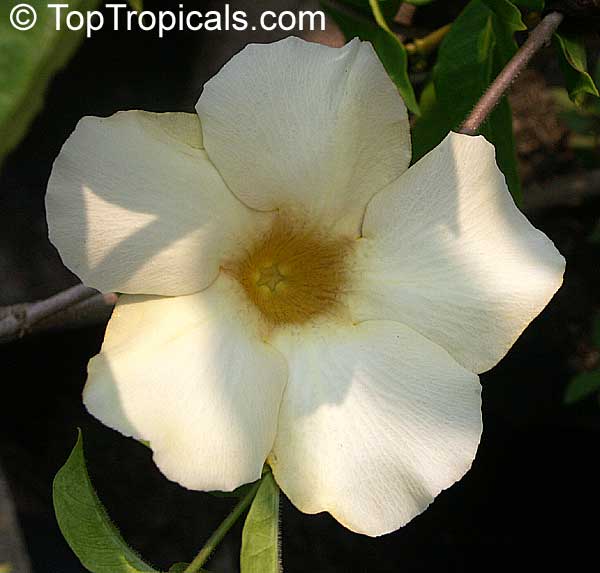
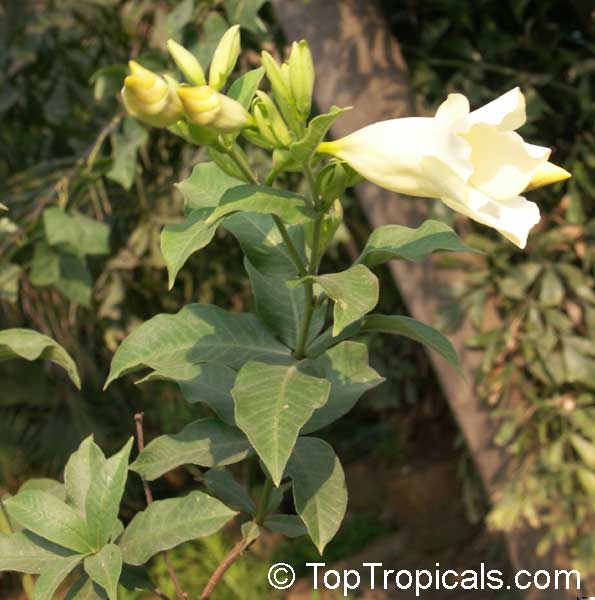
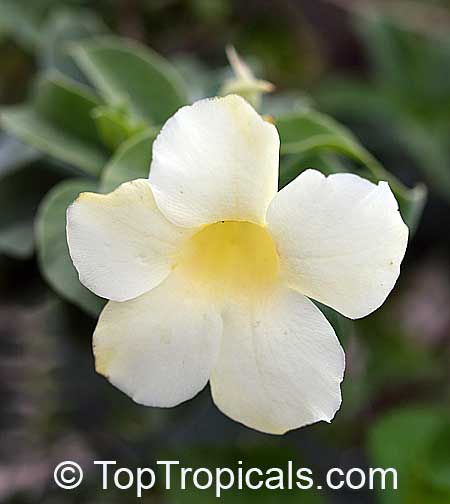
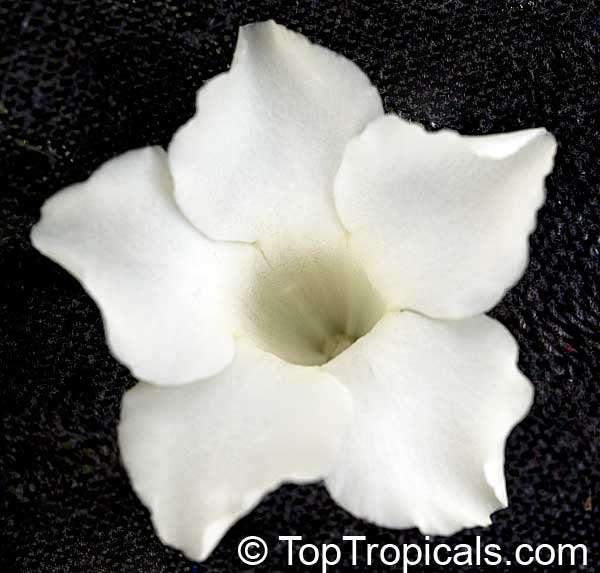
Allamanda sp. Alba (Allamanda Blanca) is a beautiful and large shrub, measuring 5-10 ft tall, and is native to Thailand. Although usually seen as a vine or creeper, it can also be grown in a pot, hence making it suitable even in colder regions. It needs full sun and regular water, but not too much. It produces gorgeous, white, off-white flowers which have an almost too sweet, but pleasant odor. The downside? These flowers are also a bit irritating, so it's best to enjoy their sight from a safe distance.
These flowers attract butterflies, moths, and hummingbirds and thus have become a favored nectar source for them. It is hardy in USDA zones 9-11 but should not be exposed to below 20 Fahrenheit. It's also easy to manage, as it requires regular pruning to keep in shape and create a shapely look. Allamanda sp. Alba (Allamanda Blanca) is a great addition to any garden. Its attractive flowers and low maintenance means any gardener is sure to enjoy this plant!
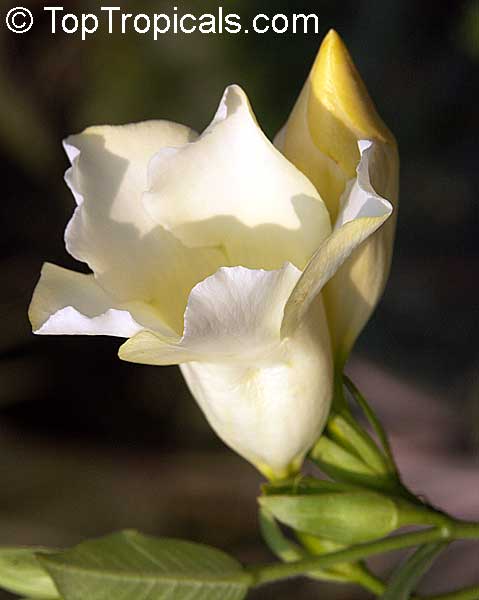
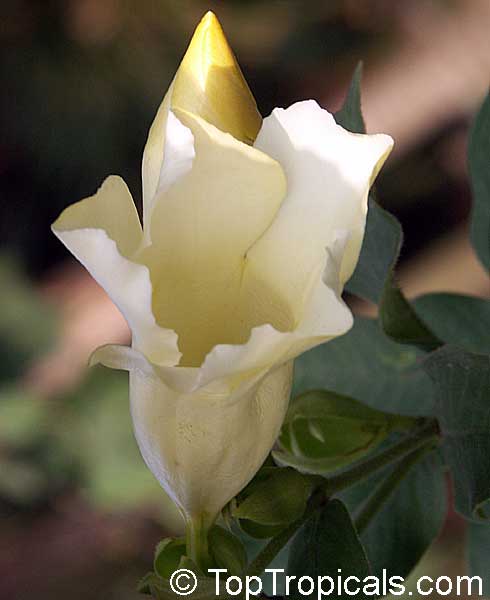
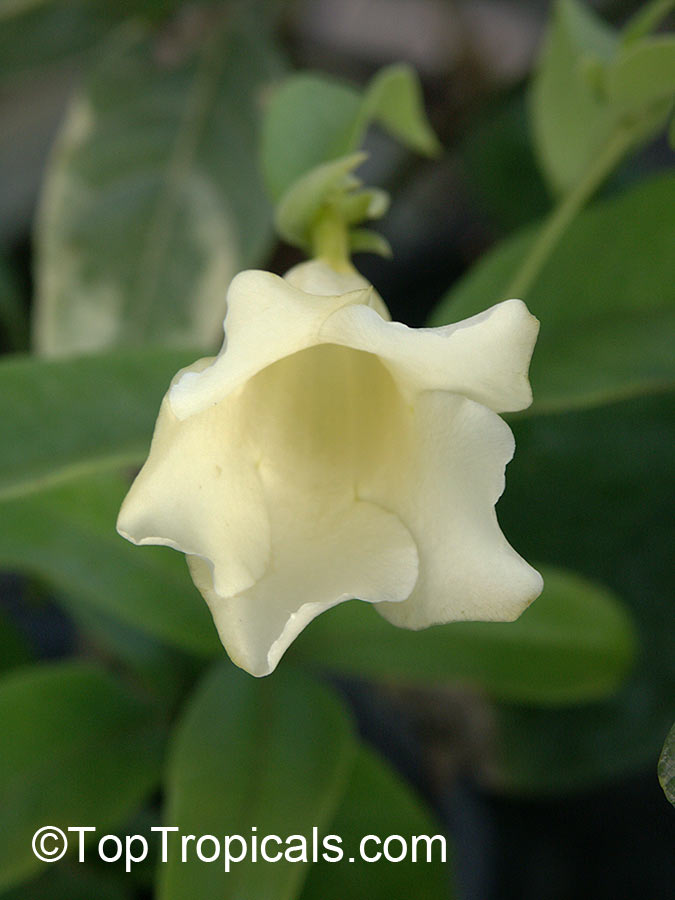


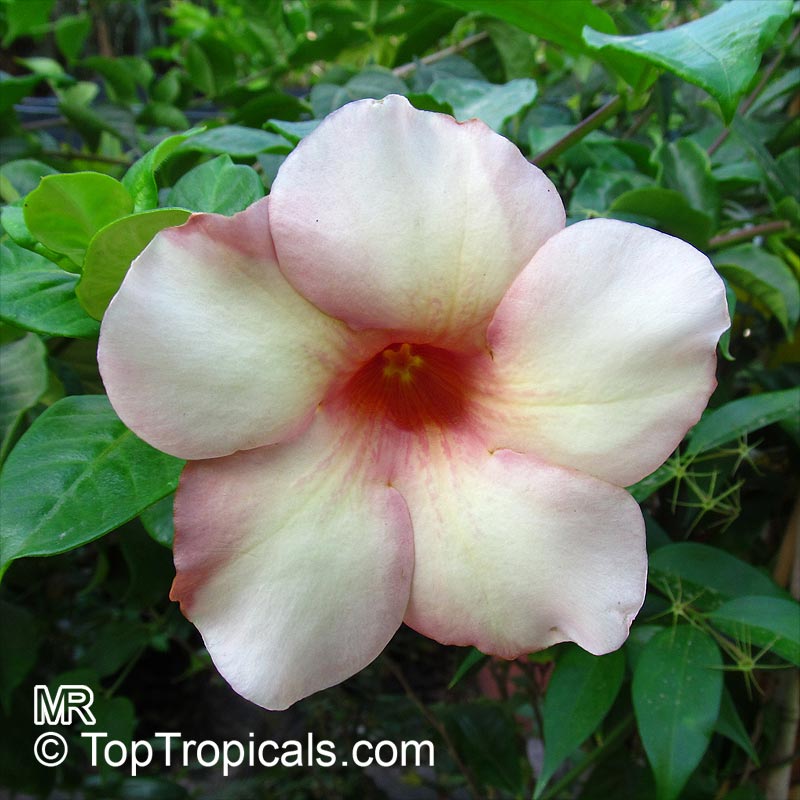
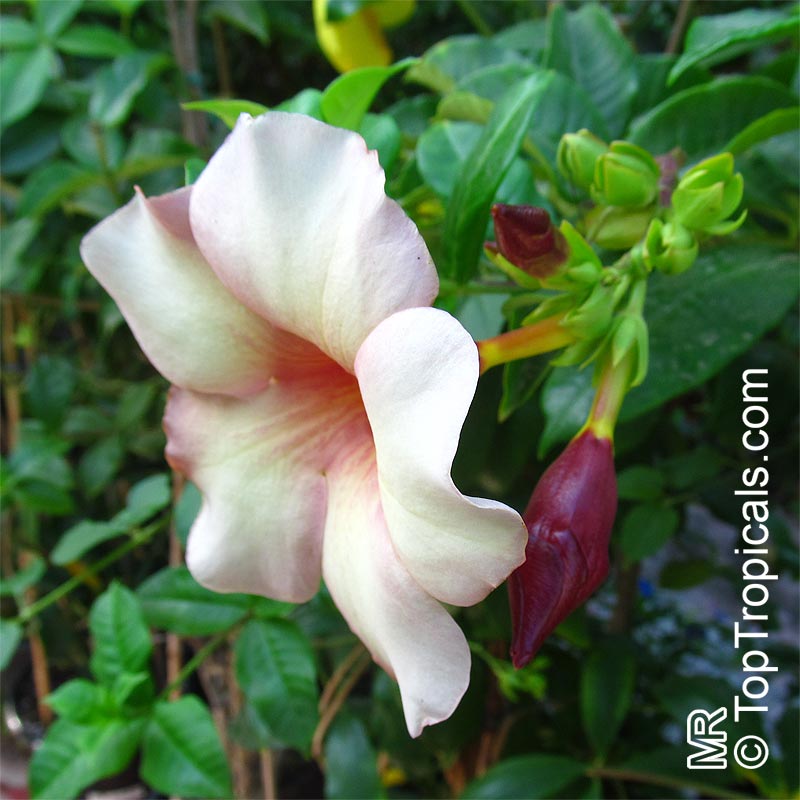
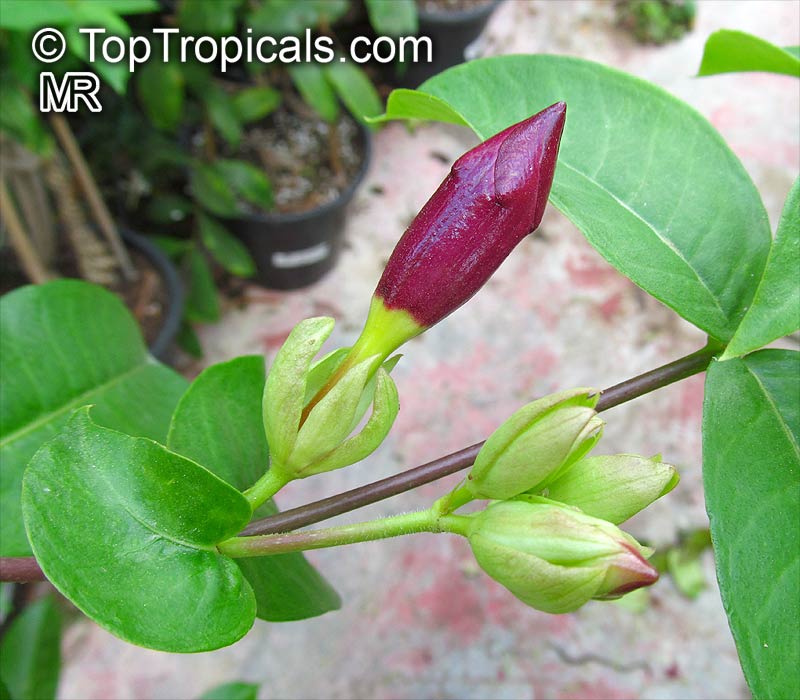
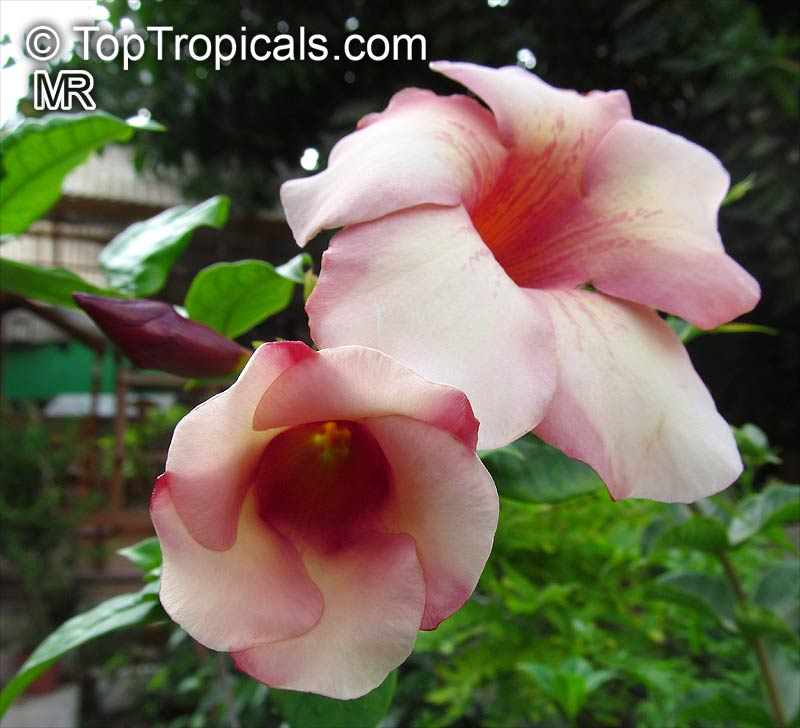
Botanical name: Allamanda violacea
Common name: Allamanda
Family: Apocynaceae
Origin: Tropical America
USDA Zone: 9b-11


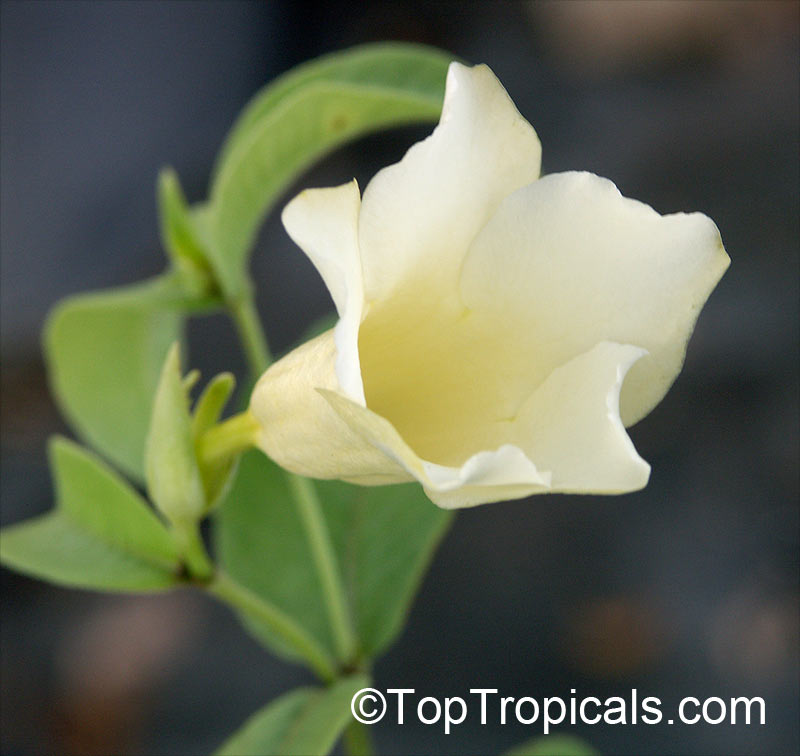
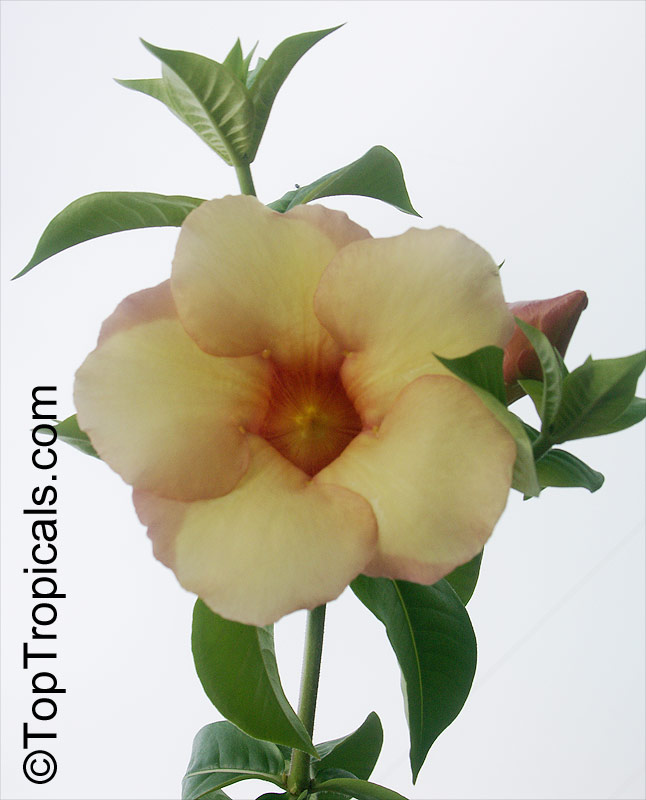
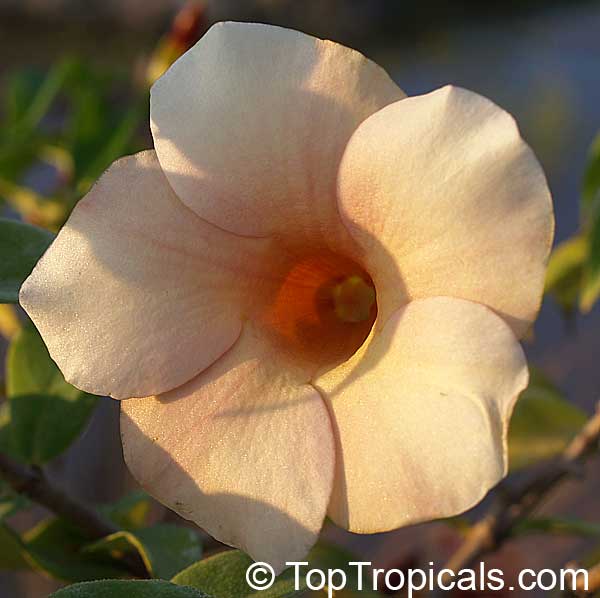
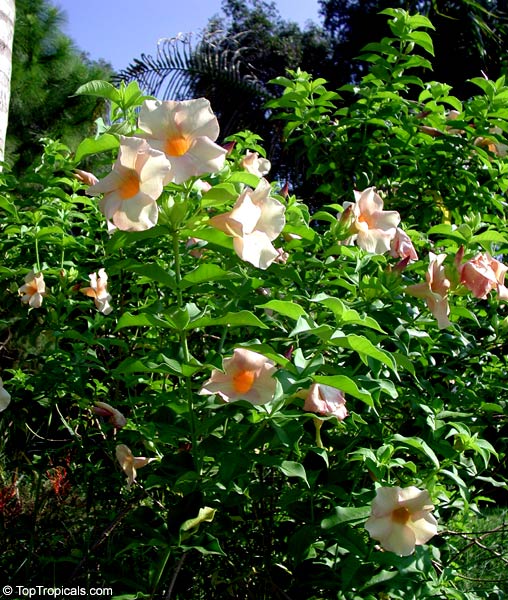
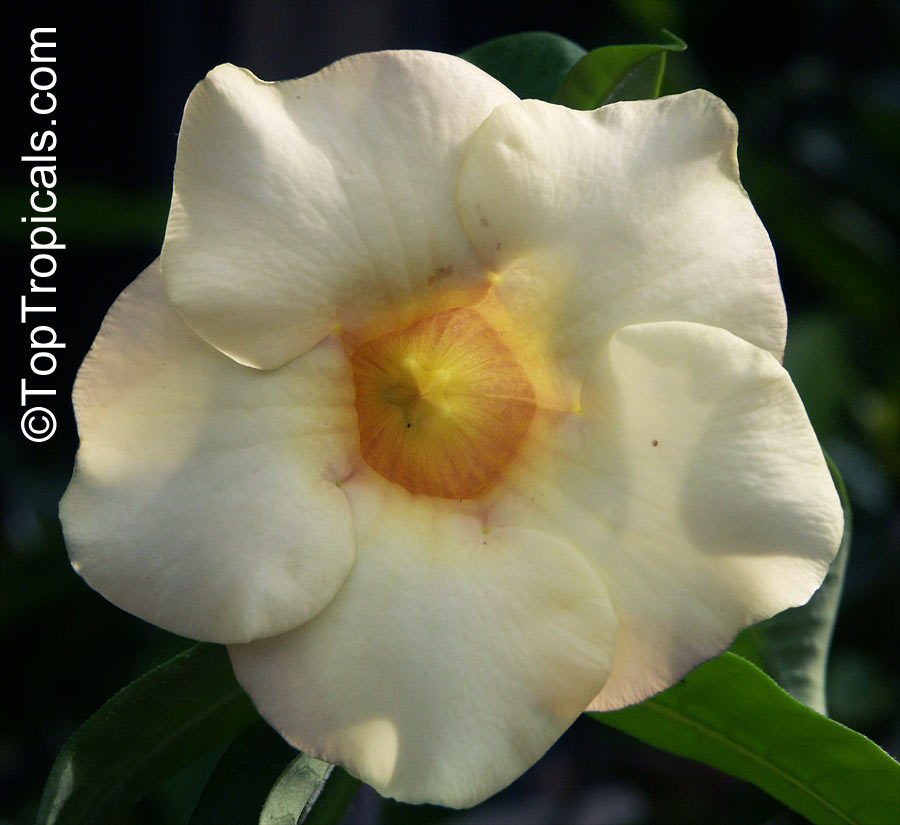
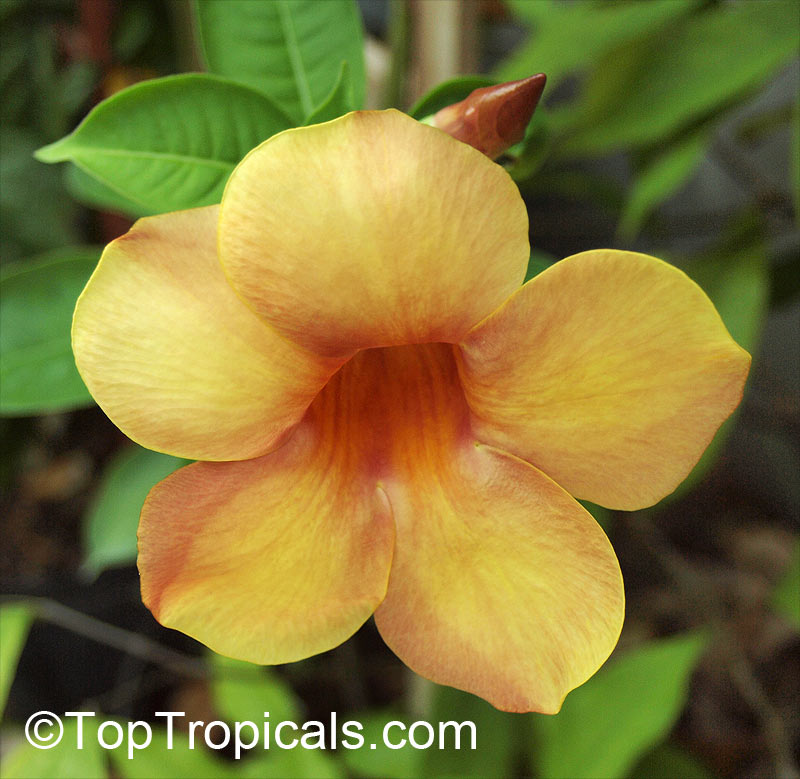
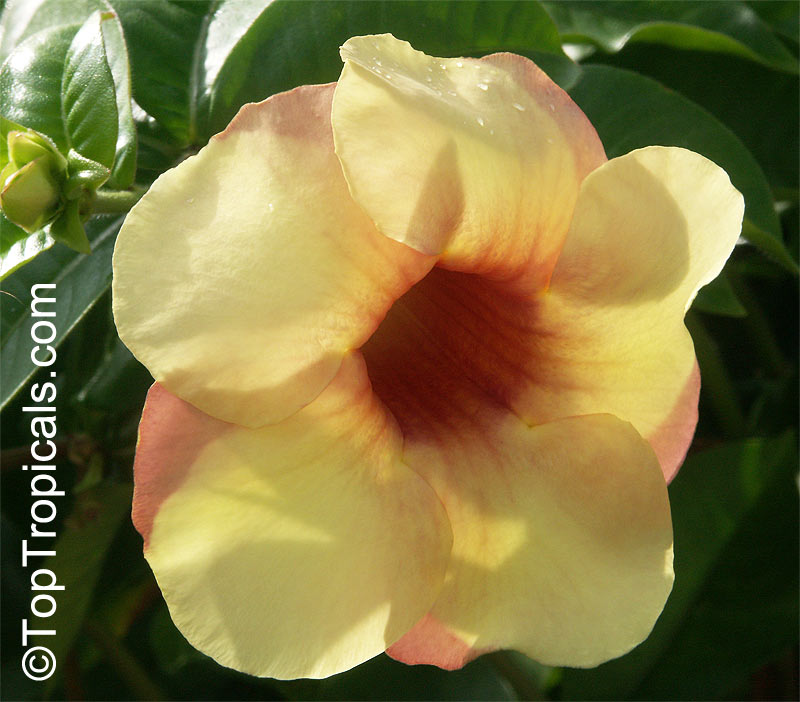
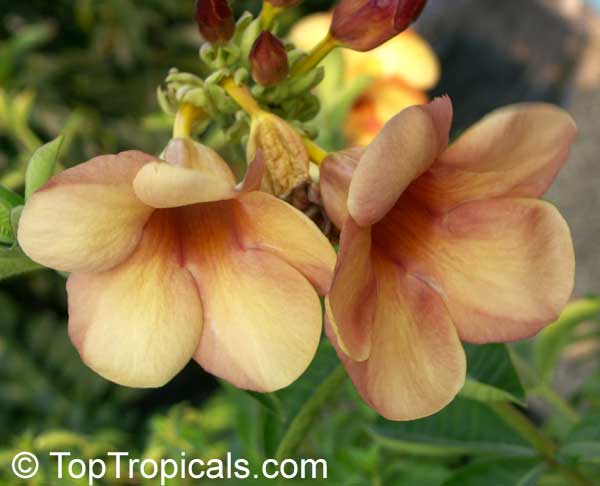
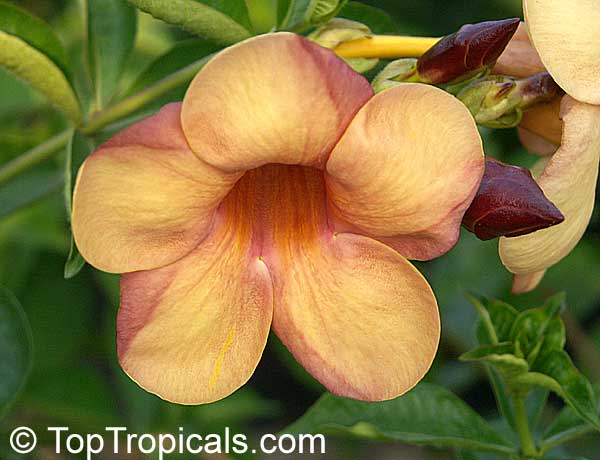
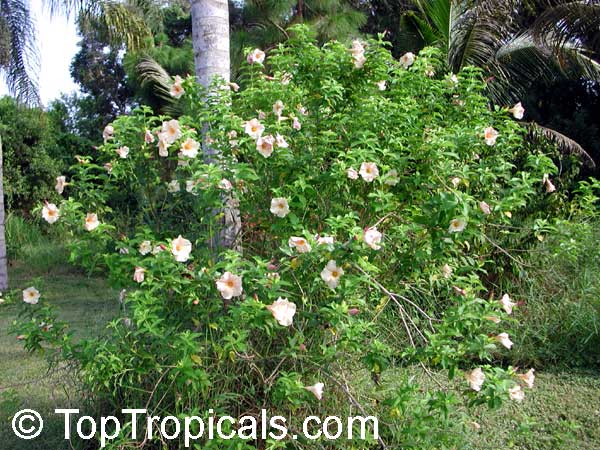
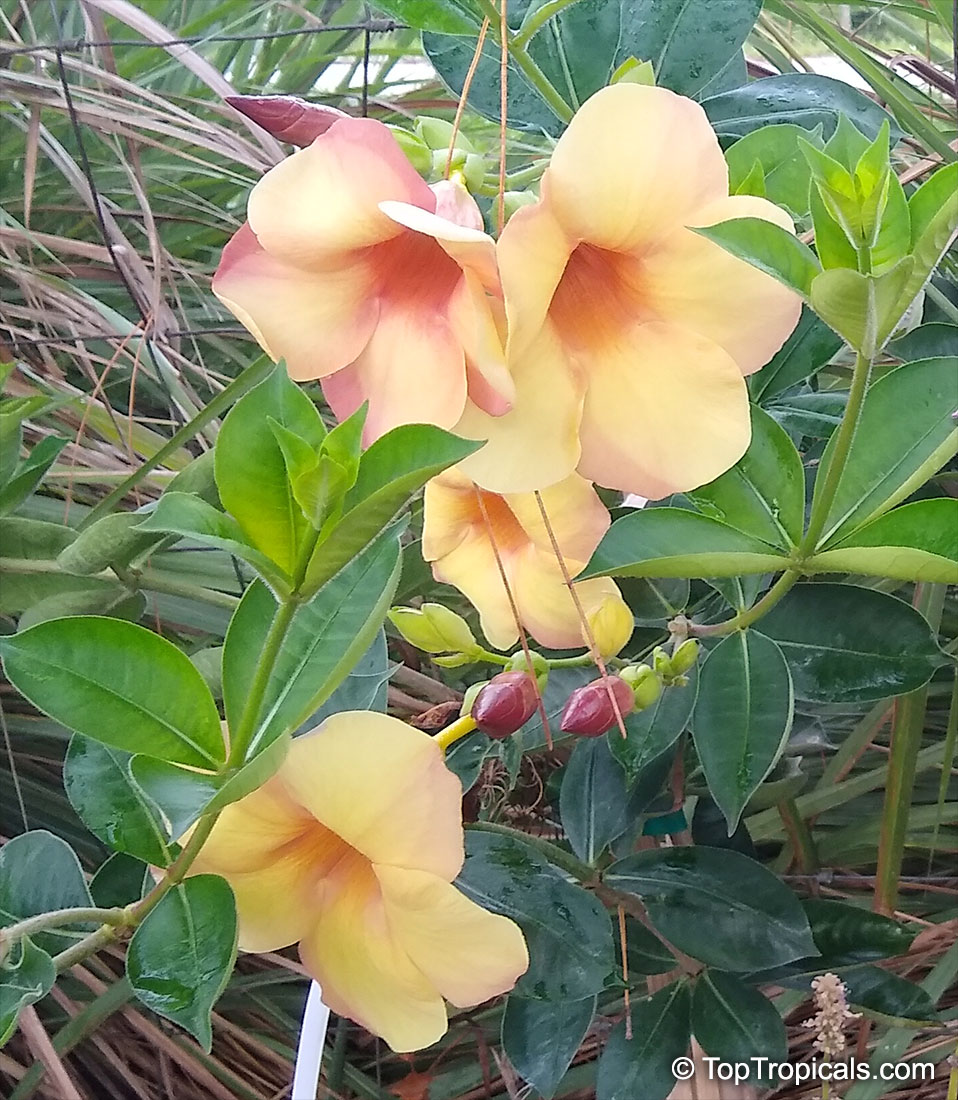
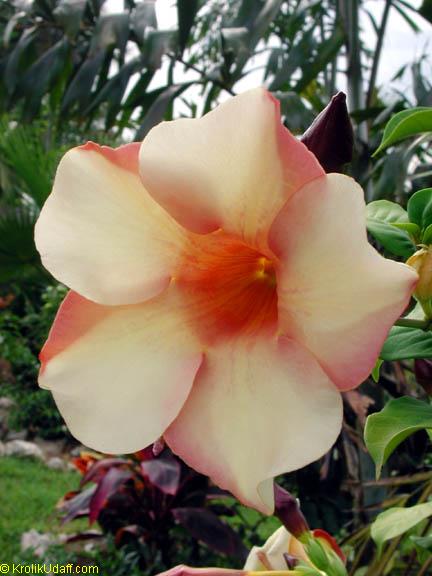
A beautiful variety with delicate light cream flowers. An eye-stopper! A tropical deeply twining vine with whorled leaves and large, trumpet shaped flowers. Prickly seed pods follow the flowers with winged seeds that fly about when the pod dries and breaks open. Allamanda is perennial in tropical climates and may be treated as an annual or brought inside during cold weather and replanted after danger of frost. The plant has milky sap and is considered poisonous; all parts are highly cathartic (hence the botanical name). Grows well in most soils, but becomes chlorotic in very alkaline conditions. Train up a trellis, tree, or side of a building where there is support. In areas where there is seasonal change, keep fairly dry during winter and prune in spring before growth begins. It may be desirable to prune annually in any case to control for size.


Recommended Fertilizer: SUNSHINE Megaflor - Bloom Nutrition Booster
Recommended Fertilizer: SUNSHINE Megaflor - Bloom Nutrition Booster
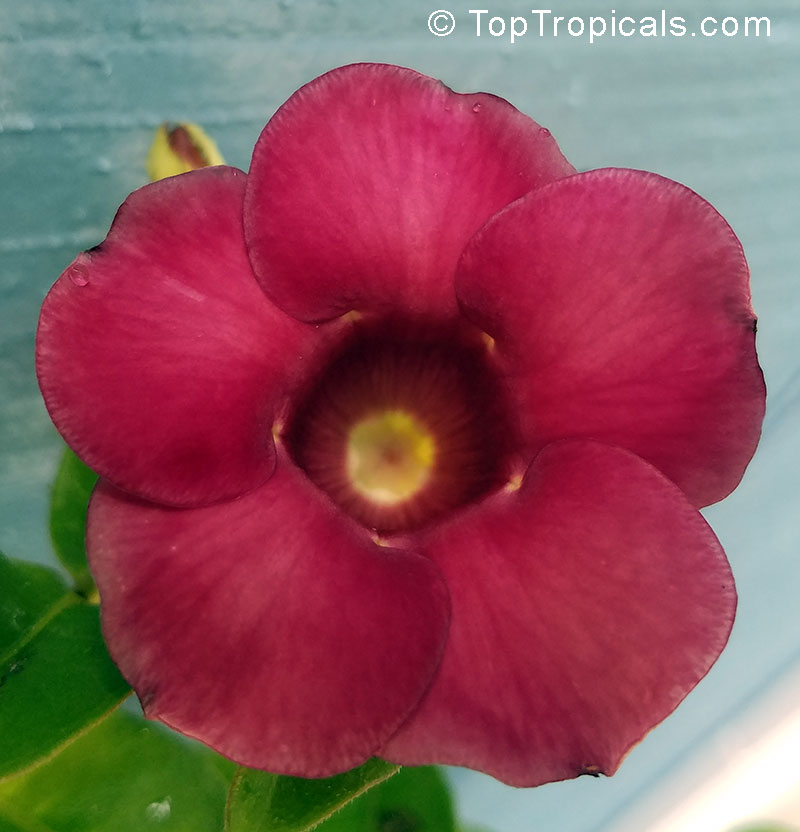
Botanical name: Allamanda x violacea Cabernet
Common names: Mini Red Allamanda, Cabernet Allamanda
Cultivar: Cabernet
Family: Apocynaceae
Origin: Brazil
USDA Zone: 9-11


Allamanda x violacea Cabernet, also known as Mini Red Allamanda, is a native to Brazil. It is a small shrub reaching 2-5 ft in height. This beautiful plant does well in full sun and needs regular watering for best growth. It produces pink flowers with hints of red and crimson that add a vinous hue to its attractive blooms. This stunning plant is known to attract butterflies and hummingbirds, making it quite the center-piece of any garden.
This lovely shrub can be grown in USDA Zones 9-11 and is quite hardy in cold regions. It is an ideal candidate for growing in containers, as its small size allows it to thrive in small spaces. To properly care for it, use a well-draining potting mix and make sure the soil is kept moist, but not too wet. It also needs frequent fertilizing to ensure it has the nutrients to thrive and produce its unique flowers. Lastly, make sure to protect it from extreme temperatures, such as frost and snow, since they can inhibit the plant's growth.
Allamanda x violacea Cabernet is a beautiful and easy-to-care-for plant that can easily become the star of any garden. With its stunning blooms and care-free habit, it can be an amazing addition to any outdoor space.
Botanical names: Allamanda cathartica, Allamanda nerifolia
Common name: Golden Trumpet Shrub
Family: Apocynaceae
Origin: Tropical America
USDA Zone: 9-11


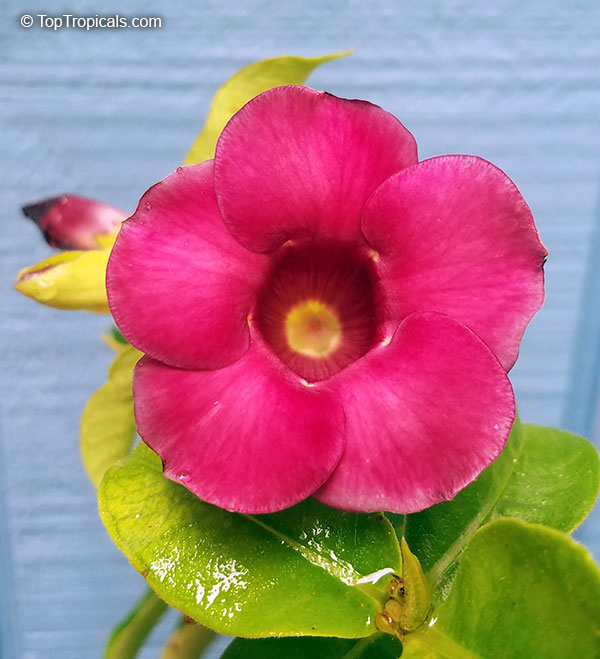
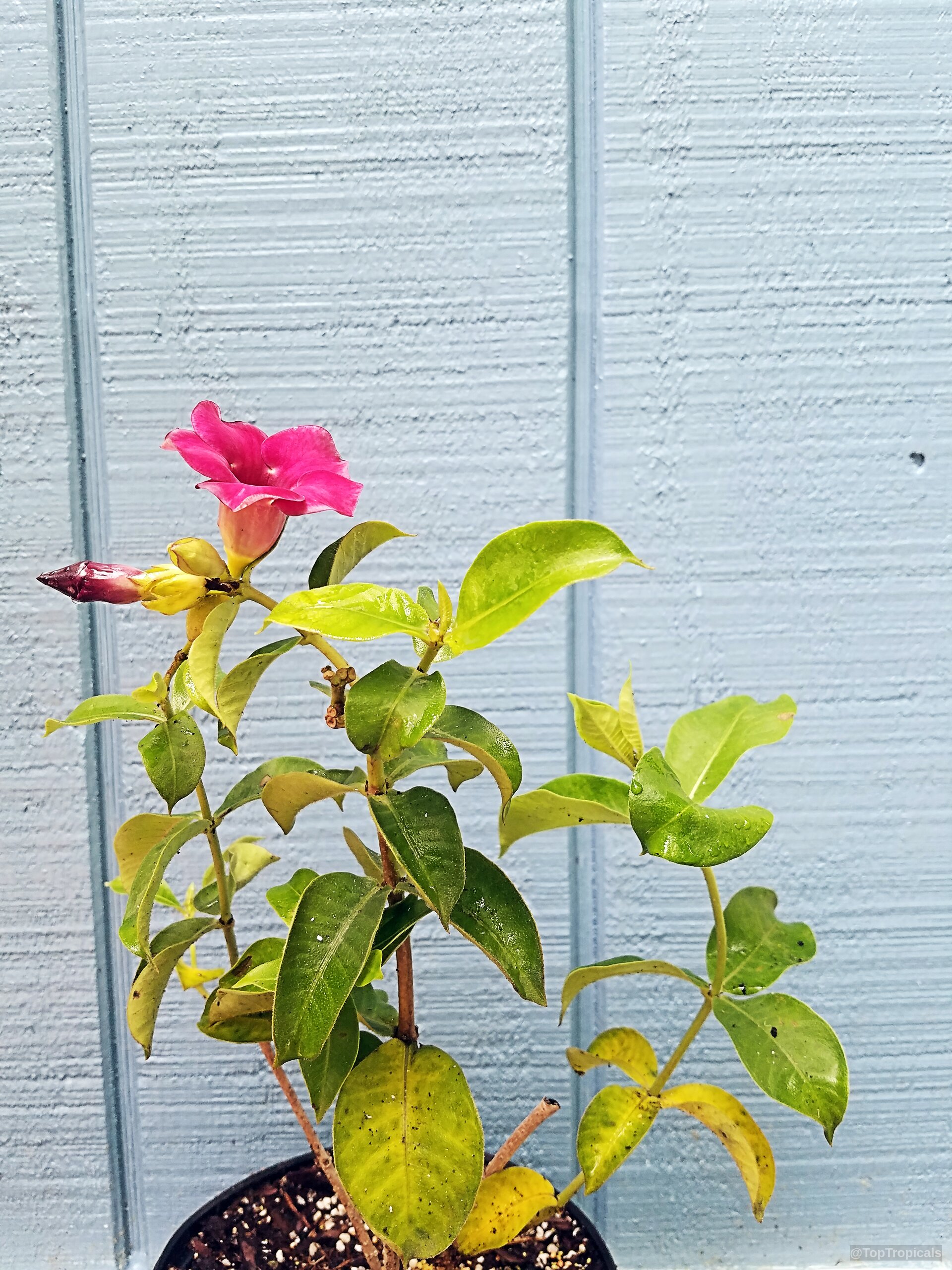
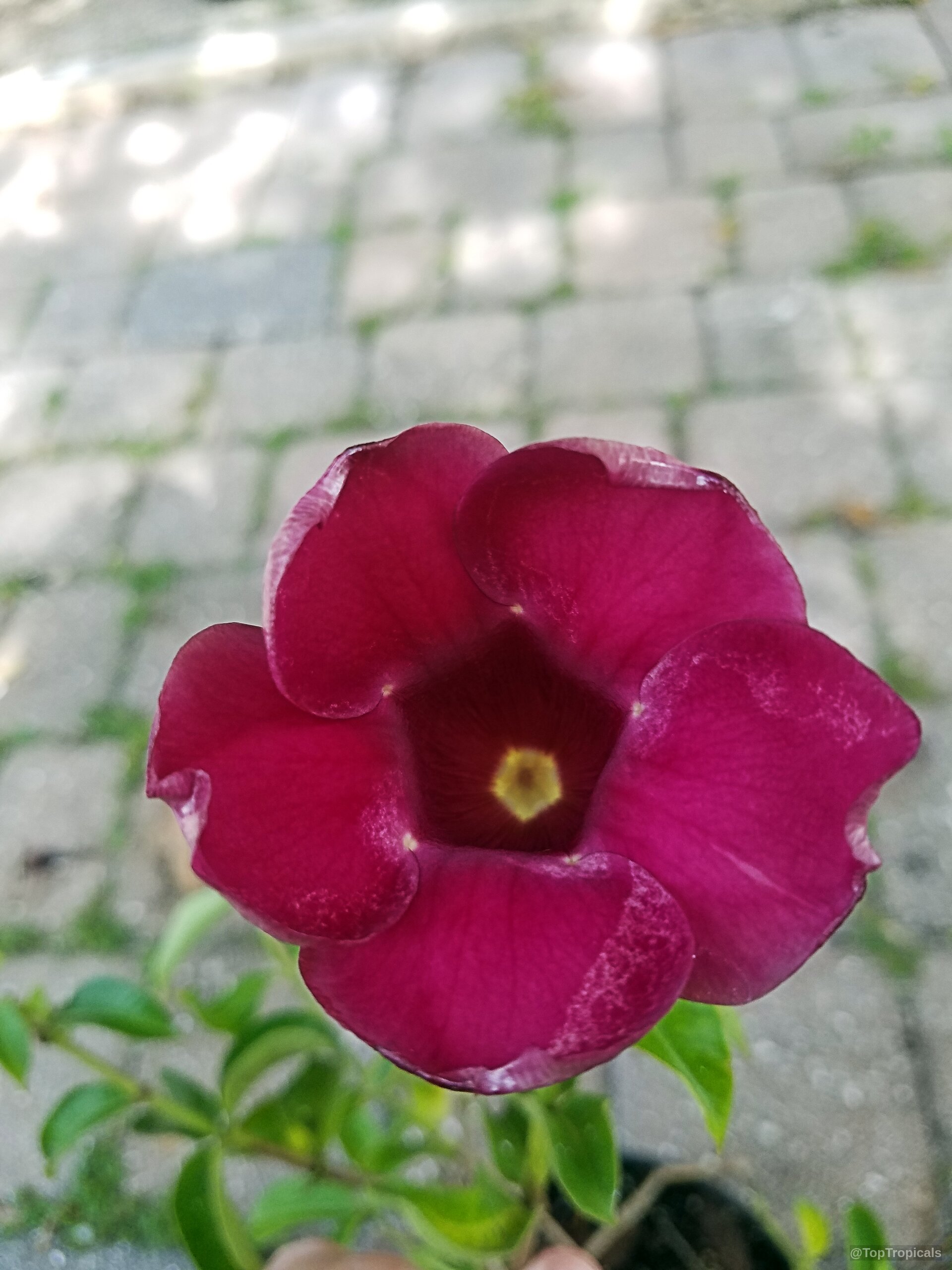
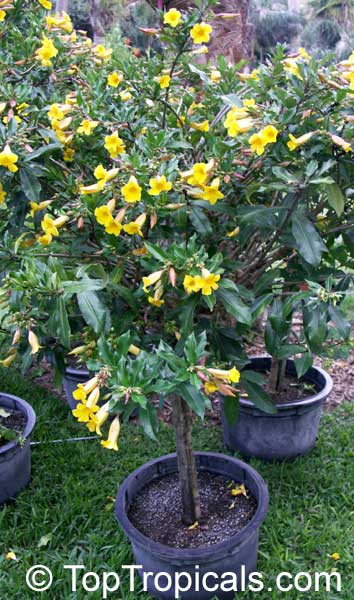
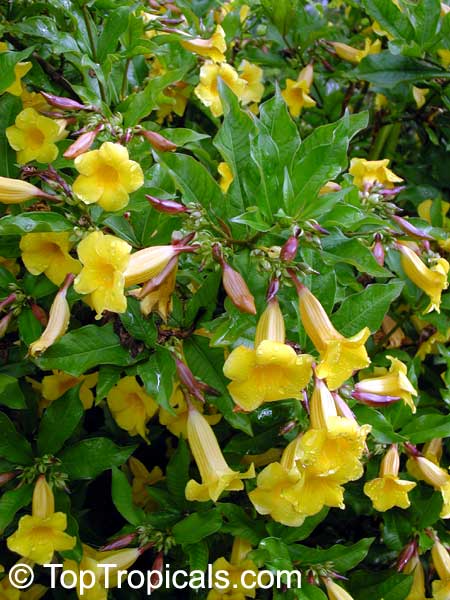
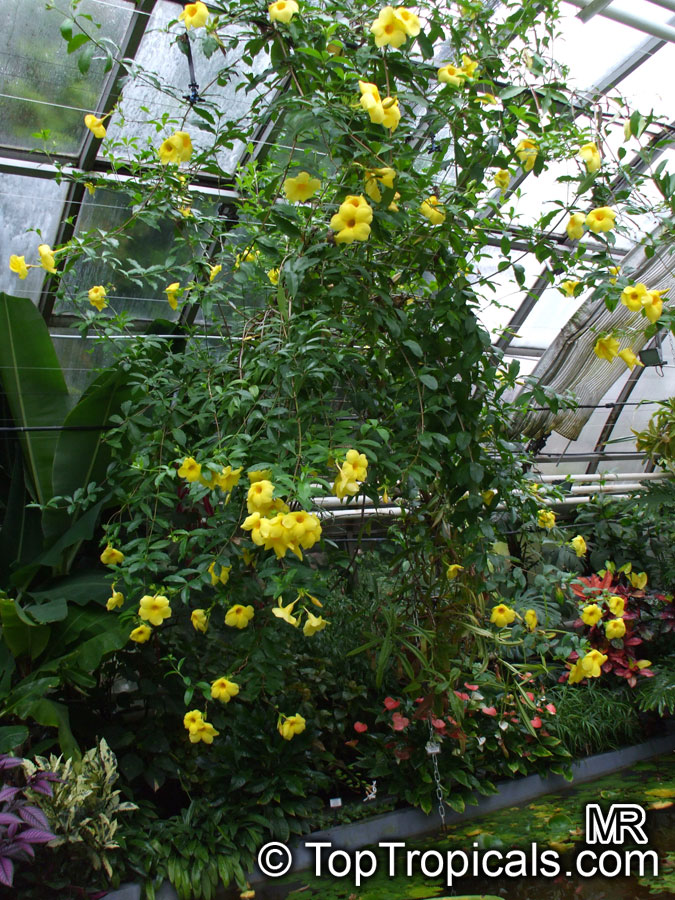
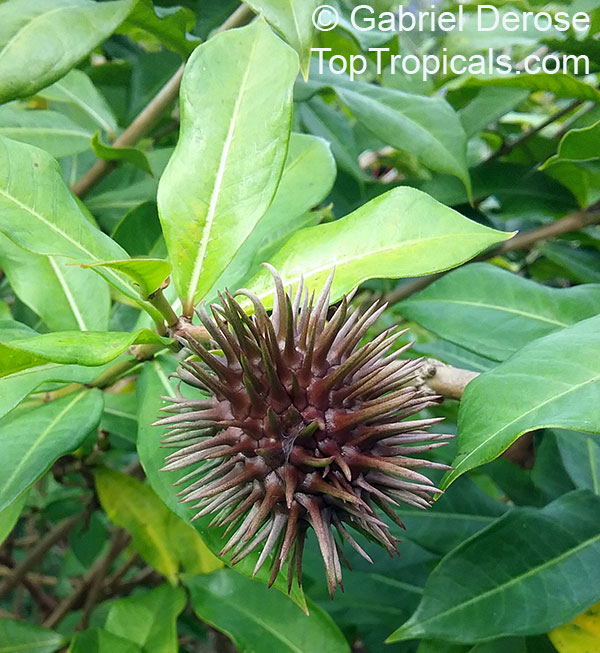
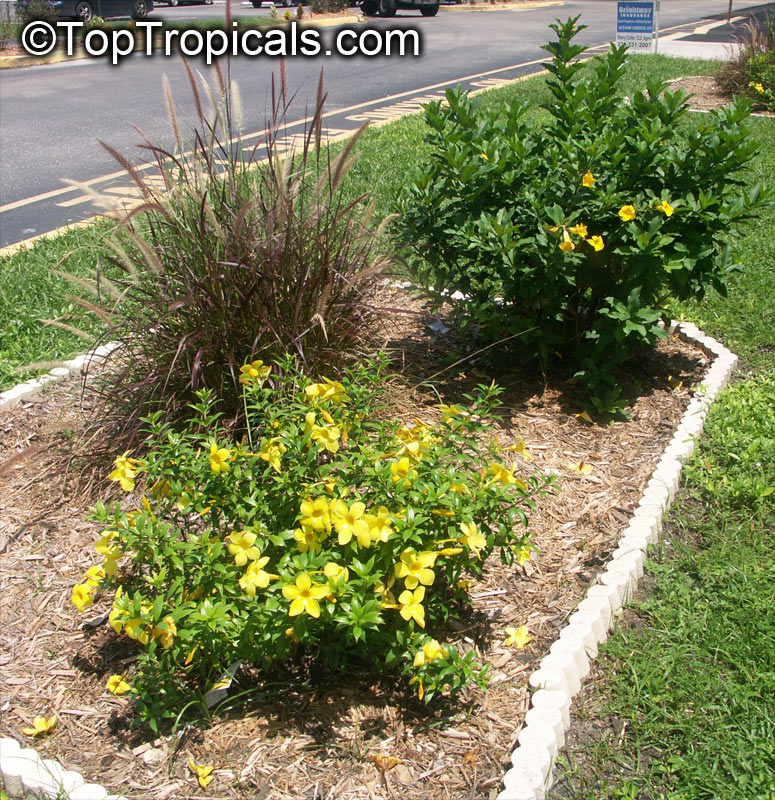
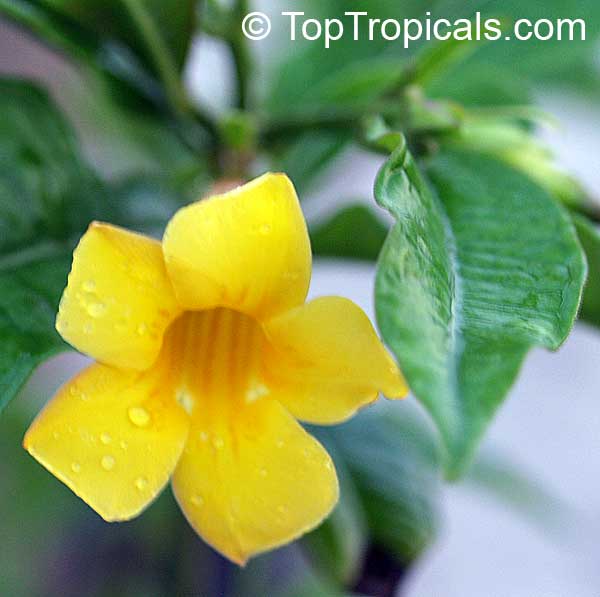
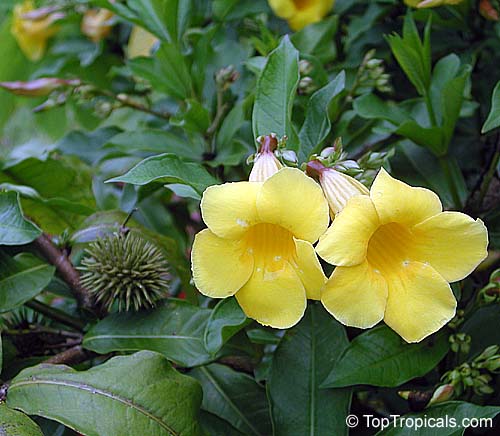
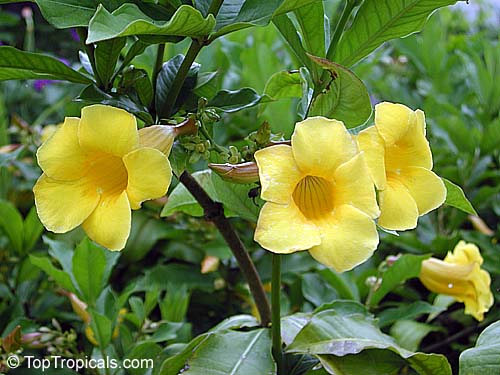
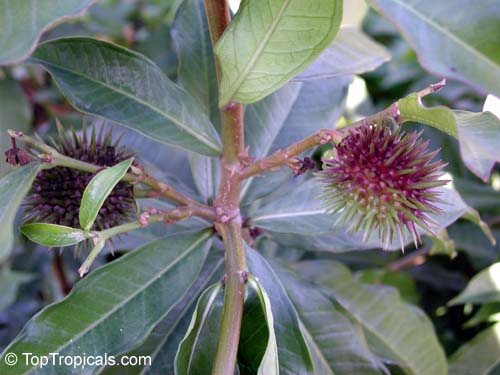
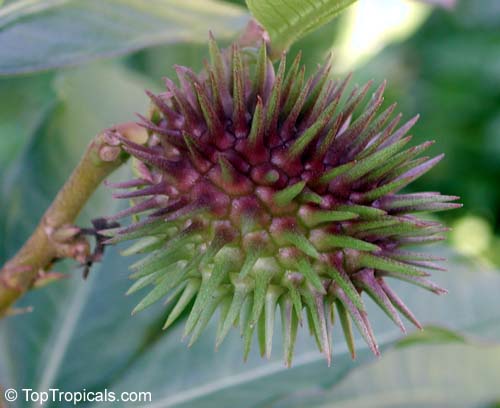
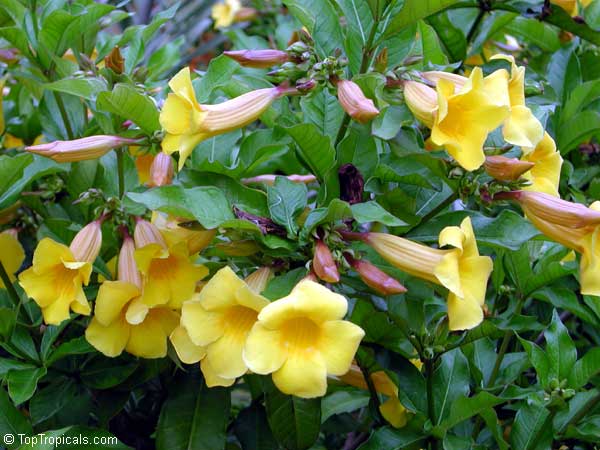
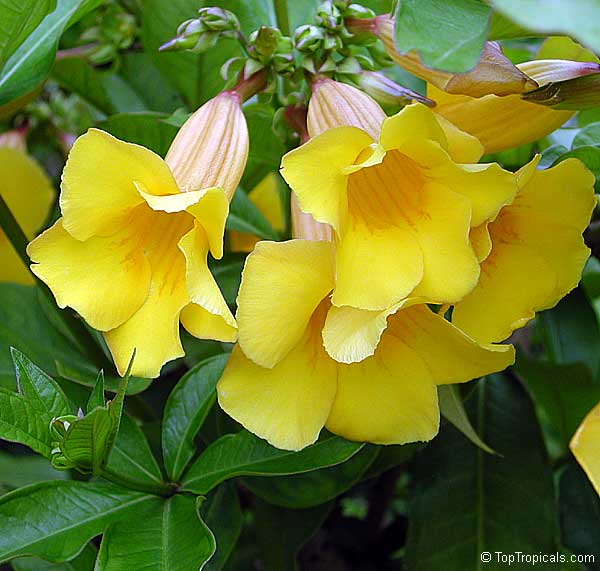
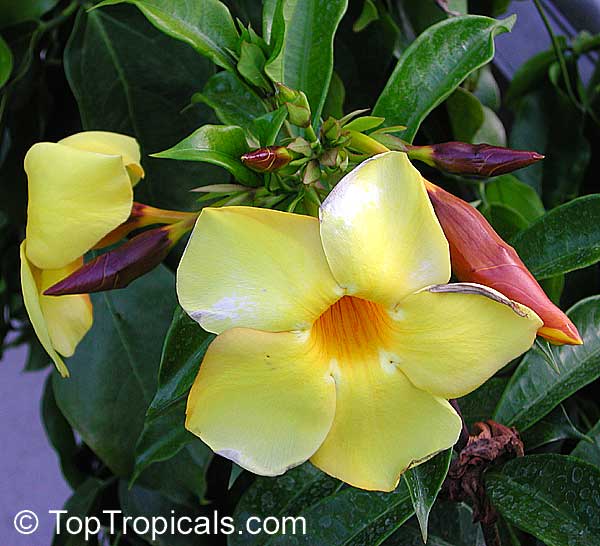
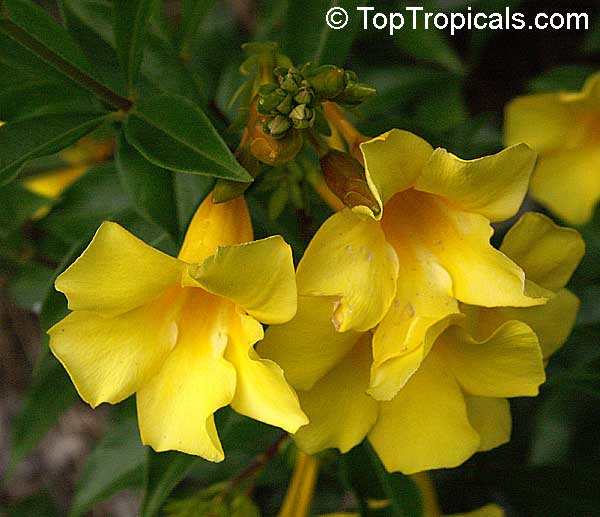
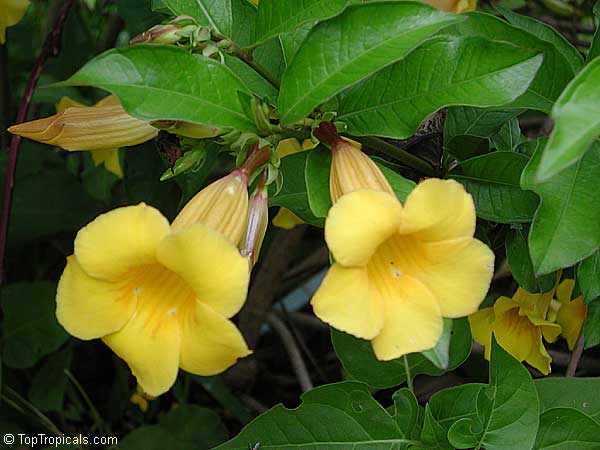
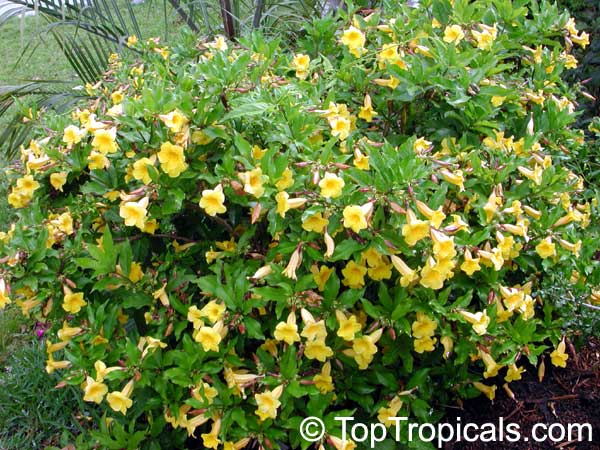
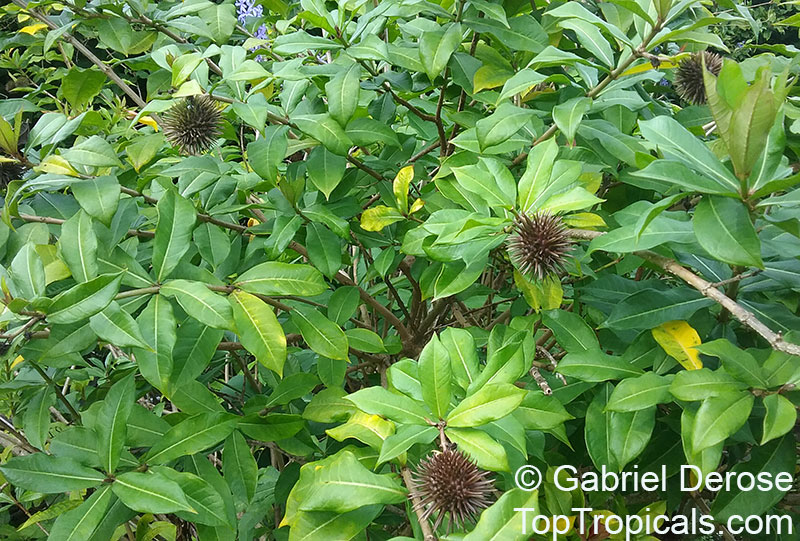
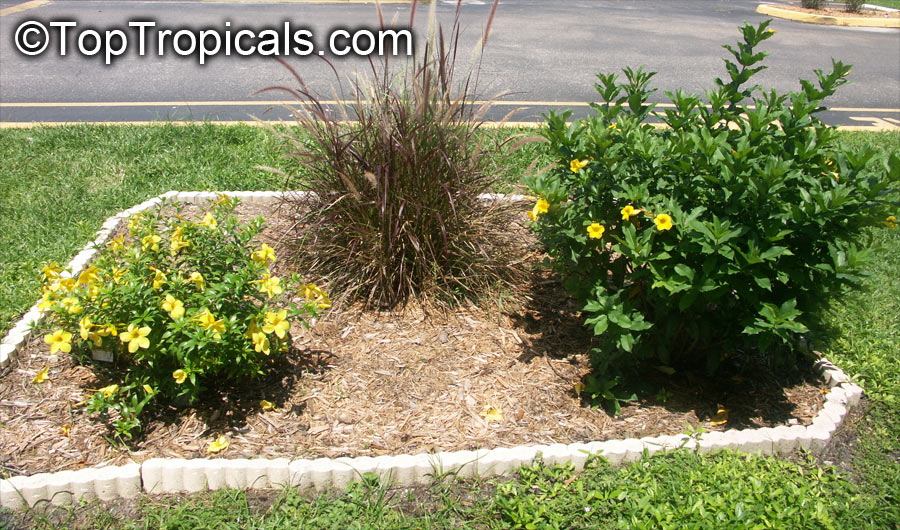
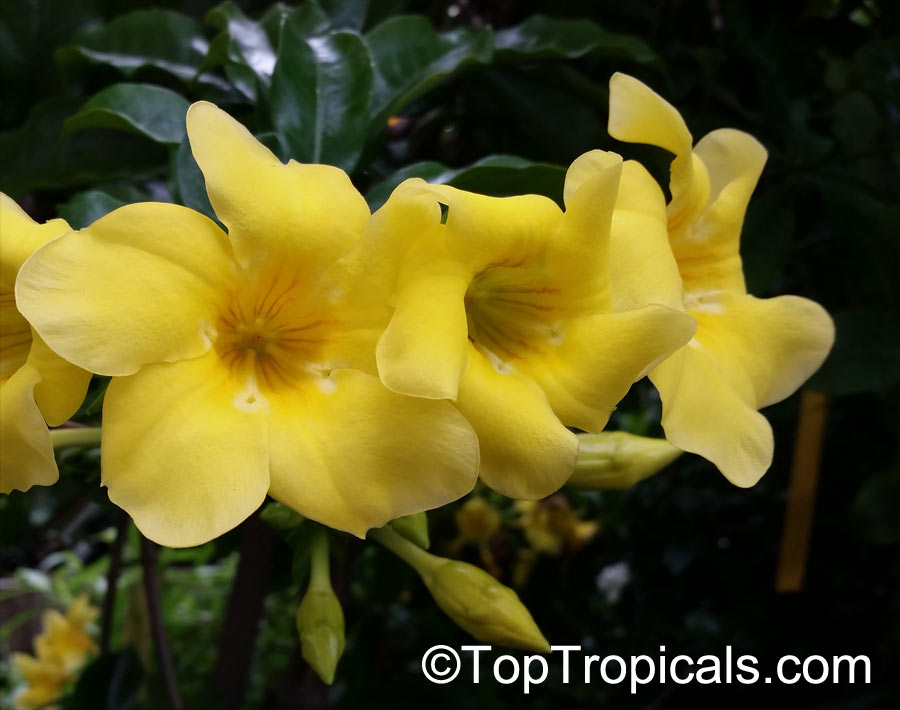
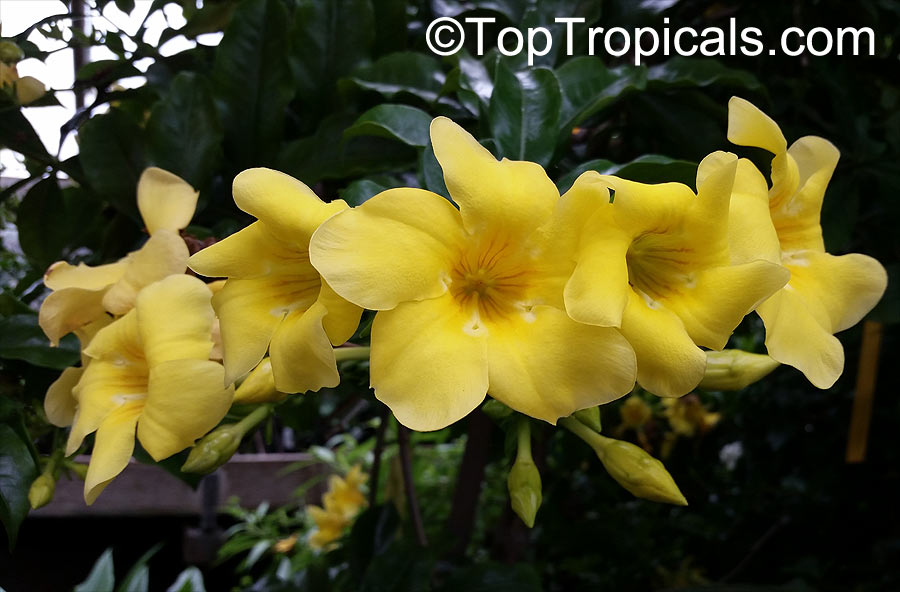
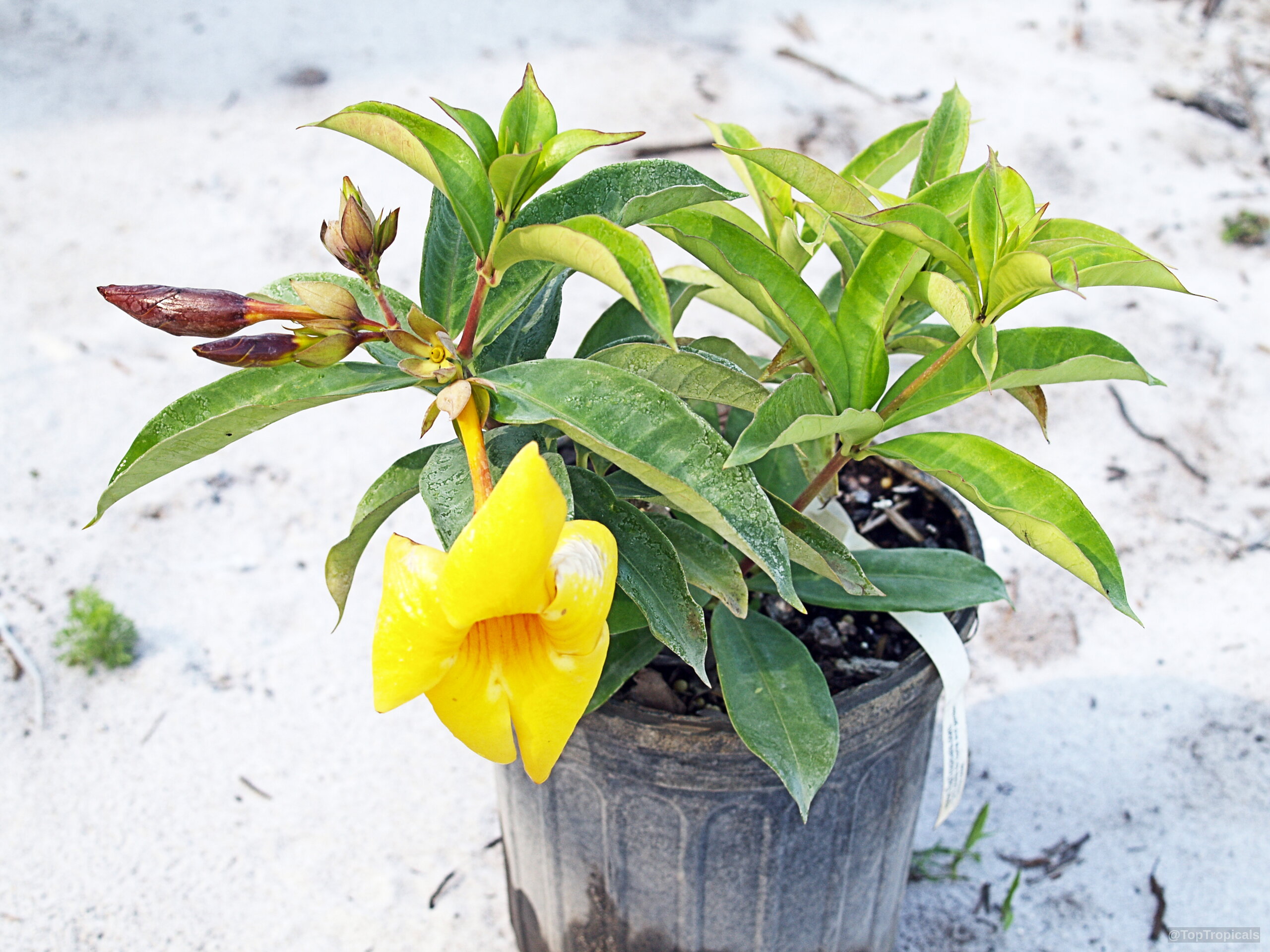
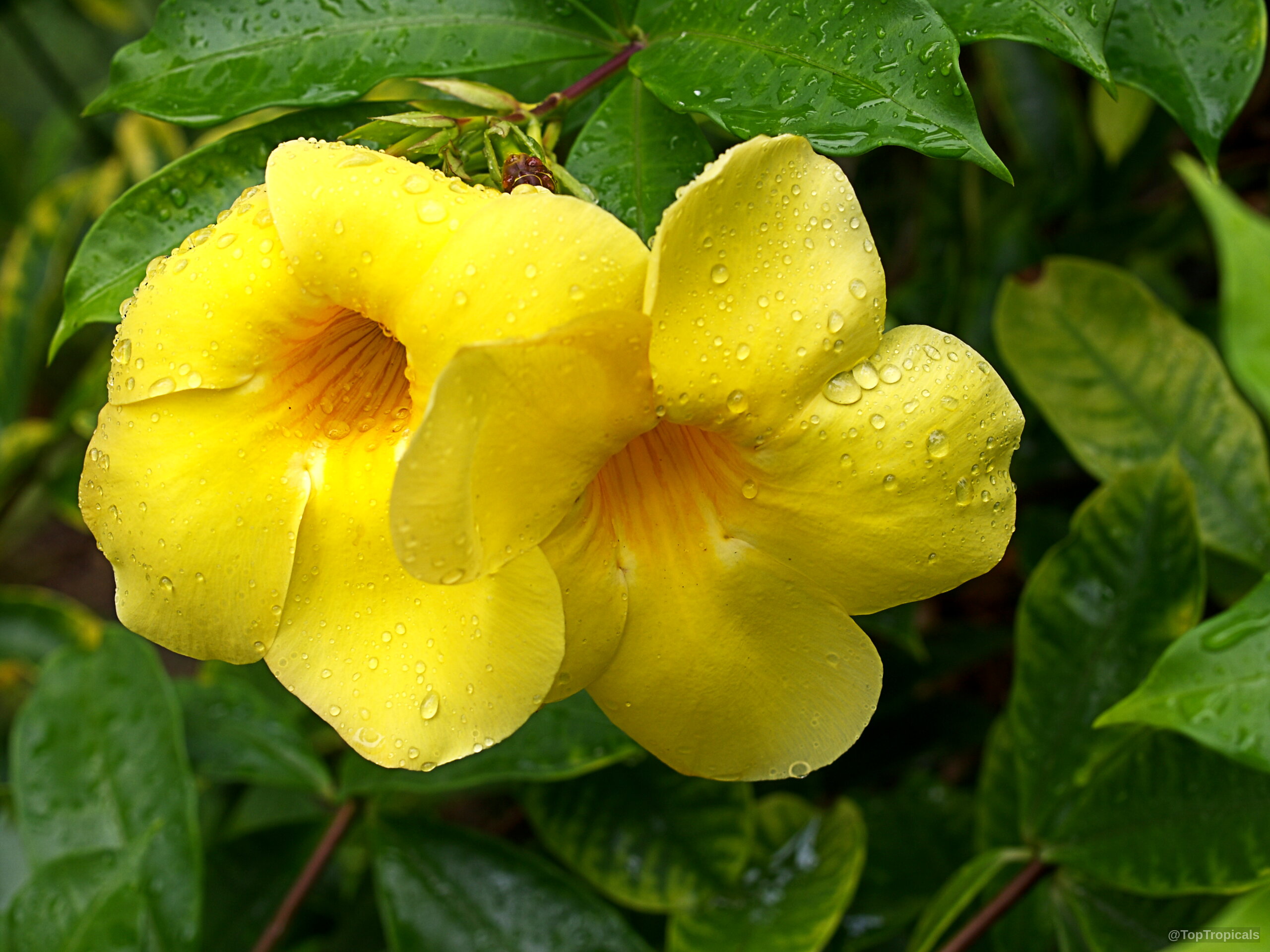
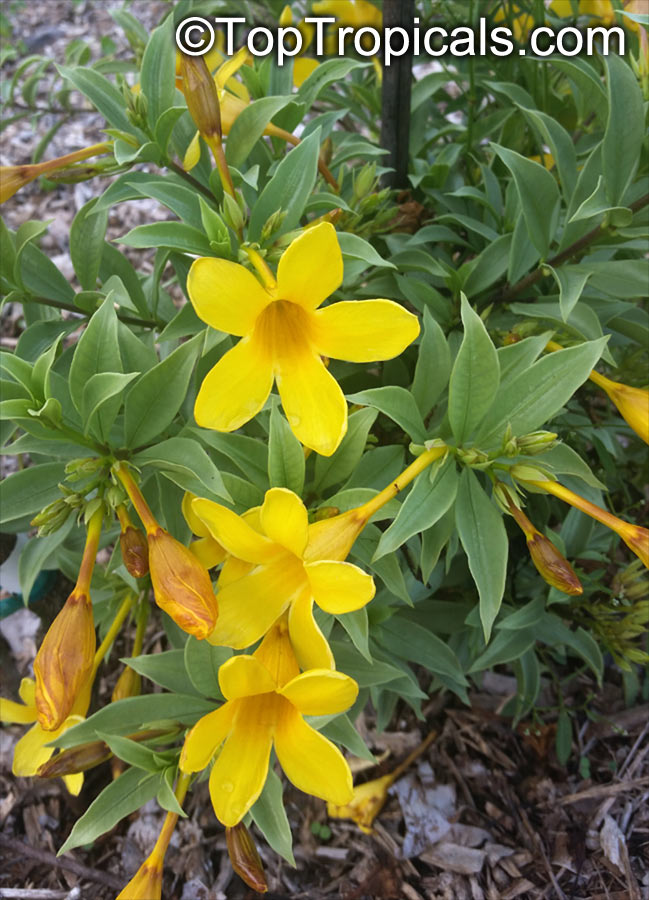
Very attractive ever-blooming shrub with bright yellow trumpet-like flowers. Night-scented flowers year-round. Prickly seed pods follow the flowers with winged seeds that fly about when the pod dries and breaks open. Allamanda is perennial in tropical climates and may be treated as an annual or brought inside during cold weather and replanted after danger of frost. The plant has milky sap and is considered poisonous; all parts are highly cathartic (hence the botanical name). Grows well in most soils, but becomes chlorotic in very alkaline conditions. In areas where there is seasonal change, keep fairly dry during winter and prune in spring before growth begins. It may be desirable to prune annually in any case to control for size.

Recommended Fertilizer: SUNSHINE Megaflor - Bloom Nutrition Booster
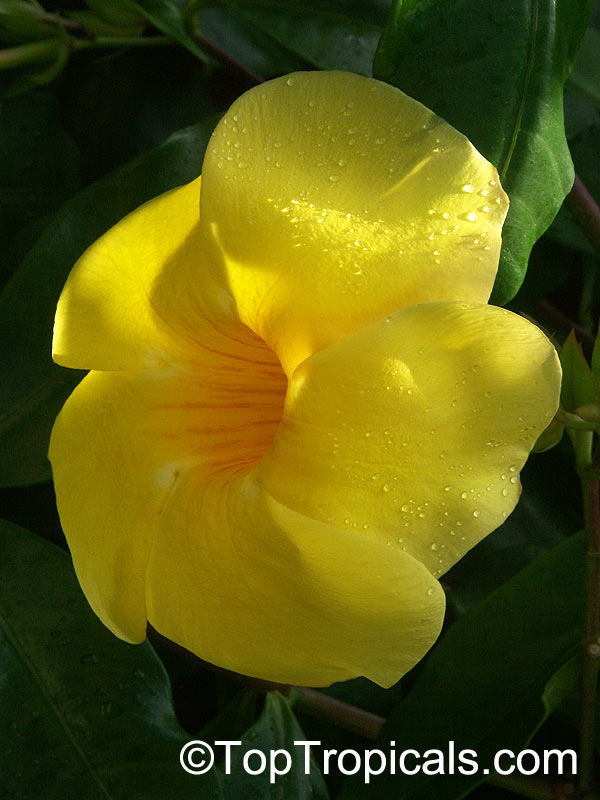
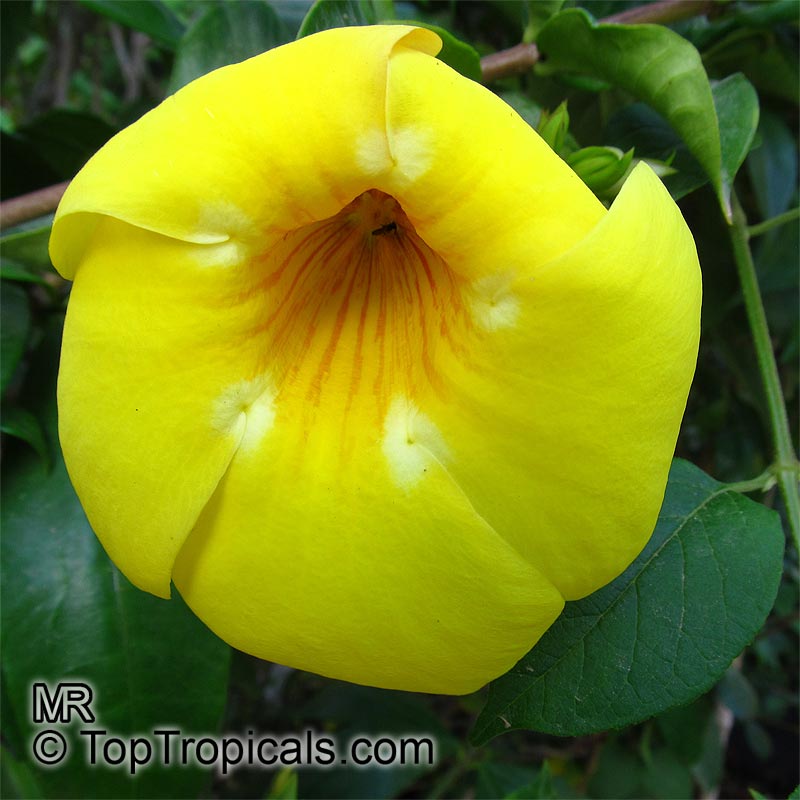
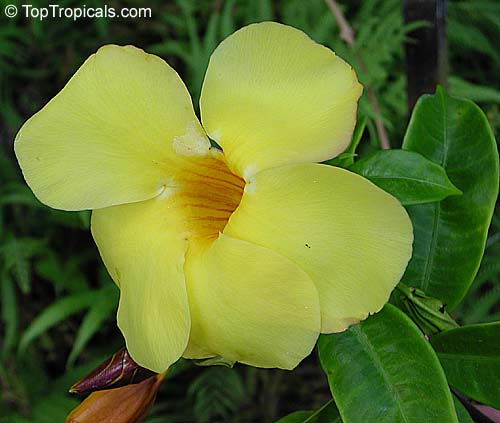
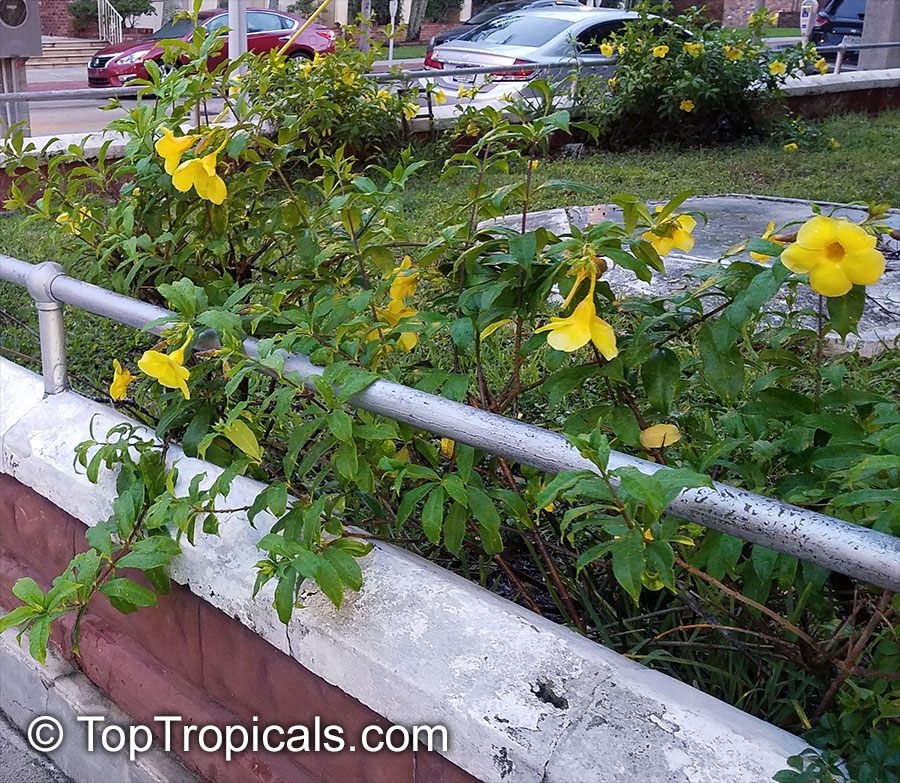
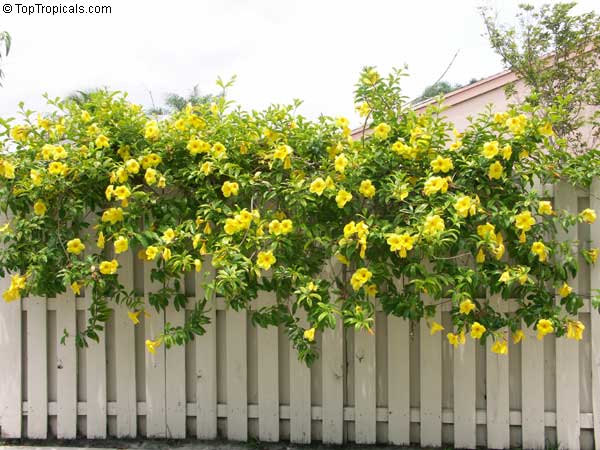
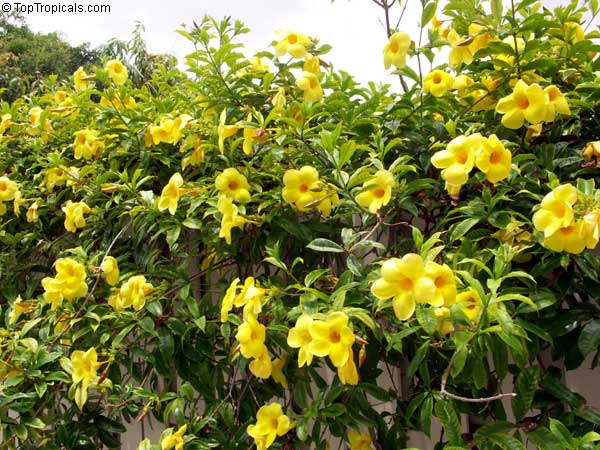
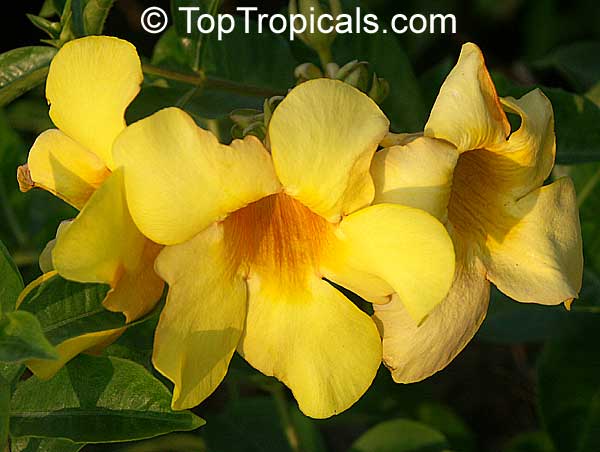
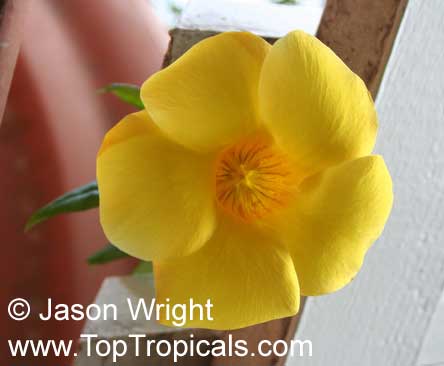
Botanical names: Allamanda hendersonii, Allamanda cathartica var. hendersonii
Common name: Golden Trumpet Vine
Family: Apocynaceae
Origin: Tropical America
USDA Zone: 10-11
Very attractive ever-blooming vine with bright yellow trumpet-like flowers. Night-scented flowers year-round. Allamanda is perennial in tropical climates and may be treated as an annual or brought inside during cold weather and replanted after danger of frost. The plant has milky sap and is considered poisonous; all parts are highly cathartic. Grows well in most soils, but becomes chlorotic in very alkaline conditions. In areas where there is seasonal change, keep fairly dry during winter and prune in spring before growth begins. It may be desirable to prune annually in any case to control for size.

Recommended Fertilizer: SUNSHINE Megaflor - Bloom Nutrition Booster
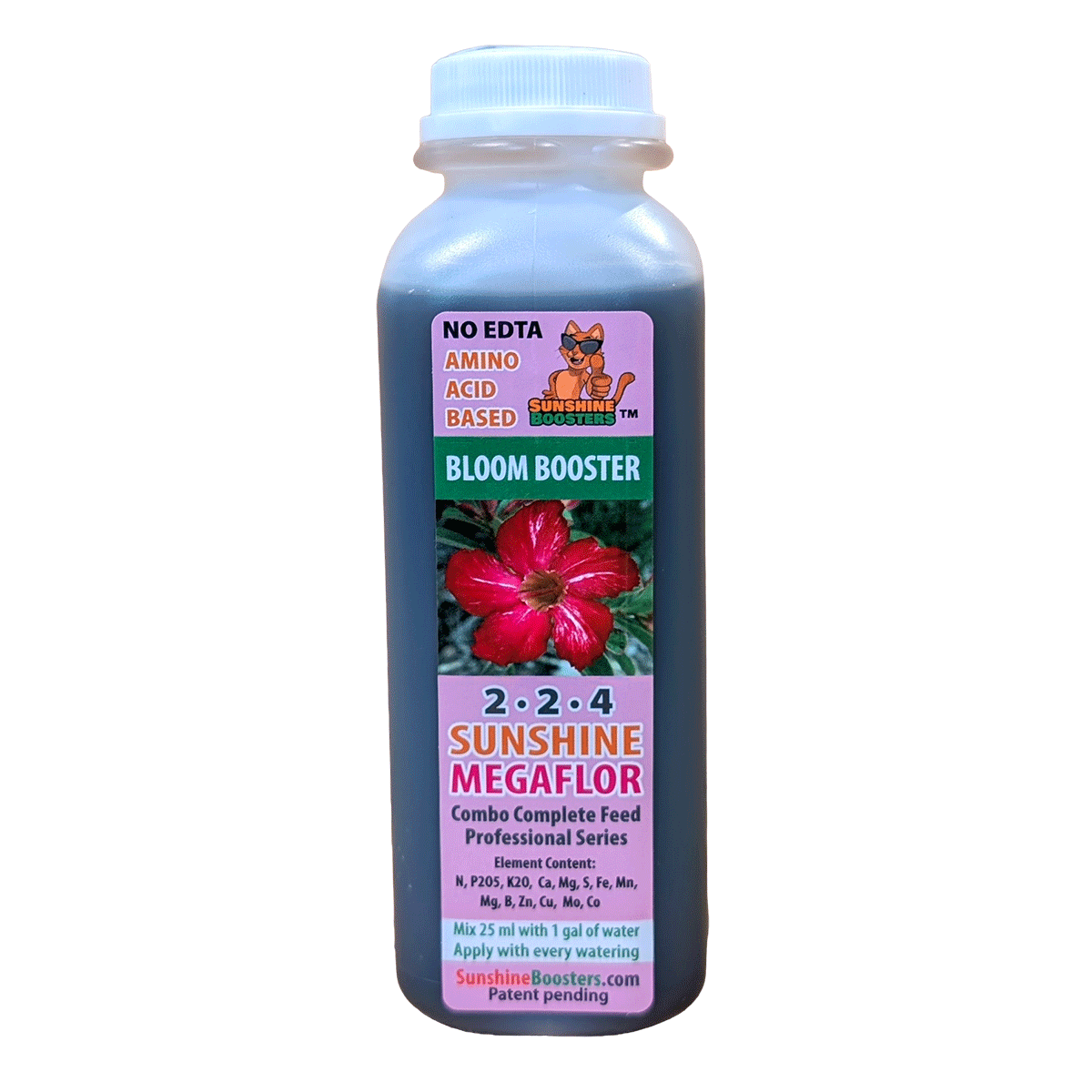 SUNSHINE Megaflor (NPK 2-2-4) - Bloom Booster for every watering. Formulated especially for blooms, to boost flowering, improve flower size and quality, and stimulate pollen development. This is an eco-friendly nutrition booster that can be used for organic gardens. Can be used for daily feeding with every watering. Scientifically-balanced stable formula is organic Amino-acid based and has NO EDTA chelators to eliminate nutrients lockup; it does not affect crop taste. Organic Amino acids greatly enhance stability of all Sunshine boosters and provide excellent absorption of trace elements. Pollinating insects friendly.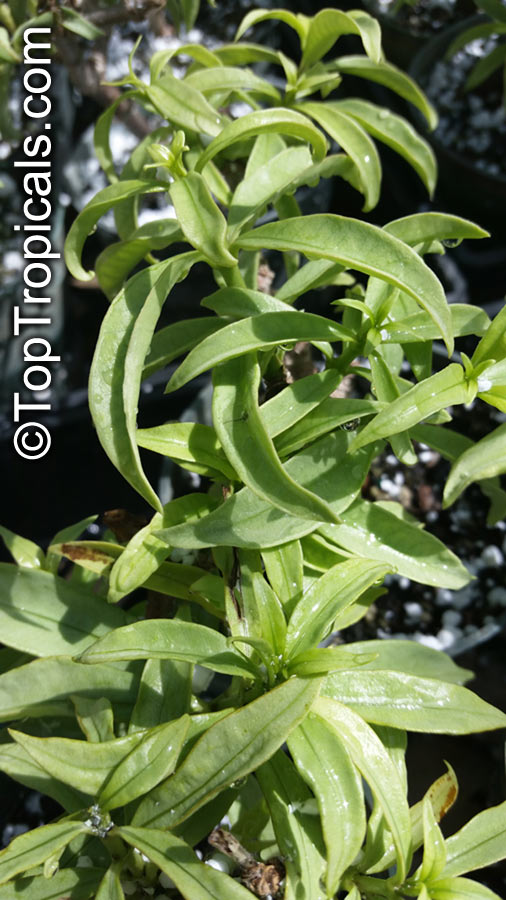
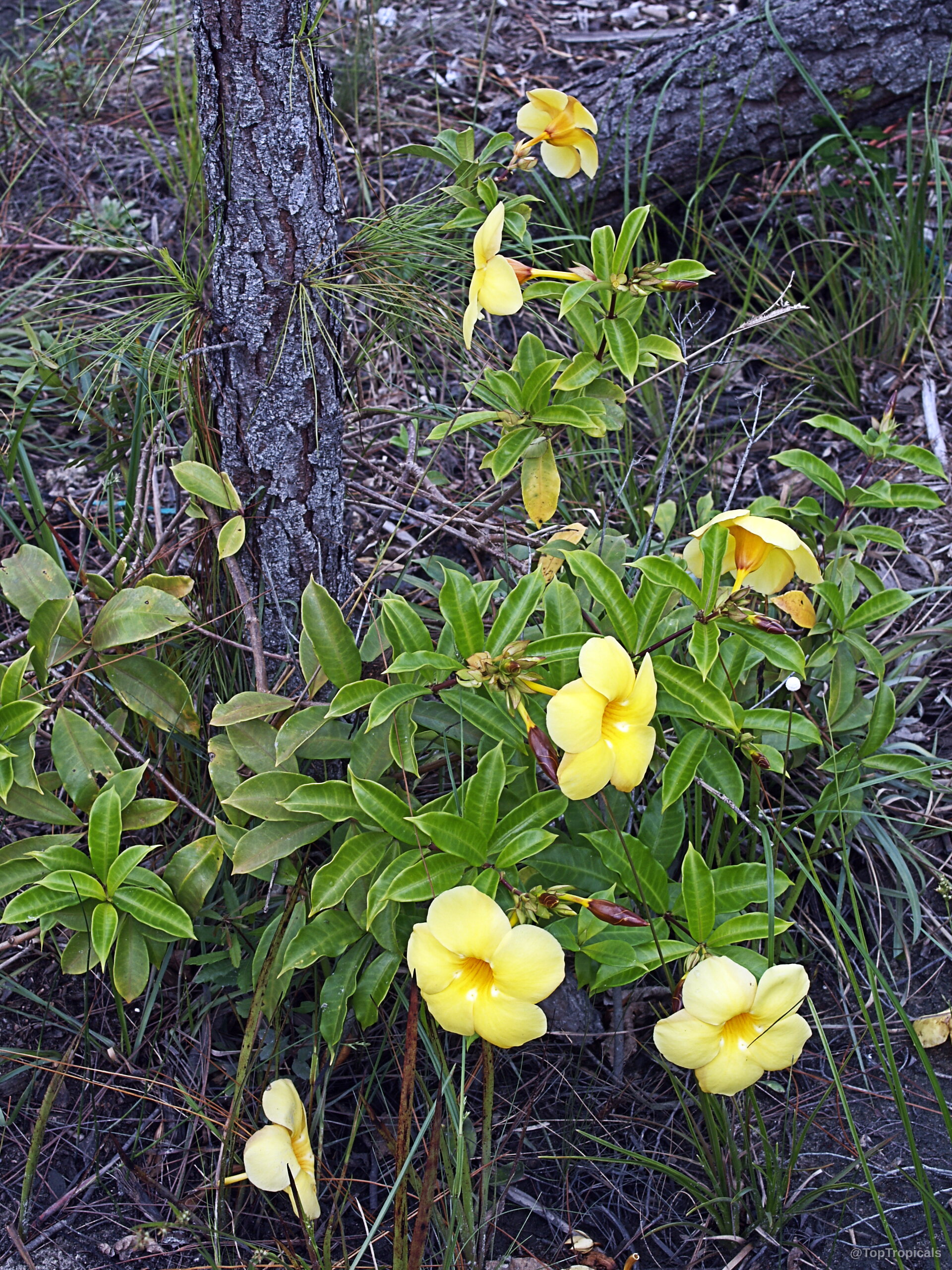
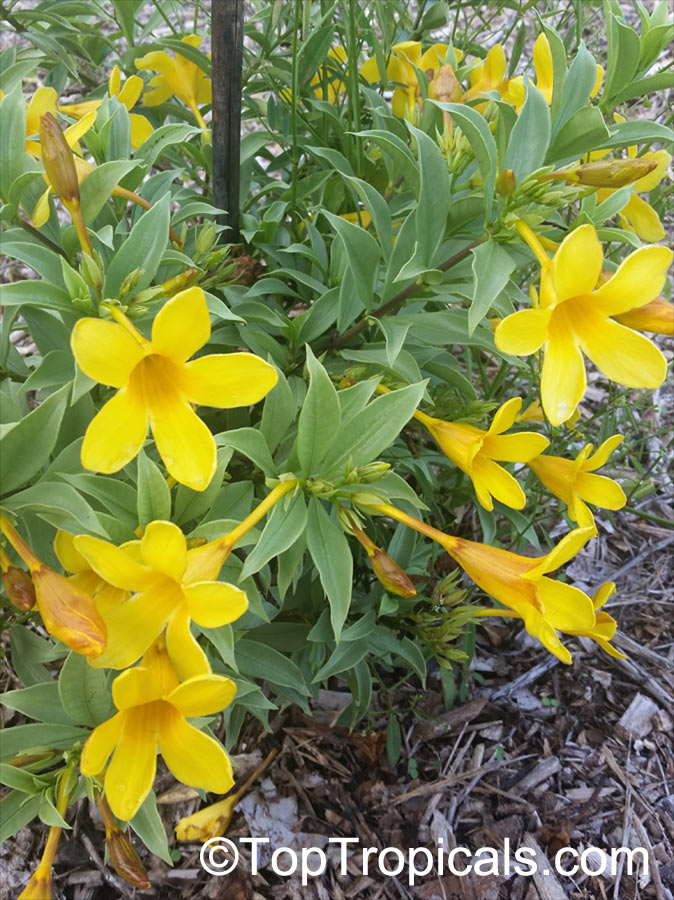
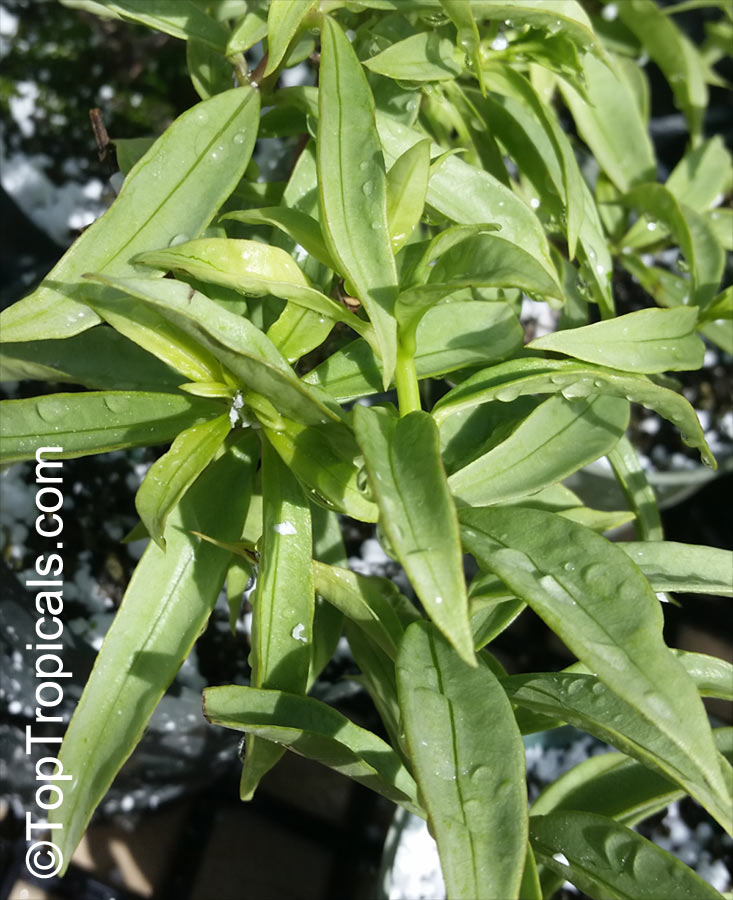
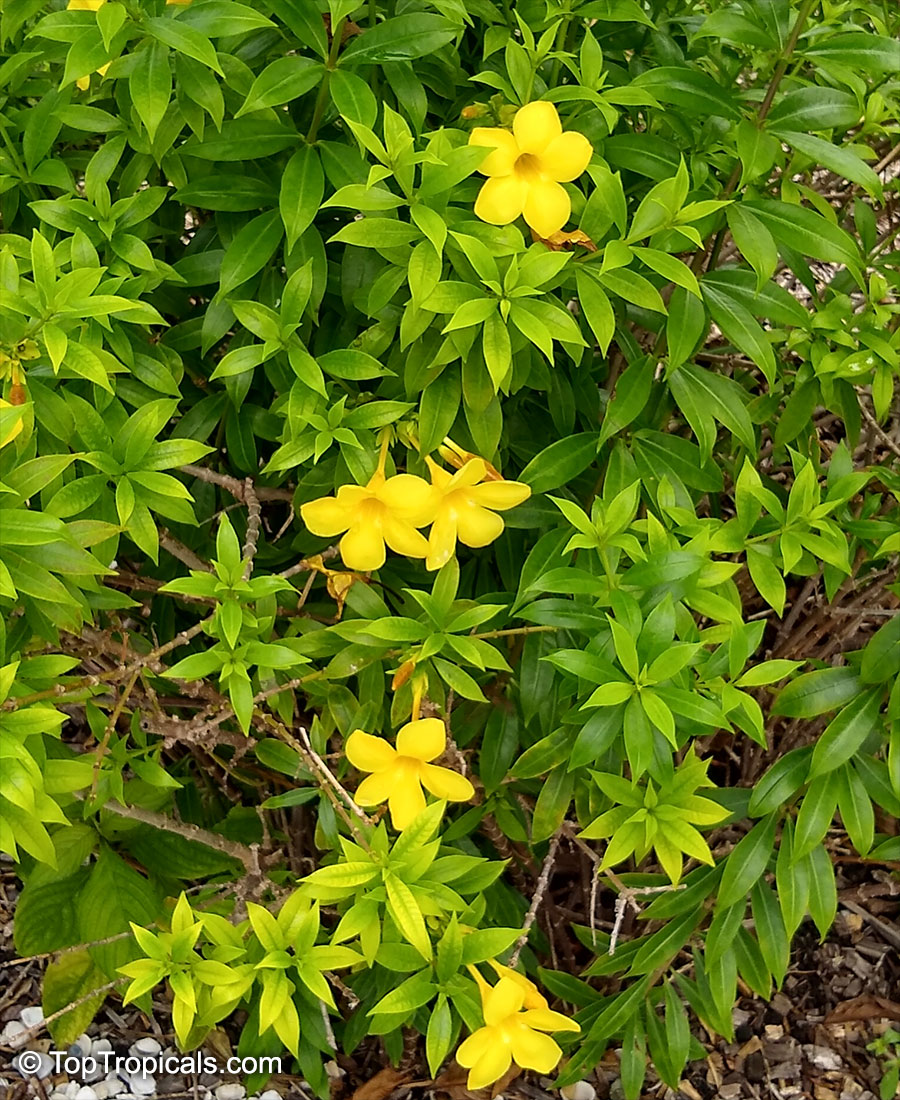
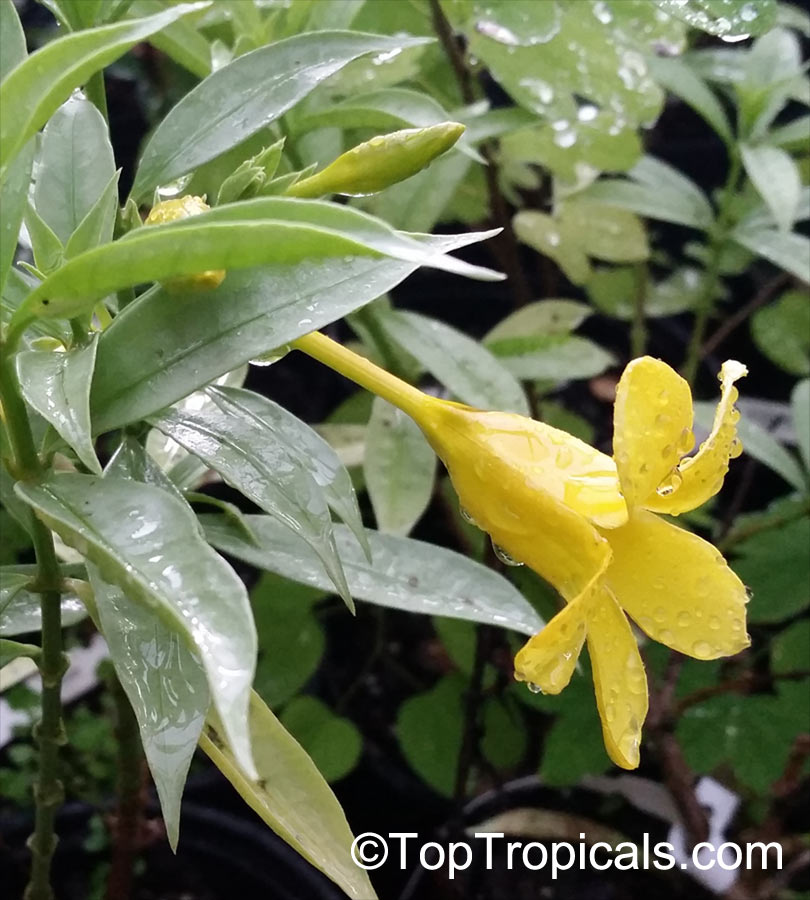
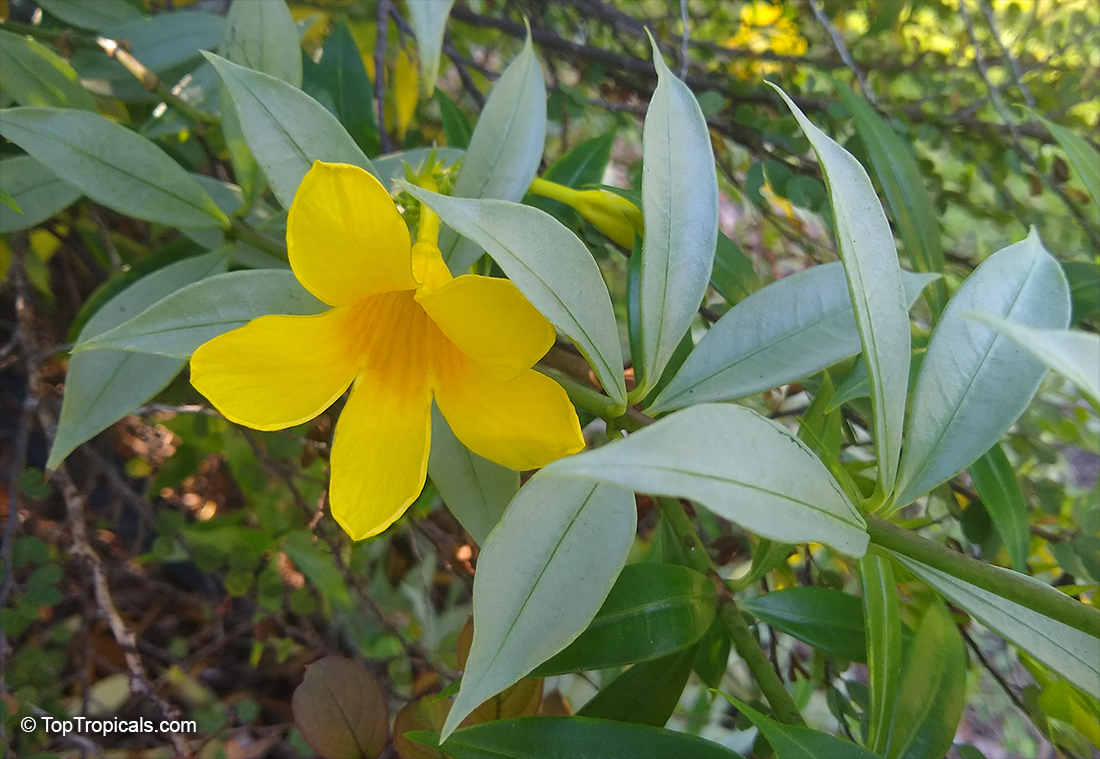
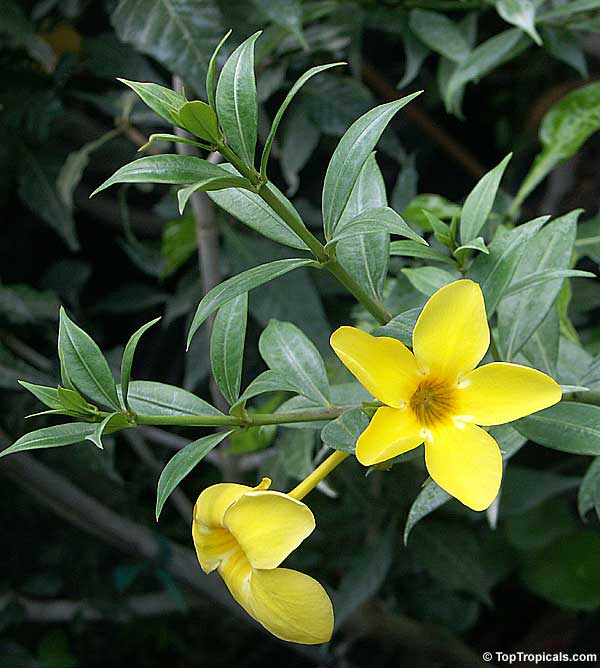
Botanical names: Allamanda schottii, Allamanda neriifolia
Common name: Dwarf Golden Trumpet
Family: Apocynaceae
Origin: Brazil
USDA Zone: 10-11
Dwarf form with smaller leaves with yellow tubular flowers smaller than allamanda cathartica. Fruits globose, prickly, burlike.
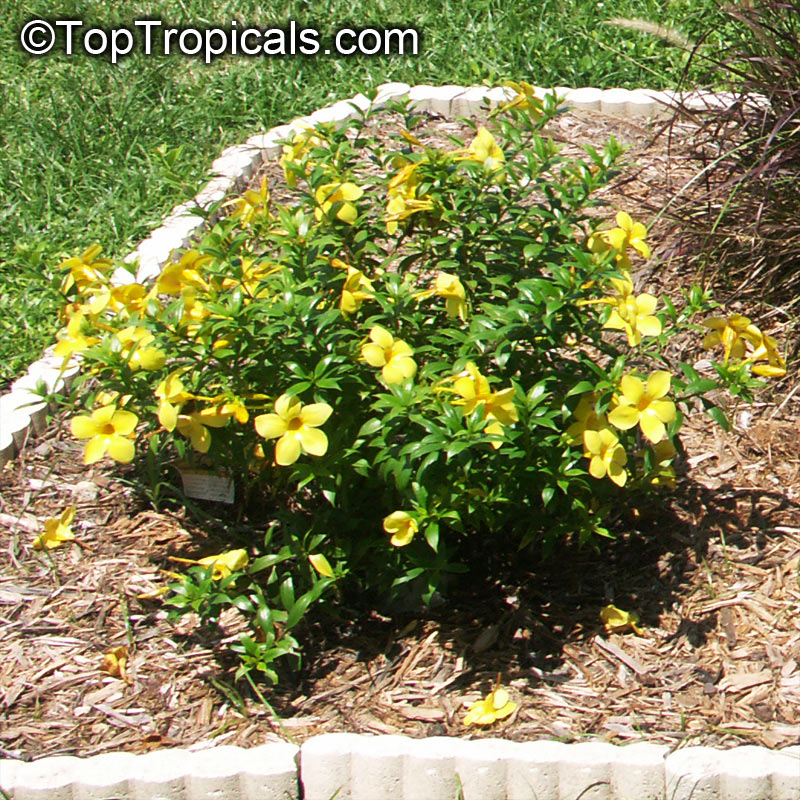
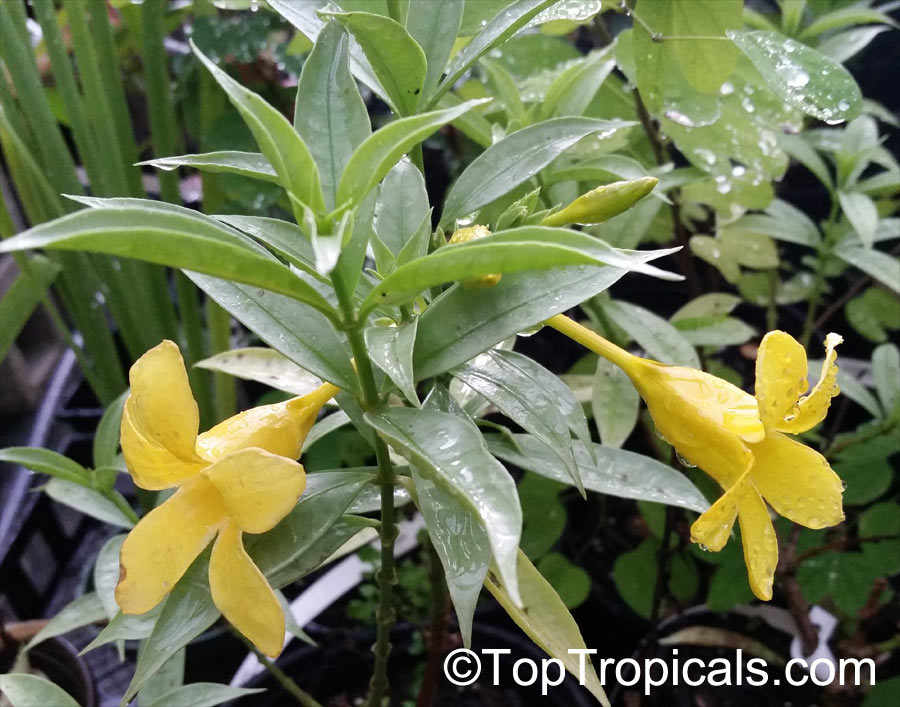
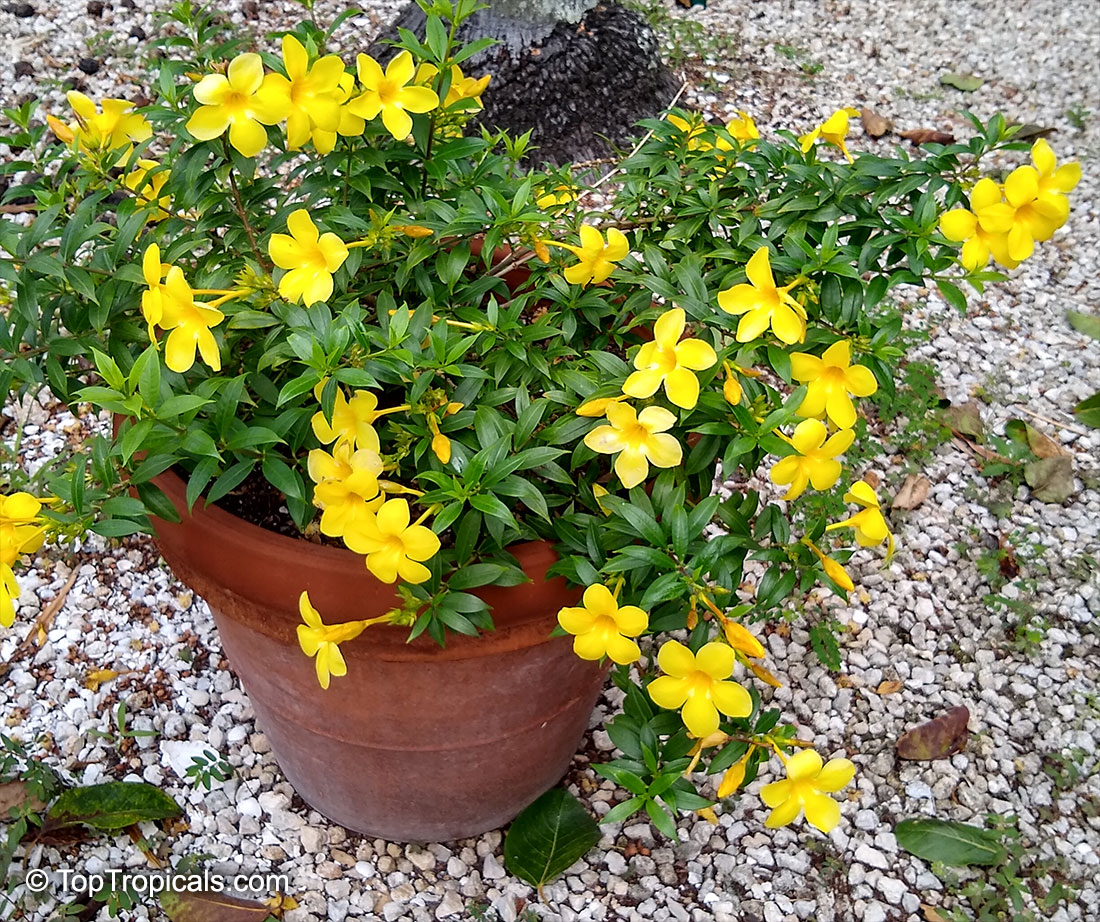
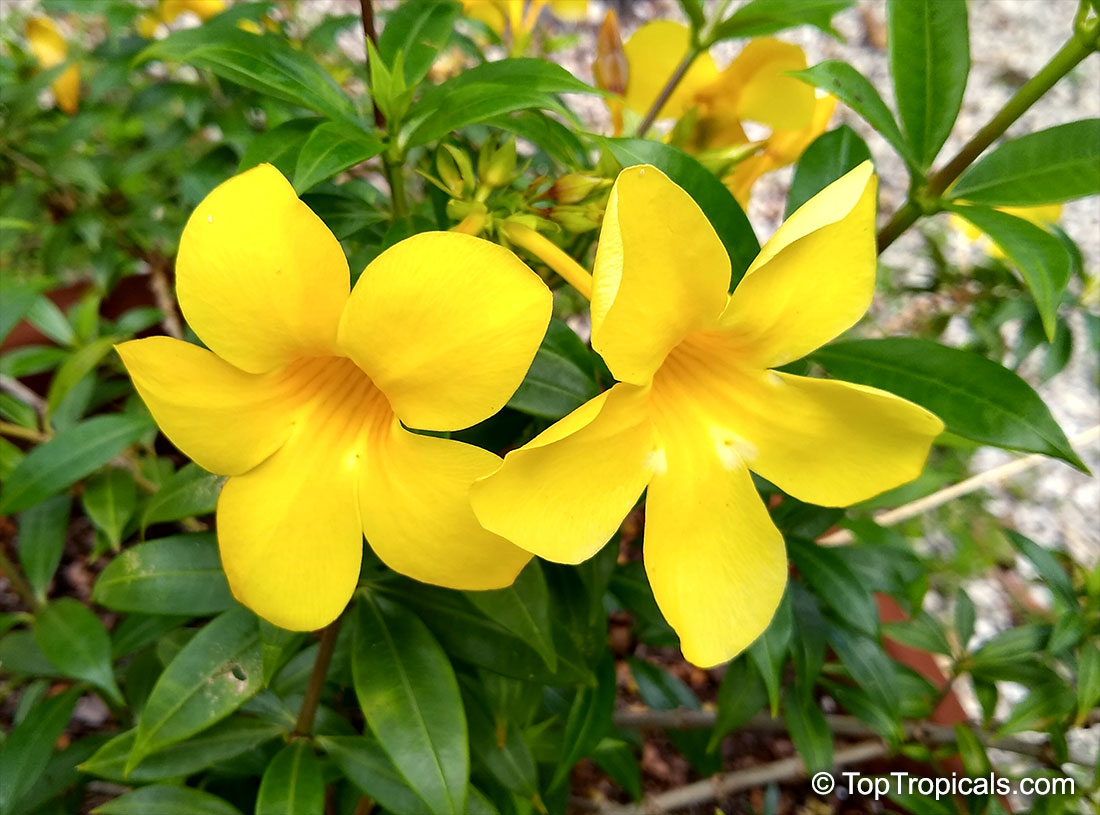

Recommended Fertilizer: SUNSHINE Megaflor - Bloom Nutrition Booster
Botanical name: Allamanda williamsii
Common name: Golden Trumpet Vine
Family: Apocynaceae
Origin: Tropical America
USDA Zone: 9-11
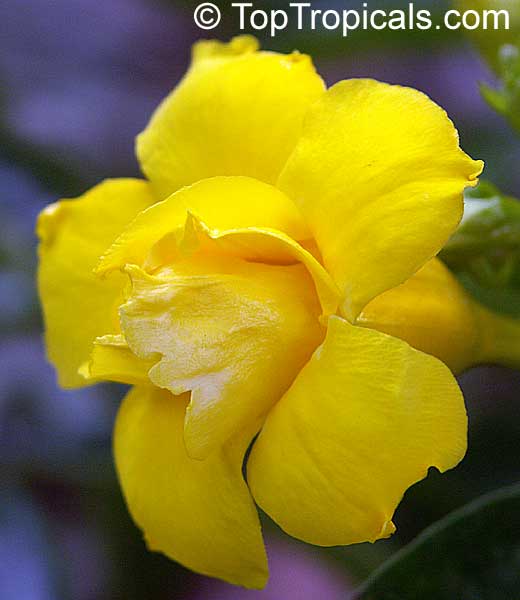
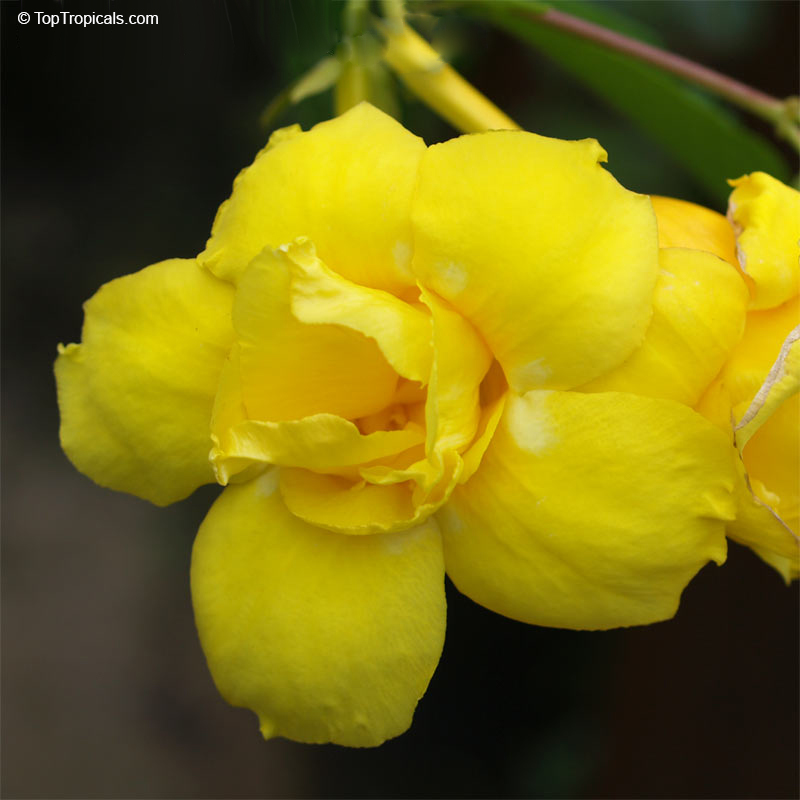
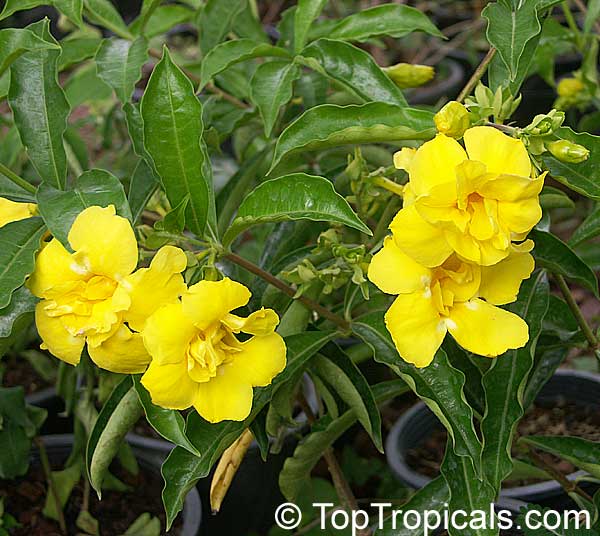
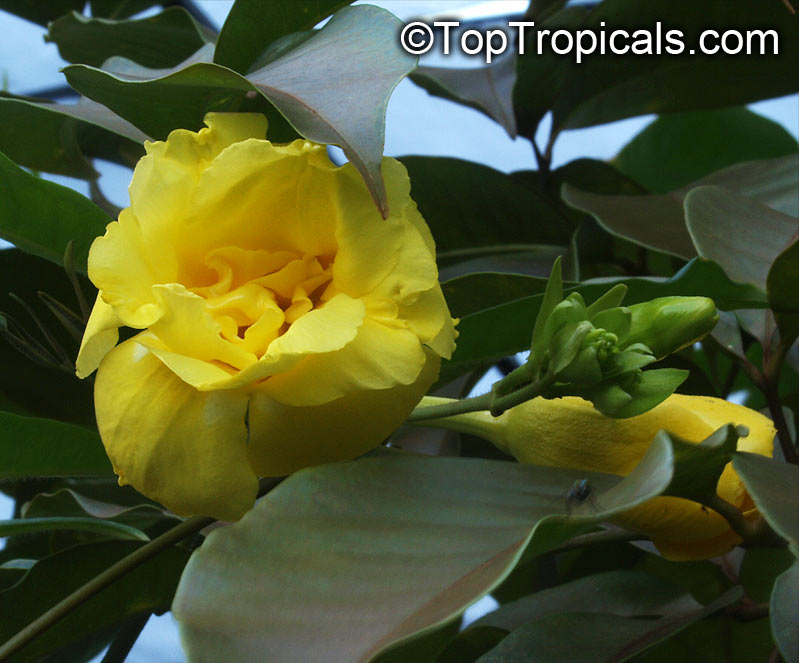
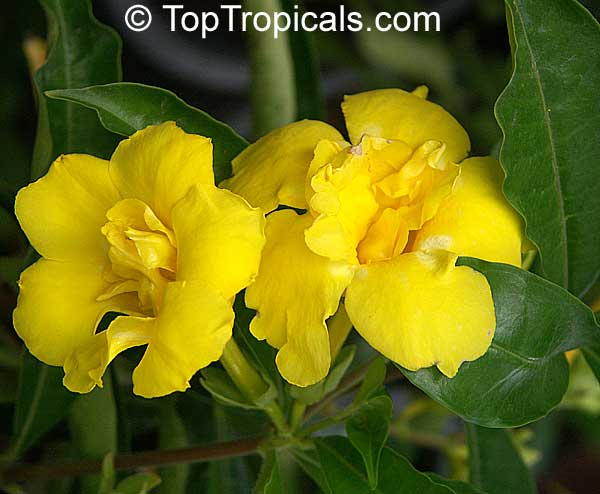
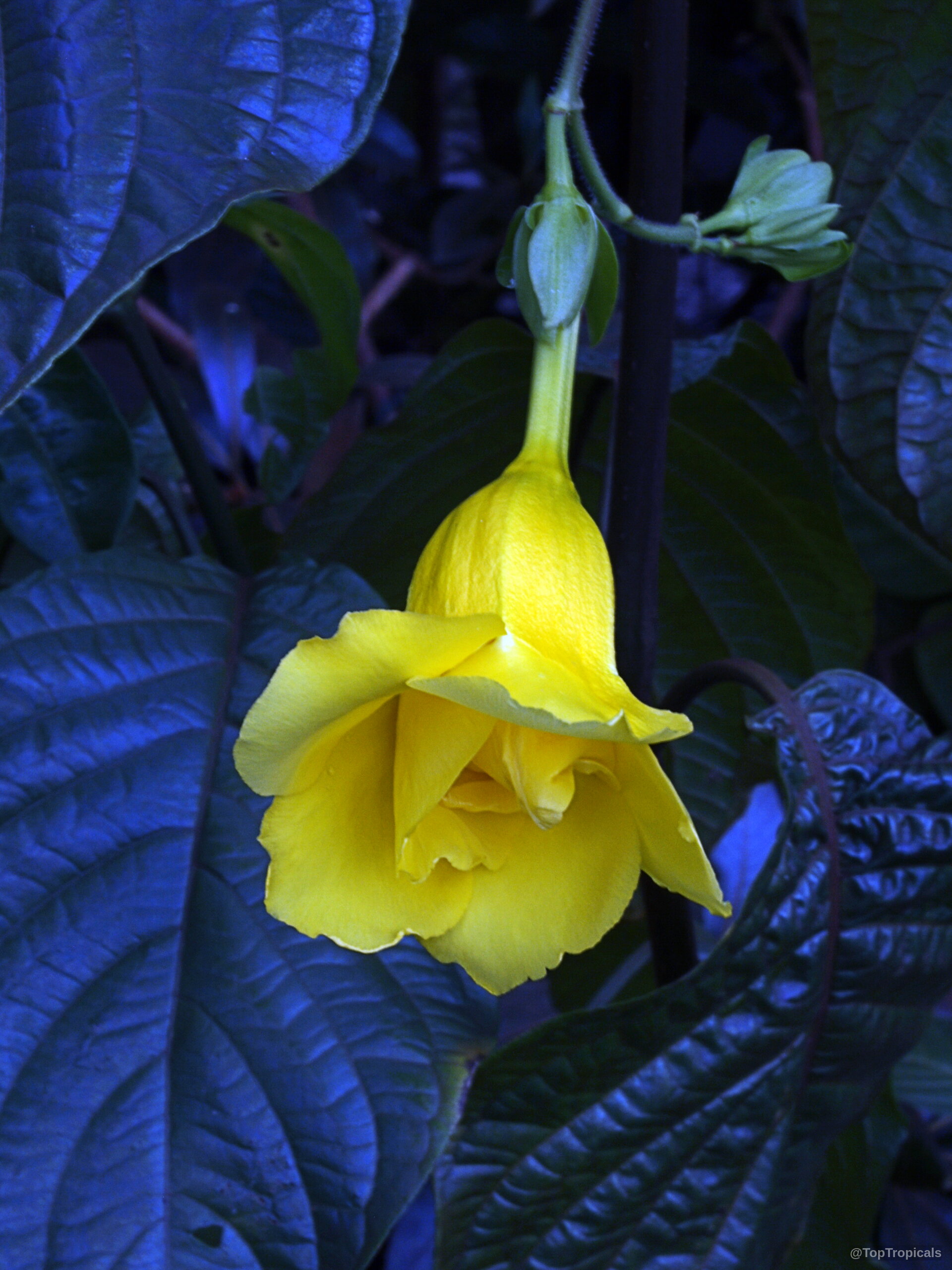
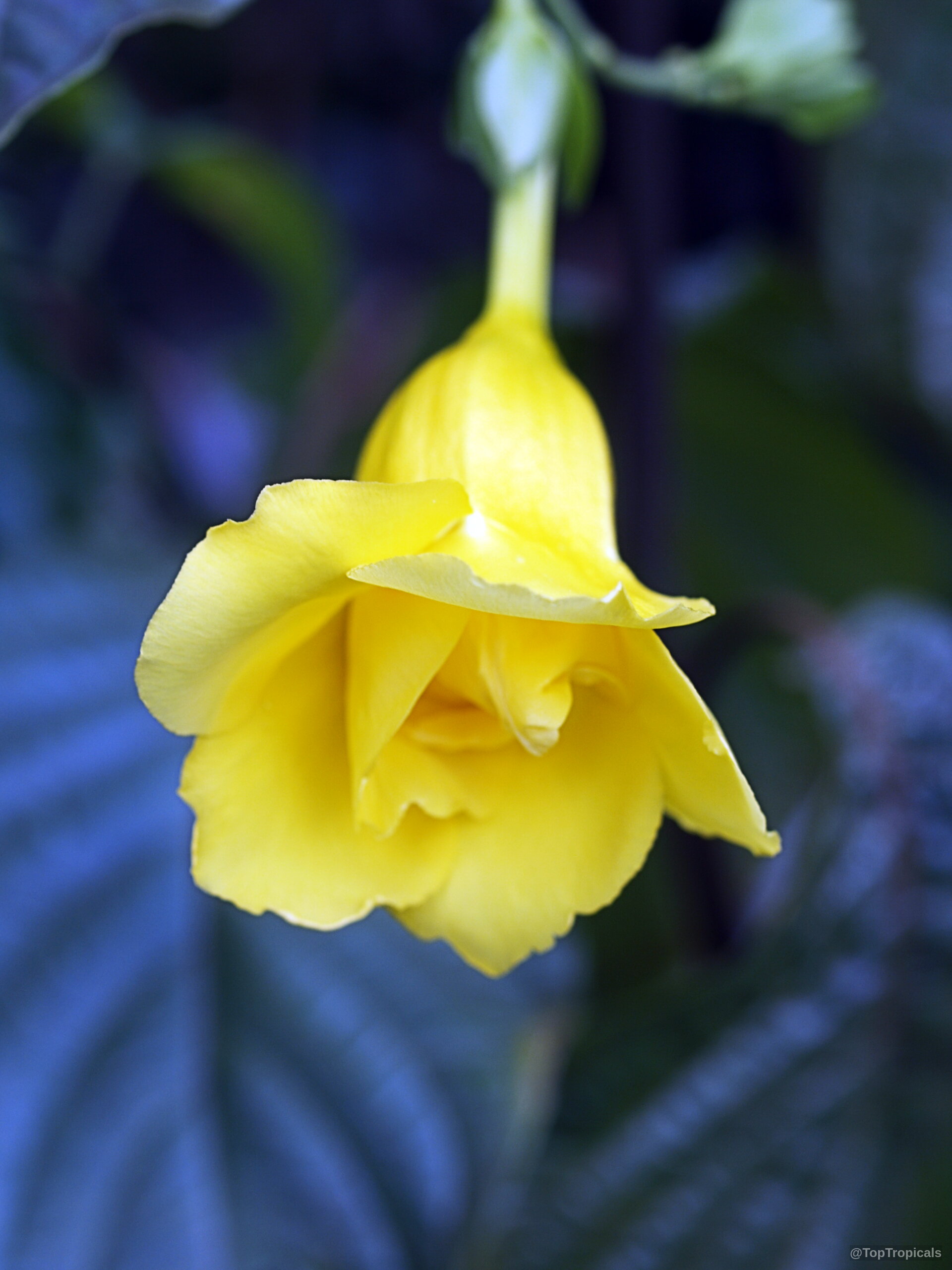
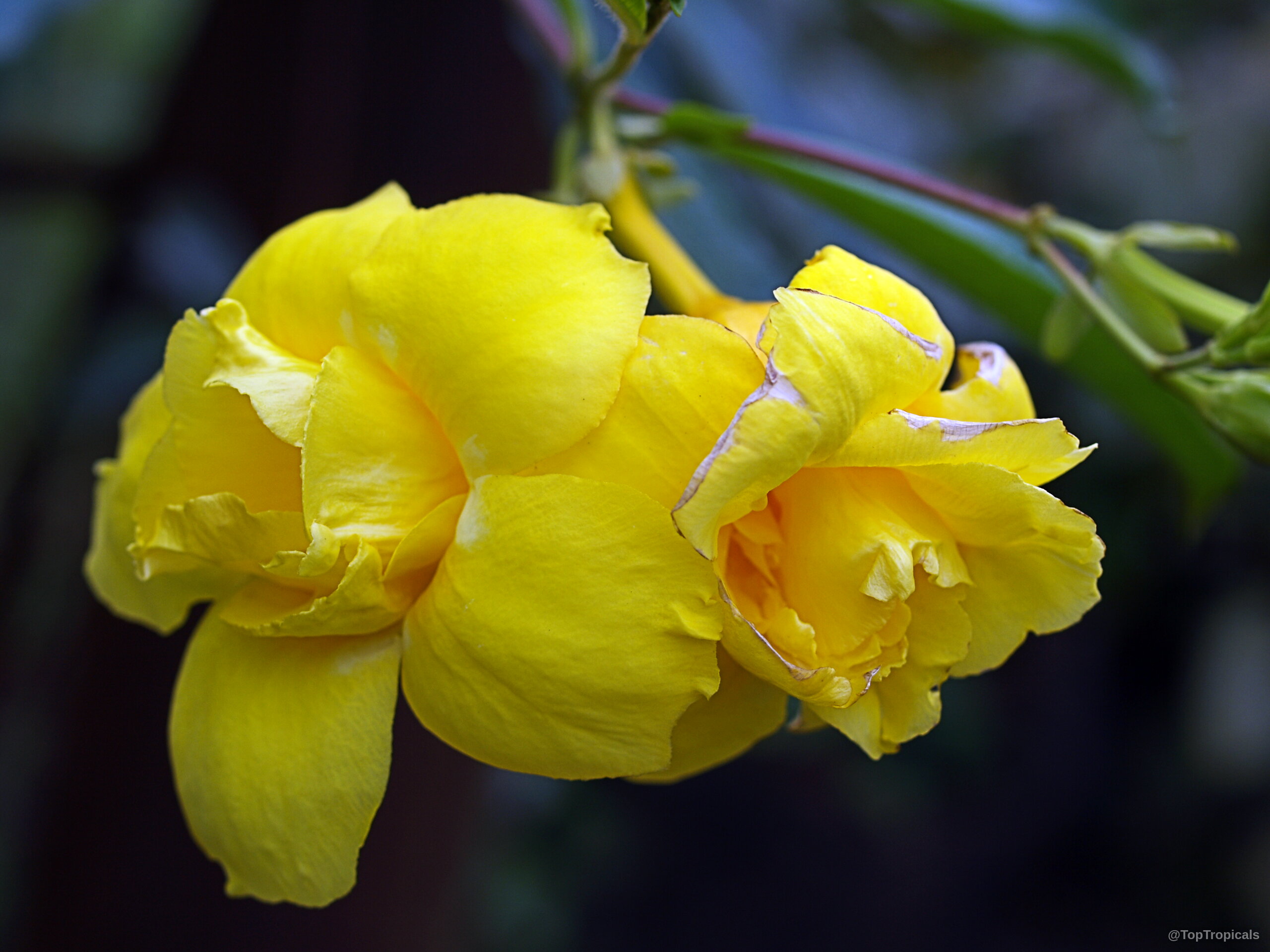
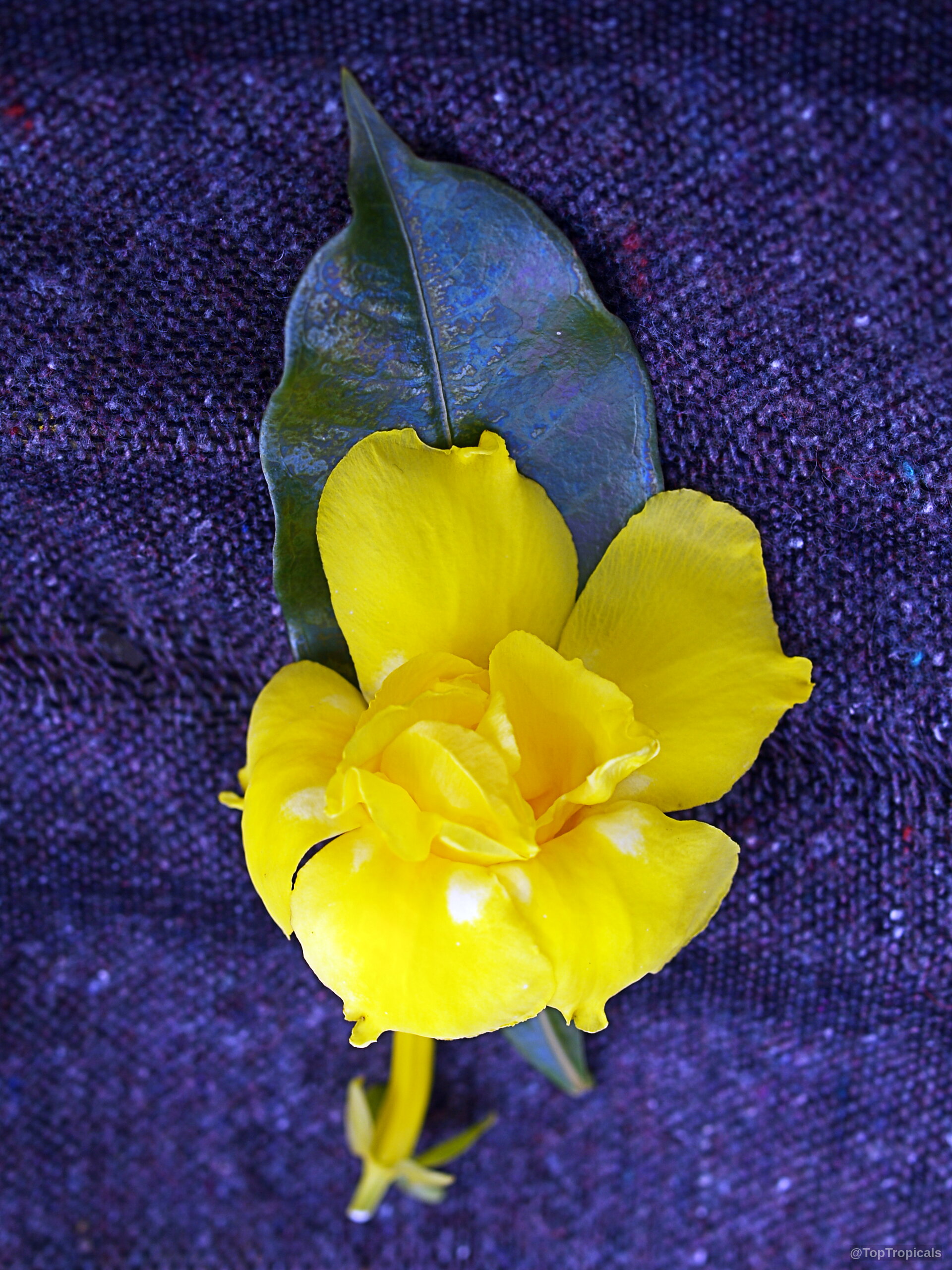
Native to Tropical America, Allamanda williamsii or golden trumpet vine is a beautiful ever-blooming vine, which produces bright yellow or orange double trumpet-like flowers. Its flower is fragrant and blooms all year round. This plant has a milky white sap, which can be irritating, and should be handled with caution when pruning.
Golden trumpet vine can be grown in a variety of soil types, in USDA zones 9 to 11. The plant grows best in semi-shaded conditions and needs to be watered regularly. If it is planted in a cold region and grown in pots, it needs to protected from frost and cold winds and should be taken indoors during the winter. It should not be fertilized during the winter months but can be cut back if necessary.
The vine typically withstands heat and humidity and also adapts to varied soil conditions. It can also be grown in containers. When planting in a container, it may require additional pruning and frequent watering to maintain its height and keep the soil moist.
Overall, the golden trumpet vine grows well in most places, provided it is given the right amount of care. Its bright and cheerful flowers make it an ideal choice for brightening up a garden and adding color.

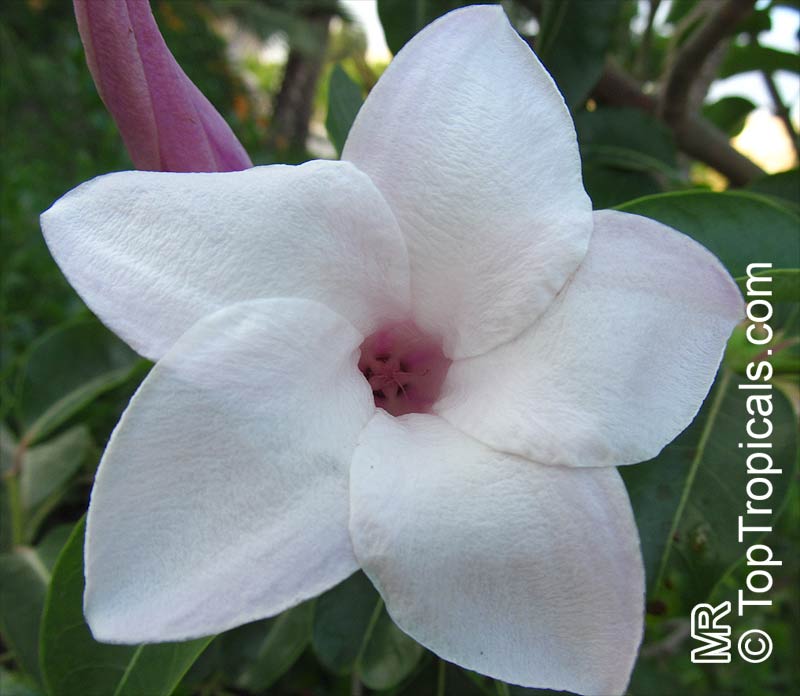
Botanical name: Cryptostegia grandiflora
Common names: Rubber vine, Purple Allamanda
Family: Apocynaceae (Formerly:Asclepiadaceae)
Subfamily: Periplocoideae
Origin: Madagascar And Tropical Africa
USDA Zone: 10-11
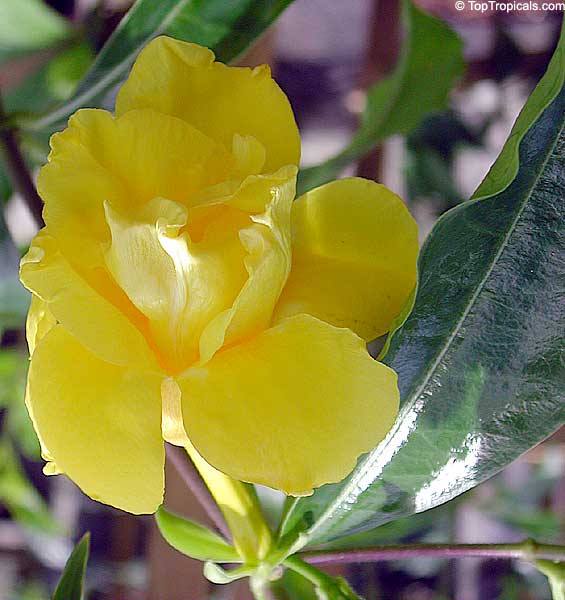
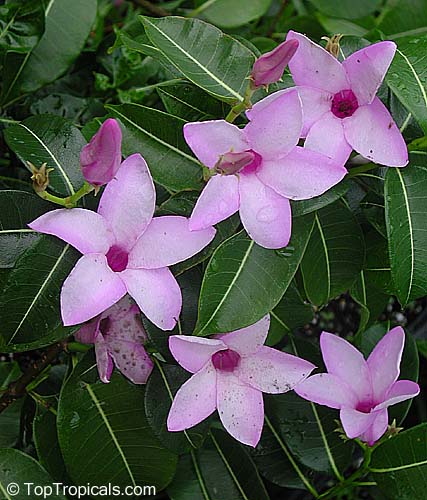
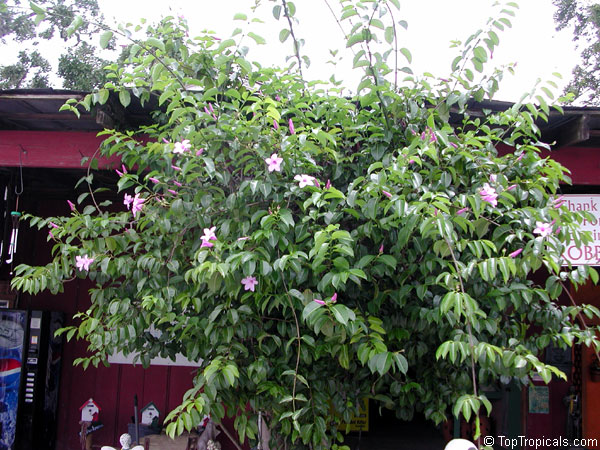
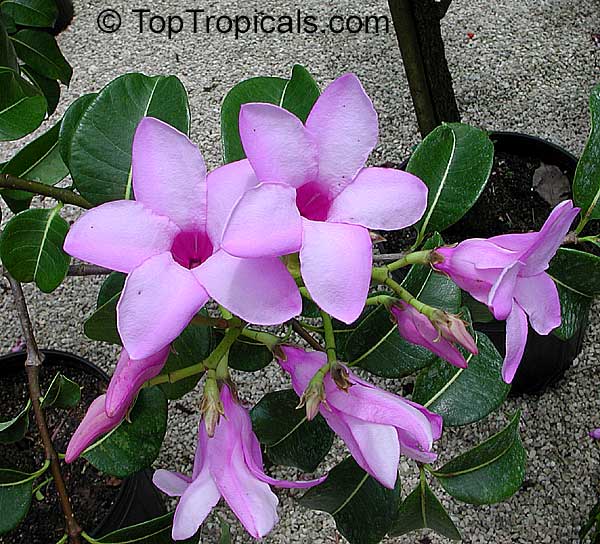
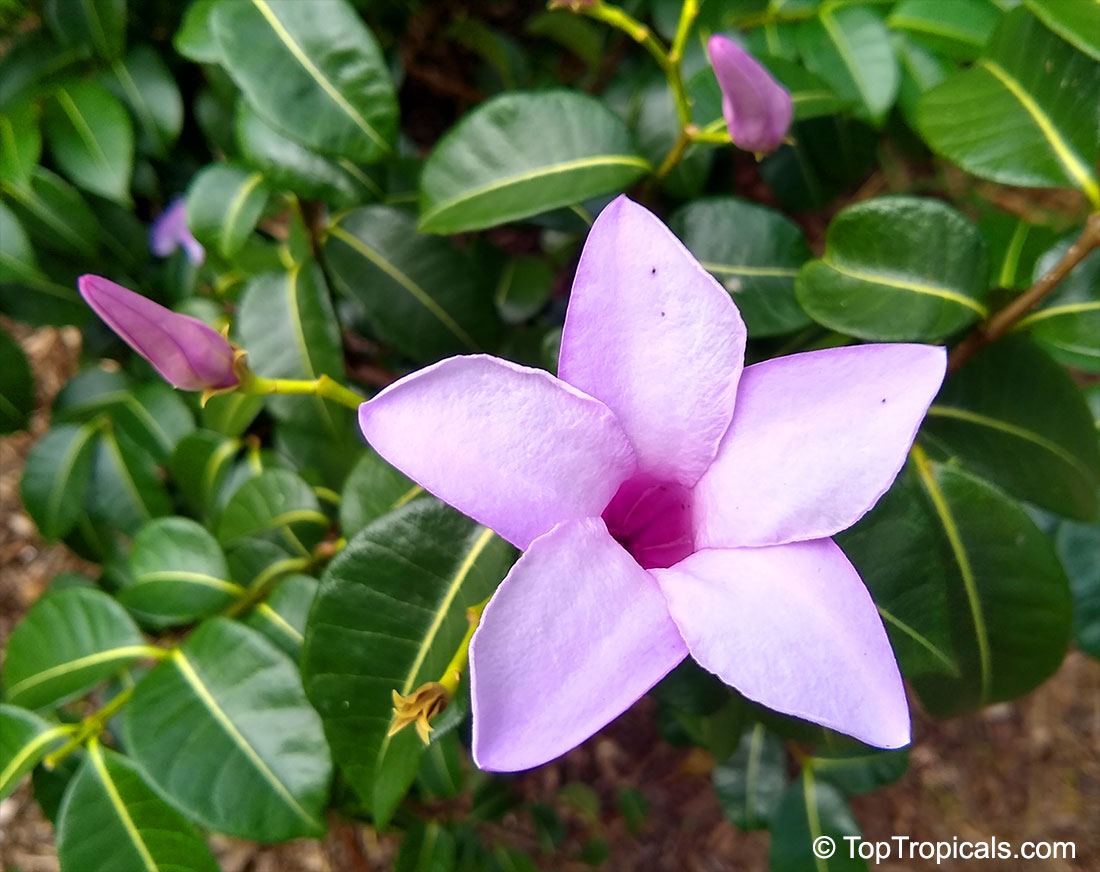
Cryptostegia grandiflora, commonly known as thePurple Allamanda, is a vigorous vine or creeper native to Madagascar and tropical parts of Africa. Its glossy foliage adds a spectacular color to the garden. It produces masses of pink flowers during mid-summer, which are very attractive to bees and hummingbirds.
This plant prefers full sun to semi-shade, and requires regular watering and fertilizing in order to thrive. Rubbervines are highly tolerant of salty coastal winds and can tolerate periods of drought.
Be aware that Cryptostegia grandiflora has irritating sap and should be handled with gloves. It is an aggressive plant, so plant in an area with plenty of room for it to grow. It can also be grown in large containers.
Cryptostegia grandiflora is cold hardy at least to the 30s F for a short period of time, so it can be grown in USDA Zone 10-11. In colder regions, it can be grown in a pot and brought indoors during the winter. When grown in a pot, the soil should be kept moist and fertilized regularly.
For best success, use a good-quality potting soil and make sure the container has plenty of drainage holes. Water thoroughly when the surface of the soil starts to feel dry, and avoid over-watering. Make sure the plant is in direct sunlight for at least 6 hours per day. Also, provide additional warmth with the help of a heat mat to maintain the plant's tropical temperature requirements.
Cryptostegia grandiflora is a striking, evergreen perennial that can be easily grown in a tropical climate. With regular watering, fertilizing, and adequate sunlight, it can thrive and provide a vibrant color to your garden.


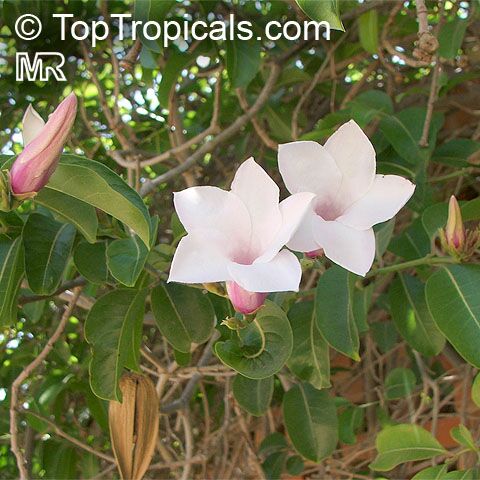
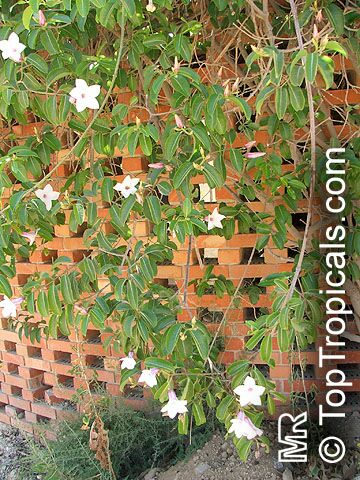
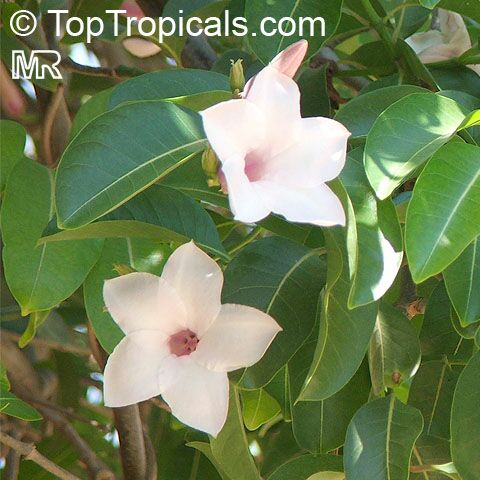
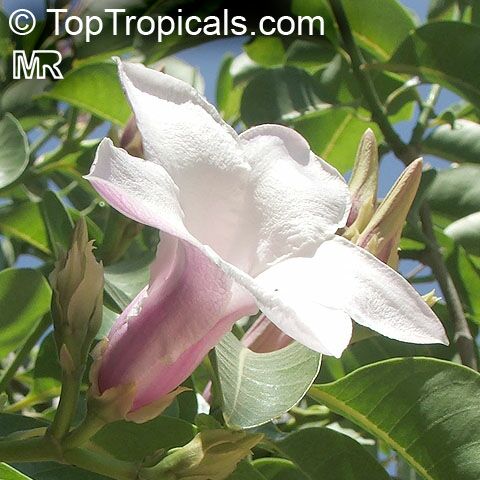
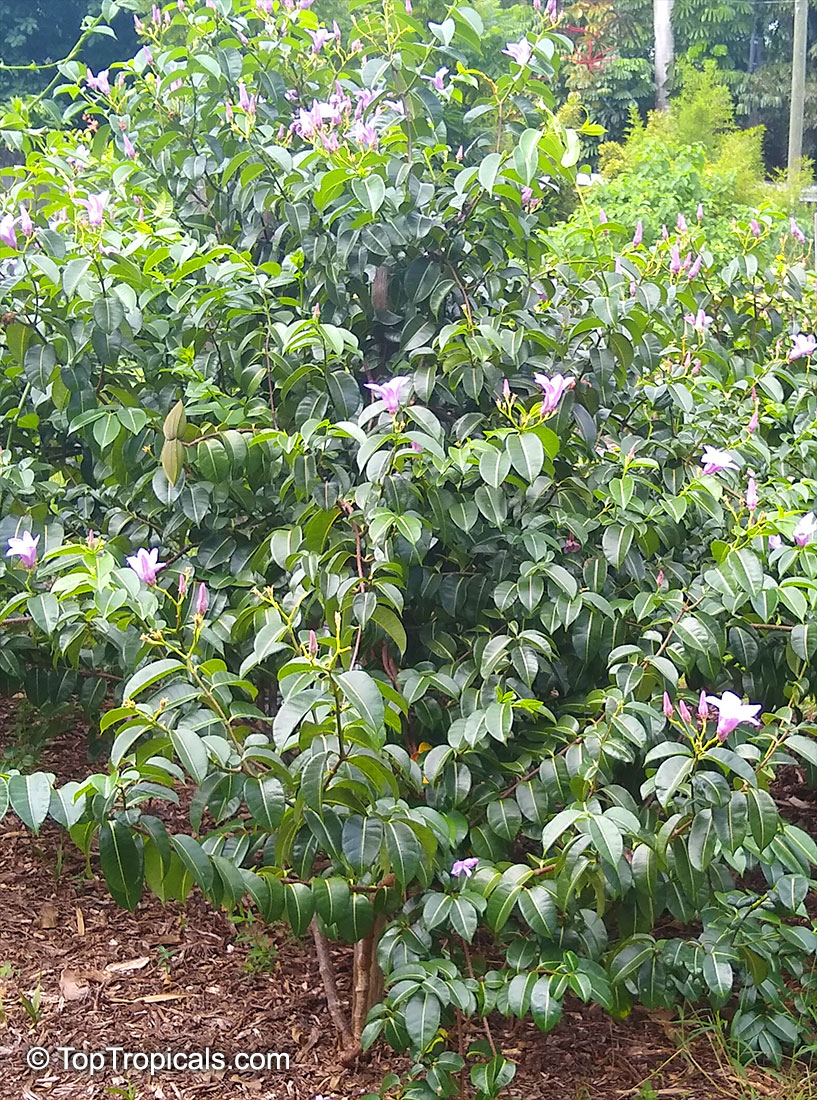
Botanical name: Cryptostegia madagascariensis
Common names: Rubber vine, Purple Allamanda
Family: Apocynaceae (Formerly:Asclepiadaceae)
Subfamily: Periplocoideae
Origin: Madagascar
USDA Zone: 10-12


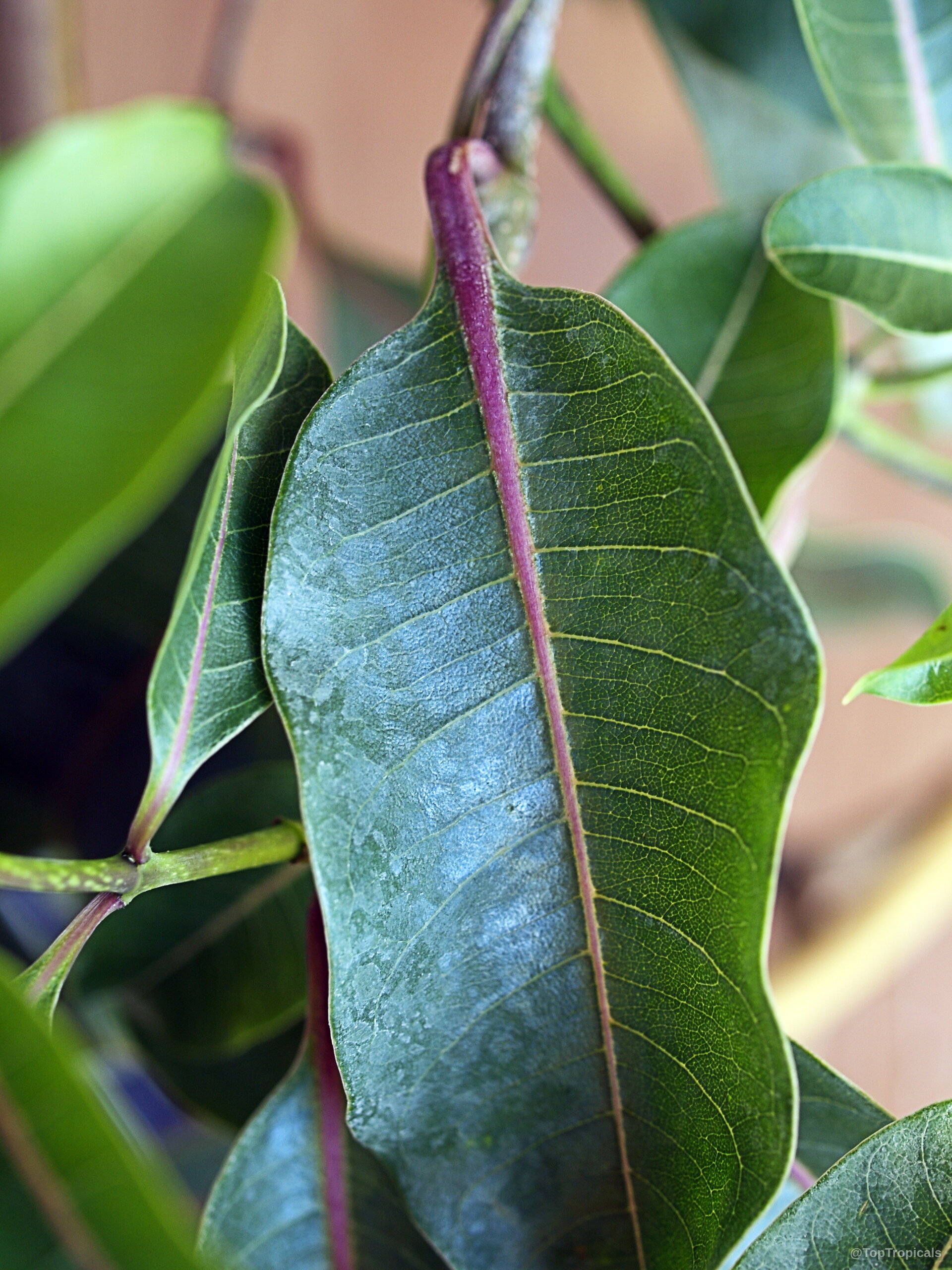
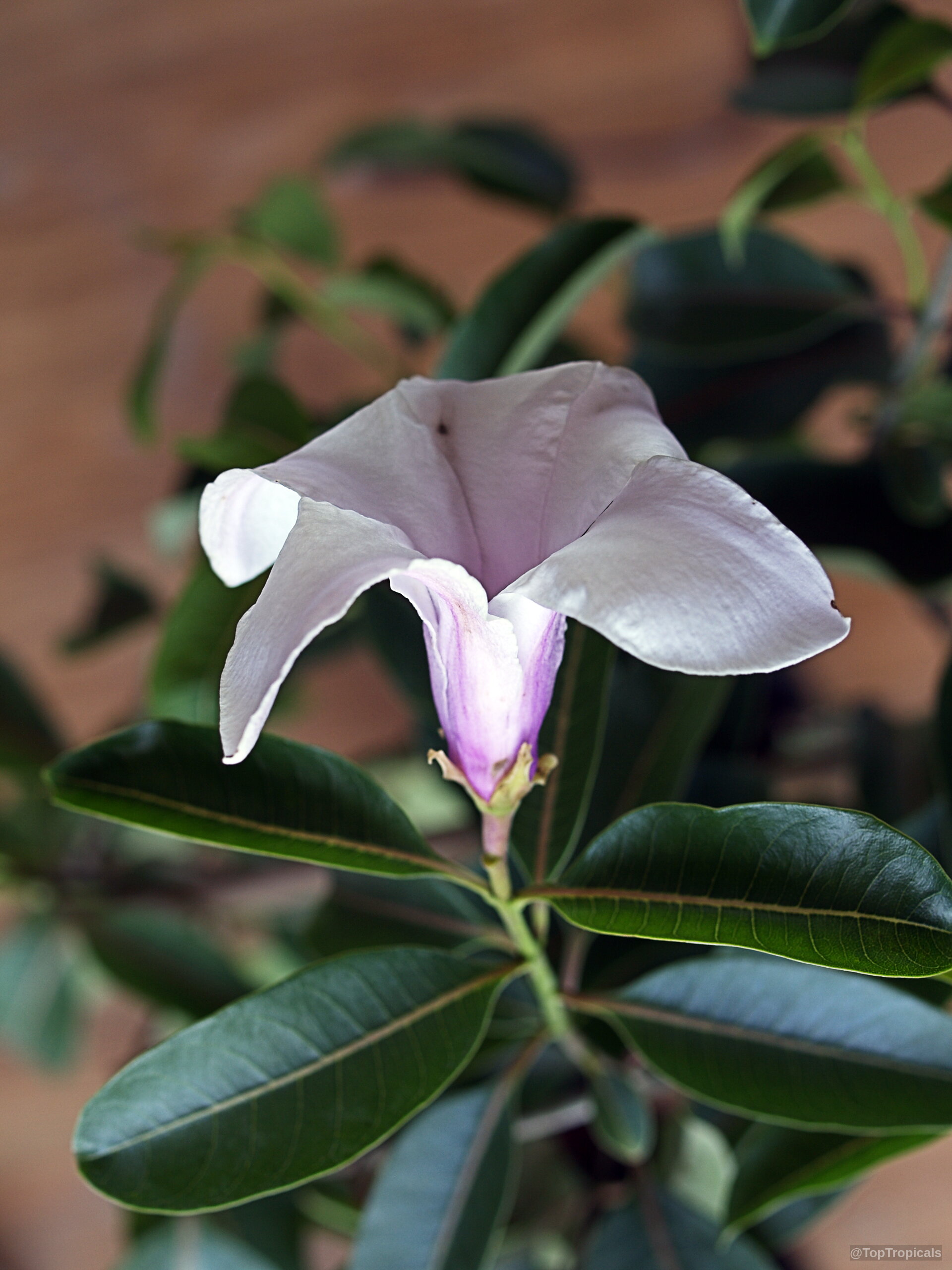
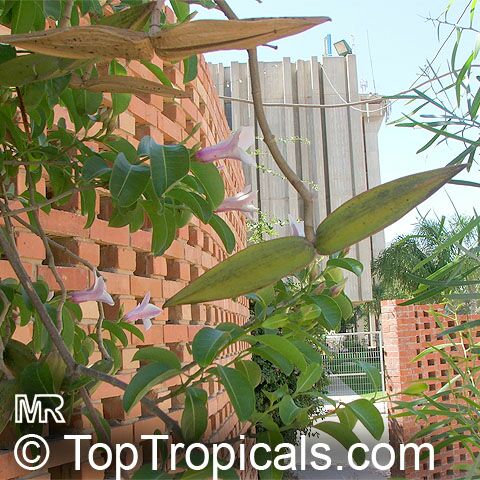
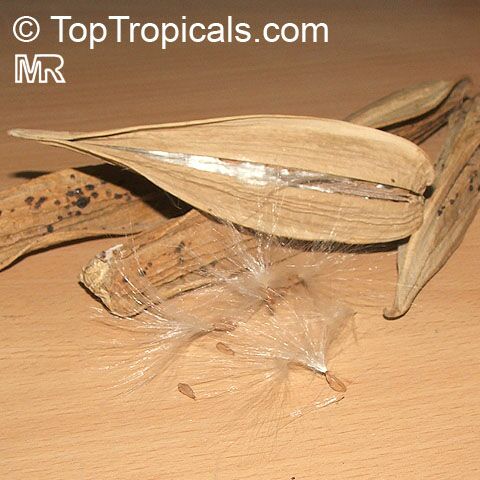
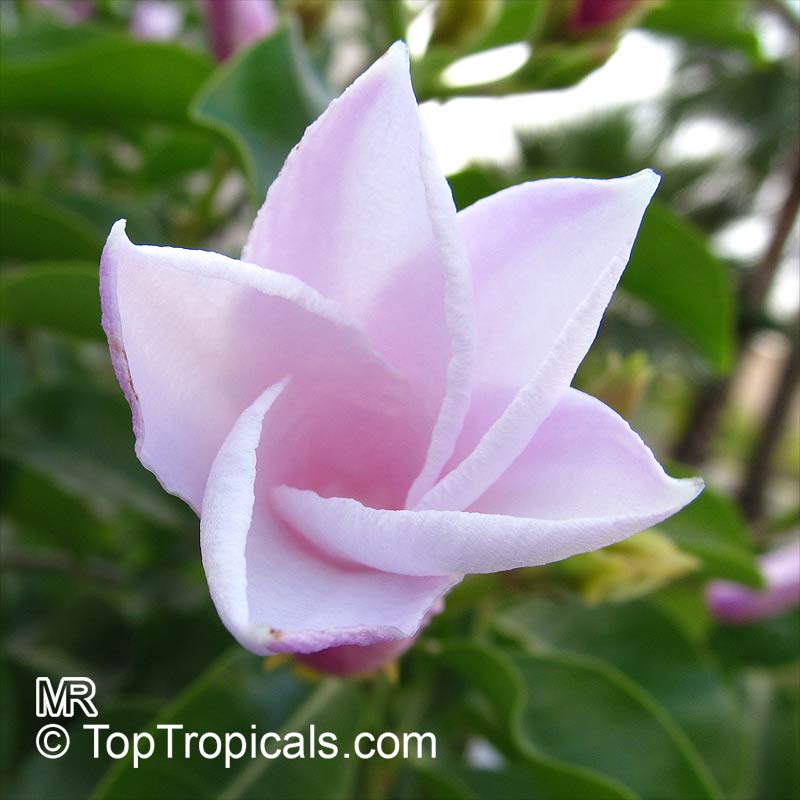
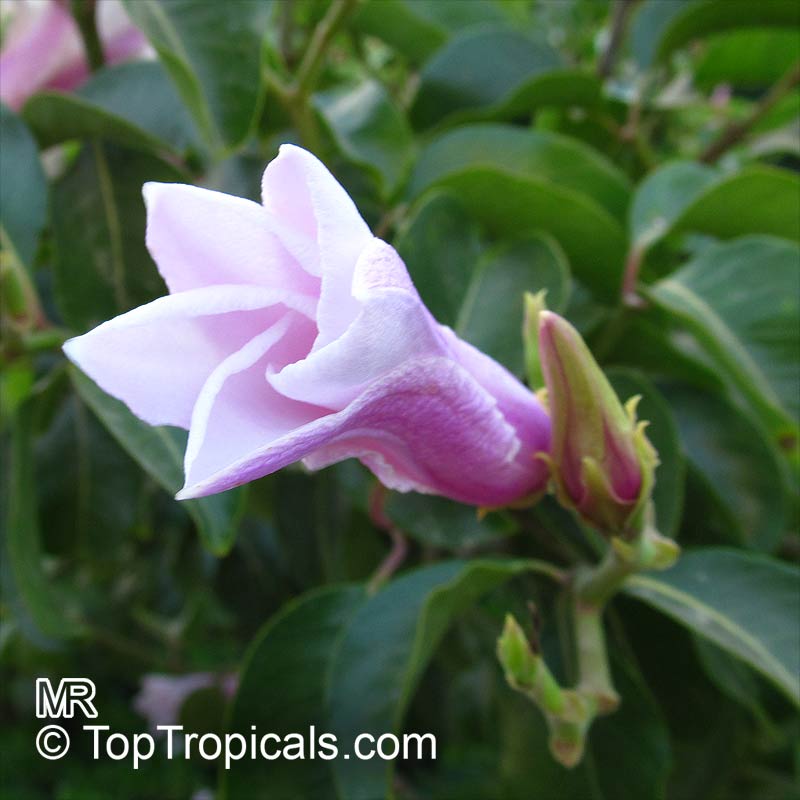
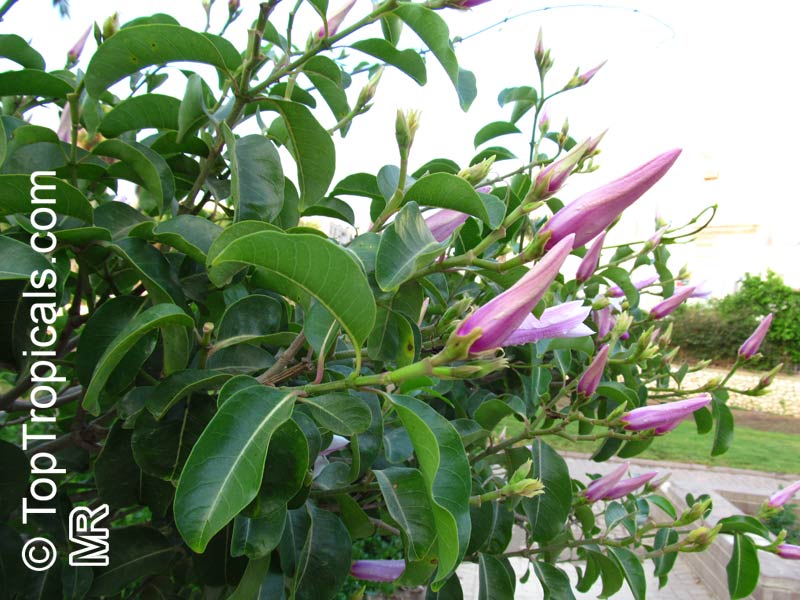
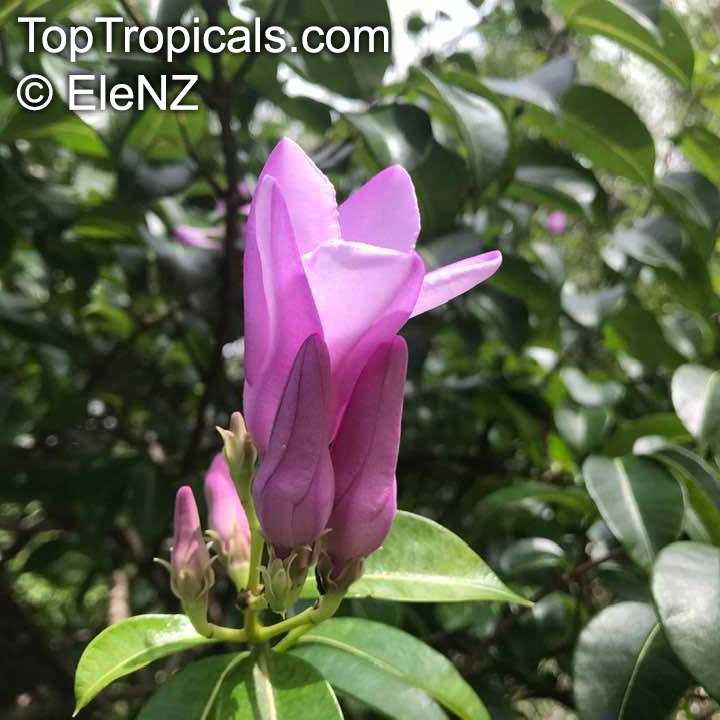
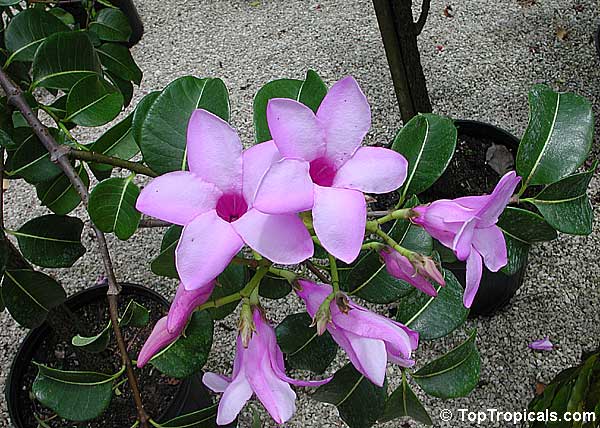
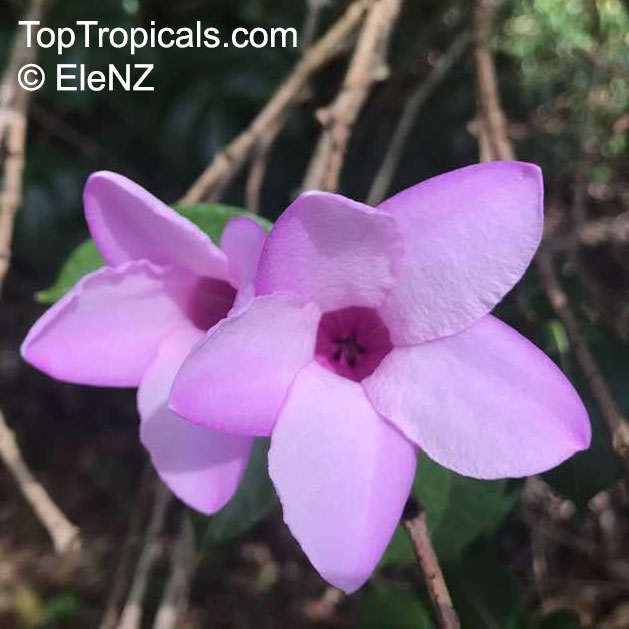
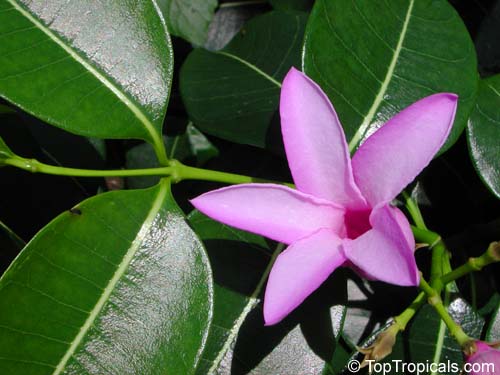
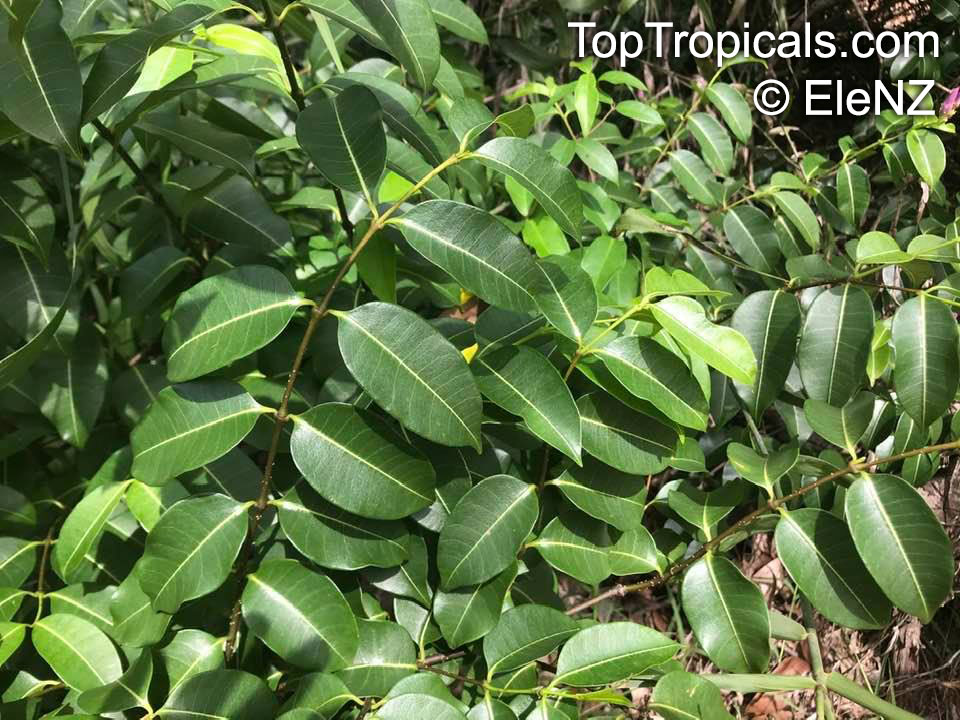
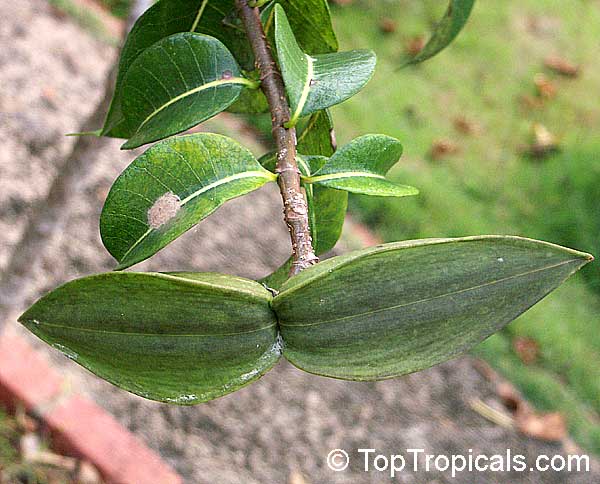
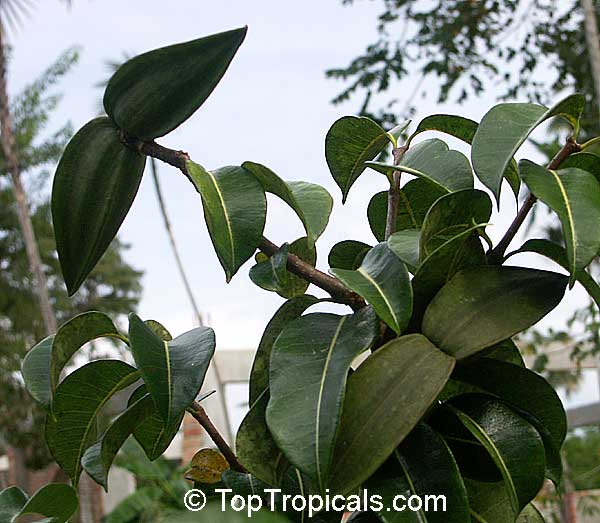
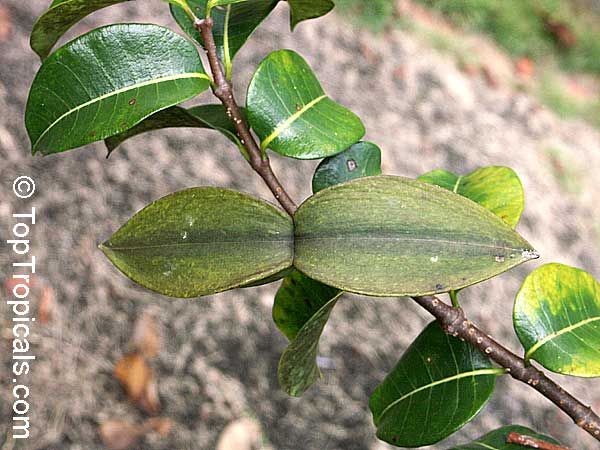
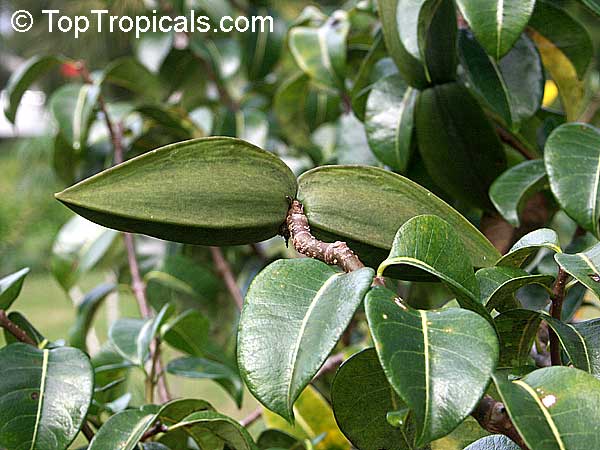
The Madagascar rubbervine originates from Madagascar and was formerly grown there and later in India to produce a poor quality rubber latex. Has large (2" across), showy, lilac flowers with a broad funnel-shaped tube and five spreading lobes. Leaves are very ornamental, wide, deep green and waxy. This exotic woody vine poses a significant threat to northern Australian savanna landscapes. The Rubber Vine is poisonous it contains glucosides interfering with the heart, and ingesting with provoke stomach and intestinal upset. When trimming wear gloves since the sap is very irritating to the skin, and discard what you trimmed rapidly, because the dust from dried plants is also irritating.
| Next | |
Use link to repeat this search:
https://toptropicals.com/cgi-bin/garden_catalog/cat.cgi?find=allamanda&search_op=and&keyword_op=and&language=e&number=10
&no_change_lang=1&user=tt&sale=1&first=0