Phoenix dactylifera (Date Palm)
Botanical name: Phoenix dactylifera
Common name: Date Palm
Family: Arecaceae / Palmae
Origin: Middle East
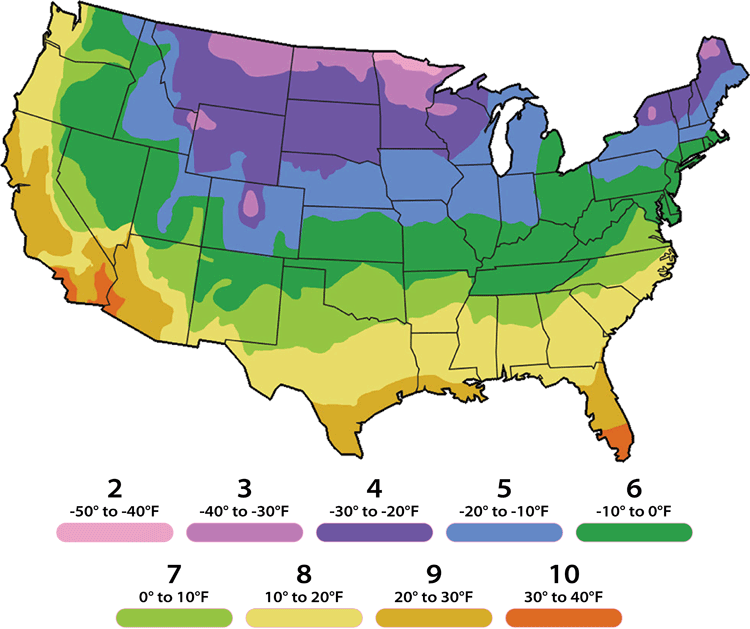
USDA Zone: 9-11
 Plant form: Large tree
 Mature height: 20 ft or more
 Sun exposure: Full sun or bright light indoor
 Cold tolerance: Frost sensitive. Protect from freezing.
 Watering: Moderate
 Suitable for: Outdoors in the suitable USDA zone; large gardens
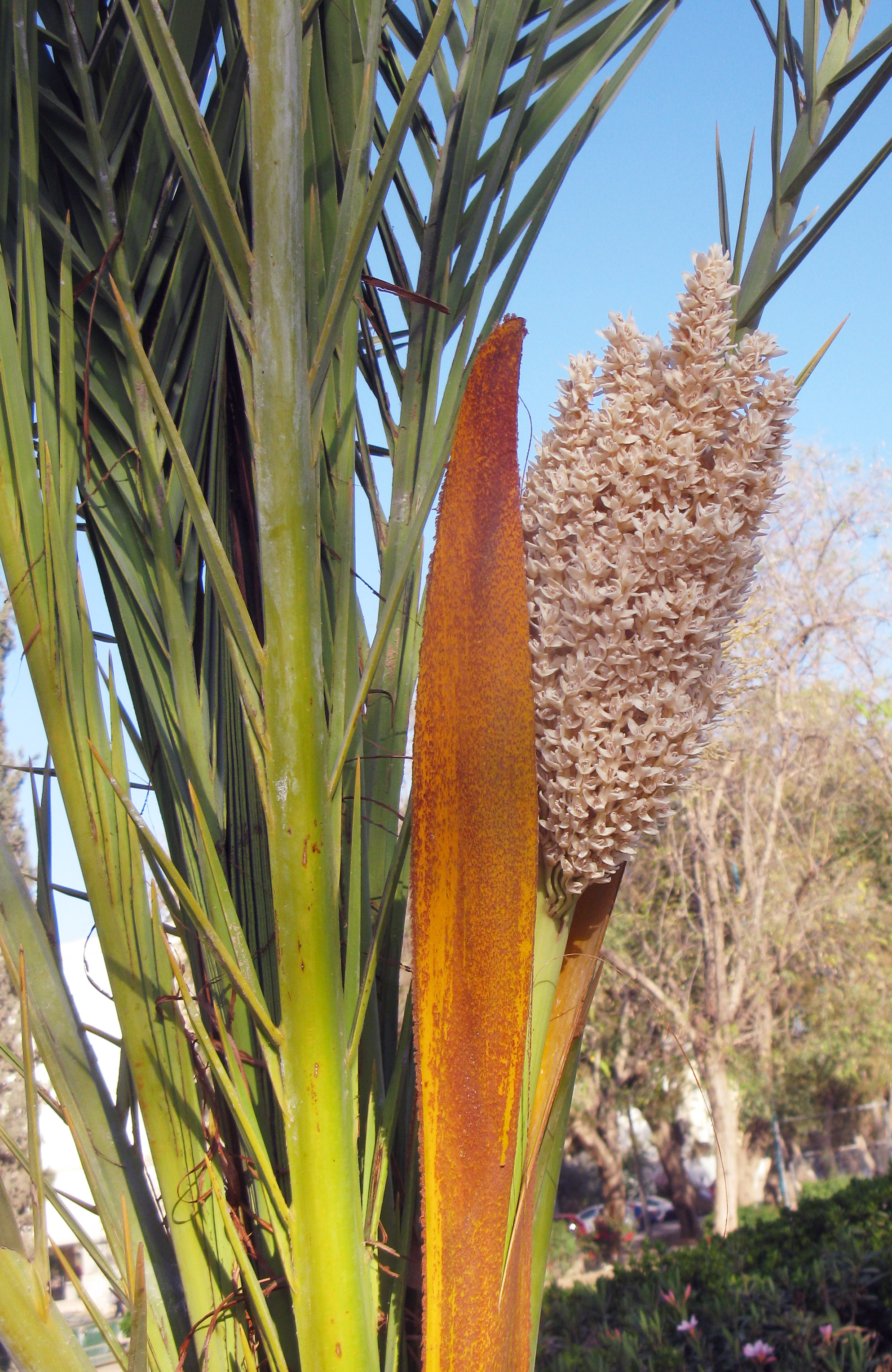
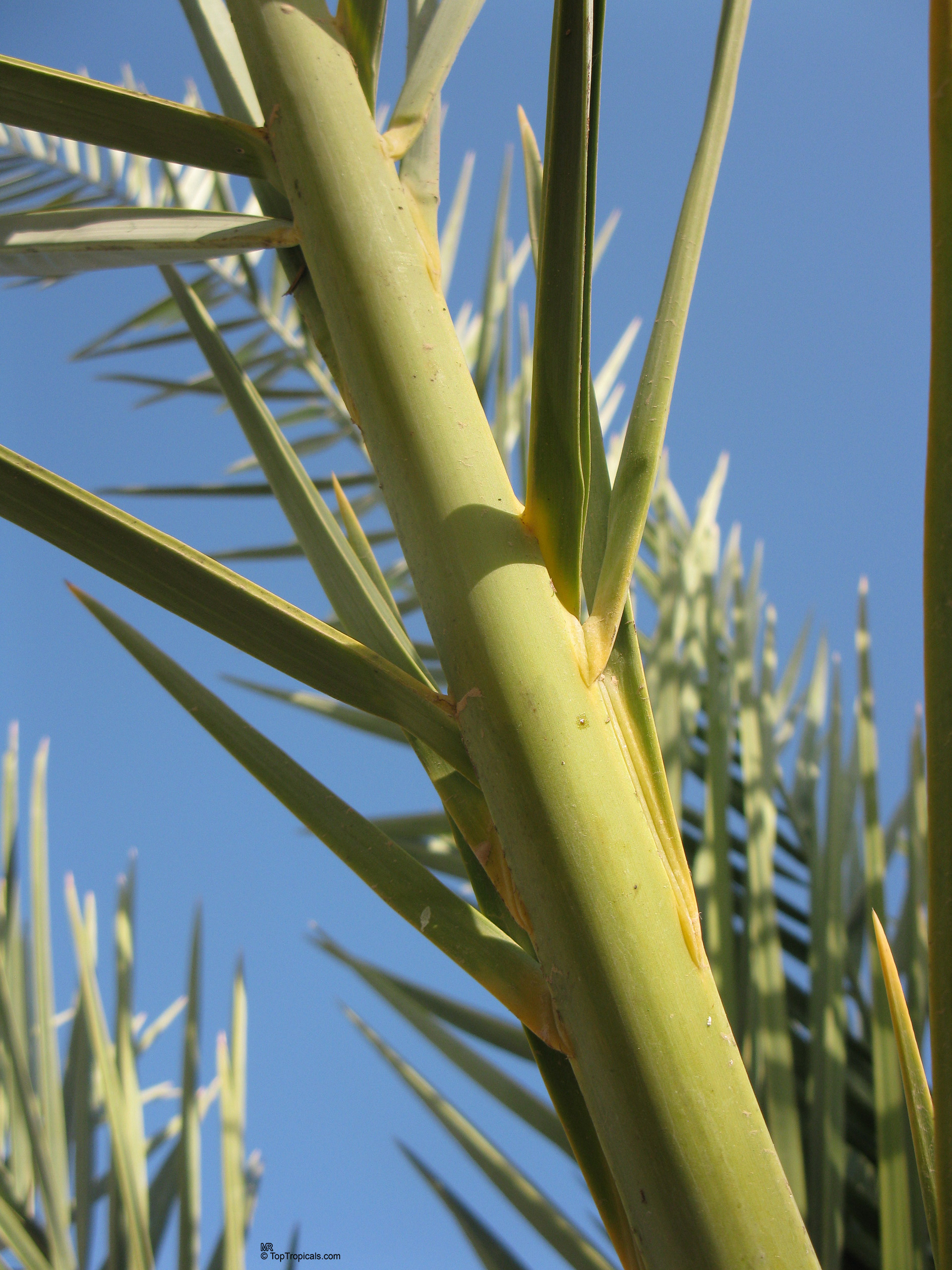
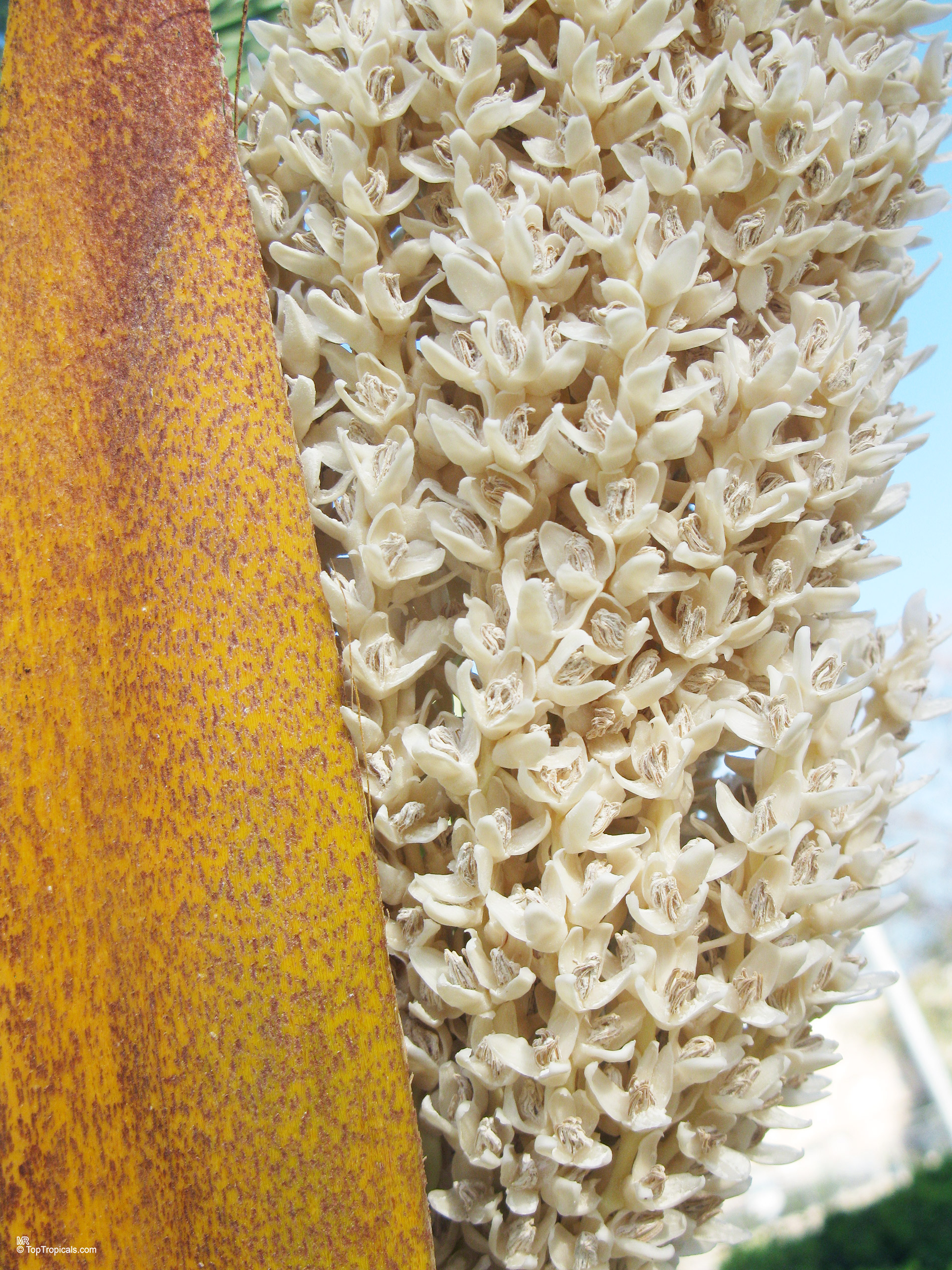
Phoenix dactylifera, commonly known as Date Palm, is a large dioecious palm in the Arecaceae family, cultivated for its edible fruits for thousands of years. Its native range is considered to extend from the Arabian Peninsula through Iran and Iraq to southern Pakistan, although its extremely long history of cultivation makes the details of its early domestication difficult to reconstruct. Mature palms typically reach 50-80 feet (15-25 m) tall, developing a stout trunk topped by a crown of long, pinnate, blue-green to gray-green leaves. Basal offshoots are commonly produced, particularly by younger palms. Male and female flowers occur on separate plants, and commercial plantations therefore require female cultivars together with male pollinizers; hand pollination is widely practiced to ensure reliable fruit production.
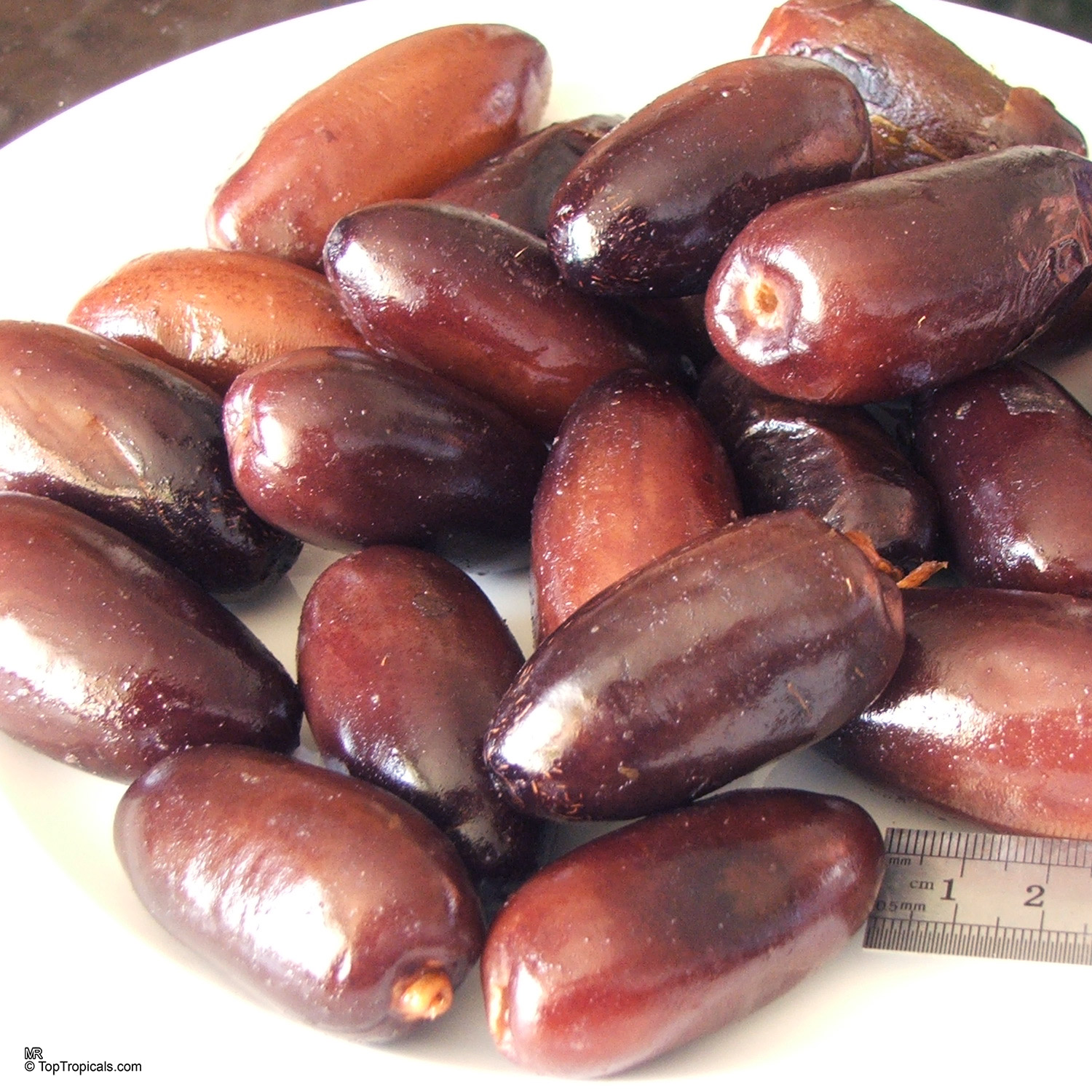
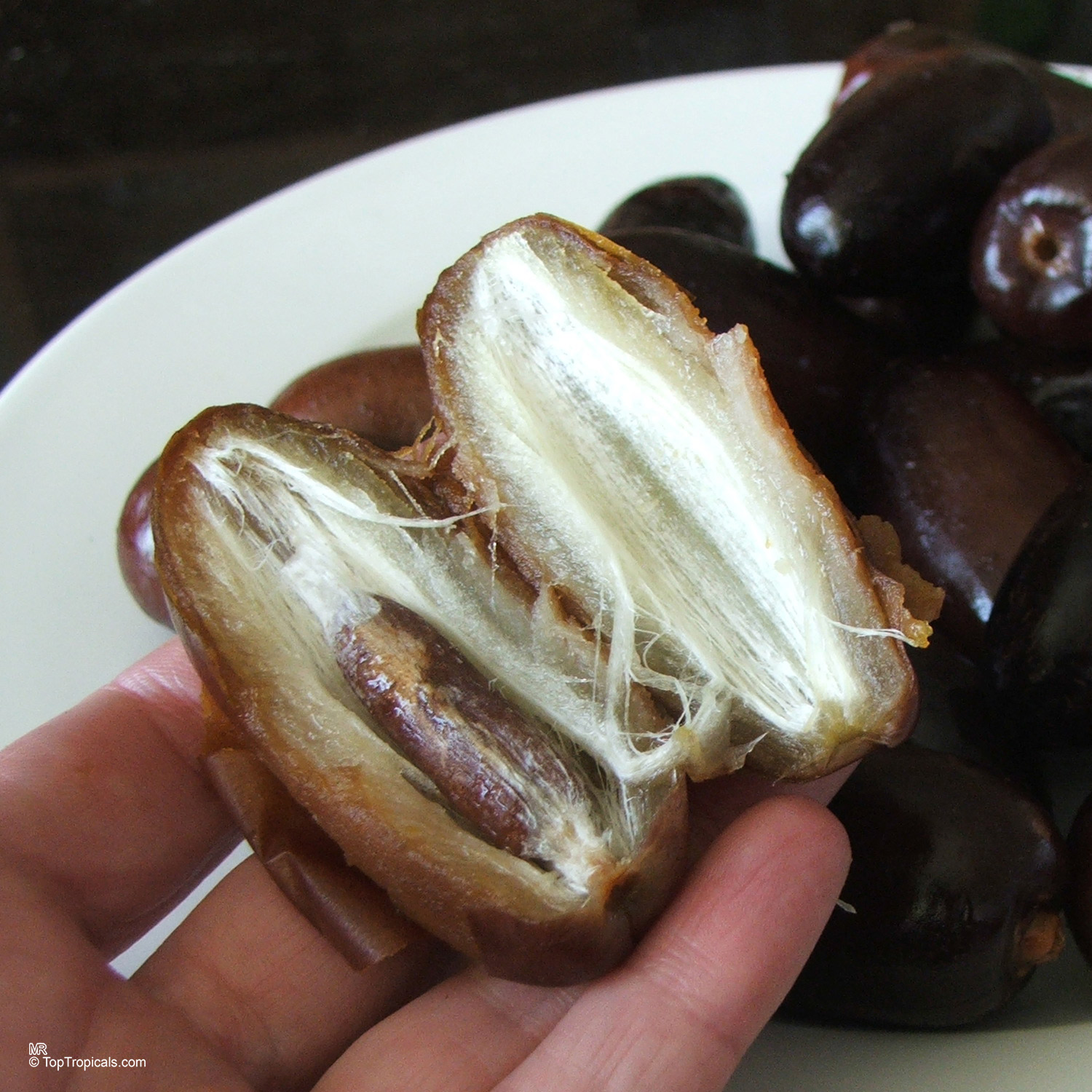
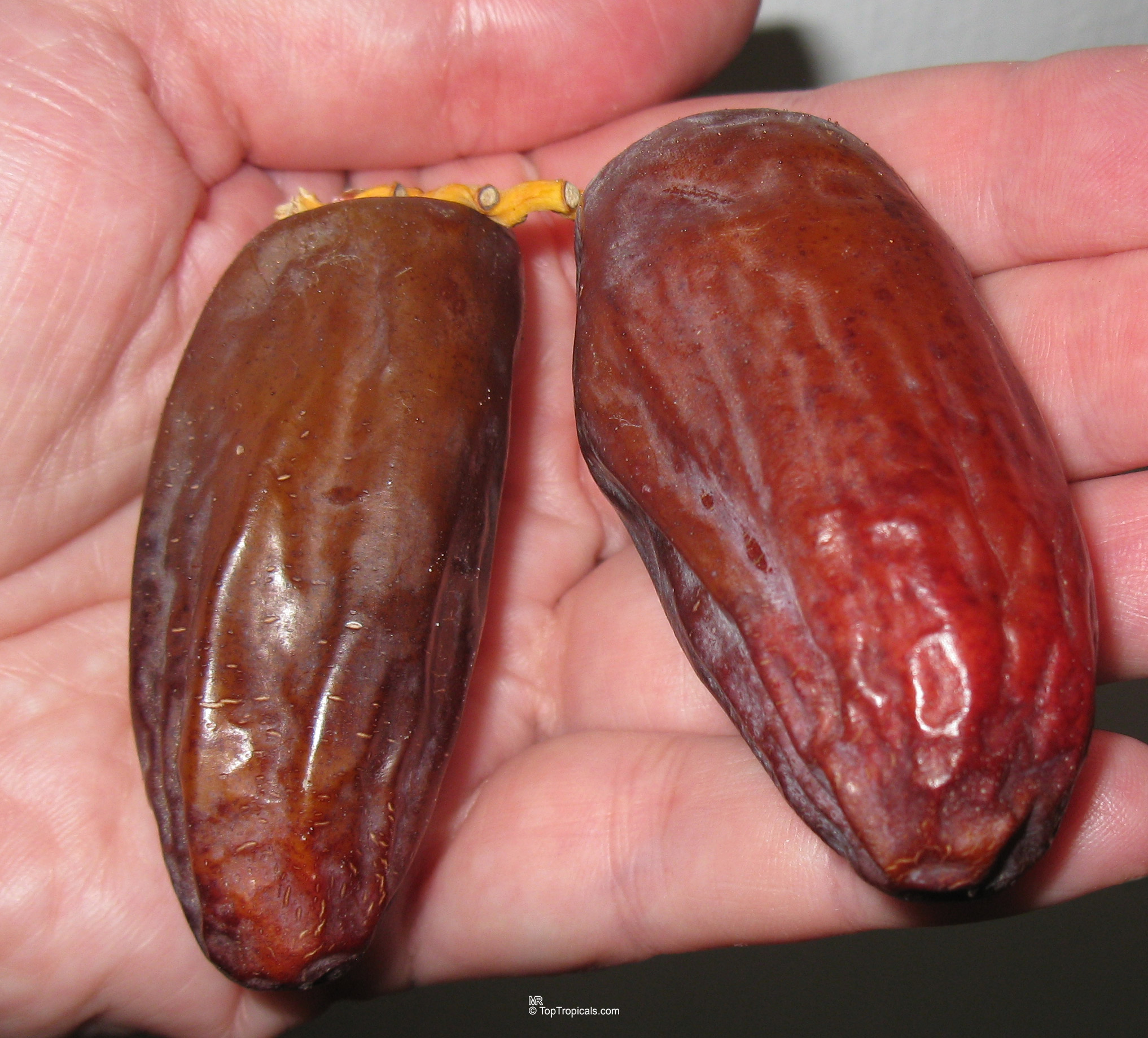
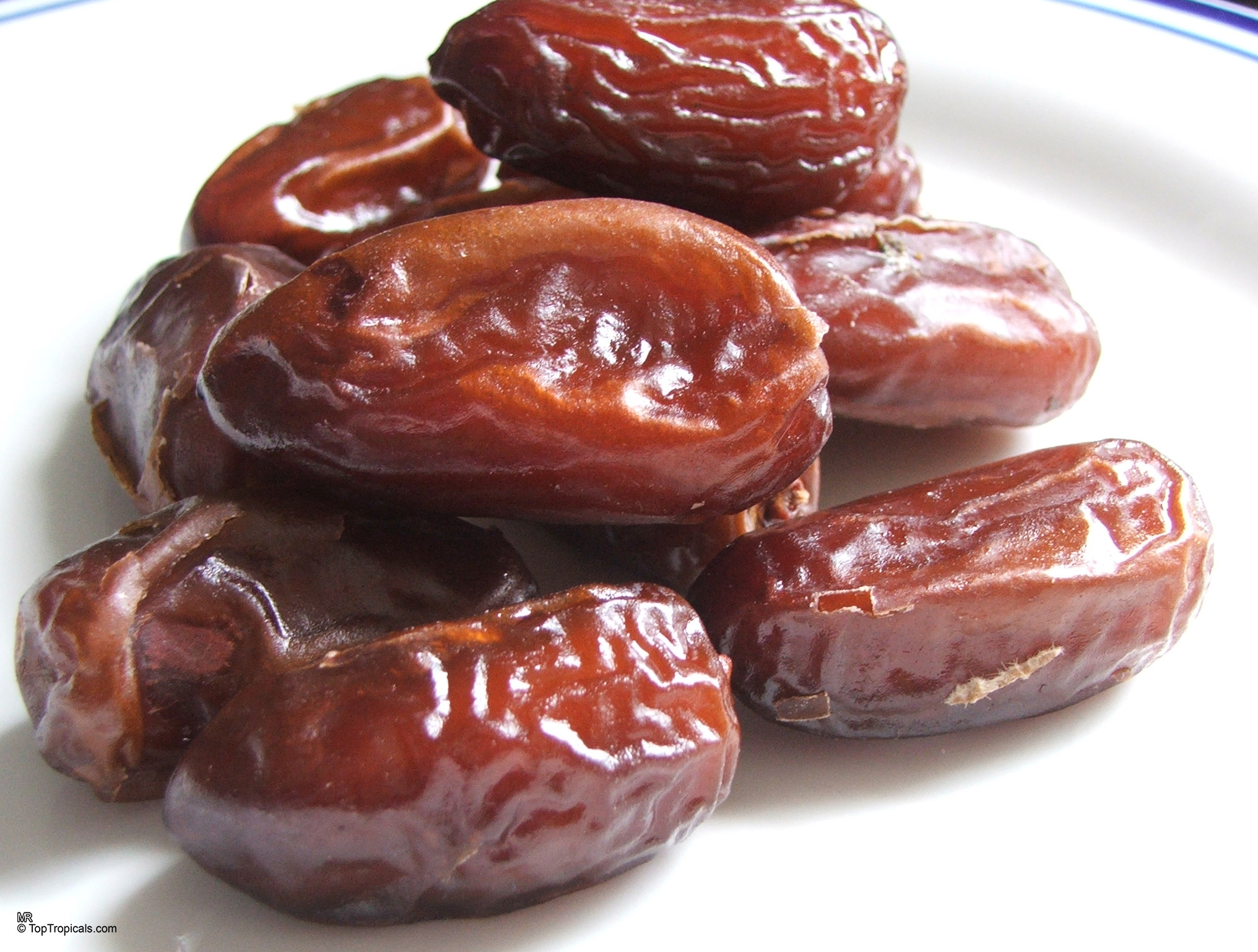
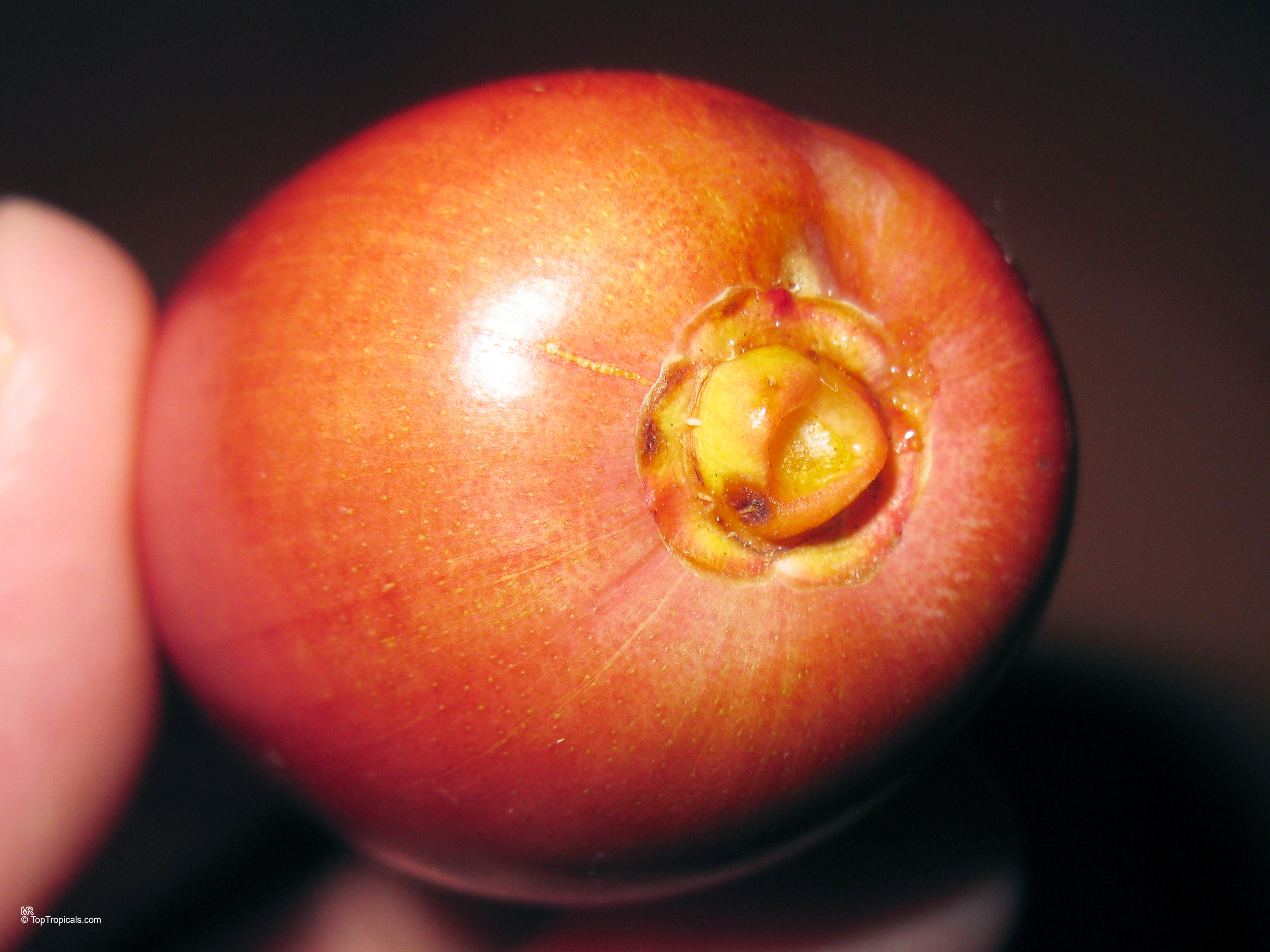
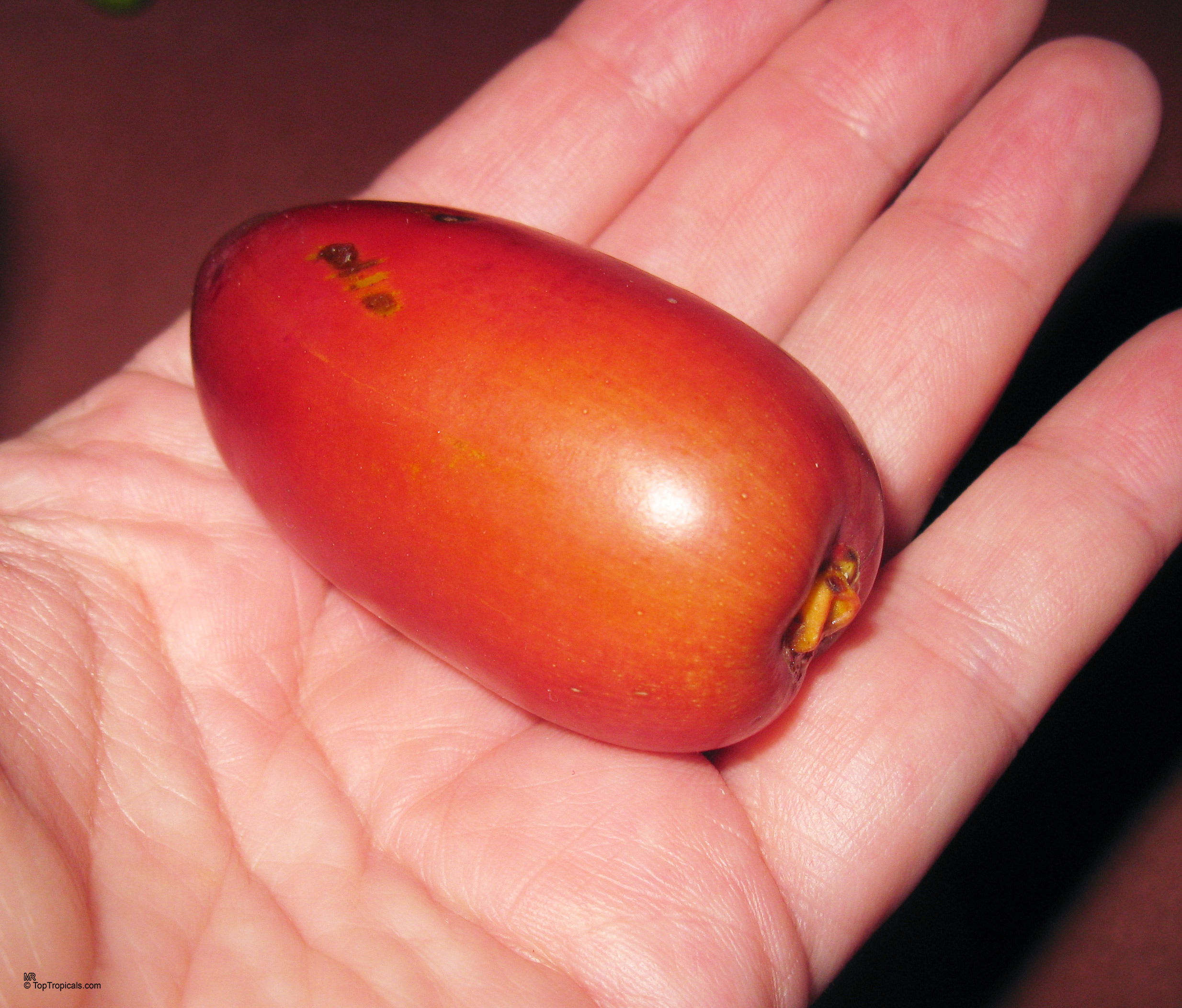
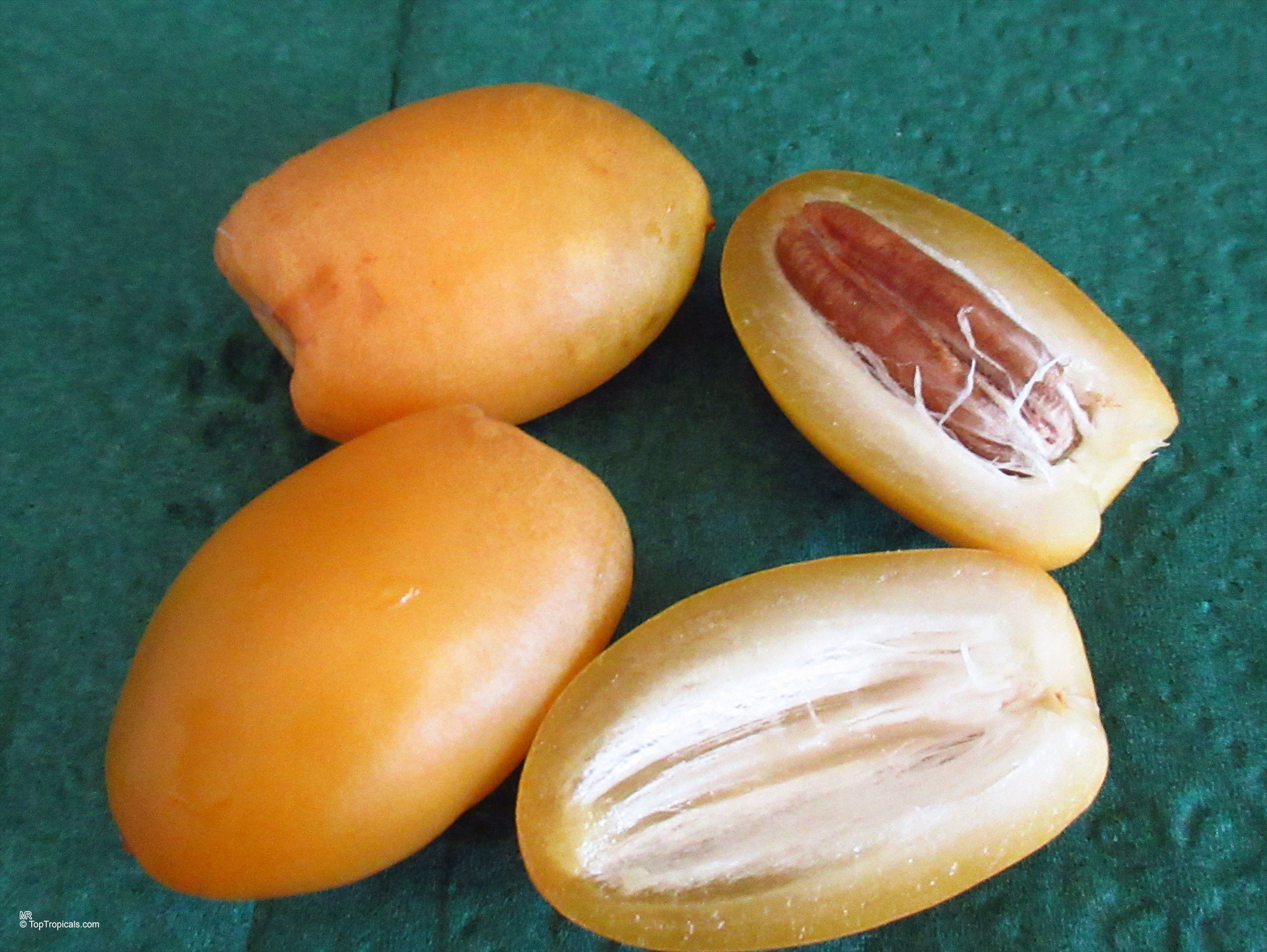
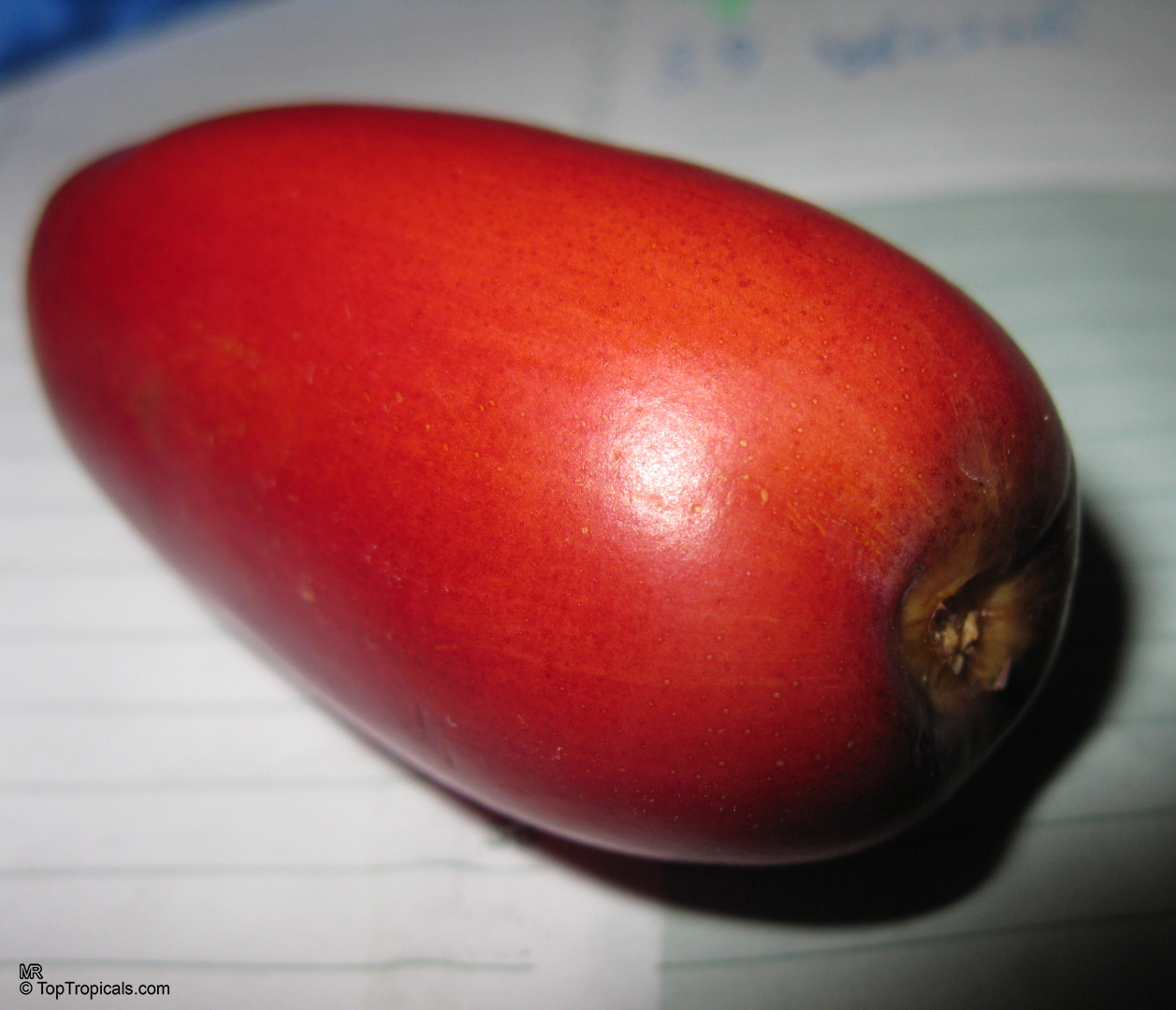
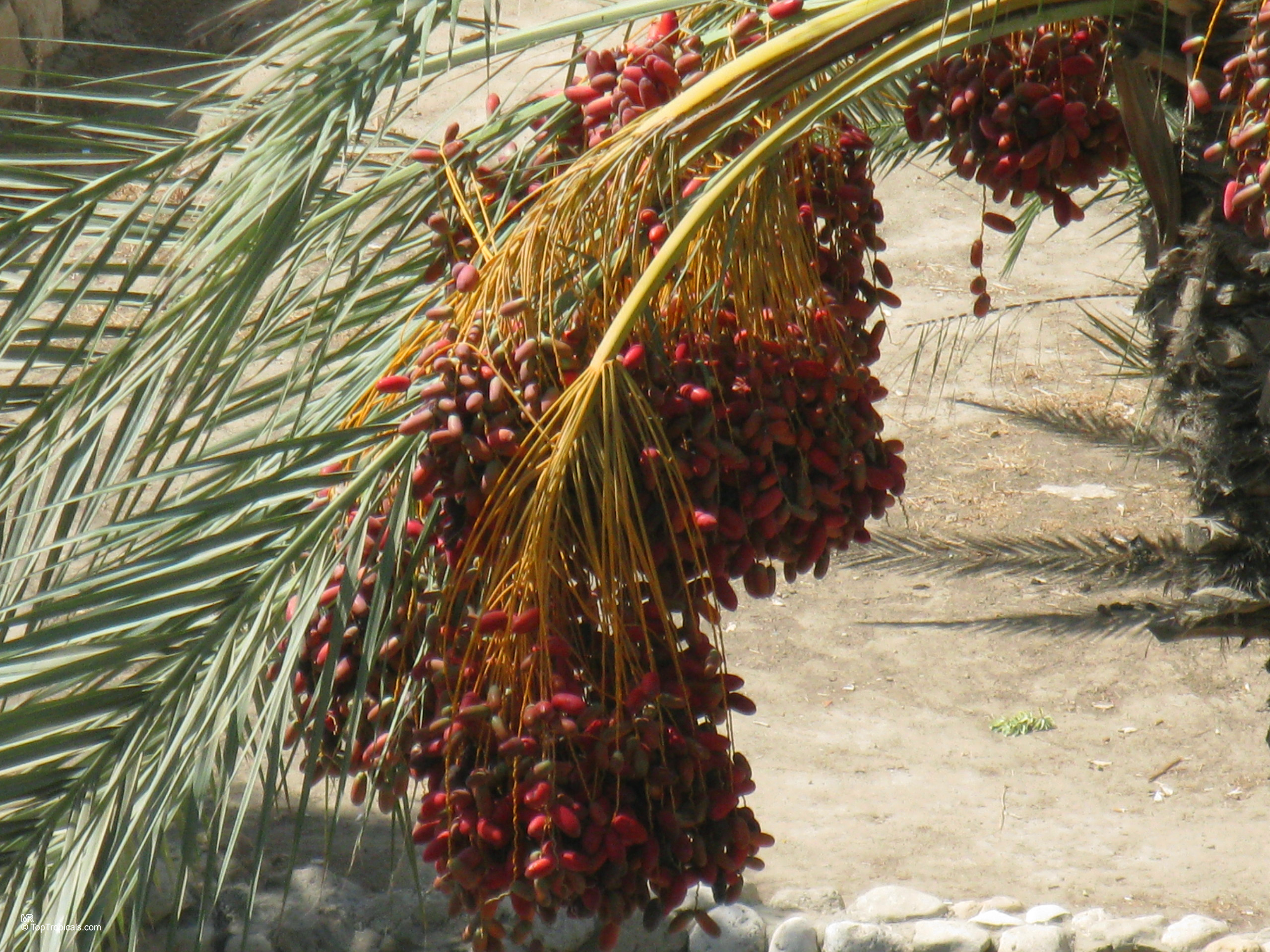
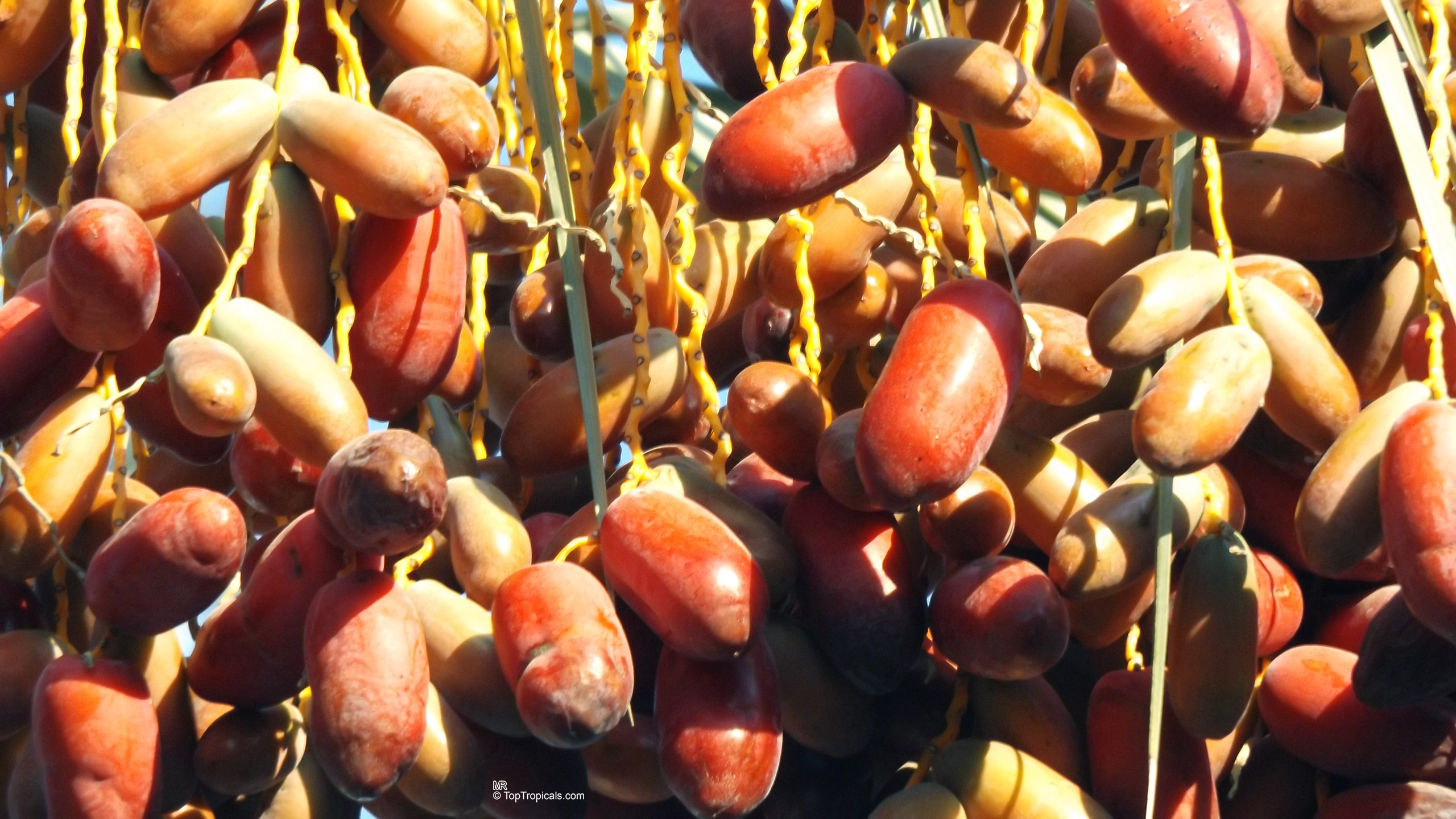
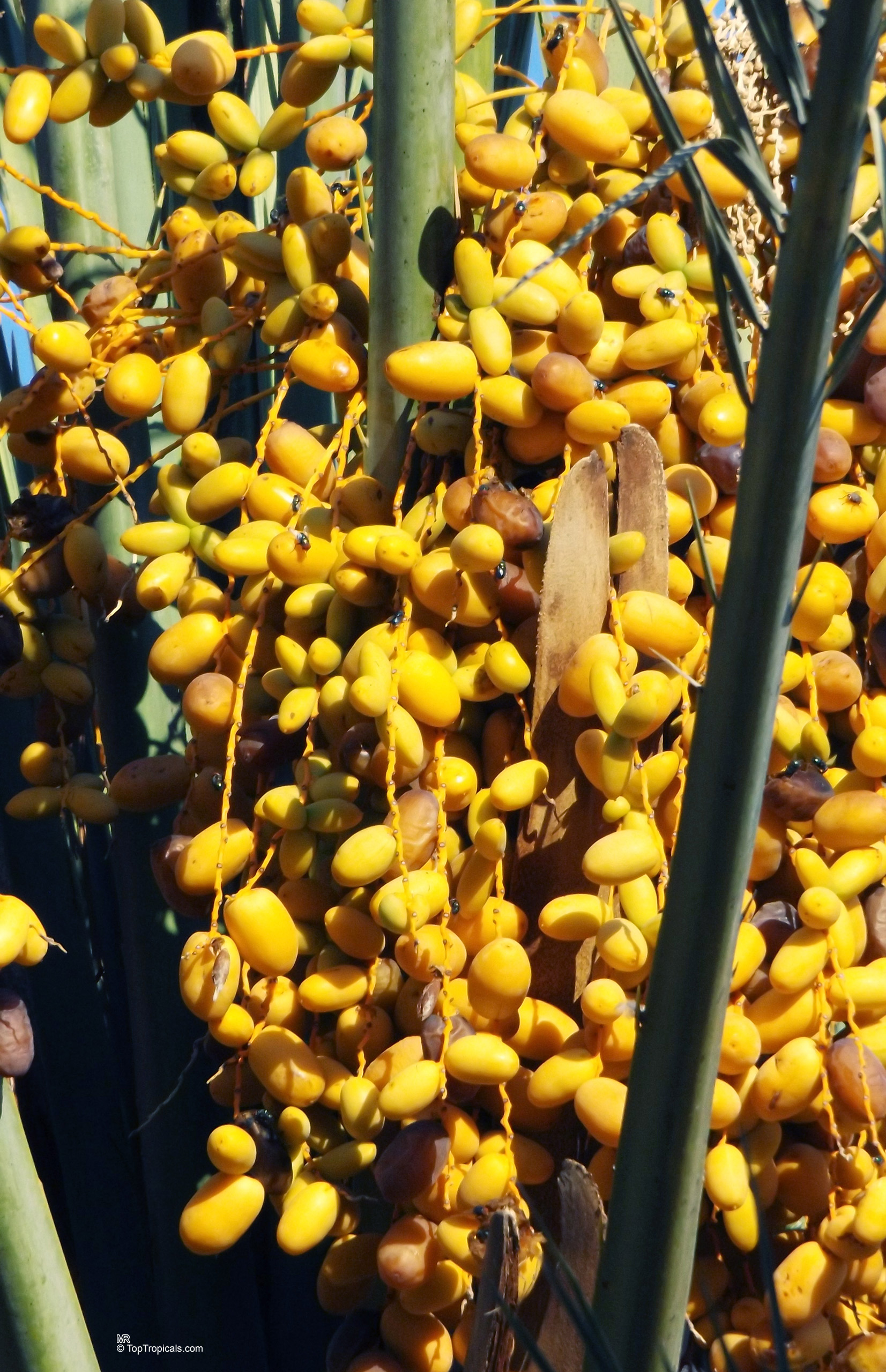
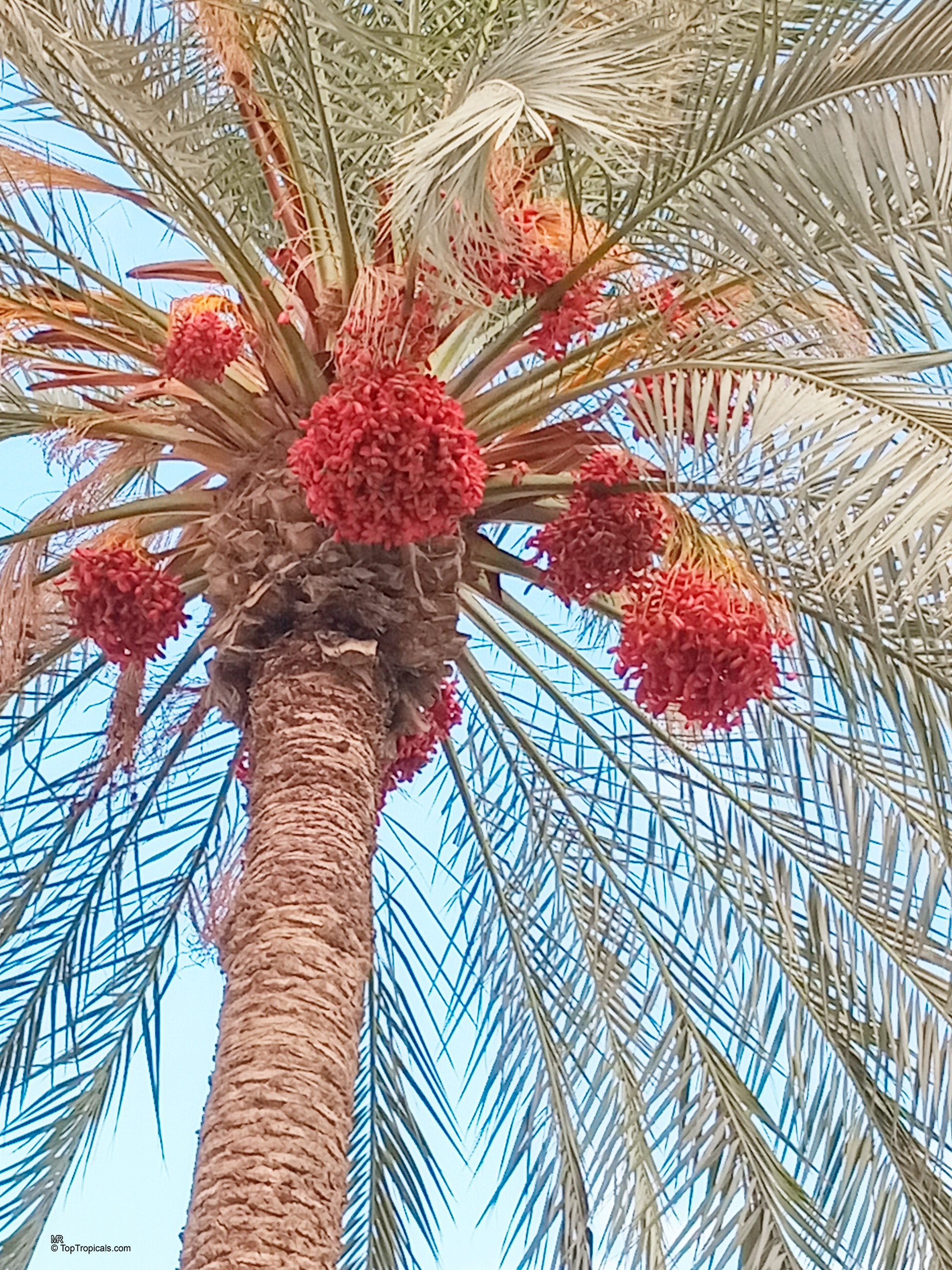
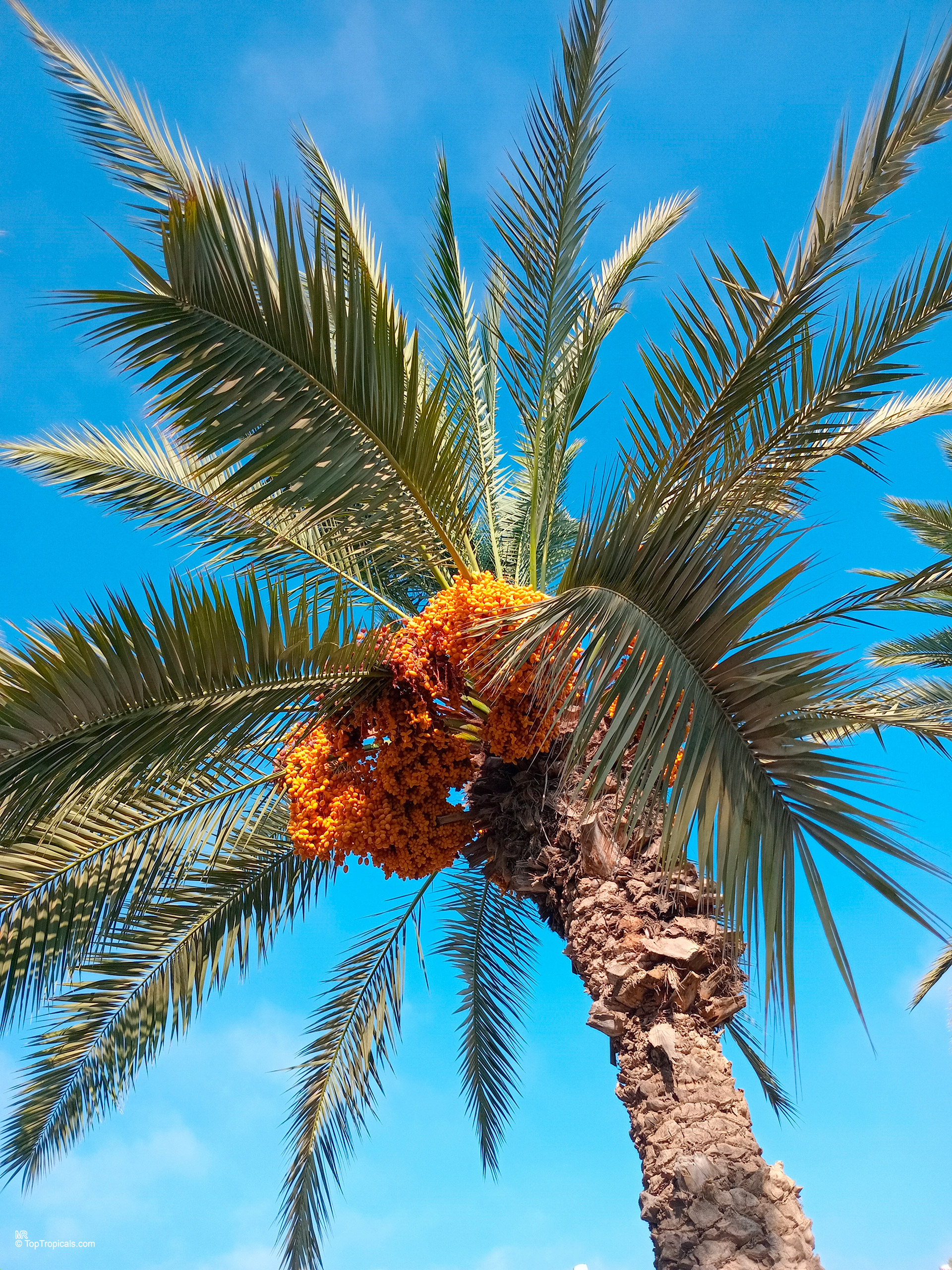
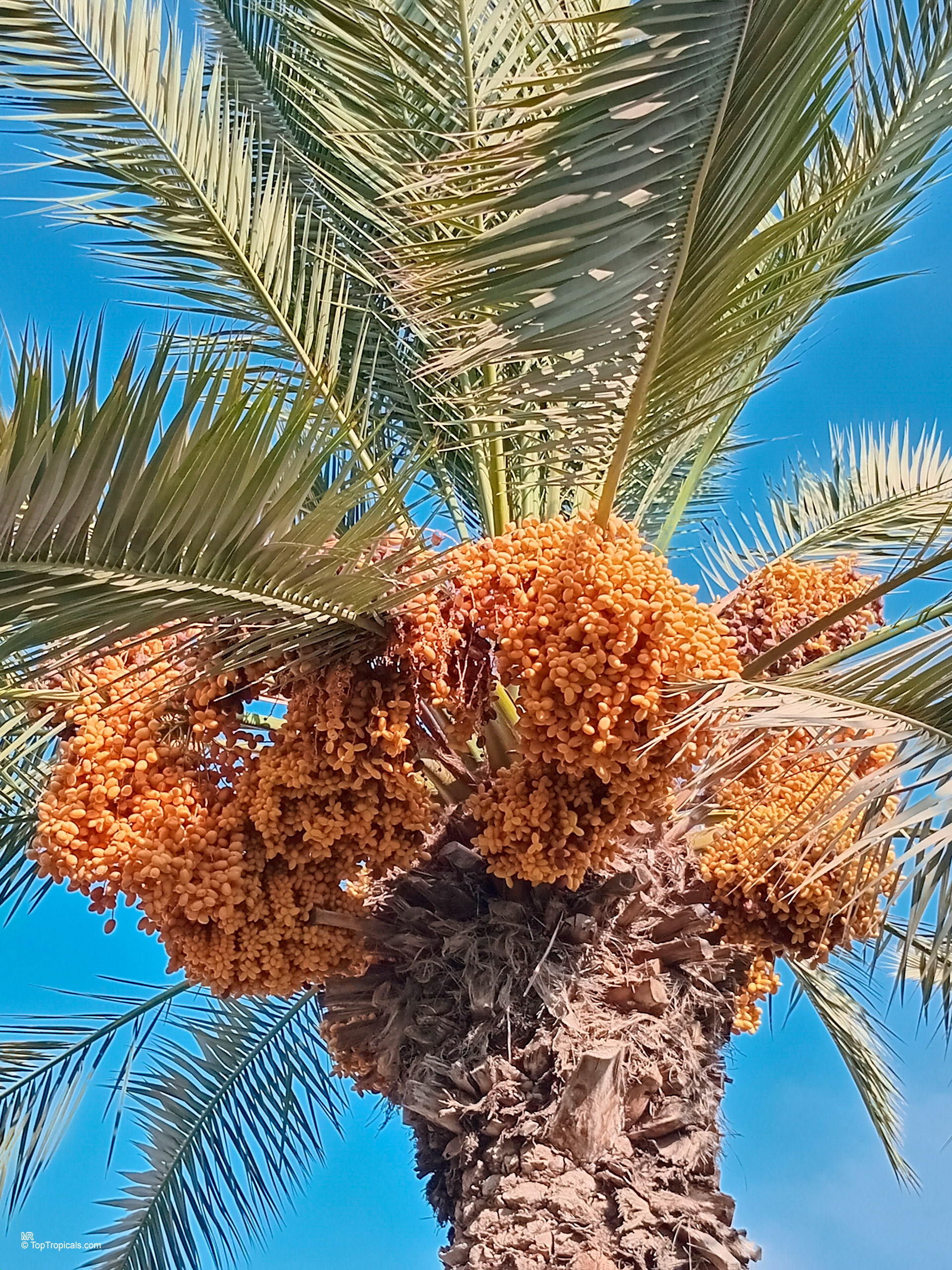
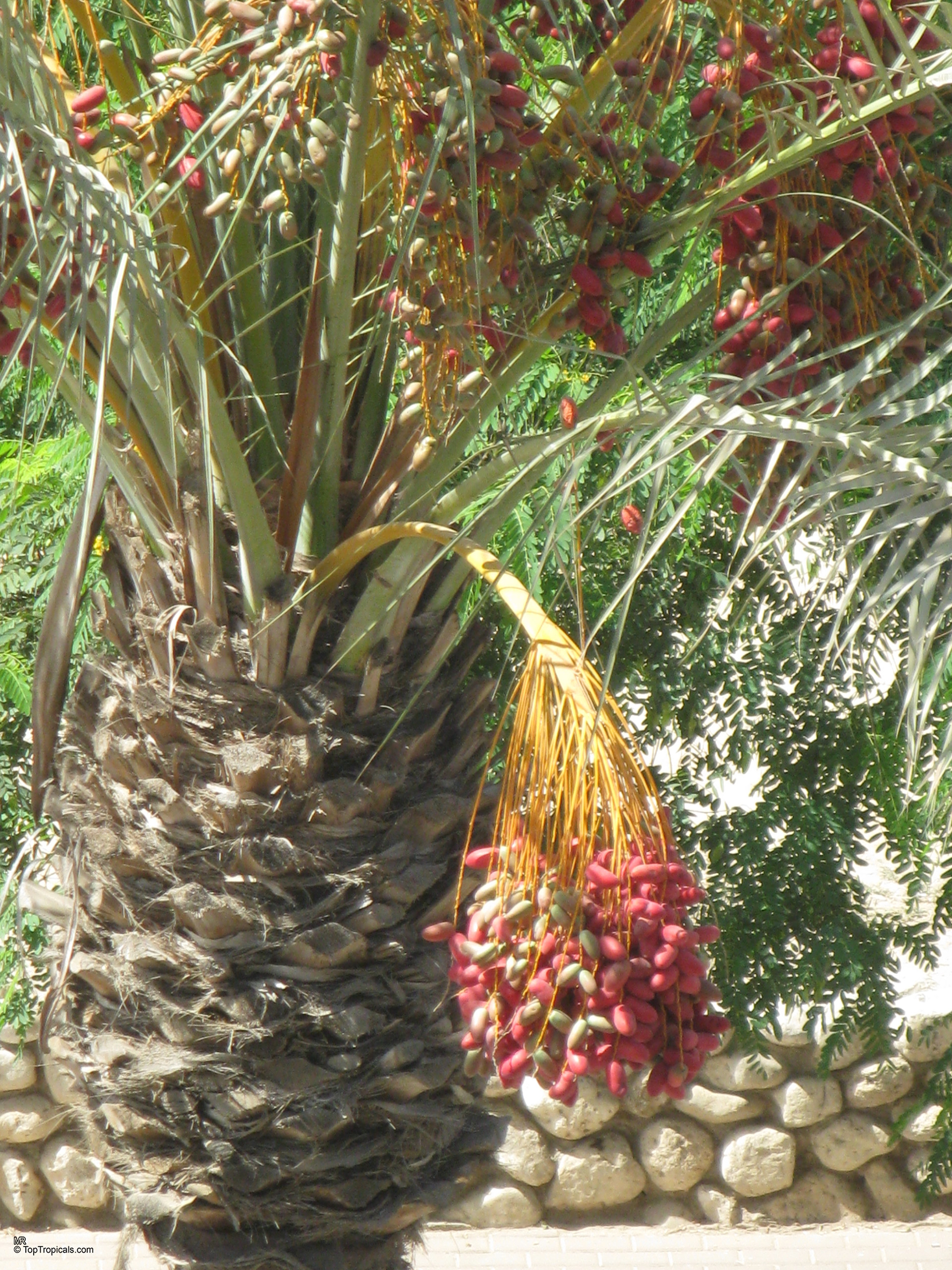
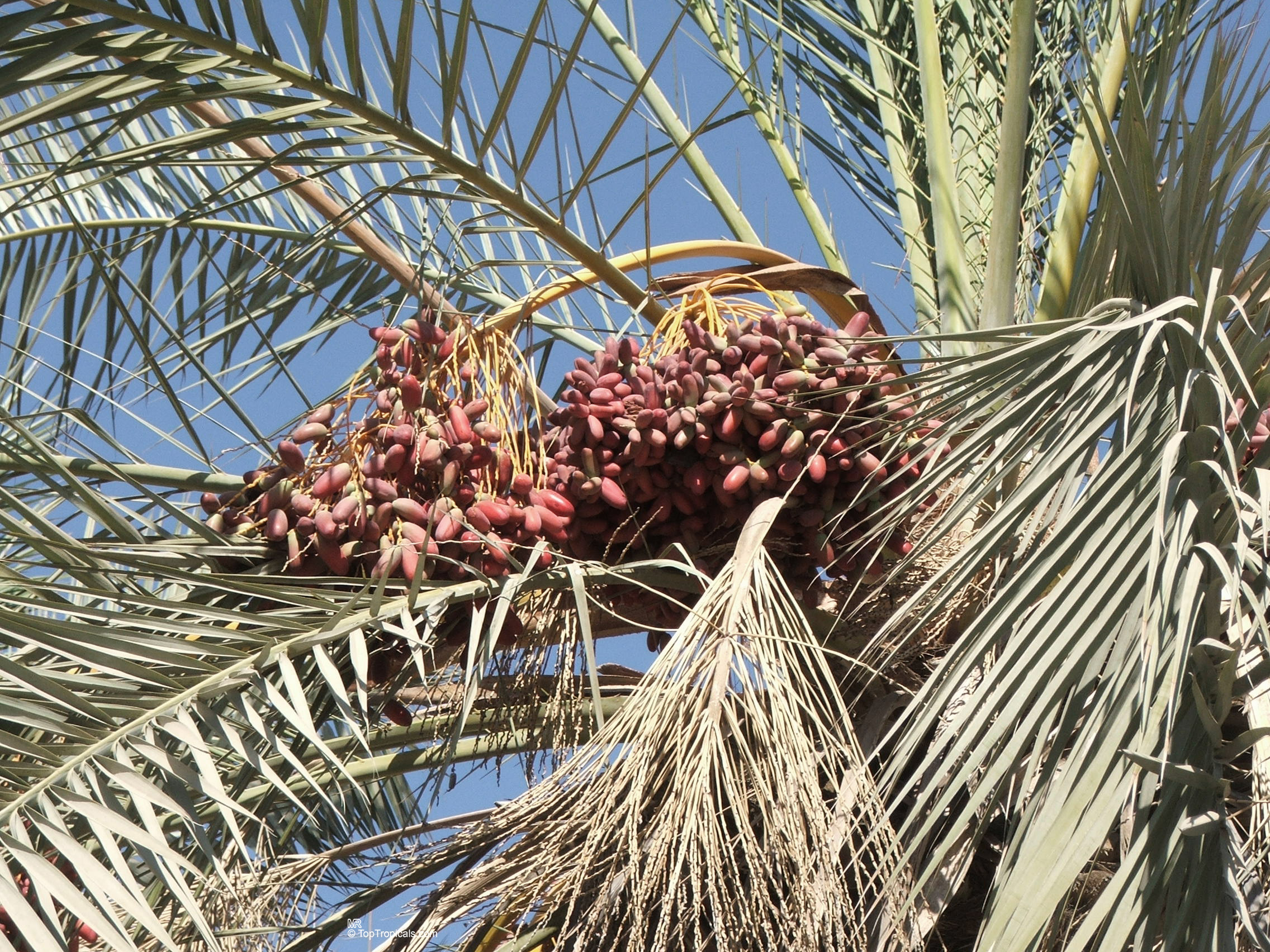
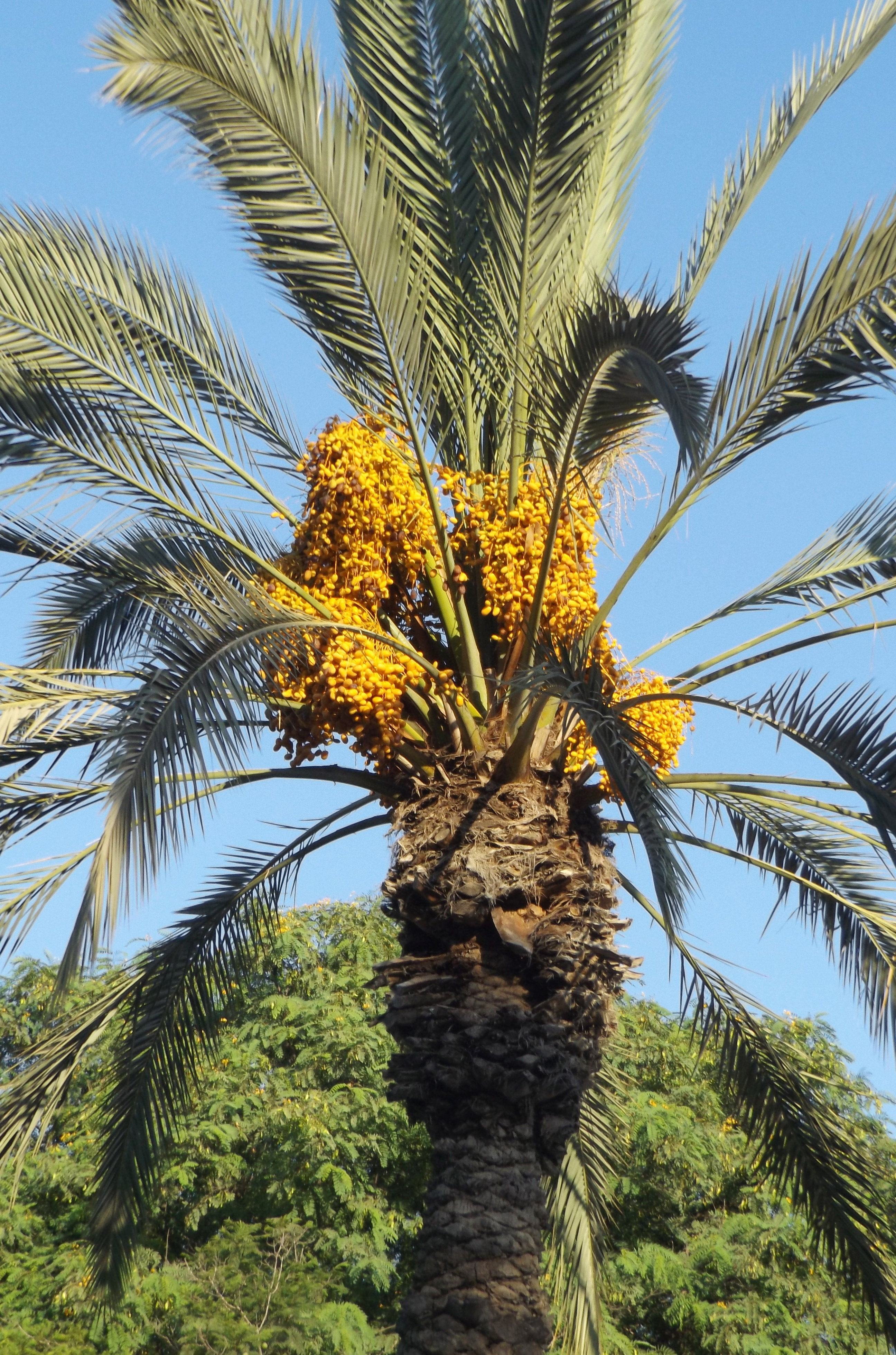
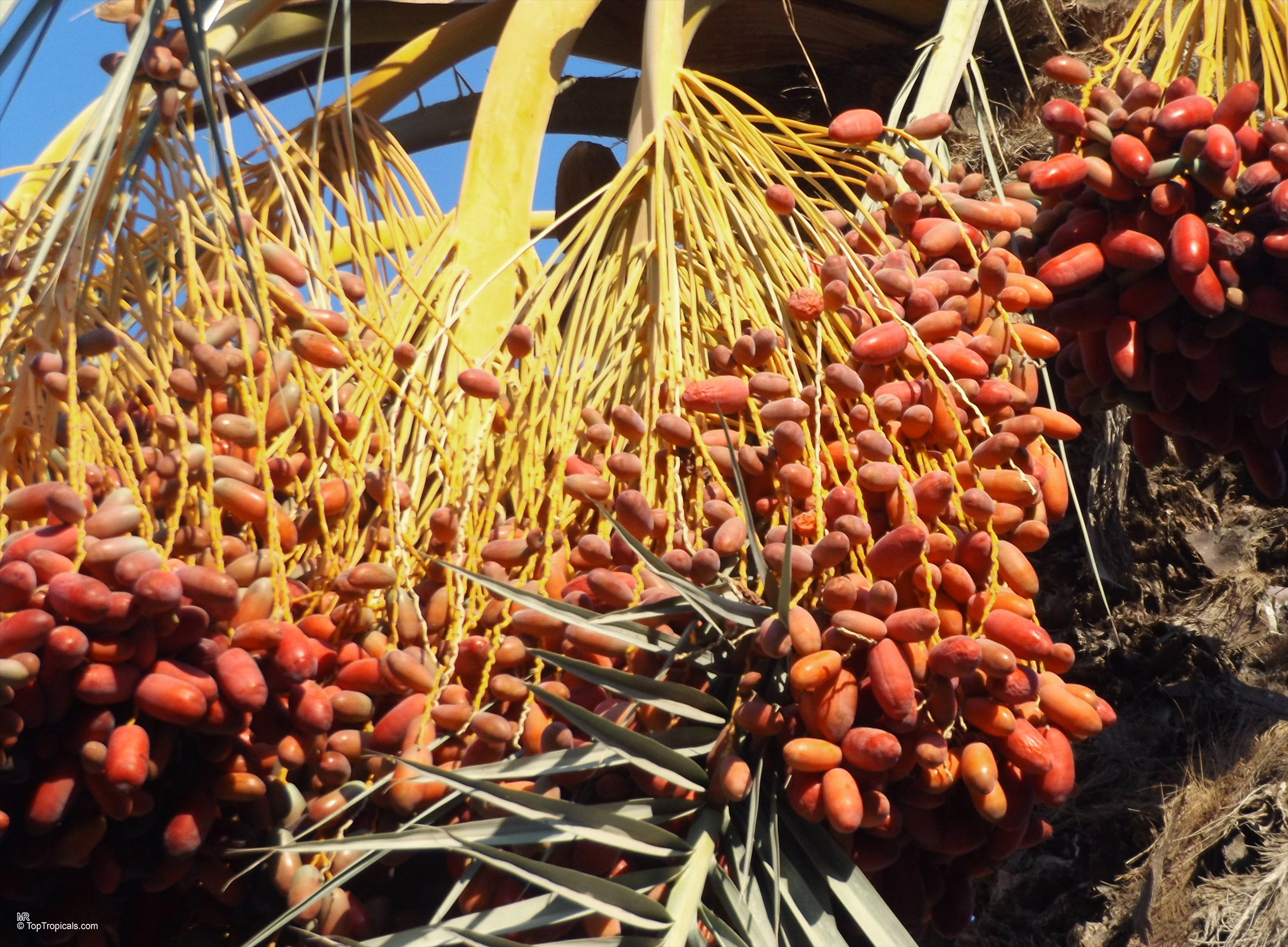
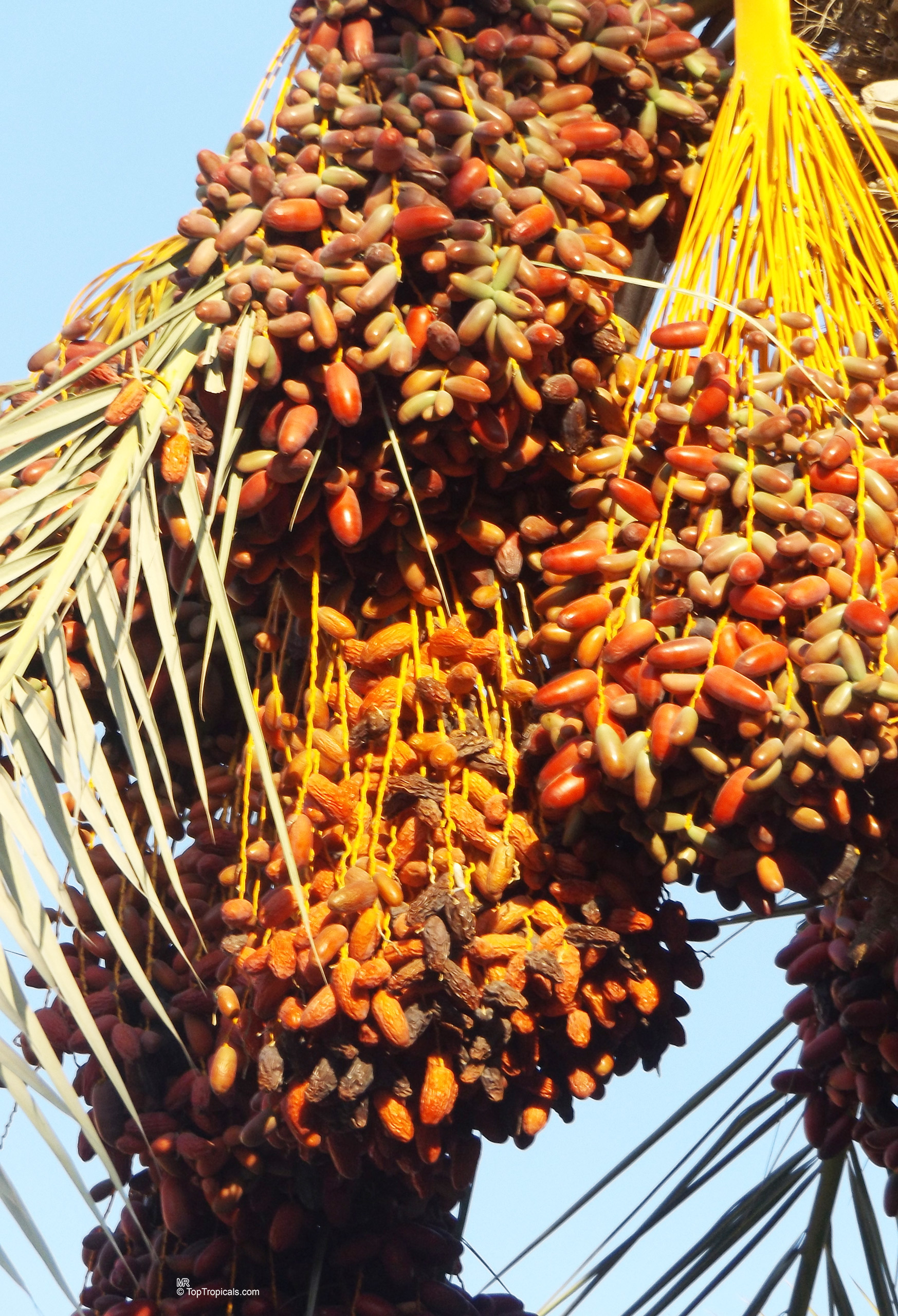
Female palms produce large hanging clusters of oblong dates. Fruit characteristics vary greatly among hundreds of named cultivars, including size, shape, texture, sweetness, and color. When the fruits reach full size but are still firm, they are typically yellow or red, depending on the cultivar; their color changes further as they ripen, passing through progressively softer stages until fully ripe dates may be amber, reddish brown, chestnut, or nearly black. Botanical descriptions of the species reflect this diversity, recording fruits approximately 4-7 cm long and colors ranging from yellow through orange-brown to very dark brown or almost black. 'Medjool' is one of the best-known large-fruited cultivars, with dates commonly about 2 inches (5 cm) long and weighing around 20-25 g, sometimes considerably more.
Named date cultivars must be propagated vegetatively to preserve their characteristics. Traditionally this is done using basal offshoots produced by the mother palm, which are separated and replanted once sufficiently developed. Seed-grown palms do not come true to type and, because the species is dioecious, approximately half of seedlings can be expected to be male. Modern commercial production also uses tissue culture, allowing desirable cultivars to be multiplied in much larger numbers.
Phoenix dactylifera thrives in full sun, intense summer heat, and deep, well-drained soil. Established palms are remarkably drought tolerant, but regular irrigation is necessary for high-quality fruit production, particularly during fruit development. The species performs especially well in hot, dry climates: successful date production requires abundant heat for fruit ripening, while excessive humidity and rainfall during the ripening period can damage the crop. Date Palm is generally suited to USDA Zones 9-11; established palms can withstand brief temperatures below freezing, although foliage and developing fruit may be damaged by stronger or prolonged cold.
Despite their eventual size, Date Palms tolerate transplanting remarkably well, even as large mature specimens. Palms with substantial trunks are routinely dug with an adequate root ball, lifted by crane, transported, and replanted successfully. This ability makes Phoenix dactylifera particularly valuable in urban and commercial landscaping, where mature palms can be installed to create an immediate large-scale landscape effect rather than waiting decades for young specimens to develop.
Date Palm has been one of the fundamental food crops of arid regions of North Africa and the Middle East for millennia, providing fruit that can be eaten fresh, soft, semi-dry, or fully dried and processed into numerous traditional foods. The palm also has an exceptionally long history of practical use for its leaves, fibers, trunks, and other materials. Today Phoenix dactylifera remains both a major commercial fruit crop and one of the most recognizable landscape palms of hot, dry subtropical regions.
Similar plants: Phoenix dactylifera (Date Palm)