Fragaria sp. (Strawberry)
Botanical name: Fragaria sp.
Common name: Strawberry
Family: Rosaceae
Subfamily: Rosoideae

USDA Zone: 4-9
 Plant form: Small
 Mature height: 2-5 ft
 Sun exposure: Full sun or bright light indoor; semi-shade
 Cold tolerance: Tolerates light freezing to about 30°F for short periods (mature plants). Young plants must be protected.
 Watering: Regular

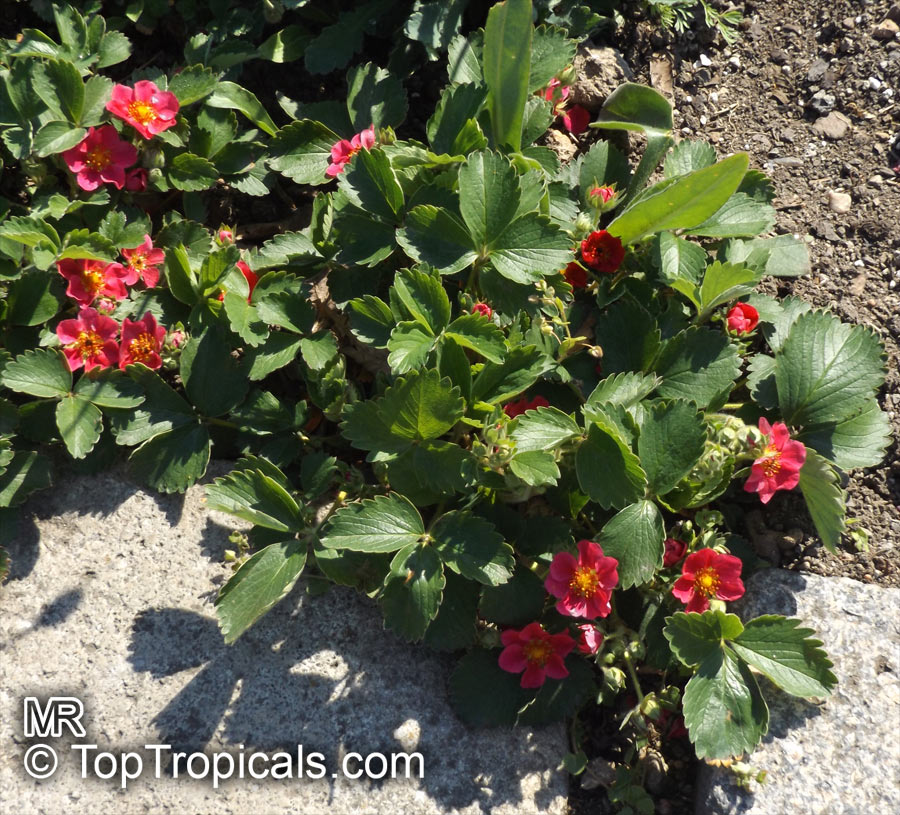
 Flower color: Pink; white and off-white; yellow, orange
 Suitable for: Outdoors in the suitable USDA zone; small gardens, containers, and indoor growing
 Ethnomedical: Ethnomedical plant, traditionally used in folk or indigenous medicine
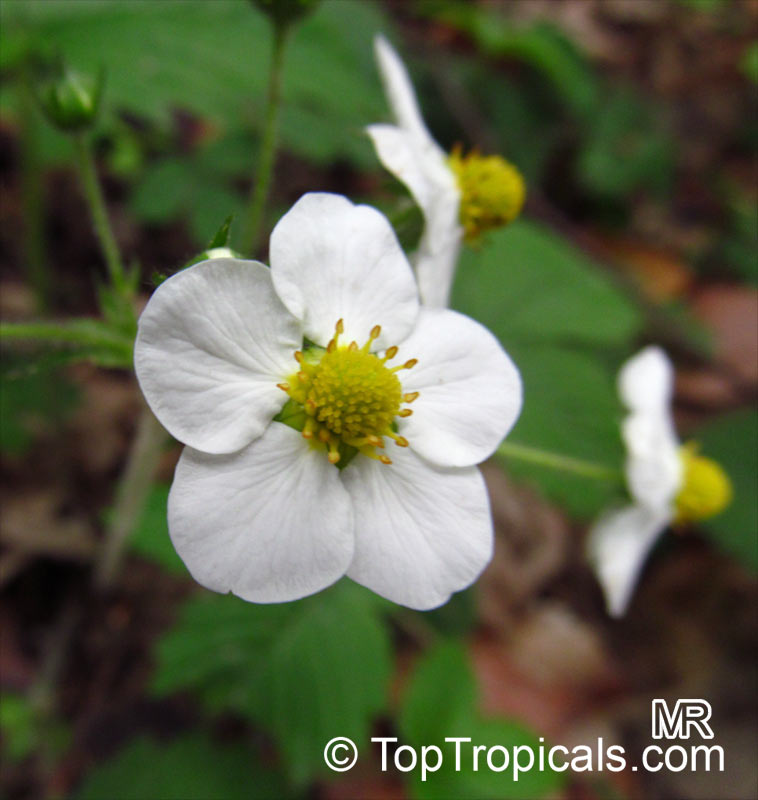
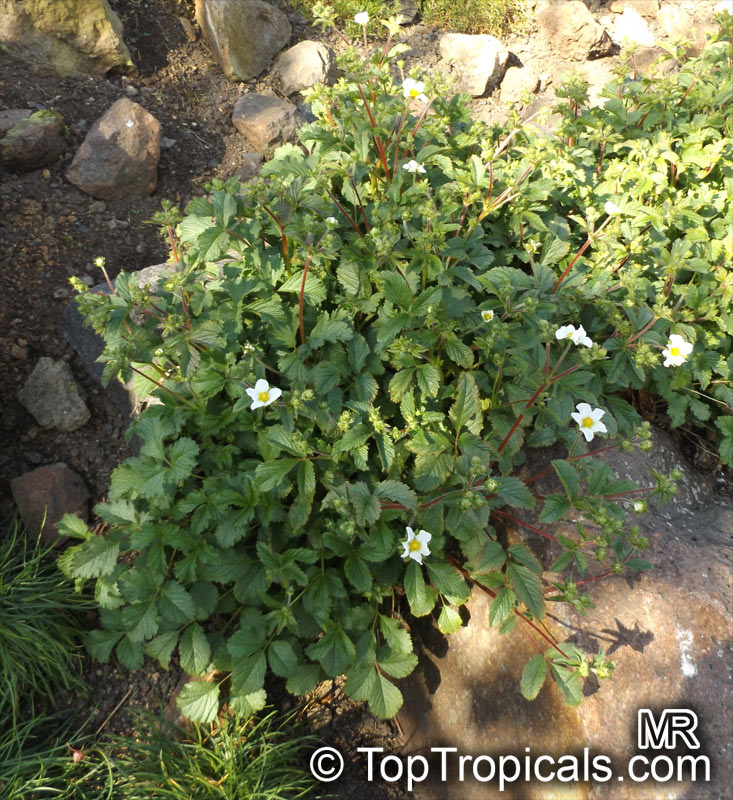
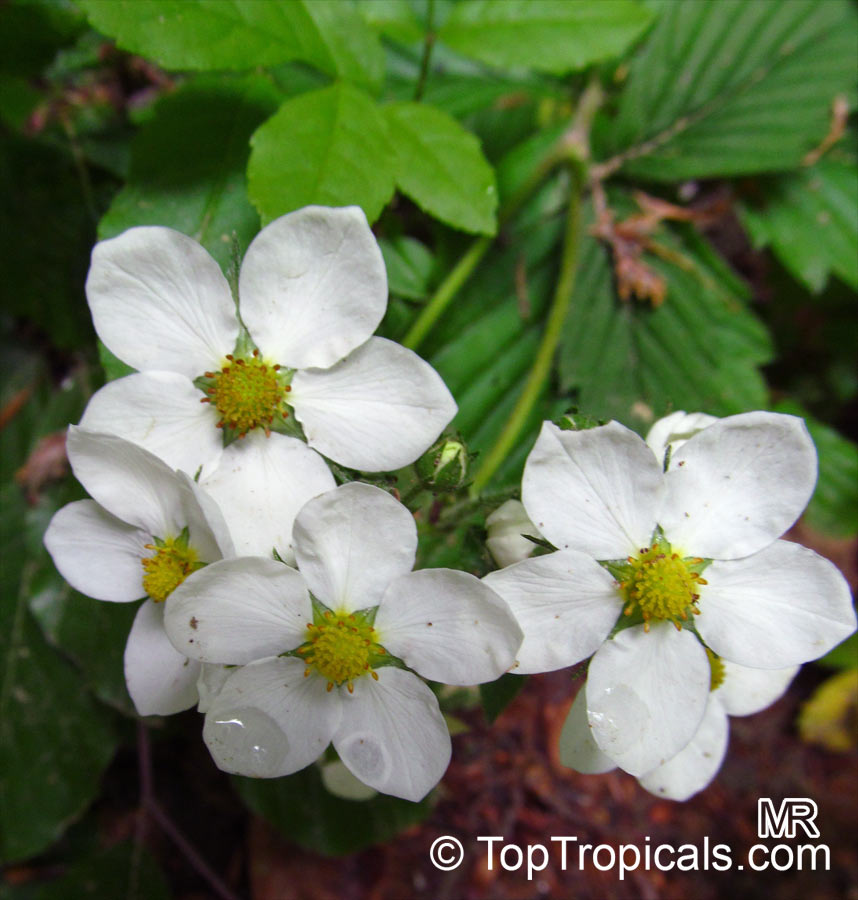
Fragaria is a genus of low-growing perennial herbs in the Rosaceae family, widely distributed through temperate regions of the Northern Hemisphere and extending into parts of South America. Commonly known as strawberries, the plants form compact crowns and usually spread by slender above-ground runners that root to produce new plants. Leaves are typically divided into three toothed leaflets, while small white, occasionally pinkish, five-petaled flowers are followed by the familiar fleshy strawberry. Botanically, the strawberry is an aggregate accessory fruit: the tiny seed-like structures covering its surface are the true fruits, or achenes. The genus includes wild species as well as the ancestors of cultivated strawberries; the modern garden strawberry, Fragaria x ananassa, is the most important horticultural hybrid.
Fragaria grows best in full sun and fertile, well-drained soil with consistent moisture during flowering and fruit development. Plants are propagated by runners, division, or seed, although named cultivars are maintained vegetatively. Strawberries are widely grown in garden beds, raised beds, containers, and hanging baskets. Hardiness varies considerably among species and cultivars, but many commonly cultivated strawberries are suitable for approximately USDA Zones 4-9.
Similar plants: Fragaria sp. (Strawberry)