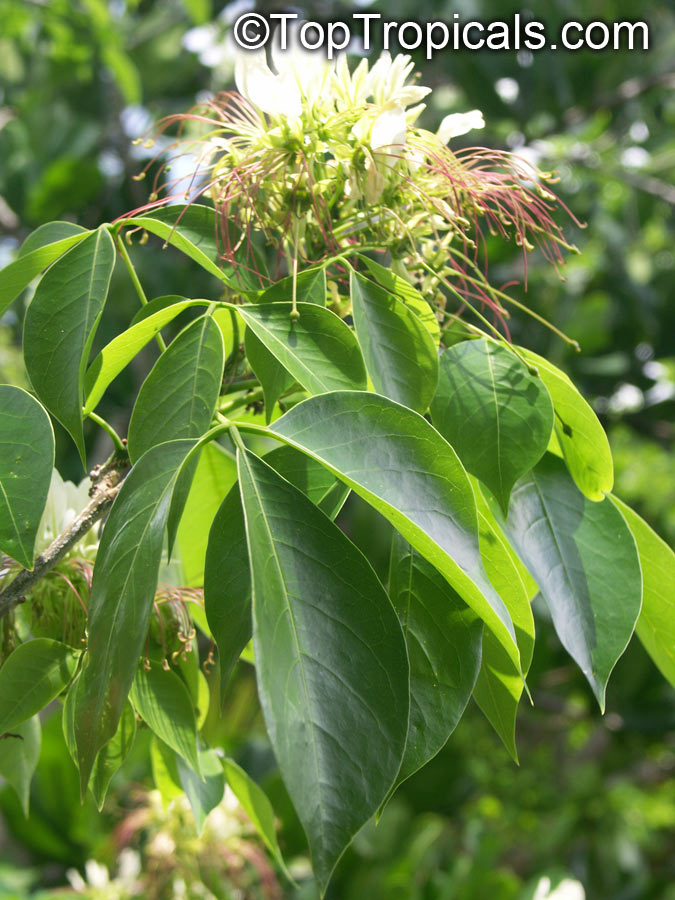
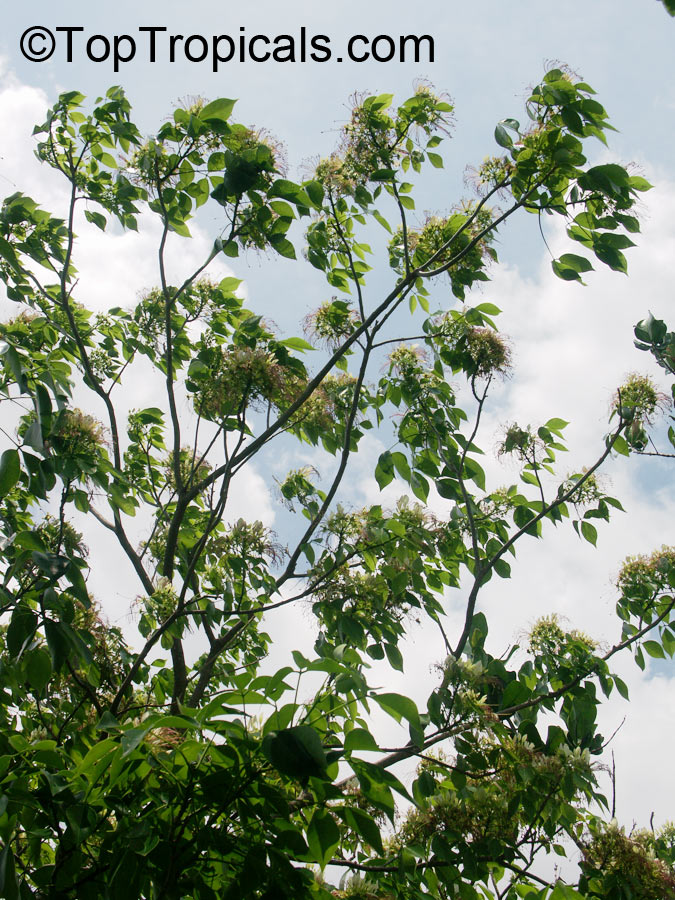
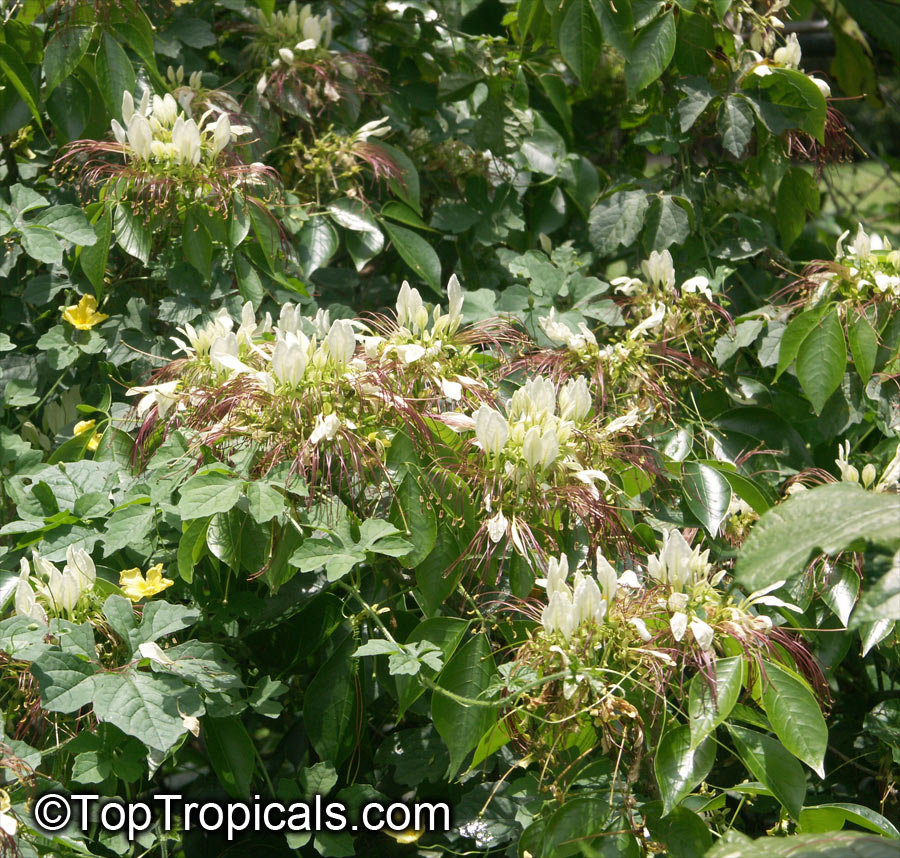
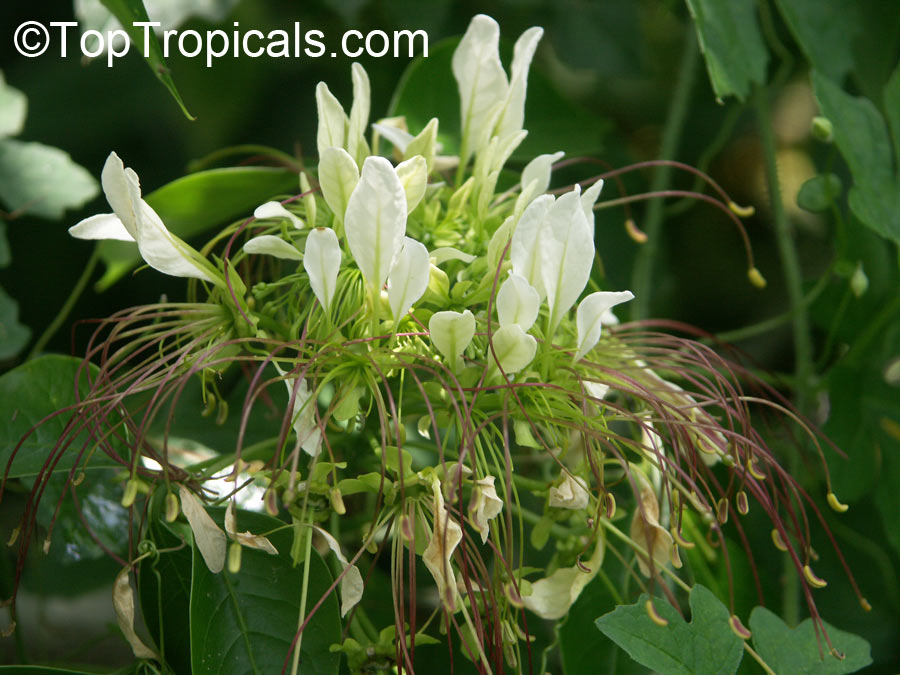
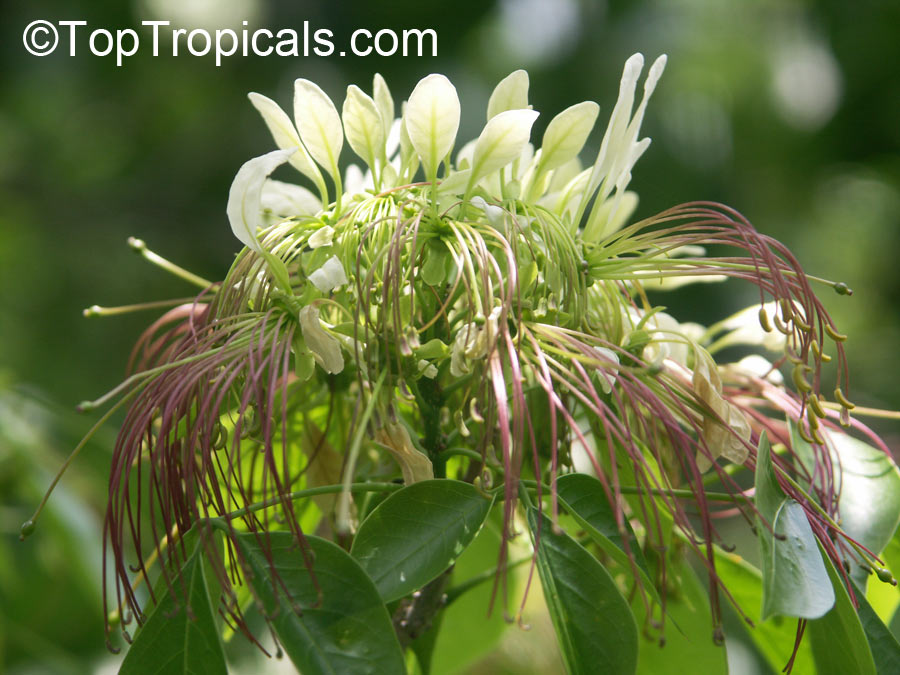
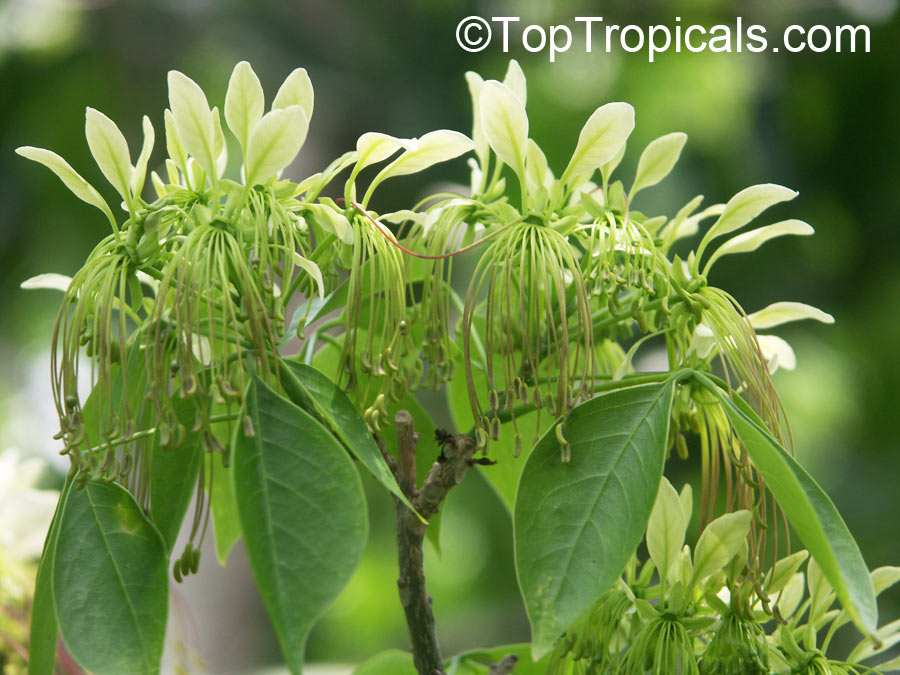
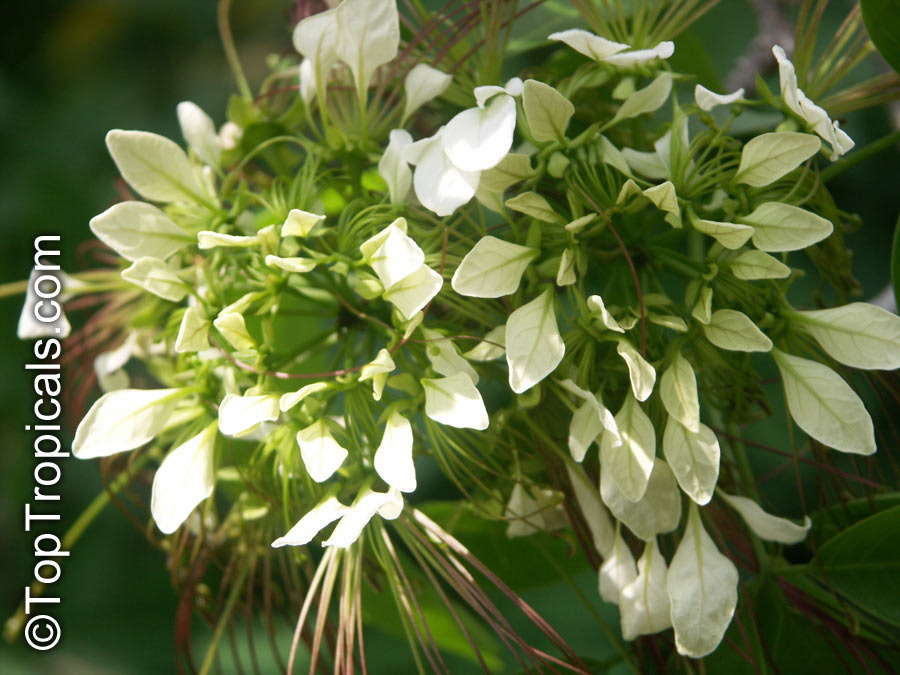
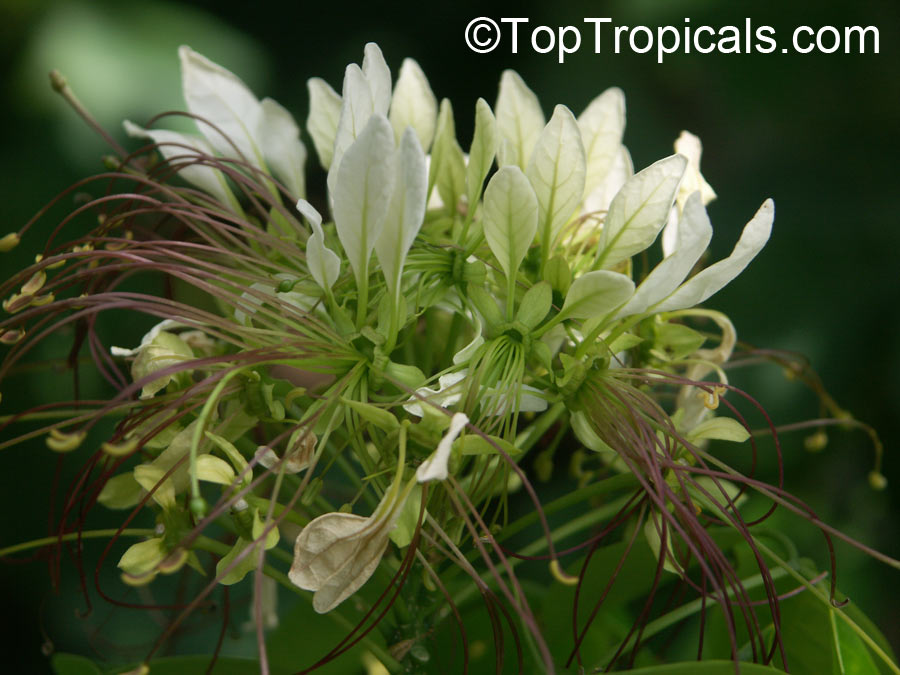
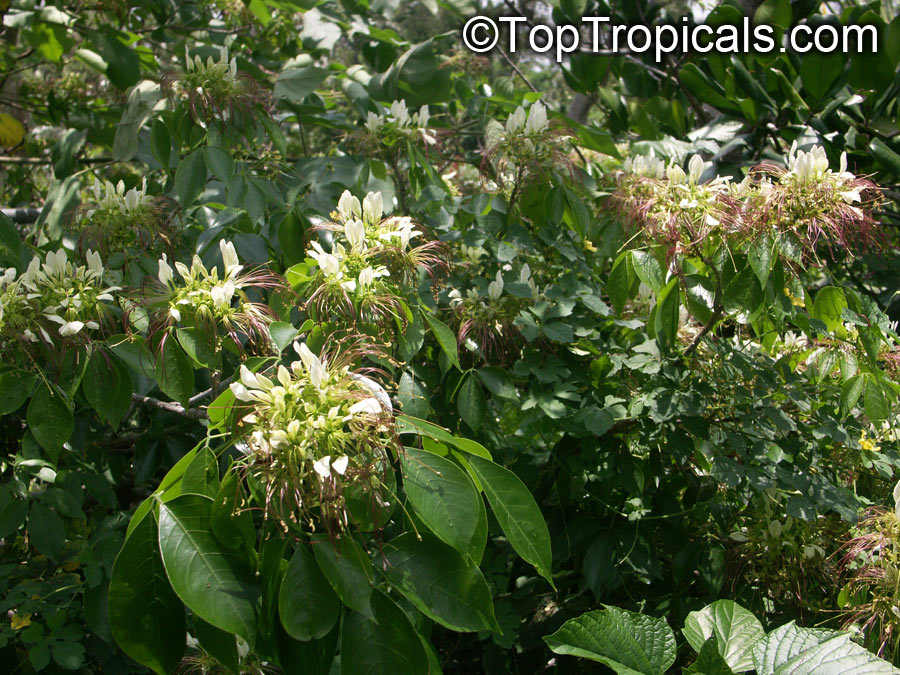
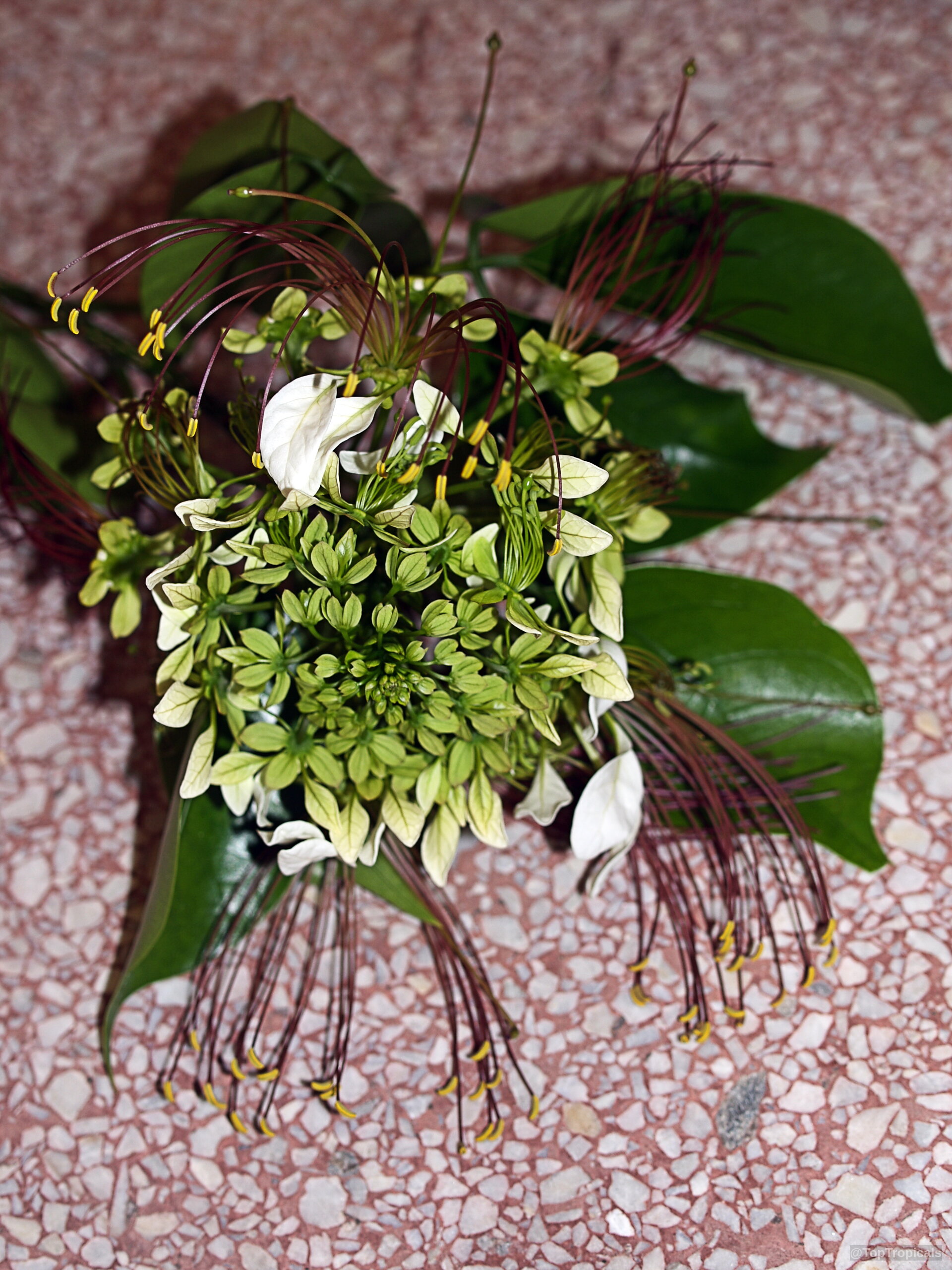
Crateva tapia (Spider Flower Tree)
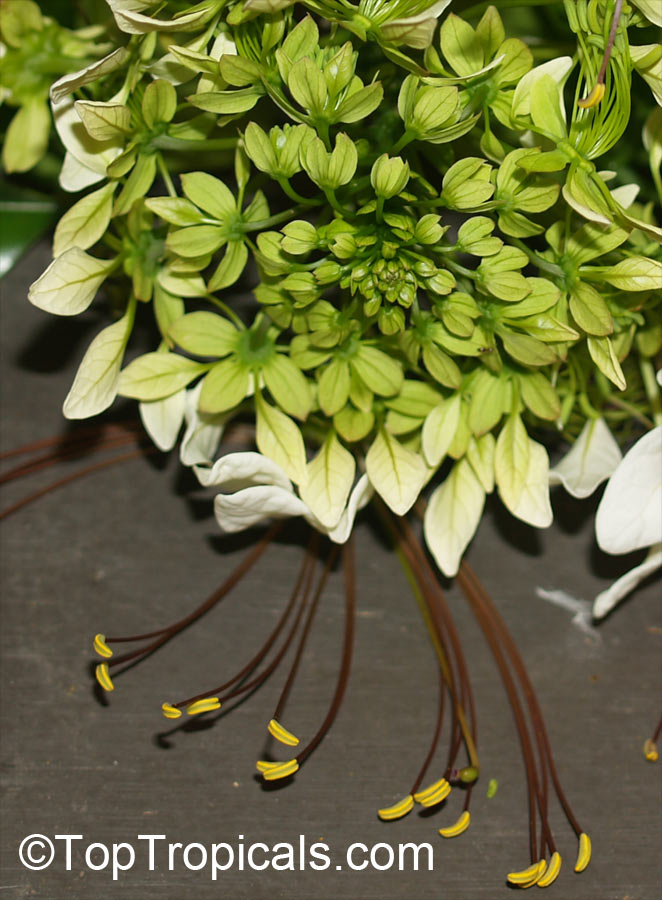
Botanical name: Crateva tapia
Common names: Spider Flower Tree, Tapia, Zapotilla, Amarillo, Poporo, Tejoruco, Cachimbo, Trompo
Family: Capparaceae
Origin: Tropical America
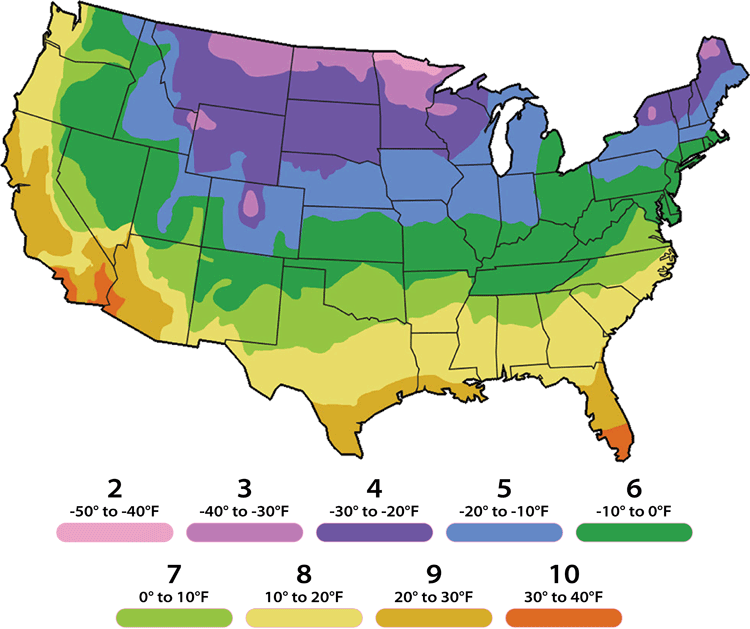
USDA Zone: 9-10
 Plant form: Small tree
 Mature height: 10-20 ft
 Sun exposure: Full sun or bright light indoor
 Cold tolerance: Frost sensitive. Protect from freezing.
 Watering: Regular; moderate
 Flower color: White and off-white
 Suitable for: Outdoors in the suitable USDA zone; small gardens, containers, and indoor growing
 Wildlife: Attracts butterflies and hummingbirds
 Ethnomedical: Ethnomedical plant, traditionally used in folk or indigenous medicine
A small tree ranging from 10-20 ft tall, Crateva tapia is native to tropical America. It's an ethnomedical used in Ayurvedic medicine.
It can withstand full sun and enjoys regular water, however it will also do okay with moderate water. Its white and off-white flowers attract butterflies, bees, and hummingbirds. Its fruits are edible but not particularly tasteful.
In USDA zone 9-11, this plant does well in pots, containers, and in ground. Actual size depends on how much pruning has been done. Yearly pruning will help maintain a nice size and shape. A trained eye can help sculpt Crateva tapia into a healthy topiary shape.
In cold regions, it's best grown in containers with soil that has plenty of drainage. Leaves will also need to be covered when frost is expected. When temperatures rise, remind yourself not to forget fertilizer every once in a while. Be sure to choose one formulated for flowering plants for the best results.
Crateva tapia does need consistent maintenance by way of trimming, pruning, and well draining soil. If you provide these things, you'll be rewarded with a beautiful, small tree that is sure to bring color to your outdoor space with its white and off-white blossoms.
Similar plants: Crateva tapia (Spider Flower Tree)