Abrus precatorius (Buddhist rosary bead)
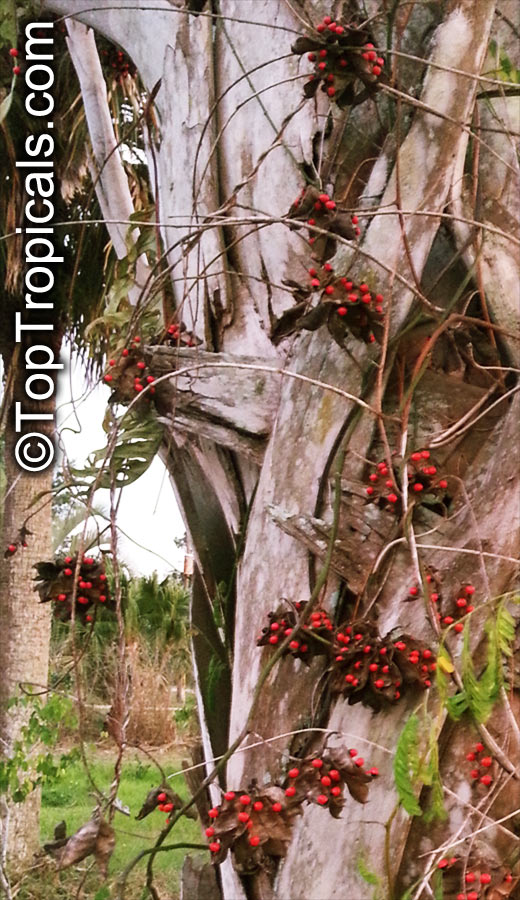
Abrus precatorius (Buddhist rosary bead) reveals red fruit pods clinging to dry textured tree bark surface.
Botanical name: Abrus precatorius
Common names: Buddhist rosary bead, Rosary pea vine, Carolina muida, Deadly crab's eye, Lucky bean, Prayer beads, Weather plant, Wild liquorice
Family: Fabaceae
Subfamily: Faboideae
Origin: India, Sri Lanka, Thailand
USDA Plant Hardiness Zone Map
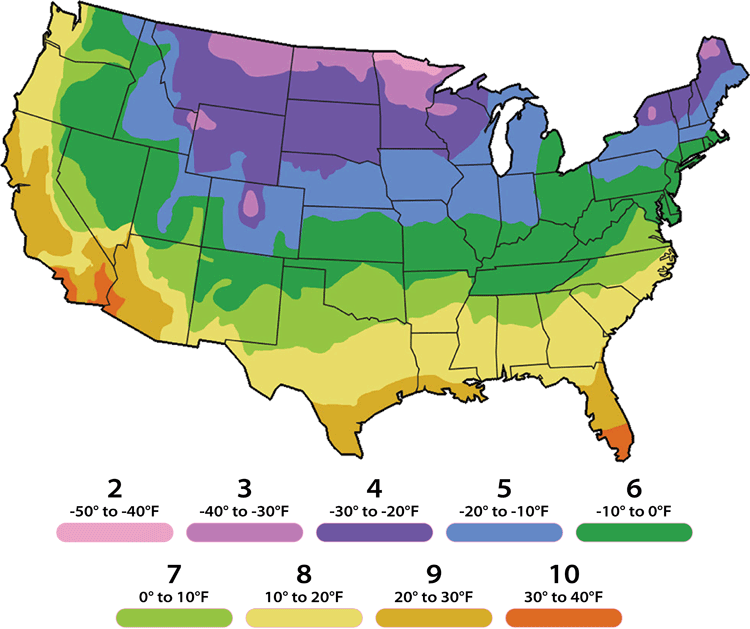
USDA Zone: 9-10
 Plant form: Climbing or creeping vine
 Sun exposure: Full sun or bright light indoor
 Cold tolerance: Frost sensitive. Protect from freezing.
 Watering: Moderate
 Flower color: Pink; blue, lavender, purple
 Suitable for: Outdoors in the suitable USDA zone; small gardens, containers, and indoor growing
 Irritating or toxic: Toxic plant/plant part
 Ethnomedical: Ethnomedical plant, traditionally used in folk or indigenous medicine
Abrus precatorius has small pretty purple flowers located at the end of the stalks. Fruits are short, inflated pods, splitting open when mature to reveal the round; hard and shiny seeds which are scarlet, but black at the base. Seeds contain abrin, one of the most toxic plant poisons known.
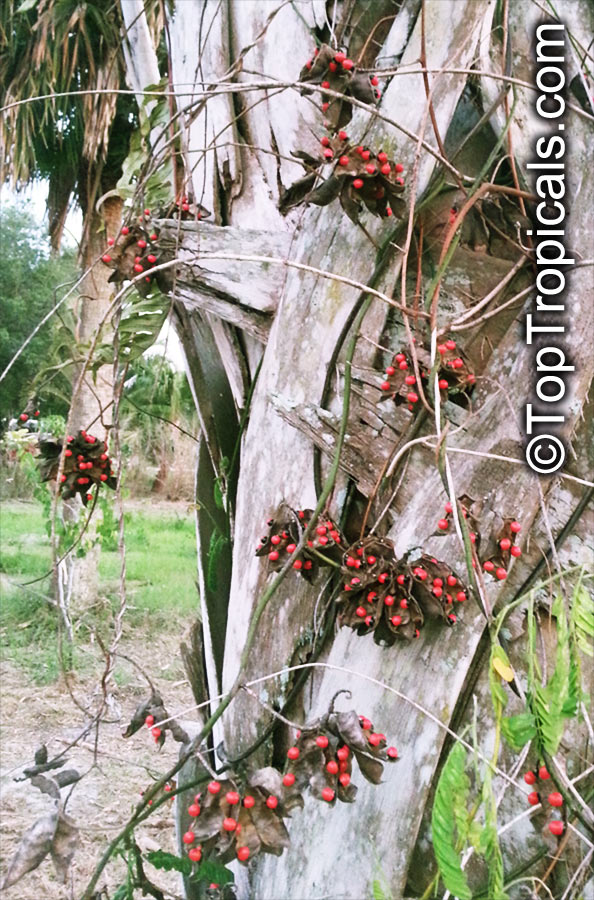
Abrus precatorius (Buddhist rosary bead) vine with small red fruit clinging to a rough tree trunk.
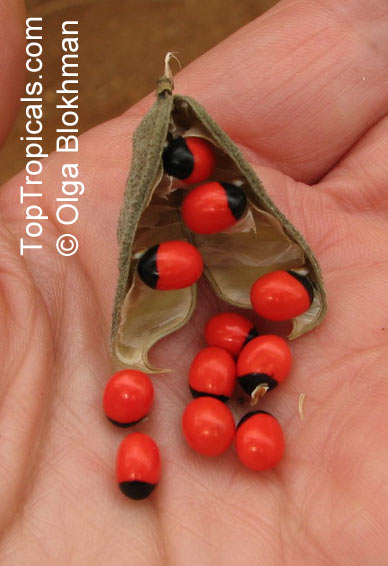
Abrus precatorius (Buddhist rosary bead) pod with split shell containing round red and black fruit.
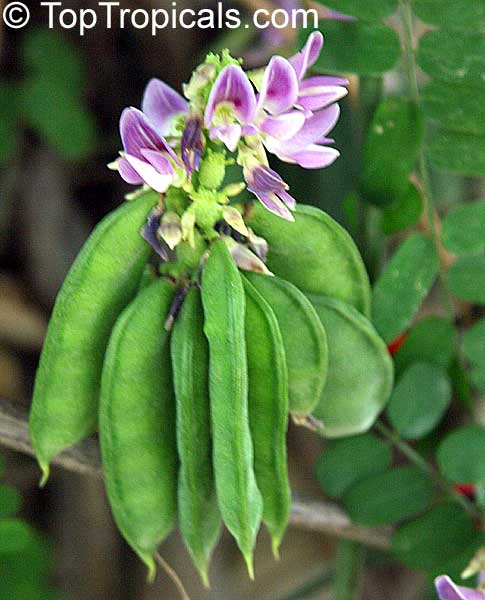
Abrus precatorius with cluster of small purple petals above smooth green pods.
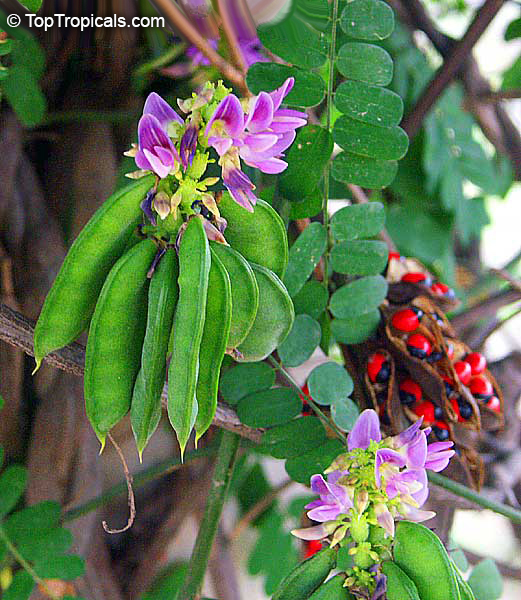
Abrus precatorius with purple flowers, green pods, and small red seeds visible.
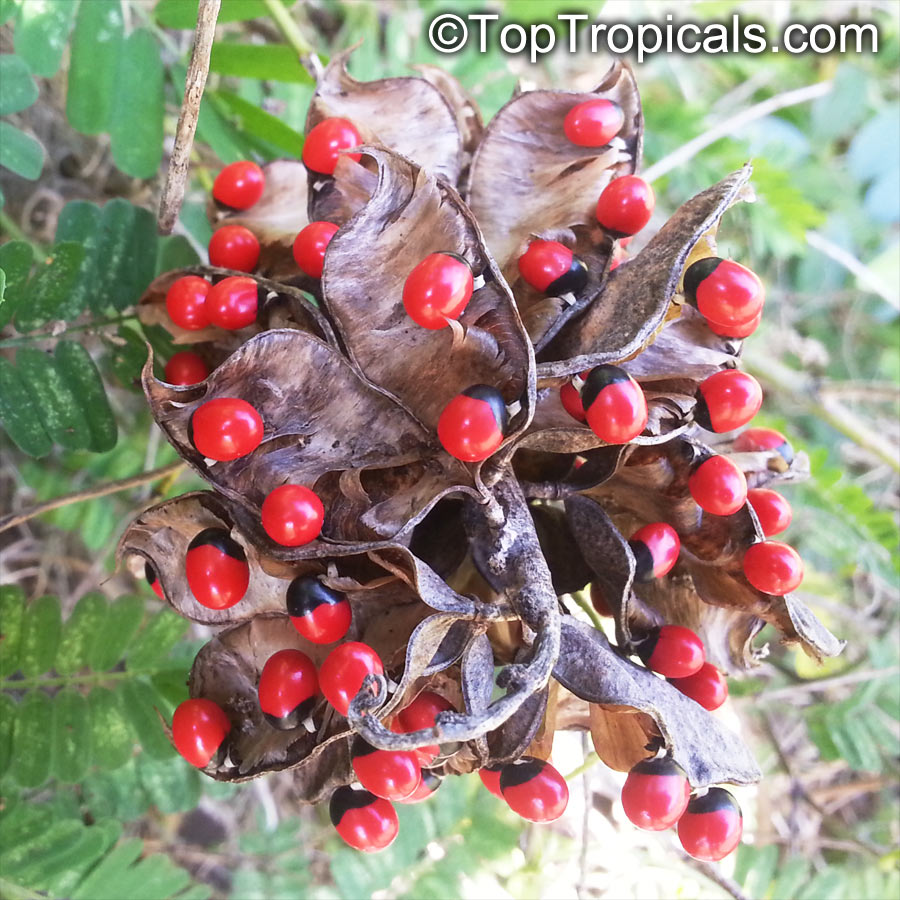
Abrus precatorius (Buddhist rosary bead) reveals split brown pods with round red and black seeds.
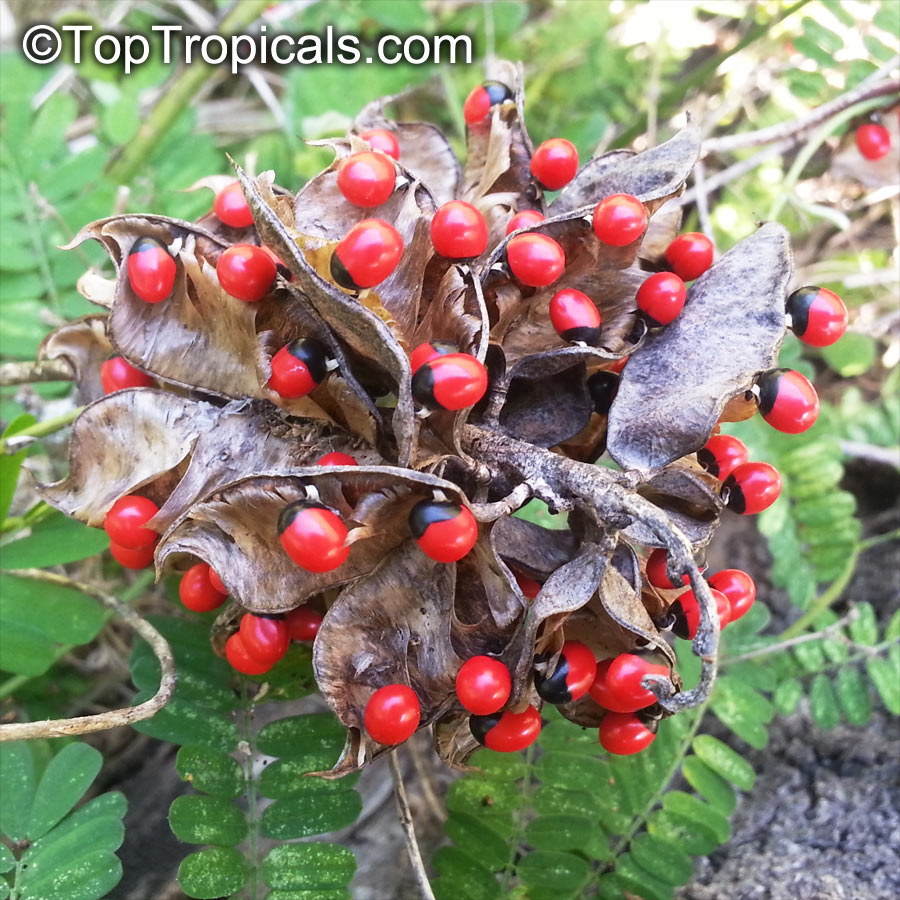
Abrus precatorius (Buddhist rosary bead) reveals split pods exposing rounded red and black seeds within.
Link to this plant:
https://toptropicals.com/catalog/uid/abrus_precatorius.htm
Buddhist rosary bead, Deadly crab's eye. A small climbing tropical vine, indigenous to Indonesia. The flowers are violet to pink and arranged in clusters. Very showy seeds red and black, look like bird eye.
Grown in
10"/3 gal pot
3 Plants in stock
$29.00