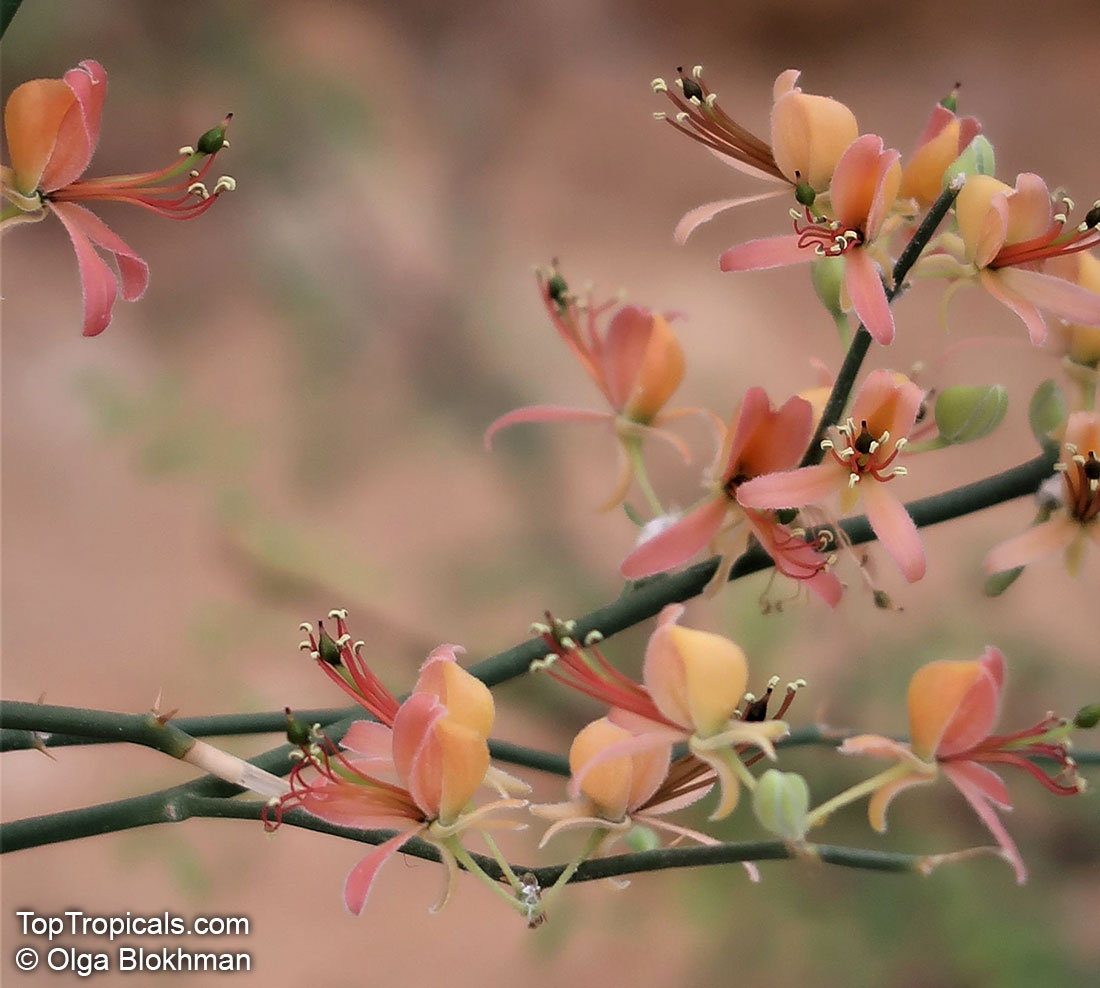
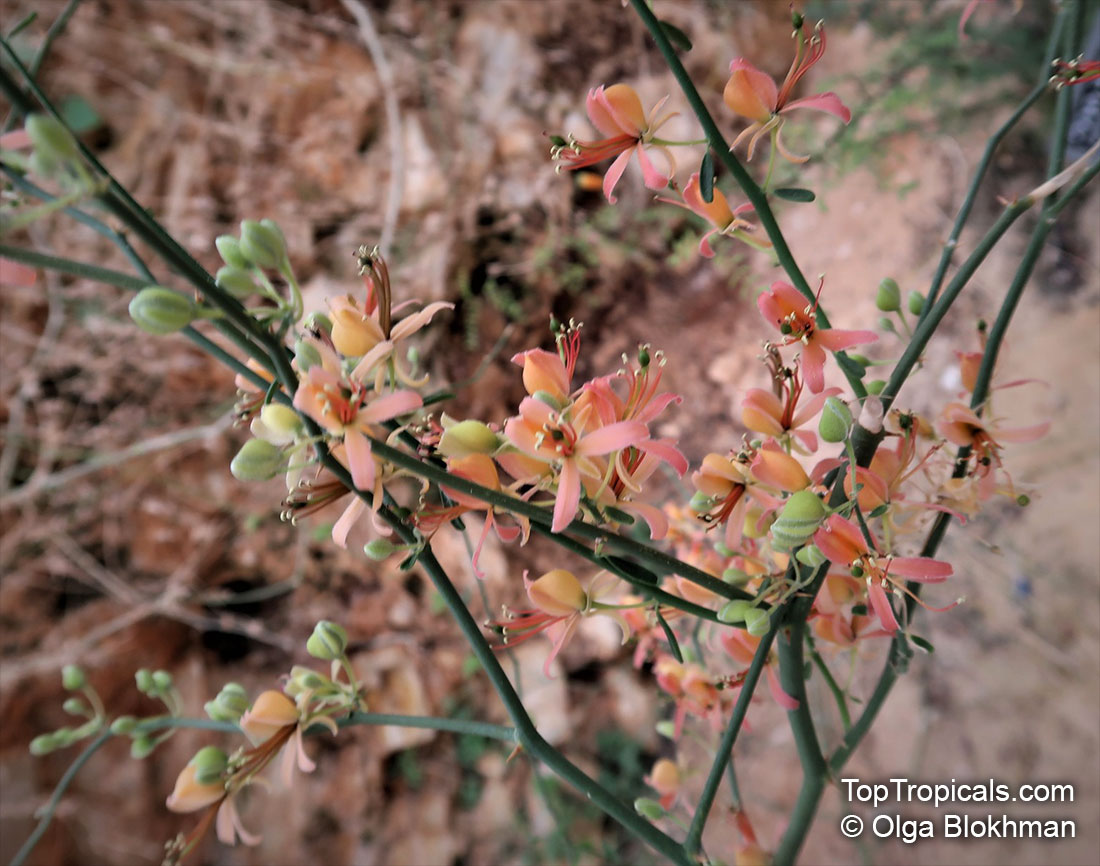
Capparis decidua (Karira)
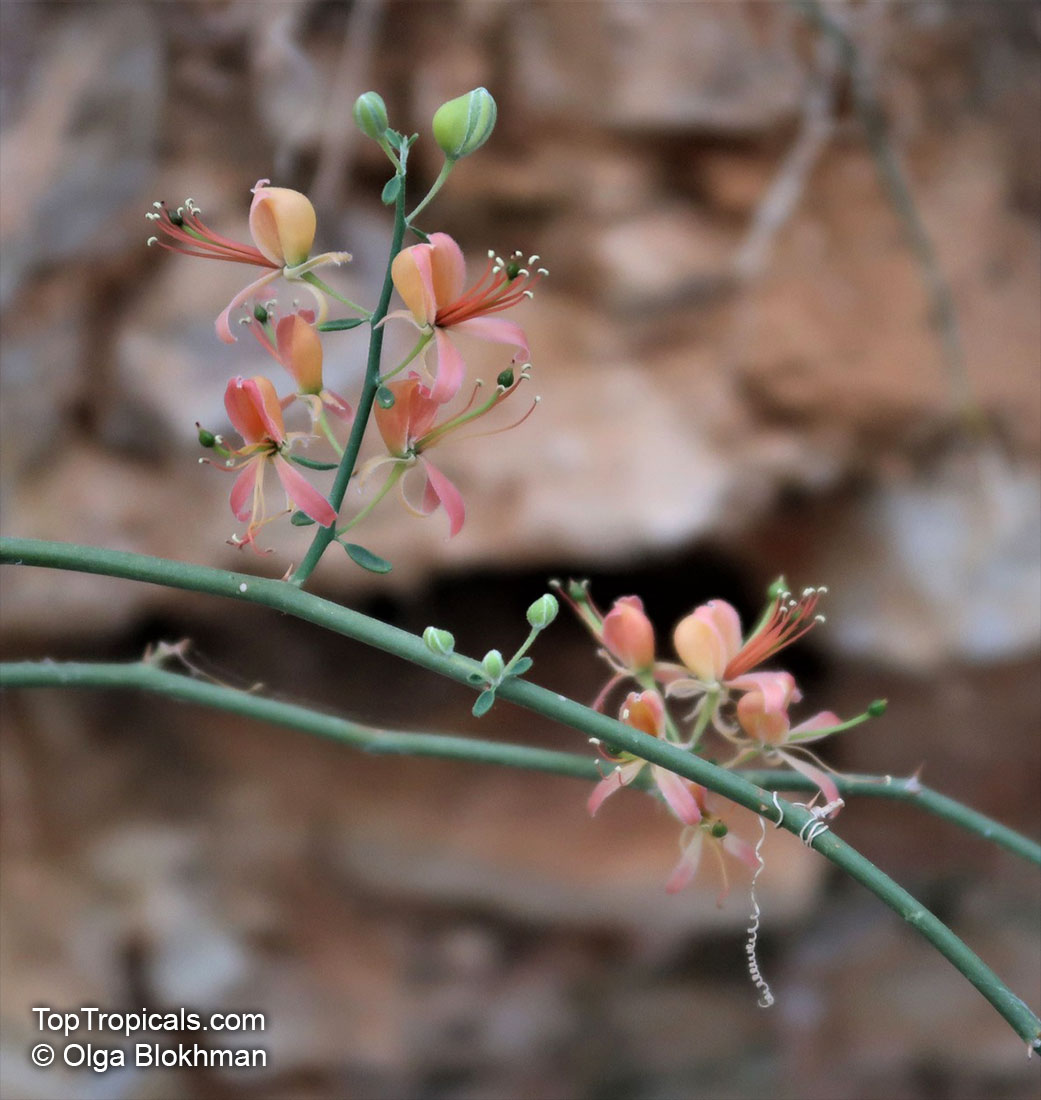
Botanical name: Capparis decidua
Common names: Karira, Retama Caper
Family: Capparaceae
Origin: Africa, Middle East, Southern Asia
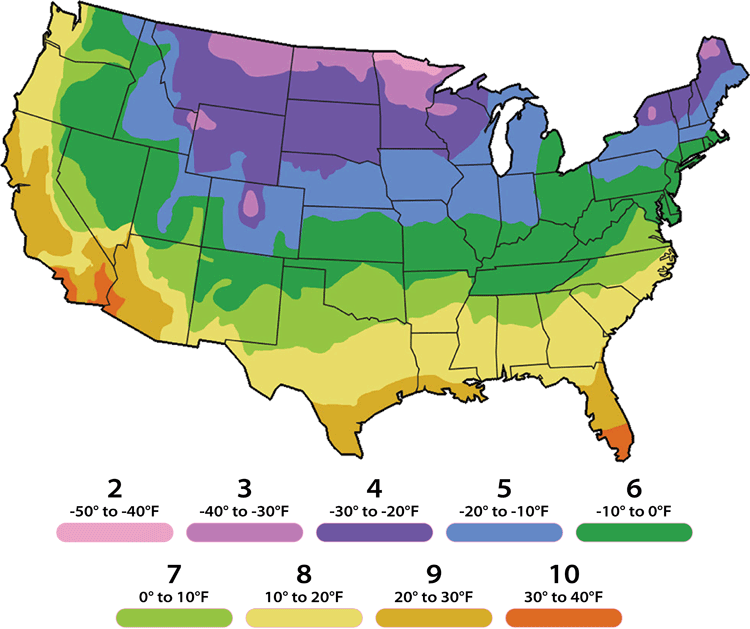
USDA Zone: 9-10

 Plant form: Large bush or small tree
 Mature height: 10-20 ft
 Sun exposure: Full sun or bright light indoor
 Cold tolerance: Frost sensitive. Protect from freezing.
 Watering: Moderate; tolerates dry conditions
 Flower color: Pink
 Suitable for: Outdoors in the suitable USDA zone; small gardens, containers, and indoor growing
 Foliage: Deciduous
 Wildlife: Attracts butterflies and hummingbirds
 Ethnomedical: Ethnomedical plant, traditionally used in folk or indigenous medicine
Native to the regions of Africa, Middle East, and Southern Asia, Capparis decidua is a large shrub or small tree ranging in height from 5-20 feet tall depending on how much it is pruned. It has a moderate water requirement and is able to flourish in dry conditions. It is deciduous, with delicate pink flowers appearing throughout much of the year. As an ethnomedical plant, this species is capable of bringing a valuable range of medicinal resources.
Known as "Karira" in its native habitats, this species is often used as a spice or herb, adding a delicious flavor to traditional dishes. It is a perfect addition to any garden setting and is sure to attract butterflies and hummingbirds. Grown in USDA Zone 9-11, Capparis decidua is well suited to many climates.
The ideal environment for Capparis decidua is one that receives plenty of full sun and can be grown in large pots in cold regions. The soil should be well-drained but hold some moisture, though it can also be grown in sandy soils if watered judiciously. It is important to prune young plants regularly to help them to develop a strong shape, and mulch at the base of the plant to help retain moisture. Additionally, during the growing season it is beneficial to fertilize the plants every few weeks to aid healthy growth.
Similar plants: Capparis decidua (Karira)