Prunus laurocerasus (Cherry Laurel)
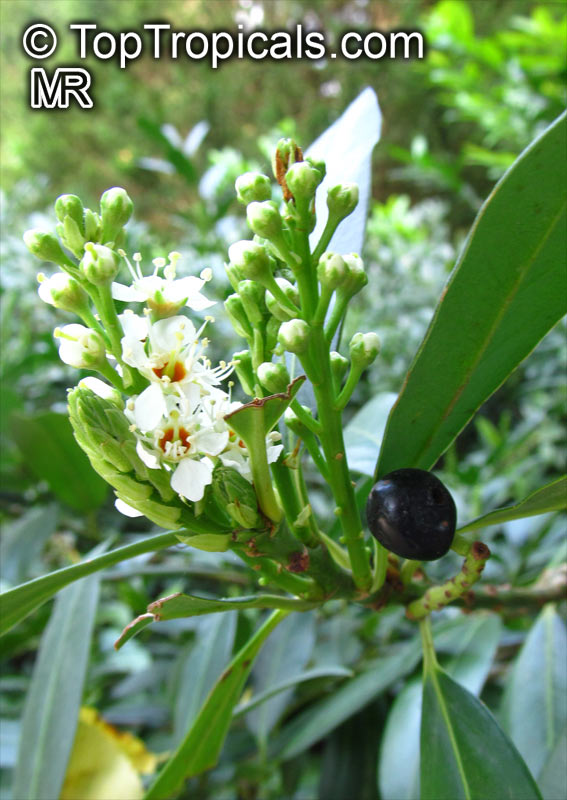
Prunus laurocerasus (Cherry Laurel) with small white flower clusters and round purple fruit
Botanical name: Prunus laurocerasus
Common name: Cherry Laurel
Family: Rosaceae
USDA Plant Hardiness Zone Map
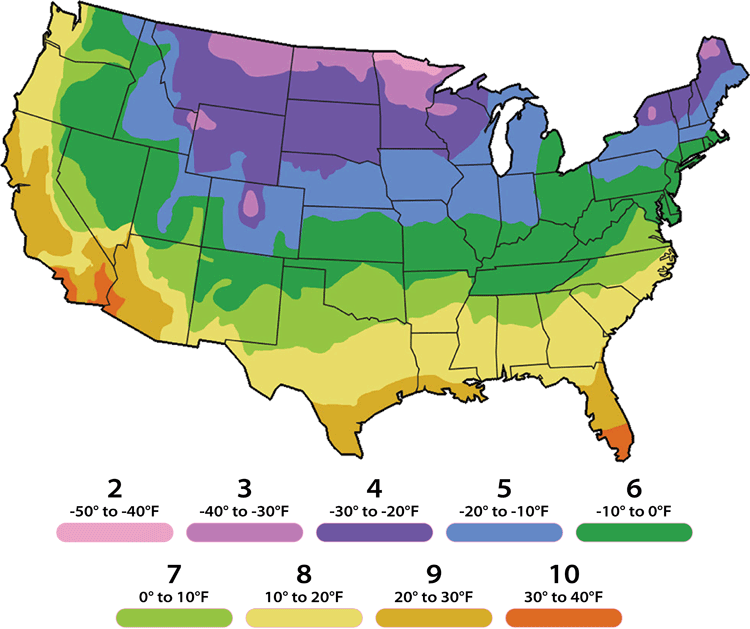
USDA Zone: 6-8
 Plant form: Large bush
 Mature height: 5-10 ft

 Sun exposure: Full sun or bright light indoor; semi-shade; shade
 Cold tolerance: Tolerates light freezing to about 30°F for short periods (mature plants). Young plants must be protected.
 Watering: Regular; moderate
 Flower color: White and off-white
 Suitable for: Outdoors in the suitable USDA zone; small gardens, containers, and indoor growing
 Irritating or toxic: Irritating
 Wildlife: Attracts butterflies and hummingbirds
Prunus laurocerasus is a widely cultivated ornamental plant, used for planting in gardens and parks in temperate regions worldwide.
The seed of the fruit may cause severe discomfort to humans if ingested.
Similar plants: Prunus laurocerasus (Cherry Laurel)
- Prunus armeniaca (Apricot)
- Prunus avium (Wild Cherry)
- Prunus campanulata (Taiwan Cherry)
- Prunus cerasifera (Cherry Plum)
- Prunus cerasoides (Himalayan flowering cherry)
- Prunus dulcis (Almond)
- Prunus glandulosa (Chinese Bush Cherry)
- Prunus ilicifolia (Hollyleaf Cherry)
- Prunus persica 'Nectarina' (Nectarine)
- Prunus persica (Peach)
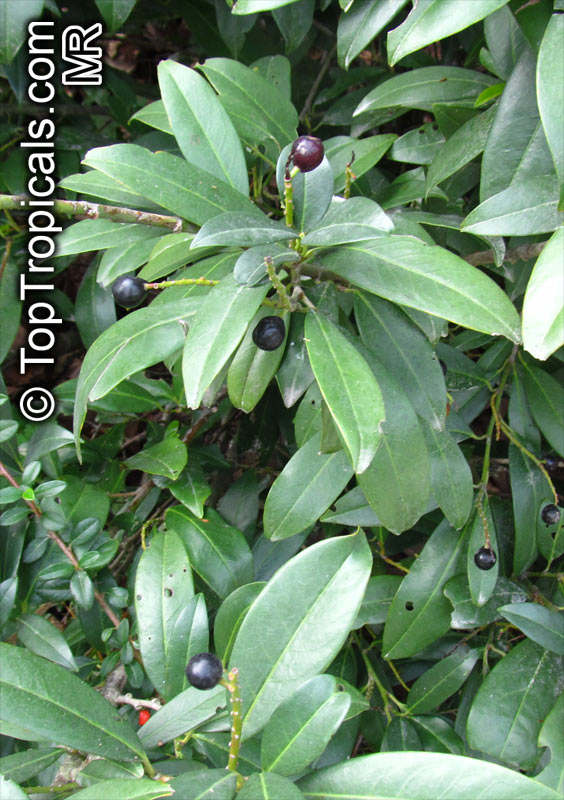
Prunus laurocerasus (Cherry Laurel) displays small round dark purple fruit nestled among waxy green leaves.
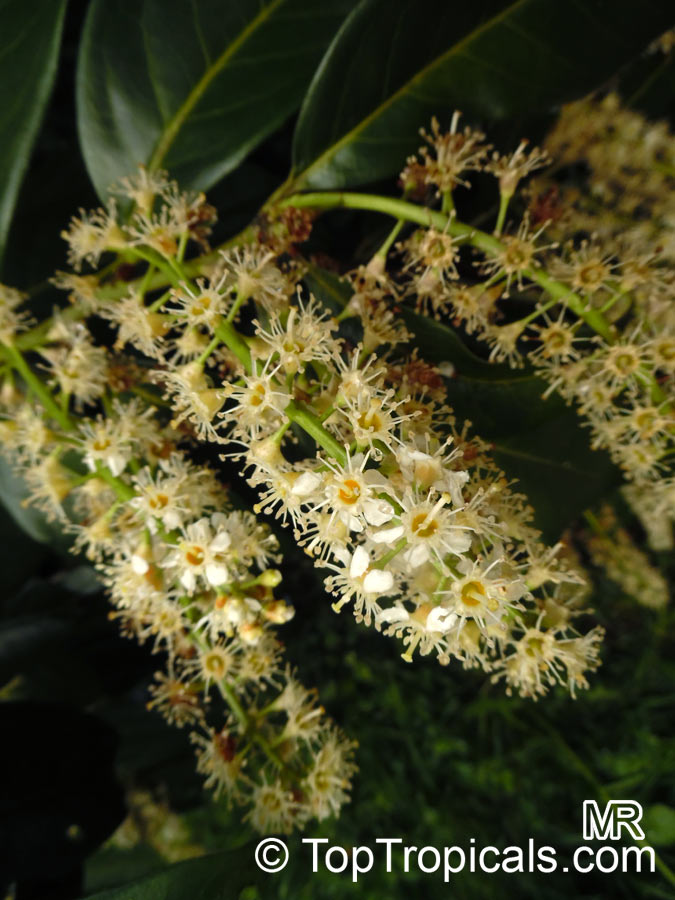
Prunus laurocerasus (Cherry Laurel) white flower clusters on a branch against dark green waxy leaves
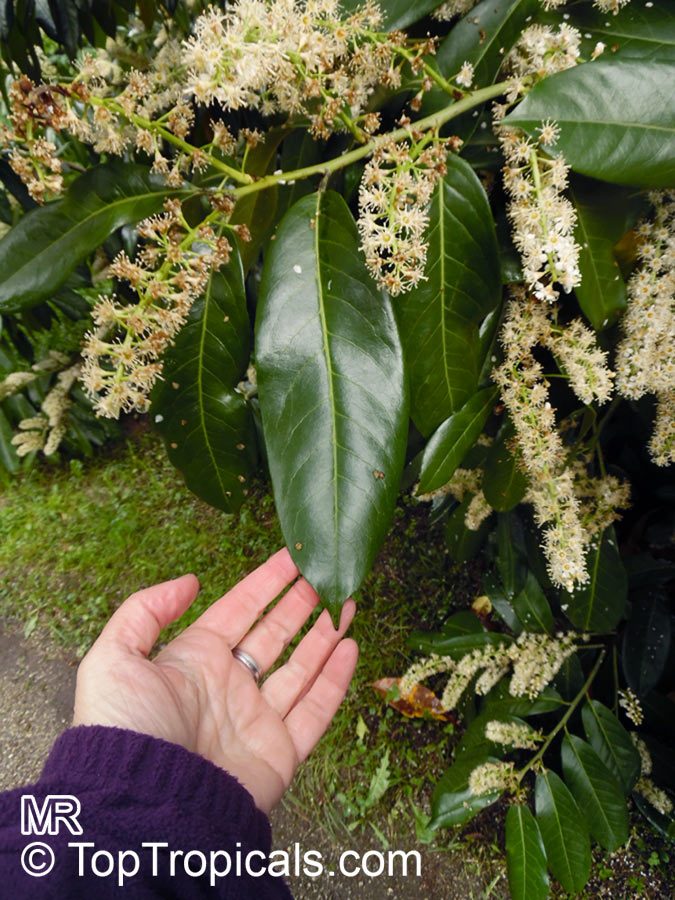
Prunus laurocerasus (Cherry Laurel) white flower spikes hang near large smooth deep green leaves.
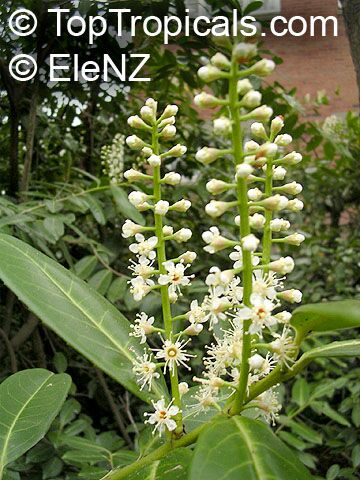
Prunus laurocerasus (Cherry Laurel) white flower spikes rise above glossy, deep green oval foliage.
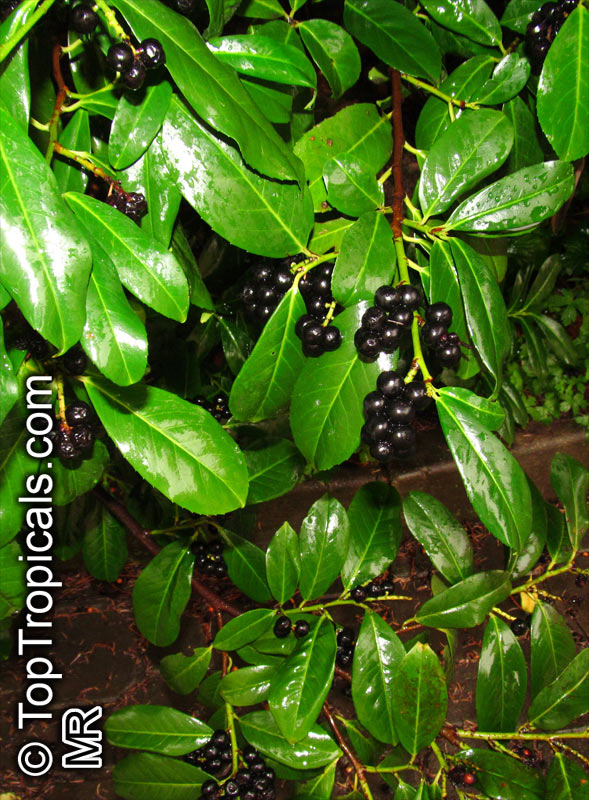
Prunus laurocerasus (Cherry Laurel) glossy green foliage paired with heavy clusters of black fruit
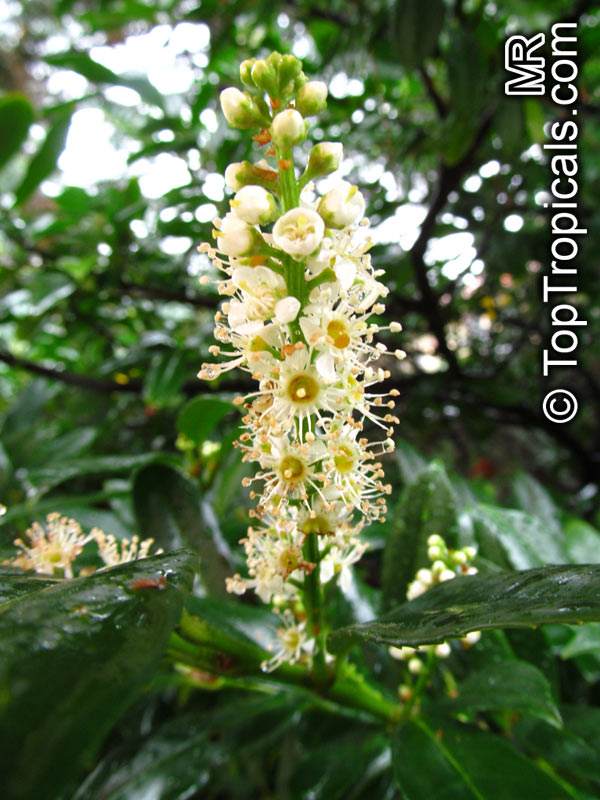
Prunus laurocerasus (Cherry Laurel) white flower spike rising above dark green waxy leaves
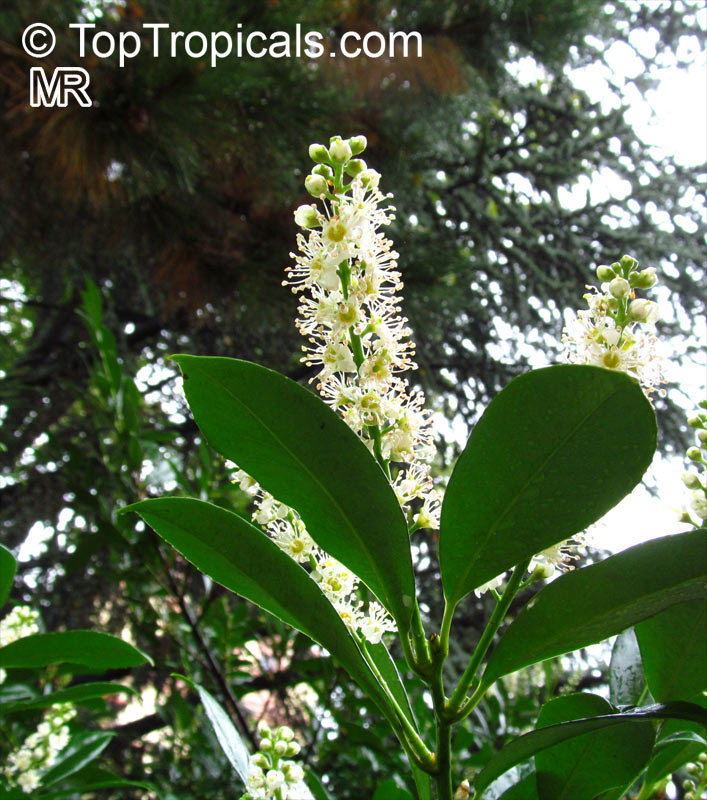
Prunus laurocerasus (Cherry Laurel) white flower spikes rising above dark green waxy foliage
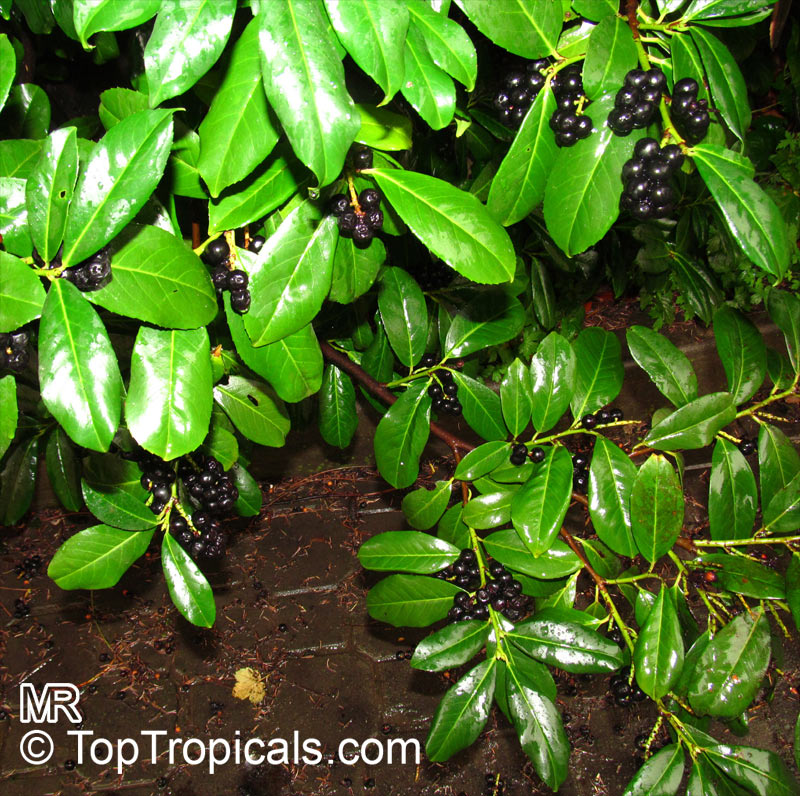
Prunus laurocerasus (Cherry Laurel) with thick green foliage and clusters of small black fruit
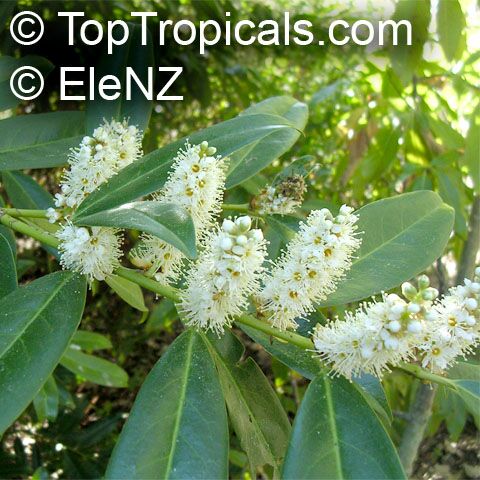
Prunus laurocerasus (Cherry Laurel) white flower spikes extending from deep green waxy leaves
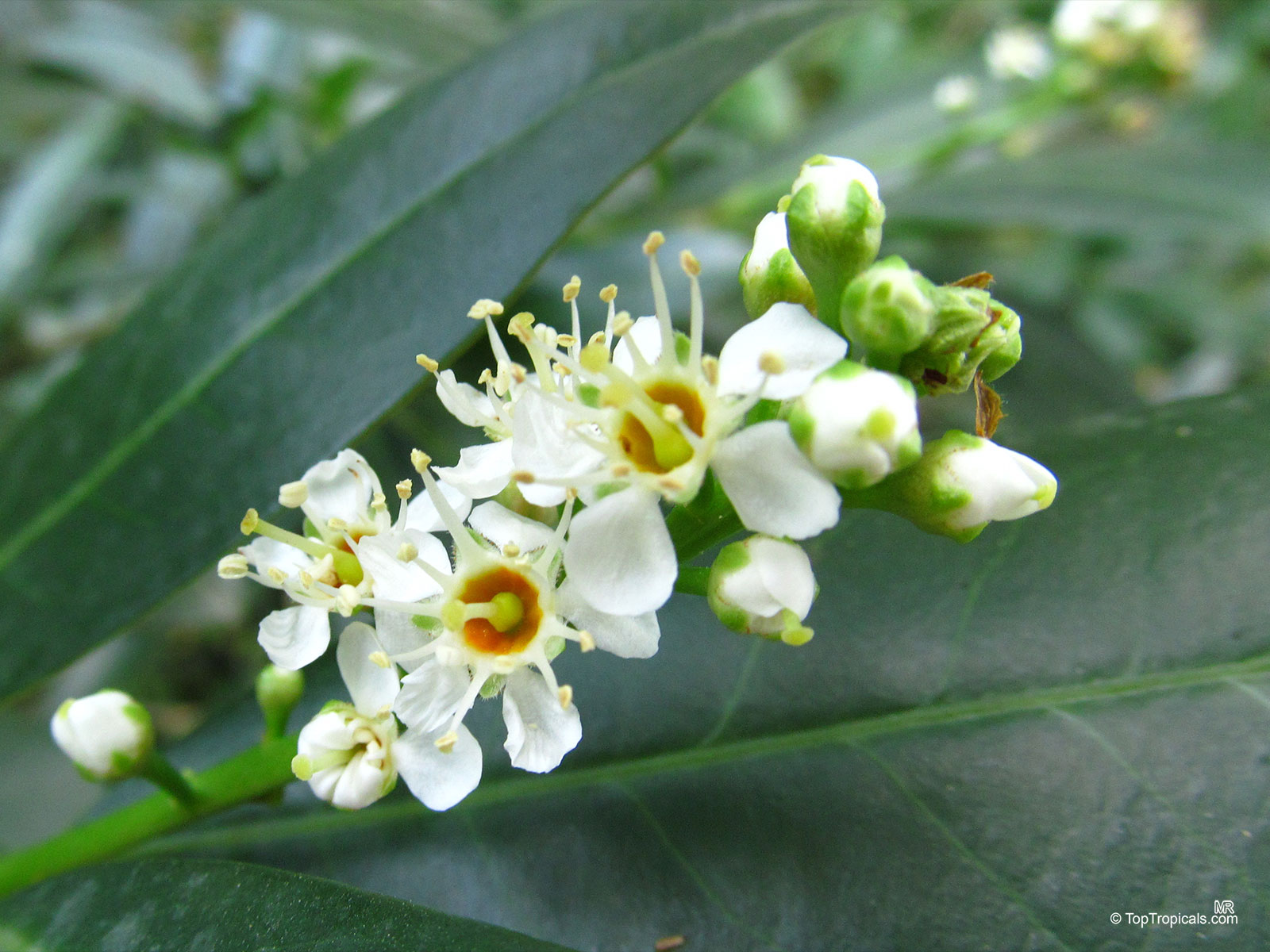
Prunus laurocerasus (Cherry Laurel) white flower cluster with small buds and dark green foliage
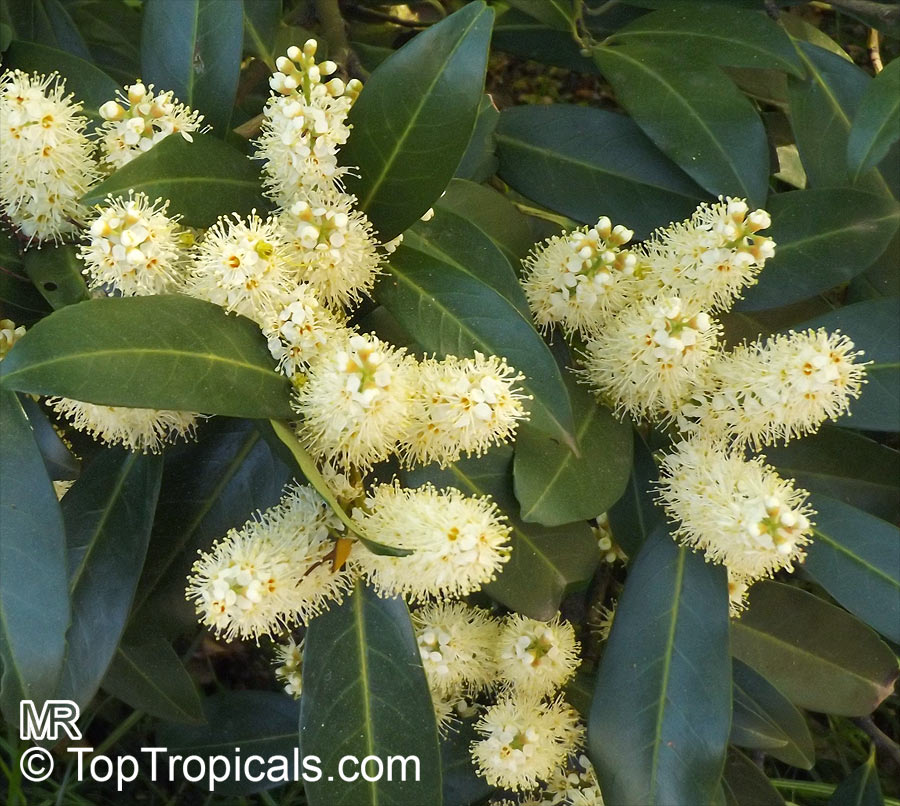
Prunus laurocerasus (Cherry Laurel) displays dense clusters of white spikes tucked between waxy dark green foliage
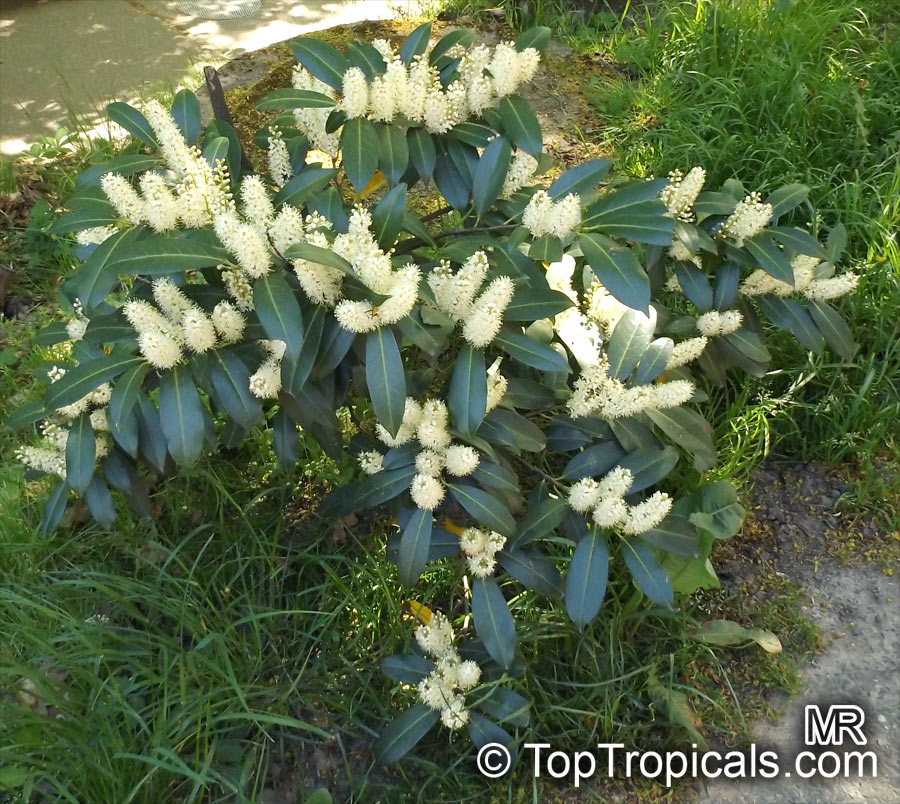
Prunus laurocerasus (Cherry Laurel) white flower spikes rising above dense dark green waxy oval leaves.
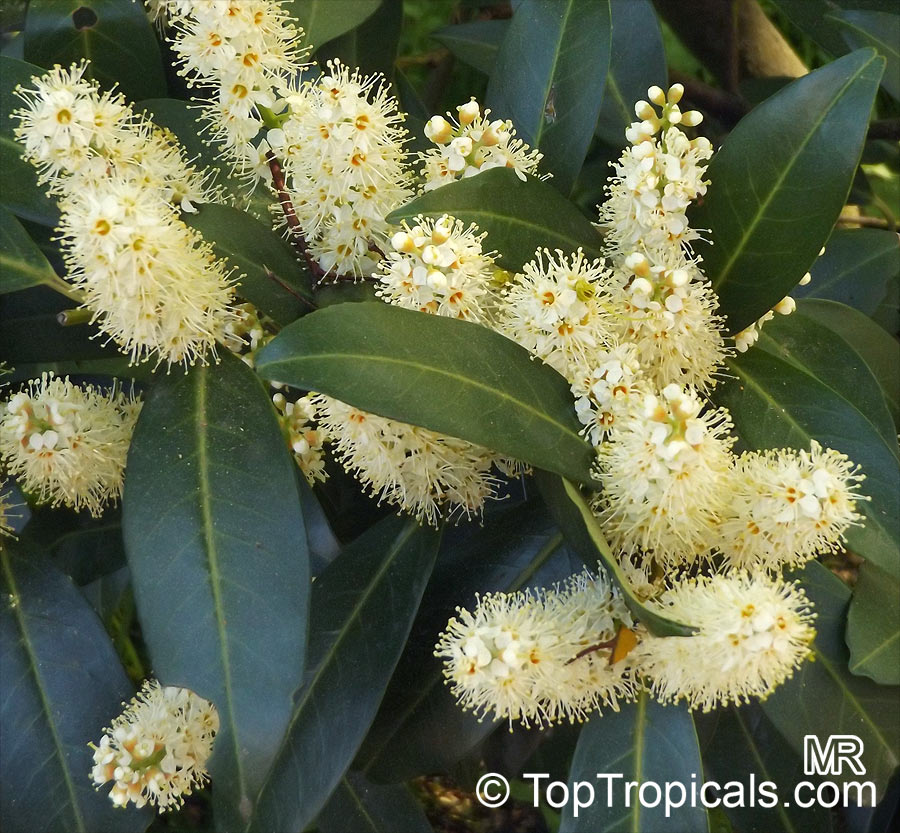
Prunus laurocerasus (Cherry Laurel) white upright spikes among thick dark evergreen foliage in a close up.
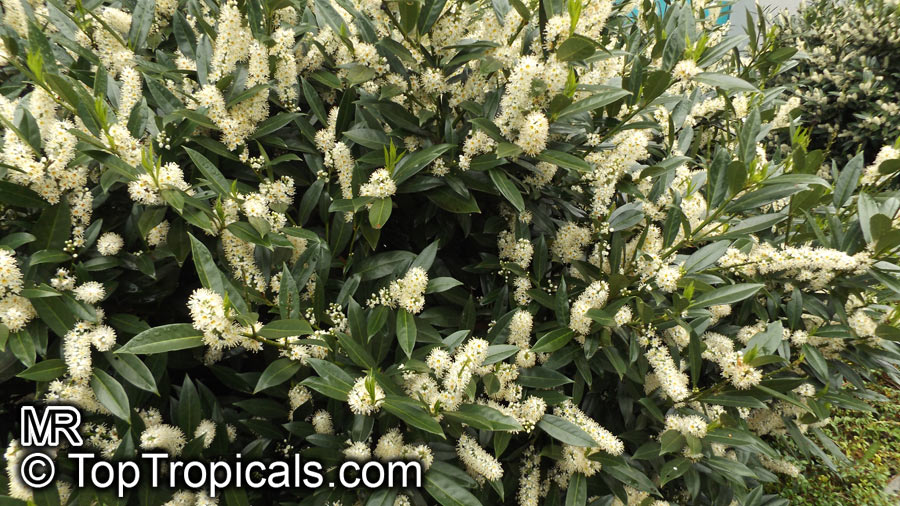
Prunus laurocerasus (Cherry Laurel) with numerous white flower spikes emerging among thick evergreen foliage
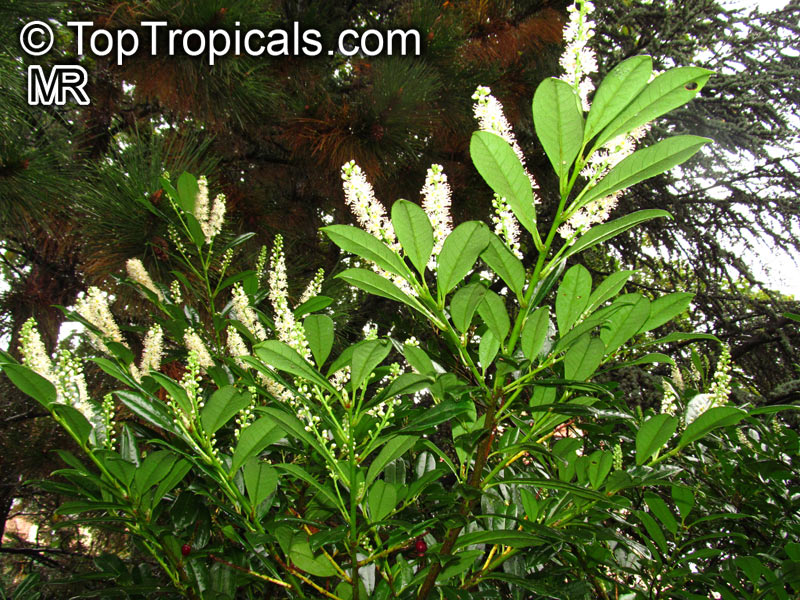
Prunus laurocerasus (Cherry Laurel) white flower spikes amidst dense glossy green foliage
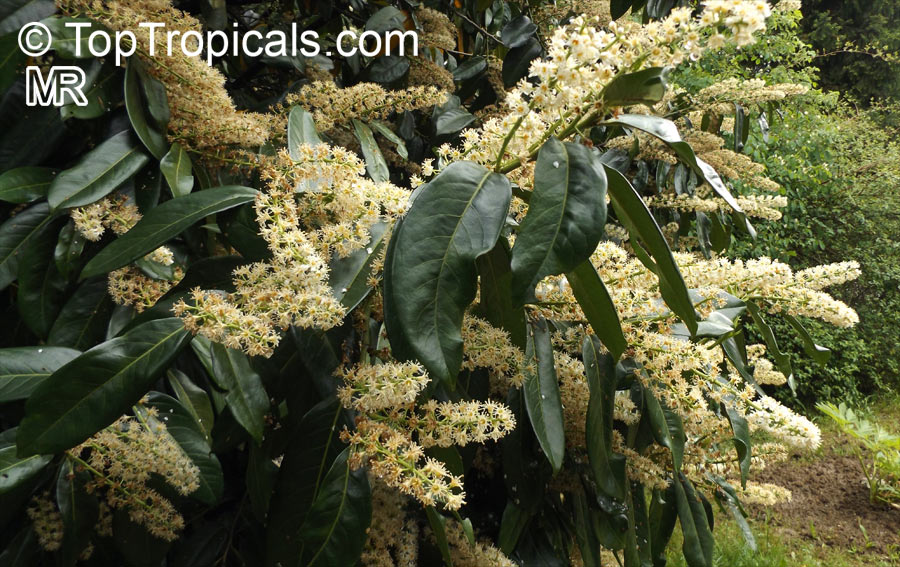
Prunus laurocerasus (Cherry Laurel) with numerous upright spikes of tiny white flowers amidst dark foliage
Link to this plant:
https://toptropicals.com/catalog/uid/prunus_laurocerasus.htm