Philodendron - Plant Encyclopedia Results
| Number of plants found: 42 | Next | 
|
Go to page: | 1 | 2 | 3 | 4 | 5 |
Botanical name: Philodendron
Common name: Burle Marx Philodendron
Cultivar: Burle Marx
Family: Araceae
Origin: South America
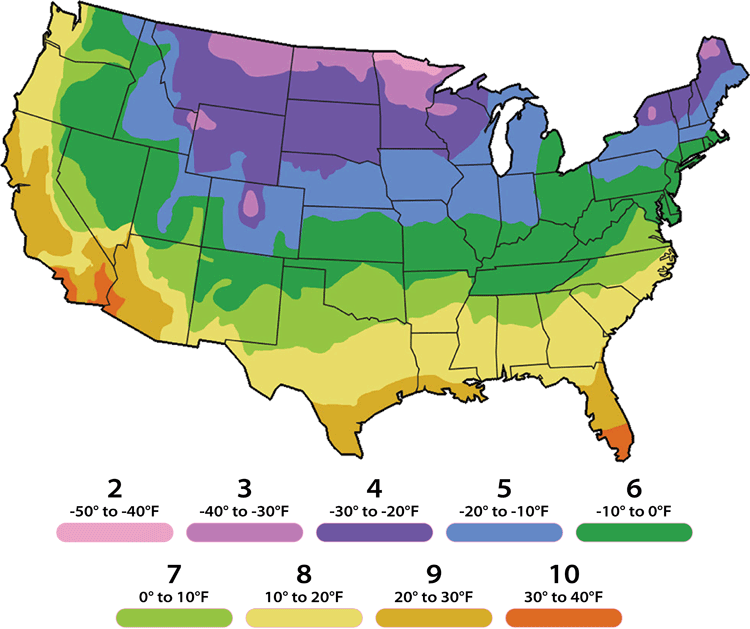
USDA Zone: 9-11


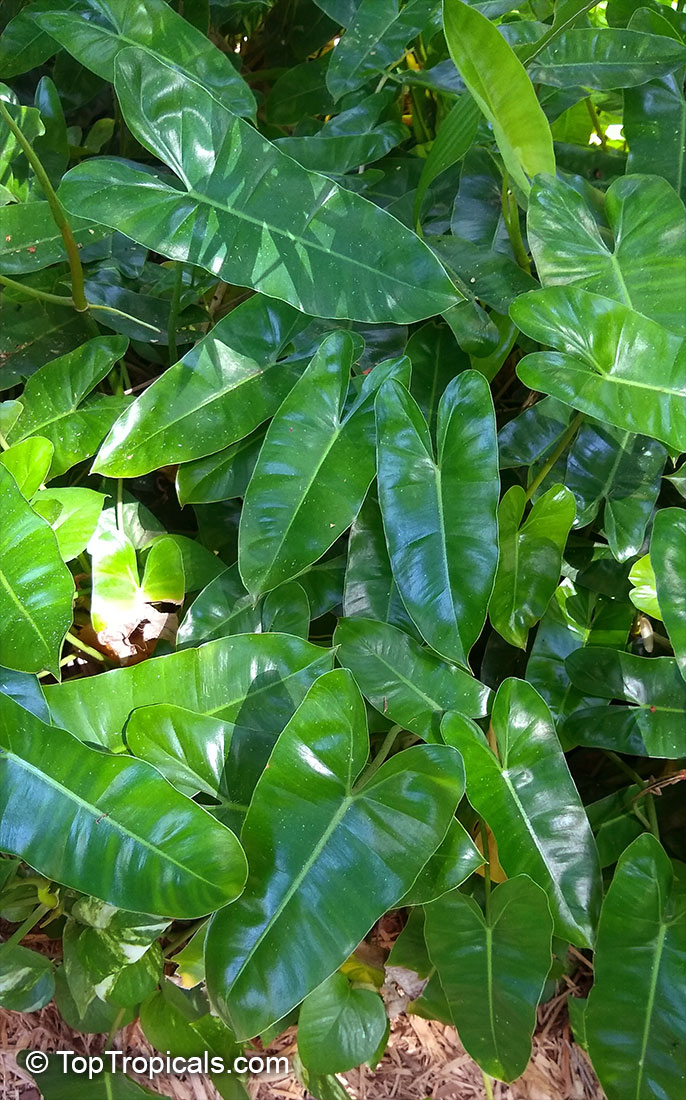
Burle Marx is an easy to grow, prehistoric looking, low growing variety of Philodendron well suited for interiorscapes, containers and tropical landscape mass plantings. The jungle green, elliptical leaves are thick and leather-like and arranged in a upright formation. Burle Marx makes a wonderful border or ground cover plant. An Incredibly Easy Growing Ground Cover!
Can be grown indoors or out, and will be a lush and resilient addition to your garden. This plant has shiny, slender, bright green, heart-shaped leaves and reddish stems. Used as a ground cover, it will grow in a clump about 2 feet tall. If planted against a tree, it will climb vertically up the trunk. Prefers partial sun and moderate soil moisture, tolerates more sun than other philodendrons, and once established, tolerates mild drought.
Native to the tropical jungles of Brazil, this philodendron is named for the eminent Brazilian landscape architect Roberto Burle Marx who championed the use of native plants in modern landscape design.
Read the article about Philodendron 'Burle Marx'.
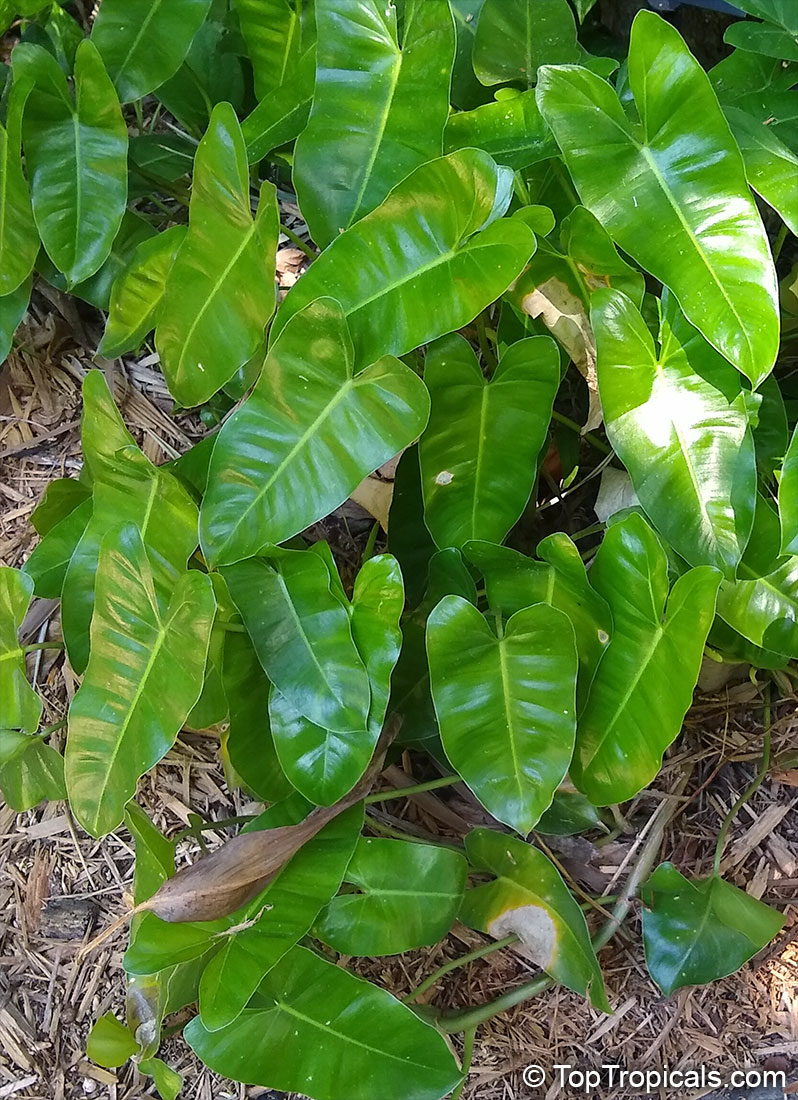
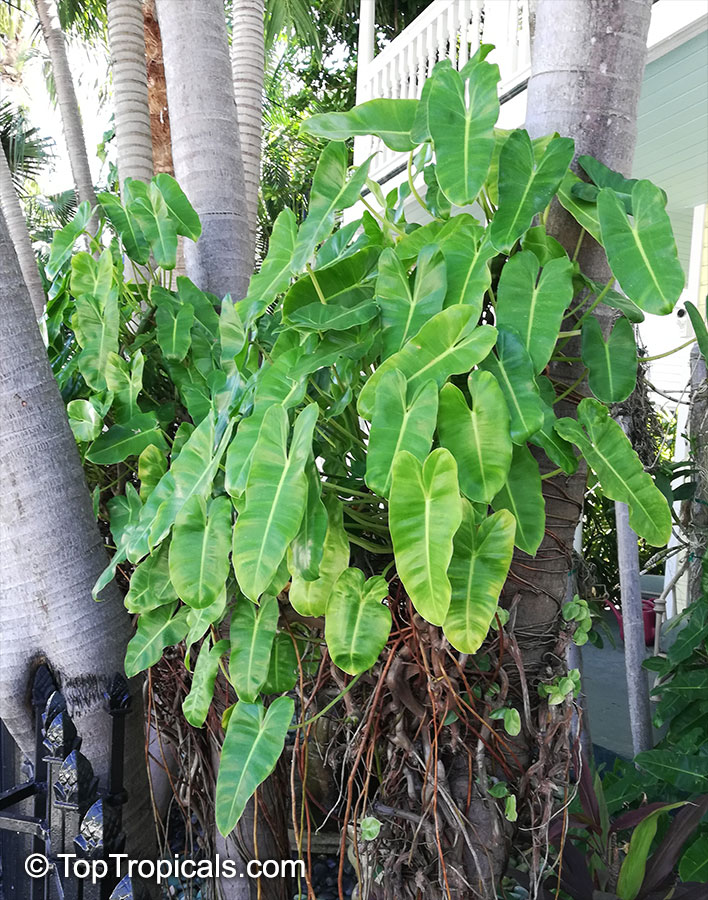
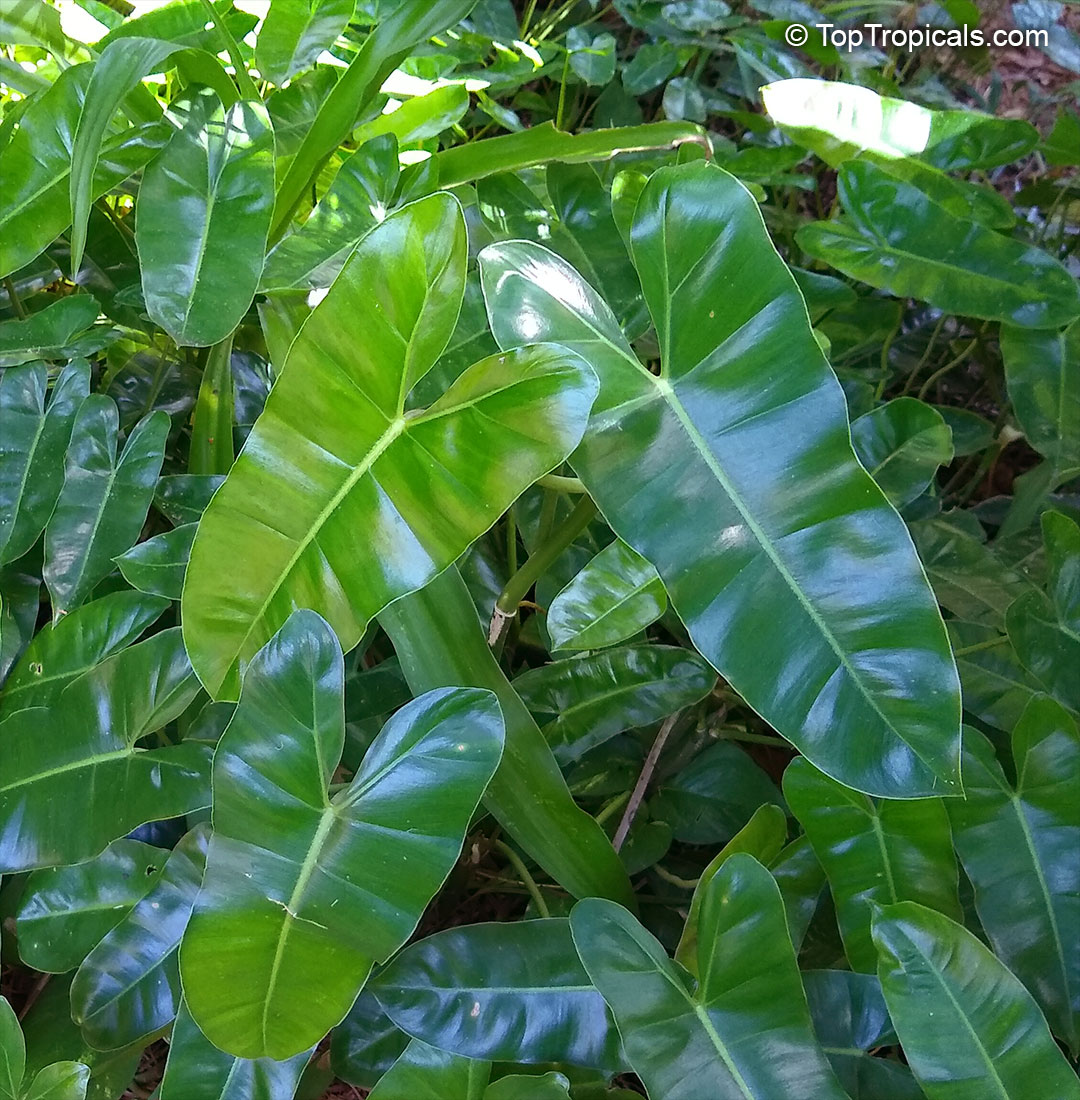
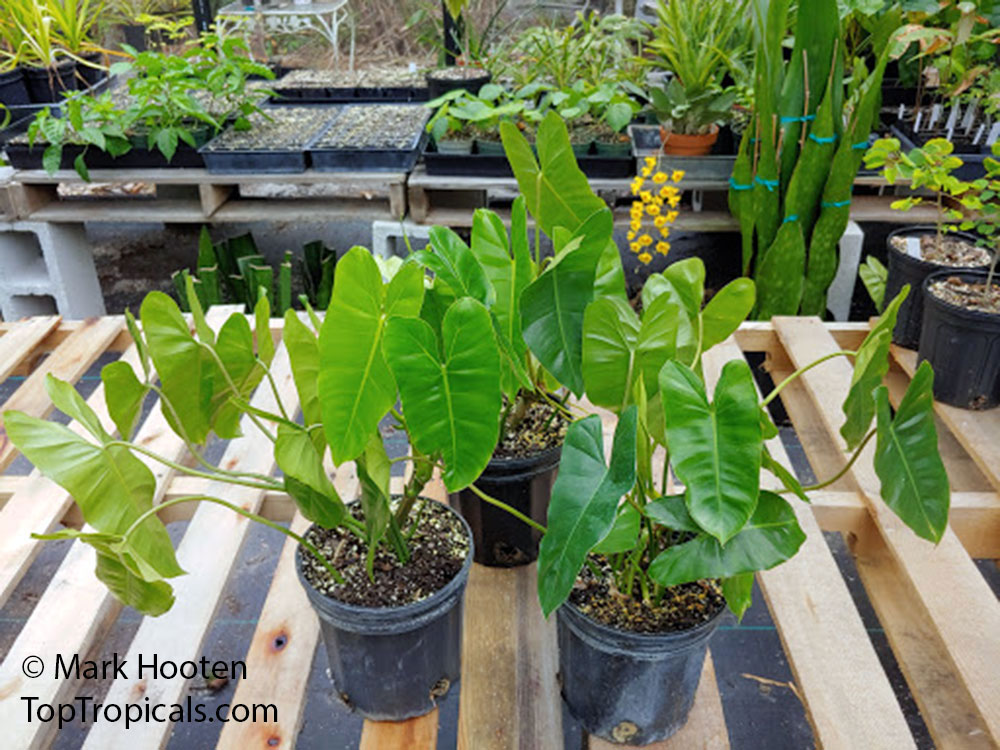
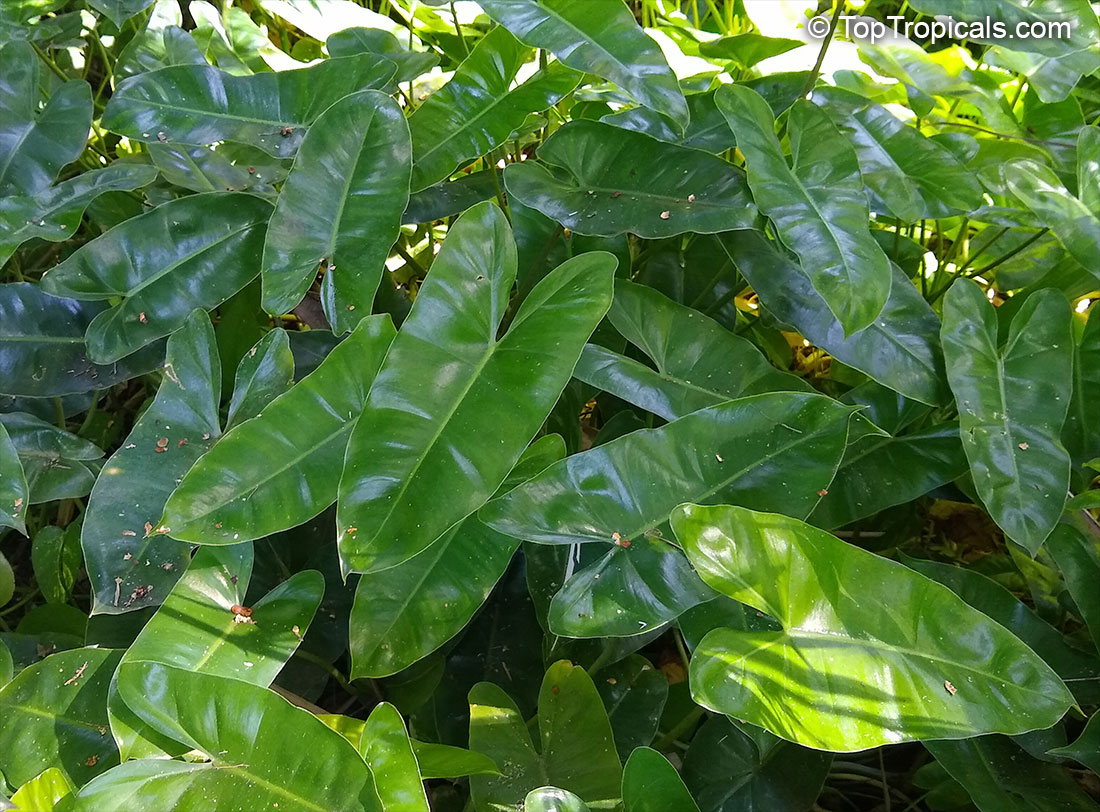
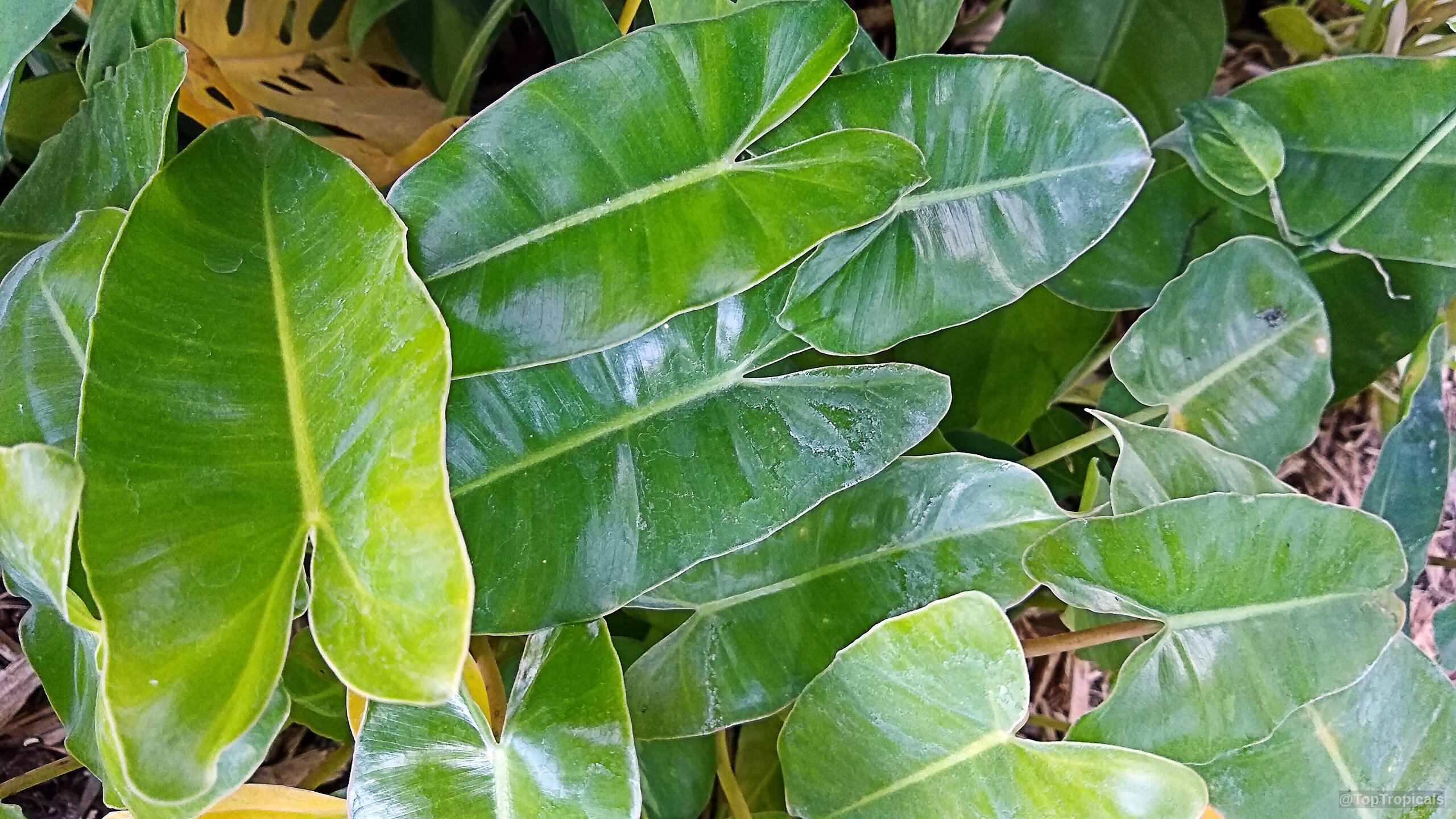
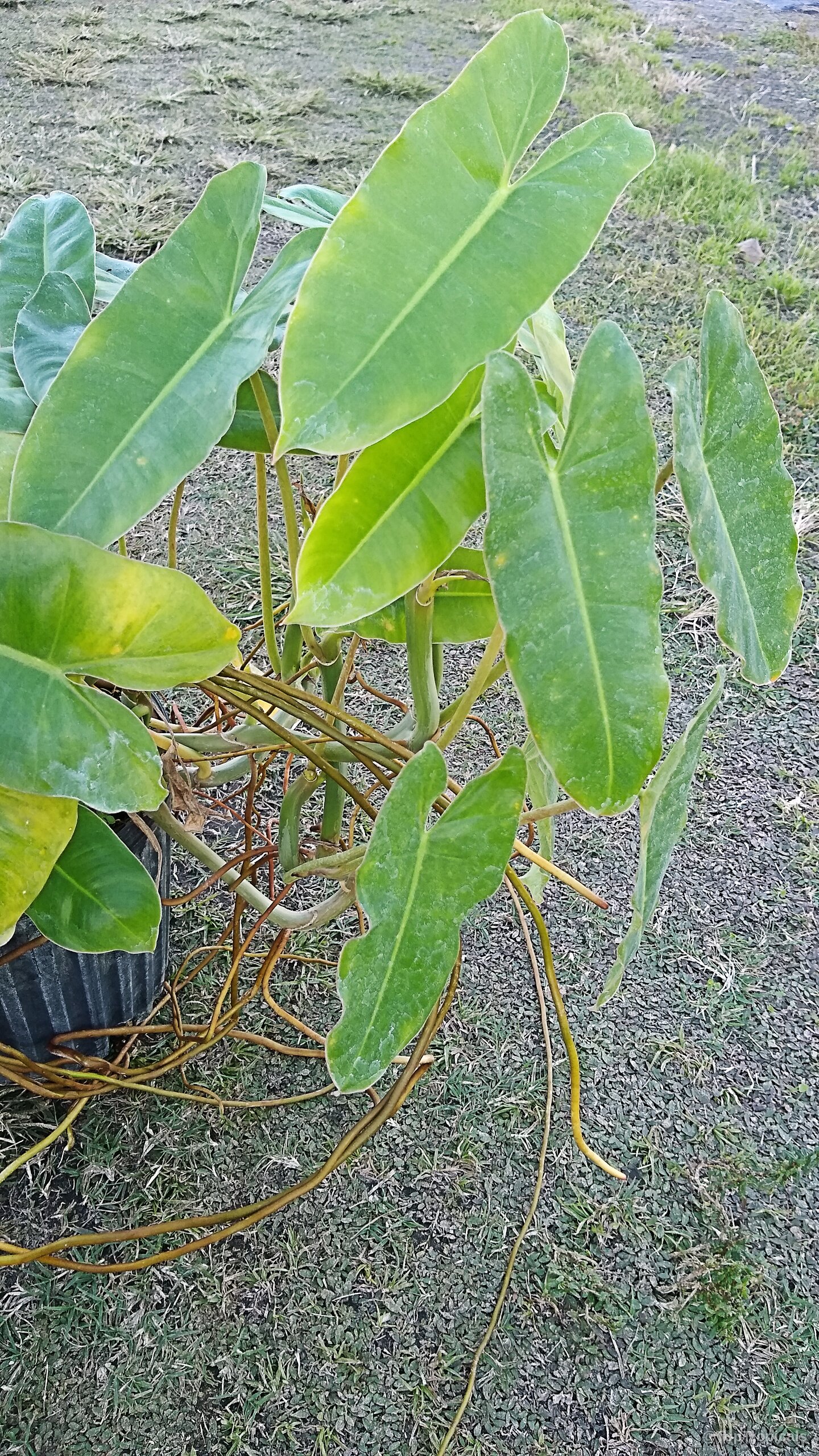

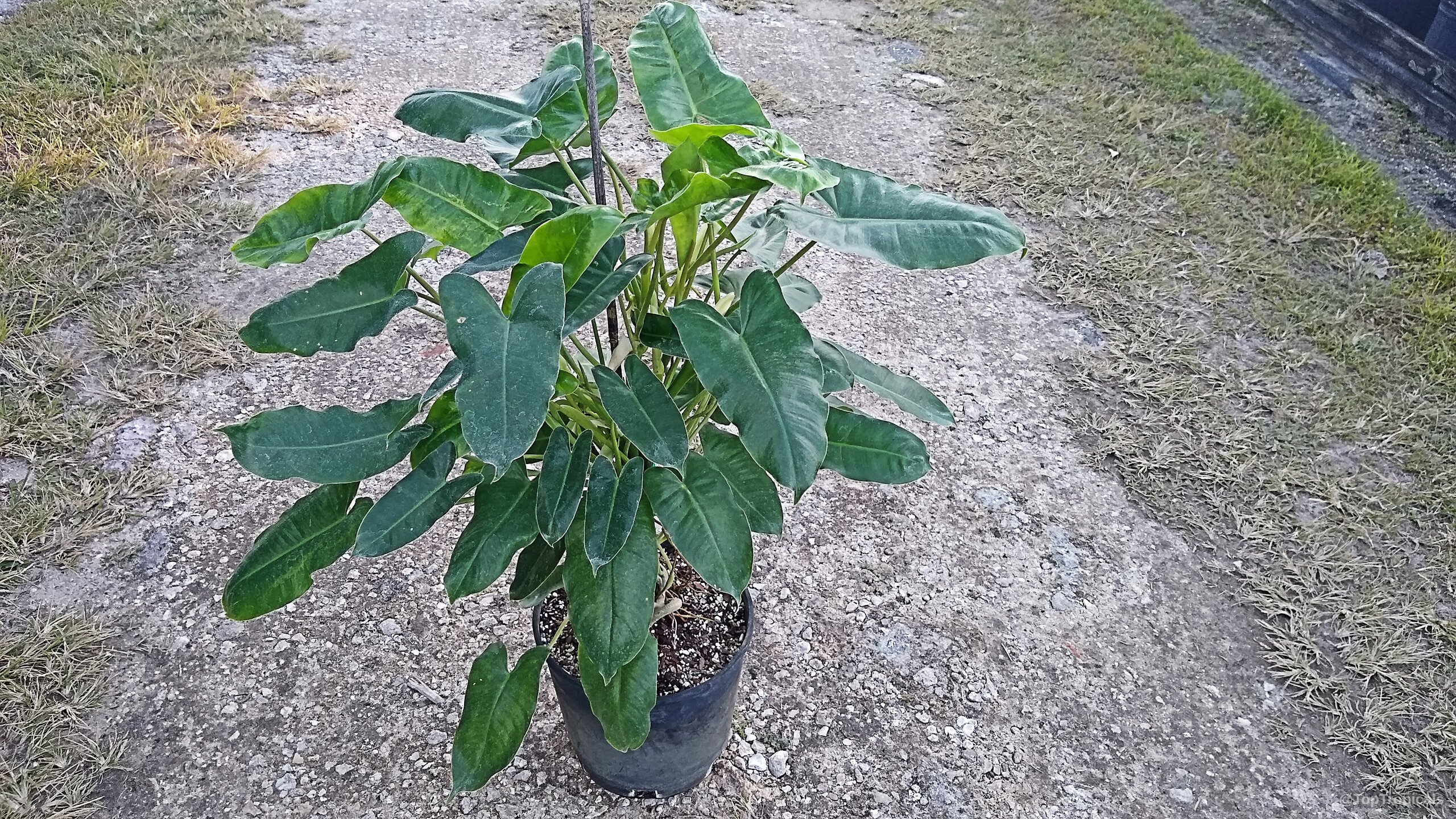
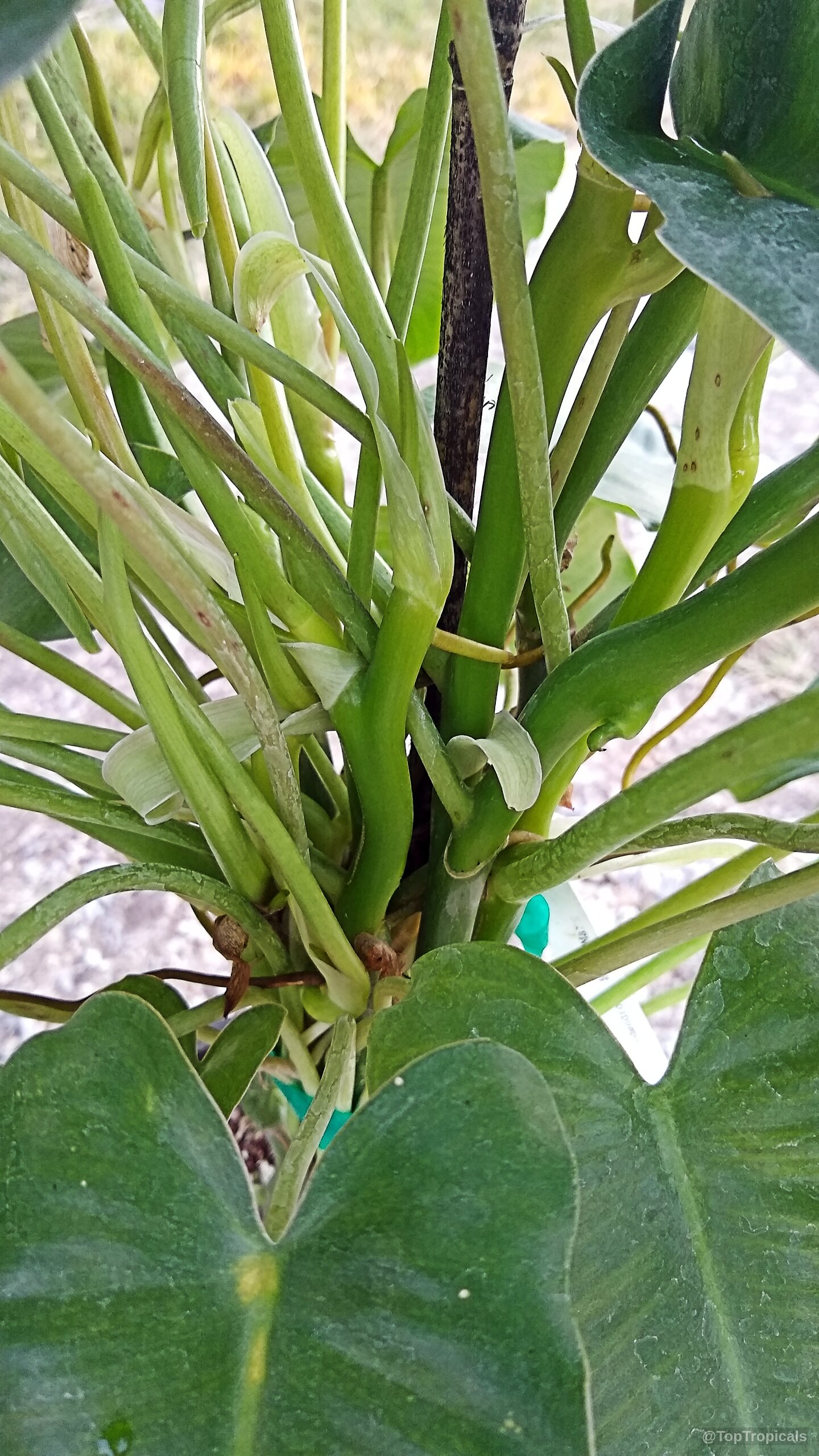
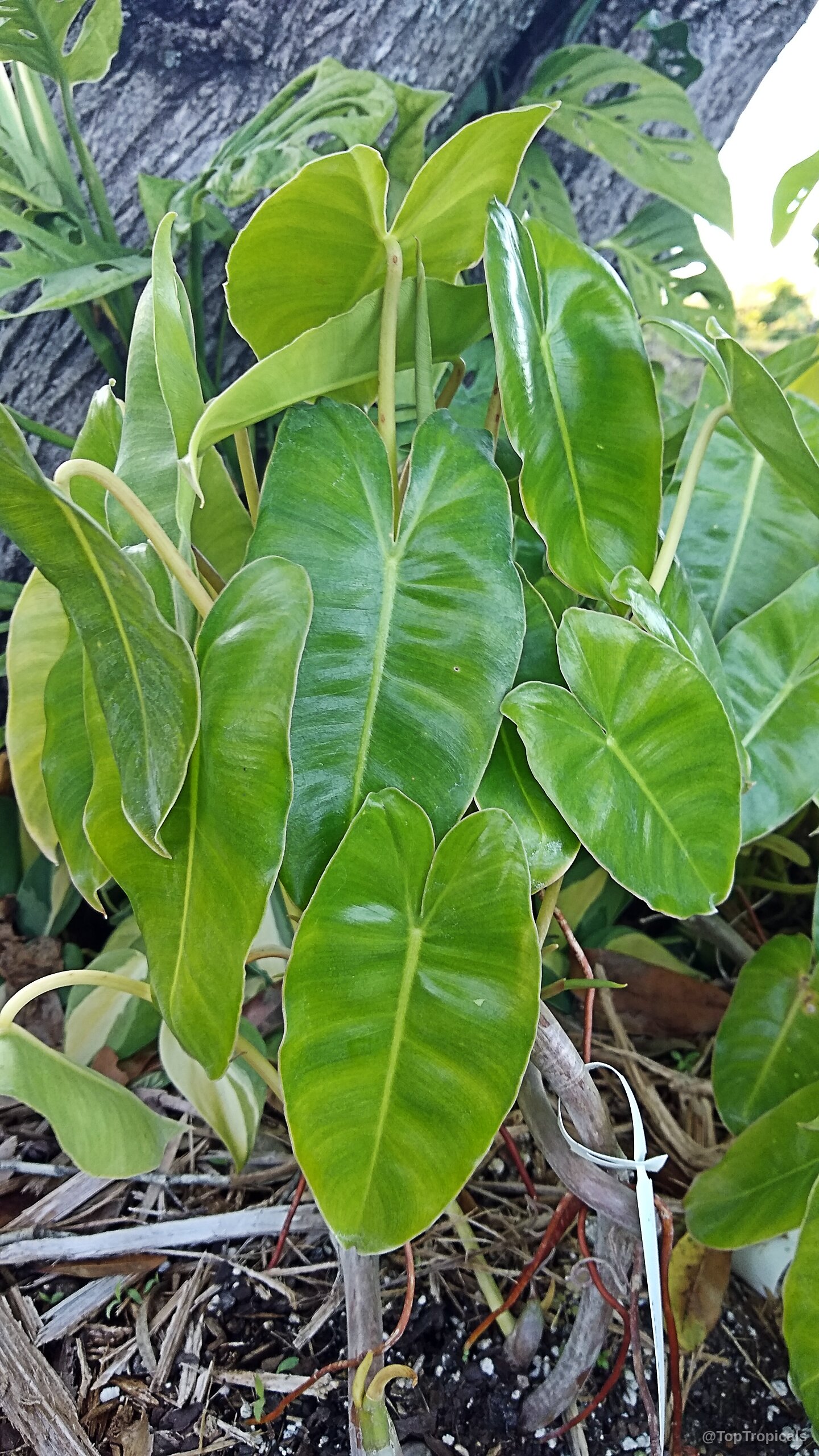
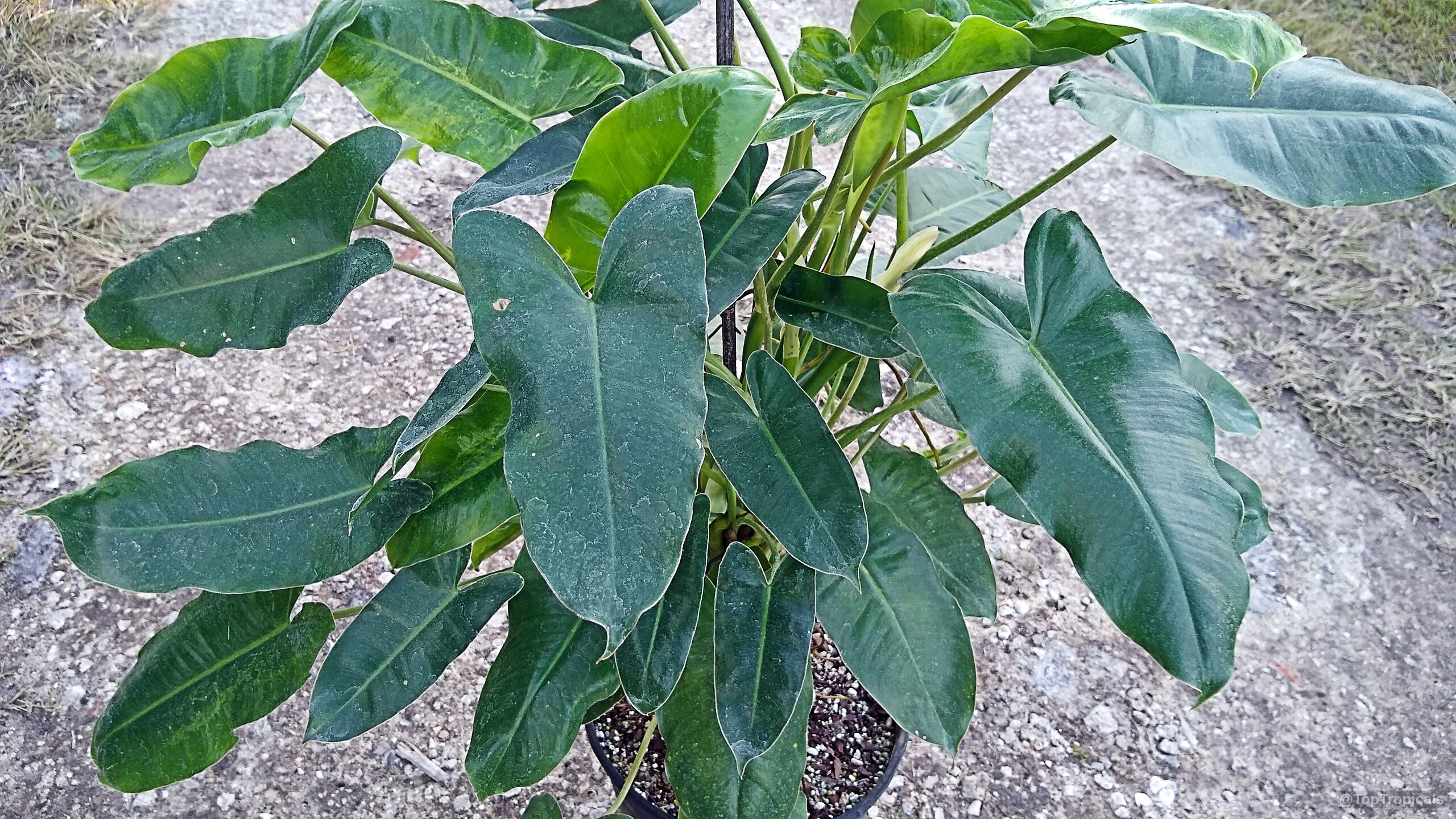
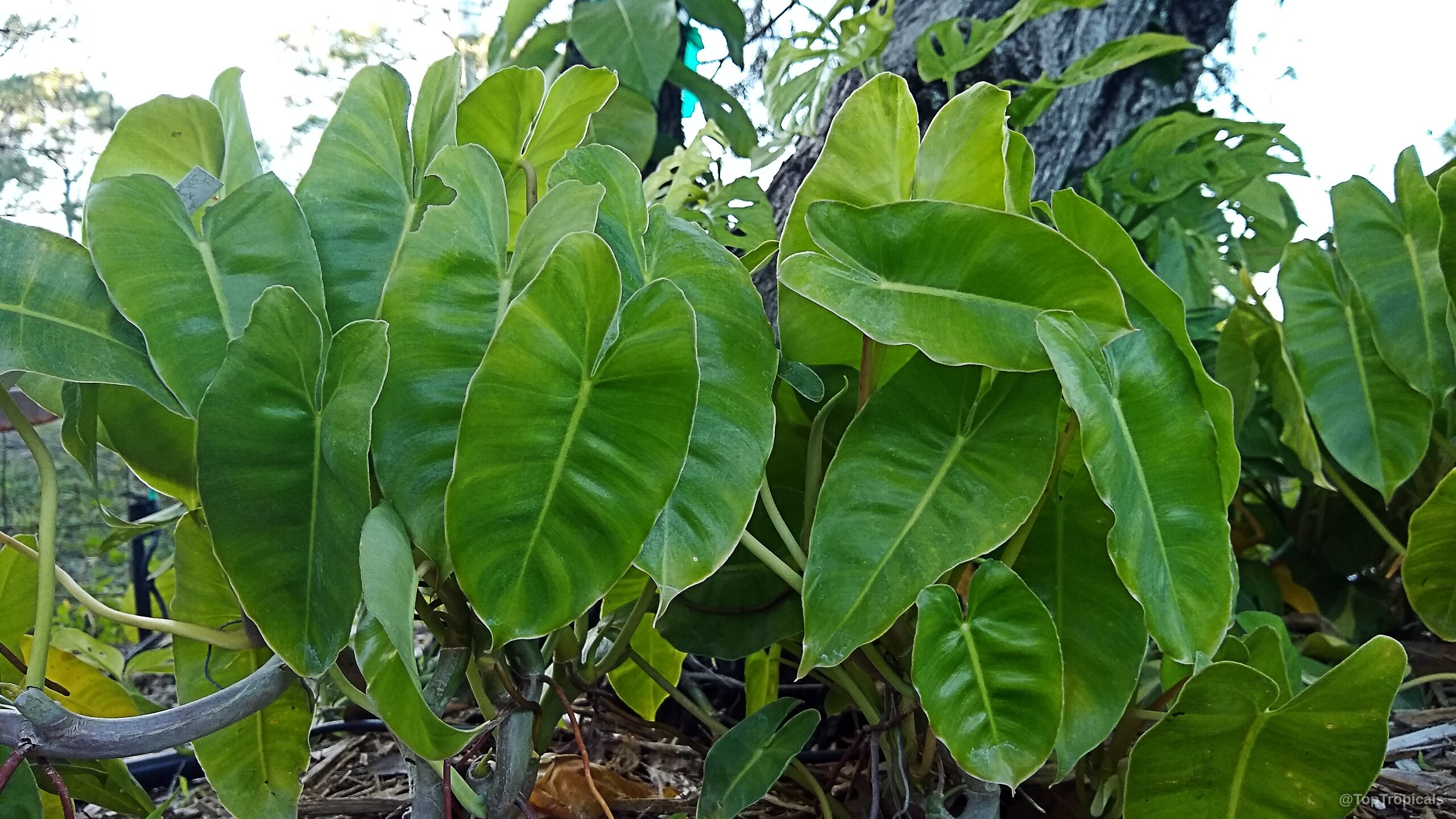
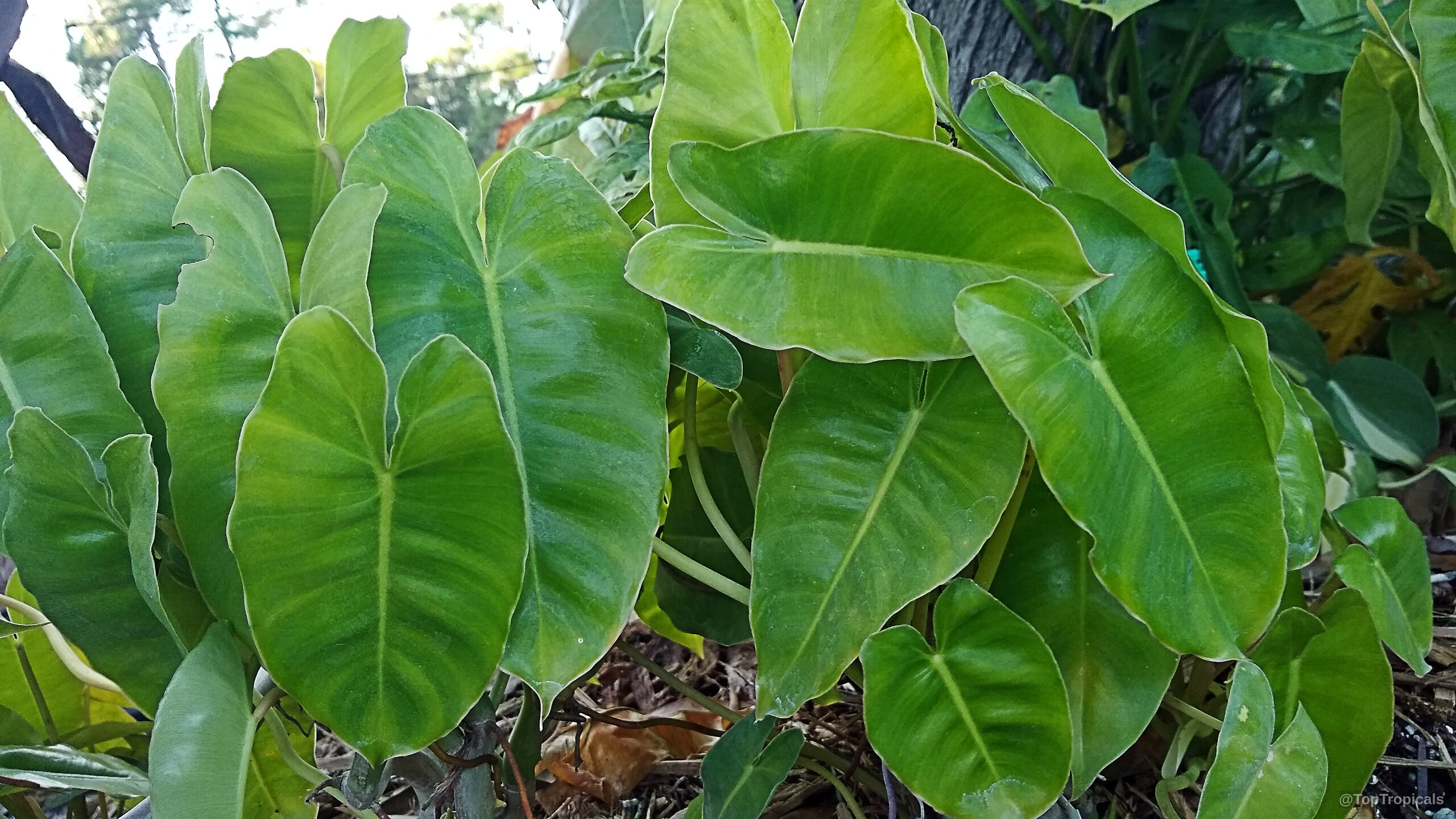
Can be grown indoors or out, and will be a lush and resilient addition to your garden. This plant has shiny, slender, bright green, heart-shaped leaves and reddish stems. Used as a ground cover, it will grow in a clump about 2 feet tall. If planted against a tree, it will climb vertically up the trunk. Prefers partial sun and moderate soil moisture, tolerates more sun than other philodendrons, and once established, tolerates mild drought.
Native to the tropical jungles of Brazil, this philodendron is named for the eminent Brazilian landscape architect Roberto Burle Marx who championed the use of native plants in modern landscape design.
Read the article about this plant.
See Article about Philodendrons.
Recommended Fertilizer: SUNSHINE Robusta - Rapid Growth Booster
Last one
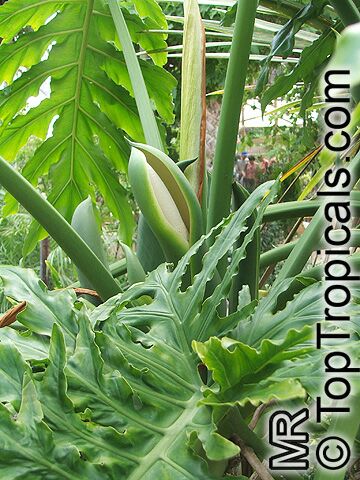
Botanical names: Philodendron bipinnatifidum, Philodendron selloum
Common names: Cut-leaf Philodendron, Tree Philodendron, Selloum, Self-header, Split leaf Philodendron
Family: Araceae
Origin: Paraguay and southeastern Brazil
USDA Zone: 9-11


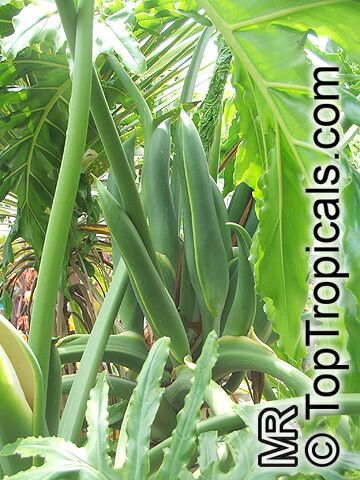
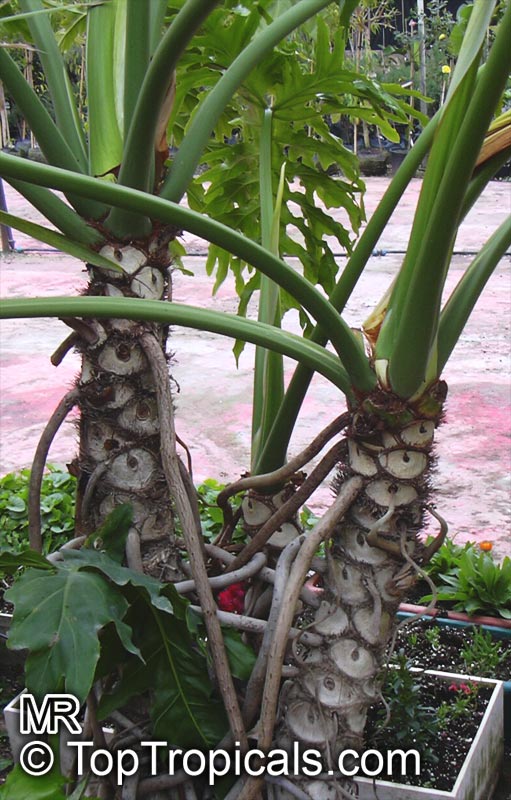
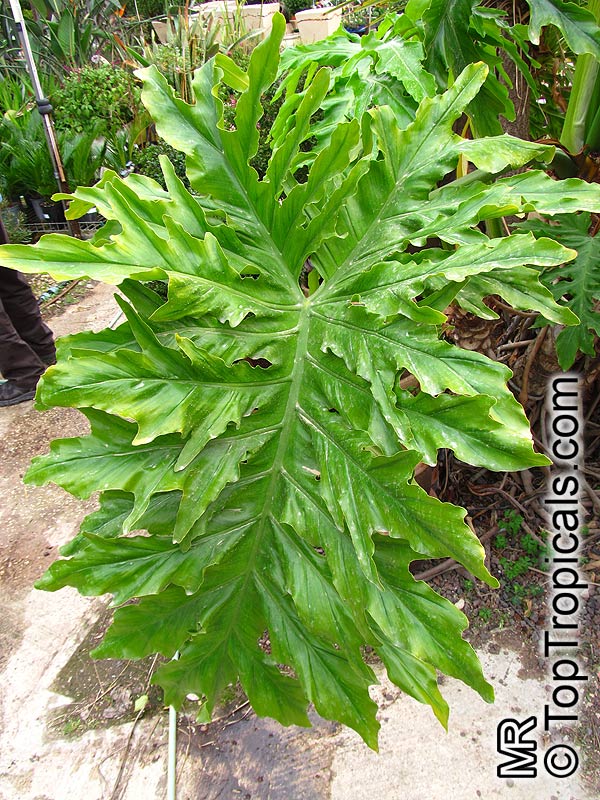
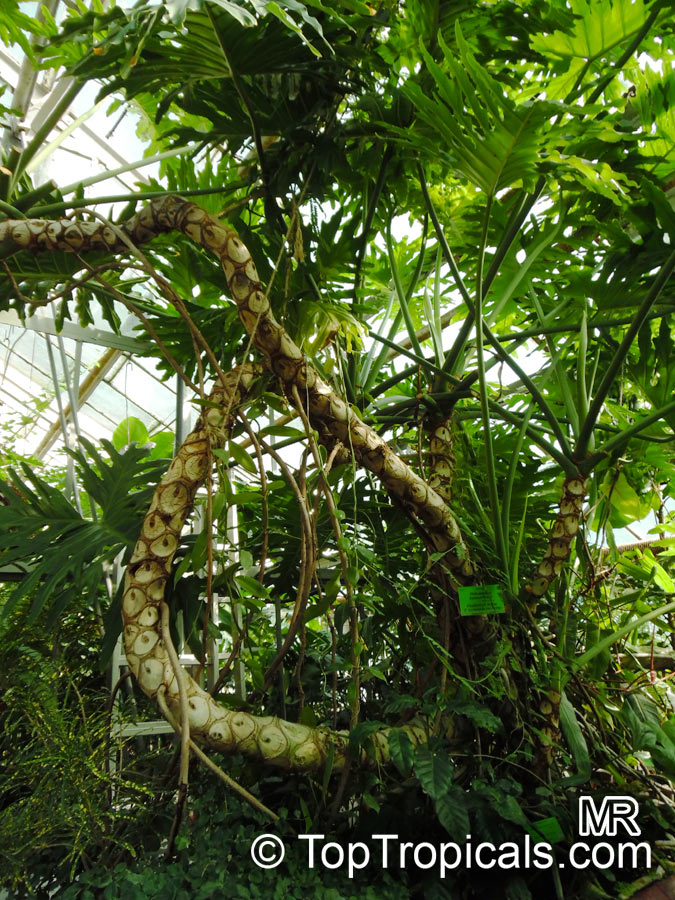
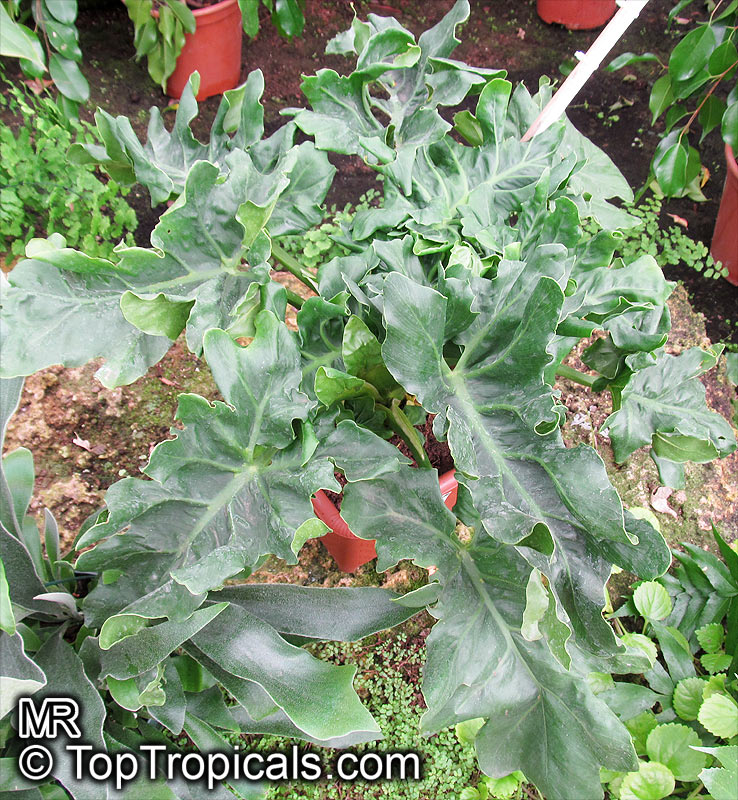
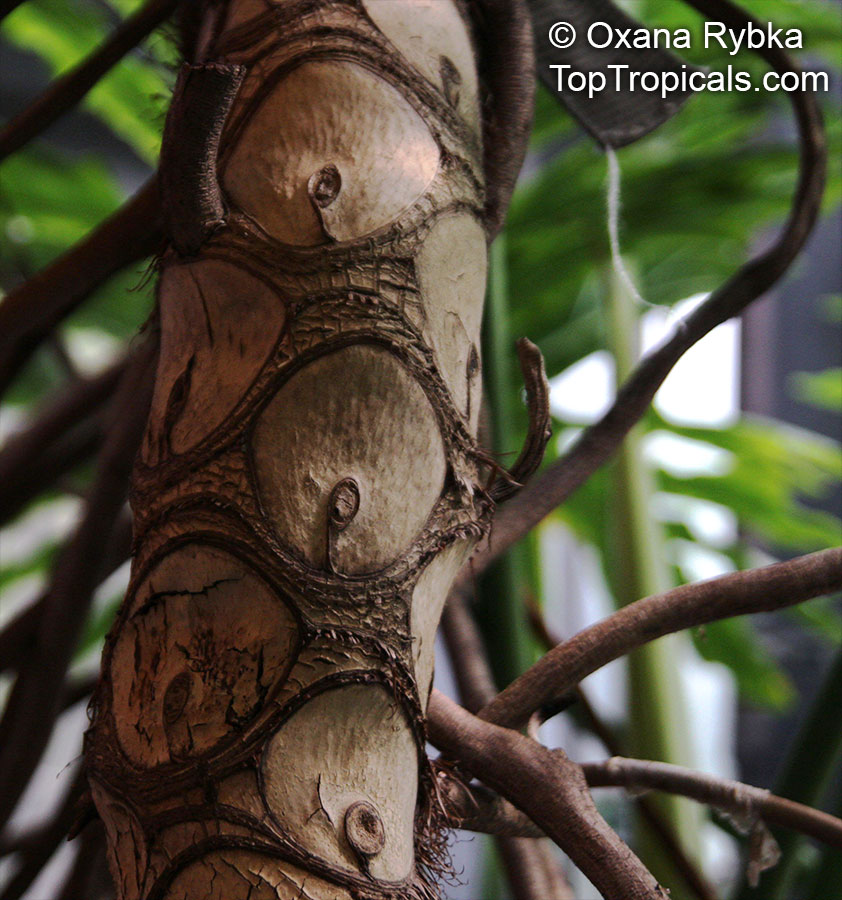
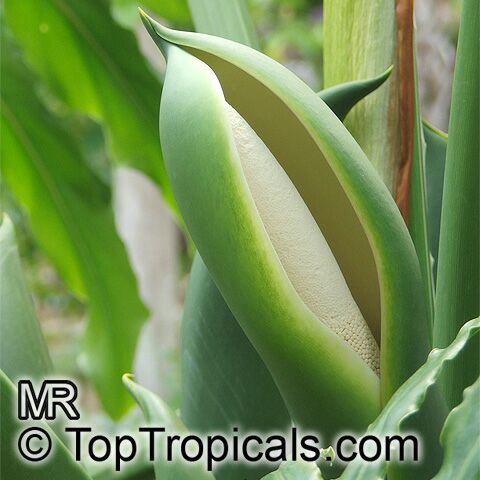
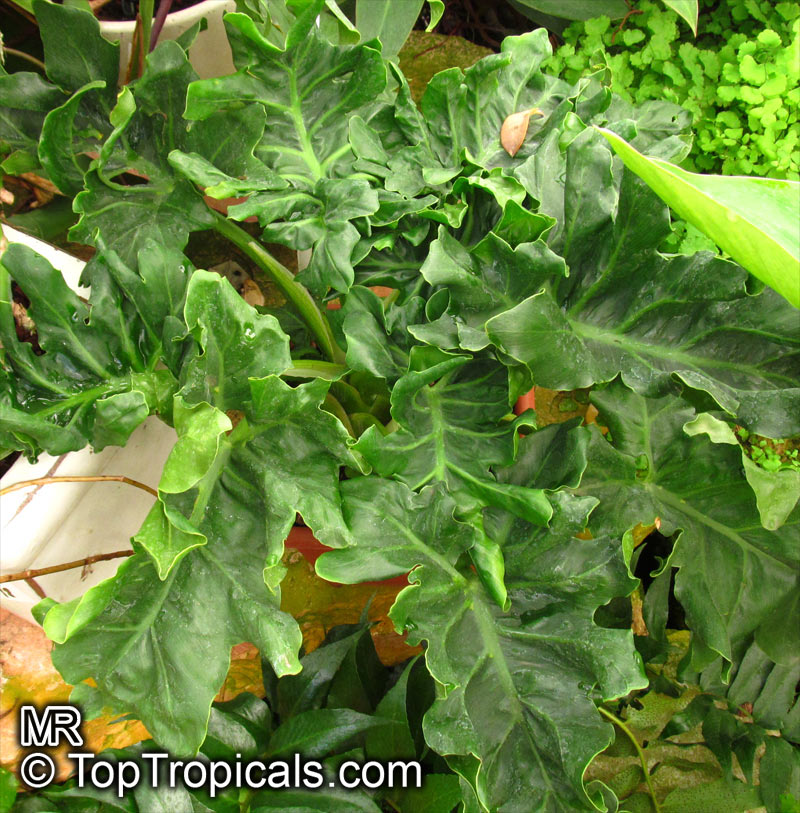
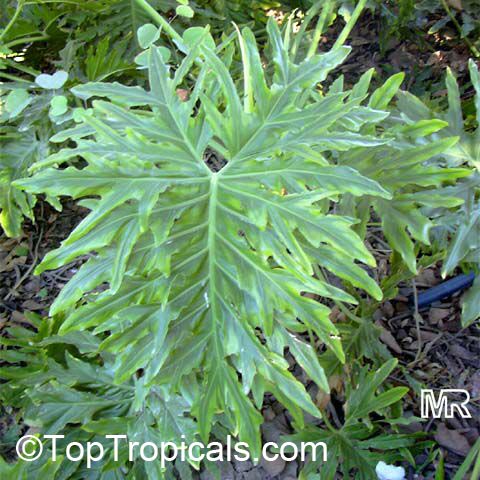
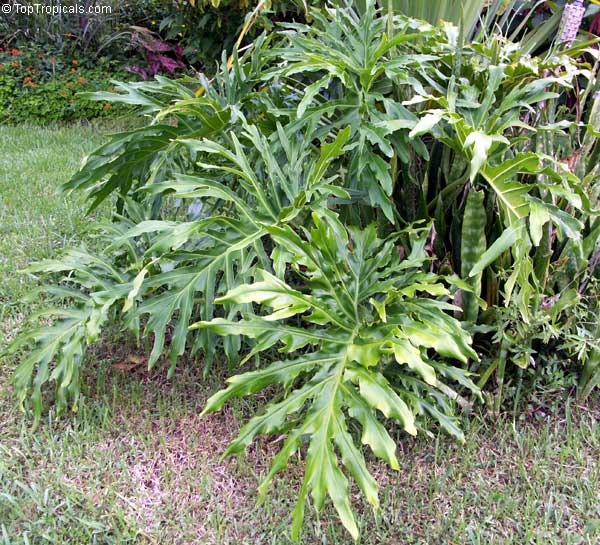
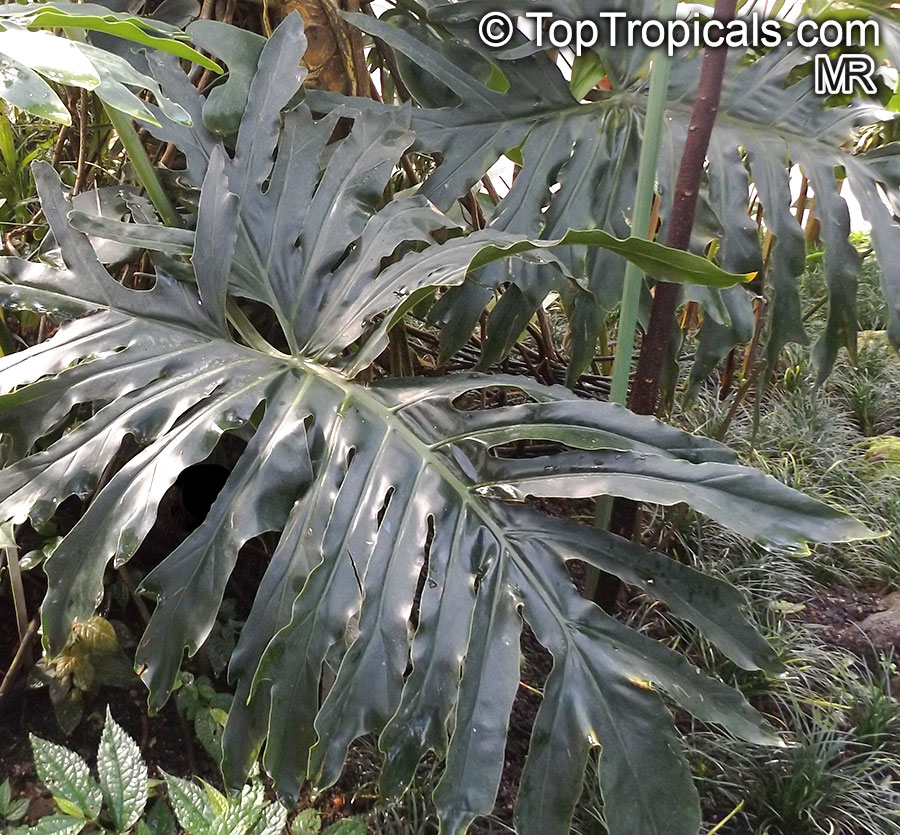
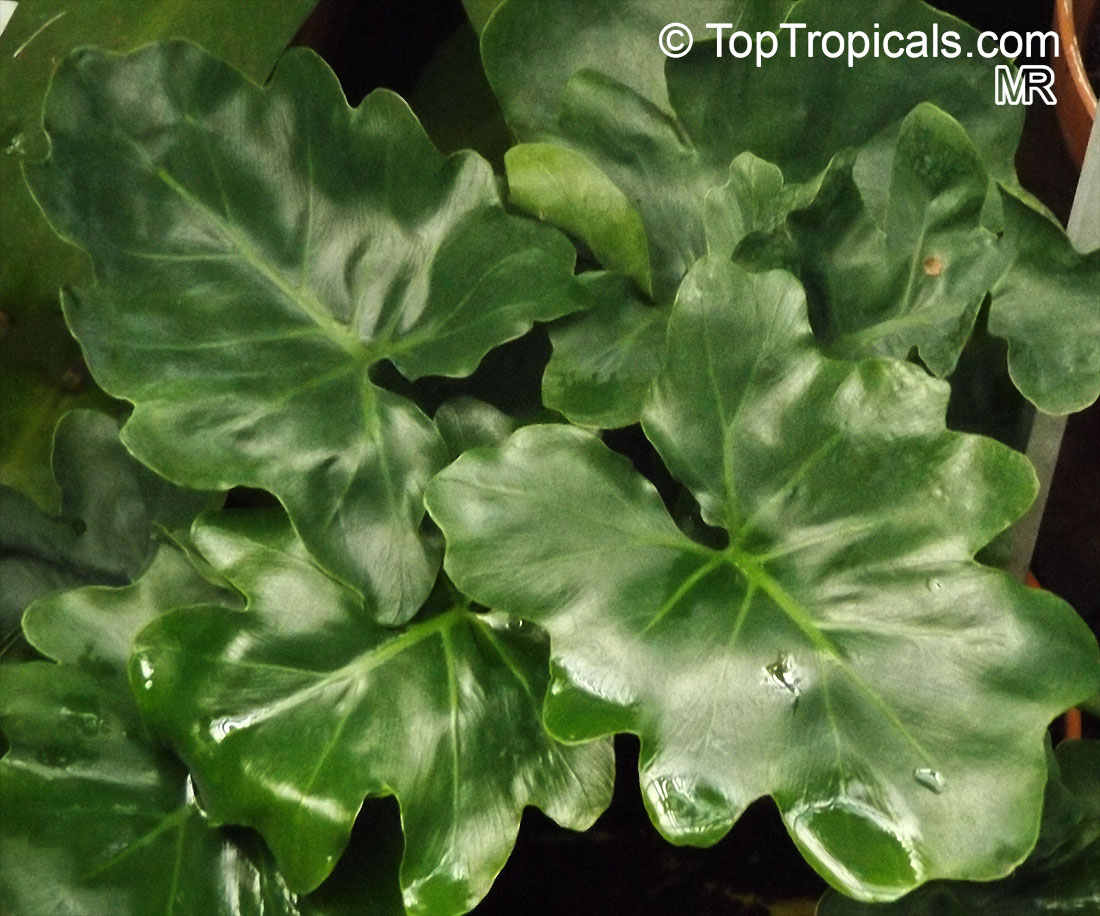
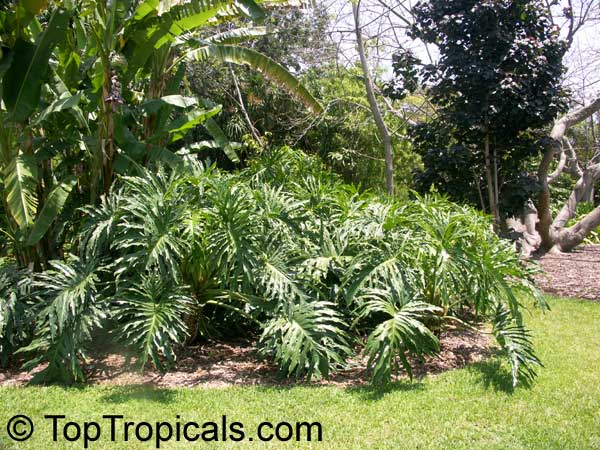
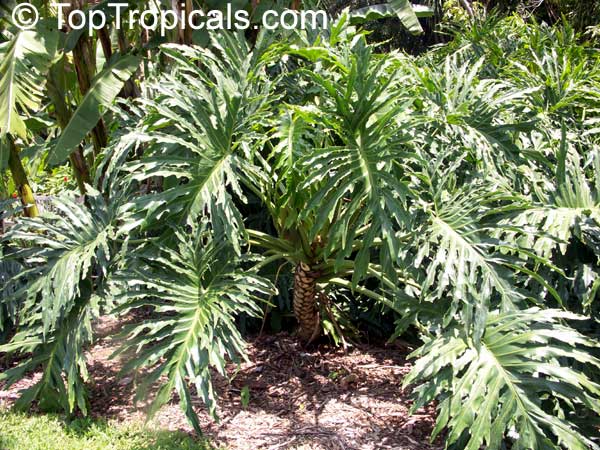
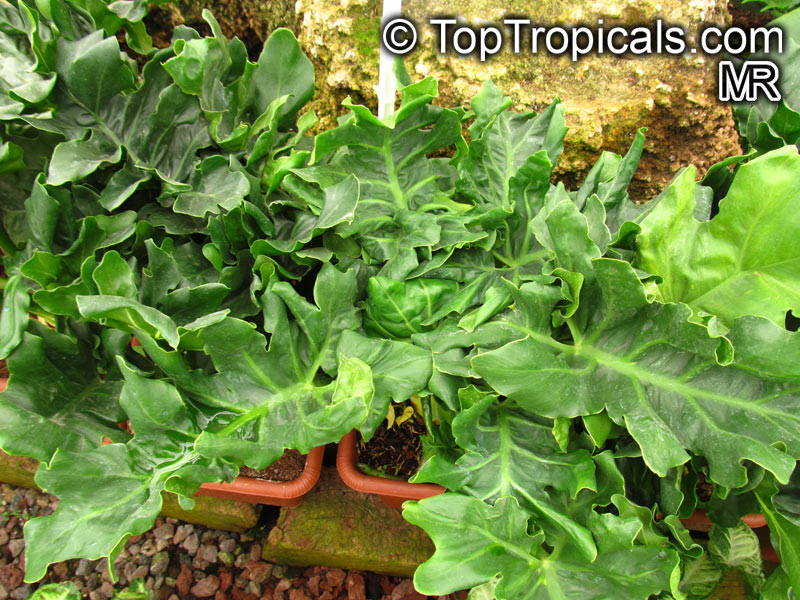
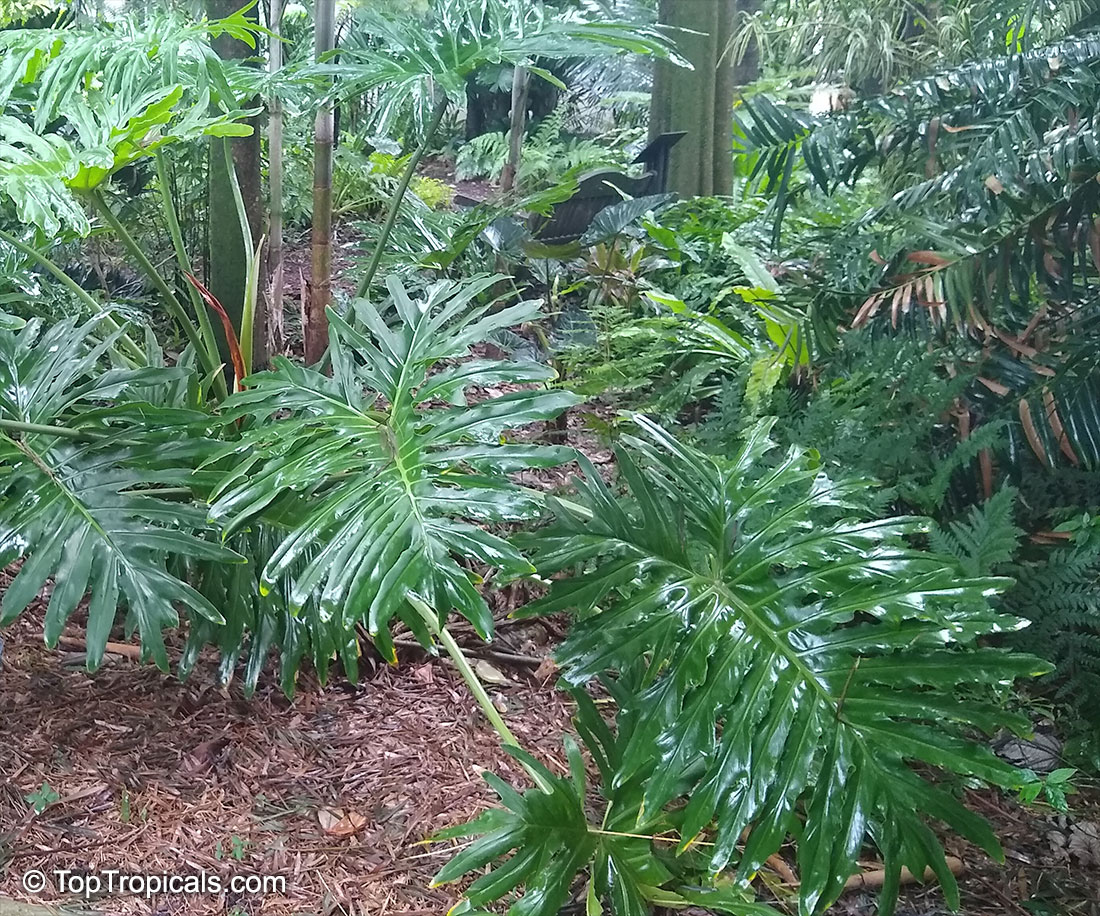
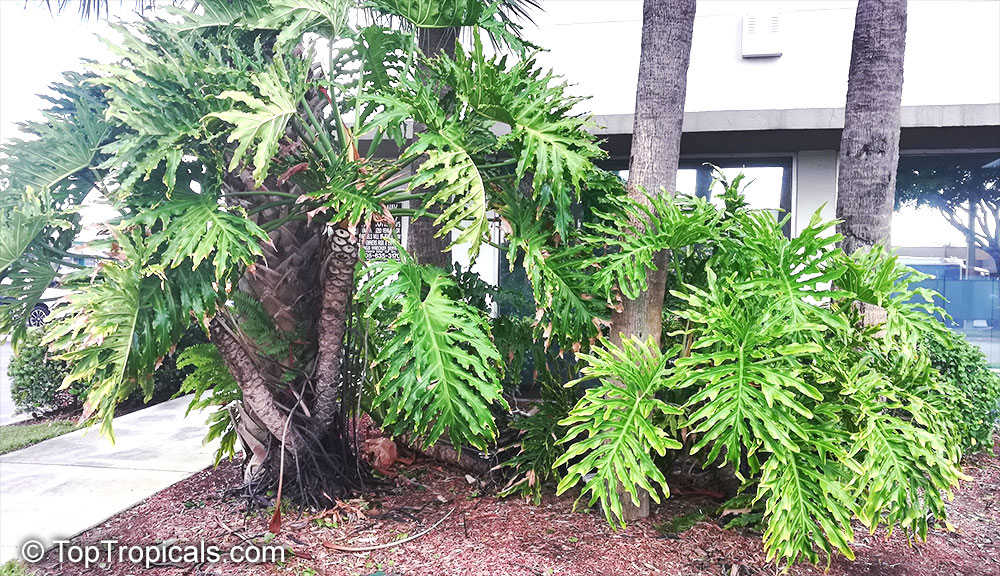
Tree Philodendron. Large semiwoody shrub FROM Brazil with enormous glossy leaves, and a single erect unbranched stem that tends to fall over and sprawl when the plant gets large. The robust stem bears stout aerial rootlets between conspicuous leaf scars. The leaves are up to 3' long, deeply dissected into many wavy-margined lobes, and held on long petioles. Older and larger plants develop leaves that are more deeply dissected and more ruffled. The inflorescence consists of a foot-long purplish red spathe enclosing an upright spadix with many tiny petalless flowers. In Nature, tree philodendron can get as large as 15' tall and 15' wide with a stem 6" or more in diameter. It is a popular houseplant if you have enough room, and is great for office interior design, etc.

Botanical name: Philodendron cordatum
Common name: Heart Leaf Philodendron
Family: Araceae
Origin: Brazil
USDA Zone: 9-10

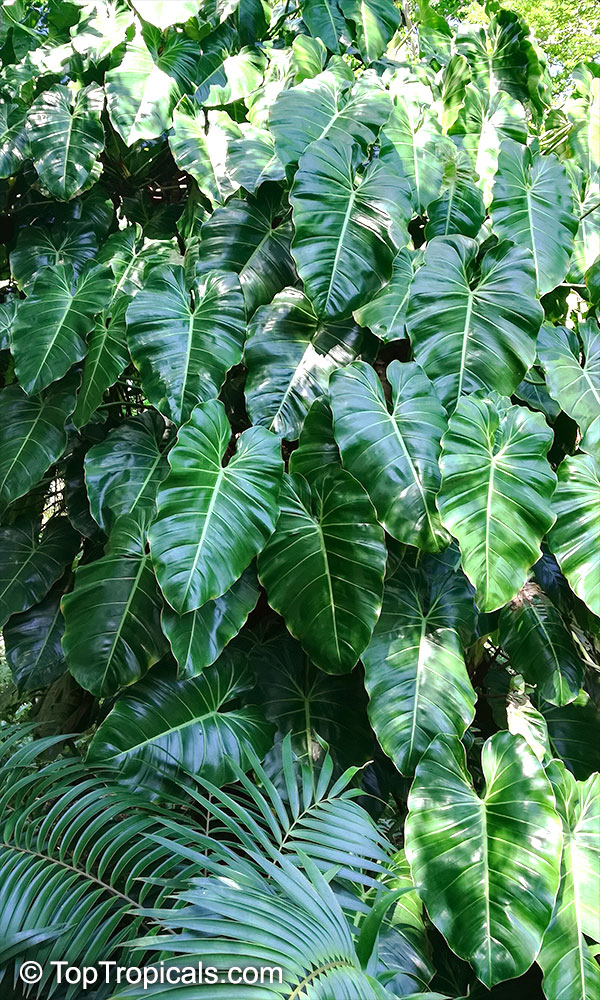
This name is often mistakenly applied to the popular houseplant Philodendron hederaceum, the Ivy Philodendron. While "cordatum" means heart-shaped and both species have heart-shaped leaves the species name cannot be applied to the Ivy Philodendron.
Philodendron cordatum has two growth phases, the juvenile form and the mature form, which often appear very different in leaf size and shape. Juvenile Philodendron cordatum leaves are very similar to Philodendron hederaceum leaves.
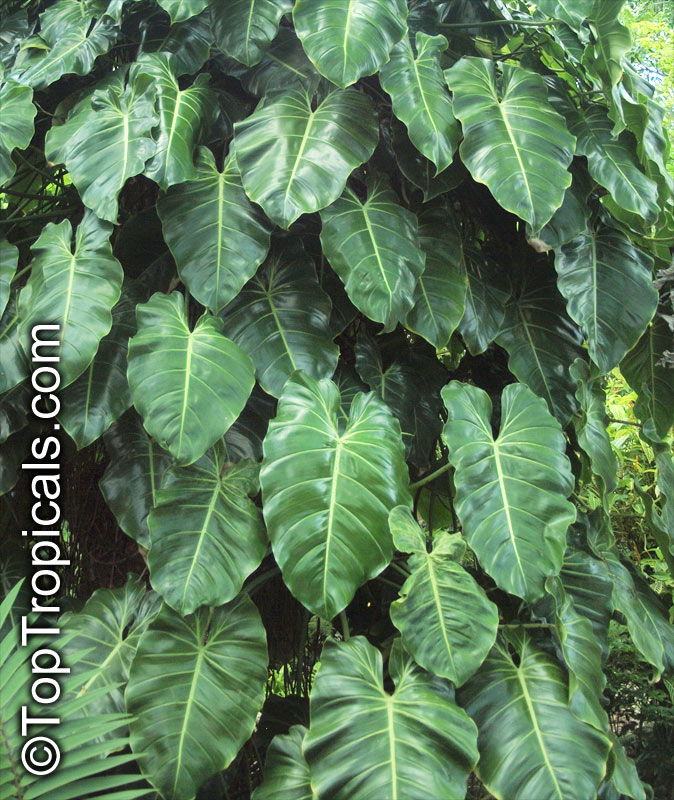
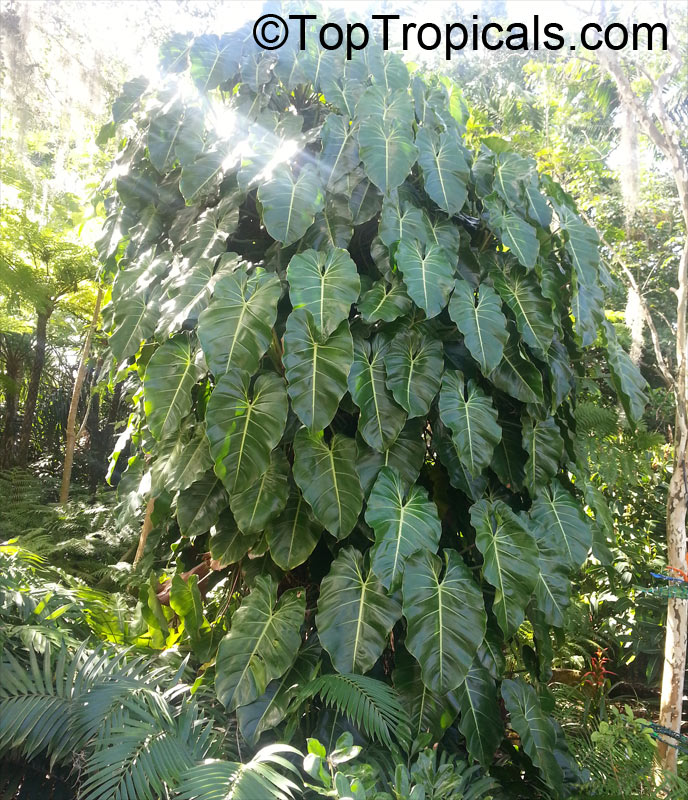
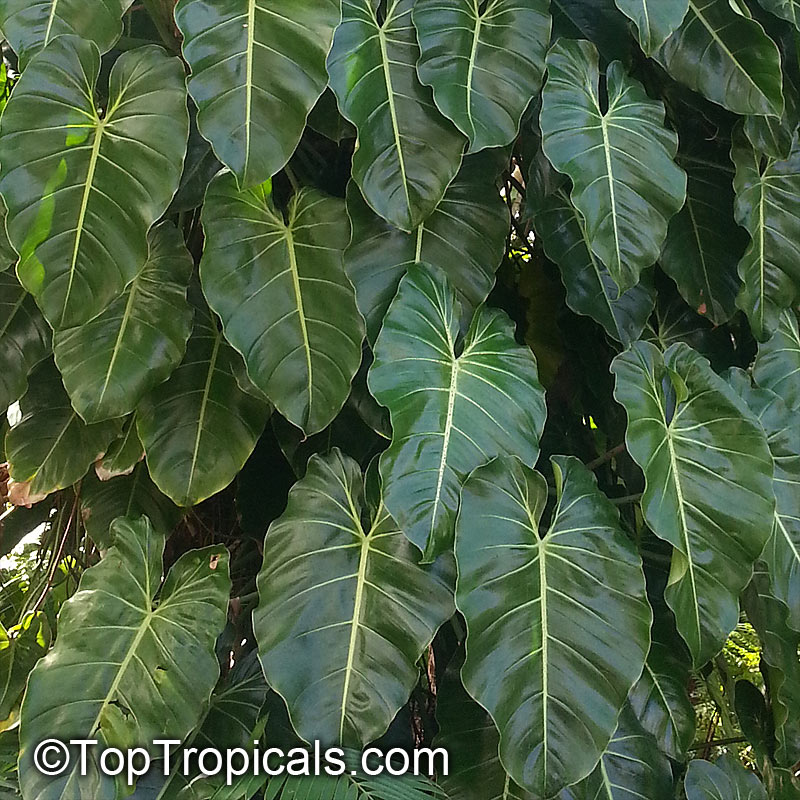
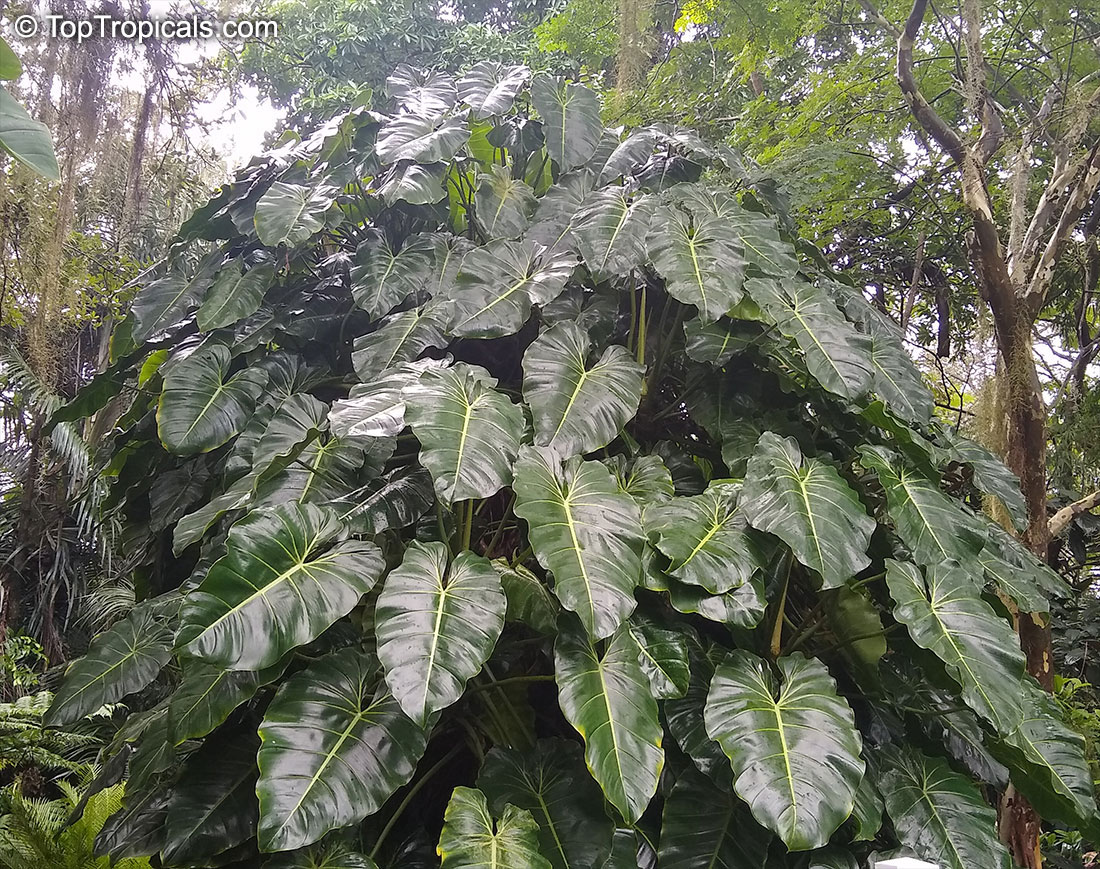
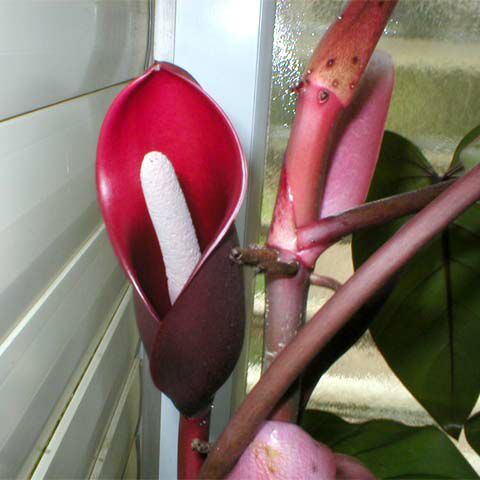
Botanical name: Philodendron erubescens
Common names: Blushing Philodendron, Redleaf Philodendron
Family: Araceae
Origin: Southern Brazil
USDA Zone: 9-10

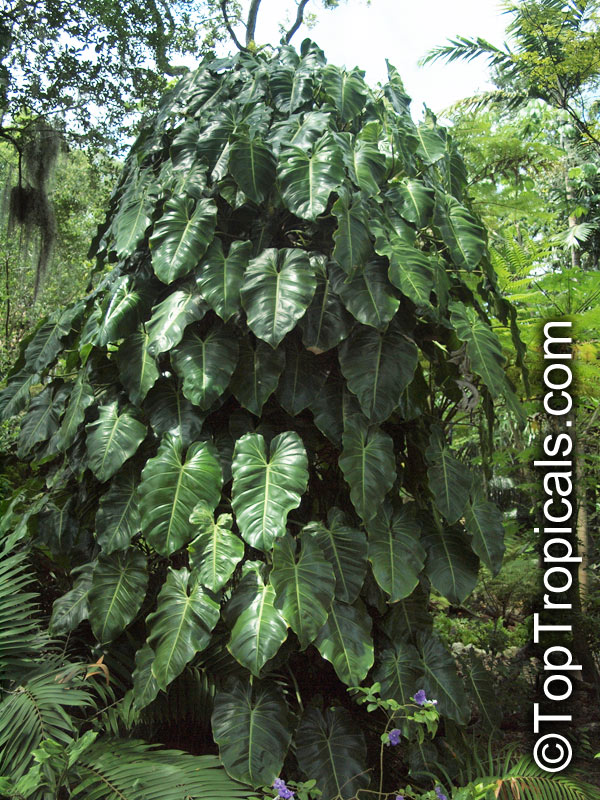
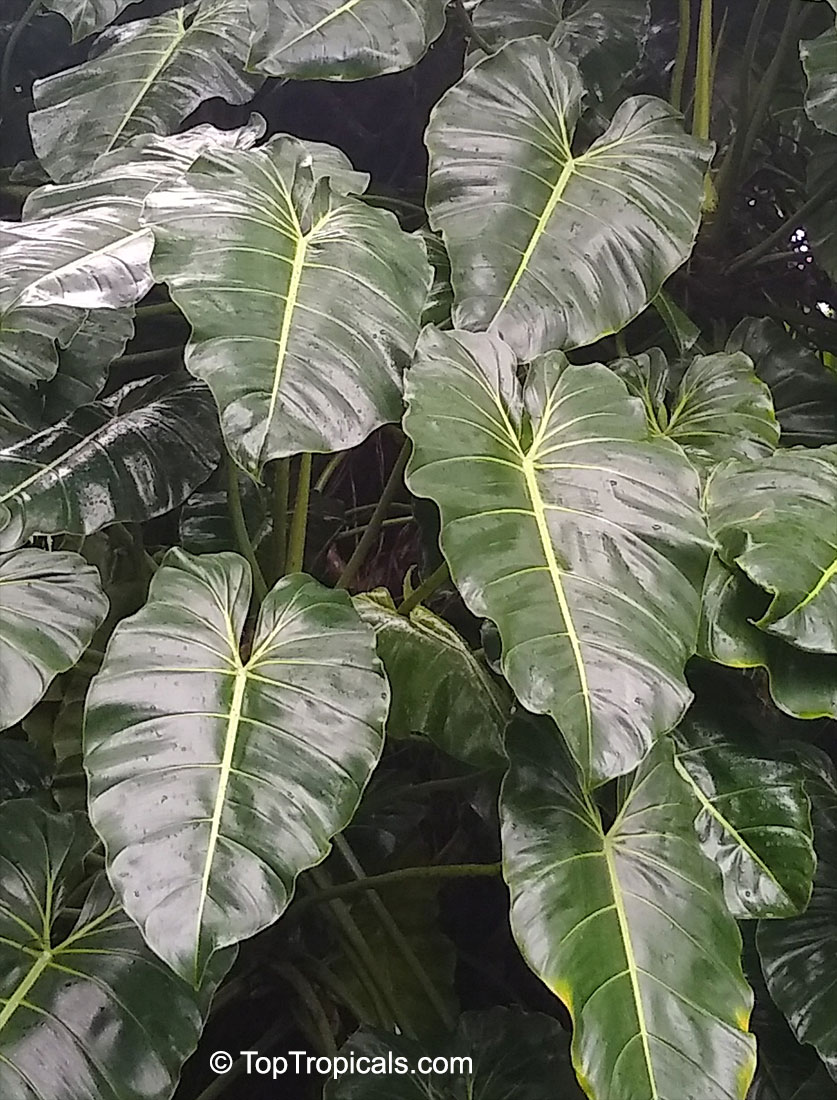
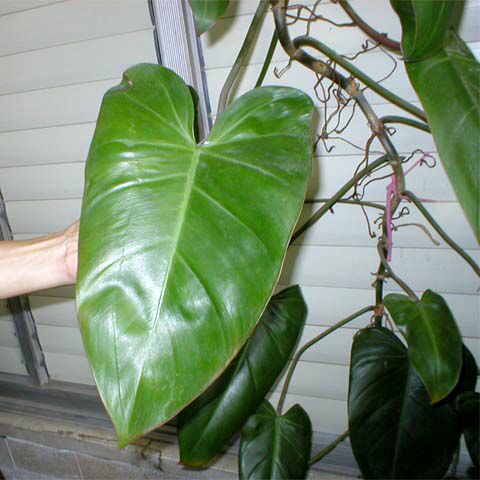
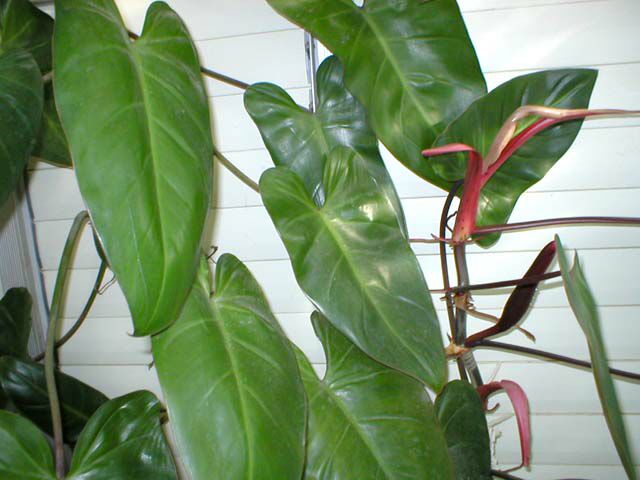
Philodendron erubescens is a vine or creeper plant native to Southern Brazil. It has a lush and graceful canopy of glossy leaves. Its beautiful pink flowers add a natural charm to any room or garden. The plant grows best in semi-shade or partial shade and needs regular watering. The soil should be kept consistently moist and watered when the top starts to feel dry. Do not let the soil dry out between waterings.
The Blushing Philodendron can be grown outdoors in USDA Zones 9-11 as long as it is protected from direct sunlight and has good soil drainage. Make sure to provide some support for the vine, such as a trellis, fence or arbor. In colder climates, this plant can be grown in a pot indoors and brought out onto the patio or balcony during the warmer months. When growing outdoors in cooler climates, ensure that the plant is protected from any drops in temperature and bring it inside to a warm spot before temperatures drop in autumn.
When caring for any Philodendron, regular fertilization is important to keep them vigorous. Use a diluted liquid fertilizer every two weeks during the growing season. In the winter, when growth is slower and the plant is not in a growing cycle, fertilizer can be applied every four weeks or so.
When growing this plant in pot, make sure the pot has good drainage and place it in a place that receives indirect sunlight. Avoid exposing the plant to direct sunlight as this can scorch the leaves and damage the plant. Water when the top of the soil feels dry to the touch, but keep the soil consistently moist. In a colder climate, allow the soil to dry out a bit more between waterings.
The Blushing Philodendron is a showstopper of a plant. With its glossy foliage and pink flowers, it is sure to make any room or garden feel vibrant and inviting. By following the proper care instructions, this plant can thrive indoors or outdoors, in warm or cold climates. All it needs is regular watering, fertilization and protection from strong sunlight.
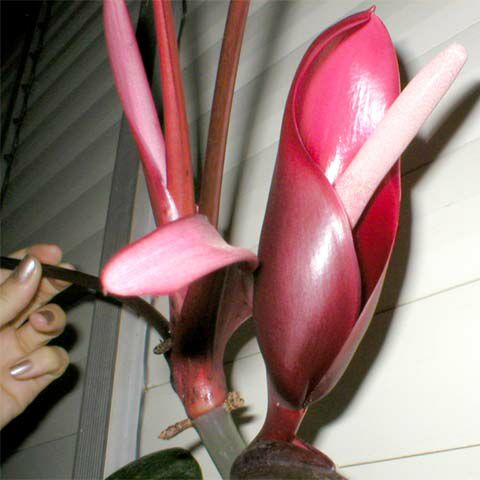
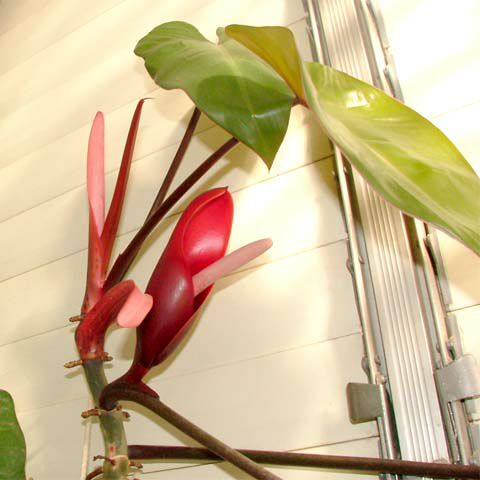
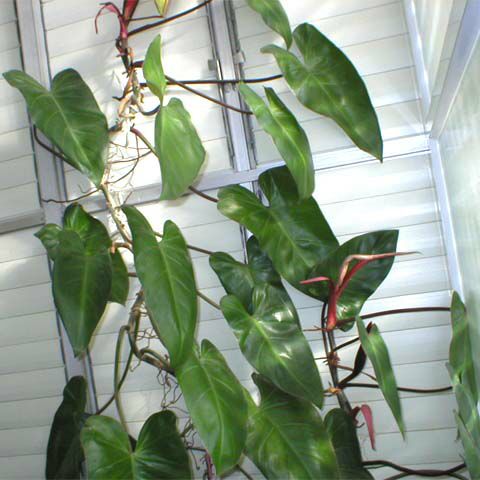
Botanical name: Philodendron gloriosum
Common name: Glorious Jungle Philodendron
Family: Araceae
Origin: Columbia
USDA Zone: 9-10

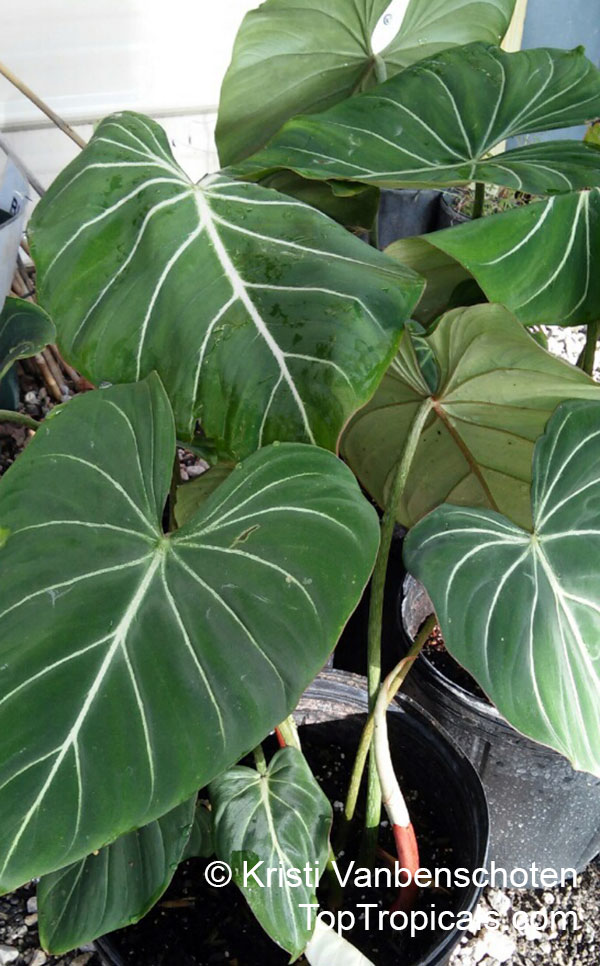
Unlike many Philodendrons, this species creeps along the ground rather than climbing up a support. Magnificent, heart-shaped deep green leaves have bright white veins that stand out like a beacon. It is ideally suited as a specimen house or patio plant. True to the name, Philodendron gloriosum is a "glorious" plant with leaves reported to reach a size of 36 inches in it's native growing areas.
Philodendron gloriosum is not a climber, it runs! The species prefers to grow in loose, well draining soil. Many growers prefer what is known as a "jungle mix" which is easily created by mixing potting soil with Perlite and extra bark and some charcoal to "sweeten" the soil. Keep the soil damp, just not soaking wet. Shade to semi-shade.
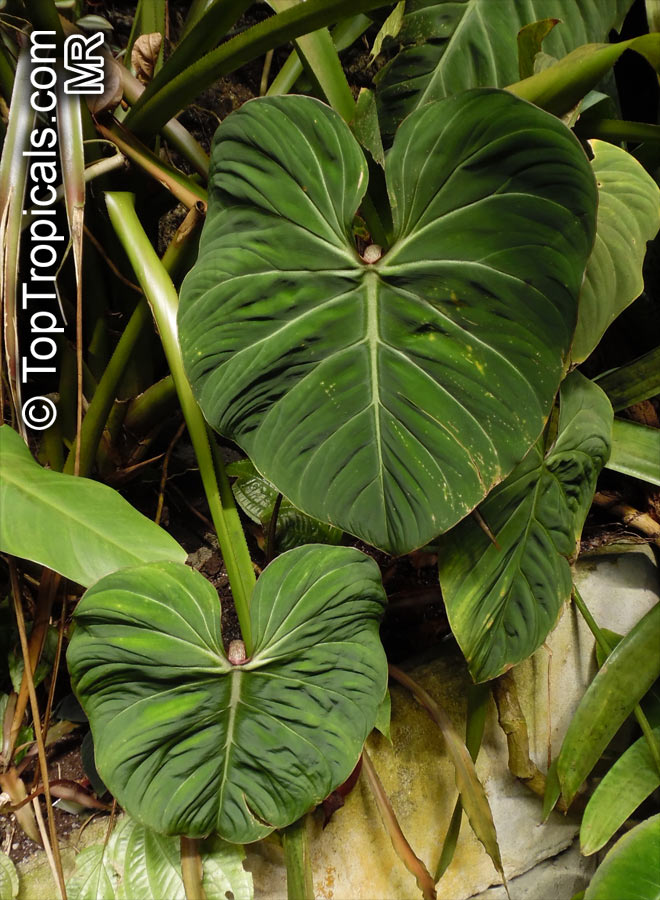
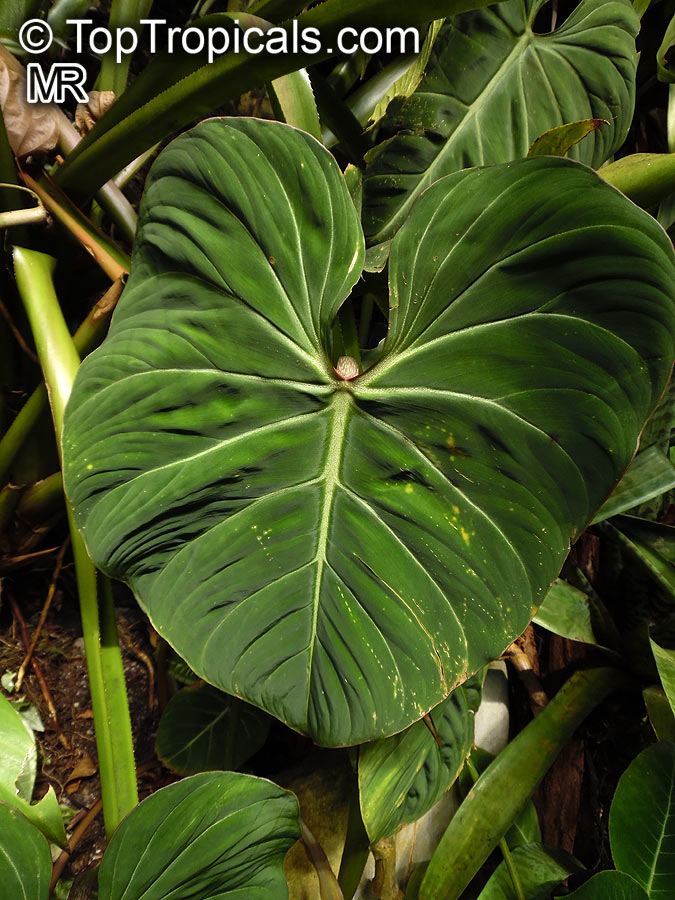
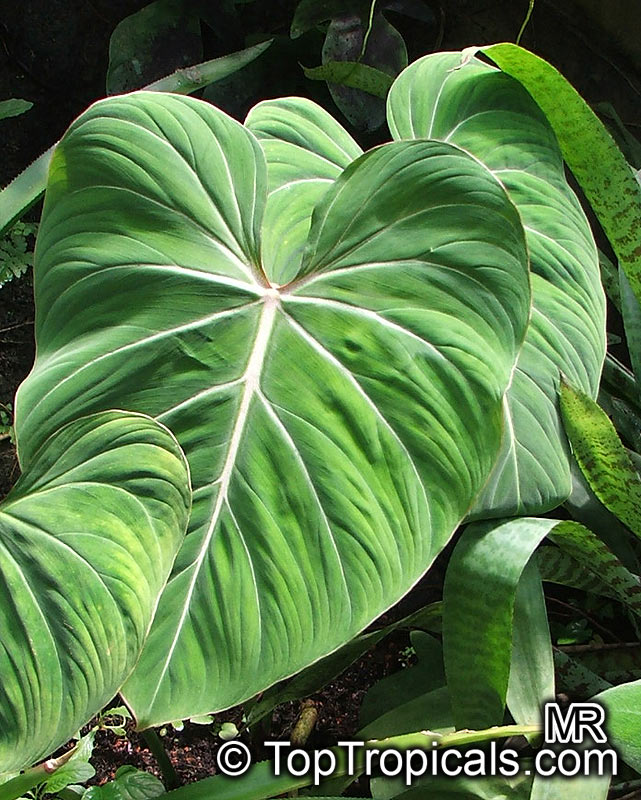
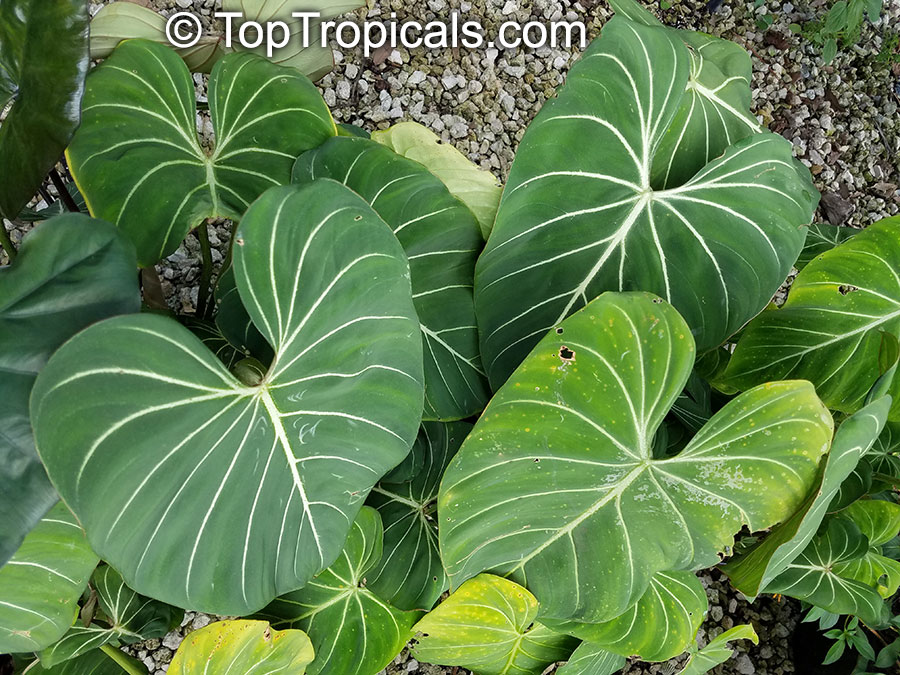
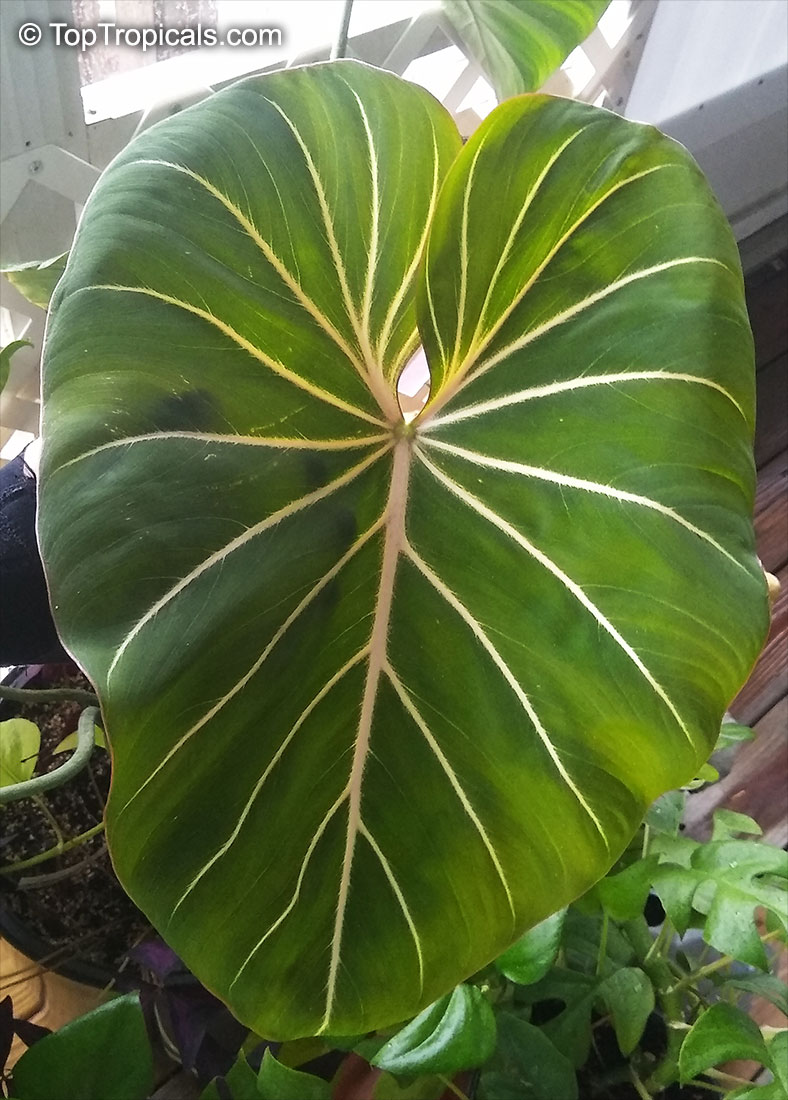
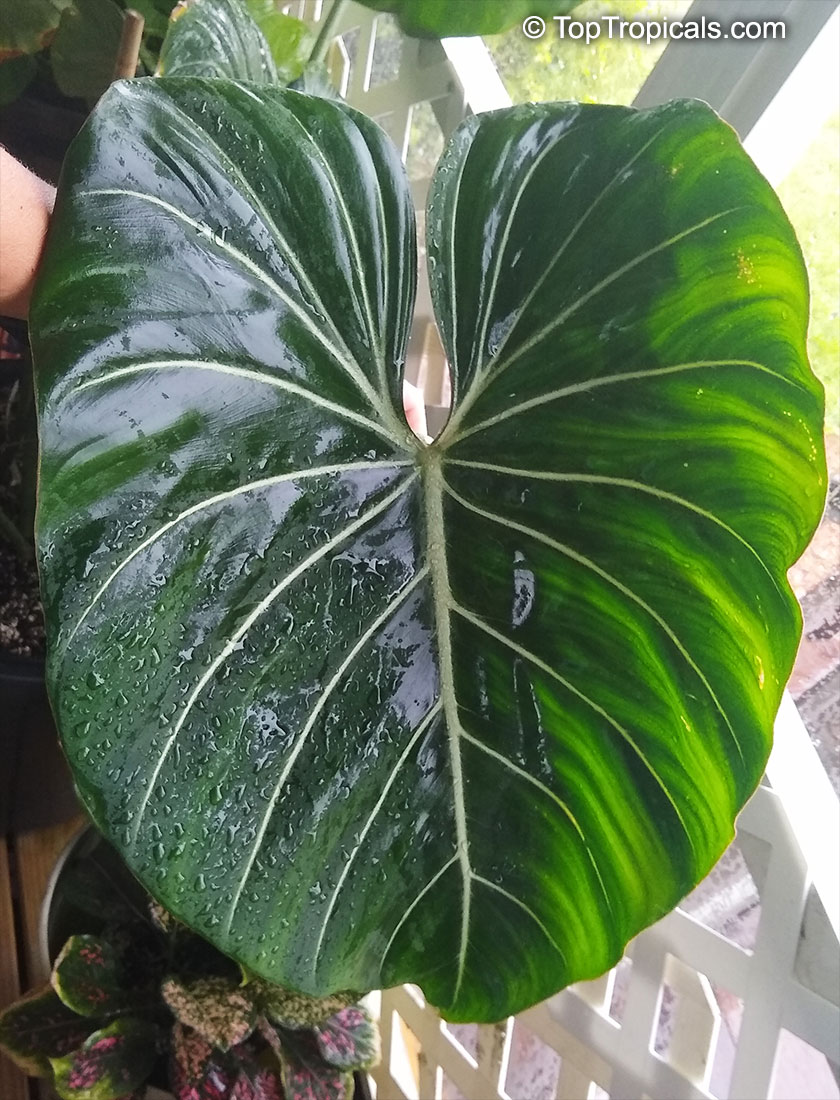
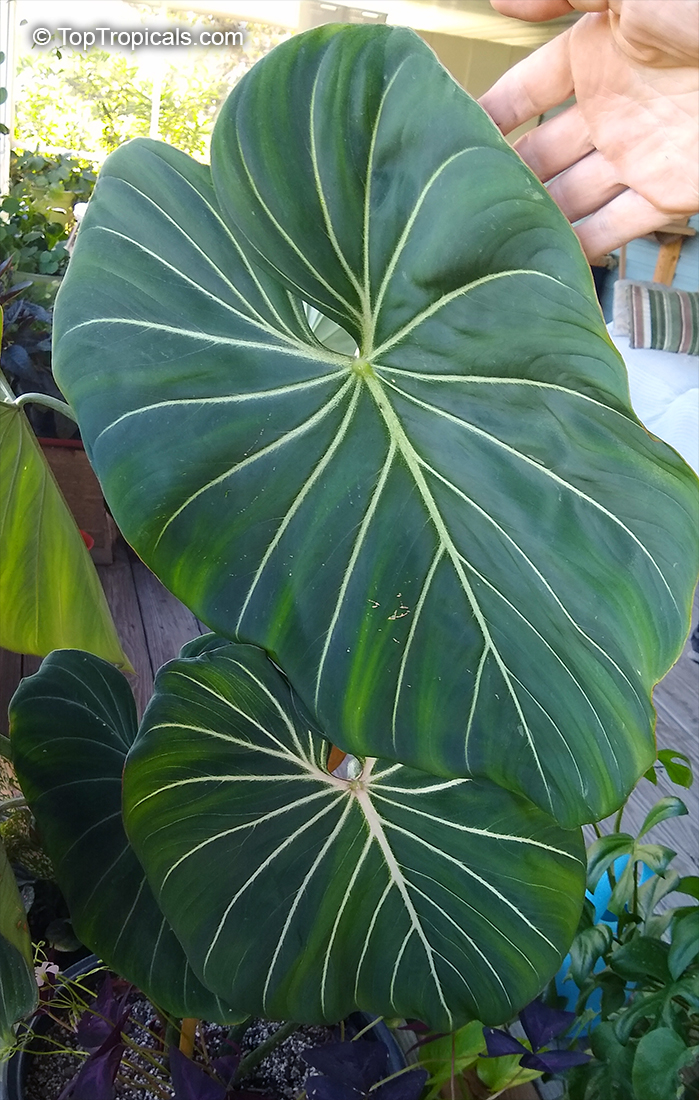
An exquisite collectors plant originated from Columbia, yet so easy to grow. Unlike many Philodendrons, this species creeps along the ground rather than climbing up a support. Magnificent, heart-shaped deep green leaves have bright white veins that stand out like a beacon. It is ideally suited as a specimen house or patio plant. True to the name, Philodendron gloriosum is a "glorious" plant with leaves reported to reach a size of 36 inches in it's native growing areas.
Philodendron gloriosum is not a climber, it runs! The species prefers to grow in loose, well draining soil. Many growers prefer what is known as a "jungle mix" which is easily created by mixing potting soil with Perlite and extra bark and some charcoal to "sweeten" the soil. Keep the soil damp, just not soaking wet. Shade to semi-shade.
See Article about Philodendrons.
Local pickup only. This item is not available for shipping. Local delivery may be available in Ft. Myers or Sebring, Florida. Contact us for an estimate. Non-pickup orders are subject to restocking fees.
Recommended Fertilizer: SUNSHINE Robusta - Rapid Growth Booster
Last one
Botanical name: Philodendron goeldii
Common name: Philodendron
Family: Araceae
Origin: South America
USDA Zone: 9-10
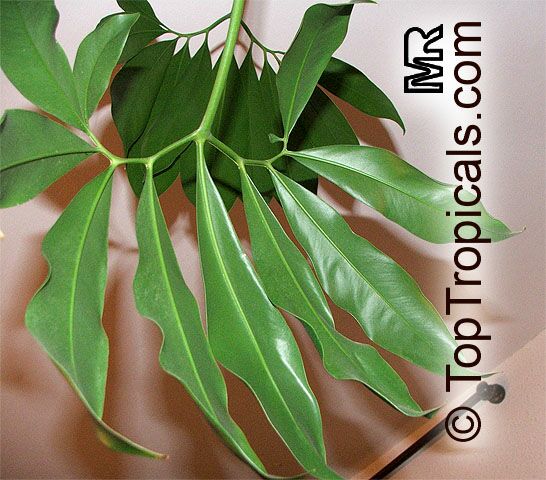
Native to South America, Philodendron goeldii can be grown in both vine or creeper form.
This Philodendron thrives in semi-shade, making it a great choice for those seeking an exotic and unique touch to the garden. To achieve its maximum growth potential, it should be planted in USDA Zones 9-11, in soils rich in organic matter. Though it takes a while to reach maturity and can grow up to 5-10 feet in height, a little patience and regular watering can lead to a fine showpiece.
In northern regions where winter weather can be unforgiving and freeze temperatures are common, growing Philodendron goeldii in pots can help ensure its lasting beauty. Utilizing sheltered deck, patio, or balcony overhangs that help provide necessary shelter is an ideal growing situation for this large shrub. When multiplying from cuttings, it's important to keep the soil moderately moist and use fresh soil for the new cuttings.
For the best results, fertilizer should be applied bi-monthly. As the Philodendron goeseldii reaches immediate maturity and larger growth, additional bi-monthly fertilization won't be needed. However, it's essential to use the right fertilizer and balance to keep this beautiful plant thriving.
This magnificent philodendron is surprisingly hardy and forgiving, making its care relatively easy. While stunning as a center-piece specimen, this Philodendron also pairs well with other decorative elements in the garden. With its open-circular form, it creates a botanical display unlike any other in the garden. An exotic living sculpture that's sure to draw the right kind of attention.
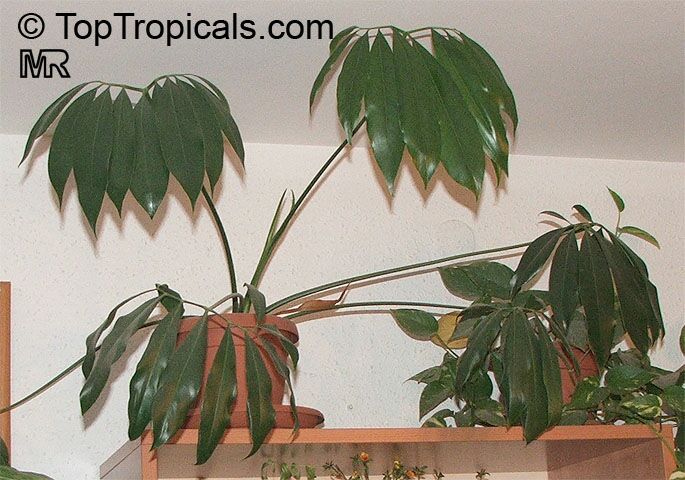
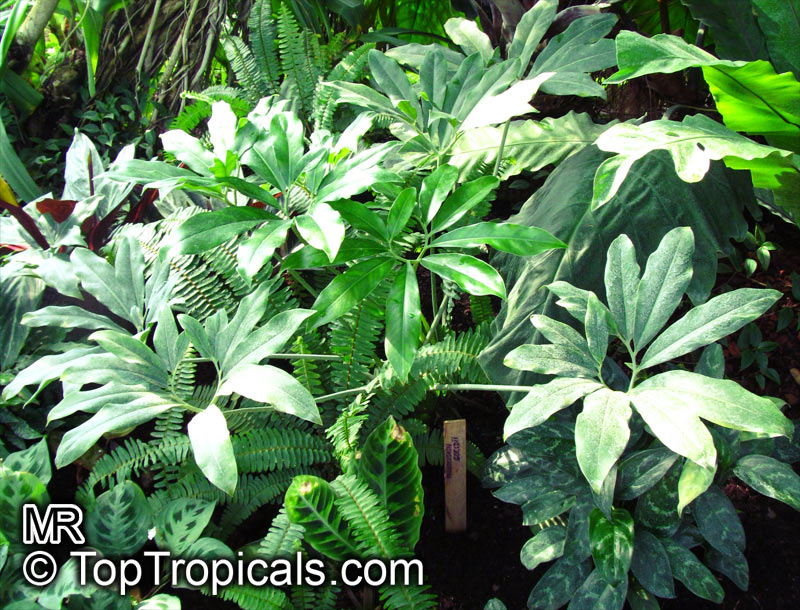
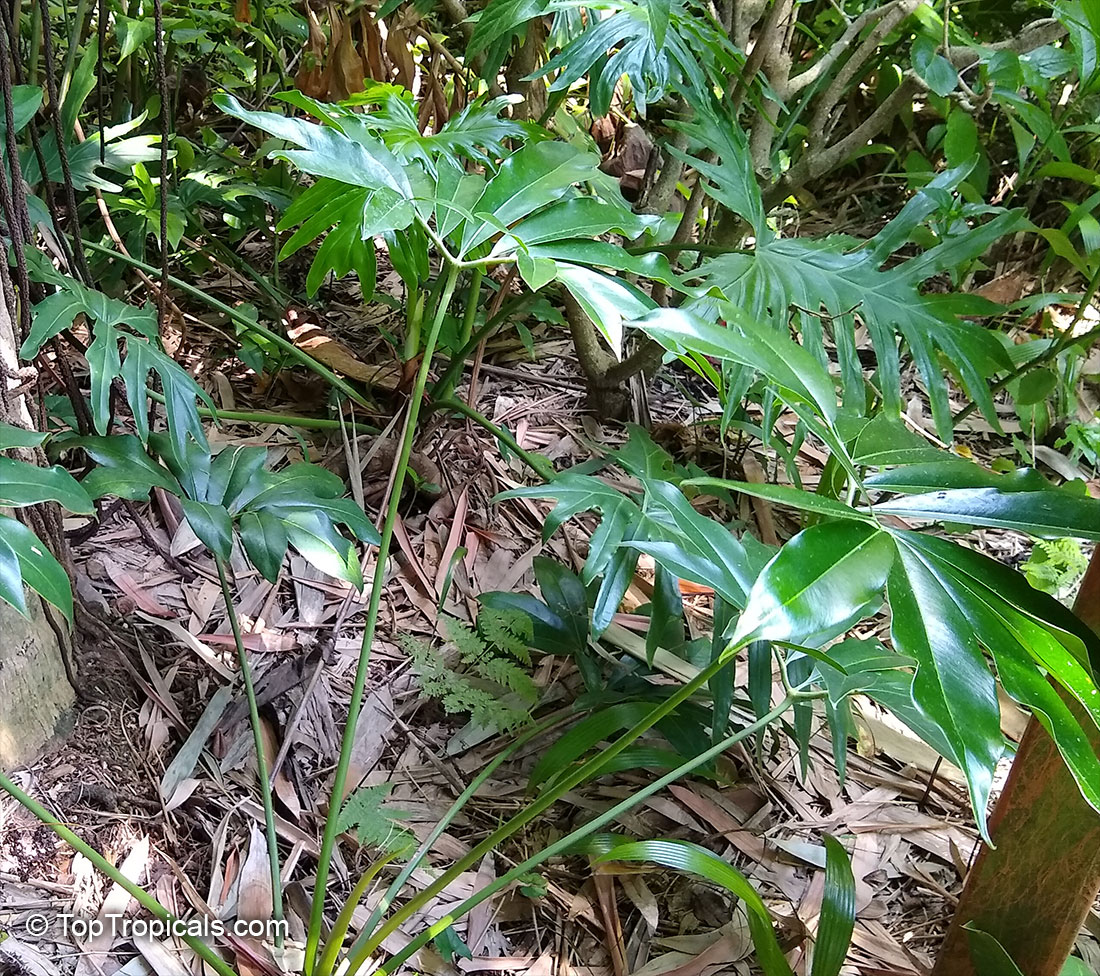
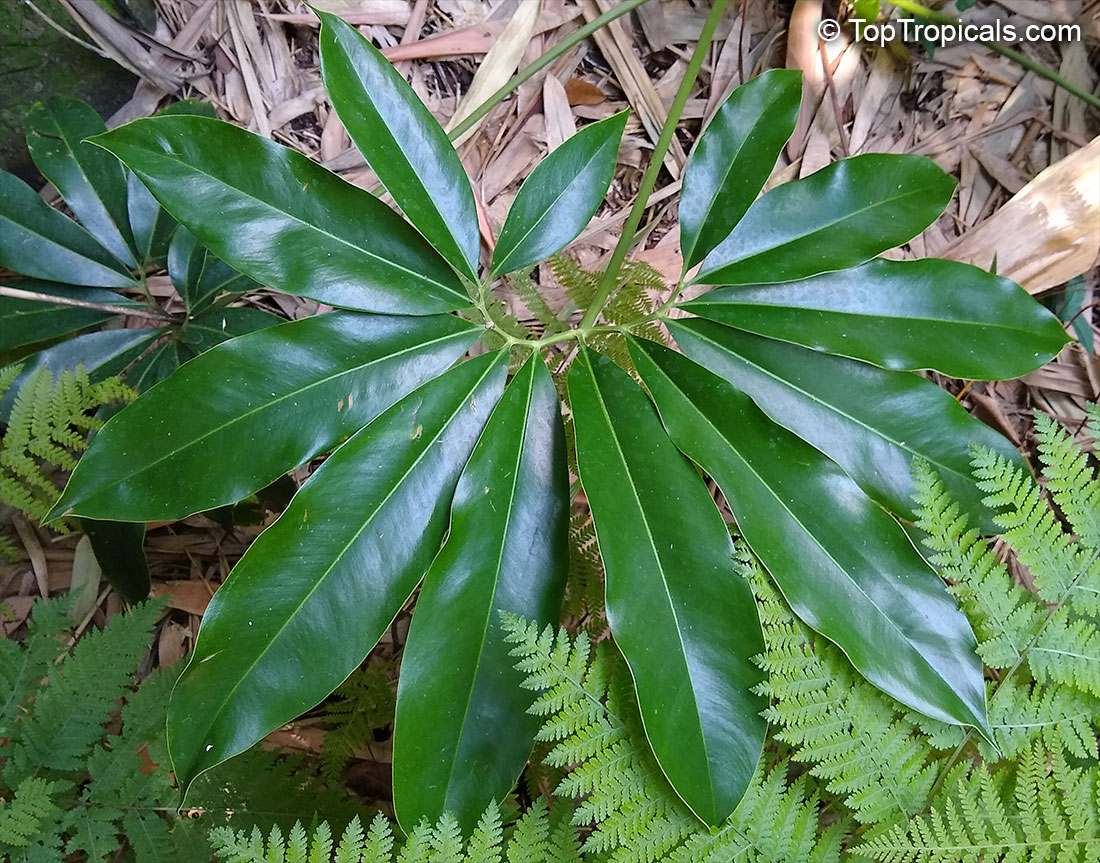
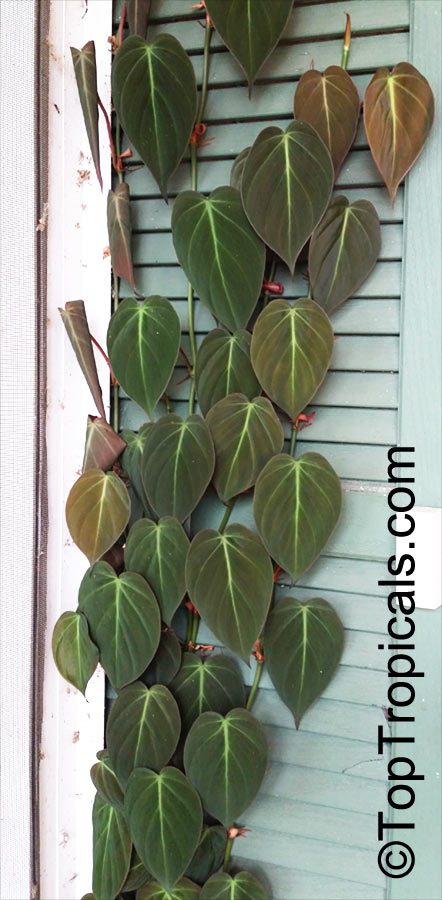
Botanical names: Philodendron hederaceum, Philodendron scandens
Common name: Heart Leaf Philodendron
Family: Araceae
Origin: South America
USDA Zone: 10-11
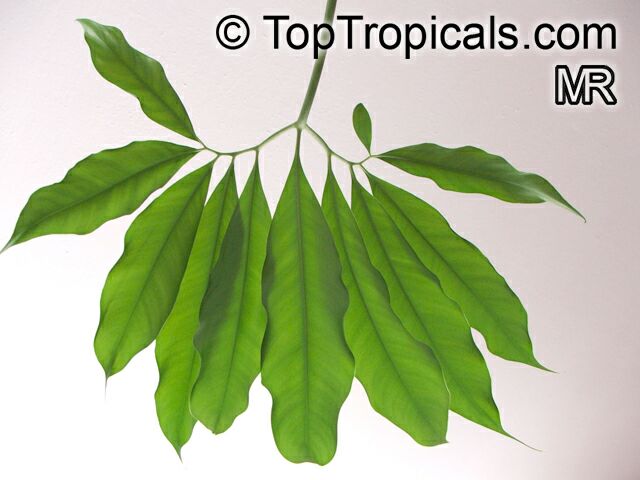
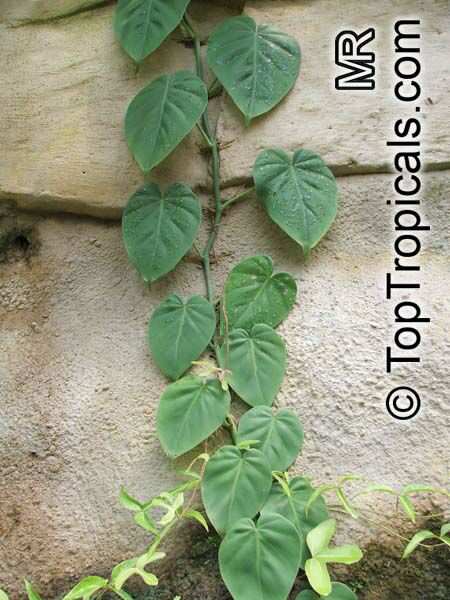
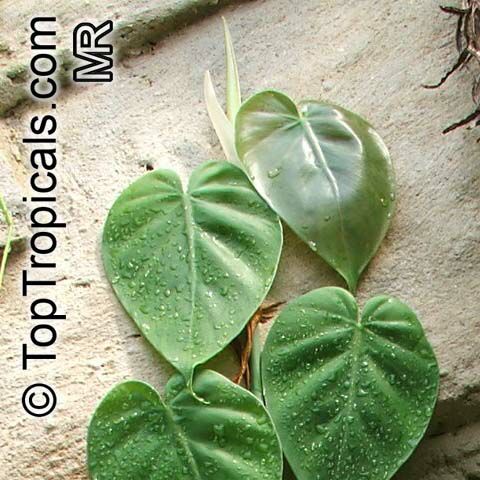
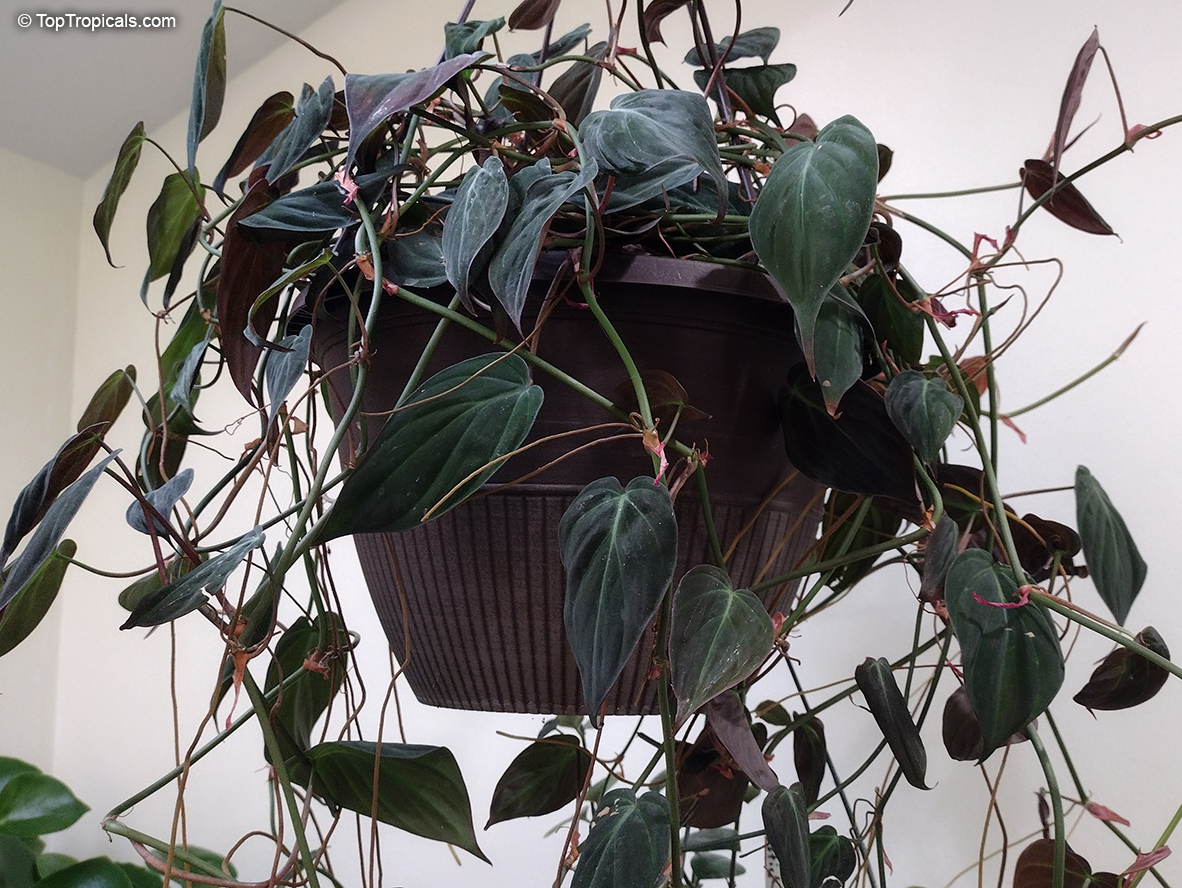
Philodendron hederaceum, formerly widely known as Philodendron scandens, is one of the most popular vining philodendrons grown as a houseplant. Native to the tropical rainforests of Central America, Mexico, and the Caribbean, this evergreen climber belongs to the Araceae family and naturally ascends tree trunks using aerial roots. Its slender stems are adorned with glossy, heart-shaped leaves that begin small on juvenile plants but become larger and more elongated as the vine matures and climbs. In cultivation, stems may reach 10 to 20 feet (3 to 6 m) or more when given adequate support.
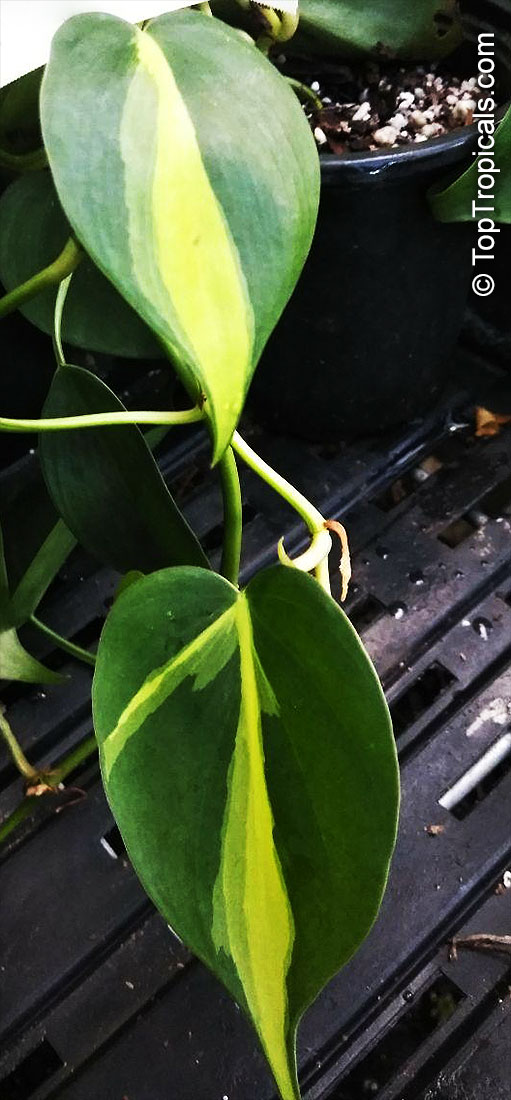
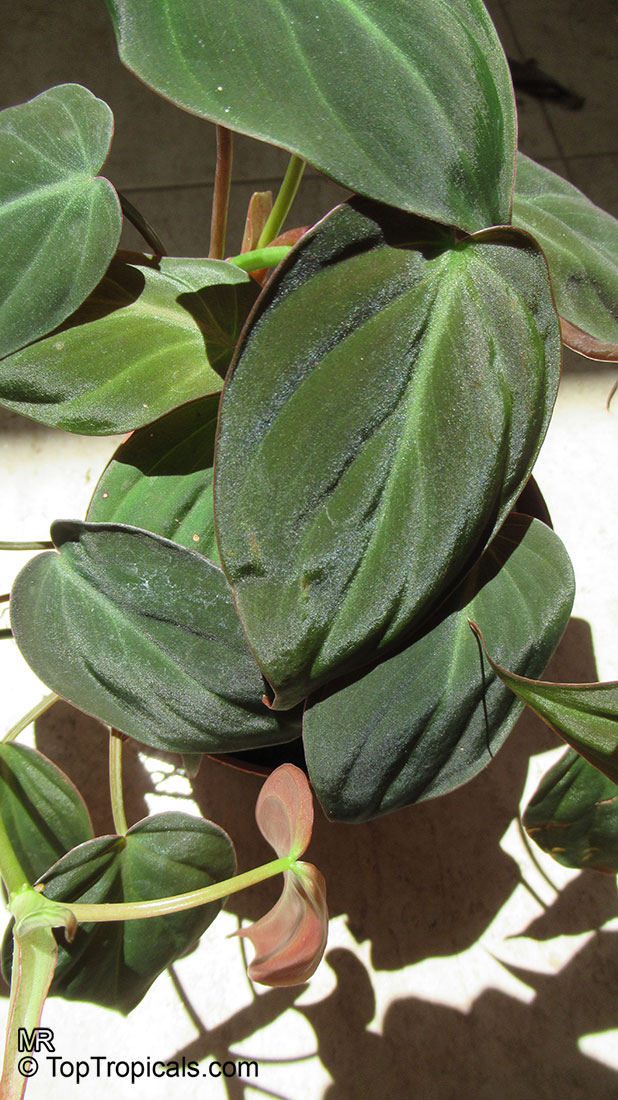
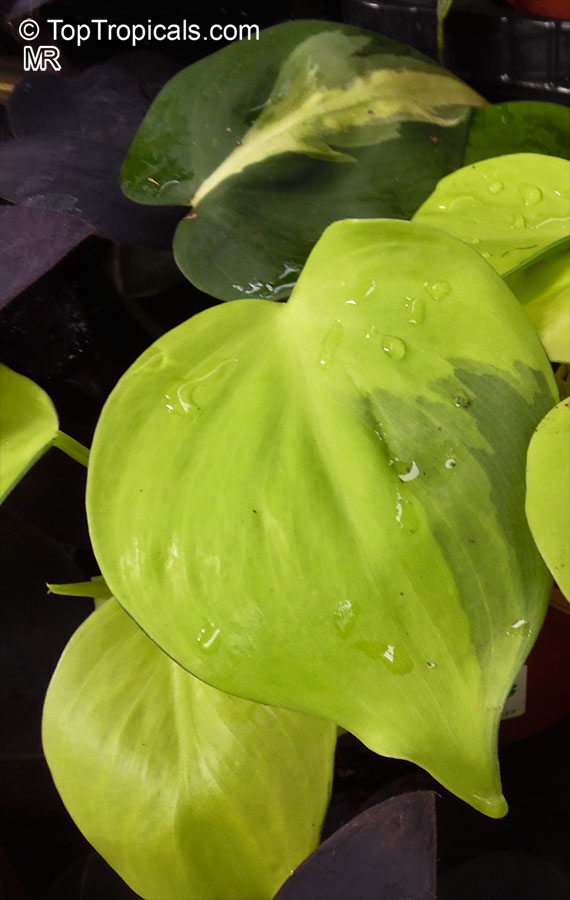
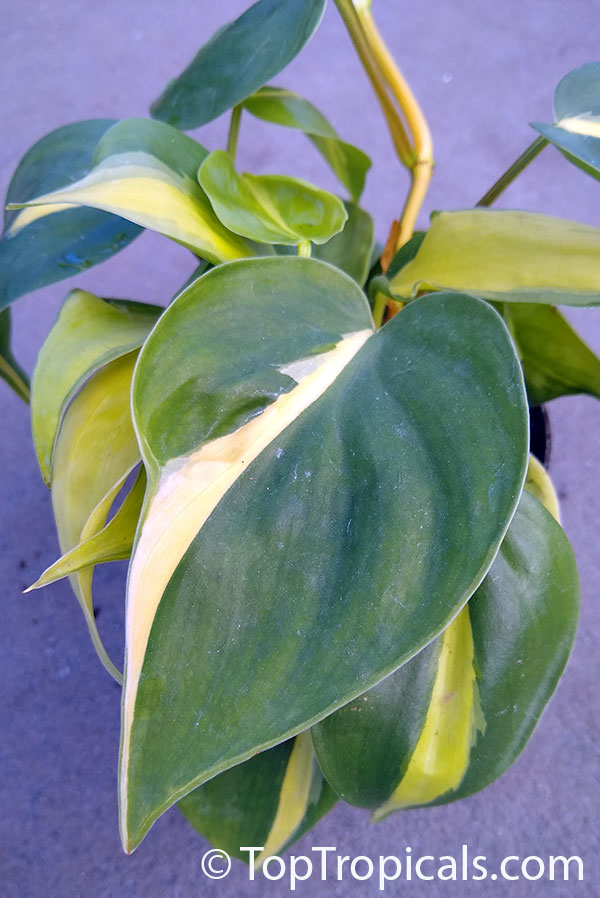
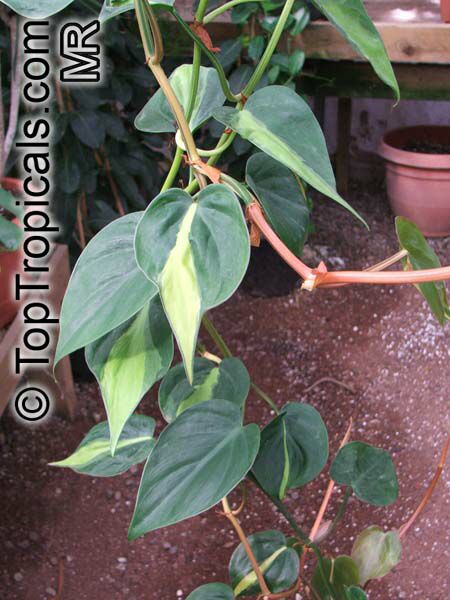
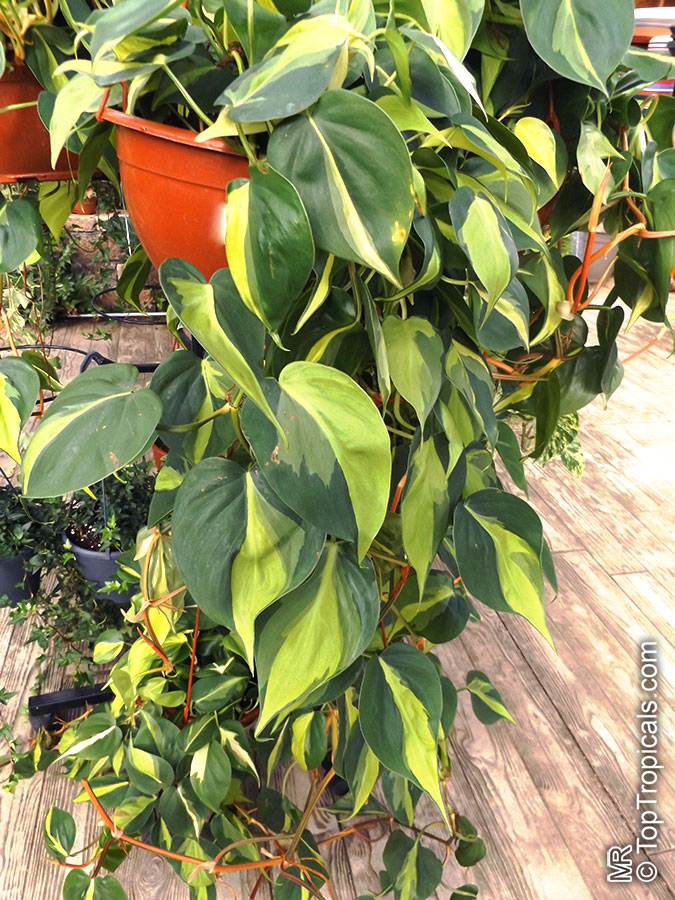
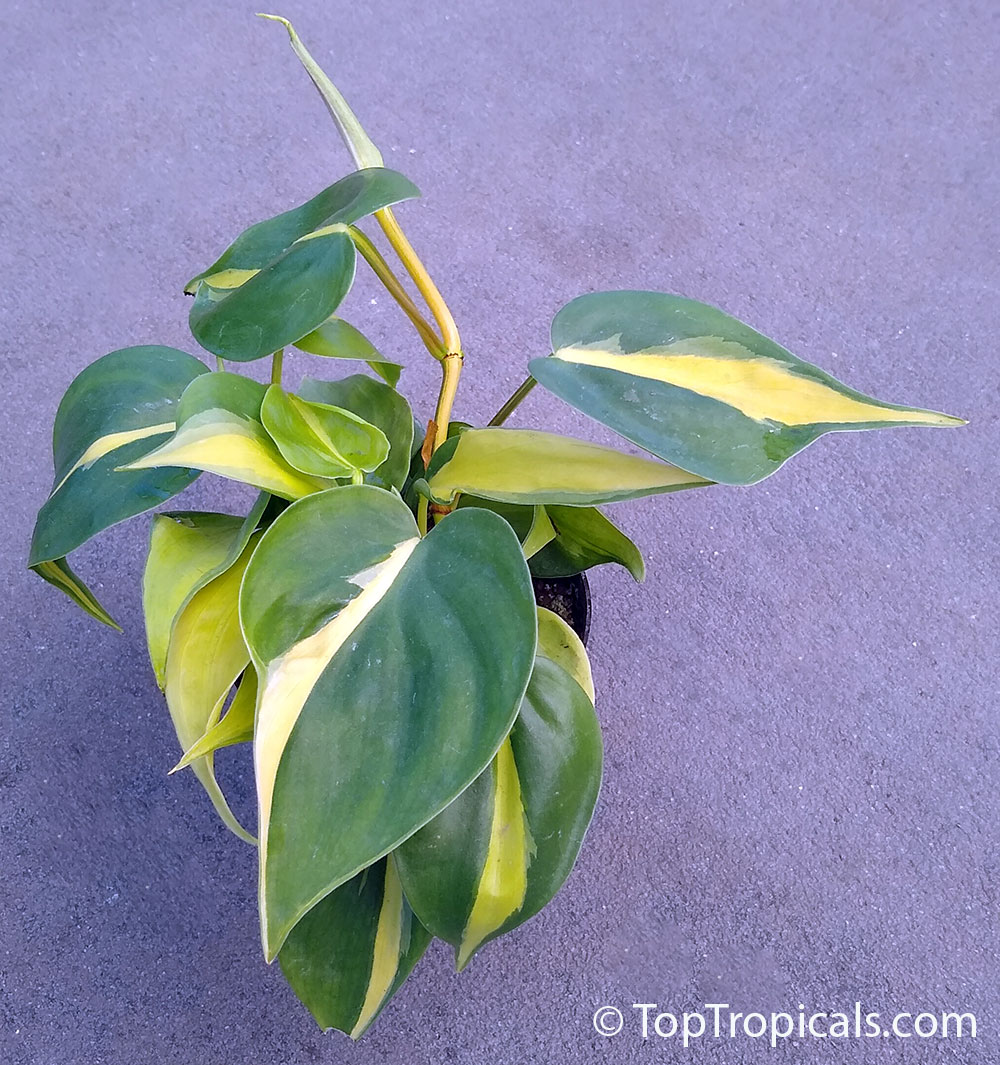
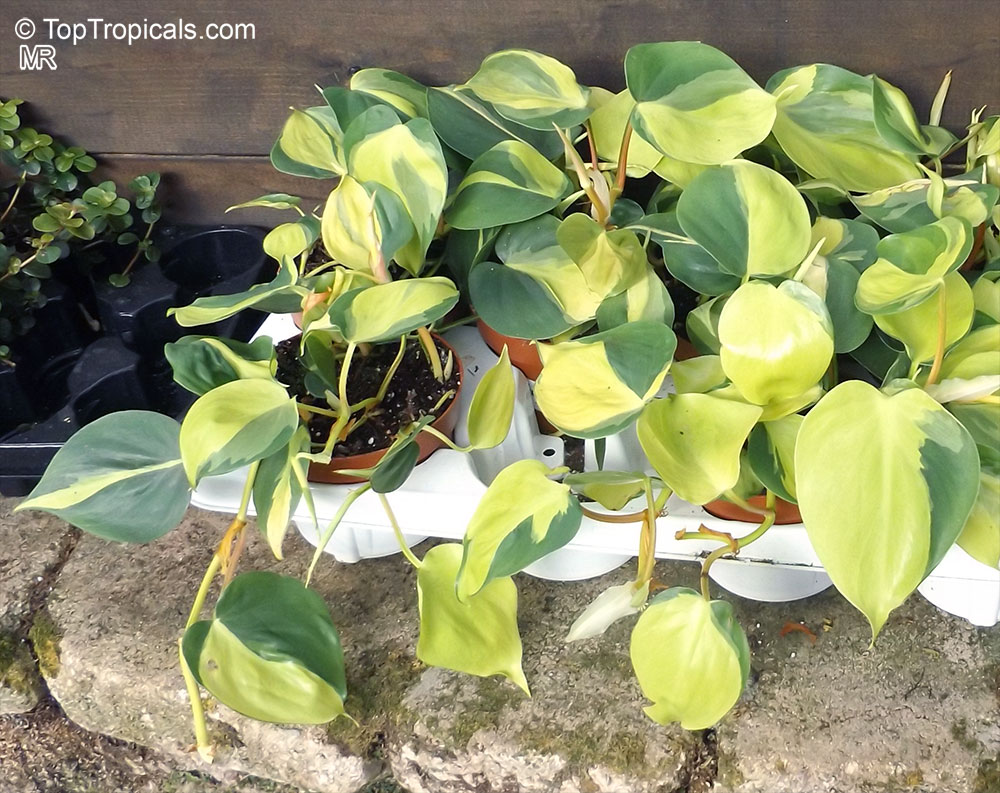
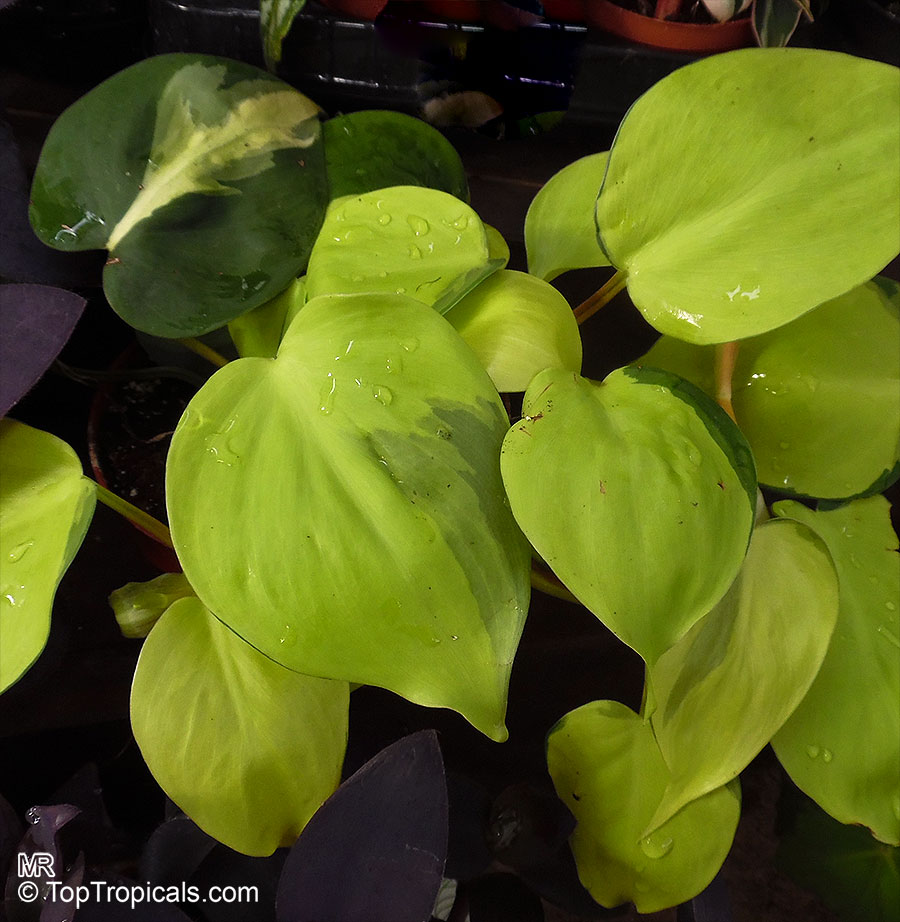
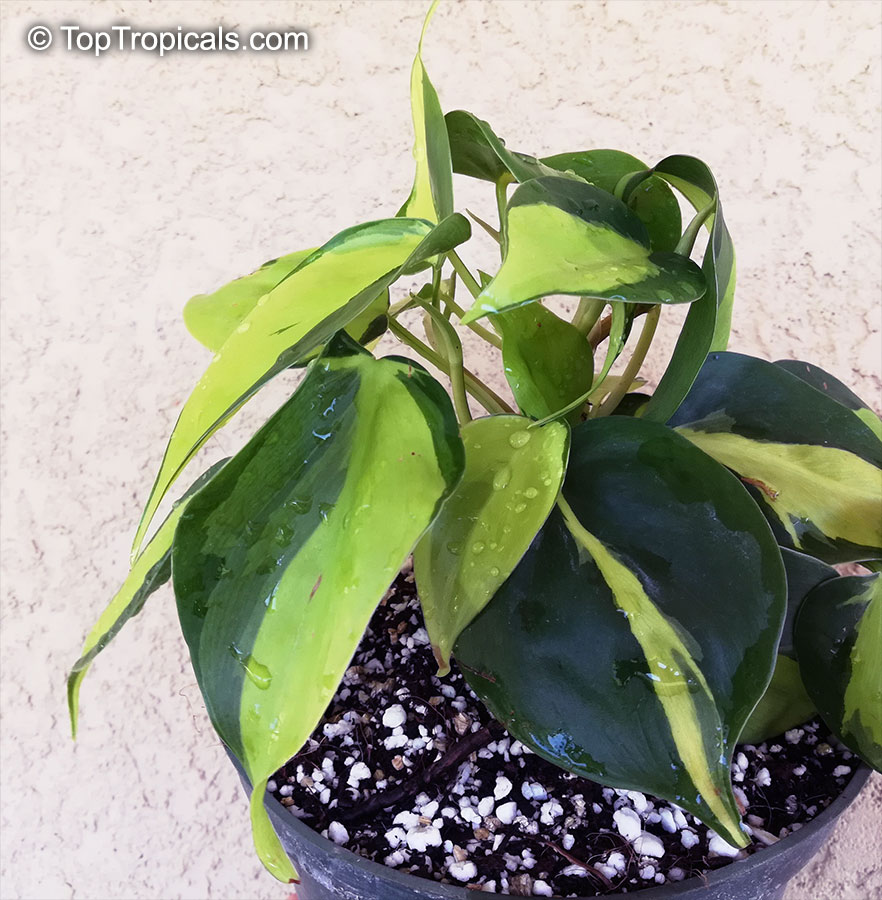
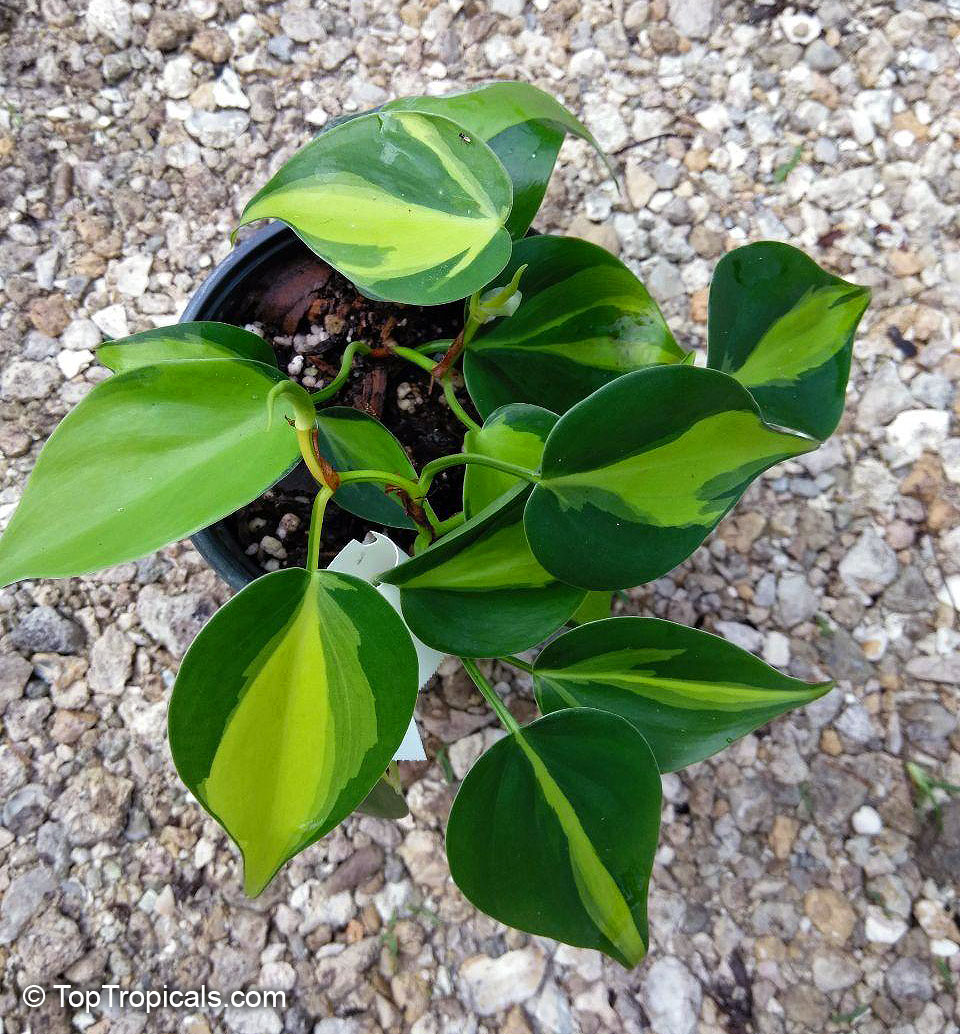
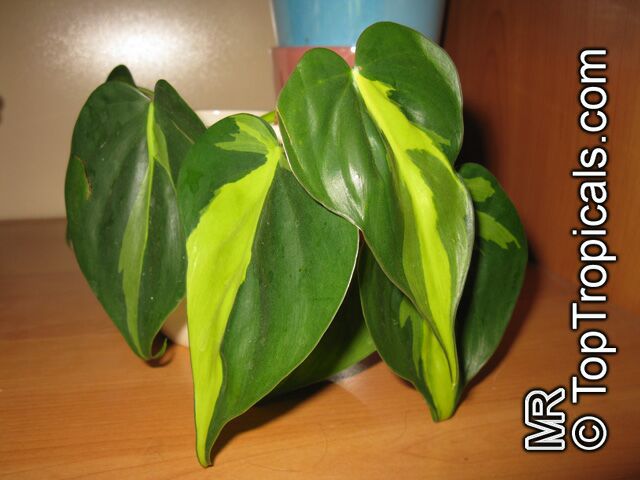
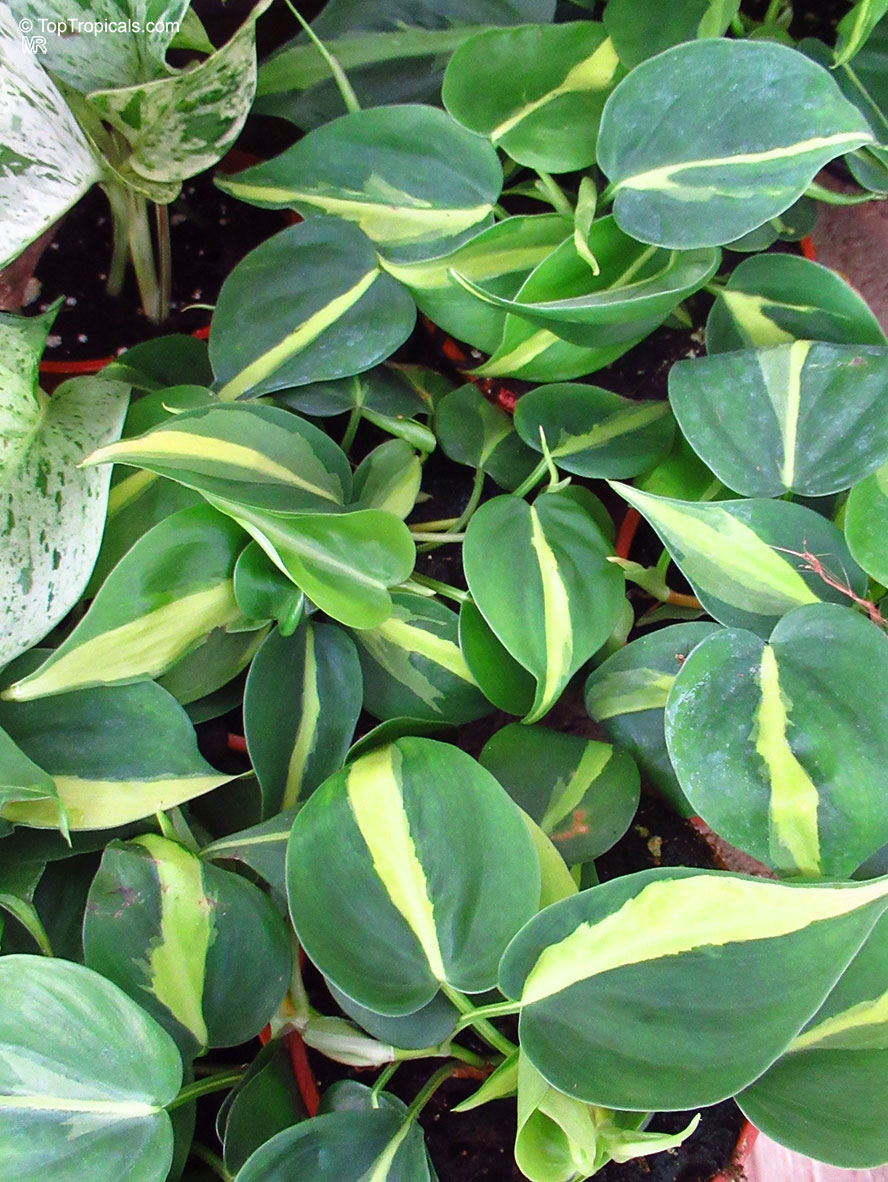
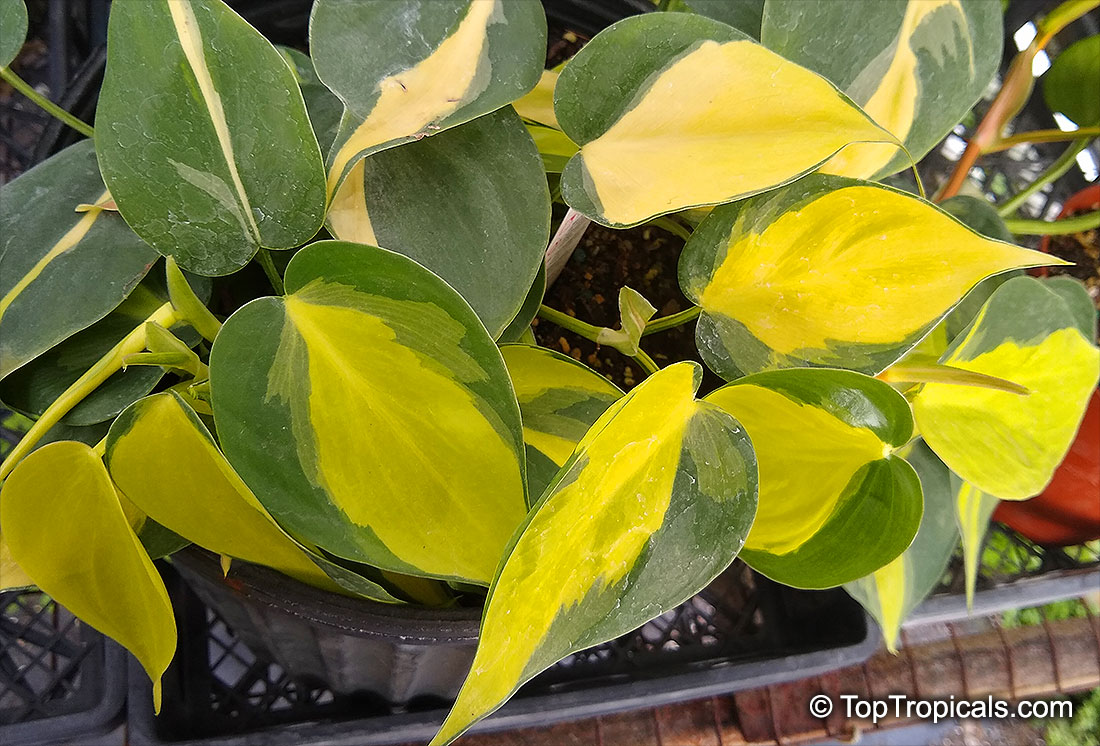
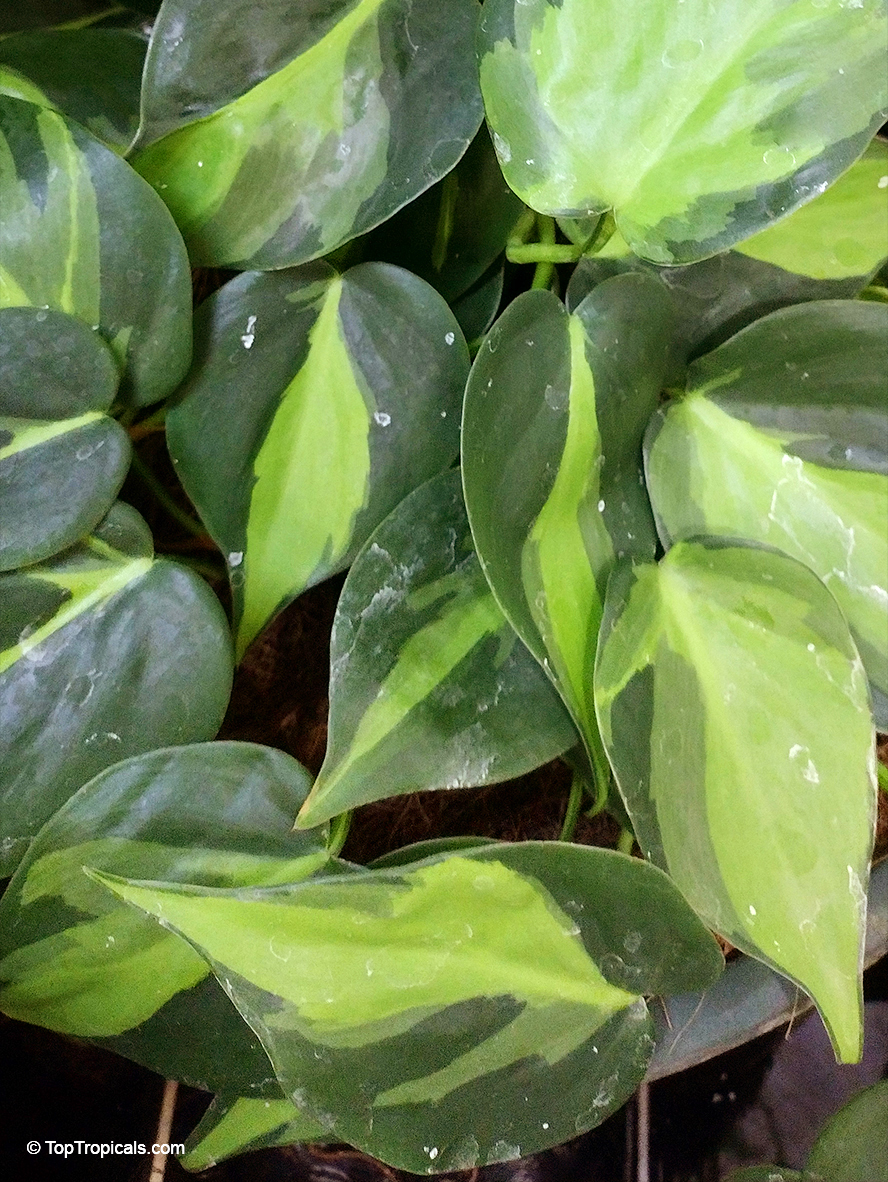
Highly adaptable and easy to grow, Philodendron hederaceum thrives in bright, indirect light but also tolerates lower light levels better than many other aroids. It prefers a well-drained potting mix and moderate watering after the upper layer of soil has dried slightly. The species is prized for its vigorous growth, graceful trailing or climbing habit, and ease of propagation from stem cuttings. Numerous cultivars are available, including variegated forms and selections with velvety foliage such as 'Micans'. Hardy in USDA Zones 10b-12, it is widely grown as an indoor plant in cooler climates and makes an excellent choice for hanging baskets, moss poles, shelves, and tropical container displays.Philodendron 'Mediopictum Brazil' is a spectacular rare variegated philodendron with heart-shaped leaves that are dark green with yellow variegation in the center of the leaf. Stems have a pinkish orange hue.
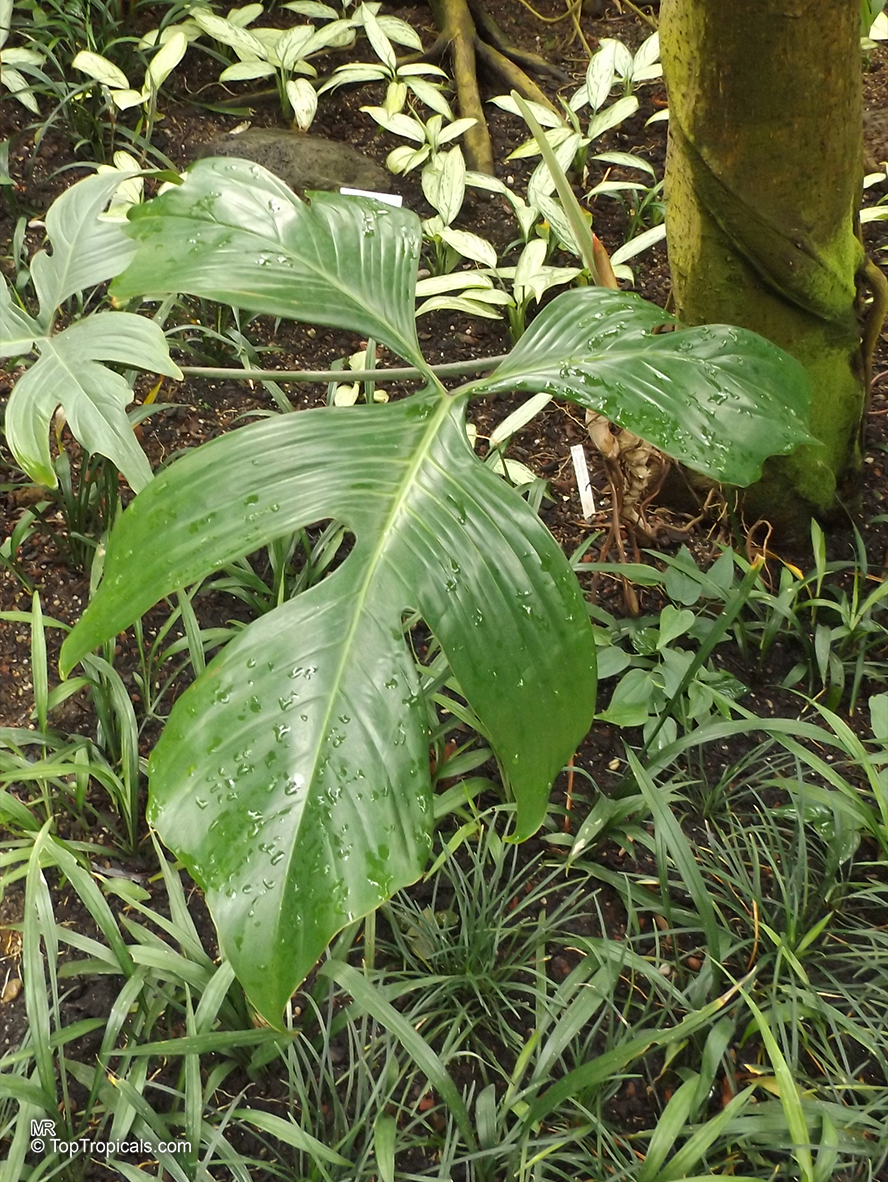
Botanical name: Philodendron pedatum
Common name: Oak Leaf Philodendron
Family: Araceae
Origin: Tropical America
USDA Zone: 9-11
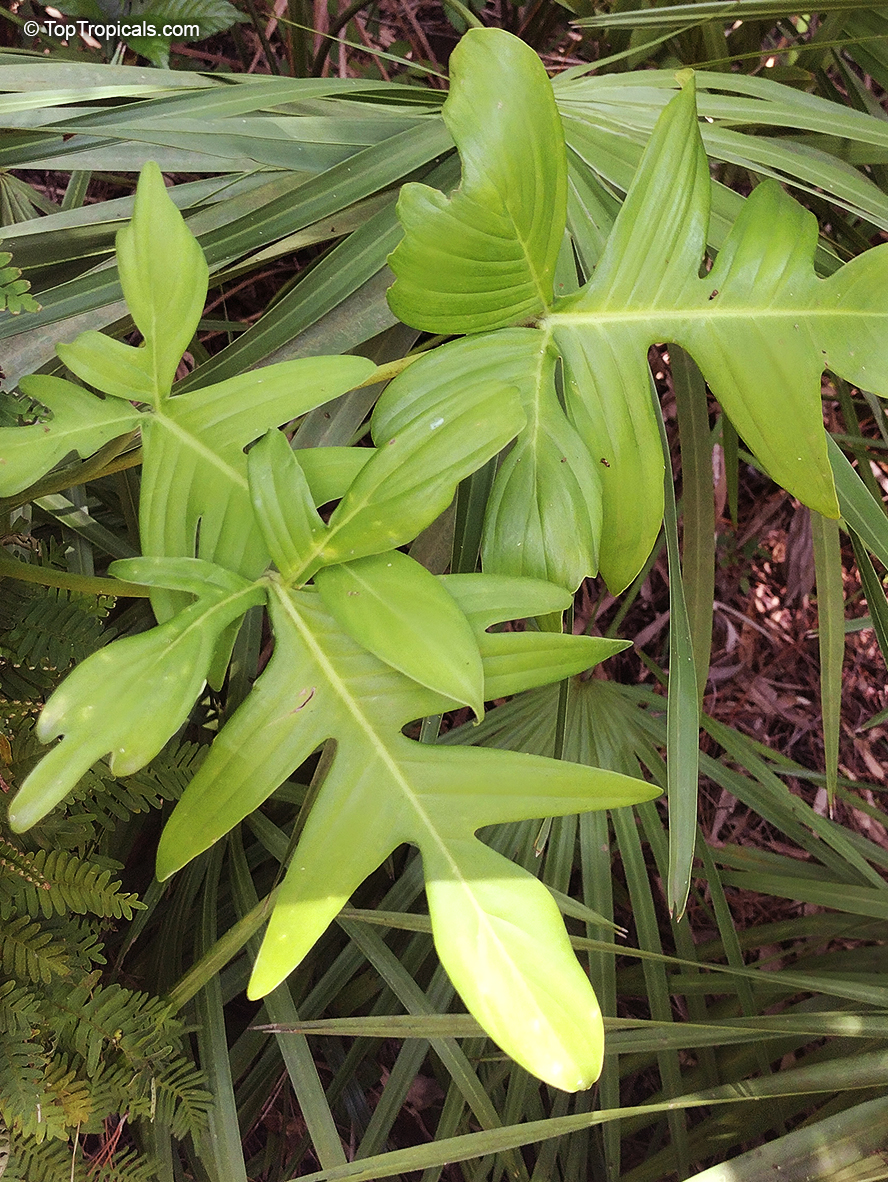
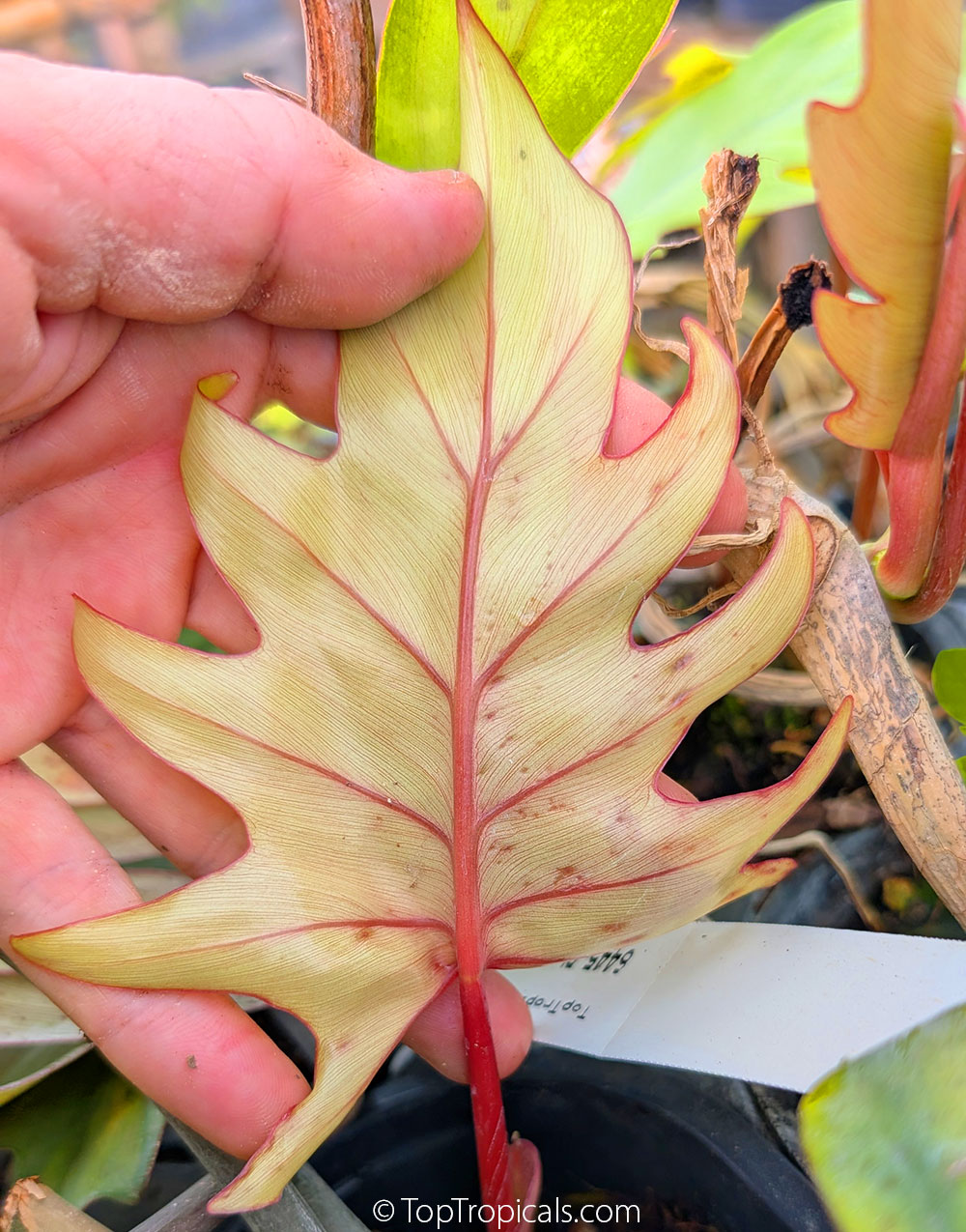
Oak Leaf Philodendron is a climbing aroid with multi-lobed, oak shaped leaves, hence its common name. It is native to South America and would make an excellent houseplant.
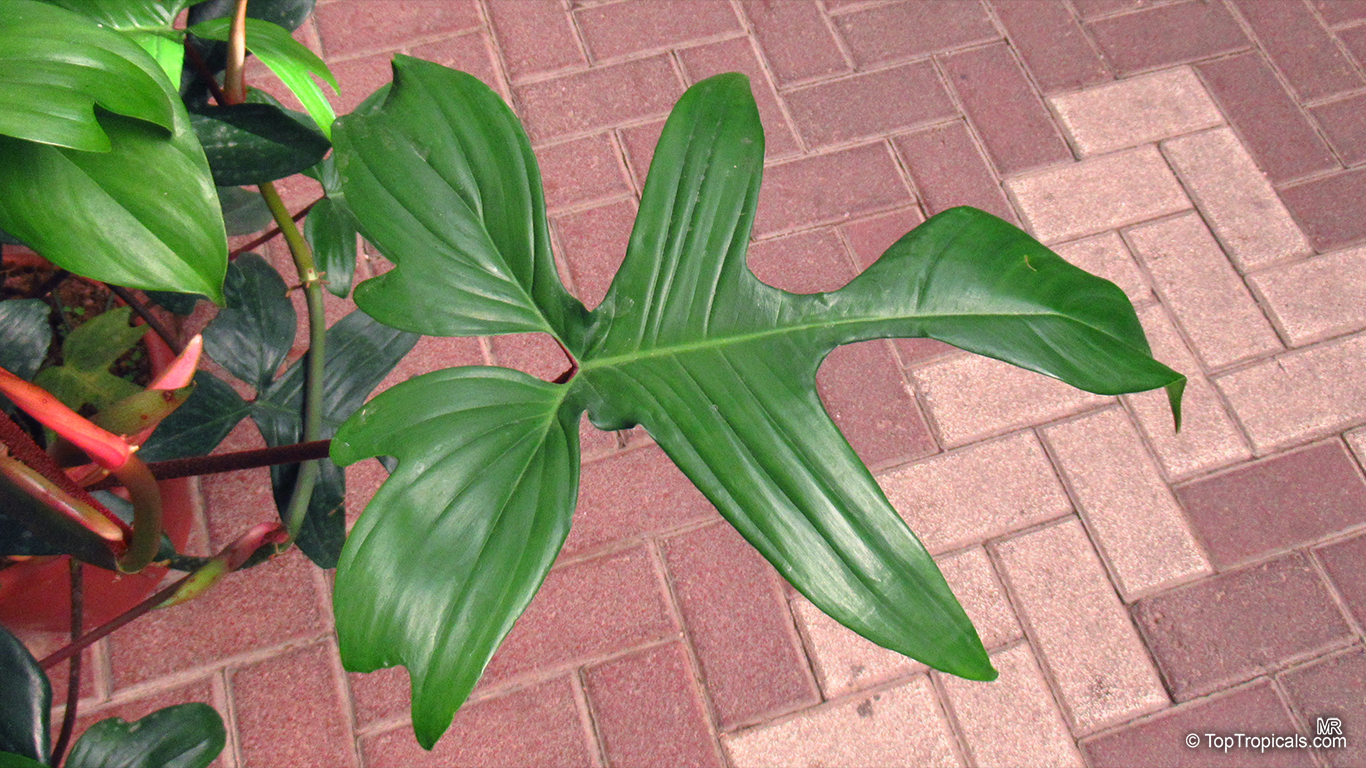
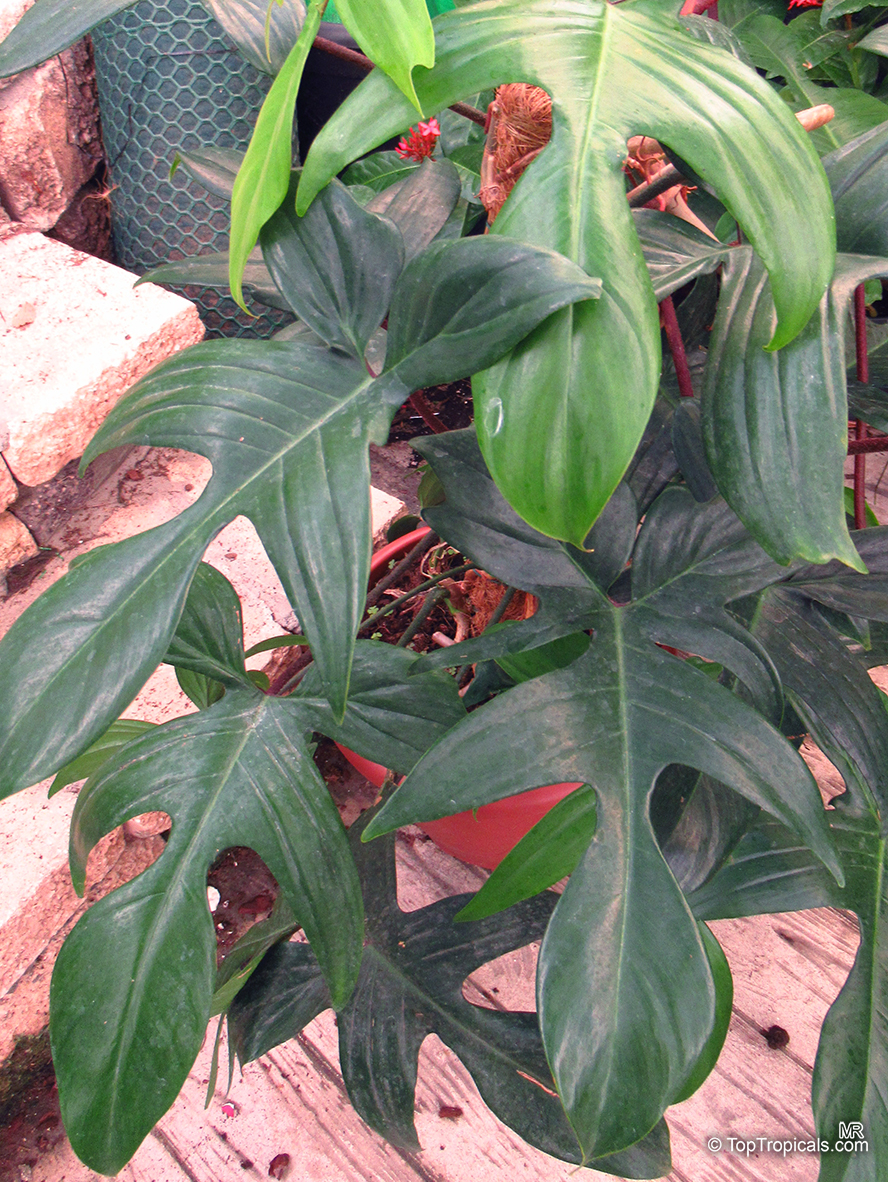
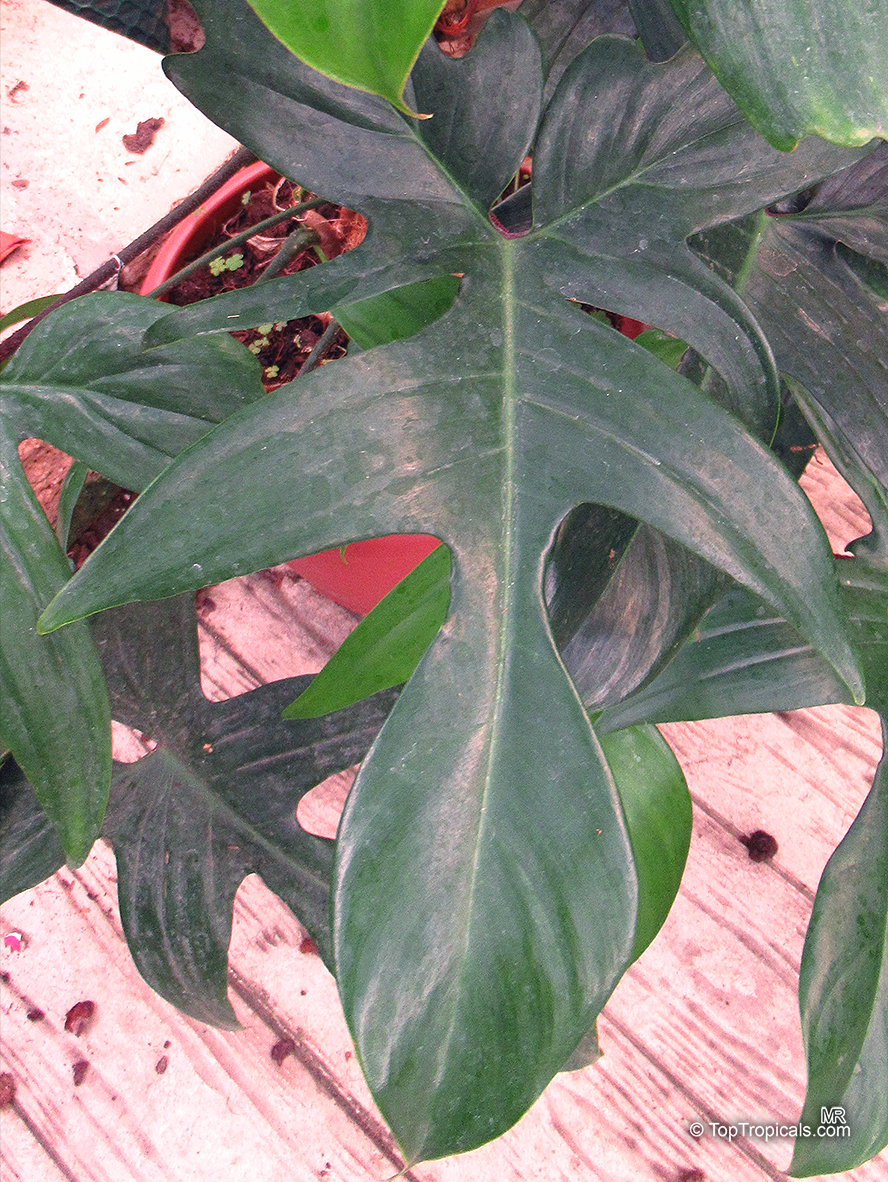
Botanical name: Philodendron radiatum
Common name: Cut-Leaf Philodendron
Cultivar: Palm Fingers
Family: Araceae
USDA Zone: 10-11
Cold tolerance: 30°F
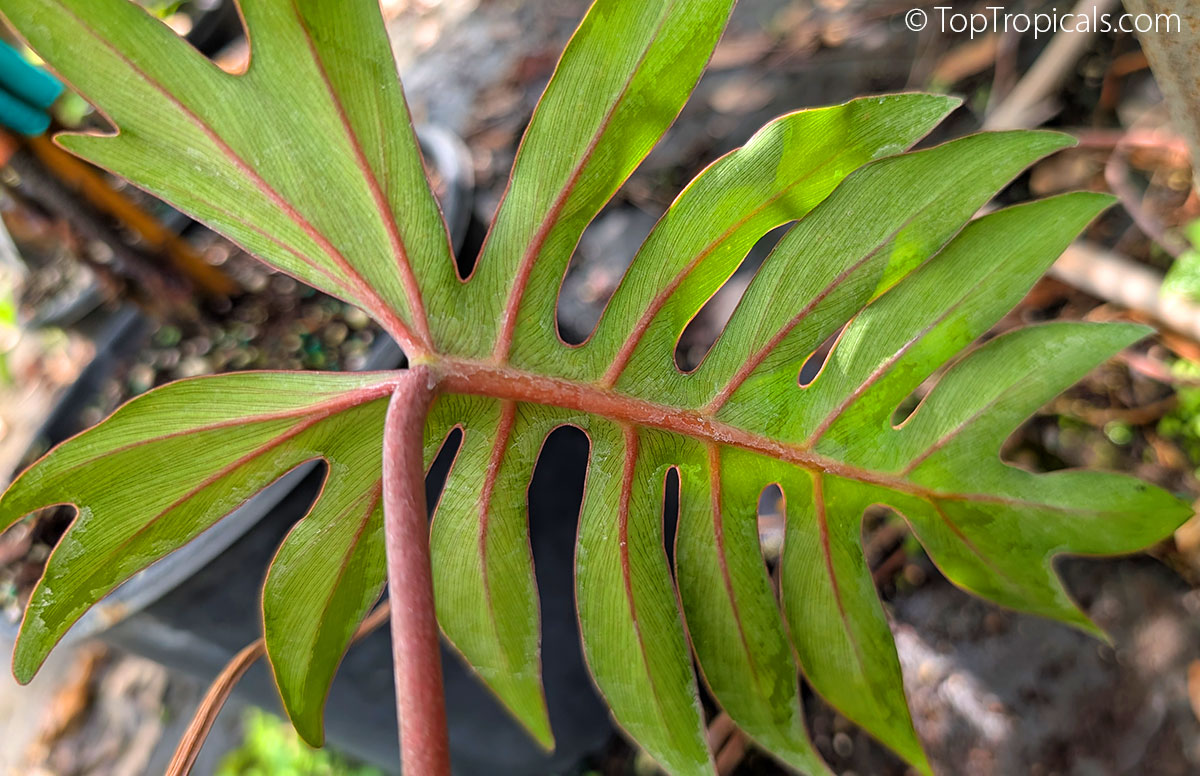
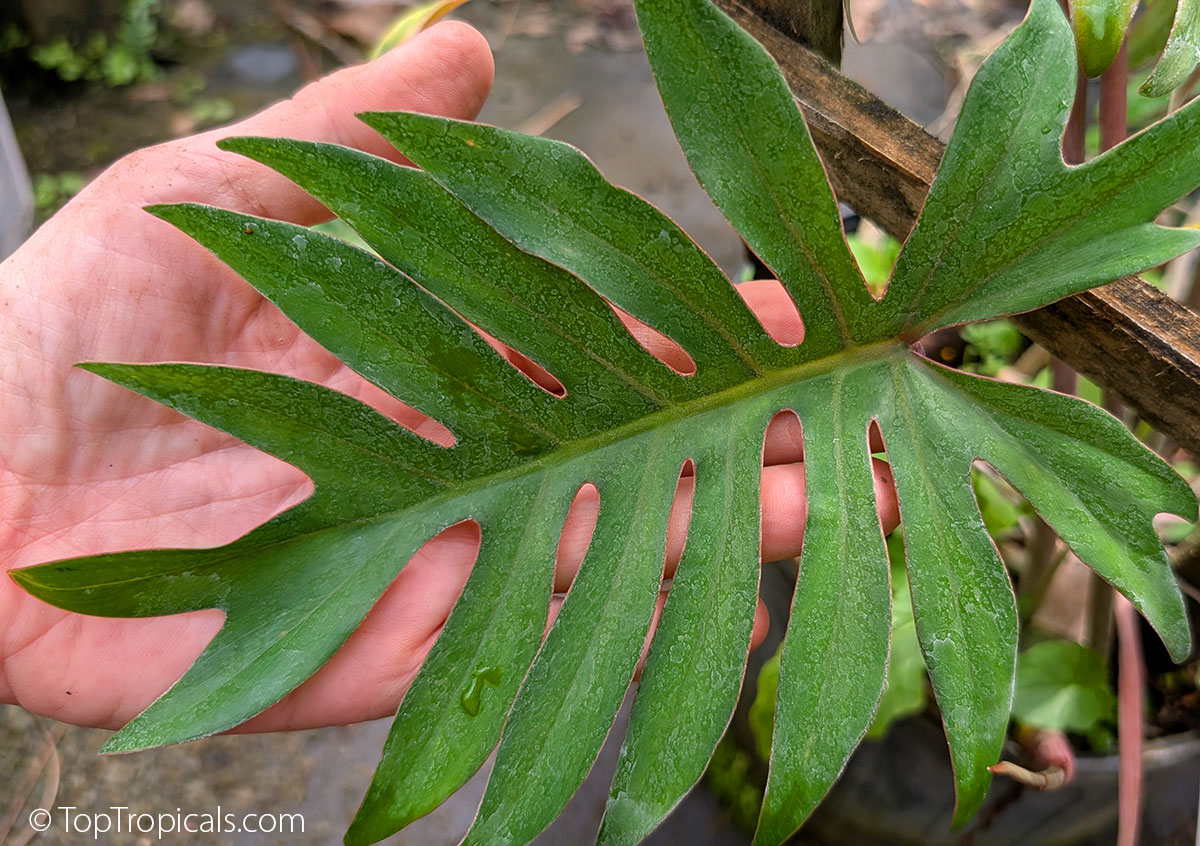
Philodendron radiatum 'Palm Fingers' is a tropical climbing aroid with deeply lobed, palm-like green leaves. Native to Central America, it can grow as a vine up to 10-16 feet long with large, finger-like foliage. In cooler regions (below USDA Zone 10), it is grown as an indoor ornamental. Prefers warmth, humidity, and partial shade. Protect from cold.
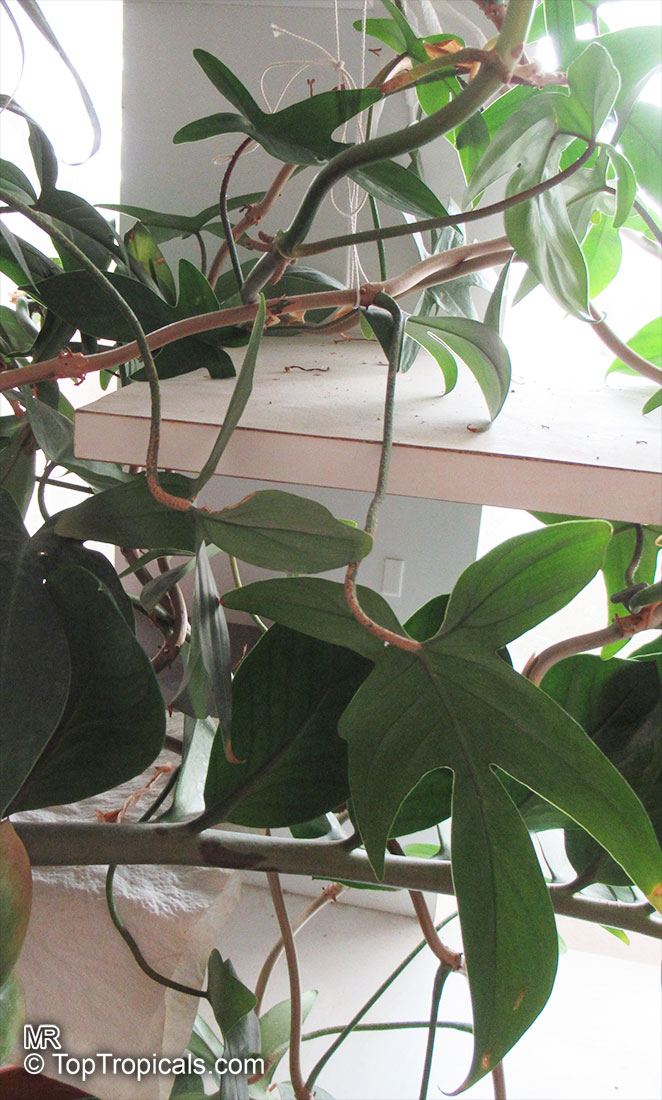
Botanical name: Philodendron sp.
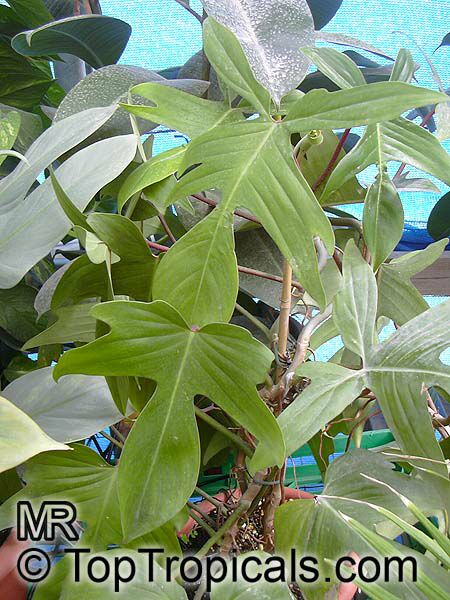
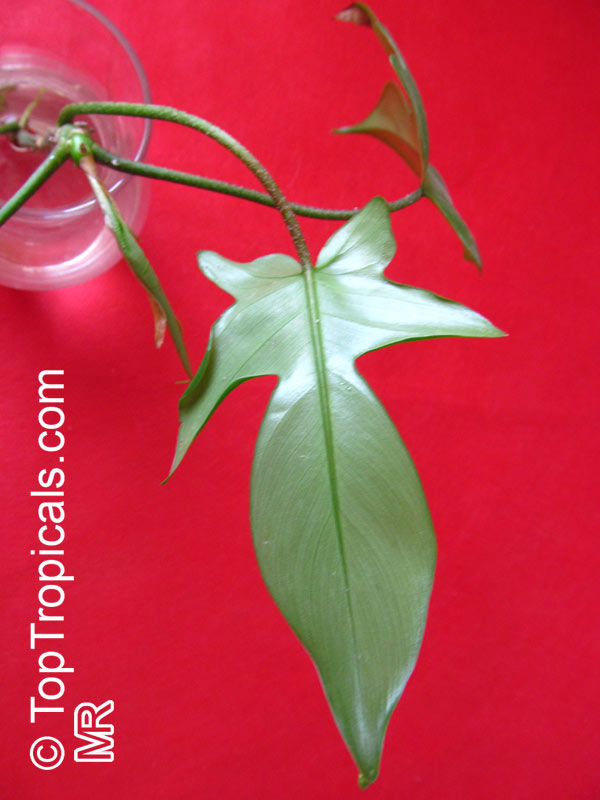
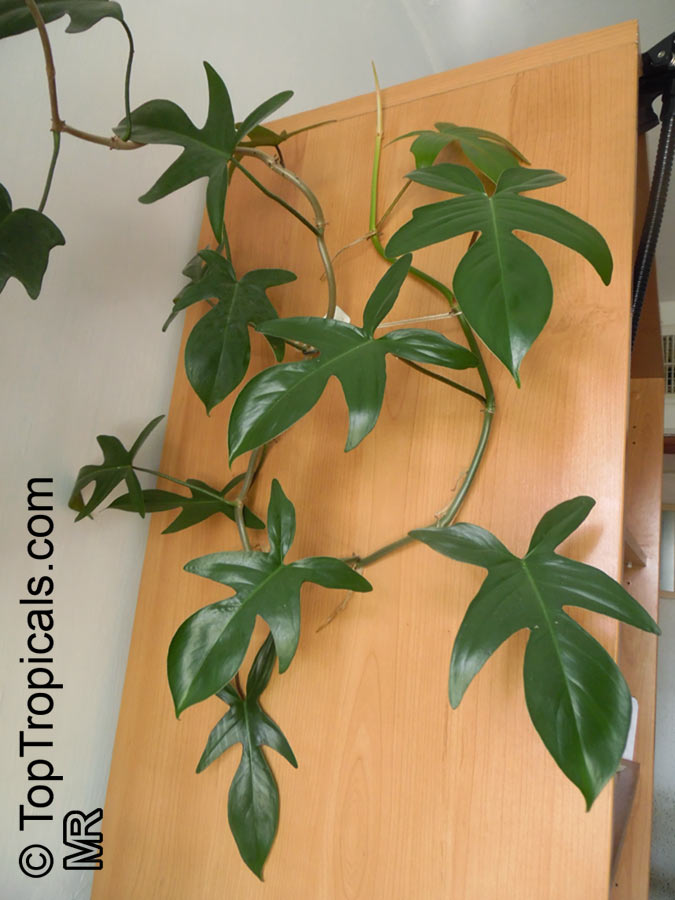
Common name: Philodendron 'Florida'
Cultivar: Florida
Family: Araceae
USDA Zone: 9-10
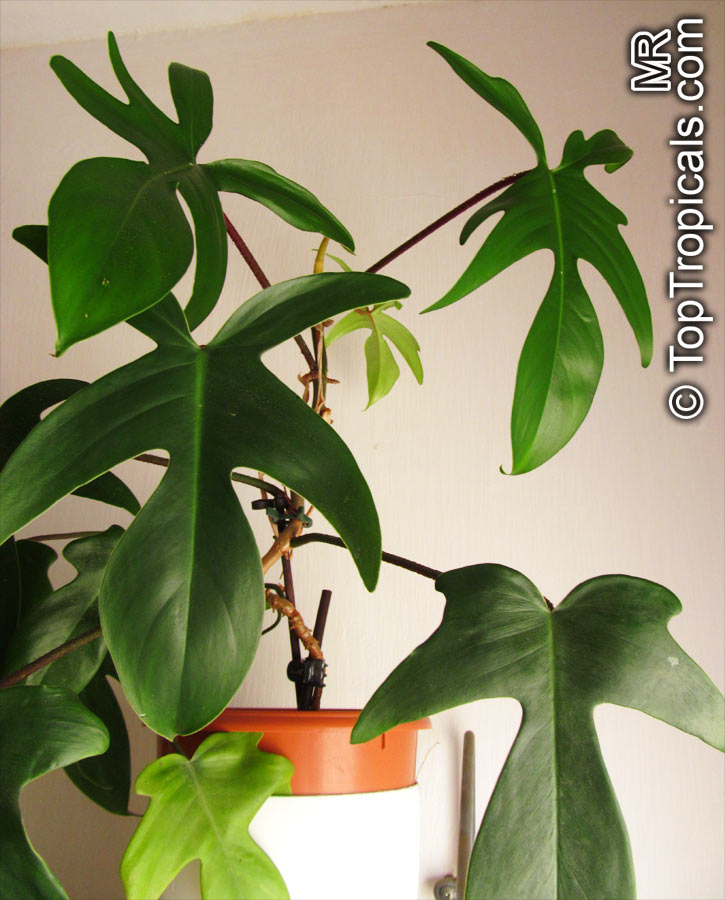
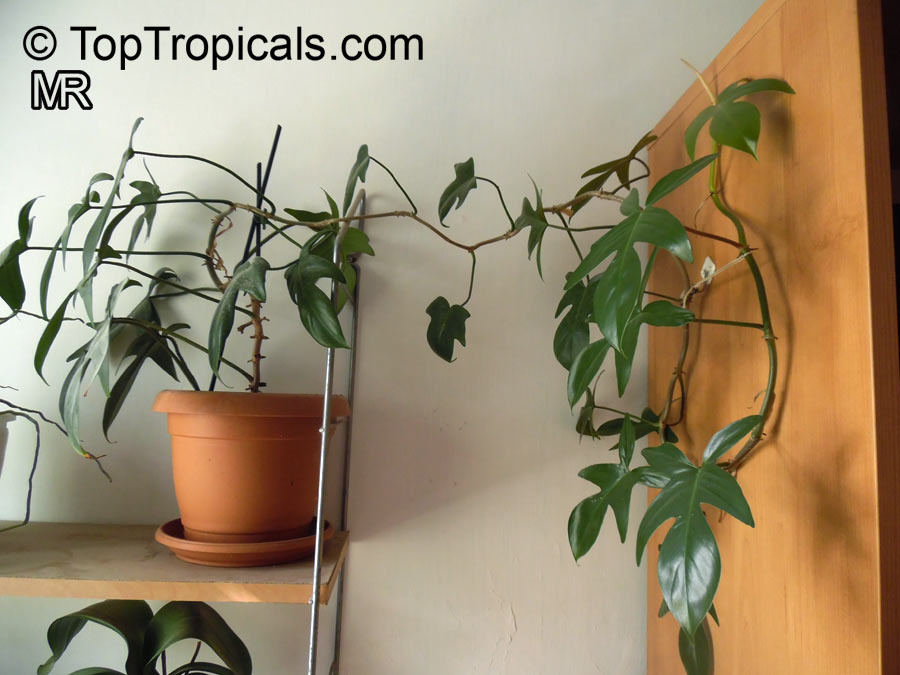
Philodendron Florida is an evergreen, slow growing vine or creeper that usually grows to around 3 to 6 feet tall, and 5 feet wide. This plant is hardy to USDA Zone 9-11, and can tolerate temperatures ranging from 30°F to 100°F. It naturally grows in semi-shade, and thrives best in all types of moist soil, with very moderate water requirements.
When grown in pot, plant does very well in regular potting soil. When grown in colder regions, the Philodendron Florida needs to be protected from the cold and frost. Ensure that the soil around the root system remains moist and that the soil dries out only slightly between waterings. During winter months, it is recommended to move the potted Philodendron to a warm, dry place and keep it in indirect sunlight.
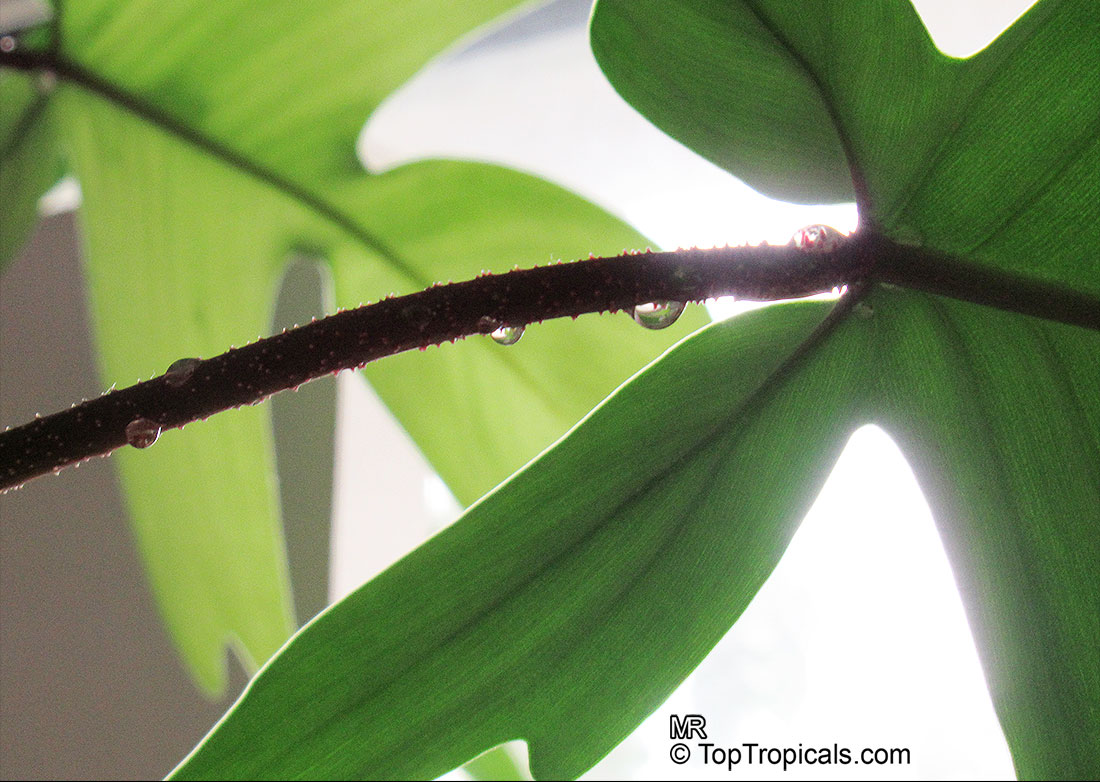
When kept in optimal growing conditions, the plant will produce large bright green leaves, up to 12 inches long and up to 4 inches wide. These leaves are glossy, with a point at the end, and are often lobed in shape. It will also produce aerial roots that search for somewhere to cling on and climb.
Overall, this Philodendron is an easy-to-care-for, evergreen vine or creeper that can be grown in all zones. With moderate water requirements and the ability to tolerate a wide range of temperatures, this plant thrives in semi-shade and will produce beautiful and glossy green leaves.
| Next | |
Use link to repeat this search:
https://toptropicals.com/cgi-bin/garden_catalog/cat.cgi?find=philodendron&search_op=and&keyword_op=and&language=e&number=10
&no_change_lang=1&user=tt&sale=1&first=0