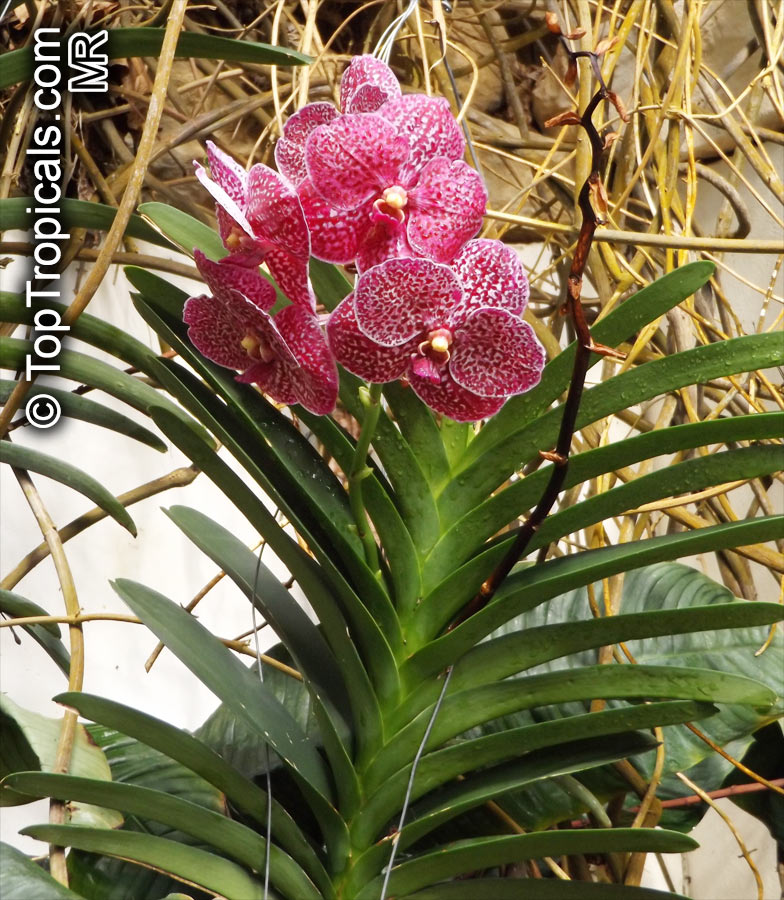
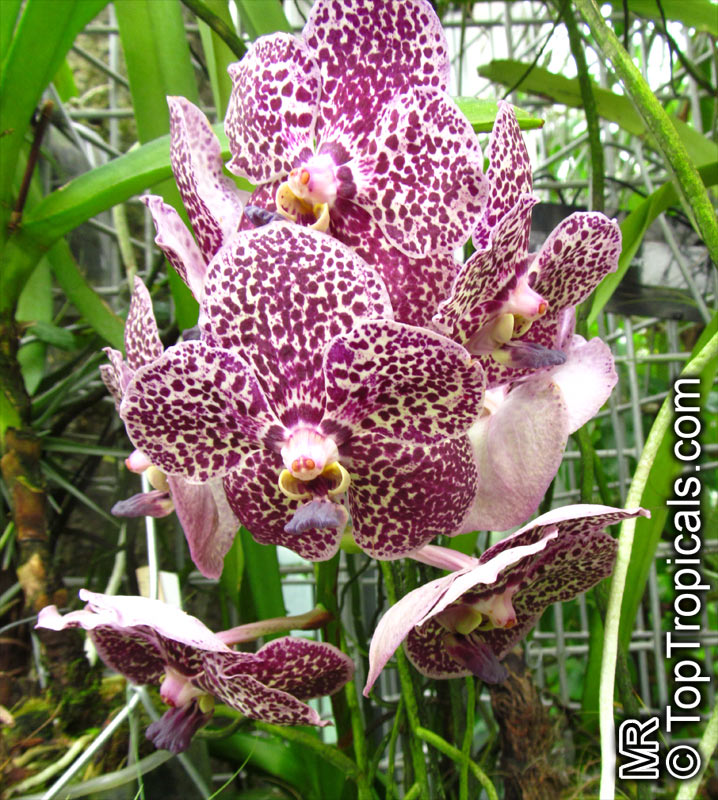
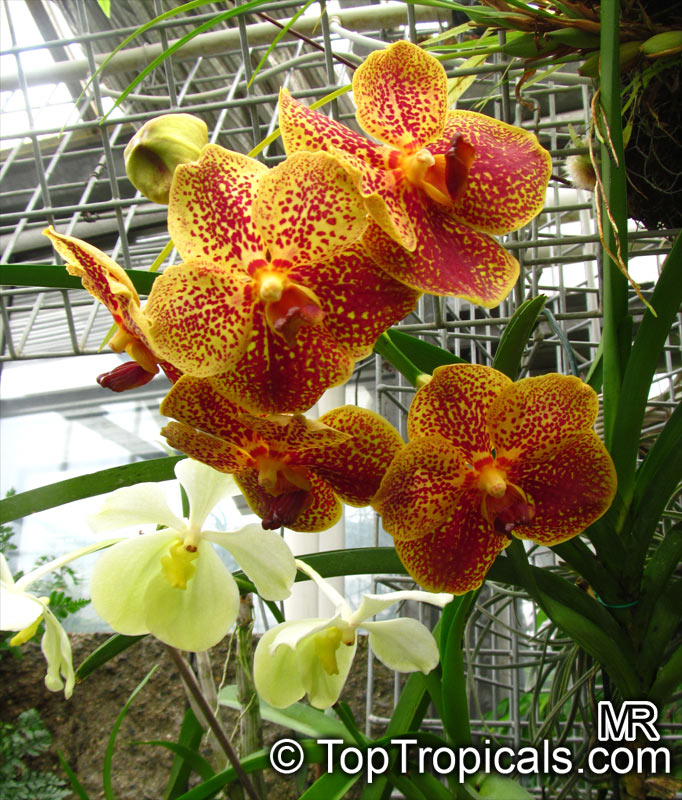
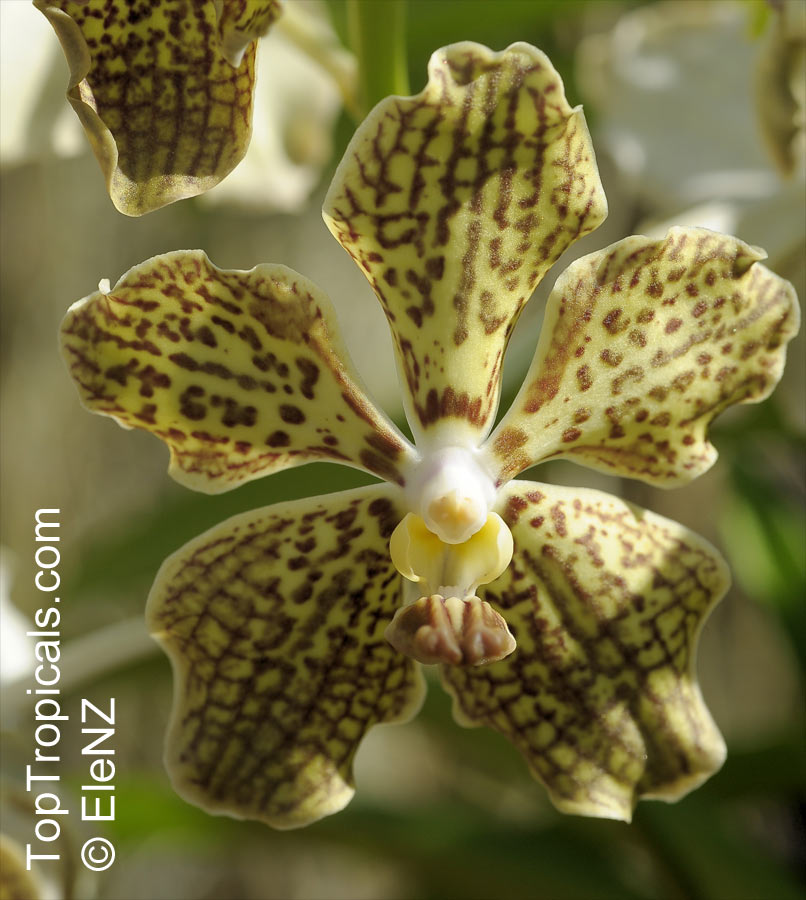
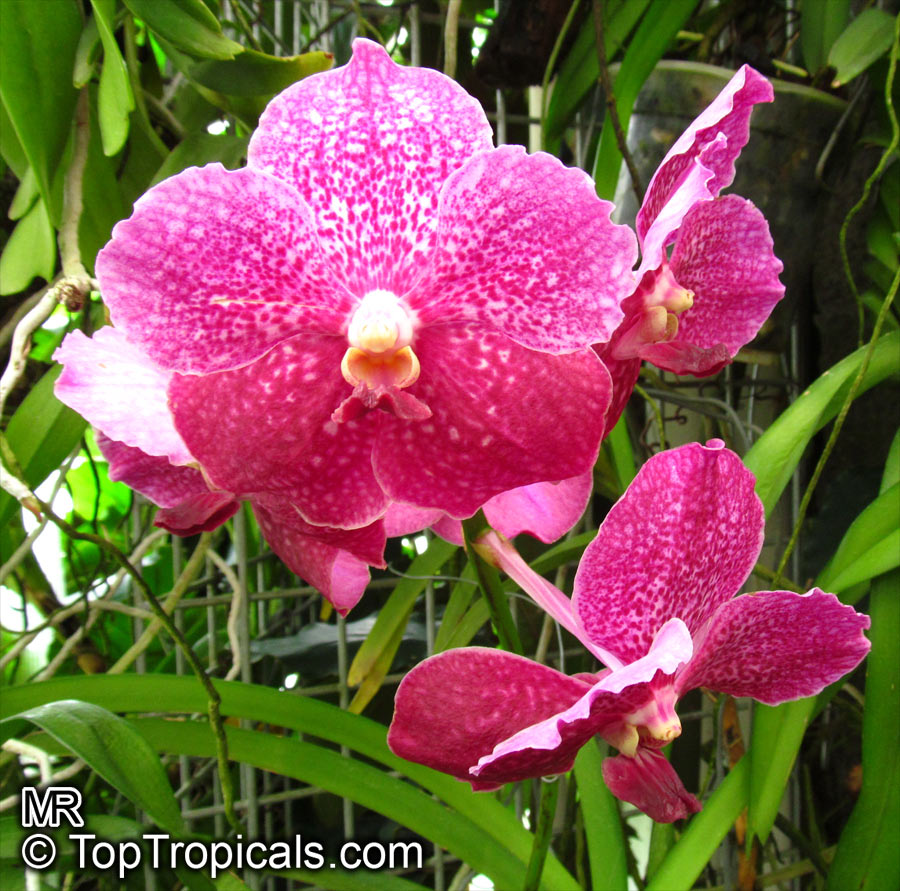
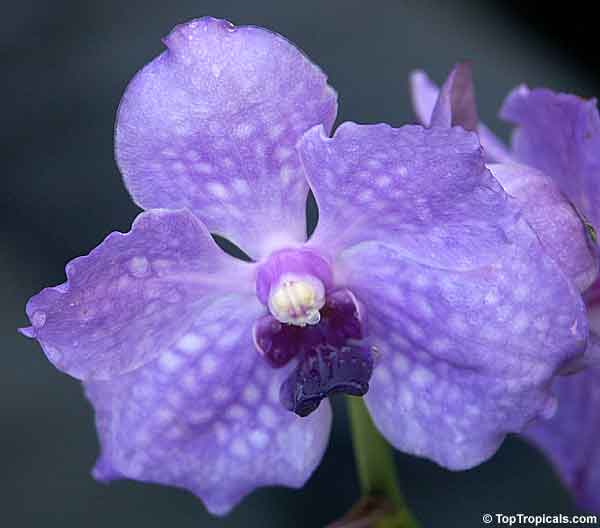
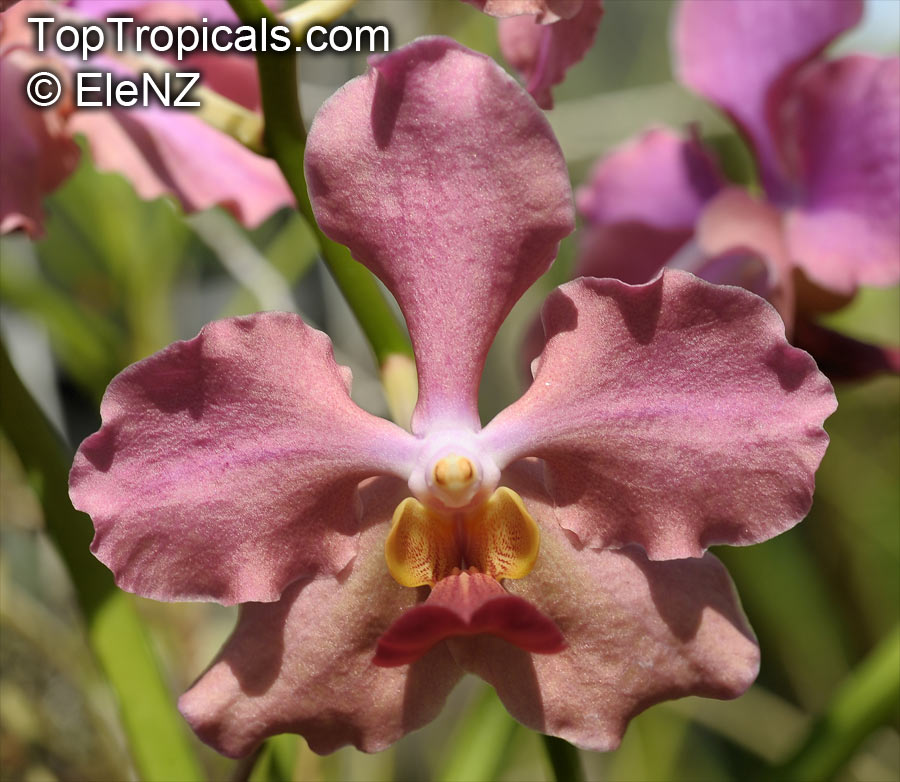
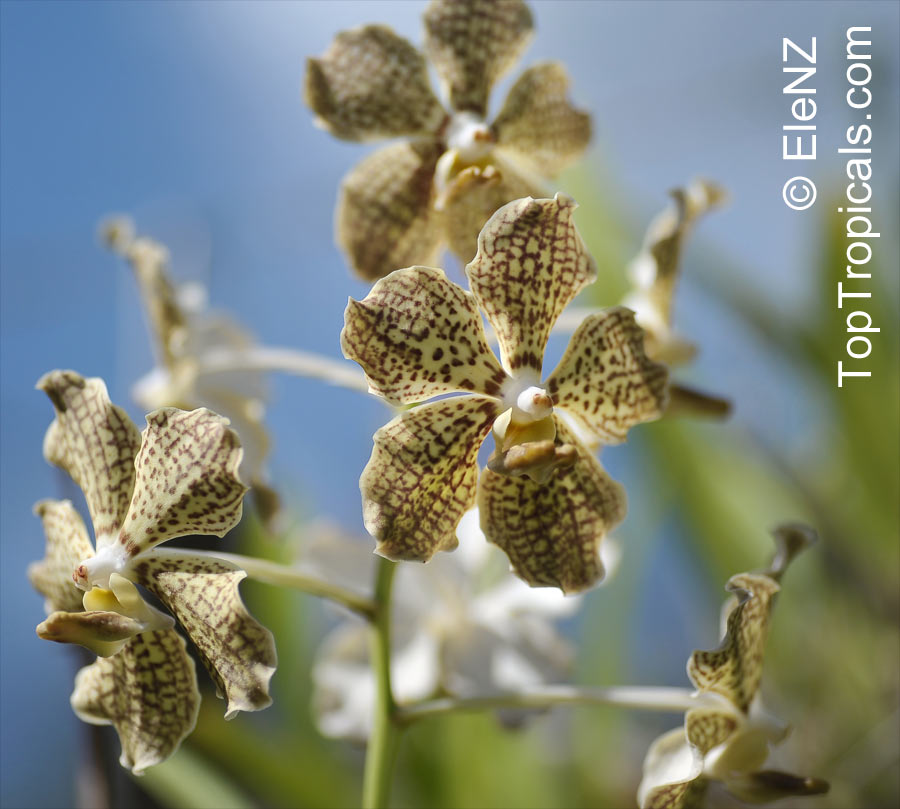
Vanda sp. (Vanda Orchid)
Botanical name: Vanda sp.
Common name: Vanda Orchid
Family: Orchidaceae
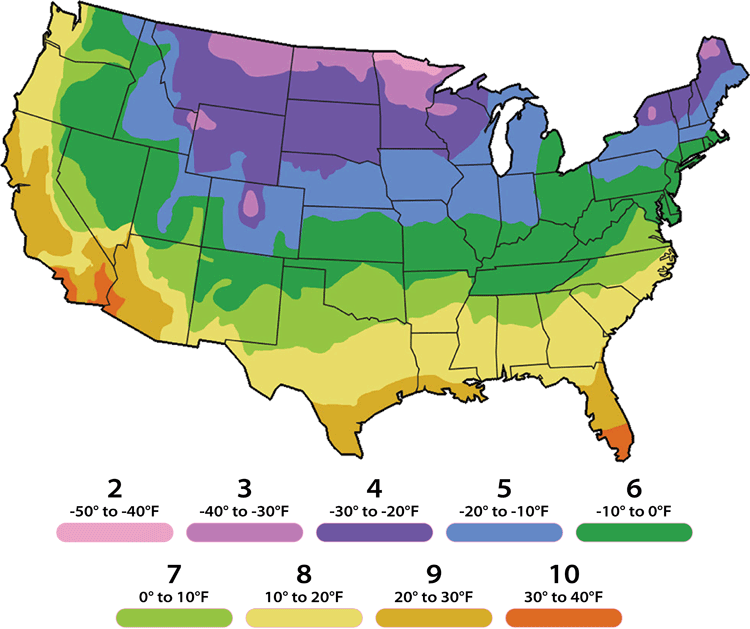
USDA Zone: 10-11
Cold tolerance: 35°F

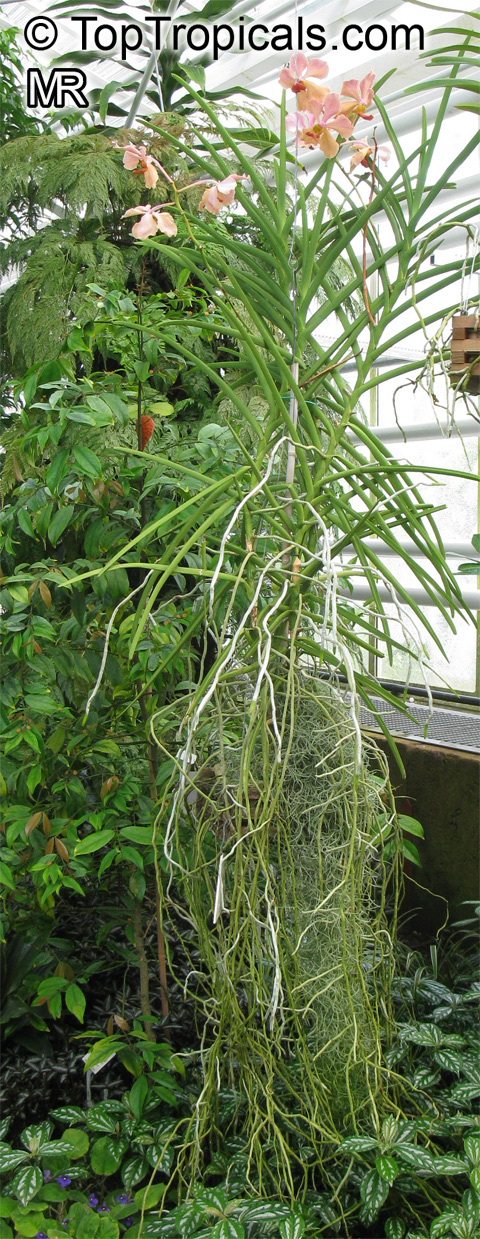
 Plant form: Climbing or groundcover vine
 Sun exposure: Full sun or bright light indoor; semi-shade
 Cold tolerance: Frost sensitive. Protect from freezing.
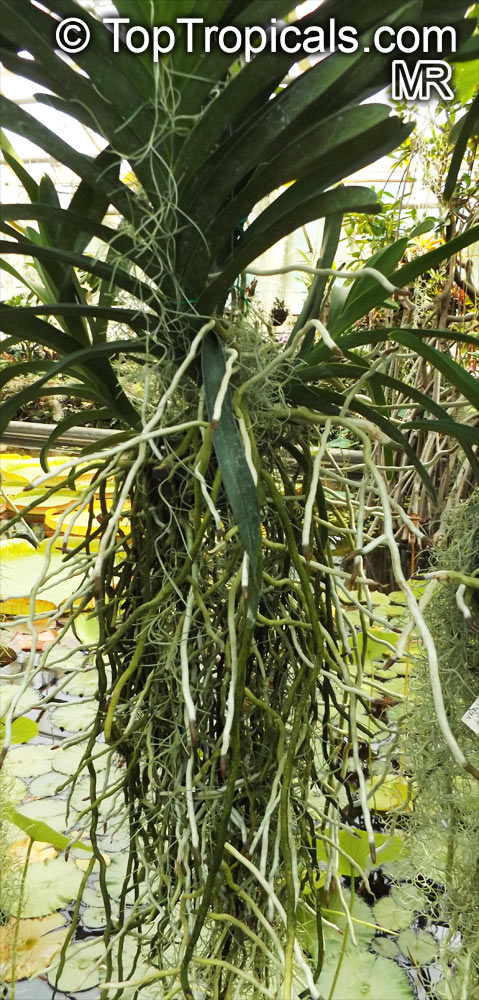
 Watering: Moderate; epiphyte. Needs light, frequent misting or soaking to stay hydrated.


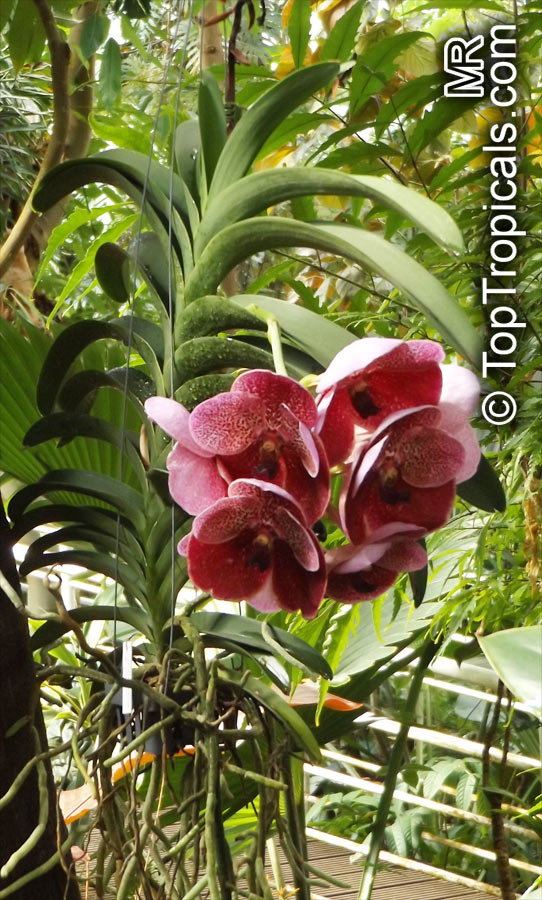
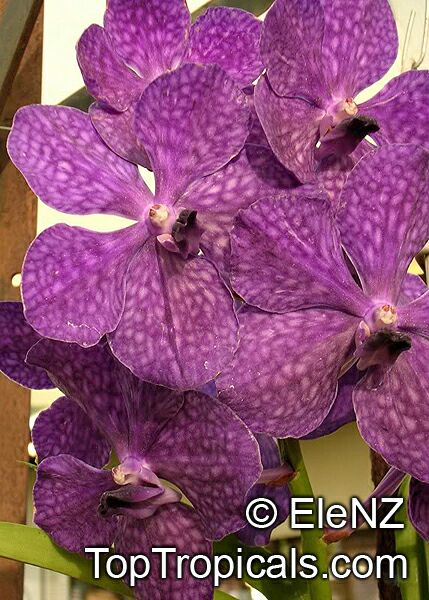
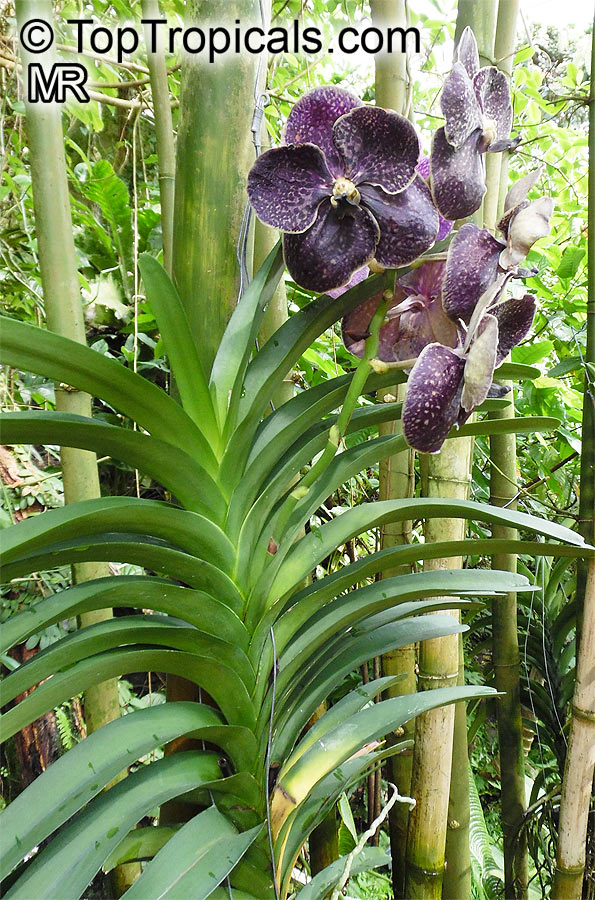
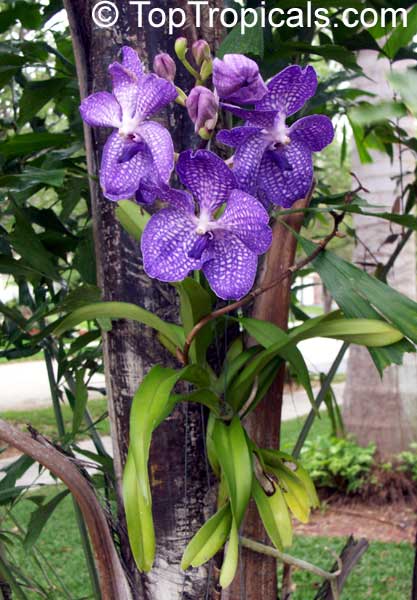
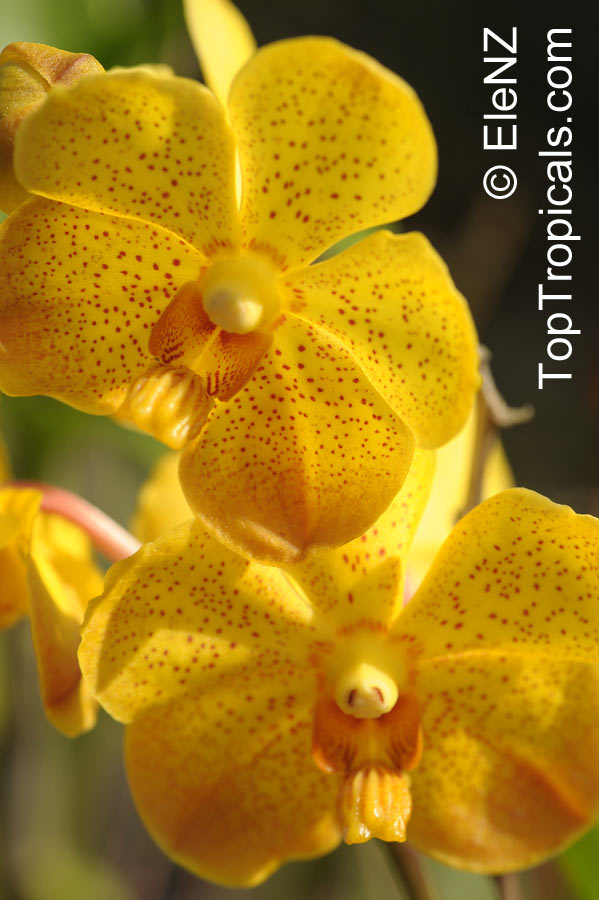
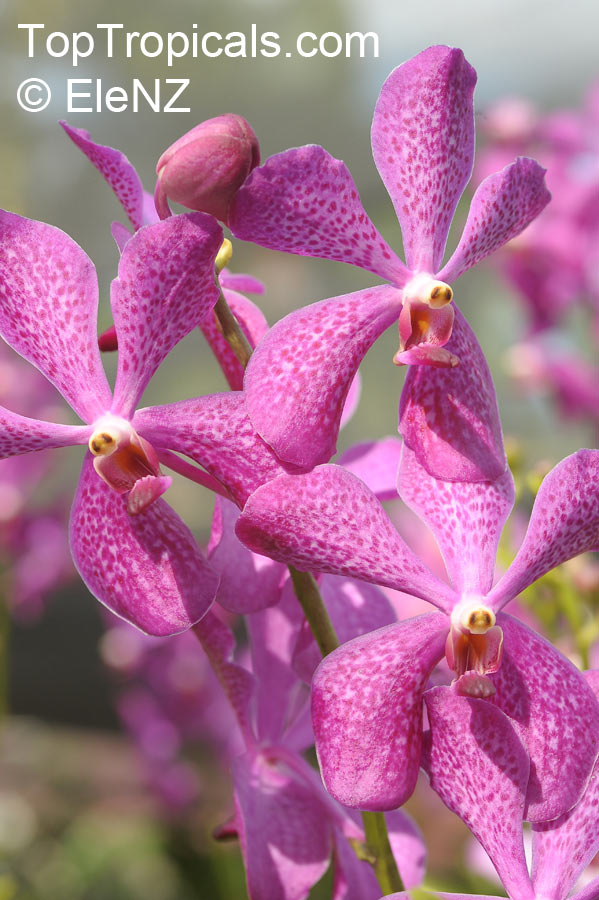
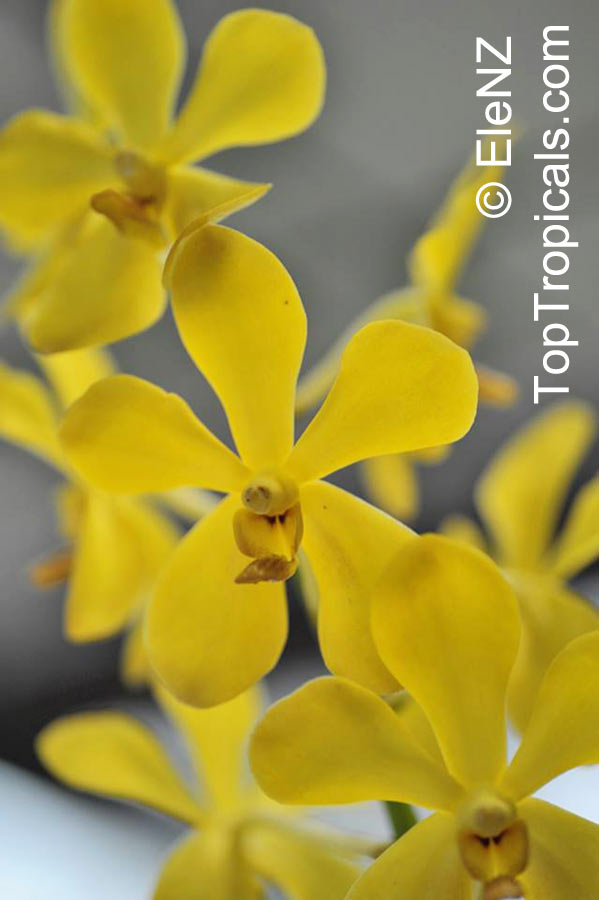
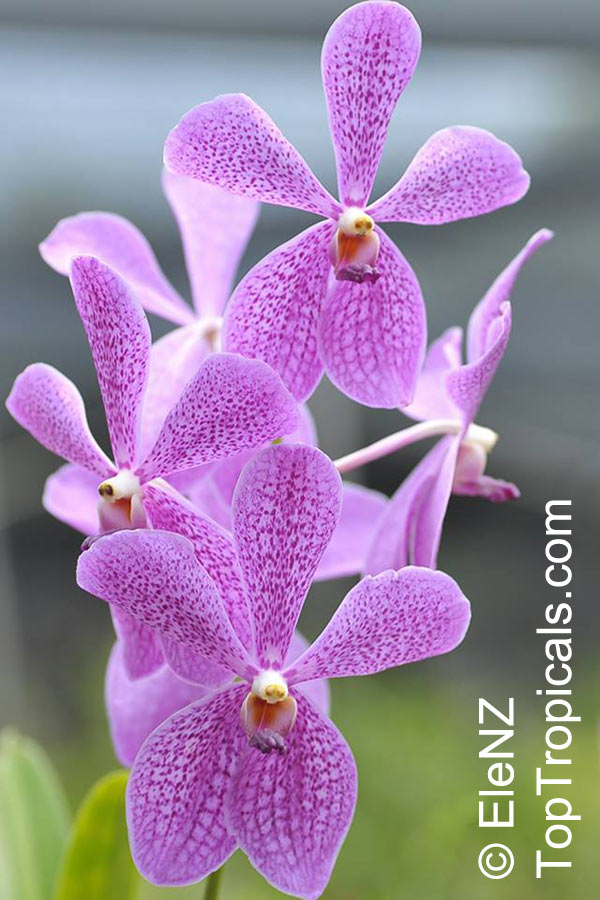
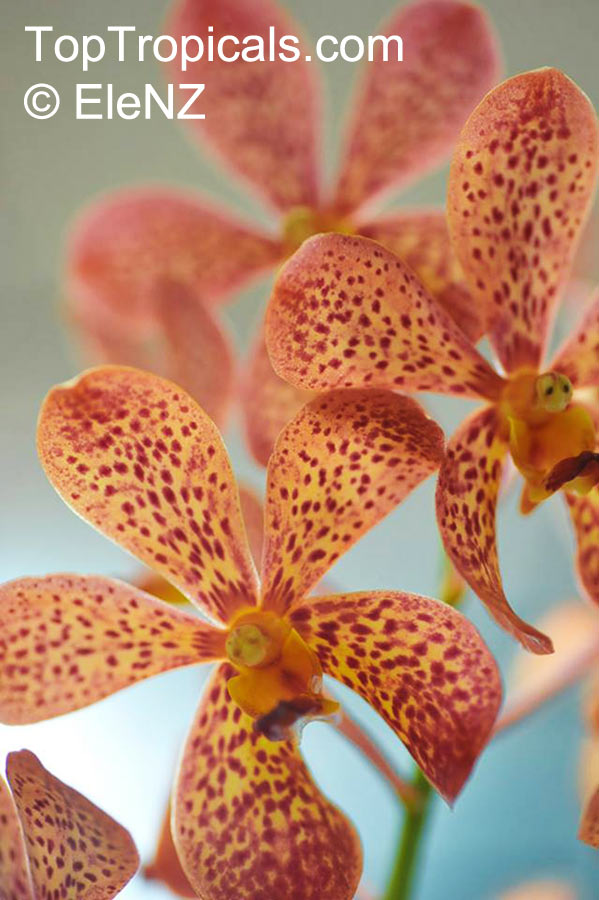
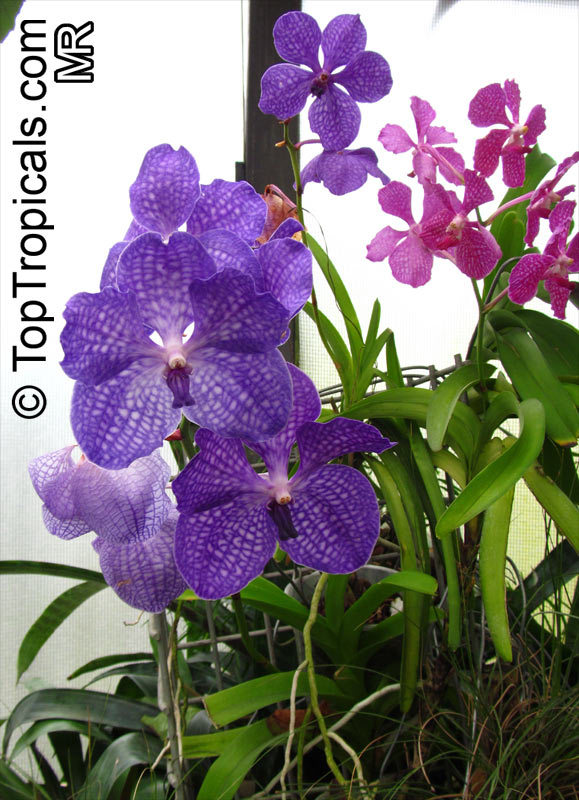
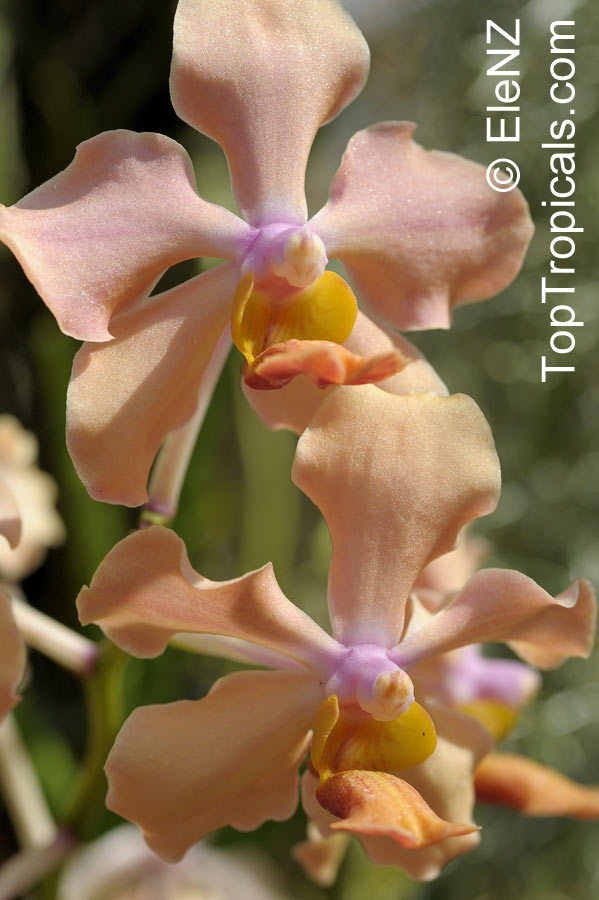
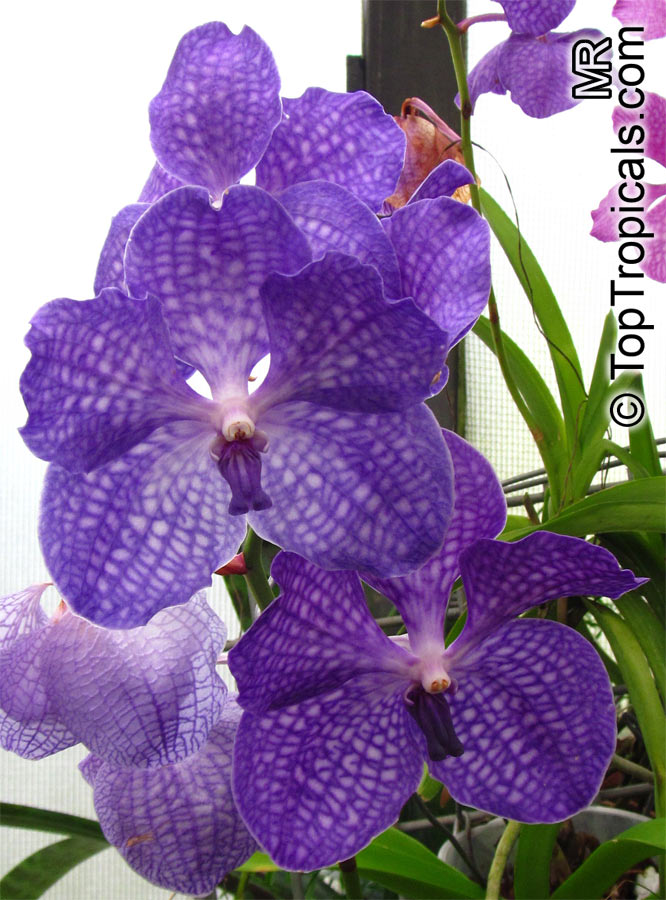
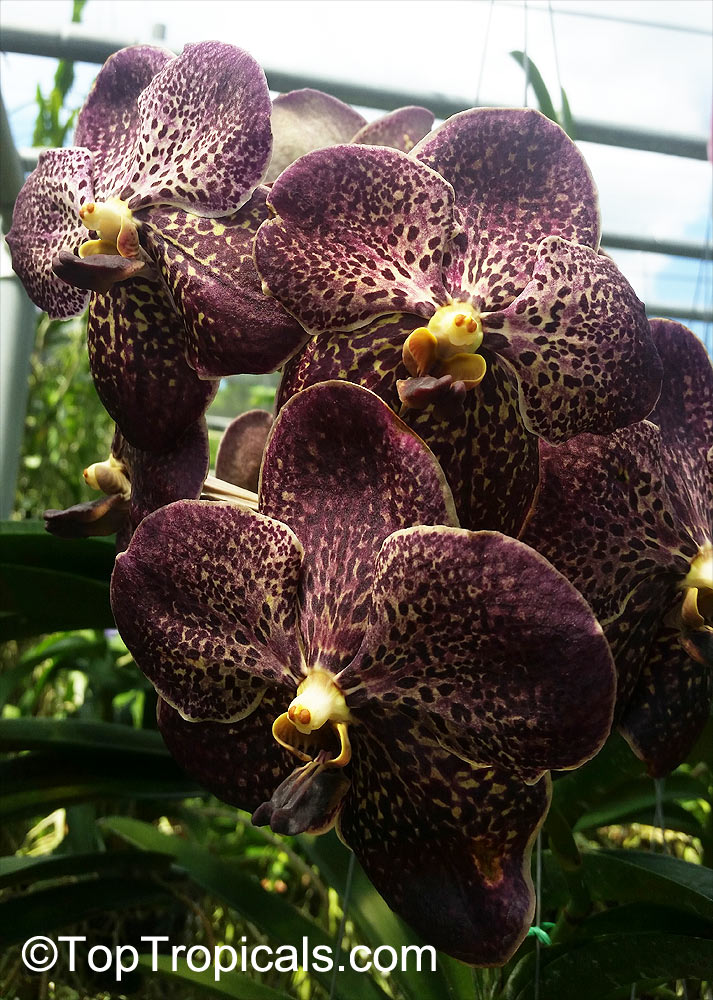
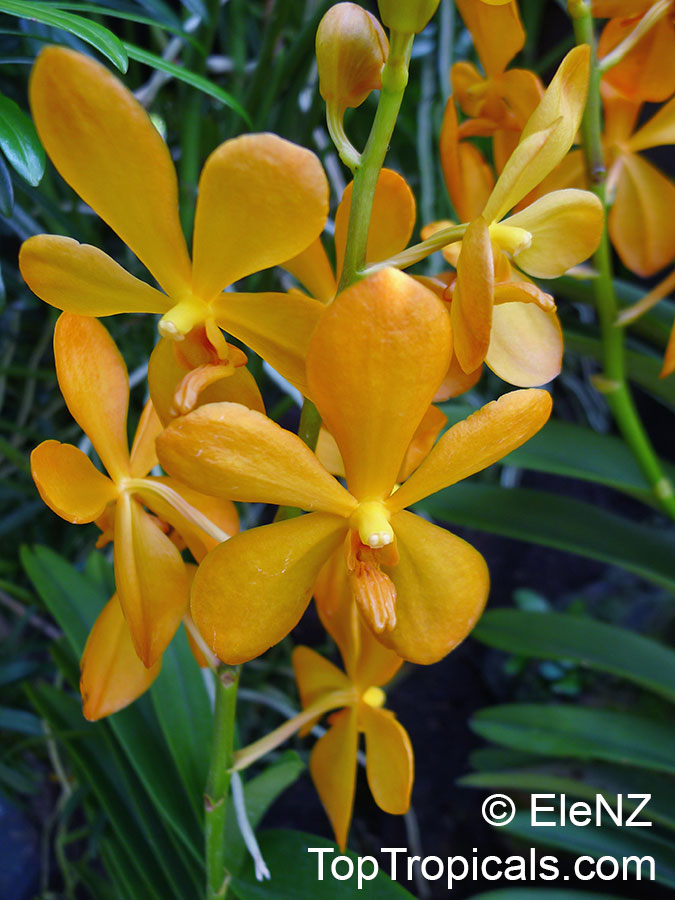
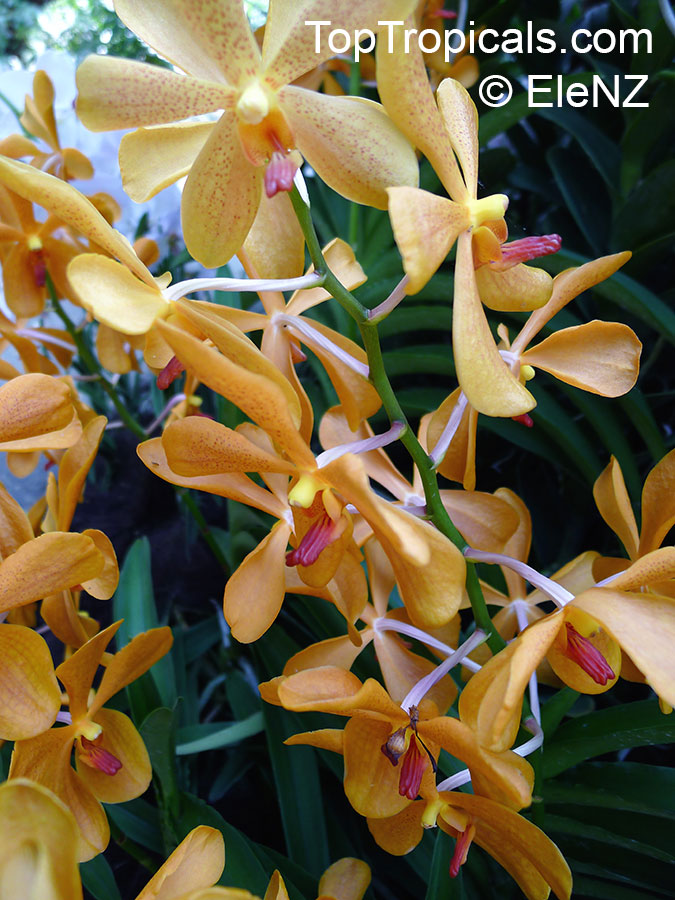
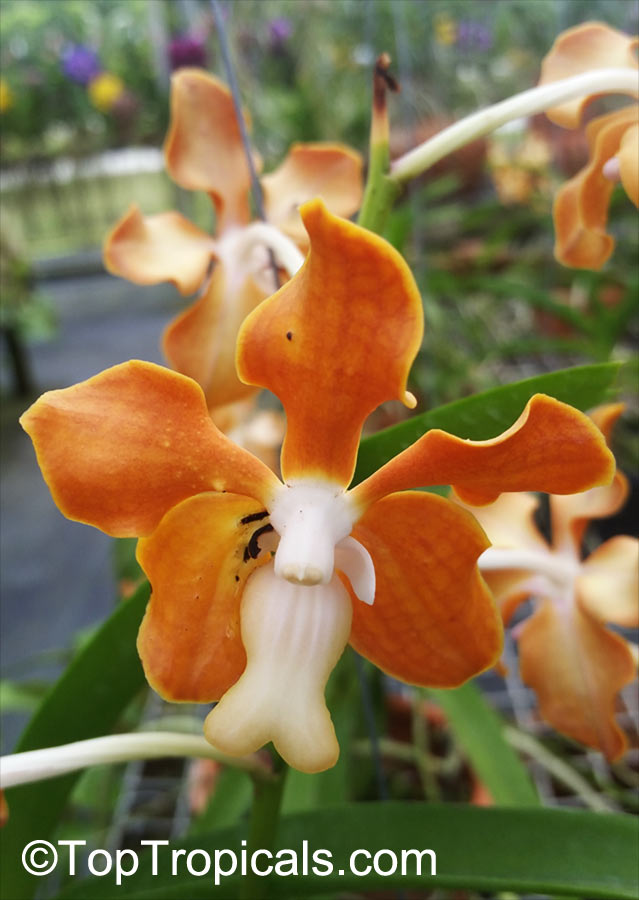
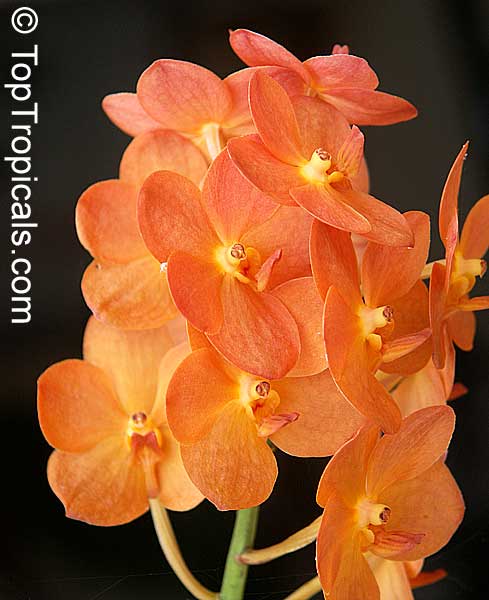
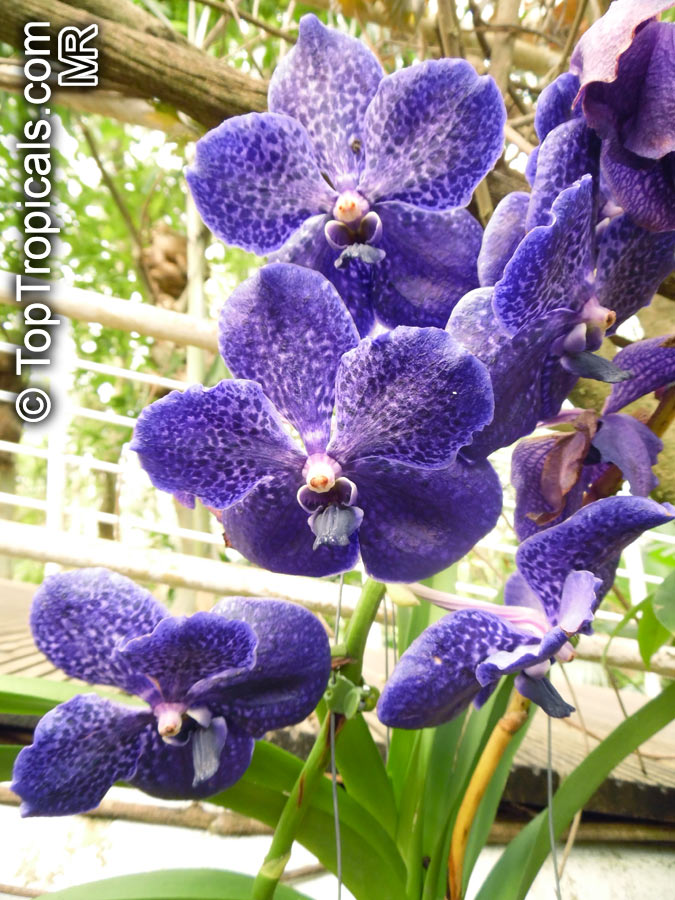
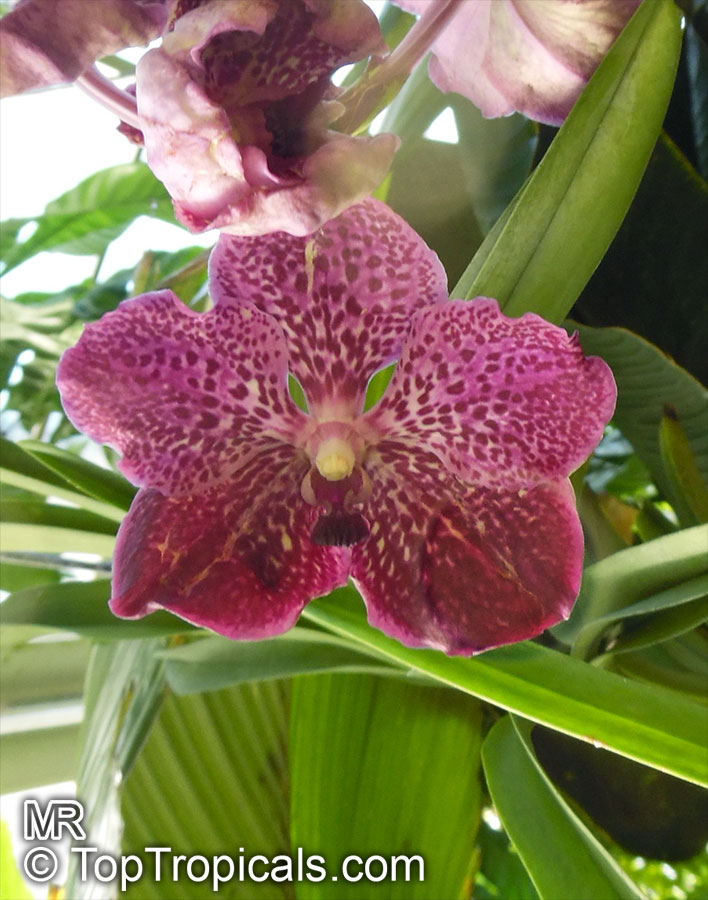
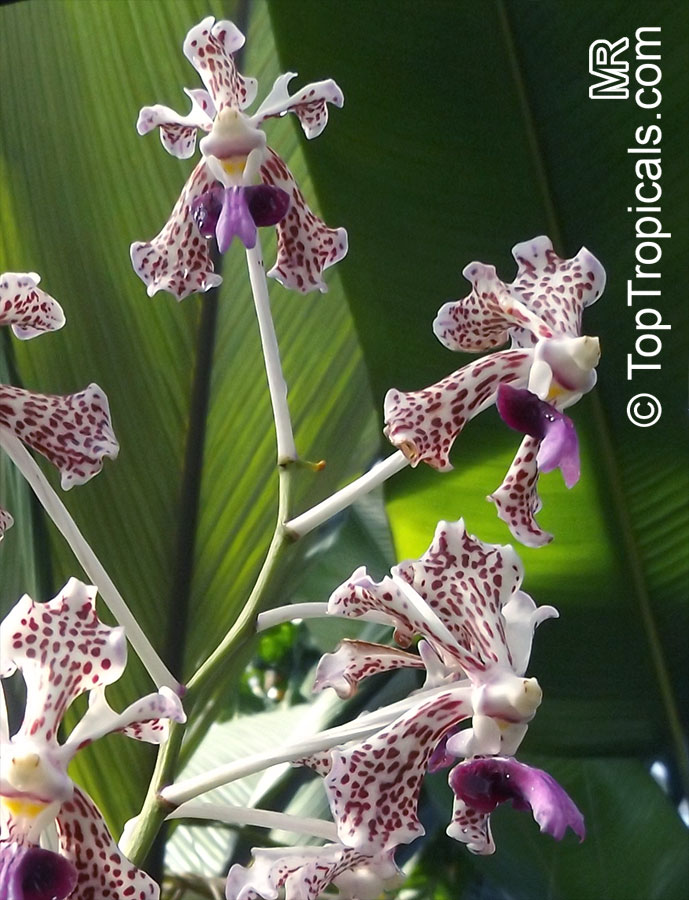
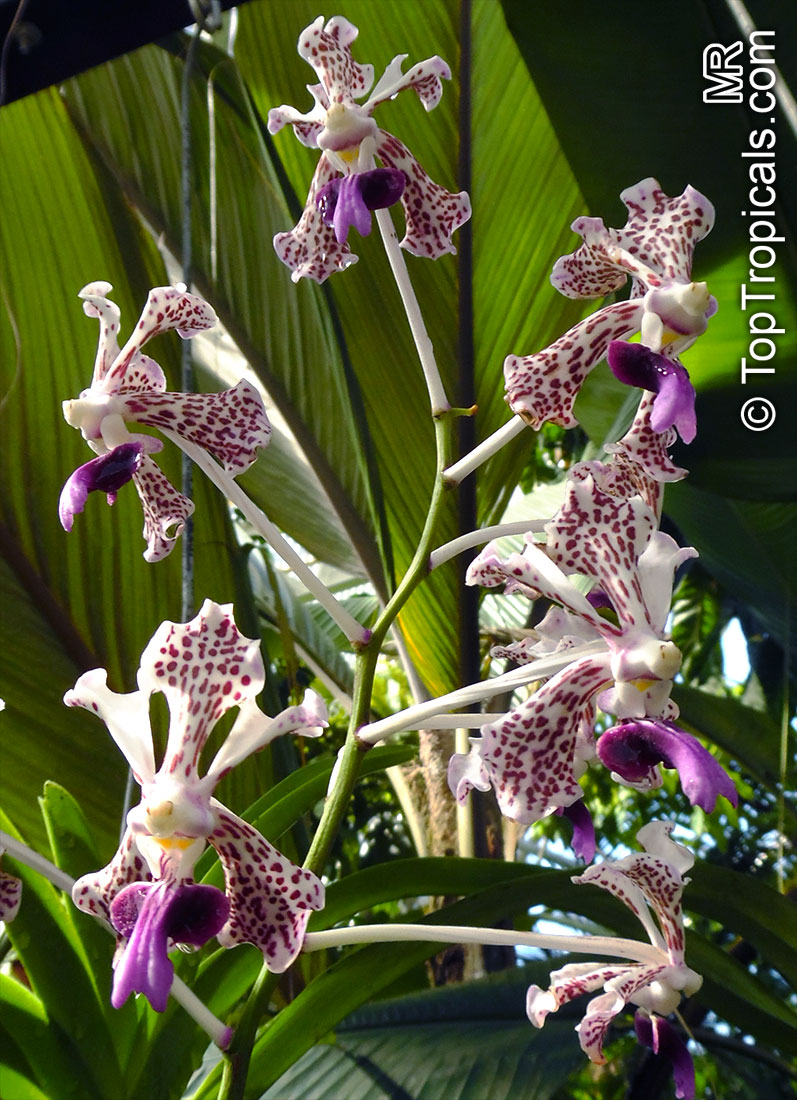
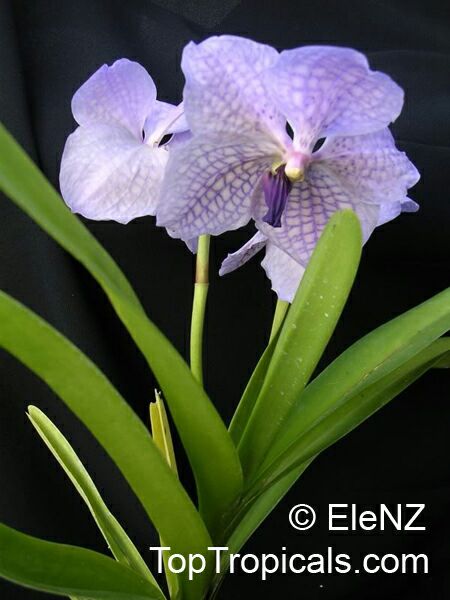
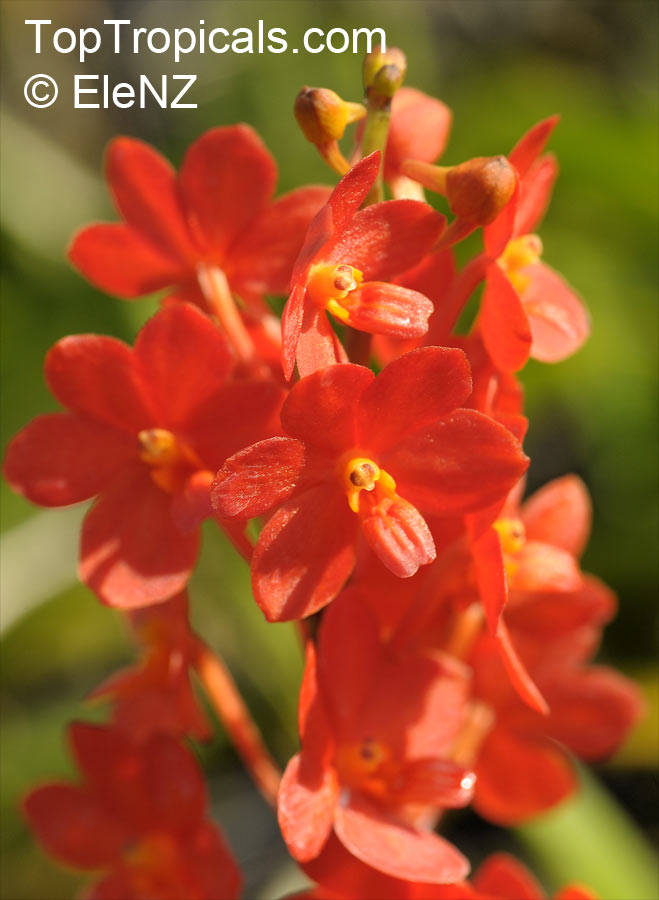
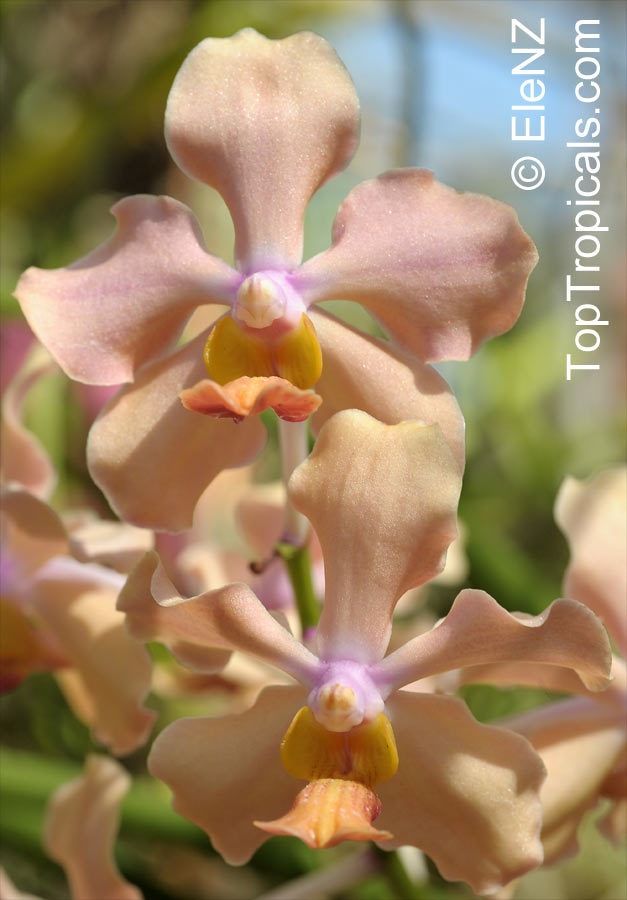
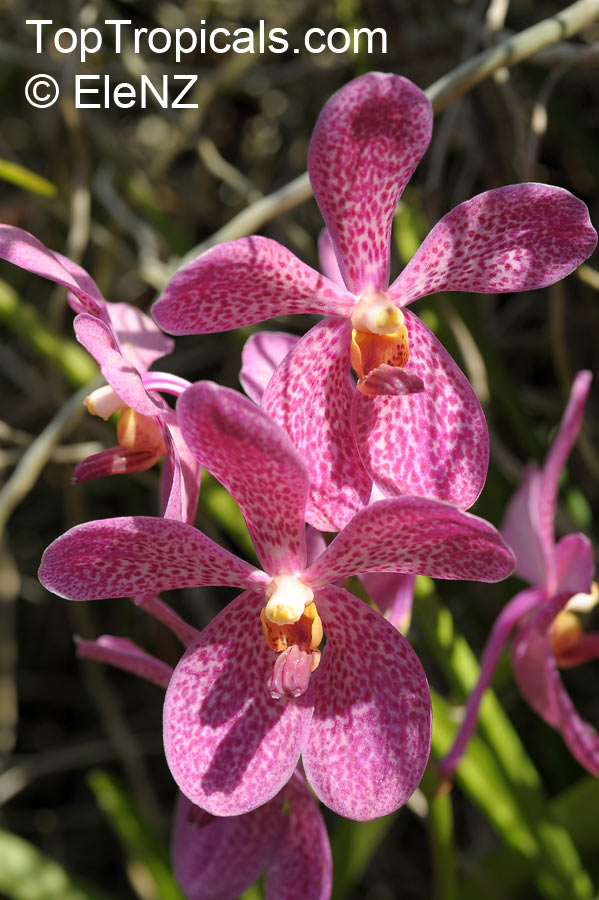
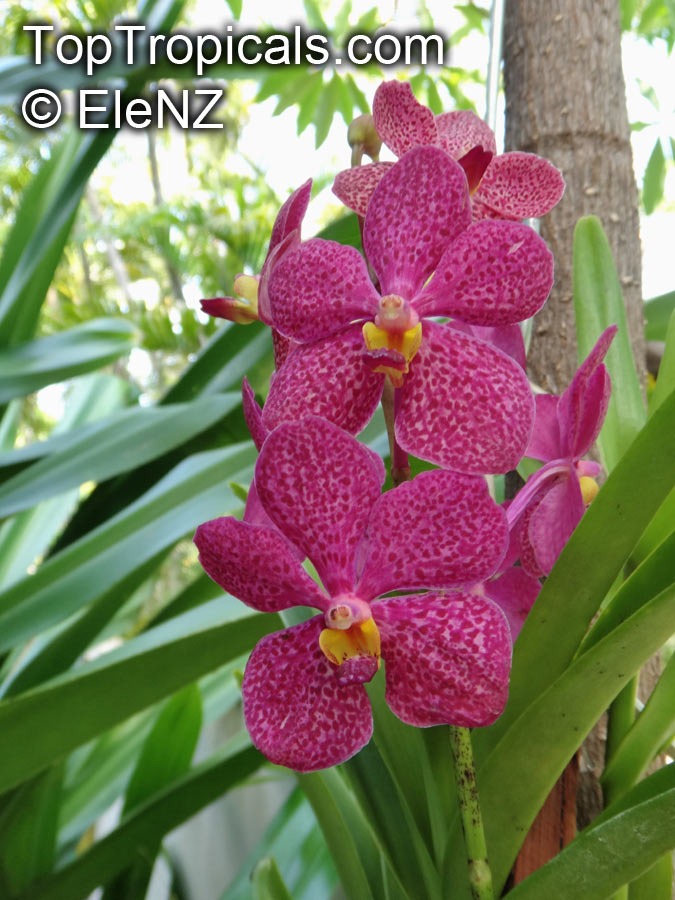
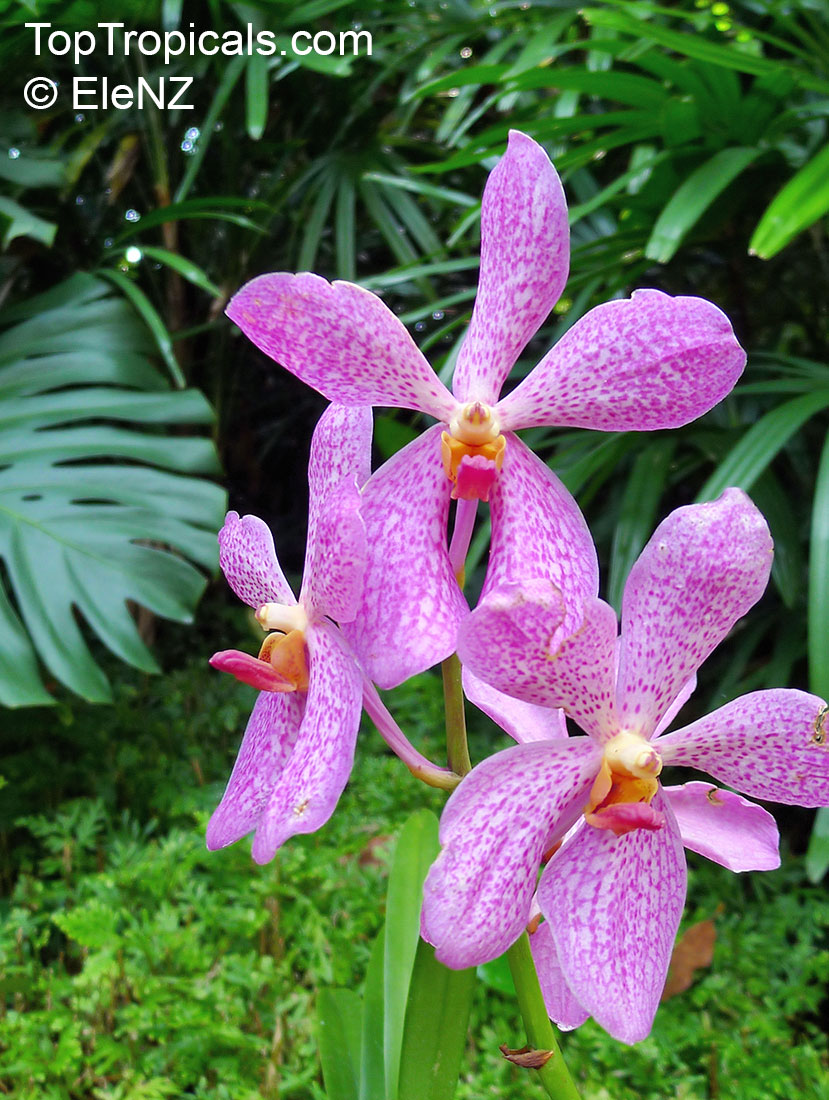
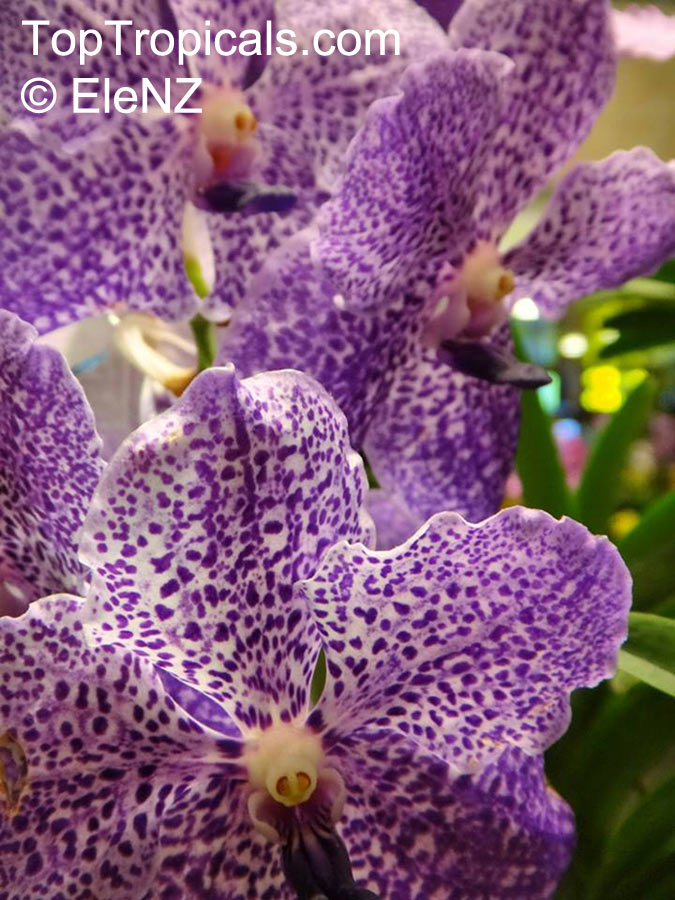
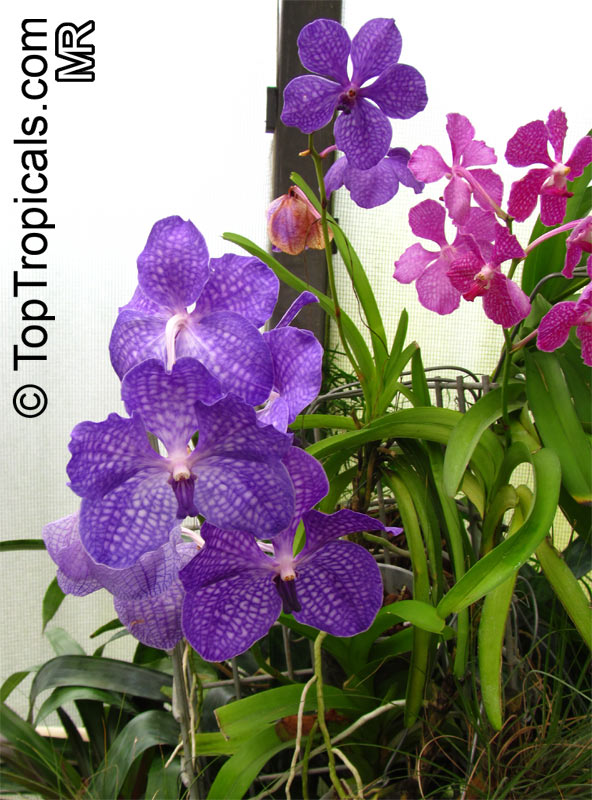
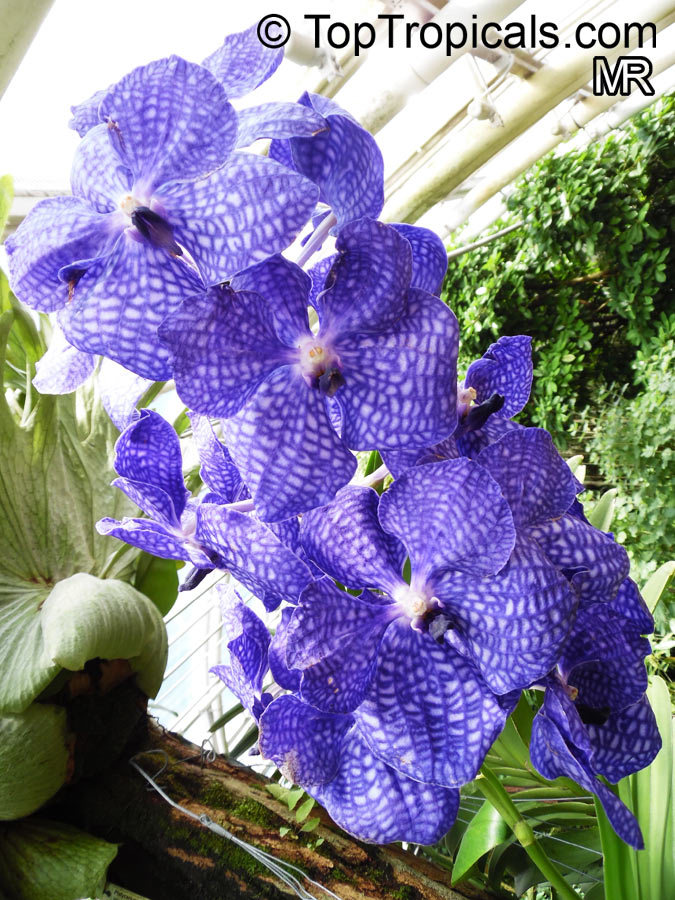
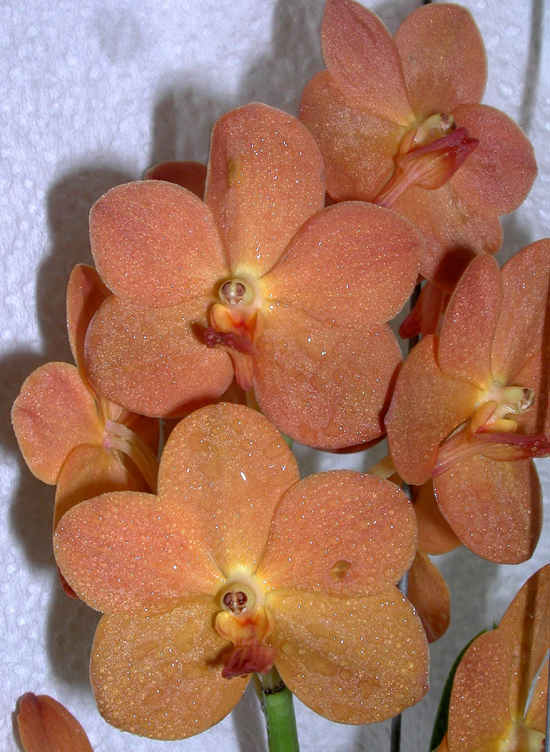
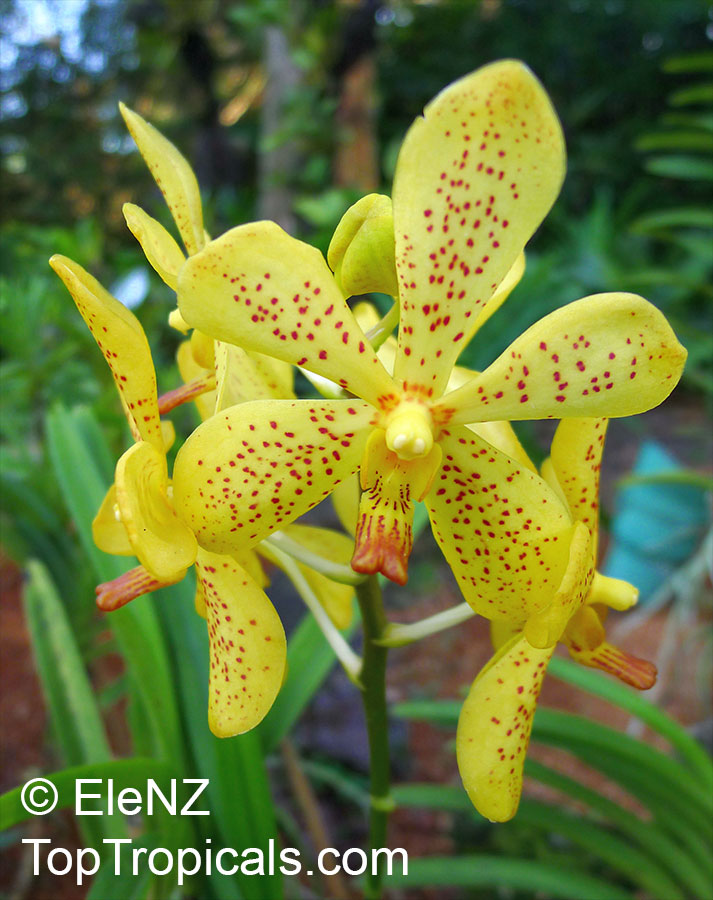
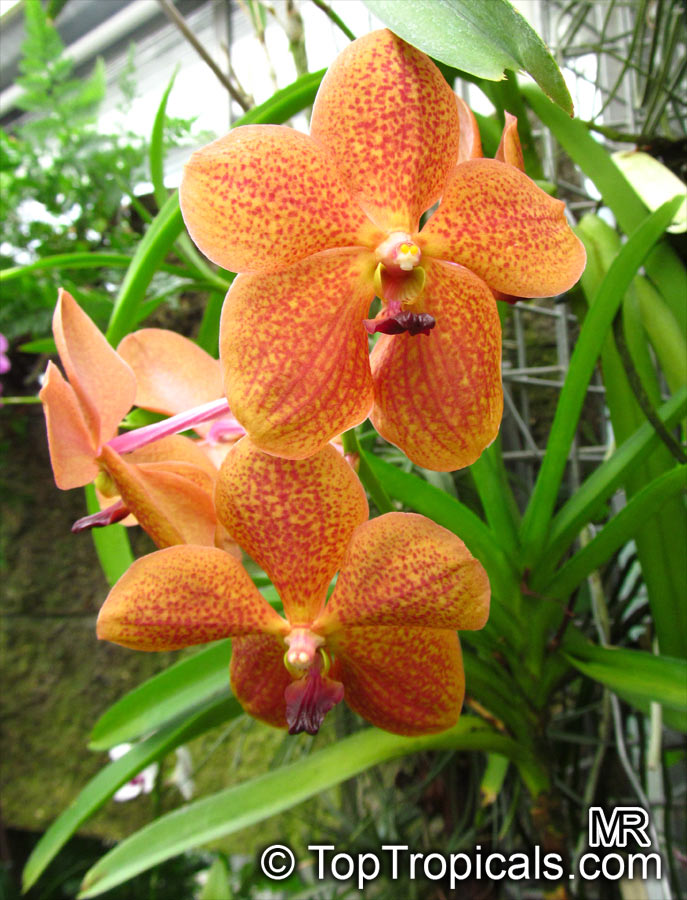
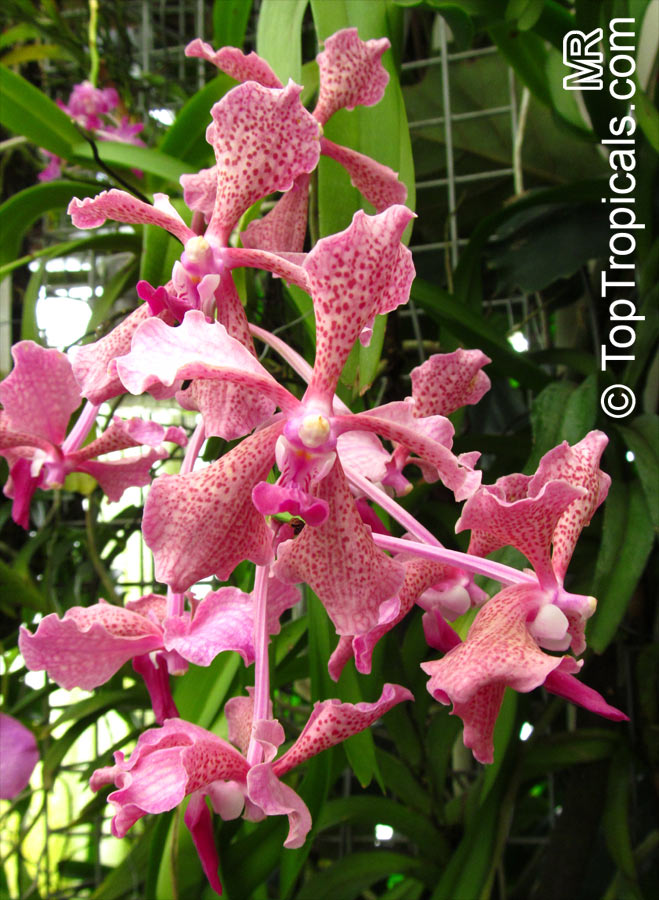
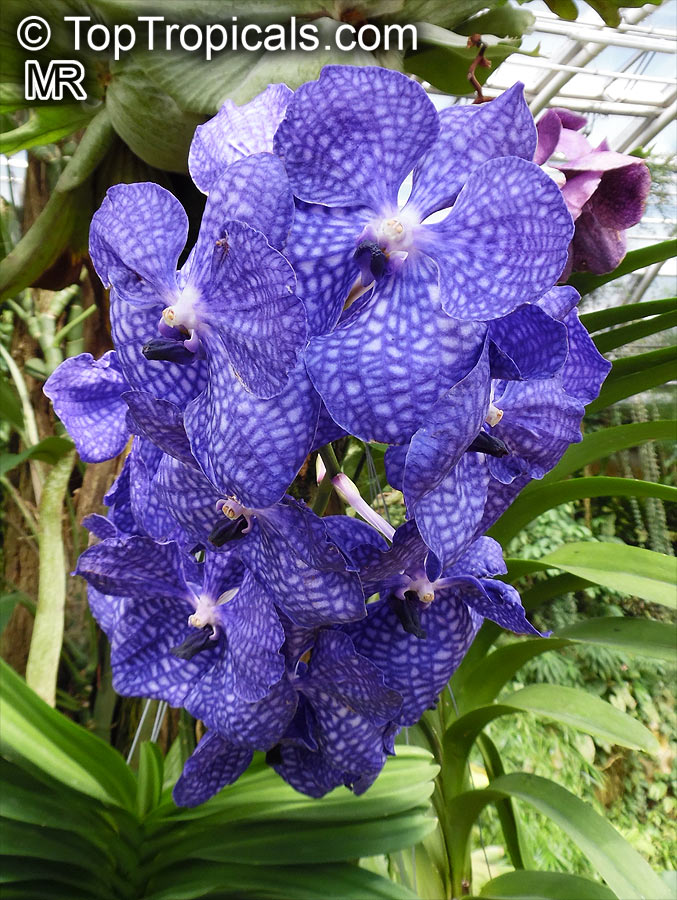
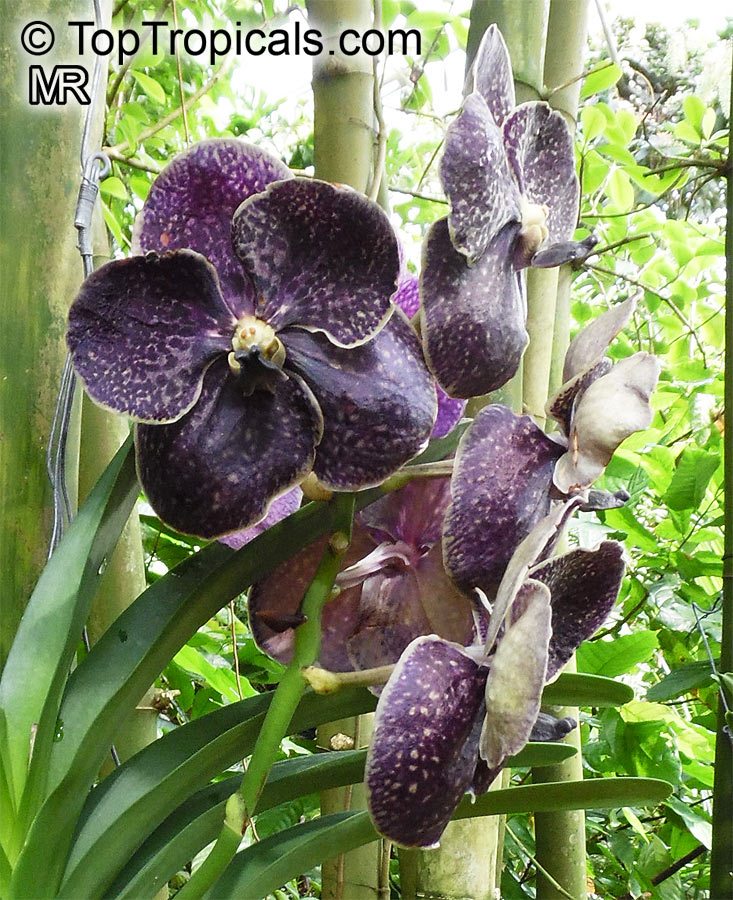
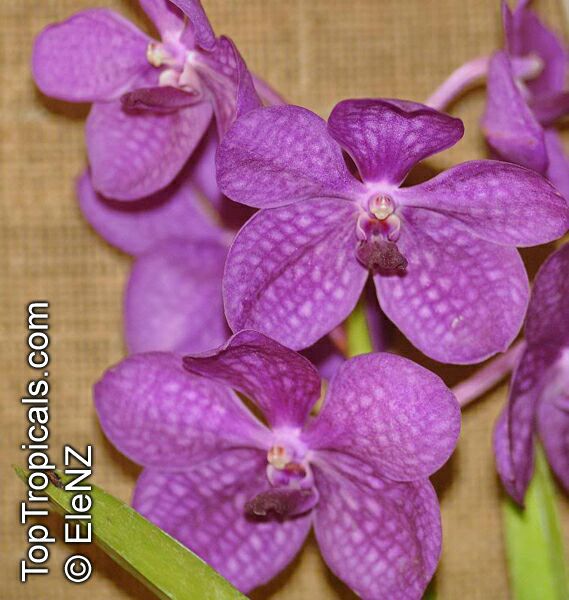
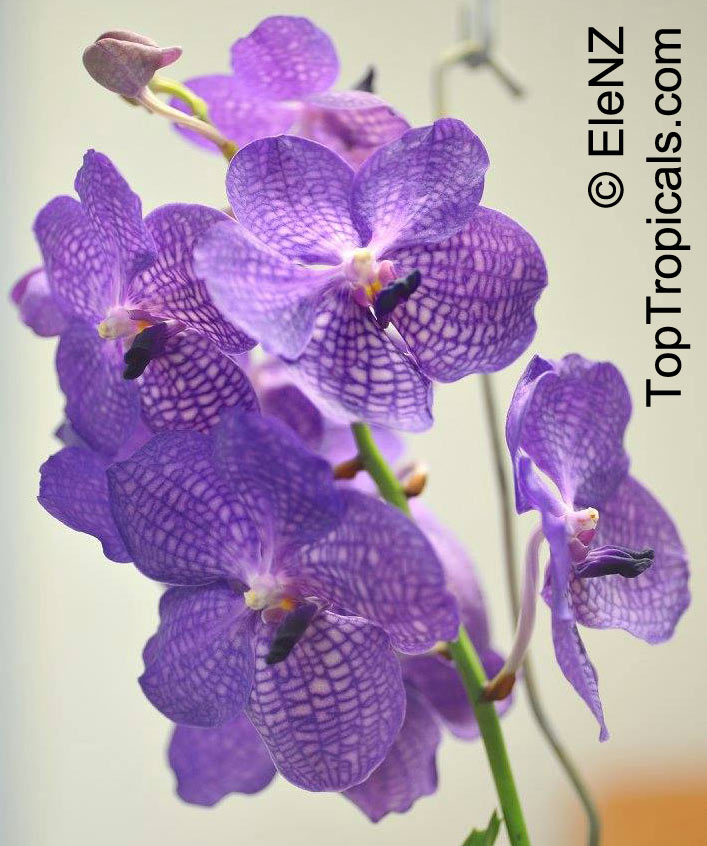
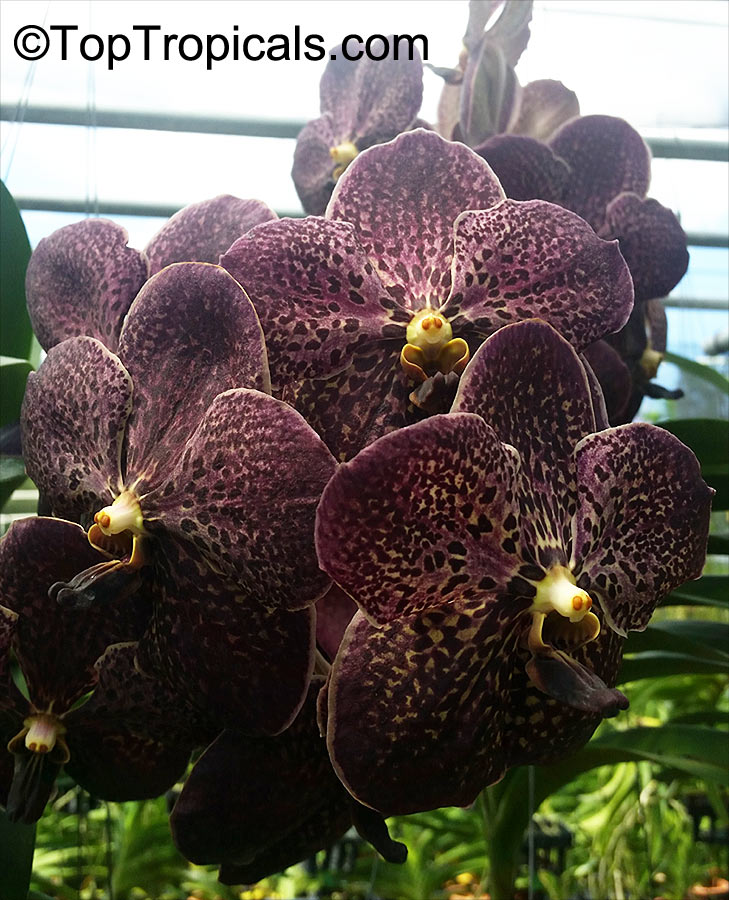
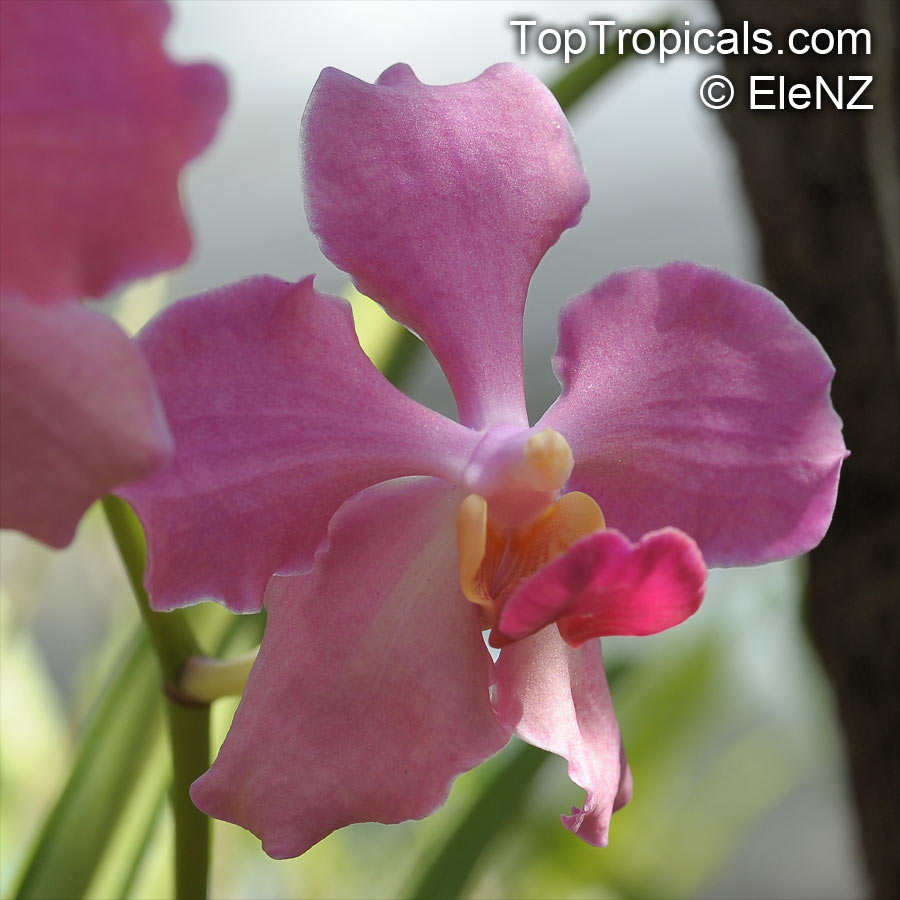
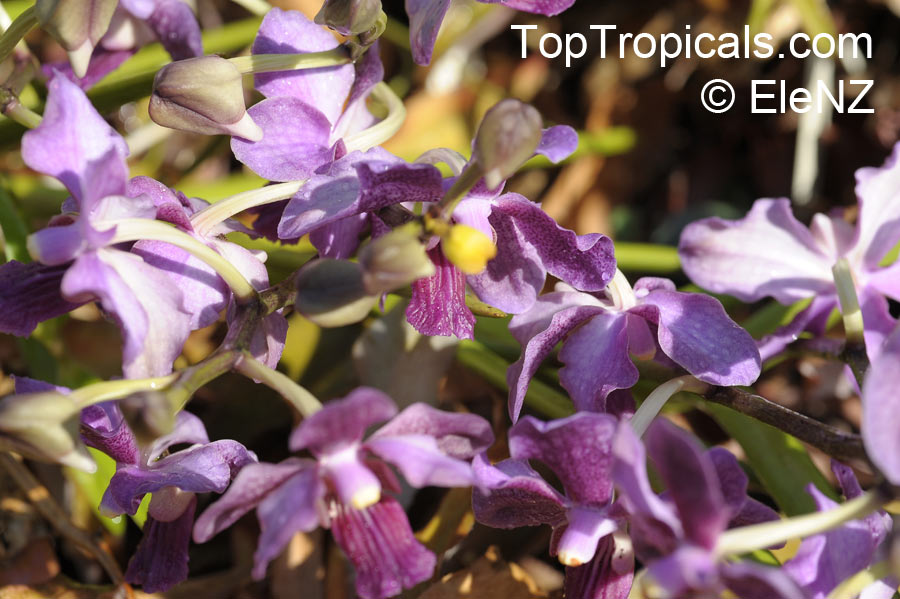
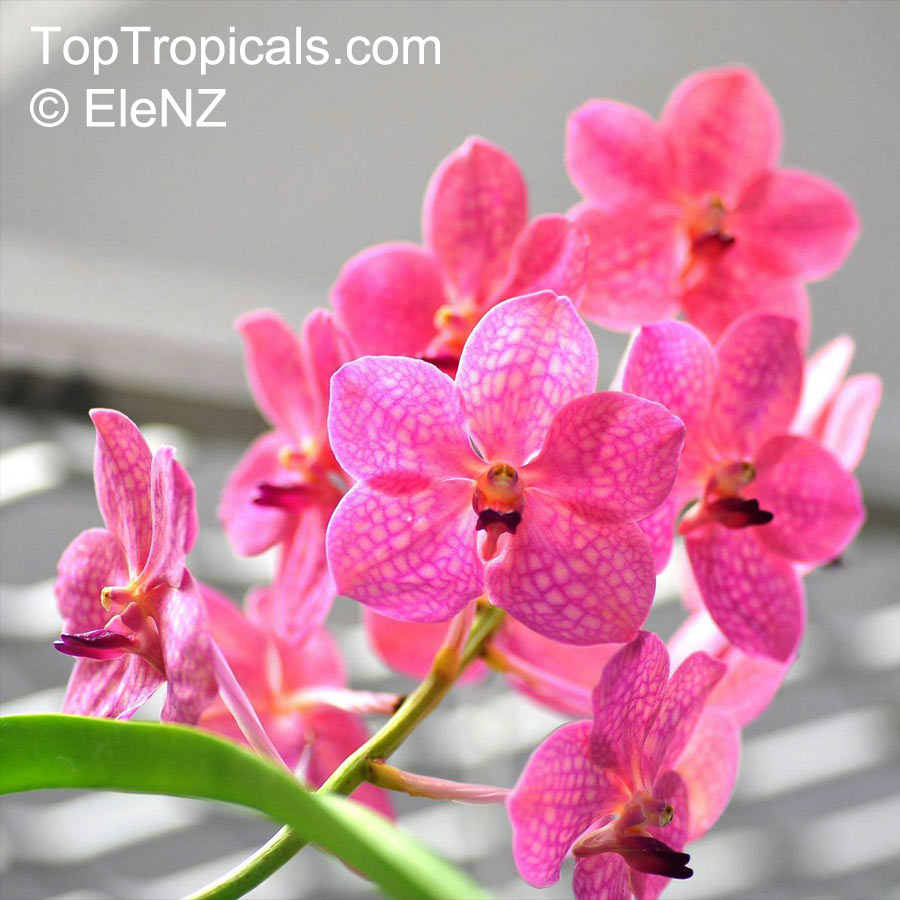
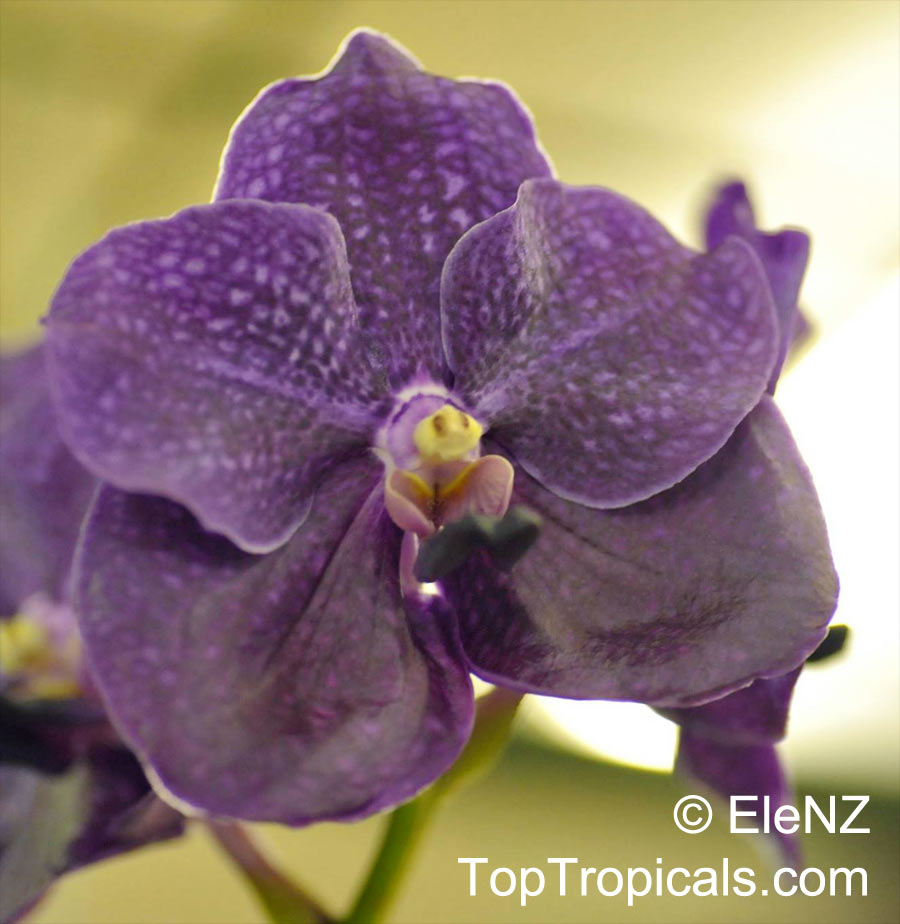
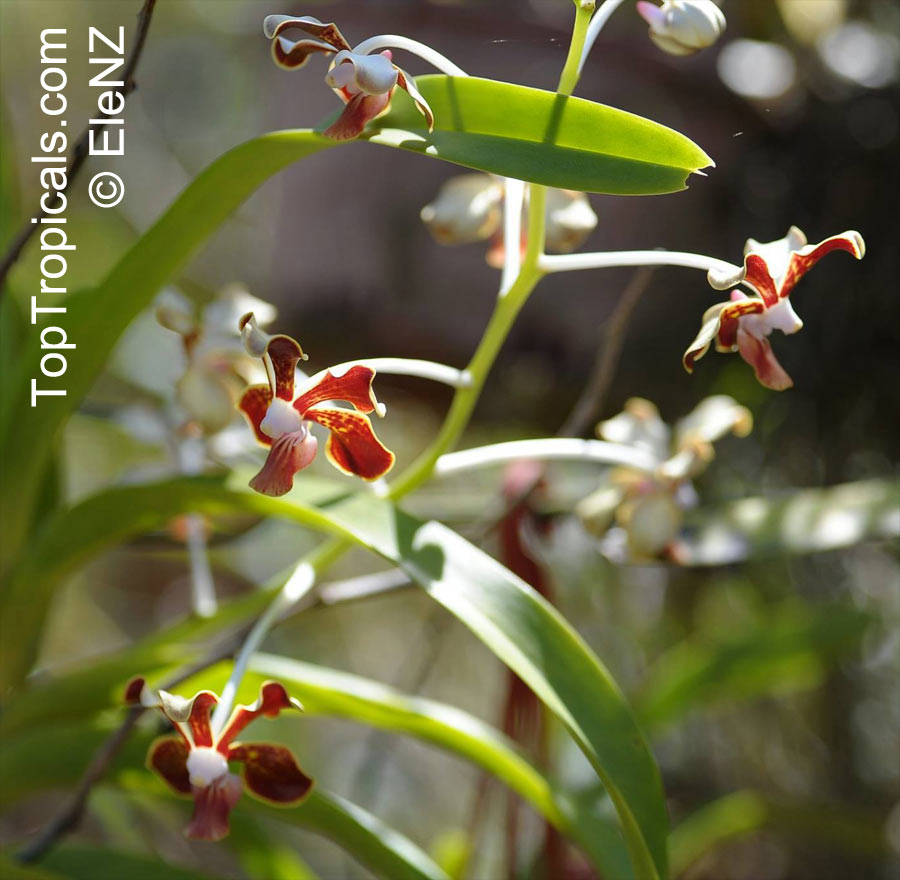
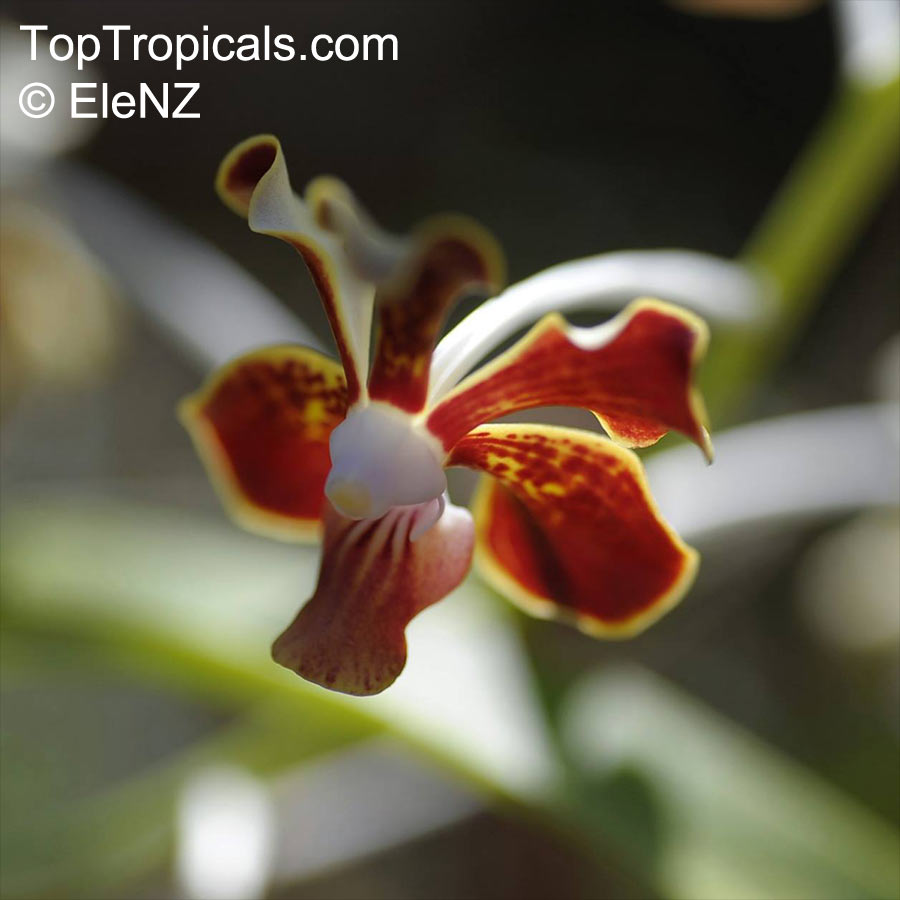
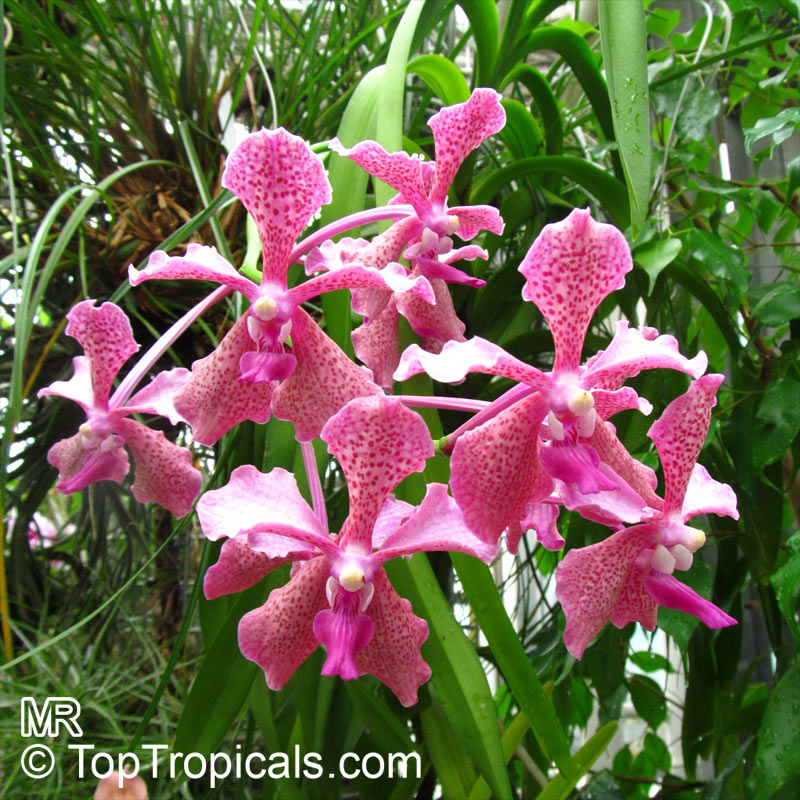
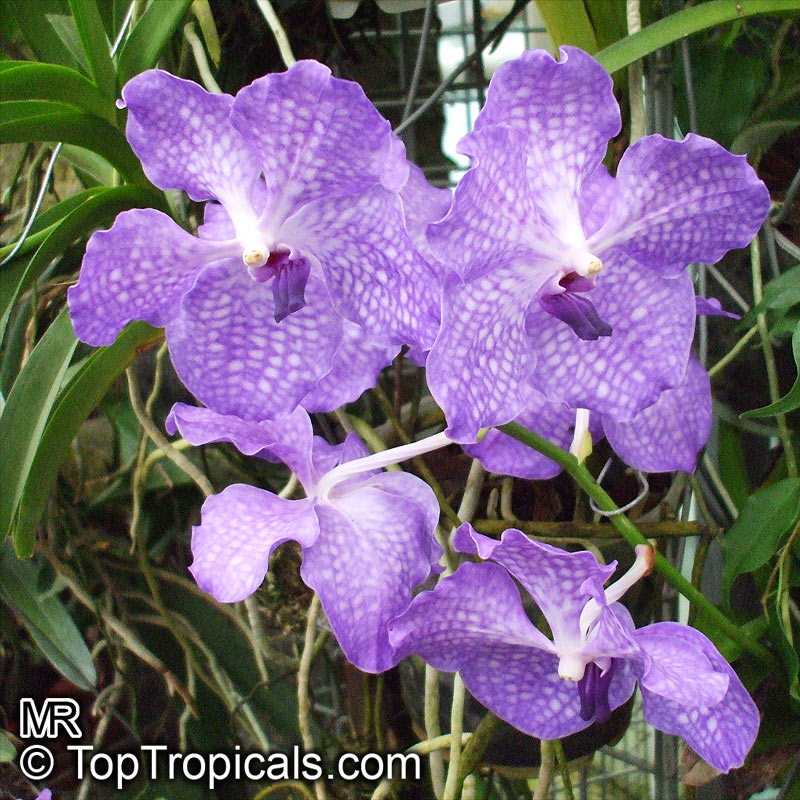
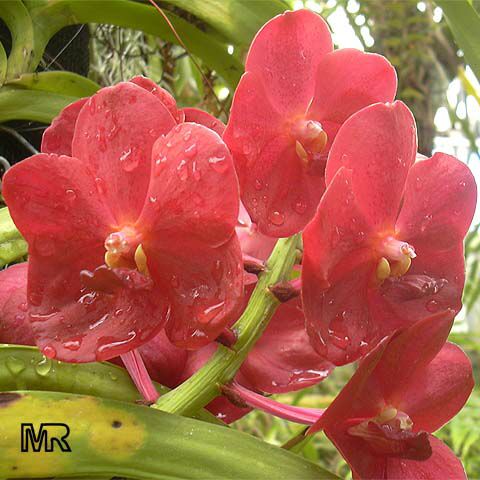
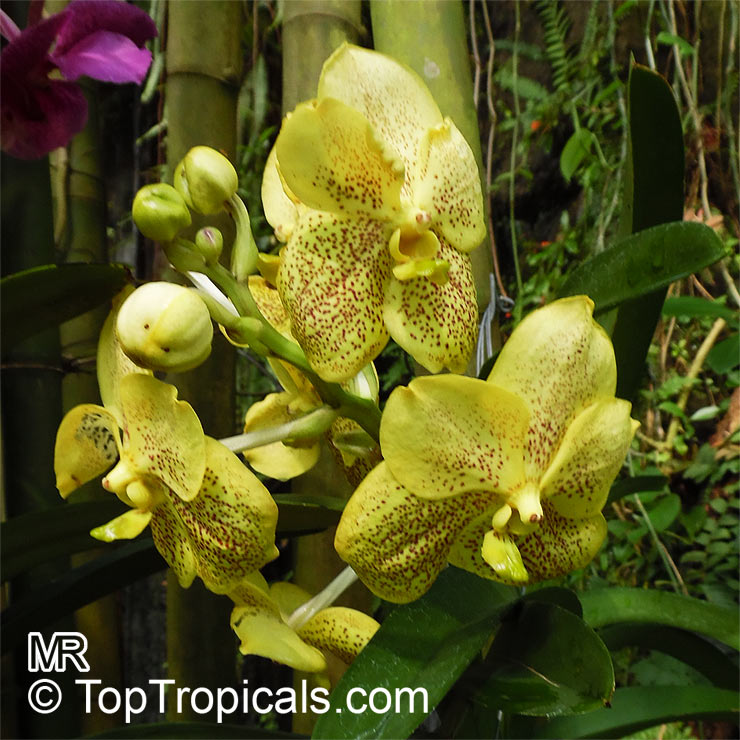
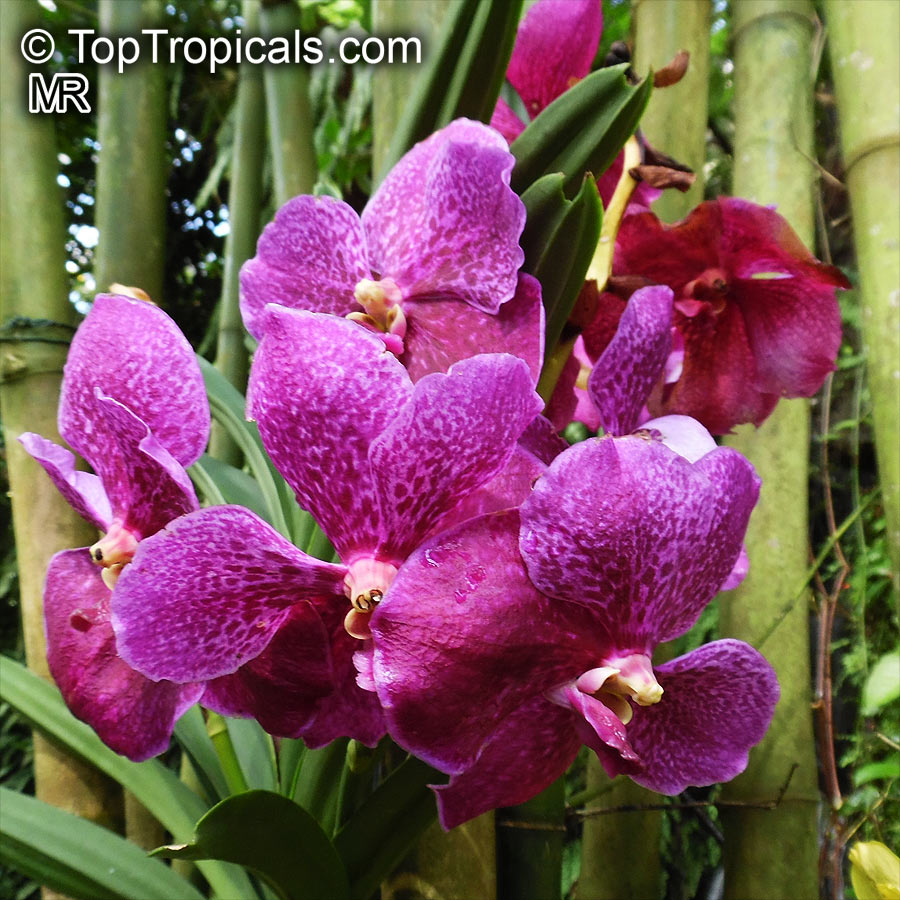
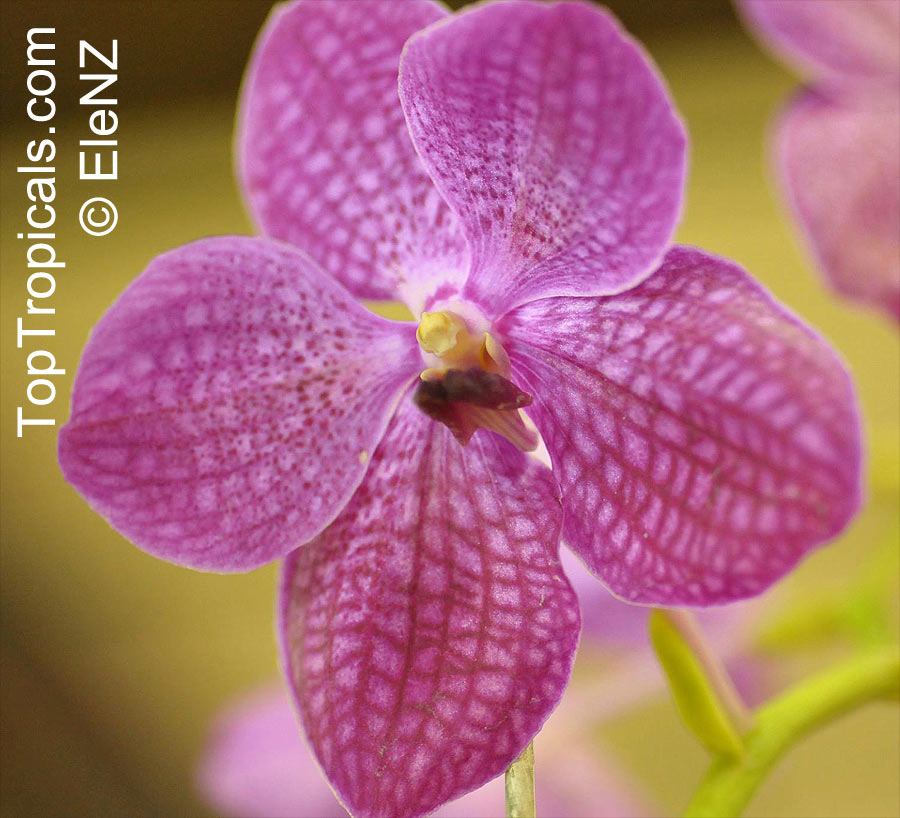
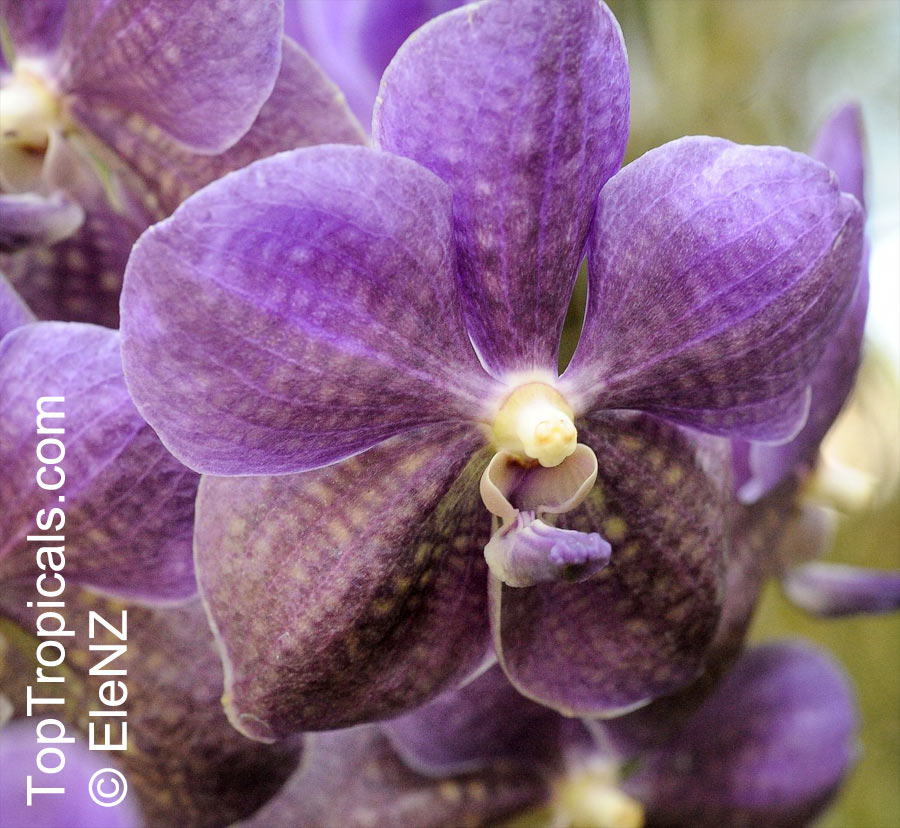
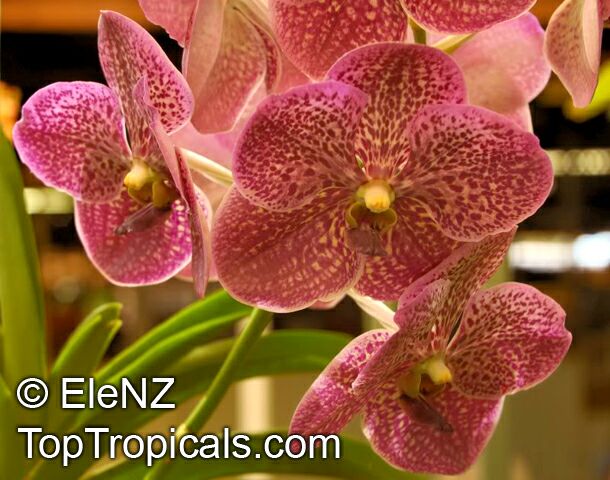
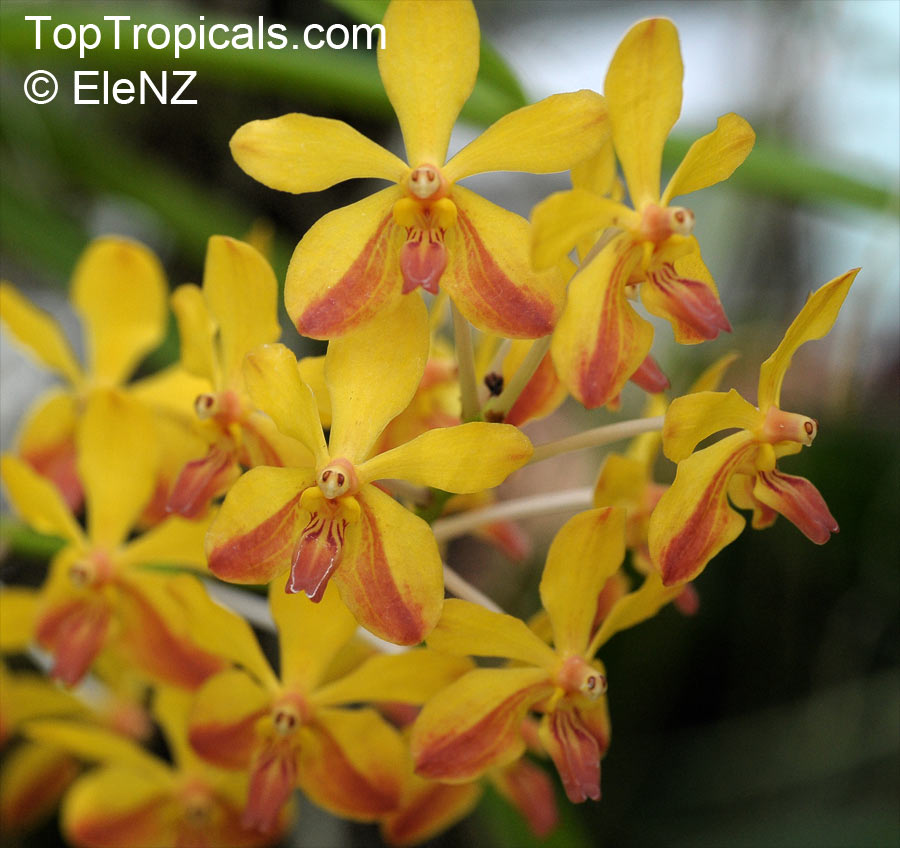
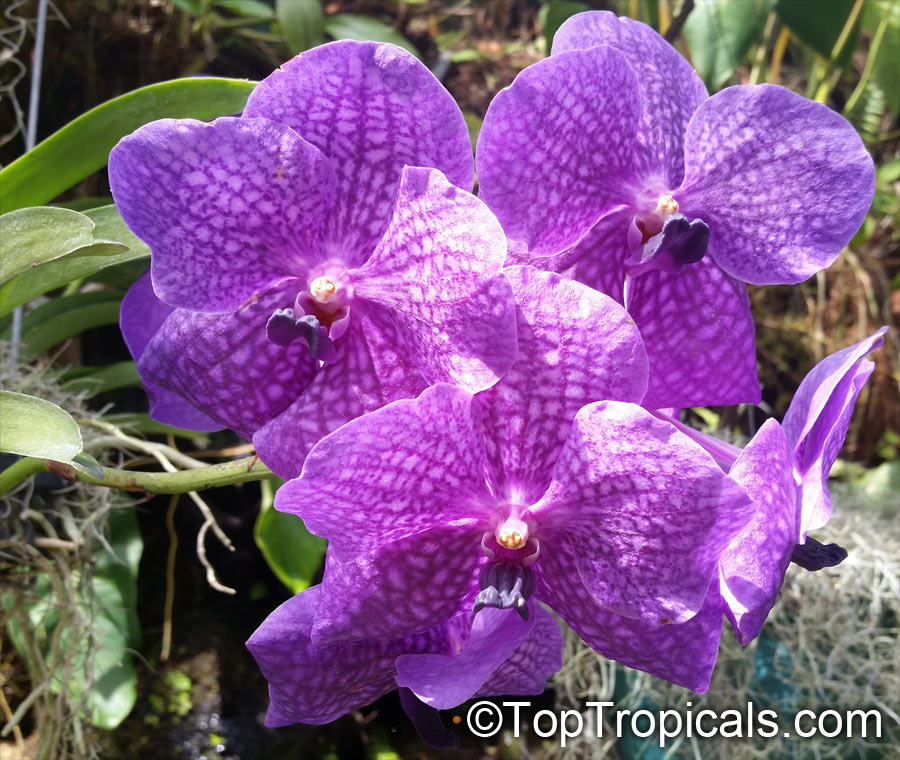
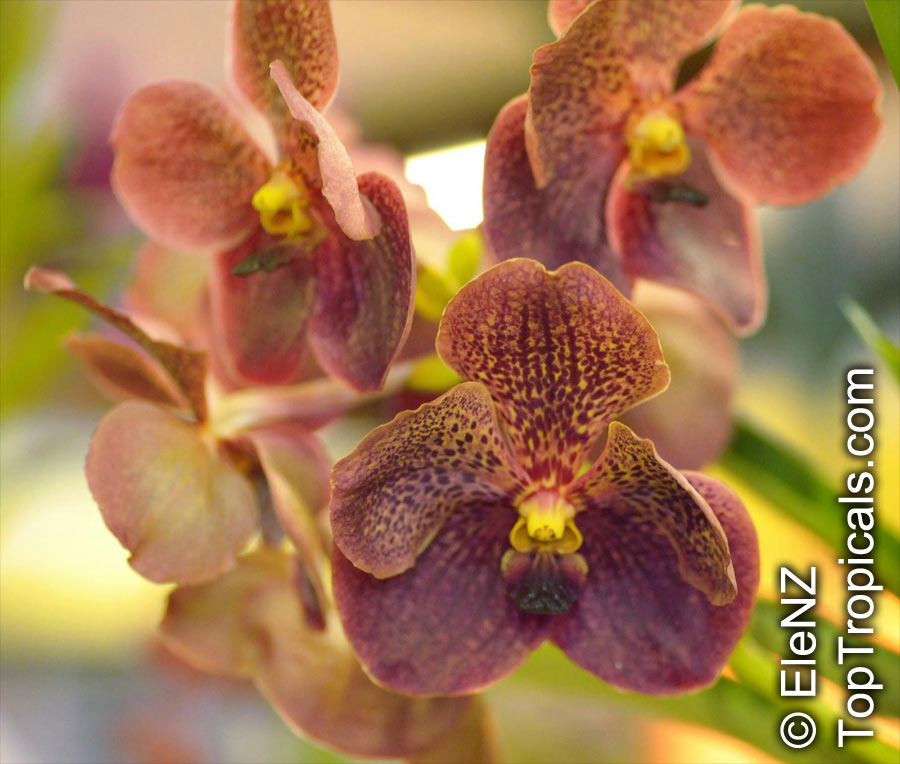
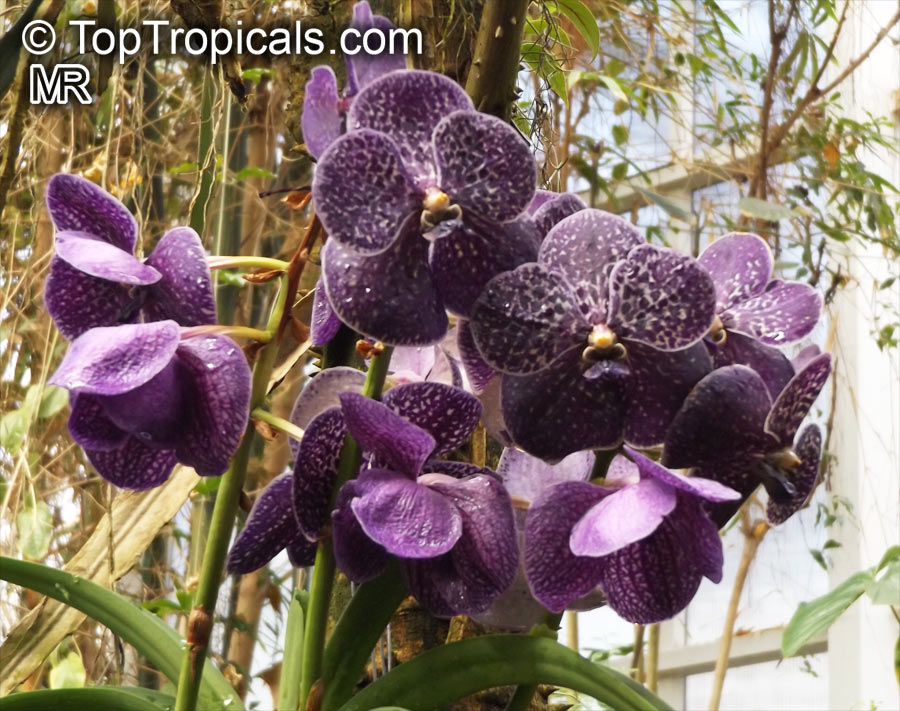
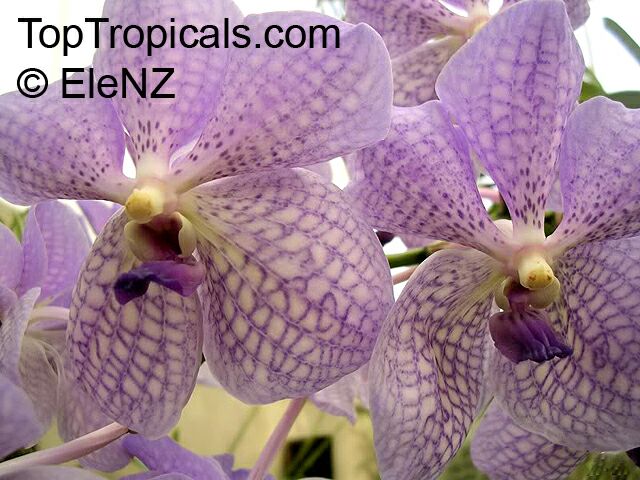
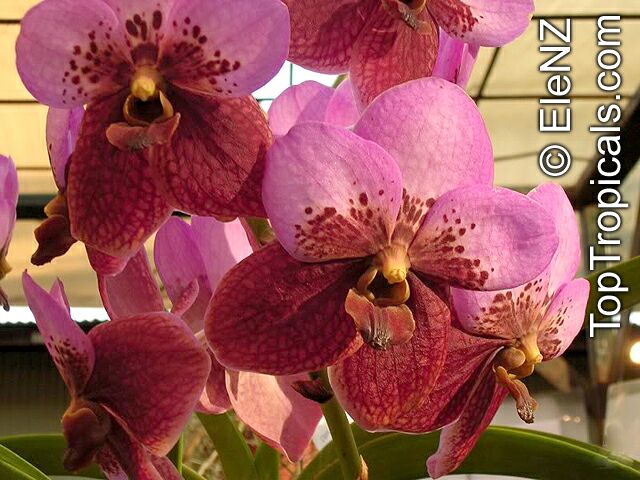
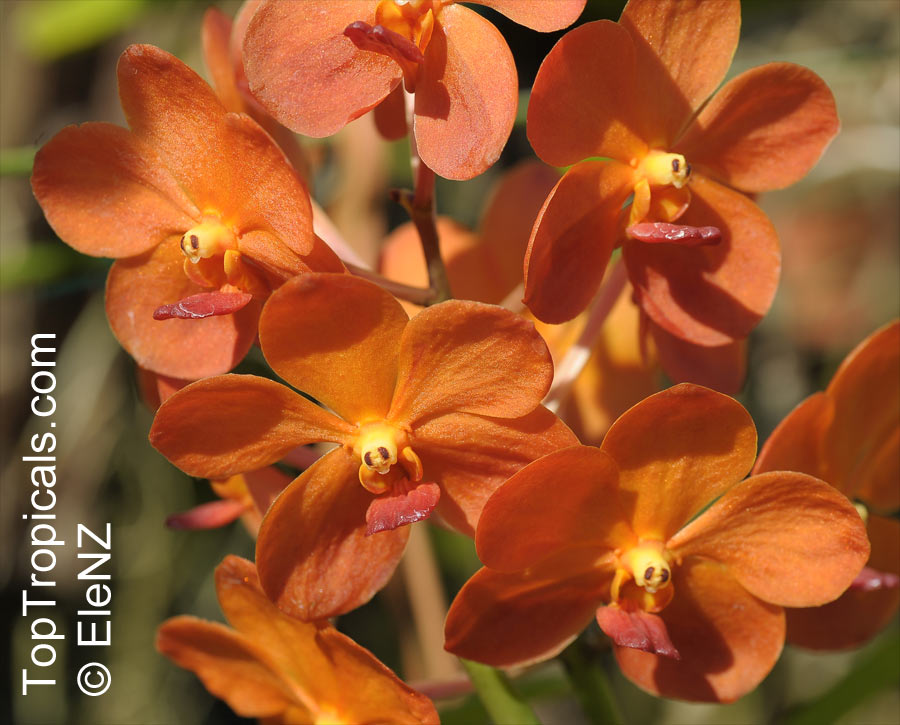
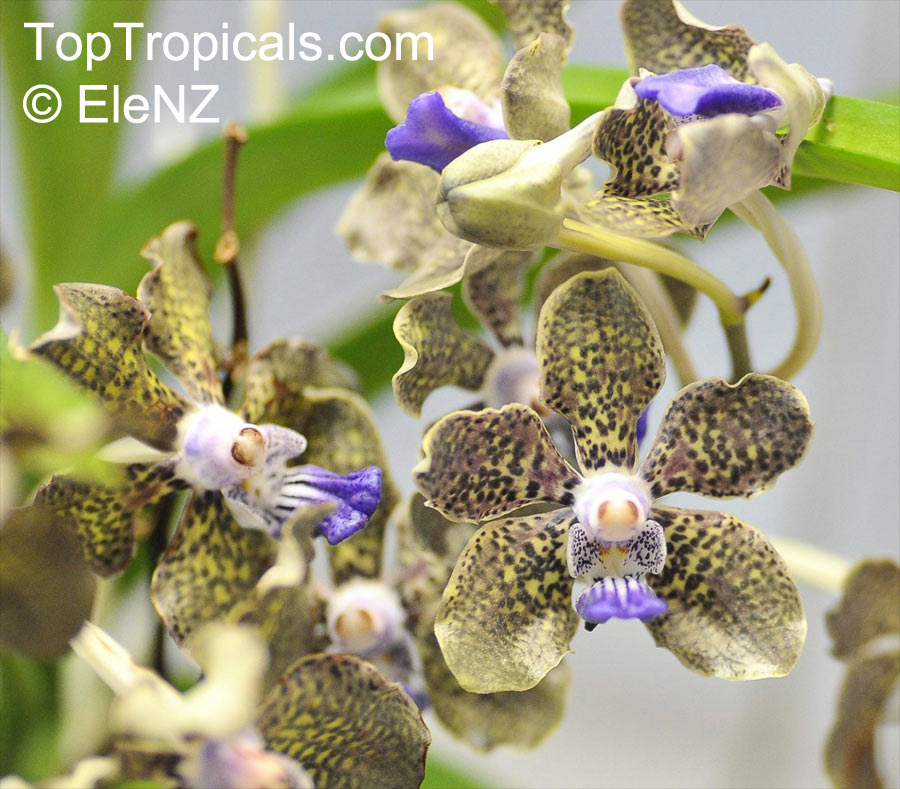
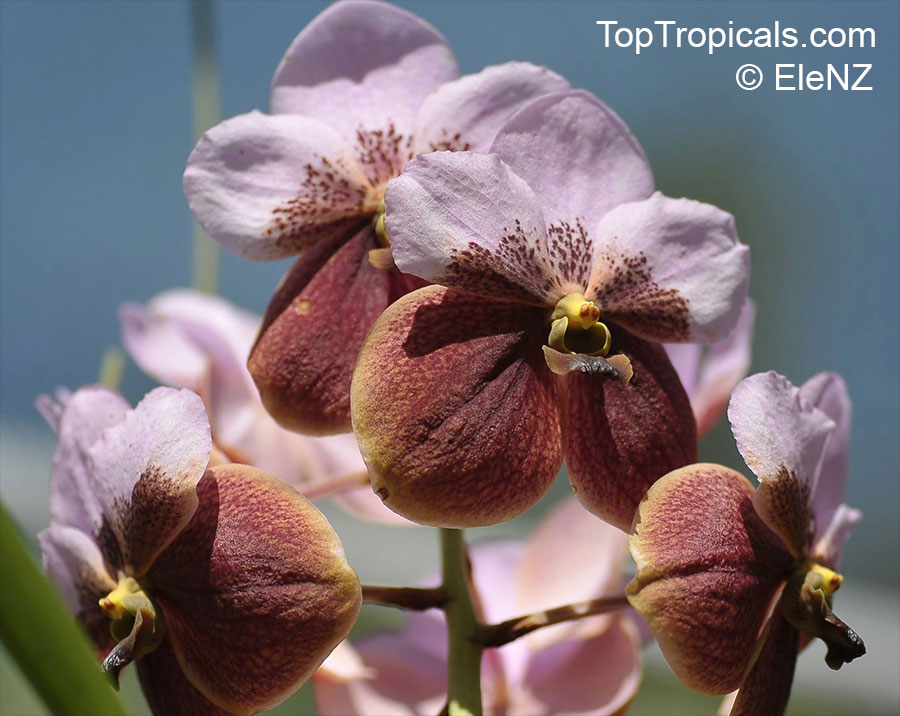
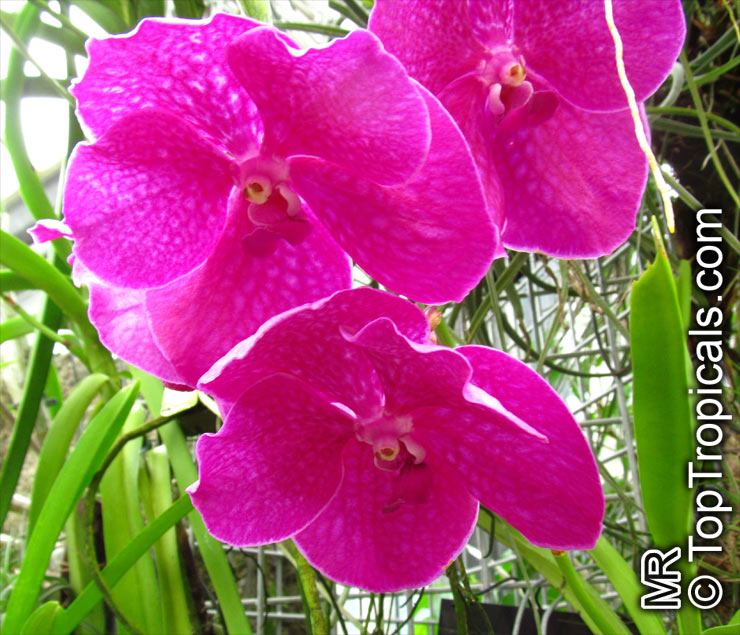
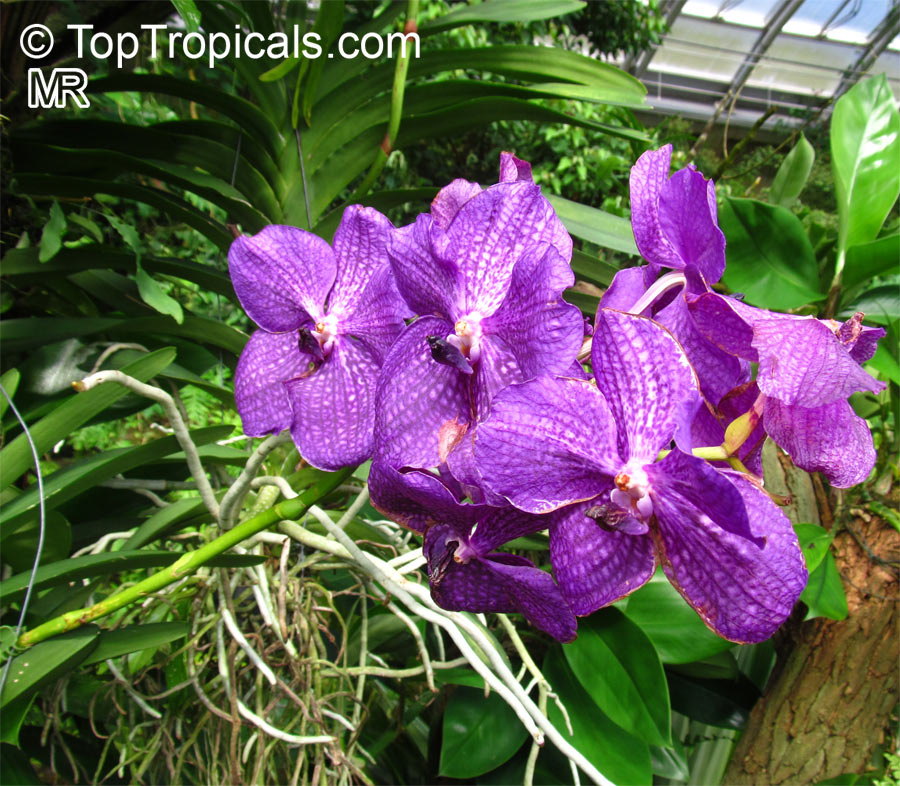
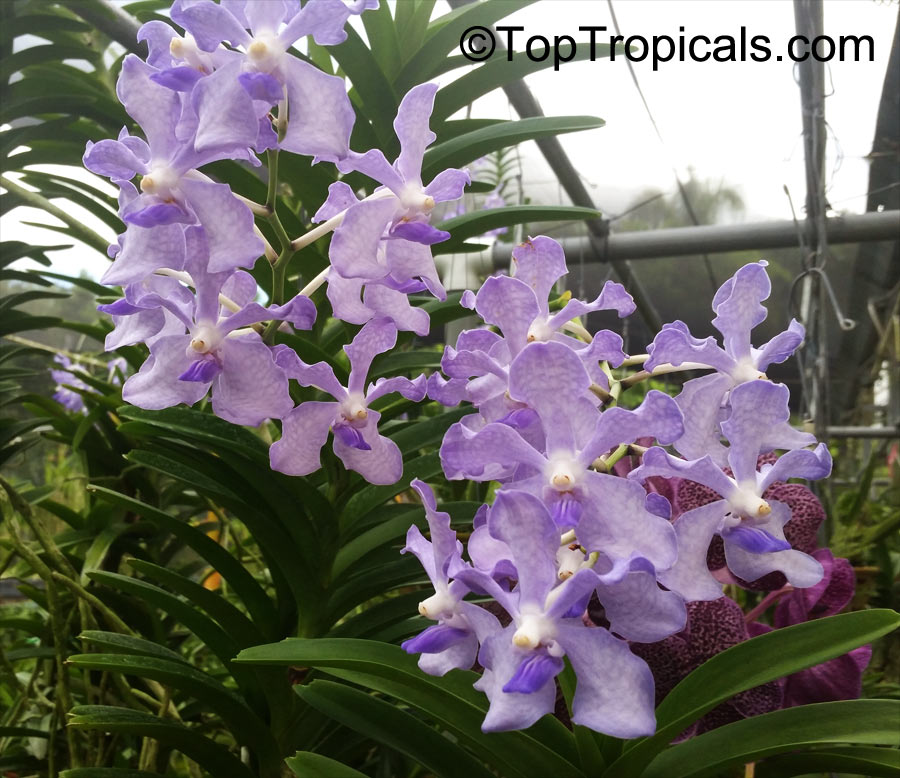
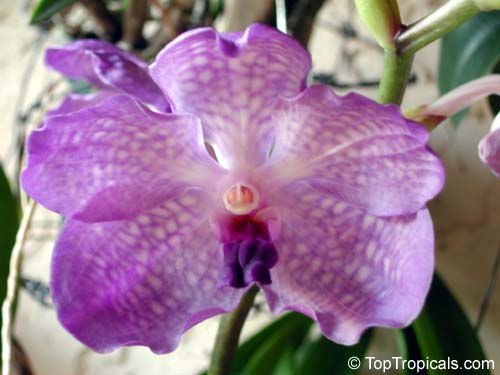
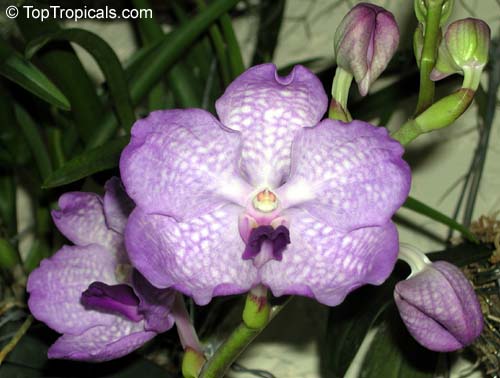
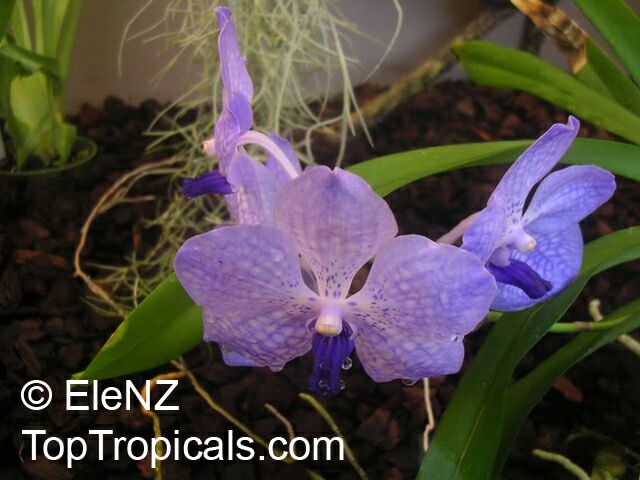
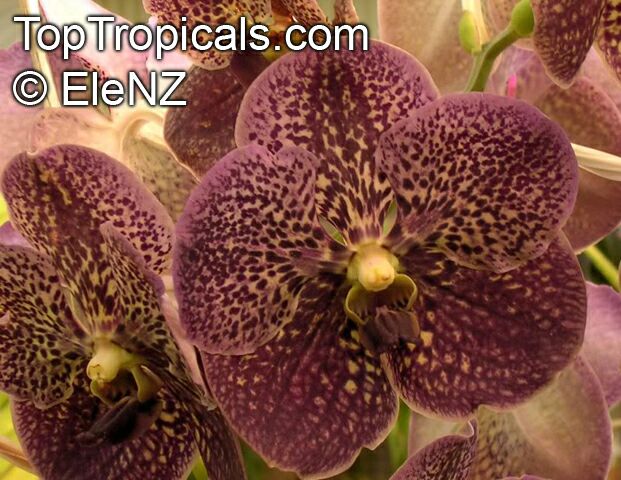
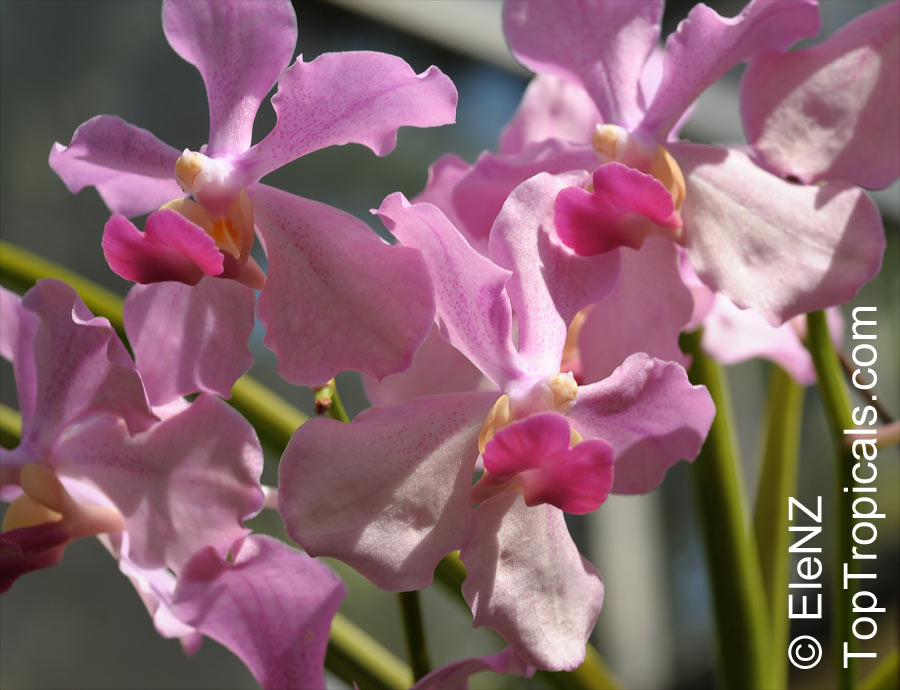
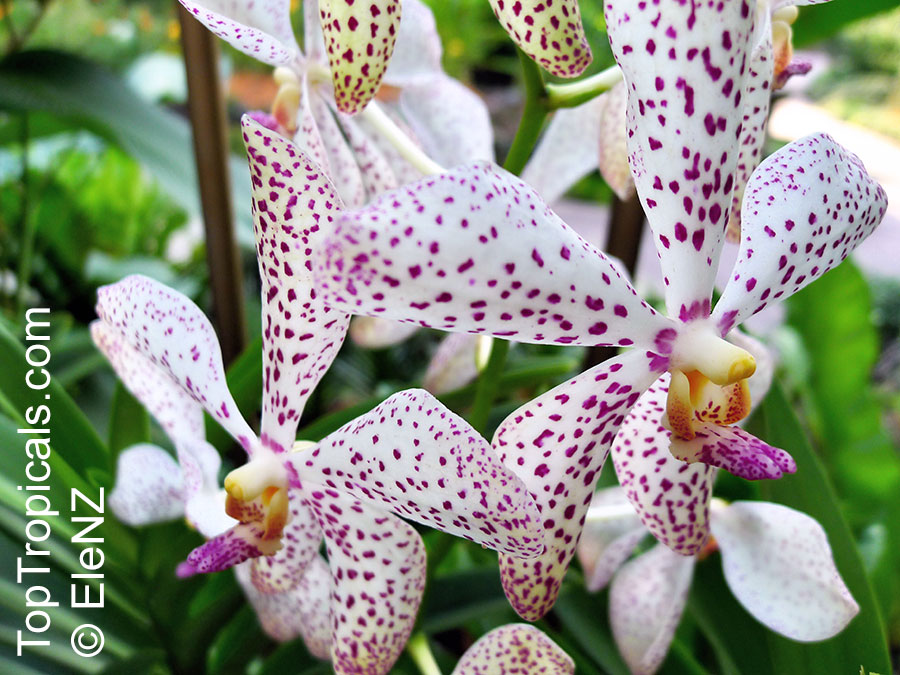
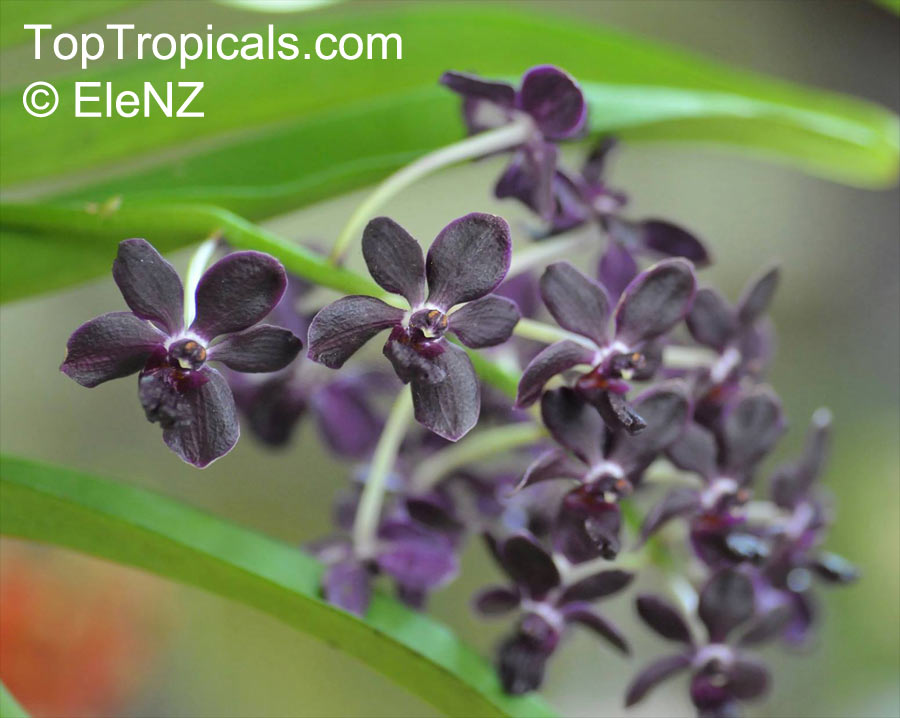
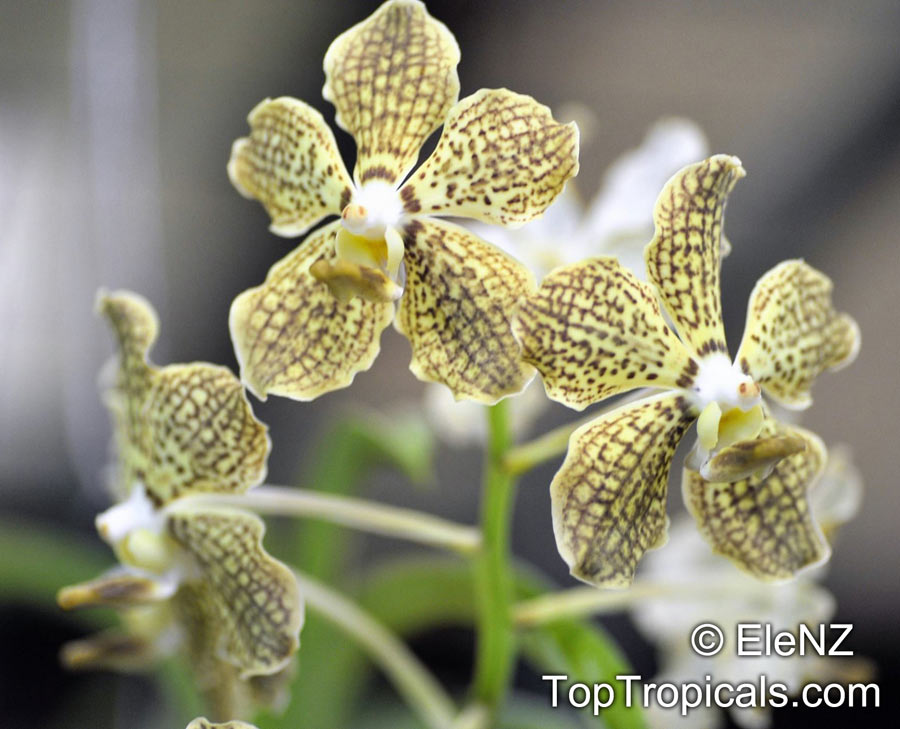
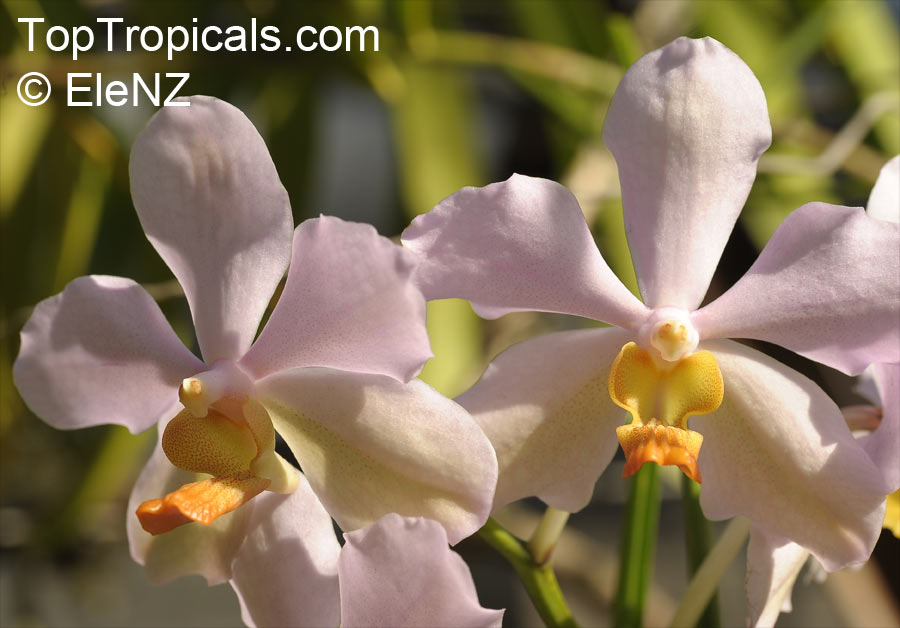
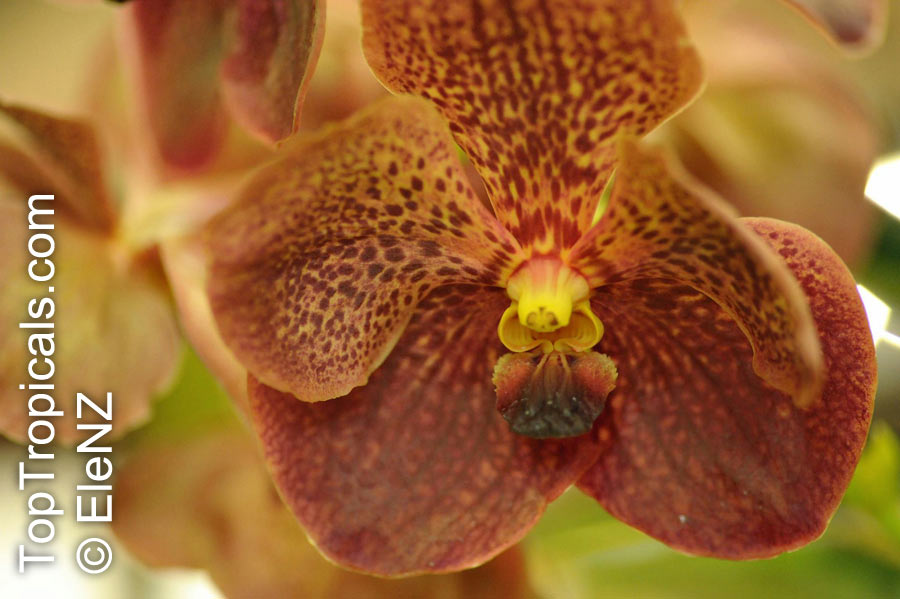
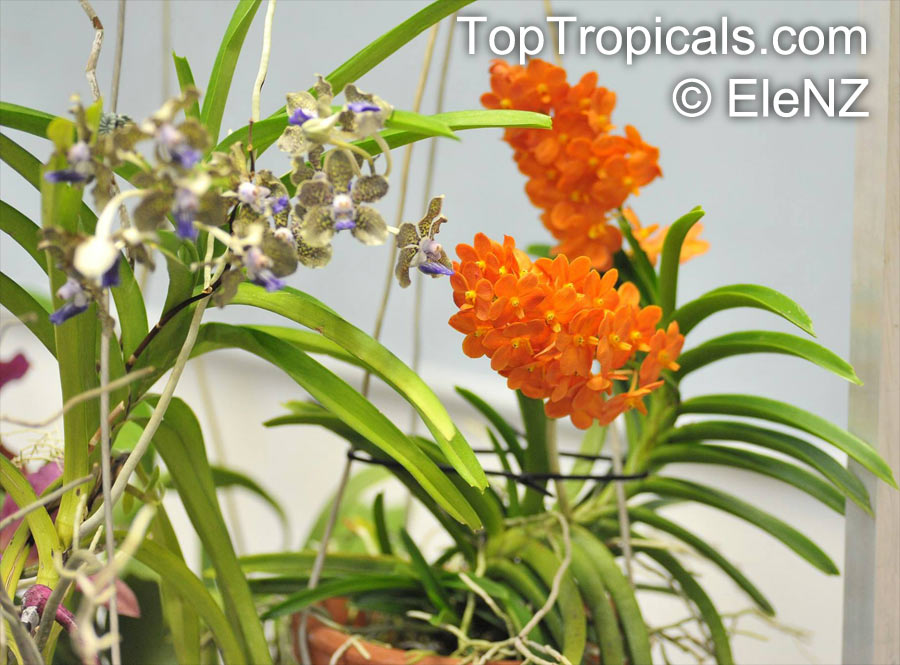
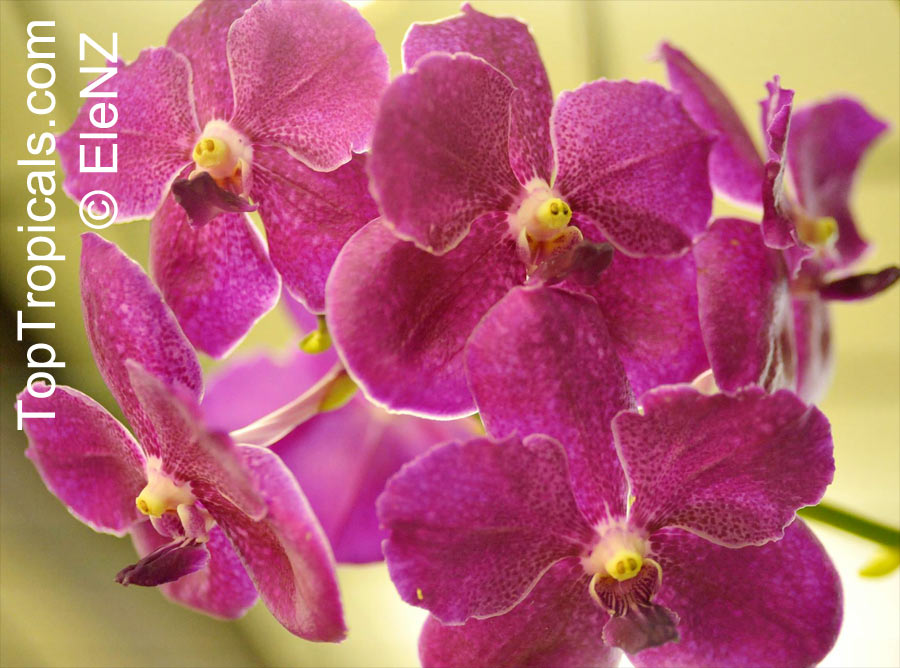
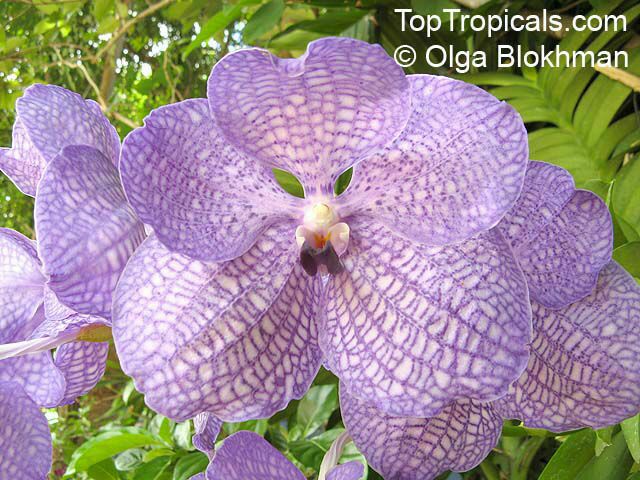
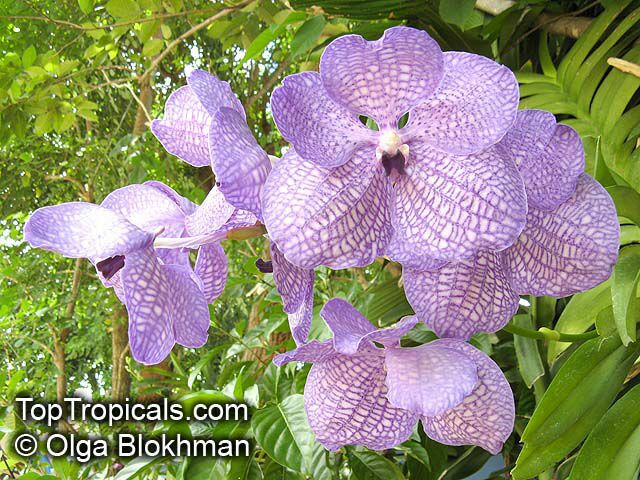
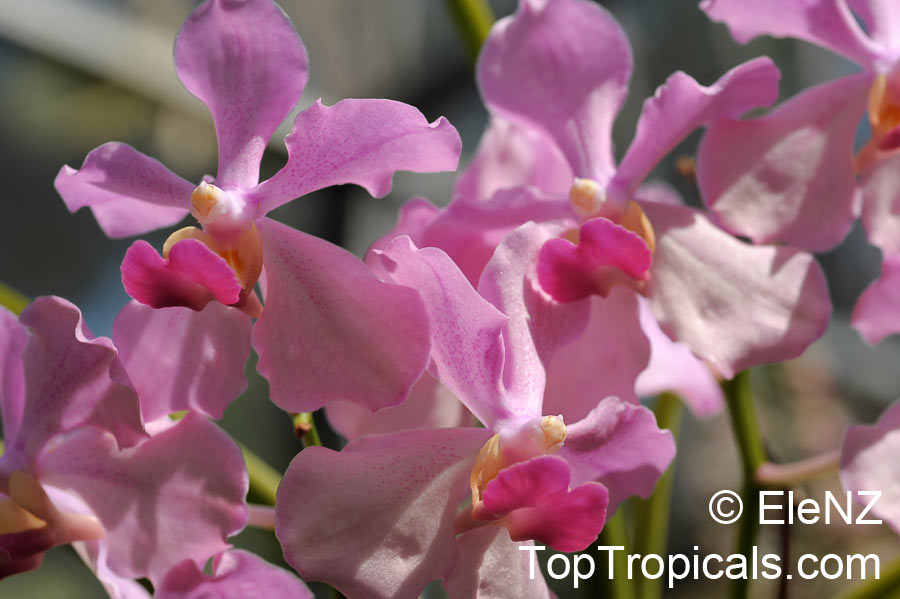
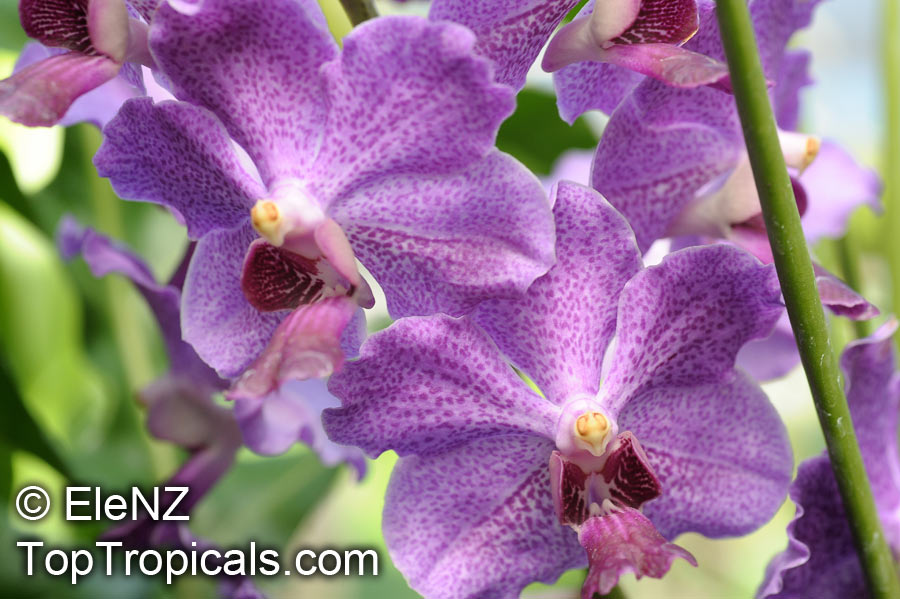
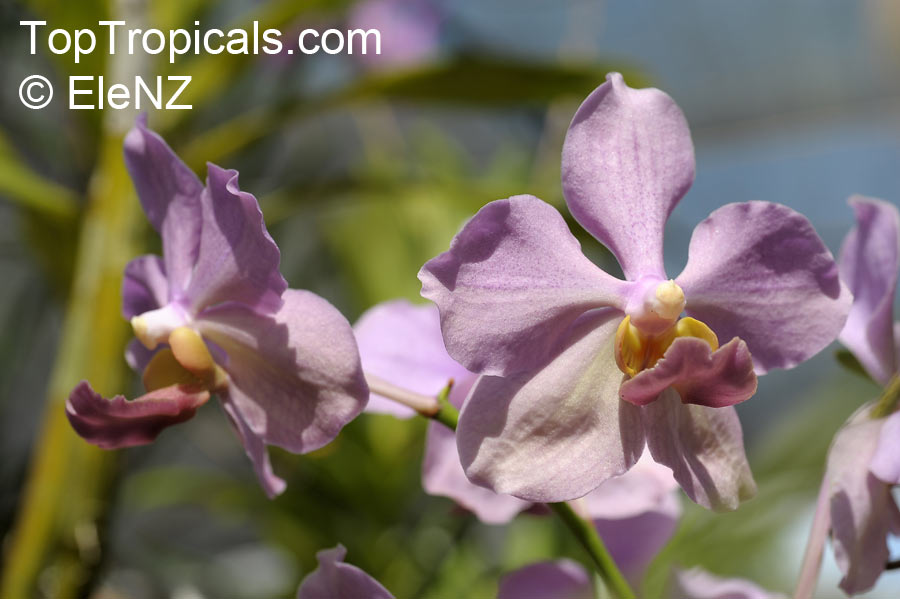
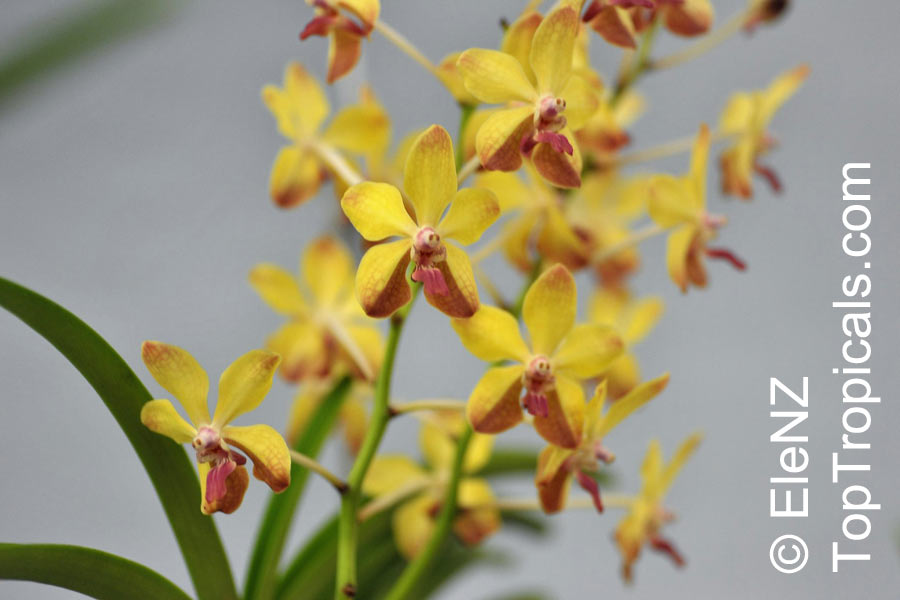
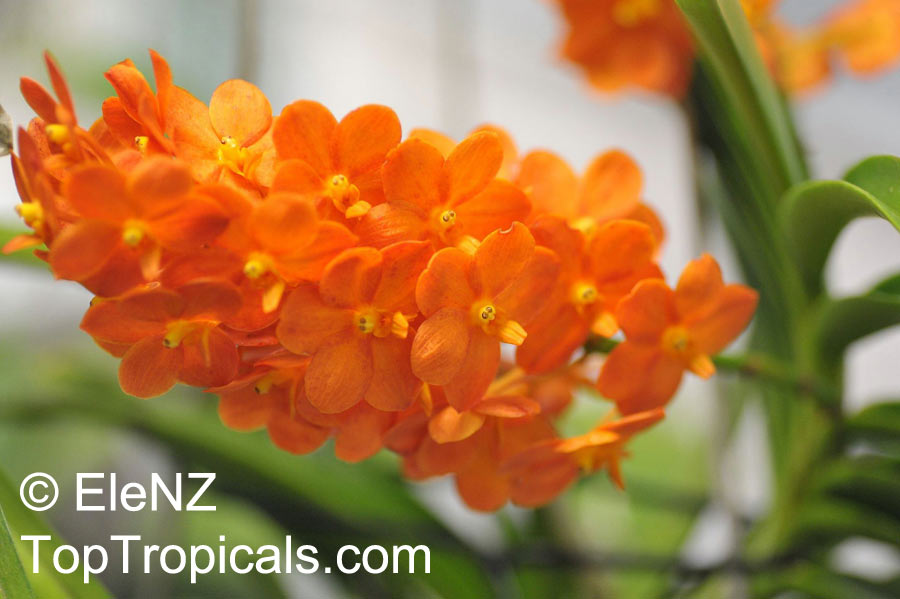
 Flower color: Pink; white and off-white; blue, lavender, purple; red, crimson, vinous; yellow, orange; unusual color
 Suitable for: Outdoors in the suitable USDA zone; small gardens, containers, and indoor growing
 Wildlife: Attracts butterflies and hummingbirds
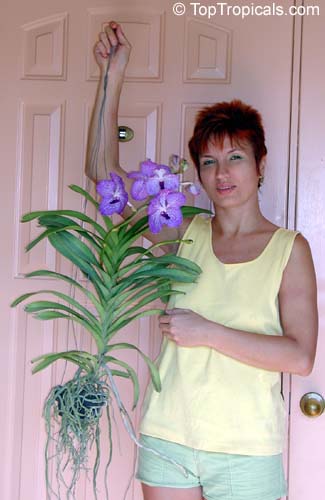
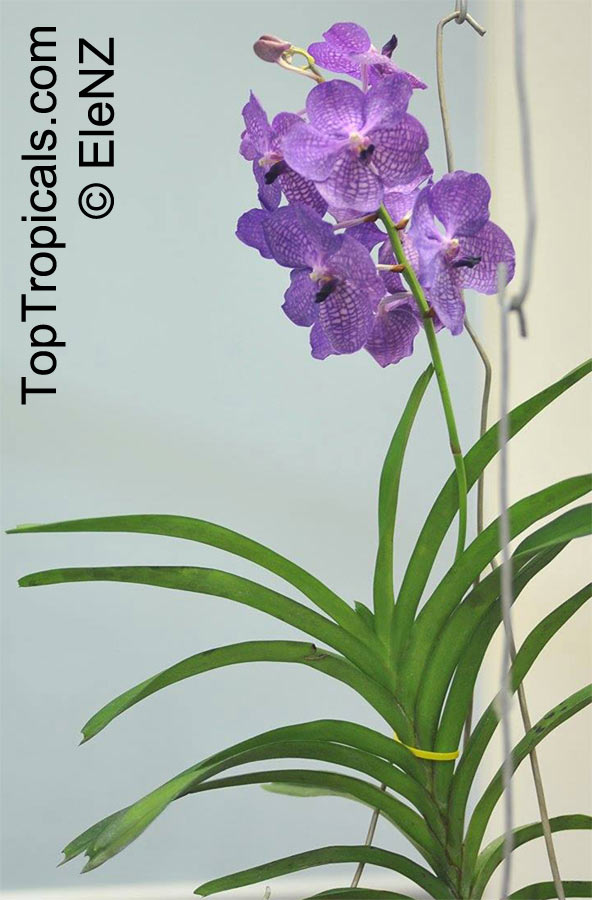
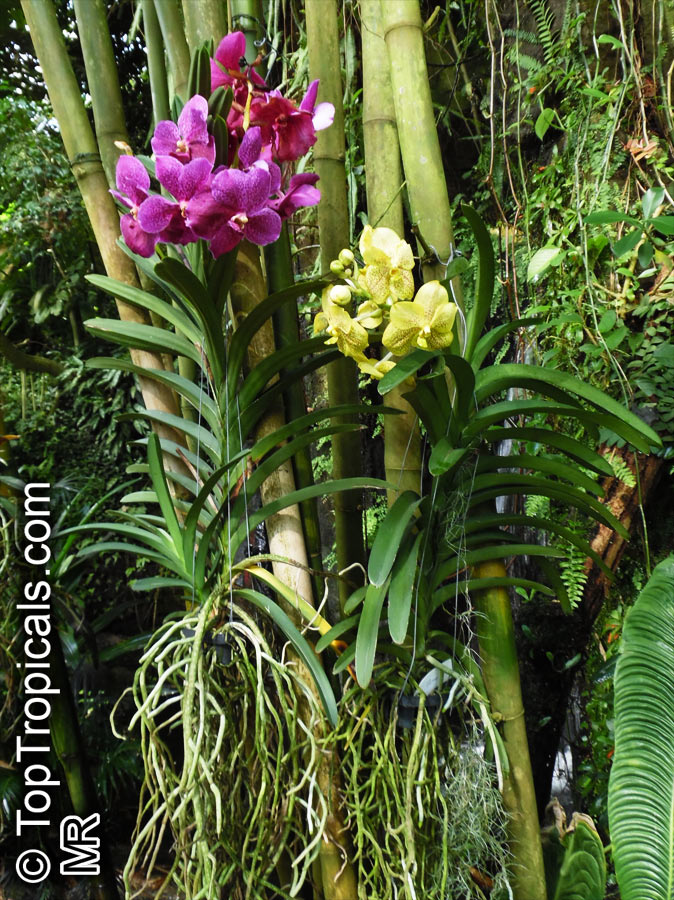
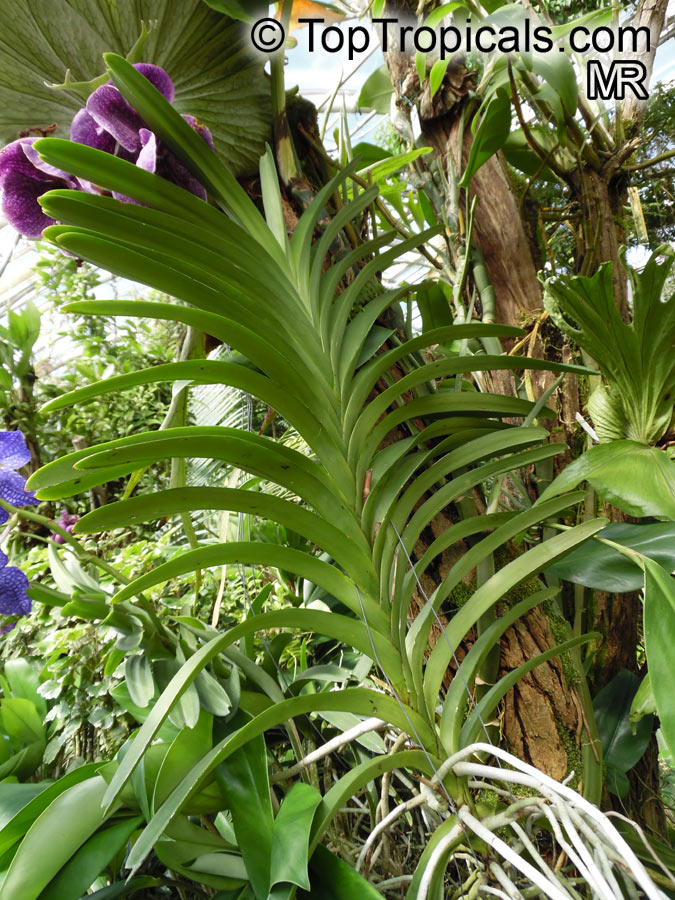
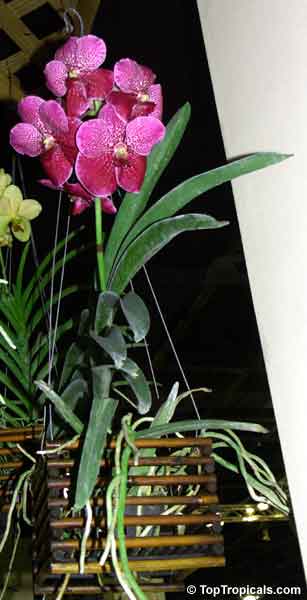
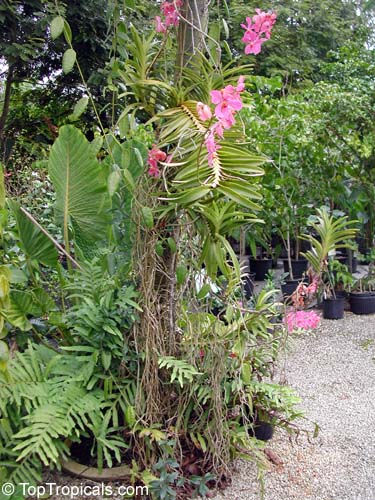
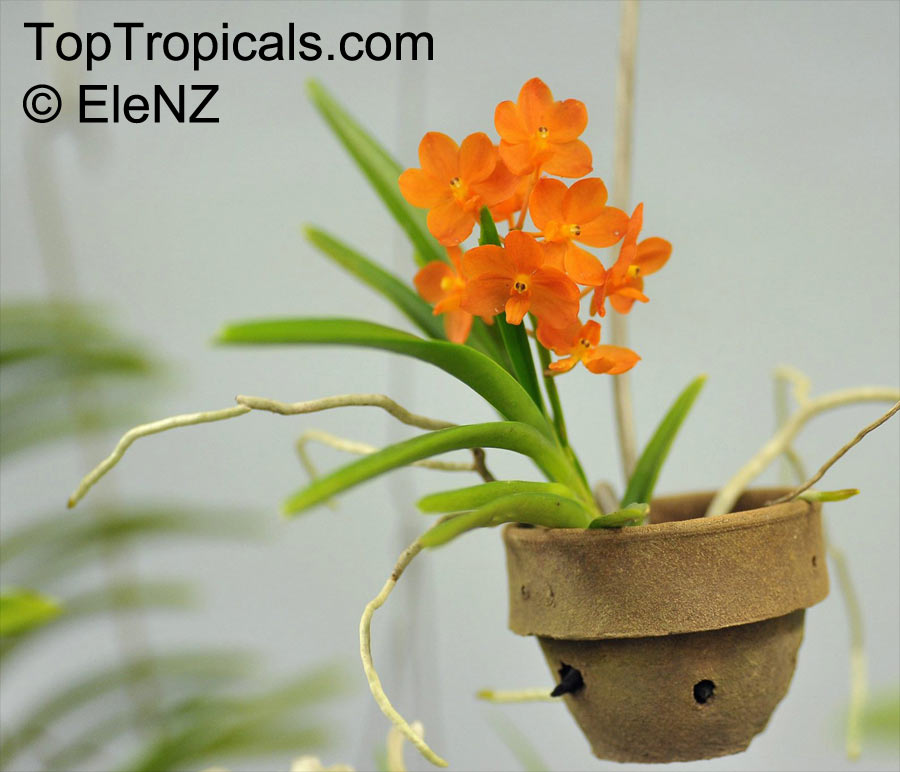
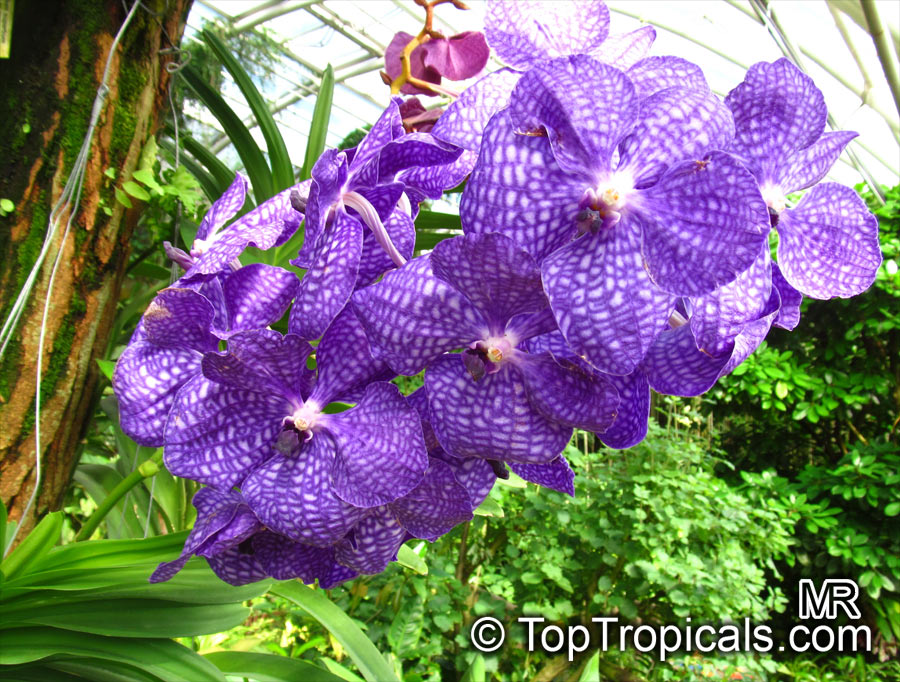
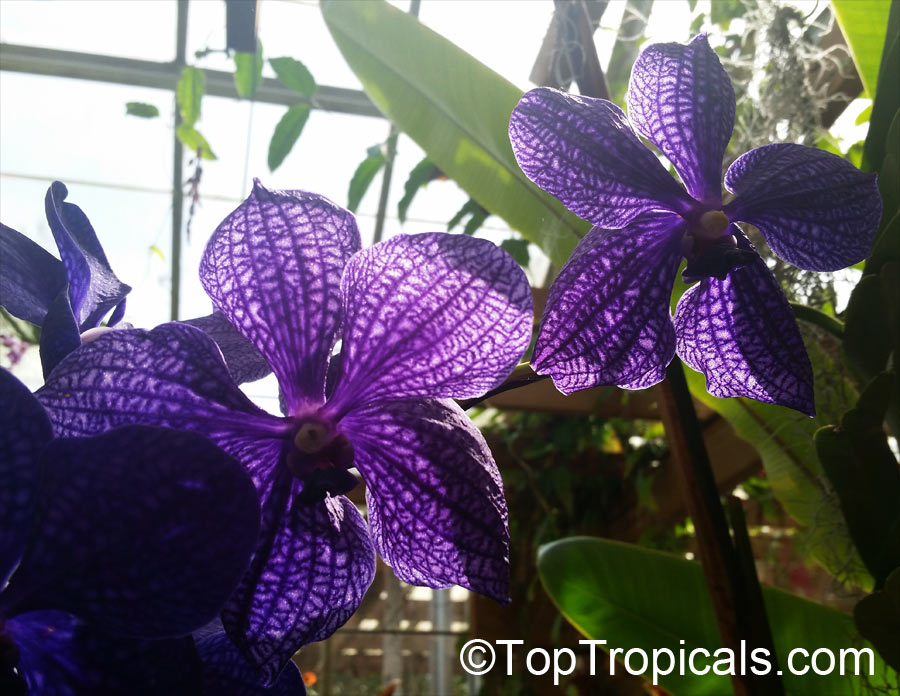
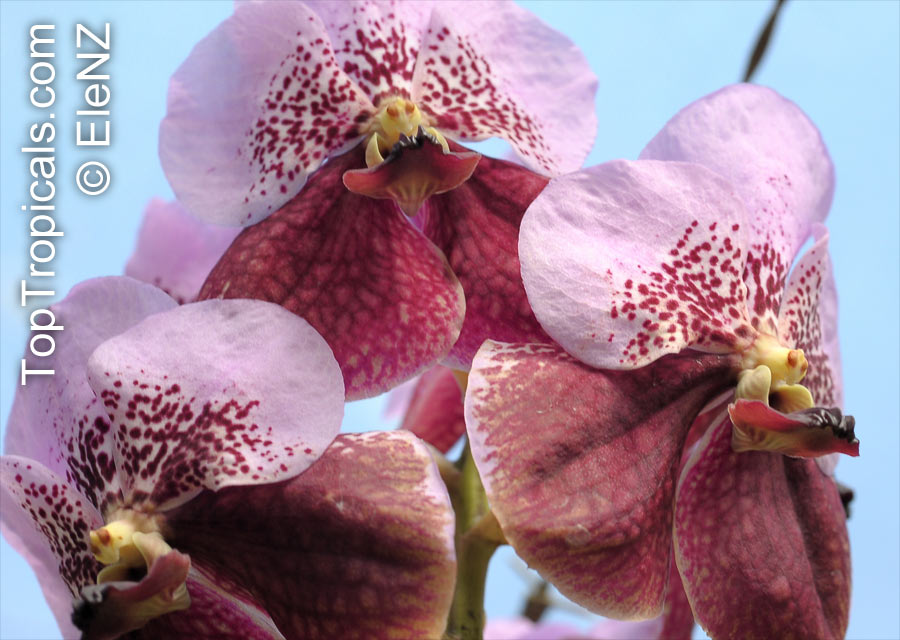
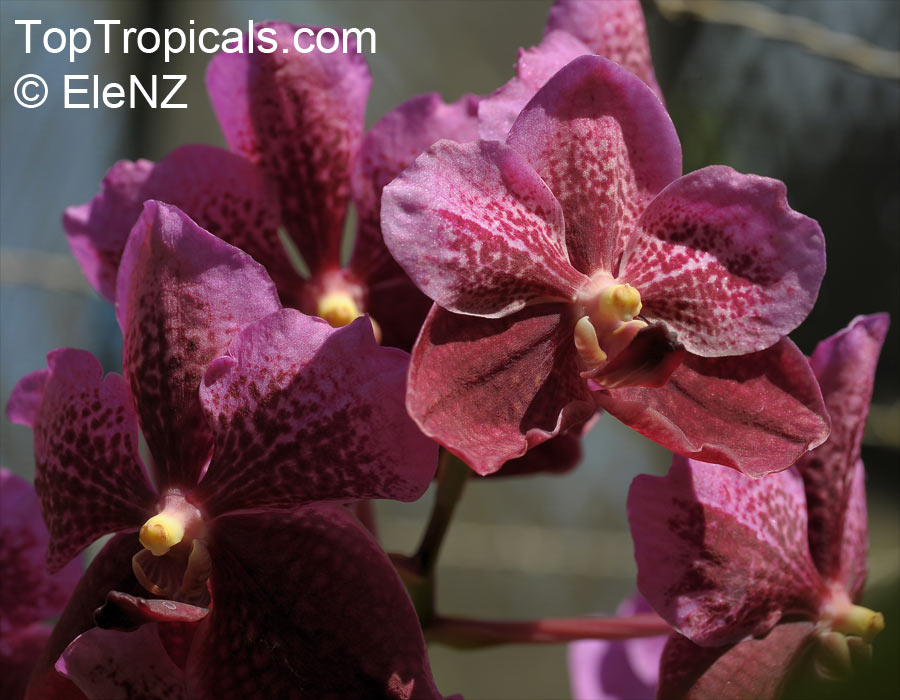
Vandas have about 50 species, from which the many hybrids are derived from the tropics Asia and the orient as far down as Australia, they require warm growing conditions with plenty of bright light. Normally they grow best suspended in wooden baskets. They need lots of light, but will still burn when the sun reaches them through glass, so some shading is necessary, the correct level of shading has been reached when on a sunny day, your hand will cast a shadow on the plant but without a definate edge. Grow them high up, but dont forget to give them good air circulation.
Vandas like it hot, minimum night temps may fall to 55 deg. as long as the plant is thoroughly dry by nightfall and daytime temperatures in the 80s is quite ok.
See Orchid page for pictures of different orchids and care info.
Intergeneric hybrids:
Ascocenda (Ascocentrum x Vanda)
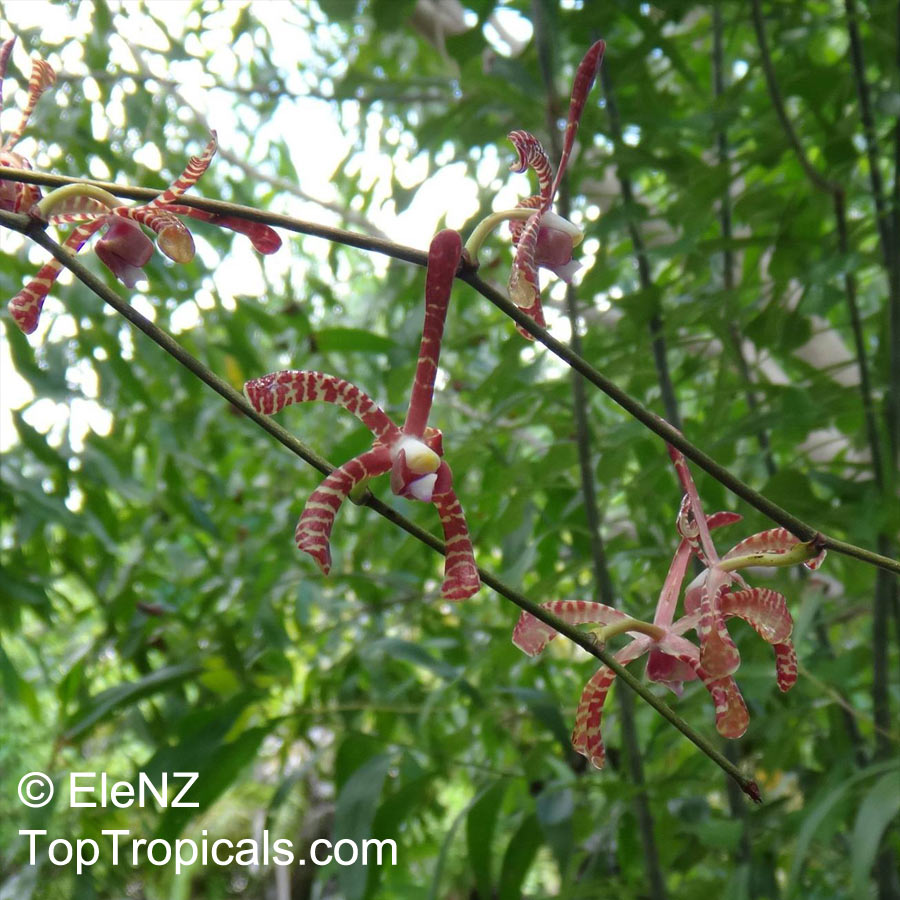
Aranda (Arachnis x Vanda)
Mokara (Arachnis x Ascocentrum x Vanda)
Kagawara (Ascocentrum x Renanthera x Vanda)
The Vanda Alliance is made up mostly of warm- and full-sun-growing orchids with colorful flowers. Originating in tropical Asia, they are easily grown in warm climates.
Similar plants: Vanda sp. (Vanda Orchid)