Rothmannia globosa (Rothmania)
Botanical name: Rothmannia globosa
Common names: Rothmania, September Bells, Bell Gardenia
Family: Rubiaceae
Origin: Tropical Africa
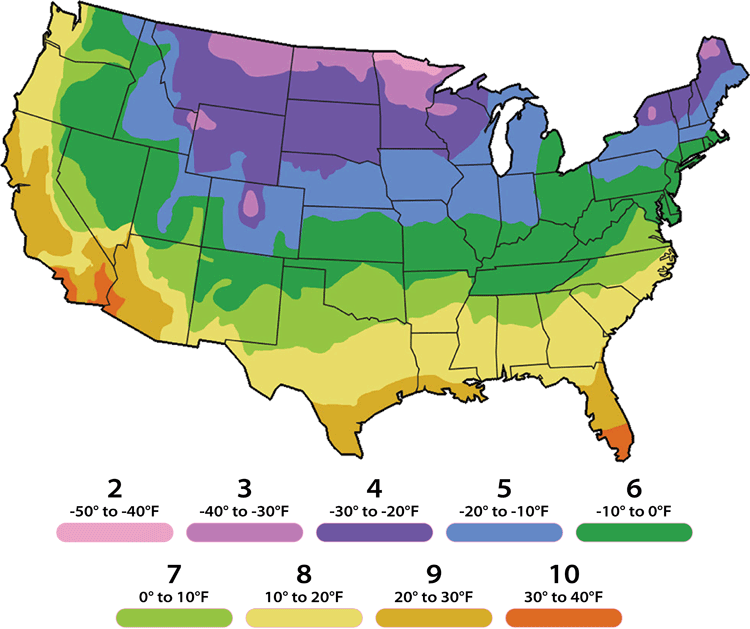
USDA Zone: 9-10

 Plant form: Large bush or small tree
 Mature height: 10-20 ft
 Sun exposure: Full sun or bright light indoor; semi-shade
 Cold tolerance: Frost sensitive. Protect from freezing.
 Watering: Regular
 Flower color: White and off-white
 Suitable for: Outdoors in the suitable USDA zone; small gardens, containers, and indoor growing
 Fragrance: Fragrant; perfume plant
 Wildlife: Attracts butterflies and hummingbirds
 Ethnomedical: Ethnomedical plant, traditionally used in folk or indigenous medicine
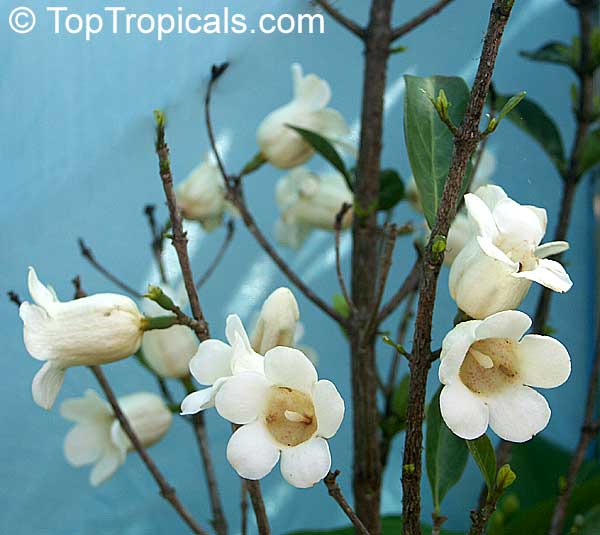
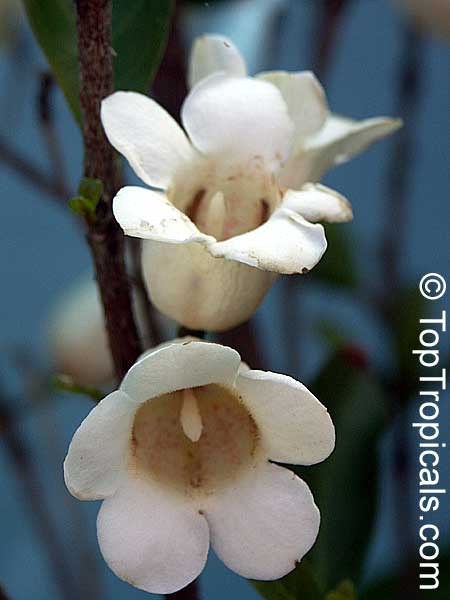
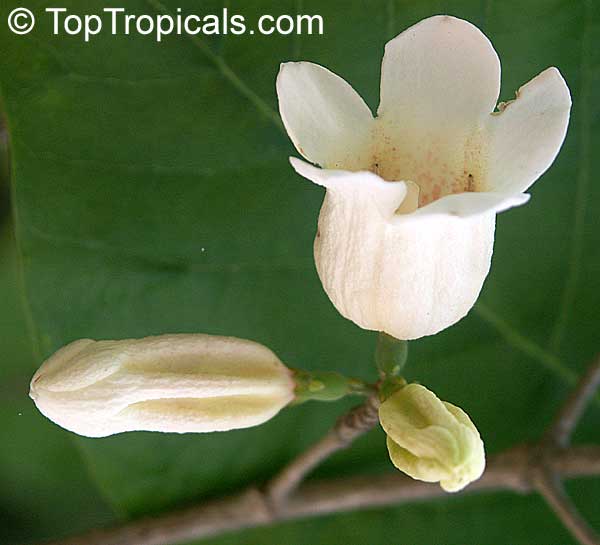
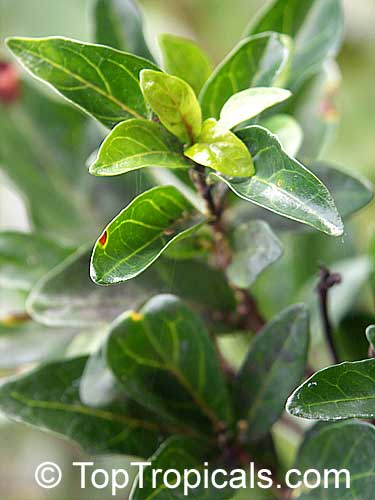
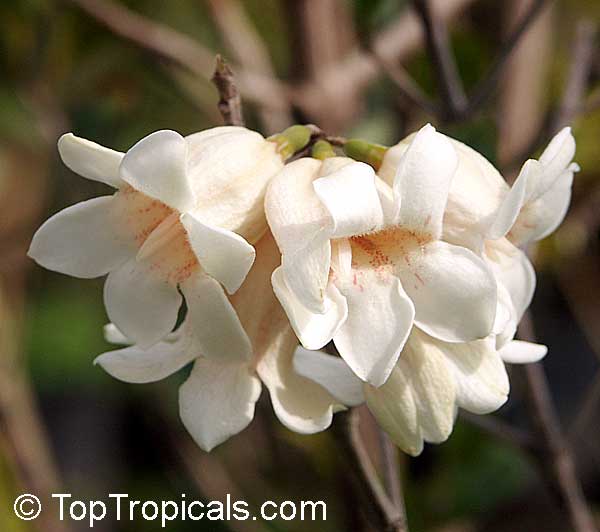
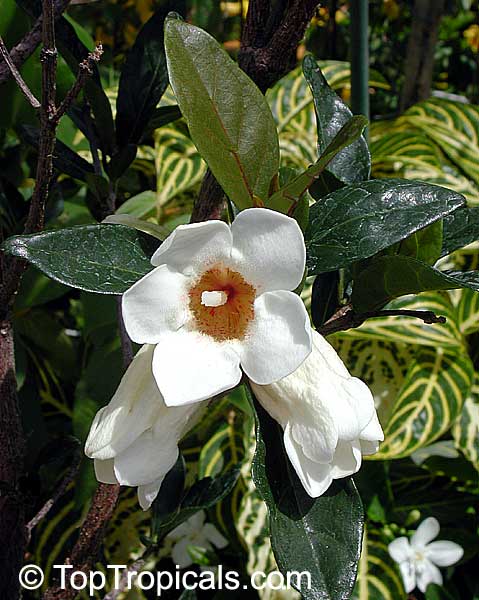
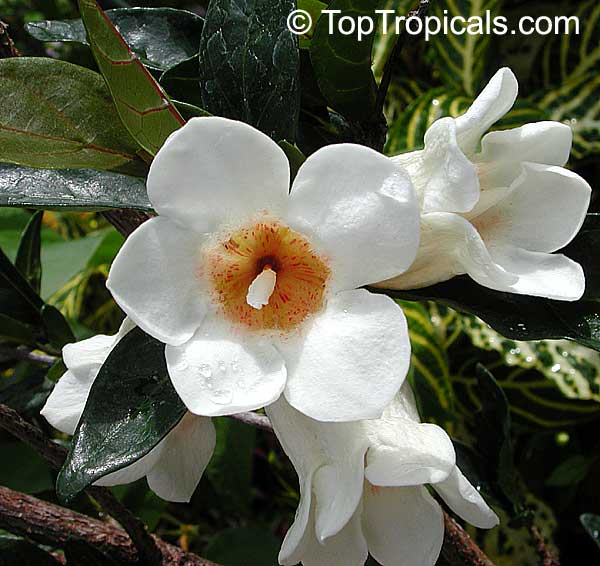
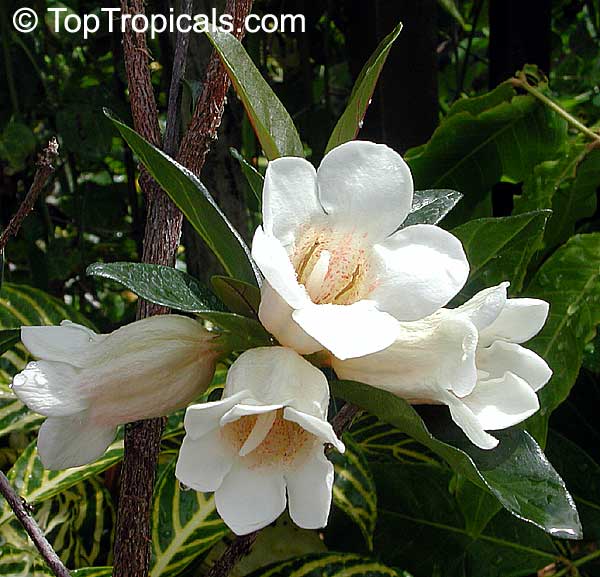
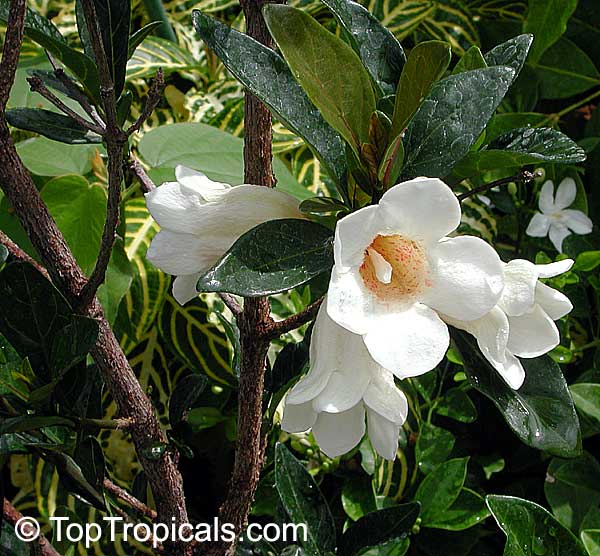
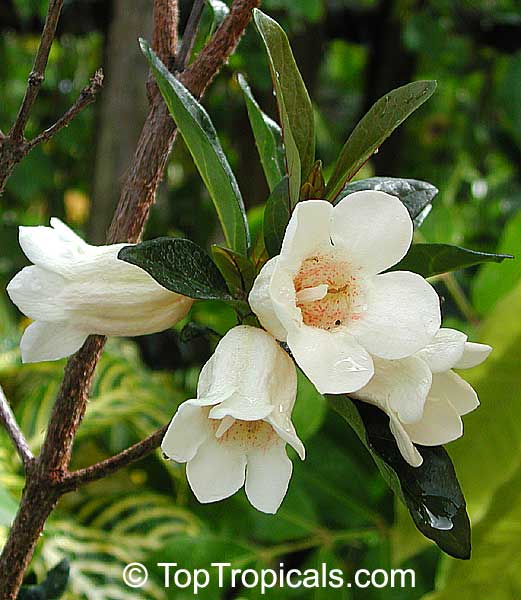
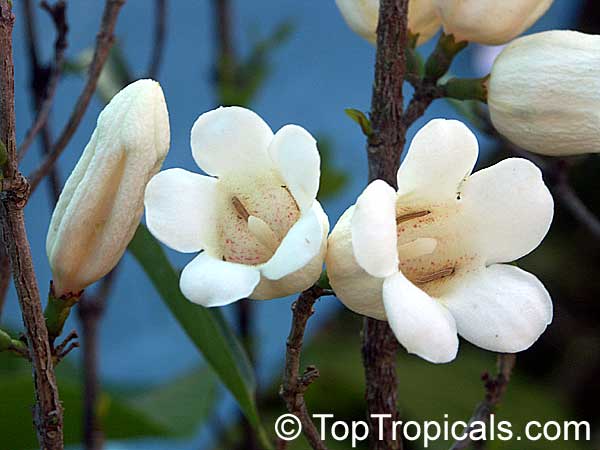
Small everblooming tree with glossy leaves and off-white bell-shaped flowers, very fragrant. The fragrance is stronger than gardenia. One of the loveliest small trees for the home garden. It attracts birds and it has a non-aggressive root system. The beautiful bell-shaped flowers borne singly in summer from December to February. They are creamy white with purplish red streaks and speckles inside the flower tube. They have a strong sweet scent, which lingers even after they dry, and are about 1" long. They are followed by round, hard, green, 70 mm fruits, with a leathery skin marked with faint grooves. The fruits soften when ripe and turn brown. They contain many flat seeds embedded in pulp. The powdered roots are used for treating leprosy and rheumatism. The powder is rubbed into tiny incisions made into the skin over the effected parts. Juice from the fruits is heated and applied to wounds and burns to speed up the healing process. The effected parts are also held in smoke from the burning roots.
Similar plants: Rothmannia globosa (Rothmania)