Euphorbia pulcherrima (Ponsettia)
Top Tropicals Plant Encyclopedia
Botanical name: Euphorbia pulcherrima
Common names: Ponsettia, Poinsettia, Christmas Plant, Poincettia
Family: Euphorbiaceae
Origin: Mexico


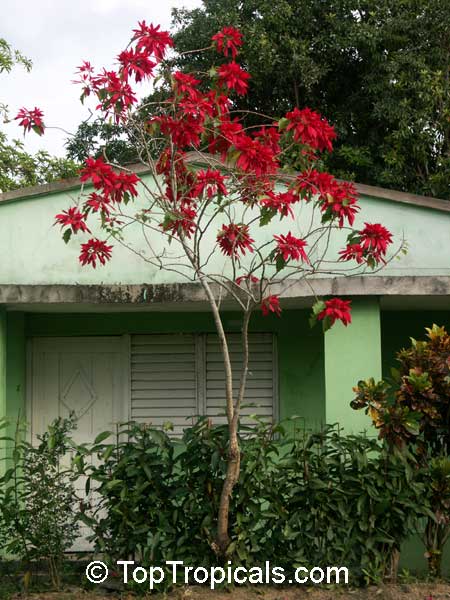
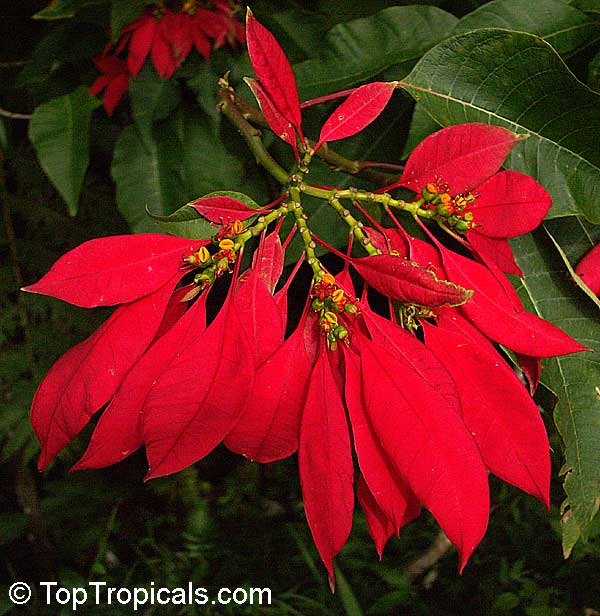
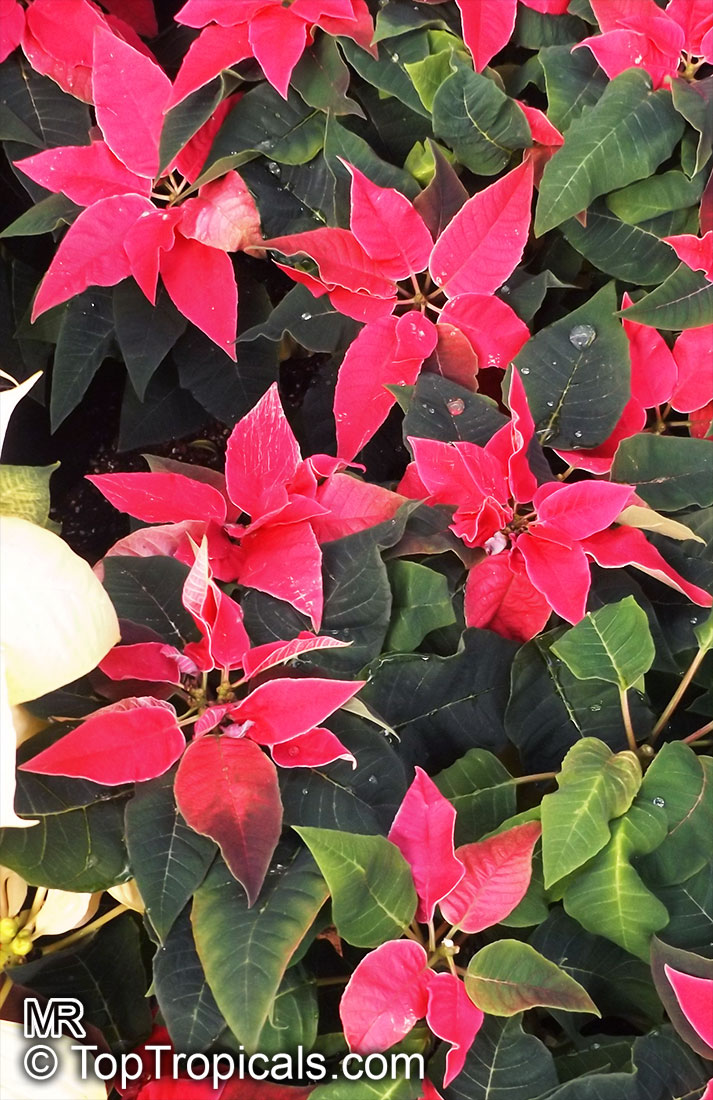
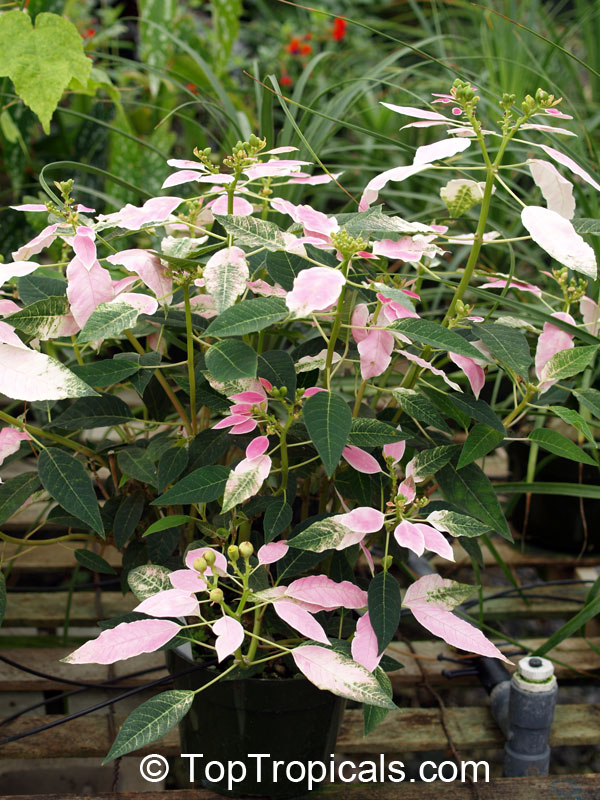
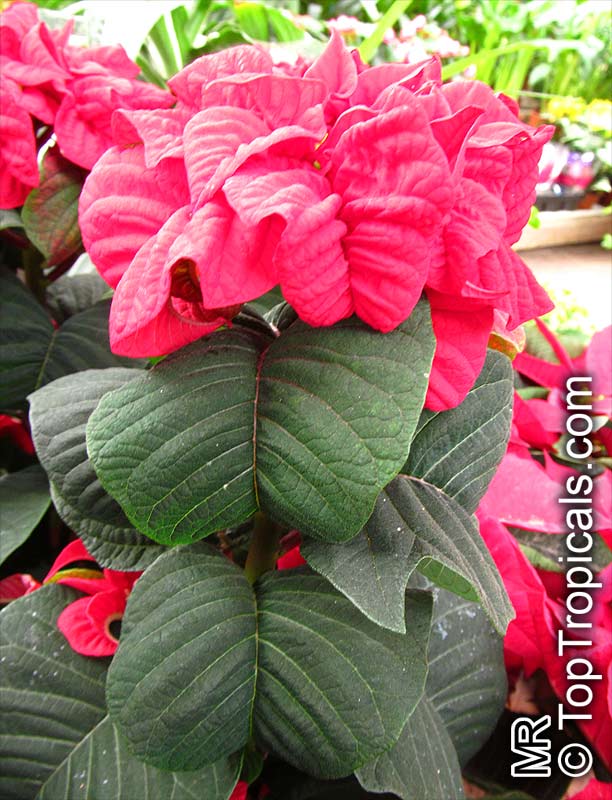
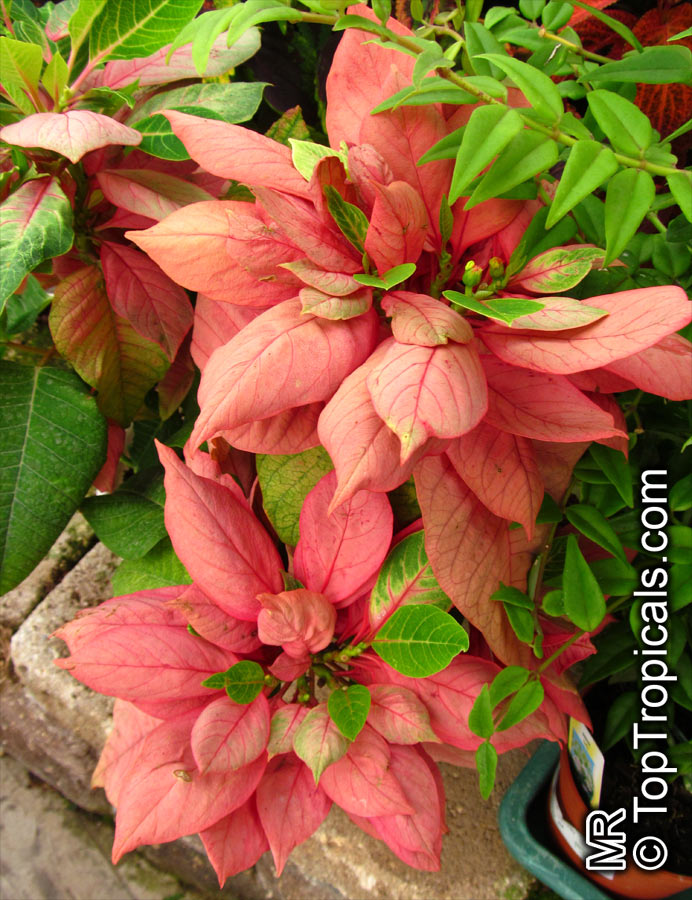
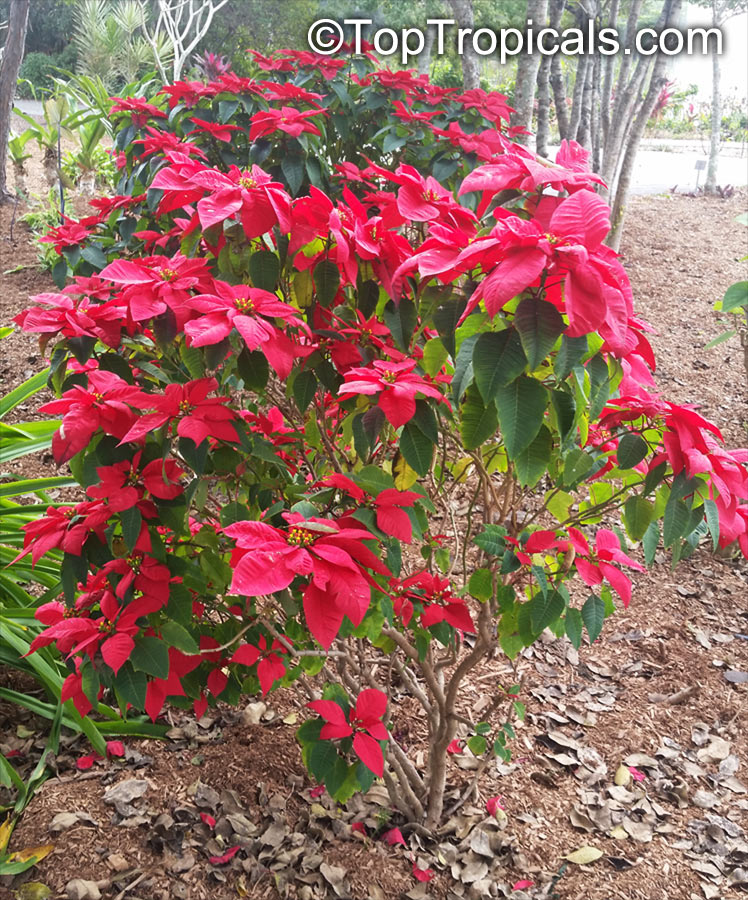
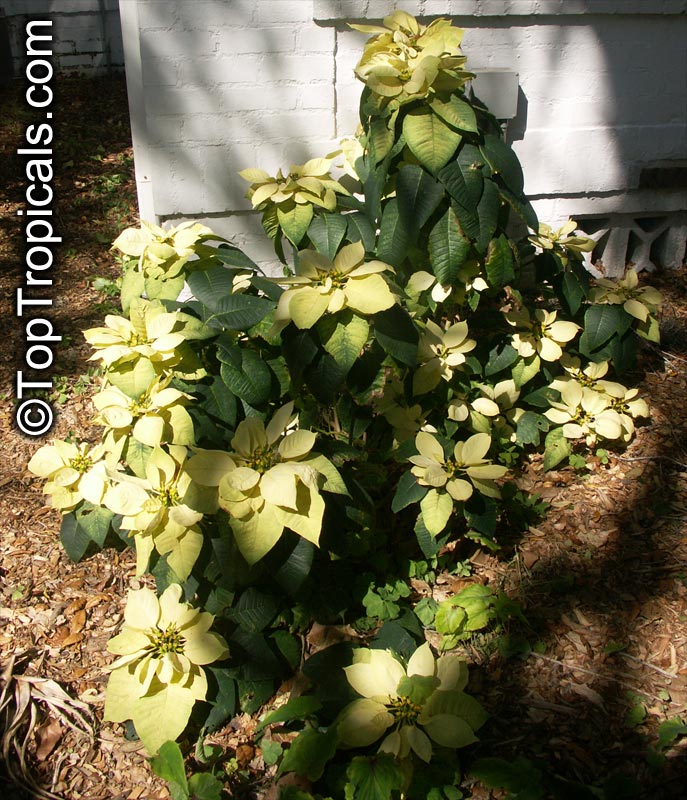
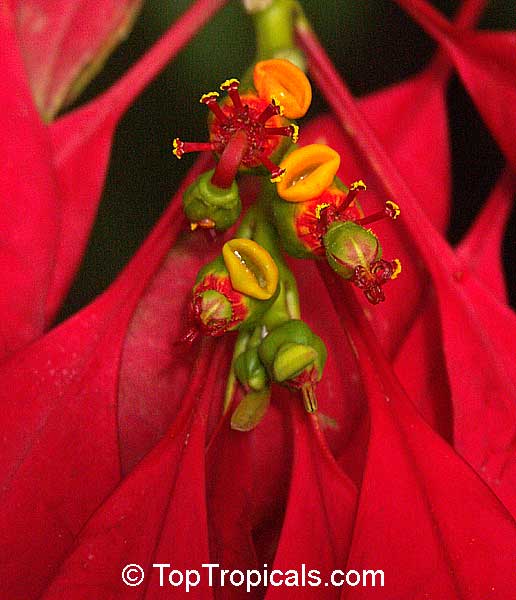
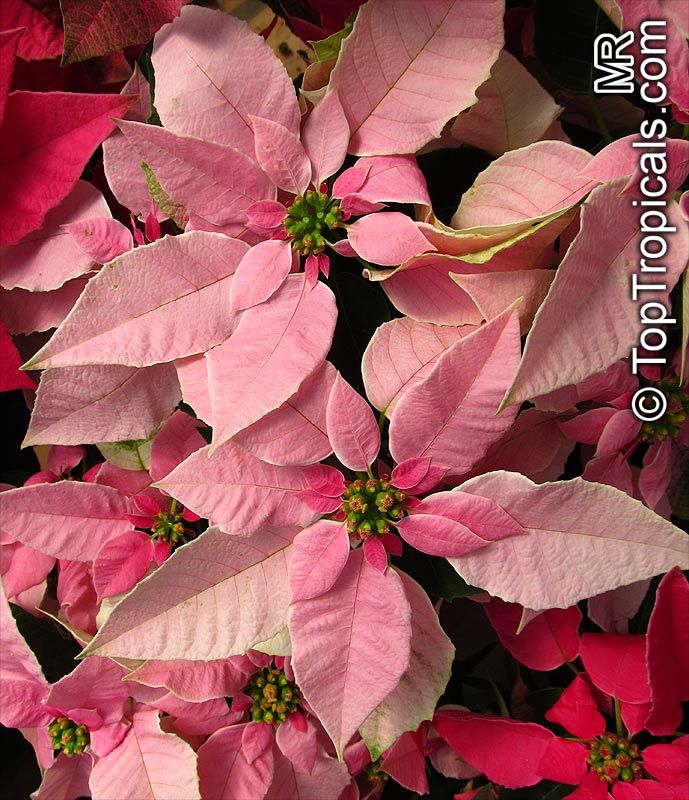
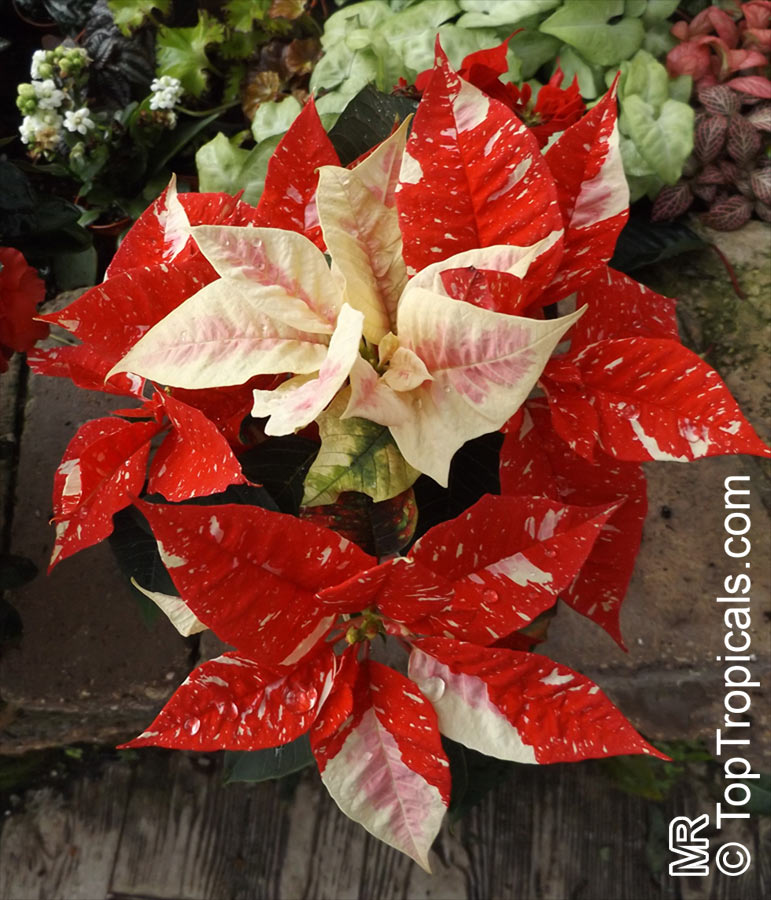
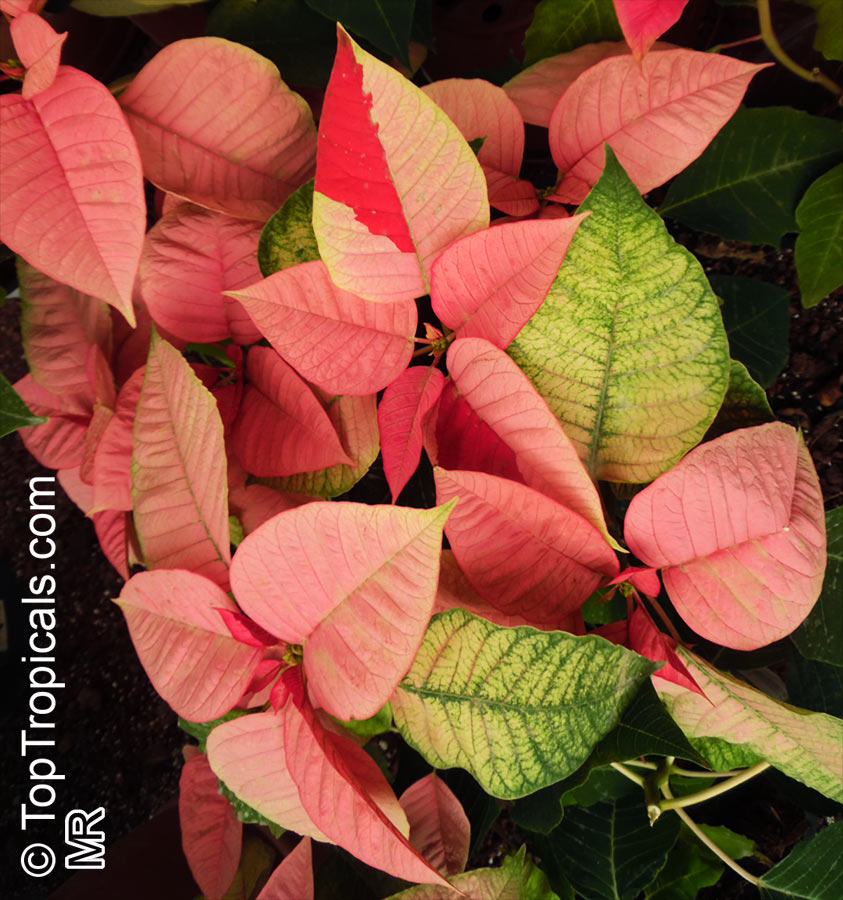
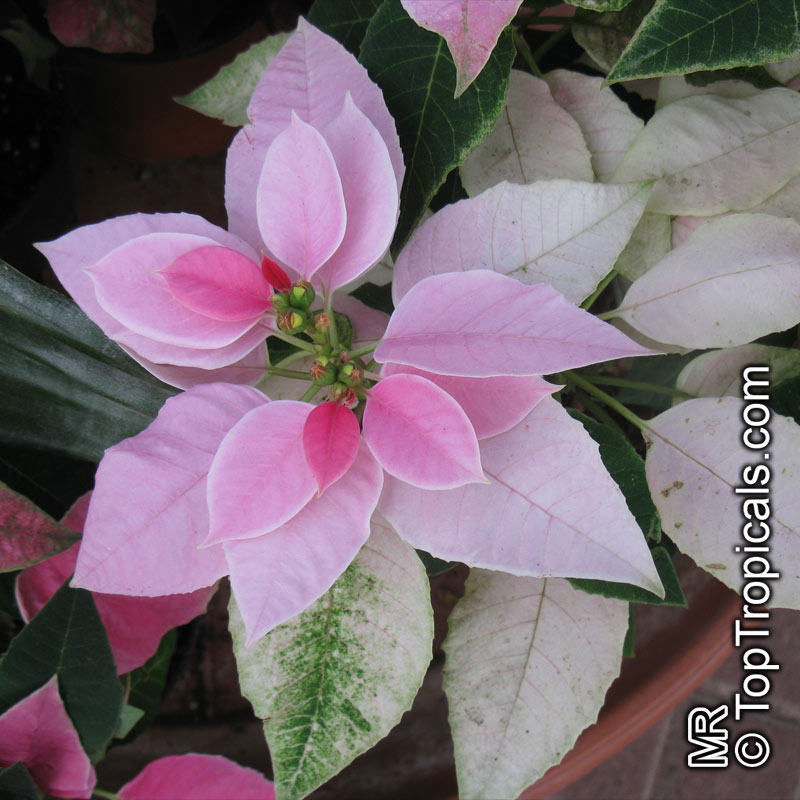
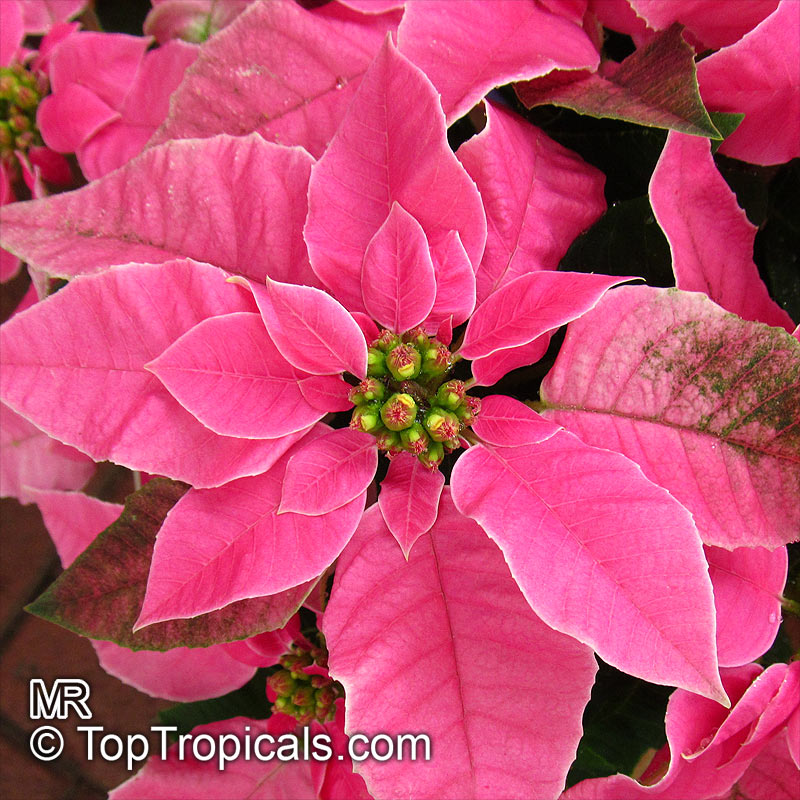
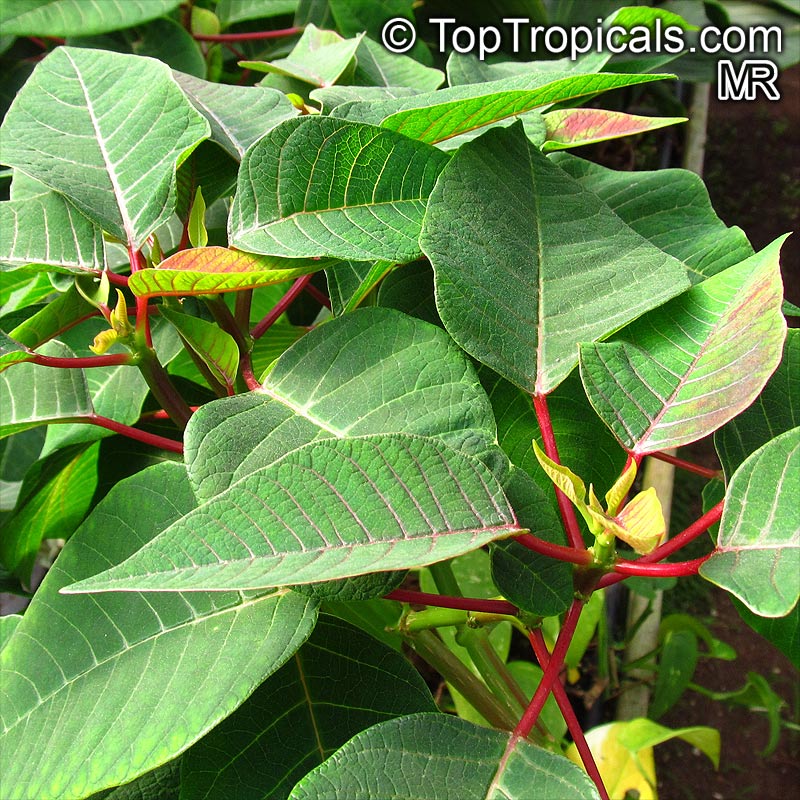
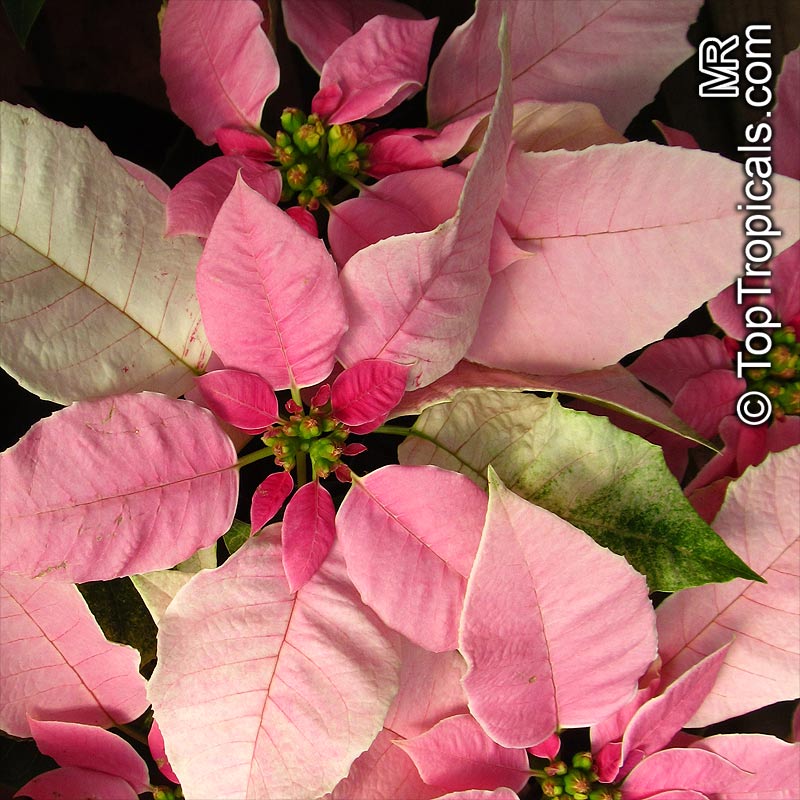
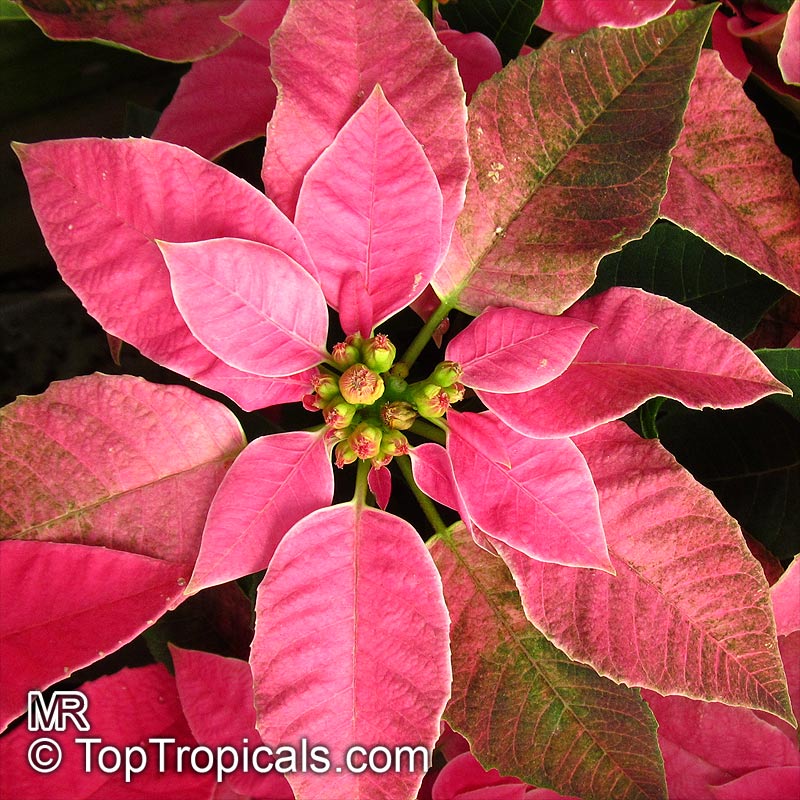
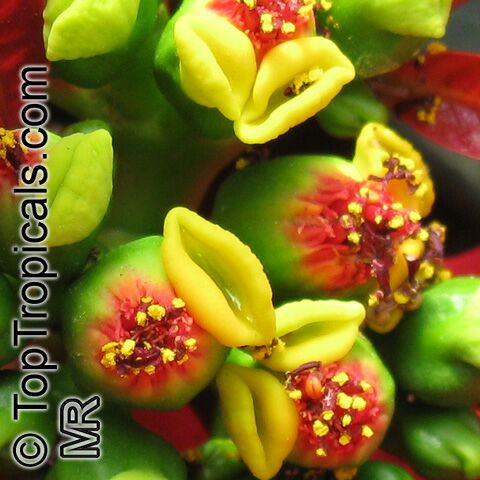
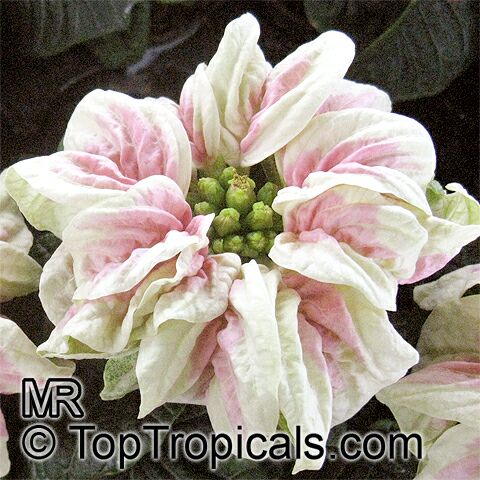
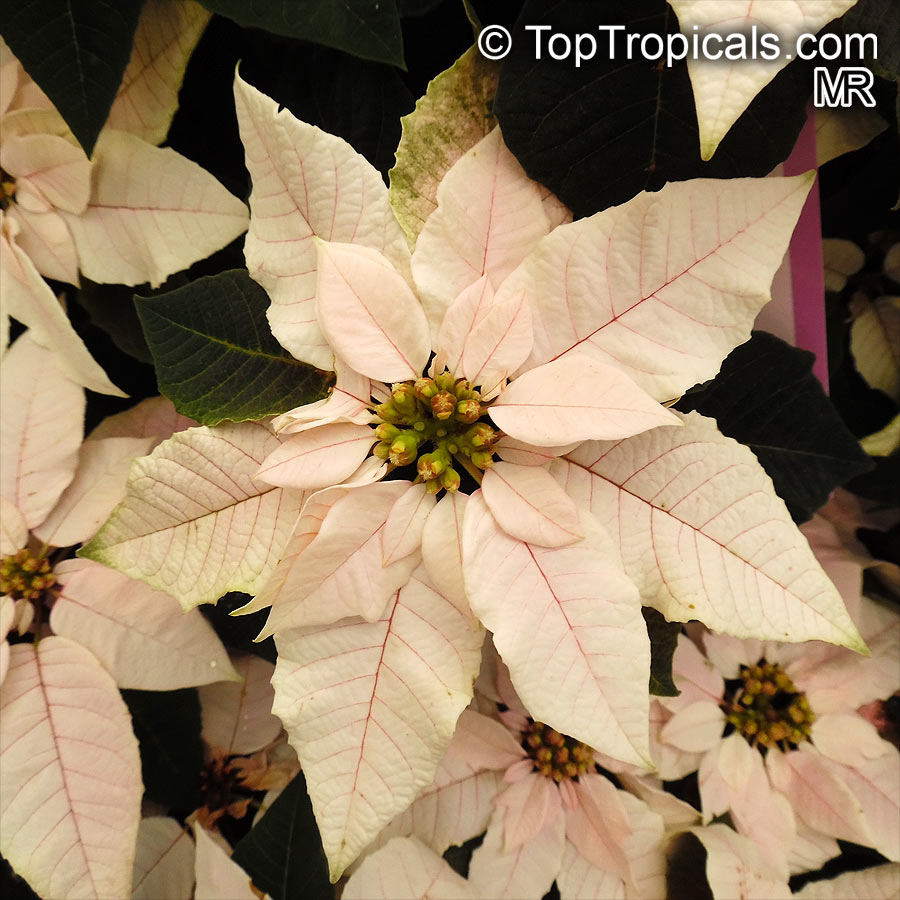
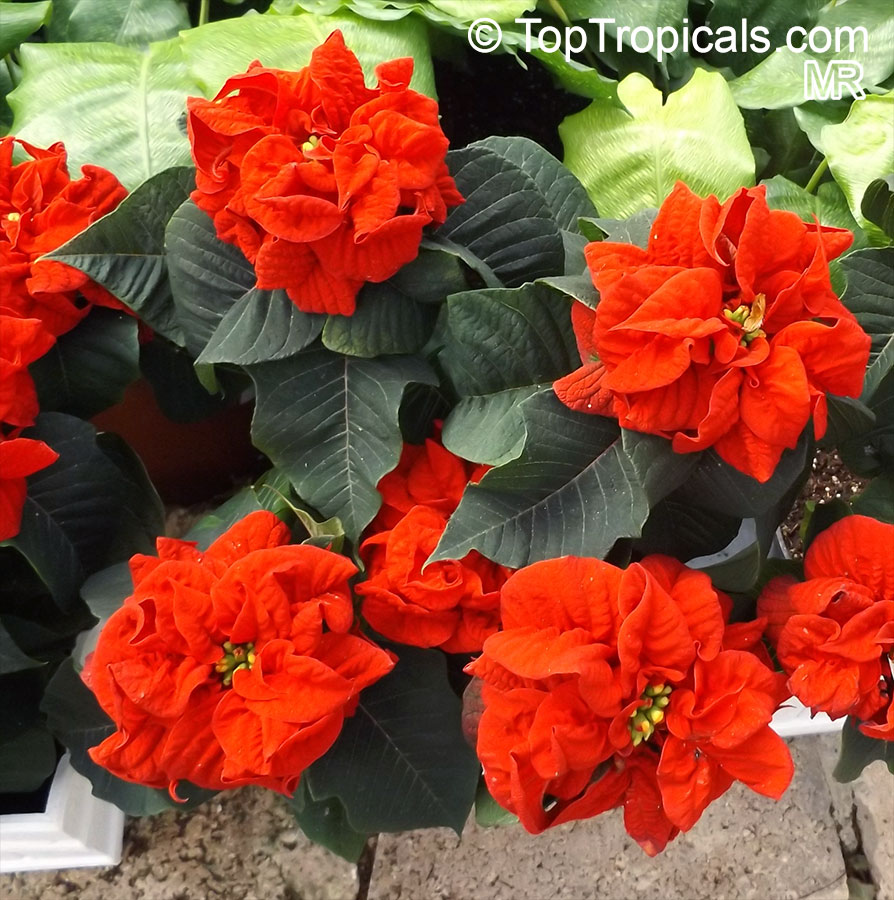
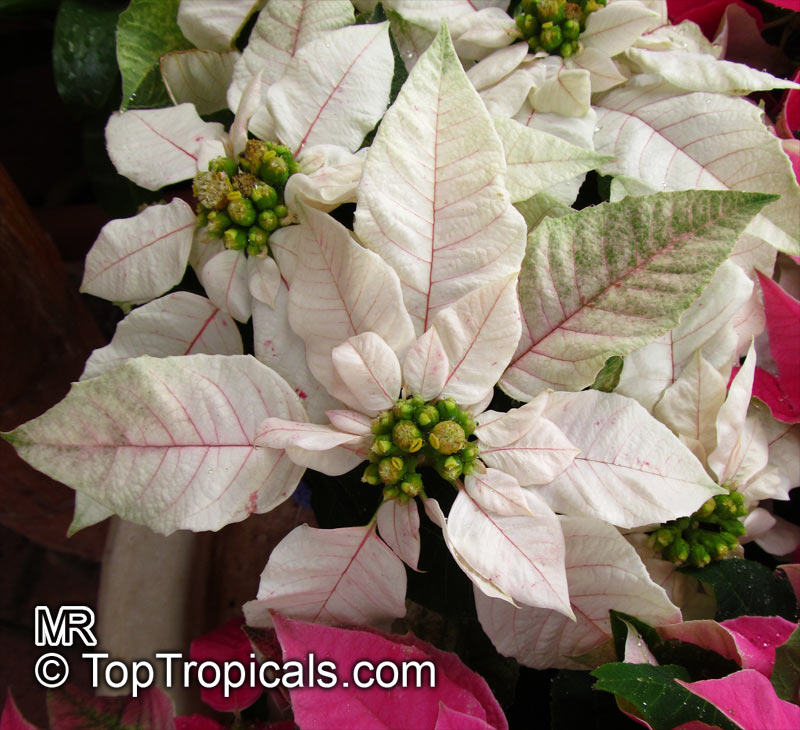
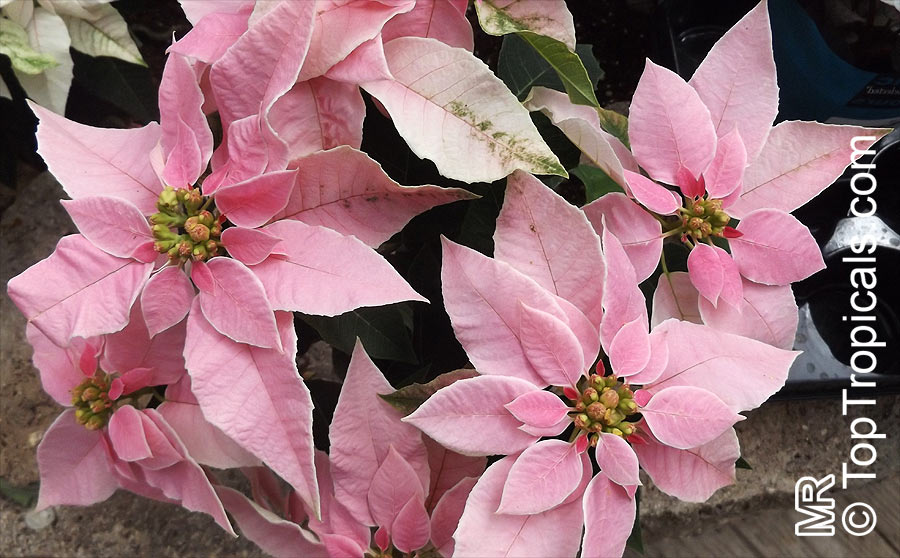
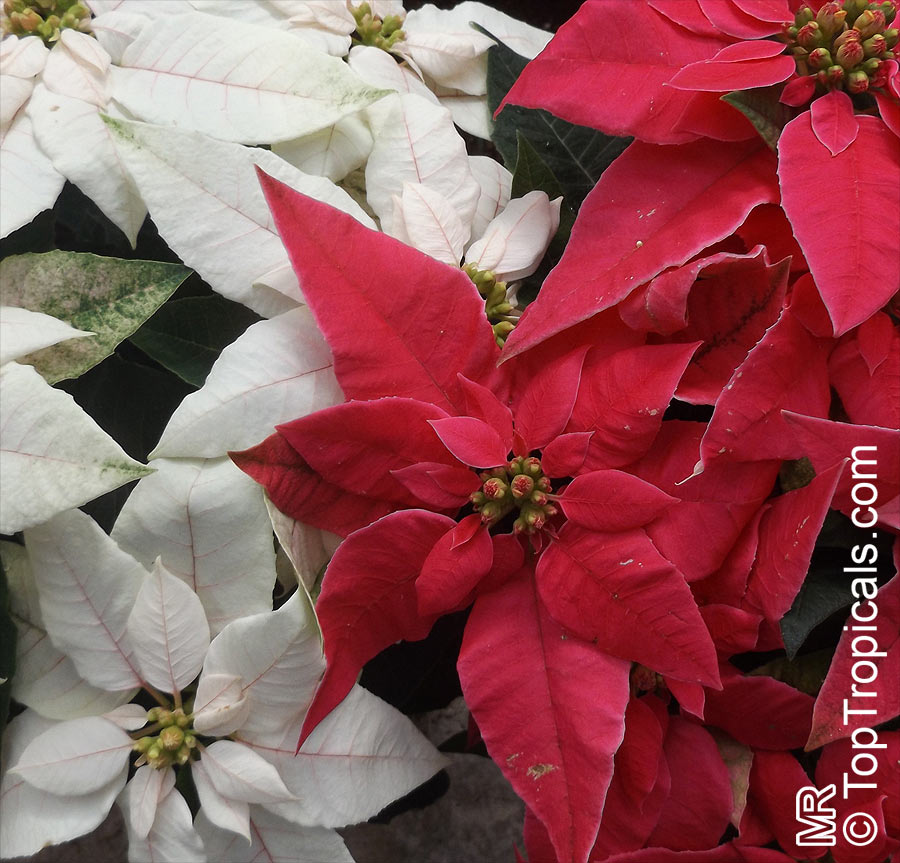
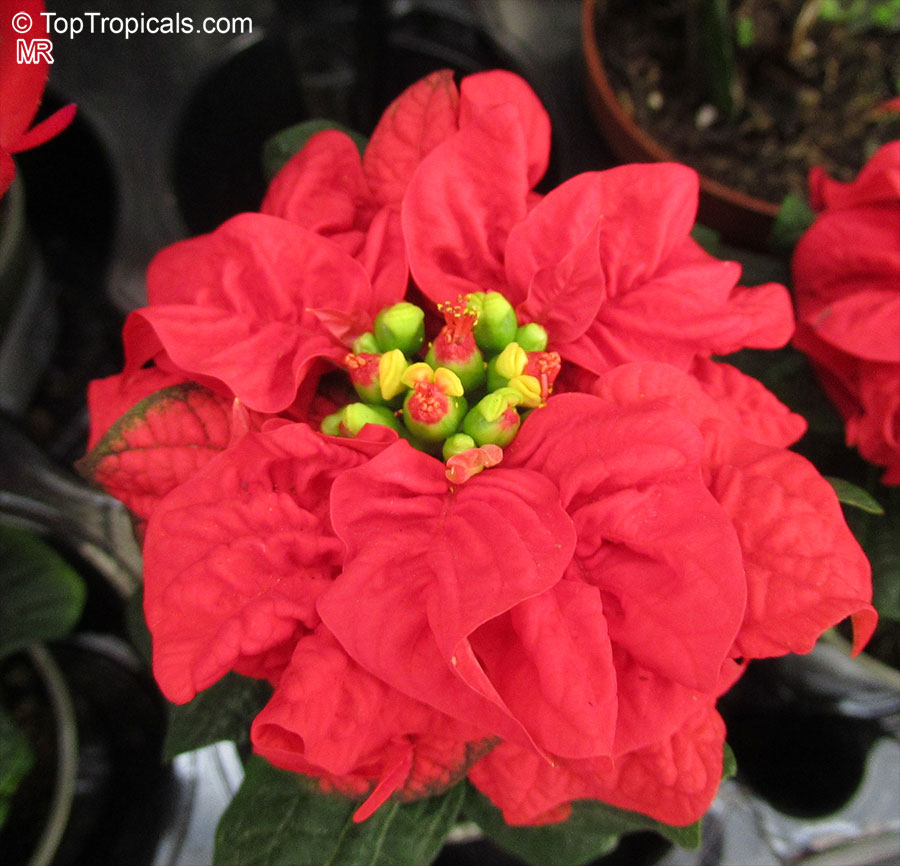
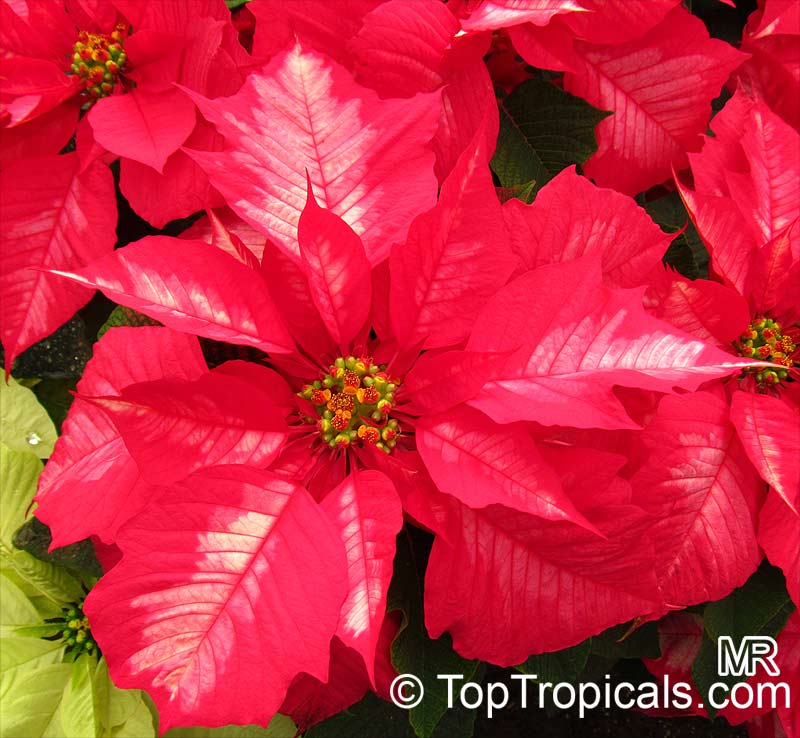
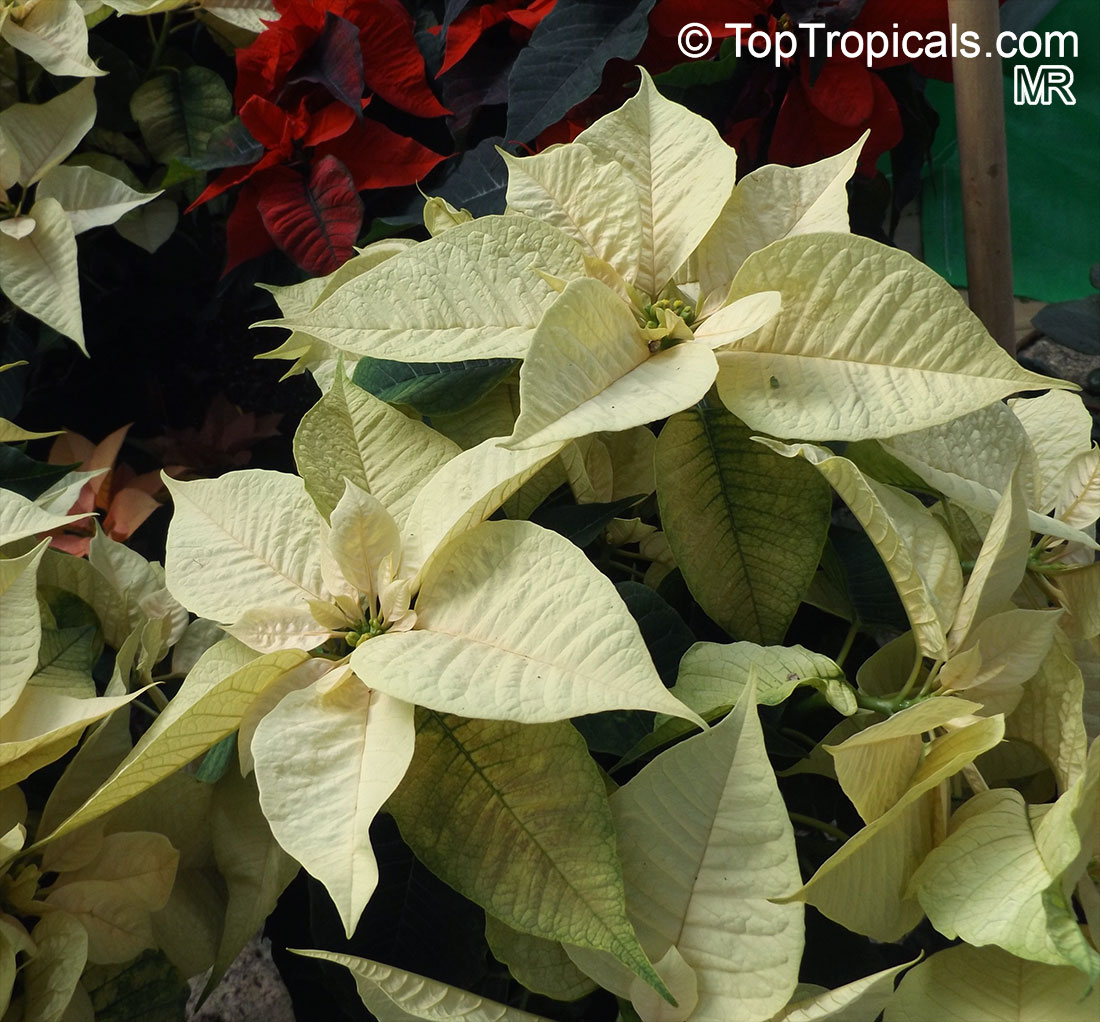
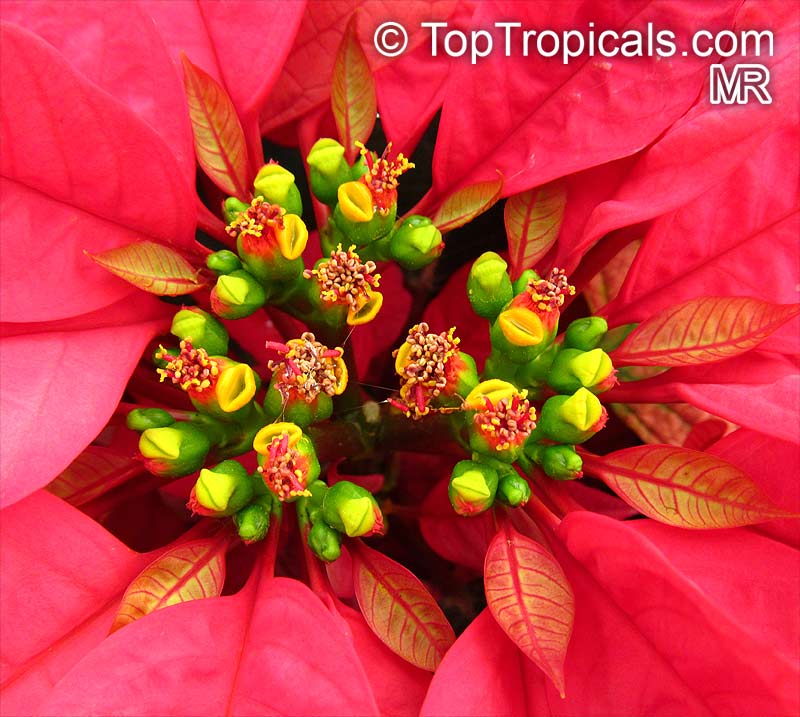
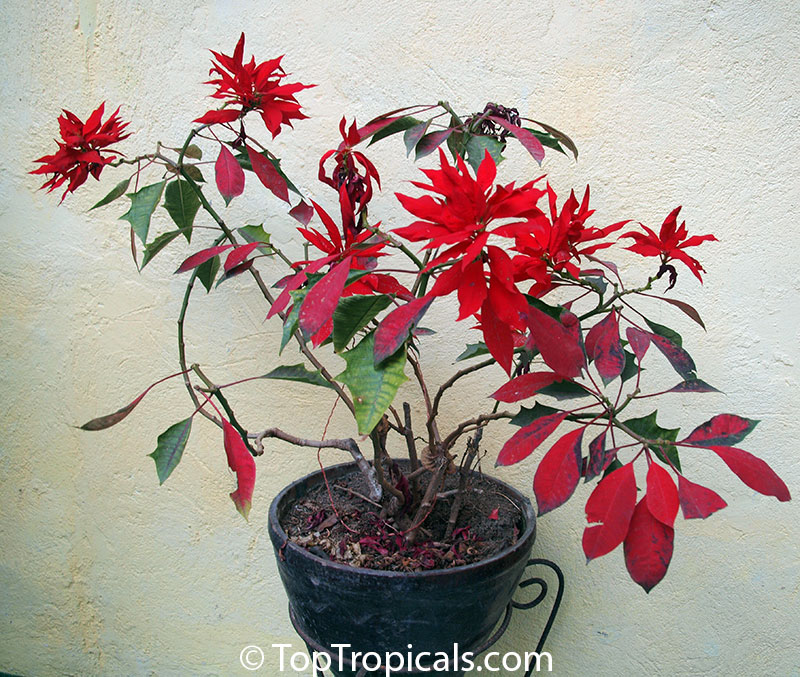
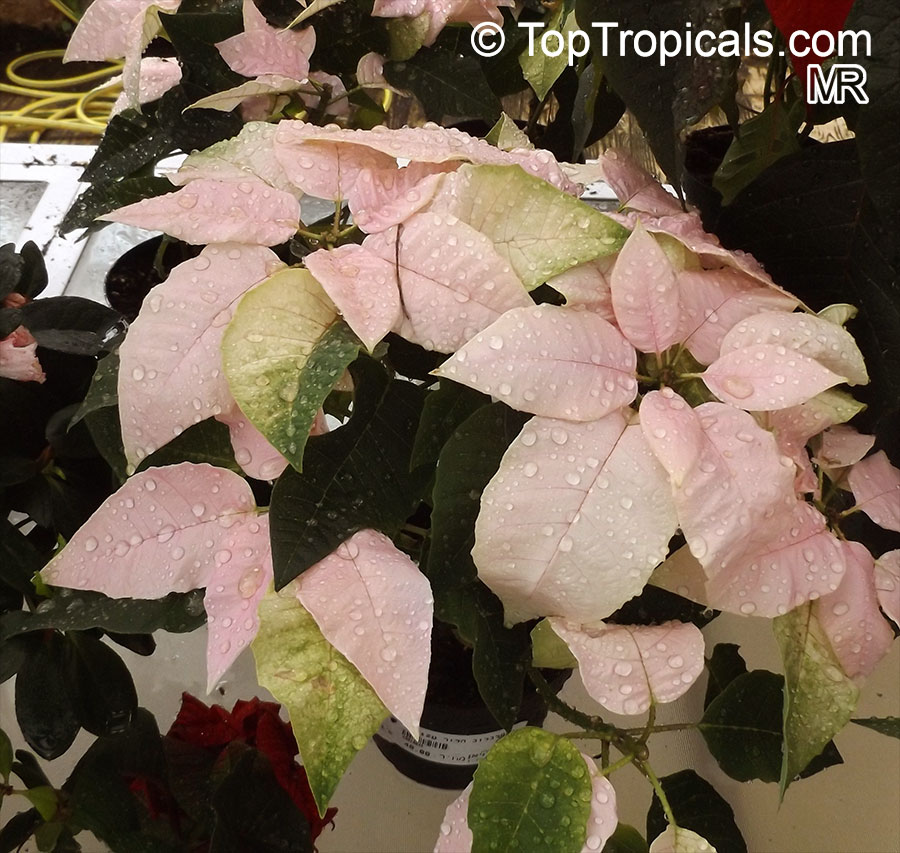
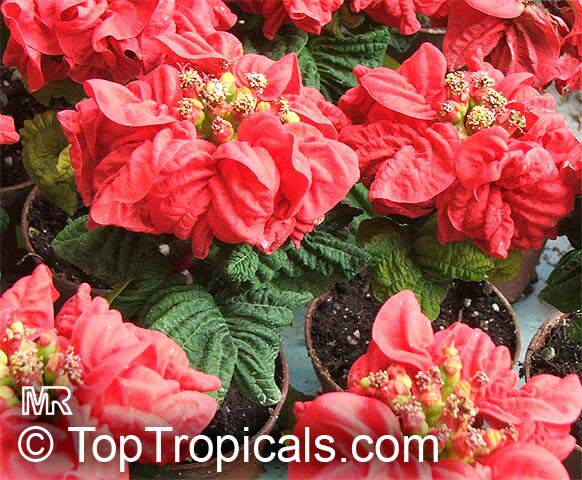
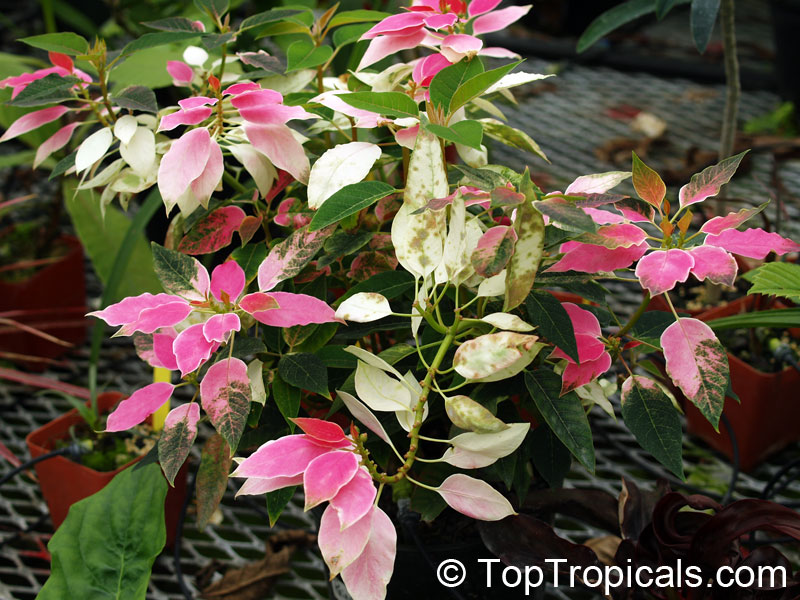
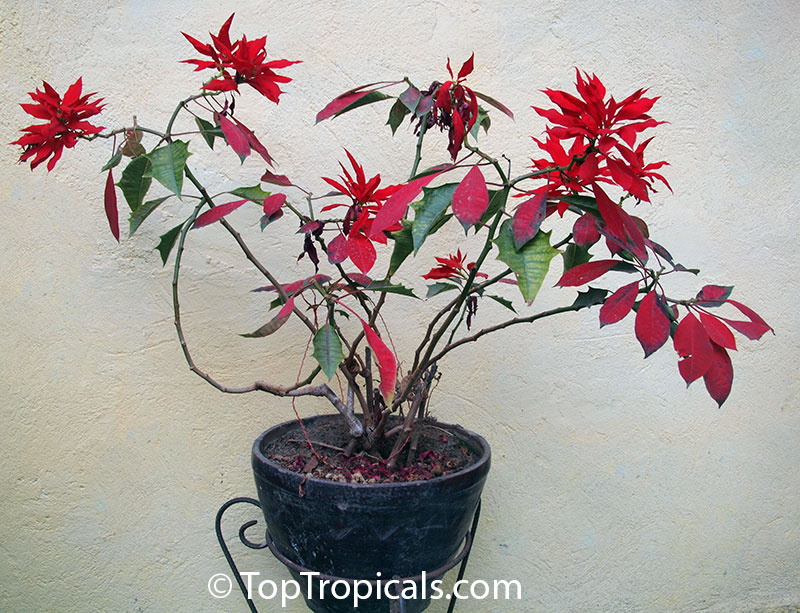
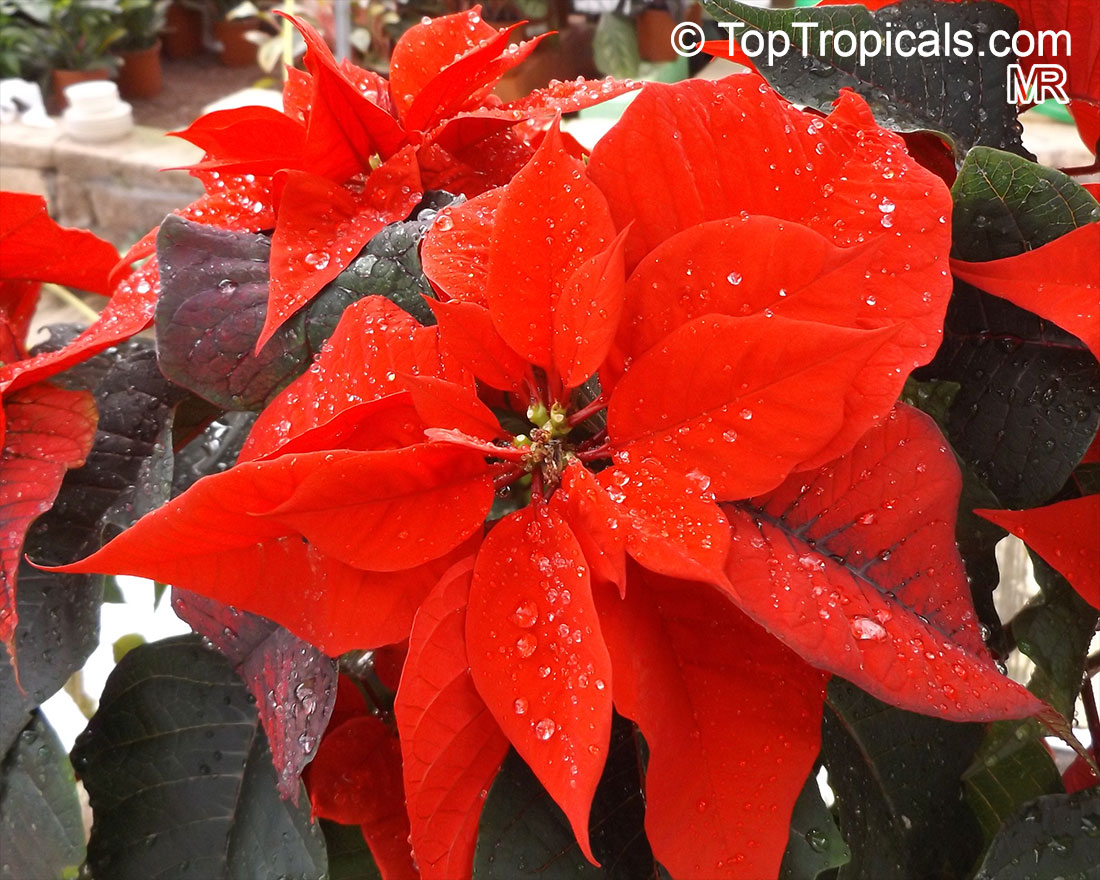
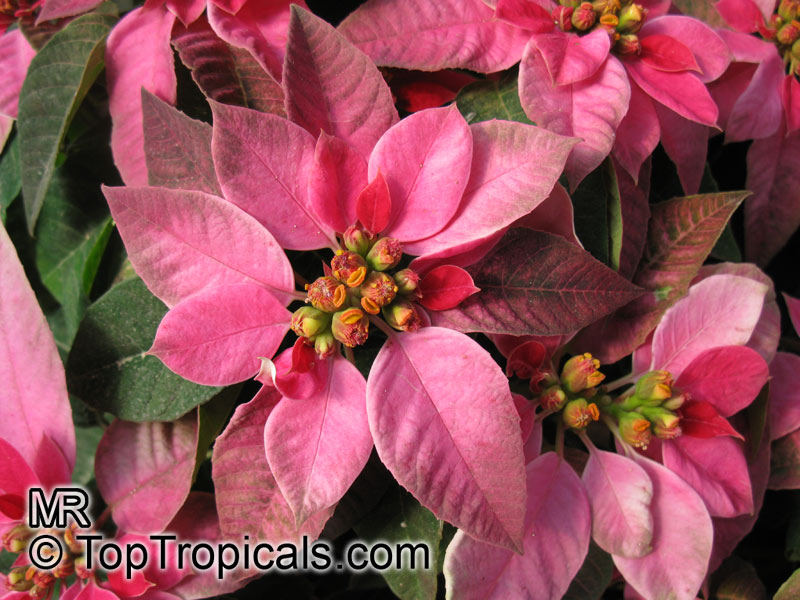
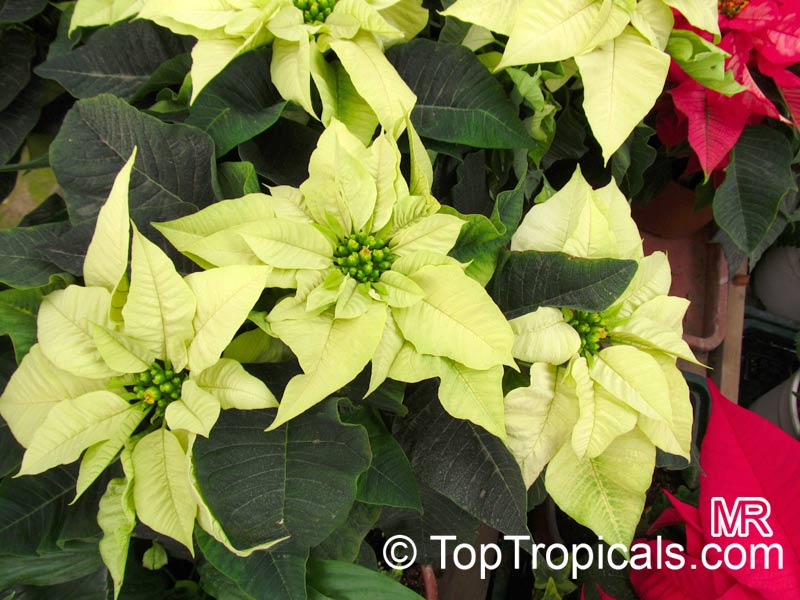
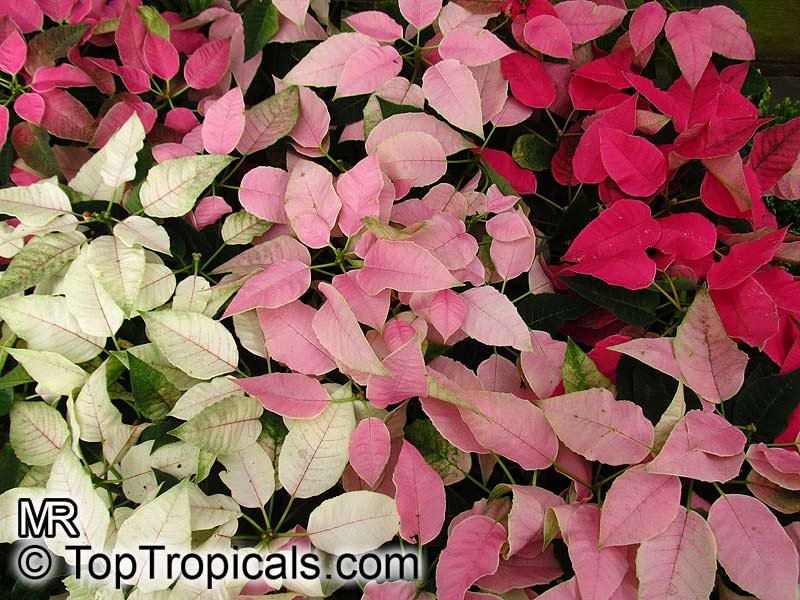
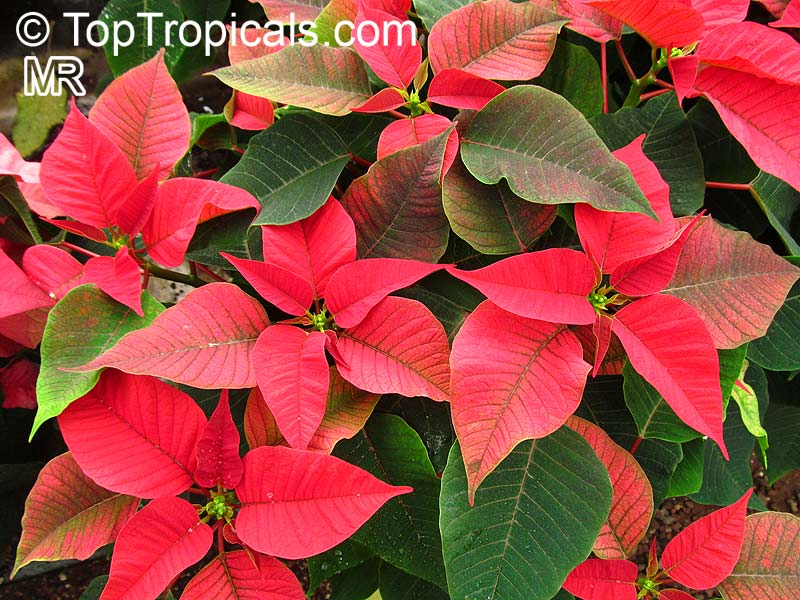
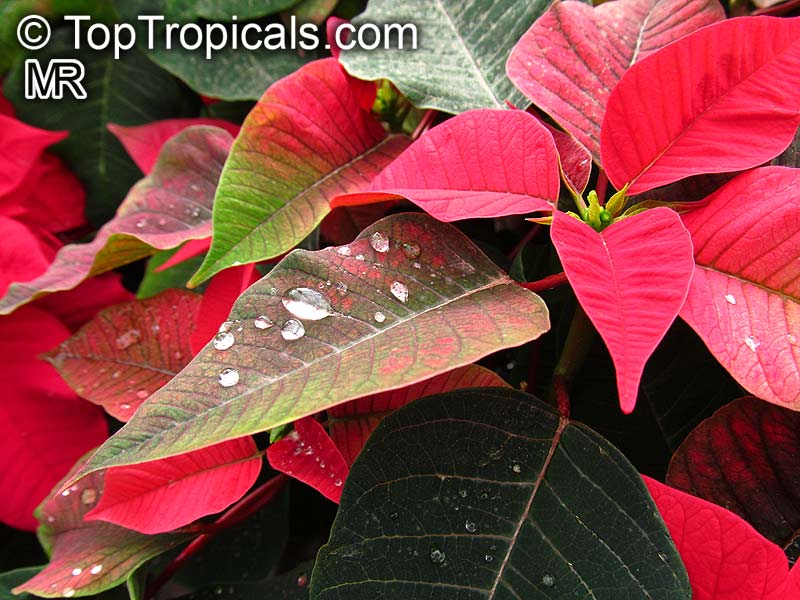
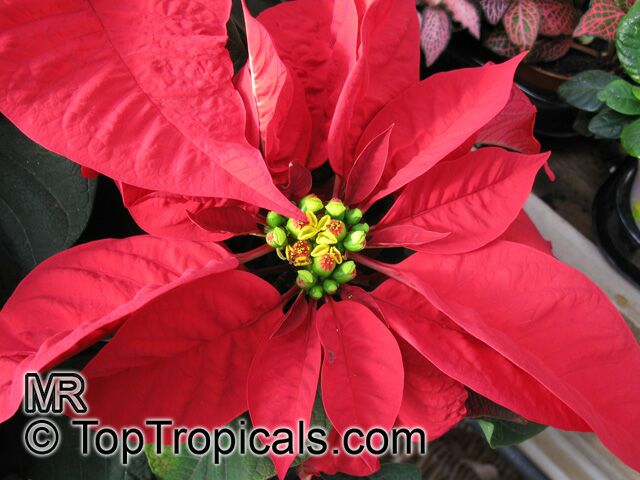
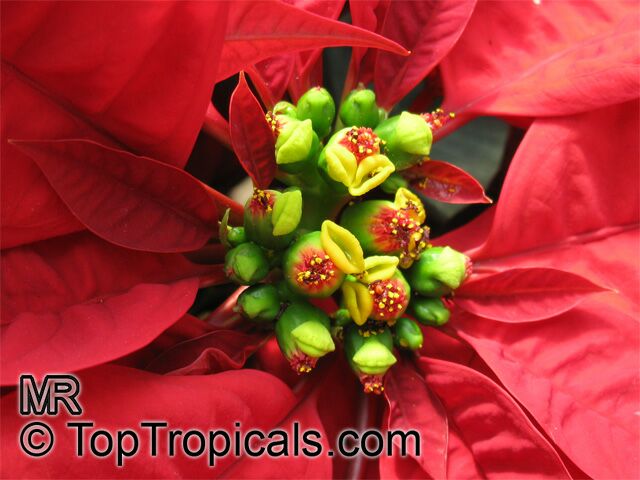
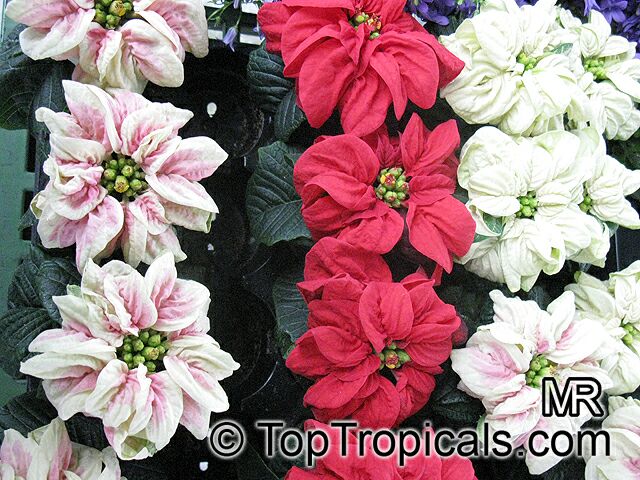
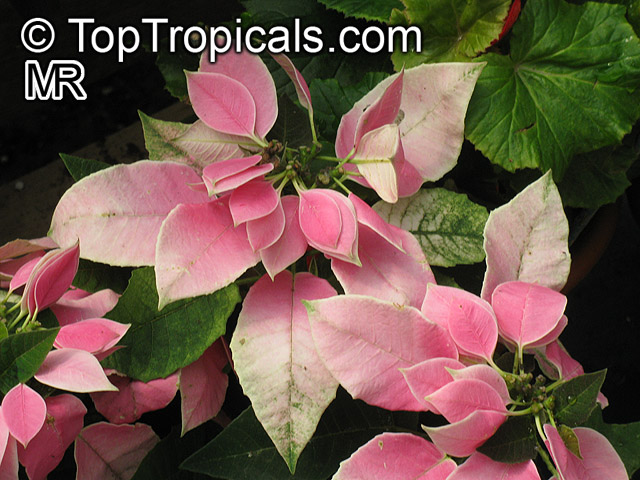
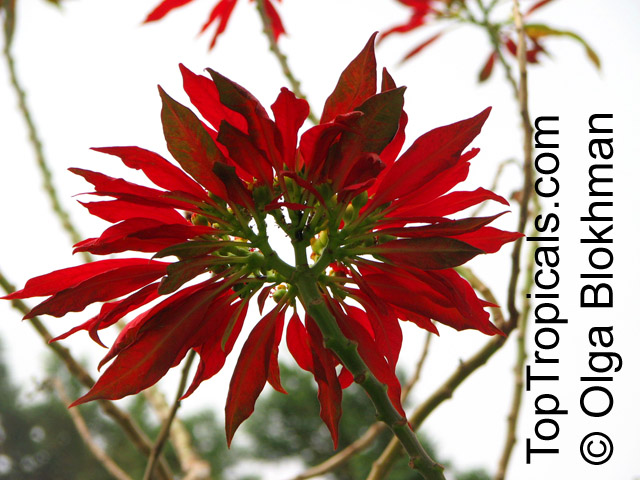
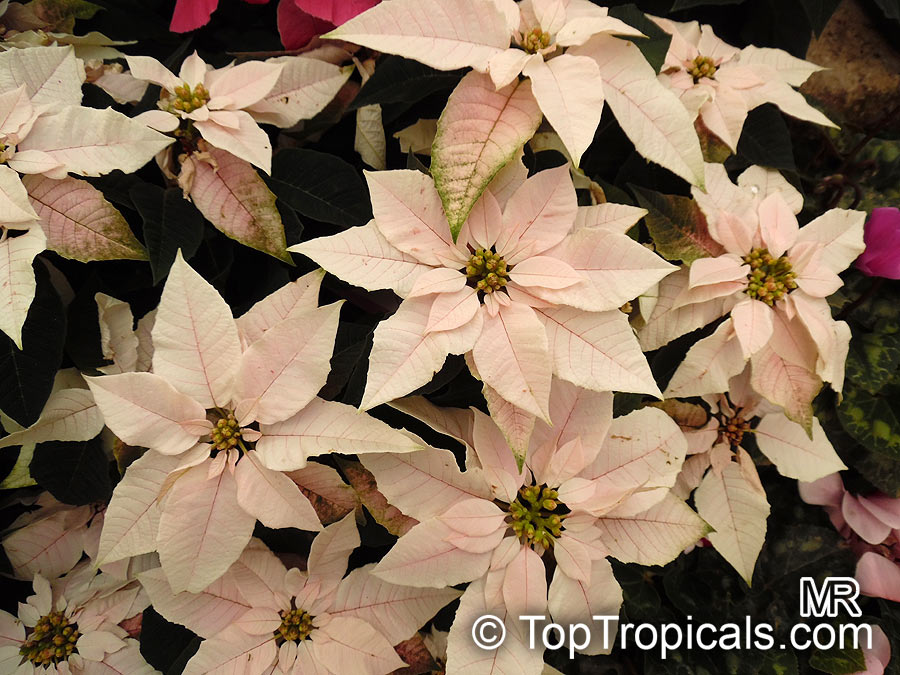
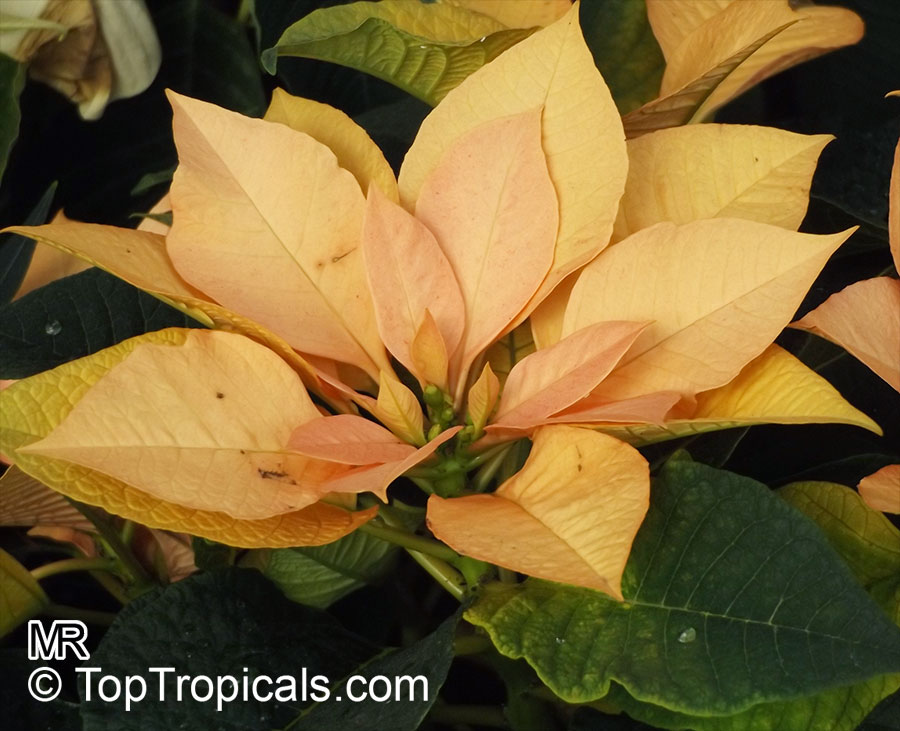
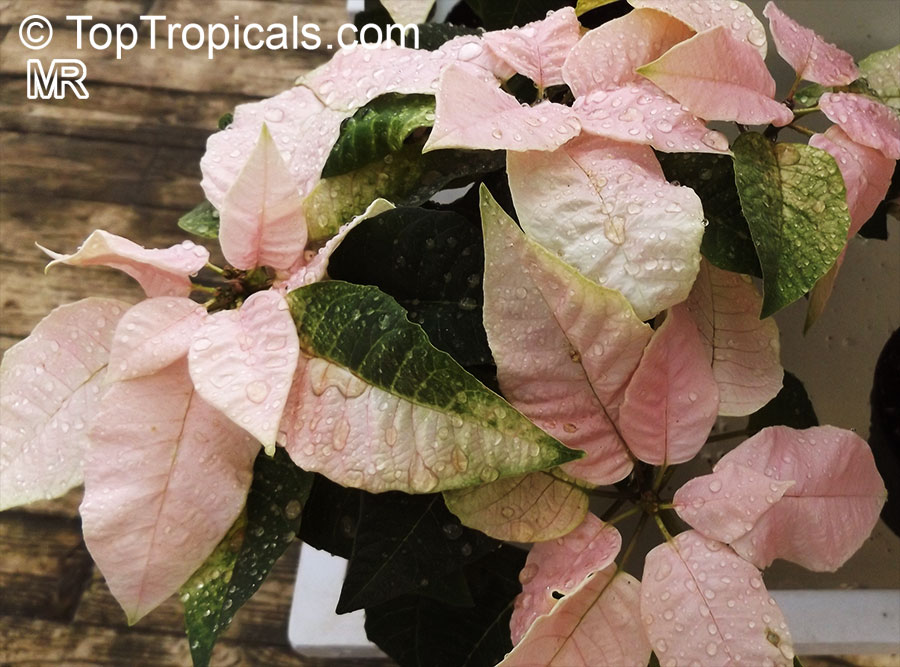
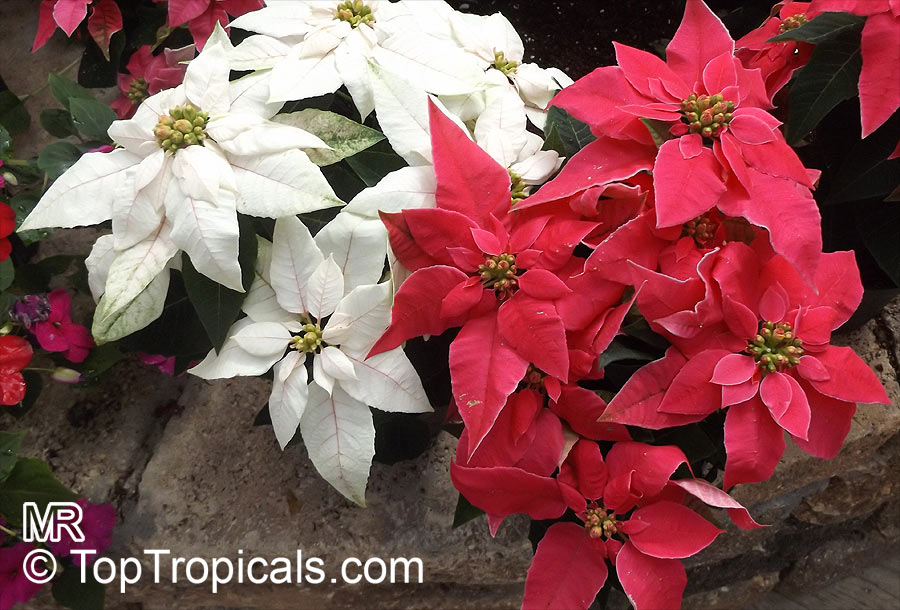
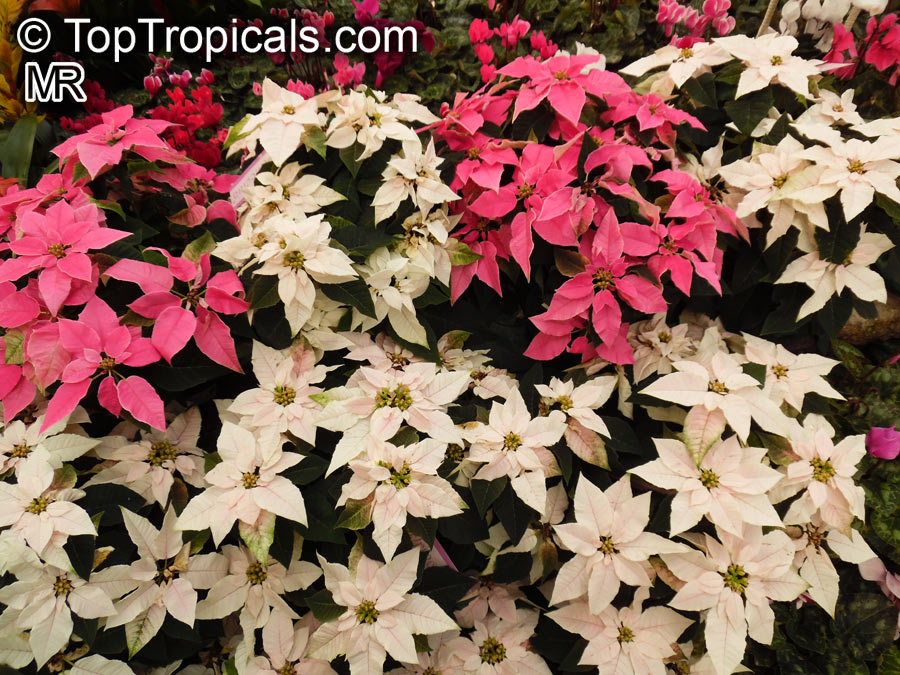
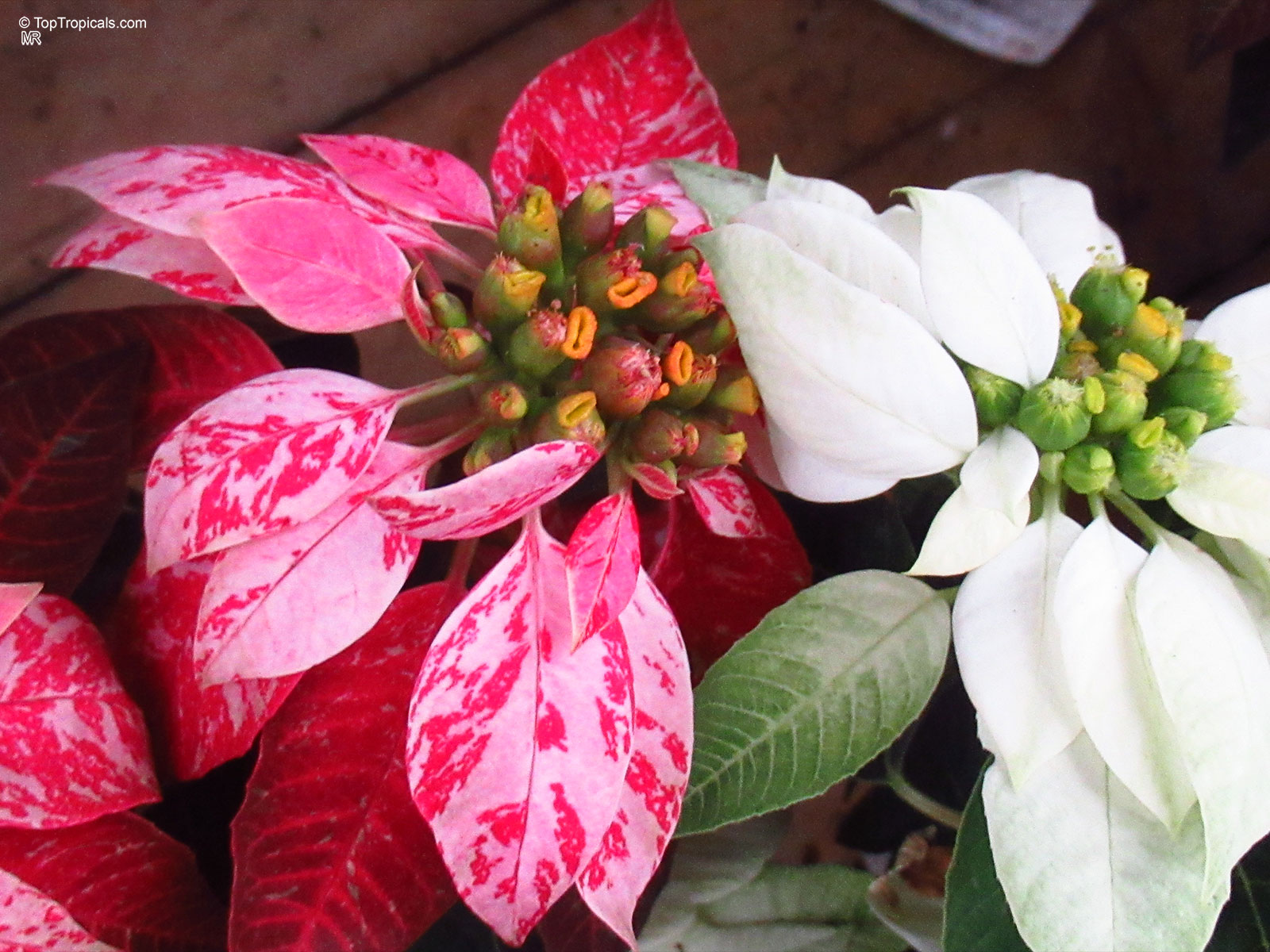
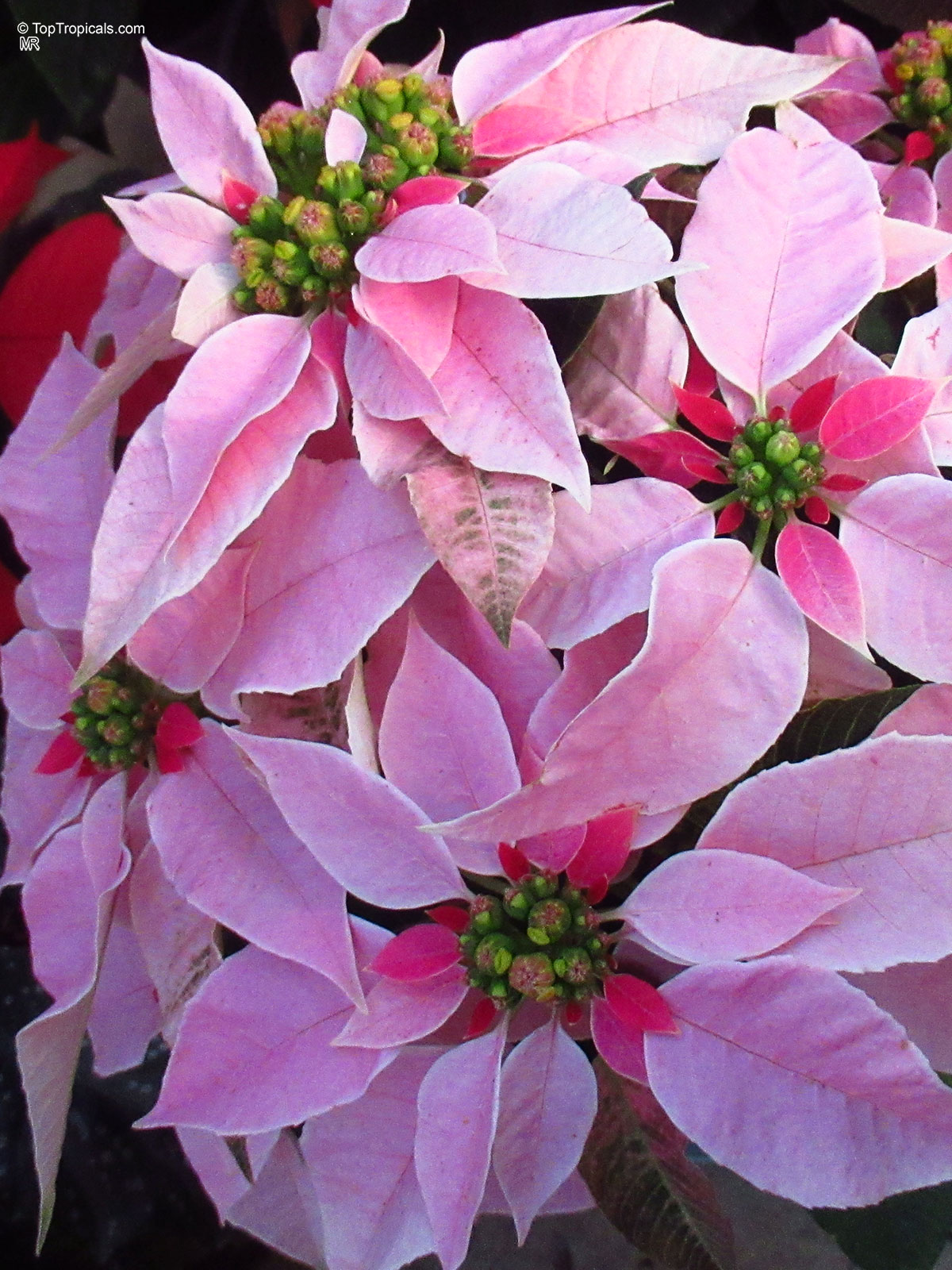
Euphorbia pulcherrima, the poinsettia, is known all over the world as the flower of Christmas. Growing naturally in Mexico, the plant was named after Joel Poinsett, who introduced them to the United States in the early 1800s. Blooming Time: November-December. Poinsettia flowers are small golden cups, known as cyathia, at the top and center of the plant. The red, pink, or white bracts surrounding the inflorescence provide the coloring. The plant needs a rich, well-drained soil. During the flowering period, the plant should have protection from direct south or west sun. It should also be protected from hot or cold drafts. In the home, poinsettias prefer a night temperature of 60 to 65F and a day temperature of 65F. The soil should be kept uniformly moist, possibly requiring water 2 to 3 times a week. Fertilize every 2 weeks with a solution of houseplant fertilizer at 1 tsp per gallon. After blooming reduce the amount of water and allow the plant to go dormant. Move poinsettia to cooler position but not below 50F. In late spring, repot the poinsettia and prune it at this time to produce a more shapely plant. Usually after flowering poinsettias become leggy. Keep the plant short and compact by pinching out the tips of new shoots until the middle of August. Water the plant with a solution of fertilizer every 2 weeks. Poinsettias are strongly photoperiodic. They require 12 hours of darkness each evening to bloom. Starting October 1, place a light tight box over the plant at 5:00 PM and keep it in place till 8:00 AM. Continue to water and fertilize during this period. Continue to cover the plant each evening until color begins to show in the top leaves. If these requirements have been met, color should develop in the uppermost leaves in the third week of November as the inflorescences develop.
Similar plants: Euphorbia pulcherrima (Ponsettia)
- Euphorbia aeruginosa (Miniature Saguaro)
- Euphorbia bracteata (Tall Slipper Plant)
- Euphorbia bubalina (Buffalo Euphorbia)
- Euphorbia burmannii (Steenbokbos)
- Euphorbia caput-medusae (Medusa's Head)
- Euphorbia characias (Bush Spurge)
- Euphorbia confinalis (Confinalis)
- Euphorbia cooperi (Transvaal Candelabra Tree)
- Euphorbia cotinifolia (Red spurge)
- Euphorbia cyathophora (Summer Poinsettia)
- Euphorbia decaryi (Euphorbia)
- Euphorbia dendroides (Tree Spurge)
- Euphorbia enopla (Pincushion Euphorbia )
- Euphorbia enterophora (Milk-bush)
- Euphorbia epiphylloides (Euphorbia)
- Euphorbia epithymoides (Cushion Spurge)
- Euphorbia espinosa (Woody Euphorbia)
- Euphorbia fiherenensis (Pencil Tree)
- Euphorbia flanaganii (Medusa Head)
- Euphorbia geroldii (Thornless Euphorbia)