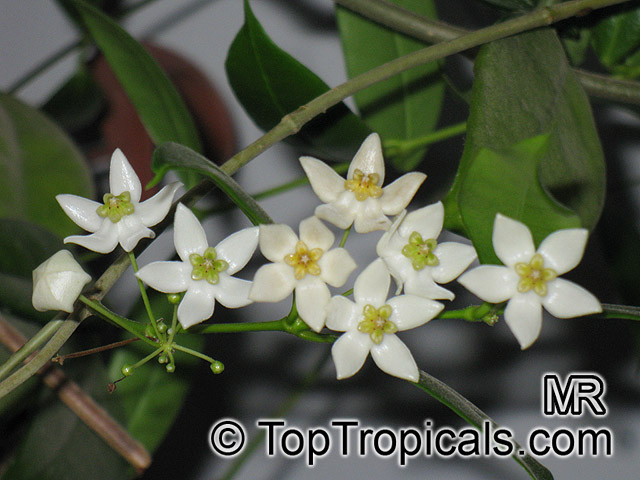
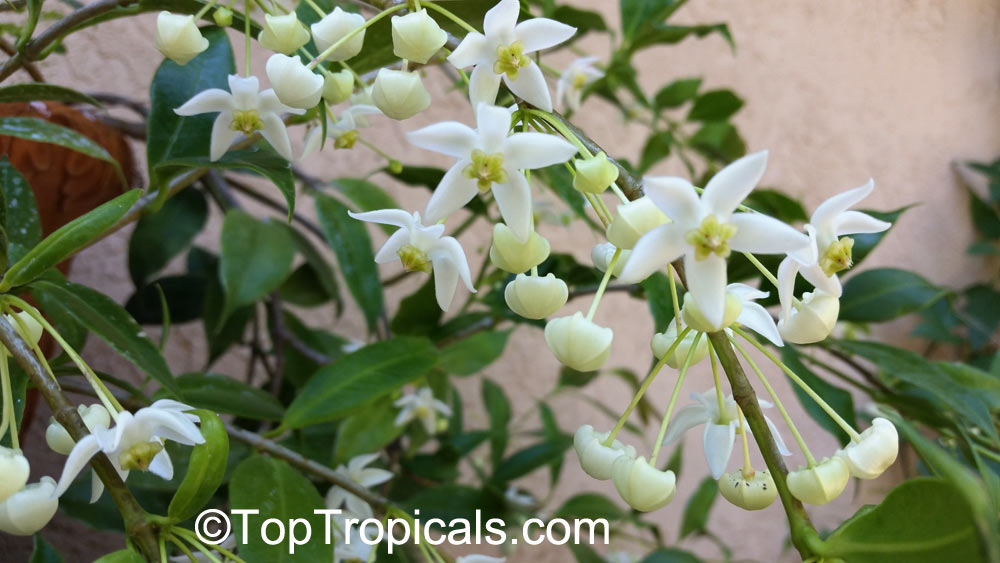
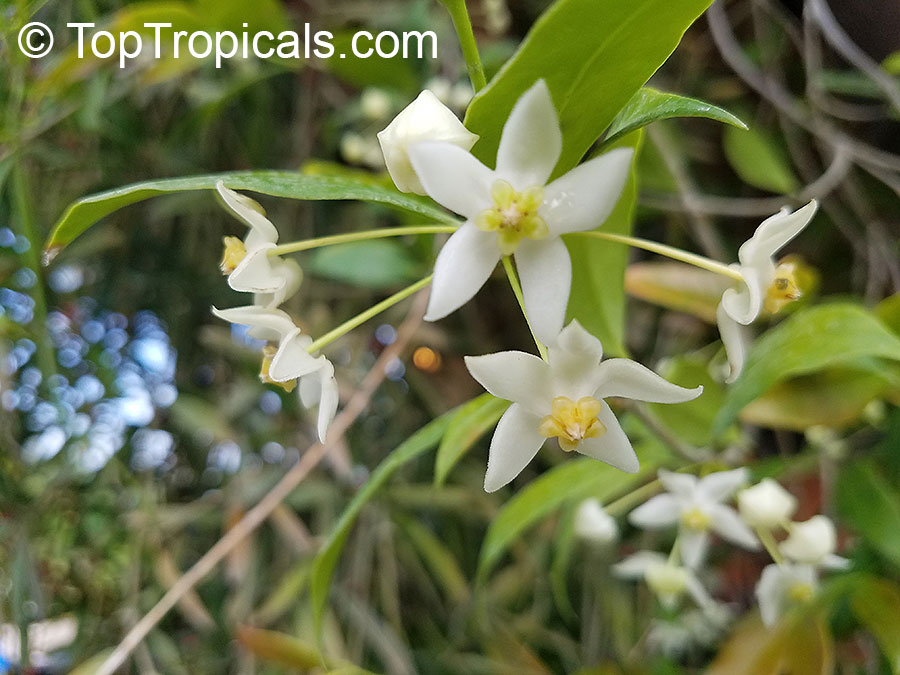
Hoya odorata (Wax plant)
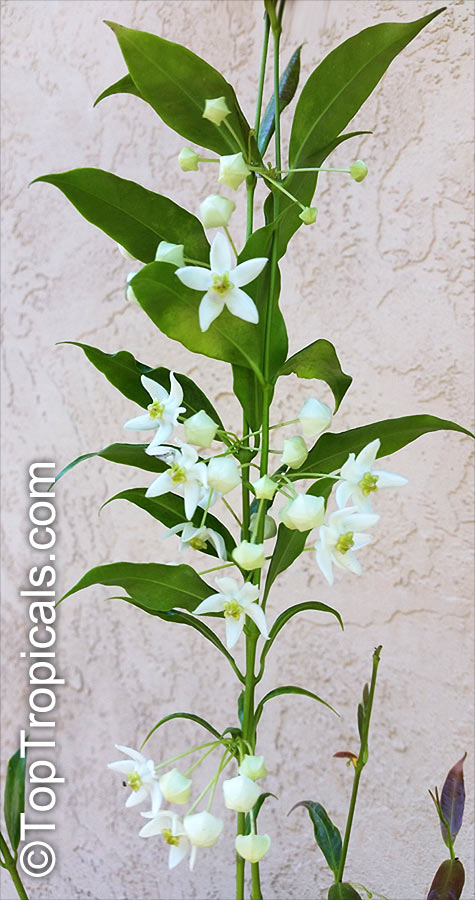
Botanical name: Hoya odorata
Common name: Wax plant
Family: Apocynaceae (Formerly:Asclepiadaceae)
Subfamily: Asclepiadoideae
Origin: Philippines
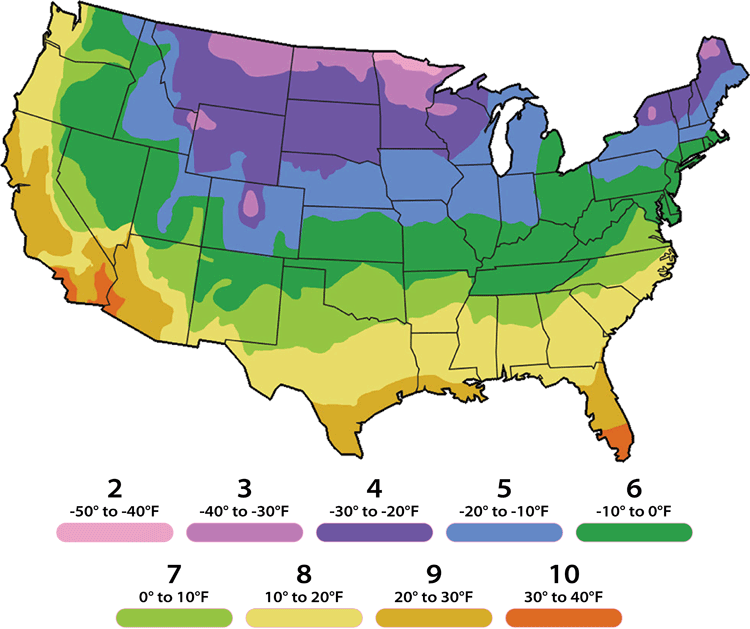
USDA Zone: 10-11

 Plant form: Climbing or groundcover vine
 Sun exposure: Full sun or bright light indoor; semi-shade
 Cold tolerance: Frost sensitive. Protect from freezing.
 Watering: Regular; epiphyte. Needs light, frequent misting or soaking to stay hydrated.
 Flower color: White and off-white
 Suitable for: Outdoors in the suitable USDA zone; small gardens, containers, and indoor growing
 Fragrance: Fragrant; perfume plant
 Wildlife: Attracts butterflies and hummingbirds
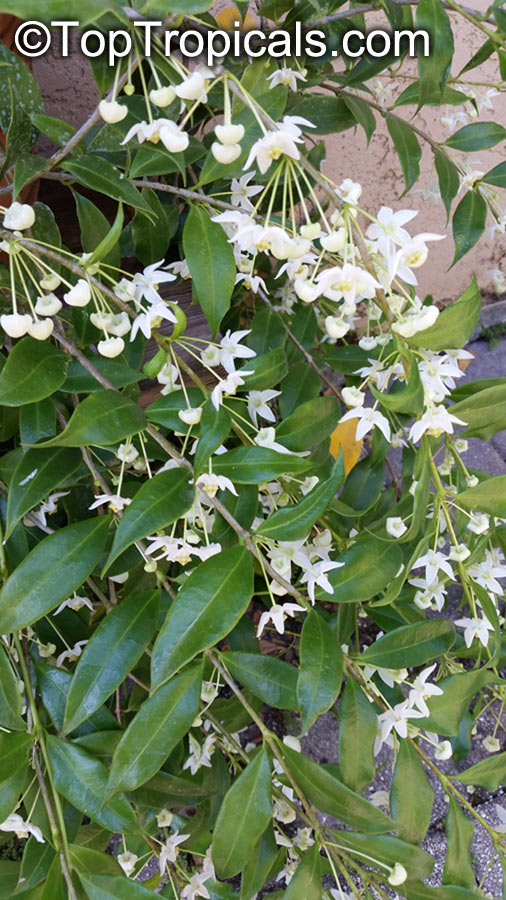
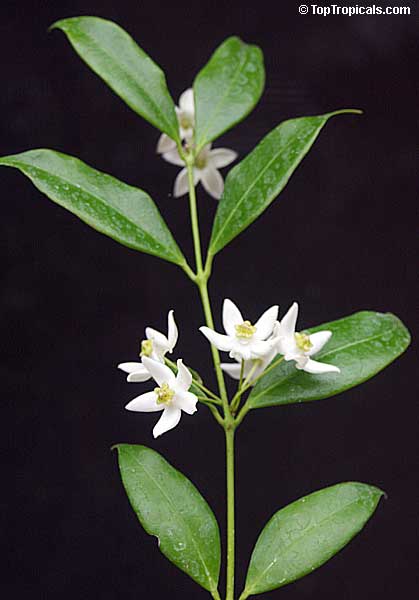
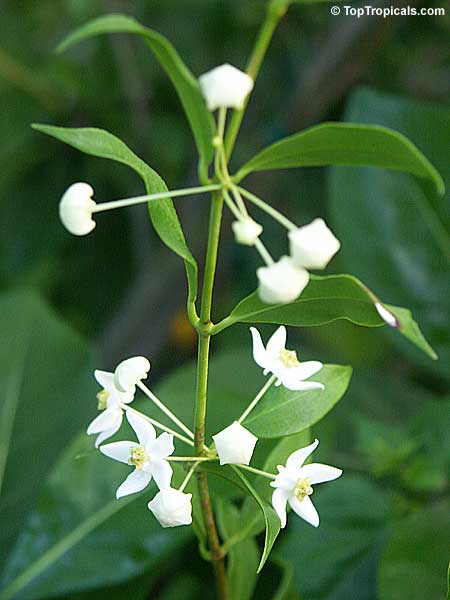
Hoya odorata is a climbing epiphytic species native to the Philippines, where it grows in warm, humid forests on trees and other supports. It develops long twining stems and attractive medium-green leaves that are typically thicker and more leathery than those of many small-leaved hoyas. Although vigorous, the plant generally maintains a refined appearance and adapts well to container culture when provided with adequate support.
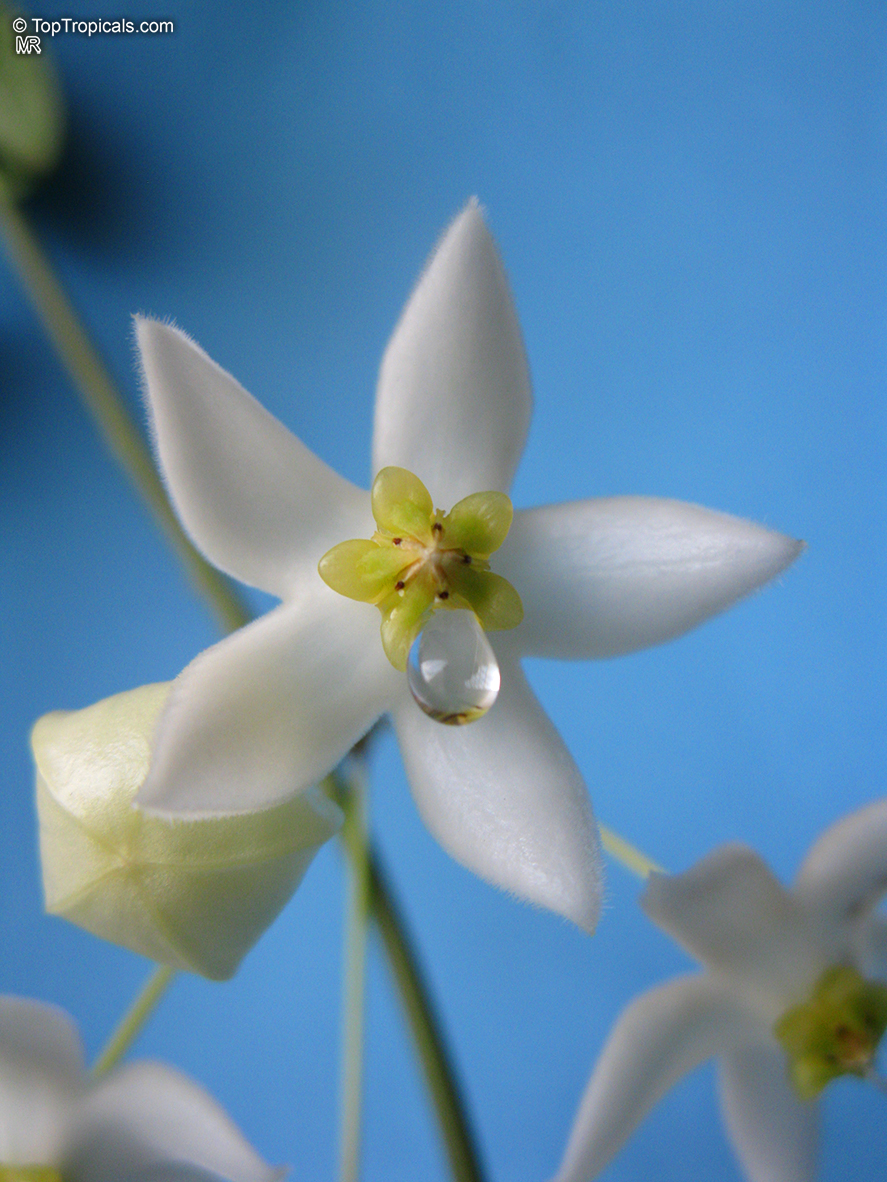
The species is best known for its highly fragrant flowers, a characteristic reflected in its name odorata, meaning "sweet-scented" or "fragrant." The blooms are typically pure white and are produced in rounded clusters that stand out clearly against the foliage. Their sweet perfume is often strongest during the evening and nighttime hours, helping to make this species a favorite among collectors of fragrant hoyas. Established plants may flower repeatedly under favorable conditions. Hoya odorata grows best in bright filtered light, a loose and well-drained growing medium, and regular watering with slight drying between applications. Warm temperatures and moderate to high humidity encourage vigorous growth and flowering. Suitable for USDA Zones 10-12, it is most commonly grown as a container plant or houseplant in cooler climates, where its elegant white flowers and strong fragrance can be appreciated up close.
Similar plants: Hoya odorata (Wax plant)
- Hoya archboldiana (Papua Wax Plant)
- Hoya australis (Common Waxflower)
- Hoya bella (Beautiful Hoya)
- Hoya bilobata (Wax Plant)
- Hoya calycina (Wax Flower)
- Hoya carnosa (Wax Plant)
- Hoya carnosa 'Compacta' (Hindu Rope)
- Hoya curtisii (Million Hearts)
- Hoya kerrii (Wax Hearts)
- Hoya lacunosa (Wax plant)