Pink Cassias
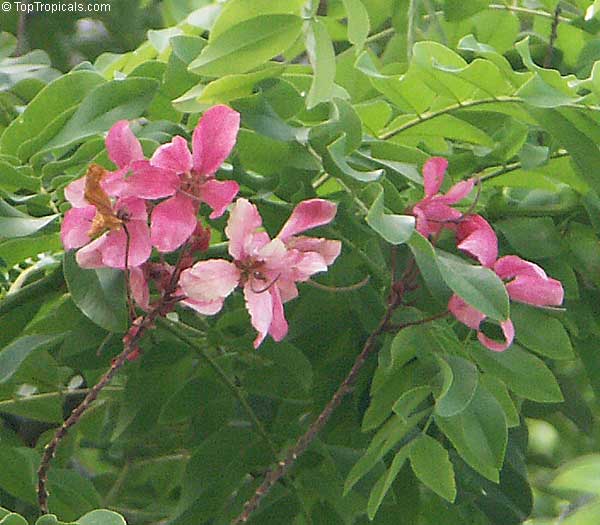
Cassia javanica
Scientific names:
CASSIA BAKERIANA, CASSIA GRANDIS, CASSIA JAVANICA, CASSIA MARGINATA, CASSIA NODOSA, CASSIA RENIGERA
Family:
Caesalpinioideae / Caesalpiniaceae
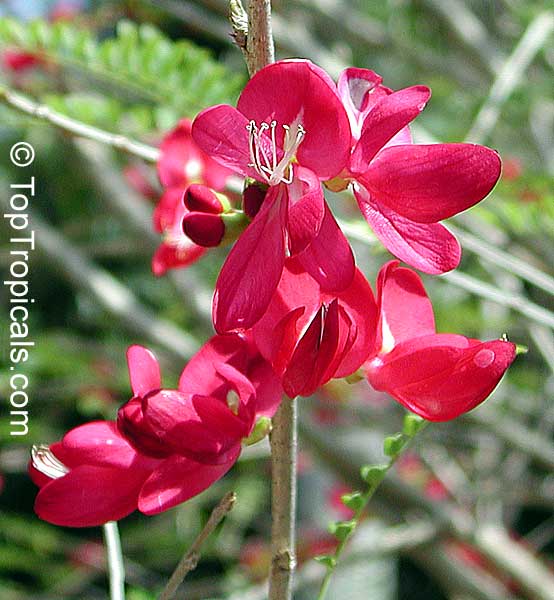
Cassia grandis
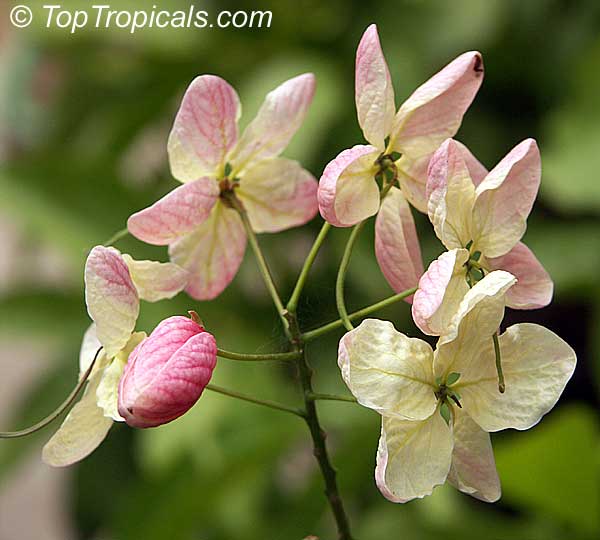
Cassia bakeriana x Cassia fistula
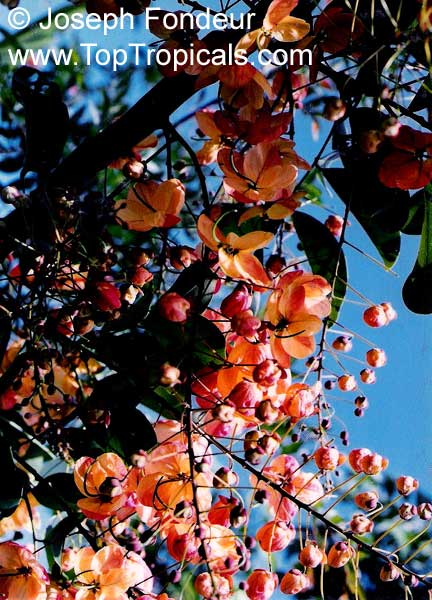
Cassia marginata

Cassia marginata
In delicate contrast to the vivid hues of our other spring flowering trees, the Pink Cassias, with their lovely cool shades of pinks, greens and white, are a beautiful and restful sight. No one could fail to be moved by the glory of a Cassia in full bloom when its long, sweeping branches are laden with blossom. Each of the five varieties has its own individual, almost indescribable charm. At a glance it is difficult to distinguish one from another but a little study reveals numerous characteristics. They quickly became popular and are now common in gardens and on roadsides. Few of them have names in any vernacular.
The first to bloom is the Horse Cassia (C. grandis). In the winter all the leaves fall and in March or April, from the axils of the old leaves rise fine sprays of bright-pink flowers, shading to pale peach and coral according to the amount of sunlight received. The flower branchlets spring rather stiffly from either side of the main stem giving a different appearance to the softly drooping sprays of the other Cassias. There are no bracts at the bases of the flower stalks.
The leaves are pinnate and bear from ten to twenty small, oval leaflets,
rounded at the ends. When young they are soft and downy and the end
leaflets have a distinctive wash of bronze. The fruit is a wrinkled
3-inch pod, smooth and cylindrical.
The
Red Cassia (C. marginata) known as Vakai and Kirudam in Tamil and
Samarela in Telegu, is smaller and less robust than the other varieties,
but is extremely beautiful at all times of the year. The name refers
to the thickened margins of the leaves. In May and June, the upper surfaces
of the downward sweeping, hairy branches are laden with copious, short
clusters of deep pink flowers. The tree appears almost overweighted
with the profusion of blossoms. The flowers are quite small, little
more than 1 inch across, with five petals, two of which are often slightly
larger. The calyx is pink and the nine stamens are in three groups;
three are very long and curved, the next four are less than half that
length and all bear red anthers. The remaining two are very short and
have yellow anthers. The flowers are more of a salmon-pink than the
other Cassias and each petal is delicately veined with green, the pink
becoming deeper as the flower ages. The bracts at the bases of the flower
stalks are palegreen and the calices pink. Each leaf bears from five
to ten pairs of small leaflets, oblong and blunt ended. The pods are
slender 10-inch cylinders.
The Burmese Pink Cassia (C. renigera) is thus named because of the kidney-shaped appendages from which spring the leaf stalks. It is a small tree - not more than 20 feet but in May when the large, showy flowers and tender, green leaves appear, it presents a strikingly beautiful picture, enhanced by the varied tones of pink in each dense cluster. These clusters rise on short stems from the scars of the old leaves. At the base of each flower stalk is a bract like a small leaf and these numerous bracts crowded together form a long clump from which spring the downy, red stalks. Outside, the calyx is dull red; inside, the palest green. The flowers, each about 2 inches across are a deep pink when young, but fade almost to white. The ten yellow stamens are in groups of three, four and three, crowned with delicate green anthers. The longest three are curled like the letters "S" and have a curious balloon-like swelling in the middle. The leaves, which fall in December, leaving the tree adorned only by the long blackened pods, are up to 1 foot in length. Each bears from eight to twenty pairs of downy oblong leaflets, rounded at the tips.
Cassia nodosa. The name alludes to the node, or swelling in the longest
stamens, but as other species also have this characteristic the name
is rather misleading. It is a larger tree with a fine, spreading crown.
In May the flowers appear in groups along the downy branches, each cluster
borne on a short stalk. The flower stems are red and grow in whorls.
The buds and flowers are deep pink, fading to white and each petal is
somewhat pointed at the tip. The calyx is green and velvety and the
bracts narrow ovals. There are ten yellow stamens, the longest three
having a round swelling in the middle. The pods grow as long as 18 feet
and are an unattractive feature of the tree. A leaf may be from 6 to
12 inches long and comprise up to thirteen pairs of leaflets. These
are pointed at the apex, leathery and slightly glossy.
The Java
Cassia (C. javanica) and Cassia
bakereana (Dwarf apple blossom tree) are very similar to the last
species, but the few distinguishing features can be observed with little
trouble. It is slightly smaller, but has the same spreading crown, long
drooping branches and numerous, feathery leaves, but the branches are
rough. The flowers are similar but the sepals are smooth, green inside
and deep-red underneath. The petals are rounded and the bracts heart-shaped
and pink-tinged. Similar, too, are the ten stamens and the pods, but
the latter attain a greater length. In the number of leaflets and length
of leaf they are alike but these leaflets are rounded and have no gloss.
They are smooth and silky to the touch.
Pink Cassias are definitely one of the best collectible garden trees with unusual accent.
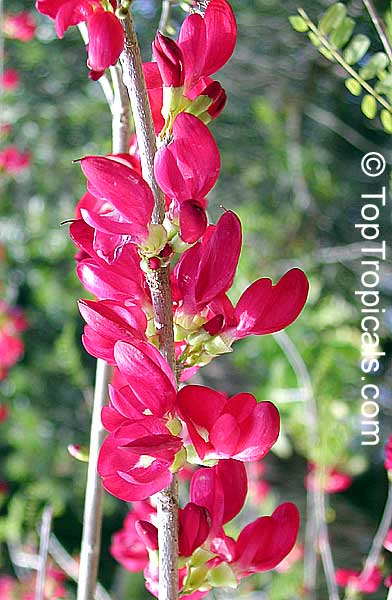
Cassia grandis
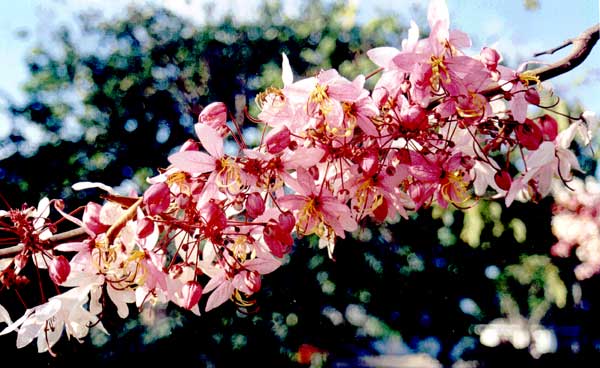
Cassia bakeriana
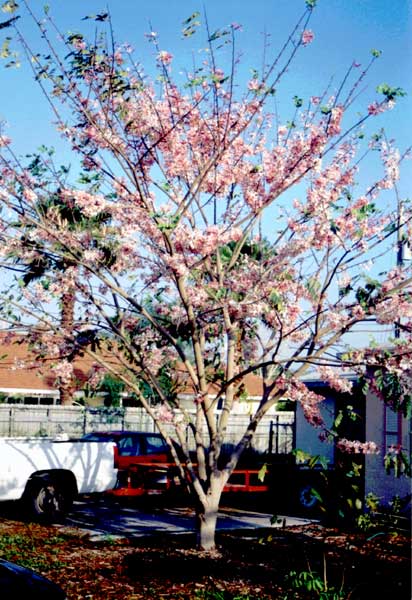
Cassia bakeriana