Invasive plant - Plant Encyclopedia Results
| Number of plants found: 90 | Next | 
|
Go to page: | 1 | 2 | 3 | 4 | 5 | Last |
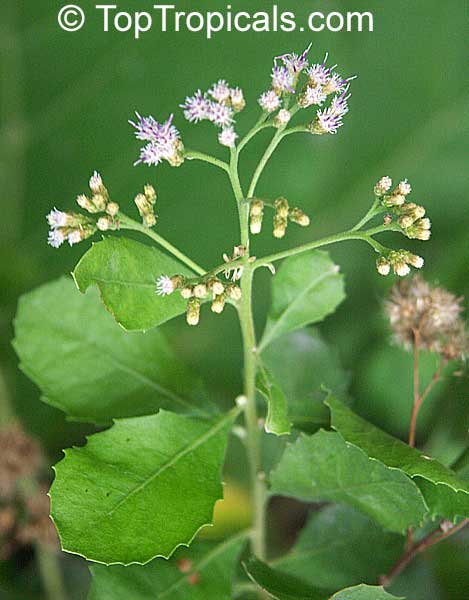
Botanical name: Ageratum conyzoides
Common names: Mexican Ageratum, Yoat Weed
Family: Asteraceae
Origin: Central America , Caribbean


The Ageratum is an annual herb that grows to a height of around two feet and produces clusters of small, pretty flowers along its hairy stems. In some countries, it is classed as a weed which is hard to control. In traditional medicine systems in areas where Ageratum grows continuously, it is widely used. In Brazil, an infusion of its leaves or the entire plant is employed to treat colic, colds, fevers, diarrhea, rheumatism and spasms, as well as serving as a tonic. It is also recommended for the treatment of burns and wounds. In countries of Latin and South America, it is utilized for its antibacterial properties to treat infectious conditions and bacterial infections. In Africa, it is employed for fever, rheumatism, headache, pneumonia, wounds, burns and colic.
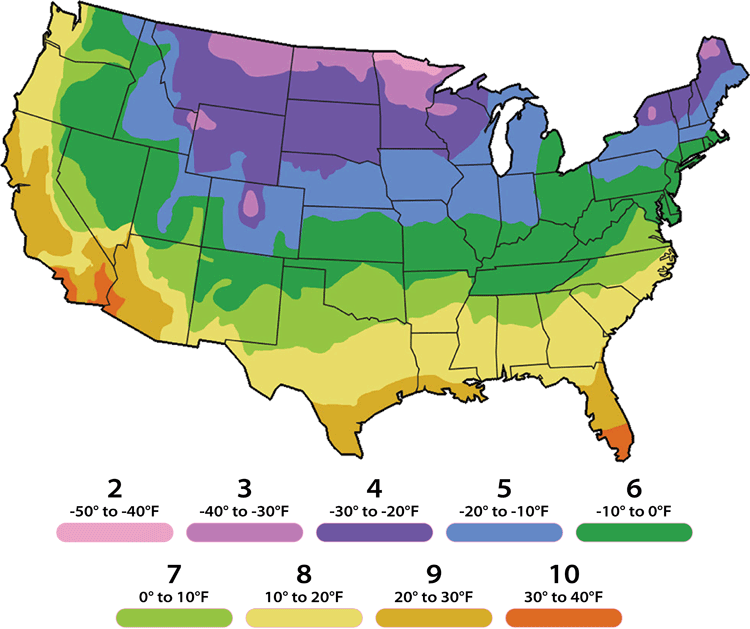
Ageratum is native to Central America and the Caribbean and can be grown in USDA Zone 9-11, either outdoors or indoors in cooler climates. It grows best in rich, moist soil, with regular watering. Its colorful blooms, which come in shades of pink, white and off-white, will attract butterflies and hummingbirds. The flowering season of Ageratum is usually all summer and the shrub often self-seeds depending on the climate.
To keep Ageratum healthy, the soil should be kept moist but not soggy. Deadhead the spent flowers and avoid overwatering to prevent root rot. If planting in a pot, it is best to first use a potting soil specifically formulated for containers, and then cover with 1-2 inches of a moisture-retaining material such as straw or bark. To encourage blooming, cut the plant back after flowering.
While Ageratum has a place in traditional medicine systems, it is believed to be invasive in parts of the United States. Therefore, caution should be used when planting and spreading to wild, natural areas should be avoided to prevent ecological damage.
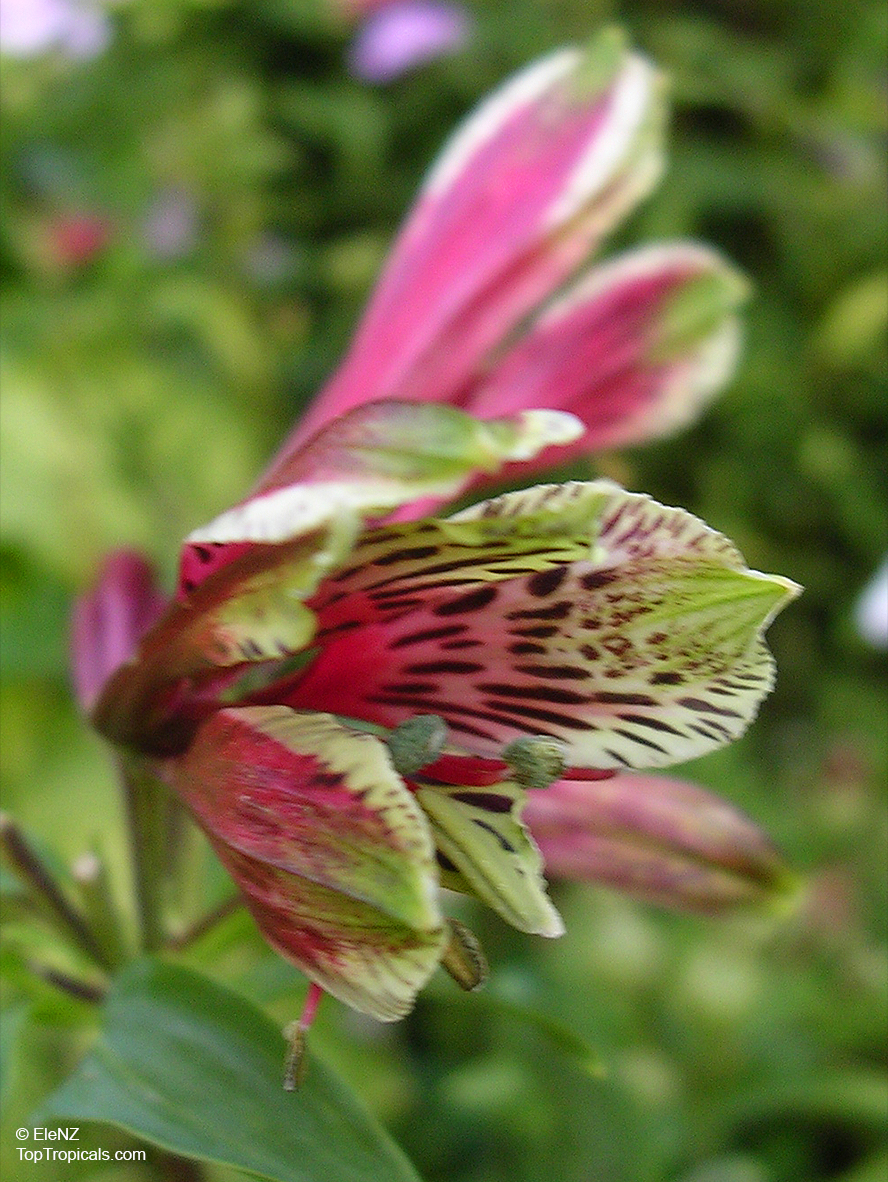
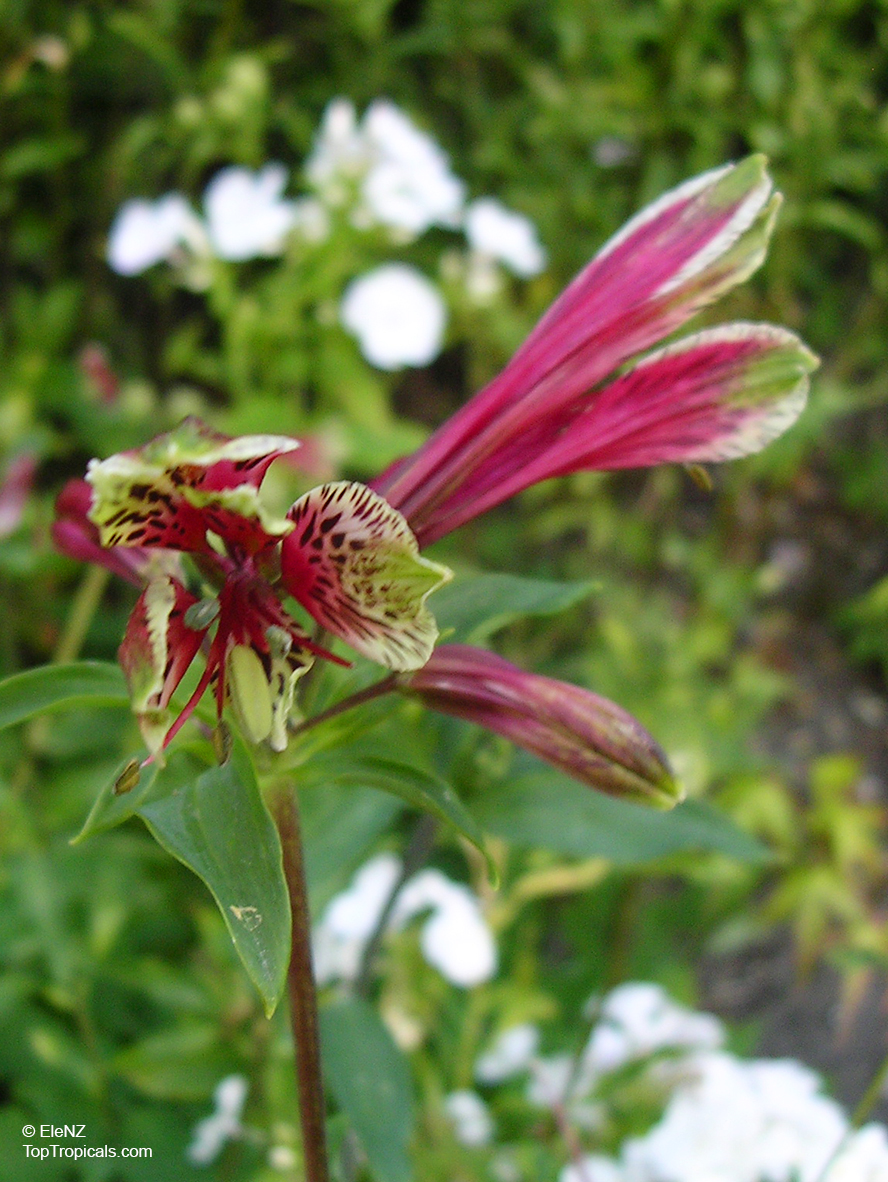
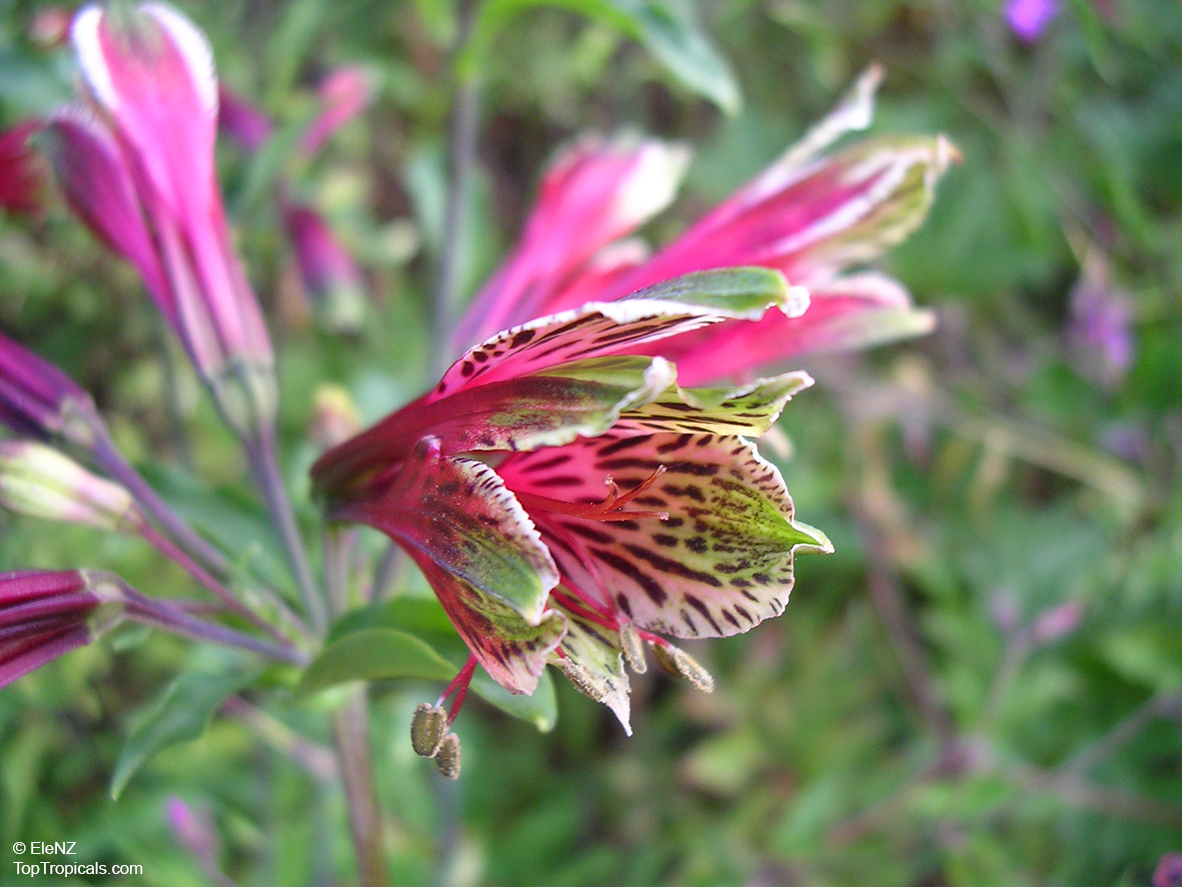
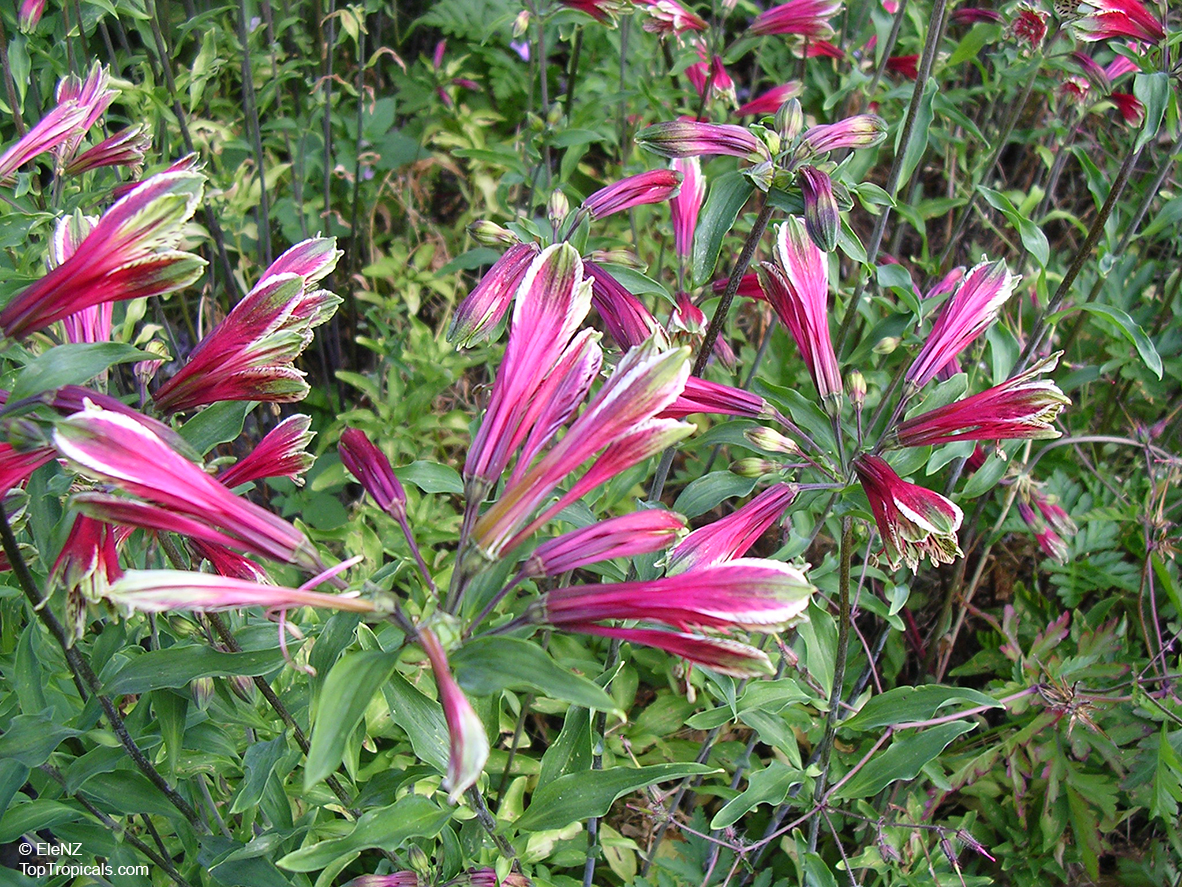
Botanical name: Alstroemeria psittacina
Common names: Parrotlily, Parrot Flower, Red Parrot Beak, New Zealand Christmas Bell
Family: Alstroemeriaceae
Origin: northern Brazil


Parrotlily is a small, evergreen to sparsely deciduous shrub, usually 2-5 ft tall and 3-4 ft wide. A woody perennial that is grown commercially as a root ball plant and is known for its bright unusual color and as a long blooming perennials. Parrotlily loves regular water, when established tolerates more moderate water. In cold regions, grow parrotlily in a pot and bring it in during winter months to prevent it from freezing. It should be grown in USDA Zones 7 -10 and is mature cold hardy in temperatures at least to the lower 30s F for a short time.
Parrotlily is attractive to bees and butterflies and hummingbirds, making it an ideal plant to attract pollinators to the garden. The unusual color and long blooming season of these flowers make them popular in cut flower arrangements. Plantings of parrotlily in mass can be quite striking.
When growing in containers, as houseplants, or in colder climates, make sure to provide containers that are 18 to 24 inches in diameter with adequate drainage. The parrotlily prefers slightly acidic, fertile soil and full sun. Keep the soil evenly moist and water the plant from above to prevent water from getting into the center of the plant and rotting the root system. Keep the soil temperature warm, but not hot. Add a layer of mulch to help keep the soil moist and regulate temperature during the colder months. Fertilize parrotlilies, depending on the soil pH, once or twice a year with a slow- release granular fertilizer. Prune any dead or damaged branches anytime and always deadhead spent flowers to encourage new blooms.
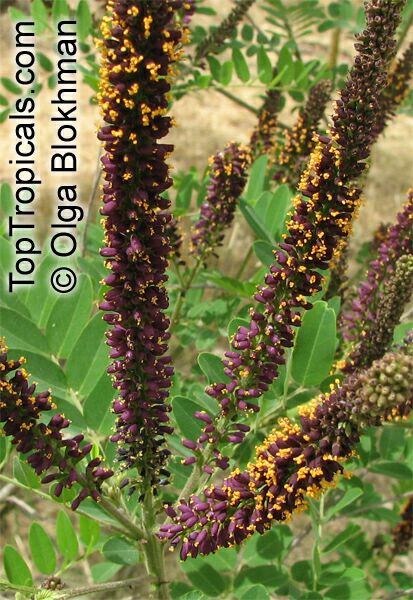
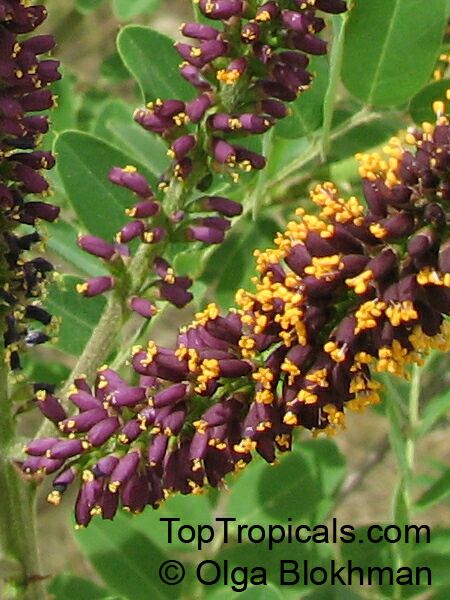
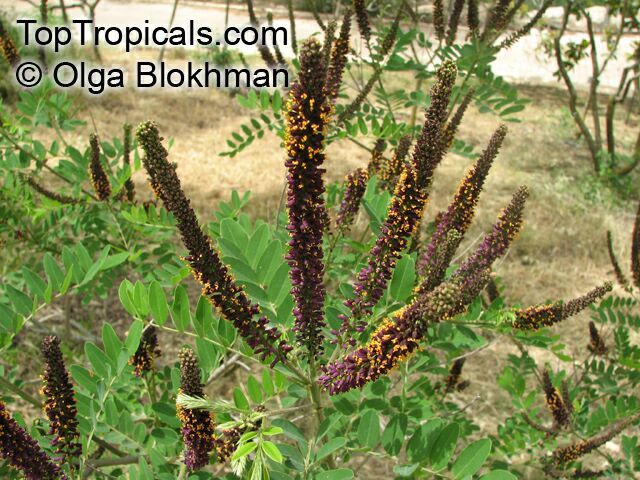
Botanical name: Amorpha fruticosa
Common name: Desert False Indigo
Family: Fabaceae
Subfamily: Faboideae
Origin: North America


Desert Indigo is great for a butterfly garden.
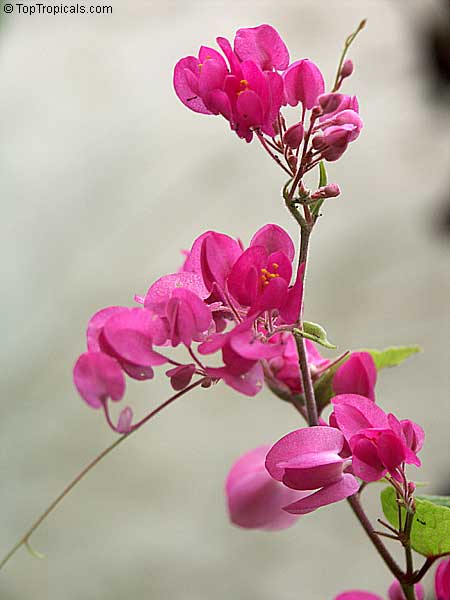
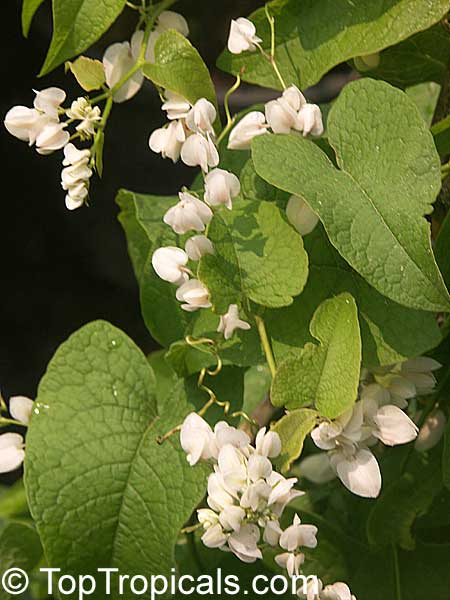
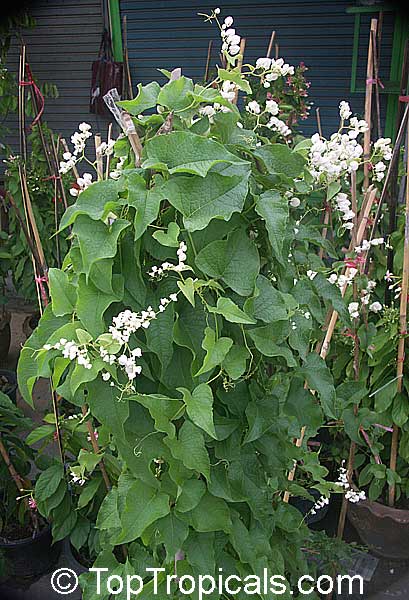
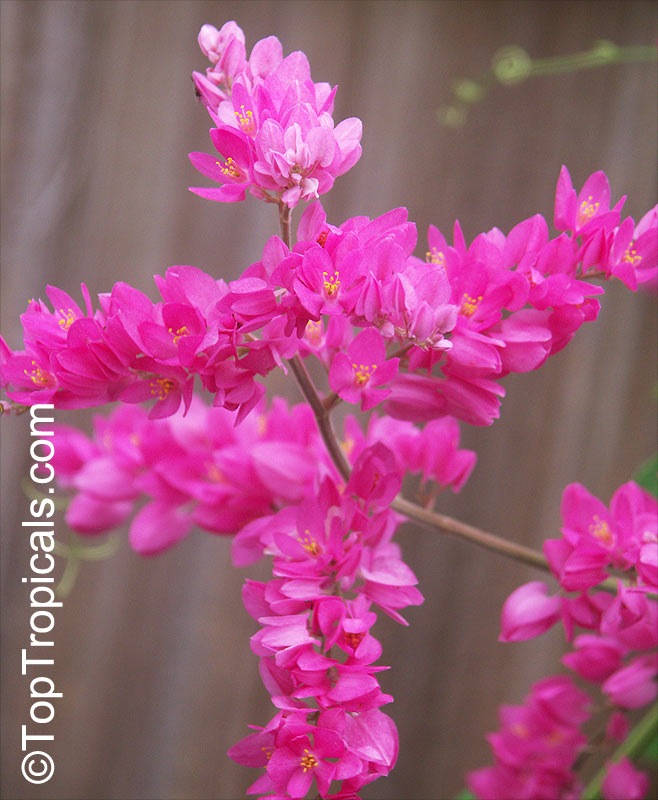
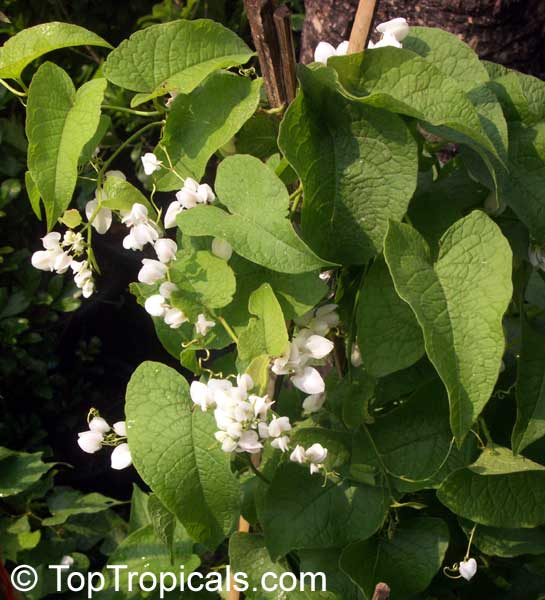
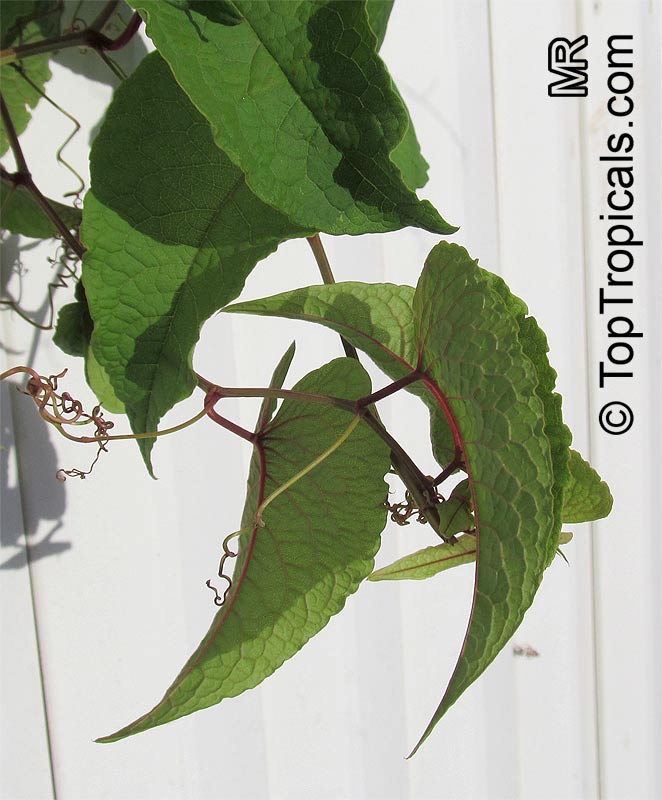
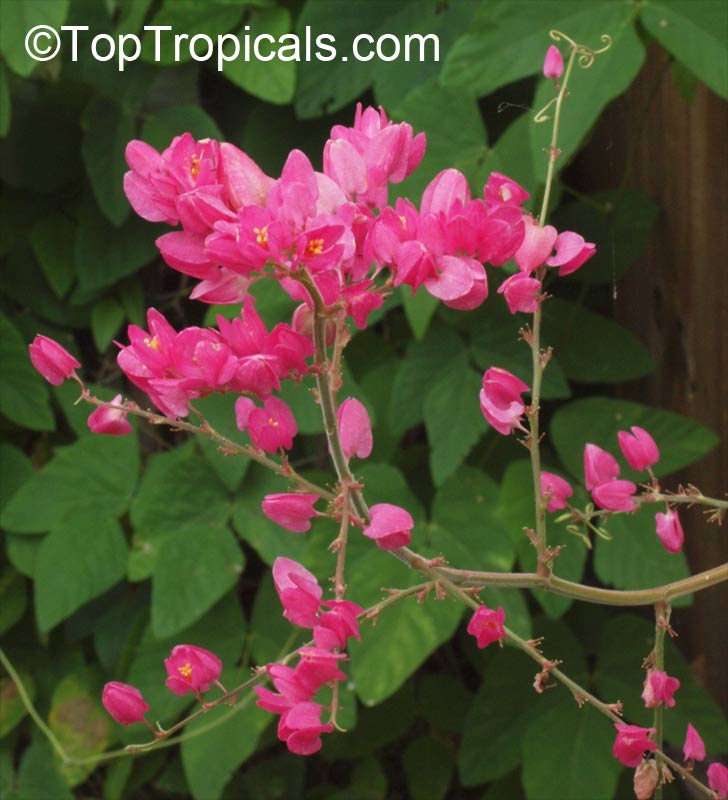
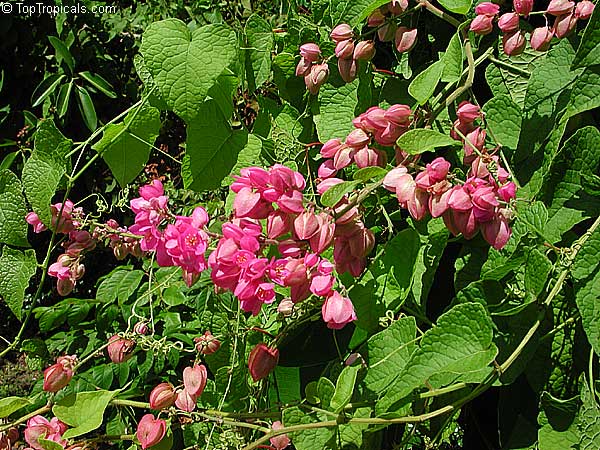
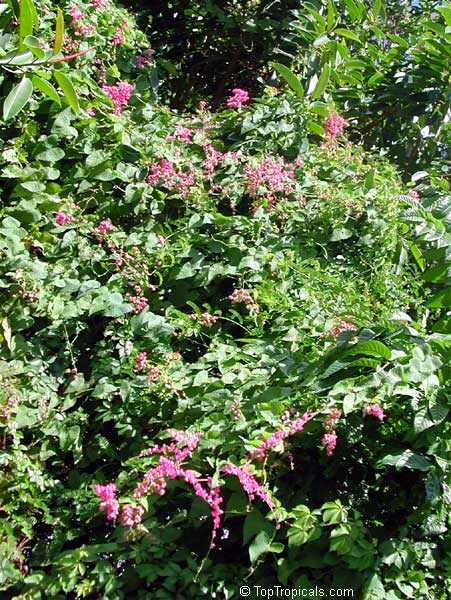
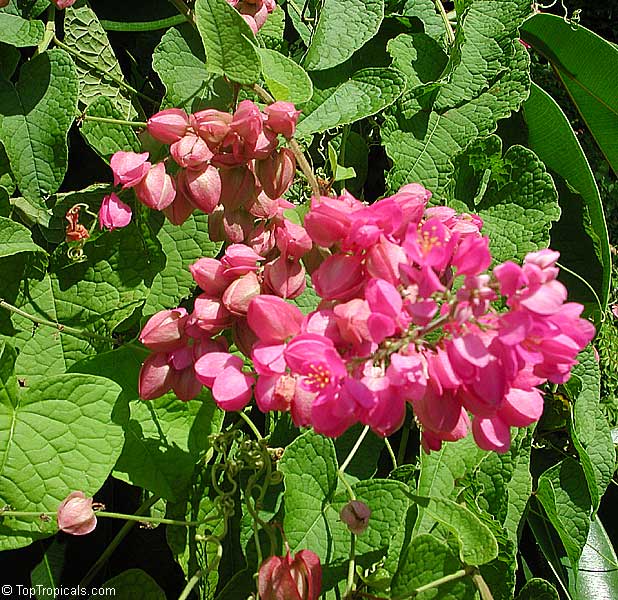
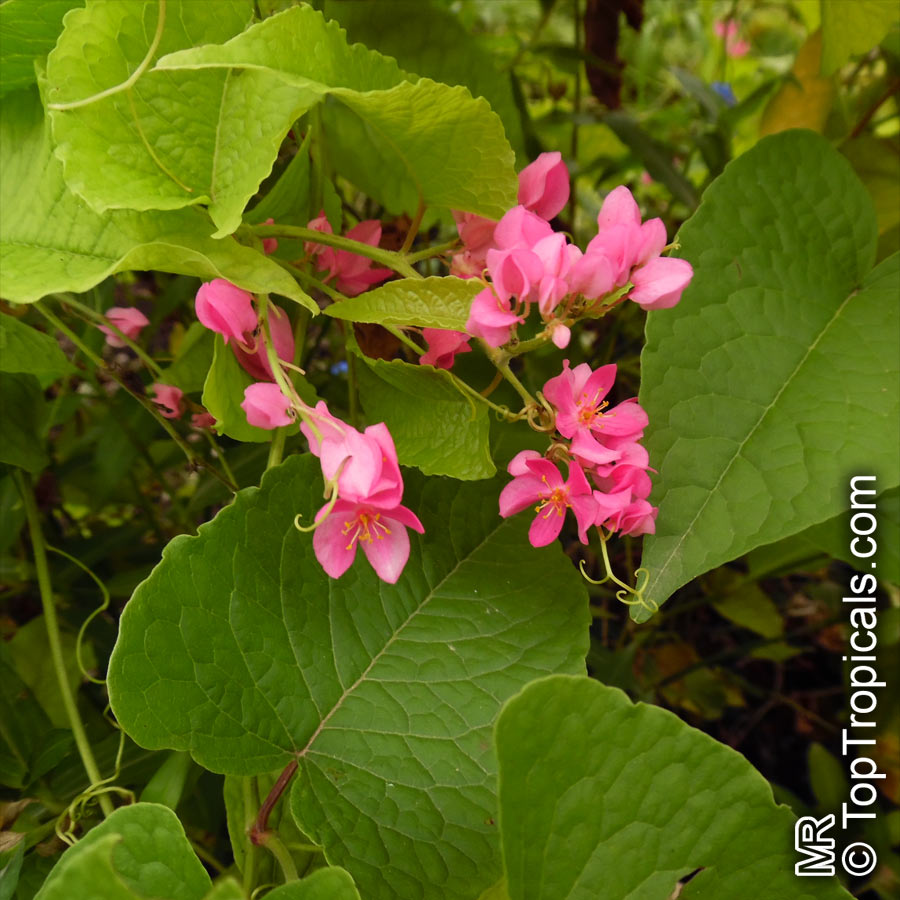
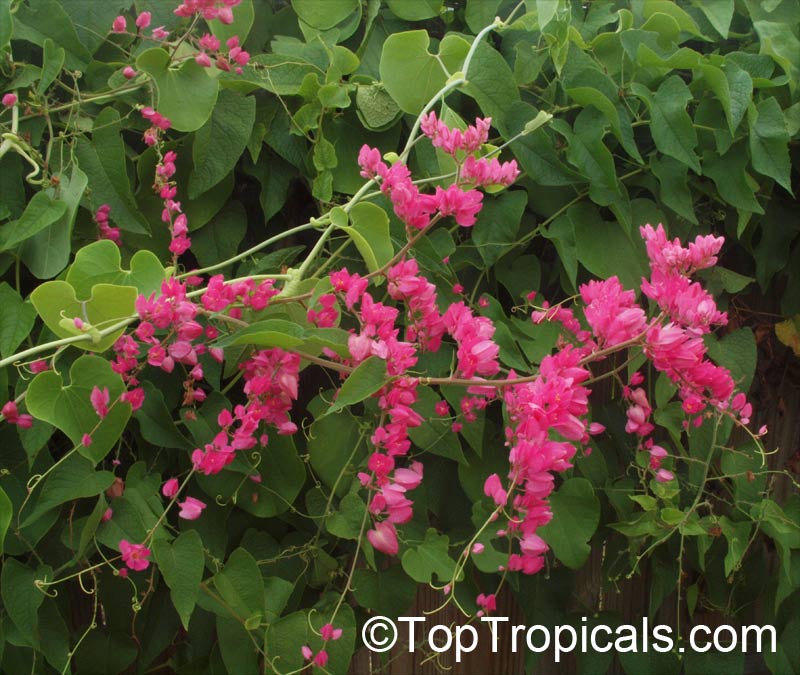
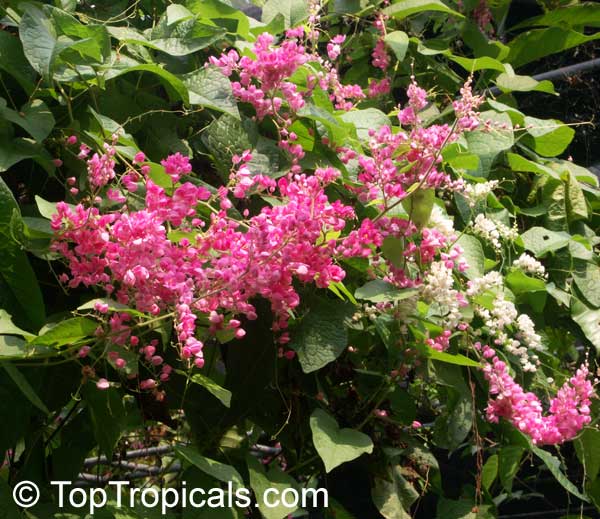
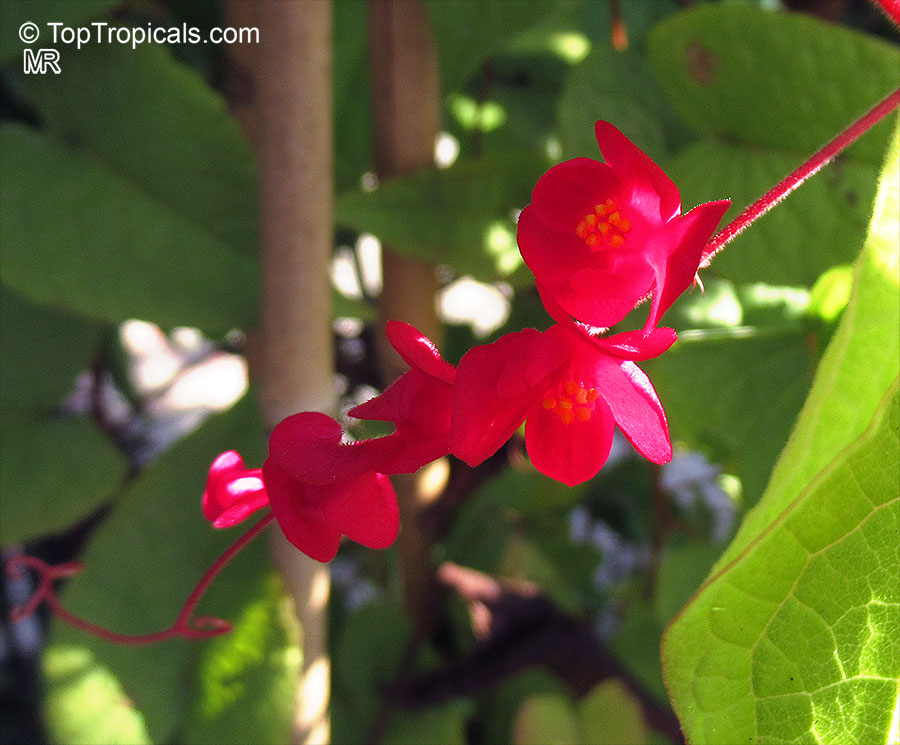
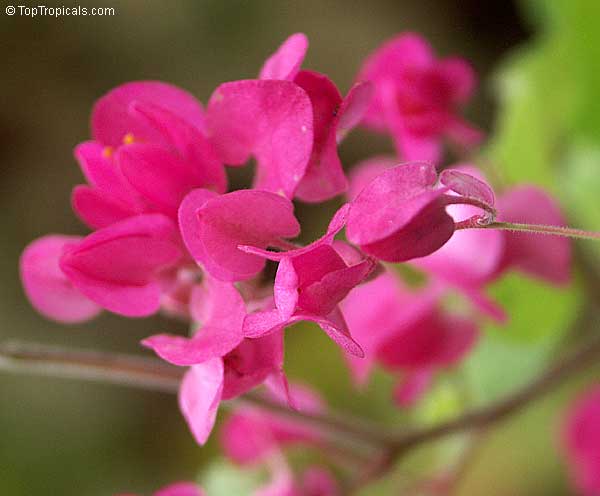
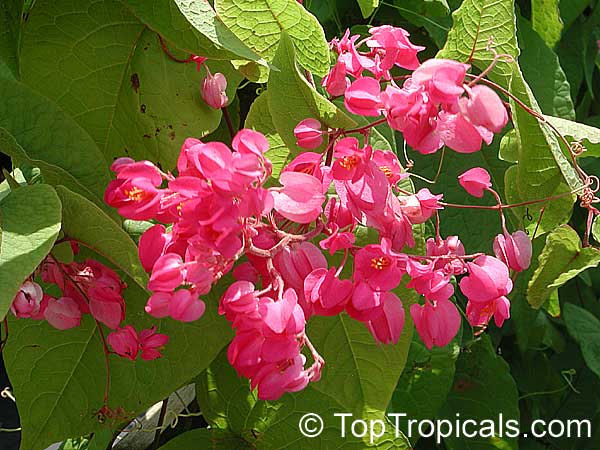
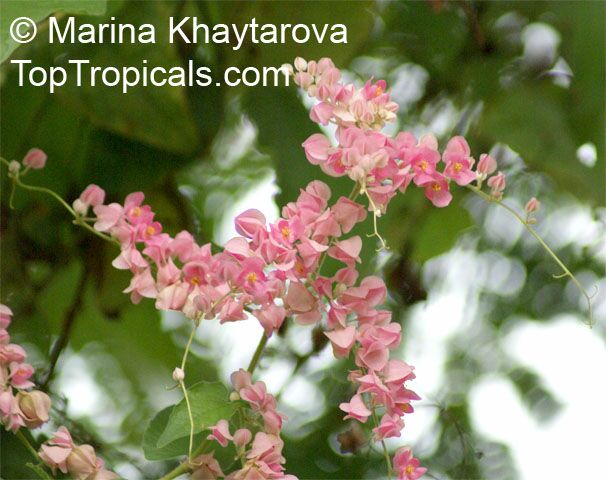
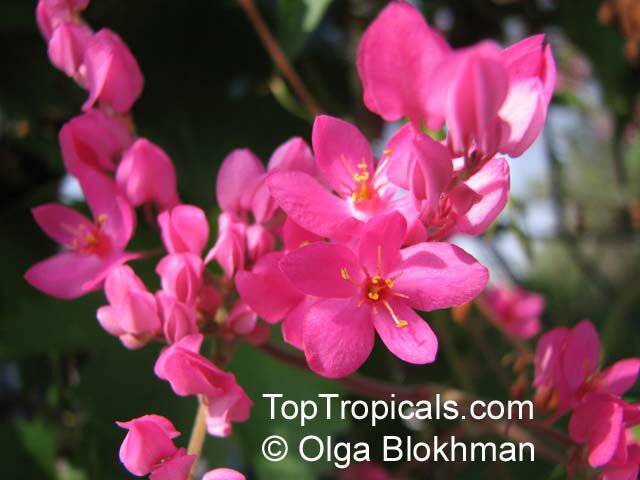
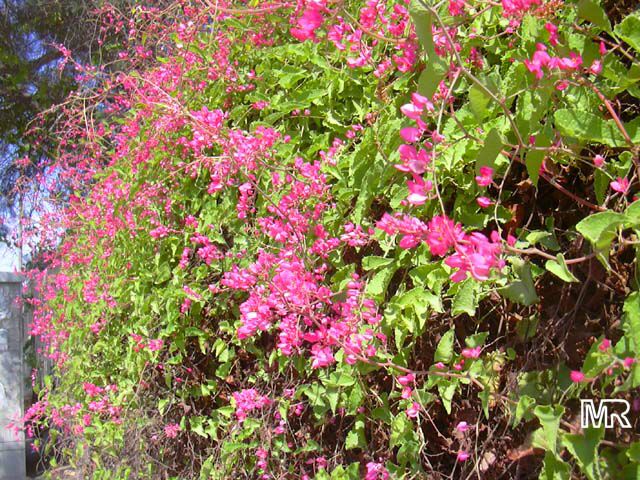
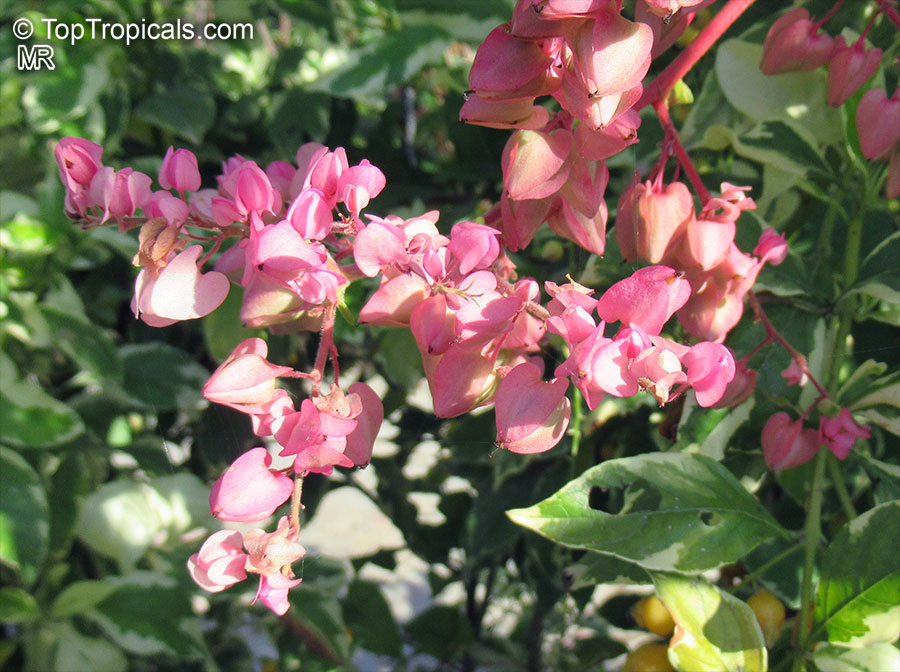
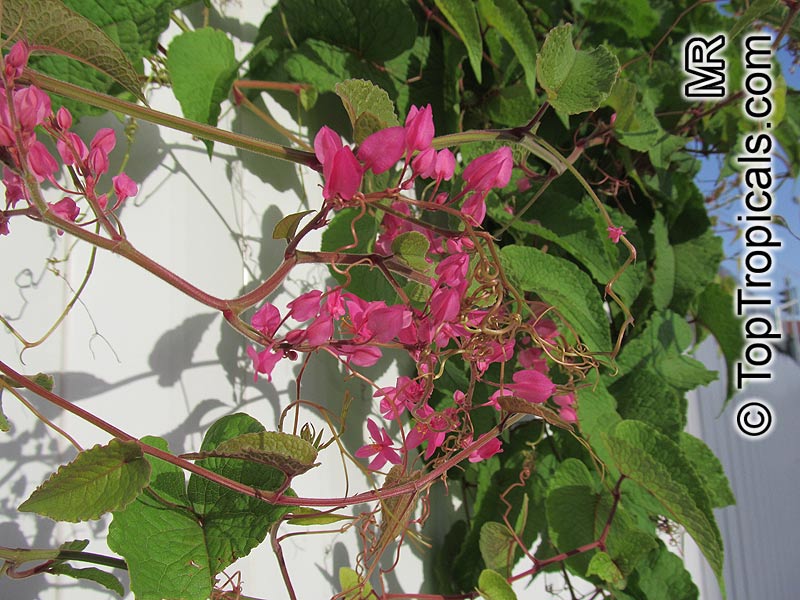
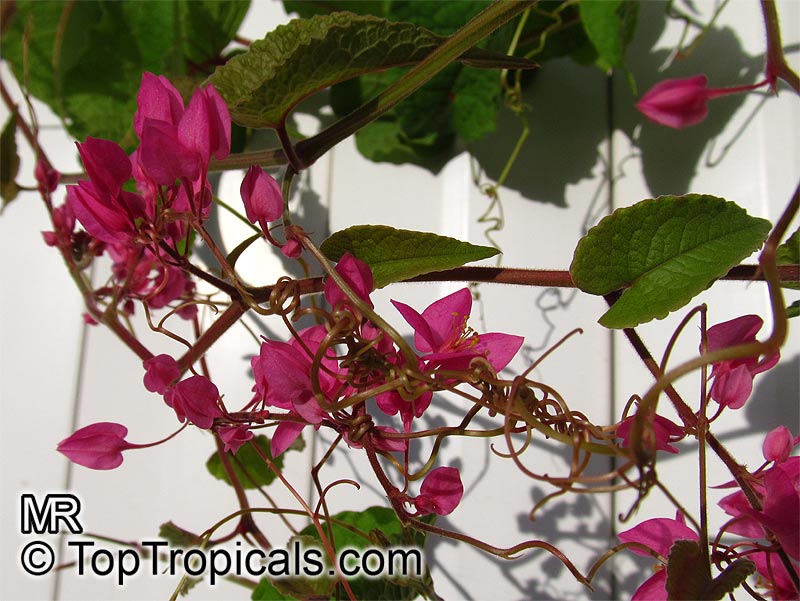
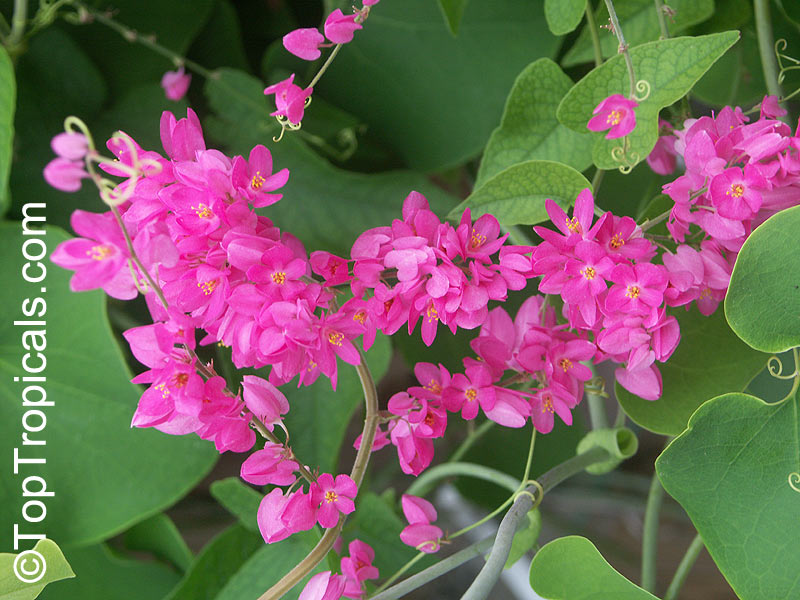
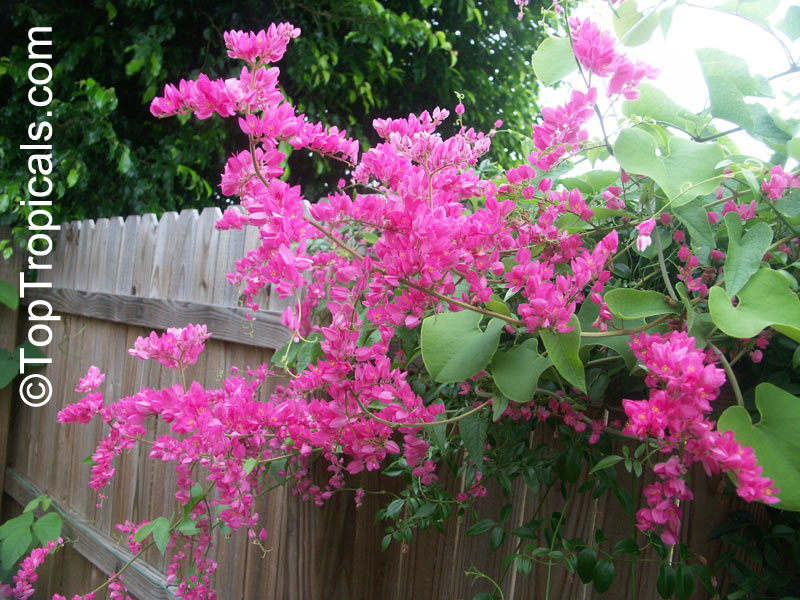
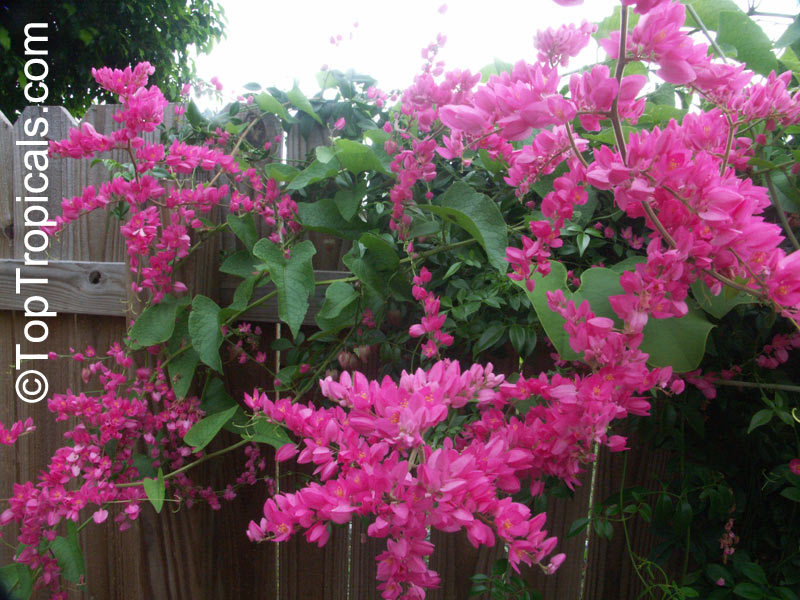
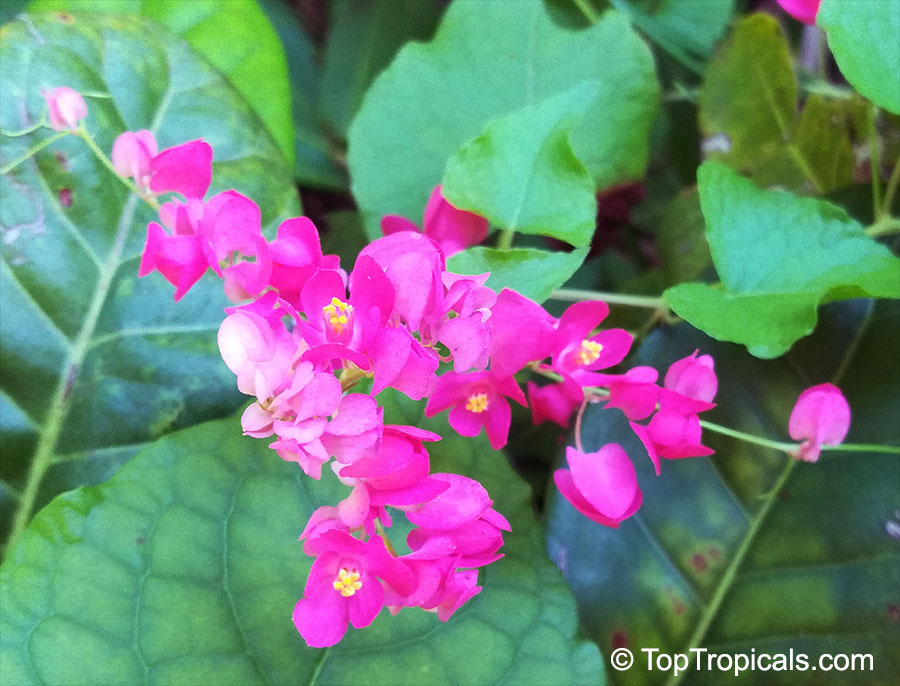
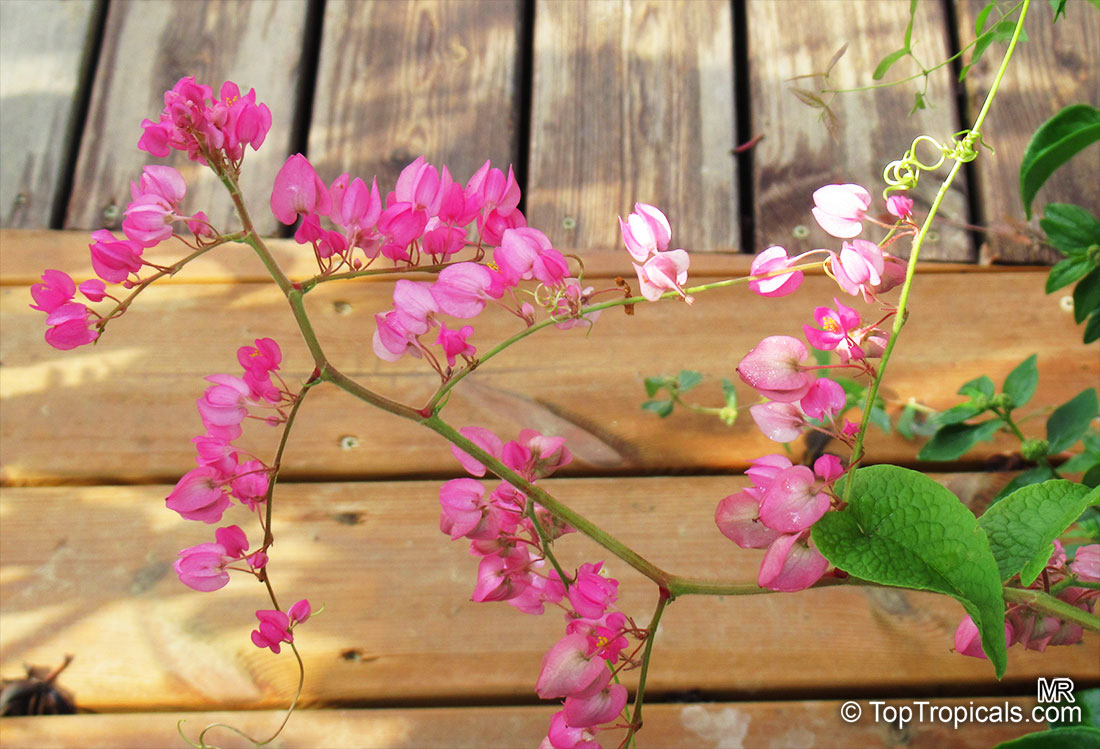
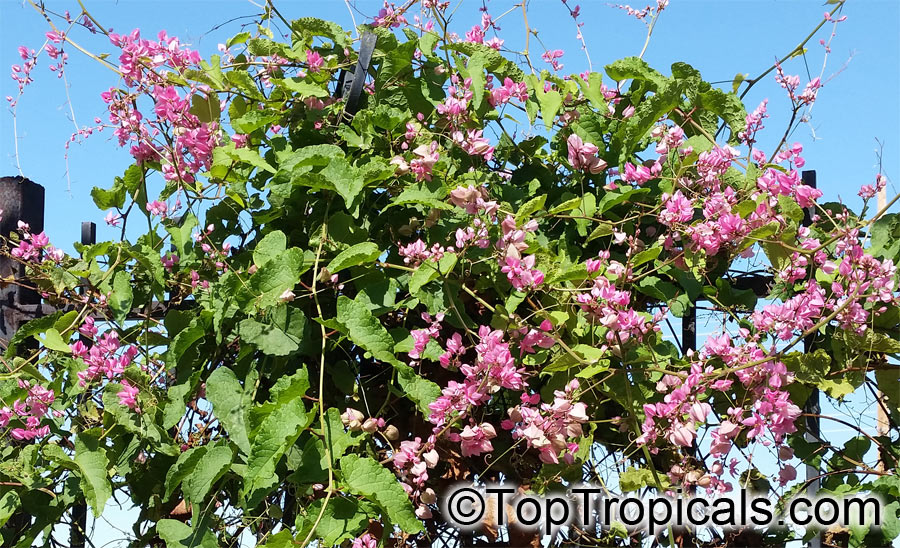
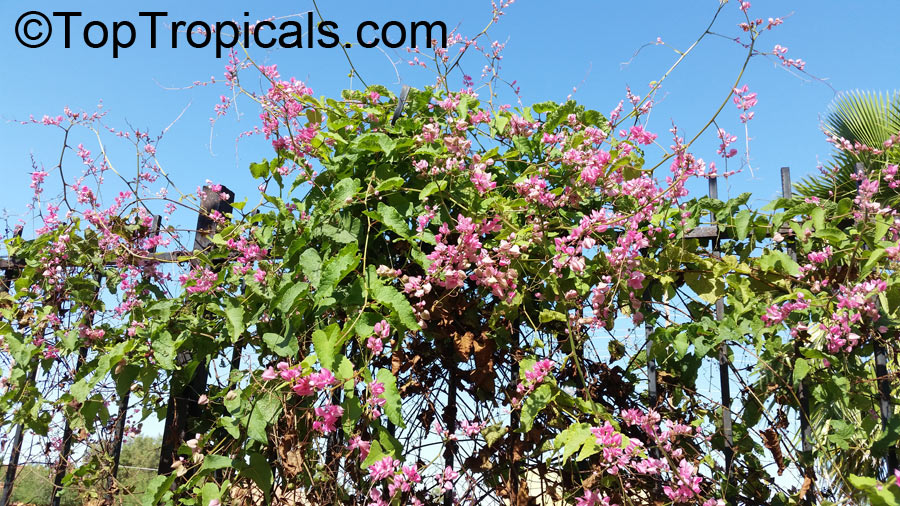
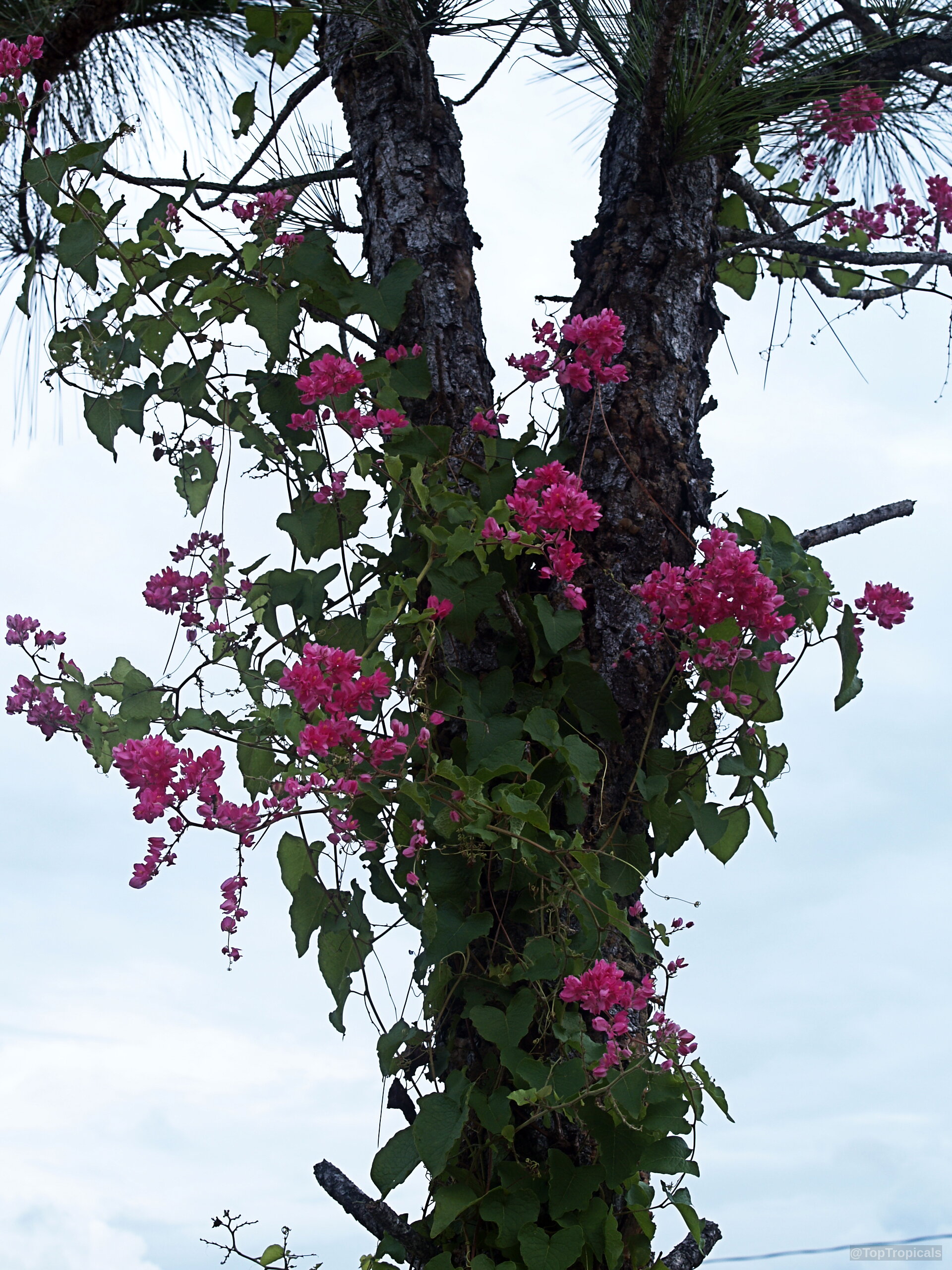
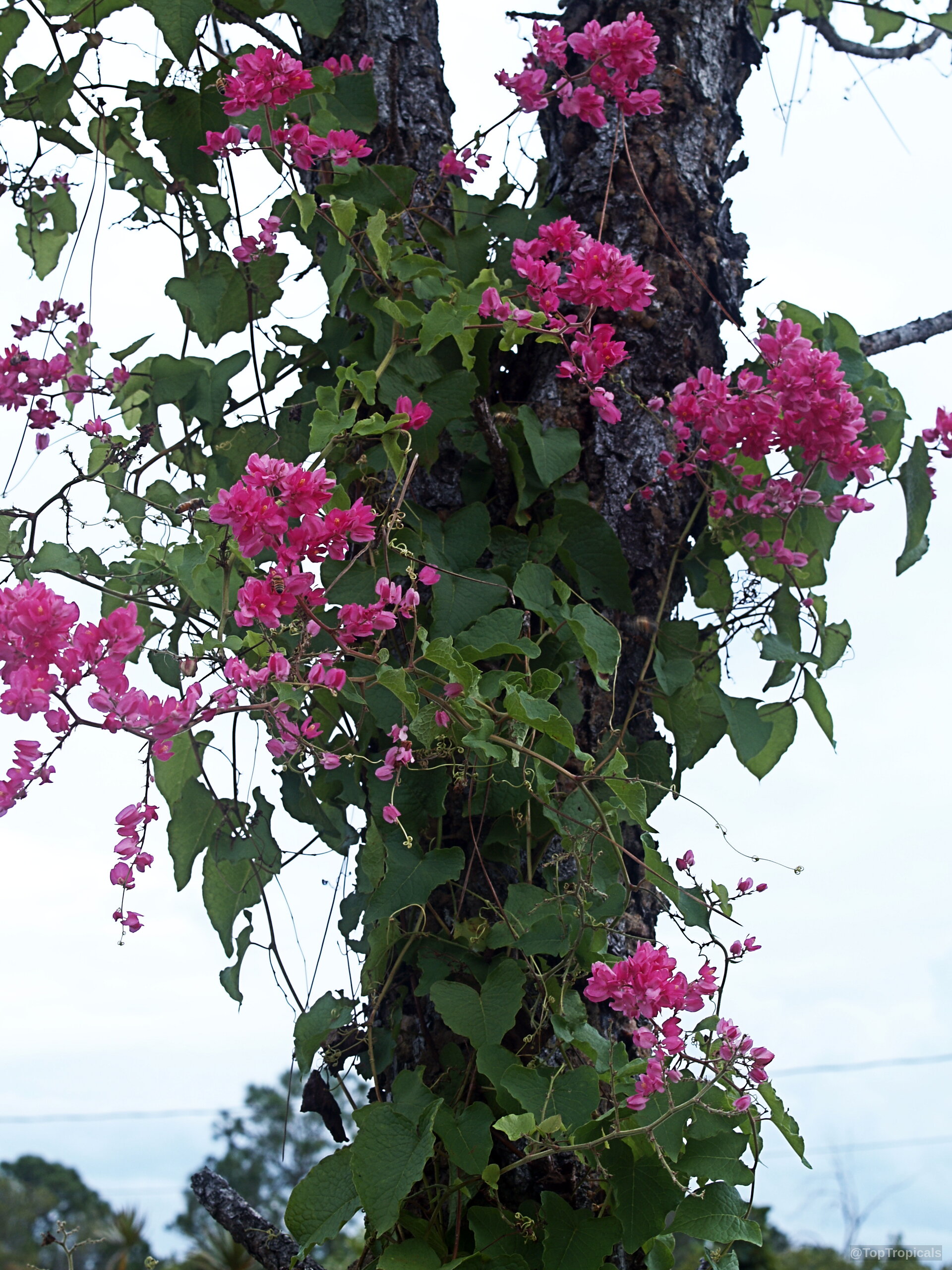
Botanical name: Antigonon leptopus
Common names: Mexican Coral Vine, Coral Creeper, Honolulu Creeper, Corallita, Chinese Love Vine
Family: Polygonaceae
Origin: Mexico, Central America


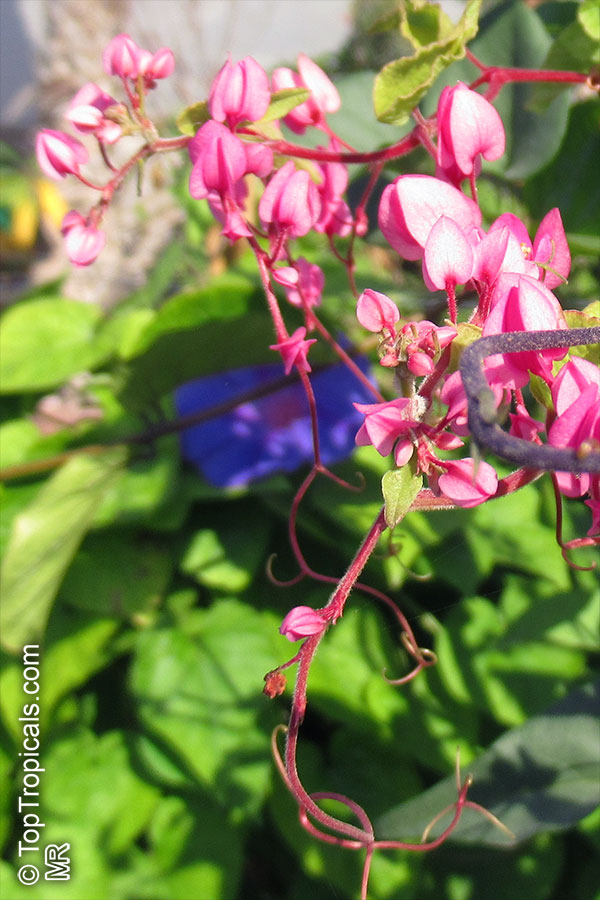
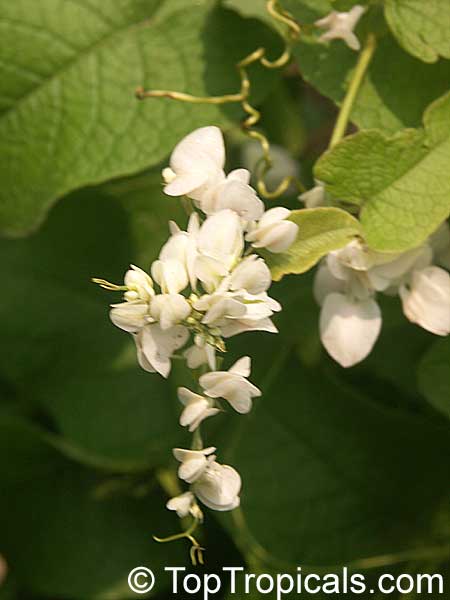
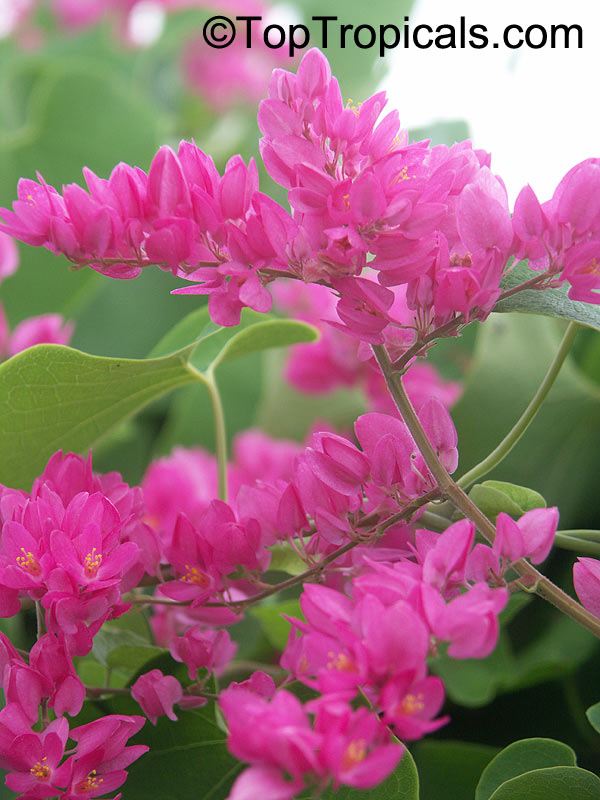
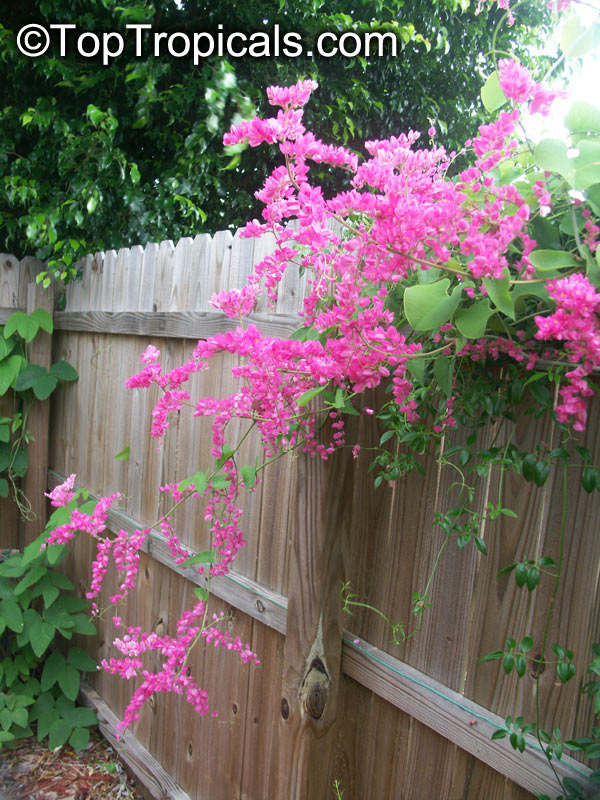
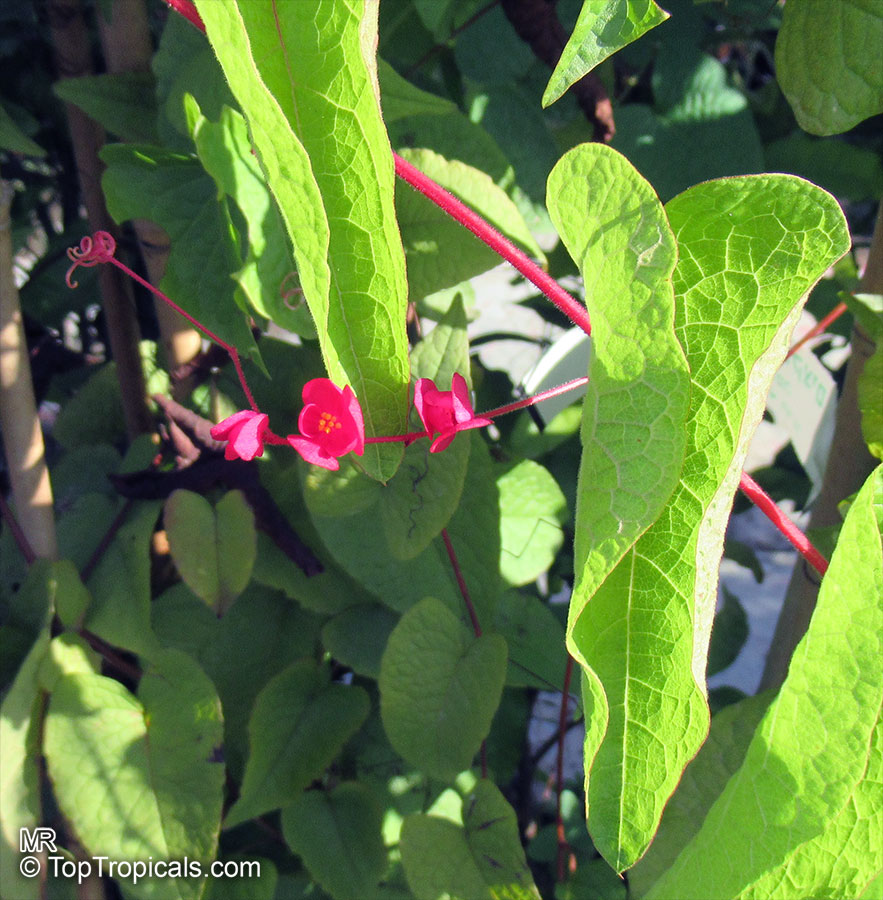
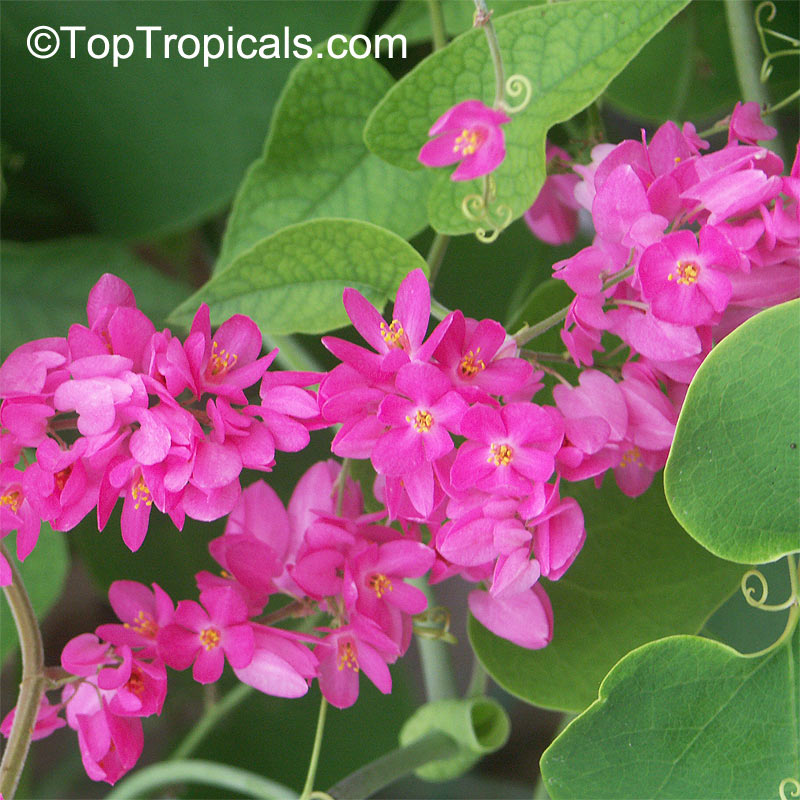
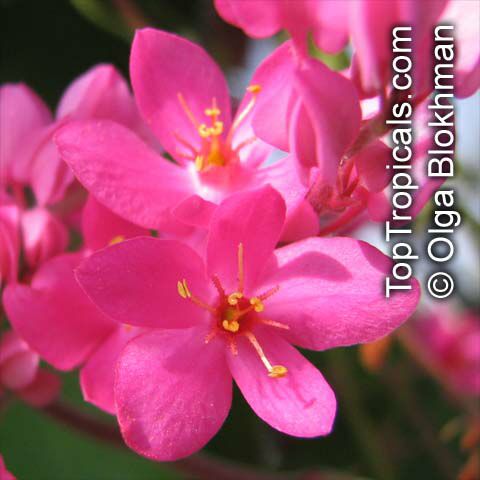
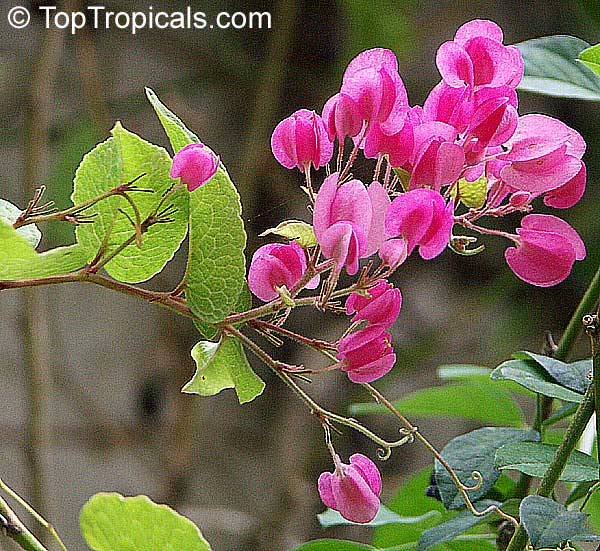
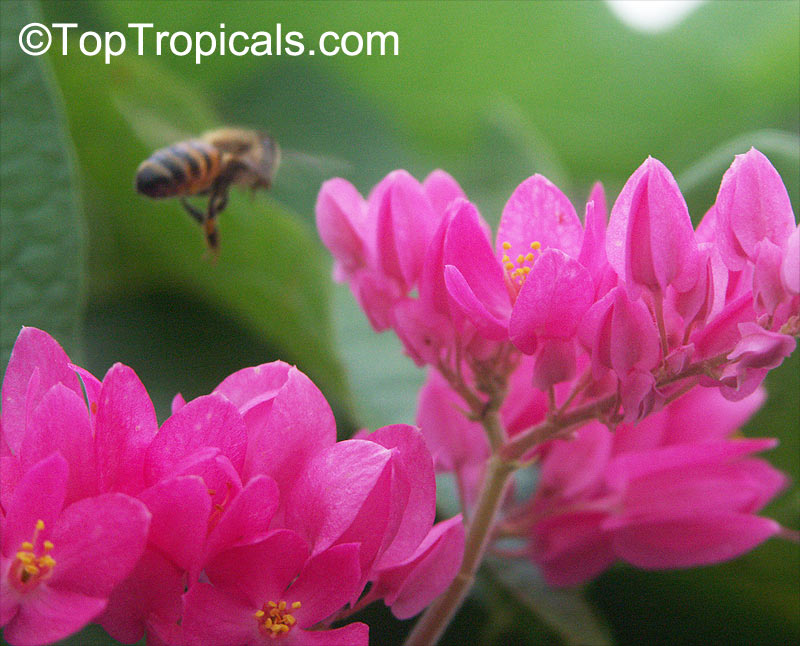
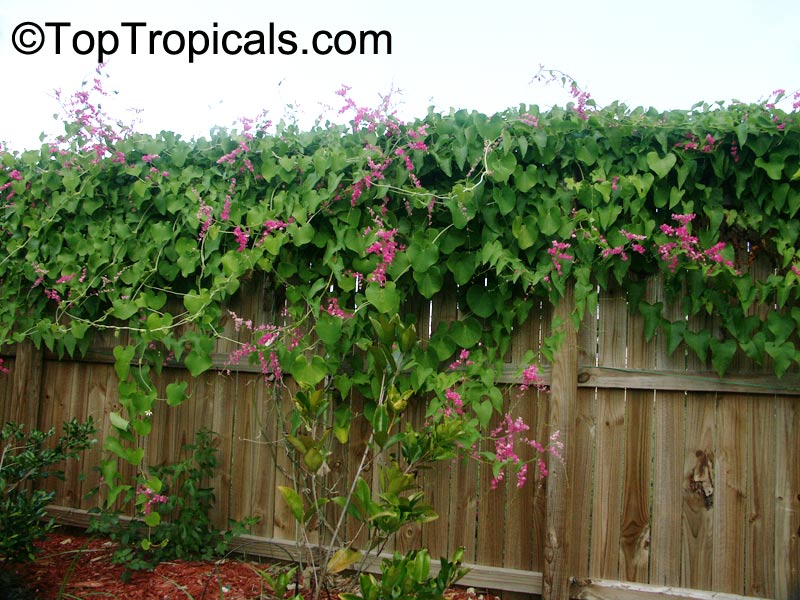
Antigonon leptopus is an attractive ornamental plant that easily climbs with its tendrils, over arbors, walls, or tree branches to a height of up to 40 feet. The succulent vine or creeper native to Mexico and Central America produces an abundance of small, lantern-shaped flowers in shades of white, off-white and pink that attract butterflies and hummingbirds. It has very dense glossy green foliage, which is perfect for use as a ground cover or screening plants.
Growing Antigonon leptopus requires ground that is well-drained, slightly acidic and moisture retentive. The plant prefers full sun to semi-shade, and thrives in hot, dry climates. When planting in cold areas, it is best to keep the plant in a pot and bring it indoors during the cold season. The plant requires regular watering and dormant season irrigation to ensure continued growth. However, it does not favour very wet soil and there should be plenty of air circulating around its roots. To ensure bright and frequent blooms, it is best to avoid excess fertilizer, as this can cause excessive vegetative growth which suppresses flowering.
Antigonon leptopus is also known to be a tough and resilient plant, able to withstand even salty, seaside environments and mature plants can survive short periods of cold temperatures down to 30s F. An important point to note is that the Mexican Coral Vine is somewhat invasive, so it is worth keeping an eye on to make sure it does not take over other parts of the garden! Overall, with adequate light and the right moisture levels, Antigonon leptopus can be a wonderful addition to any garden.

Recommended Fertilizer: SUNSHINE Megaflor - Bloom Nutrition Booster
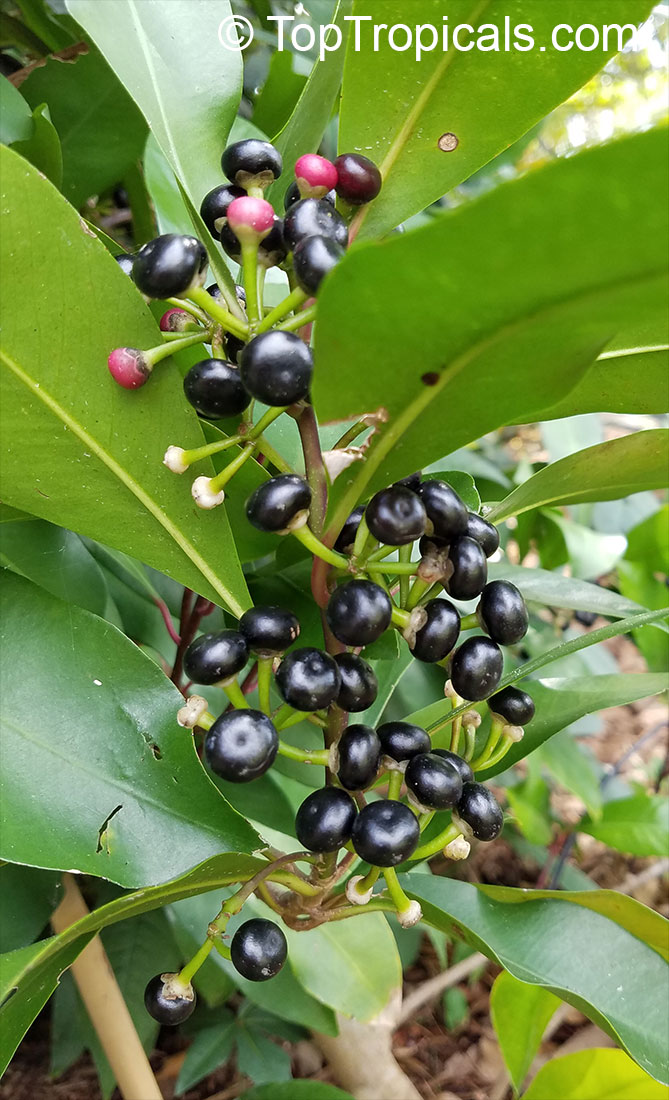
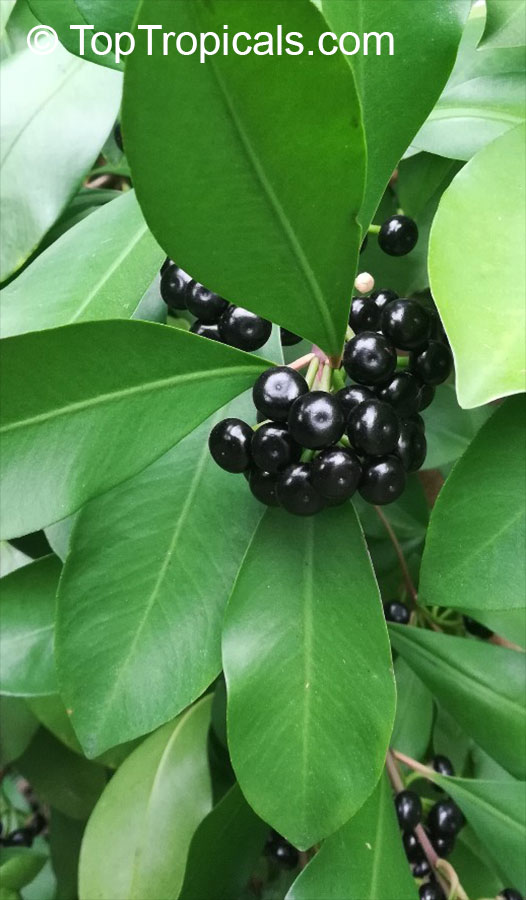
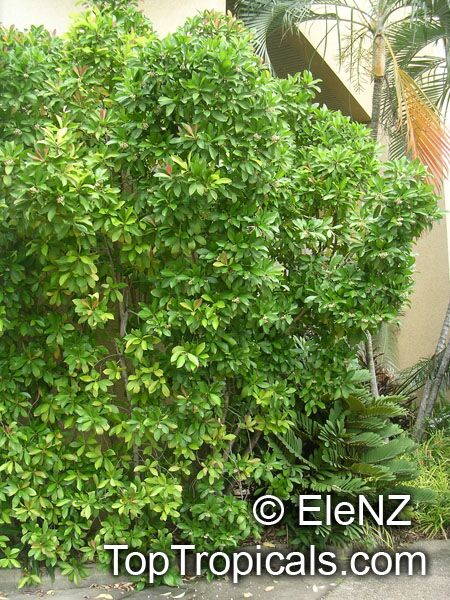
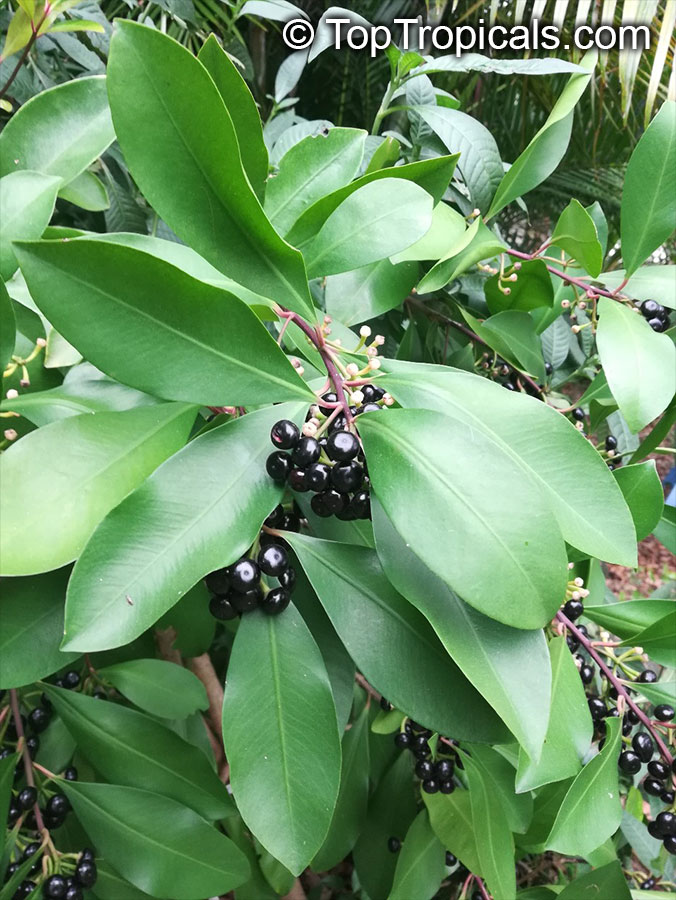
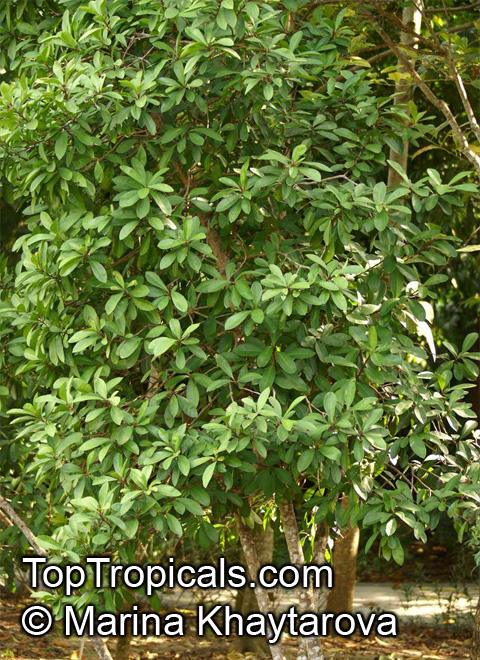
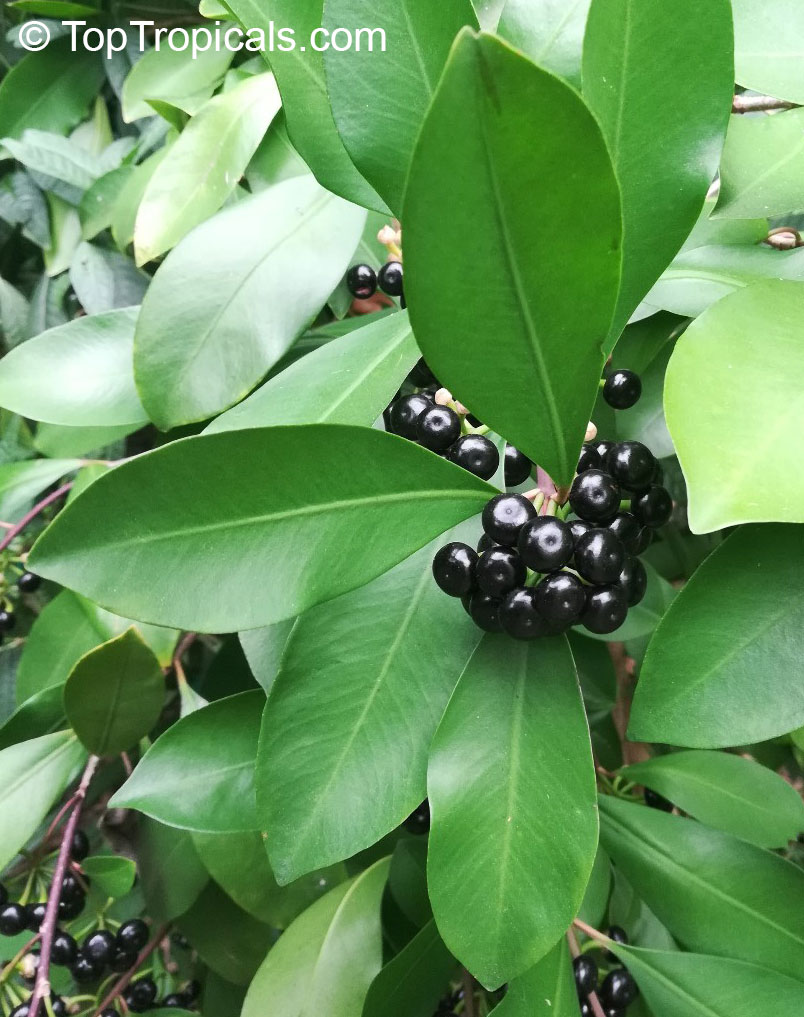
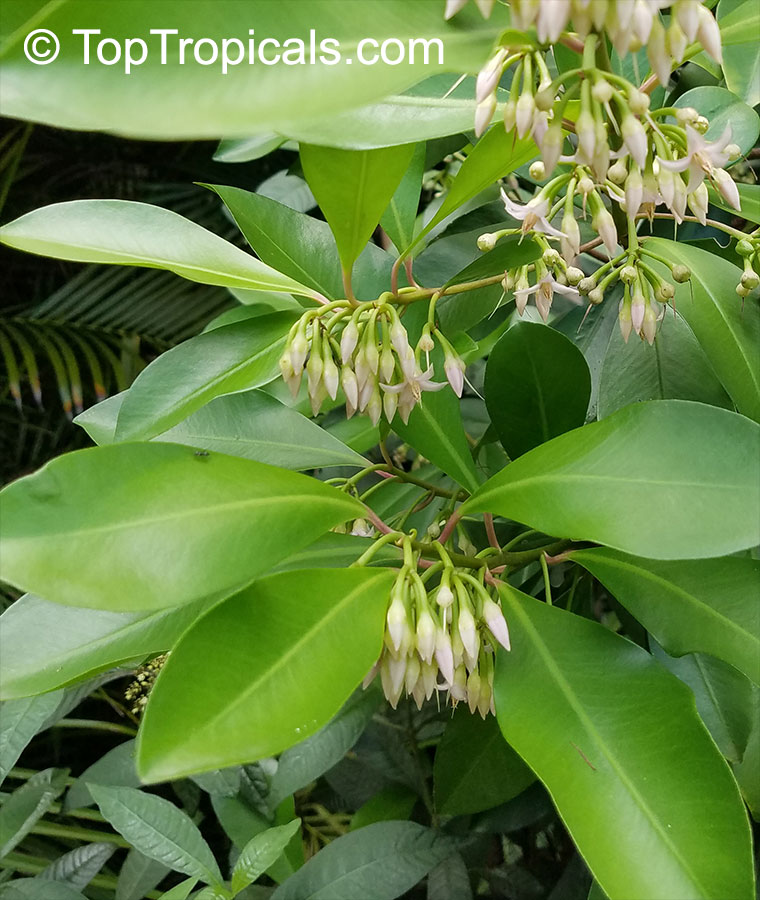
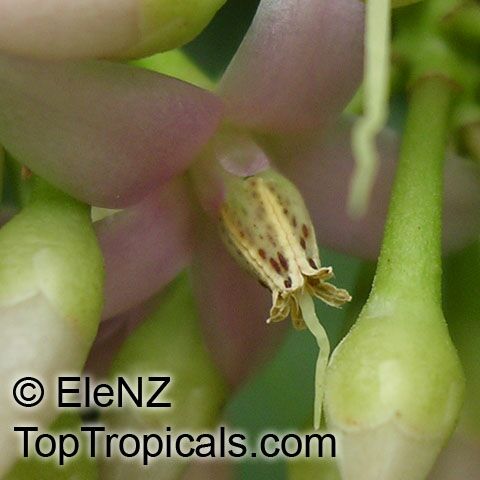
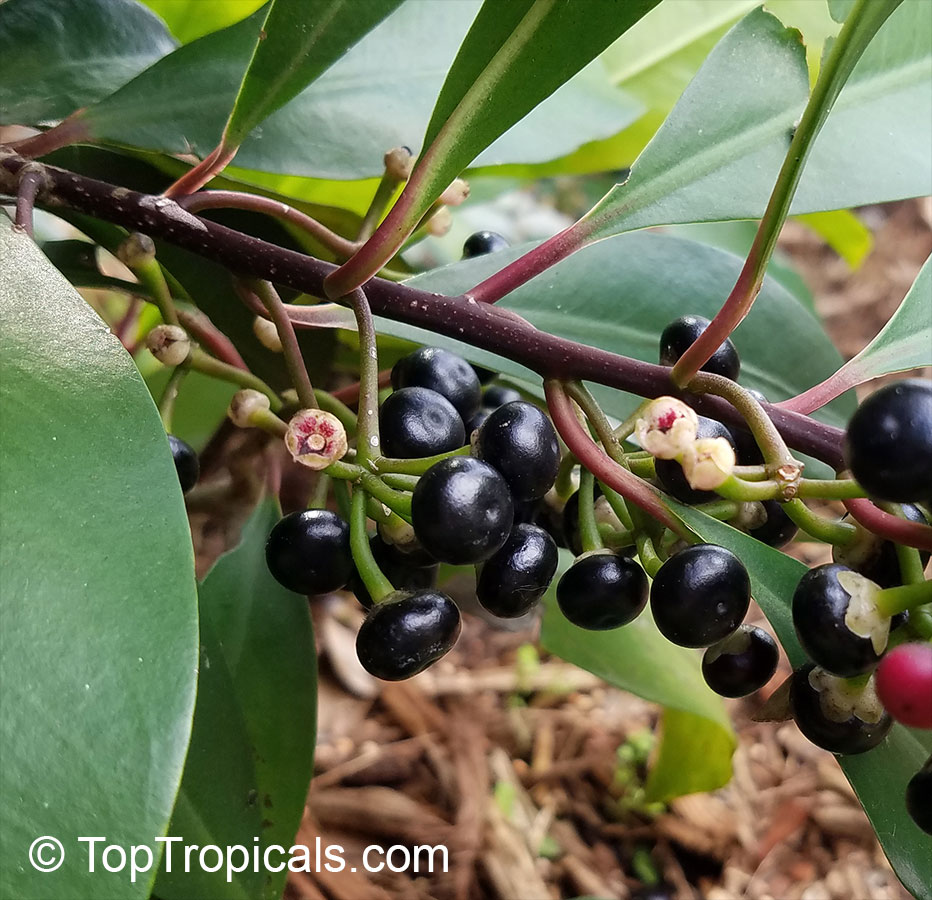
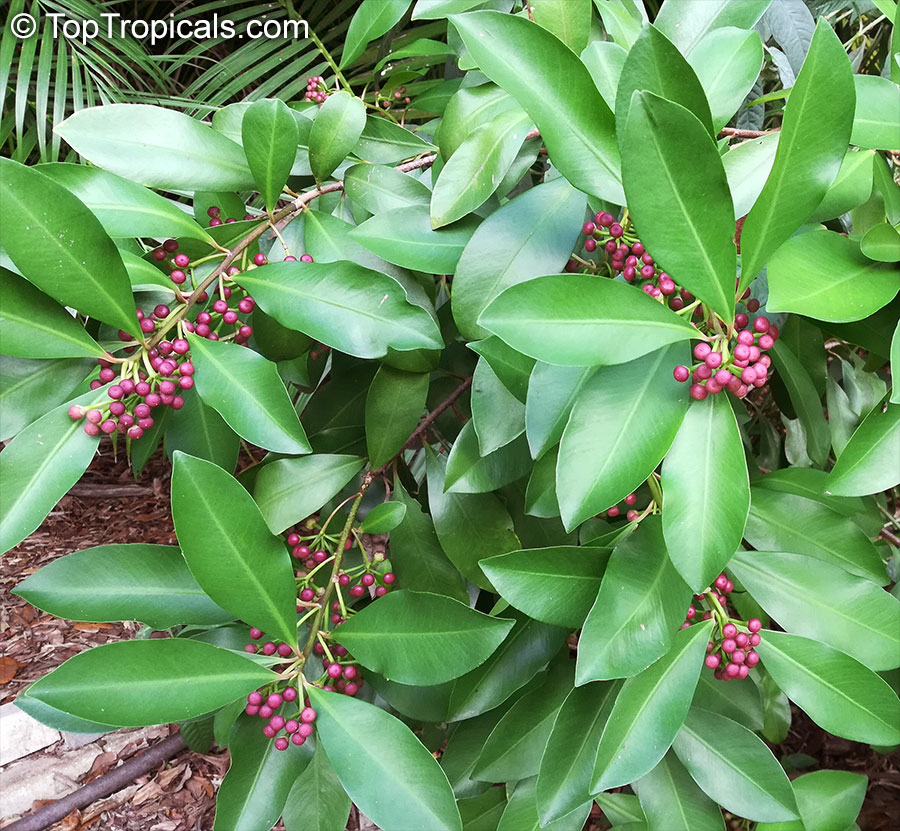
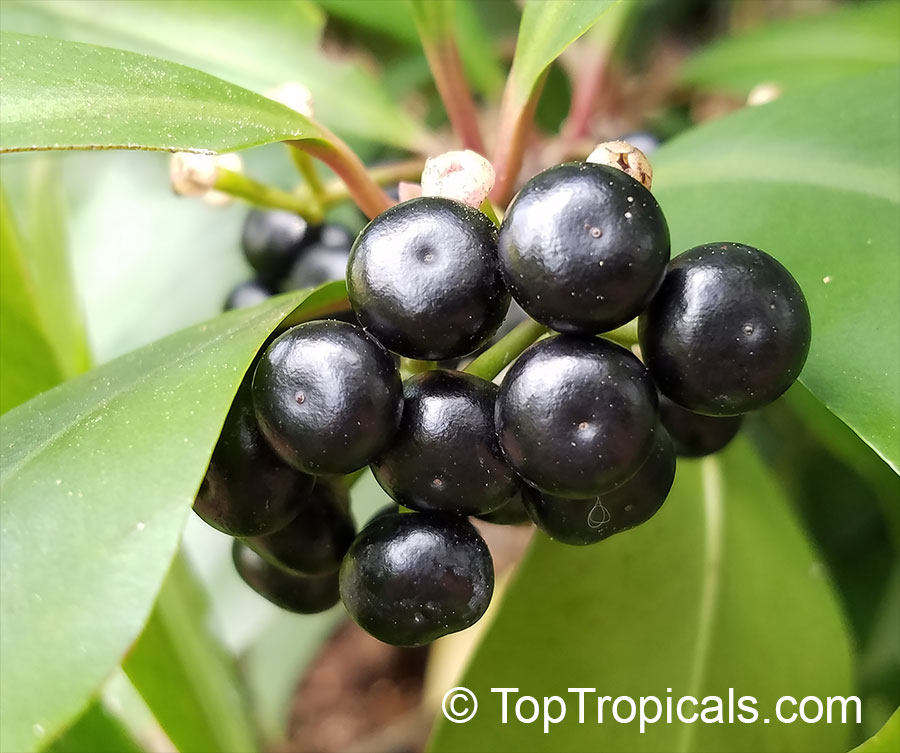
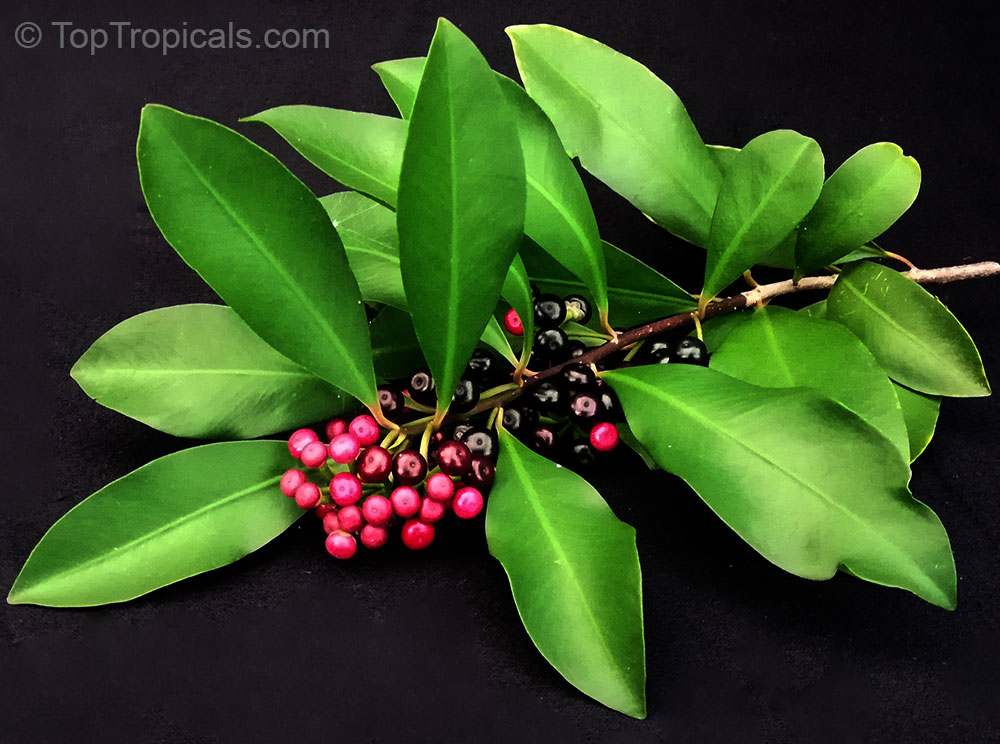
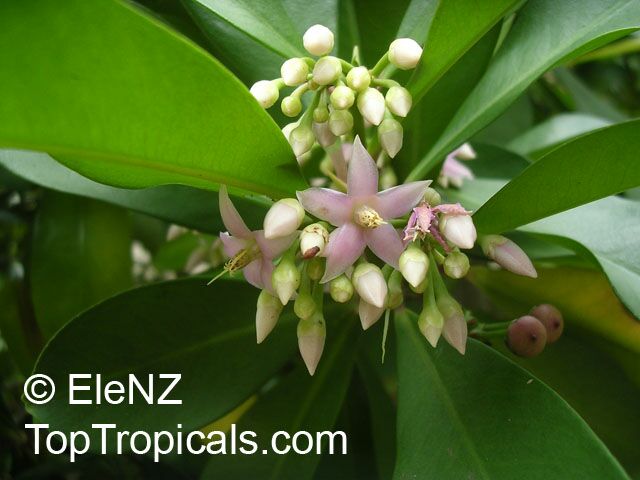
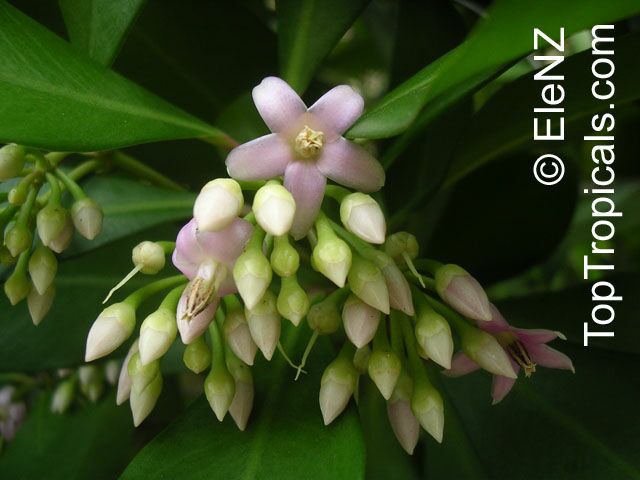
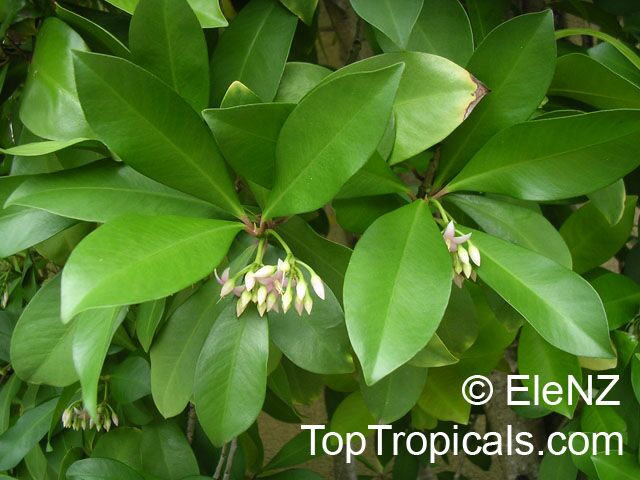
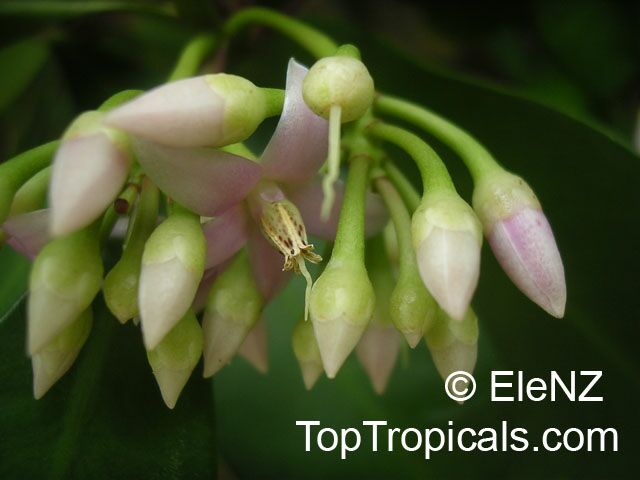
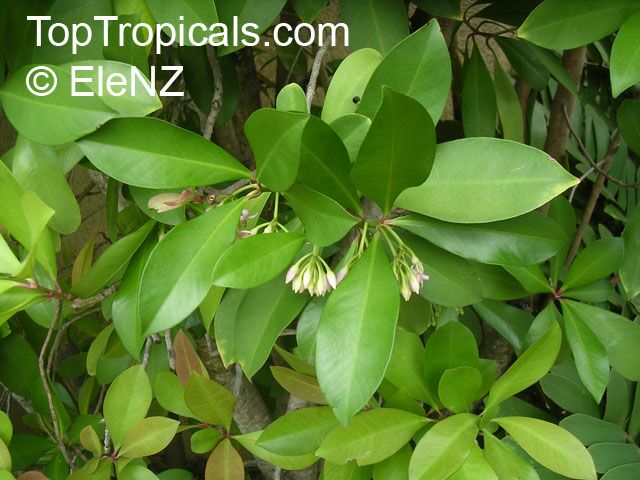
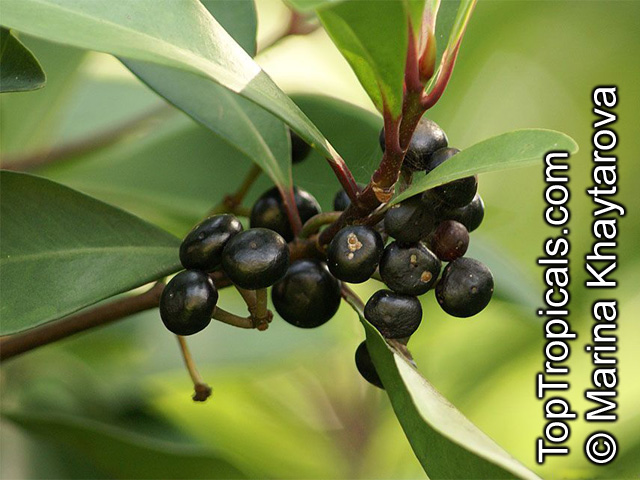
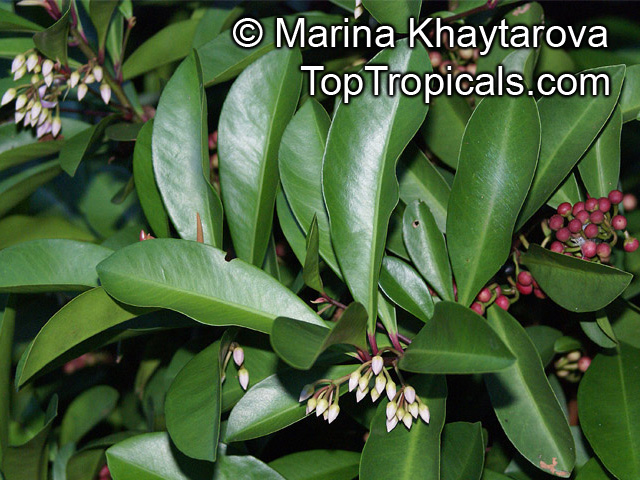
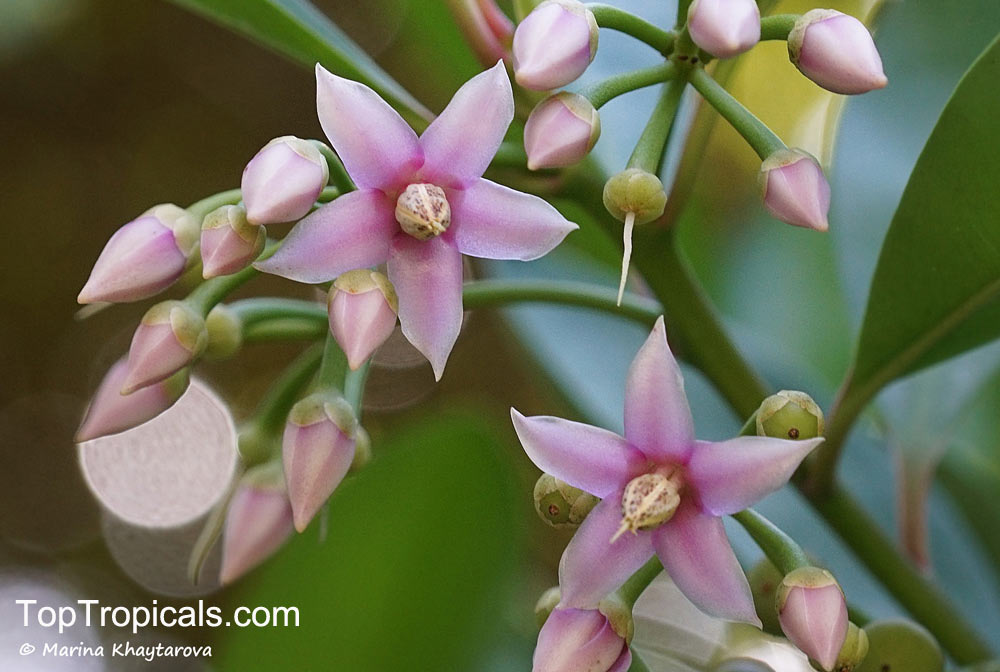
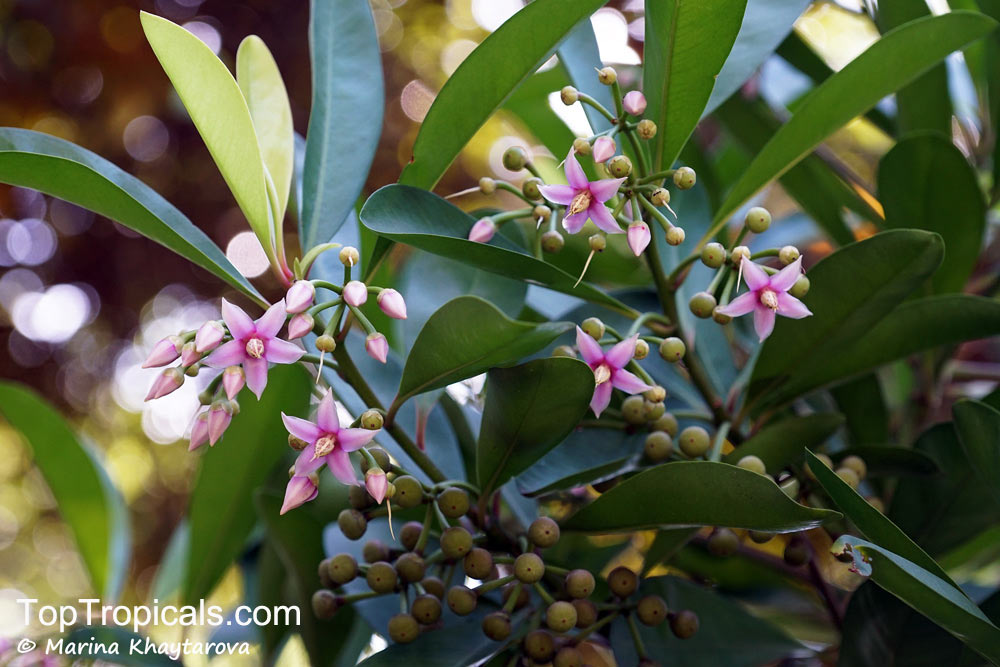
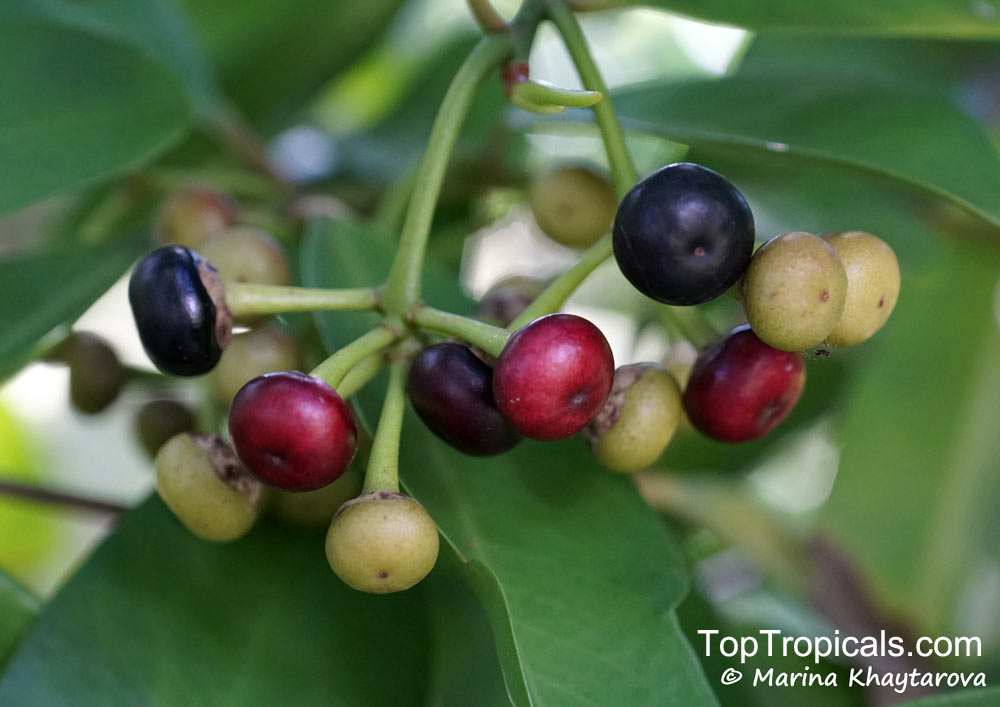
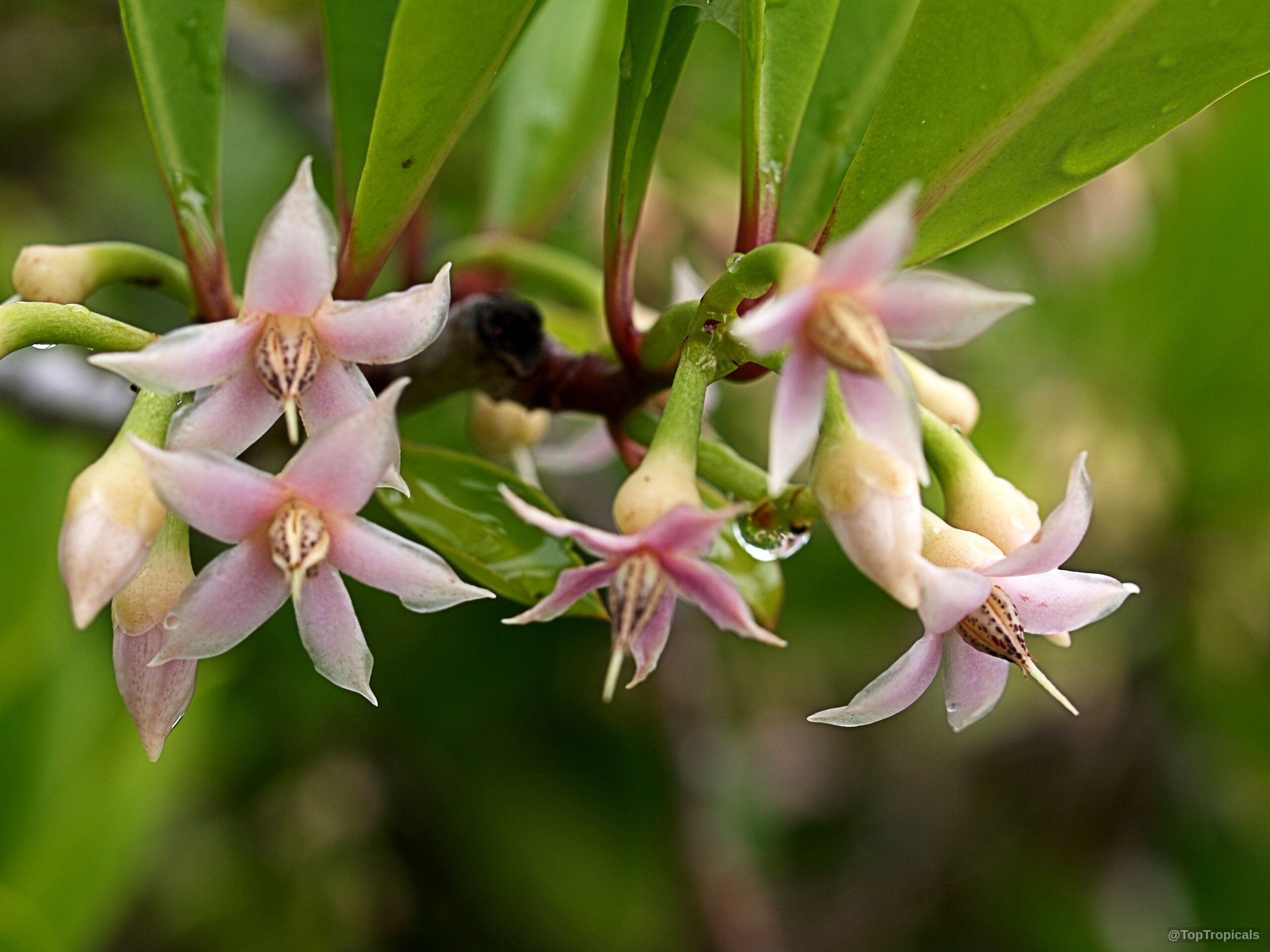
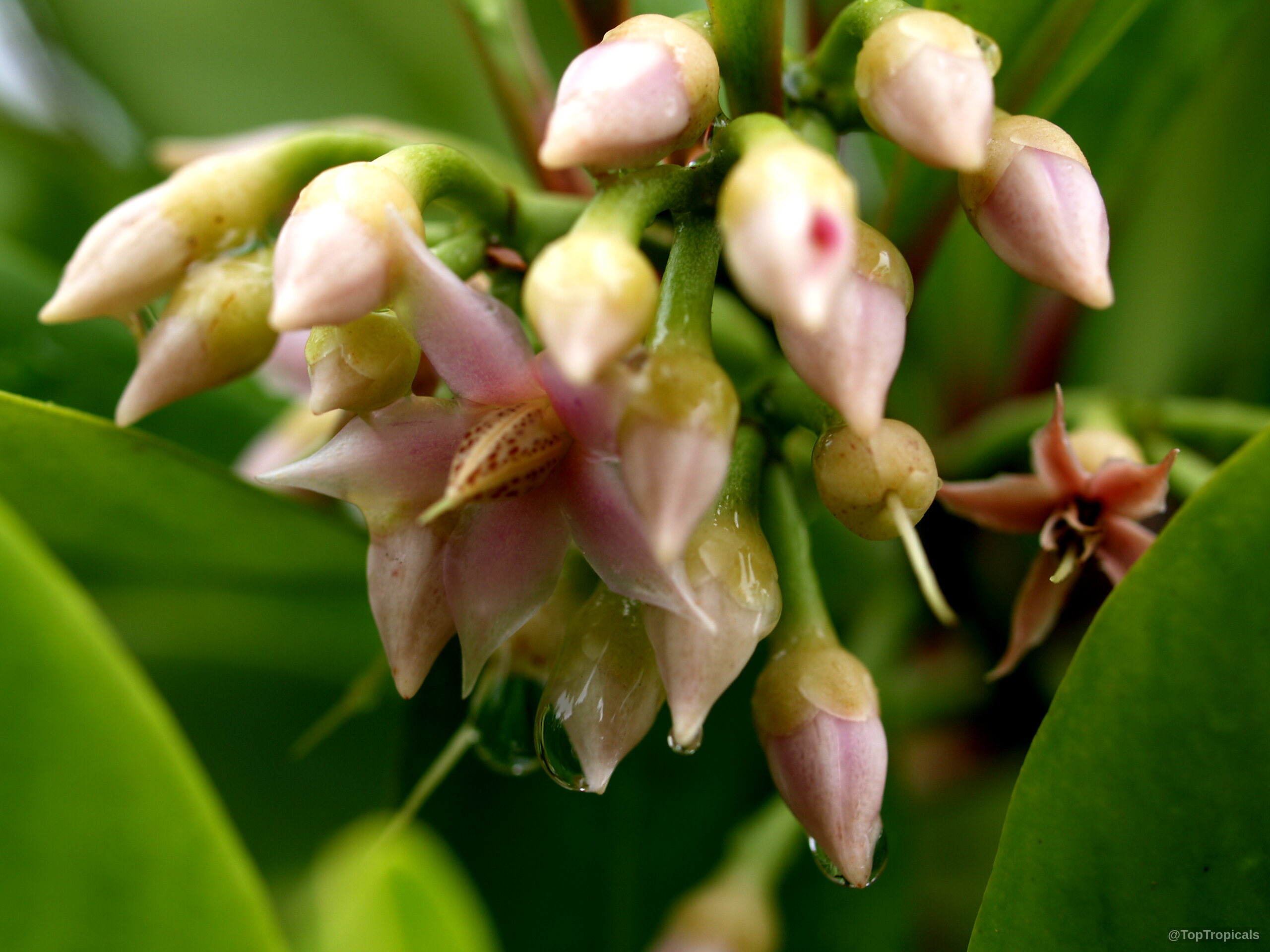
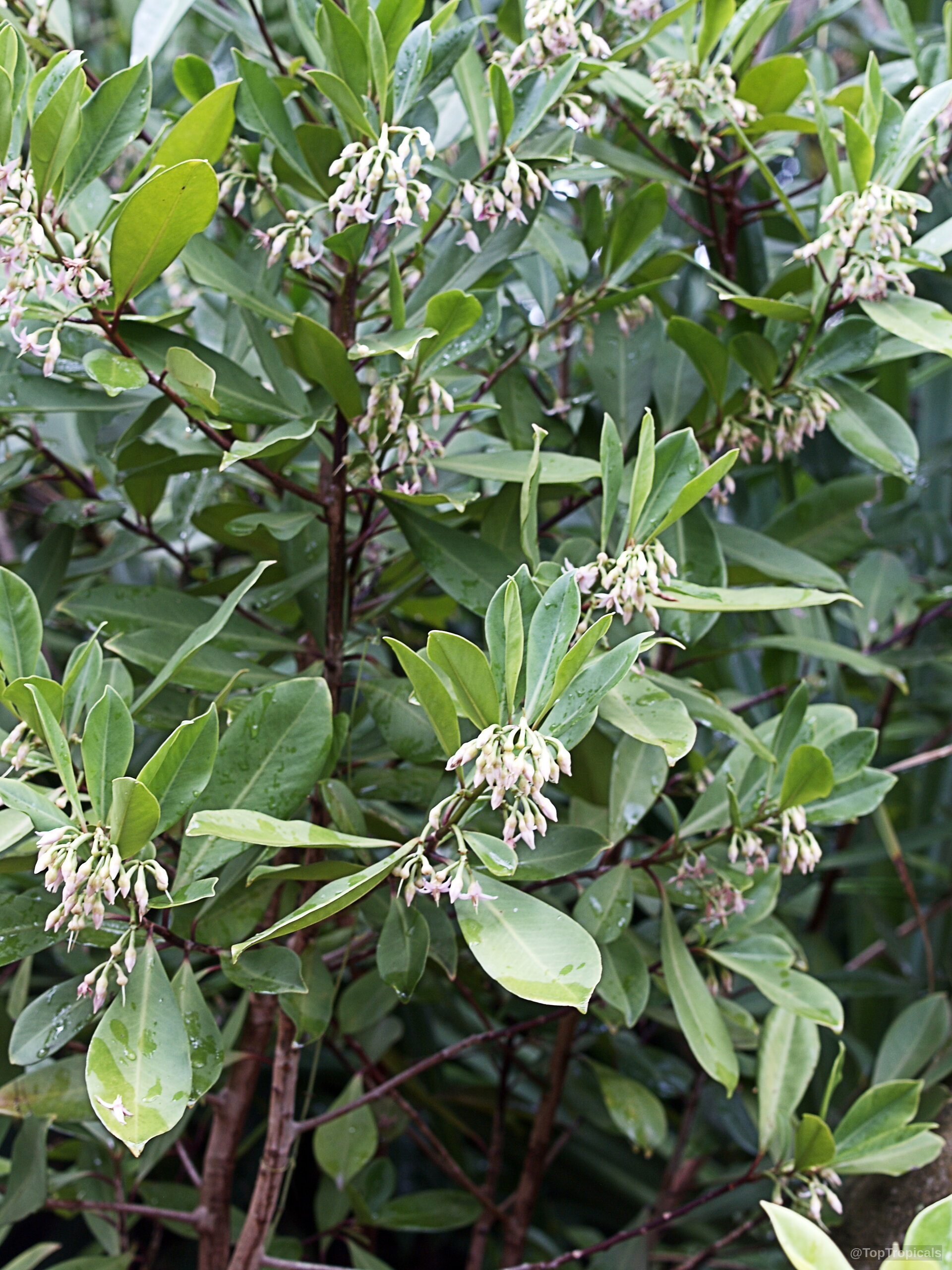
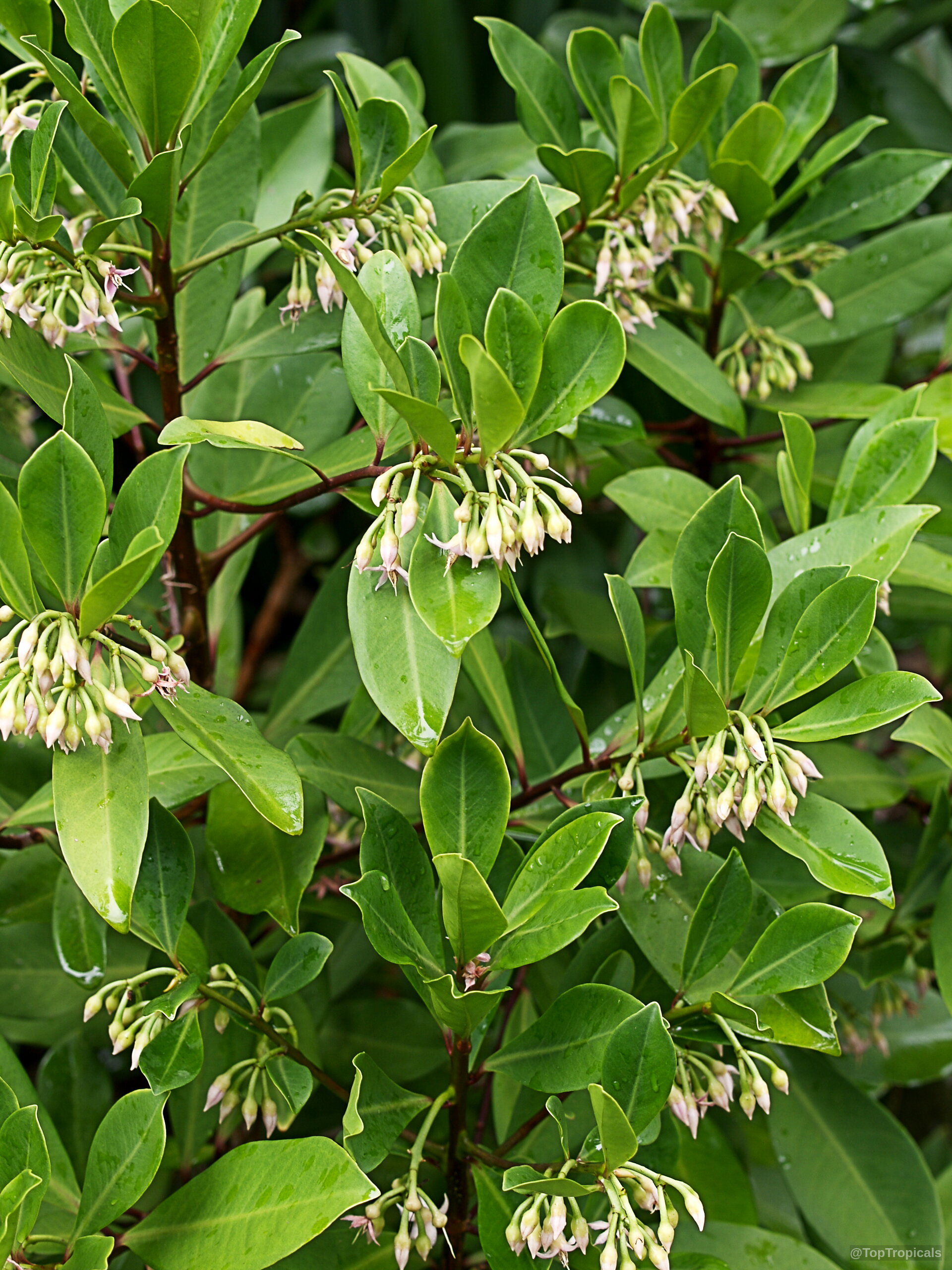
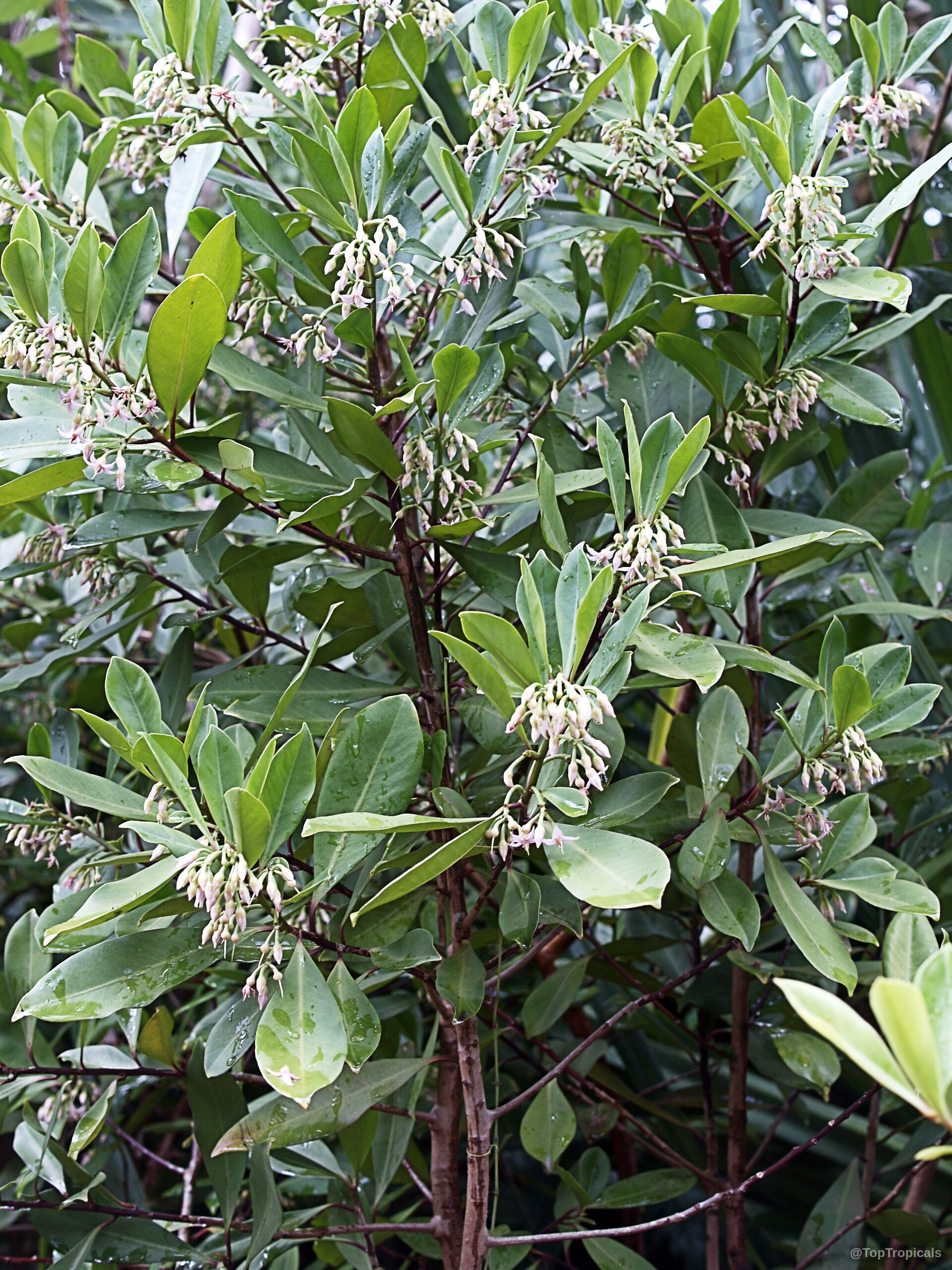
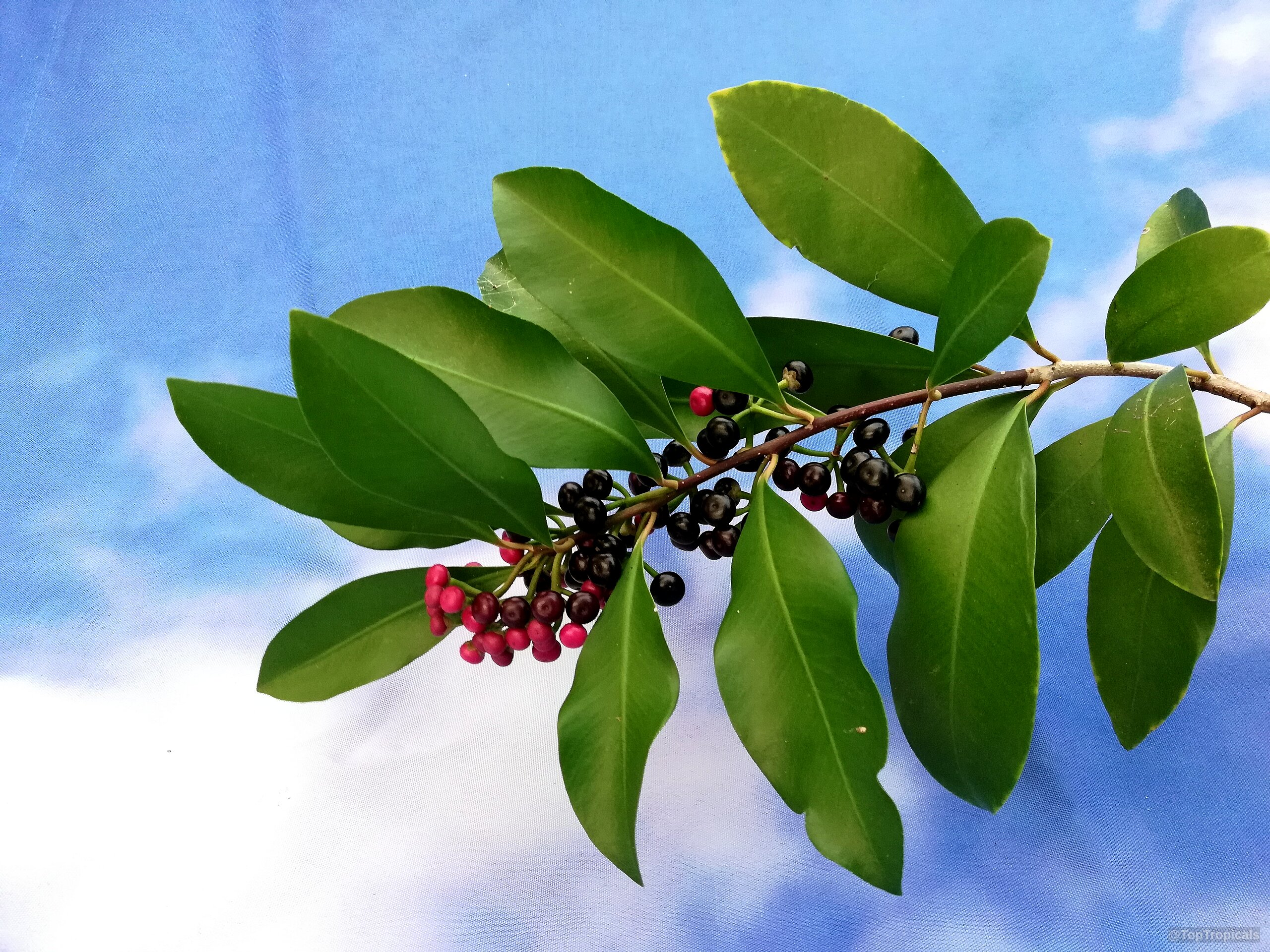
Botanical name: Ardisia elliptica
Common name: Shoebutton Ardisia
Family: Primulaceae (Formerly:Myrsinaceae)
Origin: Southeast Asia
Ornamental leathery leaves and pretty pink flowers. Small size bush, this plant is very easy to grow, great for beginners as well as indoor culture. It takes low light with no problem, and needs very little if any care. Ardisias are very popular house plants.






| Next | |
Use link to repeat this search:
https://toptropicals.com/cgi-bin/garden_catalog/cat.cgi?search_op=and&keyword_op=and&language=e&number=5&no_change_lang=1
&v1=inv&user=tt&sale=1&first=0