Epiphyte plant - Plant Encyclopedia Results
| Number of plants found: 226 | Next | 
|
Go to page: | 1 | 2 | 3 | 4 | 5 | Last |
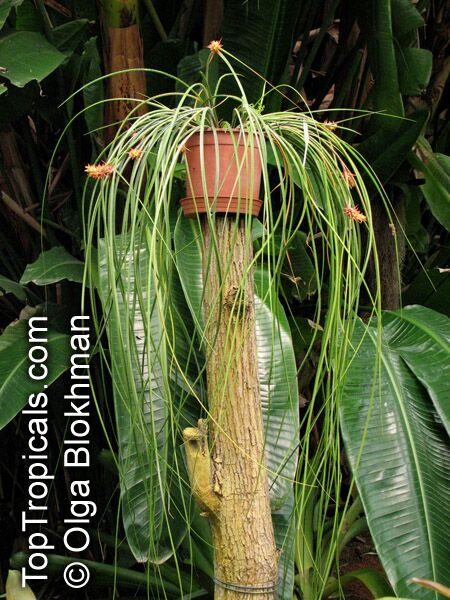
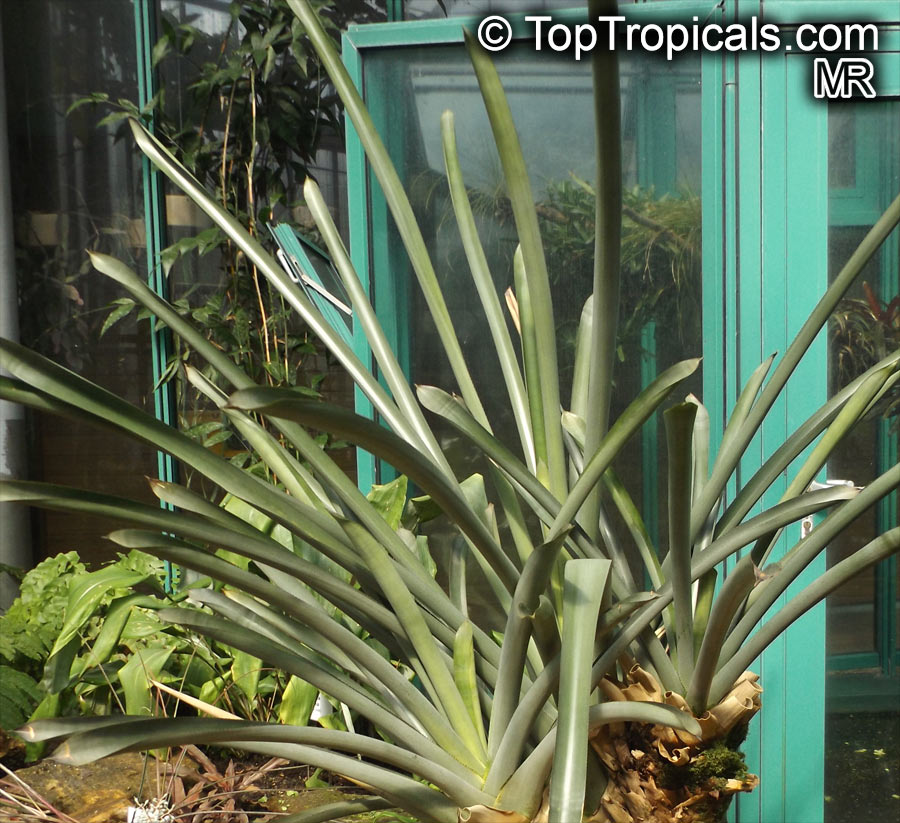
Botanical name: Acanthostachys strobilacea
Common name: Pinecone Bromeliad
Family: Bromeliaceae
Subfamily: Bromelioideae
Origin: Brazil, Paraguay, Argentina


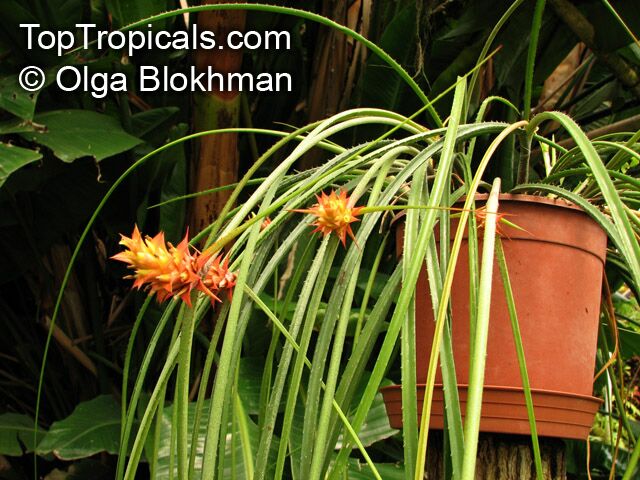
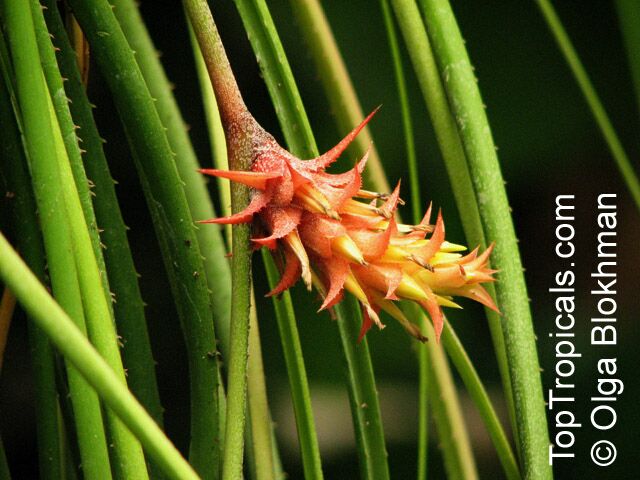
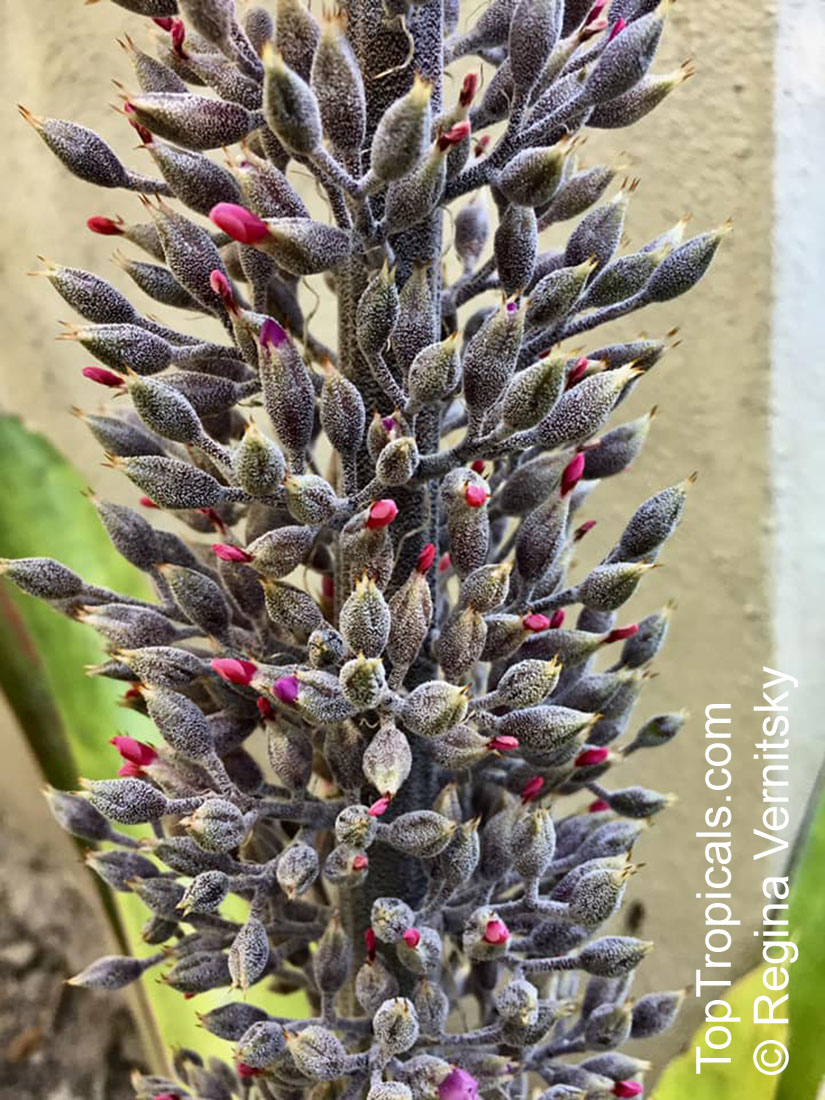
Native to Brazil, Paraguay, and Argentina, Acanthostachys strobilacea (Pinecone Bromeliad) is a small shrub that grows to reach 2-5ft in height. This attractive epiphyte requires a moderate amount of water and semi-shade to grow and thrive, making it the perfect plant for a hanging basket in a sunny or partially-shaded location. Its leaves are a deep green with gray scurf and spines, while its flowers range in color from yellow to orange.
Despite its exotic appearance, Acanthostachys strobilacea is low-maintenance, making it ideal for gardeners who don't have much time to spare on tending to their plants. In addition, it is drought-tolerant and can even thrive in xeriscaped environments.
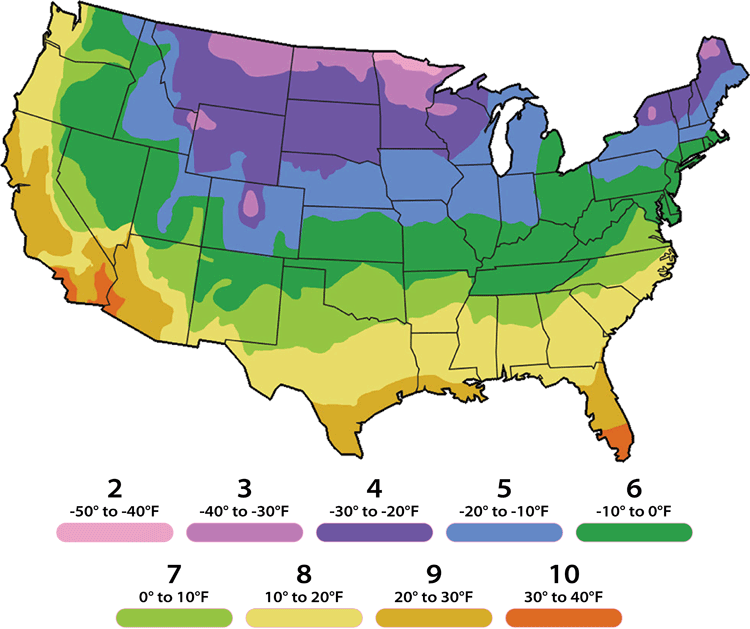
For those who live in USDA Zone 9-11, Acanthostachys strobilacea is well-suited for growing in containers. The plant can be successfully grown in cold regions as long as its soil is kept moist. In cooler climates, the plant should be moved to a sheltered area during the winter months to ensure the soil does not become too cold and wet, as this could damage the roots. Furthermore, when growing in a pot, it is important to ensure the pot is well-drained and to water the plant regularly and deeply.
Overall, Acanthostachys strobilacea is a beautiful and exotic plant that is low-maintenance and drought-tolerant, making it a great addition to any sunny or partially-shaded garden. With the right care, it can thrive in its environment and bring a unique beauty to any garden.
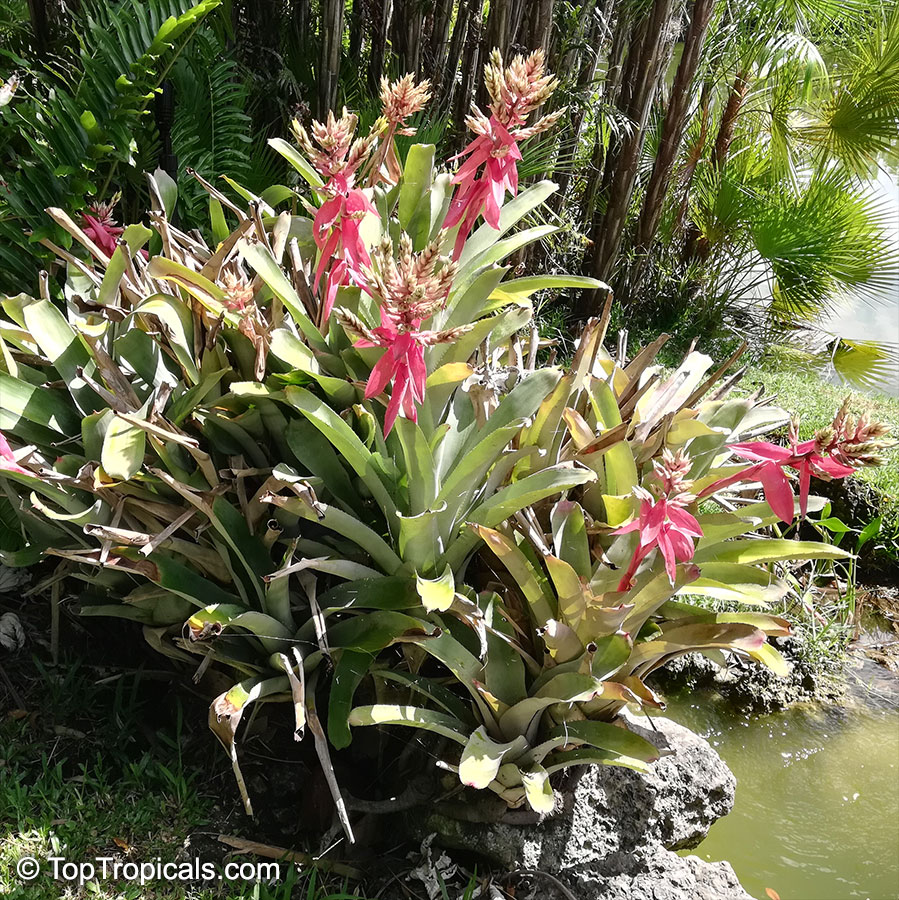
Botanical name: Aechmea fasciata
Common name: Silver Vase
Family: Bromeliaceae
Origin: Brazil


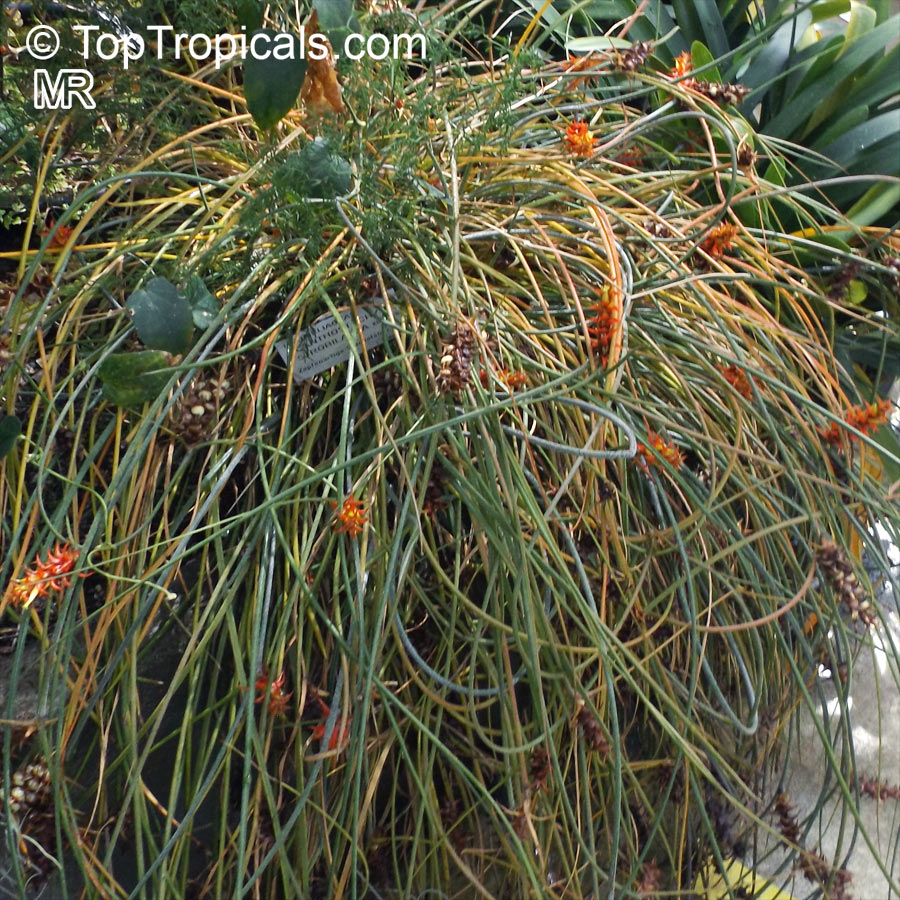
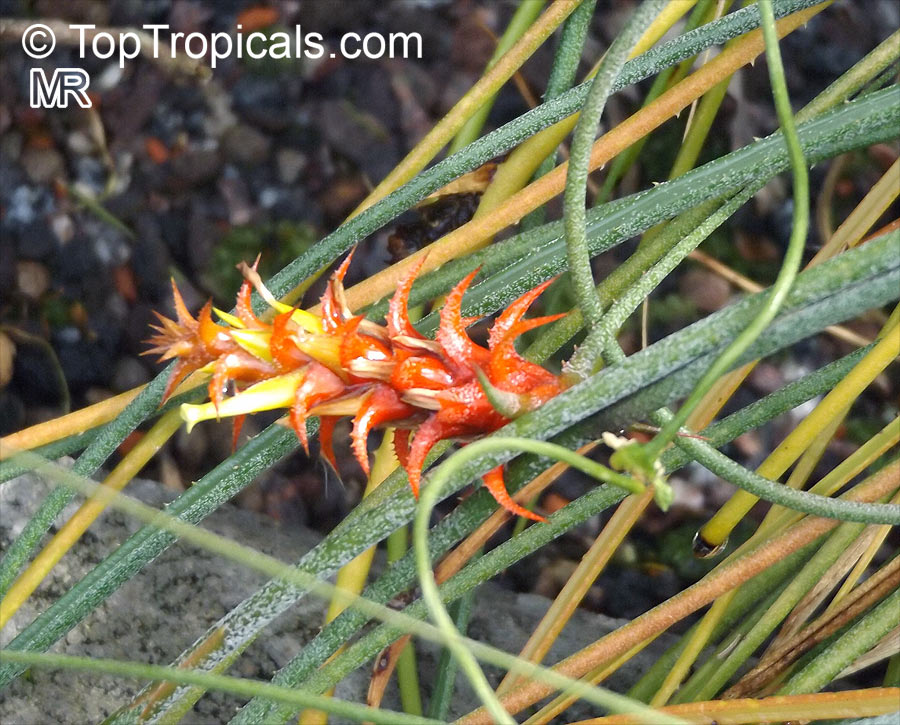
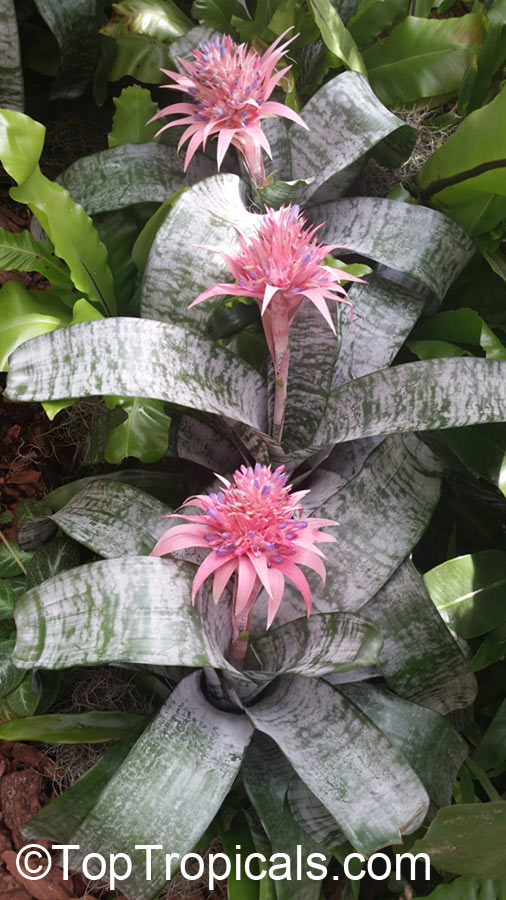
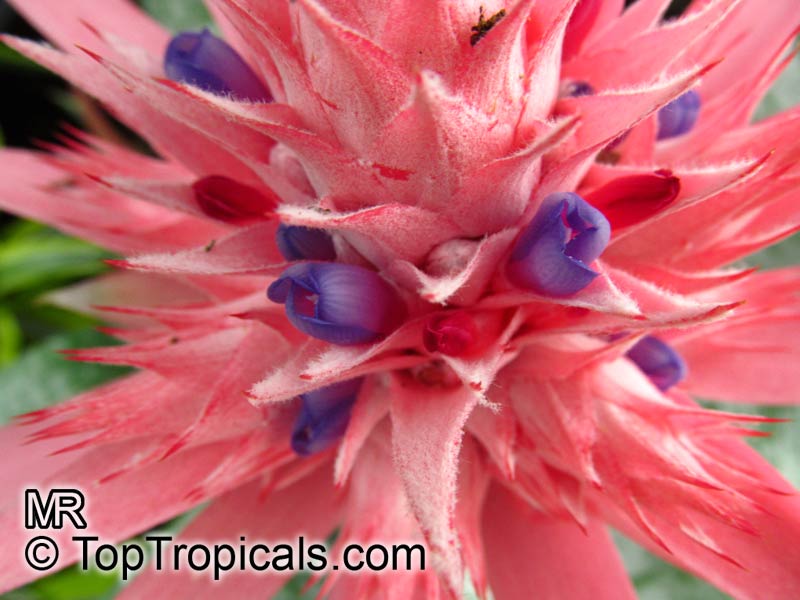
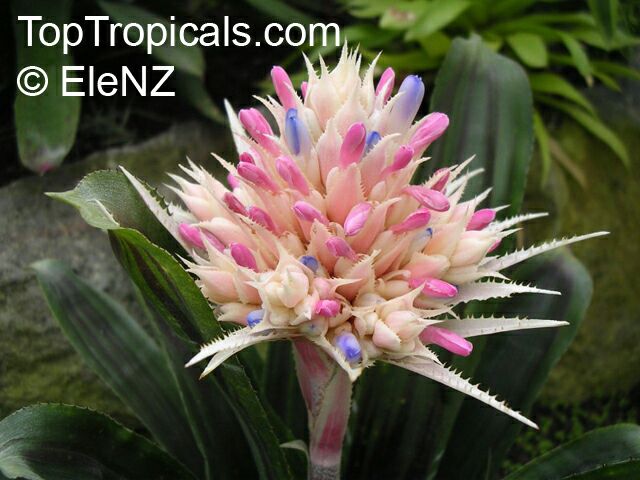
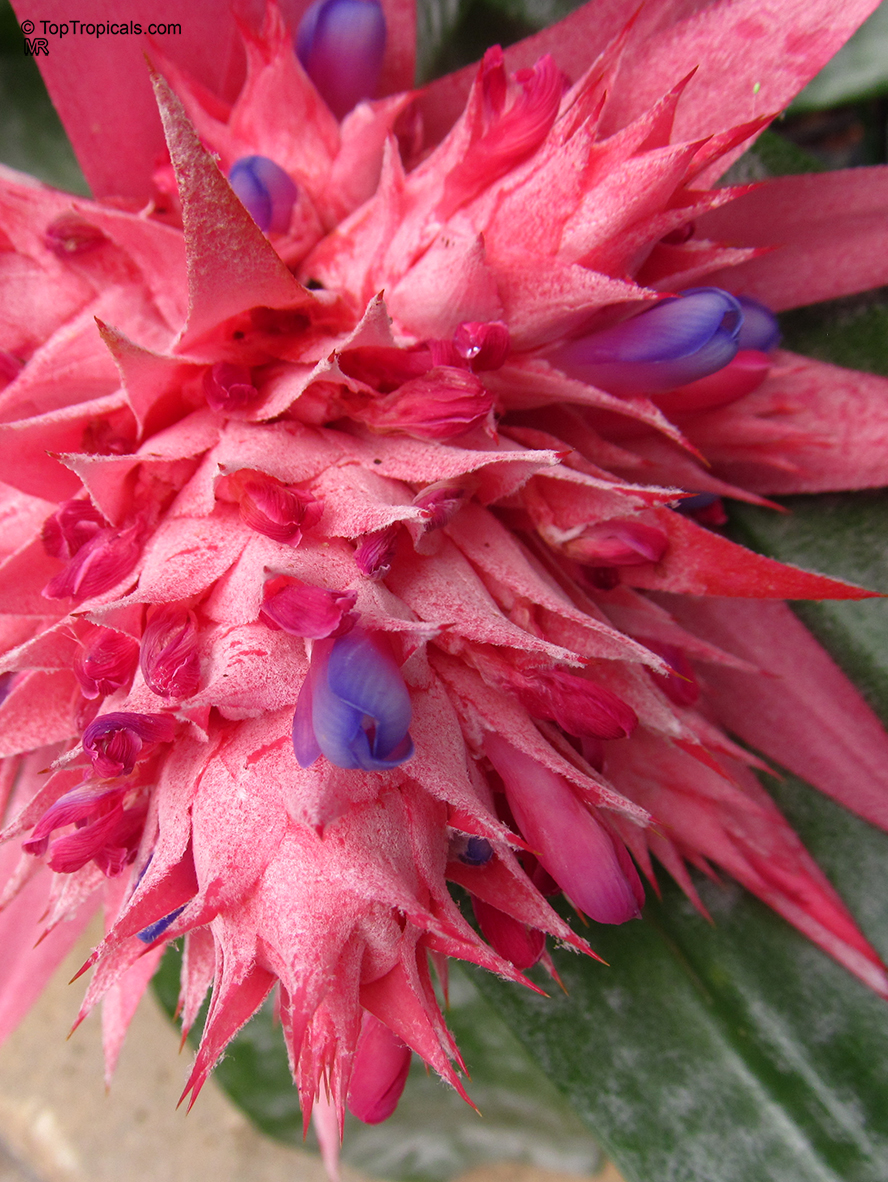
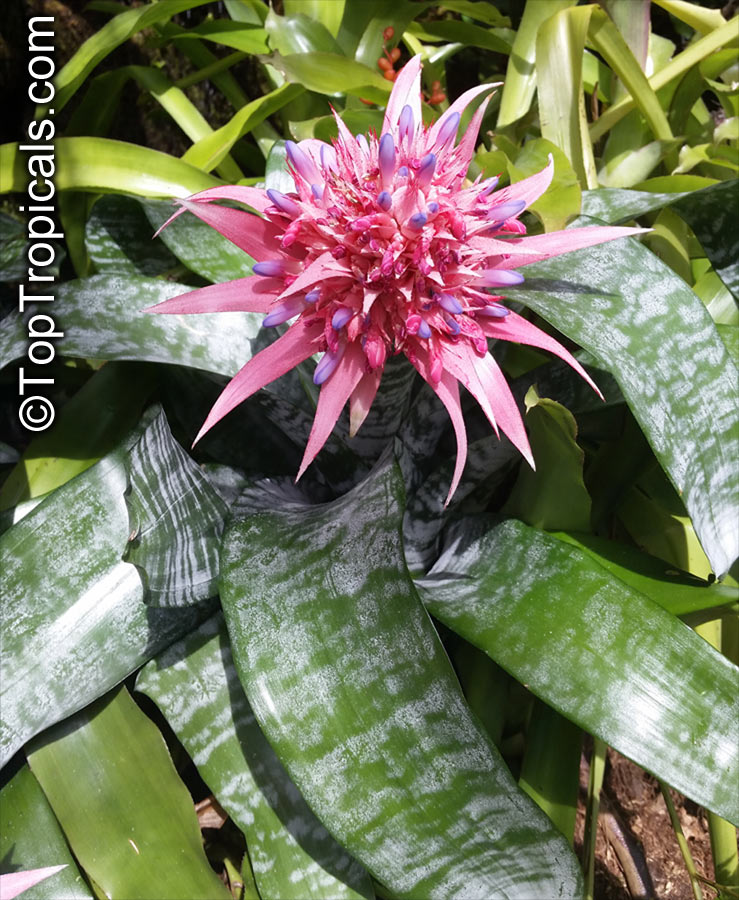
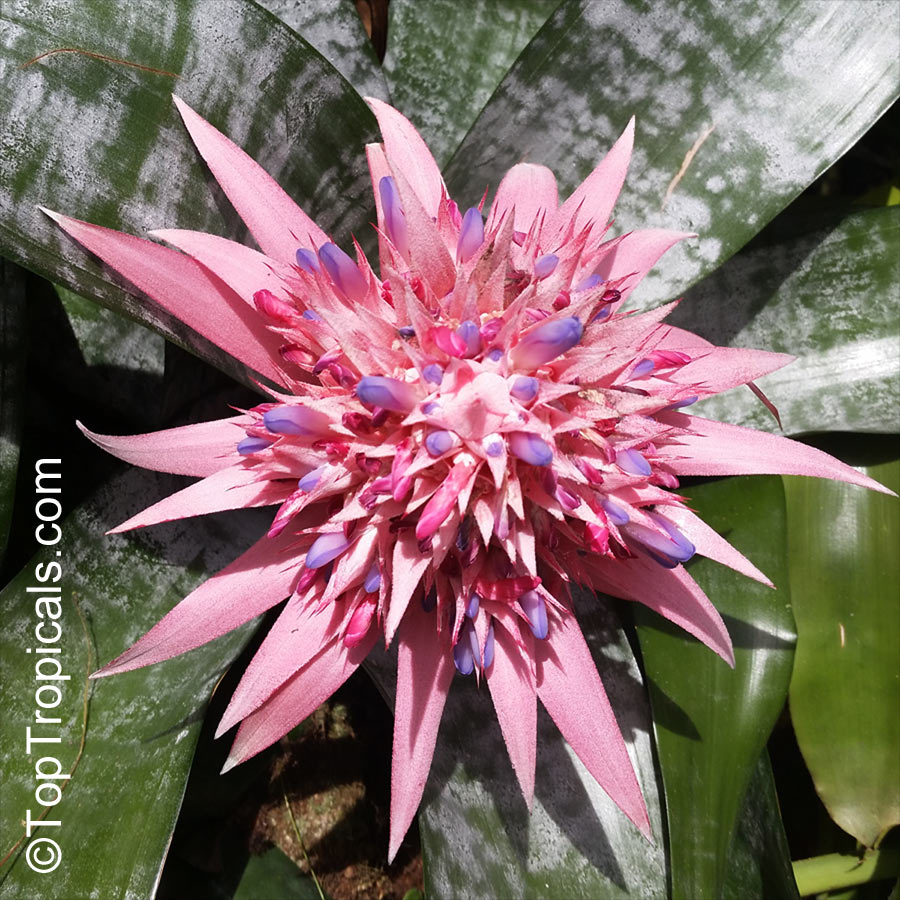
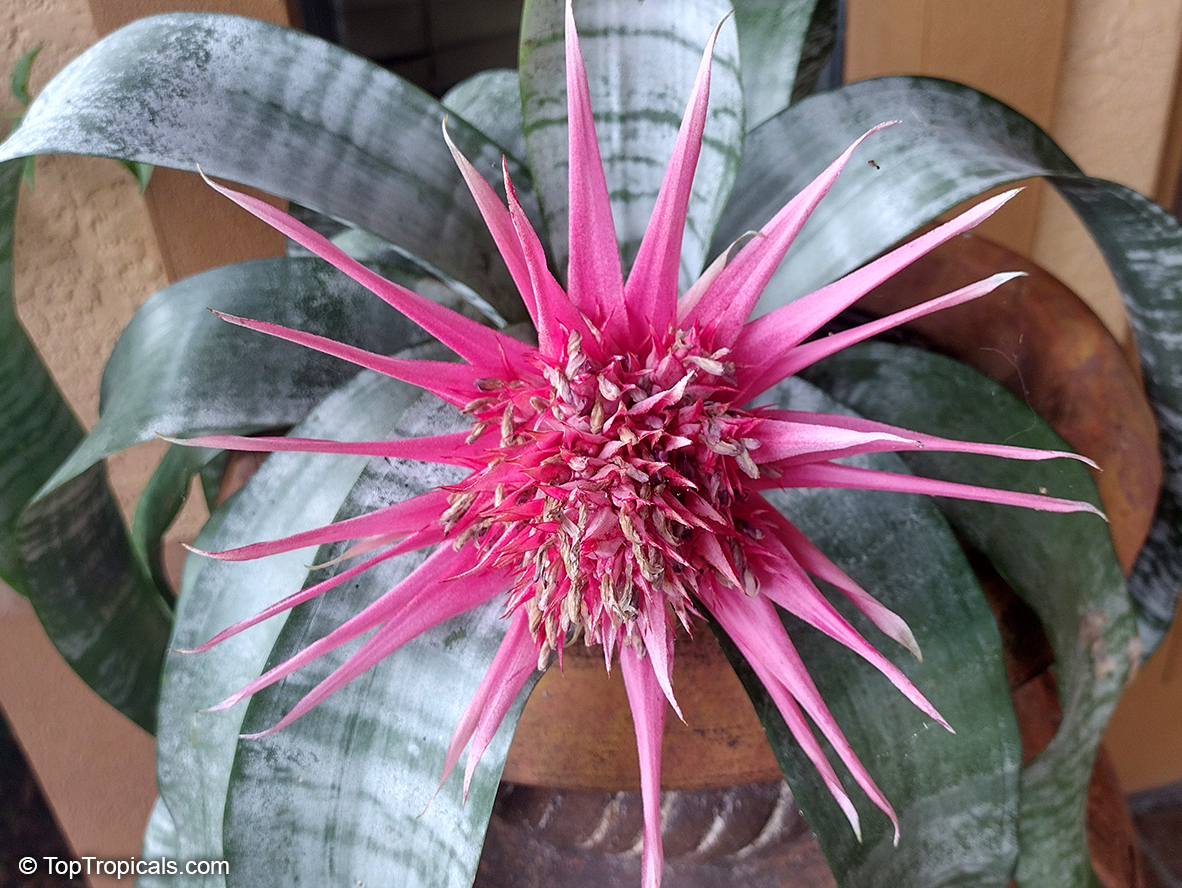
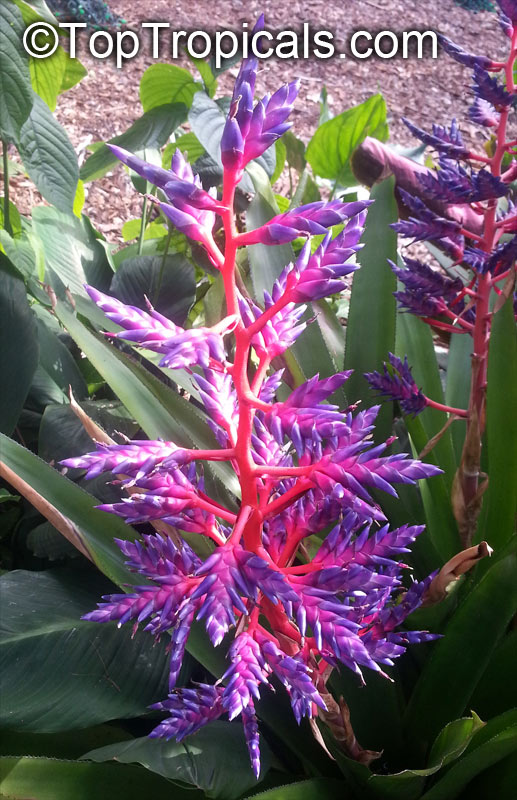
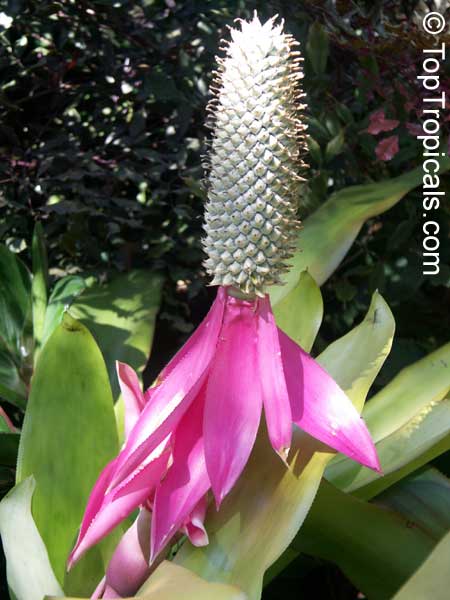
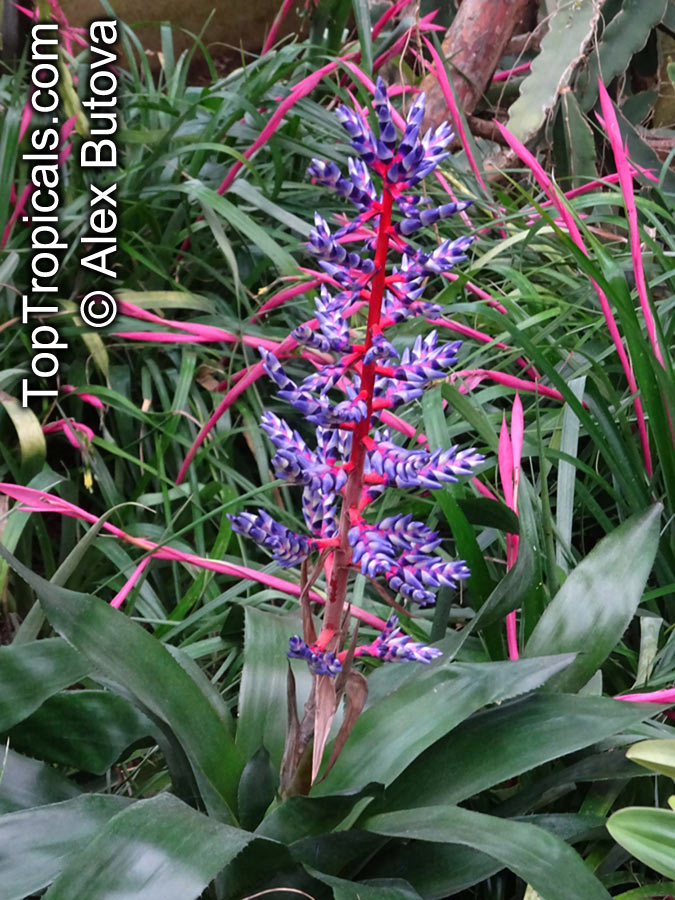
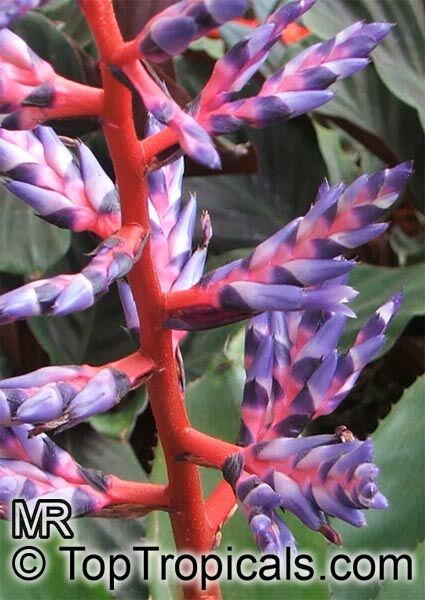
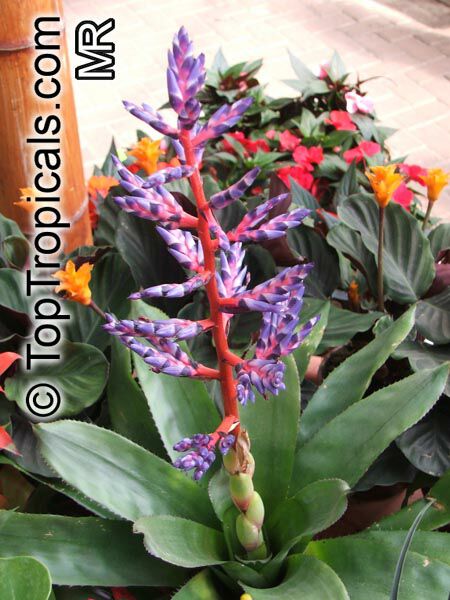
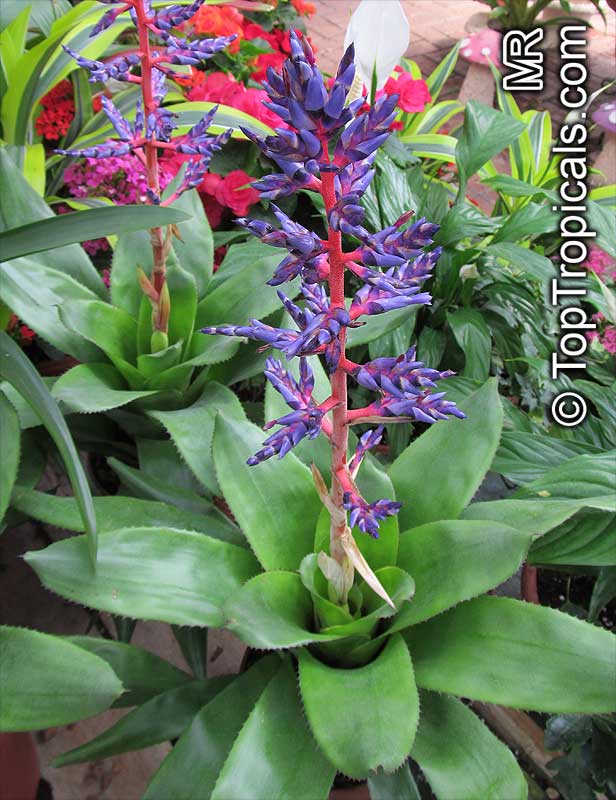
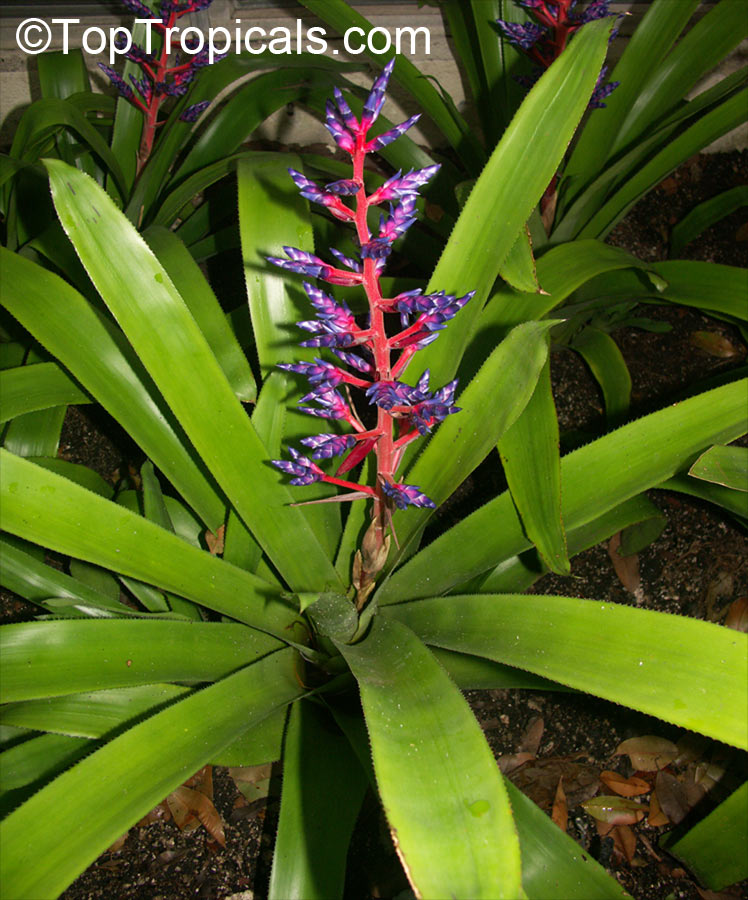
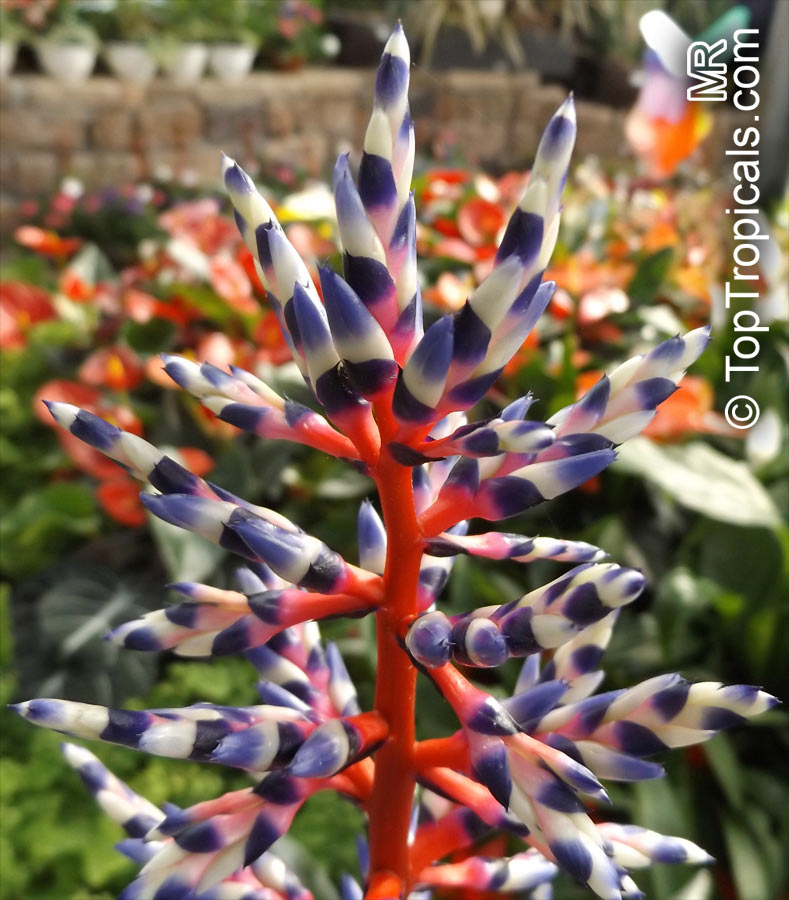
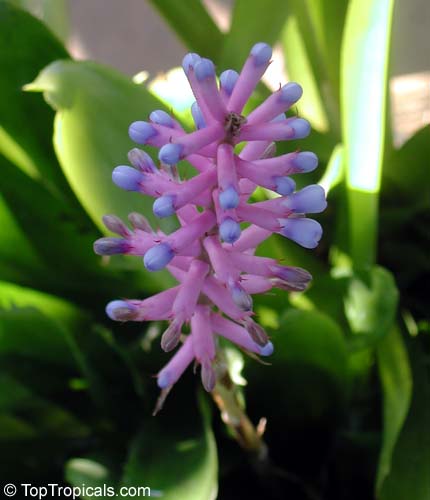
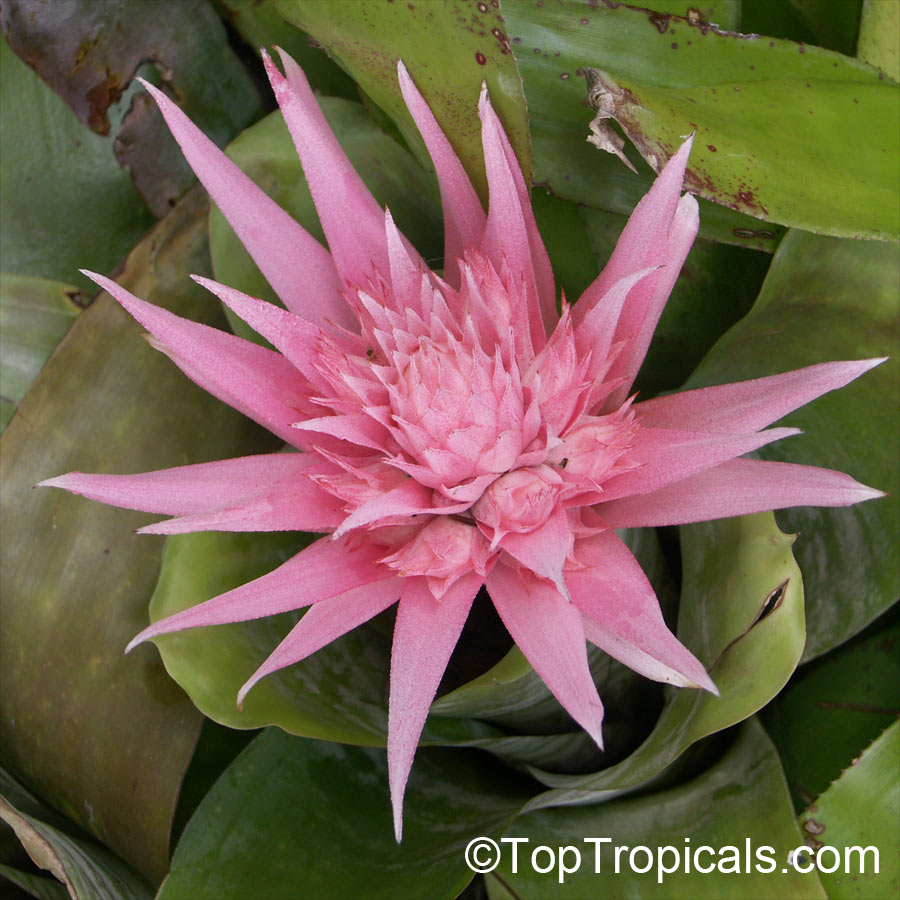
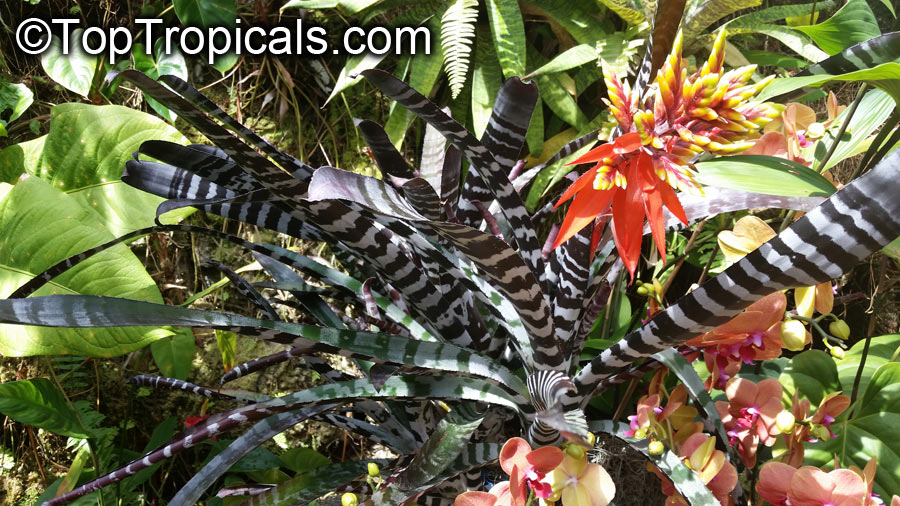
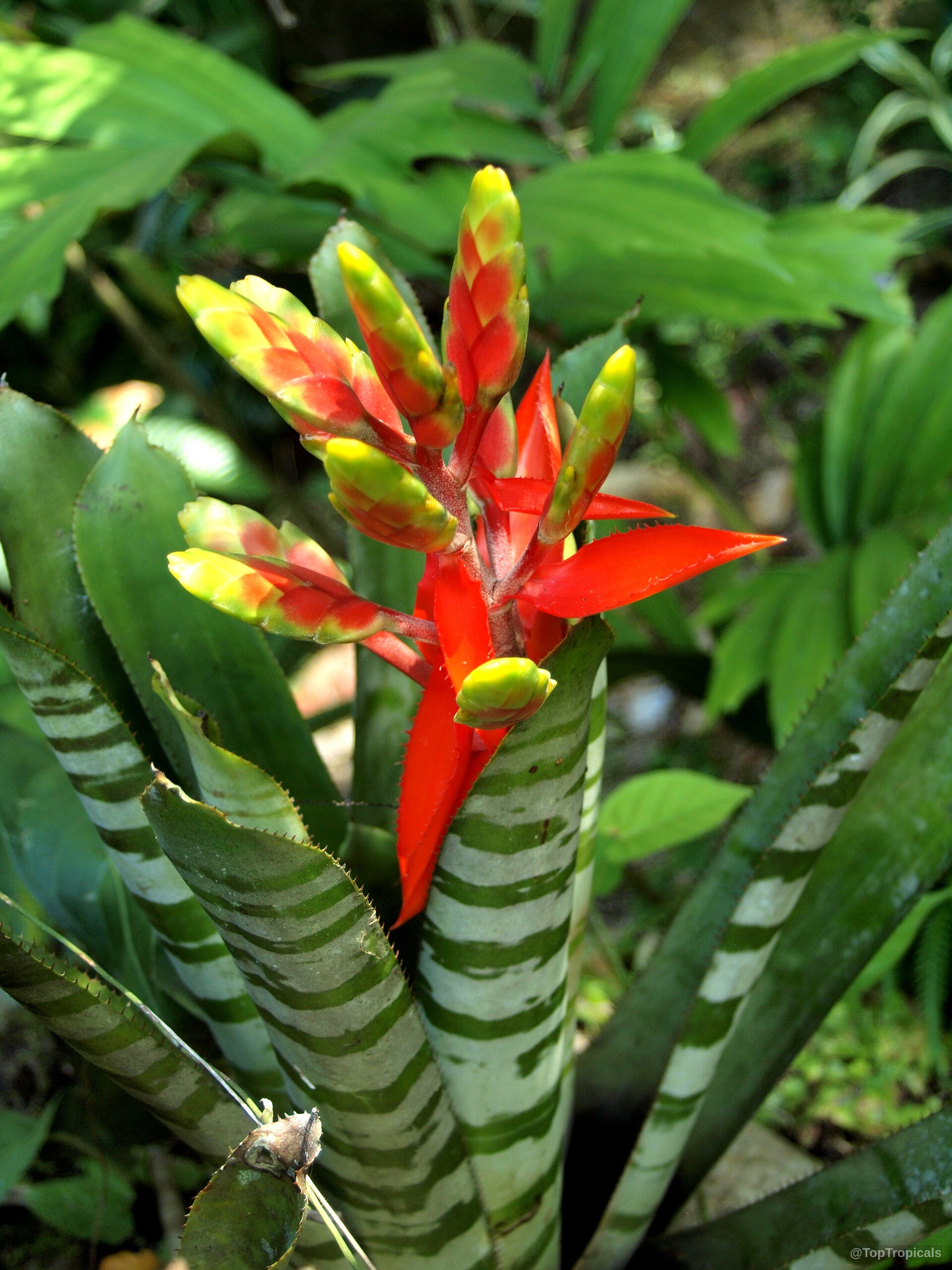
Aechmea fasciata has silver/green bands, rose pink bracts and blue, purple or red flowers. It requires partial shade and a well-drained, but moisture-retentive soil. It can also be grown epiphytically, as, for example, with moss around its roots and wired to rough bark.
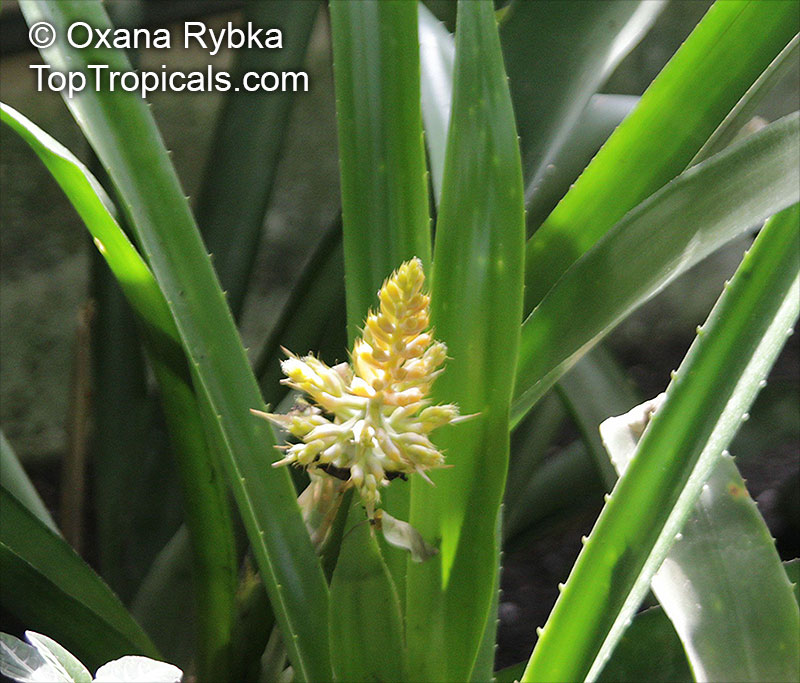
Botanical name: Aechmea sp.
Common name: Bromeliad
Family: Bromeliaceae
Subfamily: Bromelioideae
Origin: Tropical America


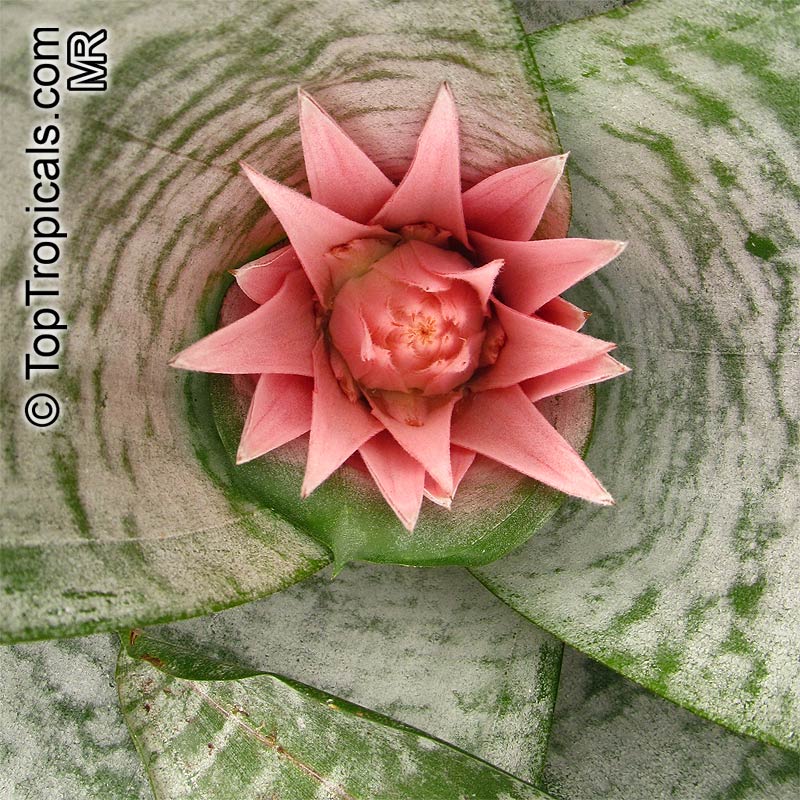
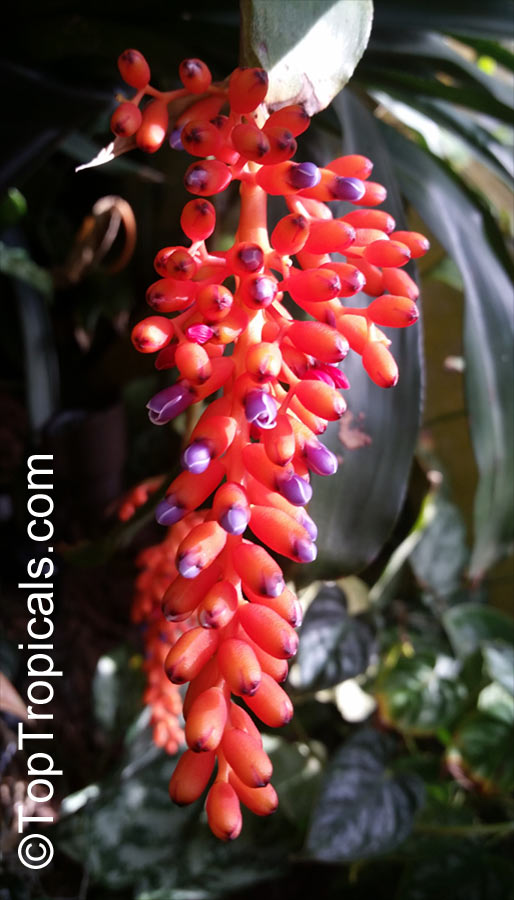
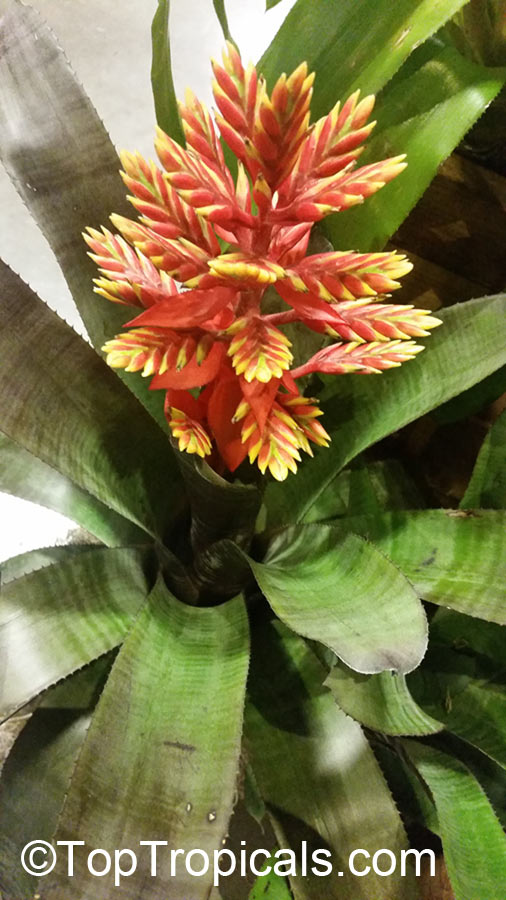
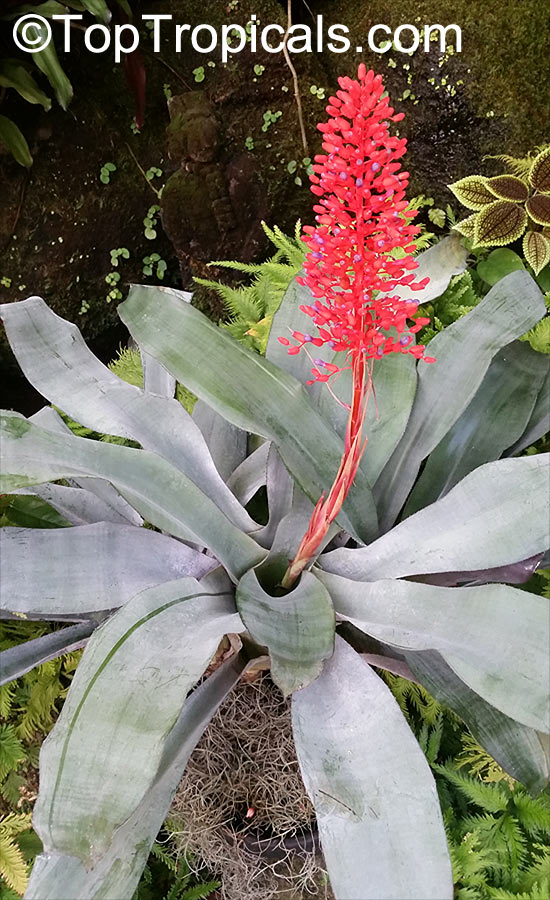
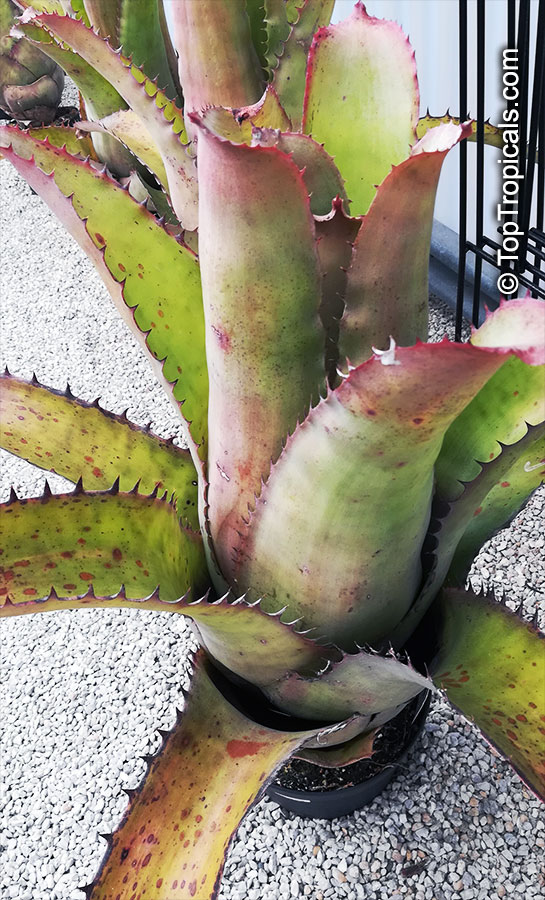
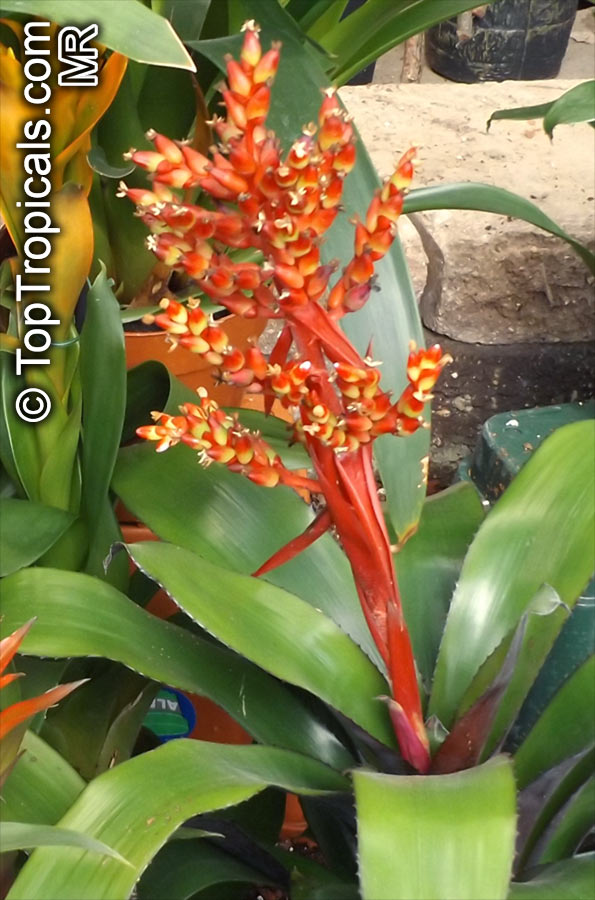
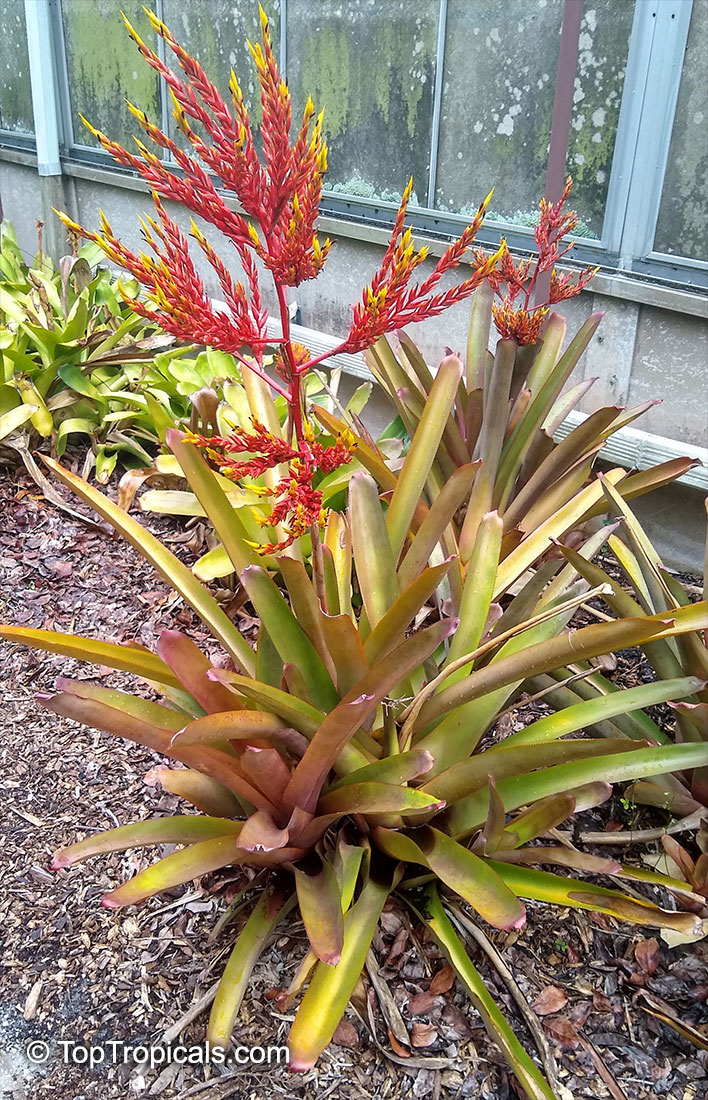
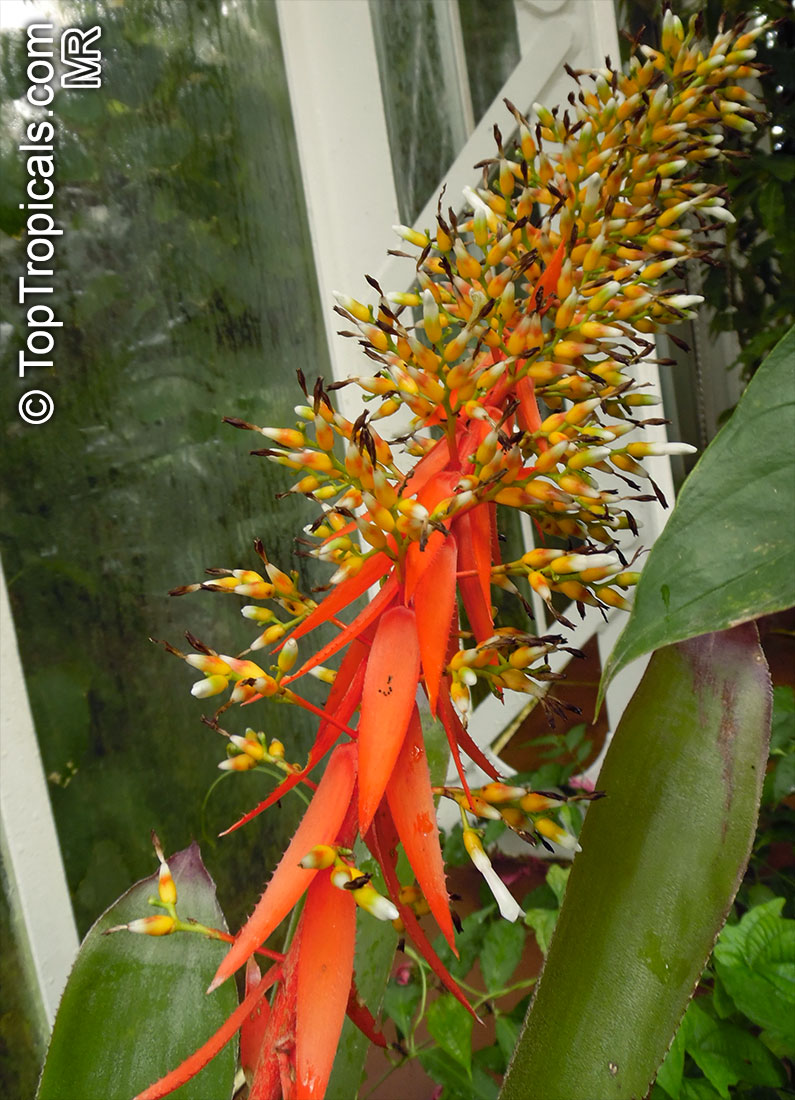
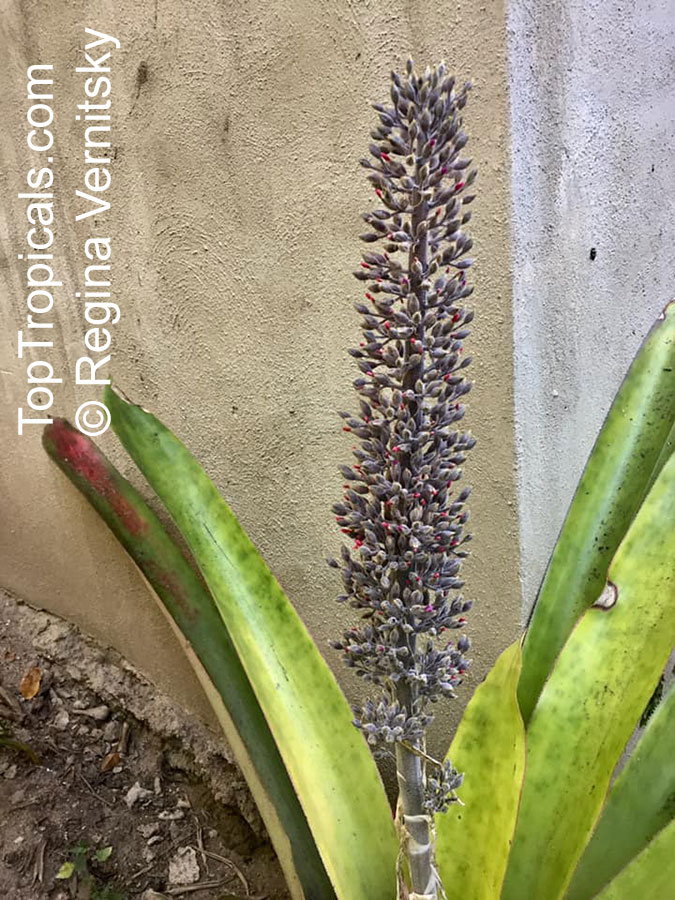
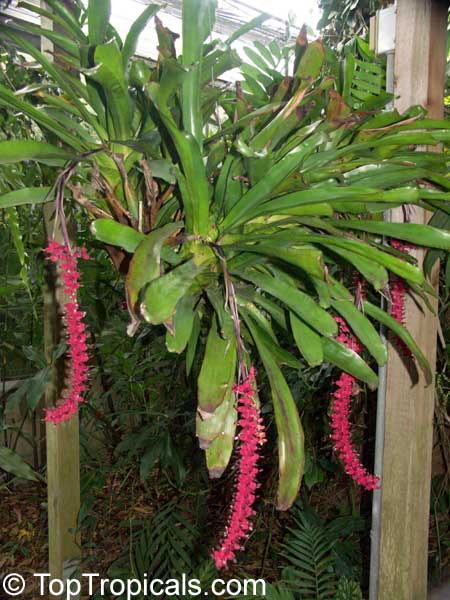
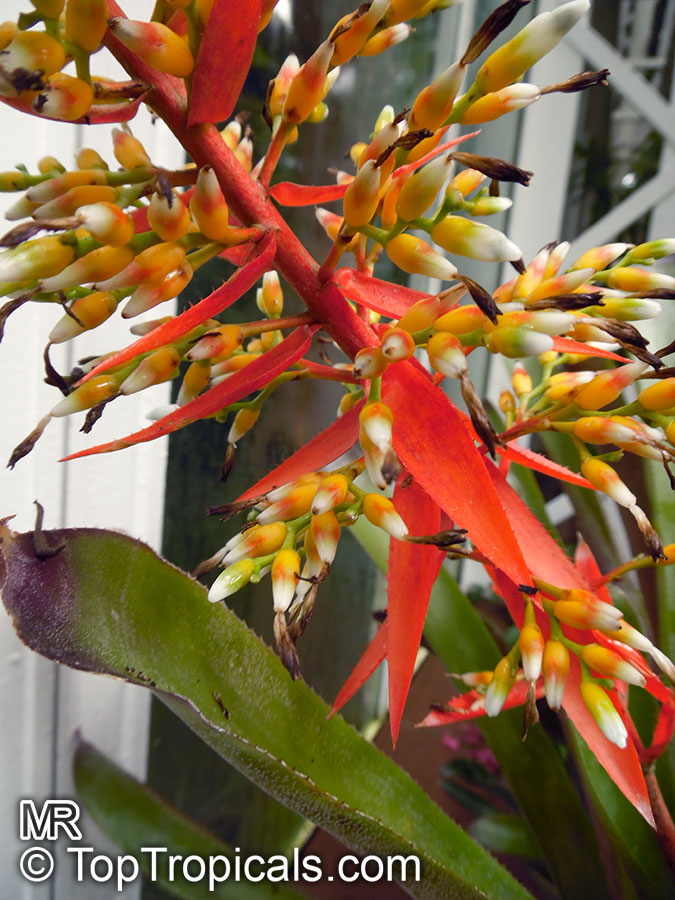
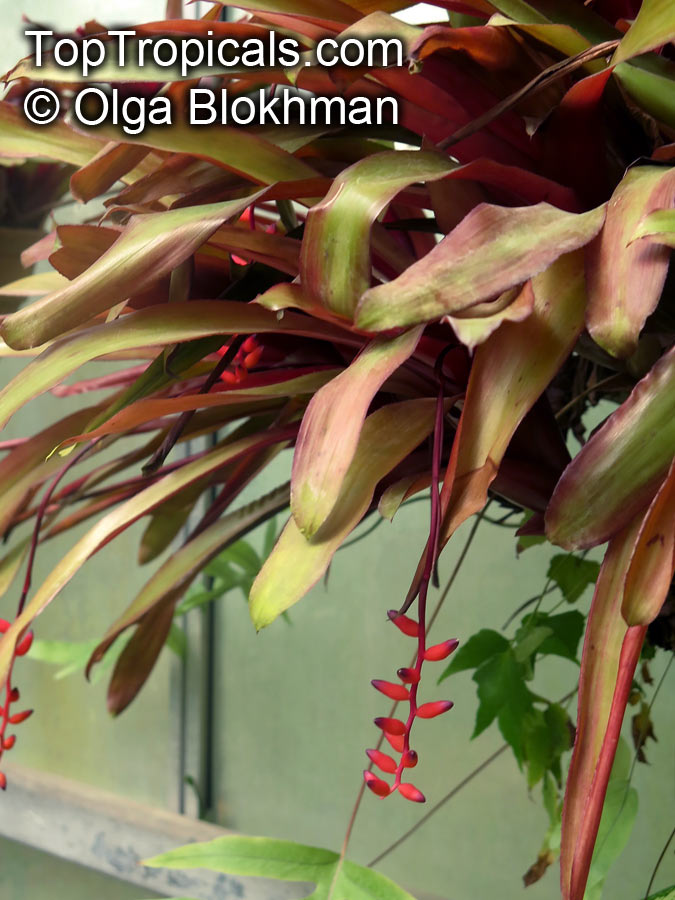
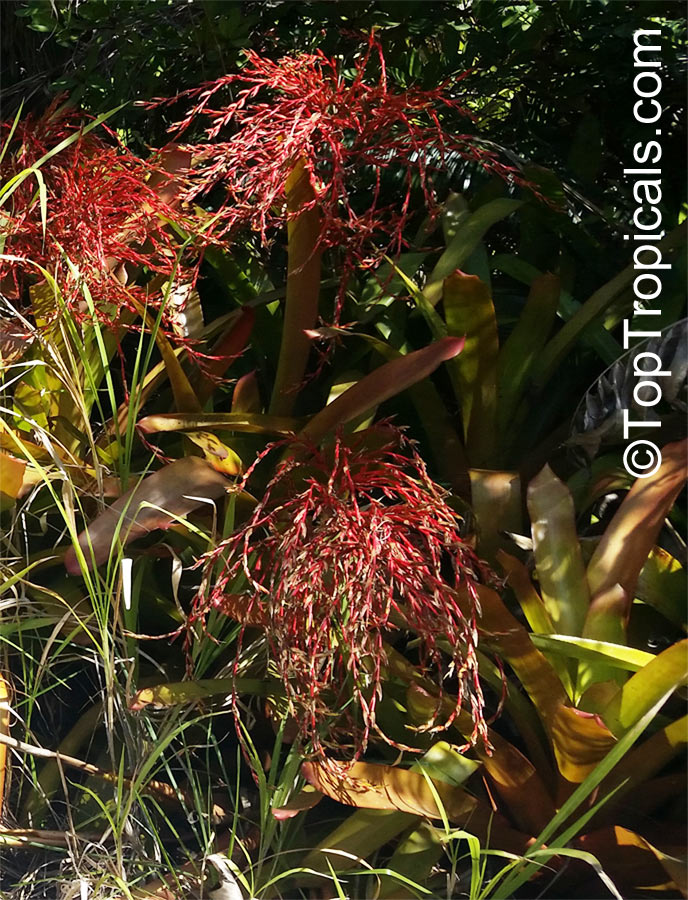
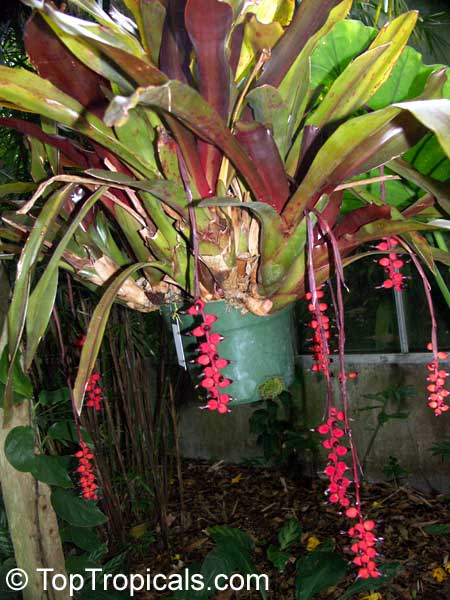
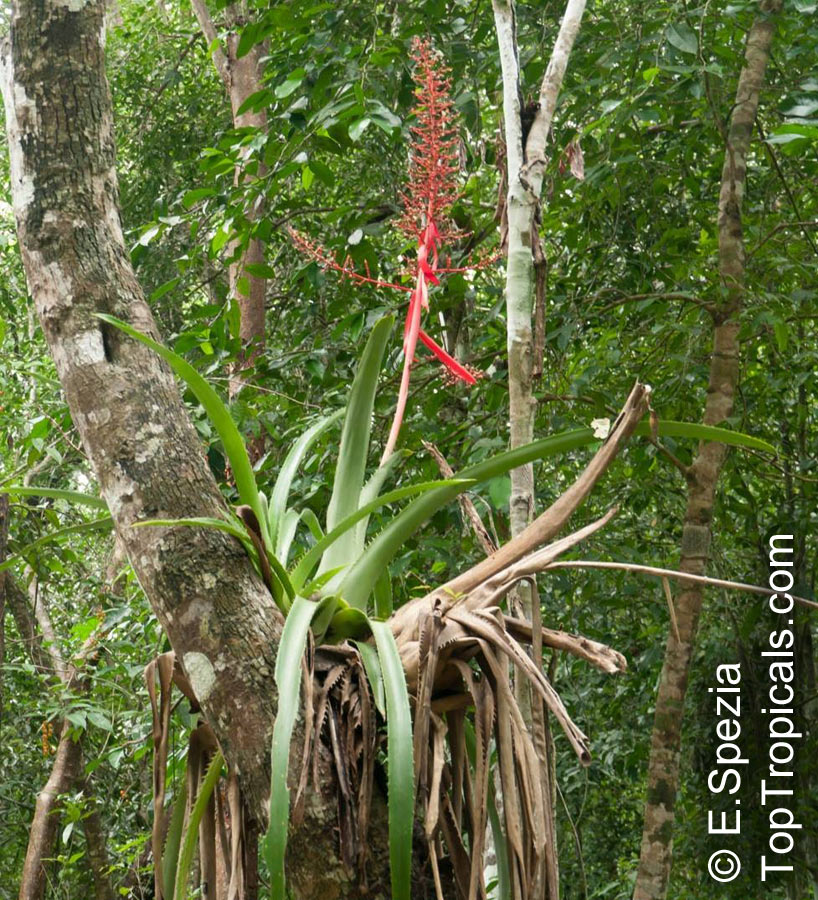
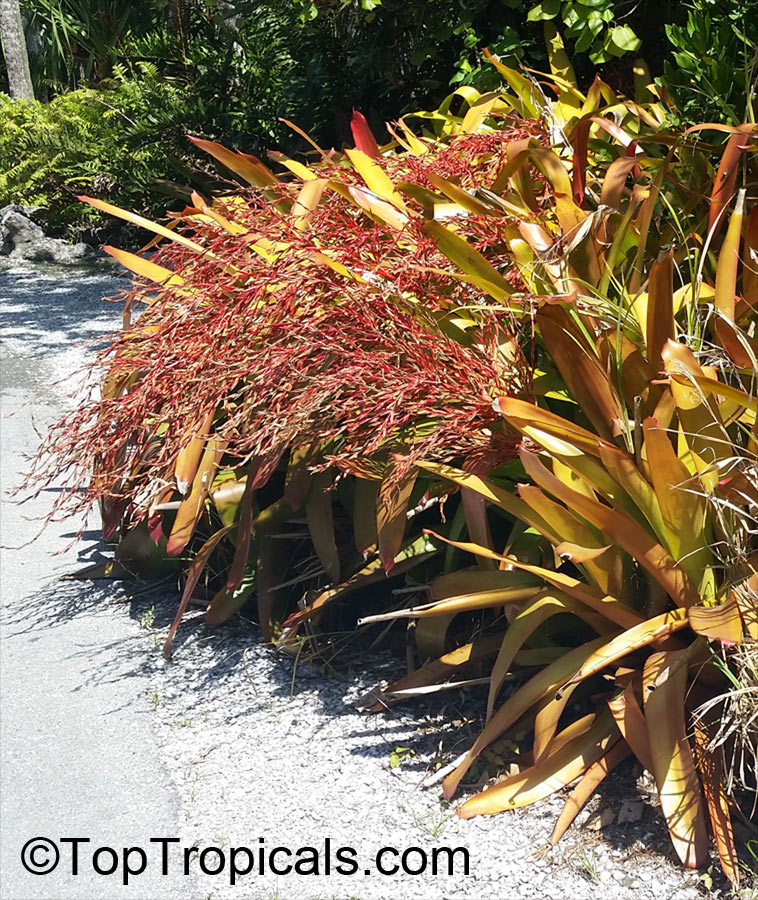
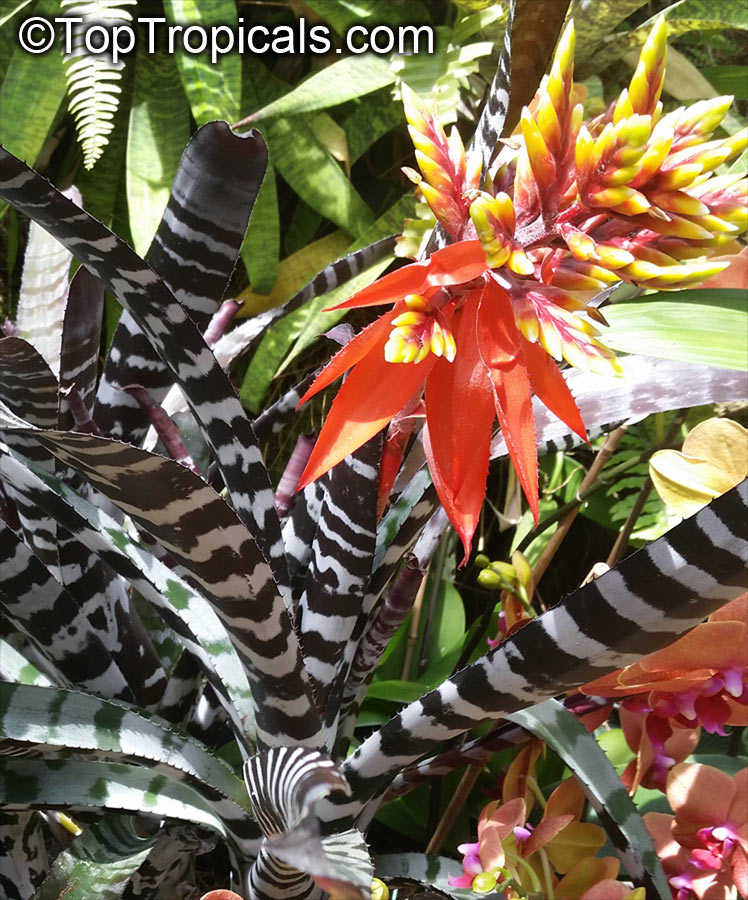
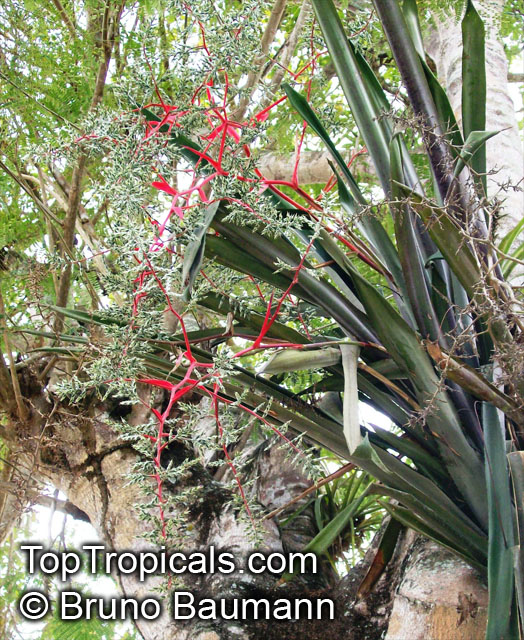
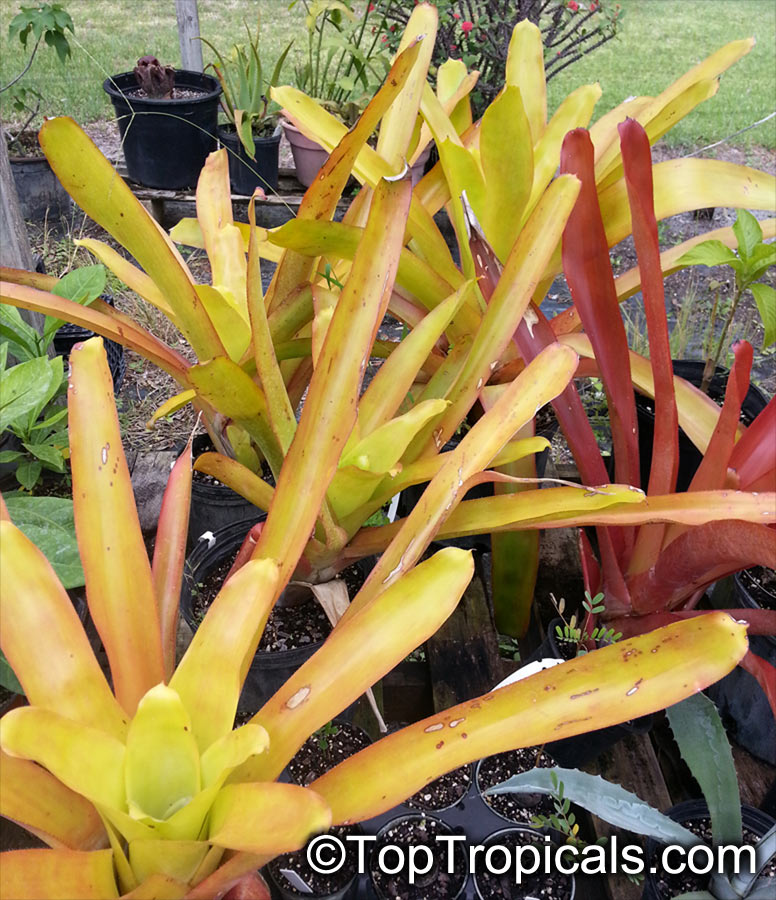
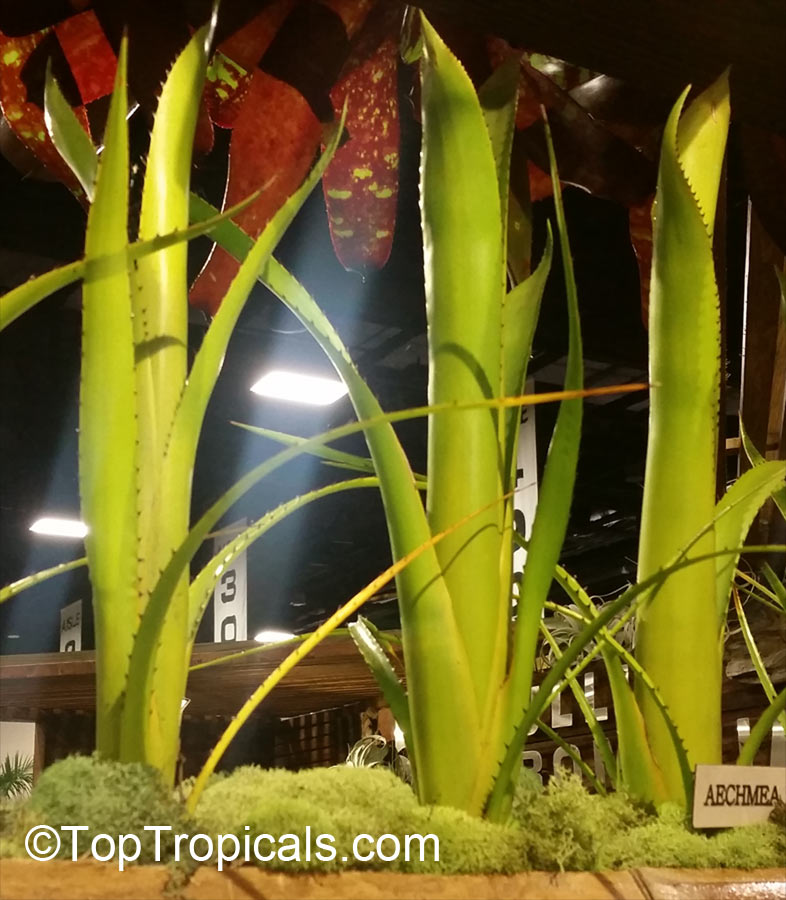
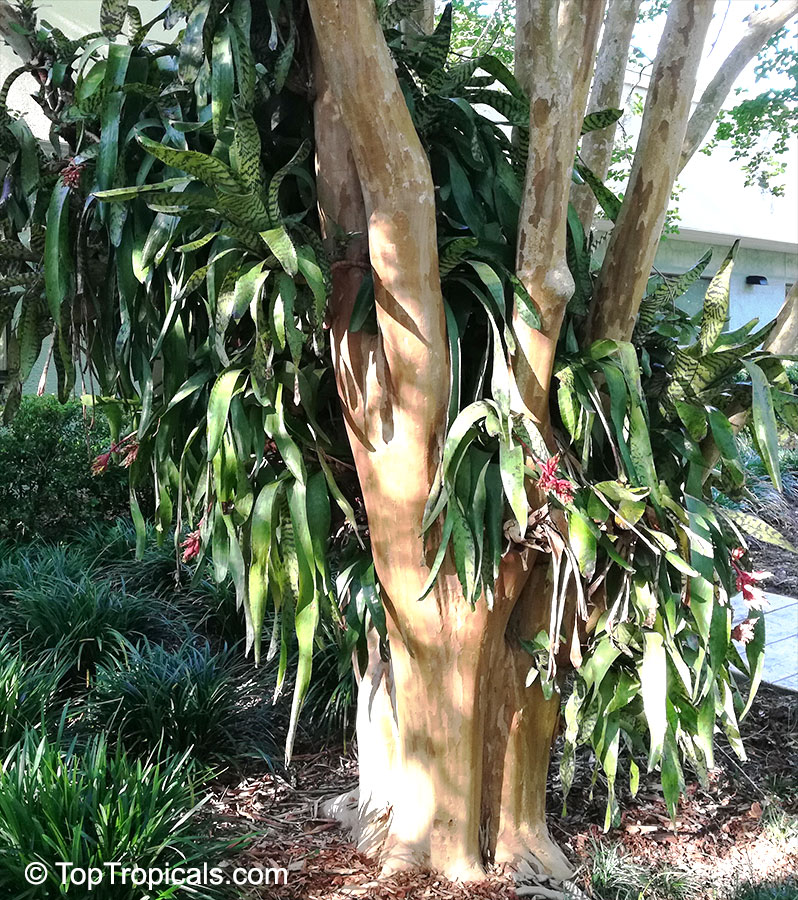
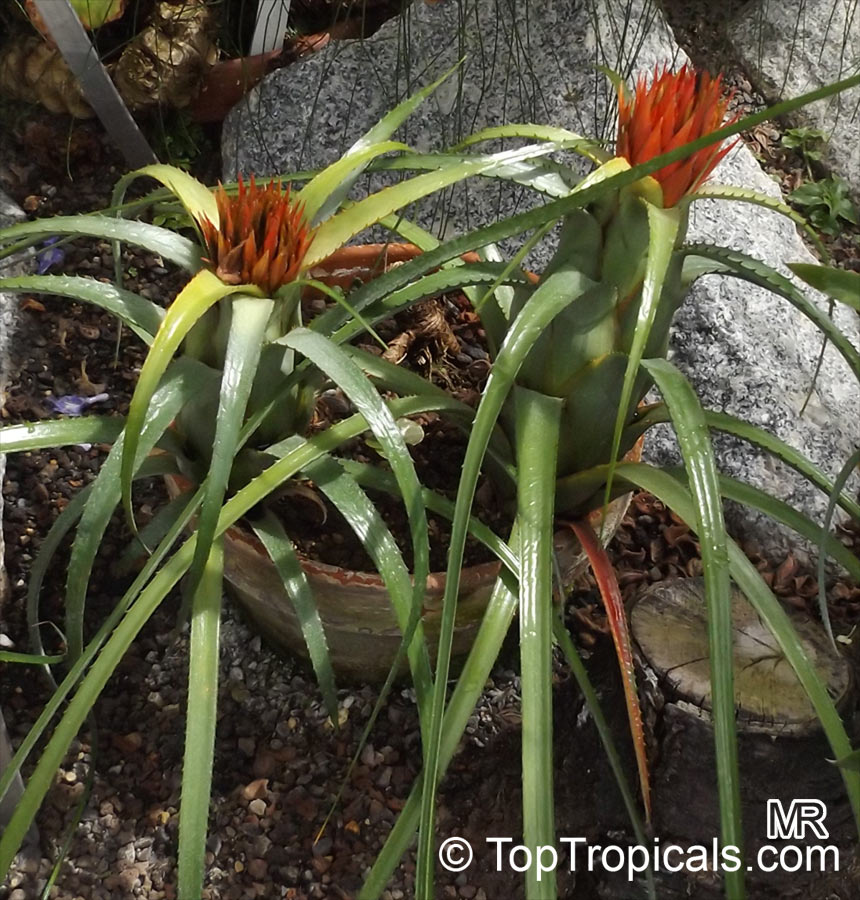
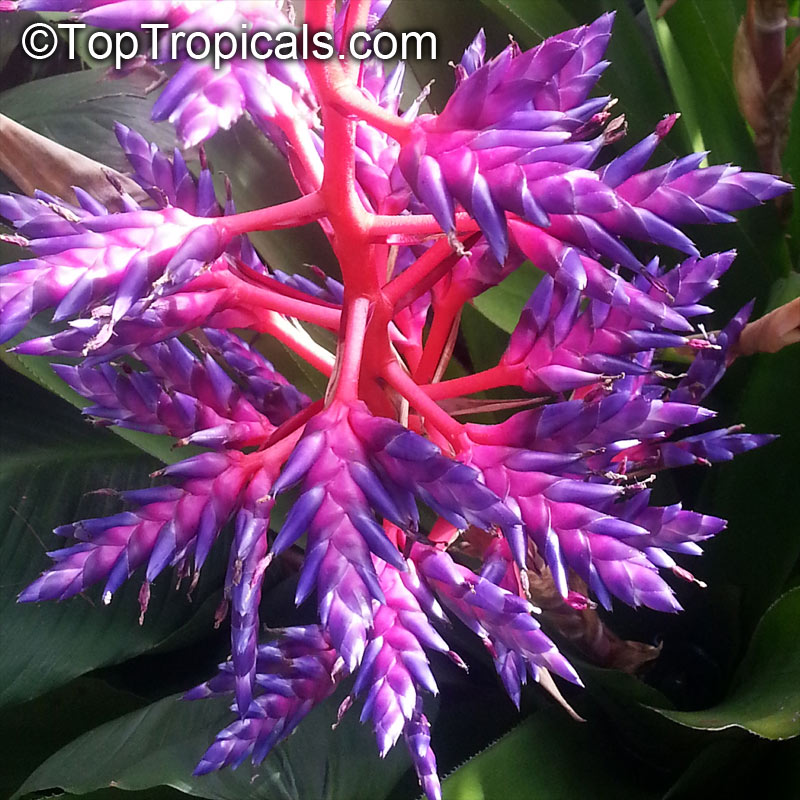
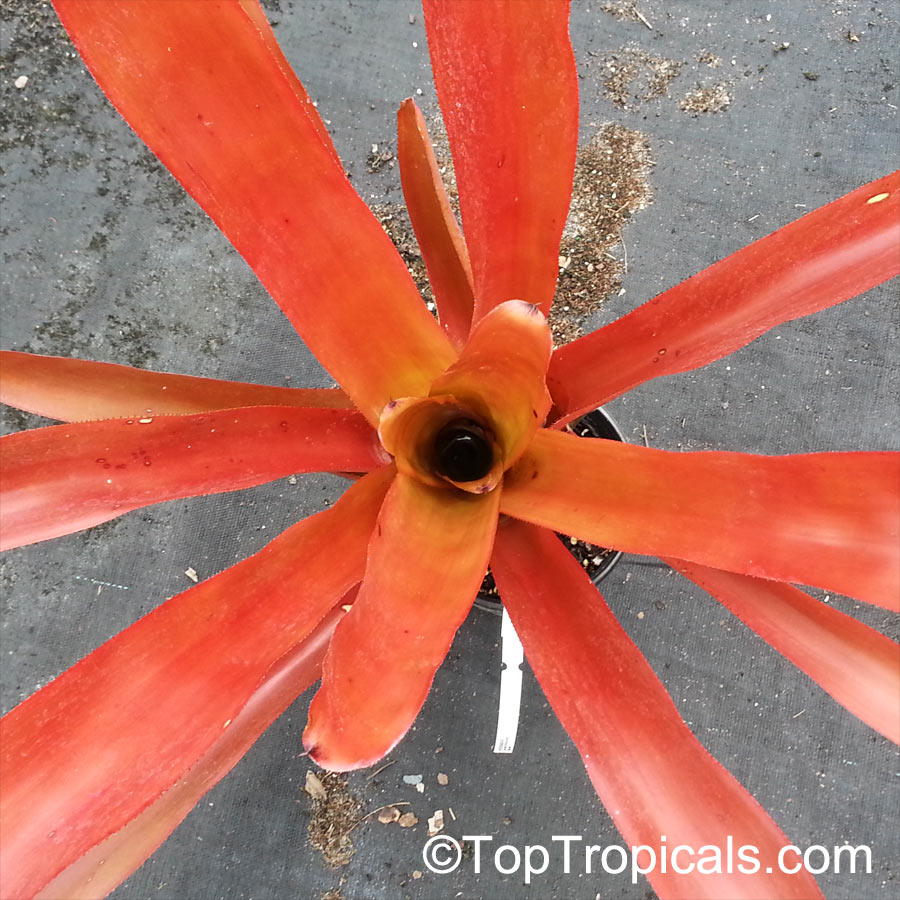
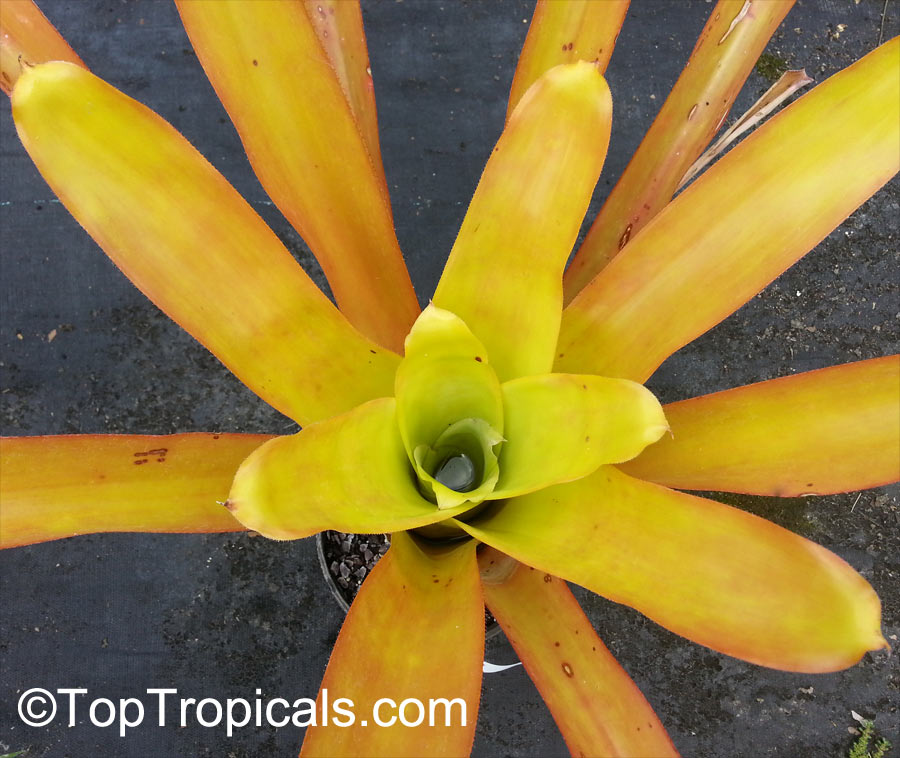
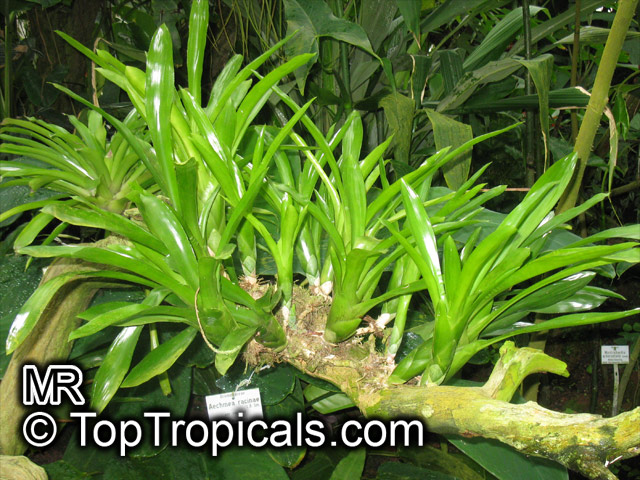
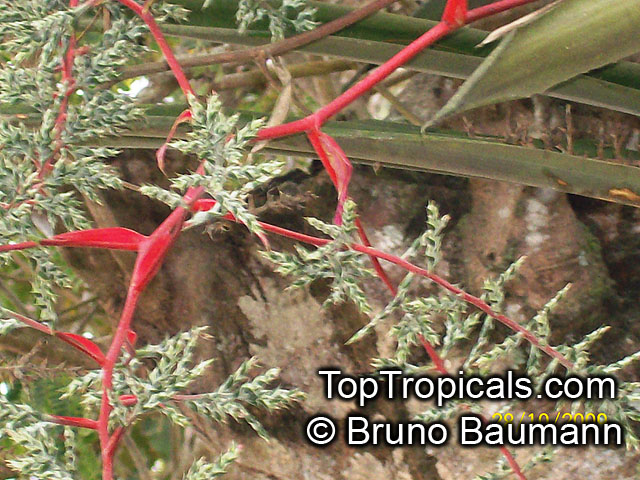
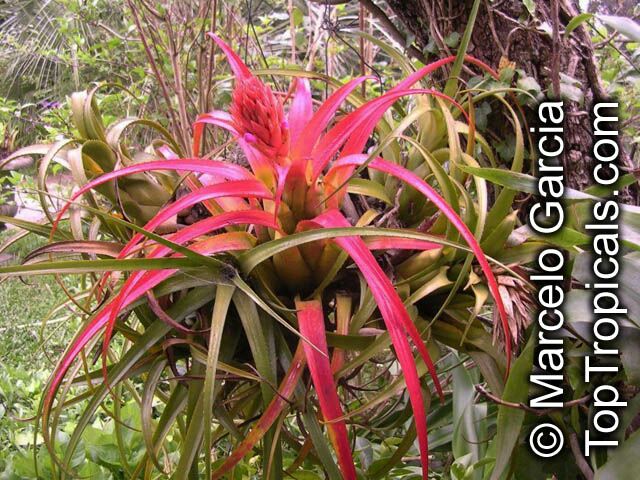
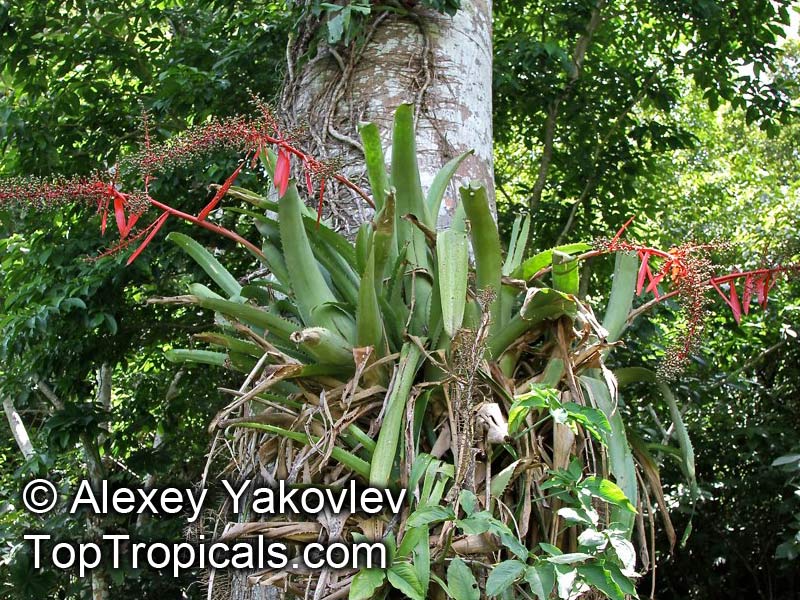
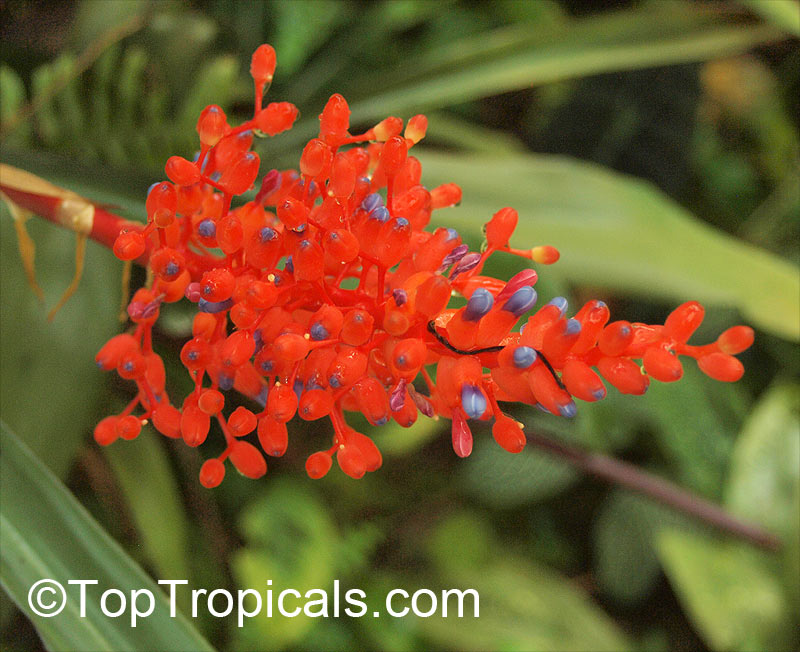
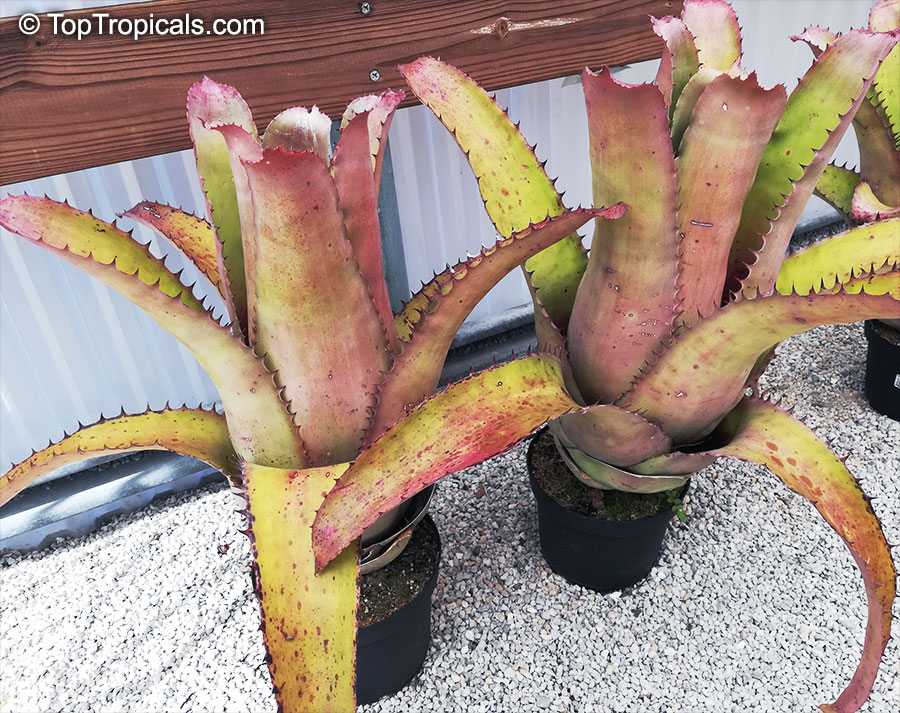
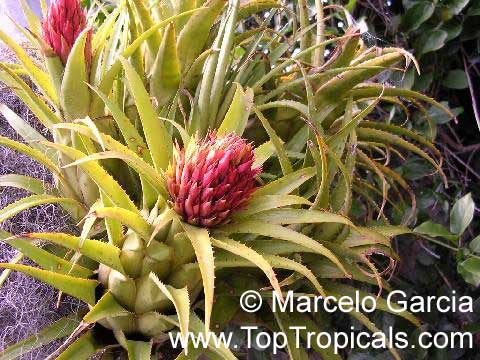
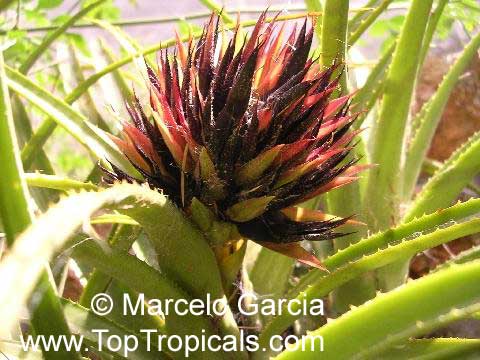
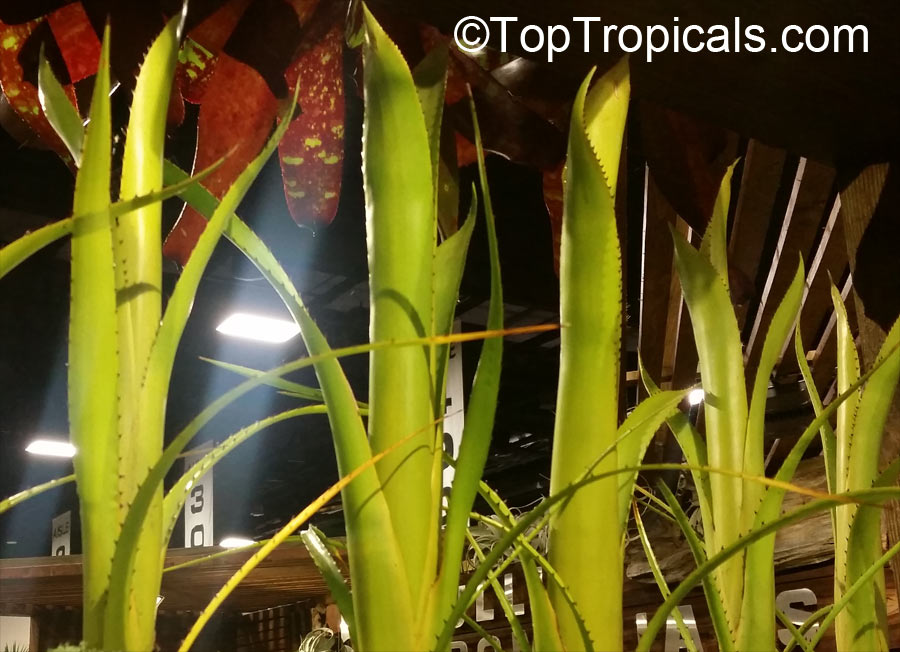
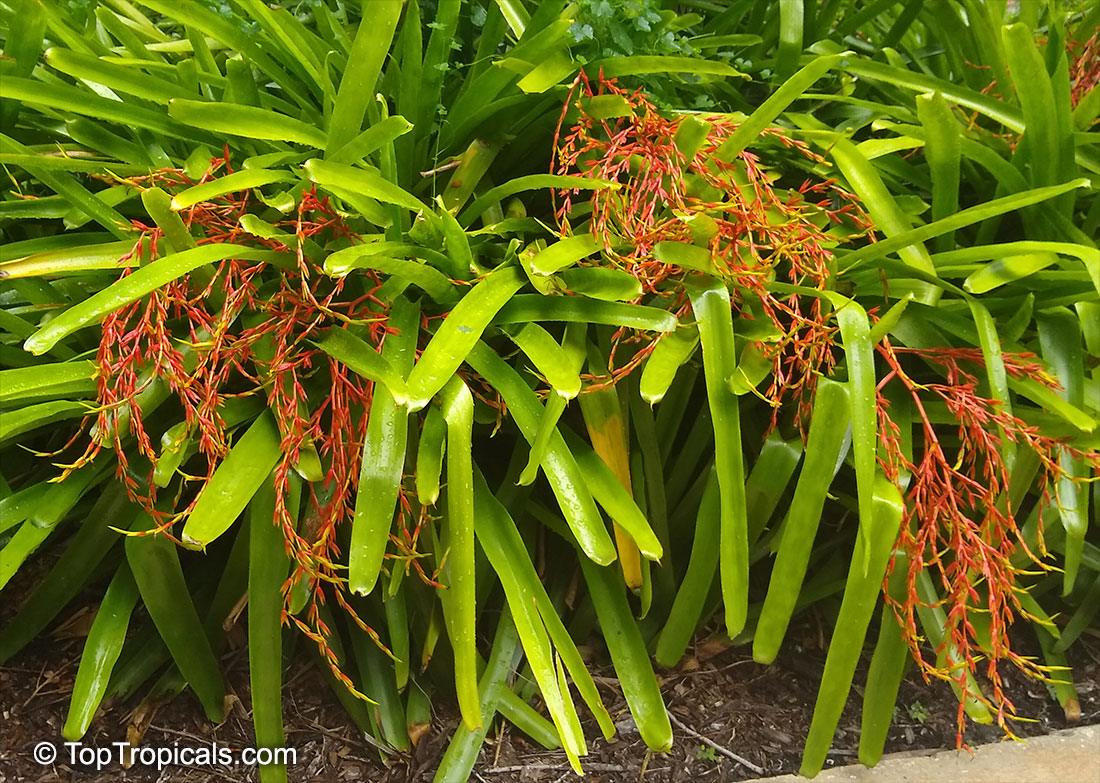
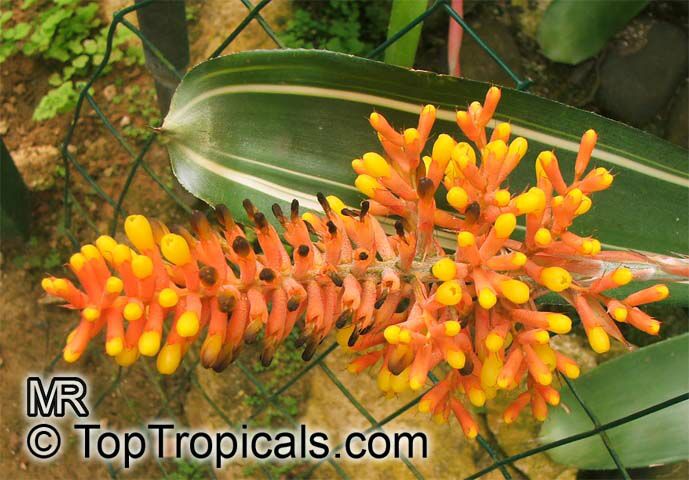
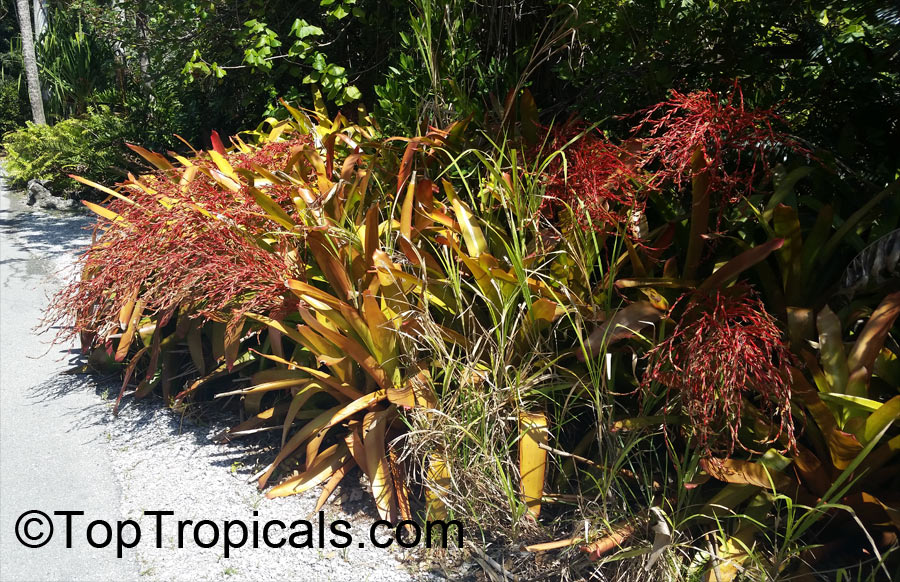
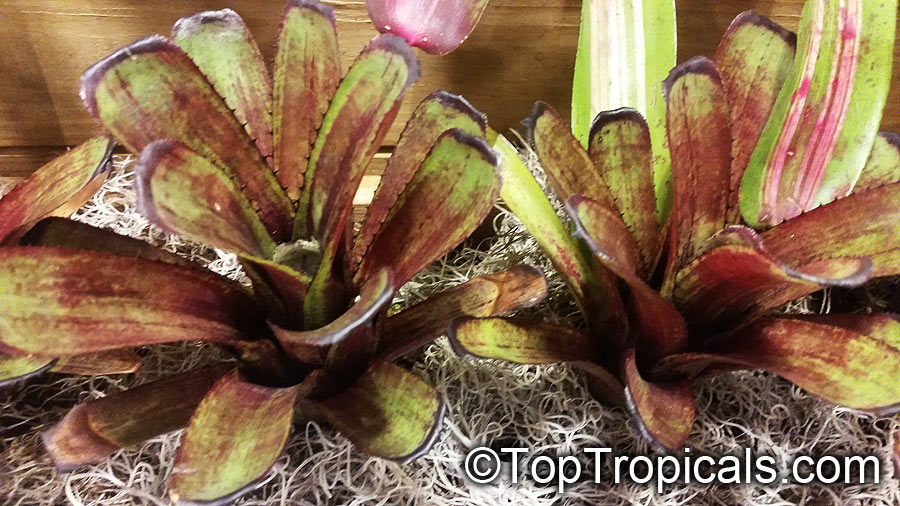
The Aechmea is very diversified, hardy, extremely popular, and very easily cultivated in the bromeliad family group. They range in sizes from a very tiny 6 inches, to more than 10 feet in height and 6 feet in diameter. Their foliage colors vary from lime green, yellow, red, burgundy, and black, and incorporates many patterns, spots, stripes, bands, silvering, shadings, and blotches. These patterns often vary form the top of the leaf to the bottom of it. The Aechmea family has large inflorescence and brightly colored, long lasting bracts that holds the magnitude of tiny flowers. Often the colorful berry-like fruits mature for a long time on the flower spike. It's a very healthy, cold and rot resistant plant to grow outdoors fixed in trees, walls, or, in pots in an orchid mix.
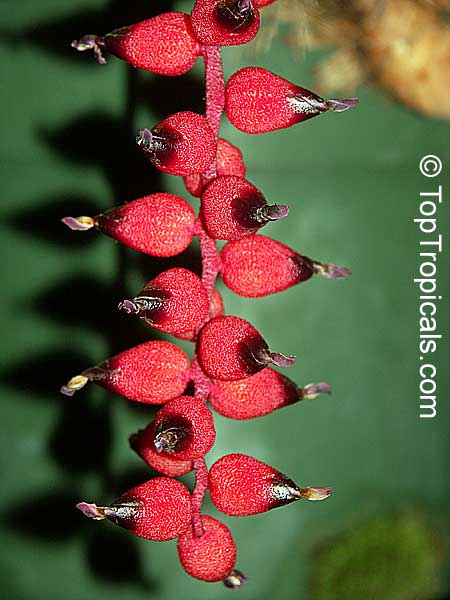
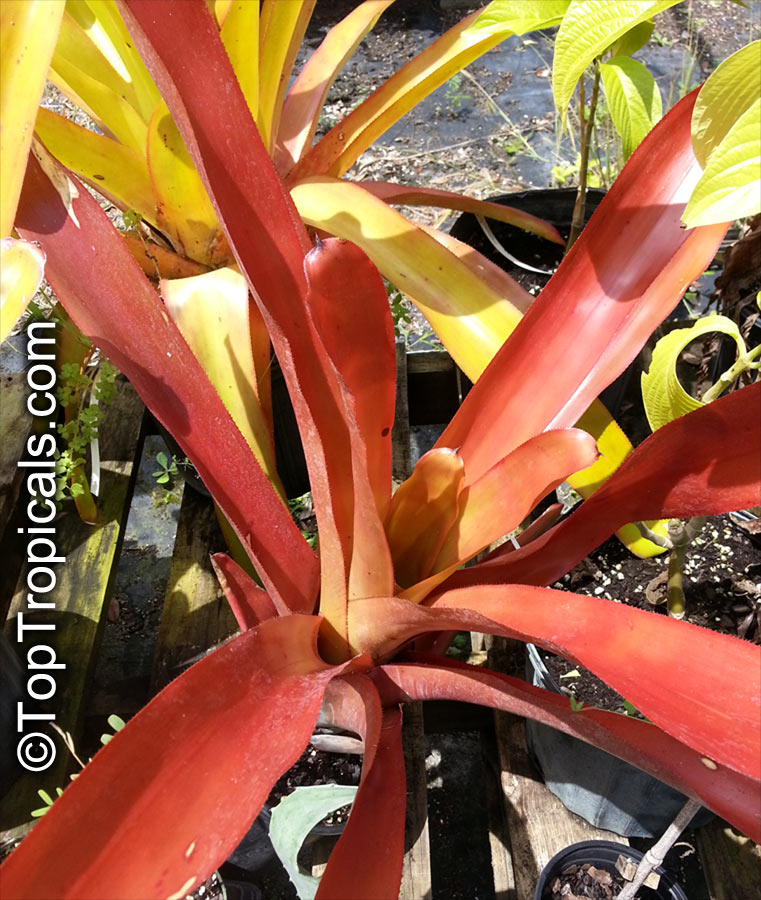
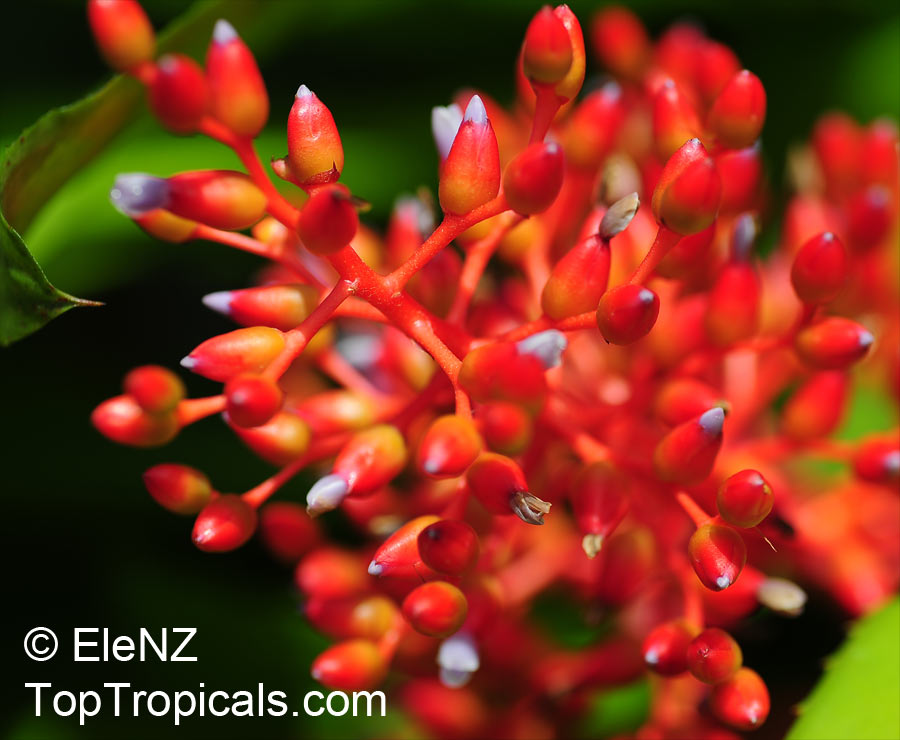
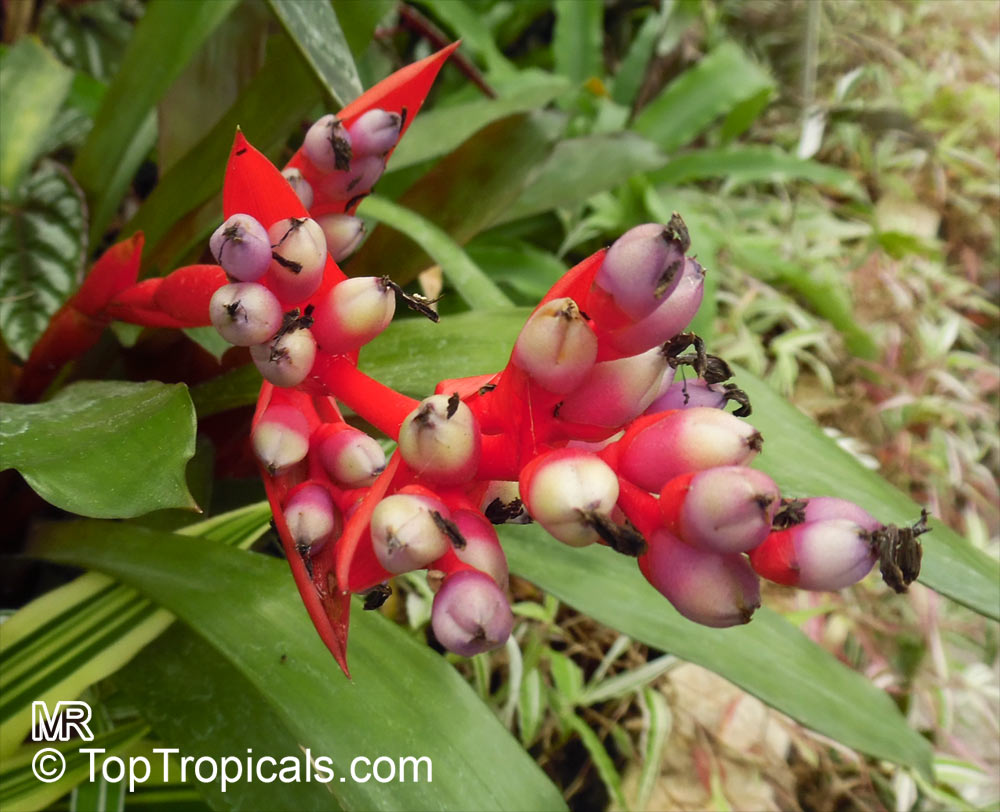
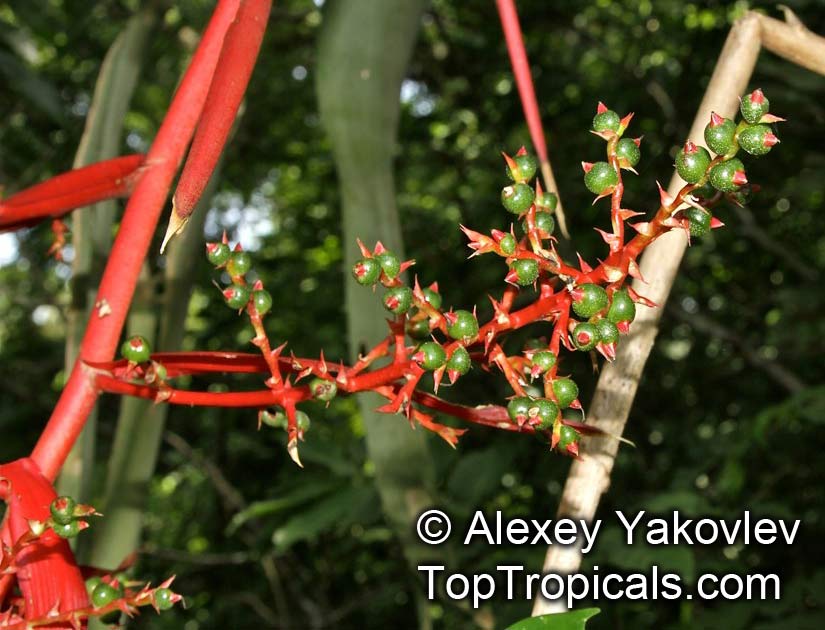
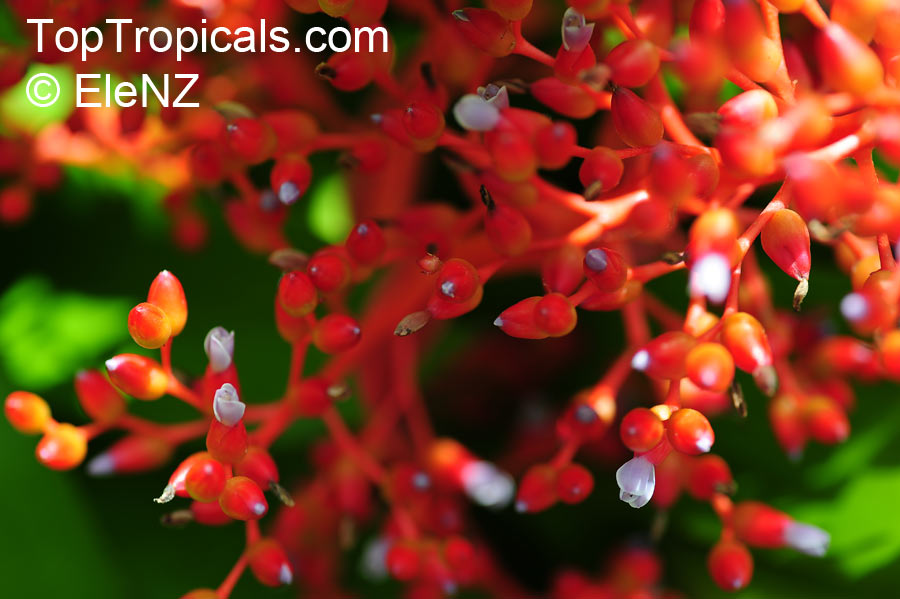
Adult plants need a sunny position to become red in the blooming period. In a luminous shade it flowers, but the leaves remain green. The rose bracts persist a long time, and if flowers are pollinated black pointed fruits will appear as shown in the picture. It's curious because, when the plant grows in very shaded locations the leaves become very long, to the point to seem a completely different plant and very elegant indeed, with no weak aspects. However, if it is gradually moved to full sun it blooms and the leaves become red.



Botanical names: Aerangis hariotiana, Microterangis hariotiana, Chamaeangis hariotiana
Common name: Hariot's Microterangis
Family: Orchidaceae
Origin: Comoros


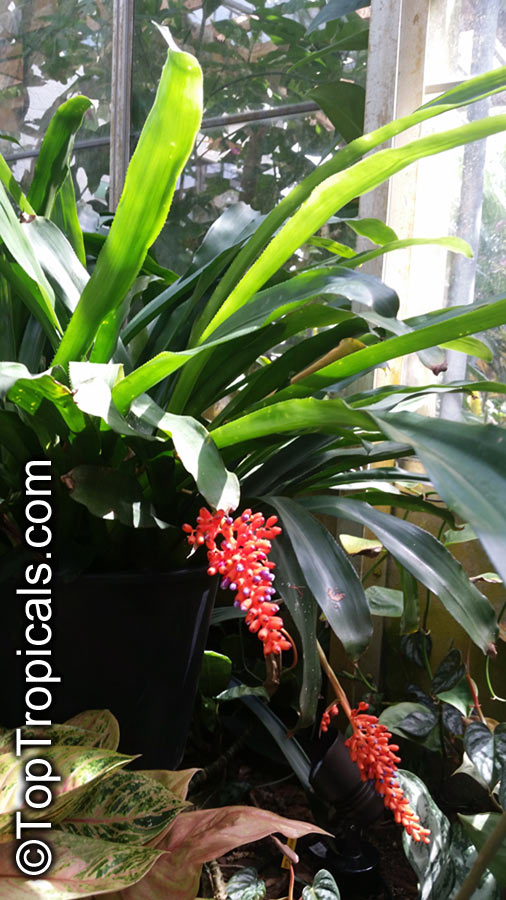
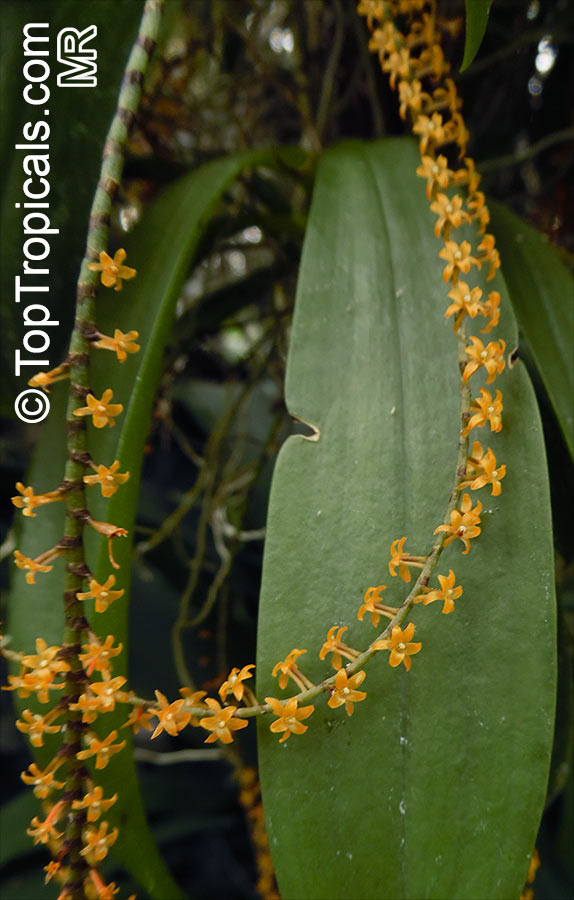
Its flowers are irresistible to butterflies, moths, and hummingbirds. Aerangis hariotiana (Hariot's Microterangis) is an epiphytic plant native to Comoros, a set of islands off the coast of East Africa. The plant has ovate-lanceolate leaves and grows 2-5 ft tall. It prefers semi-shade, but can still thrive in bright filtered light.
Aerangis hariotiana will thrive in USDA Zone 9-11 and can be grown as a potted plant indoors in colder regions as long as it is given the appropriate amount of humidity, light and water. This plant does best in a light and airy potting mix with several handfuls of natural material such as fir-bark, perlite, and other ingredients, depending on the composition of your soil. It's important to keep the soil lightly moist, but not soggy.
Aerangis hariotiana also requires humidity and should have its roots misted regularly to prevent dehydration. Lastly, it is a good idea to use a balanced fertilizer at least once a year.
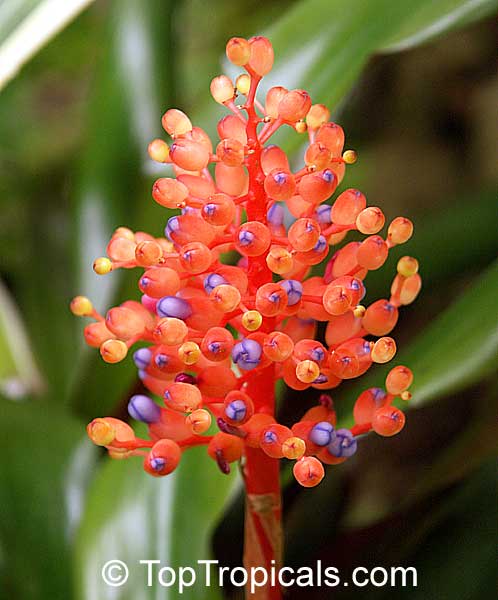
Besides its strongly night-scented, sherbet-orange miniature flowers, Aerangis hariotiana also attracts hummingbirds and butterflies, making it a great addition to any garden. Its blooms appear in late winter and early spring, making it an unusual addition to gardens in cold-weather regions. If you're looking for a unique statement piece to add to your garden, this small and prolific bloomer is sure to catch the eye!
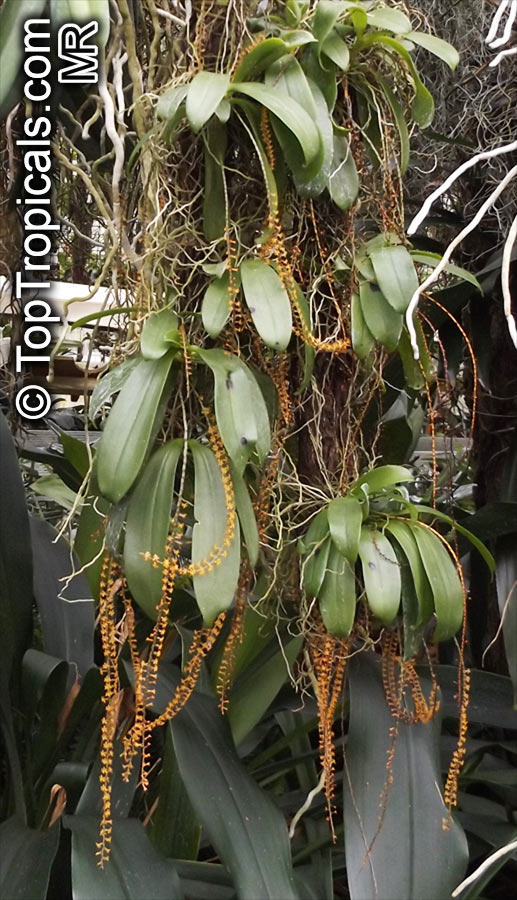
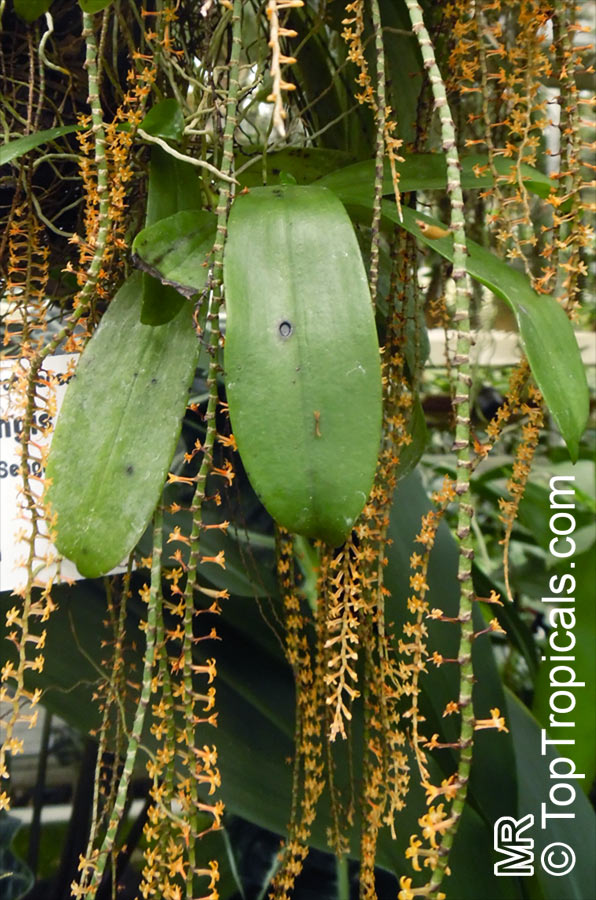
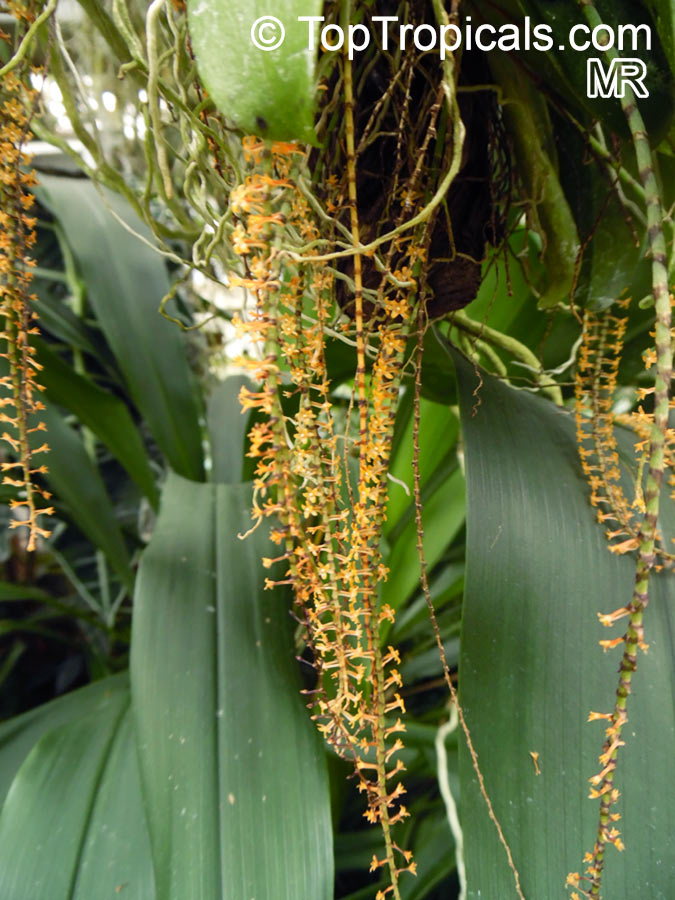
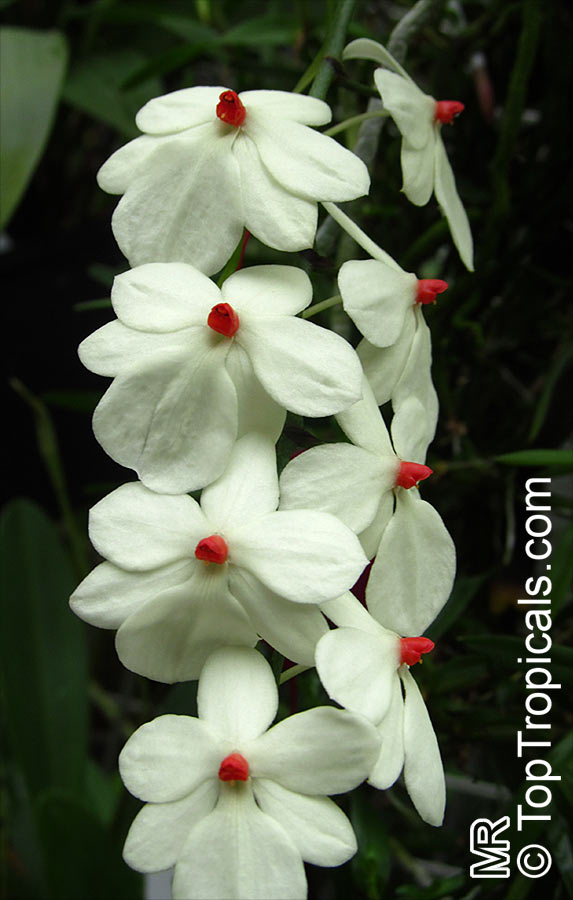
Botanical names: Aerangis luteoalba, Angraecum rhodostictum
Common name: Beige Aerangis
Family: Orchidaceae
Origin: Central Africa
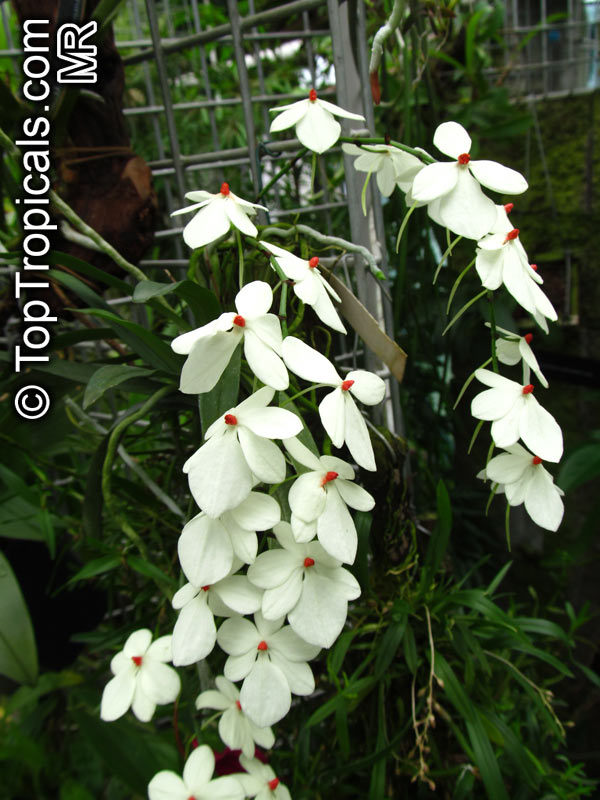
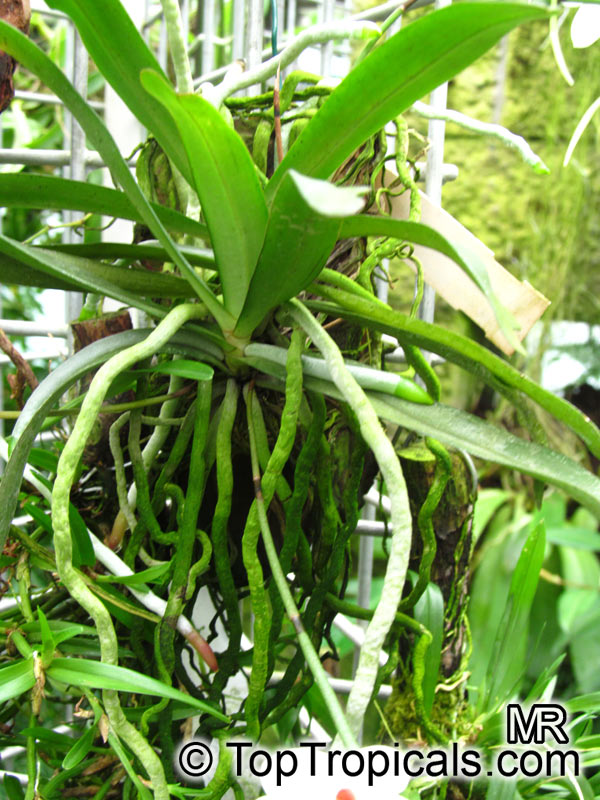
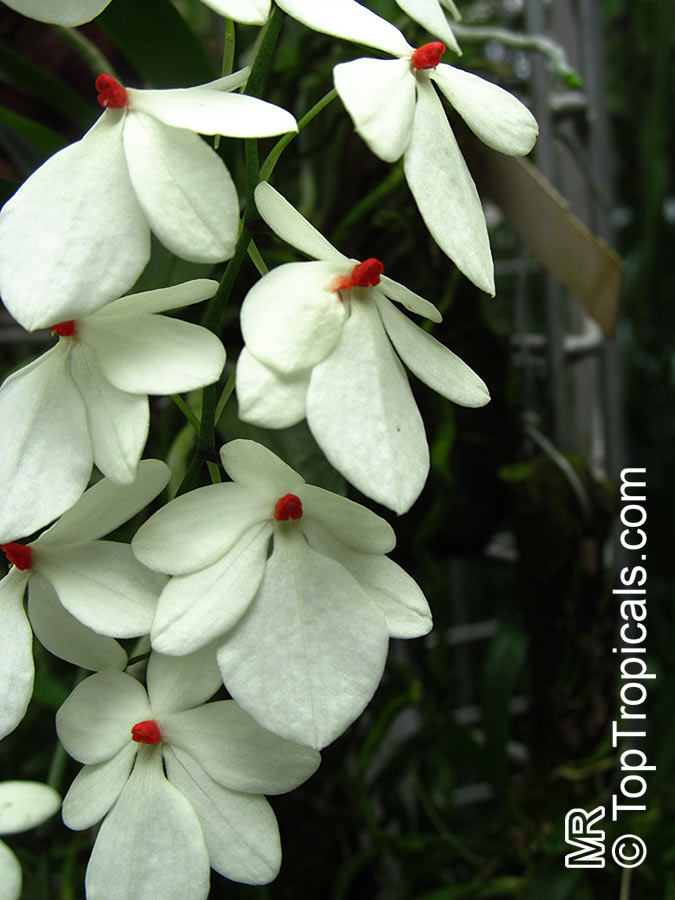
A small, usually pendulous, monopodial epiphyte that is almost stemless. The short stem is hidden by the basal sheaths of closely set leaves. The roots are often flattened, with thin velamen, are green when wet, and have emerald green tips. Aerangis luteo-alba var. rhodosticta has yellowish white flowers with a bright orange-red column.
Cultivated plants should be kept moist during periods corresponding to the wet seasons. They should be allowed to dry slightly between waterings during the dry seasons, but should never dry out completely or be left dry for extended periods.
| Next | |
Use link to repeat this search:
https://toptropicals.com/cgi-bin/garden_catalog/cat.cgi?search_op=and&keyword_op=and&language=e&number=5&no_change_lang=1
&v1=eph&user=tt&sale=1&first=0