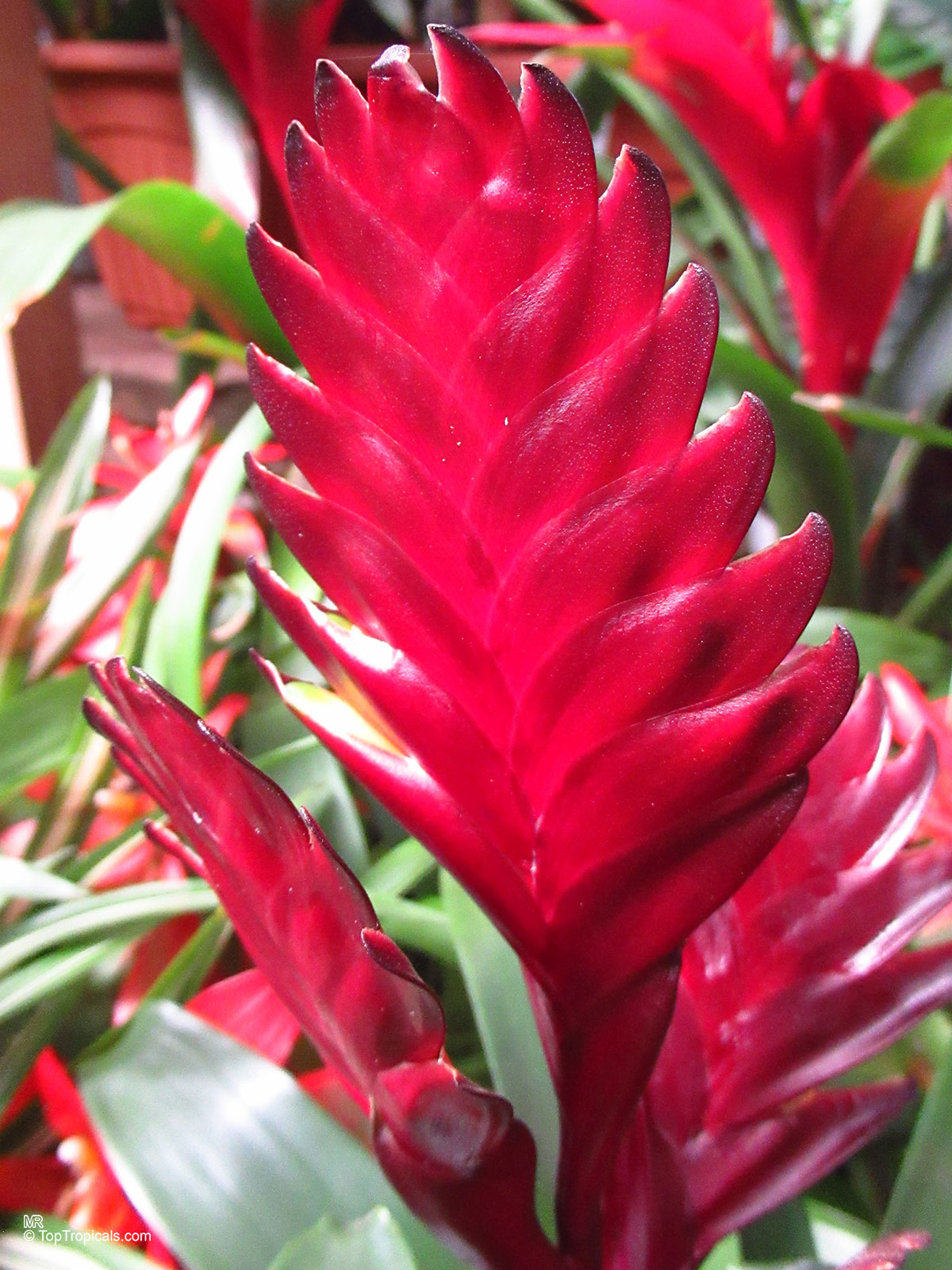
Vriesea sp. (Bromeliad)
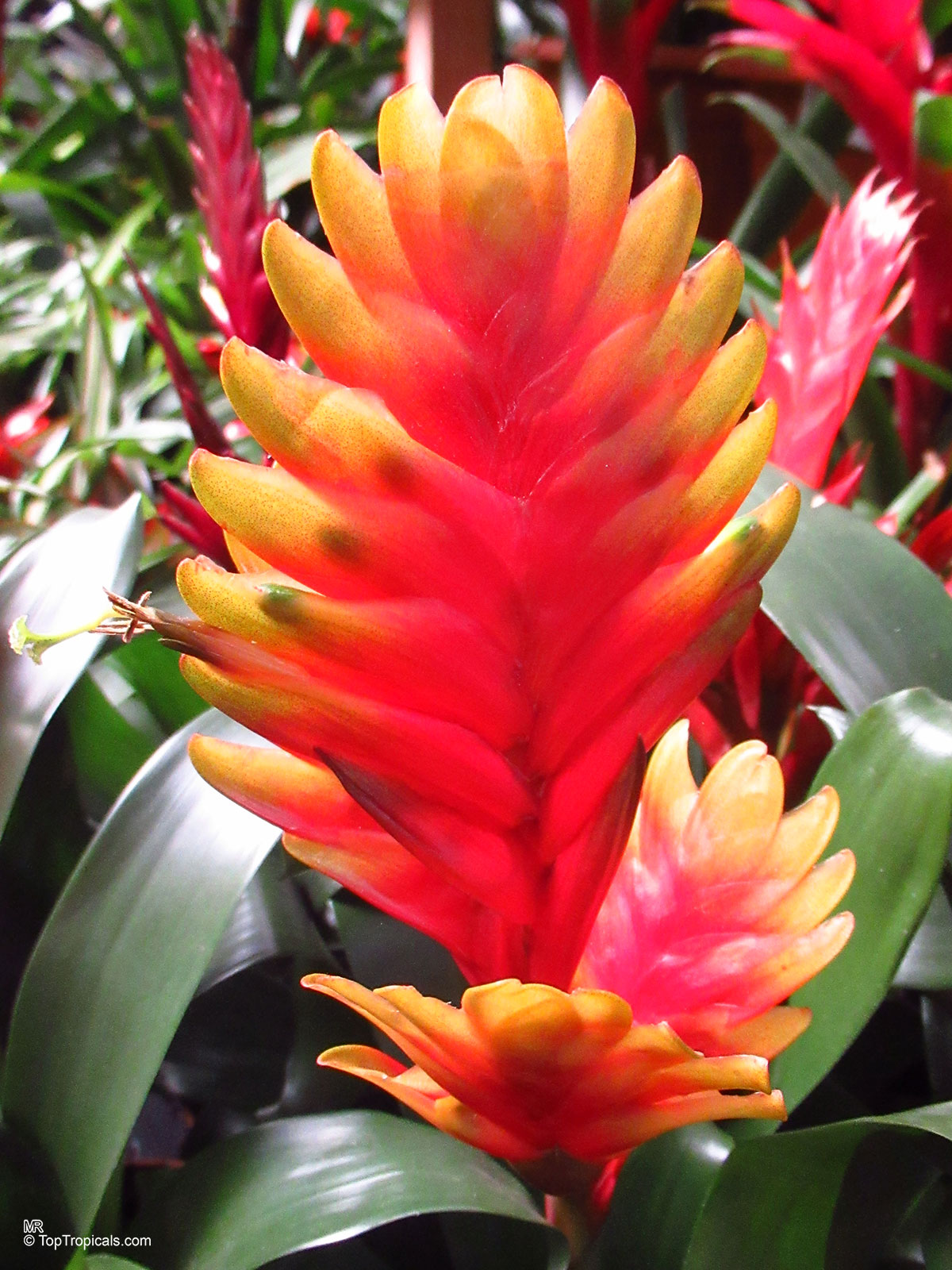
Botanical name: Vriesea sp.
Common name: Bromeliad
Family: Bromeliaceae
Subfamily: Tillandsioideae


Vriesea is a genus of bromeliads native primarily to Central and South America, prized for its decorative foliage, long-lasting colorful inflorescences, and ease of cultivation. Most species grow as epiphytes on tree branches, although some occur terrestrially in tropical and subtropical forests.
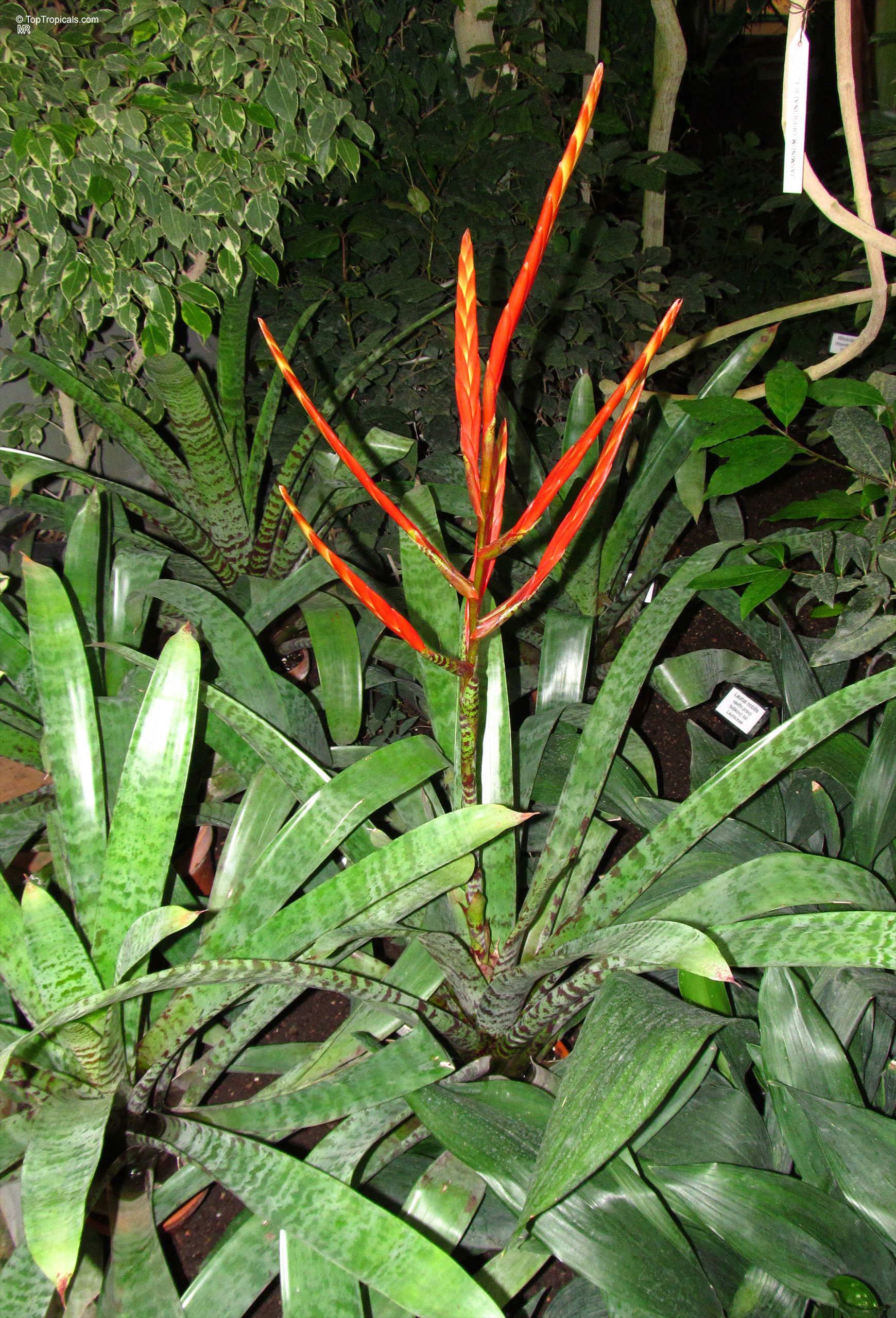
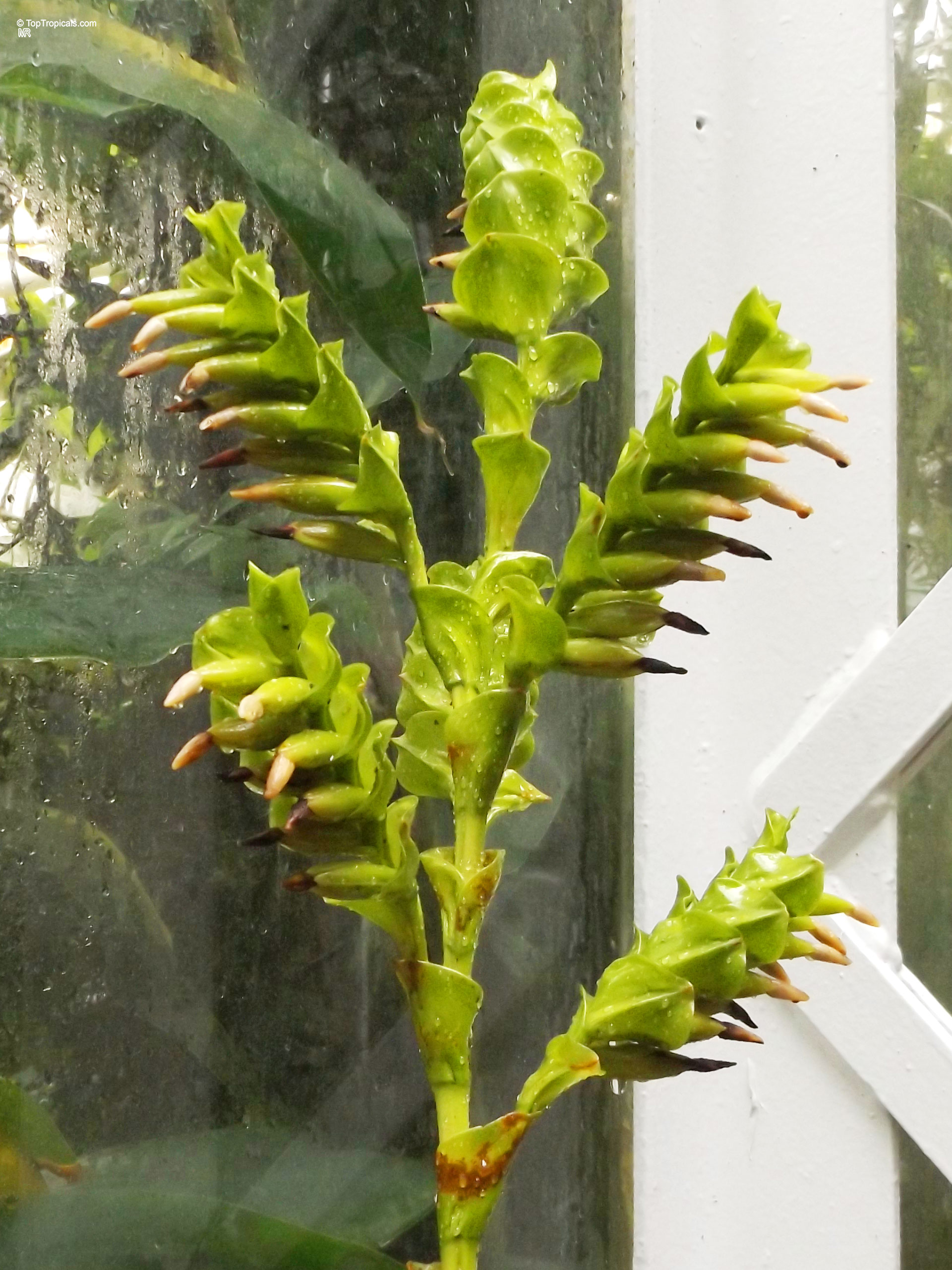
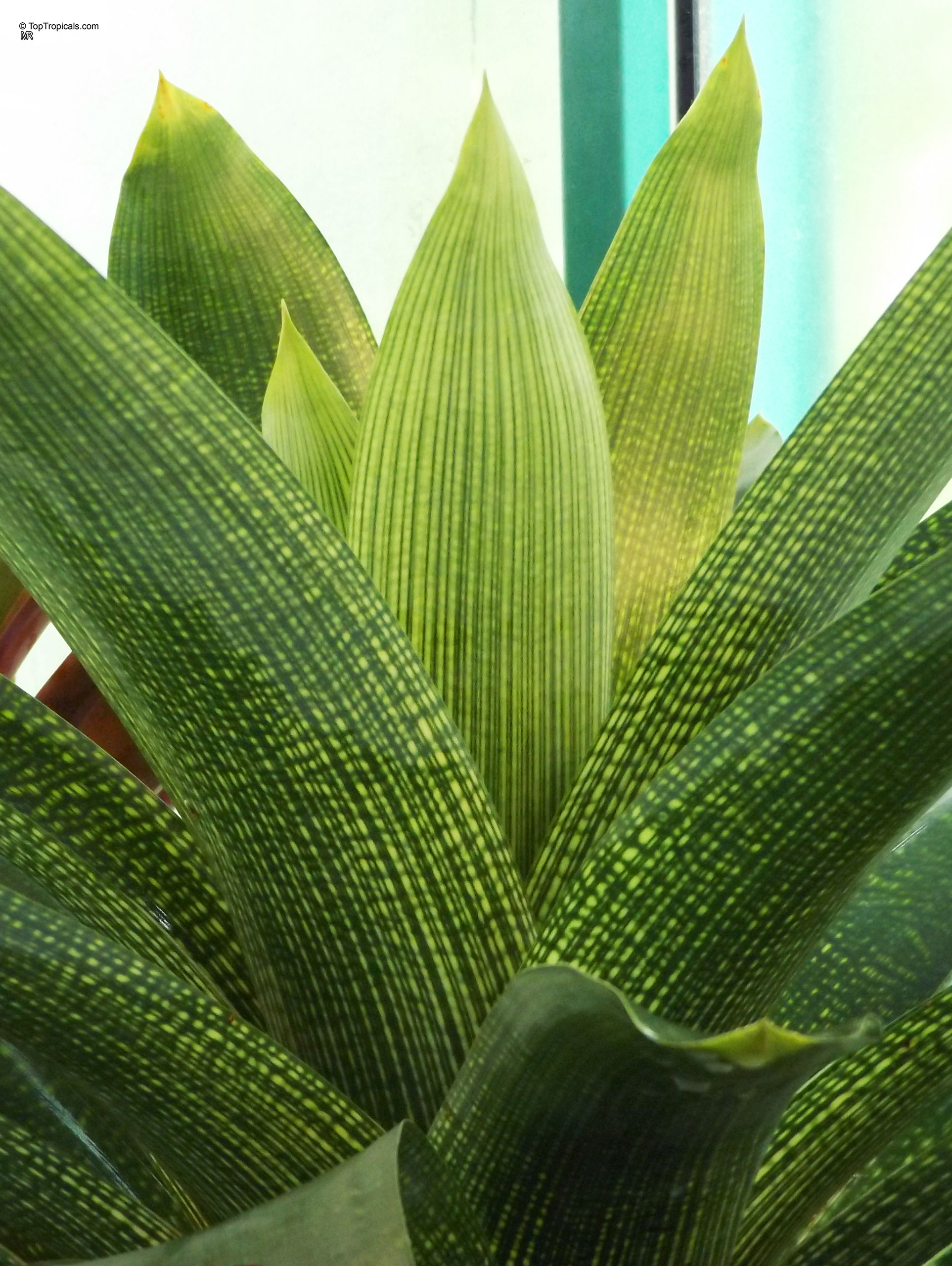
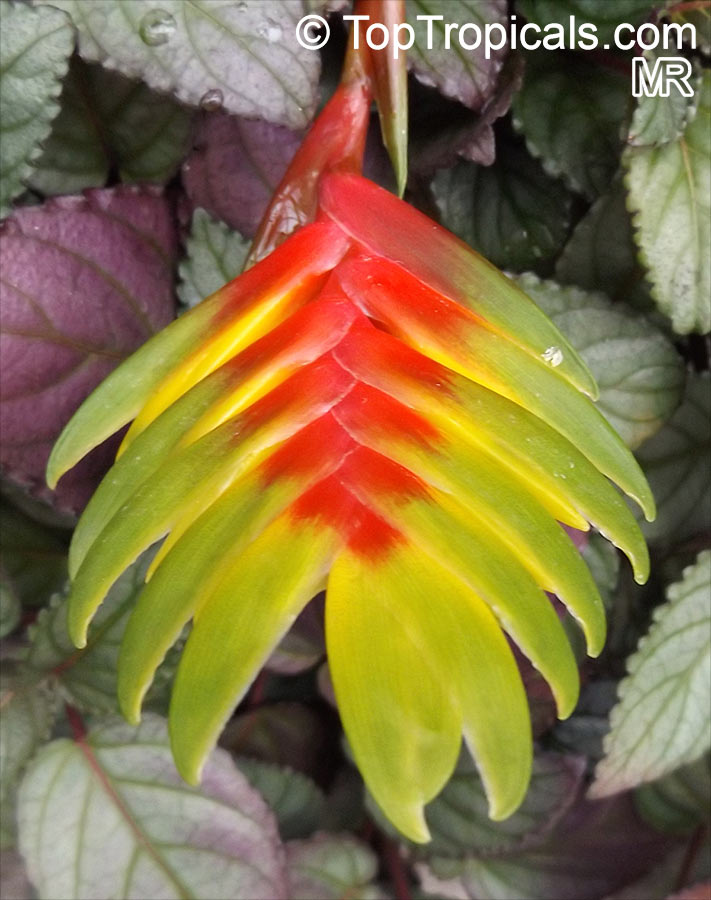
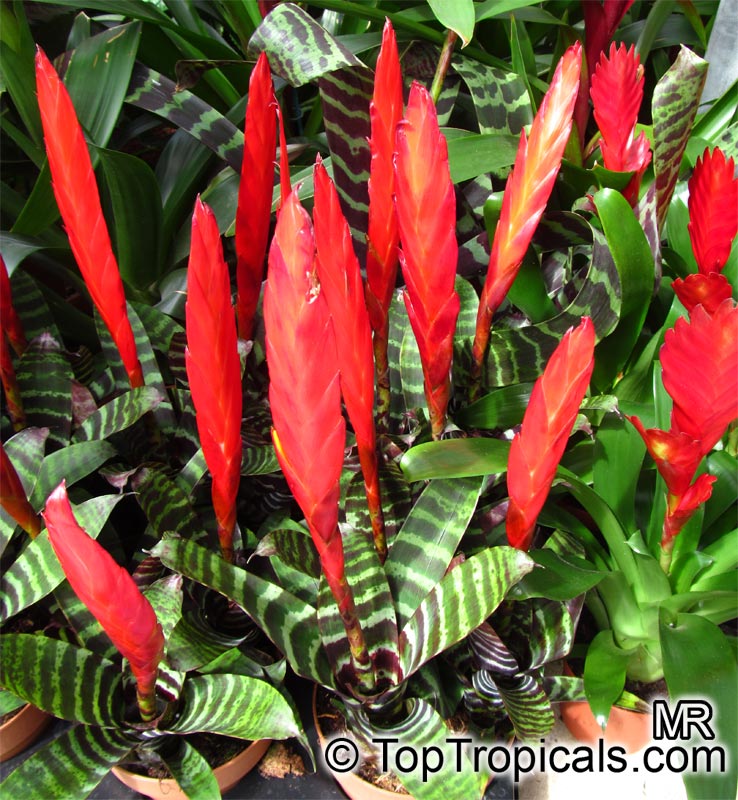
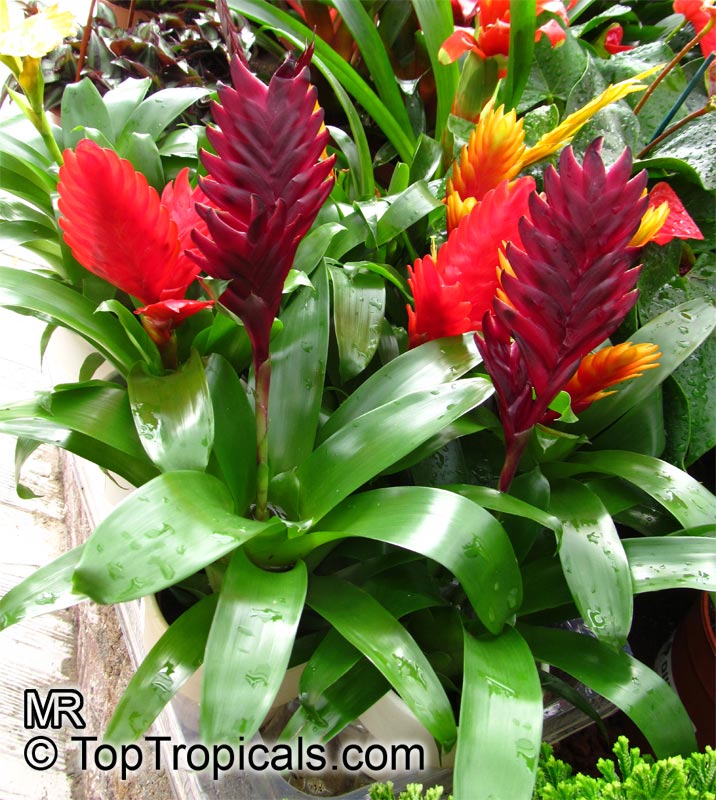
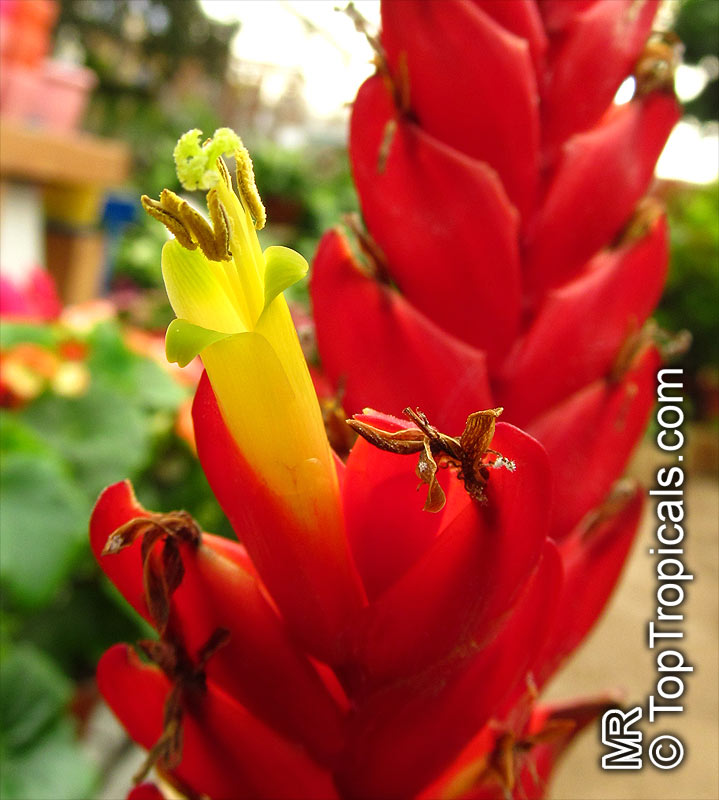
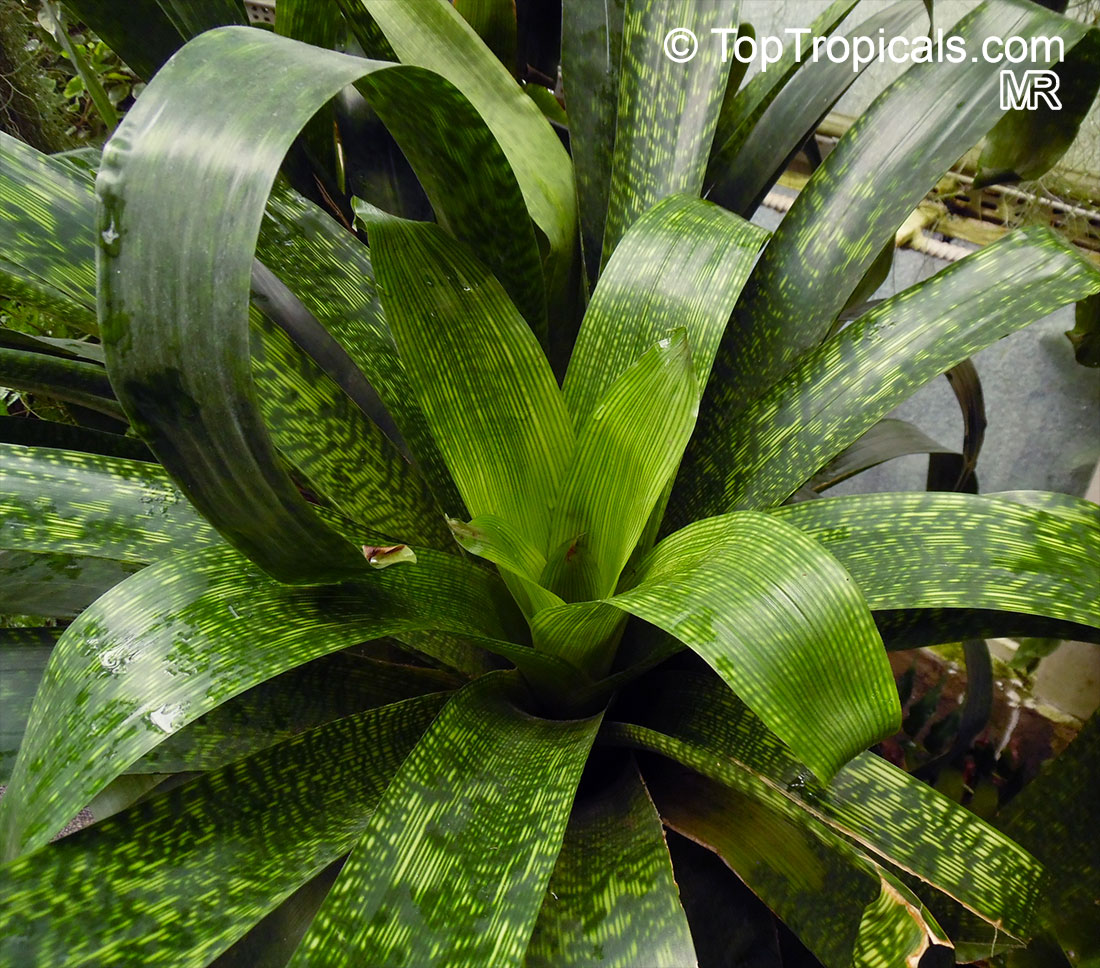
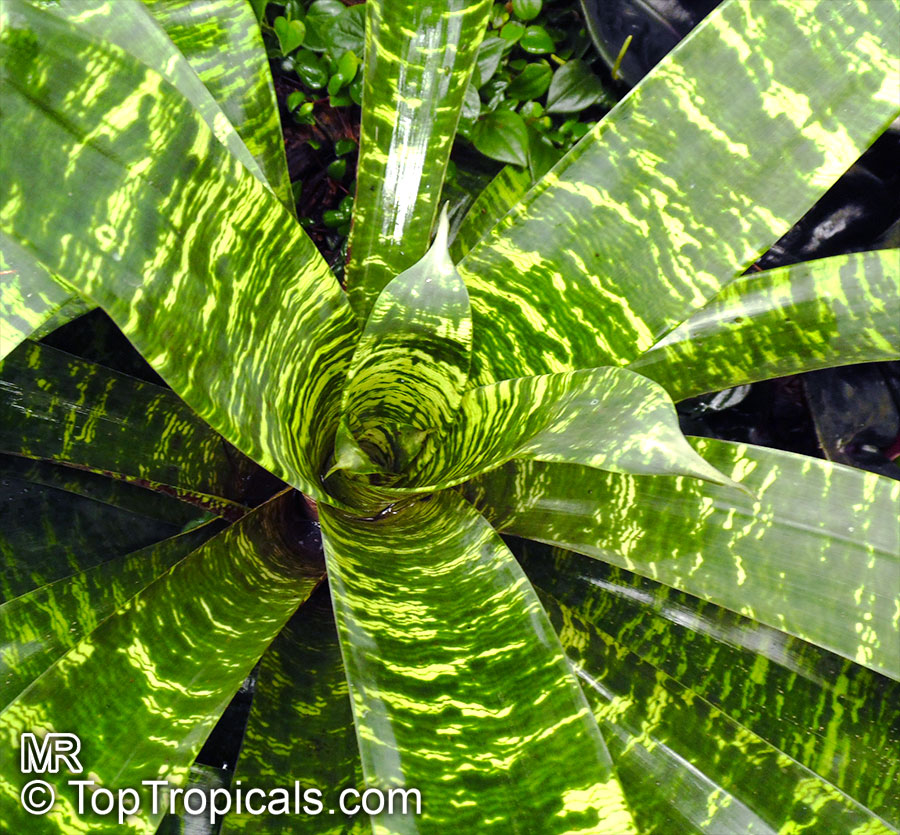
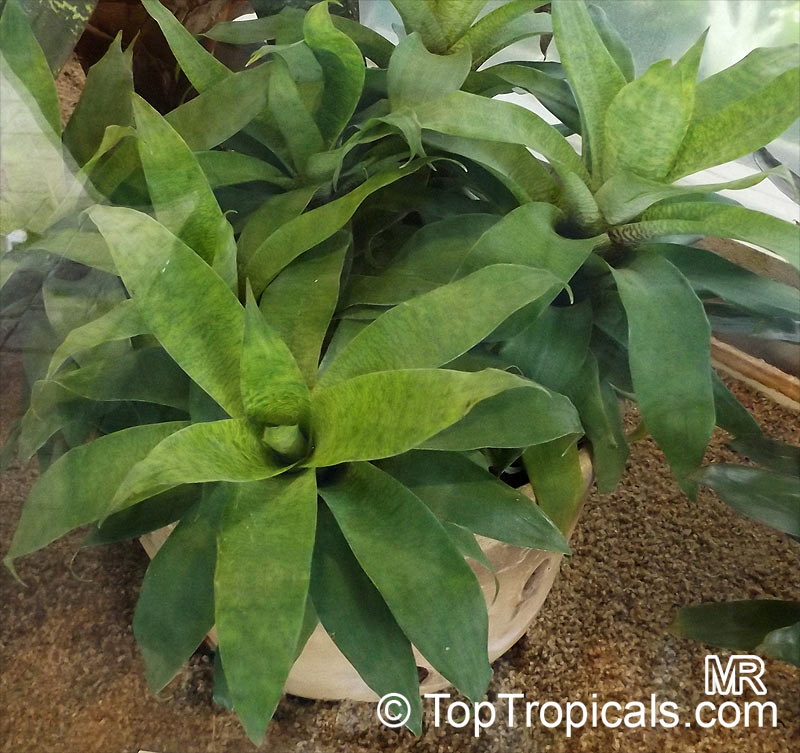
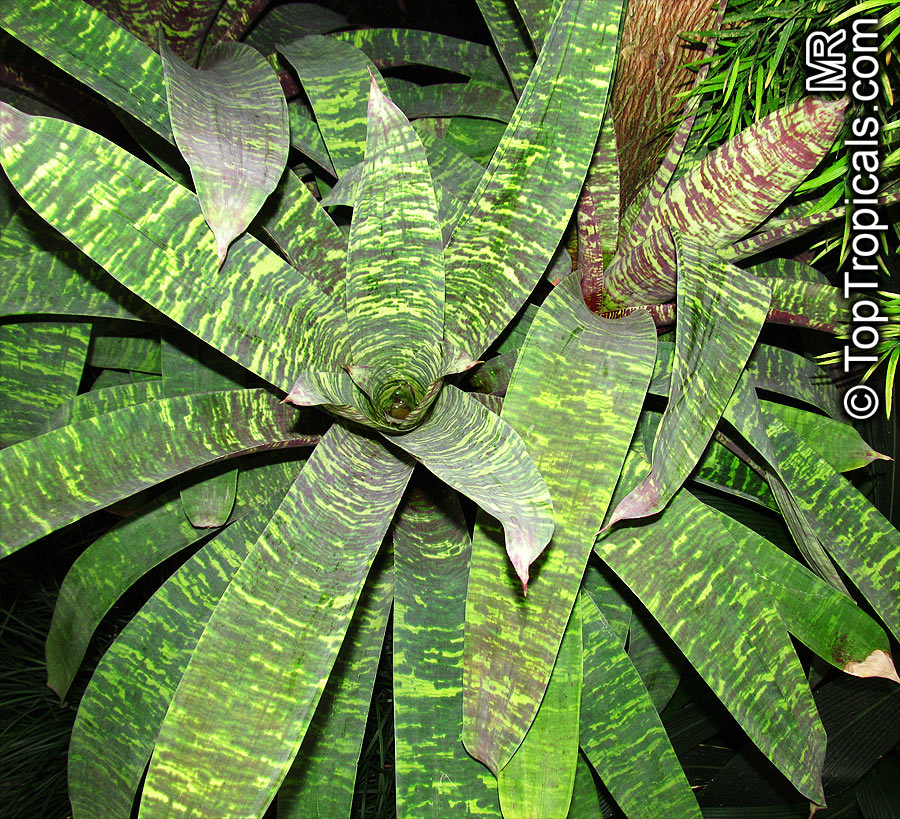
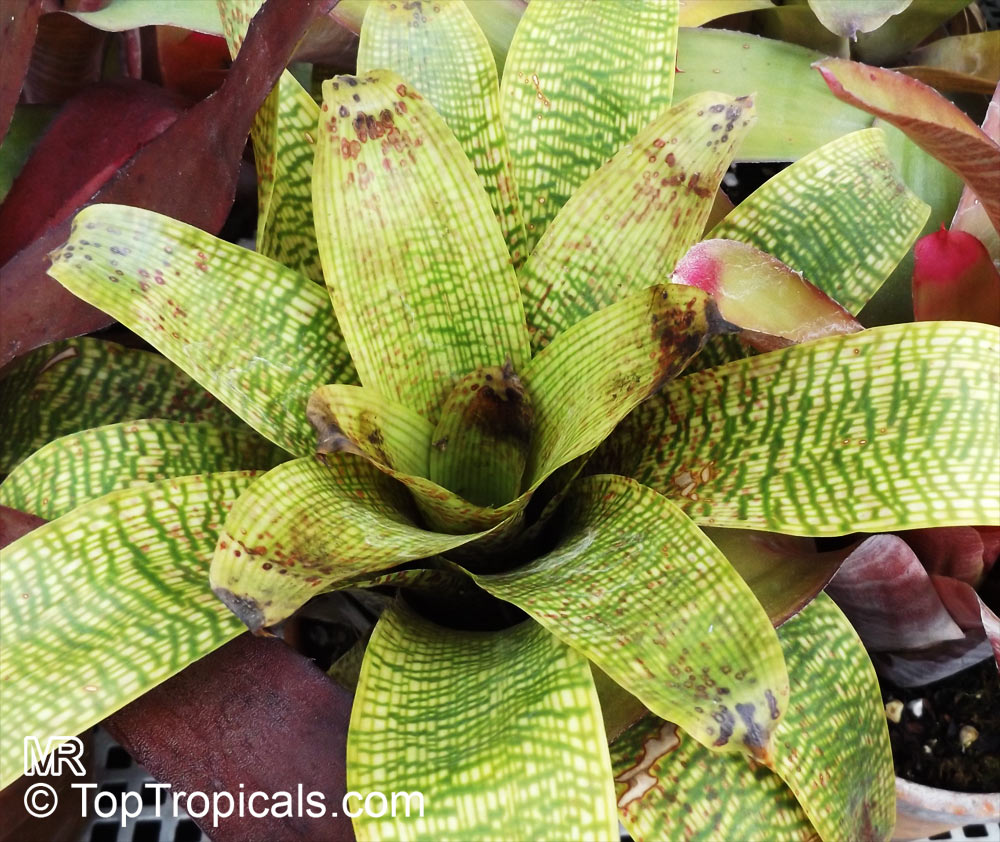
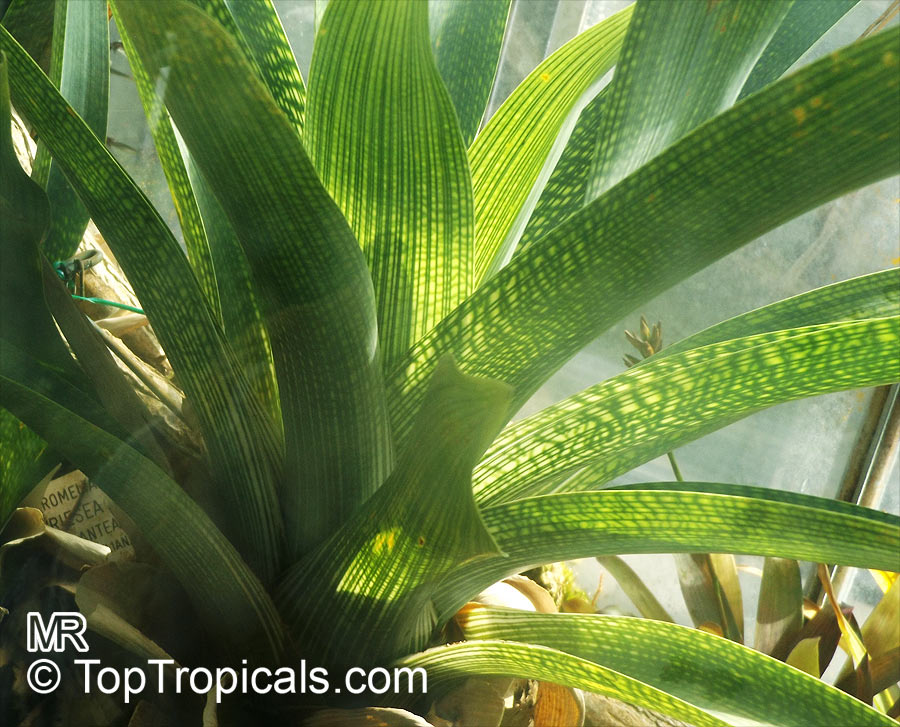
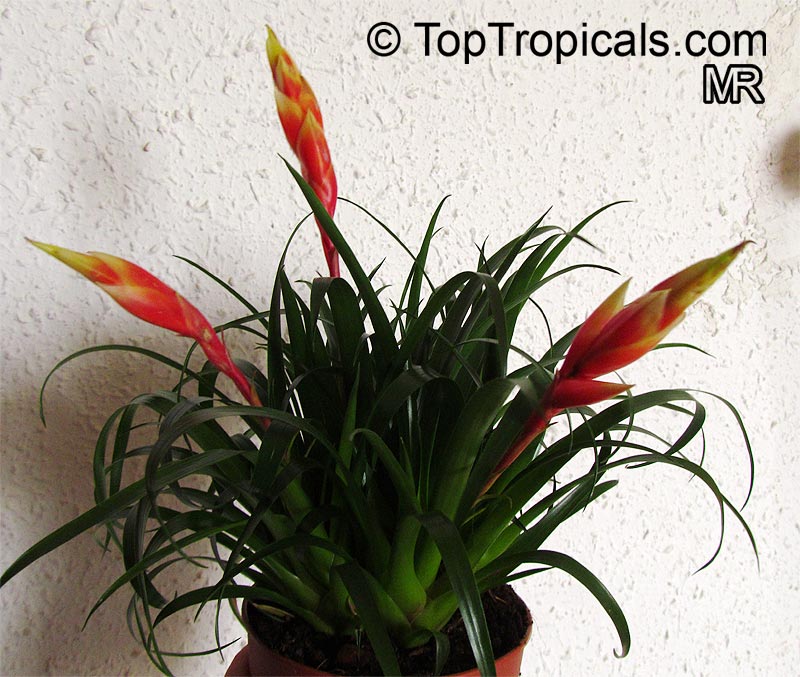
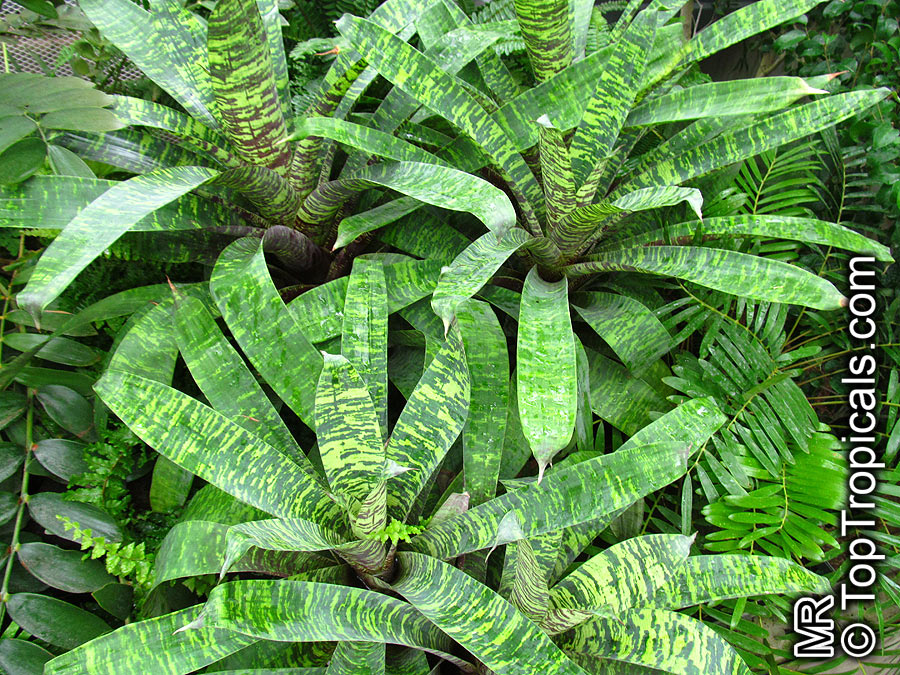
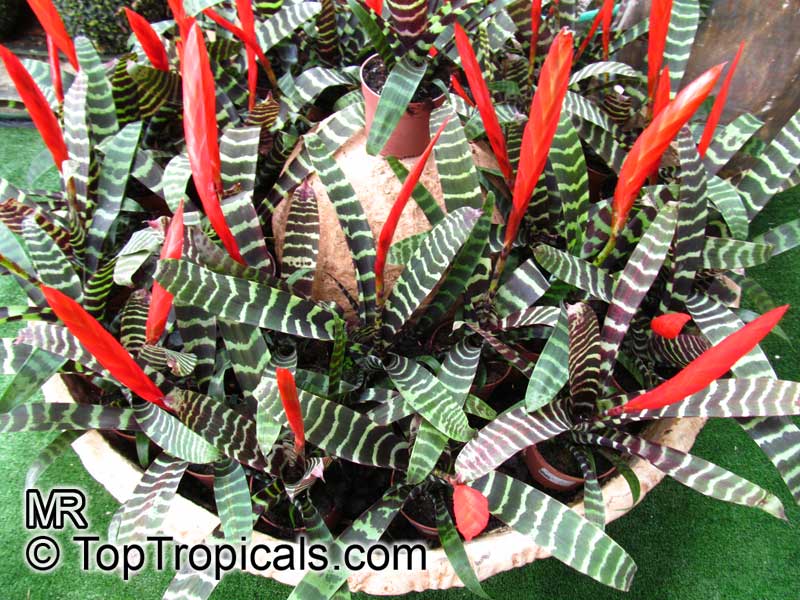
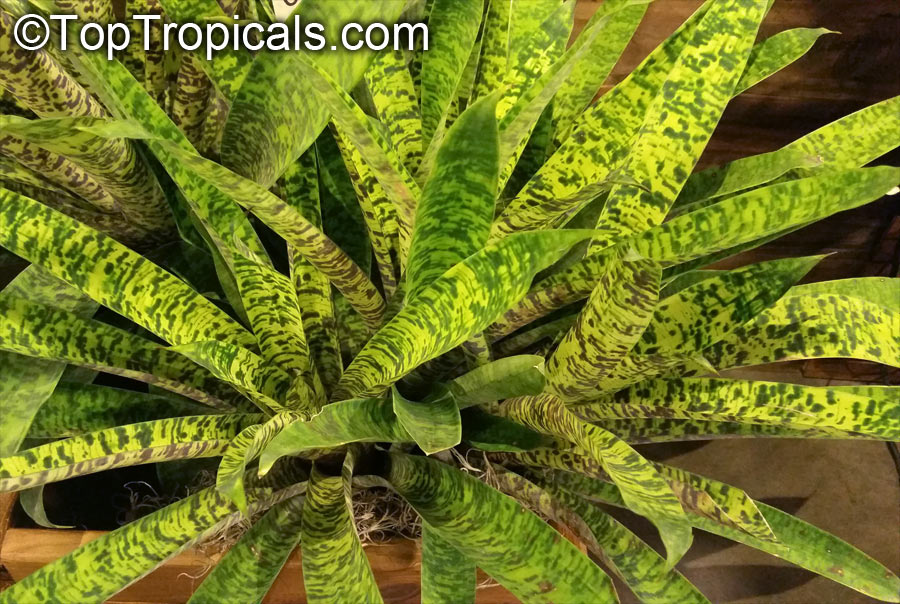
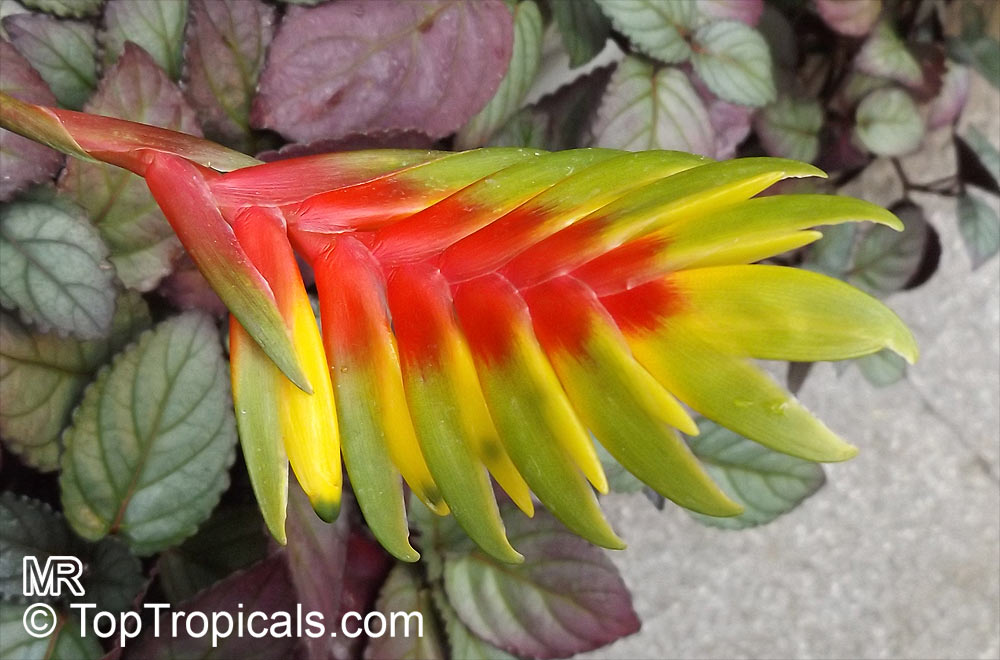
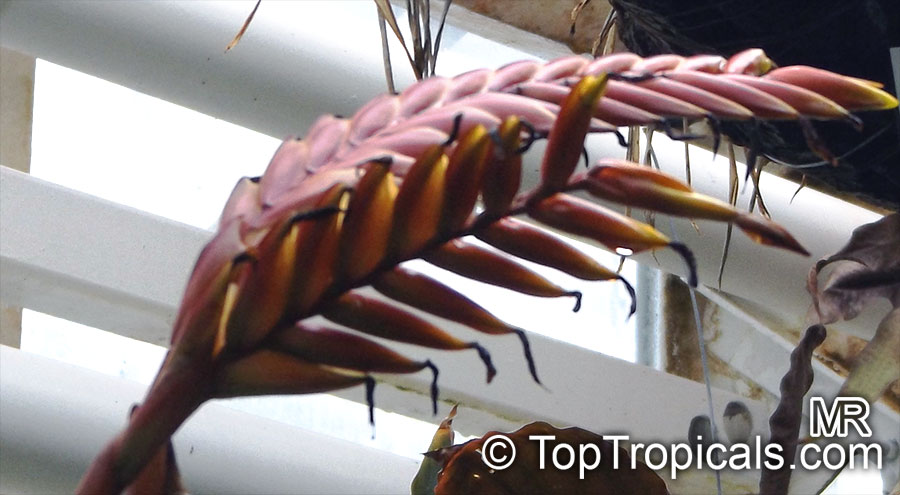
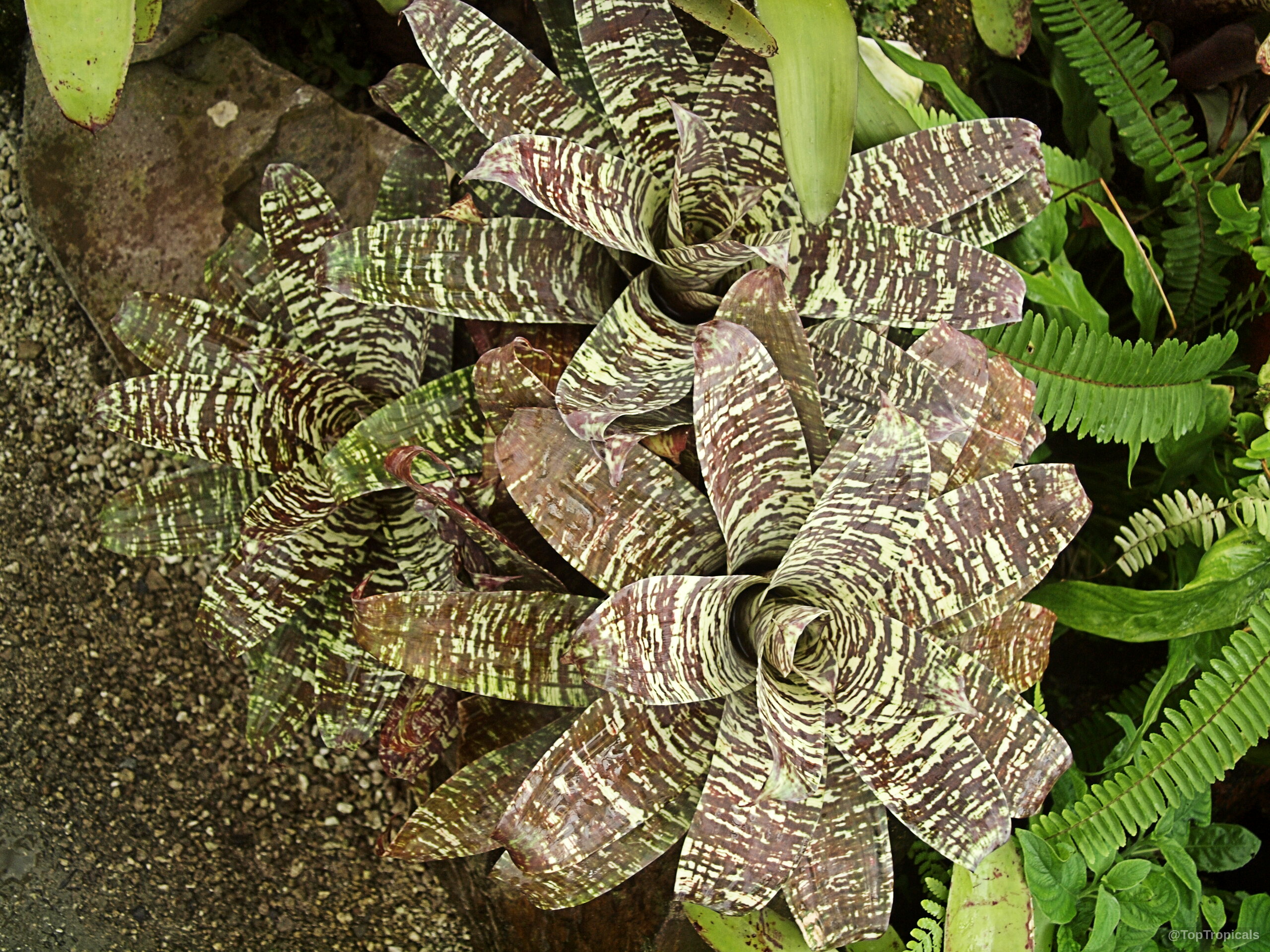
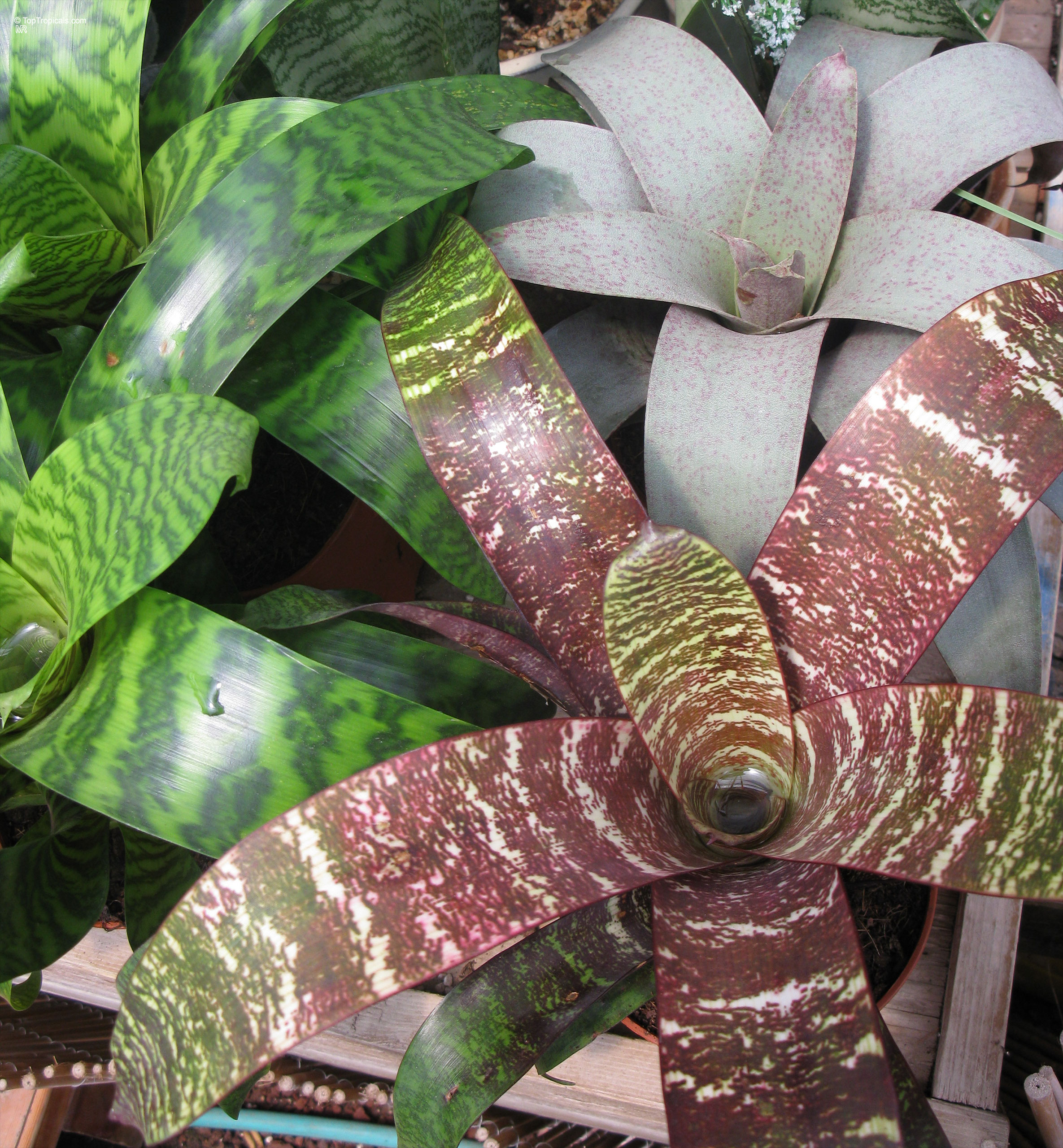
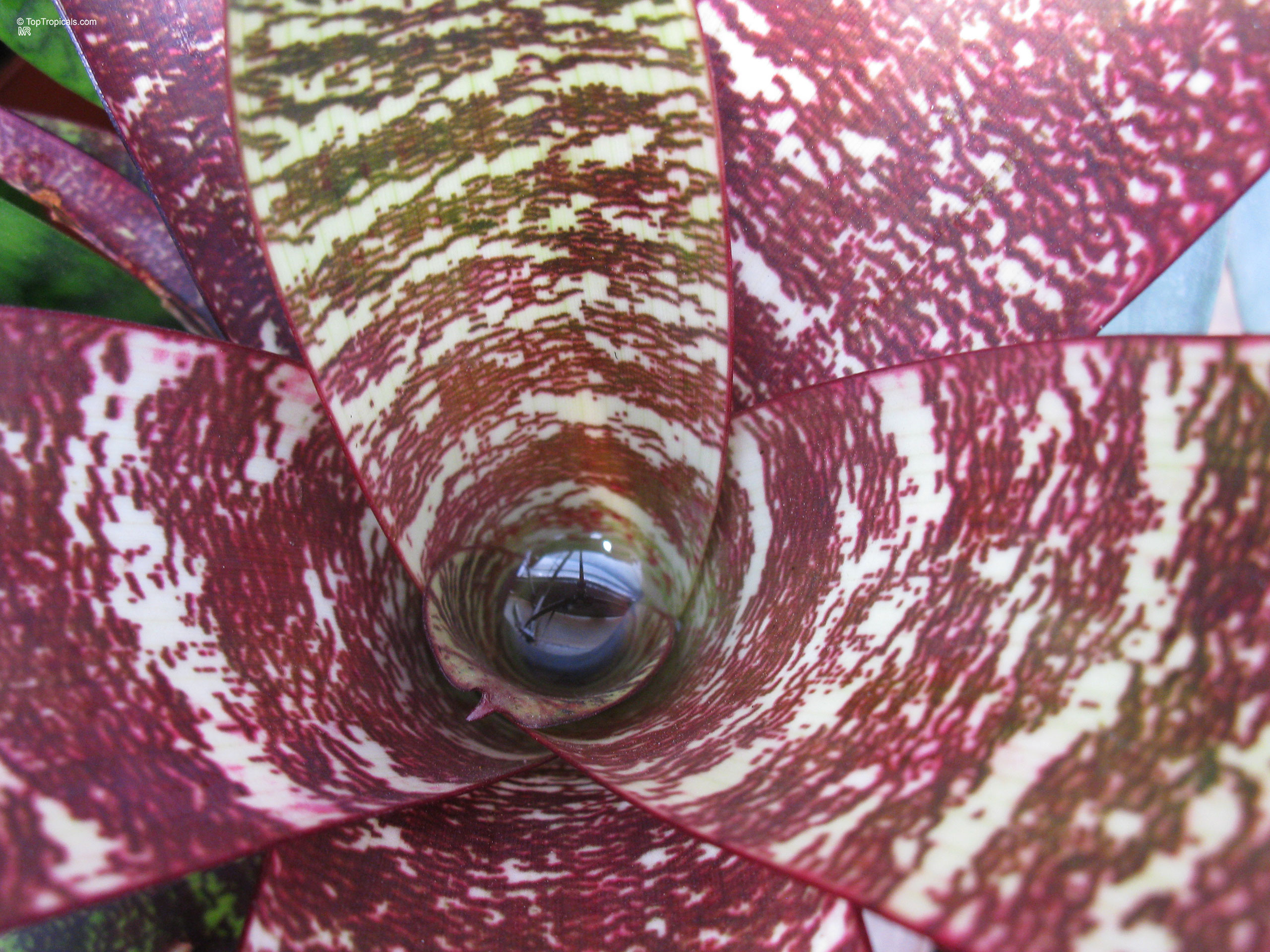
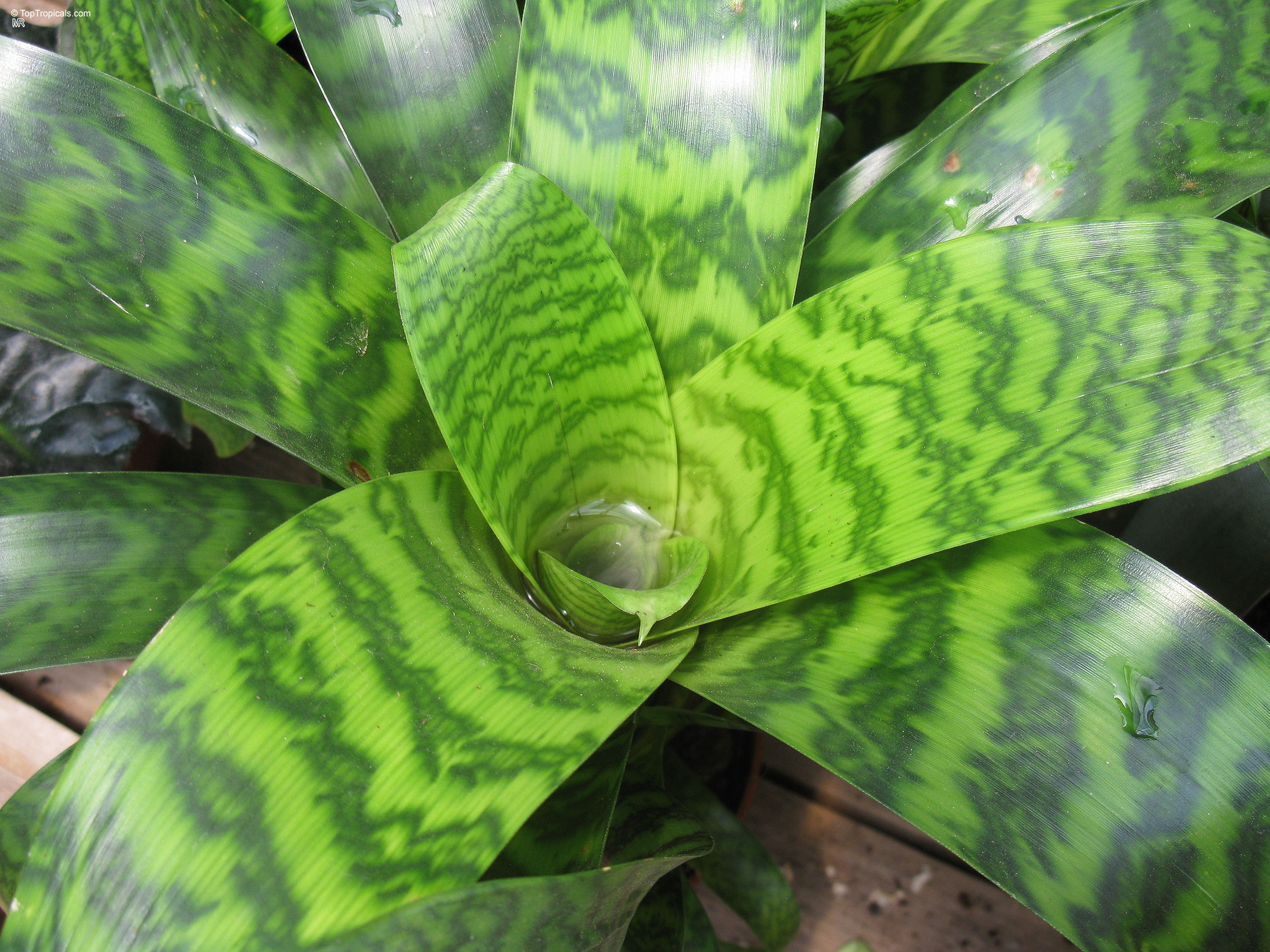
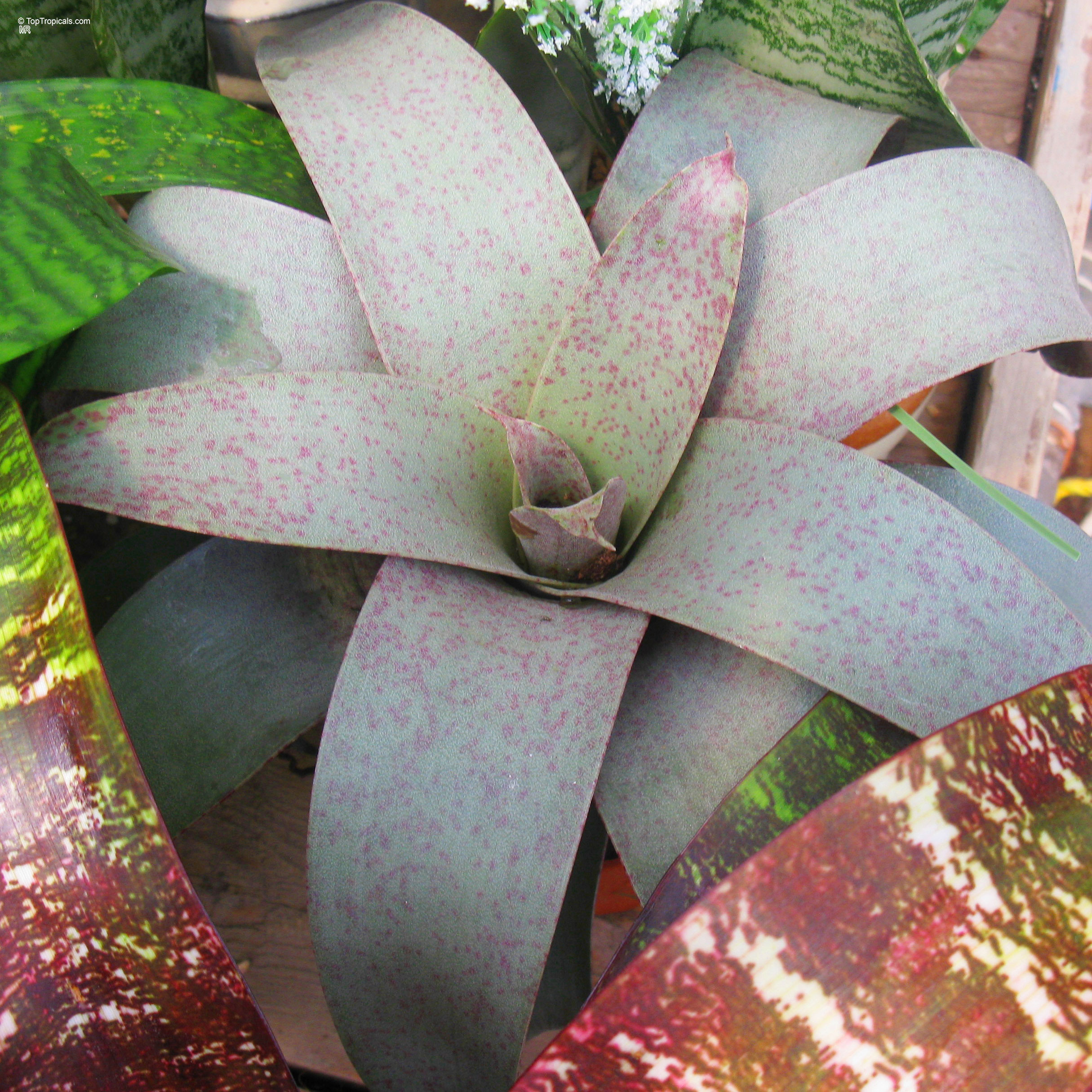
Plants form elegant rosettes of smooth, spineless leaves that may be plain green or attractively banded, striped, or mottled. Depending on the species, they range from miniature forms only a few inches across to impressive specimens more than 6 feet in diameter. Some species are grown primarily for their striking foliage, while others are valued for their colorful inflorescences. The brightly colored bracts, often arranged in flattened sword-like spikes, may remain attractive for months, far outlasting the small flowers.
Unlike many bromeliads, most Vriesea species lack sharp leaf margins, making them especially suitable for indoor cultivation. Popular species include Vriesea splendens, known for its boldly banded foliage and red sword-like inflorescence, along with numerous hybrids selected for compact growth and enhanced coloration.
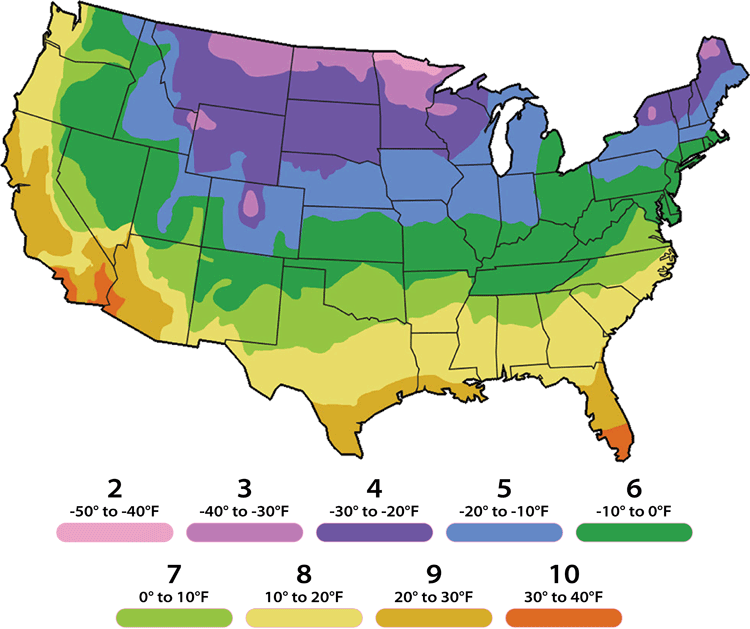
Vriesea thrives in bright filtered light, warm temperatures, and high humidity. Plants prefer a loose, well-drained bromeliad mix and regular watering without prolonged root saturation. Most species are suitable for USDA Zones 10-12 and are commonly grown as container plants elsewhere. After flowering, the parent rosette gradually declines while producing offsets that can be separated and grown into new plants.
Similar plants: Vriesea sp. (Bromeliad)