Lagerstroemia speciosa (Queens Crape Myrtle)
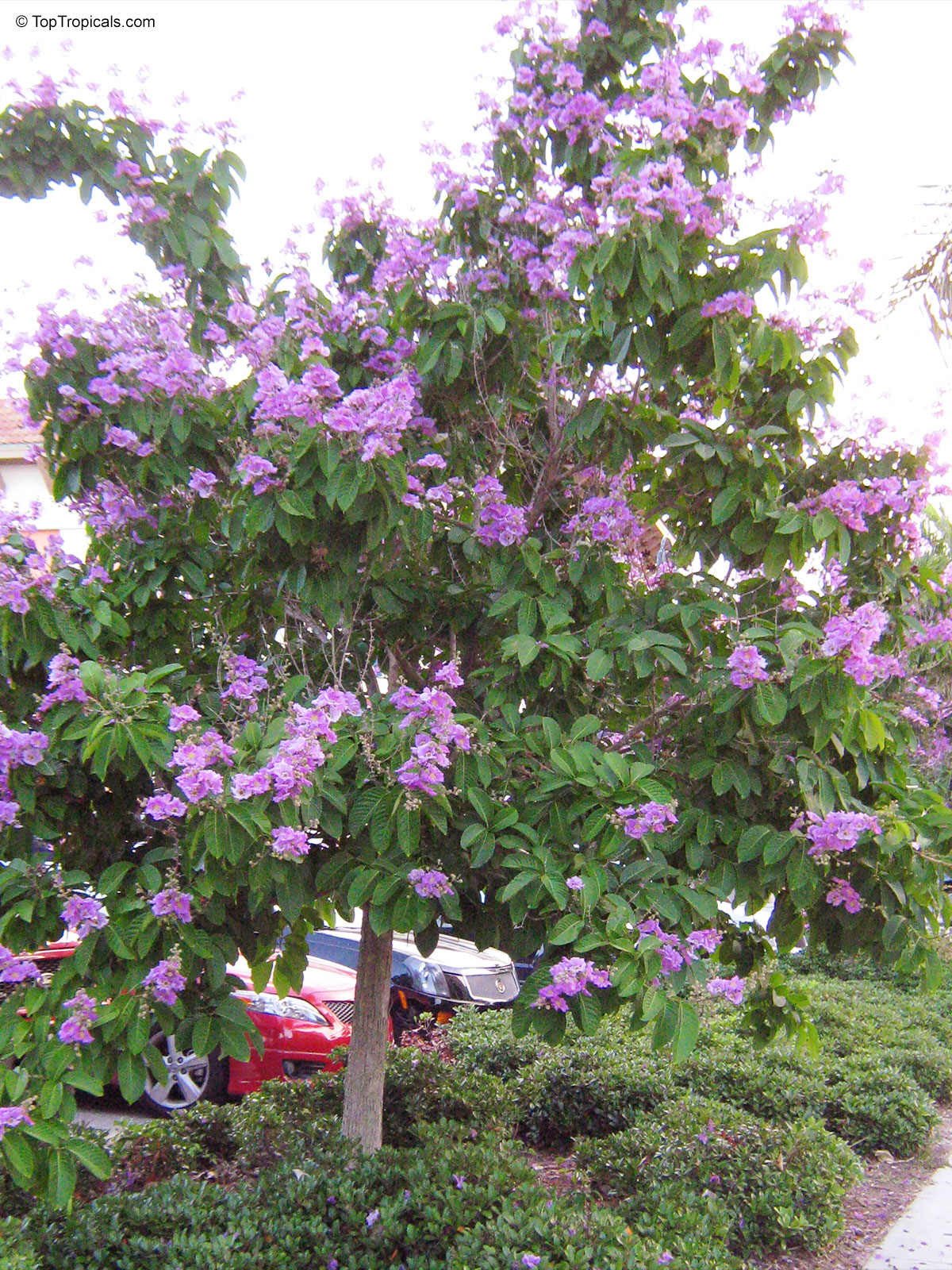
Botanical names: Lagerstroemia speciosa, Lagerstroemia flos-reginae
Common names: Queens Crape Myrtle, Queens flower, Pride of India, Banaba.
Family: Lythraceae
Origin: India

USDA Zone: 9-11

 Plant form: Large or medium tree
 Mature height: 20 ft or more
 Sun exposure: Full sun or bright light indoor
 Cold tolerance: Frost sensitive. Protect from freezing.
 Watering: Regular

 Flower color: Pink; blue, lavender, purple
 Suitable for: Outdoors in the suitable USDA zone; large gardens
 Foliage: Deciduous
 Flood tolerance: High
 Wildlife: Attracts butterflies and hummingbirds
 Ethnomedical: Ethnomedical plant, traditionally used in folk or indigenous medicine
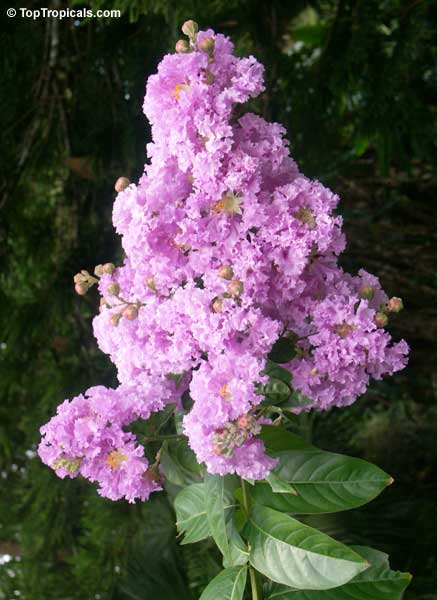
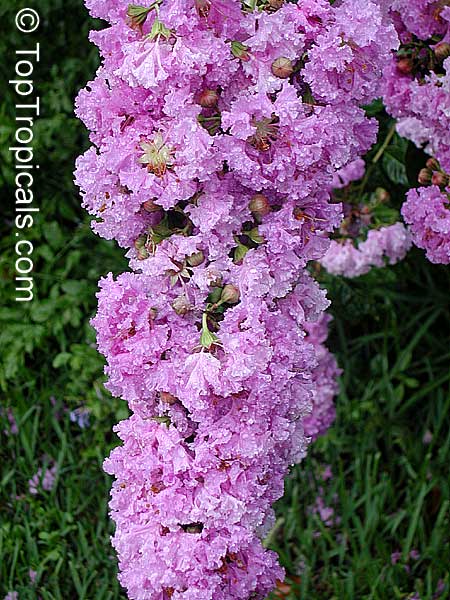
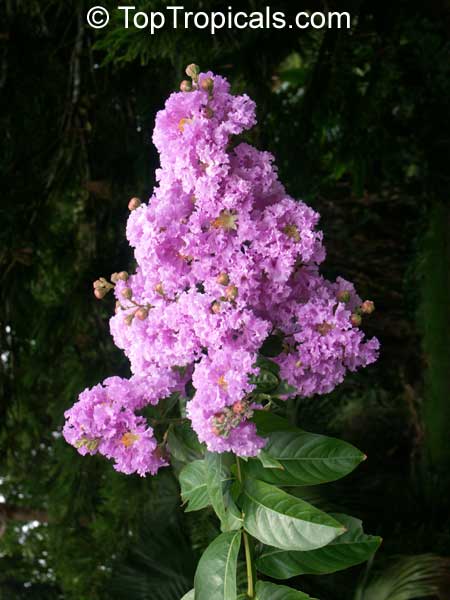
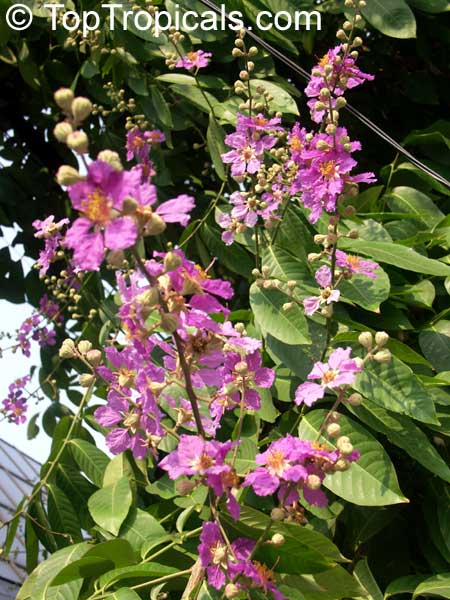
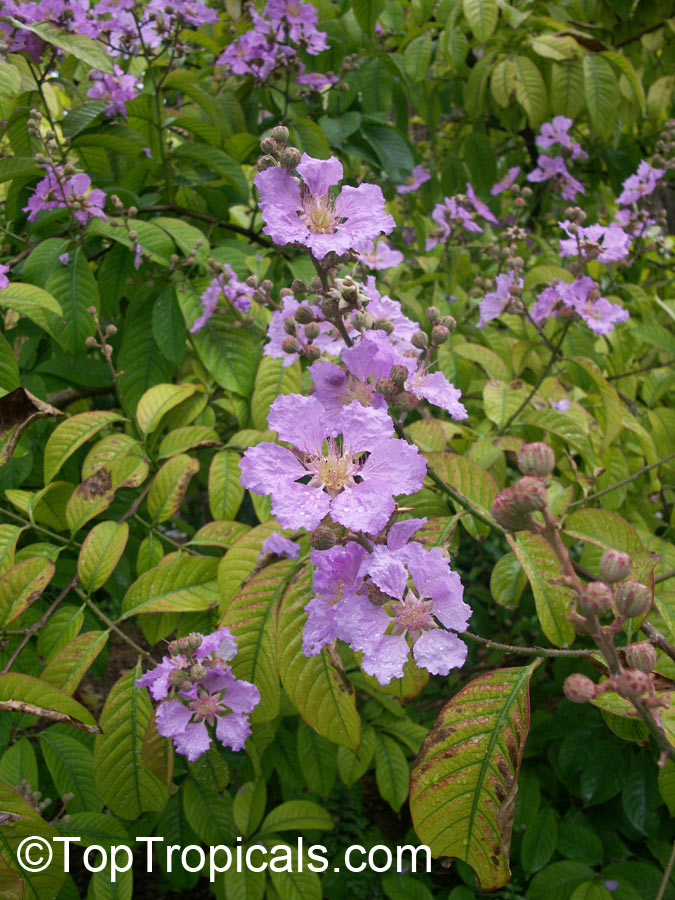
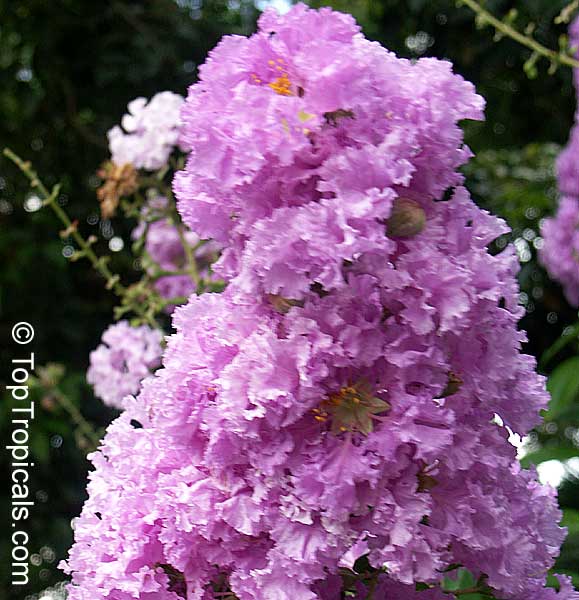
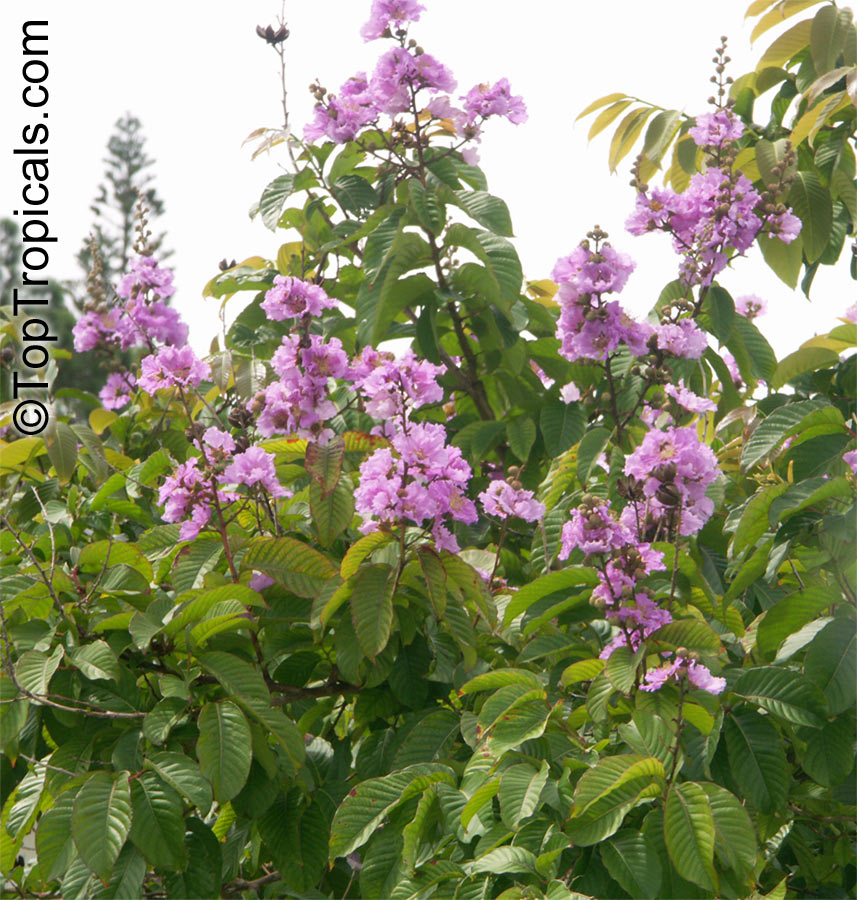
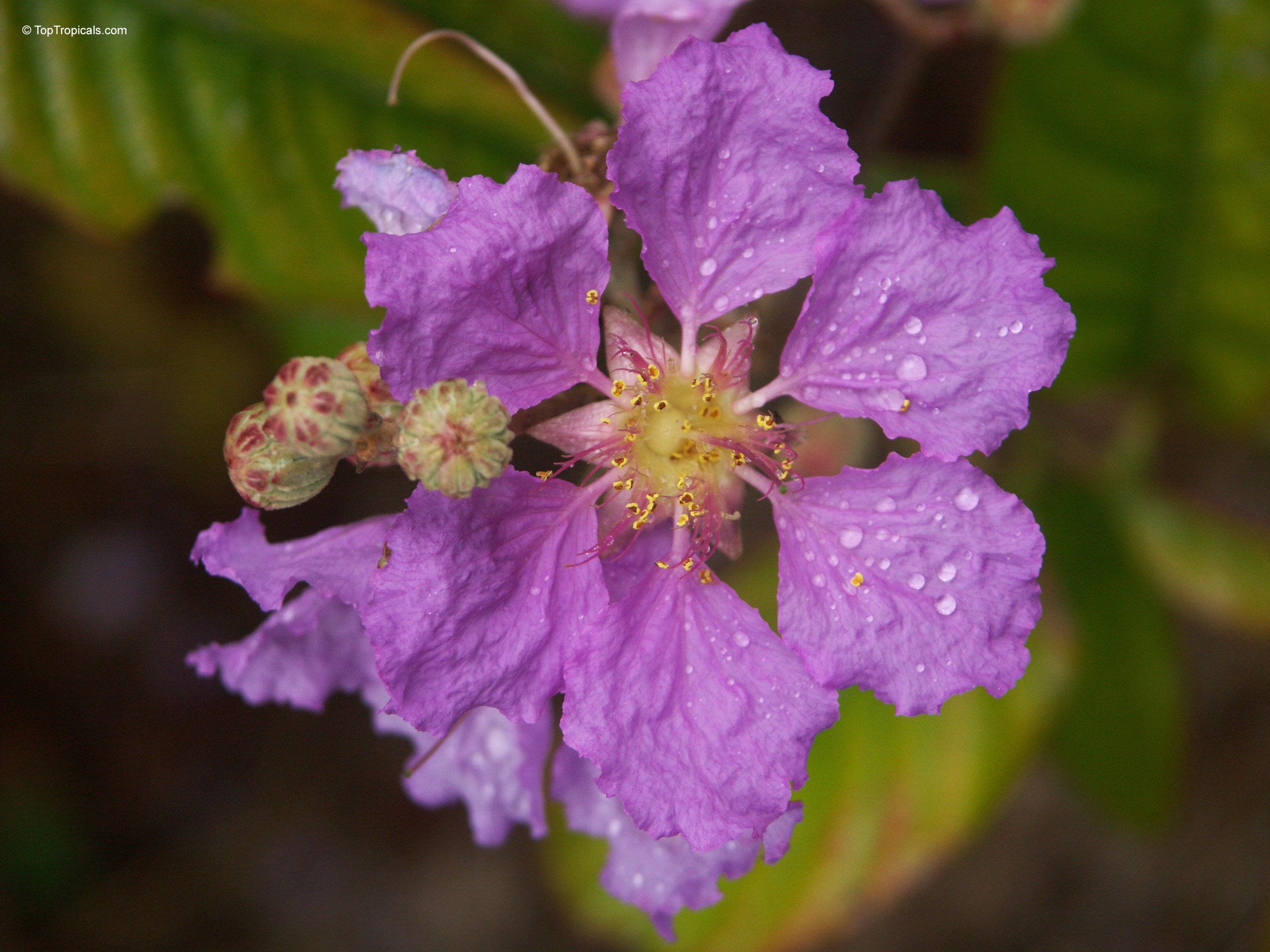
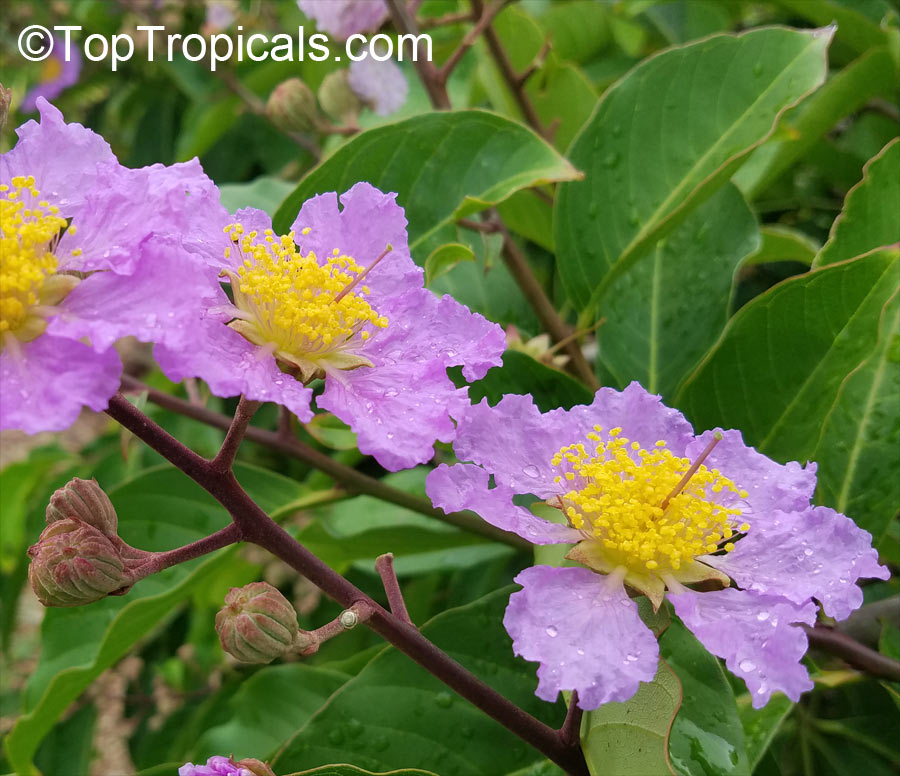
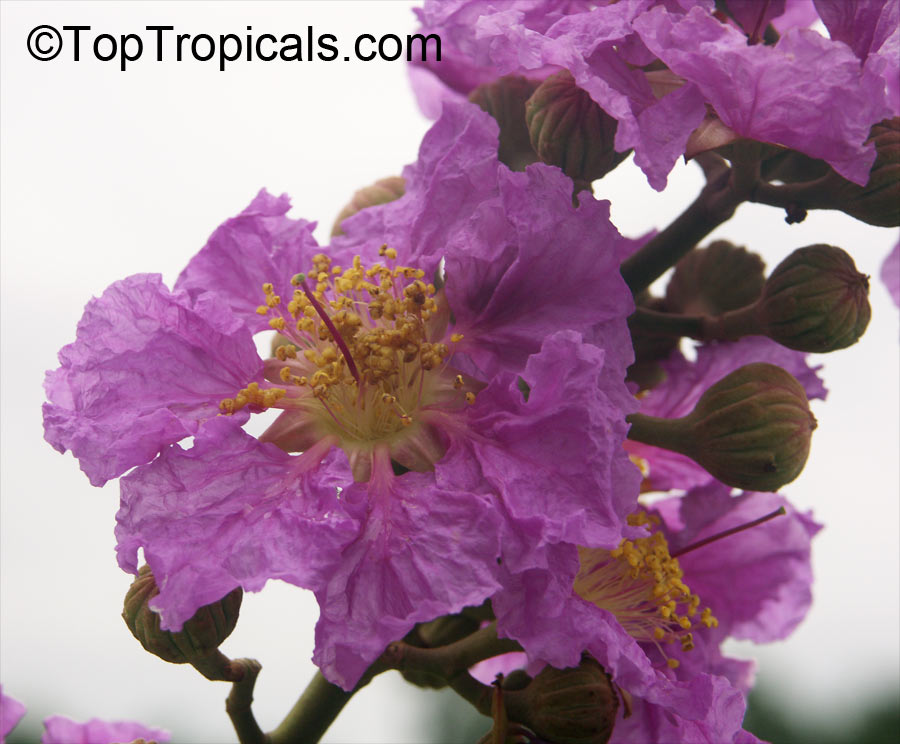
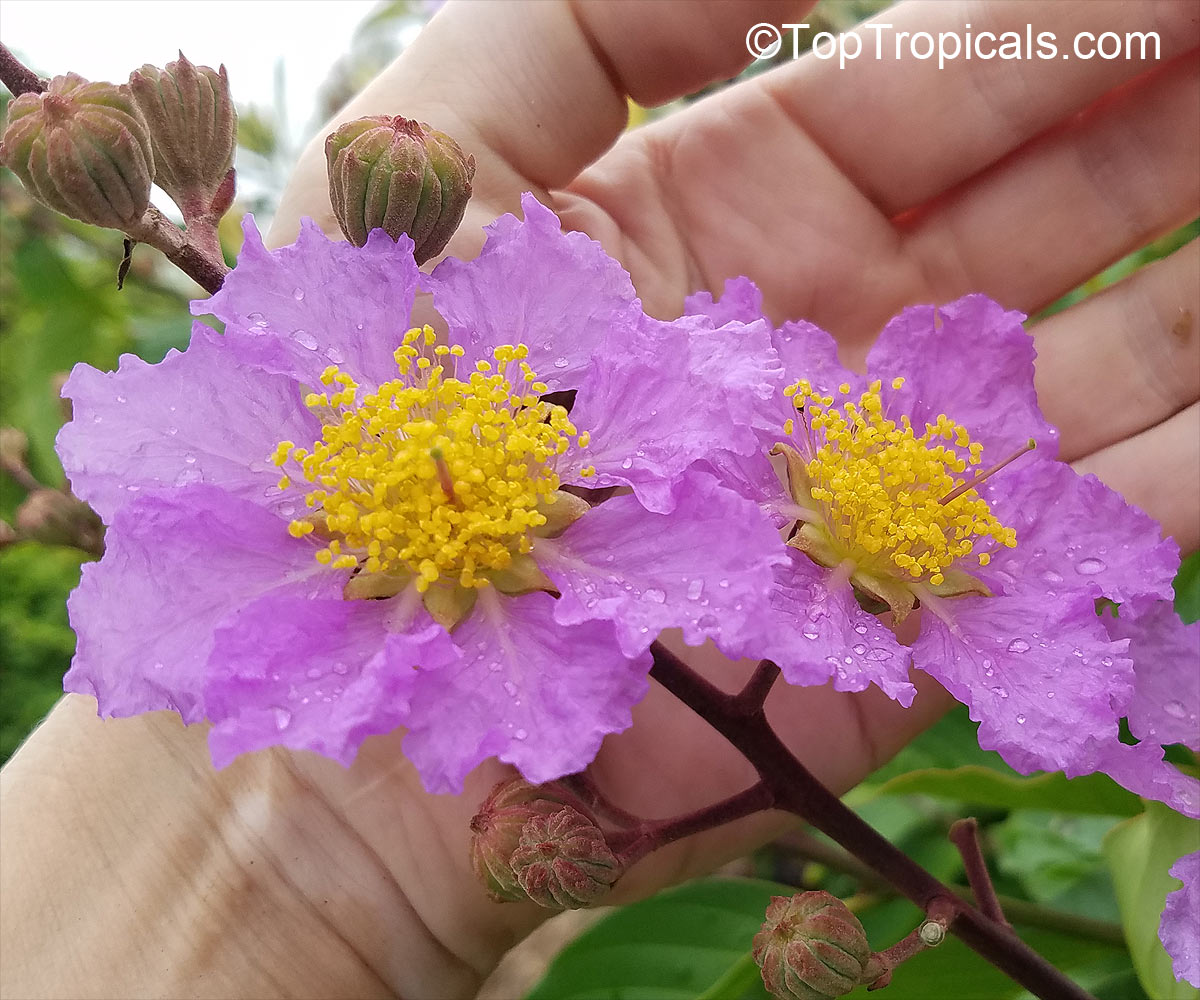
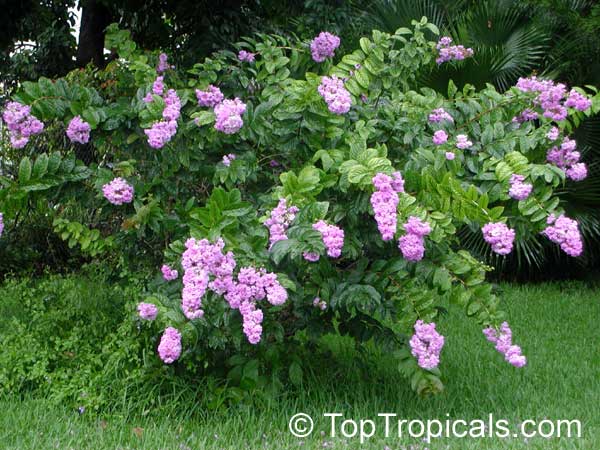
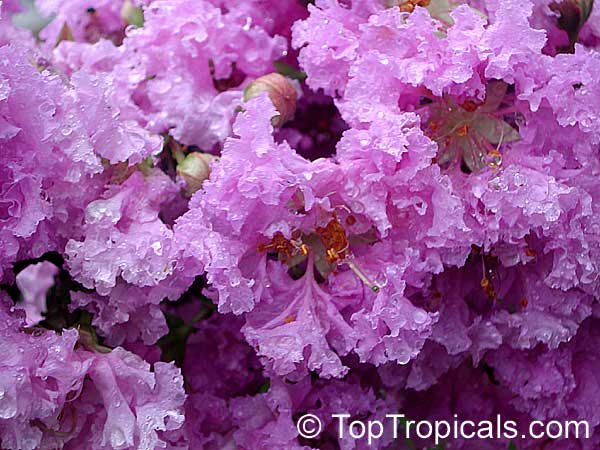
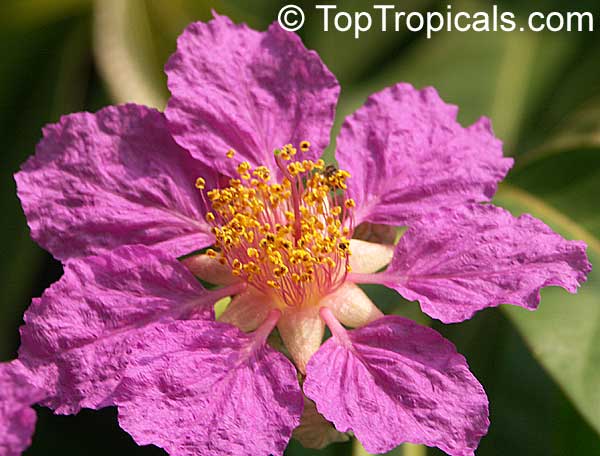
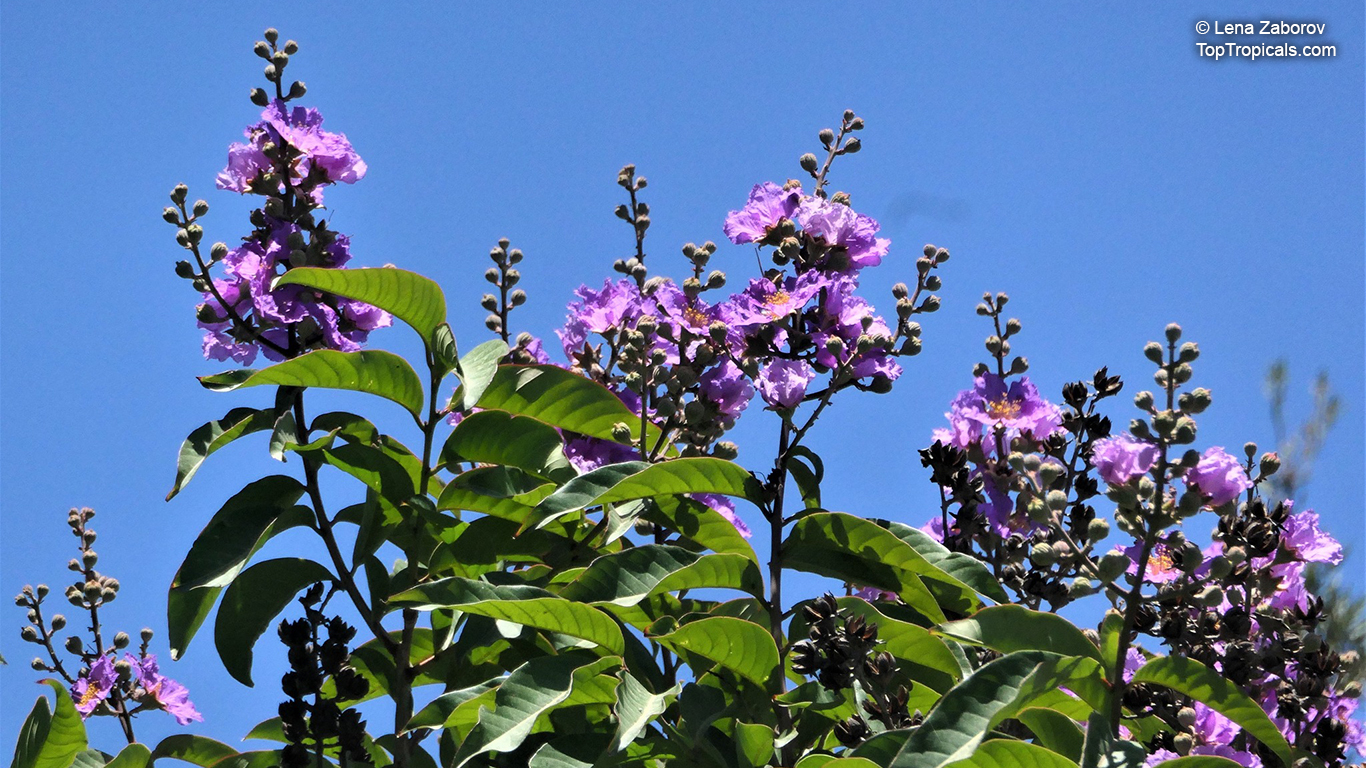
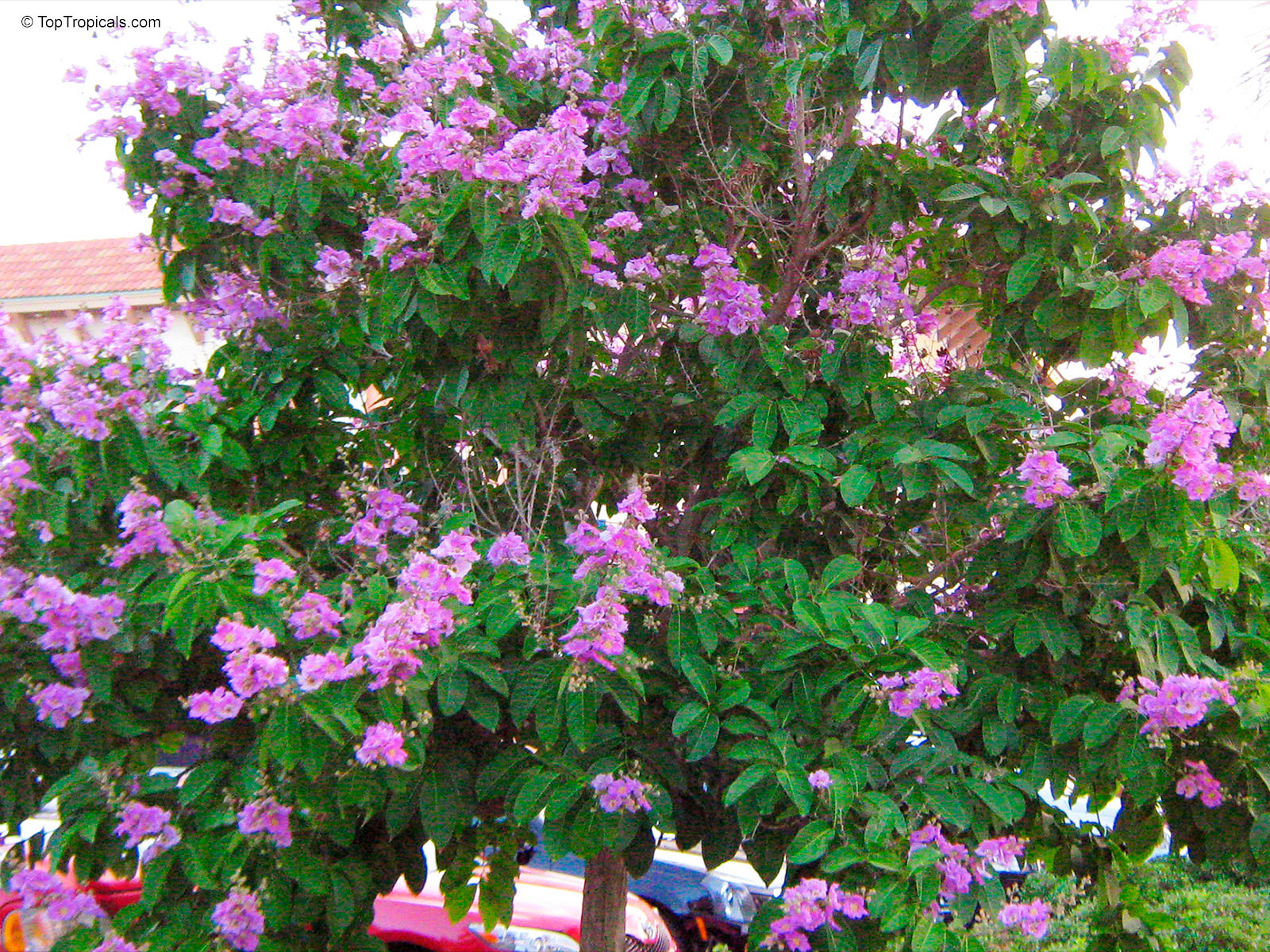
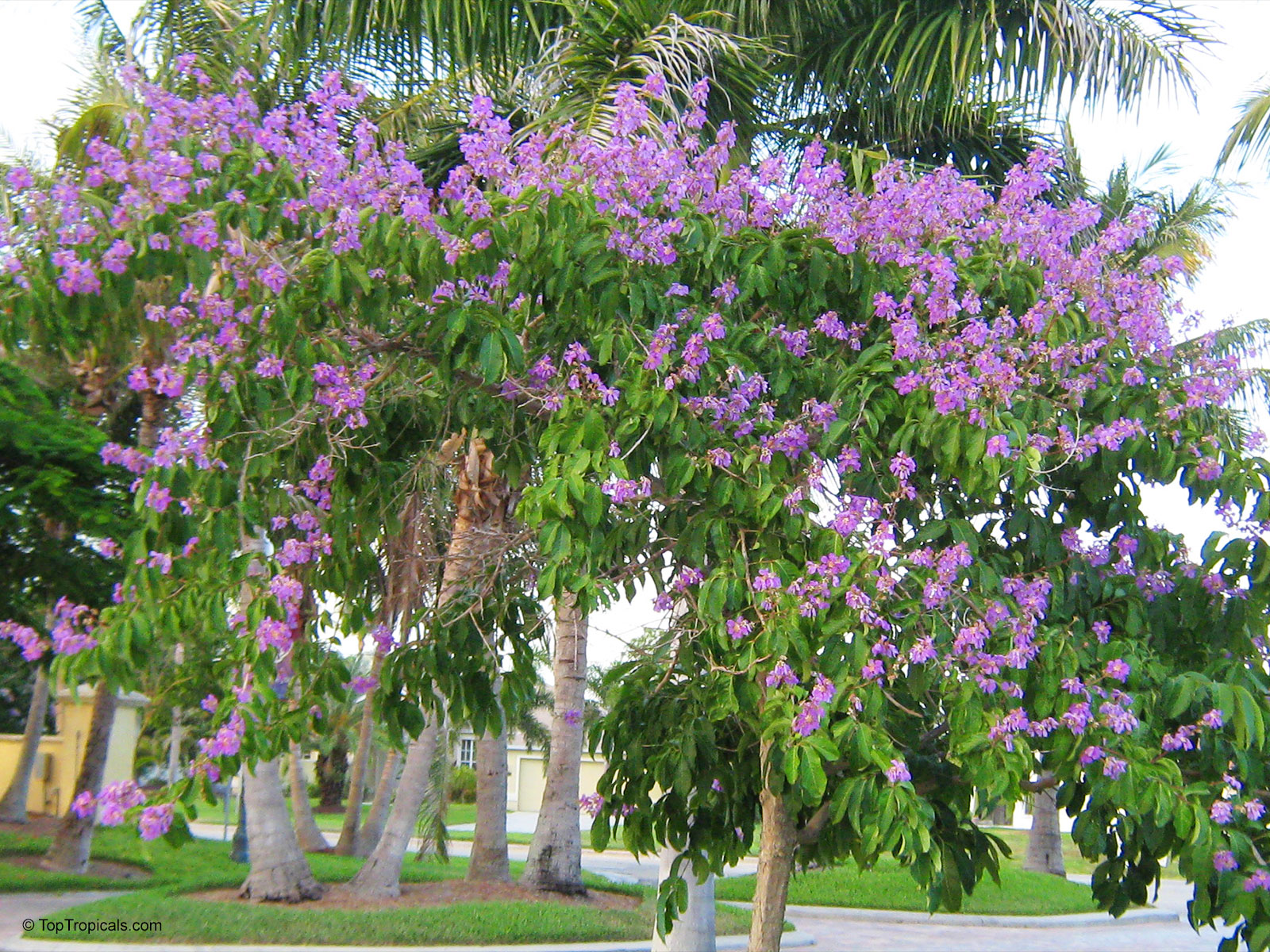
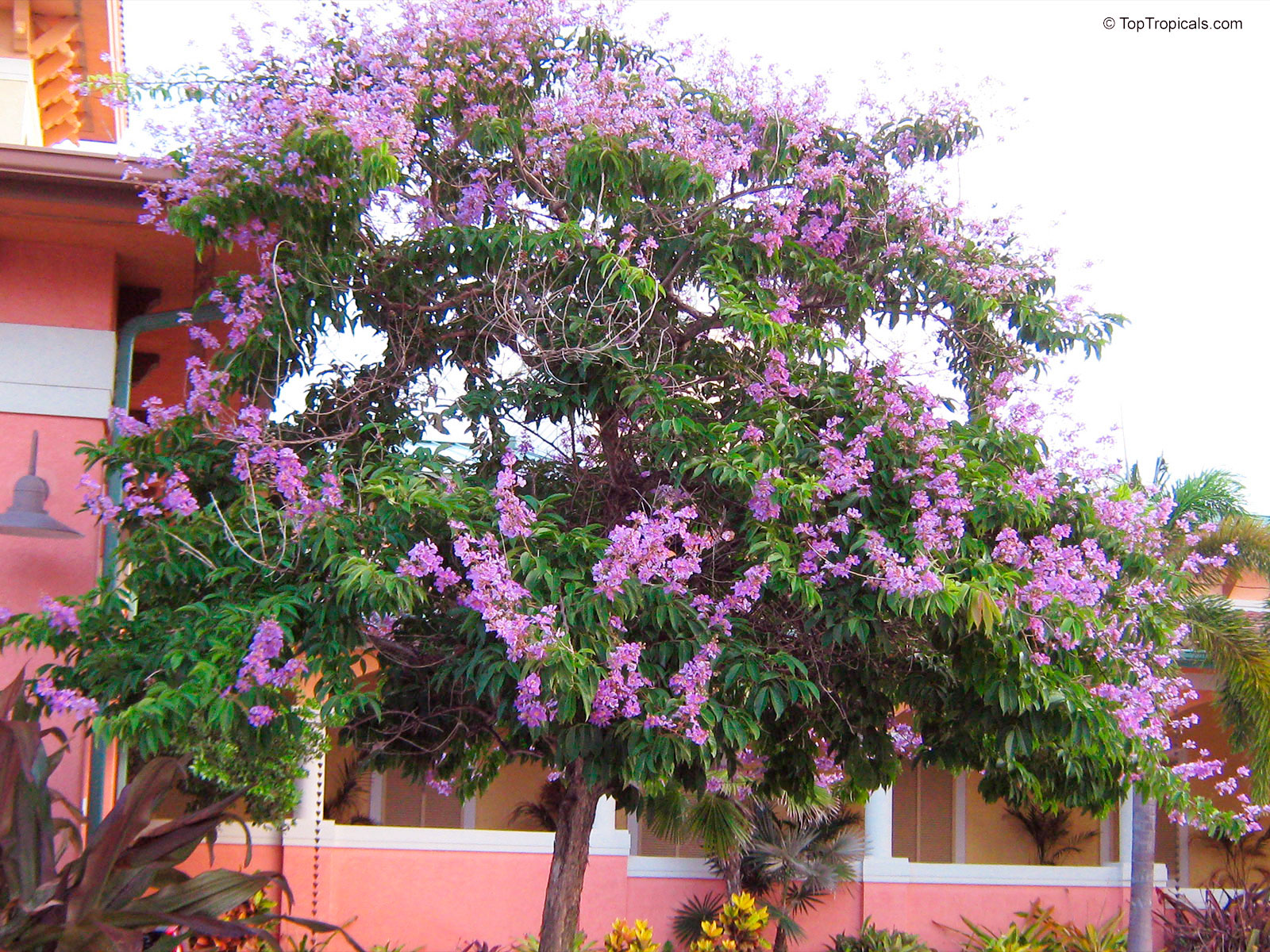
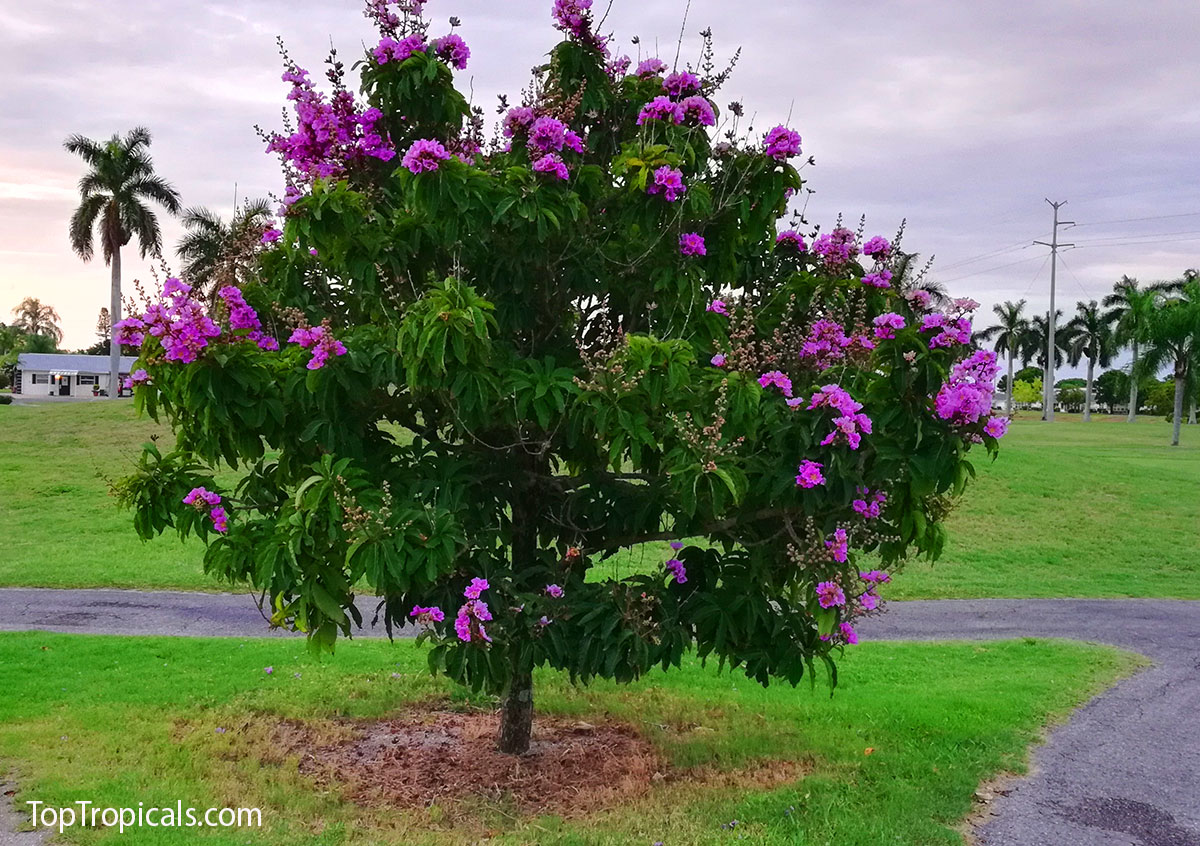
Lagerstroemia speciosa, commonly known as Queen's Crape Myrtle, Pride of India, or Queen's Flower, is a deciduous to semi-evergreen tree in the Lythraceae family, native to tropical South and Southeast Asia. Also known by the botanical synonym Lagerstroemia flos-reginae, it naturally inhabits moist forests, riverbanks, and other seasonally wet habitats. It typically reaches 30-60 feet tall, developing a broad, spreading crown and smooth, grayish to light brown bark that exfoliates in irregular patches. The large, opposite to nearly opposite, elliptic leaves turn reddish or orange before falling. From late spring through summer, spectacular terminal panicles bear numerous flowers with six delicate, strongly crinkled petals, ranging from pink and lavender to rich violet-purple. The flowers have conspicuous yellow stamens and are followed by rounded, woody capsules containing winged seeds.
Lagerstroemia speciosa thrives in full sun and fertile, well-drained to moderately moist soil, tolerating seasonal flooding better than many ornamental trees. It is widely planted as a flowering shade and street tree in tropical and subtropical regions. Suitable for USDA Zones 10-11, established specimens may tolerate brief light frosts, but prolonged freezing can damage the tree. Unlike the smaller Lagerstroemia indica, this species develops much larger leaves, flowers, and a substantially taller, more spreading crown.
Similar plants: Lagerstroemia speciosa (Queens Crape Myrtle)

Recommended Supplies: SUNSHINE Megaflor - Bloom Nutrition Booster
SUNSHINE-Epi - Caudex booster
Adenium Soilless Mix