Pontederia crassipes (Water Hyacinth)
Botanical names: Pontederia crassipes, Eichhornia crassipes
Common name: Water Hyacinth
Family: Pontederiaceae
Origin: South America
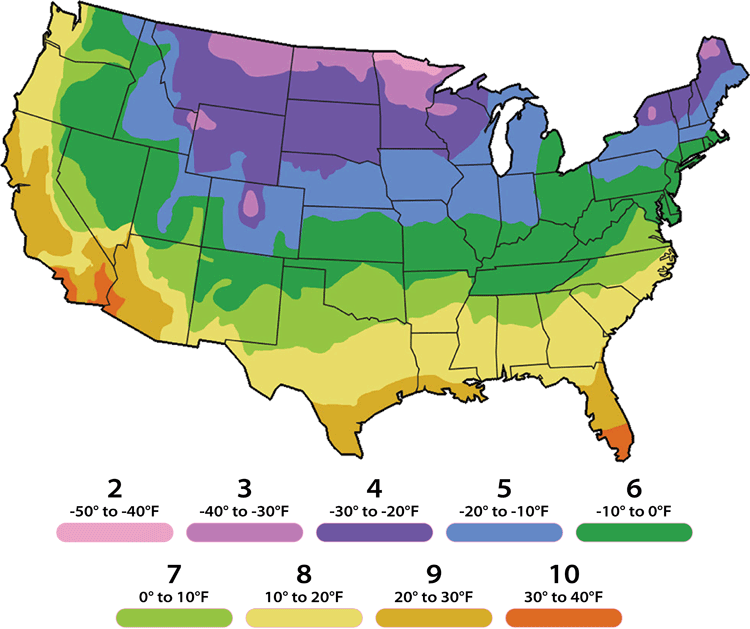
USDA Zone: 9-11
 Plant form: Small
 Mature height: 2-5 ft
 Sun exposure: Full sun or bright light indoor; semi-shade
 Cold tolerance: Frost sensitive. Protect from freezing.
 Watering: Bog or aquatic
 Flower color: Blue, lavender, purple
 Suitable for: Outdoors in the suitable USDA zone; small gardens, containers, and indoor growing
 Invasive: Can spread quickly, needs control
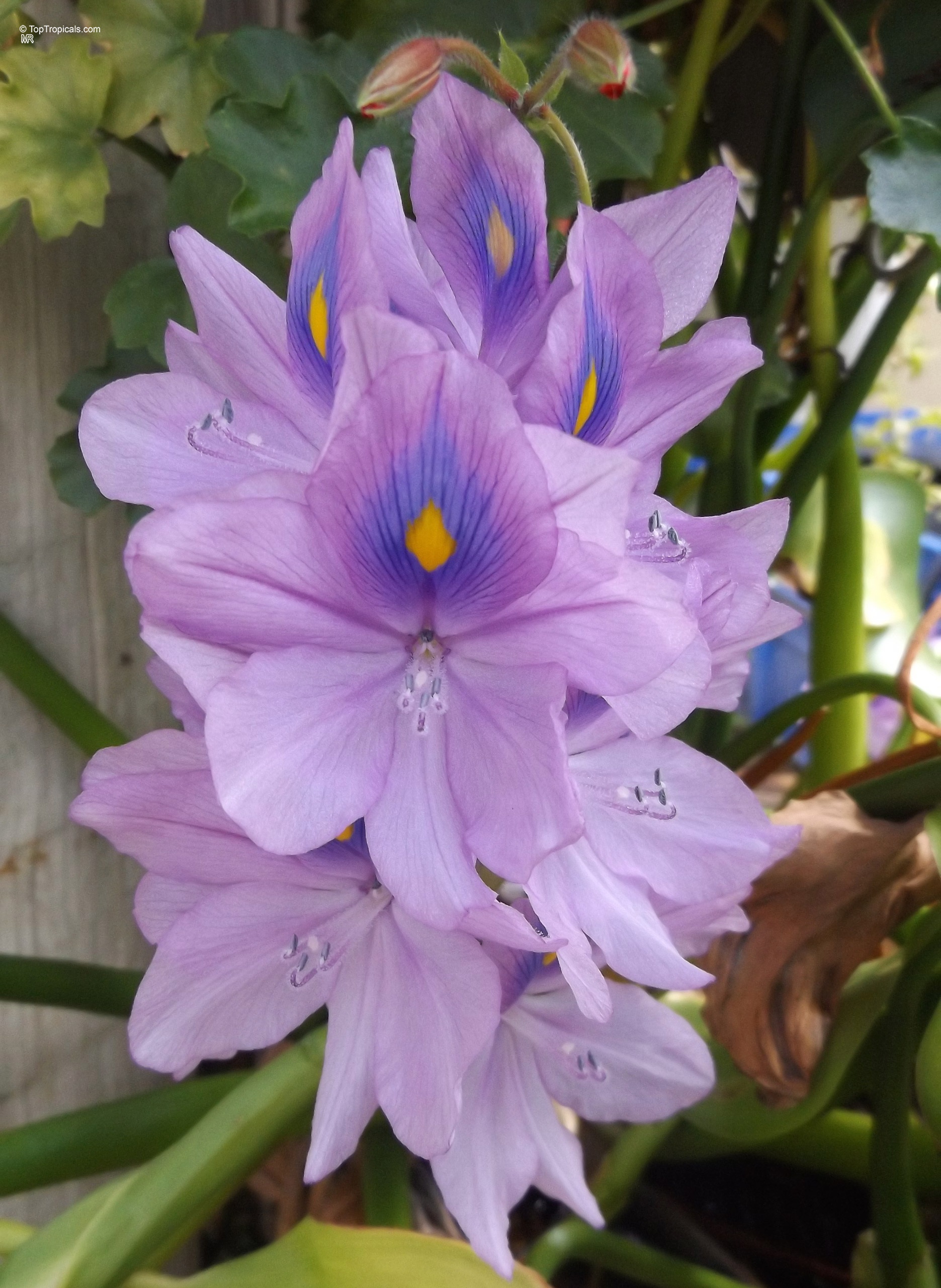
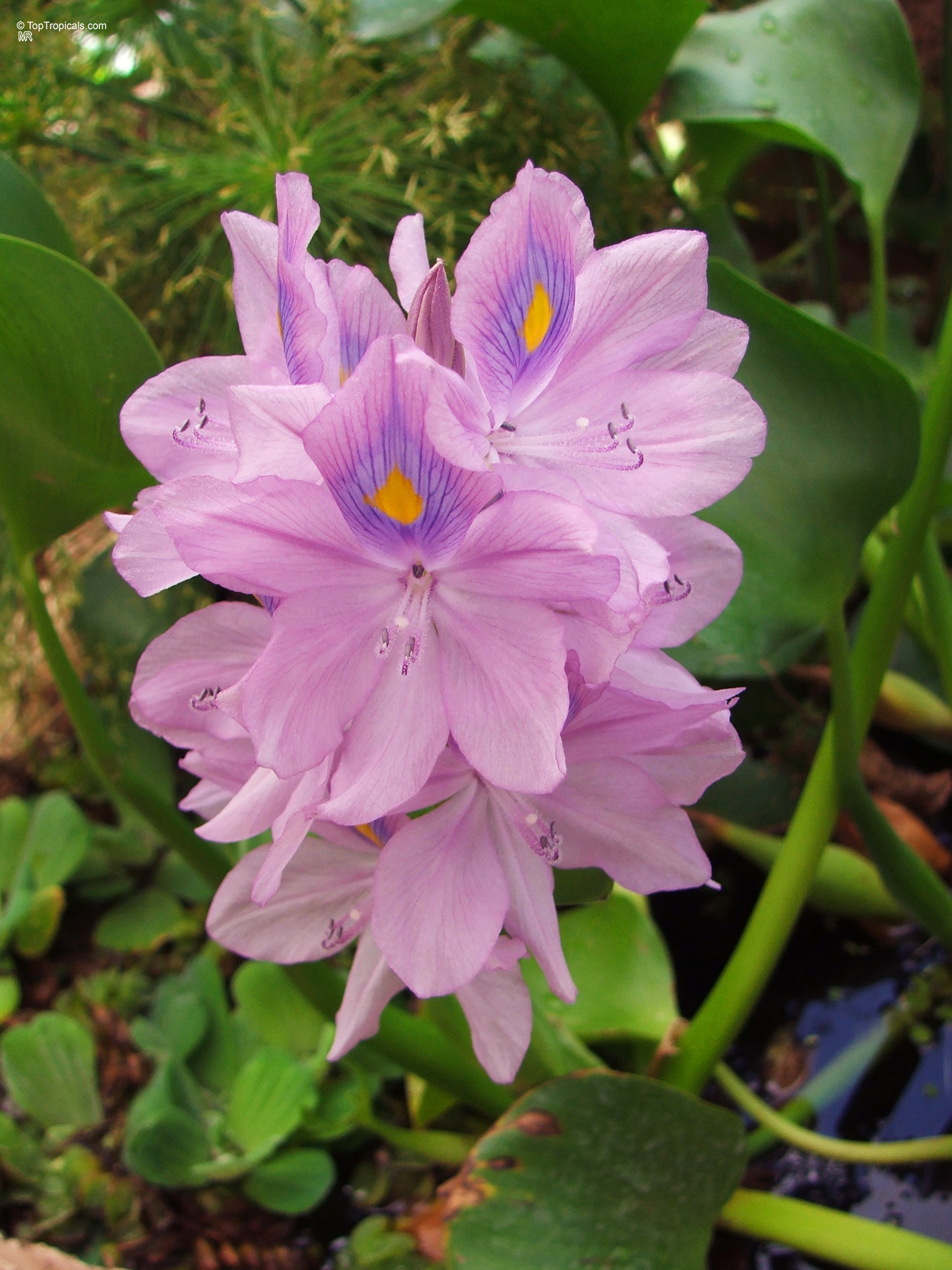
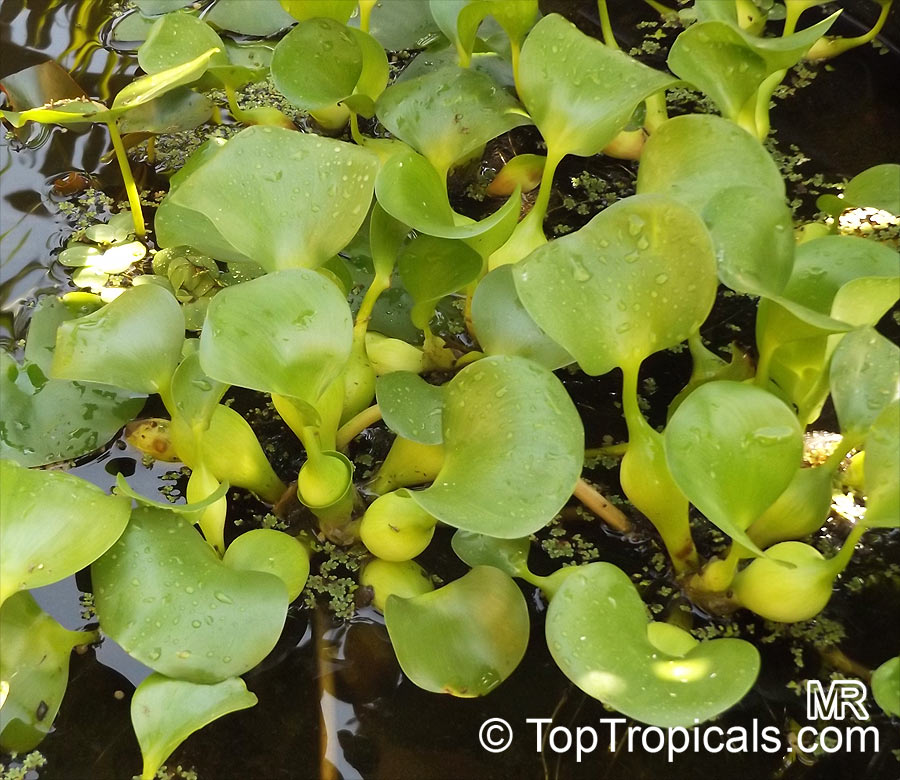
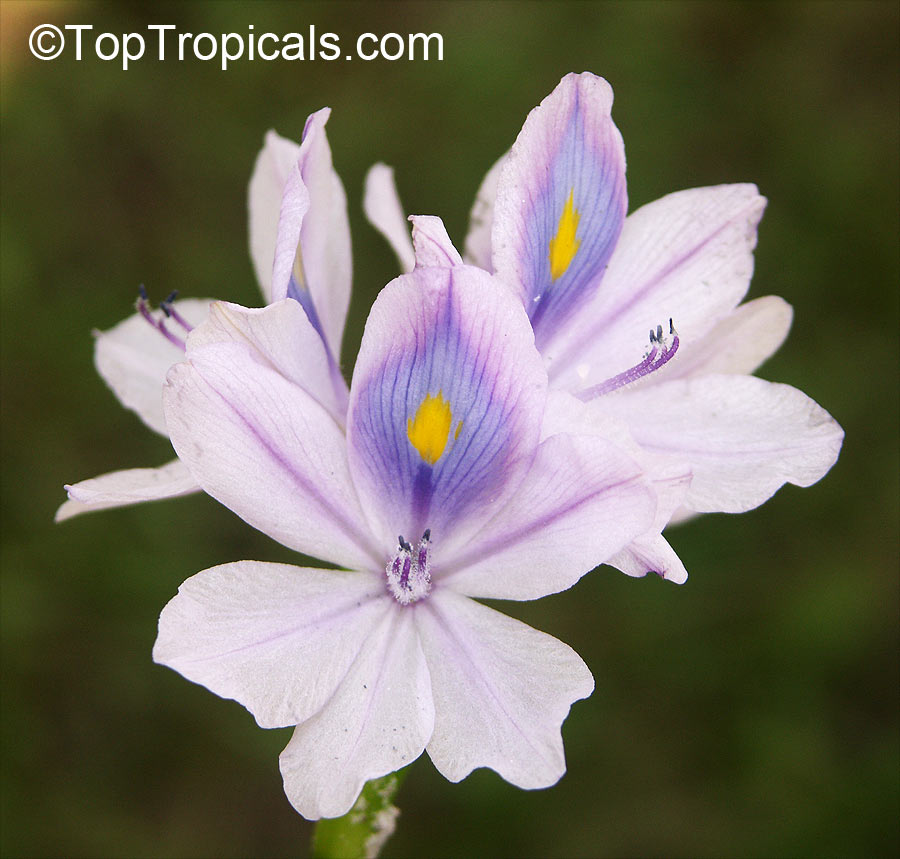
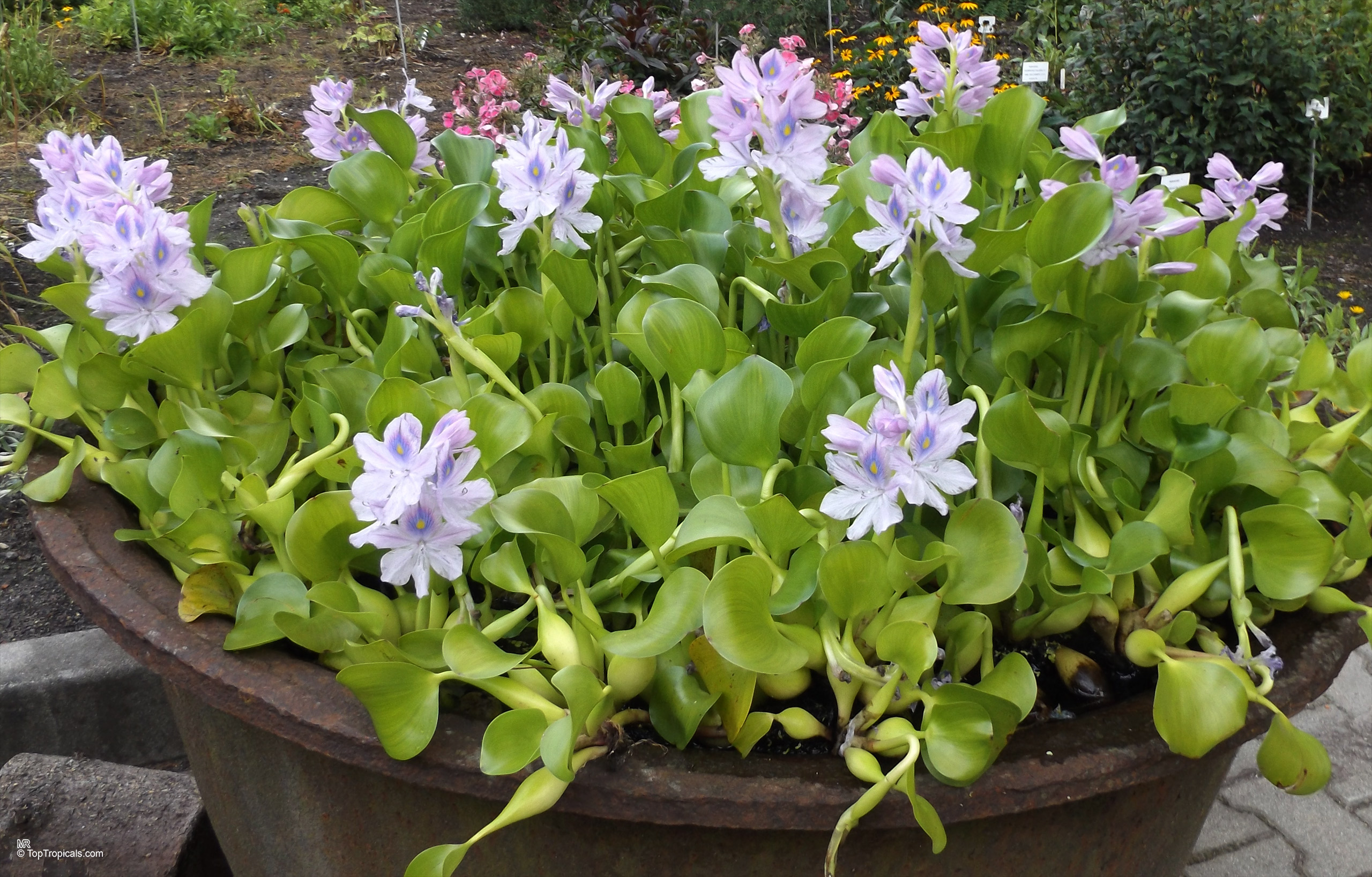
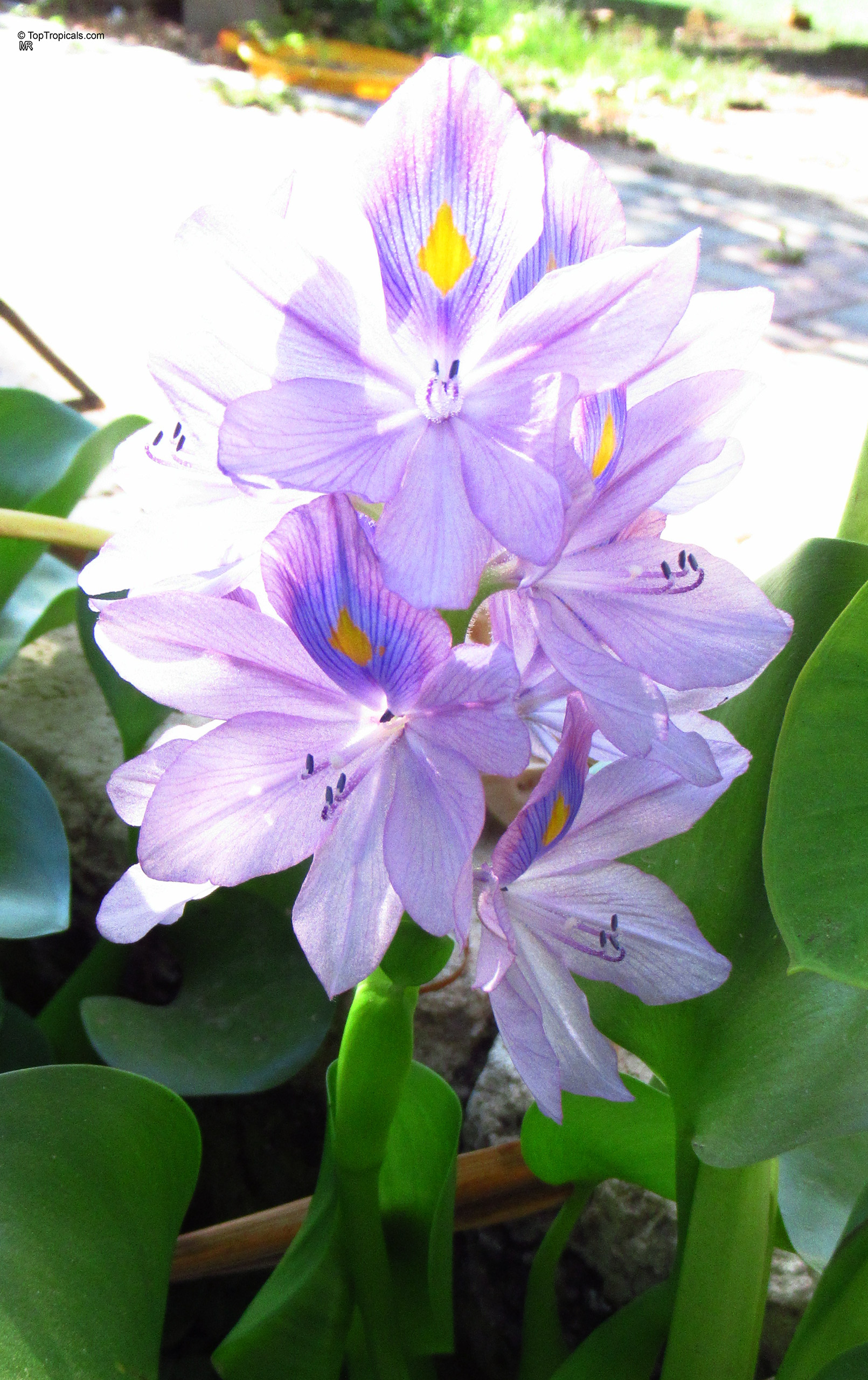
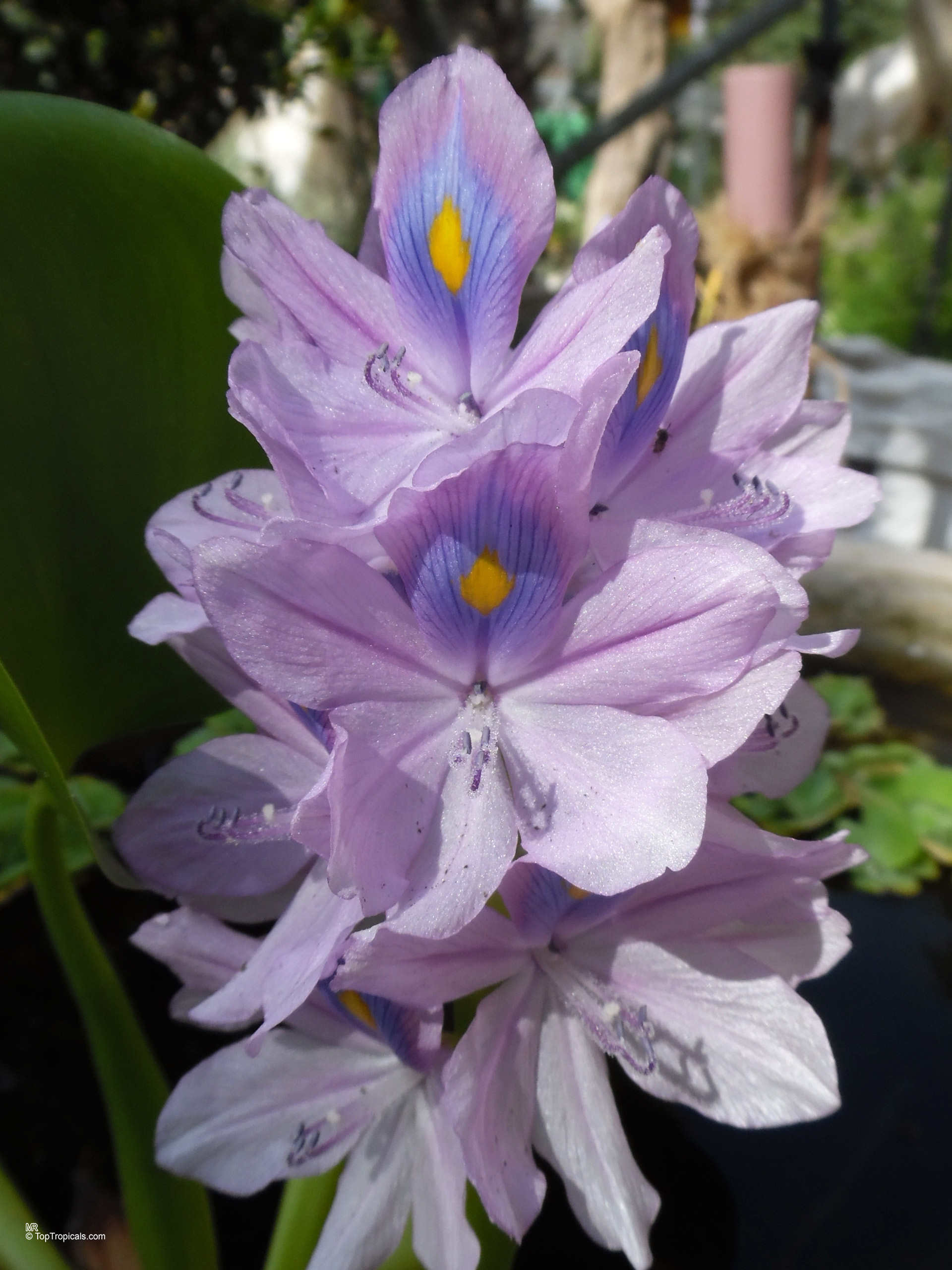
Pontederia crassipes, commonly known as Water Hyacinth, is a free-floating aquatic perennial in the Pontederiaceae family native to tropical and subtropical South America. Formerly known as Eichhornia crassipes, a name still extremely widespread in horticulture and older literature, it forms rosettes of glossy, rounded leaves with characteristically swollen, buoyant petioles. Long feathery roots hang freely beneath the plants, while rapid production of stolons allows colonies to expand across the water surface. Upright flower spikes carry showy lavender to violet flowers, each upper petal typically marked with a conspicuous yellow spot surrounded by deeper blue or purple.
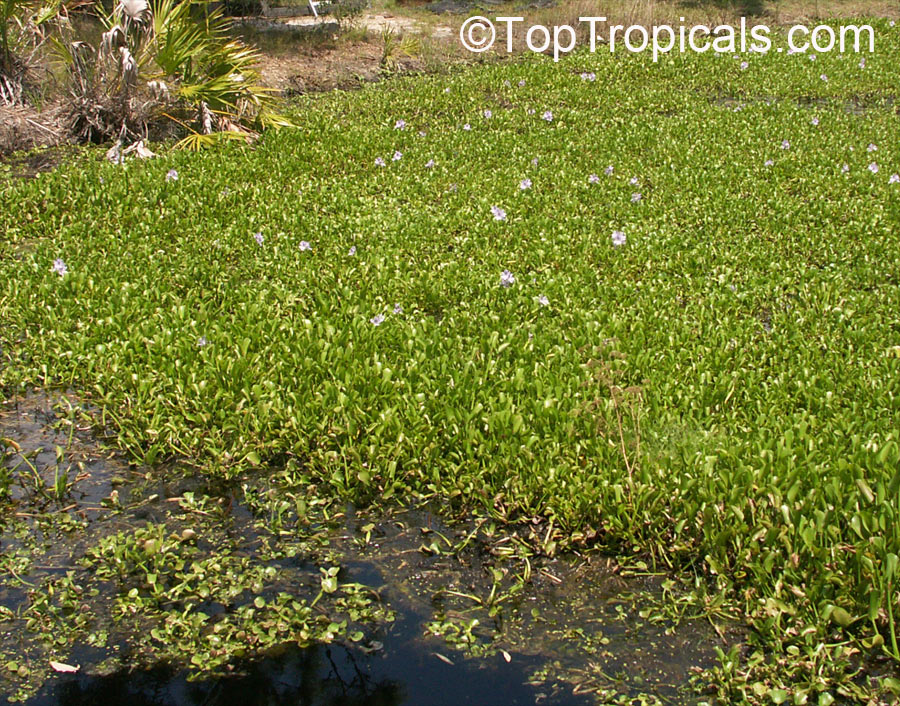
Water Hyacinth grows best in full sun and warm, nutrient-rich, still or slow-moving water and can multiply extremely rapidly under favorable conditions. It is generally hardy in USDA Zones 9-11, while colder winters may kill exposed plants. Although attractive in ponds and water gardens, Pontederia crassipes is one of the world's most invasive aquatic plants, capable of forming dense floating mats that block waterways, reduce light and oxygen levels, and displace native vegetation. Its cultivation, transport, or sale is therefore restricted or prohibited in many regions, and local regulations should always be checked before growing or distributing this species.
Similar plants: Pontederia crassipes (Water Hyacinth)