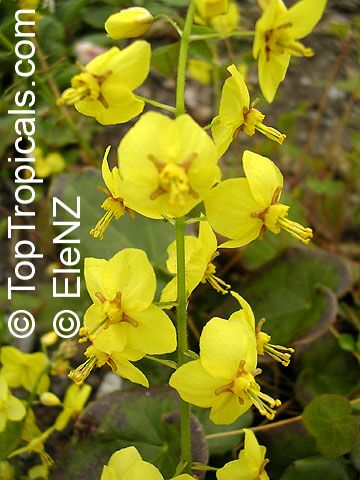
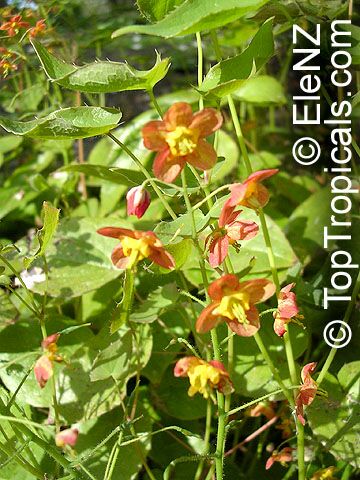
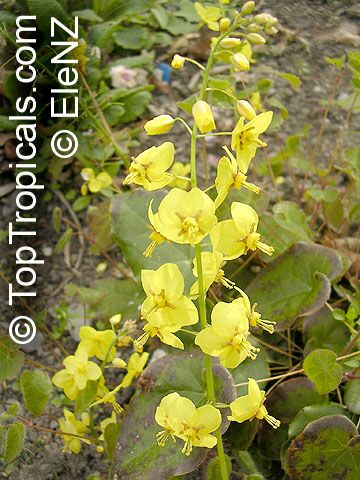
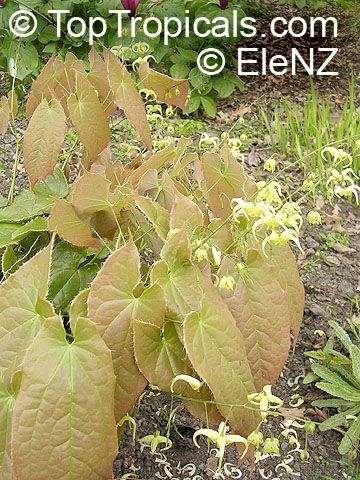
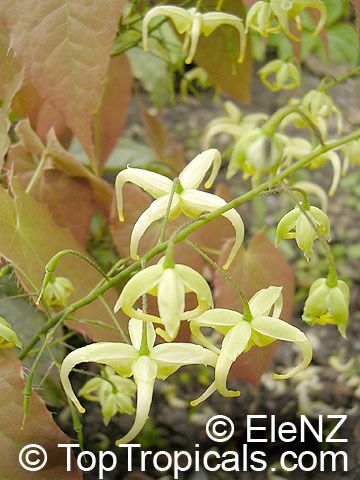
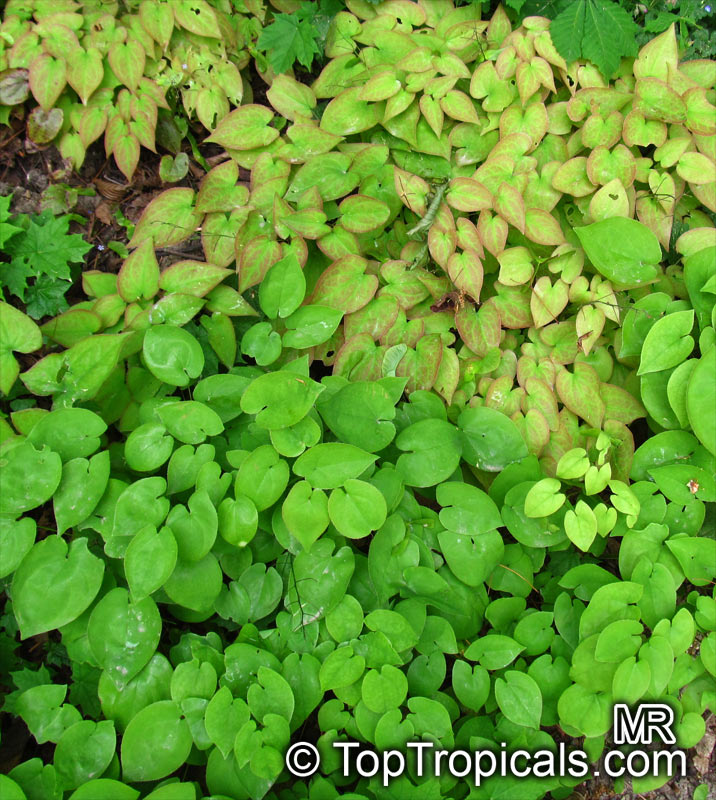
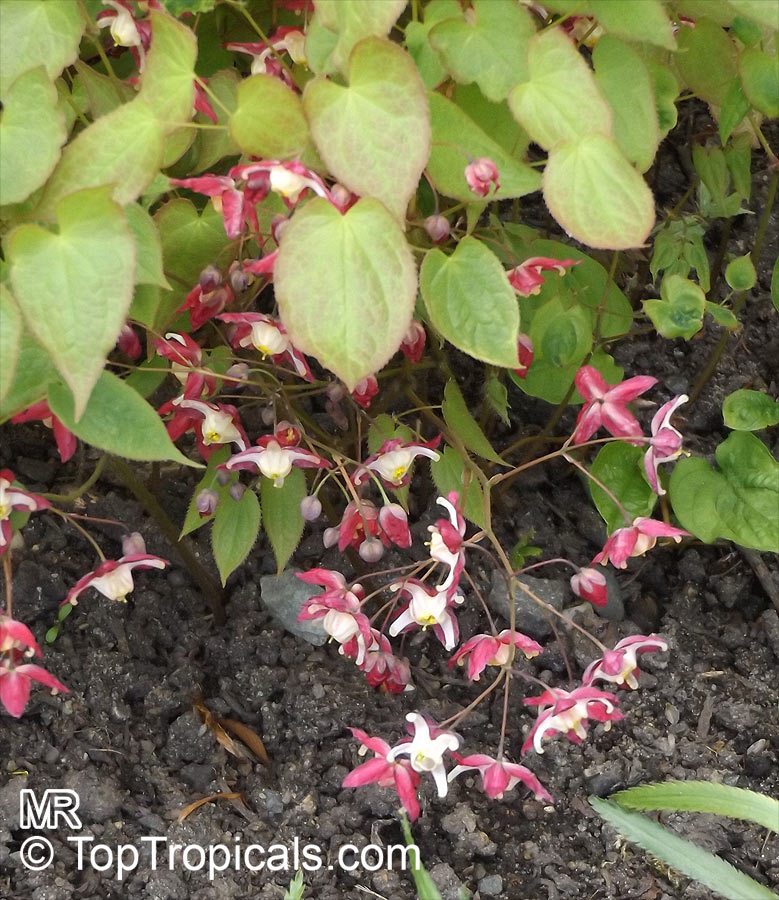
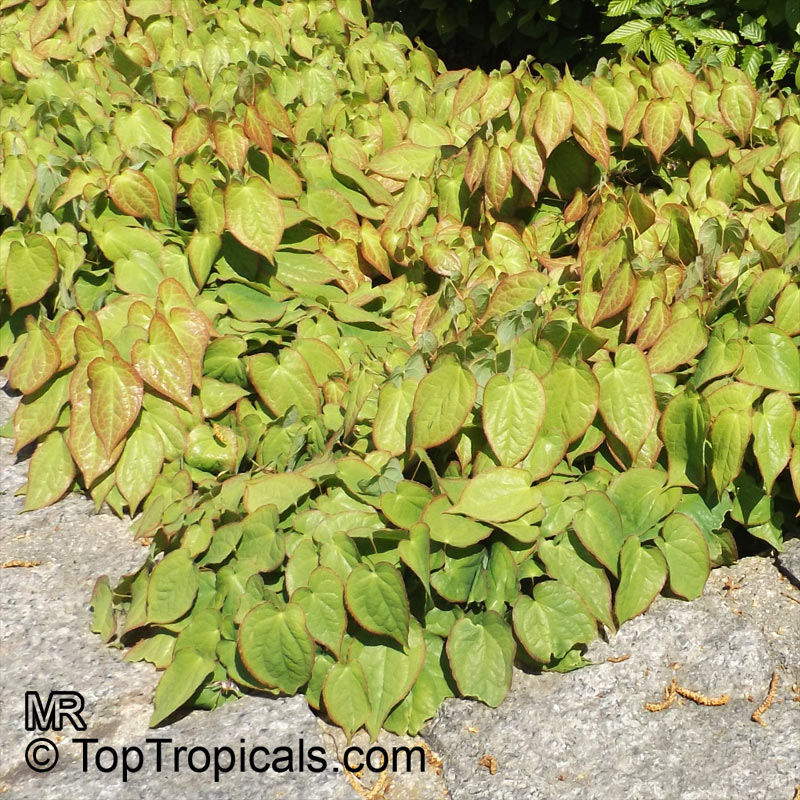
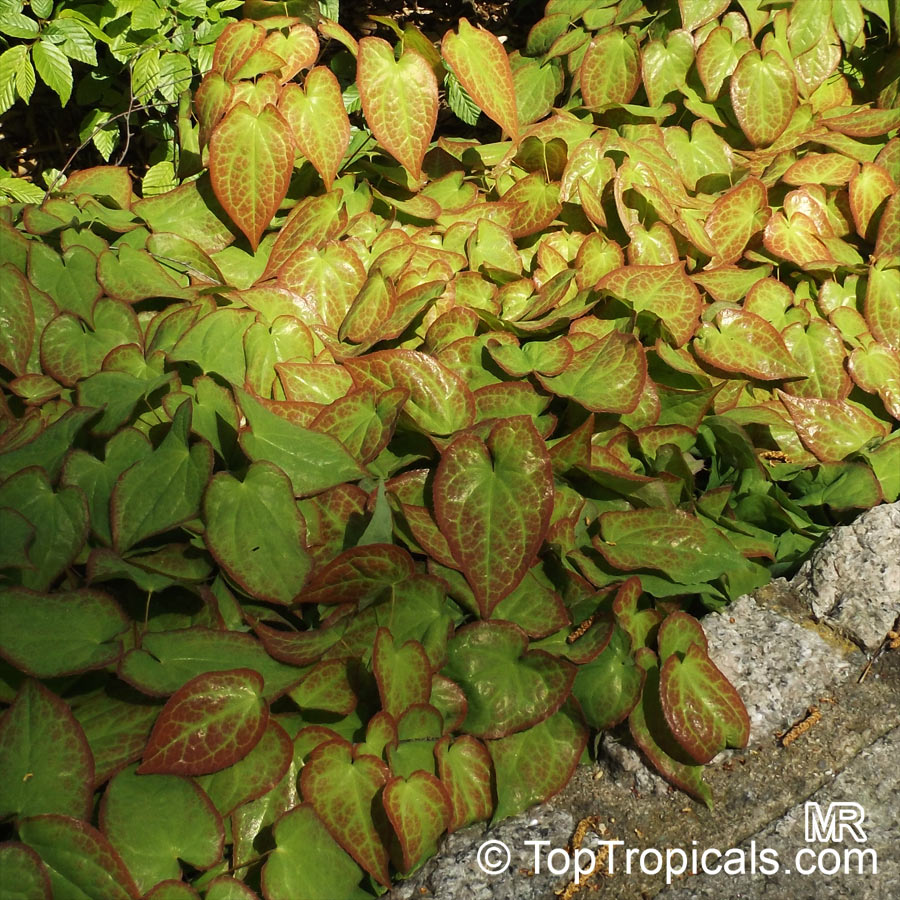
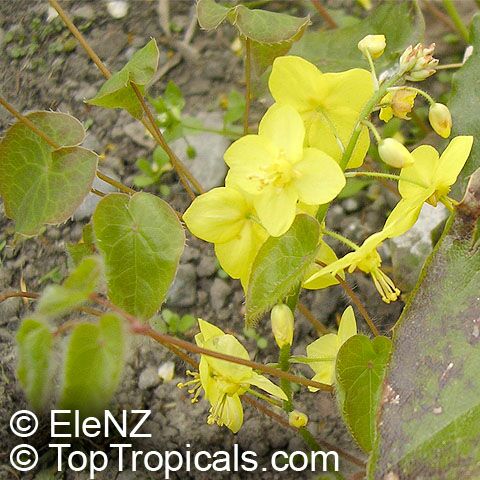
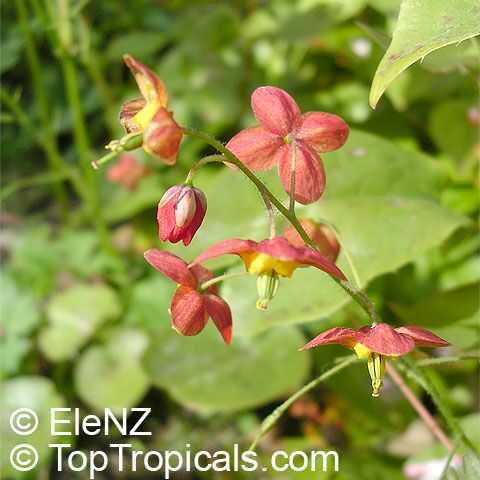
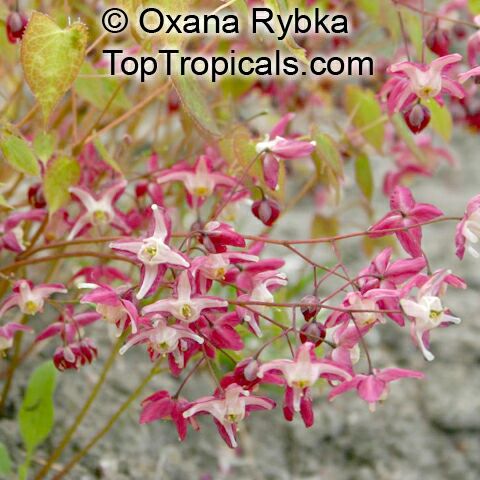
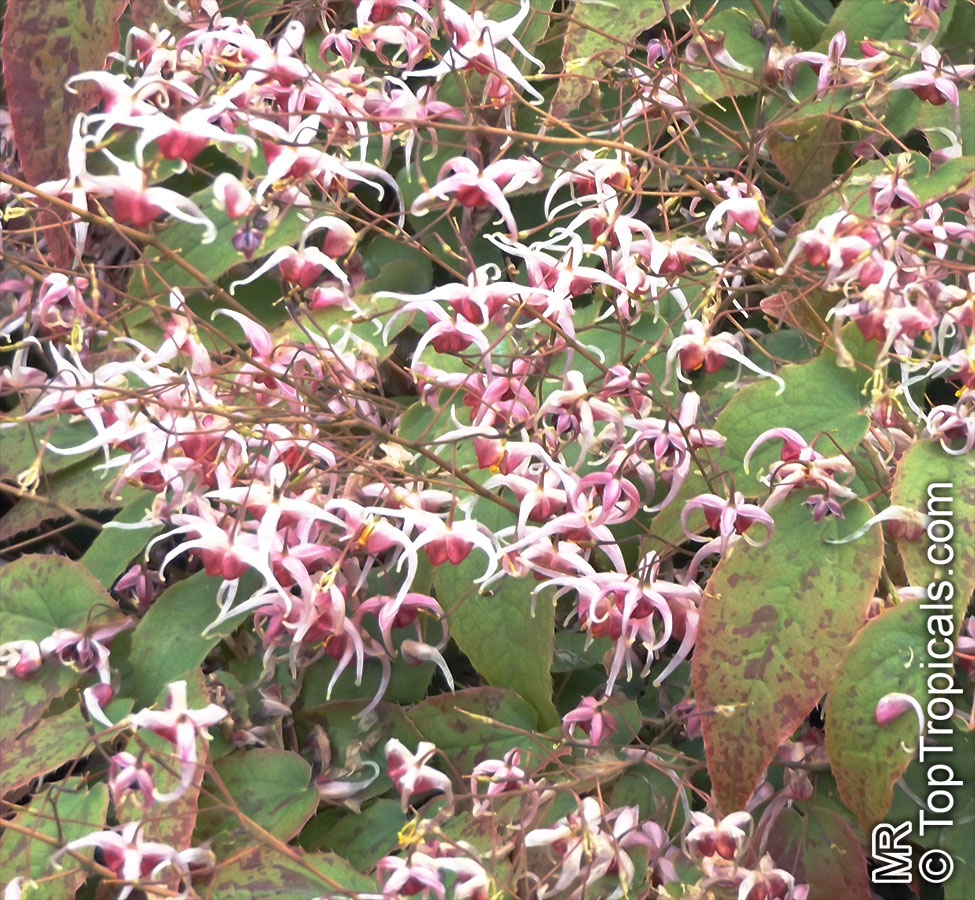
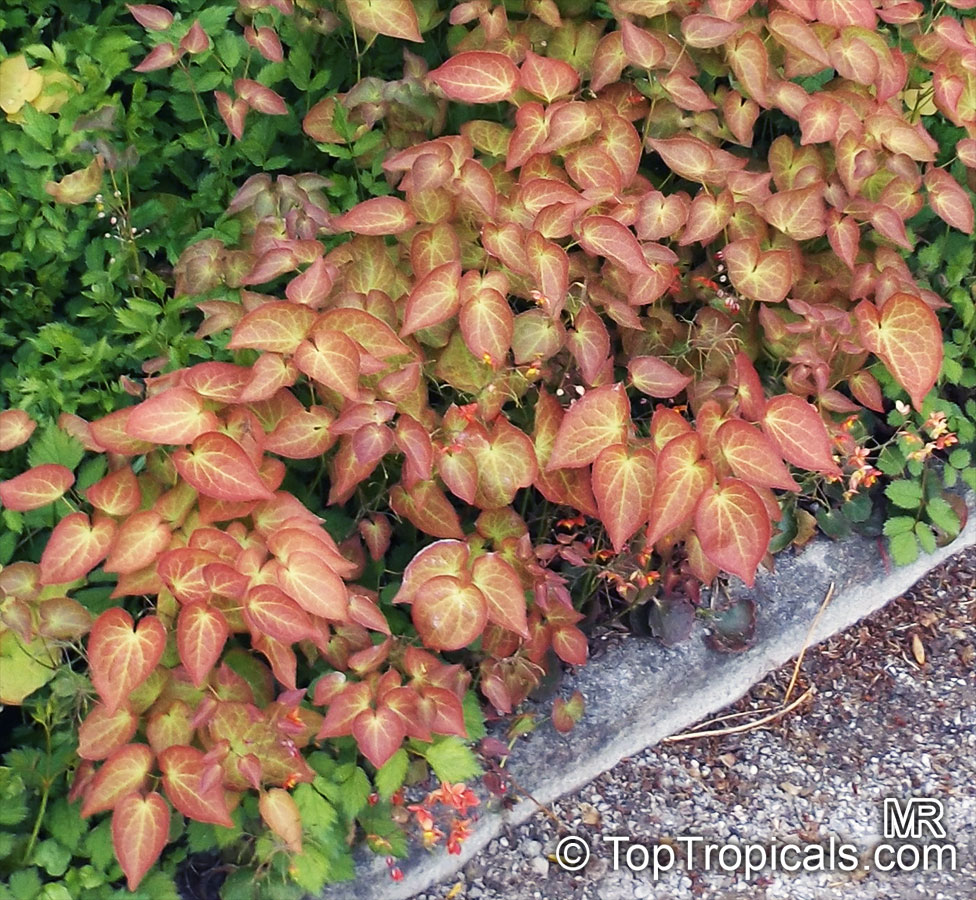
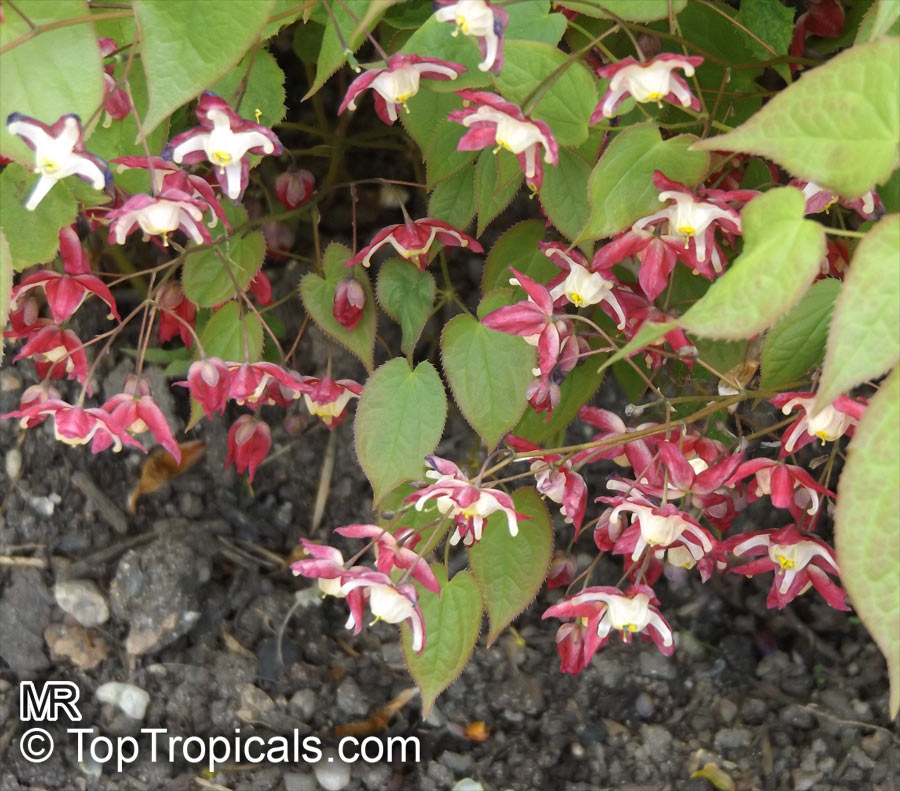
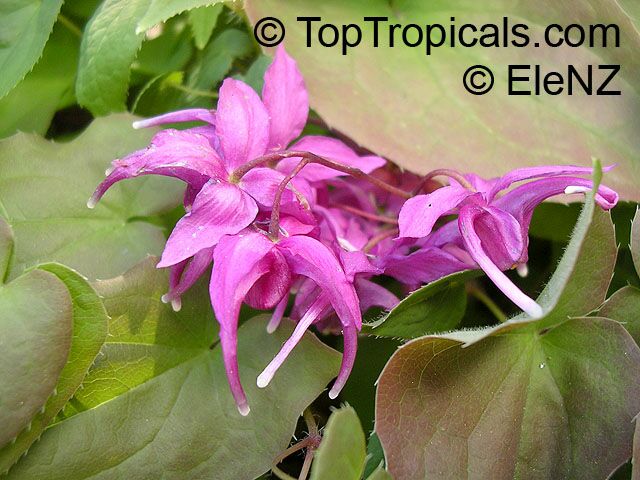
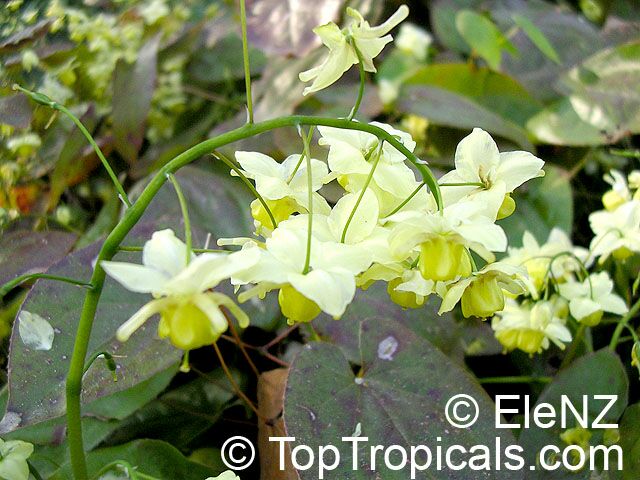
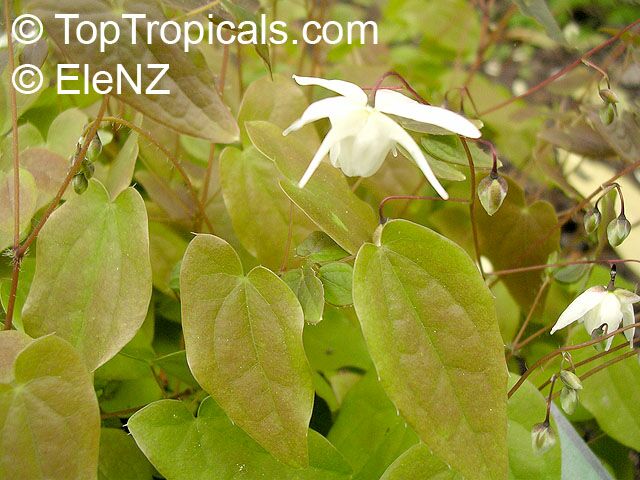
Epimedium sp. (Horny Goat Weed)
Top Tropicals Plant Encyclopedia

Botanical name: Epimedium sp.
Common names: Horny Goat Weed, Bishop's Cap
Family: Berberidaceae
Origin: temperate Asia, Mediterranean
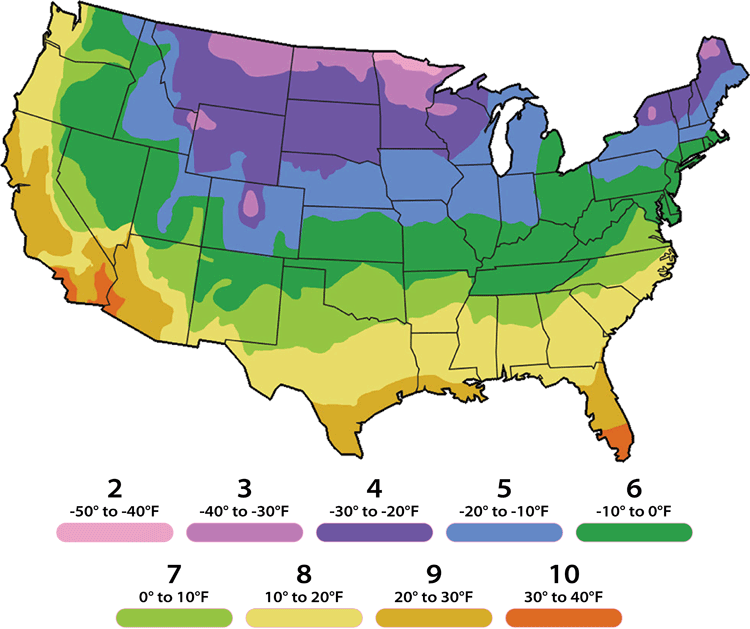


Plant care and Growing: Epimedium prefers light to moderate shade, semi-shade or morning sun, and soil that is not too rich in nutrients or too dry. Established plants can tolerate brief periods of drought, but for ideal growth and flowering, regular watering is recommended. For maximum flowering, fertilizer should be applied in the spring afternew growth has begun to emerge. When re-potting, use fresh organic potting soil, ideally in a pot slightly larger than before, and use easy to remove drainage. To control any excessive growth, pinch out the central growing tips once or twice in the spring. In colder regions, it is necessary to make sure the root ball does not freeze and a container with holes at the base would be preferable. The container then needs to be covered during winter for extra insulation, with straw or similar material.
When grown as an ethnomedical plant, its use is primarily as an aphrodisiac, but the epimedium genus also contains species with a variety of potential health benefits. Epimedium is believed to boost sex drive, treat menopausal symptoms, increase bone density, and has also been used as a treatment for stomach issues, viral infections, and a wide range of pain-related issues.




Nothing found