TopTropicals logo
Call us: 1-866-897-7957      Follow us: Follow us at Facebook      Newsletter      Wishlist      Gift certificate     
View shopping cart
TopTropicals.com— rare tropical plants for home and garden
TROPICAL PLANT CATALOGPrinter friendly page  

This catalog is for information only. If you don't see the price - the plant is not for sale.

Click on image to enlarge.
Pictogram Guide you may also see symbol definition in a pop-up window by mouse-pointing on pictogram

 
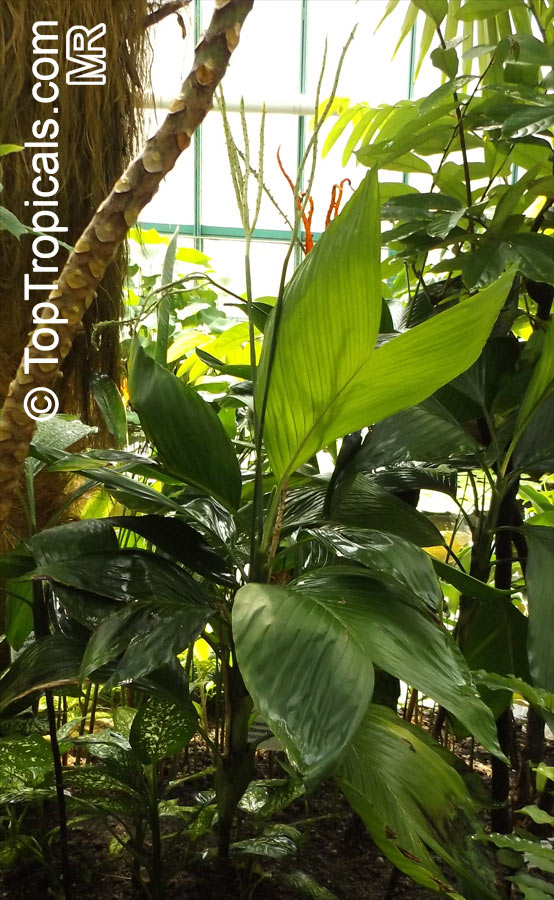
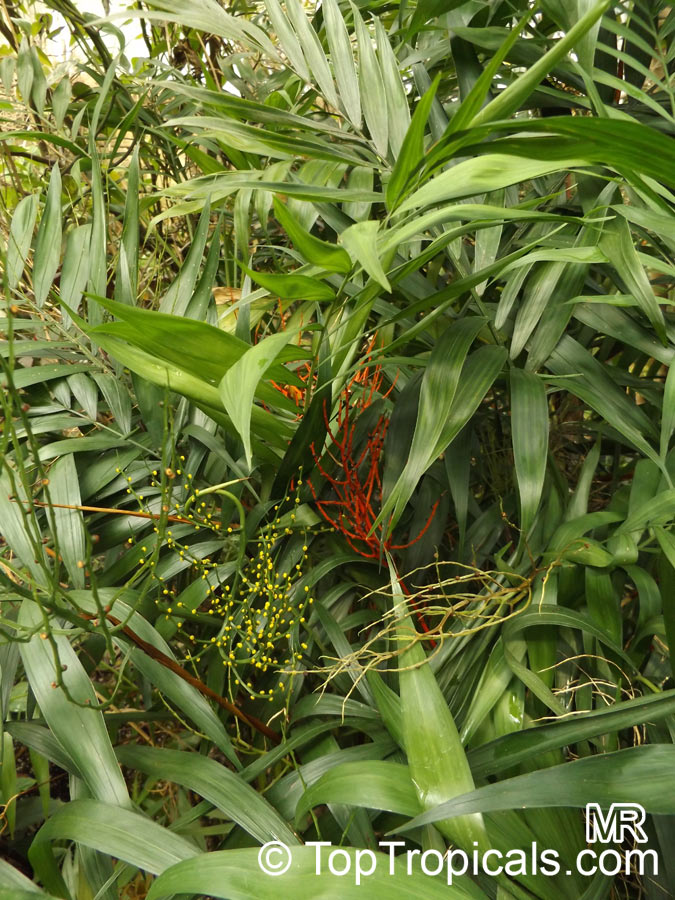
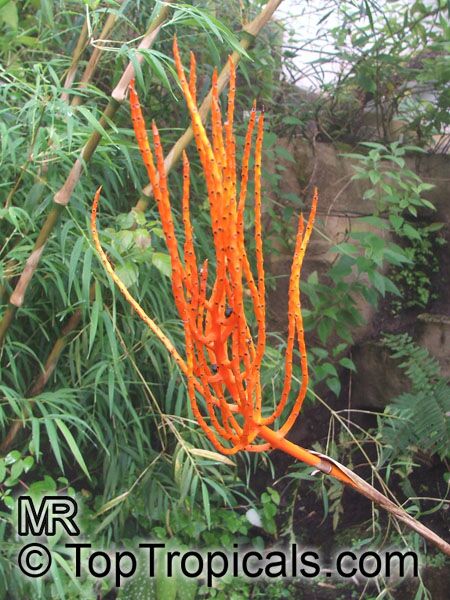
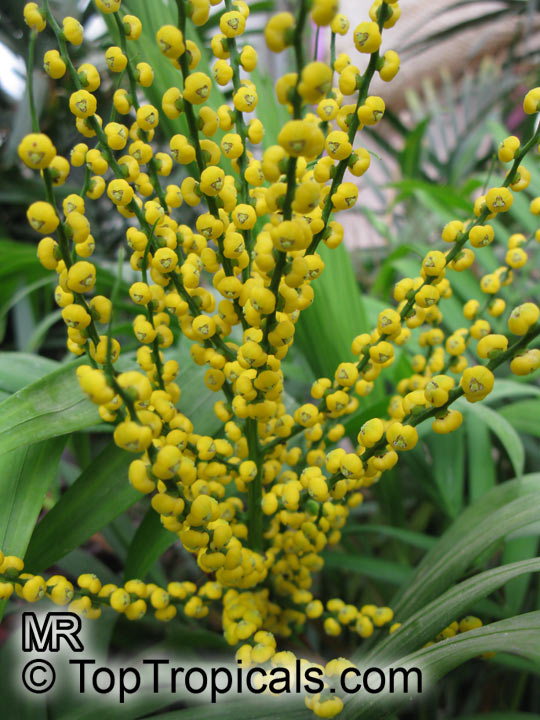
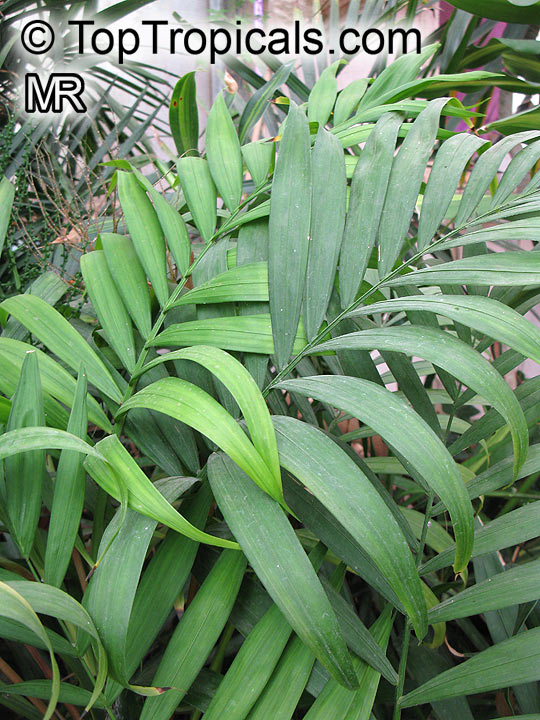
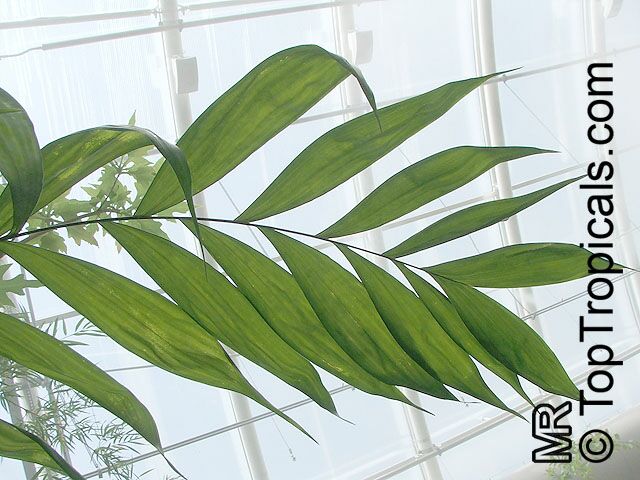
Chamaedorea sp., Chamaedorea
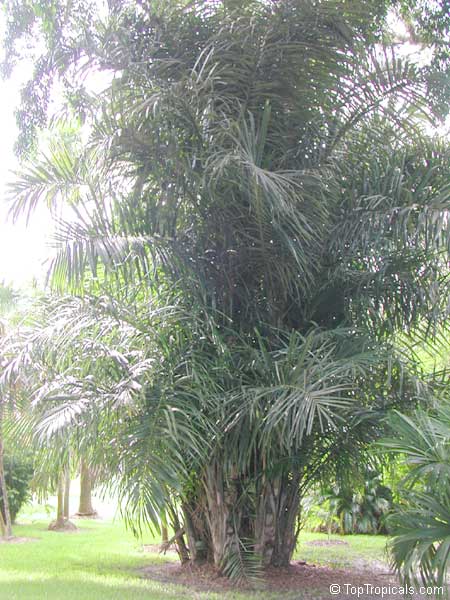
Chamaedorea tepejilote
 Chamaedorea sp.
Family: Arecaceae / Palmae
Chamaedorea
Origin: Central America
small tree 10-20 ftfull sunsemi-shaderegular waterpalm or palm-likeUnknown nameincuded in CD catalog

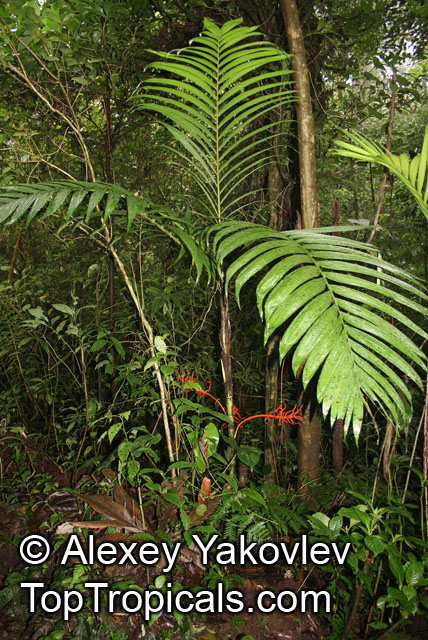
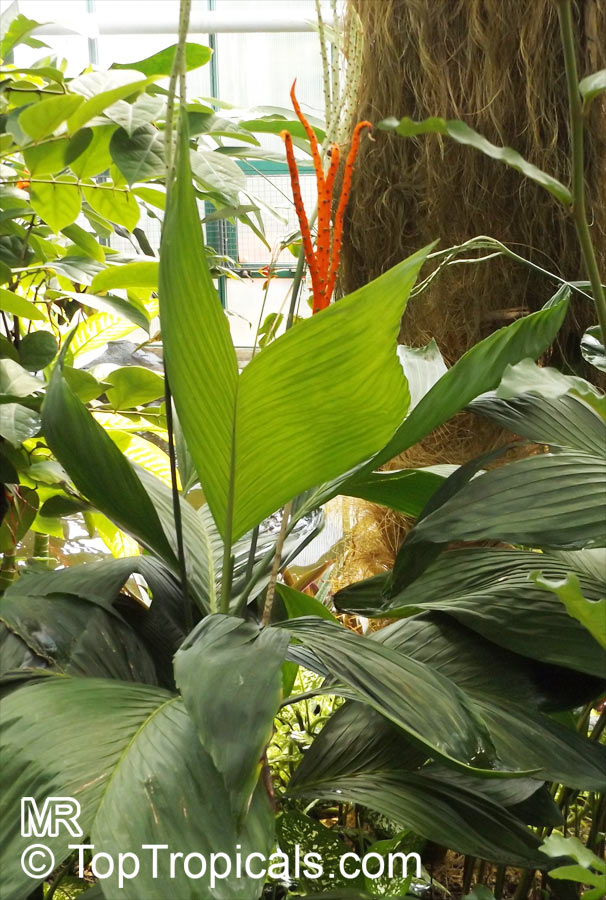
Stems obsolete to erect, slender or (rarely) subarborescent, solitary or (C. costaricana) cespitose, unarmed. Petioles unarmed, sometimes with conspicuous, yellowish, abaxial stripe, the sheath splitting or closed, sometimes (C. costaricana, C. graminifolia) forming brief crownshaft, rarely (C. costaricana) with distal, ligule-like structure. Leaf-blades simple and bifid to pinnately compound. Peduncle short to elongate, usually becoming orange to red in fruit, with 1-several elongate, apically bifid, persistent to deciduous bracts. Ripe fruits smooth to verrucose-echinulate (C. crucensis), globose to obovoid or ellipsoid, orange to red or (usually) dark purplish or black, with basal stigmatic residue.

Chamaedorea is unique, among palm genera occurring in Costa Rica, in being dioecious. This, however, is not a character of practical utility either in the herbarium or in the field. Most species are relatively nondescript, but can usually be recognized by the combination of small size (always less 10m tall), solitary (except C. costaricana), green stems, spineless and otherwise glabrous foliage, papery, apically bifid peduncular bracts, and ebracteate flowers. Some species have a yellowish abaxial stripe on the petiole and leaf-rachis, which is diagnostic, and species with pinnately compound leavs usually have sigmoid pinnae.

Male and female infls. of the same Chamaedorea sp. are sometimes very different. The ephemeral and seldom-collected male infls. and flowers generally provide the most useful diagnostic characters for Chamaedorea species; however, complete information is ideal. in synchrony.

Costa Rica and Panama comprise a center of diversity for Chamaedorea, which is especially species-rich in mid-elevation rain forests. Many species (especially those with simple leavs) are ornamental, and assiduously sought by unscrupulous collectors. Wild populations of such species are under constant siege, and some have been extirpated. Most Chamaedorea species are rare and local to begin with, which exacerbates the problem.


Chamaedorea sp., Chamaedorea
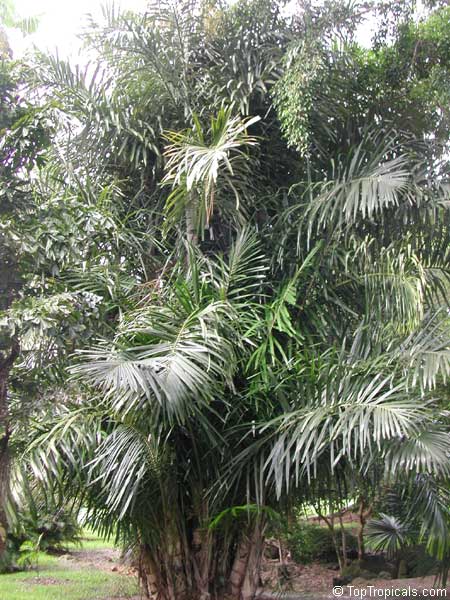
Chamaedorea schiedeana

Chamaedorea sp., Chamaedorea
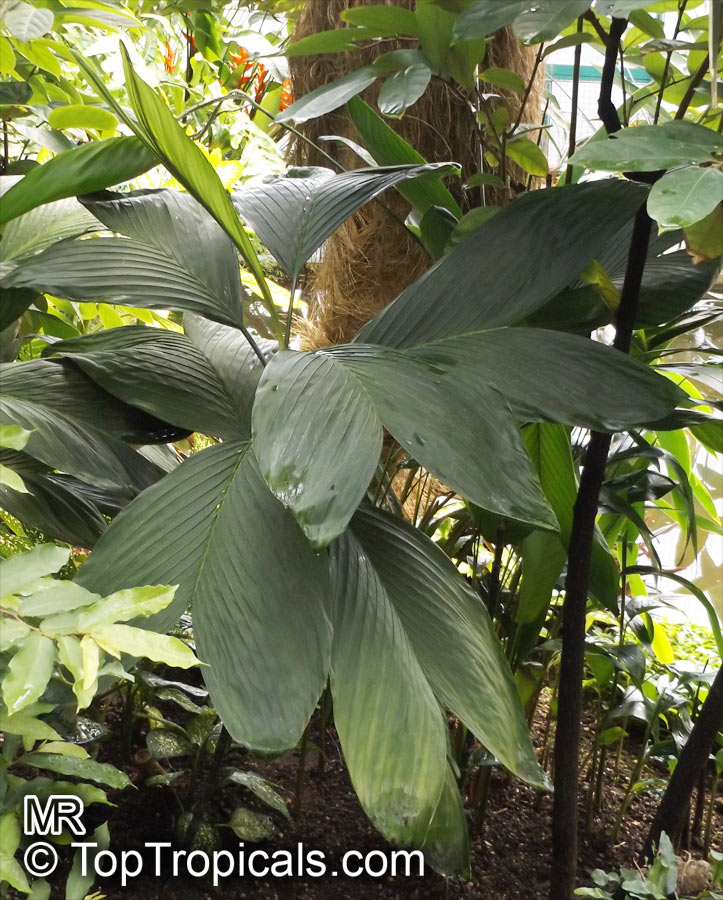
Chamaedorea schiedeana
Chamaedorea sp., Chamaedorea


Link to this plant: http://toptropicals.com/catalog/uid/chamaedorea_sp.htm
 Create QR-code to share this link  Share this page on Facebook  Share this page on Twitter 

Add your comments
Add your images
Add plant to wish list


CPU time used: 0.020 sec

©Top Tropicals LLC, 2003 -    ©TTmagazine.info, 2007 -    Using TopTropicals.com images