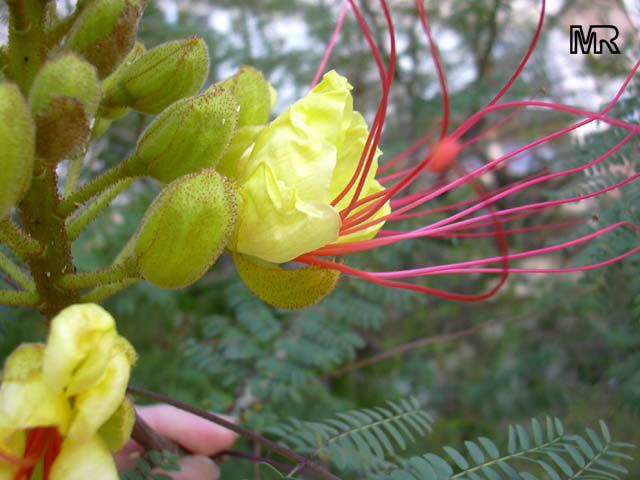
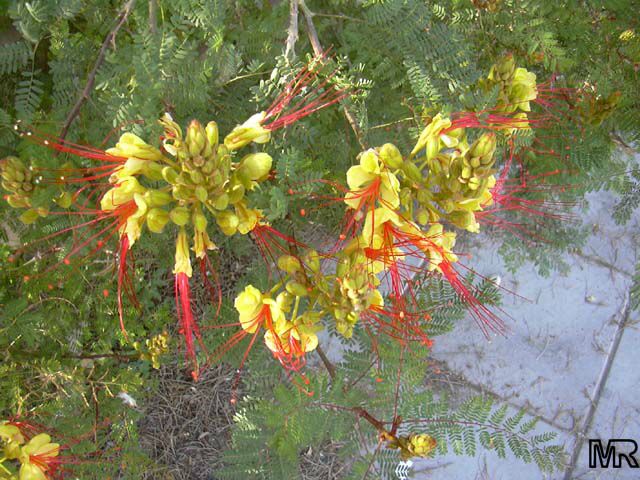
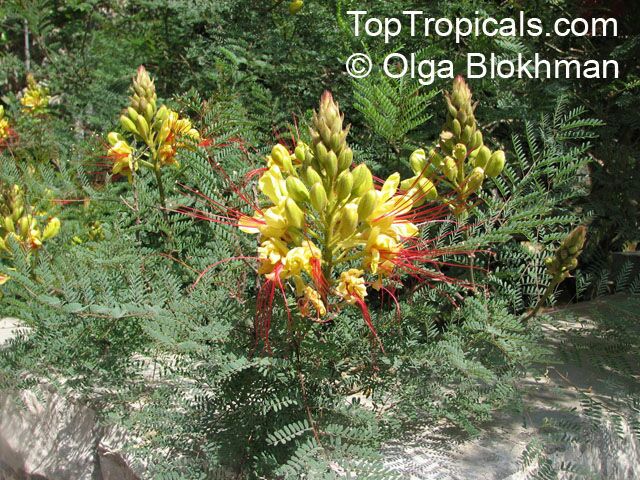
Erythrostemon gilliesii (Yellow Bird of Paradise)
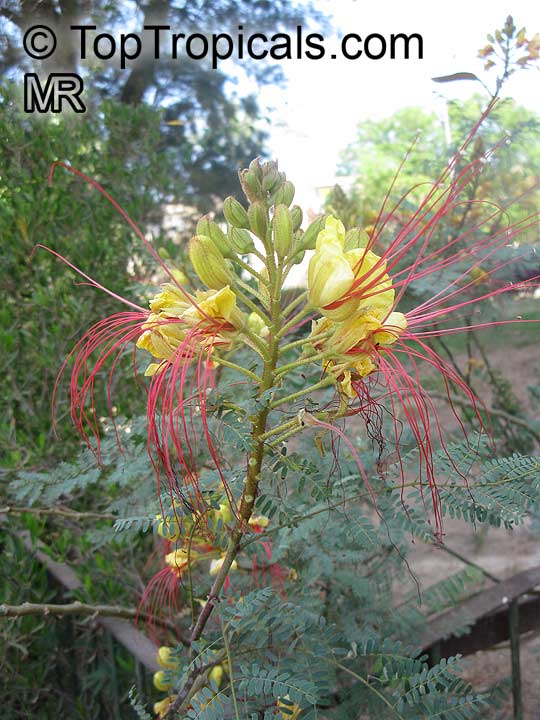
Botanical names: Erythrostemon gilliesii, Caesalpinia gilliesii, Poinciana gilliesii
Common names: Yellow Bird of Paradise, Yellow dwarf poinciana, Bird of Paradise Bush, Desert Bird of Paradise
Family: Fabaceae
Subfamily: Caesalpinioideae
Origin: Argentina
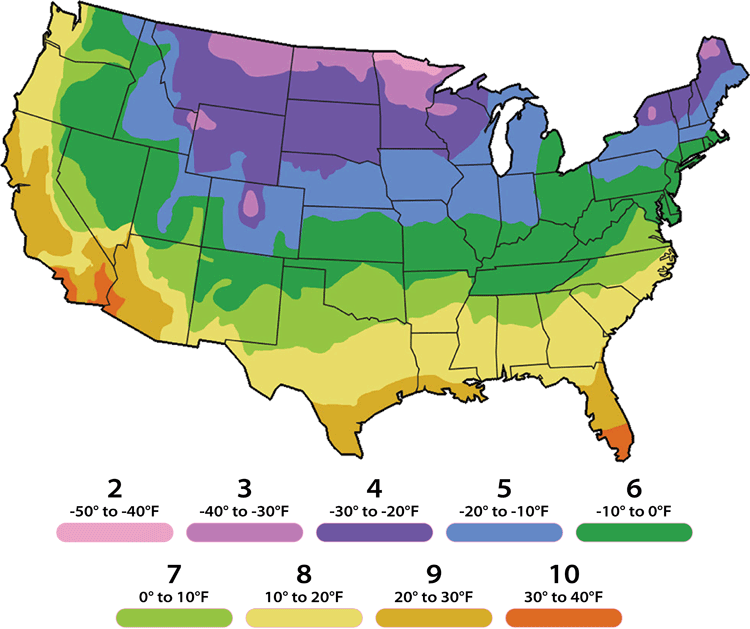
USDA Zone: 9-11

 Plant form: Large bush; suitable for bonsai
 Mature height: 5-10 ft
 Sun exposure: Full sun or bright light indoor; semi-shade
 Cold tolerance: Tolerates light freezing to about 30°F for short periods (mature plants). Young plants must be protected.
 Watering: Moderate
 Flower color: Yellow, orange
 Suitable for: Outdoors in USDA Zones 9 - 11; small gardens, containers, and indoor growing
 Foliage: Deciduous
 Irritating or toxic: Irritating
 Butterfly attractor: Attracts butterflies and hummingbirds
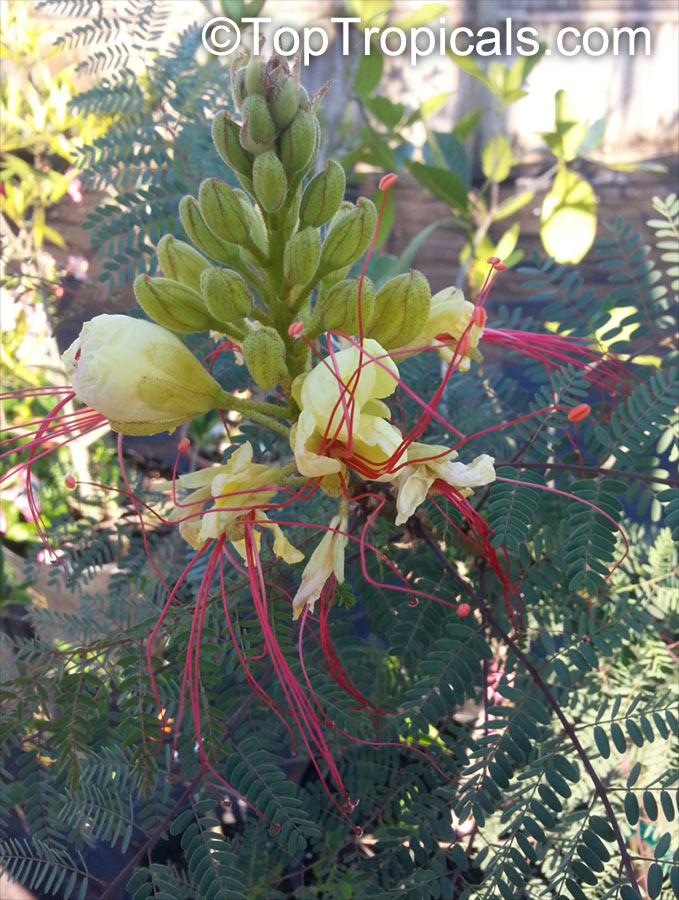
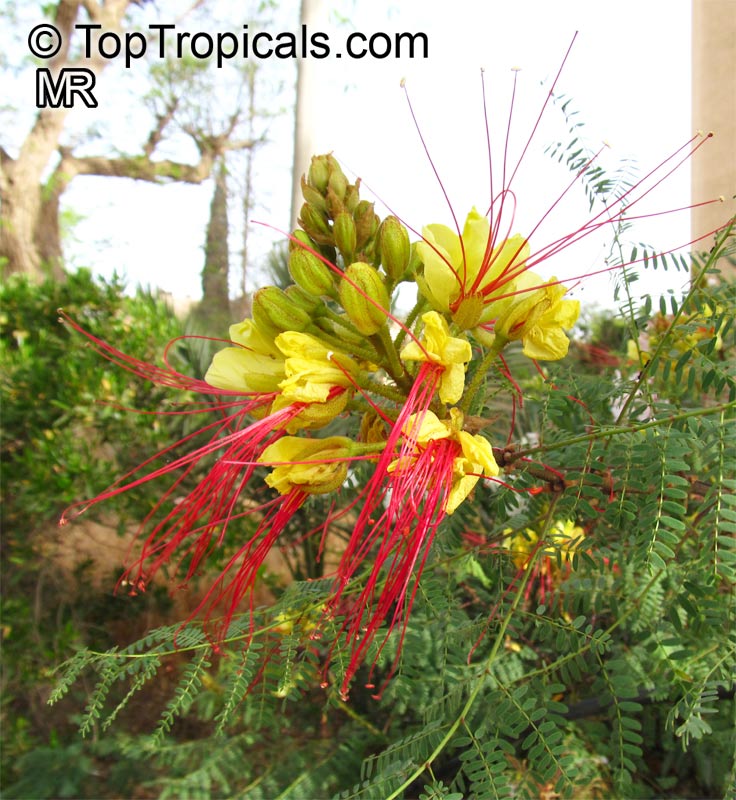
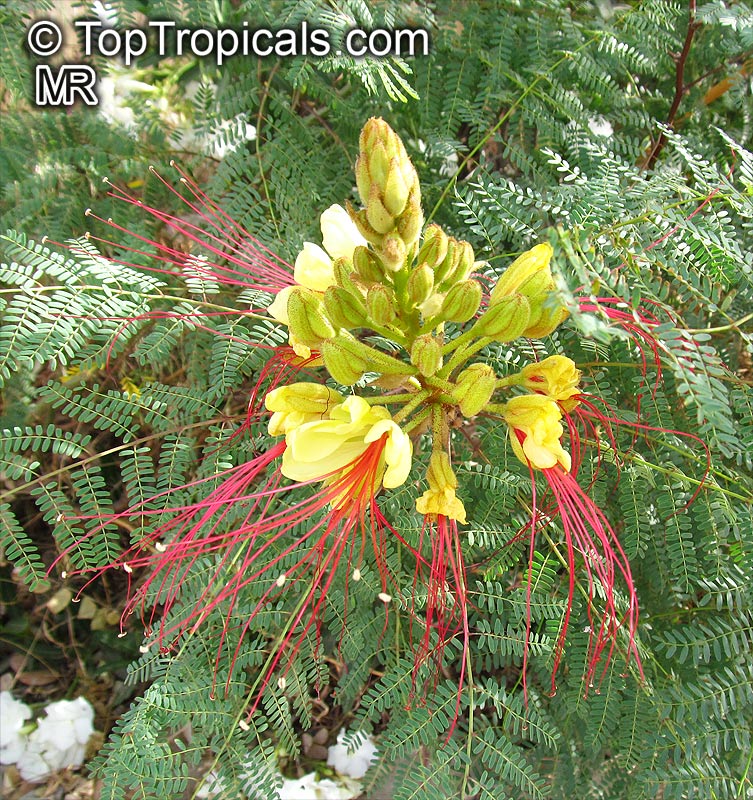
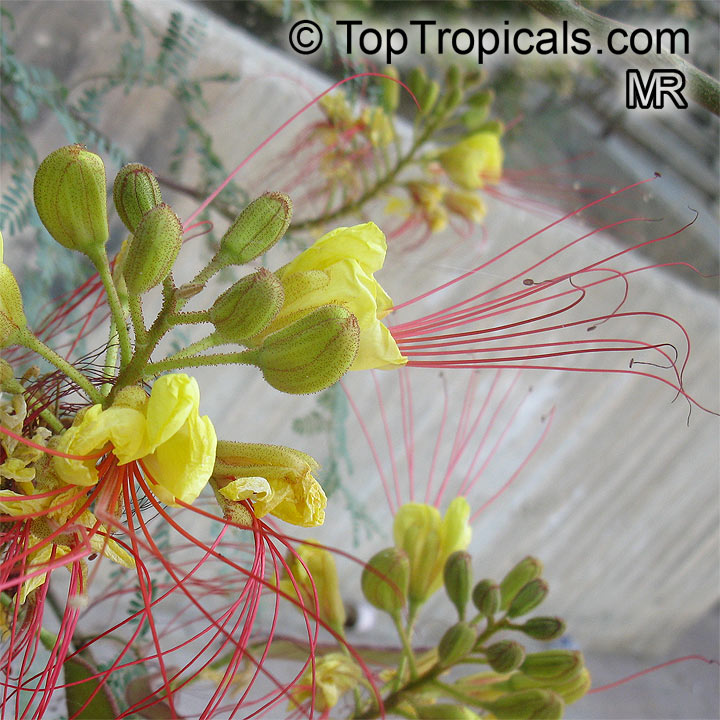
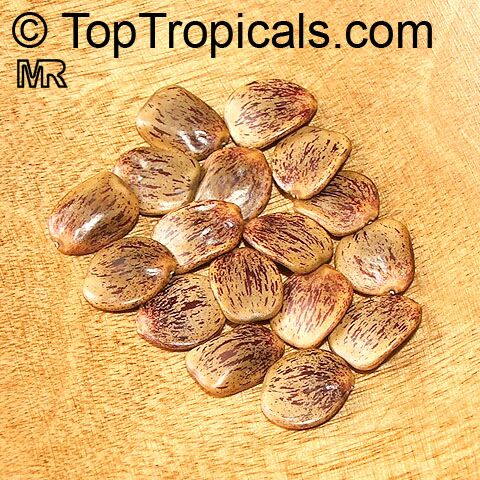
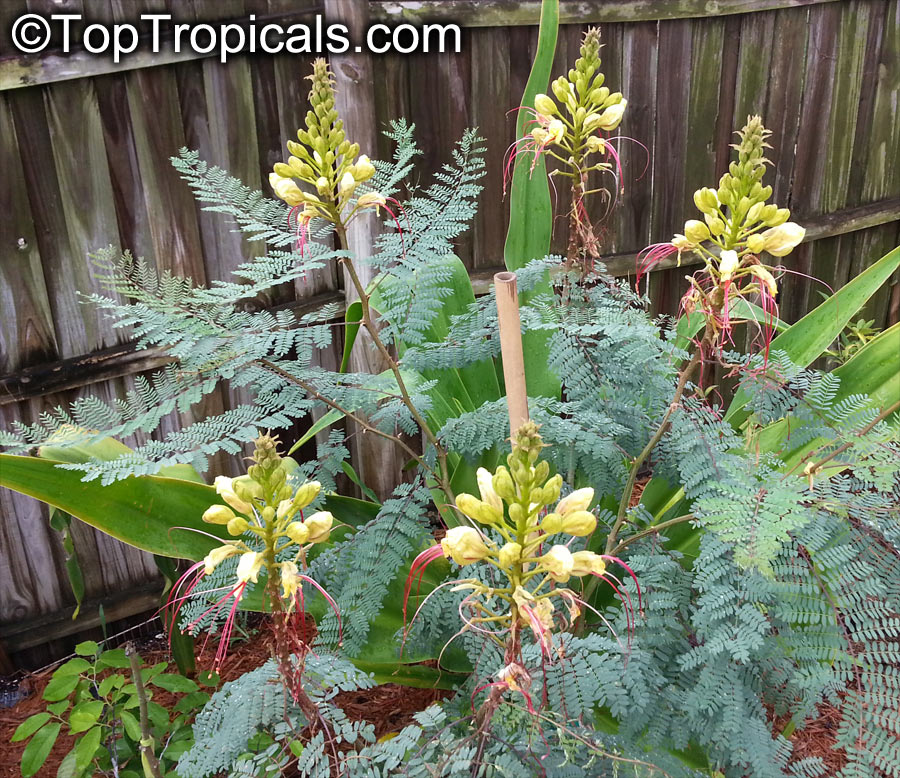
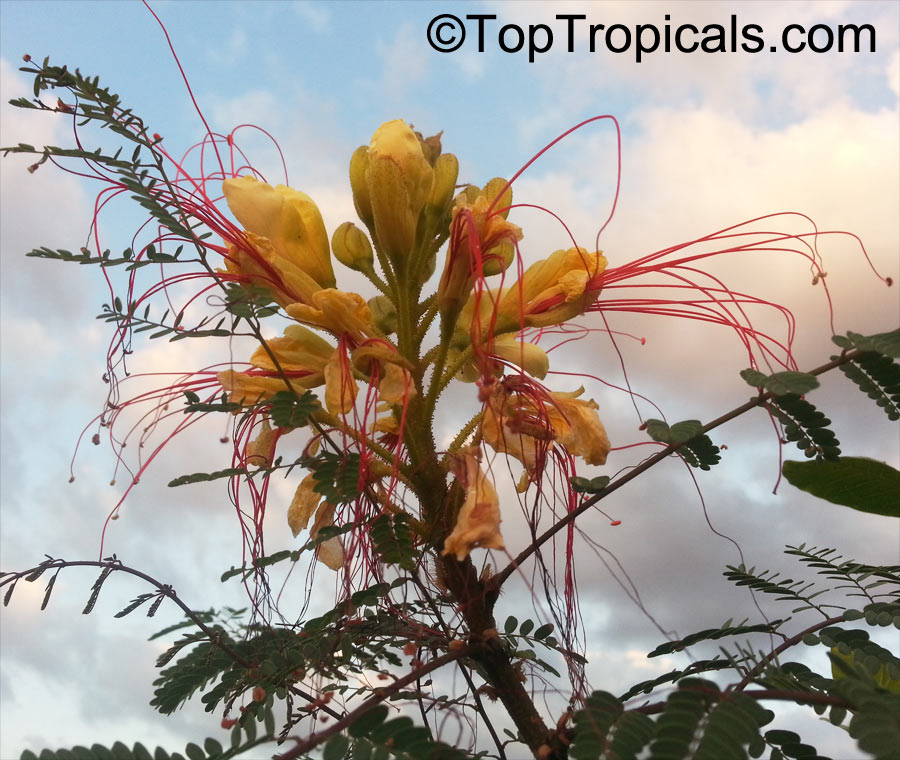
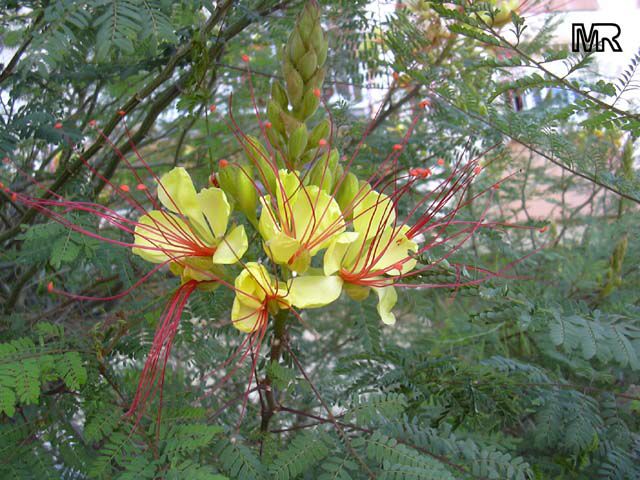
Open, irregular-branched plant with fine bipinnate foliage and showy yellow flowers with long red stamens through most of the warm season. Seeds are toxic. Very xeric, need low water, full sun, well drained soil. Can be trained to small tree. Deciduous, may be evergreen in warmer areas. Size: 5-10ft, spread 4-6ft; rapid growth. Leaves: bipinnate, 3-5in long, finely cut ferny appearance. Flowers: on branch terminals, informal racine of solid yellow flowers with long red stamens; bloom mainly in spring and early summer, then sporadically. Fruit: tan fuzzy pod, dehiscent, curled, persistent on branches unless removed.
Similar plants: Erythrostemon gilliesii (Yellow Bird of Paradise)
- Erythrostemon palmeri (Margarita)
- Caesalpinia bonduc (Grey Nicker)
- Caesalpinia cassioides (Flying Fish Flower)
- Caesalpinia coriaria (Diva-Diva)
- Caesalpinia ferrea (Brazilian Ironwood)
- Caesalpinia mexicana (Mexican Bird of Paradise)
- Caesalpinia pulcherrima 'Compton' (Pride of Barbados)
- Caesalpinia pulcherrima 'Lutea' (Yellow Peacock Flower)
- Caesalpinia pulcherrima (Peacock Flower)
- Caesalpinia pulcherrima 'Mexican Flame' (Mexican Peacock flower)