Plumbago indica (Rose-colored Lead-wort)
Botanical names: Plumbago indica, Plumbago Rosea
Common names: Rose-colored Lead-wort, Chitrakmool, Chekkikotuveri, Chitraka, Shitrapuni, Scarlett Leadwort, Whorled plantain
Family: Plumbaginaceae
Origin: India

USDA Zone: 10-11
 Plant form: Small
 Mature height: 2-5 ft

 Sun exposure: Full sun or bright light indoor; semi-shade
 Cold tolerance: Frost sensitive. Protect from freezing.
 Watering: Regular
 Flower color: Red, crimson, vinous
 Suitable for: Outdoors in the suitable USDA zone; small gardens, containers, and indoor growing
 Irritating or toxic: Irritating
 Wildlife: Attracts butterflies and hummingbirds
 Ethnomedical: Ethnomedical plant, traditionally used in folk or indigenous medicine
Plumbago indica (syn. Plumbago rosea), commonly known as Scarlet Leadwort, Red Plumbago, or Rakta Chitraka, is a tropical flowering shrub prized for its brilliant scarlet-red flowers and graceful growth habit. Native to tropical Asia, it belongs to the Plumbaginaceae family.
Unlike the familiar Blue and White Plumbago (P. auriculata), which produce rounded flower clusters, Scarlet Plumbago develops long, slender racemes carrying vivid red, five-petaled flowers. Its arching branches create a spectacular fountain-like display, especially during the cooler flowering season in tropical climates.
Growth habit: A relatively compact, somewhat scrambling shrub with slender stems and attractive green leaves. Excellent for small gardens and container culture.
Light: Bright partial shade, preferably protected from intense afternoon sun in hot climates.
Soil and water: Fertile, well-drained soil with regular moisture. Avoid waterlogging.
Temperature: Highly sensitive to cold. Best suited to frost-free USDA zones 10 11. Container plants should be moved indoors before cold weather.
Flowering: In favorable tropical conditions, flowering can extend through autumn and winter.
Cultural significance: Known in India as Rakta Chitraka (Red Chitrak), the plant has a long history in Ayurvedic medicine. Traditional Sanskrit names associated with fire reflect the irritating properties of its roots, which contain plumbagin.
Caution: The plant contains potentially toxic compounds and should not be used for homemade medicinal preparations.
With its compact size, spectacular flowers, and unusual cultural history, Scarlet Plumbago is a fascinating addition to tropical plant collections.
A pretty subscandent perennial shrub with semi-woody striate stems and flexible branches; leaves simple, alternate, oblong, short-cuneate at the base passing into a very short amplexicaul, exauriculate, reddish periole; flowers bright red, in long terminal spikes. Root contains Plumbagin, sitosteraol glocoside. Root is said to increase the digestive power and promote appetite.
Learn more about Plumbago: Sky Blue Plumbago in Southern Landscapes.
Similar plants: Plumbago indica (Rose-colored Lead-wort)


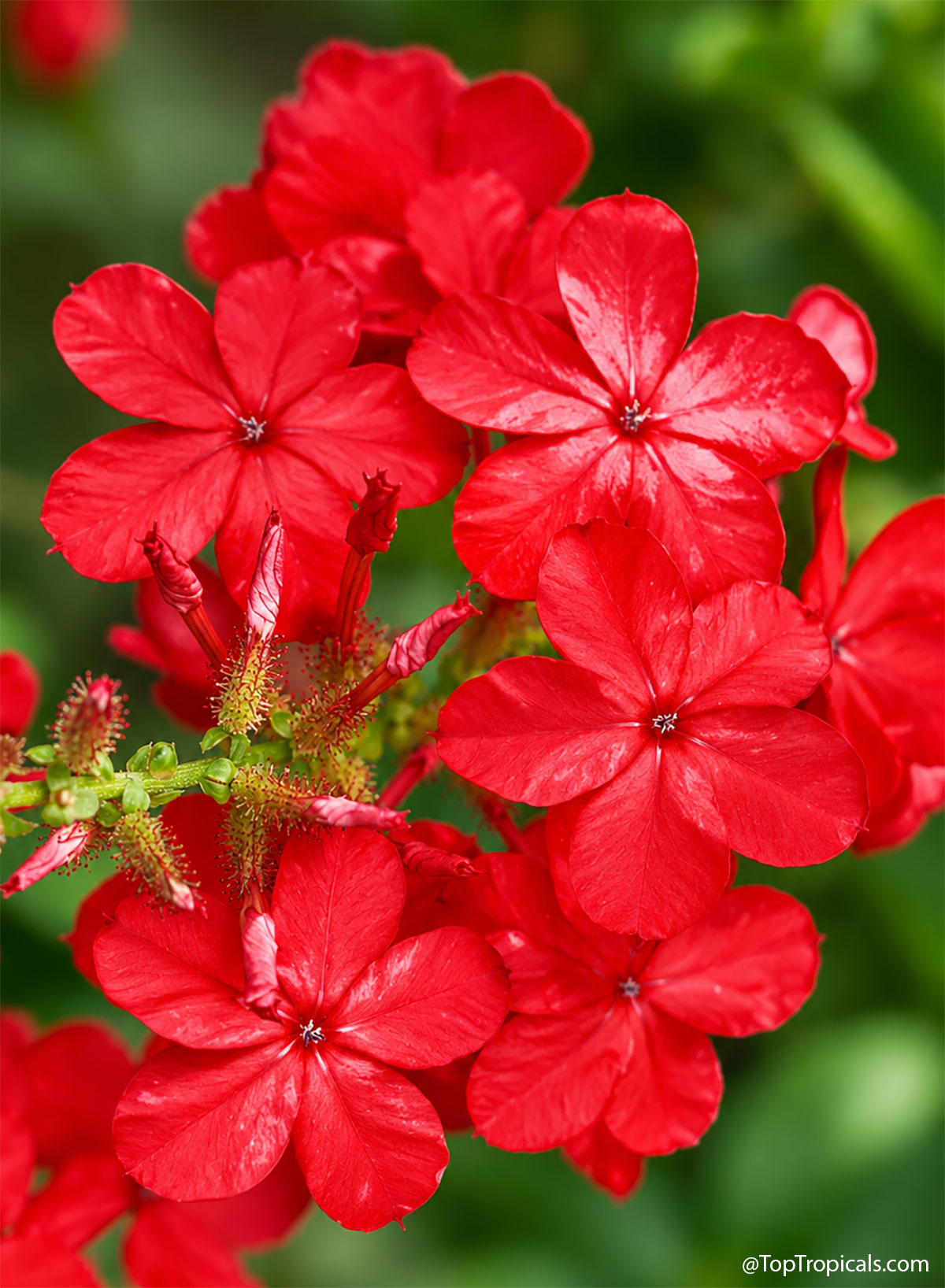

Unlike its sprawling blue and white relatives, this Plumbago has a relatively compact growth habit, making it perfect for containers, patios, balconies, and small tropical gardens.
It thrives in warm conditions with bright partial shade, regular moisture, and well-drained soil. Highly cold-sensitive, it is best grown in frost-free climates or kept in a container and brought indoors during winter.
Known in India as Rakta Chitraka (Red Chitrak), this remarkable plant has a centuries-old history in traditional Ayurvedic medicine. Its Sanskrit names evoke fire, a fitting description of its dazzling scarlet flowers.
A rare, eye-catching tropical treasure that's well worth a little extra care. Perfect for shade garden that needs some color, and for container and indoor culture.
Recommended Fertilizer: SUNSHINE Megaflor - Bloom Nutrition Booster