Feijoa sellowiana, Acca sellowiana
Feijoa, Pineapple Guava, GuavasteenFamily: Myrtaceae
Origin: Brazil, Argentina, Paraguay and Uruguay


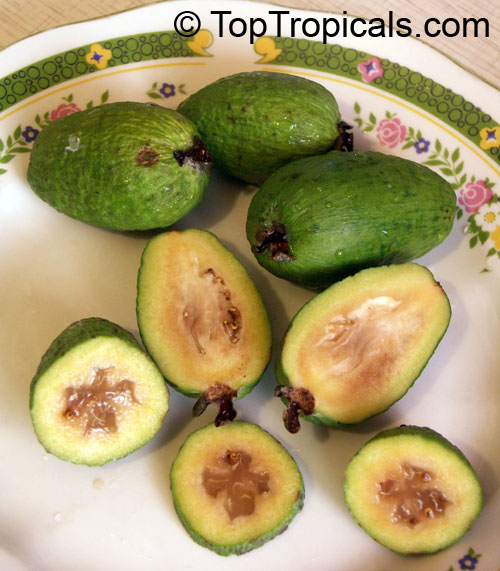
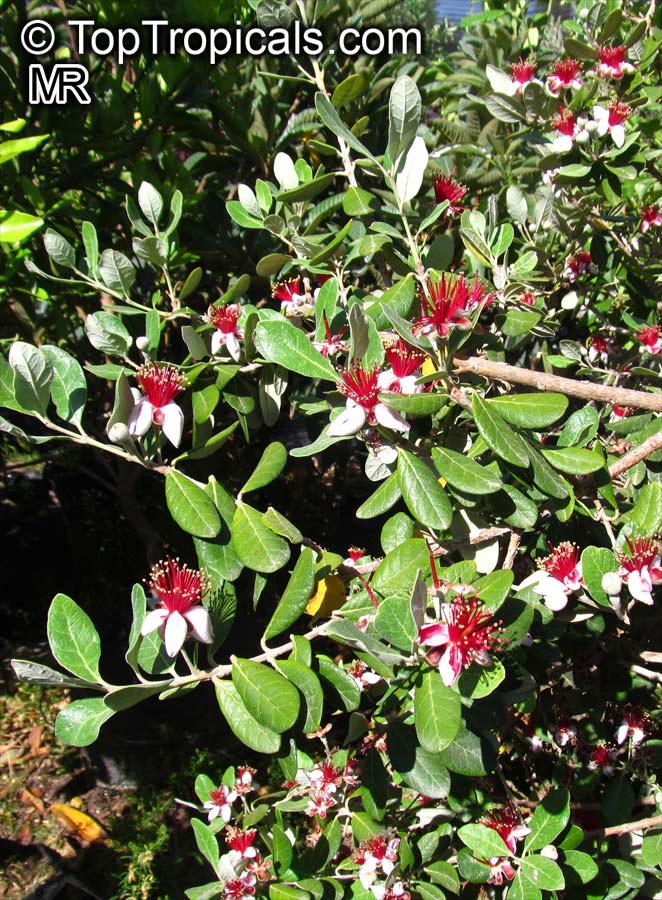
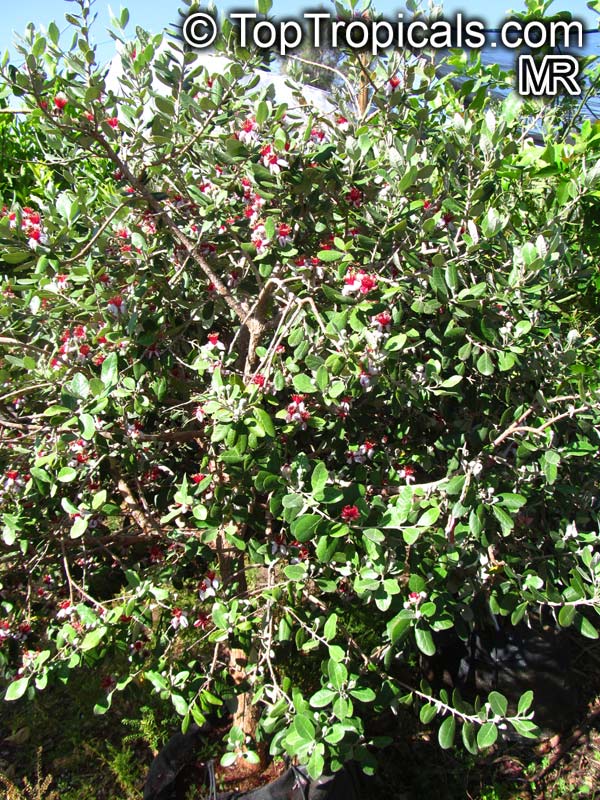
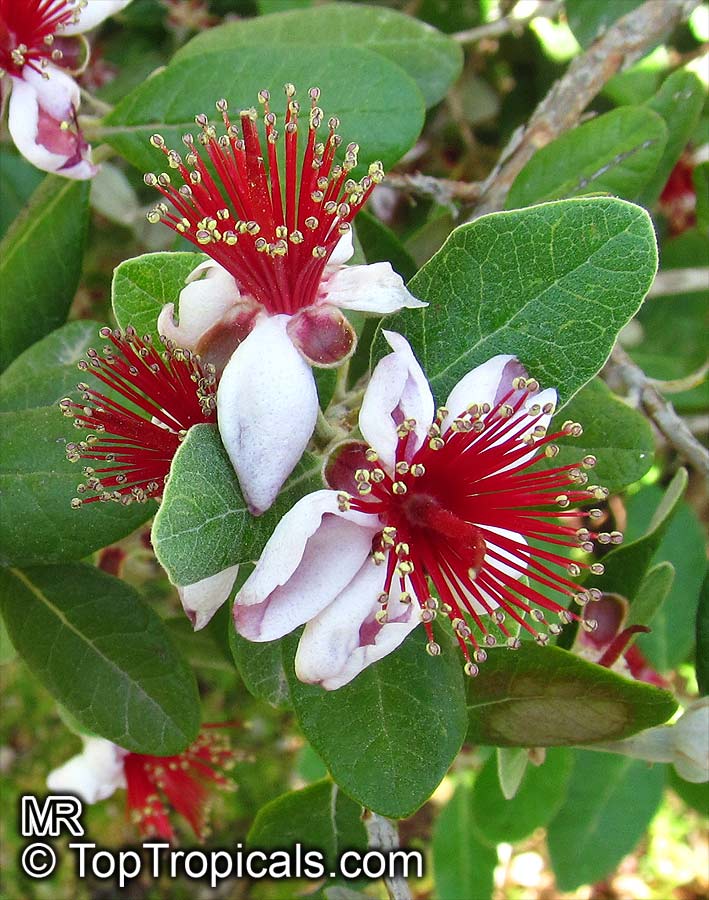
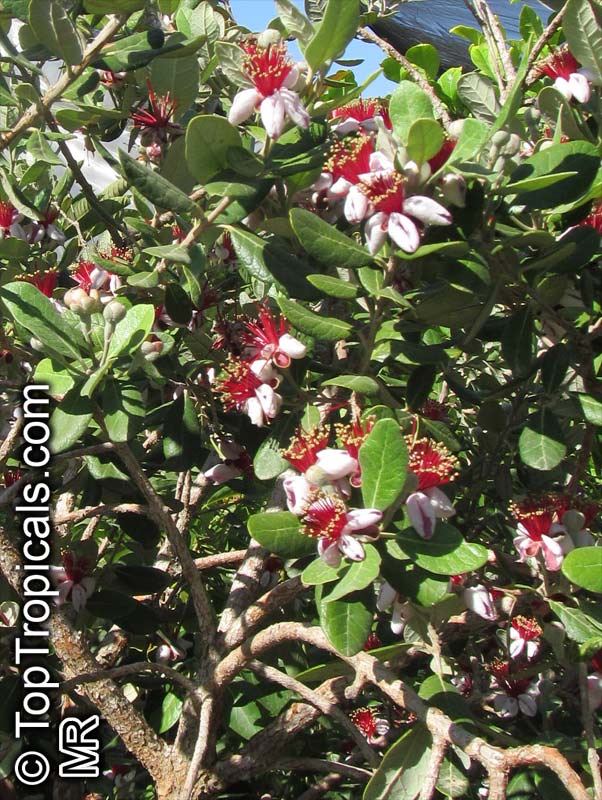
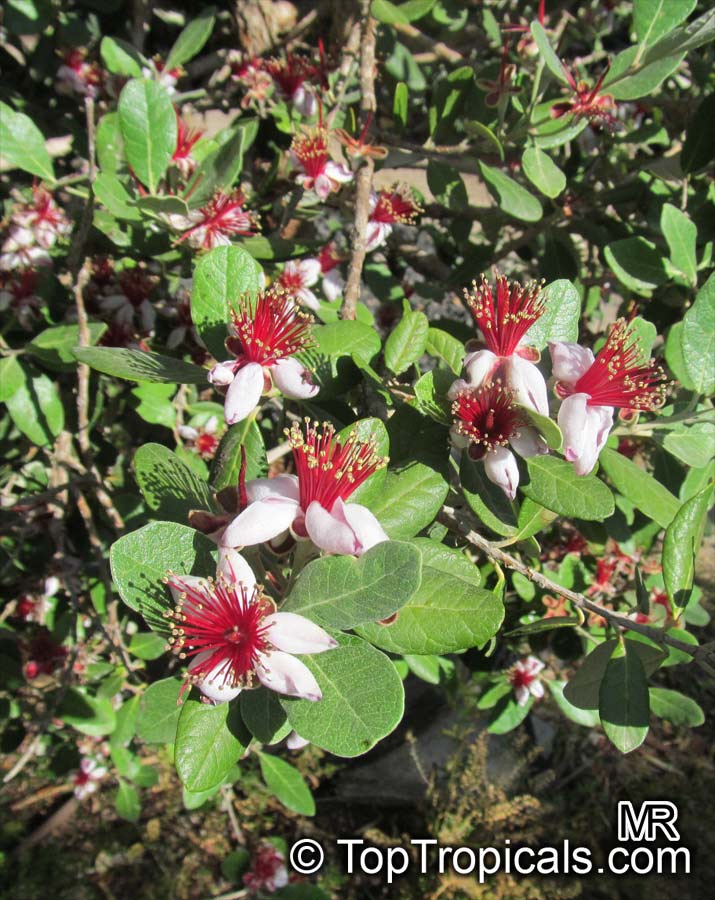
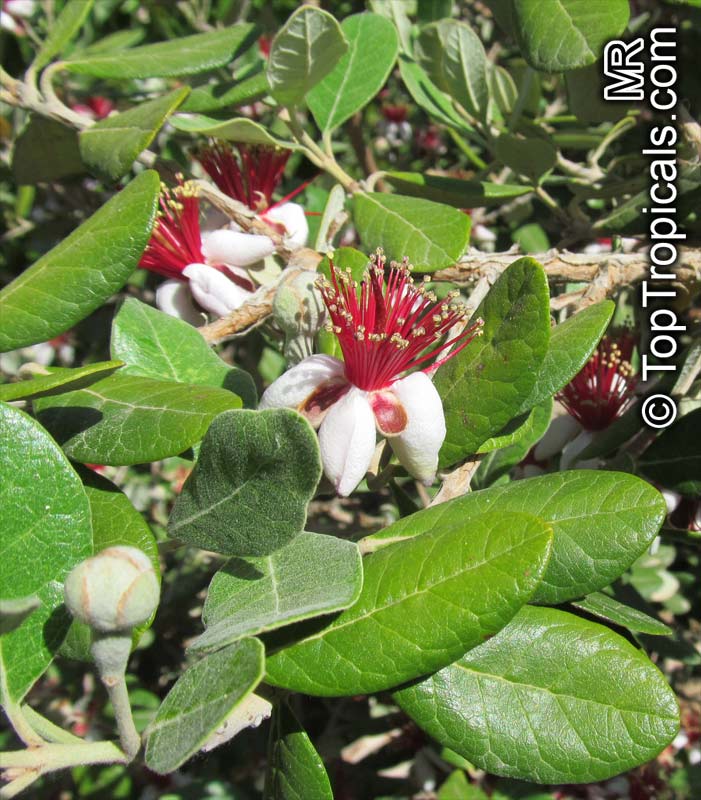
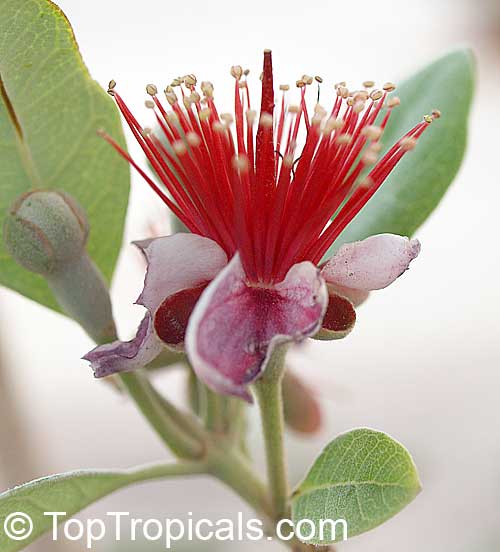
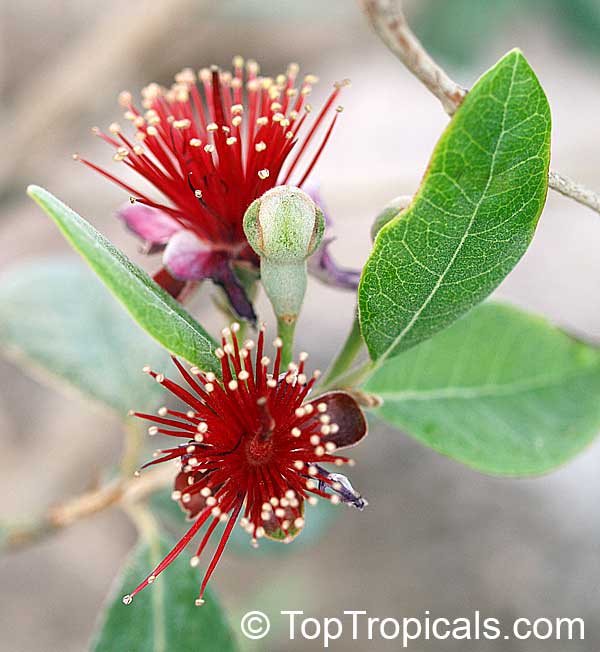
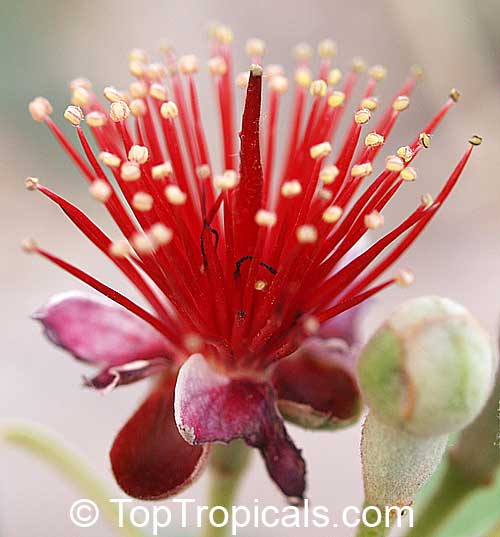
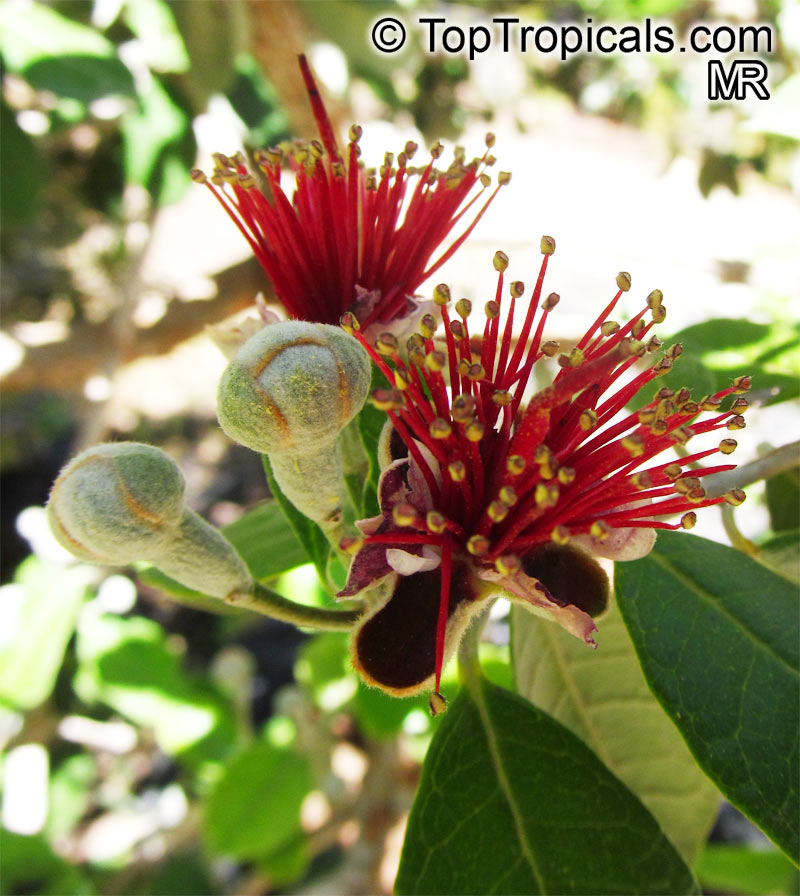
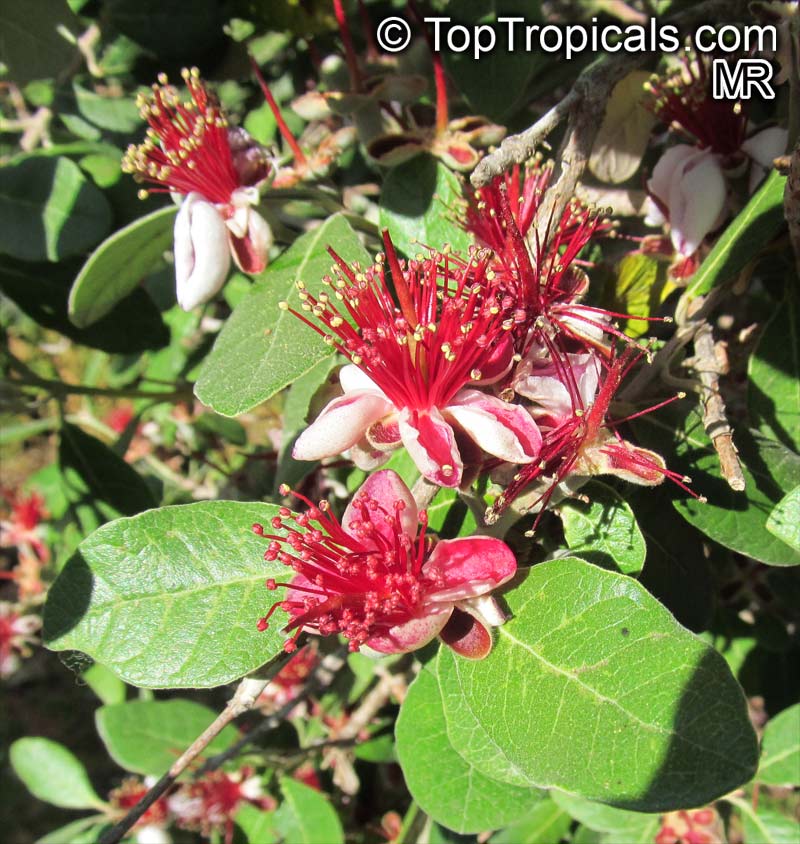
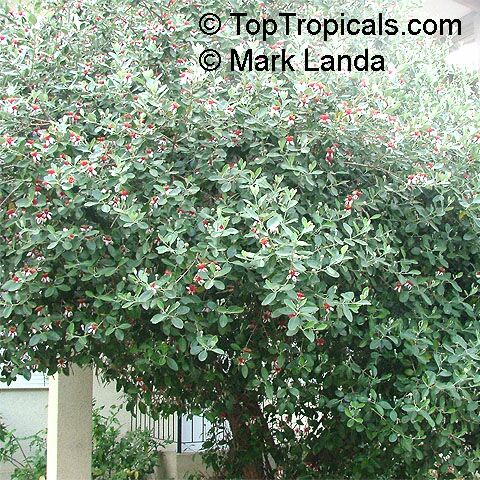
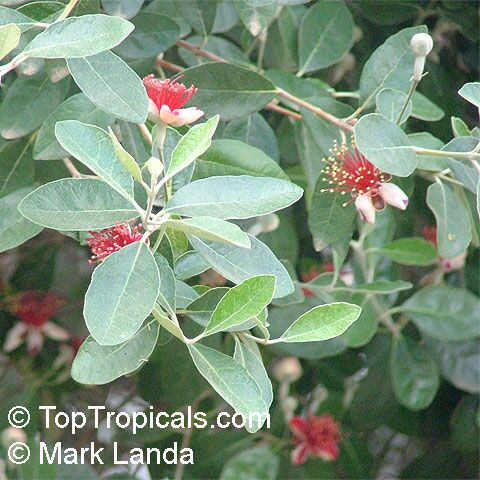
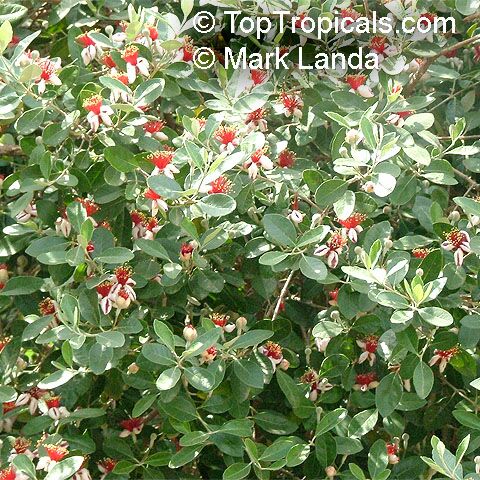
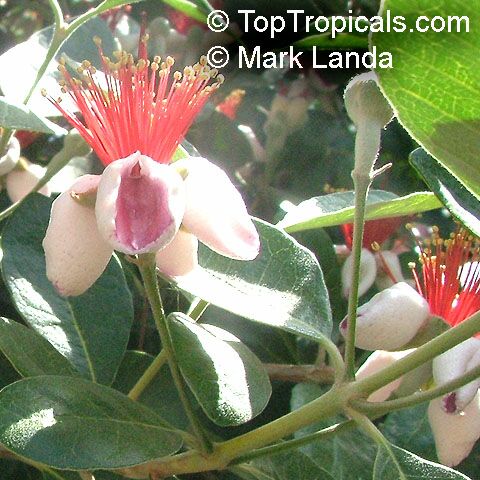
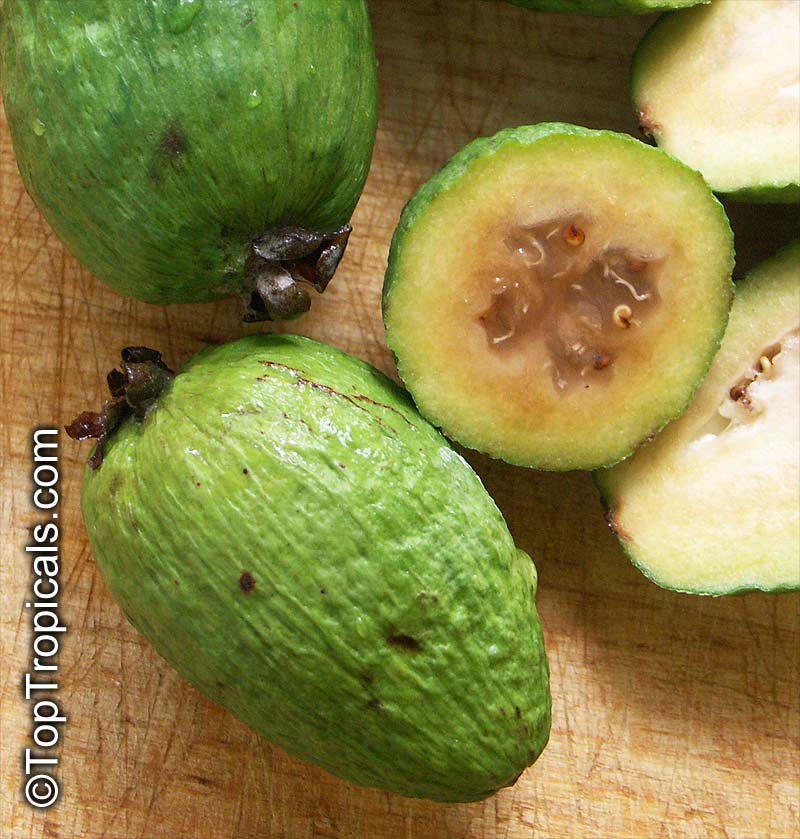
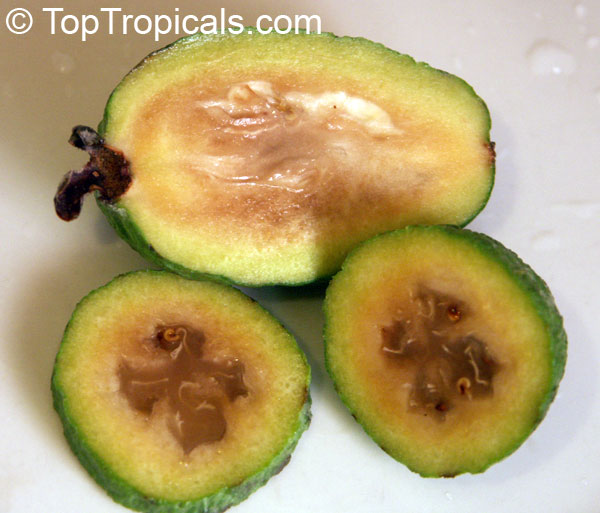
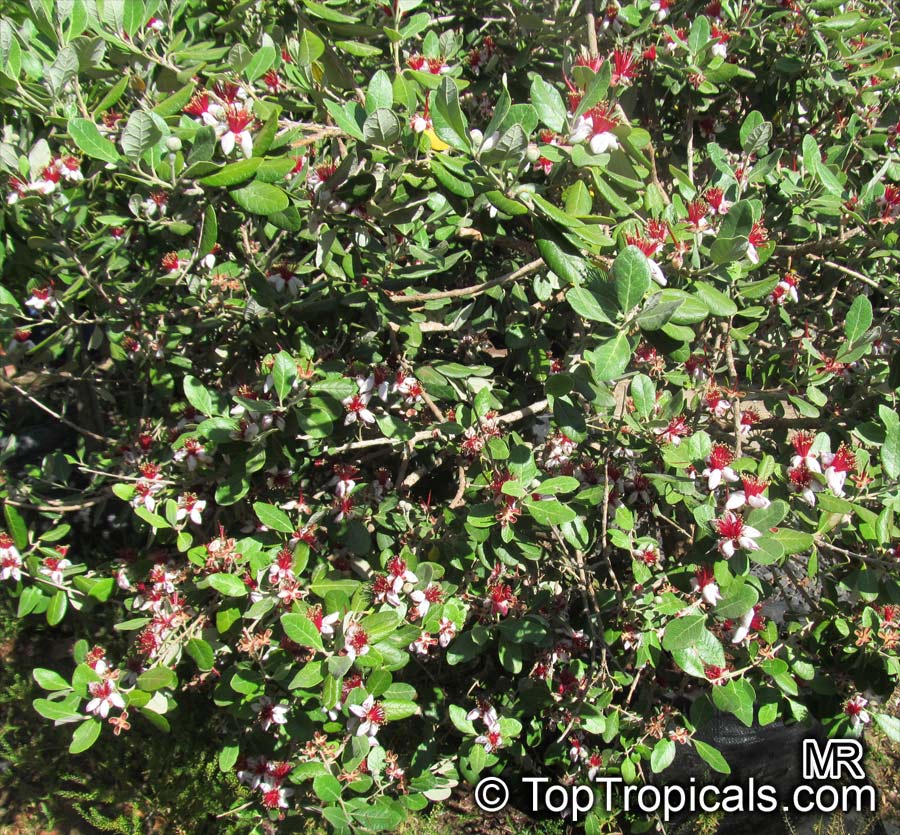
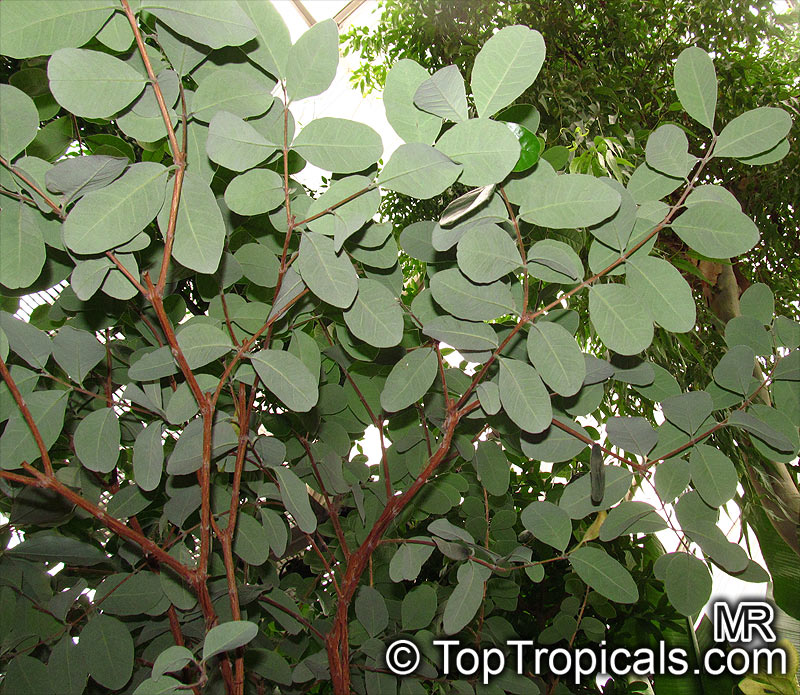
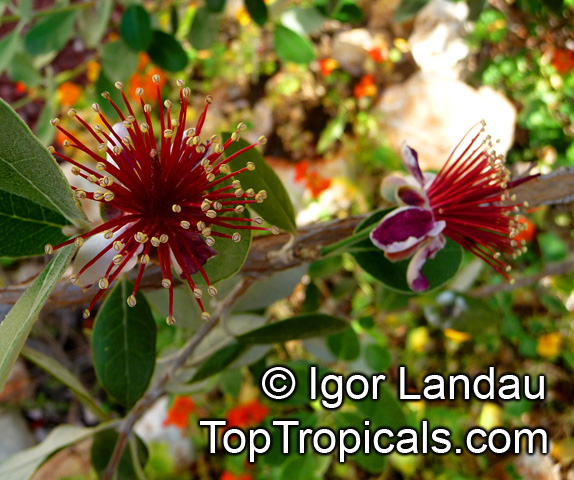
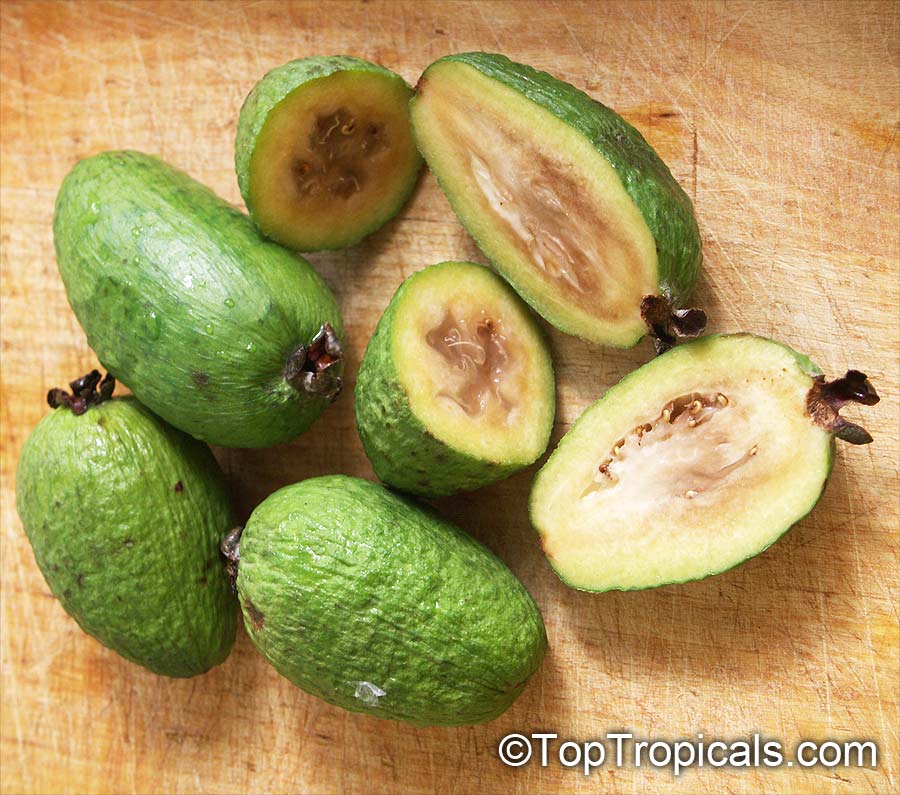
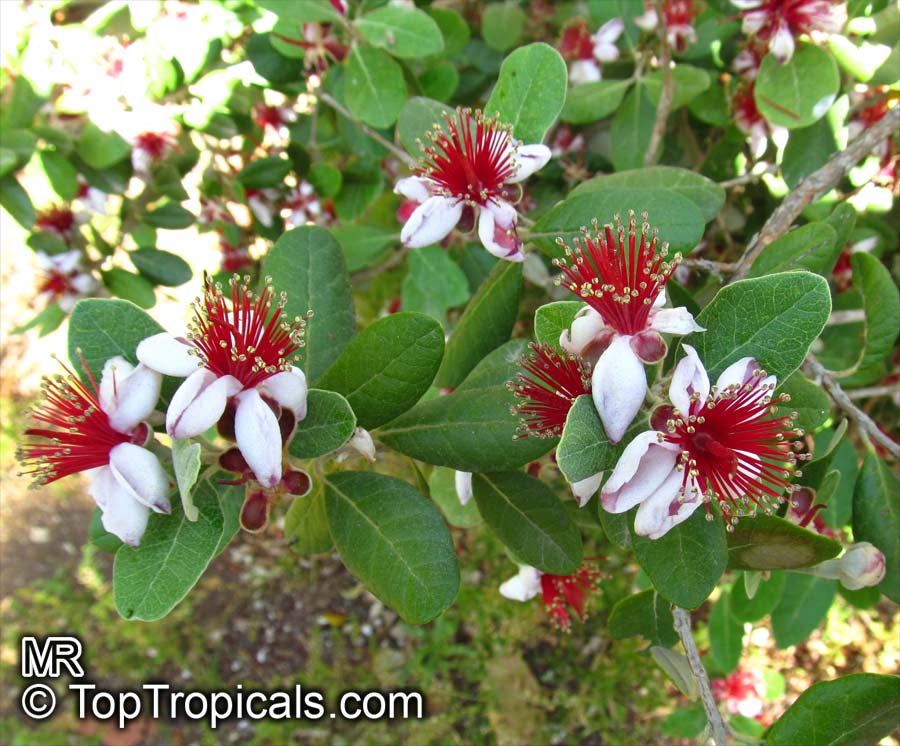
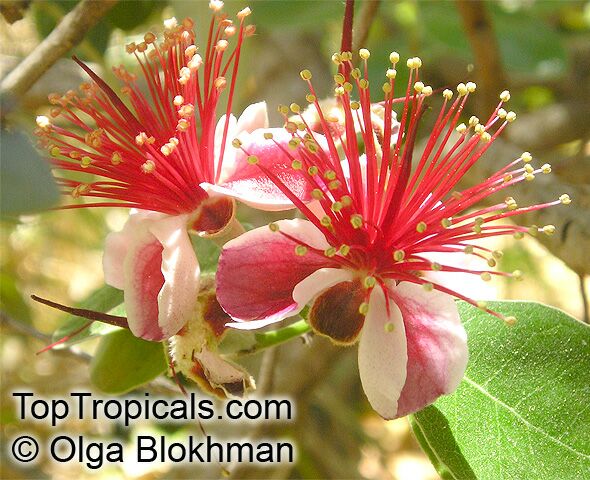
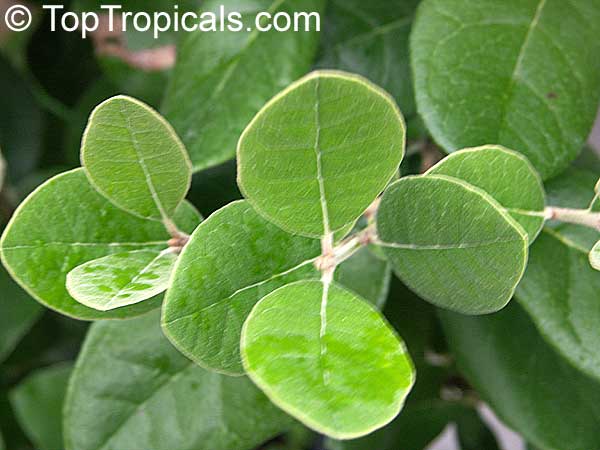
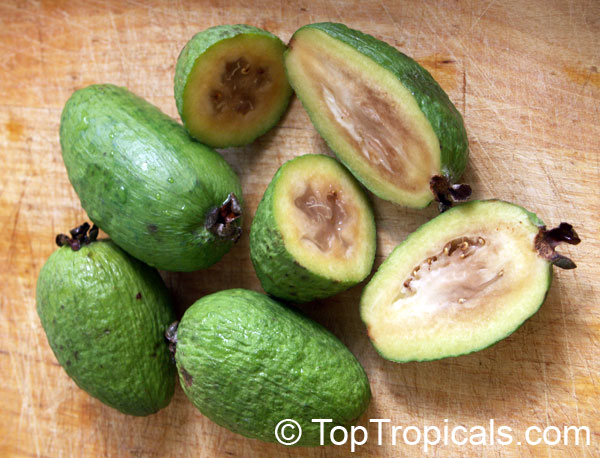
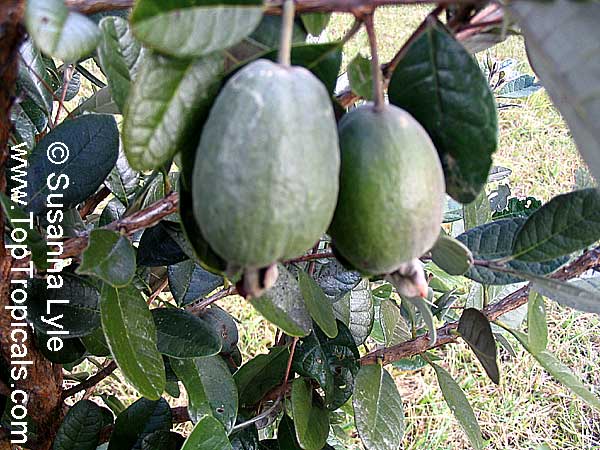
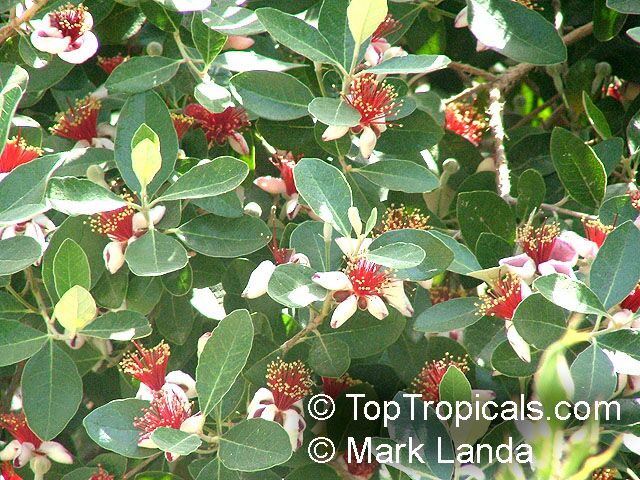
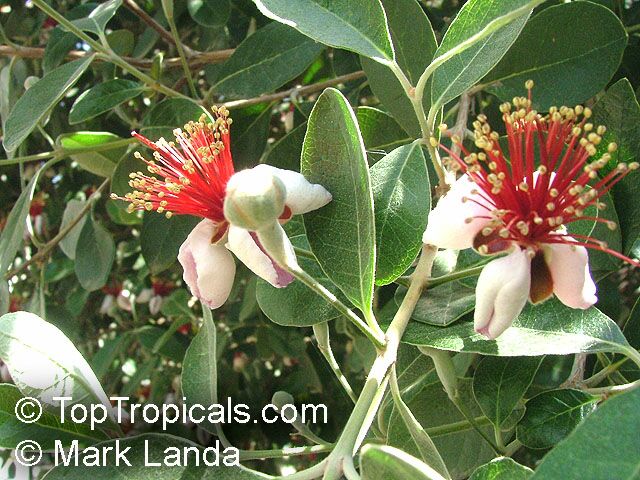
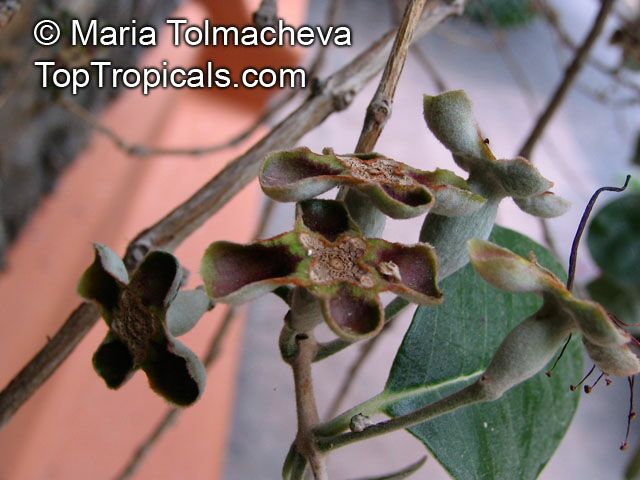
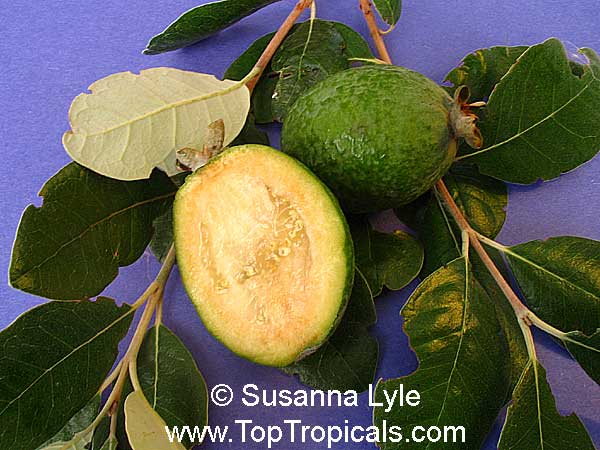
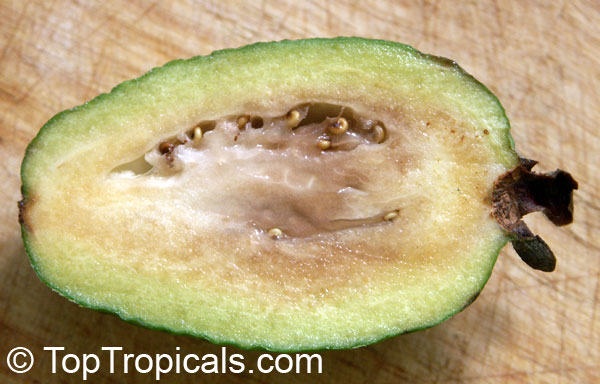
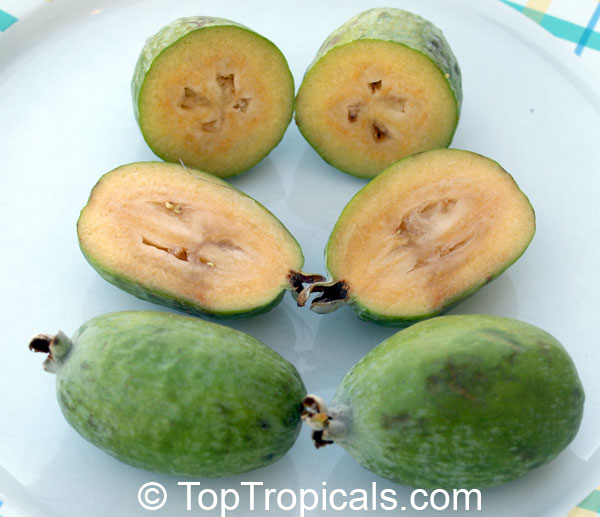
If you're looking for an attractive shrub with beautiful flowers and delicious fruit, you might try the Feijoa - a slow-growing evergreen shrub that can reach 15 ft high and 15 ft wide. In addition to the fruit it provides, the shrub also valued as a landscape specimen. The stiff shiny green leaves are lighter underneath and very showy flowers are produced from from April through June. They have long, scarlet stamens topped with large grains of yellow pollen. Petals are white tinged with purple on the inside, they are mildly sweet and edible and can make a refreshing addition to spring salads. Birds eating the petals pollinate the flowers along with bees - the chief pollinators. Once pollinated, fruits develop quickly. They range from 1 to 3 inches long and vary in shape from round to elongated pear shape. The waxy skin is dull blue-green, sometimes with a red or orange blush. The fruit emits a strong long-lasting perfume, even before it is fully ripe. The thick, white, granular, watery flesh and the translucent central pulp enclosing the seeds are sweet or subacid, suggesting a combination of pineapple and guava or pineapple and strawberry. When mature, the fruit drops from the plant, making harvesting easy if you don't have other plantings beneath these. Usually, the fruit season is August through October. The fruit can be used fresh, but it also makes an excellent jelly; fresh fruit blended with sugar has a ver aromatic wild strawberry flavor. The fruit is occasionally seen in the supermarkets, mainly imported from California, where it is grown commercially.
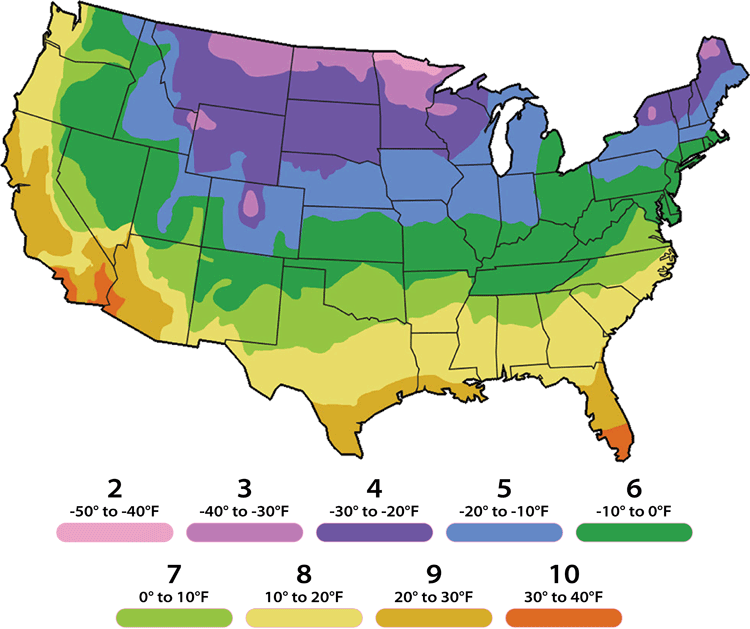
Feijoa prefers cool winters and moderate summers (80 to 90 F), it is cold hardy and will take down to 14 F without serious damage. Flower production is poor in areas with fewer than 50 hours of chilling. The flavor of the fruit is much better in cool than in warm regions. Salt tolerance is very good.
Plants grow well in a wide variety of soil types, but prefer slightly acidic conditions. When planted close together, the Feijoa shrubs make a nice hedge, screen, or windbreak.
See the article about Feijoa sellowiana.

Recommended Fertilizer: SUNSHINE C-Cibus - Crop Nutrition Booster
SUNSHINE-Honey - sugar booster
Ordering seeds info
RECOMMENDED SUPPLIES:
Seed Germination Mix #3, professional grade
SUNSHINE-Epi - Seeds and cuttings booster
SUNSHINE Bombino - Young Plant Booster