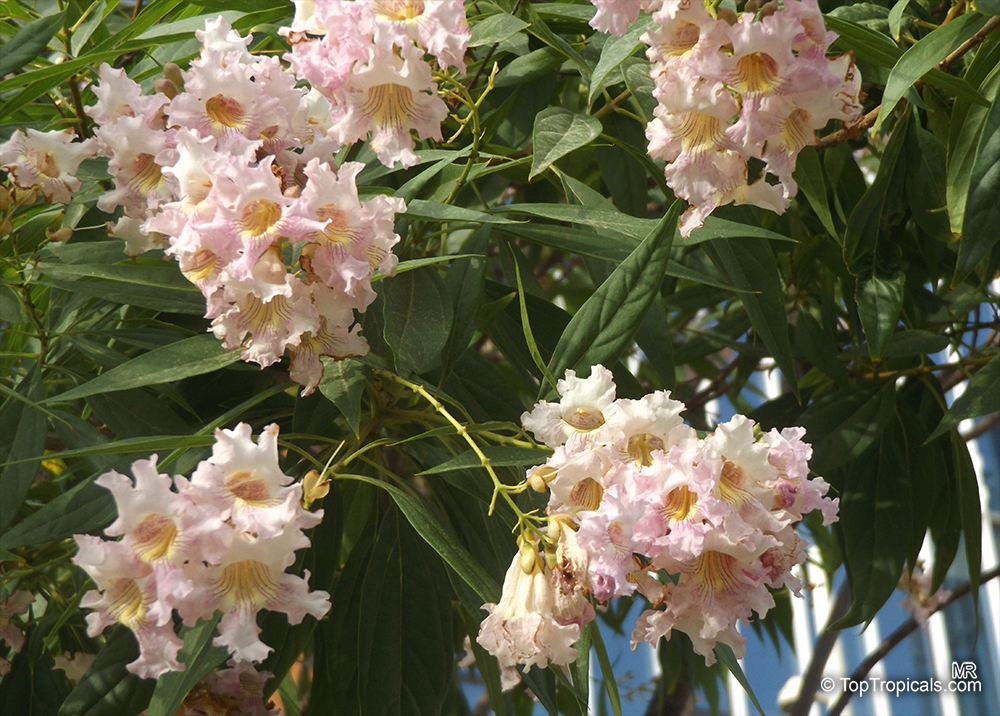
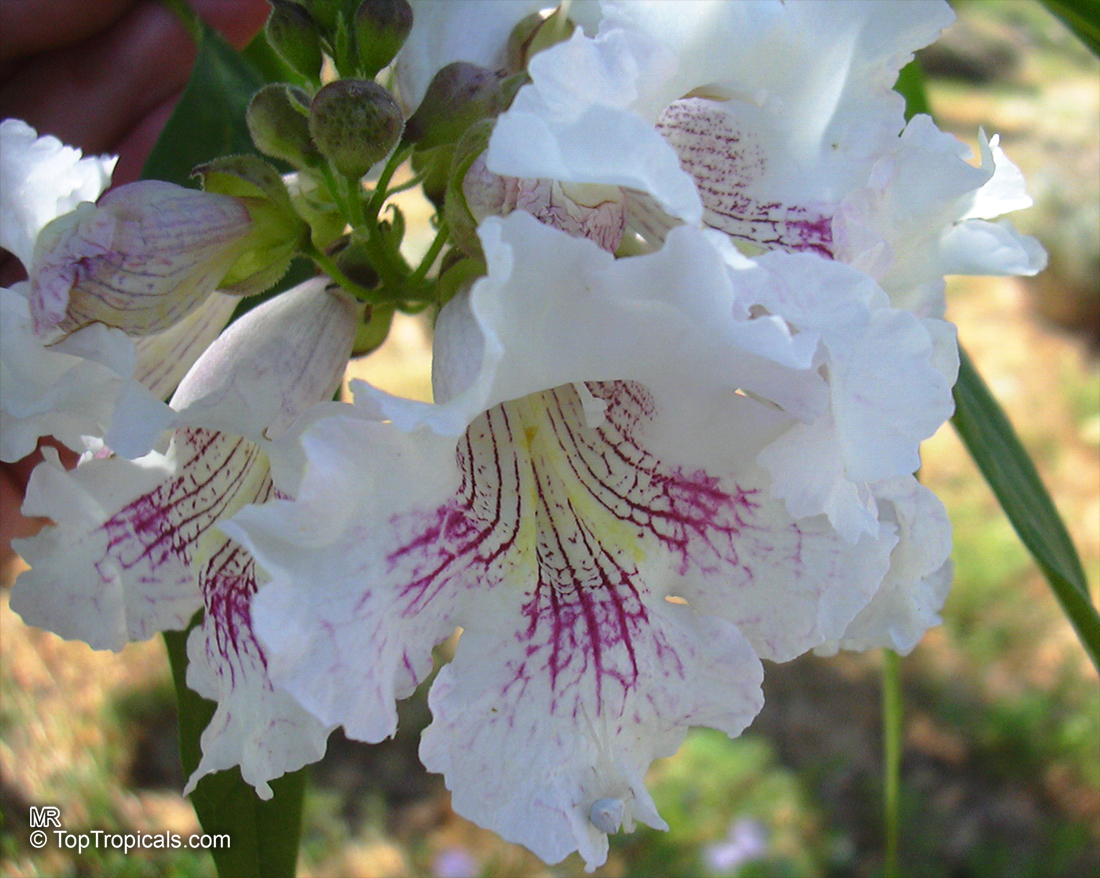
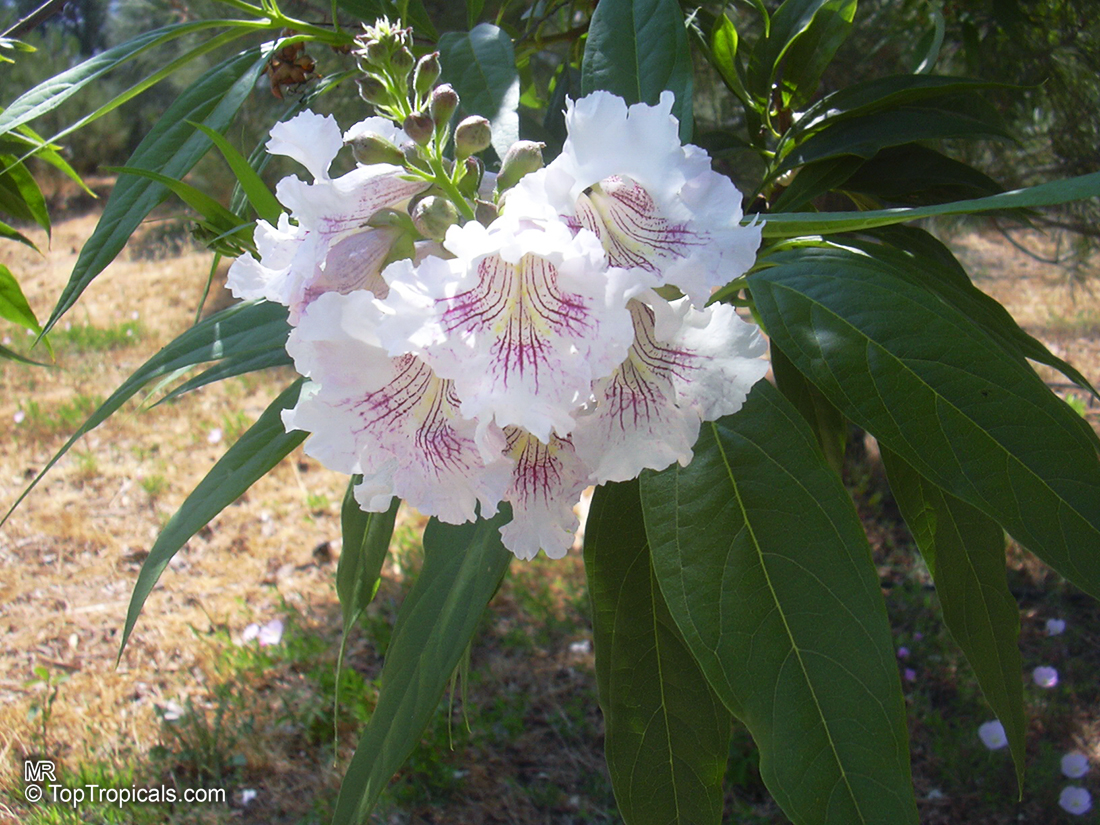
x Chitalpa tashkentensis (Chitalpa)
Botanical name: x Chitalpa tashkentensis
Common name: Chitalpa
Family: Bignoniaceae
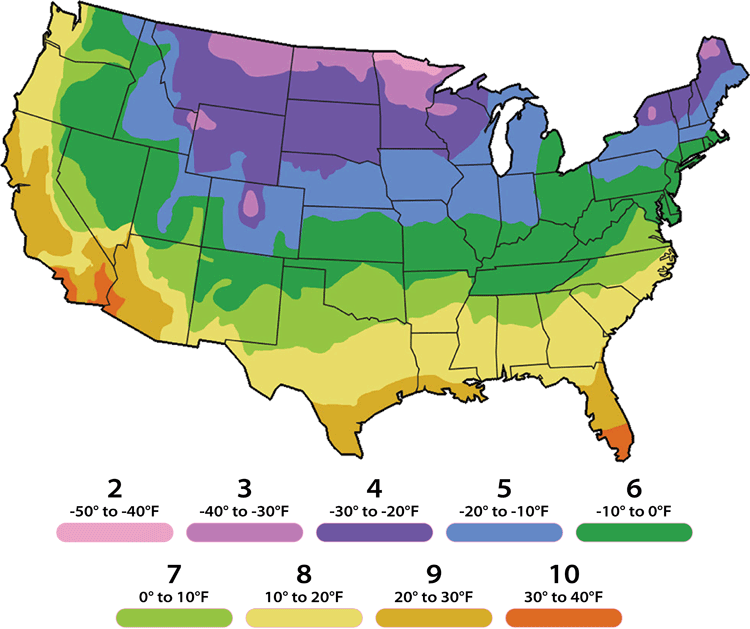
Hardiness: -10°F


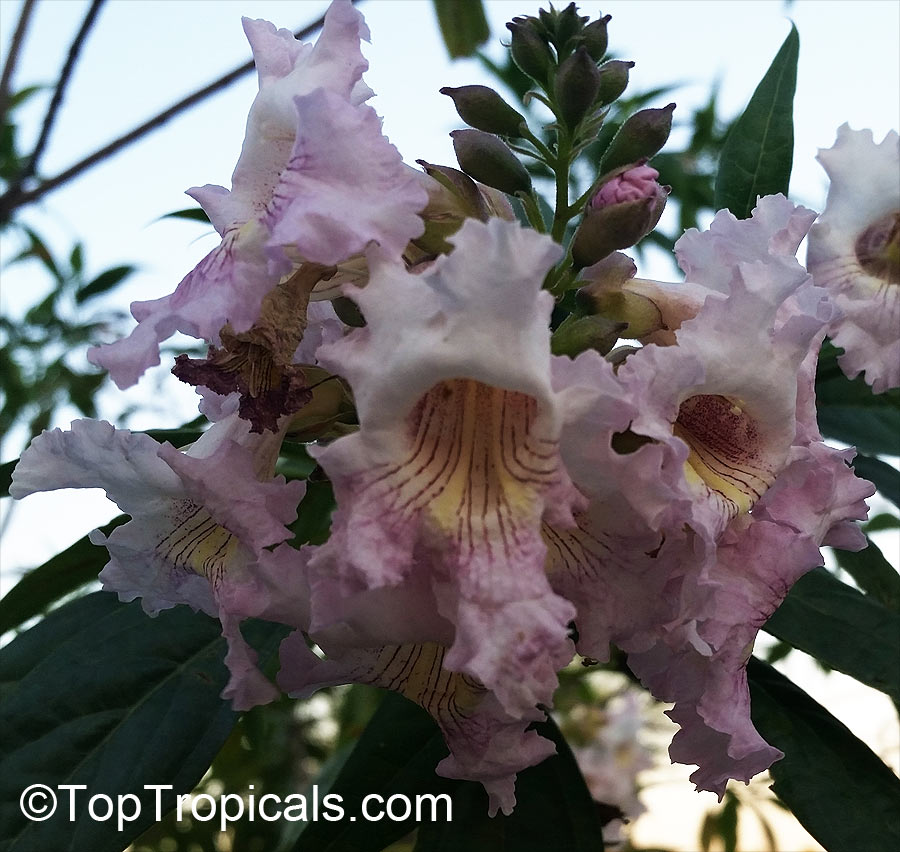
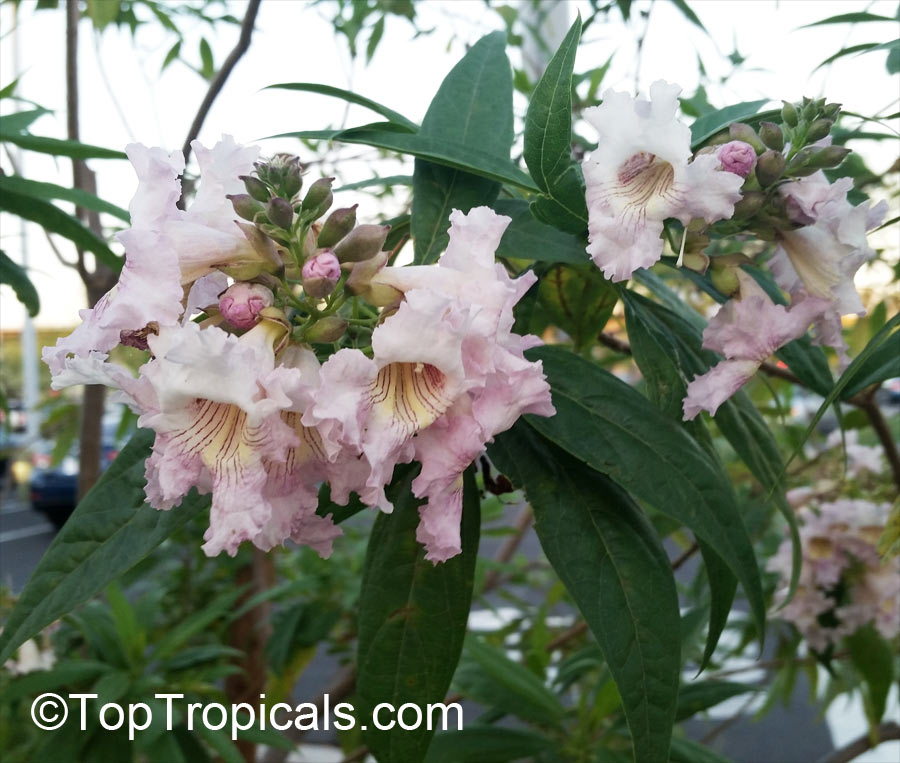
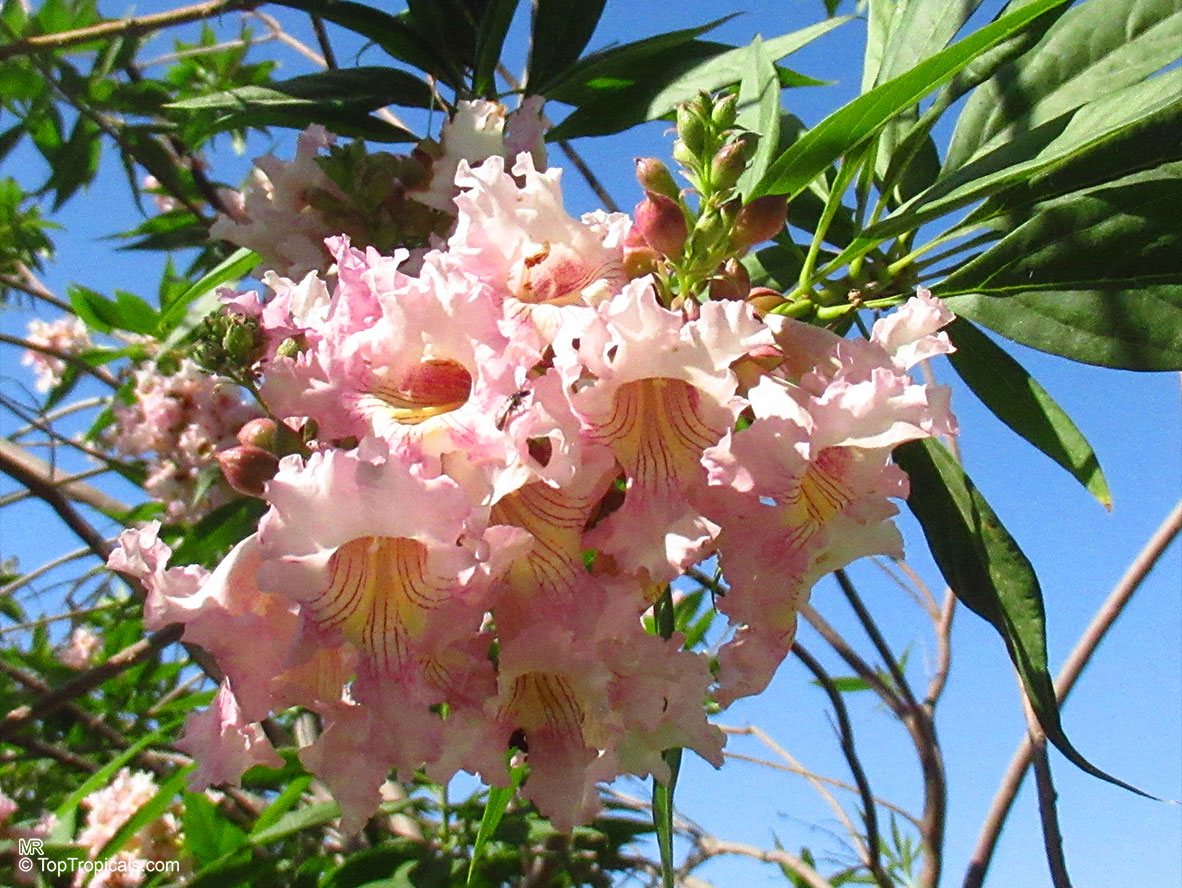
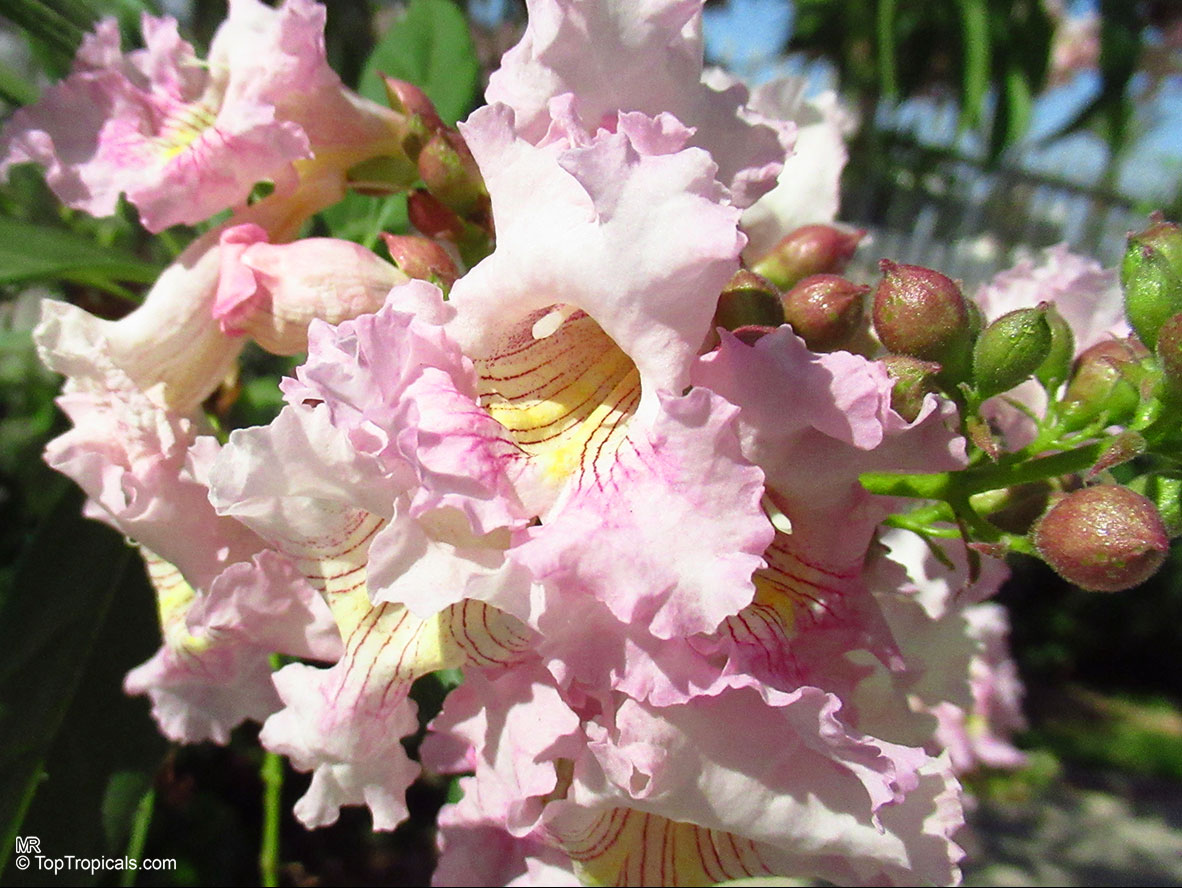
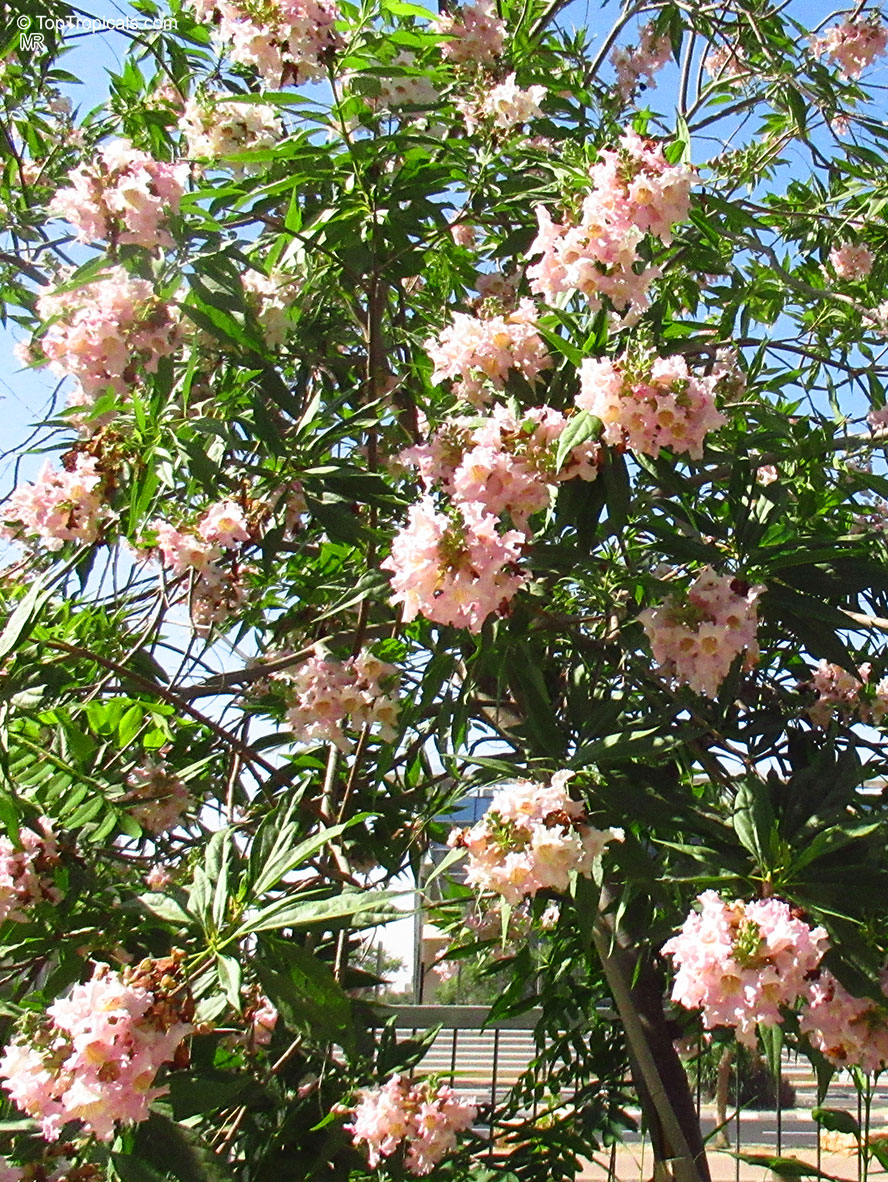
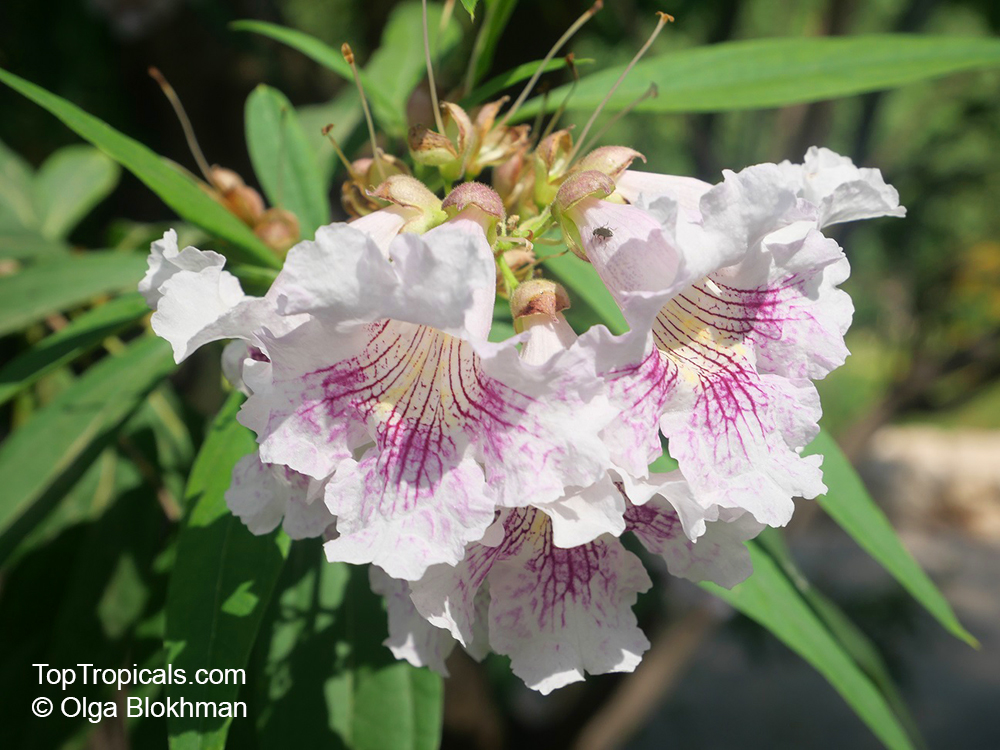
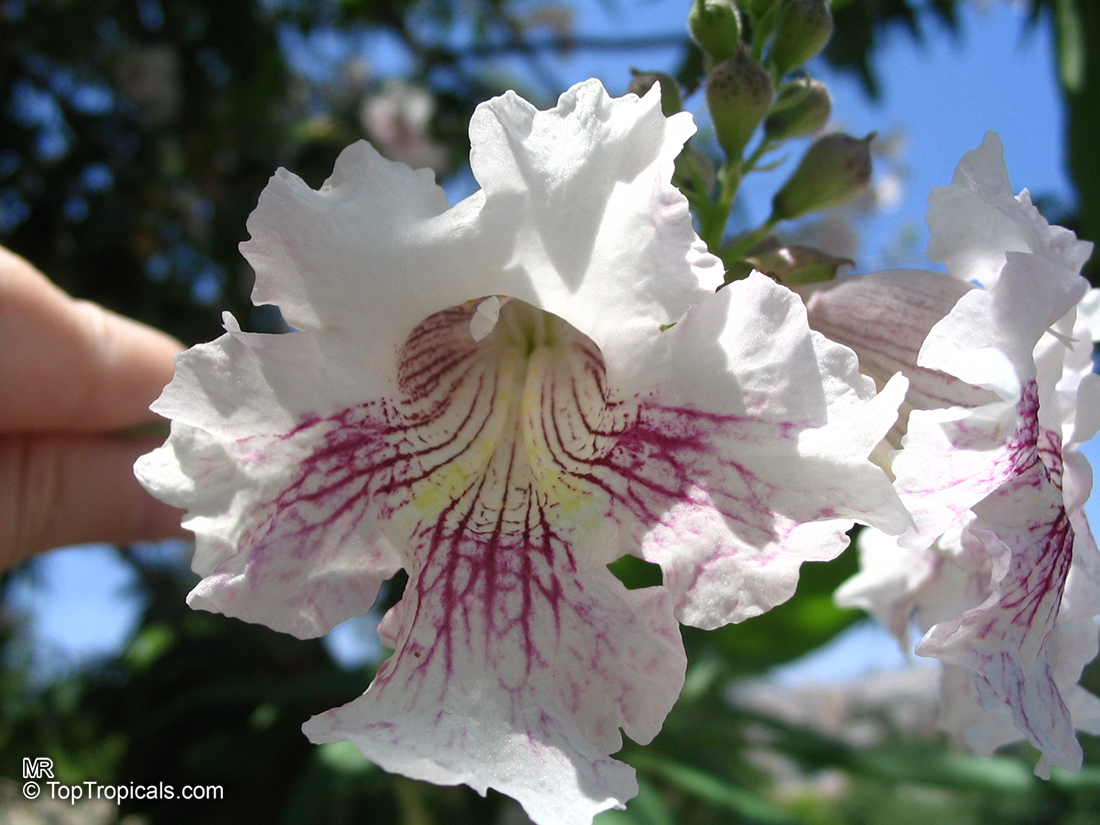
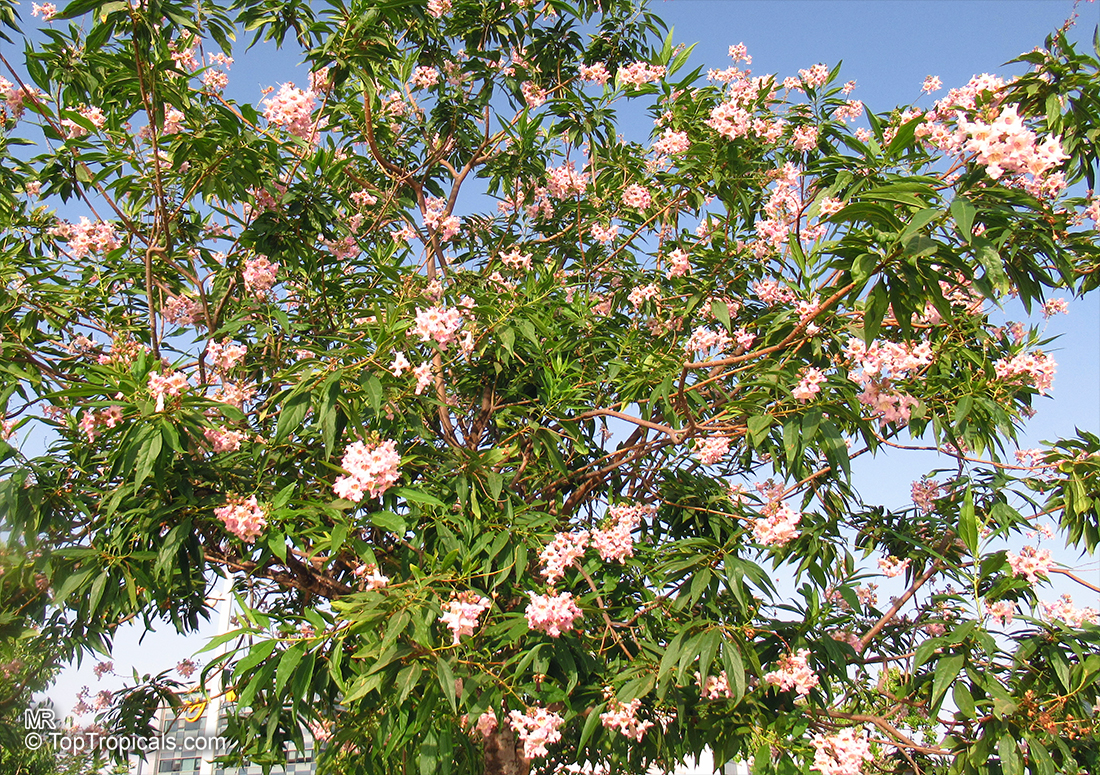
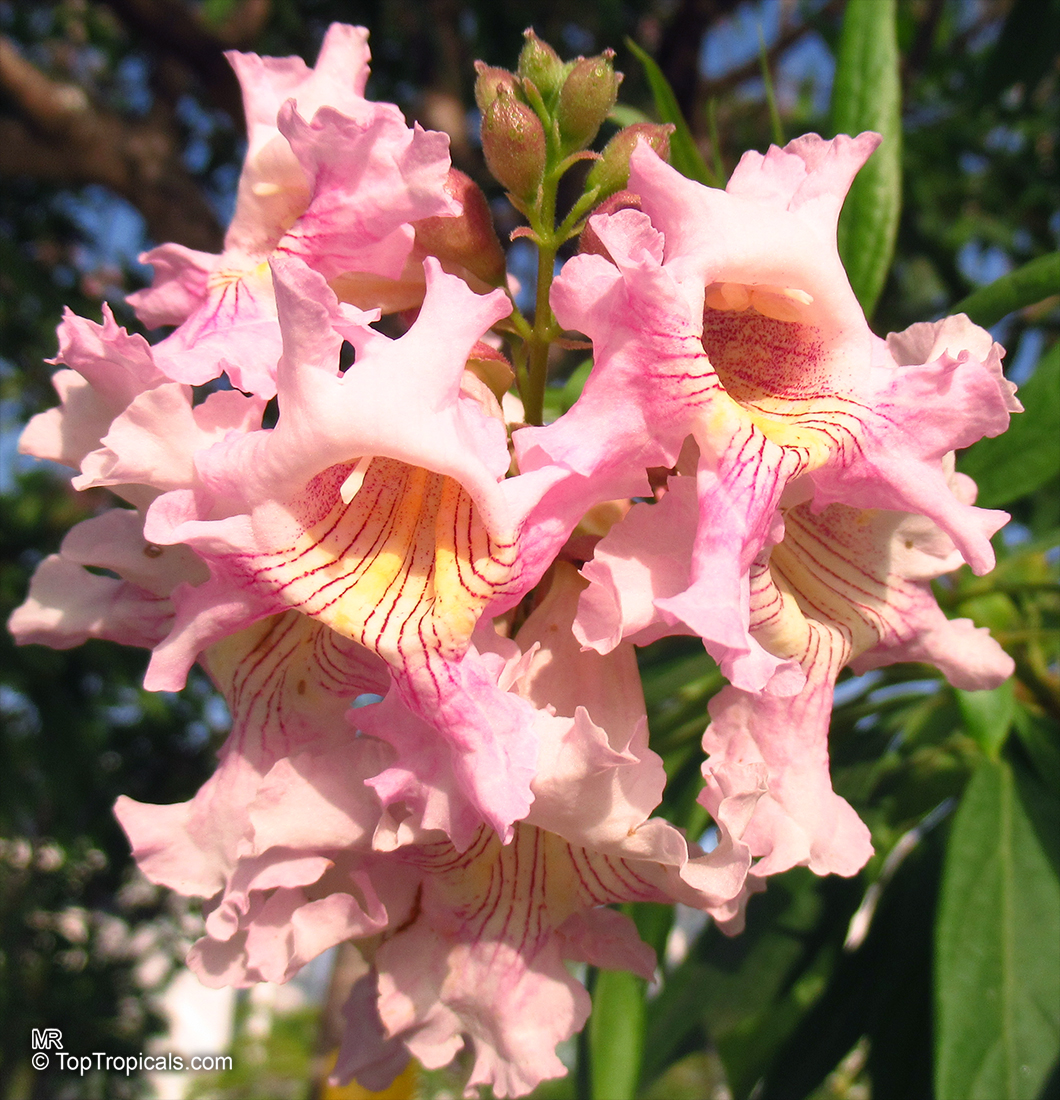
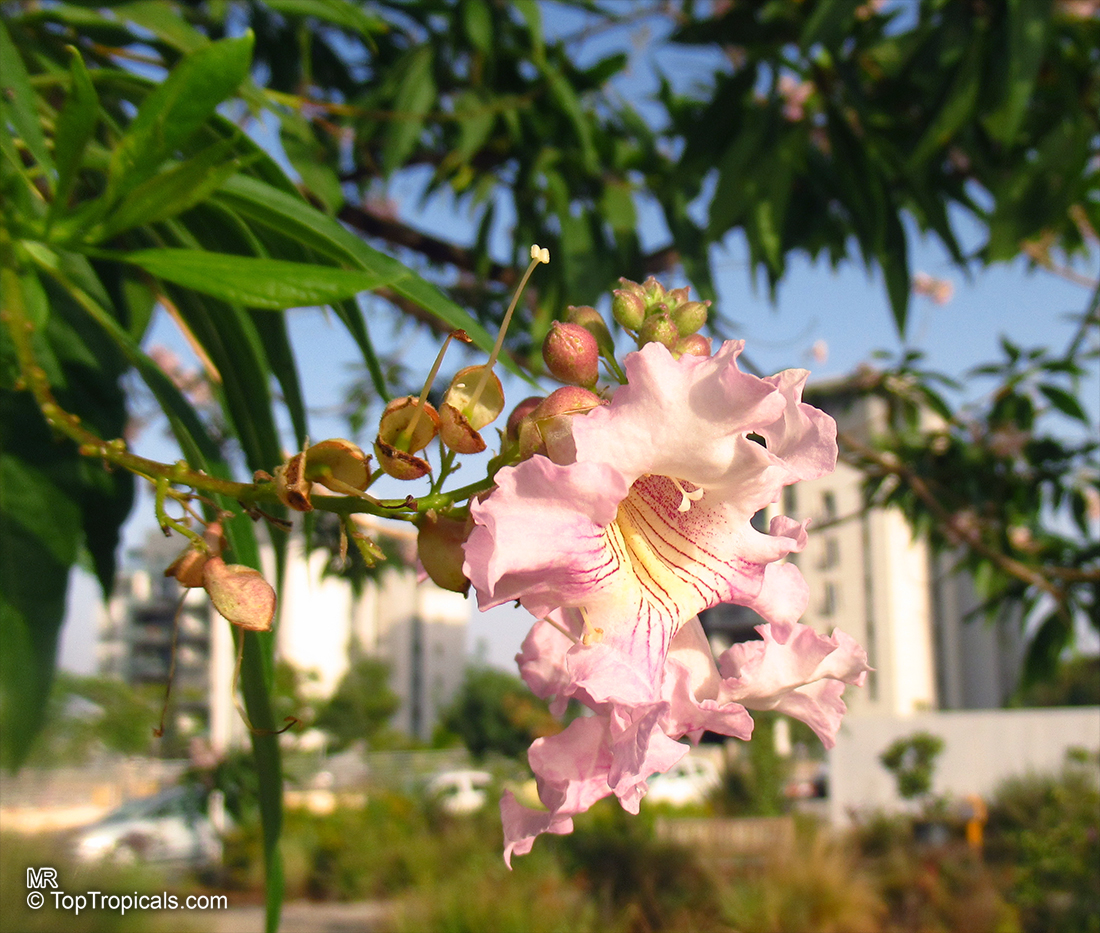
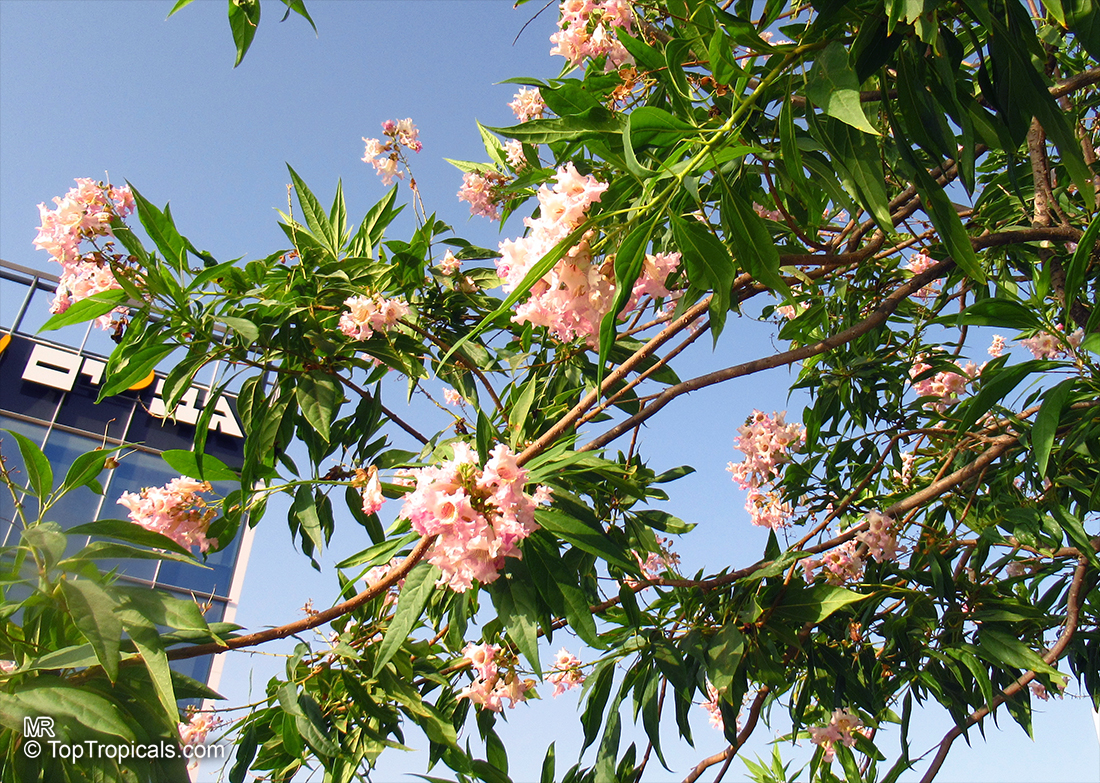
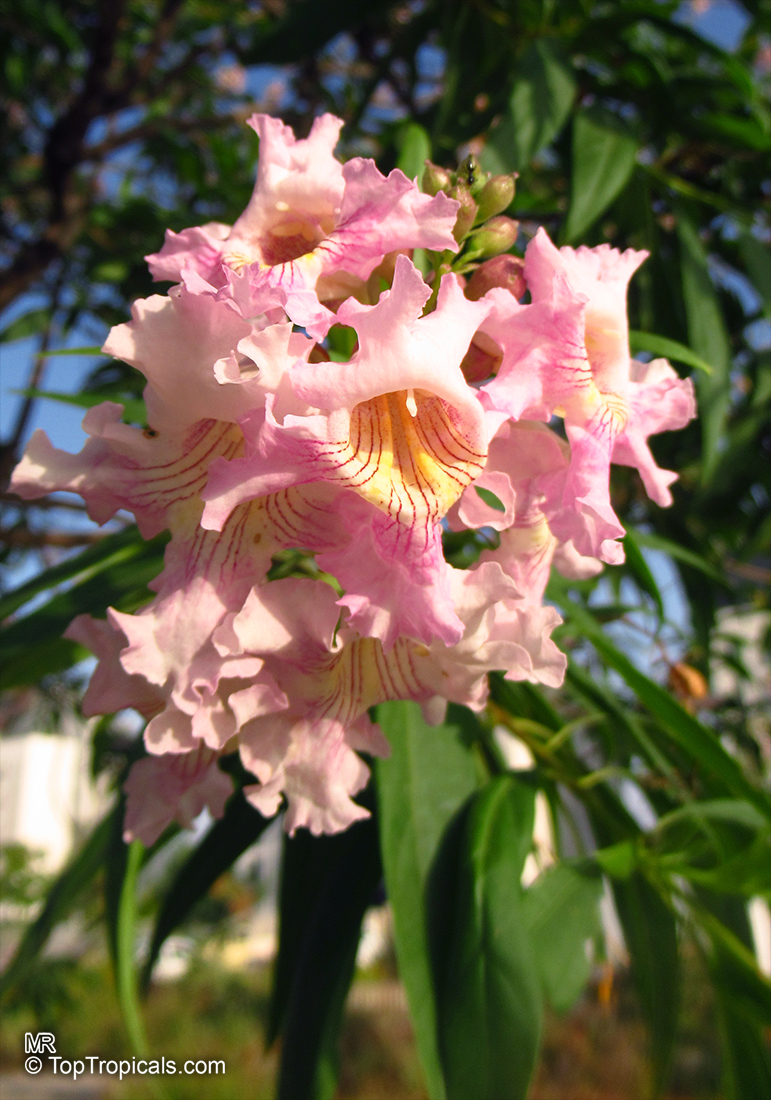
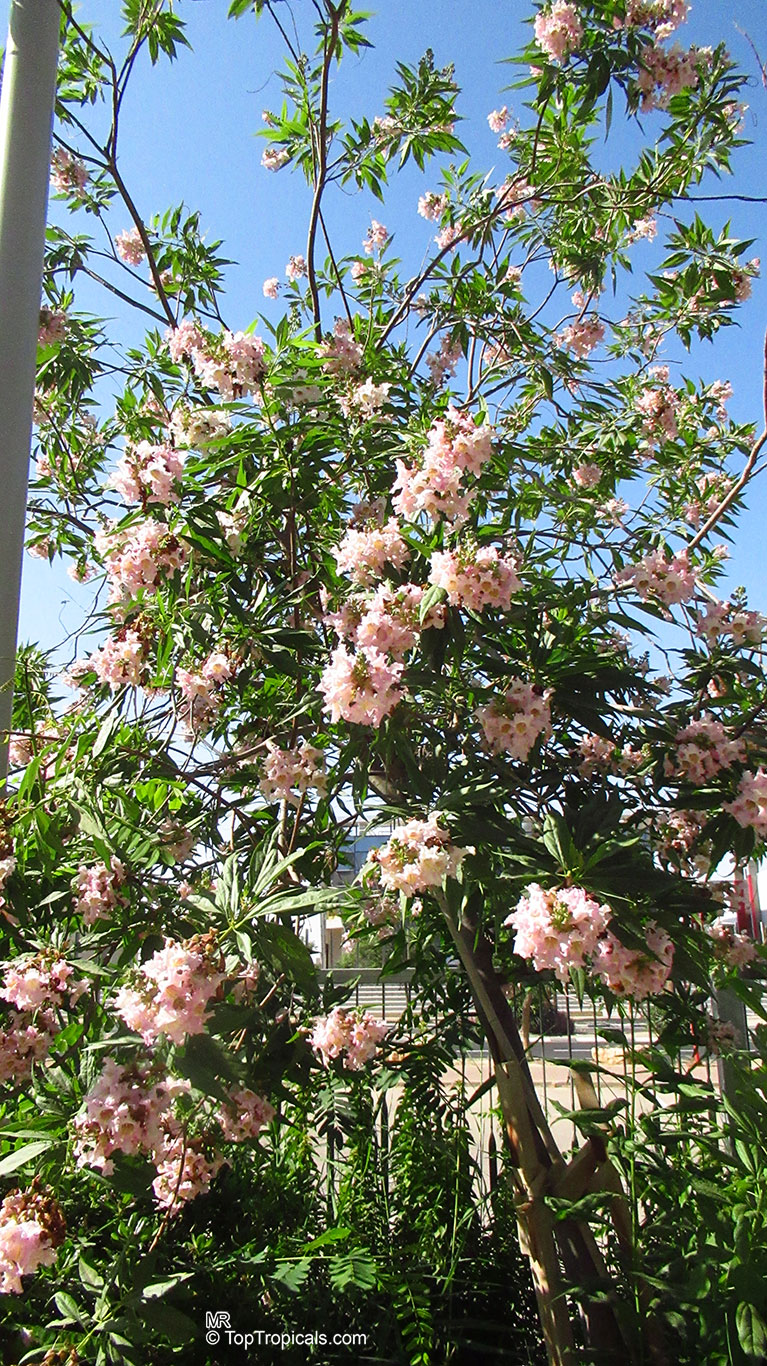
The Chitalpa is a cross between Catalpa bignonioides and Chilopsis linearis. The Chilopsis is a desert tree, sometimes called a Desert Willow. From the Chilopsis, the Chitalpa inherits long 3 to 5 inch dark green leaves and the ability to withstand some dry heat. However, unlike its desert parent, the Chitalpa can withstand low temperatures of around minus 15 degrees. Flowers are orchidlike and produced in July or August at the ends of new growth. At several feet a year the Chitalpa reaches its 25 to 30 foot height and breadth quickly and makes shady spots fast. It is a drought-resistant plant, a trait inherited from the desert willow, and it is fairly hardy, having withstood temperatures as low as 9F. It has been noted that it will freeze back to the ground in Zone 6. Although many fast-growing trees are intolerant of windy situations, chitalpa can withstand even strong winds without breakage. Unlike either of its parents, chitalpa is sterile and produces no messy seed pods. Propagation: Cuttings. The initial hybrids between Catalpa and Chilopsis were created in Uzbekistan in 1964 and introduced to the United States by Robert Hebb of the New York Botanic Garden in 1977. (Chitalpa is a combination of the scientific name of the two parents, while the specific name identifies the city in Uzbekistan where the hybrids were created.) Although in cultivation in the United States during the 1980s, the hybrid remained unnamed until 1991 when Rancho Santa Ana Botanic Garden assigned the name x Chitalpa tashkentensis.
Similar plants: x Chitalpa tashkentensis (Chitalpa)
- Aesculus x carnea (Red Horsechestnut)
- Afzelia xylocarpa (Craib)
- Allamanda x violacea Cabernet 'Cabernet' (Mini Red Allamanda)
- Aloe x nobilis (Gold-Tooth Aloe)
- Alpinia formosana x zerumbet 'Variegata' (Variegated ginger)
- Annona cherimola x Annona squamosa (Atemoya)
- Begonia x albopicta (Bambusiforme Begonia)
- Begonia x hiemalis (Elatior Begonia)
- Brugmansia X candida (Angel's Trumpet)
- Brugmansia X insignis (Angel Trumpets)