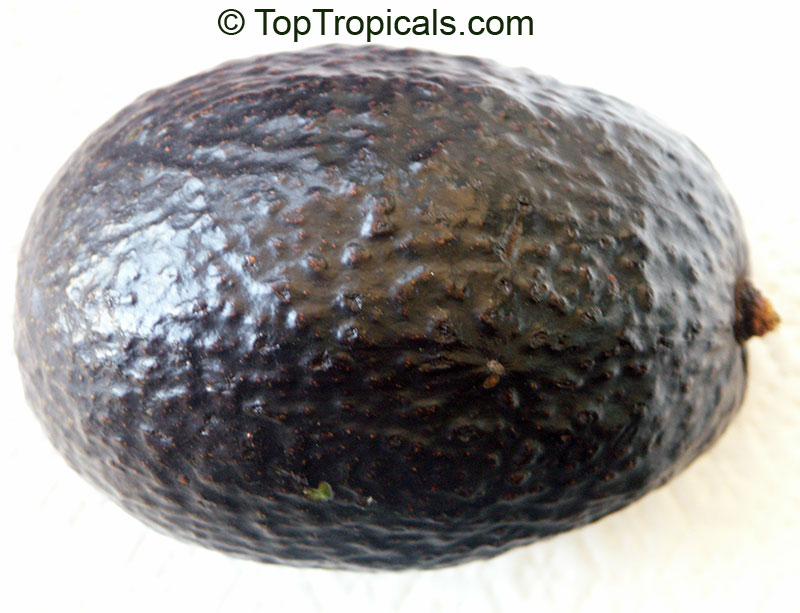
Avocado varieties (Persea americana)
Articles > Fruit & Edibles >Avocado Varieties > Avocado Variety Guide > Florida Avocados > Avocado Magic > Avocado Q & A
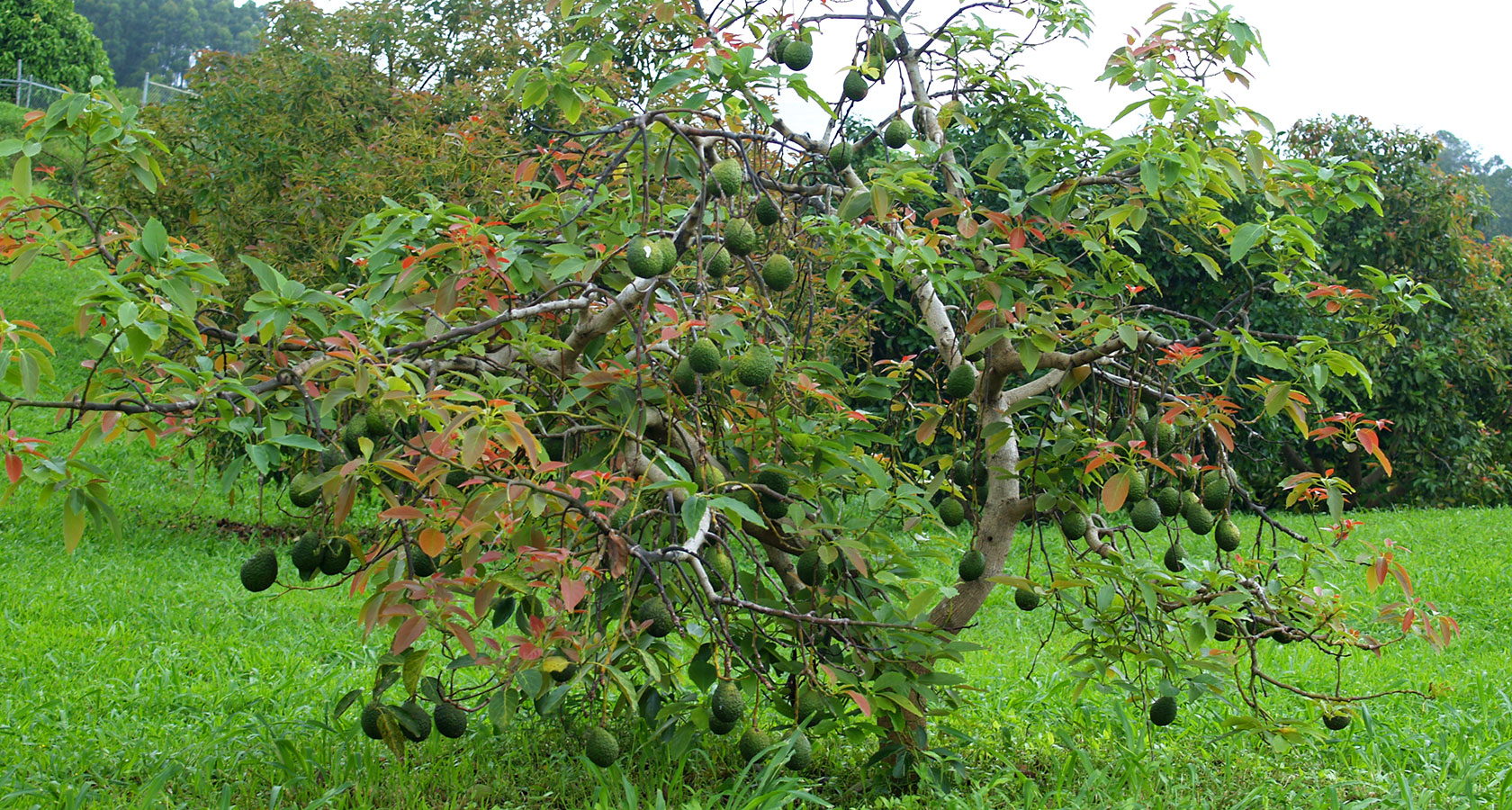
The name 'Avocado' originates from the Aztec name ahuacacuauhitl meaning testicle tree!
The avocado (Persea americana) is a dense, evergreen tree, shedding many leaves in early spring. It is fast growing, and generally branches to form a broad tree. Some cultivars are columnar, others selected for nearly prostrate form. Growth is in frequent flushes during warm weather in southern regions with only one long flush per year in cooler areas.
Grafted plants normally produce fruit within one to two years compared to 8 - 20 years for seedlings.
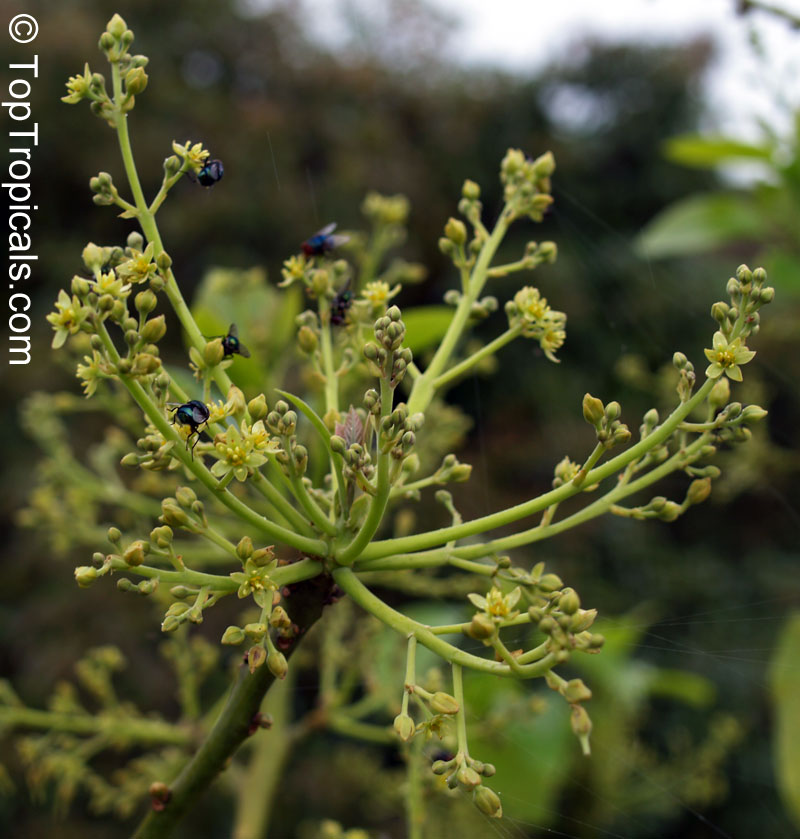
Avocado flowers are cross-pollinated which means that developing independent genetic lines is difficult. In fact, cross-pollination is promoted in the flowers by the stigma of a flower being receptive to pollen prior to pollen being released from that same flower. Avocado trees produce thousands of flowers and only about one in 5000 sets fruit.
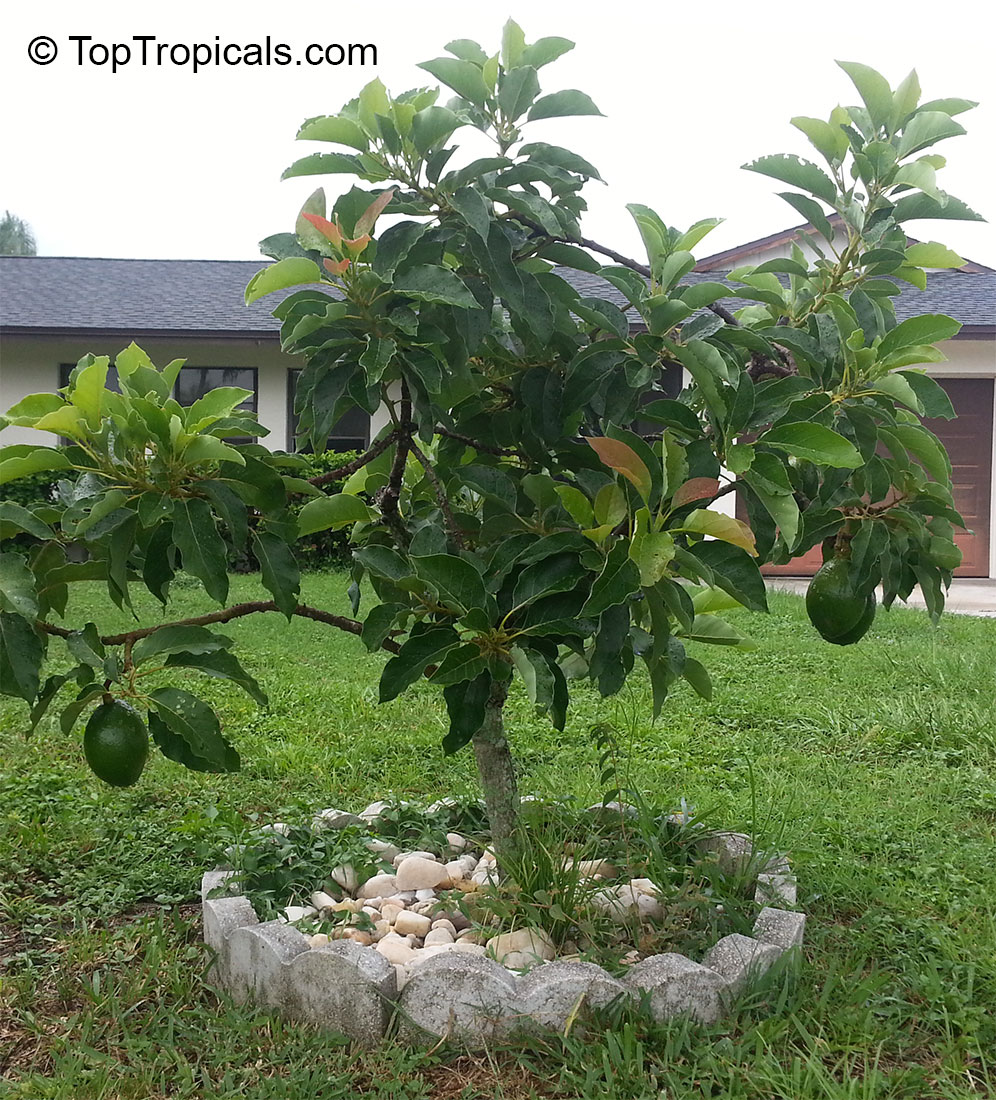
Considering it originated from South American forests, the Avocado is remarkable in its ability to thrive under a broad range of environmental conditions. It needs water and no frost and prefers unleached, nonacid soils, sun, and dry air.
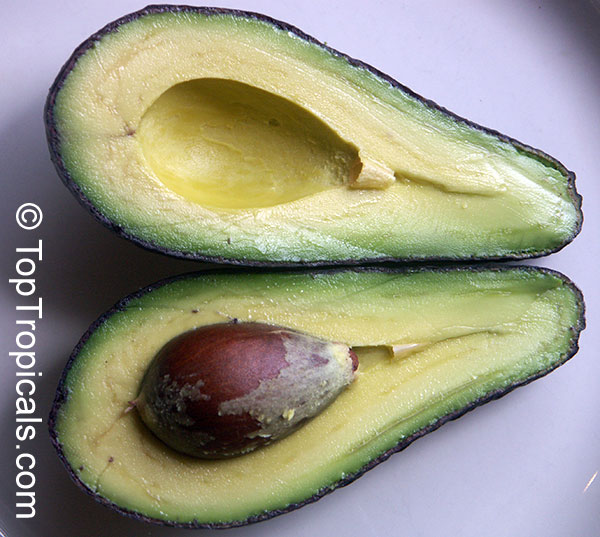
The flesh of avocados is deep green near the skin, becoming yellowish nearer the single large, inedible ovoid seed. The flesh is hard when harvested but softens to a buttery texture. Wind-caused abrasion can scar the skin, forming cracks which extend into the flesh. "Cukes" are seedless, pickle-shaped fruits. Off-season fruit should not be harvested with the main crop, but left on the tree to mature. Seeds may sprout within an avocado when it has over-matured, causing internal molds and breakdown.
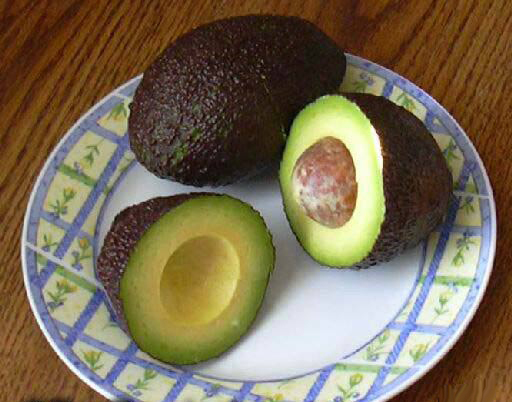
High in monounsaturated fats, the oil content of avocados is second only to olives among fruits, and sometimes greater. Clinical feeding studies in humans have shown that avocado oil can reduce bad cholesterols in the blood. The Avocado fruit is an important food in South America and is nutritious with high levels of mainly unsaturated oils, minerals, vitamins and reasonable levels of protein. The oil is evidently similar in composition to olive oil.
Types of Avocado
W - West Indian type avocados produce enormous, smooth round, glossy green fruits that are low in oil and weigh up to 2 pounds. They are summer- or fall-ripening. They have leathery, pliable, non-granular skin. The leaves are not aromatic. Grown in Florida, West Indies, Bahamas, Bermuda, and the tropics of the Old World. Not grown in California.
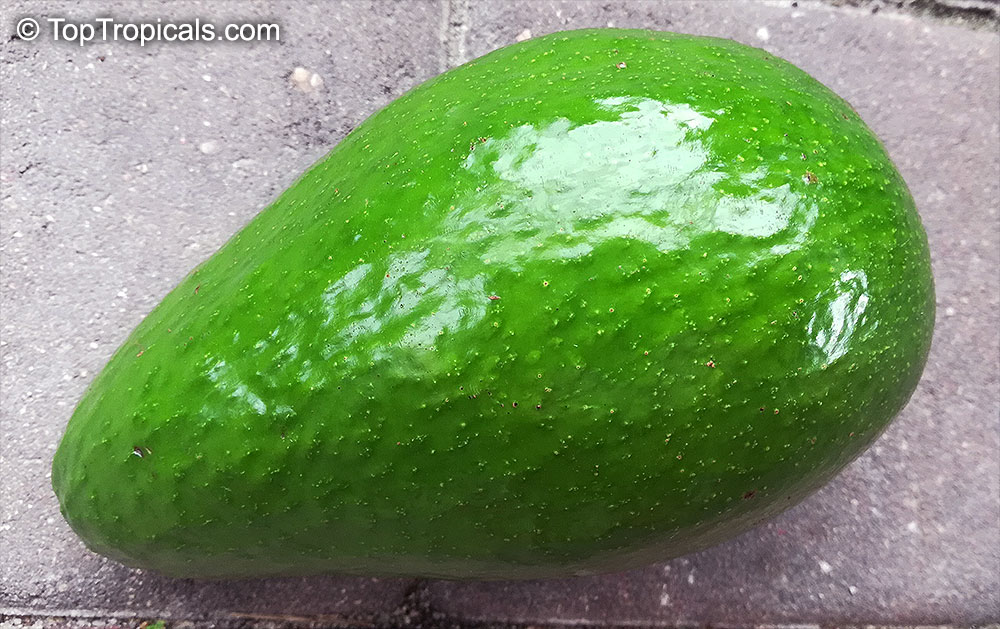
G - Guatemalan types produce medium ovoid or pear-shaped, pebbled green fruits that turn blackish-green when ripe. Guatemalan avocadoes are primarily winter and spring ripening. Skin varies from thin to very thick and is granular or gritty. The flesh is rich in flavor and relatively high in oil content. Grown in both Florida and California.
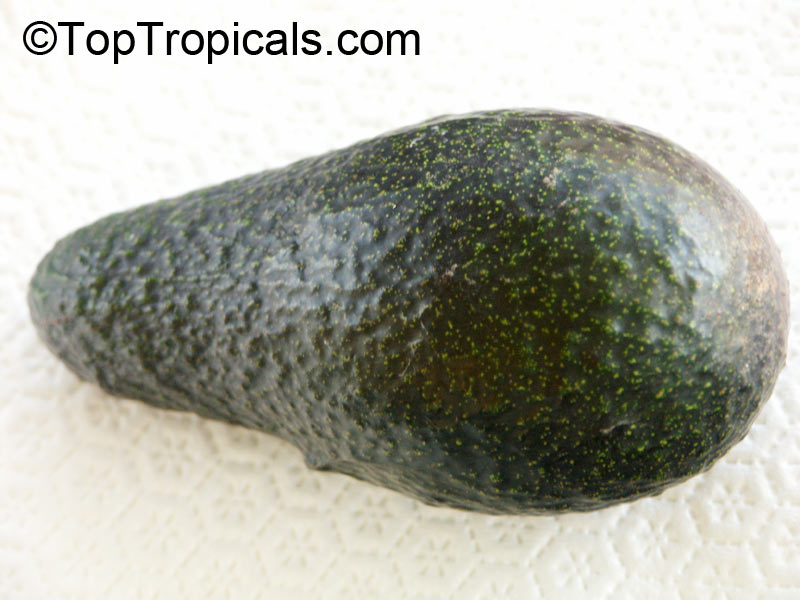
M - Mexican varieties - produce smaller fruit (6 - 10 ounces) with paper-thin skins that turn glossy green or black when ripe. The tender skin clings to the flesh. The flesh has a high oil content, up to 30%. Leaves have a pronounced anise-like scent and are favored for cooking. The tree is more cold-resistant.
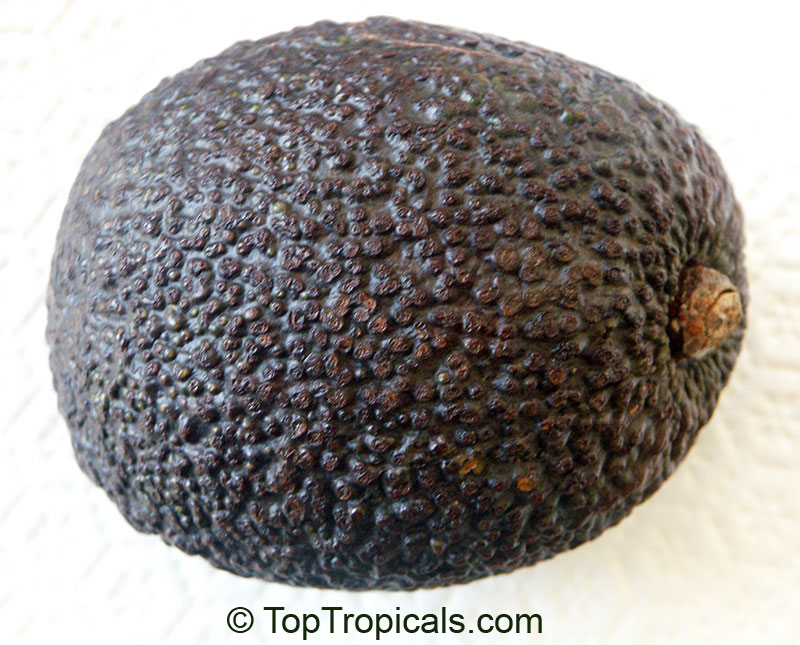
Cold hardy avocado varieties
Cold hardy avocados are of Mexican origin. They are self fertile. They have thin, tender skin that clings to the flesh. The flesh has a high oil content, up to 30%. Some varieties have leaves with pronounced anise-like scent. These avocados are known to be grown around San-Antonio, Texas (Zone 8b). Avocados planted there were damaged, but not killed at 10F. As a general rule, these varieties can tolerate temperatures down to 15F for a short period of time without significant damages.
Important things to consider:
1. Small plants are very tender and susceptible to cold weather. When a freeze is expected, mound mulch around the trunk for additional protection. Cover the tree with a blanket. During severe freezes, add a string of lights or a small heater under the covers. Mature trees are more cold resistant and do not need this extra protection.
2. Cold tolerance depends on many factors. Plant location and wind protection are very important. Plant a tree, so it will be protected from cold wind, which is much more dangerous than cold itself. Plant avocados in the warmest location in the residential landscape, usually the south or southeast side of the house.
3. Healthy, well taken care of plants are more cold tolerant.
4. Very important: Humidity plays an important role. In general, plants grown in areas with dry, low humidity winters are more cold tolerant than plants grown in areas with wet winters. For example, a plant can withstand 10-15F in the dry Texas climate, but may tolerate only 15-20F in the wet East Coast climate. Avocados need very little water during cold. It's very sensitive to over-watering. There is no faster way to kill the plant than too much water during a cold spell. Good drainage is the most important factor to consider when planting an avocado tree. In areas with poor drainage, create a mound of soil and plant the tree on the mound.
The most cold hardy varieties:
Brazos Belle: Produces medium-large, purple-black long fruit. Season: October-November.
Fantastic: Produces green, paper thin skin, supposedly the most cold hardy of all. The fruit has a creamy texture.
Joey: Selected by Joey Ricers in Uvalde, Texas (just outside of San-Antonio). Produces medium size, egg shaped purple-black fruit. It has excellent flavor. Heavy bearer. Season: September-October.
Lila: Produces medium size, green fruit. Season: September-October. Don't confuse this variety with Lula, which is a popular Florida variety and commonly used for rootstock. (Lula is cold hardy to 25F)
Poncho: Produces medium to large green fruit. Cold hardy to 15F
Avocado varieties grown by Top Tropicals
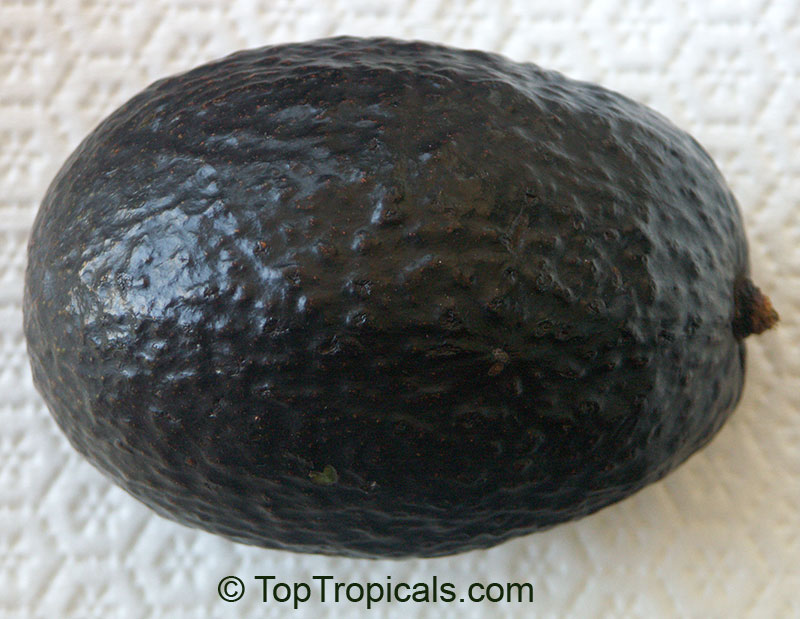
Variety: Brazos Belle
Type: M
Origin: Texas
Flower Type: B
Tree size: 20-25 feet
Season: October-November
Production:
Fruit shape/size/color: medium-large, long, purple-black
Cold tolerance: Very cold hardy
Comments: Produces medium-large, purple-black long fruit. Can take temperatures down to 15F for short period of time without significant damage.
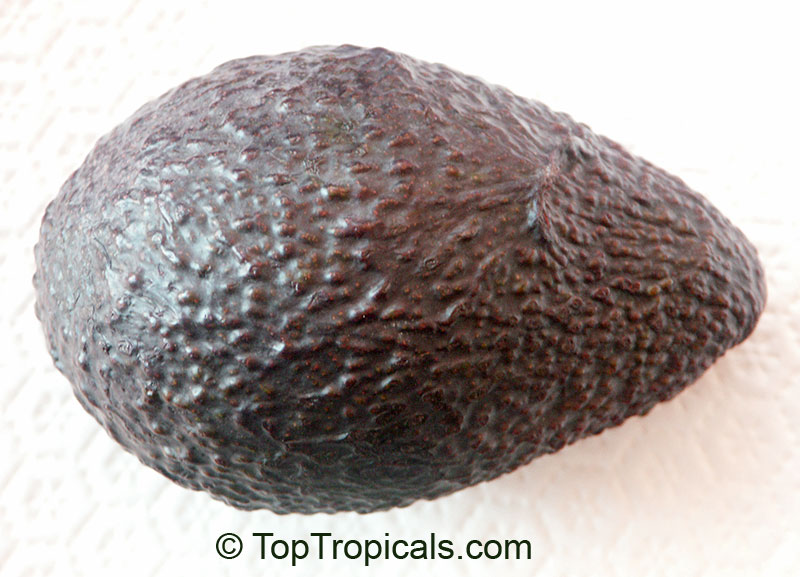
Variety: Brogdon
Type: M
Origin: Florida
Flower Type: B
Tree size: Small to medium, medium vigor
Season: Late summer-fall
Production: Low
Fruit shape/size/color: Pear shaped, 7-15 oz., red-purple
Cold tolerance: Very cold hardy
Comments: Skin is very thin. Yellow buttery flesh. It is an excellent choice for guacamole lovers. Good for Central Florida. Originated in Winter Haven, Florida, by Tom Brogdon.
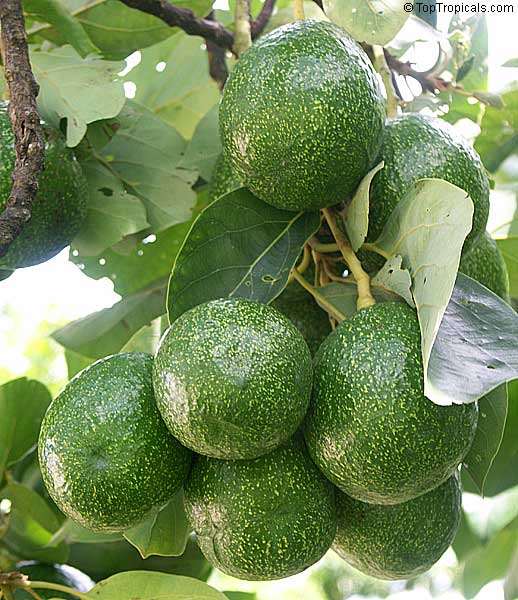
Variety: Choquette
Type: G x W
Origin: Florida
Flower Type: A
Tree size: Medium
Season: January-March
Production: Bears heavily in alternate years
Fruit shape/size/color: Oval, very large 30-40 oz. green
Cold tolerance: Low
Comments: Late season favorite Florida avocado producing very large fruits. Skin is glossy, smooth, dark green, slightly leathery. Flesh is thick, yellow, very good quality. Oil content 13%. Seed medium, tight. Resistant to common avocado diseases. Recommended for home plantings in Florida. This avocado is where quality intersects quantity, and it is quickly becoming a favorite to Florida’s winter residents.
See Wikipedia article with TopTropicals image.
Variety: Day
Type: GxW
Origin: Mexico
Flower Type: A
Tree size: Tall slender
Season: July-Semptember
Production:
Fruit shape/size/color: Long club shape, large, dark green
Cold tolerance: Very cold hardy
Comments: Smooth skin and is shaped like a club. The fruit is of very good quality and has a nice buttery consistency. The slender tree is very cold tolerant and produces July through September
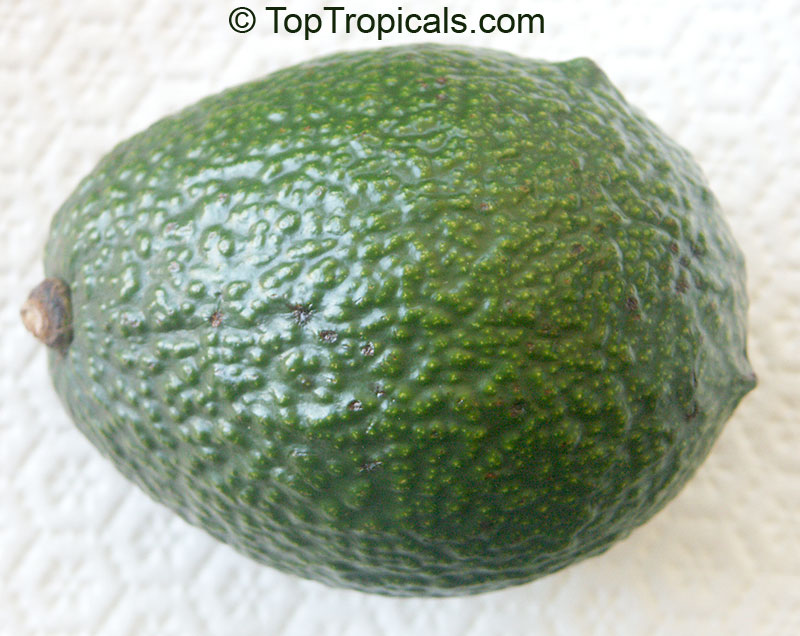
Variety: Fantastic
Type: M
Origin: Texas
Flower Type: A
Tree size: Large 25-30 feet
Season: August-October
Production: Vigorous in full sun
Fruit shape/size/color: pear shaped , medium, green
Cold tolerance: Very cold hardy
Comments: Supposedly the most cold hardy of all avocados. Green, paper thin skin. The fruit has a creamy texture. Can take temperatures down to 15F for short period of time without significant damage
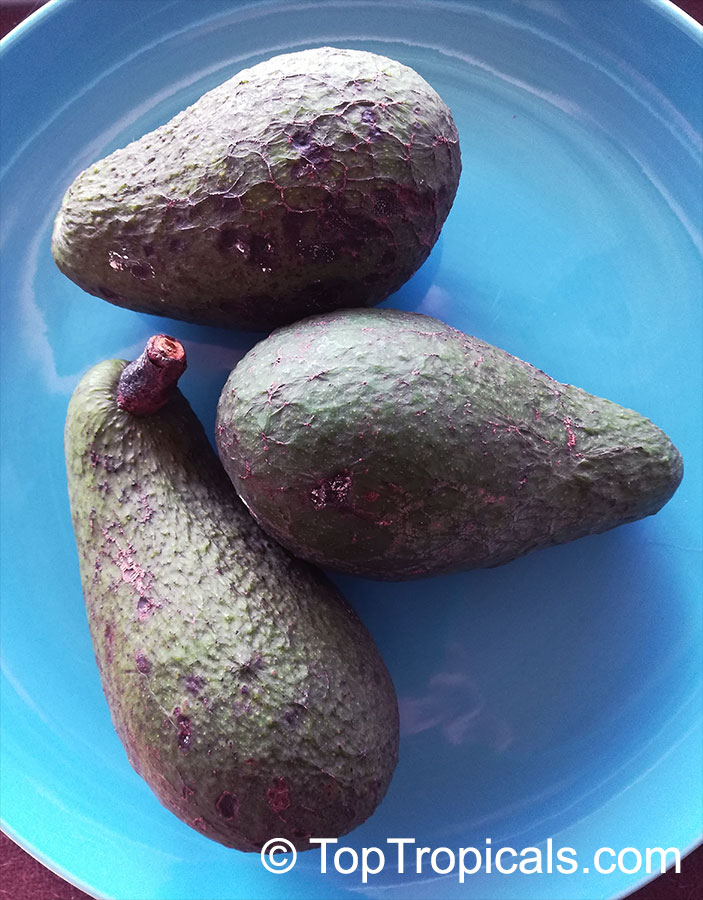
Variety: Fuerte
Type: GxM
Origin: Mexico
Flower Type: B
Tree size: Vigorous spreading tree
Season: November-June
Production: Decidedly alternate year bearing habit
Fruit shape/size/color: Pear shaped, elongated, medium 8-16 oz. dark green
Cold tolerance: Very cold hardy
Comments: Green fruit elongated 8-16 oz. Skin slightly rough, thin, and not adherent to flesh. Flesh green near skin, oil content 12-17%. Flavor excellent, buttery. Seed medium to large. Often used for cocktail avocadoes. Natural hybrid originated at Atlixco,
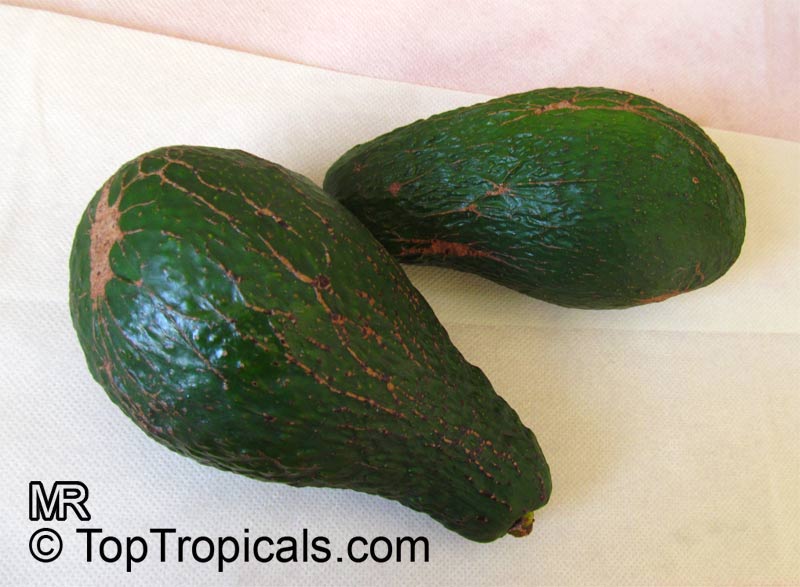
Variety: Hall
Type: GxW
Origin: Florida
Flower Type: B
Tree size: Medium
Season: November-December
Production: Alternate, but heavy bearer
Fruit shape/size/color: Pear shaped, elongated, large, green
Cold tolerance: Very cold hardy
Comments: Large, tasty pear shaped fruit. Skin bright green, attractive, smooth and fairly thick. Flesh deep yellow, oil content 12-16%, seed medium-large, tight. Excellent for the limited fancy-fruit market. Originated in Miami, Florida, by Willis Hall
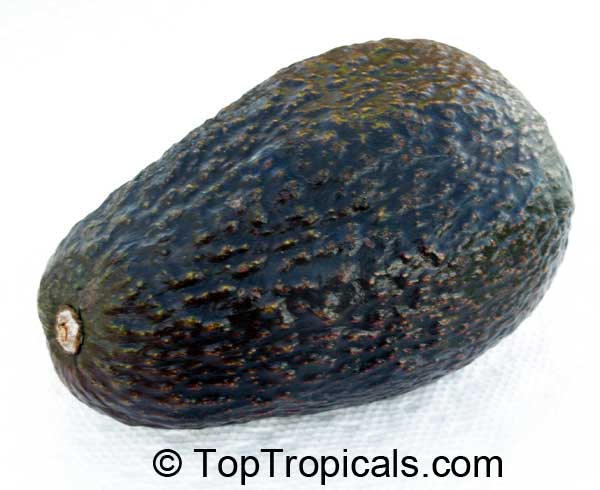
Variety: Hass
Type: M
Origin: California
Flower Type: A
Tree size: Medium
Season: Summer
Production: Heavy bearer. Starts bearing the second year.
Fruit shape/size/color: Pear shaped to ovoid, 10 oz. black
Cold tolerance: Average
Comments: Dark-colored with a rough and bumpy skin. Will turn black when ripe. Flesh creamy, flavor excellent, no fiber, oil content 18-25%. It is renowned for is rich nutty flavor and high oil content. Skin leathery, rough, dark purple to black when ripe, thick. Seed small, tight in cavity. Keeping qualities excellent, good shipper. Leading commercial cultivar in California. This is the most popular commercially grown variety. The trees do have a wide range, and can be grown in the southern regions of Texas, Louisiana, and Florida.
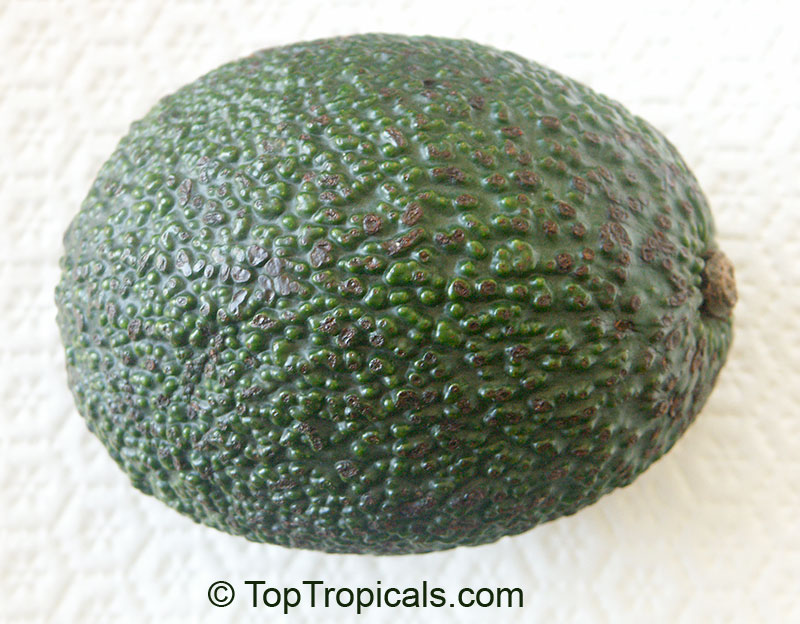
Variety: Lila
Type: M
Origin: Texas
Flower Type: A
Tree size: Semi-dwarf 15 feet tall, can be maintained to 5 feet in container
Season: July-September
Production: Strong
Fruit shape/size/color: Ovoid, medium, dark green
Cold tolerance: Very cold hardy
Comments: Produces medium size, green fruit. Don't confuse this variety with Lula, which is popular in Florida and used for rootstock (that one is cold hardy to only 25F). Can take temperatures down to 15F for a short period of time without significant damage.
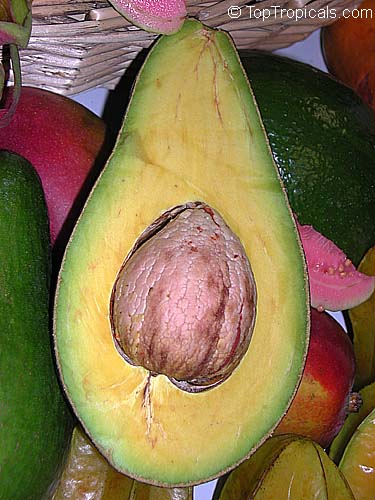
Variety: Lula
Type: GxM
Origin: Florida
Flower Type: A
Tree size: Tall, vigorous, upright
Season: November-December
Production: Bears early and heavily
Fruit shape/size/color: Pear shaped sometimes with a neck, medium/large, green
Cold tolerance: Very cold hardy
Comments: Skin almost smooth. Flesh pale to greenish-yellow. Oil content 12-16%. Seed large, tight. Successful in Central and South Florida where it is a formerly the leading commercial cultivar. More frost resistant than most. It is renowned for its ability to endure harsh winters, and for its exceptionally long harvesting period. This makes Lula an exceptional choice for homeowners in and around Orlando. Originated from seed from parent tree planted 1915 by Mrs. Lula Cellon at Miami, Florida
Variety: Mexicola
Type: M
Origin: California
Flower Type: A
Tree size: Medium 15-20 feet
Season: August-October
Production:Bears early and regularly
Fruit shape/size/color: Spherical to pyriform, small 3-5 oz, black
Cold tolerance: Very cold hardy
Comments: Skin black, thin, smooth. Excellent flavor. Seed large. Very heat and cold-resistant. It is a very cold hardy variety, may withstand temperatures in the low 20s. Much used as a parent in California breeding programs. Originated at Pasadena, California.
Variety: Mexicola Grande
Type: M
Origin: Texas
Flower Type: A
Tree size: Tall 25 feet, vigorous
Season: August-October
Production: Bears early and regularly
Fruit shape/size/color: Spherical to pyriform, medium 6-10 oz. black
Cold tolerance: Very cold hardy
Comments: This variety is similar to Mexicola but much larger fruit. It survived temperatures around 10F near San Antonio, Texas (Zone 8b). Can take temperatures down to 15F for short period of time without significant damage.
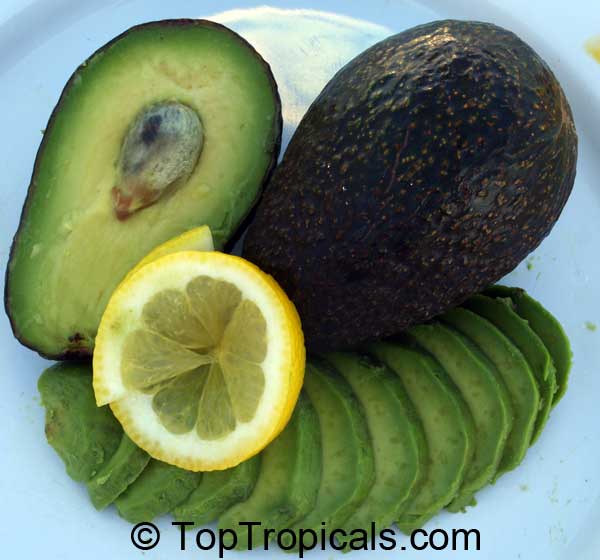
Variety: Nishikawa
Type: GxM
Origin: Hawaii
Flower Type: B
Tree size: Large 30 feet, upright and vigorous
Season: December-January
Production: Alternate heavy/off year bearing pattern
Fruit shape/size/color: Oval to pear shaped, large 1/5-2 lbs, dark green
Cold tolerance: Average
Comments: Originated in Hawaii. It's a mix of Guatemalan and Mexican avocado types. Average cold hardiness. Ripens in December-January (in Florida), Fruit has a firm texture with buttery/nutty flavor.
Variety: Pollock
Type: M
Origin: Florida
Flower Type: B
Tree size: 30 feet, Very vigorous
Season: July-August
Production:Shy bearing
Fruit shape/size/color: Oblong to pear shaped, very large up to 5 lbs., green
Cold tolerance: Low
Comments: Smooth, glossy. Flesh firm, smooth and fine in texture. Deep yellow changing to yellowish-green close to the skin. Contains 3-5% oil. Seed large, frequently loose in cavity. Fruit too large but of superior quality. Originated in Miami on the property of H.S. Pollock.
Variety: Poncho
Type: M
Origin: Texas
Flower Type: B
Tree size: 30 feet, vigorous
Season: July-September
Production: Average
Fruit shape/size/color: Medium, ovoid, green
Cold tolerance: Very cold hardy
Comments: Produces medium to large green fruit. It survived temperatures around 10F near San Antonio, Texas (Zone 8b). Can take temperatures down to 15F for a short period of time without significant damage.
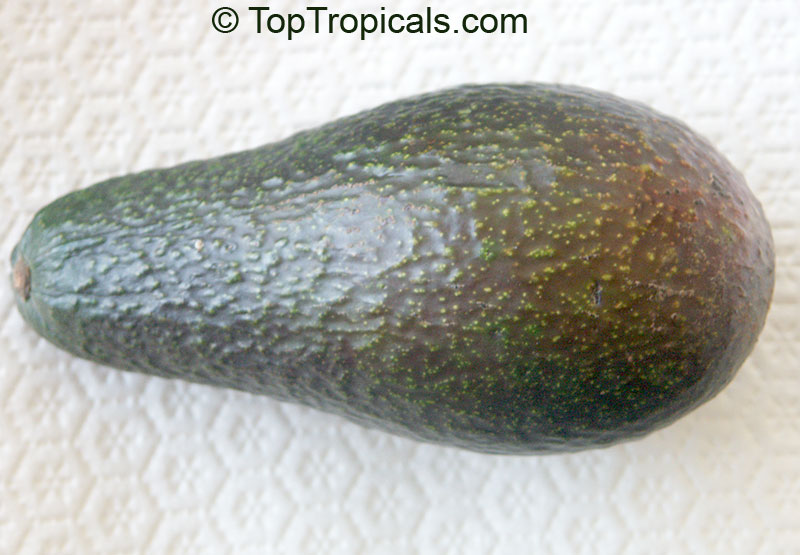
Variety: Red Russell
Type: W
Origin: Florida
Flower Type: A
Tree size: 25 feet tall
Season: August-September
Production: Good
Fruit shape/size/color: Pear shaped with long solid neck, large, red
Cold tolerance: Low
Comments: Russell is easily recognized by its gourd like shape. The fruit and therefore the tree are very popular among the Latin communities of South Florida. Lighter production discourages commercial growers, but it remains an excellent choice for the enthusiast. Large fruit, 24-36 oz. Long fruit up to 13 inches. Red skin, flesh yellow, sweet, excellent quality. Seed small, cavity low in the broad end of the fruit, often a solid neck of flesh 5-6 inches long. It is NOT a cold hardy variety!
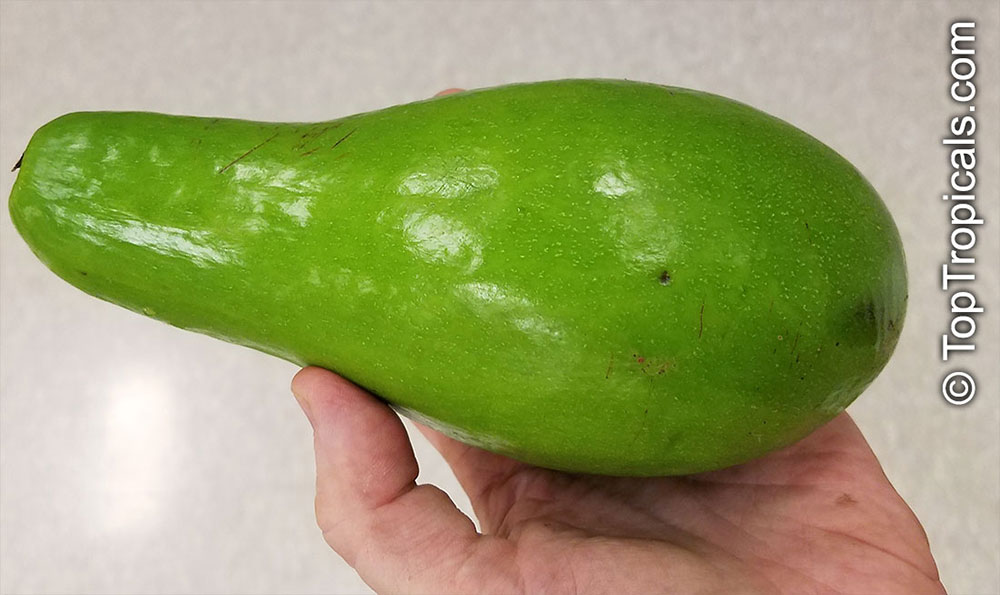
Variety: Russell
Type: W
Origin: Florida
Flower Type: A
Tree size: 25 feet tall
Season: August-September
Production: Light
Fruit shape/size/color: Pear shaped with long neck, large, green
Cold tolerance: Low
Comments: Easily recognized by its gourd like shape. The fruit and therefore the tree are very popular among the Latin communities of South Florida. Light production discourages commercial growers, but it remains an excellent choice for the enthusiast. Large fruit, 24-36 oz. Long fruit up to 13 inches. Skin green, smooth, glossy, thin and leathery. Flesh yellow, excellent quality. Seed small, cavity low in the broad end of the fruit, often a solid neck of flesh 5-6 inches long.
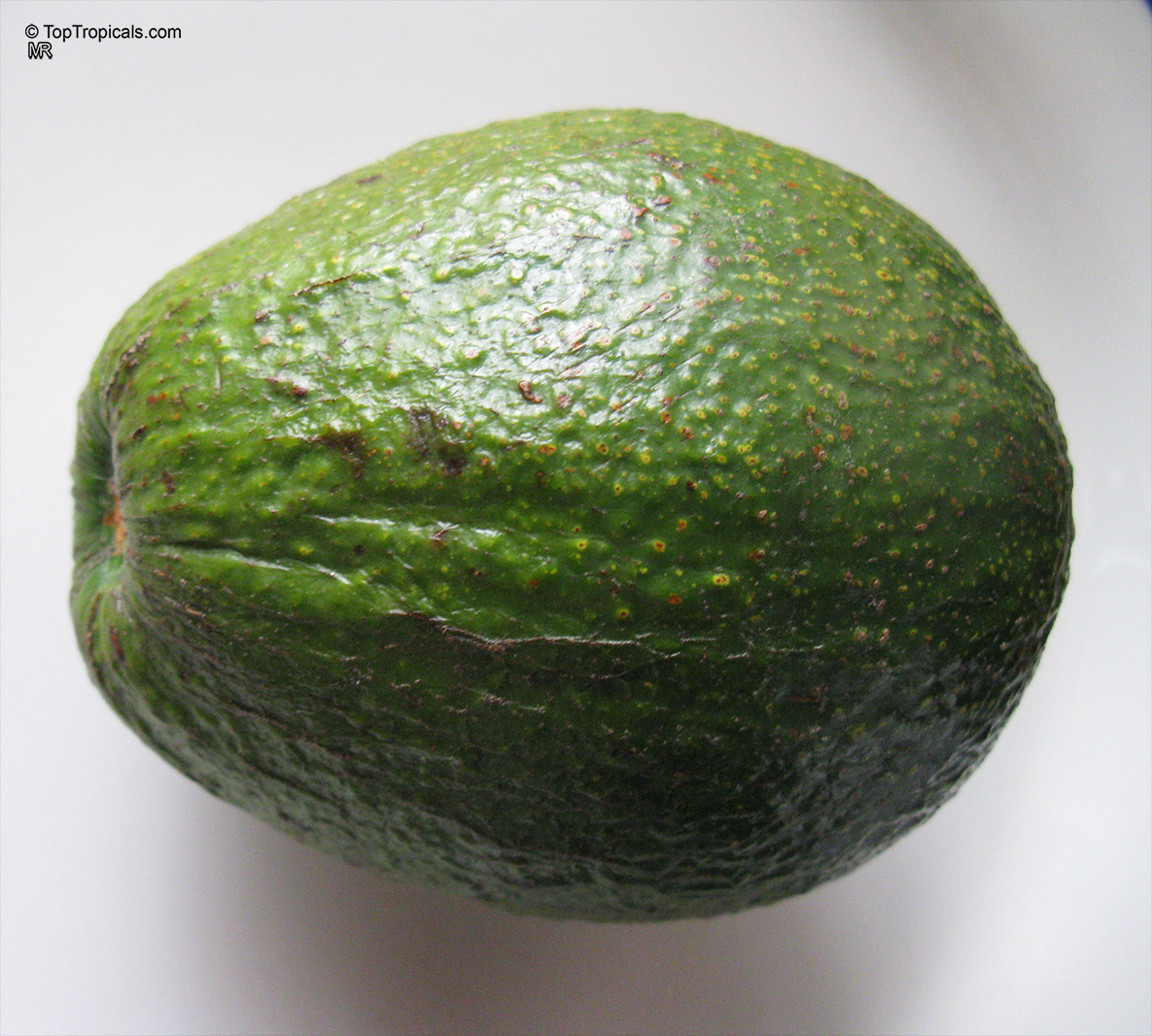
Variety: Simmonds
Type: W
Origin: Florida
Flower Type: A
Tree size: Medium
Season: July-September
Production: Regular bearer, but sometimes sheds many fruits
Fruit shape/size/color: Oblong/oval to pyriform, large, light green
Cold tolerance: Low
Comments: South Florida's most popular early season avocado. Skin smooth, light green. Flesh of good flavor, oil content 3-6%. Seed medium size, usually tight. Good production, exceptional trade acceptance, and superb eating quality make it an excellent choice for the home garden or grove.
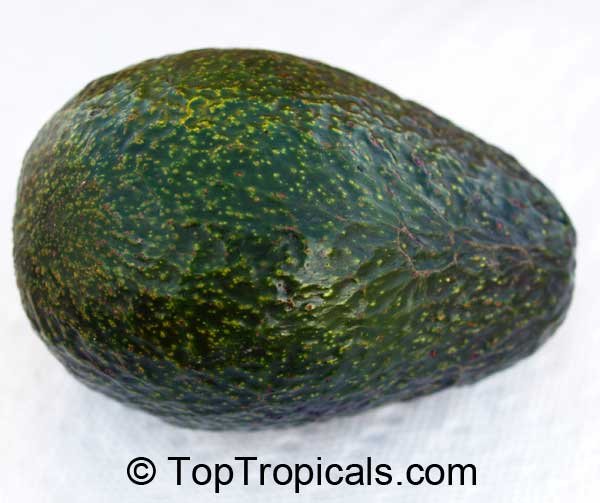
Variety: Winter Mexican
Type: GxM
Origin: Florida
Flower Type: B
Tree size: Vigorous tree
Season: December-January
Production: Bears heavily and regularly
Fruit shape/size/color: Oblong to byriform, medium to large, dark green
Cold tolerance: Very cold hardy
Comments: Fruit 12-18 oz., skin thick, leathery, dark green. Seed medium, tight in cavity. Winter Mexican is one of the most cold hardy varieties. Mature trees may withstand temperatures in the mid 20s. Originated in Palm Beach, Florida
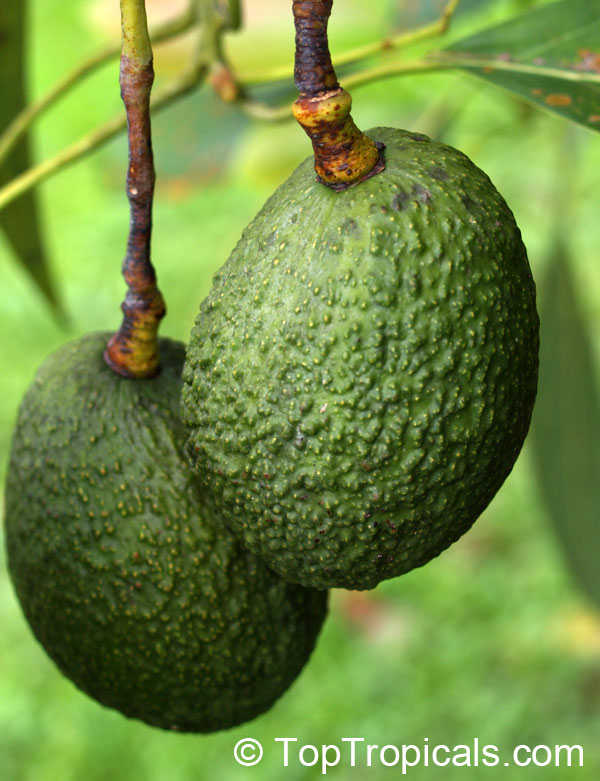
Variety: Wurtz (Little Cado)
Type: G
Origin: California
Flower Type: A & B
Tree size: Dwarf, compact and slow growing to 8-12 feet
Season: May-September
Production: Production is good and it is a consistent bearer. Bears moderately but regularly.
Fruit shape/size/color: Pear shaped, small to medium, green
Cold tolerance: Very cold hardy
Comments: Dwarf hybrid. Fruit 8-12 oz. Skin medium-thick. Quality good, oil content 18%. Distinctive weeping growth habit.
Suited for planters, containers, patios or greenhouse use. Great for dooryard or container growing. The tree can handle temperatures to 25(F) degrees.
The seed is small and fruit skin is smooth. Fruits ripen green from May to September. The flavor is very good. Originated in Encinitas (California) by Roy Wurtz.
Variety: Yamagata
Type: W
Origin: Hawaii
Flower Type: B
Tree size: Large, vigorous and upright
Season: March-July
Production: Good
Fruit shape/size/color: Oval-pyriform with curved neck, large, green
Cold tolerance: Medium to low
Comments: Ripens in Florida in March-April when no other varieties produce fruit. Can ripen over a long season, from March through July. Fruit is large, with a small seed and green skin. Flesh green, smooth, nutty flavor. It's a very fine, gourmet Hawaiian avocado named for agriculture specialist Heiji Yamagata, who developed it. According to University of Hawaii consumer poll, Yamagata was selected as one of the best Hawaiian cultivars.
Type: M
Origin: Texas
Flower Type: B
Tree size: Large, vigorous
Season: September-October
Production: Heavy
Fruit shape/size/color: Egg shaped, medium, purple/black
Cold tolerance: Very cold hardy
Comments: Selected by Joey Ricers in Uvalde, Texas. It has excellent flavor. Can take temperatures down to 15F for short period of time without significant damage.