Plant search results - Hoya
| Number of plants found: 23 | Next | 
|
Go to page: | 1 | 2 | 3 |

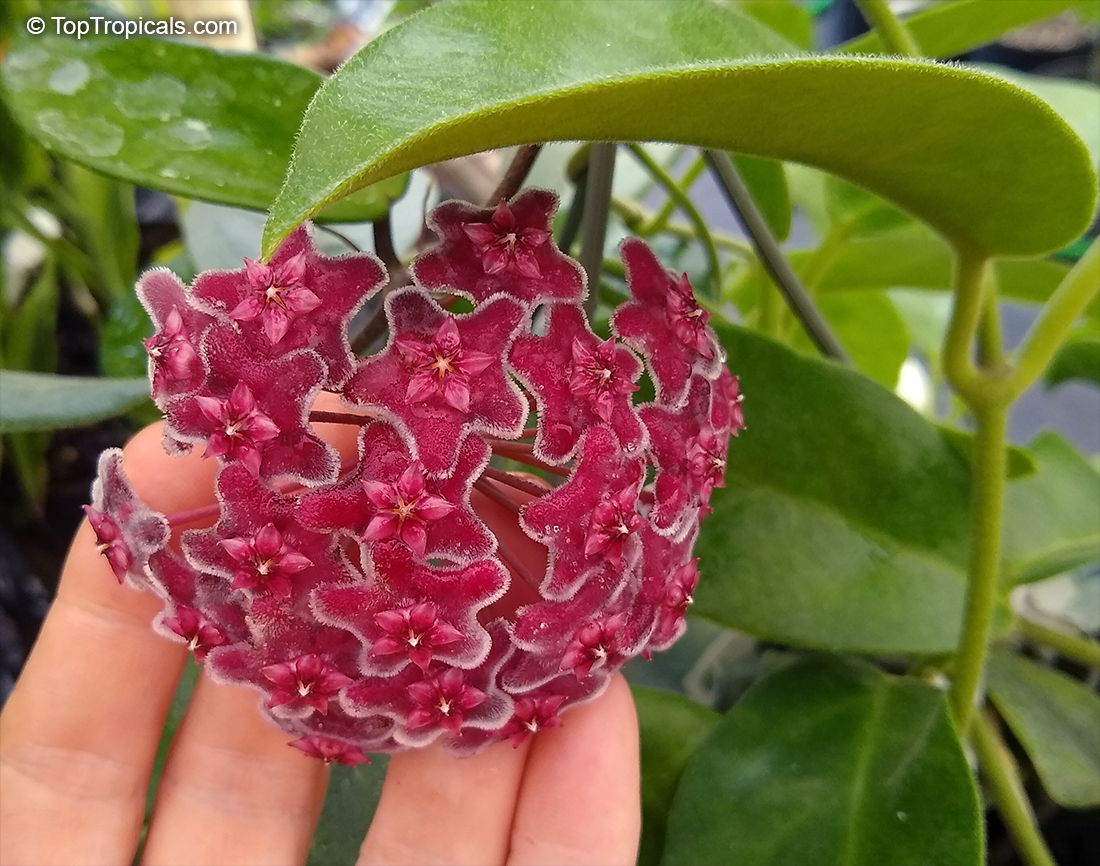
Hoya 'Ban Ngong Ngoy'
Hoya 'Ban Ngong Ngoy'Family: Apocynaceae (Formerly:Asclepiadaceae)
Subfamily: Asclepiadoideae
Origin: Eastern Asia


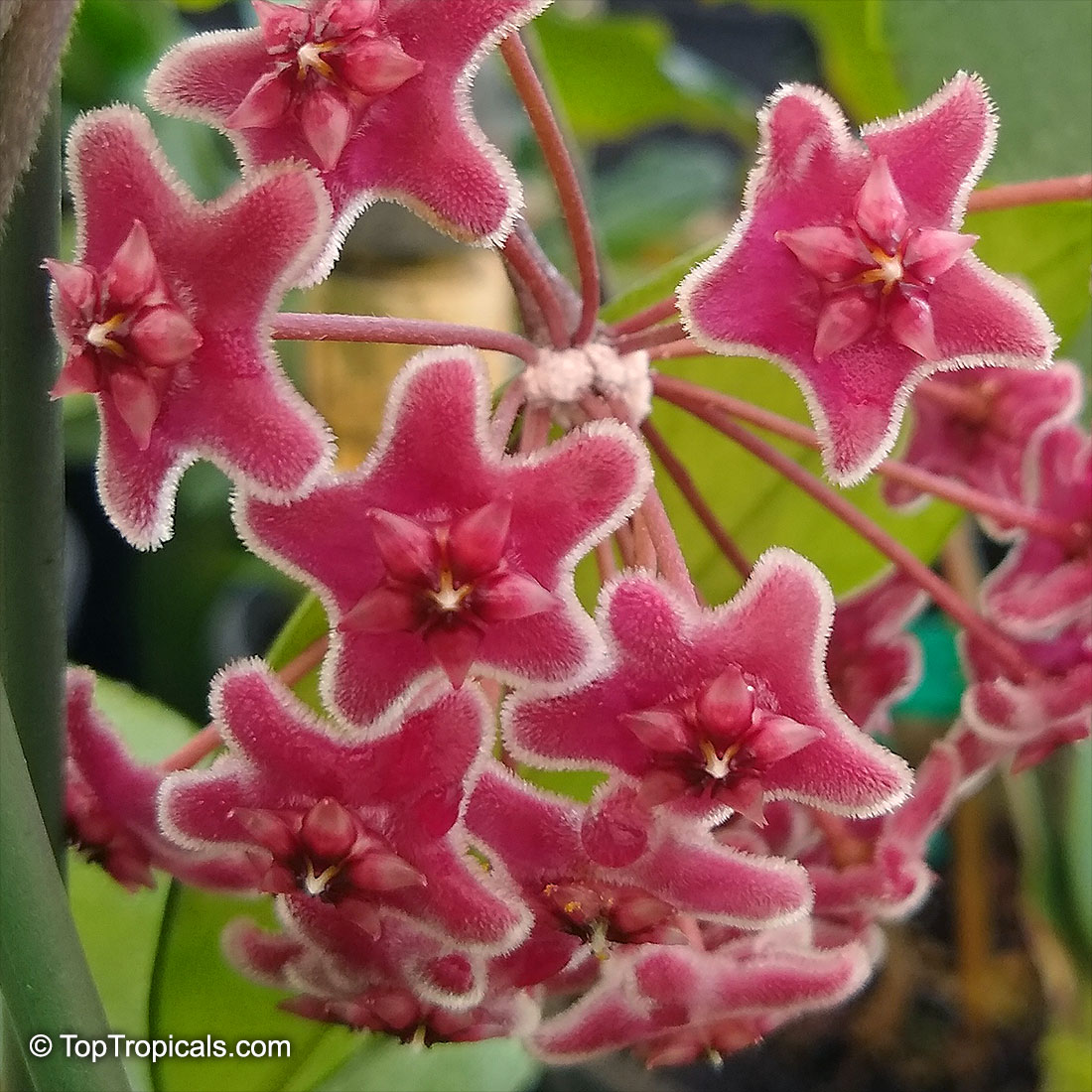
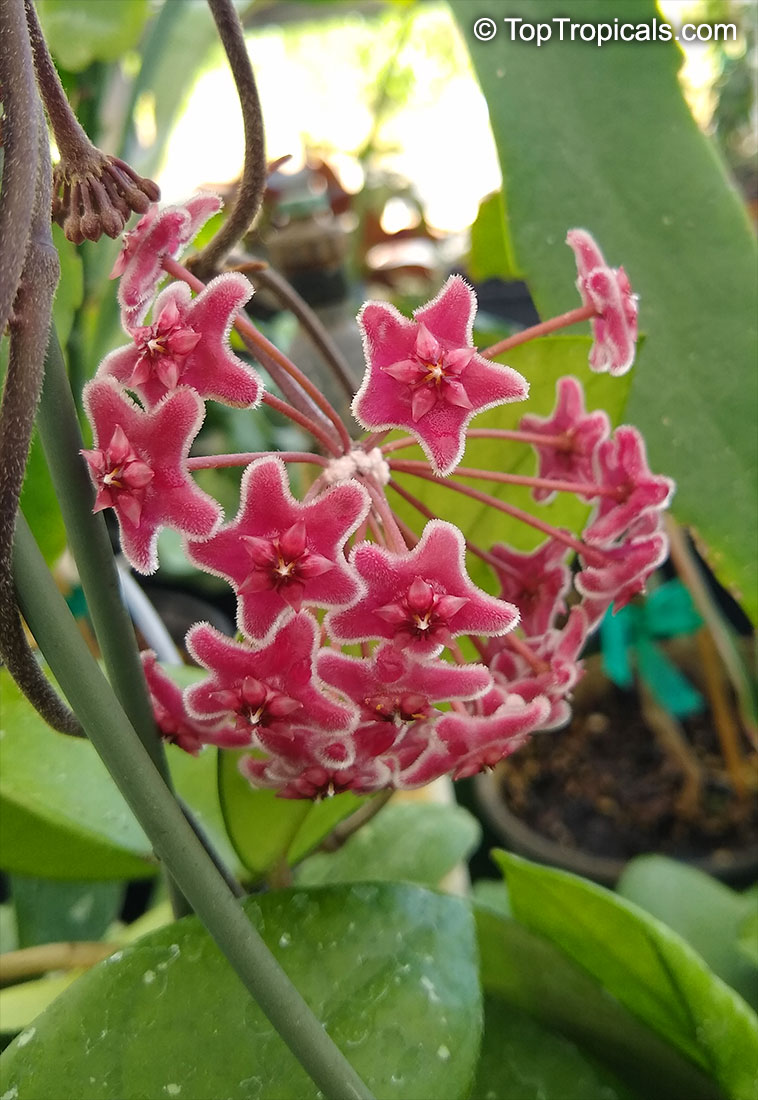
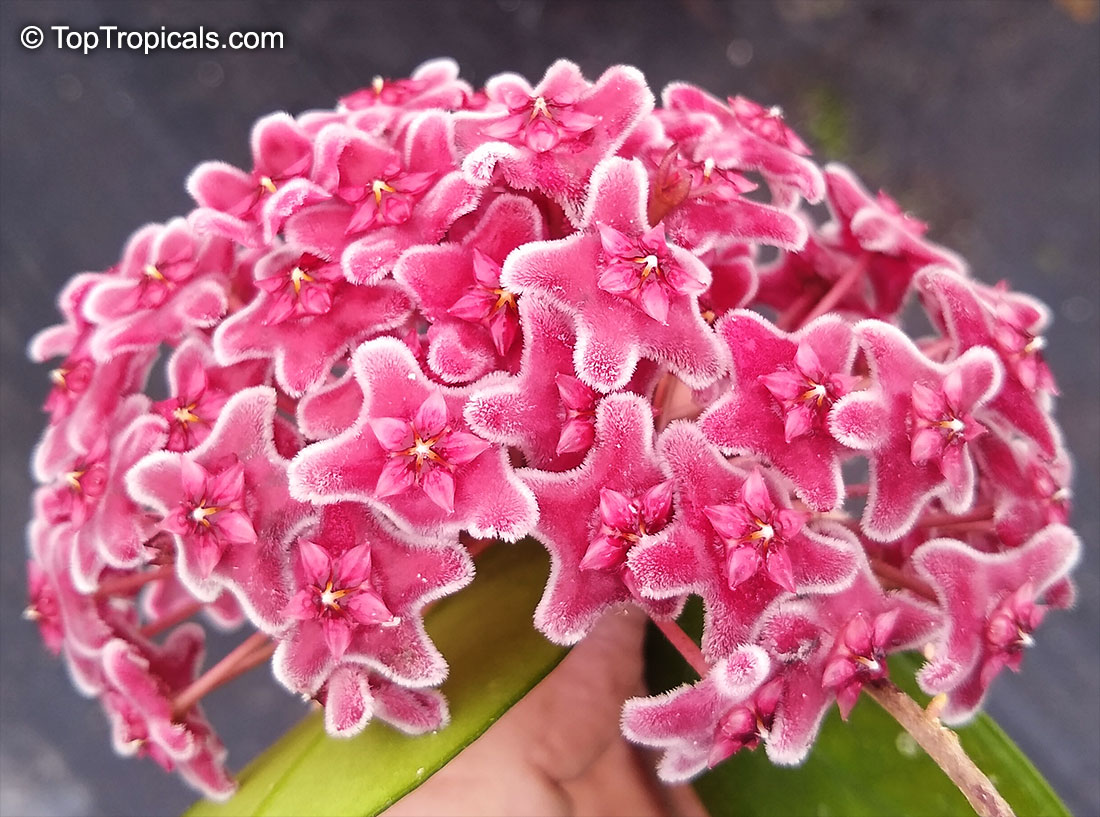
Hoya 'Ban Ngong Ngoy', is a vine or creeper native to Eastern Asia, with gorgeous, red and crimson vinous flowers and a fragrant aroma. It is green and greyish-green in color, with silver and white flecks, along with darker green veining. This plant is a part of the Apocynaceae family and commonly called a wax plant, and flower of the plant are quite beautiful.
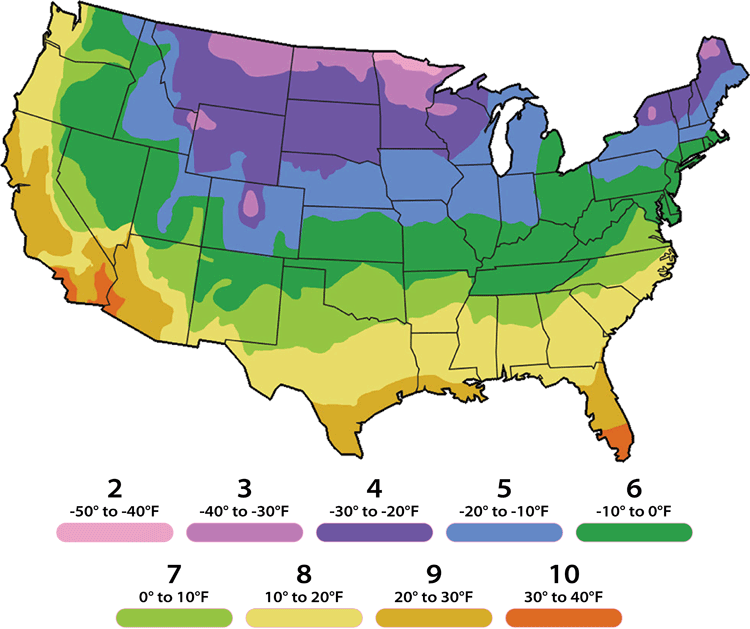
Hoya 'Ban Ngong Ngoy' thrives in a semi-shade environment where the temperatures are moderate. It requires moderate water, as over watering can lead to root rot, so be mindful of both temperature and water. These plants are usually grown in USDA Zone 9-11 and can be grown in pots in cold regions.
When caring for Hoya 'Ban Ngong Ngoy', it is best to prevent water from sitting on the leaves and crown of the plant for too long, as this could lead to pruning and stem rot. When planted in pots, it should be done in a well-draining soil, and the pot should be drained afterward. Fertilizer should be given bimonthly, so the plant receives the essential micronutrients and minerals it needs to stay healthy and vibrant.
Hoya 'Ban Ngong Ngoy' is a beautiful and unique plant that adds an interesting and unique look to any landscape. Its leaves and unique fragrant flowers make it worth growing, and with the right care, it can thrive in a variety of environments.
Recommended Fertilizer: SUNSHINE Robusta - Rapid Growth Booster
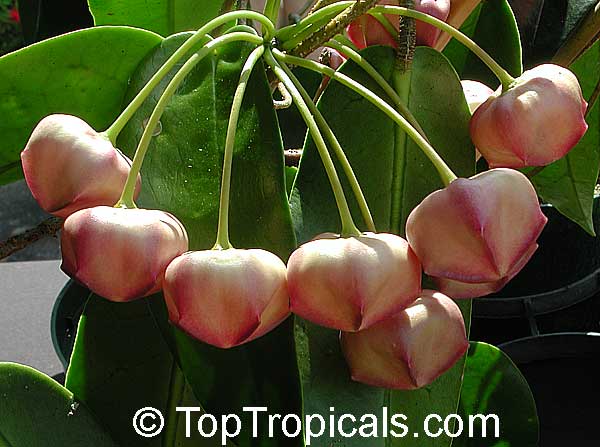
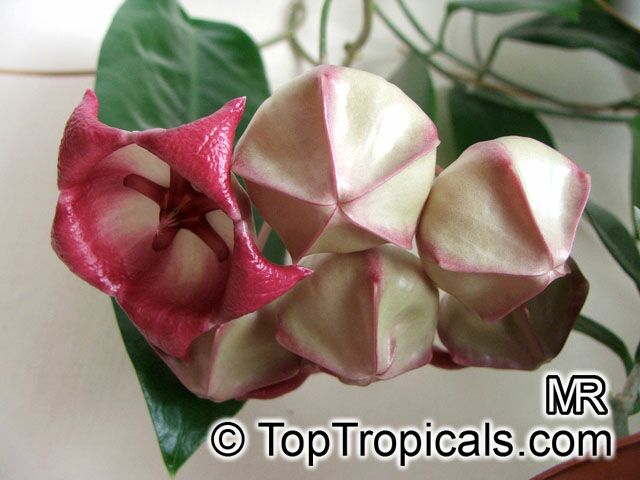
Hoya archboldiana
Papua Wax PlantFamily: Apocynaceae (Formerly:Asclepiadaceae)
Subfamily: Asclepiadoideae
Origin: New Guinea

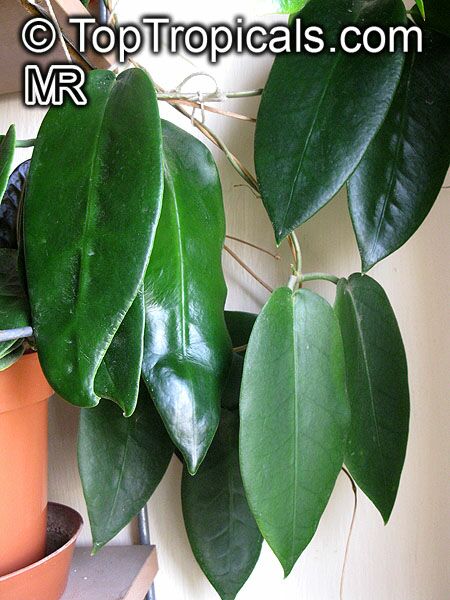
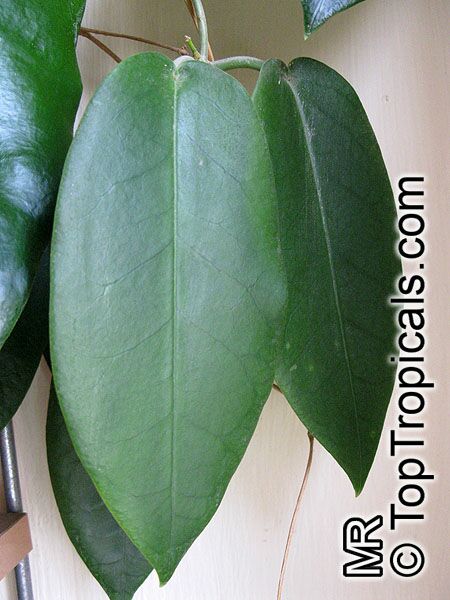
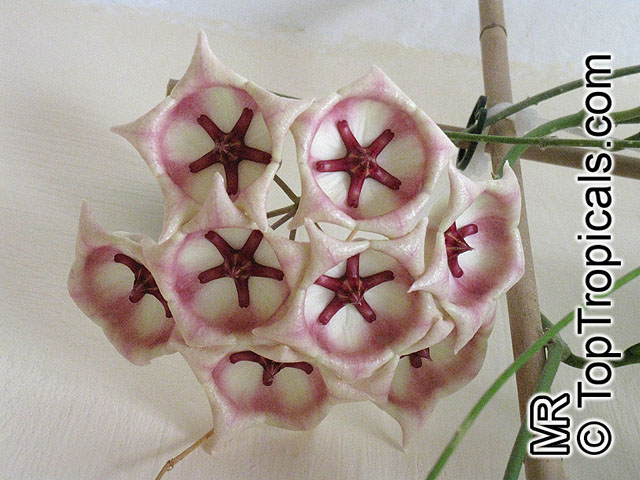
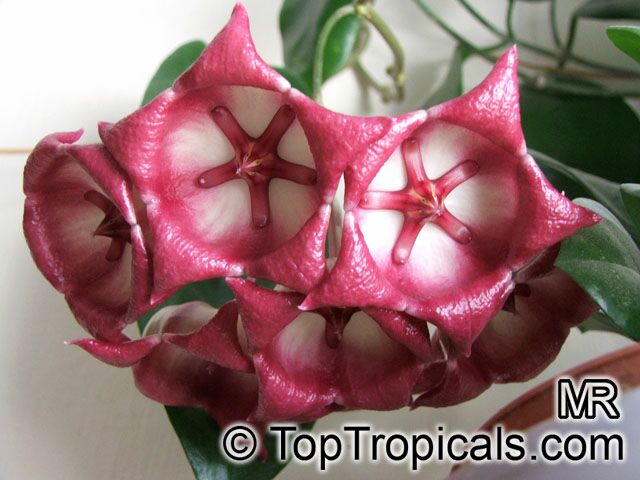
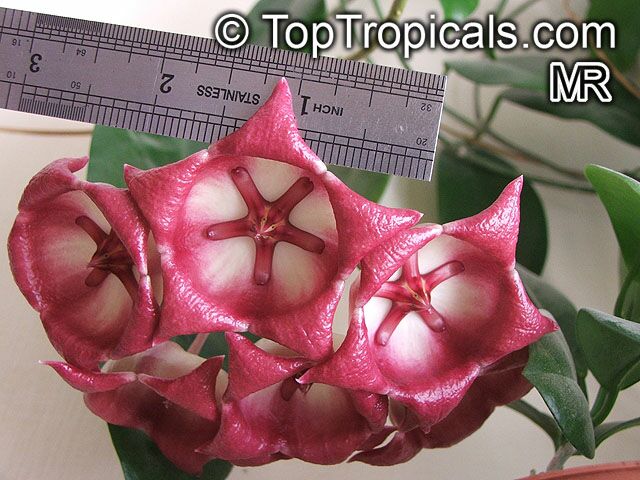
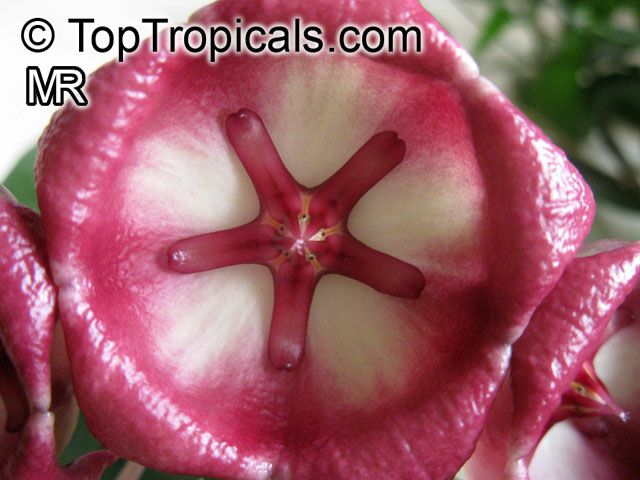
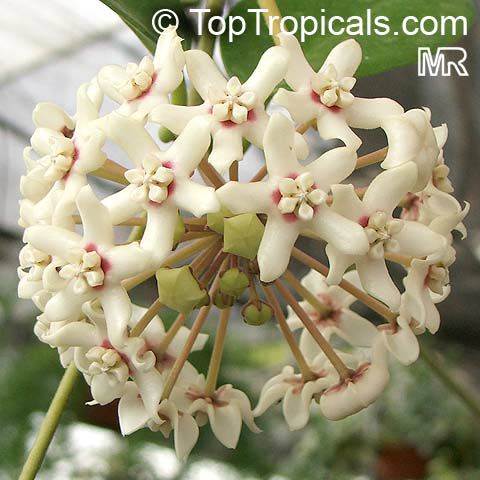
They have attractive succulent leaves is a wide variety of sizes, shapes and patterns. Bright red cup shaped very large flowers, with white beneath corona, pink flowers with a darker star in the center. Propagation: cuttings.
Hoya australis
Common WaxflowerFamily: Apocynaceae (Formerly:Asclepiadaceae)
Subfamily: Asclepiadoideae
Origin: Australia
USDA Zone: 10-11?

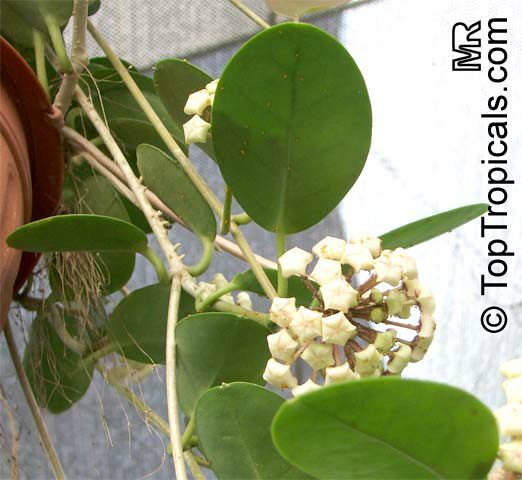
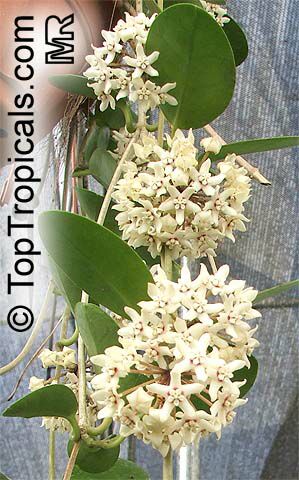
The waxflower, or Hoya australis, is a tropical species that thrives in USDA Zone 9-11. It is also a popular choice for container and hanging basket gardens, as it is a moderately vigorous climbing plant. The leaves are thick and succulent, almost round in shape, and can grow up to 9cm across. The stems contain a white, milky sap that is poisonous. The flowers of the waxflower are fragrant and white in color, with deep red markings in the center. They grow in clusters of up to 40 on long stalks.
When caring for the waxflower in cold regions, it is important to provide moderate, but not excessive, water. In winter, the plant should be kept slightly dryer than in summer. It is also important to protect the waxflower from temperatures below freezing. In order to achieve optimal growth, the waxflower should be grown in a well-lit area with a bit of dappled overhead shade to protect it from the sun. It thrives in well-drained soil, though it does not require particularly fertile soil.
The waxflower can be propagated from cuttings taken at any time, using a good propagating mix, or from fresh seed. It is successful in temperate areas if protected from frost, although it will tolerate light frosts. Flowering is best with good light, but the plant will still grow in heavy shade. Overall, the waxflower is a beautiful and fragrant addition to any garden, as long as it is given the proper care and protection.
Hoya bella
Beautiful Hoya, Pretty WaxflowerFamily: Apocynaceae (Formerly:Asclepiadaceae)
Subfamily: Asclepiadoideae
Origin: Southeast Asia

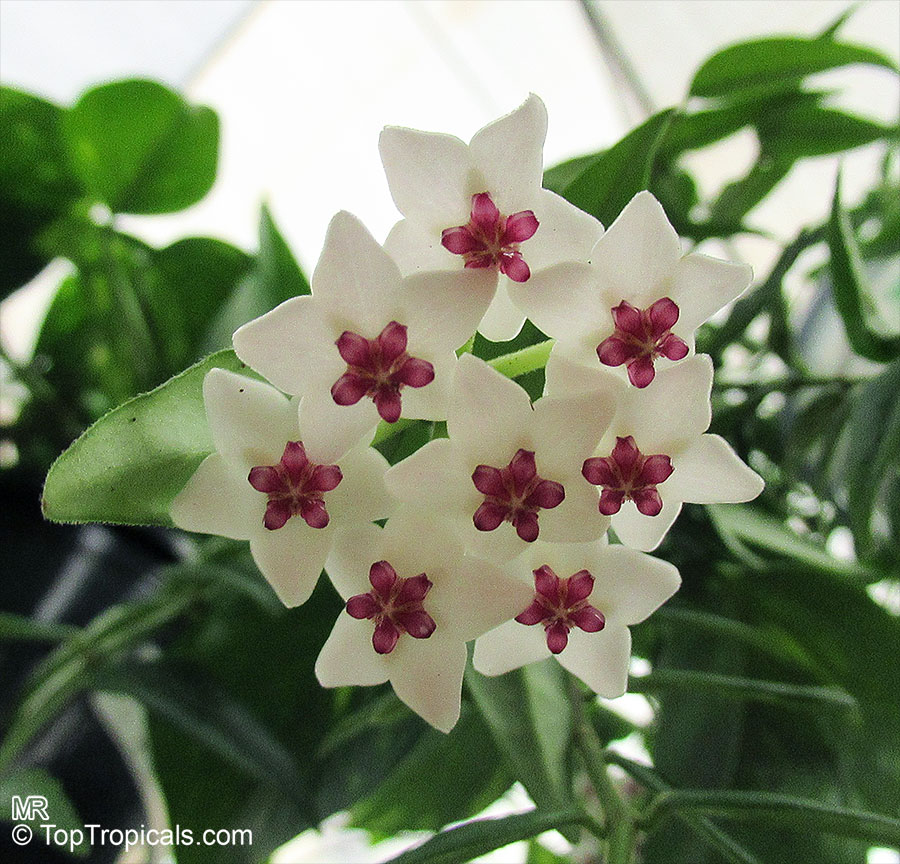
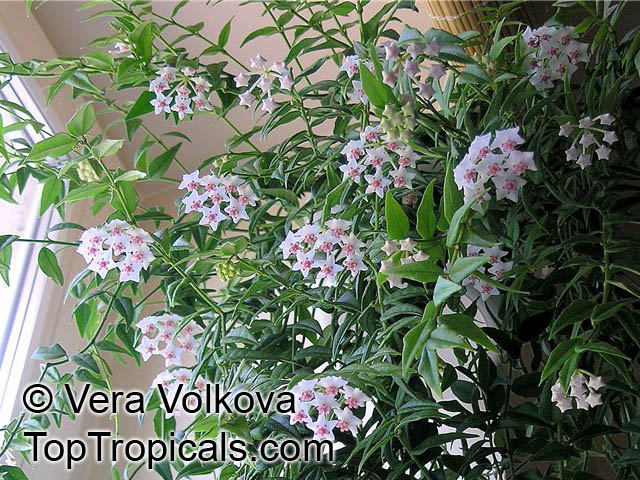
Hoya bilobata
Family: Apocynaceae (Formerly:Asclepiadaceae)Subfamily: Asclepiadoideae
Origin: Philippines
USDA Zone: 9-11?

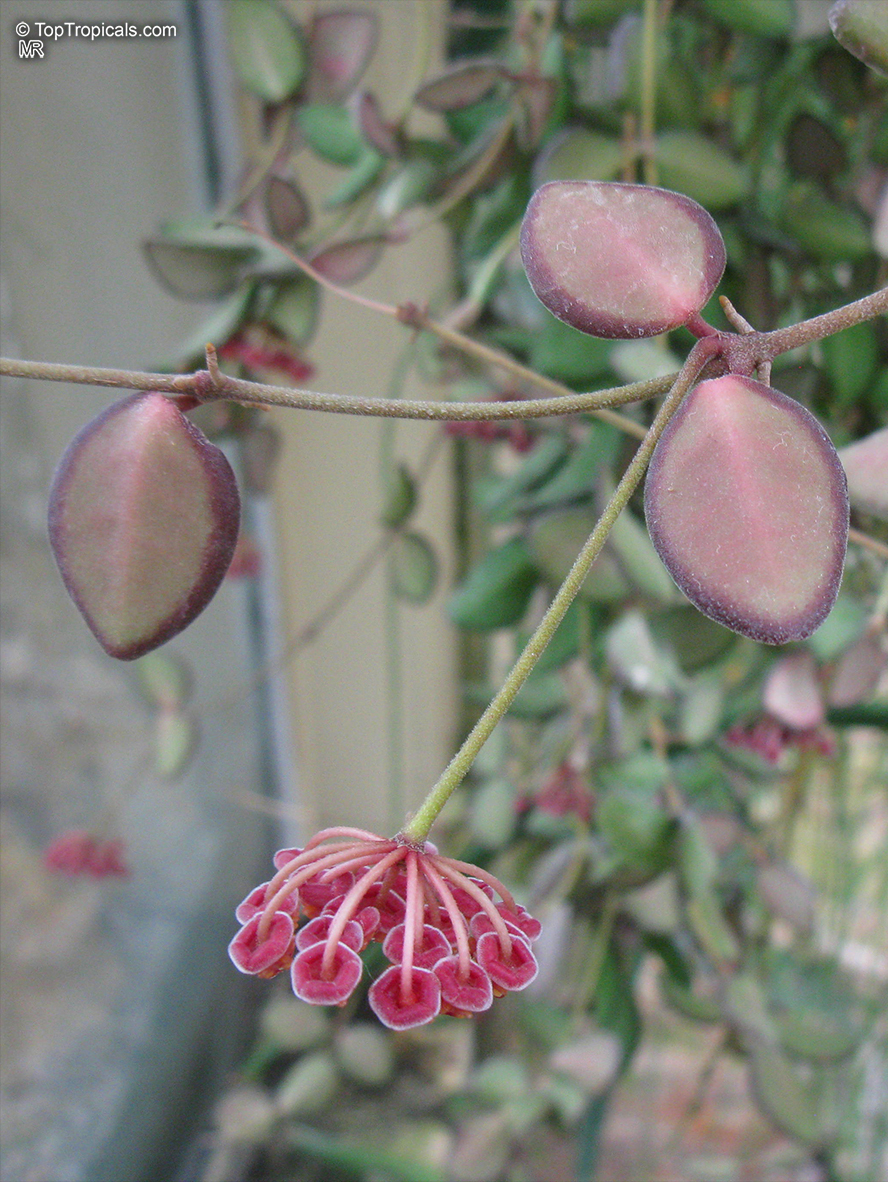
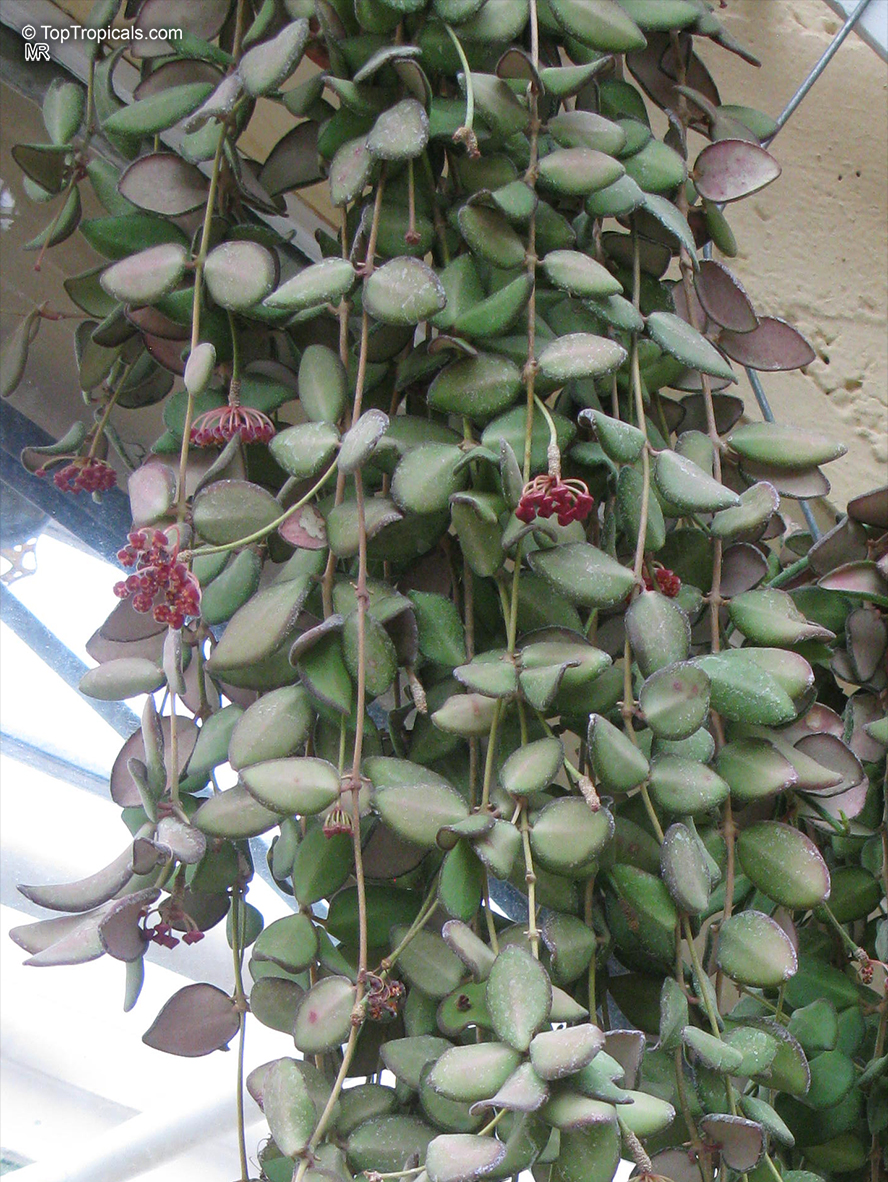
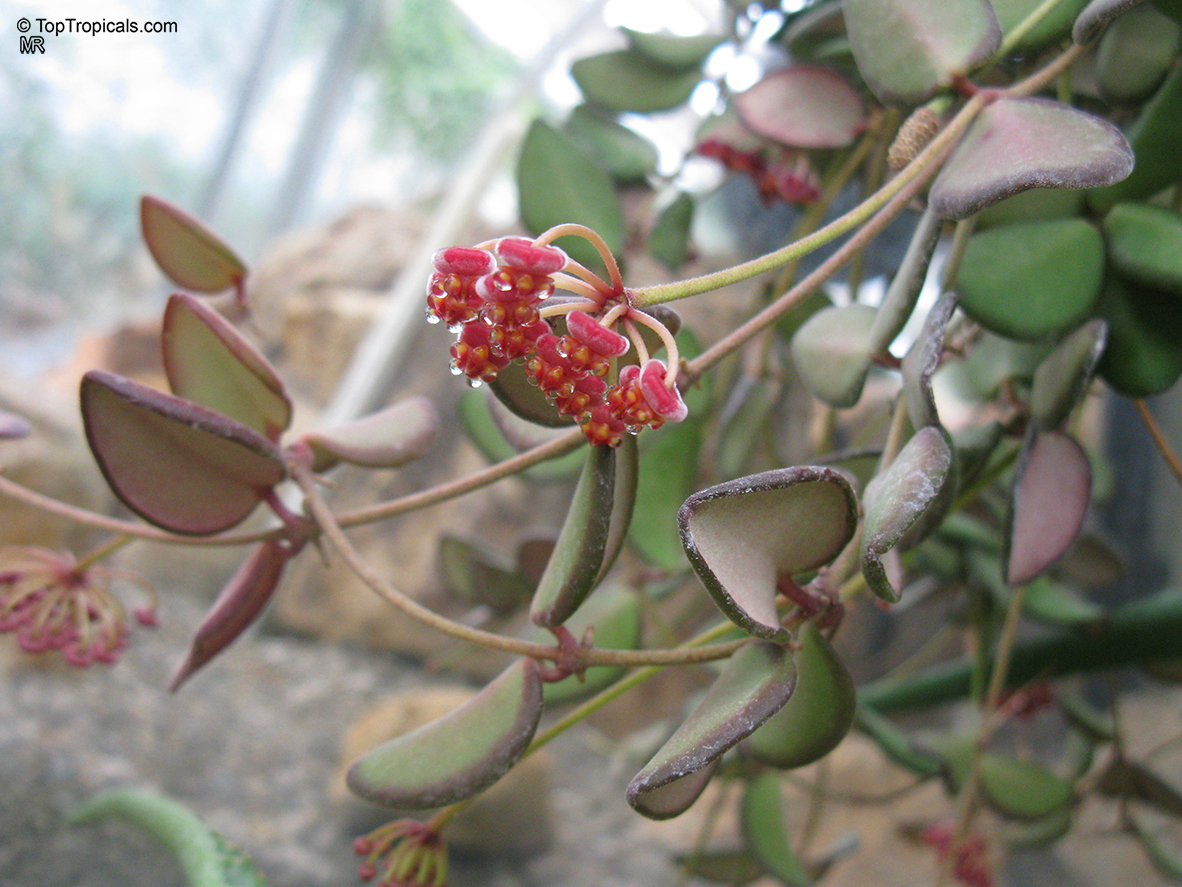
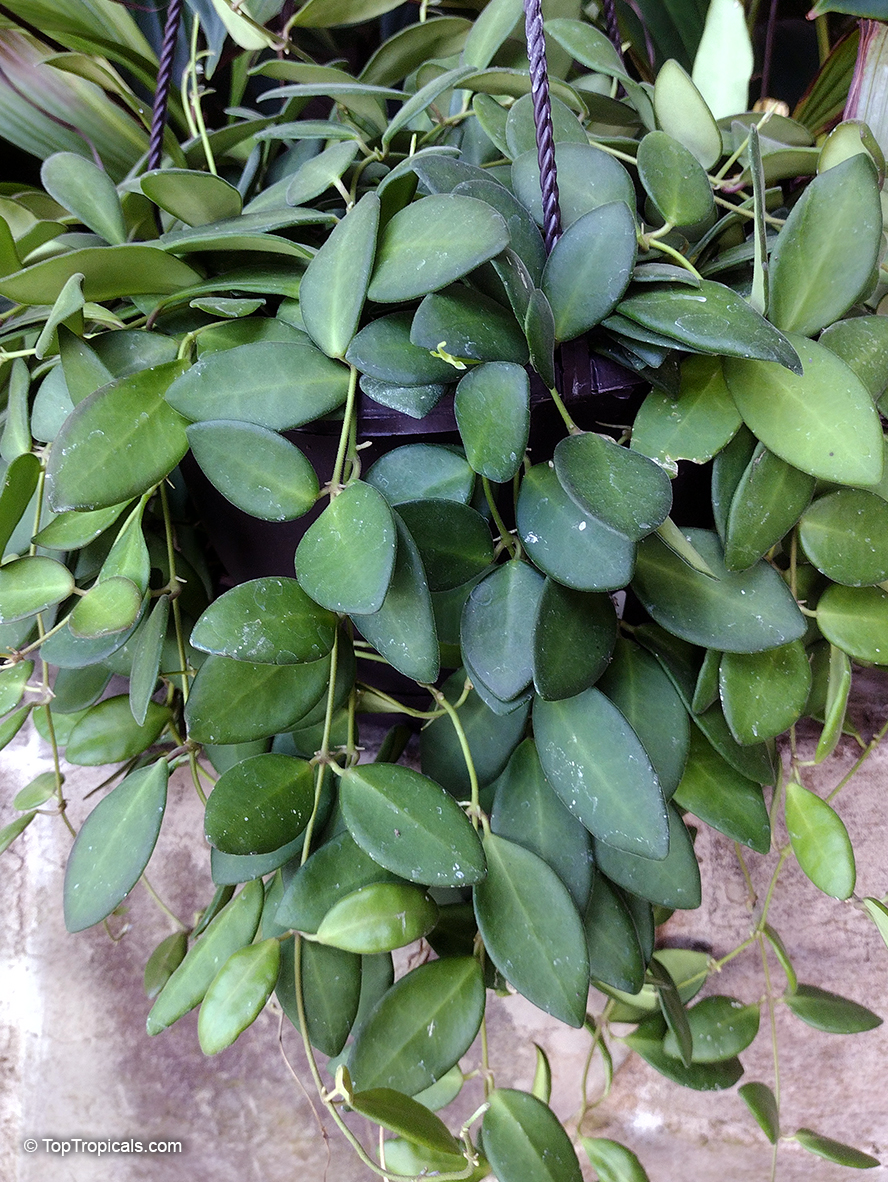
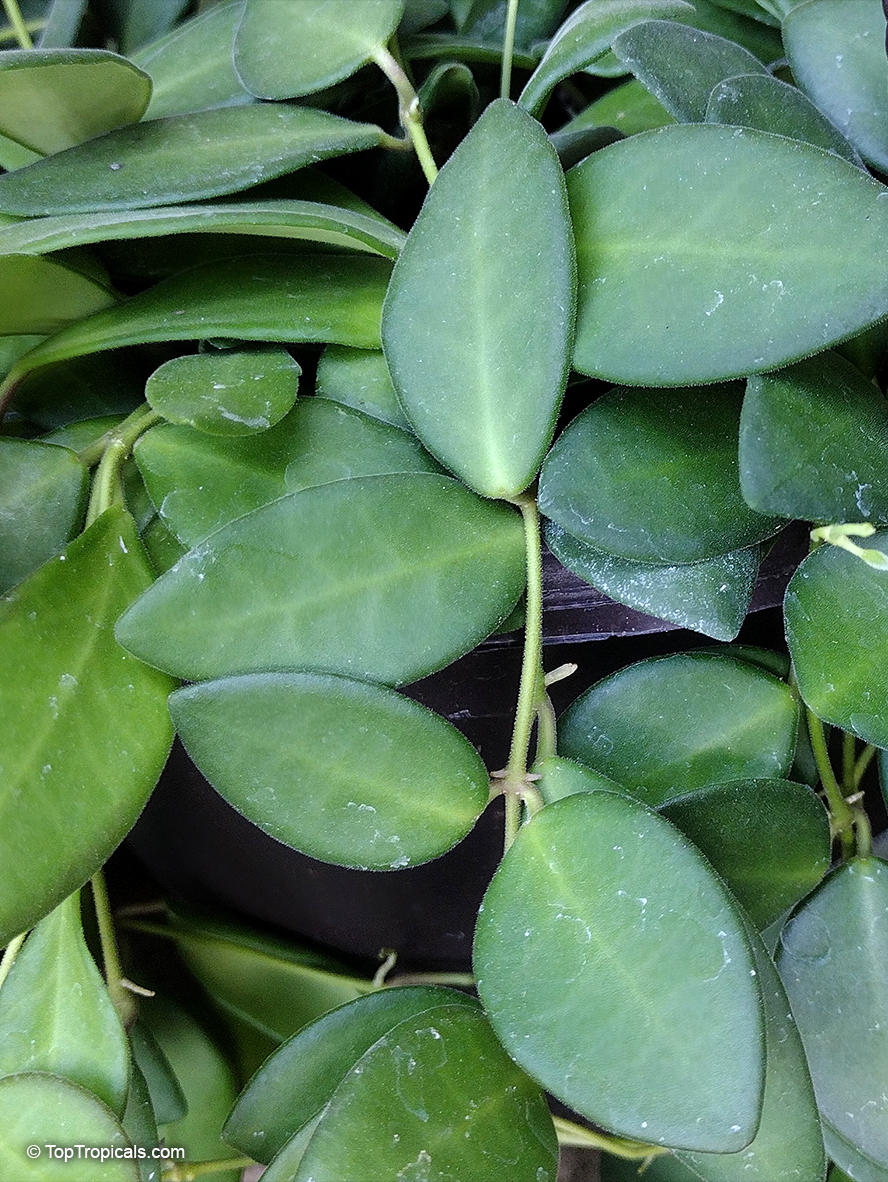
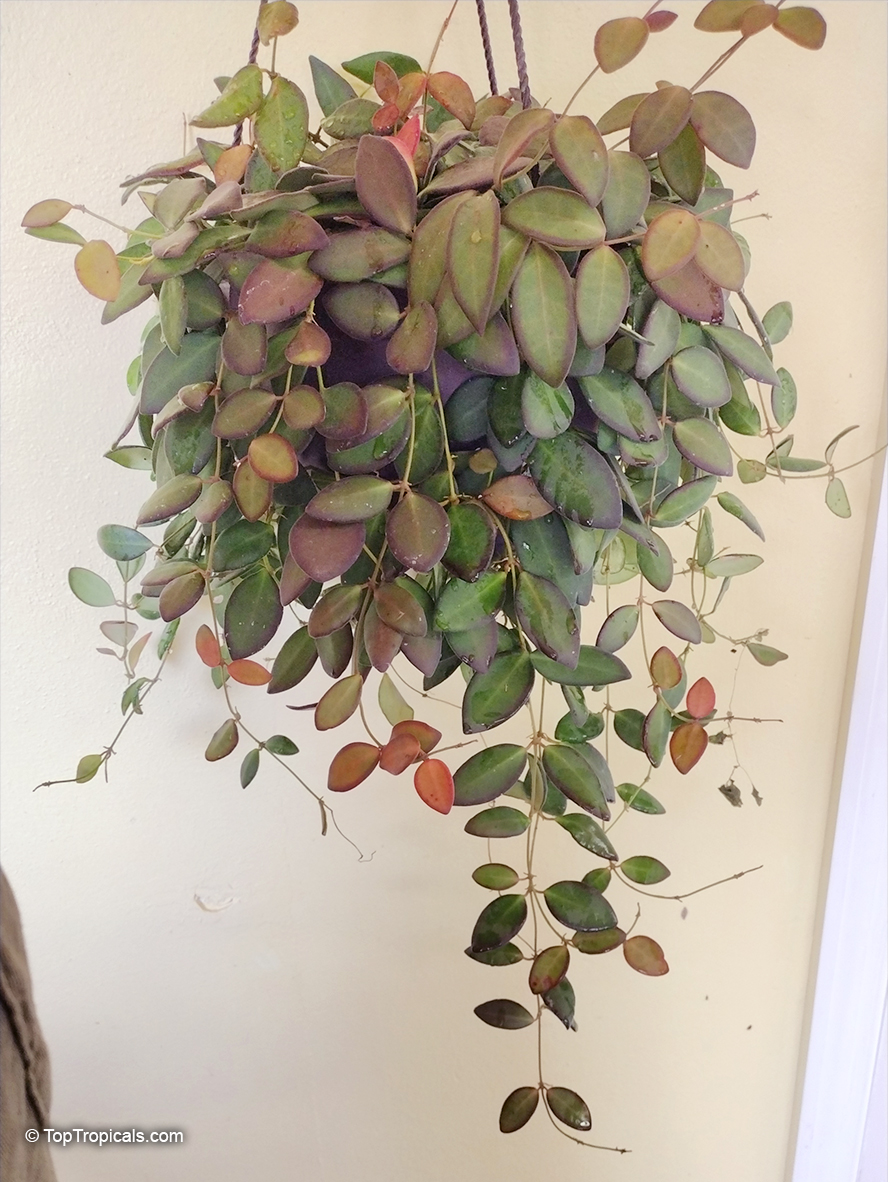
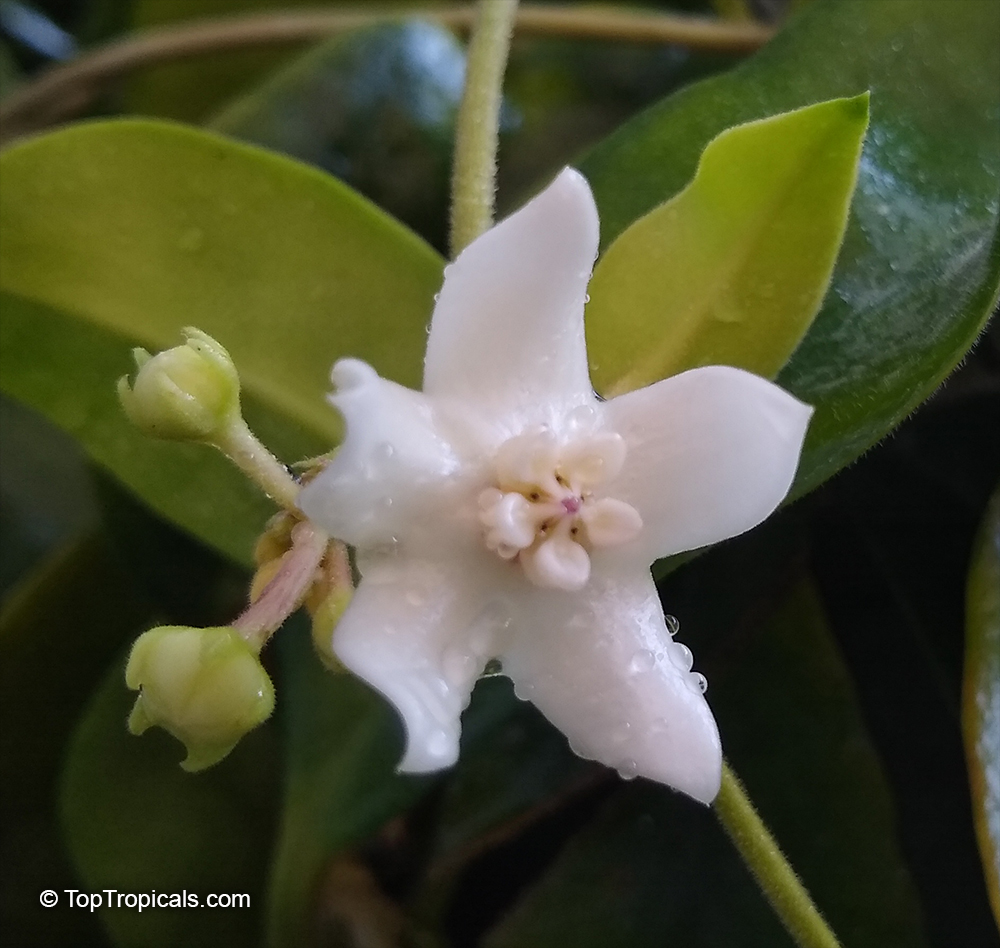
Hoya bilobata is an evergreen perennial that is generally found trailing, but can have a climbing habit that grows to 24 inches or longer. H. bilobata can be considered either an epiphyte or a lithophyte.
Hoya plants often mislabelled as Hoya bilobata or Hoya tsangii in garden centers and big-box stores are actually Hoya sp. DS-70.
Hoya calycina
Wax FlowerFamily: Apocynaceae (Formerly:Asclepiadaceae)
Subfamily: Asclepiadoideae
Origin: Papua New Guinea
USDA Zone: 9-11?

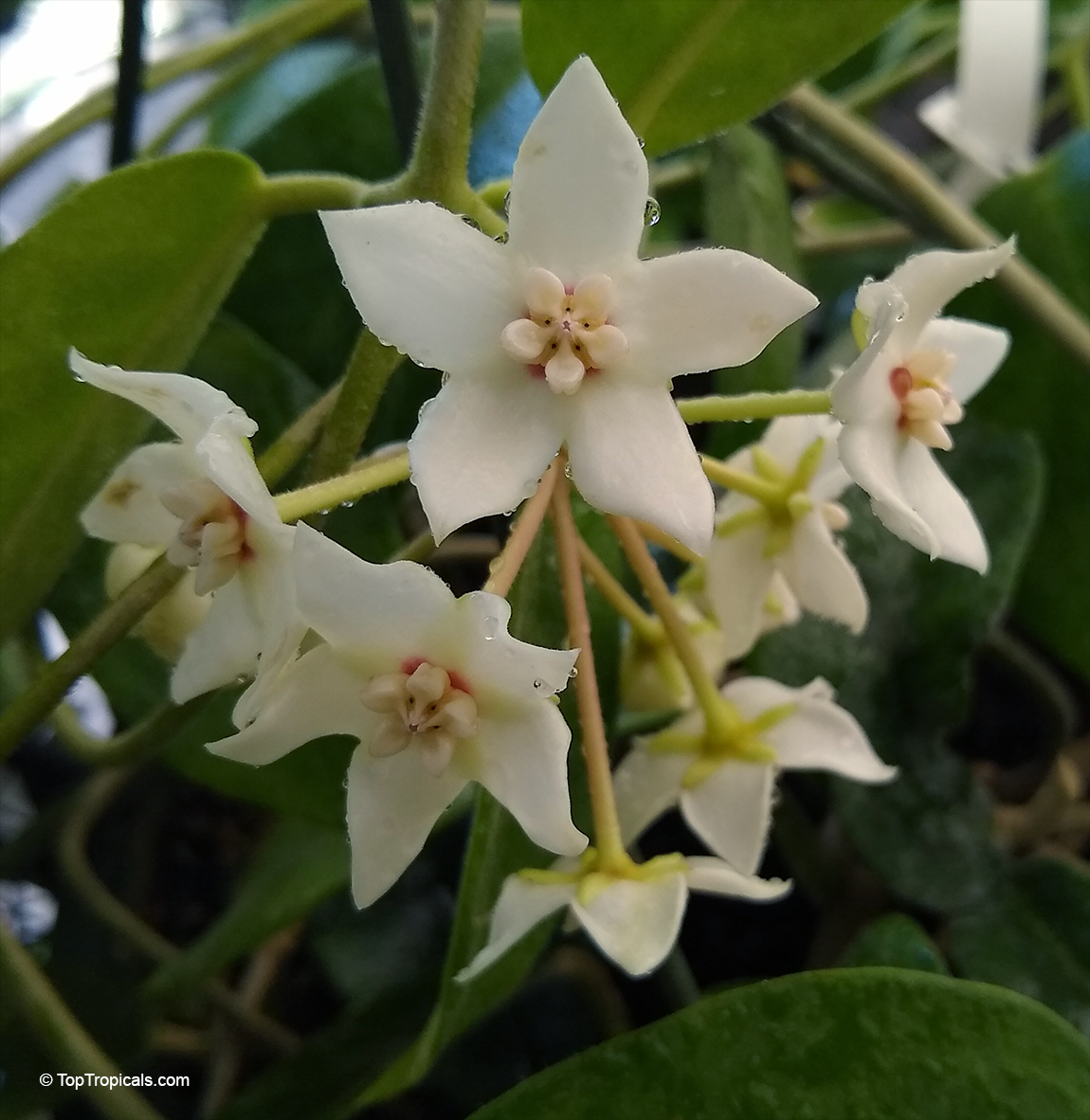
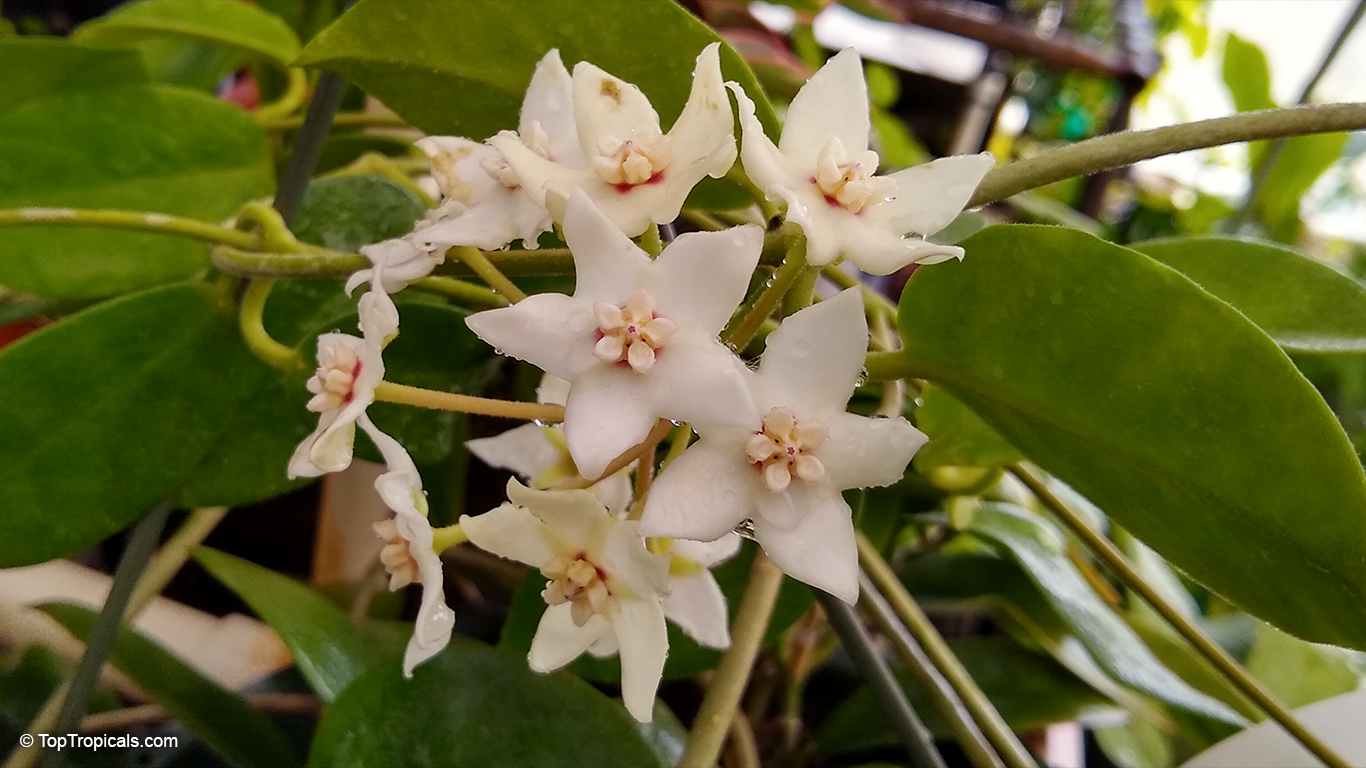
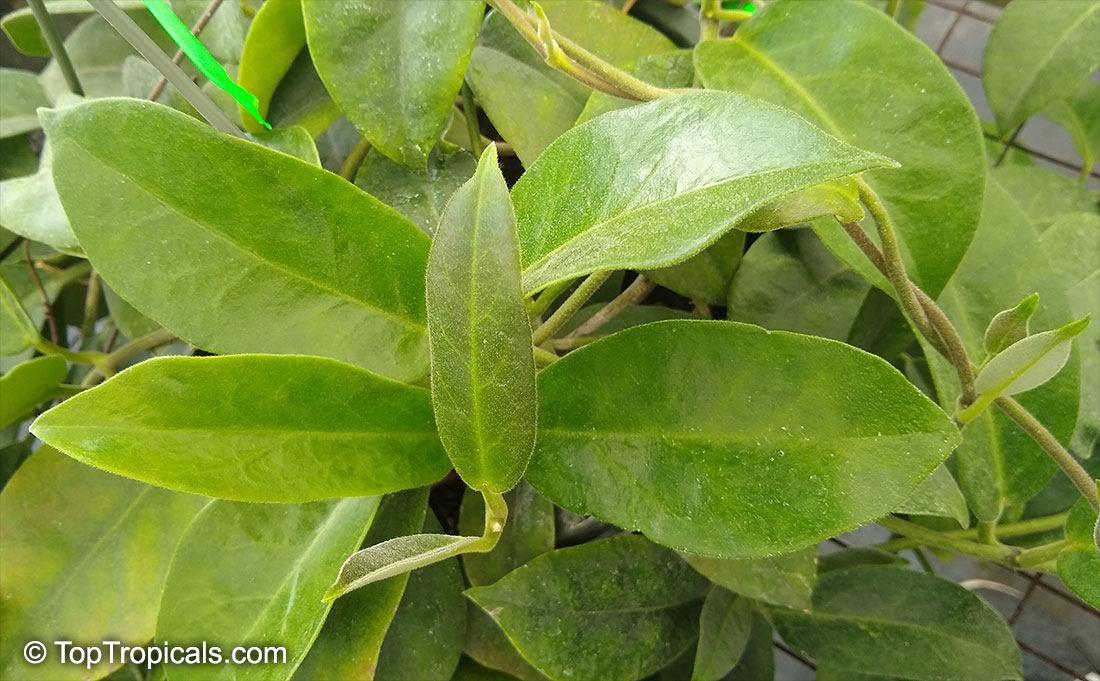
Hoya calycina is an easy, and vigorous grower that flowers in response to shortening day length hours. This hardy, vigorous plant makes an ideal houseplant with velvety leaves and fragrant white flowers with red centers. There are varieties with completely white flowers.
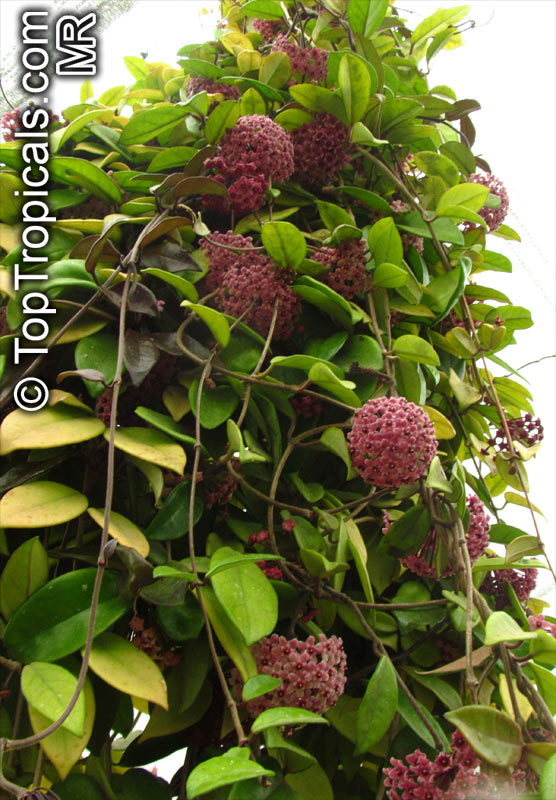
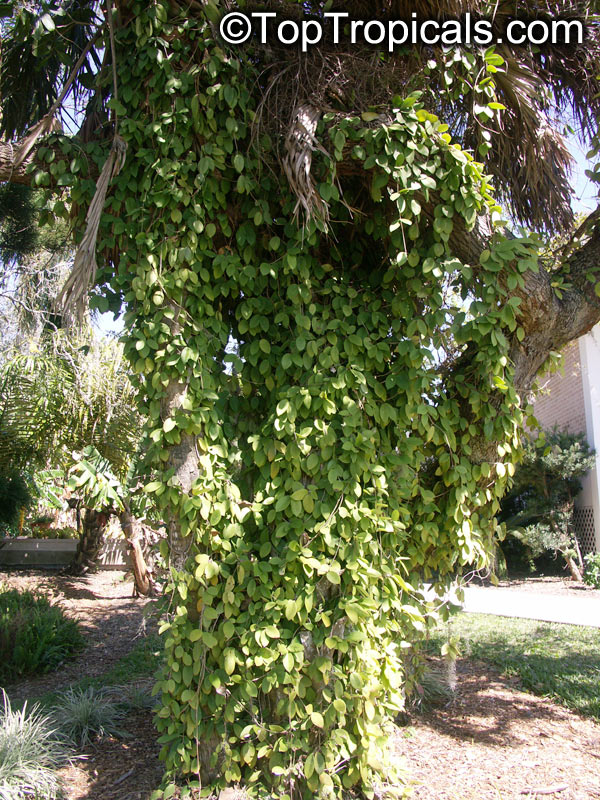
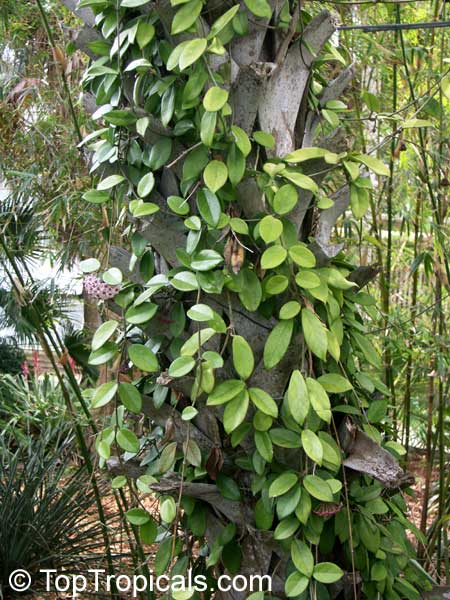
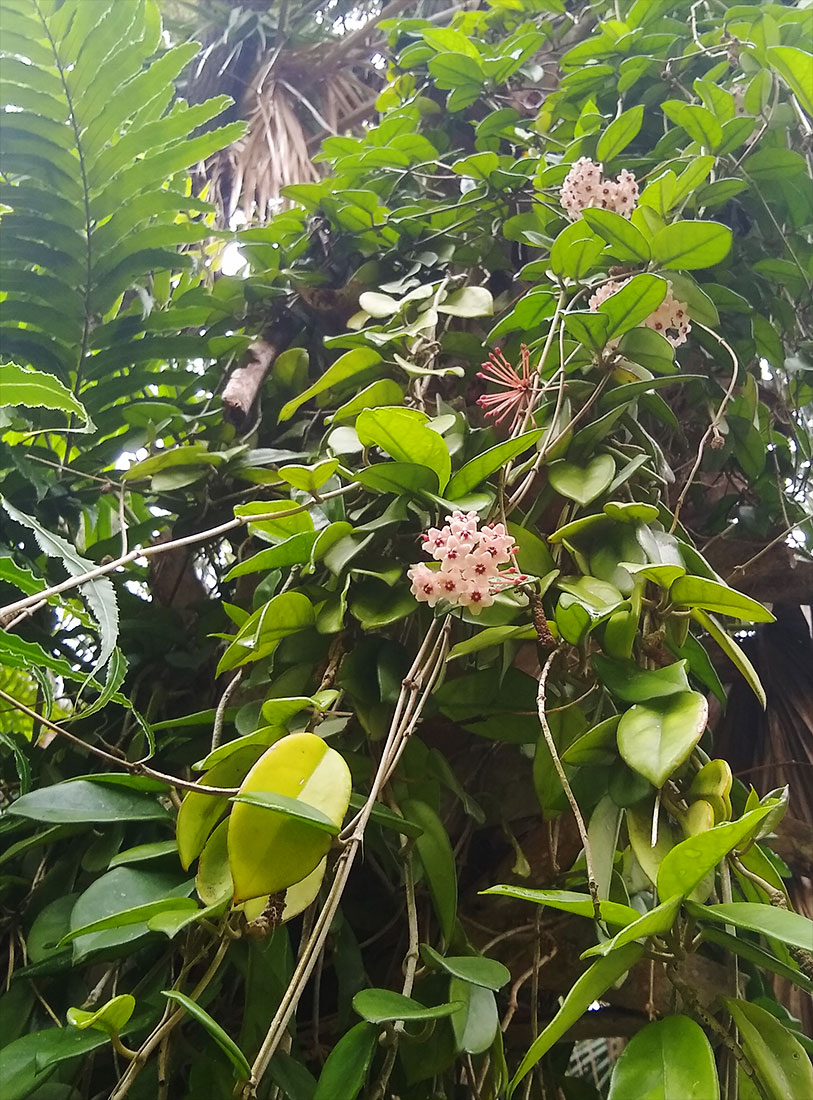
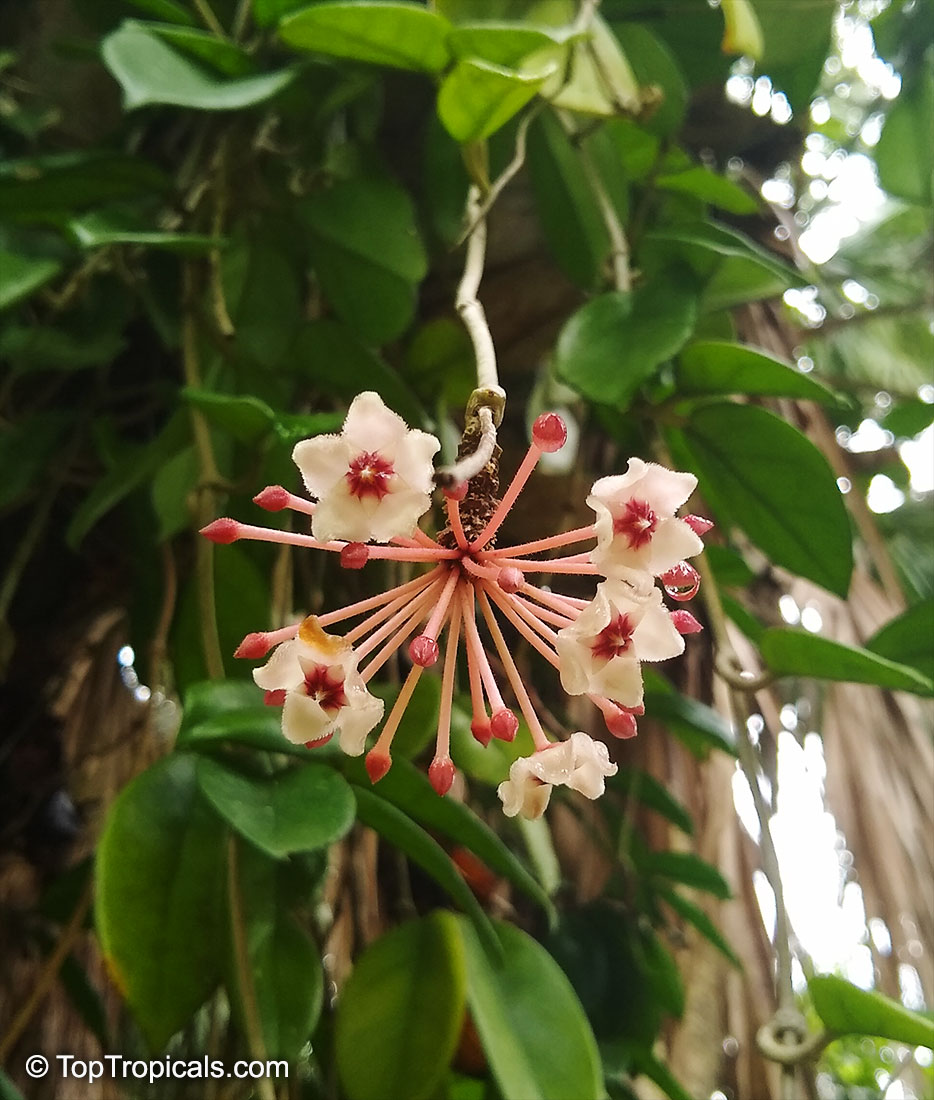
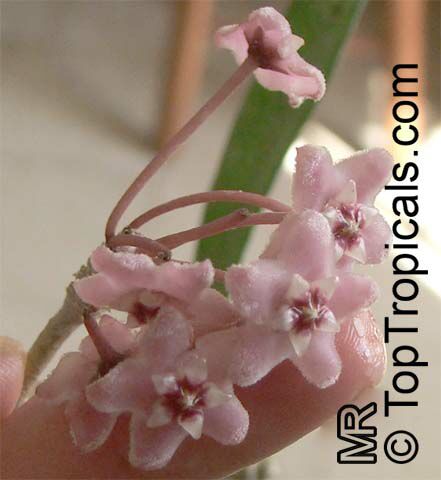
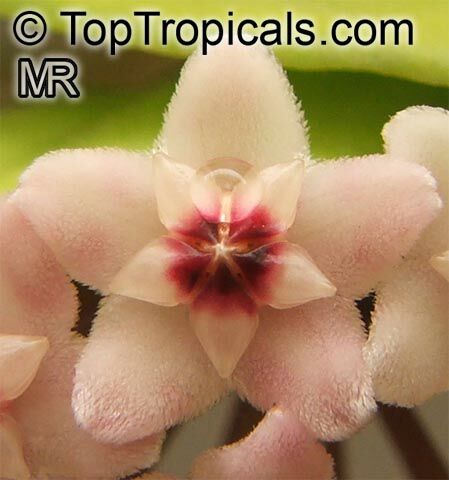
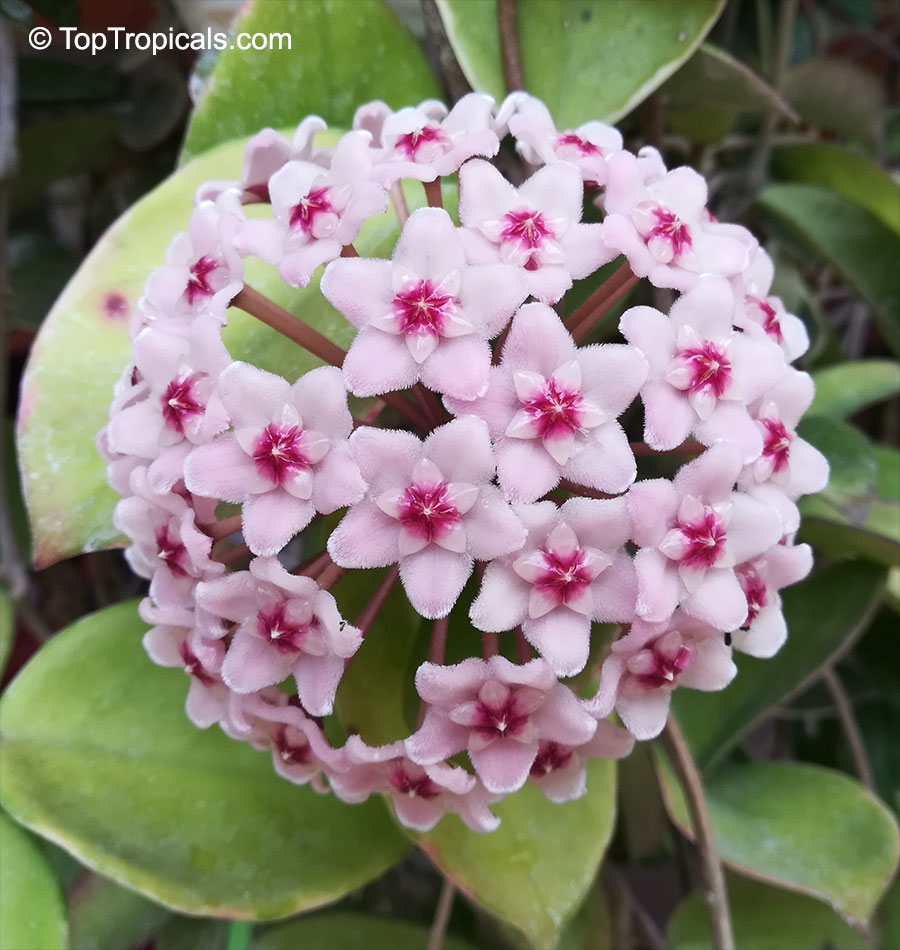
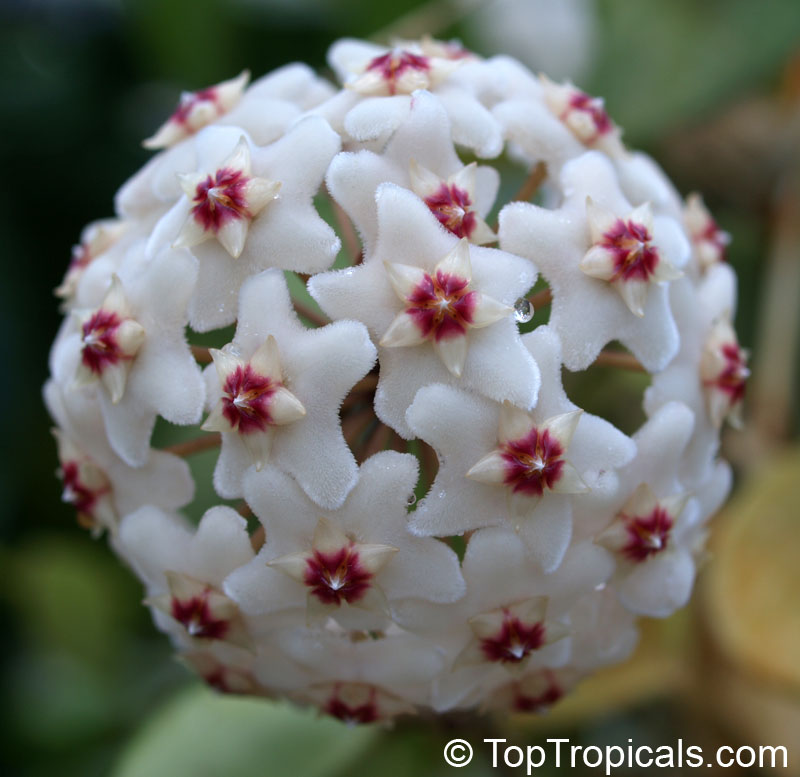
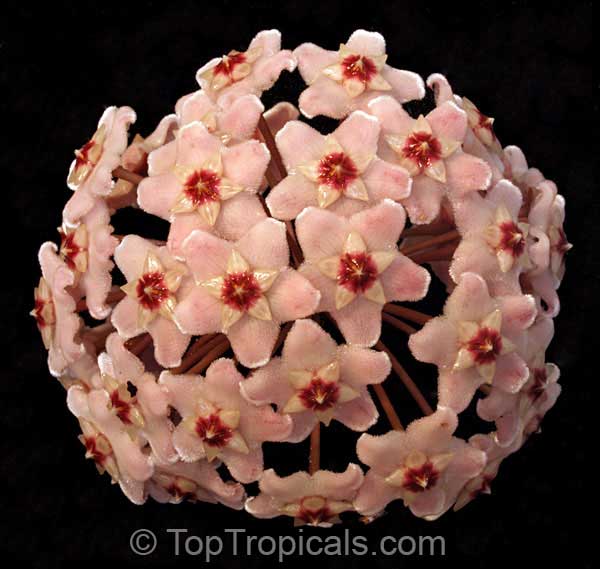
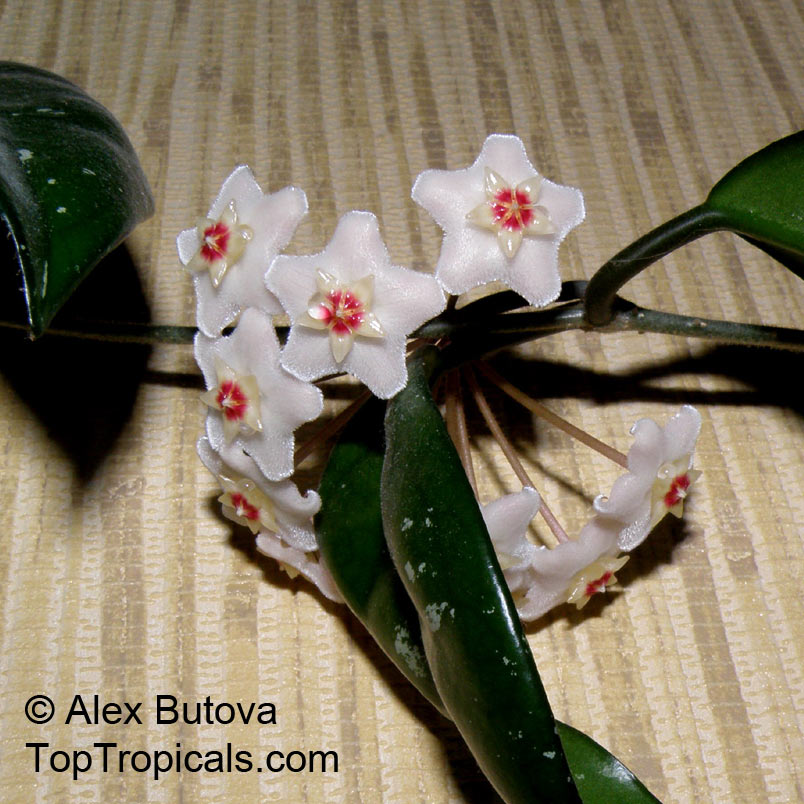
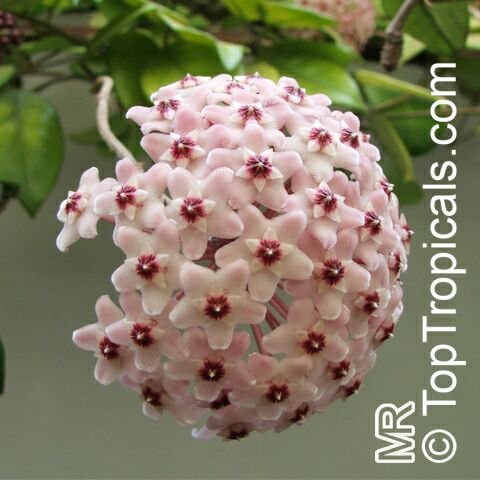
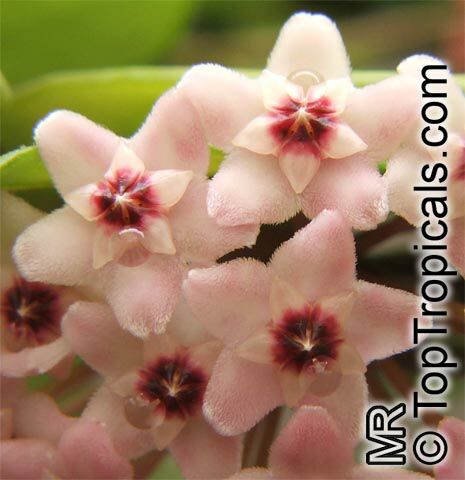
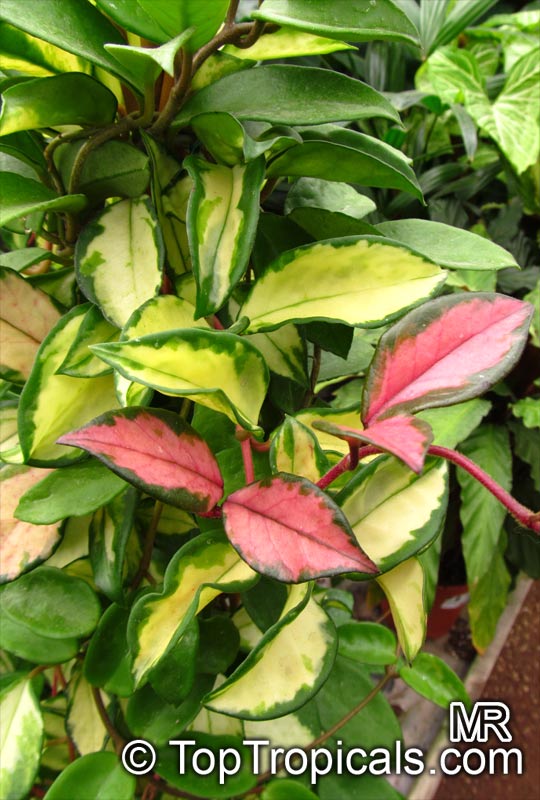
Hoya carnosa
Wax PlantFamily: Apocynaceae (Formerly:Asclepiadaceae)
Subfamily: Asclepiadoideae
Origin: Eastern Asia and Australia


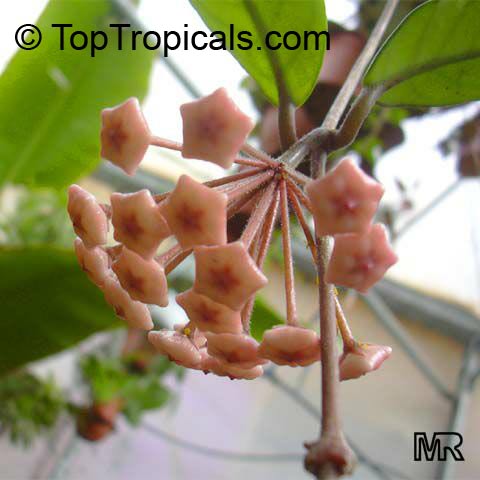
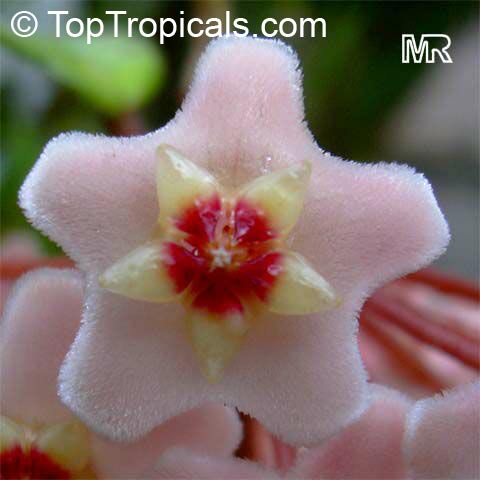
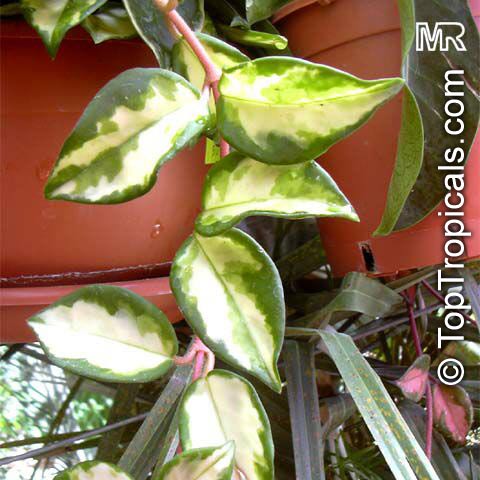
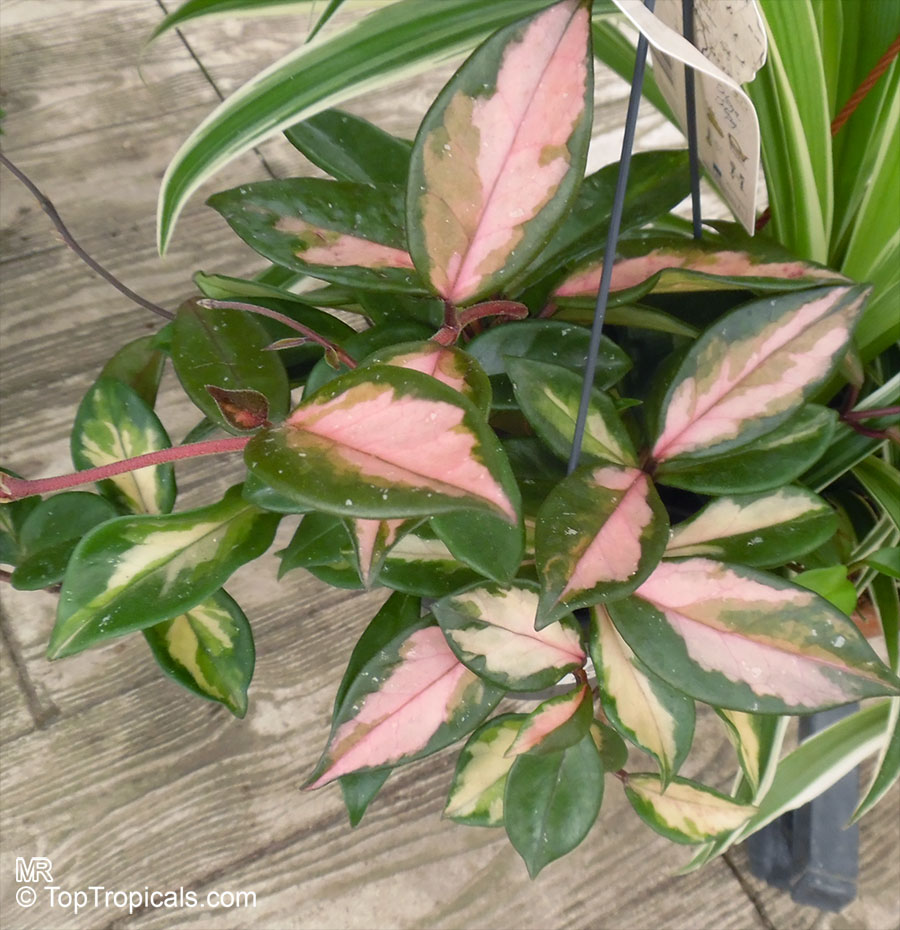
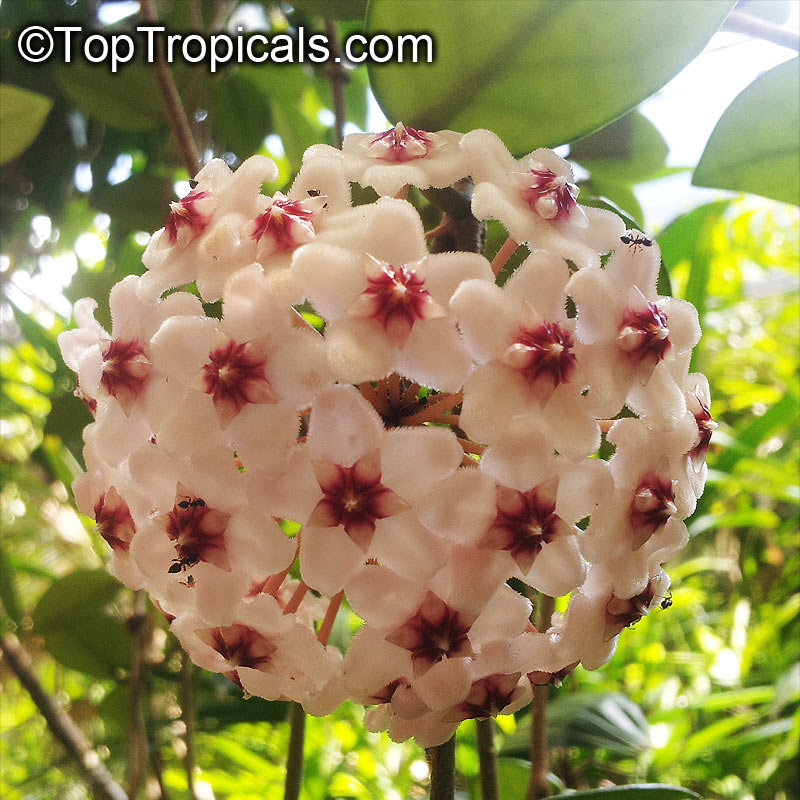
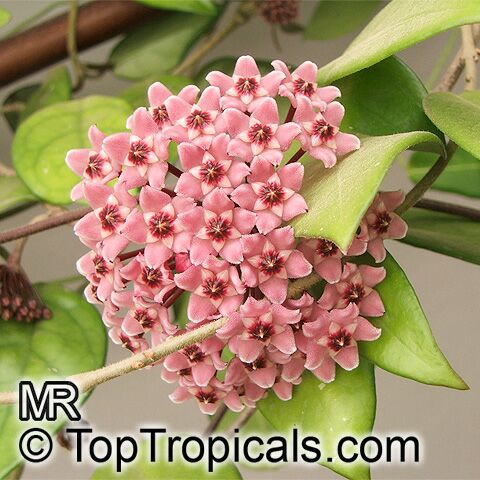
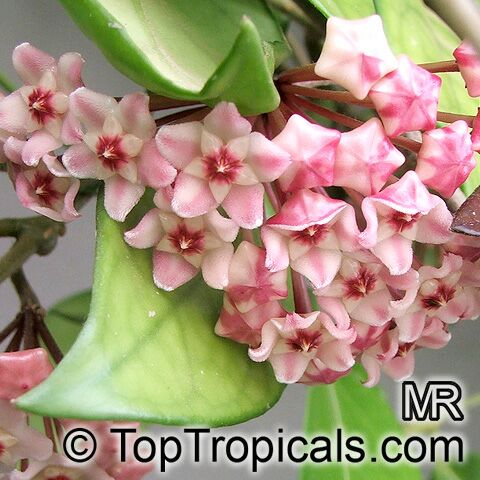
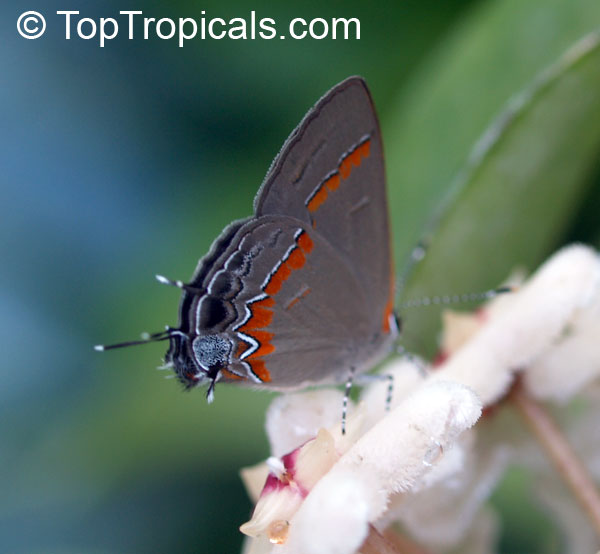
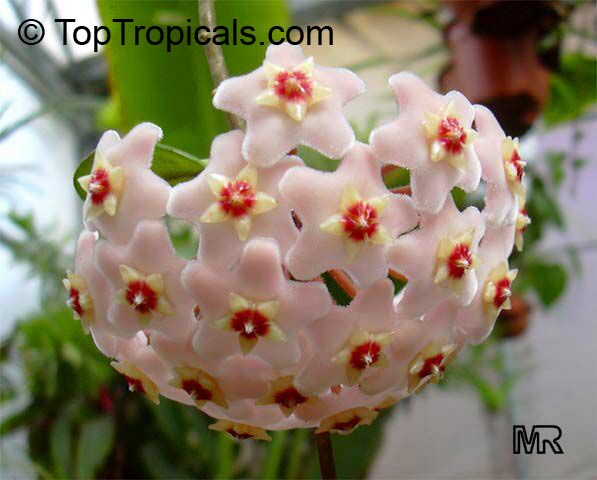
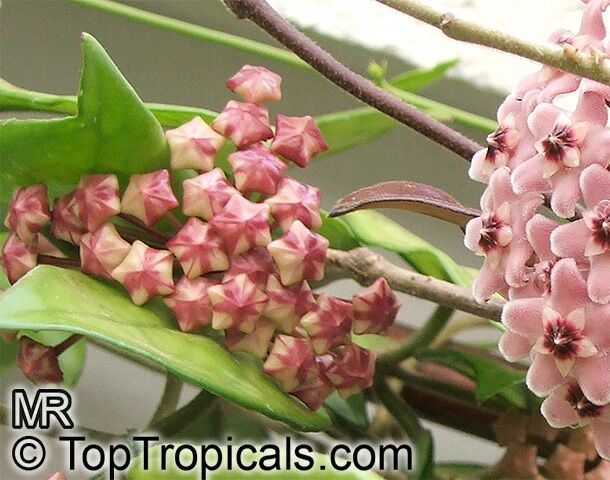
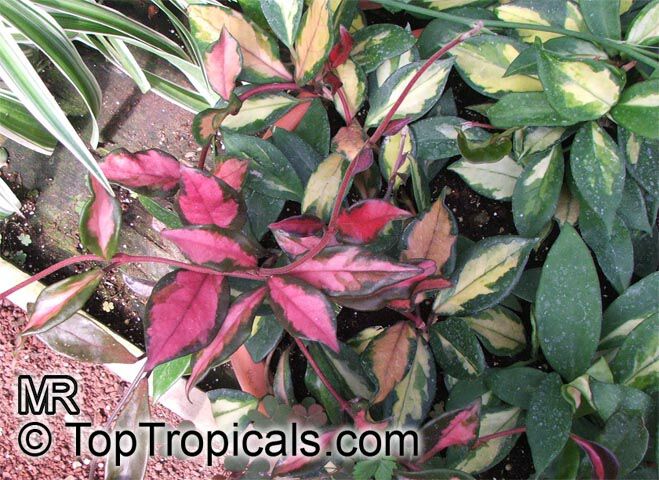
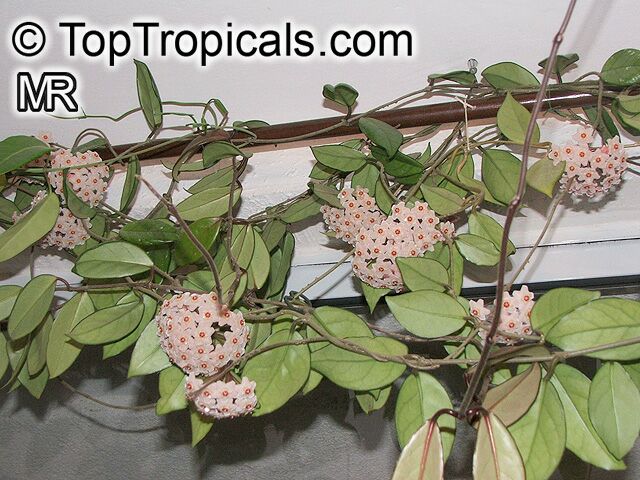
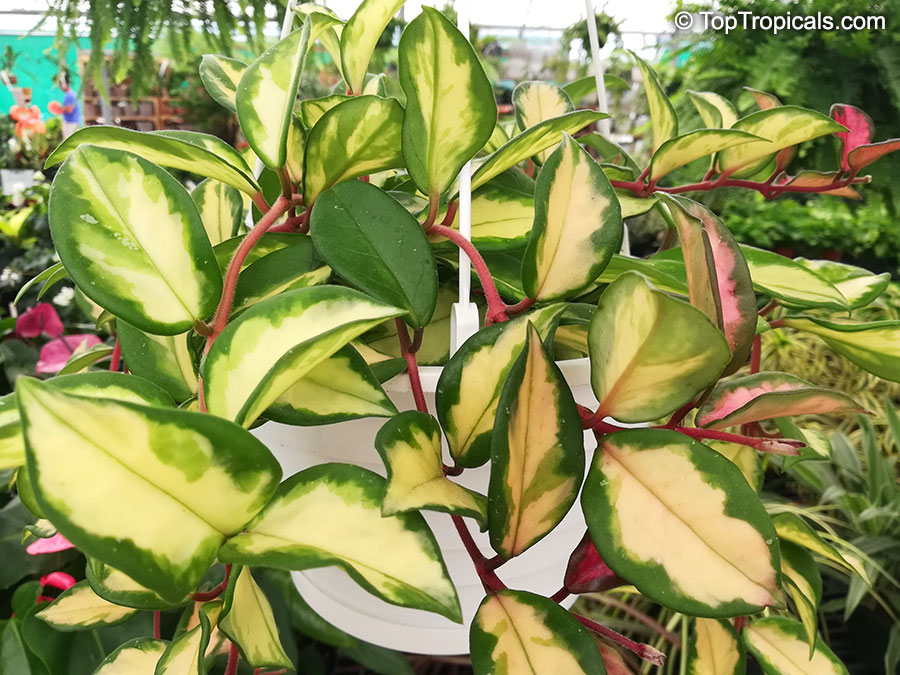
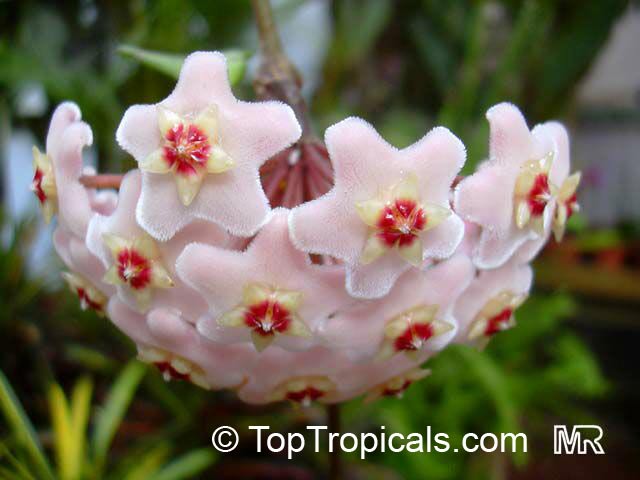
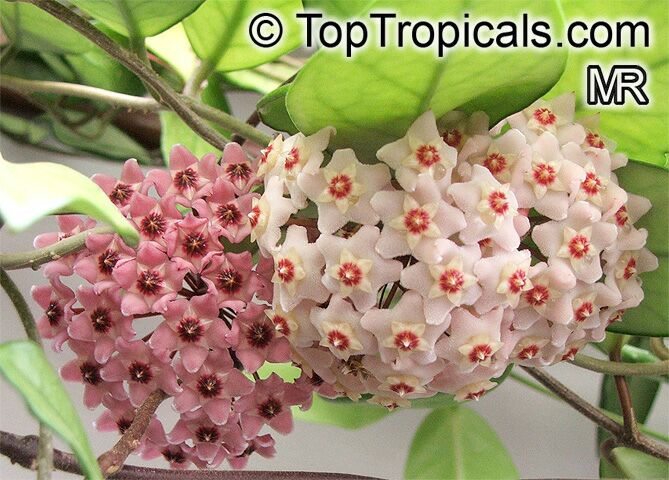
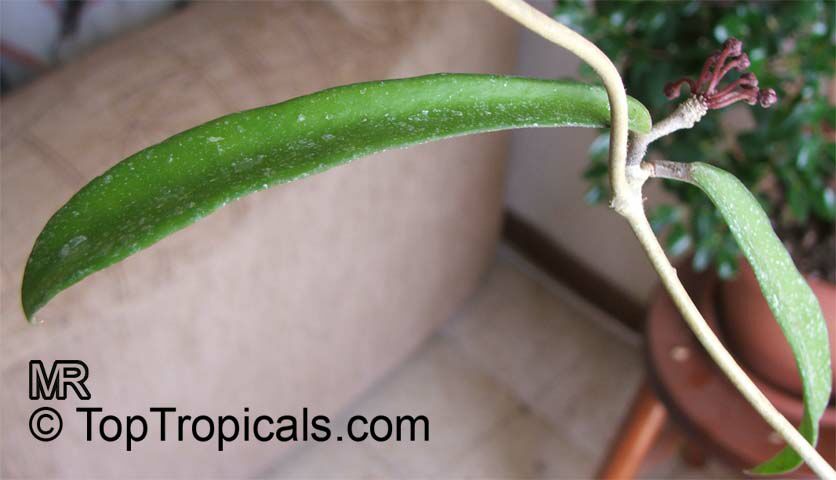
Hoya carnosa does best in at least 4 hours of direct sunlight a day, but also can be grown in bright indirect or curtain-filtered sunlight. Night temperatures of 60F to 65F and day temperatures of 70F or higher are optimal. Water freely during flowering but allow the soil to become almost dry between waterings when the plants are resting. Fertilize every 2 months in spring and summer. Do not remove the leafless spurs or stubs, on which new flowers appear every year.
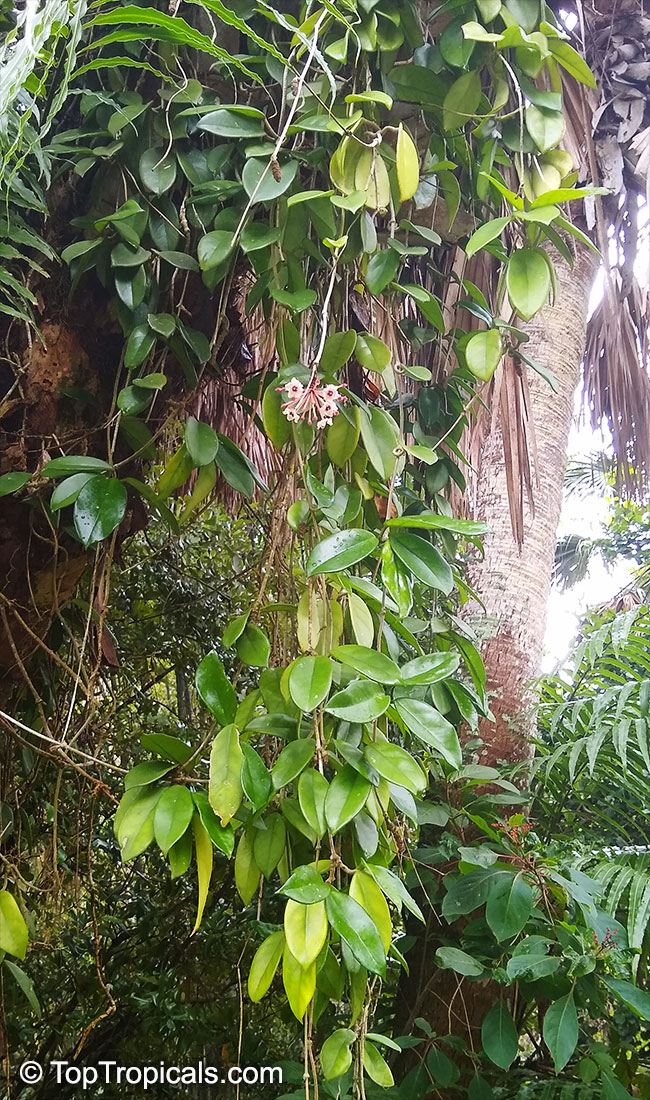
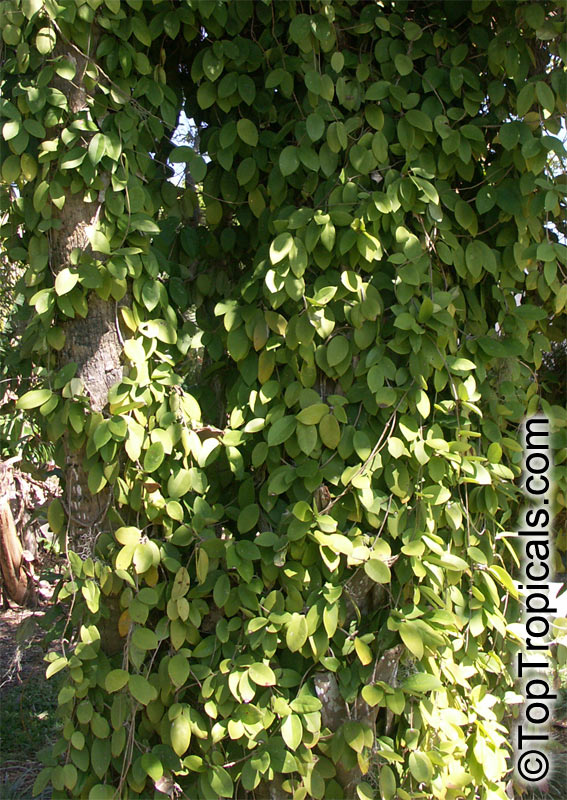
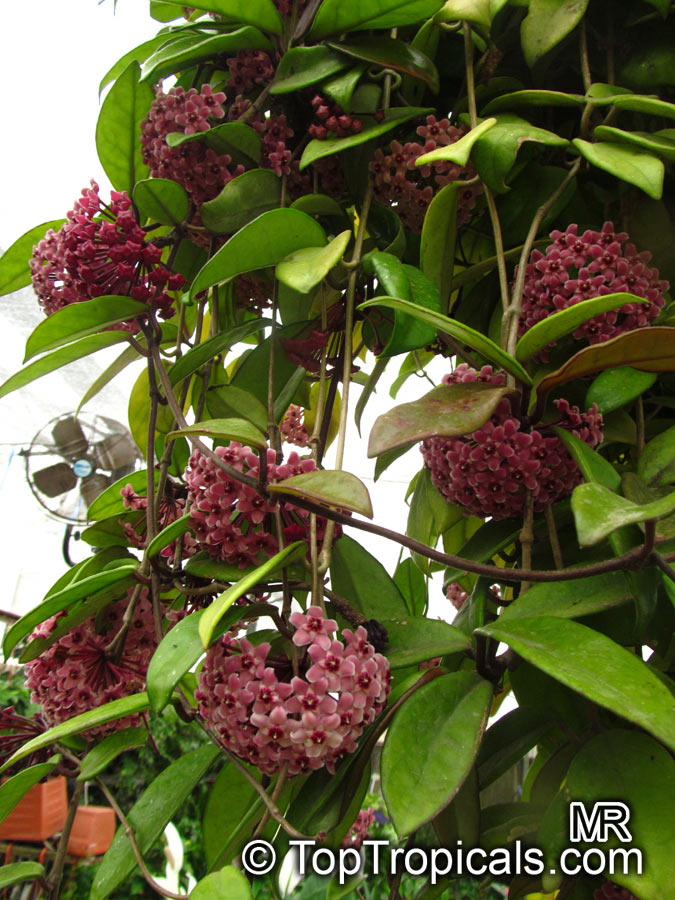
Recommended Fertilizer: SUNSHINE Robusta - Rapid Growth Booster
Hoya carnosa Compacta
Hindu Rope, Krinkle KurlsFamily: Apocynaceae (Formerly:Asclepiadaceae)
Subfamily: Asclepiadoideae
Origin: South East Asia through Australia


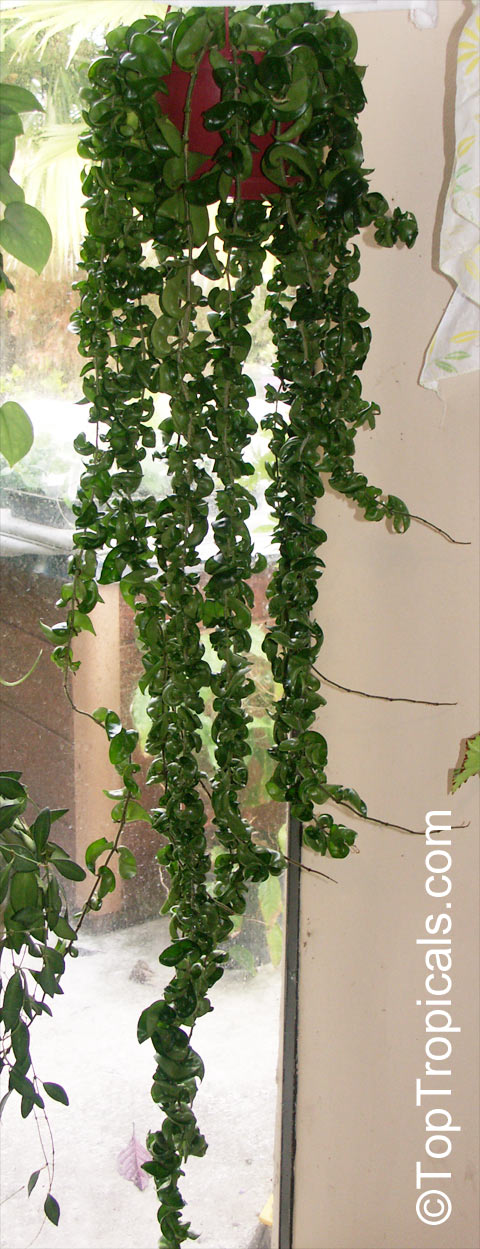
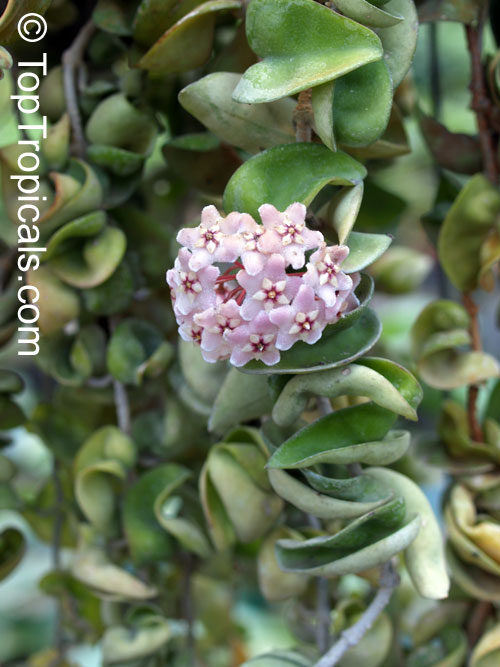
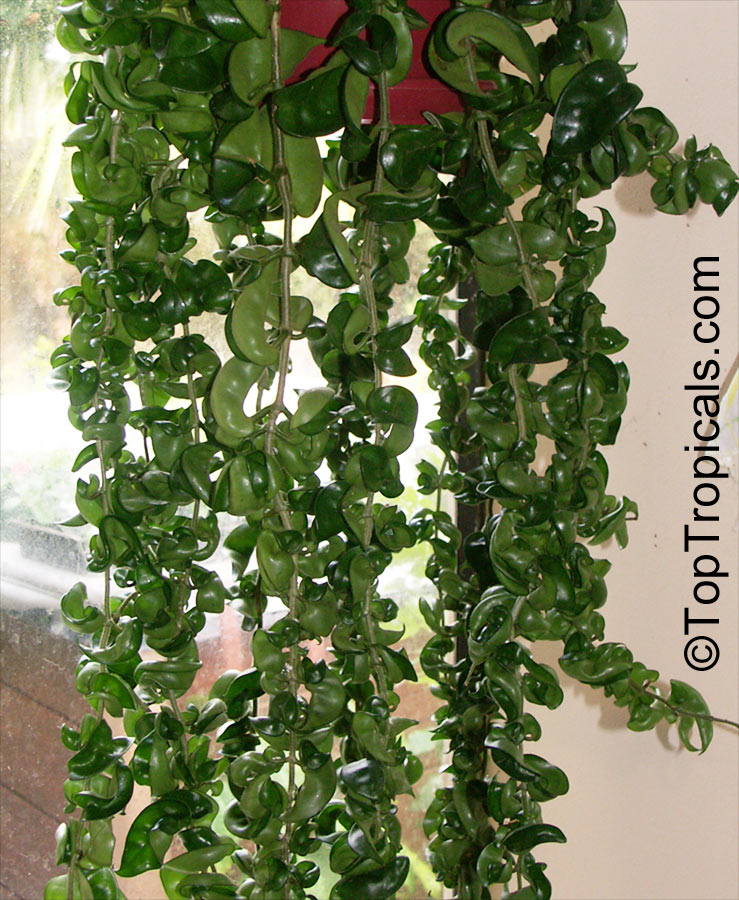
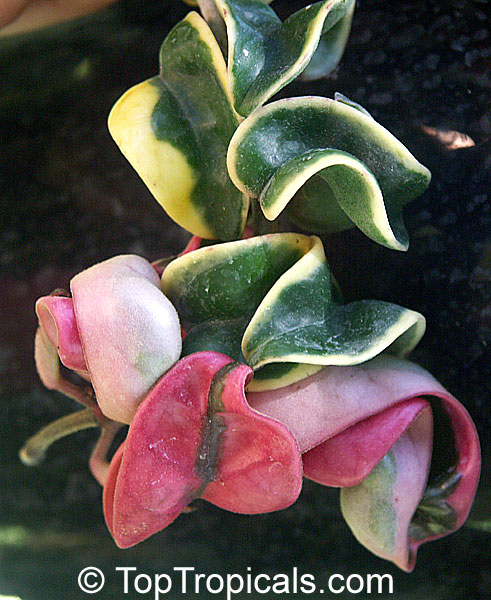
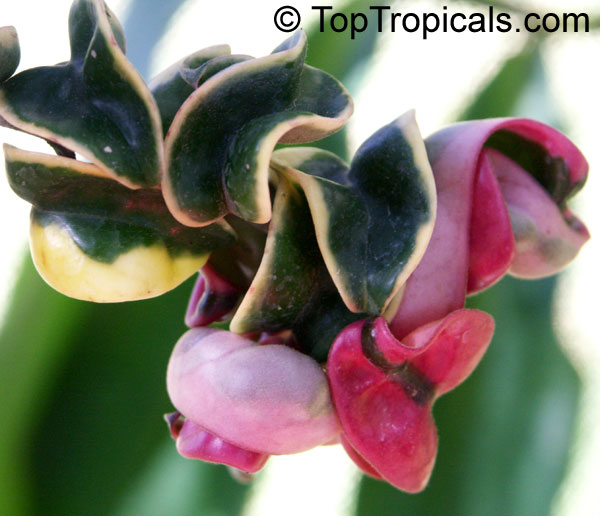
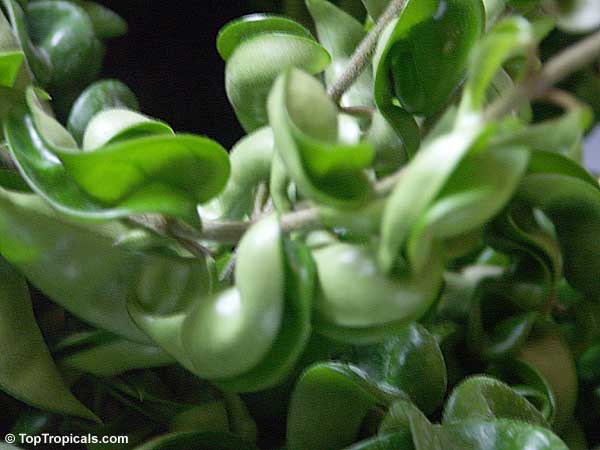
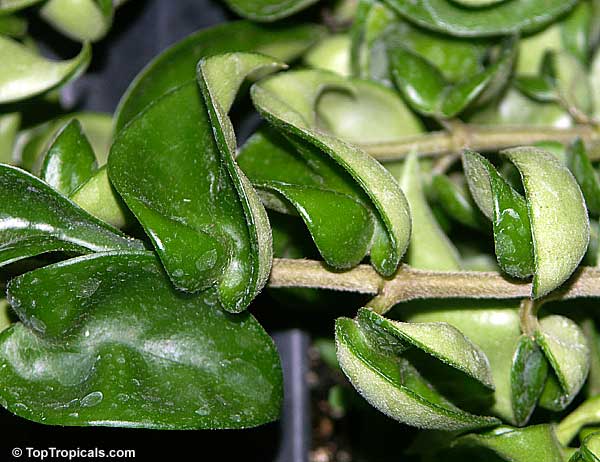
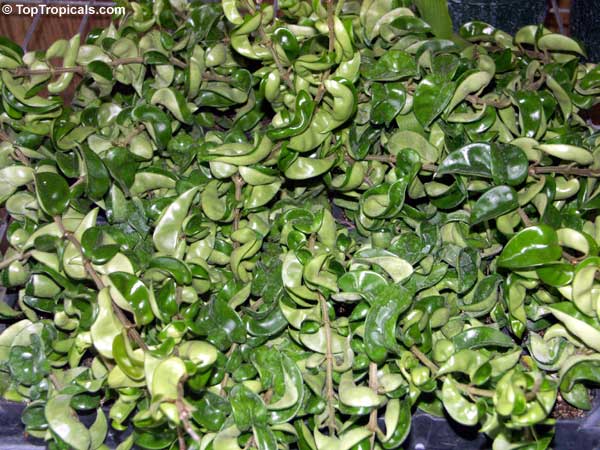
Hoya carnosa Compacta, also known as Hindu Rope, is a groundcover and low-growing shrub plant native to South East Asia through Australia. It features ornamental foliage with interesting curled leaves. Each leaf is dappled with red, crimson and vinous colors. The beautiful blooms of Hindu Rope are fragrant and attract butterflies, Hummingbirds and other pollinators. The lower portion of the stem tends to take on an interesting rope-like shape hence the common name. It is quite a slow-growing plant, but with the right kind of care, it can turn out to be a showstopper in any garden.
Hindu Rope can grow in full or partial shade. They prefer moderate watering and are quite tolerant of salt, making them a greatly suitable choice in seaside plantings. In USDA Hardiness Zones 9 to 11 they are evergreen and need extra focus on fertilizer, potting mix and plenty of sunshine. If the Hindu Rope is grown in cooler climates with snow and frost, the plant should be in a pot and moved indoors during cold season. The soil should be well-aerated and light with a neutral pH and with plenty of organic material. During the growing season, use a balanced liquid fertilizer for best results. Pruning is not required, but in case you want to keep the plant compact, you can prune after flowering. Make sure to sterilize your pruning tool beforehand to avoid the spread of disease.

Hoya curtisii
Million Hearts, Tiny-leaf Porcelain FlowerFamily: Apocynaceae (Formerly:Asclepiadaceae)
Subfamily: Asclepiadoideae
USDA Zone: 10-11?

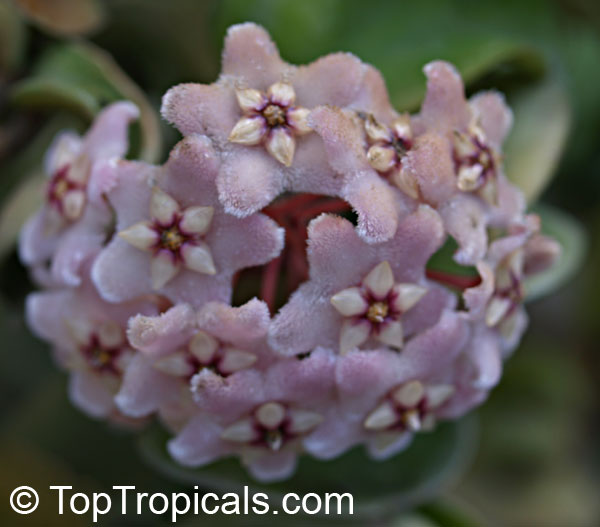
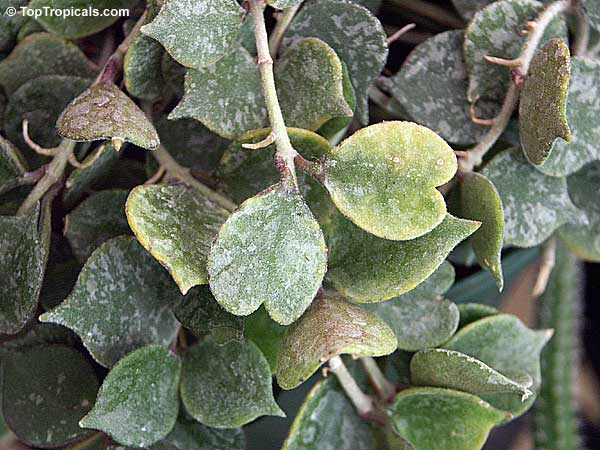
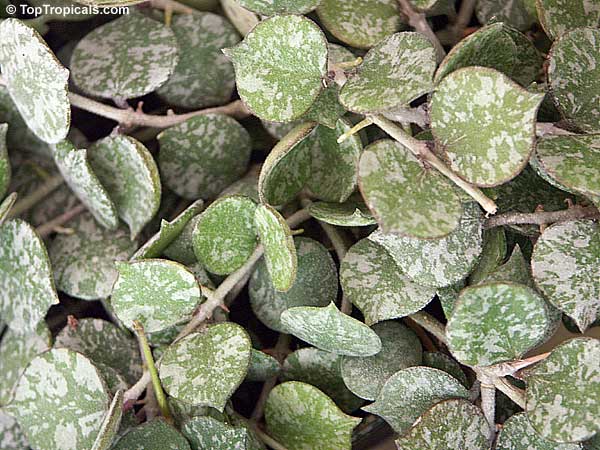
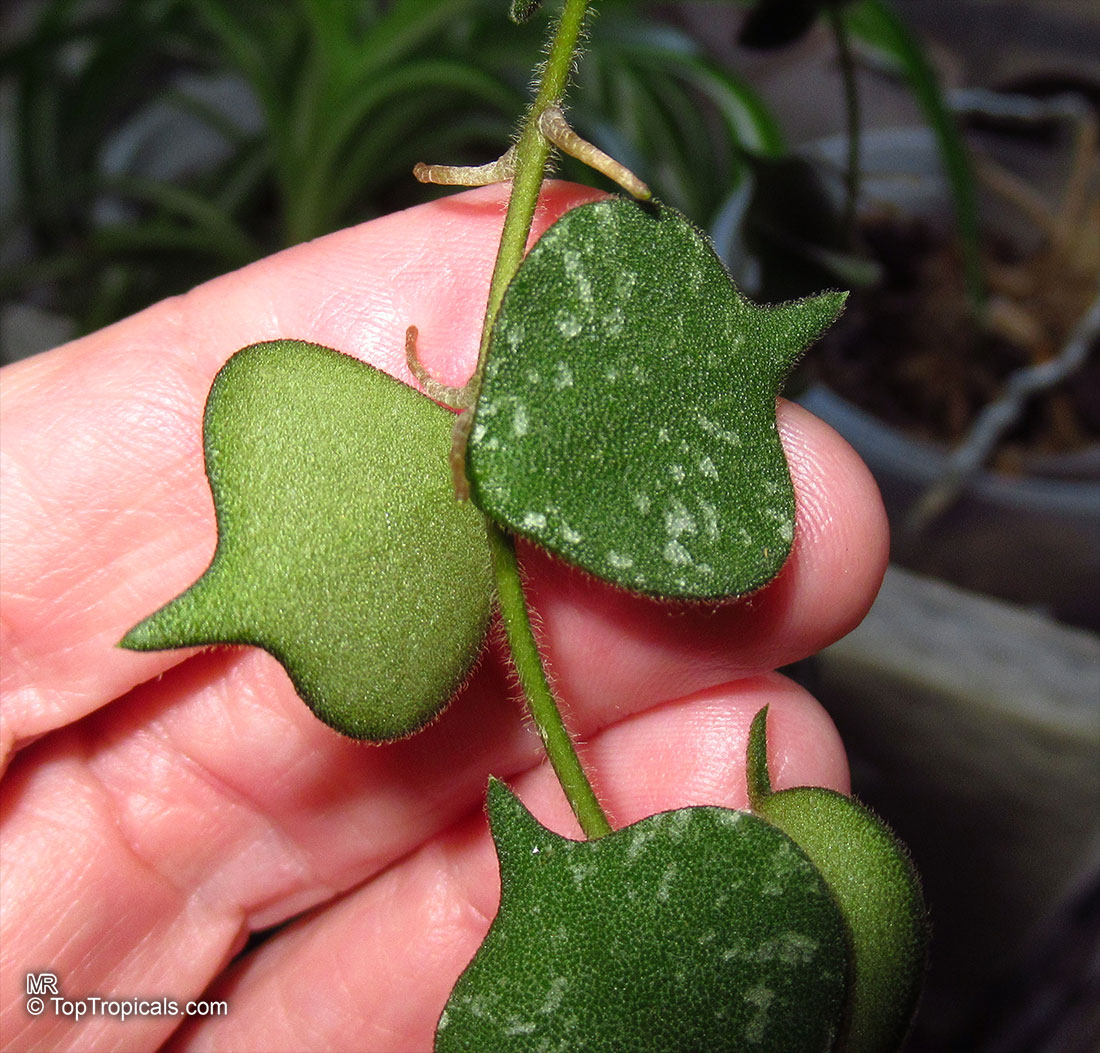
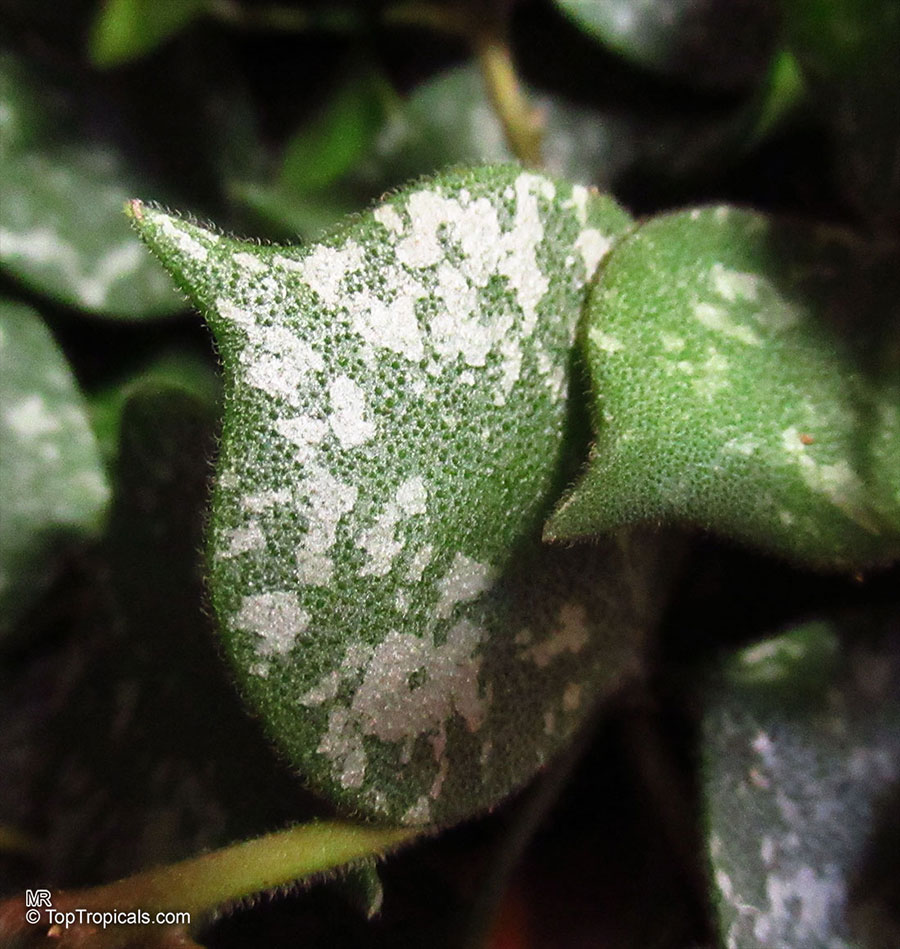
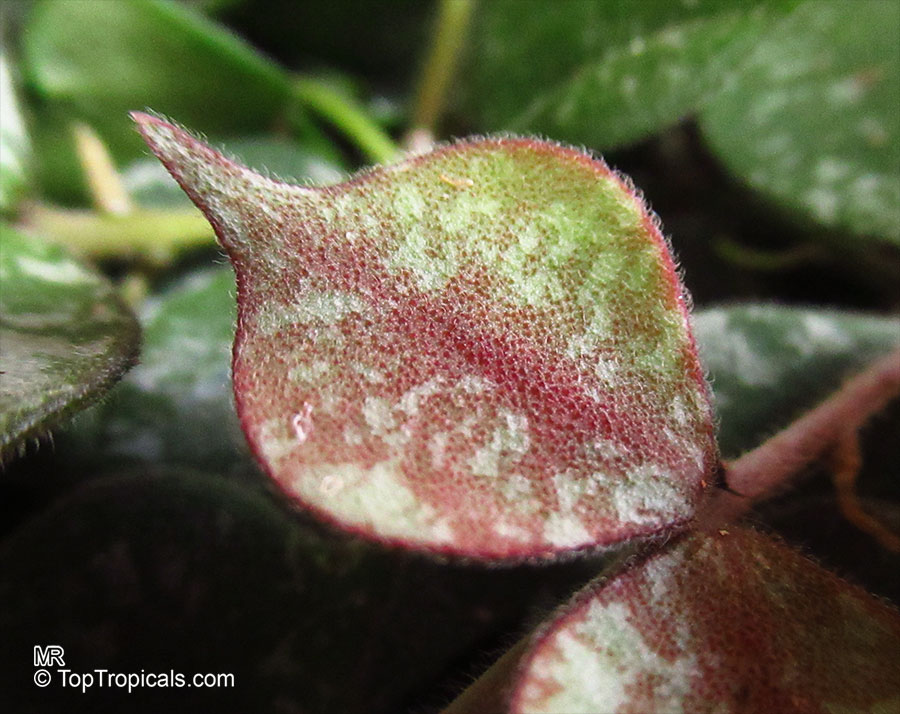
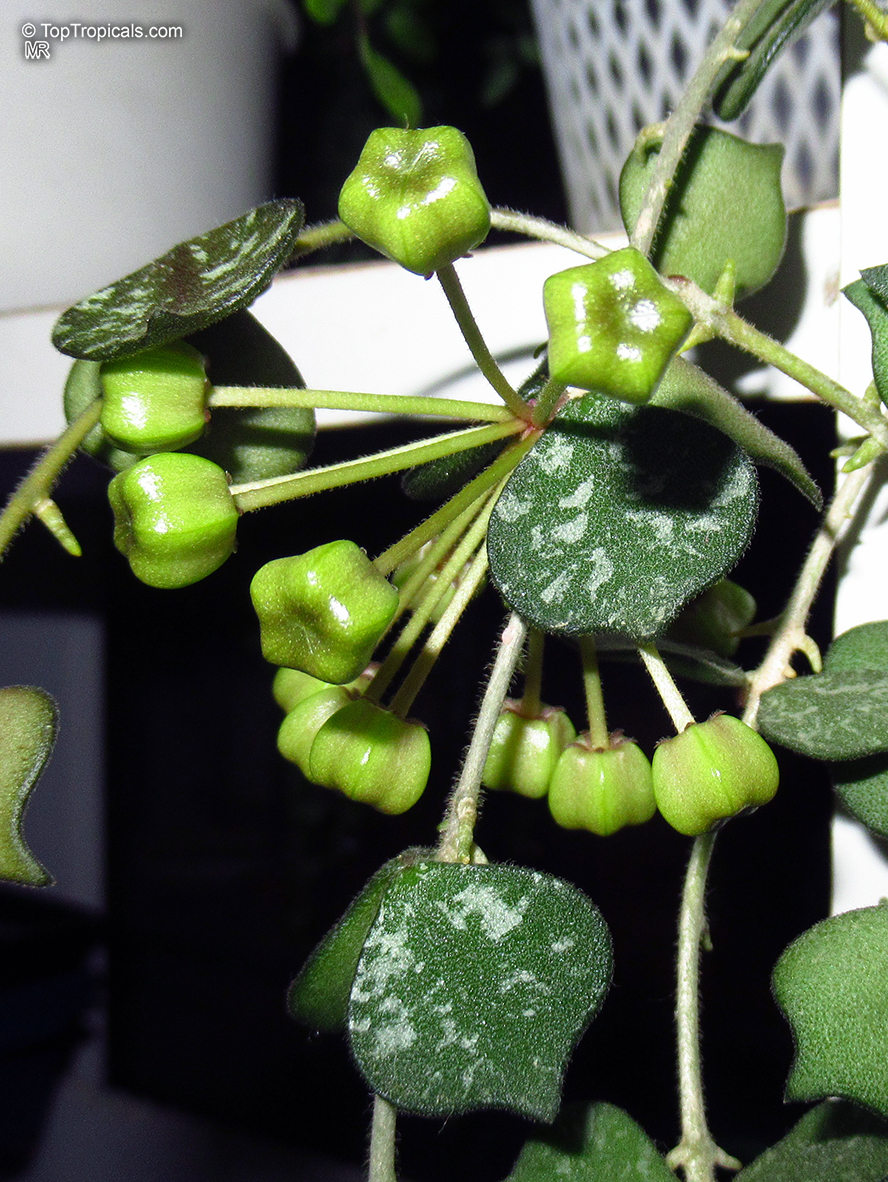
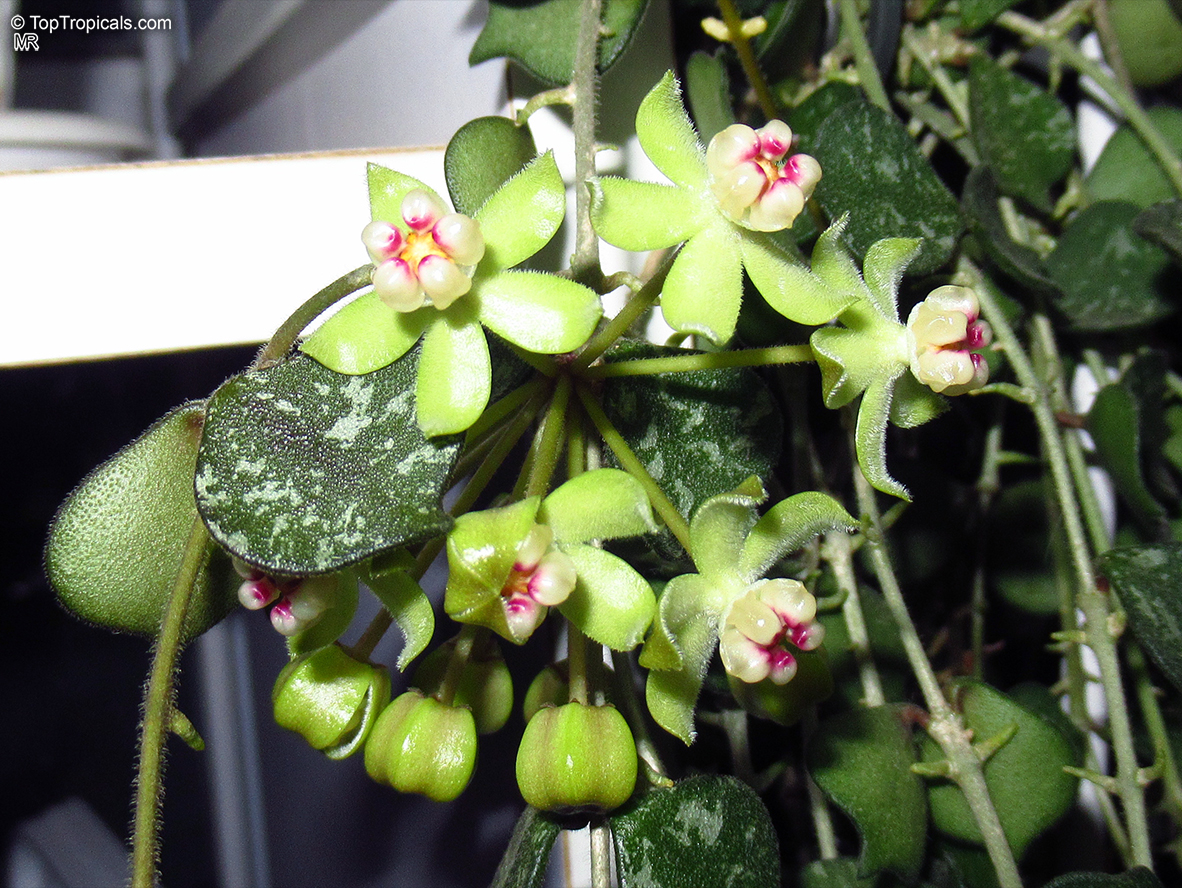
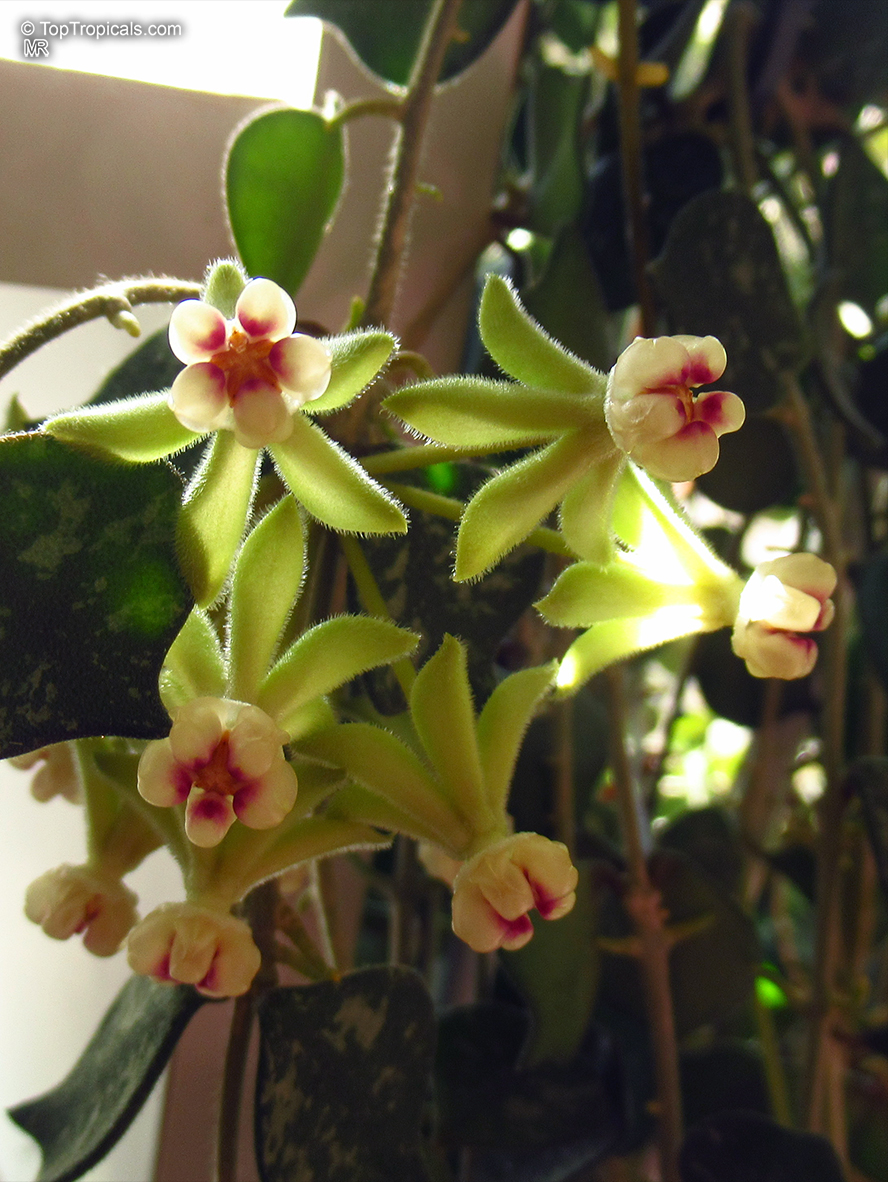
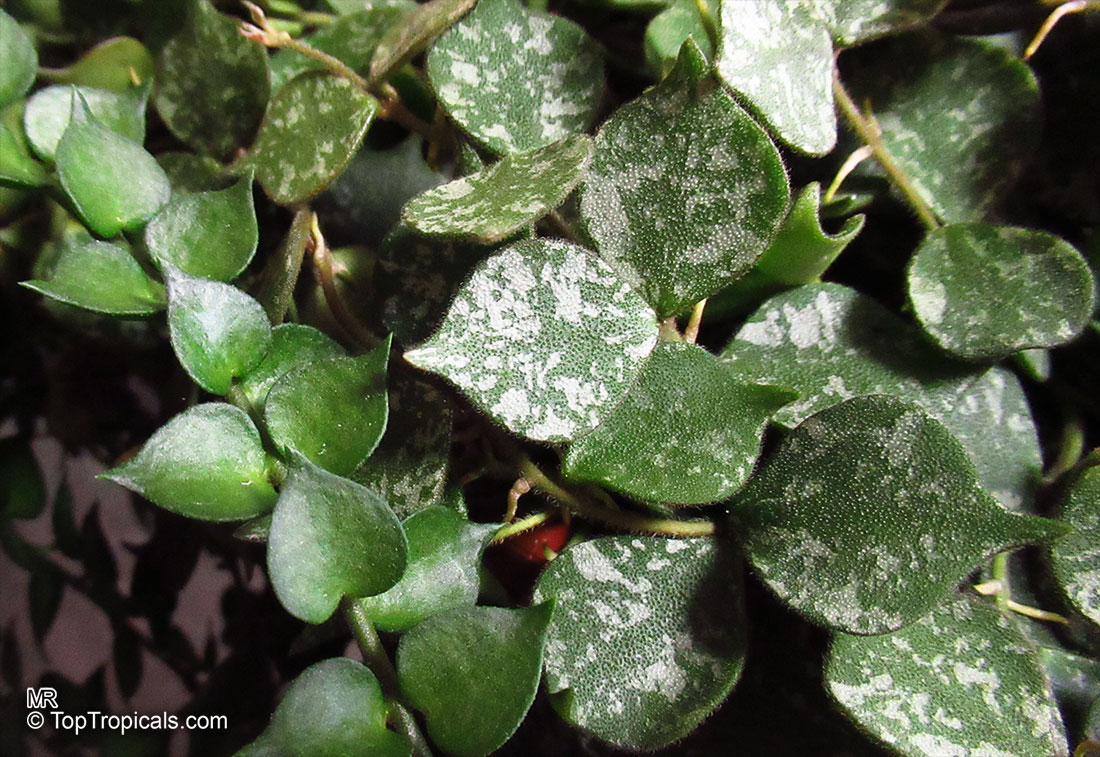
Hoya curtisii (Million Hearts) does extremely well in the shade and semi-shade outdoors and enjoys the bright indirect light indoors. This plant is an easy to care for epiphyte with low-growing habit that can grow up to a maximum of 2 feet. It has a beautiful ornamental foliage, with small, silver variegated heart-shaped leaves that can range in size up to 1/2 inch. Single flowers are creamy-green, have five petals characteristically bent backwards and covered with dense, short hairs, and a tiny creamy-white corolla with red spots. The plant has a clinging, mat-like habit, which makes it a great groundcover to fill out flowerpots with other larger plants. In general, Hoya curtisii should be grown in USDA Zone 10 to 11, enjoys indirect light and moderate water.
When planting Hoya curtisii in colder regions in pot, it is important to make sure the pot is placed in a sheltered location away from harsh winter winds. If grown in pot, using a pot that can easily be brought indoors during winter is recommended. When it comes to caring for Hoya curtisii, the pot should be well-draining and filled with a mix of soil and a coarse-grained organic material, like bark. Also, it is important to make sure the soil is kept moist but not wet. If you are growing it indoors, it is also important to provide adequate air circulation around the plant.
Hoya kerrii
Wax Hearts, Sweetheart Hoya, Valentine Hoya, Heart leafFamily: Apocynaceae (Formerly:Asclepiadaceae)
Subfamily: Asclepiadoideae
Origin: Thailand, Malaya and Sumatra
USDA Zone: 9-11?

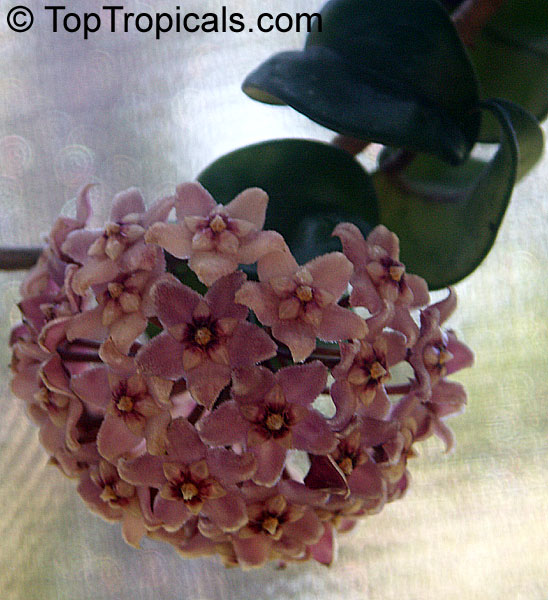
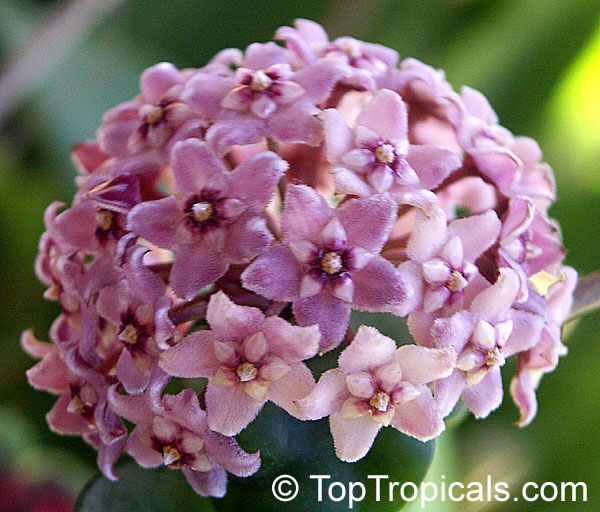
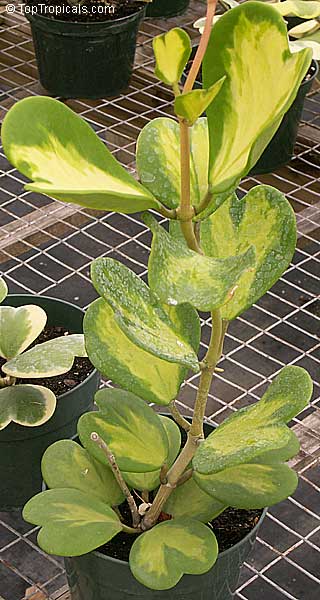
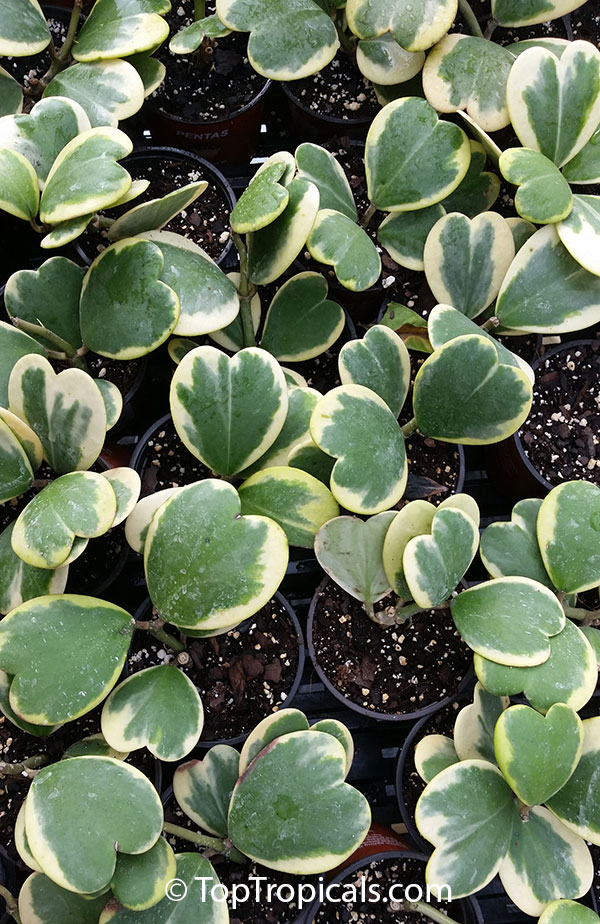
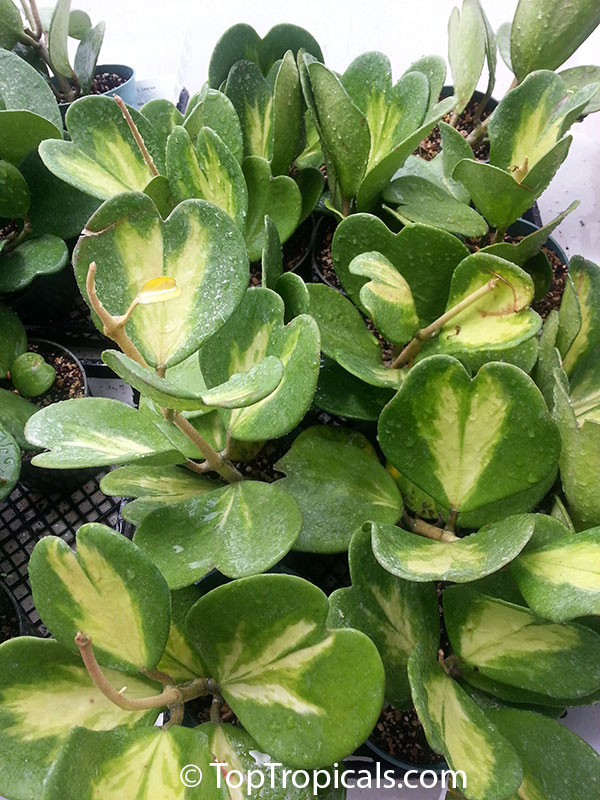
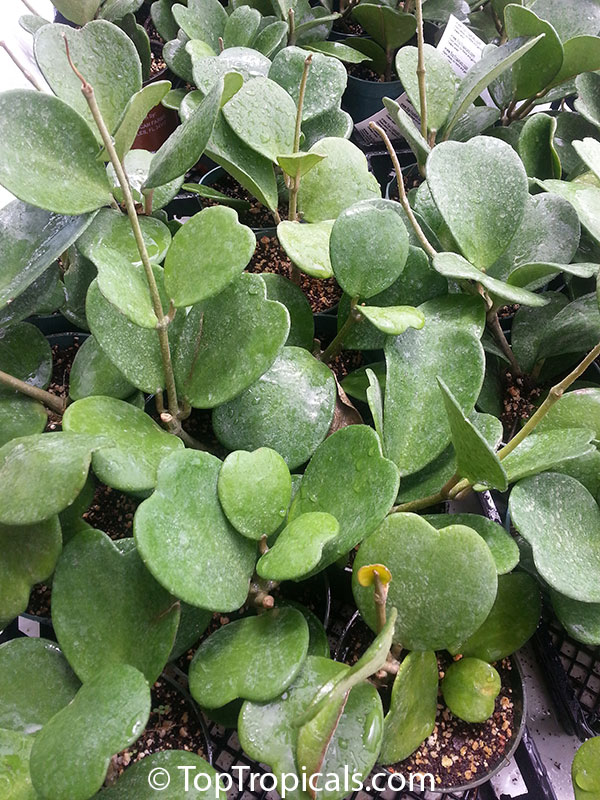
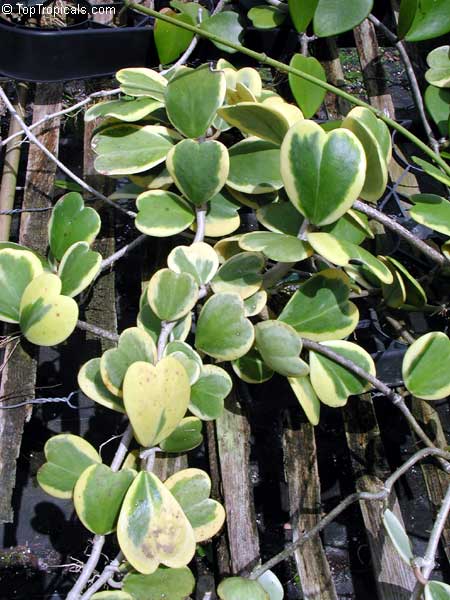
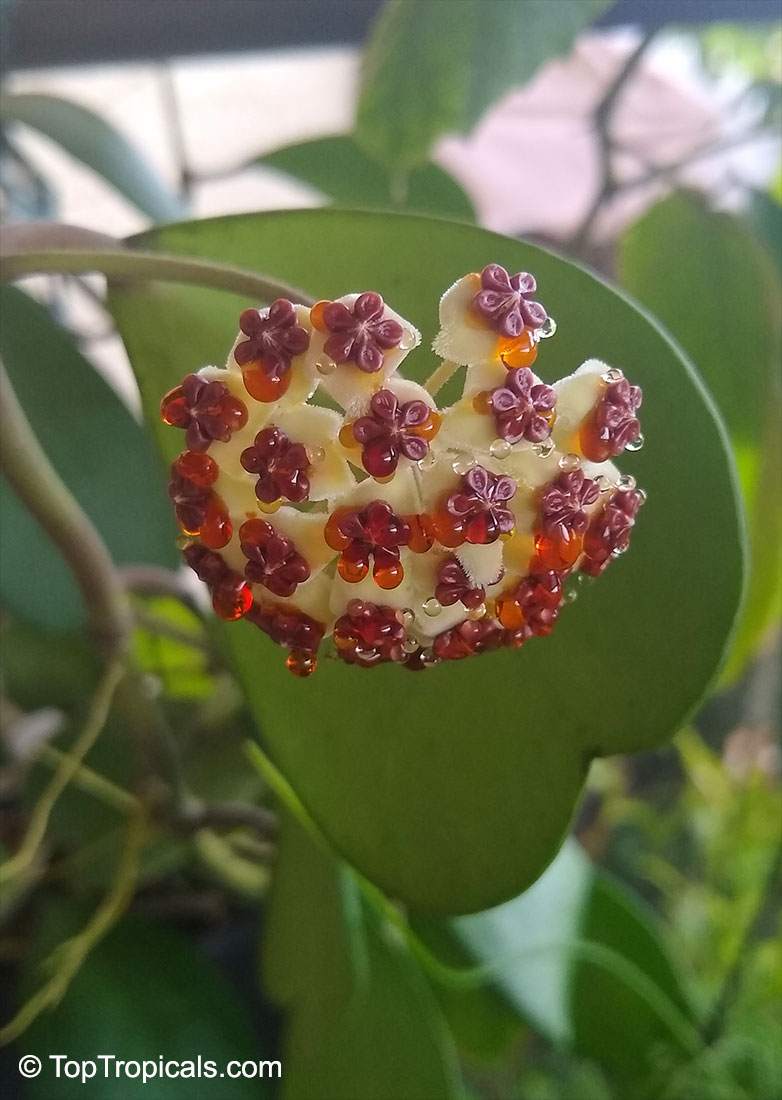
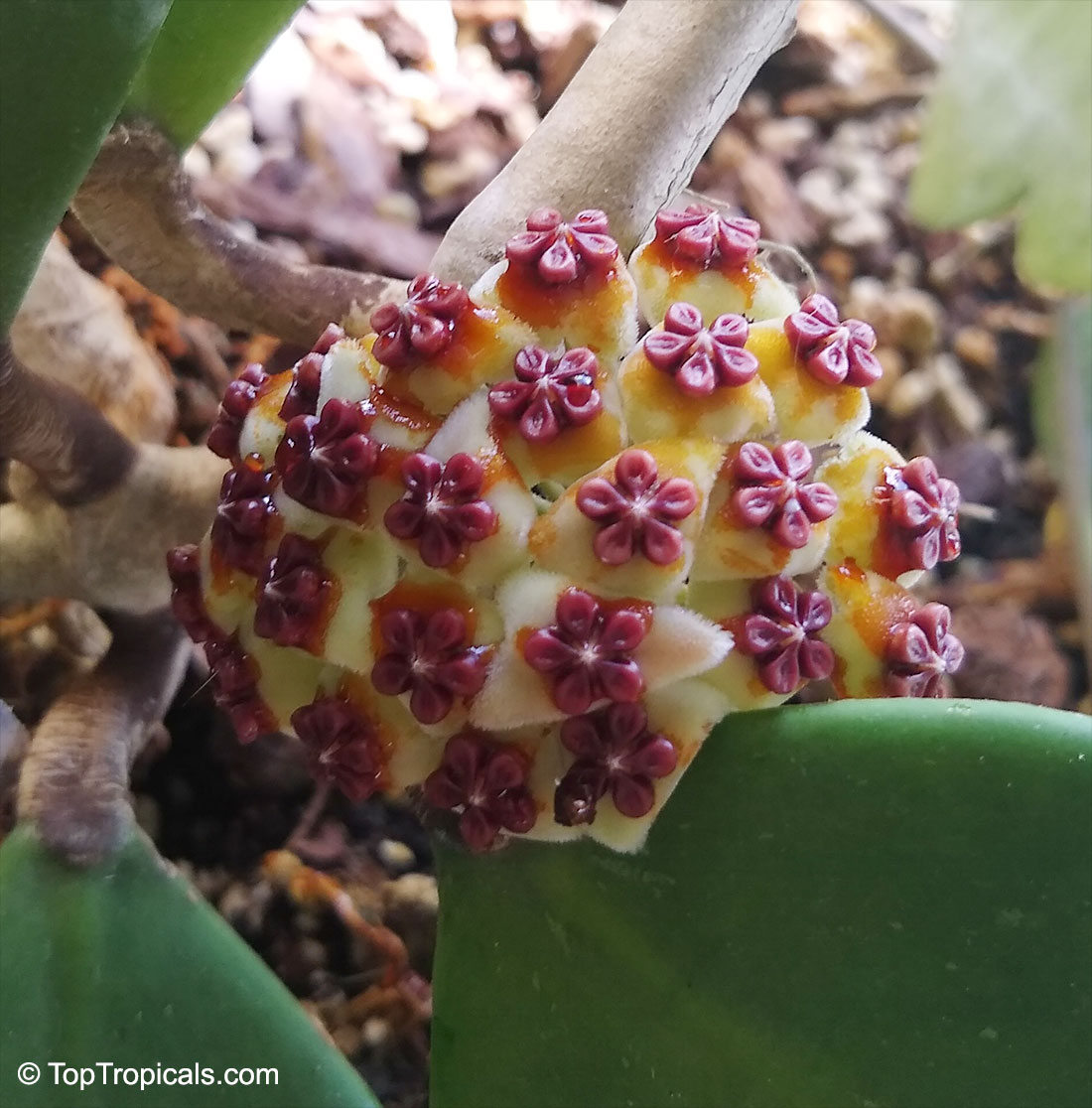
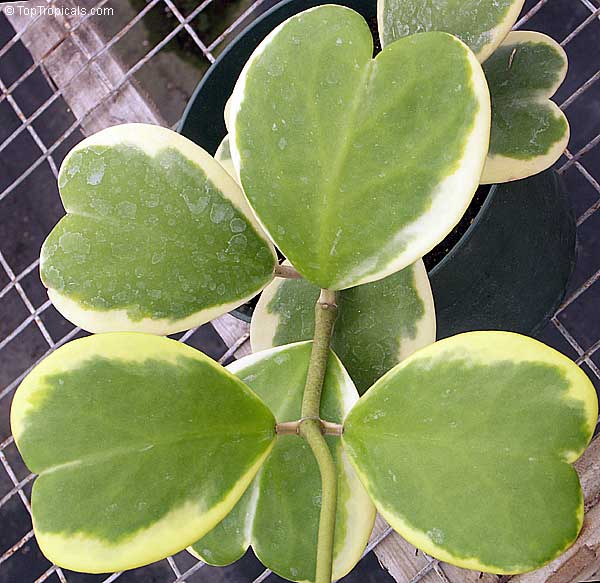
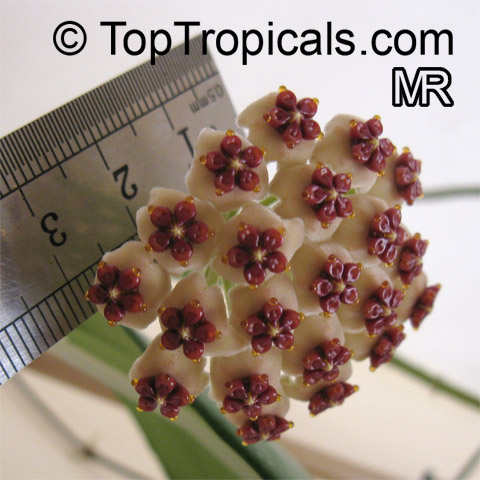
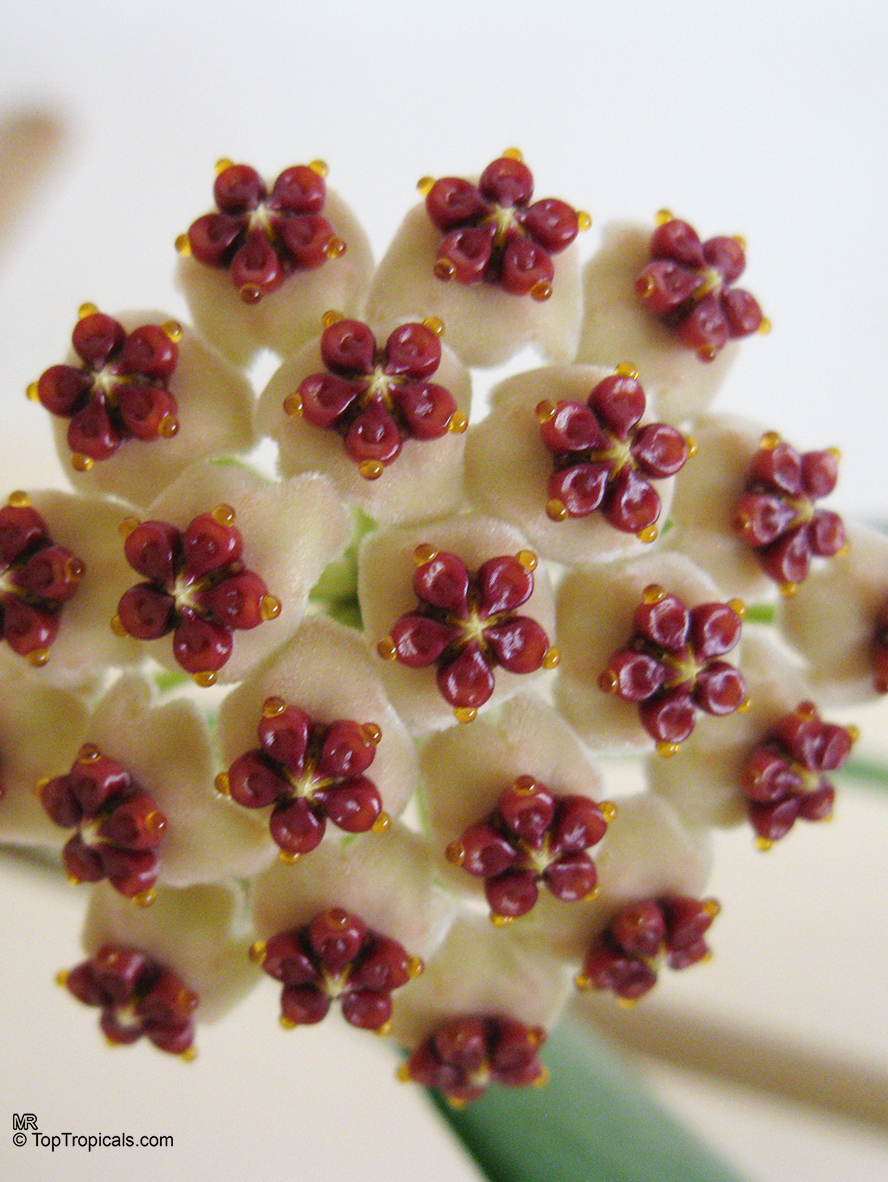
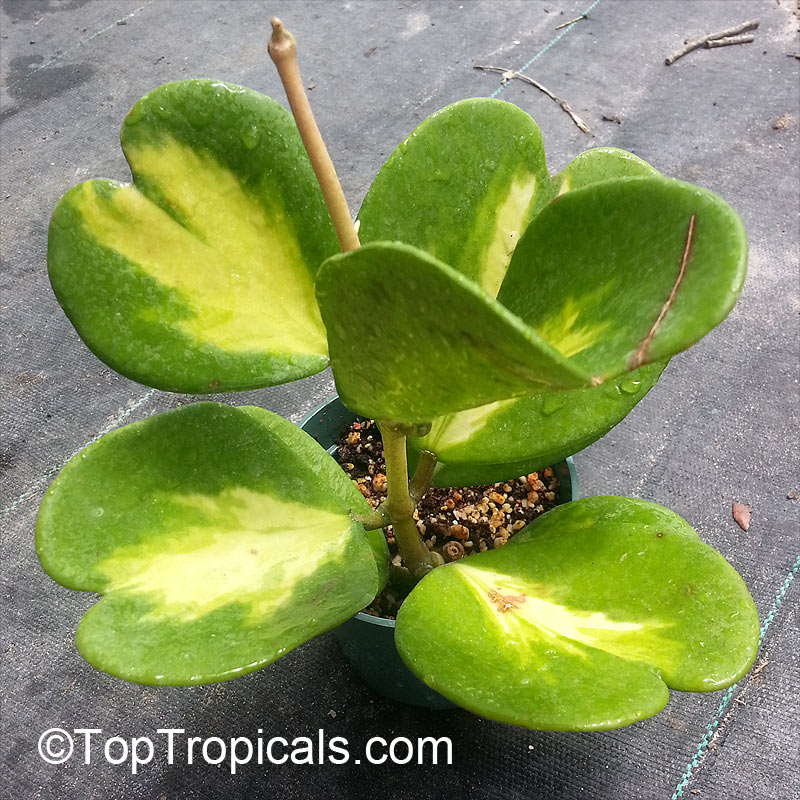
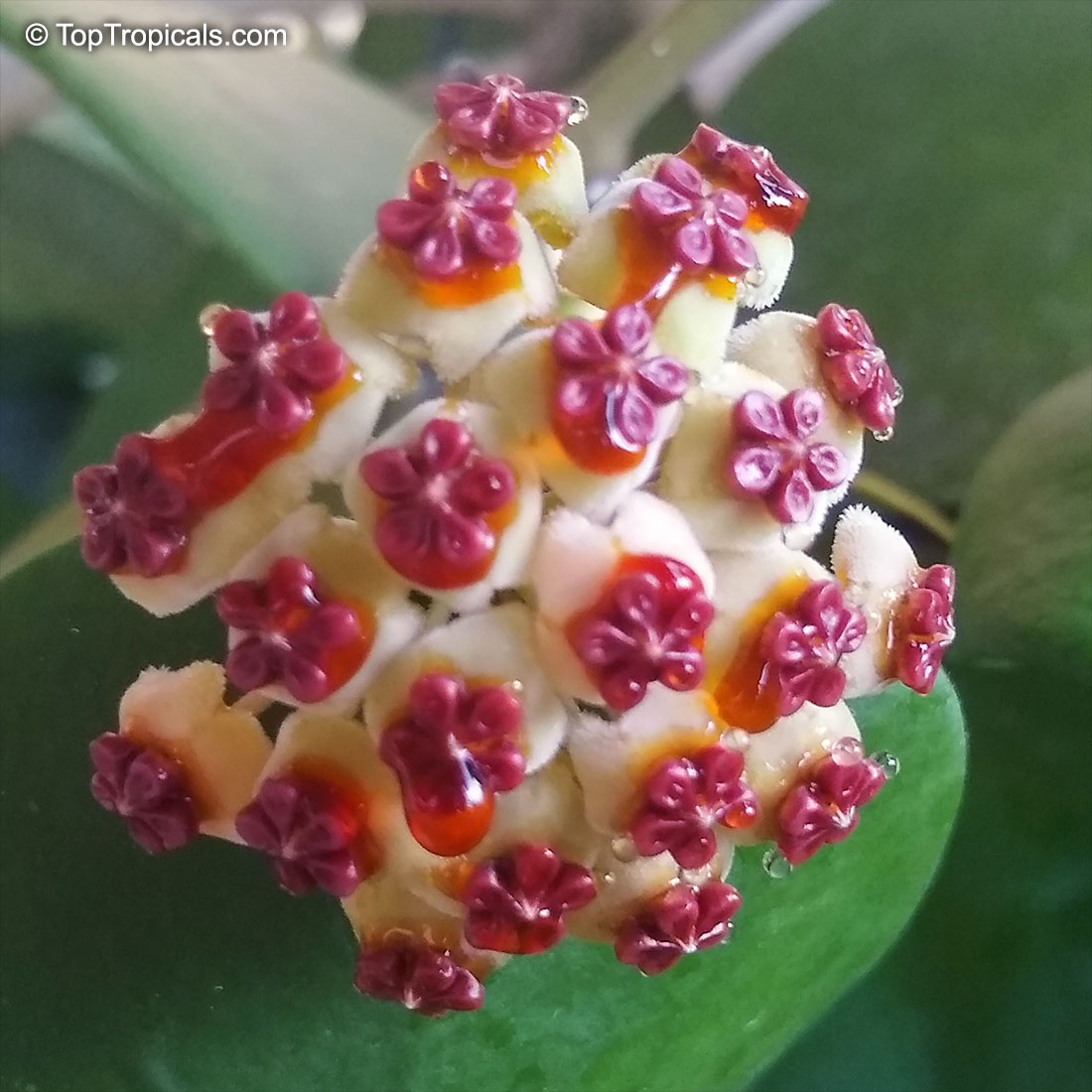
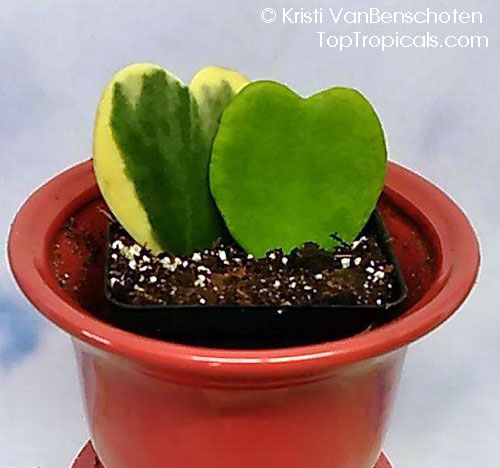
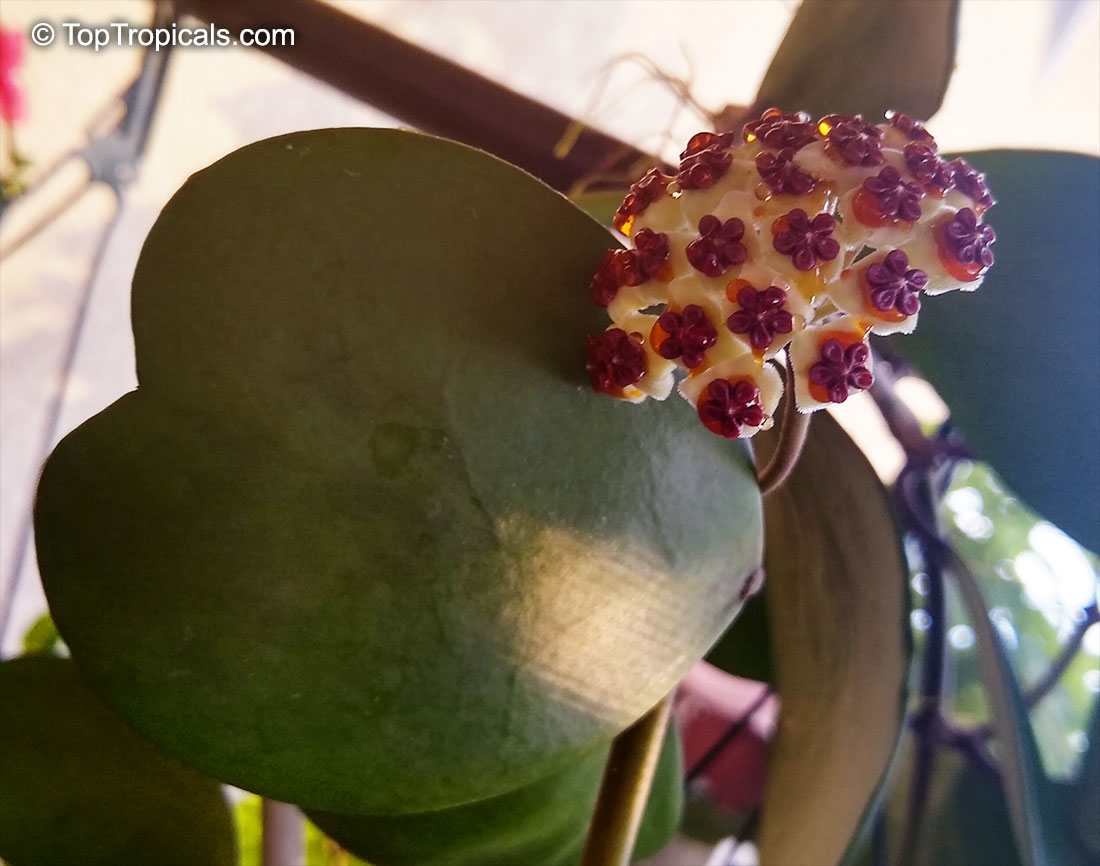
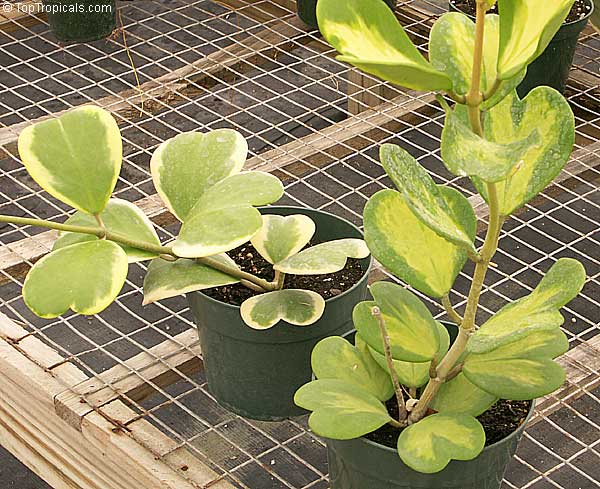
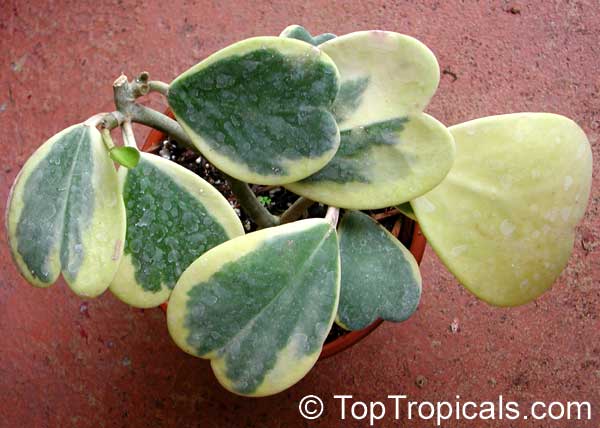
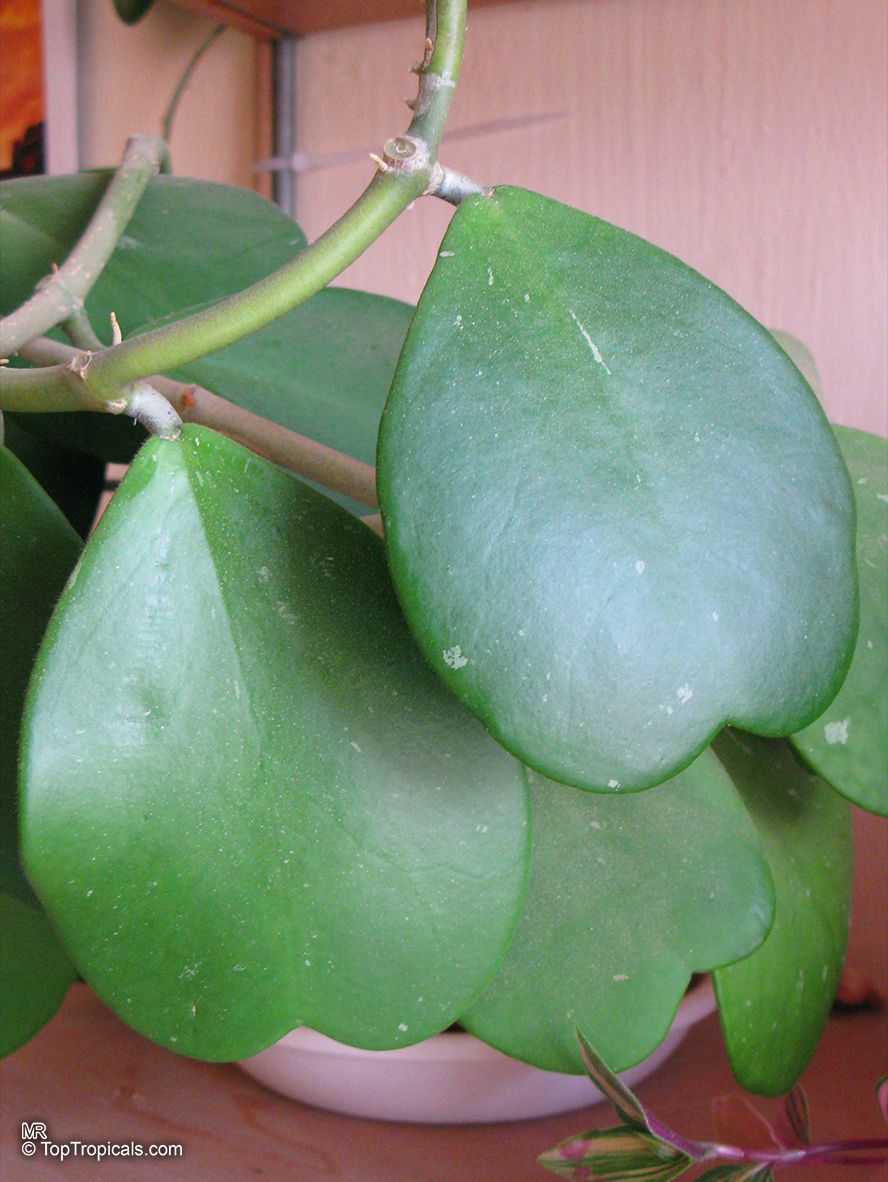
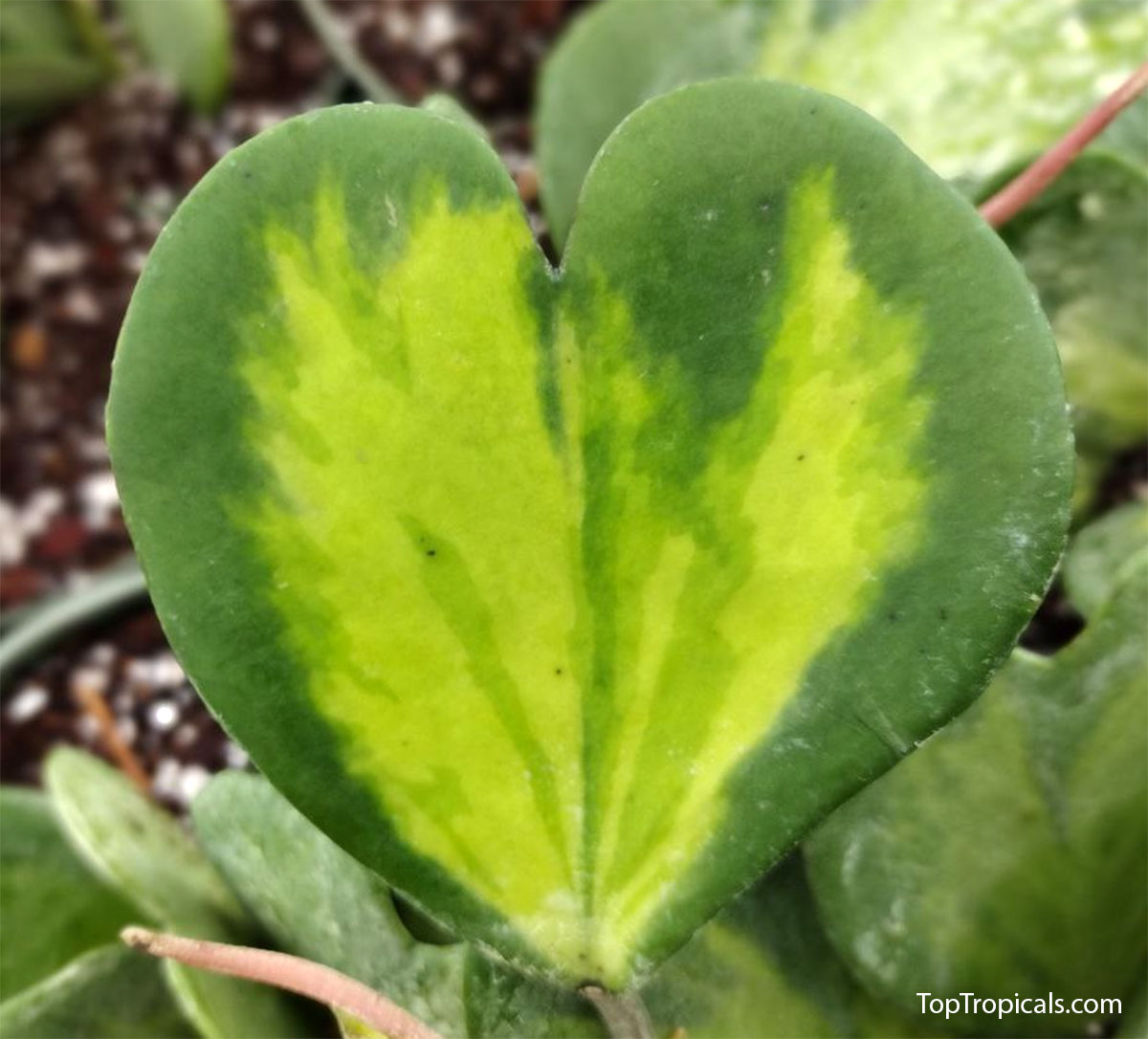
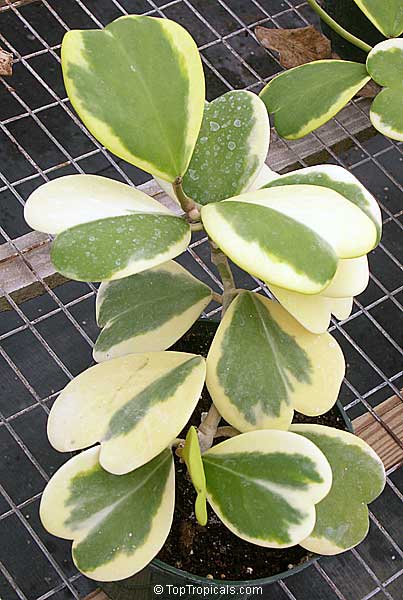
Hoya kerrii is named Sweetheart Plant or Sweetheart Hoya because of the heart or valentine shaped leaves. It has thick, succulent type, opposite leaves that are indeed shaped like flat hearts. The leaves are joined to the long, twinning stems (by the sharp tip of the heart-shape leaf) with 1/2 to 1 inch long, 1/8 inch thick petioles (leaf stalks). The stems produce aerial roots which in their native habitat grow into deposits of humus found in crevices and branches of trees as well as absorbing moisture from the air. These aerial roots root easily when inserted into a moist medium making it easy to propagate new plants from stem cuttings. Hoya kerrii also comes in forms with variegated leaves. The flower shape is typical of hoya plants. Small, flat, star-shaped individual flowers are joined like ribs of an open umbrella to form a cluster that is attached to a spur (single stem) called the peduncle. Each small flower is made up of two stars, one on top of the other. The so called bottom star (corolla) is larger in size than the upper centered star which is termed the corona. Hoya kerrii has whitish corolla's and reddish corona's. The flowers are very beautiful, waxy, tough and long lasting. All hoya flowers have wonderful fragrances, some very powerful, others less so.
Hoya kerrii makes an ideal houseplant. It is called the Sweetheart Plant since it has become increasingly popular in recent years. Unusual and quirky "heart" shape leaves appeal to anyone looking for that special novelty gift for their plant enthusiast friend. Most often Sweetheart Plant is sold as a single small leaf in a small pot. We have large developed plants, ready to bloom! You will have something much more beautiful and striking because the unusual shaped leaves on mass, as you might be able to guess, looks like a bush of green hearts! What a great Valentine gift to give someone, and the reason it sometimes goes by the name Valentine Hoya!
The plant is super easy to look after, with only minimal care. It would probably tolerate one good watering a month - it's that hardy. This plant will need a reasonably light room in order to actually grow, although it will still get by even if you pick a shadier spot, you could position it almost anywhere in your home or office.
With its succulent qualities it's quite adapt at storing water for longish periods of time between waterings. This makes it a hardy and undemanding plant for the most part, of course only providing basic care will result in a surviving rather than thriving plant, so where possible wait until the soil has dried out a little and then water again. The Sweetheart Plant isn't bothered about humidity either.
The flowers, like most Hoya's, are stunning as the contrast in the flowering parts are really bold. The all green variety tends to grow more quickly (although it's still slow by most houseplant standards) and is arguably more hardy, but it also comes in a pretty variegated variety. The variegated version of Hoya kerrii can be hard to find.

Recommended Fertilizer: SUNSHINE Robusta - Rapid Growth Booster
Recommended Fertilizer: SUNSHINE Robusta - Rapid Growth Booster
Recommended Fertilizer: SUNSHINE Robusta - Rapid Growth Booster
See picture of actual plants for sale
This item is certified for shipping to California.| Next | |
Use link to repeat this search:
https://toptropicals.com/cgi-bin/garden_catalog/cat.cgi?find=Hoya&search_op=and&keyword_op=and&language=e&number=10
&no_change_lang=1&user=tt&sale=1&first=0