Garden Blog - Top Tropicals

Date: 27 Feb 2025

What Fertilizer to Use Now and How?
Five important keys to healthy plants
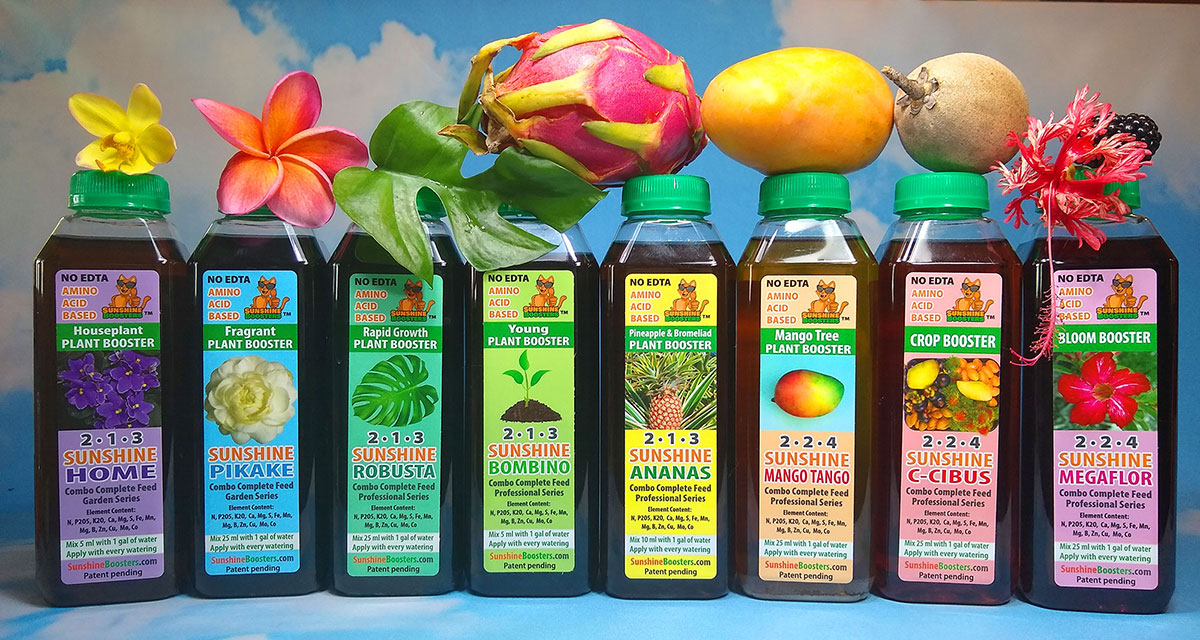
Sunshine  Boosters  Selection

Q: It's early Spring this year. Should I start fertilizing my plants sooner than usual?

A: Most fertilizer instructions recommend fertilizing tropical plants from March to November. This is because plants don't need as much food during the cooler months when many go dormant, and excess nutrients can burn the roots if not absorbed. However, for the most effective fertilizer program and healthy plants, consider these points:

1. Sunshine Boosters Year-Round

Liquid amino-acid-based fertilizers like Sunshine Boosters are safe to use year-round. Since watering is reduced in cooler weather, the intake of water-soluble fertilizer is also lower, providing plants with just the essential nutrients for their minimal needs.

2. Dry Fertilizer Schedule

Be cautious with dry fertilizers. Apply them only during active growth in the hot season.

3. Temperature Is Key

If March is still cold, delay dry fertilizer use. However, if nighttime temperatures in February stay above 65F, you can start a dry fertilizer program using slow-release, granulated plant food.

4. What Fertilizers to Use and How

Check out our Sunshine Boosters selection for different types of plants and choose the right type for your needs. These can be applied as often as with every watering:

For Rapid Growth
Sunshine Robusta - Rapid Growth Booster: general fertilizer for both foliage plants and small starters that need an extra boost.

For Flowers
Sunshine Megaflor - Bloom Booster: boosts flowers on established plants; and Sunshine Pikake - Fragrant Plant Booster: best for fragrant flowers.

For Fruit Trees
Sunshine C-Cibus - Crop Booster: contains all necessary elements for fruit trees and their production. Sunshine Mango Tango - specifically formulated for Mango and Avocado trees, and Sunshine Citron - ideal for citrus trees.

For Tender Perennials
Sunshine Orchidasm - Orchid Total Feed and Sunshine Ananas - Pineapple and Bromeliad Booster: mild formulas for these tender perennials.

5. Microelement Supplements Are a Must

Besides macronutrients, plants need additional microelements, just like humans need vitamins. Be sure to apply these supplements along with your regular plant food:

For Green Leaves and Health
Sunshine SuperFood - Complex Microelement Supplement: a must for healthy plants. Apply once a month.

For Stress Relief
Sunshine-Epi - Brassinosteroid Plant Hormone: essential for plants recovering from stress (shipping, transplanting, drought, insect damage, cold stress, etc.). Apply as needed.

For Sweeter, Bigger Fruit
Sunshine Honey - Fruit Sugar Booster: application on fruit trees will make fruit bigger and sweeter by directing sugars to the fruit from other plant parts, and helps to prevent bud drop. Apply 4 times a year: at bud setting, flowering, fruit setting, and after harvesting.

For Better Resistance
Sunshine Power Si - Silicon Protector - enhances resistance to insects, diseases, drought, and frost, while boosting growth. Apply once a month, along with Sunshine SuperFood.

Need Help? Our Plant Experts Are Ready to Assist!
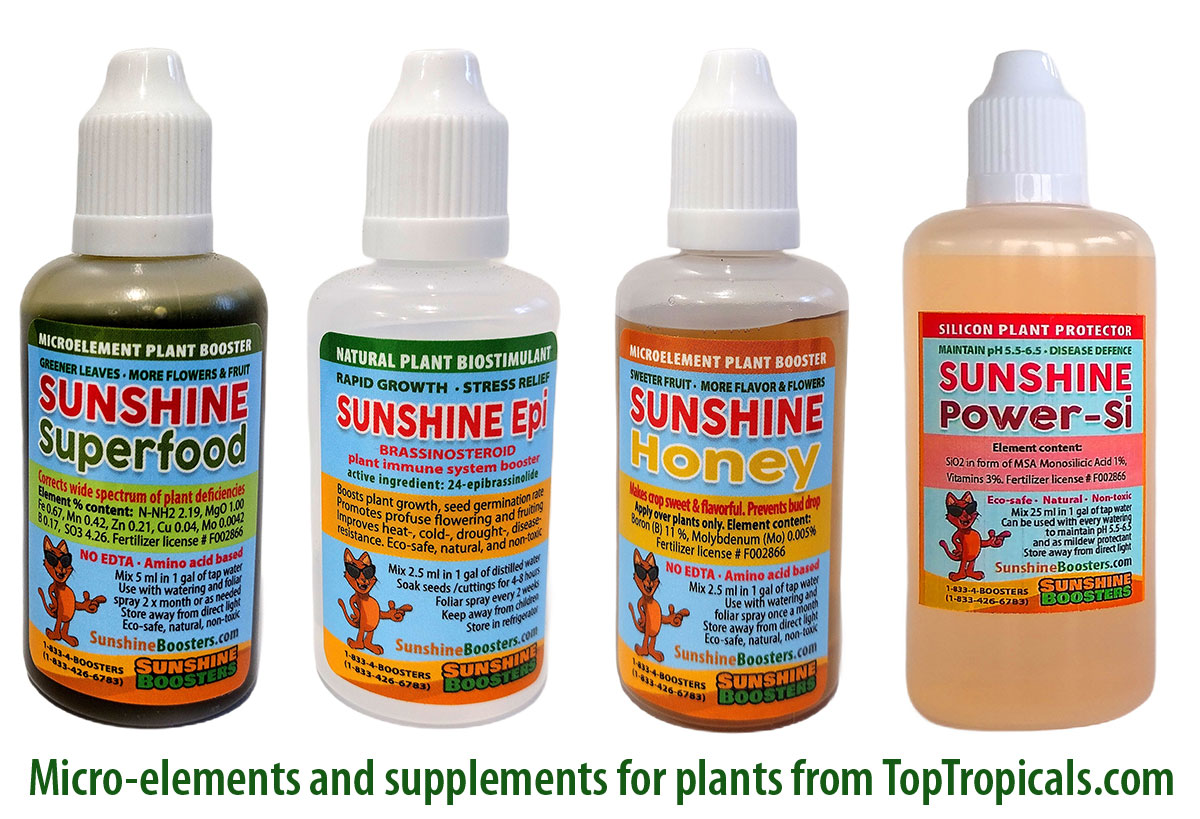
Microelements  and  supplements  for 
 plants

Date: 5 Jan 2026

How to grow papaya from seed without killing it

How to grow papaya from seed without killing it
🍊 How to grow papaya from seed without killing it, Part 1: Papaya basics

Papaya (Carica papaya) is one of the fastest and most rewarding fruit plants you can grow from seed - but it is also one of the easiest to lose early if you treat it like a regular tree. In this guide, we start at the very beginning: what papaya really is, how to choose and prepare seeds, and what it actually takes to get strong, healthy seedlings off to a good start.


🍊 Papaya basics - what kind of plant it really is


Papaya is not a tree - and that changes how you should grow it

🟡 Papaya is technically not a tree. It is a herbaceous plant with a hollow trunk - often jokingly called a giant grass.
🟡Papaya grows extremely fast from seed and usually starts producing fruit within 10–15 months. It has a palm-like look, with a large canopy of leaves at the top. Flowers and fruit form directly under that canopy, right on the trunk.
🟡In the ground, papaya can grow 10–15 ft tall, but there are dwarf varieties that stay under 4–5 ft in containers while still producing full-size fruit.
🟡Papayas are very productive and are one of the best exotic fruit plants to grow even outside the tropics, especially because they perform so well in containers.

🍊 Growing papaya from seed - what to know first


What grocery store papaya seeds don’t tell you

Papaya is easy to grow from seed, but one detail matters more than most people realize:
🟡Seeds from store-bought fruit come from unknown varieties
🟡Most will not be dwarf
🟡If you want a compact plant, start with a known dwarf variety or seeds from one
🟡The good news: papaya comes true from seed, so when the source is known, the result is reliable.

Now that you understand what papaya is - and what grocery store seeds don’t tell you - it is time to move on to the most misunderstood stage of all: germination. In Part 2, we break down exactly how papaya seeds sprout, what they need, how long they really take, and why so many people give up too early.

👉 Coming up next: Part 2 - Papaya seed germination, step by step

🛒 Explore Papaya varieties

📚Learn more:
· Carica papaya in Plant Encyclopedia
· How to grow papaya from seed without killing it:
Part 1: Papaya basics
Part 2: Seeds germination
Part 3: Containers, sunlight, and common mistakes
· Carefree Garden: How Easy Is It to Grow a Papaya Tree?
· Male papaya produces fruit!
· Top 10 fast-fruiting trees: #6. Papaya
· How to have fresh Papaya fruit year around
· The truth about Papaya
· Papayas contain a secret enzyme

🎥 Nobel Prize goes to this pregnant male papaya

#Food_Forest #How_to #Papaya

Papaya Plant Facts

Botanical name: Carica papaya
Also known as: Papaya
USDA Zone: 9 - 11
Highligths Small tree 10-20 ftFull sunWater Requirement: Low. Allow soil to dry out between wateringsWatering: Moderate. Water when top soil feels dryYellow, orange flowersWhite, off-white flowersEdible plantEthnomedical plant.
Plants marked as ethnomedical and/or described as medicinal, are not offered as medicine but rather as ornamentals or plant collectibles.
Ethnomedical statements / products have not been evaluated by the FDA and are not intended to diagnose, treat, cure, or prevent any disease. We urge all customers to consult a physician before using any supplements, herbals or medicines advertised here or elsewhere.Subtropical plant. Mature plant cold hardy at least to 30s F for a short time
Get personalized tips for your region
🟢 Join 👉 TopTropicals

Date: 24 Jun 2018

Choosing the right Mango for your garden

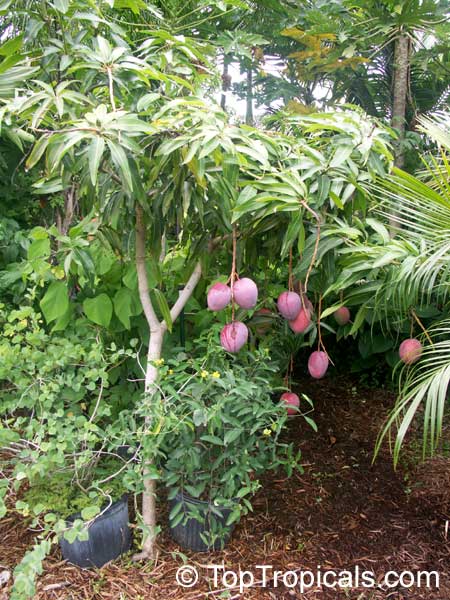
Q: Do the mango trees you sell already have fruit? Or how long does it take to get fruit? Are they tricky to keep up? I live locally and have been interested in getting a few!

A: Some of our mangos in both 3 gal and 7 gal pots have fruit on them. All our mango trees are grafted which means they are ready to produce fruit. So if not the same year, you should get fruit the next year.
Mangoes in general are easy to grow plants. They are not picky about soil and water, however they need full sun for fruiting. When you are lucky to live in tropical or subtropical climate, your mango will thrive in a ground, and within 2-3 years you will have a mature tree, and a crop every year (those who have cold winters, still can grow a mango tree in a pot, and move it indoors for colder period). Visit our garden center for a tour of our Mango Gardenthat is only 3 years old and is full of fruit! Tasting table available :) We offer over 100 varieties, and our experts can help you to make the right choice for your garden. To start your own mango tree collection, depending on space available, you may begin with the following varieties:
Nam Doc Mai - one of the most popular and delicious Asian mango
Carrie - very compact grower, reliable producer with great taste
Cogshall and Ice Cream - dwarf varieties for small yards, excellent taste
Alphonso - considered one of the best tasting

See full list of our mango varieties, all fiberless and great sweet flavors.

Date: 9 Jul 2024

Where does Blackberry Jam come from? It comes from Gardenia!

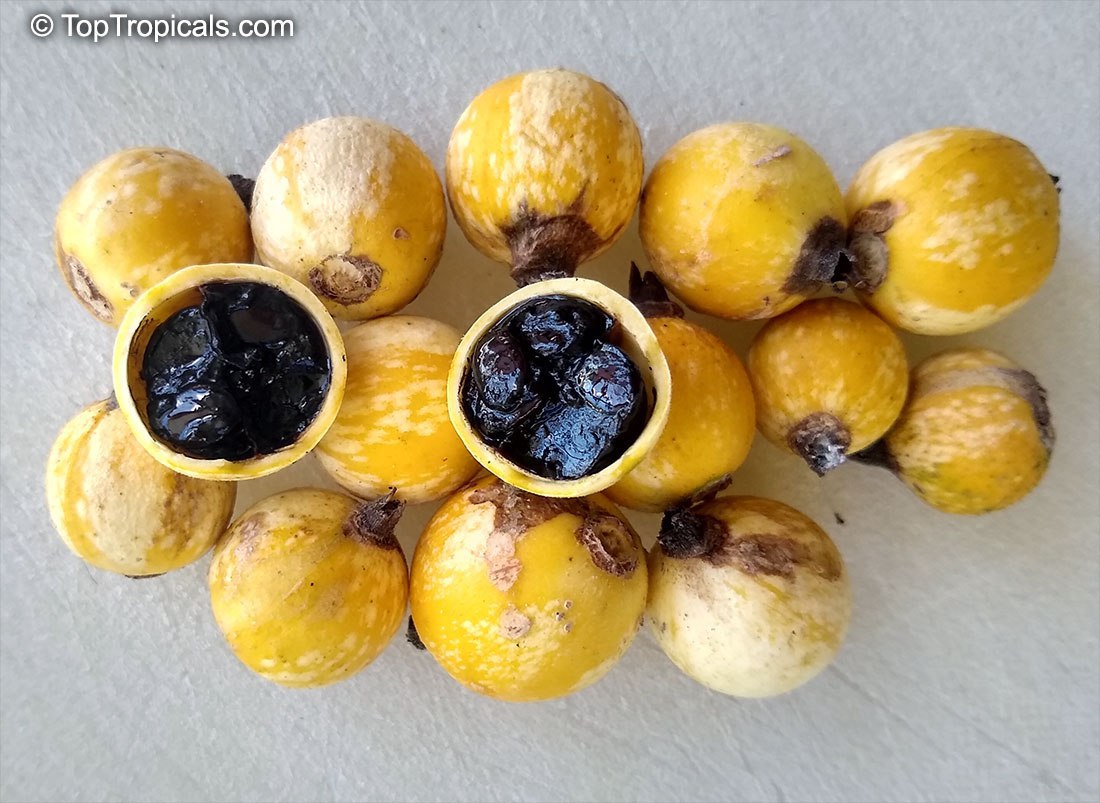
Randia formosa - Blackberry Jam Fruit, flower

Randia formosa - Blackberry Jam Fruit, fruit

Randia formosa - Blackberry Jam Fruit, fruit

Where does Blackberry Jam come from? It comes from Gardenia!

Randia formosa - Blackberry Jam Fruit, Jasmin de Rosa is a curious small evergreen tree from South America that combines features of a fragrant flower and delicious dessert fruit which tastes like fresh Blackberry jam. Fragrant white flowers are similar to Gardenia.

This relatively hardy tropical can be grown in a container as well as in the ground. It's very сompact (4-5 ft), perfect for container culture, will fruit in a container.

Kids love the fruit! Many claim that it is even better than Blackberry preserves.

Large tubular white flowers attract nocturnal moths. Since the plant is closely related to the gardenia (Rubiaceae plant family), its flowers are sweetly fragrant.

Produces as many as 25-30 fruits at a time. Since it blooms for a few months from Summer through Winter, fruiting and flowering can be enjoyed even when other plants are dormant.

Article about Blackberry Jam Fruit formosa

Order Blackberry Jam tree

#Food_Forest #Container_Garden

🏵 TopTropicals

Date: 10 May 2026

🍑 Tree-Ripened Peaches Change Everything

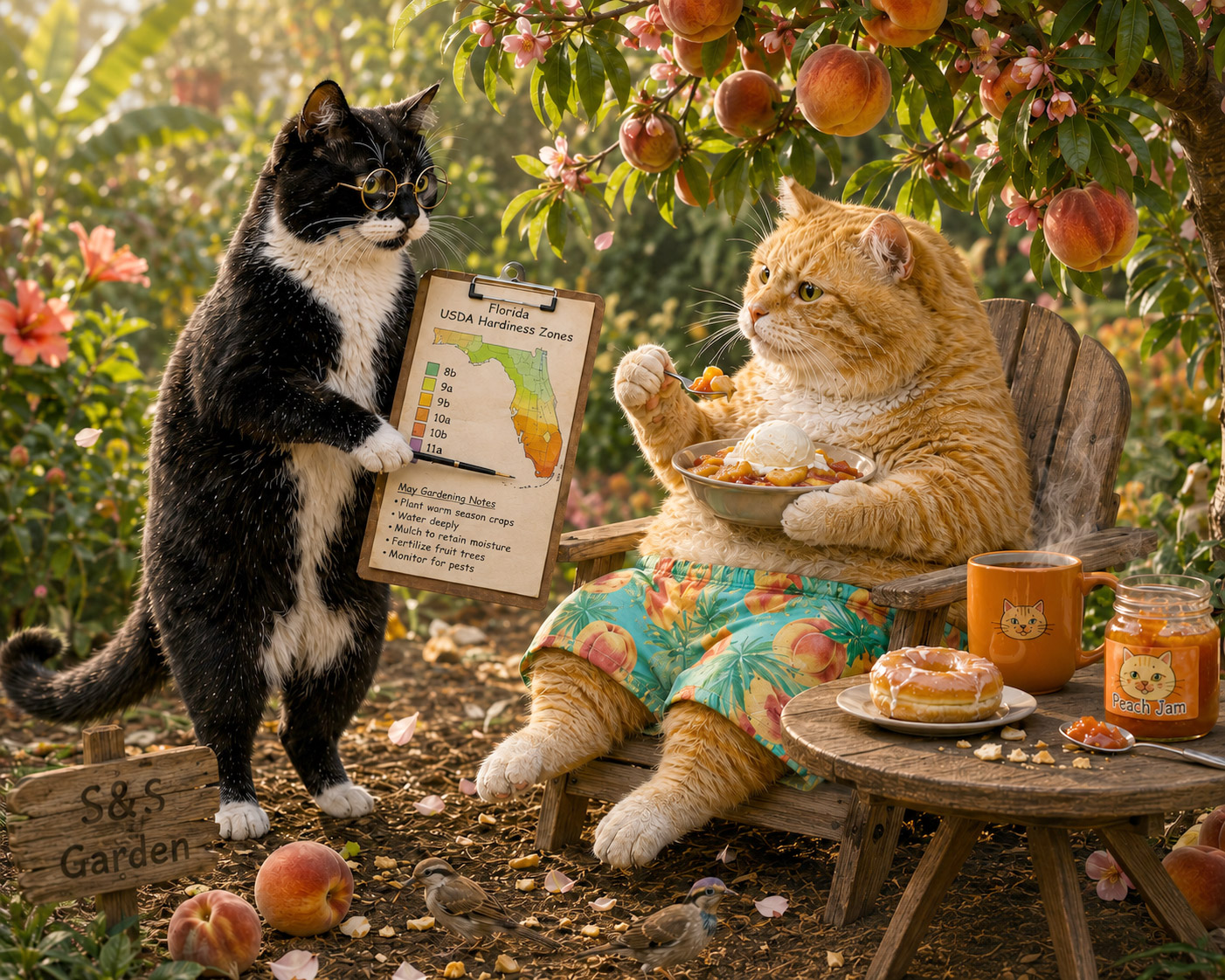
Smokey  and  Sunshine  relax  under  a  peach  tree  in  the  S&S  Garden, 
 discussing  low-chill  peaches  for  Florida  while  enjoying  peach  cobbler  with 
 ice 
 cream.
Sunshine: I love peach cobbler. Smokey, why are peaches on the tree so early?
Smokey: Low-chill peach varieties for Florida. They ripen much sooner.
Sunshine: I thought peaches were for Georgia.
Smokey: Not if you plant low-chill peaches. And speaking of peaches, do you know about donut peaches?
Sunshine: Donut peaches? Finally, horticulture I can understand.

Some fruits carry memories before you've even tasted them.

There's something about a peach still warm from the tree - the way it gives a little when you pick it, the smell that hits you before you even take a bite. It makes you slow down. It makes summer feel like it actually meant to show up.

Peach Plant Facts

Botanical name: Prunus persica, Amygdalus persica
Also known as: Peach
USDA Zone: 5 - 10
Highligths Small tree 10-20 ftFull sunWatering: Regular. Let topsoil dry slightlyWhite, off-white flowersPink flowersEdible plantDeciduous plantSubtropical plant. Mature plant cold hardy at least to 30s F for a short time
Get personalized tips for your region

For Florida gardeners, that moment used to feel borrowed. Peaches were a Georgia thing, a Carolina thing. You'd admire someone else's harvest and quietly file it under not for us.

Low-chill peaches rewrote that story.

Here's the thing about regular peaches - they need cold. Not just a cool night or two, but a real winter. We're talking 600 to 1,000 hours below 45F. That's how they know to wake up in spring and actually fruit. South Florida just doesn't deliver that. The trees will grow fine, look healthy even, and then give you almost nothing come harvest time. Frustrating doesn't cover it.

Low-chill varieties are different. They were bred specifically for places like ours - warm winters, mild springs. Some only need 100 hours of chill. A hundred. That's a few cold fronts, not a season. And because they're working with our climate instead of against it, they fruit reliably. Every year.

They're not just a Florida trick either. Gardeners in coastal Texas, southern Louisiana, southern California - anywhere in that Zone 8b to 10 range - have been growing these successfully. If you've got warm winters and thought peaches weren't for you, they probably just weren't the right peaches.

🛒 Shop Low-Chill Peach trees

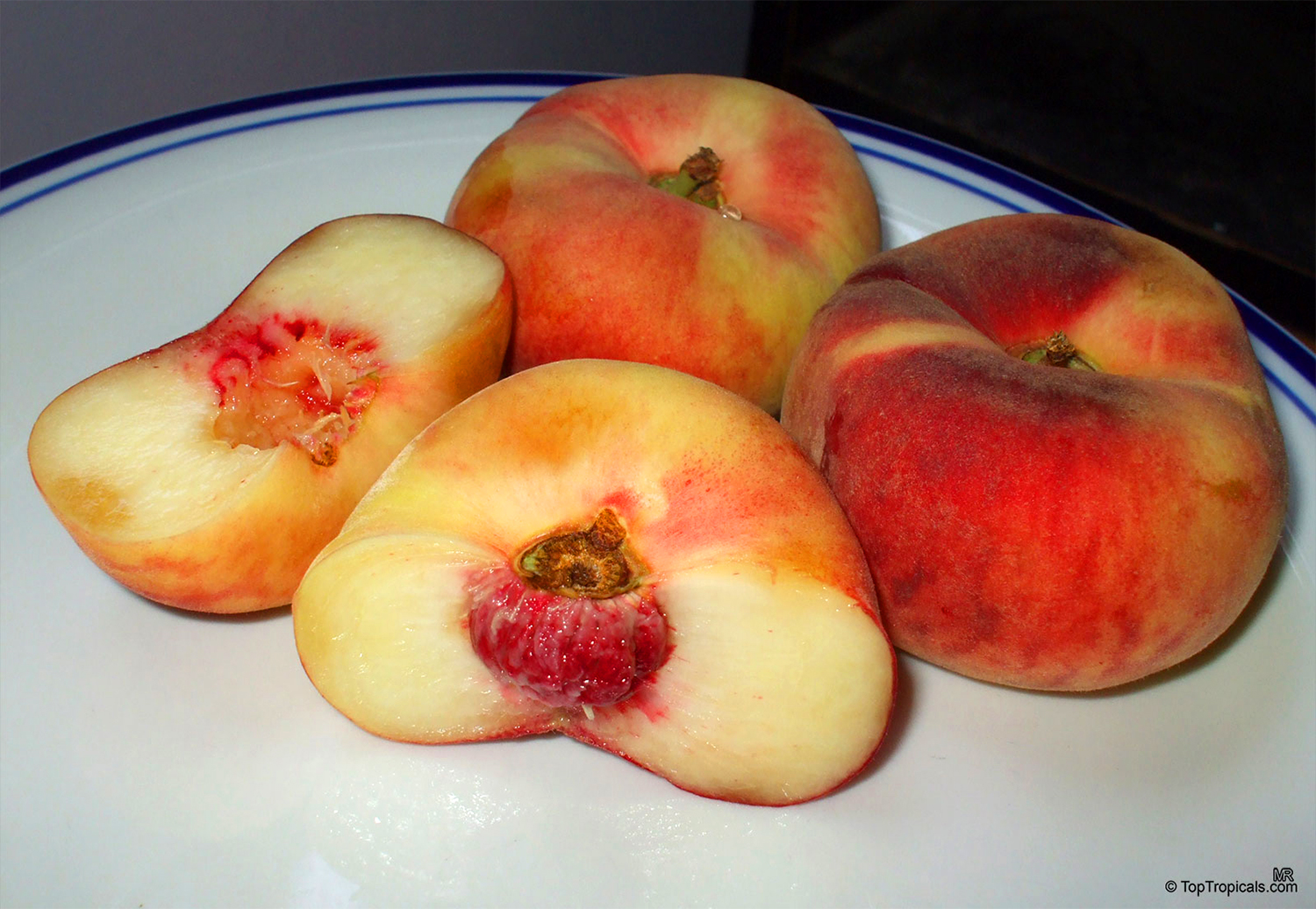
Several  ripe  flat  peaches,  also  known  as  donut  peaches  or  Saturn 
 peaches,  displayed  on  a  white  plate.  Two  peaches  are  cut  open,  showing  the 
 pale  white  flesh  and  small  central  pit  with  pink-red  coloring  around  the 
 seed 
 area.

Flat peaches - sometimes called DONUT peaches - are known for their sweet white flesh, low acidity, and fun squashed shape.