Garden Blog - Top Tropicals
Date:
Libra Zodiac lucky plants

Libra - 9/23-10/22. Libra is an AIR sign, and is ruled by the planet Venus. Because Venus is the planet of beauty and love, Libra's plants often have light, lovely flowers and gorgeous scents.
Libra has been related to the endocrine system, the kidneys, and the bladder. Venus (which also rules Taurus) is responsible for the harmony between the various body systems, as well as the abdomen, kidneys and urinary tract, and thyroid. Libra's plants help to bring balance to these areas of the body. Libra's romantic nature appreciates a spice that cultivates love and sensuality. Cardamom is a spice known for its gently warming nature, so add a sprinkle when you want to heat things up slowly.
Libra Zodiac lucky plants: Jasmine, Gardenia, Euclinia, Pua Keni Keni, Randia, Beaumontia, Faradaya, Butterfly Ginger, Kopsia, Hydrangea, Montanoa, Aglaia, Dwarf Ylang-Ylang, Desmos, Clematis, Almond Bush, Brunfelsia, Four oclock plant, Juniper, Moonflower, Carissa, White Chocolate Jasmine, Night blooming jasmine, Fiddlewood, Honeysuckle, Orchid, Clerodendrums, Millingtonia, Parijat, Fried Egg Tree, Oxyceros, Phaleria, Tuberose, Cubanola, Portlandia, Rothmannia, Allamanda, Nasturtium, Rose, Camellia, Ephedra, Fuchsia, Ylang-Ylang, Magnolia, Stemmadenia, White Plumeria, Appleblossom, Needle Flower Tree, Tree Jasmine, Guaiacum, Epiphyllum, Amazon Lily, India Hawthorn, Stephanotis, Talauma, Pakalana vine, Wrightia, White flowers, Cypress, Lucky Bamboo, Dracaena, Bakul, Apple, Pear, Fig, Raspberry, Olive, Pomegranate, Apricot, Peach, Plum, Loquat, Grape, Blackberry, Mango, Cherries, Chrysobalanus icaco, Berries, Neem tree, Asparagus, Spices, Mint, Catnip, Bergamot, Thyme, Cardamom.
For other signs information, see full Plant Horoscope.
15% OFF ON ALL FRAGRANT PLANTS! 3 day sale.
Date:
Avocado Variety Guide: Snack or Guacamole?
Collector's inspiration
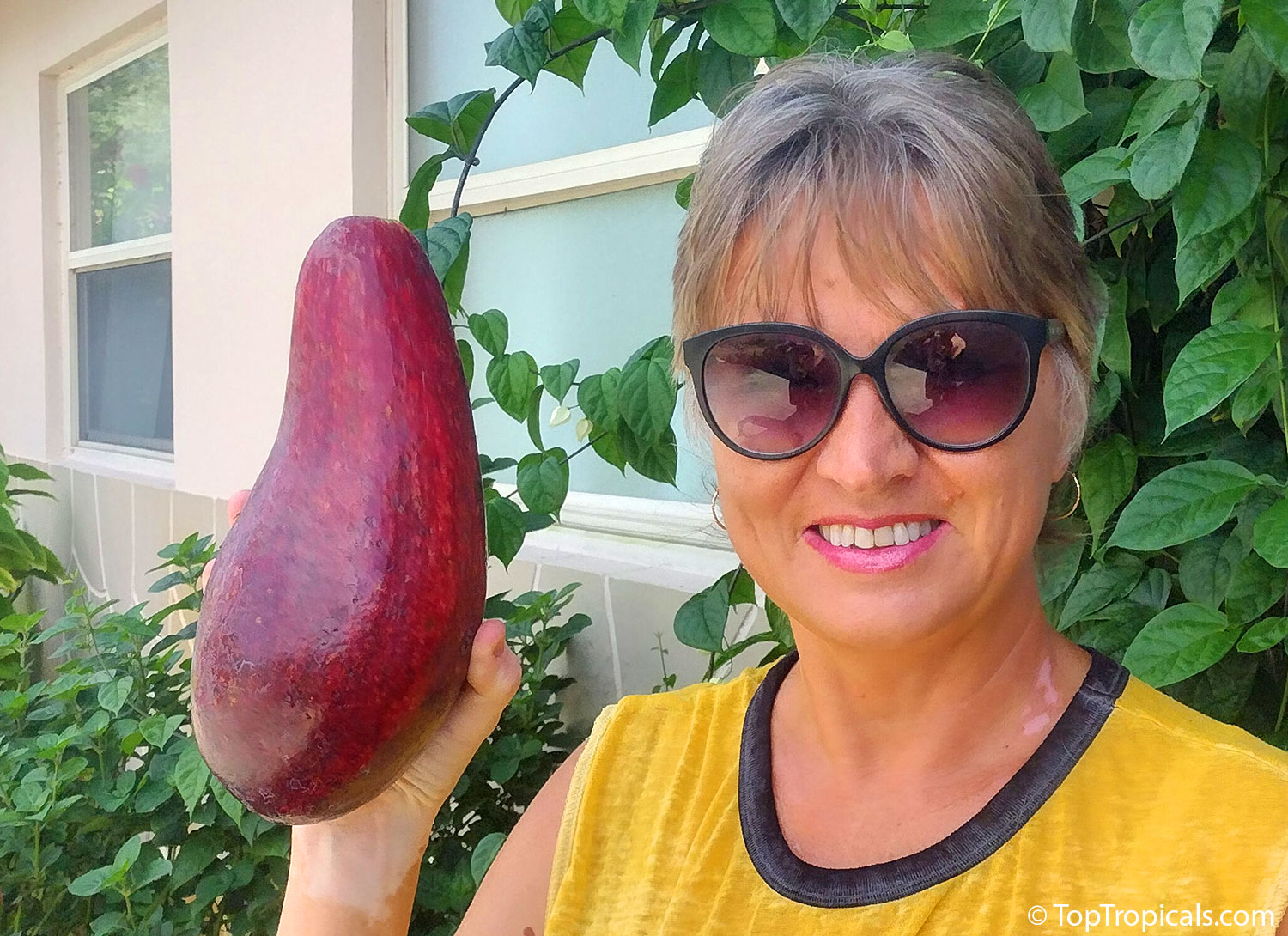
Photo above: It's NOT an egg plant! It's a Red Russell :)
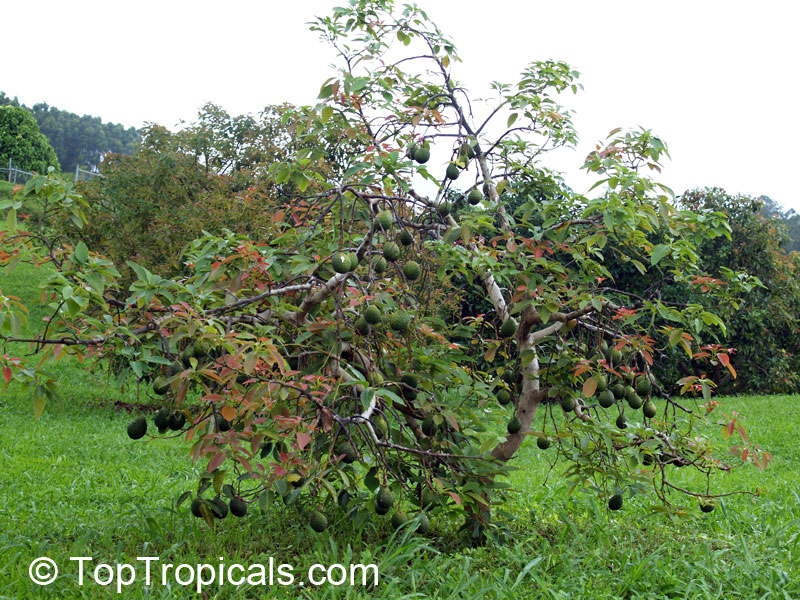
A comprehensive guide to Avocado varieties by: flower type A or B, tree habit, fruit shape and quality, cold hardiness, origin, season and more!
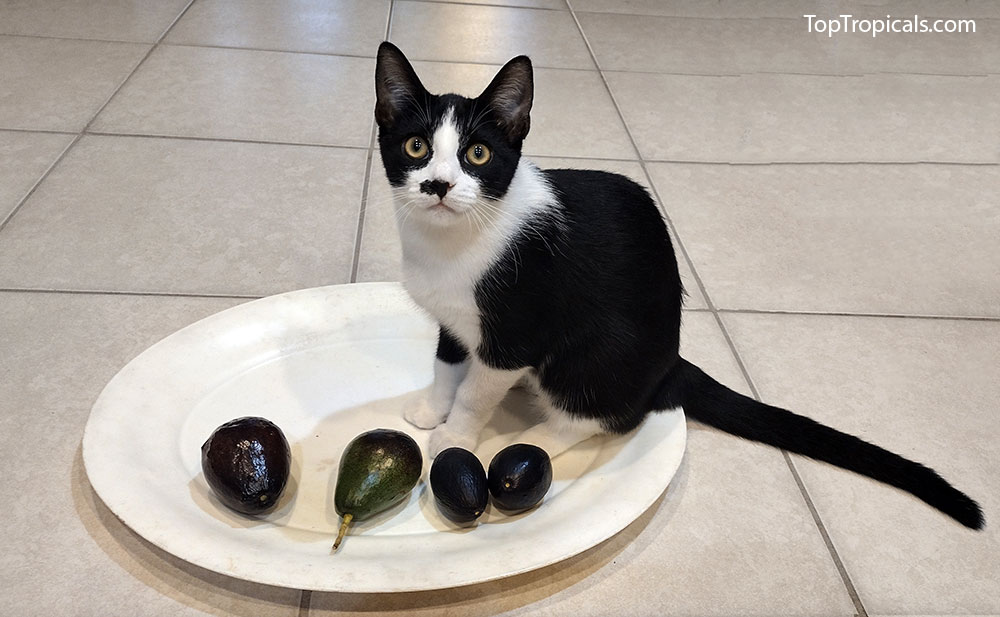
Many gardeners who are eager to purchase their first avocado tree often wonder which variety to choose. Most people are familiar with two primary classifications commonly found in grocery stores: Small & Black or Large & Green.
Frequently, we hear customers ask, "Do you have the one I like, the smaller fruit with bumpy skin? Not that big, tasteless, and watery one!" What they may not realize is that this basic (but practical!) classification doesn't encompass all the wonderful qualities avocados have to offer. There are numerous hybrids in cultivation, and once you plant your first tree and taste the REAL fruit (not from the grocery store), you'll be eager to explore other varieties. It's a guarantee! While it's true that avocado fruit can vary in "butter" content and how "watery" or "buttery" it is, most superior varieties are equally delicious. Or perhaps we should say they are so versatile and distinct in taste that you'll start building your collection of these trees, much like fruit enthusiasts do with mango varieties.
Every garden has unique requirements based on climate, temperature, and property size. These factors must be considered before planning your avocado garden. Additionally, many gardeners may wonder about Type A vs. Type B classifications and whether they need more than one tree to yield fruit. You'll find all this valuable information in our Avocado Variety Guide.
Basic classifications of avocados
1) By flowering pattern and pollination behavior: Type A and Type B
2) By origin: Mexican, Guatemalan, and West Indian (along with many hybrids)
3) By fruit appearance, texture and taste: Guacamole Avocado ("Smooth skin") and Snack Avocado ("California" or "Hass" type)
4) By growth habit: full size trees, free branching or upright, semi-dwarf low growing, and dwarf ("condo avocados")
5) By cold hardiness: Cold sensitive (requiring frost-free conditions), cold tolerant (able to withstand light frost), and cold hardy (capable of enduring some hard freezes once established)
6) By ripening season: Early or Spring (March-June), Mid or Summer (July-September), and Late or Fall-Winter (October-February).
Date:
What is the best Avocado variety?
Grow Your Own Food
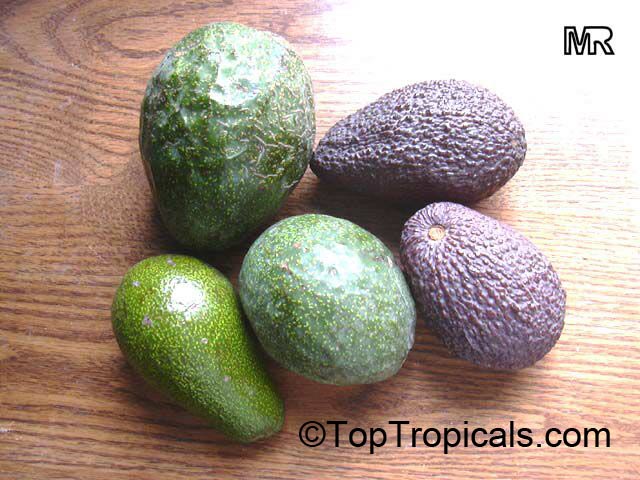
Q: Most trees in my yard were destroyed by hurricane Ian and now I have to start my landscape from scratch. So I decided to plant something useful. Avocado is my favorite. In the stores I see two kinds, large green or small black, but I was told there are many varieties. When I googled the best variety of avocado I found your website. You have quite a selection! Now I don't know which variety to chose. Can you please help? I have room for several trees.
A: Indeed there are many varieties of Avocado (we grow over 50 kinds). Some avocado lovers try
to get as many varieties as they can fit in their yards because every variety
has its unique flavor and texture.
2 main Avocado kinds that we usually see in grocery stores are -
1) smaller black fruit with rich, buttery texture - Mexican and Guatemalan
hybrids
2) green avocado, some can be as large as a small melon, but they have
light texture - West Indian types
There are many hybrids. How to pick the right variety for your yard?
Check out our Avocado variety page and scroll down to see a chart that shows characteristics of fruit, tree size, cold hardiness, and chose the right variety that fits your needs.
Below are just a few picks from our horticulturist - our favorite varieties that we enjoy and highly recommend to others.
Best tasting large green Avocado hybrids:
Bernecker, Beta, Doni, Catalina, Pollock.
Best tasting black or dark green, buttery Avocado hybrids:
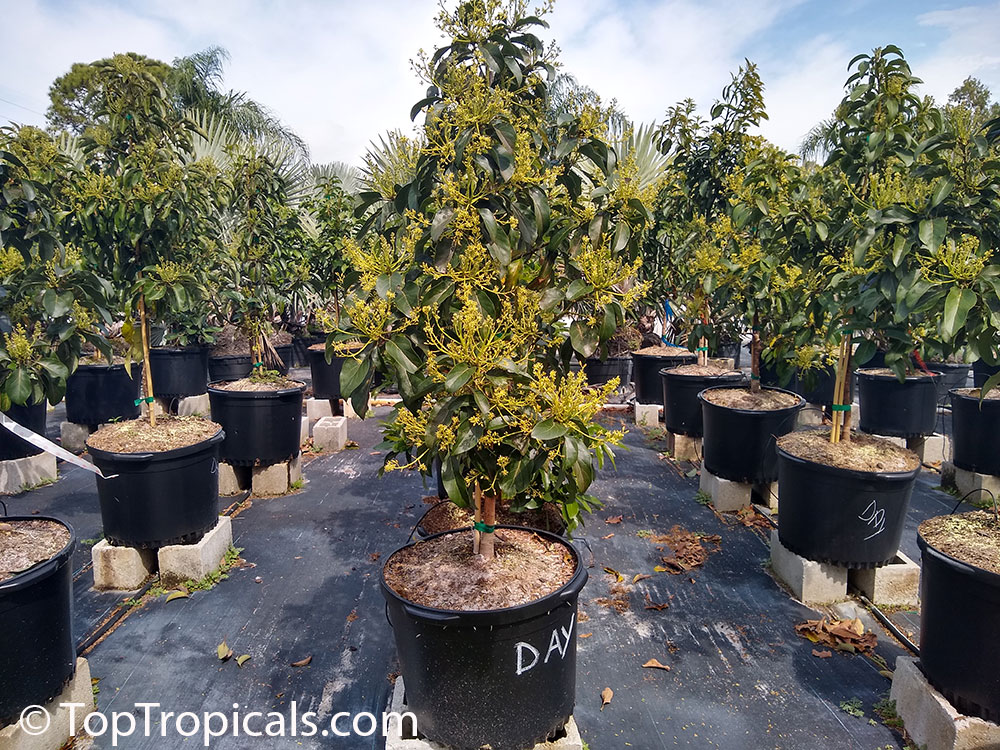
Winter Mexican, Brogdon, Black Prince, Day, Fantastic, Florida Hass, Marcus Pumpkin, Mexicola Grande, Nishikawa, Waldin
Dwarf trees (black fruit):
For local customers: see large 15-gal size Avocado trees, delivery and installation available!
Today all avocados are 13% off instantly with no min. order, take advantage of this quick sale and get all varieties you want!
Date:

Scorpio - 10/23-11/21.
A WATER sign ruled by both Mars and Pluto.
Scorpio's plants are often found in remote places or on poor ground.
They will likely have thorns, can be red in color, and grow under adversity.
The good news is, most of these plants are nearly indestructible! This makes
them desirable for every gardener.
The reproductive organs are ruled by Scorpio, so these are plants that
balance the hormones, regulate the menstrual cycle, help with childbirth and
pregnancy. Until this century, Scorpio was ruled by Mars, and the herbs
associated with it had to do with the urogenital system and the colon. Many of the
herbs related to Scorpio are cleansing and revitalizing. Now, astrologers
assign Scorpio to Pluto, discovered in 1930 (Pluto is said by astrologers to be a higher octave of Mars). Physiologically, Scorpio involves the processes of catabolism and anabolism, the death and regeneration
of body cells. Diseases of Scorpio are often involved with the slow buildup of
toxic substances in the body (carcinogens, etc) or in the mind (anger,
jealousy). Scorpio loves a spice with depth and complexity. Camphor Basil adds
rich flavor to every dish it seasons, and its own aphrodisiac tendencies appeal to
Scorpio's lusty nature.
Scorpio Zodiac lucky plants:
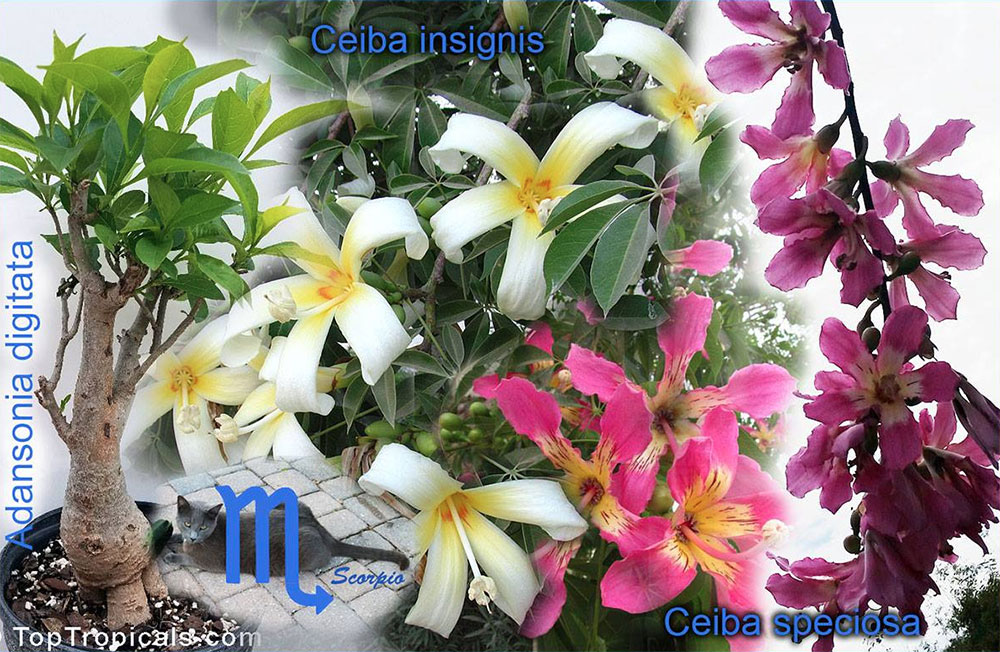
Ceiba, Baobab, Pistachio, Nutmeg, Thunbergia, Combretums, Dragon fruit, Medinilla, Camphor Basil, Oregano, Vanilla orchid, Hibiscus, Various cacti and succulents,
Adenium, Honeysuckle, Peppers, Cordyline, Spider plant, Jasmine,
Gooseberries, Wild
indigo,
Bougainvillea,
Aloe vera, Raspberry
,
Palmetto, Horseradish tree, Camphor, Allspice and Bay Rum,Jujube, Sweet Mimosa, Agave,
Milkweed, Hong Kong
Orchid Tree, Pony Tail, Dwarf Poinciana, Bottlebrushes, Clusias, Crocosmia, Zig-Zag Cactus, Dracaena, Fire Bush, Hoyas, Jatropha
, Kalanchoe, Sausage tree, Devils Backbone, Pereskia, Red Plumeria, Firecracker, Rattlebox,
Rhoeo,
Calendula, Geranium, Thistles, Mint
, Sage,
Catnip,
Coriander, Sandalwood, Ginseng,
Euphorbias, Acacias.
Date:
The Magic of the Avocado
The Magic of the Avocado... Is it a super-food? A super fruit? The
perfect side dish for any meal? Or does the avocado just taste great? If you need
a proof of the Avocado's status as a super-food, here are some of the benefits.
READ MORE >>
At TopTropicals, healthy and tasty avocados are available in a number of varieties, over 30 choices right now! We also have prices as low as $59 and you can always use our newsletter coupons to save even more. Try all the varieties and start or expand your Avocado Super Garden today!
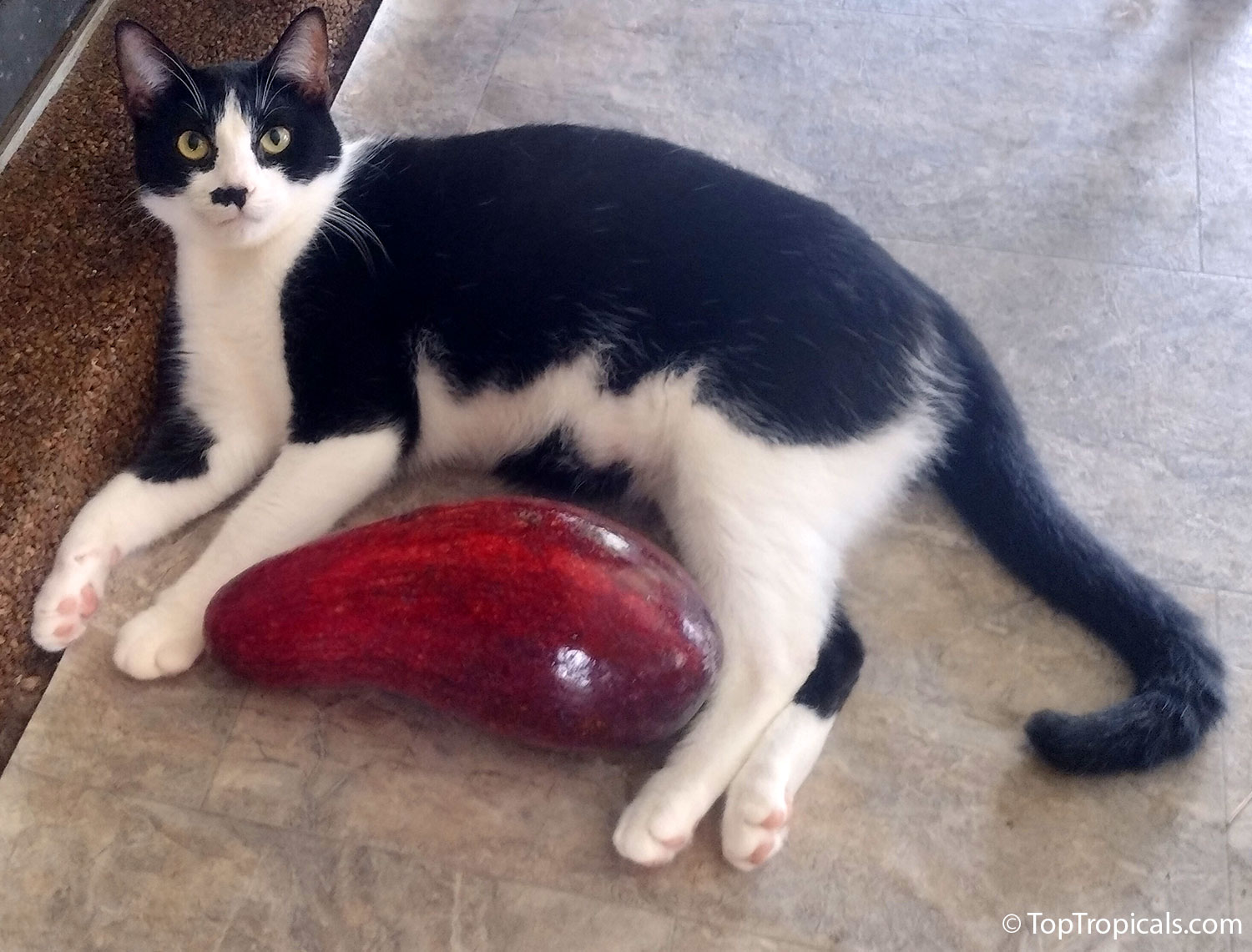
Cat Philimon (a.k.a. Philly Cheesesteak) eating Avocado
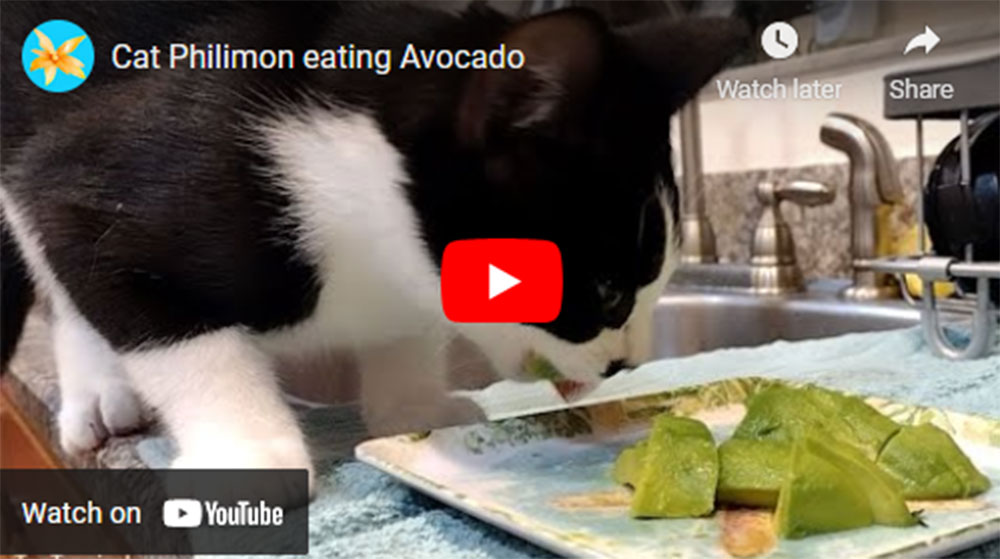
Avocado makes everyone happy! It is Cat Philimon's favorite food. We always have to share with him. Otherwise he just helps himself. He knows it's good for you!
Date:

Scorpio - 10/23-11/21.
A WATER sign ruled by both Mars and Pluto.
Scorpio's plants are often found in remote places or on poor ground. They will likely have thorns, can be red in color, and grow under adversity. The good news is, most of these plants are nearly indestructible! This makes them desirable for every gardener.
The reproductive organs are ruled by Scorpio, so these are plants that balance the hormones, regulate the menstrual cycle, help with childbirth and pregnancy. Until this century, Scorpio was ruled by Mars, and the herbs associated with it had to do with the urogenital system and the colon. Many of the herbs related to Scorpio are cleansing and revitalizing. Now, astrologers assign Scorpio to Pluto, discovered in 1930 (Pluto is said by astrologers to be a higher octave of Mars). Physiologically, Scorpio involves the processes of catabolism and anabolism, the death and regeneration of body cells. Diseases of Scorpio are often involved with the slow buildup of toxic substances in the body (carcinogens, etc) or in the mind (anger, jealousy). Scorpio loves a spice with depth and complexity. Camphor Basil adds rich flavor to every dish it seasons, and its own aphrodisiac tendencies appeal to Scorpio's lusty nature.
Scorpio Zodiac lucky plants: Ceiba, Baobab, Pistachio, Nutmeg, Black-eyed Susan Thunbergia, Combretums, Dragon fruit, Medinilla, Camphor Basil, Cuban Oregano, Vanilla orchid, Hibiscus, Various cacti and succulents, Adenium, Honeysuckle, Peppers, Cordyline, Spider plant, Jasmine, Gooseberries, Wild indigo, Bougainvillea, Aloe vera, Raspberry, Palmetto, Horseradish tree, Camphor, Allspice and Bay Rum, Jujube, Sweet Mimosa, Agave, Milkweed, Hong Kong Orchid Tree, Pony Tail, Dwarf Poinciana, Bottlebrushes, Clusias, Crocosmia, Zig-Zag Cactus, Dracaena, Fire Bush, Hoyas, Jatropha, Kalanchoe, Sausage tree, Devils Backbone, Pereskia, Red Plumeria, Firecracker, Rattlebox, Rhoeo, Calendula, Geranium, Thistles, Mint, Sage, Catnip, Coriander, Sandalwood, Ginseng, Euphorbias, Acacias.
For other signs information, see full Plant Horoscope.
Date:
Aquarius Zodiac lucky plants

Aquarius - 1/22 - 2/18.
Aquarius is an AIR sign ruled by odd-ball Uranus.
The water-bearer's plants will often grow in unusual places and may vary in appearance. They often have purple or blue flowers, or may have unusual colors.
The most healing and beneficial plants for Aquarius are the ones that help circulation, relax the nervous system, or promote inspiration. When Uranus was discovered, it replaced Mercury as ruler of Aquarius. Physiologically, Uranus rules the bioelectrical impulses that power the body's nervous system (nervous tension and nervous exhaustion brought on by powerful changes in the environment are related to both Mercury and Uranus). Physically, Aquarius rules the lower legs, the calves, and the ankles, and the electrical impulses that travel through the body's nervous system. The nervous system itself is ruled by Mercury, and Uranus is said to be a "higher octave" of Mercury. Since Uranus was discovered after the correspondences with plants had been established, the herbs used in Aquarius are Mercury herbs. Always difficult to pinpoint, quirky Aquarius appreciates the unusual and complex flavor of star anise. Use this star-shaped spice when you wish to bring happy surprises into your life.
Aquarius Zodiac lucky plants:
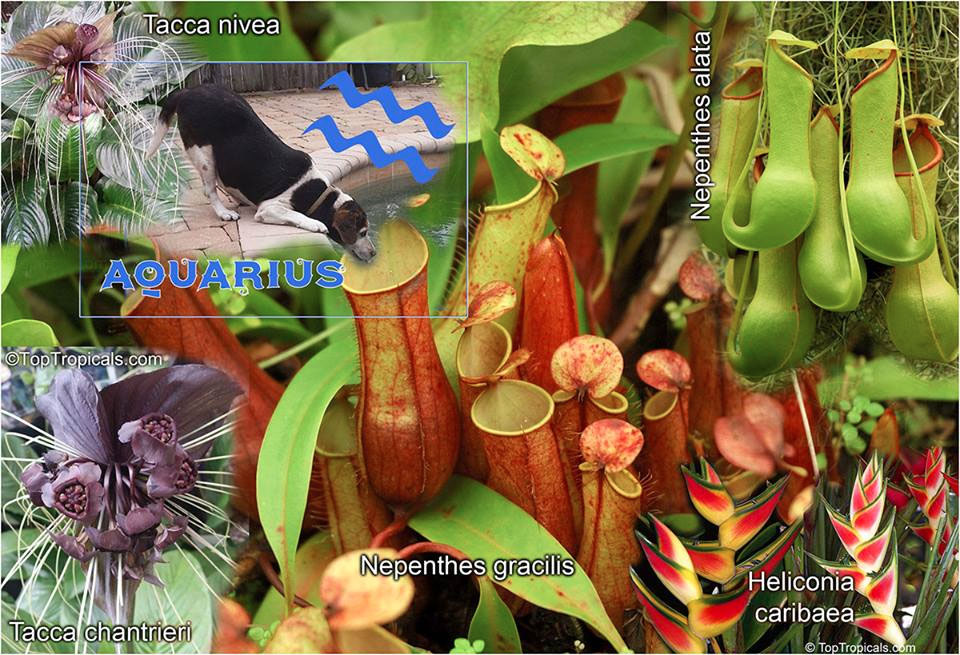
Anise, Orchid, Golden rain - Koelreuteria paniculata, Bird of Paradise, Heliconia, Petrea, Mandevilla, Jasminum, Kiwi, Persimmon, Loquat, Olive, Alocasia, Colocasia, Citrus, Apple, Peppers, Gingers, Carambola, herbs spicy with an unusual flavor, White Pothos, Ivy, Shami - Prosopis cineraria, Neem, Medinilla, Sheesham Tree, Catnip, Passion fruit, Valerian, Aloe, Myrrh, Kava-kava, Cinnamon, Clove, Eucalyptus, Coffee, Cola nut, Nepenthes, Vanilla Orchid, Strongylodon - Jade vine, Tacca - Bat Lily, Eranthemums, Agapanthus, Orchid trees, Bolusanthus, Chamaedorea metallica, Clerodendrum ugandense, Clitoria, Duranta, Guaiacum, Jacaranda, Lavanda.
For other signs information, see full Plant Horoscope.
New Video: TopTropicals at TPIE show in Ft Lauderdale. Last week, your friends at Top Tropicals attended the 2017 Tropical Plant International Expo in sunny Ft. Lauderdale Florida. The Expo was an opportunity for Top Tropicals to introduce our SUNSHINE in a Bottle plant boosters as well as to bring a very rare plant Enchanted Incense to the tropical plant market!
Check out this video: TopTropicals at TPIE.
Stay updated with TopTropicals Videos by subscribing to our channel at YouTube.com/TopTropicals and get our latest video news of what's fruiting and blooming!
Date:

Taurus - 4/20-5/20. Taurus is an EARTH sign ruled by the planet Venus.
Venus is the planet that represents desire and beauty, regarded as the female embodiment of sexual love and human appetite, so Taurus plants often have gorgeous flowers and enticing fragrances and, occasionally, red fruit. It rules the internal sexual organs, the nose and sense of smell.
Because Taurus rules the throat and ears, the best plants for the Bull are often soothing to the throat, or may calm the digestive system after overindulging in the finest foods. Taurus is related to those things we want and value. It harmonizes various body systems, and influences the complexion and facial appearance. Also under Venus's dominion are the abdomen, kidney, thymus, and breasts. Venus-governed herbs are soothing and help to regulate the body's metabolism through the endocrine system. Taurus herbs are traditionally used to attract money and resources. Earthy Taurus sign is all about building a stable and comfortable foundation and can help you generate greater abundance and prosperity in your life.
Taurus Zodiac lucky plants - Aglaia, Cananga odorata (Ylang-Ylang), Artabotrys (Climbing Ylang-Ylang), Cerbera, Night blooming jasmine, Chonemorpha, Erblichia, Euodia, Hiptage, Iboza (Musk Bush), Anise, Lavender, Lonchocarpus Lilac Tree, Nutmeg, Parijat, Camphor Basil, Osmanthus, Funeral tree, Quisqualis, Satureja (Kama Sutra Mint Tree), Viburnum, Carissa, Murraya, Curry Leaf, Bunchosia (Peanut butter fruit), Eucalyptus, Lily, Vitex agnus castus (Blue Chaste Tree), Alstonia scholaris (Sapthaparni), Papaya, Maple, Jasmine, Guaiacum, Camellia, Ephedra, Fuchsia, Geranium, Spider lily, Gardenia, Magnolia, Plumeria, Paeonia, Verbena, Clerodendrums, Apple, Pear, Apricot, Peach, Plantain, Olive, Grape, Pomegranate, Mango, Neem Tree, Cherry, Cypresses, all Berries, Raspberry, Asparagus, Mint, Clove, Roses, Stagshorn fern, Catnip.
For other signs information, see full Plant Horoscope.
April 22 Earth Day discount - 15% off fragrant plants! Earth Day is more than just a single day â€" April 22, 2016. It's bigger than attending a rally and taking a stand. Plant one tree at a time to make our Planet better! This Earth Day and beyond, let's make big stuff happen. - See more at: www.earthday.org
Check out our Fragrant Plants for 15% off! 1-day deal only!
Date:
Aquarius Plant Horoscope

Aquarius - 1/22 -
2/18.
Aquarius is an AIR sign ruled by odd-ball Uranus.
The water-bearer's plants will often grow in unusual places and may vary in
appearance. They often have purple or blue flowers, or may have unusual
colors.
The most healing and beneficial plants for Aquarius are the ones that help
circulation, relax the nervous system, or promote inspiration. When Uranus
was discovered, it replaced Mercury as ruler of Aquarius. Physiologically,
Uranus rules the bioelectrical impulses that power the body's nervous system
(nervous tension and nervous exhaustion brought on by powerful changes in the
environment are related to both Mercury and Uranus). Physically, Aquarius
rules the lower legs, the calves, and the ankles, and the electrical impulses
that travel through the body's nervous system. The nervous system itself is
ruled by Mercury, and Uranus is said to be a "higher octave" of Mercury. Since
Uranus was discovered after the correspondences with plants had been
established, the herbs used in Aquarius are Mercury herbs. Always difficult to
pinpoint, quirky Aquarius appreciates the unusual and complex flavor of star anise. Use this star-shaped spice when you wish to bring happy
surprises into your life.
Aquarius Zodiac lucky plants:
Anise, Orchid, Golden rain - Koelreuteria paniculata, Bird of Paradise, Heliconia, Petrea, Mandevilla, Jasminum, Kiwi, Persimmon, Loquat, Olive, Alocasia, Colocasia, Citrus, Apple, Peppers, Gingers, Carambola, herbs spicy with an unusual flavor, White Pothos, Ivy, Shami - Prosopis cineraria, Neem, Medinilla, Sheesham Tree, Catnip, Passion fruit, Valerian, Aloe, Myrrh, Kava-kava, Cinnamon, Clove, Eucalyptus, Coffee, Cola nut, Nepenthes, Vanilla Orchid, Strongylodon - Jade vine, Tacca - Bat Lily, Eranthemums, Agapanthus, Orchid trees, Bolusanthus, Chamaedorea metallica, Clerodendrum ugandense, Clitoria, Duranta, Guaiacum, Jacaranda, Lavanda.
For other signs information, see full Plant Horoscope.

Date:
7 secrets of a Happy Avocado Tree
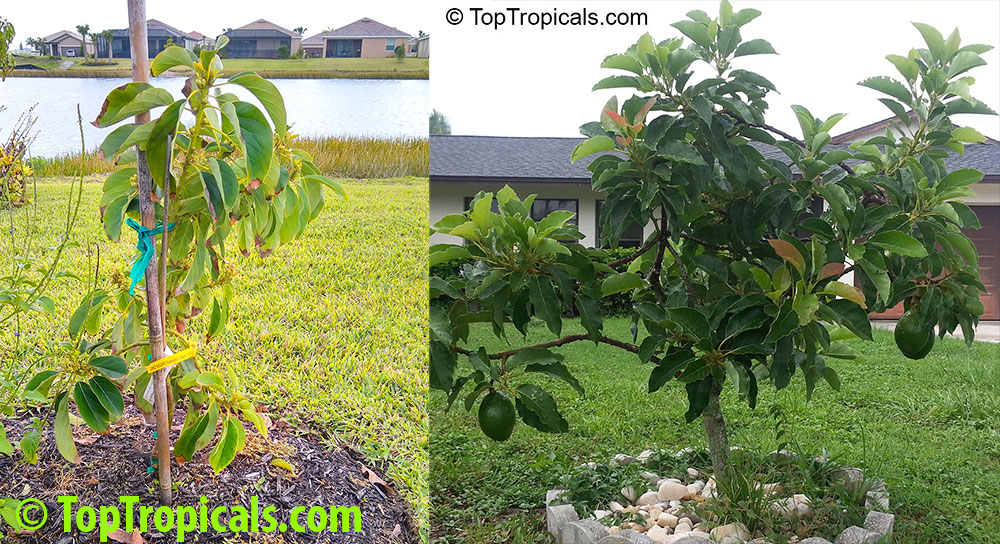
Q: I purchased an avocado tree from local garden centers three times but every time it dies on me. My neighbor has a nice tree in his yard and it grows beautifuly. I just purchased one online from you and I need to know what I was doing wrong? Are there any secrets how to make an Avocado tree happy? I have a big garden and several mango trees, but no luck with Avocado...
A: Avocado tree is famous for being such a pain to establish. But once it starts growing, it's growing! We will share a few simple tricks how to make it right.
1. Plant high and provide good drainage. Wet feet is number one
reason for failing an avocado tree. It doesn't like wet soil and won't
tolerate soggy conditions. Plant it in the highest spot of your yard and slightly on
a "hill" (3-4" higher than the surrounding ground).
DO NOT plant Avocado tree in low spots or wet spots of your yard. Save
those spots for Cannas or Black Sapote or even a Mango if you want a fruit tree there.
2. Use quality soil. Use only well-drained soil with high content of
organic matter. You may add compost to existing sandy soil, or add some professional potting mix that contains pine bark and perlite. Remove
rocks from the hole if you see any while digging. Dig a big hole and fill it
with a good soil; compact the soil in the hole very well before setting the
root ball. Reminder: plant the tree high!
3. Water regularly. After planting an Avocado tree in a nice high
spot with a good drainage, start watering it... daily! Avocado likes water,
although it doesn't like wet feet! Once you figure out this combination, you've
got the recipe of success. Water by hand daily for the first week after
planting, then twice a week for couple weeks, then once you notice new growth -
you may rely on sprinklers, but keep watching the tree and don't let the soil
over-dry. It must be slightly moist, but not soggy.
4. Fertilize. For such finicky tree, we suggest mild formulas of
fertilizers. Dry fertilizers may burn roots, especially of a young tree. Even
smart-release granulated fertilizers should be used very carefully. The best
way to feed your young avocado tree - get a complete set of Sunshine Boosters Pro system. It has all necessary elements for all
stages of plant development and never burns the roots. Sunshine Boosters Pro can
be used with every watering - no need to guess how much and when. Besides,
it is a natural fertilizer based on amino acids - exactly what you want to use
on your fruit trees and other edibles!
5. Boost immune system of the tree. Apply Sunshine Epi plant hormone every 2 weeks as a foliar spray to boost
immune system and metabolism of the tree and protect it from diseases. Epi makes
plants (especially young plants) grow twice faster! It also enhances effect
of fertilizers by increasing plant metabolism.
6. Do not prune until you see significant growth. The tree is small
and can use as many leaves and branches as possible for photosynthesis and
healthy metabolism. We suggest to avoid pruning for at least the first year. On
the second year your tree most likely will be covered with flowers (assuming
you followed fertilizer program). Let it go through the blooming stage and
setting fruit; prune in Fall after fruiting is over.
7. Keep number of fruit to minimum for the first crop. Don't let the
small tree exhaust itself. Keep just 2-3 fruit to develop. The next year, no
need to control fruit quantity, the tree will develop as many as it can
support.
P.S. If you got the tree from a mail-order, remember to establish it
in a pot before planting in the ground; move gradually from shade to sun.
Follow planting instructions.
Learn more about Sunshine Nutrition System - a Natural solution for your garden.