Garden Blog - Top Tropicals

Date: 4 Mar 2021

Healthy Plants: Q&A from Mr Booster
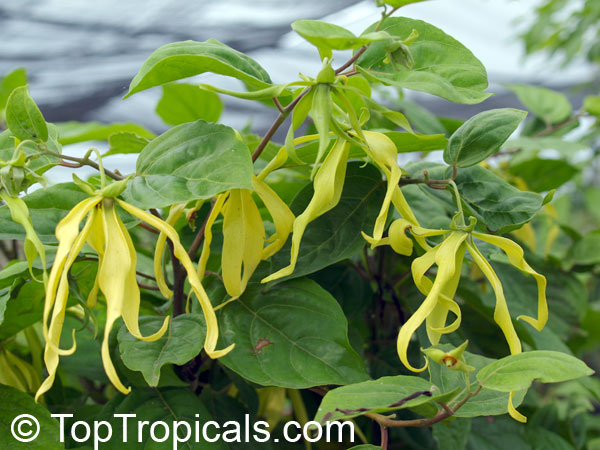
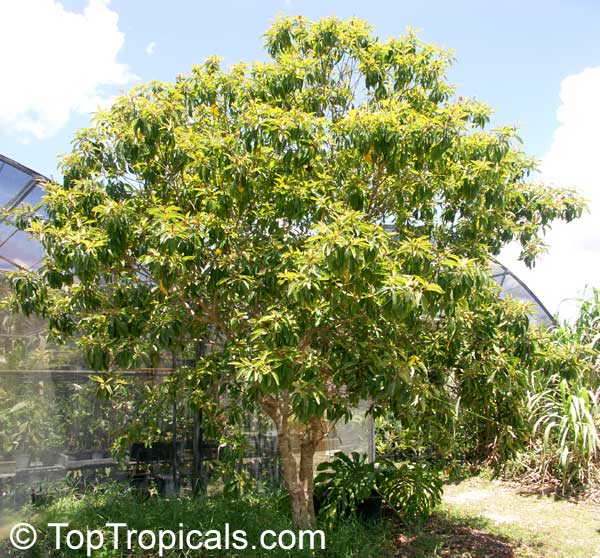
Ylang Ylang leaves after winter

Q: Hi, I purchased ylang ylang tree a couple of years ago. It's grown quite well in my Greenhouse but I'm having some trouble figuring out if I'm watering it too much not enough or if it has an insect. Can you please take a look at my photos and maybe give me a suggestion of what my problem might be?
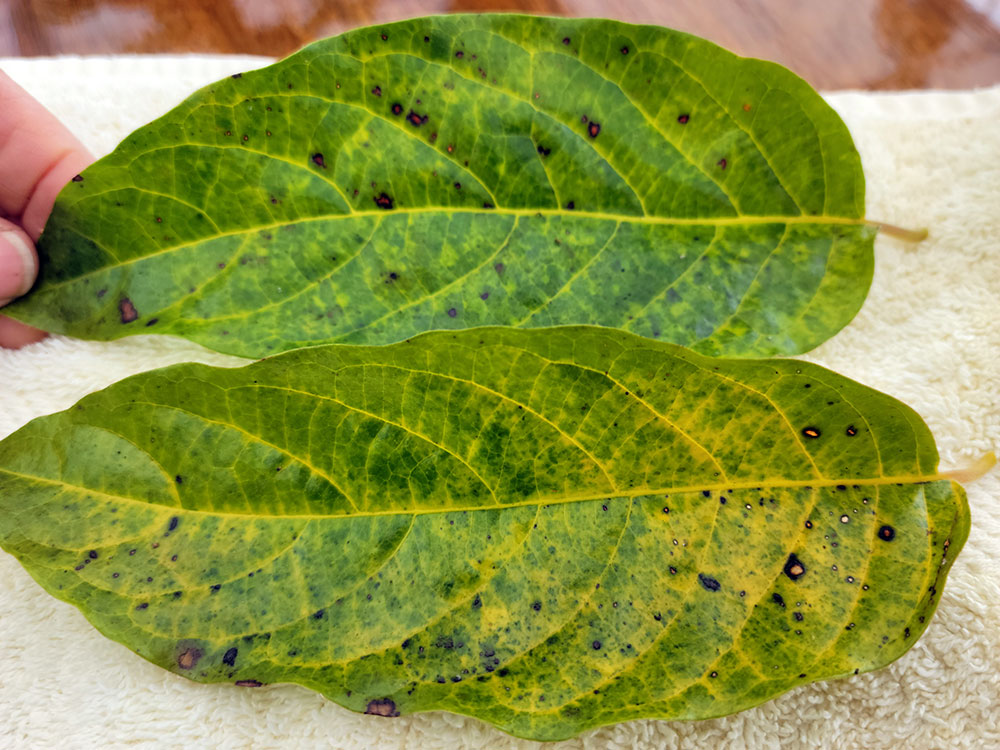
A: It is normal for Ylang Ylang tree to get dark spots during winter time. Sometimes Cananga gets whole branches darkened (especially dwarf variety fruiticosa), some may even fall off. But they will be replaced with new growth in Spring-Summer. There is nothing wrong with your plant, it is just a reaction to cold and short day light when you keep this plant indoors. These leaves eventually will fall off as the weather warms up, and will be replaced with a new fresh green growth.
Luckily, Cananga is not susceptible to insects and diseases, but its leaves can look unattractive in winter. Make sure to keep watering at minimum until temperatures raise to 80's.
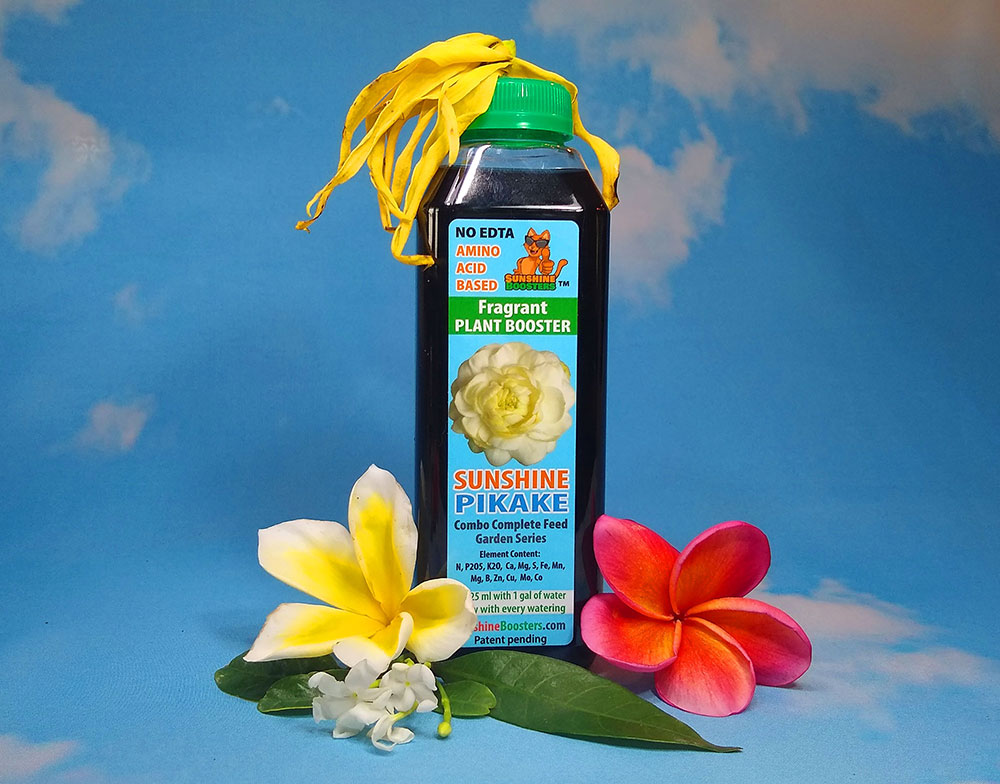
Start fertilizing as soon as new growth appears. We recommend SUNSHINE Pikake - Fragrant Flower Booster, an ultimate fertilizer for fragrant plants.

Date: 4 Mar 2021

Pretty Fancy Nancy from Brazil

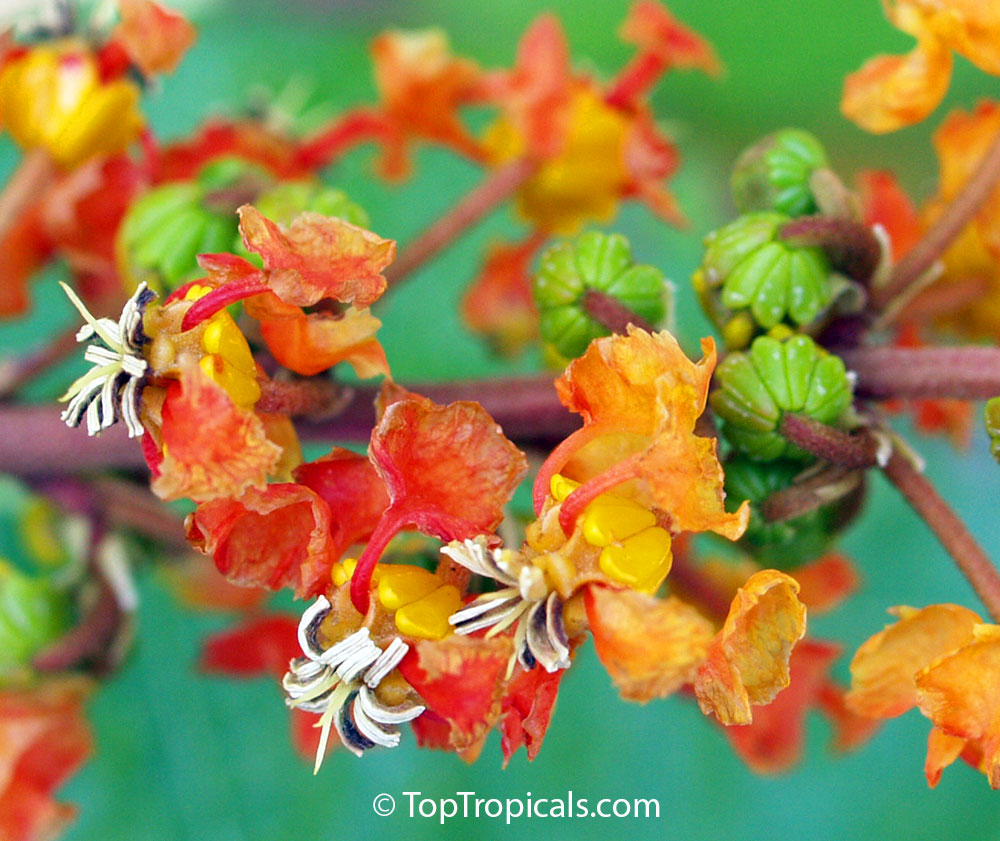
Byrsonima crassifolia - Nancy Tree or Golden Spoon

by Alex Butova, the Witch of Herbs and Cats

Once Dr. David Fairchild bought in Panama seeds of a fruit plant unknown to him, which looked a little like Acerola (Malpighia). When he asked what it was called, the woman who sold the seeds answered - Nance, wild cherries from Brazil! The famous horticulturist brought the seeds from Panama to the United States Department of Agriculture in 1899. A few of his specimens still exist in private collections in South Florida...
Nancy Tree fruit are not only delicious, but also very useful, they are widely used by many local people for medicinal purposes and include all of Vitamins B, Vitamin C, Vitamin K, Vitamin E, Calcium, Cooper, Iron, Magnesium, Manganese, Phosphorus, Potassium, Sodium and Zink. The whole multi-vitamin prescription in one fruit!..

CONTINUE READING >>

Date: 25 Feb 2021

Healthy Plants: Q&A from Mr Booster

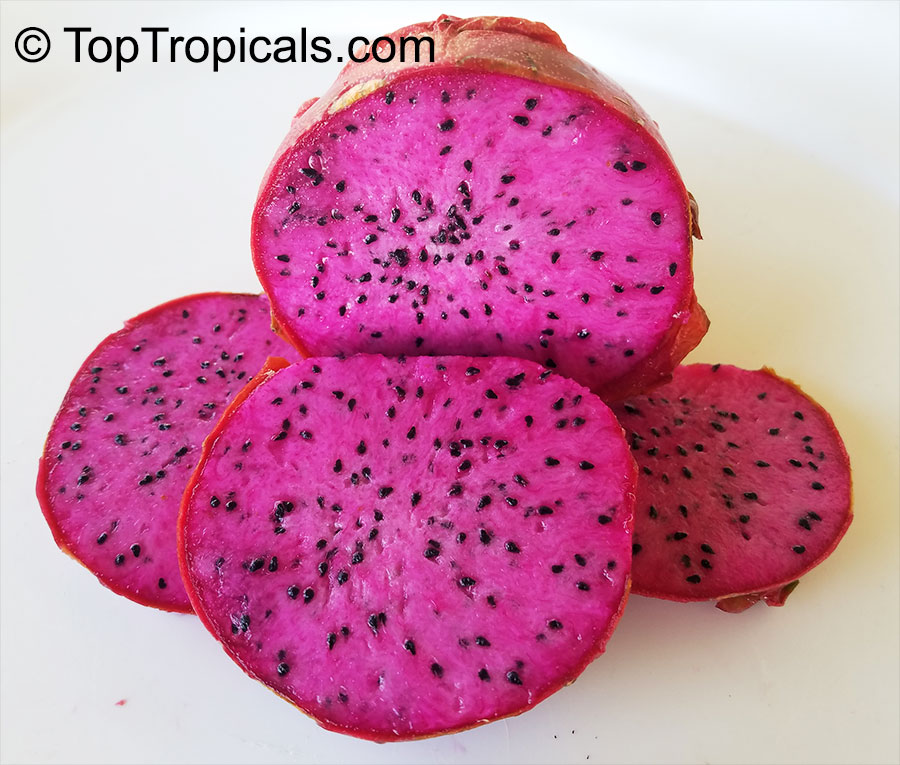
Dragon Fruit Magic Tricks

Q: I purchased two sweet red pitayas, that arrived and were planted on May 28, 2020, they were damaged but not serious. my question is this one pitaya is a beautiful green, and has grown 6or 8 "already, the other is bigger and is a grayish green and has not shown any sign of growth at all in six weeks, how long do I wait before I throw it out and buy another?

A: Being a cactus, sometimes Pitaya slows down its growth waiting for more favorable conditions. If one of your plants doesn't show any new growth, just give a it some more time and make sure the plant stays happy. To make pitaya happy, provide the following:
- Water. Unlike most cacti, Pitaya prefers regular watering (but not a wet soil). Make sure it is planted in well-drained media. Do not water again if soil remains moist, wait until it dries out on the surface. During hot weather, Pitaya enjoys light daily watering.
- Light. Unlike most cacti, Pitaya benefits from a filtered light especially while establishing. Try to create a temporary shade over the plant until it starts active growth (if grown in the ground), or move the pot in filtered light. Dull color or dry spots are signs of sun burn. Once the plant shows new growth, you may remove sun protection, or move the pot gradually into the full sun.
- Food. Pitayas are heavy feeders. Use the following fertilizer:
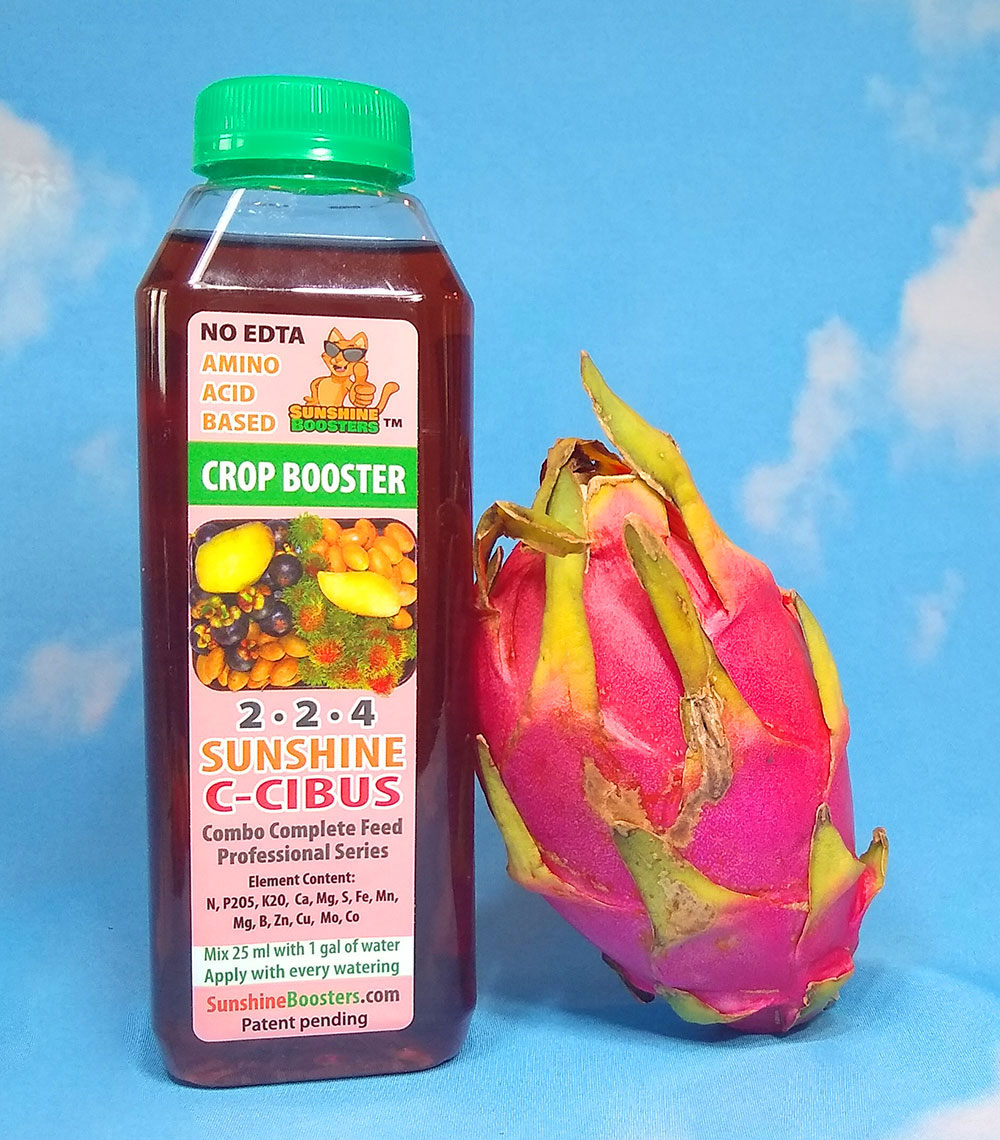
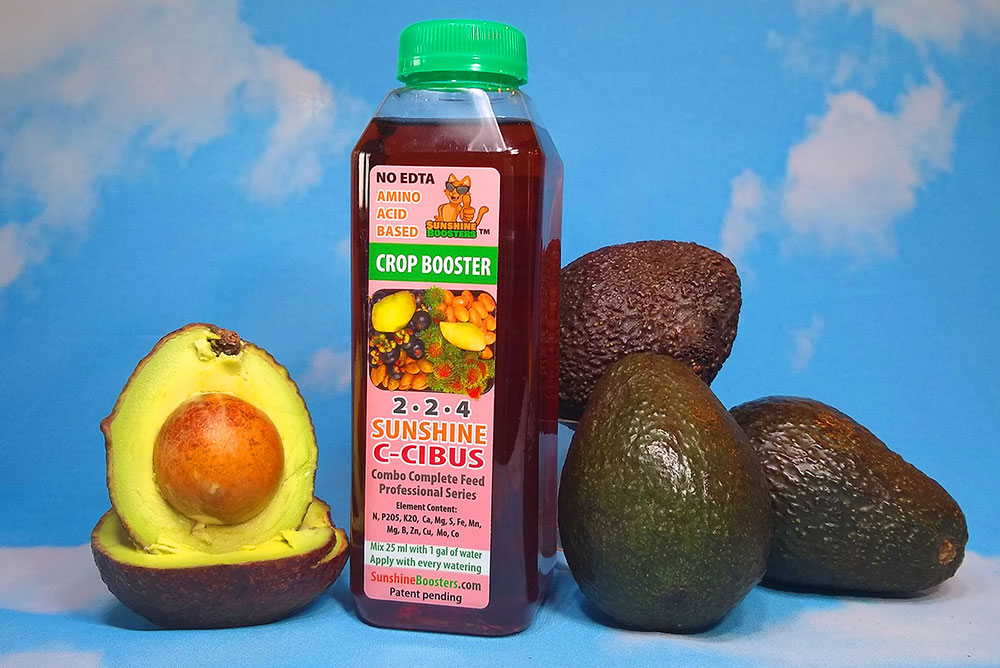
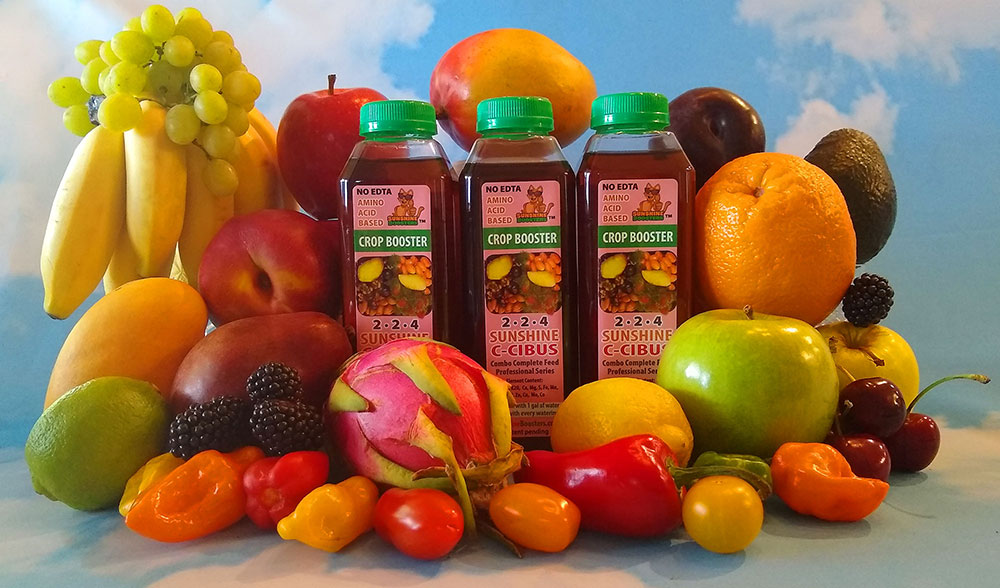
SUNSHINE C-Cibus - Crop Nutrition Booster

Q: I've been growing dragon fruit cuttings from Okinawa, Thailand and Vietnam for several years in pots and cannot get them to fruit. Any fertilizer suggestions? I live in Northern Virginia so I bring the massive pots in the garage under lights and a heater for the winter but back outside once the temperature warms up.

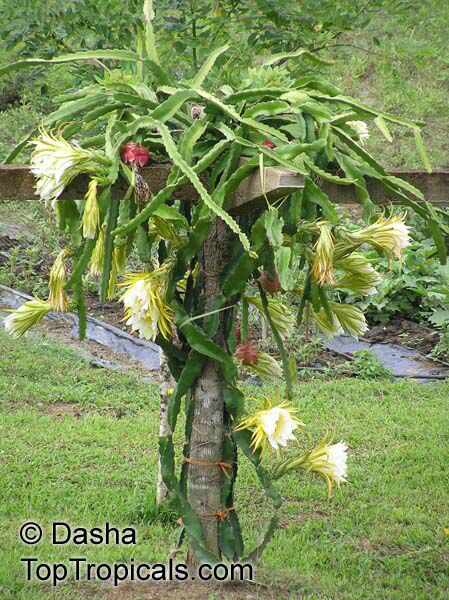
A: There is a little trick to get Dragon fruit to flowering and fruiting. This plant likes flowering when it is attached to a strong support. In commercial plantations, they use special trellises/frames made out of logs, but you can make one yourself using simple materials.
See article: Do-It-Yourself Support Structure for Dragon Fruit.
And of course, don't forget a special plant food for tropical fruit - Sunshine C-Cibus.
You can successfully get your Dragon fruits to fruit in pots, providing bright light in Summer. In Winter, keep the plants on a dry side to give them some rest and a chance to hibernate before the next fruiting season.

Date: 25 Feb 2021

Container mango - Condo varieties

Q: What are the good varieties of mango trees available for container grow? Can you please share the details?

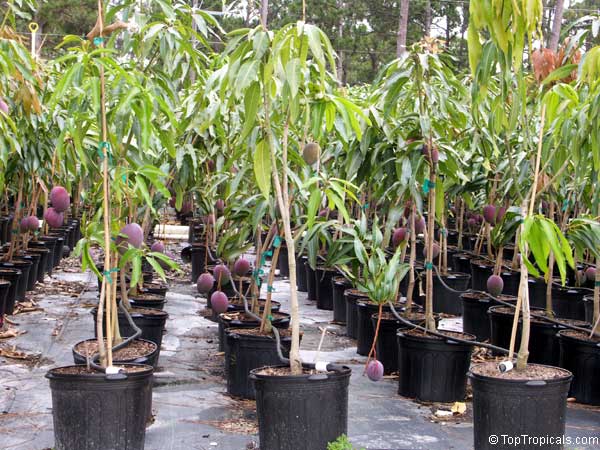
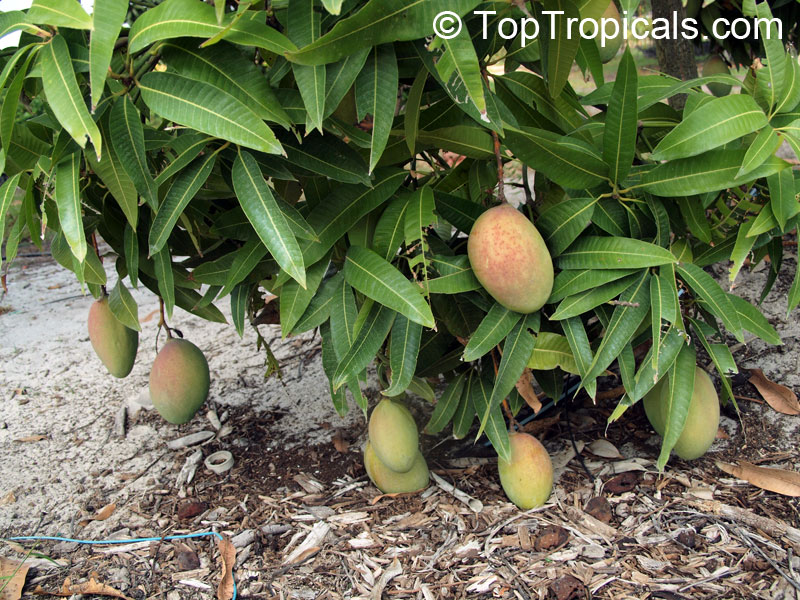
A: There are some great varieties of Mango selected specifically for container culture, they even have a nick-name - "condo mangoes". They have compact growth habit and respond well to pruning to keep them in small size. Here are a few of our favorites that we currently have in stock:
Glenn
Ice Cream
Cotton Candy
Mallika
Manilita
Pram Kai Mai
Mun Kun Si
Maha Chinook
You can see more condo mangoes on this page.

Related articles:

How to grow a Dwarf Mango tree
Choosing the right Mango for your garden
10 secrets of successful Container Mango growing on a balcony.
Condo Mango

Date: 18 Feb 2021

Healthy Plants - Q&A from Mr Booster: Feeding Avocado Tree

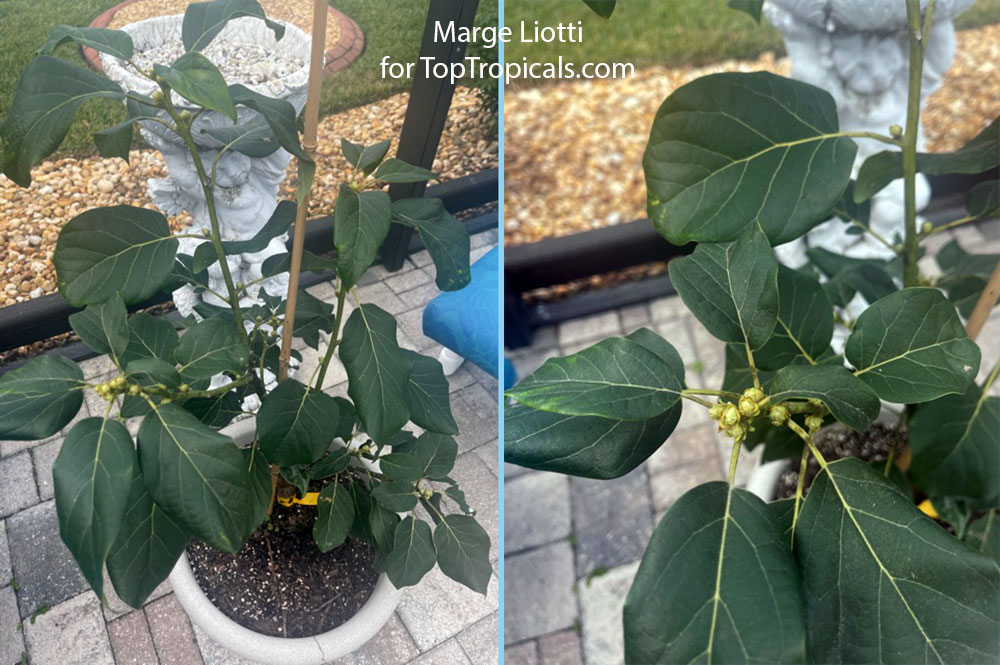
Q:We bought one of your avocado grafts and it's doing great, lots of buds for fruit. It's still in a pot and fertilizing with the Sunshine Boosters. Should we continue with this product? We'll plant it in the ground in March. Thought you'd enjoy pictures of our wonderful tree. No freezing temperatures in Riverview, but when it got down into the 30s, the plant came in. One good thing about growing in the pot. I'll be buying some more Sunshine Boosters. This stuff is working great on all our plants.
A: Congratulations with a good job on growing avocado over winter. Avocado trees are not easy, we are happy to hear that your plant is ready for production, this is amazing! We've noticed that Sunshine Boosters perform miracles. Here are some suggestions for you:
1) Continue fertilizing with Sunshine Boosters according to the feeding chart
2) When ready to plant, dig a large hole and fill it with good soil full of organic matter (compost mixed with existing sandy soil will be good). Make sure to plant the tree on 3-4"high elevation, like on a little hill. Avocados need perfect drainage and can't tolerate wet feet. See more info on planting and planting instructions (pdf).
3) Water daily with a hose, do not rely on sprinklers. Avocados like water (considering perfect drainage)
4) Continue applications of Sunshine Boosters at least until the tree is established and starts growing new branches with lots of leaves. After that, you can switch to slow-release fertilizers once a month if it makes it easier, but if you can, continue Sunshine Boosters at least on weekly basis - they really boost plant growth!

Date: 18 Feb 2021

Red Stopper Cherry

Rare plant from Key West

by Mark Hooten, the Garden Doc

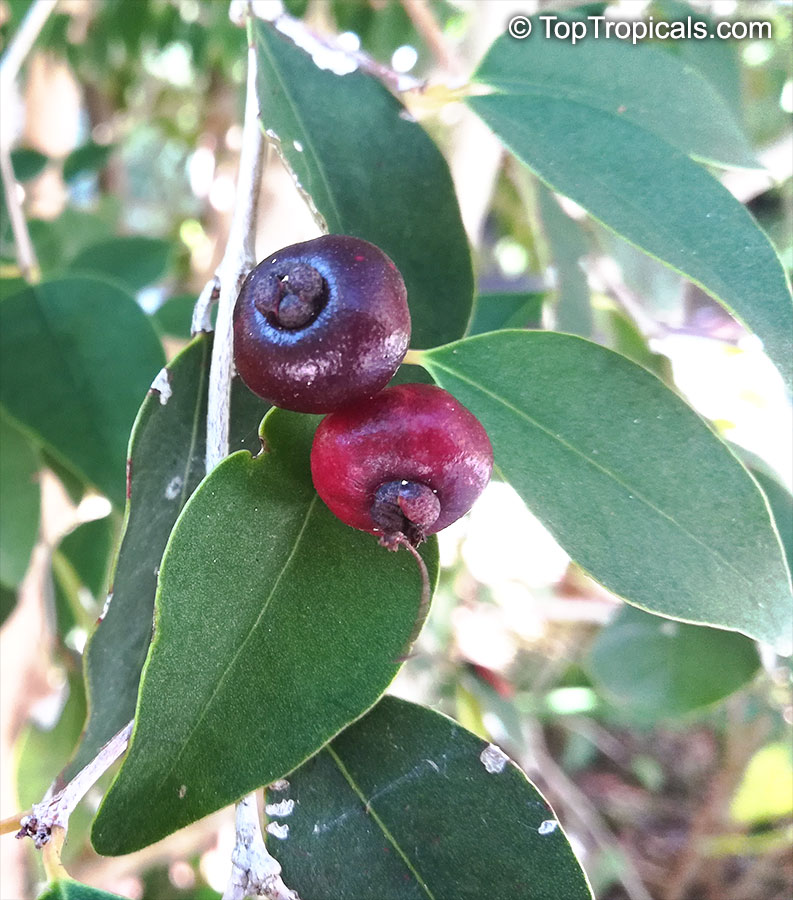
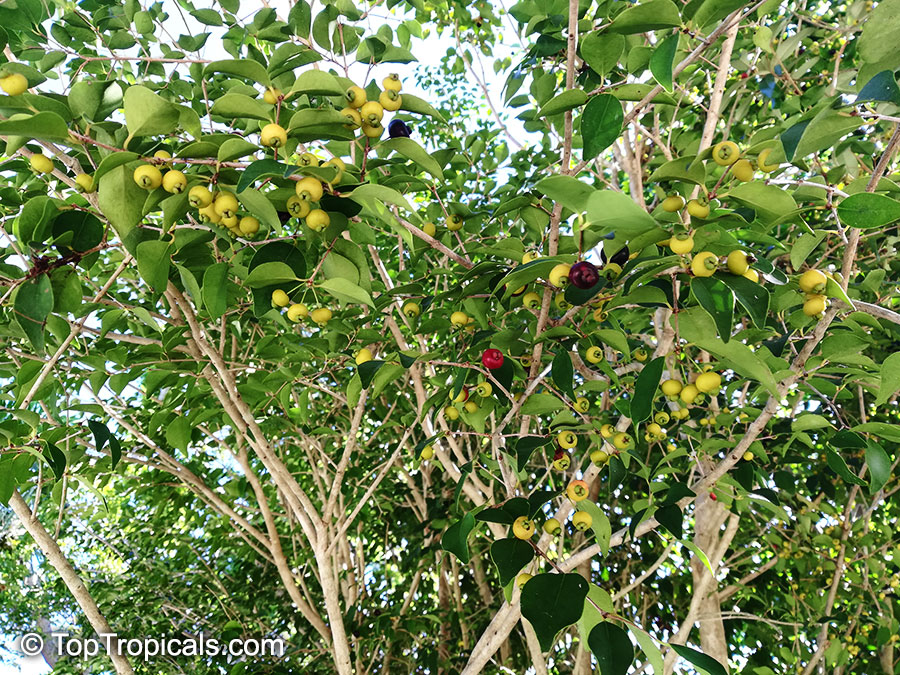
Eugenia rhombea, commonly known in Florida as "Red Stopper", is one of four species of Eugenia native to North America. It is a beautiful small tree, bearing small shiny deep green leaves which are pinkish-orange-red when young, giving them the appearance of a flowering tree at a distance when flushing out new growth a number of times a year.
Its native range includes Florida, Bahamas, Cuba, Hispaniola and part of Eastern Central America. However, here in Florida, it is federally listed as an endangered species, only known from the lowermost Everglades and Keys, where even there it is rare.
These elegant little trees grow to perhaps 12 or so feet tall, developing an elegant, umbrella shaped canopy. At a distance, they rather resemble Ficus benjamina, yet with a more orderly and refined appearance. In addition, they develop fluffy white flowers with a delightful fragrance, followed by holly-like long lasting red berries which are relished by wonderful song birds.
Although appearing delicate, this tropical species is surprisingly hardy, and would likely even make striking, a one-of-a-kind houseplant in the North.
These very few plants were grown from seeds collected near Royal Palm Hammock in the Everglades, and and may not be available again for some time...

Date: 11 Feb 2021

Curious Gardenia graft

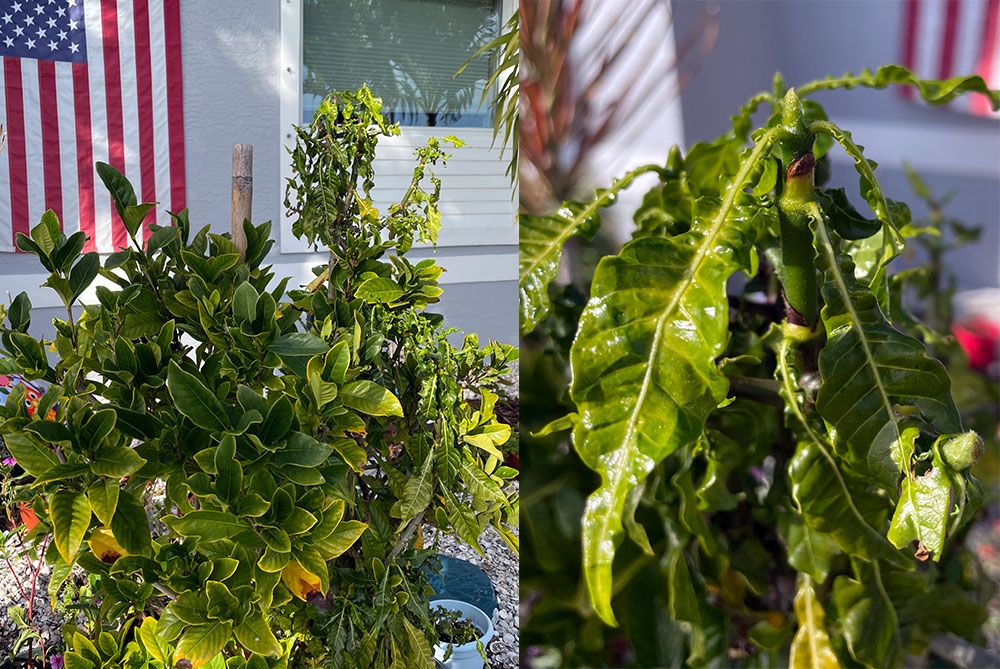
Q: I was told to send you pictures of my hybrid gardenia tree. About 6 months ago the new growth on the top of one side became crinkled. It doesn't get straightened out either. It seems like it just stays like that until it falls off. Any ideas?

A: Your plant is not sick at all. This is what happened...
Your gardenia is a grafted variety. Gardenia varieties (Gardenia jasminoides hybrids) are grafted on rootstock of Gardenia thunbergia (this species is nematode-resistant and used for rootstock especially in Florida). The side branch that you call "crinkled" is actually the rootstock (Gardenia thunbergia) growing from UNDER the graft. Gardenia thunbergia has naturally "wavy" leaves.
If you follow this branch to its base, you will see where it starts - right below the graft. This happens very often.
You need to remove this branch altogether, from the point where it starts. It sucks energy from the plant and eventually may take over the whole plant.

Photo above: Gardenia thunbergia with curly leaves

Date: 11 Feb 2021

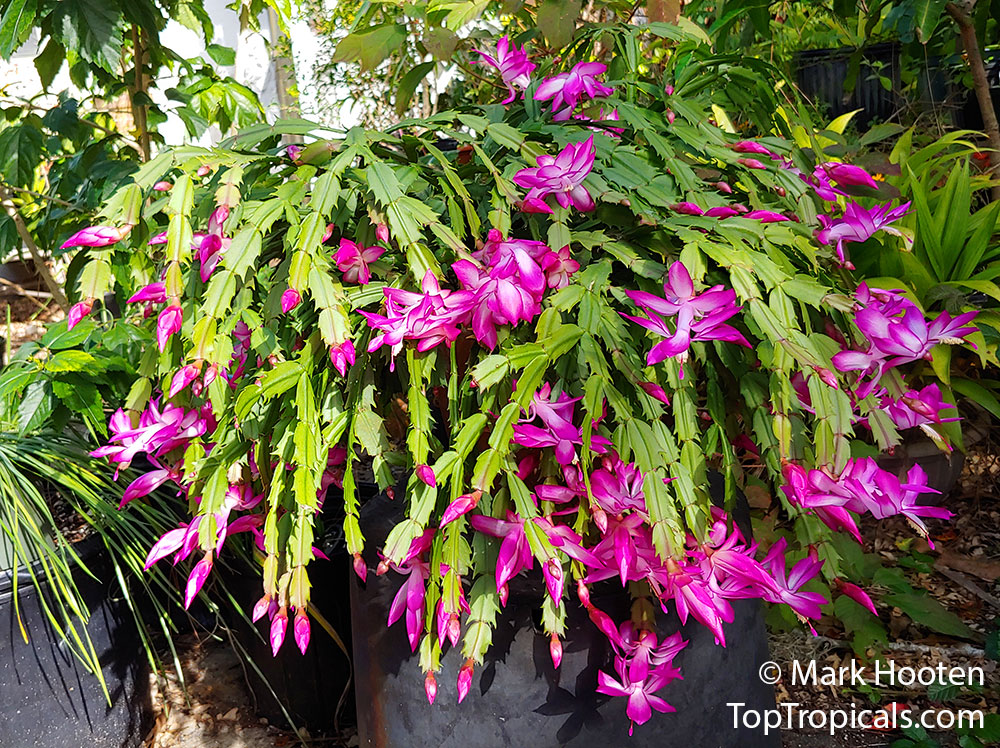
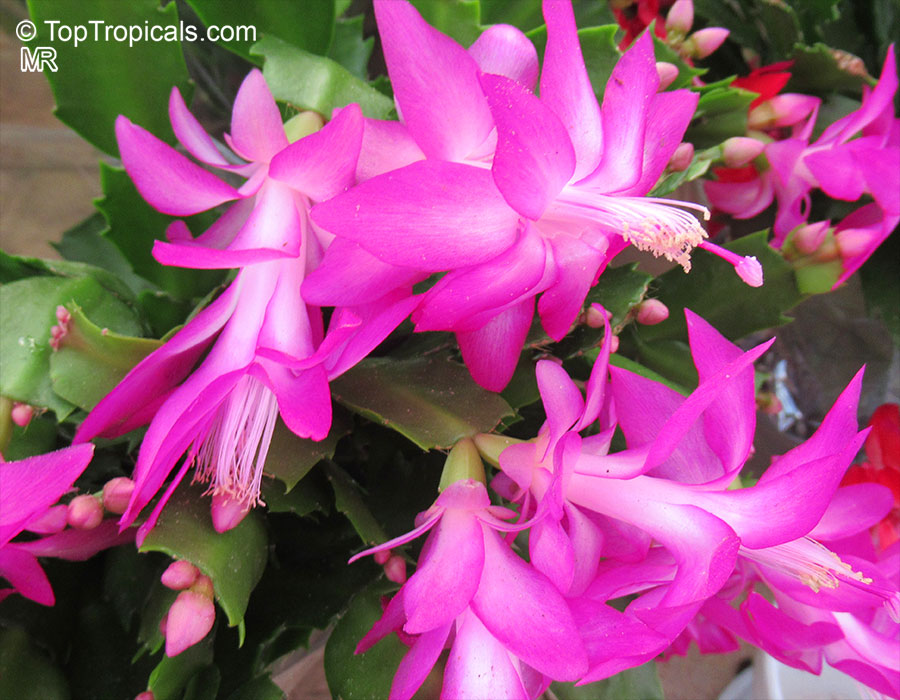
Schlumbergera x New Deal

A remarkable Christmas cactus hybrid

by Mark Hooten, the Garden Doc

...This hybrid, completely lost to the trade today, is being offered here for the first time after it was originally offered for purchase at the Brooklyn Botanic Garden over 80 years ago. That institution was having a special rare plant sale on the day of the famous presidential election on November 8, 1932, when F.D.R. was historically voted in as the next American president.
The plants we are offering are all 3rd generation vegetative propagations from an original specimen (still alive btw) of a plant purchased from them that very day. Its name is identical to that president's main campaign slogan!..

CONTINUE READING >>

Date: 8 Feb 2021

I love growing for the planet!

A word from a happy gardener

"...Wow is all I can say, you all sent the most beautiful plants, I never knew the Hawaiian Bell could have so many blooms. It arrived in Excellent shape and I am so very thrilled to have this beautiful plant again. I am keeping inside for a few days until a front goes thru, then it is going to be back in mid 70s.
I give aged worm castings to my plants and recently discovered the plant food that the plant can uptake right away... And lastly, I discovered a potting soil... Some of my plants went wild when I planted them in it. Everything in it is tailored to not burn your plants. So nothing but the very best for Top Tropical plants. Thank you all so much for this wonderful plant, I will treasure and take good care of it. I have over 500 plants in pots, because of gophers and nematodes. I love nature so do not want to kill the gophers because the owls we have here depend on them and poisoning is a horrible death. Much love, happiness and gratitude.
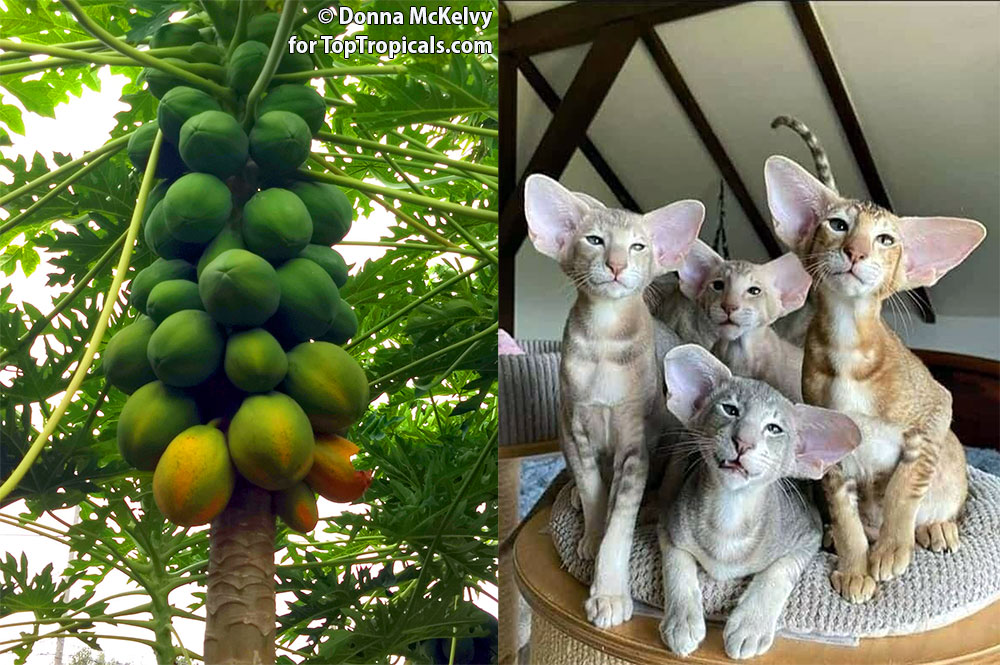
You can use pics - I love growing for the planet. I so love cats too, I have 5 most of them Siamese. I found this pic of cats online, wow how did they breed for a cat to have such big ears?
Much love and happiness, Donna..."

Date: 8 Feb 2021

Valentine's Garden Party was a blast!

We would like to thank all our vendors and guests who made this Garden Party a real fun event!
If you haven't been to Top Tropicals Festivals yet, and even if you live far away - it is worth a trip. Lots of vendors with happy crafts, and lots of happy people. Because Garden People are Happy People! Stay connected and visit our next Festival - more info coming soon on our Event page...

Date: 4 Feb 2021

PeopleCats of TopTropicals. Cat of the Month: Moishe, the Google Intern with a Sweet Tooth

Just a few months ago we introduced our new Little Purrrson Jim II that we got as a "toy" for intellectual Google the Cat, to cheer him up after he lost his friend Jim I... Jim II, the fluffy goofball, grew up in no time and in his turn, requested entertainment, since Google bored him with his technical lectures... So we got a toy for Jim-the-toy... and he turned out to be - another mini-Google!
Moishe is very busy young individual, spending his day solving math equations and discovering laws of physics... Google appreciates the new generation's input. Jim II is simply glued to the little guy. He follows Moishe everywhere, including boring seminars by Google. Jim loves his new little brother with all his heart!
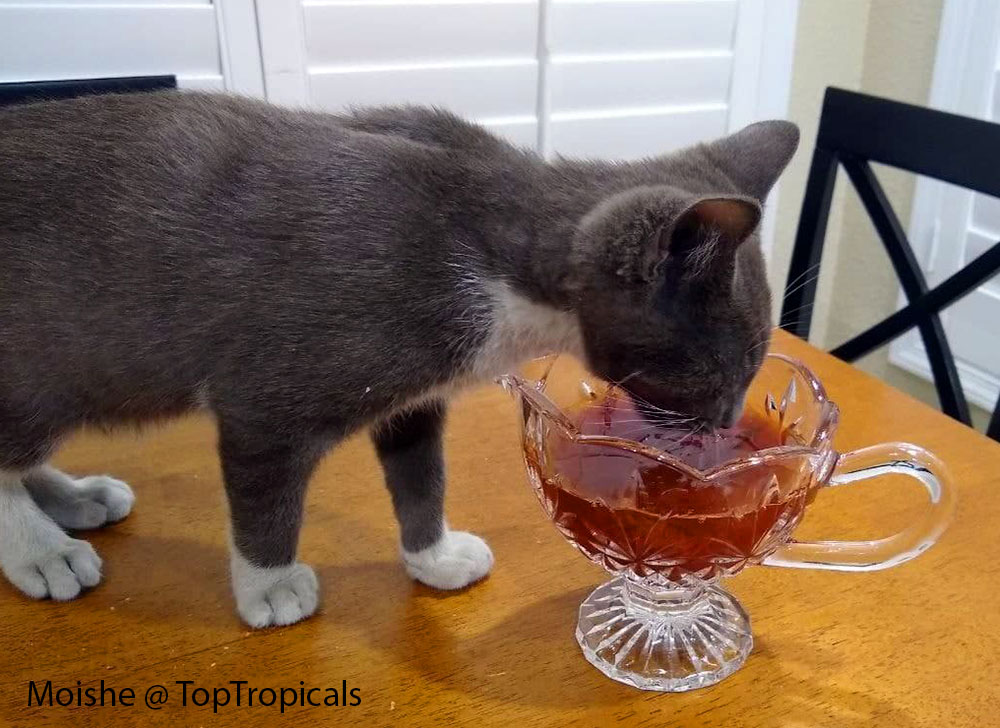
Moishe's favorite things are - gravity experiments, reading scientific manuscripts, and eating JAM for breakfast! No toast required.

TopTropicals PeopleCat Club and Zoo

Thank you for supporting us in helping PeopleCat Community!
Make your kind donation today and receive a surprise gift from us! Every little bit helps. Thank you and God bless you and your pets!

In the photo: Moishe the Scientist and Jim the Hopeless Romantic

Date: 4 Feb 2021

2021: White Cow with a Golden Udder... not an Ox!

by Alex Butova, the Witch of Herbs and Cats

In China, the zodiac system calculations are quite complicated... Learn the science of the Chinese horoscope and find out why the symbol of Year 2021 is actually the Metal Cow - not an Ox!..
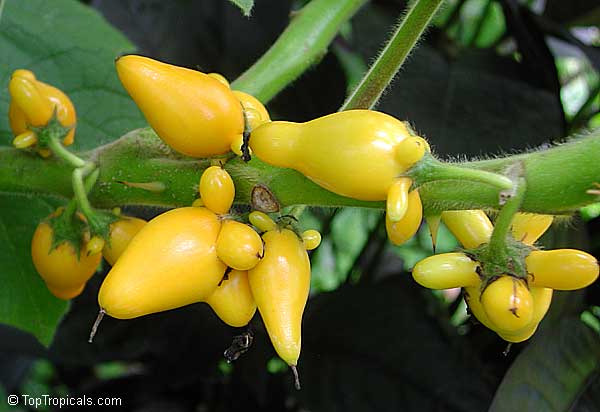
...See what lucky flowers this year brings you and meet the most bizarre plant - Nipple Fruit, or Cow's udder!..

CONTINUE READING >>

Date: 1 Feb 2021

The Passion Fruit - Juicy Maracuya

by Alex Butova, the Witch of Herbs and Cats

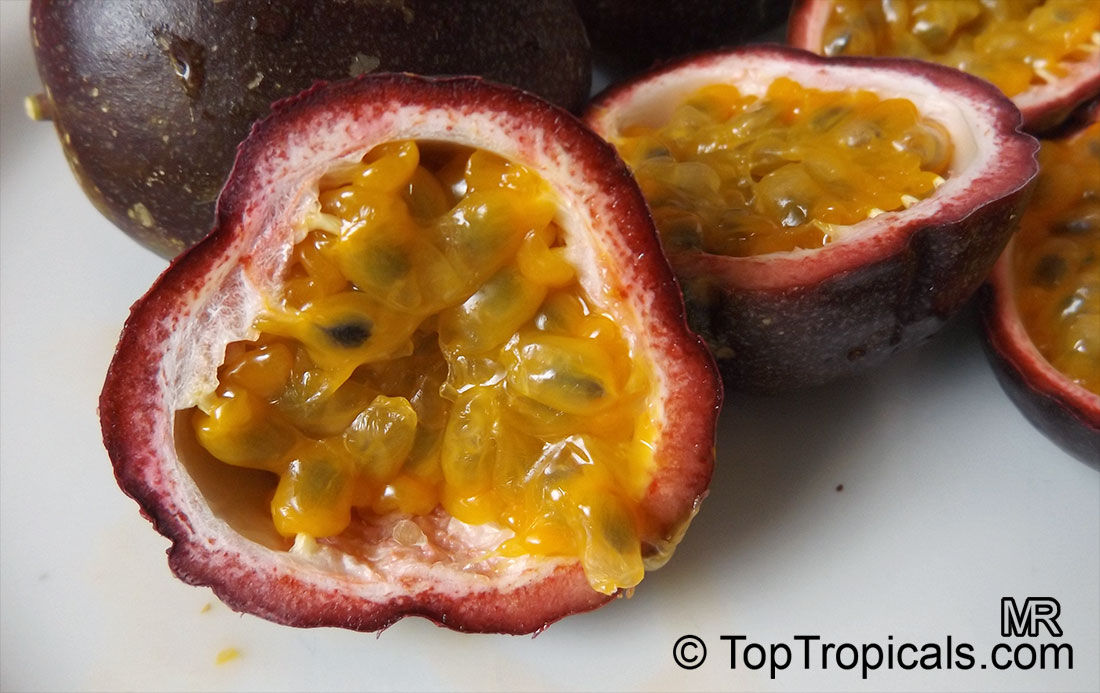
...There was an unexpected confusion with the name of this plant. Most people understand its name literally: passiflora - a flower of passion, and its fruits - the fruits of passion, implying human, earthly passions. Nevertheless, the passion fruit is so called because it is one of the many  species  of  passion flower, the English translation of the Latin genus name,  PassiFlora.
Learn more about this delicious, flavorful fruit and how to grow it in your own garden in no time...

CONTINUE READING >>

SUNSHINE C-Cibus - Crop Booster, an ultimate natural plant food for fruit and edibles.

Date: 1 Feb 2021

The Secret of Longevity
finally revealed!

"...Time spent in the garden doesn't count against your lifespan..."

Want to live longer? Surround yourself with plants

If you want to live longer, live around green space. The Barcelona Institute for Global Health found that for every 10% increase in vegetation that's within 1,600 feet of your home, your probability of death drops by 4%.
LEARN MORE >>

Why gardening could help you live longer:

1. It gets you into Nature.
2. It's good exercise.
3. You'll eat what you grow.
4. It exercises your mind, while also relieving stress.
LEARN MORE >>

Gardening helps you live to 100

Many of the world's centenarians share one common hobby: gardening. Could you extend your life and drop your stress by taking up the pursuit, too? People living in these so-called "blue zones" have certain factors in common - with daily exercise habits and a plant-based diet, for starters. But they share another unexpected commonality. People are gardening well into old age - their 80s, 90s and beyond. Could nurturing your green thumb help you live to 100? Let nature nurture you!
LEARN MORE >>

The healthiest people in the world don't go to the gym.

Moving naturally throughout the day might sound pleasant and romantic, but the reality is that 100 years ago only 10% of us had sedentary jobs, whereas today it's 90%. However, there are still easy ways to add more movement into your busy lifestyle. The research also showed that walking even as little as two hours per week could reduce the risk of cardiovascular disease, respiratory disease, cancer, and help you live longer. What work out can be better than Gardening? Fresh air, lots of exercise, yet fun and rewarding!
See also: Forget the gym and get to gardening.

In the photo: The Father of American Tropical Fruit Horticulture Bill Whitman, age 92, is presenting his book Five decades with tropical fruit to Top Tropicals after giving a tour of his historical garden in Bal Harbor, Miami (2006)

Date: 25 Jan 2021

Healthy Plants: Q&A from Mr Booster

How to get Canistel tree to produce
without dropping flowers and fruit

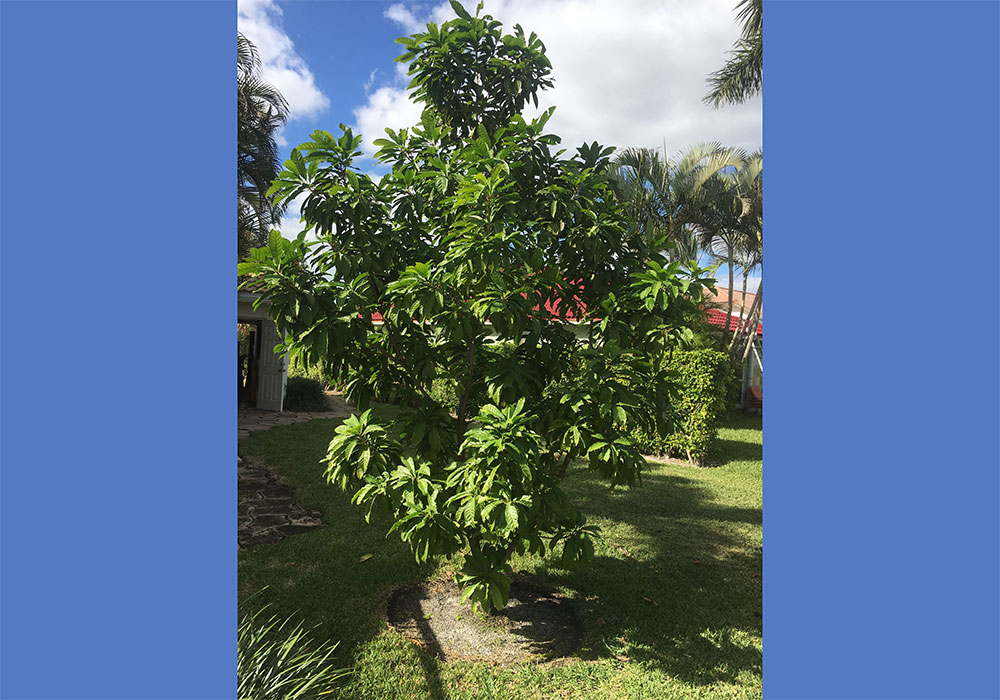
Q: My Canistel tree is 3 1/2 years old and is growing very well, see the picture below. It gets hundreds of pea sized "berries" but then they fall off. No canistel fruit. What's wrong?

A: You have such a nice looking tree, it is a shame you can't get any fruit to ripen.
In our experience, Pouteria trees dropping fruit prematurely is a very common problem. There may be one of the following reasons, or a combination of them:
- Cold winters may affect production, and while Canistel is generally pretty hardy tropical plant that can easily withstand short periods of chill, the fruit may never form properly if it had a cold winter.
- Lack of water. Canistel tree is pretty drought tolerant, but for the proper production cycle it needs regular irrigation. Especially during hot summer.
- The tree may be not strong enough; young trees drop fruit very often when they don't have enough "fruiting energy" built up in their system.
Your tree looks well established and vigorous, however, flower/fruit drop is often a sign of insufficient nutrients of particular kind, usually Boron (B) and/or Molybdenum (Mo): either when a tree is too young and not strong enough, or because of poor soils and lack of necessary elements.
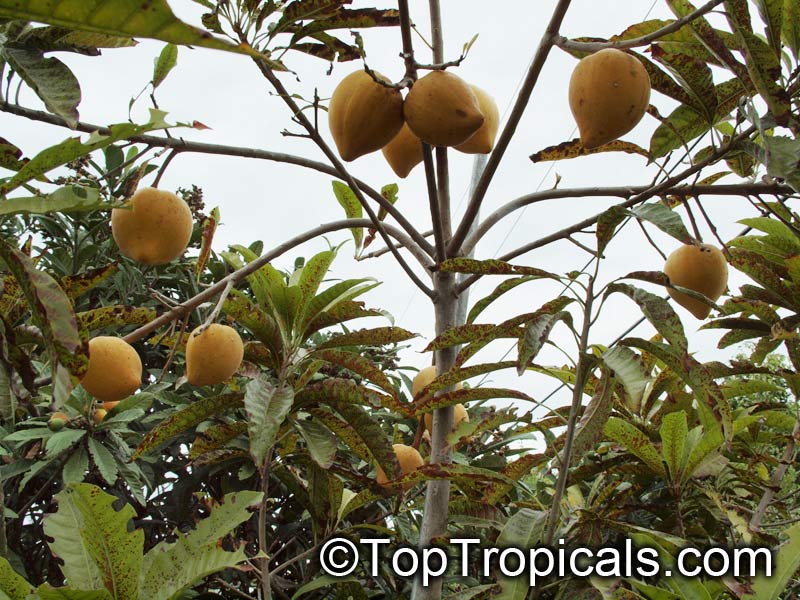
Here is what can be done, considering you live in a warm, frost-free climate.

1. Provide regular fertilizing program. We recommend liquid fertilizers Sunshine Boosters that are safe to use with every watering and year around. It is beneficial to switch plants from traditional "slow-release" fertilizer to the liquid one because it makes a huge difference in plant growth and flower/fruit quality and quantity. See also:
- Why liquid fertilizers are better than dry
- Article about benefits of liquid fertilizers.

Use this plant food for your Canistel tree:
SUNSHINE C-Cibus - Crop Nutrition Booster

2. Apply micro-element remedies that are very effective for improving fruit production, especially when flower or fruit drop occurs:

SUNSHINE Honey - promotes more efficient blossoming and pollination, makes flowers bigger and reduces bud drop.
SUNSHINE SuperFood - improves plant vigor and quality and size of flowers These are all natural, eco-friendly supplements that work great for fruit trees and other edibles.