White, off-white flowers - Plant Encyclopedia Results (Page 11)

Number of plants found: 1898    Prev  Next    Go to page:  First  6  7  8  9  10  11  12  13  14  15  Last  

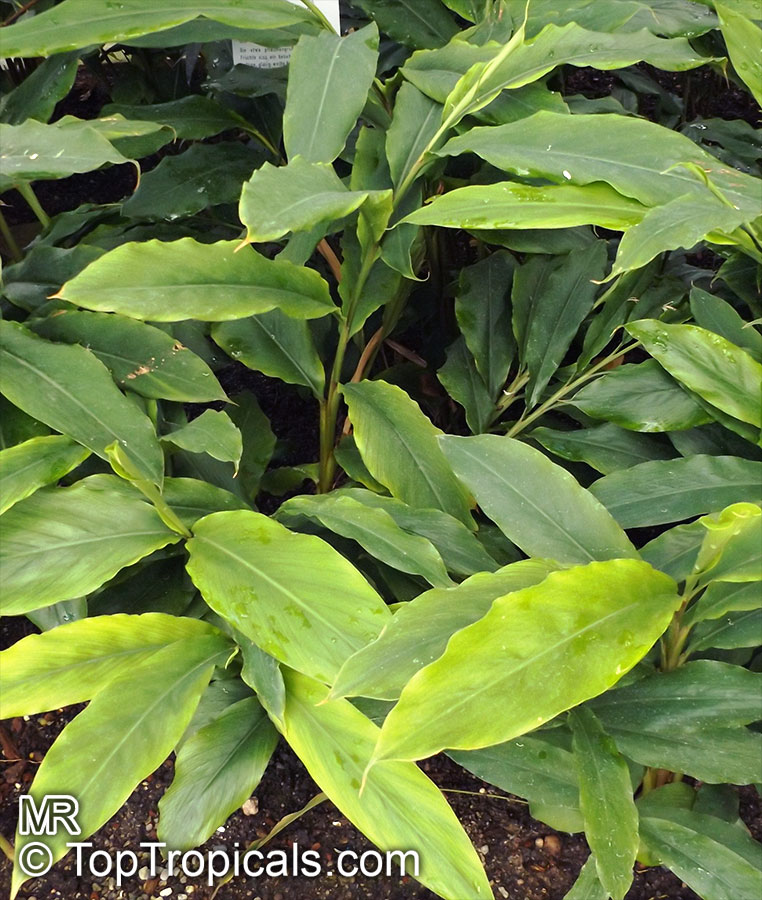
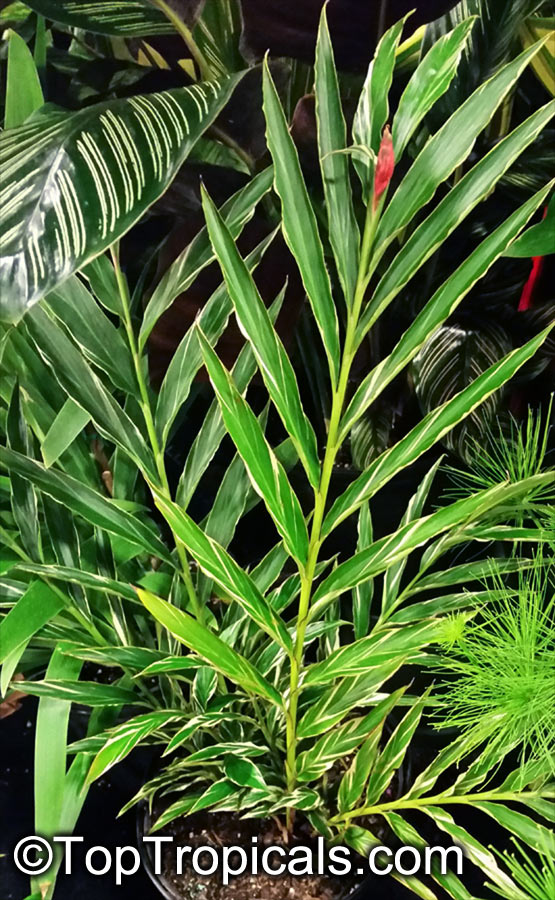
Alpinia officinarum (Lesser Galangal) green leaves on plant covering soil area in top down view
Alpinia officinarum (Lesser Galangal) elongated green leaves spreading from the center of the dense plant.

Botanical name: Alpinia officinarum

Common name: Lesser Galangal

Family: Zingiberaceae

Origin: China
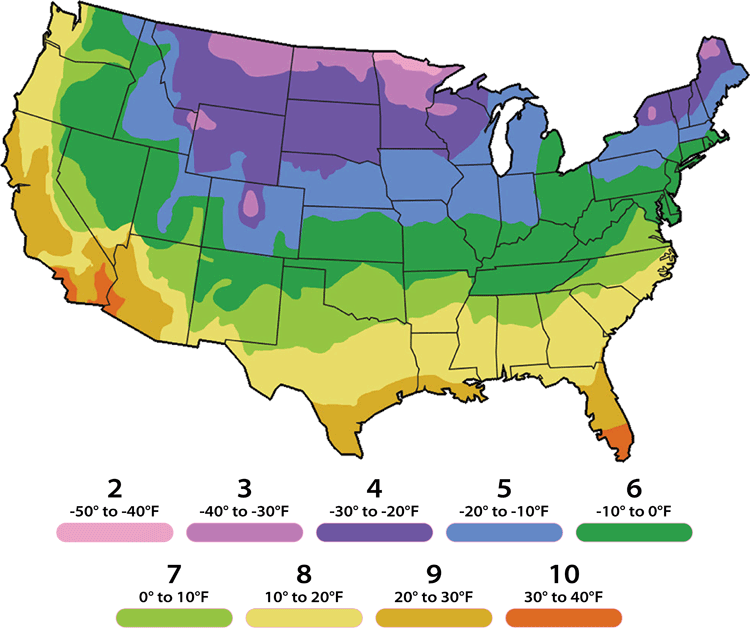
USDA Zone: 8-11

Large shrub 5-10 ft tallSmall plant 2-5 ftSemi-shadeWatering: Moderate. Water when top soil feels dryWatering: Regular. Let topsoil dry slightlyWhite, off-white flowersPink flowersSpice or herb plantEthnomedical plant.
Plants marked as ethnomedical and/or described as medicinal, are not offered as medicine but rather as ornamentals or plant collectibles.
Ethnomedical statements / products have not been evaluated by the FDA and are not intended to diagnose, treat, cure, or prevent any disease. We urge all customers to consult a physician before using any supplements, herbals or medicines advertised here or elsewhere.Subtropical plant. Mature plant cold hardy at least to 30s F for a short time

Galanga Root, Lesser Galangal, Thai gingeris more than just a fast growing ornamental ginger and flavorful root - it's also a powerful healing plant with centuries of use in both kitchens and traditional medicine. It supports digestion, reduces inflammation, boosts circulation, and helps fight infections with its natural antimicrobial properties. Rich in antioxidants, galangal may also support brain health and relieve respiratory issues. A must-have plant for both cooking and wellness.

It has long narrow leaves and reddish-white flowers. Galanga is an herb used in cooking, especially in Indonesian and Thai cuisines. The rhizomes, known as galangal, are valued for their spicy flavor and aromatic scent. These are used throughout Asia in curries and perfumes, and were previously used widely in Europe.

Alpinia officinarum (Lesser Galangal) is typically measuring 5-10 feet in height. It prefers semi-shade and regular watering, but will tolerate moderate water during dry spells. The flowers are a cluster of pink, white, or off-white blossoms, giving a beautiful display.

It is not just an ornamental plant. In China, it is also valued for its ethnomedical properties, used as a spice or a herb. Grown across USDA zone 9-11, it can easily be grown in pots in cold regions.

For proper care and growth, this plant requires a slightly acidic and well-drained soil. Provide light shade if grown outdoors, and ensure the pot is well-drained for optimal water retention. Water the plant regularly, but avoid excessive wetting of the soil. It will thrive under the right conditions and can last for years.

Fertilize Alpinia officinarum with a balanced formula throughout the growing season.

Alpinia officinarum is a beautiful, versatile plant. With proper care and maintenance, it will thrive and bring a splash of color and fragrance to any garden.

The rhizomes, known as galangal, are valued for their spicy flavor and aromatic scent. These are used throughout the world in curries and perfumes.
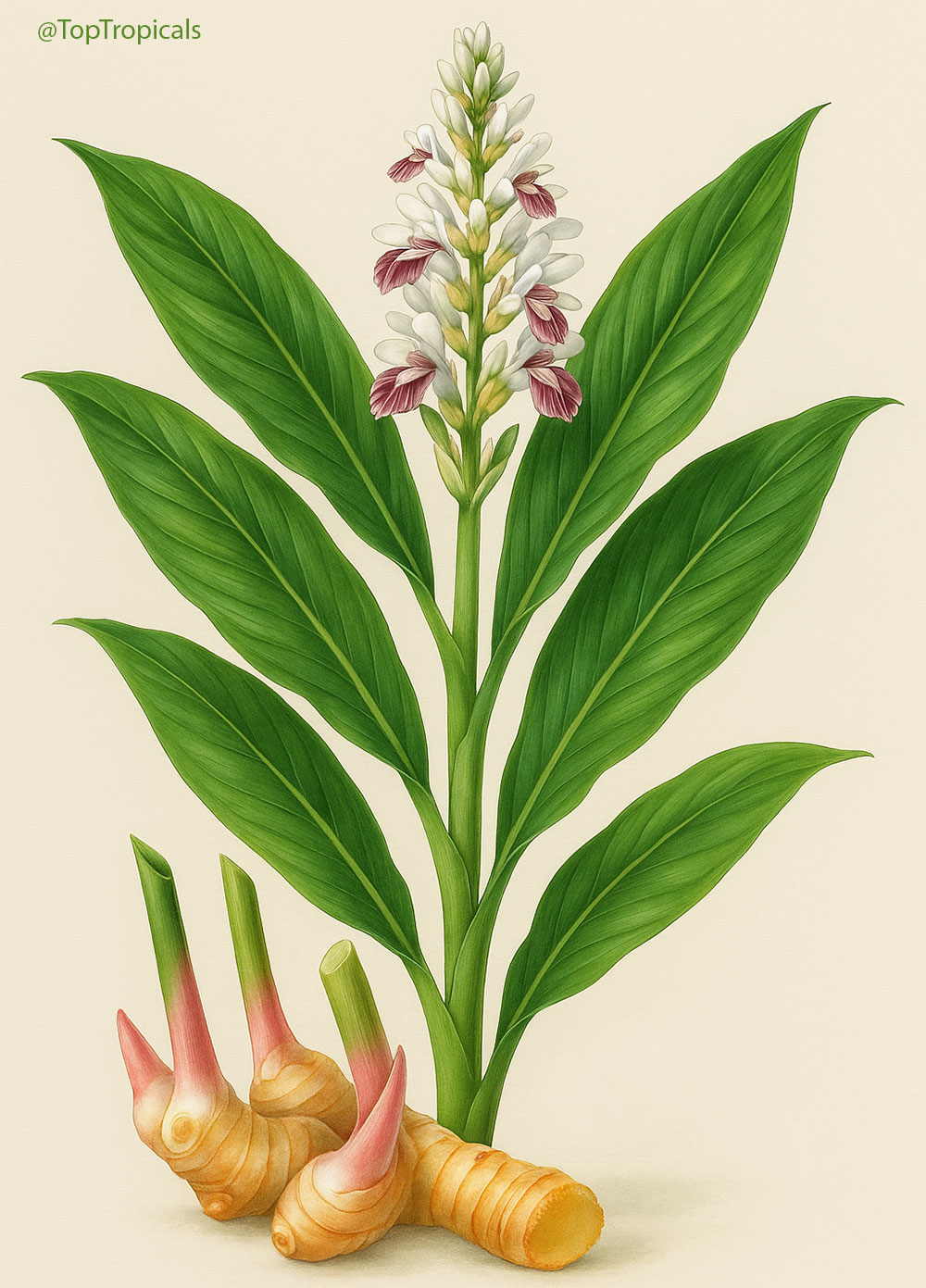
Alpinia officinarum (Lesser Galangal) white and pink flower with long green leaves botanical plant illustration.
Alpinia officinarum (Lesser Galangal) illustration showing tall green foliage, delicate white flowers, and ginger-like roots.


Link to this plant:
https://toptropicals.com/catalog/uid/alpinia_officinarum.htm

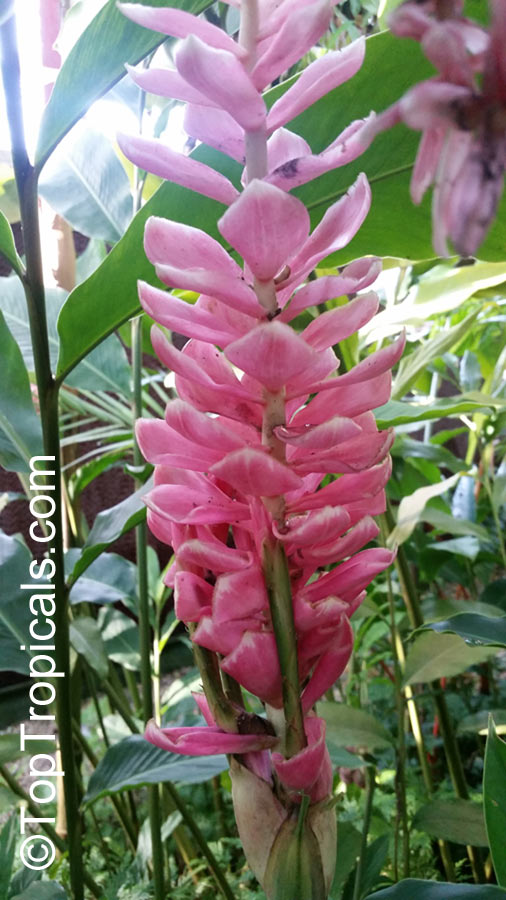
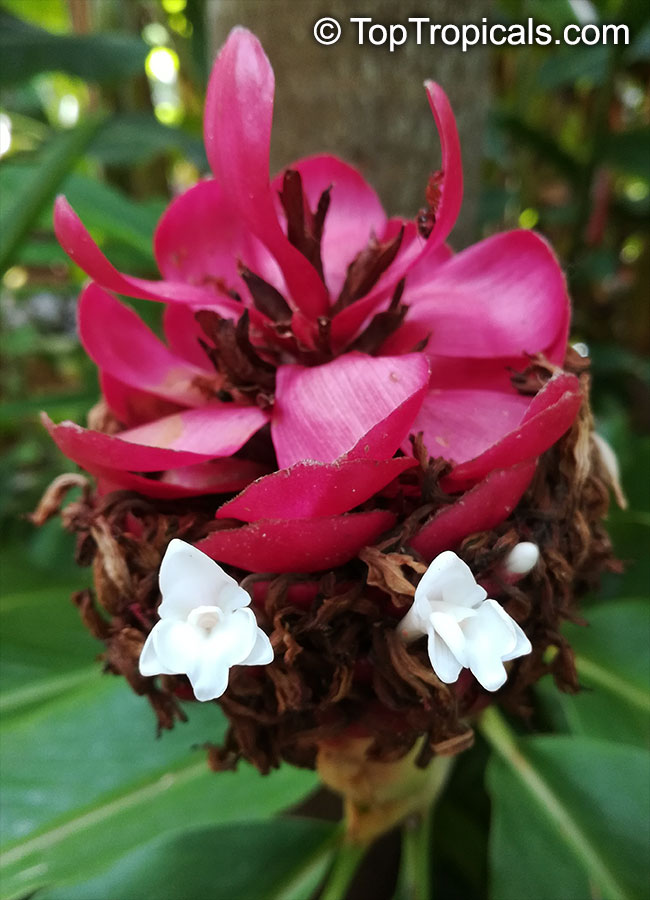
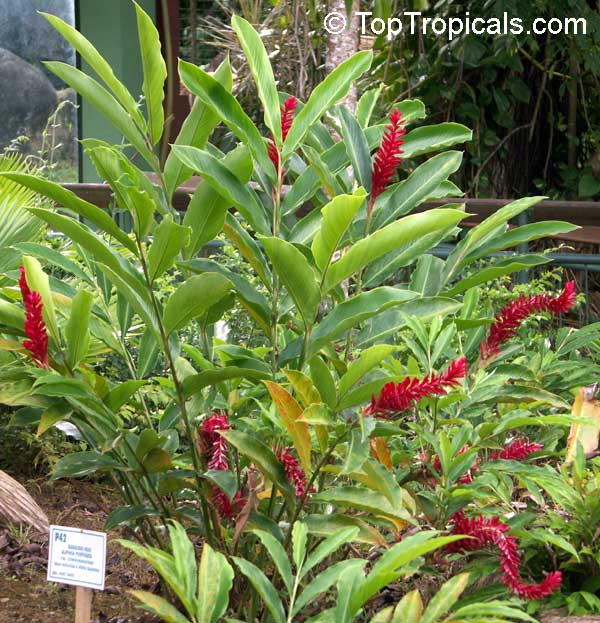
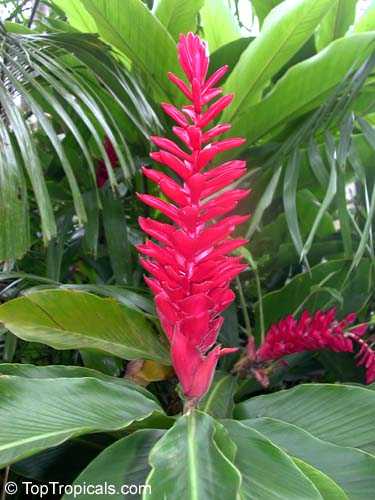
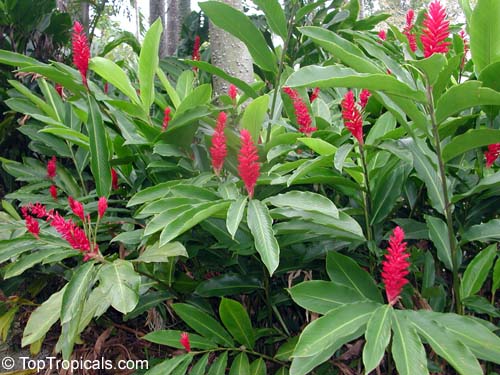
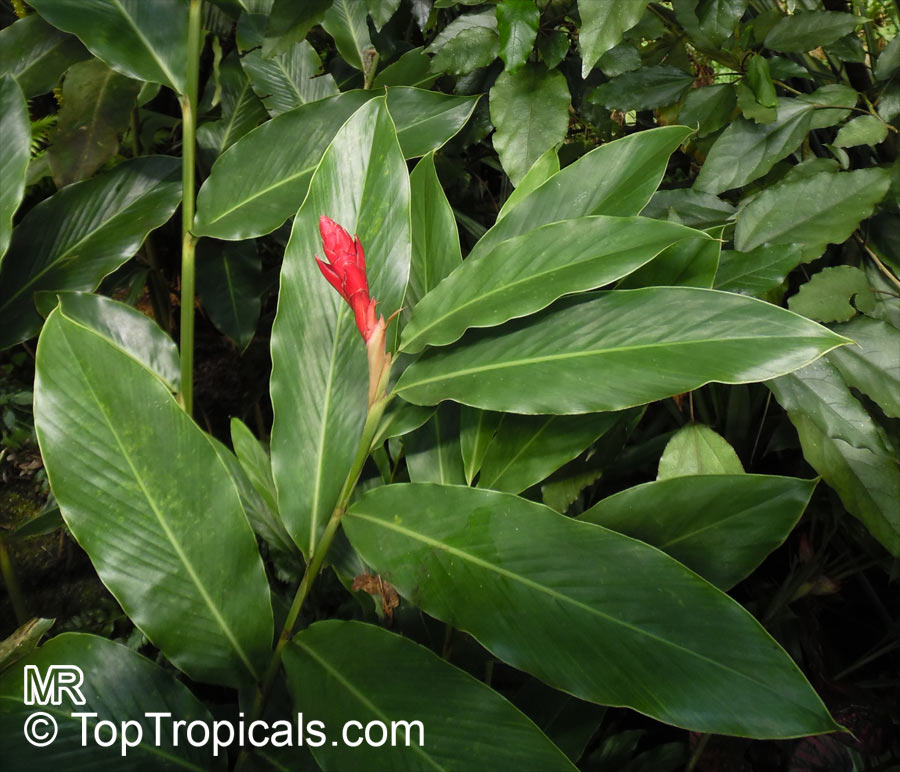
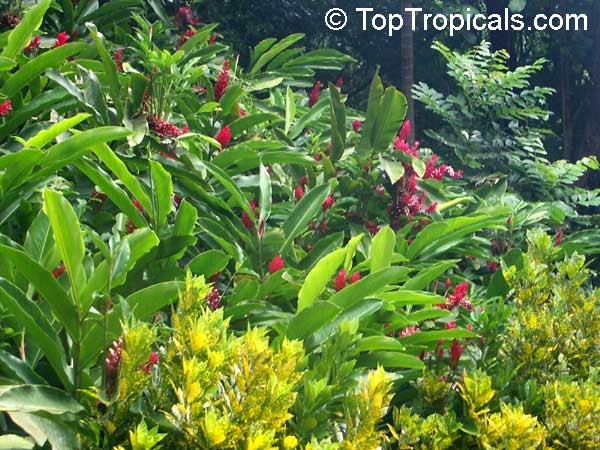
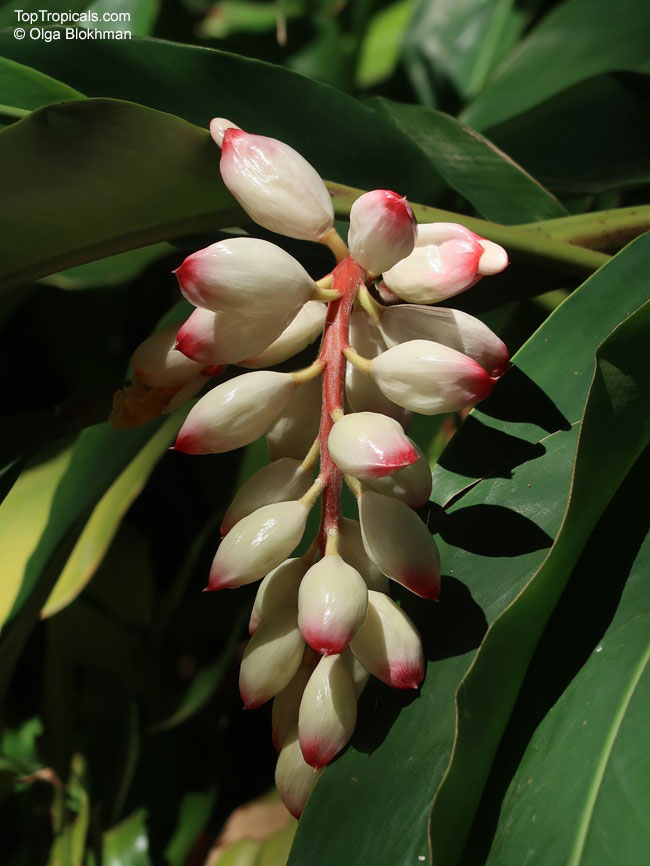
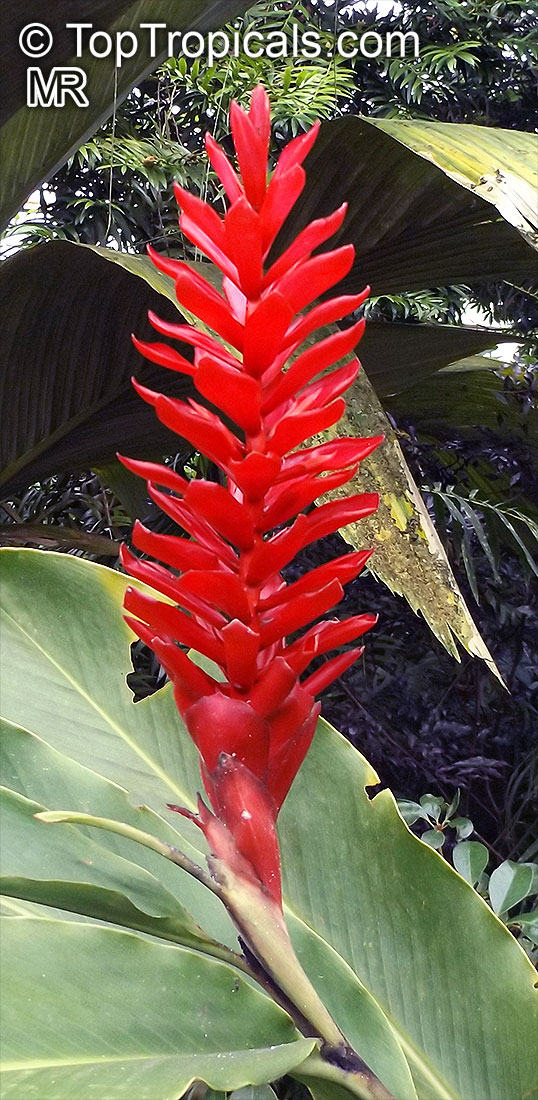
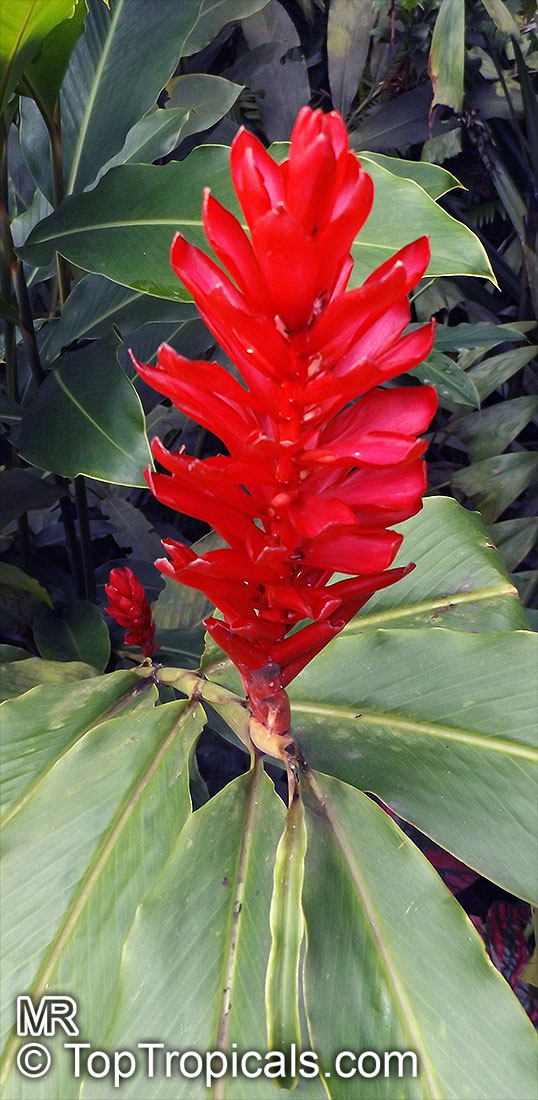
Alpinia purpurata (Red Ginger Lily) vibrant red flower spike close up for tropical plant identification
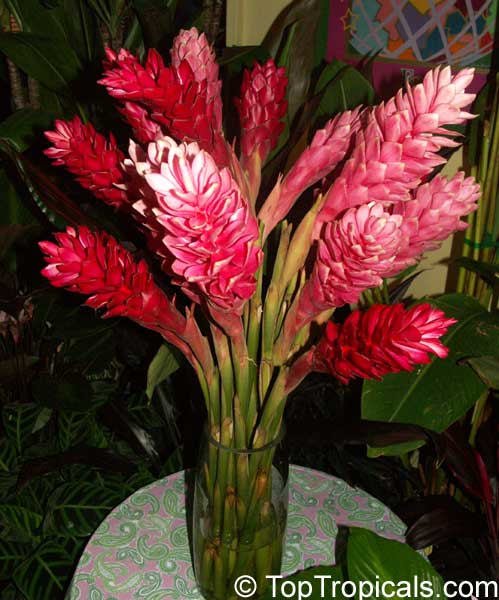
Alpinia purpurata (Red Ginger Lily) flower spike with pointed bracts rising above broad green foliage leaves

Botanical name: Alpinia purpurata

Common names: Red Ginger Lily, Ostrich Plume, Red Cone Ginger

Family: Zingiberaceae

Origin: Malay Peninsula

USDA Zone: 9-11

Small plant 2-5 ftSemi-shadeShadeWatering: Regular. Let topsoil dry slightlyRed, crimson, vinous flowersWhite, off-white flowersPink flowersSubtropical plant. Mature plant cold hardy at least to 30s F for a short time

Extremely tropical looking, one of the most desirable symbols of Tropics, Alpinia purpurata, red ginger, also called ostrich plume and pink cone ginger, are native Malaysian plants with showy flowers on long brightly colored red bracts. They look like the bloom, but the true flower is the small white flower on top. Red Ginger grows in Hawaii, and many Central American nations, including Belize. It is also found in Samoa, where it is the national flower, and is locally called "teuila." It prefers partial shade and moist humid conditions, although it can tolerate full sun in some climates. It tends to like to be well watered and not left to dry out. Ginger can also be grown as a houseplant and its cut flowers can be used in arrangements. Likes a slightly acid soil. Every other year trim to ground to prevent legginess. Blooms from spring to summer if there is enough humidity.

See Article about Alpinia.


Link to this plant:
https://toptropicals.com/catalog/uid/alpinia_purpurata.htm

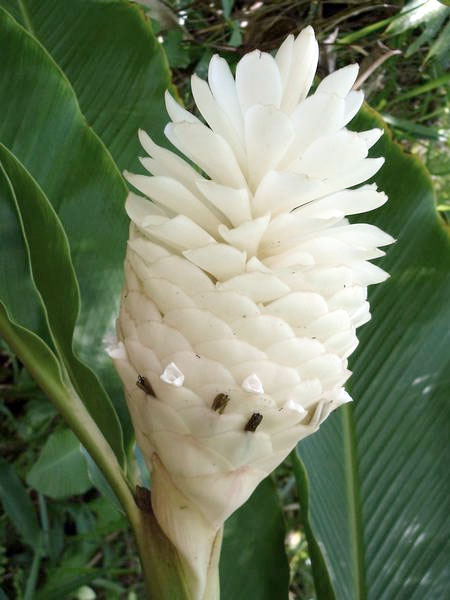
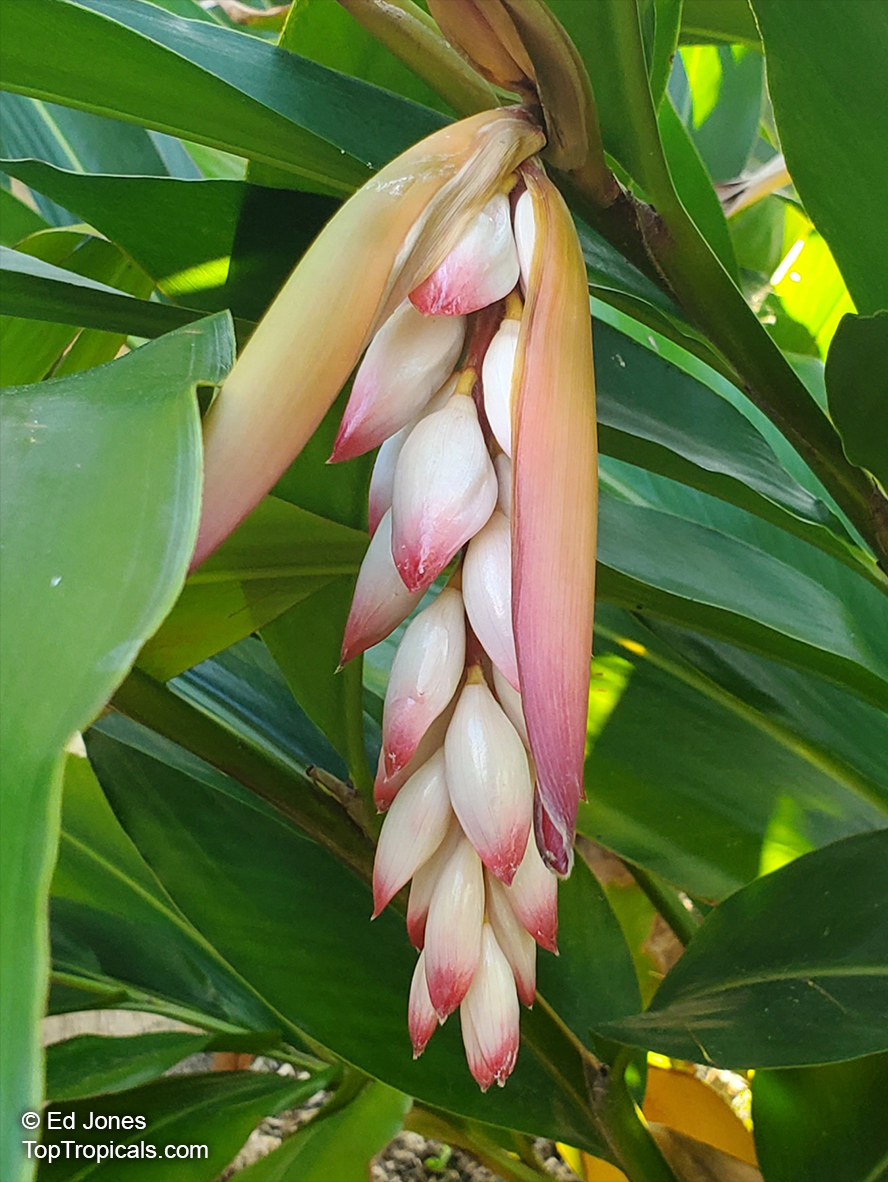
Alpinia purpurata Purest White, White Cone Ginger

Rare variety with pure white flowers. One of the most...  more

Recommended Fertilizer: SUNSHINE Robusta - Rapid Growth Booster
Grown in
6"/1 gal pot
 

One of the most desirable symbols of Tropics, Alpinia...  more

Recommended Fertilizer: SUNSHINE Robusta - Rapid Growth Booster
Grown in
6"/1 gal pot, very large plant
 

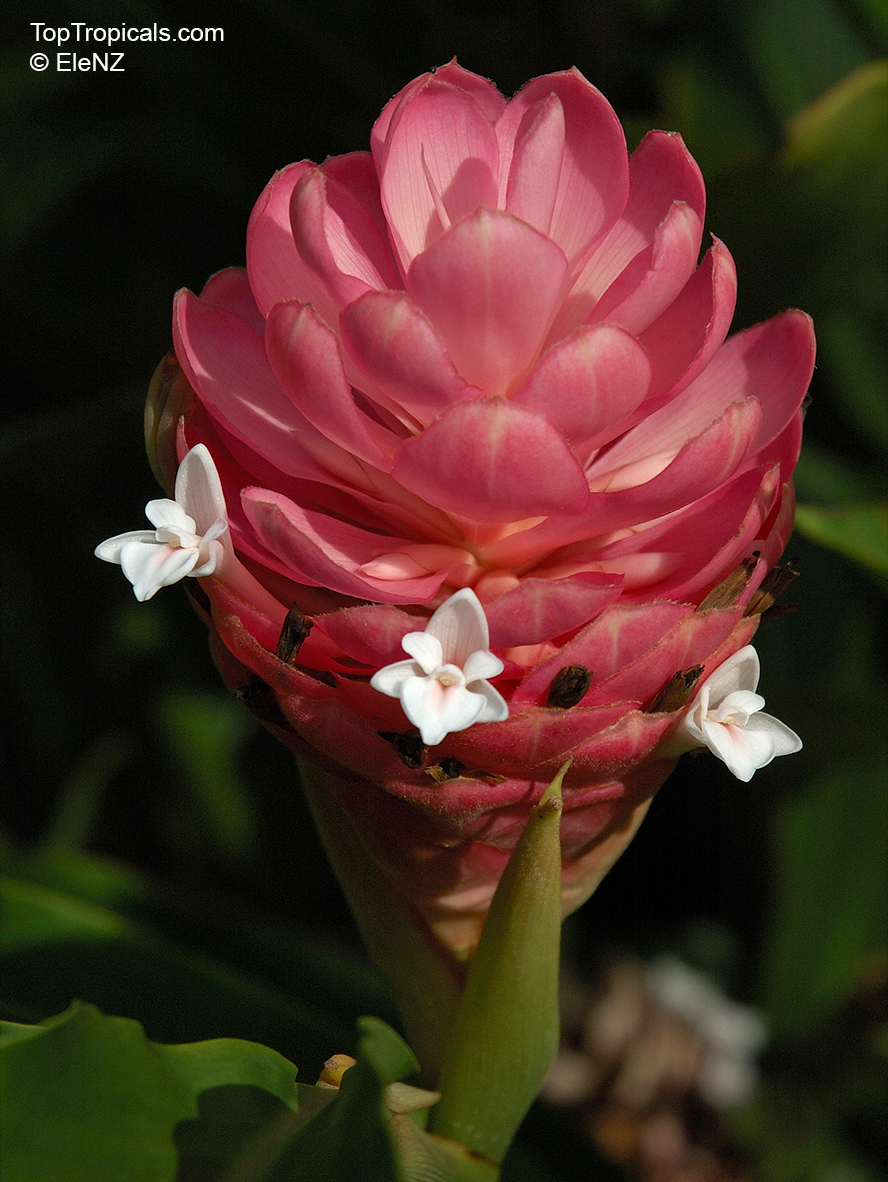
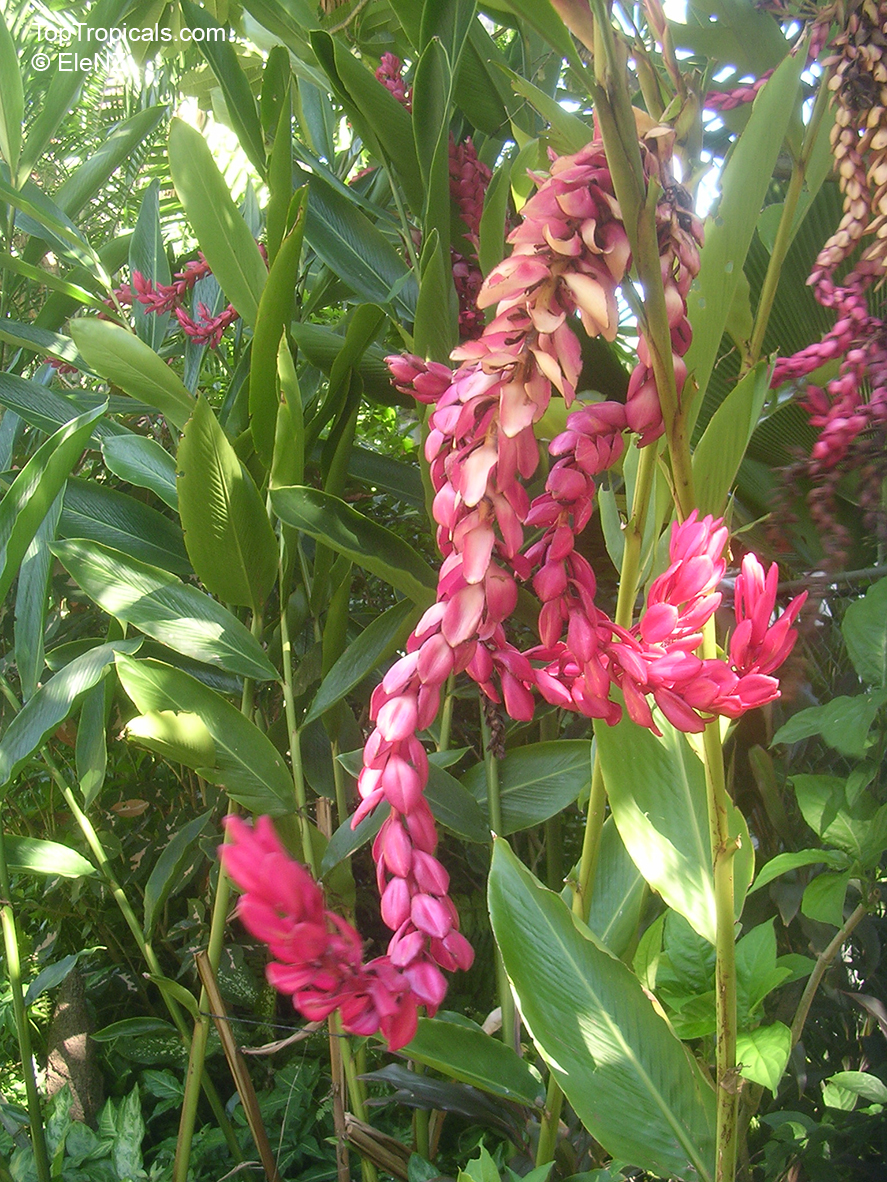
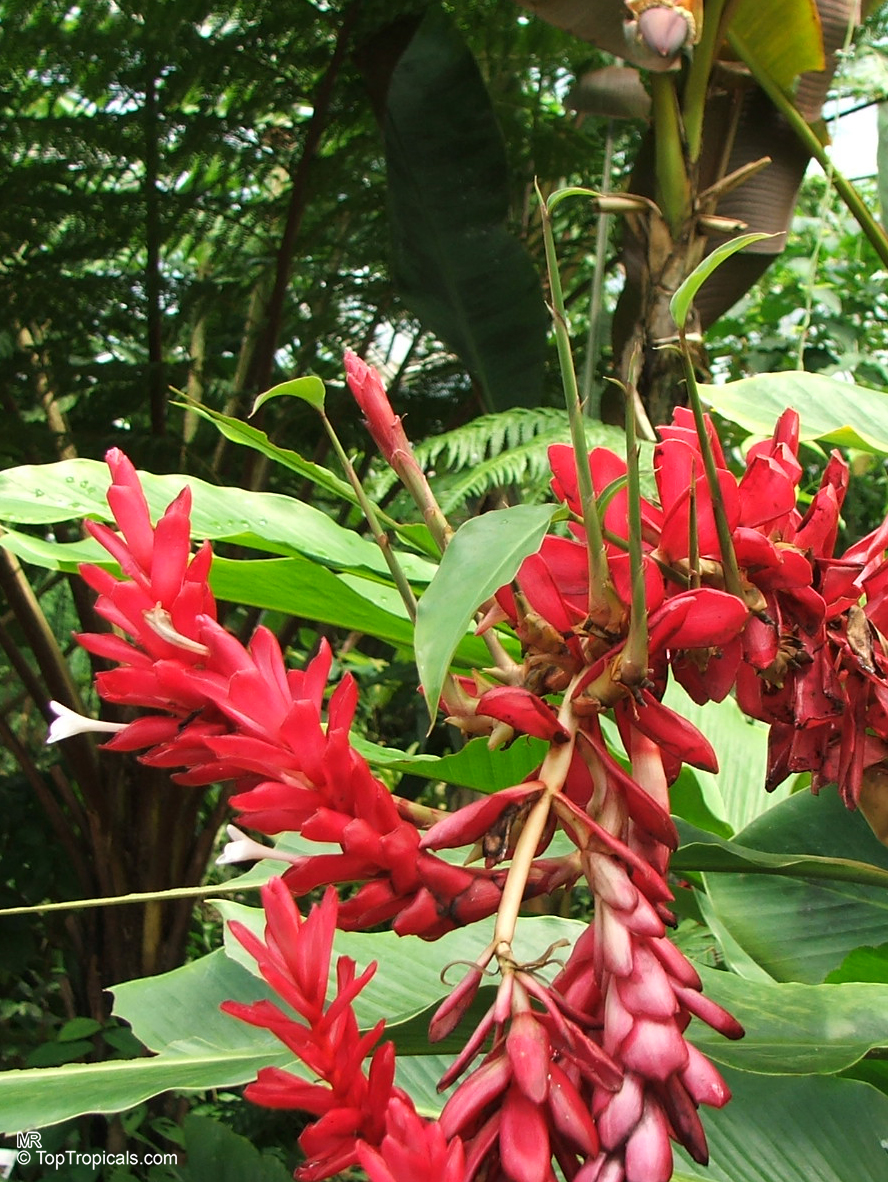
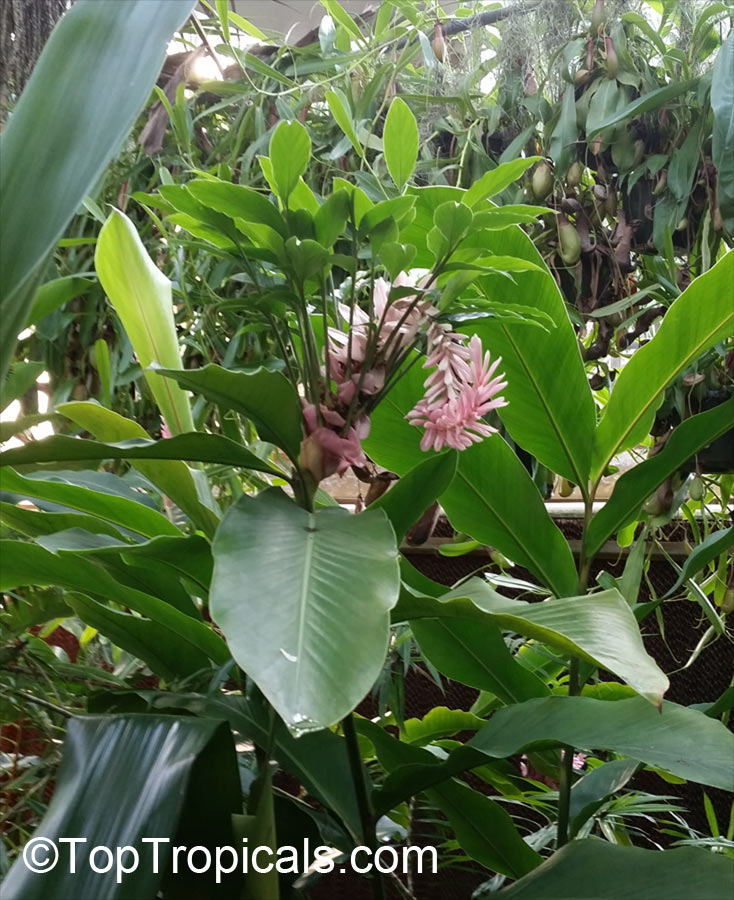
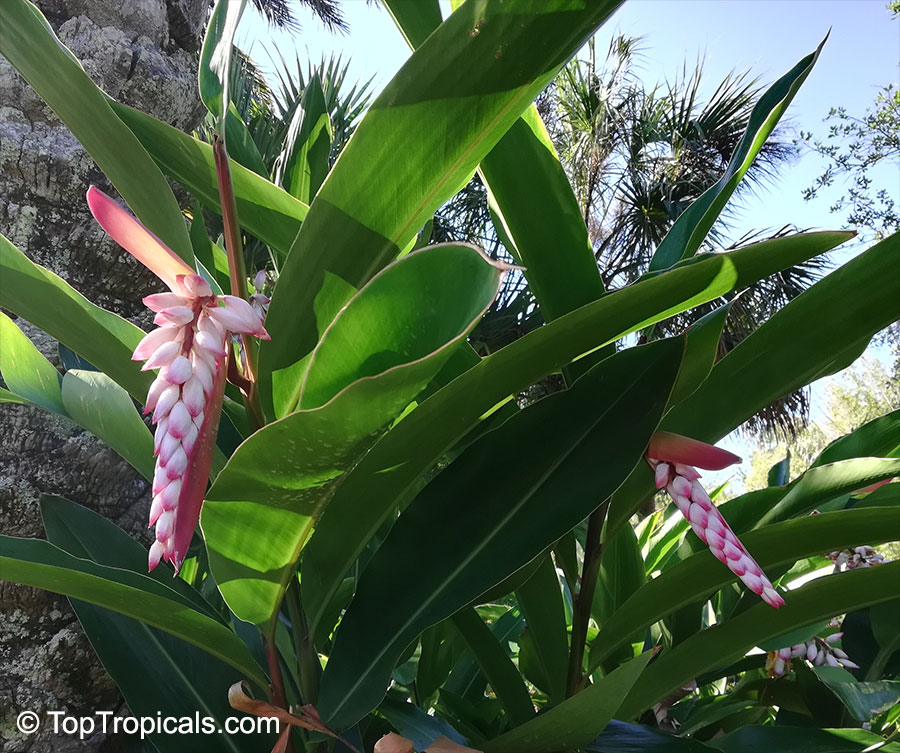
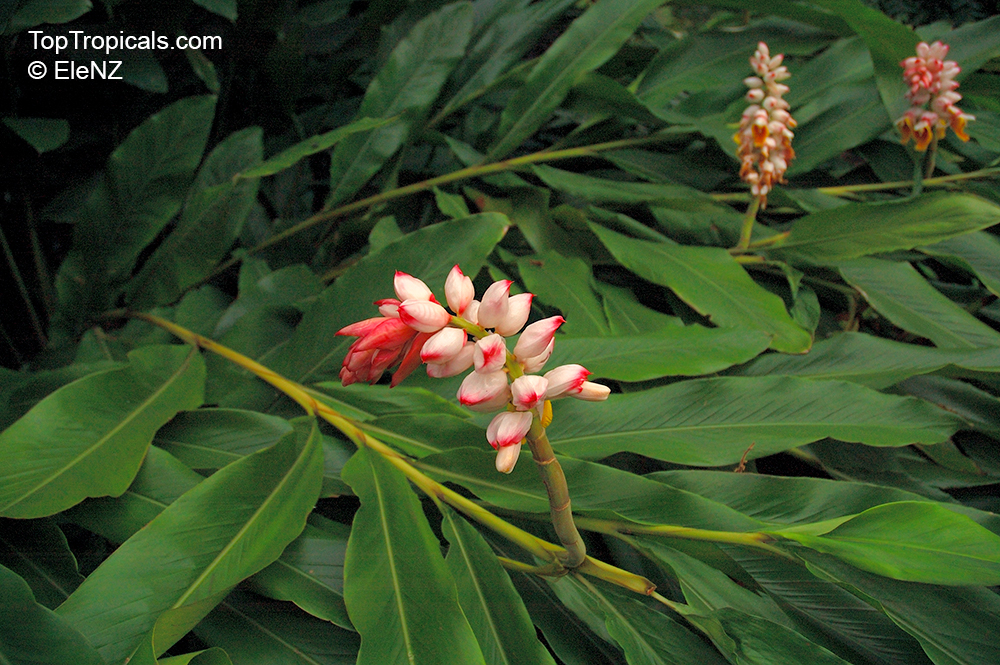
Alpinia sp. (Ginger Lily) close up pink flower dangling amidst wide lush green leaves.
Alpinia sp. (Ginger Lily) drooping pink flower clusters surrounded by long flat green leaves.

Botanical name: Alpinia sp.

Common name: Ginger Lily

Family: Zingiberaceae

Origin: Asia, Australia, Pacific Islands

USDA Zone: 9-10

Large shrub 5-10 ft tallSmall plant 2-5 ftSemi-shadeShadeFull sunWatering: Moderate. Water when top soil feels dryWatering: Regular. Let topsoil dry slightlyYellow, orange flowersRed, crimson, vinous flowersOrnamental foliageWhite, off-white flowersPink flowersPlant attracts butterflies, hummingbirdsEthnomedical plant.
Plants marked as ethnomedical and/or described as medicinal, are not offered as medicine but rather as ornamentals or plant collectibles.
Ethnomedical statements / products have not been evaluated by the FDA and are not intended to diagnose, treat, cure, or prevent any disease. We urge all customers to consult a physician before using any supplements, herbals or medicines advertised here or elsewhere.Unknown name


Link to this plant:
https://toptropicals.com/catalog/uid/alpinia_sp.htm

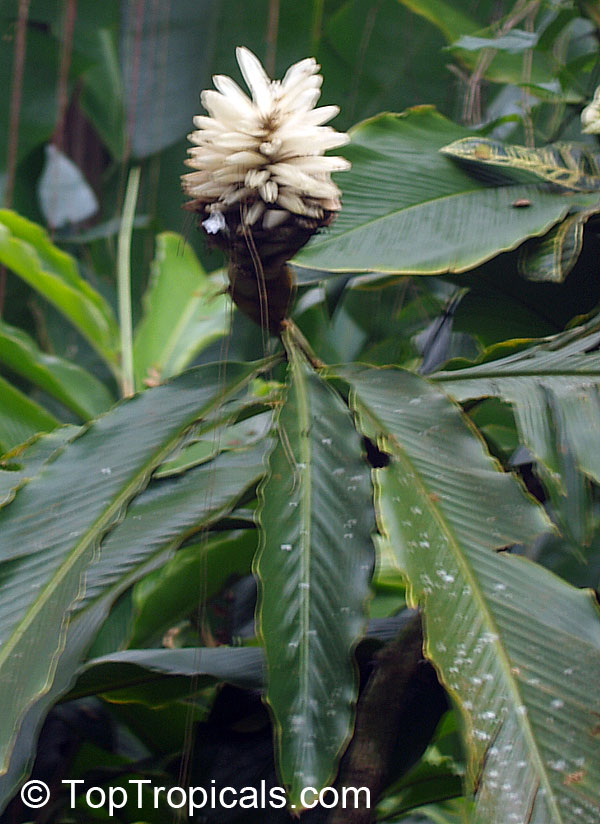
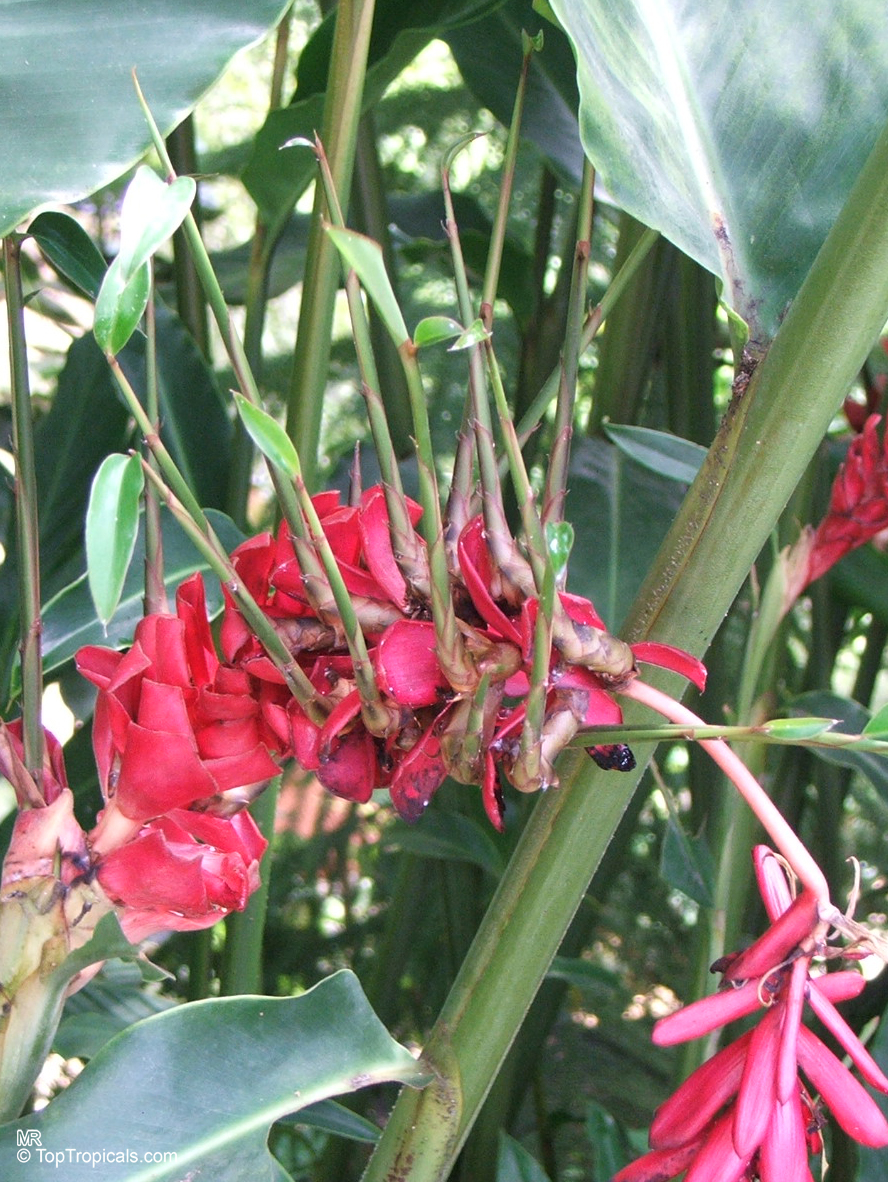
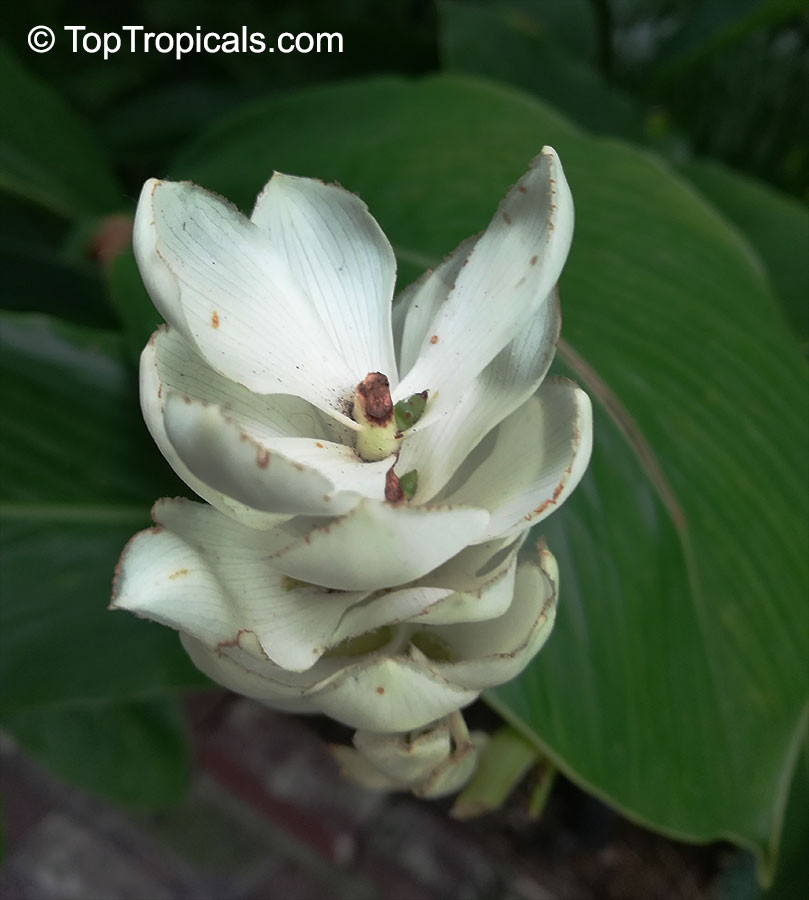
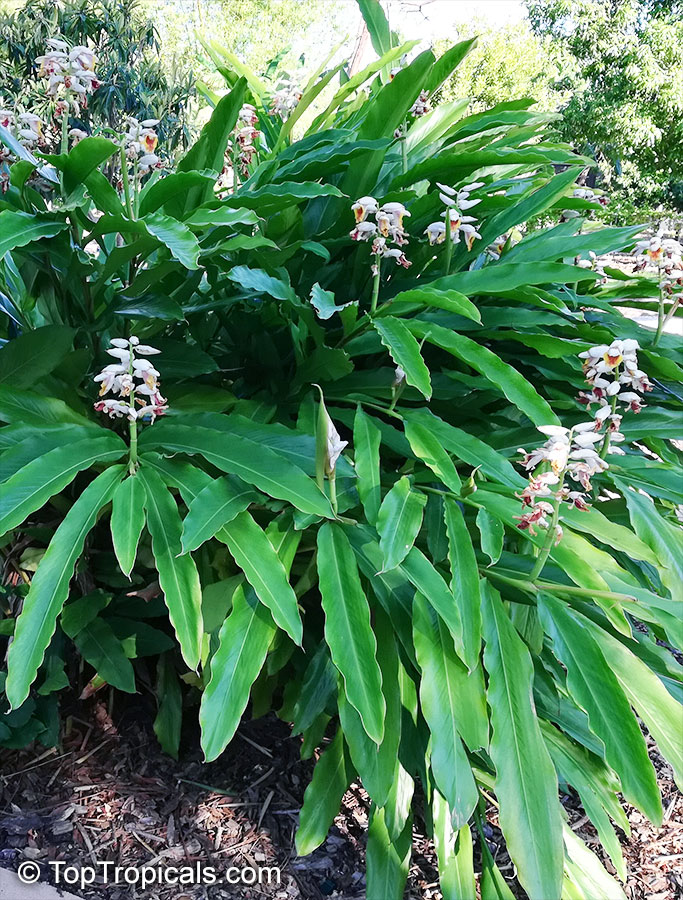
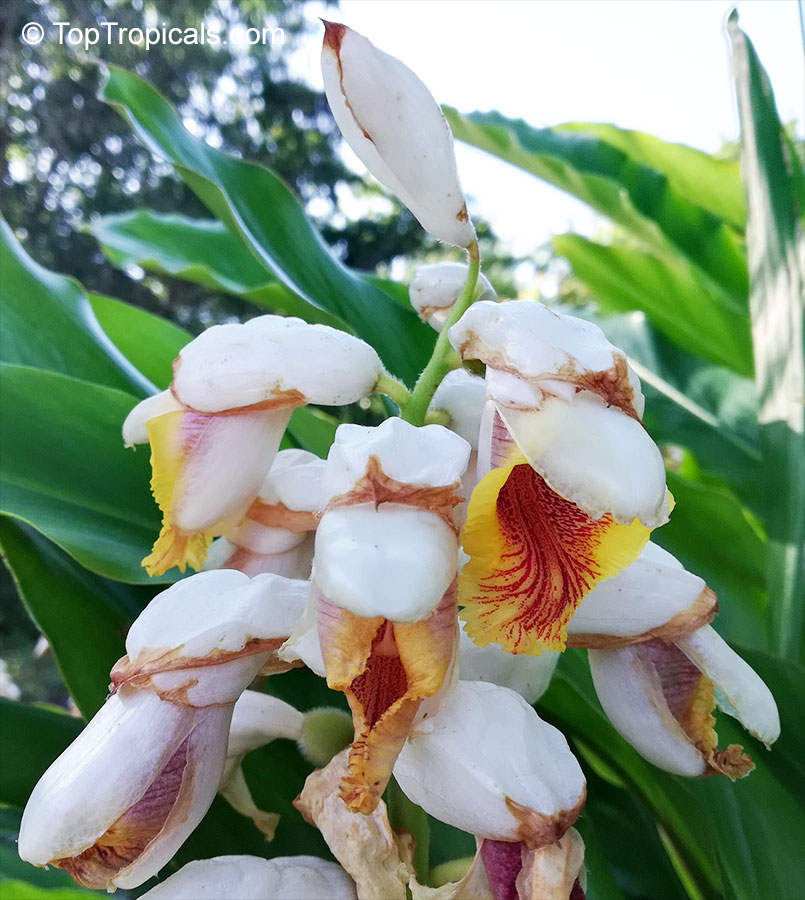
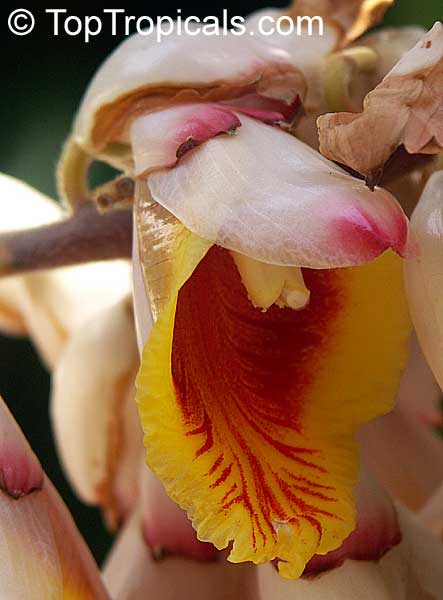
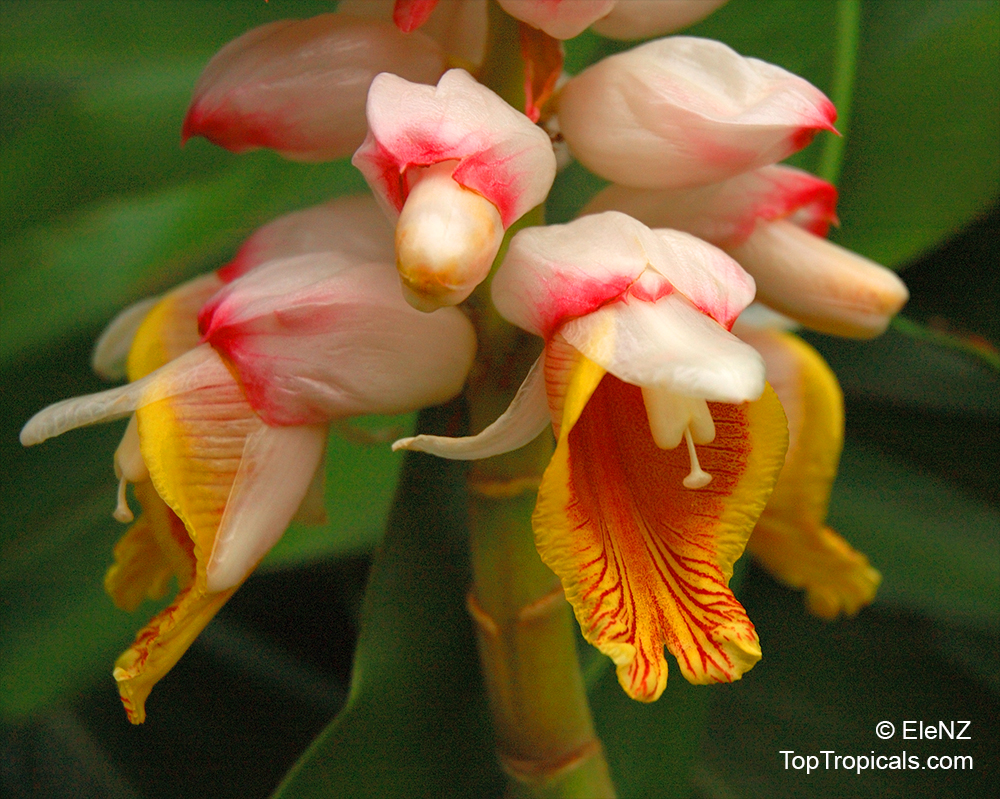
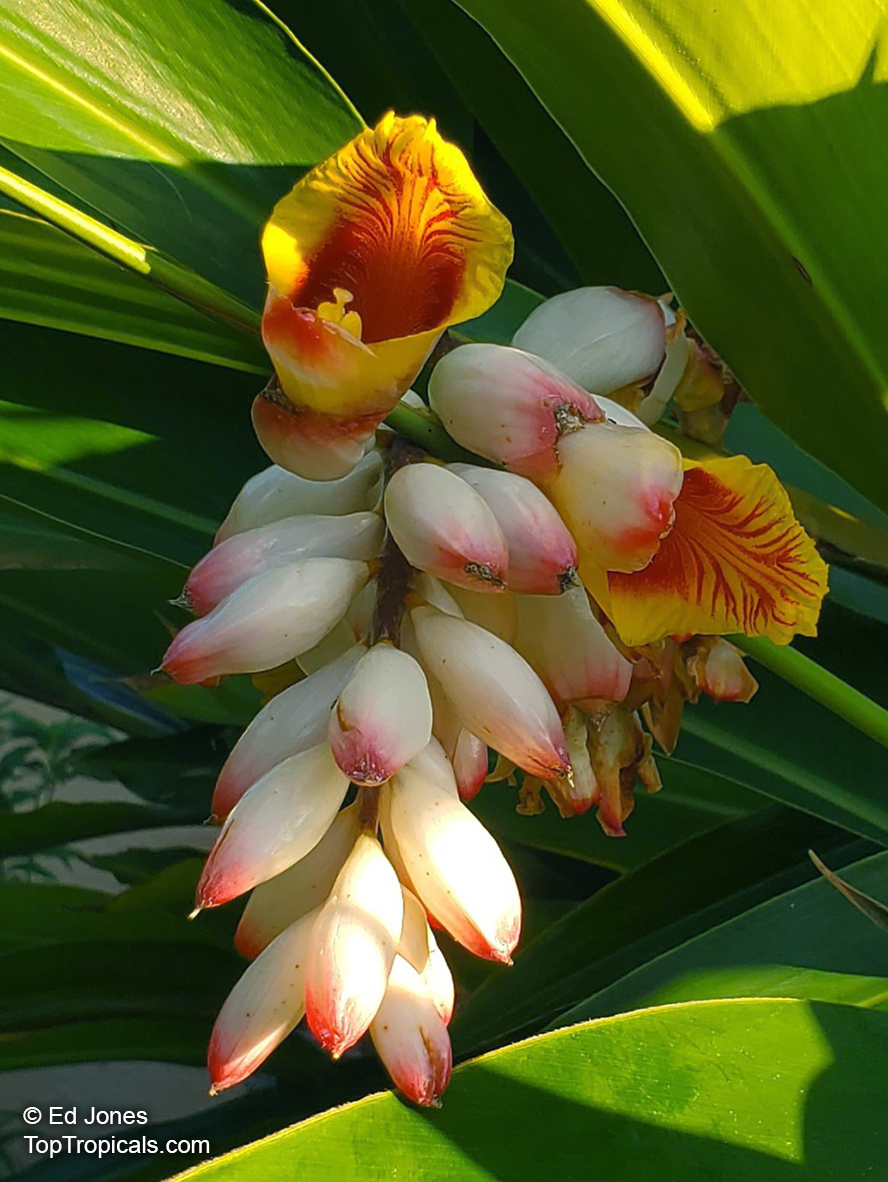
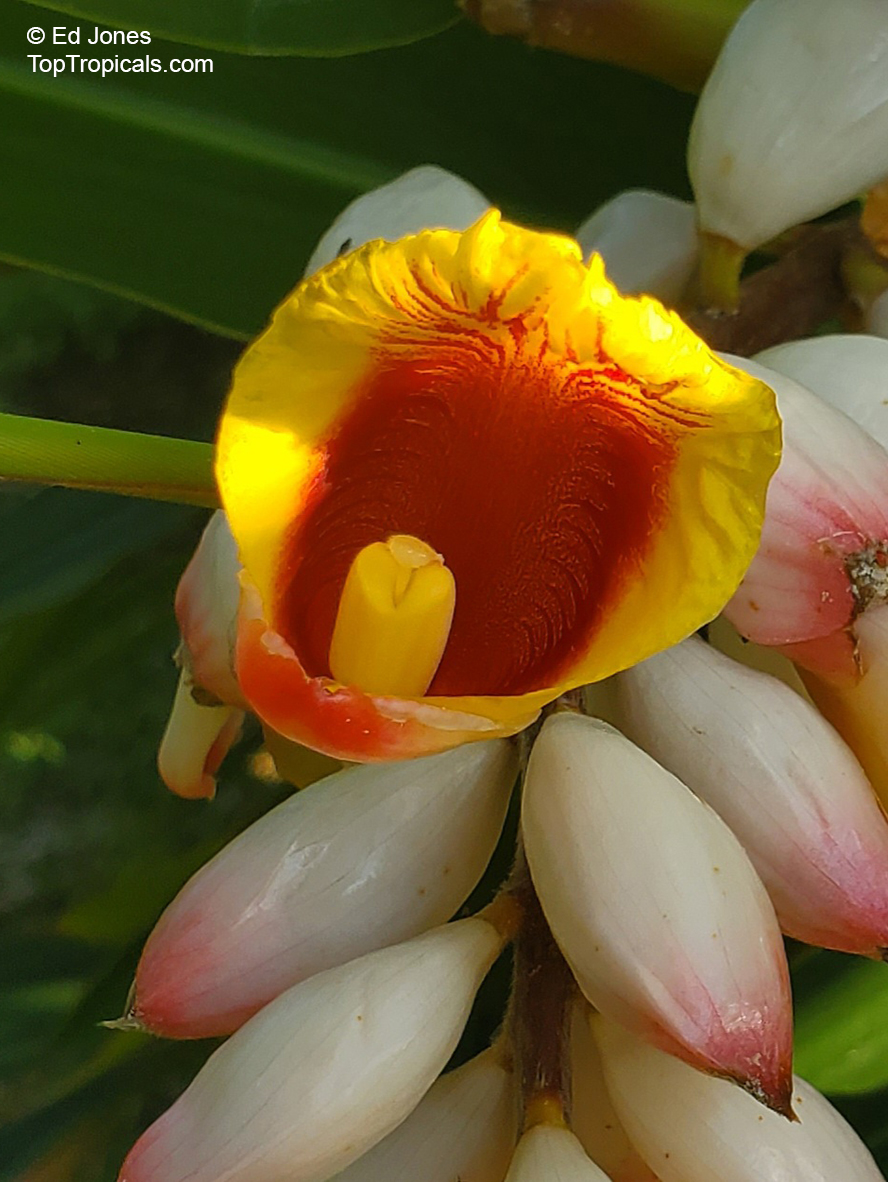
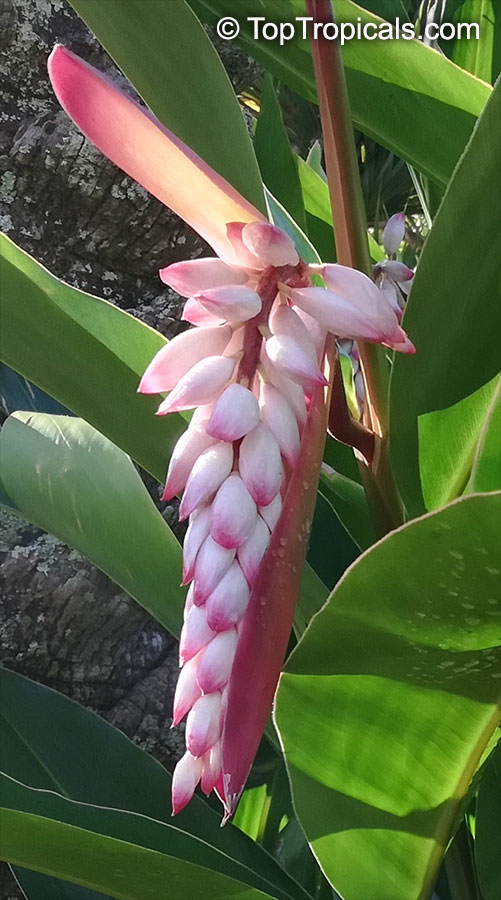
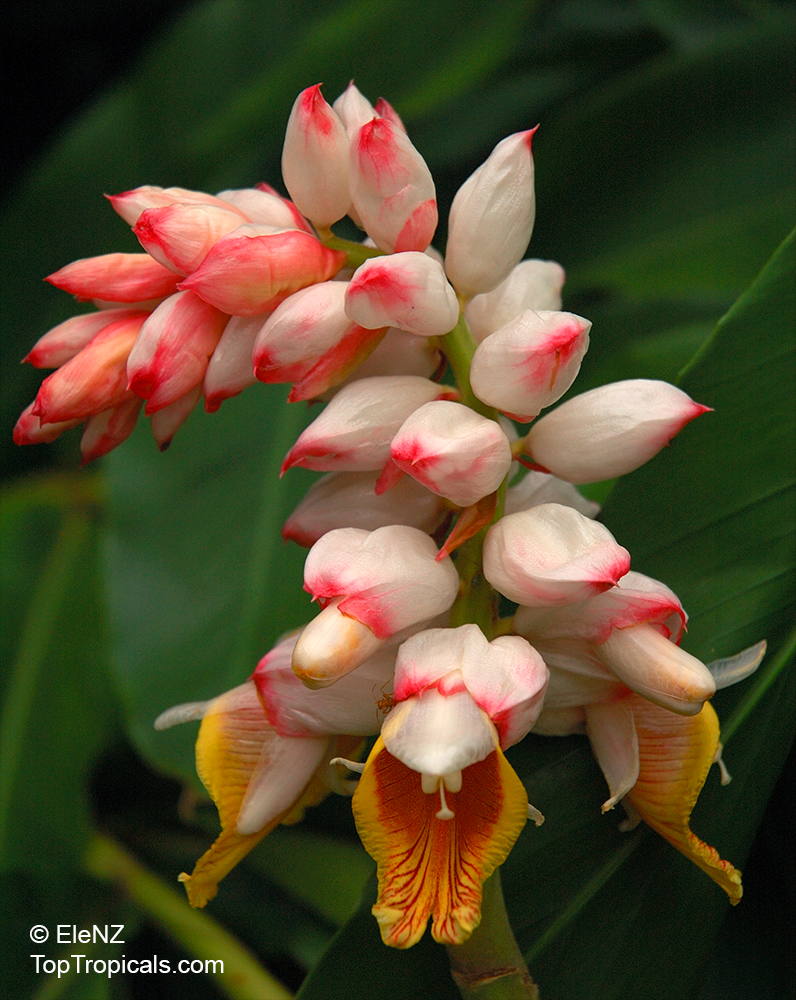
Alpinia zerumbet close up of pink white yellow flower for garden decor
Alpinia zerumbet flower with thick petals and curved edges in soft light.

Botanical names: Alpinia zerumbet, Alpinia nutans var. longiramosa

Common name: Shell Ginger

Family: Zingiberaceae

Origin: East Asia

USDA Zone: 8-11

Cold tolerance: 20°F

Small plant 2-5 ftSemi-shadeShadeWatering: Regular. Let topsoil dry slightlyYellow, orange flowersRed, crimson, vinous flowersWhite, off-white flowersSpice or herb plantEthnomedical plant.
Plants marked as ethnomedical and/or described as medicinal, are not offered as medicine but rather as ornamentals or plant collectibles.
Ethnomedical statements / products have not been evaluated by the FDA and are not intended to diagnose, treat, cure, or prevent any disease. We urge all customers to consult a physician before using any supplements, herbals or medicines advertised here or elsewhere.Fragrant plant

Alpinia zerumbet is called a "shell ginger" or "shell flower" most commonly, because its individual pink flowers, especially when in bud, resemble sea shells.

Alpinia zerumbet is similar to Alpinia malaccensis and Alpinia nutans


Link to this plant:
https://toptropicals.com/catalog/uid/alpinia_zerumbet.htm

Alsobia dianthiflora (Lace Flower) white flower close up with green leaves background
Alsobia dianthiflora (Lace Flower) white fringed flower nestled among dense green fuzzy leaves

Botanical names: Alsobia dianthiflora, Episcia dianthiflora

Common name: Lace Flower

Family: Gesneriaceae

USDA Zone: 9-10

Groundcover and low-growing 2ft plantSmall plant 2-5 ftSemi-shadeShadeWatering: Regular. Let topsoil dry slightlyWhite, off-white flowers


Link to this plant:
https://toptropicals.com/catalog/uid/episcia_dianthiflora.htm

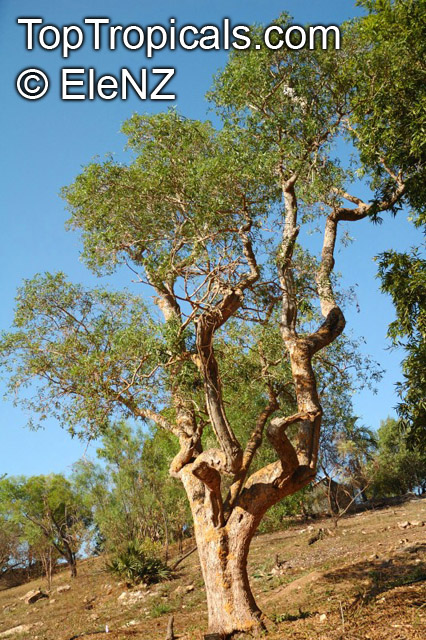
Alstonia actinophylla (Milkwood) brown trunk and green leaves tree against clear blue sky
Alstonia actinophylla (Milkwood) tree trunk with spreading branches covered in small green foliage leaves.

Botanical name: Alstonia actinophylla

Common name: Milkwood

Family: Apocynaceae

Origin: Australia

USDA Zone: 9-10

Small tree 10-20 ftFull sunWatering: Moderate. Water when top soil feels dryWhite, off-white flowersToxic or Poisonous


Link to this plant:
https://toptropicals.com/catalog/uid/alstonia_actinophylla.htm

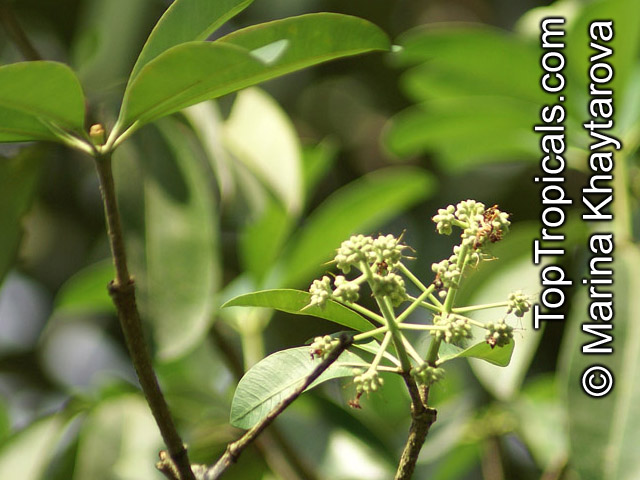
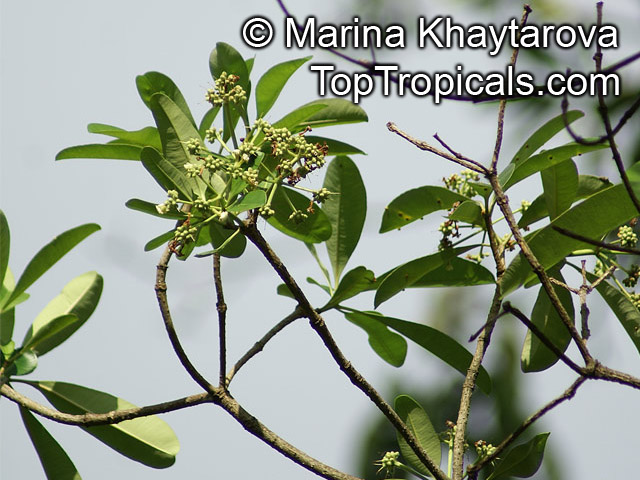
Alstonia angustiloba (Pulai Tree) with green leaves and small pale flower clusters close up
Alstonia angustiloba (Pulai Tree) with clusters of small pale flower buds and green oblong leaves.

Botanical name: Alstonia angustiloba

Common name: Pulai Tree

Family: Apocynaceae

Origin: Southeastern Asia

USDA Zone: 9-10

Large tree taller than 20 ftSmall tree 10-20 ftSemi-shadeFull sunWatering: Regular. Let topsoil dry slightlyWhite, off-white flowersToxic or PoisonousPlant attracts butterflies, hummingbirdsEthnomedical plant.
Plants marked as ethnomedical and/or described as medicinal, are not offered as medicine but rather as ornamentals or plant collectibles.
Ethnomedical statements / products have not been evaluated by the FDA and are not intended to diagnose, treat, cure, or prevent any disease. We urge all customers to consult a physician before using any supplements, herbals or medicines advertised here or elsewhere.Fragrant plant

The Pulai Tree is a native to Southeastern Asia, and is widely cultivated in tropical and subtropical regions. It can grow to a big tree, typically taller than 20 feet, or a smaller tree, which is 10-20 feet in height. This hardwood evergreen tree prefers full sun or semi-shade and a soil that is evenly moist but can tolerate some drought. It also prefers an acidic soil with a pH of 5.5 to 6.5.

The Pulai Tree produces fragrant white or off-white flowers throughout the year, making it a popular ornamental plant in many regions. It attracts butterflies, hummingbirds, and other pollinators. An ethnomedical plant, it has various medicinal benefits. The latex is used against shingles, boils, abcesses, and ringworm and is an ingredient in chewing gum. The leaves and roots of the tree also possess antifungal and anti-inflammatory properties.

When grown in pots, the Pulai Tree needs regular and even watering and is best placed in a sheltered spot away from cold winds. In areas located in USDA Zones 9-11, the tree can be grown outdoors, otherwise it must be placed over winter in a protected location. However, it is important to note that the plant is potentially poisonous or toxic when taken internally, so it should be kept away from children. With regular care and maintenance, the Pulai Tree can bring year-round beauty and fragrance to any garden or home.


Alstonia angustiloba (Pulai Tree) with green leaves and small yellow flower clusters on branch
Alstonia angustiloba (Pulai Tree) branch with small yellow flower clusters and smooth green leaves


Link to this plant:
https://toptropicals.com/catalog/uid/alstonia_angustiloba.htm

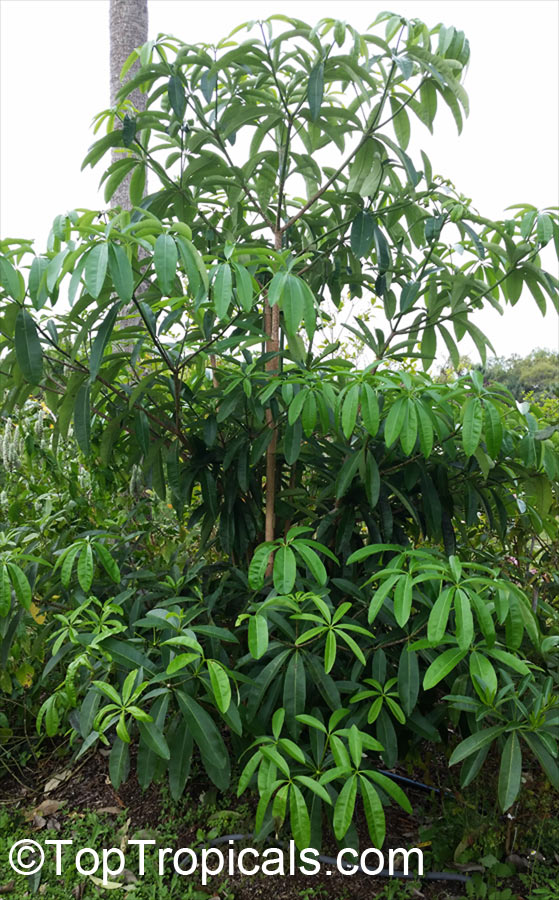
Alstonia macrophylla tree with green leaves forming rounded whorls on thin wooden branches
Alstonia macrophylla tree growing tall with spread out branches and wide green leaves

Botanical name: Alstonia macrophylla

Common names: Thungfaa, Devil Tree

Family: Apocynaceae

Origin: Southeastern Asia

USDA Zone: 9-10

Small tree 10-20 ftFull sunWatering: Regular. Let topsoil dry slightlyWhite, off-white flowersEthnomedical plant.
Plants marked as ethnomedical and/or described as medicinal, are not offered as medicine but rather as ornamentals or plant collectibles.
Ethnomedical statements / products have not been evaluated by the FDA and are not intended to diagnose, treat, cure, or prevent any disease. We urge all customers to consult a physician before using any supplements, herbals or medicines advertised here or elsewhere.Irritating plant

Stem, bark: tonic, aphrodisiac.


Link to this plant:
https://toptropicals.com/catalog/uid/alstonia_macrophylla.htm

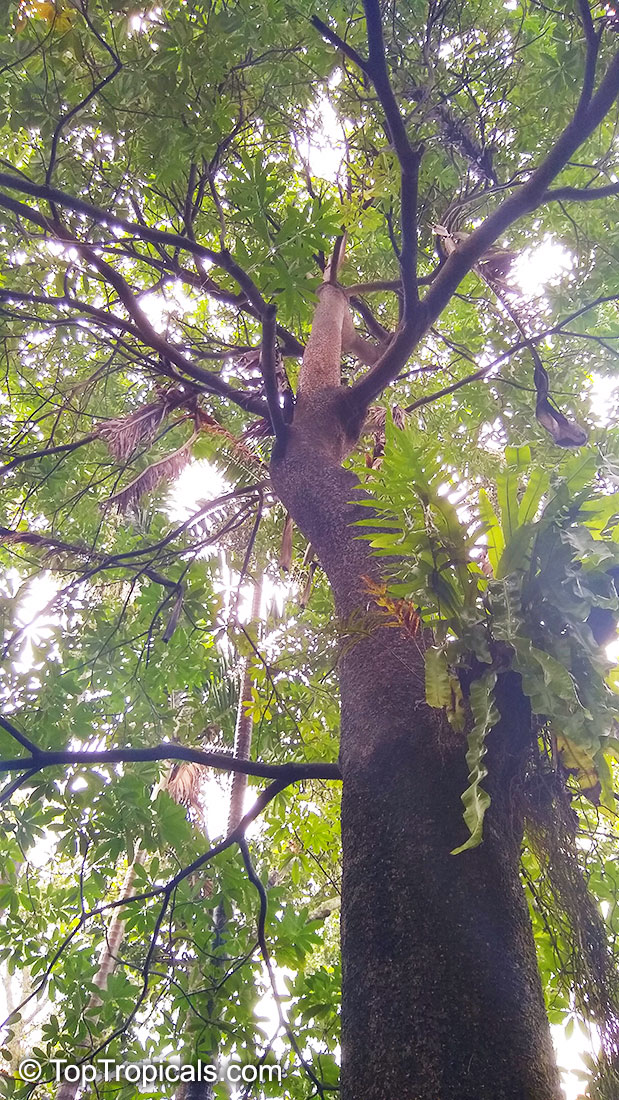
Alstonia scholaris (Blackboard Tree) green plant with many layered leaves in a natural tree structure
Alstonia scholaris (Blackboard Tree) with dense layers of oval green leaves growing in a tall structure

Botanical name: Alstonia scholaris

Common names: Blackboard Tree, Indian Devil Tree, Sapthaparni, Ditabark, Milkwood Pine, White Cheesewood

Family: Apocynaceae

Origin: Southeastern Asia

USDA Zone: 9-10

Large tree taller than 20 ftSmall tree 10-20 ftSemi-shadeFull sunWatering: Regular. Let topsoil dry slightlyWhite, off-white flowersToxic or PoisonousPlant attracts butterflies, hummingbirdsEthnomedical plant.
Plants marked as ethnomedical and/or described as medicinal, are not offered as medicine but rather as ornamentals or plant collectibles.
Ethnomedical statements / products have not been evaluated by the FDA and are not intended to diagnose, treat, cure, or prevent any disease. We urge all customers to consult a physician before using any supplements, herbals or medicines advertised here or elsewhere.Fragrant plantSubtropical plant. Mature plant cold hardy at least to 30s F for a short time

This fascinating rare plant with white, strongly perfumed flowers is valued as a fast growing, impressive ornamental shade tree.

Popularly known as Devil Tree, as plant is believed to the devil's abode - probably due to the intoxicating fragrance emitted by flowering trees, especially at night.

The tree is of great cultural significance in the intellectual circle, as traditionally its leaves were awarded to scholars and teachers during convocation ceremonies by the Visva Bharati University (can't think of a better name than Alstonia scholaris!). This tradition was started by Rabindranath Tagore.

See Article about Alstonia.


Link to this plant:
https://toptropicals.com/catalog/uid/alstonia_scholaris.htm

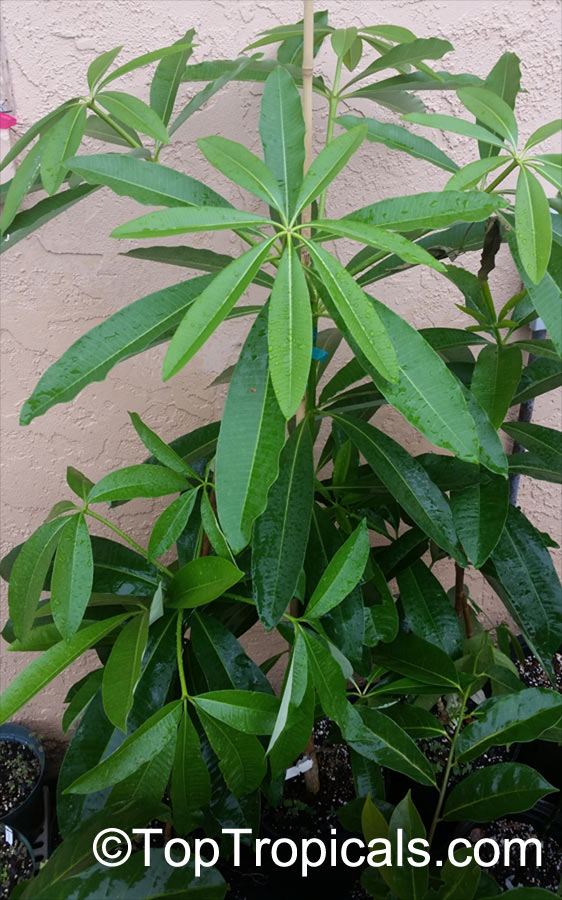
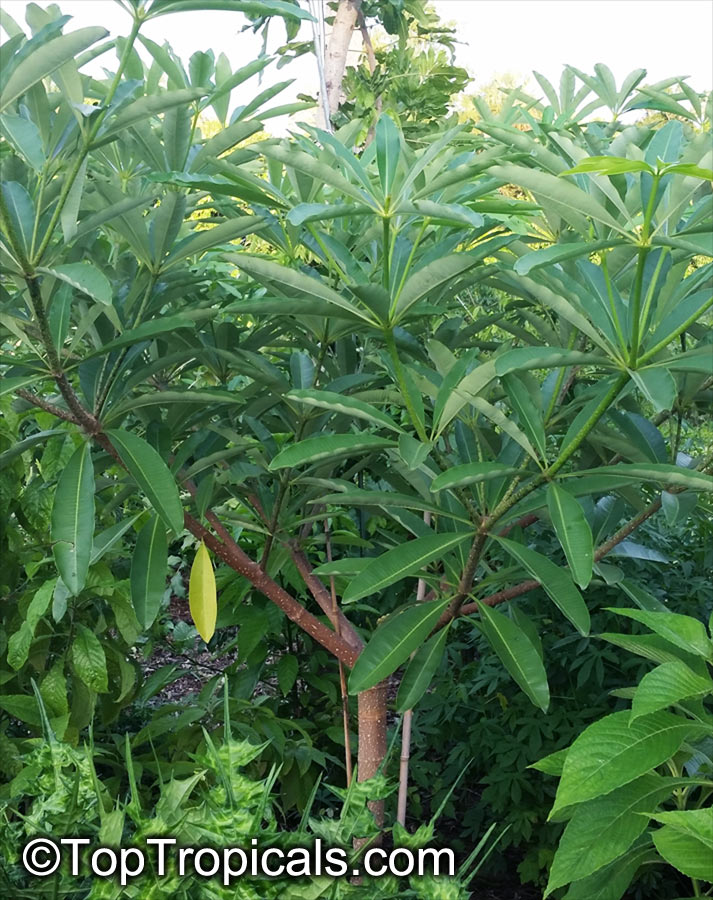
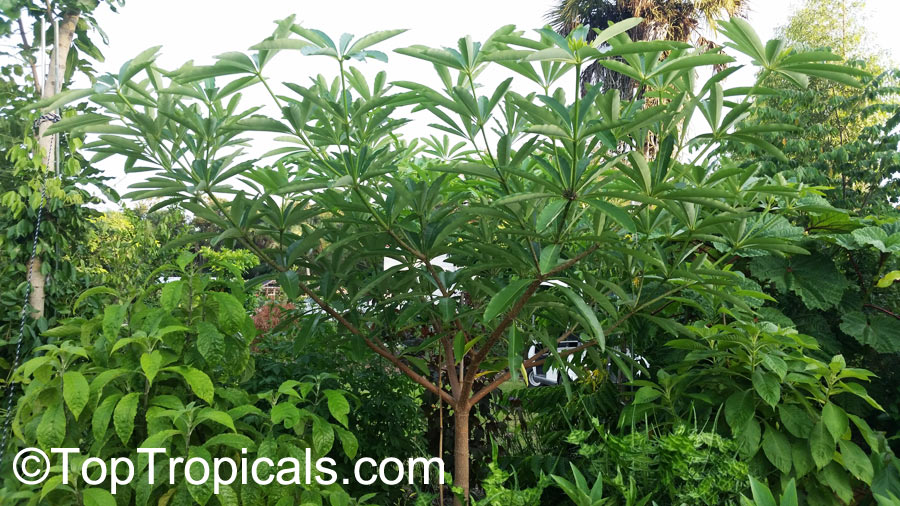
Alstonia spectabilis (Hard Milkwood) green leaves in a close up of the plant.
Alstonia spectabilis (Hard Milkwood) with many oval green leaves radiating from a center point.

Botanical names: Alstonia spectabilis, Alstonia linearis, Alstonia longissima

Common name: Hard Milkwood

Family: Apocynaceae

Origin: Australia

USDA Zone: 9-10

Large tree taller than 20 ftSmall tree 10-20 ftSemi-shadeFull sunWatering: Moderate. Water when top soil feels dryWatering: Regular. Let topsoil dry slightlyWhite, off-white flowersEthnomedical plant.
Plants marked as ethnomedical and/or described as medicinal, are not offered as medicine but rather as ornamentals or plant collectibles.
Ethnomedical statements / products have not been evaluated by the FDA and are not intended to diagnose, treat, cure, or prevent any disease. We urge all customers to consult a physician before using any supplements, herbals or medicines advertised here or elsewhere.Fragrant plant

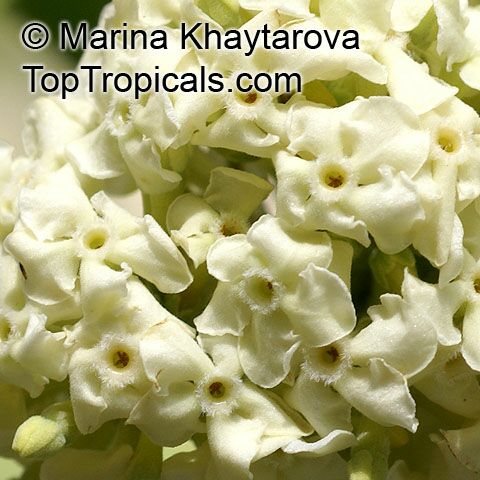
Alstonia spectabilis (Hard Milkwood) with small cream white flower clusters in a close up view.
Alstonia spectabilis (Hard Milkwood) clusters of small star shaped cream white flowers on green stalks.
Alstonia spectabilis (Hard Milkwood) green leaves and small white flower clusters on a tree
Alstonia spectabilis (Hard Milkwood) with green leaves and dense clusters of small white flower buds


Link to this plant:
https://toptropicals.com/catalog/uid/alstonia_spectabilis.htm
Prev  
Next


Use link to repeat this search:
https://toptropicals.com/cgi-bin/garden_catalog/cat.cgi?search_op=and&keyword_op=and&language=e&number=10&no_change_lang=1
&v1=wht&user=tt&sale=1&first=0