Seaside, salt tolerant plant - Plant Encyclopedia Results (Page 39)
| Number of plants found: 458 |  | Prev | Next | 
|
Go to page: | First | 34 | 35 | 36 | 37 | 38 | 39 | 40 | 41 | 42 | 43 | Last |

Botanical names: Rheedia aristata, Rheedia macrophylla
Common names: Cuban Mangosteen, Garcinia
Family: Clusiaceae / Guttiferae
Origin: Mexico through Panama

USDA Zone: 9-11


Related to the mangosteen, the madrono remains a relatively unknown, but attractive fruit. A small tree, usually only to 5-15ft, but taller in its native range. It is much hardier than its famous relative the mangosteen, and can survive short periods of temperatures below 32F. Trees are very salt tolerant, but not too tolerant of acidic soils. Slow growers and can be maintained for container culture. Propagation: Usually by seed.


Botanical name: Rheedia longifolia
Common names: Charichuela, Bacuri Azedo, Sour Bacuri, Bumpy Lemon, Garcinia
Family: Clusiaceae / Guttiferae
Origin: Tropical America
USDA Zone: 9-10

Fruit resembles a bumpy lemon, with an interior like lemony cotton candy. Yellow, sometimes spotty fruit with a white-translucent pulp having an aromatic, acidic flavor. Related to the mangosteen, it remains a relatively unknown, but attractive fruit. A small tree, usually only to 5-15ft, but taller in its native range. Much hardier than its famous relative the mangosteen, and can survive short periods of temperatures below 32F. Trees are very salt tolerant, but not too tolerant of acidic soils. Slow growers and can be maintained for container culture. Propagation usually by seed.
Very similar species - Garcinia acuminata, or G. madruno (Rheedia madruno).
Related species: Rheedia macrophylla, Rheedia Aristata (Cuban Mangosteen).


Botanical name: Rheedia madruno
Common names: Madrono, Madrone, Bakupari, Garcinia
Family: Clusiaceae / Guttiferae
Origin: Wet rainforest regions from Southern Mexico through Panama
USDA Zone: 10-11
Yellow fruit with a white-translucent pulp having an aromatic, acidic flavor. Related to the mangosteen, the madrono remains a relatively unknown, but attractive fruit. Eaten fresh, but can also be made in to jams and jellies. A small tree, usually only to 5-15ft, but taller in its native range. The madrono is much hardier than its famous relative the mangosteen, and can survive short periods of frost. Trees are very salt tolerant. Madronos are slow growers and can be maintained for container culture.


Botanical name: Rhizophora mangle
Common name: Red Mangrove
Family: Rhizophoraceae
USDA Zone: 9-10


Mangroves are tropical plants that are adapted to loose, wet soils, salt water, and being periodically submerged by tides. Great for aquariums and ponds. See Article about mangroves.


Last one

Botanical names: Rhodocactus grandifolius, Pereskia grandifolia, Pereskia grandiflora
Common names: Rose Cactus, Wax Rose, Perescia, Bastard Rose
Family: Cactaceae
Origin: Tropical America
USDA Zone: 10-12


It is a member of the Cactus family and therefore has spiny stems. One of the most attractive for use in gardens, it can grow to 9Ft in height but can also be kept pruned into a bushy shrub; it has woody stems, fleshy, pale green leaves, and clusters of bright pink flowers. Pereskia likes full sun and dry conditions. Propagation is by means of cuttings. See Cacti page info


Botanical name: Rhus integrifolia
Common names: Lemonade Berry, Lemonade Sumac
Family: Anacardiaceae
Origin: Southern California
USDA Zone: 8-10


Rhus integrifolia (Lemonade Berry) is a large shrub native to Southern California, usually growing to a height of 5 to 10 feet but potentially reaching 20 feet in the right conditions. Primarily tolerant of semi-shade, it is also able to withstand more sunny conditions as well as dry conditions. Its fragrant pink flowers are both beautiful and functional, as they are edible and can be used as a spice or herb. Mature plants are salt tolerant and well suited to a seaside environment.
The berries of the lemonade berry are the most famous part of the plant, ripening from green to yellow, then red and covered in a sticky substance. A single mature lemonade berry can bear up to 200 berries, with an impressive potential yield of up to one thousand berries from one plant. In addition to their use as a flavoring for beverages, the berries are full of healthy benefits including vitamins A and C, folates, and proteins.
For best results, plant lemonade berry in USDA Zones 8-10 and provide moderate water for the bush to flourish. As with many plants, grow in a pot if you live in a cold region and plan to bring your plants indoors during the colder months. With adequate planting, watering and sunlight, Rhus integrifolia makes a great addition to any garden!


Botanical name: Romneya coulteri
Common names: Matilija Poppy, California Tree Poppy
Family: Papaveraceae
Origin: California, Mexico
USDA Zone: 7a-11


Romneya coulteri is spectacular low growing shrub. It produces beautiful white and off-white flowers with a fragrant aroma. These flowers are attractive to butterflies and hummingbirds, making Matilija Poppies ideal for gardeners who wish to attract wildlife to their gardens.
Matilija Poppies are great for adding texture and color to gardens situated near the seaside. They are considered moderately salt tolerant, so they can also be grown near coastal regions with salt spray.
These spectacular shrubs are native to California and Mexico, and can be grown in USDA Zones 7 to 11.
If you are looking for a reliable, drought-tolerant shrub that will brighten up your garden, Matilija Poppies are a great choice. They prefer to be planted where they have well-draining soil that is kept moist. It is important to avoid overwatering, as this can cause root rot, and avoid over-fertilizing as this can produce too much top growth and make the plant look spindly. With plenty of sun, adequate water and the right soil, Matilija Poppy will make an eye-catching addition to any garden.


Botanical names: Roystonea elata, Roystonea oleracea, Roystonea regia
Common name: Florida Royal Palm
Family: Arecaceae / Palmae
Origin: Guyana, Tropical America
USDA Zone: 9-11


This is a very popular street or specimen tree. Roystonea palms can grow (about a foot a year) to 50-80 feet tall and can have a spread of 15-25 feet. The royal palm has a beautiful cement gray trunk and a dynamic bright green crown shaft, with long and gently drooping, lush feathery fronds. Flowers are fragrant. The florida royal palm is native to the cypress swamps of south florida and is not particular about soil. They prefer full sun and plenty of water to look their best. Royal palms are recommended for frost-free areas and can survive short cold spells down to 26 f. Can be grown in containers as a patio or house plant for some time. Best suited to well-drained acidic soils. Highly alkaline soils should be avoided.


Botanical name: Russelia equisetiformis
Common names: Firecracker Fern, Coral Plant
Family: Plantaginaceae
Origin: Mexico
USDA Zone: 9-11


This is a low-growing shrub, distinctive for its long, drooping, usually leafless stems and the almost continuous clusters of small, bright red tubular flowers. Each plant produces many branches and is particularly effective when grown in a raised bed or rock garden so that the flower-laden stems hang down. Another species, R. sarmentosa, is a larger shrub with less showy flowers. Both varieties are attractive to butterflies and hummingbirds. Russelia will grow under both moist and dry conditions, but requires full sunlight and occasional pruning to flower well. Propagation is by division of old plants


See picture of actual plant for sale (1-2013).
Recommended Fertilizer: SUNSHINE Megaflor - Bloom Nutrition Booster
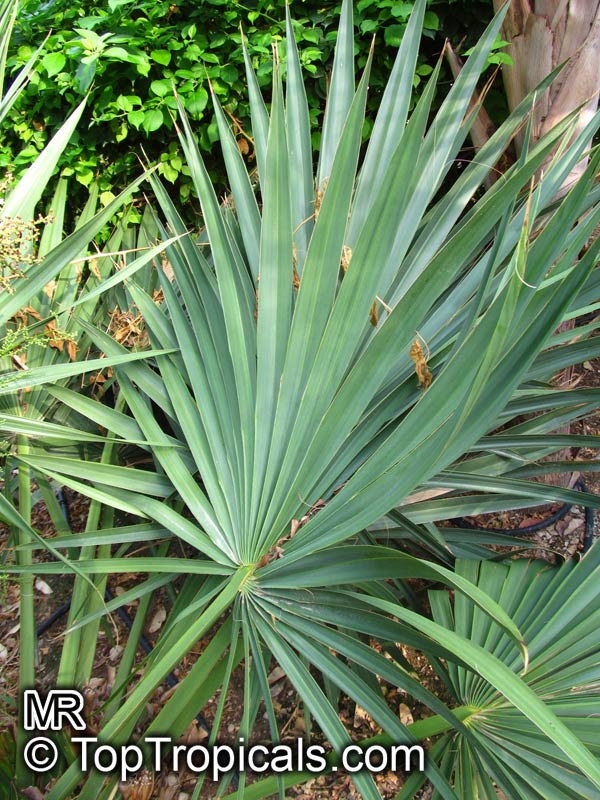
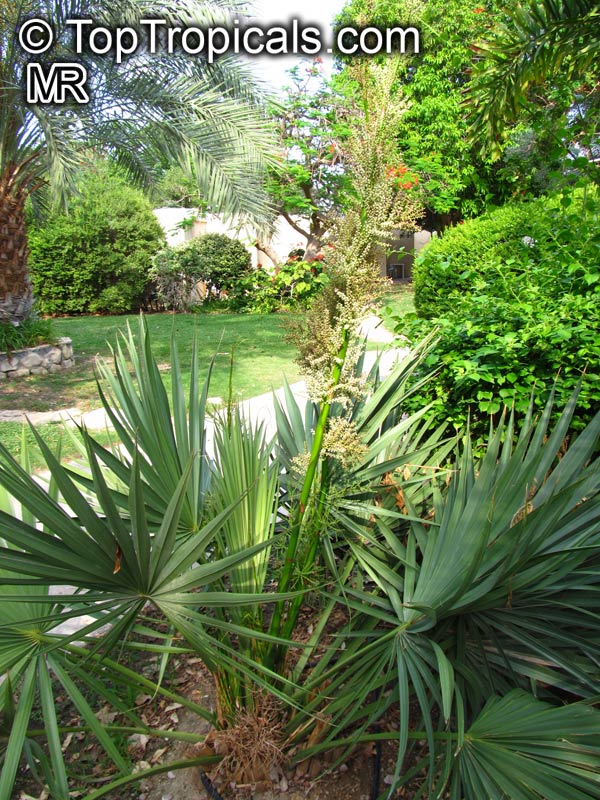
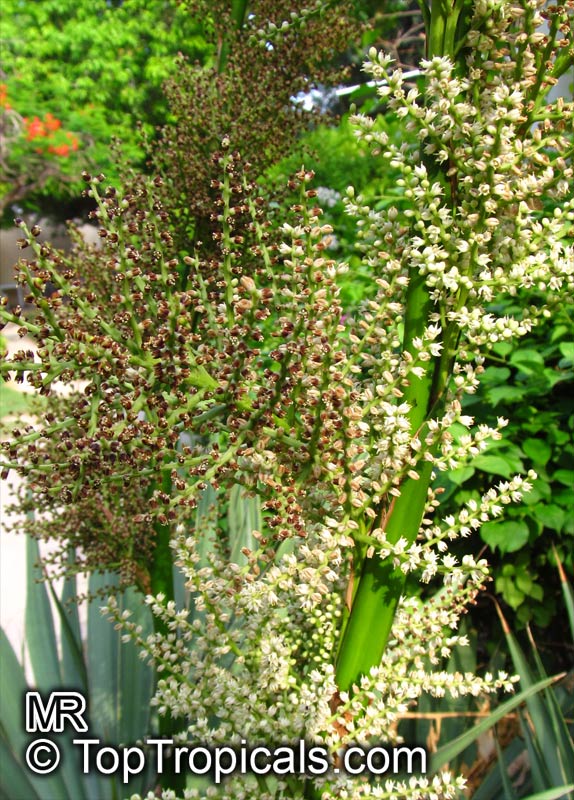
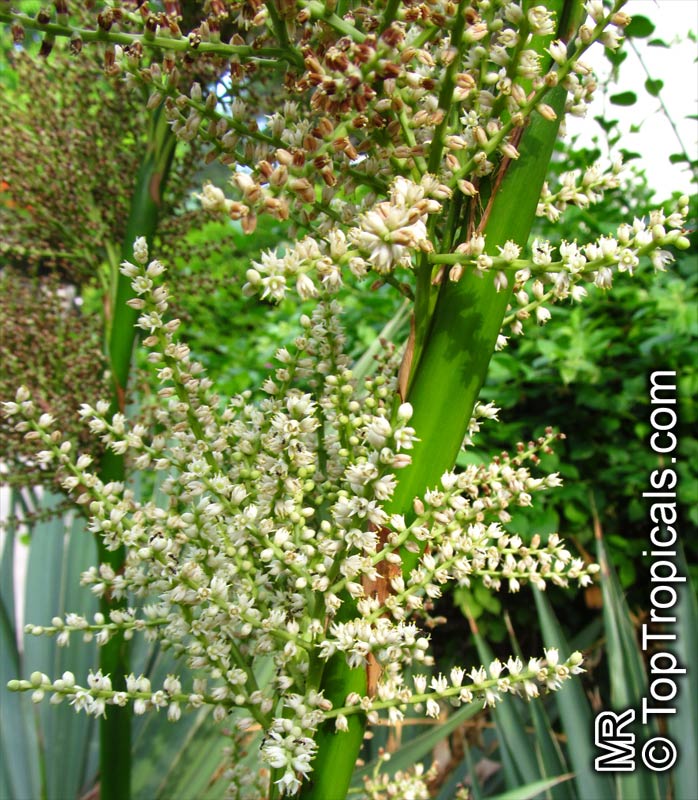
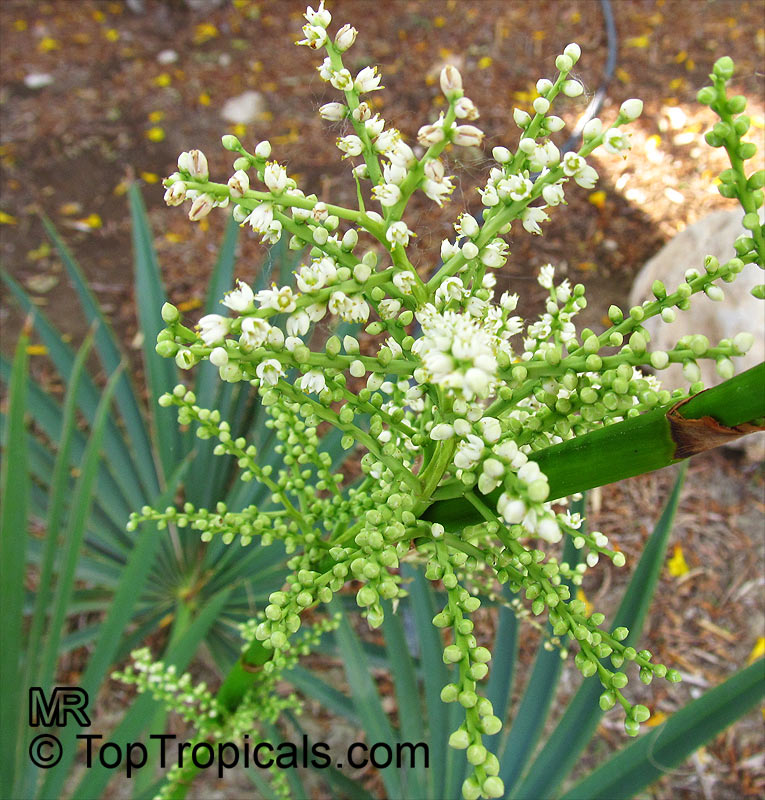
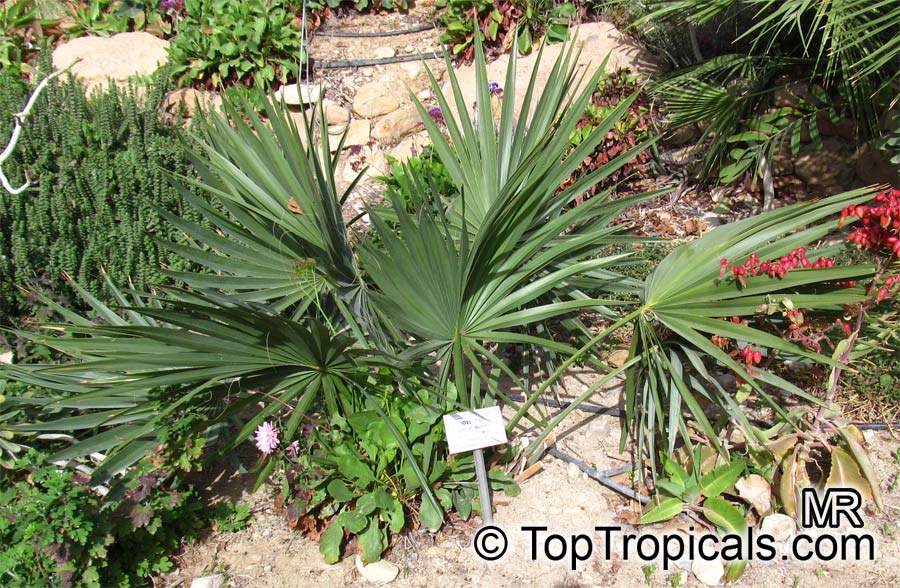
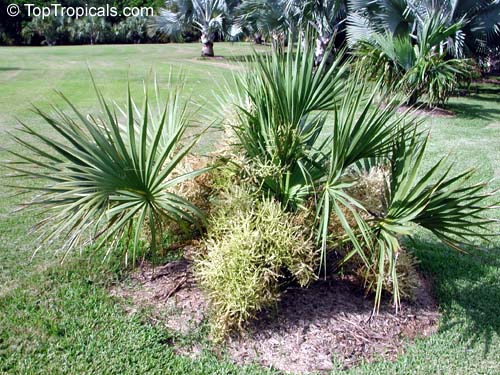
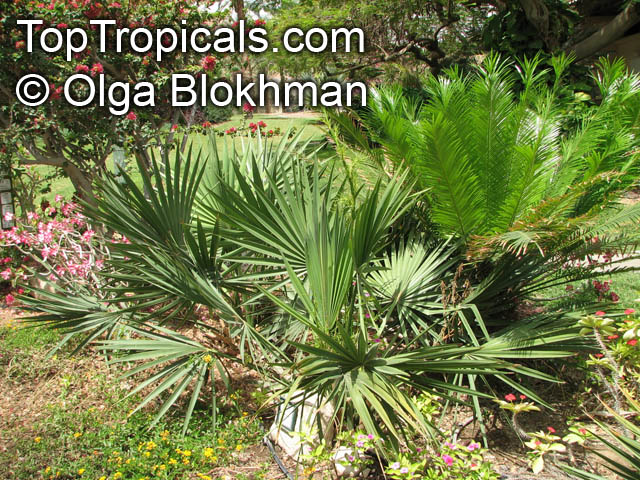
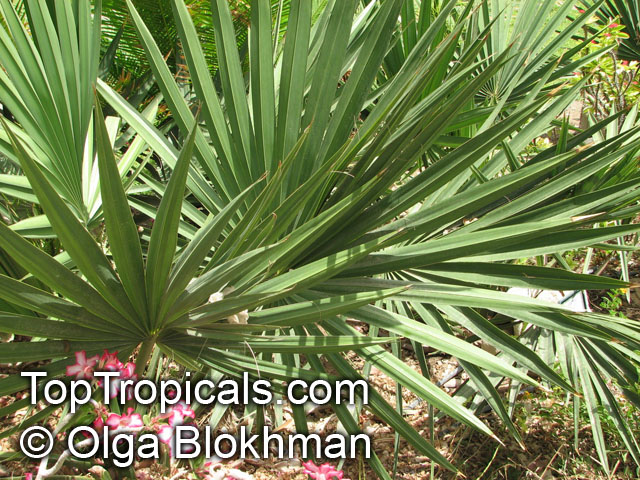
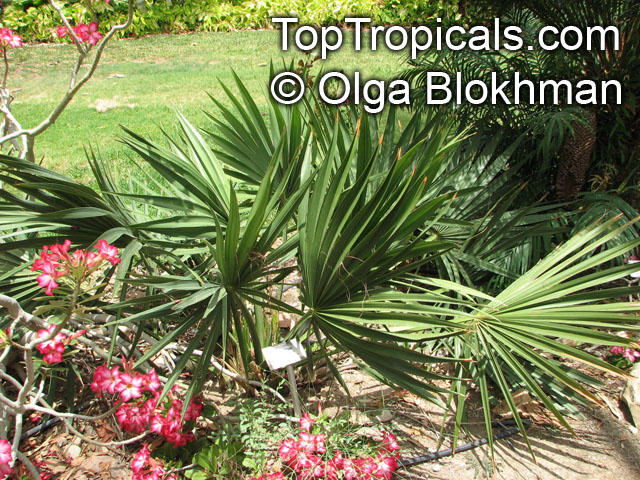
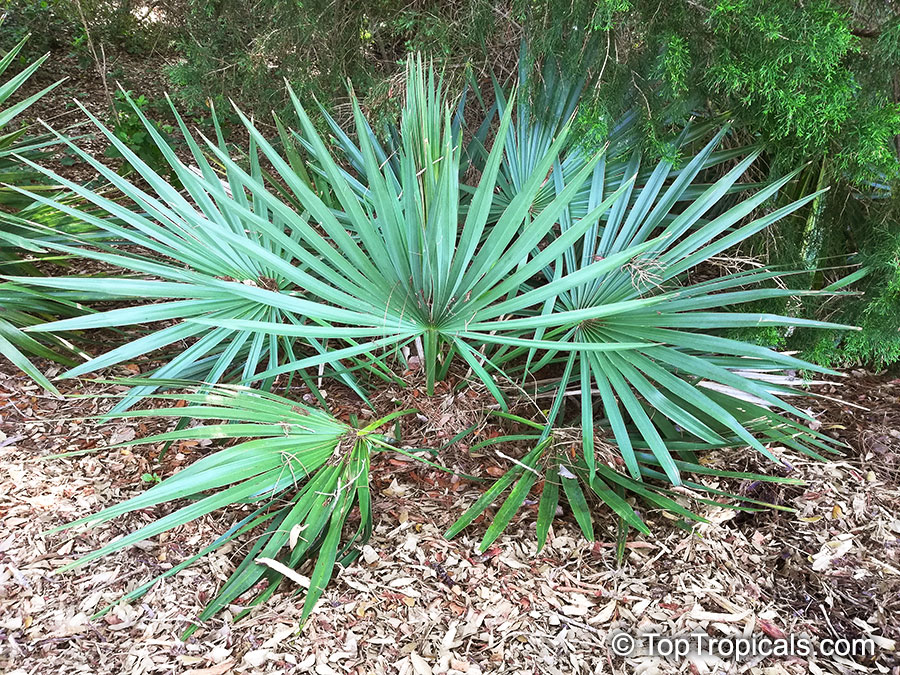
Botanical names: Sabal minor, Sabal etonia
Common names: Blue Palm, Blue Palmetto, Dwarf Palmetto, Scrub Palm
Family: Arecaceae / Palmae
Origin: South Eastern USA
USDA Zone: 9-10
Blue-stem, is a small fan palm with a trunk that remains below ground. Depending on age and growing conditions, the leaves can be anywhere from 1-5 ft in length and width. Prefers partial sun and can tolerate light shade. Prefers moist soils but can tolerate drought. Hardy in zones 8-10. Some varieties are hardy to Zone 7. Blue-stem palm is sometimes killed above ground by freezing weather, but re-sprouts the following spring.
| Prev | Next | |
Use link to repeat this search:
https://toptropicals.com/cgi-bin/garden_catalog/cat.cgi?search_op=and&keyword_op=and&language=e&number=10&no_change_lang=1
&v1=sea&user=tt&sale=1&first=0