Seaside, salt tolerant plant - Plant Encyclopedia Results (Page 33)
| Number of plants found: 494 |  | Prev | Next | 
|
Go to page: | First | 28 | 29 | 30 | 31 | 32 | 33 | 34 | 35 | 36 | 37 | Last |

Botanical name: Meryta sinclairii
Common name: Puka
Family: Araliaceae
Origin: New Zealand
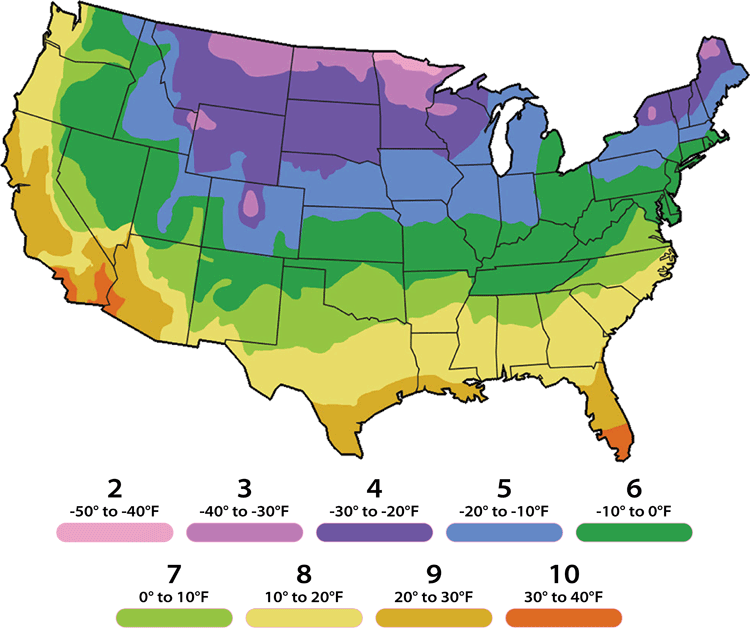
USDA Zone: 9-10


This large shrub, Meryta sinclairii (Puka), is native to New Zealand and can grow to a height of 5-10 ft tall. It is an ornamental foliage plant and ideal for coastal gardens, being both salt tolerant and wind hardy. While it is hardy and can survive in USDA Zone 9-11, it should not be subjected to heavy frost.
For optimal growth, Puka requires full sun, though it may tolerate some semi-shade. The soil, meanwhile, should be deep, well-drained, and moist. The plant is also quite responsive to regular watering, though it should be avoided in waterlogged soil.
In colder regions and if grown in a pot, planters should choose sheltered areas that are not prone to sharp frost and grow the plant in containers filled with multipurpose compost mixed with a small amount of sharp sand. The compost should be kept moist and the pots should be taken indoors during seasons with harsh frost. After the frost has passed, the pots should be returned outdoors slowly and acclimatized for the period of a week.
Overall, Meryta sinclairii or Puka is an ideal choice for any native or tropical setting. Its glossy green and large, wavy leaves add an exotic uniqueness to any garden, while the small and green winter blooms and shiny black fruits make it a beautiful and interesting specimen tree to cultivate.


Botanical name: Meryta sp.
Common name: Puka
Family: Araliaceae
Origin: Pacific Islands
USDA Zone: 9-10


Puka is an impressive specimen tree for any garden, especially native or tropical settings. They are valued for their dramatic foliage and tolerance of coastal conditions.
Species:


Botanical names: Metrosideros collina, Metrosideros polymorpha
Common names: Sping fire, Ohia Lehua (Hawaii), Vuga (Fiji Islands), Anume (Samoa)
Family: Myrtaceae
Origin: Islands of the Pacific
USDA Zone: 10-11


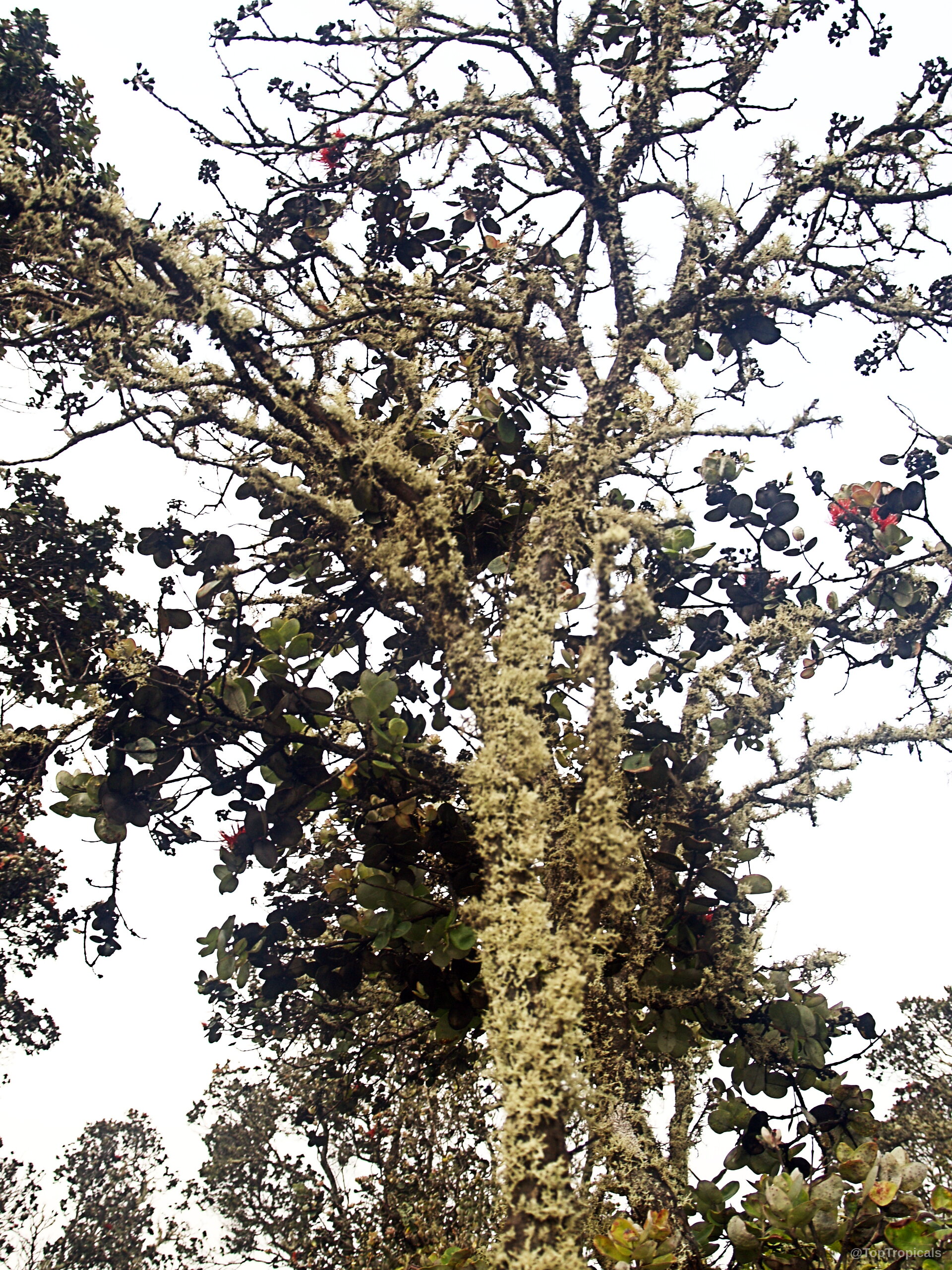
Metrosideros collina is Hawaiian endemic plant, a pioneer species that is one of the first invaders of disturbed areas. The plant is valued for its abundant flowering and compact, upright form. It blooms in spring and summer, but can bloom sporadically throughout the year. Ohia Lehua is a very slow-growing evergreen plant which forms are extremely variable, ranging from creeping or erect shrubs to spreading or tall trees. Under favorable conditions trees can grow as tall as 30 ft or more; however it may take many decades for them to grow that high. New leaf growth is often pink or reddish. The showy flowers are usually red with numerous stamens 0.5-1 inch long forming tufts at the branch ends. Forms with flowers that are orange, salmon, pink, white, or yellow are available, as well as weeping and variegated forms, but few selections have been named.
Ohia grows best in cool uplands but also does well at sea level. It has good wind tolerance and some tolerance of salt; it is very tolerant of volcanic fumes. It is known to be hardy to about 20 degrees F for a short period of time.
The plant can be used as a single specimen plant or as a background, windbreak, or hedge plant. Ohia is the official flower of the island of Hawaii.
Plant ohia in full sun or partial shade in a rich, well drained soil. Provide regular irrigation. Train while young to develop form.
Ohia has been used in Hawaiian culture for statuary, spears, and mallets. The flowers are considered sacred to the Goddess Pele and are popular for leis.
The tiny seeds are contained in a cup-like capsule about 1/4 inch in diameter. The capsule turns brown as the seeds mature. Collect the seed capsules when they are mature, but before they split open. Put the them in a paper bag or envelope and keep them dry. When the capsules open, the minute dust-like seeds will fall out.




Botanical name: Morinda citrifolia
Common names: Noni, Great Morinda, Indian Mulberry, Mengkudu (Malay), Nonu/Nono (Pacific Islands)
Family: Rubiaceae
Origin: Native to Southeast Asia
USDA Zone: 10-11


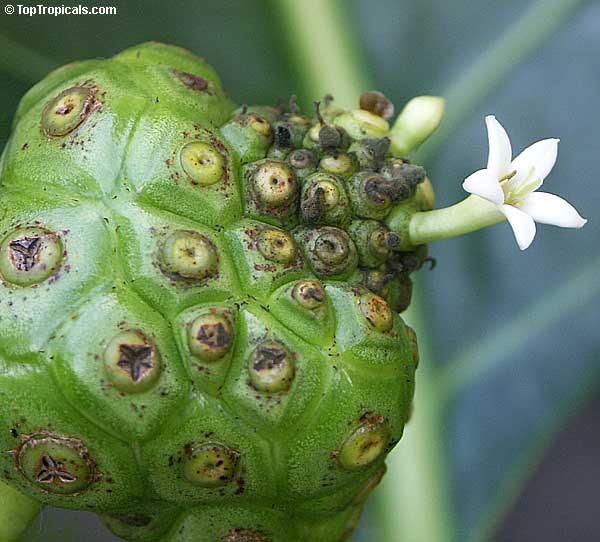
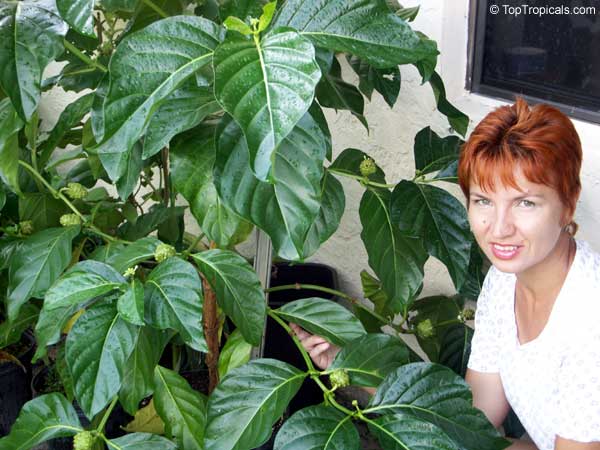
This is a tropical fruit tree that grows year-round in the Pacific Islands and for over 2000 years has been used for its many healthful benefits. Renowned ethnobotanists, scientists, and medical professionals have discovered that noni juice works on a cellular level and affects nearly every system in the body. This juice is also a rich source of antioxidants and can help support the immune system and help cells more readily absorb nutrients. Every part of the plant is used medicinally.
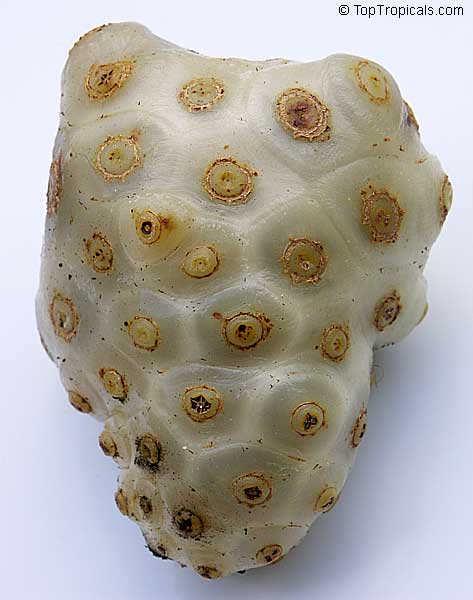
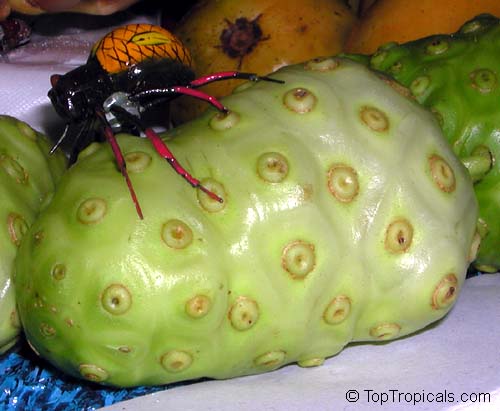
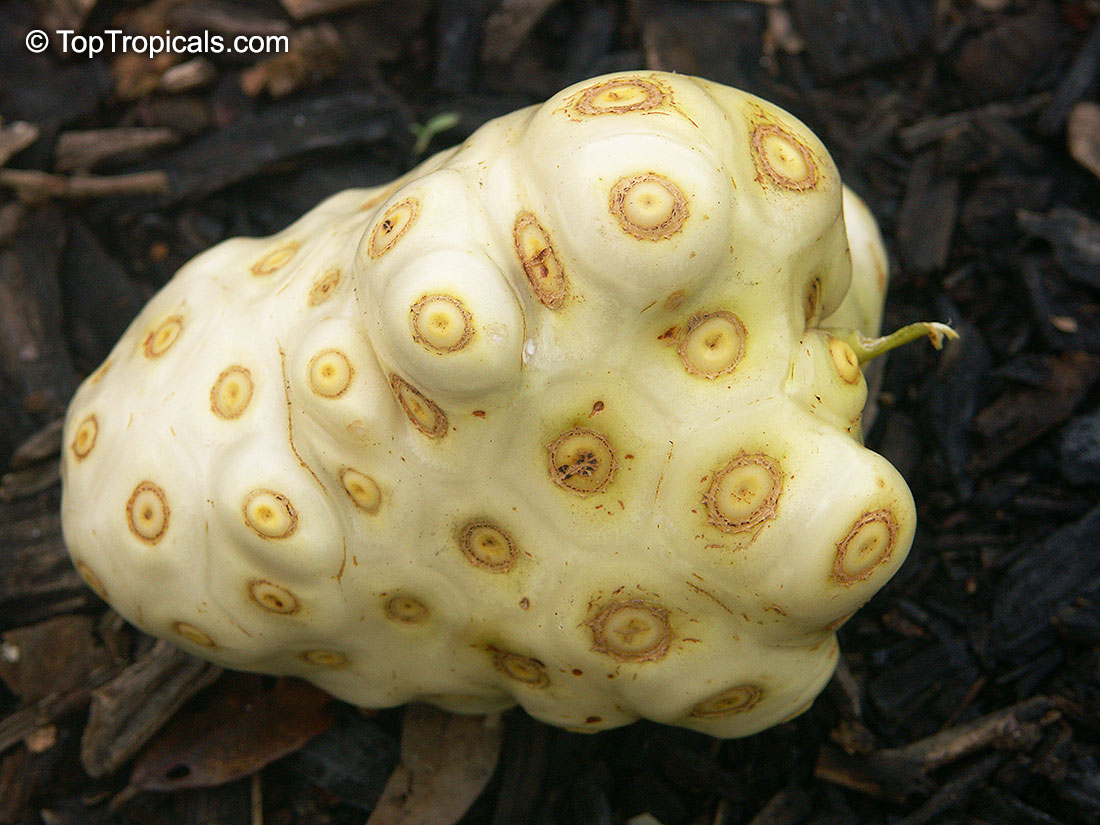
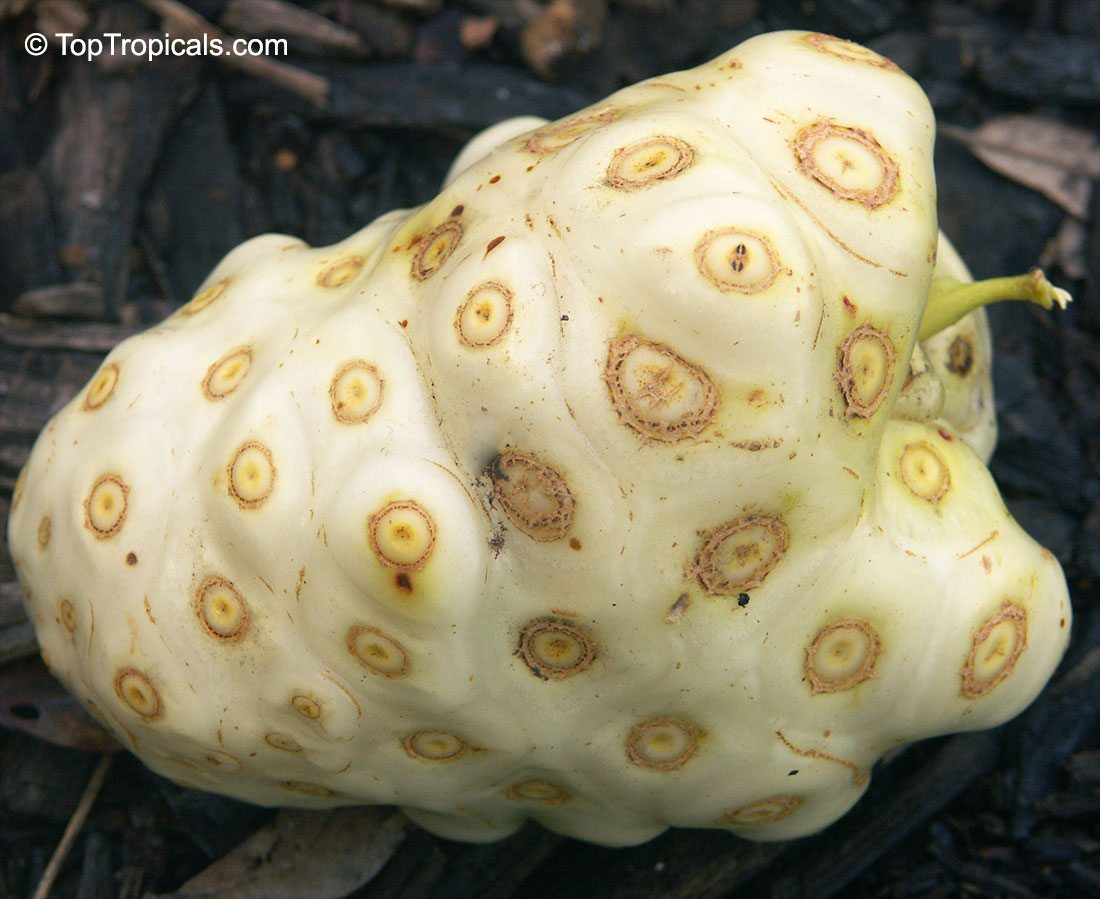
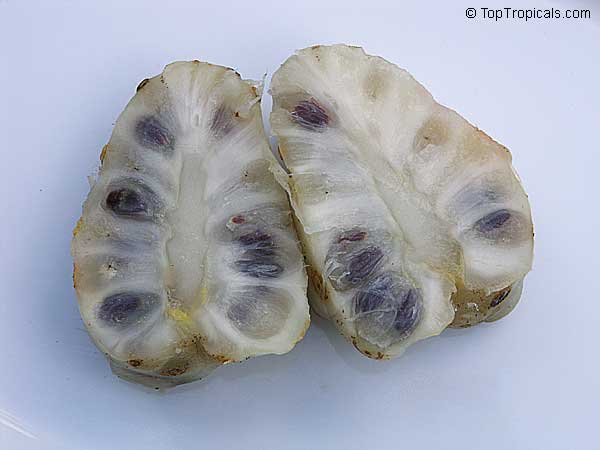
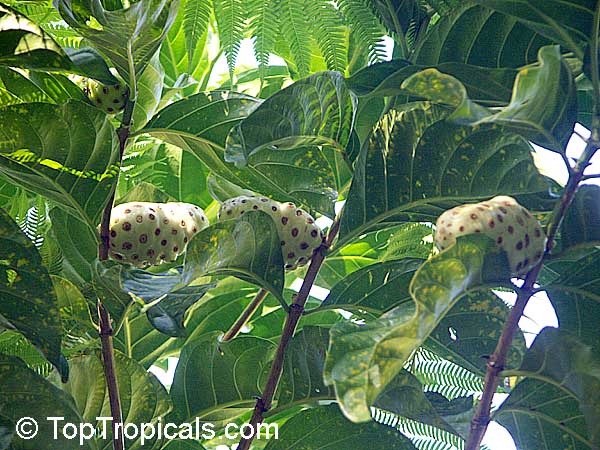
The plant grows well on any soil, even sandy or rocky. Apart from saline conditions, the plant also can withstand drought. Flowers are small, white, growing from a fleshy structure. The nectar is favorite food of honey-eaters. Blooms and fruits year round. Fruits are oval, medium 4-7cm, at first green, turning light yellow or white when ripe with many seeds. The fruits are edible, but don't have a nice taste or smell.
The plant can be easily grown in container, tolerates shade, will fruit in a pot. Extremely cold sensitive (55F minimum). Keep protected during winter.
See Article about Noni.


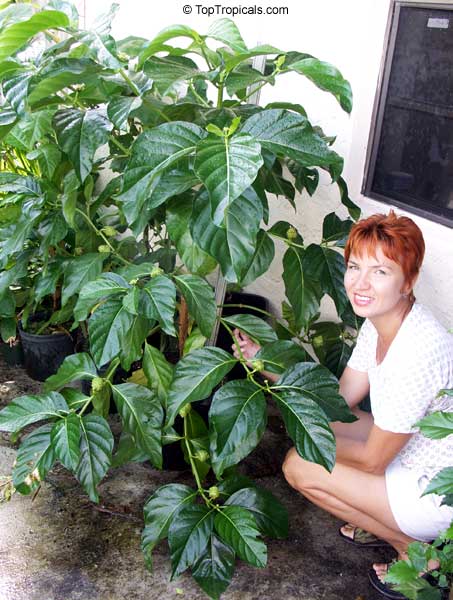
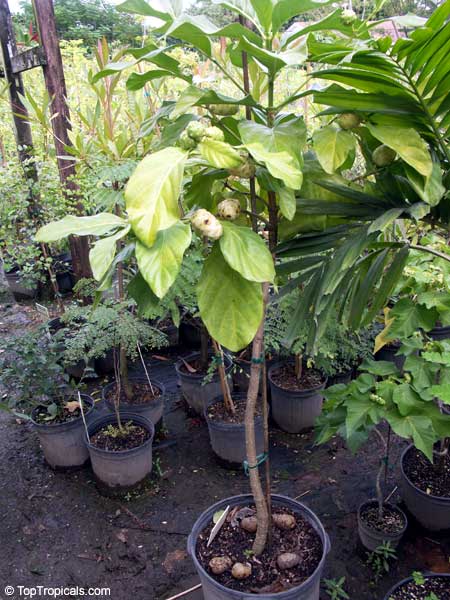
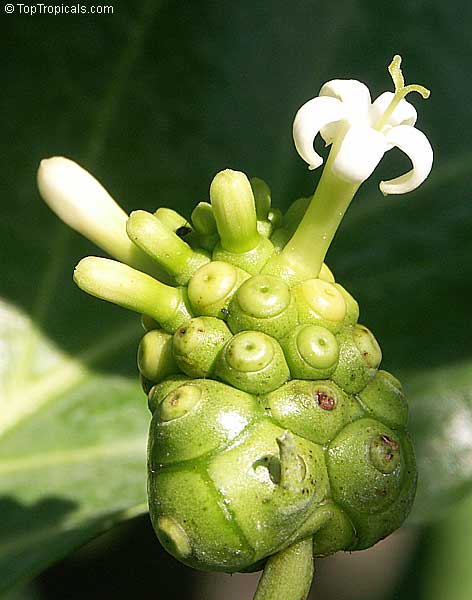

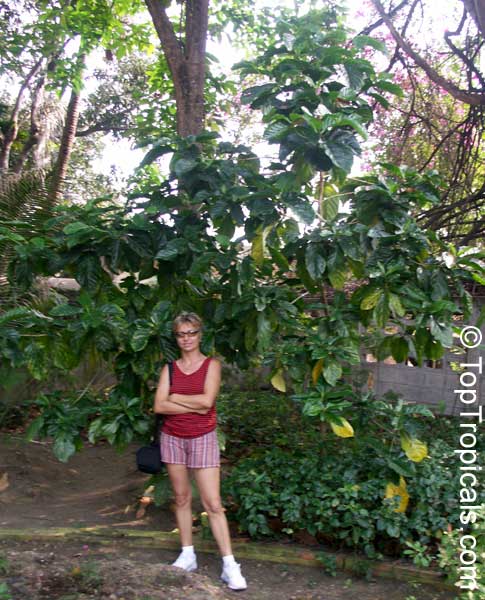


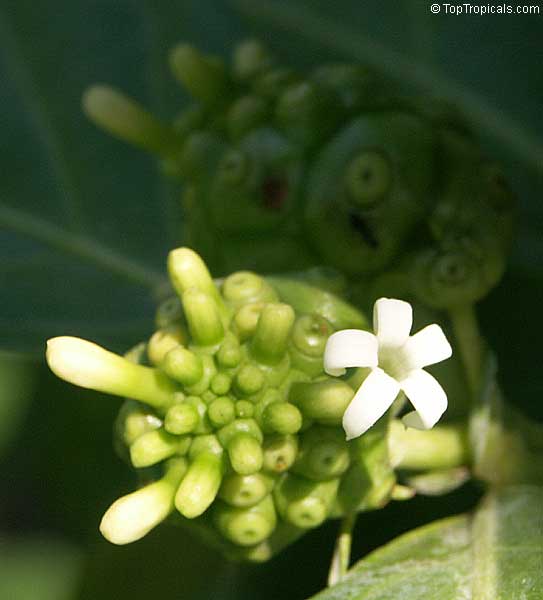










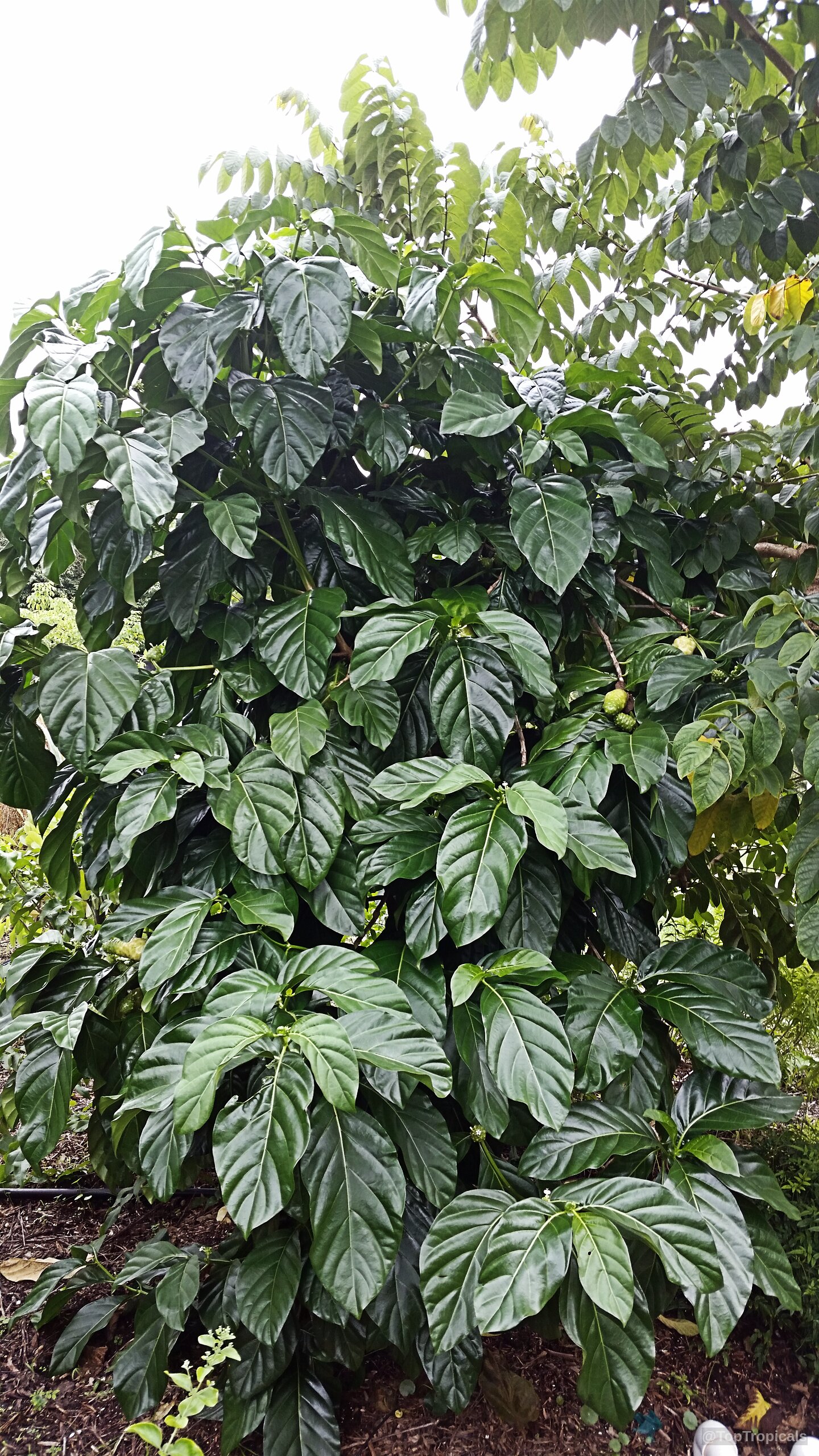


See picture of the fruiting tree in 7 gal pot.
See VIDEO: Doctor Noni.
Recommended Fertilizer: SUNSHINE C-Cibus - Crop Nutrition Booster
SUNSHINE-Honey - sugar booster
Local pickup only. This item is not available for shipping. Local delivery may be available in Ft. Myers or Sebring, Florida. Contact us for an estimate. Non-pickup orders are subject to restocking fees.
 SUNSHINE C-Cibus (NPK 2-2-4) - Crop Booster for every watering.
 SUNSHINE C-Cibus (NPK 2-2-4) - Crop Booster for every watering.
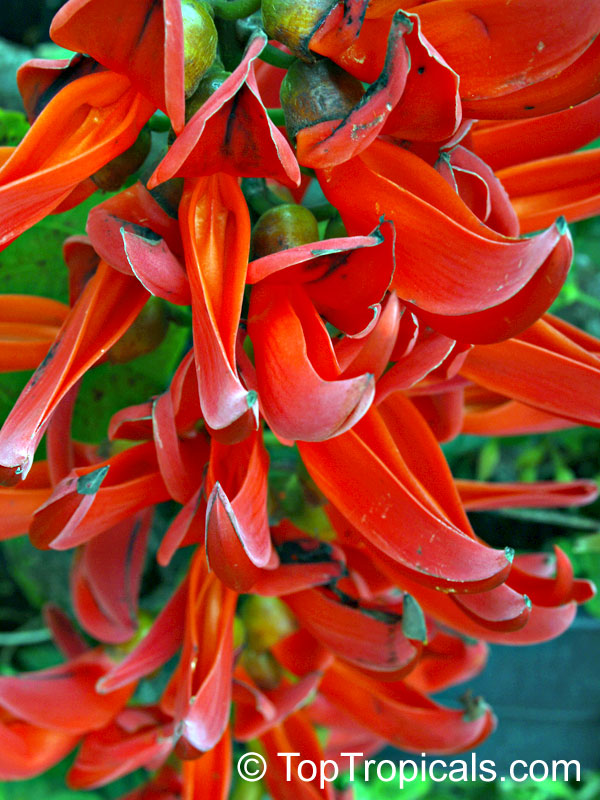
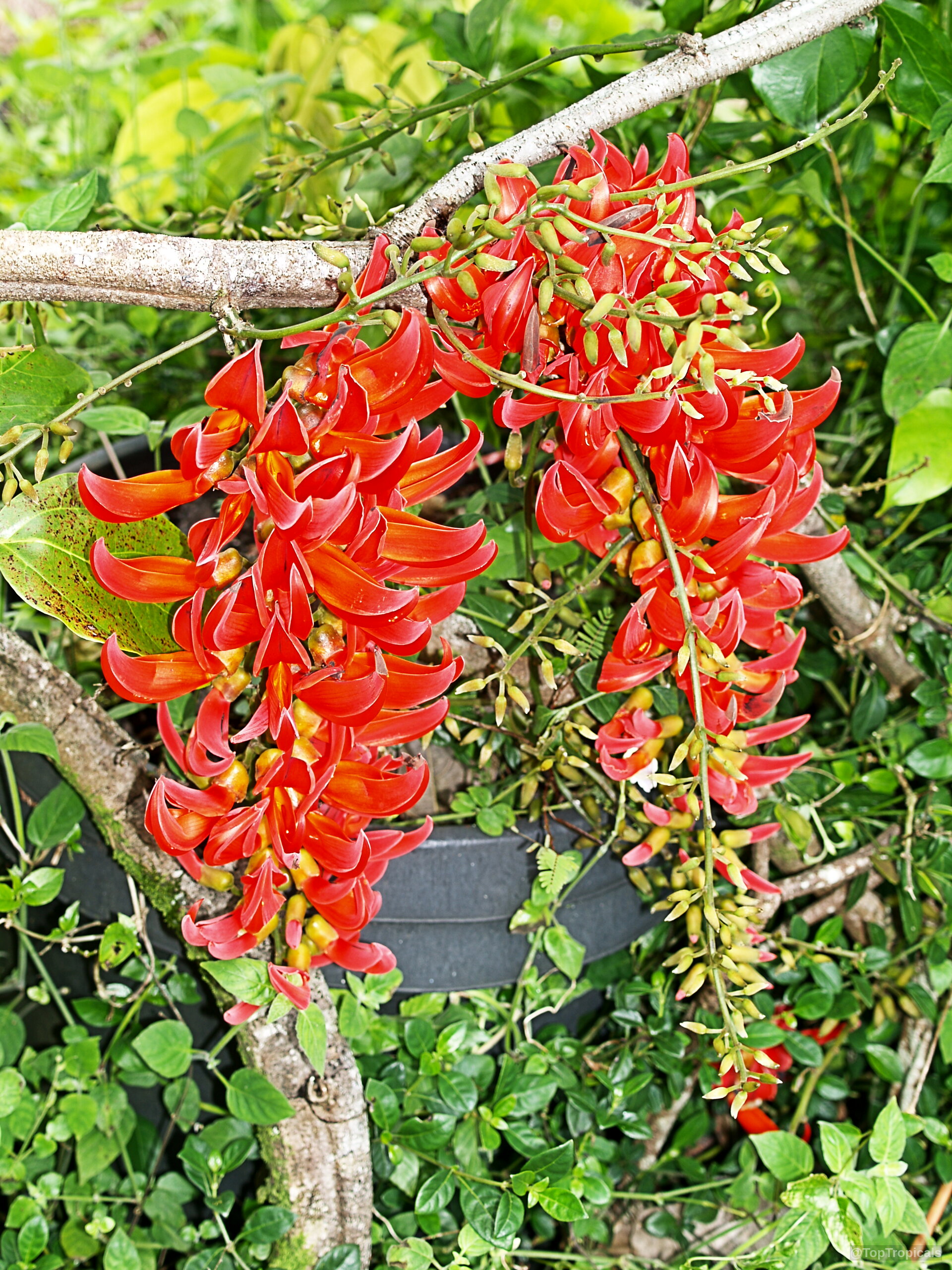
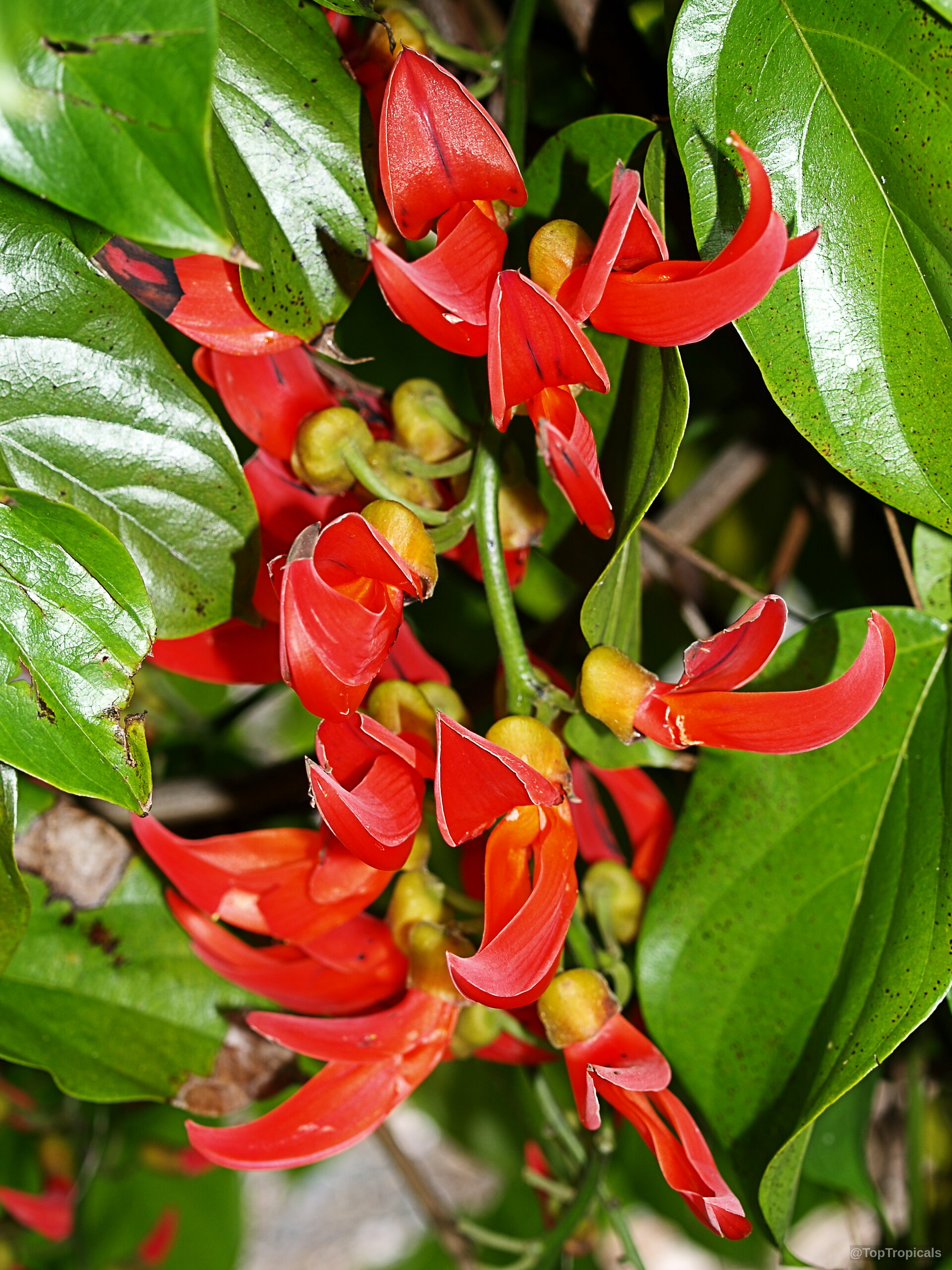
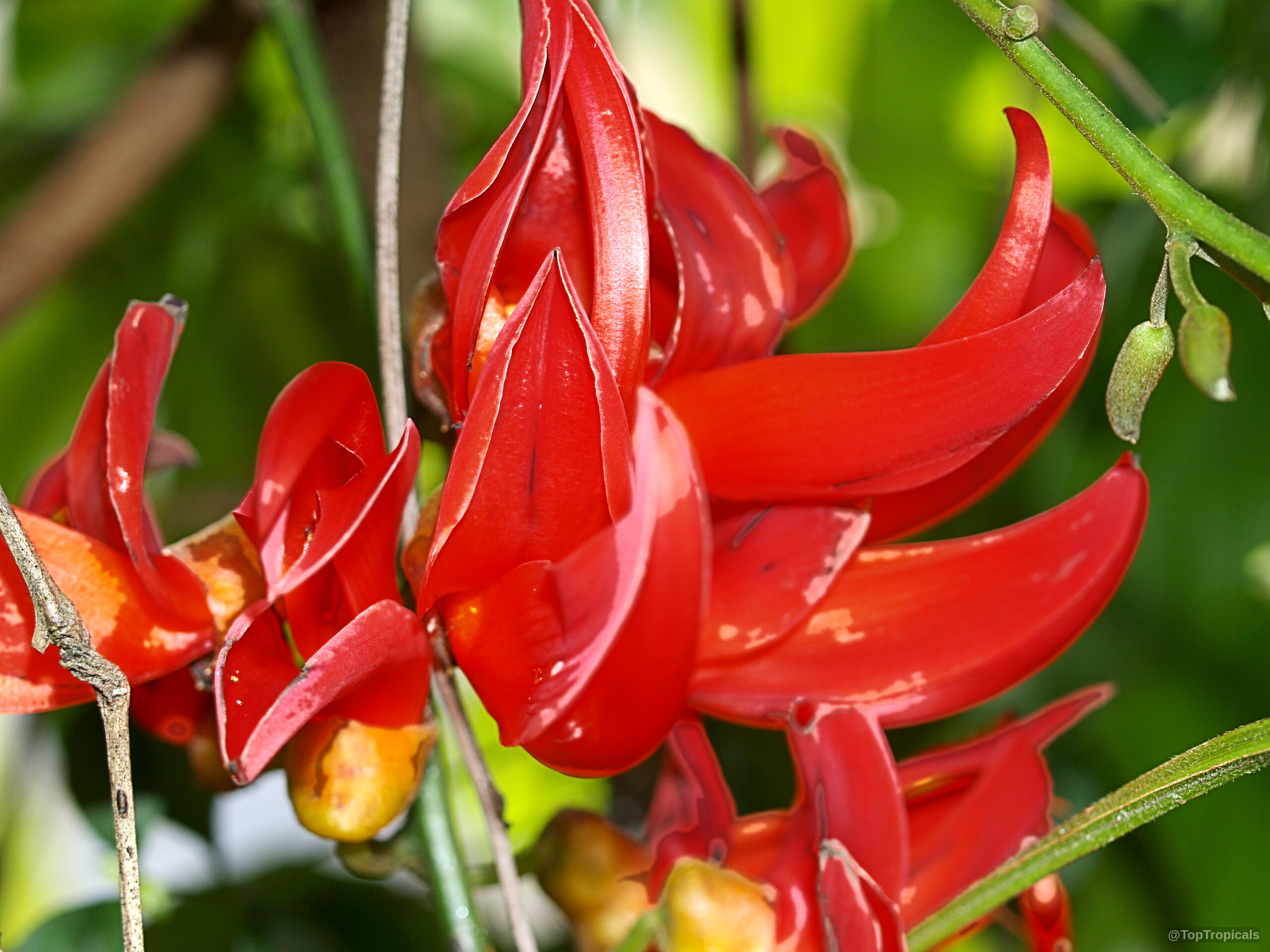
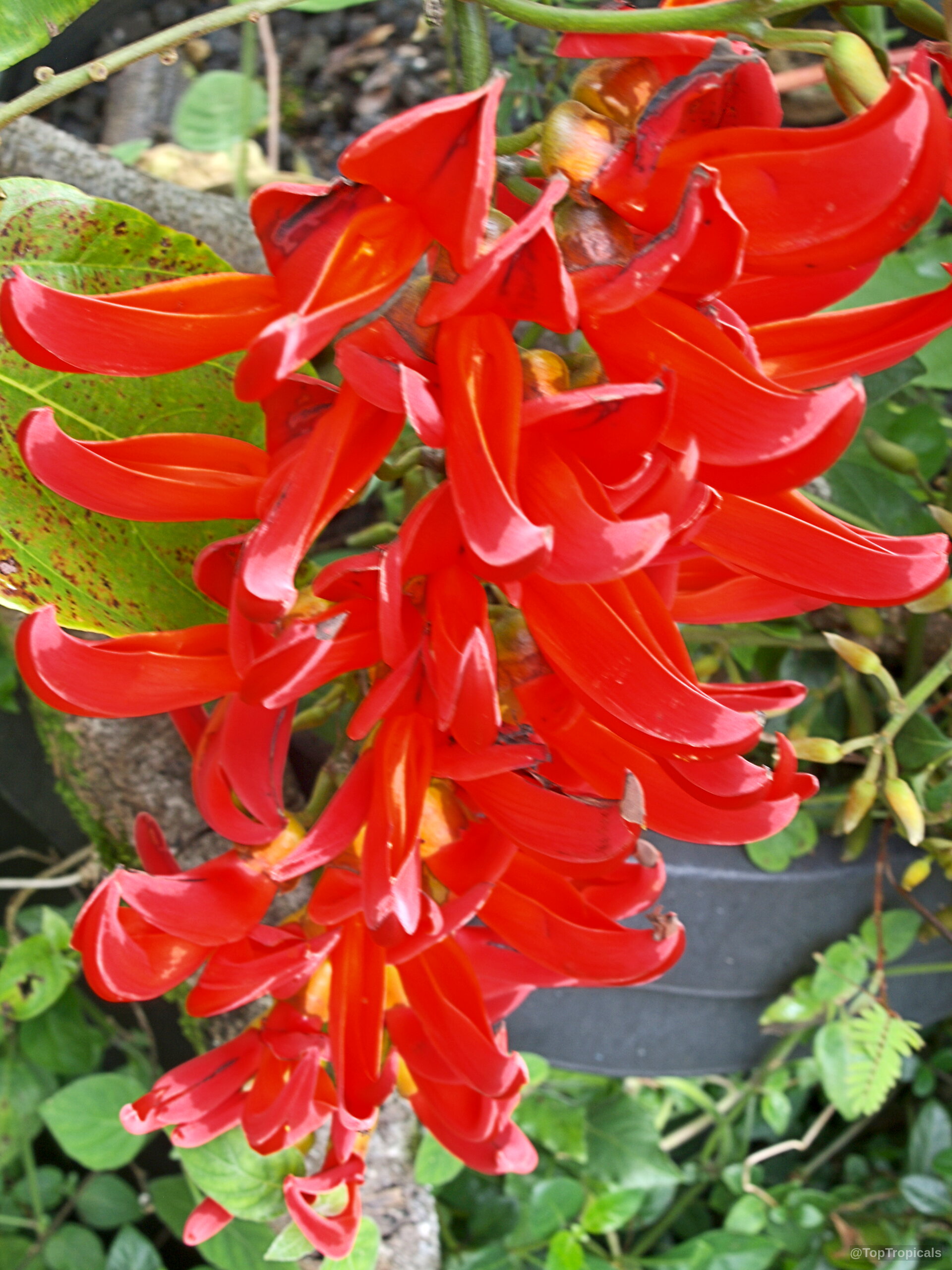
Botanical names: Mucuna benettii, Mucuna bennettii, Mucuna warburgii, Mucuna albertisii, Mucuna novoguineensis
Common names: Red Jade Vine, New Guinea Creeper
Family: Fabaceae
Subfamily: Faboideae
Origin: New Guinea
USDA Zone: 9-10

Mucuna benettii, also known as Red Jade Vine, is a beautiful and stunning plant native to New Guinea. It is a fast-growing vine that can reach lengths of 15-20 feet and widths of 8-12 feet, making it a great choice for climbing large trees and pergolas. The long cascading clusters of bright red flowers are a sight to behold and are sure to attract butterflies and hummingbirds to your garden.
This plant is tolerant of salt and seaside conditions, making it a good choice for coastal gardens. It is best suited for growing in USDA Zone 9-11 and may need to be grown in a pot and brought indoors during the colder months in regions with lower hardiness.
When growing Red Jade Vine, it is important to provide it with the right conditions to thrive. Here are some tips for success:
Light and temperature: Red Jade Vine prefers full sun and is best suited for growing in tropical or semi-tropical regions. It is more cold tolerant than its cousin, Green Jade Vine (Strongylodon), but may still need to be grown in a pot and brought indoors during the winter in colder regions. It is a fast-growing plant that can tolerate a wide range of temperatures, but it may need extra protection during extreme cold or heat.
Soil: This plant requires well-draining, high-quality potting soil with a pH between 6.0 and 7.5. Avoid using soil that is too heavy or compact, as this can lead to poor drainage and root rot. It is also important to ensure that the roots of the plant are in shade, as direct sunlight can damage them.
Watering: Red Jade Vine requires moderate watering, but the frequency of watering will depend on the temperature and humidity of the environment. During the warmer months, water deeply but less frequently, allowing the soil to dry out slightly between waterings. During the colder months, reduce watering to prevent the soil from becoming soggy. Be sure to check the soil moisture regularly and adjust watering as needed.
Fertilizing: Red Jade Vine does not require heavy fertilization and can be prone to over-fertilization. It is best to use a balanced, slow-release fertilizer once or twice a year, depending on the needs of the plant. Avoid using fertilizers with high levels of nitrogen, as this can lead to excessive leaf growth at the expense of flowers.
Pruning: Pruning Red Jade Vine is important to keep the plant healthy and encourage new growth. It is best to prune the plant in the early spring, when new shoots are just starting to emerge. Remove any dead, damaged, or diseased branches, as well as any branches that are crossing or rubbing against each other. This will help to promote a healthy and attractive growth habit.
By following these tips, you can help your Red Jade Vine to thrive and produce stunning, long cascades of brilliant red flowers. It is a magnificent plant that is sure to be a standout feature in any garden.



Botanical name: Mucuna gigantea
Common names: White Jade Vine, Hamburger Bean, Seabean, Burny Bean
Family: Fabaceae
Subfamily: Faboideae
USDA Zone: 9-10


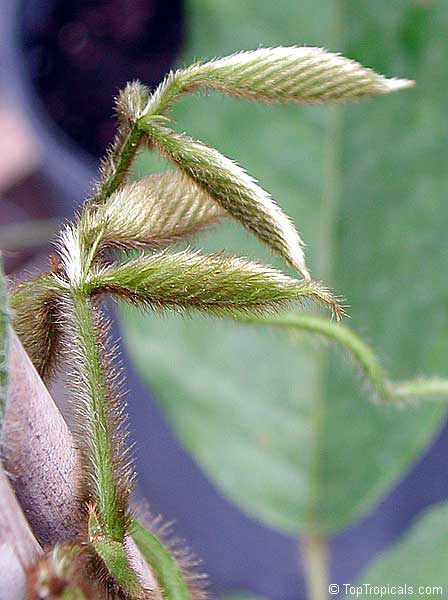
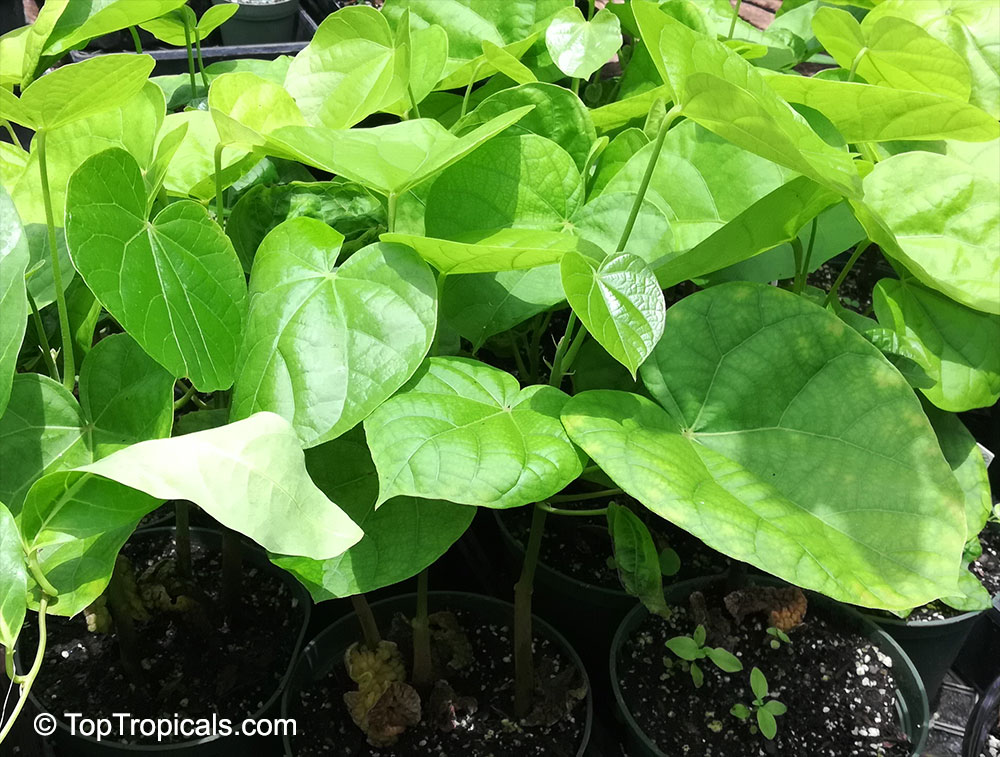
Mucuna gigantea (White Jade Vine) is a type of vine or creeper that requires full sun to semi-shade, and regular watering for best growth. Its white or off-white flowers are produced in pendent, round-topped, umbel-like clusters and often appear in late winter or early spring. The leaves are trifoliolate, with three wide, hairless, green leaflets.
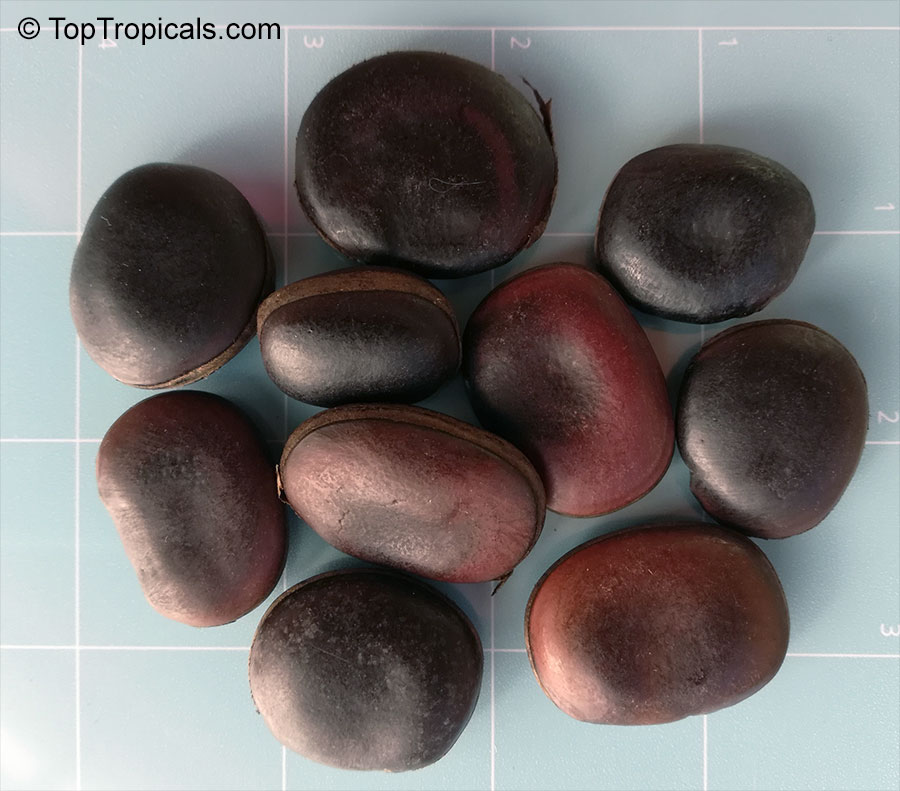
The stems and leaves of the White Jade Vine are mildly irritating to the skin, so it is best handled with gloves. Despite this, it is still an ethnomedical plant, used in various traditional medical systems. The woody, polished seeds of the vine - which resemble hamburgers - are used in making necklaces and leis. These seeds are poisonous, containing L-DOPA and other possibly toxic substances.
Mucuna gigantea is a salt tolerant plant that can be grown in USDA hardiness zones 9-11. Its ideal growing conditions include an area near the seaside or other coastal areas, with full sun to semi-shade. Even though this plant thrives near seaside environments, it does not require sowing or propagation. Regular watering is needed to keep the soil moist, but not soggy. The White Jade Vine prefers slightly acidic soils, and can be grown in pots in cold regions. Feeding with a balanced organic fertilizer once month during the growing season is recommended. Any pruning should be done lightly, in late winter or early spring.



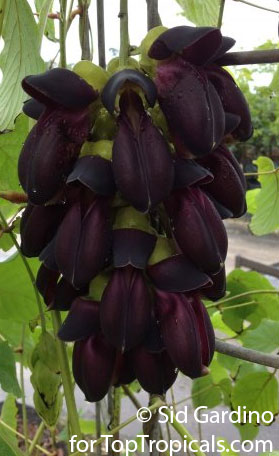
Botanical name: Mucuna nigricans
Common name: Black Jade Vine
Family: Fabaceae
Subfamily: Faboideae
Origin: Eastern Asia
USDA Zone: 10-11

Related to red Jade vine (Mucuna bennettii).The dark violet blooms appear closely pushed together in grape like clusters, up to 1 ft long and 6" in diameter. Very vigorous woody tree creeper - during warmer weather this vine can grow 2 feet or more a week. Cold hardy in Florida to at least zone 9b.
Botanical names: Mucuna pruriens, Carpopogon pruriens, Dolichos pruriens, Mucuna aterrima
Common names: Nescafe, Cowitch, Velvet Bean, Purple Jade Vine
Family: Fabaceae
Subfamily: Faboideae
Origin: Africa, India
USDA Zone: 10-11

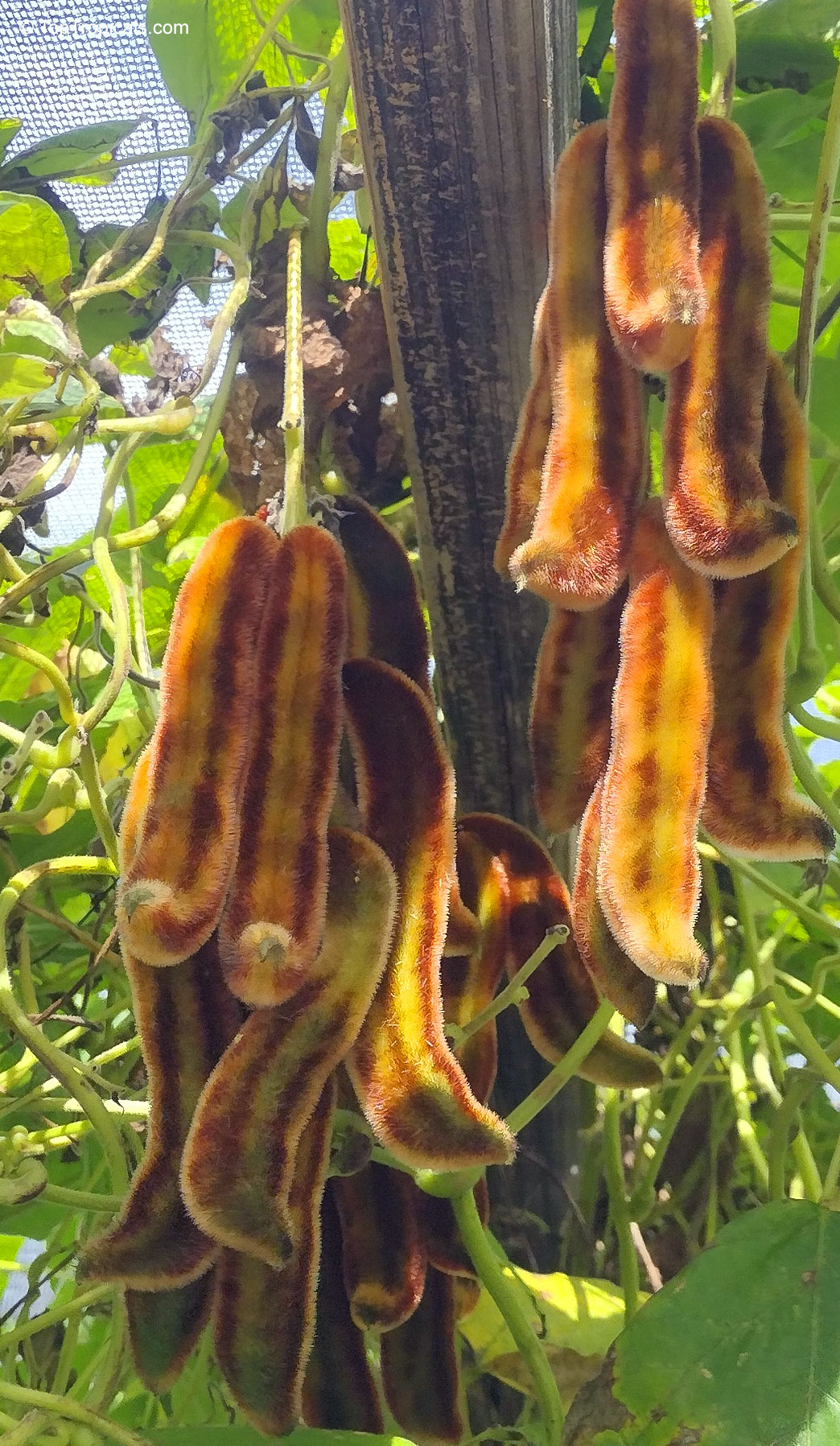
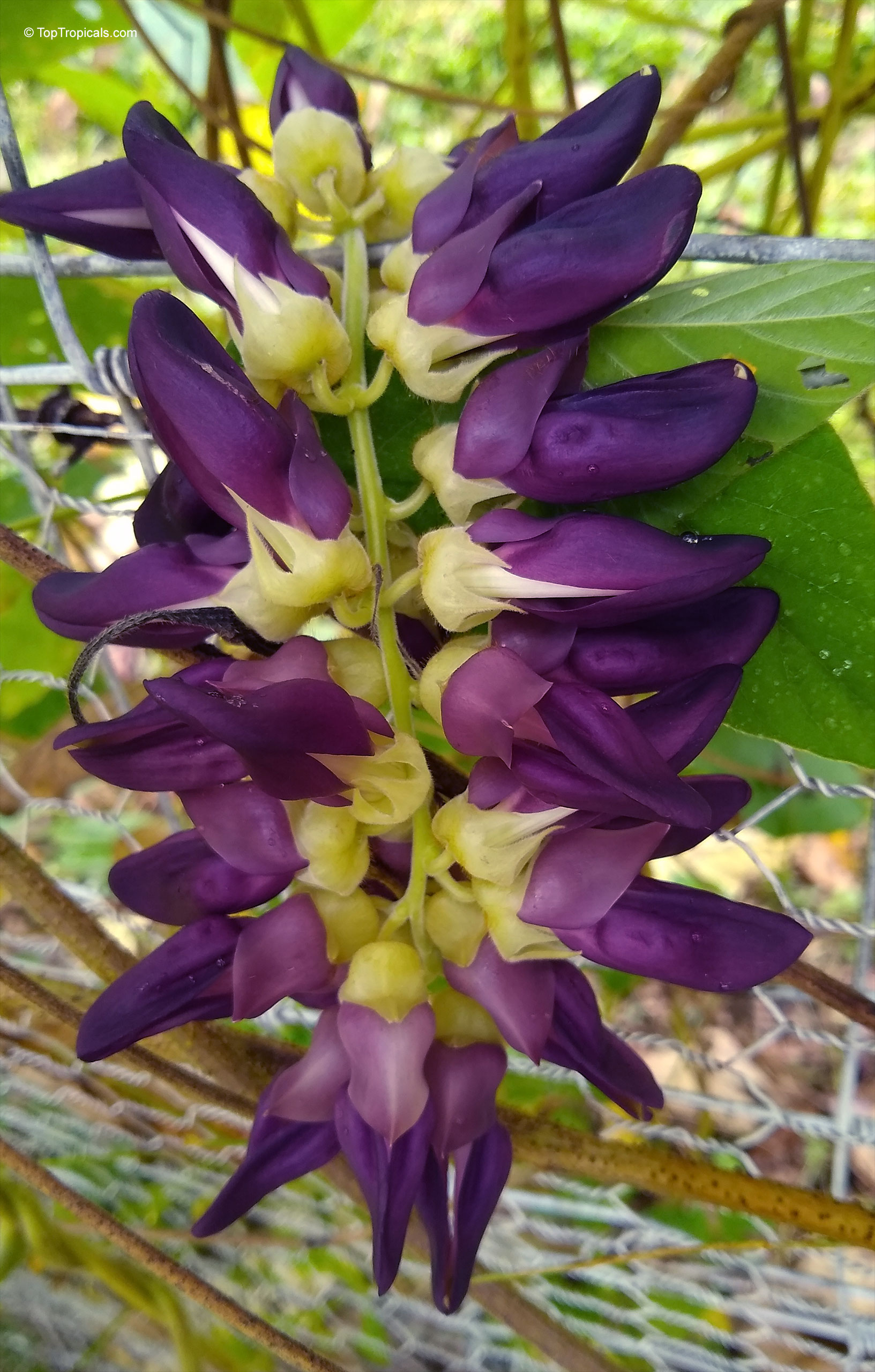
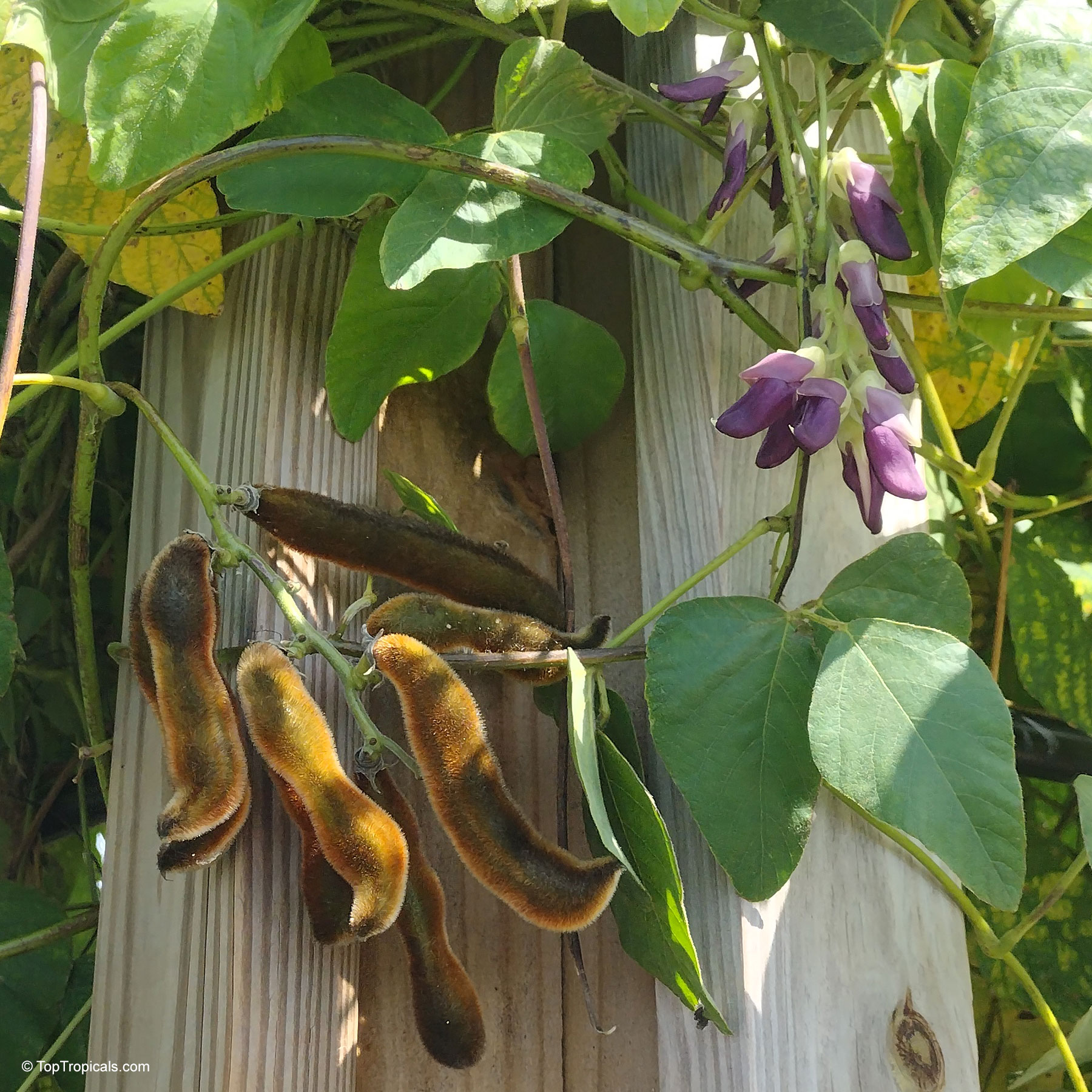
Mucuna pruriens (Nescafe) is a vine with unusual royal purple flowers that grow in long clusters. It can reach heights of 50 feet or more and is native to Africa and India. The plant also produces clusters of pods that contain seeds known as Nescafe beans, which are covered in reddish-orange hairs that can cause skin irritation.
This ethnobotanical plant is attractive to butterflies and hummingbirds and thrives in full sun with regular watering. It can be grown in USDA Zones 9-11 and is tolerant of salt air and sea spray, making it ideal for seaside gardens. The plant produces flowers in shades ranging from pink, white, and off-white to blue, lavender, and purple.
The Nescafe beans and their pods are edible and contain valuable minerals, protein, and vitamins. They are used in many traditional and medicinal recipes. The plant has been used for generations in India for Parkinson's disease as it is thought to make dopamine, an important brain chemical involved in mood, sexuality, and movement. Additionally, the plant has antioxidant properties.
In Central America, velvet beans are roasted and ground to make a coffee substitute known as "Nescafe". The Ketchi indigenous people in Guatemala still grow Nescafe as a food crop, cooking the bean as a vegetable. Externally, the plant is applied to ulcers and is considered a diuretic, nerve tonic, and aphrodisiac.
In regions with cold winters, Mucuna pruriens can be grown in pots and brought outdoors in warmer weather. Make sure the potting soil is well-draining and that the plant receives plenty of sunlight. Regular watering is important, but allow the soil to dry out between waterings. Monthly feeding with a fertilizer formulated for flowering plants will promote blooming. Pruning the plant in spring will ensure a healthy and attractive appearance.


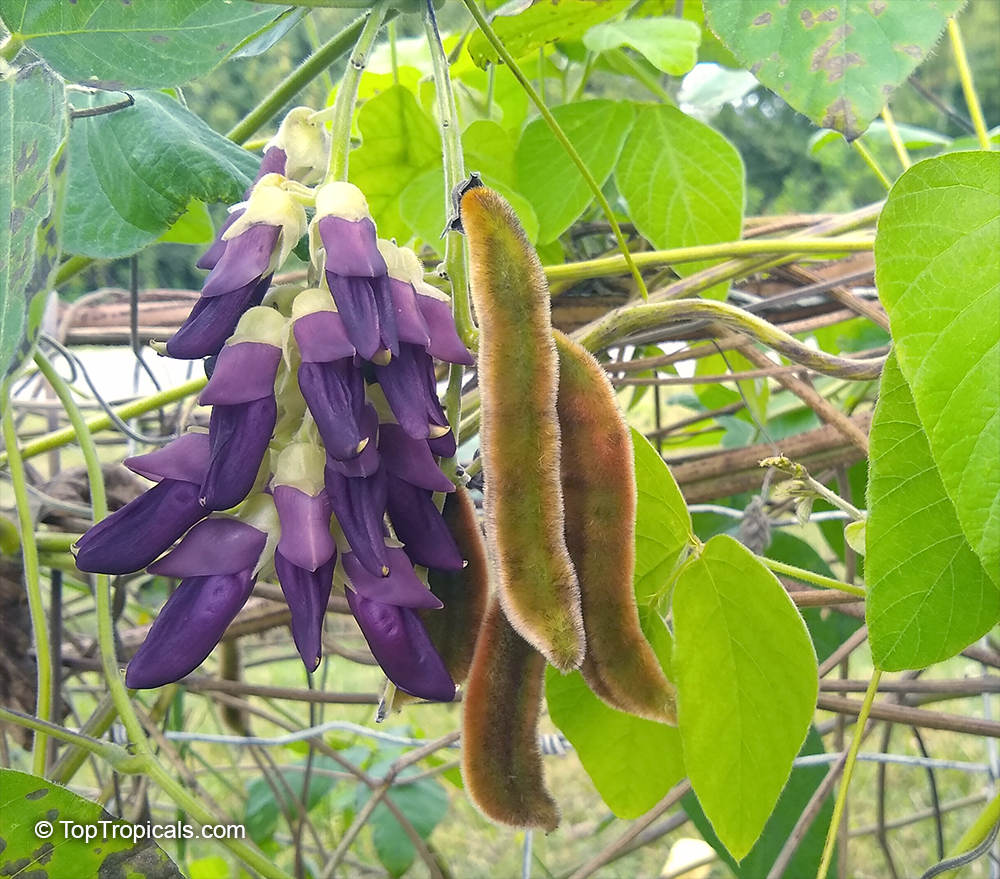

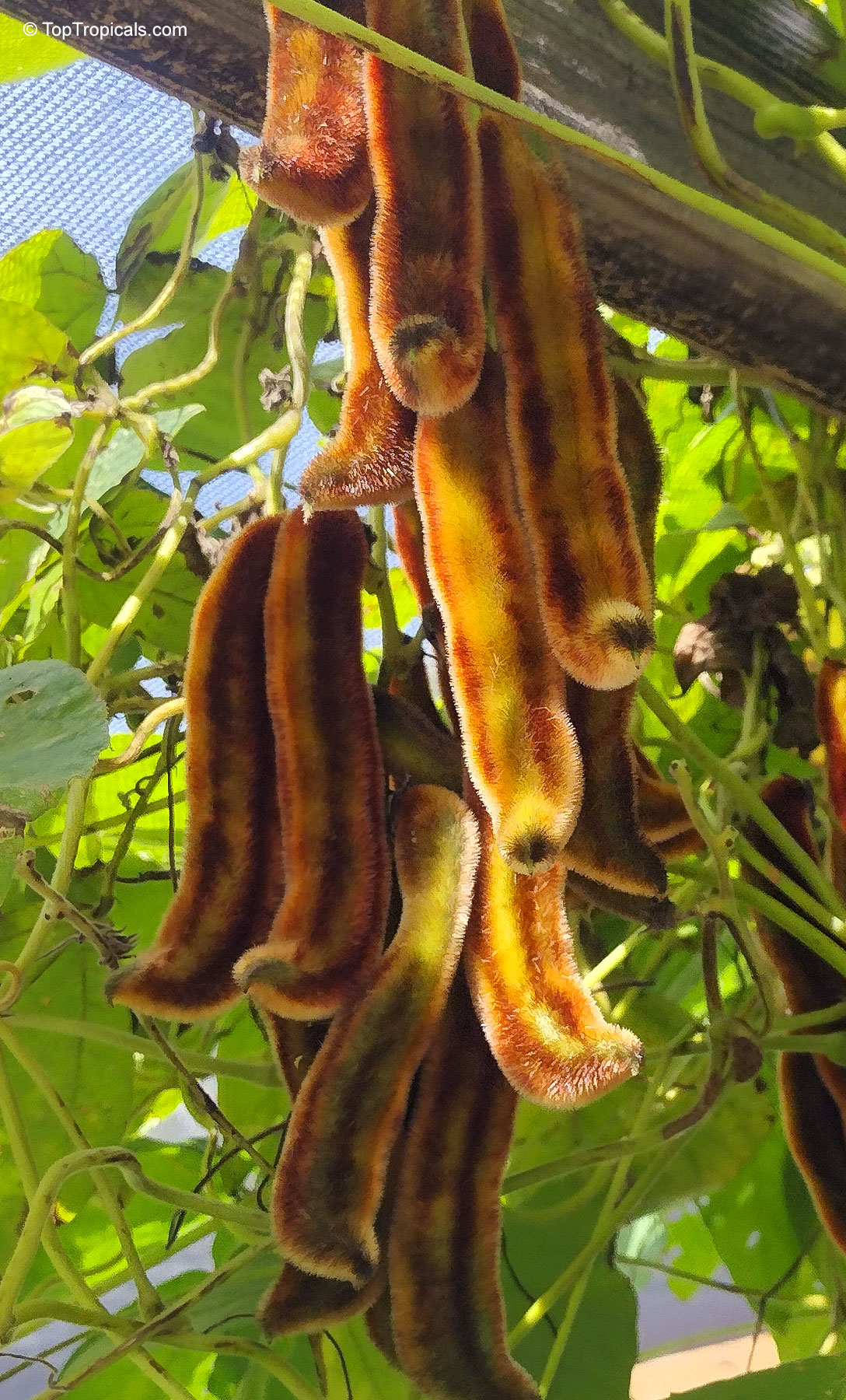
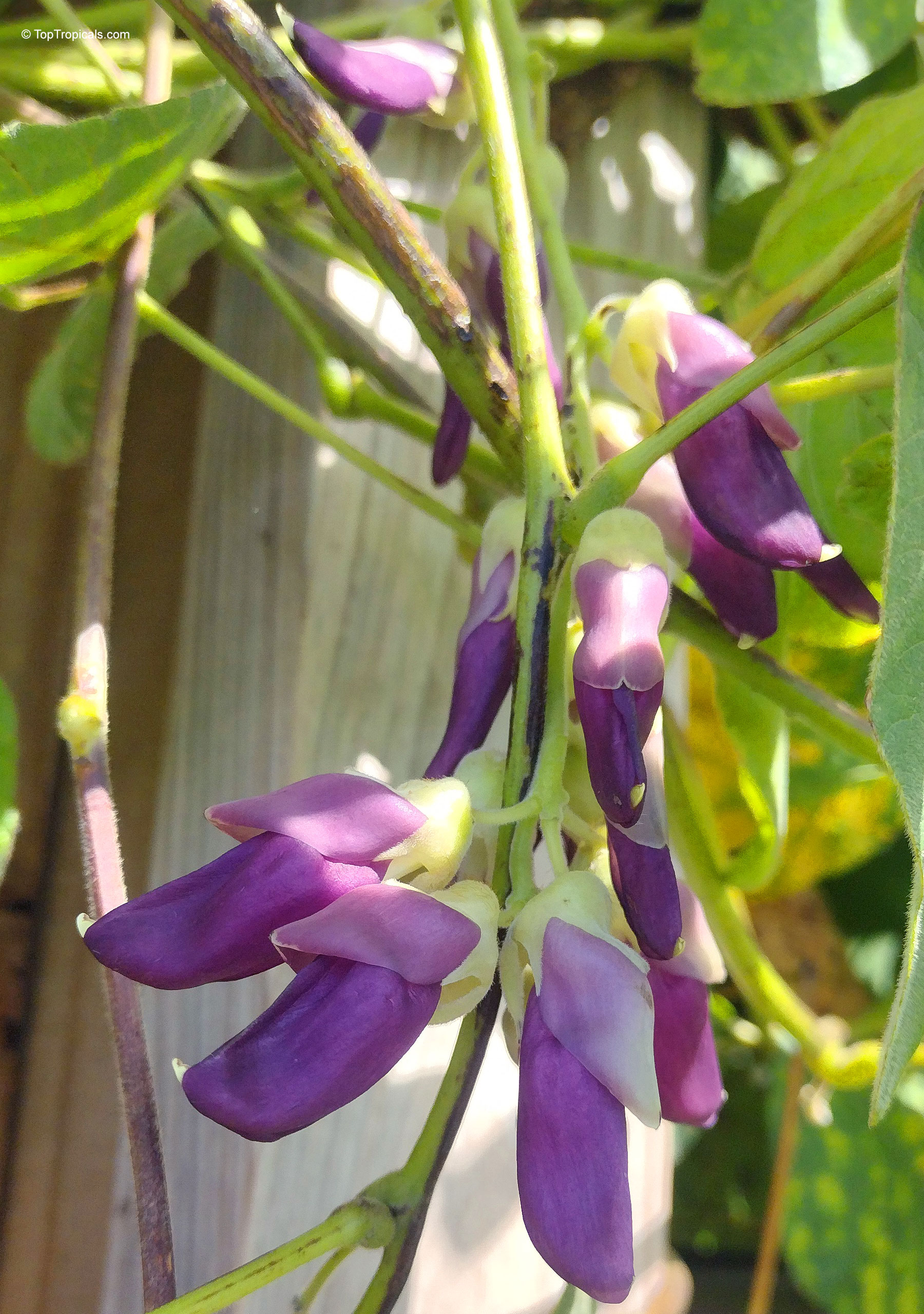
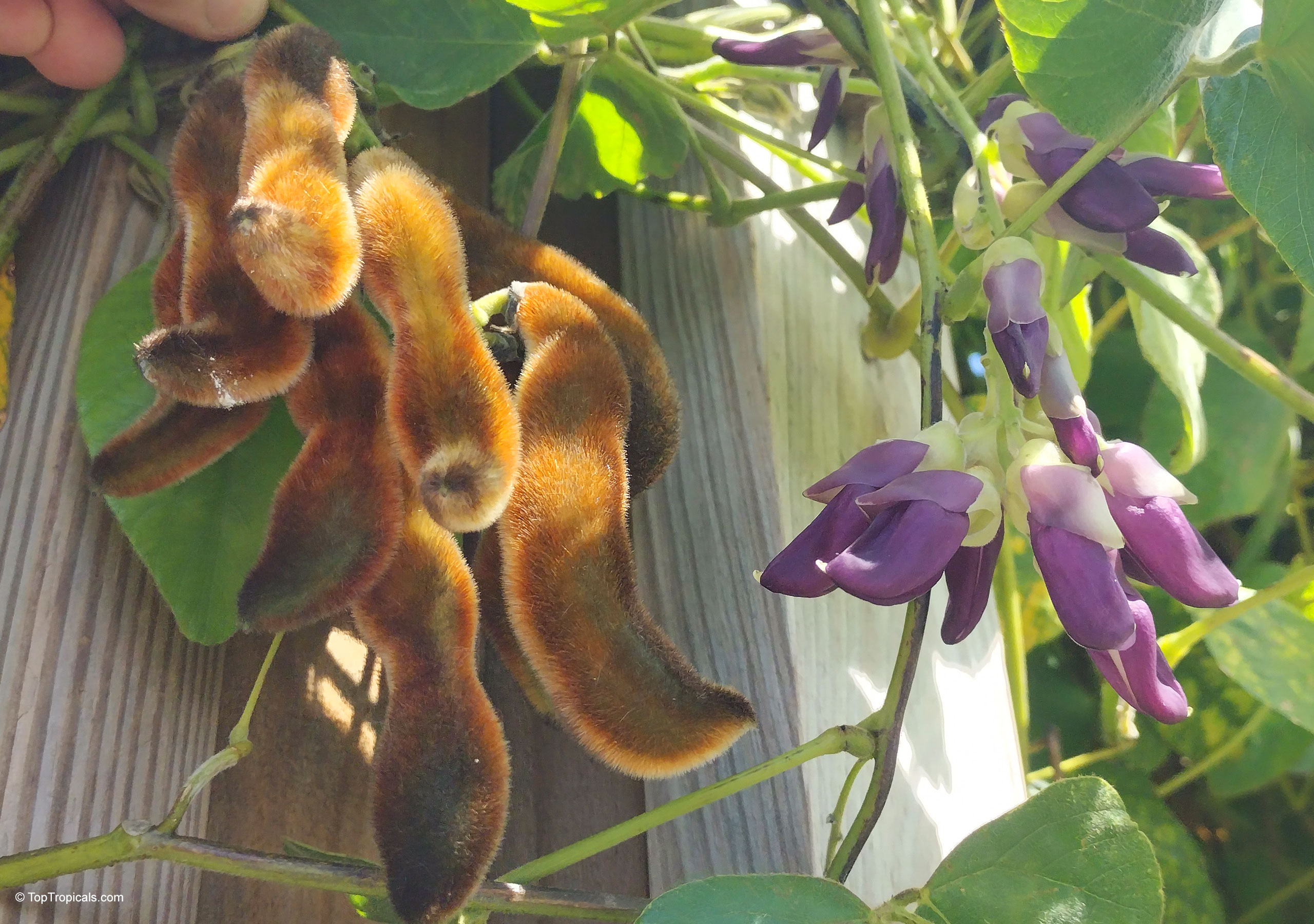
Botanical name: Mucuna sloanei
Common names: Yellow Jade Vine, Horse Eye, Brown Hamburger Bean, Ojo de Buey, True Sea-Bean
Family: Fabaceae
Subfamily: Faboideae
Origin: Central and South America
USDA Zone: 9-11


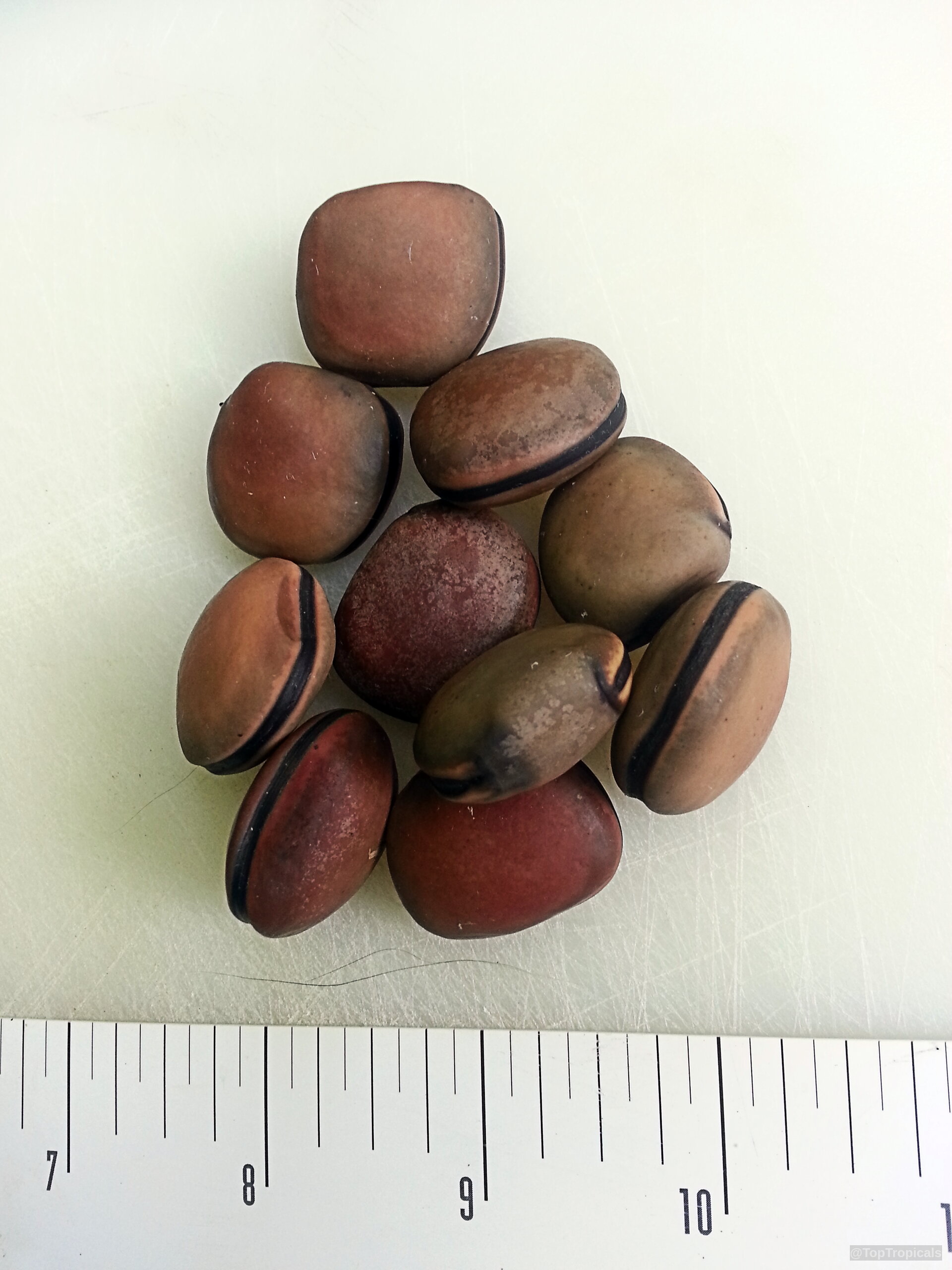
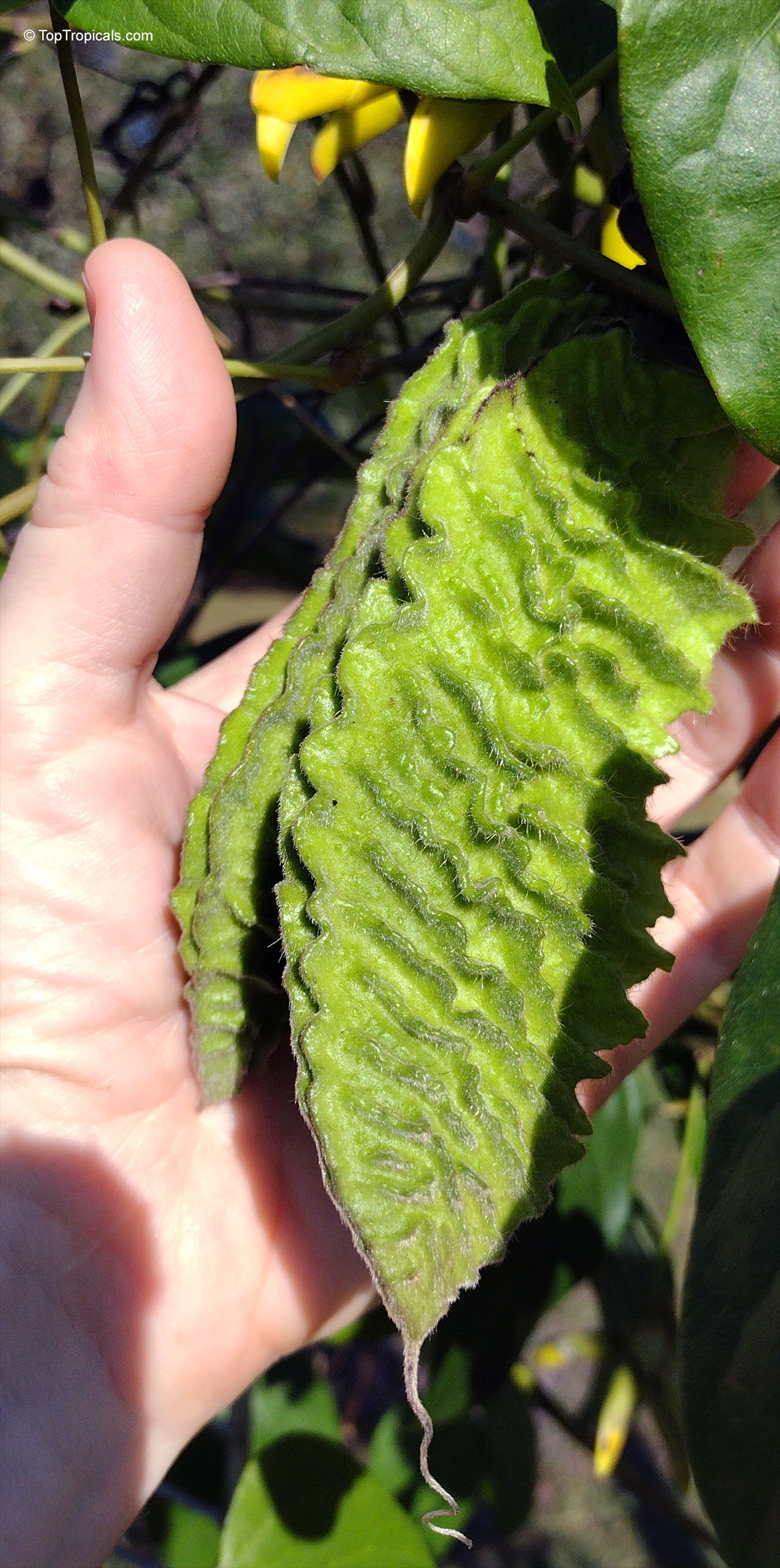
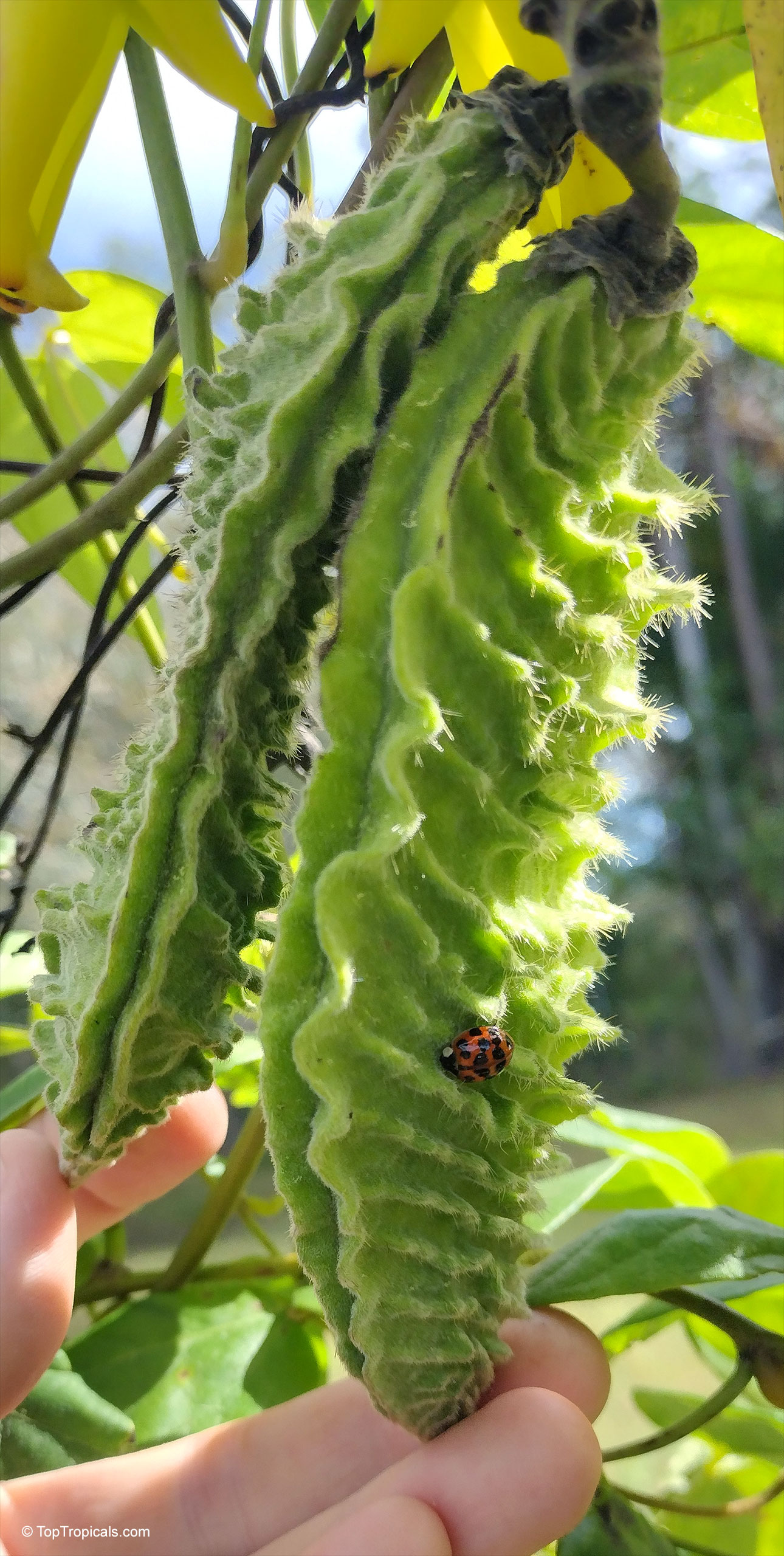
Mucuna sloanei is a fast-growing and undemanding vine. It thrives in full sun or partial shade and only needs regular water. They need support or something to climb on, like a trellis, fence, arbor, or pergola. The woody stems can grow up to 35 ft long and can be used to hide unsightly fences or walls. It produces exceptionally fragrant yellow and orange flowers throughout the warm months of summer and are attractive to both butterflies and hummingbirds. The flowers give way to what is known as "yellow jade" beans which ripen from green to black in the fall. The long, rope-like stalk hangs below the forest canopy where night-flying bats can easily access the fragrant blossoms.
The vine produces pods which contain several beans that are extremely buoyant and well adapted for ocean dispersal. Known to beachcombers around the world and commonly called "sea beans", they often wash ashore on the beaches of distant continents and tropical islands. This one is the most common species of sea bean that washes ashore on beaches of the southeastern United States.
Mucuna sloanei has ethnomedical uses in South America and is popular for seaside plantings as it is salt tolerant.
The name Brown Hamburger Bean is because of the beautiful seeds (looking like little hamburgers) that are often collected and polished by natives and made into lovely necklaces, bracelets and other handicraft items.
Mucuna sloanei can be grown in USDA Zone 9-11. Growing in a pot requires frequent watering, regular re-potting to ensure it has enough space to stretch its roots and warm sun preferably, but it can survive in semi-shade for a short time. If you live in cold regions, it is best to bring the pot indoors for winter. Water the planter uniformly and do not let any part of soil become dry. Move the container to protected area to shield it against bear winters and cold spells and keep it in a warmer temperature.
The seeds are poisonous and contain L-DOPA and other potentially toxic substances.



Botanical names: Muraltia spinosa, Nylandtia spinosa, Mundia spinosa
Common names: Tortoise Berry, Skilpadbessie
Family: Polygalaceae
Origin: South Africa
USDA Zone: 9-11


Muraltia spinosa, also known as Tortoise Berry, is an attractive and unusual shrub native to South Africa. Growing to an average height of 5-10 ft tall, it can also be used as a groundcover and low-growing shrub reaching heights of 2ft. Well suited to full sun, Muraltia spinosa can tolerate moderate water and dry conditions. It is adorned with pink flowers, which attract butterflies and hummingbirds, and produces a red edible fruit.
The Tortoise Berry fruit is rich in Vitamin C and has been used in traditional medicine for treating colds, flu and bronchitis, as well as providing relief for abdominal pain and tuberculosis. Tea/infusions of stems and leaves also act as a general tonic and bitter digestive. This ethnomedical plant has properties that can help those with sleeplessness when the leaves are chewed in small amounts. The fruits are quite thirst-quenching and can be eaten straight from the bush.
Tortoise Berry is very easy to care for and requires minimal maintenance. It is a tough plant and will usually survive with little attention. Water as necessary and ensure the soil is well-drained. It is also fairly resistant to most pests. It can be grown in USDA Zones 9-11. Mature plants are cold hardy and can withstand temperatures as low as 30 degrees Fahrenheit for a short time. It is salt-tolerant and can be grown near the sea. Propagation is best done from seed and can take up to a year, however it is very rewarding and will usually create a beautiful display once planted in rockeries and slopes and any well-drained, sunny garden position. If located in colder regions, it is advised to grow the shrub in a pot and bring indoors during cold snaps.


| Prev | Next | |
Use link to repeat this search:
https://toptropicals.com/cgi-bin/garden_catalog/cat.cgi?search_op=and&keyword_op=and&language=e&number=10&no_change_lang=1
&v1=sea&user=tt&sale=1&first=0