Seaside, salt tolerant plant - Plant Encyclopedia Results (Page 32)
| Number of plants found: 494 |  | Prev | Next | 
|
Go to page: | First | 27 | 28 | 29 | 30 | 31 | 32 | 33 | 34 | 35 | 36 | Last |
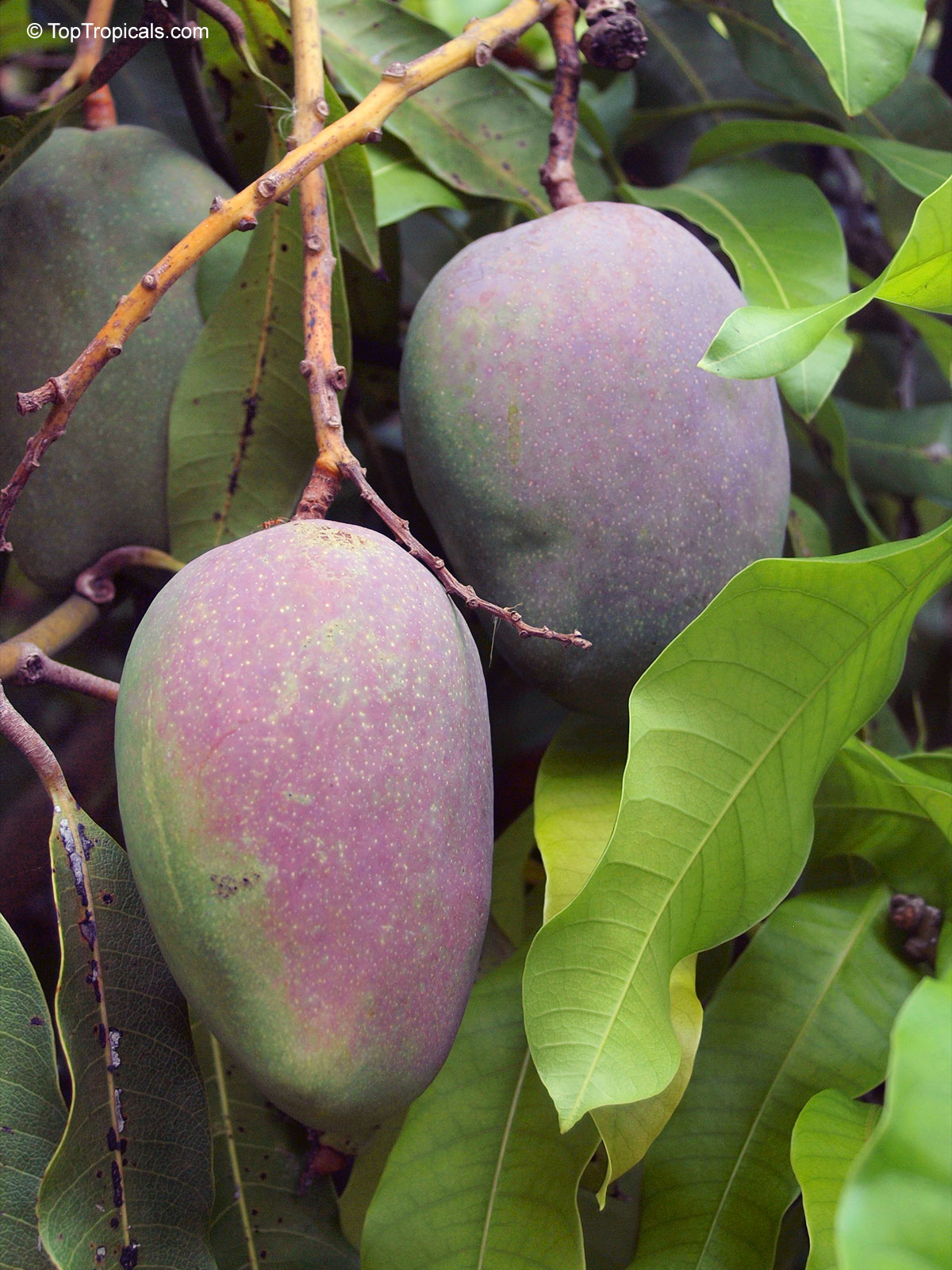
Botanical name: Mangifera indica
Common name: Julie Mango
Cultivar: Julie
Family: Anacardiaceae
Origin: South Asia and India
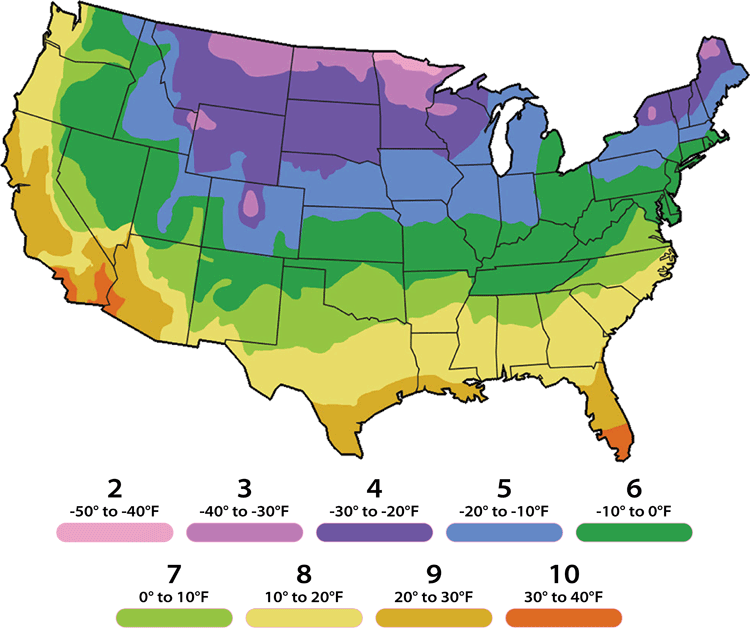
USDA Zone: 10-11
Cold tolerance: 30°F


Mangifera indica (Mango) is a large evergreen tree native to South Asia and among the oldest cultivated fruit trees, grown in India for over 4,000 years. In tropical climates it can reach 60-80 feet with a broad crown of glossy leaves. Small yellowish flowers appear in spring, followed by fleshy drupes known worldwide as mangoes.
Fruit shape varies from oval to kidney-shaped, with skin that may remain green or ripen to yellow, orange, or red. The flesh is juicy and aromatic, sometimes fiberless and sweet, sometimes more resinous depending on type. Mangoes are eaten fresh, dried, blended, or cooked, making them one of the most versatile tropical fruits. Some people experience irritation on the lips from the peel, so fruits are usually eaten peeled.
The tree thrives in full sun and well-drained soil in warm climates, hardy only to USDA Zones 10-11 (Zone 9 only with winter protection). With hundreds of named cultivars, Mangifera indica remains one of the world s most widely grown and culturally important fruit trees.
See Mango varieties.
Mangifera indica 'Julie' (Julie Mango) is a compact mango cultivar from the Caribbean, long regarded as a classic choice in Jamaica and neighboring islands. The tree has a naturally dwarf, rounded form and usually stays 8 10 feet tall, making it well suited for small gardens and limited spaces. Fruits are medium-sized, flattened and slightly oblong, with skin that ripens to a yellow-orange blush often tinged with red. The flesh is deep golden, aromatic, and fiberless, with a rich tropical flavor. This combination of manageable growth and excellent fruit quality has made 'Julie' one of the most beloved Caribbean mangoes.
'Julie' thrives in full sun and well-drained soil with moderate watering. It flowers in spring and fruits in summer, often setting crops at a young age, with plants known to begin fruiting even in 3-gallon containers. Best adapted to tropical and warm subtropical climates, it is hardy only to USDA Zone 10 11 and must be protected from frost. Its compact stature, early bearing habit, and sweet fruit make it especially appealing to home growers seeking a container-friendly mango.
See Mango varieties.
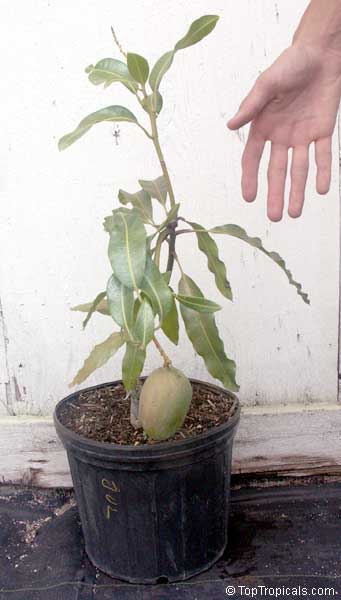

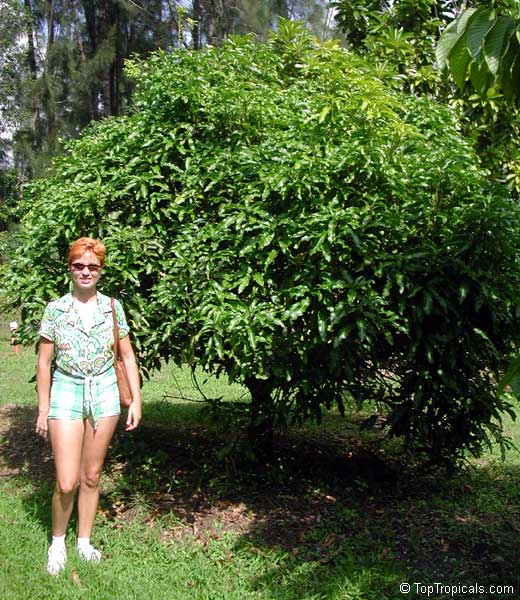

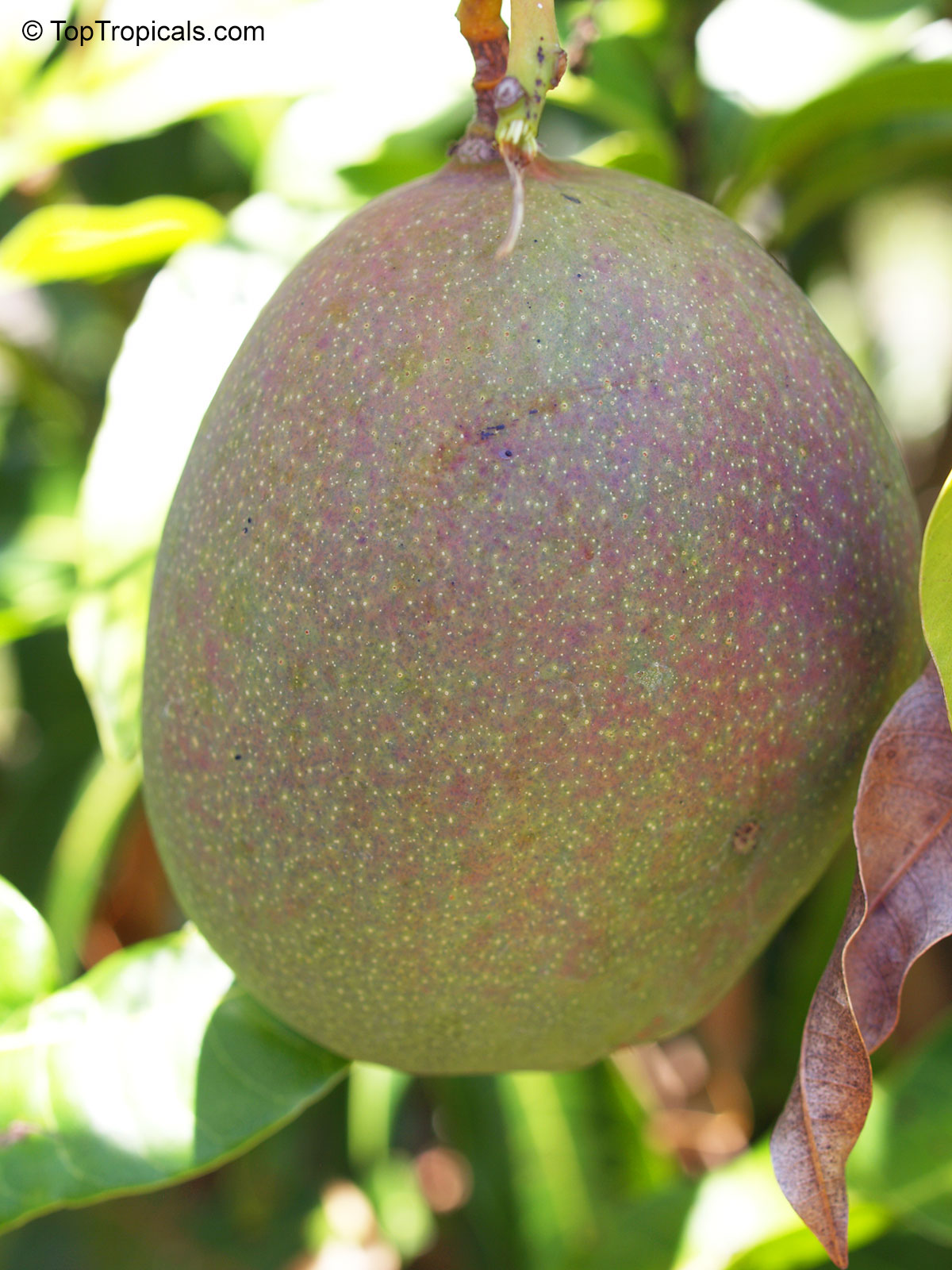
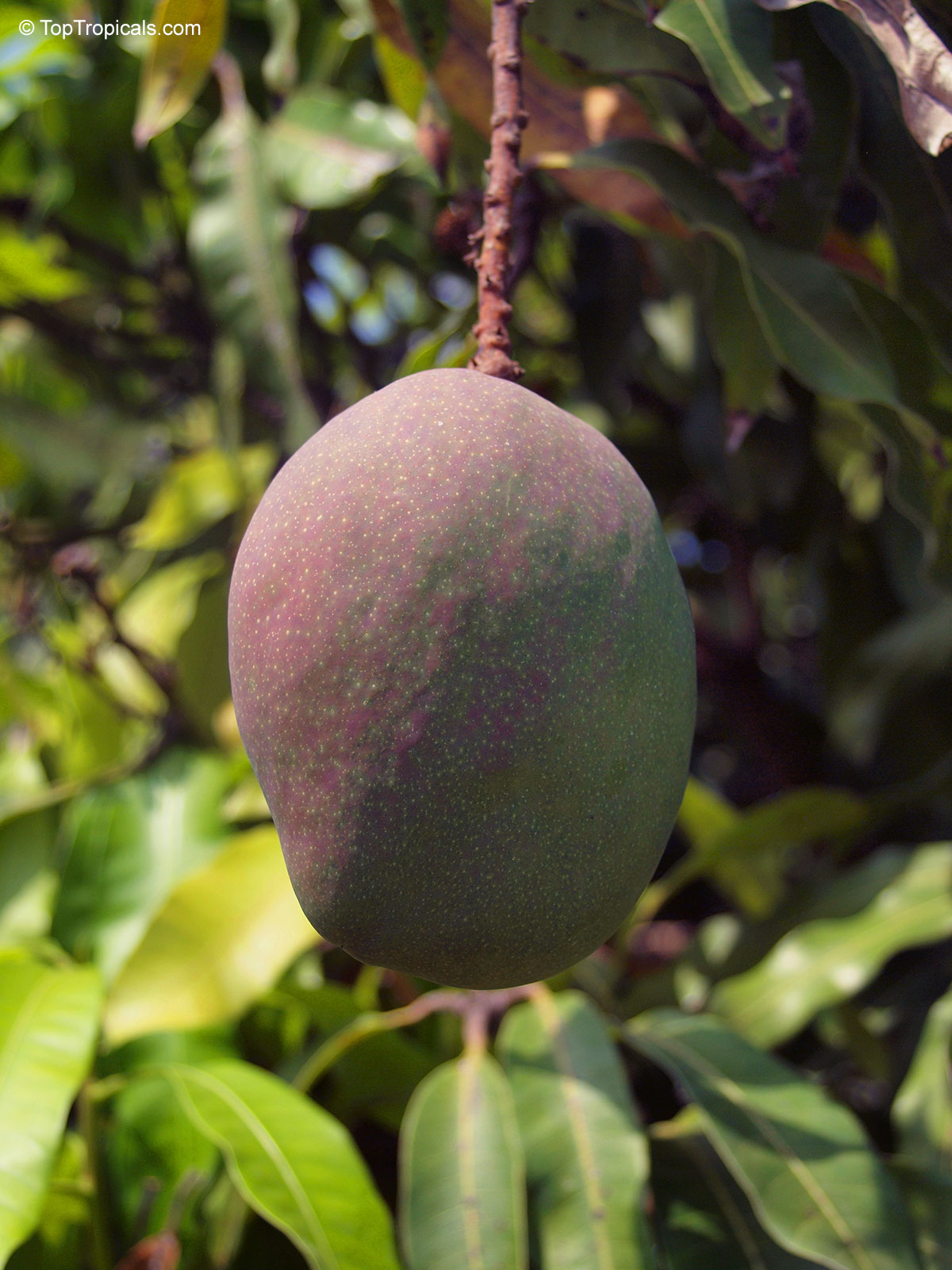
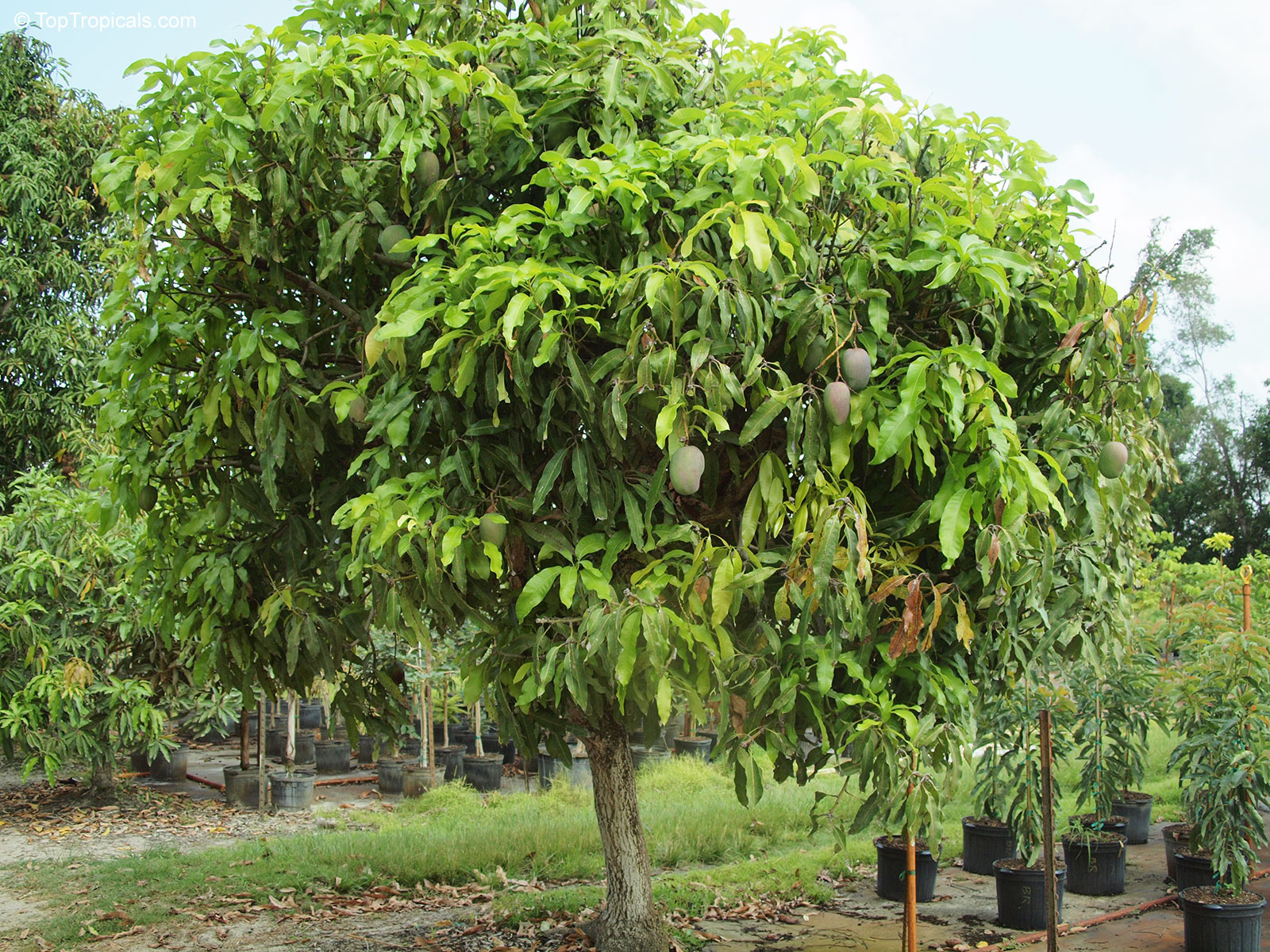

We also suggest new Julie hybrid - Super Julie that has much better production and disease resistance than the original Julie mango.
Julie is a very compact, dwarf tree. This is the most popular variety in Jamaica and many other Caribbean islands because of its rich, sweet, coconut/pineapple-like flavor. To fully enjoy this unique tasting mango, it is best to eat on the same, or next day after it falls from the tree before it gets too ripe. In Florida it is sought after for its dwarf growing habit. Florida's humidity makes this tree a challenge to grow, however. Fungus problems which lead to twig die back are common, making fungicide applications necessary for success.
Mango Julie is very cold sensitive variety and not easy to grow. Do not order unless you are confident. You may consider easier dwarf varieties like Cogshall, Carrie, Malika, etc.
See more info about Mango varieties.
Shipped at customers risk, no replacements or refunds. Leaf drop possible. We guarantee healthy plant to be shipped and the best packaging. Express shipping optional.
Last one
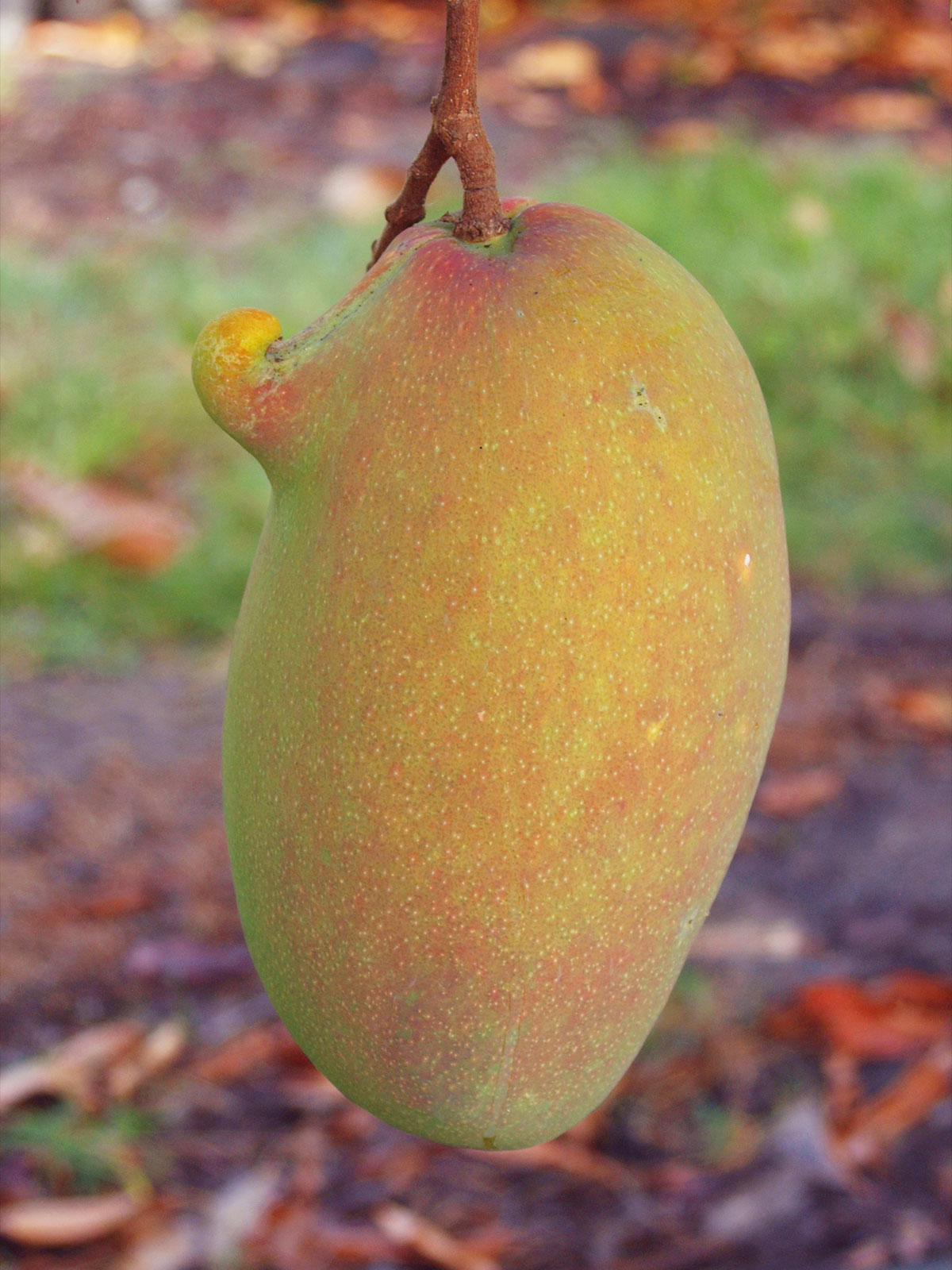
Botanical name: Mangifera indica Rosigold
Common name: Rosigold Mango
Cultivar: Rosigold
Family: Anacardiaceae
USDA Zone: 9-10

Mangifera indica 'Rosigold' (Rosigold Mango) is one of the earliest ripening mango cultivars in Florida, making it especially valued by home growers eager for the first fruits of the season. The tree is compact and manageable, usually reaching 10-12 feet, with a dense canopy that adapts well to small gardens and container culture. Fruits are medium-sized, oblong to oval, with smooth skin that turns golden yellow overlaid with a rosy red blush at maturity. The flesh is deep orange, fiberless, and aromatic, with a sweet flavor that balances richness and mild acidity. Reliable production and early harvest have helped 'Rosigold' gain a reputation as a dependable choice for backyard growers.
'Rosigold' thrives in full sun and well-drained soil with moderate watering. It flowers in late winter to early spring, with fruit ripening as early as March or April in Florida, often extending into May. Best adapted to USDA Zones 10-11, it must be protected from frost but performs very well in containers where it can be kept compact. Gardeners appreciate 'Rosigold' for combining early-season harvest with excellent fruit quality and a space-saving growth habit.
Botanical name: Mangifera indica Tommy Atkins
Common name: Tommy Atkins Mango
Cultivar: Tommy Atkins
Family: Anacardiaceae
USDA Zone: 9-10
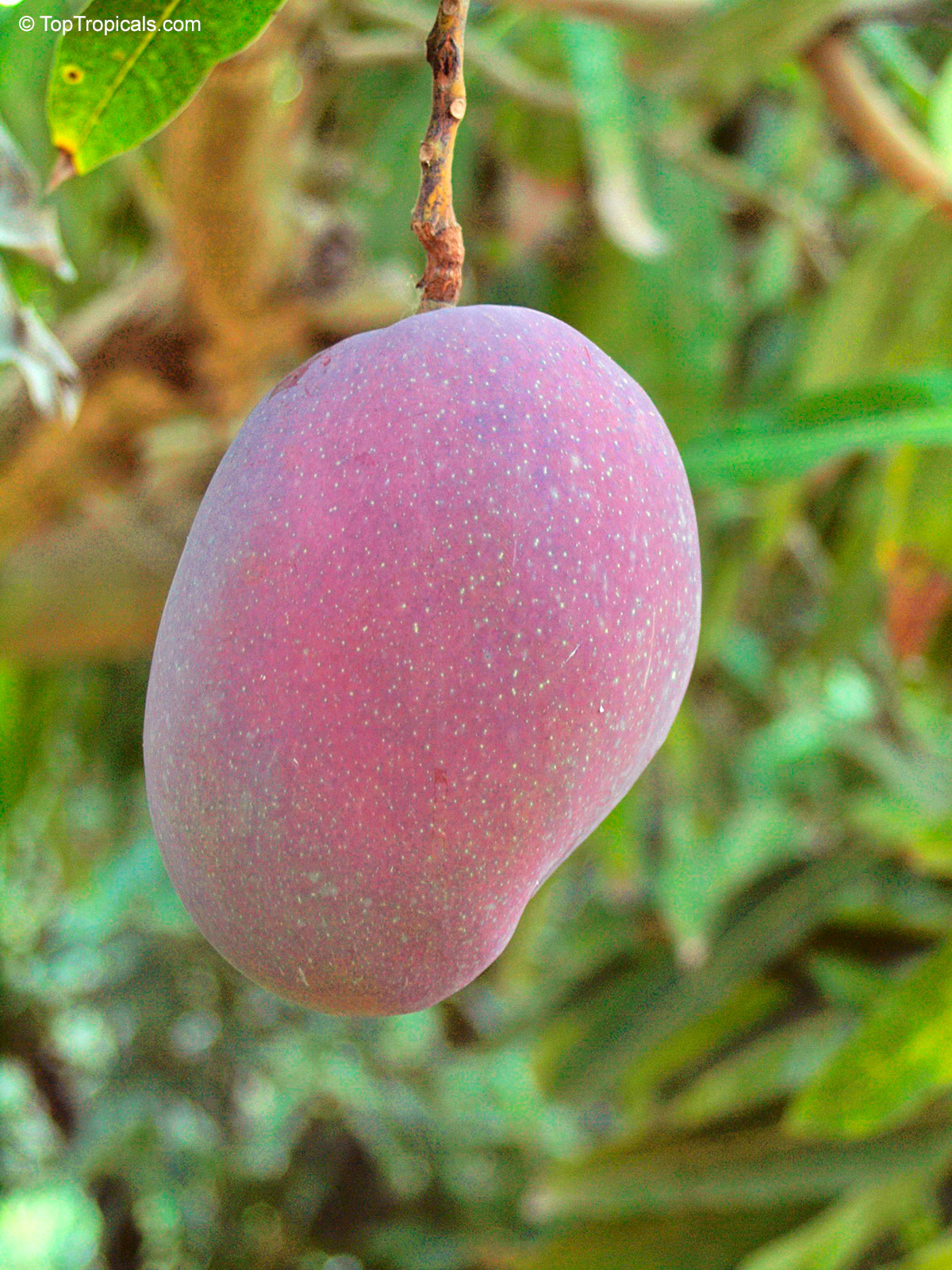
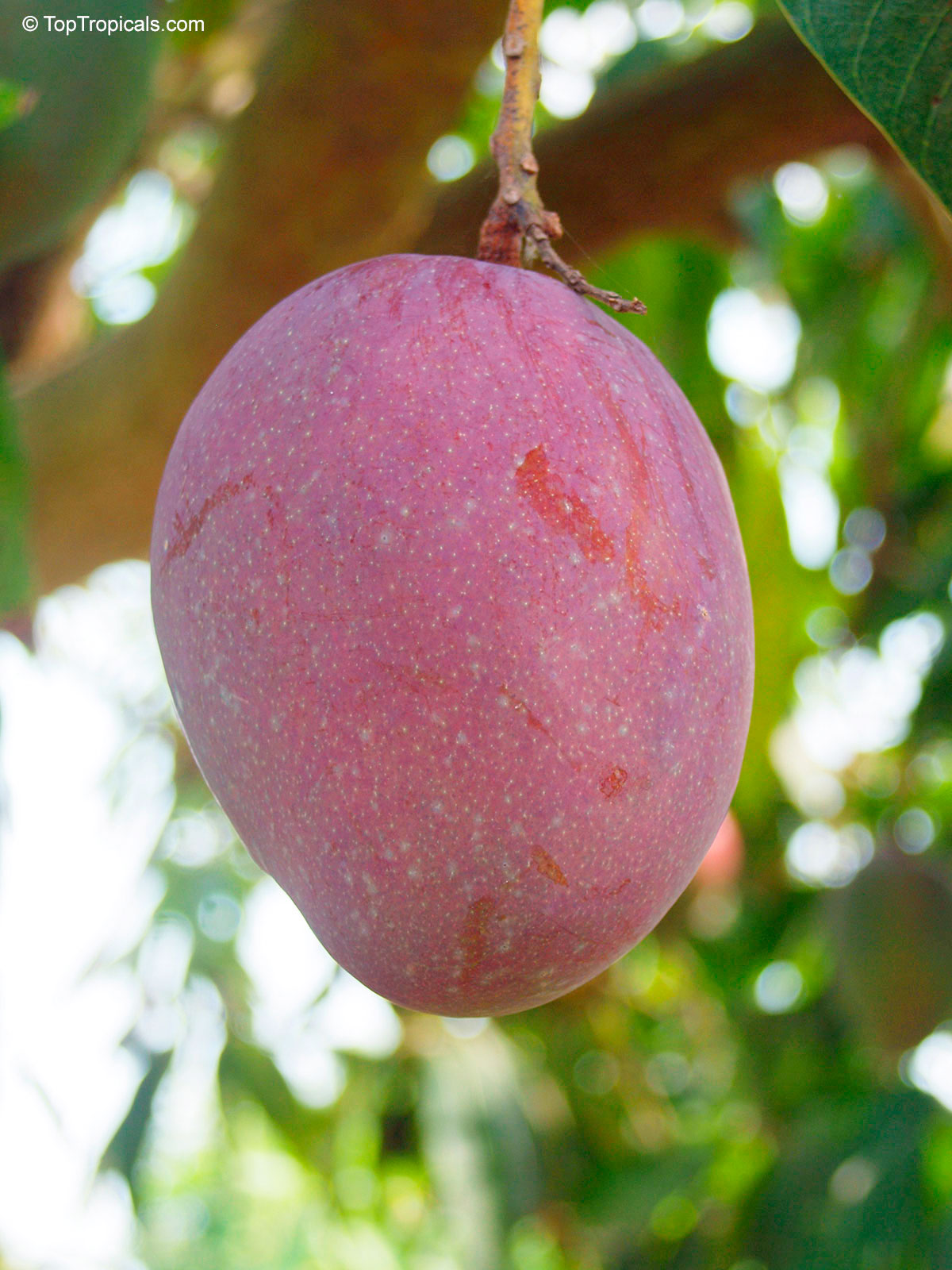
Mangifera indica 'Tommy Atkins' (Tommy Atkins Mango) is one of the most widely grown commercial mango cultivars, originally selected in Florida in the mid-20th century. The tree is vigorous and upright, forming a large canopy that may reach 20-25 feet in the ground. Fruits are medium to large, oval, and firm, with thick skin that turns from green to a mix of red, orange, and yellow at maturity, often with a mottled blush. The flesh is orange-yellow with mild sweetness, slightly fibrous texture, and long storage potential, making this cultivar a staple in global mango trade.
'Tommy Atkins' performs best in full sun and well-drained soil, with moderate watering during dry spells. It flowers in spring and typically ripens in midsummer, producing heavy crops that are valued for their durability in shipping and consistent yields. Hardy only to USDA Zones 10-11, it requires frost protection and is best suited for tropical and warm subtropical regions. While less aromatic than some dessert cultivars, it remains prized for its reliability, attractive appearance, and dependable fruit set.

See more info about Mango varieties.
Recommended Fertilizer: SUNSHINE Mango Tango - Mango Tree Booster
SUNSHINE-Honey - sugar booster
Botanical names: Manilkara zapota, Manilkara achras, Achras sapota
Common names: Sapodilla, Ciku, Naseberry, Nispero, Sapote, Brown Sugar Fruit
Family: Sapotaceae
Origin: Tropical America
USDA Zone: 9-11


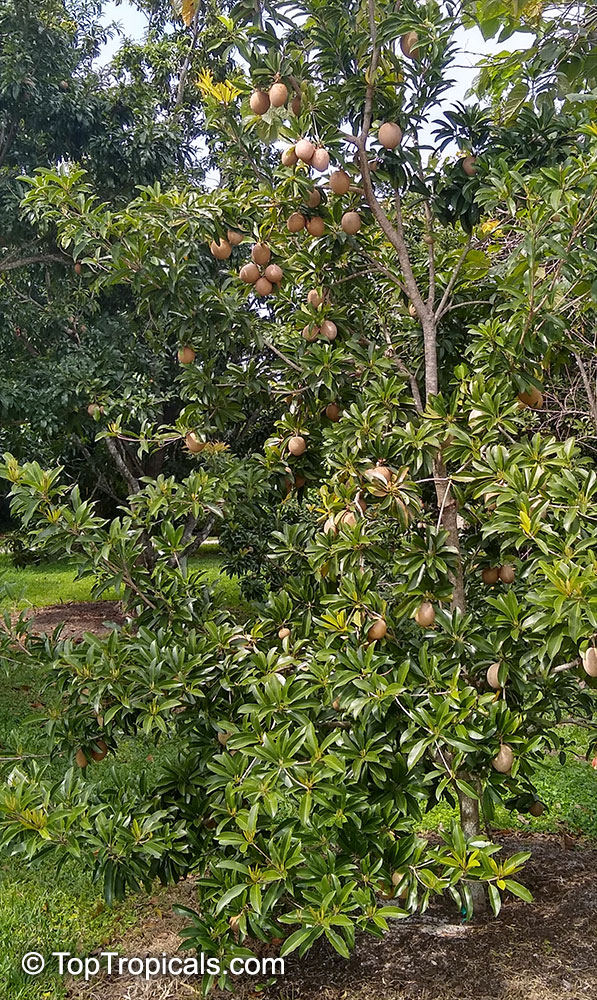
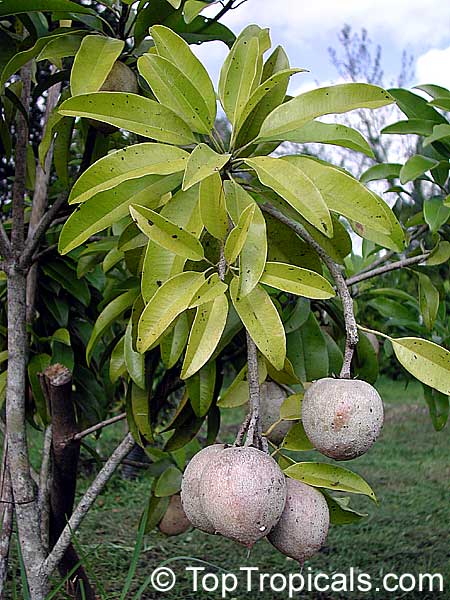
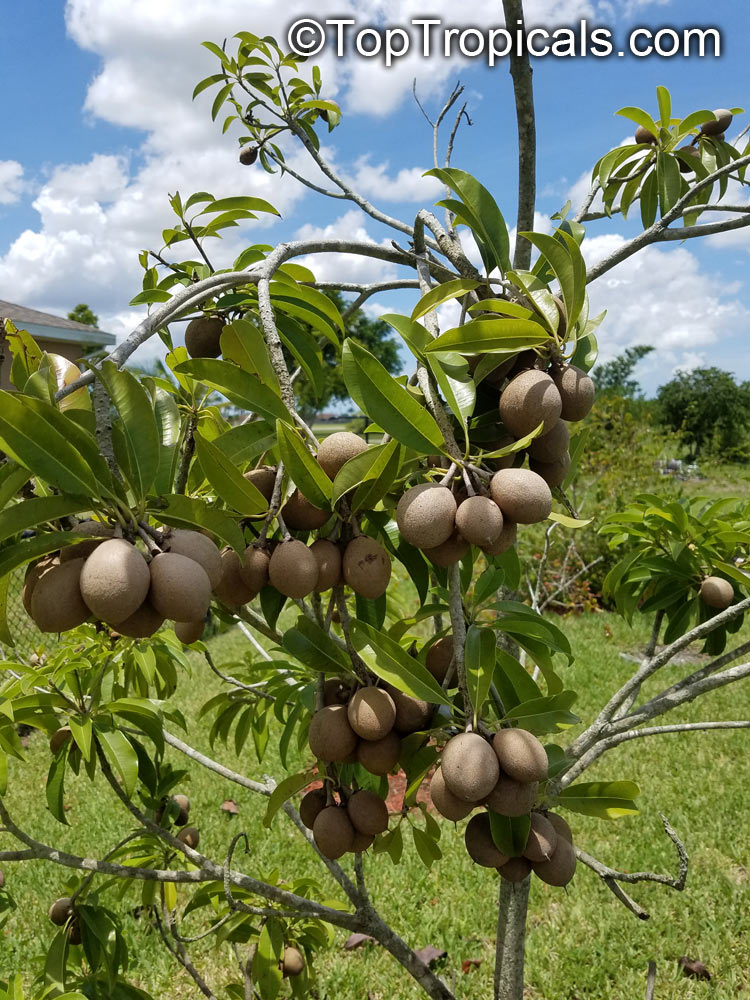
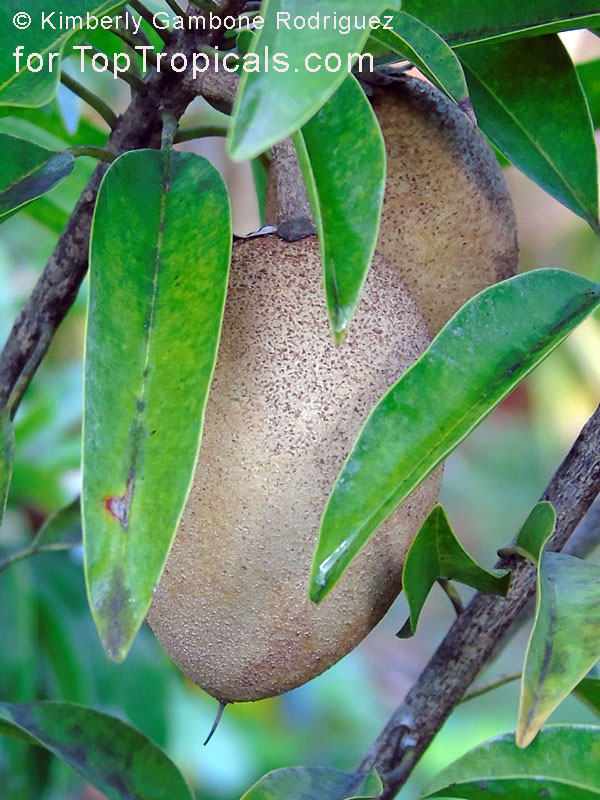
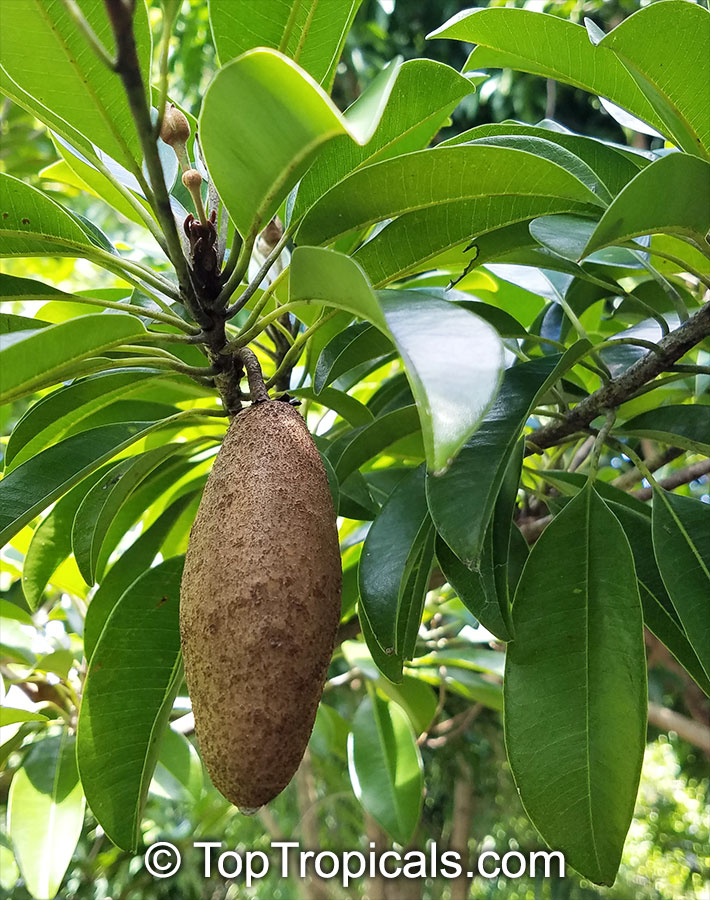
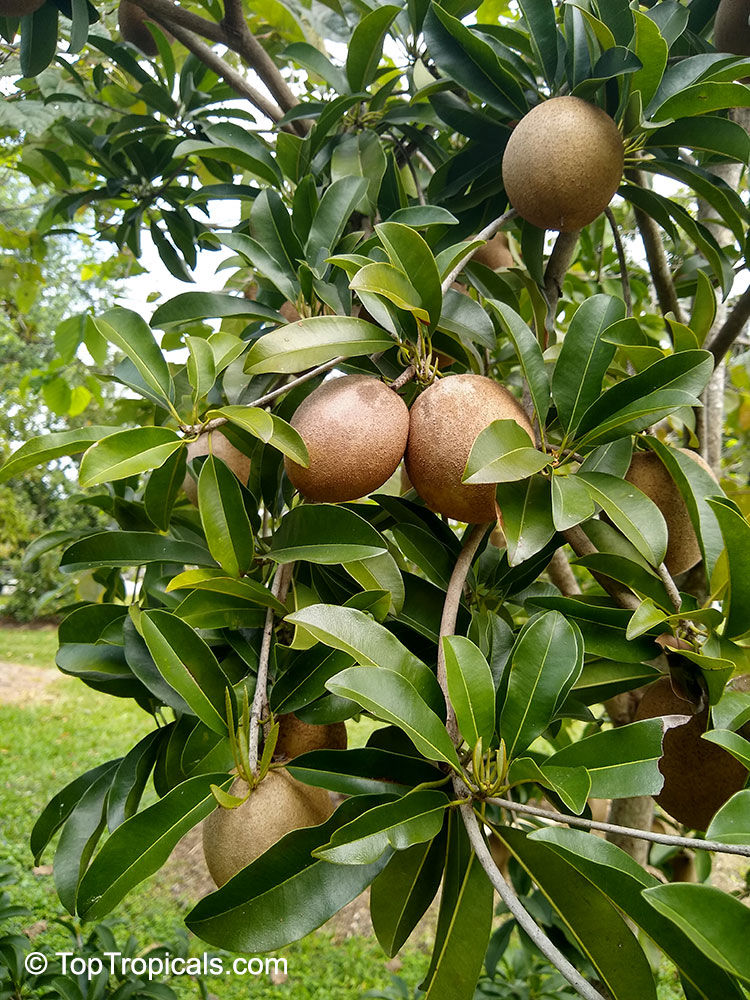
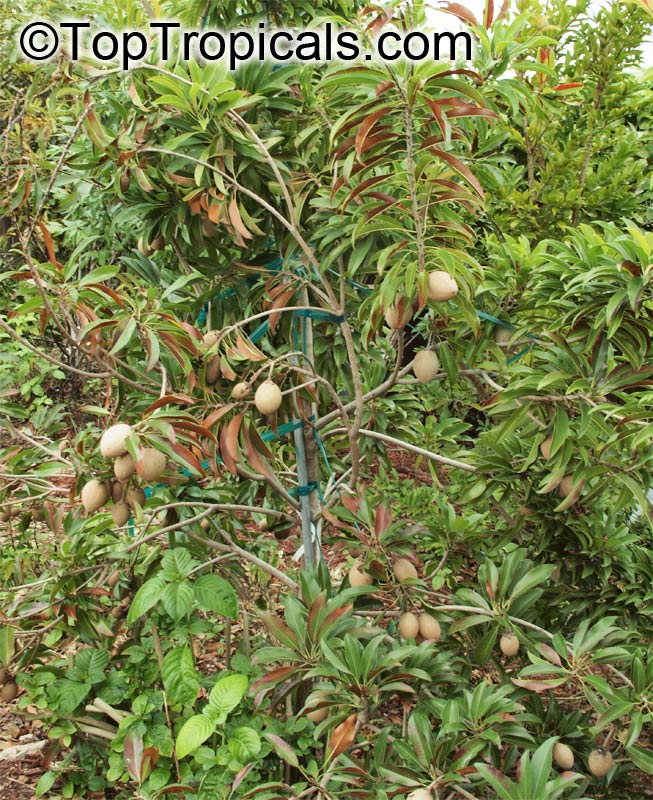
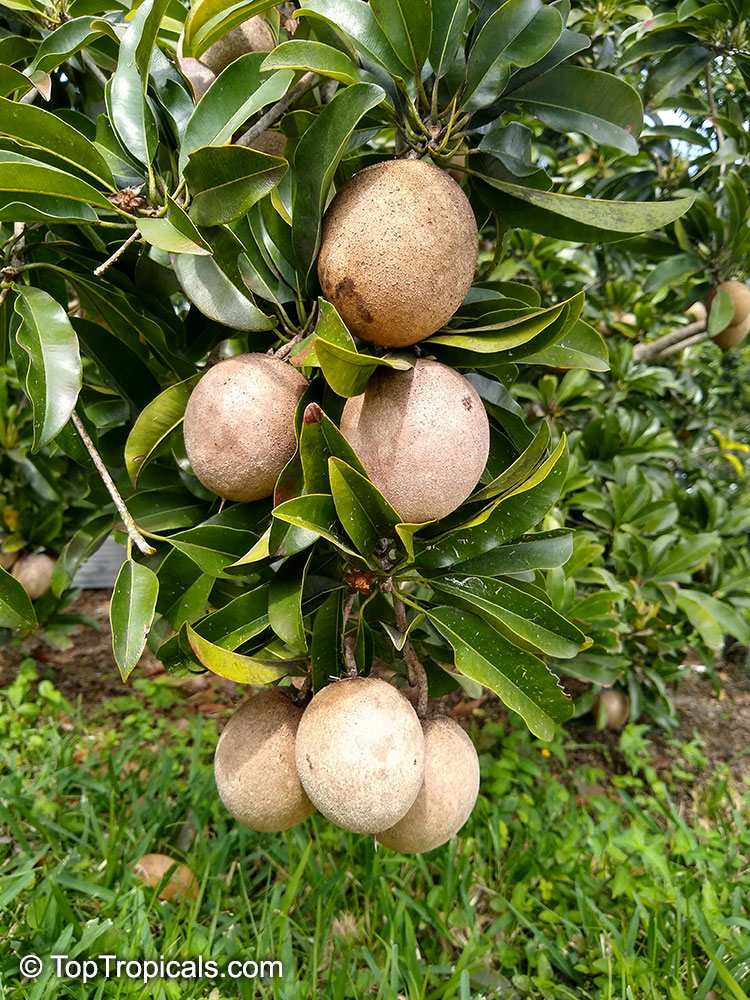
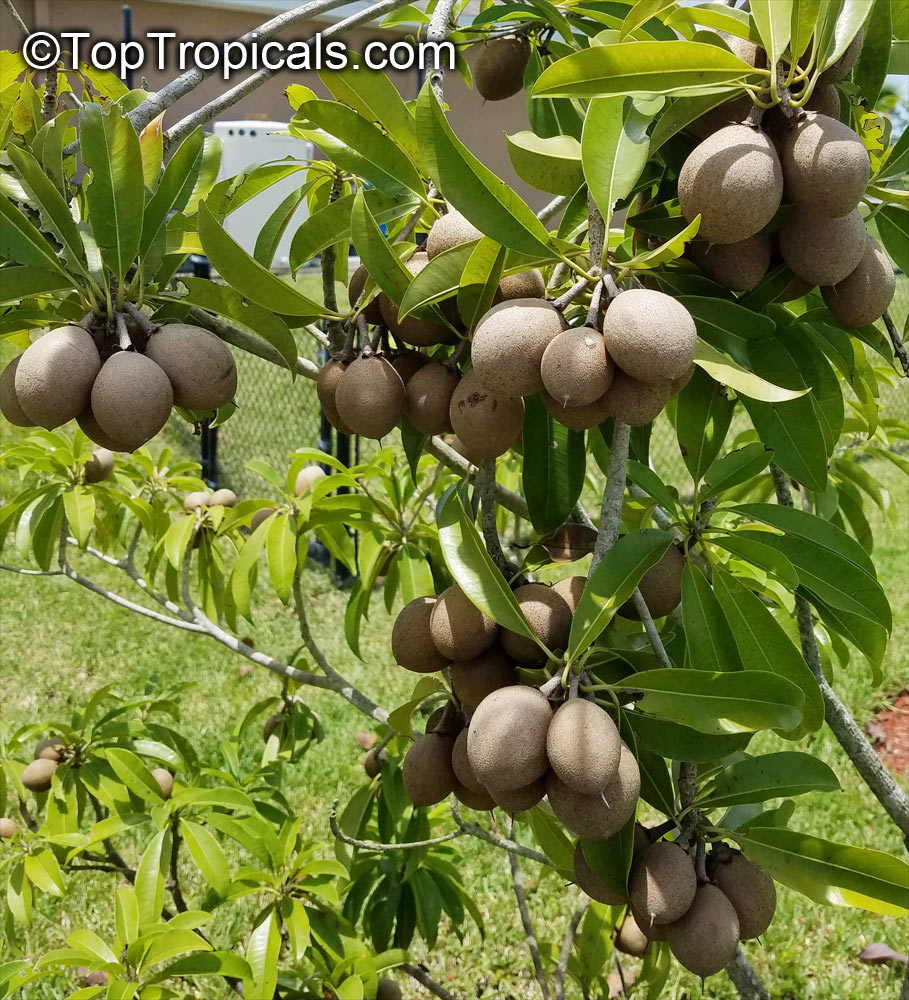
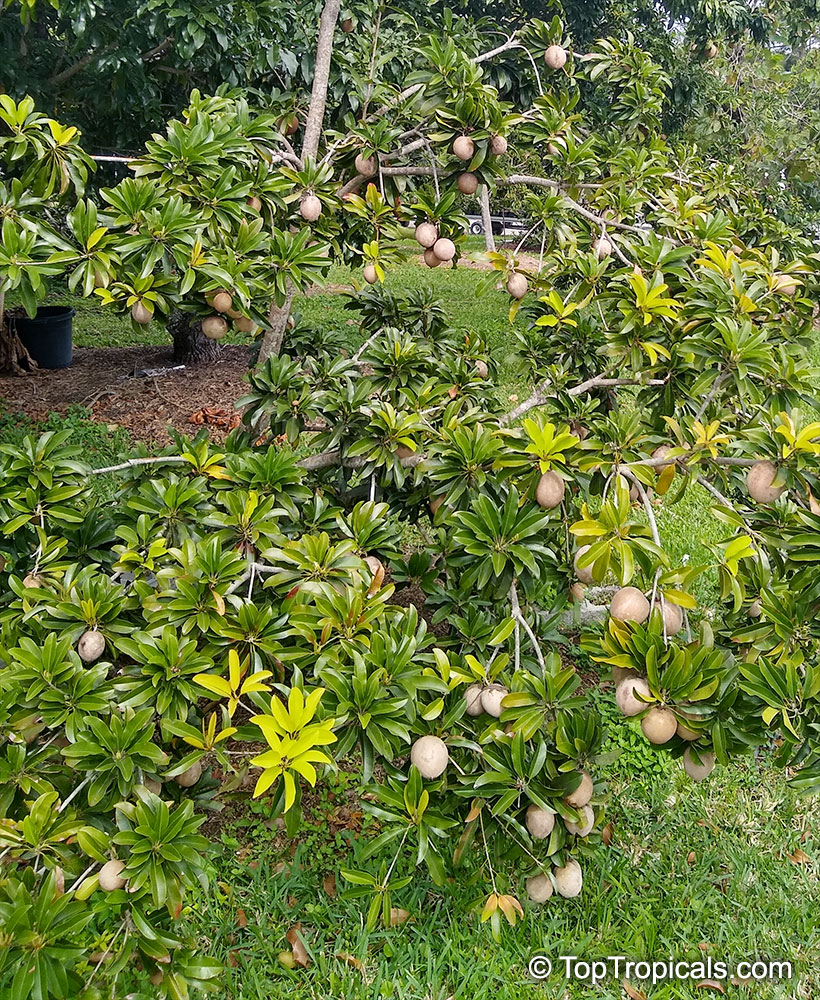
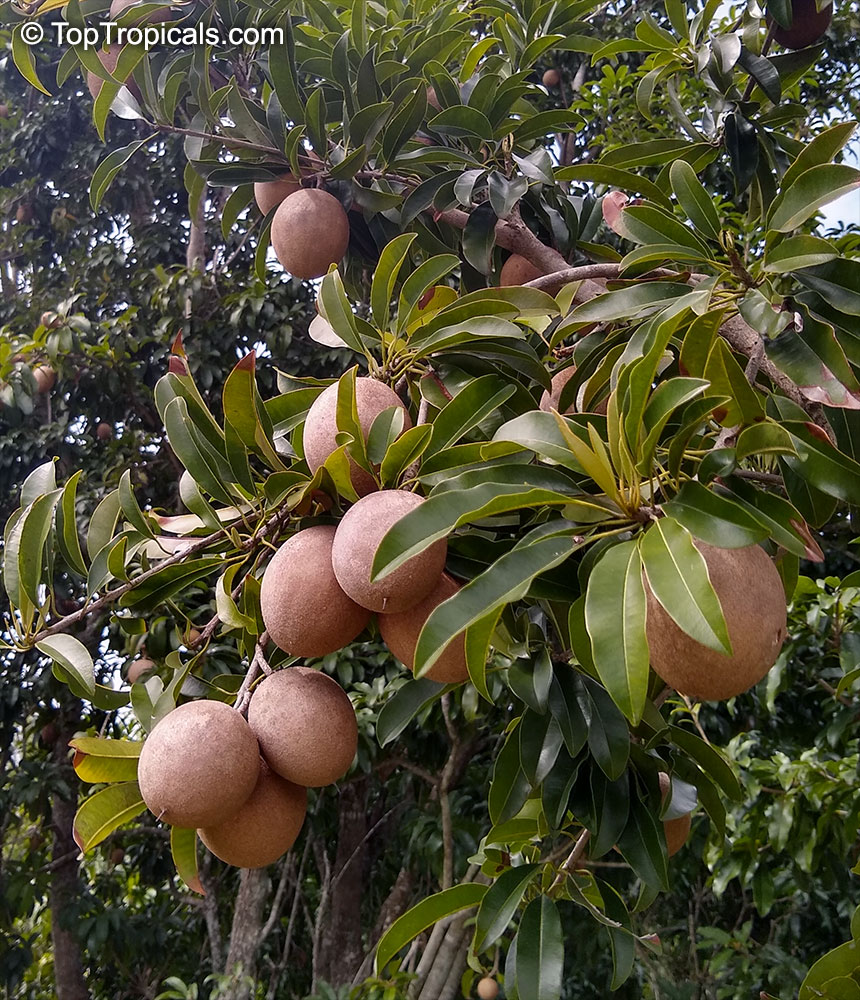
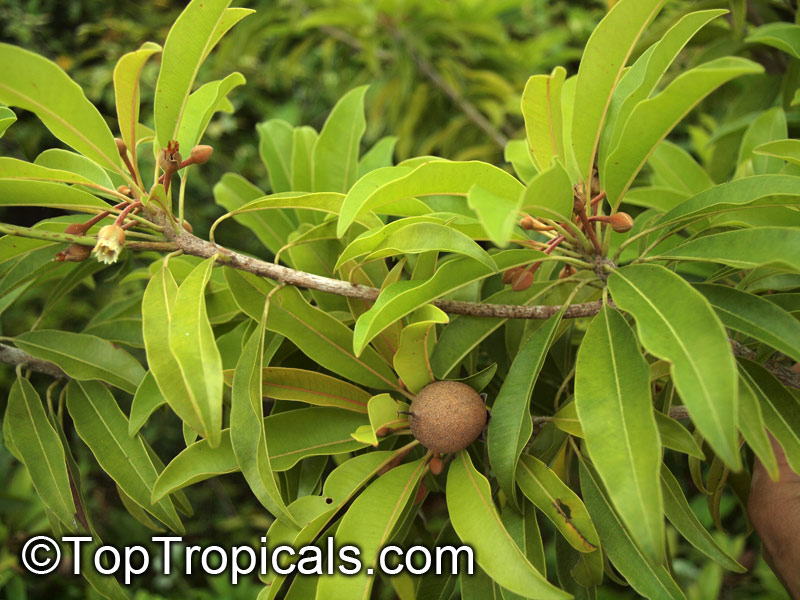
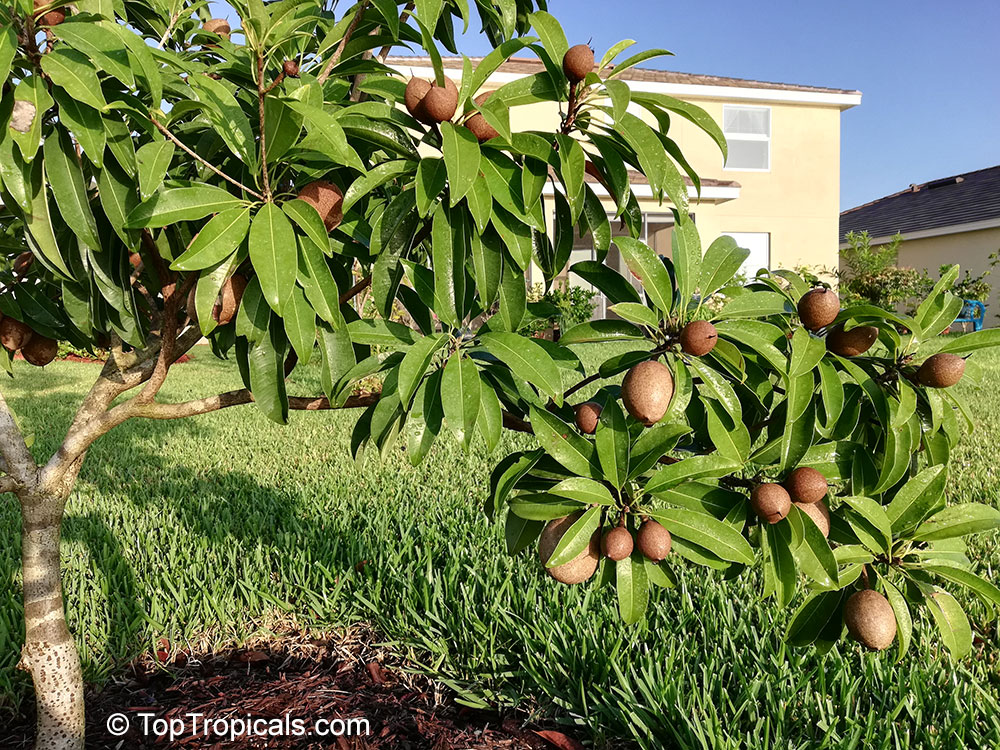
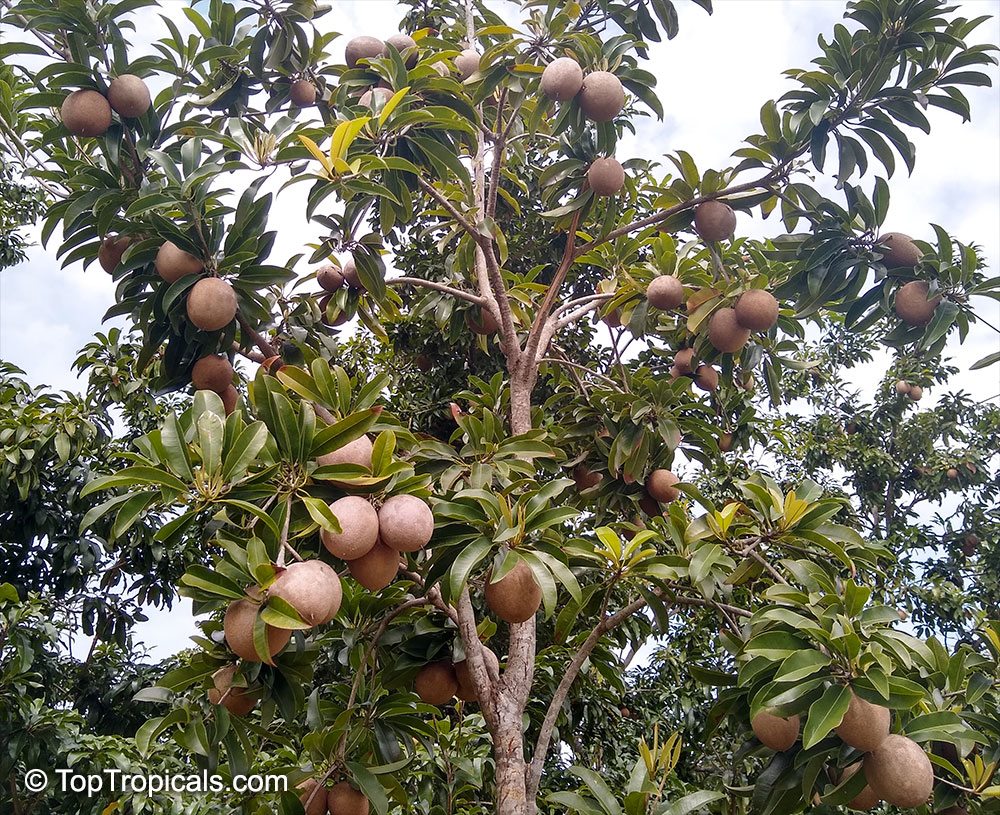
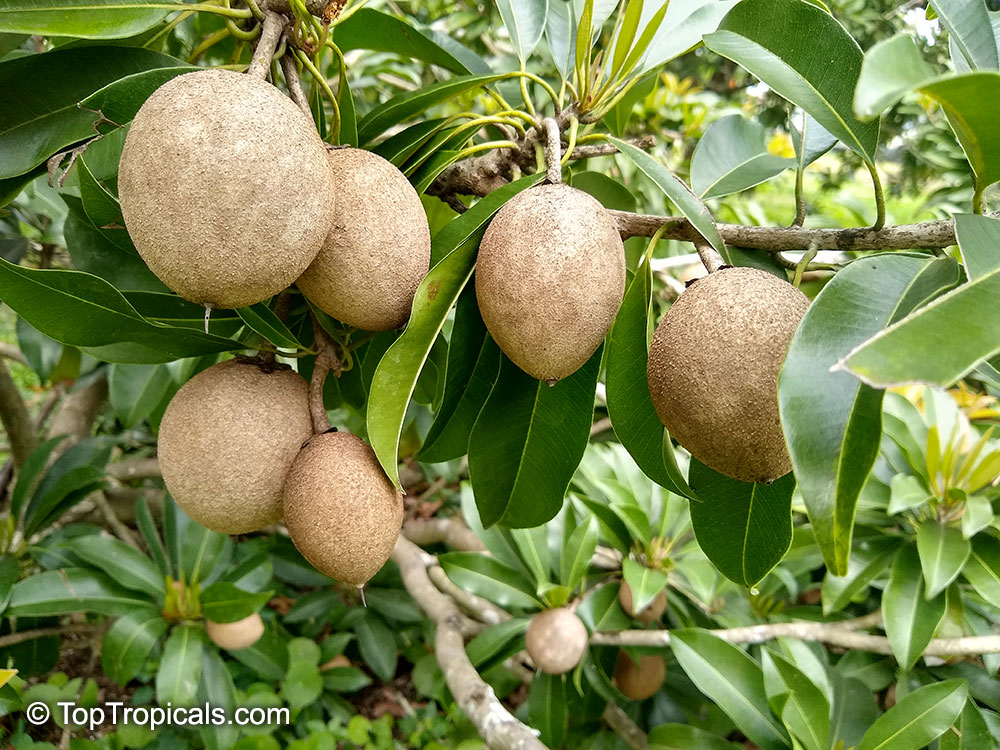
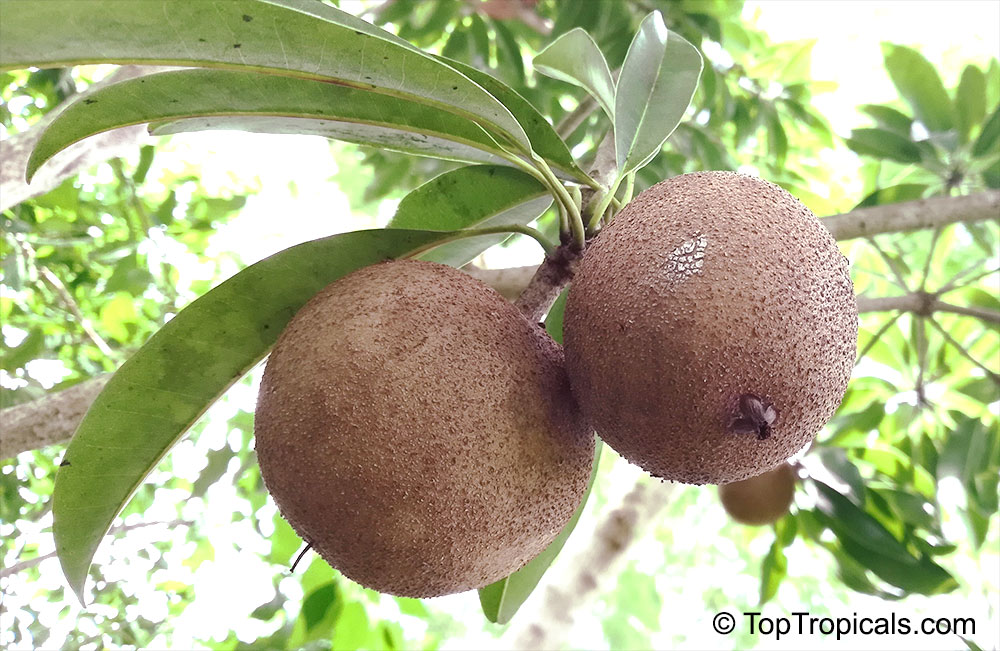
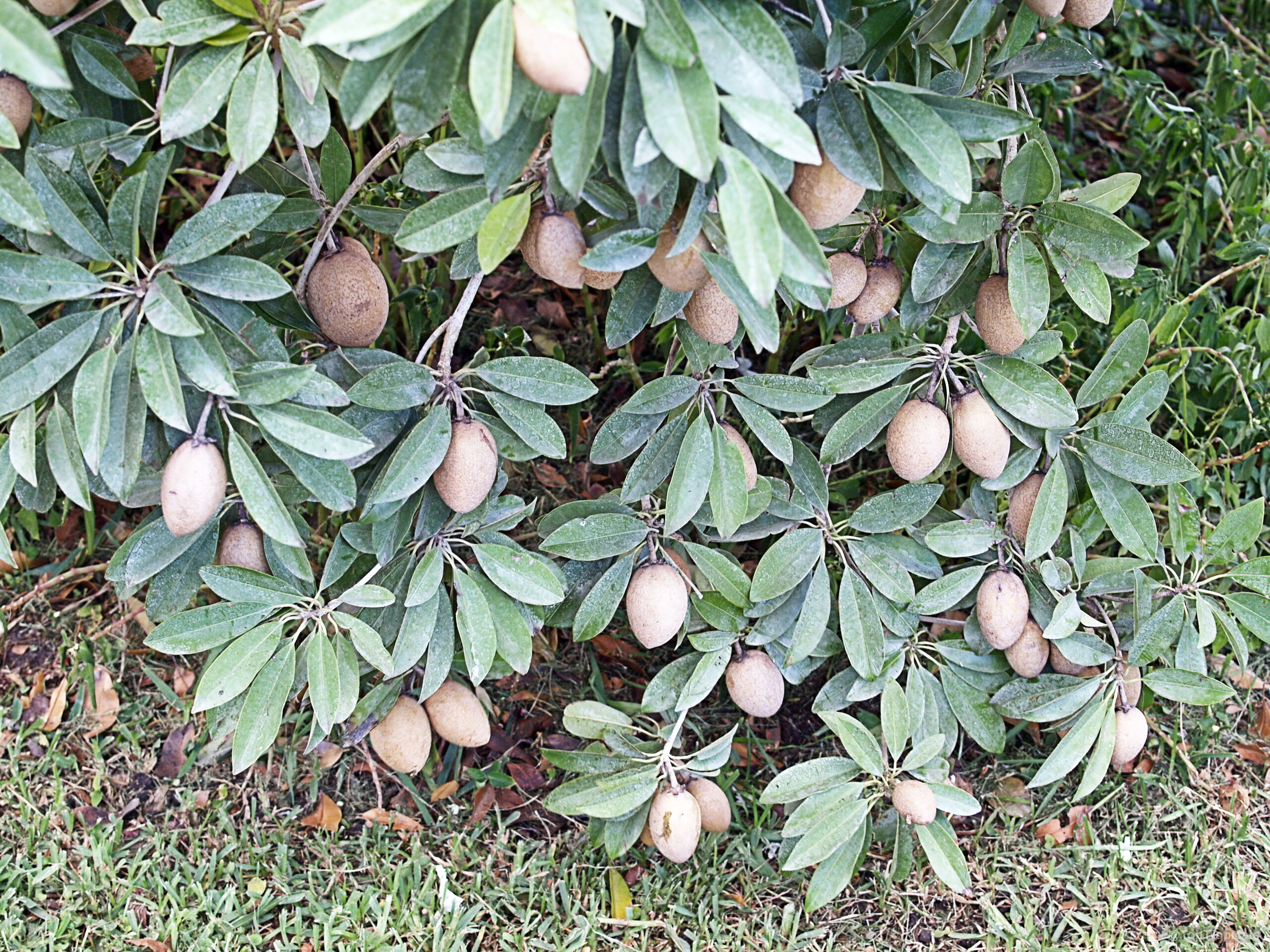
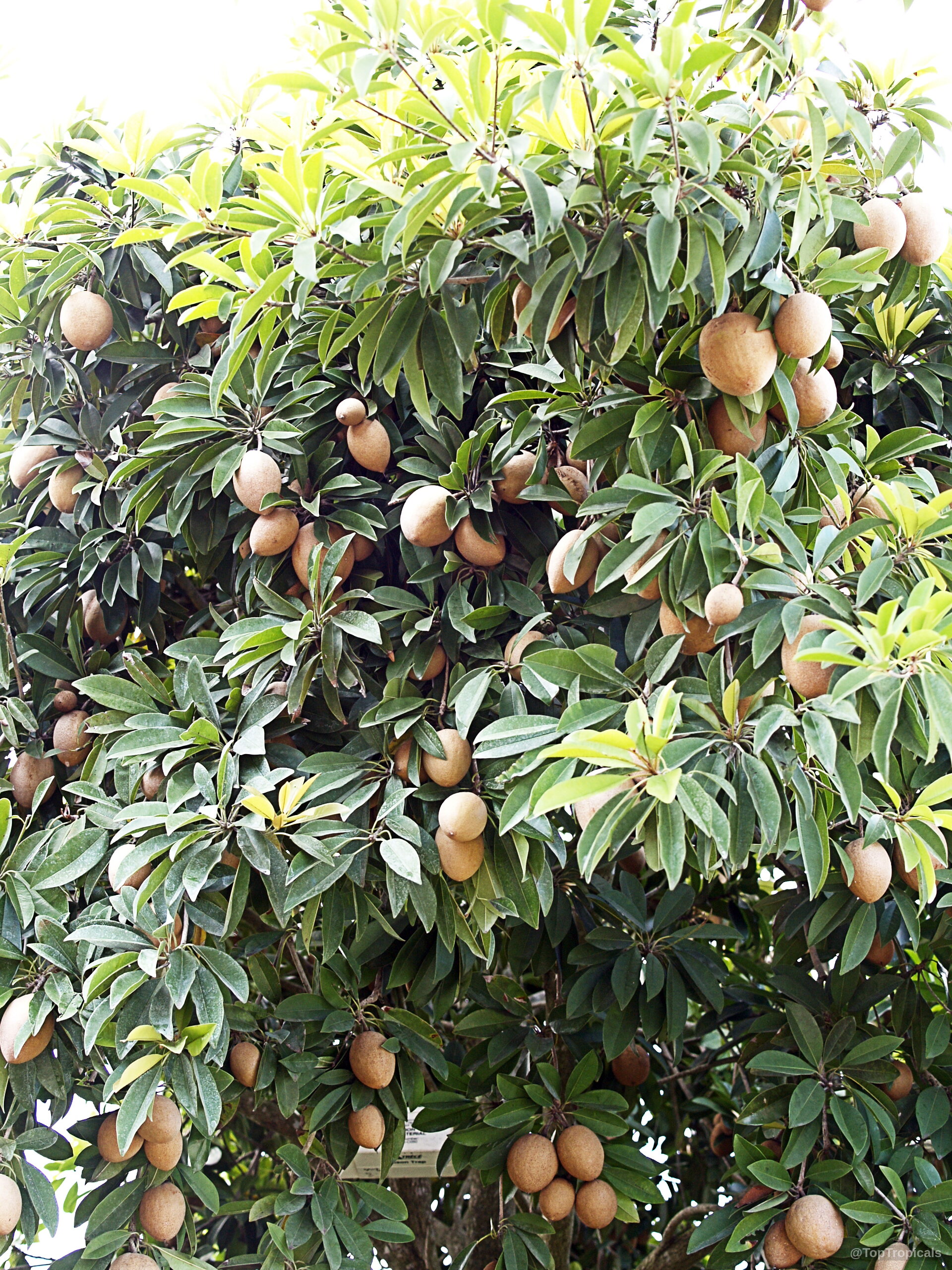
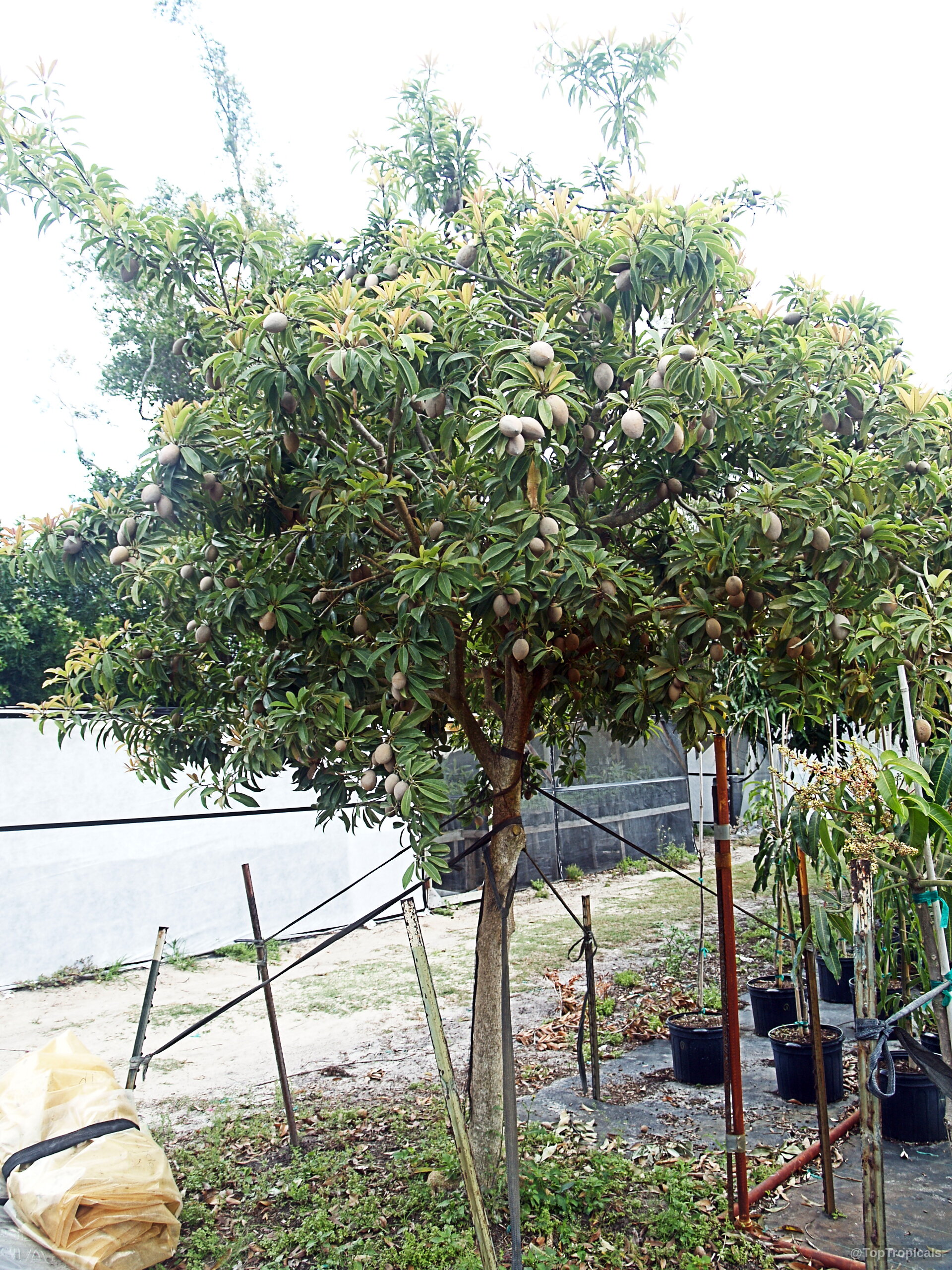
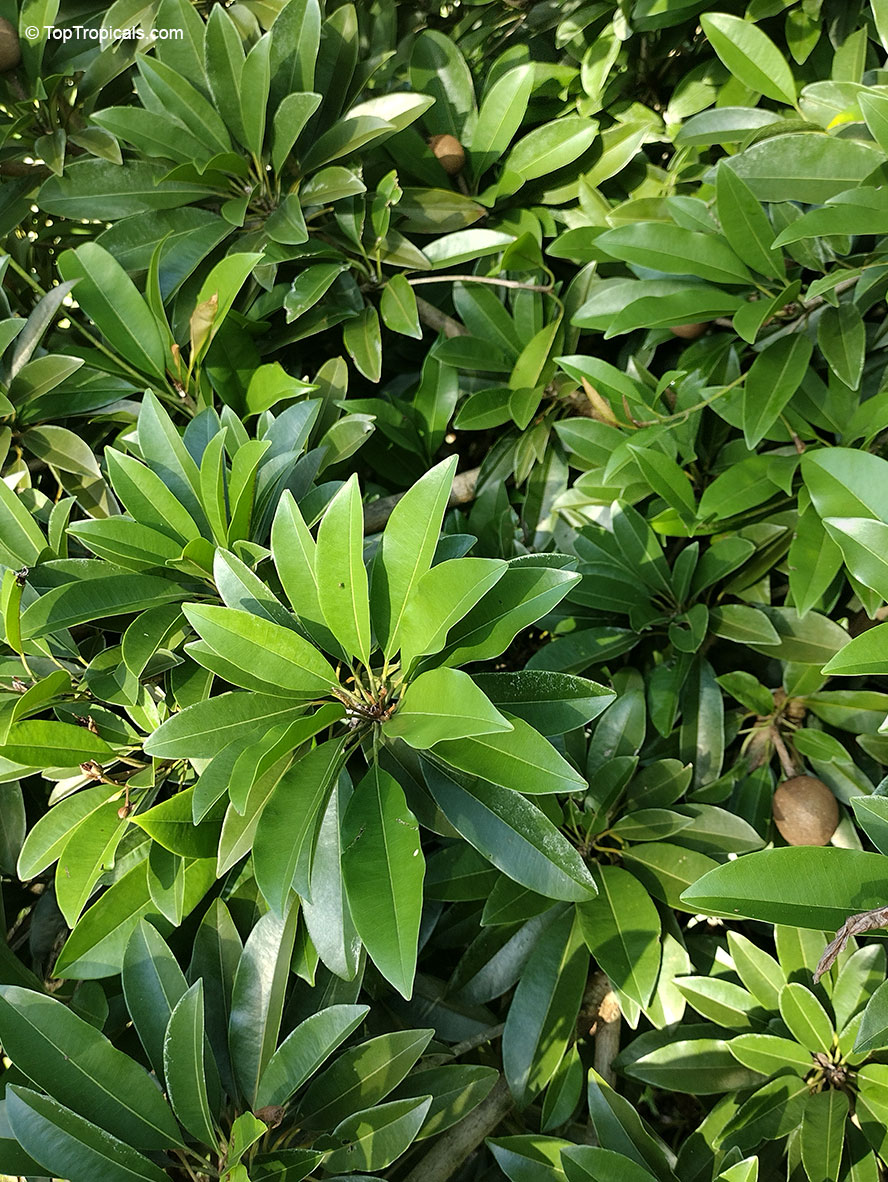
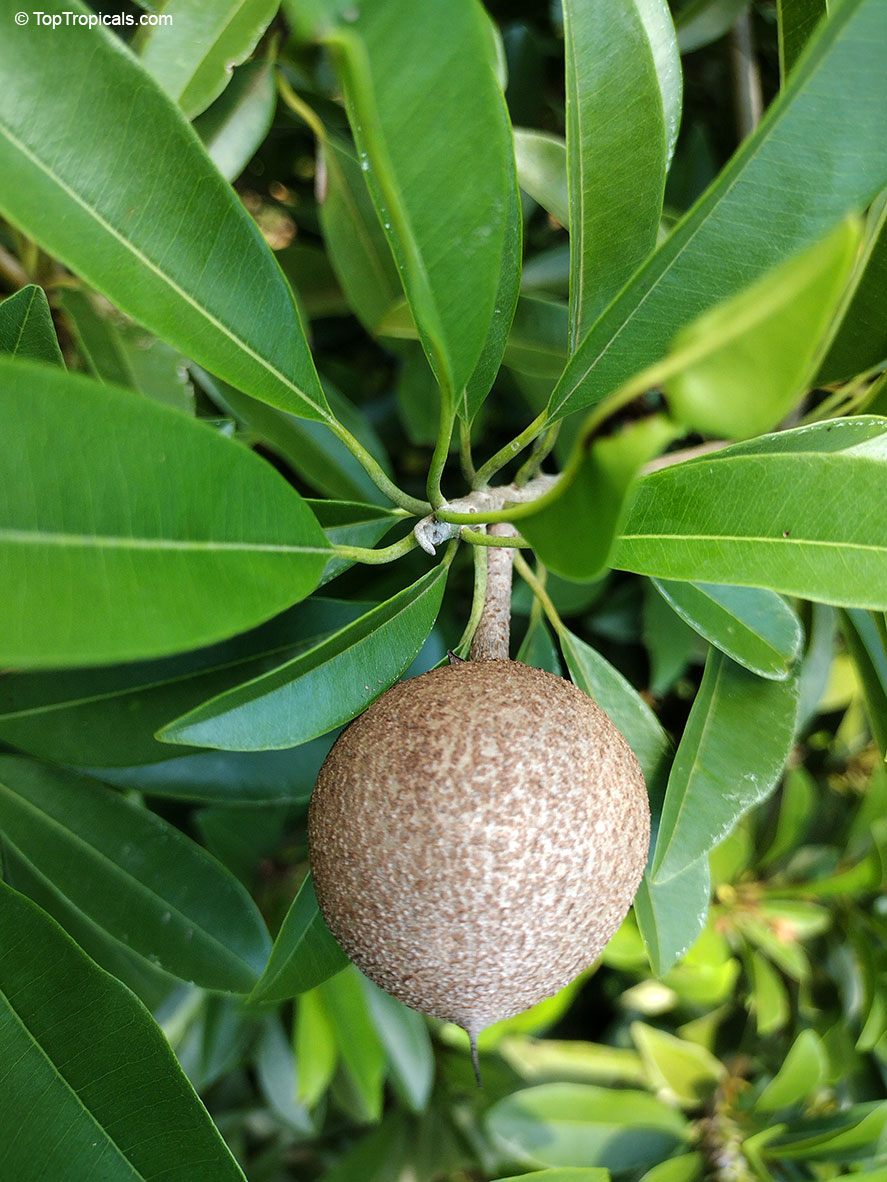
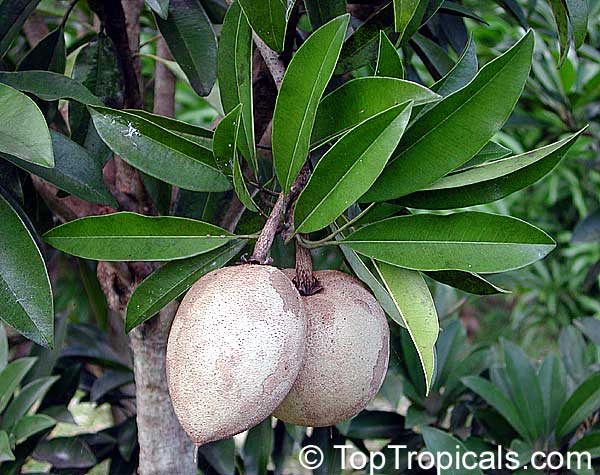
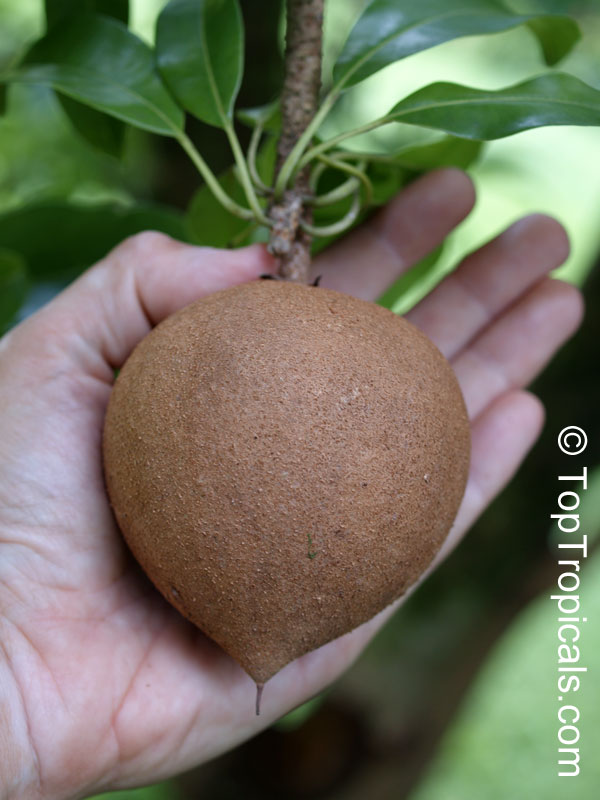
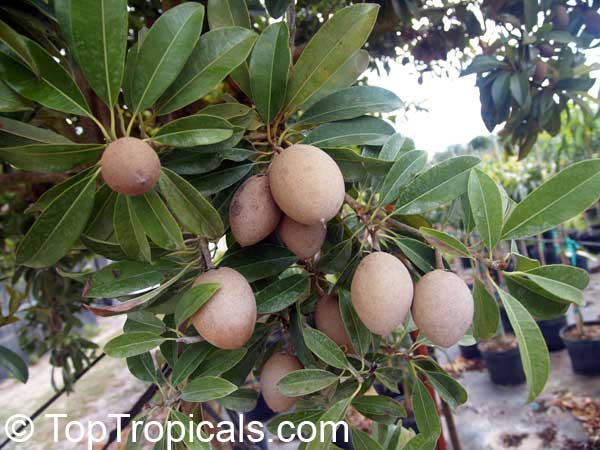
Varieties: Makok, Tikal, Alano, Oxkutzcab, Hasya, Morena, Molix. Season: Sporadic throughout year, March - July. Sapodilla is well spread throughout the tropics. For centuries, It has been one of the most popular and most productive tropical fruit trees in the world, widely grown in India and Africa, West Indies, Philippines, Malaysia, Tropical America and Southern Florida.
Besides delicious fruit, the tree produces white, gummy latex that was an original source of chewing gum (chicle).
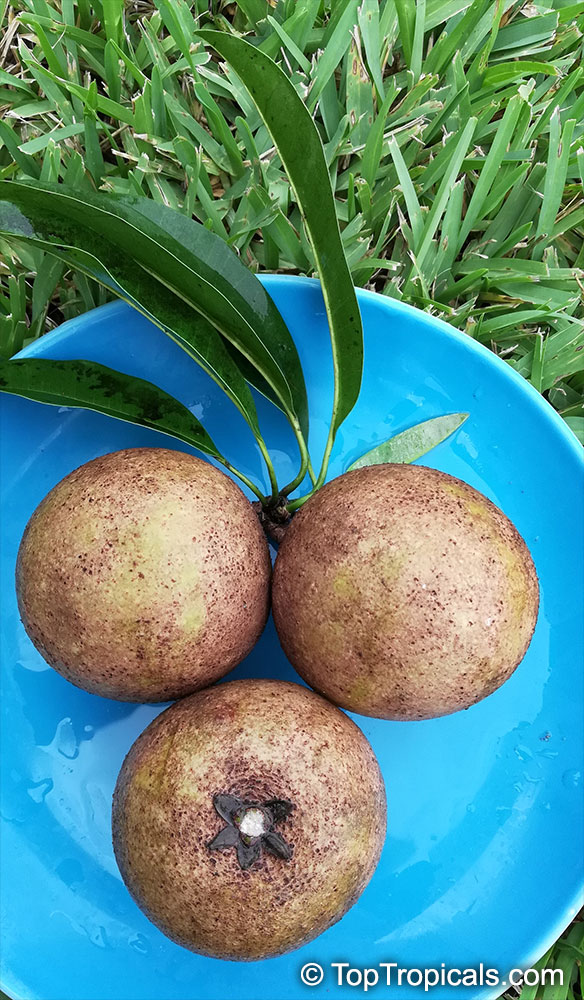
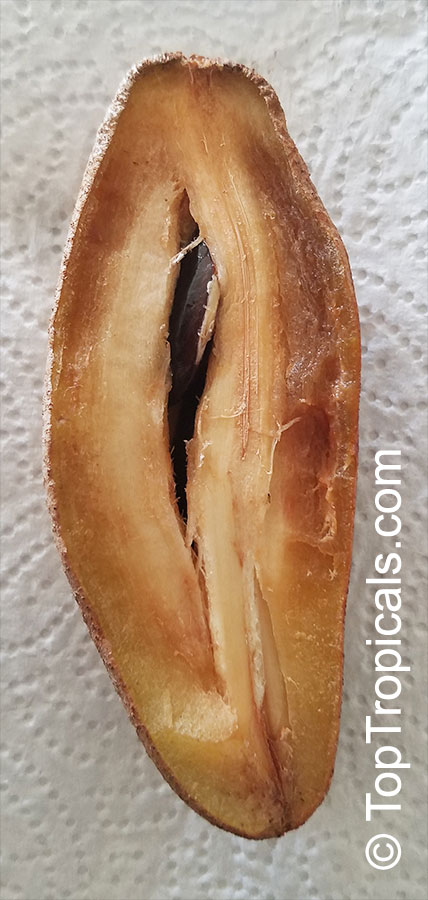
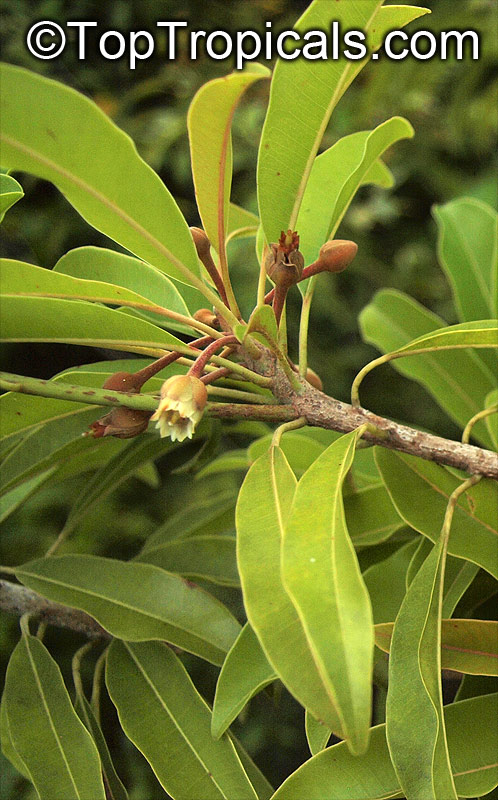
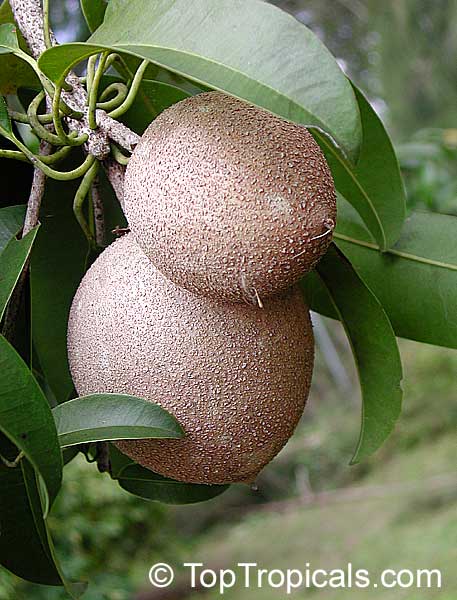
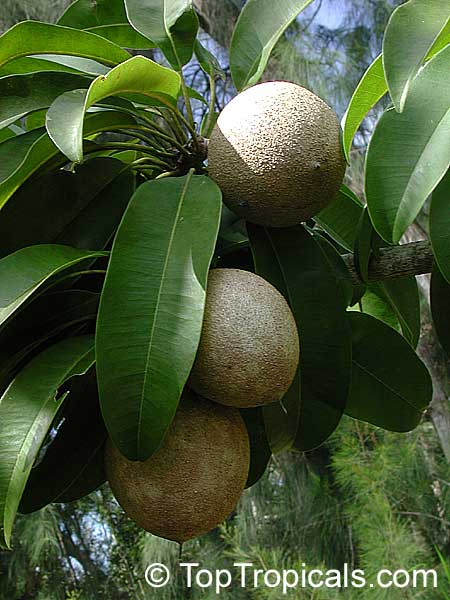
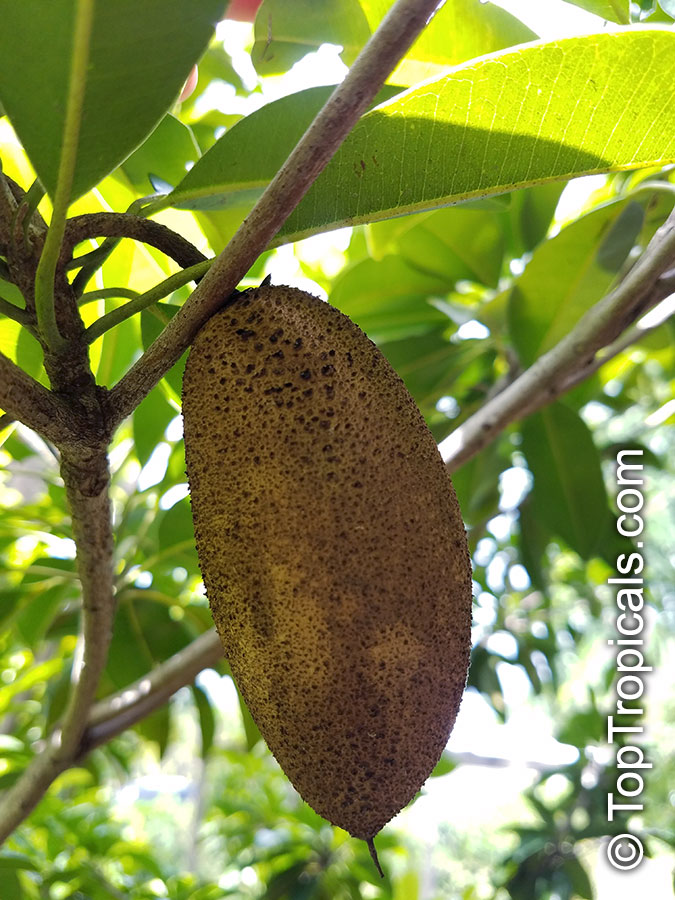
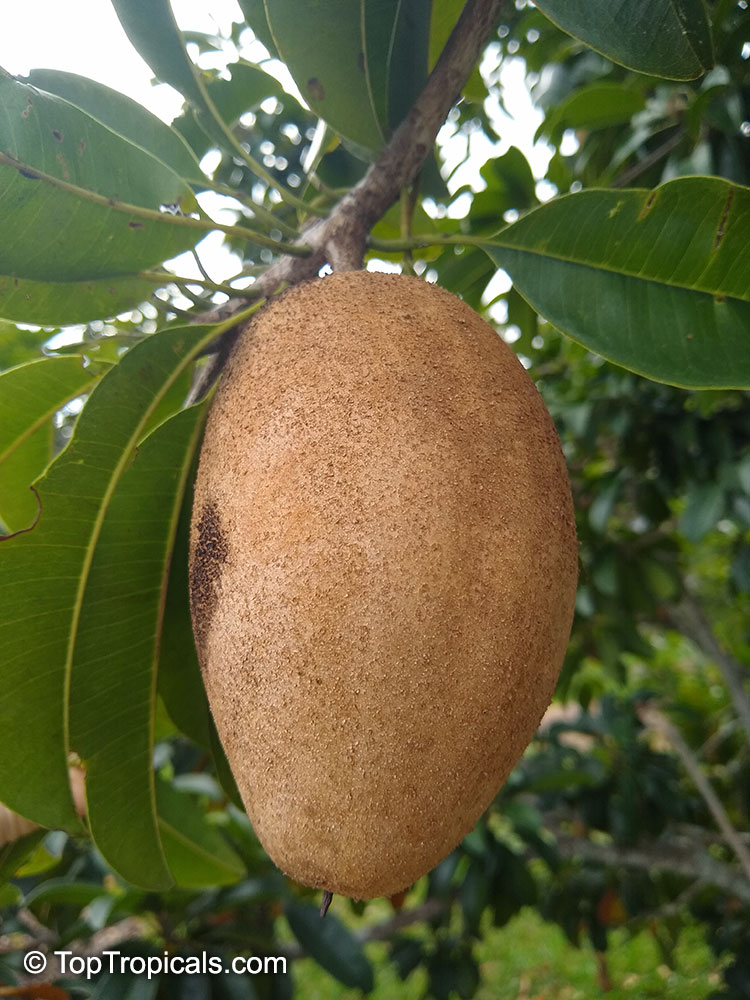
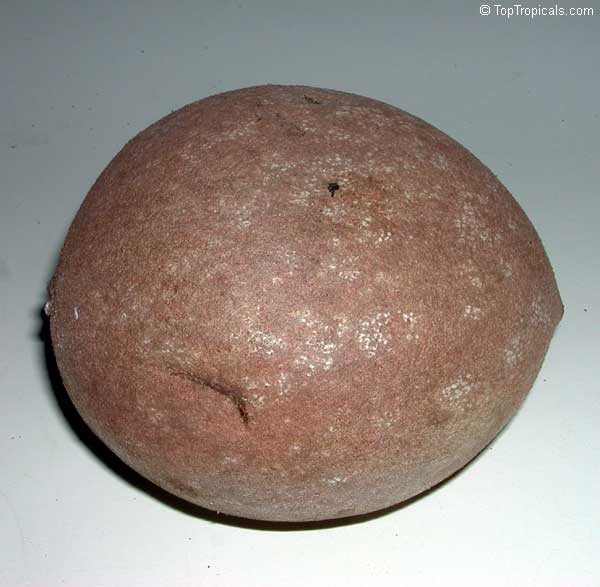
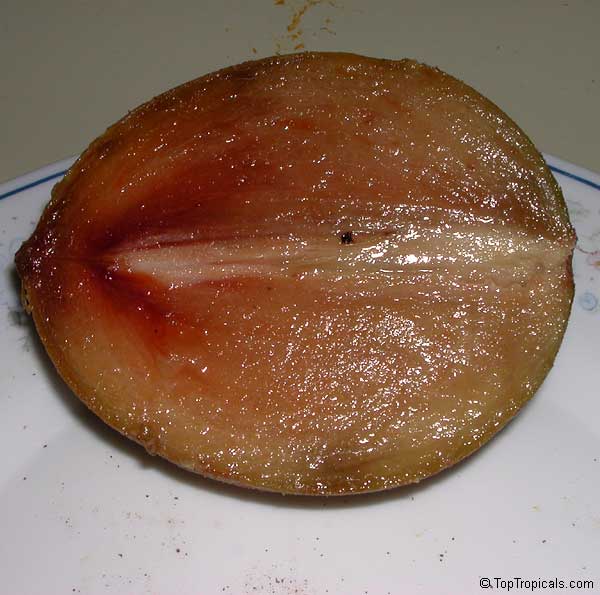
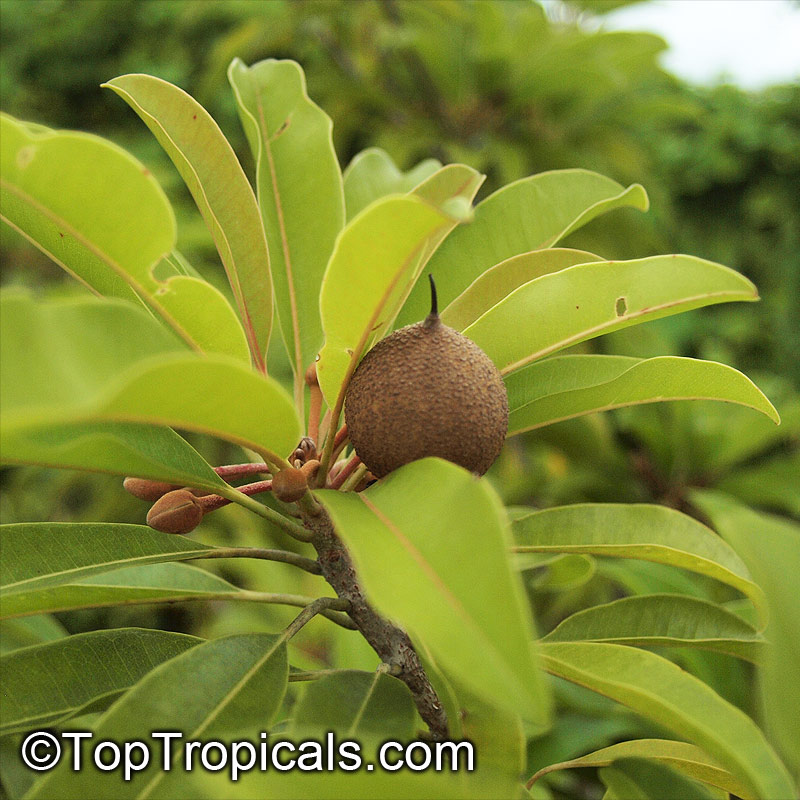
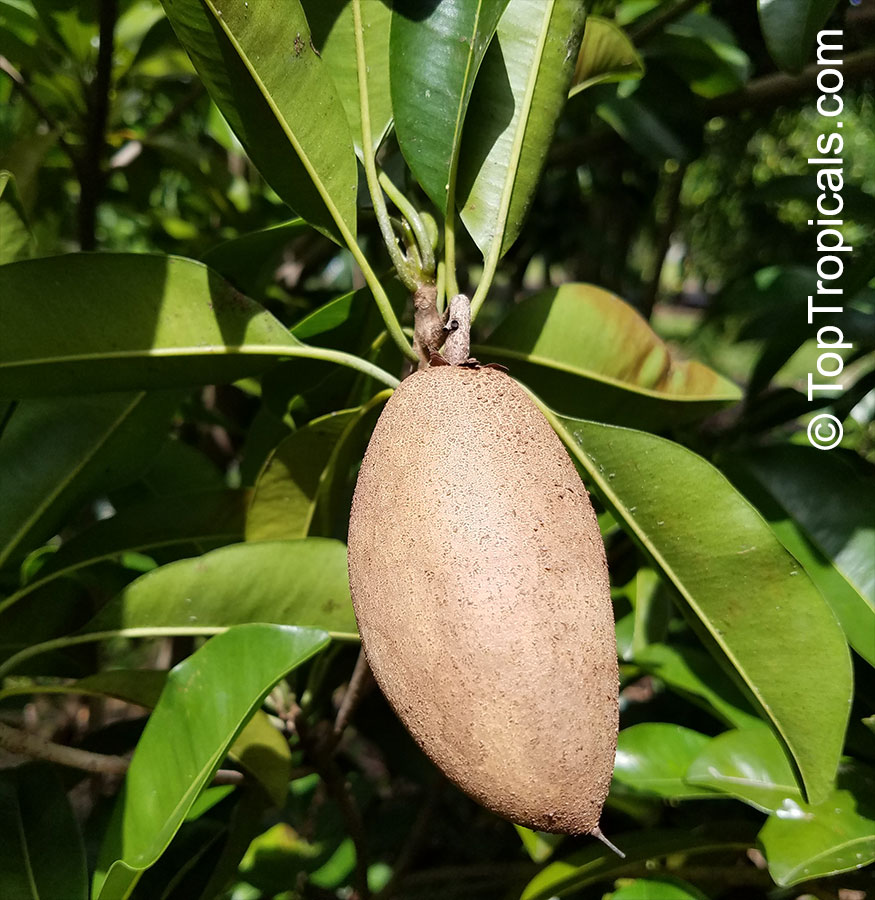
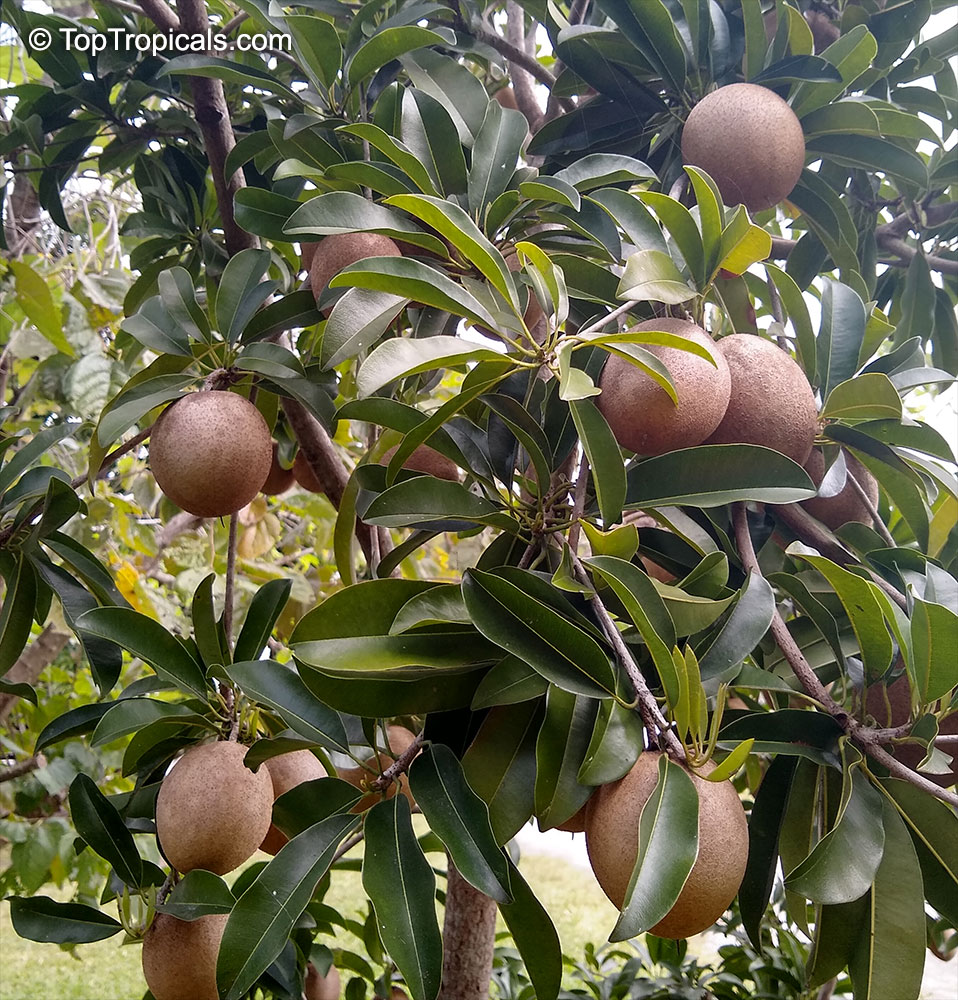
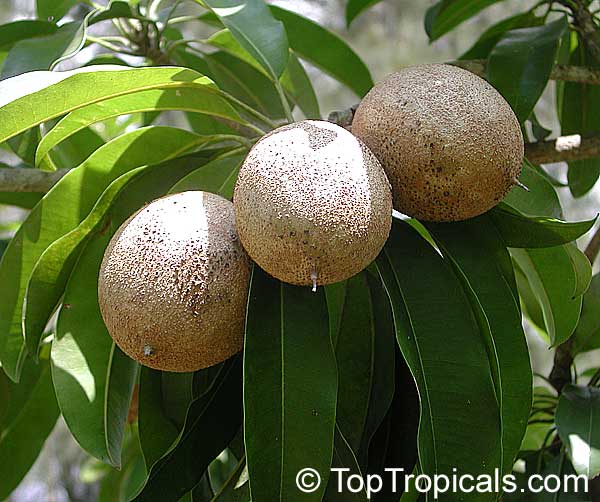
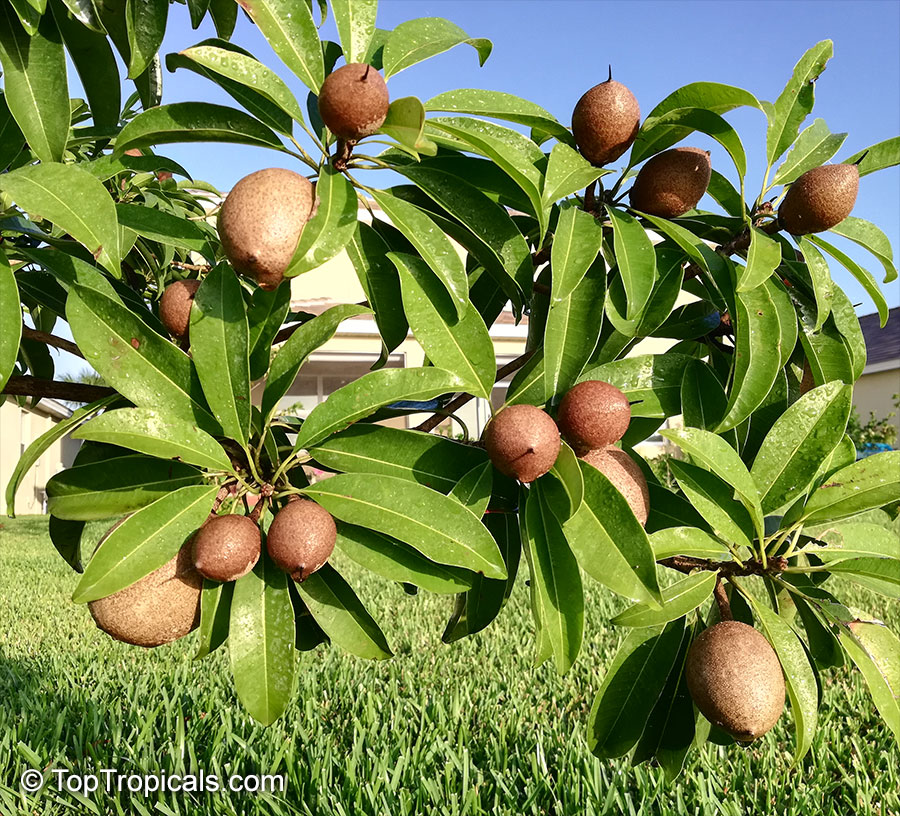
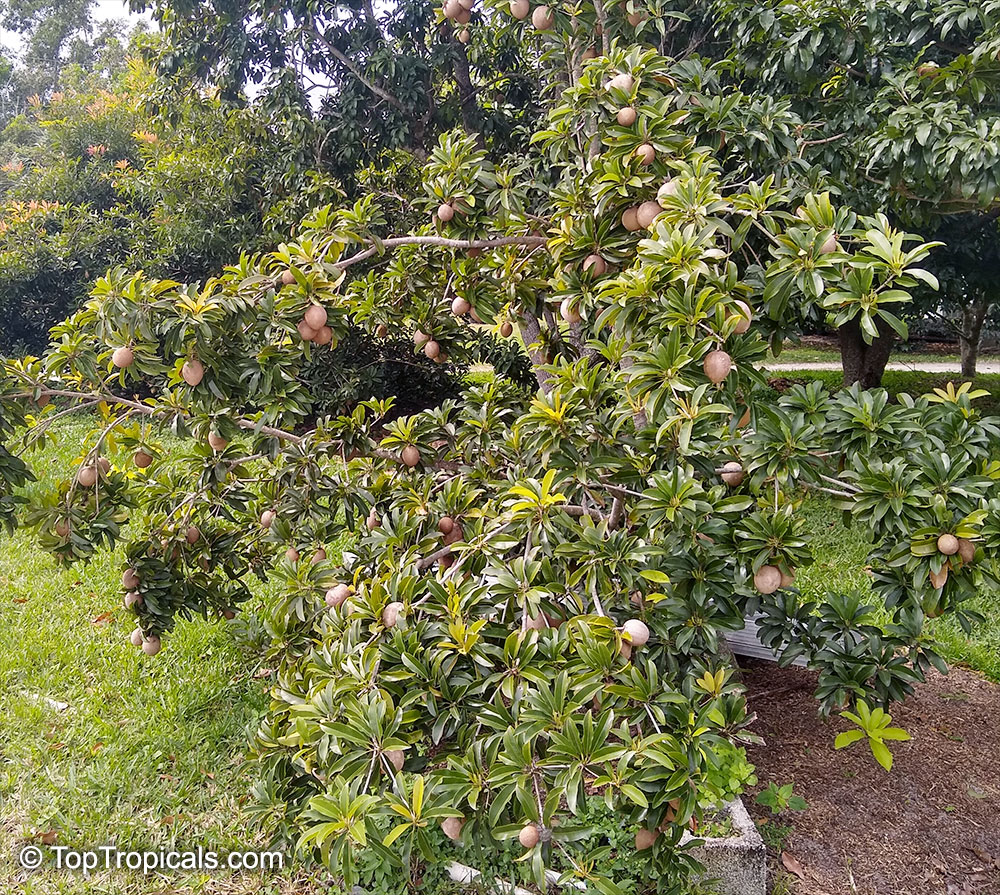
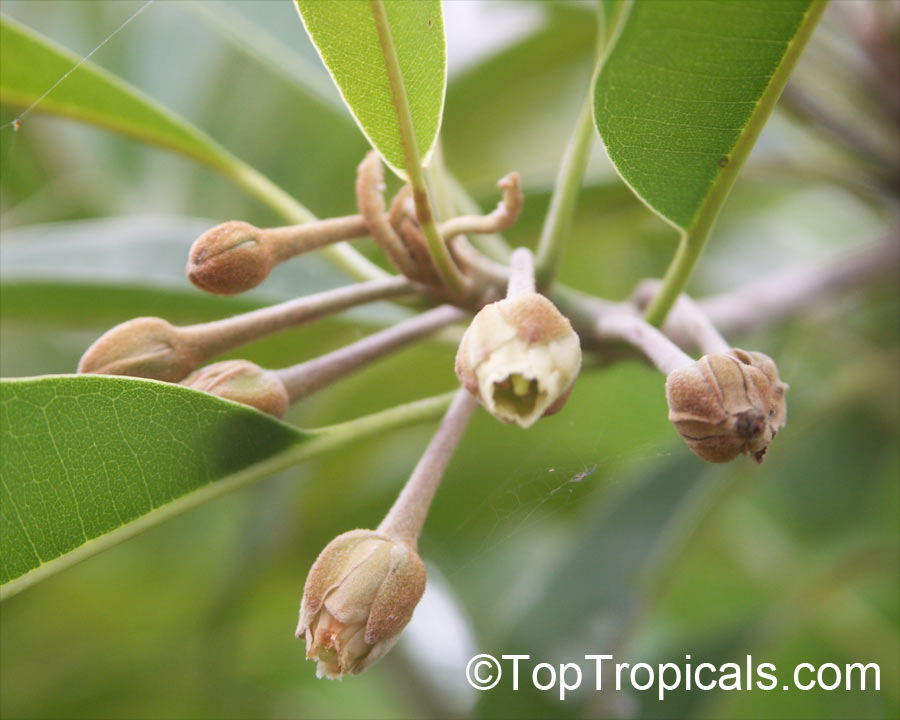
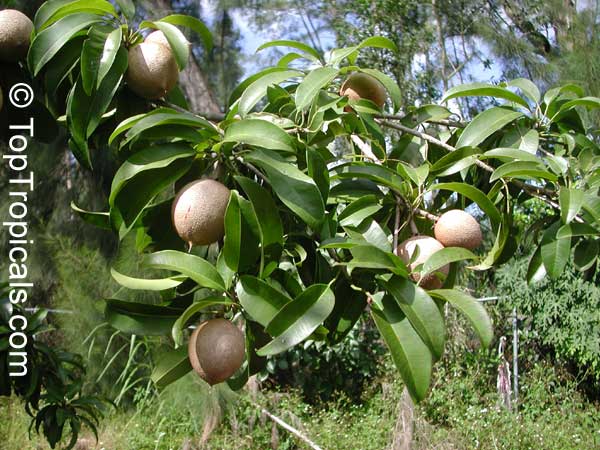
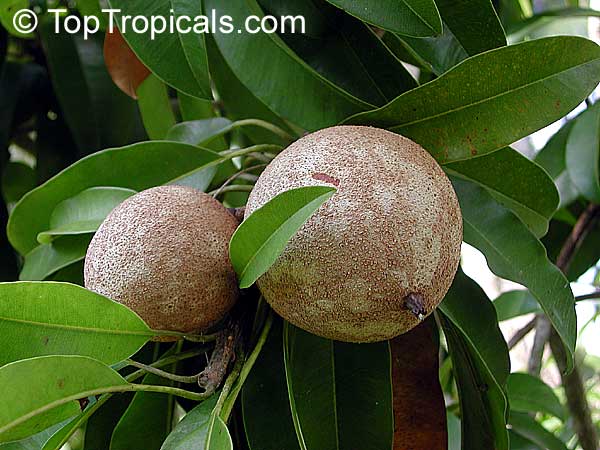
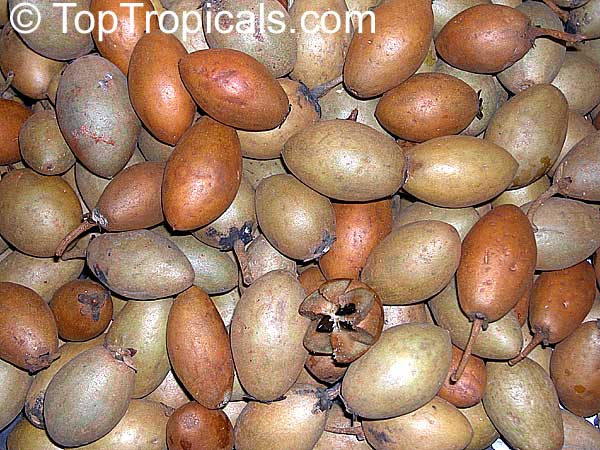
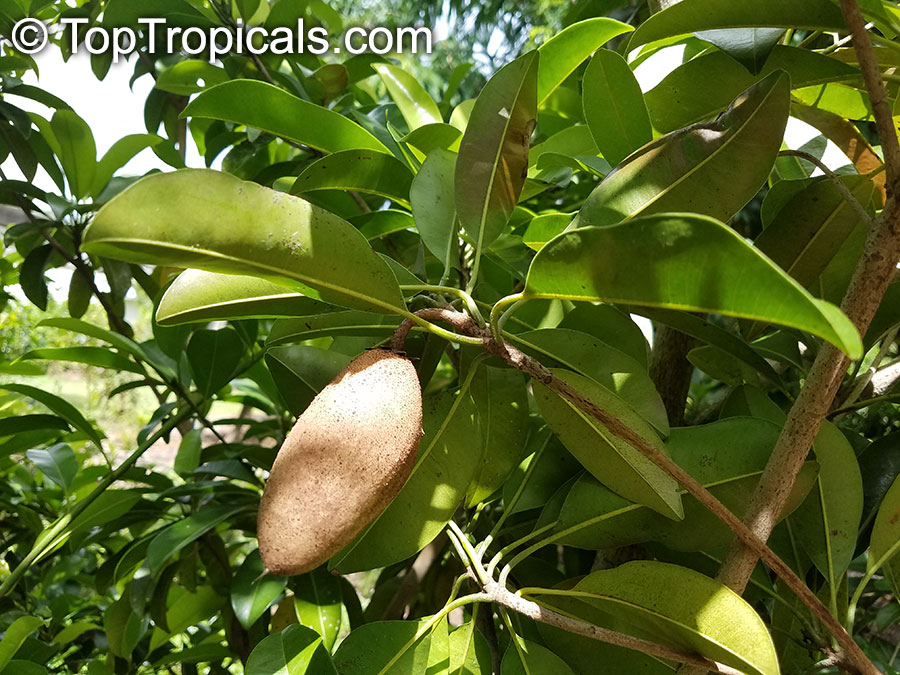
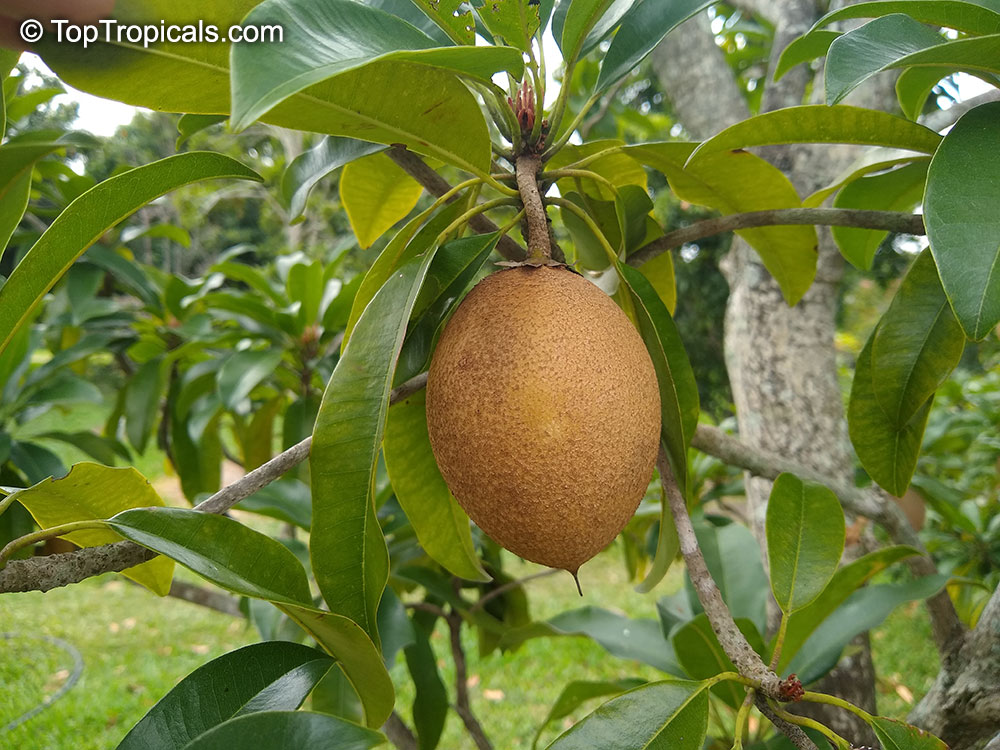
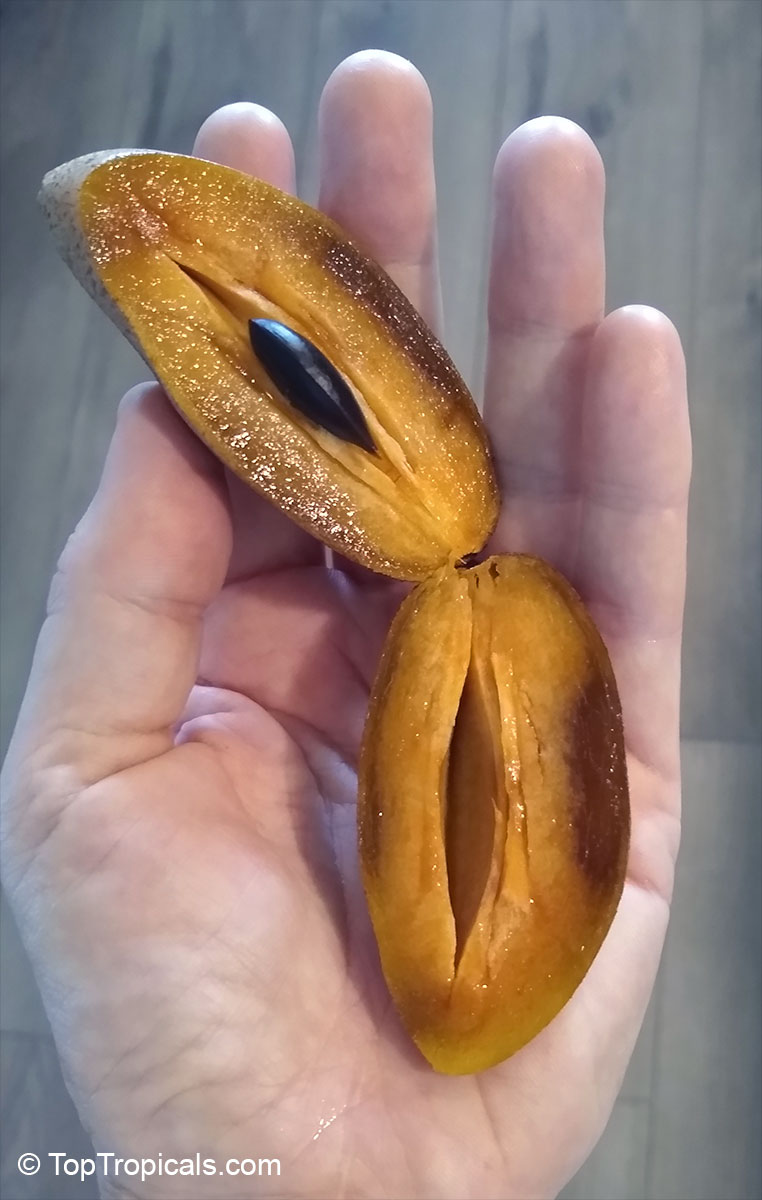
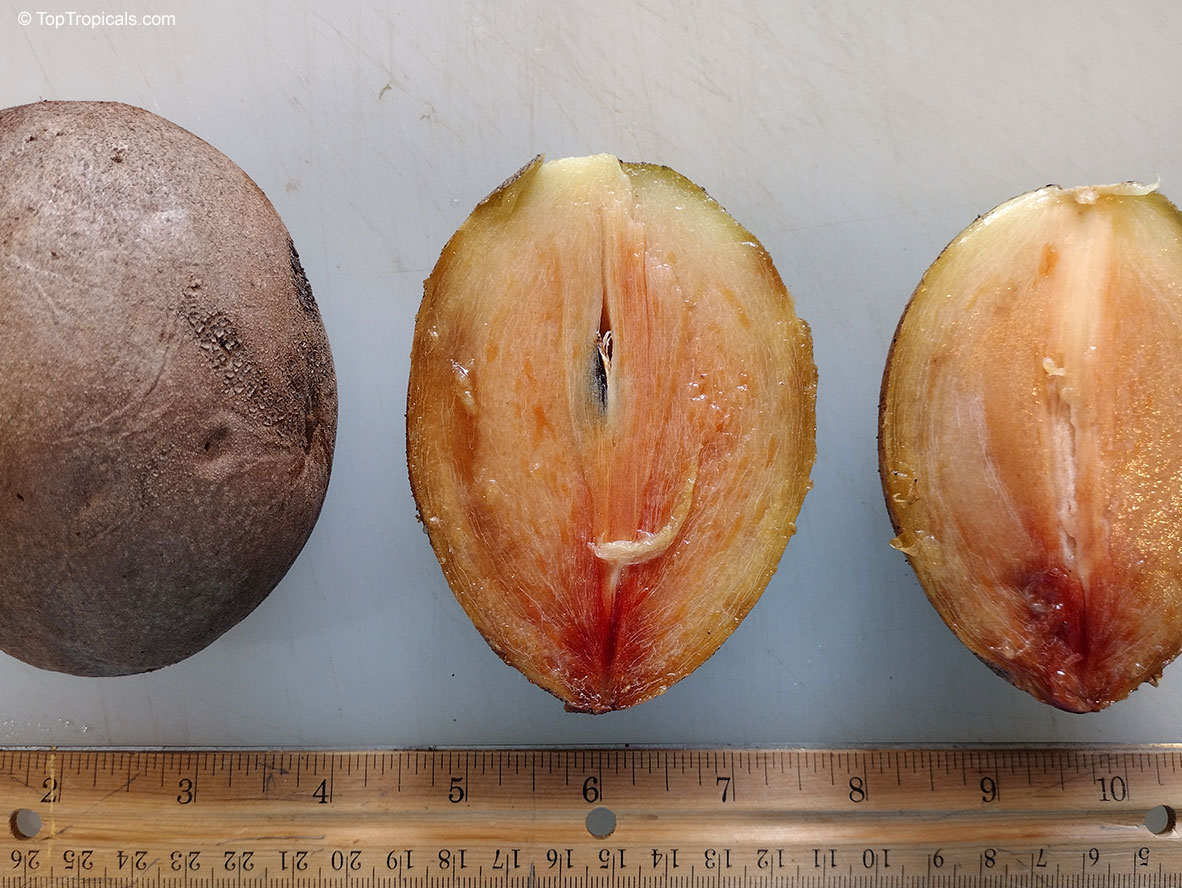
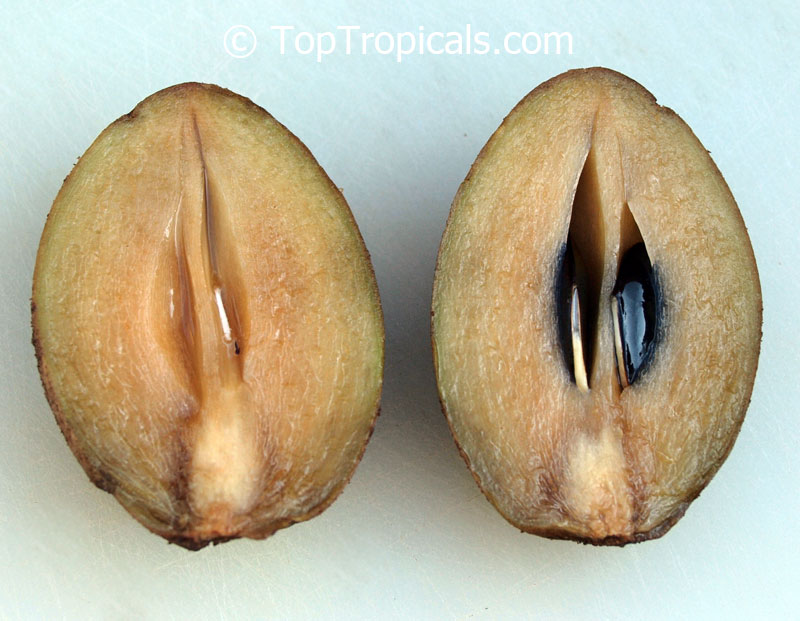
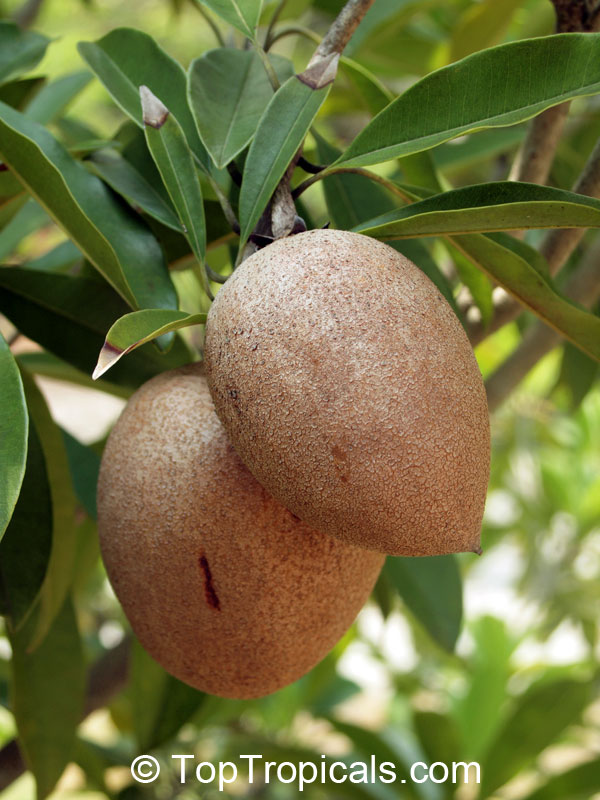
Sapodilla is a fairly slow-growing, long-lived medium-size tree, upright and elegant, dense and distinctly pyramidal, with thick glossy green leaves. Flowers are small and bell-like, borne on slender stalks at the leaf bases. The fruit has gray-brown rough textured skin and pinkish-brown, moist, soft and delicious flesh that tastes like a pear soaked in brown sugar. Each fruit has a few hard, black seeds that can be easily separated from the flesh. There is great variation in the size and form of the fruit, from almost round and large, to small and elongated. Numerous varieties and hybrids have been selected throughout the world. Sapodilla trees fruit prolifically, at frequent intervals throughout the year. In the tropics, some cultivars bear almost continuously. The fruits mature 4 to 6 months after flowering.
Most often eaten fresh. After the peel is removed, the fruit is sliced into pieces which are often carved into decorative shapes.
Sapodilla fruit is usually cut in half and the flesh is eaten with a spoon. It is an ideal dessert fruit as the skin, which is not eaten, remains firm enough to serve as a "shell". The flesh may be scooped out and added to fruit cups or salads. A dessert sauce is made by adding orange juice, and topping with whipped cream. Sapodilla flesh may also be blended into an egg custard mix before baking. The fruit is sometimes fried or stewed with lime juice or ginger. Mashed sapodilla pulp can be added to pancake batter and bread mix before baking. Cooking with sugar changes the brown color of the flesh to a pleasing red.
Sapodilla wine is also very good. Young leafy shoots are eaten raw or steamed with rice in Indonesia, after washing to eliminate the sticky sap.
A major by-product of the sapodilla tree is the gummy latex called "chicle", containing 15% rubber and 38% resin.
The plant grows naturally in the calcareous marl and disintegrated limestone, and is well adapted to Florida soils; it flourishes also in other types of soil, from deep, loose, organic soil, to loam, light clay, sand or even gravel, but requires excellent drainage. It is strong, wind-resistant, highly drought-resistant, and can stand salt spray. In India, brackish or saline water is sometimes used to reduce vegetative growth and promote fruiting. Commercially grove trees receive no watering, although irrigation in dry seasons will increase productivity.
Unlike most of tropical fruit, Sapodilla seeds remain viable for several years if kept dry. They germinate readily but growth is slow and the trees take 5 to 8 years to bear. Grafted trees start fruiting right away.






Recommended Fertilizer: SUNSHINE C-Cibus - Crop Nutrition Booster
SUNSHINE-Honey - sugar booster
Last one
Recommended Fertilizer: SUNSHINE C-Cibus - Crop Nutrition Booster
SUNSHINE-Honey - sugar booster
Recommended Fertilizer: SUNSHINE C-Cibus - Crop Nutrition Booster
SUNSHINE-Honey - sugar booster
This is a hot seller, limited quantities. This is small plant. Demand is very high, these plants sell faster than we can grow them bigger. Please do not order if size matters to you. Contact us before making purchase if you have any questions
Recommended Fertilizer: SUNSHINE C-Cibus - Crop Nutrition Booster
SUNSHINE-Honey - sugar booster
Recommended Fertilizer: SUNSHINE C-Cibus - Crop Nutrition Booster
SUNSHINE-Honey - sugar booster
Recommended Fertilizer: SUNSHINE C-Cibus - Crop Nutrition Booster
SUNSHINE-Honey - sugar booster
This is a hot seller, limited quantities. This is small plant. Demand is very high, these plants sell faster than we can grow them bigger. Please do not order if size matters to you. Contact us before making purchase if you have any questions
Recommended Fertilizer: SUNSHINE C-Cibus - Crop Nutrition Booster
SUNSHINE-Honey - sugar booster
This is a hot seller, limited quantities. This is small plant. Demand is very high, these plants sell faster than we can grow them bigger. Please do not order if size matters to you. Contact us before making purchase if you have any questions
Recommended Fertilizer: SUNSHINE C-Cibus - Crop Nutrition Booster
SUNSHINE-Honey - sugar booster
This is a hot seller, limited quantities. This is small plant. Demand is very high, these plants sell faster than we can grow them bigger. Please do not order if size matters to you. Contact us before making purchase if you have any questions
Recommended Fertilizer: SUNSHINE C-Cibus - Crop Nutrition Booster
SUNSHINE-Honey - sugar booster

Botanical names: Mansoa alliacea, Pseudocalymma alliacea
Common names: Garlic Vine, Cipo de Alho
Family: Bignoniaceae
Origin: Tropical America
USDA Zone: 9-11


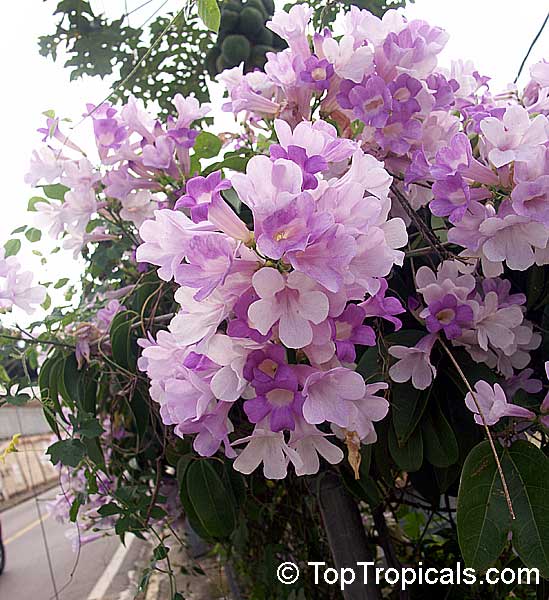
Mansoa alliacea, commonly known as Garlic Vine, Cipo-alho, or Ajo Sacha, is a woody to semi-woody climbing vine in the Bignoniaceae family, native to the Lesser Antilles and tropical South America, including the Amazon Basin. It grows along forest margins and in tropical woodlands, climbing over surrounding vegetation. The compound leaves typically consist of two leaflets and a terminal tendril that helps the vine attach to supports. When crushed, the foliage releases a strong garlic-like odor, although the plant is unrelated to true garlic. Showy clusters of trumpet-shaped flowers open deep lavender to purple with a pale throat, gradually fading to lighter lavender and pinkish shades as they age. Flowers of several colors may therefore appear together, while white-flowered forms with entirely white blossoms are also known in cultivation. Blooming can occur in several flushes during warm weather. The leaves are traditionally used as a garlic-flavored seasoning in parts of its native range.
Mansoa alliacea grows best in full sun to partial shade and fertile, well-drained soil with moderate watering. It is cultivated as an ornamental climber on fences, pergolas, and trellises, and can be maintained in large containers with regular pruning. Best suited to USDA Zones 10-12, it is frost-sensitive; brief temperatures around 30F may be tolerated, but freezing conditions can damage the foliage and stems. Established plants tolerate short dry periods, although regular moisture encourages vigorous growth and flowering.



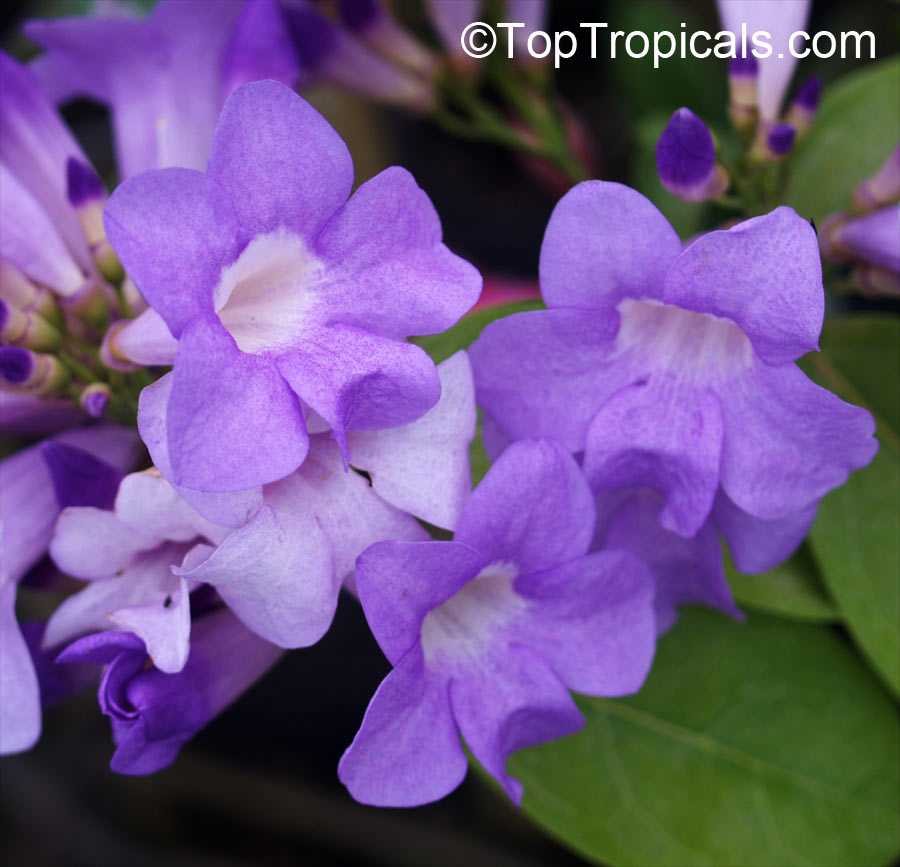
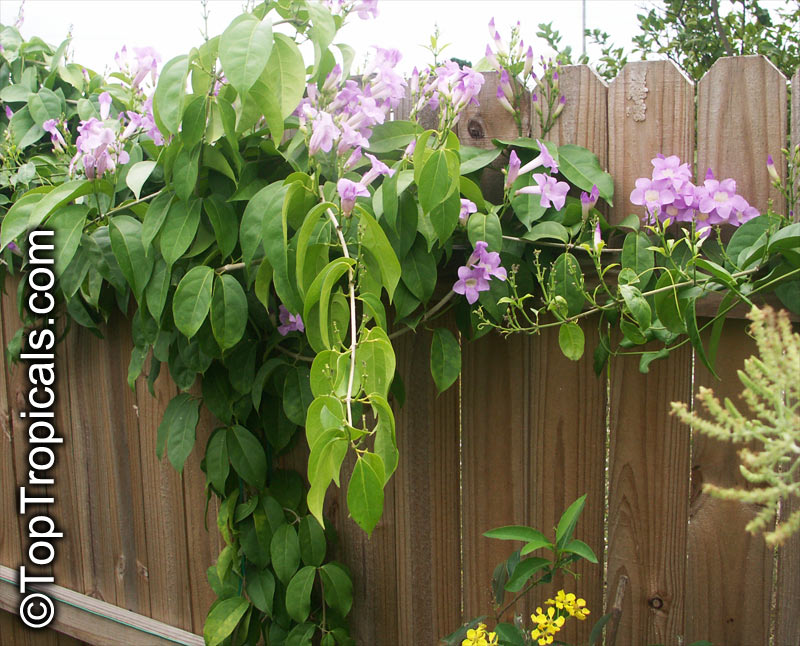
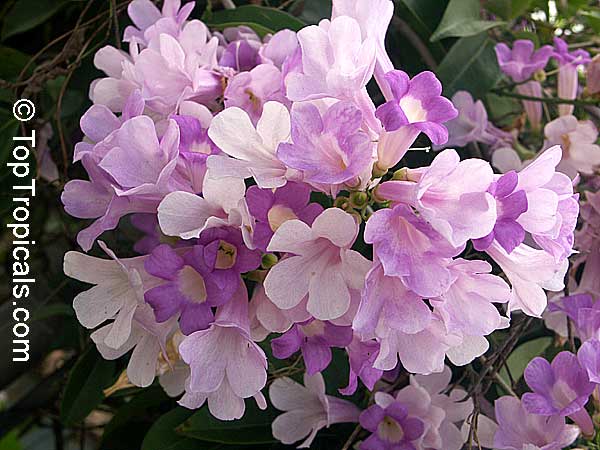
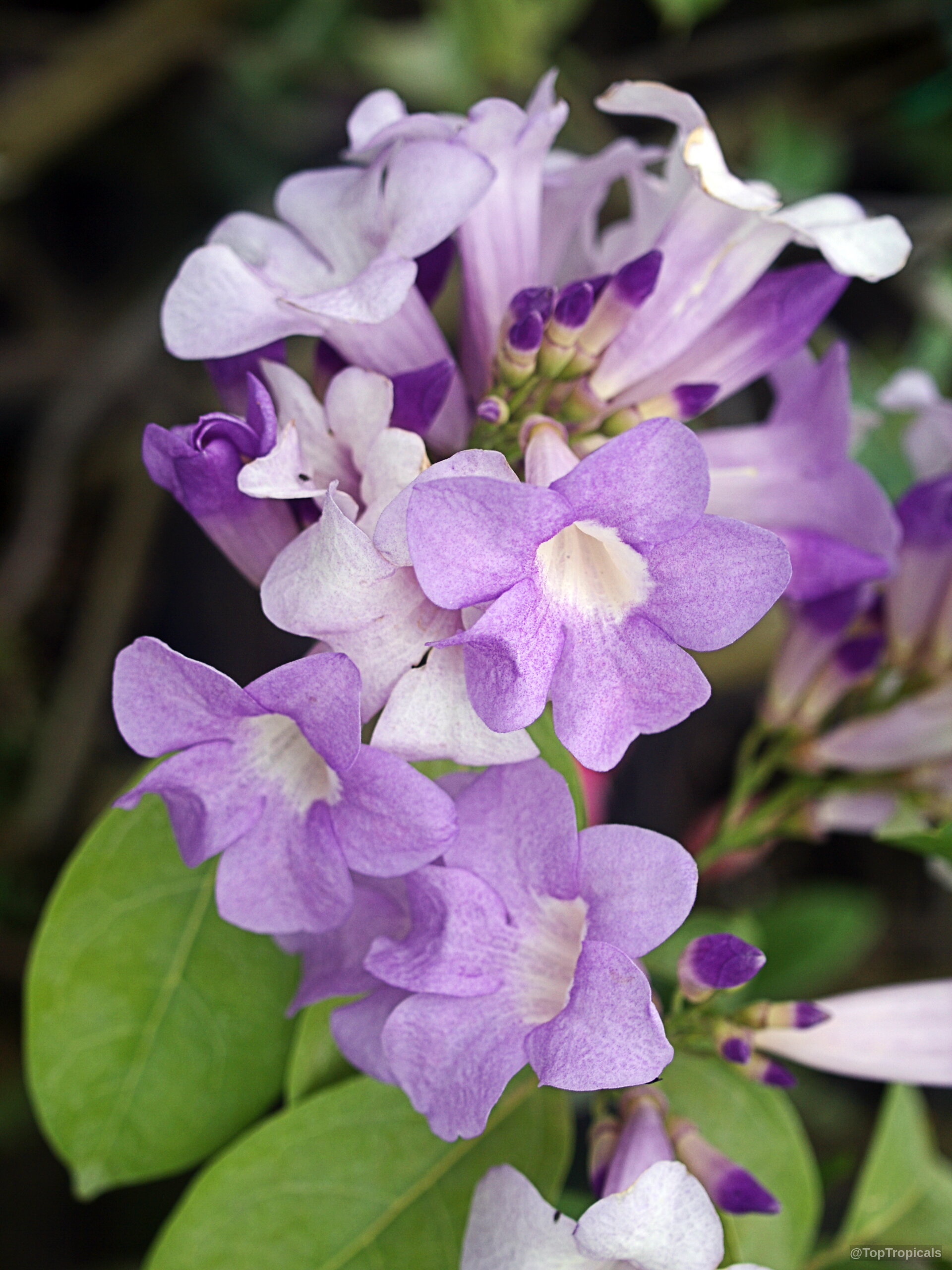


Read Article about Garlic vine.
Watch video: Garlic vine keeps away the vampires!.
Recommended Fertilizer: SUNSHINE Megaflor - Bloom Nutrition Booster
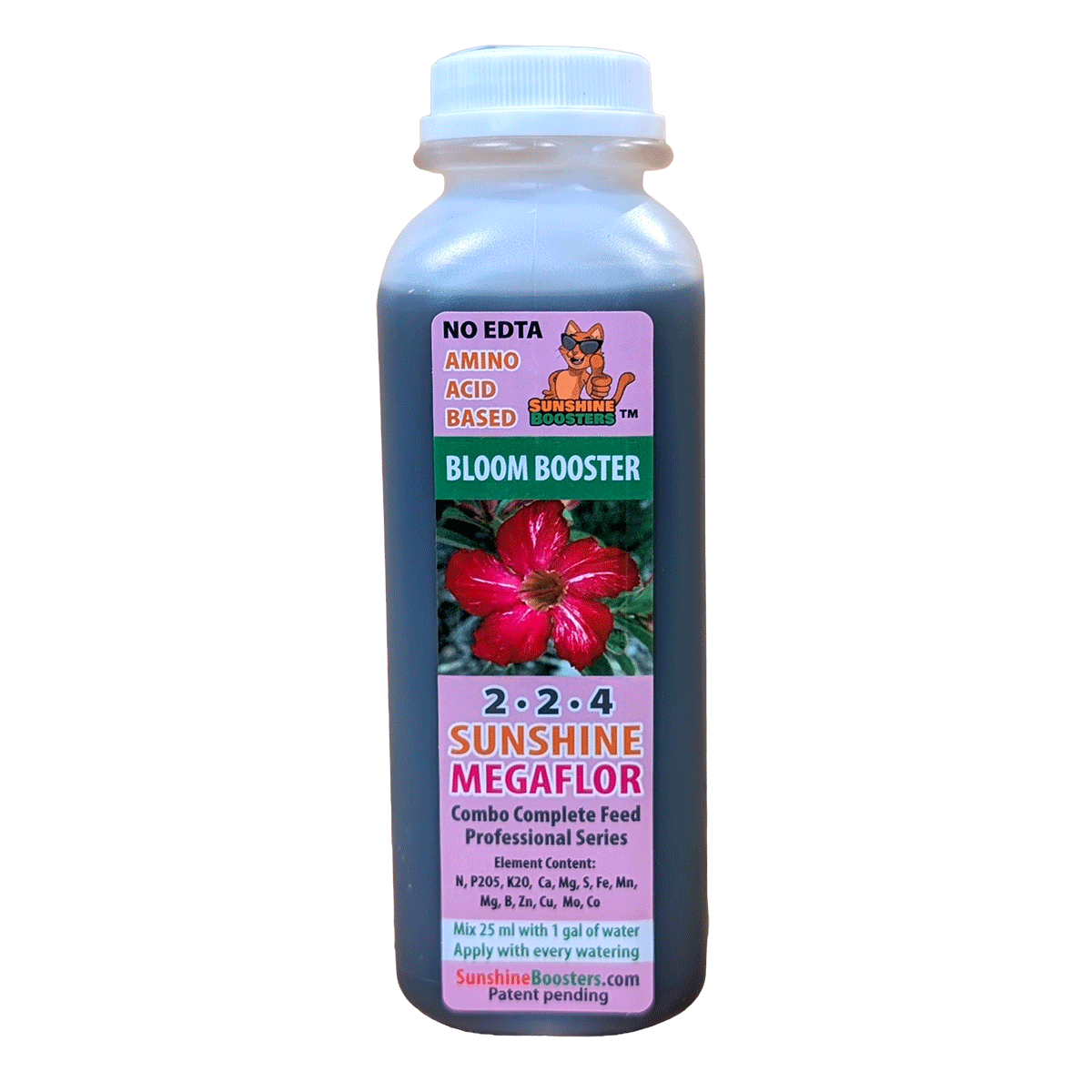 SUNSHINE Megaflor (NPK 2-2-4) - Bloom Booster for every watering. Formulated especially for blooms, to boost flowering, improve flower size and quality, and stimulate pollen development. This is an eco-friendly nutrition booster that can be used for organic gardens. Can be used for daily feeding with every watering. Scientifically-balanced stable formula is organic Amino-acid based and has NO EDTA chelators to eliminate nutrients lockup; it does not affect crop taste. Organic Amino acids greatly enhance stability of all Sunshine boosters and provide excellent absorption of trace elements. Pollinating insects friendly.

Botanical name: Melaleuca armillaris
Common name: Bracelet Honey Myrtle
Family: Myrtaceae
Origin: South Australia
USDA Zone: 9-10

Melaleuca armillaris is a large shrub or small tree that grows to a height of 5-10 feet and is native to South Australia. Its white and off-white flowers attract butterflies and hummingbirds. It is known for being quite salt and drought tolerant, making it an excellent choice for landscaping and seaside communities. When planted in the correct conditions, they can produce a spectacular show of flowers throughout the growing season.
Melaleuca armillaris is an evergreen species with attractive dark, dense foliage and attractive peeling bark. It prefers full sun and moderate water. In cooler regions, it can be grown in a pot or container. It is best to water it deeply during hot summer months, yet avoid at the same time from overwatering. A fertilizer high in nitrogen should also be added to promote leafy foliage growth. Trimming and pruning should be done during the summer months to encourage bushier growth.
This fast-growing shrub can survive in many different conditions and is hardy in the USDA Zone of 9-11. It is an excellent choice for areas where a low growing shrub is required in order to provide privacy and screening. When planted in a sunny garden, it will ensure all-season foliage and spectacular flower display. The pink and white flowers will add to the colorful and beautiful environment of any garden.


Botanical names: Melaleuca cuticularis, Melaleuca abietina
Common name: Saltwater Paperbark
Family: Myrtaceae
Origin: Western Australia
USDA Zone: 9-11


Melaleuca cuticularis is an excellent choice for bonsai due to its unique bark and impressive profile. It grows slowly over time, making it easy to maintain and shape. It matures to a small tree of 10-20 feet in height, with an equally wide spread. The off-white flowers are an attractive adornment, and its oval ornamental foliage provides contrast and interest.
Melaleuca cuticularis is ideally suited to USDA Zones 9 through 11, and is tolerable of both seaside sites and salt environment. This makes it an incredibly versatile choice, allowing it to be grown practically anywhere along the US coast. It is also able to survive temperatures as low as the mid-30s F, though only for a brief period, and so may be suitable as a specimen in colder climates.
For successful cultivation, Melaleuca cuticularis should be placed in full sun or semi-shade and watered moderately, but with extra attention in the summer months. If growing in a pot for colder regions, it is important to bring the pot inside for winter and to ensure the soil is well-draining to avoid root rot. Repot the plant annually and use a high-quality soil mix. If you are watering from underneath, avoid standing water in the saucer.


Botanical name: Melaleuca elliptica
Common names: Granite Bottlebrush, Granite Honey Myrtle
Family: Myrtaceae
Origin: Australia
USDA Zone: 8a-11

Melaleuca elliptica is a shrub with pale grey, papery bark that peels in thin strips. Its leaves are arranged in alternating pairs (decussate), each pair at right angles to the ones above and below so that there are four rows of leaves along the stems. The leaves are elliptic to egg-shaped with the ends usually rounded.
Melaleuca elliptica can withstand salt winds in dry coastal areas and makes a good screen against salt spray. It is drought and frost hardy to about 20 degrees F. once established and can hold up to salt laden winds along the coast, making it a good first exposure screen to protect other plants in beachside plantings.


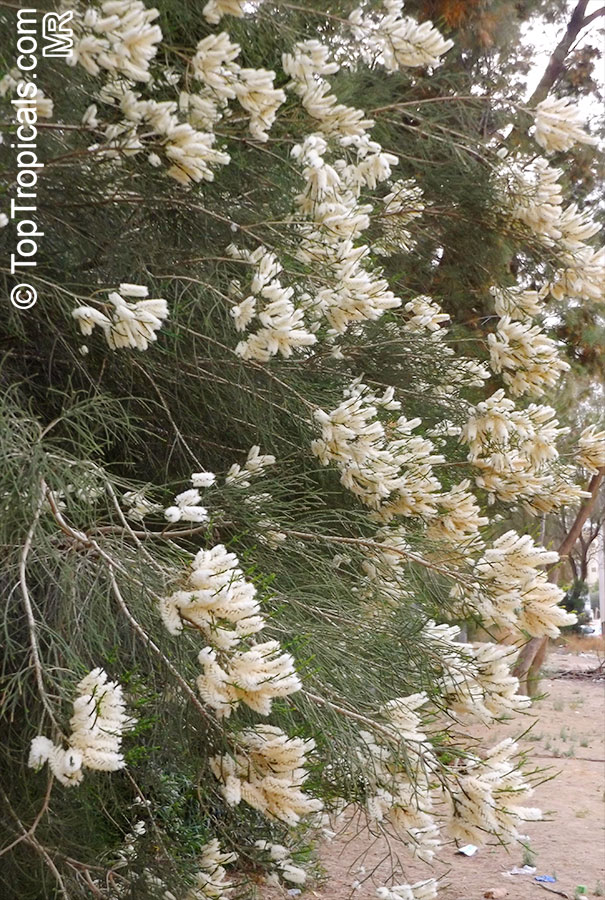
Botanical name: Melaleuca huegelii
Common name: Chenille Honey-myrtle
Family: Myrtaceae
Origin: Australia
USDA Zone: 9-10


Botanical names: Memecylon ovatum, Memecylon edule var. ovatum
Common names: Ironwood Tree, Phlong Kin Luuk, Delek Air
Family: Melastomataceae
Origin: Southeast Asia
USDA Zone: 10-11

A large shrub or small tree, up to 8-14m tall with amazing bright blue flowers that look almost unreal. As the petals are shed, the sands below are dusted lilac.Initially yellow fruits turn red and finally black. M. ovatum is sometimes regarded as a variety of Memecylon edule Roxb., but the latter species differs in having pink flowers, yellow fruits turning black, and small leaves. However, the species are very close. Probably the leaves contain a lot of aluminium as is commonly found in Melastomataceae. M. ovatum is very common on rocky and sandy shores. Leaves and roots are used as a medicine. In some sources Memecylon umbellatum is indicated as synonim of Memecylon ovatum.


| Prev | Next | |
Use link to repeat this search:
https://toptropicals.com/cgi-bin/garden_catalog/cat.cgi?search_op=and&keyword_op=and&language=e&number=10&no_change_lang=1
&v1=sea&user=tt&sale=1&first=0