Irritating plant - Plant Encyclopedia Results (Page 5)
| Number of plants found: 210 |  | Prev | Next | 
|
Go to page: | 1 | 2 | 3 | 4 | 5 | 6 | 7 | 8 | 9 | Last |
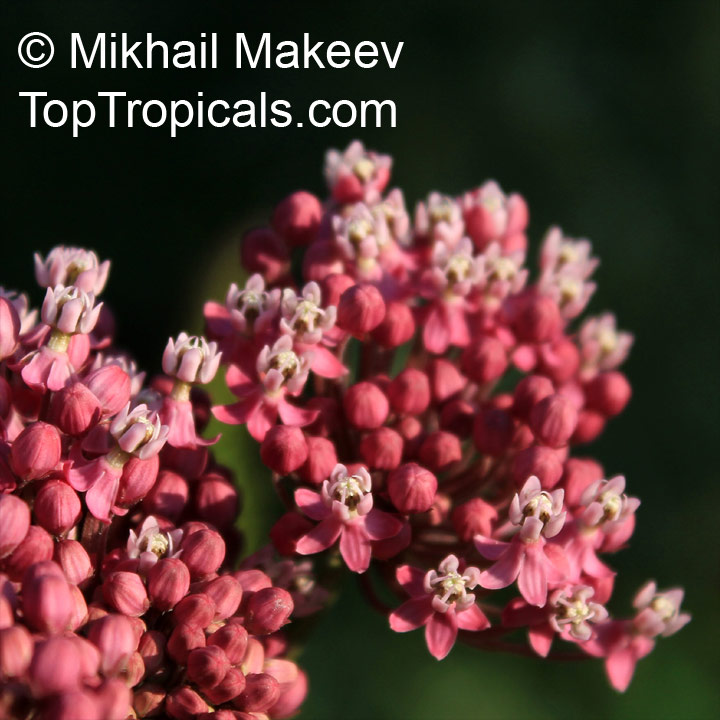
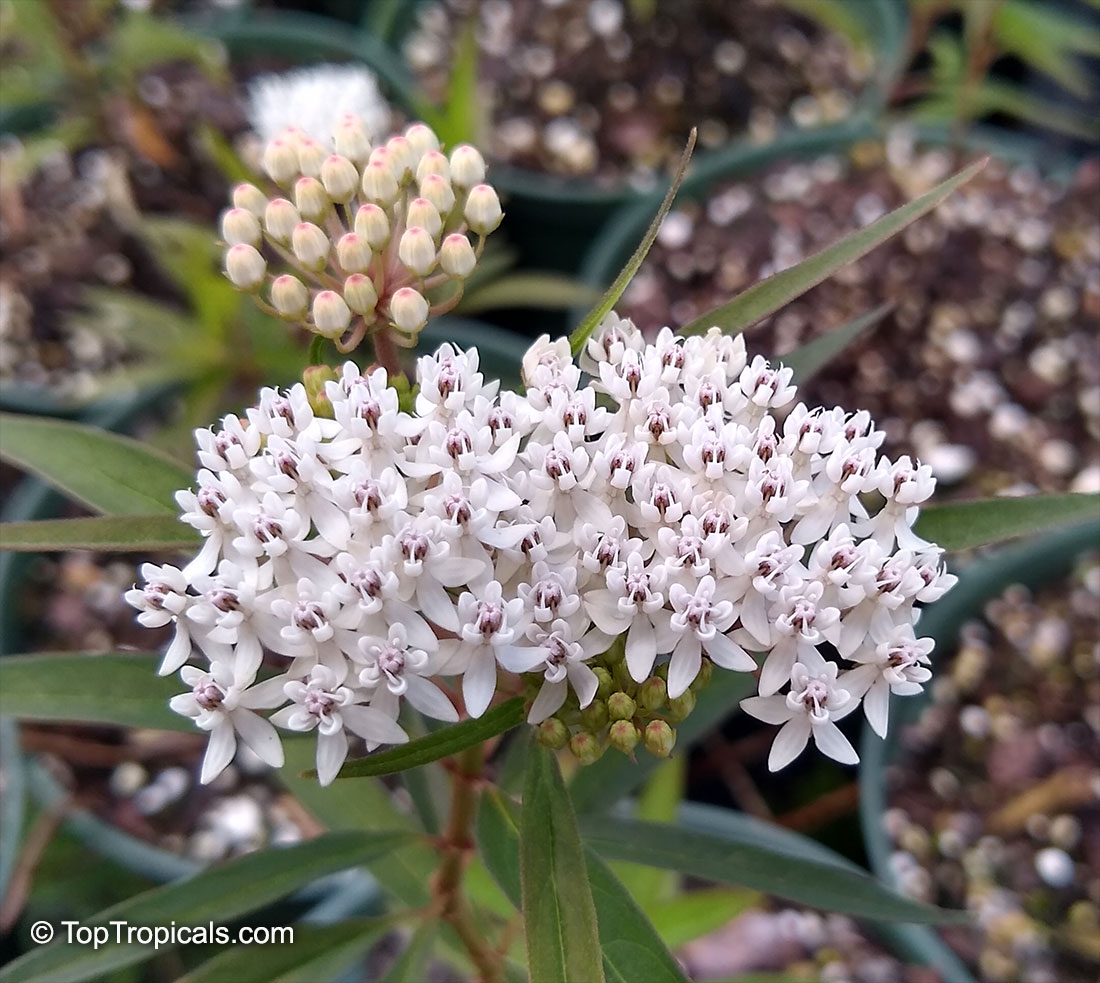
Botanical name: Asclepias incarnata
Common names: Swamp Milkweed, Rose Milkweed, Swamp Silkweed
Family: Apocynaceae (Formerly:Asclepiadaceae)
Subfamily: Asclepiadoideae
Origin: North America
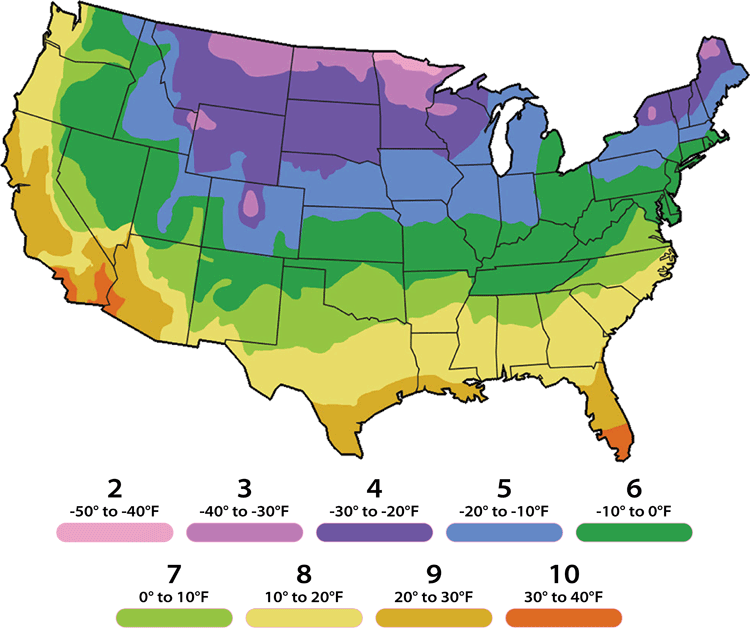
USDA Zone: 3-10


Swamp milkweed (Asclepias incarnata) is a drought-tolerant plant with a strong taproot, making it ideal for areas with limited water. It can thrive in pots with good drainage and regular watering, and appreciates occasional light fertilization and weed-free conditions.
This Missouri native plant grows well in grows in USDA zones 9-11. It is clump-forming and grows 3-4 feet tall on branching stems. It is commonly found in swamps, river bottomlands, and wet meadows in the state. Its small, fragrant flowers are pink to mauve and have five reflexed petals and an elevated central crown. These flowers appear in tight clusters at the ends of the stems in the summer and are a popular nectar source for butterflies, particularly the Monarch butterfly. The plant also produces attractive seed pods, which split open to release silky-haired seeds when ripe.
The genus name of swamp milkweed honors the Greek god of medicine, Asklepios, while the specific epithet refers to the flesh-colored flowers. This plant is easy to grow in full sun and tolerates average, well-drained soils in cultivation, despite being native to swamps and wet meadows. Its deep taproots make it best left undisturbed once established, and its foliage may take longer to emerge in the spring. Swamp milkweed is suitable for sunny borders, stream or pond banks, and butterfly gardens, and it is a good plant for moist areas in the landscape. However, it is important to note that its stems exude a toxic milky sap when cut.
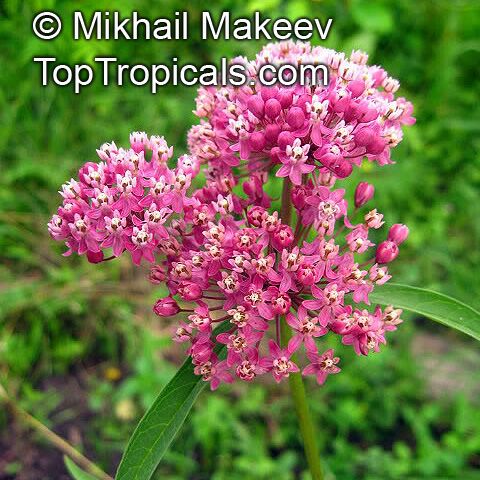
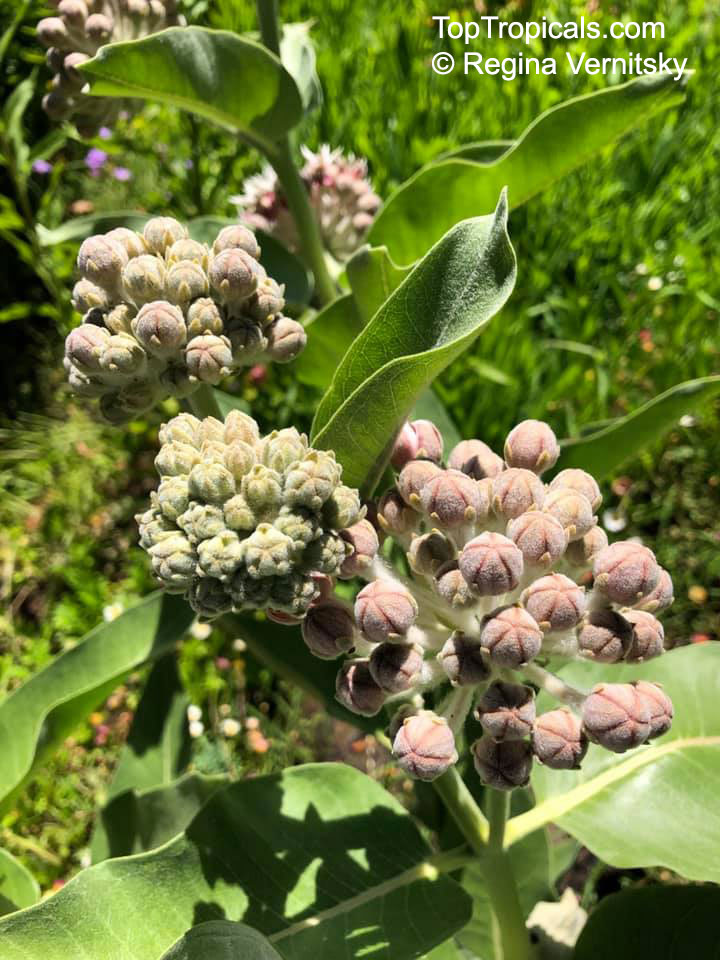
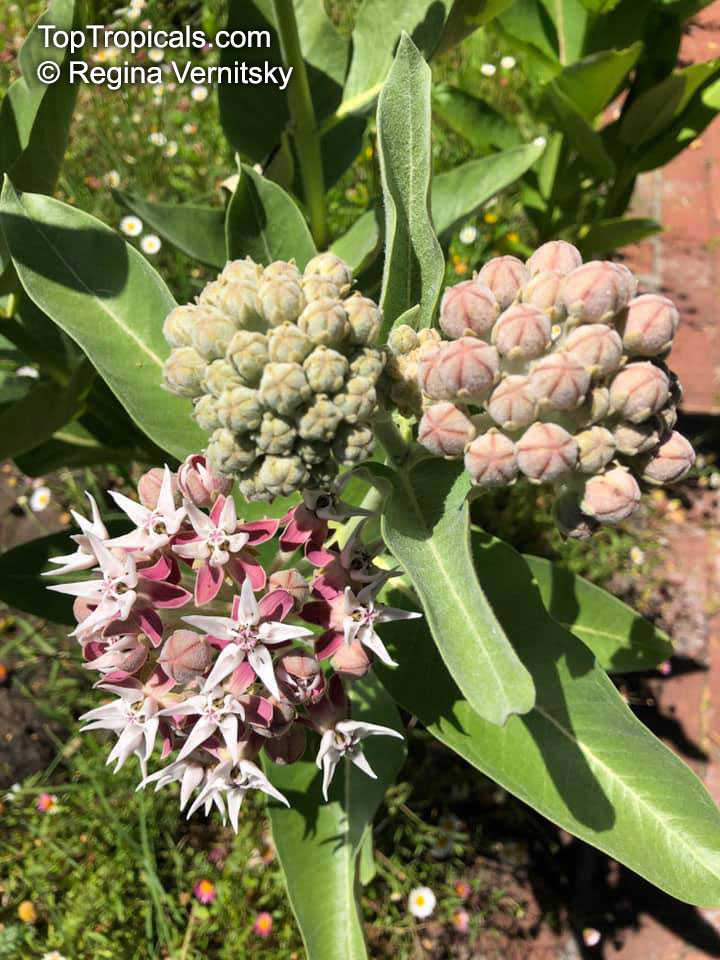
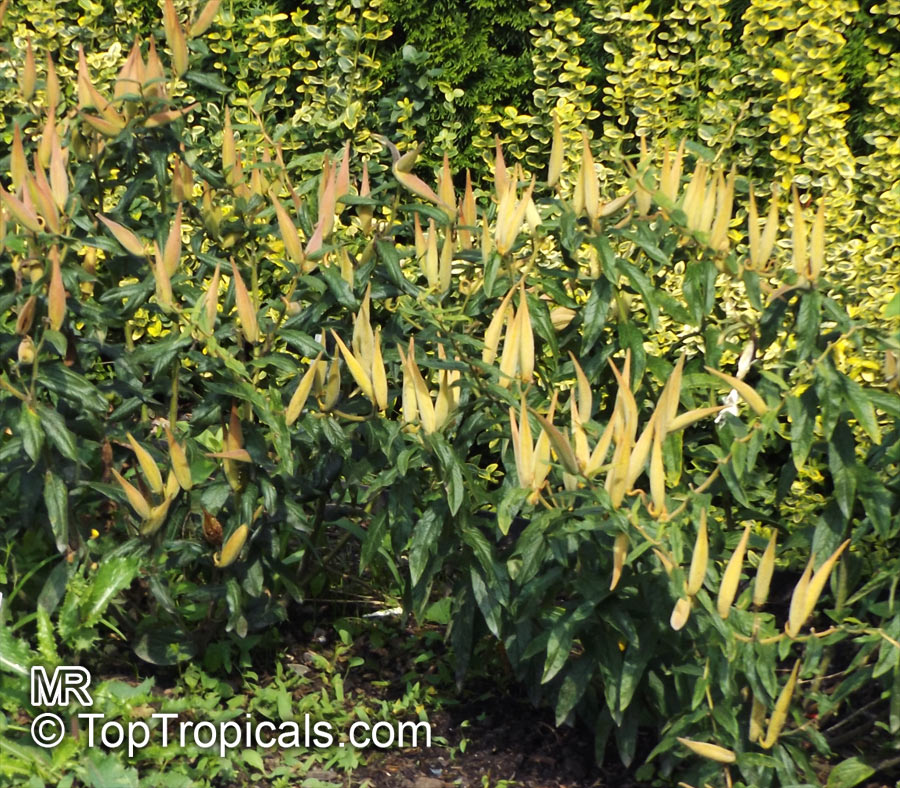
Botanical name: Asclepias sp.
Common name: Milkweed
Family: Apocynaceae (Formerly:Asclepiadaceae)
Subfamily: Asclepiadoideae
Origin: Americas
USDA Zone: 3-10


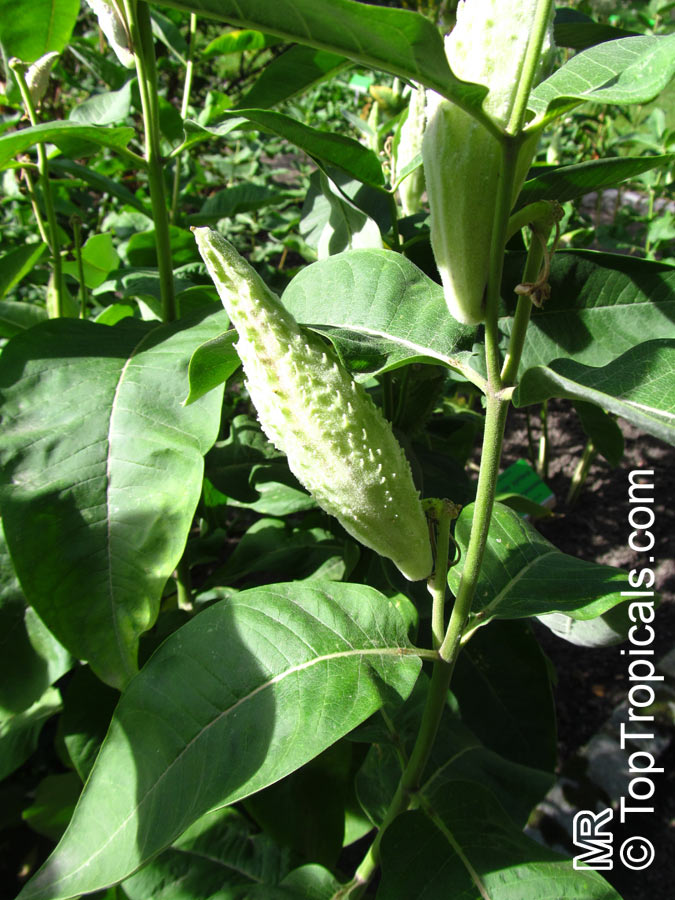
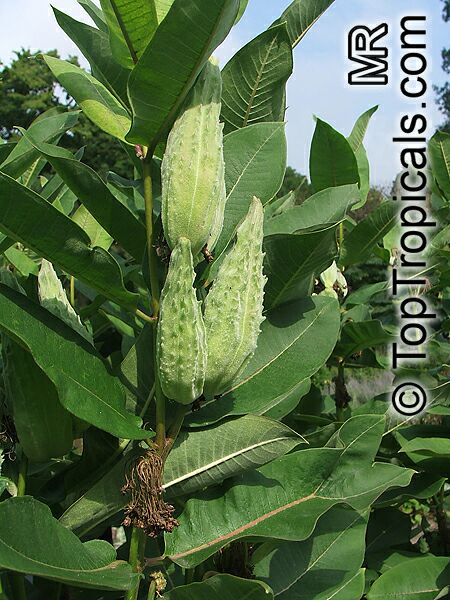
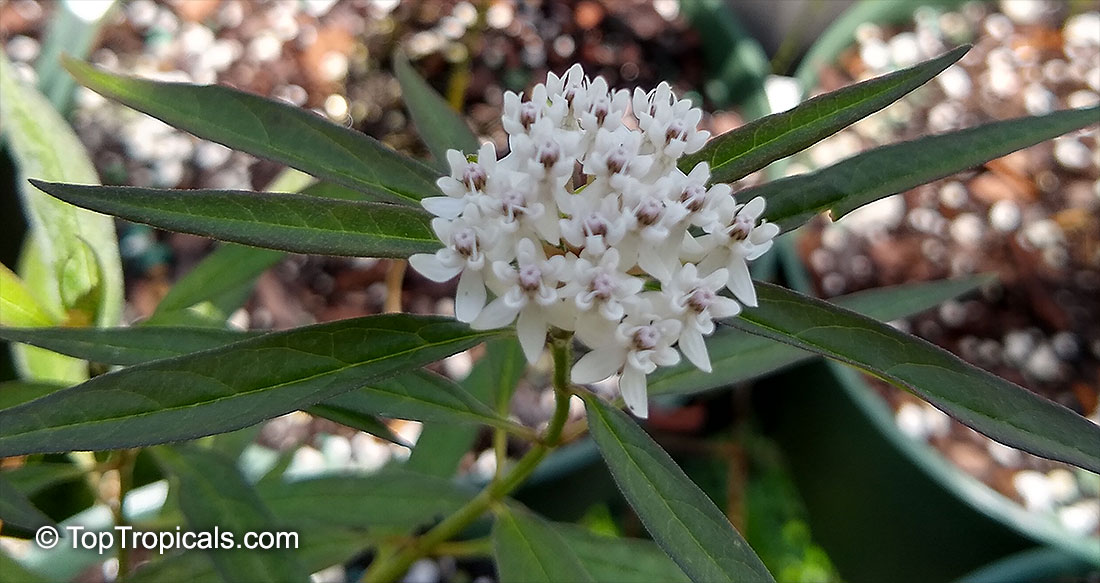
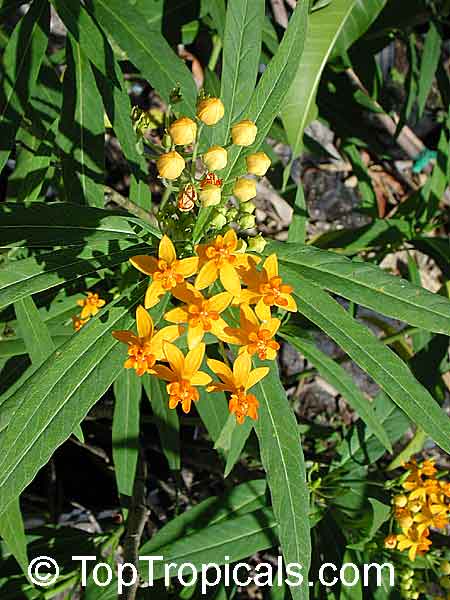
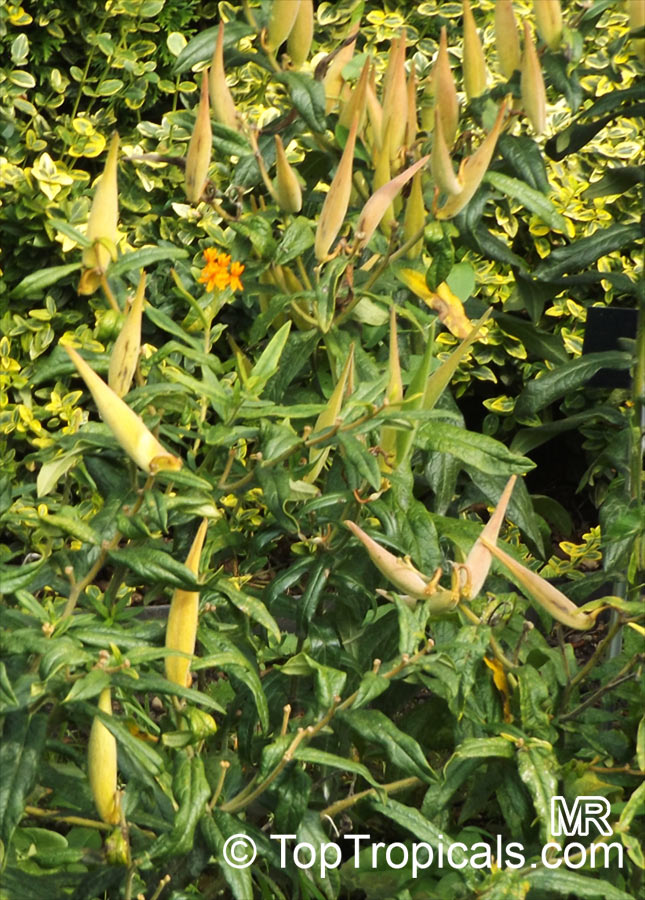
Flowers of plants in this genus are produced in umbrel-like clusters with numerous small flower groups to 1 inch wide. The flowers are followed by green fruits that ripen to yellowish-brown and split open to reveal their seedy contents.
Milkweeds are known to be toxic to livestock and domestic fowl, but usually under conditions of forced ingestion of large quantities through mismanagement or drought.
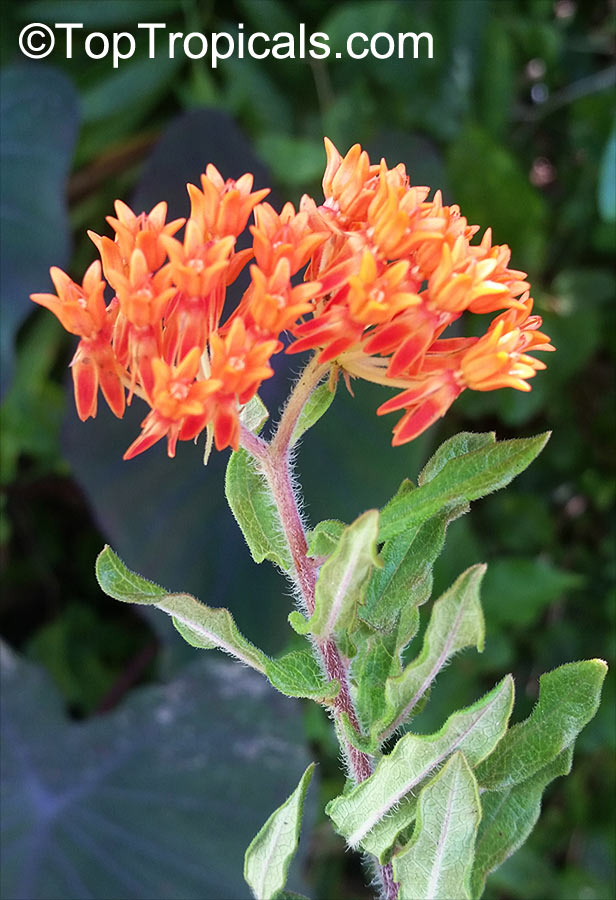
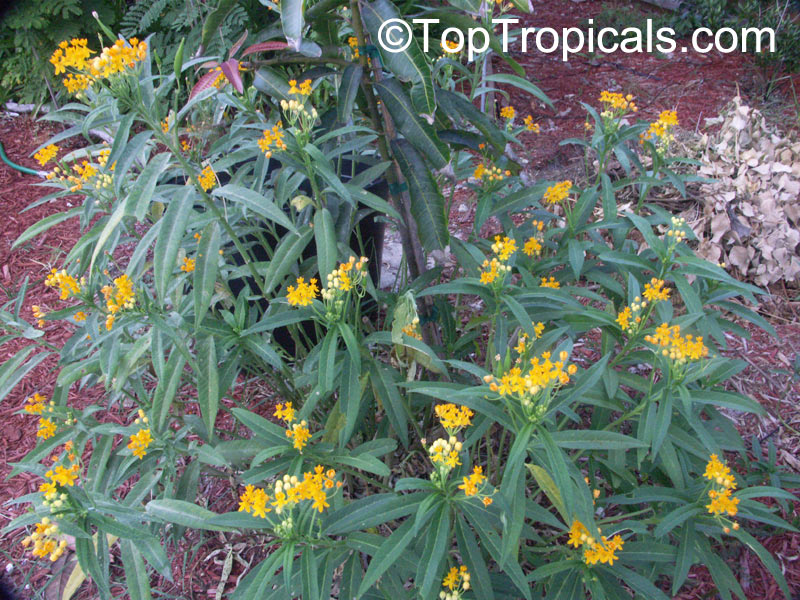
Botanical name: Asclepias tuberosa
Common names: Milkweed, Flame Weed, Butterfly Weed, Gay Butterflies, Pleurisy Root
Family: Apocynaceae (Formerly:Asclepiadaceae)
Subfamily: Asclepiadoideae
Origin: North America
USDA Zone: 3-9


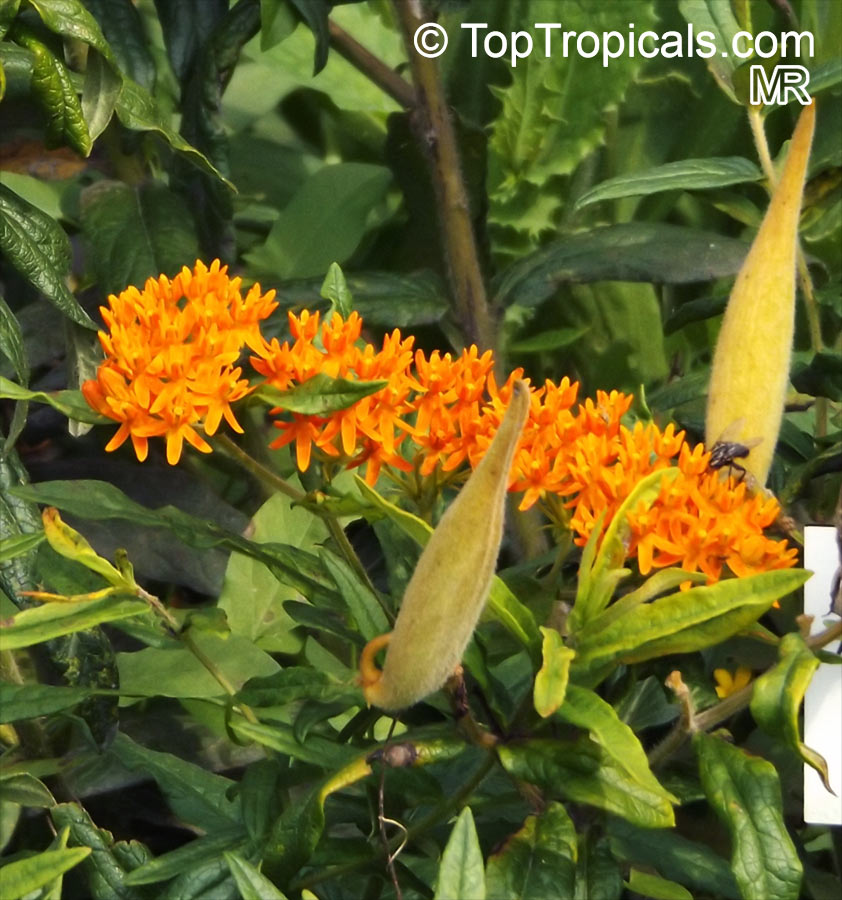
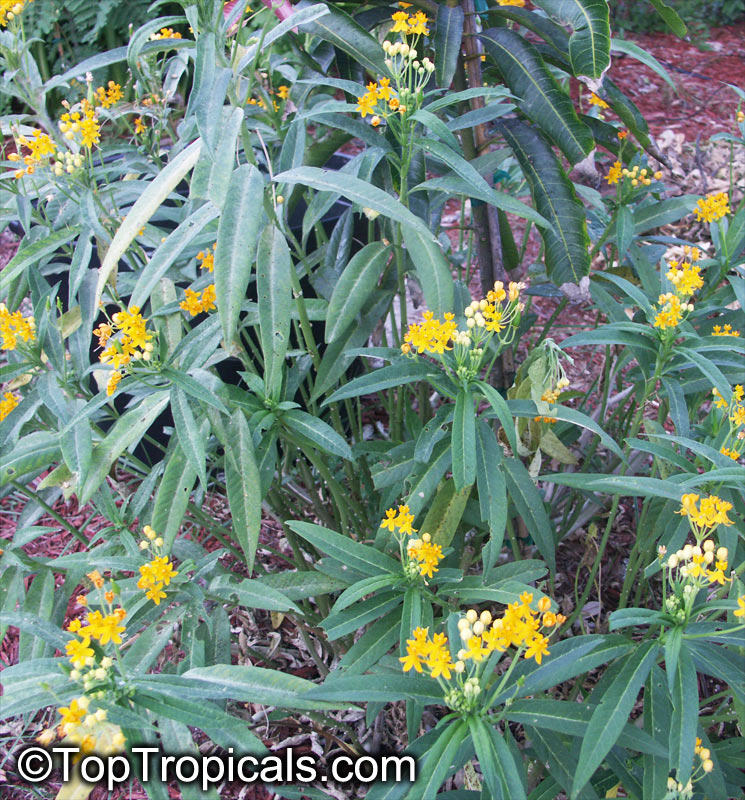
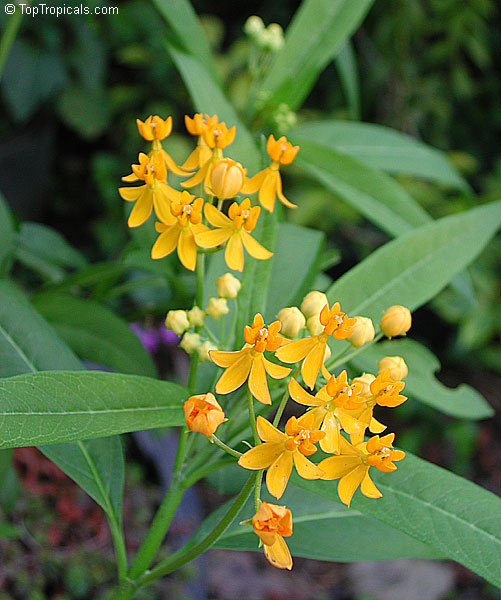
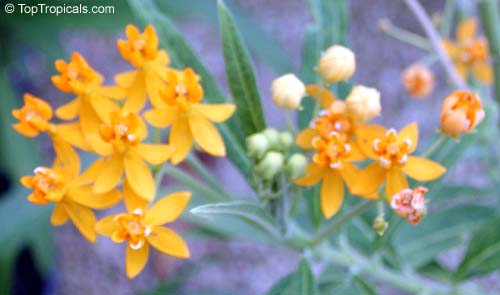
The extremely bright color make it easy to spot. Like most milkweeds the juice is milky white. Long bloom period from late spring throughout the summer. Flowers are a nectar source for many butterflies and leaves are a food source for monarch butterfly larvae (caterpillars). Drought-tolerant. Listed in the U. S. Pharmacopeia in the 19th century the root was once widely used for lung problems such as asthma and bronchitis. Contains cardiac glycosides which are toxic in large amounts.
Botanical name: Brachychiton populneus
Common names: Bottle Tree, Kurrajong
Family: Malvaceae
Subfamily: Sterculioideae
Origin: Eastern Australia
USDA Zone: 9-11


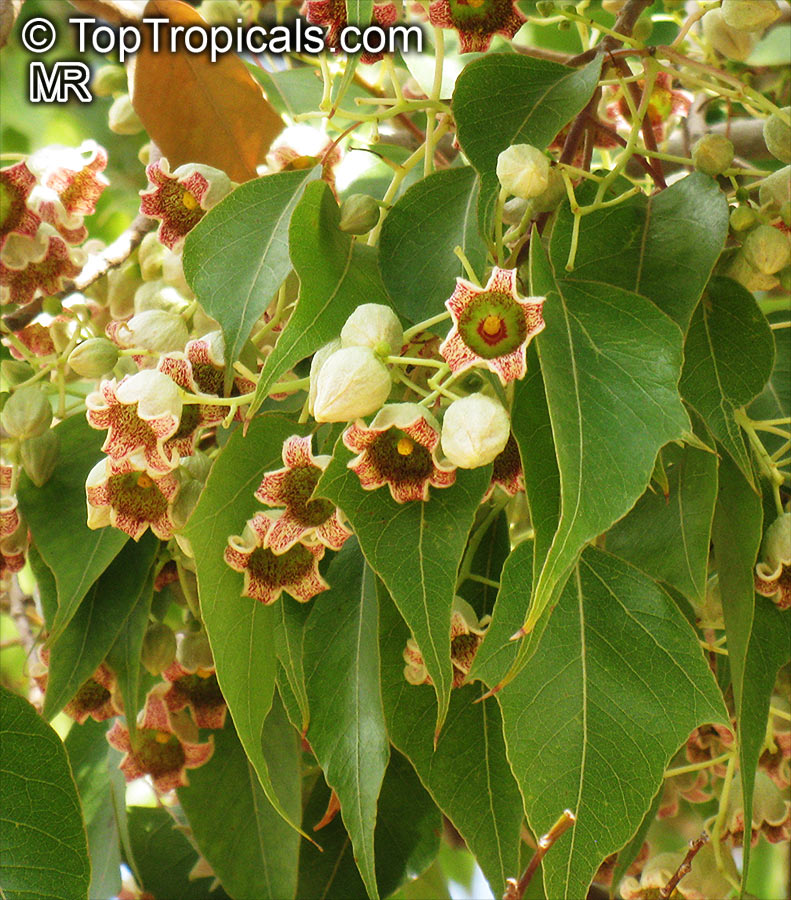
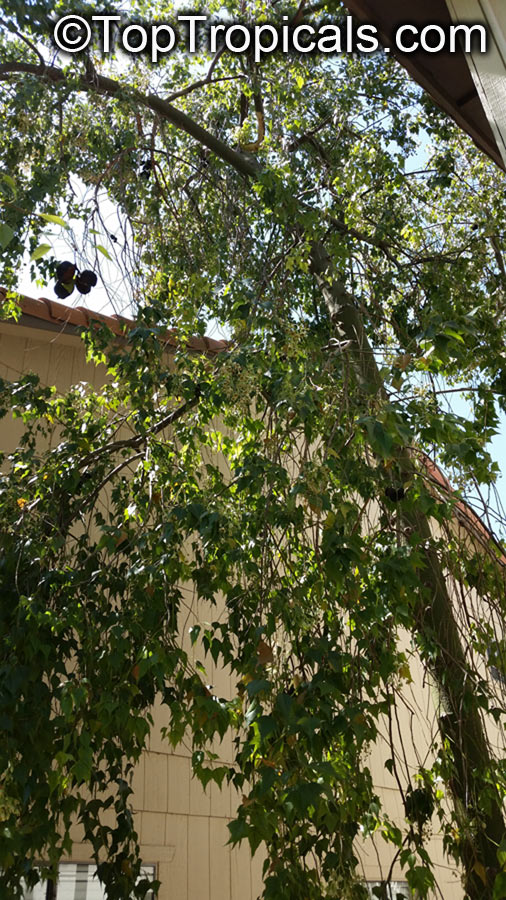
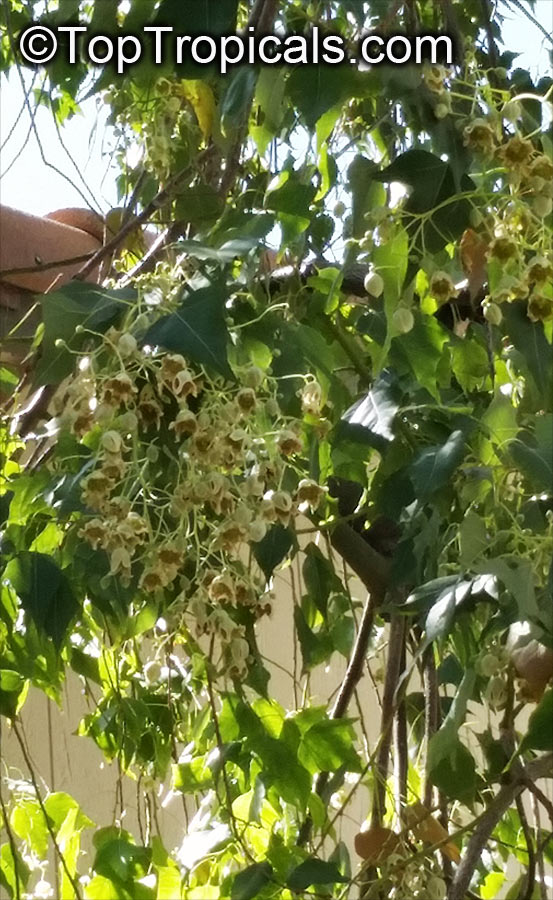
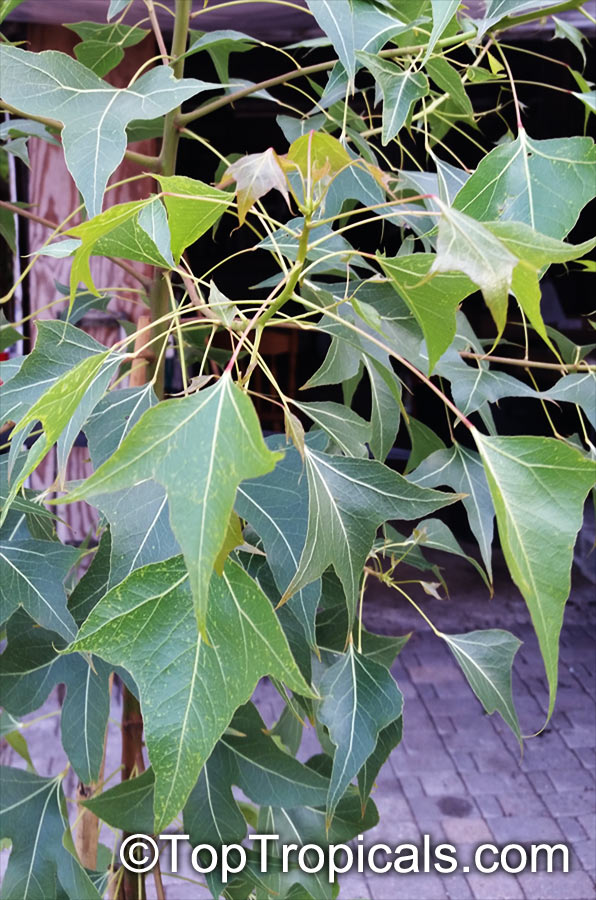
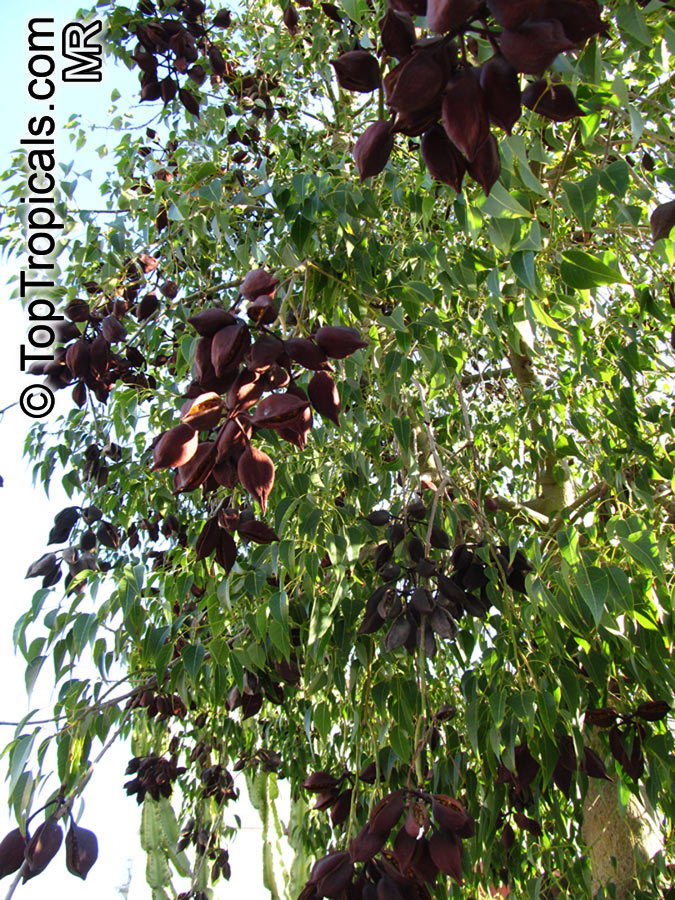
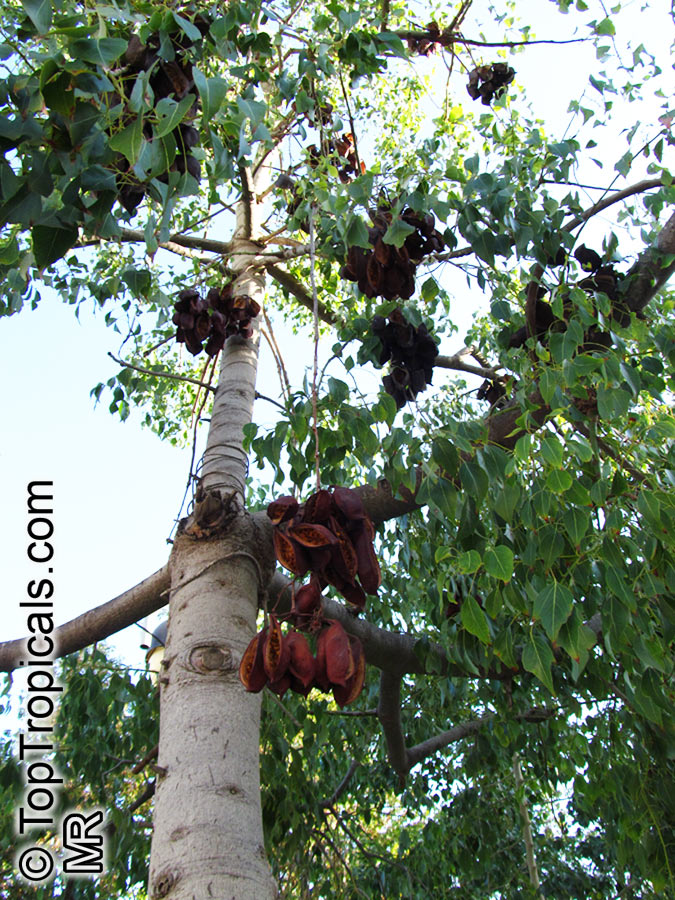
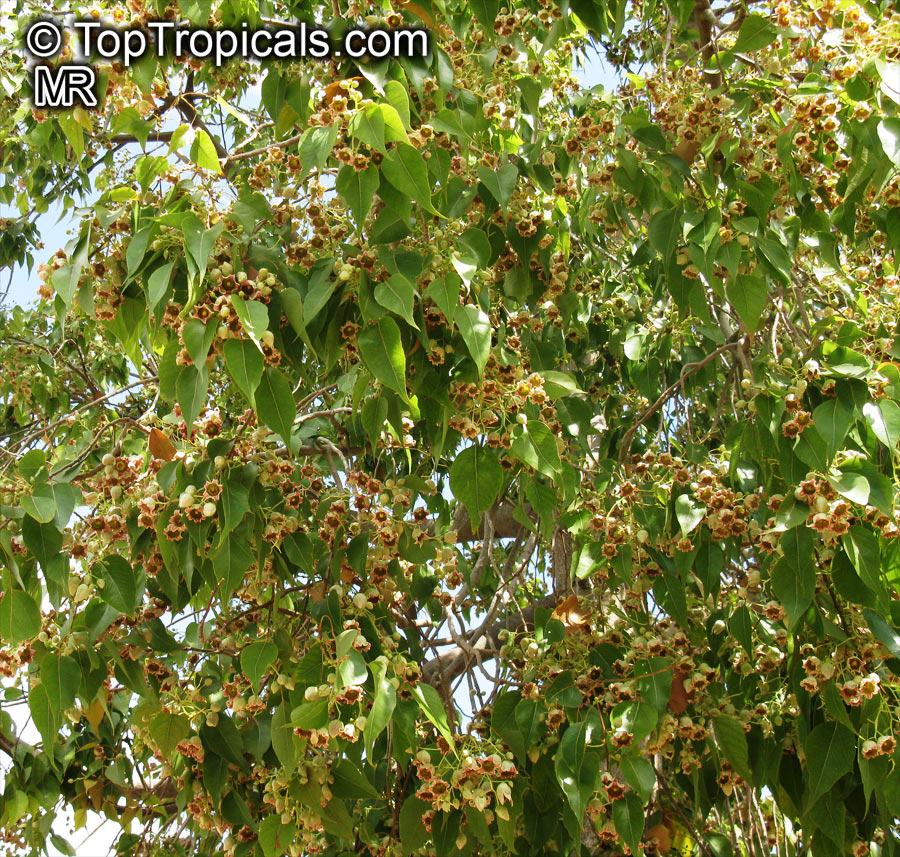
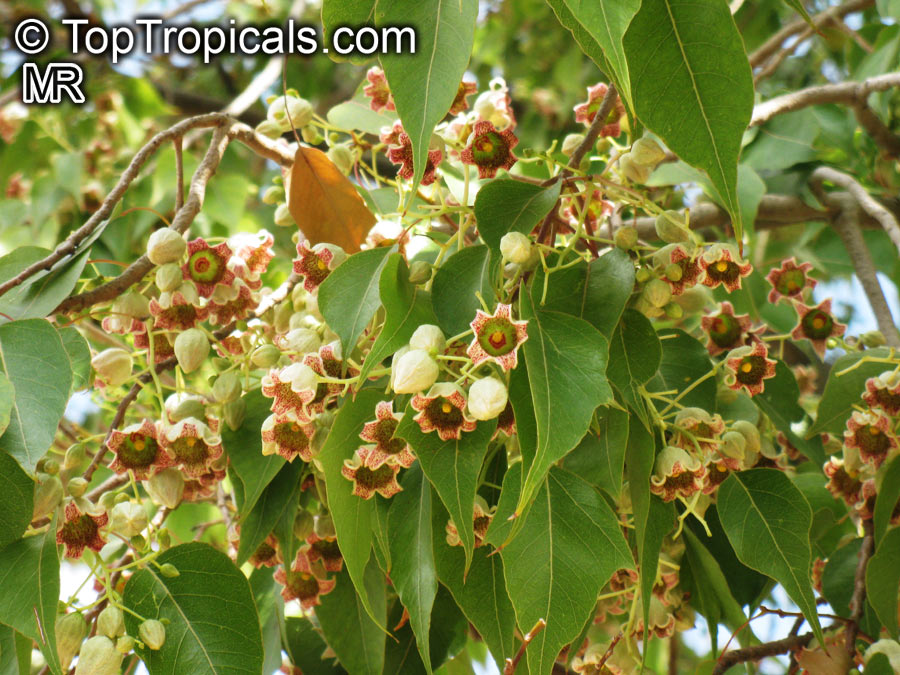
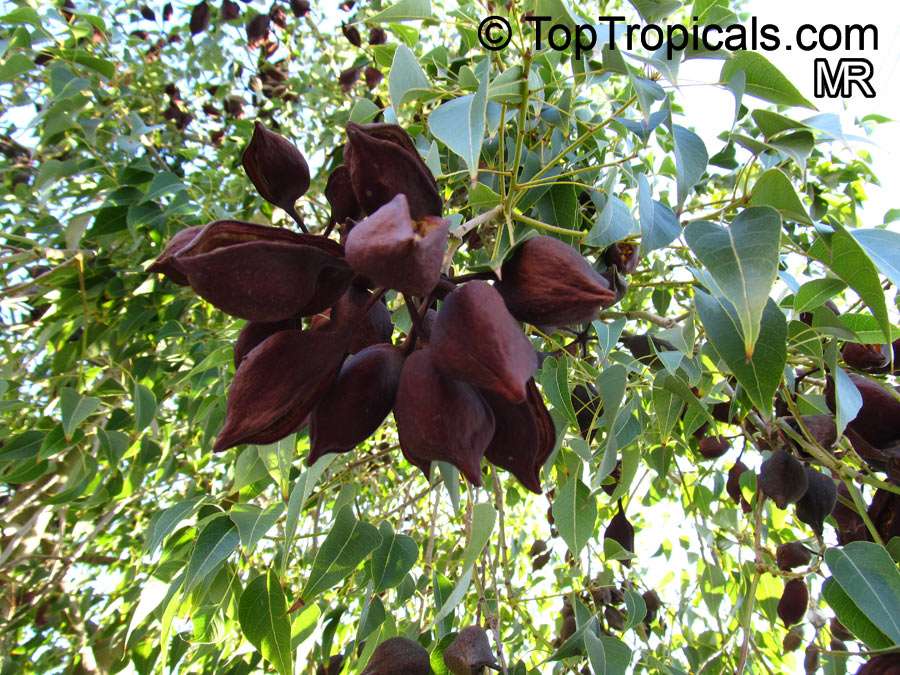
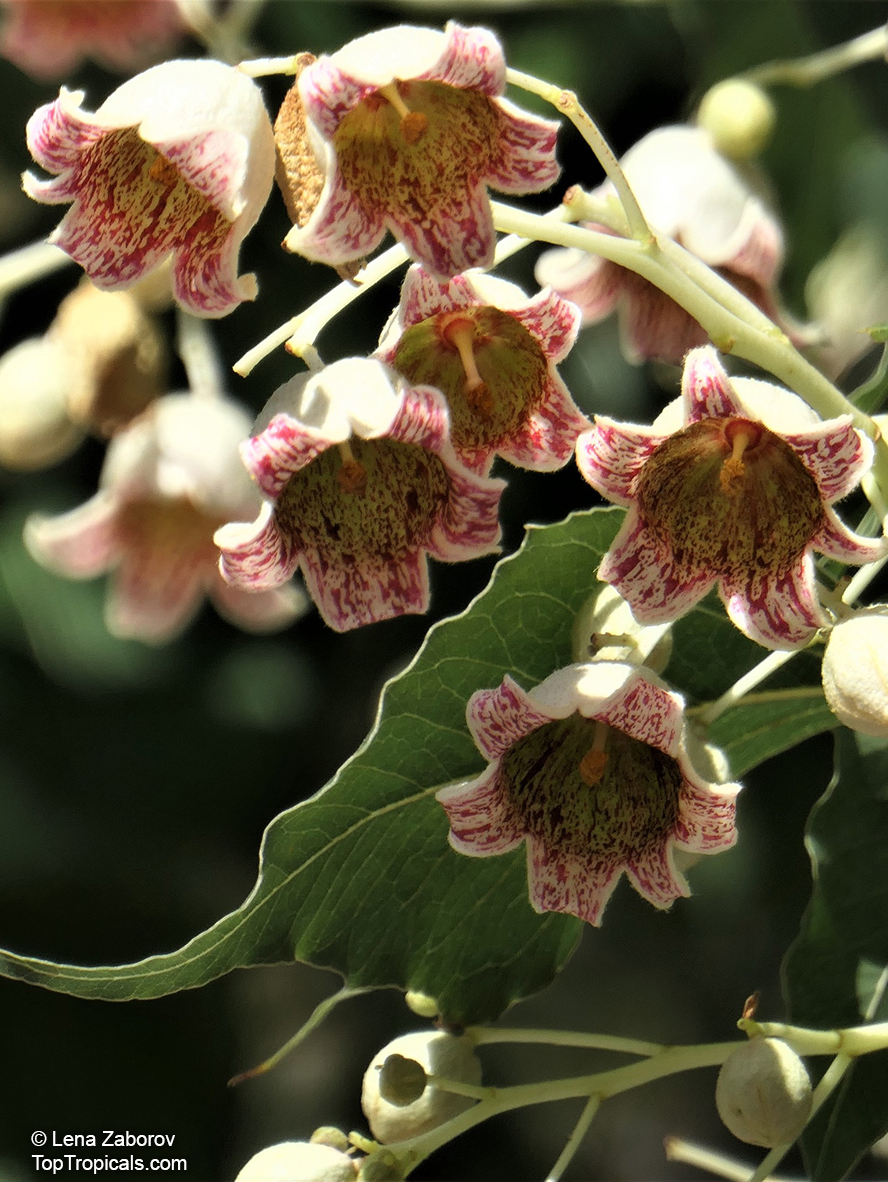
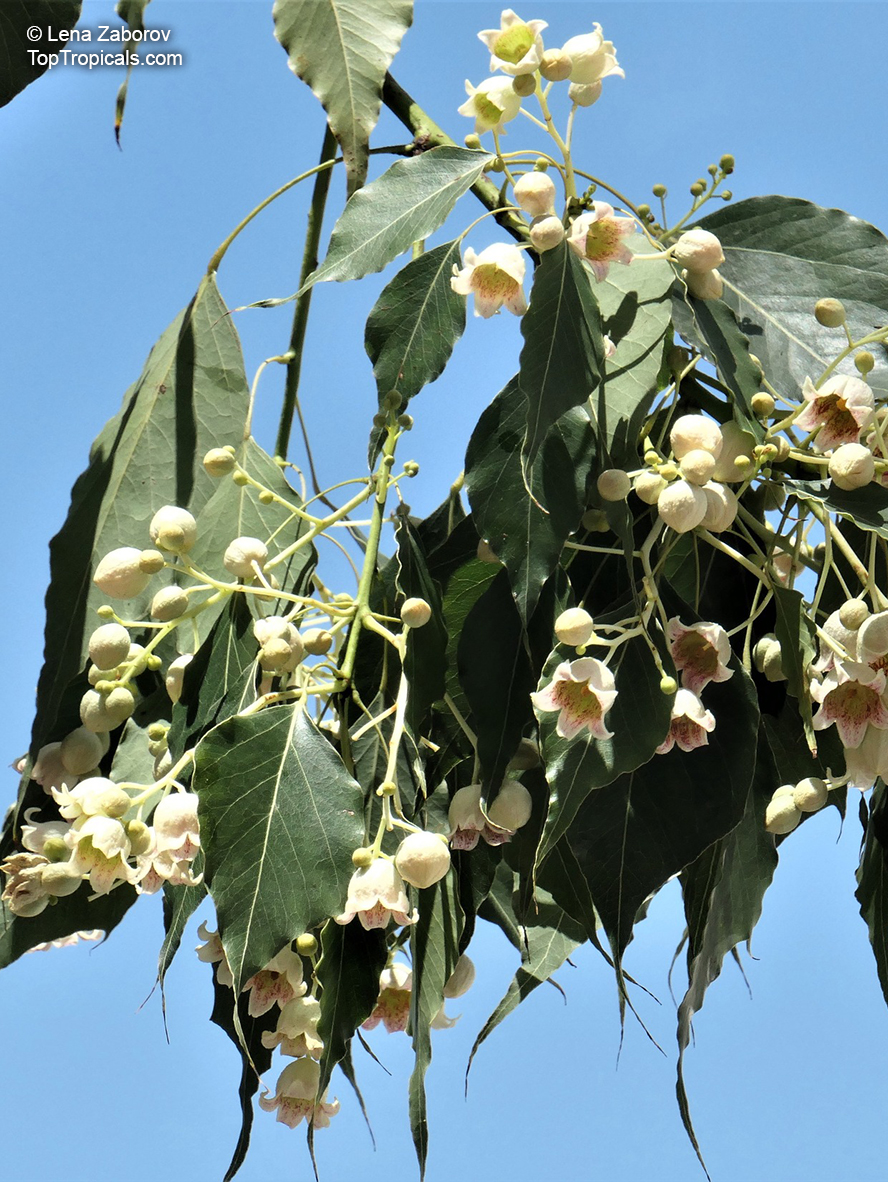
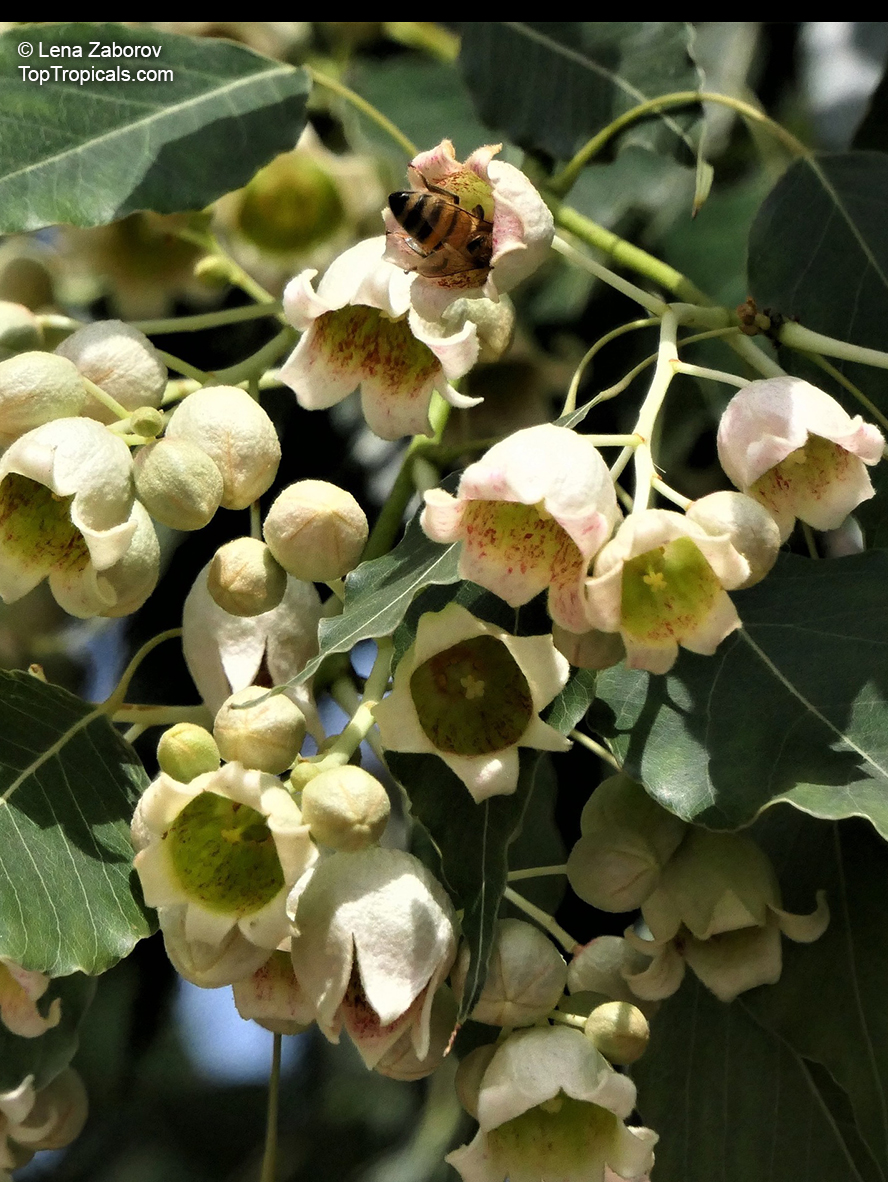
Grown successfully in USDA Zone: 9-11, the Brachychiton populneus (Bottle Tree) is a plant native to Eastern Australia. It can be used for bonsai, as it is a big tree, growing taller than 20 feet, and has attractive lobed leaves. The trunk is commonly swollen, as well as the taproot, giving an interesting bottle-like look to the tree. In addition to its aesthetic appeal, this species develops white or off-white, bell-shaped flowers with inner tubes that are streaked with purple-brown. Some hybrids can present pink or red blooms. The fruit of the Bottle Tree are woody and boat-shaped, surrounded by fine hairs that can cause skin and eye irritation, so care must be taken with them.
The Bottle Tree is an evergreen species and does best when grown in full sun, however it also tolerates some shade. It requires regular watering, but is quite resilient and tolerant of dry conditions. It is also easy to propagate from seed or from cuttings from desirable plants which can be grafted onto seedling rootstock. The transplantation must be done with care, protecting the swollen taproot from damage.
In cold regions, the Bottle Tree must be potted and taken inside during cold months. It is mature plant cold hardy at least to 30s F for a short time. The foliage is glossy-green and dense, making it a good option for street trees and to create shade as well as to provide a source of food for animals. The gum exudate is edible, and the swelled, carrot-like taproot is a nutritious vegetable. The species is also attractive to butterflies and hummingbirds, making it a nicely multi-functional plant.



Botanical name: Caesalpinia pulcherrima var. compton
Common names: Pride of Barbados, Pink Dwarf Poinciana, Flower Fence
Cultivar: Compton
Family: Fabaceae
Subfamily: Caesalpinioideae
USDA Zone: 9-11
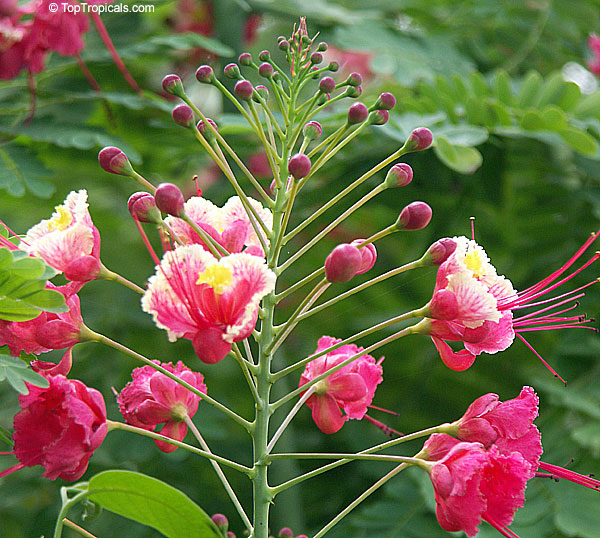
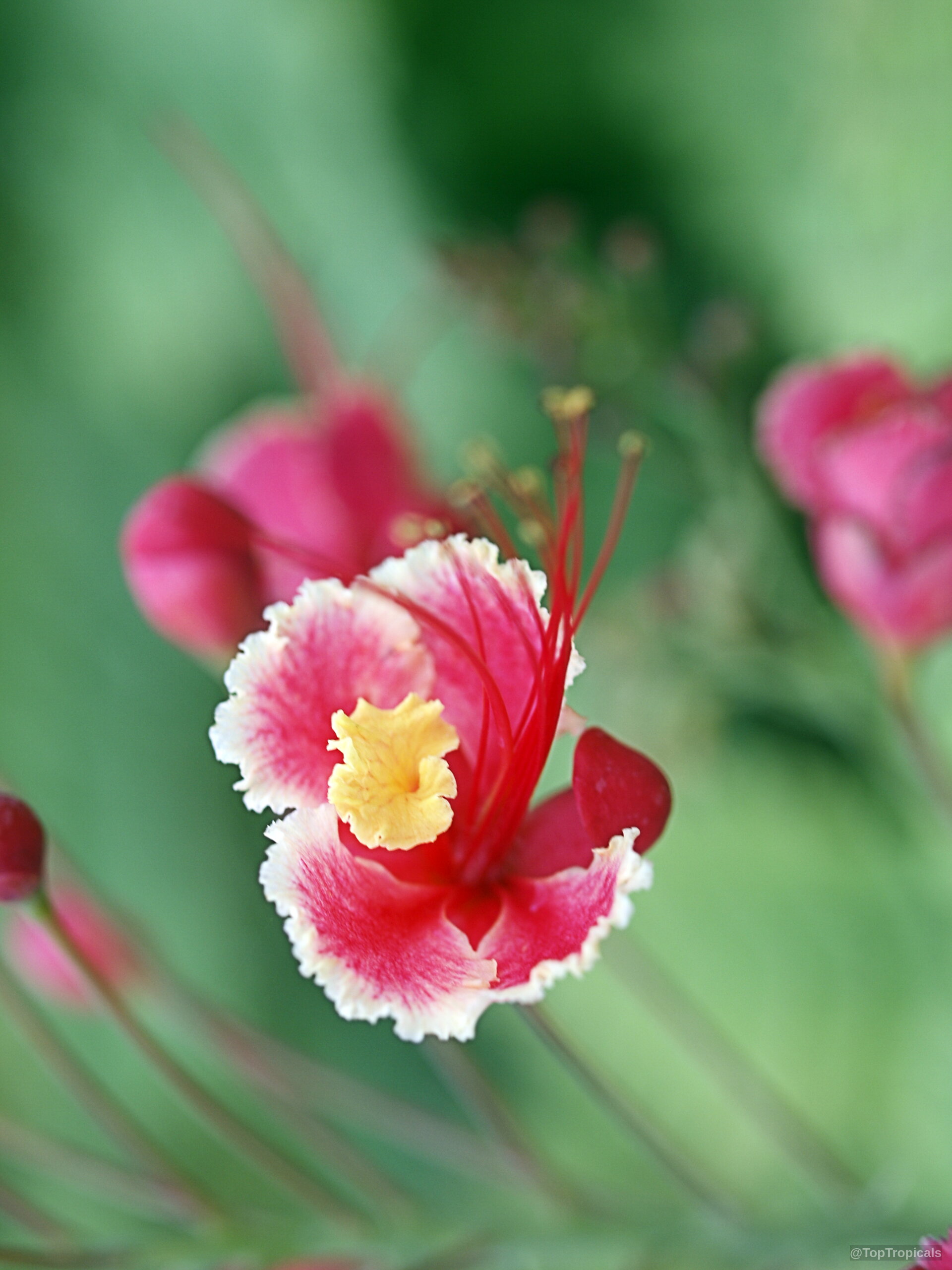
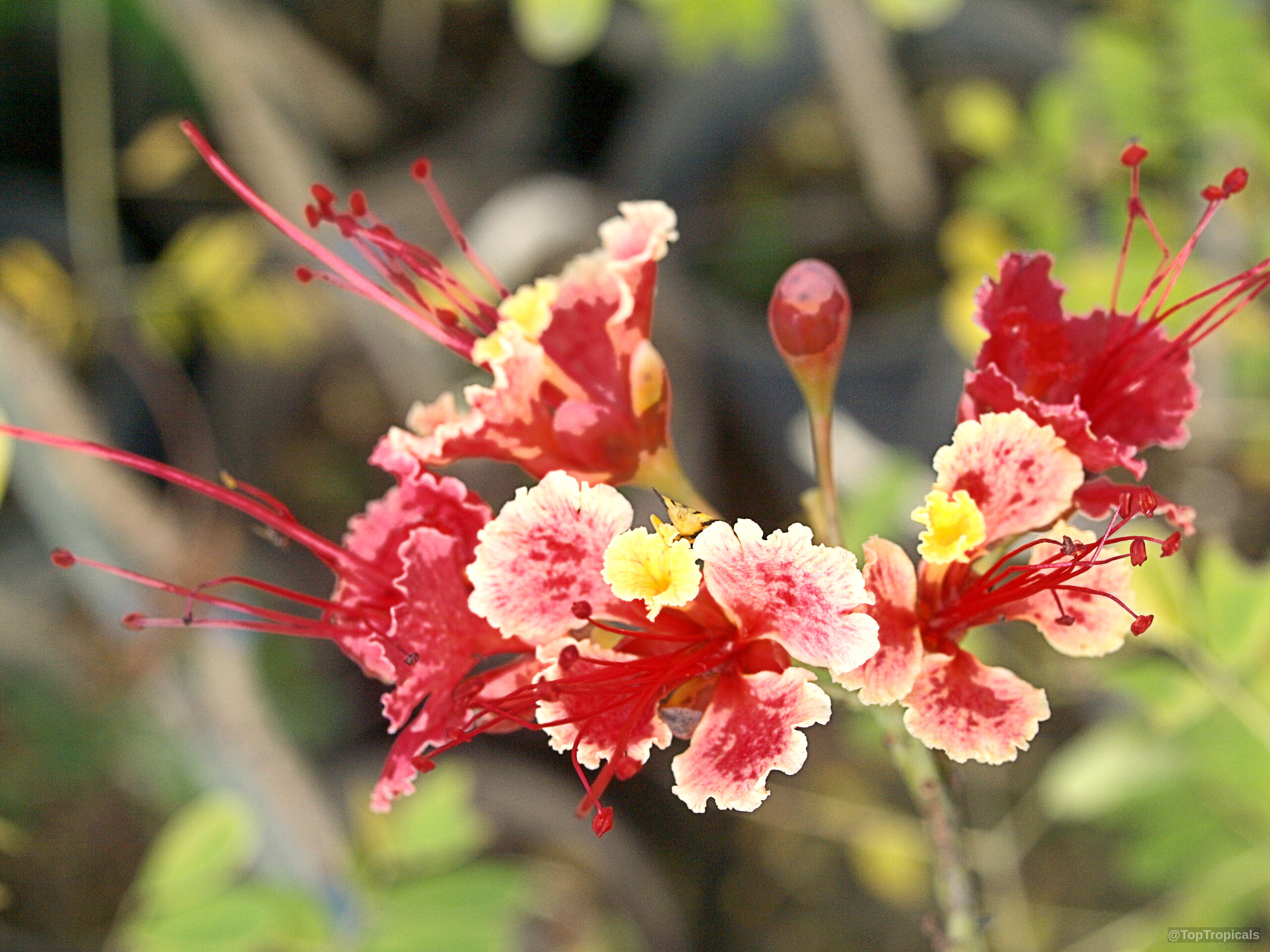
The National Flower of Barbados. It appears on the Barbados Coat of Arms. References to this flower were recorded as early as 1657. It is a shrub and is often pruned into a low hedge. If untrimmed it grows to a height of 10 to 15 feet. The Pride of Barbados blooms all year round, the more common varieties of caesalpinia are a fiery red and yellow "sunset color" although other variations can be found. The flower has five petals with a yellow margin in a pyramidal inflorescence. Each flower is about 1.5 inches across with five sepals. The ten stamens are long and the pistils project from the center of the flower. The fifth petal is far smaller than the other four. The stamens have colored filaments with anthers at the tips however, the eleventh filament bears a stigma and is the style. The branches a prickly and the leaves are large and doubly compound about one foot long and six inches wide with many small leaflets.




Recommended Fertilizer: SUNSHINE Megaflor - Bloom Nutrition Booster
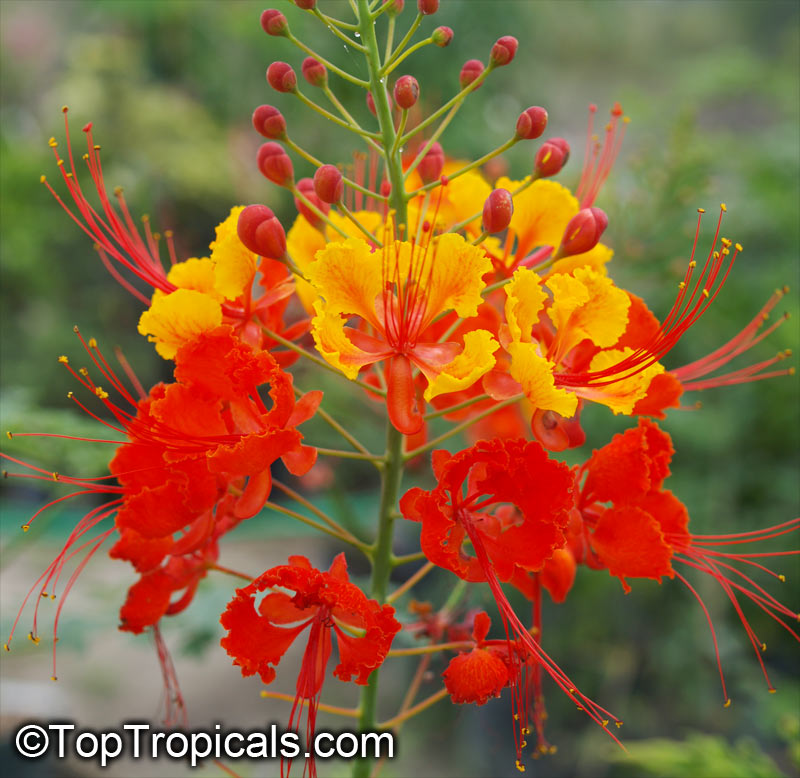
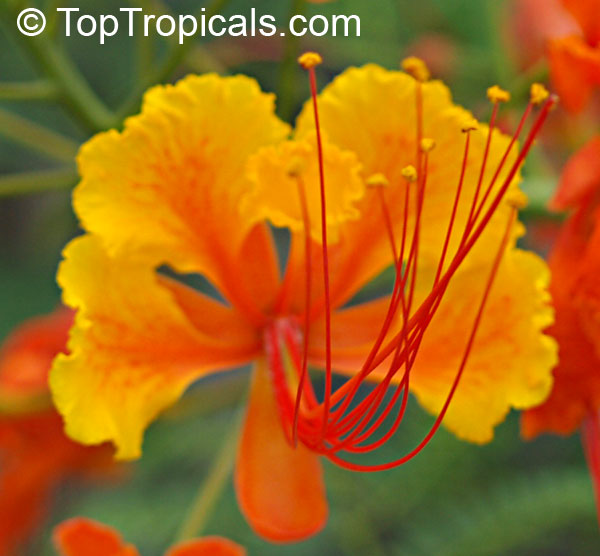
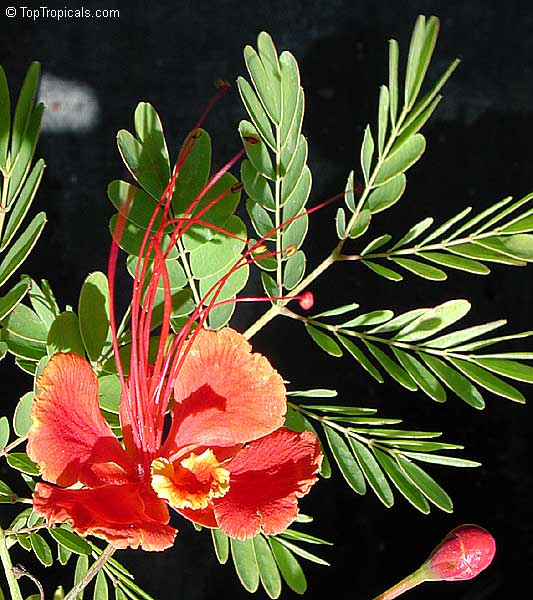
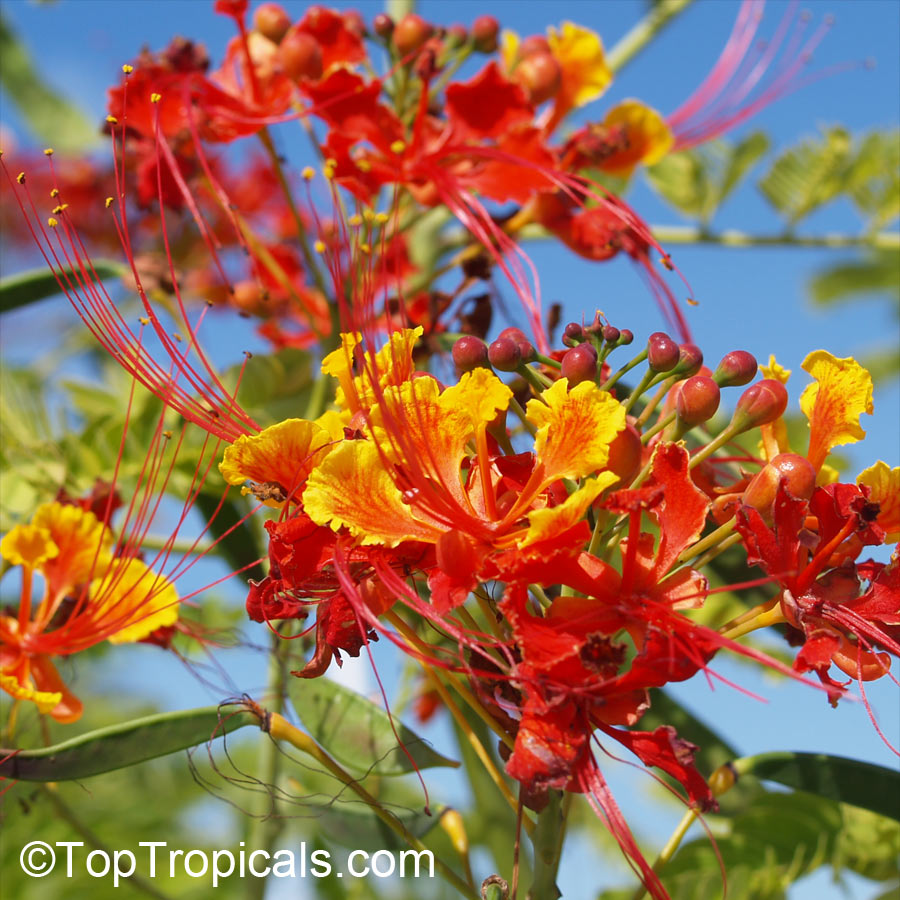
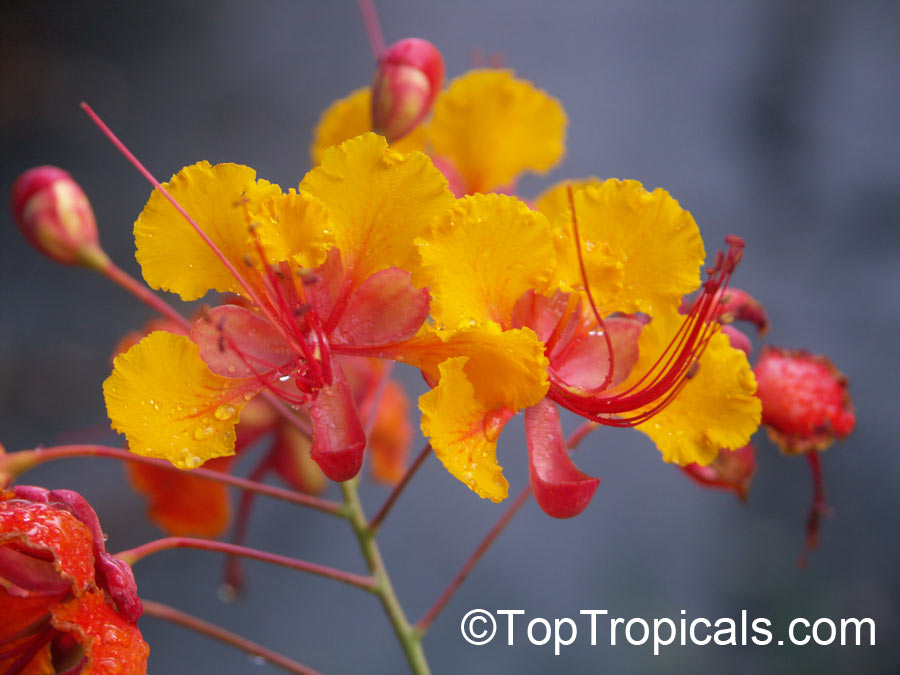
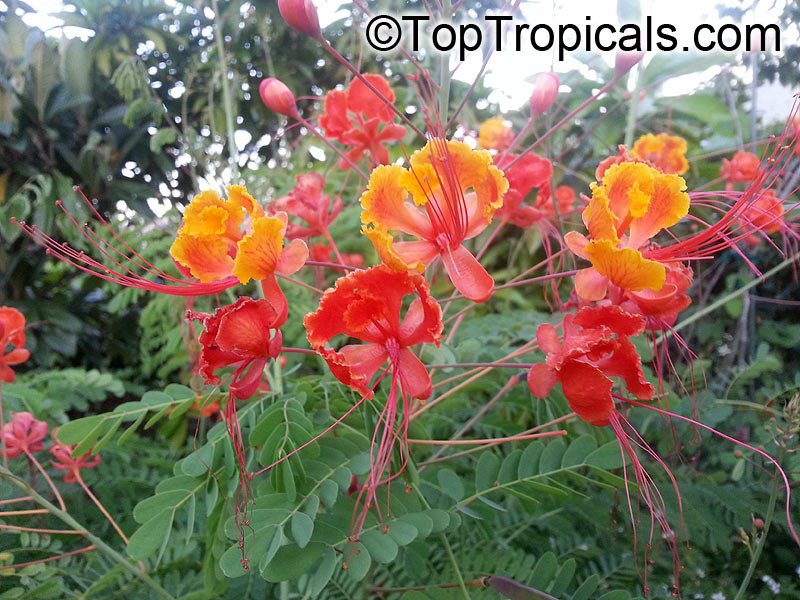
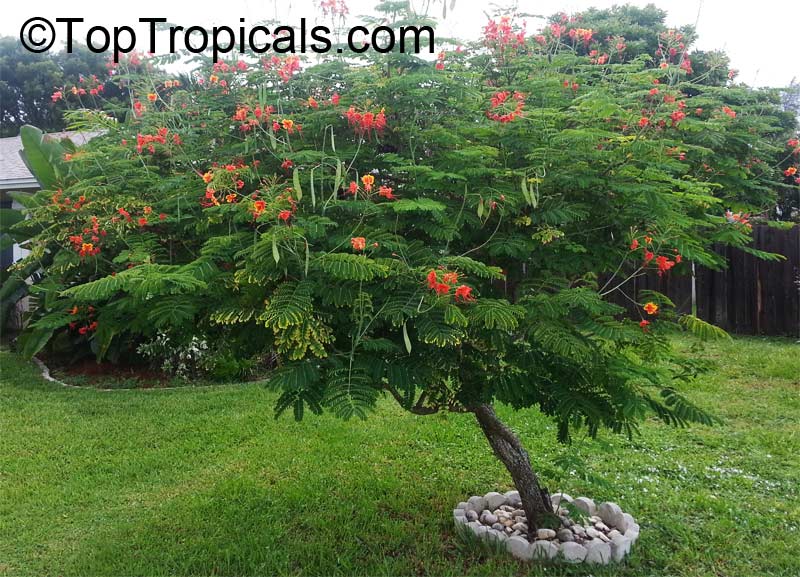
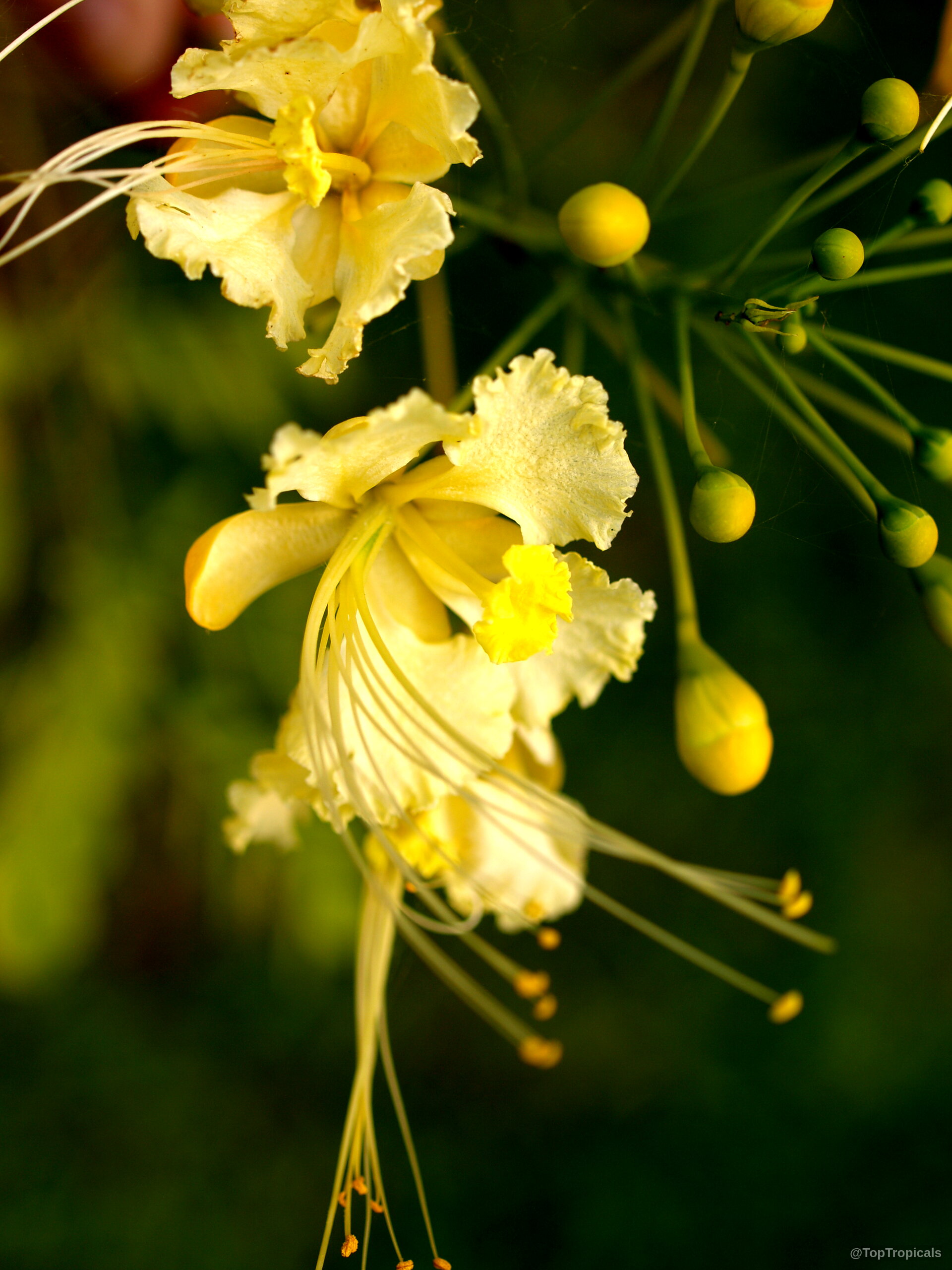
Botanical name: Caesalpinia pulcherrima
Common names: Peacock Flower, Barbados Pride, Dwarf Poinciana, Barbados Flower-fence, Gold Mohur
Family: Fabaceae
Subfamily: Caesalpinioideae
Origin: West Indies and tropical America
USDA Zone: 9-11
Cold tolerance: 30°F


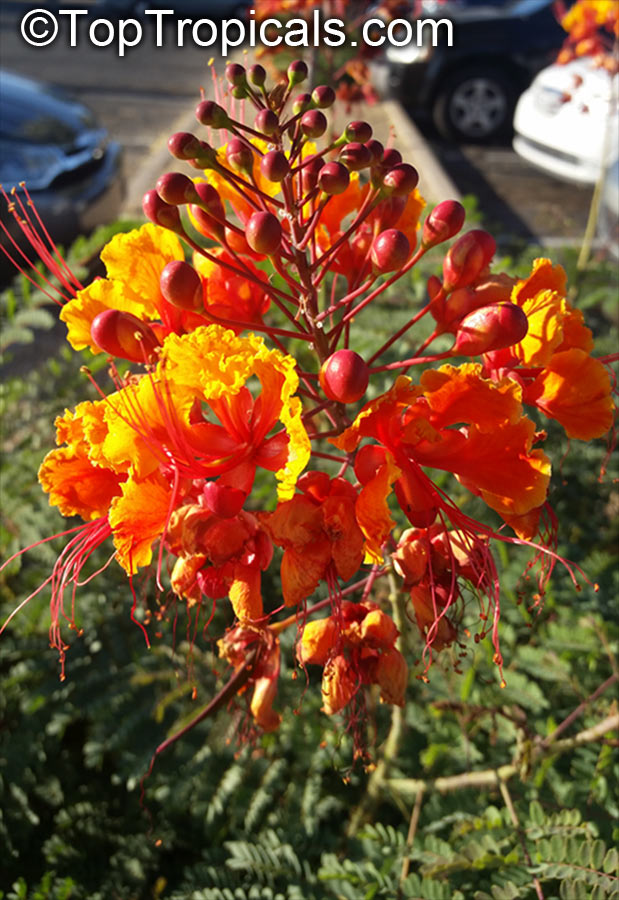
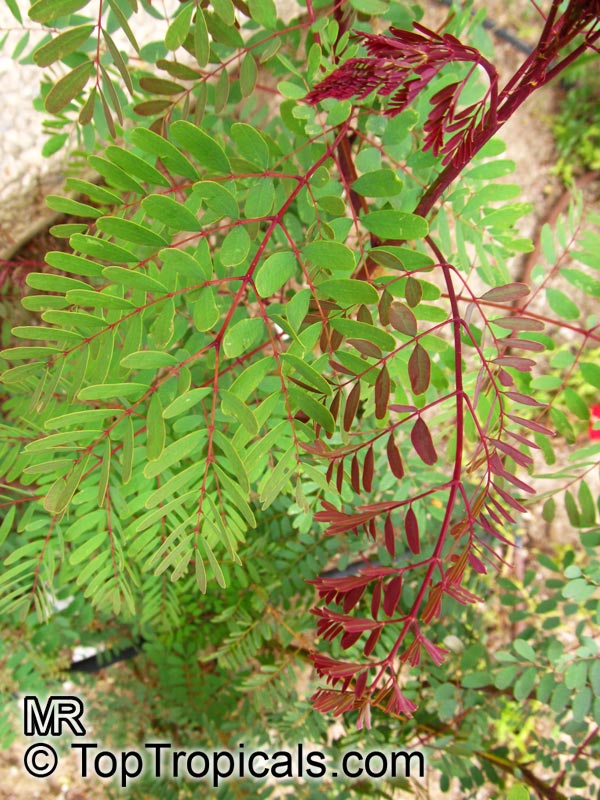
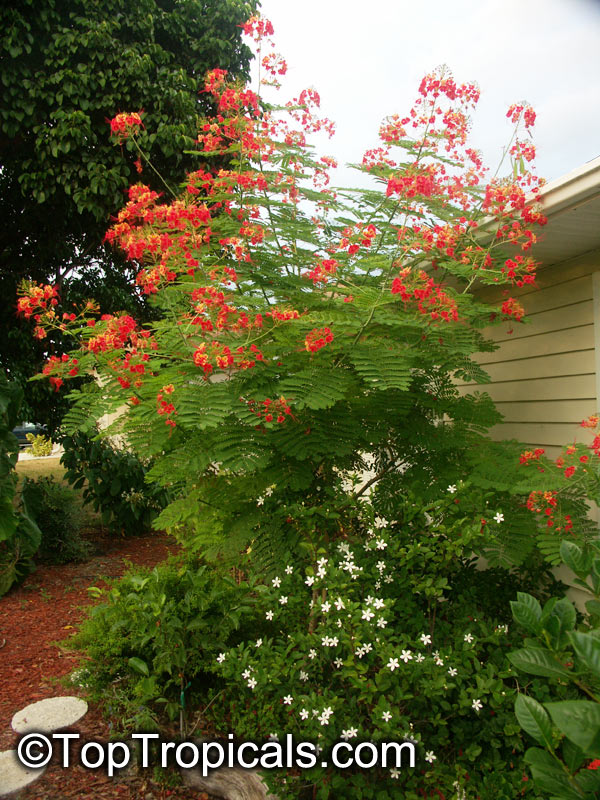
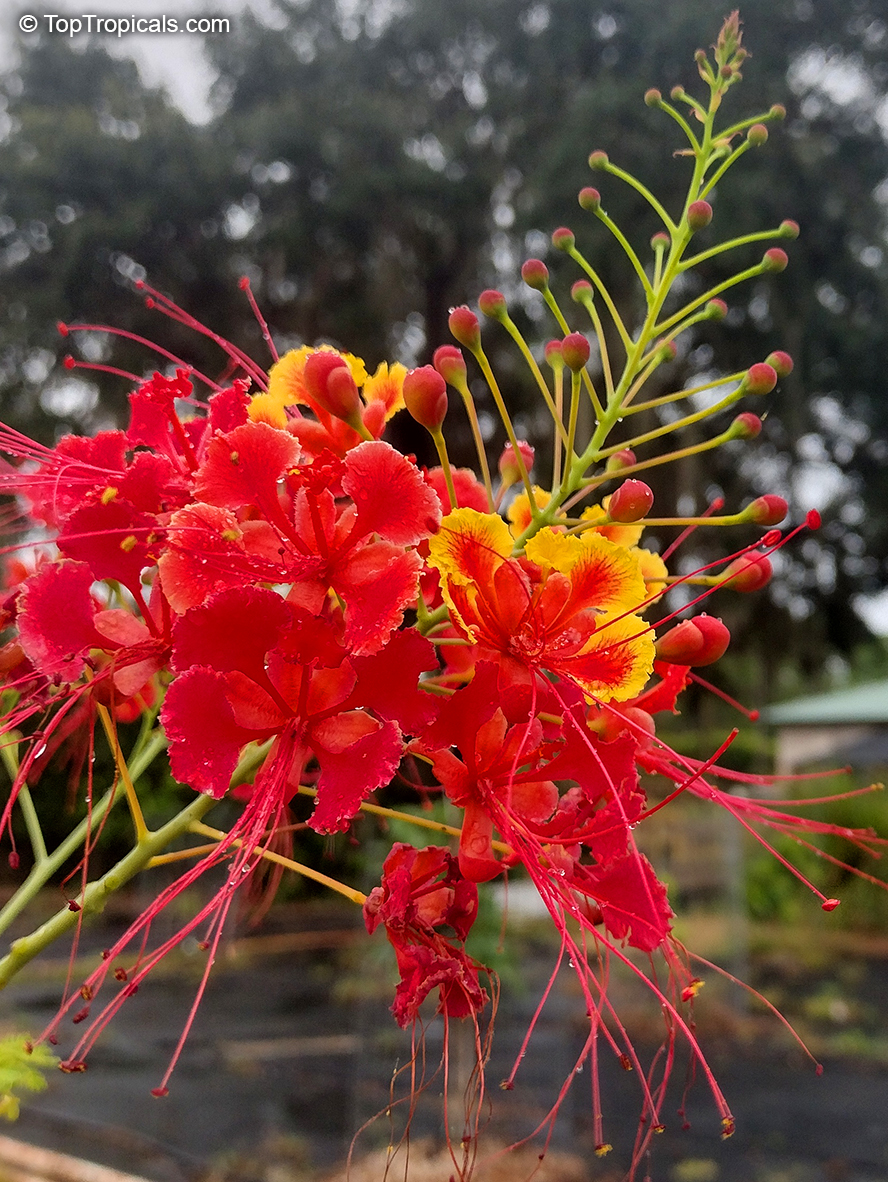
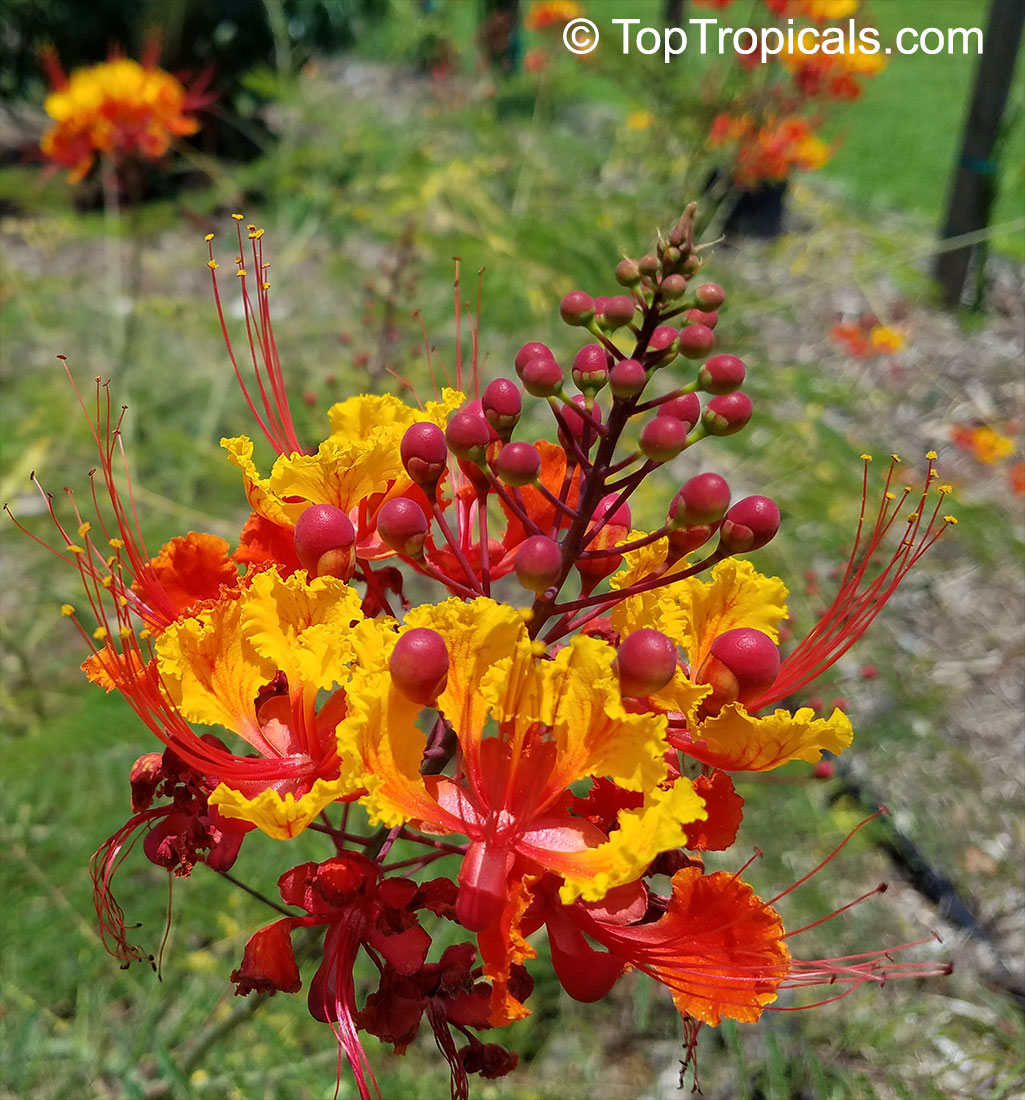
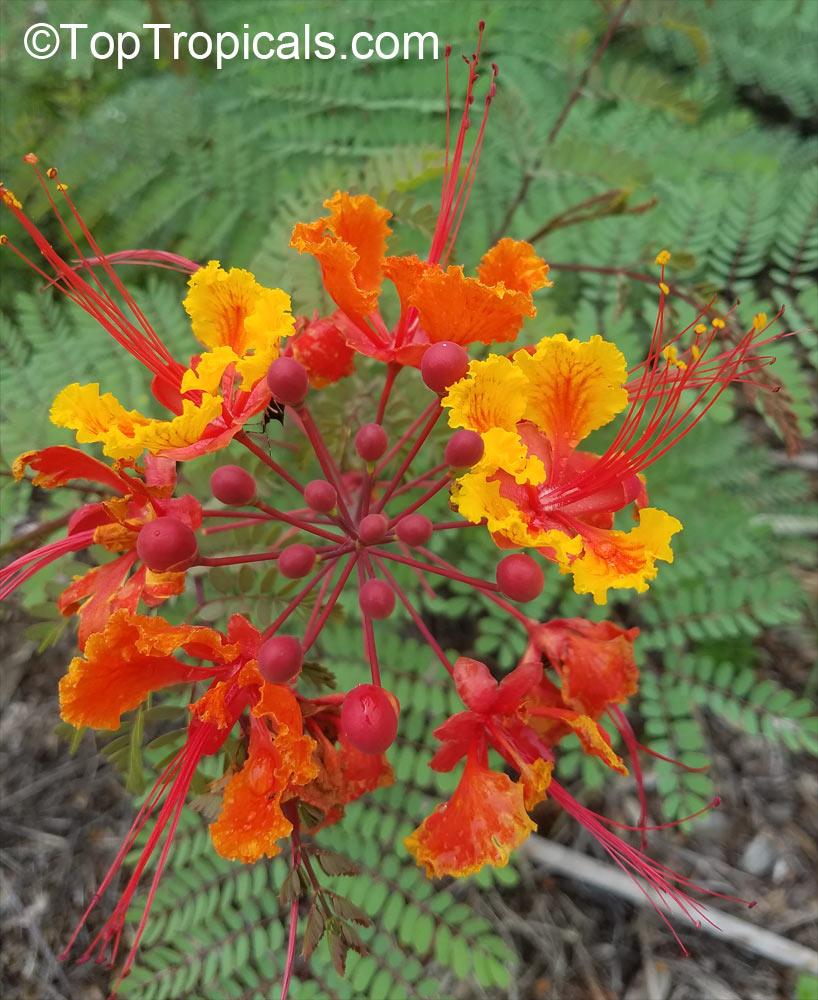
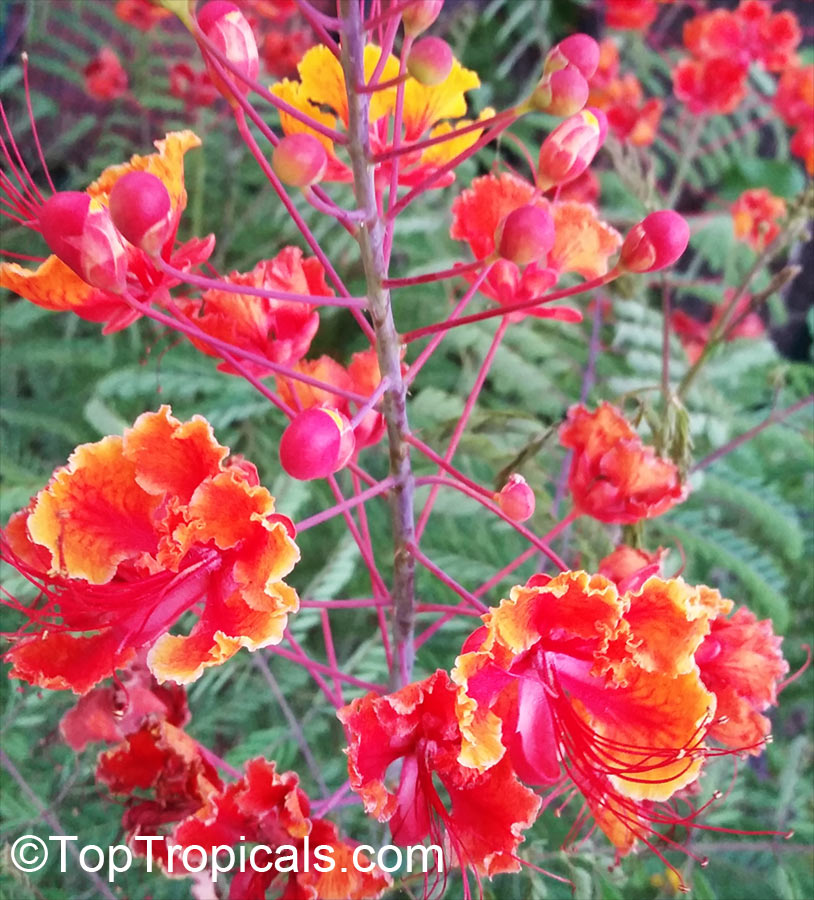
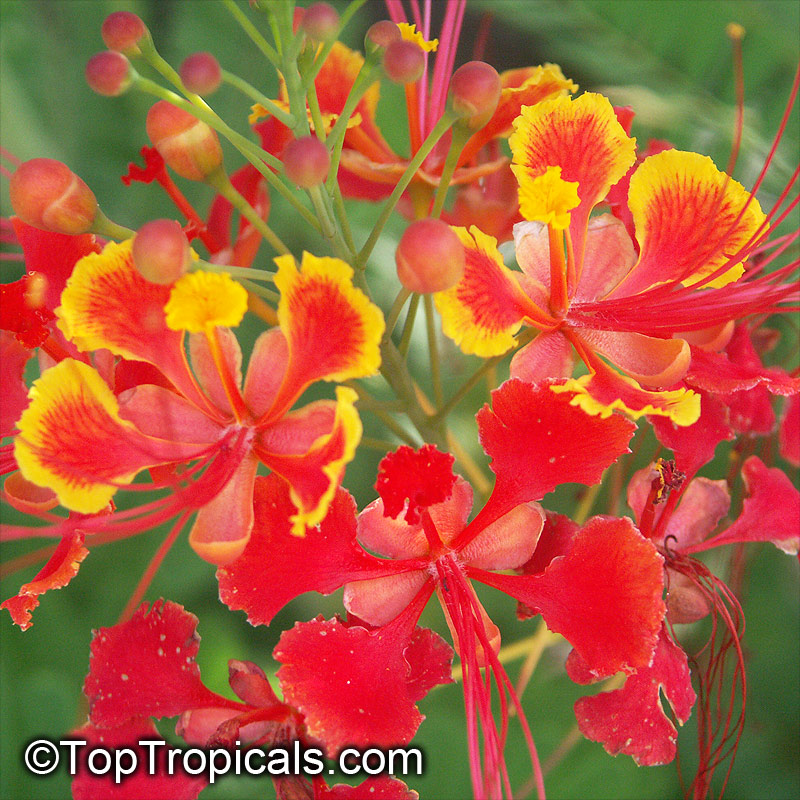
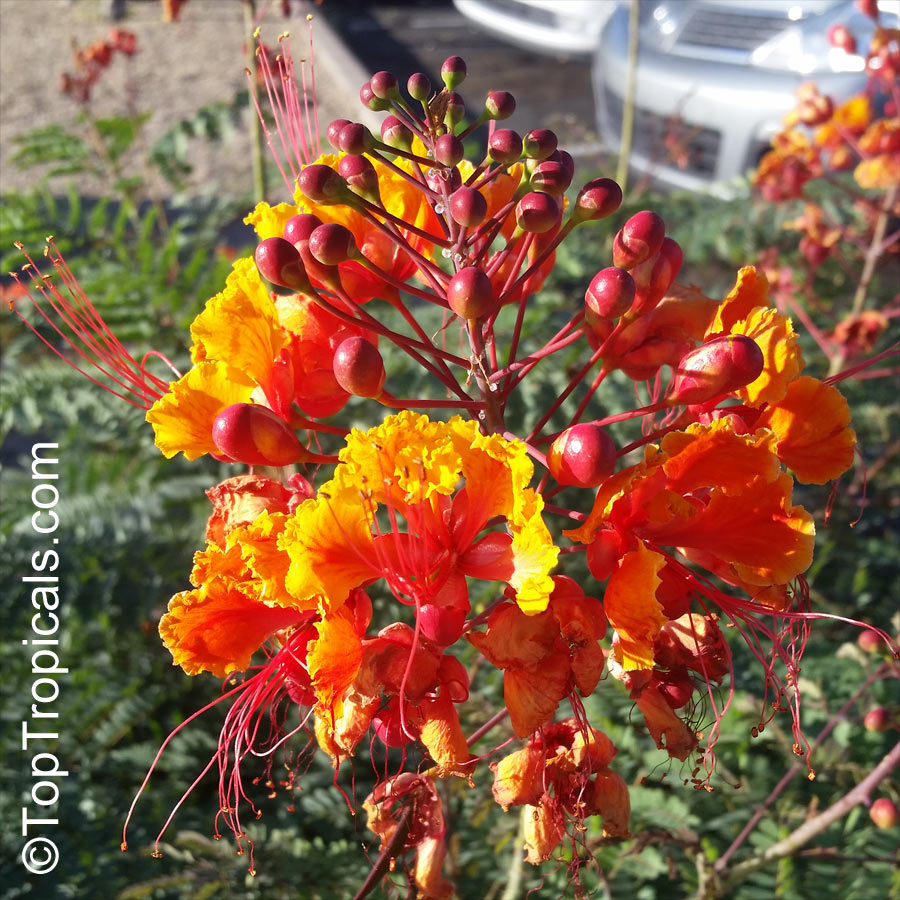
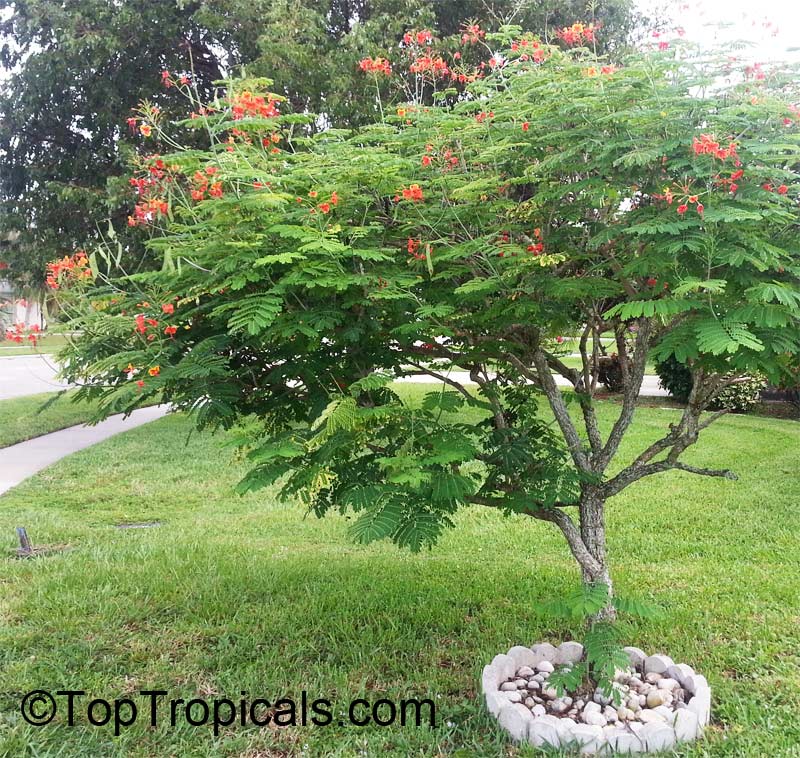
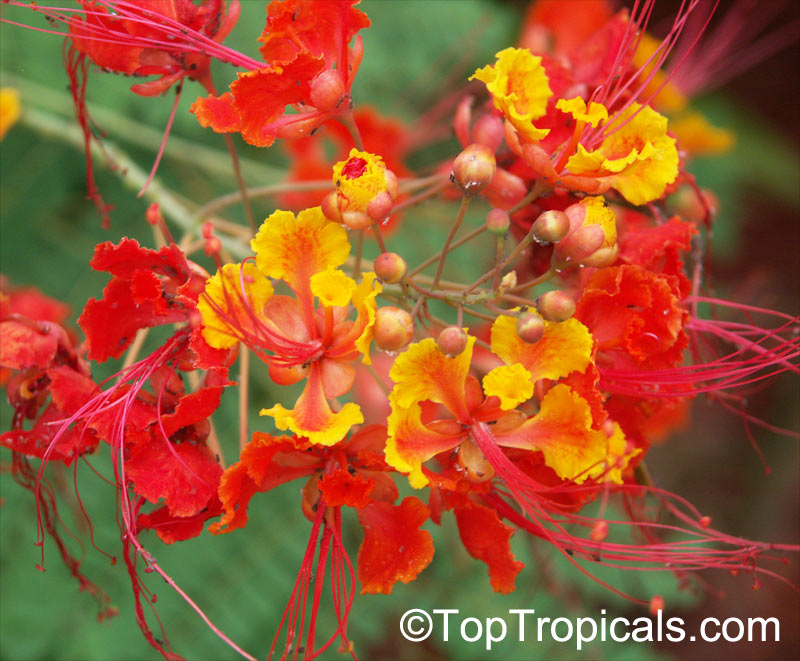
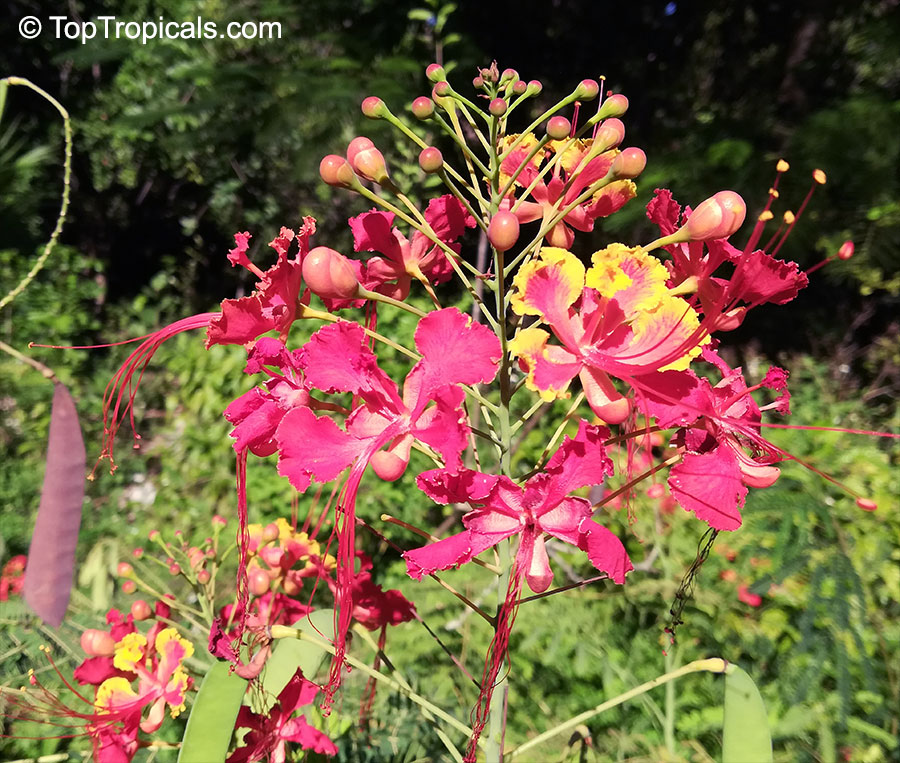
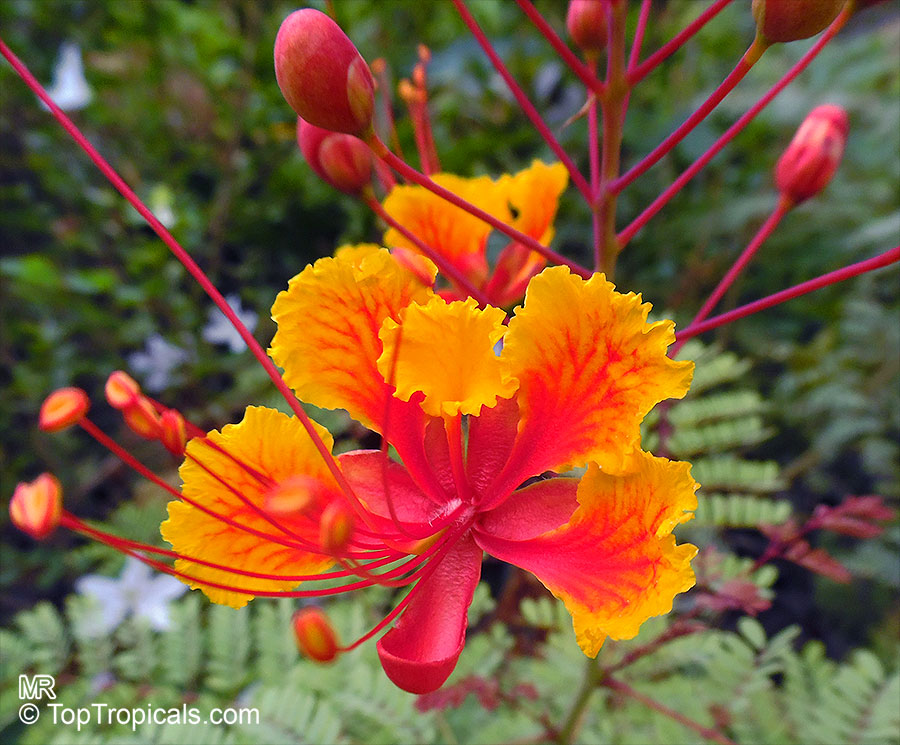
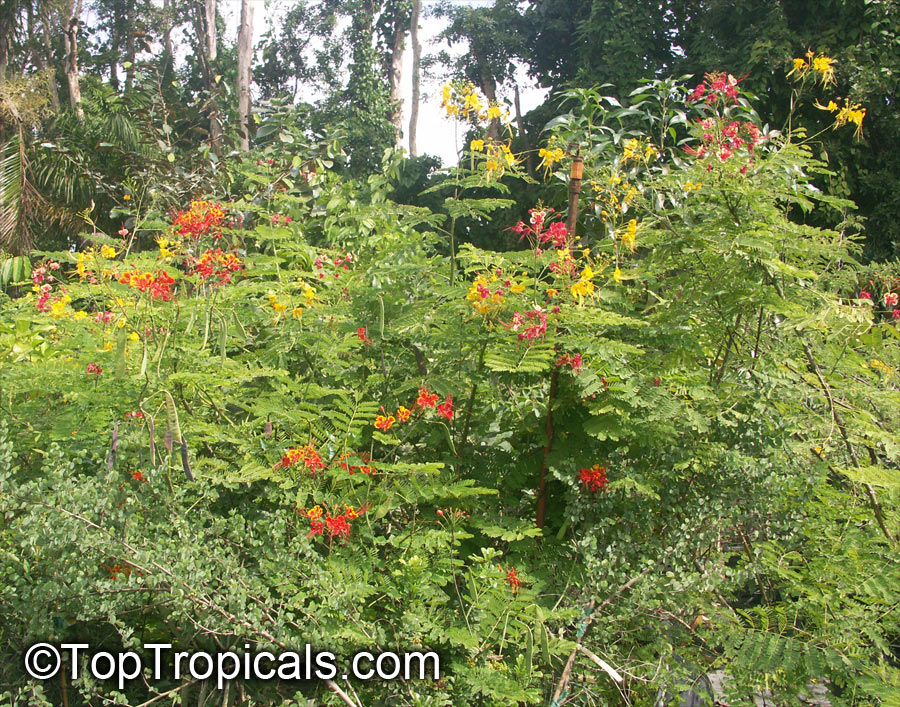
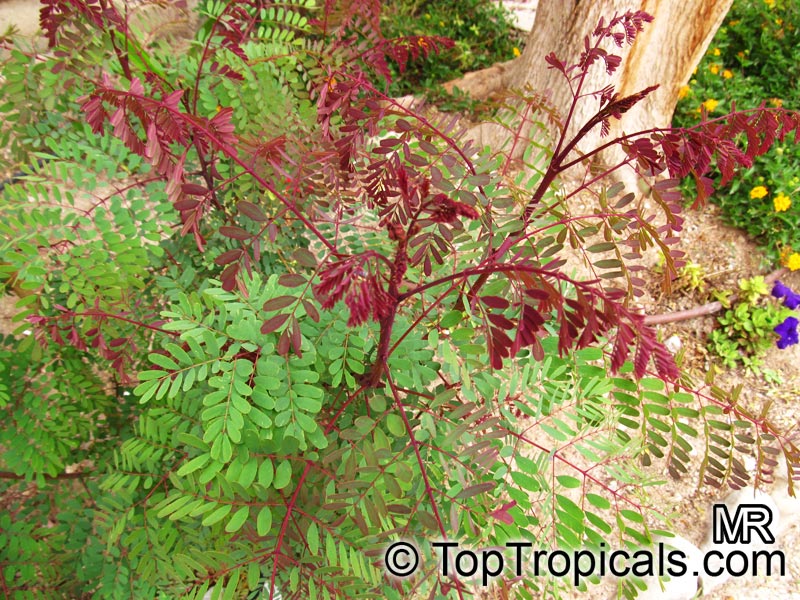
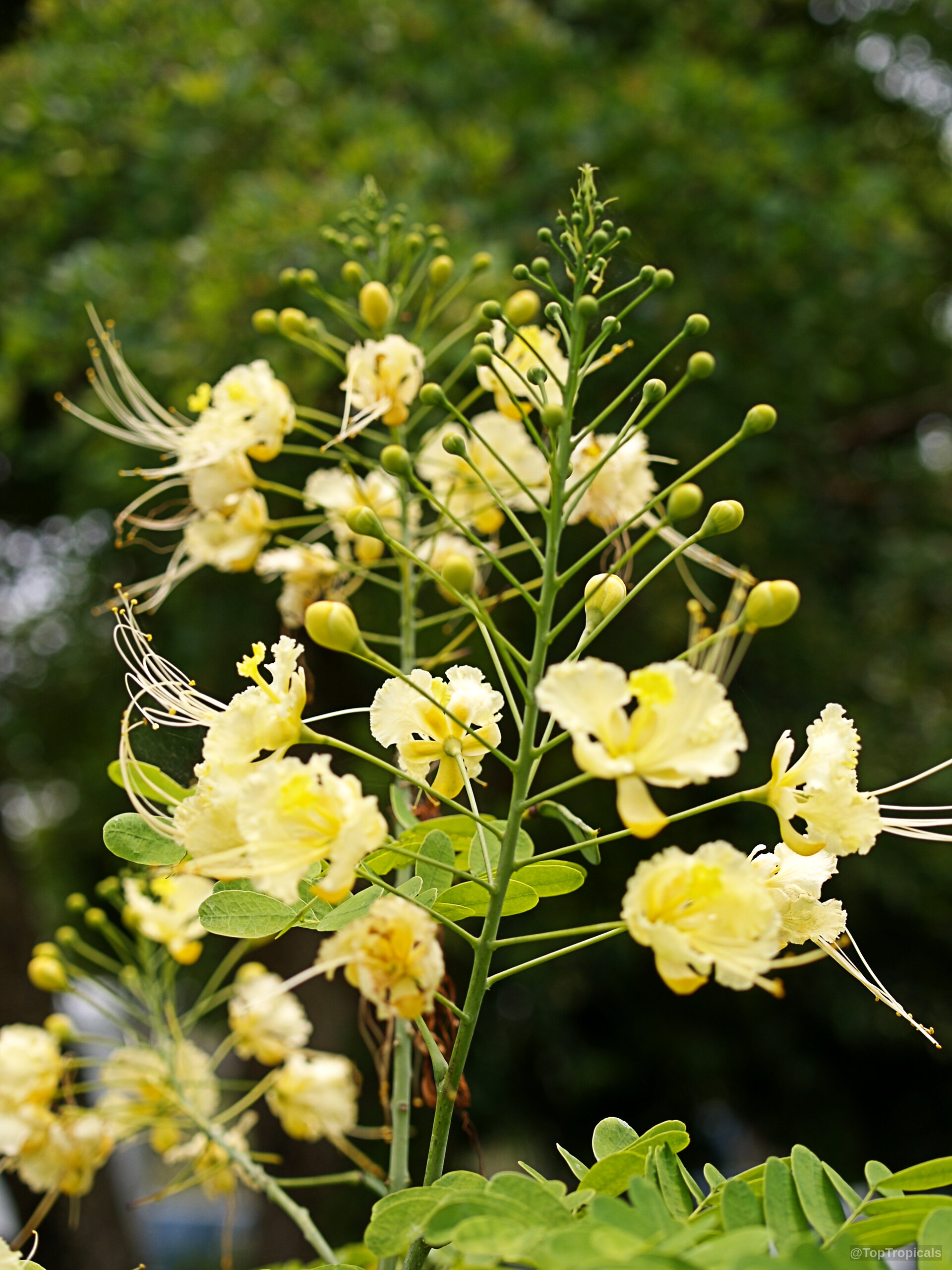
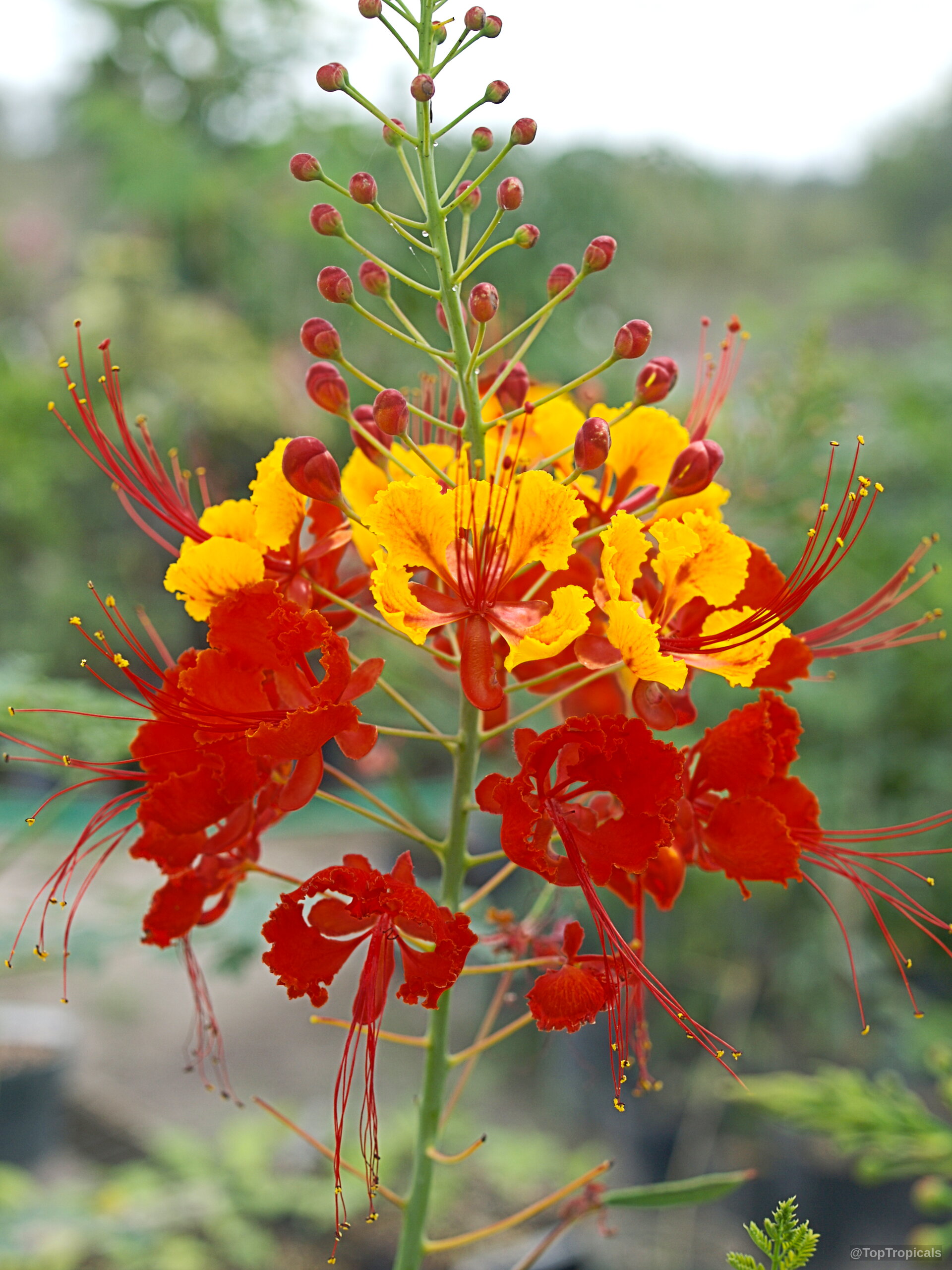
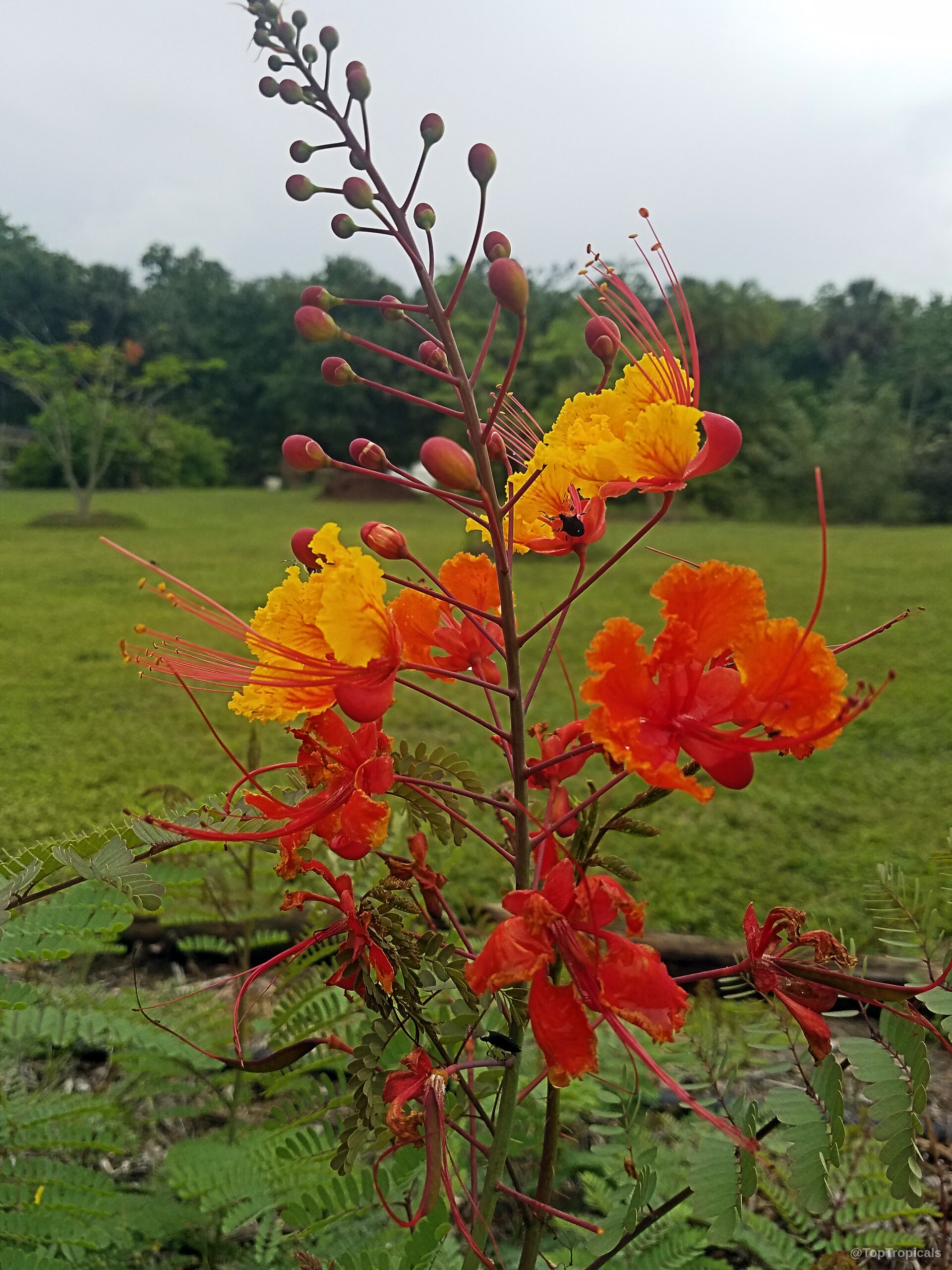
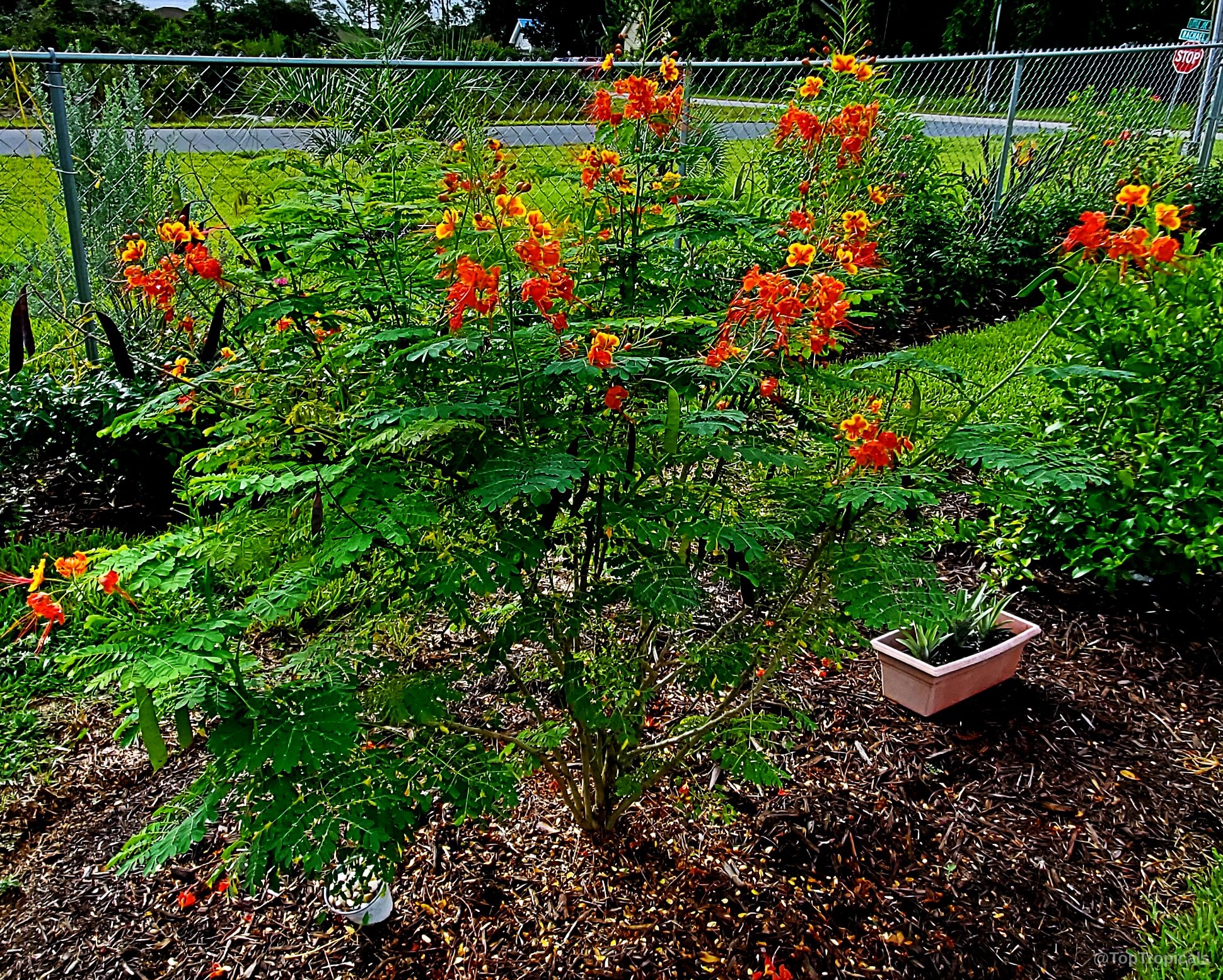
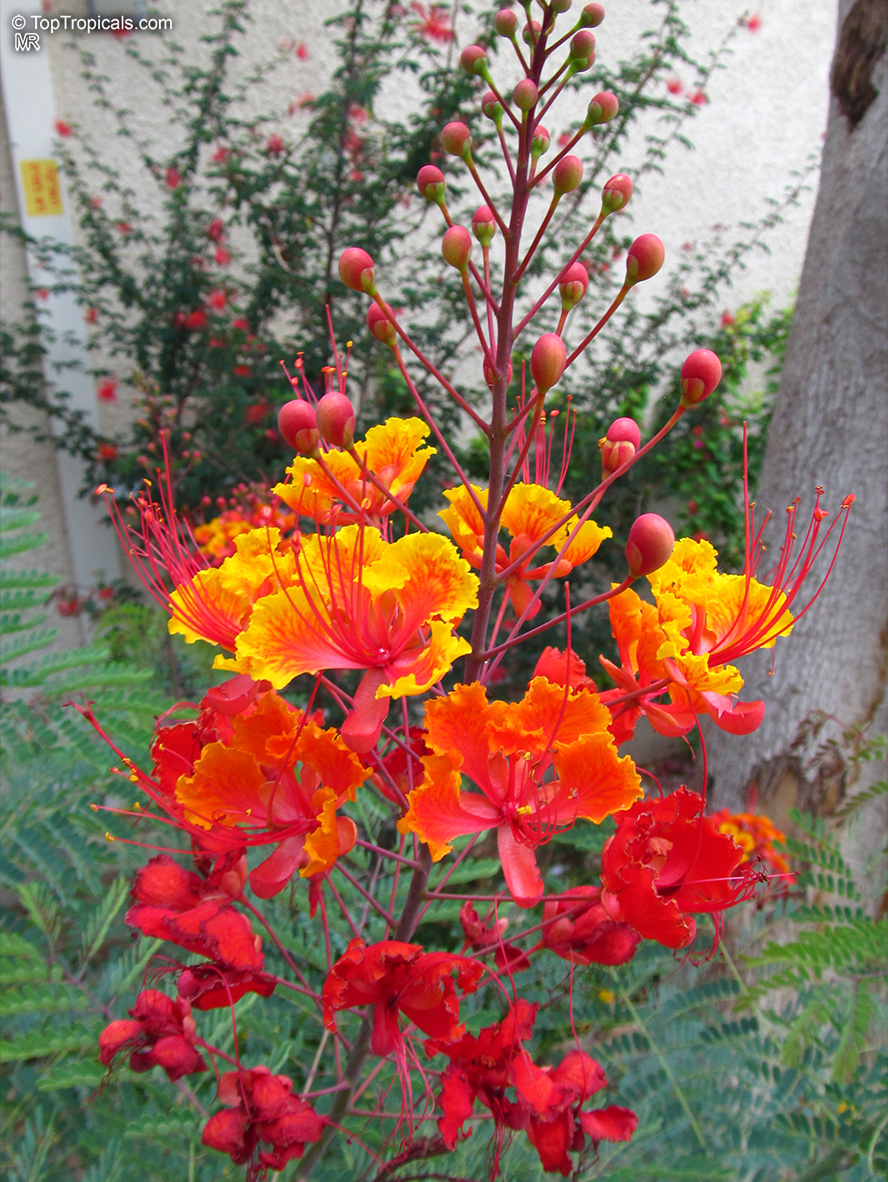
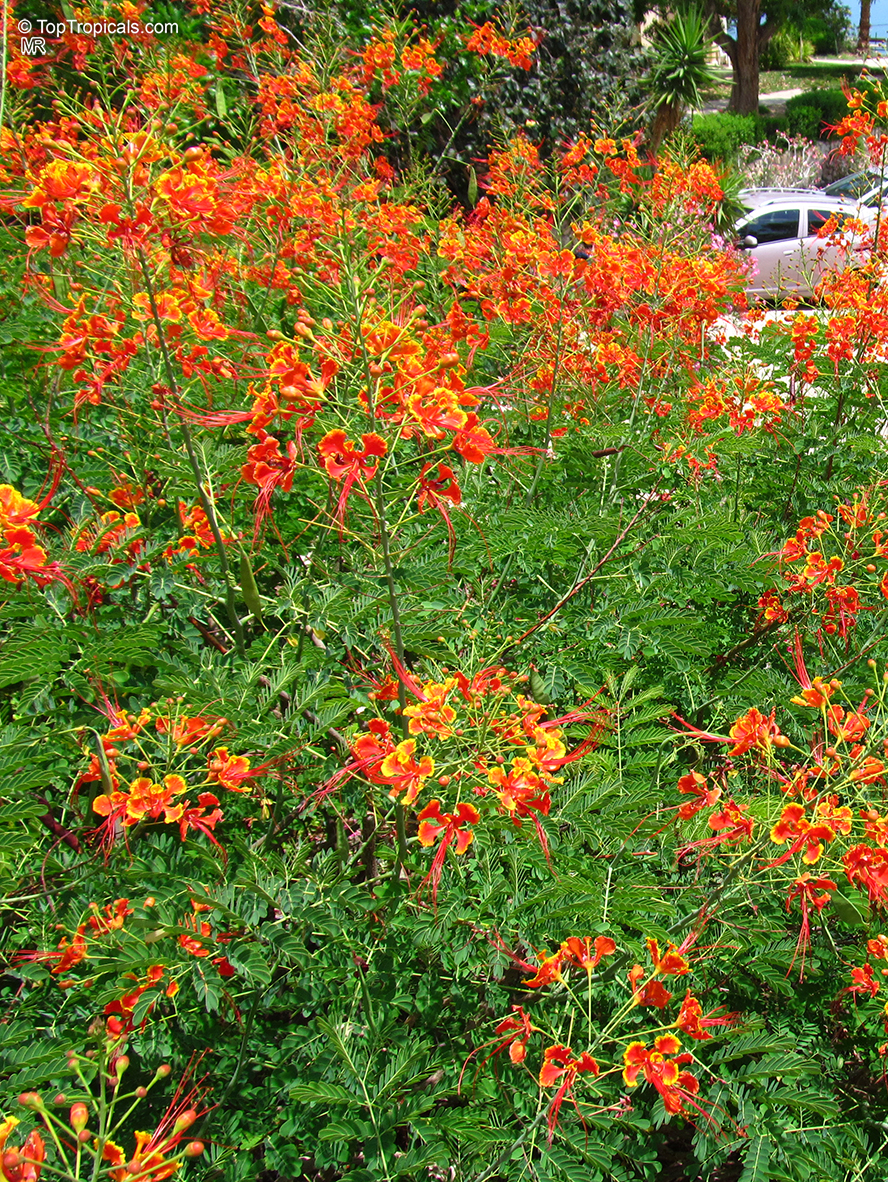
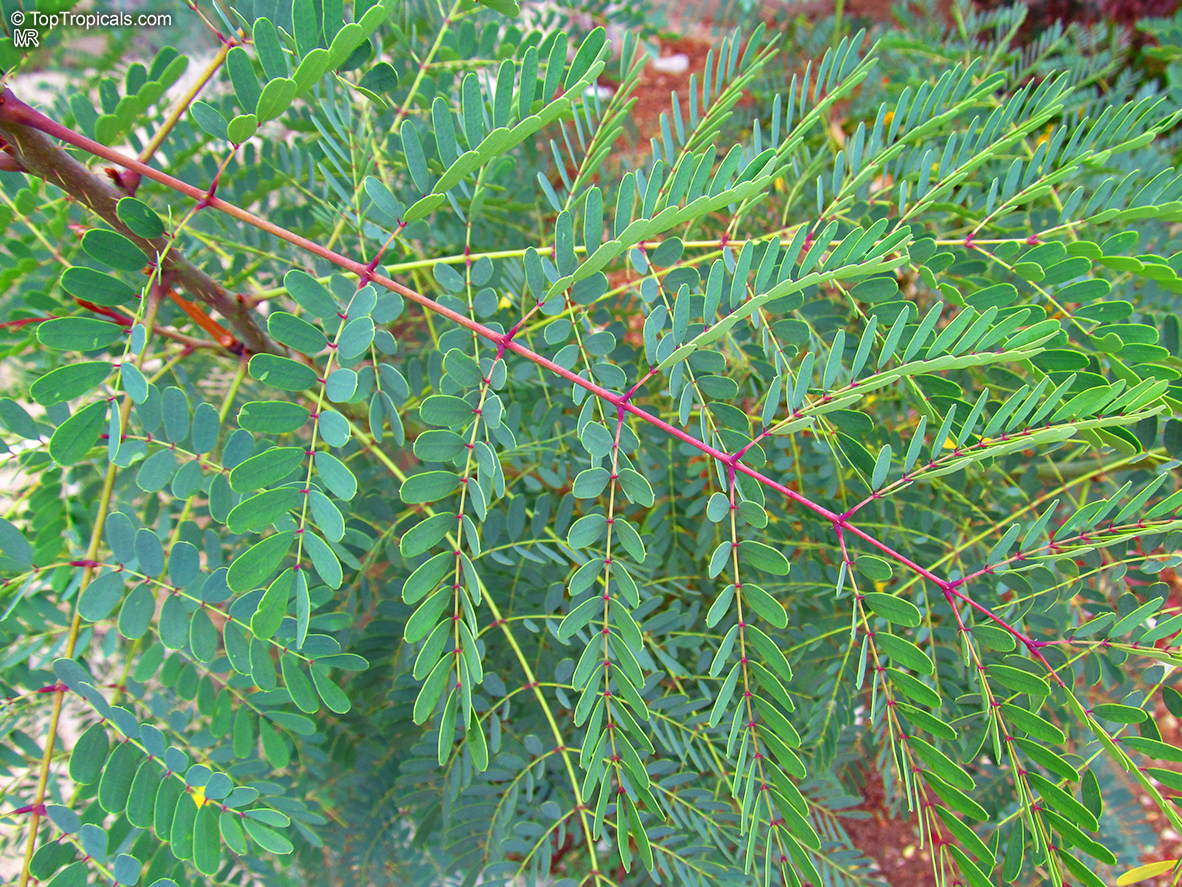
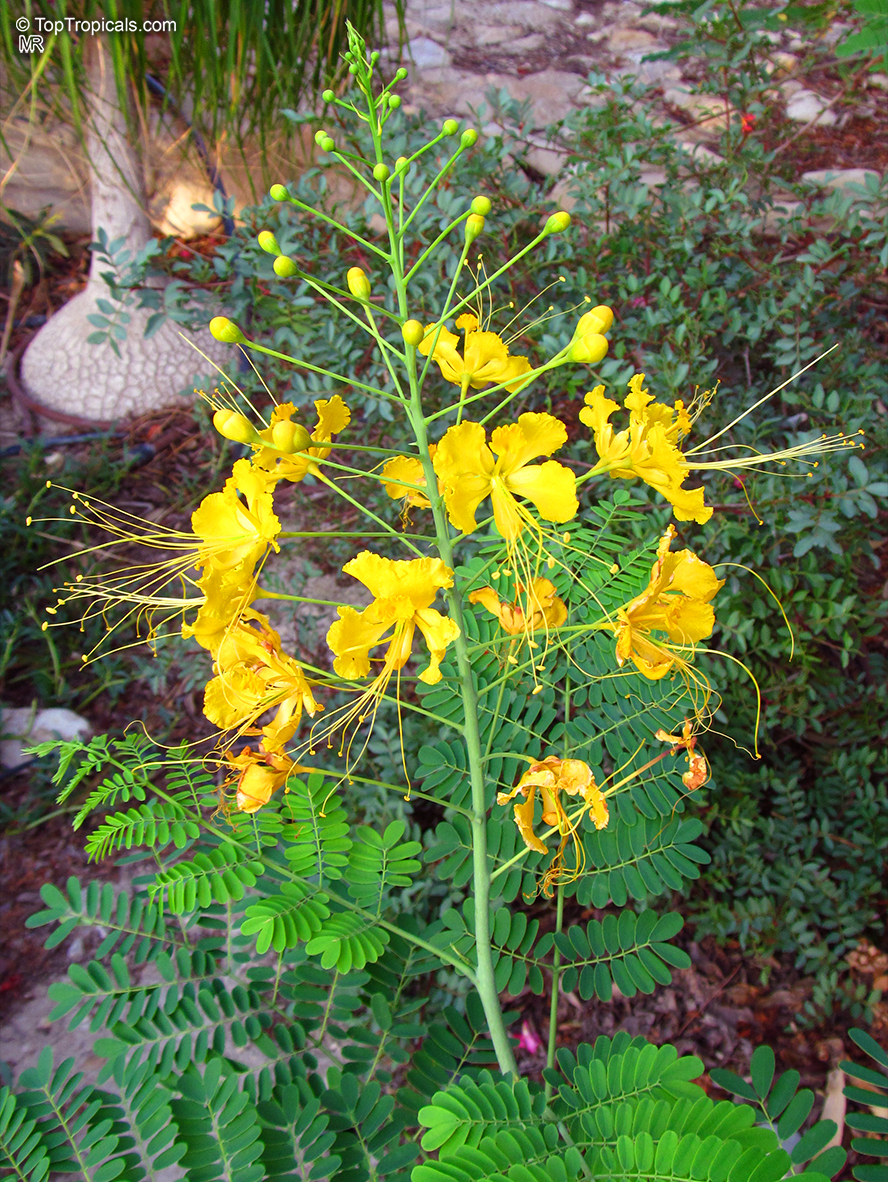
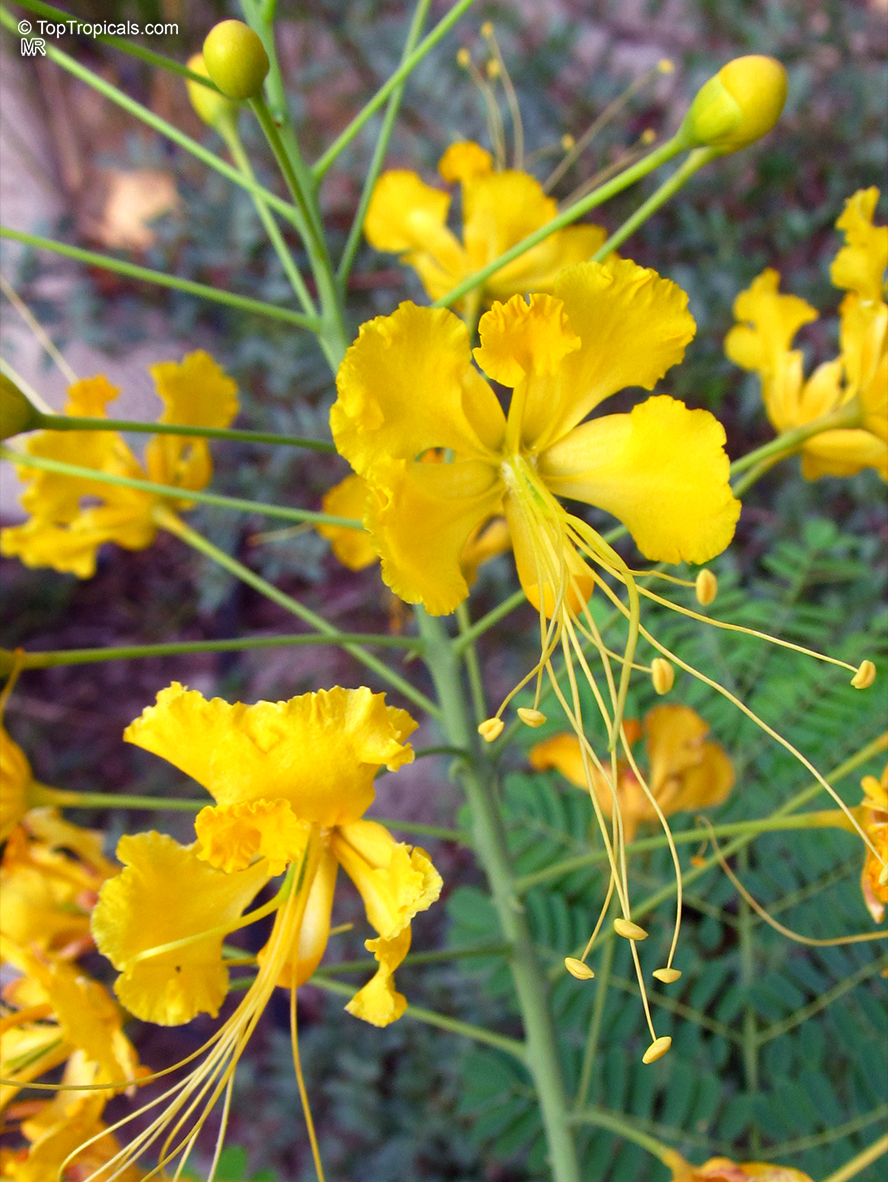
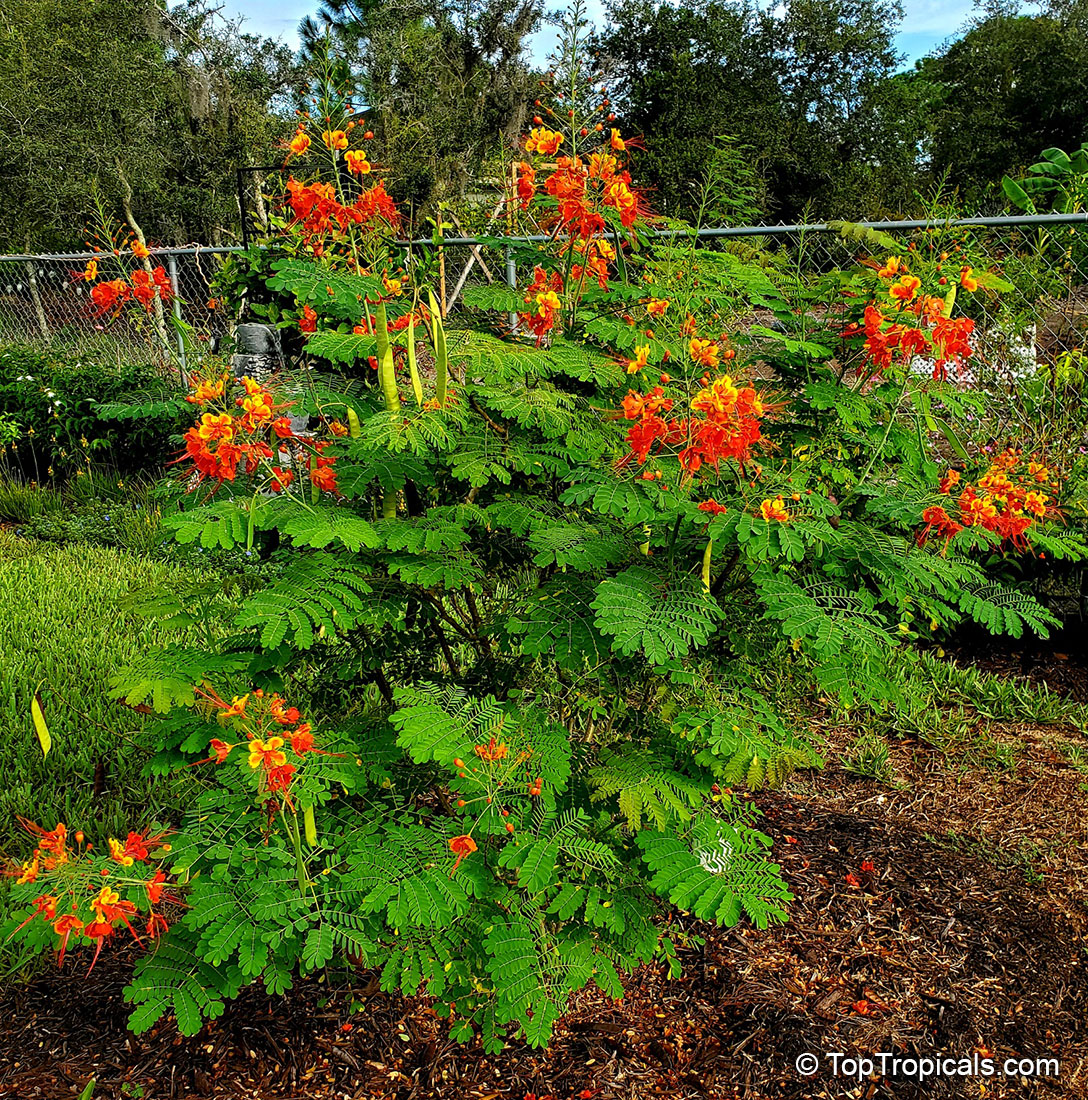
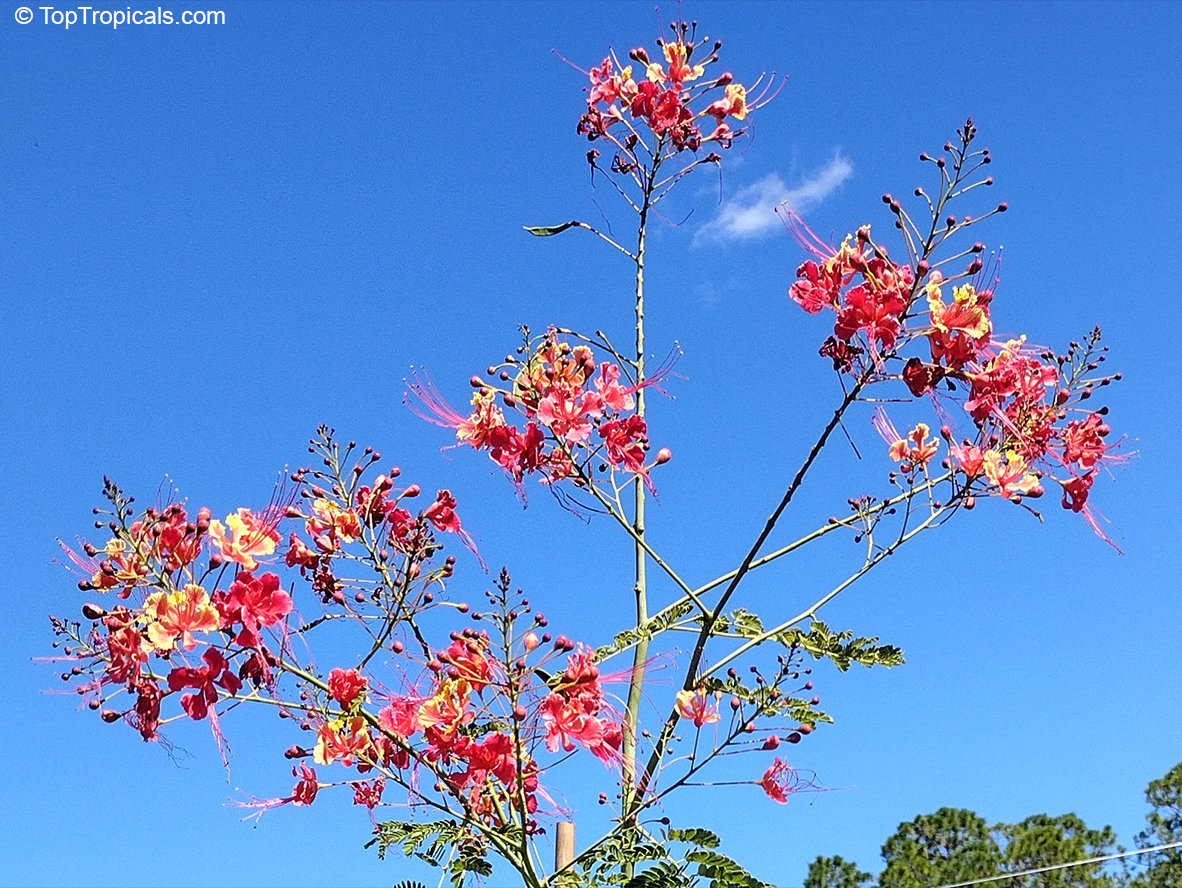
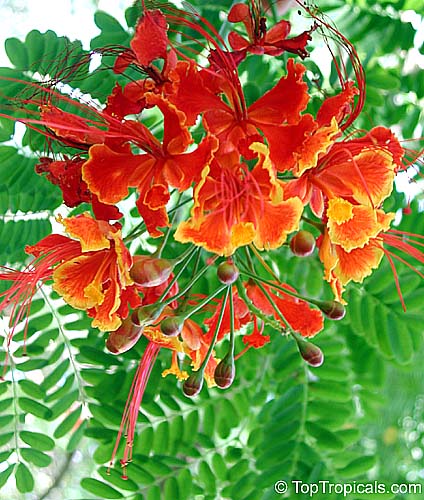
Peacock flower lives up to its name with incredibly showy blossoms of orange and red. The striking flowers are an attention grabber! Evergreen shrub or small tree in frost free climates, a deciduous shrub in zone 9, and a returning perennial in zone 8. In the tropics it gets 15-20' tall and its ungainly, wide spreading branches can cover about the same width. In cultivation the peacock flower is usually 8-12' tall, growing that large even after freezing to the ground the previous winter. The stem, branches and petioles are armed with sharp spines and the leaves are fernlike and twice compound, with many small, oval leaflets. The flowers are bowl shaped, 2-3" across, with five crinkled, unequal red and orange petals, and ten prominent bright red stamens that extend way beyond the corolla. The flowers are borne in terminal clusters 8-10" tall throughout most of the year in tropical climates and in late summer and fall where frosts occur. There also are forms with yellow and forms with dark red flowers. The fruits, typical legumes, are flat, 3-4" long, and when ripe they split open noisily to expose the little brown beans. Very easy to grow in alkaline to acidic, well-drained soils. This is a fast growin plant. It is moderately tolerant of salty conditions. Peaccock flower benefits from pruning, and can be shaped to tree form or shrubby bush form. Use peacock flower as a specimen or in a mixed shrub border. It has an open, spreading habit and the branches sometimes get too long for their own good and break off. Still, a line of peacock flowers makes a showy fine-textured screen or informal hedge. You can cut peacock flower to the ground in late winter or early spring to get a bushier, more compact shrub.



Ordering seeds info
RECOMMENDED SUPPLIES:
Seed Germination Mix #3, professional grade
SUNSHINE-Epi - Seeds and cuttings booster
SUNSHINE Bombino - Young Plant Booster
Recommended Fertilizer: SUNSHINE Megaflor - Bloom Nutrition Booster

Botanical name: Caesalpinia pulcherrima
Common name: Mexican Peacock flower
Cultivar: Mexican Flame
Family: Fabaceae
Subfamily: Caesalpinioideae
Origin: Mexico
USDA Zone: 9-11
This variety of caesalpinia has very bright flowers turning from yellow to red - with yellow, orange and red flowers in the same bunch. The stem is covered with soft thorns that feel like feather. Leaves have blueish hue. Medium size shrub or small tree, perfect for small yards or patio. It is moderately tolerant of salty conditions. Peacock flower benefits from pruning, and can be shaped to tree form or shrubby bush form. The striking orange red flowers are an attention grabber! Use peacock flower as a specimen or in a mixed shrub border. It has an open, spreading habit and the branches sometimes get too long for their own good and break off. Still, a line of peacock flowers makes a showy fine-textured screen or informal hedge. You can cut peacock flowers to the ground in late winter or early spring to get a bushier, more compact shrub.



Botanical name: Caltha palustris
Common names: Marsh Marigold, Cowflock, Cowslip, Kingcup
Family: Ranunculaceae
Origin: North America
USDA Zone: 3-7

Caltha palustris, commonly known as the marsh marigold, is a small plant native to North America typically growing to between 2-5 feet in height. This species requires a location in full sun to semi-shade and moist soil that is bog-like or aquatic, along with regular water. This plant will produce yellow and orange, daisy-like flowers from mid-spring through to mid-fall.
Although this species is mostly harmless and attractive, it can be irritating to some people with sensitive skin, and various parts of the plant have been used for ethnomedical purposes throughout history. The roots and leaves of the Marsh Marigold have been used in traditional medicine to treat colds and sores, as an aid in childbirth, to induce vomiting and as a protection against love charms and constipation. However, it should be noted that the leaves of the plant are poisonous - especially to livestock and small animals.
It can be grown in USDA Zone 3-7. Those in colder regions wanting to grow this species in pots should ensure that they are in a sheltered location and, once established, the plant should be given protection during severe cold weather. Furthermore, soil should be kept evenly moist throughout the growing season.



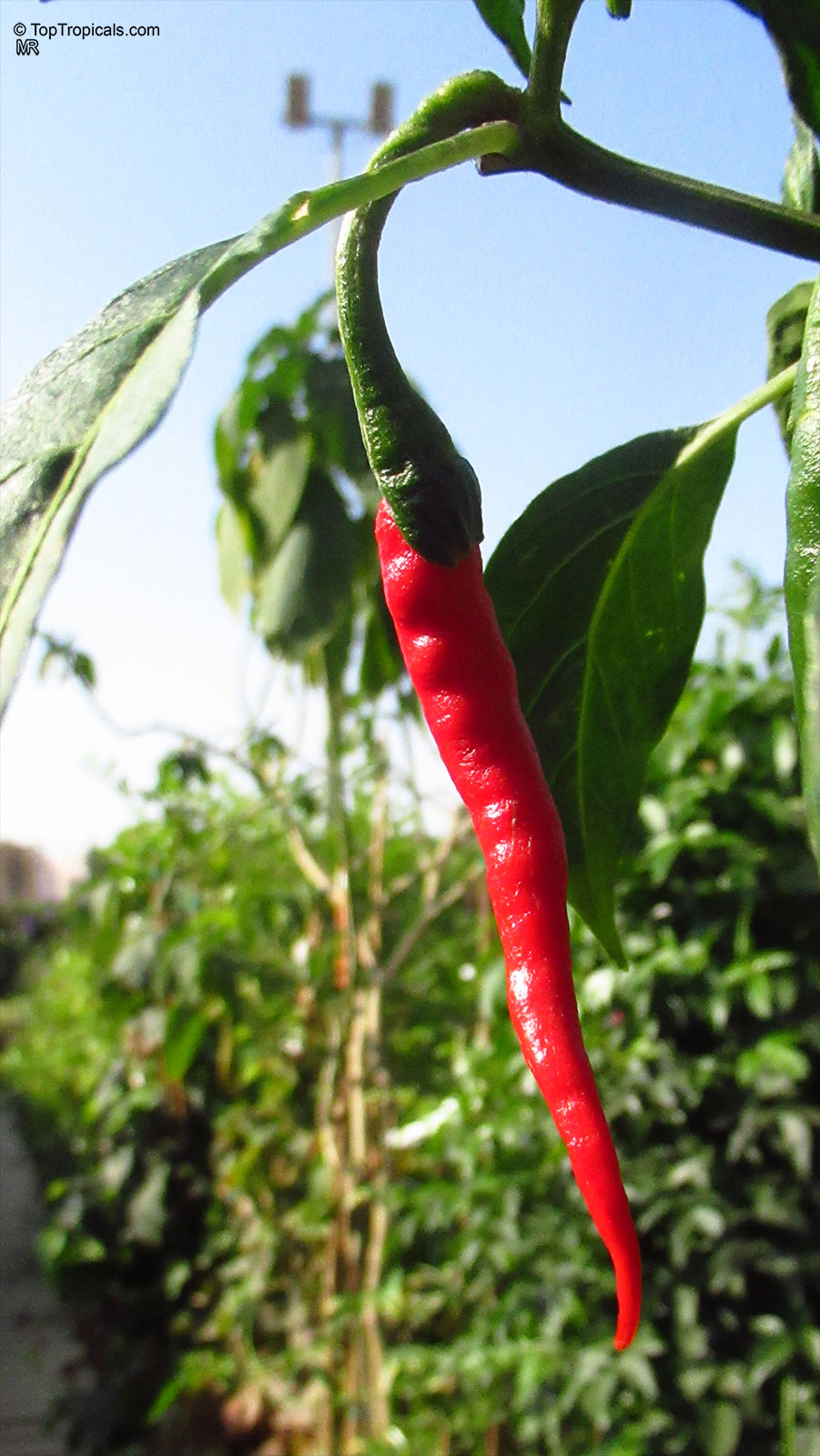
Botanical name: Capsicum annuum
Common names: Sweet Pepper, Chilli Pepper, Cayenne Pepper, Paprika, Ornamental pepper
Family: Solanaceae
Origin: South America
USDA Zone: 4-10


Capsicum annuum, native to South America, is a small shrub that reaches a height of 2-5 ft. It thrives in full sun and requires regular watering. Its white and off-white flowers give way to colorful 1 to 2 inch fruits that can be black, red, white, yellow, or cream. While the plant is an irritant if touched and an ethnomedical plant, its fruit is edible and highly nutritious.
The mature plants are cold hardy at least to 30s F for a short time, making them suitable for growing in USDA Zones 4 -10. When provided with ample sunlight and water, Capsicum annuum can produce fruits throughout the summer until the first frost. Its fruits are known to be rich in vitamins, minerals, and dietary fiber. They also have a wide range of health benefits, such as improved digestion, relief from cardiovascular diseases, and boosted immunity. A single plant can produce up to 50 fruits depending on the size and health of the plant.
When growing Capsicum annuum in regions with a cold climate, it is essential to keep the pot indoors during the winter months. During these months, the pot must be placed in a warm, sunny location and watered rarely to prevent root rot. Once the summer months arrive and the danger of frost has passed, the plant should be moved outdoors where it can receive regular water and adequate sunlight.


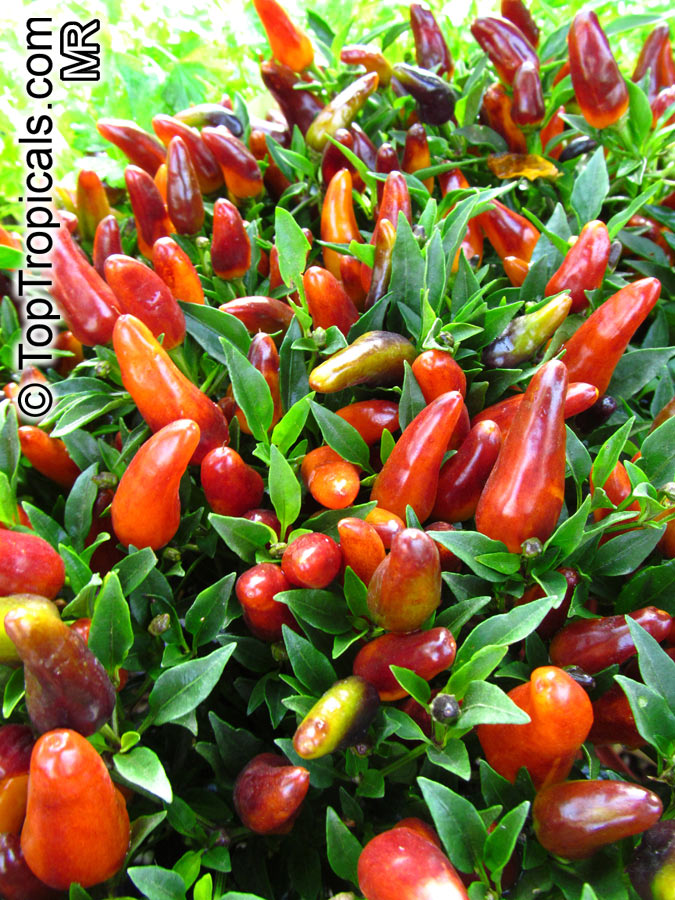


Botanical name: Capsicum baccatum
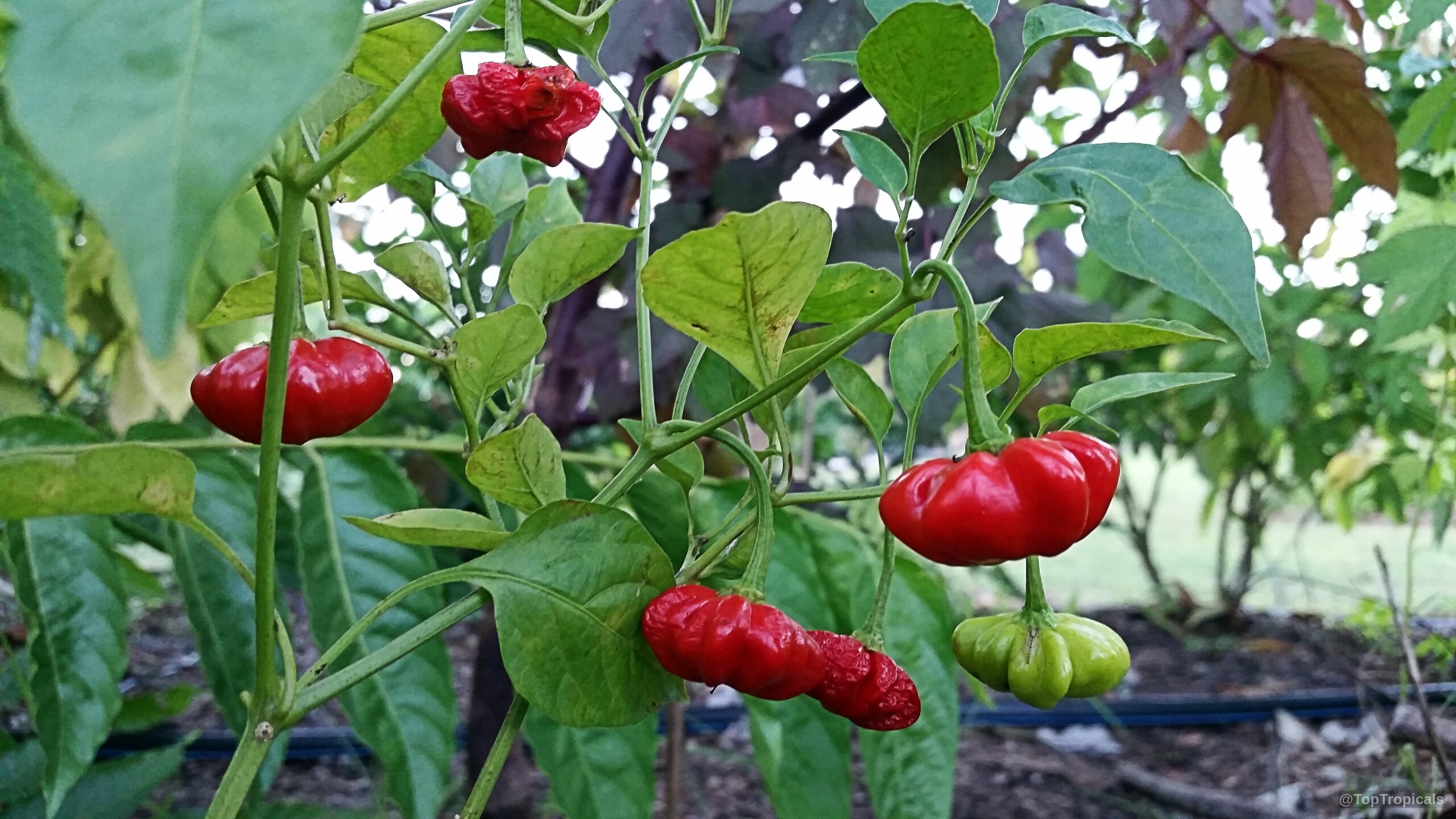
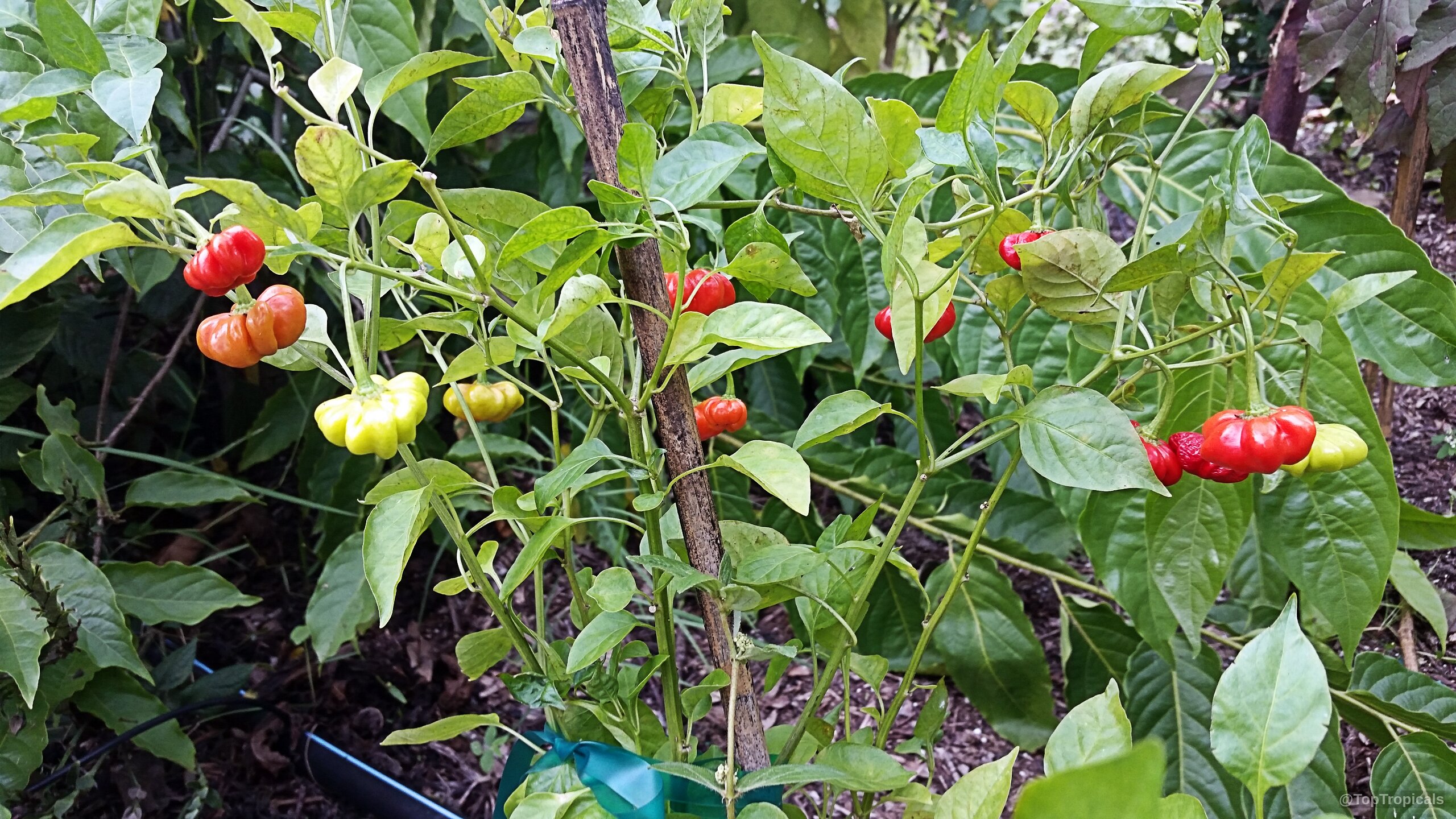
Common names: Starfish Pepper, Brazilian Starfish, Christmas Bell, Bishops Crown
Family: Solanaceae
Origin: Barbados
USDA Zone: 8-11
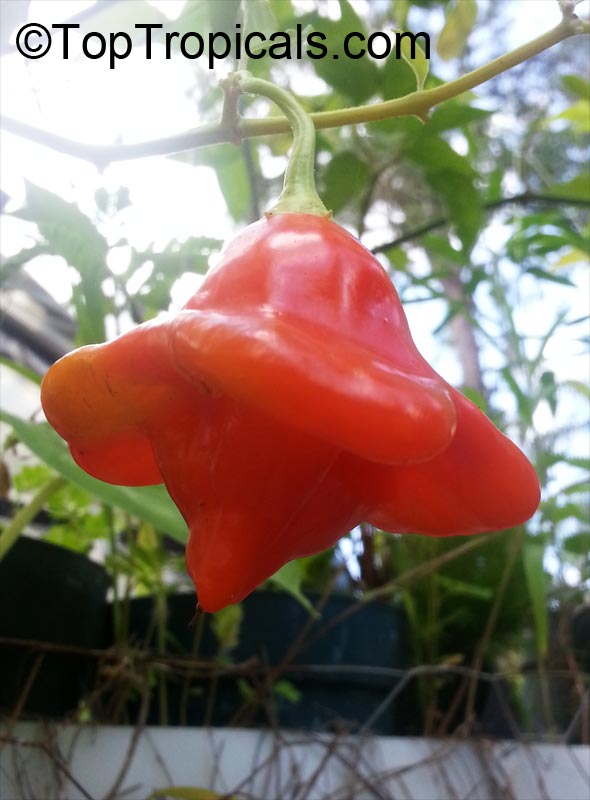
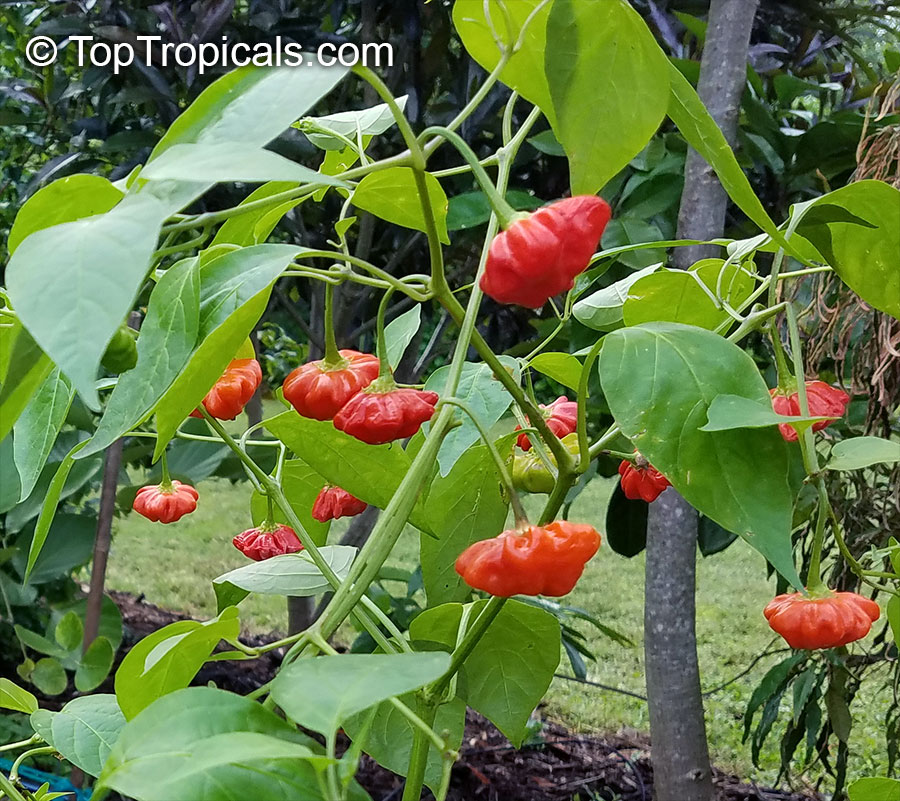
Very intriguing shape of fruit. Beautiful ornamental plant covered with edible, green and red fruit at the same time, which resemble a Bishop's Crown. This is a very hot pepper, and a very rare variety.
The Brazilian Starfish is a uniquely shaped pepper. This is one beautiful chili with a shape much like a sea star. It's a lovely quirkiness - sort of an unexpected, but well-appreciated twist to the typical rounded chili - and, because of that, it works very well as an ornamental pepper.
But unlike many ornamentals that sacrifice nuanced taste for looks, the Brazilian starfish is simply delicious too. It is called sometimes "Beautifully Sweet"! They are sweet, almost fruity with an eatable level of heat for most people. Packing looks and flavor makes this chili pepper well sought after by spicy foodies and gardeners alike.
This tall plant has a vine like habit and produces good yields of 1 - 2 inch wide starfish-shaped peppers that ripen to a brilliant red at maturity.
See article about Capsicum baccatum.




| Prev | Next | |
Use link to repeat this search:
https://toptropicals.com/cgi-bin/garden_catalog/cat.cgi?search_op=and&keyword_op=and&language=e&number=10&no_change_lang=1
&v1=ppp&user=tt&sale=1&first=0