Irritating plant - Plant Encyclopedia Results (Page 21)
| Number of plants found: 210 |  | Prev | Go to page: | First | 16 | 17 | 18 | 19 | 20 | 21 |
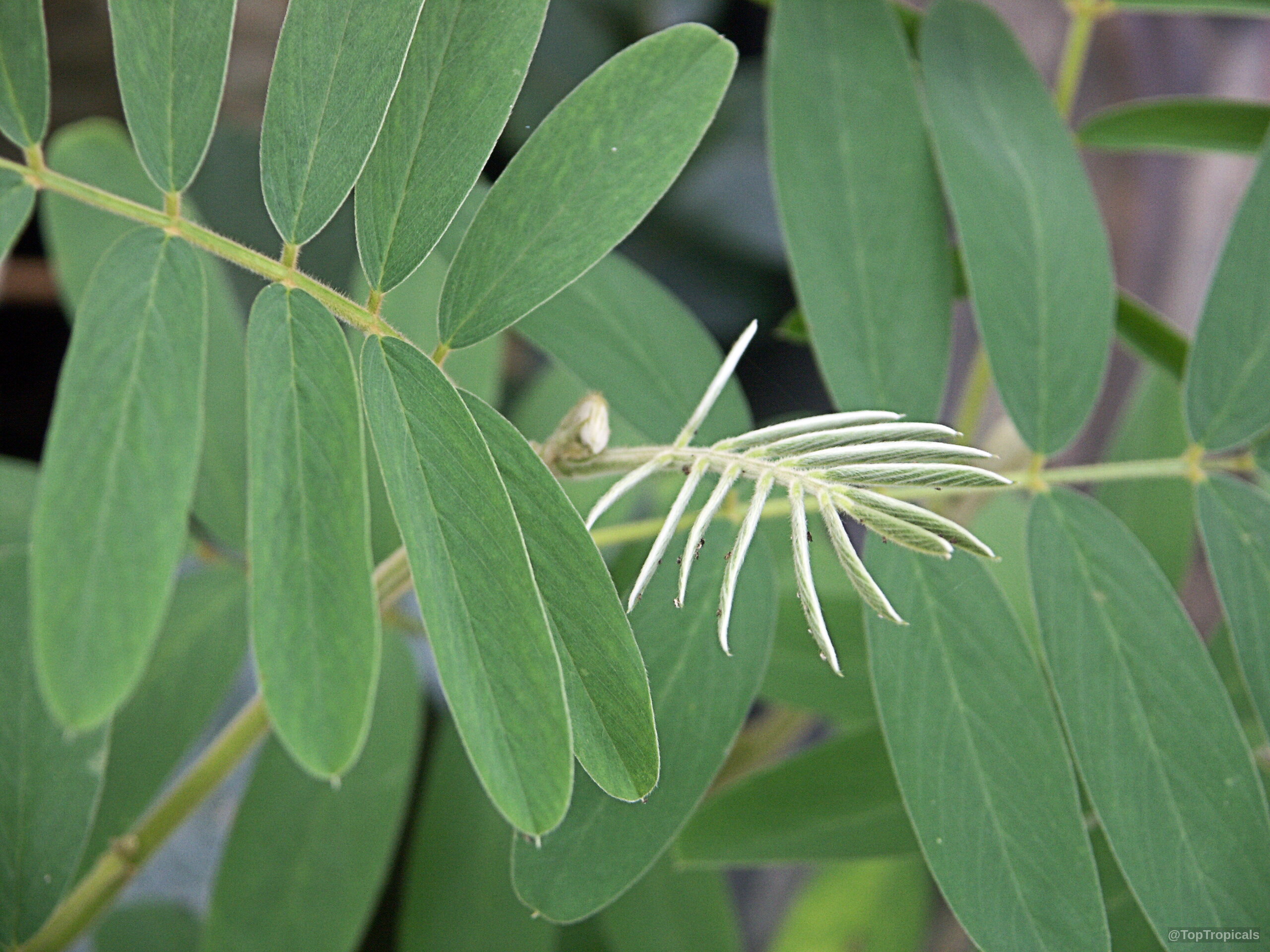
Botanical names: Tephrosia vogelii, Tephrosia vogellii
Common name: Muluku
Family: Fabaceae
Subfamily: Faboideae
Origin: Africa
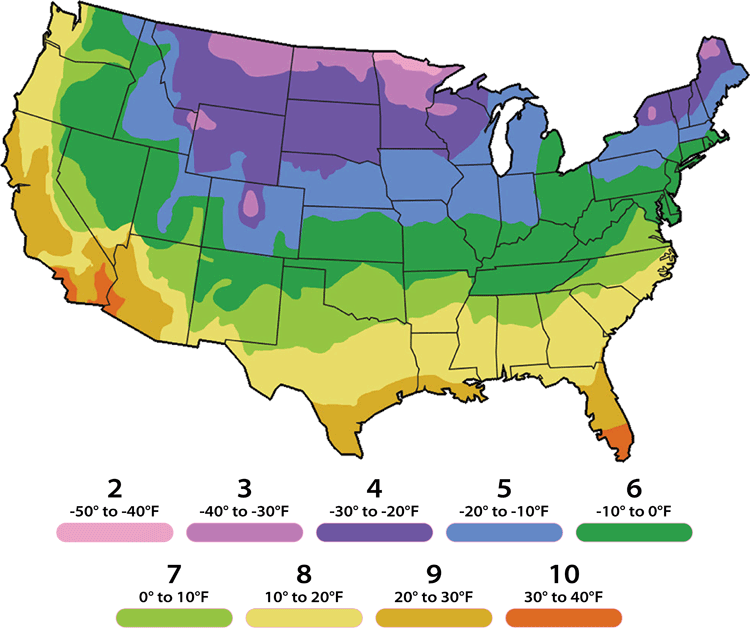
USDA Zone: 9-10


Tephrosia is a perennial leguminous shrub indigenous to Uganda; in Lusoga and Luganda, it is known as muluku. It slow-growing, herbaceous, with soft, hairy-velvet leaves, pleasant to touch. Young leaves are silvery. The flower is about an inch across, and purple with white markings or white. The flowers are borne on compact racemes that bloom over a 3-6 week period. The plant is considered to be self-pollinated. The plant tolerates poor soils and harsh sites, attracts bees and butterflies.
Tephrosia is capable of fixing nitrogen from the air for improvement of soil fertility. The shrubs may be periodically pruned, applying immature plant parts to improve the soil. Leaves and roots of Tephrosia contain rotenone, a compound that is toxic to the root rats as well as fish and some insects. One new promising technology to control root rats is to plant Tephrosia as scattered plants in a field or as a barrier around fields. Tephrosia leaves can be used in insect control. Scientists at Kawanda have found the dried and powdered leaves of Tephrosia to be effective in the control of storage pests; in southern Tanzania, crushed fresh leaves are used in control of maize stalk borer. Tephrosia is also known as 'fish bean'; it is often used to paralyze fish, causing them to float to the surface.
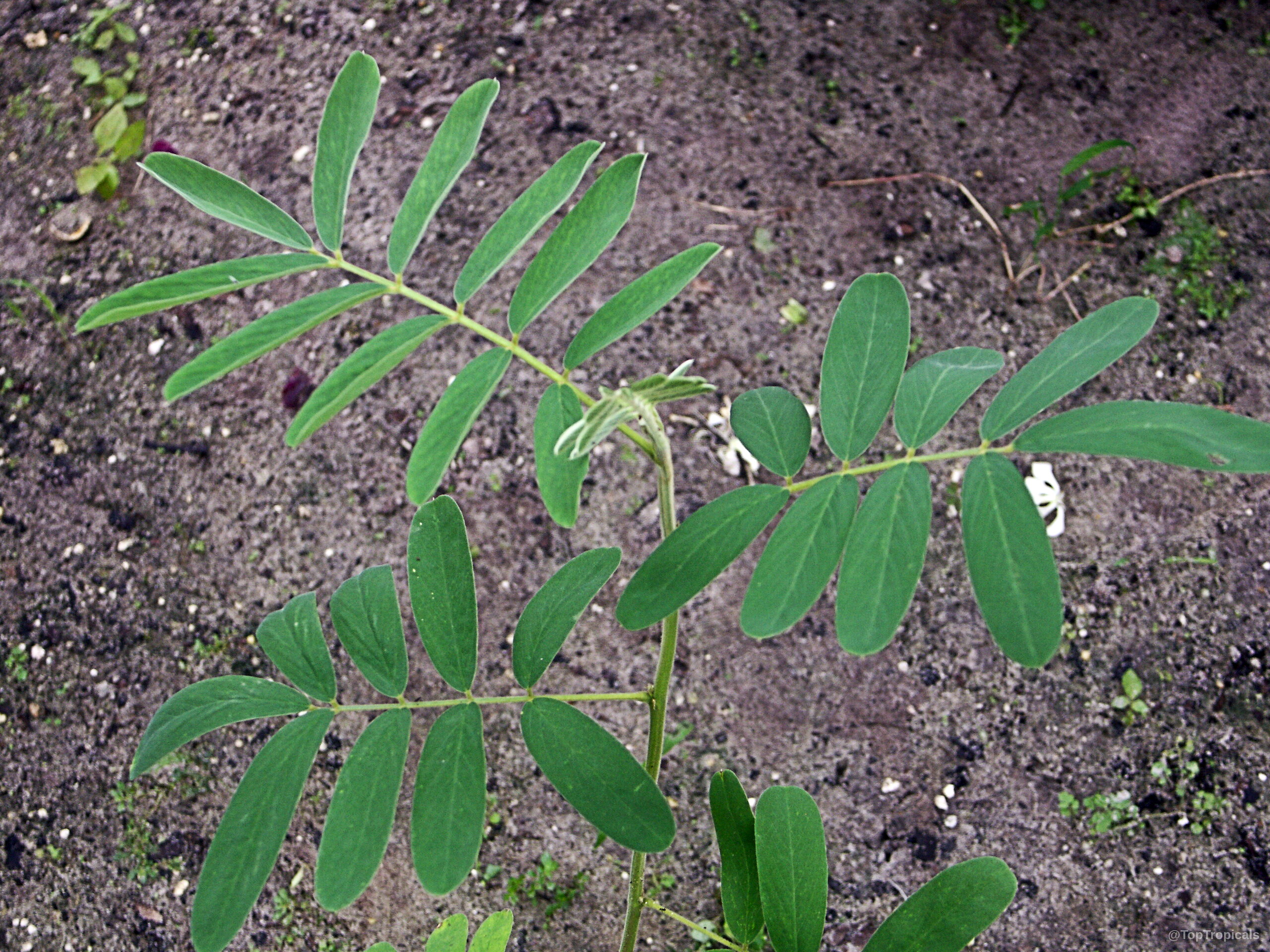
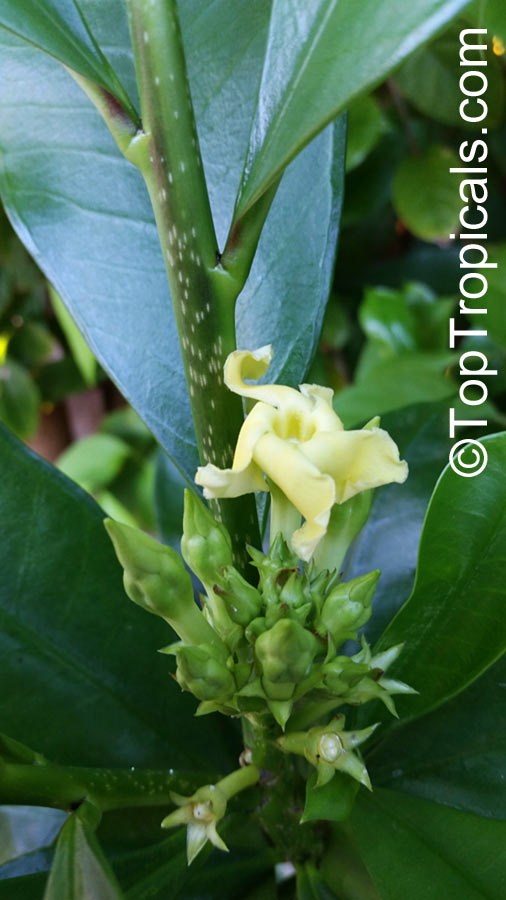
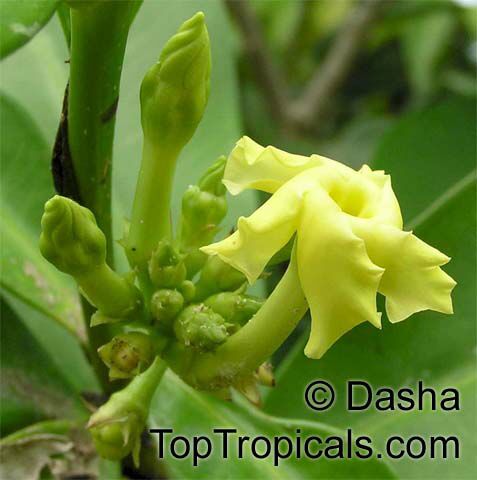
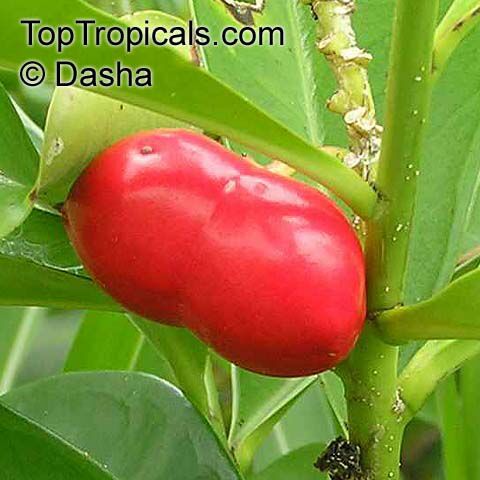
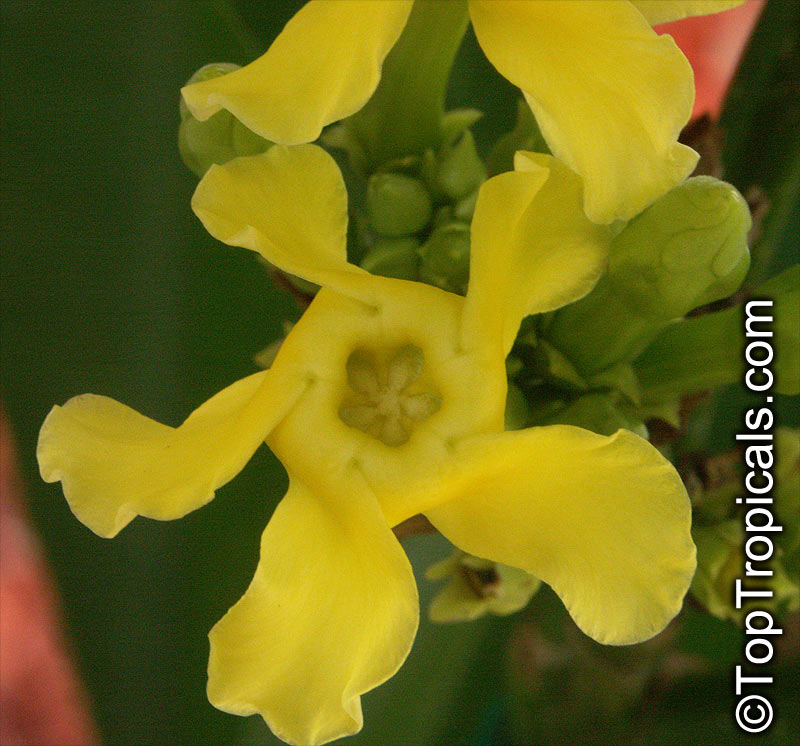
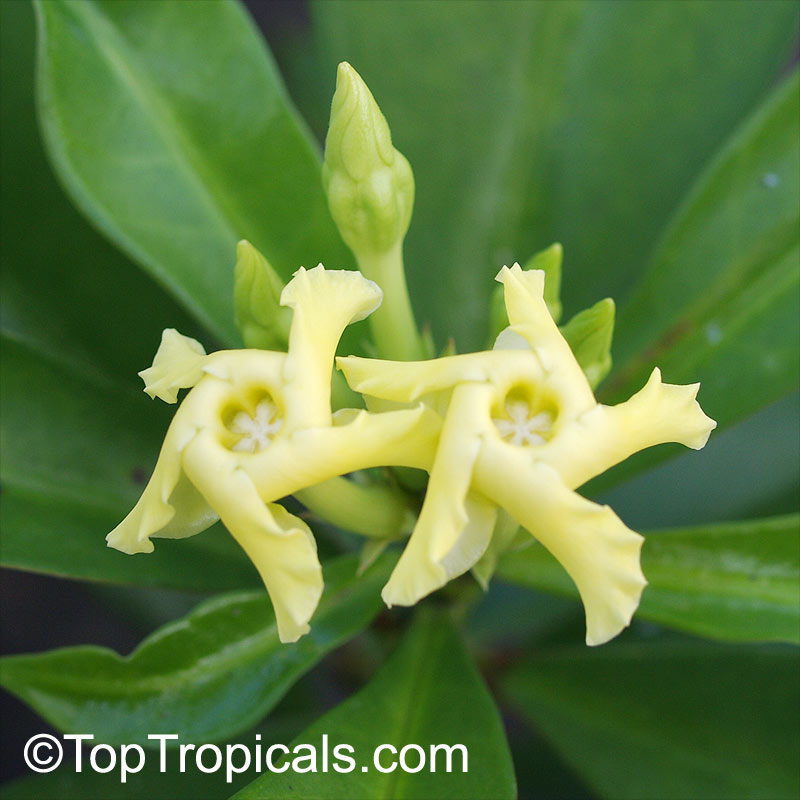
Botanical names: Thevetia ahouai, Ahouai nitida, Plumeriopsis ahouai
Common names: Broadleaf Thevetia, Yellow oleander, Dog's Tongue, Dog Balls, Grandfather's Balls
Family: Apocynaceae
Origin: Central America, Mexico
USDA Zone: 9-10


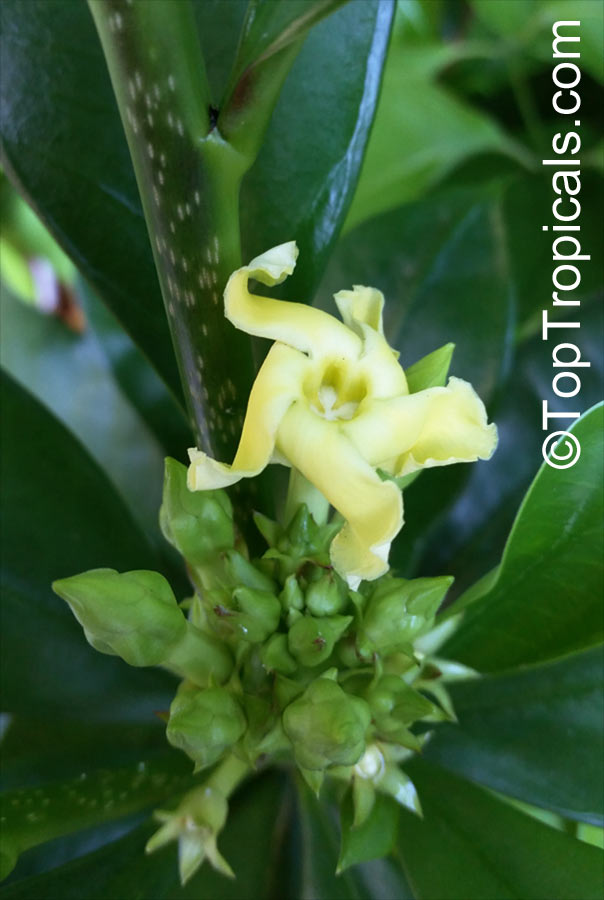
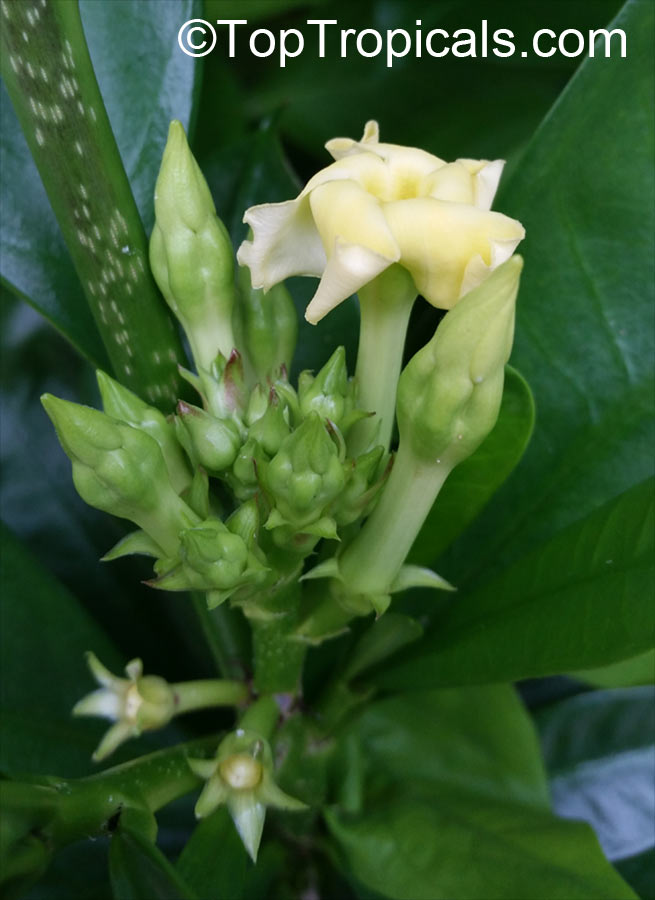
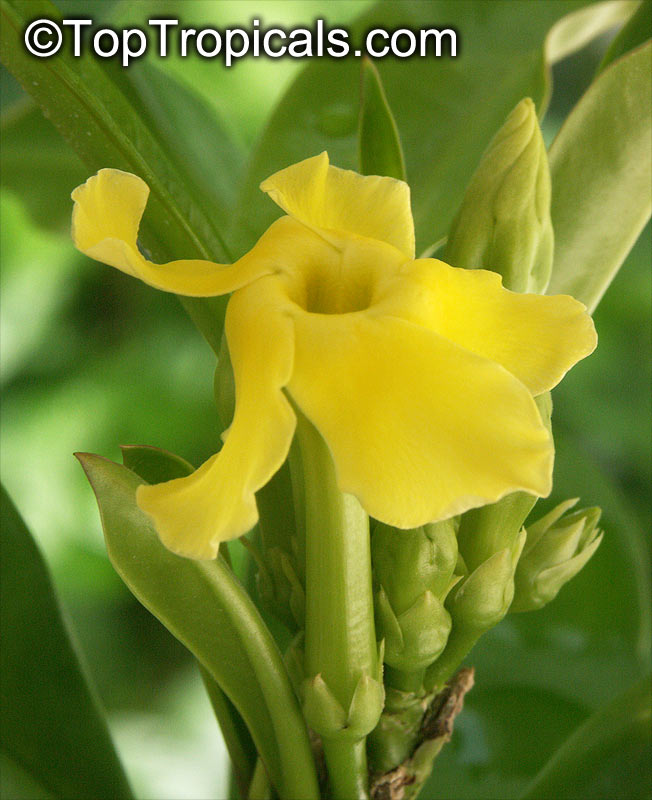
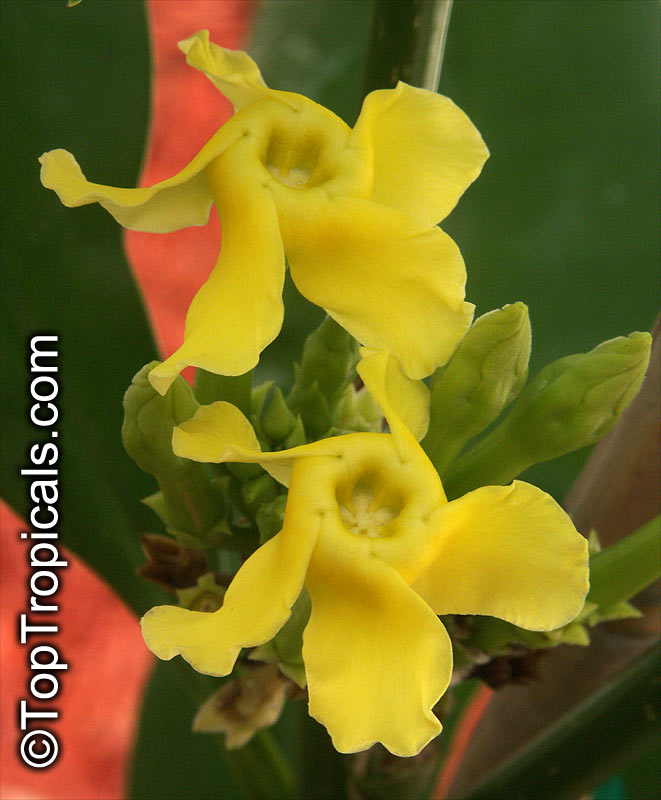
Thevetia ahouai is native to Central America and Mexico, but can be found in a variety of warm climates, such as the American south-west. It prefers full sun, though it can tolerate light shade in hotter regions. The plant should be watered regularly, but not to the point of saturation. In colder regions, Thevetia ahouai can be grown in containers. In this situation regular watering is still important, but it's important to avoid overwatering in the winter months when the plant is dormant as this can cause root rot.
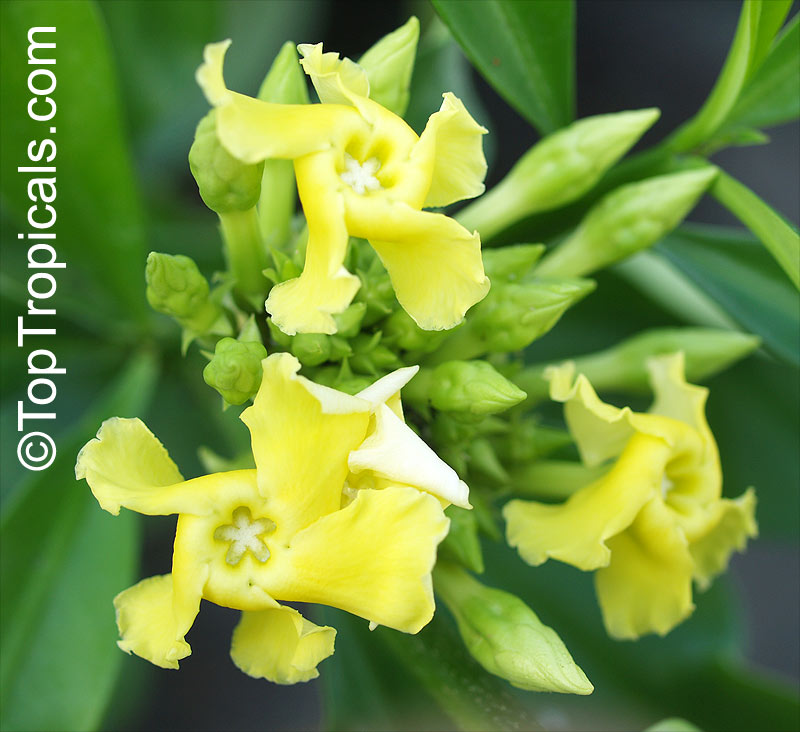
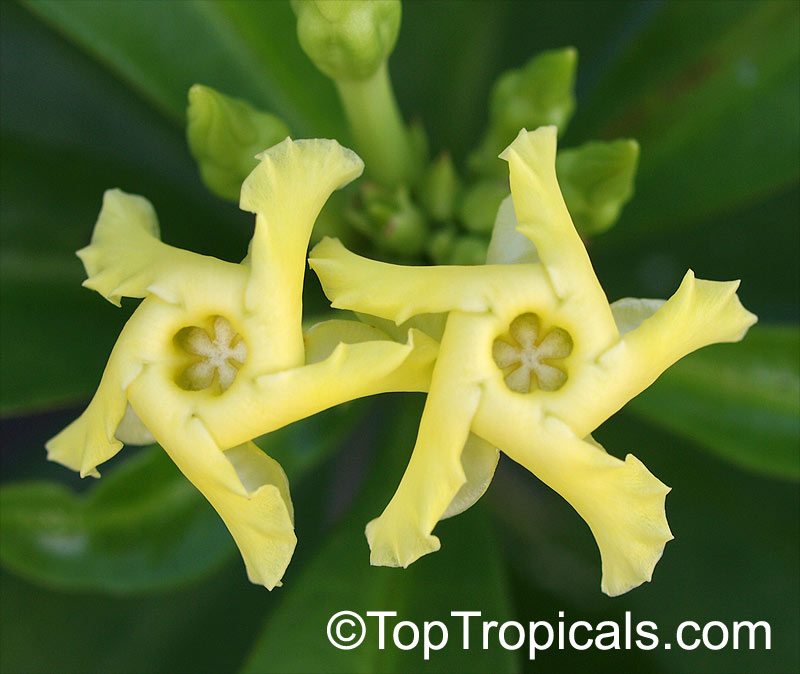
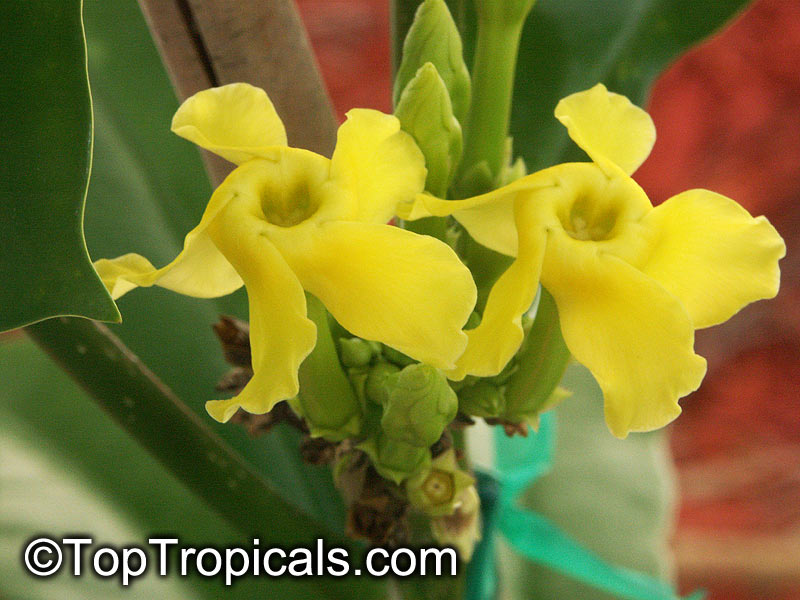
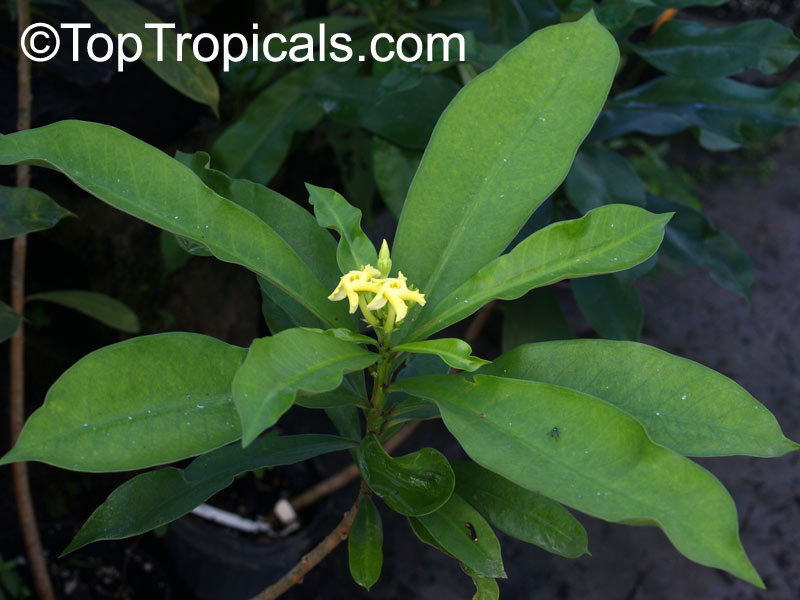
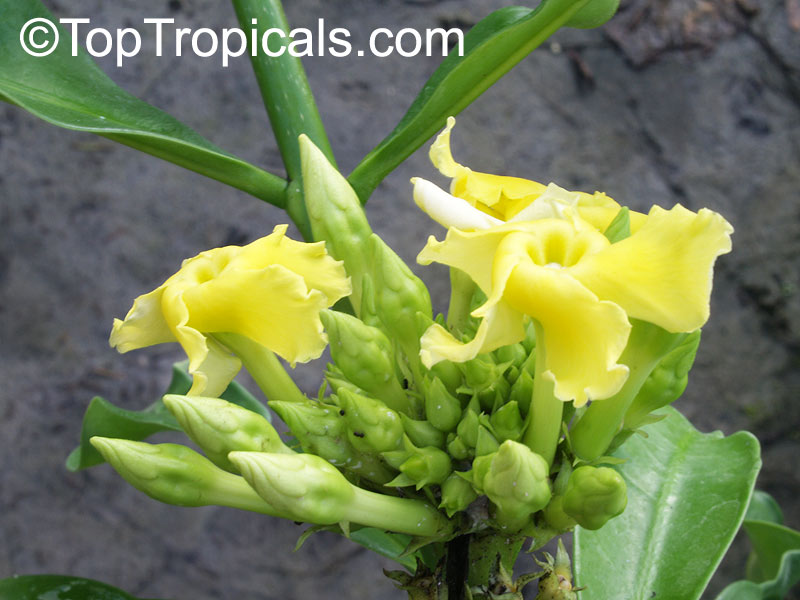
Thevetia ahouai is a large shrub, usually growing to between five and ten feet tall, with yellow and orange flowers that are highly fragrant. They bloom in clusters in the late spring and early summer months. Thevetia ahouai is hardy in USDA zones 9-11, and is generally a low maintenance plant once established. Pruning can be done to keep the plant shaped and to enhance flowering, however it is not necessary. With proper care Thevetia ahouai will provide beautiful colour and fragrance in any garden.
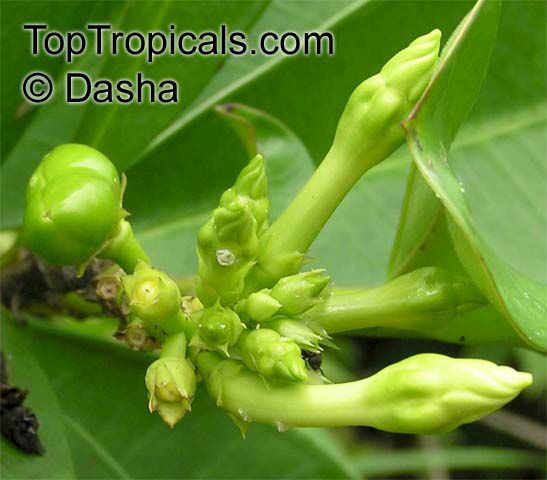
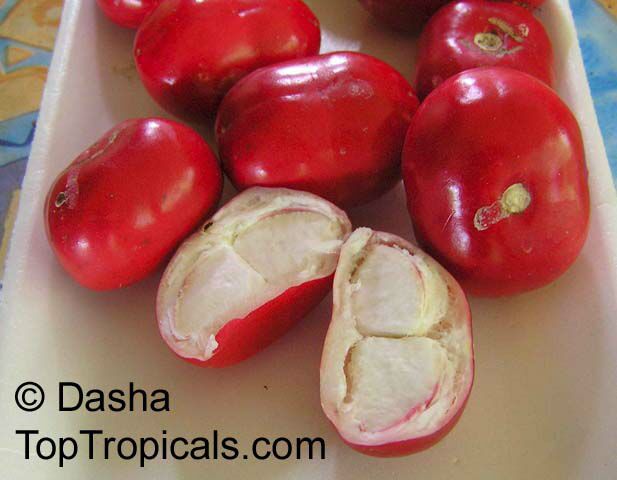
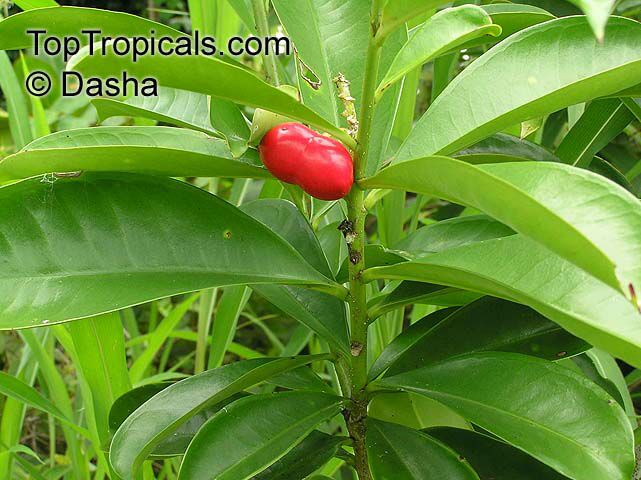
Leaves and bark exude a milky white sap which can cause irritation when coming in contact with the skin. Its fruit are 1 inch long with bright red color. Special caution must be taken with children and pets as they're highly toxic.
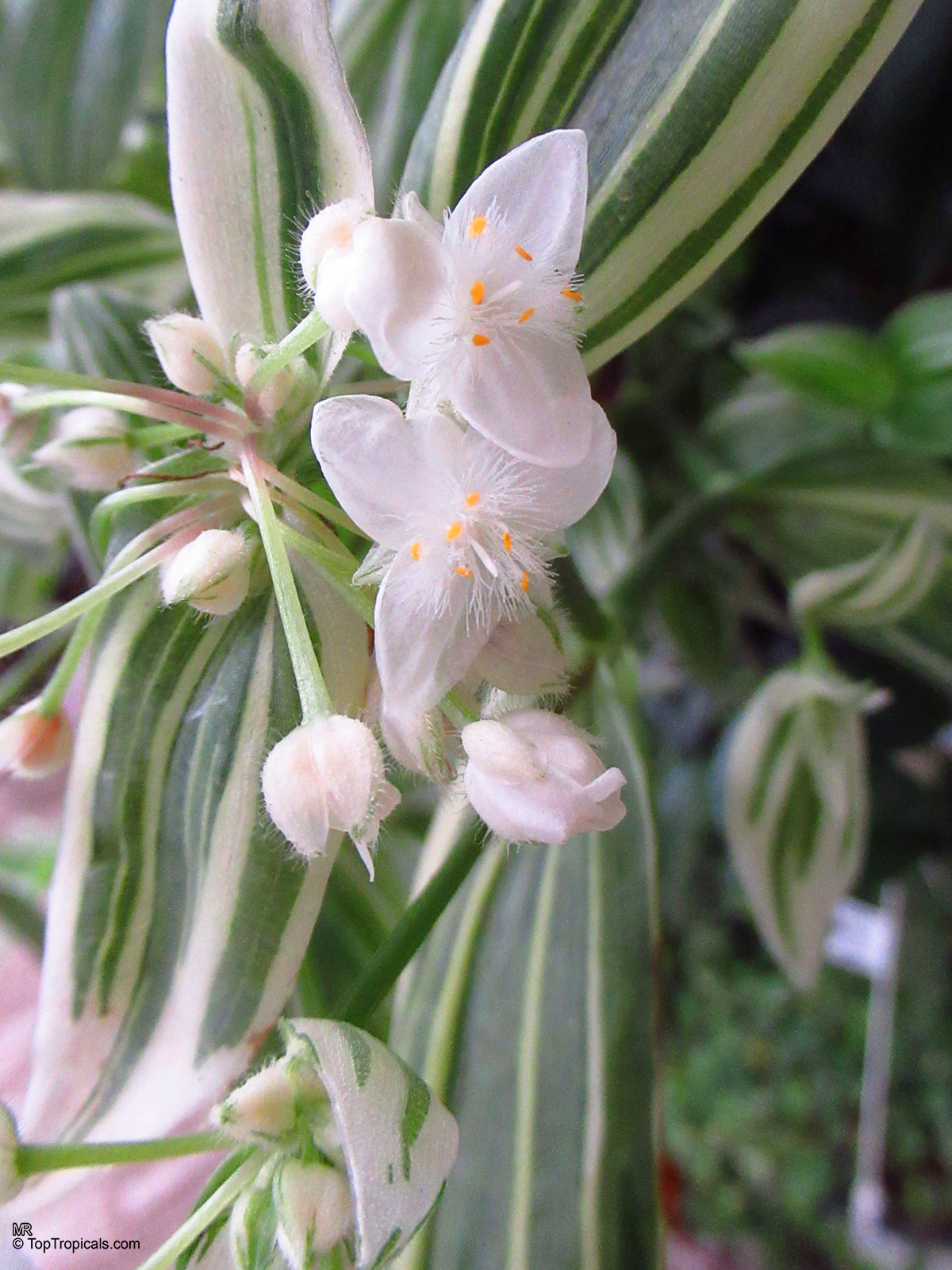
Botanical names: Tradescantia fluminensis, Tradescantia albiflora
Common names: Inch Plant, White-Flowered Wandering Jew
Family: Commelinaceae
USDA Zone: 9-11


Tradescantia fluminensis (Inch Plant) is a low-growing and evergreen vine or creeper that can easily reach 2 feet in length. This plant features beautiful ornamental foliage consisting of tiny, succulent oval leaves from 0.5 to 1 inch in length. Depending on the light condition, its leaves are mostly green or purple. In the full sun, its leaves become green-grayish in color. And in the shade, they will exhibit more purple hues. It produces small white or off-white flowers that makes it an attractive addition to any garden.
When growing Tradescantia fluminensis, it needs regular water and an average amount of water during its growing season. It can also tolerate moderate water if irrigation is delayed. For colder regions, it's best to grow this plant in pots, as it is not cold tolerant. It is grown in the USDA Zone 9-11, but can survive with regular care.
Tradescantia fluminensis is a salt tolerant plant and can be grown near the seaside. It is perfect for adding texture and dimension to garden beds and edges, as a low-growing ground cover or as a hanging basket plant. It can also be used as a filler between stepping stones and pathways. When handling this plant, be careful as it can cause irritation to the skin.
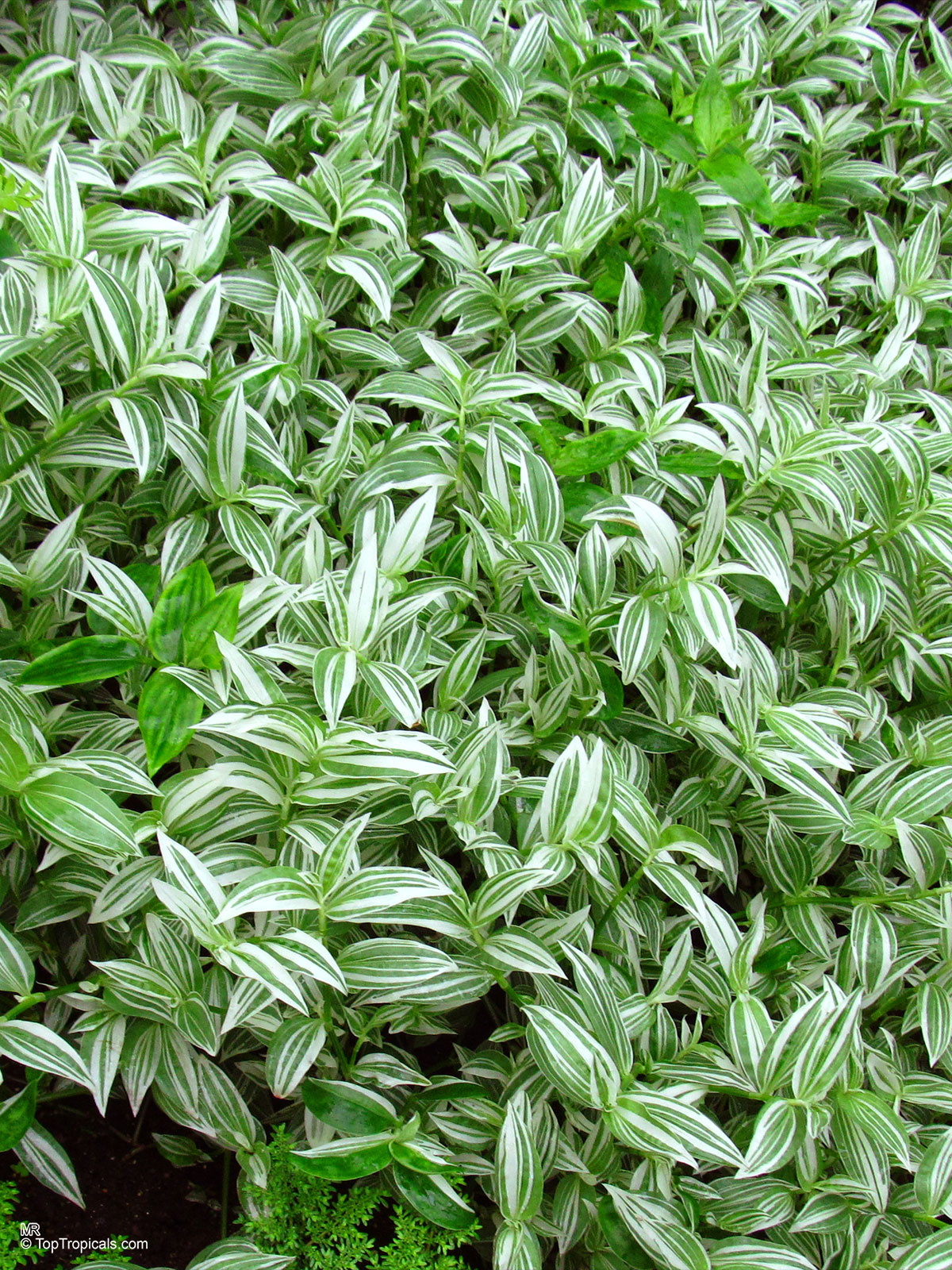
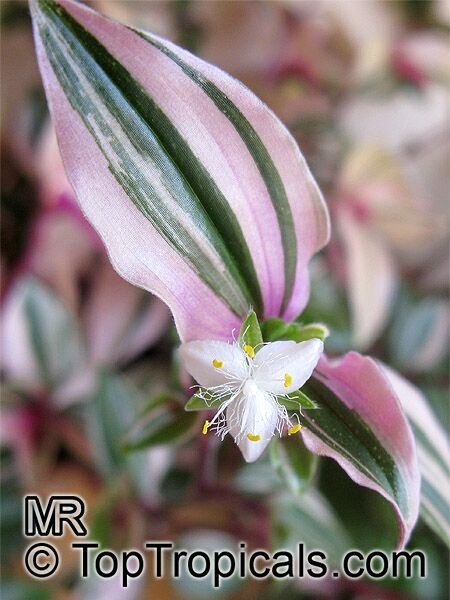
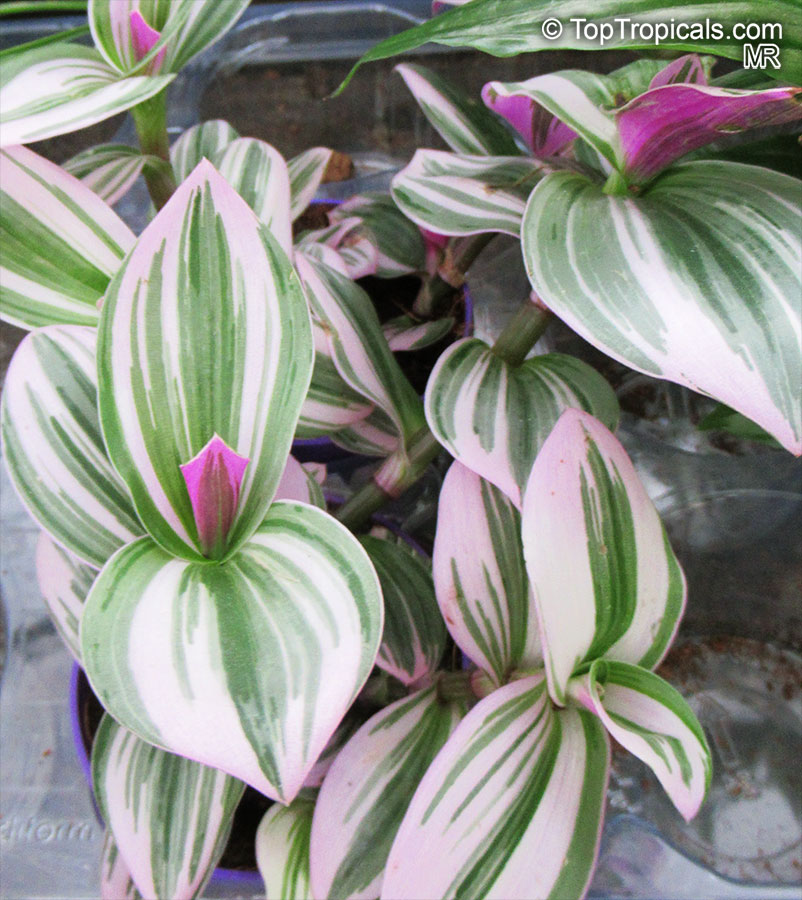
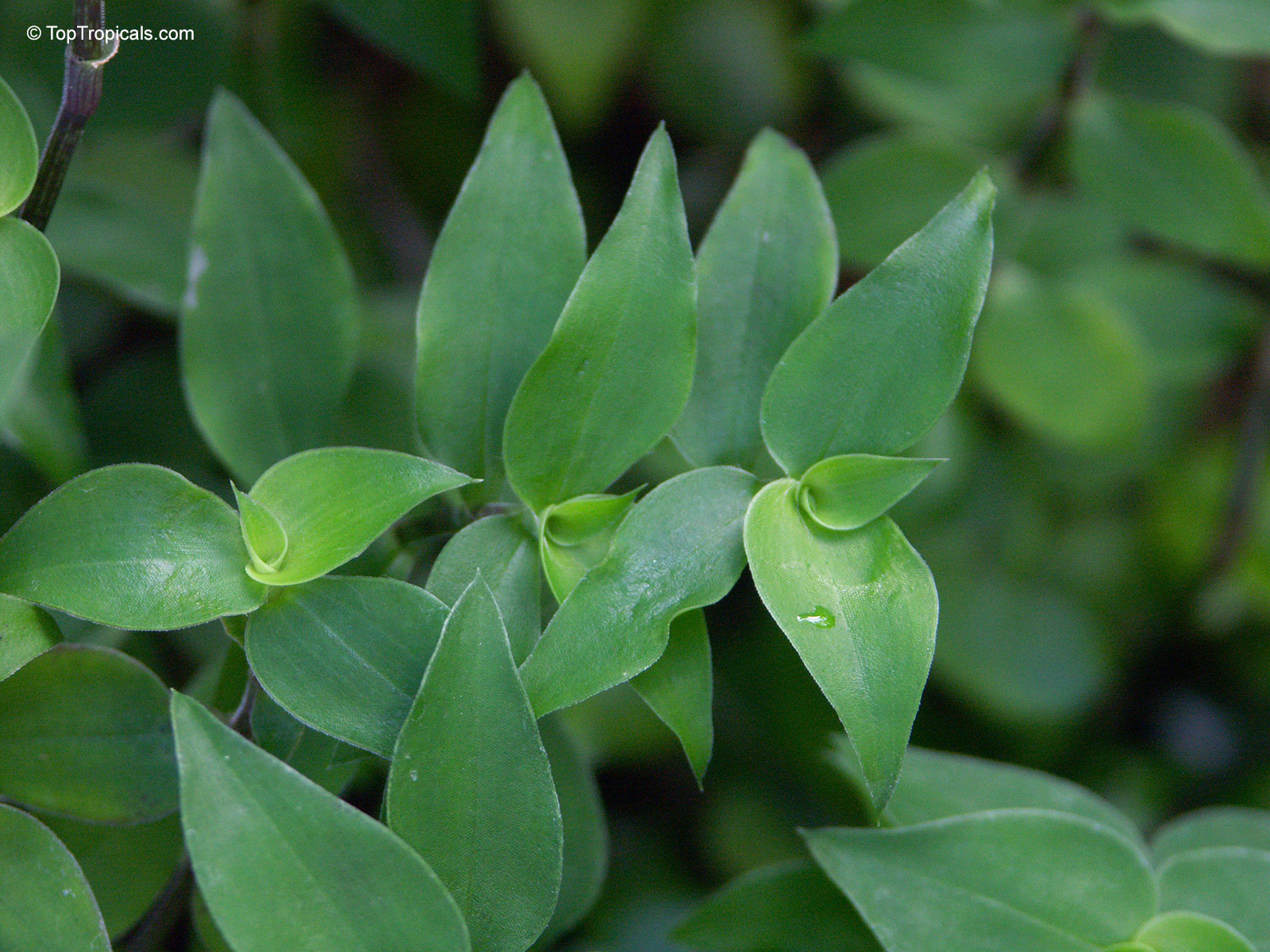
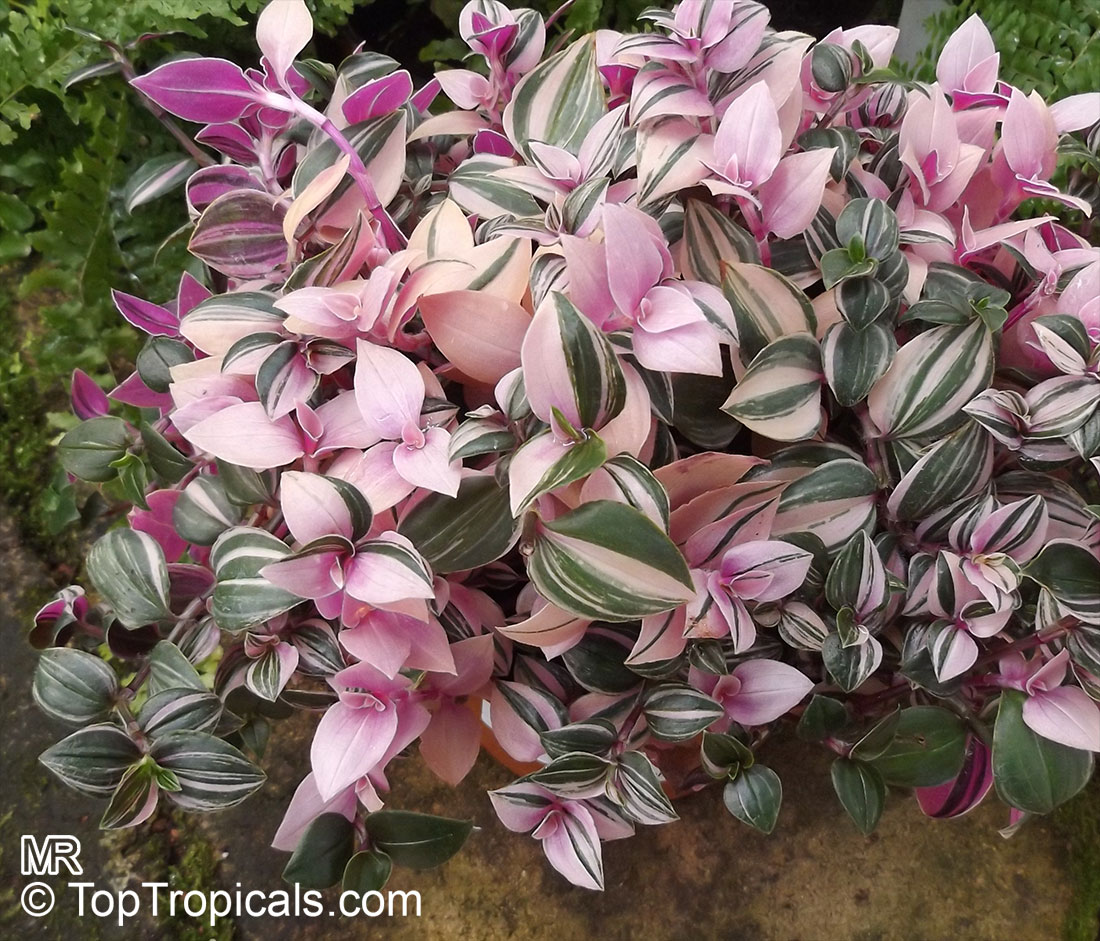
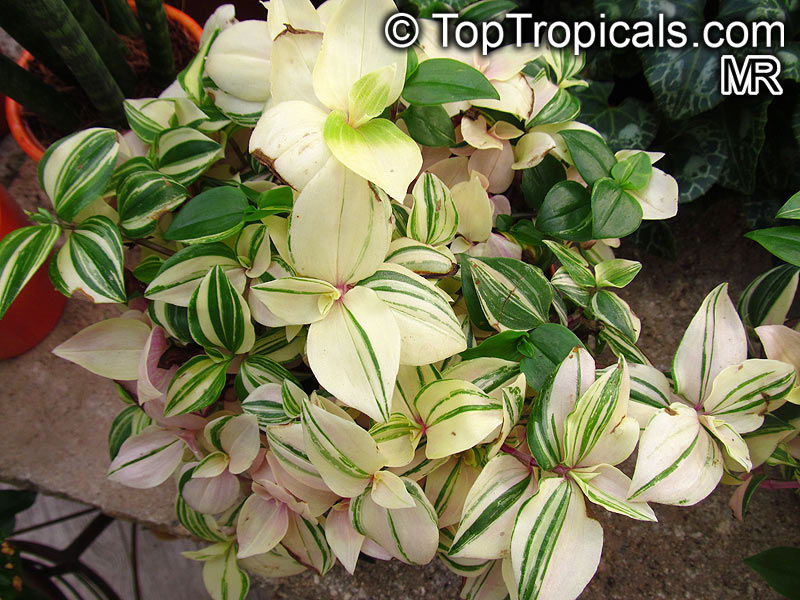
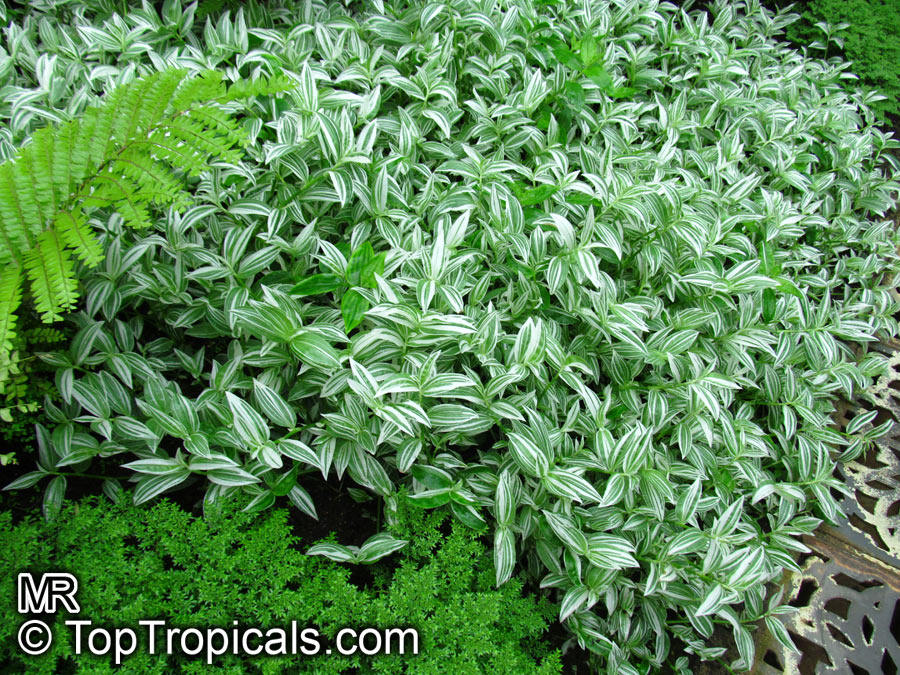
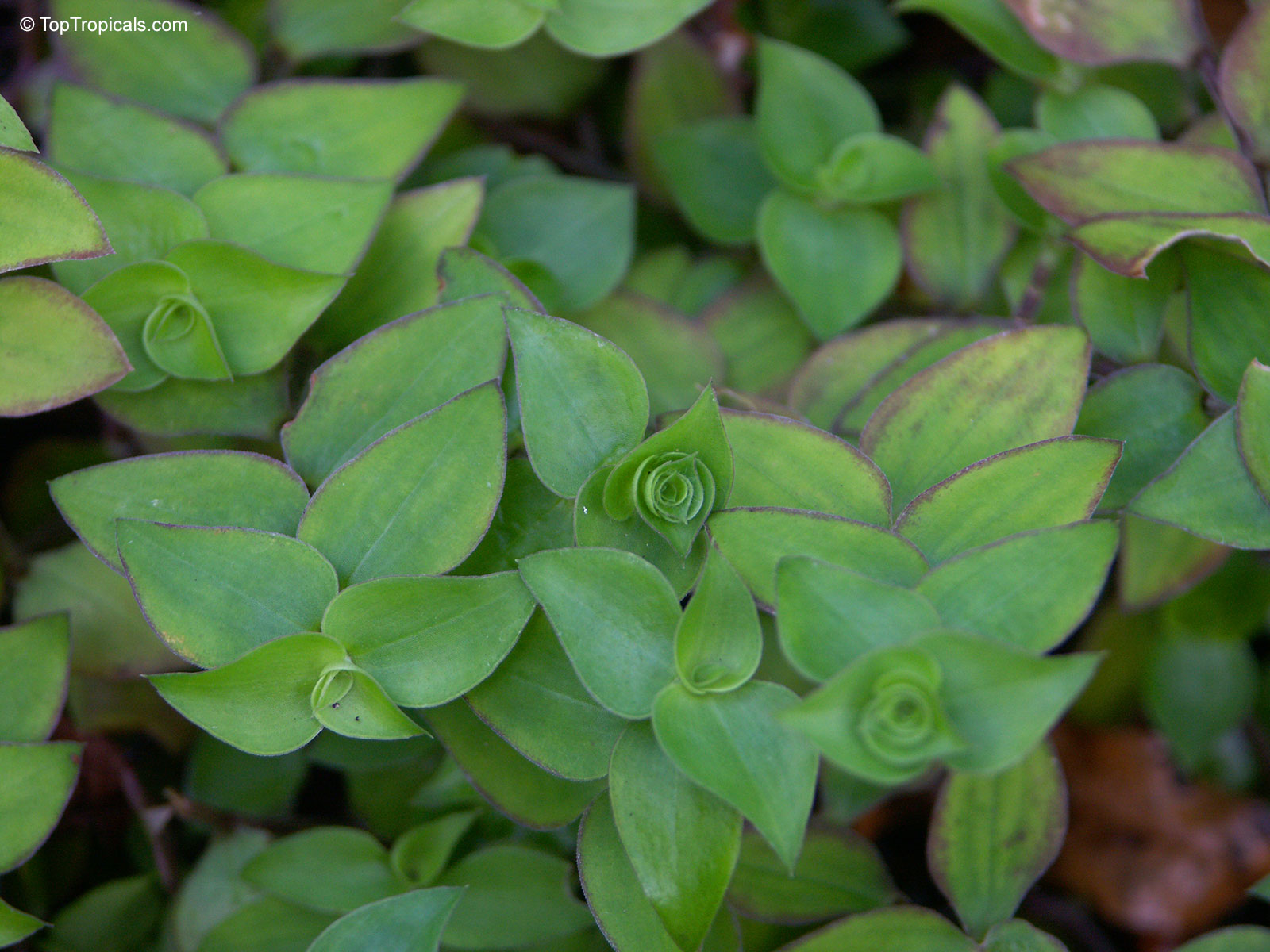
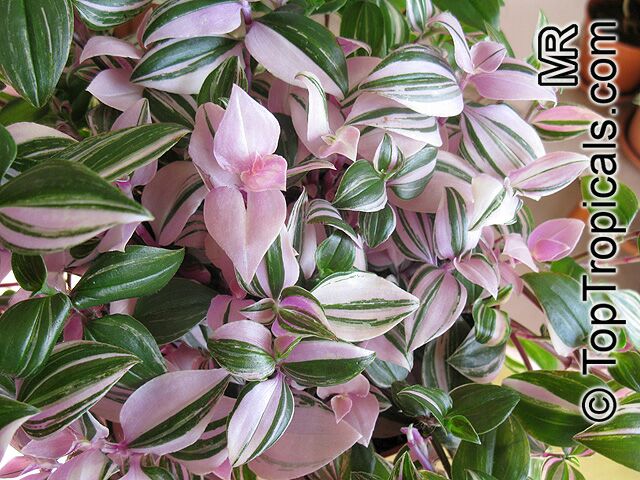
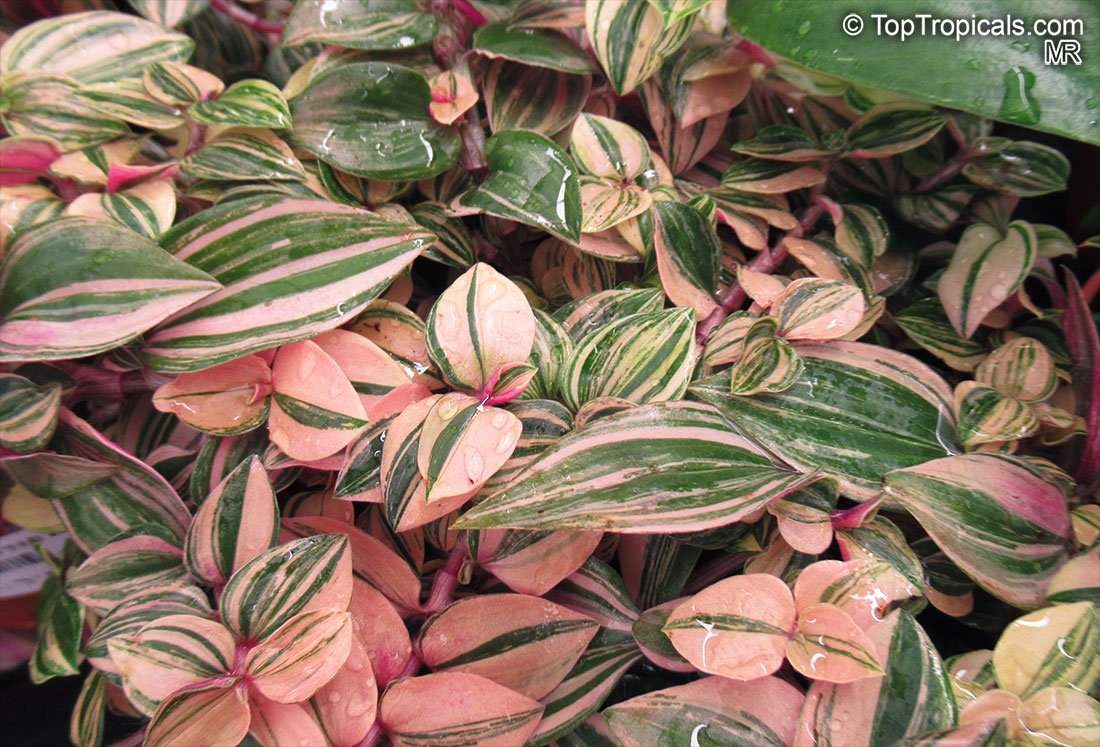
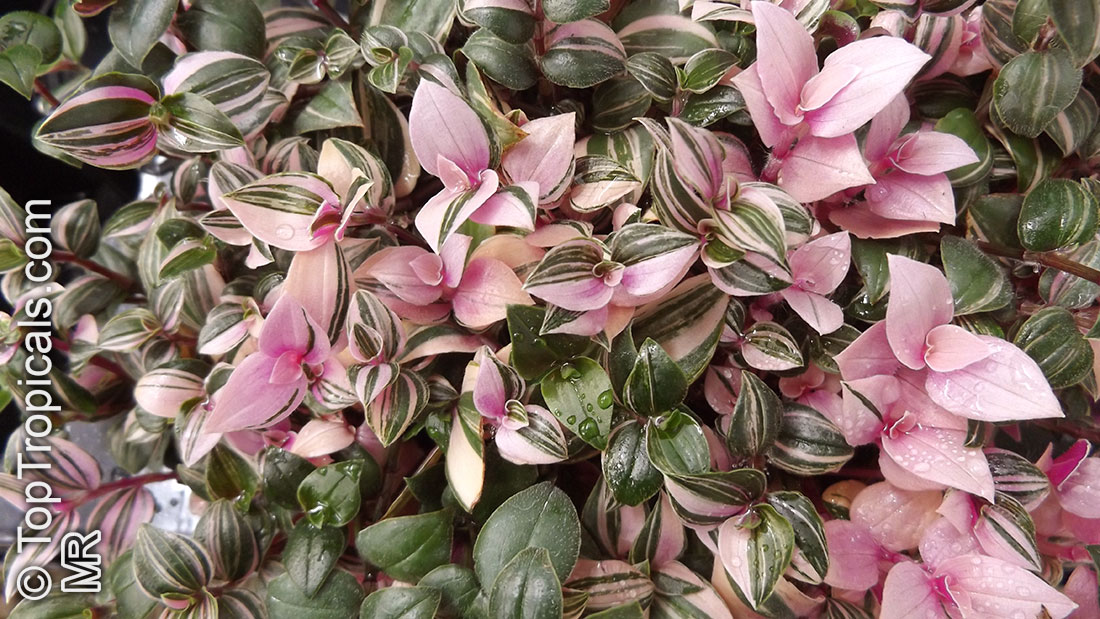
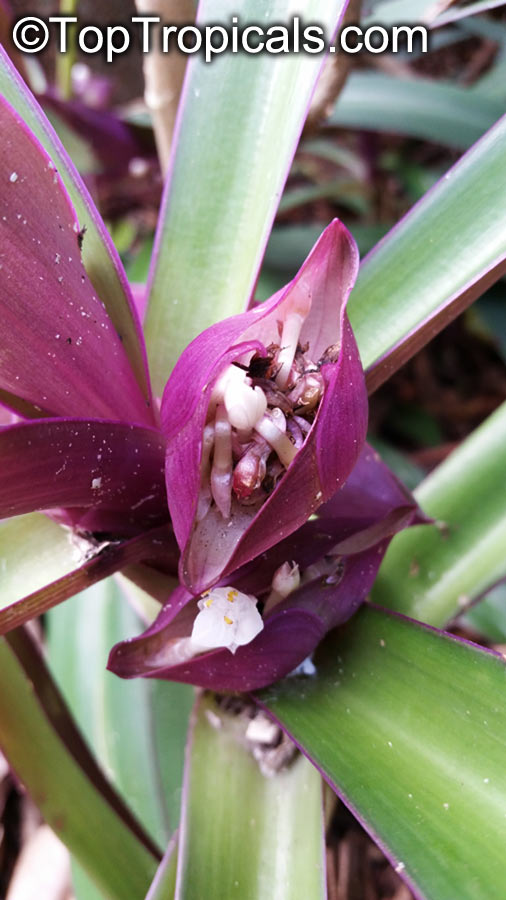
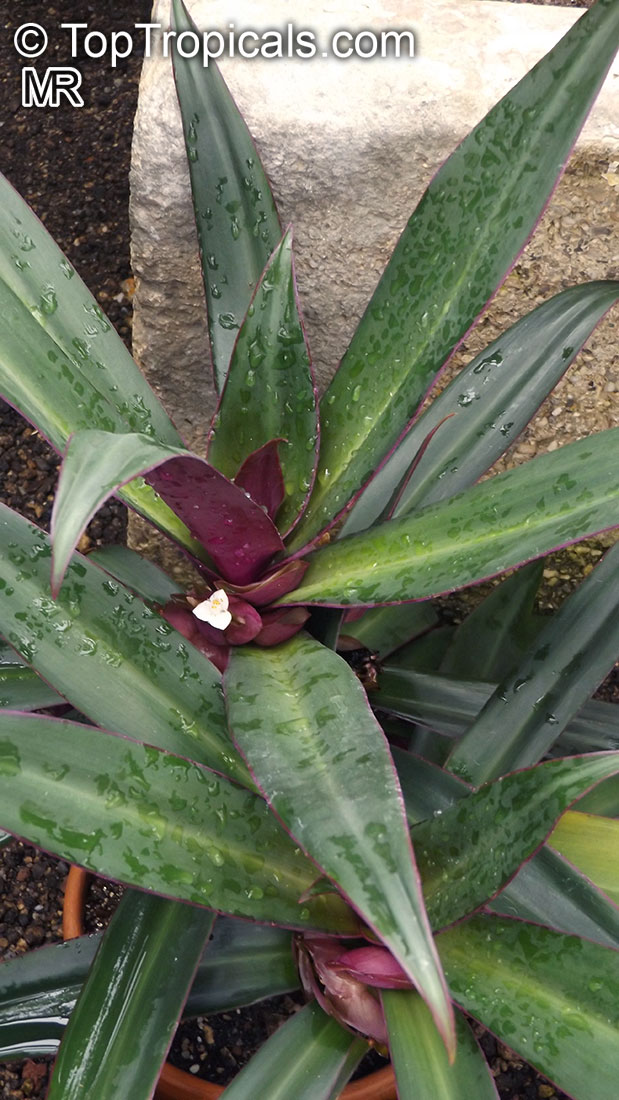
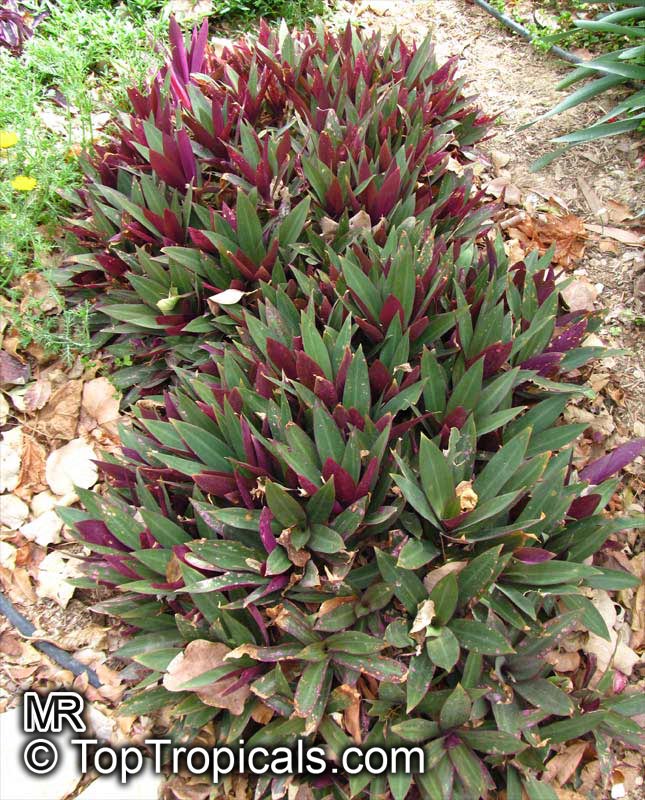
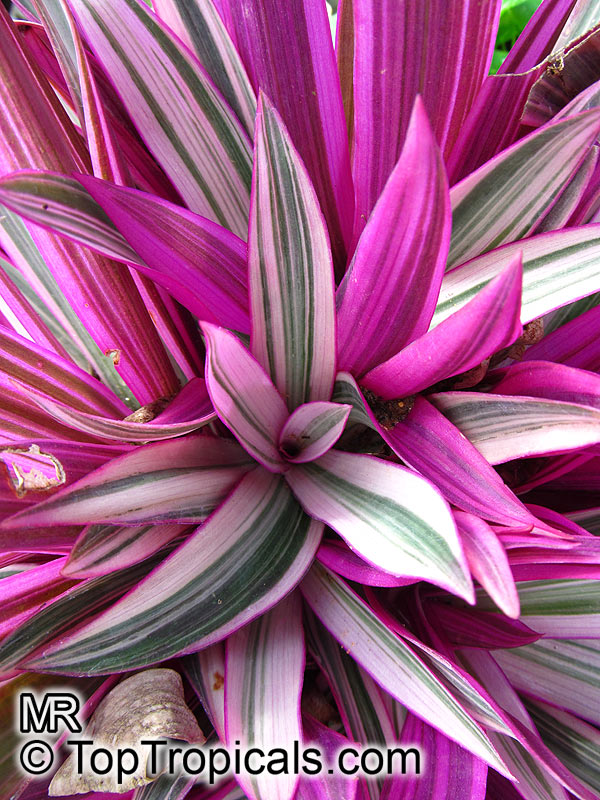
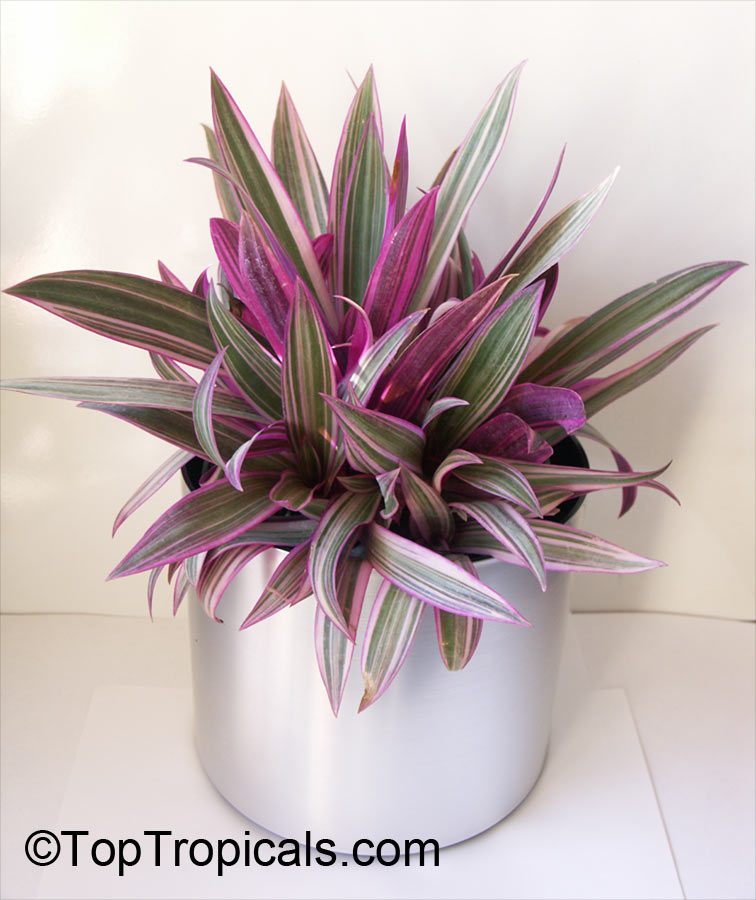
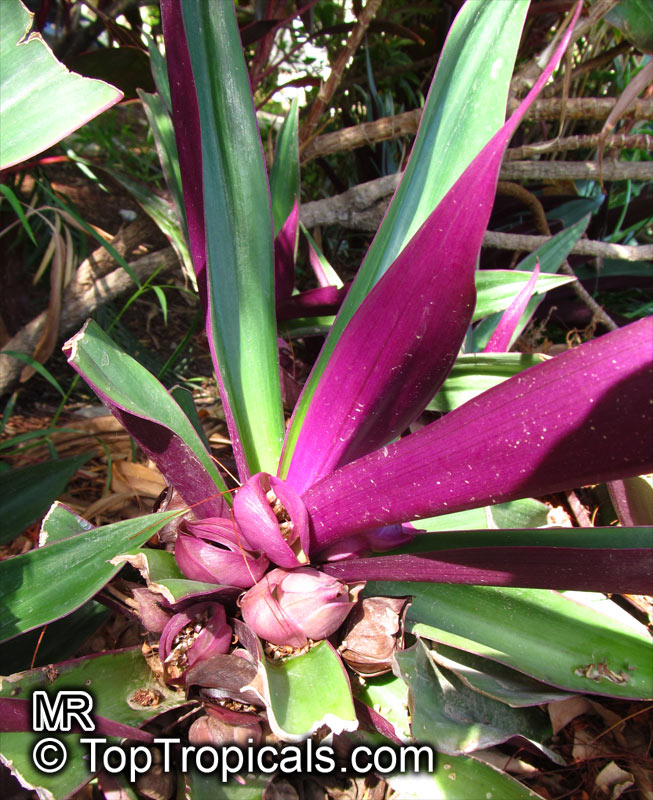
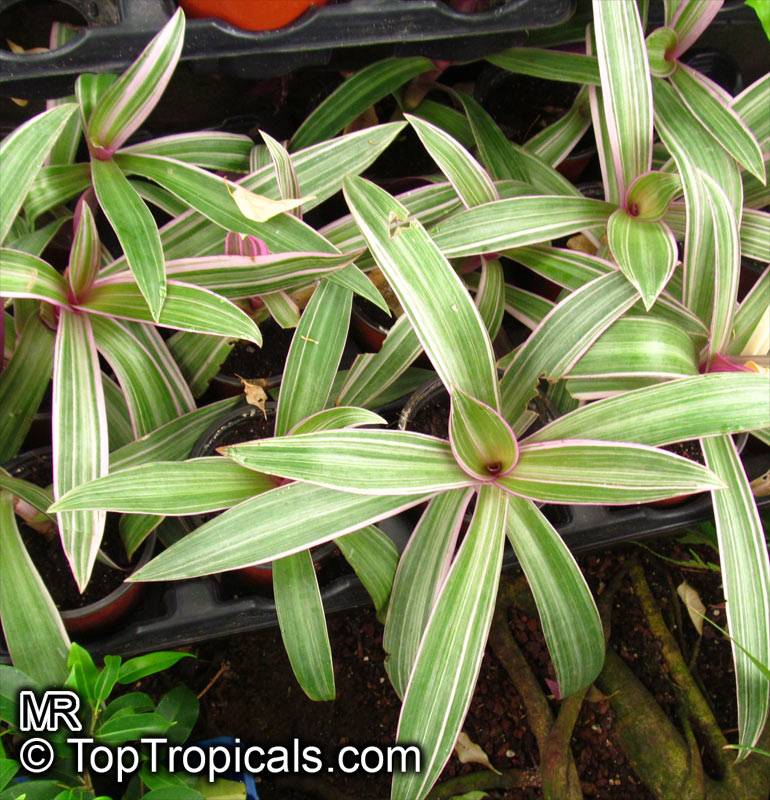
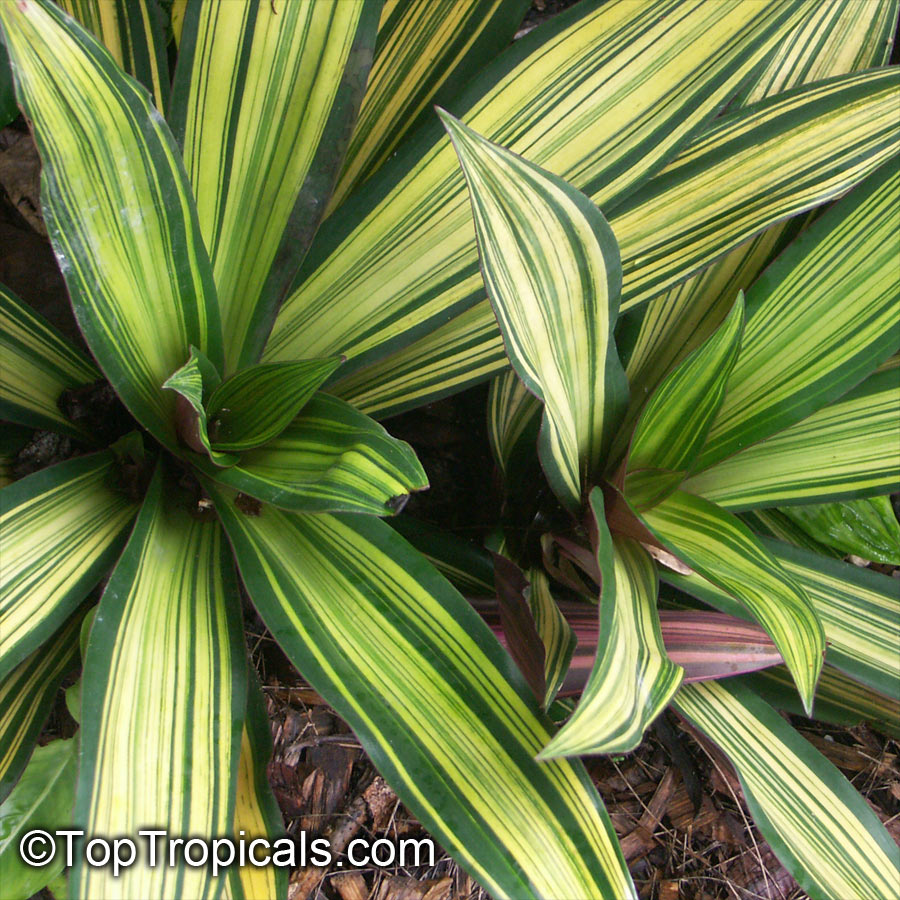
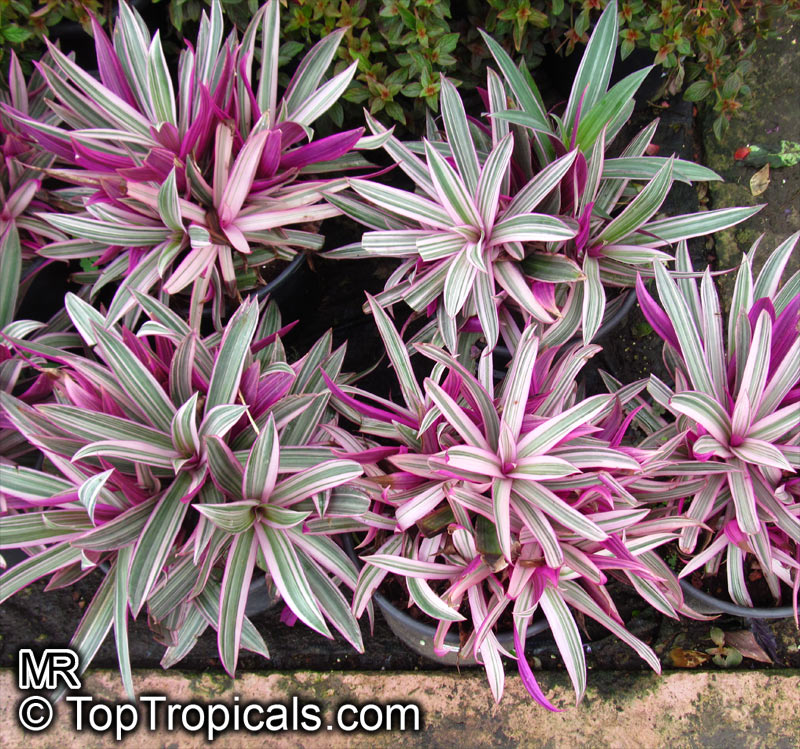
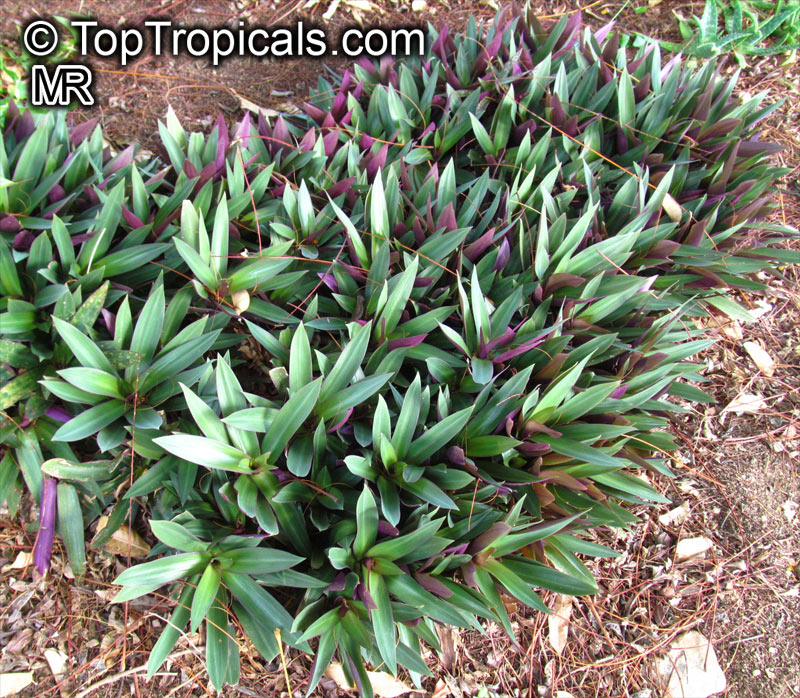
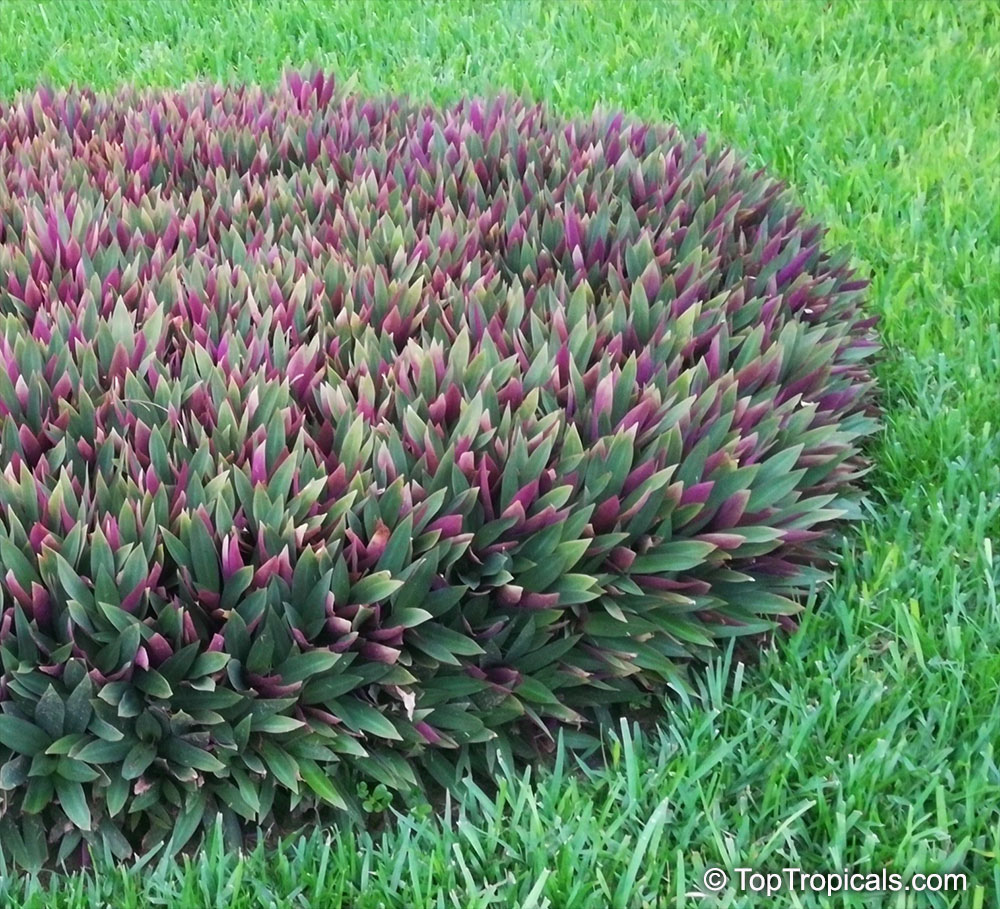
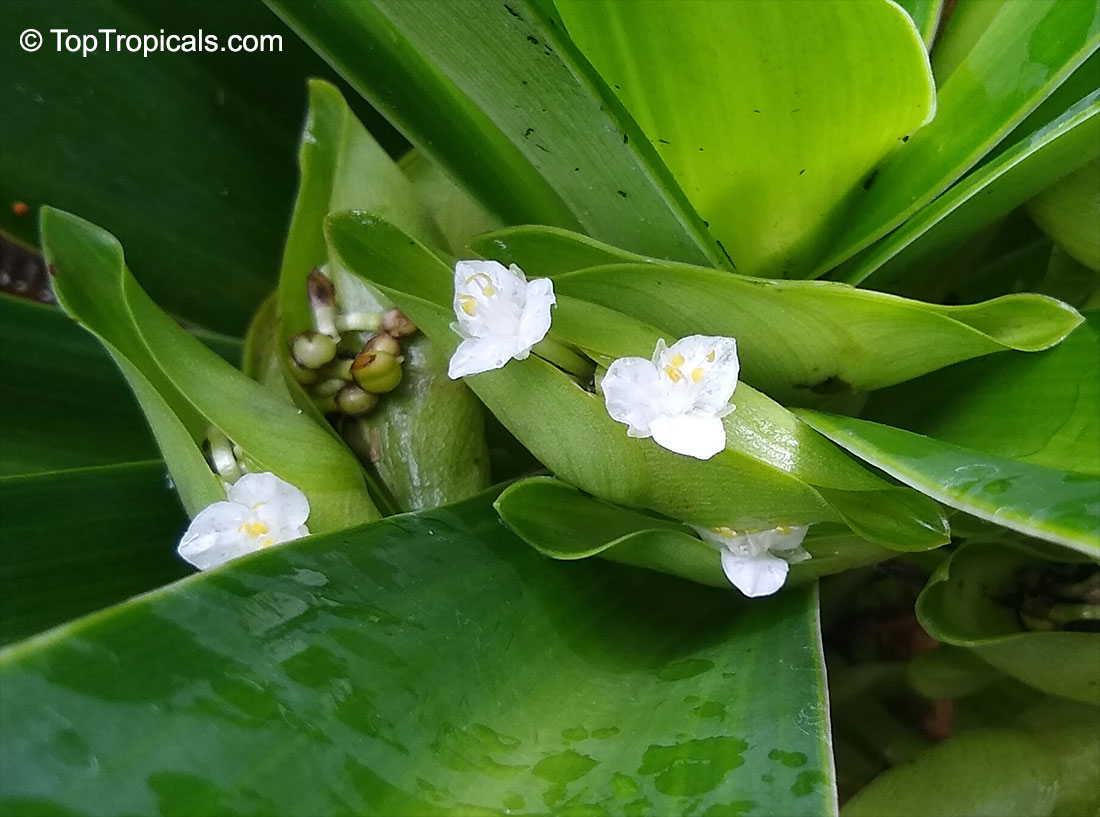
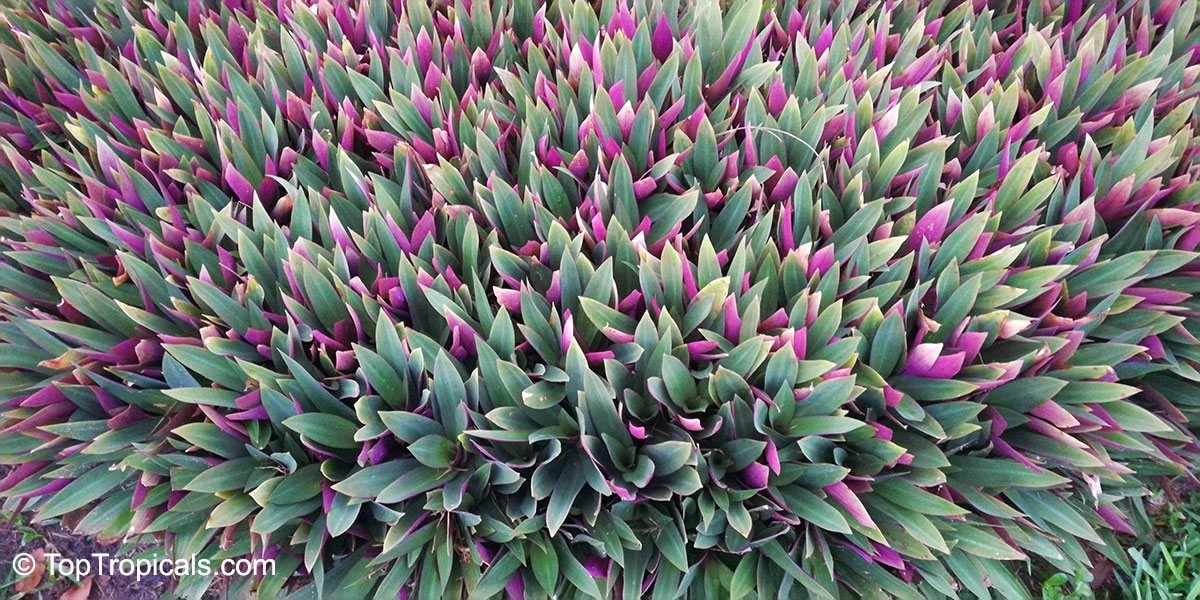
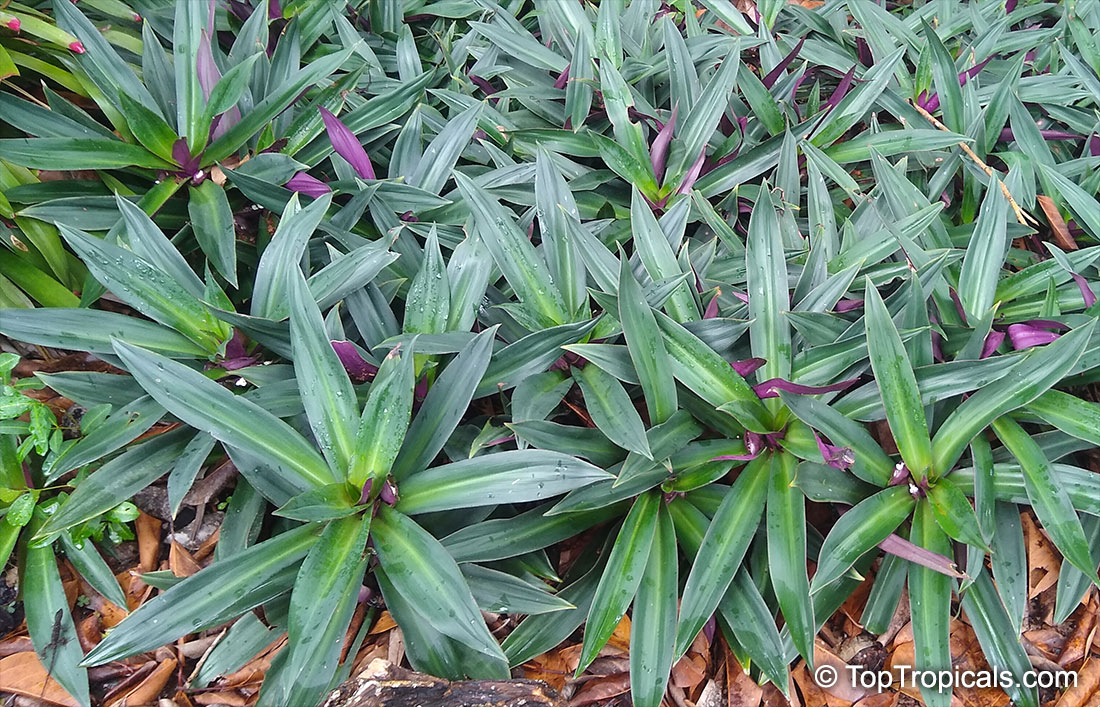
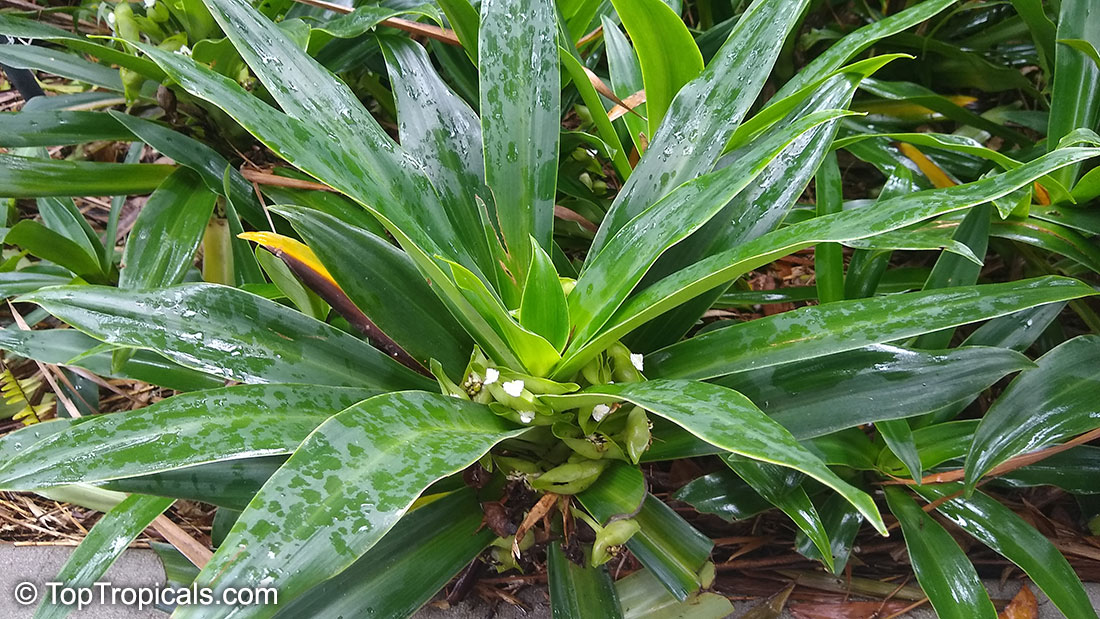
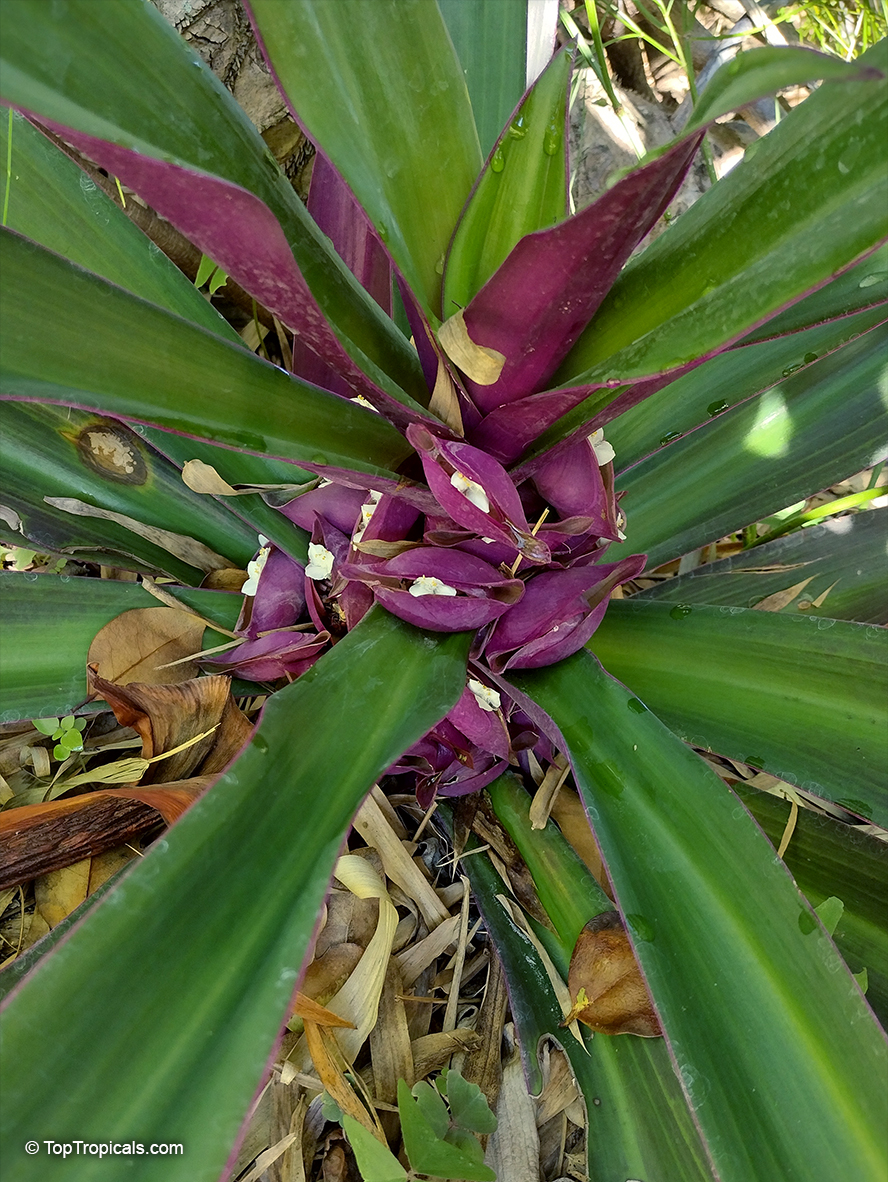
Botanical names: Tradescantia spathacea, Rhoeo spathacea, Tradescantia discolor
Common names: Boat lily, Rheo, Oyster plant, Moses-In-The-Boat
Family: Commelinaceae
Origin: West Indies and Mexico
USDA Zone: 9-12
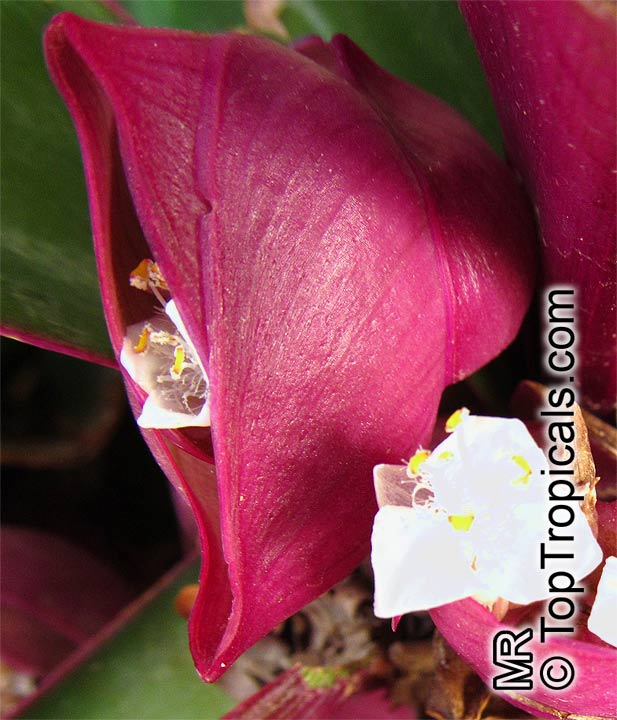
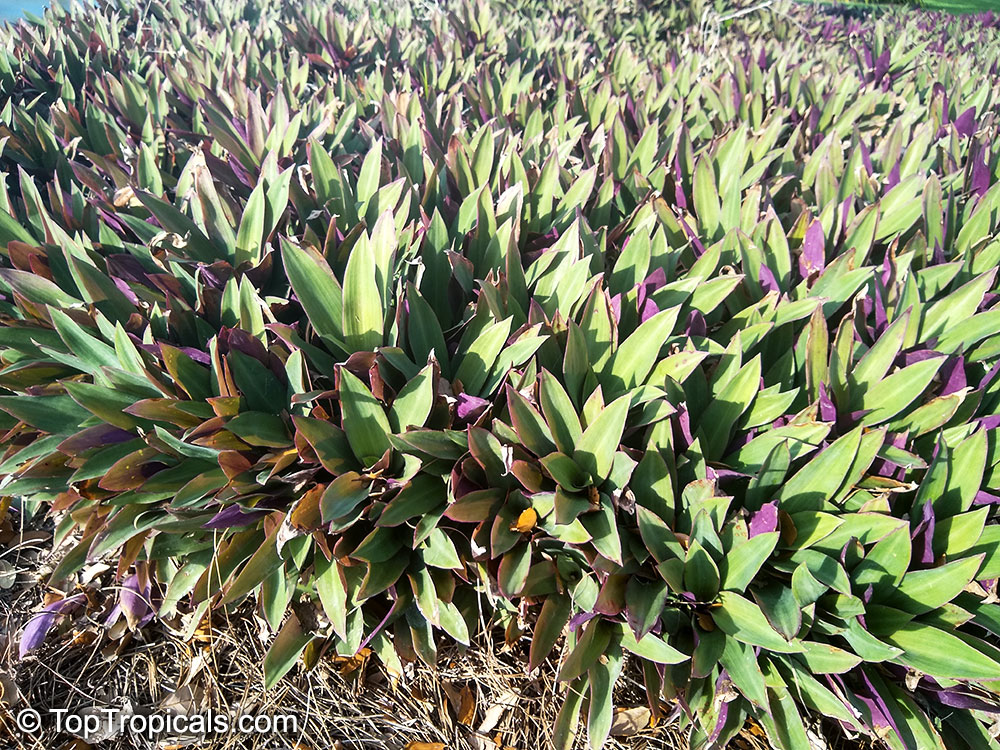
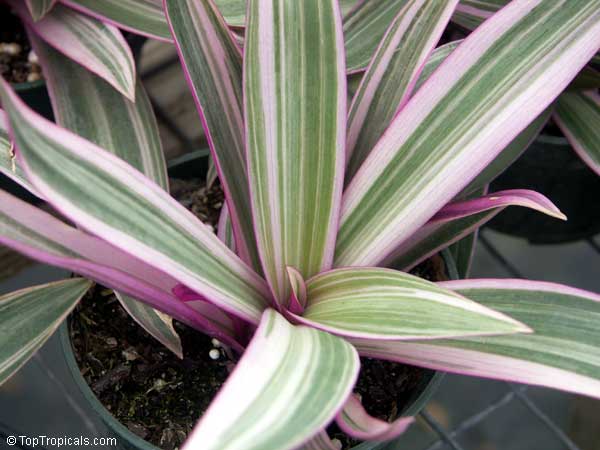
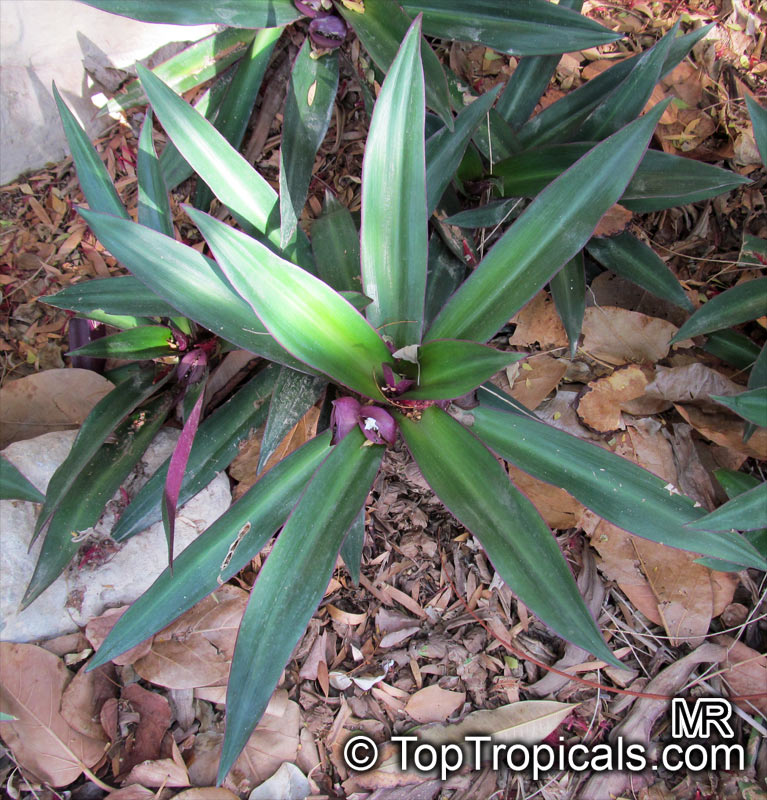
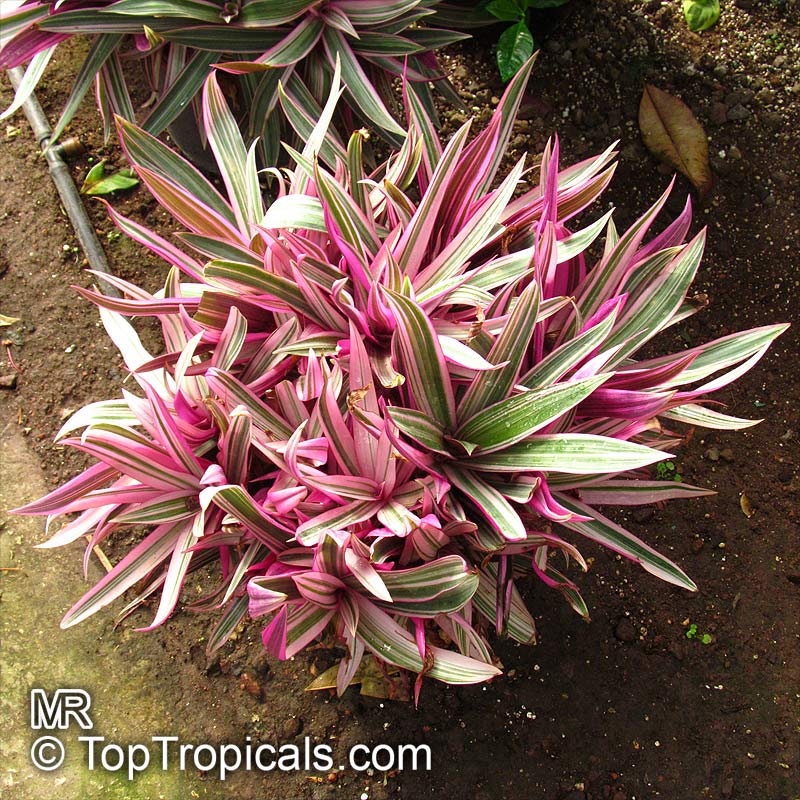
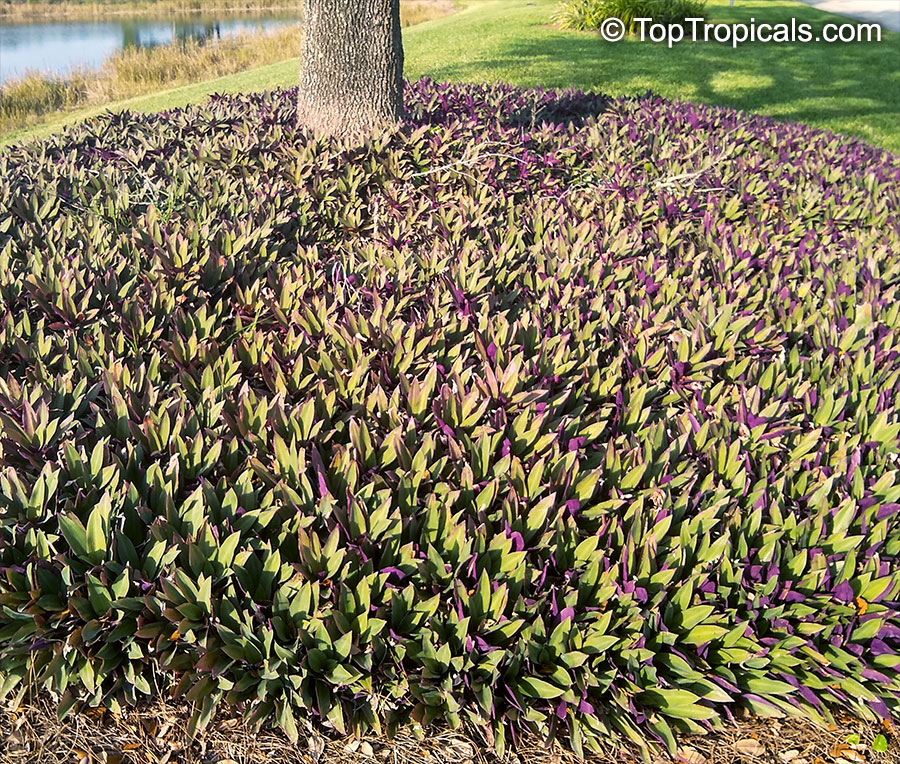
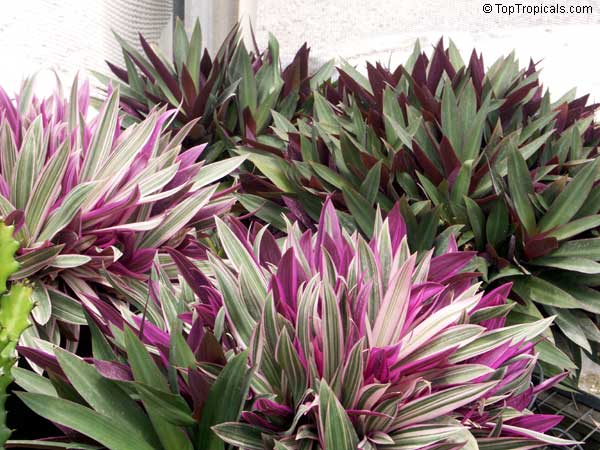
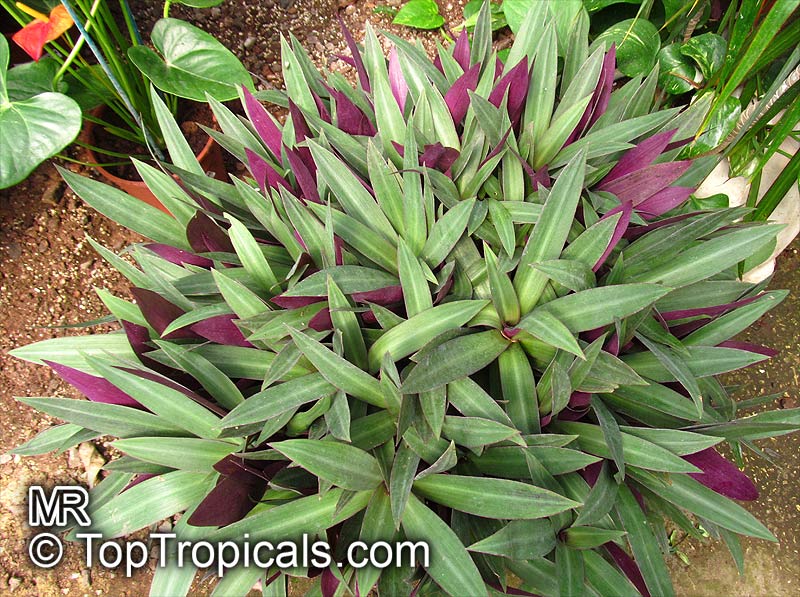
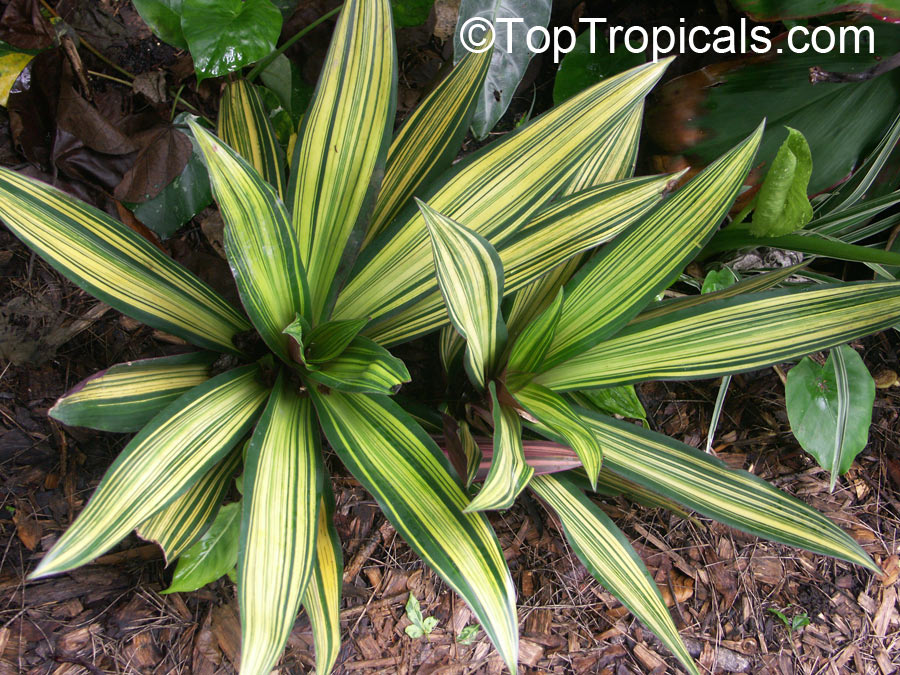
Herb with succulent stems; leaves crowded, flat, stiff, pointed, dark green above, purple to green below; flowers at base of leaves, small, white, 3-parted, held between 2 purple bracts; fruit a capsule. Can be used to make a dense groundcover, as houseplant or in interiorscape. Watery sap can cause contact dermatitis, avoid getting sap on skin.



Botanical name: Trollius asiaticus
Common name: Asian Globe flower
Family: Ranunculaceae
Origin: China, Japan
USDA Zone: 9-10

Trollius Asiaticus has rich orange-yellow flowers and bright orange-red anthers, is hardy even in the most exposed positions, and differs from the European Globe-flowers chiefly in its less globular flowers, small finely-divided foliage, and taller growth.


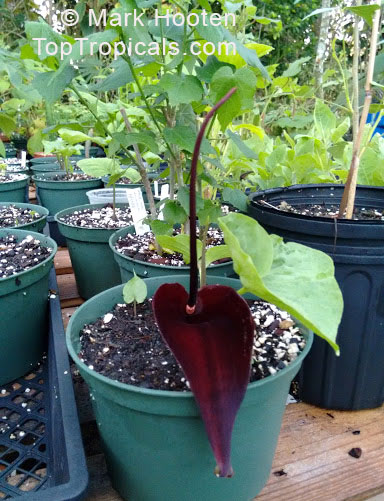
Botanical name: Typhonium roxburghii
Common names: Dwarf Voodoo Lily, Black Flowered Dead Rat Lily
Family: Araceae
Origin: Tropical Asia
USDA Zone: 7-10


Rare species of Amorphophallus ralative, Typhonium roxburghii bears quite large, spectacular deep mahogany-purple, almost black, spathes at ground level. For a flower of sombre shades, they are very conspicuous and attractive.




Botanical names: Vernicia fordii, Aleurites fordii
Common name: Tung Oil Tree
Family: Euphorbiaceae
Origin: China
USDA Zone: 8-10


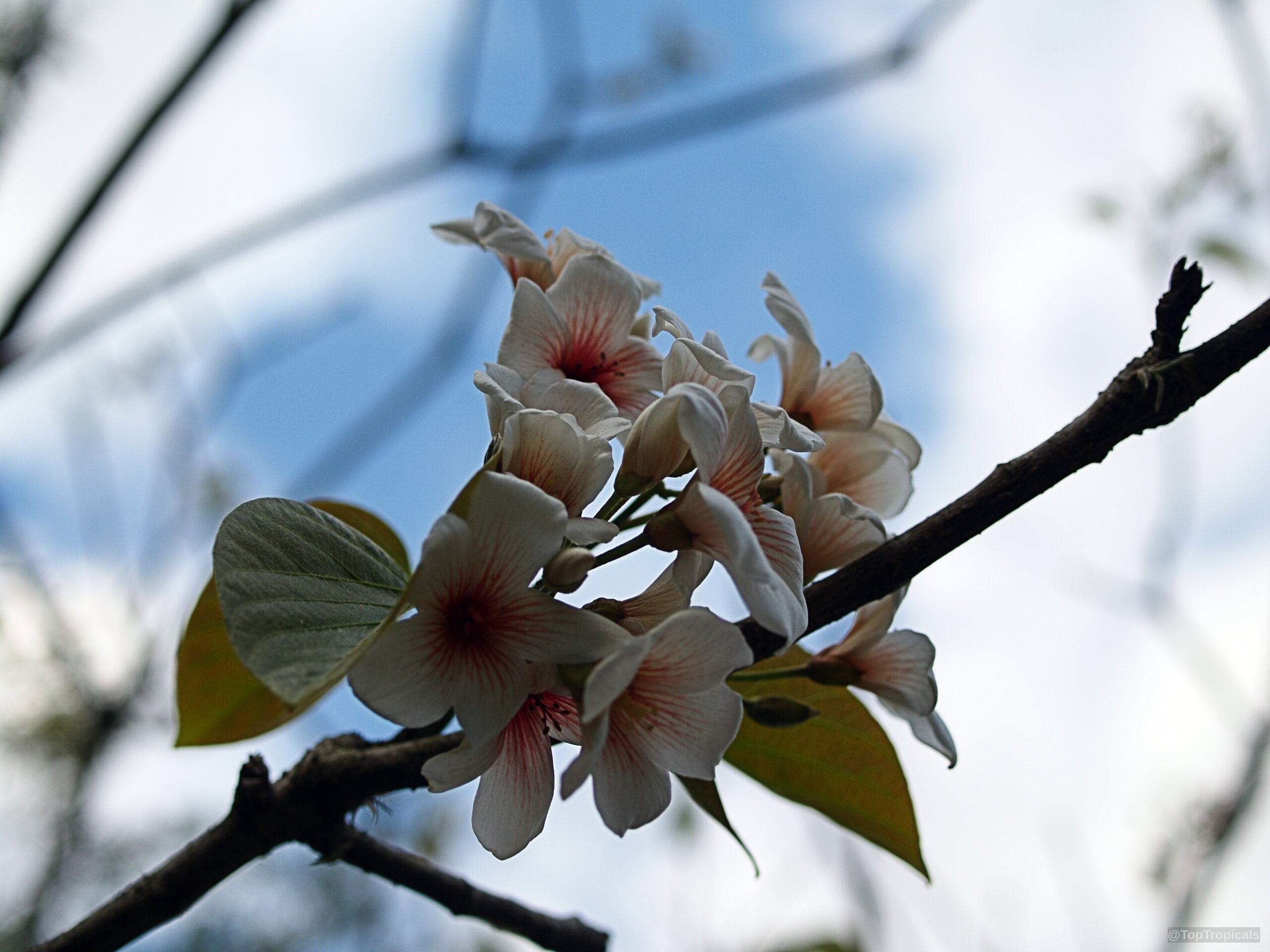
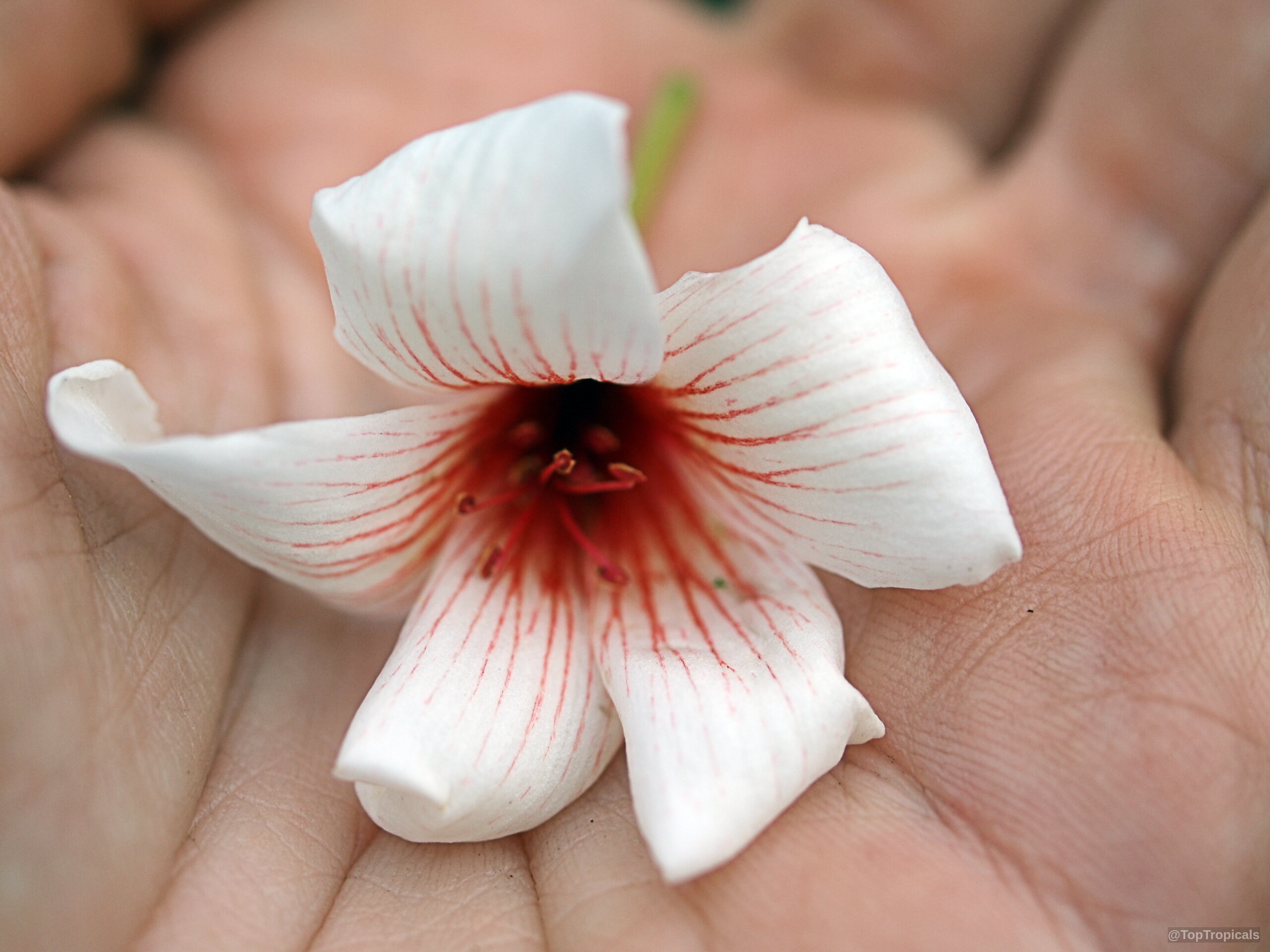
The Vernicia fordii (Tung Oil Tree ) is a tree, reaching a height between 10 and 20 feet, with a wide-spreading canopy of dark green leaves. The tree prefers full sun and requires moderate water. During spring and summer, the tree produces clusters of pink flowers, turning white and off-white as the season progresses.
While the Vernicia fordii is known for its beauty, it can also be an irritation. The sap of the tree contains an irritant substance, so caution should be taken when handling. The Vernicia fordii is also a deciduous tree, so it loses its leaves in the winter. Mature plants are cold hardy down to at least mid-20s F for a short time.
The Vernicia fordii can be grown in USDA Zones 8-11. In colder regions, the tree can be grown indoors or in a pot and can be brought indoors during the winter months. When planting in a pot, use a well draining soil mix and make sure the pot has enough drainage holes. Be sure to water regularly and fertilize every two to three months. When bringing the tree indoors for the winter, place it in a sunny location and prune in the spring to keep it in a desired shape.


Botanical name: Wigandia urens
Common name: Caracus Wigandia
Family: Boraginaceae (Formerly:Hydrophyllaceae)
Subfamily: Hydrophylloideae
Origin: Central and South America
USDA Zone: 9-10

Wigandia urens is a deciduous shrub or small tree to 4m. It has large ovate leaves to 30cm long. The flowers are deep purple with a white throat and are produced in terminal sprays in spring. The whole plant is covered with rusty-brown, irritant hairs.


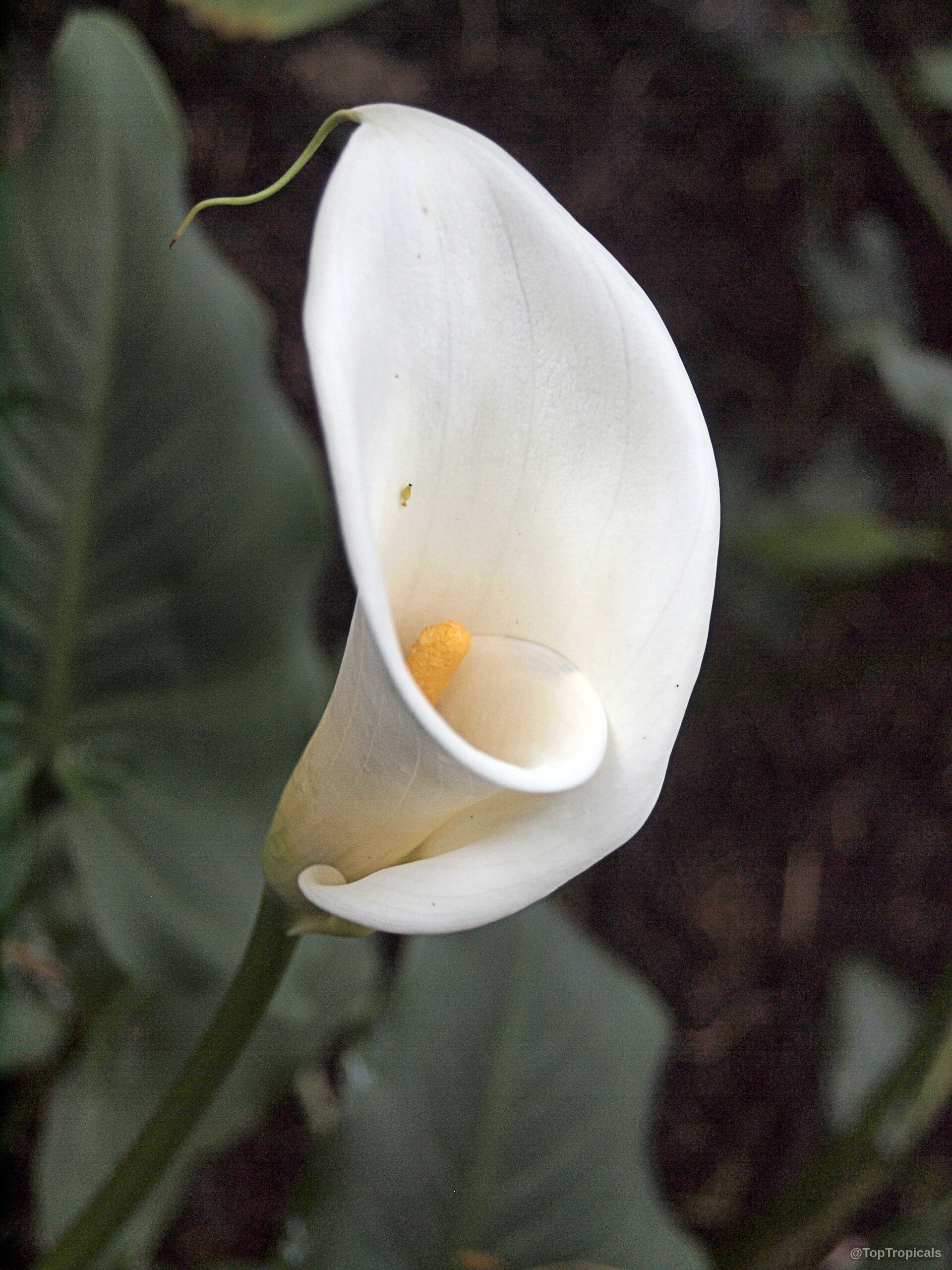
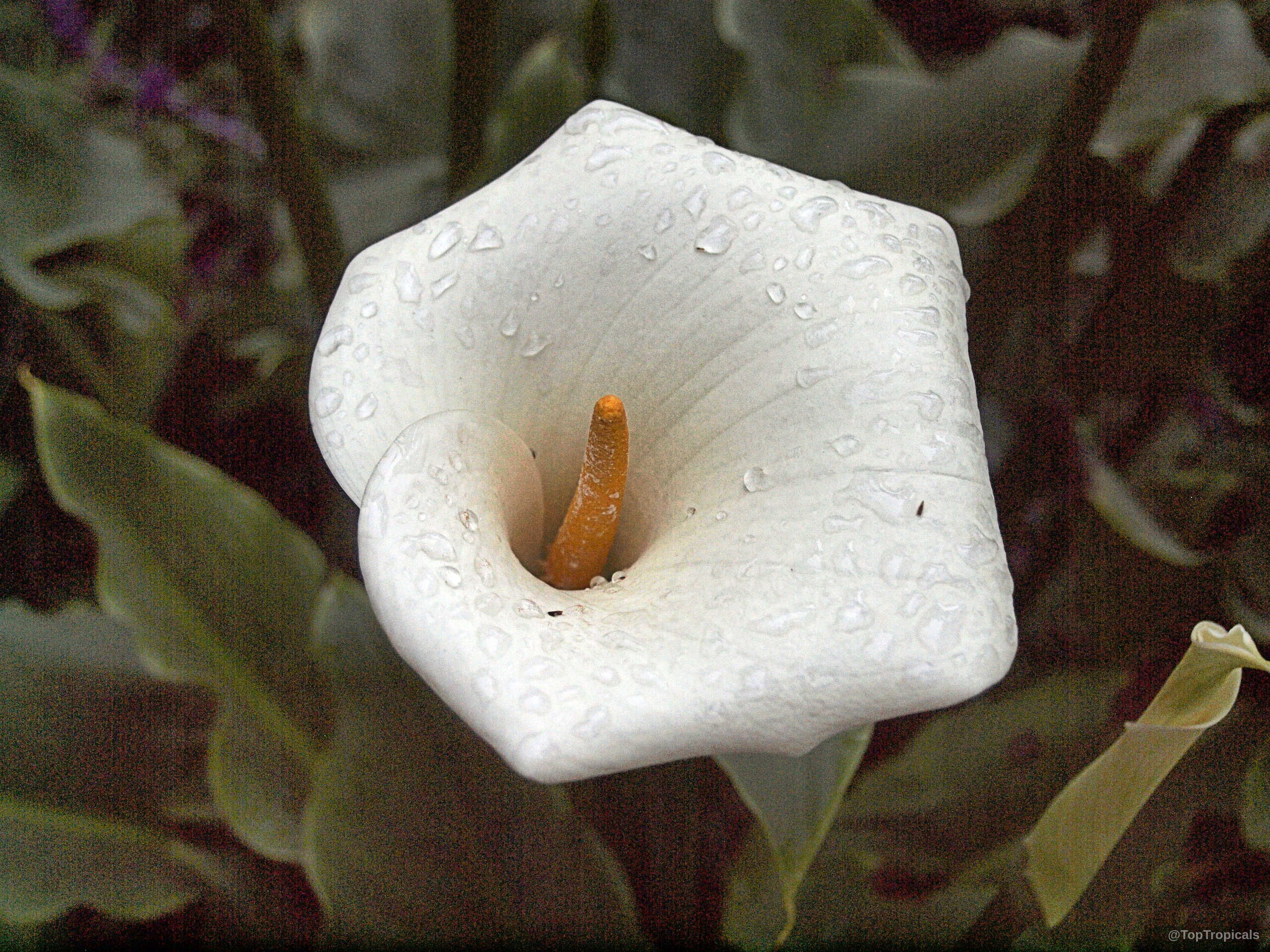
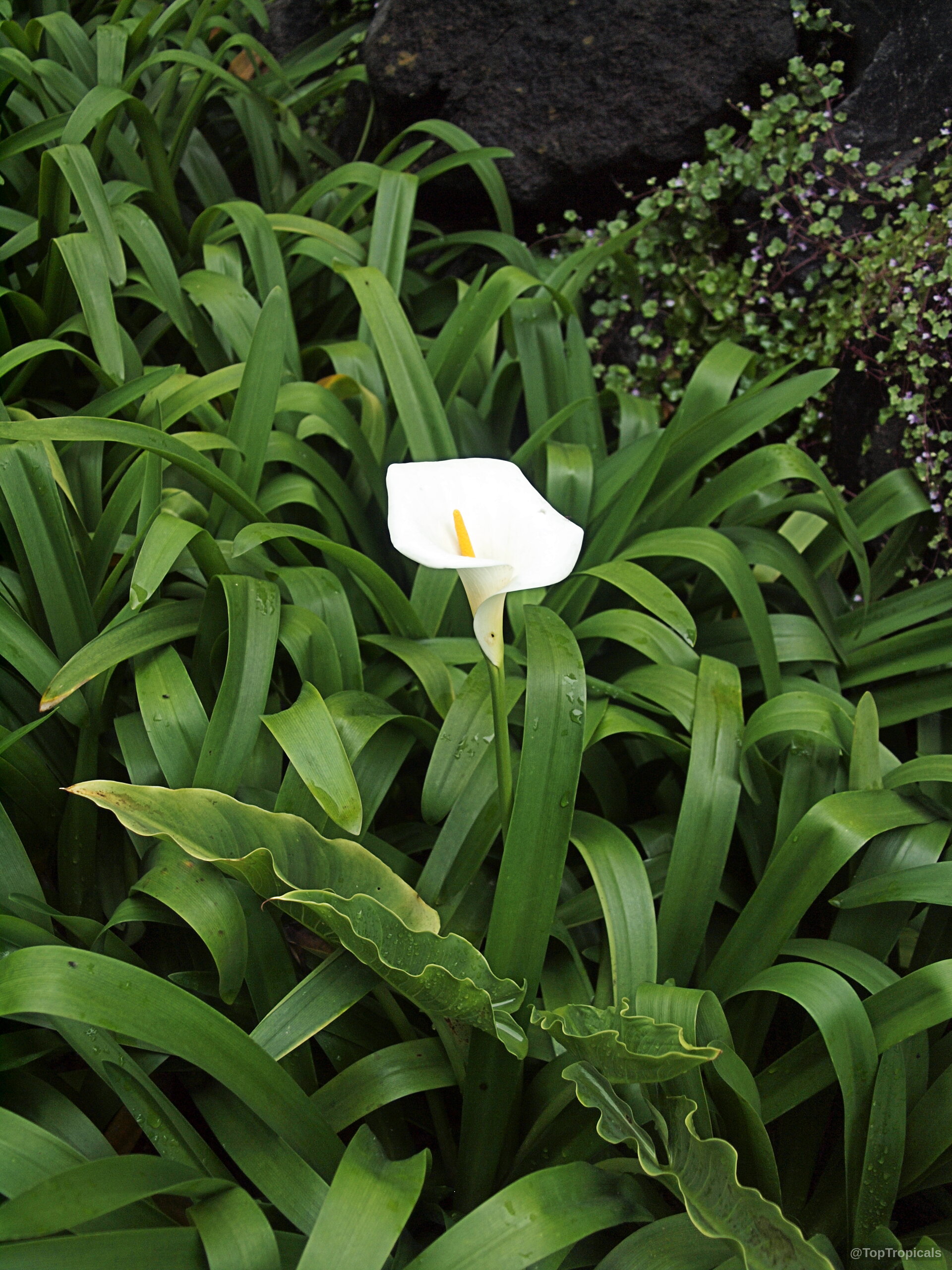
Botanical names: Zantedeschia aethiopica, Calla aethiopica
Common names: Arum Lily, Calla Lily
Family: Araceae
Origin: South Africa
USDA Zone: 8-10
Zantedeschia aethiopica (Calla lily) is a herbaceous perennial plant that is evergreen in regions with adequate rainfall and temperatures, and deciduous where there is a dry season. It is commonly known as Calla lilies, but is not a true lily, belonging instead to the arum (Jack-in-the-pulpit) family. These stemless plants have flowers and leaves that rise directly from rhizomes. They typically grow in clumps up to 24-36" tall, and feature large arrowhead-shaped leaves and extremely showy flowers consisting of a yellow finger-like spadix surrounded by a bright white spathe, borne atop a leafless stalk. The plant is commercially grown as a very popular cut flower.
The calla lily is winter-hardy in USDA Zone 8-10. The plant thrives in moist soils and full sun to part shade. In colder regions, containers may be overwintered outdoors in a sheltered location, sometimes with some protection, and brought back indoors before first frost. When grown year-round in containers, the plant must be brought indoors in winter before the first frost. Overwintering containers placed near a window with bright indirect light can make attractive houseplants.
For best performance, calla lilies require moist soil and bright light. Fertilization should be done regularly, monthly during the growing season. Propagation may be accomplished by division of rhizomes in early spring or by seed. The plant reseeds freely, often with variable results, and may self-seed and become weedy in some areas. It is important to exercise caution as all parts of the plant are poisonous and may cause skin irritation. Calla lilies may also be planted in mud at the edge of ponds or water gardens.


Botanical name: Zephyranthes sp.
Common names: Fairy Lily, Zephyr Lily, Magic Lily, Atamasco Lily, Rain Lily
Family: Amaryllidaceae (Formerly:Alliaceae / Liliaceae / Amaryllidaceae)
Origin: USA, Central and South America
USDA Zone: 7-11
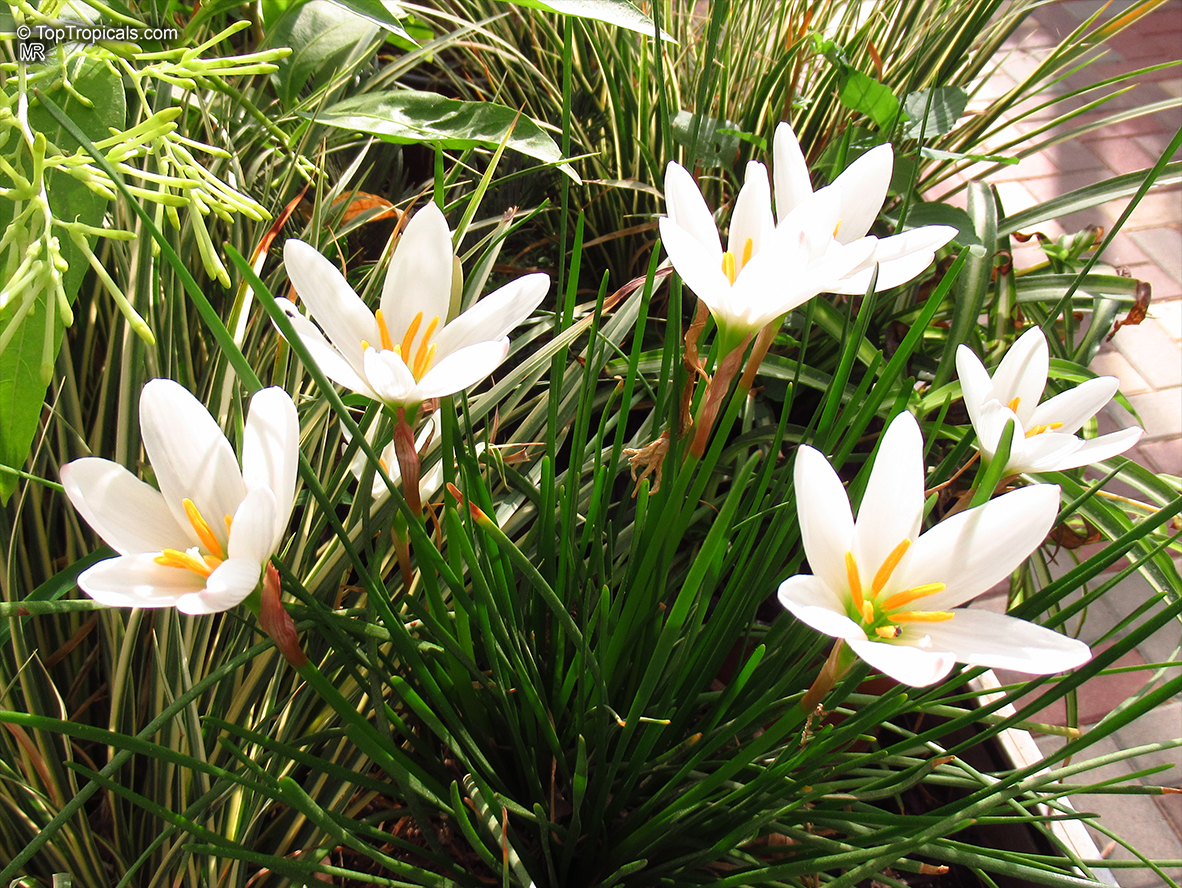
Various members of the genus may bloom spring only or repeat and continue into autumn, often a few days after rainstorms thus one of the common names, Rain Lily. Most are spring or summer flowering.
Cultivation from seed is easy in this group. Seeds are papery and can be floated but they sprout very easily sown under just a thin covering of sowing medium. Sow the seeds in a well-drained mix and keep in a warm place. The seedlings will grow well in warm weather and respond well to fertilizer. As with any papery seeded amaryllids, these have a relatively short viability period.
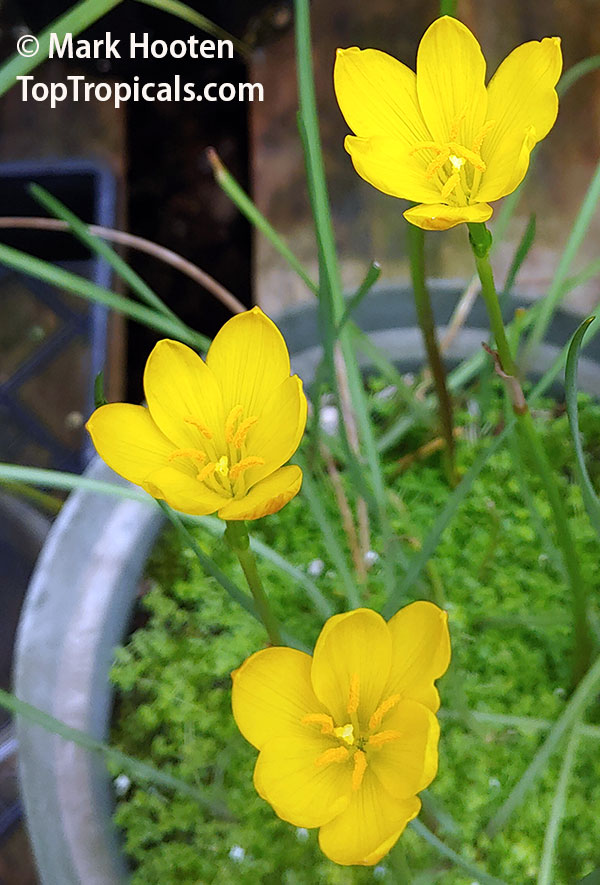
Zephyranthes pulchella - Showy Zephyrlily - is found in the coastal prairies and wet roadsides of eastern Texas and Gulf Coast Louisiana. The leaves grow through the winter and spring and die off in summer; flowering occurs in autumn. Leaves are linear and sedge-like and flowers are golden yellow. Pulchella means "pretty". These spectacular rain lilies growing in the highway medians near Refugio, Texas, on the east coast of that state. The glossy green leaves serve as a nice foil to the bright yellow flowers that are held just atop the foliage. The vigorously multiplying clumps flower for us from late summer into fall.
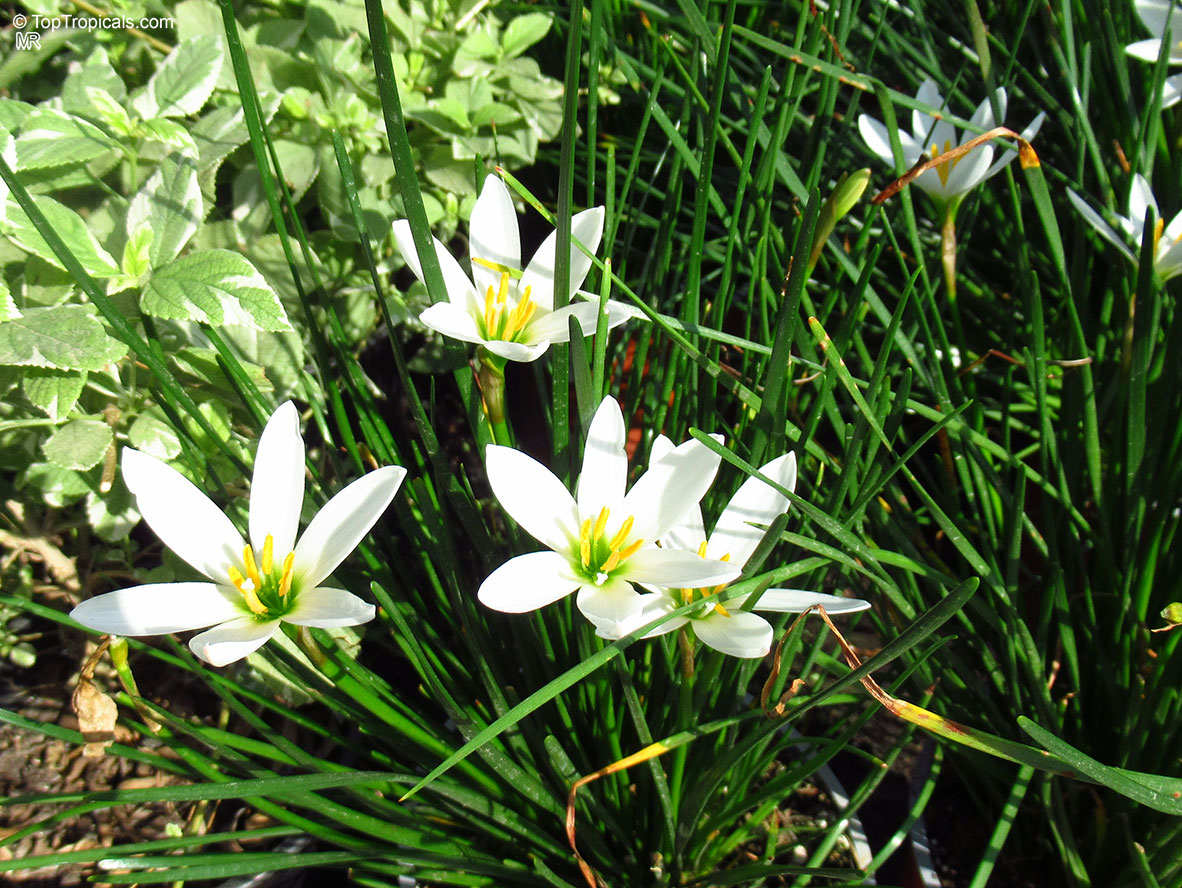
Zephyranthes flowers are very similar to Habranthus flowers and both are called rain lilies. Habranthus flowers point upward BUT at an angle and have unequal stamens, and Zephyranthes flowers point straight up and have equal stamens. Zephyranthes flowers tend to be star shaped and Habranthus have somewhat irregular flowers. Additionally, the seeds of Habranthus are slightly winged (and thicker).
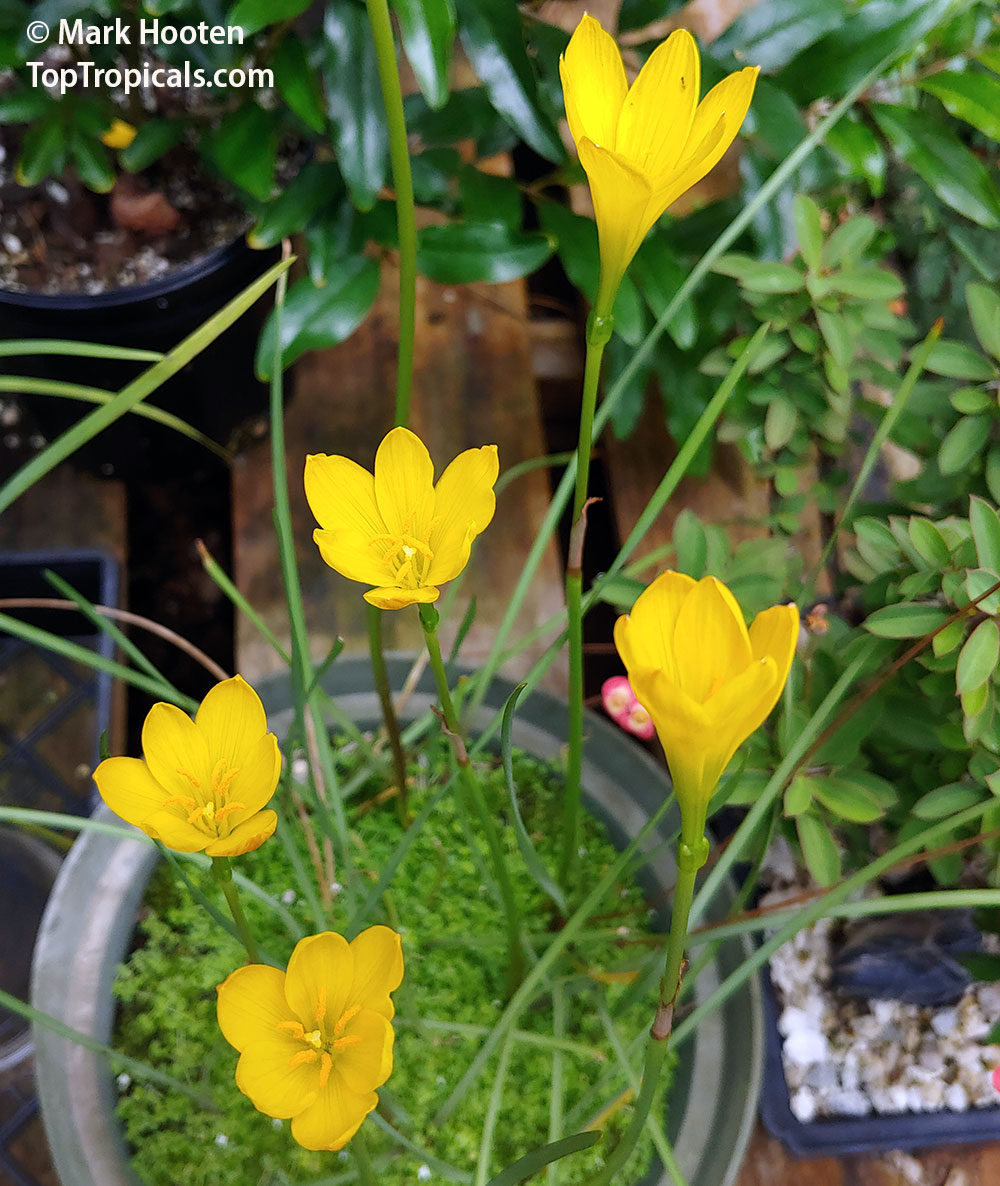
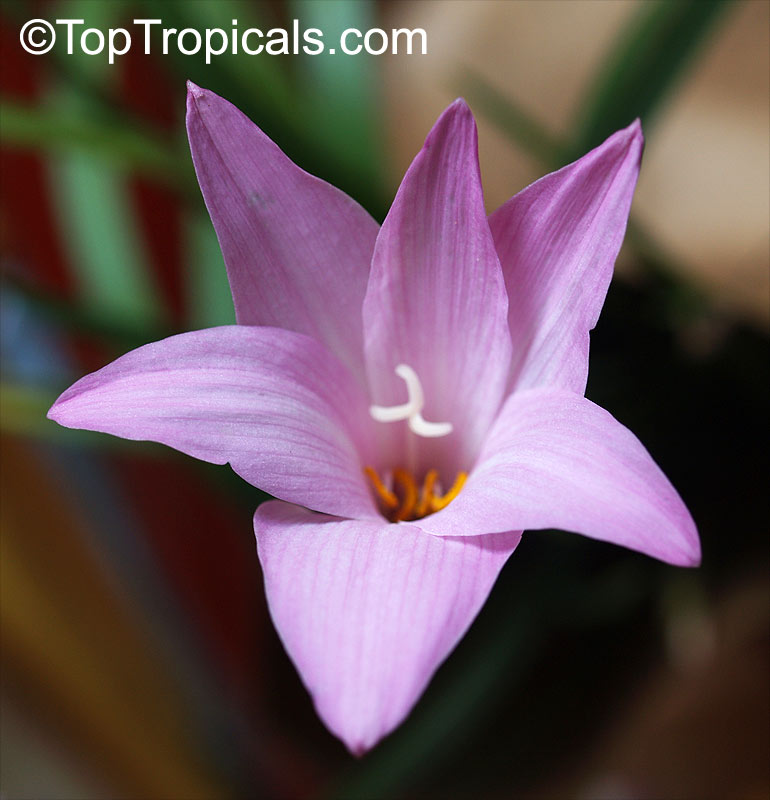
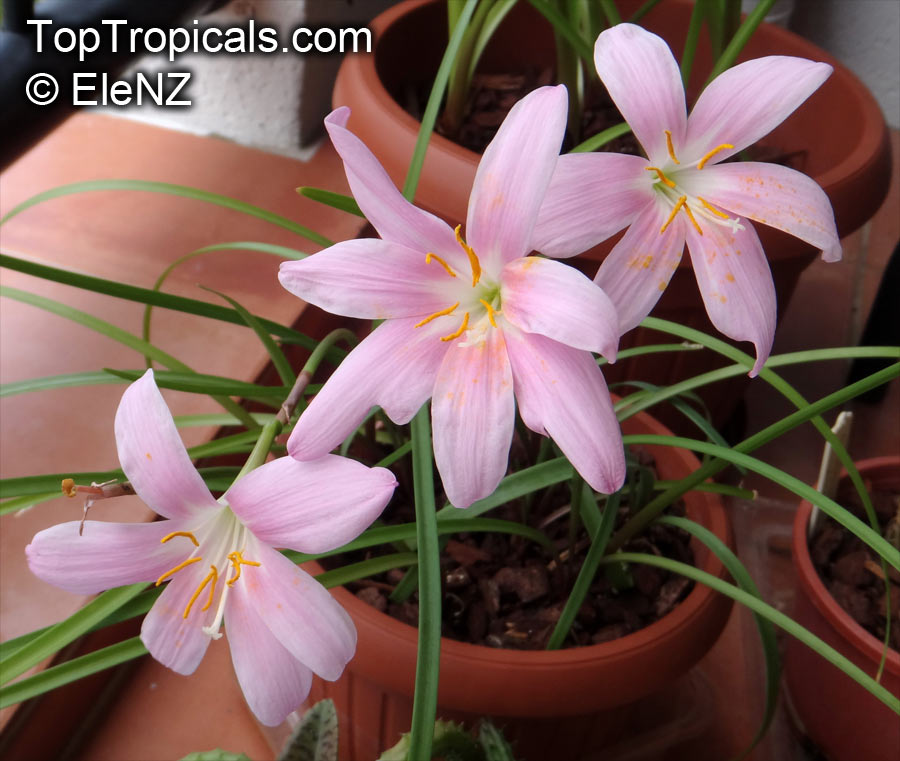
Few flowers create as much surprise and delight as a rain lily. Zephyranthes Lucky All Over produces cheerful bright pink, crocus-like blooms that seem to appear almost overnight, often just days after a summer rain shower or a thorough watering. One day the garden is green, and the next it's dotted with vibrant pink flowers.
This charming perennial bulb forms clumps of slender, grass-like foliage that remain attractive throughout the growing season. The flowers rise above the foliage on short stems, creating a natural, carefree display that looks beautiful in garden beds, borders, rock gardens, and containers.
A reliable bloomer, Lucky All Over flowers repeatedly from spring through summer, often responding to changes in moisture and weather conditions. As the bulbs mature, they multiply readily, creating larger and more impressive drifts of color each year.
Growing about 8 inches tall, this compact plant is easy to fit into almost any garden space. It performs best in full sun to partial shade and prefers well-drained soil. Once established, it is remarkably drought tolerant while also adapting well to regular garden irrigation.
Cold hardy in USDA Zones 7b-10b, Zephyranthes Lucky All Over returns year after year with minimal care. In colder climates, the bulbs can be grown in containers and protected from hard freezes during winter.
Easy to grow, long-lived, and full of surprises, this delightful rain lily brings bursts of color to the garden whenever nature decides it's time to bloom.
See Article about this plant.
Recommended Fertilizer: SUNSHINE Megaflor - Bloom Nutrition Booster
Last one
| Prev |
Use link to repeat this search:
https://toptropicals.com/cgi-bin/garden_catalog/cat.cgi?search_op=and&keyword_op=and&language=e&number=10&no_change_lang=1
&v1=ppp&user=tt&sale=1&first=0