Watering: Moderate - Plant Encyclopedia Results (Page 290)
| Number of plants found: 2926 |  | Prev | Next | 
|
Go to page: | First | 285 | 286 | 287 | 288 | 289 | 290 | 291 | 292 | 293 |

Botanical name: Welwitschia mirabilis
Common names: Welwitschia, Tumboa
Family: Welwitschiaceae
Origin: Namib Desert
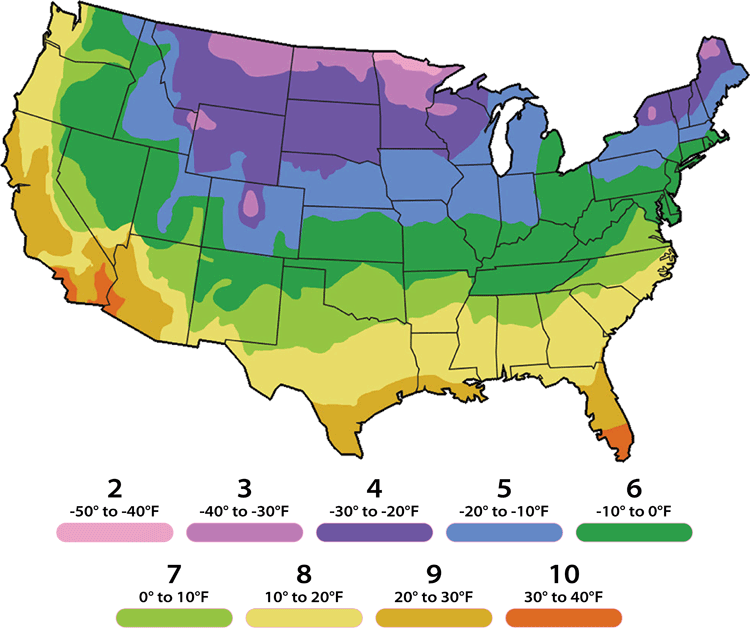
USDA Zone: 9-10


Welwitschia is a low-growing, groundcover plant that grows to about 2ft in height and can live for several hundred years. It is native to the Namib Desert, a coastal desert which stretches from southern Angola to northern South Africa. This plant requires very little water and thrives in dry, arid conditions and full sun. Welwitschia is suitable for planting in USDA Zone 9-11.
Its unusual foliage is what makes this plant stand out and adds an ornamental quality to landscapes, gardens and container planting. Its two strap-shaped leaves sprout from the base of the trunk, continuously growing over time and giving the appearance of a rag-clad tree. The leaves are covered in tiny scales and may appear grey to purplish-brown in color.
For those growing Welwitschia in cold regions, there are several precautions to take. In winter, it is best to move the plant to a pot and keep it in a warm room or garage, in order to protect it from temperatures below zero. For those growing the plant outdoors, it is important to provide ample protection against frost and to use a quality potting soil for container planting.
The Welwitschia mirabilis is an exceptionally hardy and carnivorously adapted desert plant and it is a long-lived and low-maintenance addition to arid gardens, landscapes and container planting. With its ornamental foliage, it is truly a remarkable plant that will bring an unusual and captivating look to any outdoor area.


Botanical name: Westringia fruticosa
Common names: Native Rosemary, Coastal Rosemary
Family: Lamiaceae
Origin: Australia
USDA Zone: 9-10


Westringia fruticosa is a large shrub, reaching peak height of five to ten feet tall, though she does spread wide at the base.
The plant thrives best in full sun, for at least six hours a day, and is also tolerable in part shade. Westringia fruticosa is a moderate water user during dry periods, but with careful management. It is also frost, drought, and seaside tolerant, making her ideal for areas that are prone to strong winds, strong salt, and wet periods. The plant is cold hardy in USDA Zones 9-11 at least to temperatures in the mid 30s°F for a short amount of time.
The flowers are one of the best attributes of this plant. The blossoms open as white and off-white, and as time goes by many will also take on shades of blue, lavender, and purple. The plant blooms from late fall to late spring, with occasional flowering in summer as well. The blooms attract butterflies and hummingbirds to the garden, making her a great addition to any wildlife garden.
For those looking to grow Westringia fruticosa in colder regions, the best suggestion is to start the plant in a pot, keeping it outside only when the temperature is above freezing. Make sure it is in full sun and located in an area free of drafts. Make sure to keep your plant well-watered, especially during dry and hot spells. With the correct amount of care and attention, Westringia fruticosa will thrive in your garden.


Botanical name: Wigandia urens
Common name: Caracus Wigandia
Family: Boraginaceae (Formerly:Hydrophyllaceae)
Subfamily: Hydrophylloideae
Origin: Central and South America
USDA Zone: 9-10


Wigandia urens is a deciduous shrub or small tree to 4m. It has large ovate leaves to 30cm long. The flowers are deep purple with a white throat and are produced in terminal sprays in spring. The whole plant is covered with rusty-brown, irritant hairs.


Botanical name: Wikstroemia uva-ursi
Common name: Akia
Family: Thymelaeaceae
Origin: Hawaii
USDA Zone: 9-10


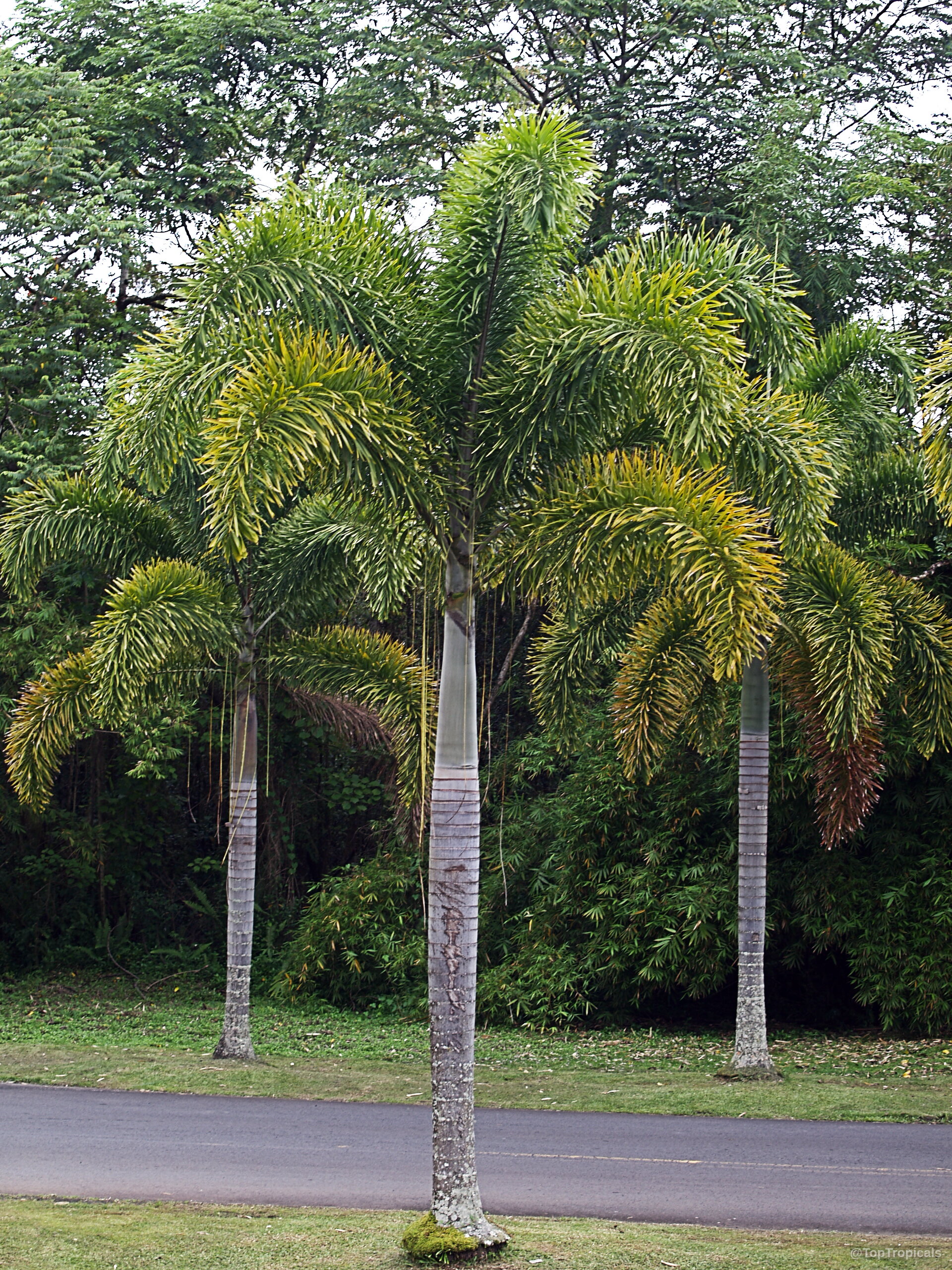
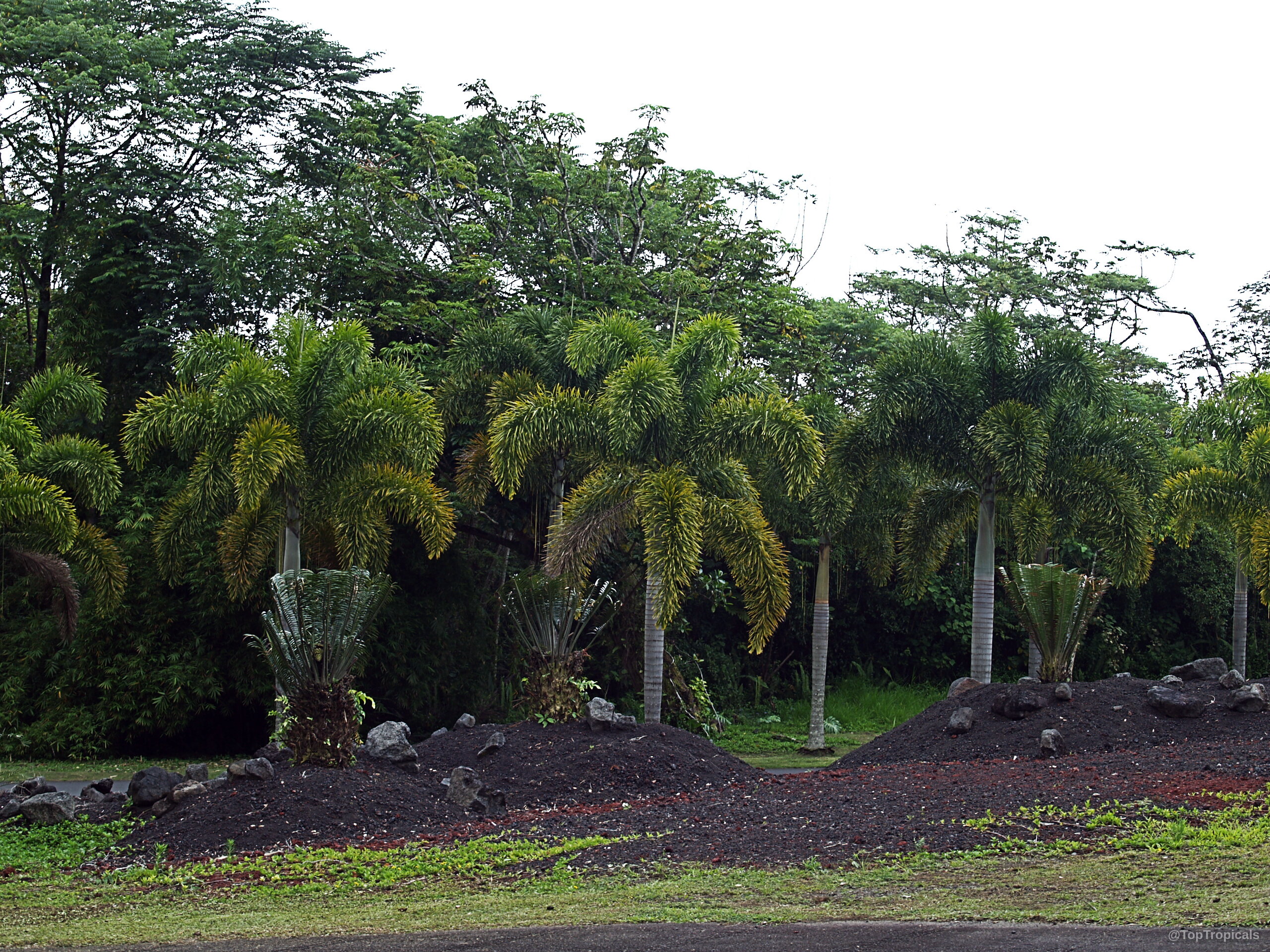
Botanical name: Wodyetia bifurcata
Common name: Fox Tail
Family: Arecaceae / Palmae
Origin: Australia
USDA Zone: 9-11
Cold tolerance: 30°F


The foxtail palm is from northeastern Australia - Queensland. It can reach a height of 30 to 50 feet and has fronds that are plumose like a "Fox tail". This palm comes from a tropical area, however, plants outdoors or in the ground in Florida and California are doing great. One of the most beautiful and graceful palm trees.


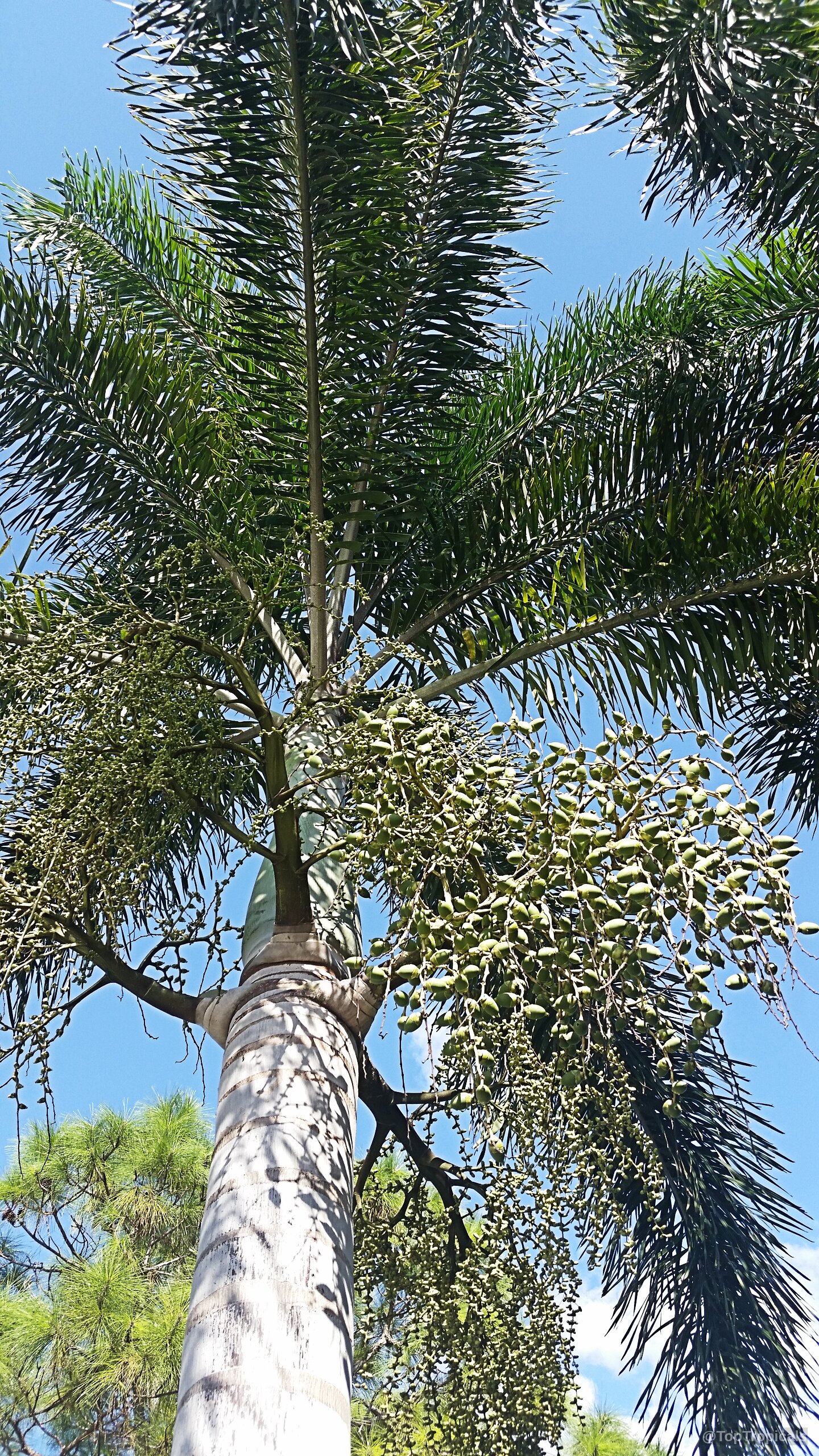

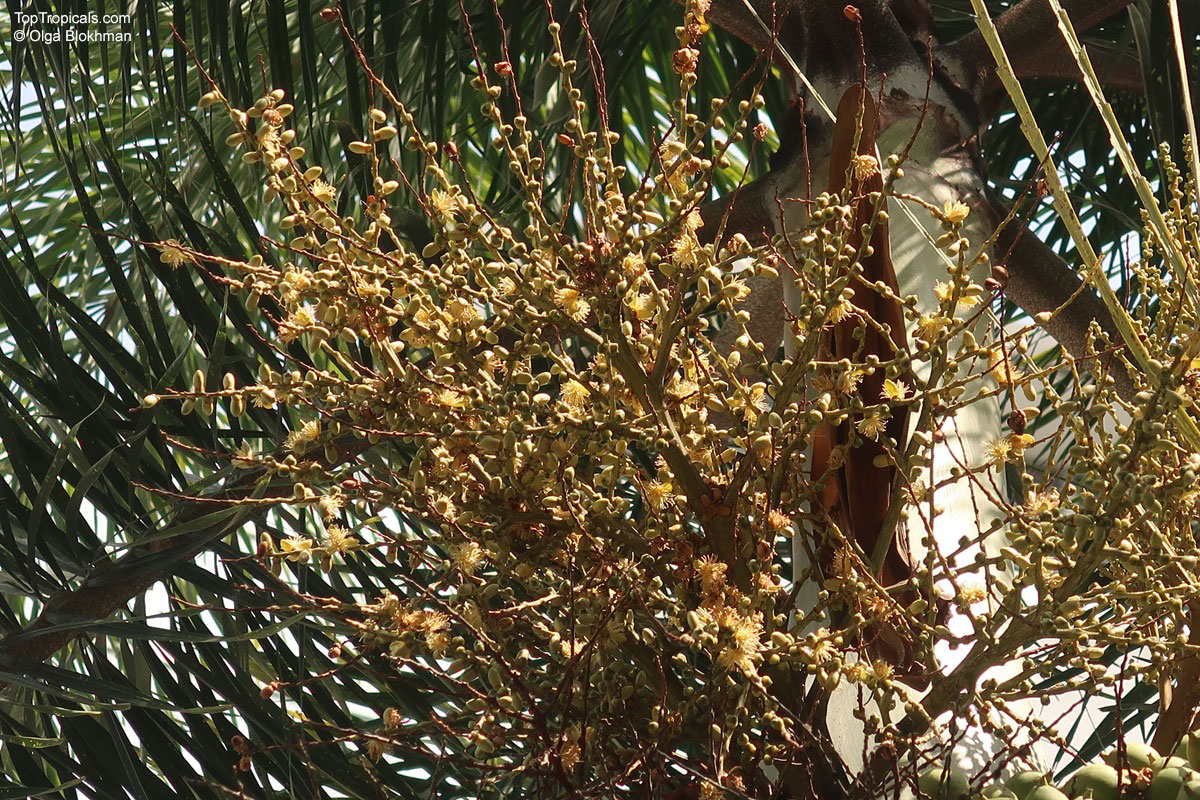
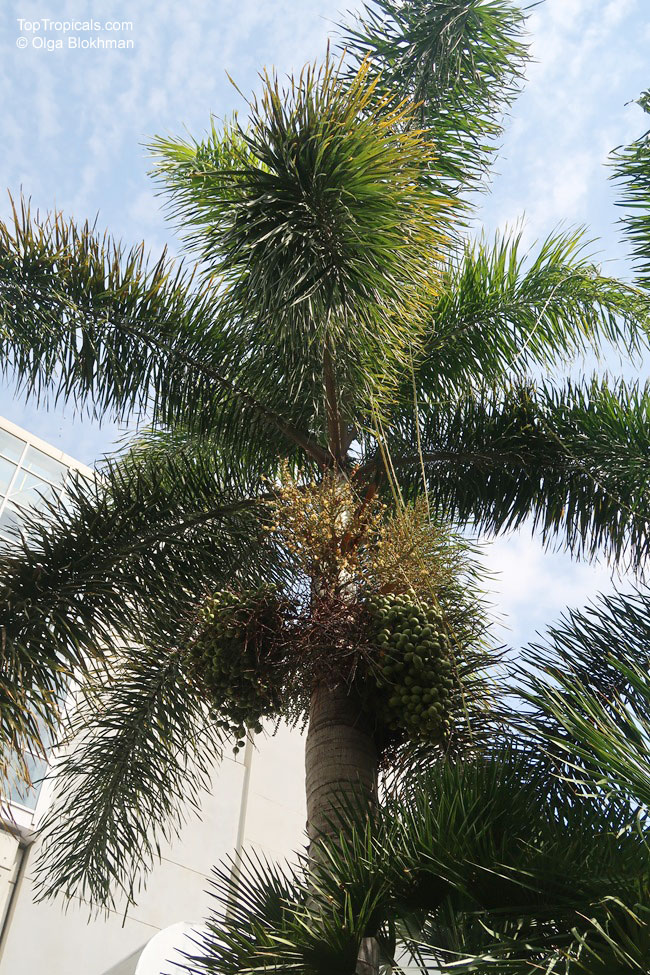
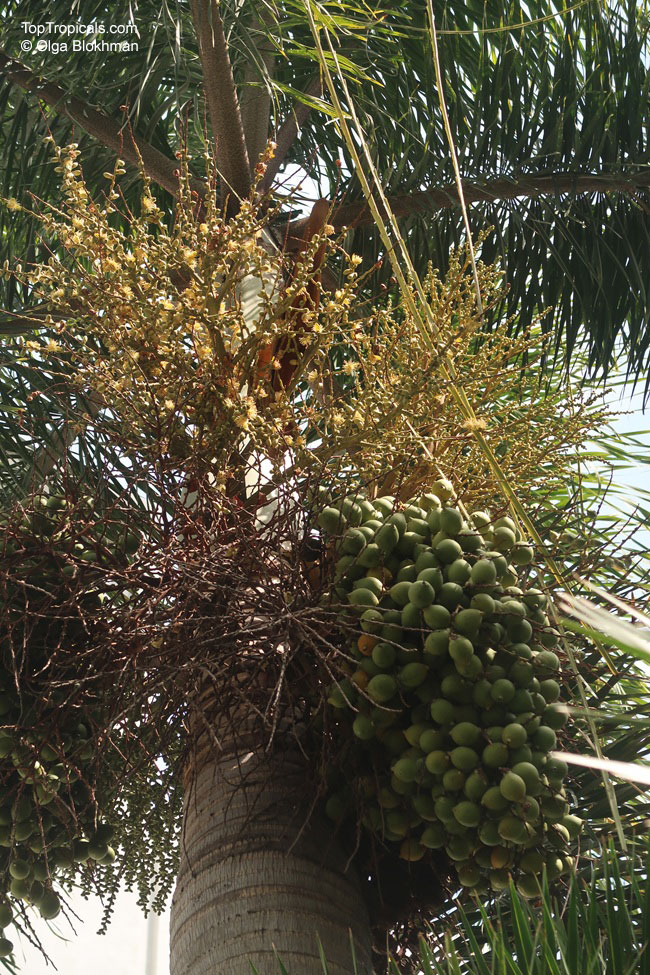
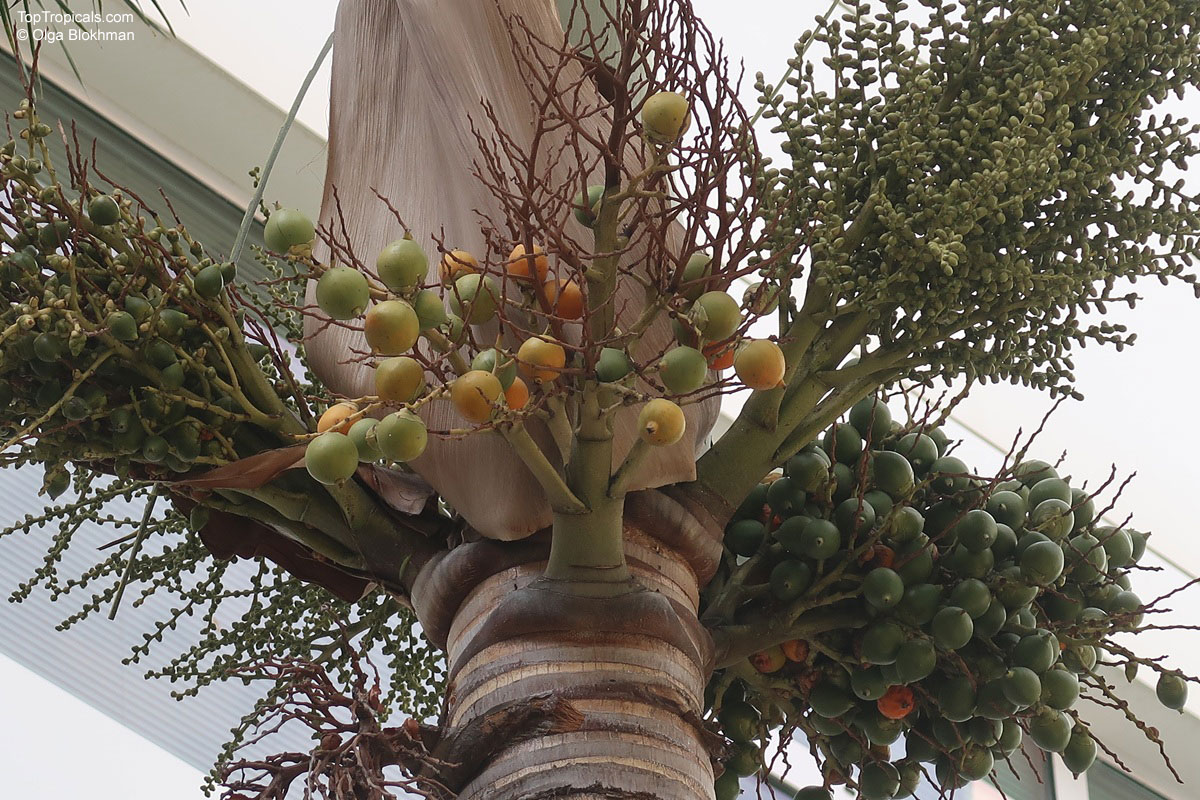

See picture of beautiful fruit.
Recommended Fertilizer: SUNSHINE Robusta - Rapid Growth Booster

Botanical names: x Amarcrinum, x Crinodonna
Common name: Amarcrinum
Family: Amaryllidaceae (Formerly:Amaryllidaceae / Liliaceae)
Subfamily: Amaryllidoideae
USDA Zone: 8-10


Amarcrinum is a hybrid genus between Amaryllis (Amaryllis belladonna) and Crinum.These plants have tidy leaves and bear large umbels of long lasting, fragrant flowers on tall scapes during late summer and autumn.
The open-trumpet flowers are very beautiful and are usually in shades of rose pink and are nicely scented.


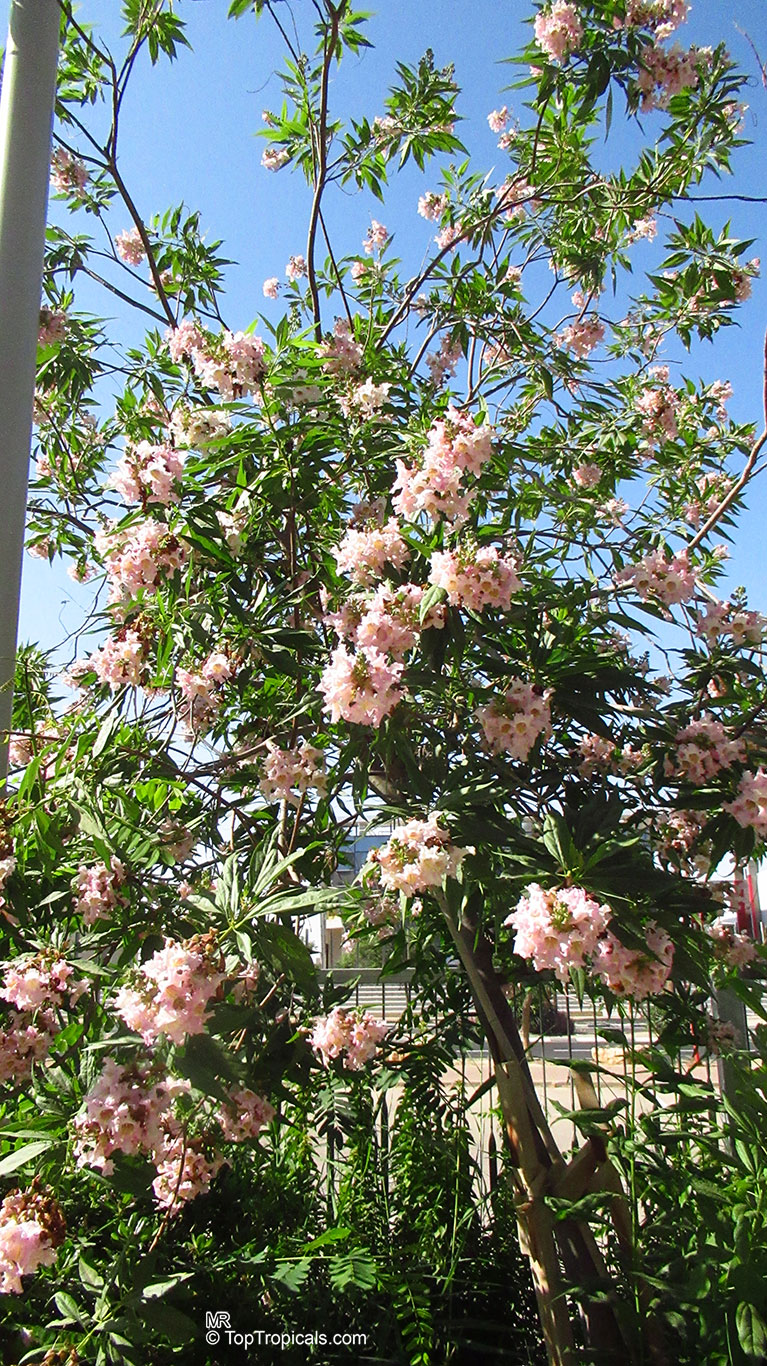
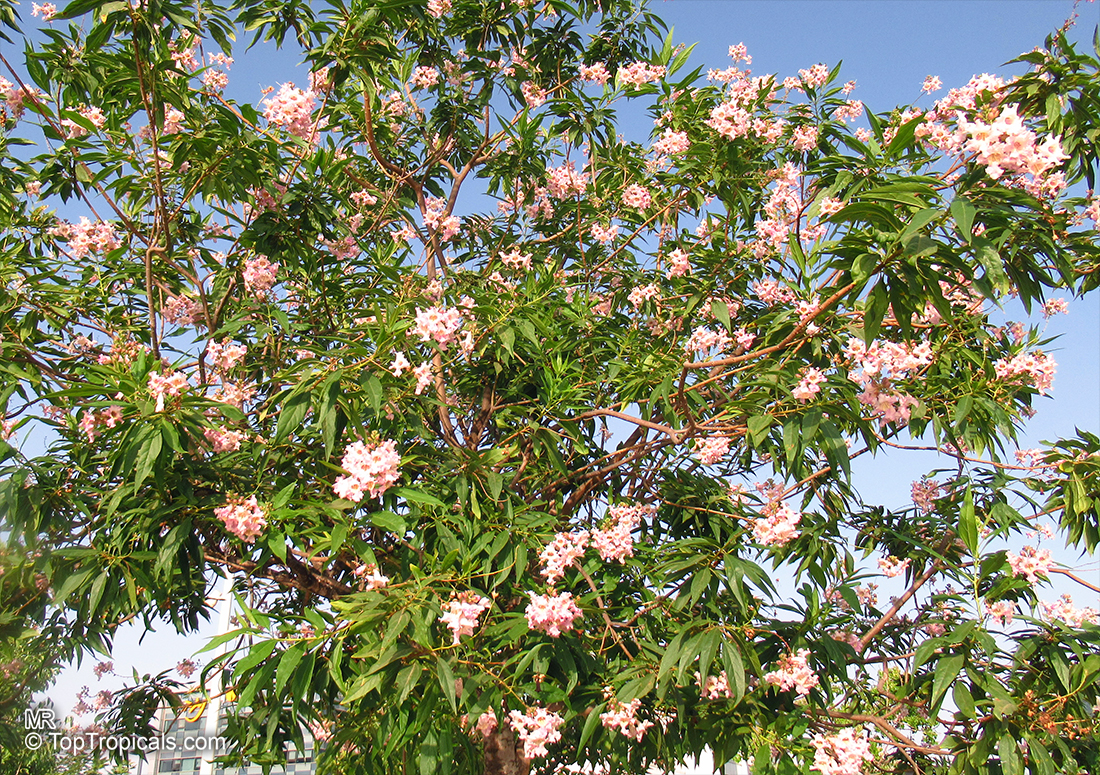
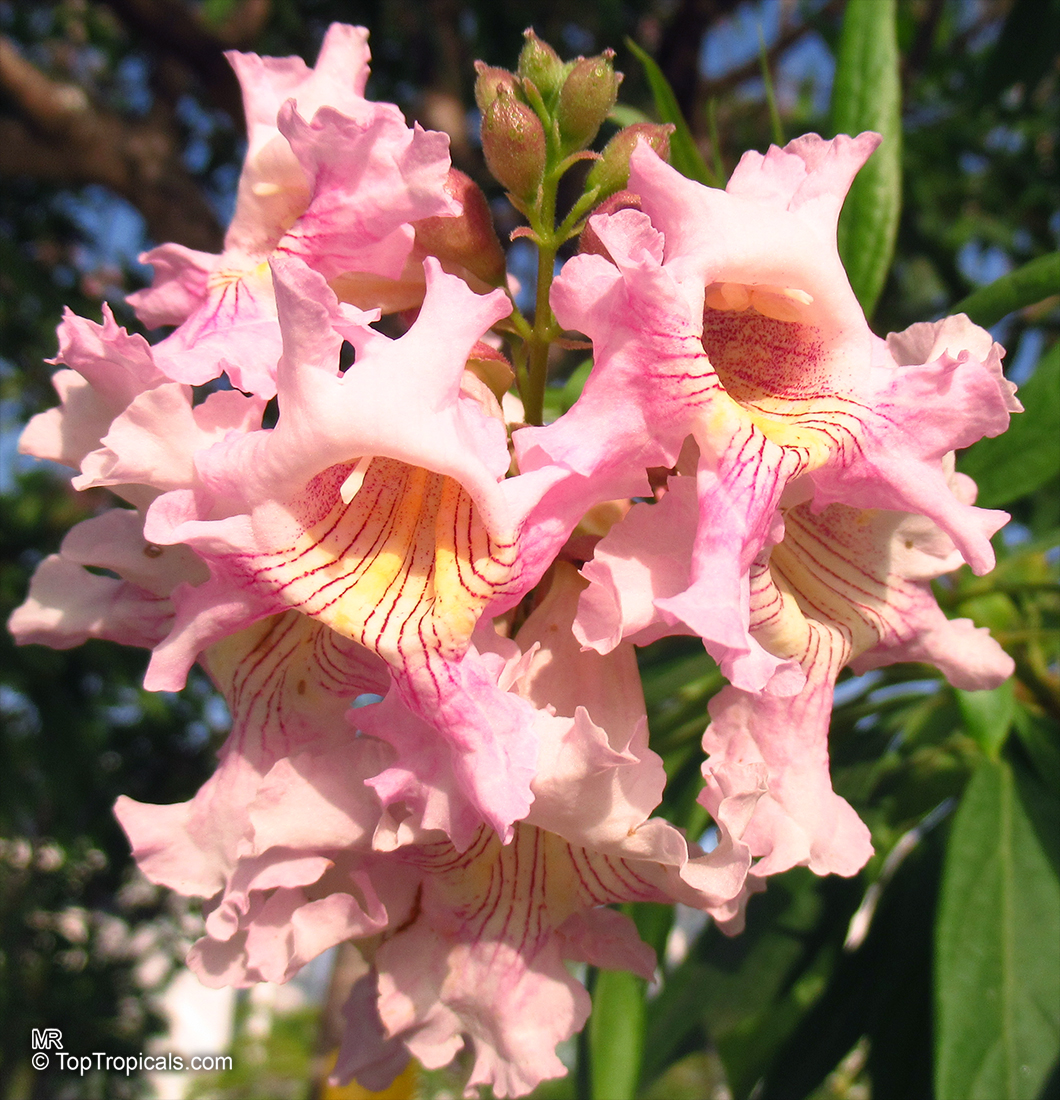
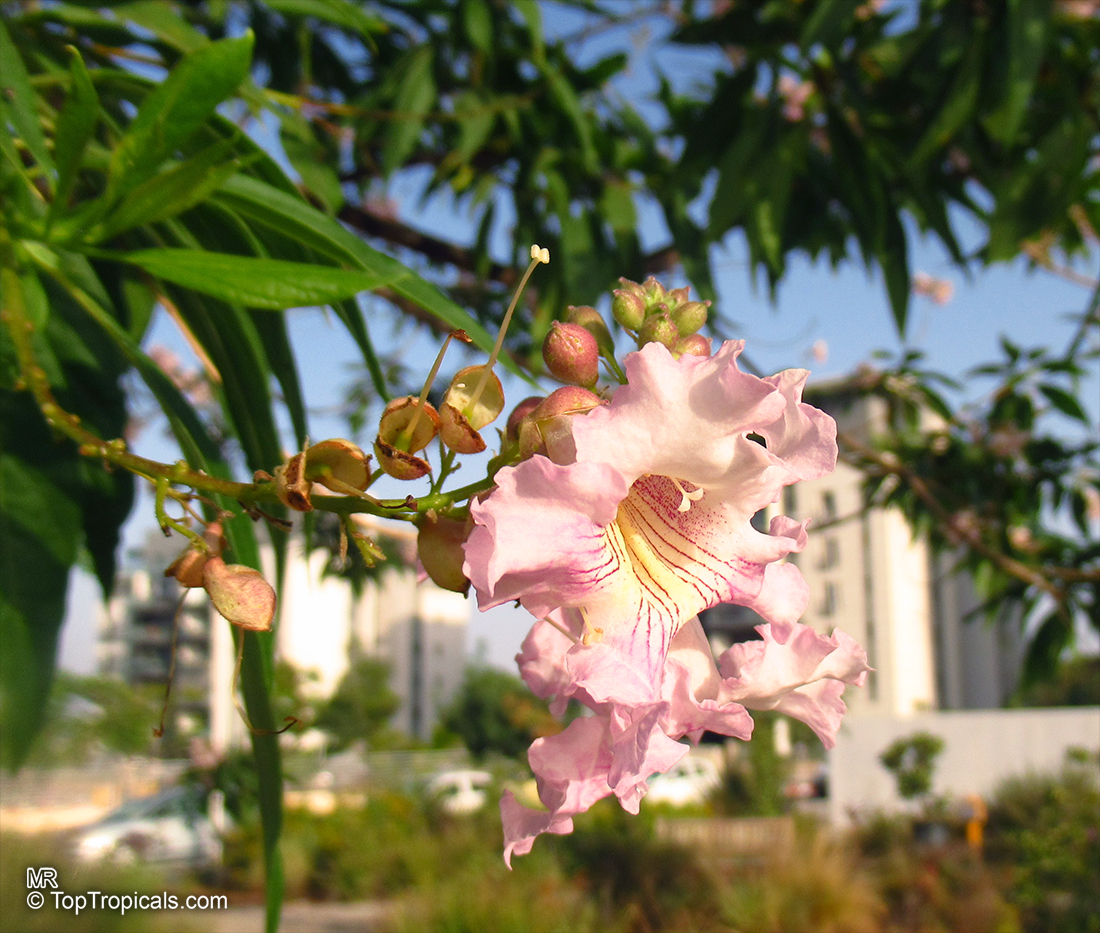
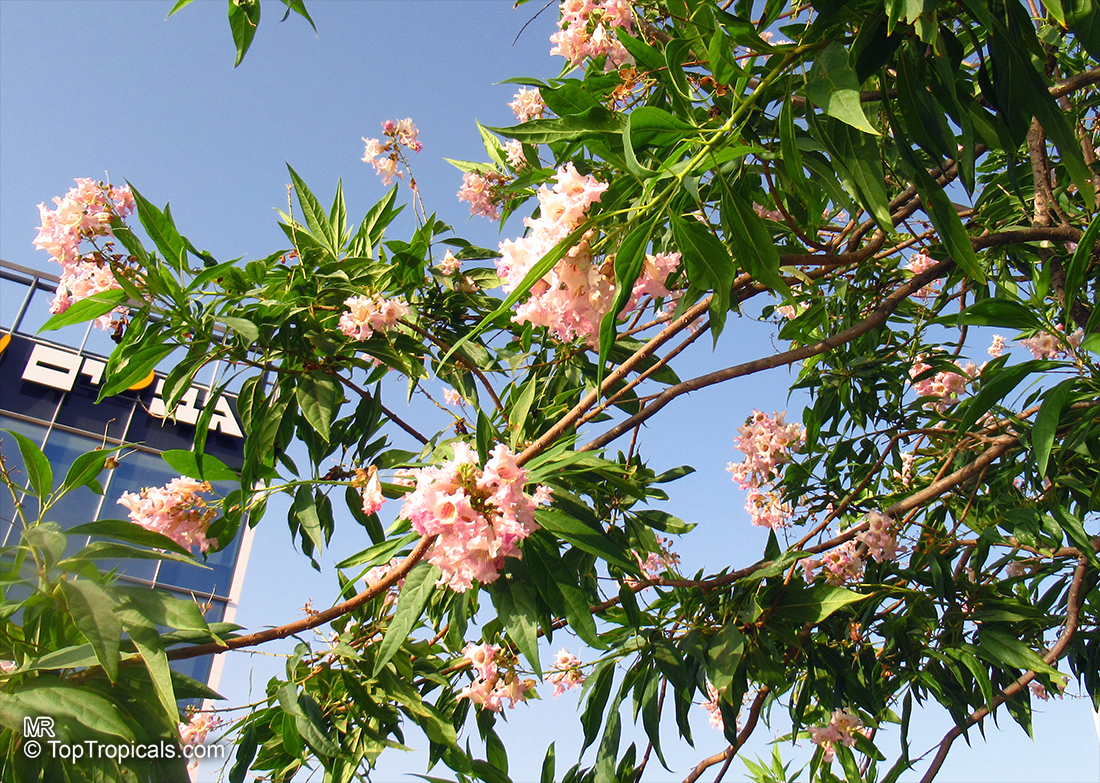
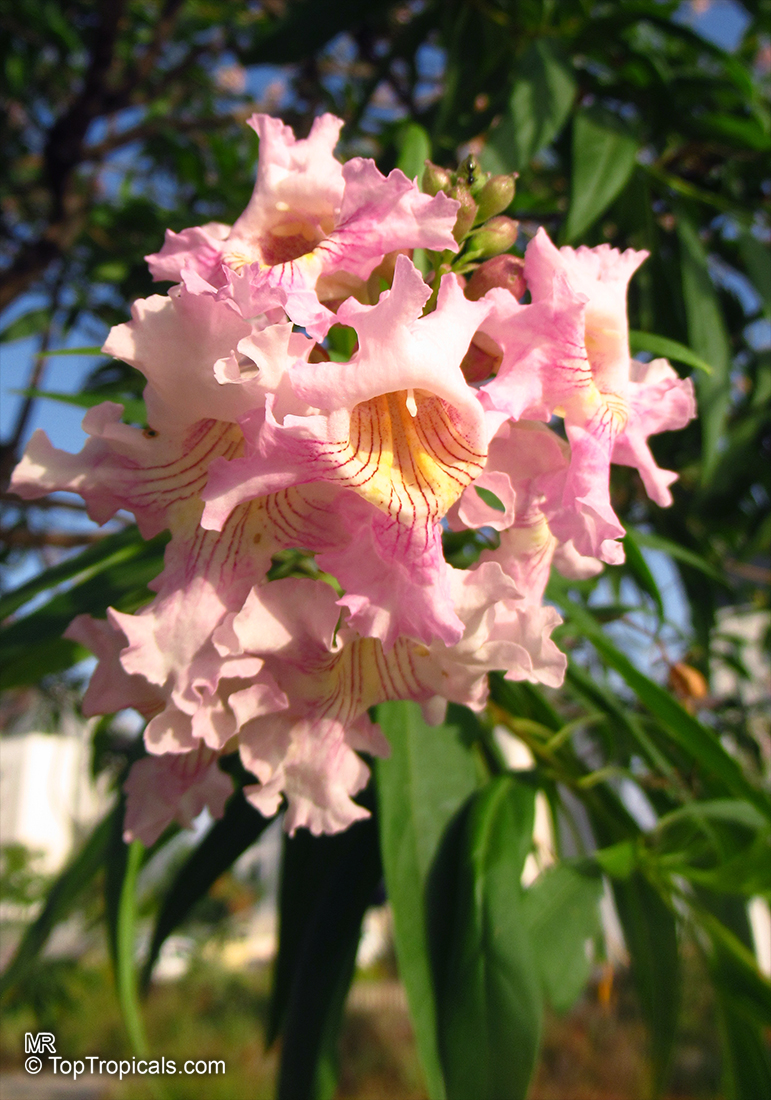
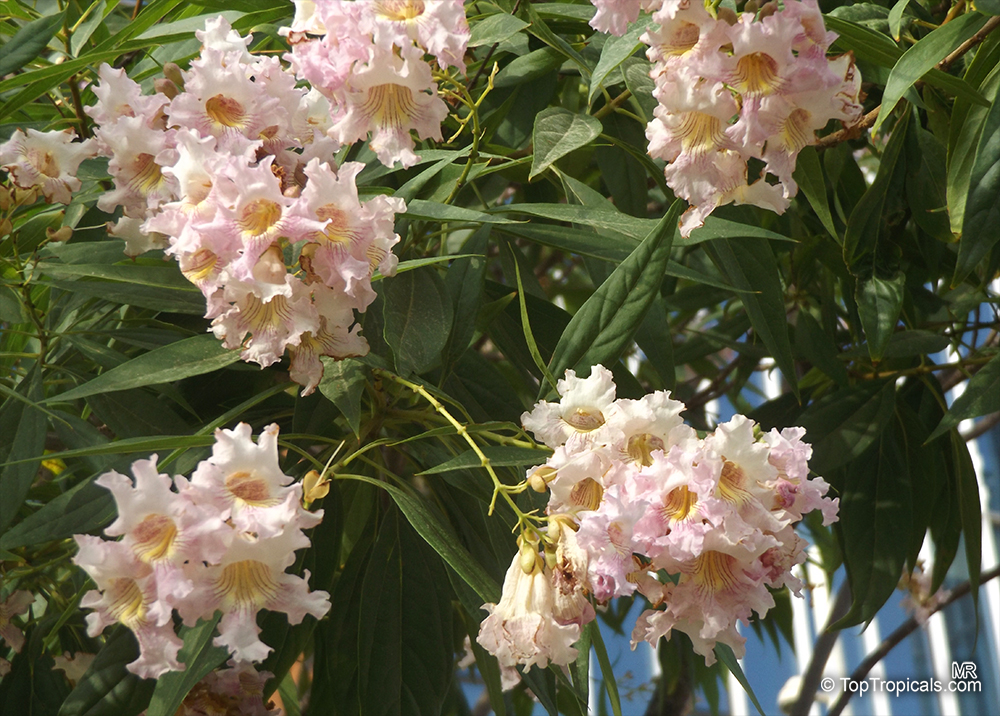
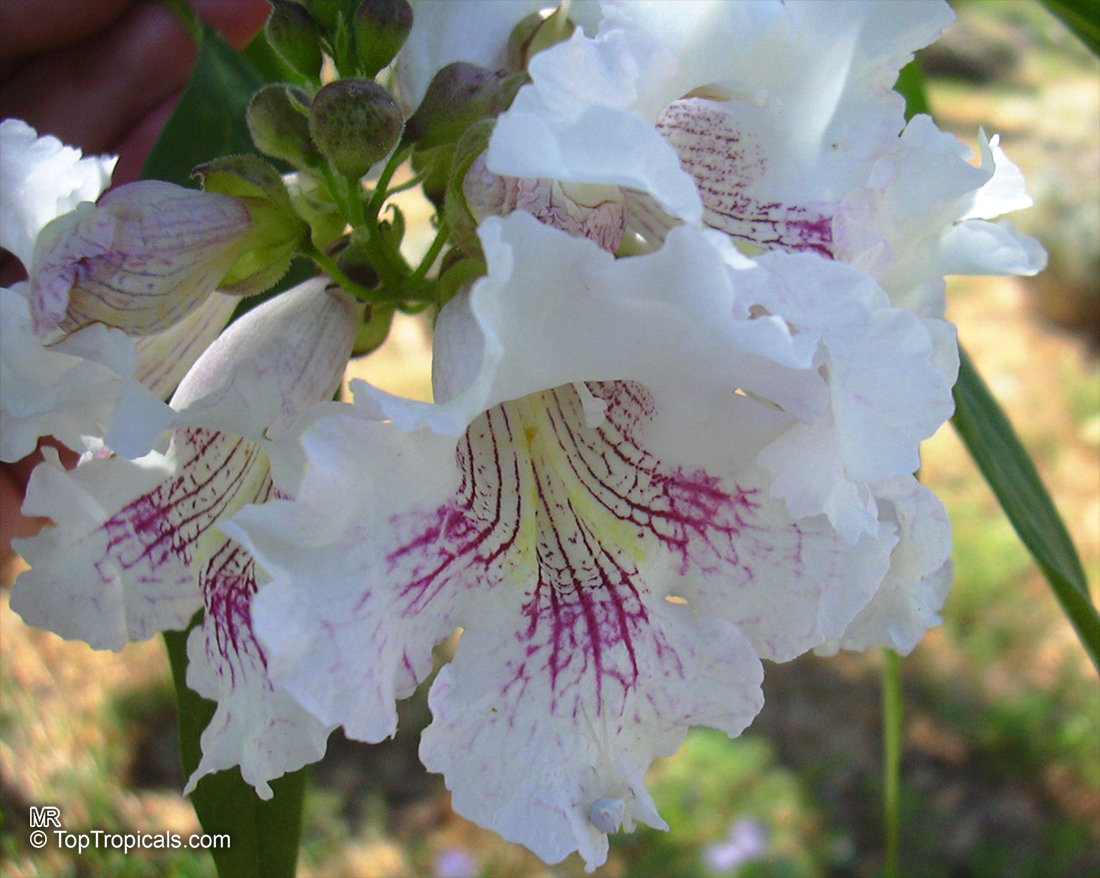
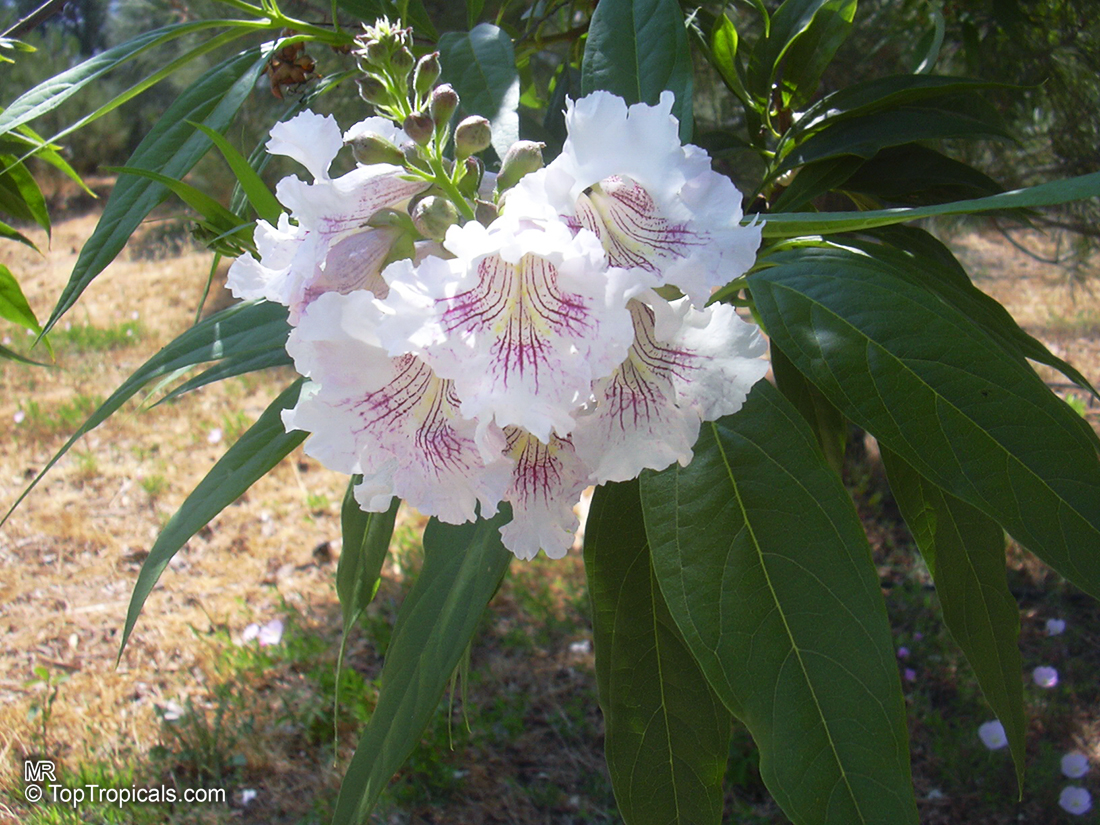
Botanical name: x Chitalpa tashkentensis
Common name: Chitalpa
Family: Bignoniaceae
USDA Zone: 5-11
Cold tolerance: -10°F

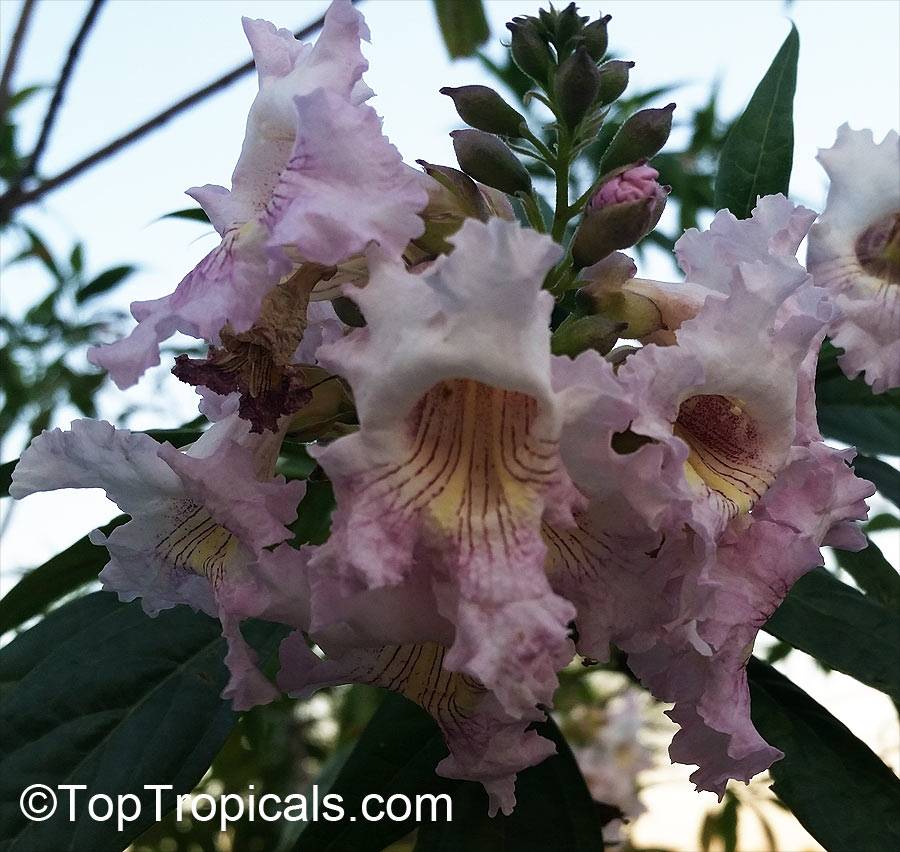
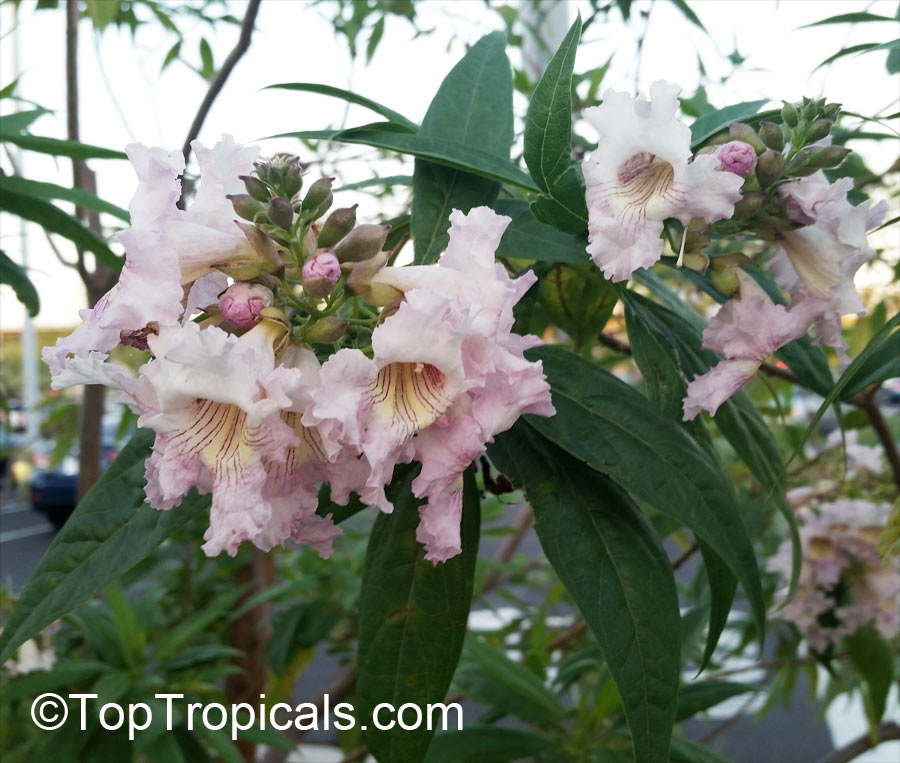
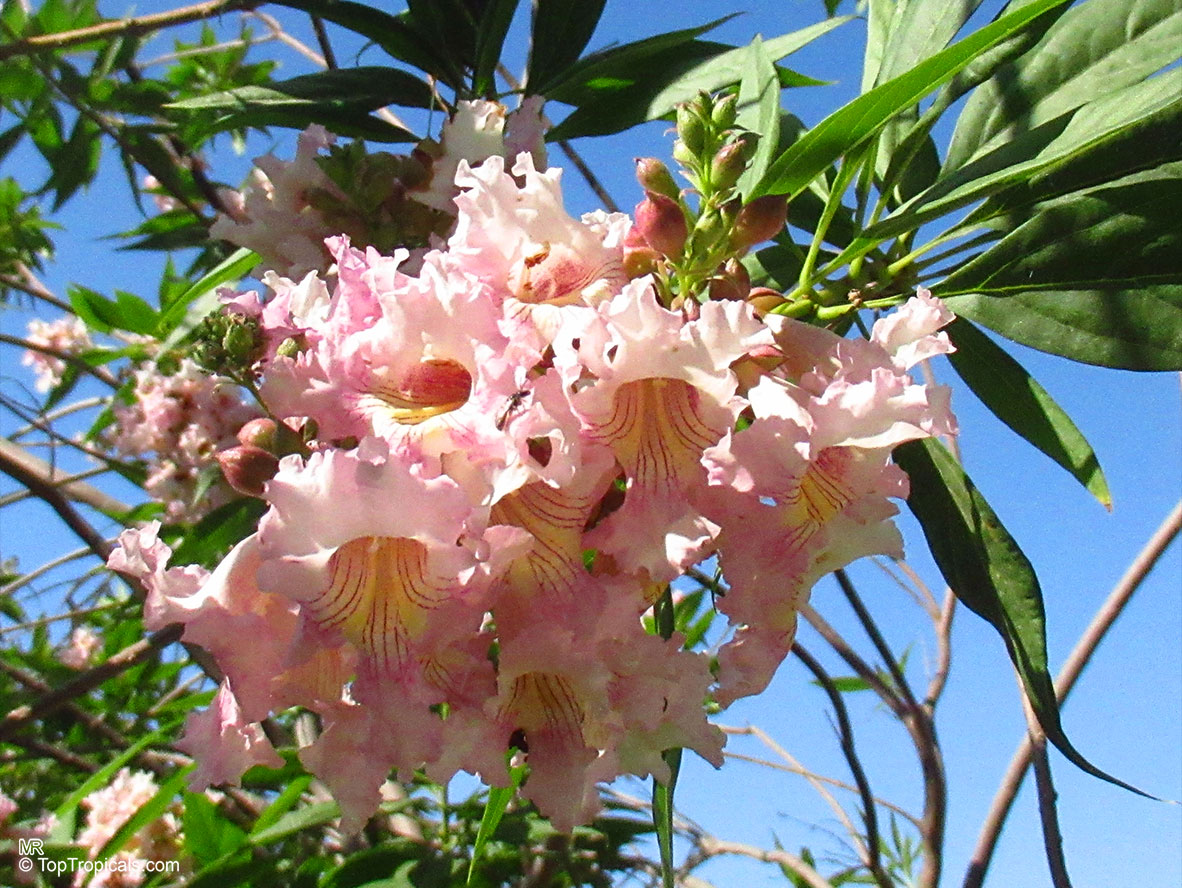
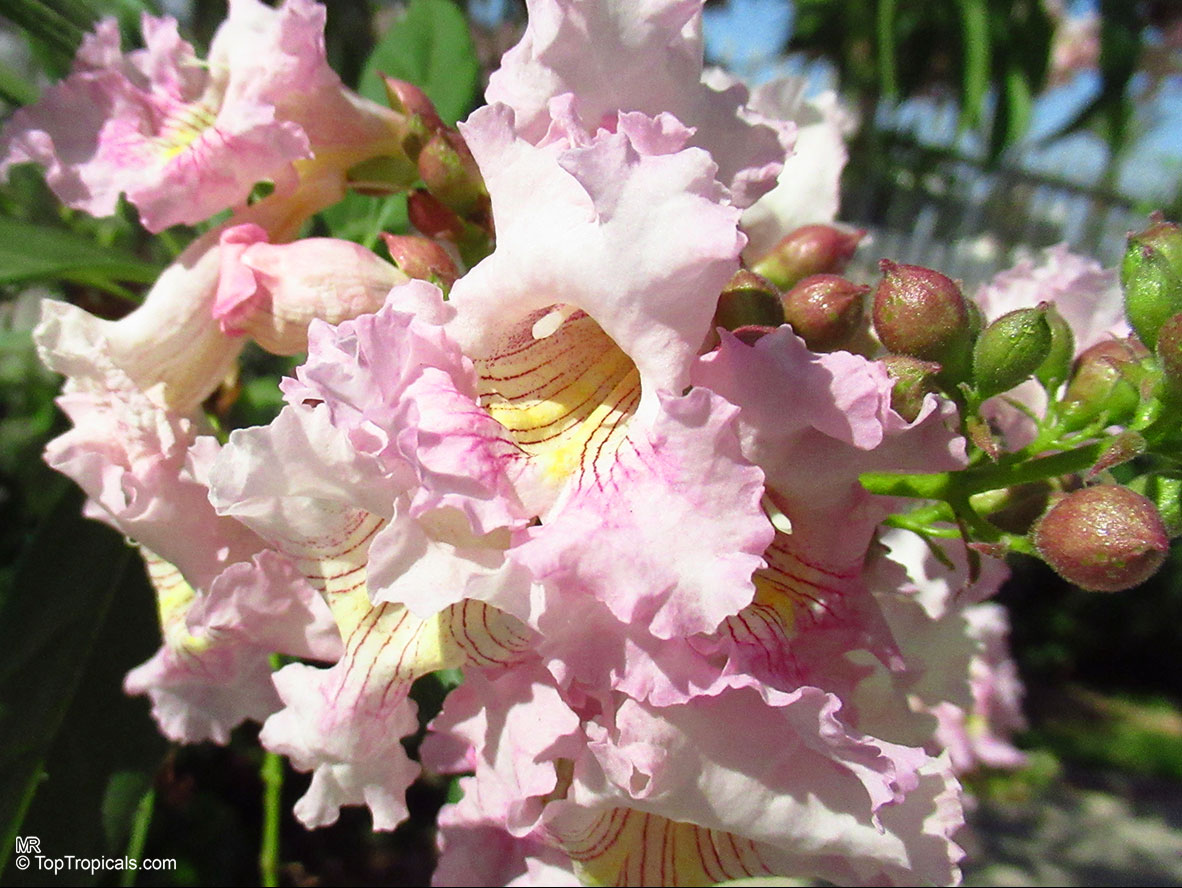
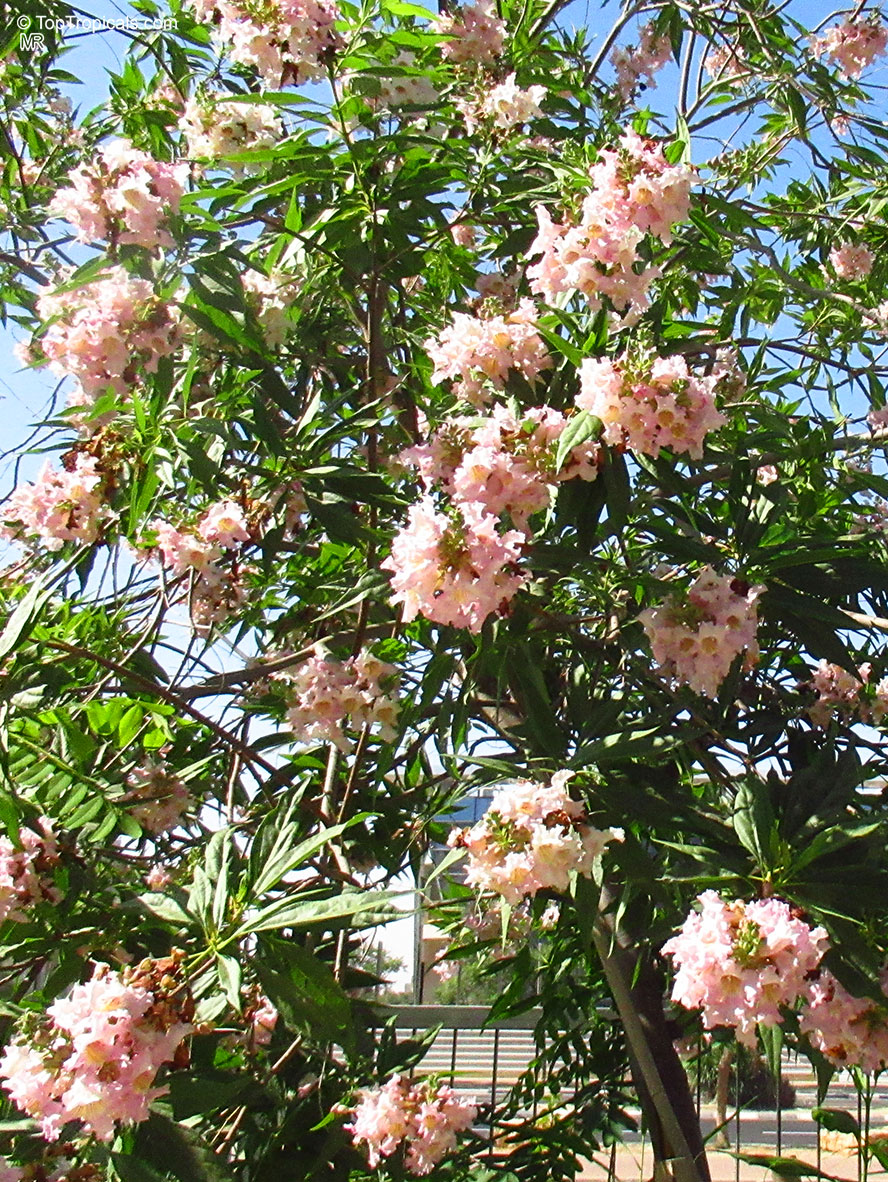
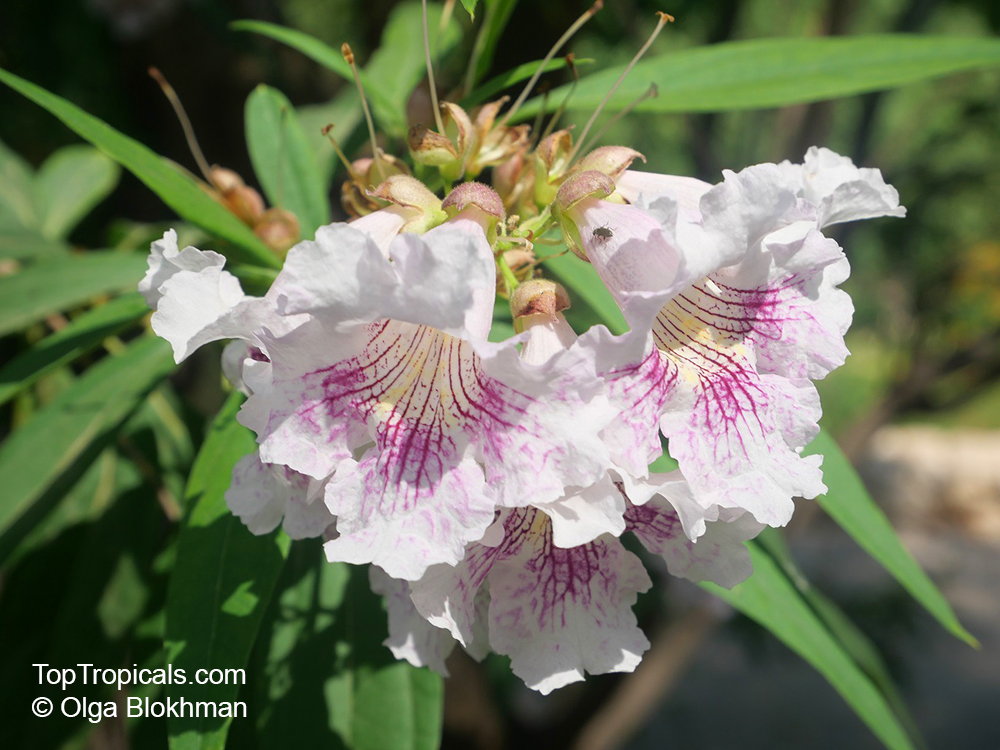
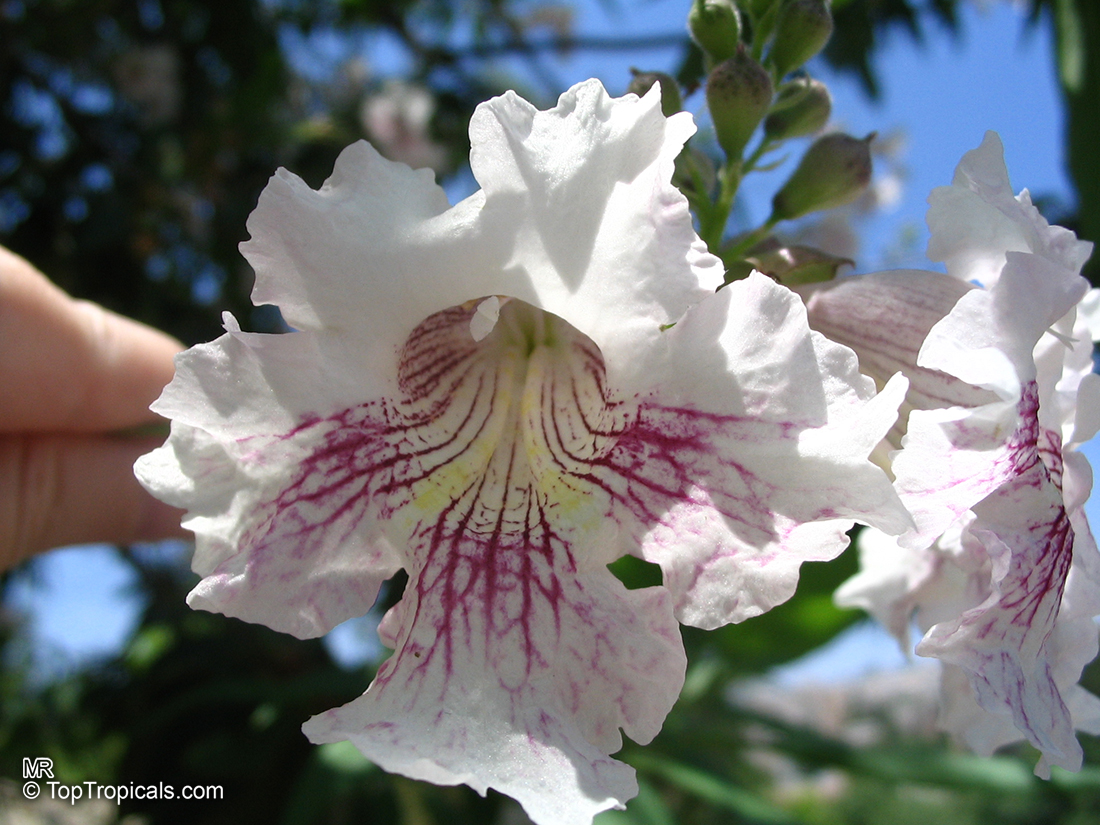
The Chitalpa is a cross between Catalpa bignonioides and Chilopsis linearis. The Chilopsis is a desert tree, sometimes called a Desert Willow. From the Chilopsis, the Chitalpa inherits long 3 to 5 inch dark green leaves and the ability to withstand some dry heat. However, unlike its desert parent, the Chitalpa can withstand low temperatures of around minus 15 degrees. Flowers are orchidlike and produced in July or August at the ends of new growth. At several feet a year the Chitalpa reaches its 25 to 30 foot height and breadth quickly and makes shady spots fast. It is a drought-resistant plant, a trait inherited from the desert willow, and it is fairly hardy, having withstood temperatures as low as 9F. It has been noted that it will freeze back to the ground in Zone 6. Although many fast-growing trees are intolerant of windy situations, chitalpa can withstand even strong winds without breakage. Unlike either of its parents, chitalpa is sterile and produces no messy seed pods. Propagation: Cuttings. The initial hybrids between Catalpa and Chilopsis were created in Uzbekistan in 1964 and introduced to the United States by Robert Hebb of the New York Botanic Garden in 1977. (Chitalpa is a combination of the scientific name of the two parents, while the specific name identifies the city in Uzbekistan where the hybrids were created.) Although in cultivation in the United States during the 1980s, the hybrid remained unnamed until 1991 when Rancho Santa Ana Botanic Garden assigned the name x Chitalpa tashkentensis.
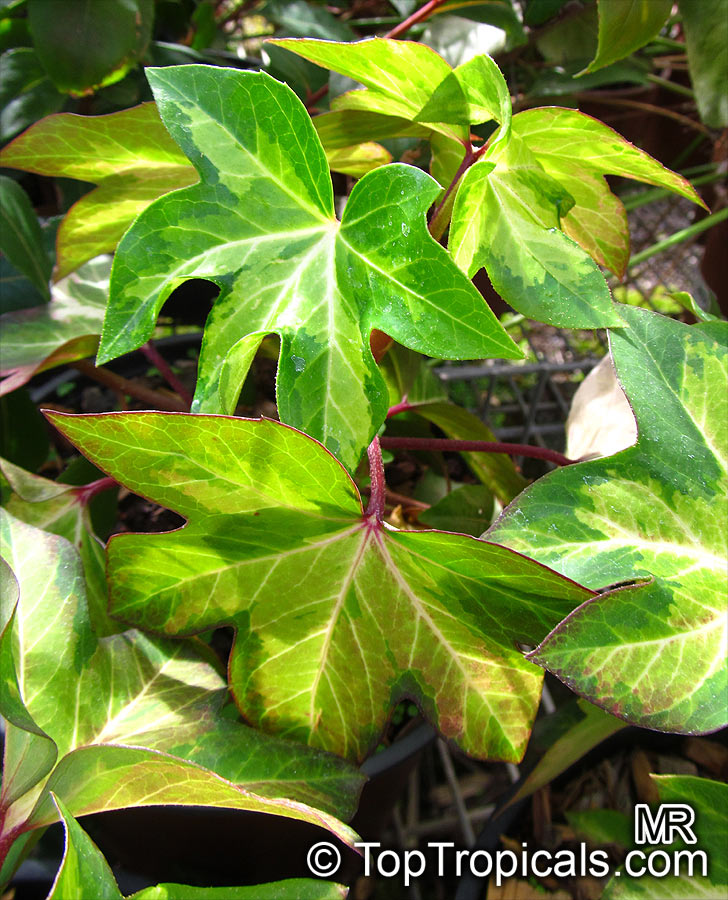
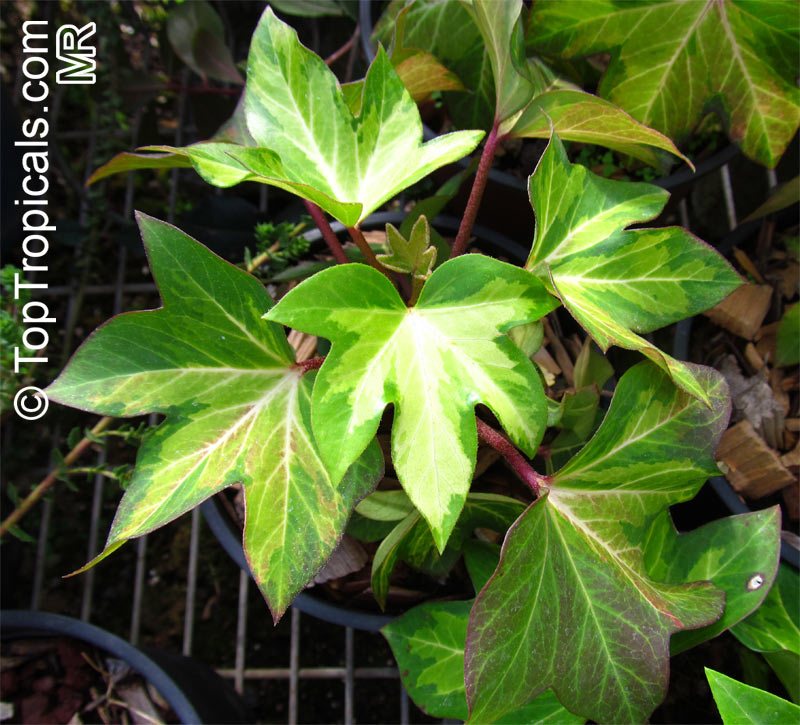
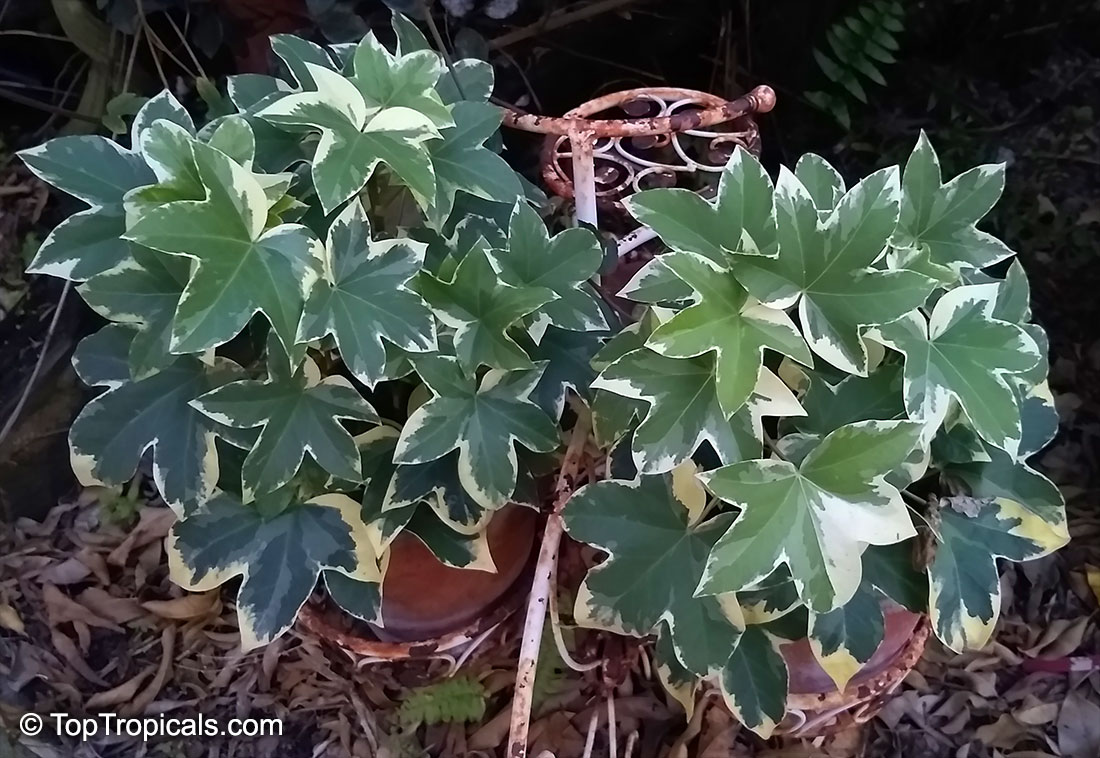
Botanical name: x Fatshedera lizei
Common names: Fatshedera, Ivy Tree
Family: Araliaceae
USDA Zone: 8-11
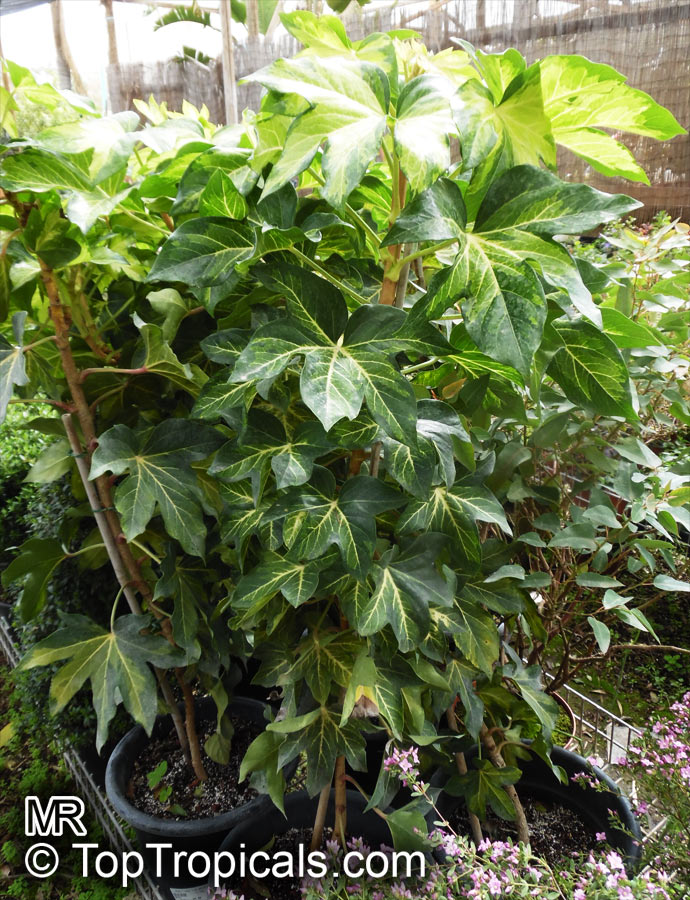
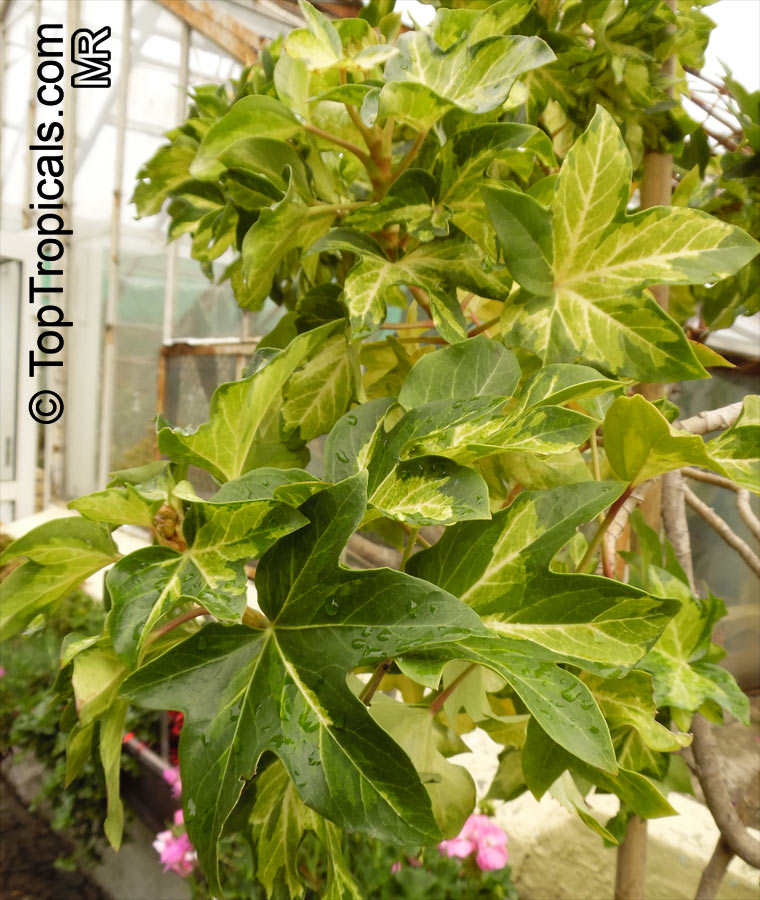
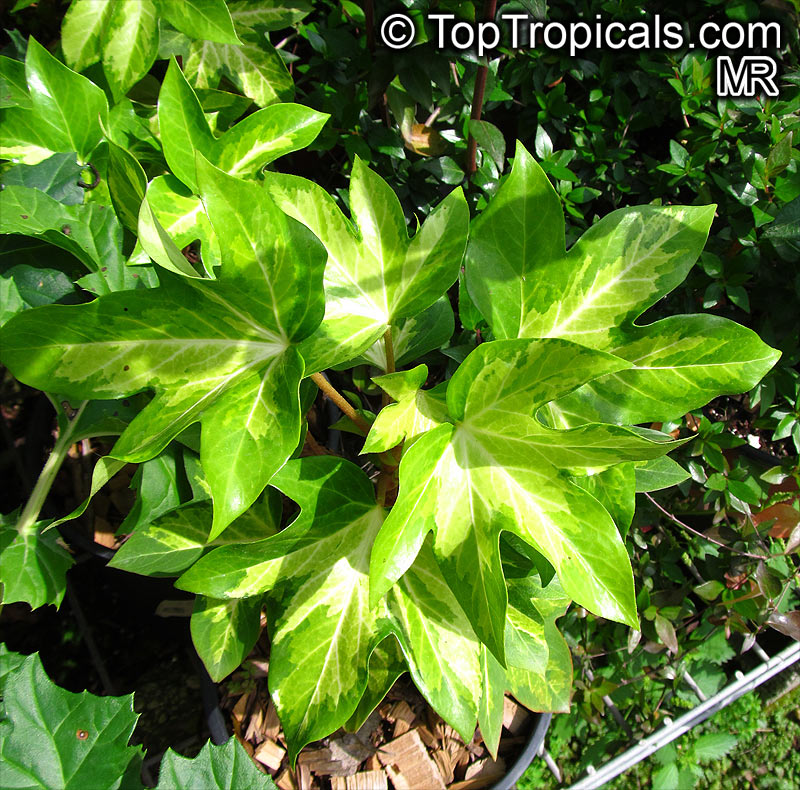
The Ivy Tree is an usual plant in that it's the result of a cross between two genera, the Hedera (English ivy) and Fatsia japonica. The resulting hybrid has the interesting and lovely leaf shape of the Fatsia, which can be seen growing along the roadsides throughout the tropical world, and the cultural requirements and basic climbing habit of its ivy parent. As a shrub, Fatshedera can grow up to 1.2 m tall, above which the weight of the fairly weak branches makes them tend to bend over. It can however also be tied to a support and grow into a vine up to 3-4 m tall; unlike Hedera, it does not readily climb without assistance.
It is grown both as a garden plant outdoors, and as a houseplant indoors, where its tolerance of shady conditions is valued.

Botanical name: x Iwanagara
Common name: Iwanagara
Family: Orchidaceae
USDA Zone: 9-10

Iwanagara is a cross between Brassavola x Cattleya x Diacrium x Laelia. They are grown the same way as Cattleyas.
Iwanagara need bright light, and a little morning or afternoon sun is good.


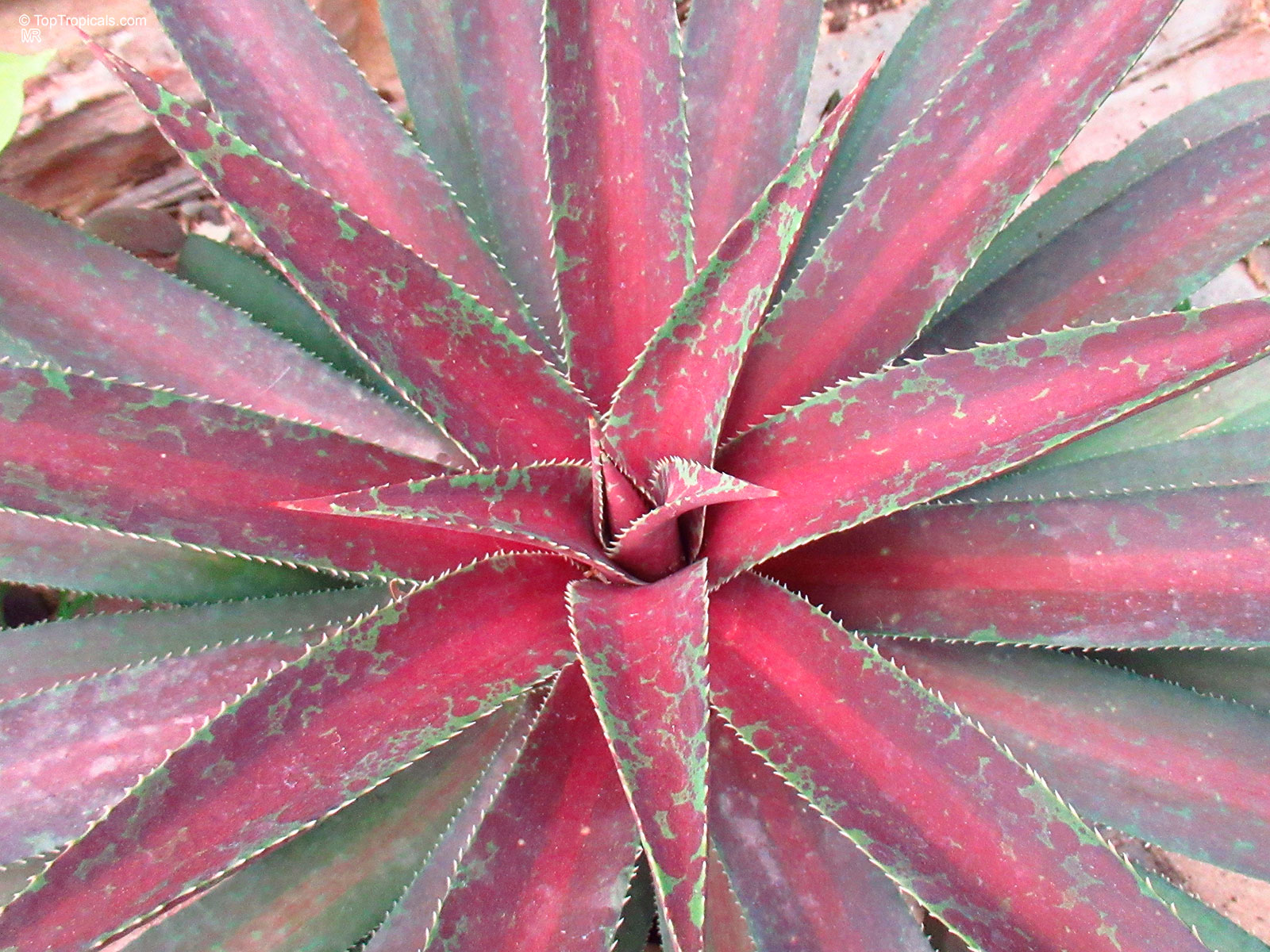
Botanical name: x Mangave
Common name: Mangave
Family: Asparagaceae
USDA Zone: 8-11

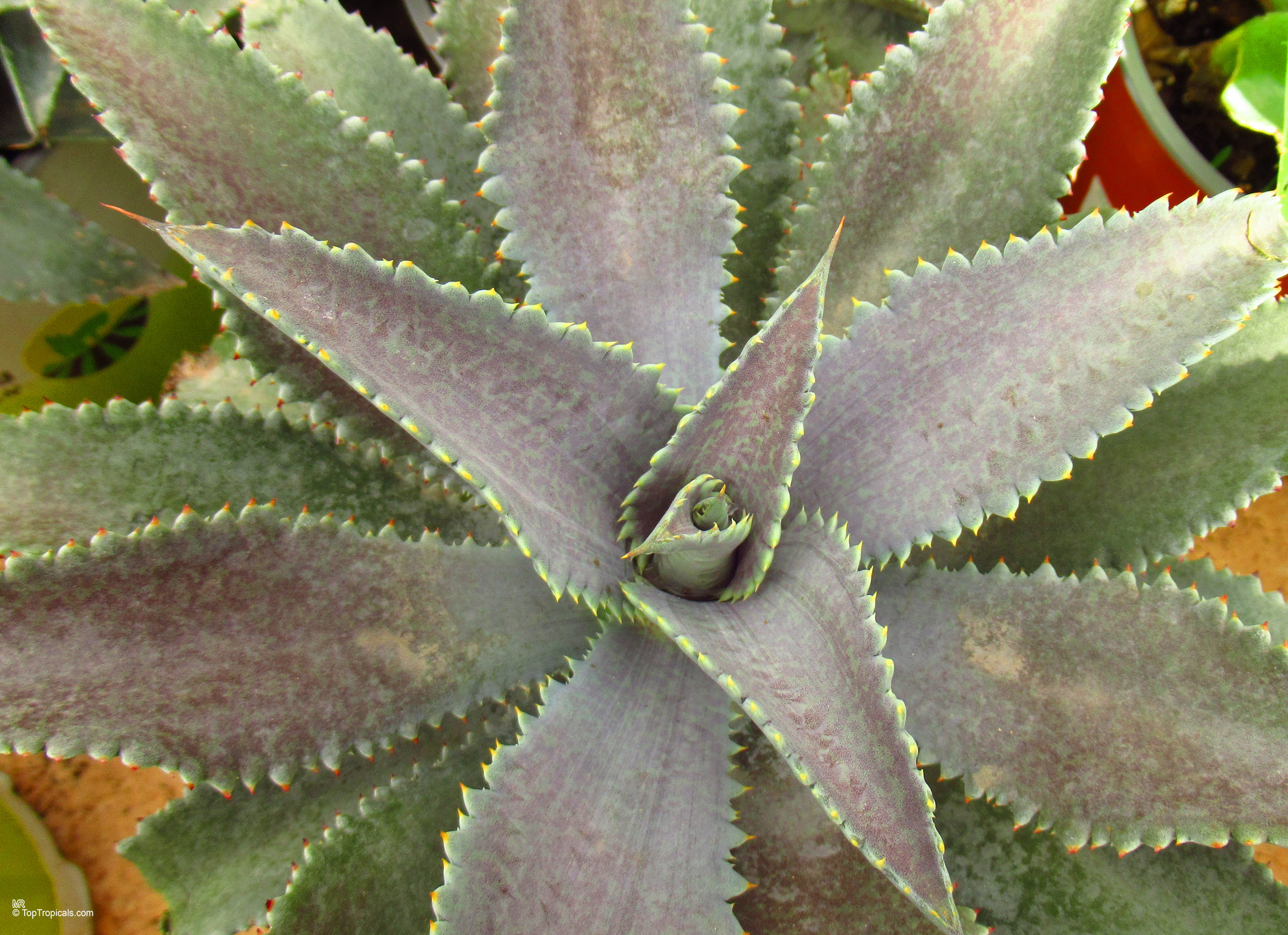
x Mangave is an intergeneric hybrid between Manfreda and Agave, combining the rapid growth and ornamental foliage of Manfreda with the architectural form and durability of Agave.
Most mangaves form broad rosettes of fleshy leaves that display an impressive range of colors, patterns, and markings. Depending on the cultivar, foliage may be green, blue-gray, silver, purple, or heavily spotted with burgundy markings. Plants range from compact container specimens to large landscape accents several feet across.
Mangaves are valued for their dramatic appearance, rapid growth, and remarkable diversity. Many cultivars develop intricate leaf spotting that intensifies in bright light and often have softer leaf margins and fewer sharp spines than traditional agaves. Modern breeding programs have produced dozens of selections with distinctive forms, colors, and growth habits.
These hybrids thrive in full sun to light shade and require excellent drainage. Once established, they are highly drought tolerant and well suited to xeriscapes, rock gardens, and container culture. Although they appreciate occasional watering during active growth, consistently wet soil can lead to root problems. Their bold form and ease of cultivation have made mangaves among the most popular modern succulents.
USDA Plant Hardiness Zones vary by cultivar, generally ranging from 8-11. Most selections tolerate brief periods of light frost, while others require protection from prolonged freezing temperatures.
| Prev | Next | |
Use link to repeat this search:
https://toptropicals.com/cgi-bin/garden_catalog/cat.cgi?search_op=and&keyword_op=and&language=e&number=10&no_change_lang=1
&v1=mod&user=tt&sale=1&first=0