Large tree taller than 20 ft - Plant Encyclopedia Results (Page 5)
| Number of plants found: 464 |  | Prev | Next | 
|
Go to page: | 1 | 2 | 3 | 4 | 5 | 6 | 7 | 8 | 9 | Last |

Botanical name: Arenga microcarpa
Common name: Arenga Palm
Family: Arecaceae / Palmae
Origin: Papua New Guinea
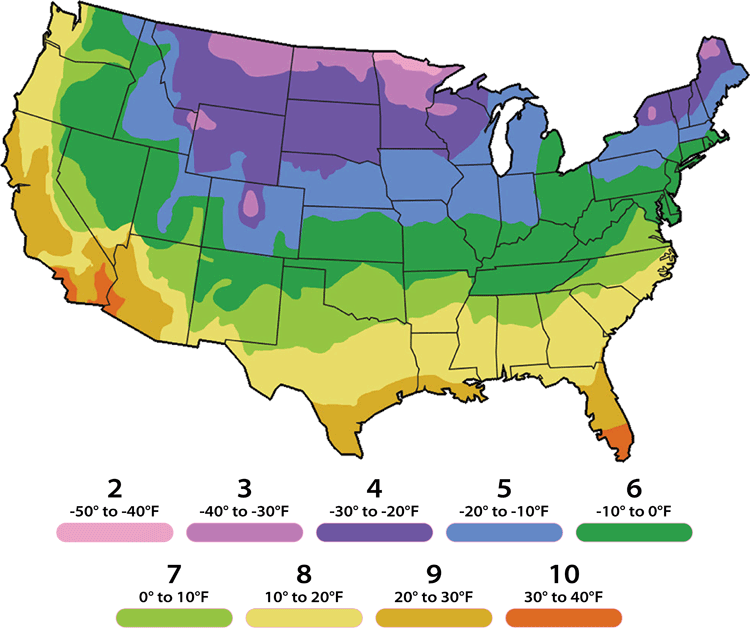
USDA Zone: 9-10


An interesting and strong-growing palm coastal districts, it performs well as a house- or conservatory plant. It tolerates low light, and growing rather fast to produce a good-sized plant in a number of years. Related species - Arenga australasica.

Botanical names: Arenga pinnata, Arenga saccharifera
Common names: Sugar Palm, Black Sugar Palm, Gomuti Palm
Family: Arecaceae / Palmae
Origin: Malaysian islands
USDA Zone: 9-10

Commonly seen in Southeast Asia, where a crude kind of sugar is made from the sap. Fast and strong growing, the new leaves are strongly wedge-shaped, leathery and attractive. Requires a rich soil, plenty of water, and feed during periods of growth.


Botanical name: Argyrodendron trifoliolatum
Common names: Brown Tulip Oak, Queensland Silver Tree, Silver Tree, Stave Wood, Three Leaved Stavewood, White Booyong
Family: Malvaceae
Subfamily: Sterculioideae
Origin: Australia
USDA Zone: 9-10


It is native to Australia and is characterized by its rapid growth to a massively huge three-lobed canopy that can reach heights of up to 20 feet.
Argyrodendron trifoliolatum, also known as Brown Tulip Oak, can thrive in a variety of climates with full sun to semi-shade, making it an attractive option for gardens in USDA Zone 9-11. This big tree can reach heights of more than 20 feet, requiring plenty of room to grow into the stately shade tree it was destined to become. Moderate water is the best to keep this tree looking strong and healthy, allowing it to absorb the nutrients needed to reach its full potential.
The beauty of Argyrodendron trifoliolatum lies in its magnificent flower display. Beautiful, off-white clusters of spikes in drooping forms reminiscent of tulip petals burst throughout the canopy, giving this tree a unique appearance during its early summers.
When grown in pots, Argyrodendron trifoliolatum can be easily moved and relocated as needed. Just be sure to water and fertilize appropriately, and repot as needed to maintain loose, draining soil that won't retain too much moisture. In colder regions, it is recommended to move plants indoors, out of the harsh winter air, and provide with the occasional shower of water in the summer.
For those wanting to add a little bit of Australia to their gardens, try Argyrodendron trifoliolatum (Brown Tulip Oak). With its hardy and rapid growth and dazzling show of white and off-white tulip-like flower clusters, this tree can easily become a stunning addition to any garden.


Botanical names: Artocarpus altilis, Artocarpus communis
Common name: Breadfruit
Family: Moraceae
Origin: New Guinea
USDA Zone: 10-12


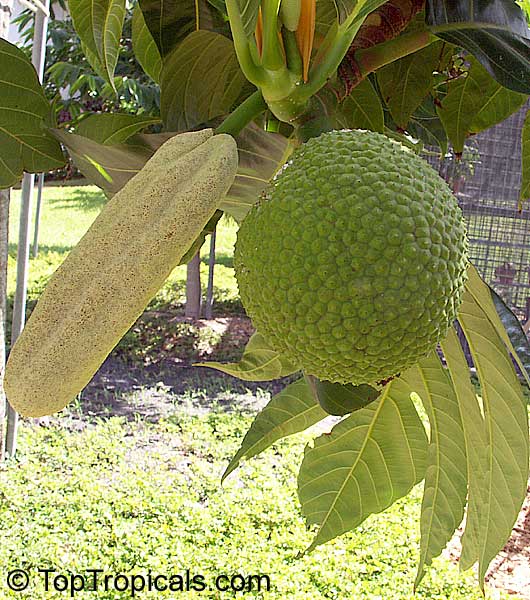
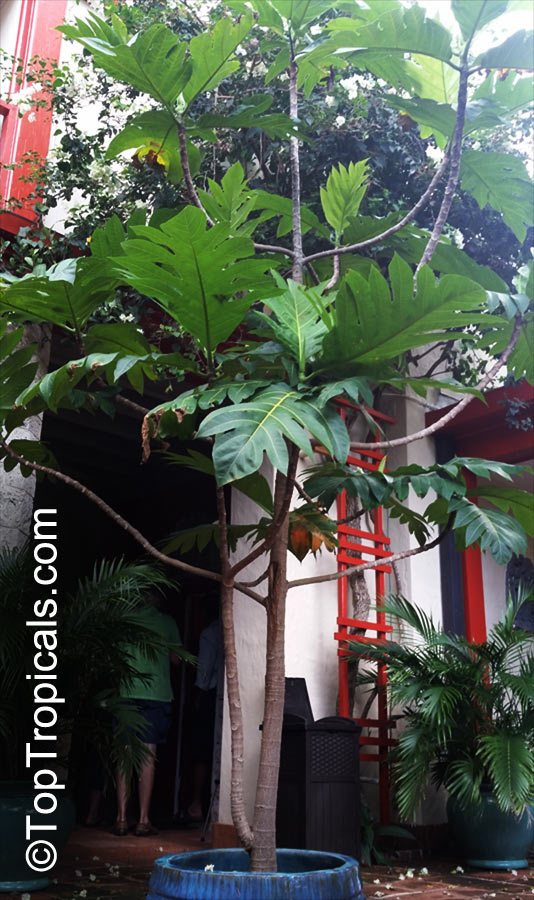
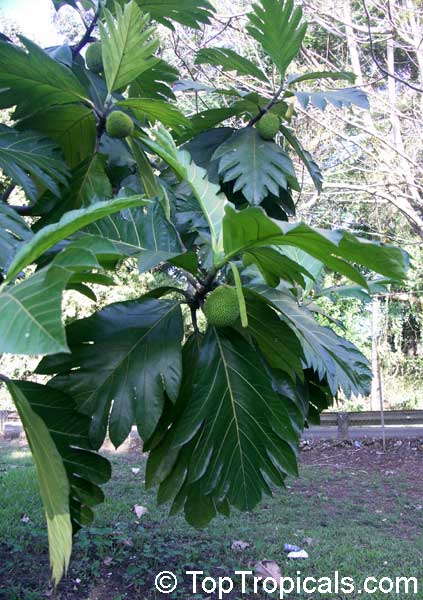
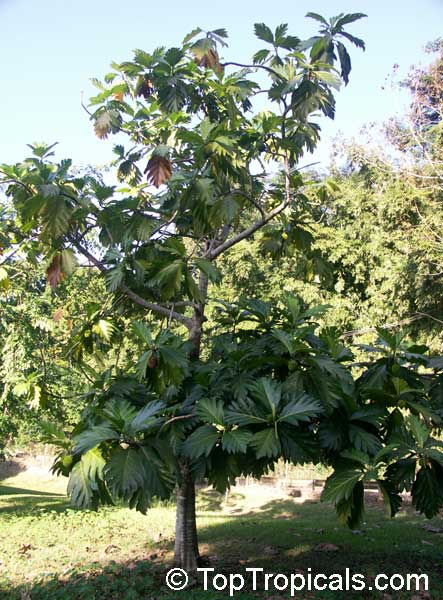
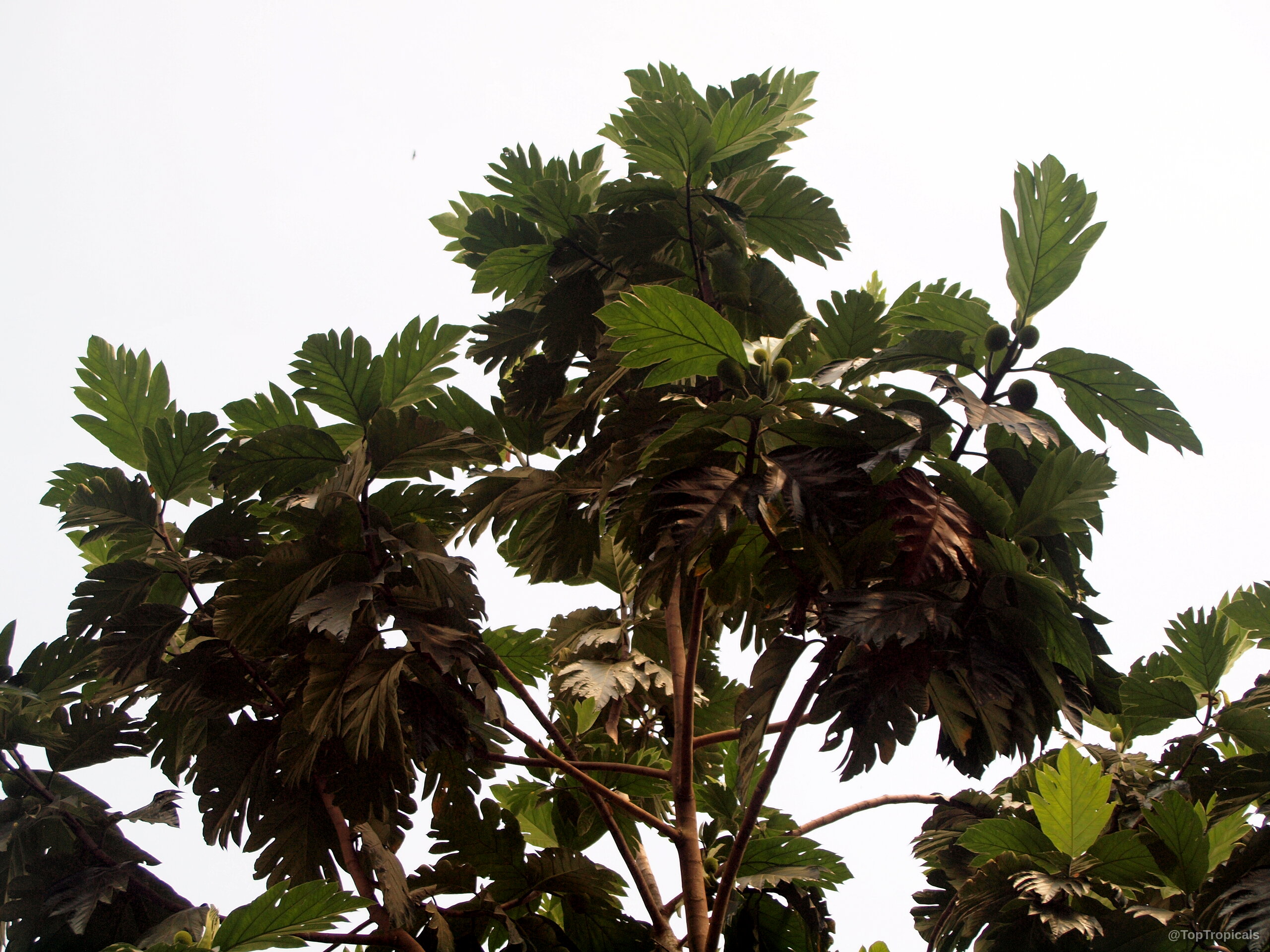
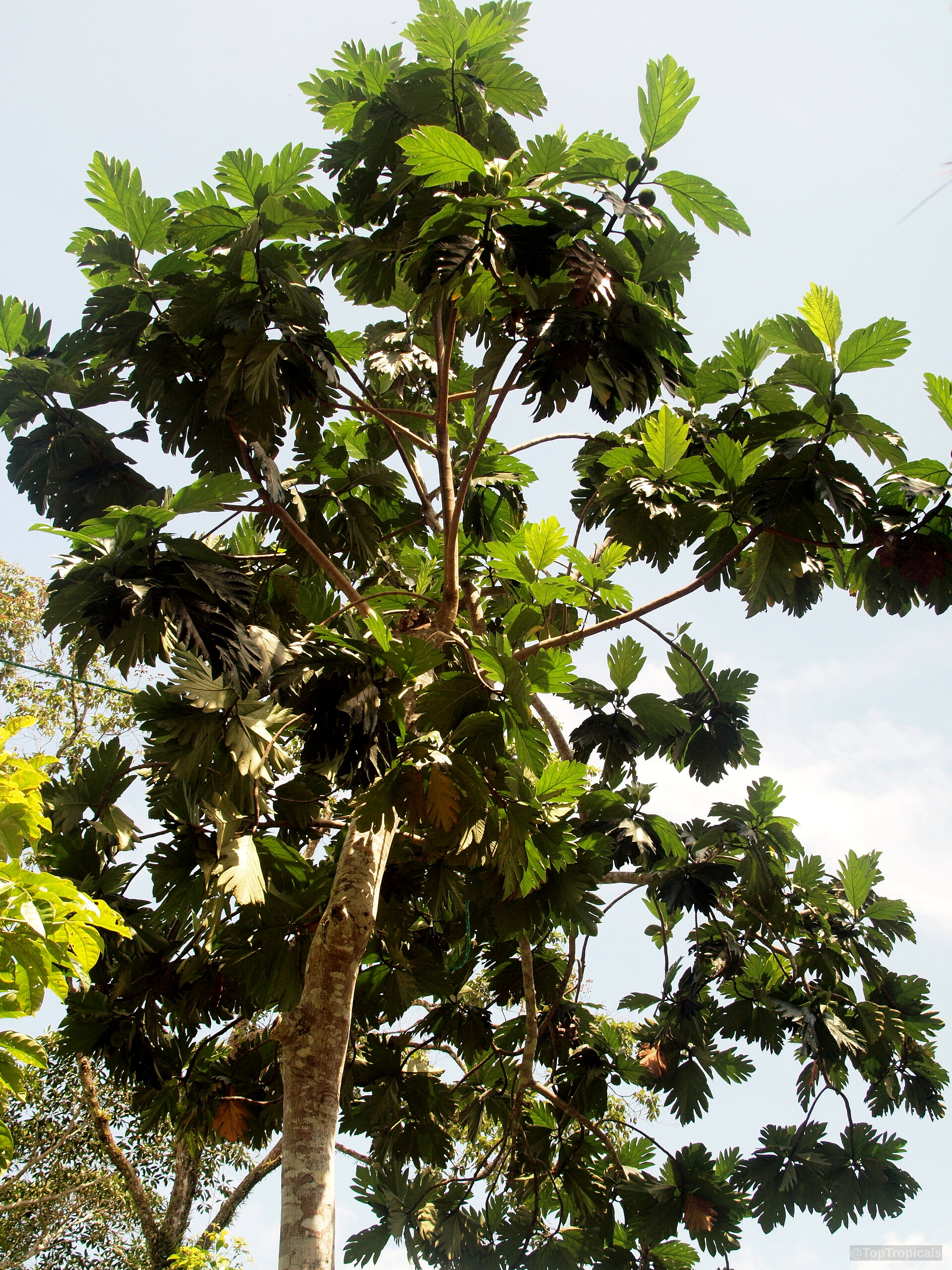
Breadfruit (Artocarpus altilis) is a large tree, typically growing to over 20 ft tall, and requires full sun exposure. It is suitable for growing in USDA hardiness zones 10-11, where temperatures remain above 55F for most of the year. It should be watered regularly and grows best in a loamy soil that drains quickly. In cold regions, it is best to grow this tree in a large pot with well-draining soil to provide enough space for it to grow. If the tree is grown in a pot for an extended period, it is important to repot it periodically to prevent the roots from becoming cramped.
The breadfruit tree produces large fruits that vary in size and shape, ranging from 3 to 18 inches long. The skin of the unripe fruit is green, turning yellow or yellow-brown when ripe. The creamy white to yellow pulp inside is pasty, sweetly fragrant, and has a somewhat soft texture. The fruit can be eaten raw or cooked and is rich in carbohydrates, making it a dietary staple in some parts of the world, particularly Polynesia. In the West Indies, a decoction of the tree's leaves is used to lower elevated blood pressure and relieve asthma. The shoots, bark, and latex also have medicinal uses.
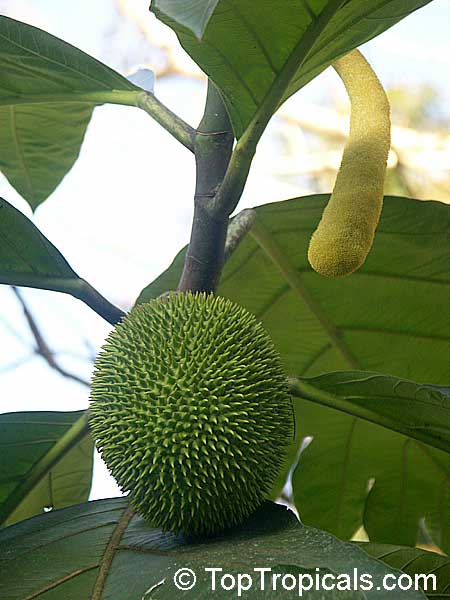
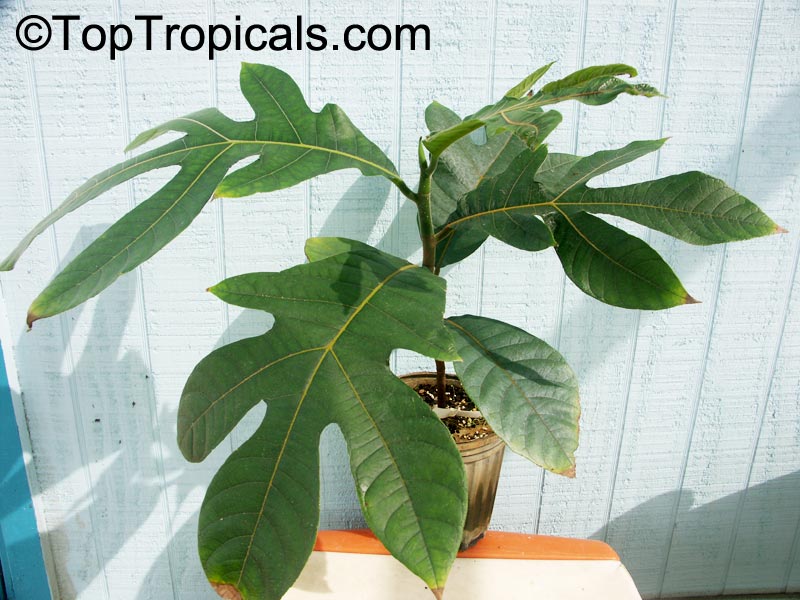
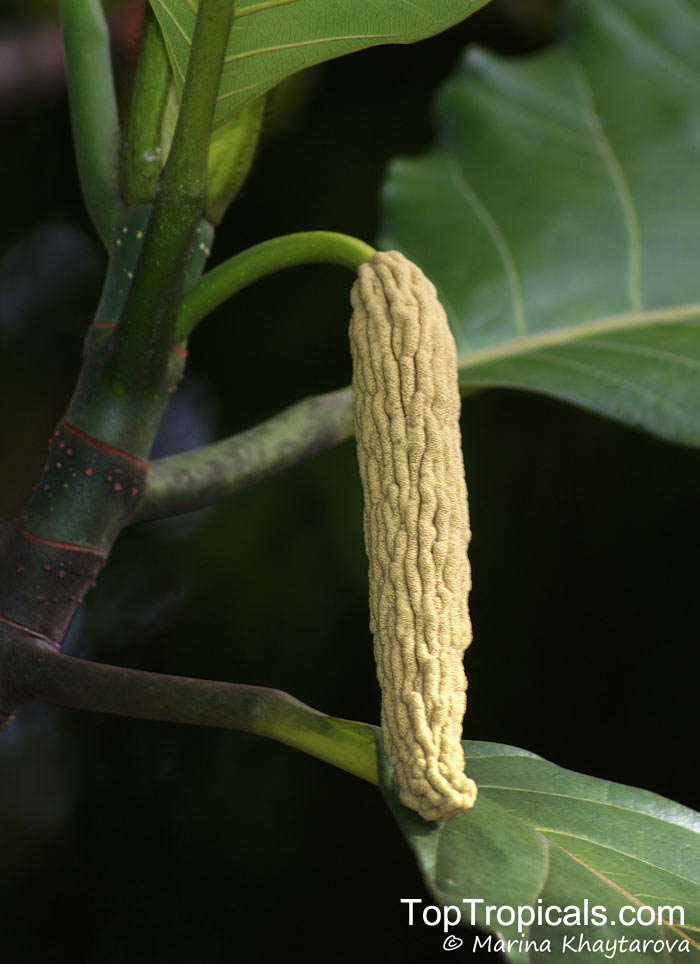
The breadfruit tree is fast growing, reaching up to 80-100 ft in height with a trunk up to 6 ft in diameter. However, some varieties are smaller. The leaves, which can be either evergreen or deciduous depending on the climate, are ovate and up to 3 ft long with deeply cut, pointed lobes. They are bright green and glossy on the upper surface, with conspicuous yellow veins and dull, yellowish, and coated with minute, stiff hairs on the underside. The flowers are tiny and similar to those of the jackfruit tree. Male flowers are densely set on a drooping spike 5 to 12 inches long, initially yellow and becoming brown. Female flowers are massed in a rounded or elliptic, green head about 3 inches long, which develops into the compound fruit. The fruit can be oblong, cylindrical, ovoid, rounded, or pear-shaped and ranges from 3 to 18 inches in length. Generally, the fruit is green at first and turns yellow or yellow-brown when ripe. When fully ripe, the fruit is somewhat soft, and the interior is cream-colored or yellow and pasty, with a sweet fragrance. All parts of the tree, including the unripe fruit, contain milky, gummy latex. There are two main types of breadfruit: the normal, "wild" type (cultivated in some areas) with seeds and little pulp, and the "cultivated" (more widely grown) seedless type. However, occasionally a few fully developed seeds are found in seedless cultivars. The seeds are oval, about 3/4 inch long, dull brown with darker stripes. The moist inner pulp of seedless breadfruit is eaten after cooking and has the taste and texture of potatoes. The seeds of the seeded breadnut form can be cooked by boiling or roasting.
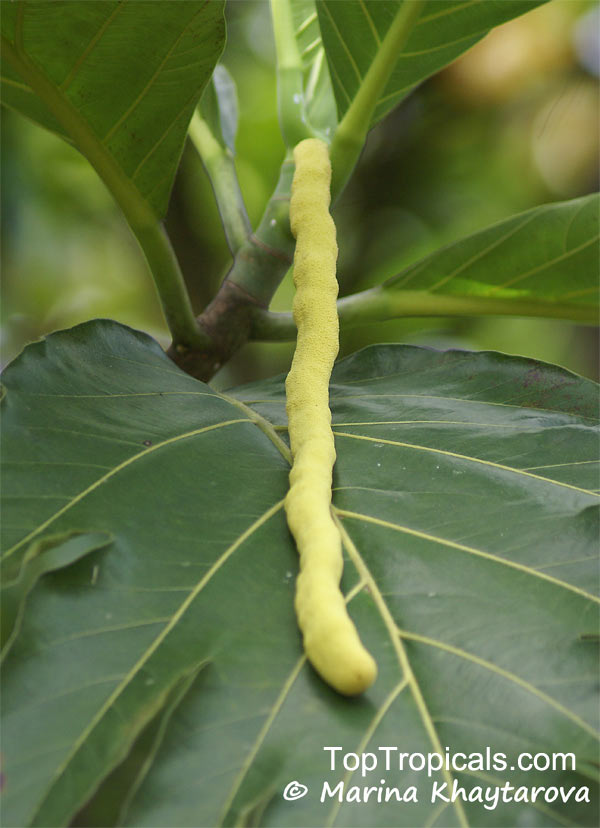
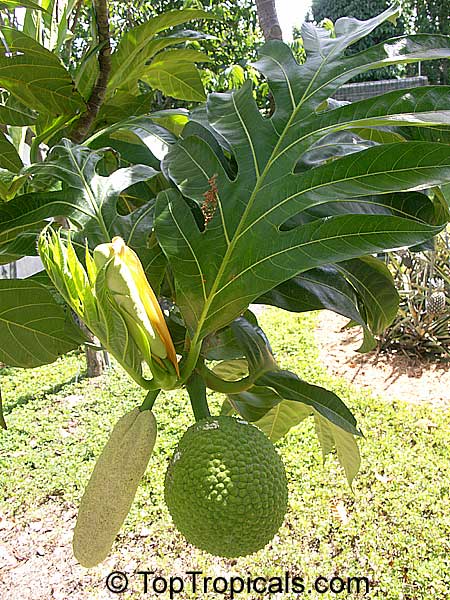
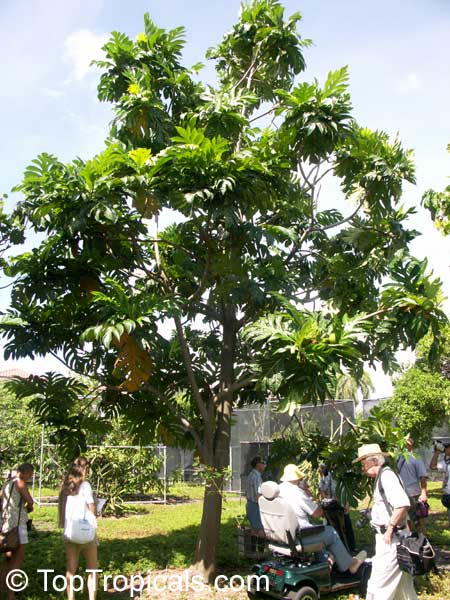
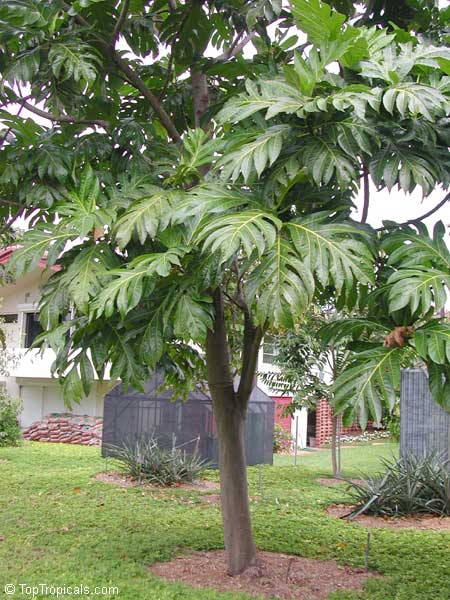
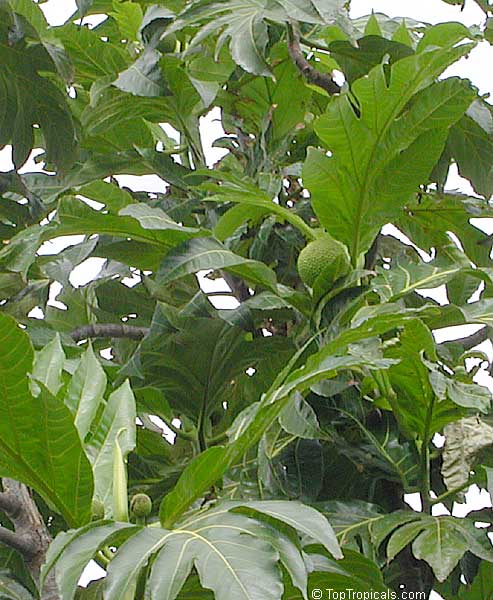
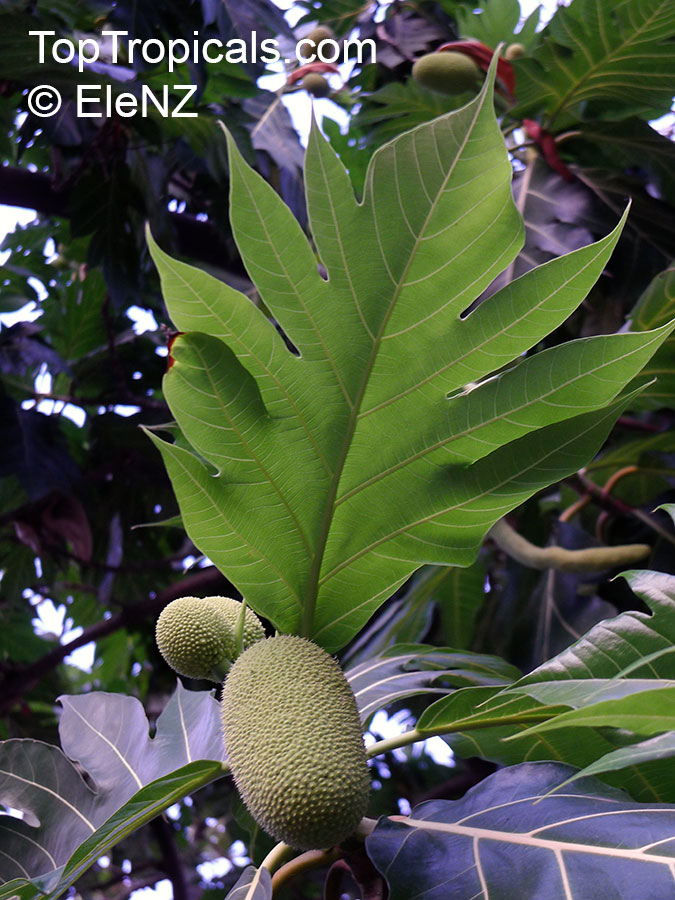
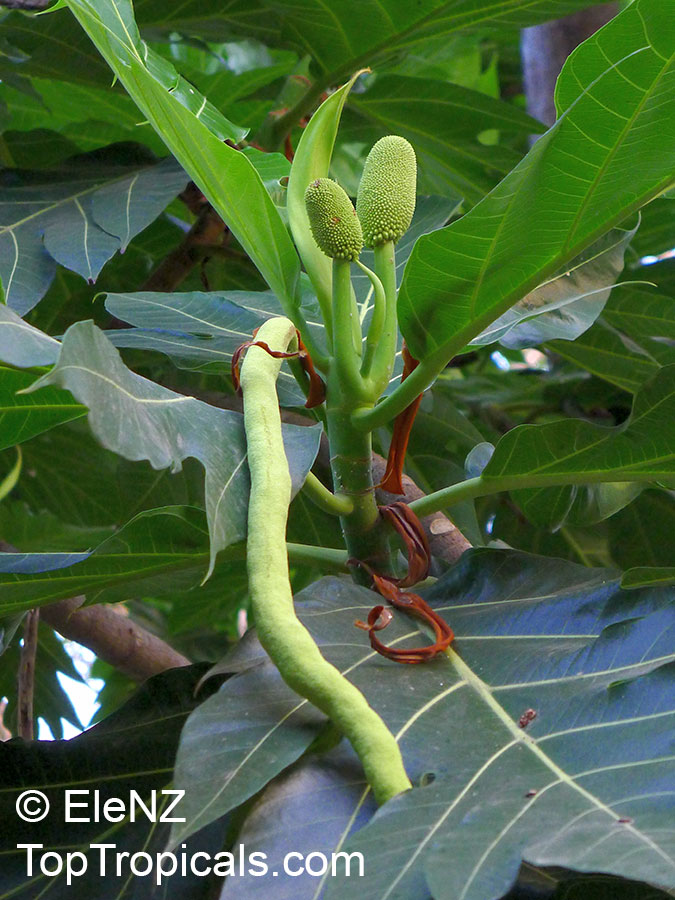
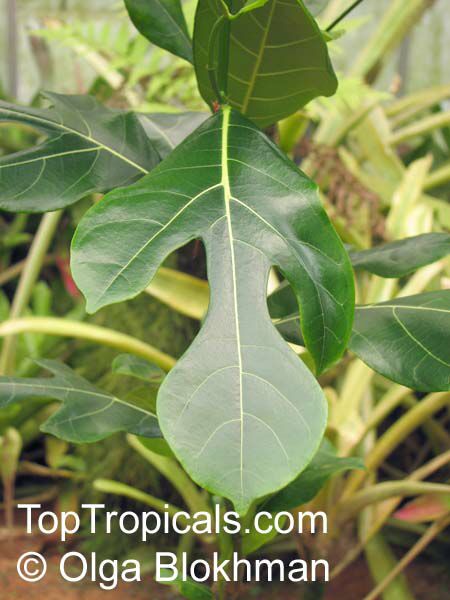
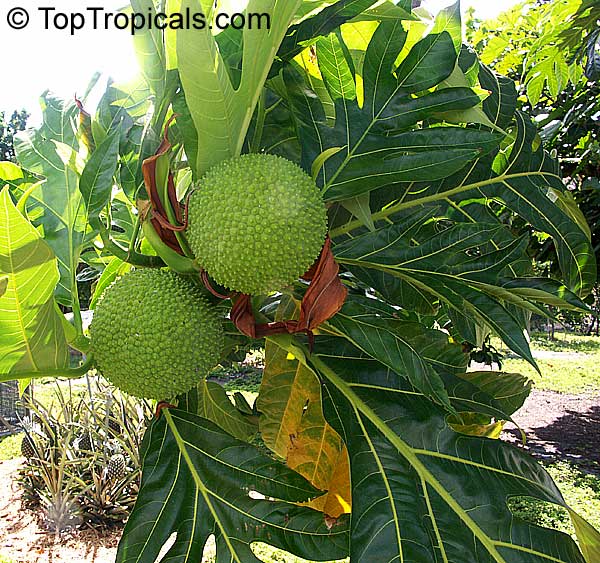
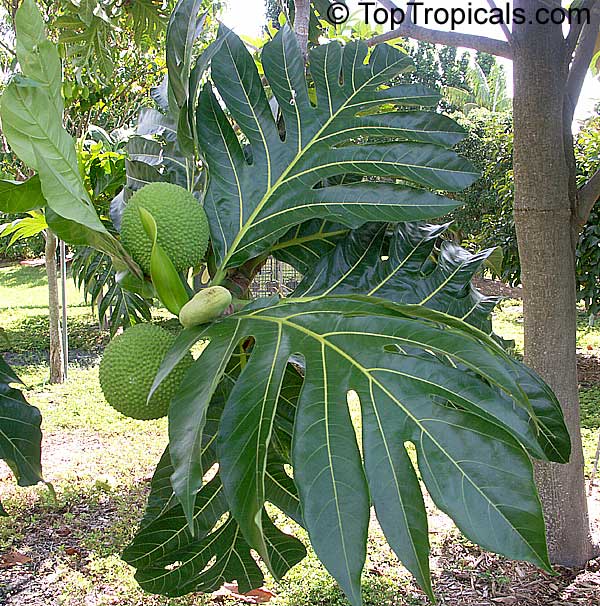
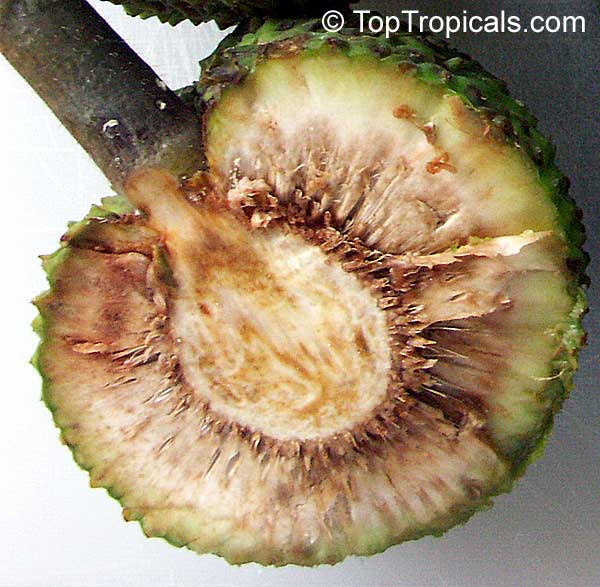
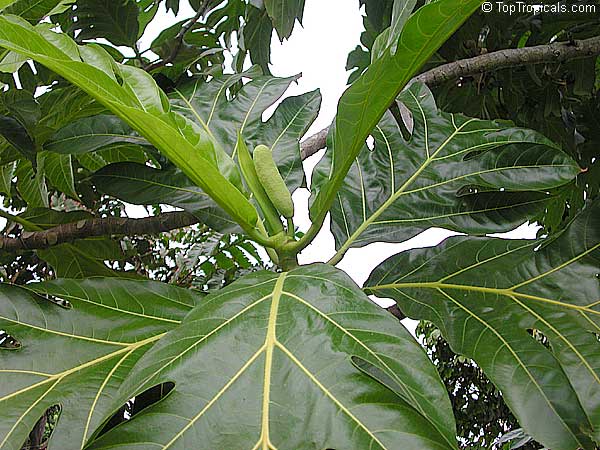
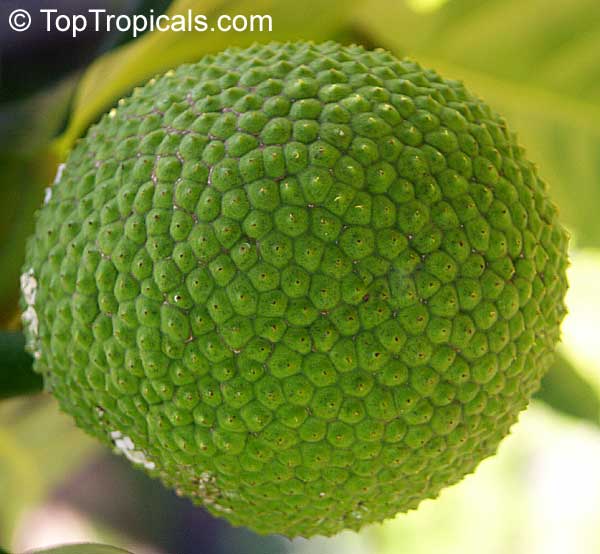
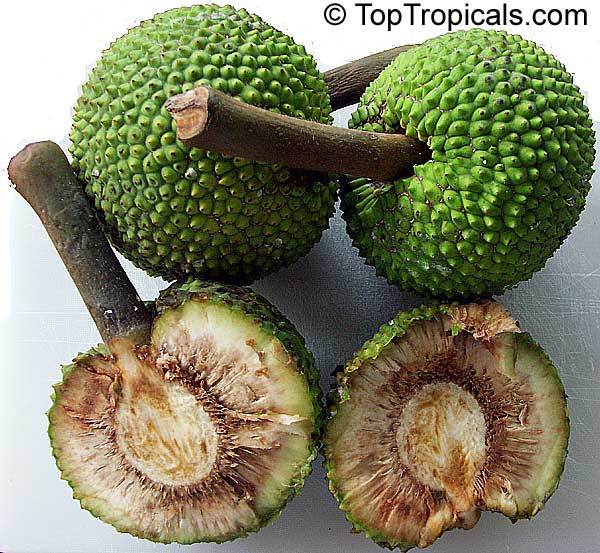
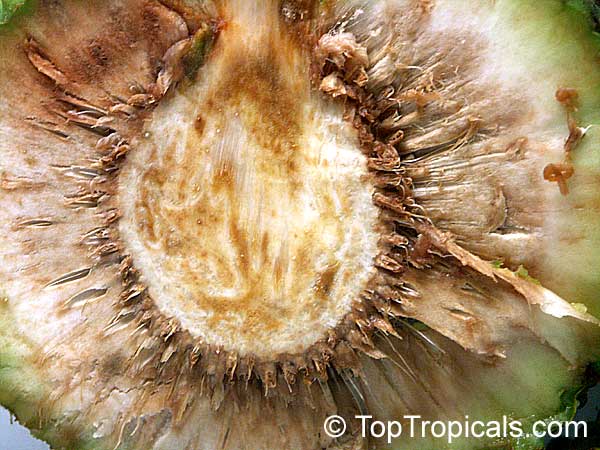
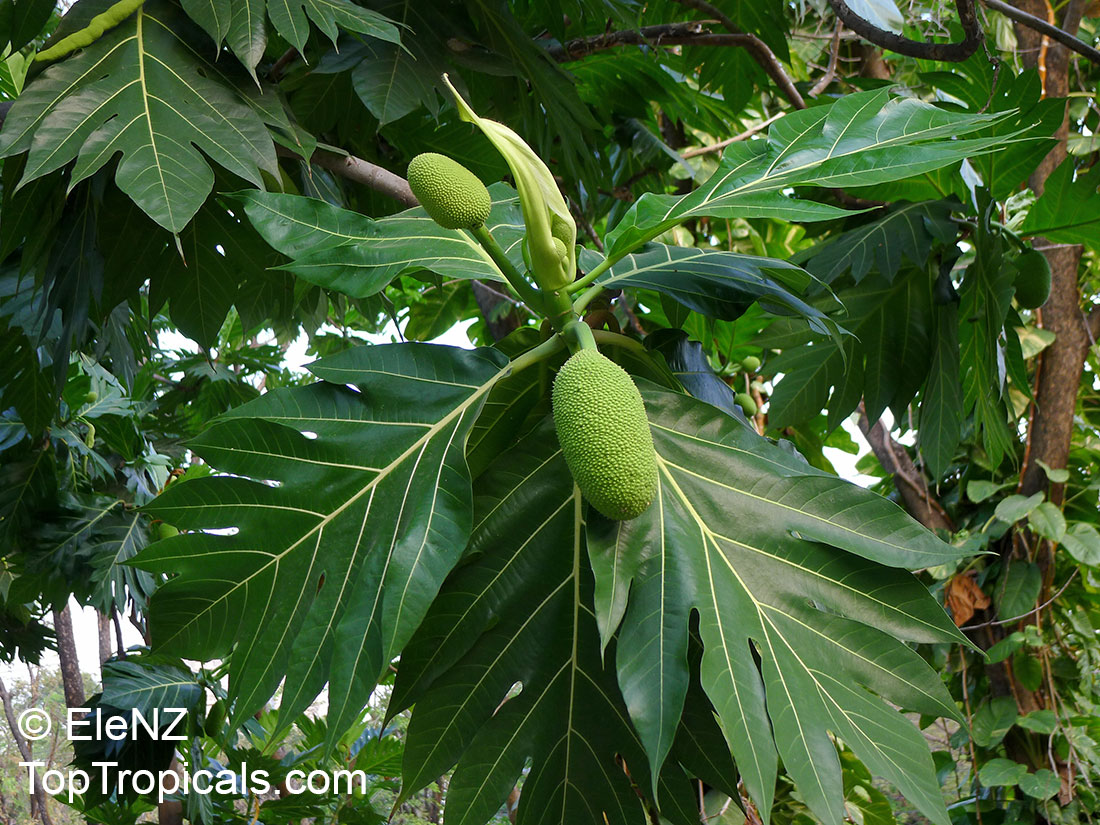
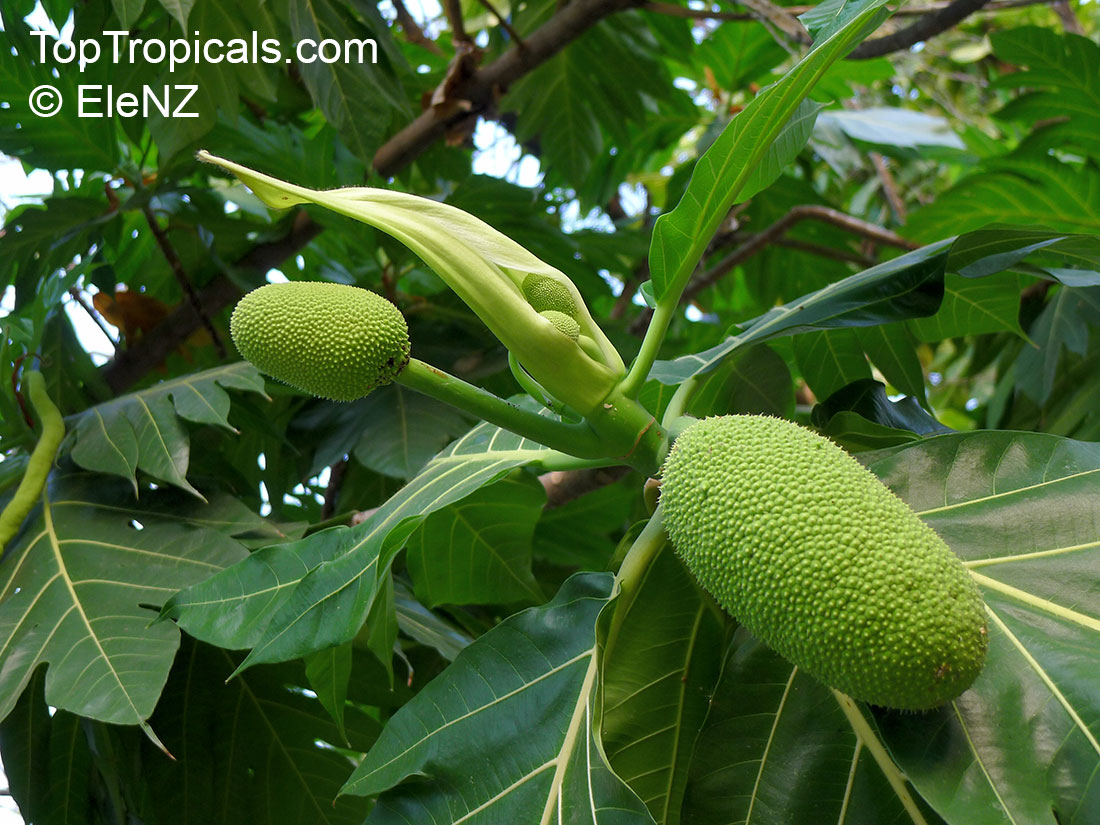
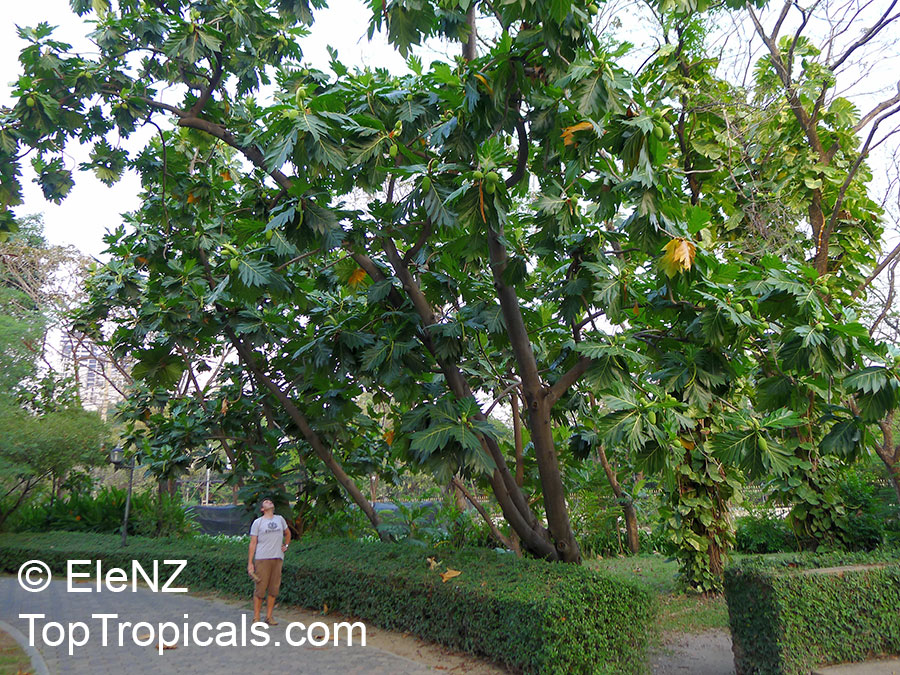
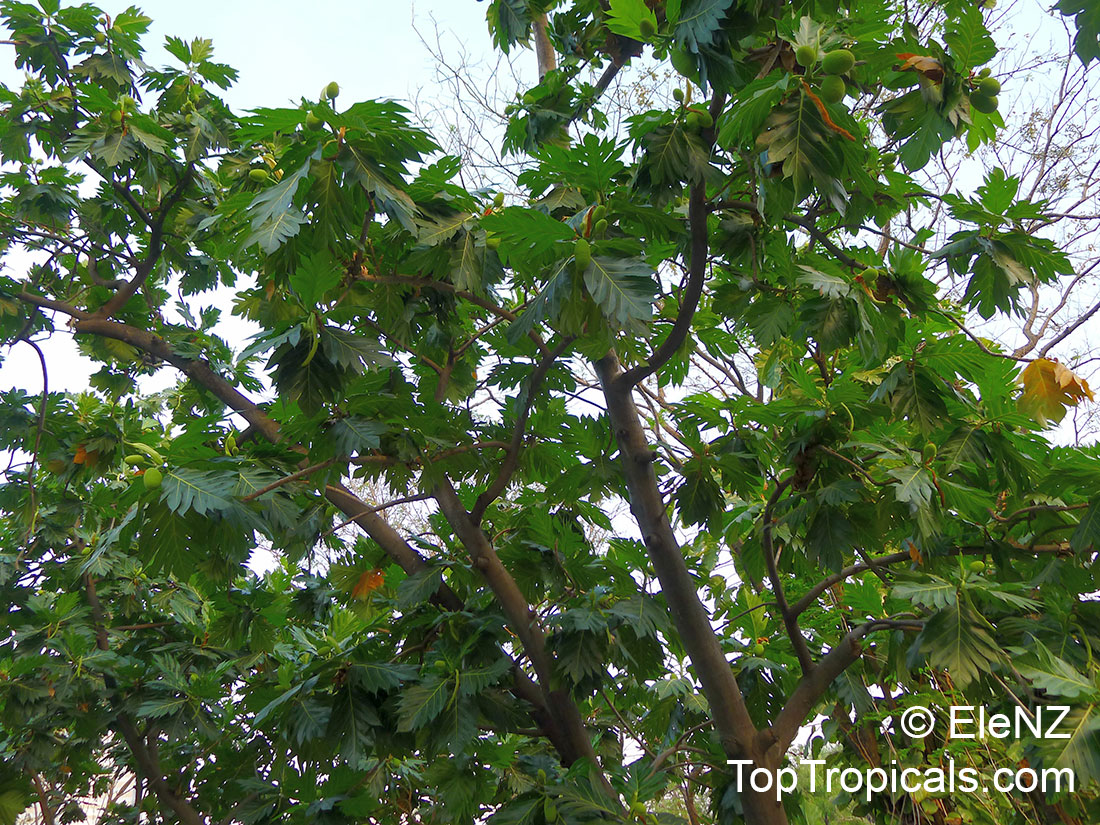
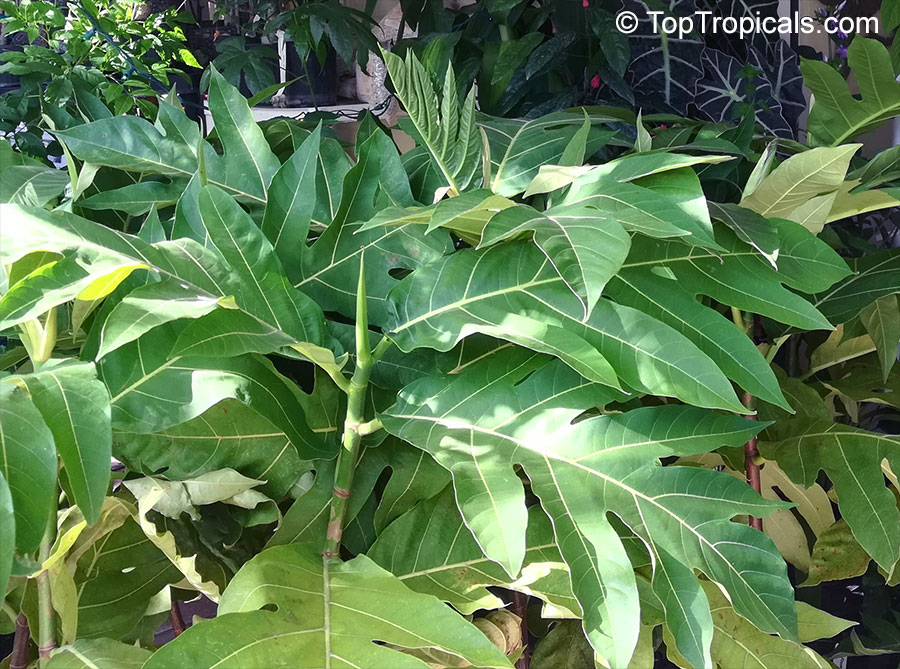
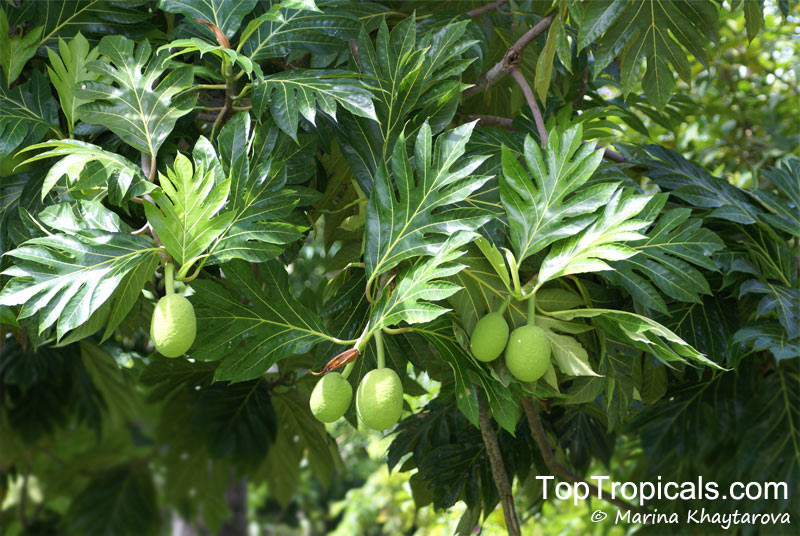
The moist inner pulp of the fruit is eaten after cooking, and has the taste and texture of potatoes.
Recommended Fertilizer: SUNSHINE C-Cibus - Crop Nutrition Booster
SUNSHINE-Honey - sugar booster
Botanical name: Artocarpus camansi
Common names: Seeded breadfruit, Breadnut
Family: Moraceae
Origin: New Guinea, Philippines
USDA Zone: 10-12

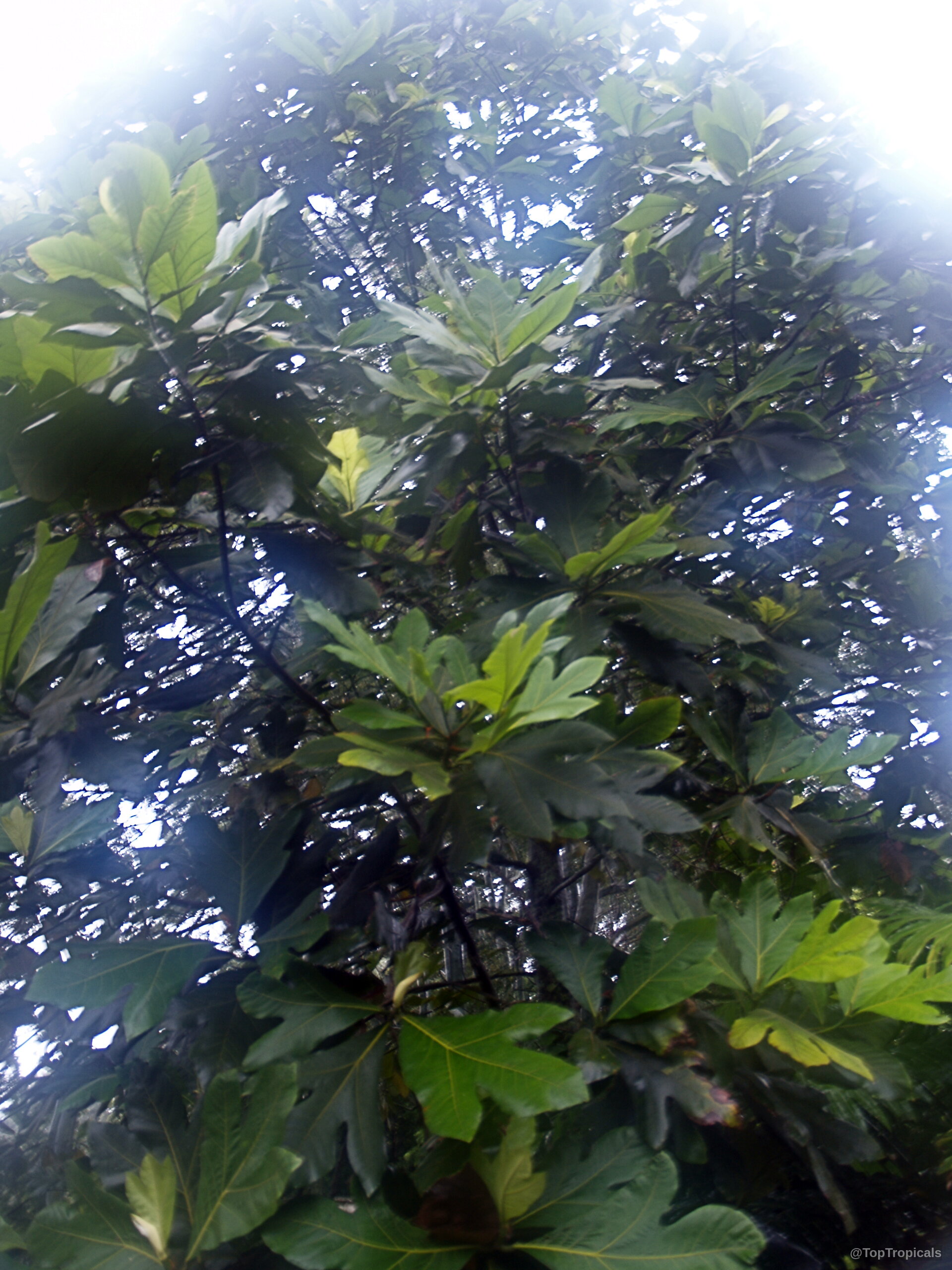
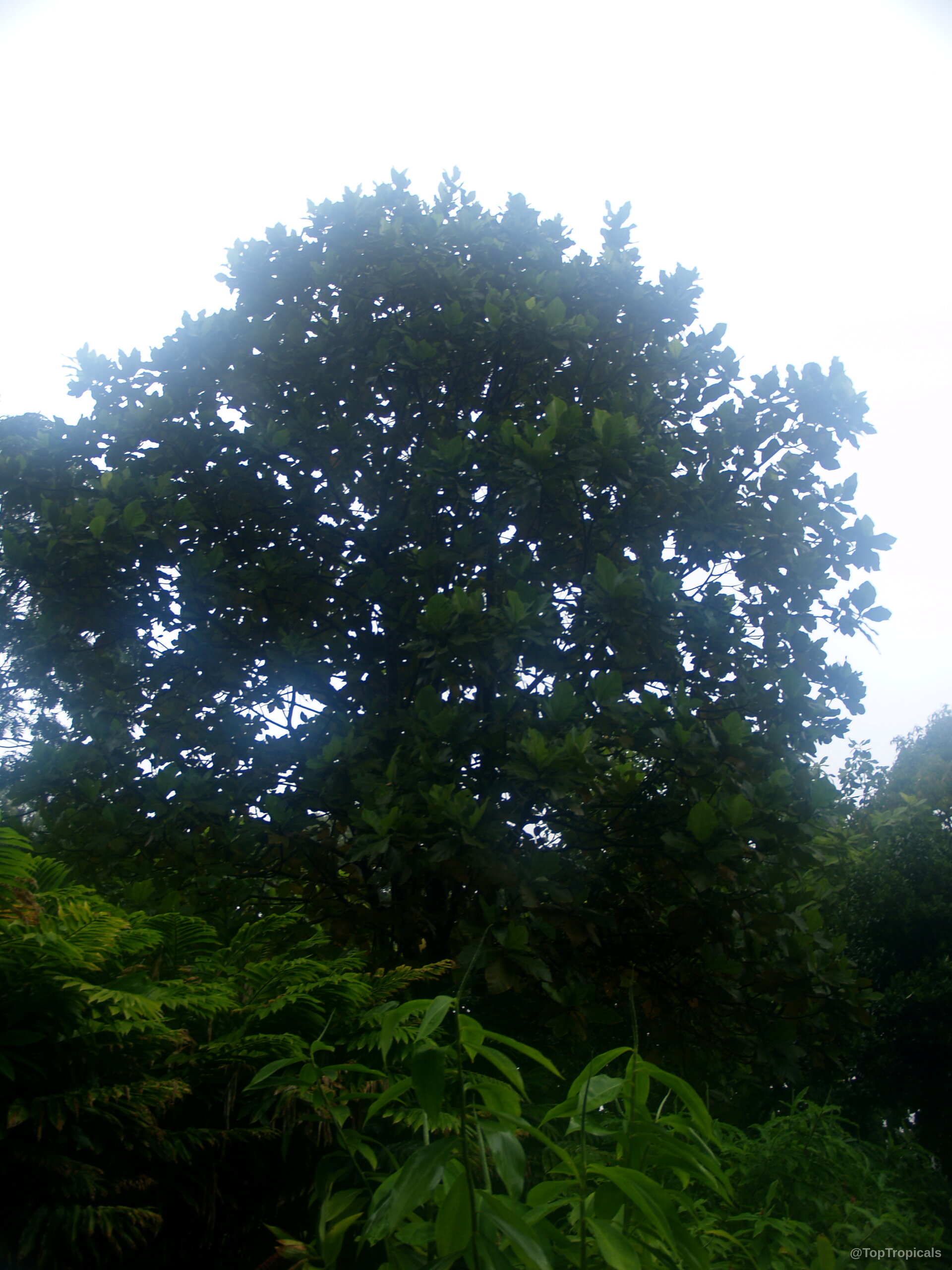
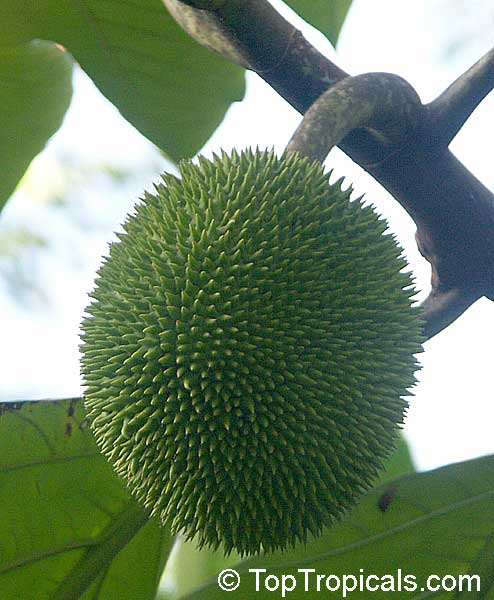
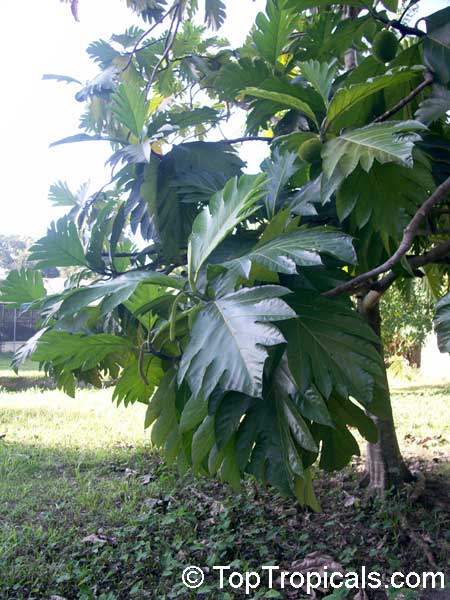
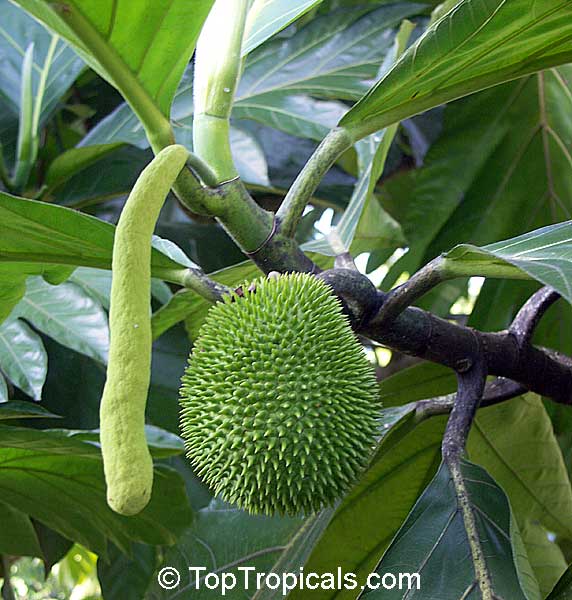
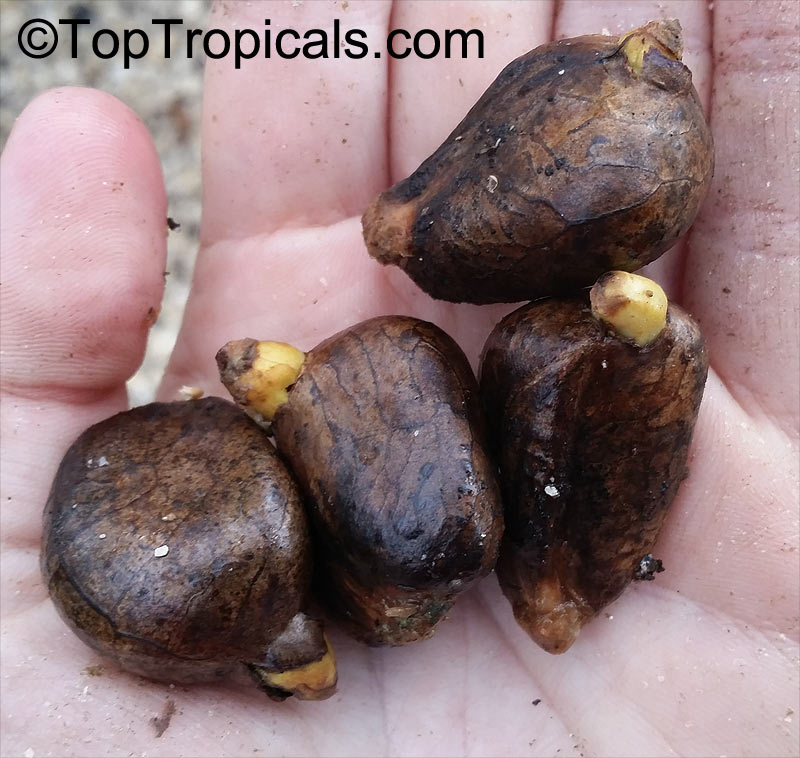
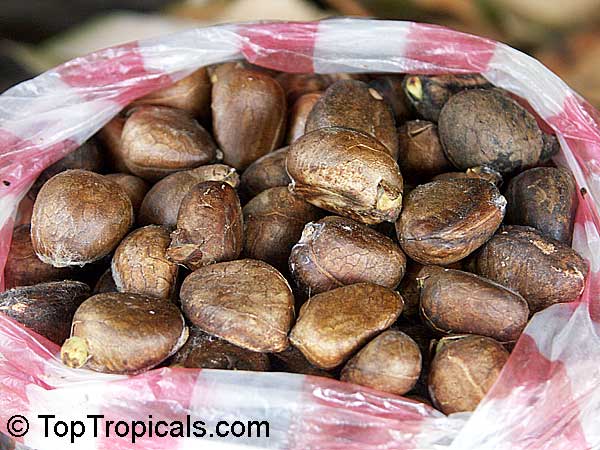
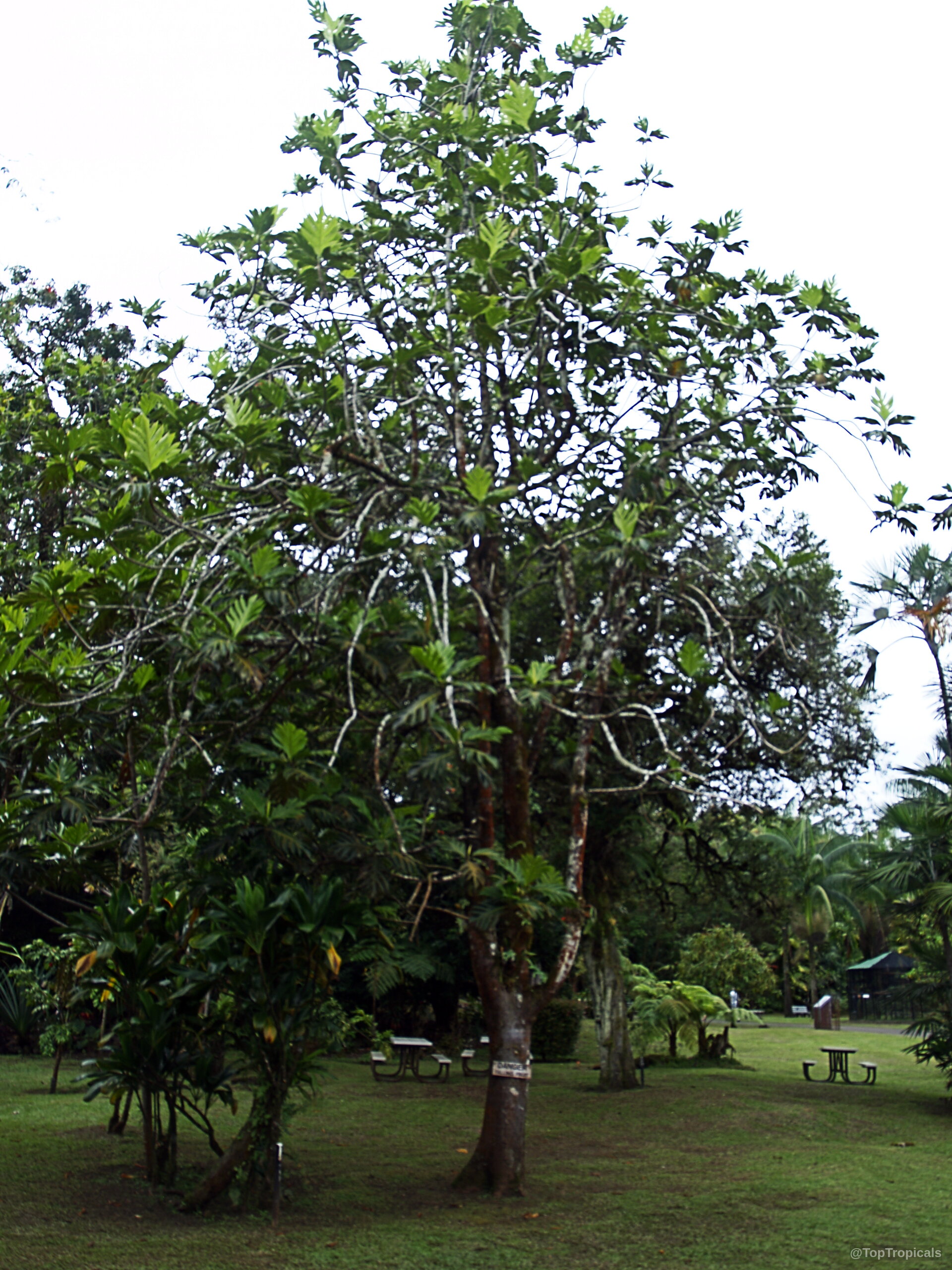
Seeded breadfruit is a large tree, to 100 feet tall, with large, spreading branches and a straight trunk with smooth gray bark. Leaves large, 16-20 inches wide and 24-35 inches long, with shallow lobes. All parts of the tree contain abundant white latex. Monecious, with axillary inflorescences. Male inflorescence elongated, 1-1.5 inches wide and 6-10 inches long, female inflorescence globose, 2-3 inches wide and 3-4 inches long. Fruits large, spheroid, 4-12 inches in diameter, green and covered with soft spines. Fruits contain between 20-60 rounded or flattened seeds, about 1 inch long. Immature fruits are cooked as a vegetable with coconut milk. Seeds are soft, edible and delicious, and may be boiled or roasted.
Botanical name: Artocarpus elasticus
Common name: Terap
Family: Moraceae
Origin: Southeast Asia
USDA Zone: 9-10
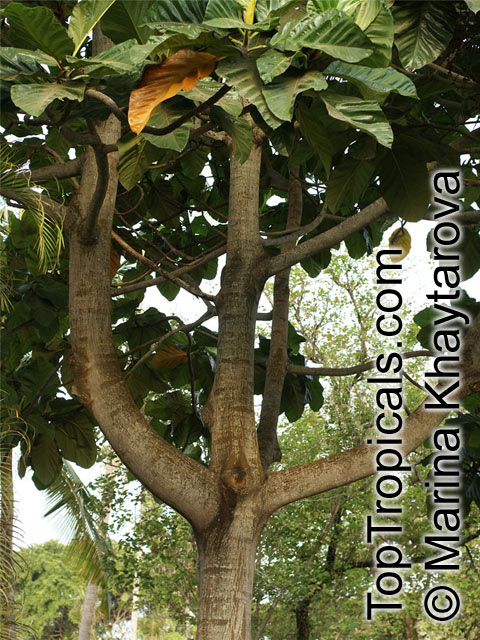
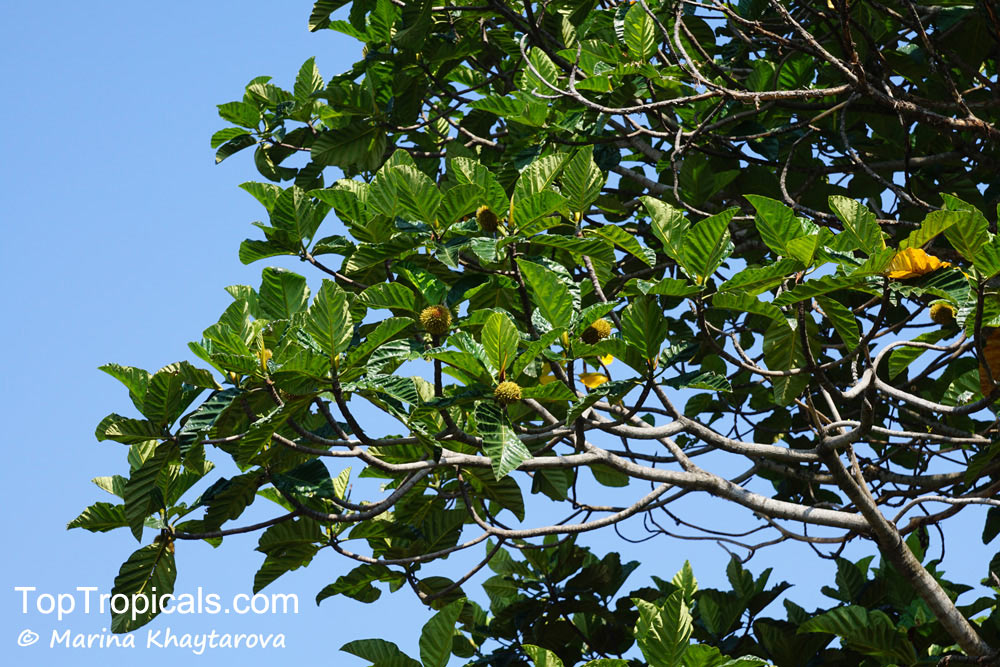
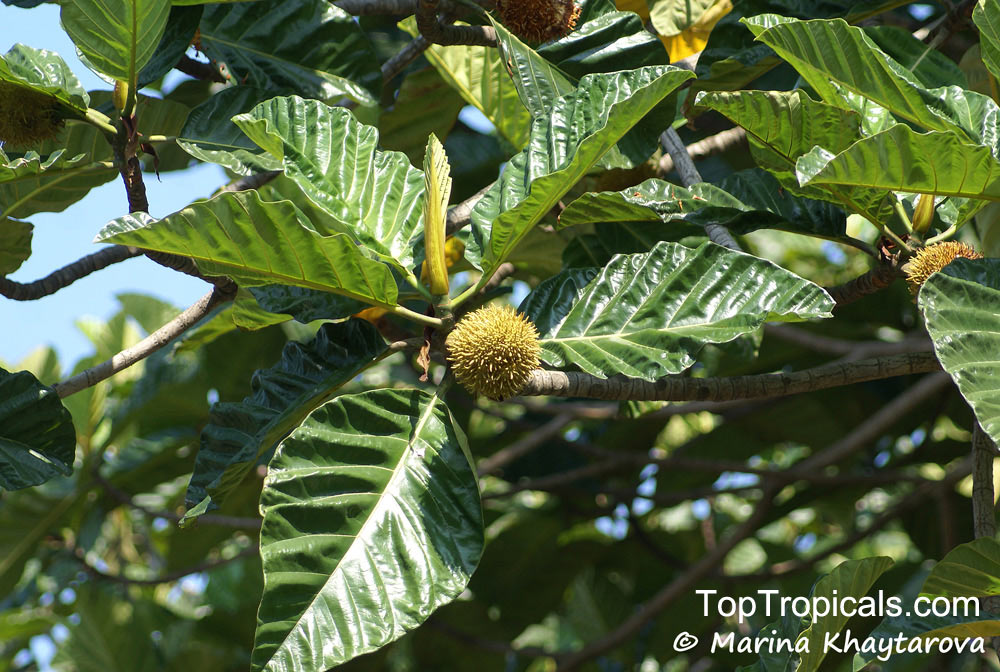
There is another similar species Artocarpus scortechinii with similar character except the leaves are slightly smaller, making it possible to confuse these two species in the field. If fruits are available the distinction is easier, Artocarpus scortechinii does not have the shaggy fruits that Artocarpus elasticus has.
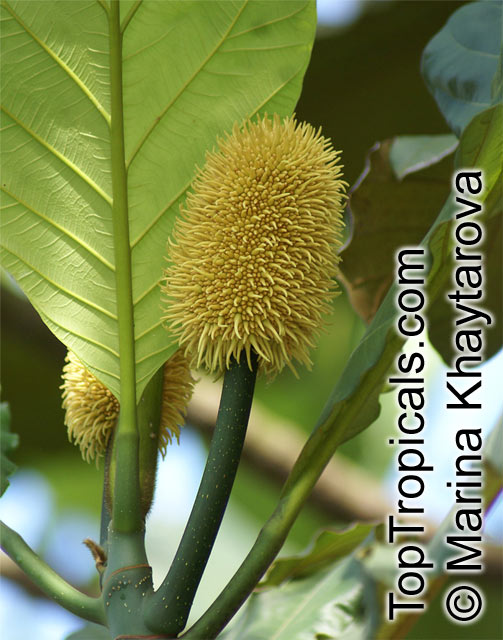
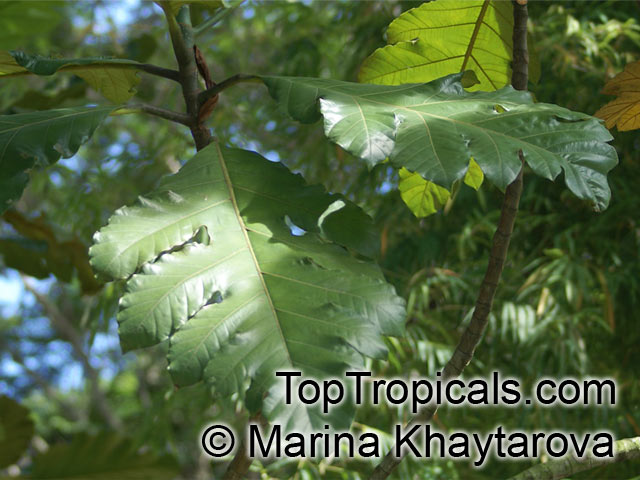
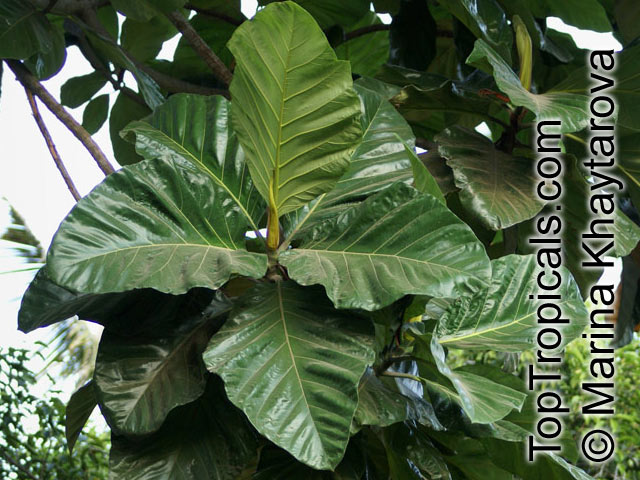
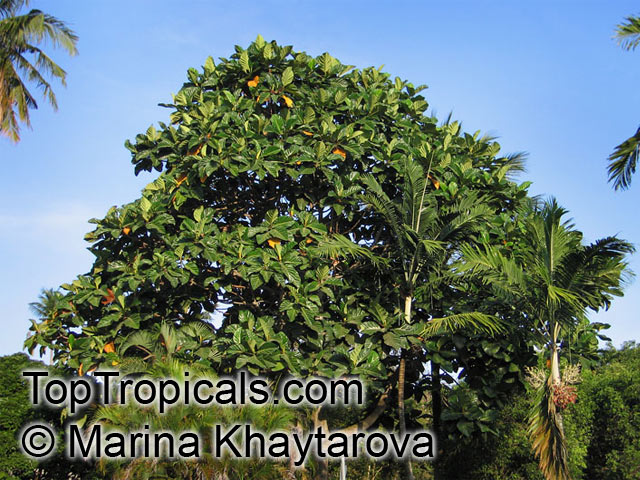
Botanical name: Artocarpus glaucus
Common name: Artocarpus
Family: Moraceae
Origin: Indonesia
USDA Zone: 9-10
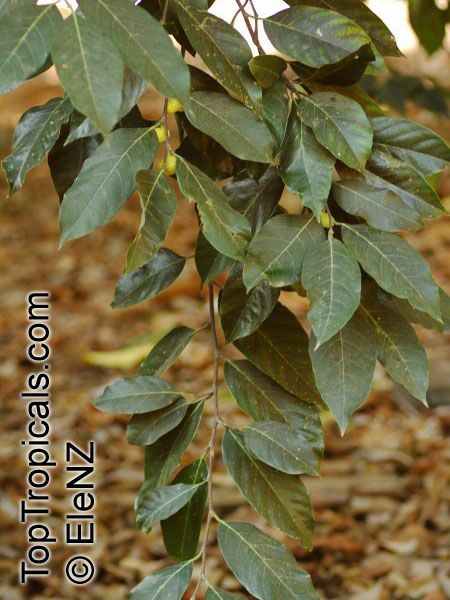
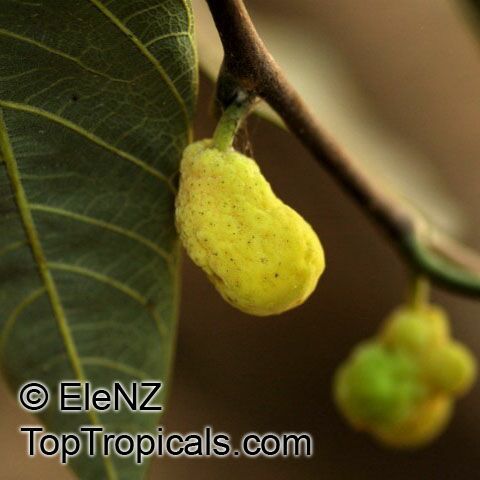
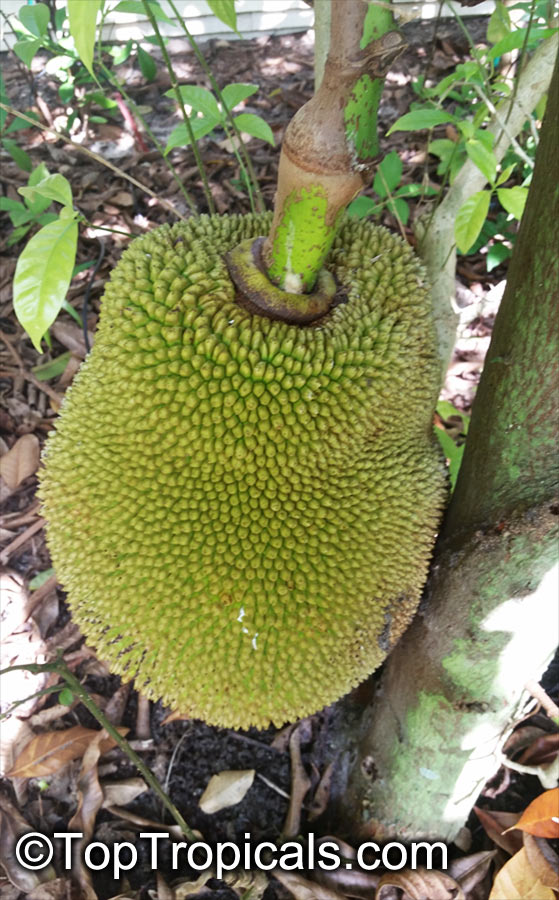
Botanical names: Artocarpus heterophyllus, Artocarpus integrifolius
Common names: Jackfruit, Jakfruit, Langka, Nangka, Jaca
Family: Moraceae
Origin: India or Malaysia
USDA Zone: 9-11

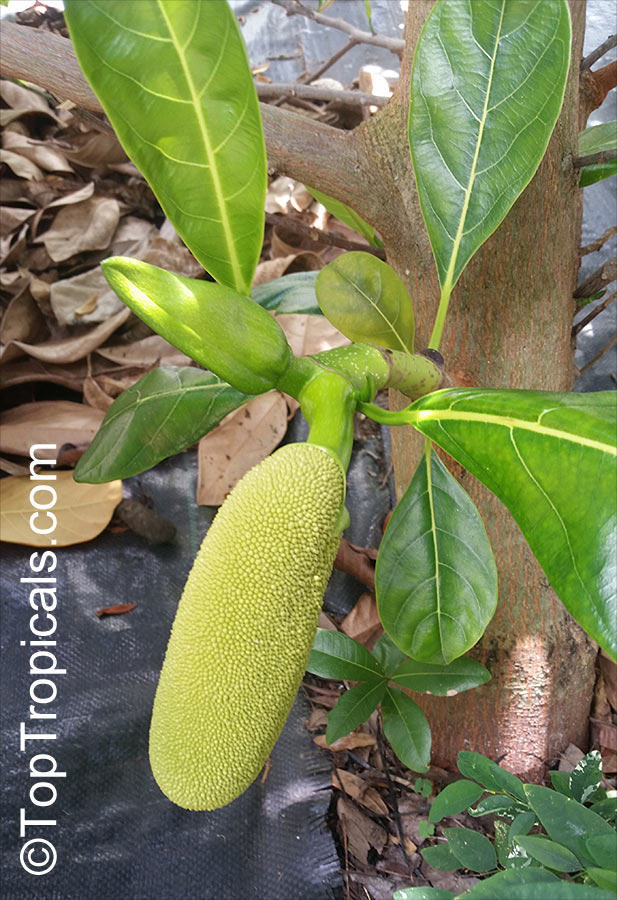
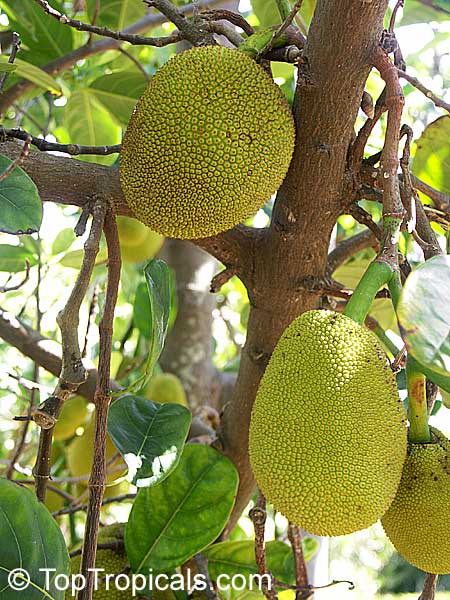
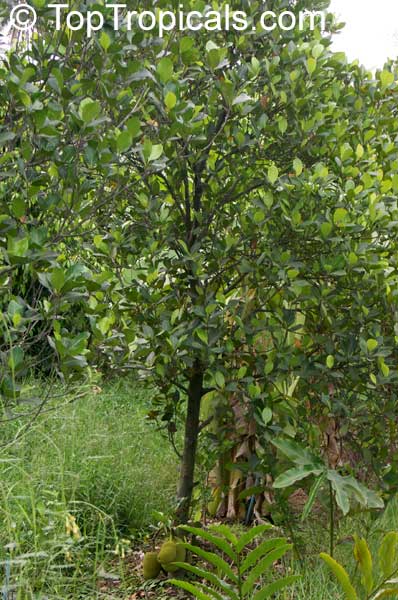
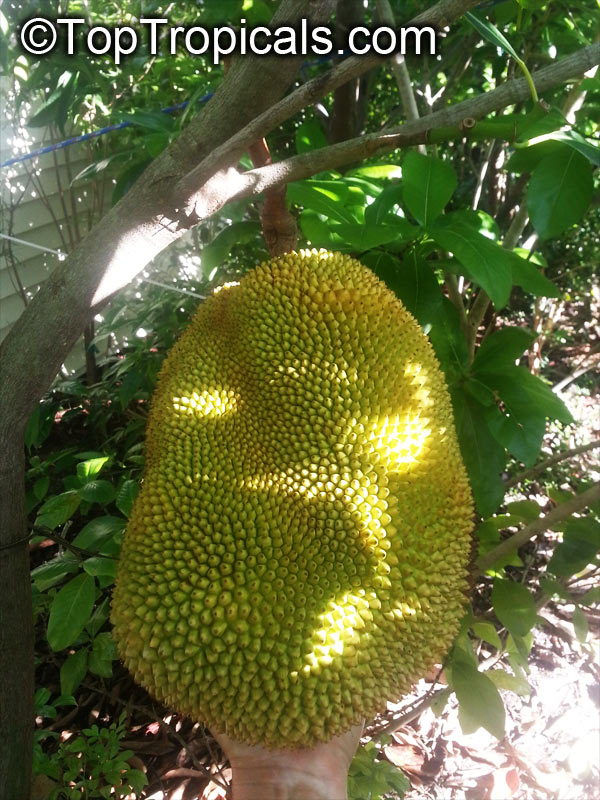
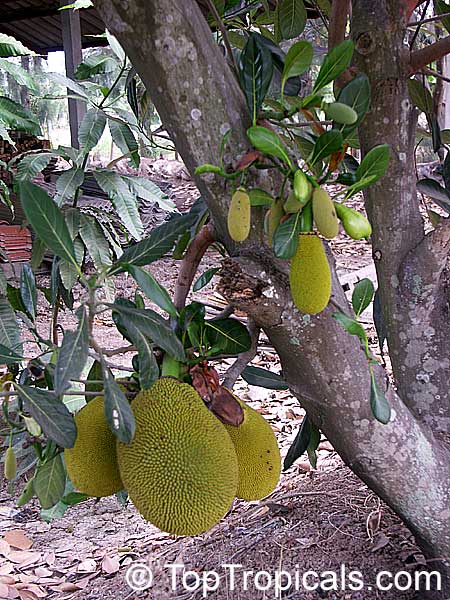
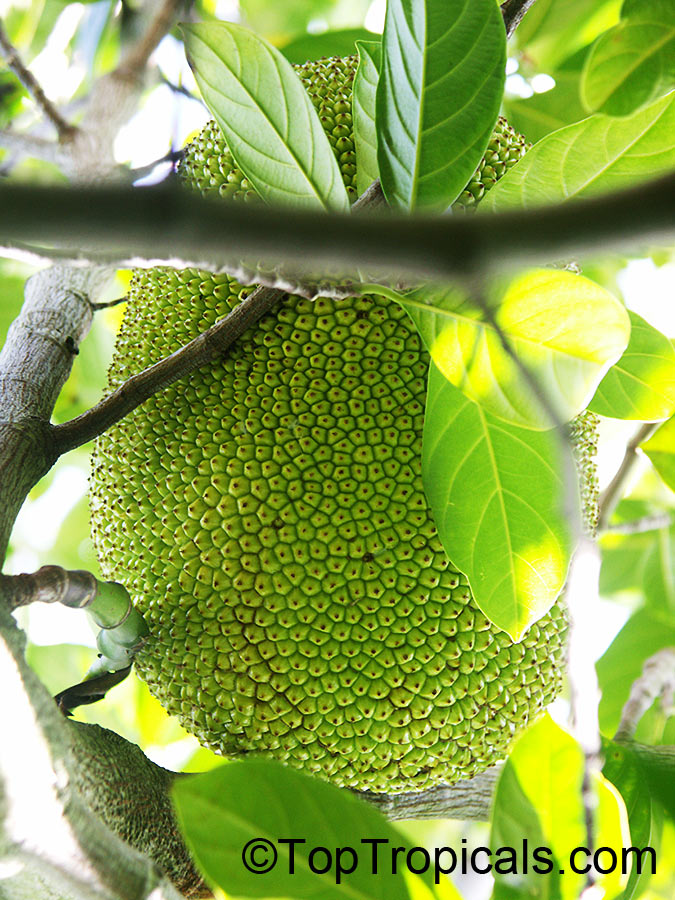
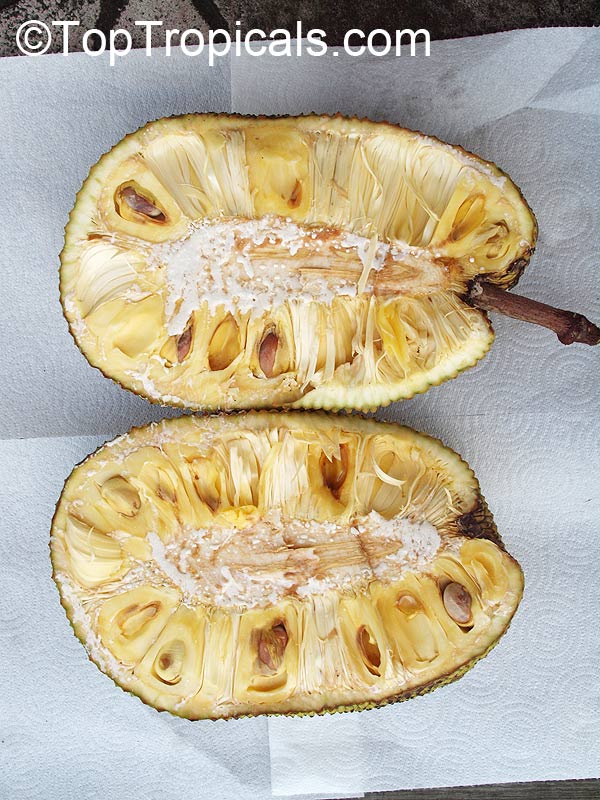
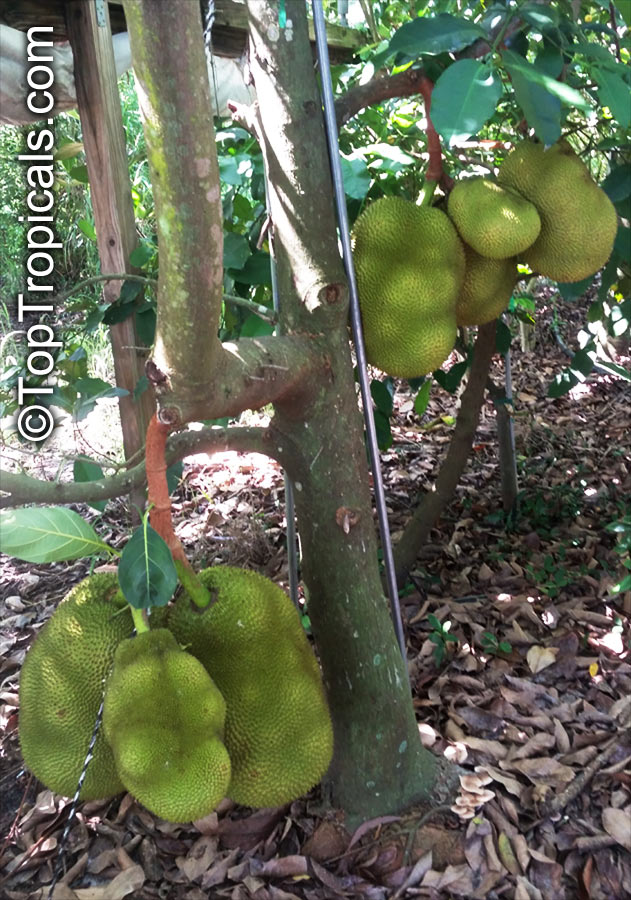
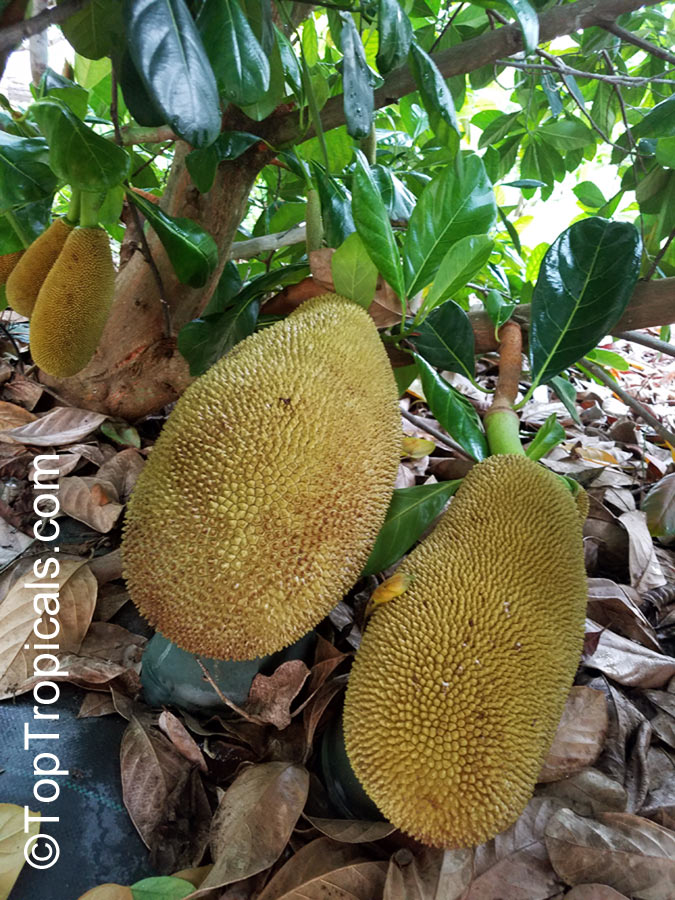
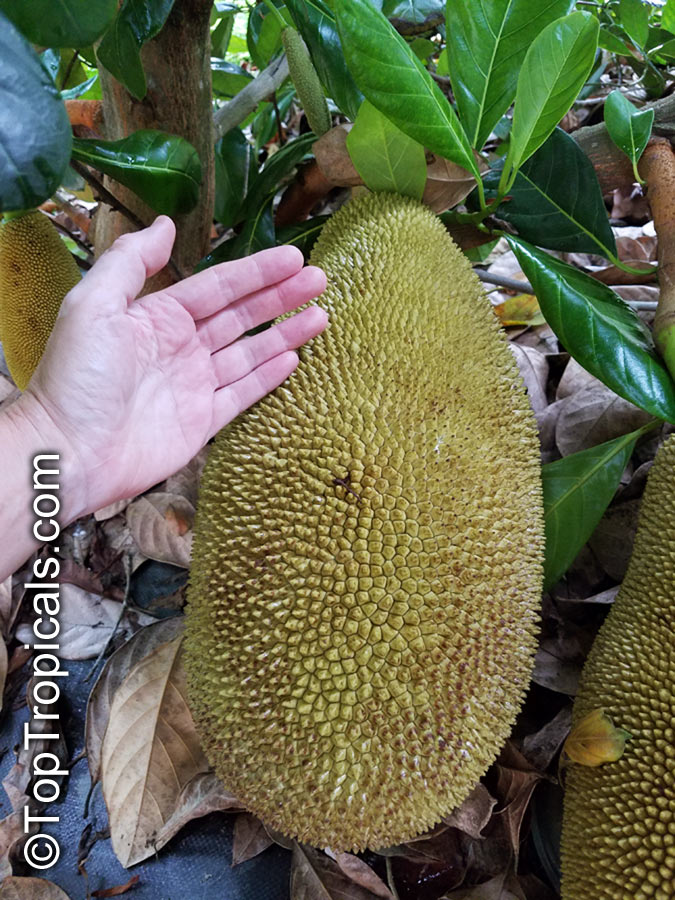
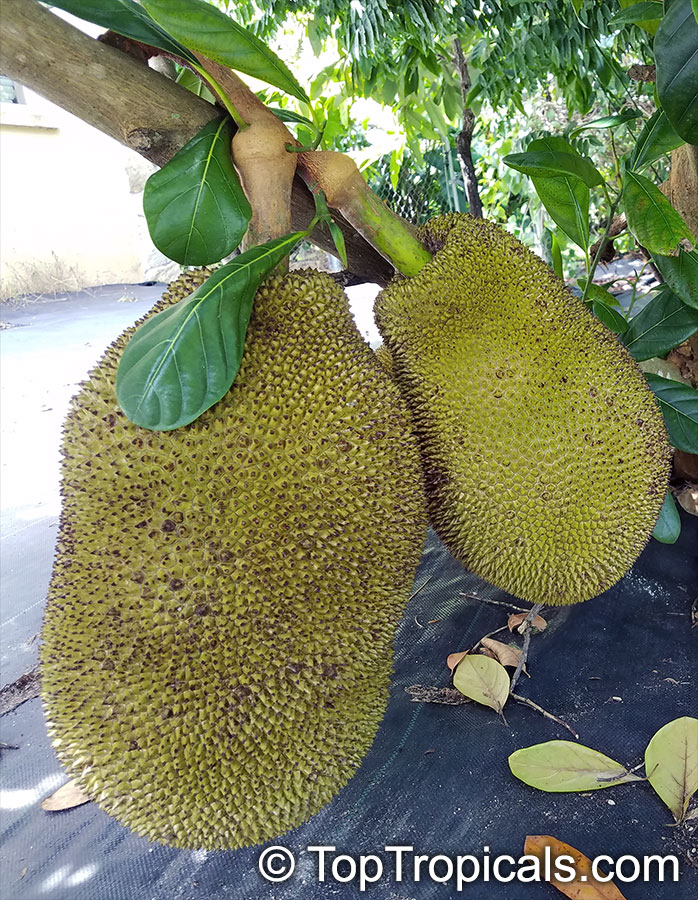
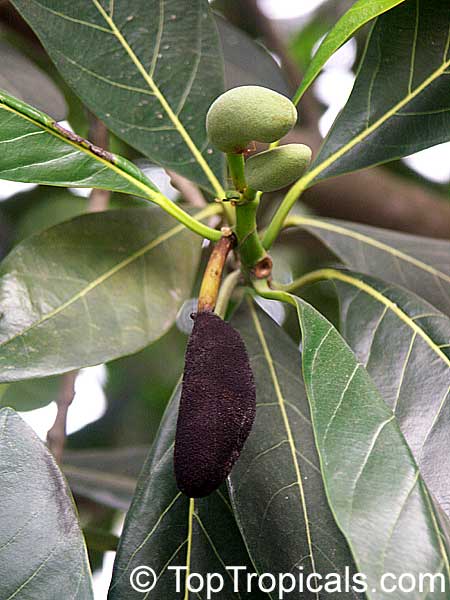
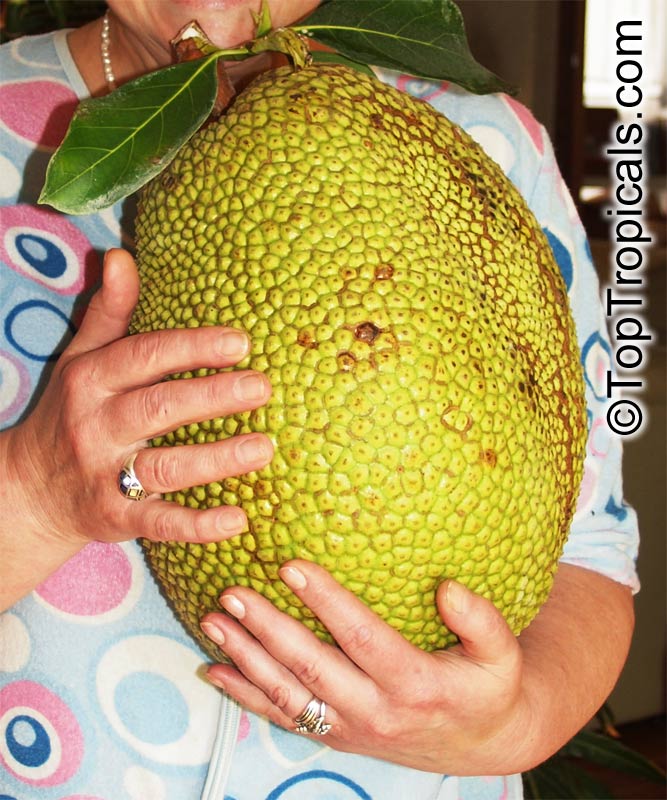
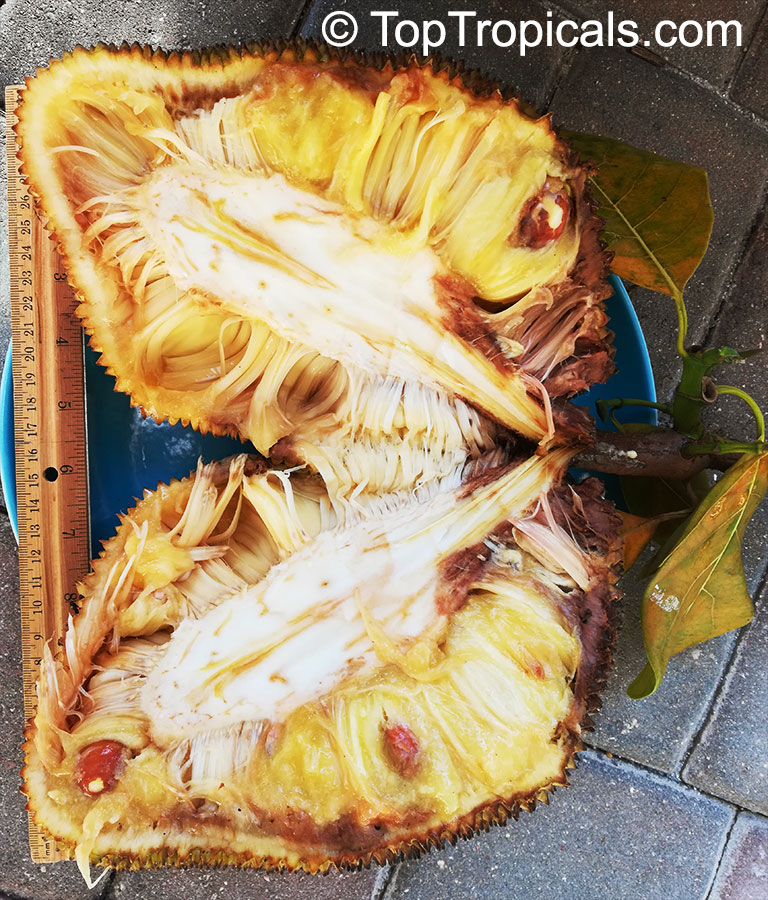
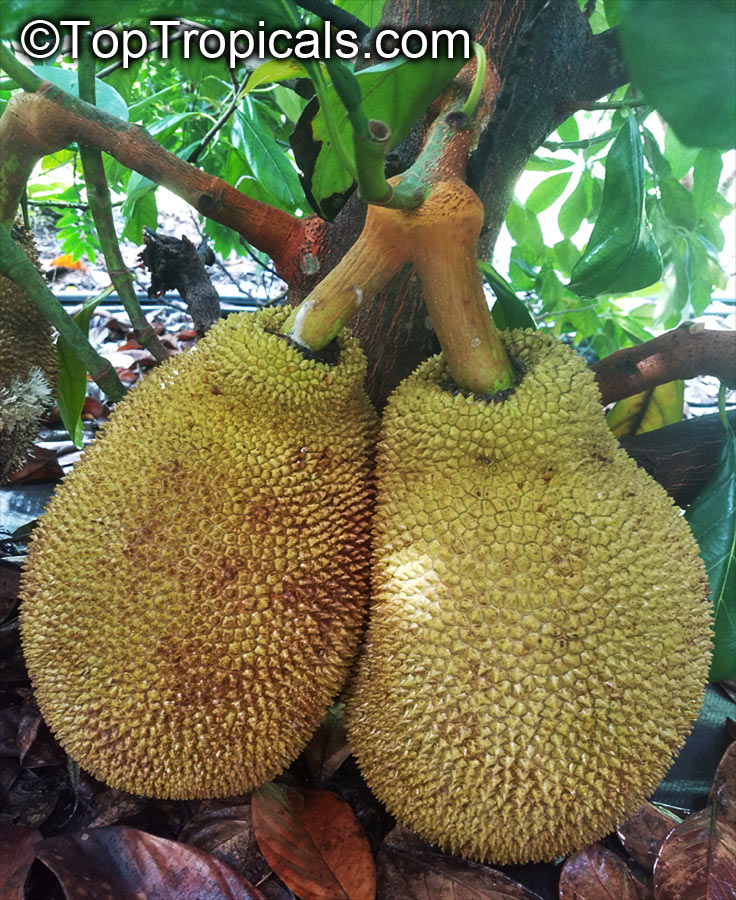
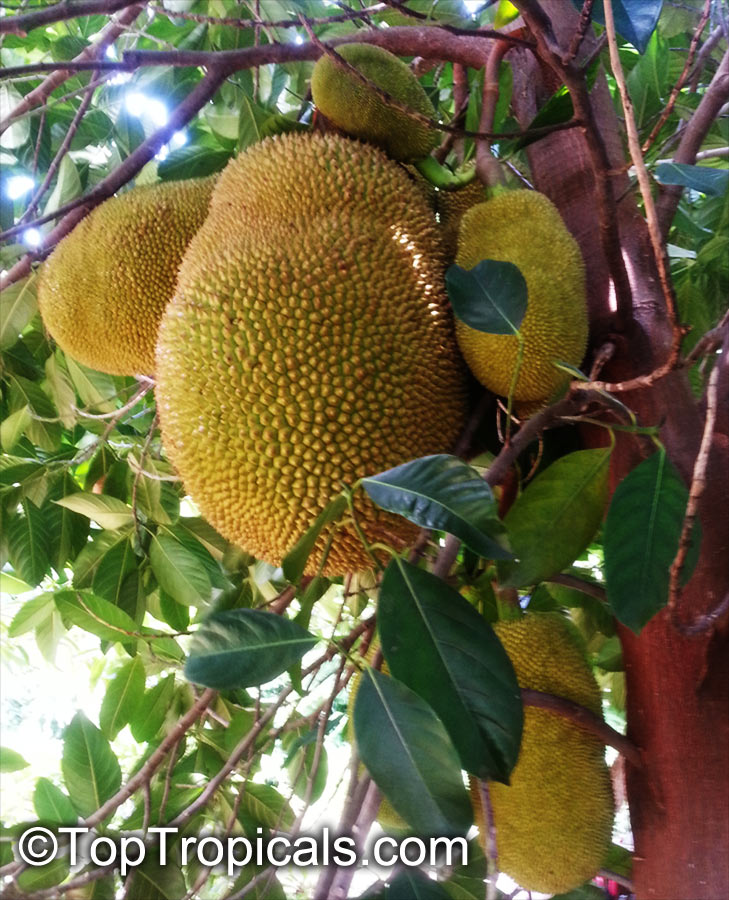
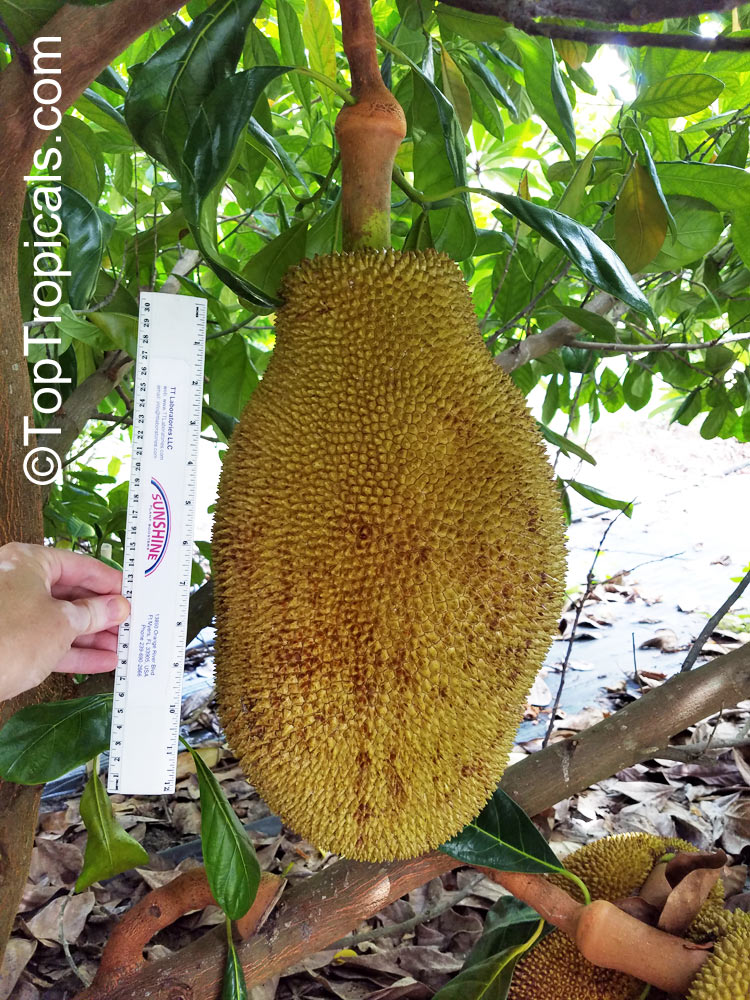
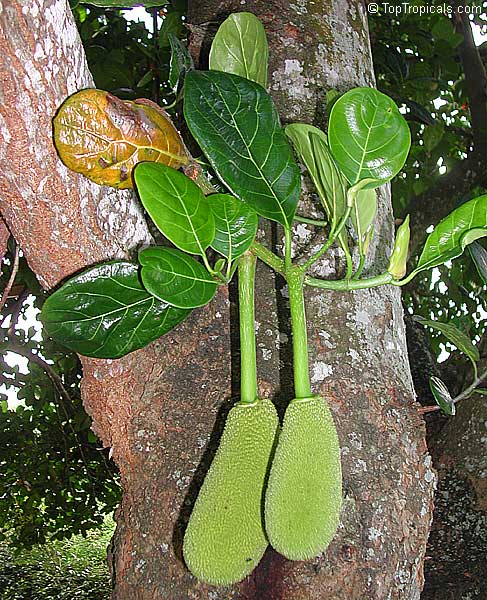
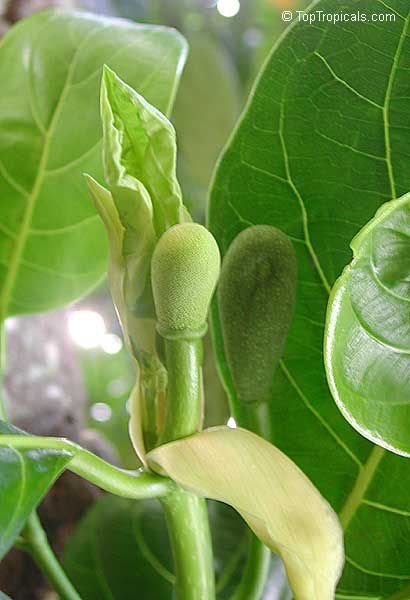
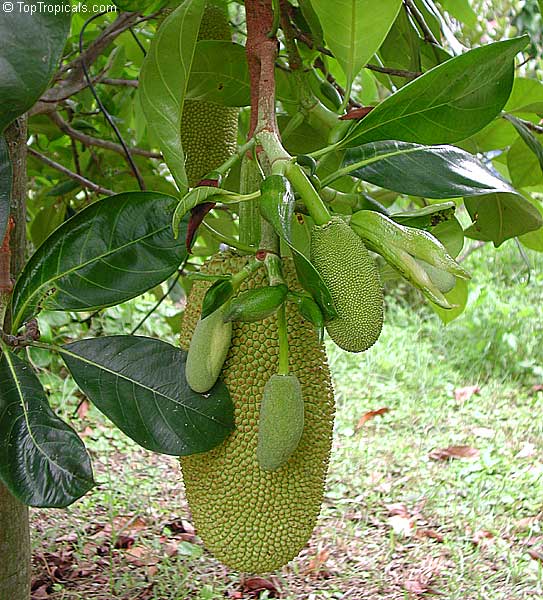
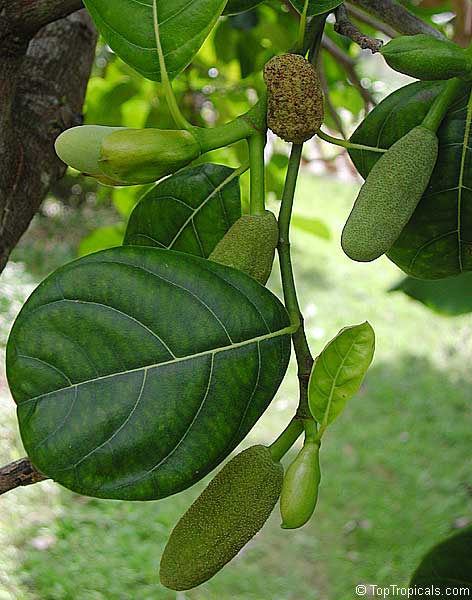
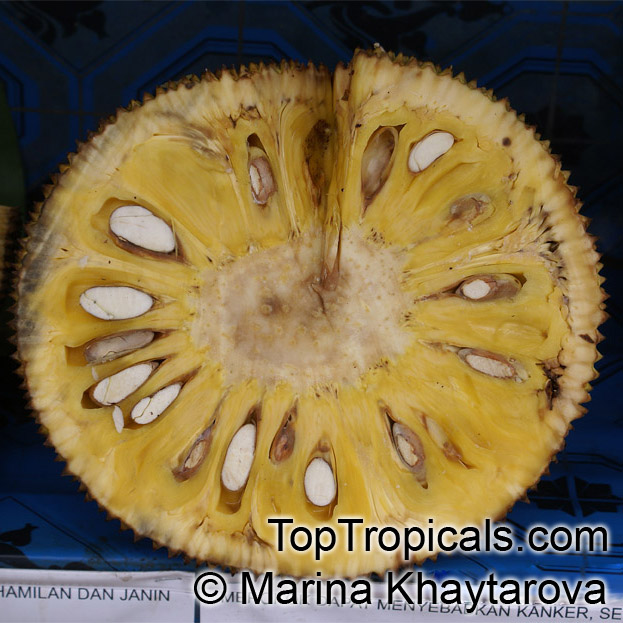
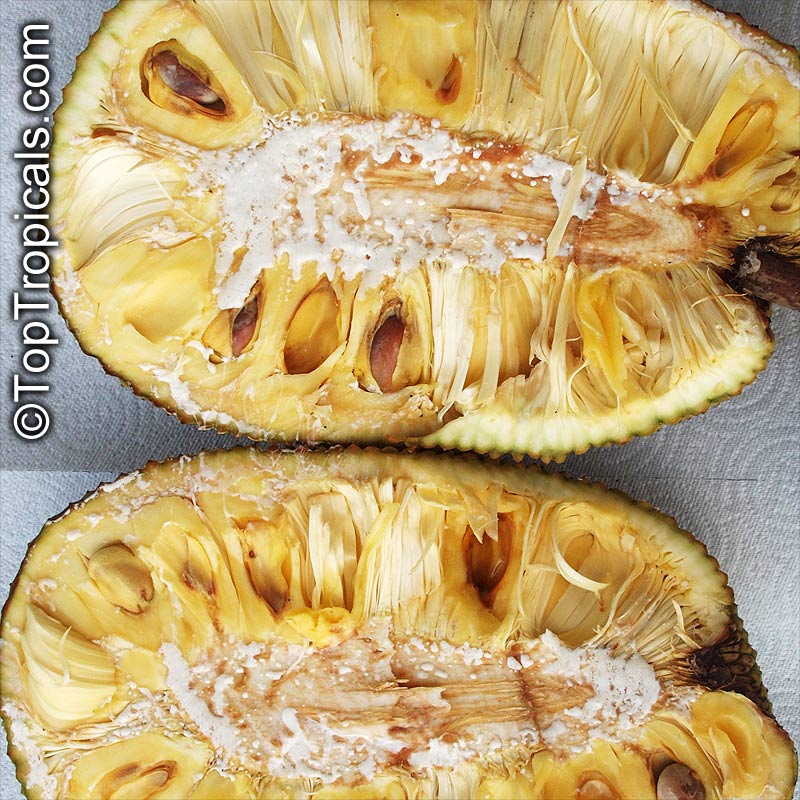
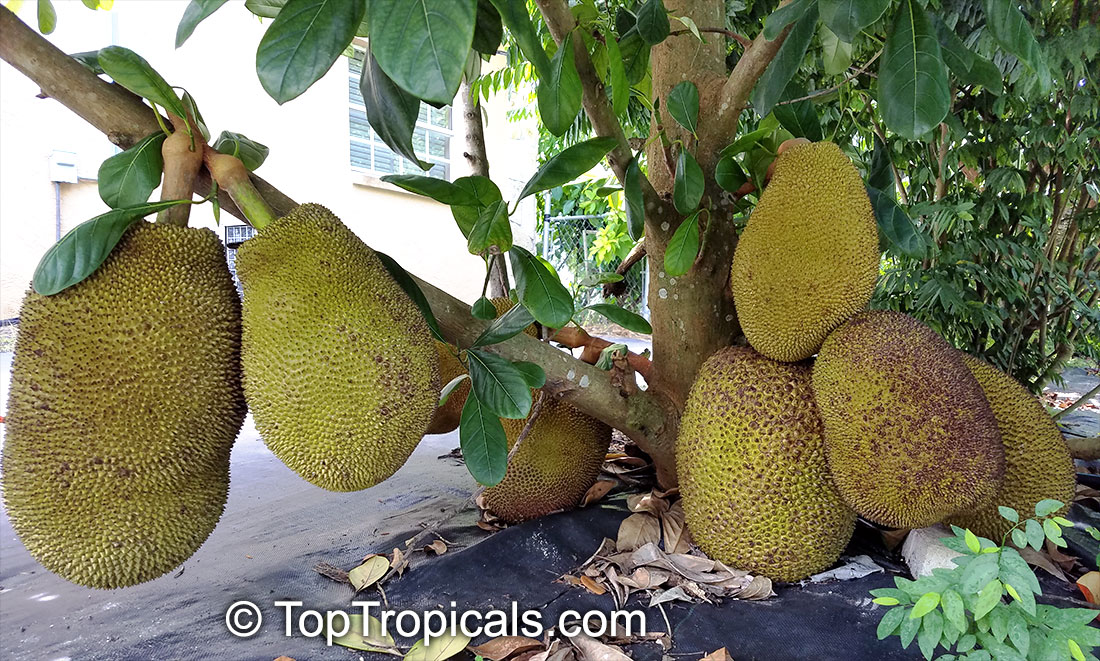
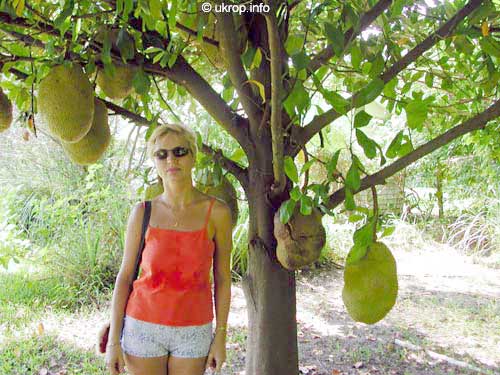
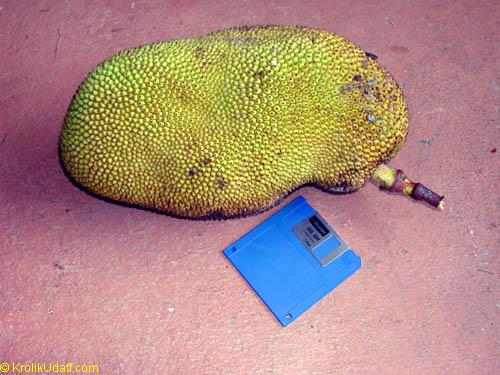
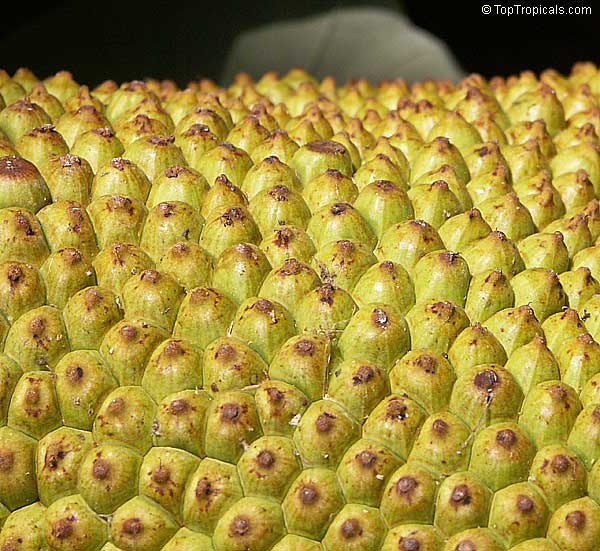
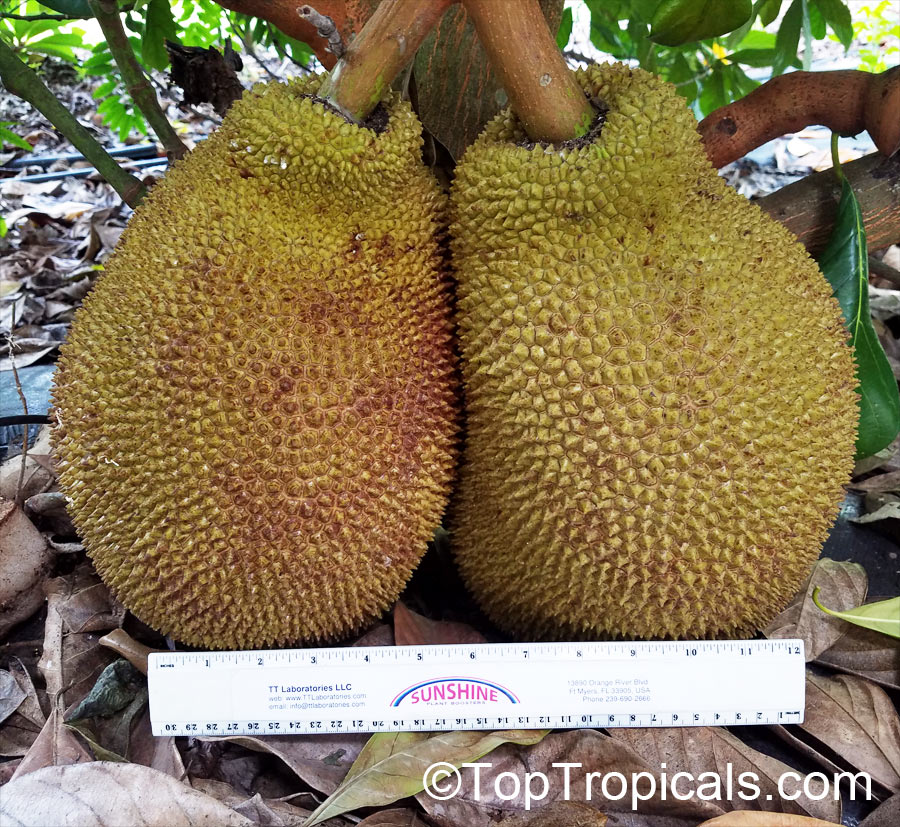
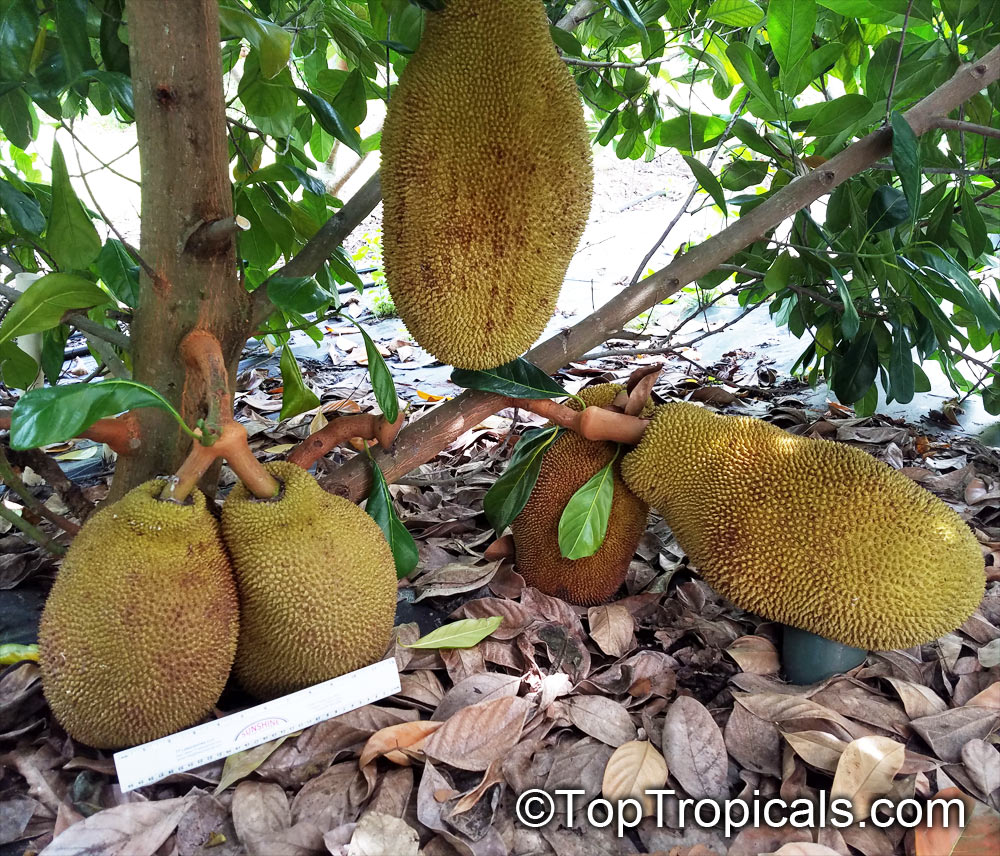
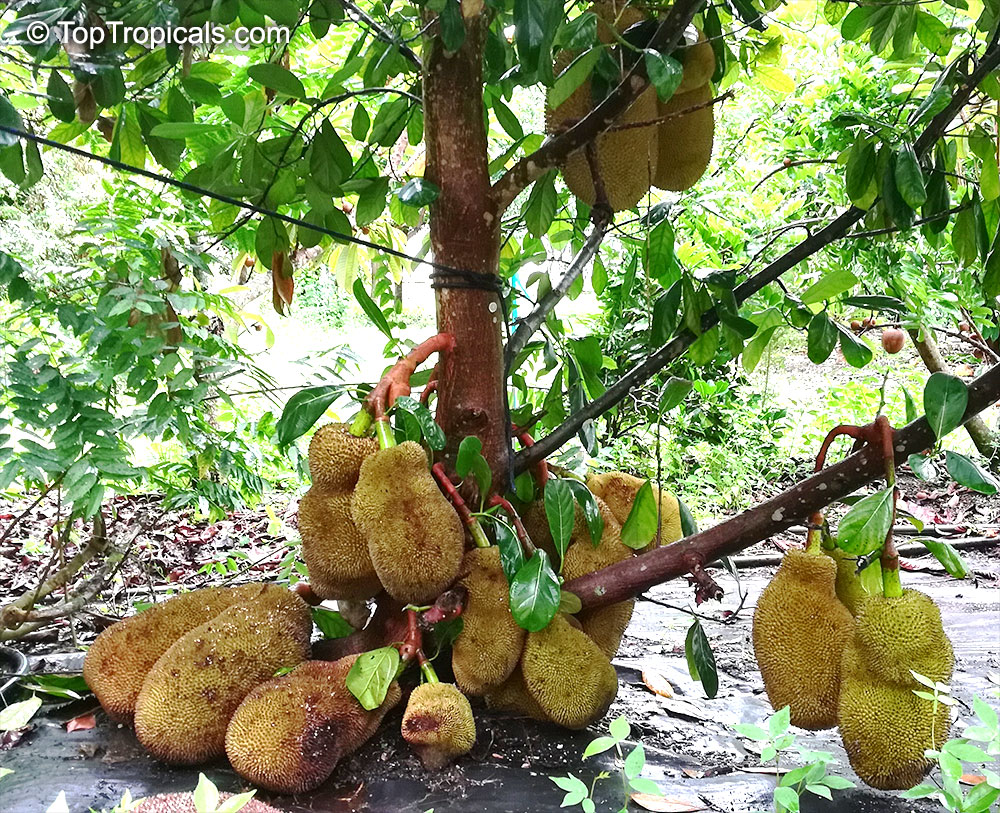
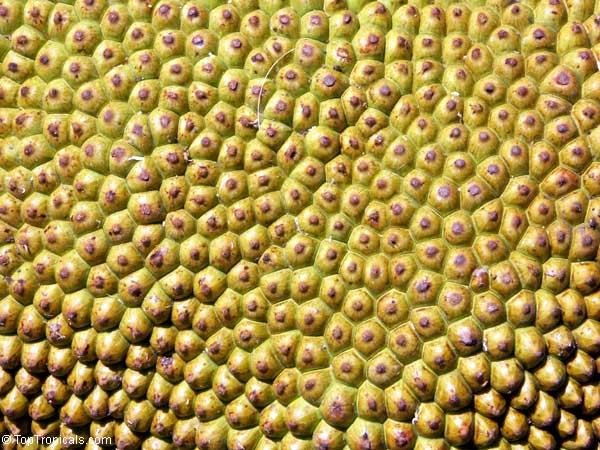
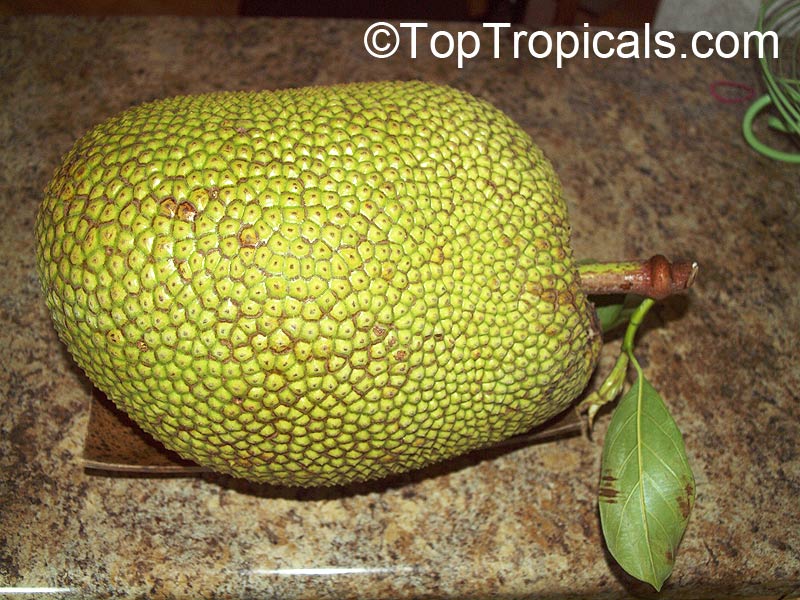
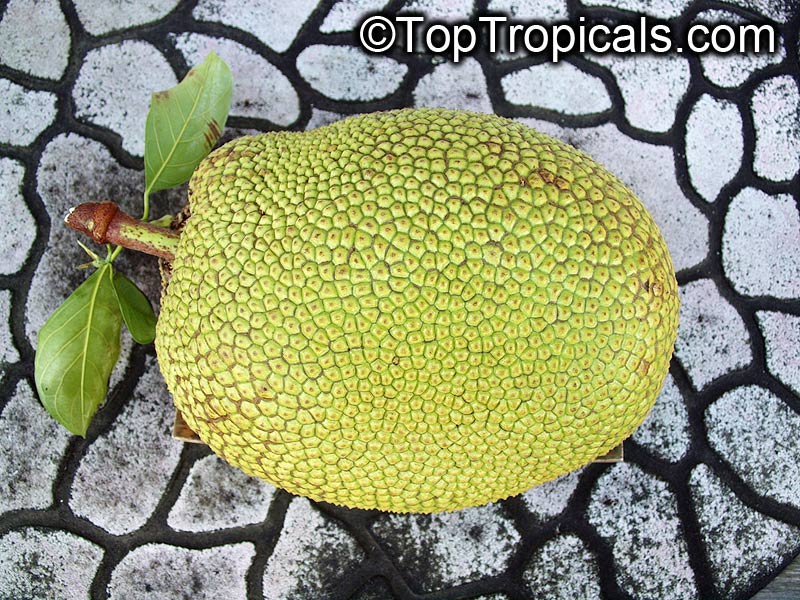
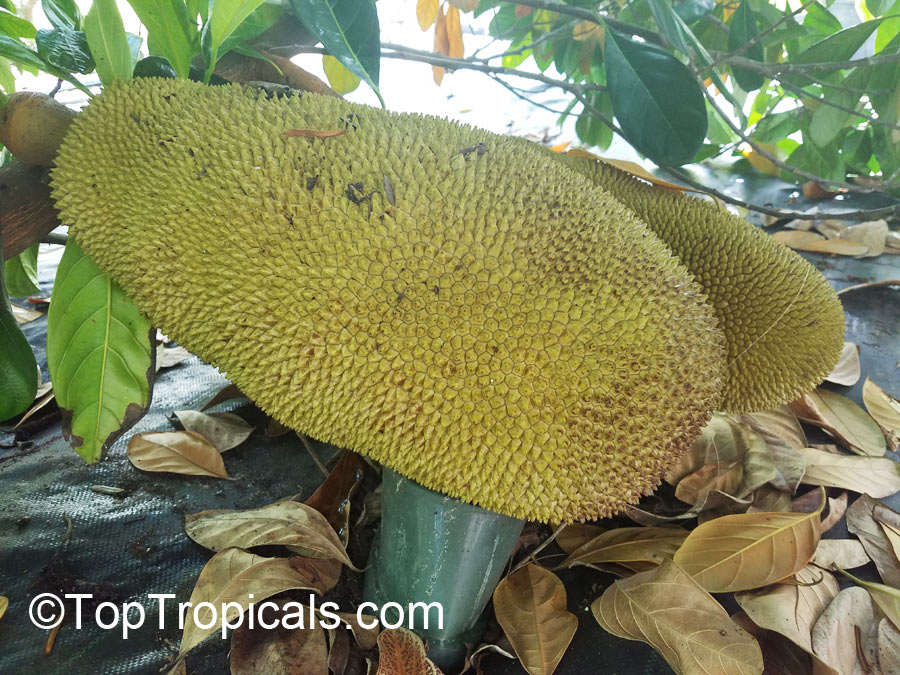
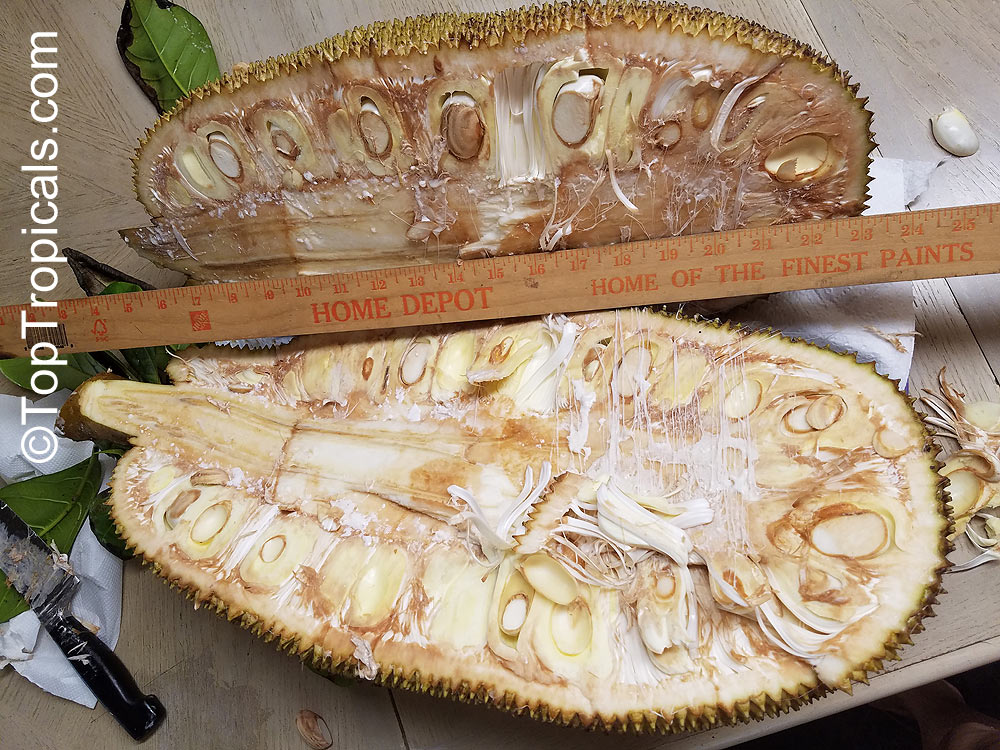
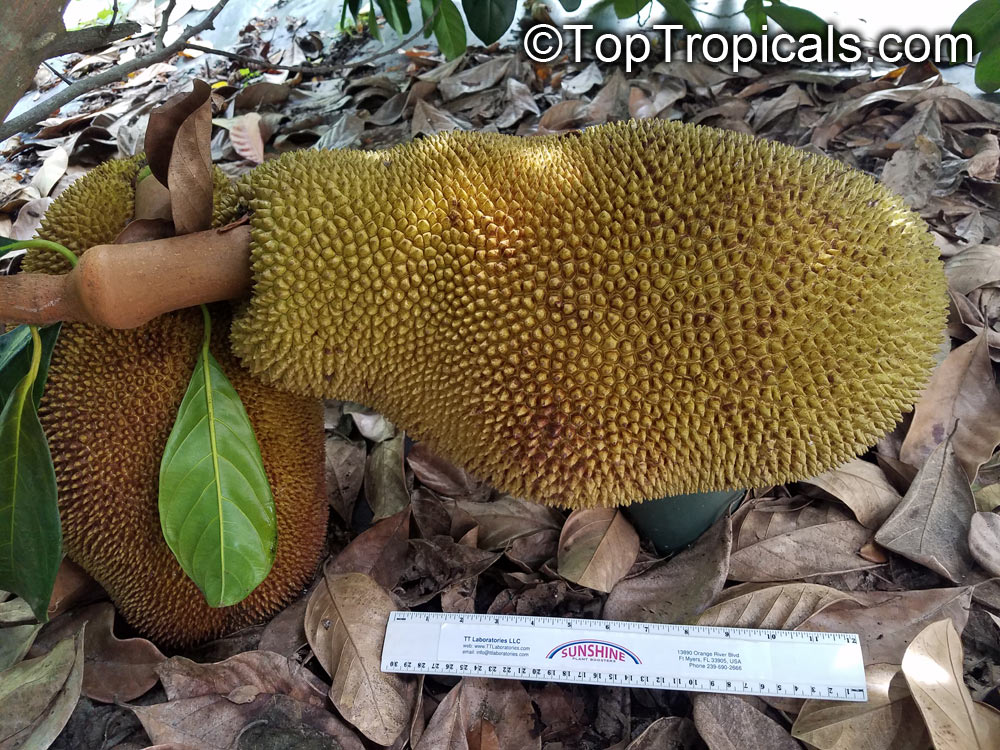
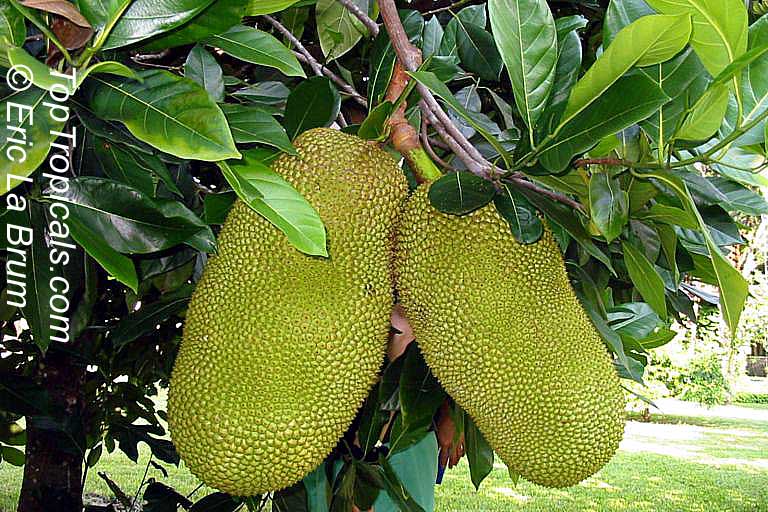
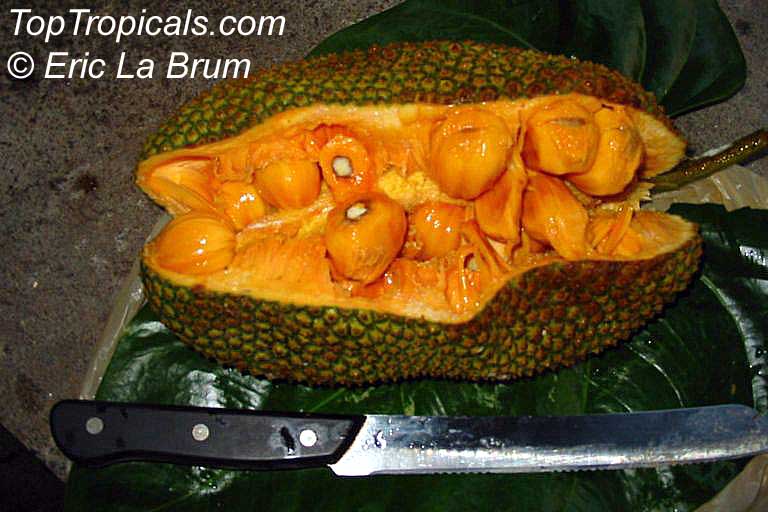
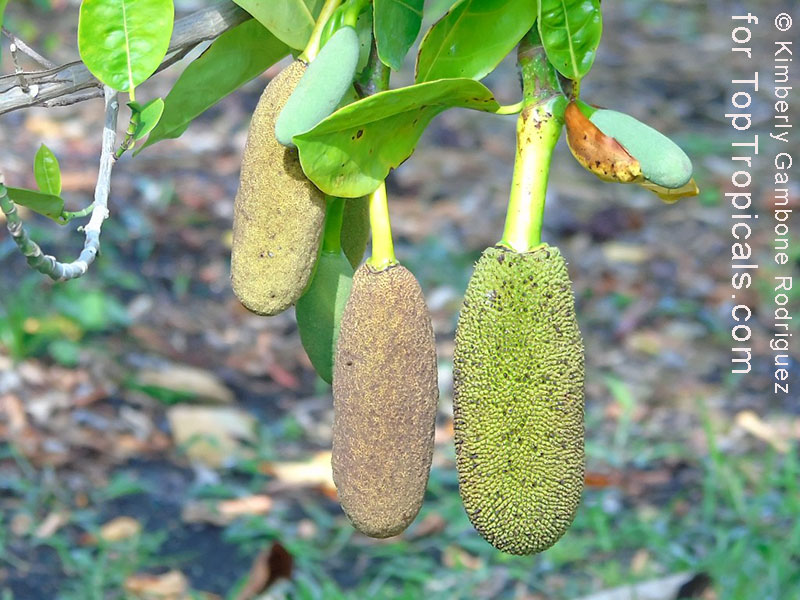
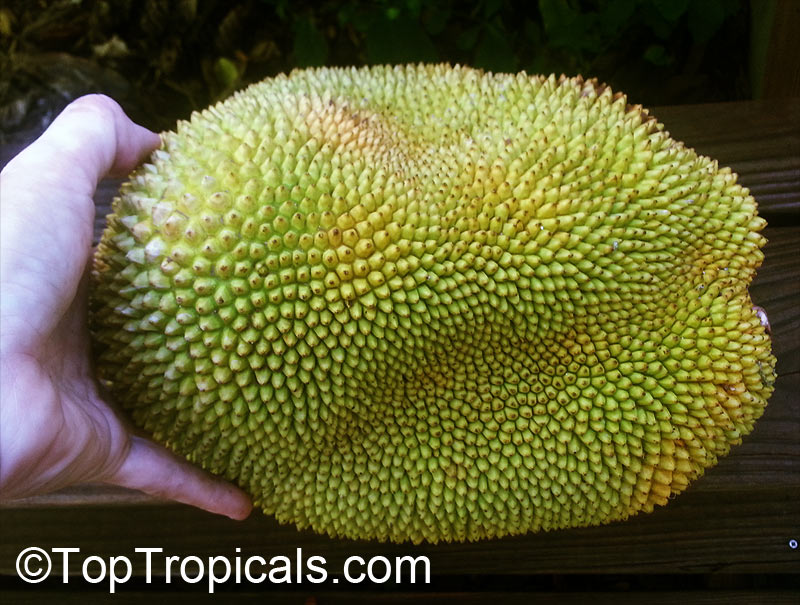
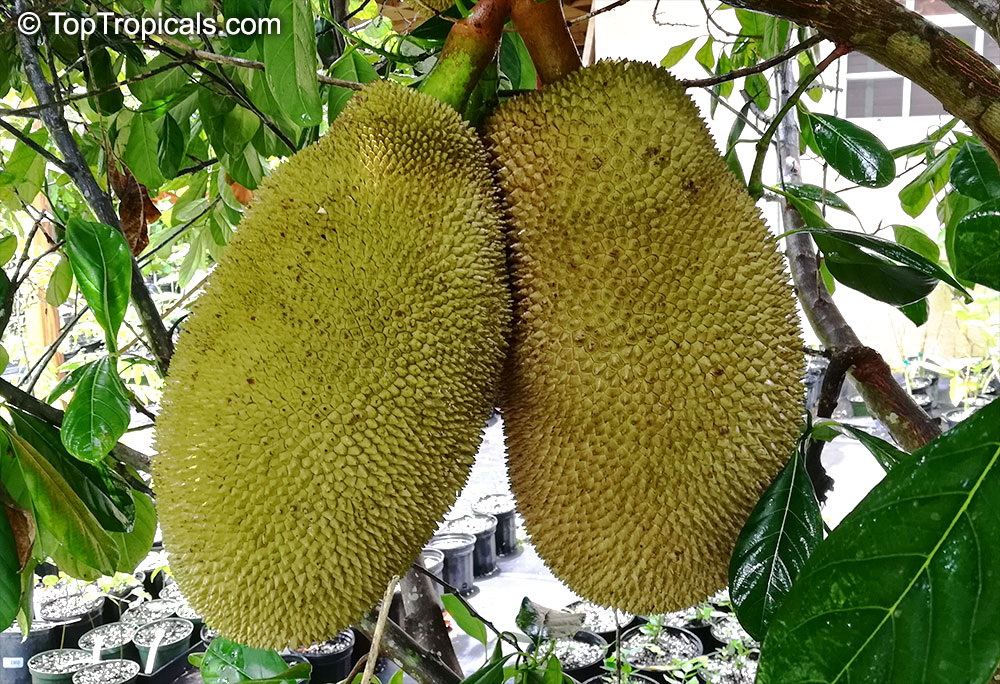
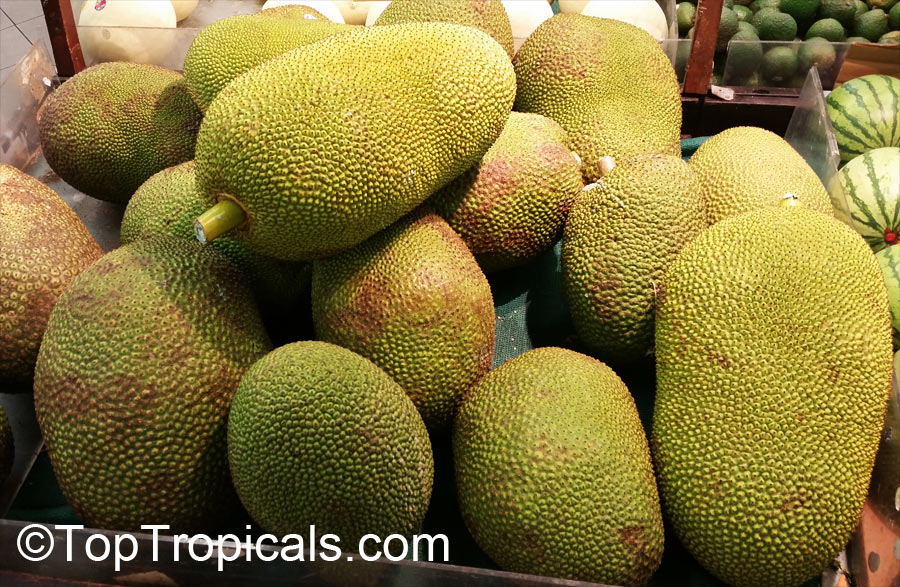
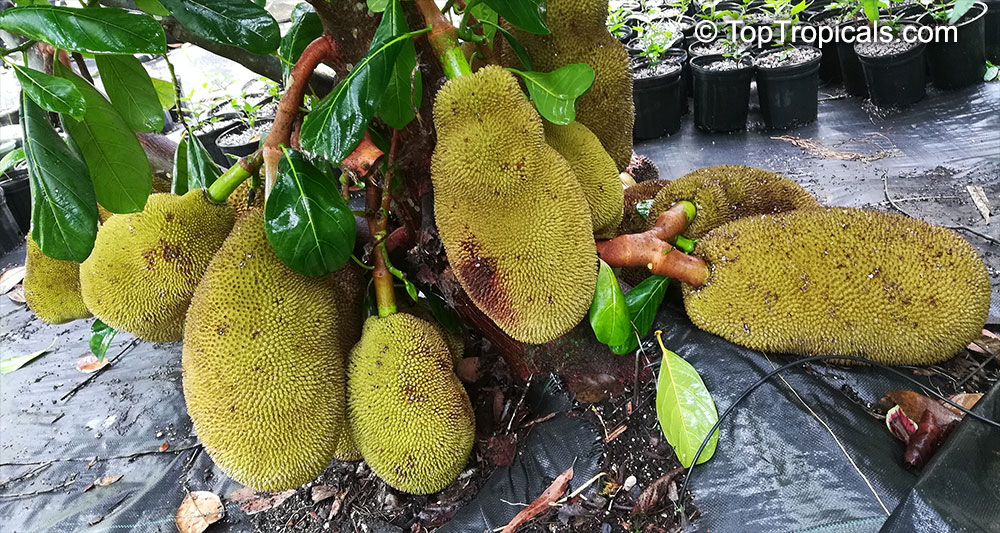
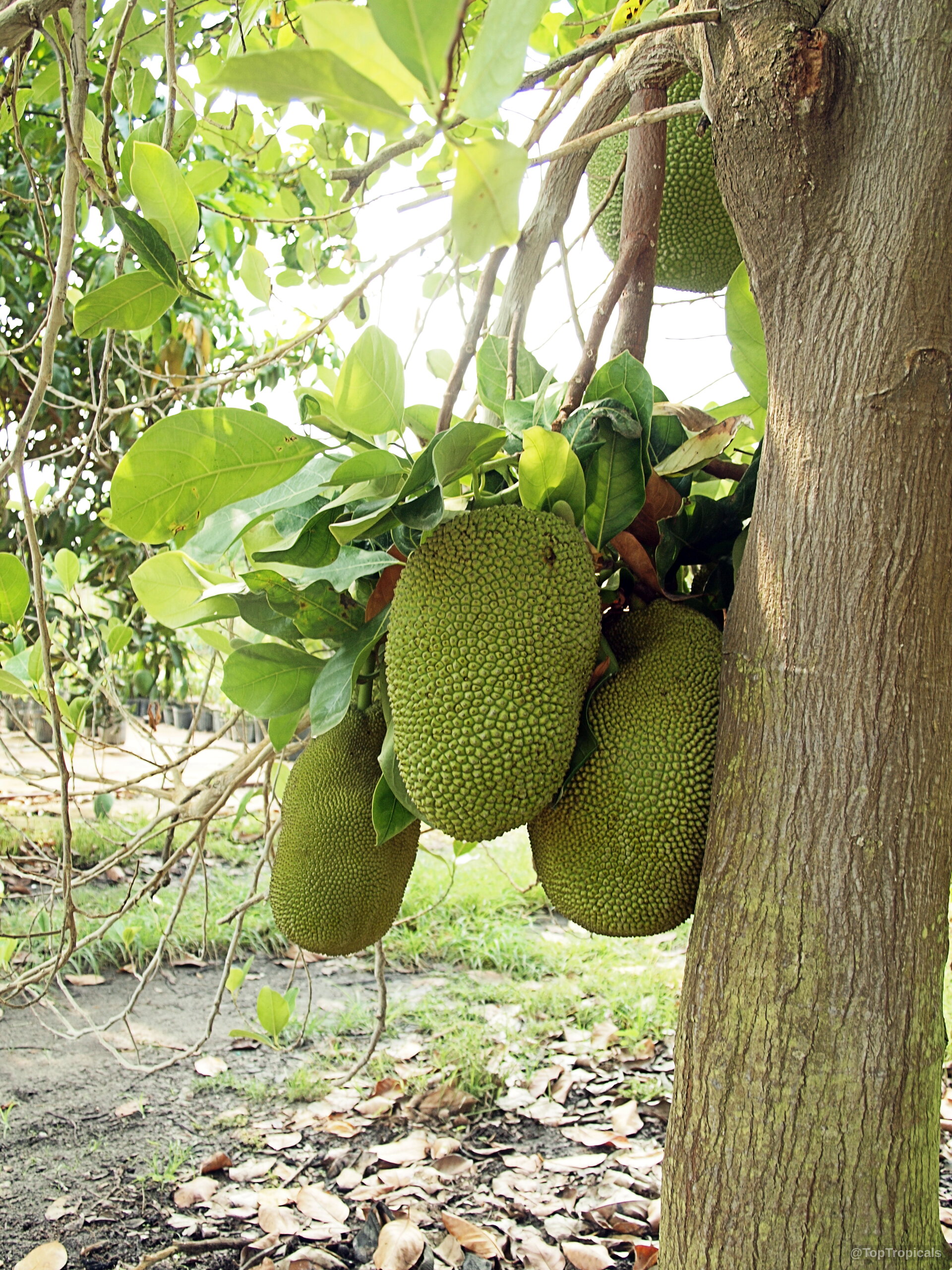
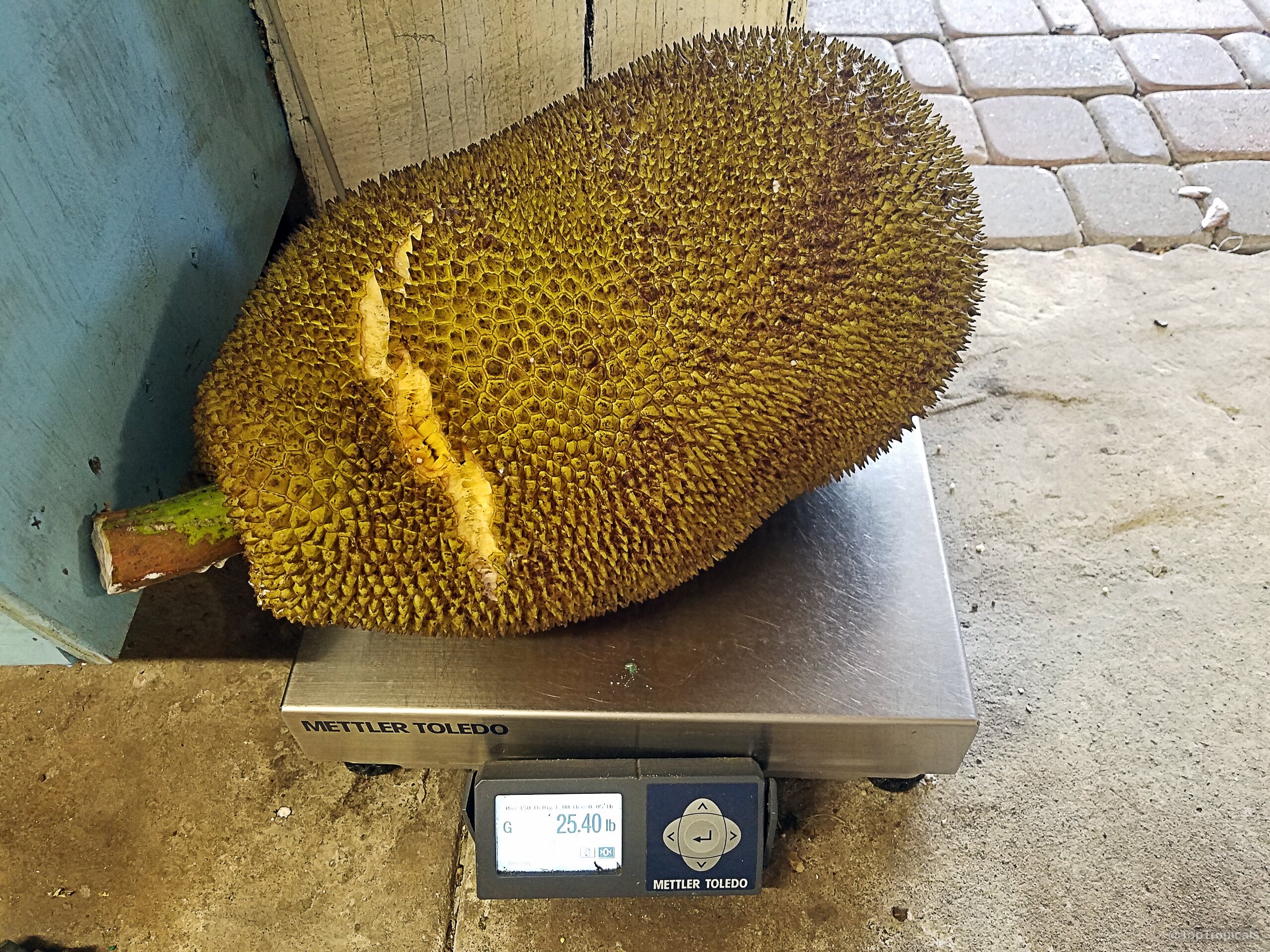
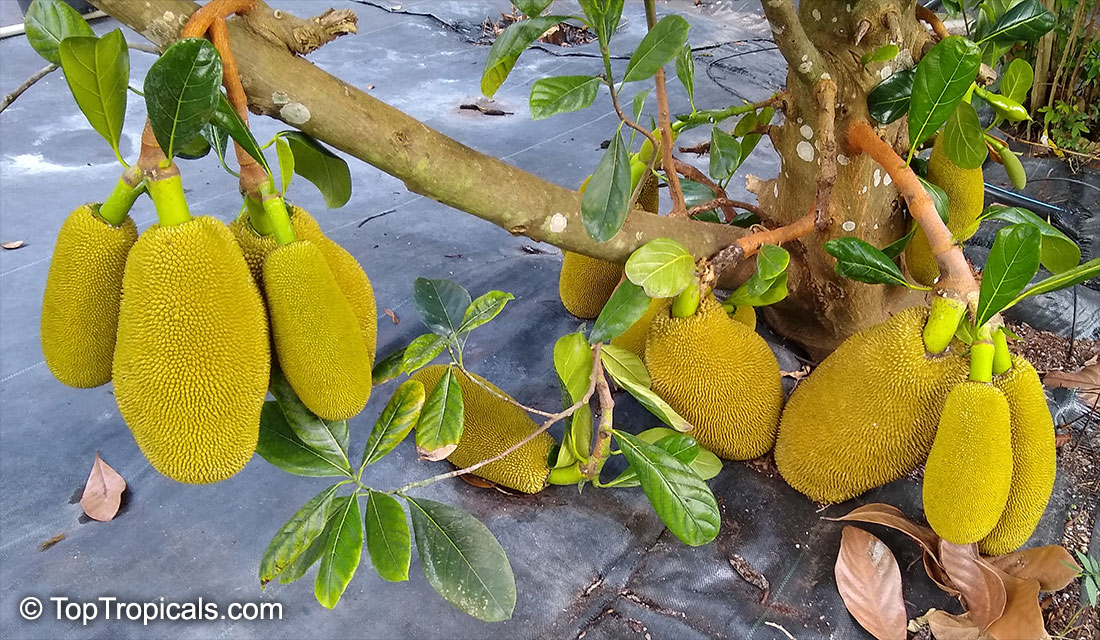
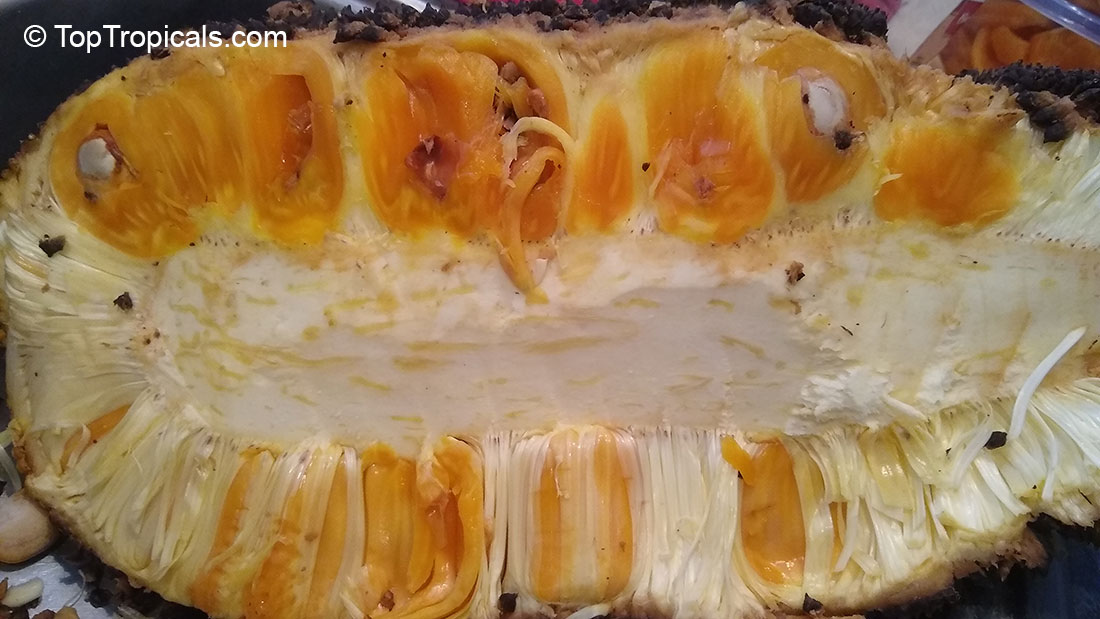
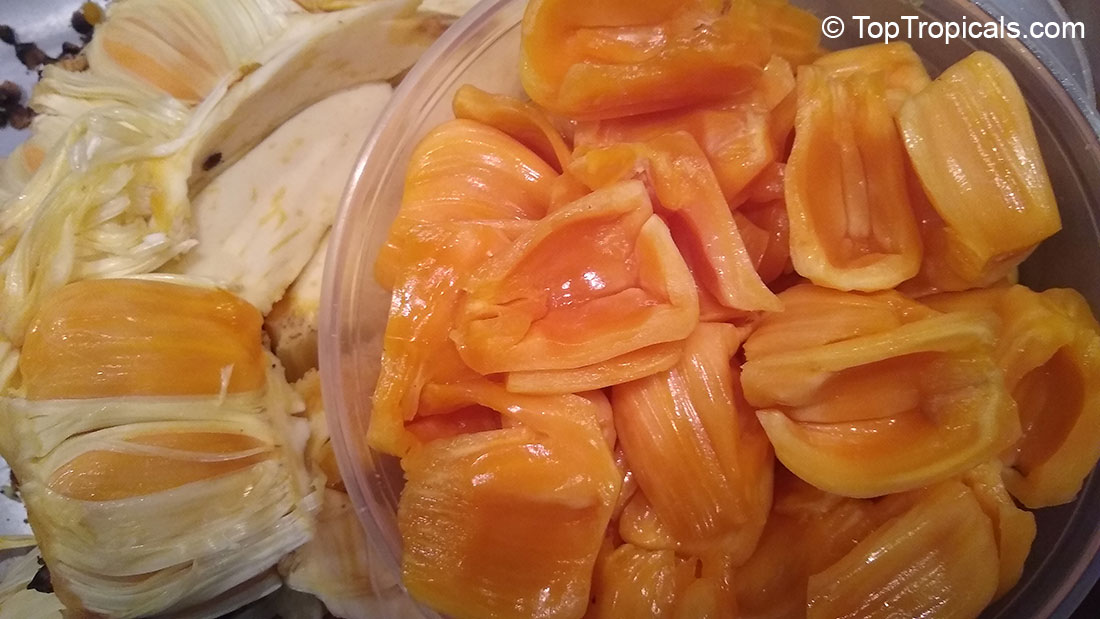
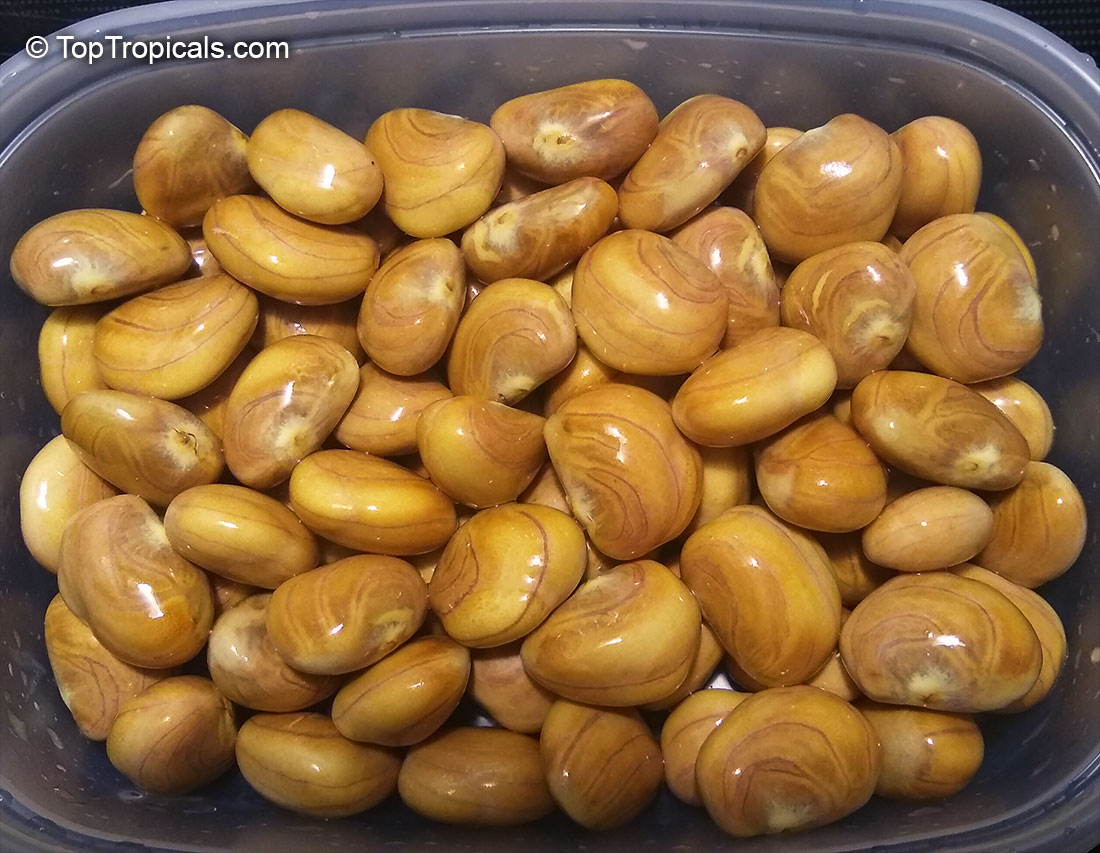
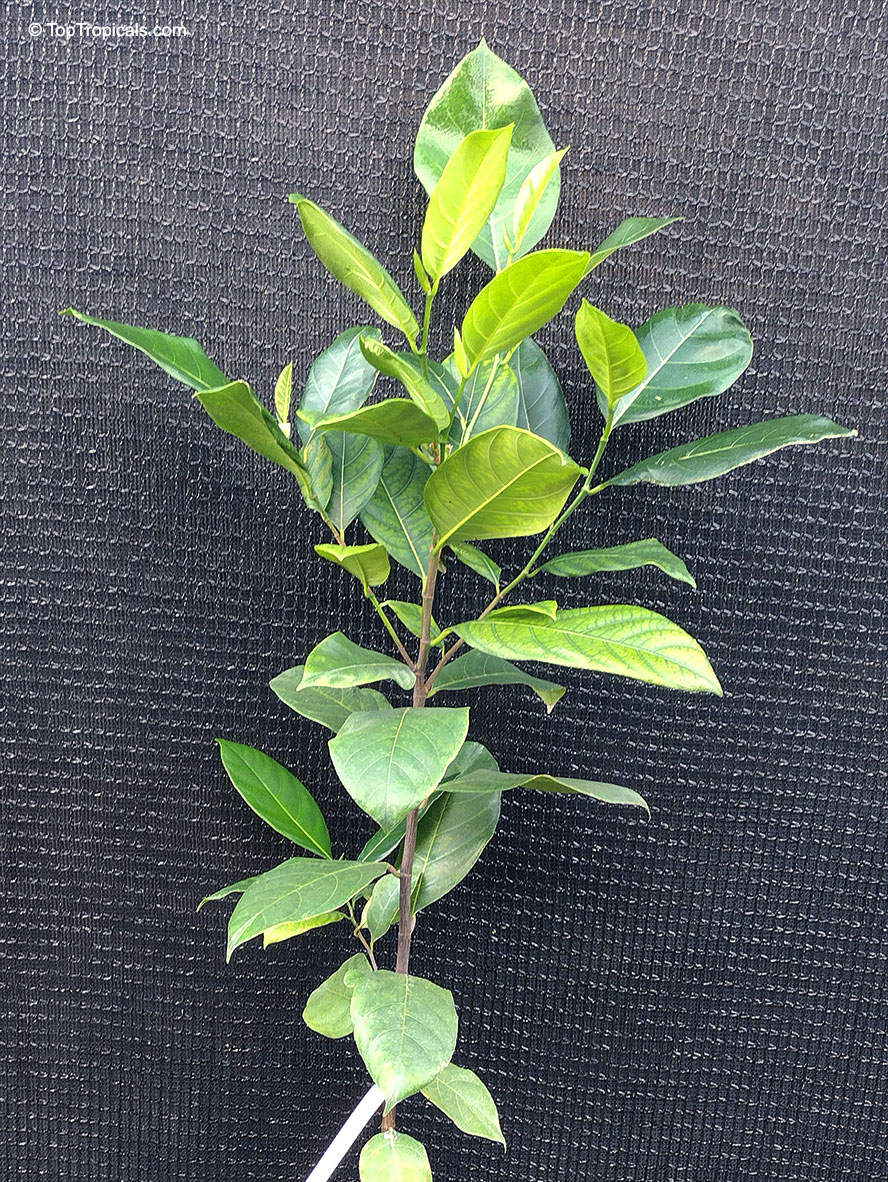
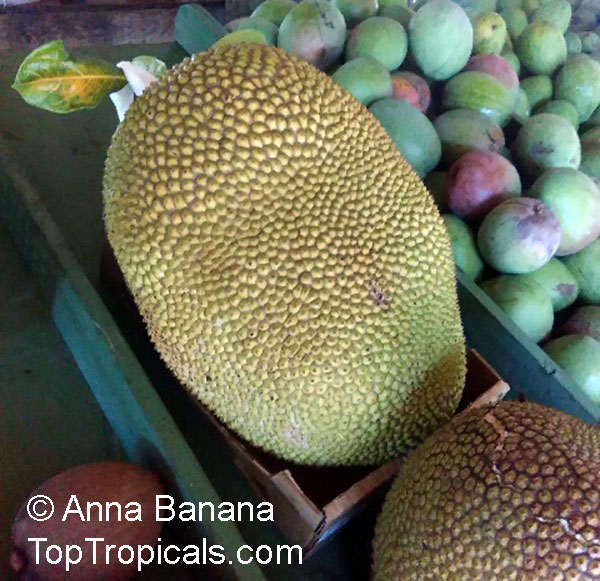
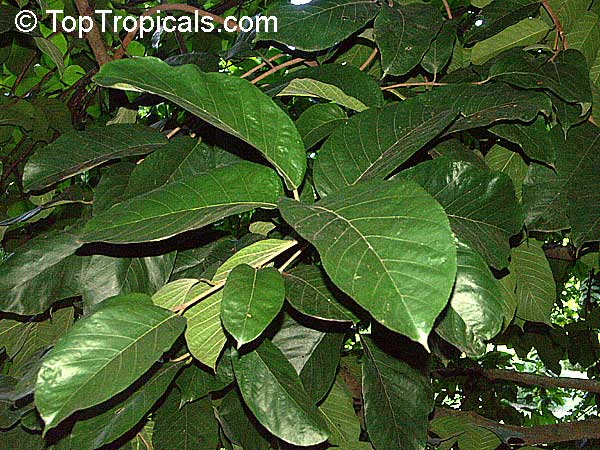
The largest tree-borne fruit in the world, reaching 80 pounds in weight and up to 36 inches long and 20 inches in diameter. The interior of the fruit consists of large edible bulbs of yellow, sweet, banana-flavored aromatic flesh. As the fruit ripen at the bottom of the trunk, this tree can be (and should be) pruned annually to 7-12' producing as much as 200 Lbs of fruit per year. Seedlings start fruiting within 3-4 years. Mature Jackfruit tree produces hundreds of pounds of fruit every year. Fruit ripen pretty quickly, 4-6 months from flower to maturity.
The tree is not as cold sensitive as it is thought to be, according to our experience. Mature trees can take some light freeze, smaller plants must be protected. Of course the compact size of the tree (especially when heavily pruned) makes cold protection much easier. Trees can be covered in case of cold, or even grown in large pots in cooler climates. You can't buy this in grocery store, so growing your own is the only option to try this tropical deliciousness! The plant requires soil rich of organic matter and regular watering. See article about Artocarpus heterophyllus
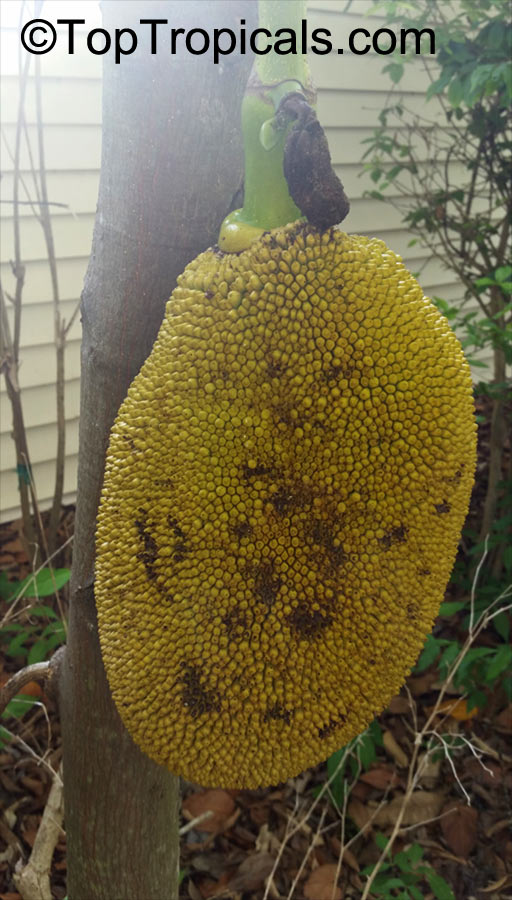



Recommended Fertilizer: SUNSHINE C-Cibus - Crop Nutrition Booster
SUNSHINE-Honey - sugar booster
Recommended Fertilizer: SUNSHINE C-Cibus - Crop Nutrition Booster
SUNSHINE-Honey - sugar booster
Botanical name: Artocarpus lakoocha
Common name: Lakoocha
Family: Moraceae
Origin: India
USDA Zone: 9-10
Large forest tree. Yellow, 2-4" velvety skinned fruit related to the jackfruit.
Propagation: By seed, whose viability lasts only a week.
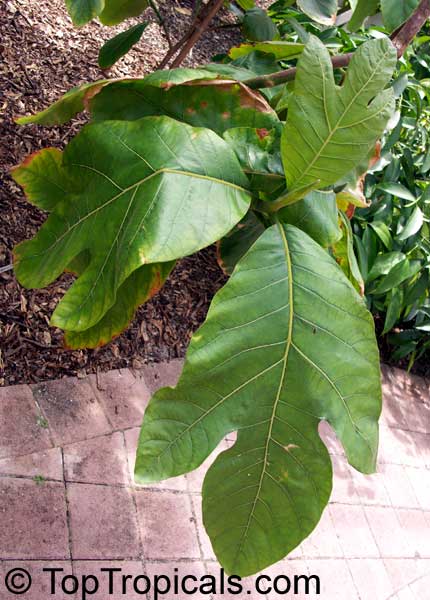
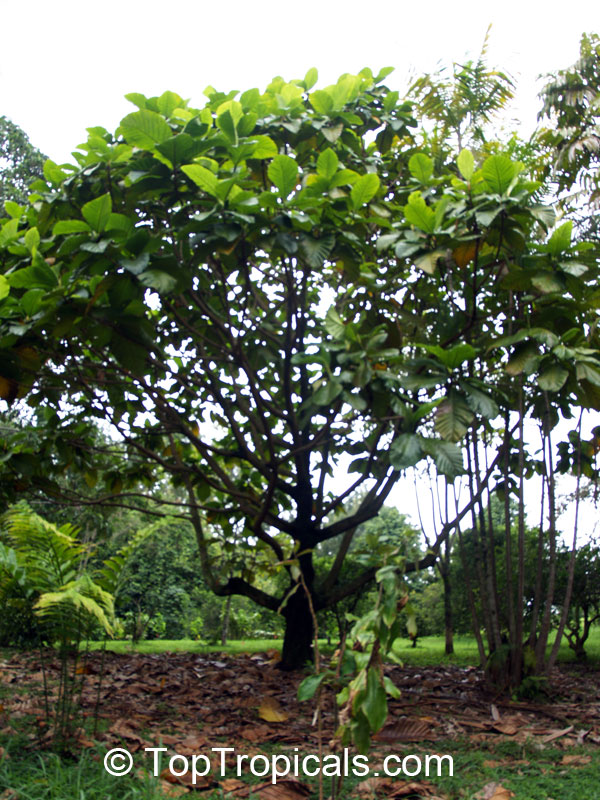
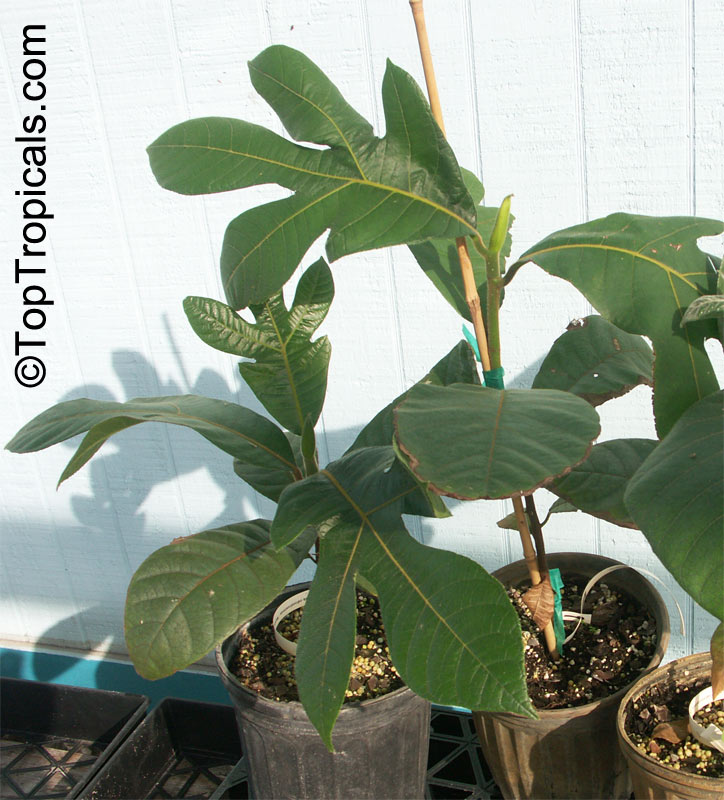
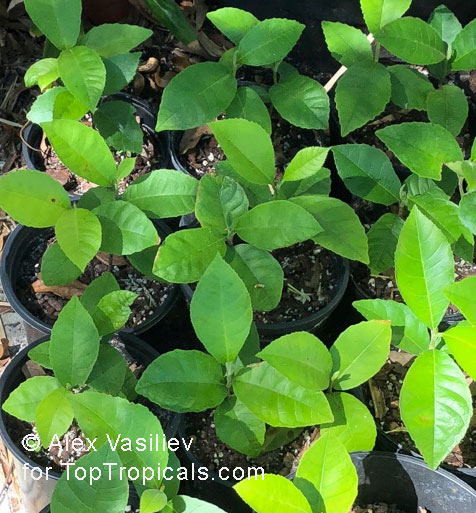
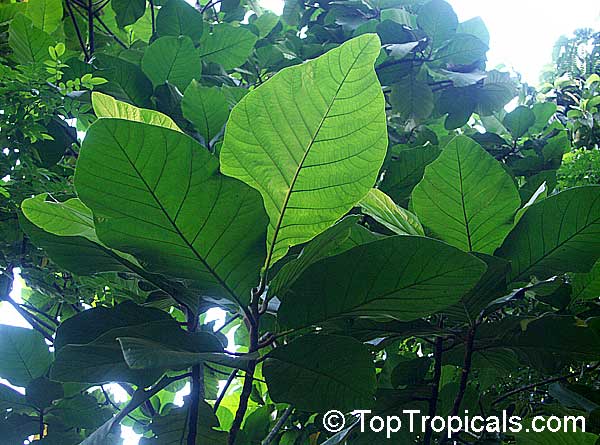
Botanical name: Artocarpus odoratissimus
Common names: Marang, Tarap, Green Terap
Family: Moraceae
Origin: Malesia
USDA Zone: 10-12

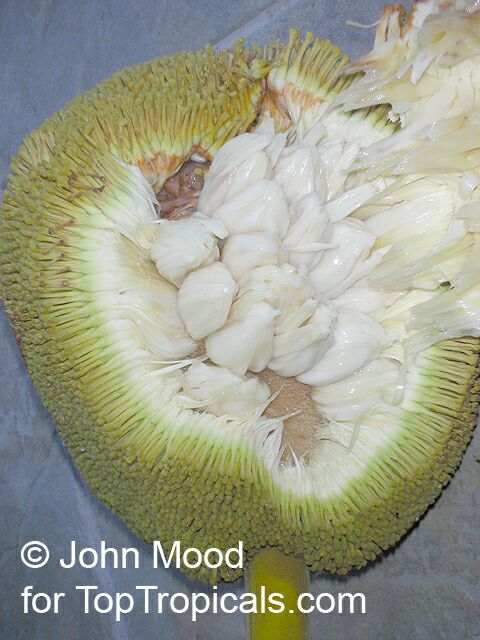
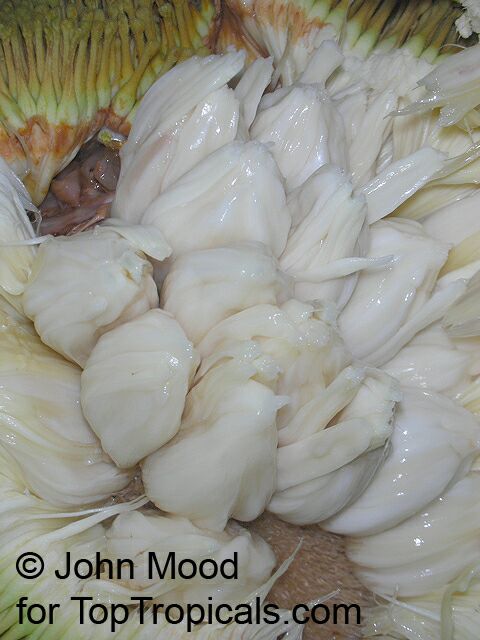
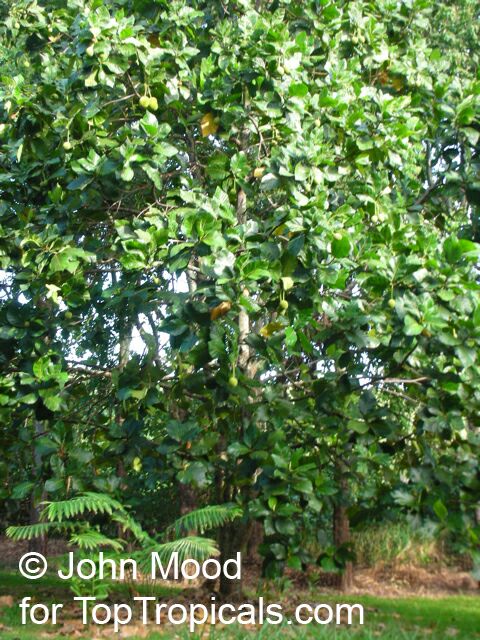
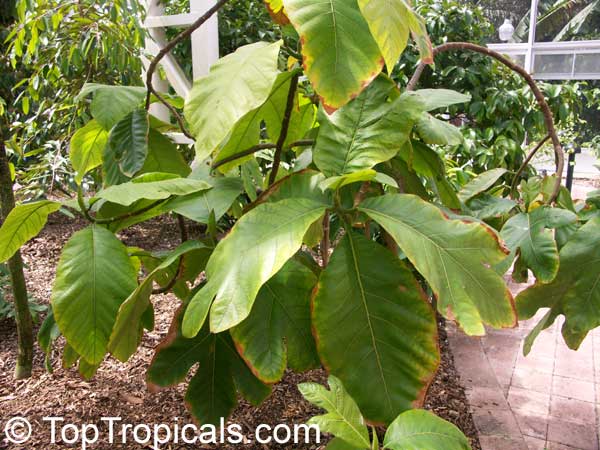
Marang, or Tarap, is one of the most delicious tropical fruit and beautiful exotic tree with large lobed leaves. The fruit is as big as 10-12", soft flavored, can be appreciated from the first bite and considered superior in flavor to both Jackfruit or Chempedak. Being a cold sensitive plant, Marang can be grown in container inside a greenhouse, where it will enjoy high humidity. The seedlings grow rapidly, first fruit can be expected within 3-4 years.


| Prev | Next | |
Use link to repeat this search:
https://toptropicals.com/cgi-bin/garden_catalog/cat.cgi?search_op=and&keyword_op=and&language=e&number=10&no_change_lang=1
&v1=btr&user=tt&sale=1&first=0