Fabaceae - Botanical Family
| Number of plants found: 380 |  | Prev | Next | 
|
Go to page: | First | 5 | 6 | 7 | 8 | 9 | 10 | 11 | 12 | 13 | 14 | Last |

Botanical name: Caesalpinia coriaria
Common names: Diva-Diva, Divi-divi
Family: Fabaceae
Subfamily: Caesalpinioideae
Origin: Aruba, Curacao
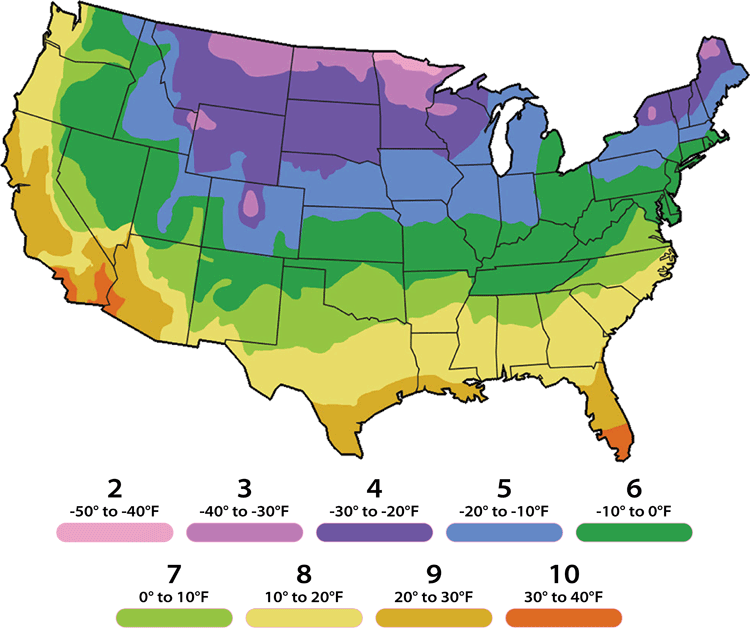
USDA Zone: 9-10


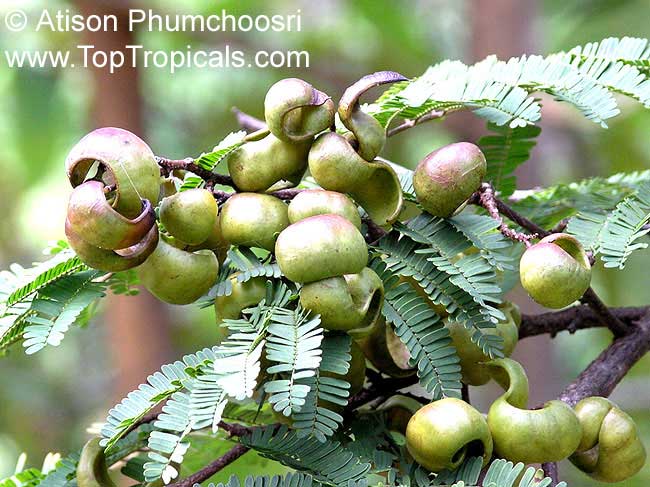
Medium size tree from Aruba, very often seen in pictures with windswept shapes near the ocean. This is the national tree of Curacao. In sheltered locations, the tree is symmetrical with a spreading mounded top. Exposed to the prevailing winds, however, it leans away from the wind, and its top, growing mostly to the lee side, appears to be blown out horizontally in the wind. The Divi-Divi is quite easy. There is nothing really special in their care. Perhaps just some protection if the temperature dips bellow 35F. The basic requirements are full to partial sun, average water, and fertilizer. Divi-Divi flowers during the warm weather, but the flowers are not very showy. The really beauty of the plant resides on their delicate fine leaves. It has beautiful reddish/pink new growth and the shapes that can be achieved by trimming, thus making it one of the favorite trees for bonsai training.
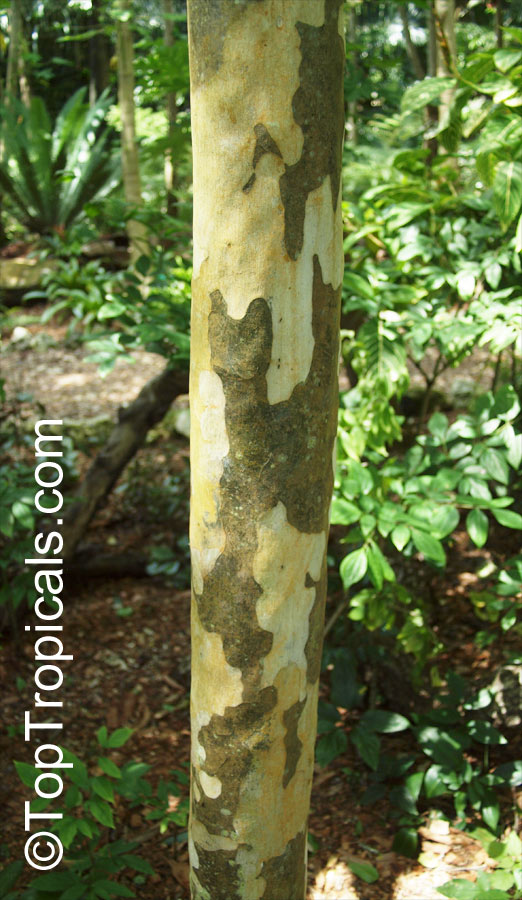
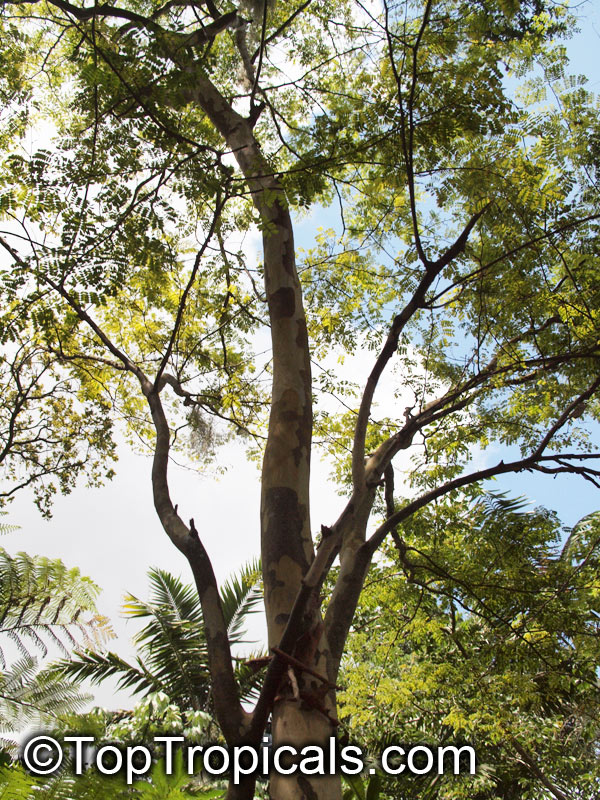
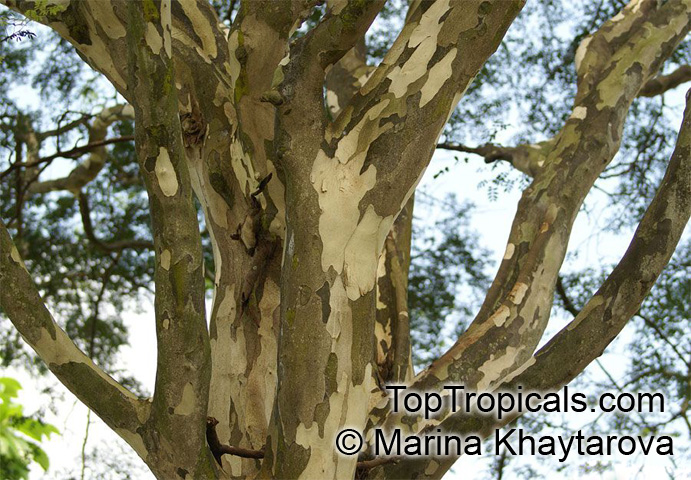
Botanical name: Caesalpinia ferrea
Common names: Brazilian Ironwood, Leopard Tree
Family: Fabaceae
Subfamily: Caesalpinioideae
Origin: Brazil
USDA Zone: 9-10



Botanical name: Caesalpinia mexicana
Common names: Mexican Bird of Paradise, Dwarf Poinciana
Family: Fabaceae
Subfamily: Caesalpinioideae
Origin: Mexico
USDA Zone: 8-11
Cold tolerance: 15°F


Many gardeners know Caesalpinia pulcherrima, the common Bird of Paradise, but Caesalpinia mexicana - Mexican Bird of Paradise - is a rare treasure with a delightful twist - fragrant flowers! This hardy, drought-tolerant shrub thrives in intense heat and is perfect for small yards or patios.
During the warm months, it bursts with butter-yellow blooms that pop against feathery green foliage, attracting hummingbirds. As the flowers fade, woody pods form and snap open dramatically. It grows quickly to 10 feet and can be shaped into a small tree or kept as a compact shrub.
Native to northern Mexico, it thrives in full sun and well-drained soil with very little water. If you're looking for a low-maintenance beauty that adds both fragrance and charm, this plant is a must-have!


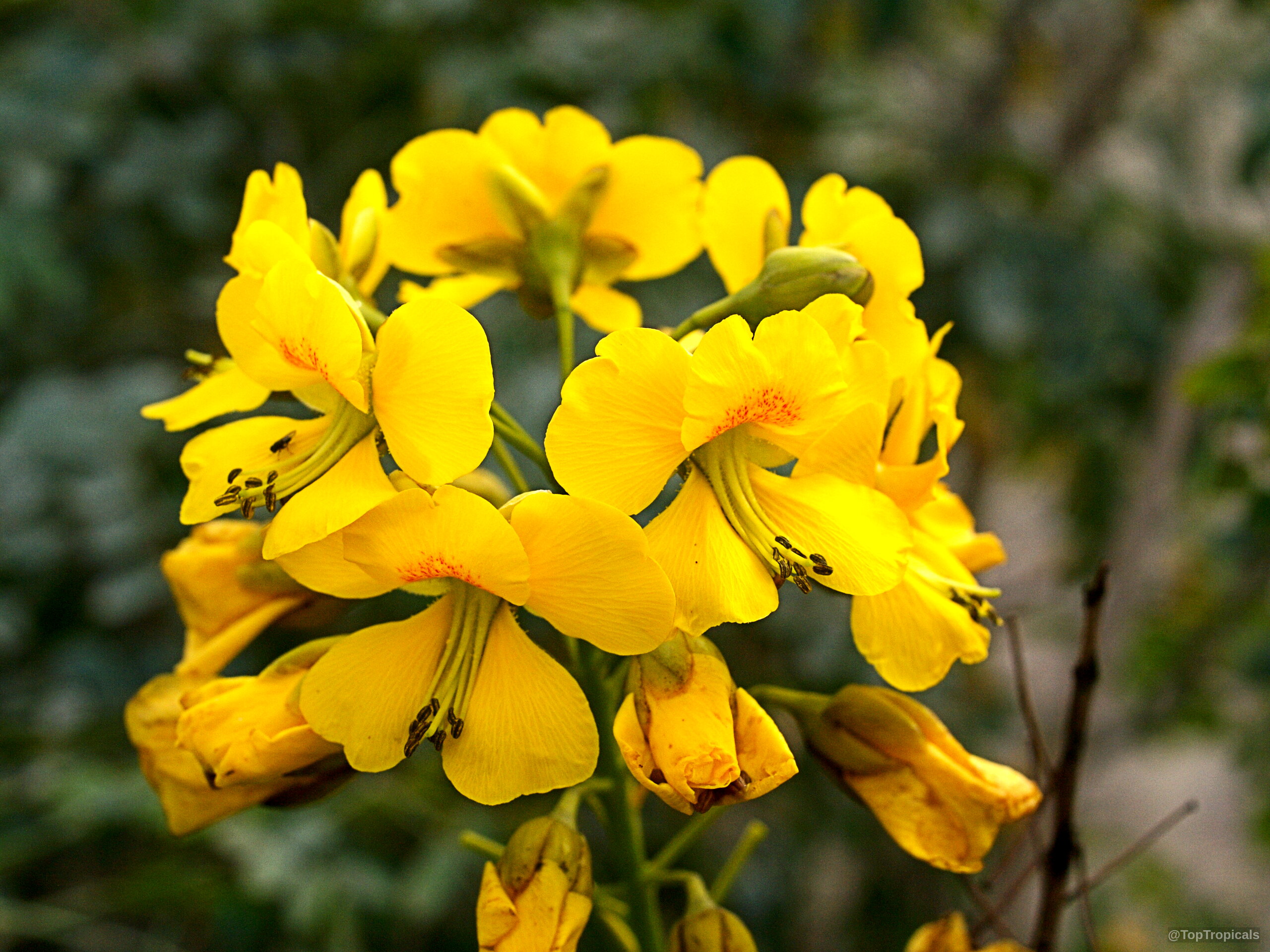


Many gardeners know Caesalpinia pulcherrima, the common Bird of Paradise, but Caesalpinia mexicana - Mexican Bird of Paradise - is a rare treasure with a delightful twist - fragrant flowers! This hardy, drought-tolerant shrub thrives in intense heat and is perfect for small yards or patios.
During the warm months, it bursts with butter-yellow blooms that pop against feathery green foliage, attracting hummingbirds. As the flowers fade, woody pods form and snap open dramatically. It grows quickly to 10 feet and can be shaped into a small tree or kept as a compact shrub.
Native to northern Mexico, it thrives in full sun and well-drained soil with very little water. If you're looking for a low-maintenance beauty that adds both fragrance and charm, this plant is a must-have!
Recommended Fertilizer: SUNSHINE Megaflor - Bloom Nutrition Booster

Botanical name: Caesalpinia pulcherrima var. compton
Common names: Pride of Barbados, Pink Dwarf Poinciana, Flower Fence
Cultivar: Compton
Family: Fabaceae
Subfamily: Caesalpinioideae
USDA Zone: 9-11


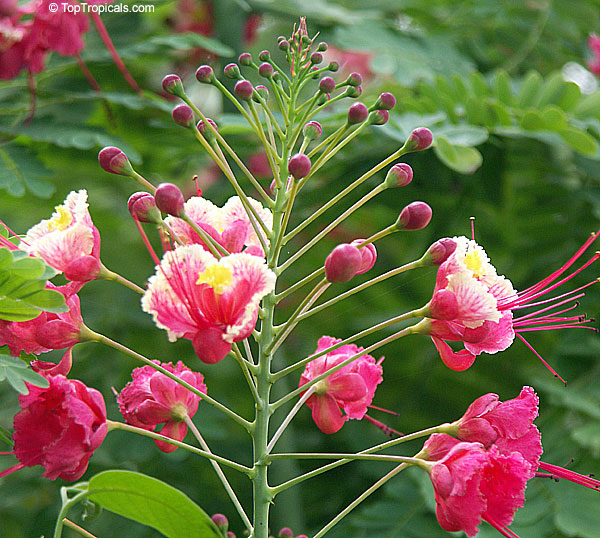
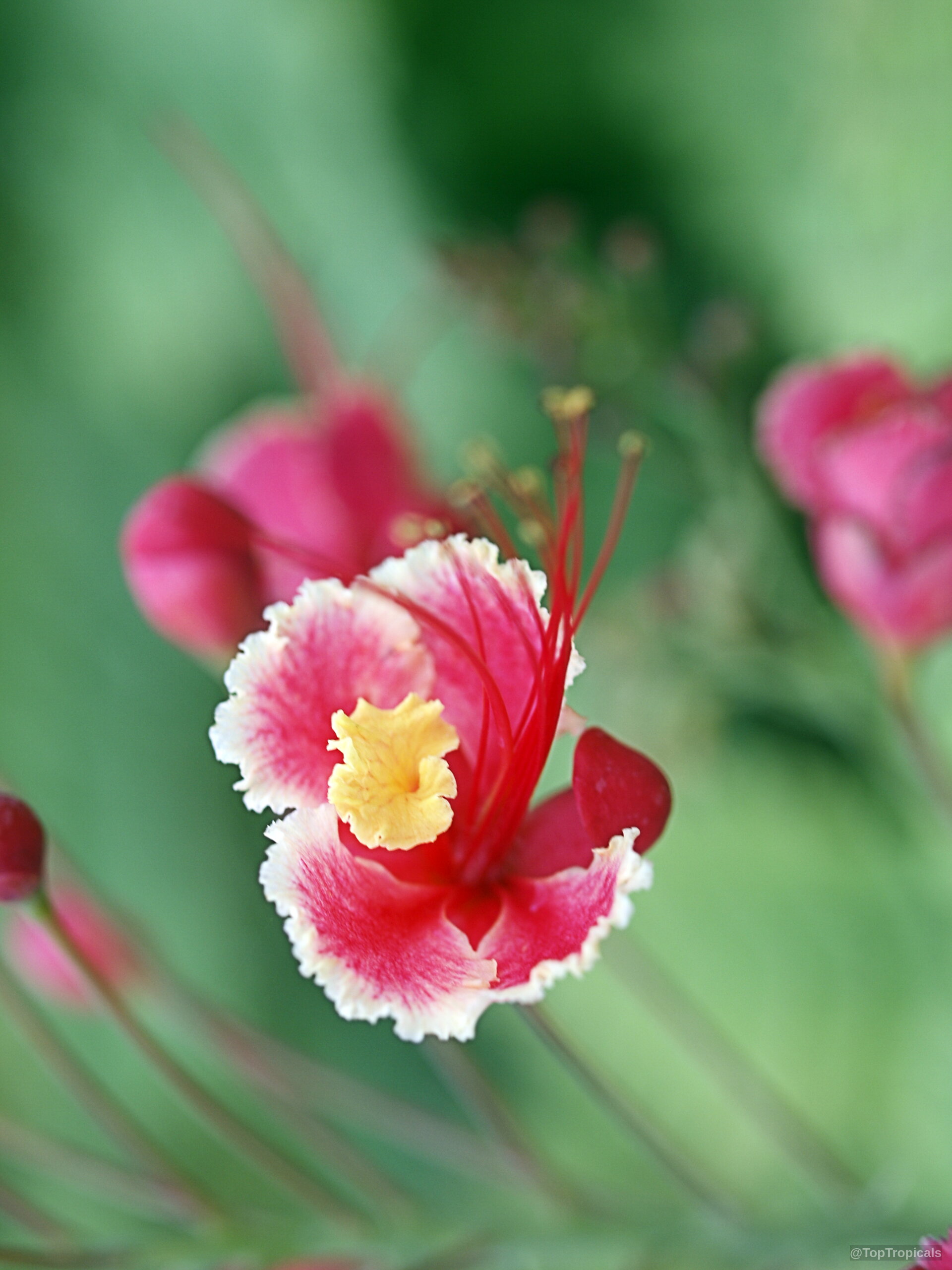
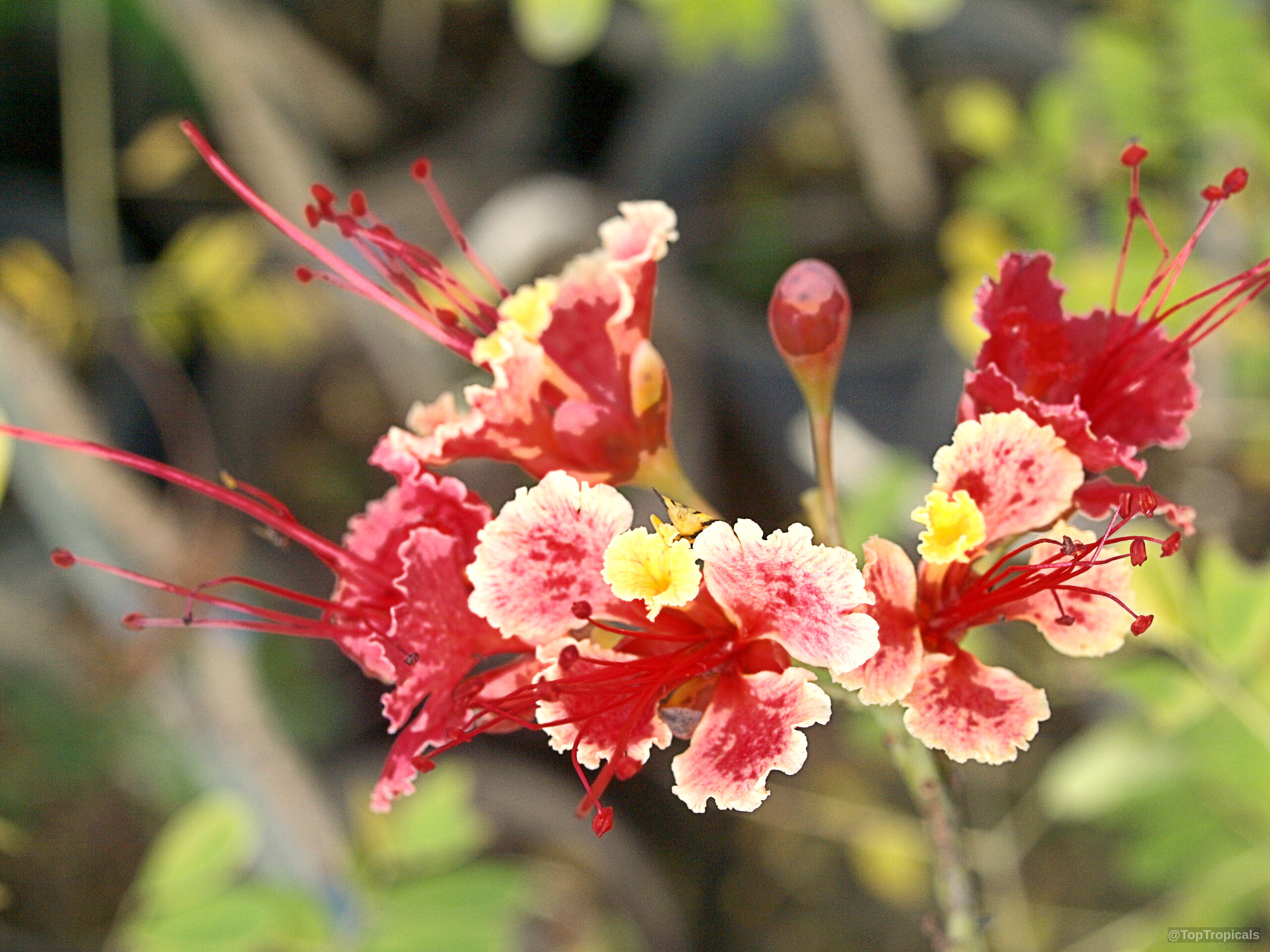
The National Flower of Barbados. It appears on the Barbados Coat of Arms. References to this flower were recorded as early as 1657. It is a shrub and is often pruned into a low hedge. If untrimmed it grows to a height of 10 to 15 feet. The Pride of Barbados blooms all year round, the more common varieties of caesalpinia are a fiery red and yellow "sunset color" although other variations can be found. The flower has five petals with a yellow margin in a pyramidal inflorescence. Each flower is about 1.5 inches across with five sepals. The ten stamens are long and the pistils project from the center of the flower. The fifth petal is far smaller than the other four. The stamens have colored filaments with anthers at the tips however, the eleventh filament bears a stigma and is the style. The branches a prickly and the leaves are large and doubly compound about one foot long and six inches wide with many small leaflets.




Recommended Fertilizer: SUNSHINE Megaflor - Bloom Nutrition Booster
Botanical name: Caesalpinia pulcherrima var. lutea
Common names: Yellow Peacock Flower, Barbados Pride, Dwarf Poinciana, Barbados Flower-fence
Cultivar: Lutea
Family: Fabaceae
Subfamily: Caesalpinioideae
Origin: West Indies and tropical America
USDA Zone: 10-11
Cold tolerance: 35°F


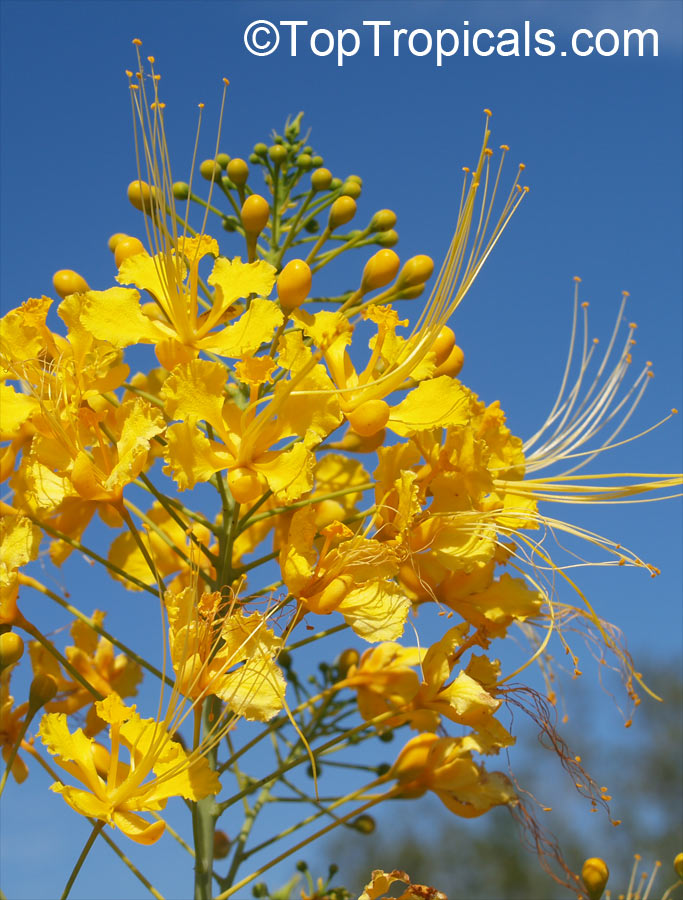
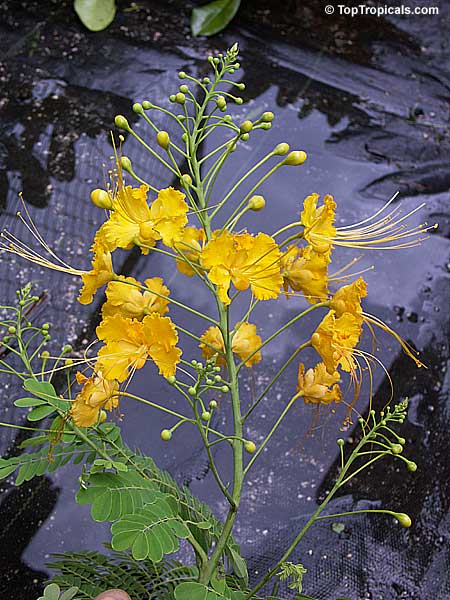
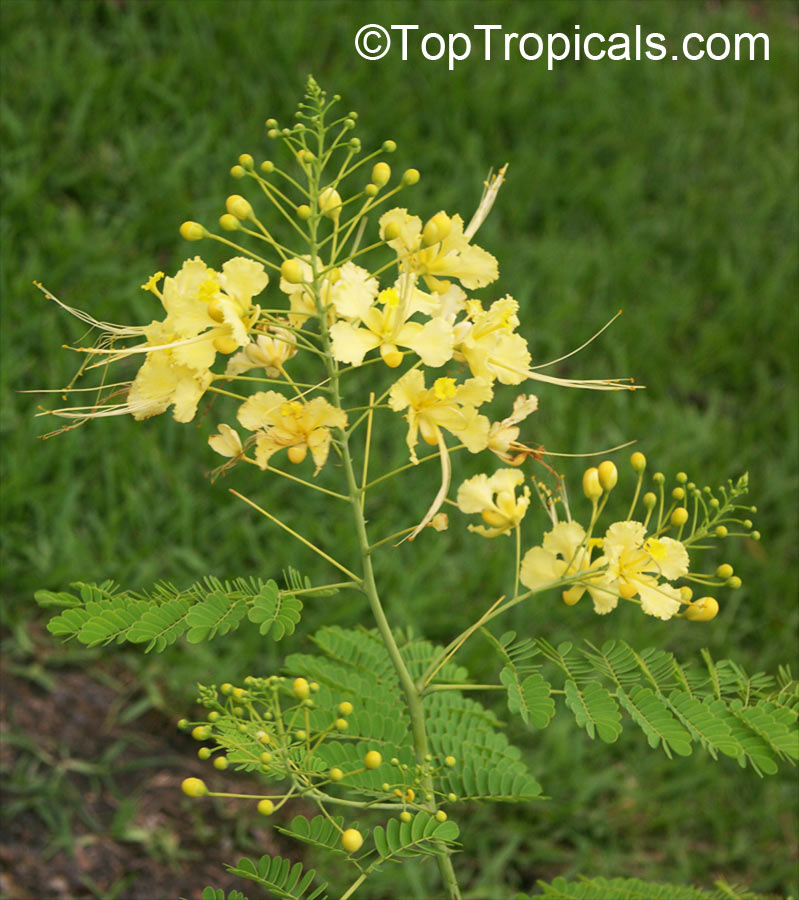
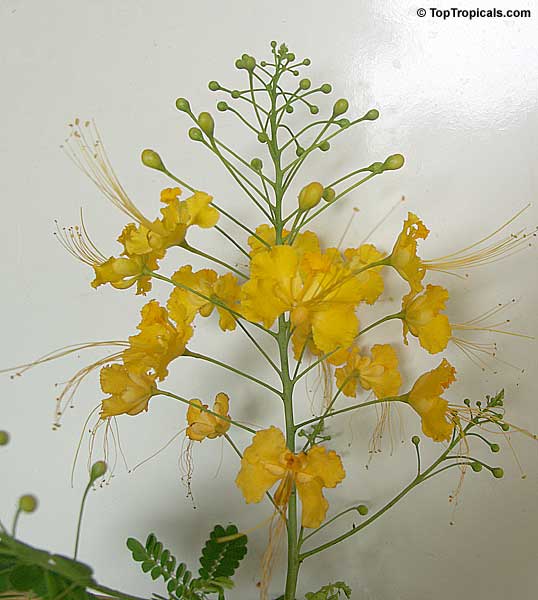
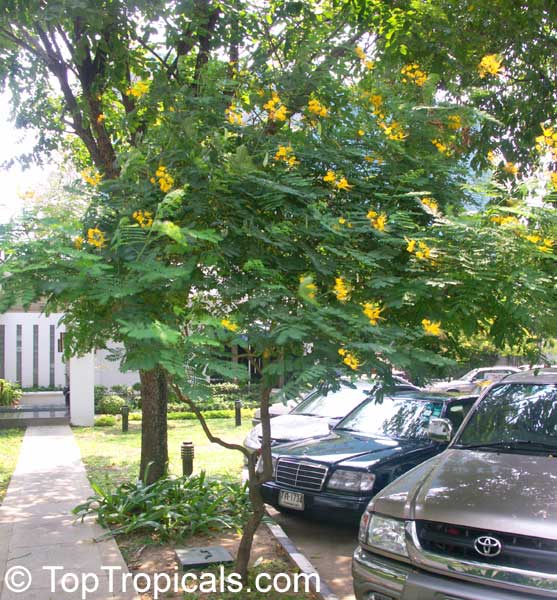
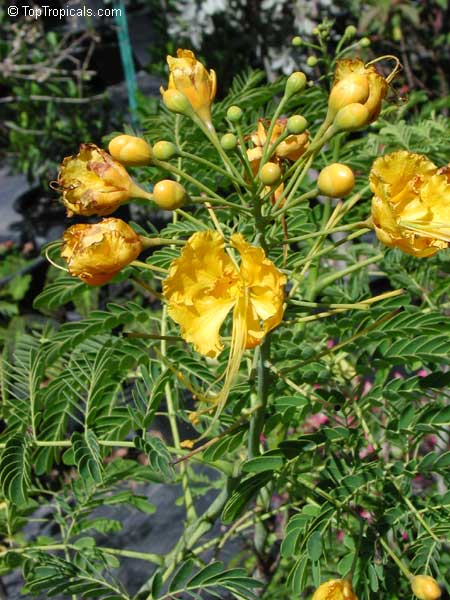
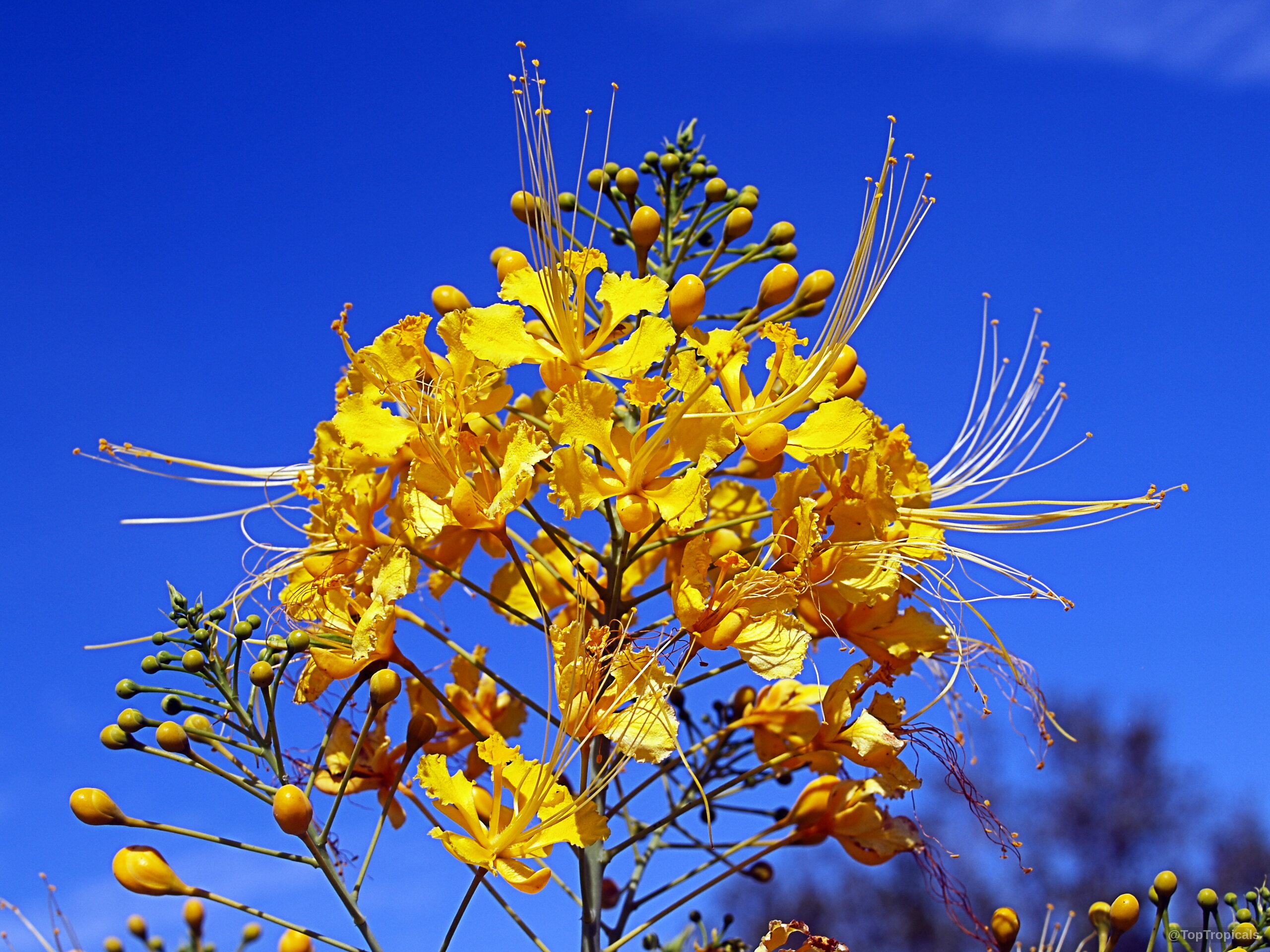
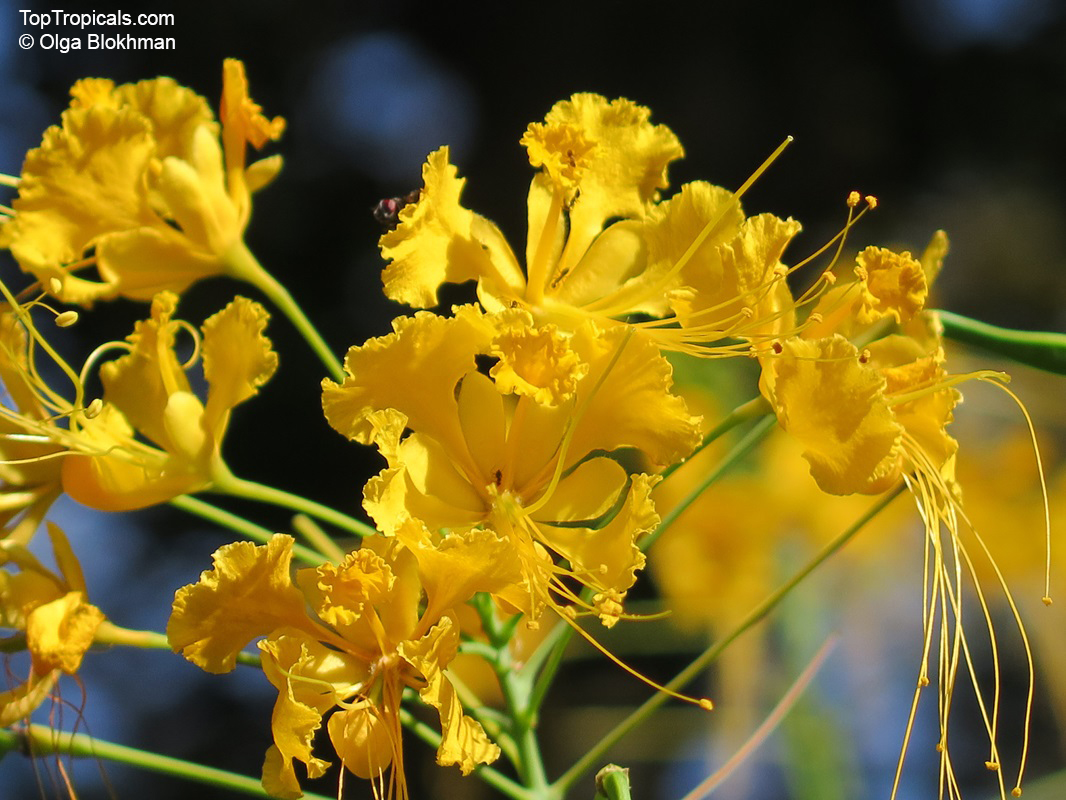
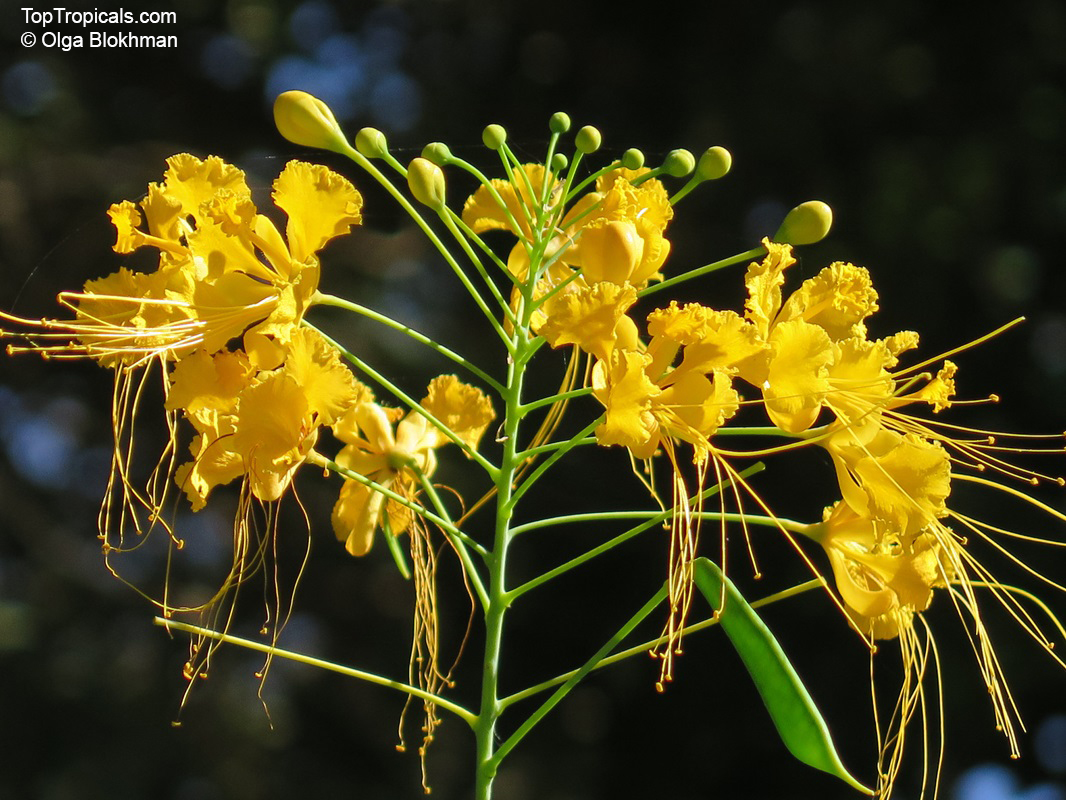
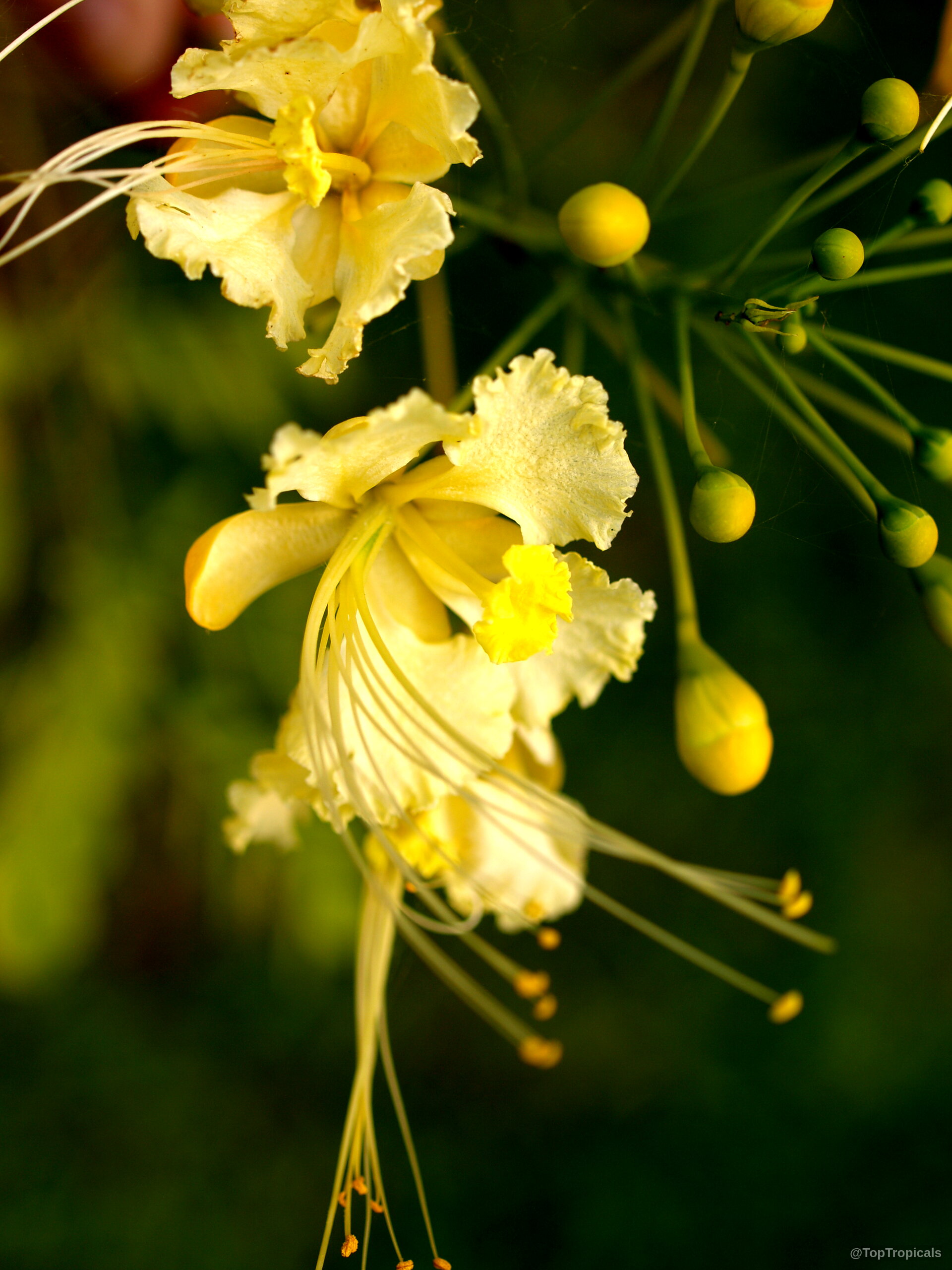
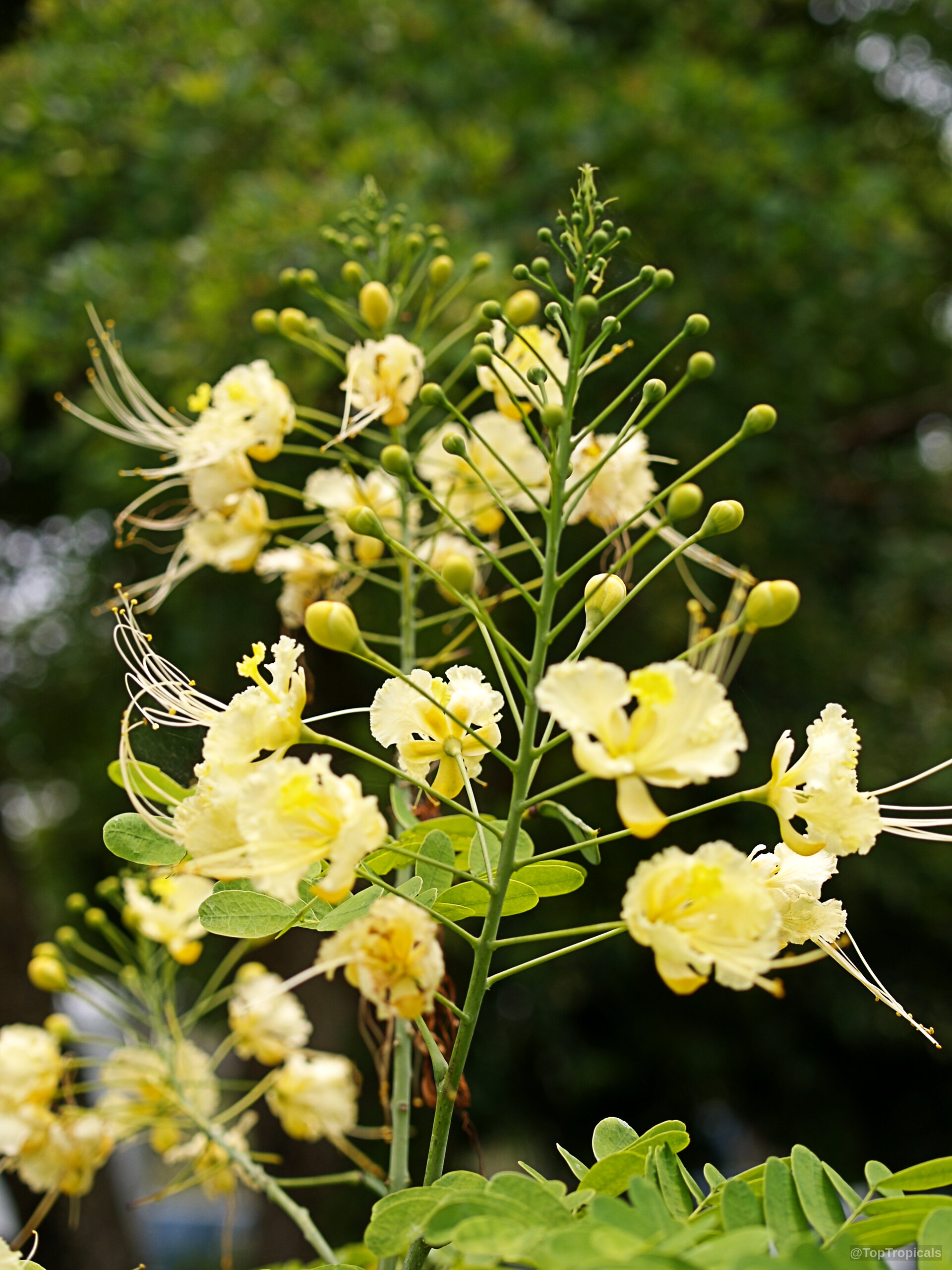
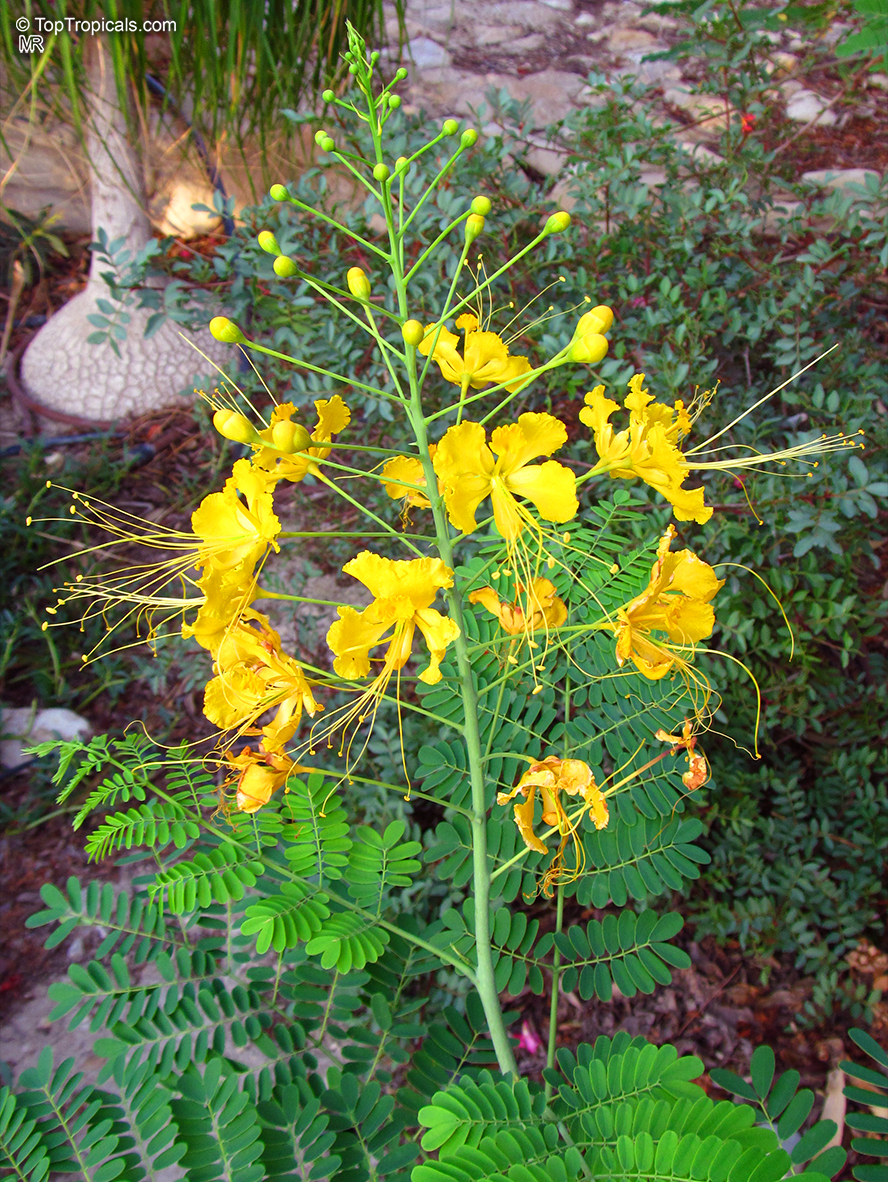
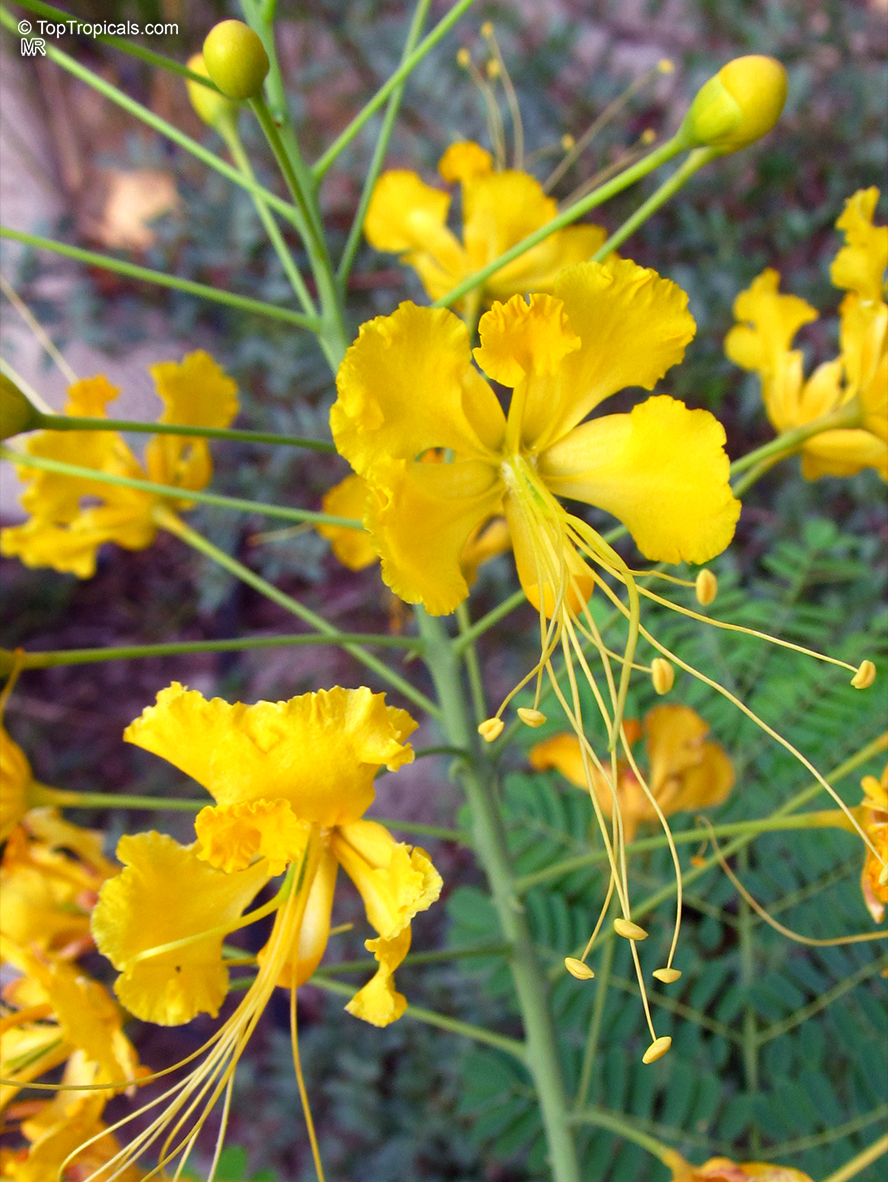
Evergreen shrub or small tree in frost free climates, a deciduous shrub in zone 9, and a returning perennial in zone 8. In the tropics it gets 15-20' tall and its ungainly, wide spreading branches can cover about the same width. In cultivation the peacock flower is usually 8-12' tall, growing that large even after freezing to the ground the previous winter. The stem, branches and petioles are armed with sharp spines and the leaves are fernlike and twice compound, with many small, oval leaflets. The flowers are borne in terminal clusters 8-10" tall throughout most of the year in tropical climates and in late summer and fall where frosts occur. The fruits, typical legumes, are flat, 3-4" long, and when ripe they split open noisily to expose the little brown beans. Very easy to grow in alkaline to acidic, well-drained soils. This is a fast growing, but short lived plant. It is moderately tolerant of salty conditions. Peaccock flower benefits from pruning, and can be shaped to tree form or shrubby bush form. The striking orange red flowers are an attention grabber! Use peacock flower as a specimen or in a mixed shrub border. It has an open, spreading habit and the branches sometimes get too long for their own good and break off. Still, a line of peacock flowers makes a showy fine-textured screen or informal hedge. You can cut peacock flower to the ground in late winter or early spring to get a bushier, more compact shrub.

Recommended Fertilizer: SUNSHINE Megaflor - Bloom Nutrition Booster
Botanical name: Caesalpinia pulcherrima
Common names: Peacock Flower, Barbados Pride, Dwarf Poinciana, Barbados Flower-fence, Gold Mohur
Family: Fabaceae
Subfamily: Caesalpinioideae
Origin: West Indies and tropical America
USDA Zone: 9-11
Cold tolerance: 30°F

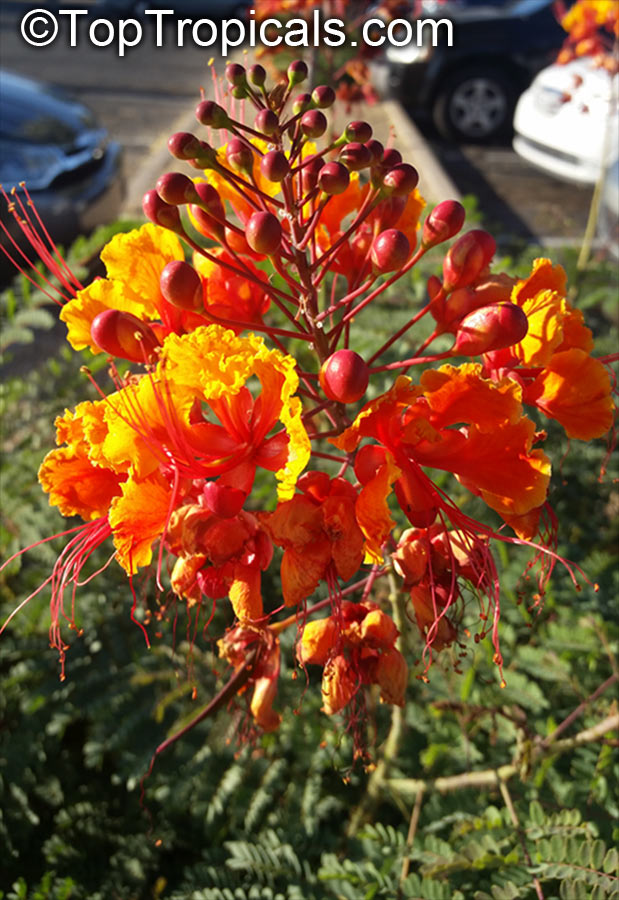
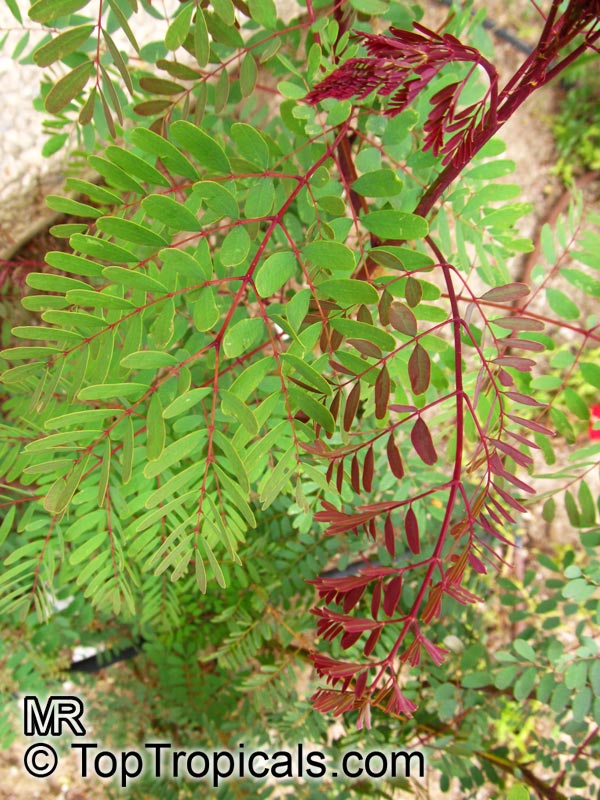
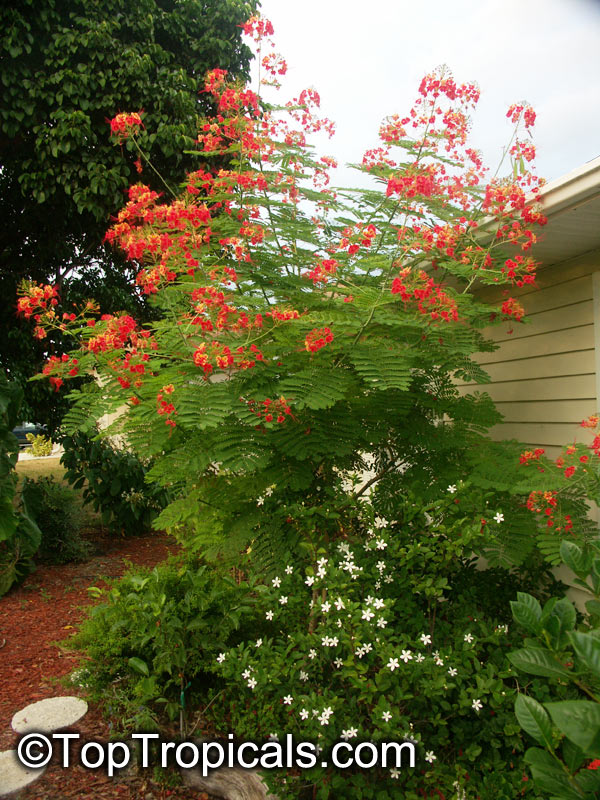
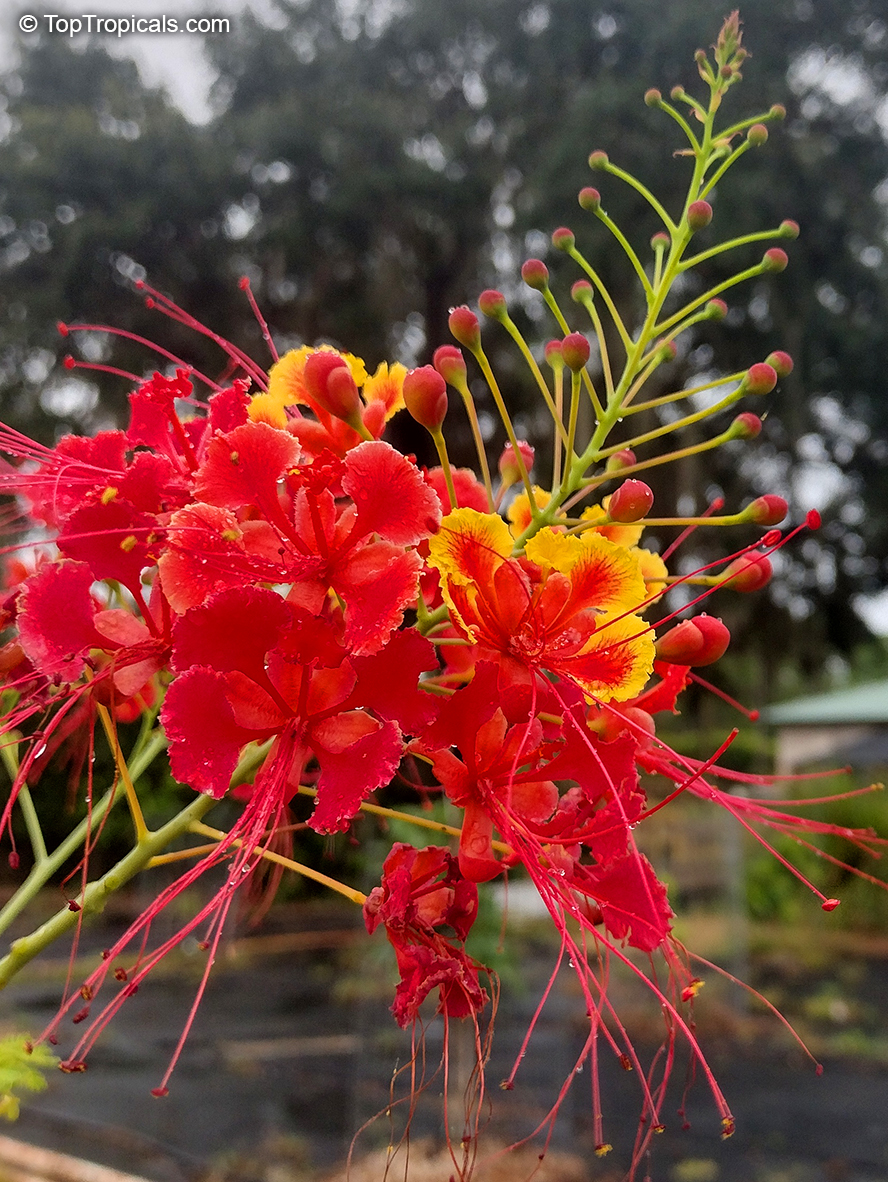
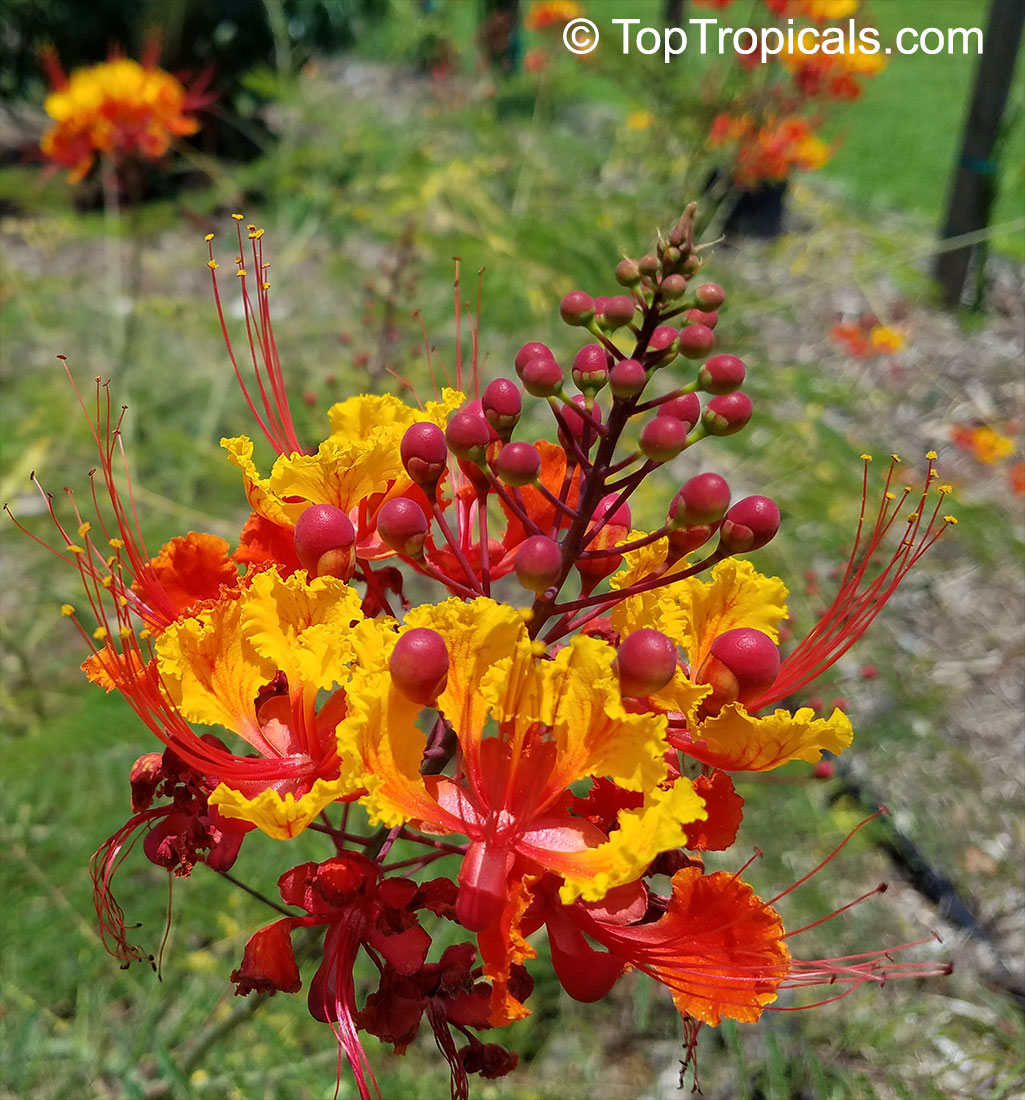
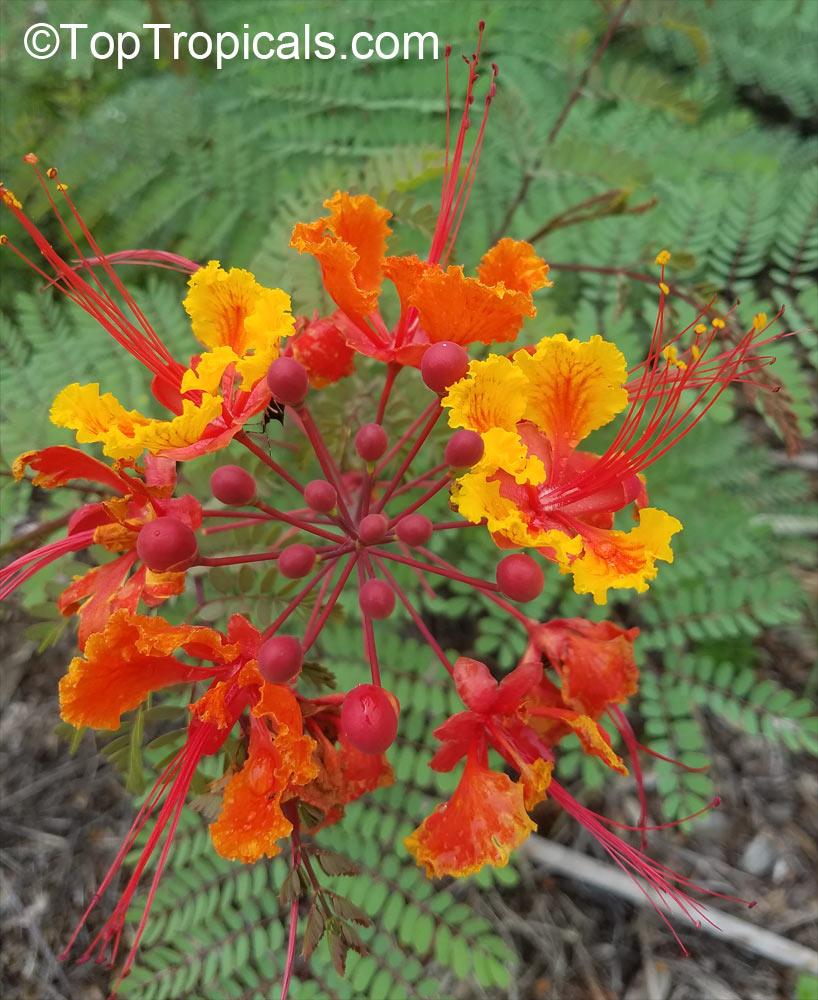
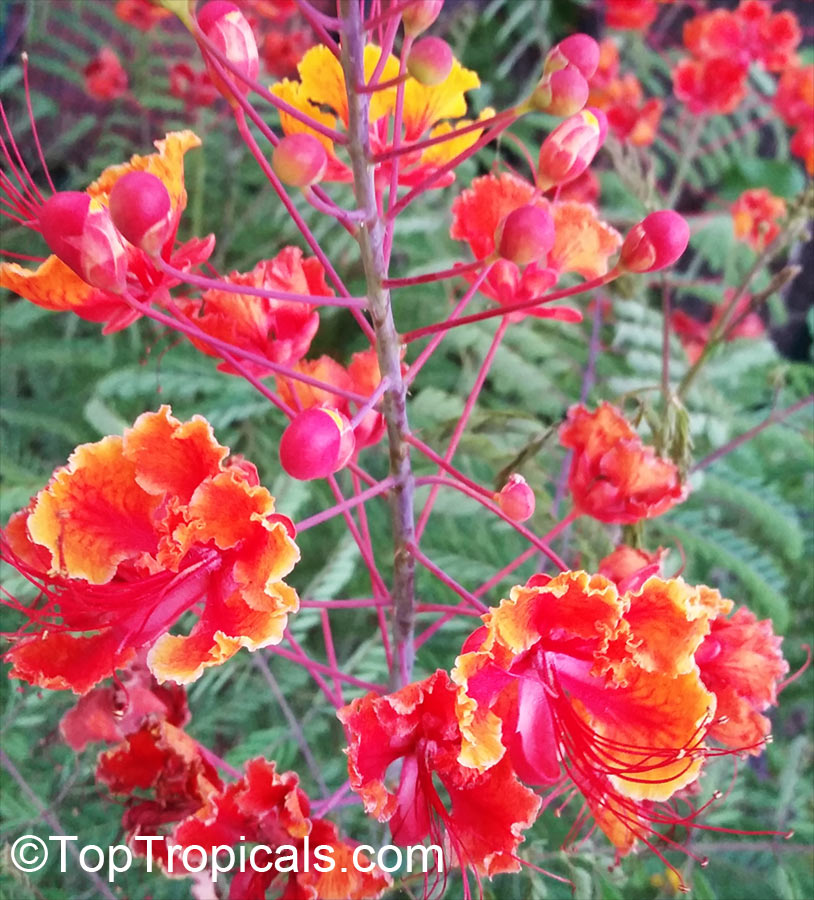
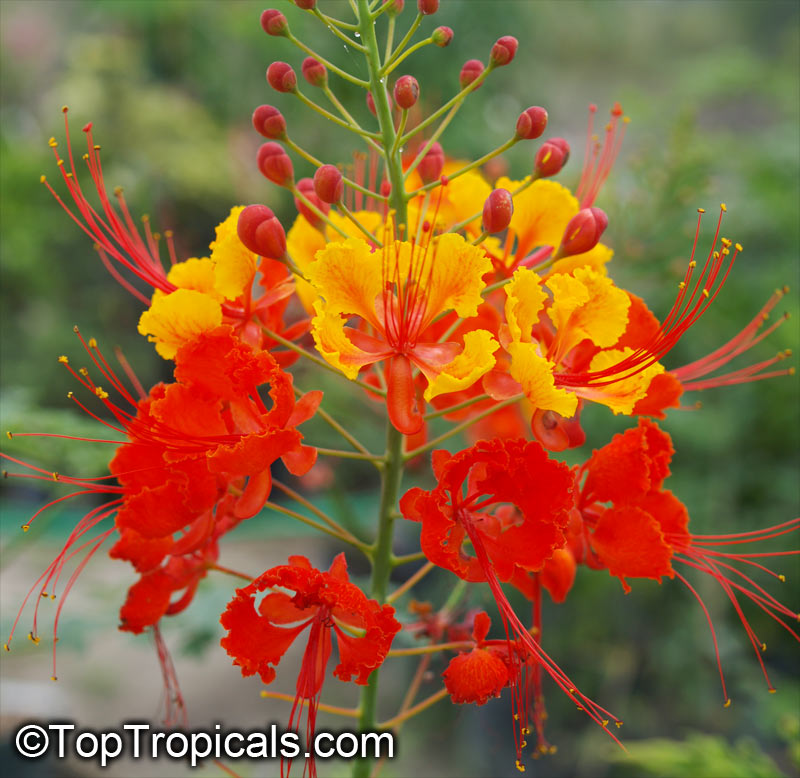
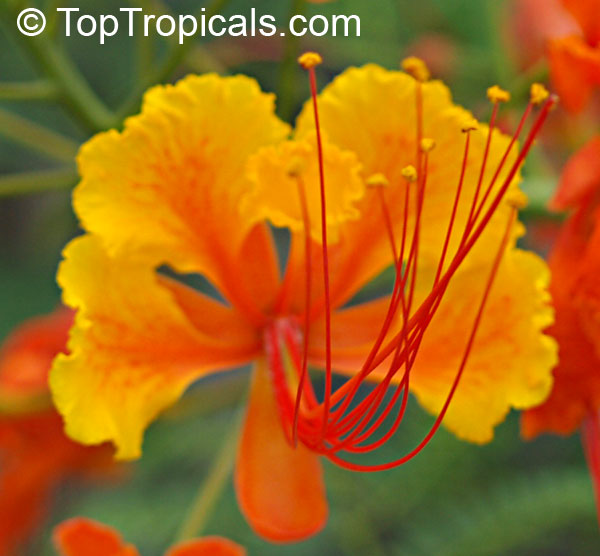
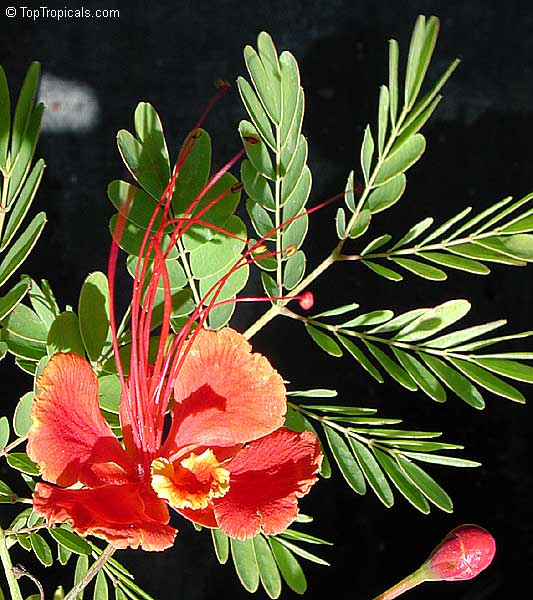
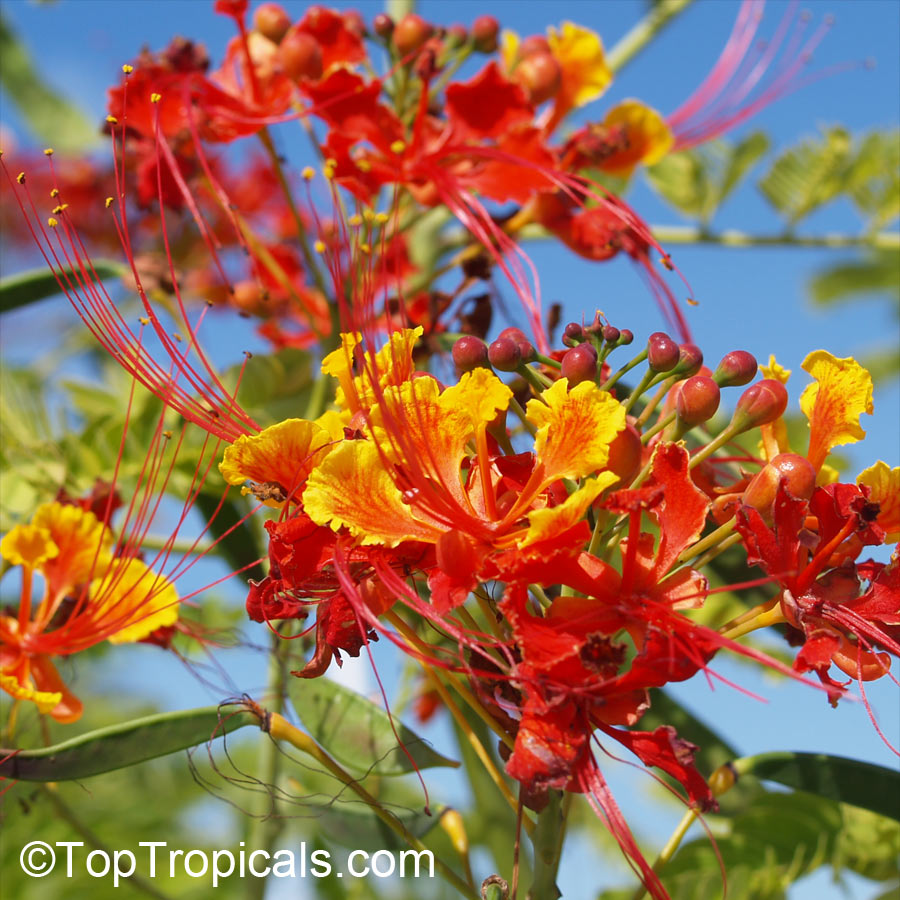
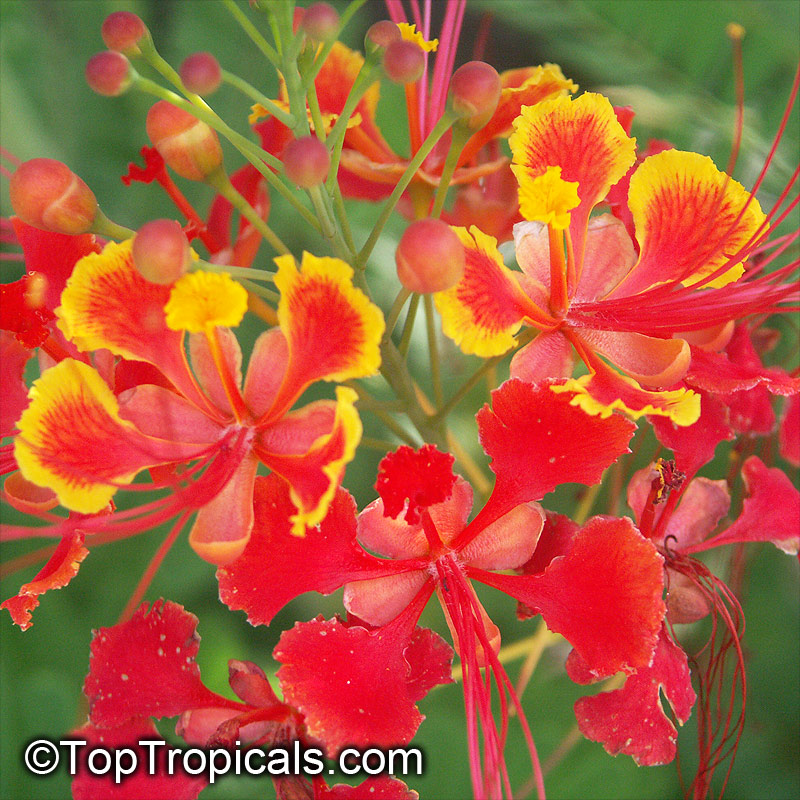
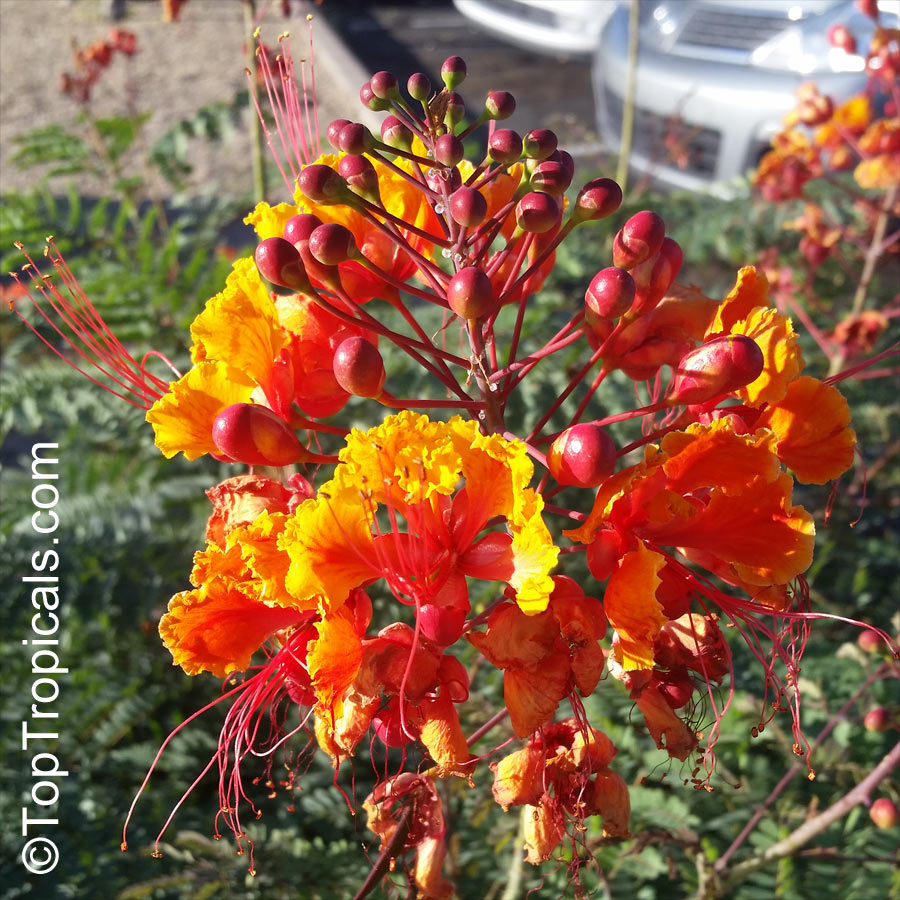
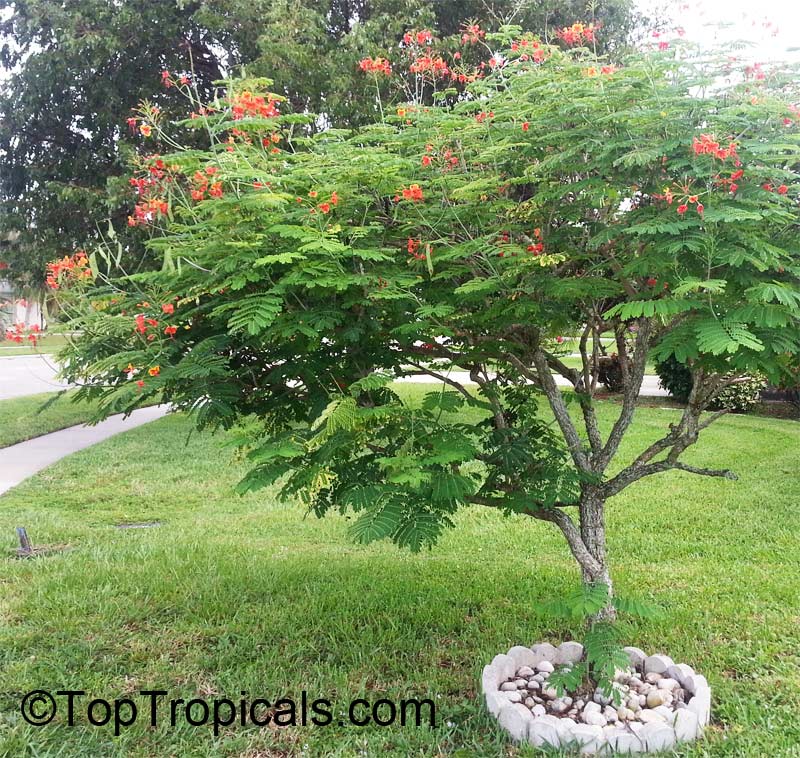
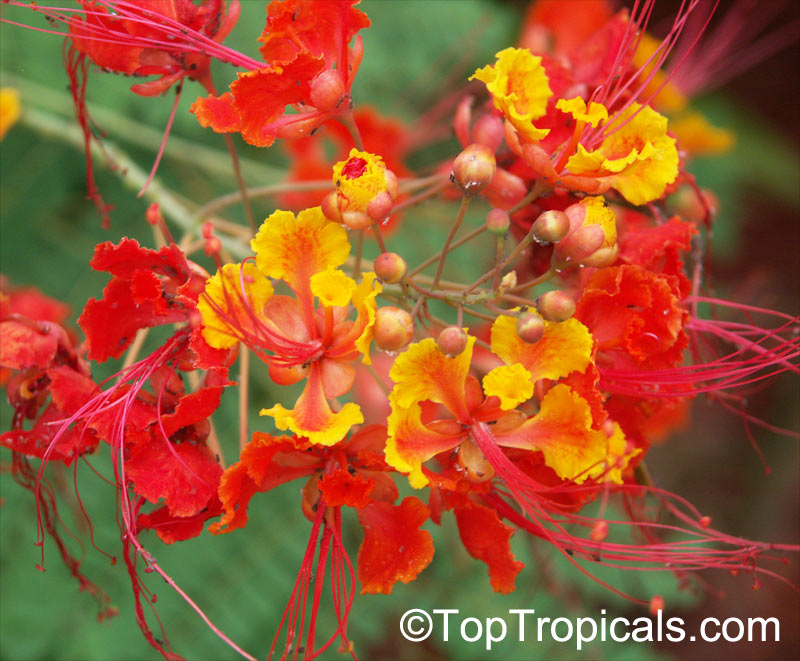
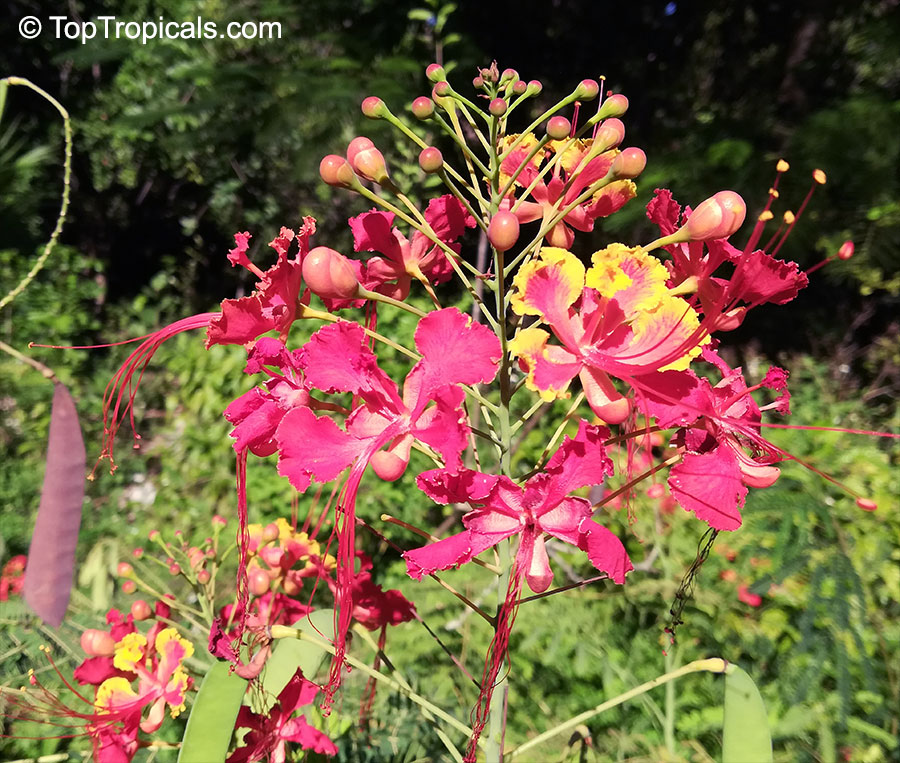
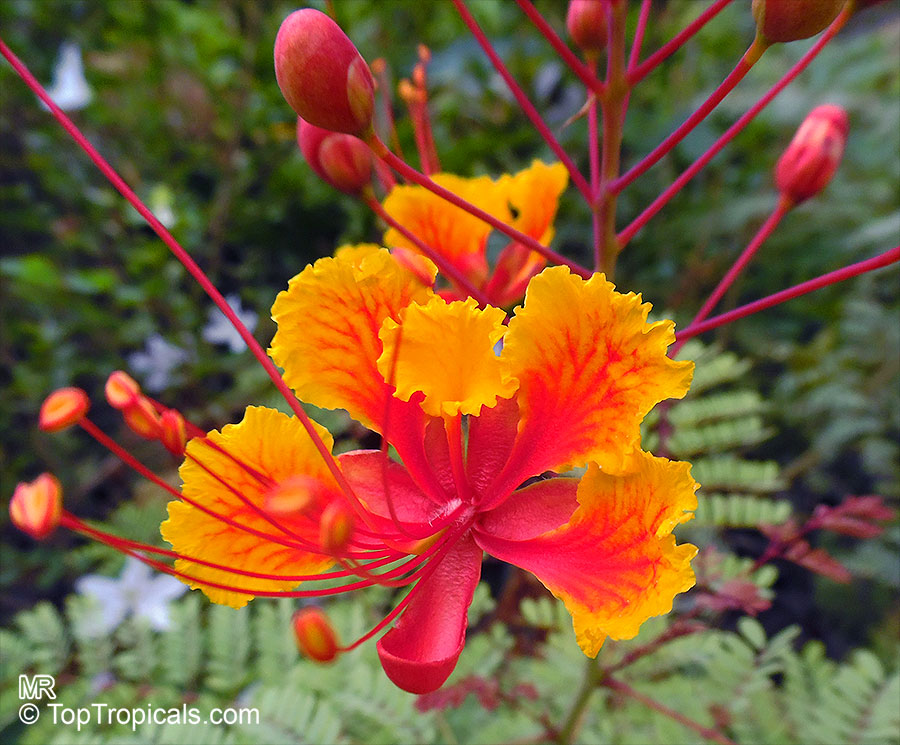
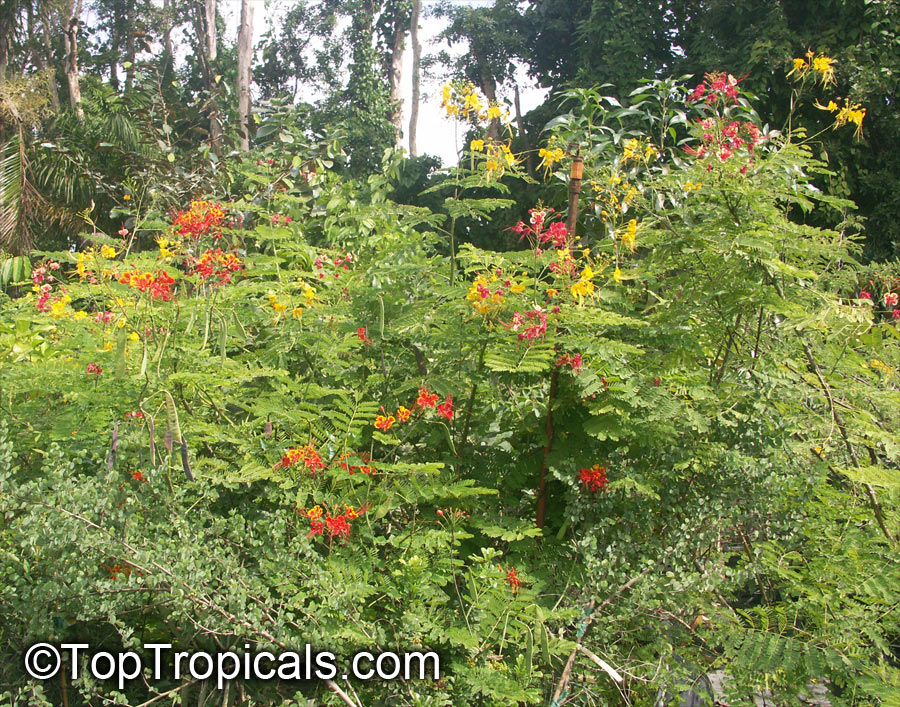
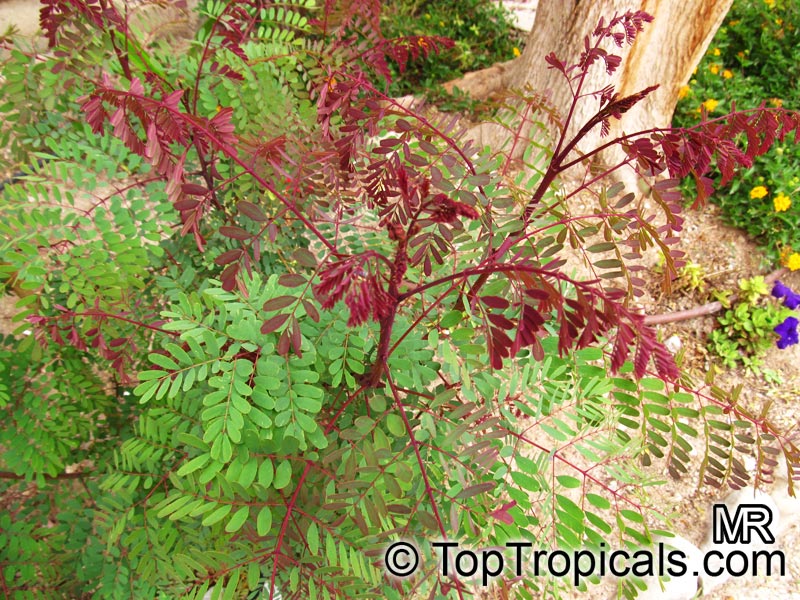
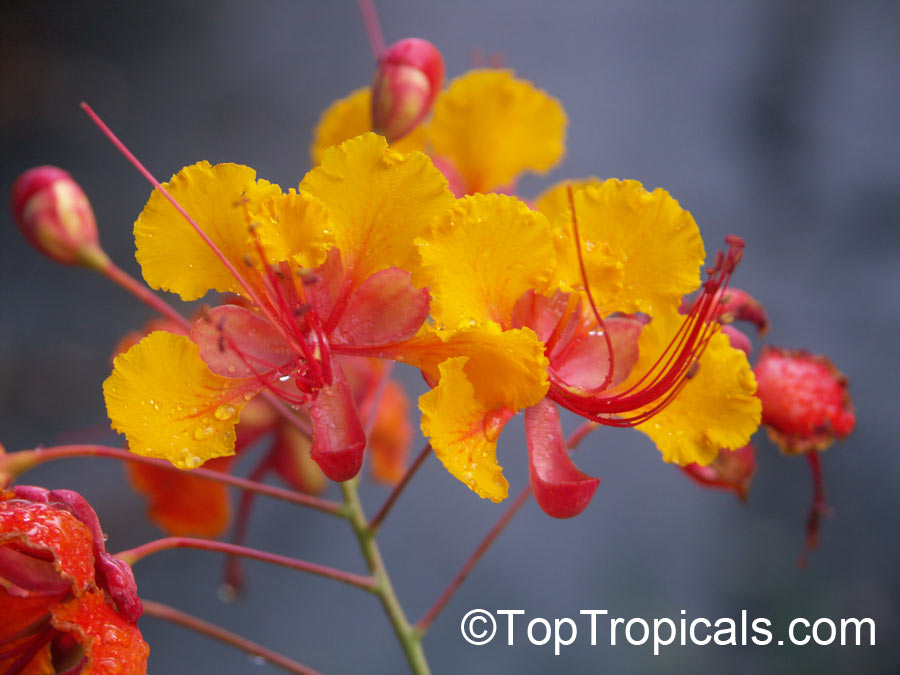
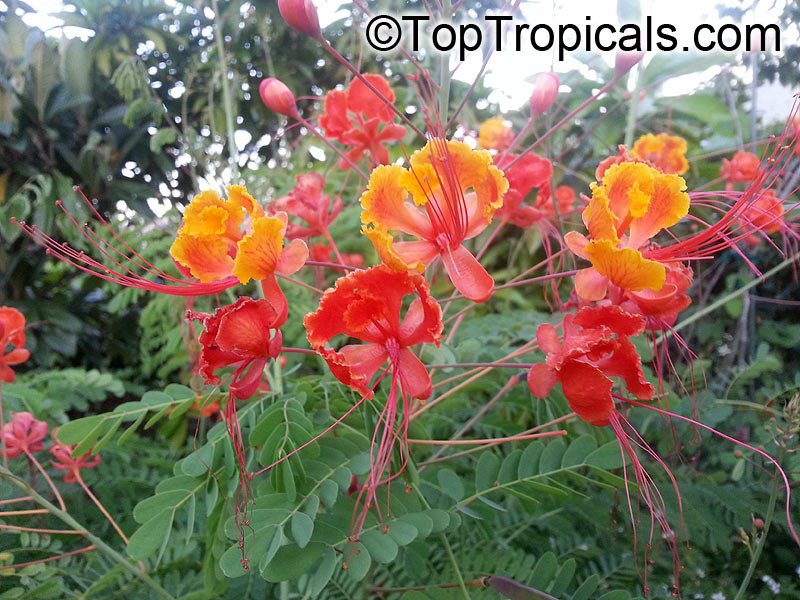
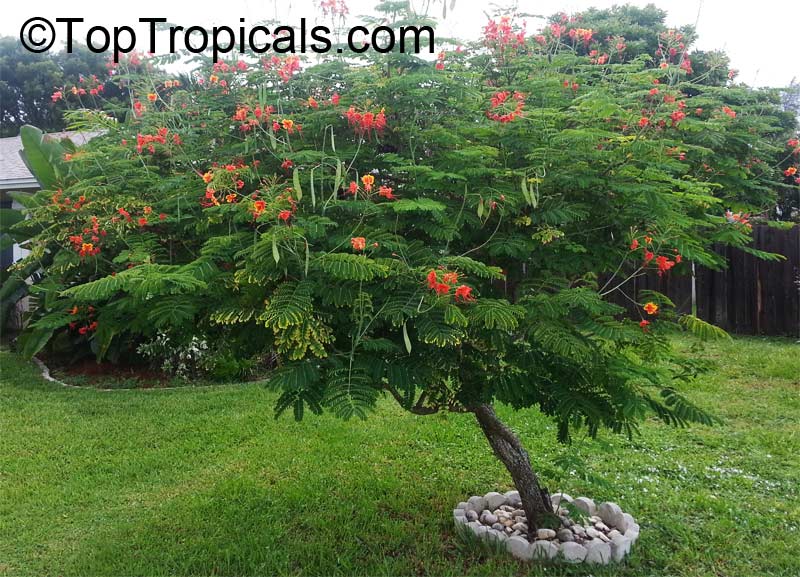
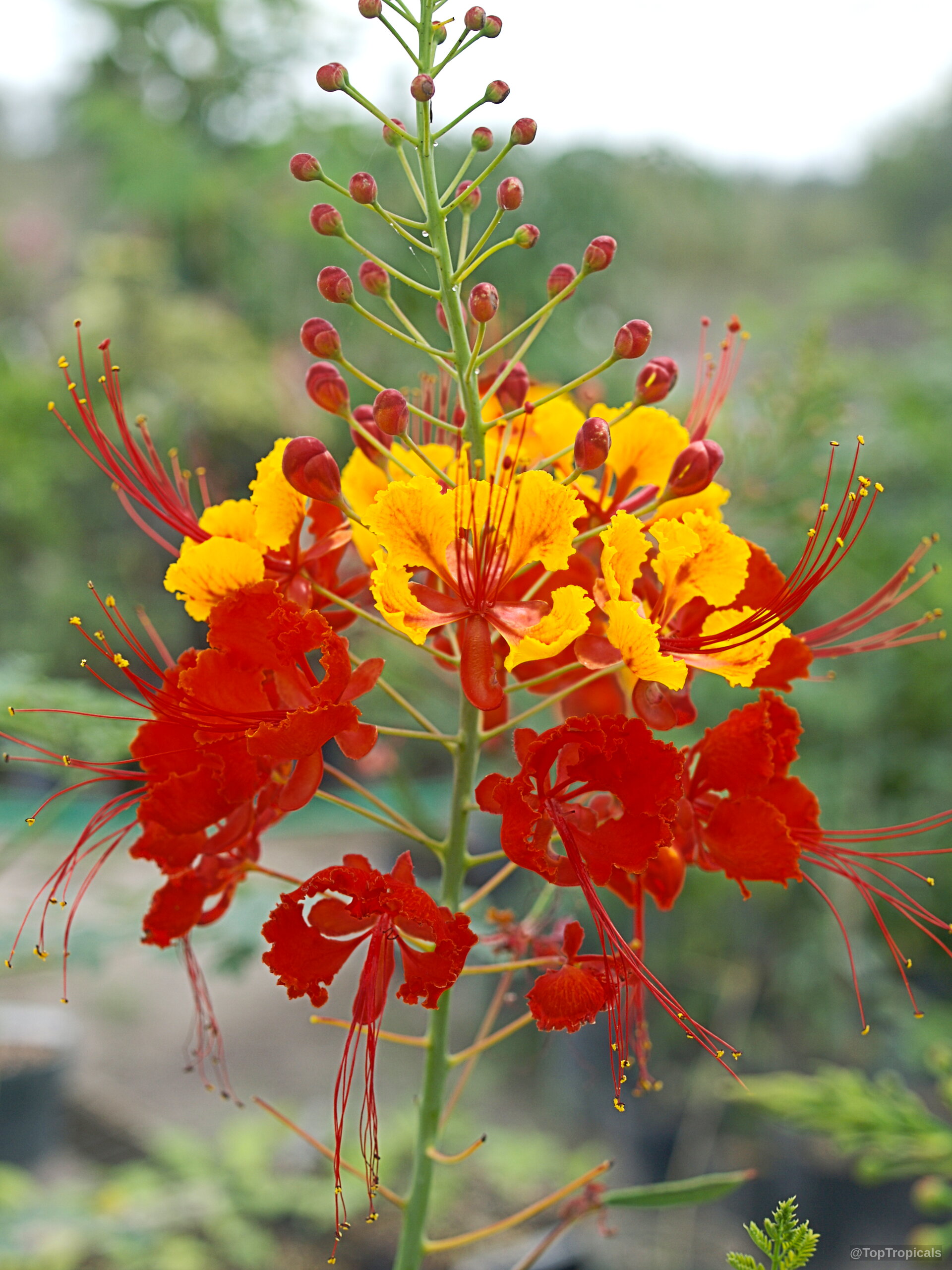
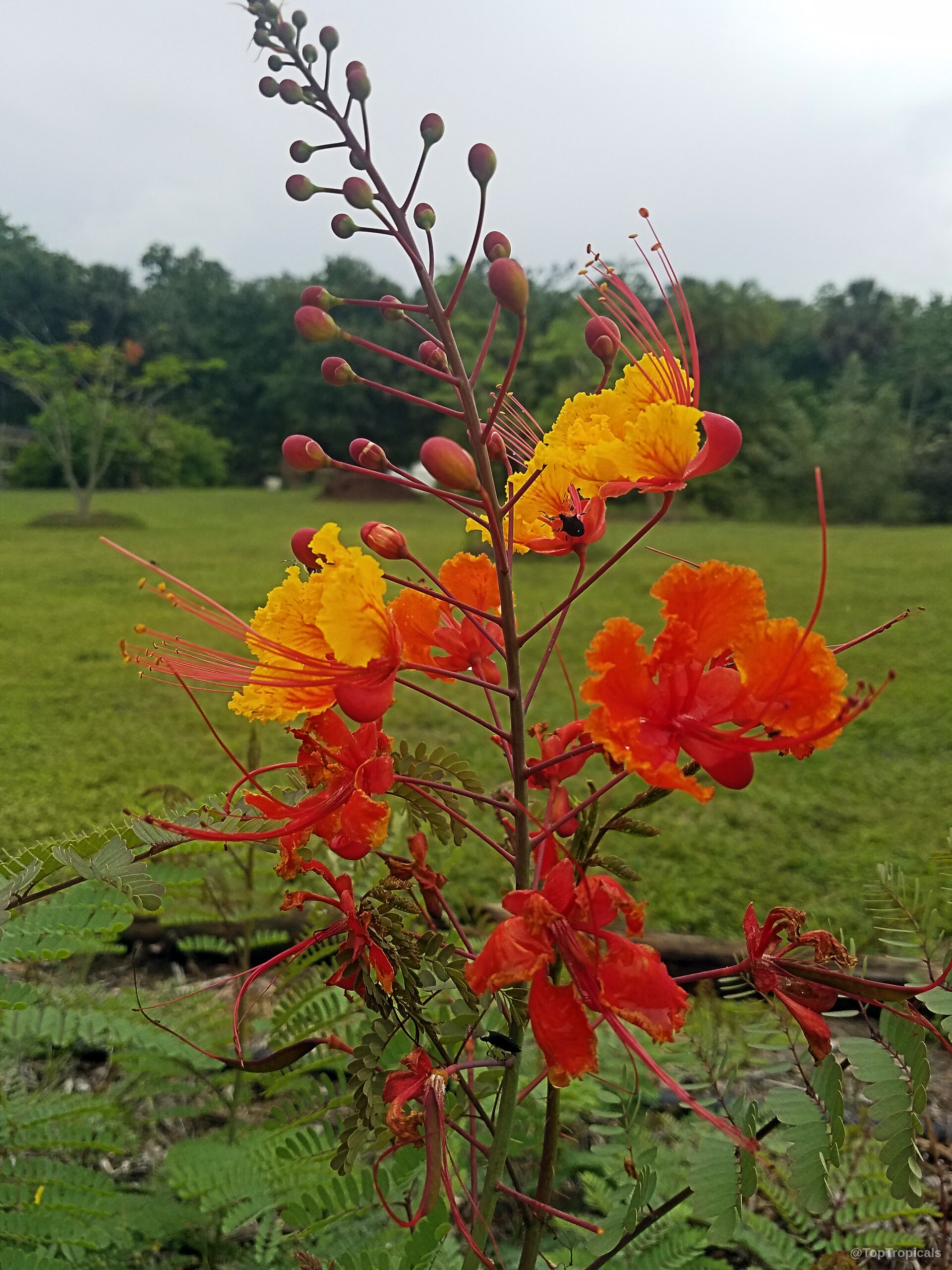
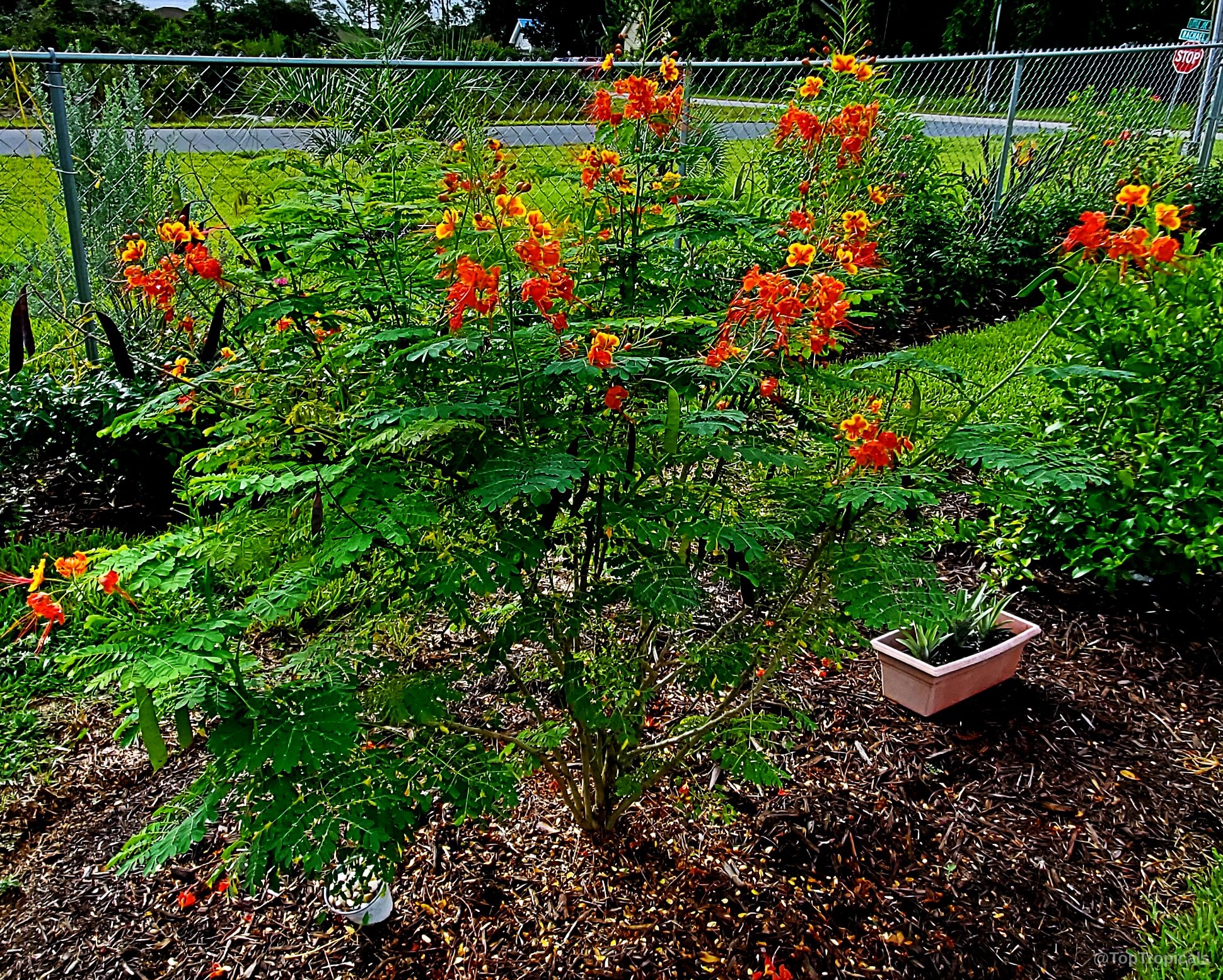
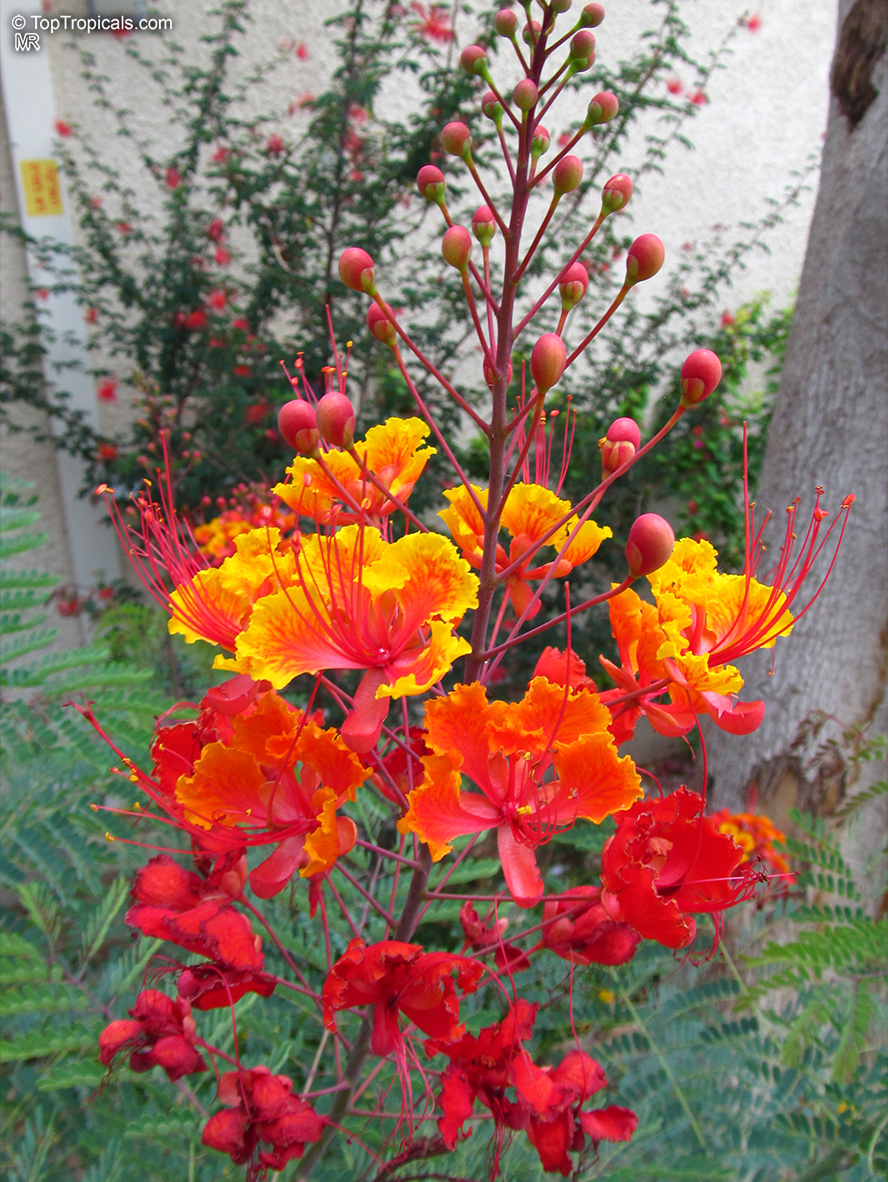
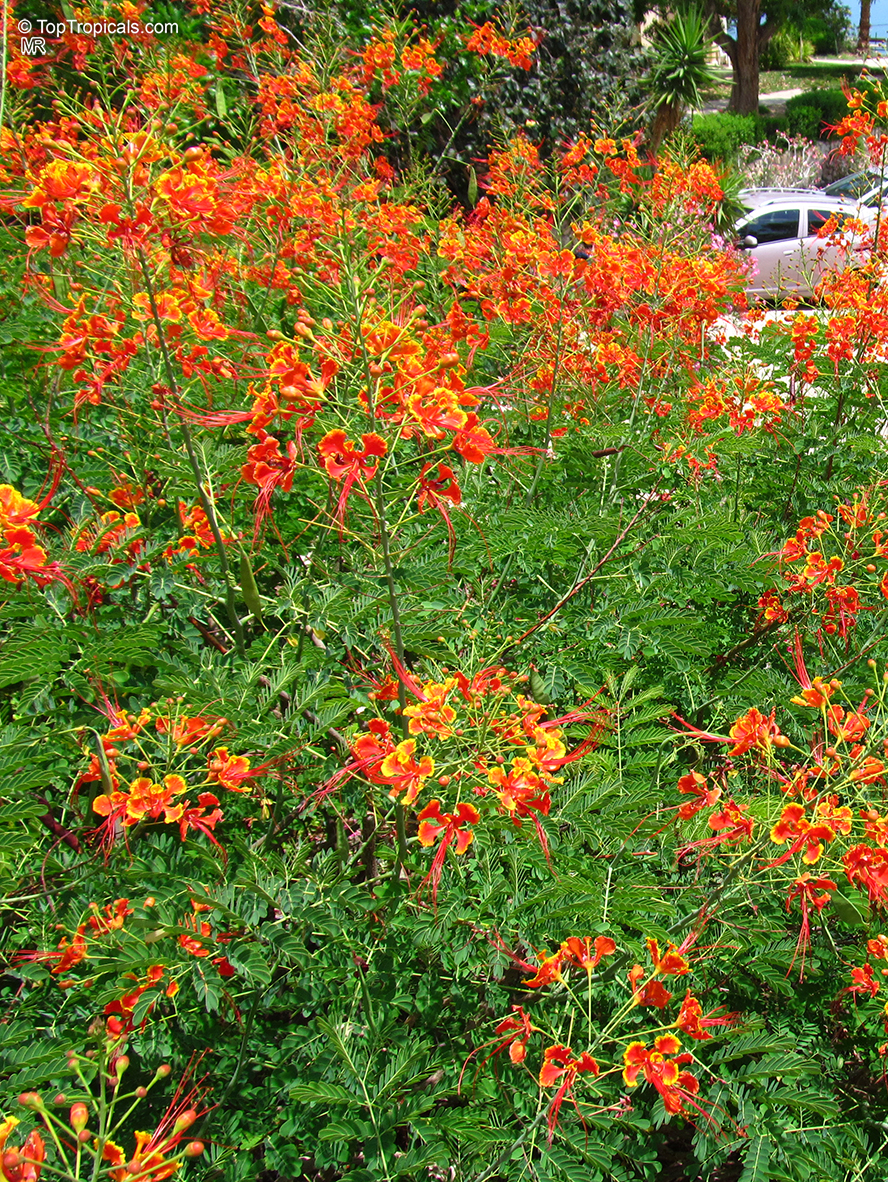
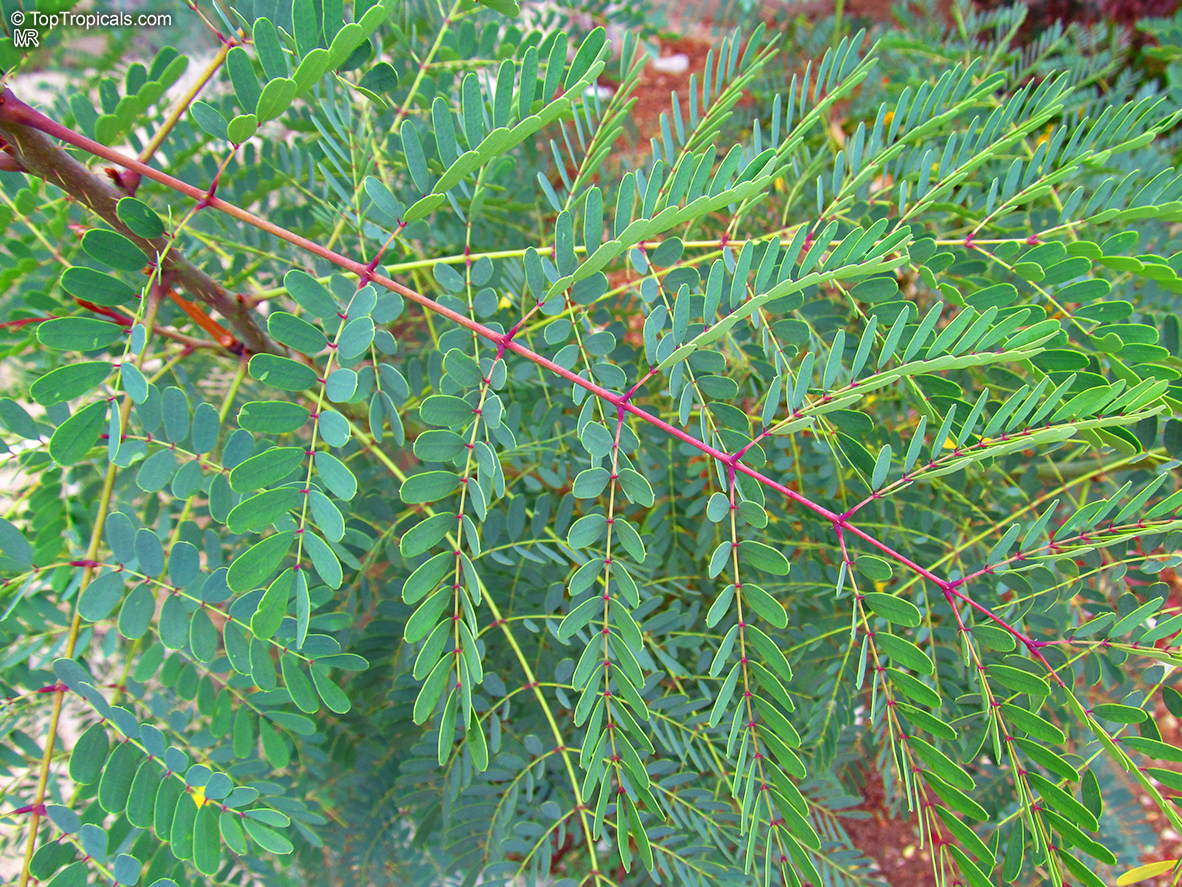
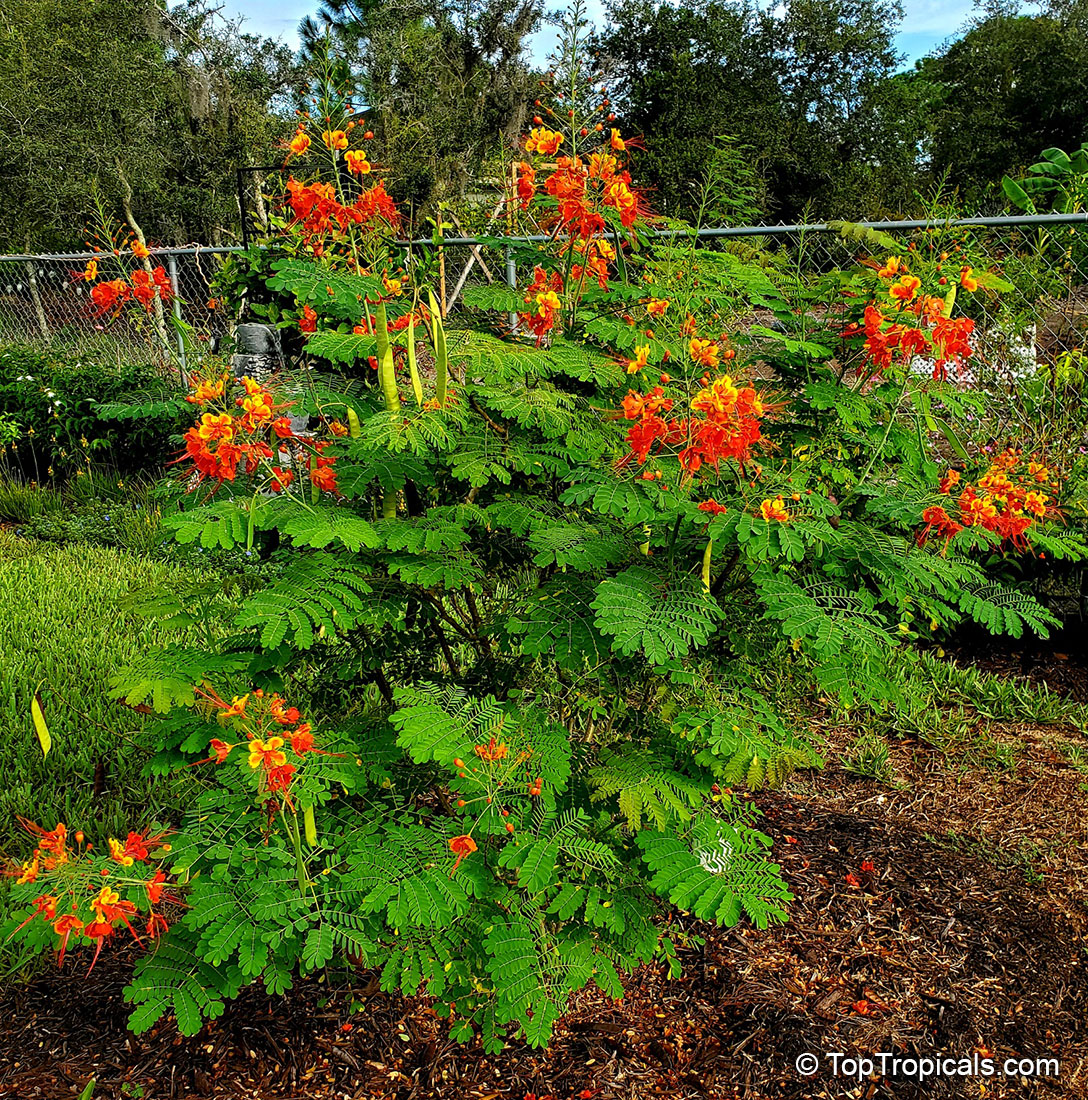
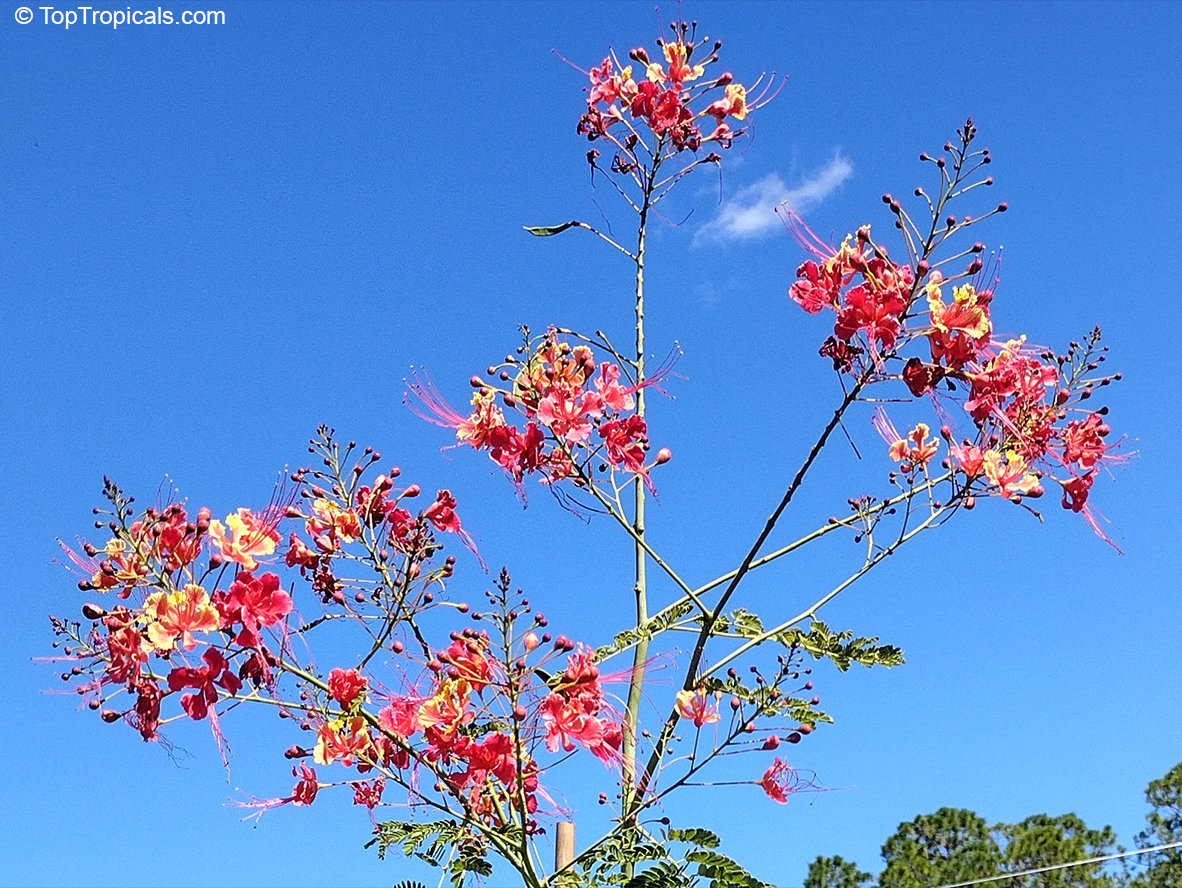
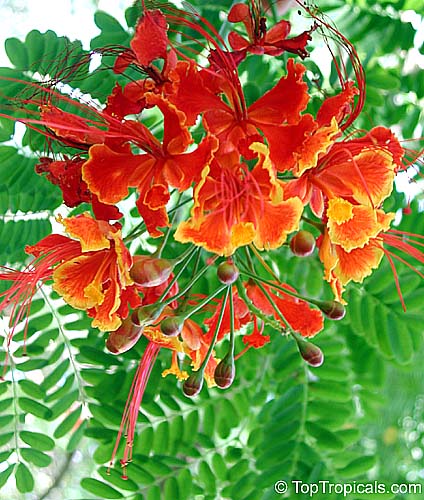
Peacock flower lives up to its name with incredibly showy blossoms of orange and red. The striking flowers are an attention grabber! Evergreen shrub or small tree in frost free climates, a deciduous shrub in zone 9, and a returning perennial in zone 8. In the tropics it gets 15-20' tall and its ungainly, wide spreading branches can cover about the same width. In cultivation the peacock flower is usually 8-12' tall, growing that large even after freezing to the ground the previous winter. The stem, branches and petioles are armed with sharp spines and the leaves are fernlike and twice compound, with many small, oval leaflets. The flowers are bowl shaped, 2-3" across, with five crinkled, unequal red and orange petals, and ten prominent bright red stamens that extend way beyond the corolla. The flowers are borne in terminal clusters 8-10" tall throughout most of the year in tropical climates and in late summer and fall where frosts occur. There also are forms with yellow and forms with dark red flowers. The fruits, typical legumes, are flat, 3-4" long, and when ripe they split open noisily to expose the little brown beans. Very easy to grow in alkaline to acidic, well-drained soils. This is a fast growin plant. It is moderately tolerant of salty conditions. Peaccock flower benefits from pruning, and can be shaped to tree form or shrubby bush form. Use peacock flower as a specimen or in a mixed shrub border. It has an open, spreading habit and the branches sometimes get too long for their own good and break off. Still, a line of peacock flowers makes a showy fine-textured screen or informal hedge. You can cut peacock flower to the ground in late winter or early spring to get a bushier, more compact shrub.



Ordering seeds info
RECOMMENDED SUPPLIES:
Seed Germination Mix #3, professional grade
SUNSHINE-Epi - Seeds and cuttings booster
SUNSHINE Bombino - Young Plant Booster
Recommended Fertilizer: SUNSHINE Megaflor - Bloom Nutrition Booster

Botanical name: Caesalpinia pulcherrima
Common name: Mexican Peacock flower
Cultivar: Mexican Flame
Family: Fabaceae
Subfamily: Caesalpinioideae
Origin: Mexico
USDA Zone: 9-11
This variety of caesalpinia has very bright flowers turning from yellow to red - with yellow, orange and red flowers in the same bunch. The stem is covered with soft thorns that feel like feather. Leaves have blueish hue. Medium size shrub or small tree, perfect for small yards or patio. It is moderately tolerant of salty conditions. Peacock flower benefits from pruning, and can be shaped to tree form or shrubby bush form. The striking orange red flowers are an attention grabber! Use peacock flower as a specimen or in a mixed shrub border. It has an open, spreading habit and the branches sometimes get too long for their own good and break off. Still, a line of peacock flowers makes a showy fine-textured screen or informal hedge. You can cut peacock flowers to the ground in late winter or early spring to get a bushier, more compact shrub.


Botanical names: Caesalpinia sappan, Biancaea sappan
Common names: Sappanwood, Bukkum-wood, Gango
Family: Fabaceae
Subfamily: Caesalpinioideae
Origin: Southeast Asia
USDA Zone: 9-10

Under natural conditions Caesalpinia sappan grows mostly in hilly areas with clayey soil and calcareous rocks at low and medium altitudes. It does not tolerate too wet soil conditions.
The use of heartwood as a safe natural coloring agent with good medicinal value for food products, beverages and pharmaceuticals.


Botanical name: Caesalpinia spinosa
Common names: Tara, Spiny Holdback
Family: Fabaceae
Subfamily: Caesalpinioideae
Origin: Northwestern South America
USDA Zone: 10-11
It is a producing plant of tannins and of the one that dyes obtain. It has locally some medicinal applications.


Botanical names: Caesalpinia vesicaria, Caesalpinia bijuga
Common name: Large-leaved Cassia
Family: Fabaceae
Subfamily: Caesalpinioideae
Origin: Caribbean
USDA Zone: 9-10
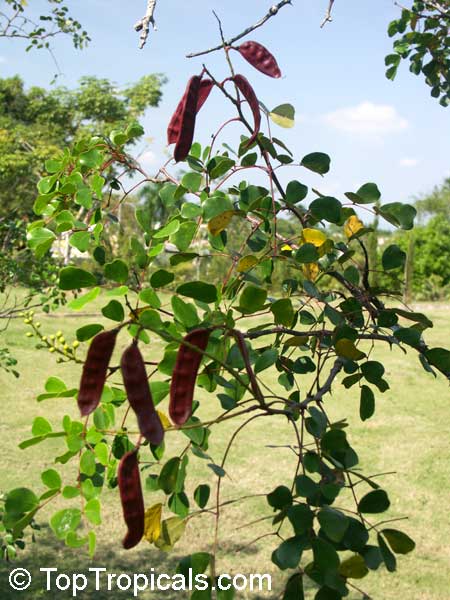
Large shrub or small tree with yellow flowers and dark red to brown seed pods. Leaves are larger than other caesaplinias.



| Prev | Next | |
Use link to repeat this search:
https://toptropicals.com/cgi-bin/garden_catalog/cat.cgi?search_op=and&keyword_op=and&language=e&family=Fabaceae&number=10
&no_change_lang=1&user=tt&sale=1&first=0